Author: Dave

  • Fall Leaf Tour

    Hello virtual crew members and fellow adventurers!

    Eric here with the latest travels of Still Waters II.
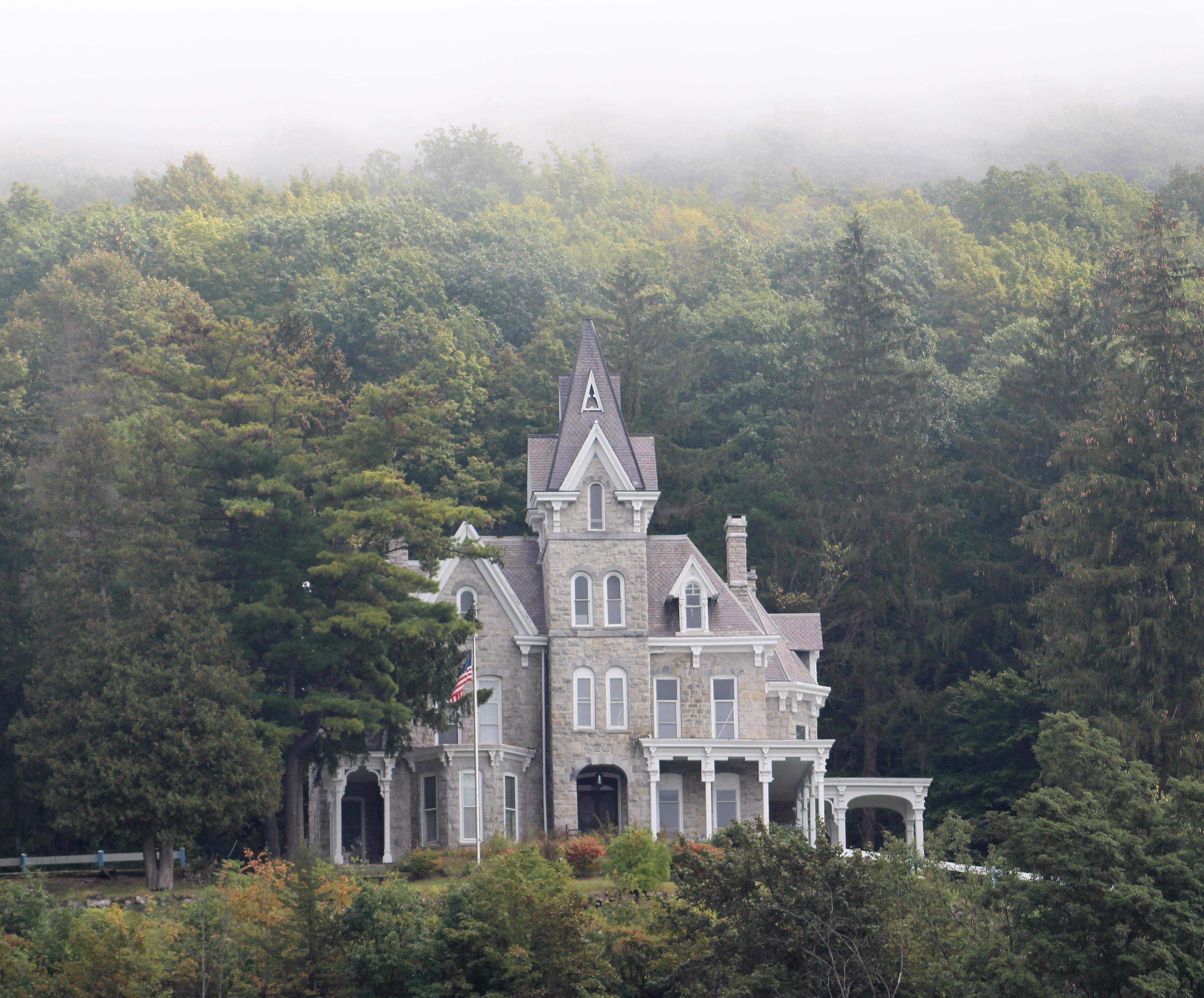
     

    IMG_0015
    Skene Manor overlooking Champlain Canal in Whitehall, NY


    Summary of week:

    Whitehall

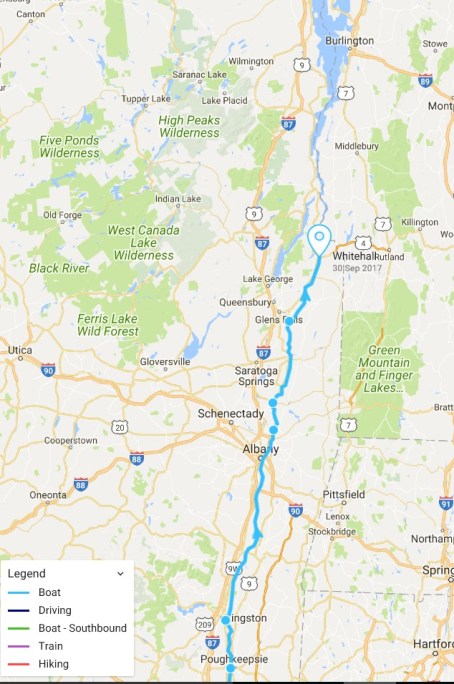
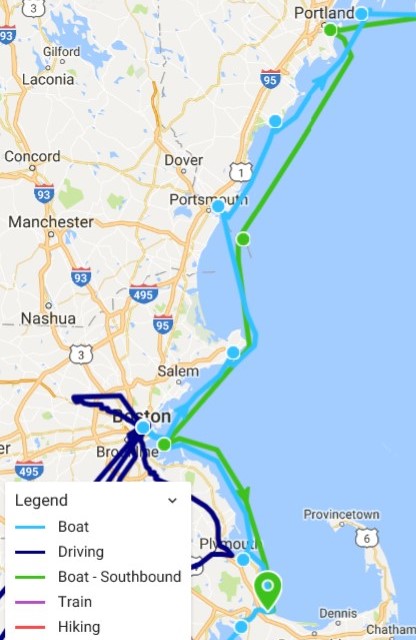
    When it was time to leave Poughkeepsie on Tuesday, Jose had disappeared, but Hurricane Maria had taken his place.  The winds were not favorable for turning south and running down to Cape May, NJ.  So the crew continued their northbound journey on the Hudson River with a new goal of reaching Burlington, Vermont before turning south.  They have dubbed this new goal the ‘Fall Leaf Tour.’

    Tuesday found them in Kingston.  Wednesday, they made a long run to Waterford to make preps for the Champlain Canal.  Thursday, they entered the Champlain Canal and stayed in Mechanicville overnight.  Friday, they moved to Ft Edwards, and Saturday they stopped in Whitehall.

    This week’s journey of discovery did answer the following questions

    1. Where do the tidal waters end on the Hudson River?

    2. Why is there no Lock number one on the Erie Canal?

    3. Why did the Erie Canal get moved to the NY Transportation Division in 2017?

    Click on the link to read the day-to-day travel log.  This includes weather report of the day, sea conditions, log of the days travel, and a summary of the experience.

    At the Box Office

    This week’s video shows Still Waters II in Champlain Locks C-1 and C-2, where she is lifted 14 feet and 18 feet respectively.  Enjoy!

    Champlain Locks C-1 & C-2 from Still Waters II on Vimeo.

    To see past videos, click on the link to the Still Waters II Vimeo site.  The library now contains 38 videos of Still Waters II cruising America’s Great Loop.

    Tuesday, Sept 26, 2017

    The run to Kingston was uneventful except for the Man-Over-Board (MOB) drill.  This was only a drill.  The Admiral spotted something in the river that turned out to be a lifejacket.  The skipper used the lifejacket to practice their MOB skills.  I am happy to report that the lifejacket was saved without incident.  And it is a good lifejacket to boot.

    The MOB drill took place just off Esopus Island near the Esopus Meadows Lighthouse.
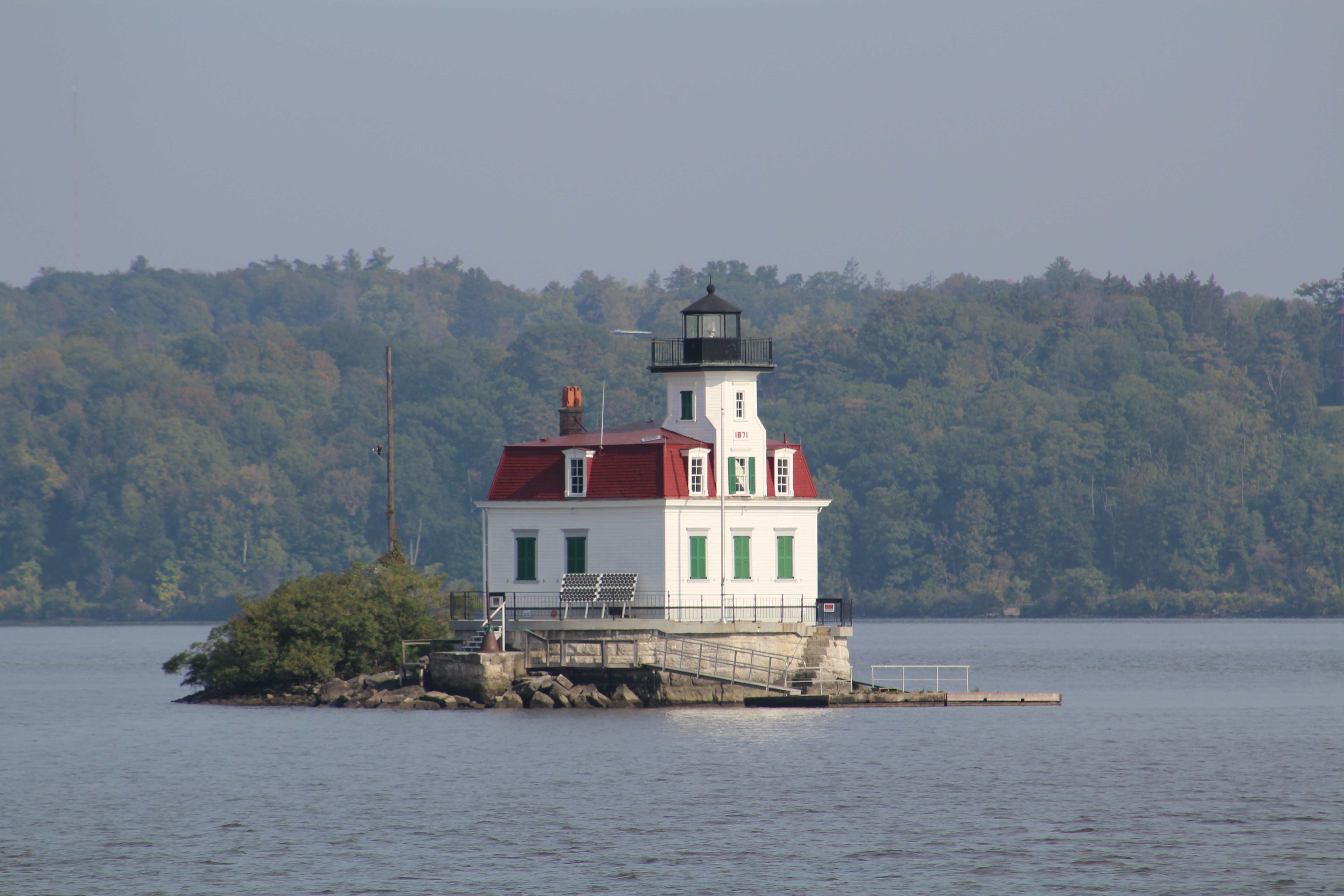
    44 Esopus Meadows Lighthouse

    When the crew reached the Rondout Lighthouse, they turned up the creek and docked at the Maritime Museum.
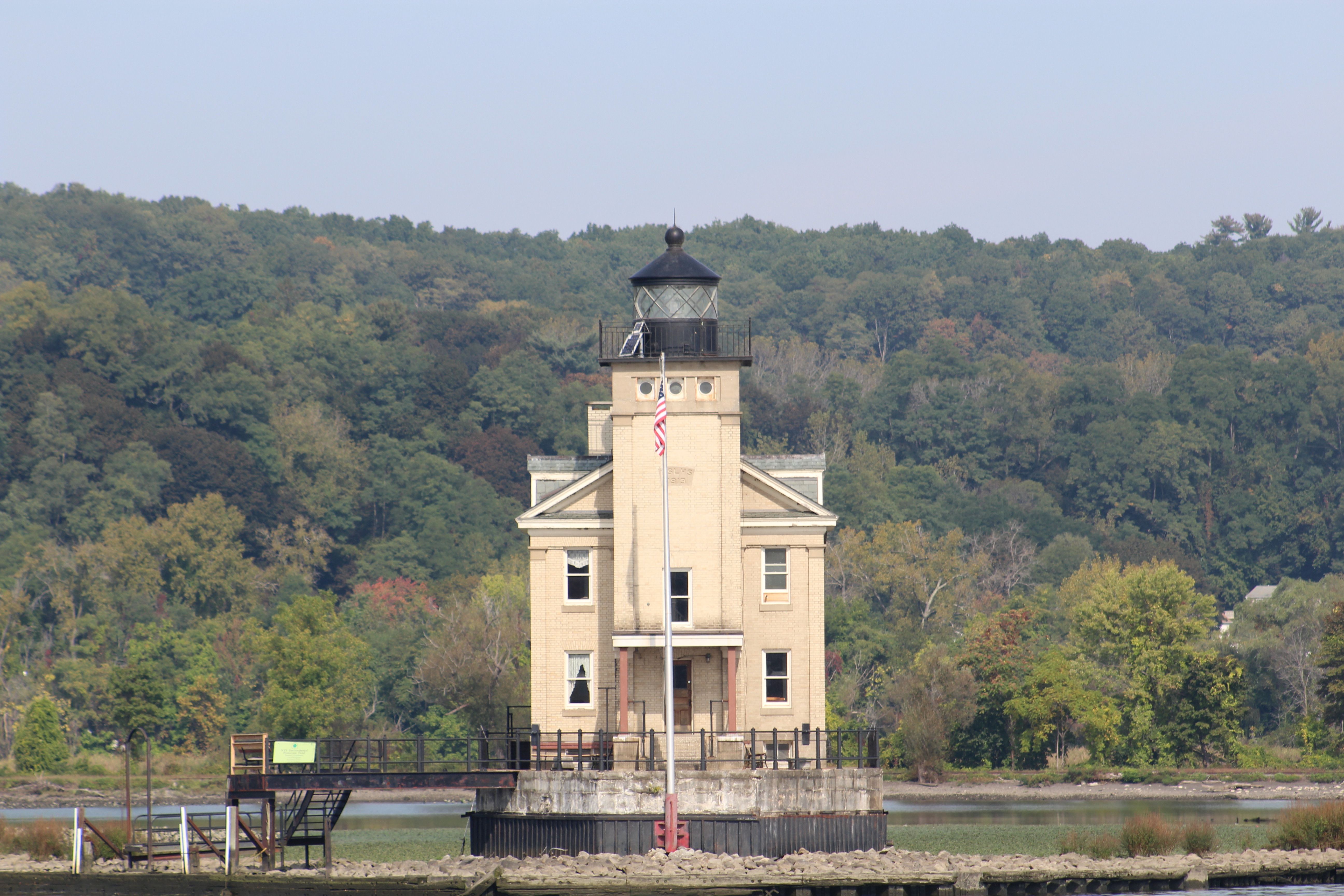
    45 Rondout Crrek Lighthouse

    Since last visiting the Museum, a Wooden Boat School has been added.  The workers were busy building one boat that they plan to power with solar panels and an electric motor.  Another project was in process where the crew watched the workers bend a piece of plywood around a structure.
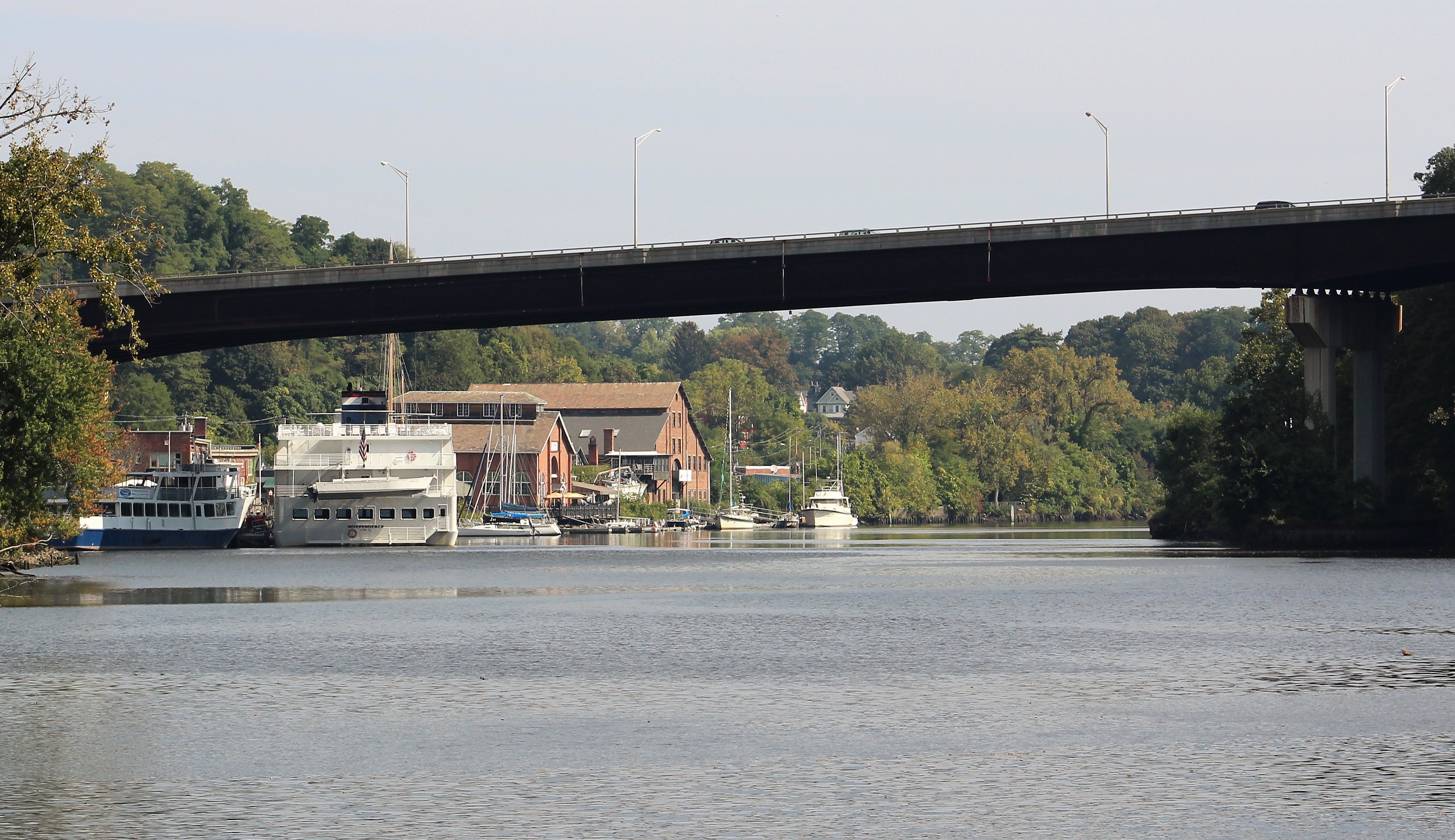
    46 Kingston Maritime Museum

    47 Kingston Wooden Boat Works

    Wednesday, Sept 27, 2017

    The “Fall Leaf Tour’ is off to a slow start because the temperatures have not cooled off yet.

    48 Fall Color

    The crew had planned to cruise about half-way to Waterford, 40 miles, and anchor out for the night.  When they arrived at the designated anchor spot at 1400, it was 90 degrees out with no breeze.  The crew decided to push on to Waterford in hopes of getting a spot on the town dock wall with electricity.

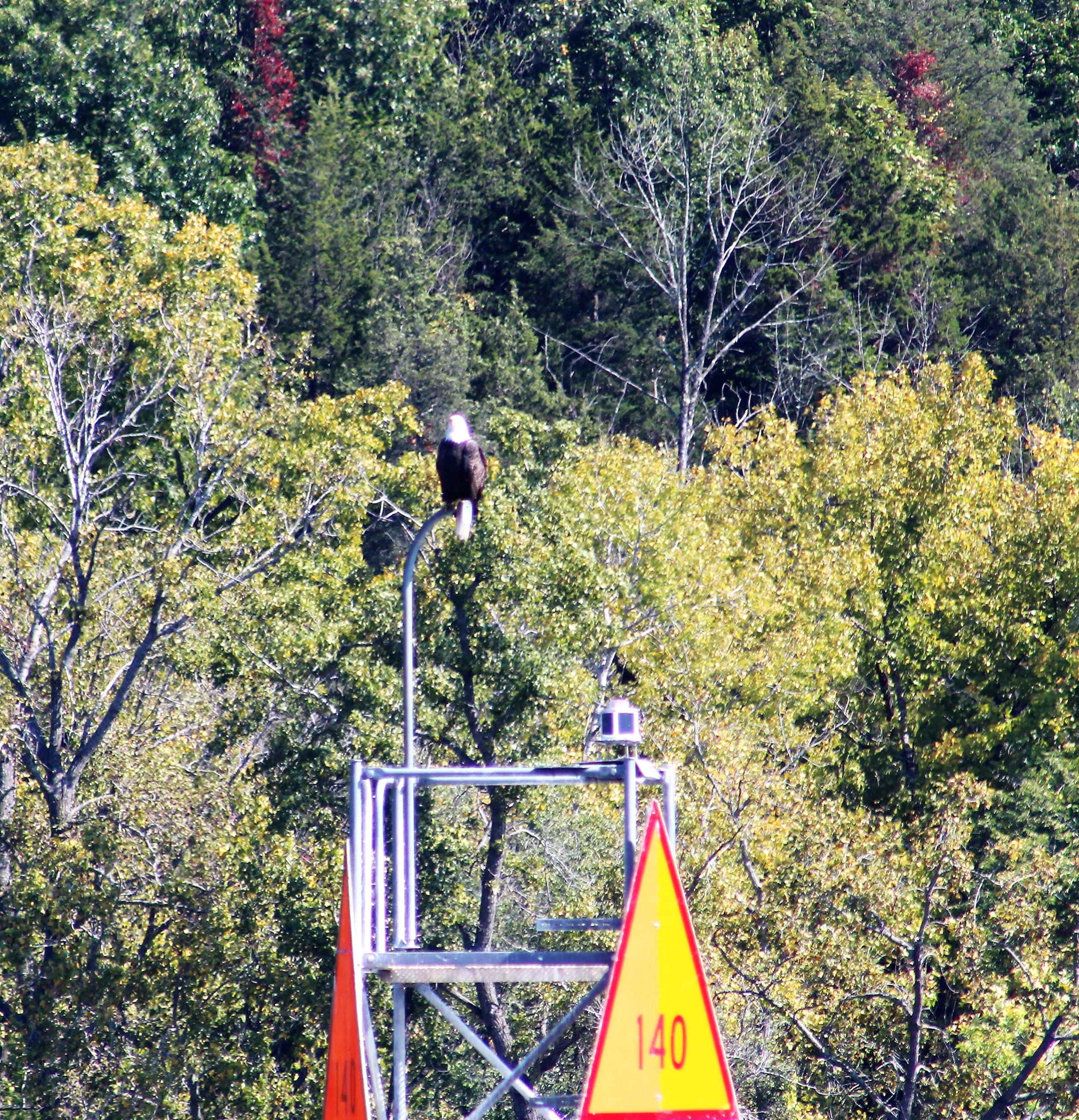
    On the way, they passed two lighthouses and a Bald Eagle perched on a navigational aid.

    Saugerties Lighthouse
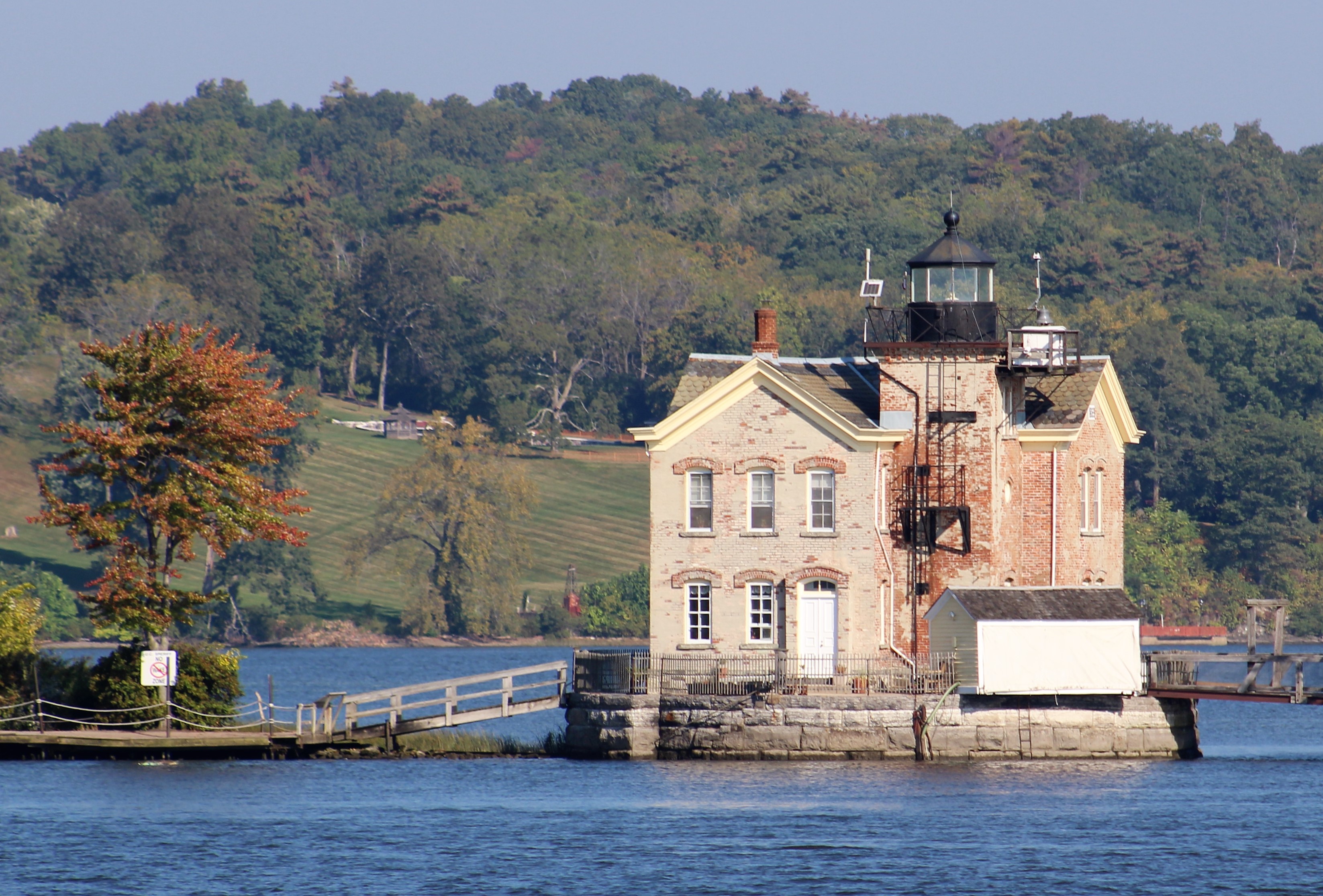
    49 Saugerties Lighthouse

    Hudson City Lighthouse

    50.1

    51 Bald Eagle

    The native Indians named the Hudson River, ‘The River That Flows Two Ways.’  The tidal water and current effect the Hudson River for 154 miles north of the Battery at the tip of Manhattan.  The tidal water ends once the river reaches the Federal Lock in Troy.
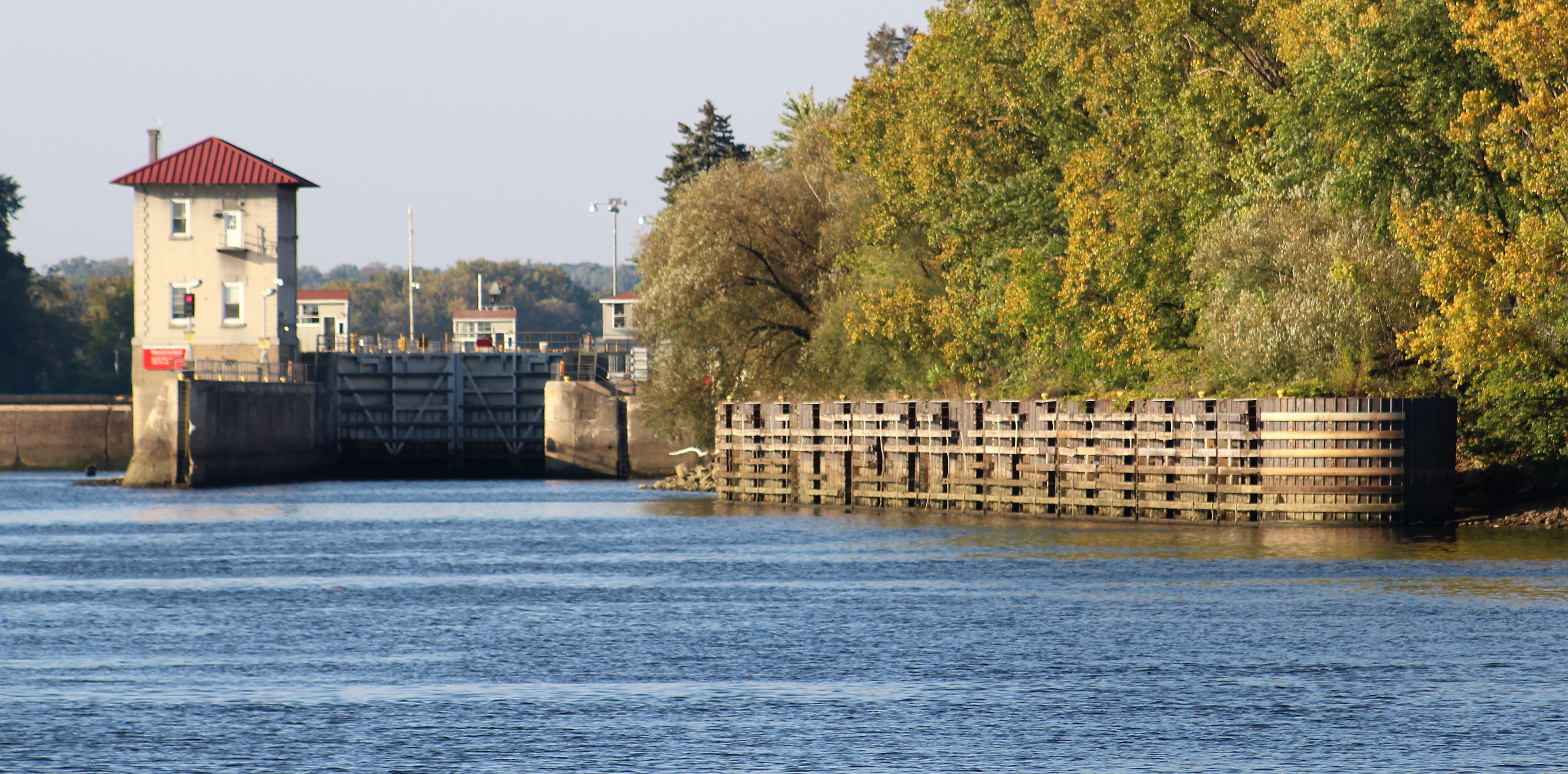
    54.1

    After clearing the Federal Lock, it was only three miles until the crew reached the junction of the Erie and Champlain Canal Systems.
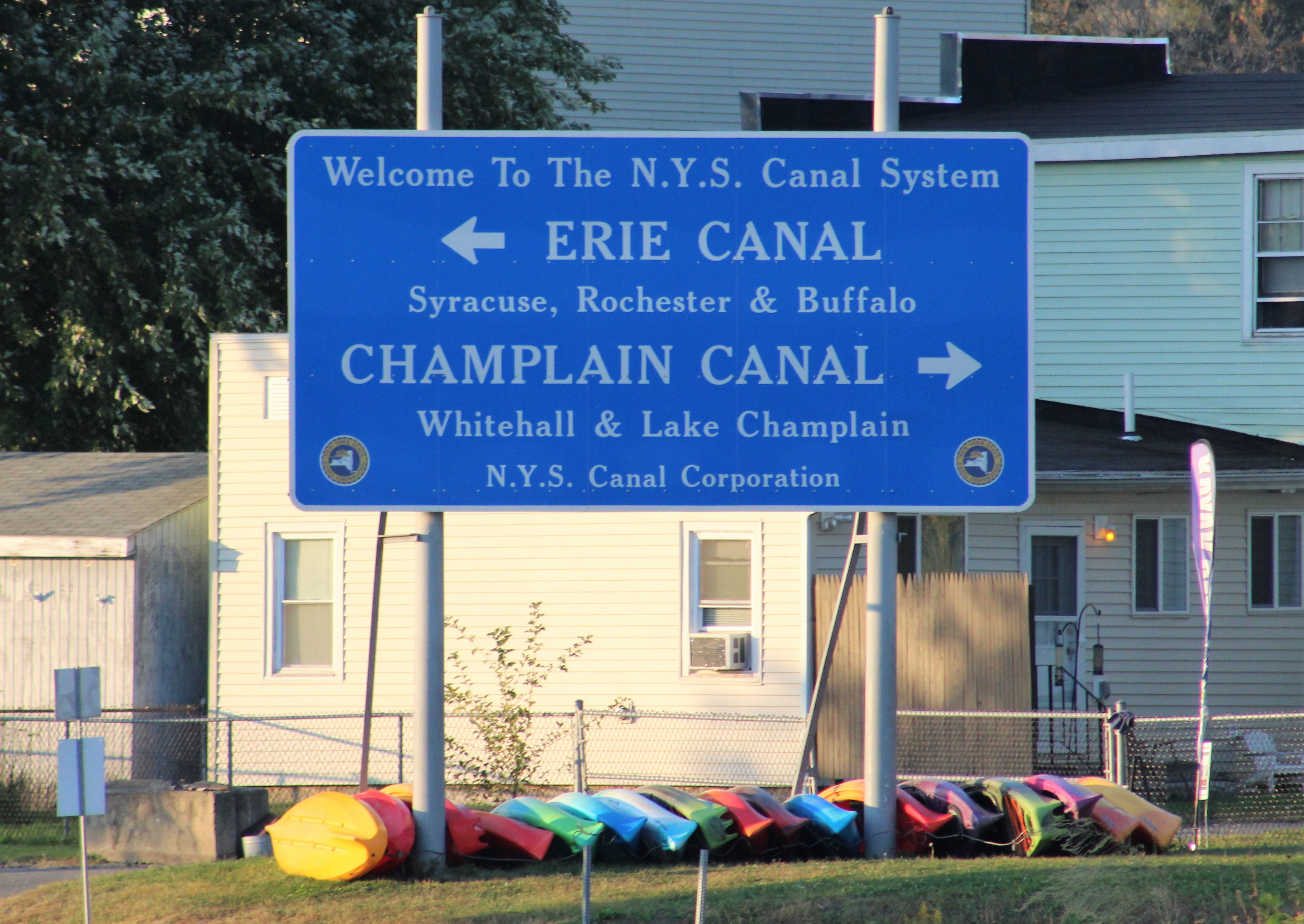
    1 Which Way to Go

    Though the crew plans to take the Champlain Canal to Vermont, the crew turned left to dock at the Waterford Welcome Center at the first lock on the Erie Canal, Lock E-2.

    There is no lock E-1 on the Erie Canal, which begs the question, ‘What happened to Lock E-1?  Well, in the early 1900’s New York decided to upgrade the canal system.  Part of the plan was to build E-1 at the location where the Federal Lock now sits.

    After the blue prints were completed and construction was started in 1903 on other portions of the Erie Canal, it was discovered that the location for E-1 was on land and water owned by the Federal Government.  Negotiations were entered to allow New York to build and operate a lock on the Federal land.

    Ultimately, it was determined that the Federal Government would build and operate the new lock.  By then it was to late to change all the blueprints and names for the other Erie Canal Locks.  The Canal System just scrubbed Lock E-1 and continued with their original plans. And that my friends is why the first lock on the NY Erie Canal was numbered E-2.

    Thursday, Sept 28, 2017

    While in the first lock on the Champlain Canal, C-1, the skipper struck up a conversation with the Lockmaster.  The skipper was inquiring why the locks were closing early this year.

    The lockmaster commented that the Canal System had been moved to the NY Transportation Department in 2017.  As part of the change, the Canal System could now charge more money for the commercial usage of the canal.  As part of the compromise for more money, the Canal System agreed to open the recreational system later and close earlier. Yes, follow the money trail, it usually leads to the answer.  In 2017, the recreational season opened a month later than usual and is closing three weeks earlier than the past so commercial traffic can have sole use of the canals.
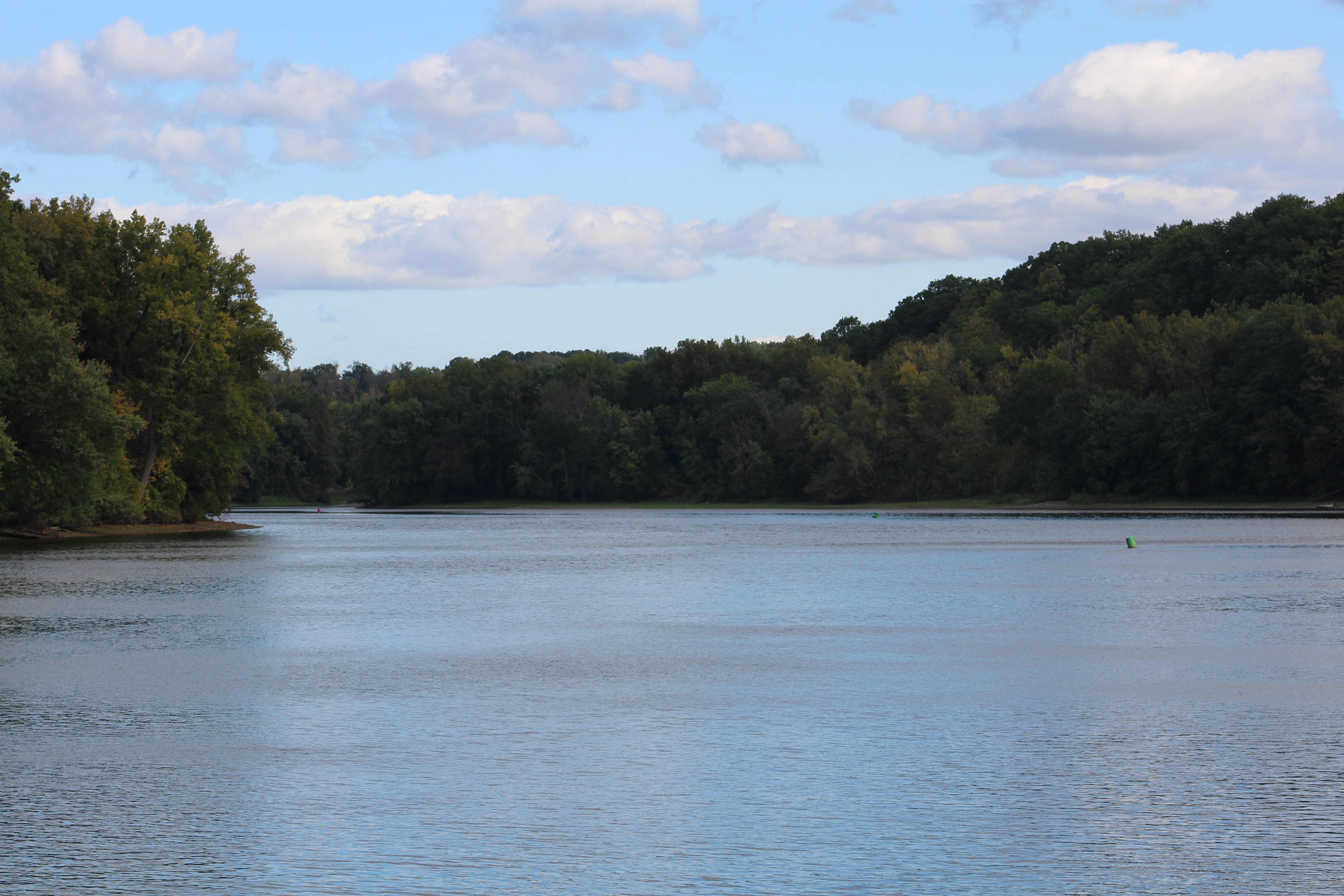
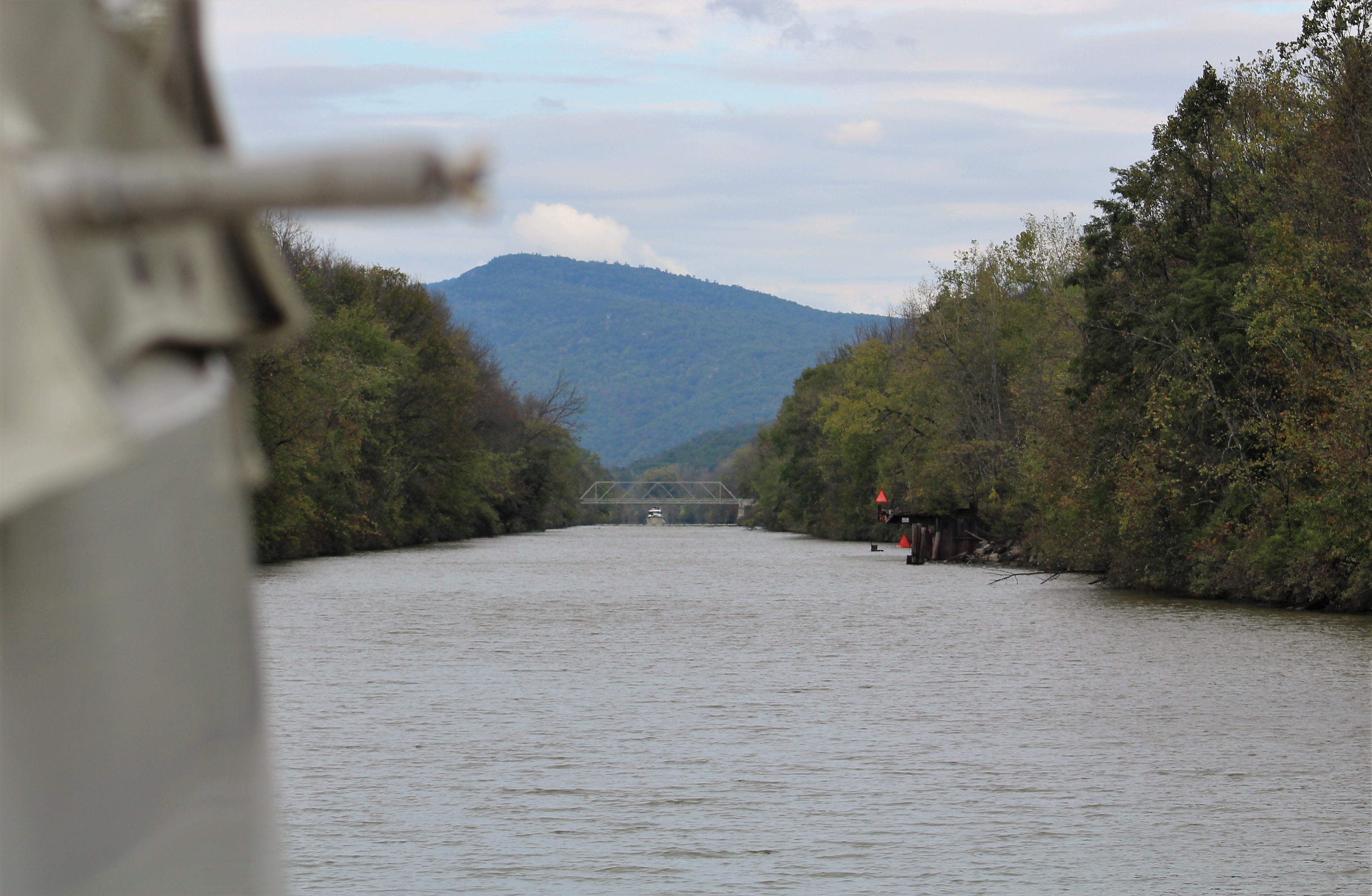
    2 Champlain Canal

    The main goal today was to move ten miles to Mechanicville and contact the Lockmaster at Lock C-3.  There is a bridge just past Lock C-3 that is only 15.5 feet of vertical clearance.  The skipper called the Lockmaster and learned that the current pool level created a vertical clearance of 17 feet 2 inches.  Unfortunately, this is not good enough.  Still Waters II requires 17 feet 6 inches of clearance.

    5 Mechanicville Free Dock

    The skipper got busy and took the anchor light and TV antennae down.  This resulted in lowering the vertical clearance to 15 feet 6 inches which should be good enough to squeeze under the bridge.
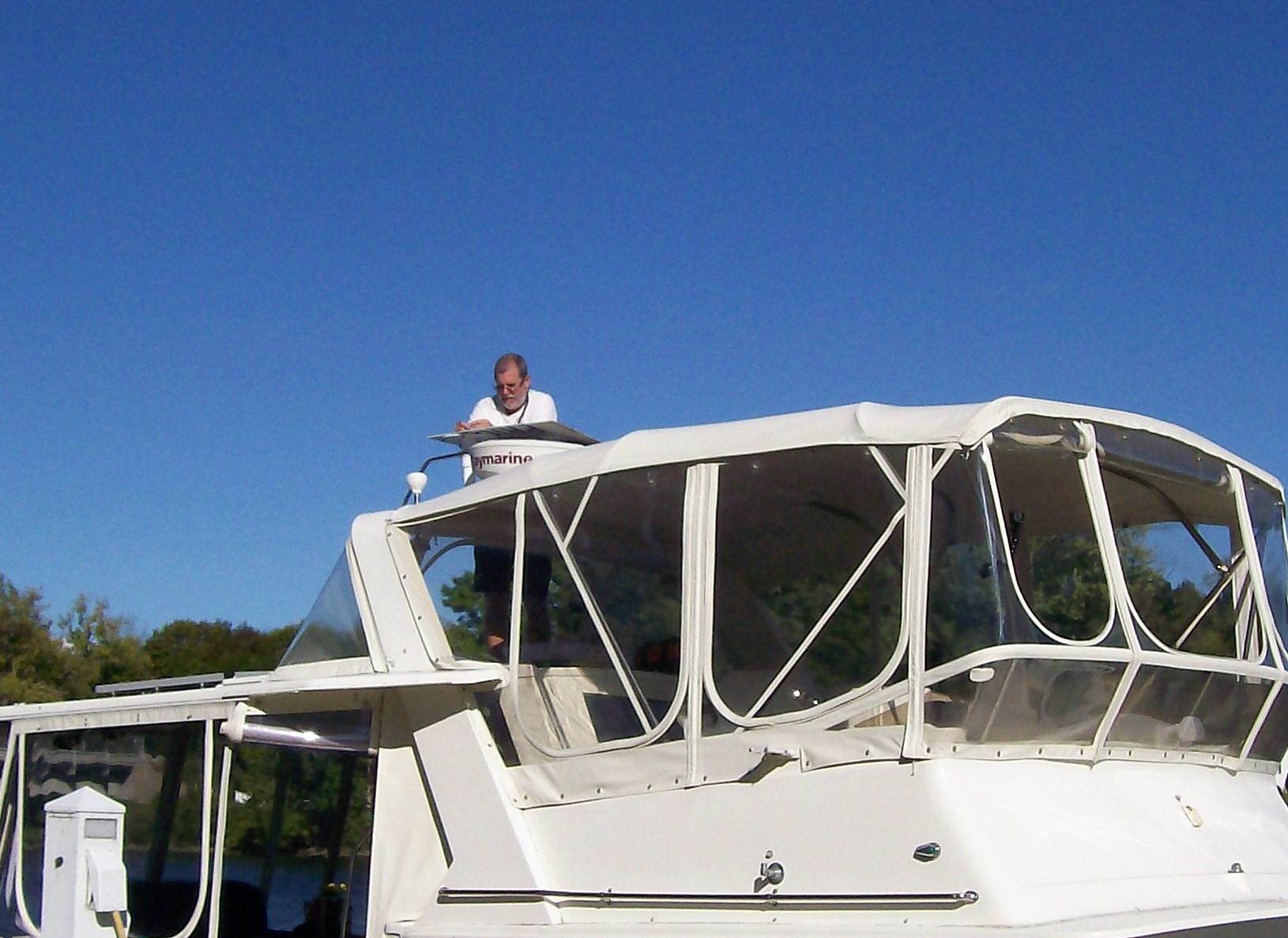
    6 Drop Heigth

    Friday, Sept 29, 2017

    After clearing Lock three, it was less than a mile to the lowest bridge on the Champlain Canal.  Before leaving the lock, the skipper did ask the Lockmaster about the bridge clearance one more time.  The Lockmaster assured the skipper he had 17 feet of clearance.
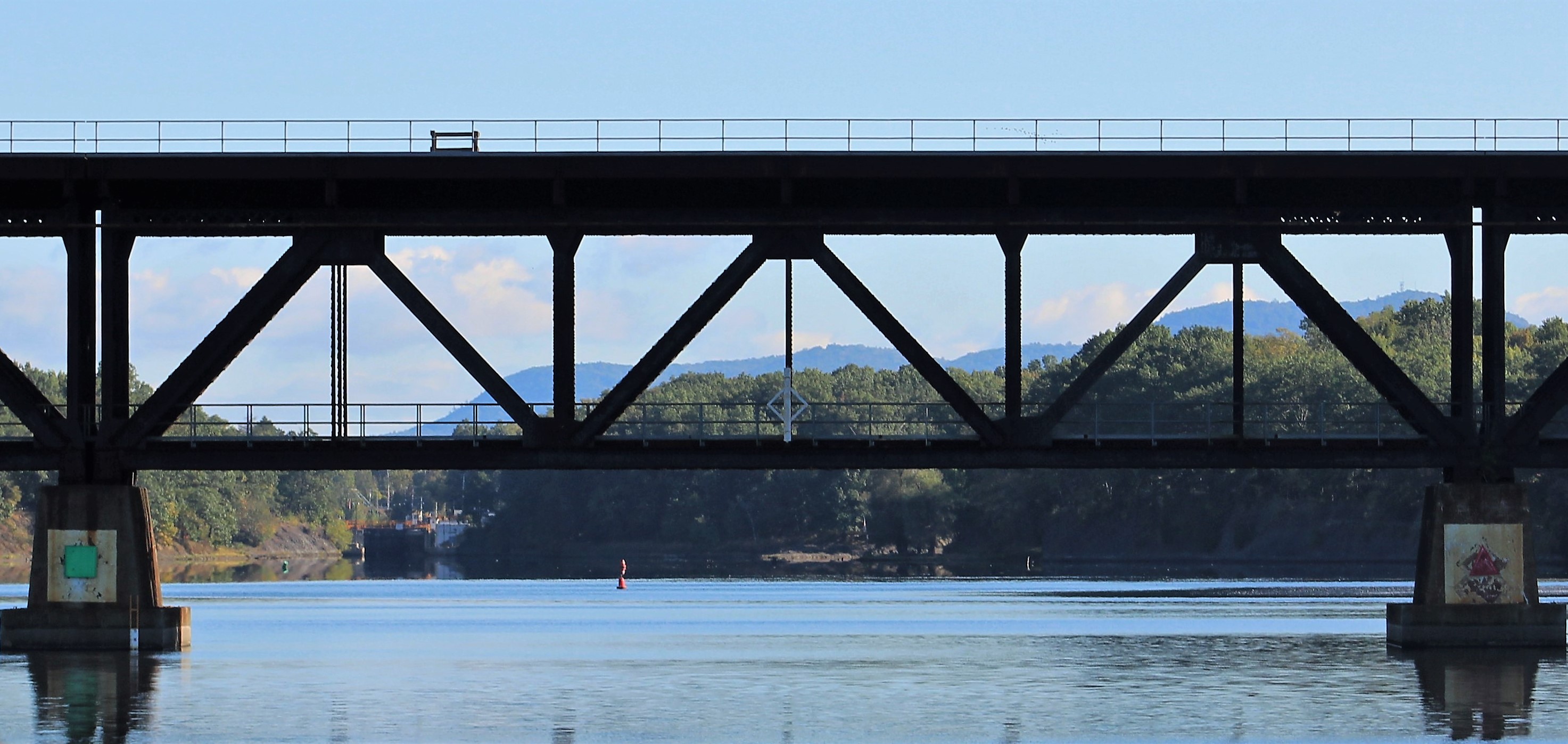
    IMG_0001

    When they approached the bridge, the water level board read 17 feet, so the skipper slowly approached and then squeezed under the bridge.  As you can see below, there was plenty of room to spare.
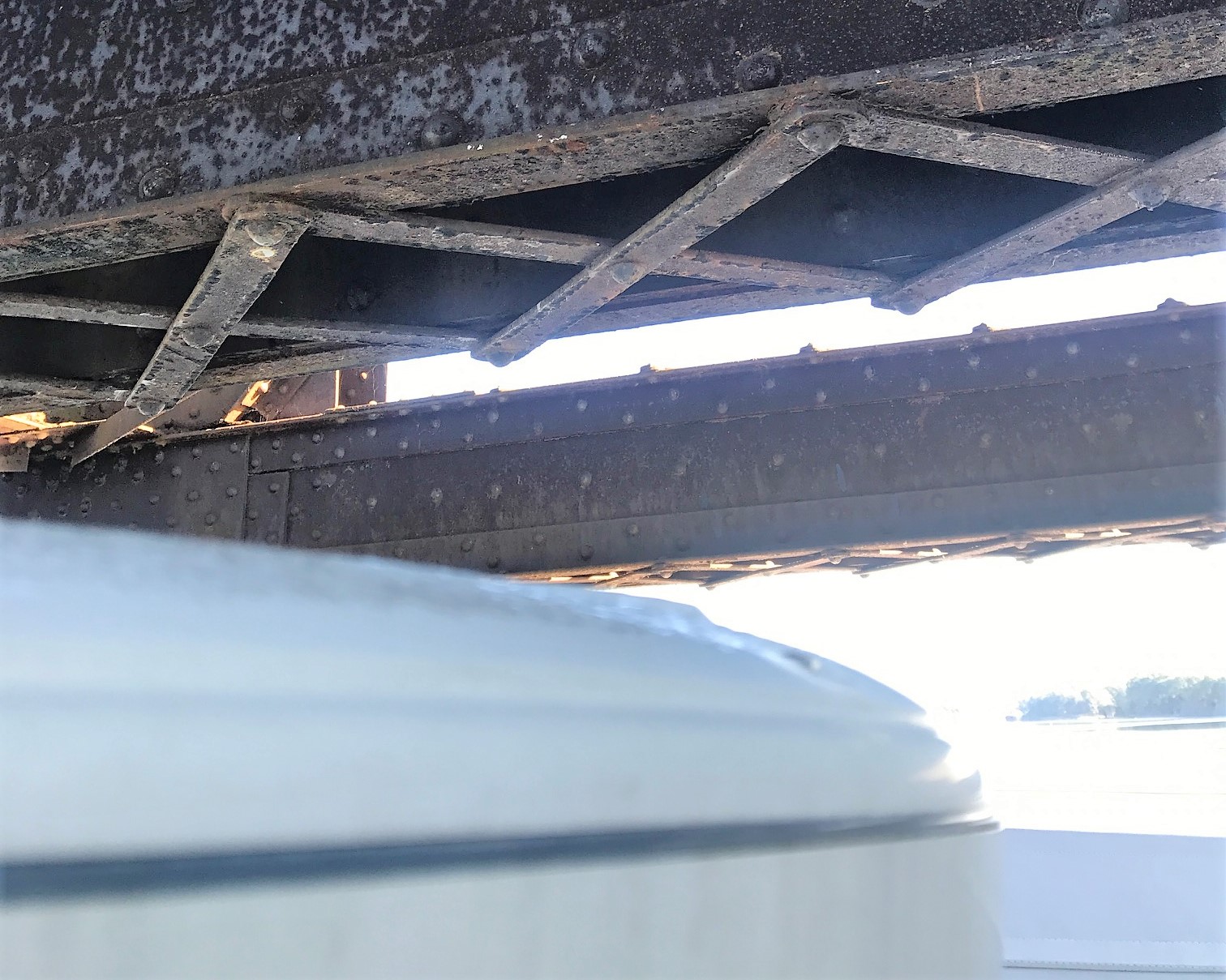
    7 Worried

    There was some great scenery on the route to Lock C-5.  After exiting the lock, the crew approached a confusing bridge.  The Navionics, Blue Chart Garmin, and NY Canal Handbook charts all listed the bridge clearance at different heights.  The visual clearance did not look good.
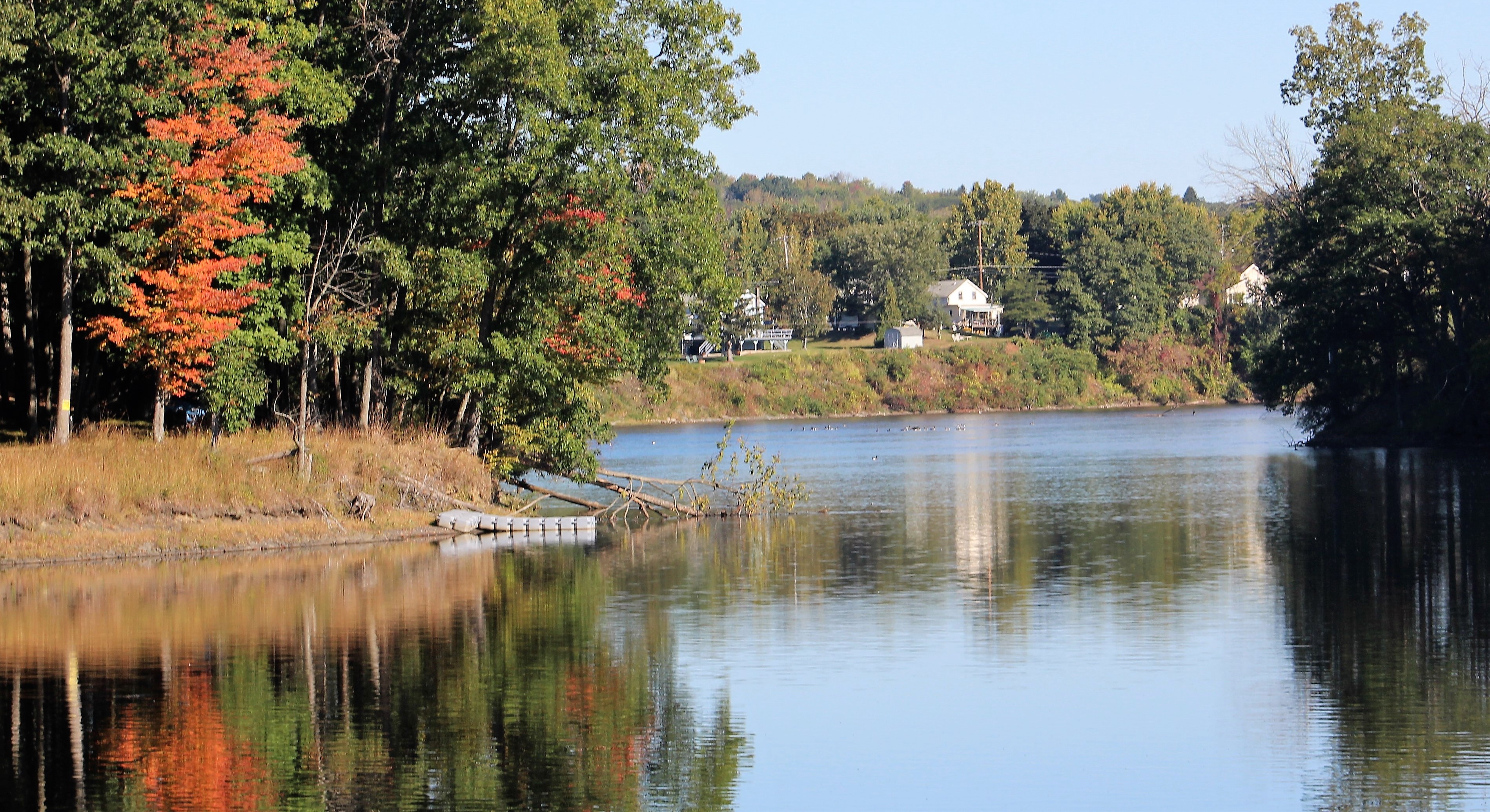
    IMG_0002

    Once again, the skipper eased the boat up to the bridge while the Admiral climbed out on the roof of the sundeck to ensure they had enough clearance to make it under the bridge.  Just before reaching the bridge some local yelled out, ‘You have plenty of room.’  Well turns out he was right.
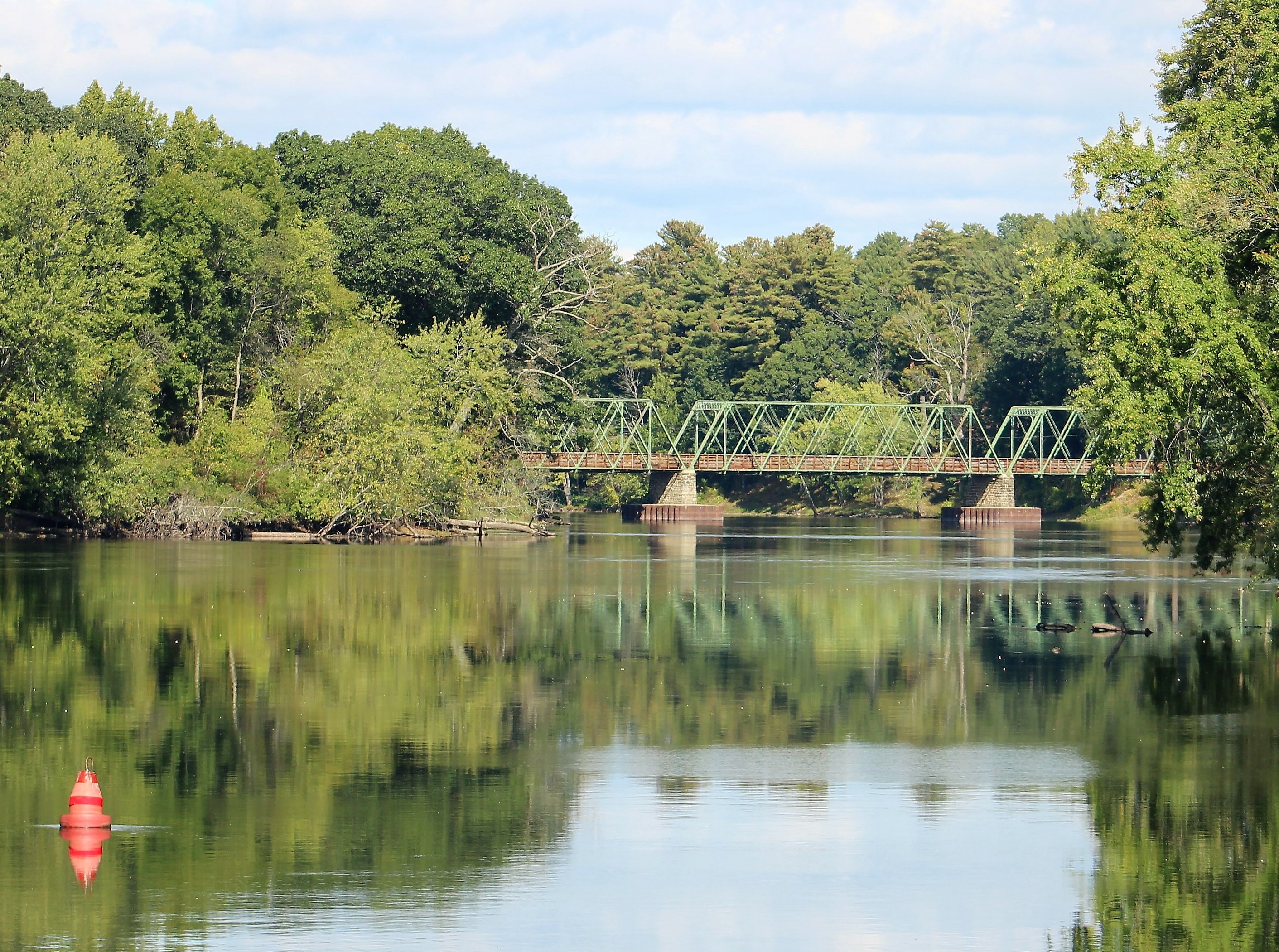
    IMG_0006

    The crew continued on to Ft Edwards Yacht Basin without any more nail bitter bridges.
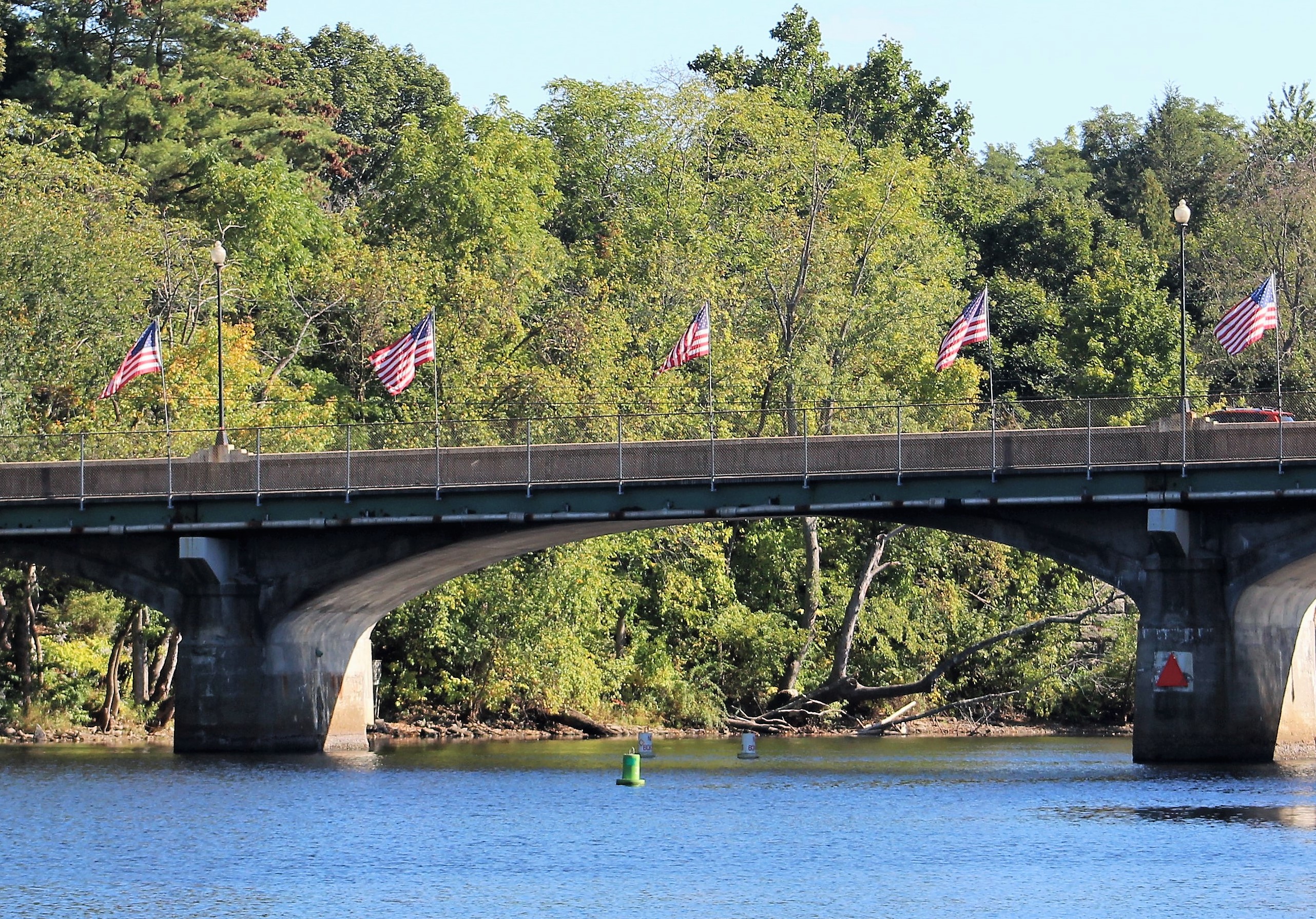
    IMG_0008

    Saturday, Sept 30, 2017

    The crew awoke to rain and cold temps.  It was only 47 degrees when the skipper woke up.  They decided to wait for the rain to stop before leaving the dock.  The skipper says he does not mind being cold, and he does not mind being wet, but he hates to be cold and wet.

    After lunch the crew set out for Whitehall.  As the crew pulled into Lock C-7 the rain started back up.  Luckily it was only a light mist.  By the time they cleared the lock, the sun broke out for a while.

    Lock C-8 was cleared in sunshine.  Just after exiting the lock, the skipper got a radio call from a tug Captain.  He requested the skipper to hold his position while the tug made it through a narrow shallow portion of the canal.  The tow Captain said he gets stuck in the area about half the time.  After about ten minutes, the Captain called back and said he was dragging bottom but thought he would make it through the shallow area.  He told the skipper to come on by and throw a little bit of wake.

    After the tow, the skipper spotted a Bald Eagle perched in the top of a dead tree.
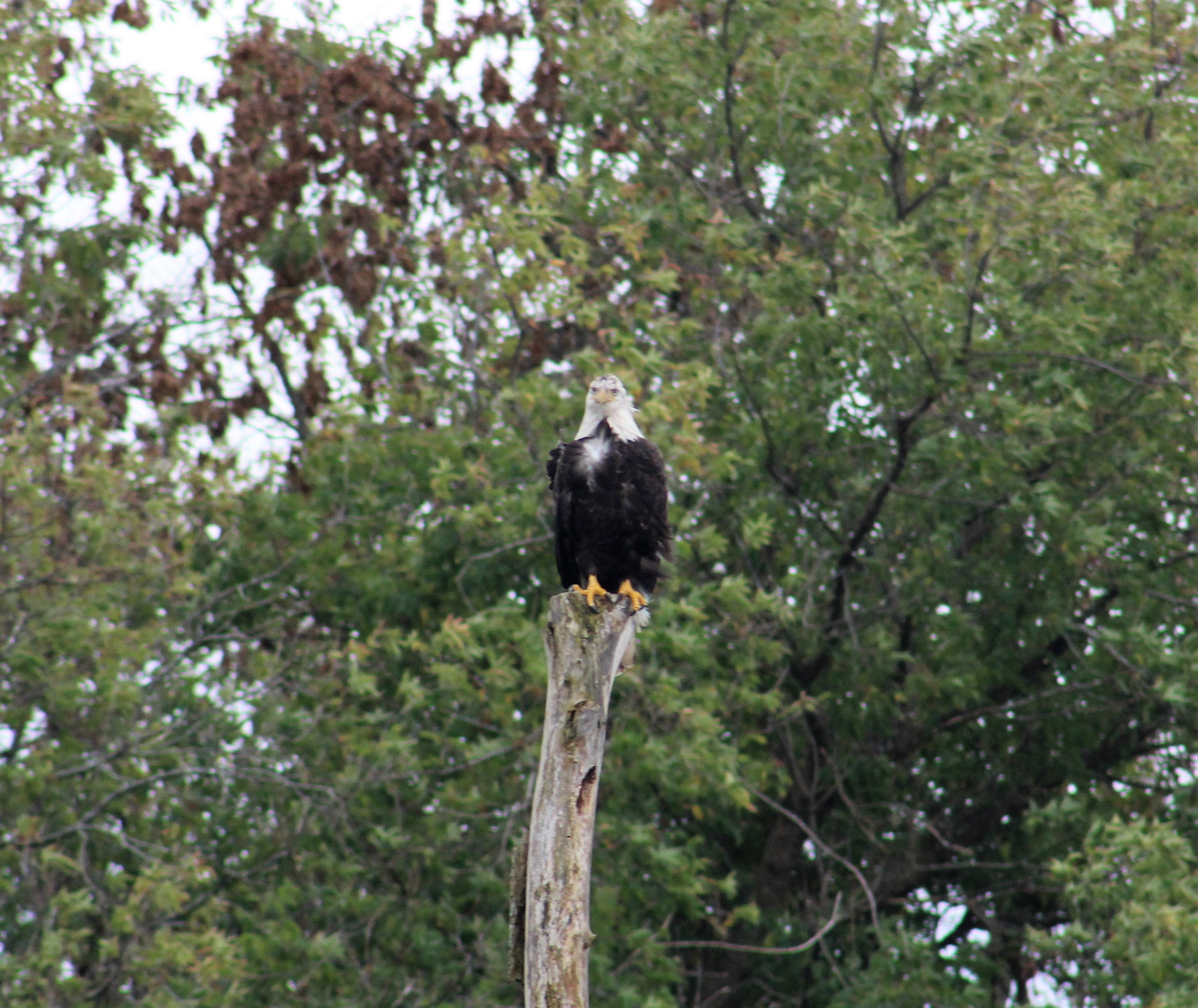
    IMG_0010

    The crew passed many farms along the canal today along with many boaters headed south.
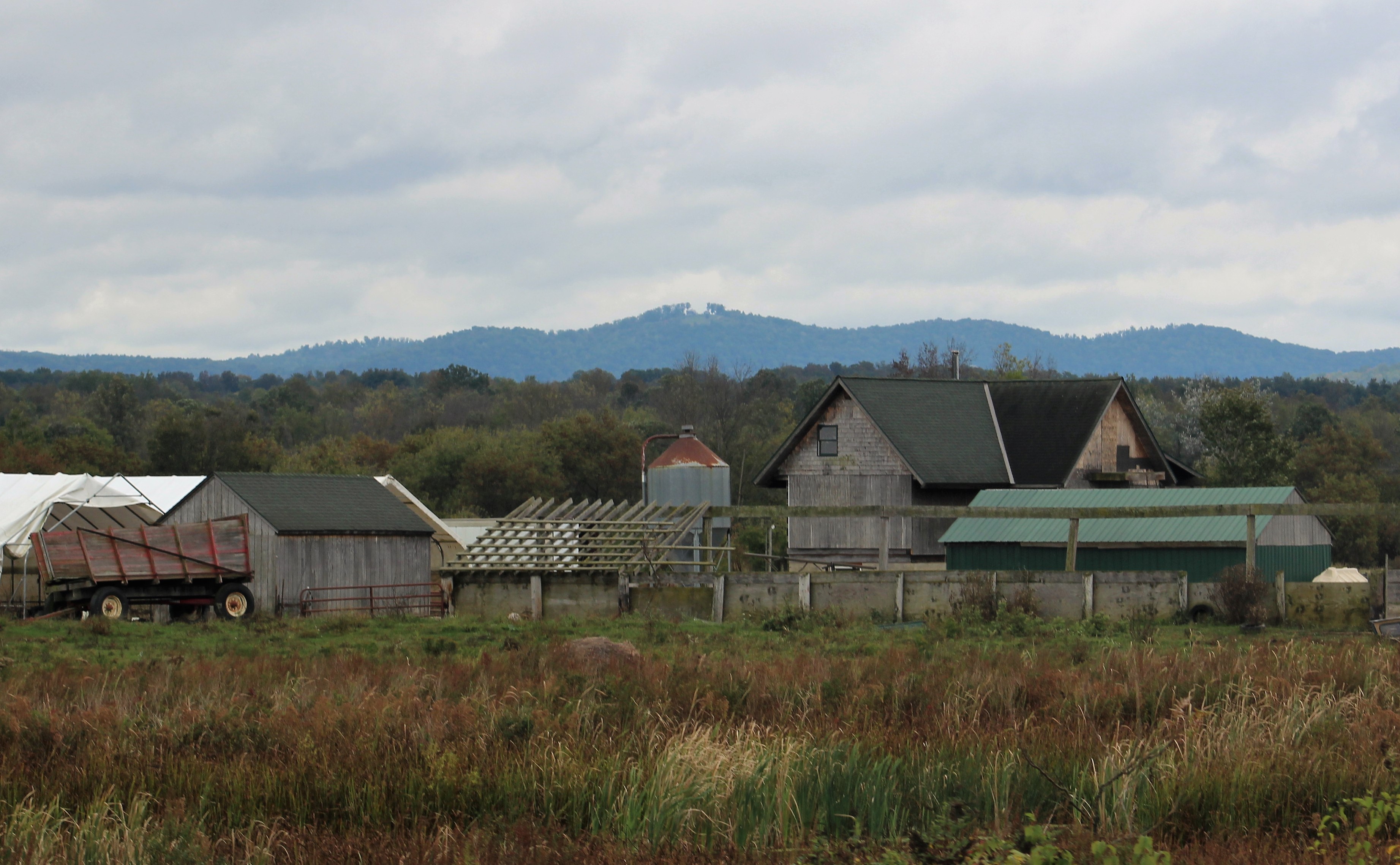
    IMG_0012

     IMG_0013

    When the crew arrived at the Whitehall town dock there were already three boats tied along the wall.  There was barely any room to shoe horn a fourth boat in.  The owner of a sailboat hopped off his boat and ‘walked’ it closer to another sailboat on the wall.  This provided about 30 foot of wall space for Still Waters II to land on the wall with 15 feet of boat hanging out in the open.
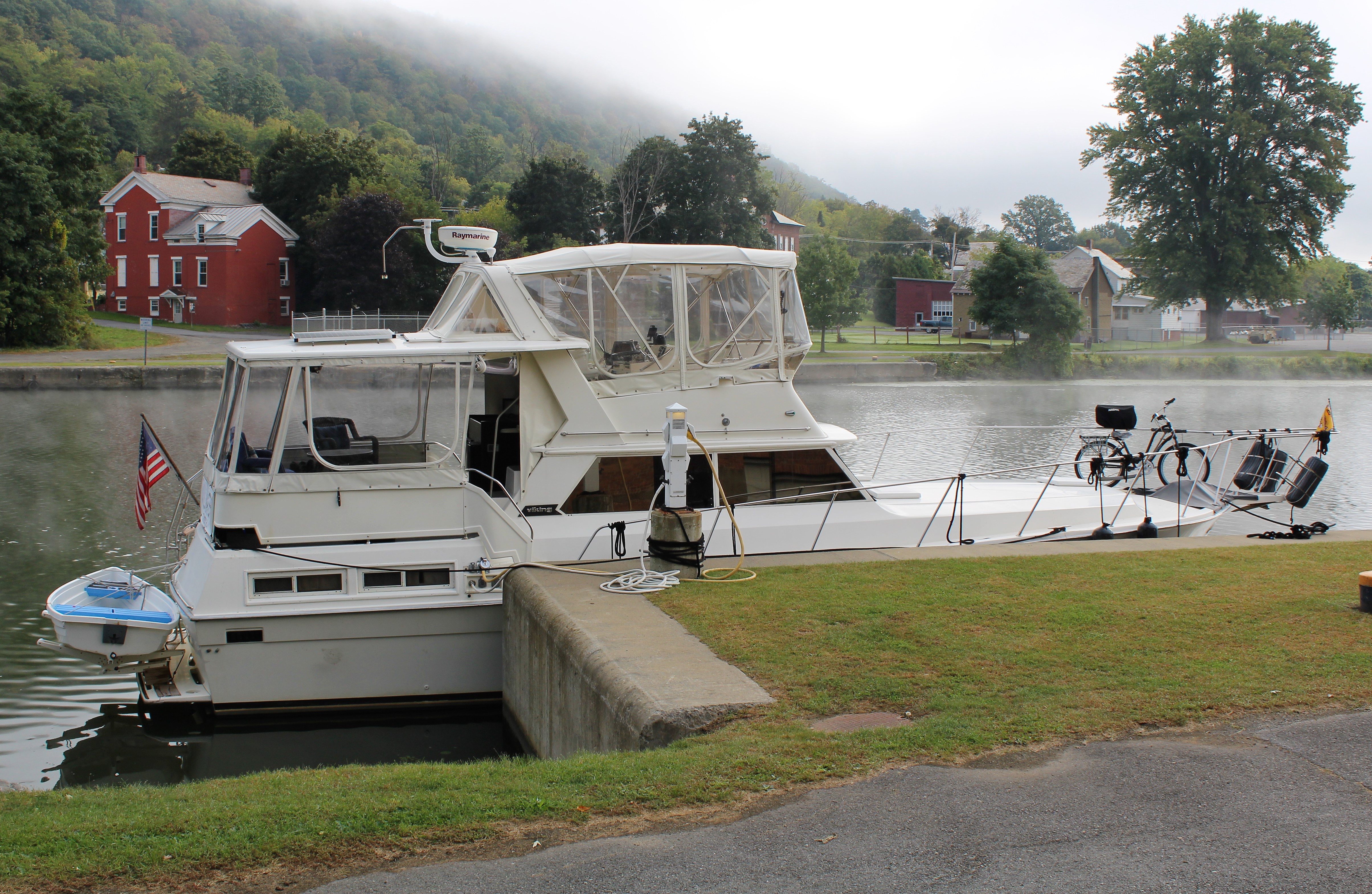
    IMG_0016

    Since the temps are scheduled to drop in the low 30’s tonight, the Admiral was happy to be getting electricity for the heaters for the weekend.

     Boat Name of the Week

          Eggs-to-Sea

    Next Week – 

    The crew will continue on to Burlington, Vermont where they will turnaround and head back south.  They will need to be out of the Champlain Canal before the closure on October 11th.

    Loop On – The water goes on forever and the adventure never ends.
    Eric the Red

  • Lost My Head in Sleepy Hollow

    Hello virtual crew members and fellow adventurers!

    Eric here with the latest travels of Still Waters II.

    IMG_0178

    Summary of week:

    Poughkeepsie

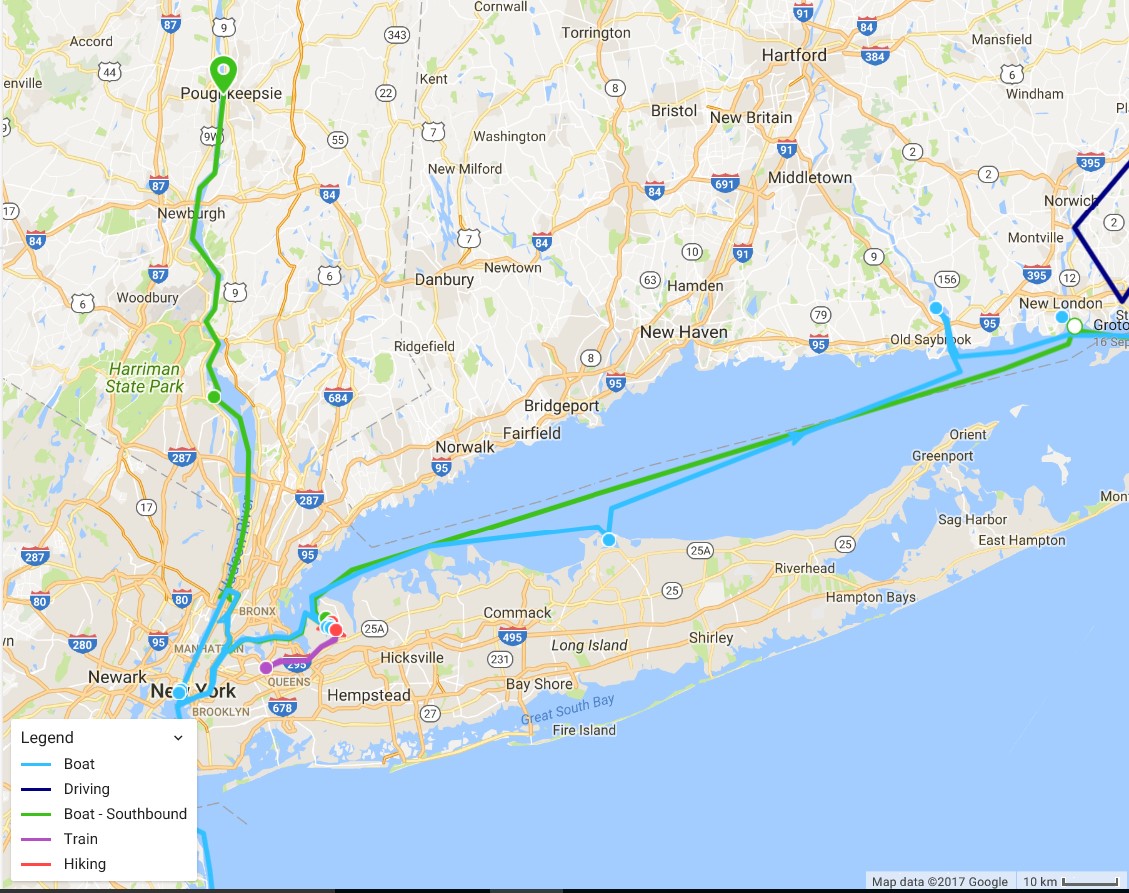
    Sunday, the crew continued their retreat from Hurricane Jose.  They left New London and headed west and made the length of the Long Island Sound.  On Monday, they left Port Washington and headed north up the Hudson River where they got out of the Tropical Storm Warnings.  On Tuesday, they continued north to Poughkeepsie to gain some safety margin from the storm.

    This week’s journey of discovery did answer the following questions:

    1. How far north up the Hudson River do you have to go to get out of the way of Hurricane Jose?
    2. What in the world is ‘Bridge Music’?
    3. Who was the most hated man in America during the Gilded Age?

    Click on the link to read the day-to-day travel log.  This includes weather report of the day, sea conditions, log of the days travel, and a summary of the experience.

    At the Box Office

    This week’s video shows Still Waters II traveling in the fog as she retreats from Hurricane Jose.   Enjoy!

    To see past videos, click on the link to the Still Waters II Vimeo site.  The library now contains 37 videos of Still Waters II cruising America’s Great Loop.

    Special Feature

    An aerial tour of Poughkeepsie and surrounding area that the crew has been enjoying the past week.  Including walking the bridge loop (4.5 miles) which passes over both bridges in the video.

    https://vimeo.com/164915259

    Special Special Feature

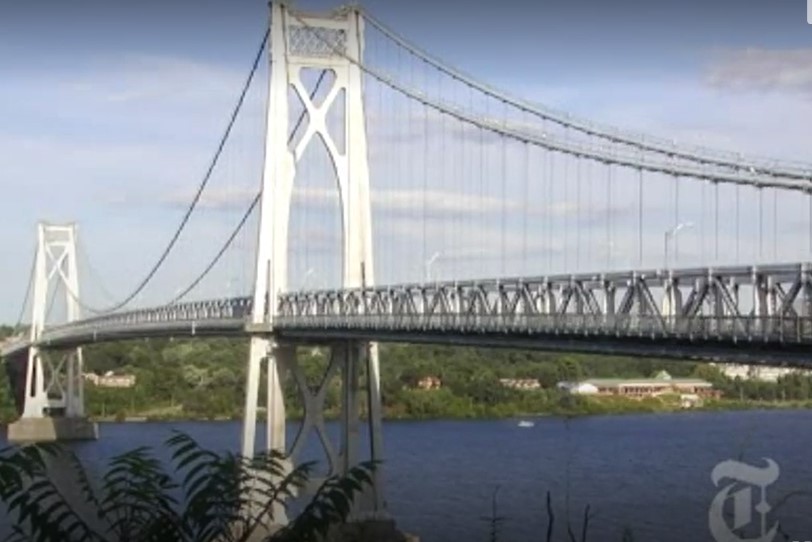
    Joseph Bertolozzi is using the Mid Hudson Bridge near Poughkeepsie, NY, as an instrument and composed 12 songs that are on an album called Bridge Music.  Click on the bridge pic below to launch a video about the project.

    Mid Hudson Bridge

    Sunday, Sept 17, 2017

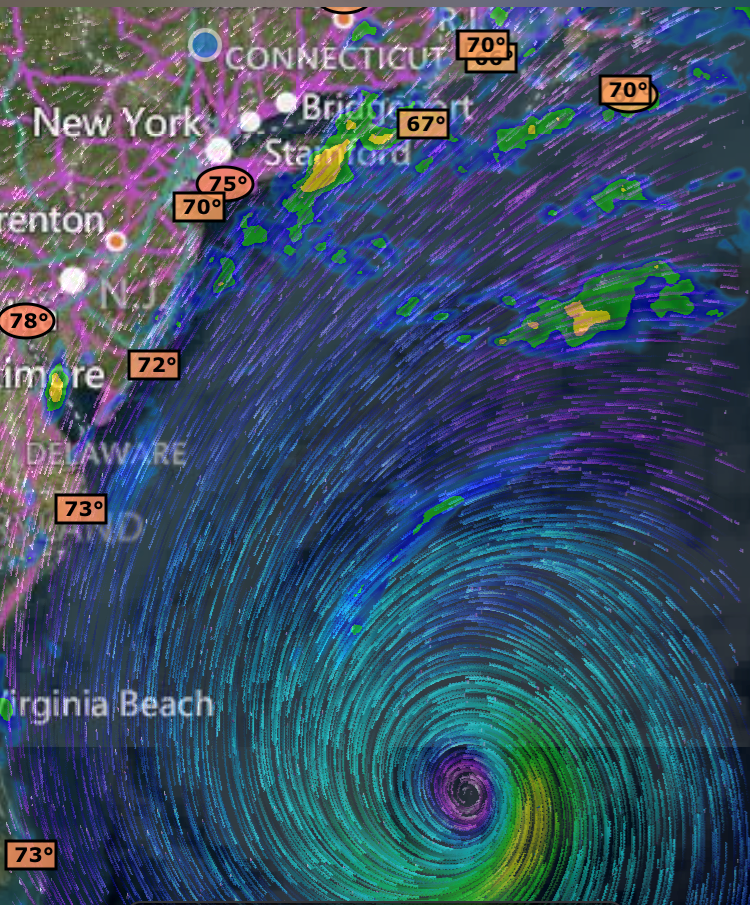
    The winds from Jose were predicted to be Gale Force in the Long Island Sound on Tuesday.  To try and ensure that the crew does not ever endure that kind of wind again, they opted to travel the 100 miles to the west end of Long Island Sound on a calm Sunday.

    Jose

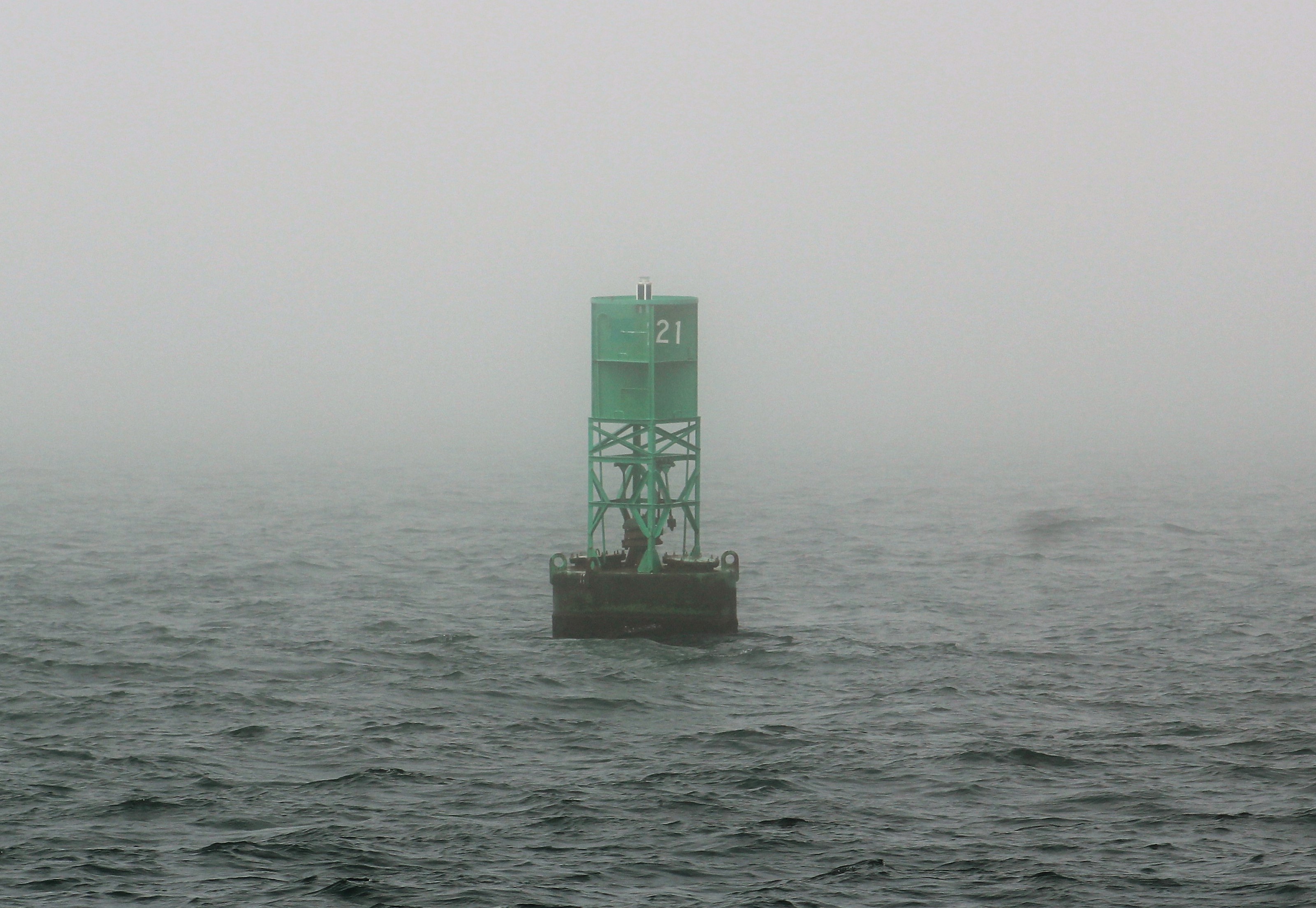
    However, the crew had to travel in fog with visibility around a ¼ mile or less for most of the day.  This turned out to be very stressful for the crew.

    23

    As the crew crossed a ferry path leaving New London, they could here a fog horn from a boat, could see the boat on radar, but could not see the vessel.  When the ferry was less than a ¼ mile in front of Still Waters II the skipper could finally make out the outline of the ferry.

    Around 0930, the fog began to lift and visibility improved to ¾ of a mile.  This turned out to be good timing because the crew met a tow just off the port side.

    24 Connecticut Fog

    While crossing the Long Island Sound, Still Waters II did pick-up a couple of hitchhikers.  The two little birds would fly around the boat and then land and rest.  Then take off and fly around a while, and then come back and land again on the boat.  They eventually found their way into the sundeck and rode back there sitting on fishing poles until arrival at Port Washington.

    25

    After securing the boat to the mooring ball, it was time for the crew to relax.

    The skipper used the remaining daylight to review the progress of Jose and check the tide tables to determine when to leave in the morning.

     Monday, Sept 18, 2017

    The crew dropped the mooring ball line early and headed to New York City at 0648.  The fog was still around but the visibility had improved out to 2-miles.  The crew left Port Washington and headed to the East River.

    When the crew reached Hells Gate, they turned towards starboard and headed north up the Harlem River.  At the end of the Harlem River, the crew requested the Spuyten Duvall Swing Bridge to open and the bridge tender immediately began to open the bridge.  The crew passed thru the bridge and into the Hudson River.  They turned to starboard and headed north up the Hudson River to get out of the reach of Hurricane Jose.

    Once on the Hudson River, the Coast Guard was heard making an announcement over the radio that the Tapenzee Bridge was closed to all water traffic for the day.  After travelling ten miles the crew passed several tows anchored in the River waiting for the Bridge to open at 1600.

    When the skipper was near the work zone he radioed the work crew on the crane in the middle of the channel and was given permission to pass under the bridge.

    27 Hudson River

    After passing under the bridge, the skipper checked his weather sites and determined that the crew was finally outside the Tropical Storm Warnings for Hurricane Jose.  The crew continued north bound to create a little more safety margin.

    27.3

    At the end of the day, the crew dropped anchor in the Haverstraw Cove to spend the night.
    28 Haverstraw Cove

    Tuesday, Sept 19, 2017 

    The crew weighed anchor and continued north bound on the Hudson.  This is one of the more picturesque runs on the River, passing Bear Mountain, West Point, and Batterman’s Castle.

    The skipper noticed this stag deer on the side of the cliffs at Bear Mountain.

    29 Stag at Bear Mountain

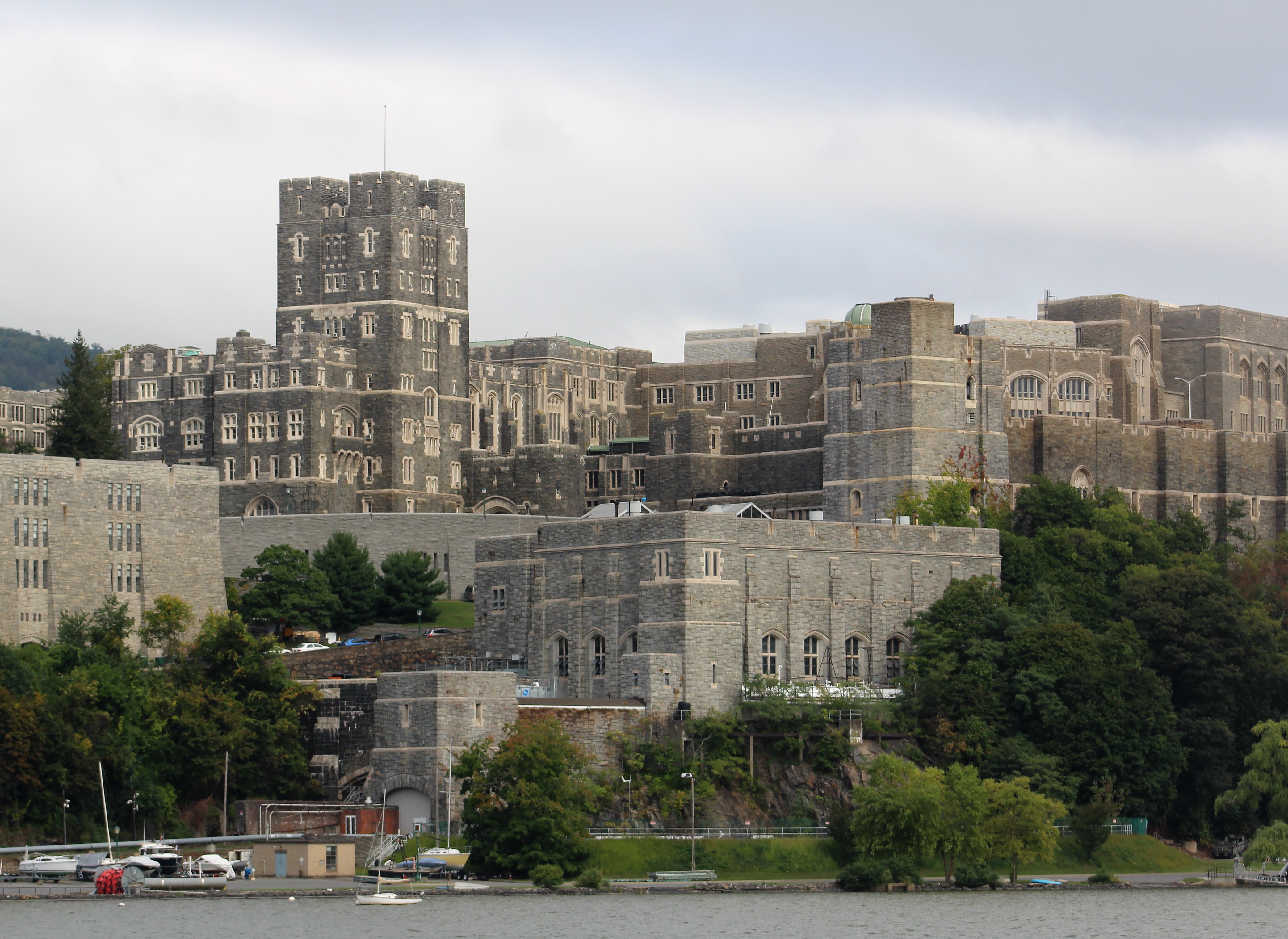
    When the crew passed West Point, I am sure I heard the skipper yell “Go Navy, Beat Army!”  But notice that the Army even has a few boats in the pic below.

    33 West Point

    Since last passing by Batterman’s Castle, there was a murder that has been solved.  A couple was kayaking around the island and the fiancé disappeared.  Two years later (Spring 2017) the women finally confessed to manslaughter.  There is probably more to this story than meets the eye.

    The crew made it to Poughkeepsie where they will wait for Jose to dissipate and look to see what Maria intends to do next.

    Wednesday – Thursday, Sept 20-21, 2017      

    The crew has hiked the Walkway Over the Hudson each day.  This is a 4.5-mile loop trail that passes over the Mid-Hudson Bridge and the Poughkeepsie Railroad Bridge.  The Rail Bridge was added to the Rails to Trails Hall of Fame in 2015.

    Friday, Sept 22, 2017

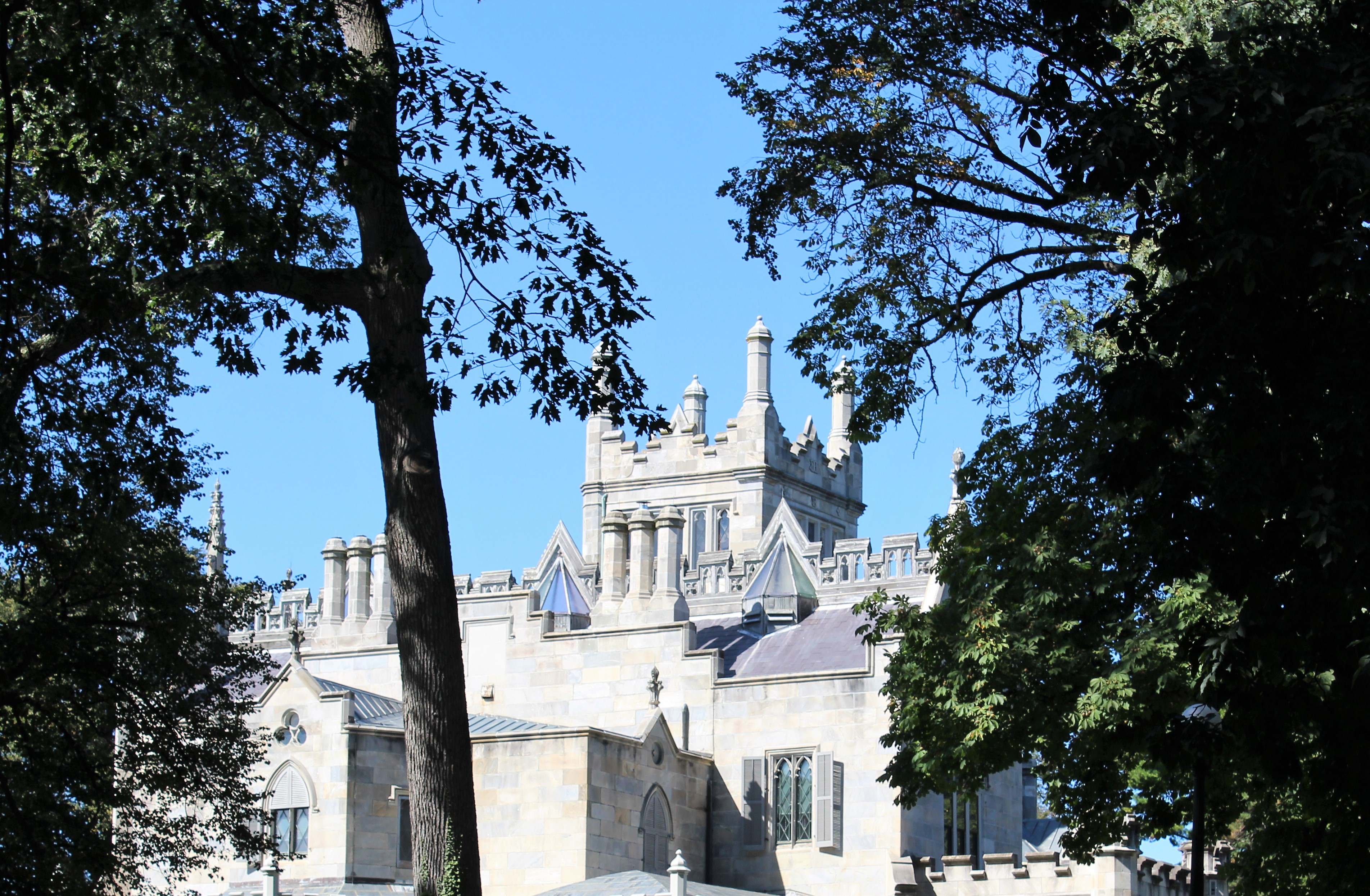
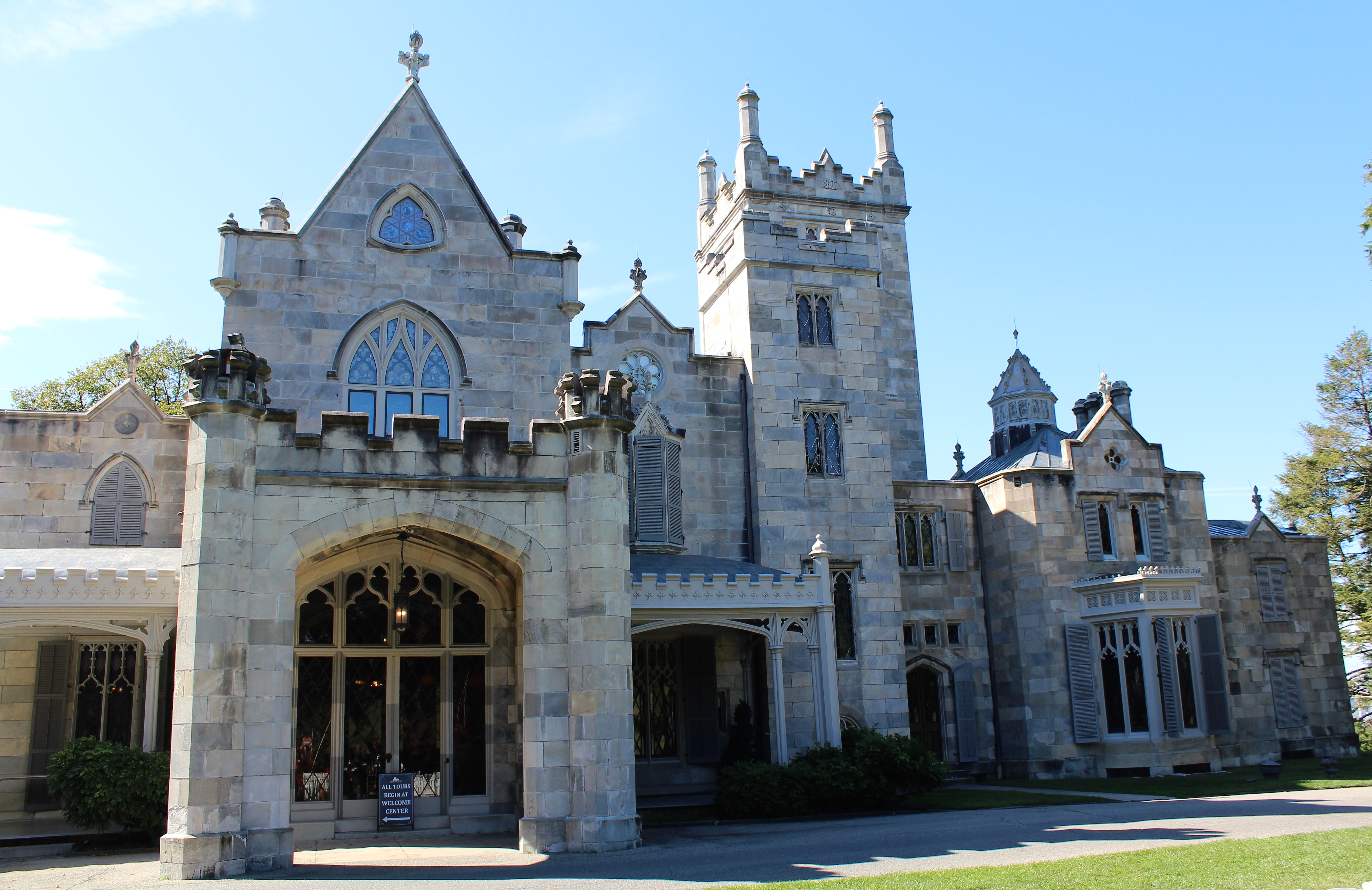
    The crew rented a car and headed South to Tarrytown.   They visited the Lyndhurst Castle.  William Paulding, who was a two time Mayor of New York City, had the home built in 1838 as his retirement cottage.

    IMG_0117

    In !864 George Merritt bought the house and had the original architect double the size of the cottage.  Merritt enjoyed the home for about 10 years but then died an early death in 1873.

    IMG_0120

    After seven years (1880), the most hated man in the Gilded Age, Jay Gould, bought the estate to be used as his summer home.  It is rumored that his contemporaries did not want him in Newport during the summer socialite season so he summered on the Hudson.  Gould was probably ok with that since he had long lasting feuds with most of  his NY business competitors.

    IMG_0126
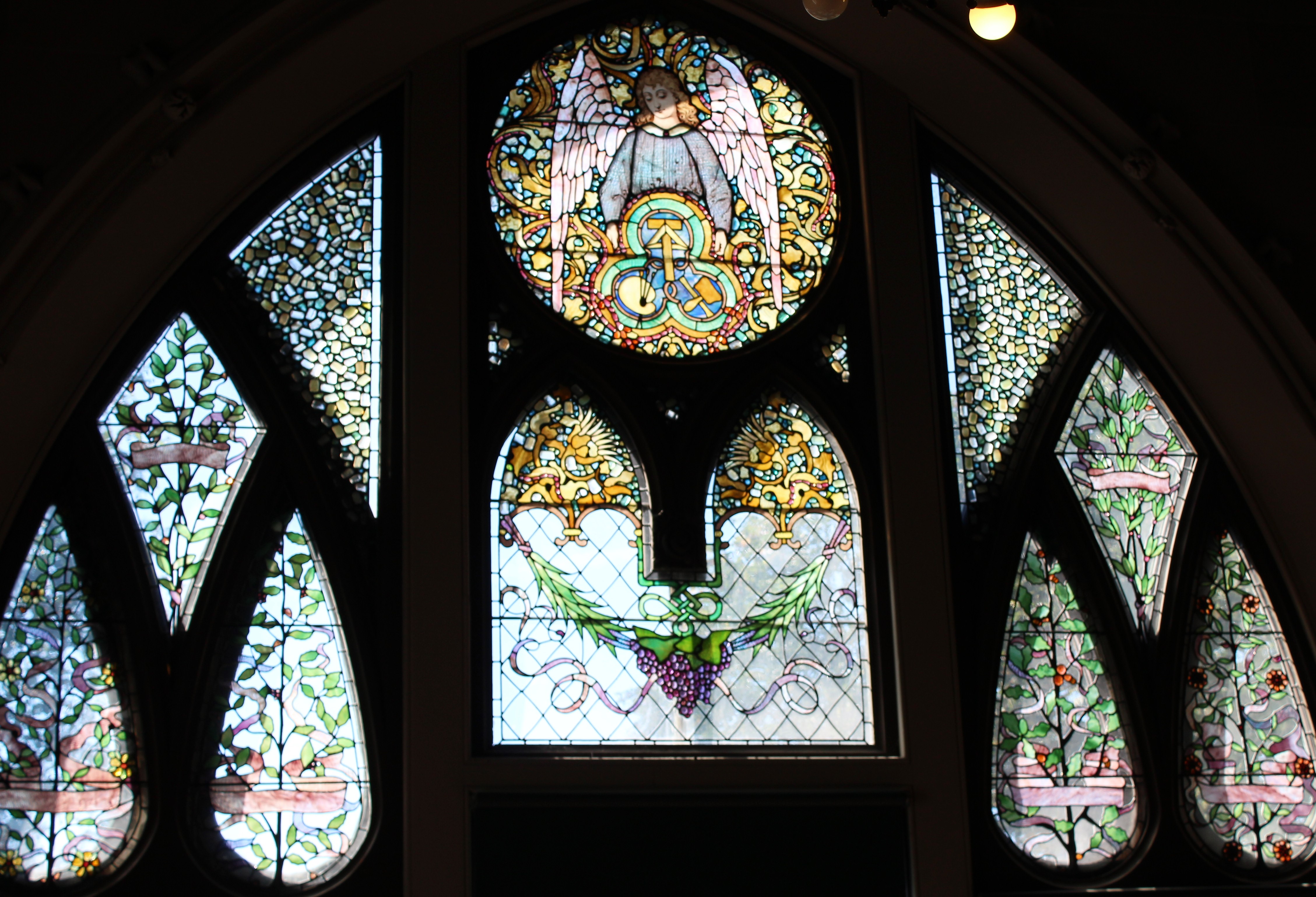
    Tiffany Stained Glass in Upstairs Library

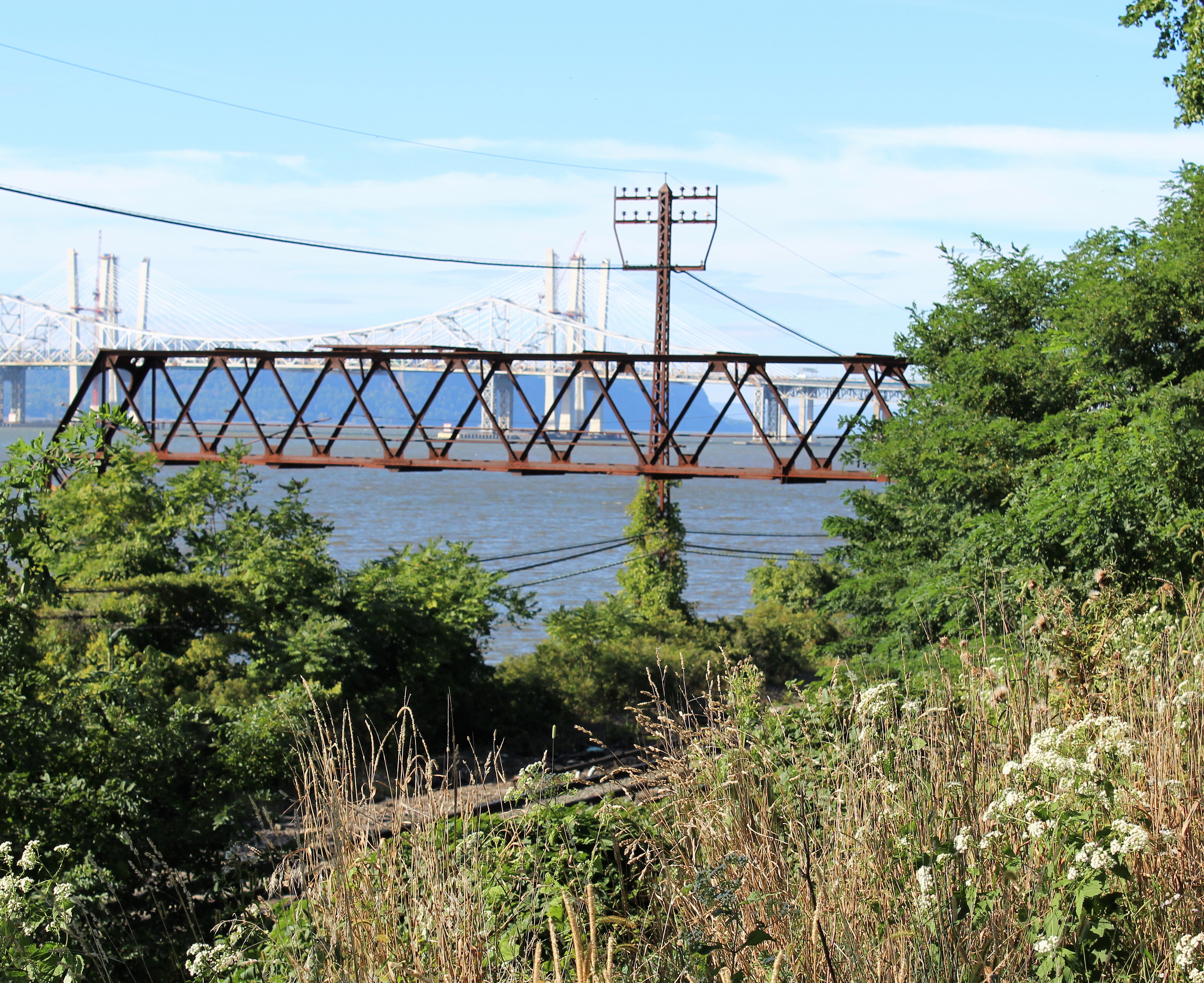
    For example, he detested the Vanderbilts so much that he would not ride their train that ran right beside his property.  Instead, he built a bridge over the railroad tracks to a dock on the Hudson River and would take his personal yacht back and forth to New York City.

    IMG_0128

    Upon his death in 1892, Jay Gould’s daughter, Helen, took over the management of the estate.  Her contribution was adding the bowling ally overlooking the Hudson River.

    IMG_0129

    Helen died in 1938 and passed the estate on to her sister, Anna.  The new owner returned from living in France to escape the beginning of WWII and to maintain Lyndhurst.  However, her tastes were more NYC rather than country cottage, so she only visited the estate about three weeks per year.  Interesting enough though, she kept about 150 people employed maintaining the property until her death in 1961.  At that point the estate was passed to the National Trust for Historic Preservation.

    Because the Gould daughters took such care of the place: the home, furnishings, and grounds were in excellent condition when turned over to the trust.  In side the home is one of America’s largest private art collections.  Since the home was a summer cottage, each time it sold and changed hands the contents remained.  The crew was unable to take pictures inside because it was being set up for some kind of Halloween Festival with no pics allowed.

    IMG_0131

    Saturday, Sept 23, 2017

    The crew set off to explore Bear Mountain and Sleepy Hollow today.

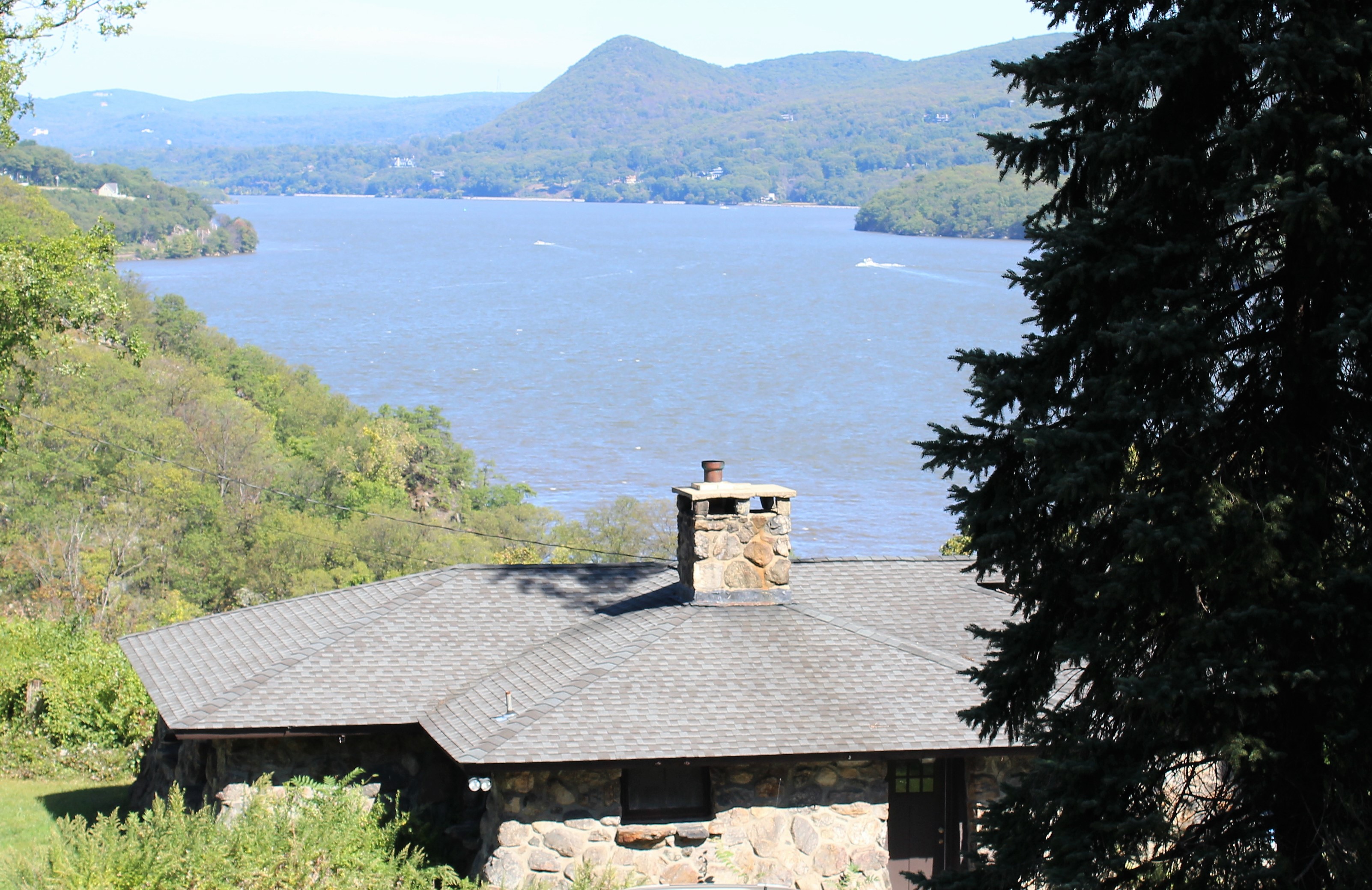
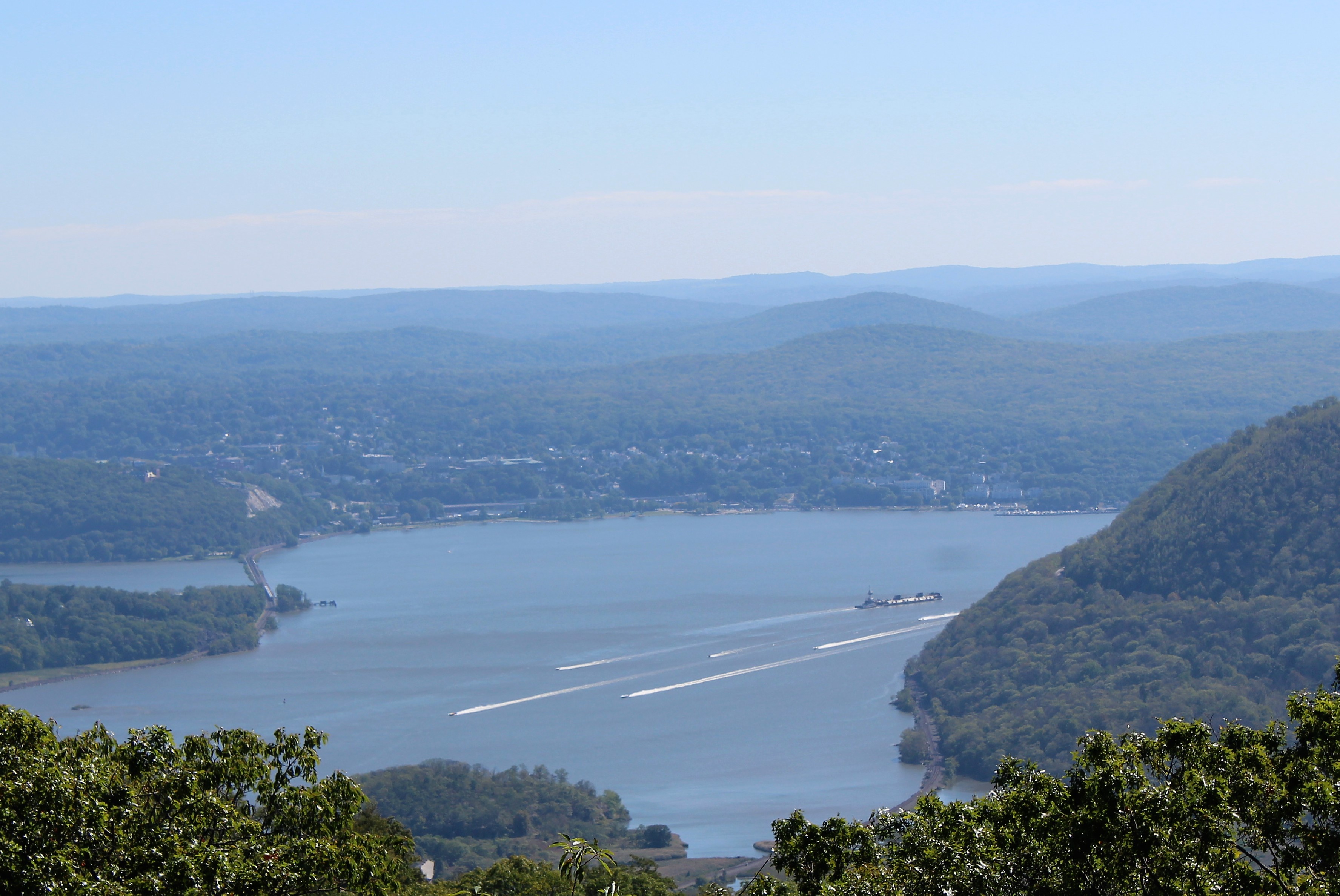
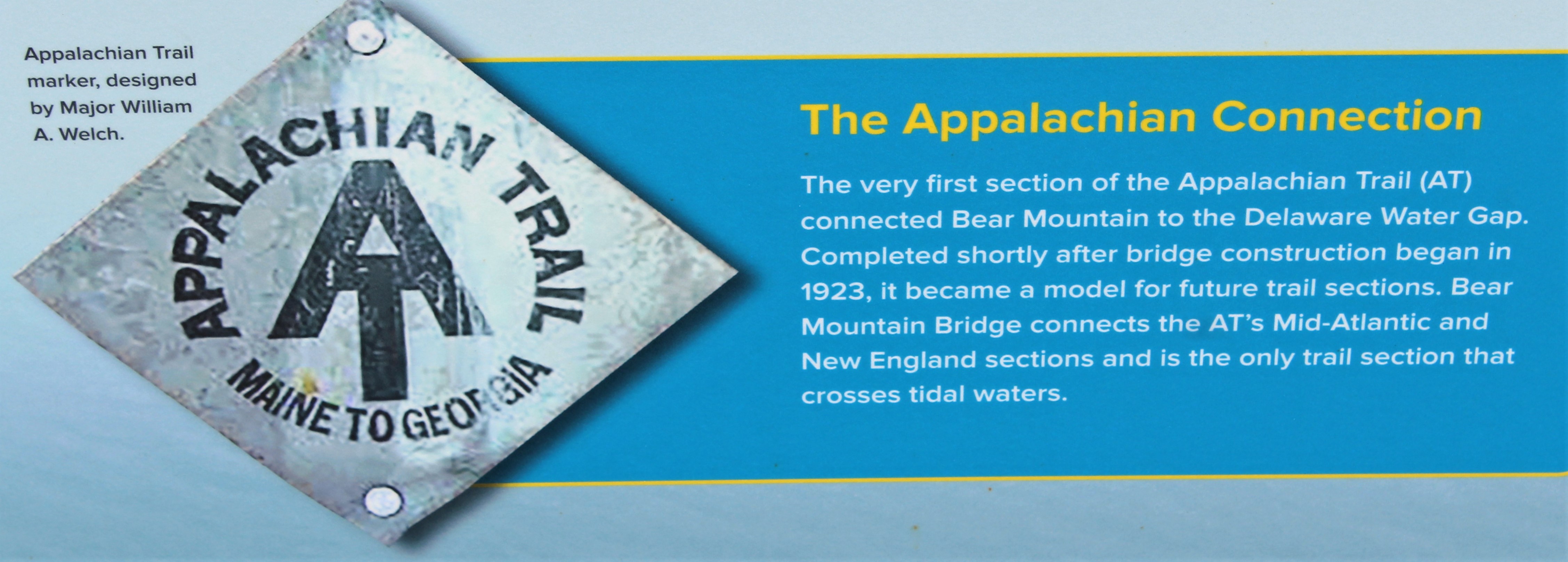
    Bear Mountain was a neat surprise.  The crew crossed the Bear Mountain Bridge to get over to the west side of the river.  When this bridge was completed in 1924, it was the longest suspension bridge in the world.  The title lasted for 19 months, when it was bumped to second place by the Ben Franklin Bridge in Philadelphia.

    Bear Mountain Bridge

    A few views from the Bridge:

    IMG_0142
    East Bank


    IMG_0147
    West Bank

    And of course the Admiral was ready to buy this cabin for the north looking view.

    IMG_0151

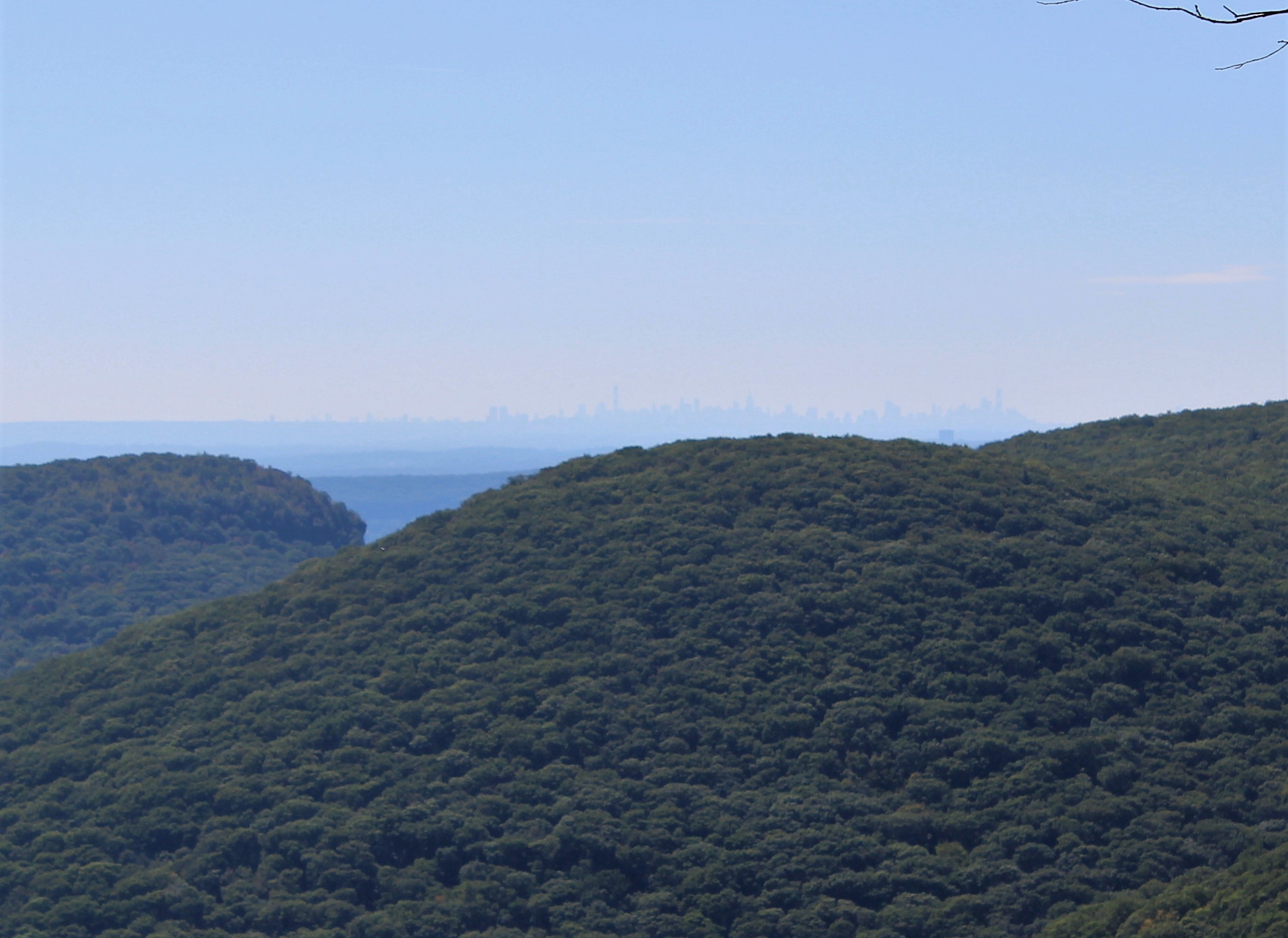
    The view from the top of Bear Mountain:

    IMG_0134
    Looking North


    IMG_0135
    Looking South at NYC 40 miles away

    This area is also where the Appalachian Trail got its start.  The New Jersey and New York trail folks started the trail here and used the Bear Mountain Bridge to cross the Hudson River.

    IMG_0149

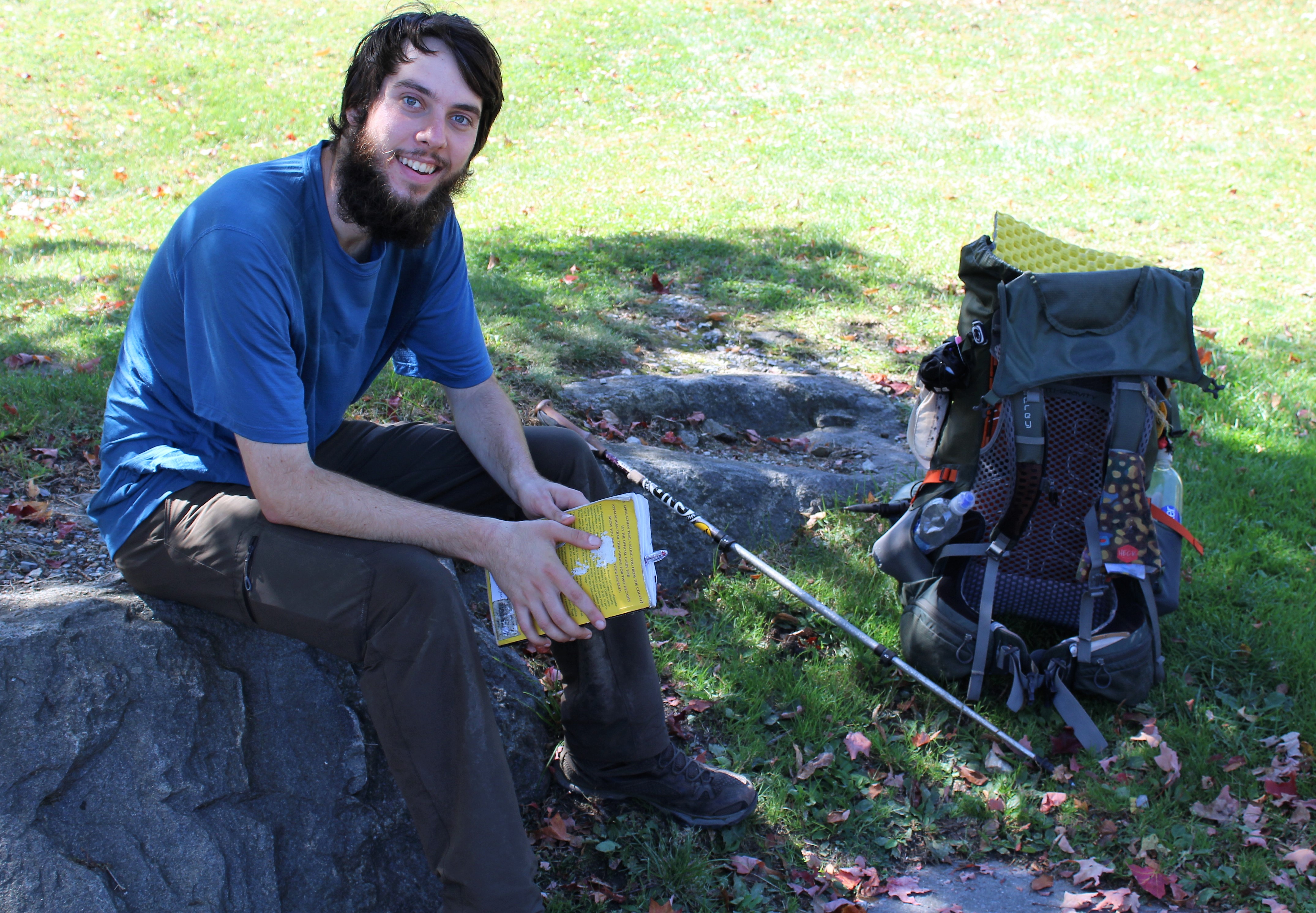
    The crew saw a thru-hiker reading his route book on the west shore of the Bridge.  He left Georgia back in March.  When he got to Harpers Ferry in Virginia, he pulled what is called a flip-flop on the trail.  He went to Maine and started south, back towards Harpers Ferry.  His trail name is Re-Pete.

    IMG_0157

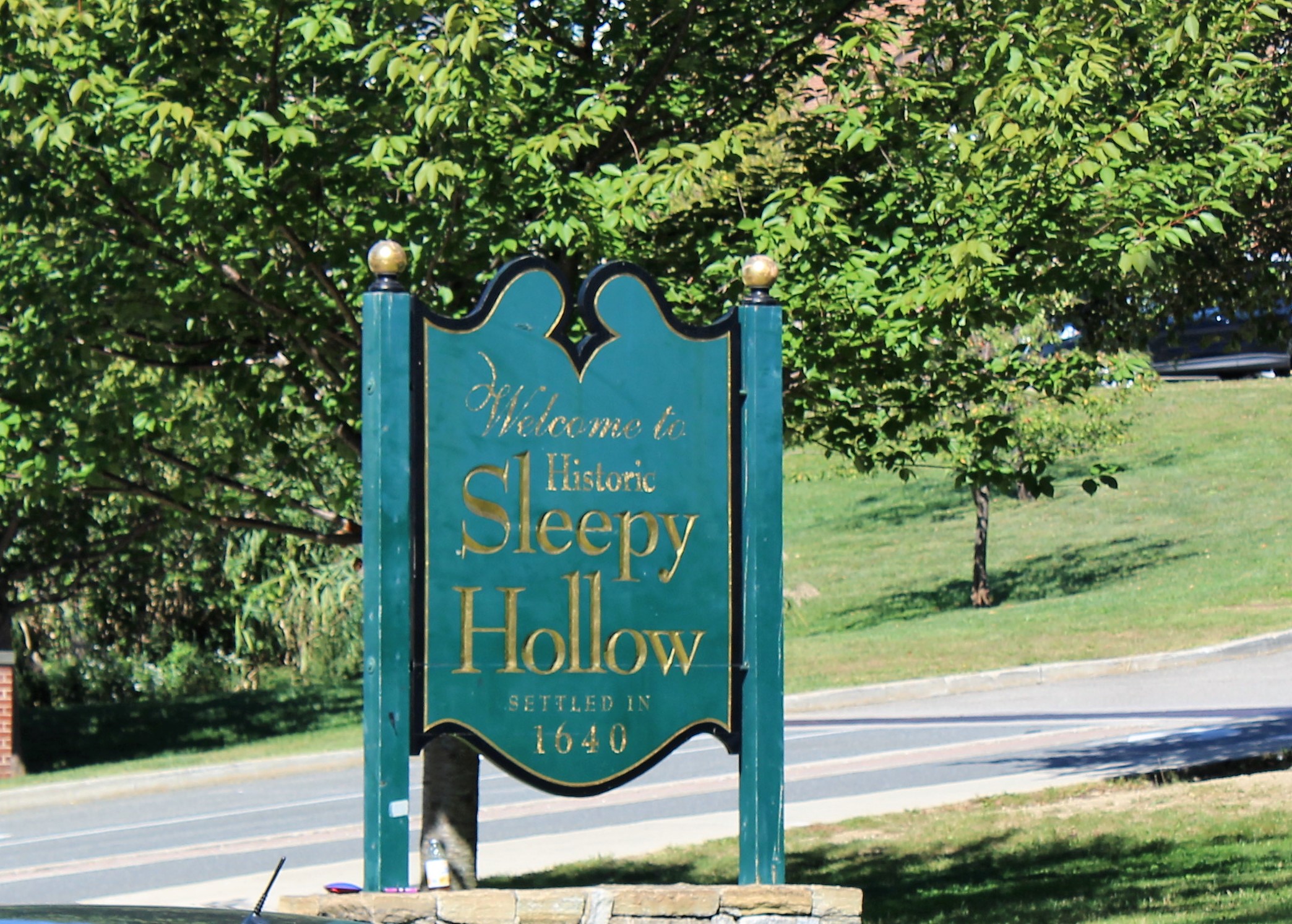
    After exploring Bear Mountain, the crew set their sites on Tarrytown and Sleepy Hollow to see if they could follow the path of Washington Irving’s tale, The Legend of Sleepy Hollow.

    To set the stage, you may recall that the story is set in 1790 in the village of Tarry Town in the glen of Sleepy Hollow.

    …….. there lies a small market town which is generally known by the name of Tarry Town. This name was given by the good housewives of the adjacent country from the inveterate propensity of their husbands to linger about the village tavern on market days……

    Our characters are Ichabod Crane and Abraham ‘Brom Bones’ Van Brunt.  Both of which are competing for the hand of Katrina Van Tassel.  And last but not least is the most famous ghost in the Dutch Settlement, the Headless Horseman.

    From the listless repose of the place, this sequestered glen has long been known by the name of Sleepy Hollow. Some say that the place was bewitched during the early days of the Dutch settlement; others, that an old Indian chief, the wizard of his tribe, held his powwows there before the country was discovered by Master Hendrick Hudson. Certain it is, the place still continues under the sway of some witching power that holds a spell over the minds of the descendants of the original settlers. They are given to all kinds of marvelous beliefs, are subject to trances and visions, and frequently hear music and voices in the air. The whole neighborhood abounds with local tales, haunted spots, and twilight superstitions.
         The dominant spirit that haunts this enchanted region is the apparition of a figure on horseback without a head. It is said to be the ghost of a Hessian trooper, whose head had been carried away by a cannonball in some nameless battle during the Revolutionary War, and who is ever seen by the countryfolk, hurrying along in the gloom of the night as if on the wings of the wind. Historians of those parts allege that the body of the trooper having been buried in the yard of a church at no great distance, the ghost rides forth to the scene of battle in nightly quest of his head; and that the rushing speed with which he sometimes passes along the Hollow is owing to his being in a hurry to get back to the churchyard before daybreak. The specter is known, at all the country firesides, by the name of the Headless Horseman of Sleepy Hollow.

    The first order of business was to find the home of Baltus Van Tassel, rich father of Katrina, where the night begins with ghost stories and dancing.

    He came clattering up to the school door with an invitation to Ichabod to attend a merrymaking to be held that evening at Mynheer Van Tassel’s.

    The home was torn down in the late 1880’s to make room for the new High School, which has now been turned into Condo’s.


    14911608063_8958aaa8aa_z[1]
    Photo from Louis Glacer’s Process (1882), reprinted in Jonathan Kruk’sLegends and Lore of Sleepy Hollow and the Hudson Valley
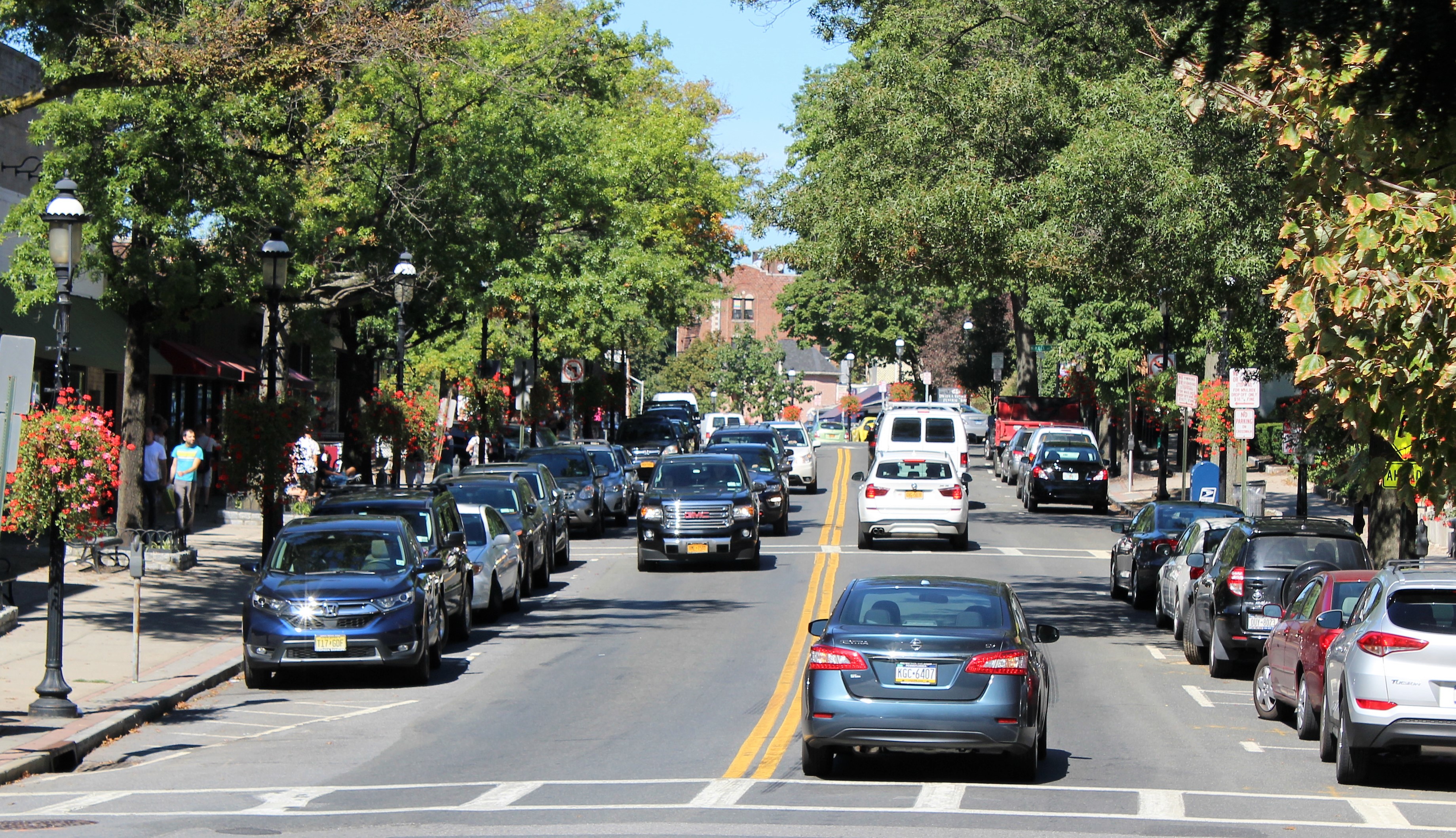
    The Condo’s at the corner of Route 9 and Hamilton Place would be our stating location.

    IMG_0159

    The revel now gradually broke up……………… It was the very witching time of night that Ichabod, heavyhearted and crestfallen, pursued his travel homeward. Far below, the Tappan Zee spread its dusky waters. In the dead hush of midnight he could hear the faint barking of a watchdog from the opposite shore. The night grew darker and darker; the stars seemed to sink deeper in the sky, and driving clouds occasionally hid them from his sight. He had never felt so lonely and dismal.

    IMG_0116

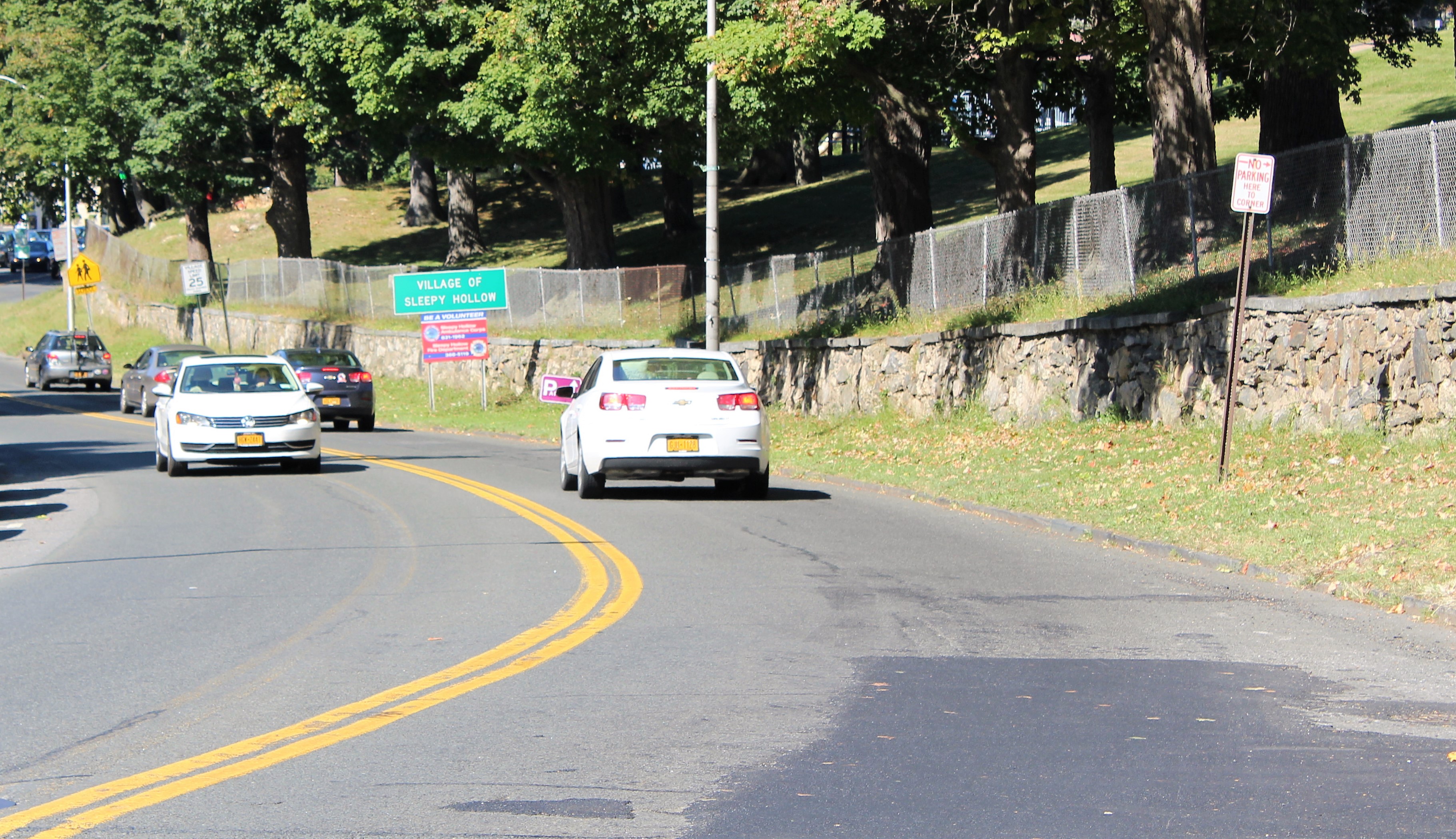
    Ichabod would have travelled north along what is now Route 9 down the hill towards Sleepy Hollow.

    IMG_0167

    All the stories of ghosts and goblins that he had heard earlier now came crowding upon his recollection. He would, moreover, soon be approaching the very place where many of the scenes of the ghost stories had been laid.

    Ichabod would have continued down Route 9.

    IMG_0169

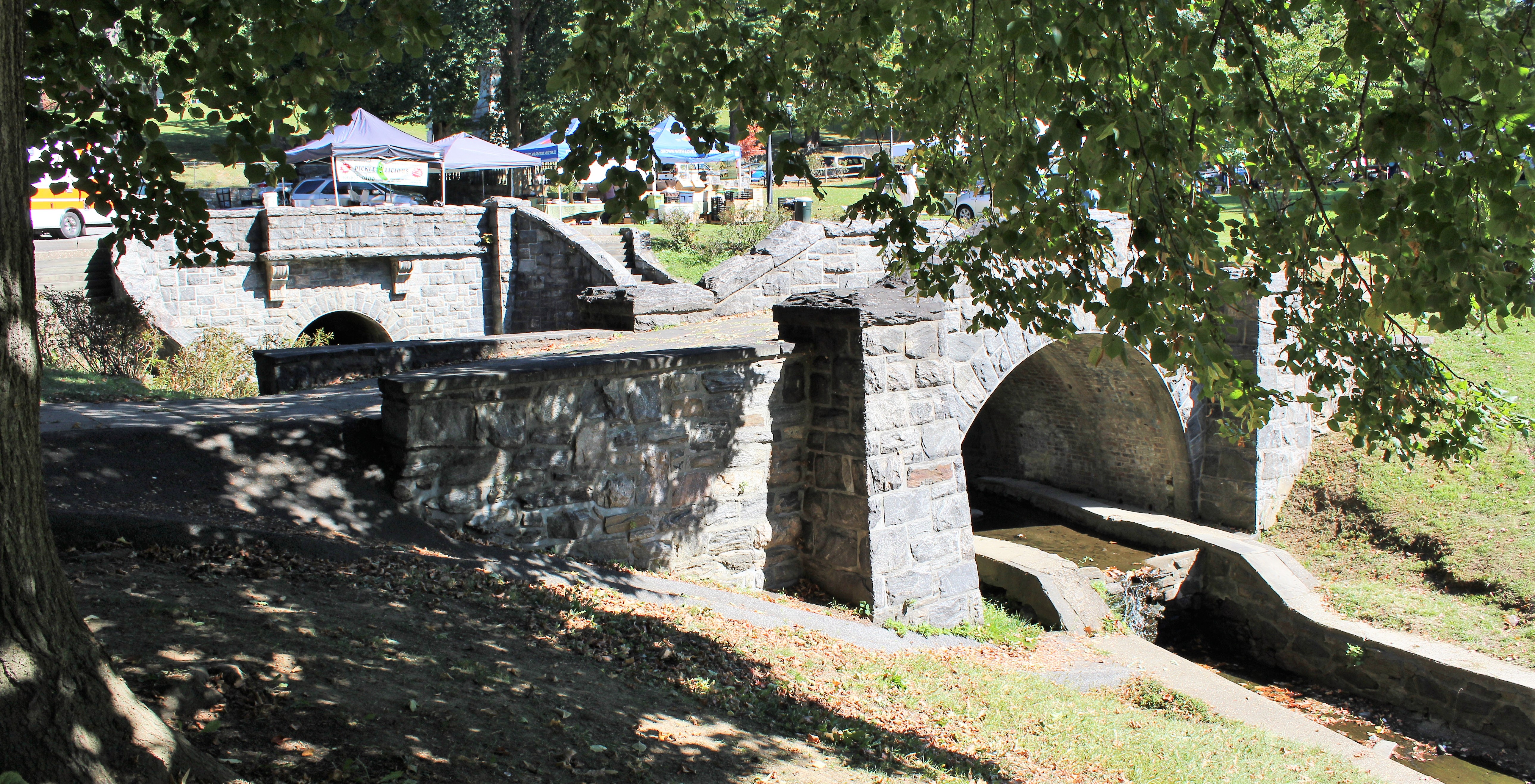
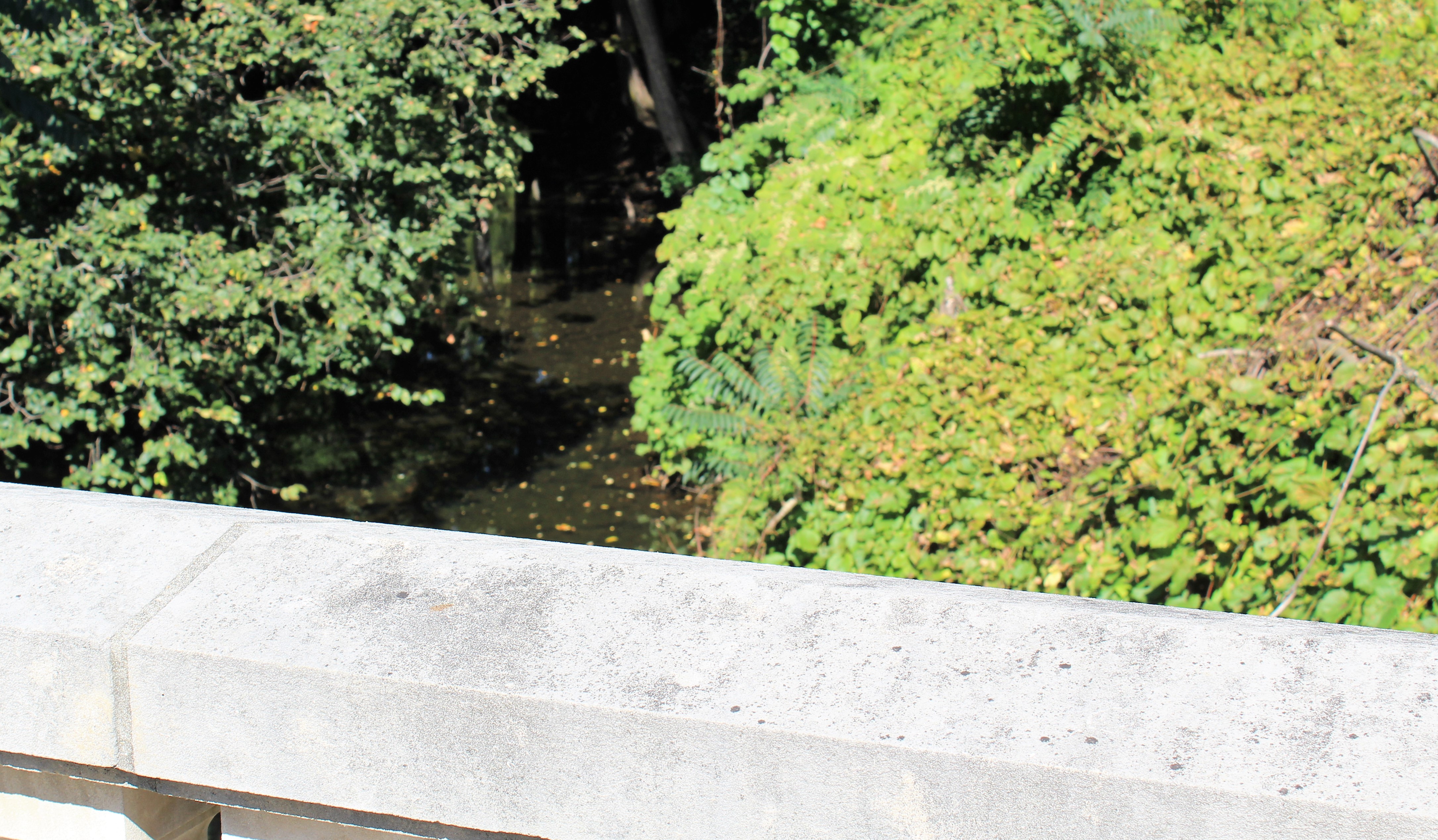
    Just ahead, where a small brook crossed the road, a few rough logs lying side by side served for a bridge. A group of oaks and chestnuts, matted thick with wild grapevines, threw a cavernous gloom over it.

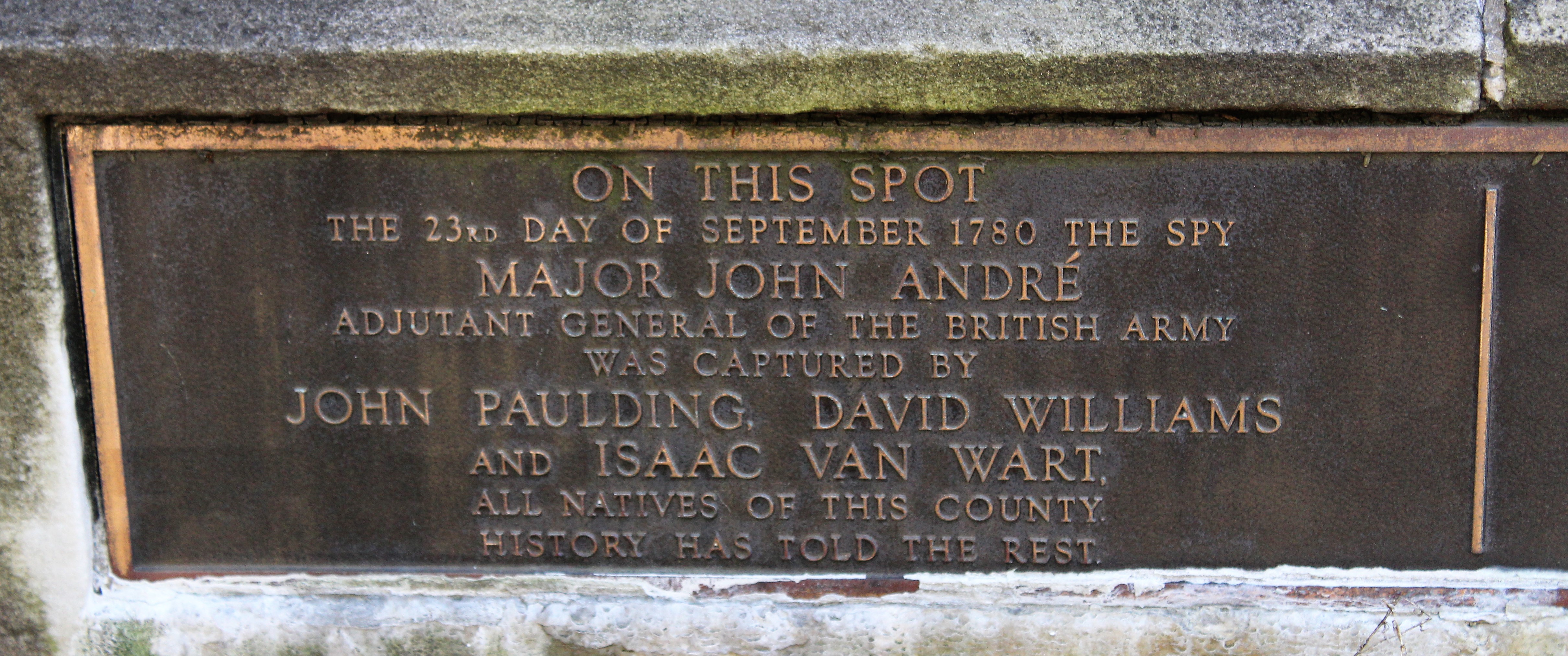
    The locals believe that the small brook is now named Andre’s Brook after the British Officer who was captured here trying to assist Benedict Arnold with the British takeover of the Fort at West Point.  John Andre was also tried and hung nearby.

    IMG_0172


    IMG_0164

    The capture of Major John Andre.

    IMG_0165

    It is at this very spot that Ichabod first encounters the Headless Horseman.

    Just at this moment, in the dark shadow on the margin of the brook, Ichabod beheld something huge, misshapen, black, and towering. It stirred not, but seemed gathered up in the gloom, like some gigantic monster ready to spring upon the traveler.

    On mounting a rising ground, which brought the figure of his fellow traveler in relief against the sky, gigantic in height, and muffled in a cloak, Ichabod was horrorstruck on perceiving that he was headless! But his horror was still more increased on observing that the stranger’s head was carried before him on the pommel of the saddle.

    The rising ground northbound on Route 9.

    IMG_0160

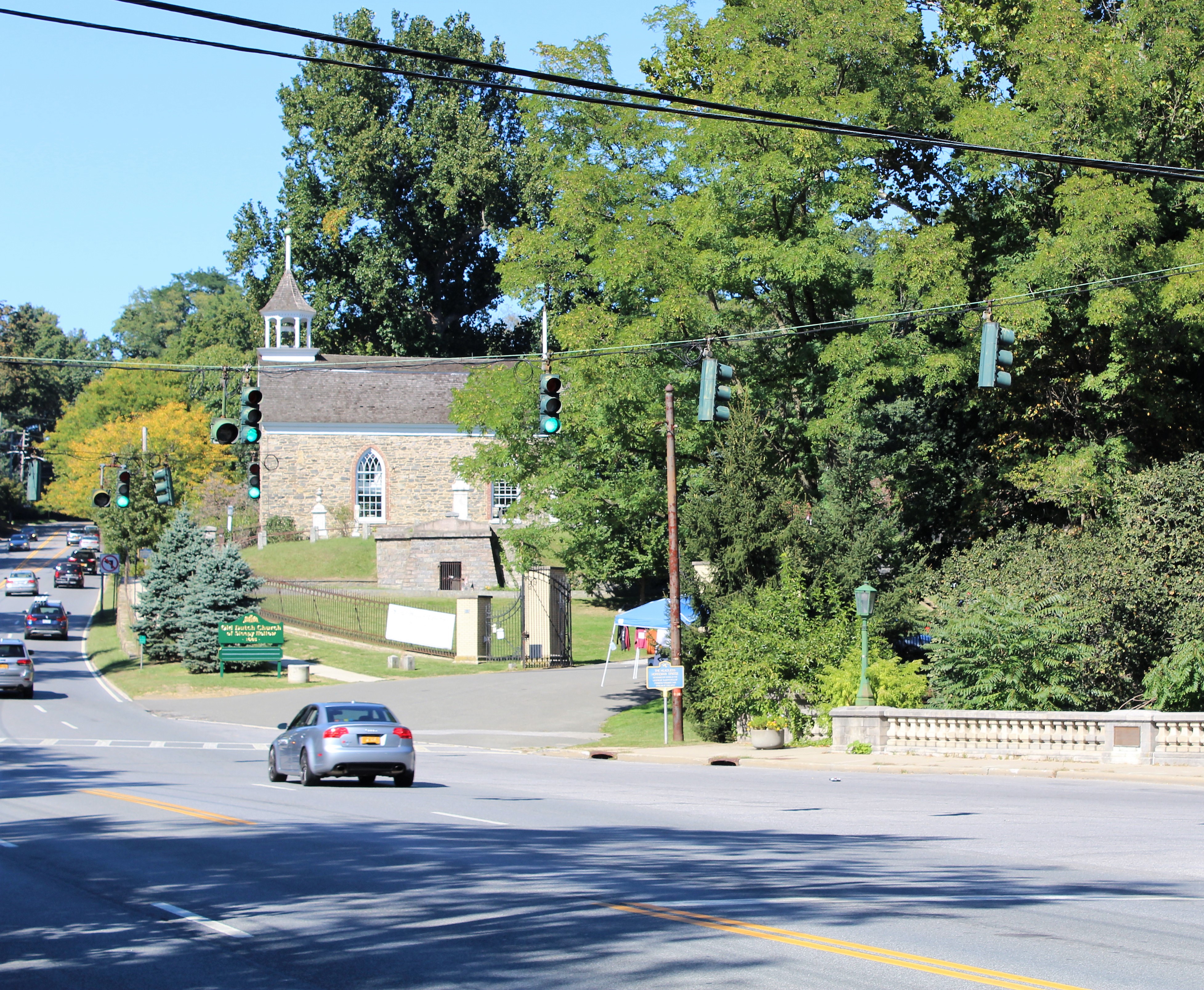
    They had now reached that stretch of the road which descends to Sleepy Hollow, shaded by trees for about a quarter of a mile, where it crosses the famous church bridge just before the green knoll on which stands the church.

    IMG_0173

    An opening in the trees now cheered him with the hopes that the church bridge was at hand. He saw the whitewashed walls of the church dimly glaring under the trees beyond. He recollected the place where Brom Bones’s ghostly competitor had disappeared. “If I can but reach that bridge,” thought Ichabod, “I am safe.”

    You can see the rails of the bridge to the right and below the stop lights with the old church in the background.

    IMG_0180

    Just then he saw the goblin rising in his stirrups, in the very act of hurling his head at him. Ichabod endeavored to dodge the horrible missile, but too late. It encountered his cranium with a tremendous crash – he was tumbled headlong into the dust, and Gunpowder, the black steed, and the goblin rider passed by like a whirlwind.

    IMG_0178

    An inquiry was set on foot, and after diligent investigation they came upon the saddle trampled in the dirt. The tracks of horses’ hoofs deeply dented in the road were traced to the bridge, beyond which, on the bank of a broad part of the brook, was found the hat of the unfortunate Ichabod, and close beside it a shattered pumpkin. The brook was searched, but the body of the schoolmaster was not to be discovered.

    IMG_0177

    Our adventure ends looking over the old church bridge where Ichabod’s hat was found in the water wondering; was it his rival Brom Bones or was it really the headless horseman.

    Brom Bones too, who shortly after his rival’s disappearance conducted the blooming Katrina to the altar, was observed to look exceedingly knowing whenever the story of Ichabod was related, and always burst into a hearty laugh at the mention of the pumpkin, which led some to suspect that he knew more about the matter than he chose to tell.
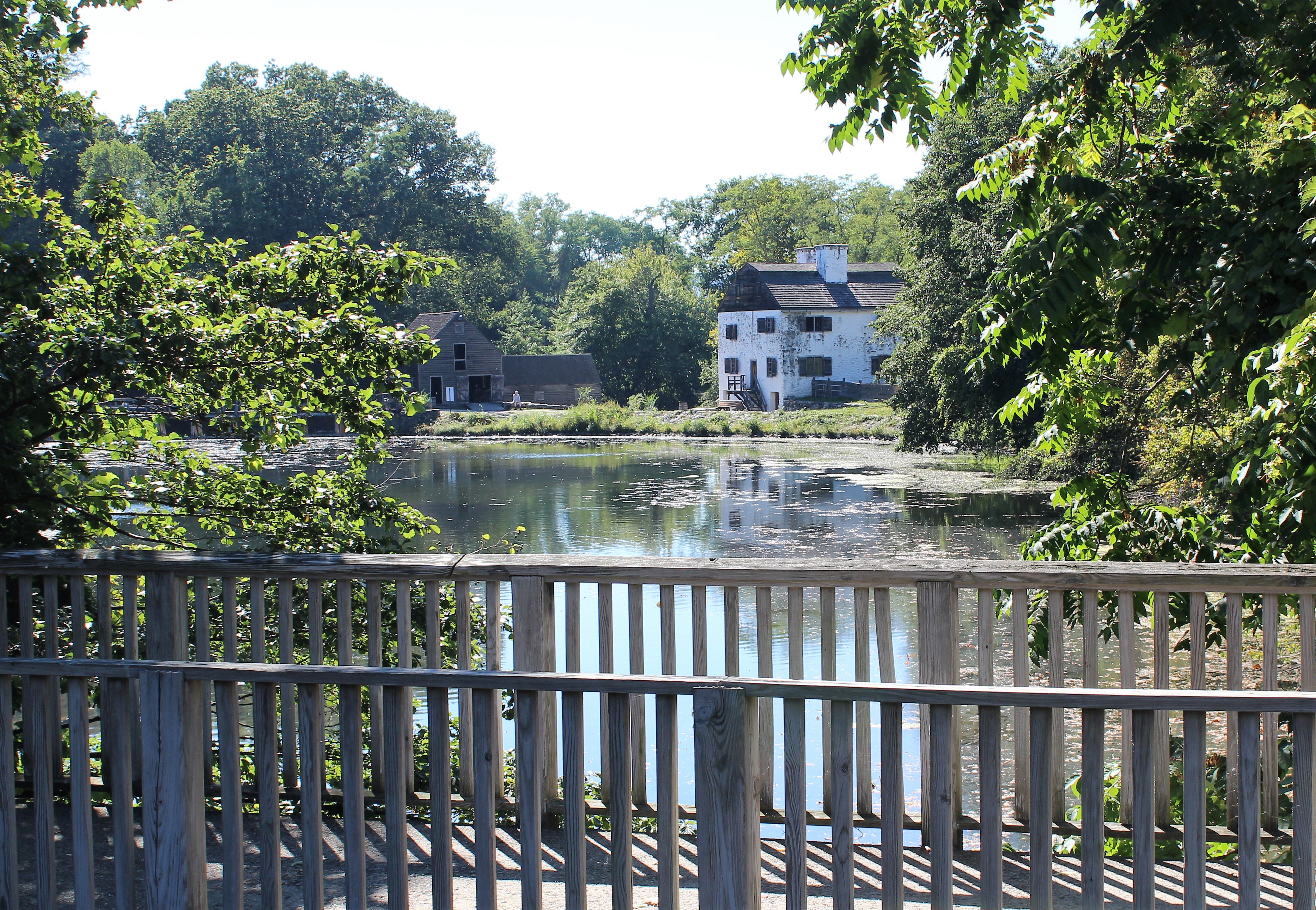
         The old country wives, however, who are the best judges of these matters, maintain to this day that Ichabod was spirited away by supernatural means. The bridge became more than ever an object of superstitious awe, and that may be the reason why the road has been altered of late years, so as to approach the church by the border of the millpond.

    The changed route of the road between the mill pond and the church.

    IMG_0181

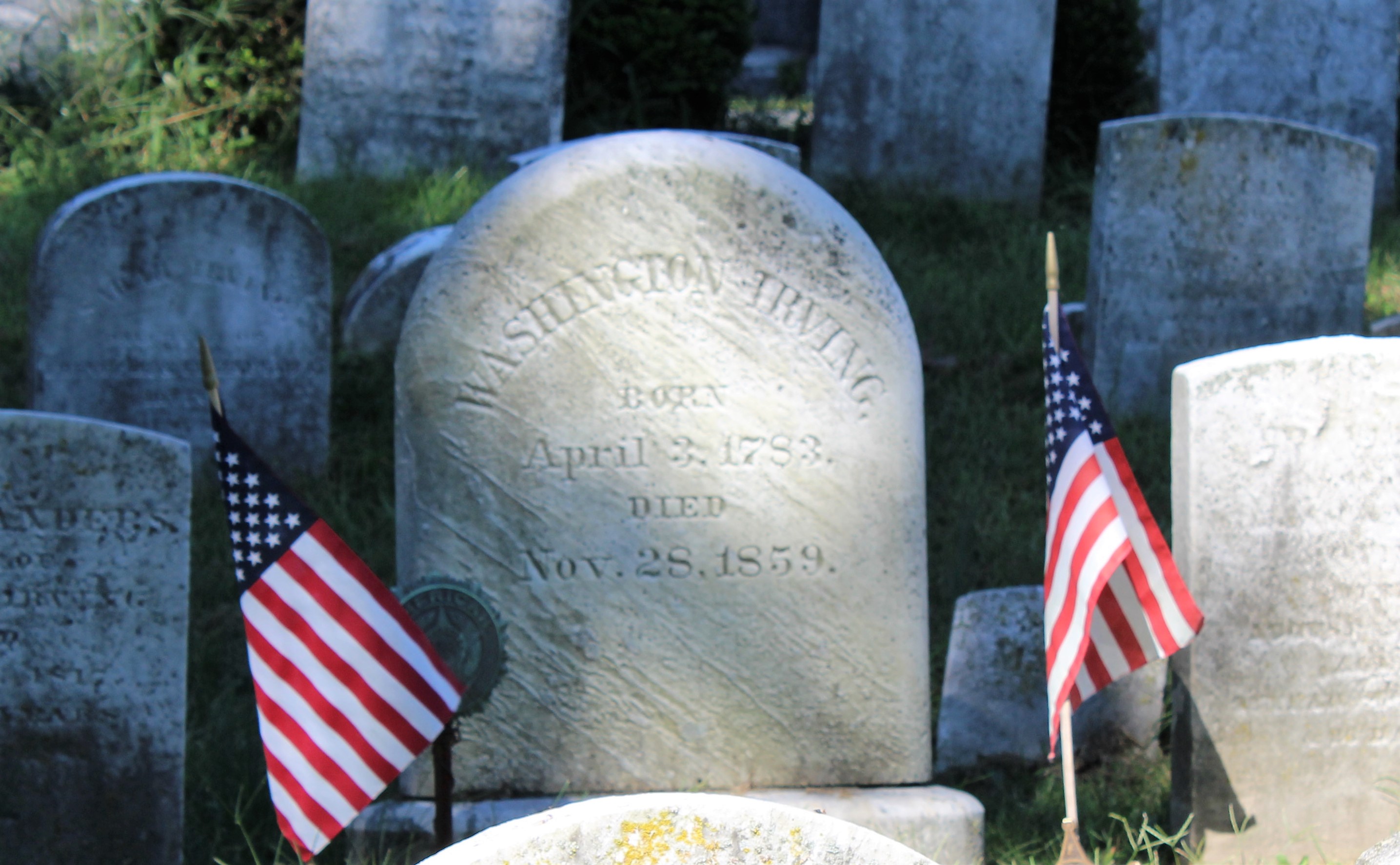
    If you take the road to the right of the church and park, it is only a short walk up the hill to Washington Irving’s grave in the Old Church Cemetery.

    IMG_0190

    Boat Name of the Week

          Travelling in the fog did not lend itself to seeing any boat names this week.

    Next Week –

    At this time Jose is no longer a threat to the crew.  However, Maria is lurking off the east coast now and threatening a landfall between the Carolina outer banks and New England.  The crew will continue to sit here until it is safe to proceed south.

    Loop On – The water goes on forever and the adventure never ends.
    Eric the Red

  • Thar She Blows

    Hello virtual crew members and fellow adventurers!

    Eric here with the latest travels of Still Waters II.

    IMG_0064
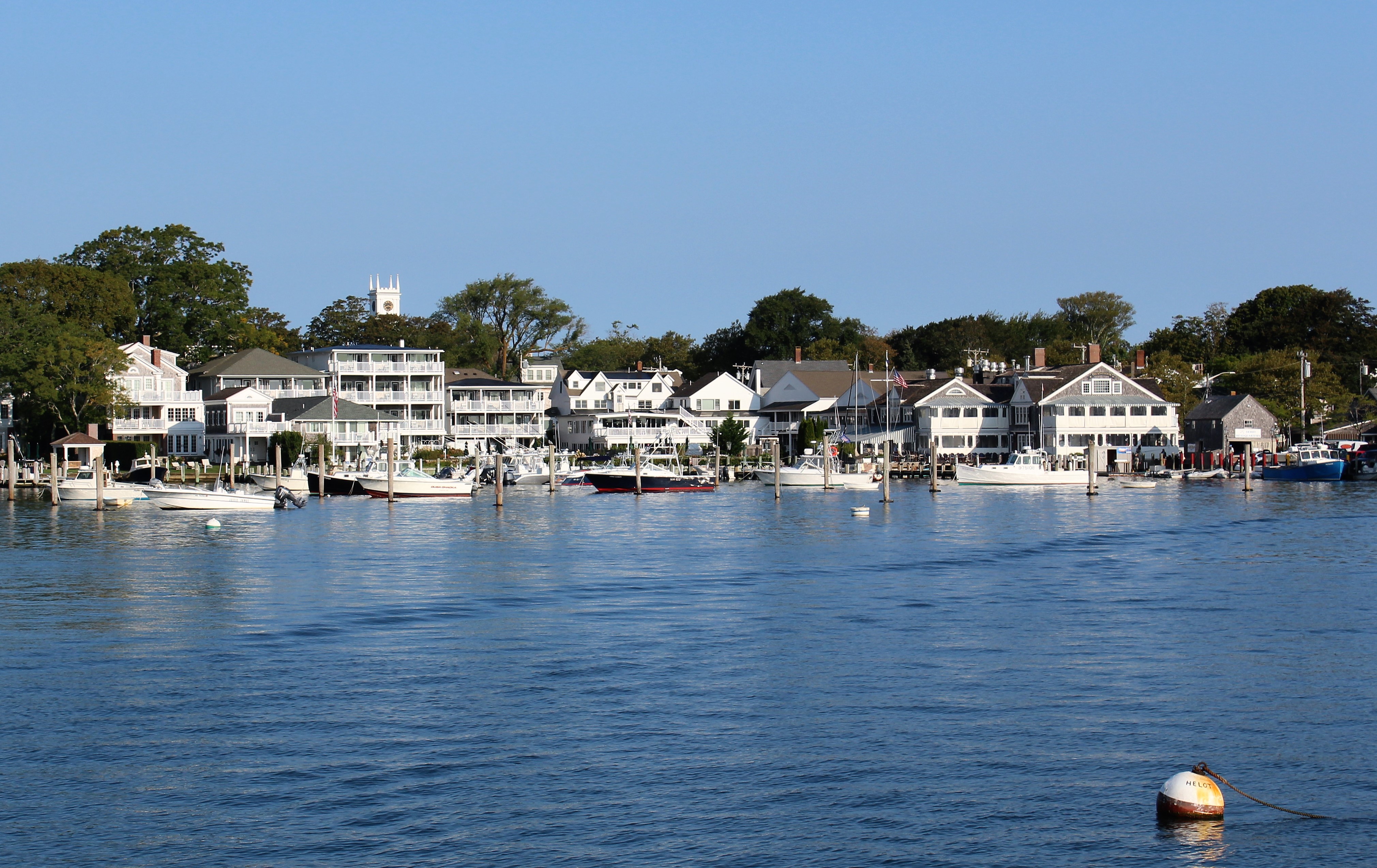
    Edgartown on Martha’s Vineyard


    Summary of week:

    Groton

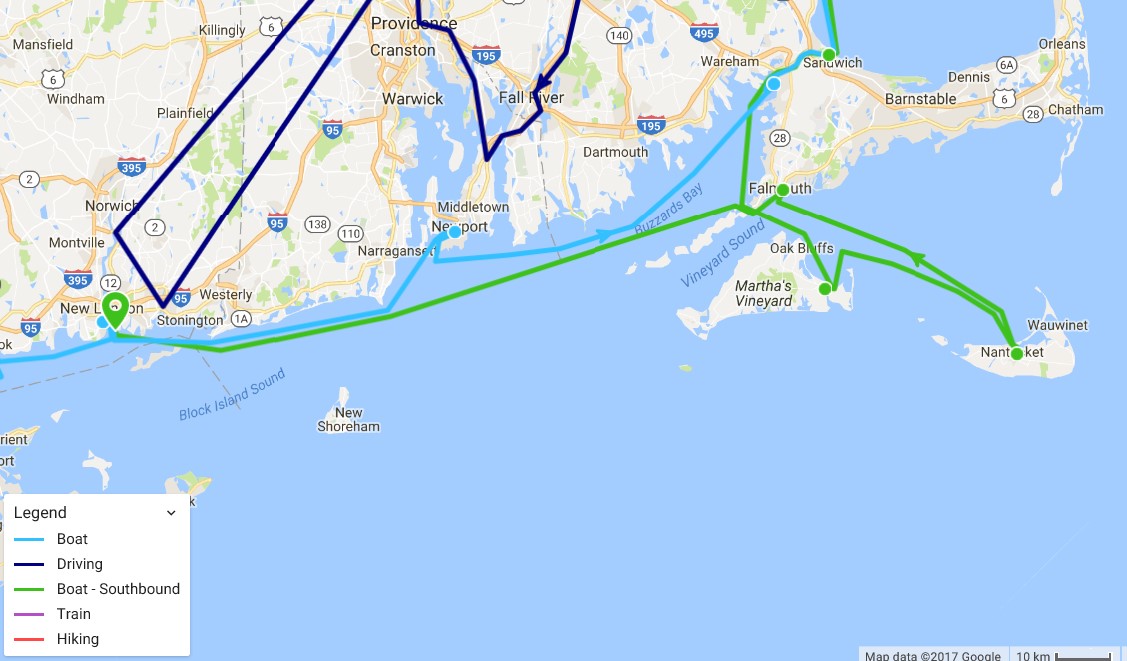
    The crew spent the week exploring the greater Cape Cod region.  They travelled from Sandwich, thru the Cap Cod Canal, and then on to Martha’s Vineyard on Monday.  Wednesday, they moved over to Nantucket.  Because of Hurricane Jose, the crew headed back to the mainland with a stop at Falmouth on Friday.

    This week’s journey of discovery did answer the following questions:

    1. Who was the first European to discover Martha’s Vineyard?
    2. Where is the only Civil War memorial, dedicated to both the Union and Confederate Soldiers, that is above the Mason Dixon Line?
    3. What are sperm whale teeth made of?

    Click on the link to read the day-to-day travel log.  This includes weather report of the day, sea conditions, log of the days travel, and a summary of the experience.

    At the Box Office

    This week’s video is on hold as the crew continues to travel to get out of harms way of Hurricane Jose.

    To see past videos, click on the link to the Still Waters II Vimeo site.  The library now contains 33 videos of Still Waters II cruising America’s Great Loop.

    Monday, Sept 11, 2017

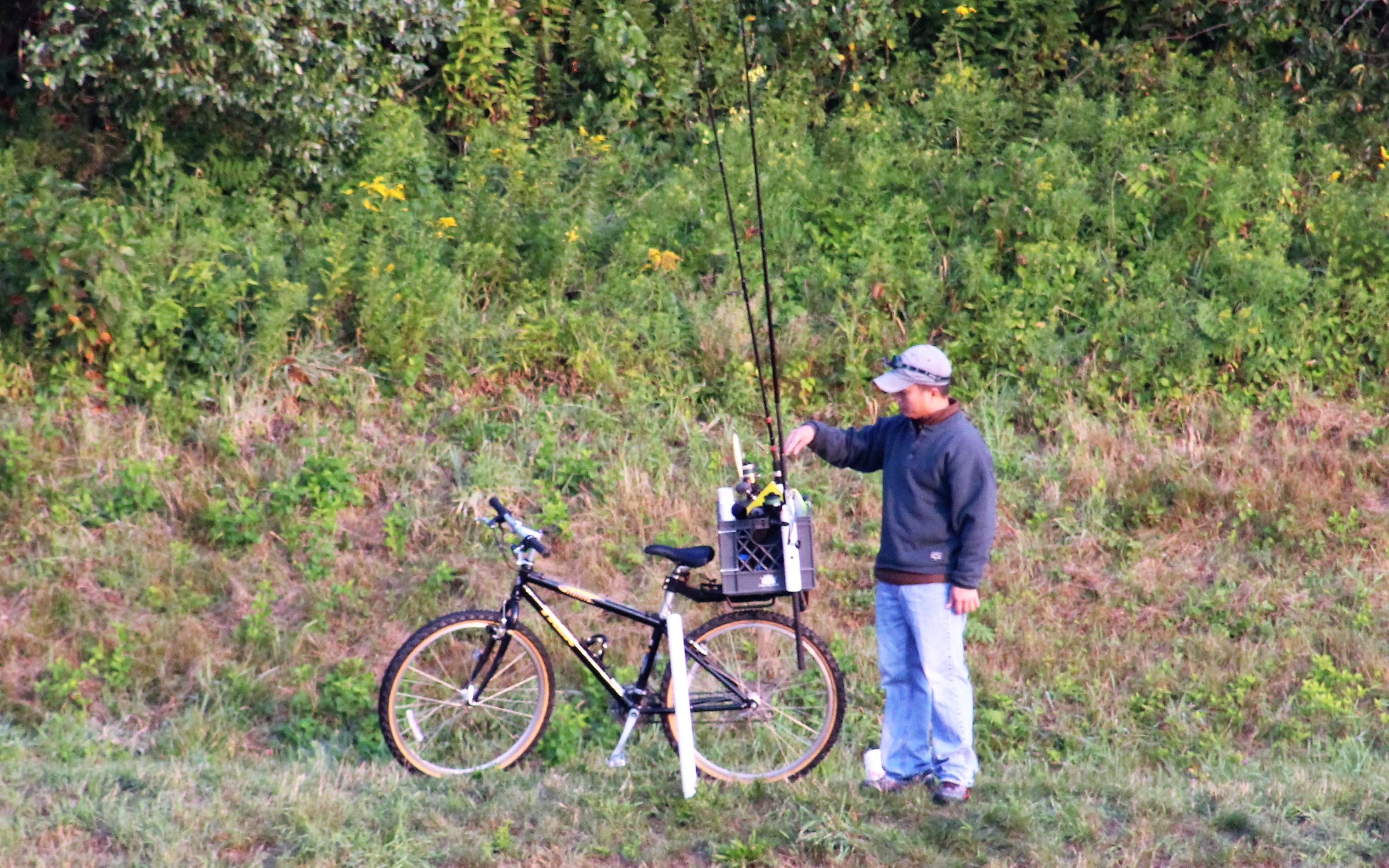
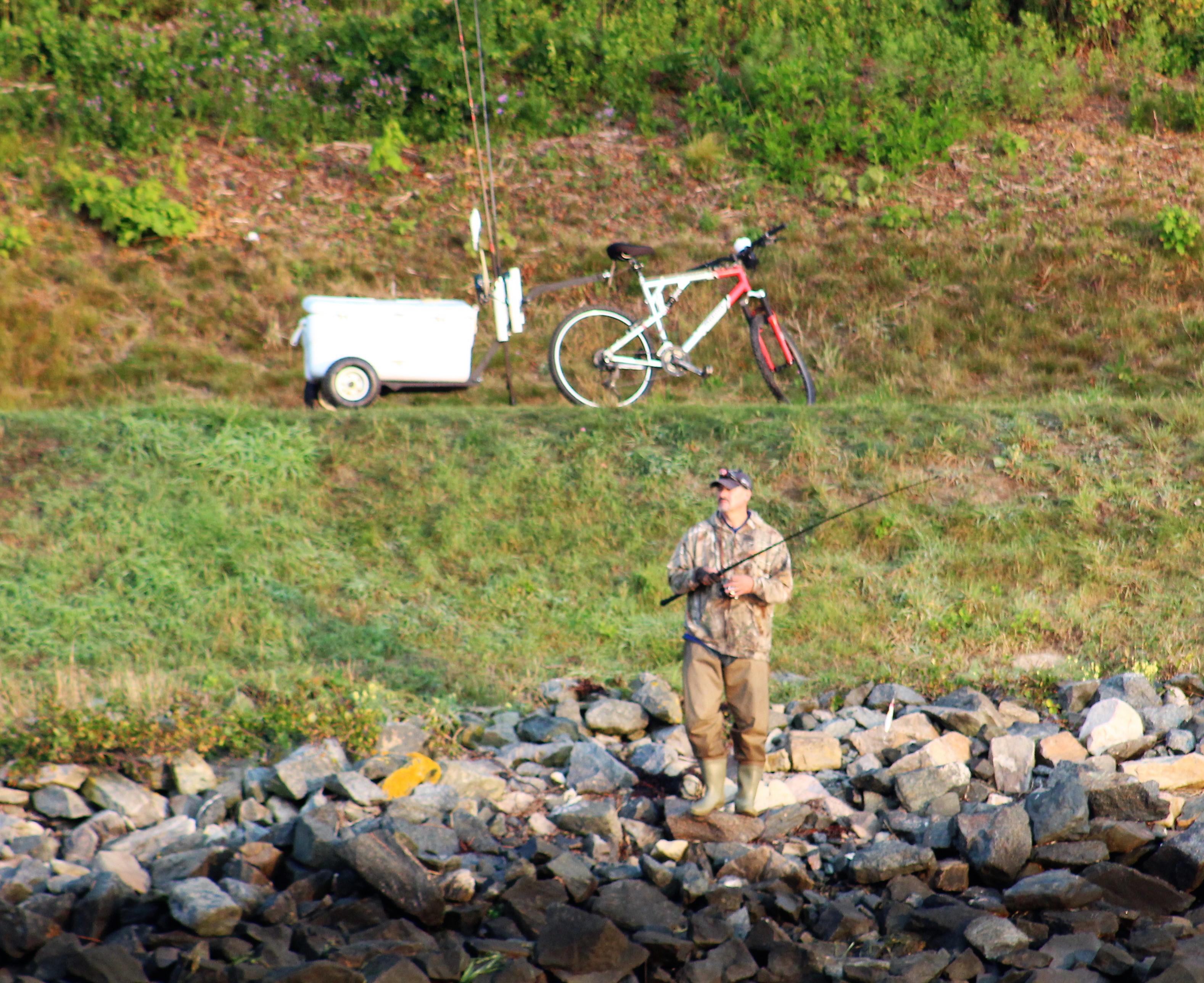
    The crew got an earlier start than normal so they could ride the current thru the Cape Cod Canal.  This strategy allowed the crew to navigate the seven-mile canal in less than 45 minutes.  With the early start, the crew saw many fishermen along the canal banks.

    5 Fishing Cape Cod Canal

    There is no road along the canal; however, there is a bike trail.  The fishermen have rigged some interesting accessories to their bicycles so they can get to their favorite fishing spots along the canal path.

    5.1

    After crossing thru Cape Cod at the Woods Hole Passage, the crew entered the Vineyard Sound and headed toward Edgartown on the far east side of Martha’s Vineyard Island.

    After taking a mooring ball for two days, the skipper dropped the dinghy in the water and the crew headed to shore to explore.

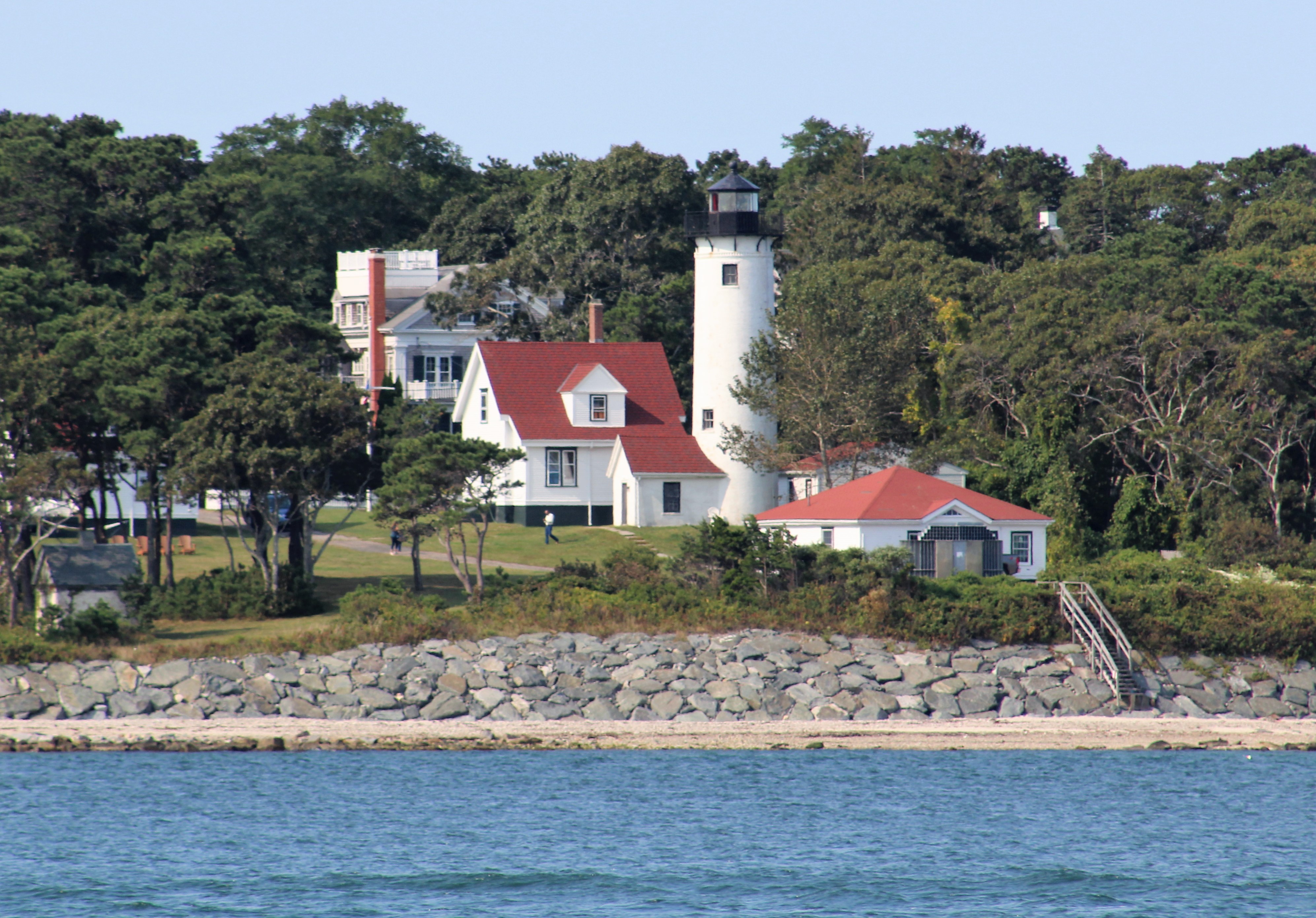
    7 West Chop Light
    West Chop Light on Martha’s Vineyard

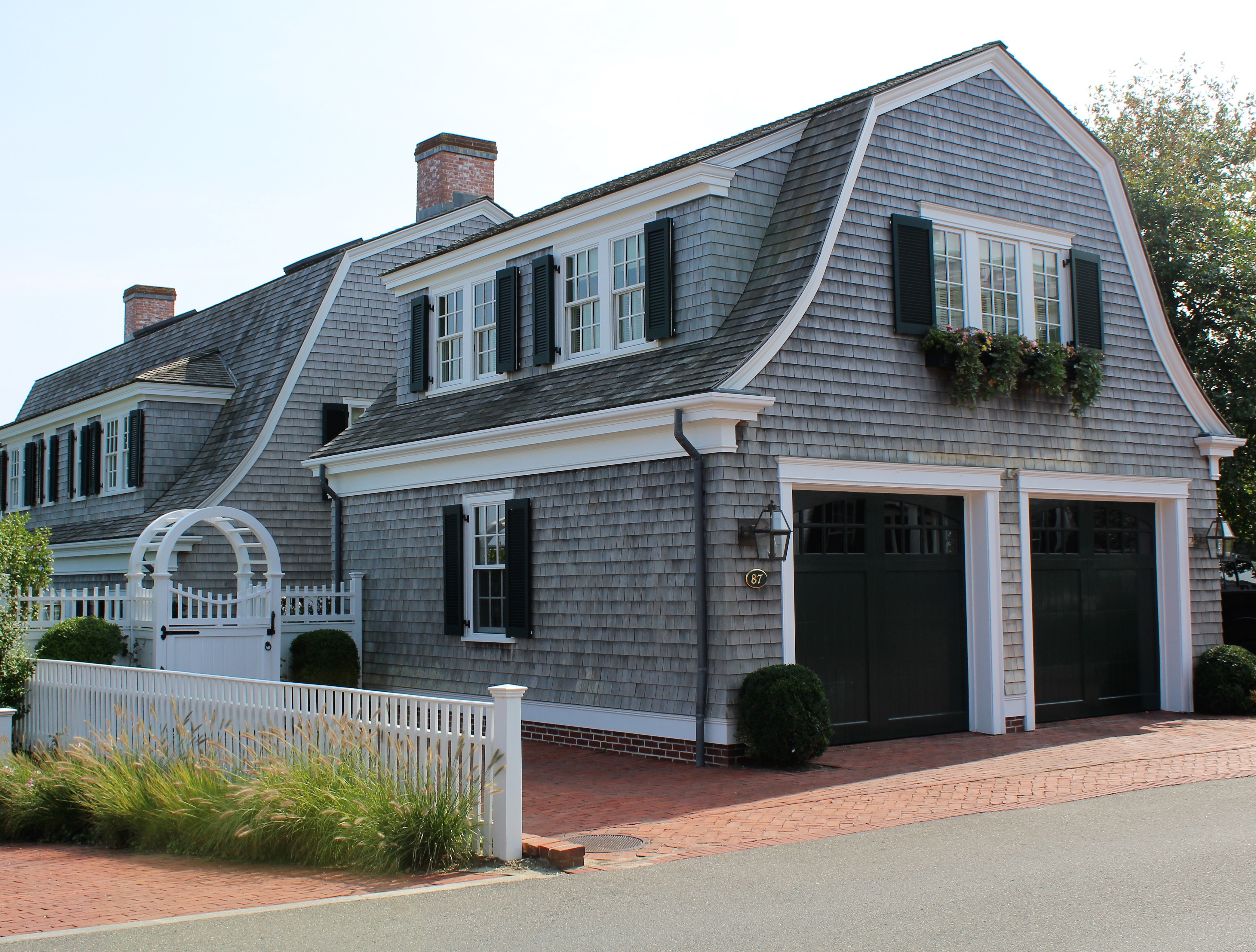
    The homes have shingles for siding.  The shingles are cut from Maine white pine trees.  The wood shingles can last up to 100 years without being replaced.  The shingle has a light off white color when first placed on the home.  After the shingle ages, it turns this grayish brown color.

    9.2.1

    The crew also came across some interesting yard art for sale.  This guy was relaxing at an art gallery on the water front.

    9 Edgartown

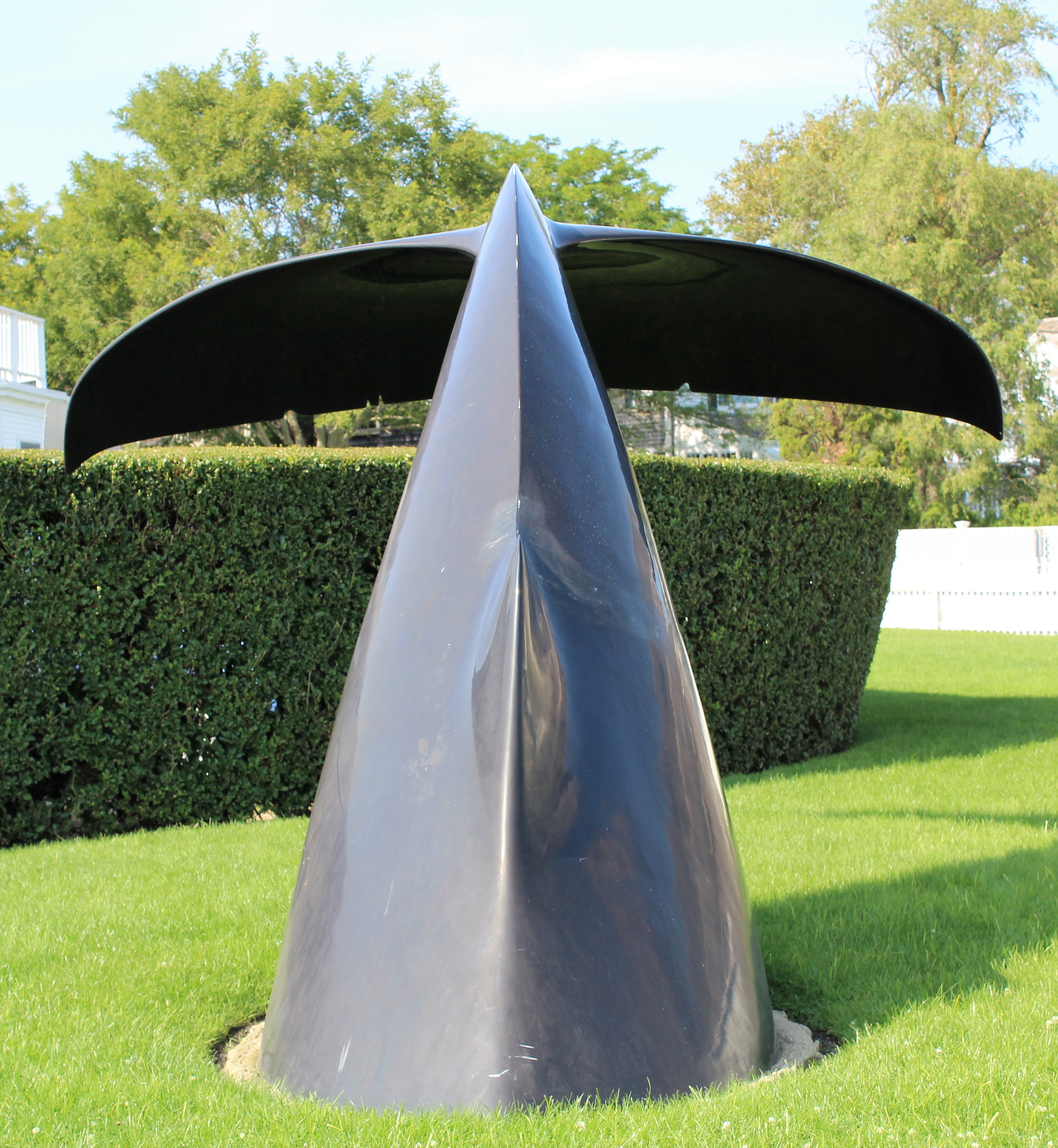
    This whale tale was at another art gallery along the water front.

    9.2.4

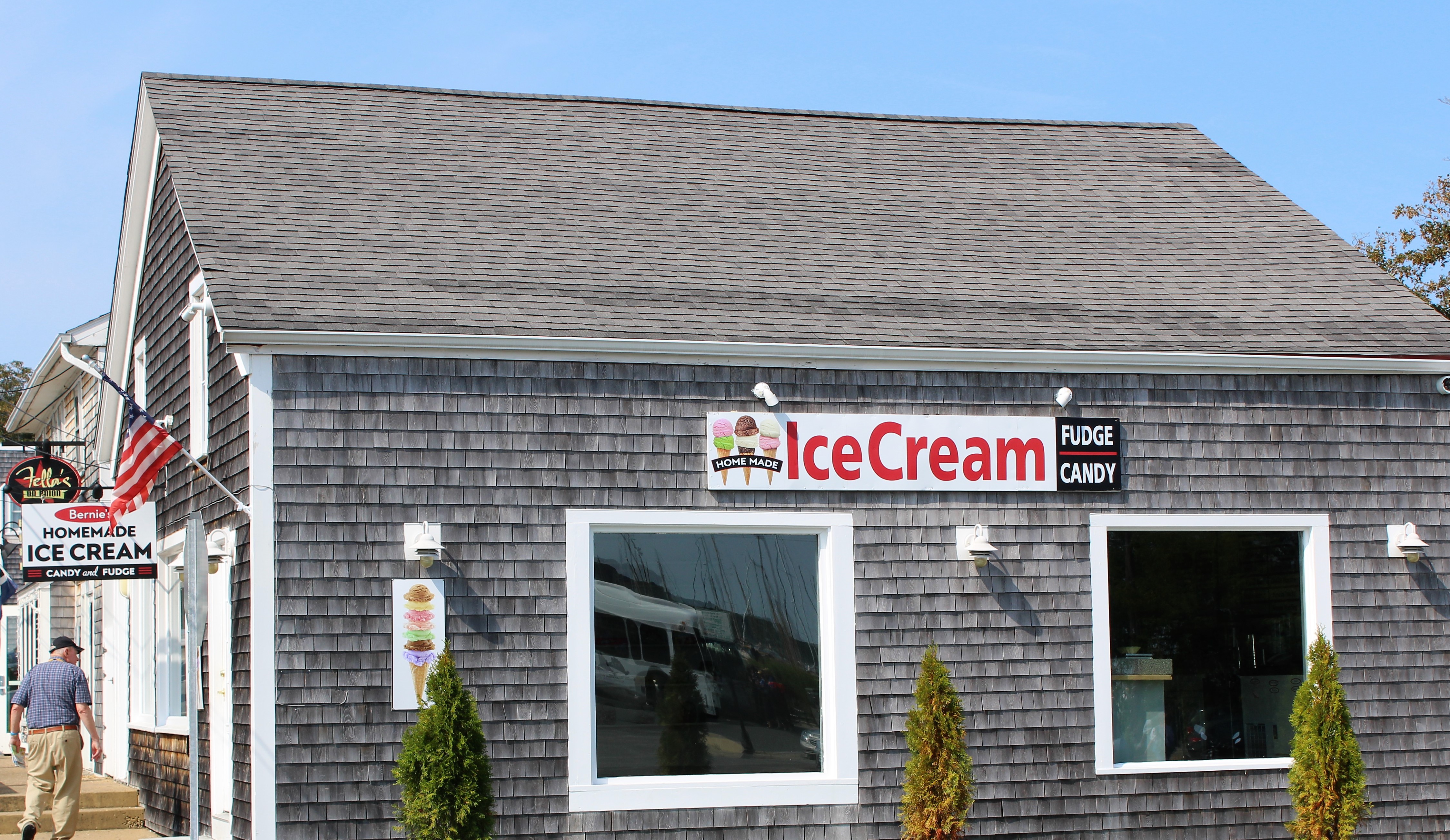
    The crew found the Visitor center/bus stop and bought all day tickets to tour the island on Tuesday.  After sampling the local ice cream, the crew headed back to the mother ship swinging on a mooring ball.

    Tuesday, Sept 12, 2017 

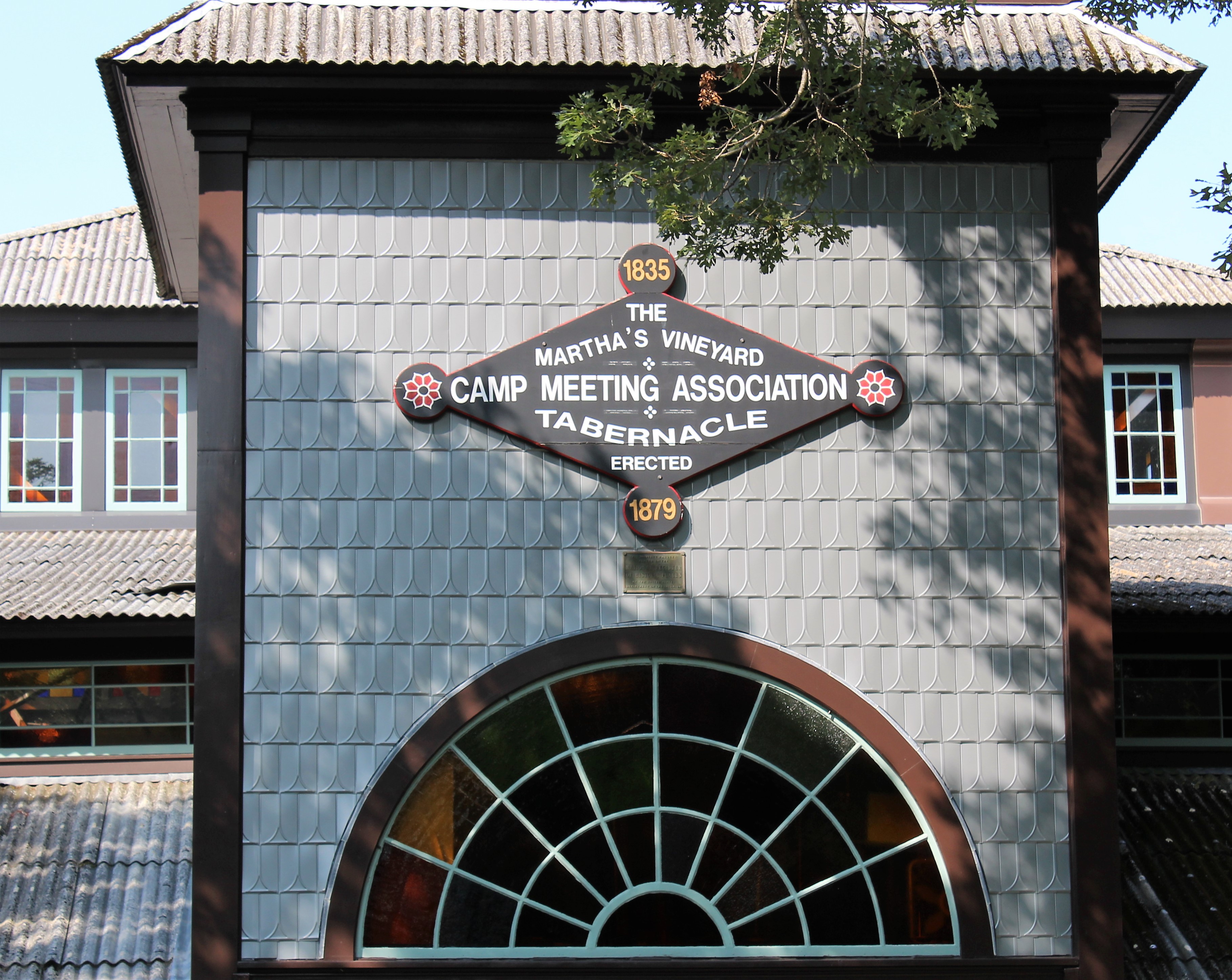
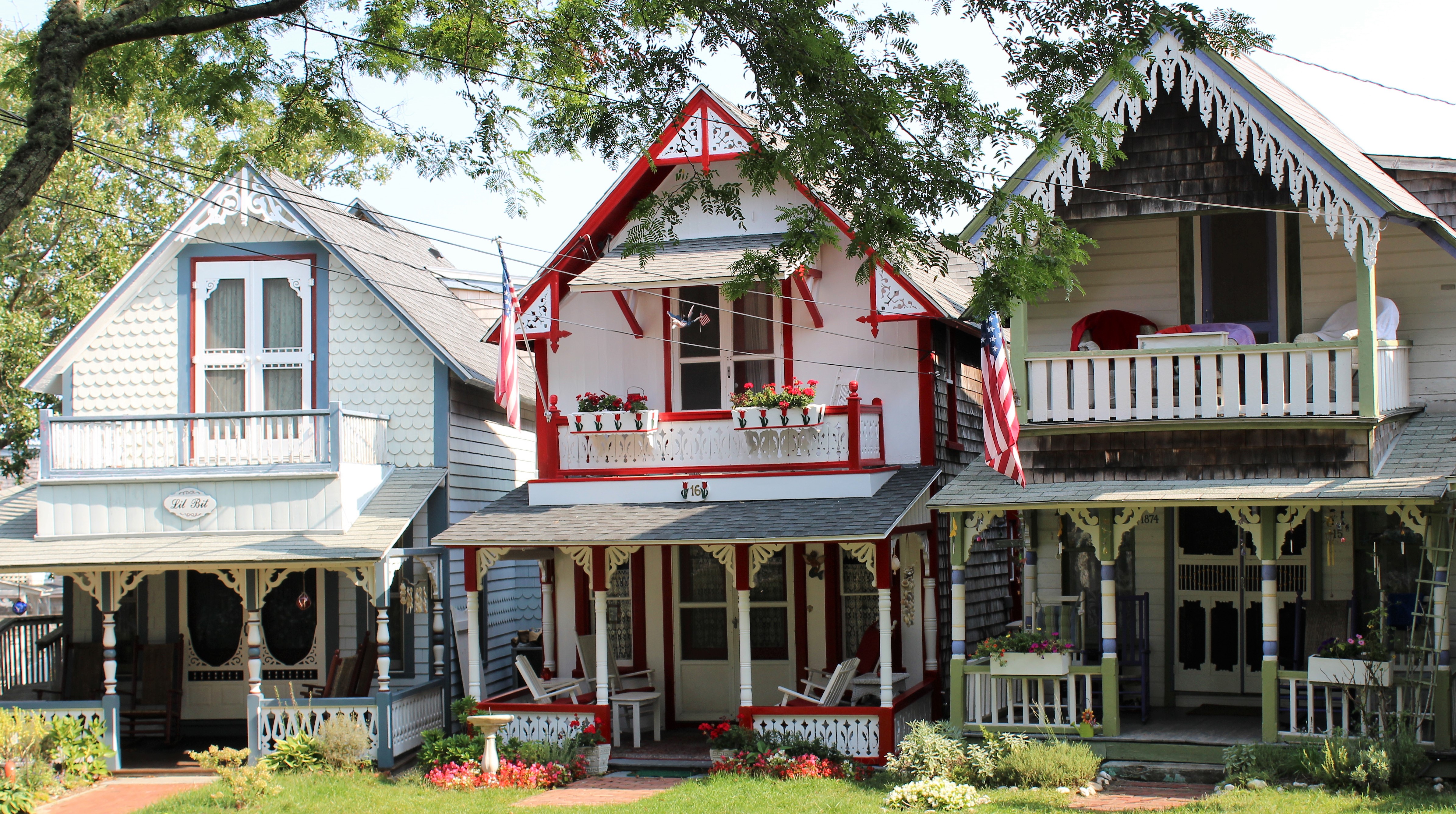
    The crew took the dinghy back ashore and walked back to the bus stop to catch the 10:00 a.m. bus.  The first stop was Oak Bluffs.  This area is known for three things: the Martha’s Vineyard Tabernacle, the gingerbread cottages, and Flying Horses.

    IMG_0038

    IMG_0034

    IMG_0040

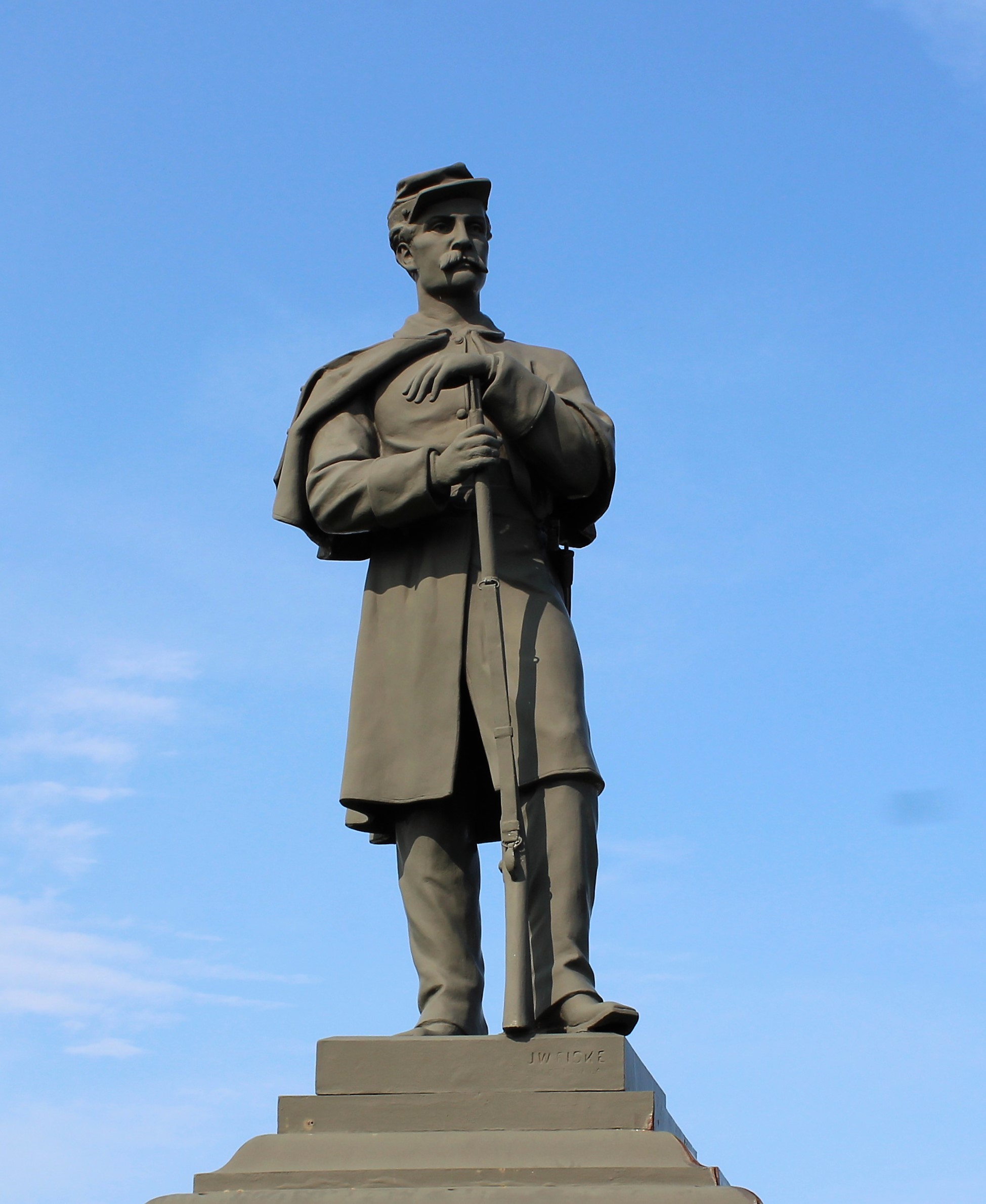
    However, with all the statue controversy around the country, the skipper was intrigued by a Union Soldier that had a Confederate plaque honoring Confederate soldiers.  Seemed strange, so the skipper went in search of the back story of the statue.

    10.1

    The statue was erected by Charles Strahan who was from Maryland.  When Maryland did not succeed from the Union, Charles joined the 21st Virginia Regiment and was wounded in battle early in the war.  He also fought at Gettysburg later in the war.  He was near Lee at Appomattox when the surrender took place.

    After the war, Charles made his home on Martha’s Vineyard and made his living by running the Martha’s Vineyard Herald.  The local members of the Grand Army were not pleased with their new resident.  Charles southern charm finally won the locals over.  In an effort to build bridges and heal the divide in the local community, Charles purchased the statue and had it dedicated in 1891.

    At the dedication, Charles said “That this comes from one who once wore grey, I trust will add significance to the fact that we are once more a union of Americans, a union which endears with equal honor the citizen of Georgia with the citizen of Maine; that Massachusetts and South Carolina are again brothers; that there is no North nor South, no East nor West, but one undivided, indivisible Union.”

    Charles had inscriptions on three sides of the statue honoring the Grand Army and the local chapter.  He left the back side of the monument bare and later wrote that he hoped that the locals would some day offer a tribute to their old foes on the inscribed side of the monument.

    Finally, in 1925 a few surviving members of the local post of the Grand Army took the challenge.  Charles was also able to attend the ceremony at the age of eighty-six.  The fourth plaque reads, “The chasm is closed.  In memory of the restored Union this tablet is dedicated by Union veterans of the Civil War and patriotic citizens of Martha’s Vineyard in honor of the Confederate soldiers.”

    The statue remains the only memorial north of the Mason-Dixon Line dedicated to soldiers on both sides of the conflict.  If the people who actually shot at each other can find a way to build a bridge and get over the war, makes you wonder why our population today (150 years later) cannot find a way to do the same.

    The next stop on the bus was Tisbury where the crew walked around and enjoyed lunch.  So far the crew has concluded that the island has more bicycle rental shops and ice cream stores per capita than any place they have ever been.

    IMG_0043

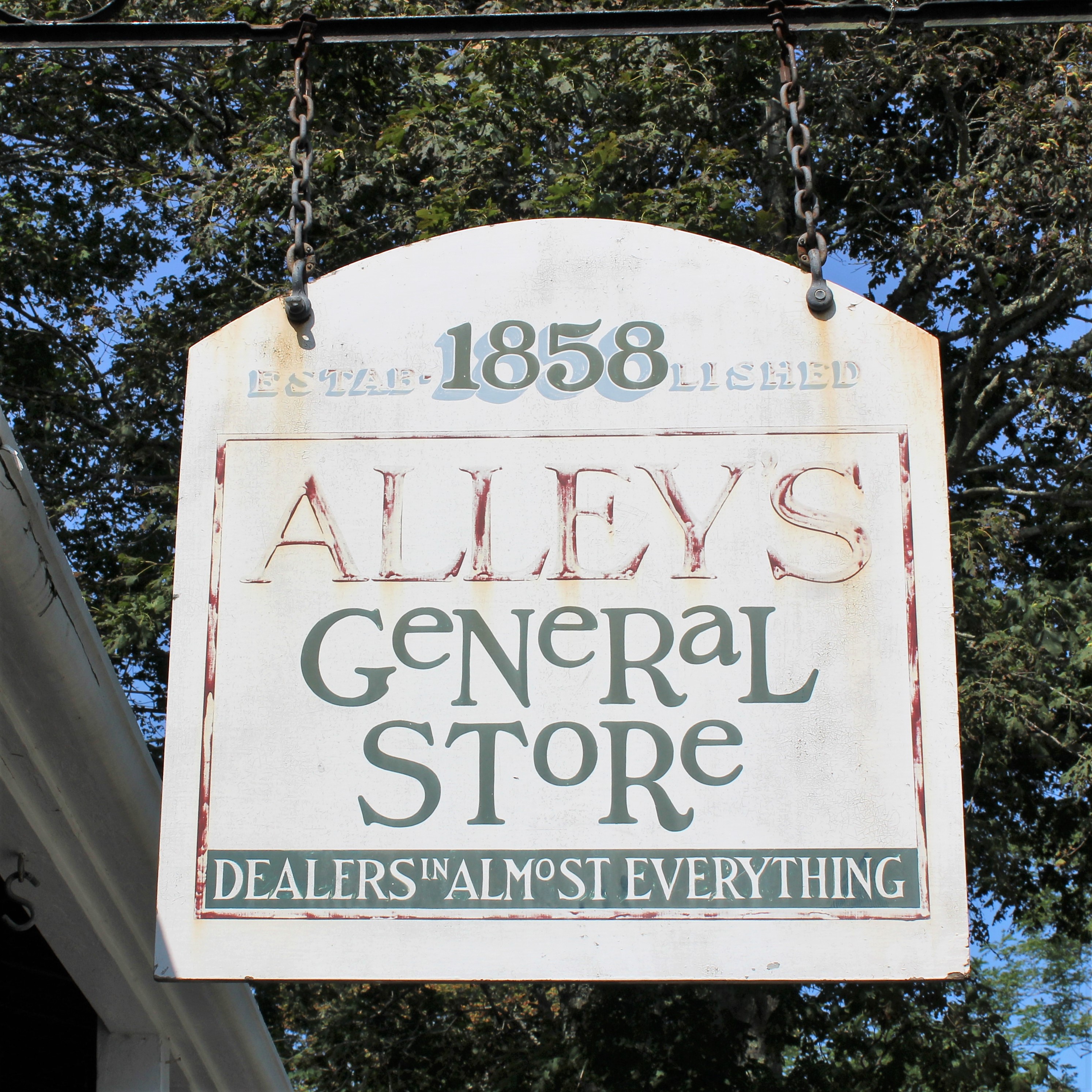
    Next stop was at West Tisbury.  Not much here except a general store that claims to sale just about any and everything.  After going inside, the crew can confirm that indeed they sell just about everything.

    IMG_0046

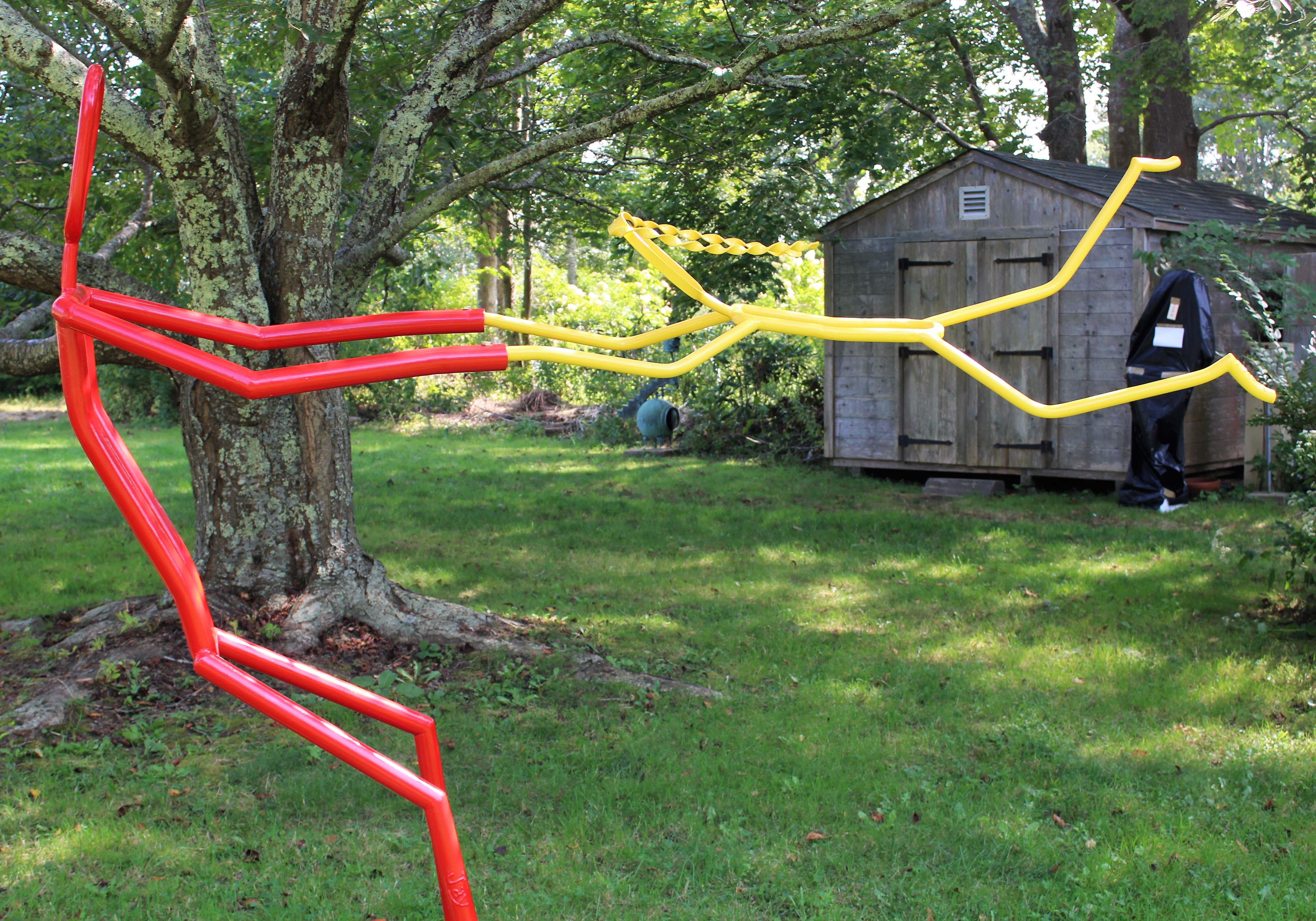
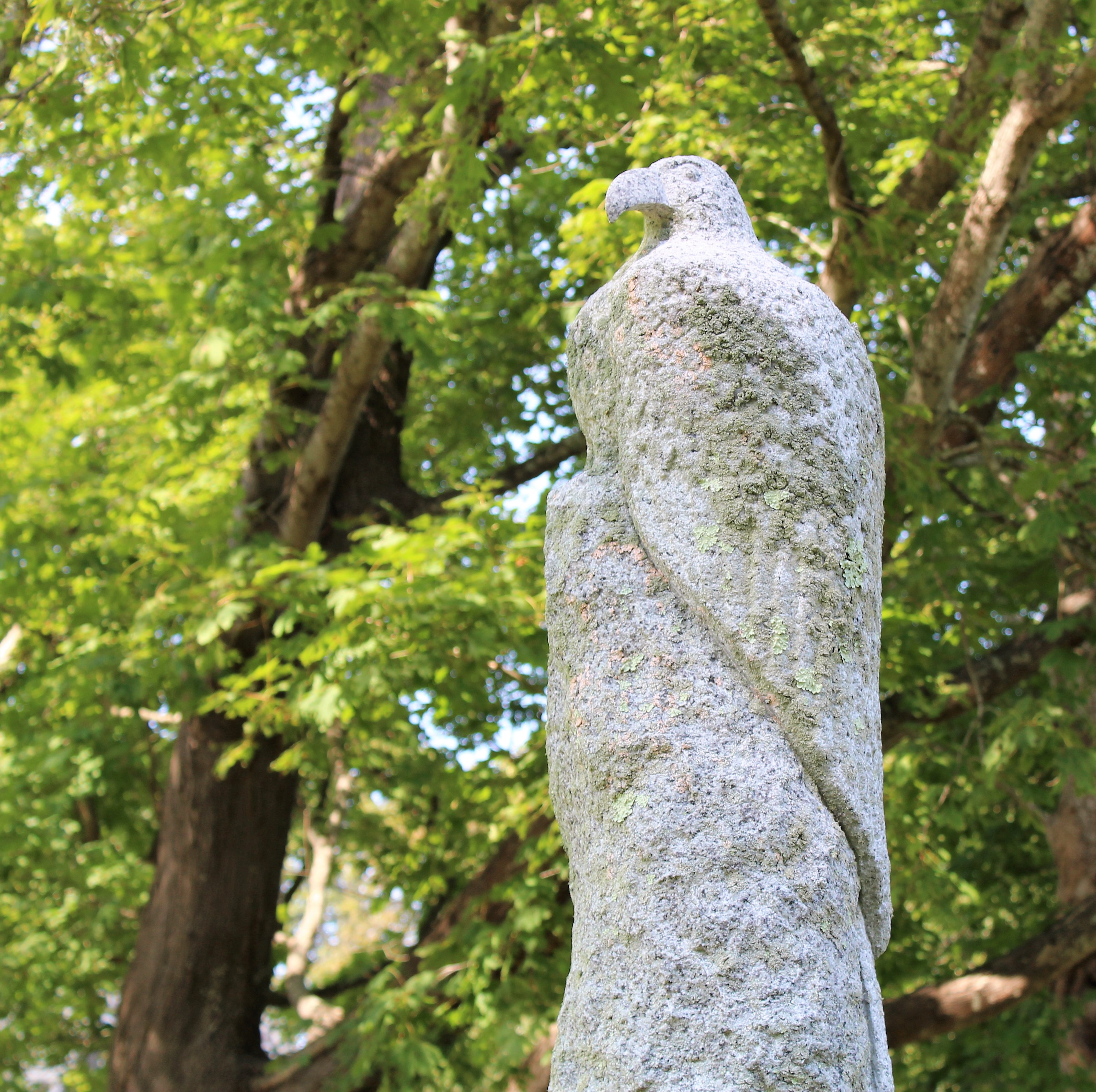
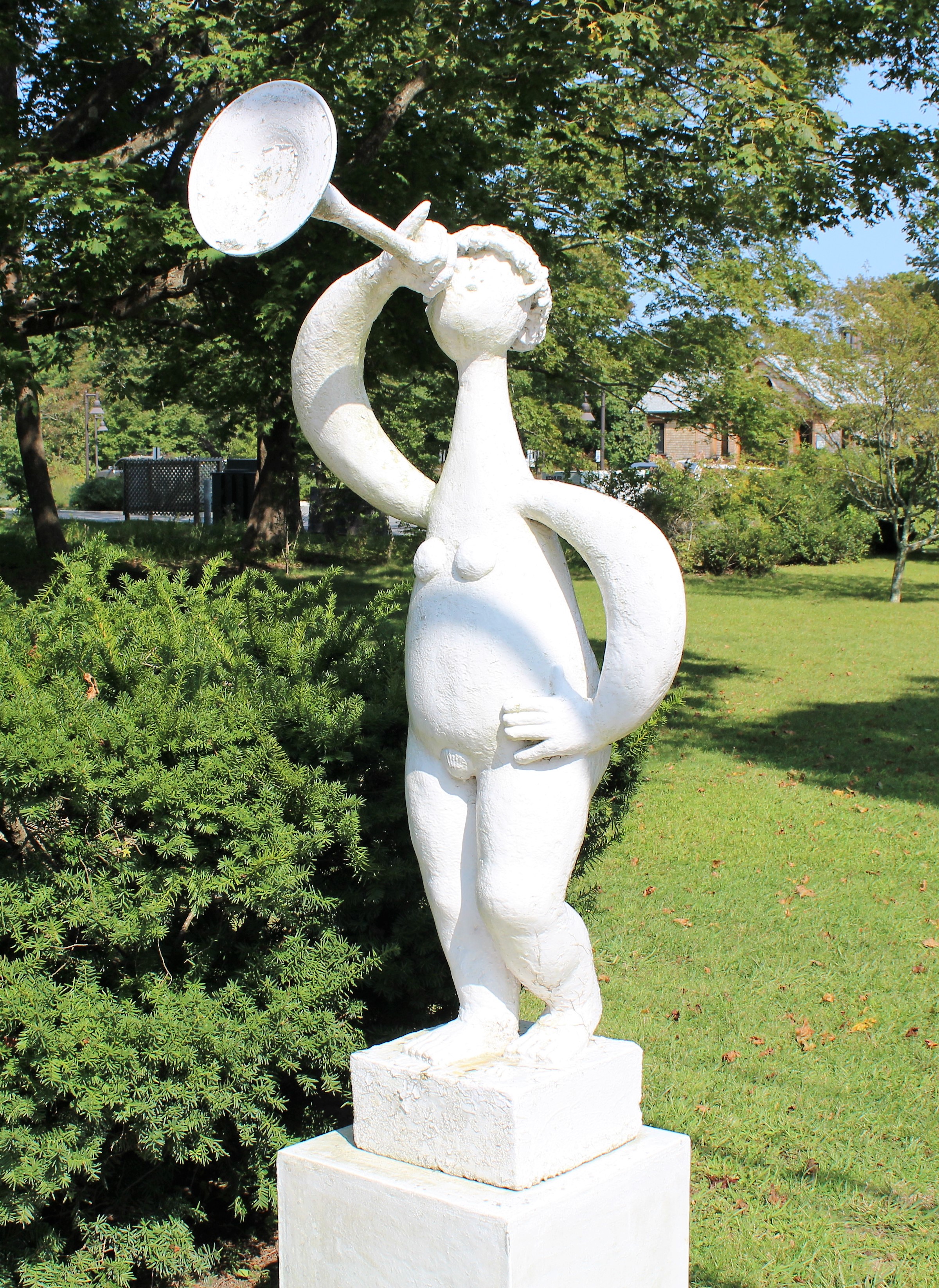
    The crew then strolled thru an outdoor art gallery while waiting on the next bus.  The artist has a large range of medium and subjects.

    IMG_0049

    IMG_0050

    IMG_0051

    The next stop was Aquinnah.  The bus driver on this leg of the journey used to be a tour bus driver so he gave the bus occupants his old spiel on the way to Aquinnah.  The bus driver relayed the story of the first Europeans that visited Martha’s Vineyard.  The first being someone I hold near and dear to my heart, yes, none other than my son Leif Erikson.  He initially named the Island Vineland.

    The next ‘discoverer’ was Verrazano, who sighted the Island in 1524 and called it Claudia, in honor of the mother of Francis II.

    The next ‘discoverer’ was Bartholomew Gosnold of England in 1602.  He is credited for naming Cape Cod for the codfish he found in the water.  He named Martha’s Vineyard after his mother Martha and all the grape vines that were plentiful on the island.  He is also credited with naming the Elizabeth Islands after Queen Elizabeth.

    IMG_0054

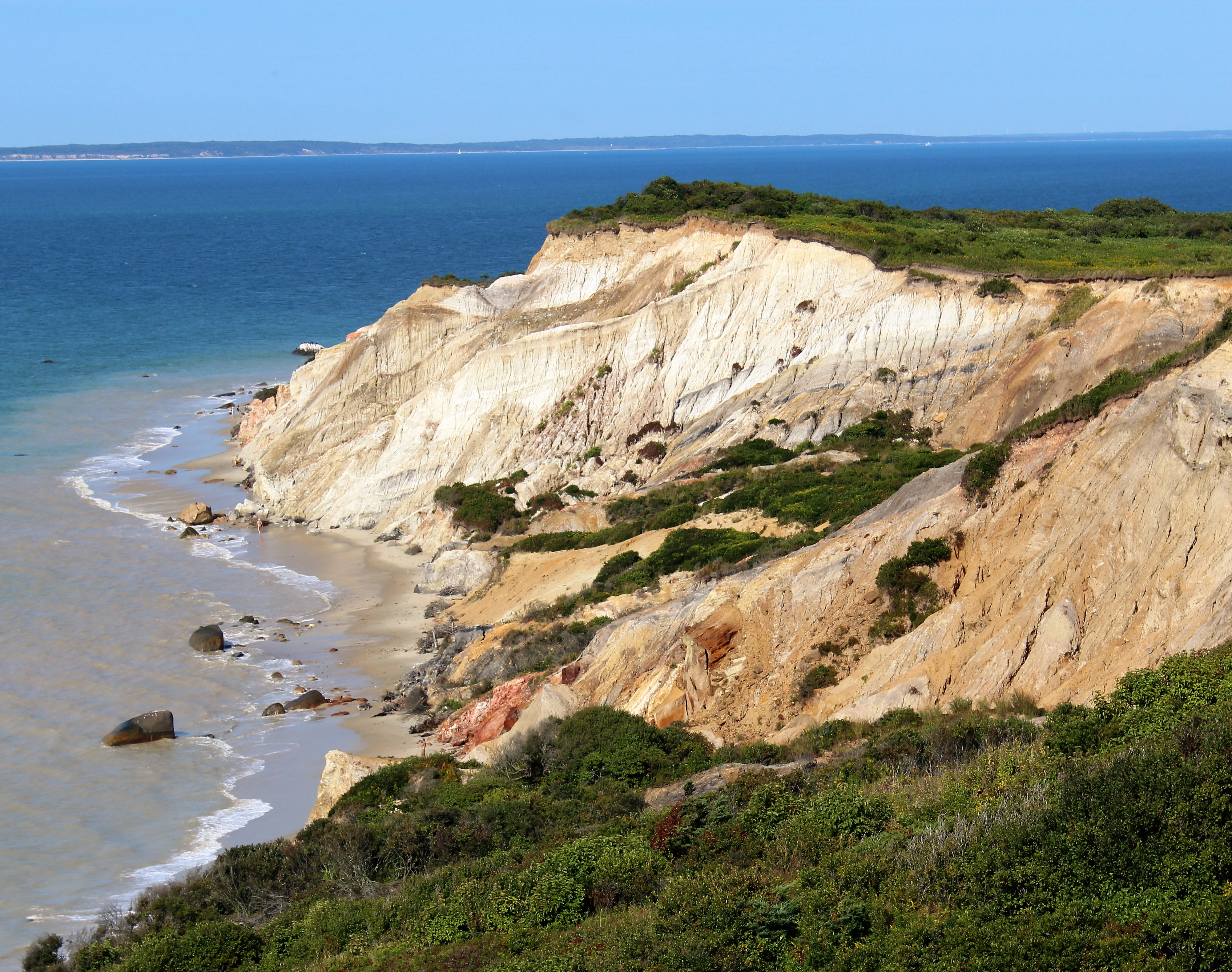
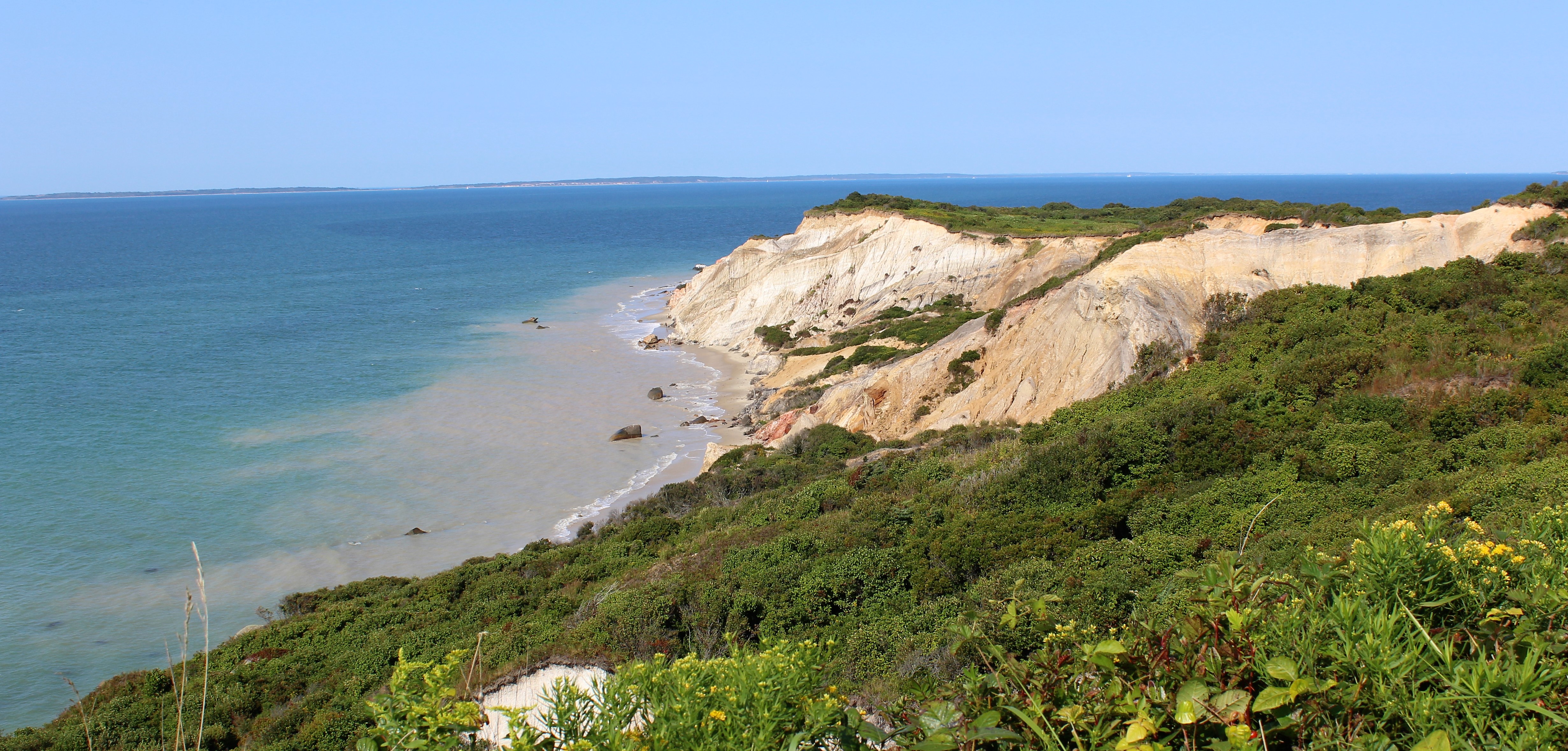
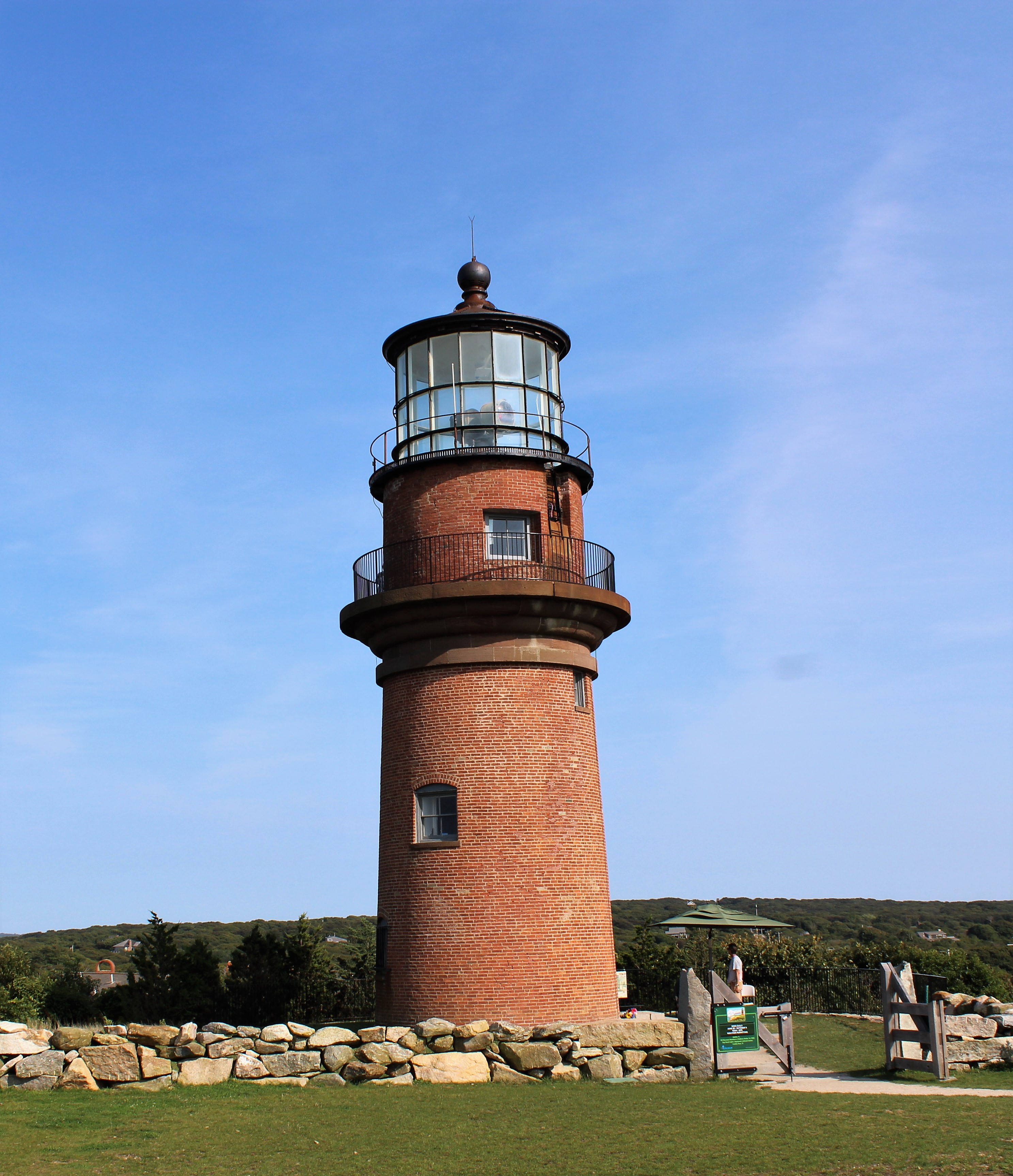
    At this stop the crew could see the famed clay cliffs of Martha’s Vineyard.  They also went up to the Aquinnah Lighthouse.  The views were spectacular.

    IMG_0055

    From here the crew took the bus back to a transfer station and made one last leg back to Edgartown.  After finding an ice cream store, the crew made their way back to the mother ship to conclude another wonderful day.

    IMG_0060

    Wednesday, Sept 13, 2017      

    Today the crew left Martha’s Vineyard and headed over to the Island of Nantucket to learn about the 1800 whale industry.  It was a good cruise over but an interesting indirect route.  The waters between the two islands is shallow and shoals often so the channel runs north into deeper water back towards Cape Cod, then turns and runs west for a while, then turns south to Nantucket.

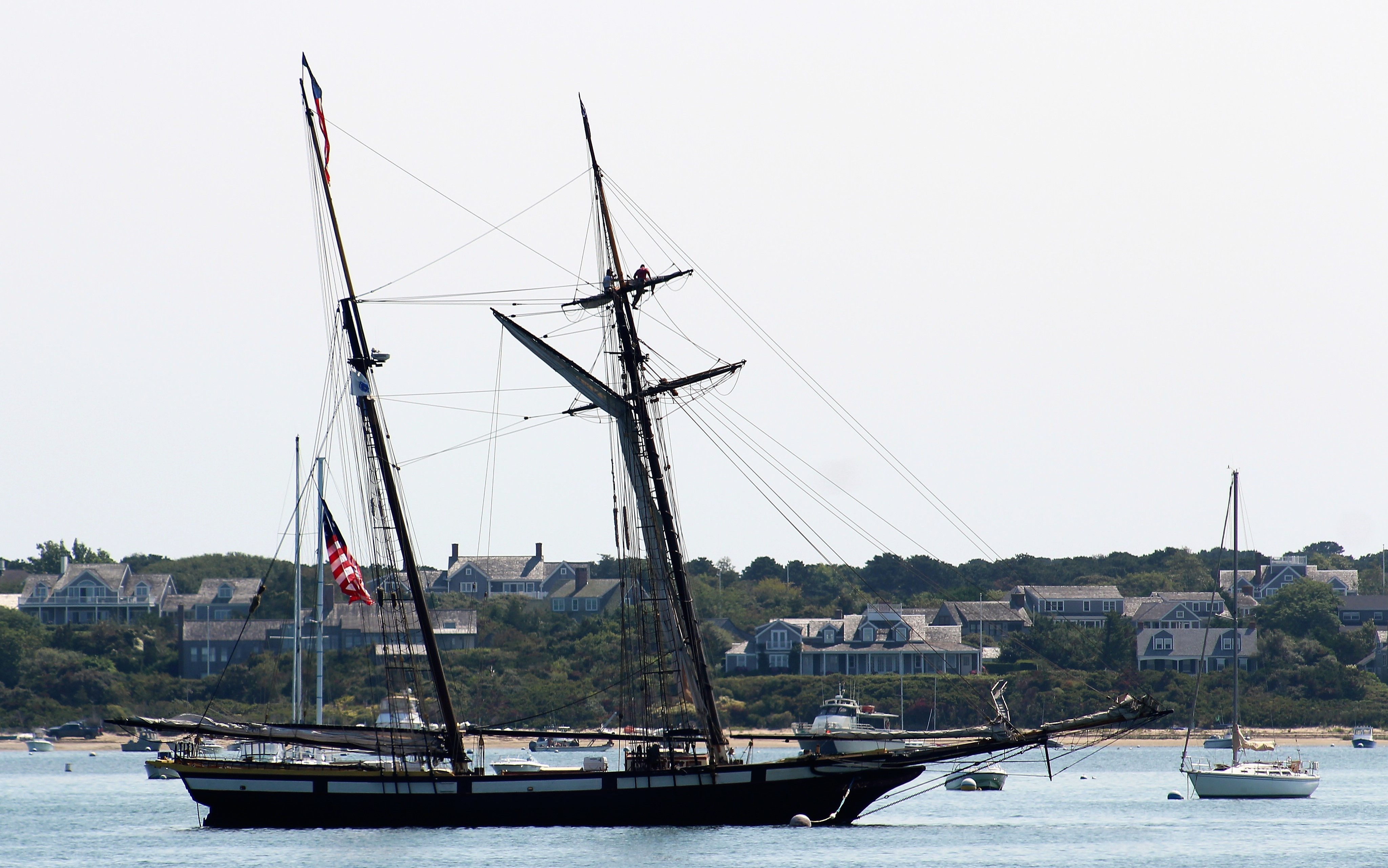
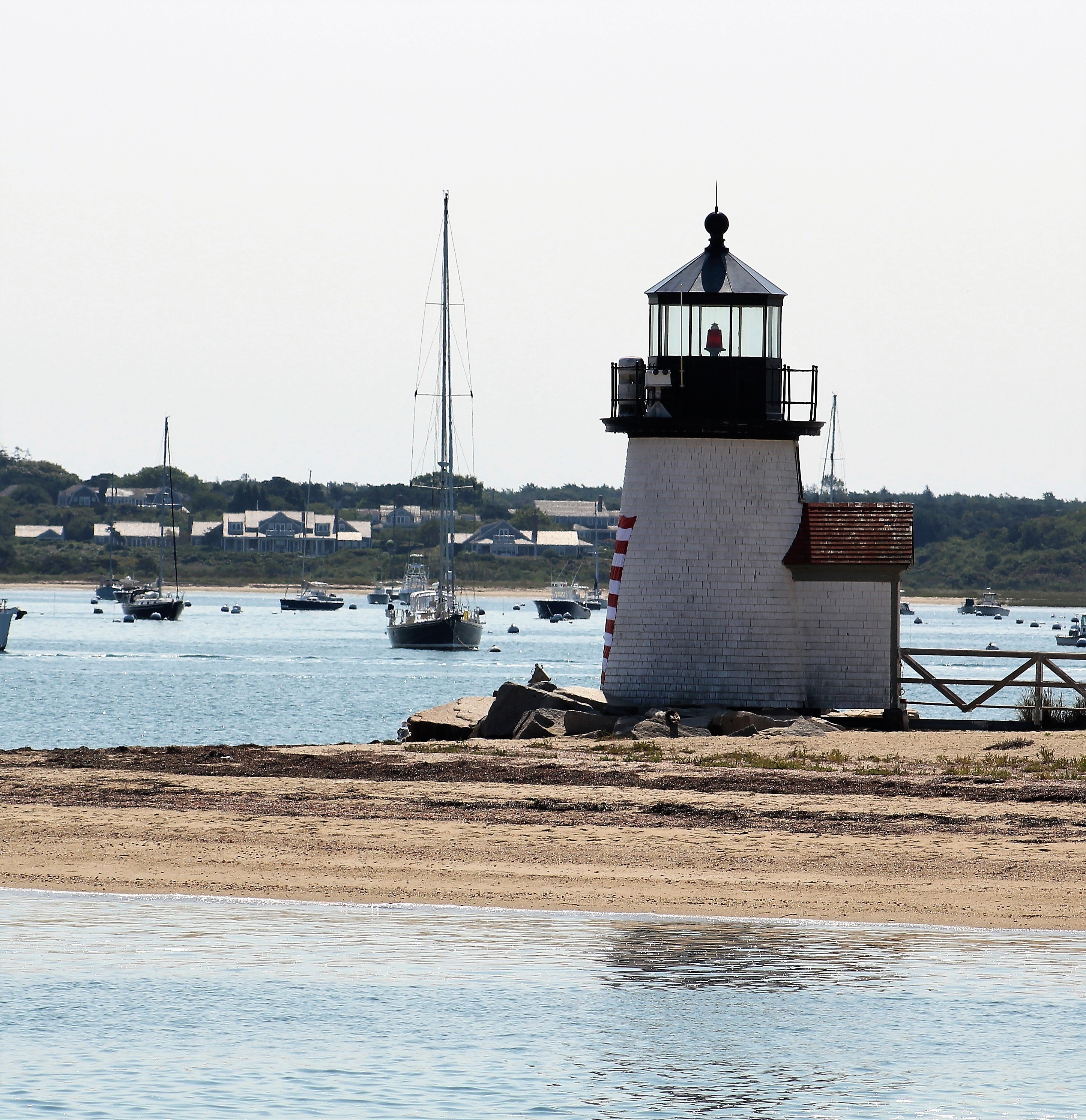
    Replica whaling ship at the entrance to the harbor to greet all boaters.

    IMG_0069

    After arrival in port, the crew took a mooring ball and relaxed in the harbor watching all the other boaters come and go.

    IMG_0070

    Thursday, Sept 14, 2017

    Today the crew dinghied ashore to explore Nantucket and the Whaling Museum. The museum did an excellent job show casing the hey day of the whaling industry in Nantucket.

    IMG_0077

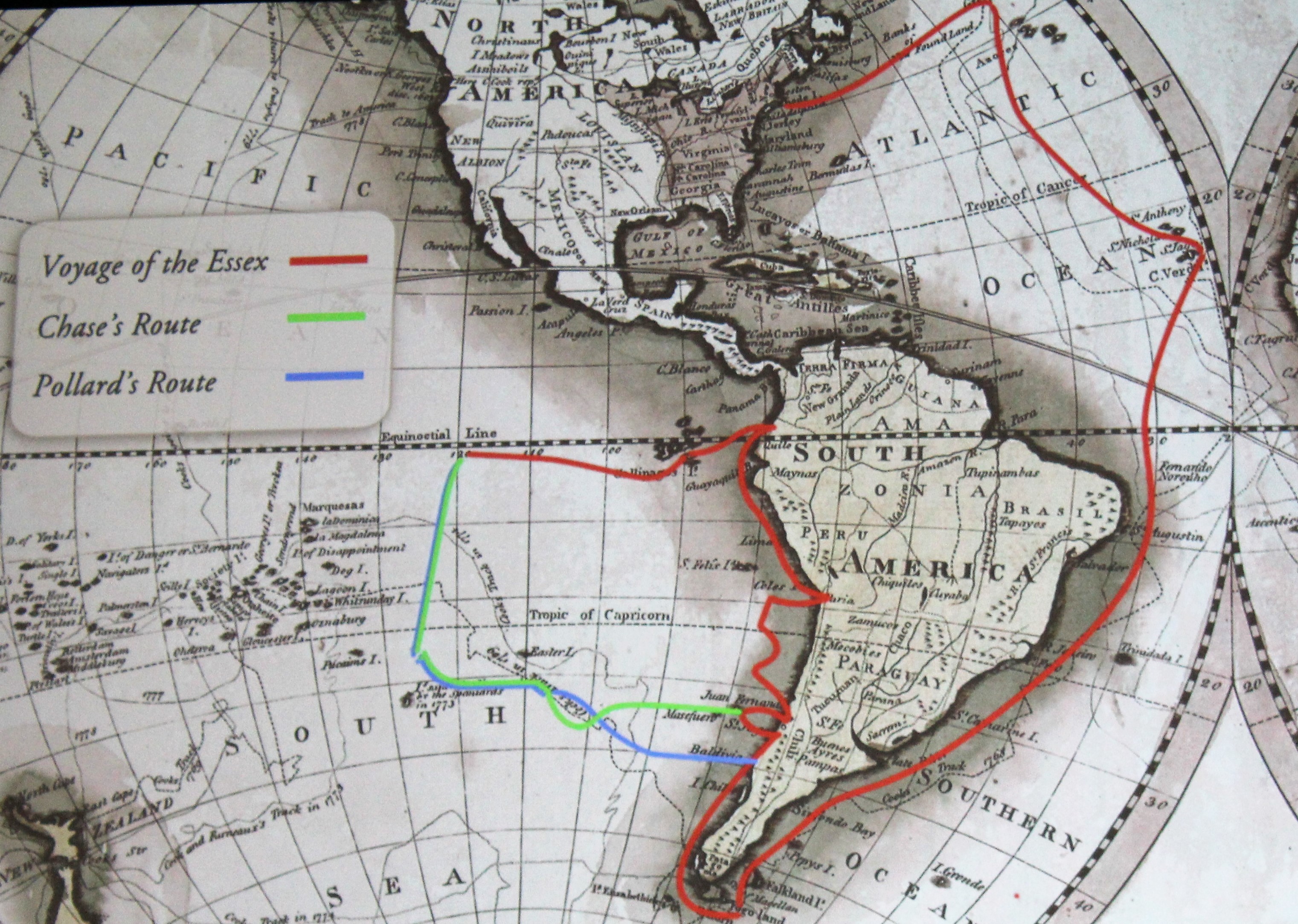
    One of the best exhibits was the Essex Gam.  A storyteller presented the tale of the ill-fated voyage of the whale ship Essex.  After rounding Cape Horn, she was sunk by a renegade whale which rammed the ship twice which led to the sinking of the Essex.  Three small whale boats were salvaged along with water and food before the Essex sank. The men then endured a challenging ordeal before they were rescued.  Eight of the twenty-two men managed to survive the ordeal.  The events of the Essex are what inspired Herman Melville’s Moby Dick.  But since the truth is stranger than fiction, I suggest you read In the Heart of the Sea: The Tragedy of the Whaleship Essex.

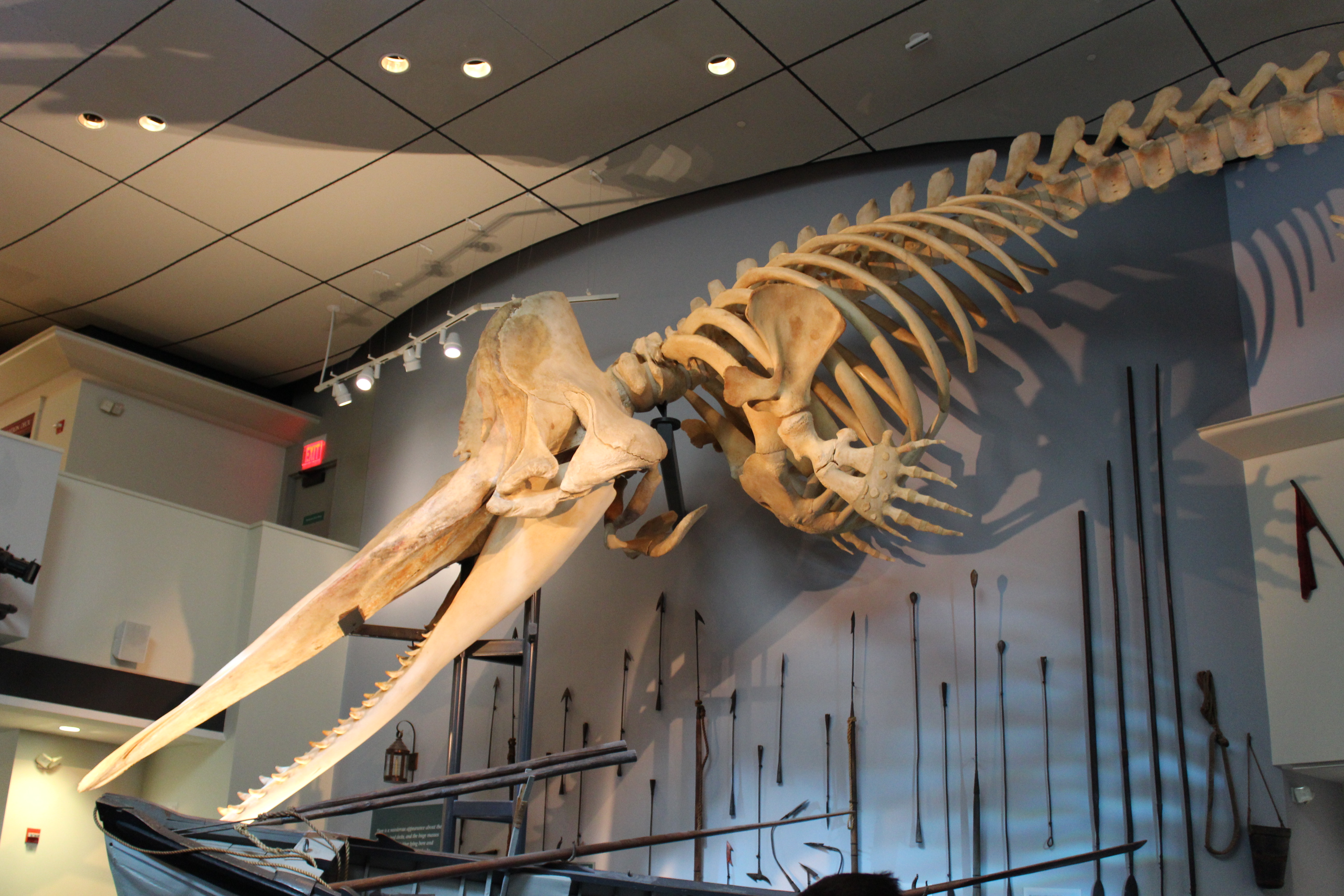
    The museum also has a forty-six-foot sperm whale skeleton.

    IMG_0078

    The whale washed ashore on the eastern end of Nantucket Island during the Christmas Holiday season in 1997.  The whale died January 1, 1998.  After scientist completed their studies, the whale was buried.  In the spring of ’98, the whale was dug up and suspended in the ocean to allow sea creatures to remove the remaining flesh from the bones.  The skeleton was then prepped and made available for the museum.

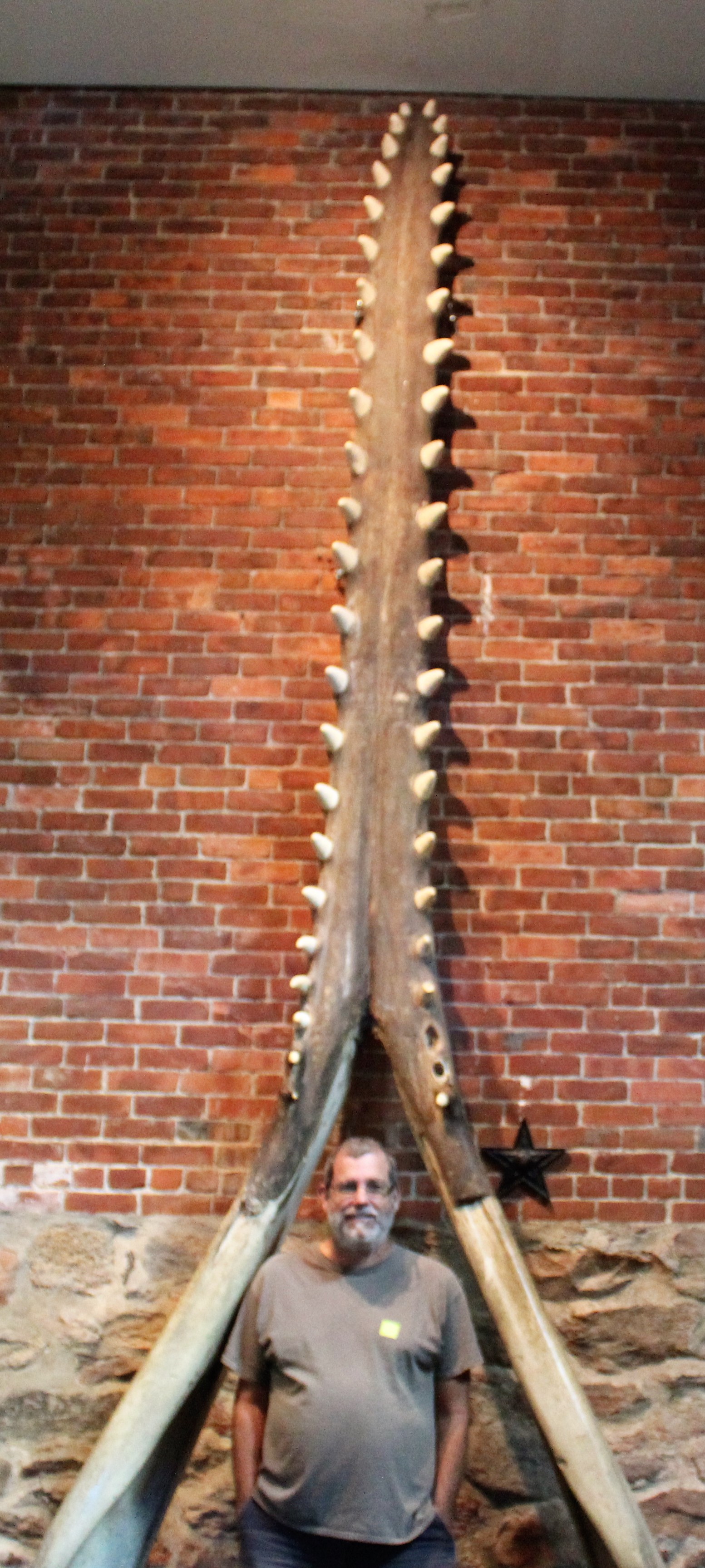
    The skipper in the lower jawbone of a sperm whale.  The sperm whale has ivory teeth.

    IMG_0074

    Friday, Sept 15, 2017

    The skipper has been keeping one eye on hurricane Jose while the crew has been exploring the Cape Cod area.  Based on predicted storm conditions in the area, the crew has decided to head back to the mainland.

    The weather decided to be strange today though.  After departing from the island, a heavy fog sat in and took visibility down to less than a half mile.  Since the crew is making way along the fast ferry channels, this is a bit uncomfortable.

    IMG_0092

    The crew was fortunate and did not see or hear of any ferries along the route.  At one point the skipper was looking for a green marker to verify they were on the right course.

    IMG_0094

    The GPS showed them less than a half mile from the green marker, but he could not see the navigational aid.  Finally, he started hearing the bell ringing on the marker.  Then suddenly it sprang into view about a quarter mile off the bow.

    IMG_0095

    Then as the crew approached within two miles of land the fog finally lifted, the sun came out, and it was a beautiful afternoon.

    Saturday, September 16, 2017

    With hurricane Jose taking aim on New England, the crew has decided it is high time to get to safer ground.  This is why our crew has a fast boat.  They travelled 80 miles today back to Groton where they took a mooring ball for the evening.

    Since the travel was in the fog with less than a quarter mile visibility, there are no pics.  The skipper did say he was a bit tired after straining all day looking out for other boats.  He said it was a strange feeling to cross a boat wake when you never saw the boat.

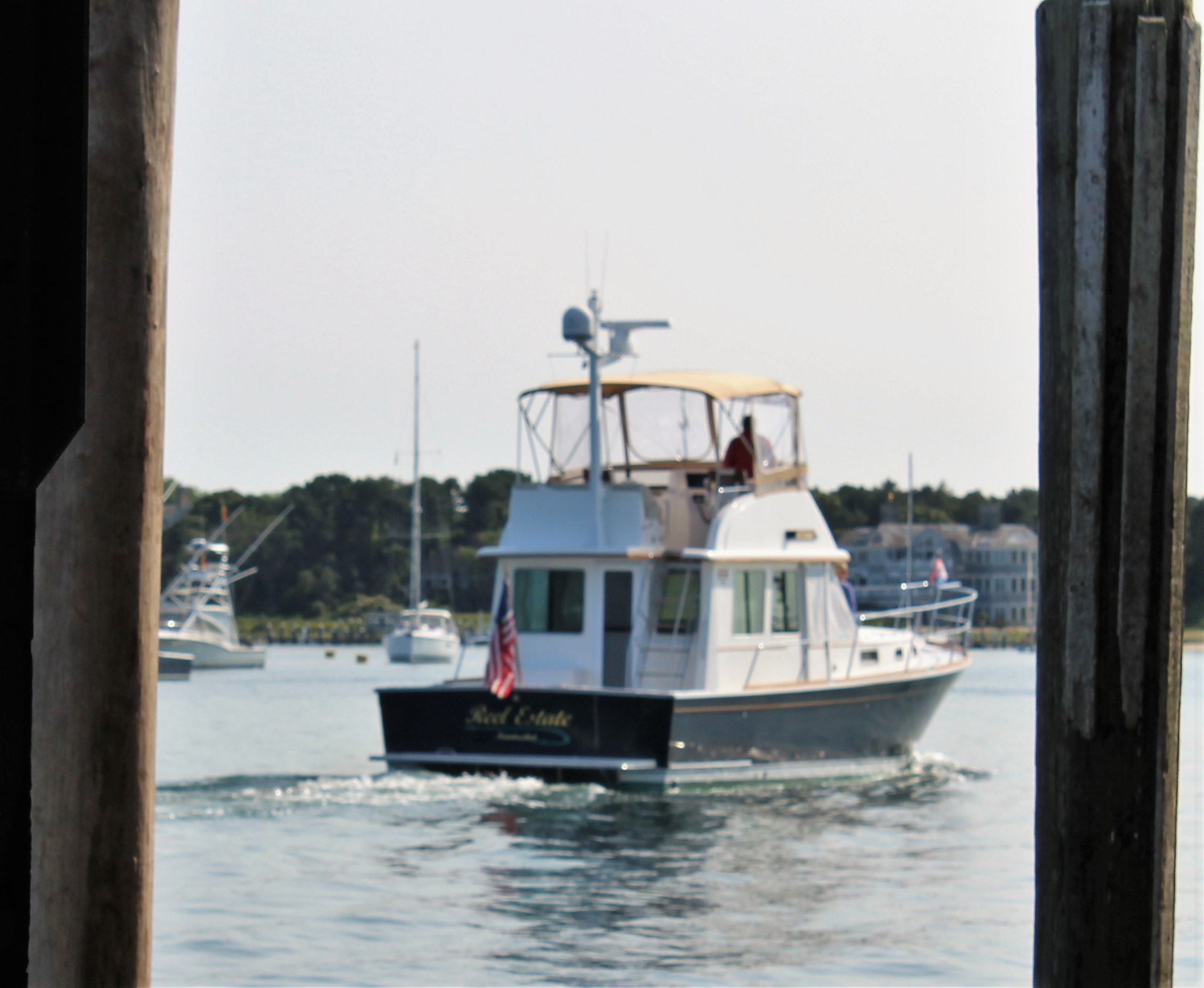
    Boat Name of the Week

                Reel Estate

    9.2.3

    Next Week –

    At this time, it looks like the best guess is that high winds and storm surges will hit the lower New England area sometime Tuesday ahead of Jose.  Based on these predictions, the crew has decided to keep moving and head towards the Hudson River.  It is two hundred twenty-five miles to the Hudson River.  The goal is to travel long and hard Saturday, Sunday, and Monday so that the boat is far enough up the Hudson River to be out of harms way.

    Loop On – The water goes on forever and the adventure never ends.
    Eric the Red

  • Wind, Waves, and Whales

    Hello virtual crew members and fellow adventurers!

    IMG_0001

    Eric here with the latest travels of Still Waters II.

    A fellow WordPress blogger has come aboard as a virtual crew member by following the Still Waters II site.  Welcome aboard Transit Address.

    Summary of week:

    SAndwich

    After waiting out the weather in Portland on Sunday, Monday, and Tuesday; the crew got back underway on Wednesday and travelled to the Isle of Shoals.


    Thursday, the crew made way to Boston Harbor and anchored near Long Island.


    After pulling into the Sandwich Marina at the eastern entrance to the Cape Cod Canal, the crew decided to stay through the weekend and enjoy the area.

    This week’s journey of discovery did answer the following questions:

    1. So what is really the oldest lighthouse in Maine?
    2. Why are there two lighthouses on Thatcher Island?
    3. How did Thatcher Island get its name?

    Click on the link to read the day-to-day travel log.  This includes weather report of the day, sea conditions, log of the days travel, and a summary of the experience.

    At the Box Office

    This week the video shows Still Waters II on the waters from Boston to Cape Cod Canal.

    The crew spotted several whales in the past weeks but have not got them on film, so here is a short video of a whale the crew saw a year ago.

    To see past videos, click on the link to the Still Waters II Vimeo site.  The library now contains 33 videos of Still Waters II cruising America’s Great Loop.

    Sunday – Tuesday, Sept 3 – 5, 2017

    The main activity in Maine for the last several days was waiting out the weather.  The winds have whipped the waves up to 6 – 10-feet.  There is not much fun in big waves for fair weather sailors like our crew.

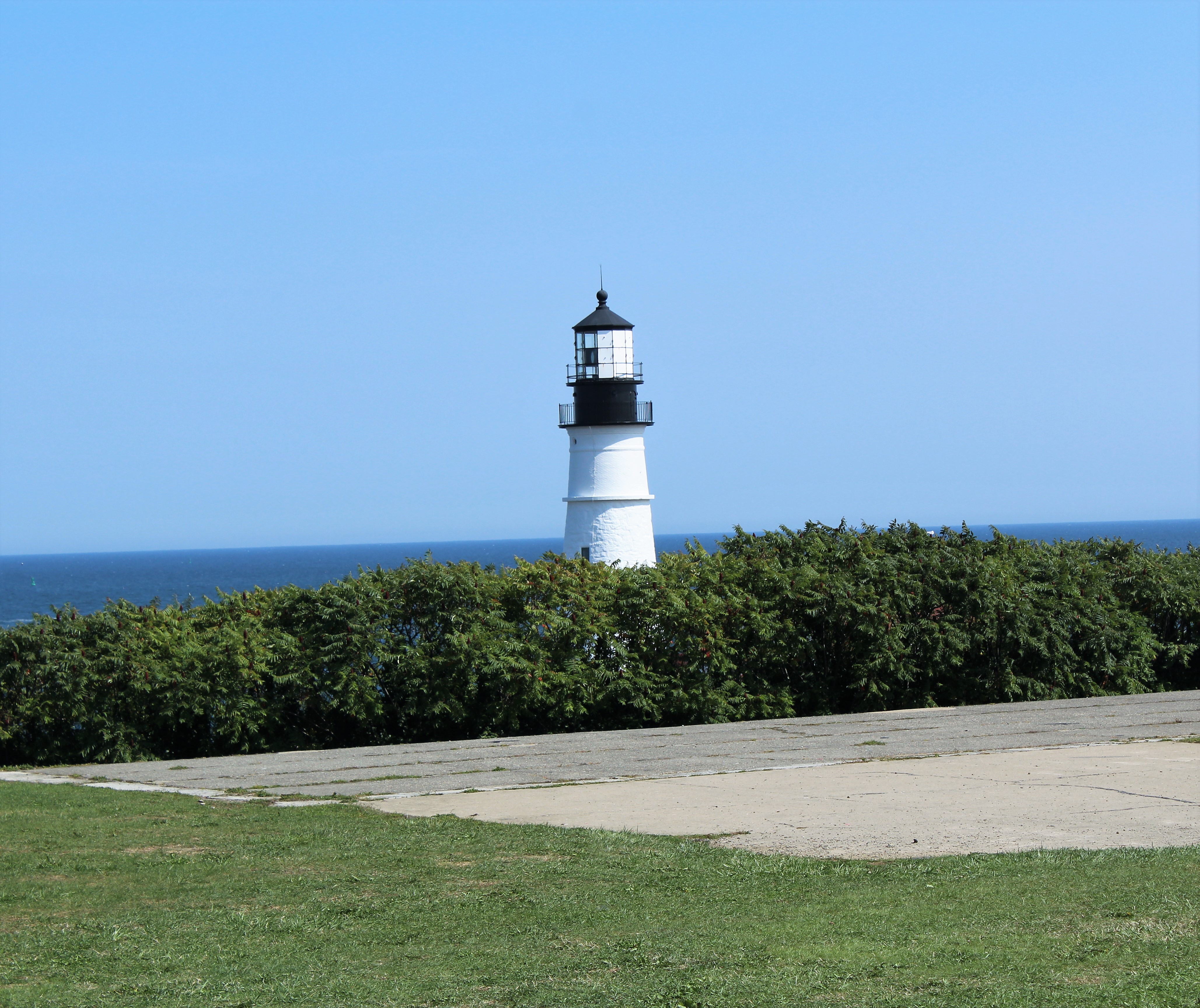
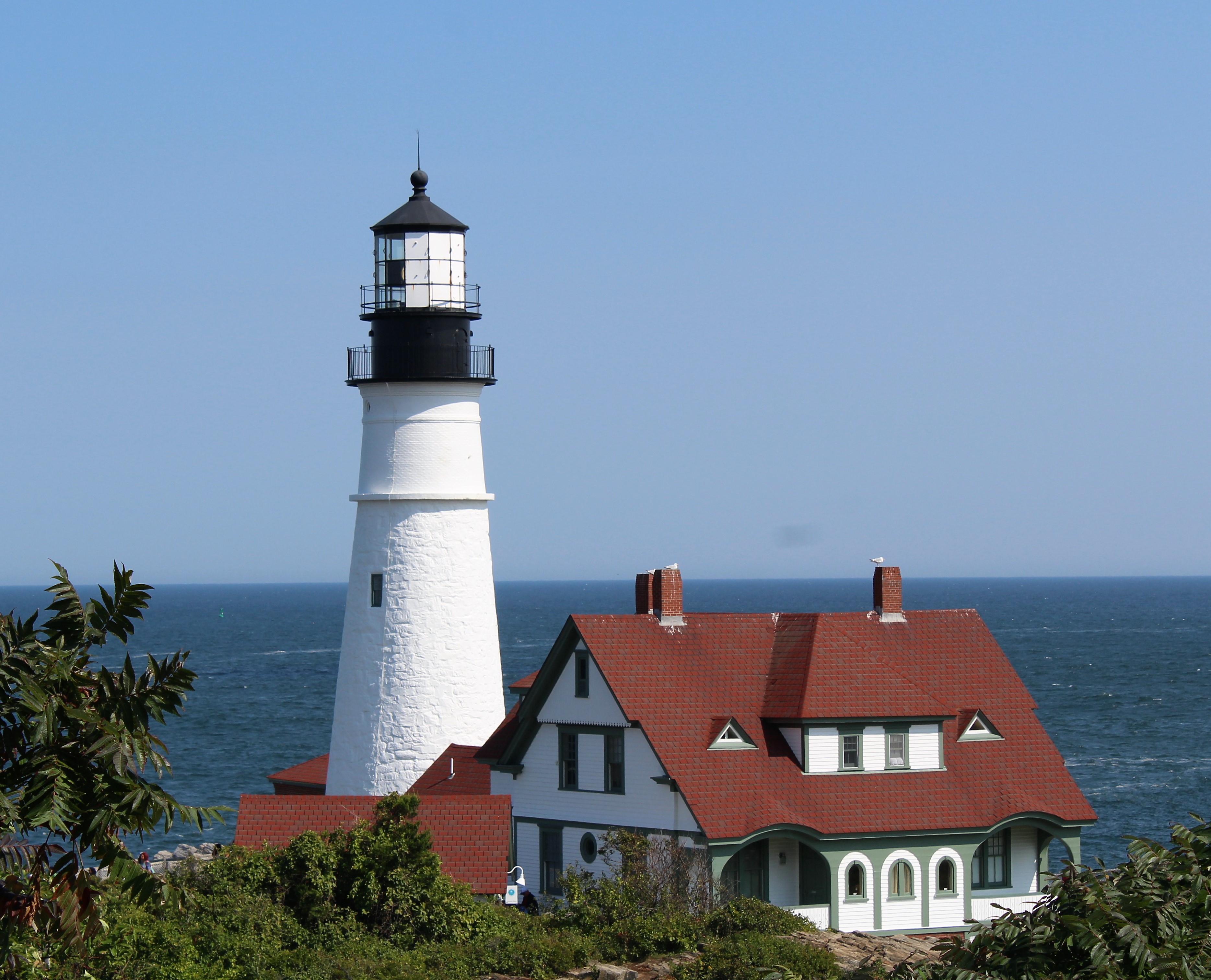
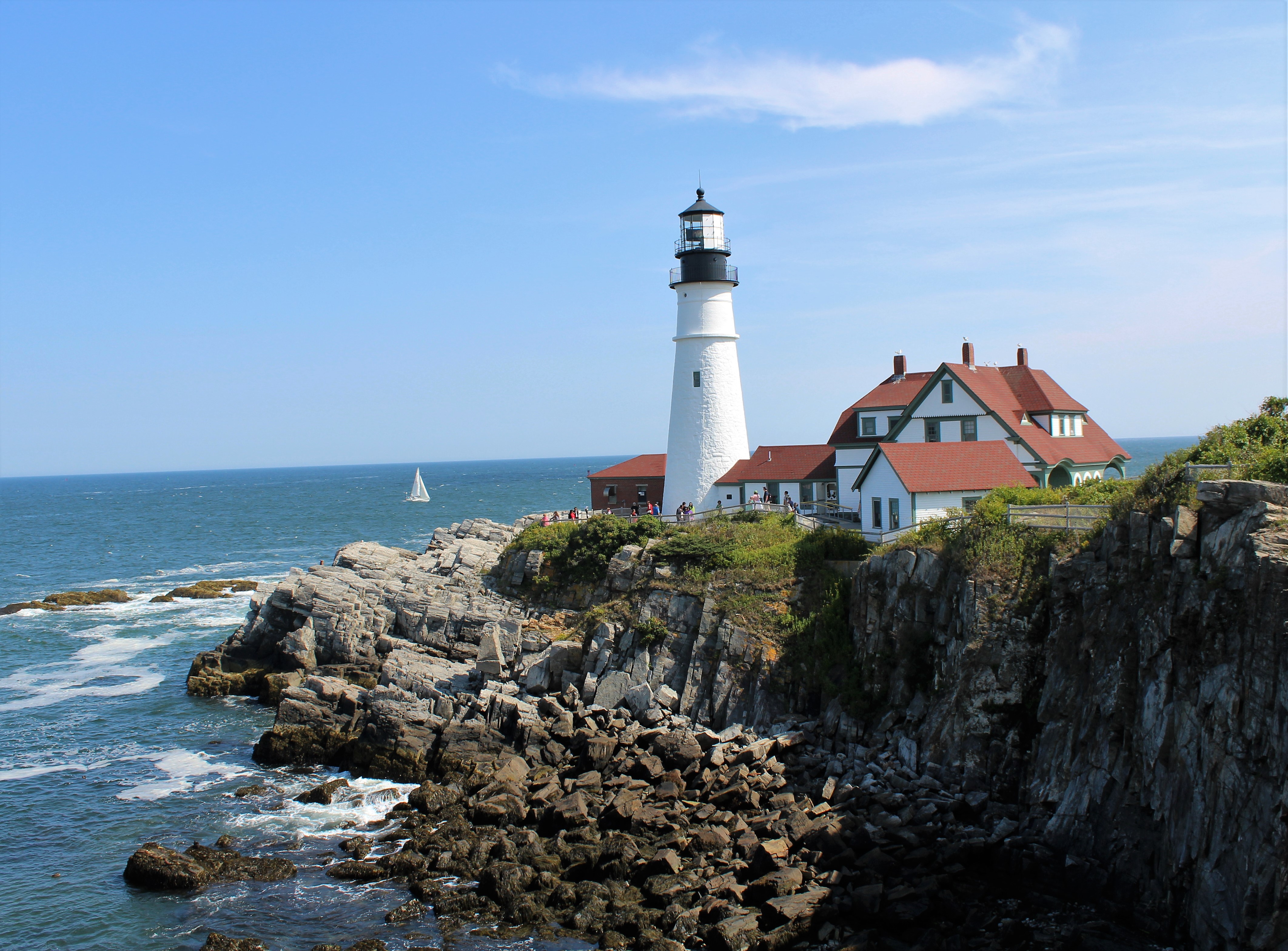
    61 Portland Head Light

    The crew did find time to go visit the Portland Head Lighthouse which is only a few miles from the marina on Labor Day.  The crew was surprised to find that the area is a very large park that includes the lighthouse and Fort Williams.

    61.1

    The Lighthouse sits on a large rock bluff 101 feet above the water between Casco Bay and the Gulf of Maine.   George Washington asked local masons to build the light of local materials and keep the price tag down, as the new country did not have much money in the treasury to pay for the light.  During the first session of congress, the ninth law passed in our country provided funds to complete the lighthouse.  The lighthouse was first lit January 10, 1791 making it the oldest light in Maine.

    61.3

    When the tower was initially completed, it stood 60 feet above the rock bluff.  However, the light could not be seen from the south due to islands blocking the view.  The masons raised the tower another 20 feet to make the light visible 24 nautical miles from shore.

    The crew hoped to get a good look at the lighthouse when they cruised by the next day, but it would not turn out to be.

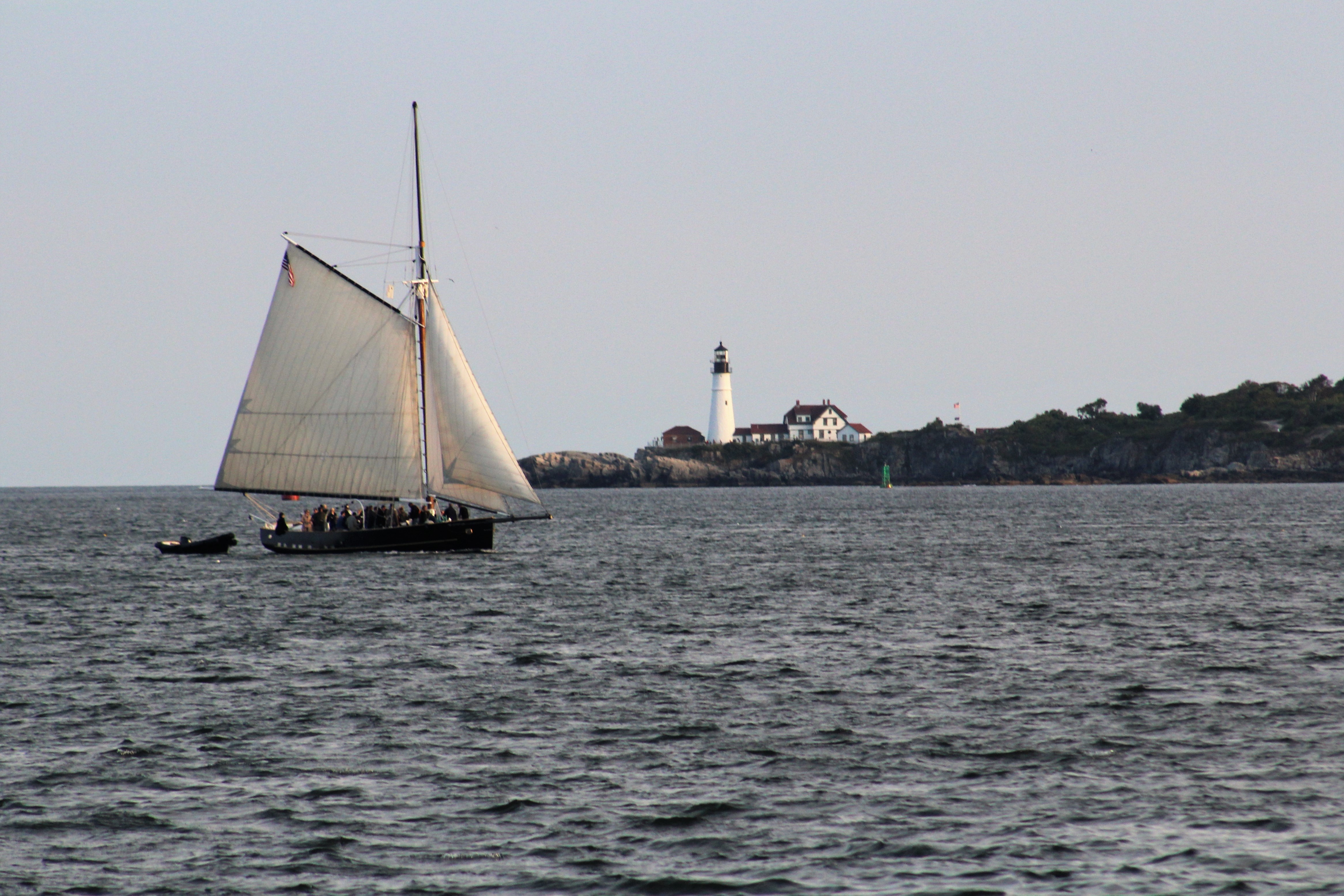
    Wednesday, Sept 6, 2017        

    The winds had died off and the seas had started to calm so the crew got up this morning to cruise to Isle of Shoals.  However, they were greeted with one of those famous Maine foggy mornings.  Visibility was less than a half mile.

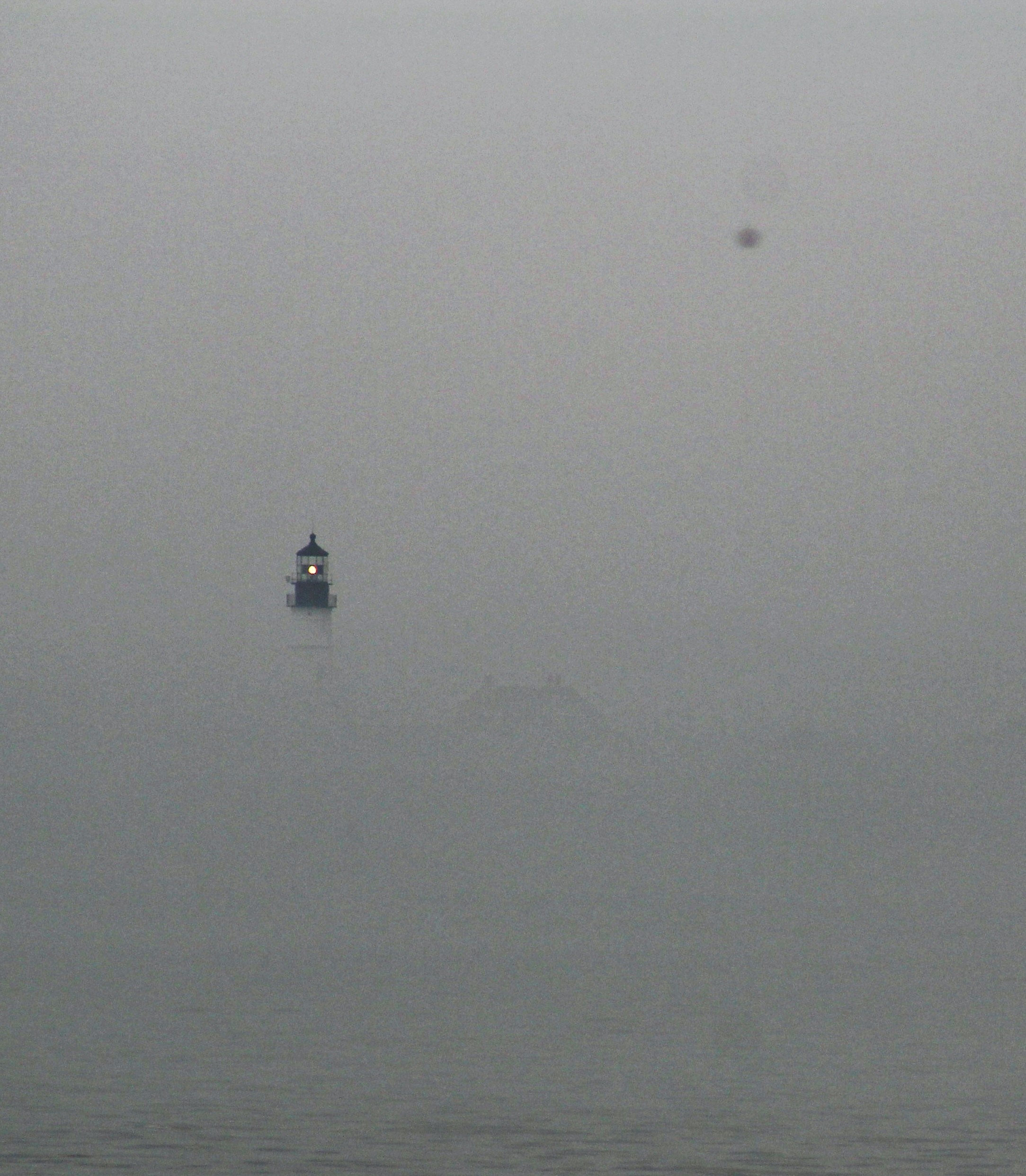
    When the crew passed the Portland Head Lighthouse they could barely make out the light 181 feet above the water.  So much for the spectacular view from the water.

    64 Portland Head Laight

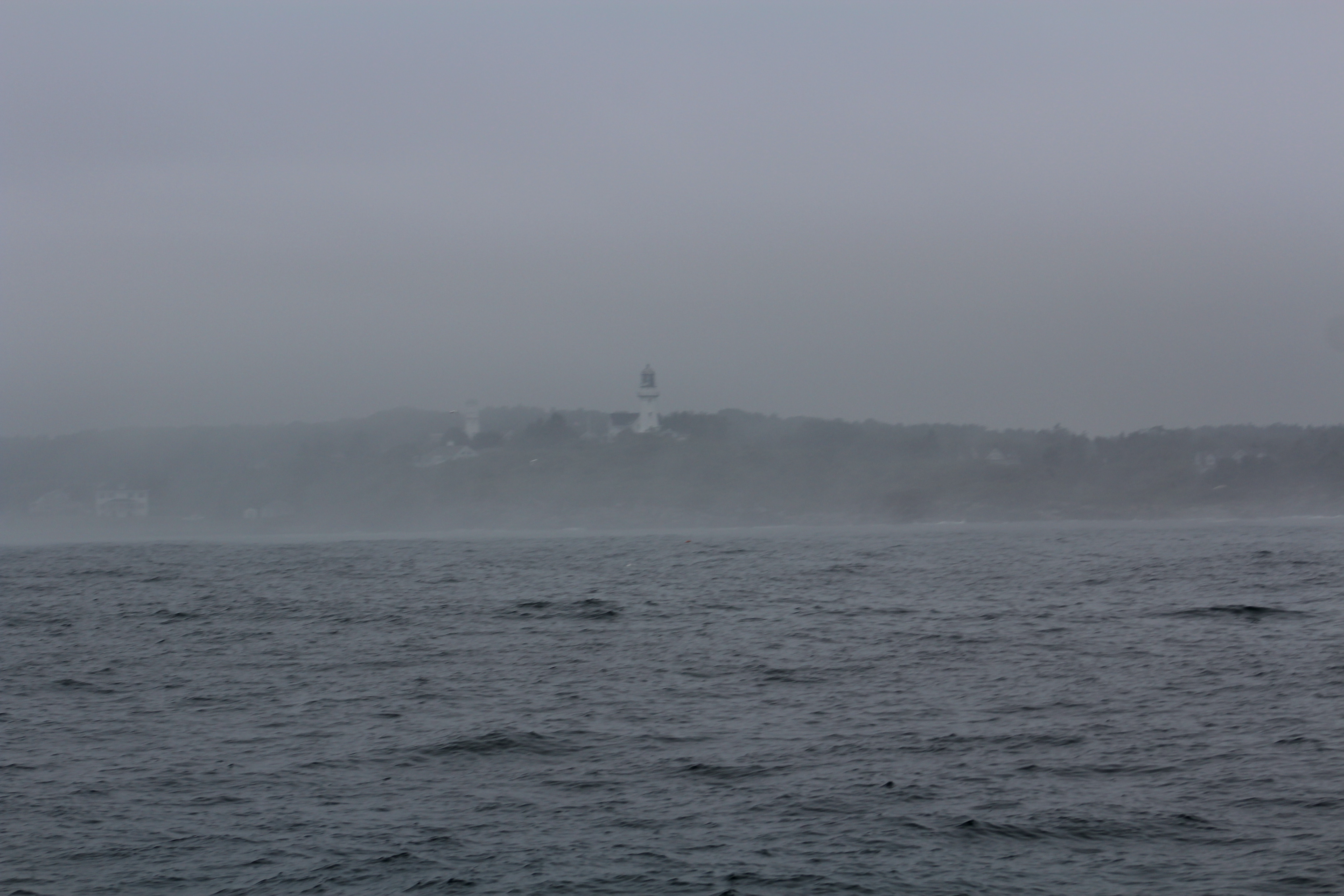
    The fog stayed with the crew all day.  Sometimes the fog would lift to allow visibility to two miles, but for most of the day visibility stayed less than a mile.  To make matters worse, if the visibility did improve the rain showers would dampen the mood and keep visibility close range.  The skipper did get some practical hands-on experience using the radar though.

    View as the crew passed Goat Island.

    65 Goat Island Light

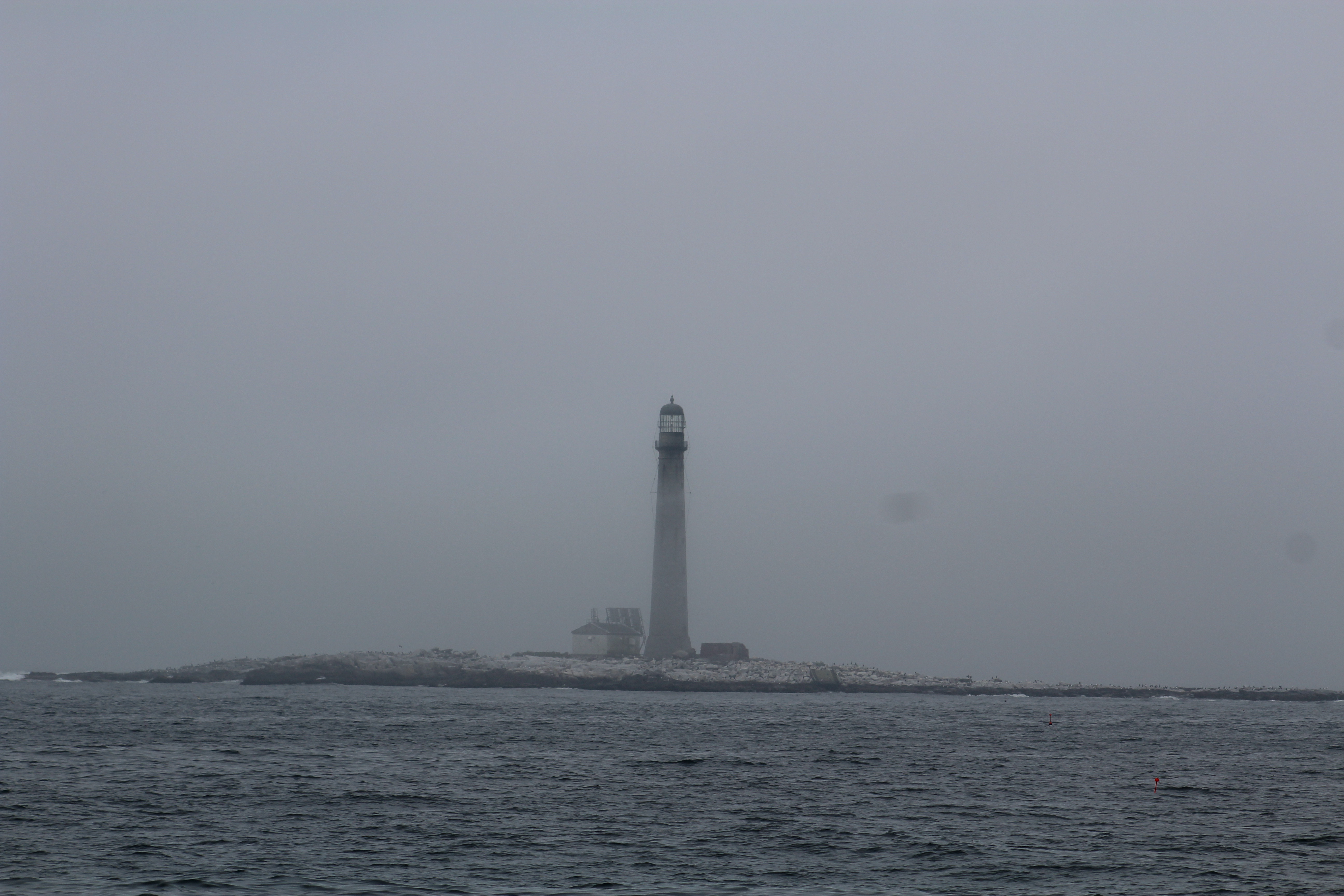
    Then when the crew passed Boon Island Light.

    66 Boon Island Light

    This is the only fog the crew has run into up here in Maine, and they hope it is the last.  The skipper thinks he piloted the boat twice as far as needed today due to having trouble steering a straight line due to the wind, fog, and waves.  One of the most tiring days on the water in two years.

    When they arrived in Gasport Harbor, they found a blue mooring ball to take for the night.  After they got the mooring line attached to the boat the skipper realized that they were dragging the mooring.  That just about fits with the rest of the day.  They dropped the line and found a second blue mooring ball.  After getting attached this time all was well for the night.

    Thursday, Sept 7, 2017

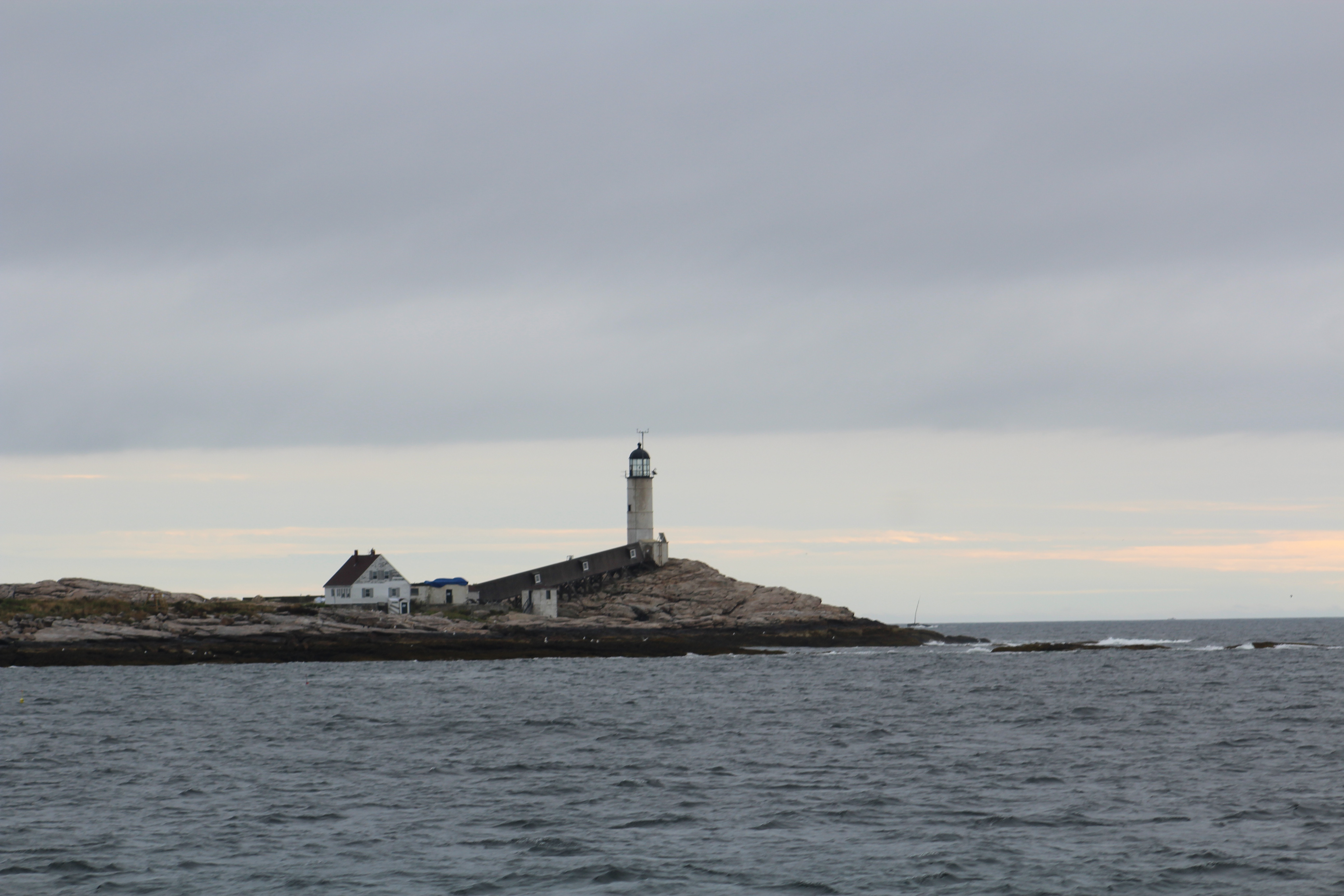
    The crew woke to a much better morning than yesterday.  The clouds are still around but the fog was gone.  The crew dropped the mooring line and headed around the Isle of Shoals Light and headed towards Boston.

    1 Isle of Shoals Light

    On the way to Boston the crew passed by the Straitsmooth Island Light.

    2 Straitsmooth Light

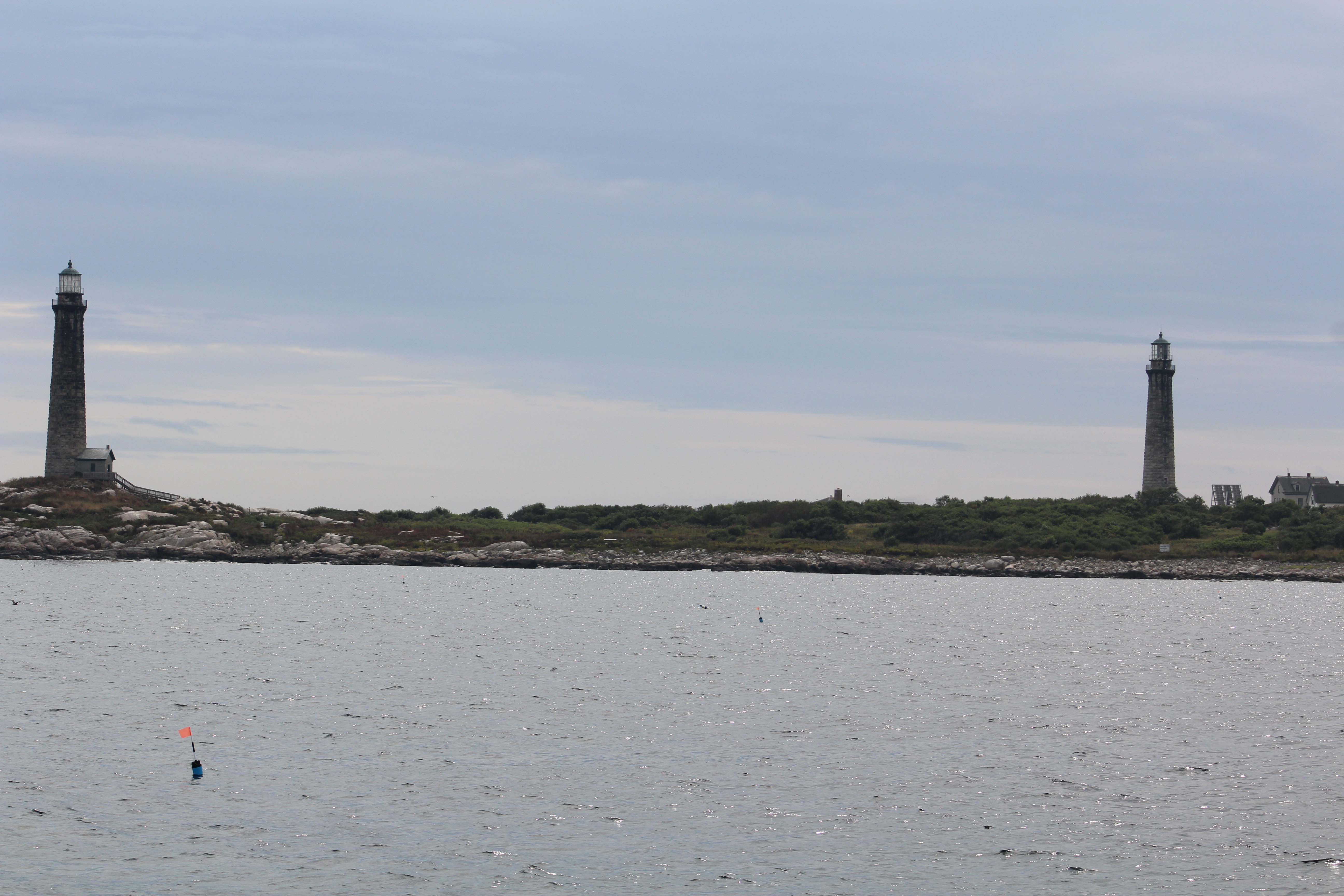
    The next island was Thatcher Island which has two lighthouses about 300 yards apart.  The island is named after Anthony Thatcher, who with his wife were the only survivors off a ship wreck on the island in 1635.  Anthony watched his children perish in the ship wreck.  The courts awarded him the island as part of the settlement from the ship wreck.

    The twin lighthouses were the last lighthouses built under British Rule back in 1771.  The towers are on a north south axis to help captains determine their position out at sea.  The twin lights also provide a positive method for captains to identify their position along the coast.  They are now the only twin lighthouses operating in America.  So if you see two lights off shore, you would know you are at Thatcher Island.

    3.2

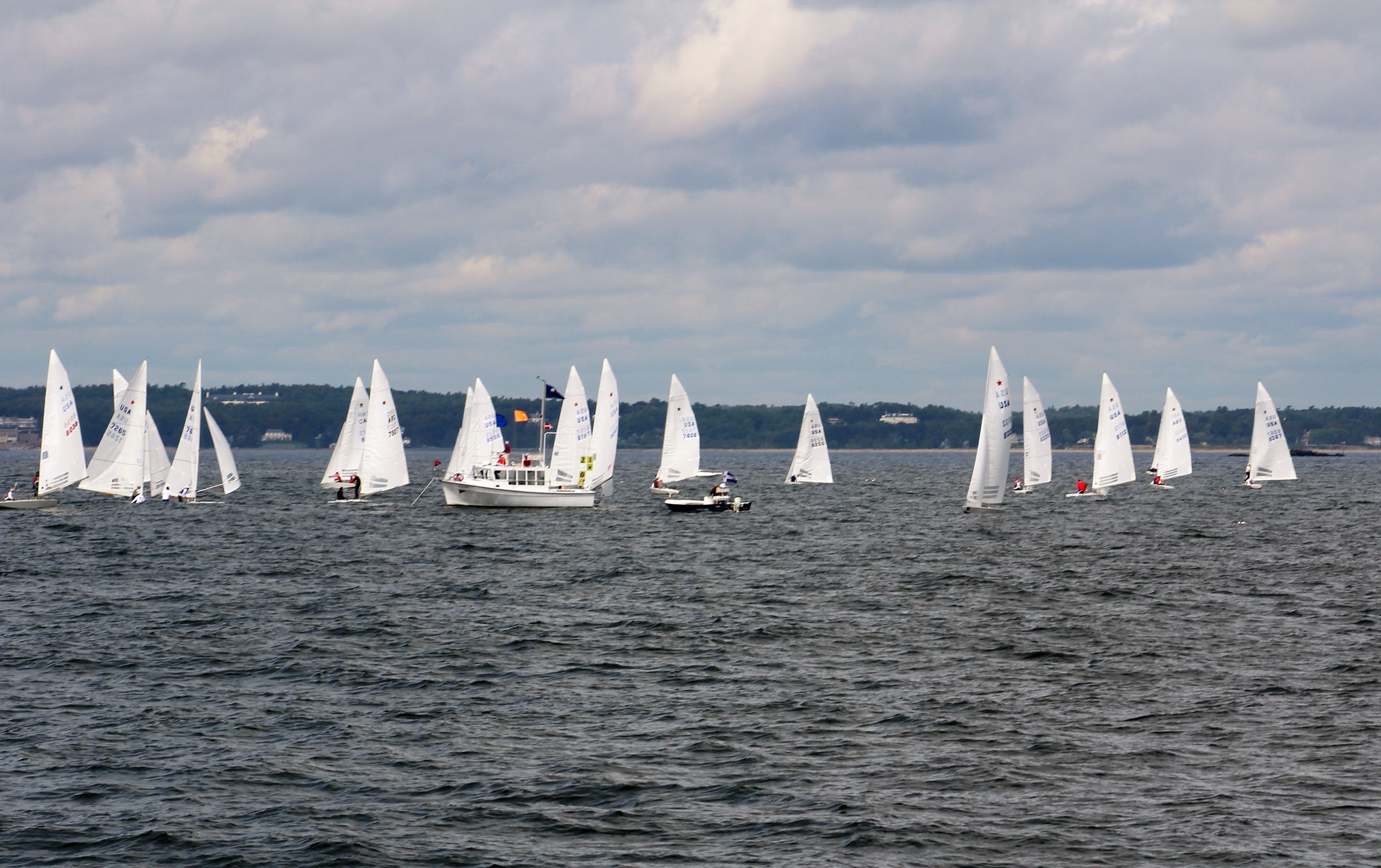
    As the crew approached Boston they came up on a sailboat race that was strung out over about two miles.  There were 47 boats in the race.  The crew had to detour around the race before the final leg into Boston Harbor.

    5 Sailboat Race

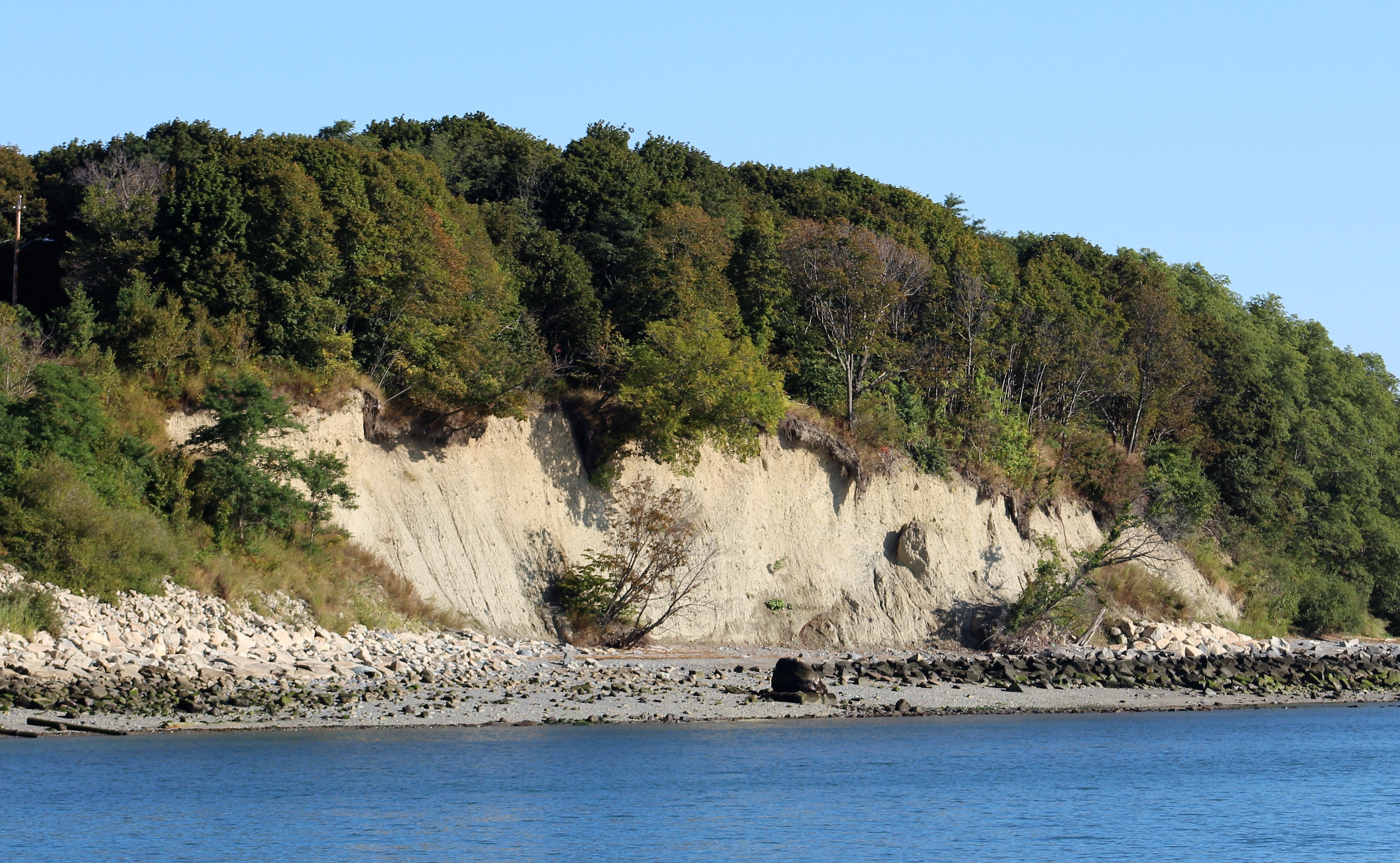
    Upon arrival in Boston Harbor, the crew motored to the spot the skipper had picked to anchor.  It was obvious that the spot was not going to work due to the wind direction.  As they bobbed in the water the skipper found another anchorage with better protection from the west winds.  On the leeward side of Long Island was the perfect spot.  They had a good view of the Boston Harbor Light off the stern of the boat and a nice cliff wall beside the boat.

    6 From Boston Anchorage

    Friday, Sept 8, 2017

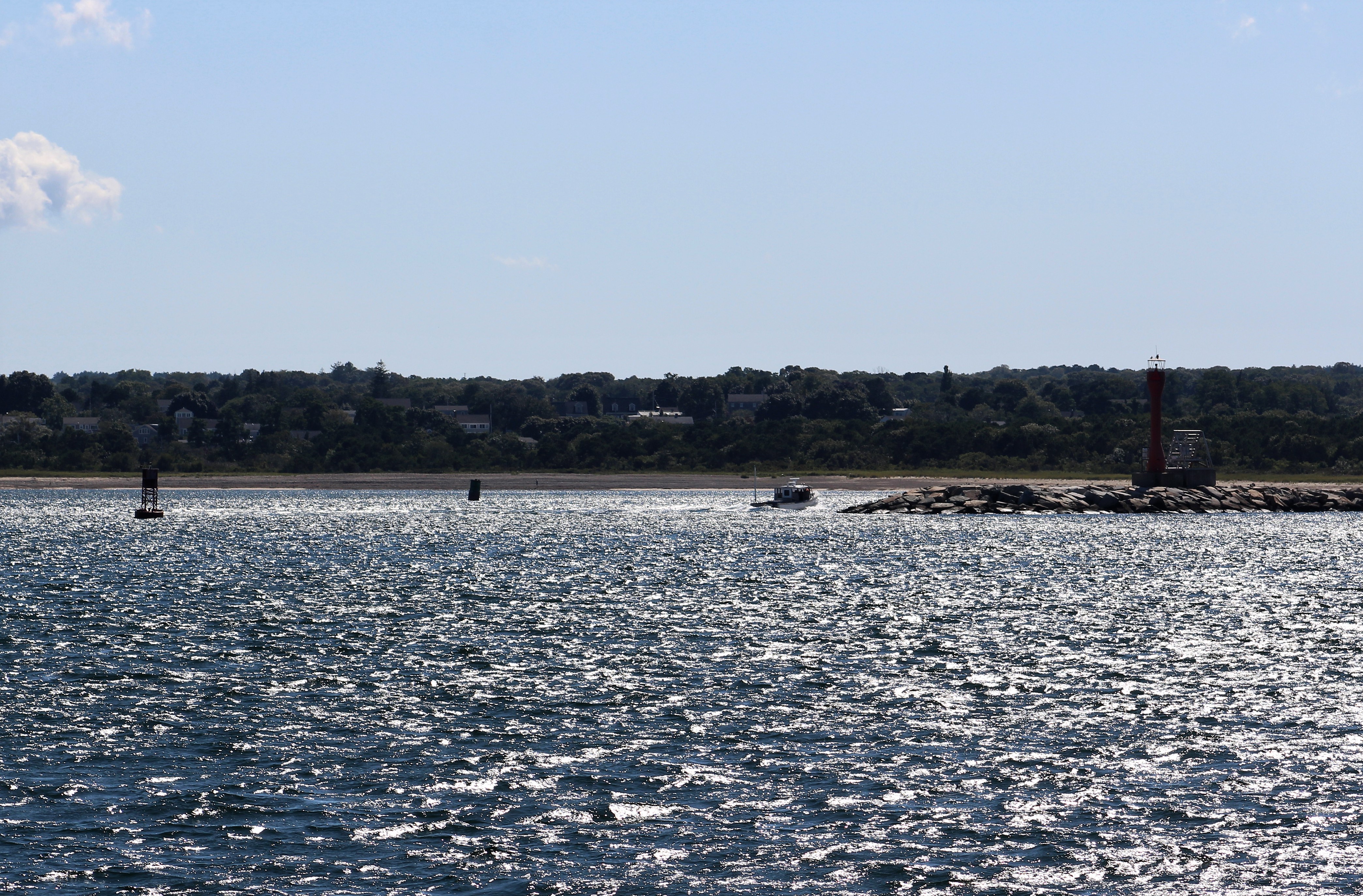
    When the crew weighed anchor they set their sights for the Cape Cod Canal, specifically the Sandwich Marina.  The run was almost as smooth as glass as the crew continued south.  Hard to believe the difference in the sea state in just two days.  However, once they turned toward the canal they met an ever increasing west wind that started a small chop on the water.

    8 Enter Cape Cod Canal

    When they entered the Canal, they met a strong 3 knot head current that pushed the boat around a bit as they tried to enter the marina.  Once inside the marina, docking was a bit tricky due to the wind.  The wind was pushing the boat away from the dock.  The Admiral managed to lasso a cleat and get the boat pulled over.  About the time the crew got the boat landed the dockhand showed up.  Better late than never I suppose.

    Saturday, September 9, 2017

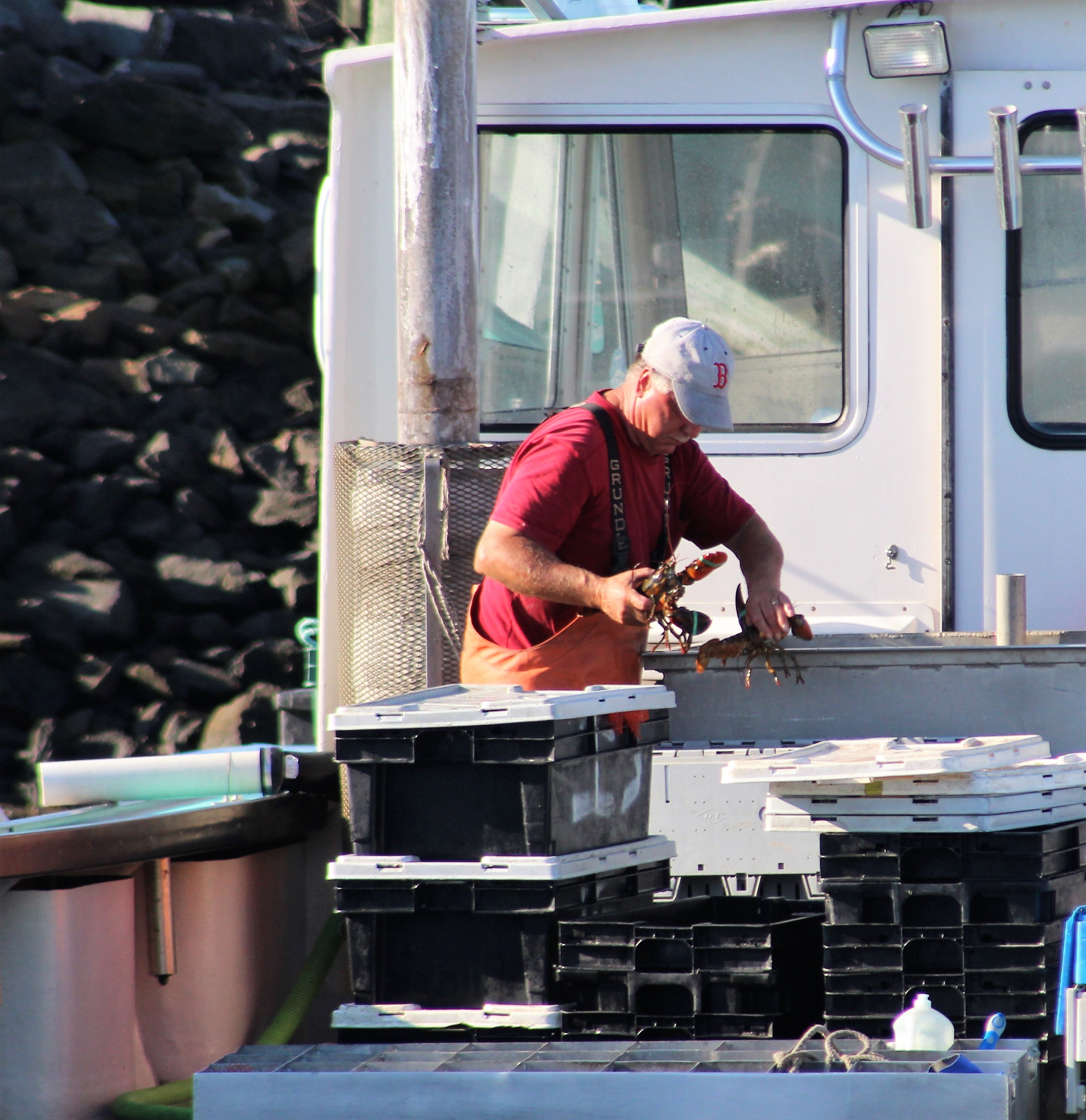
    The crew walked around and explored the town of Sandwich.  Down at the commercial docks, they watched a lobster boat unload the days catch to a refrigerated truck.  The lobster boat unloaded six containers of lobsters.  The skipper learned that each container was about 100 pounds when full of lobsters.  The skipper talked to the captain and learned that the captain has about 800 lobster pots set.  He runs about 200 traps a day.  So it takes him four days to check all of his traps.

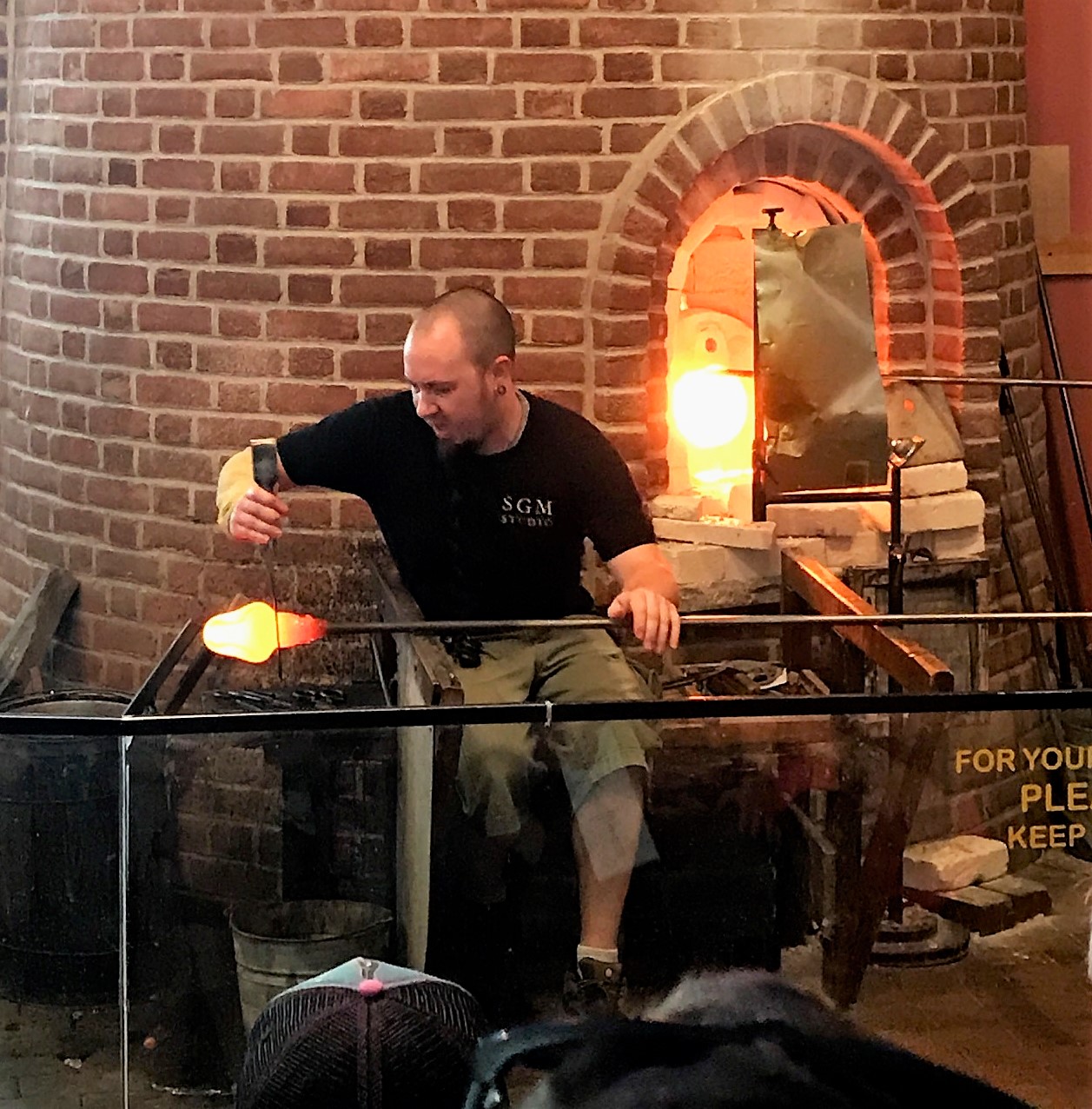
    Next stop was the Glass Blowing Museum.  Sandwich was the location of the Boston Sandwich Glass Company back in the 1800’s.  Today the factories are all gone but there are many local artist who keep the glass blowing tradition alive.  The museum has a working oven that burns 24/7 for five years at a time before being taken out of surface for inspections and repairs.

    IMG_2060

    The furnace burns natural gas and keeps the glass near 3,000 degrees.  A glass blower was working and demonstrating his craft.  He made an orange pumpkin with a green stem in about 20 minutes.  Very interesting.

    Boat Name of the Week

    Lobstah

     IMG_0006

    Next Week – 

    The crew will work their way back towards NYC along the Long Island Sound.  They will slow their movements to allow time for the hurricanes to blow themselves out before heading south along the east coast.

    Loop On – The water goes on forever and the adventure never ends.
    Eric the Red

  • Vacation Like a President

    Hello virtual crew members and fellow adventurers!

    Eric here with the latest travels of Still Waters II.  Can you tell that the crew might be in Maine from the photo below.

    IMG_0132

    Summary of week:

    Maine

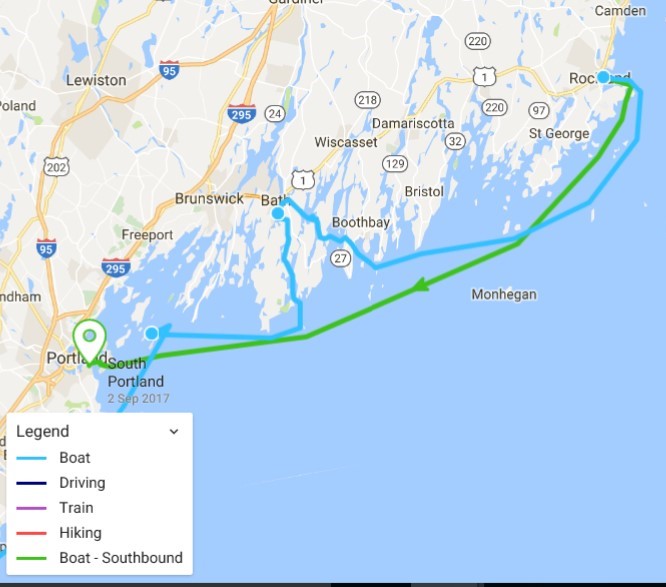
    The crew headed to Kennebunkport on Monday to visit the summer home of the Bush clan.  The crew then visited the summer home of Admiral Peary on Tuesday.  On Wednesday, the crew cruised up the Kennebec River to Bath to visit the Maine Maritime Museum.  Thursday, the crew took a back way to explore the oldest lighthouse in Maine, and then pushed on to Rockland.

    Weather, mostly wind causing big waves, kept the crew in Rockland on Friday so they visited the Lighthouse Museum.  Due to bad weather setting in over the next week, the crew decided it was time to turnaround and head south.  The crew took advantage of good weather on Saturday to make Portland.

    This week’s journey of discovery did answer the following questions:

    1. Who is credited as first person to walk/sled to the North Pole? (the answer will probably surprise you.)
    2. What was the name of the first ship built in the colonies?
    3. What is the oldest Lighthouse in Maine?

    Click on the link to read the day-to-day travel log.  This includes weather report of the day, sea conditions, log of the days travel, and a summary of the experience.

    At the Box Office

    This week’s video shows Still Waters II leaving the town of Kennebunkport out the narrow river thru the breakwater wall.  While traveling up the Kennebec River she will encounter two lighthouses.  Then on the way to Burnt Island she travelled thru the Townsend Cut.   Enjoy!

    To see past videos, click on the link to the Still Waters II Vimeo site.  The library now contains 34 videos of Still Waters II cruising America’s Great Loop and waterways.

    Monday, Aug 28, 2017

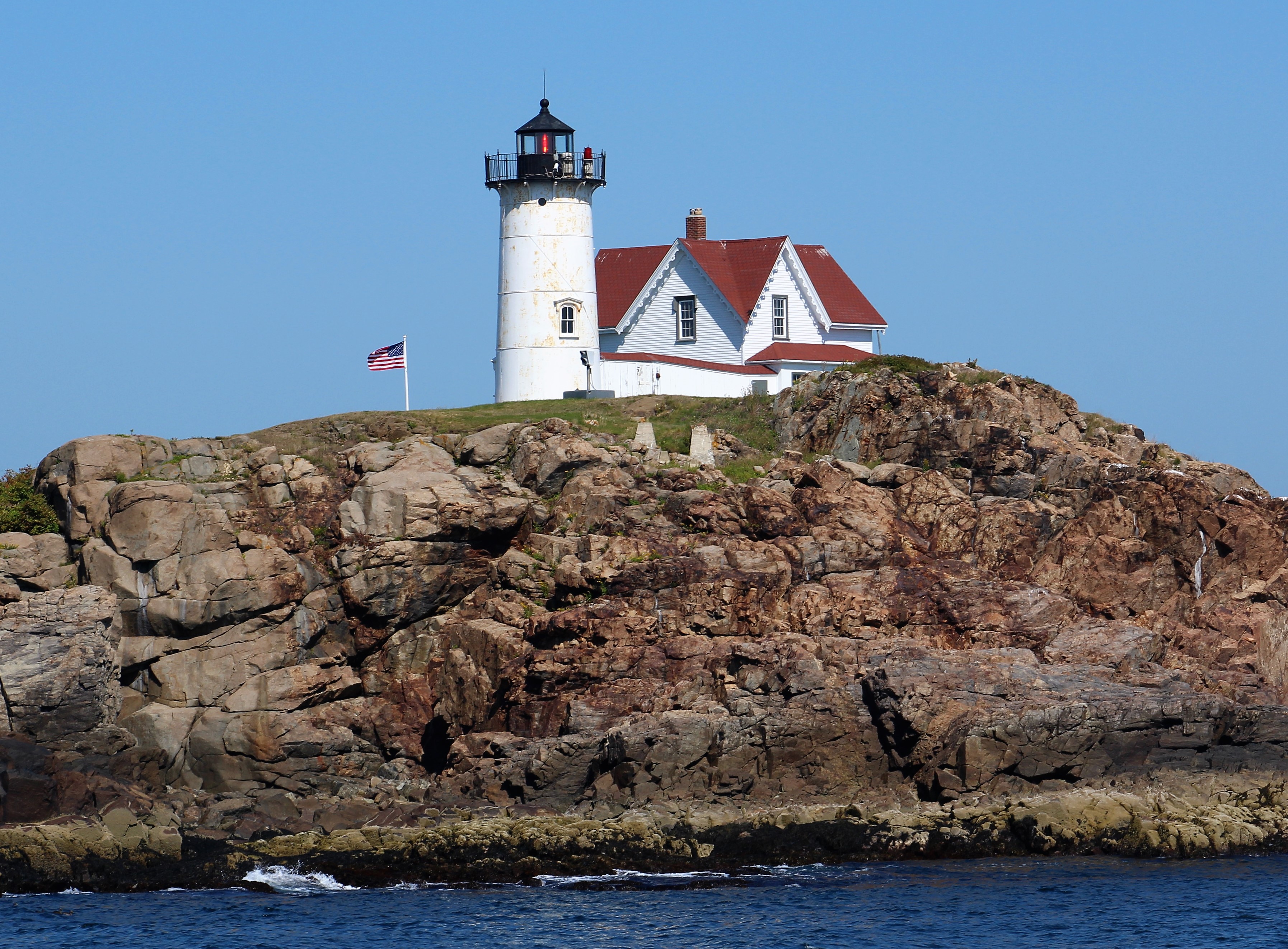
    The cruise took the crew past one of the iconic Maine Lighthouses, Cape Neddick “Nubble” Light, which has been an active navigation aid since 1879.  The light was automated in 1987.  The lighthouses all have their own unique light characteristics that allow mariners to determine which hazard the ship is approaching.  Cape Neddick has a three second red light followed by three seconds of darkness.  The fog horn is one blast every 10 seconds.

    IMG_0004
    Cape Neddick “Nubble” Light, notice the red lens


    After rounding Cape Neddick, the crew made way to the entrance to Kennebunkport thru a narrow breakwater wall and then up the narrow river.  The crew stopped at the Chicks Marina.  After docking, the crew set out for the main drag in town, Dock Square.  There were three tour busses in town so the small square and businesses were filled with people.  Some of the businesses had small Texas flags and plaques in their windows.  Supposedly this is to signify a shop that the Bush family frequents.  At five in the afternoon the Admiral noticed the streets were empty.  The tour buses must have loaded and left.

    8
    Park on the way to Dock Square, honors Barbara Bush contributions to town

    After walking around the businesses for a while the Admiral decided to try a lobster roll which is basically mayo and lobster on a buttery toasted piece of bread similar to a hotdog bun.

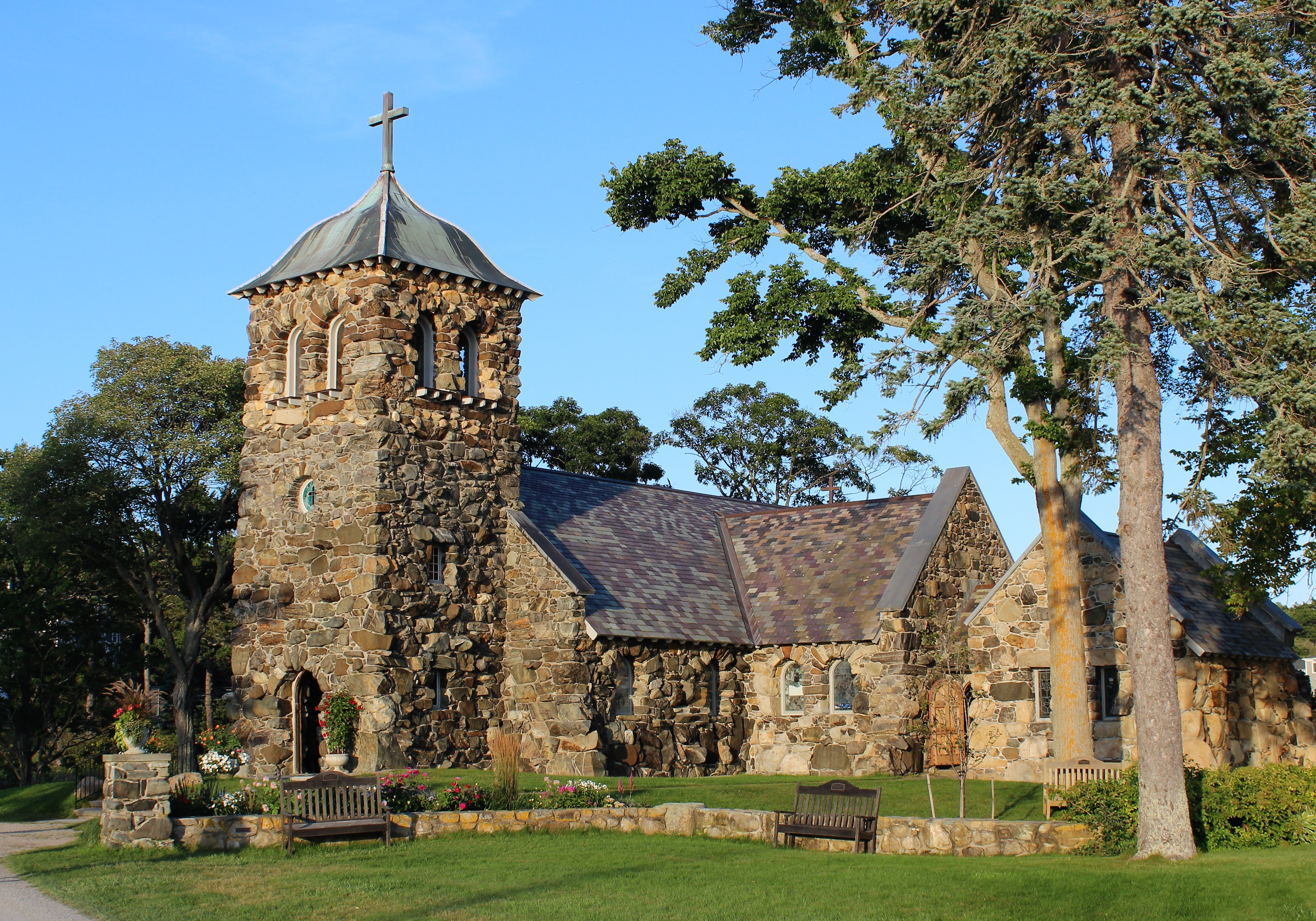
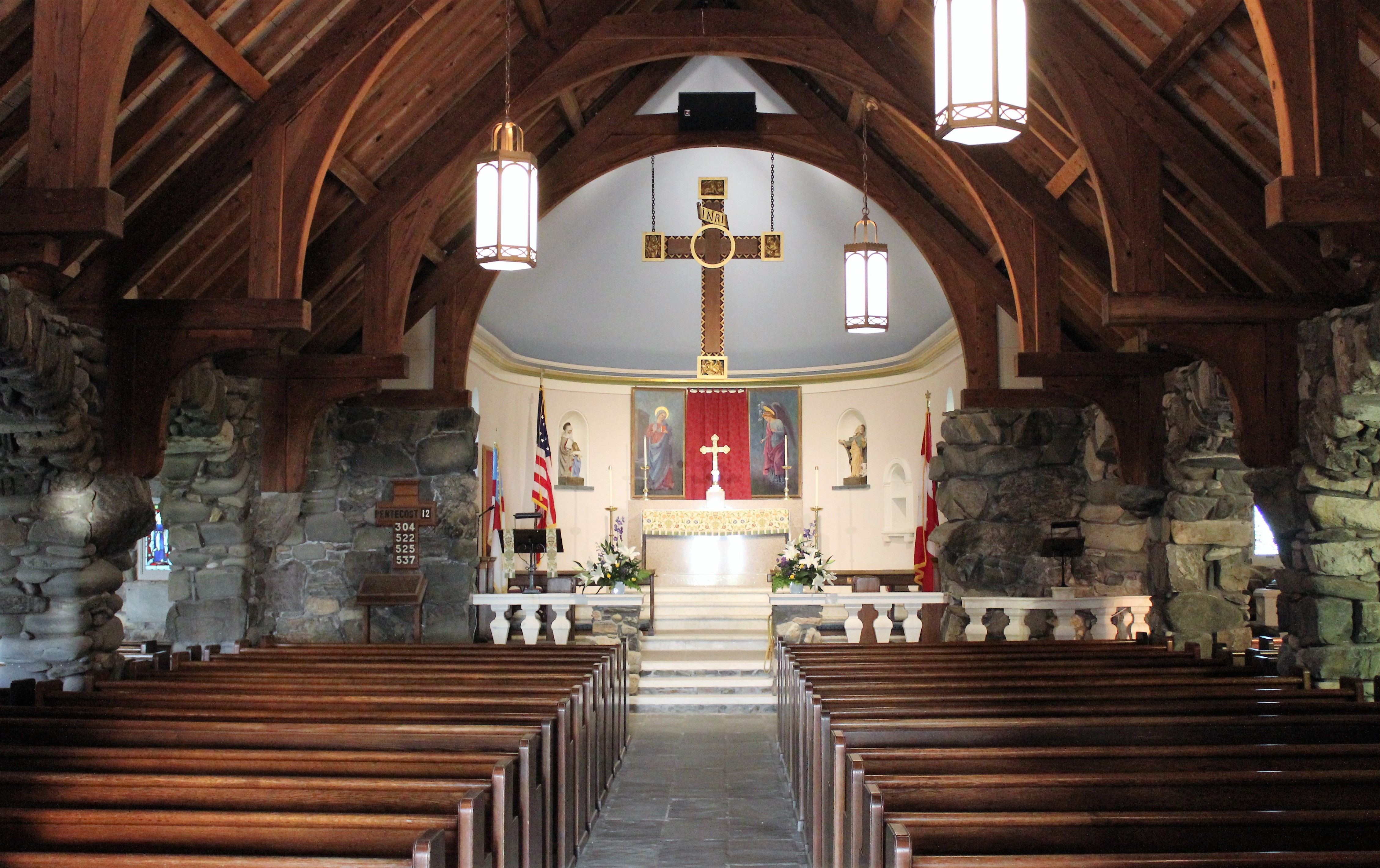
    Next, the crew walked to the other end of town to visit the St. Ann’s Episcopal Church.  The seaside chapel cornerstone was laid in 1887 and the chapel has twenty-five stained glass windows.  Summer services at the chapel have been ongoing since 1892.  This year, 2017, the last service of the season will be held on the skippers birthday, September 24.

    17.2

    17.3

    17.4

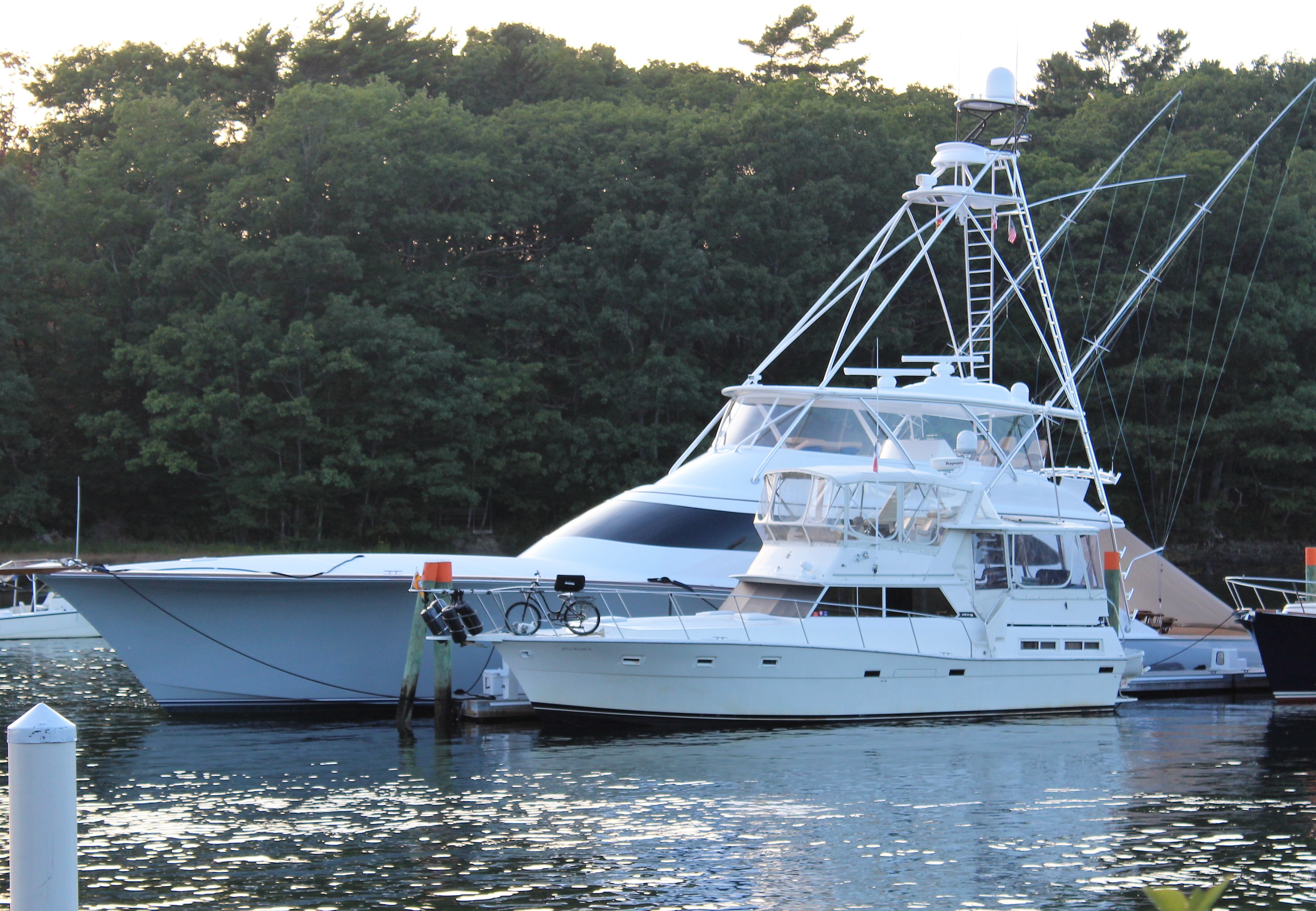
    On the way back to the dock the crew took this picture of Still Waters II next to her big brother, a 90-foot sport fishing boat.

    18 90 footer in background

    Tuesday, Aug 29, 2017 

    The Bush compound is just a short distance from the Kennebunkport River entrance.  When the crew exited the river they ran alongside the security buoys to get a close look at the home.  While they passed by they could see a Texas flag flying on the flag pole.  Tradition has it that if the Texas flag is flying then one of the Bush ex-Presidents is at the home.  With Hurricane Harvey hurling towards Houston, the crew wonders if Barbara and George SR may have come north for a few days.

    20

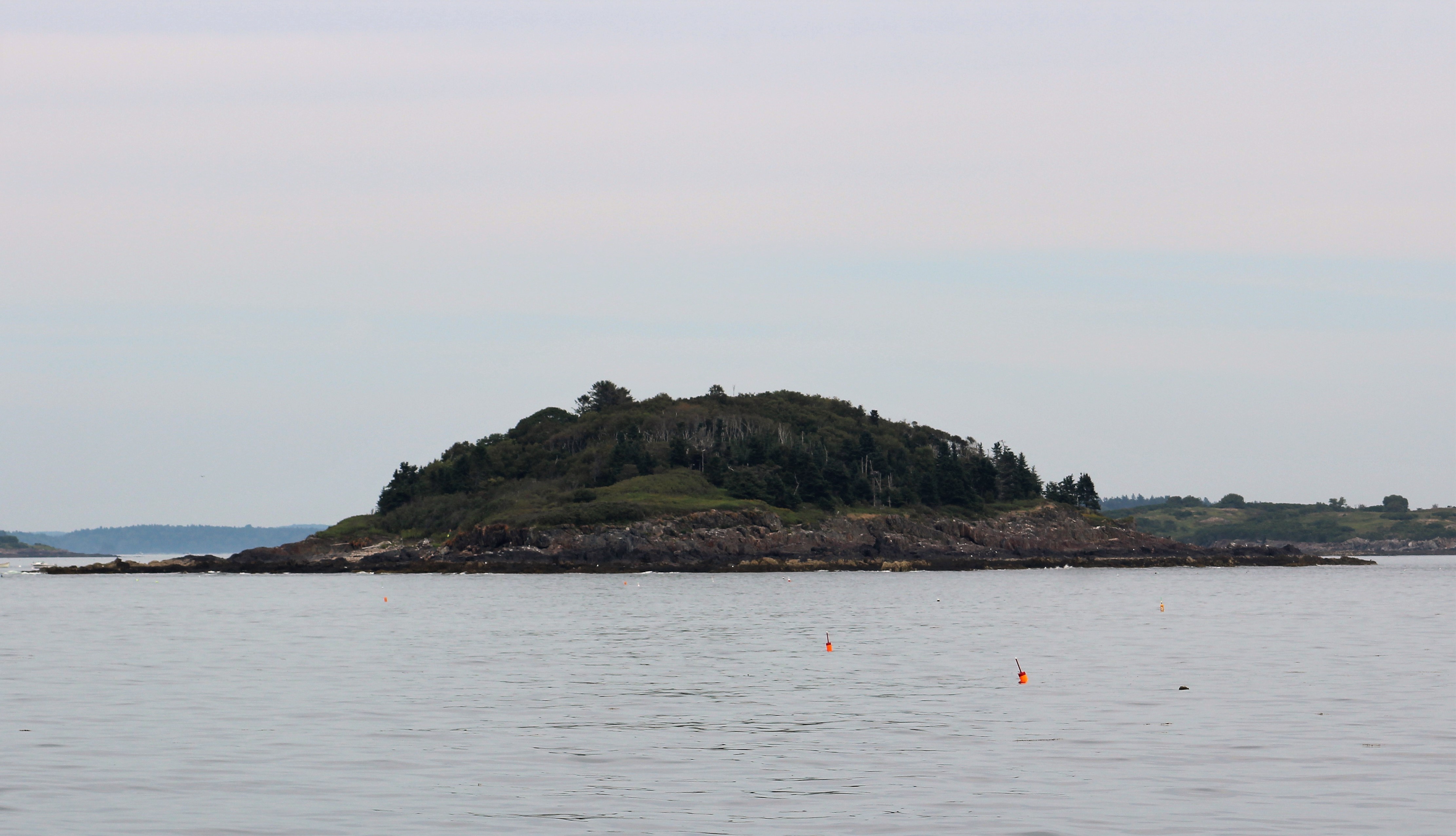
    The crew turned north and set their sights on Eagle Island, once the summer home of Admiral Peary.

    IMG_0052

    Admiral Peary built the home similar to the layout of a ship.


    IMG_0059
    Side view of Eagle Nest

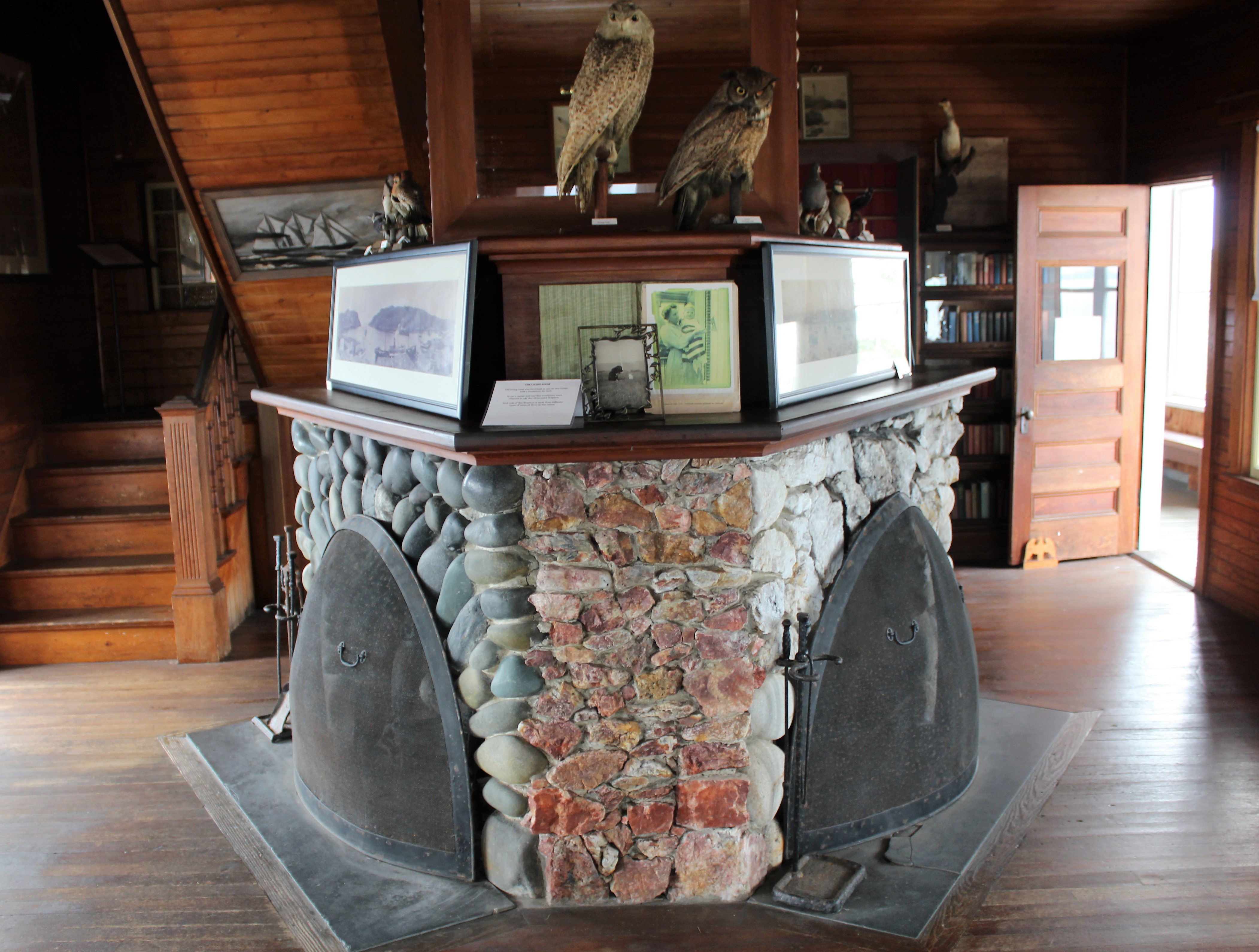
    The front of the home, facing the flag pole, mimics a pilot house and includes the front porch , living area, and upstairs bedrooms.  The main living area, salon, has a three -sided fireplace.   All the rocks were gathered from Eagle Island.

    IMG_0065

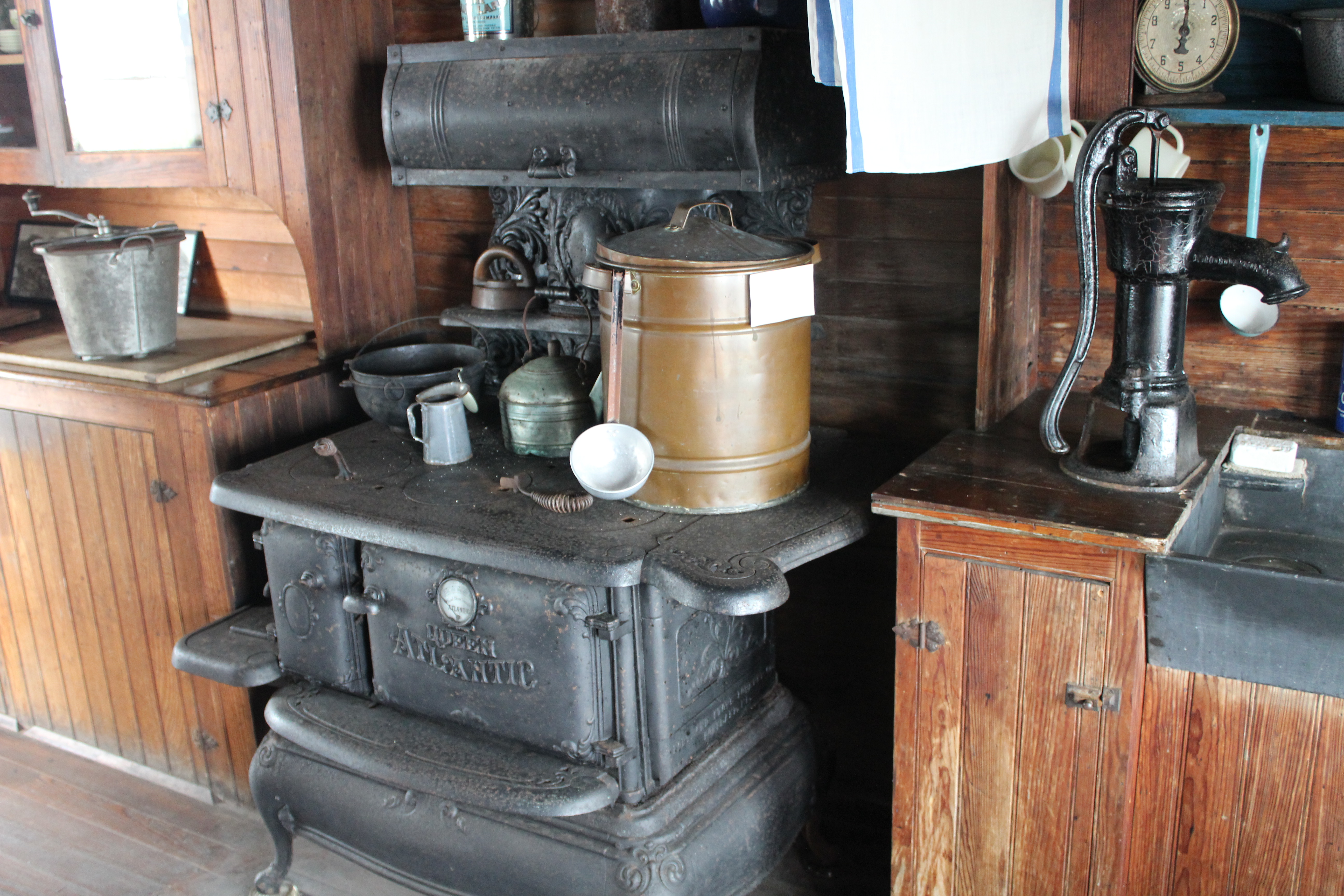
    Out the side door are covered and enclosed walkways down both sides of the home that lead to the galley (kitchen), and mess deck (dining room).

    IMG_0073

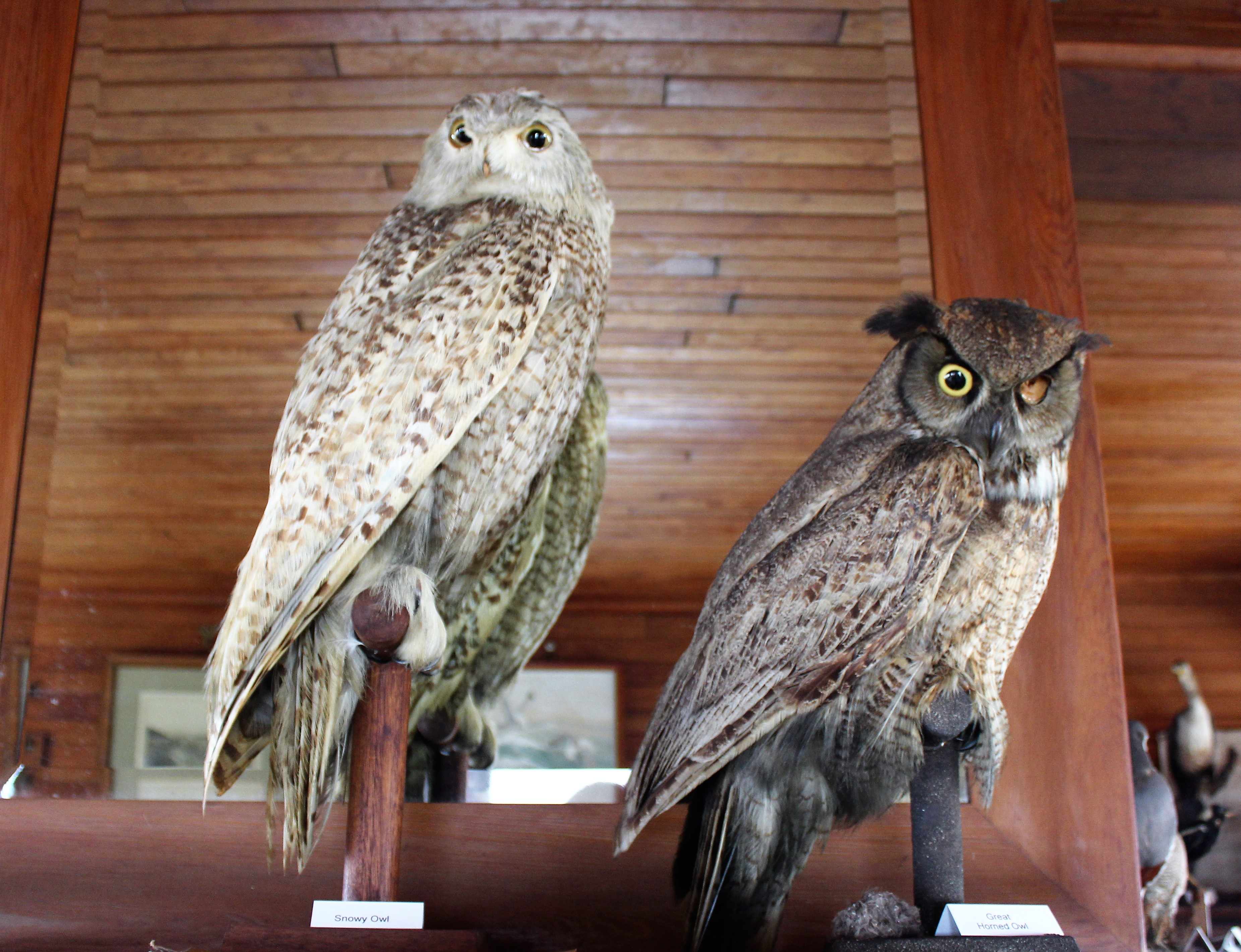
    The Admiral was an amateur taxidermist and all the stuffed animals in the house were actually preserved by Peary.

    IMG_0068

    Admiral Peary is most known for his claim to be the first to the North Pole.  He sent a message to the NY Times that he made the pole on April 09, 1909.  Unbeknownst to Peary, Frederick Cook had claimed he made the north pole in April 1908.  Cook’s claim was made just one week before Peary’s in the NY Herald.  So the immediate question became, who was actually first?

    Peary won the initial PR battle and was toasted as the first to the pole.  He mostly won the battle by the use of the line, ‘Lie about one thing, Lie about everything.’  Cook had claimed to scale Mt McKinley in 1906.  Peary was able to get people on the McKinley expedition to say that Cook had lied.  Once that was cemented in peoples minds, they did not believe his claim to be first to the pole.  Interesting enough, time has shown that Cook’s records and observations of the North Pole and surrounding area are more accurate than Peary’s accounts.

    IMG_0070
    Peary travel bag that went on his expeditions

    However, National Geographic had Wally Herbert review the Peary documents in the 1980’s.  Herbert concluded that Peary did not reach the pole in 1909, but he did get within 60 miles.  Herbert’s work and conclusion have become widely accepted.

    IMG_0077
    Looking out from Eagle Island

    So then, who is the official first to walk to the North Pole now?  Well Sir Wally Herbert is now recognized as the first to accomplish the task in 1969.  Yes, the same Wally that discredited Peary.  Just remember, what goes around, comes around.

    IMG_0055

    After touring the house, the crew got a lift back out to Still Waters II and headed a few miles east to Cliff Island where they took a mooring ball for the night.

    IMG_0080
    Cliff Island

    Wednesday, Aug 30, 2017       

    The crew left the mooring ball early in the morning to try and make way to Bath.   On the way, they passed another iconic Maine Lighthouses on Sequin Island.  The lighthouse was built in 1857.  The tower is only 53 feet tall but because of its location on the Island, the focal plane is 186 feet.  The characteristics of this light is a fixed white light which means that the light is always on.  Because the lens is a rare first-order Fresnel, the light can be seen twenty miles out at sea.

    28 Sequin Island
    Sequin with its white light on

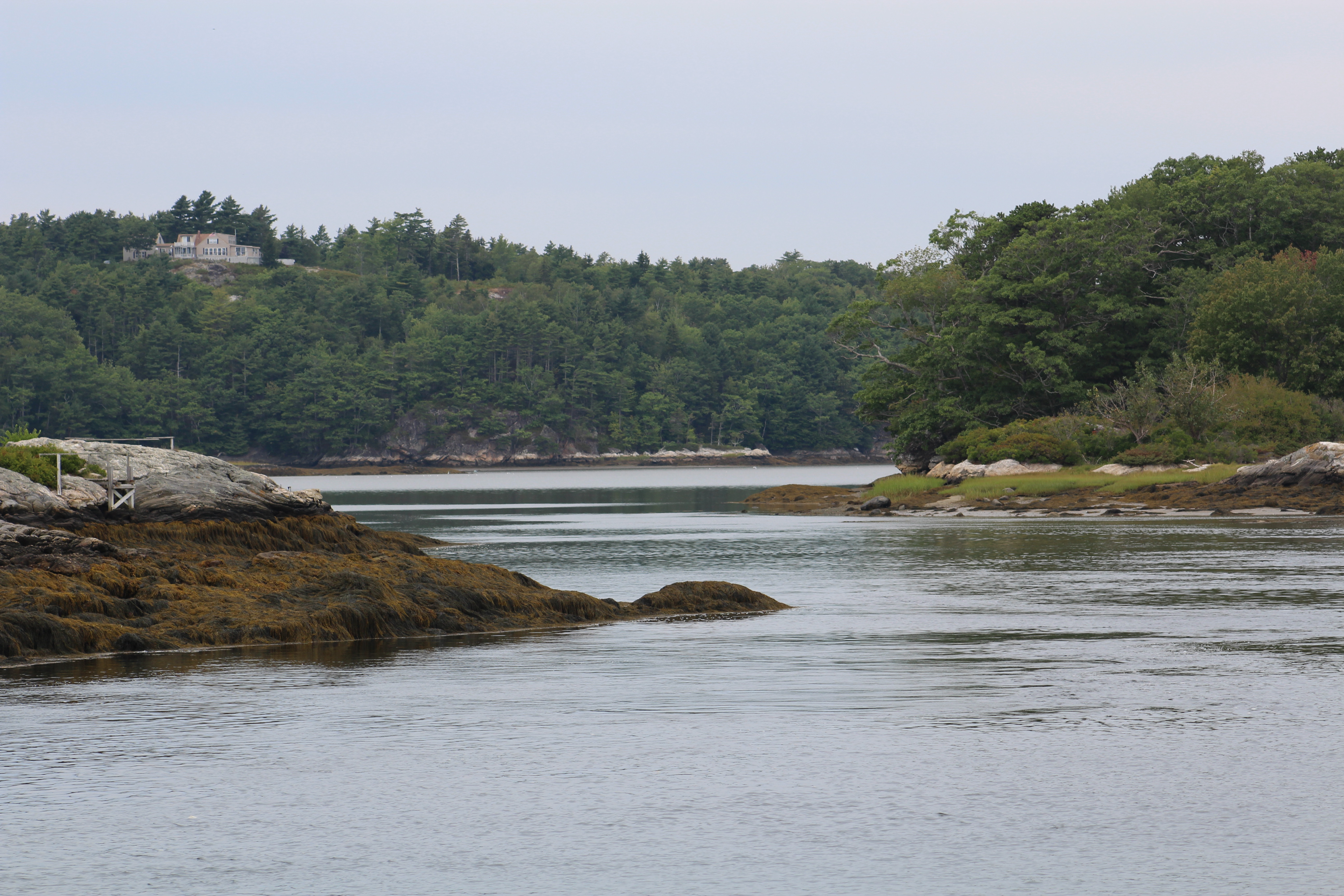
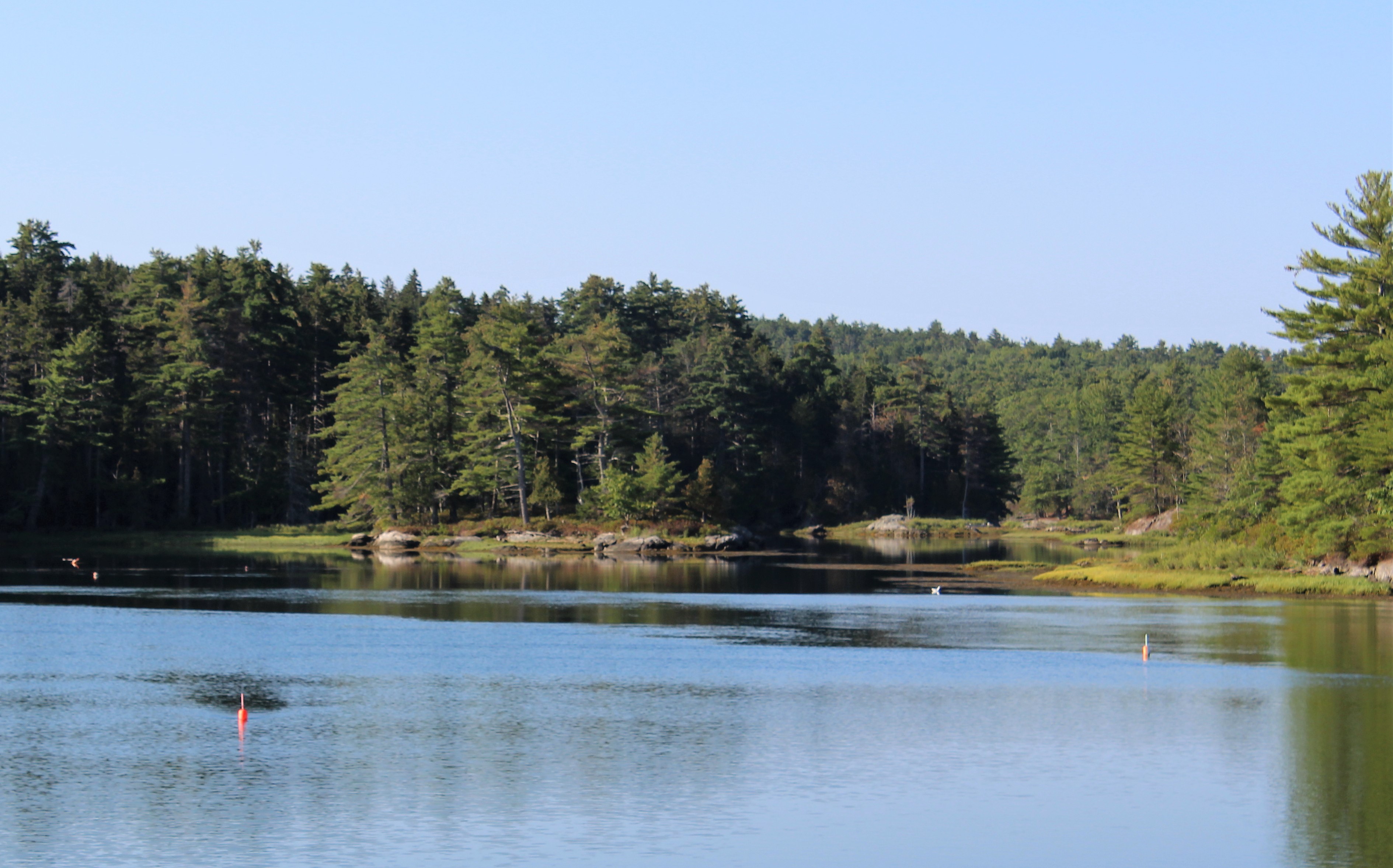
    After passing the Sequin Light, the crew turned up the Kennebec River to the town of Bath.  The trip up the river was one of the most scenic stretches the crew has ever witnessed.  The rock cliffs covered in trees are drop dead gorgeous.  Pics just do not do this area justice.

    29.2

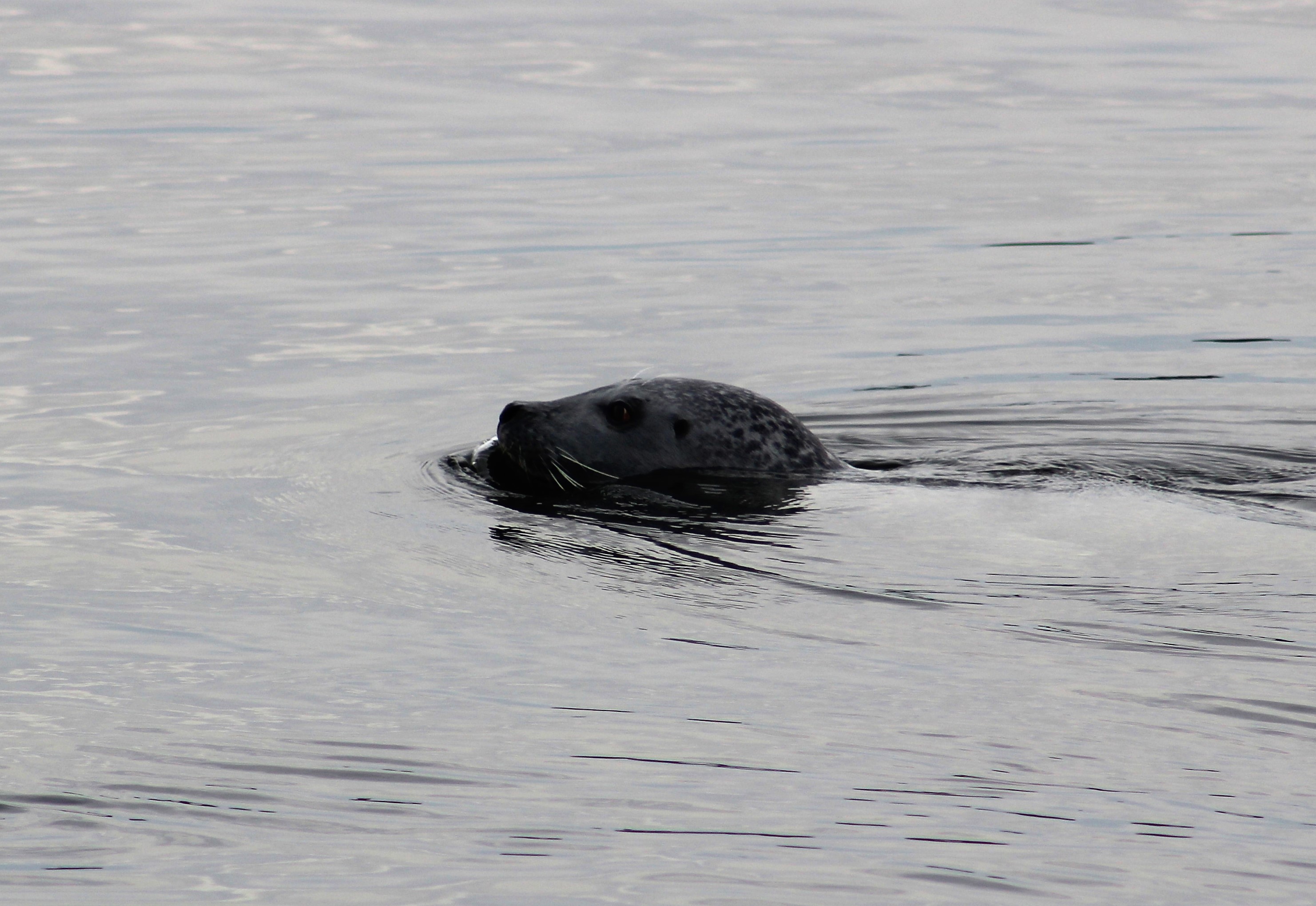
    Also while cruising up the river the crew saw about twenty seals.  These seals are camera shy and have been elusive to get on film.

    30 Seal

    The skipper finally got a few good pics.  It only took about 22 tries today.  Which brings to mind that even a blind hog roots up an acorn every once in a while.

    30.6

    After taking a mooring ball in Bath, the crew toured the Maine Maritime Museum.  The museum is on the grounds of the old P&S Ship Yard.  In the heyday of wooden schooners (1894-1920) this place built 45 wooden schooners.  The museum is dedicated to the wood ship building industry that ended in 1920’s due to the steamship and metal boat works.

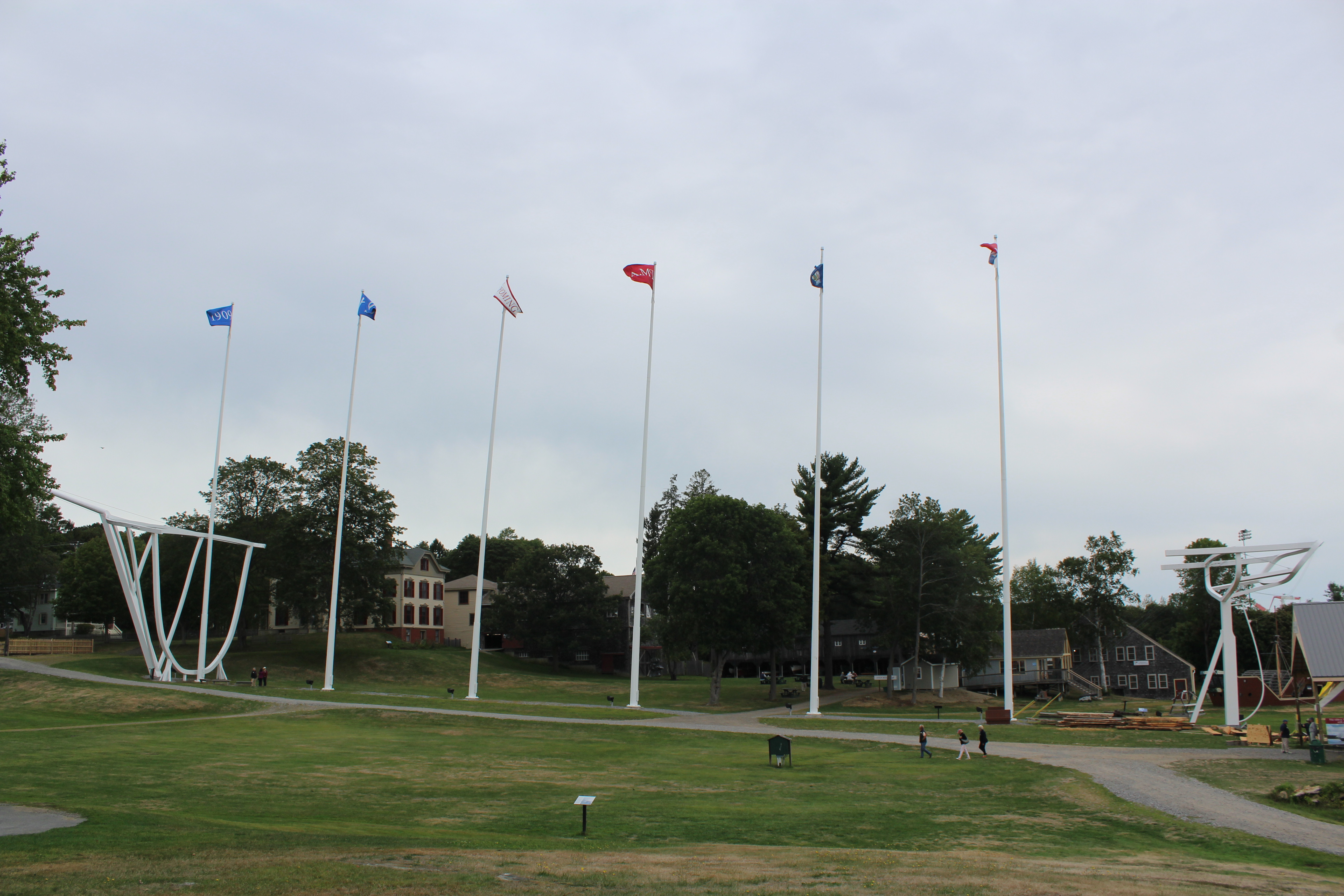
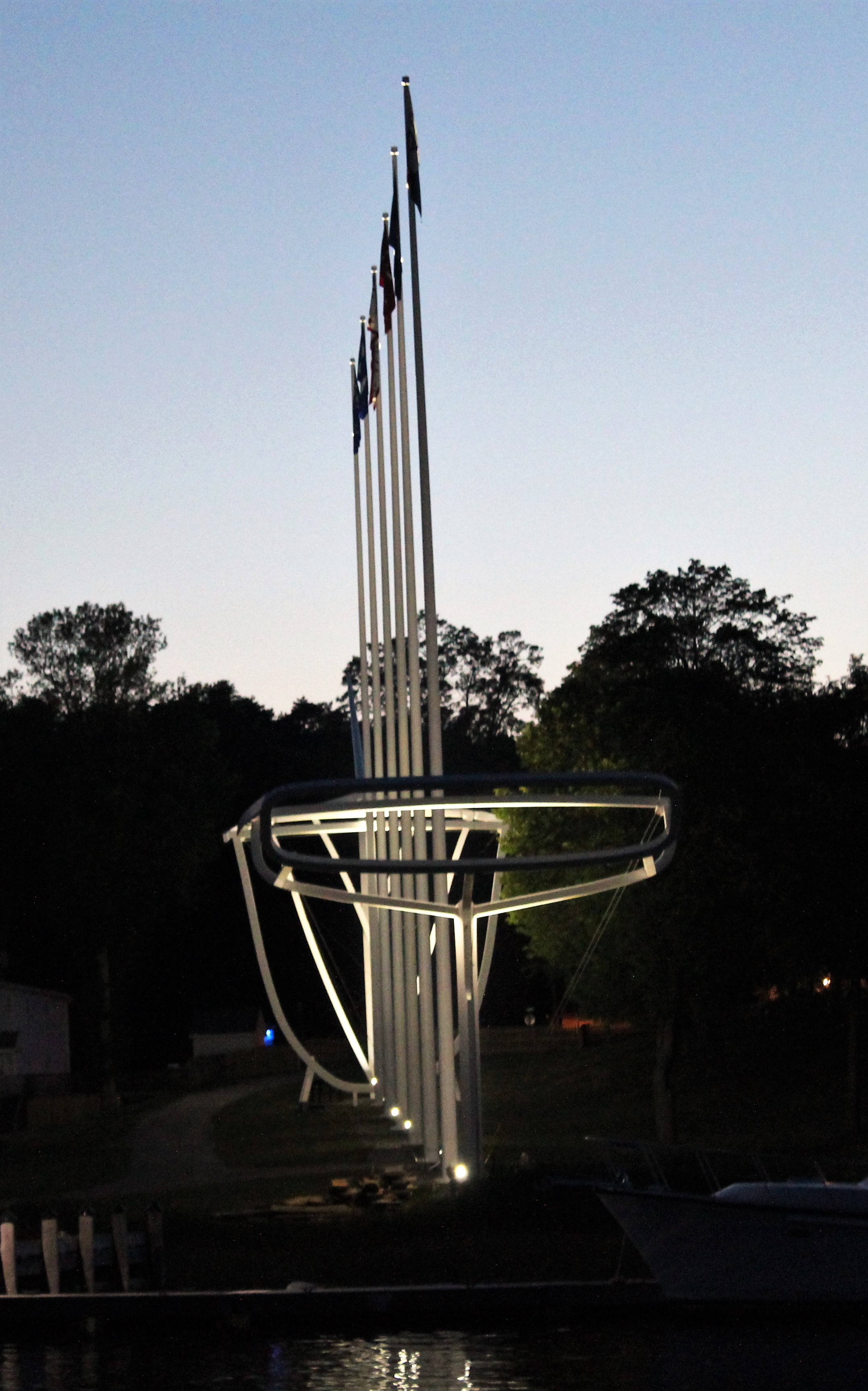
    The Wyoming was the largest wooden schooner ever built, and the largest sailing vessel ever built in the US.  P&S Ship Yard built the schooner at this location.  They have a life size sculpture on the grounds showing the location of the Wyoming as she was being built.  The six flags mark the location of the six masts.

    IMG_0126
    Bow, six masts, and stern


    IMG_0134

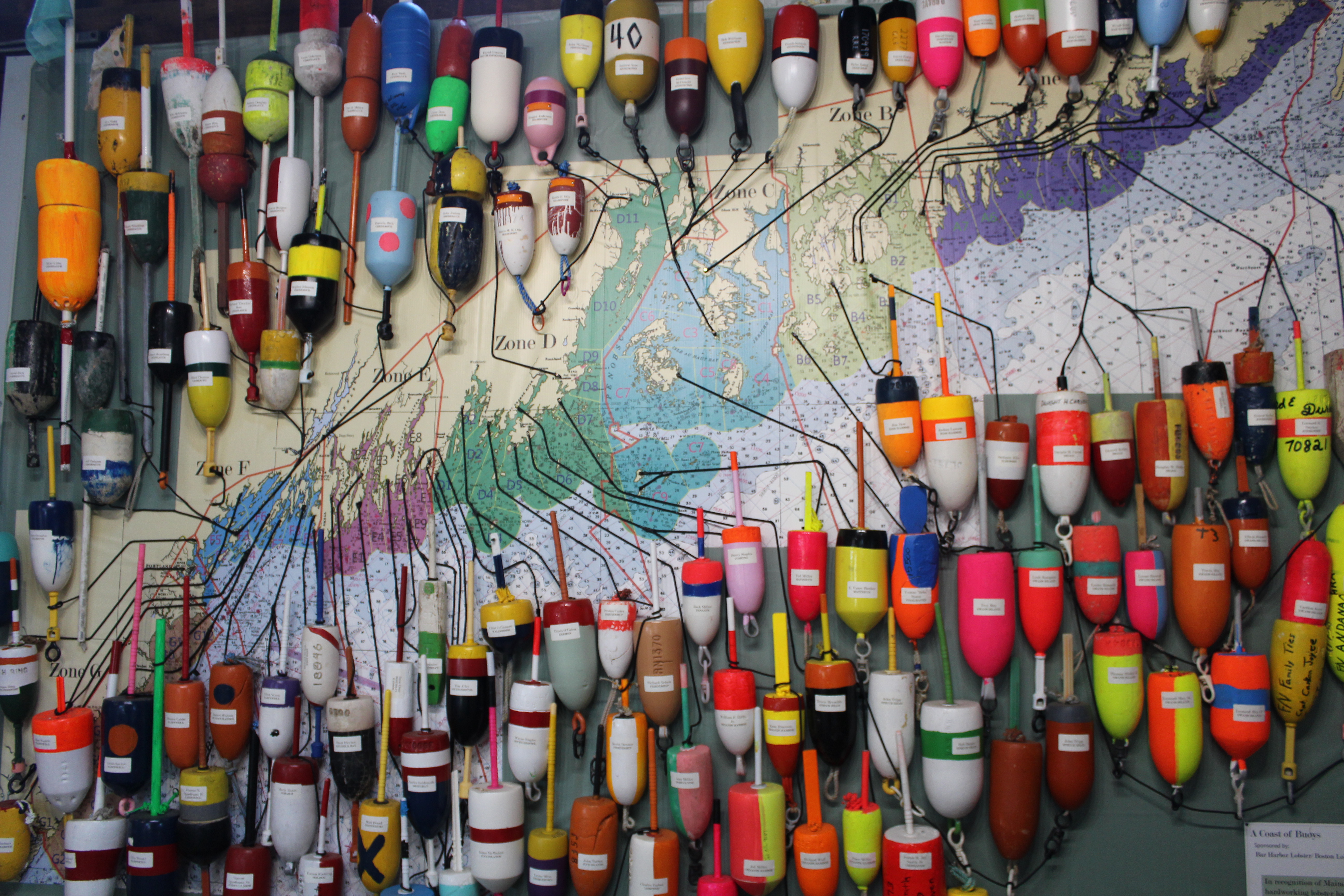
    The museum also had a building dedicated to the lobster business in Maine.  The crew were exploring the lobster exhibits when the museum began to close.  The following shows the unique lobster pot floats and the zones that they are found in Maine waters.

    IMG_0133

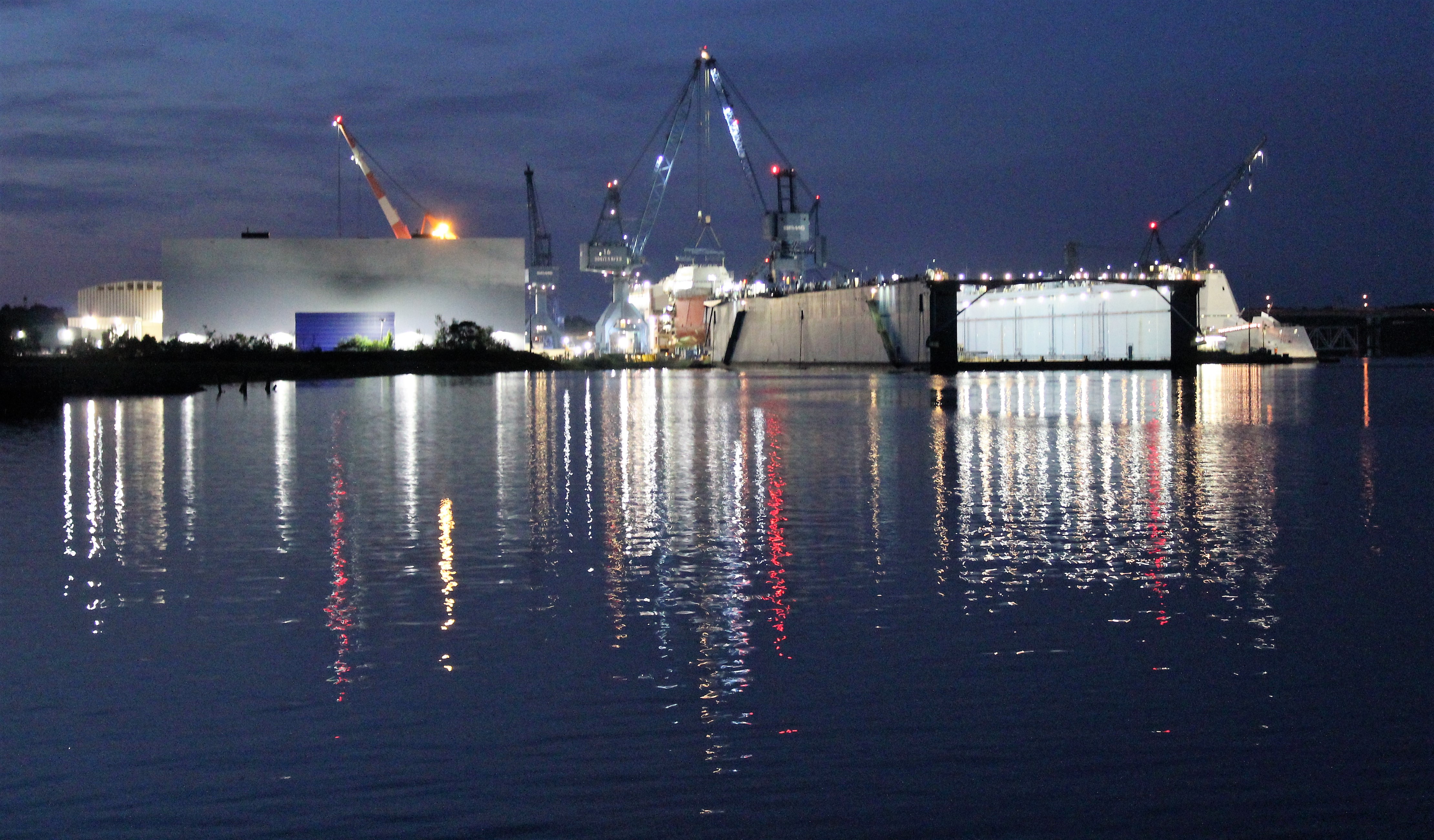
    The metal boat works business up the river that helped close the era of wooden ships now builds destroyers for the US Navy.  The facility lit up at night.

    IMG_0135

    Shipbuilding along the Kennebec River goes all the way back to 1607.  There was a Pophan Colony along the river whose mission was to show that the New England forests could be used to build ships.  They built the Virginia, abandoned the colony, and sailed the ship back to England.  She then was used to return supplies to Jamestown in October 1609.  She made one last voyage to supply Jamestown in 1610.  Her where abouts are unknown from this point in history, as she never appears again in any known historical records.

    Thursday, August 31, 2017

    A museum volunteer suggested that the crew take a little used back way over to Burnt Island and stop to explore the Island.  The crew thought that it sounded like a good adventure so that is what they did.  The course has two narrow high current areas that are named Upper and Lower Hells Gate.  They managed these areas without any problems, but the pucker factor was tight on the way thru the challenges.

    39
    Calm water before Upper Hells Gate

    The crew arrived ten minutes early for the 0930 bridge opening  near the end of the cut, so while they waited they watched this Bald Eagle fly over and land near Still Waters II.

    41

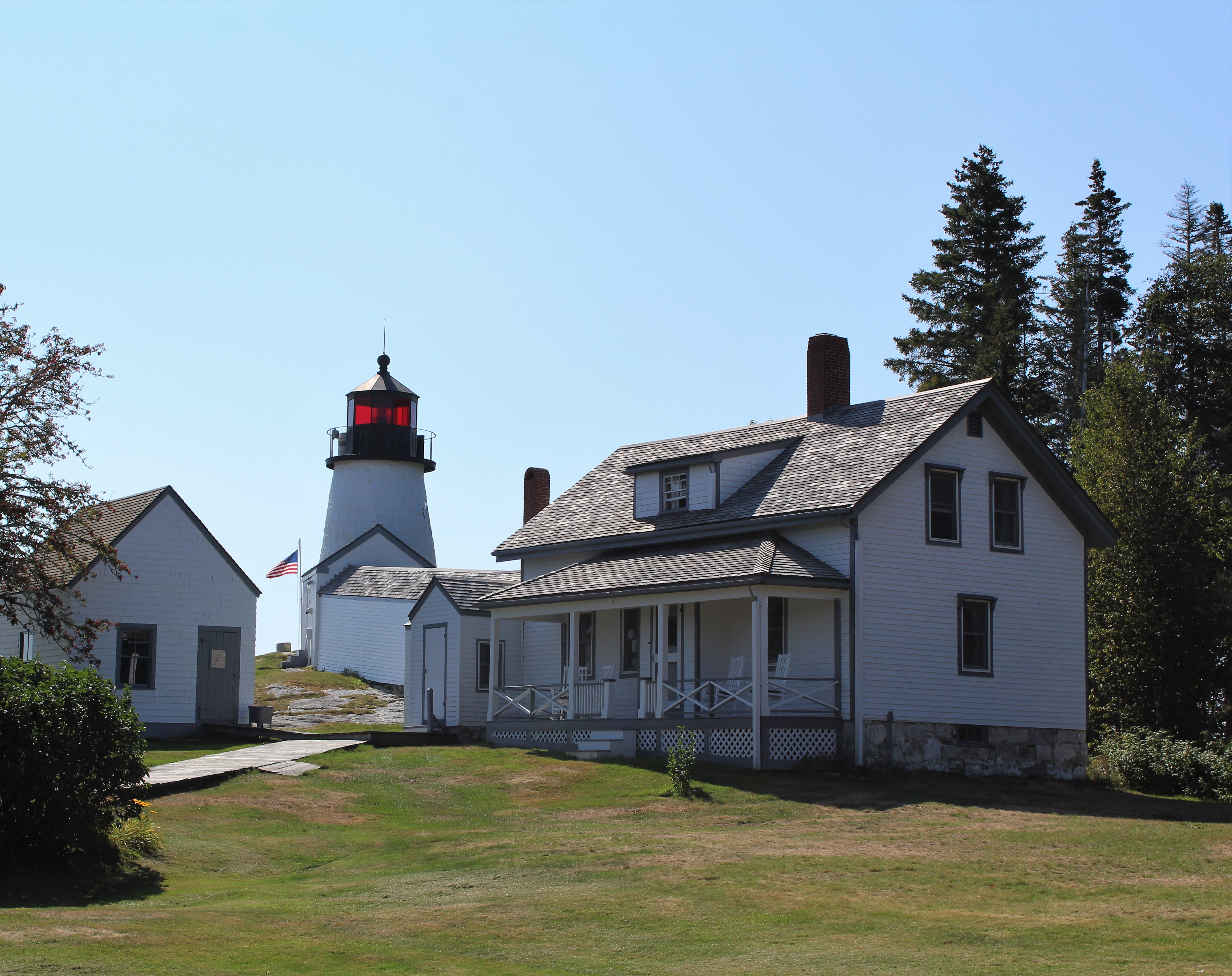
    After passing thru the bridge, they arrived at Burnt Island, dropped the dinghy and went over to the dinghy dock.  They explored the island for a while and got a close up of Maine’s oldest ‘Original’ lighthouse, Burnt Island Light.

    43.1

    The lighthouse was built in 1821 and was not automated until 1988.

    After returning to the boat, the crew headed to Rockland.  As they were making the 36 miles to the marina, the winds unexpectedly picked up to over 20 mph.  This caused the sea state to change to 4-6 foot swells moving from the southeast, while wind blown waves of 1-2 feet were moving across the swells from the northwest.  It was like riding the boat in a washing machine.

    43.10
    The calm before the storm from Burnt Island

    The other problem this wave action caused was the ever present lobster floats were now going completely under water for 3-5 seconds at a time.  It was difficult to steer clear of the floats when you cannot even see them.

    After getting docked, the crew noticed five seals feeding in the waters outside the marina. The crew sat on the sundeck while they enjoyed dinner and watched the seals.

    Friday, September 1, 2017

    The winds had not died down enough for safe passage, so the crew spent another day in Rockland.  In the afternoon they walked over to the Lighthouse Museum and learned that there are 70 active lights along the shores of Maine.

    However, there were two interesting stories that caught the attention of the skipper.

    IMG_0167The first was about William S. Ros.  He makes the museum because he invented items that helped the lighthouses work better and more efficient.

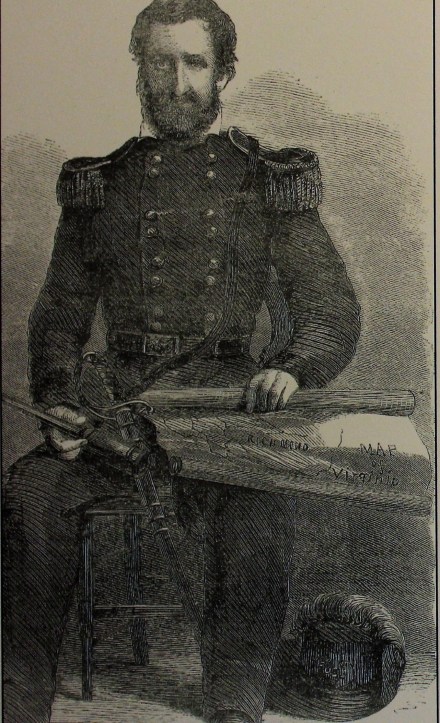
    The side story though was more interesting.  Abraham Lincoln asked Rosecrans to be his vice-president during his second term.  Rosecrans took a long time to decide if he would take the position or not.  He finally decided to accept the offer and wrote the President an acceptance letter.  Because it took so long for the decision and letter to arrive, Lincoln assumed Rosecrans was not interested and choose Andrew Johnson instead.  So Rosecrans could have been president if he had acted sooner.  Who Knew?


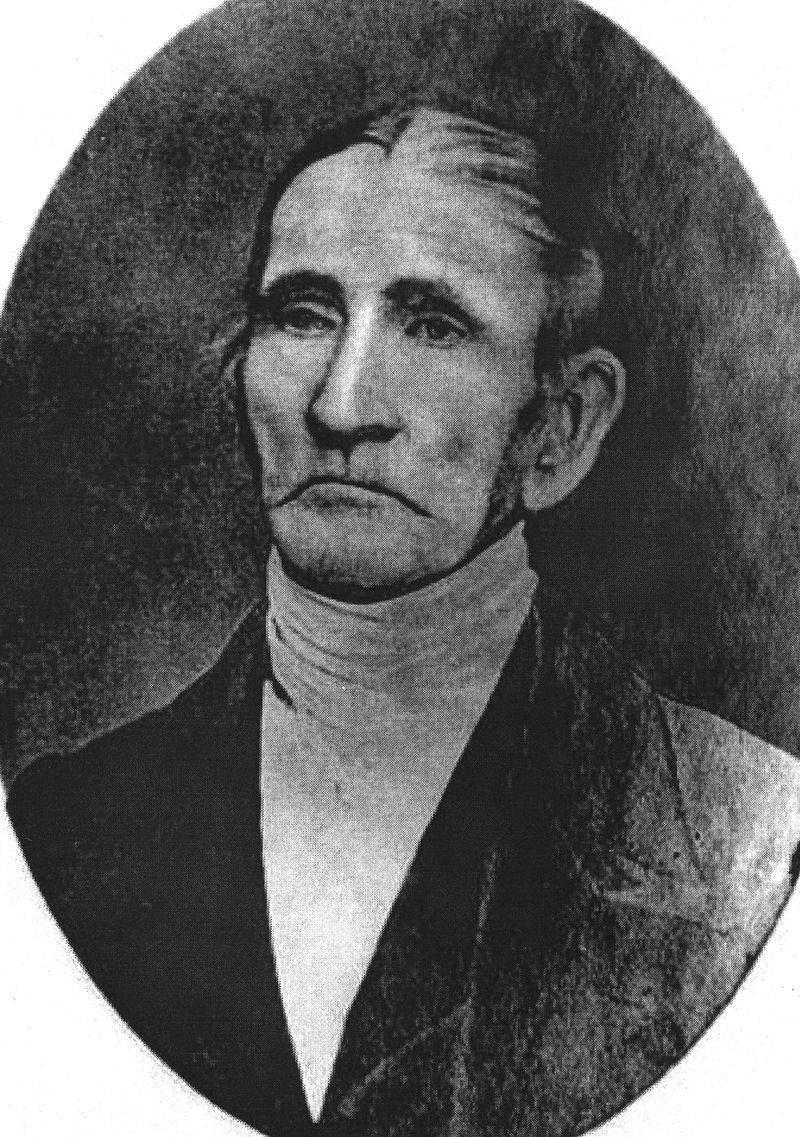
    StephenPleasonton.jpgThe next story was about Stephenson Pleasonton.  He makes the museum because he was a penny pinching miser of a clerk who rose high in the civil government. During his rise to power he would not give the money needed to fund the lighthouses and they began to fall into disrepair.

    His side story though was much more interesting.  During his early days as just a clerk in the government he was responsible for saving many documents from being burned when the British set fire to Washington D.C. in the War of 1812.  His boss had learned that the British were on their way to D.C. so he ordered Pleasanton to rescue as many documents as possible by removing them from D.C.  Among the original documents he removed and hid were the original:

    • Declaration of Independence
    • United States Constitution
    • Articles of Confederation
    • George Washington papers from the time he was president

    Saturday, September 2, 2017

    The weather has started to turn cold with lows in the 40’s and highs in the 60’s.  The locals had been telling the crew that September was the best time to cruise Maine.  With the wind predicted to be over 20 mph most of next week, the skipper asked a few more questions about the weather.  Turns out the best cruising is because the wind ‘freshens’ in September.  This is code for high winds good for sailboat, bad for motor vessel.

    Based on the weather, the crew has decided to turn around and start south.  With that in mind, they made 78 miles today to get past the Gulf of Maine and all the open water while the winds were relatively calm, 10-15 mph.

    Leaving Rockland.

    IMG_0171

    Leaving the rocky Maine Gulf Coast.

    IMG_0178.JPG

    Arriving in Portland.

    IMG_0187

    Boat Name of the Week

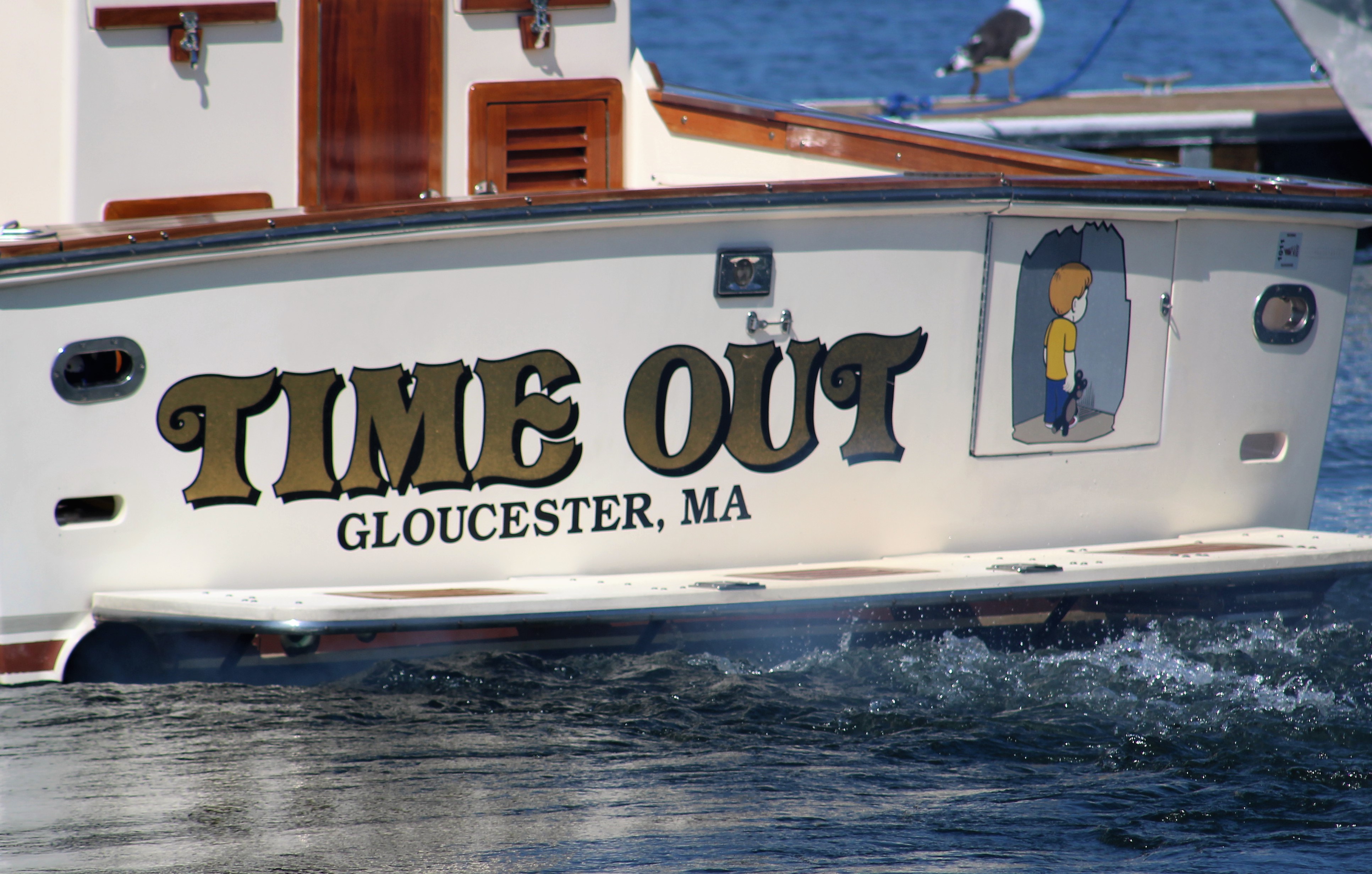
    1 in Kittery

    Love the image of the kid standing in the corner.


    Next Week –

    Loop On – The water goes on forever and the adventure never ends.
    Eric the Red

  • Firsts, Firsts, and more Firsts

    Hello virtual crew members and fellow adventurers!

    Mystic
    In Mystic, Connecticut

    Eric here with the latest travels of Still Waters II.  But first a hearty Welcome Aboard to Bob K. as our newest virtual crew member.  Looks like you are in Colorado for your annual fly fishing adventure.  Remember, you cannot catch fish if the hook is in the air.

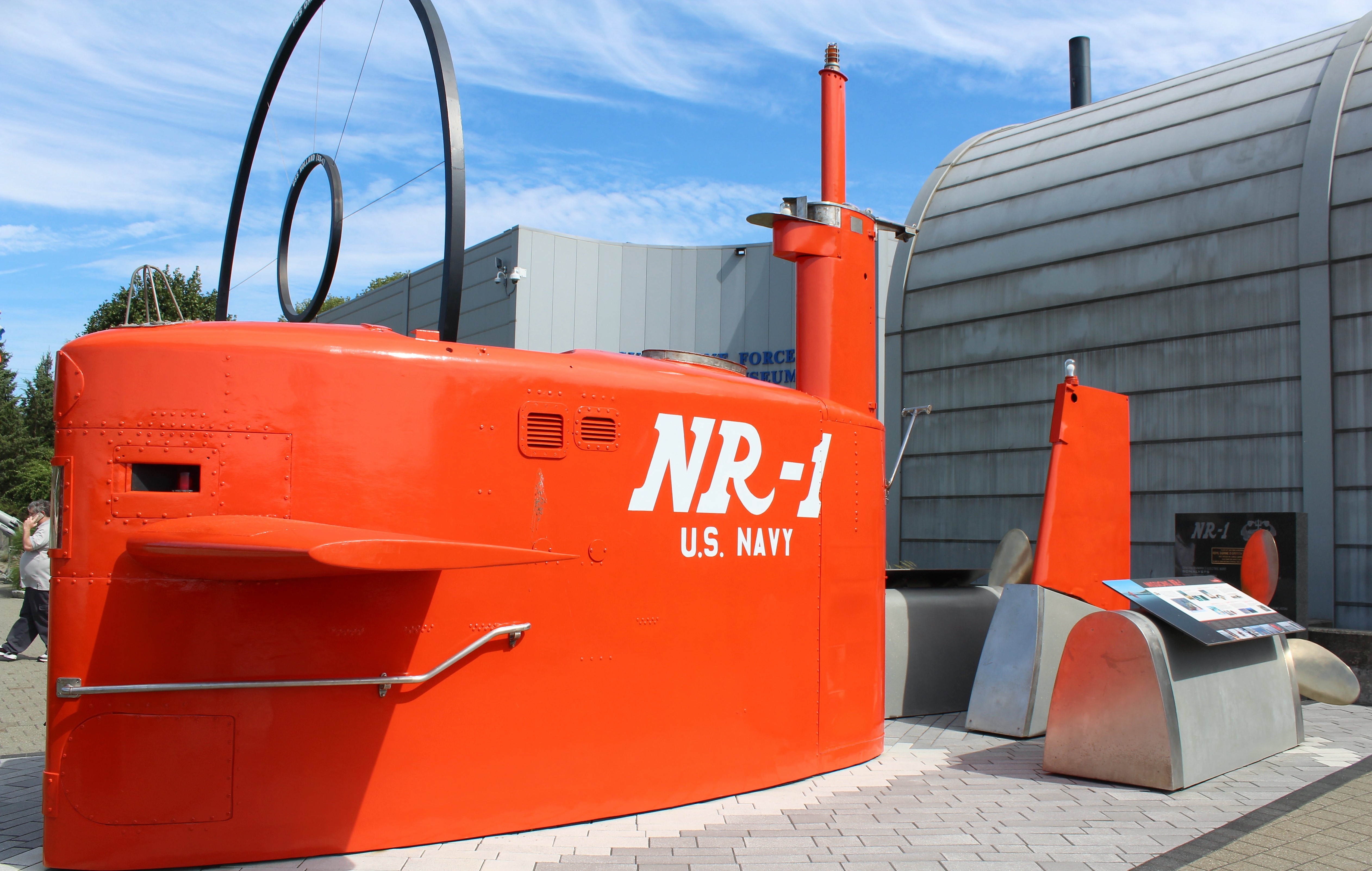
    And look, the crew found your old boat at the Submarine Museum in Groton.

    59.16

    Summary of week:

    Maine

    The crew rented a car and took three road trips out of Boston:

    1. Visited Plymouth Rock and the Green Animals Topiary Garden
    2. Visited Lexington, Minute Man National Park, and Concord
    3. Visited the Submarine Museum in Groton and had a ‘Little Slice of Heaven’ at Mystic Pizza.

    On Friday they got back to cruising the waterways and headed to Gloucester.  On Saturday they pushed northward to Portsmouth but could not find dockage in New Hampshire so they went to Kittery, Maine across the river.

    This week’s journey of discovery did answer the following questions:

    1. Where was the shot “Heard around the world” fired?
    2. What was the real reason the regular British Army headed to Concord?
    3. What is an Atlantic White-Sided Dolphin.

    Click on the link to read the day-to-day travel log.  This includes a weather report of the day, sea conditions, log of the days travel, and a summary of the experience.

    At the Box Office

    This week’s video shows Still Waters II entry into Boston Harbor, swinging on the mooring ball in Gloucester Bay, and the Atlantic White-Sided Dolphin.  Enjoy!

    To see past videos, click on the link to the Still Waters II Vimeo site.  The library now contains 34 videos of Still Waters II cruising America’s Great Loop.

    Sunday, Aug 20, 2017

    28

    The crew had a leisurely day, walked around Boston some more, and grilled ribeye steaks.  The main objective was to find the Rose Kennedy Greenway Rose Garden down by the waterfront.  Rose was 104 years old when she passed away.  There are 104 rose bushes planted in her honor in the rose garden.  The Greenway itself is a 17 acre linear 1.5 mile park that runs through Boston along the old route of  JFK Expressway.

    Monday, Aug 21, 2017

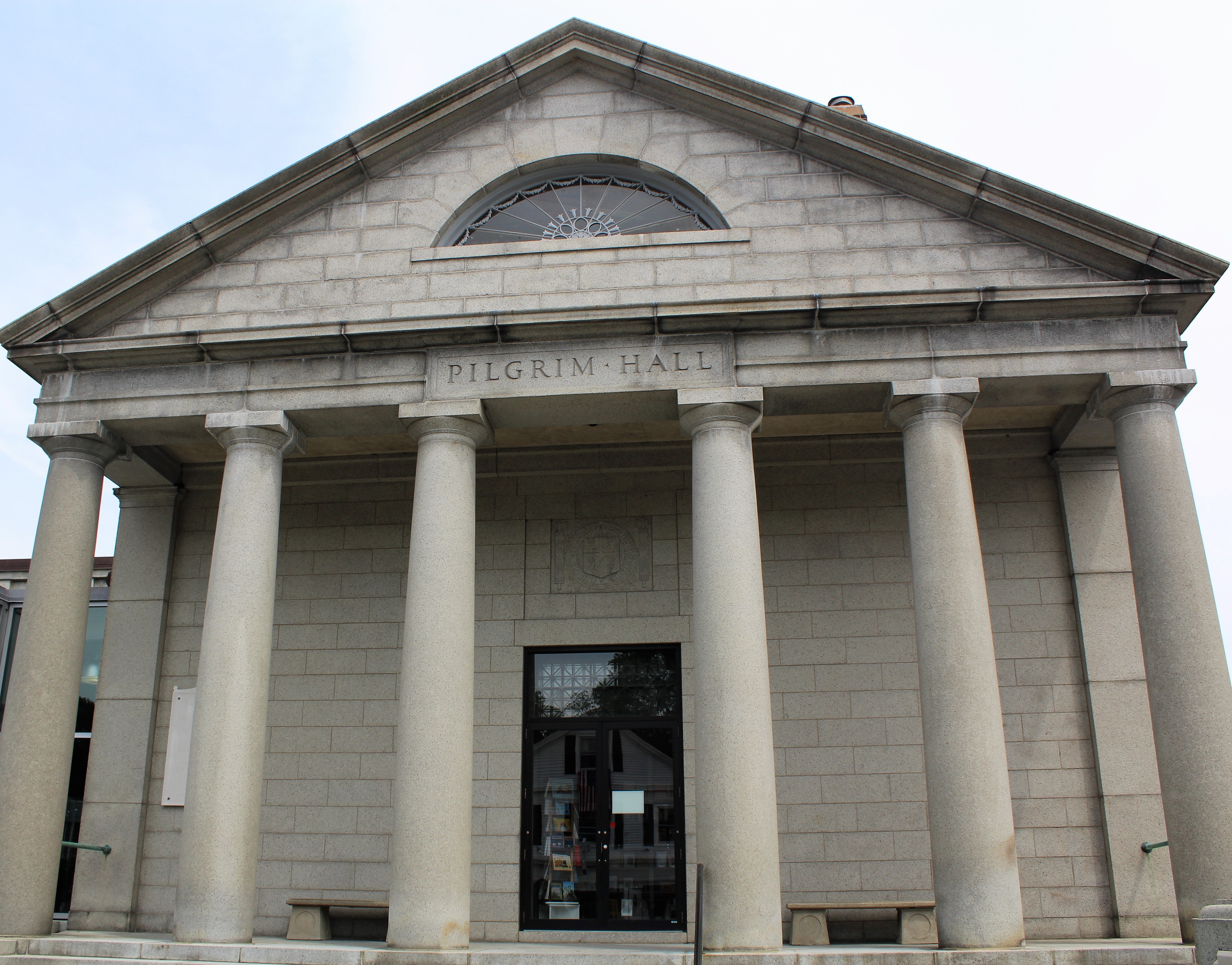
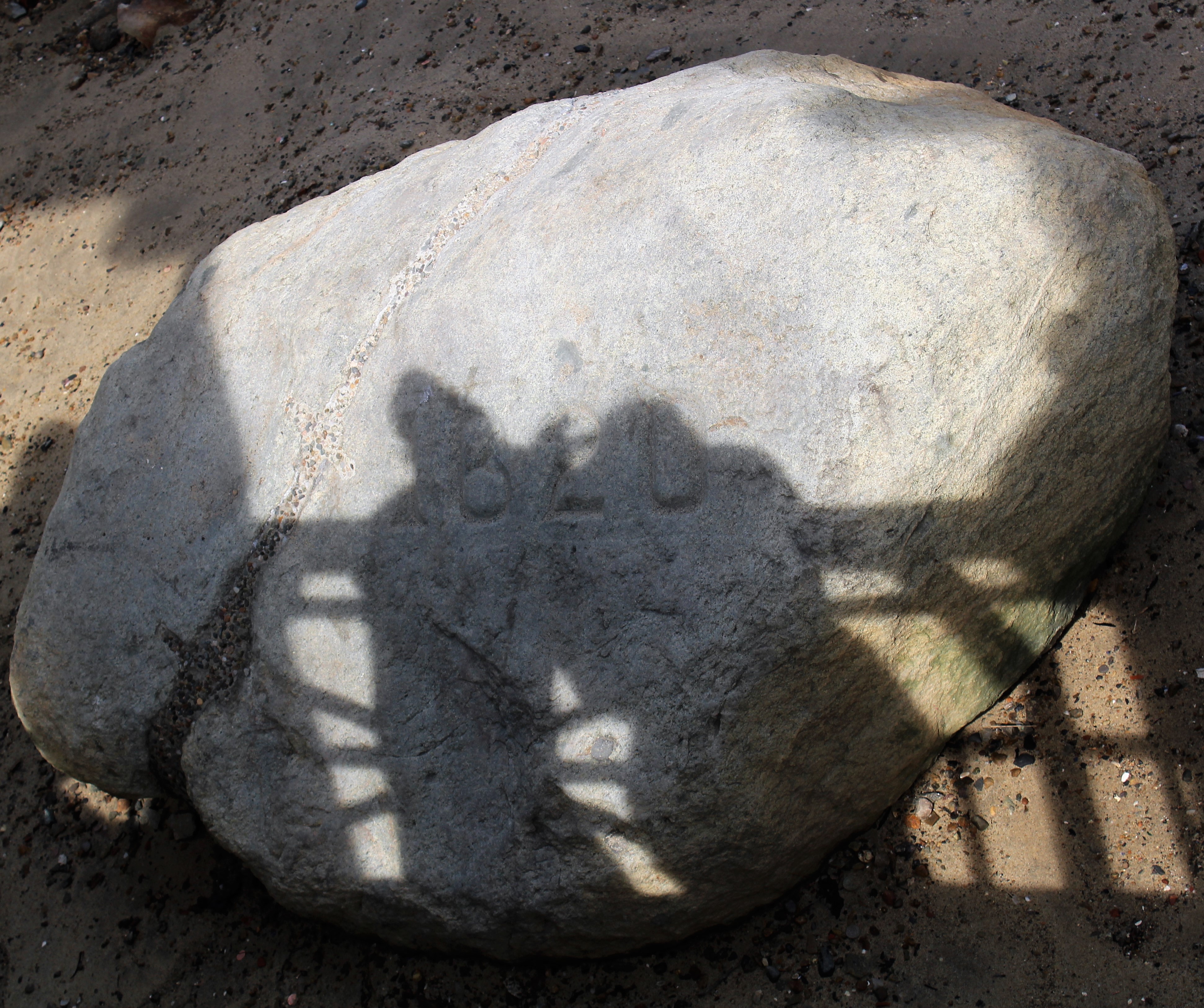
    Today the crew set their sites on Plymouth.  They visited the Pilgrim Hall Museum and walked down to the waterfront to see Plymouth Rock.  The Pilgrim Hall Museum is the oldest continuously operating museum in the United States.  It was built in 1824.

    33
    The First Museum

    A film ran in the lower exhibit gallery that did an excellent job of telling the story of the Pilgrim migration from England to the Netherlands, and then on to the New World.  It took ten years to move the Pilgrims from their Dutch homes to Plymouth.  The Mayflower being the most famous ship bringing the Pilgrims to their new home at Plymouth in 1620.  The others:

    • Fortune in 1621
    • Anne in 1623
    • Little James in 1625

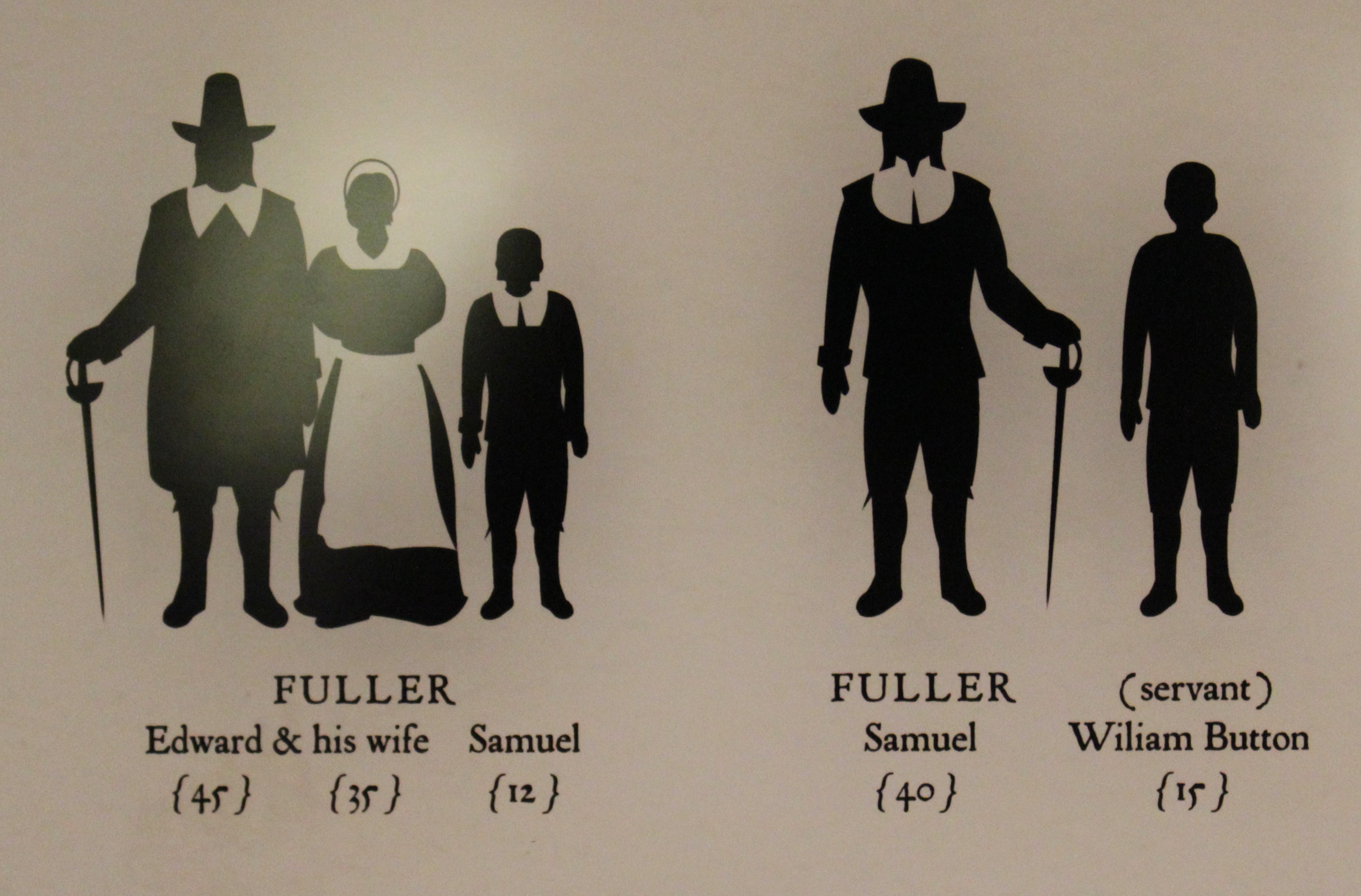
    The passengers on these first four ships were referred to as the ‘First Comers.’  The first Fullers arrived in the New World aboard the Mayflower.

    There were two brothers who sailed over together.  They all survived the trip over and the landing. The two older men, Edward and Samuel signed the Mayflower Compact.

    35 Alive at Landiong

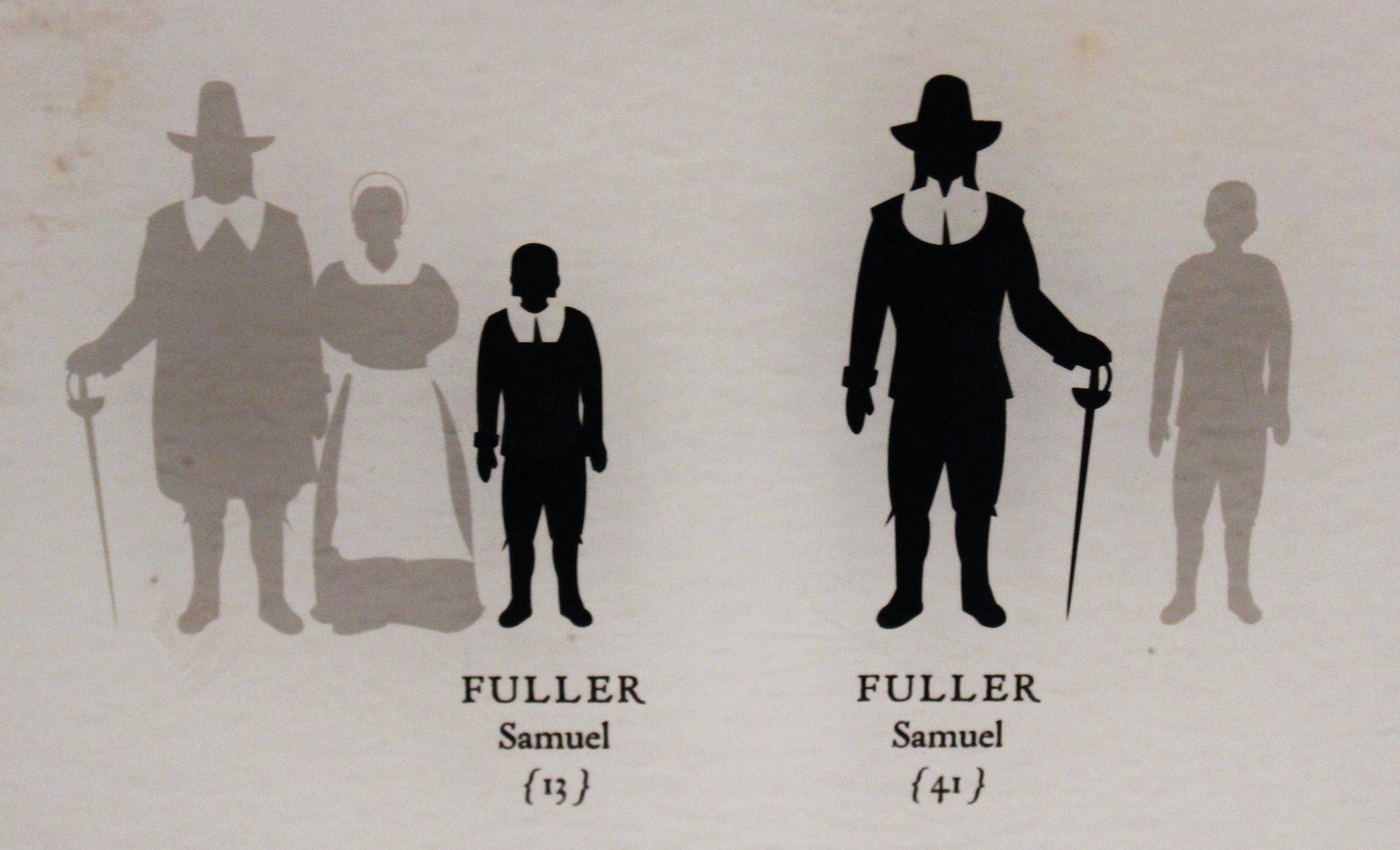
    However, just a few survived the first winter.  Survivors at the end of year one.

    35.1 Alive at first Thangsgiving

    One other thing the skipper learned about these Fullers was that Edward had two sons.  The oldest son, Mathew, stayed behind in the Netherlands and did not come to Plymouth until 1640.

    38.1
    Plymouth Rock

    After walking down to the waterfront to look at the famous Plymouth Rock, the crew headed to Portsmouth, Rhode Island to visit the Green Animals Topiary Garden.

    The country estate was purchased by Thomas E. Brayton in 1877.  He hired Joseph Carreiro to be the gardener.  Joseph created most of the topiary prior to 1945.  Alice Brayton inherited the estate in 1940.  According to the workers at the property, Alice hosted an engagement party at the property for Jacqueline Lee Bouvier and John F. Kennedy.

    There was also a vegetable garden that was guarded by three scarecrows that were built in the 1940’s.

    Tuesday, Aug 22, 2017 

    The crew headed to Lexington, Battle Road Trail, Concord, and Sleepy Hollow Cemetery today.

    If you recall from your history lessons or last weeks blog, you might remember that Paul Revere rode to Lexington to warn John Hancock and John Adams that the British Regulars were on the way to arrest the two trouble makers.  Following the Revere path, the crew travelled to Lexington.  The British left Boston at nightfall on April 18, 1775 by crossing over to Charlestown.

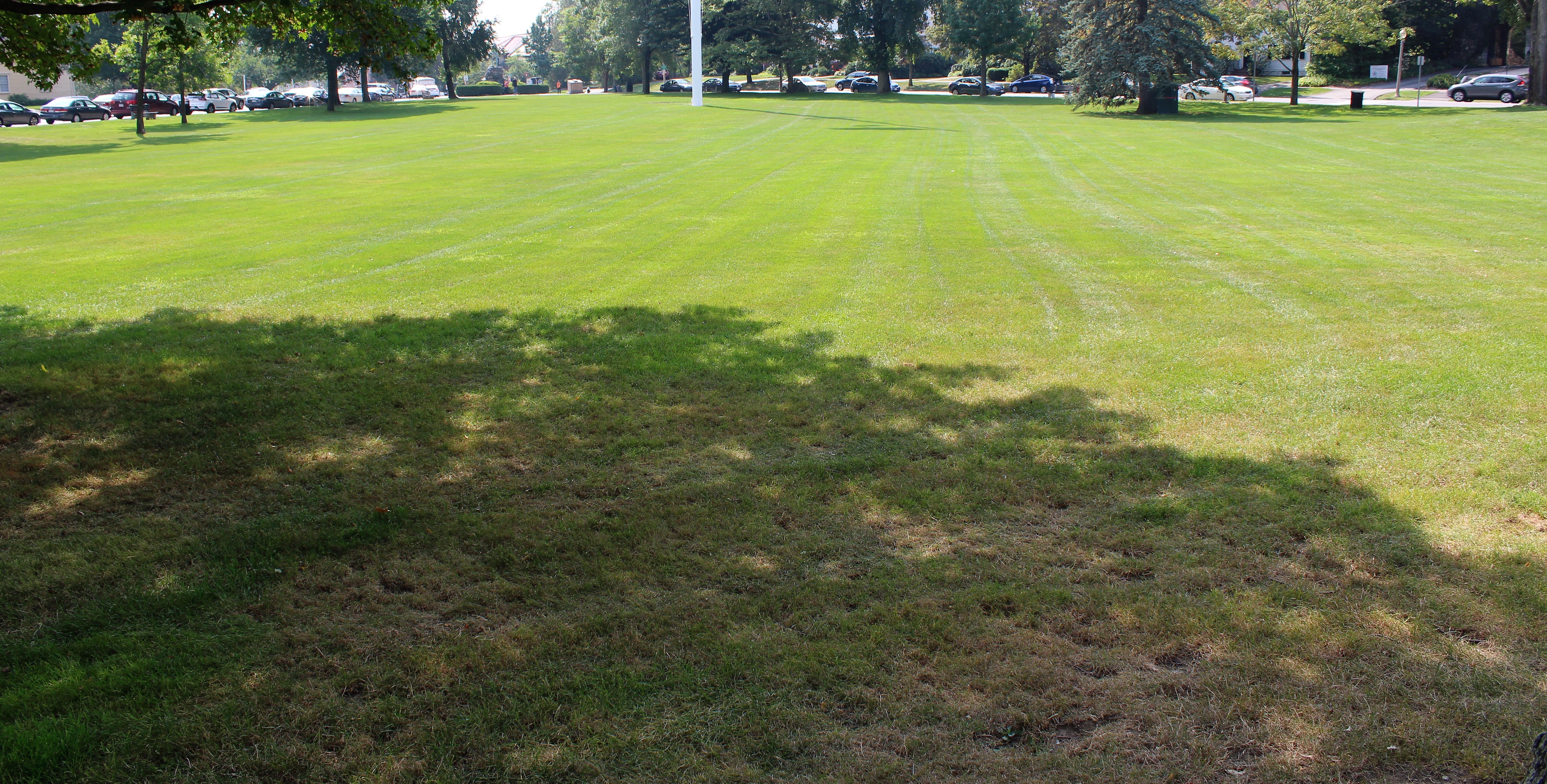
    Upon arrival in Lexington, the first thing that was a surprise was just how small the Greens were where the Minute Men met the Regulars.  Hard to imagine 70 Minute Men and 700 British regulars in the small space.

    50 Lexington Green
    Lexington Green

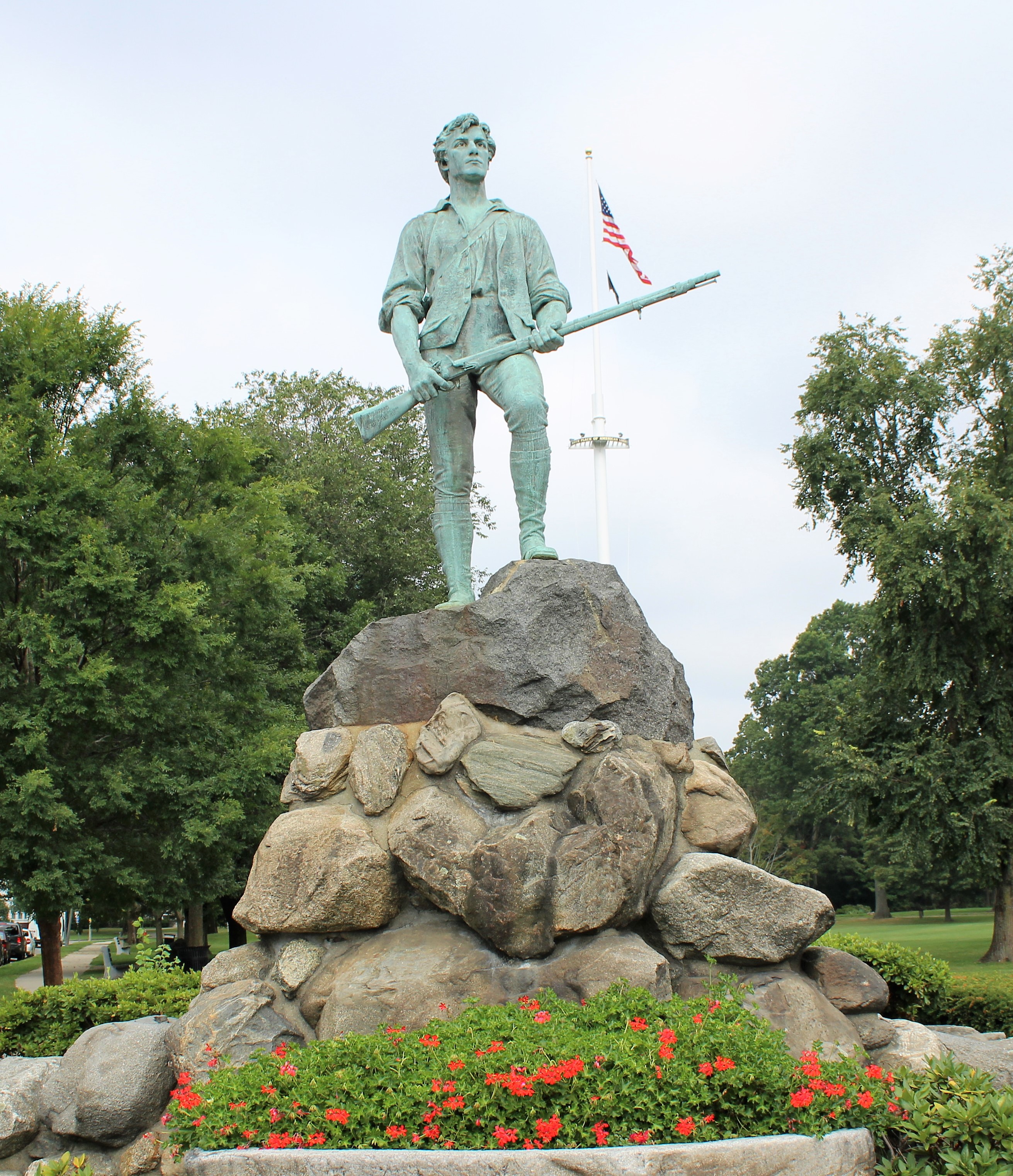
    The other surprise was how the town folk of Lexington have a chip on their shoulder about where the first shot heard ’round the world was actually fired.  The folks in Lexington are quick to point out that the first shots and first Patriots were killed right here on the Lexington Green.  At 5:00 a.m. on the 19th, the British arrive and find 77 militia men on the Lexington Green.  A shot rings out and the British Regulars fire a volley.  After the shots, eight militia men become the first dead.  The militia scatters and the British Regulars continue to Concord rather than look for Hancock and Adams.

    45.1
    Lexington Minute Man

    After walking around the Greens, the crew headed towards Concord along the Battle Road Trail. They stopped at the Minute Man National Historic Park.  The Visitor Center had an outstanding video that showed the timeline from when the British troops started their march towards Concord on April 18, 1775 to their return to Boston on April 19, 1775.

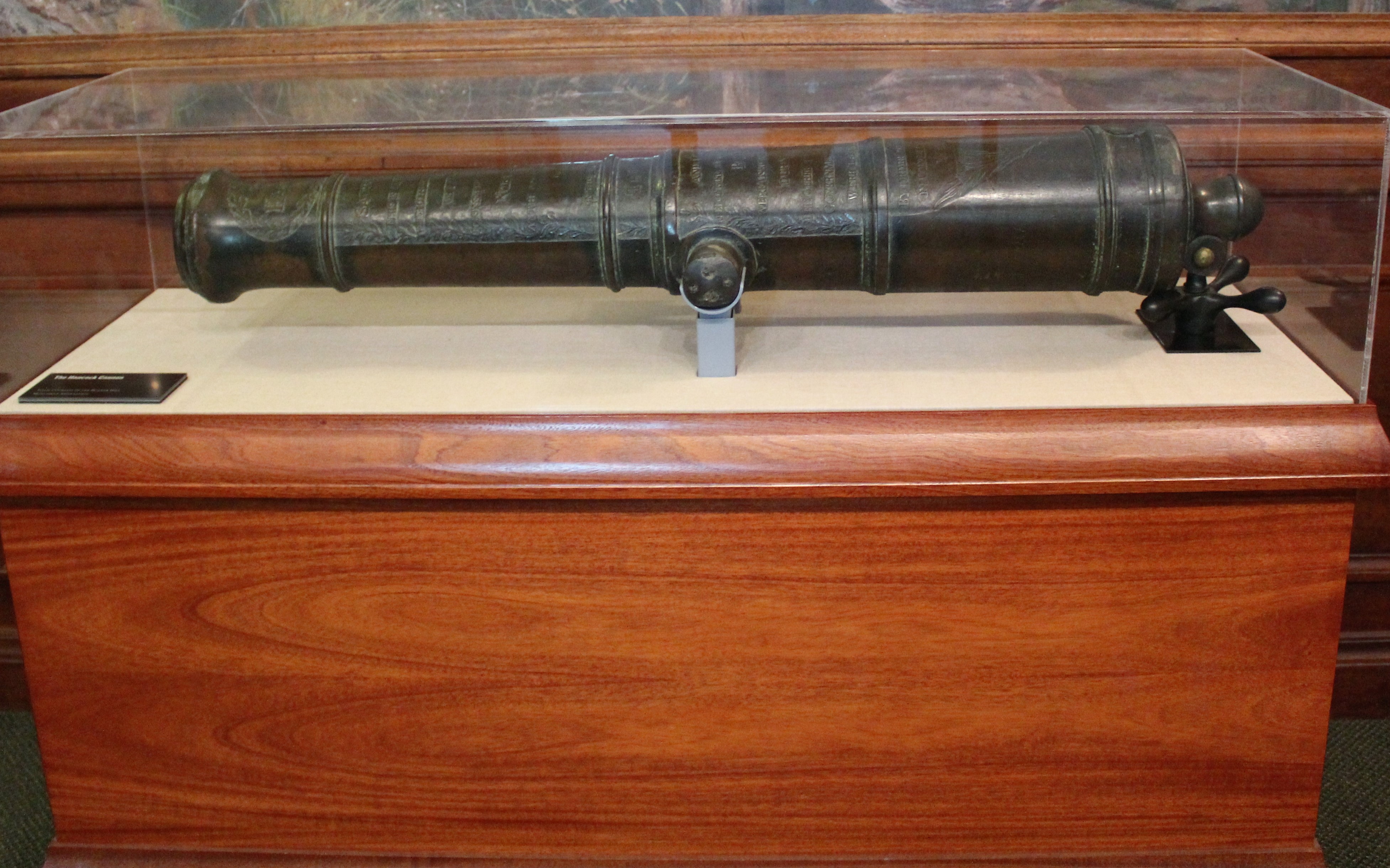
    The Visitor Center also started the dialogue that the British were not out to arrest Hancock and Adams, but were actually in hot pursuit of four canon and arms for 15,000 men that had been hidden in Concord.  Their goal was to find and destroy the cache of weapons and ammunition.


    51 Canon
    Hancock canon that the British were after

    The crew drove on to Concord on the Battle Road Trail and passed the location where Paul Revere was captured.  Upon arrival in Concord the crew found the North Bridge Visitor Center.

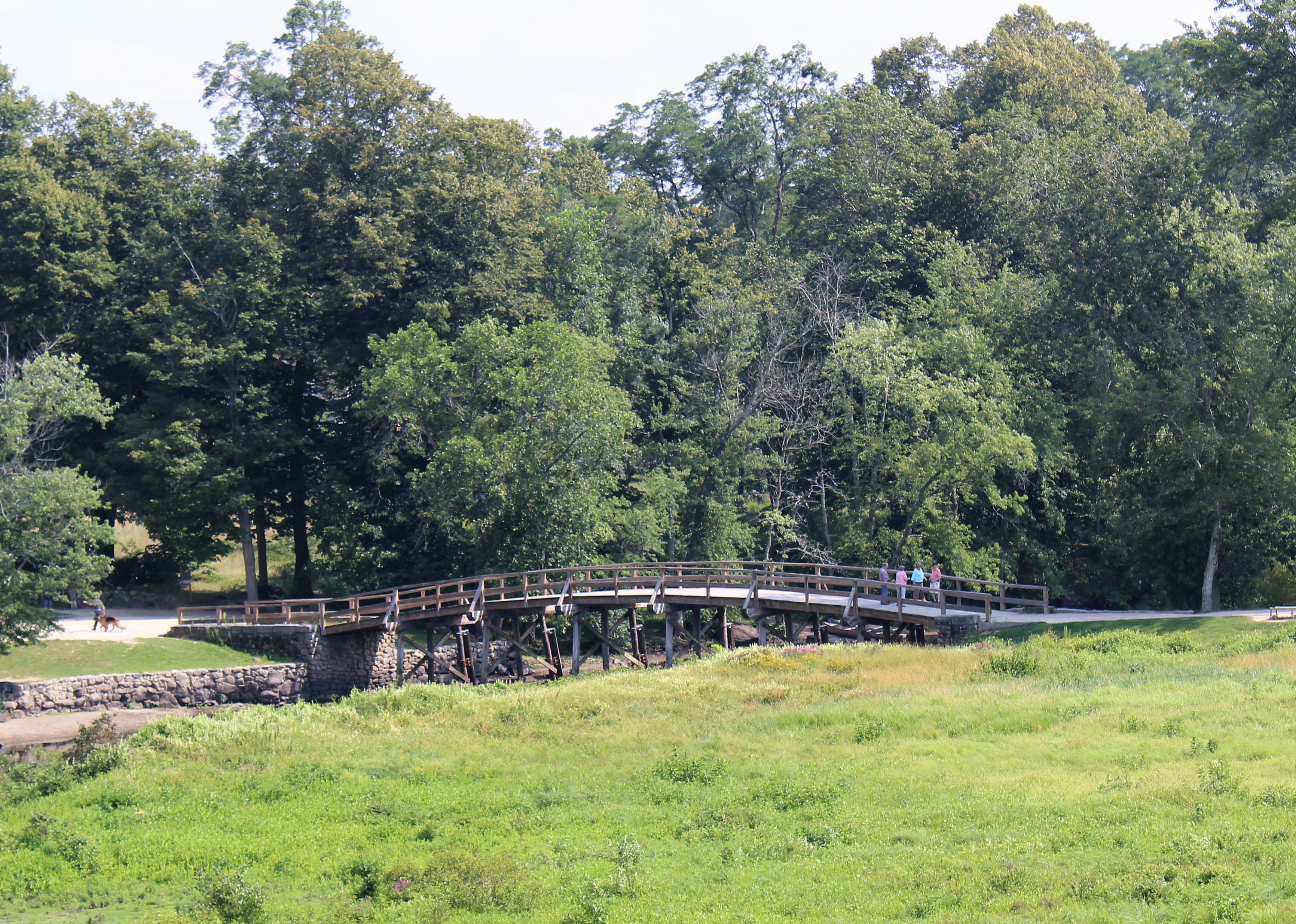
    53 North Bridge
    North Bridge

    The Visitor Center described the events of the early morning.  The British Regulars arrive at 0700 and begin to search Concord for the arms.  The militia has moved to some hills outside of town to observe the British.  At 0900, the British begin to burn a small cache of weapons that they found.  At 0930, the militia heads to town to stop the burning.  They encounter British soldiers on the North Bridge.  The British fire and kill two militia men.  The militia returns fire and kill the first British soldiers of the day.  Both groups disperse from the bridge and no further shots are fired at the bridge. 

    There is a Colonist memorial on the side of the bridge where the minute men approached.

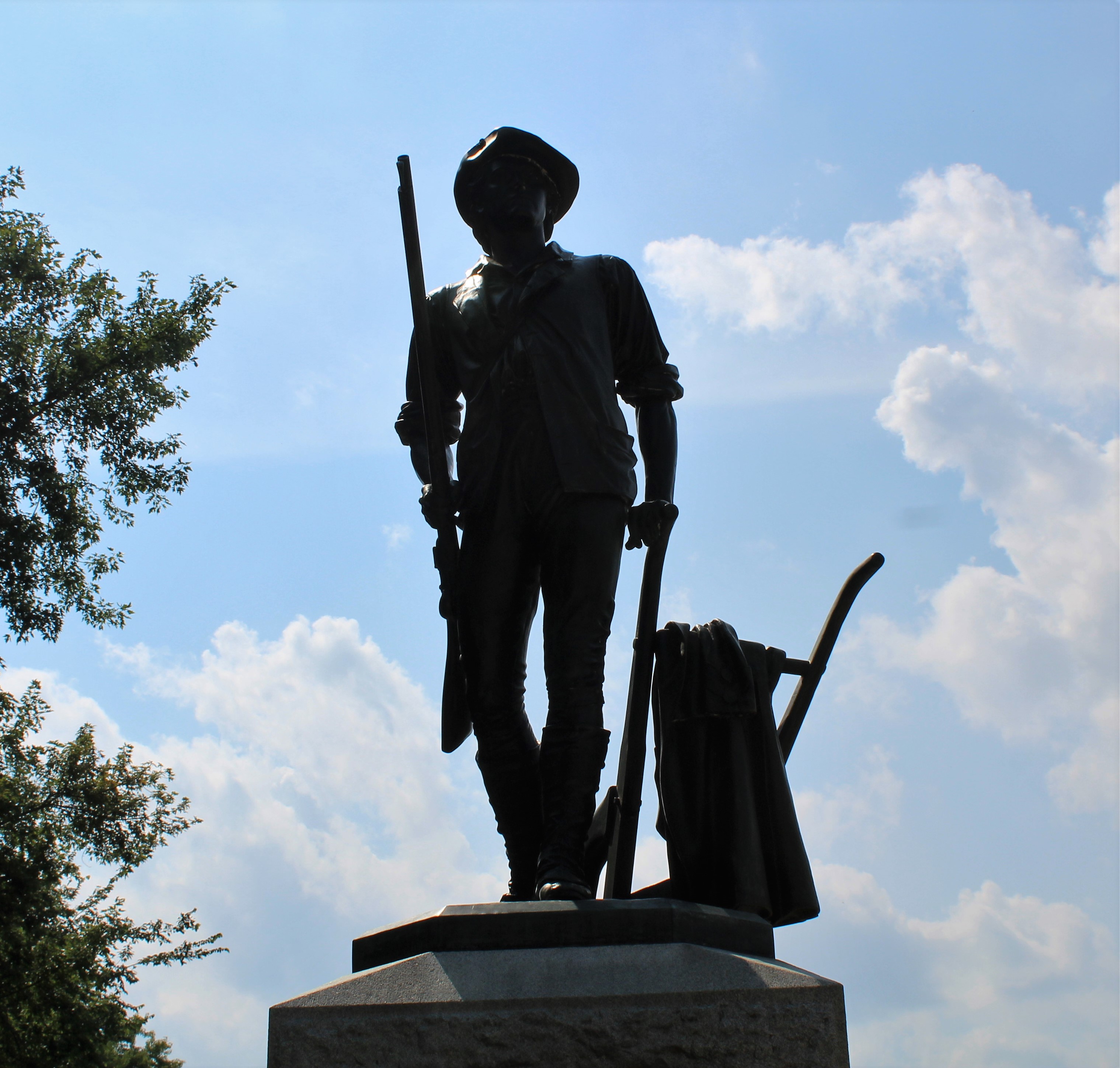
    55 Concord Patriot
    Concord Minute Man with his gun and plow

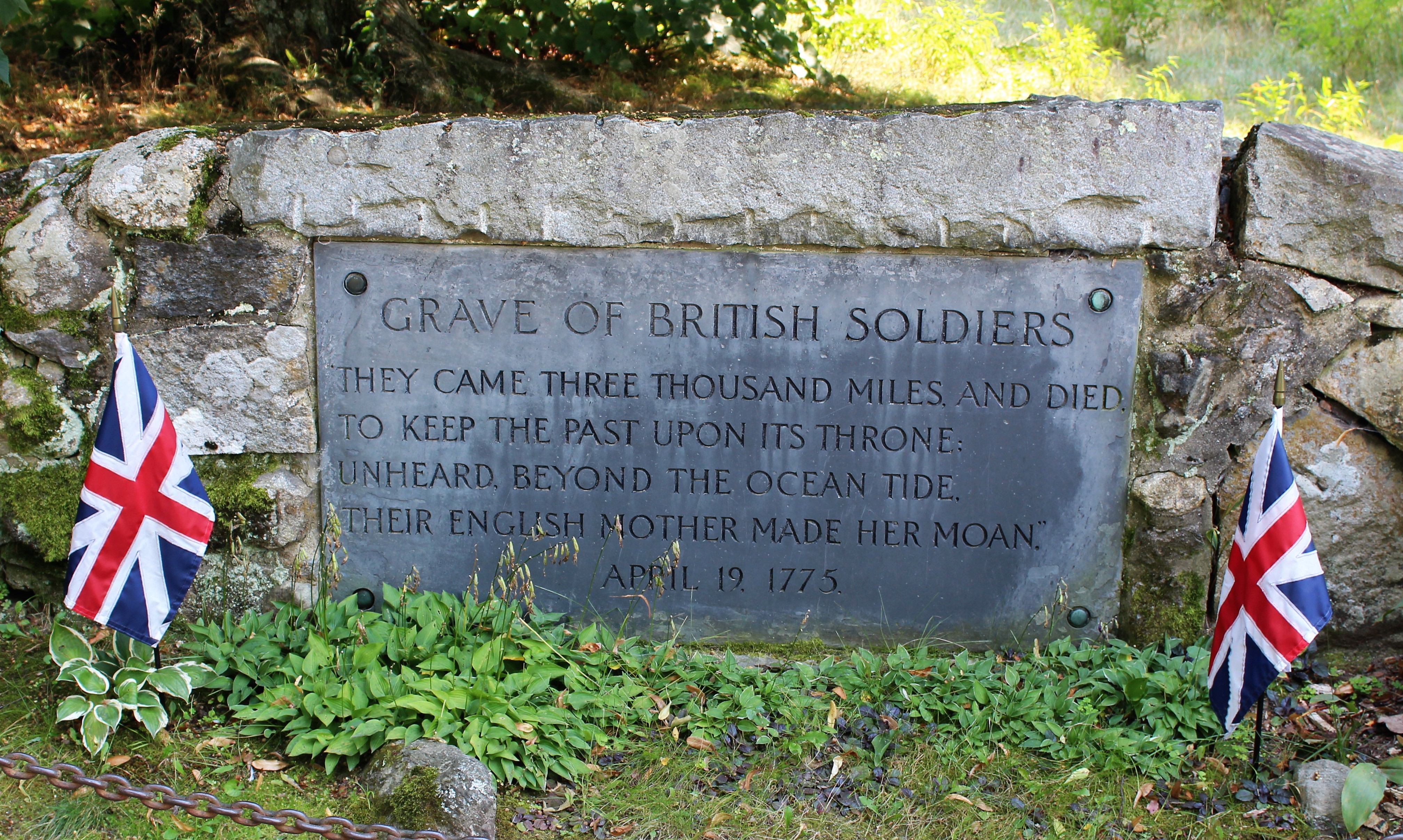
    On the British side of the bridge is a grave of the first British Soldiers killed.

    57

    By 1230, the British troops have regrouped and begin the long march back to Boston.  The militia men start a running battle along the Bay Road back to Boston.  The fighting ends when the British arrive back in Boston about 1900.  The British have 73 dead and 174 wounded.  The Colonist have 49 dead and 41 wounded.  

    It would take the Declaration of Independence and another hard eight years of war before the Colonists would win the Liberty they so desperately were seeking.  Makes one stop and ponder what you would be willing to fight for to maintain the freedoms and liberty that we seem to take for granted.

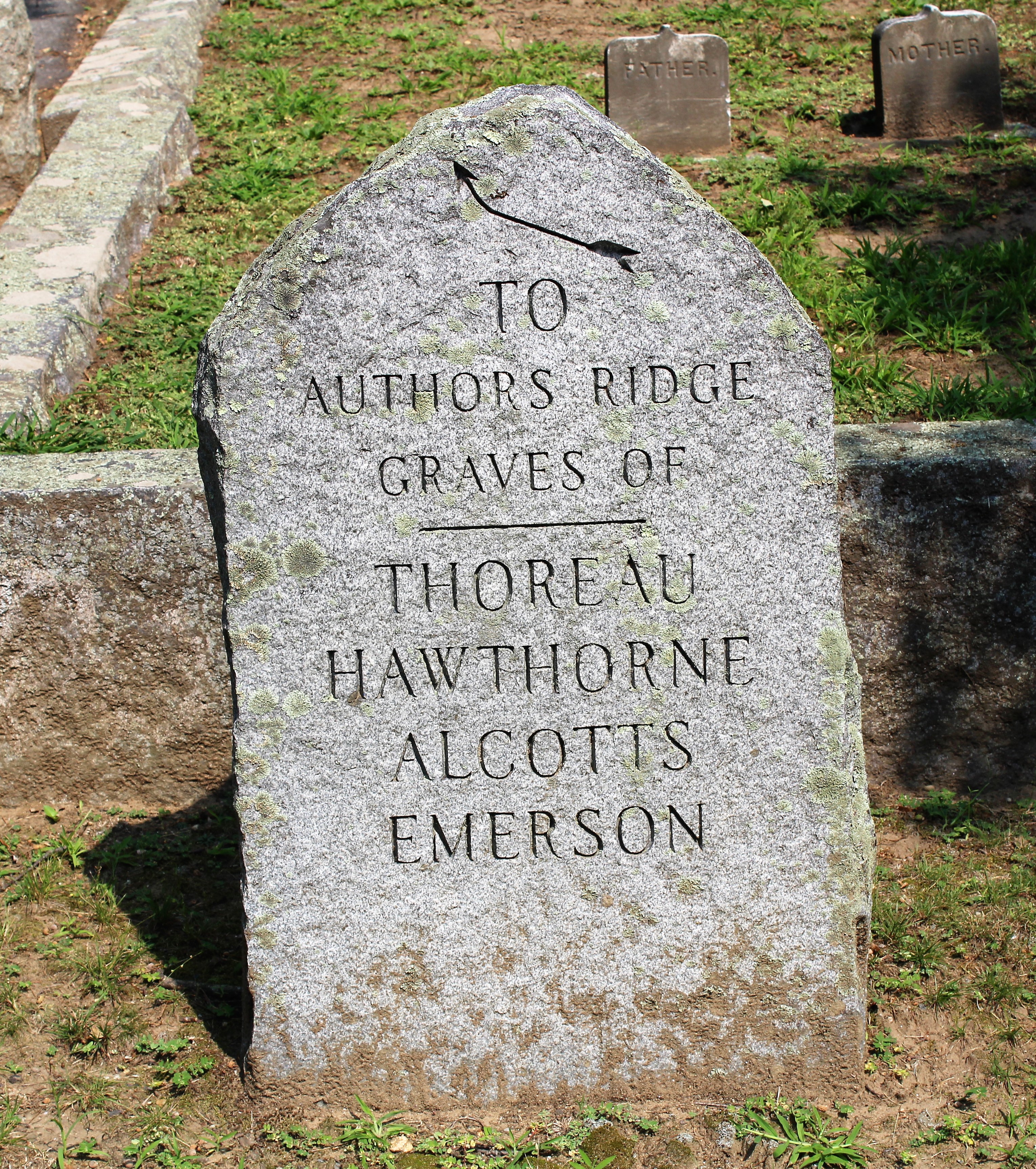
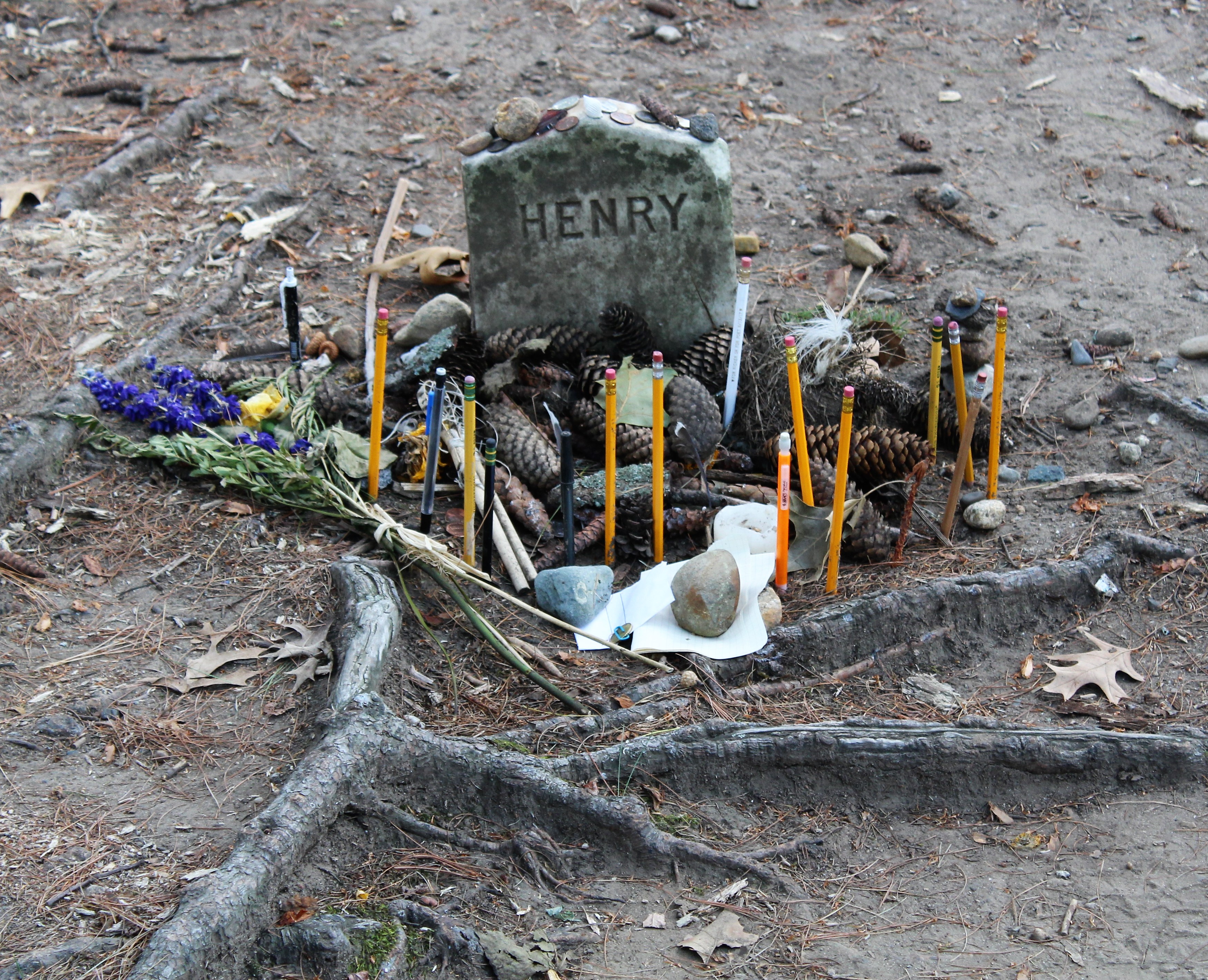
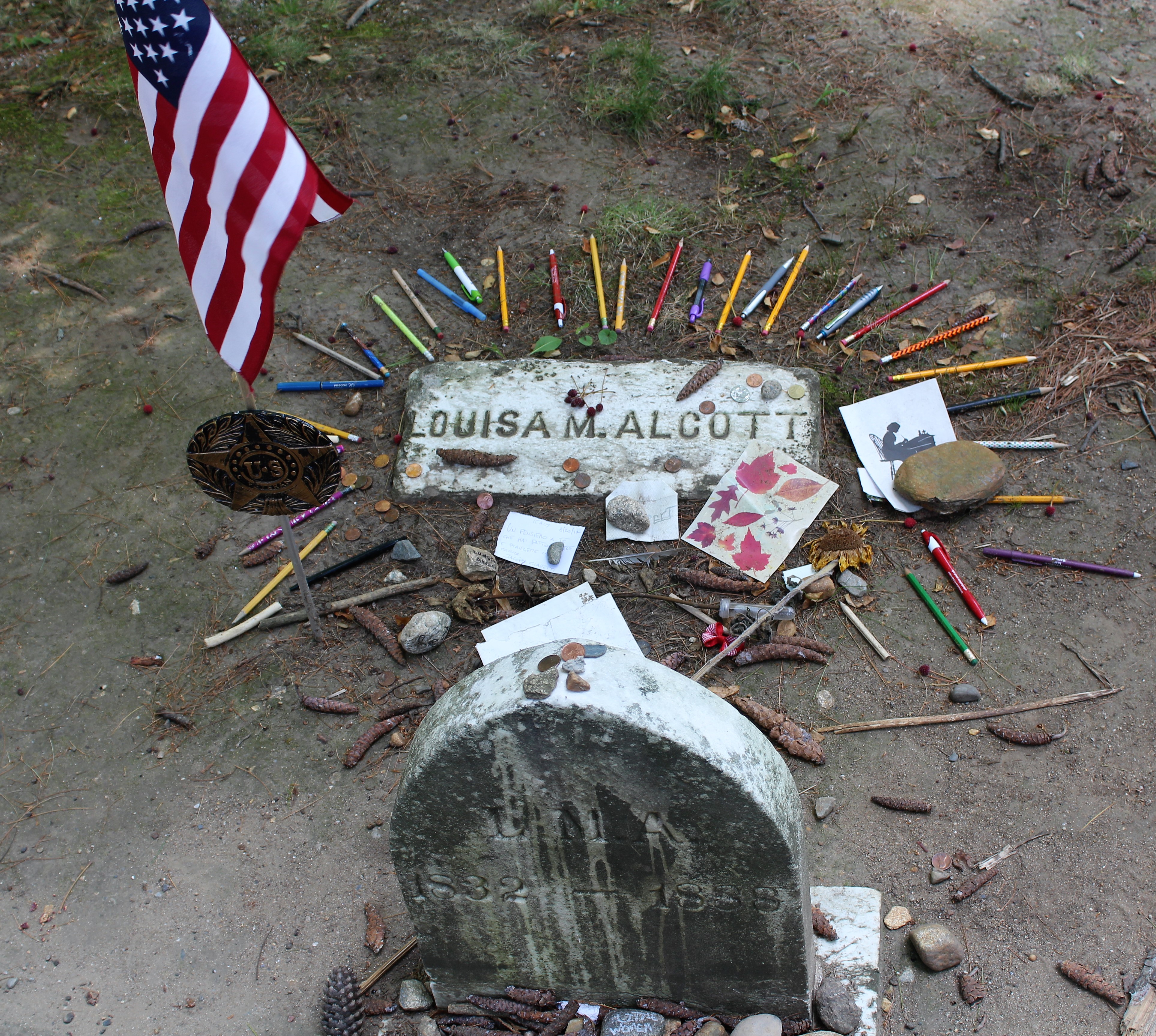
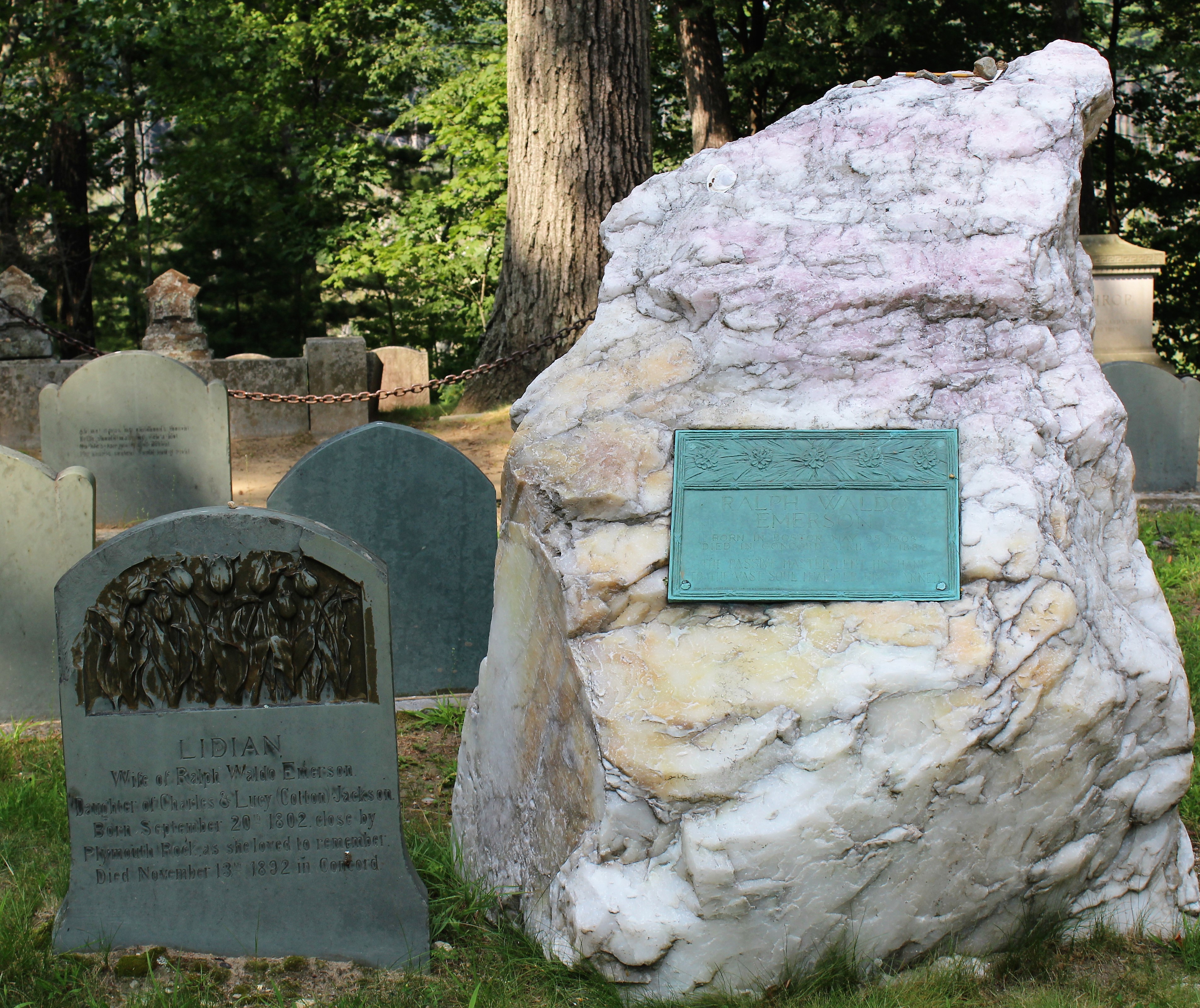
    After the war was over and the British were gone from the America’s, a war of words ensued that shaped the thinking of the young Americans and the generations that followed.  Interesting enough, some of these writers are buried in the Sleepy Hollow Cemetery in Concord.  They are buried on Authors Ridge in close proximity to each other.

    58 Sleepy Hollow Cemetery

    58.2

    58.3

    58.4

    58.7

    Wednesday, Aug 23, 2017       

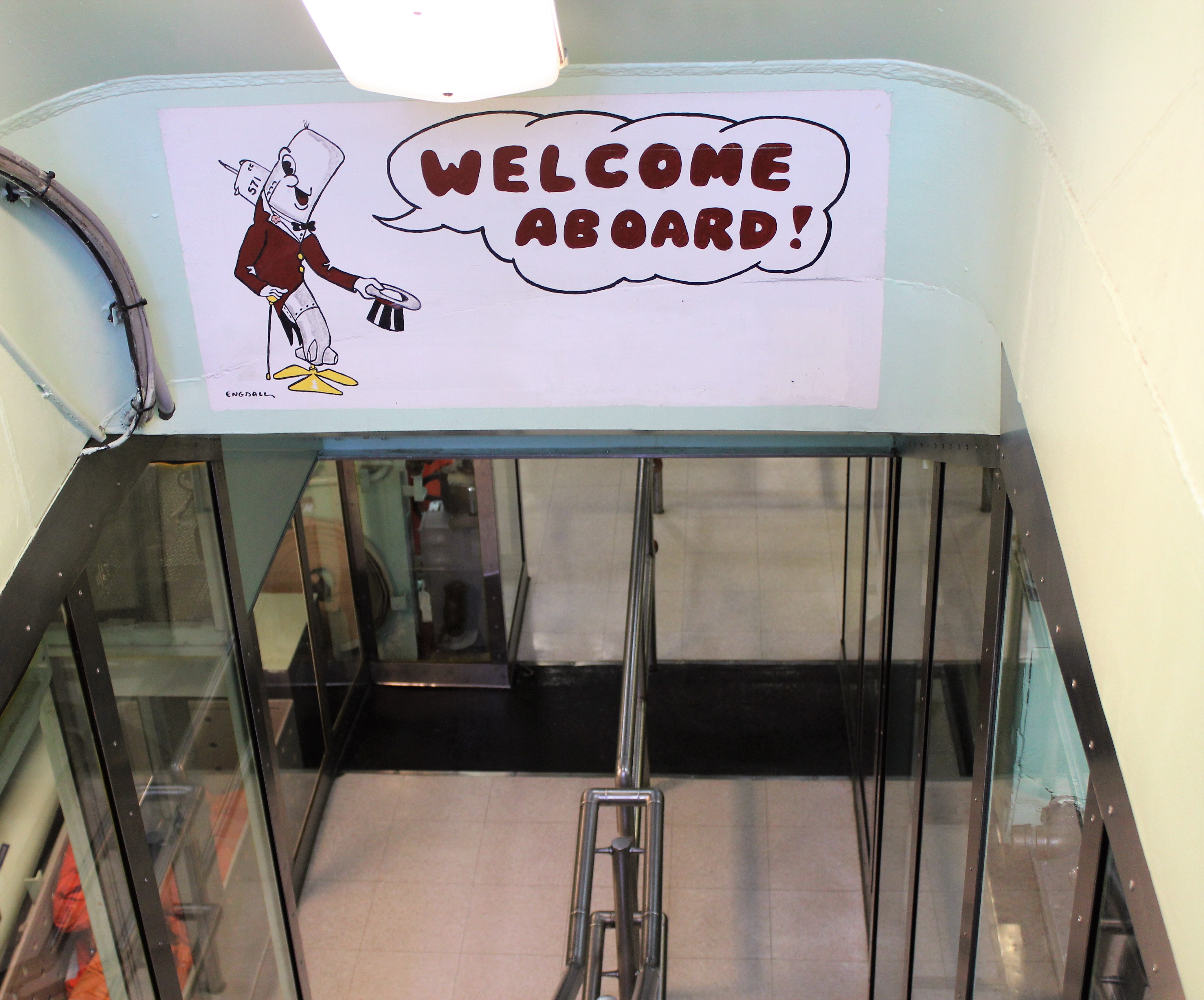
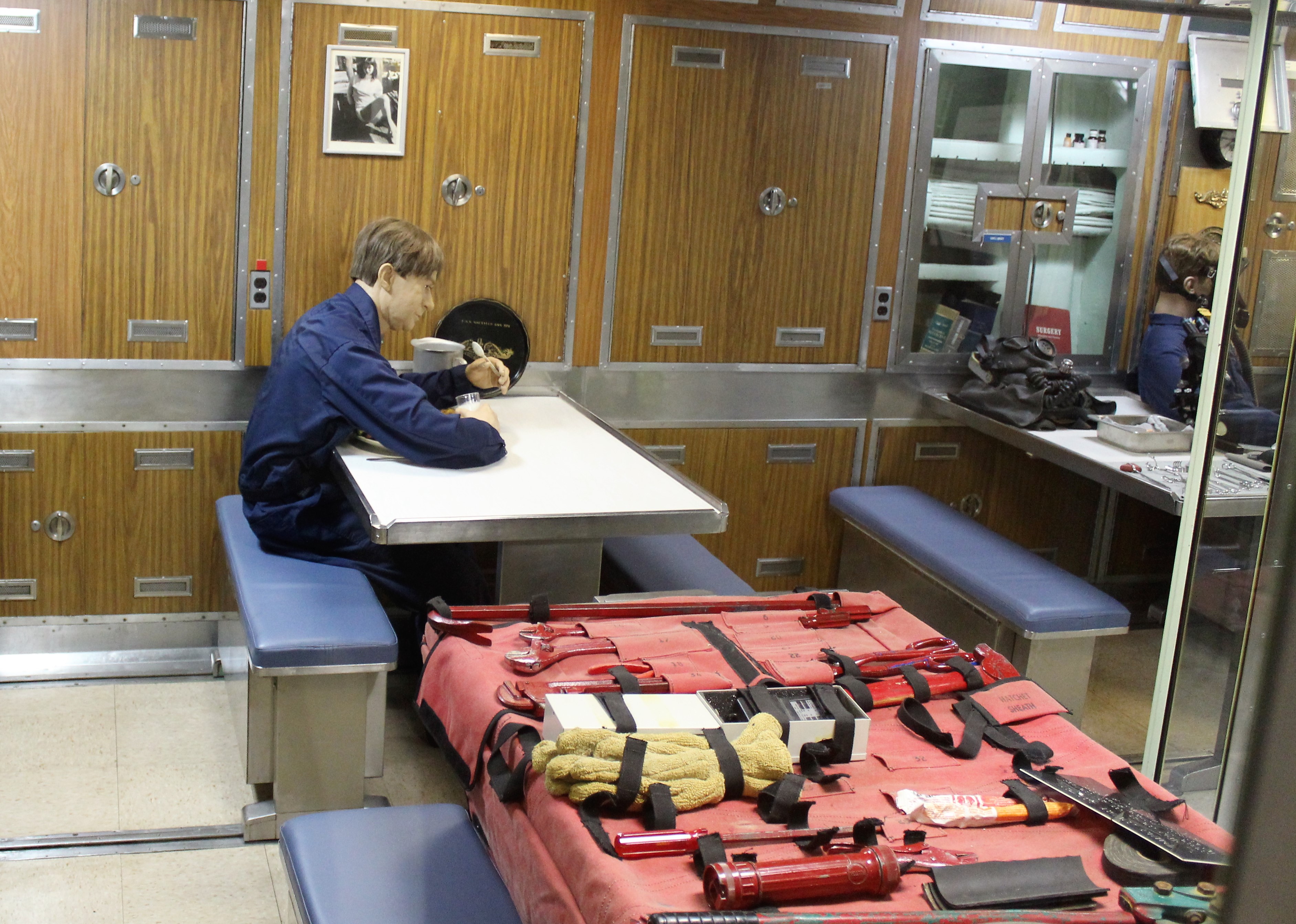
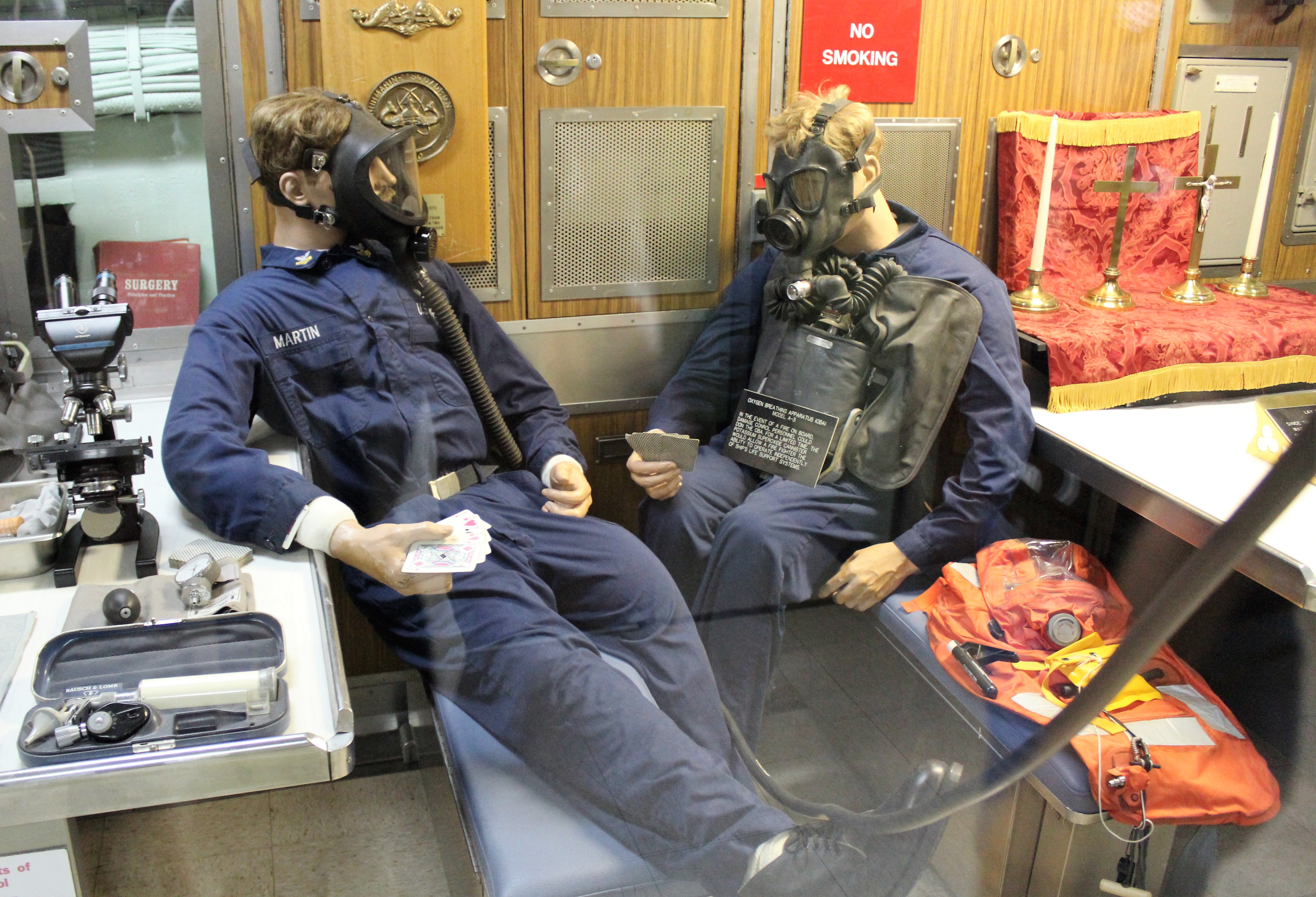
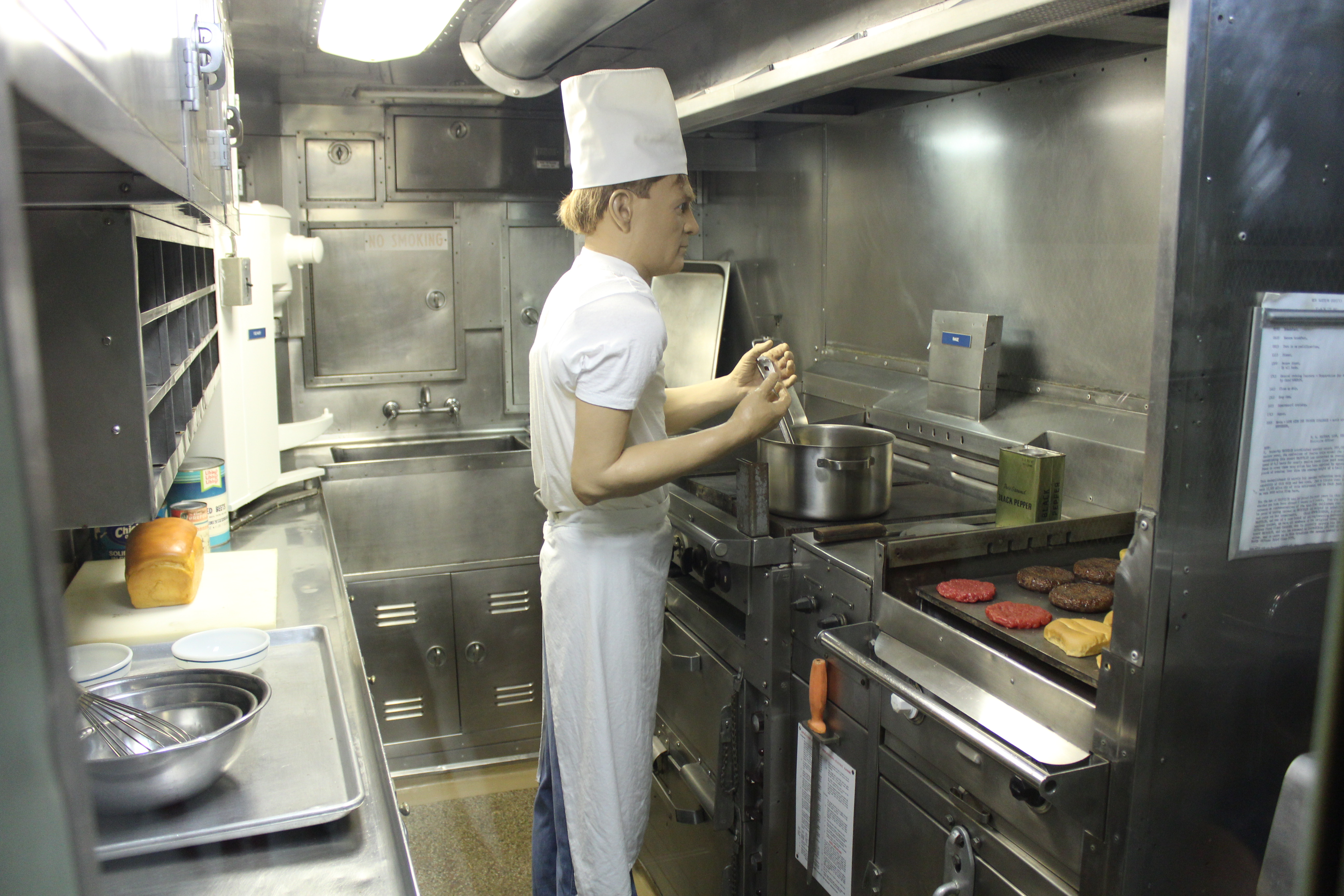
    Today the crew was headed to Groton, Connecticut to visit the first nuclear powered submarine, USS Nautilus, SSN 571.

    59.5

    The crews mess

    59.6

    59.7

    The galley

    59.8

    The museum told the history of development of submersible vessels.

    59.10
    The Turtle, tested but failed during the Civil War

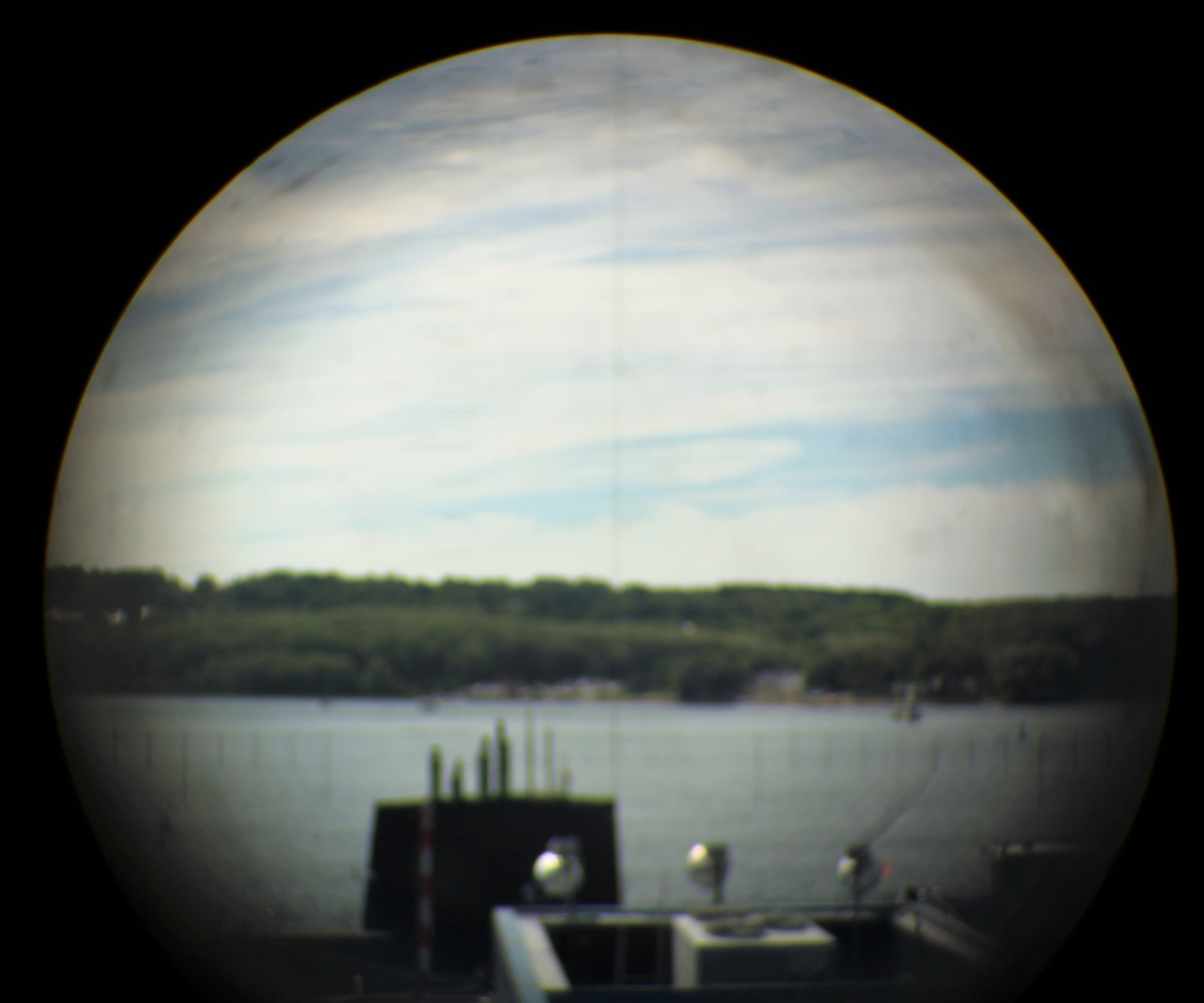
    The USS Nautilus thru the periscope in the museum.

    59.11

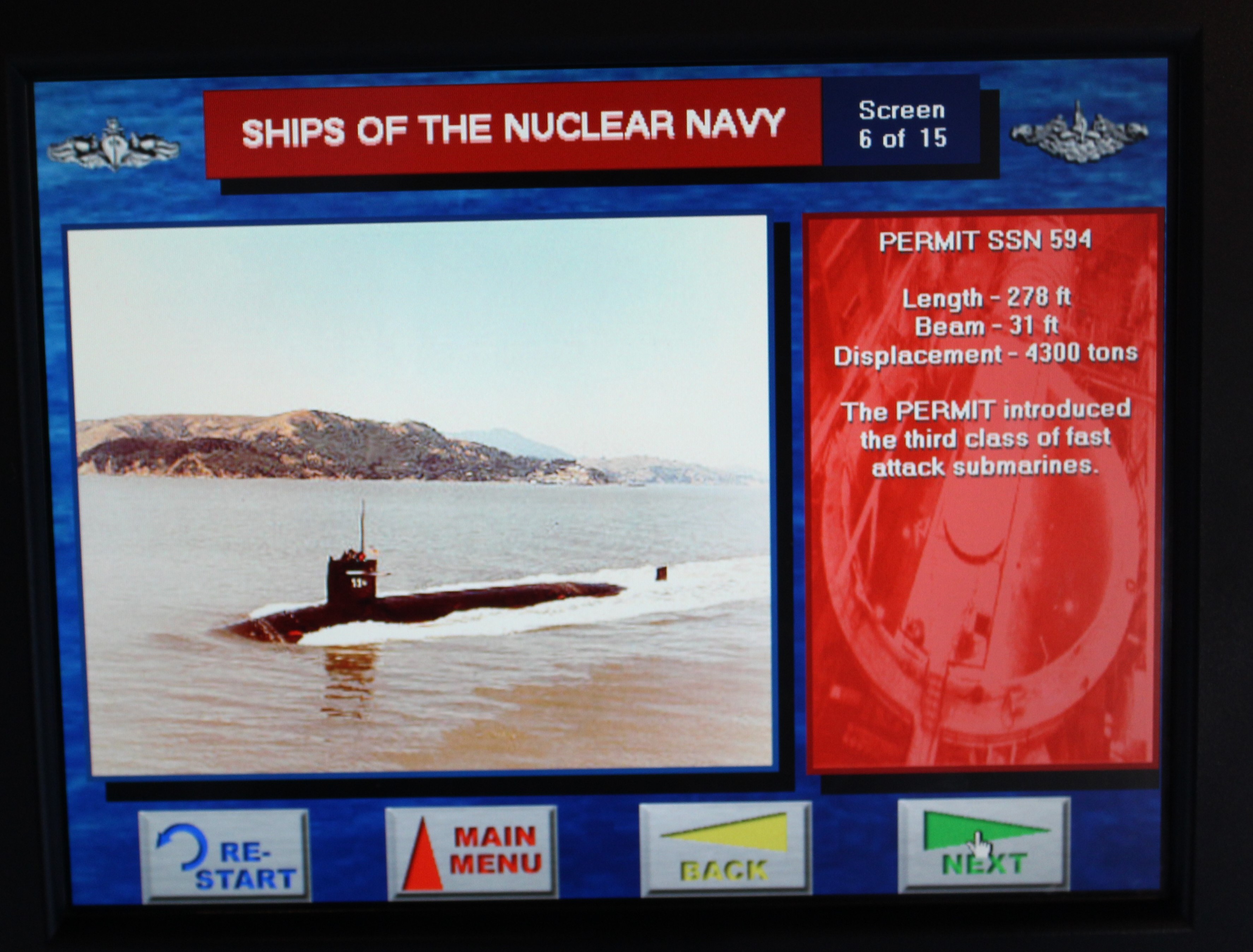
    The skipper even found a display about the submarine he served aboard, the USS Permit, SSN 594.

    59.12

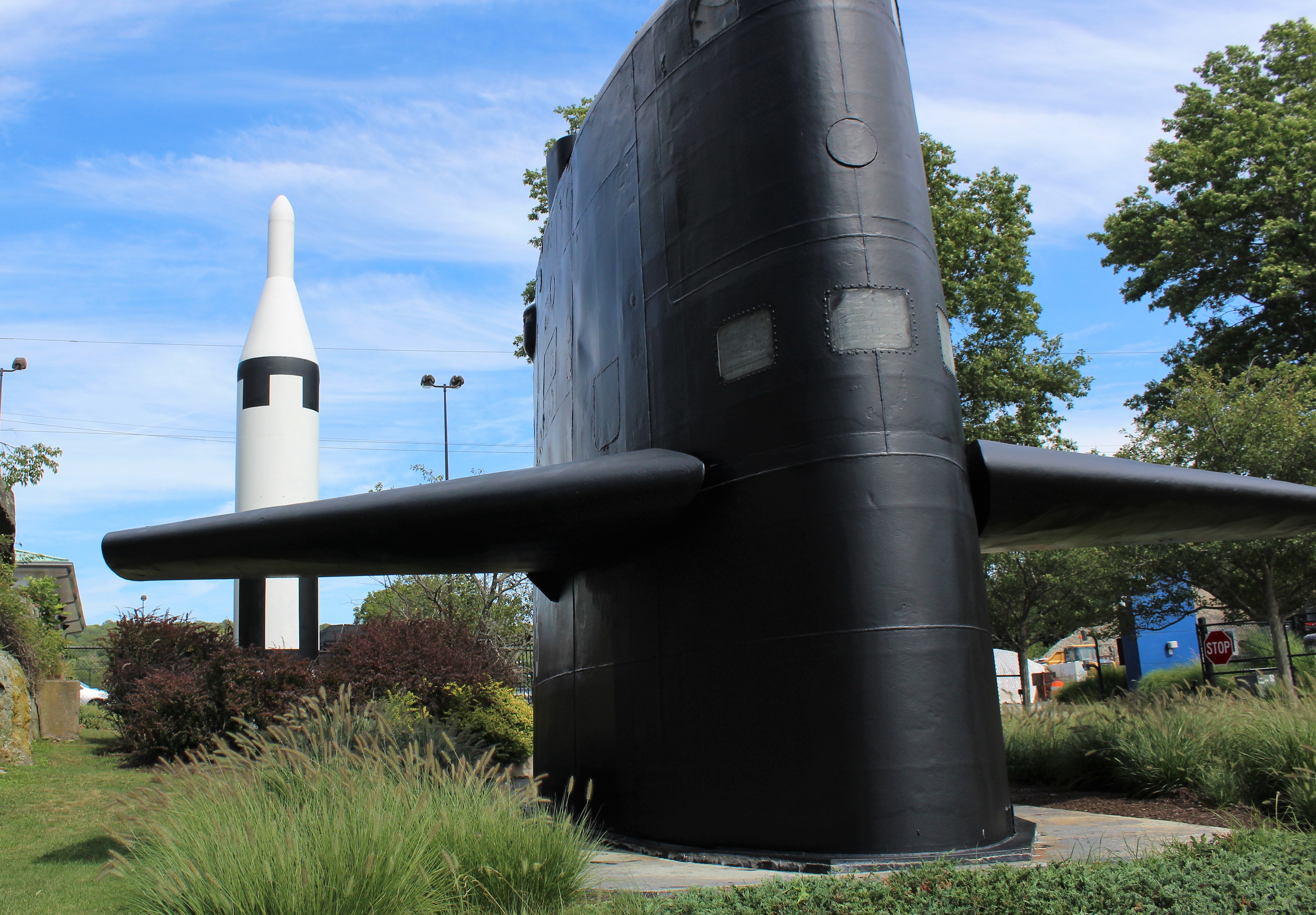
    Outside the museum they had the sail of the very first ballistic submarine, USS George Washington, SSBN 598.  Eventually, there were 41 of this class submarine built as a deterrent for the Cold War.

    59.24

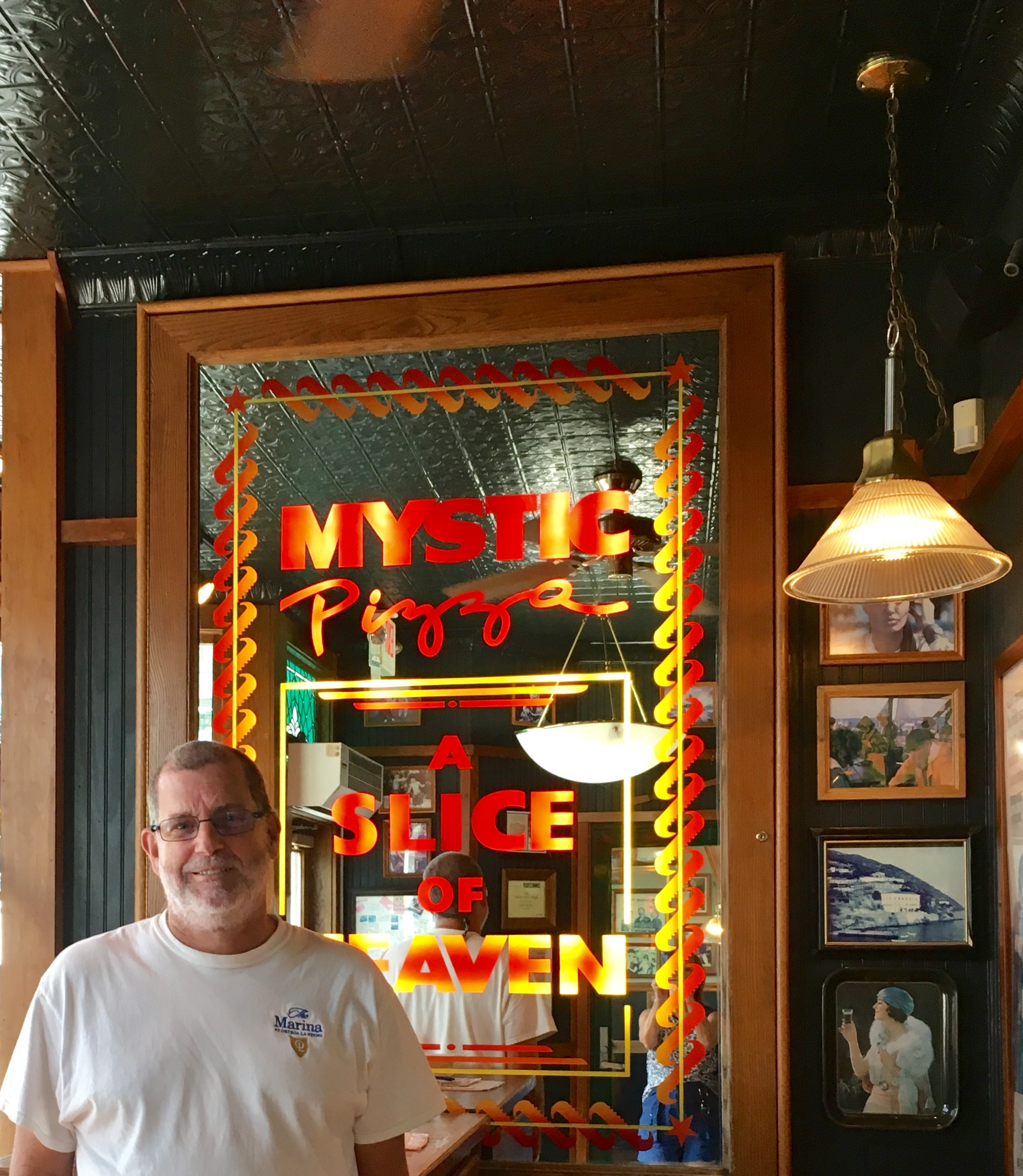
    After the skipper got his submarine fix satisfied, it was time to head over to Mystic Pizza and try their ‘Little Slice of Heaven.’  The crew had a Hawaiian Pizza that was surprisingly good.  While waiting on the pizza, the customers can watch the movie Mystic Pizza on various TV sets scattered around the tables.  The menu has a bit of Mystic Pizza history, ands ends with the line, ‘The pizza that made the movie famous.’

    Mystic Pizza

    After pizza, it was a short stroll around town and a long drive back to Boston.

    Thursday, August 24, 2017

    Nothing really exciting to talk about today other than finding a bakery to try an original Boston Cream Pie.  Let’s just say it was anti-climatic.

    Friday, August 25, 2017

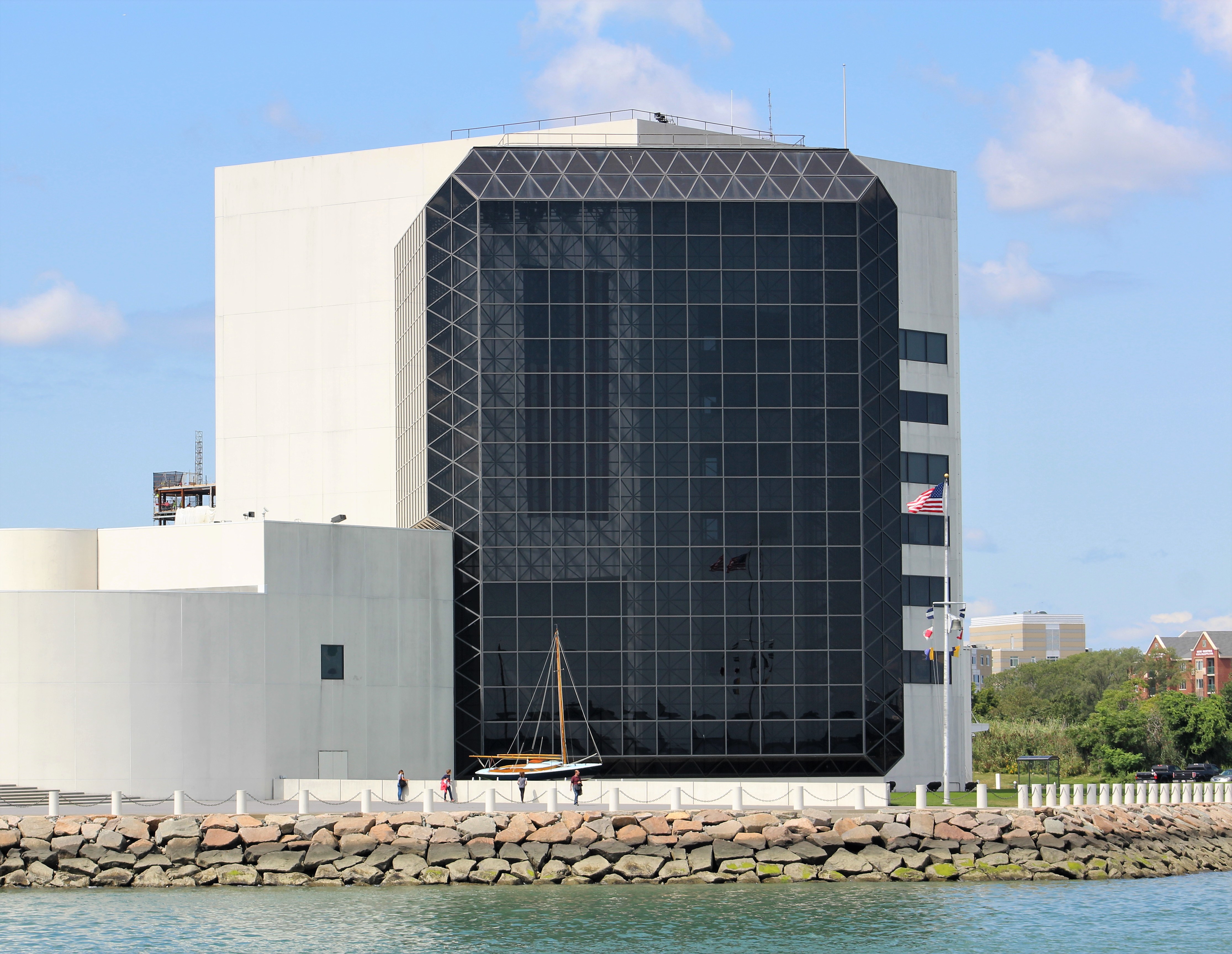
    Today the crew tried to go to the University of Massachusetts to visit the JFK Library.  Unfortunately after several attempts to find a place to dock the boat, the crew had to abandon their efforts.


    61 JFK Library
    JFK Library


    They did get tied up on the pier beside the Library, but the sign says that the pier is for drop off and pick up only with a 10 minute max time limit.  The crew stretched the 10 minutes to 30 so they could have lunch before setting off for Gloucester.

    65 Gloucester.JPG

    Upon arriving in Gloucester Bay, the Harbor Master assigned the crew Ten Pound Ball #4.  After searching the mooring field for almost an hour, the skipper finally gave up and called the Harbor Master back and asked for assistance.  The Harbor Master sent a skiff over to show the crew where the #4 ball was located.  Turns out there was a boat on the #4 ball already, so the skiff operator directed the crew to ball #3.  That was easy.

    The view from the #3 mooring ball:

    65.3

    65.4

    65.2

    Saturday, August 26, 2017

    The big excitement for the day was watching marine mammals.  The skipper spotted a whale about a hundred yards off the port side of the boat.  The whale surfaced several times then broached and went under to not be seen again.

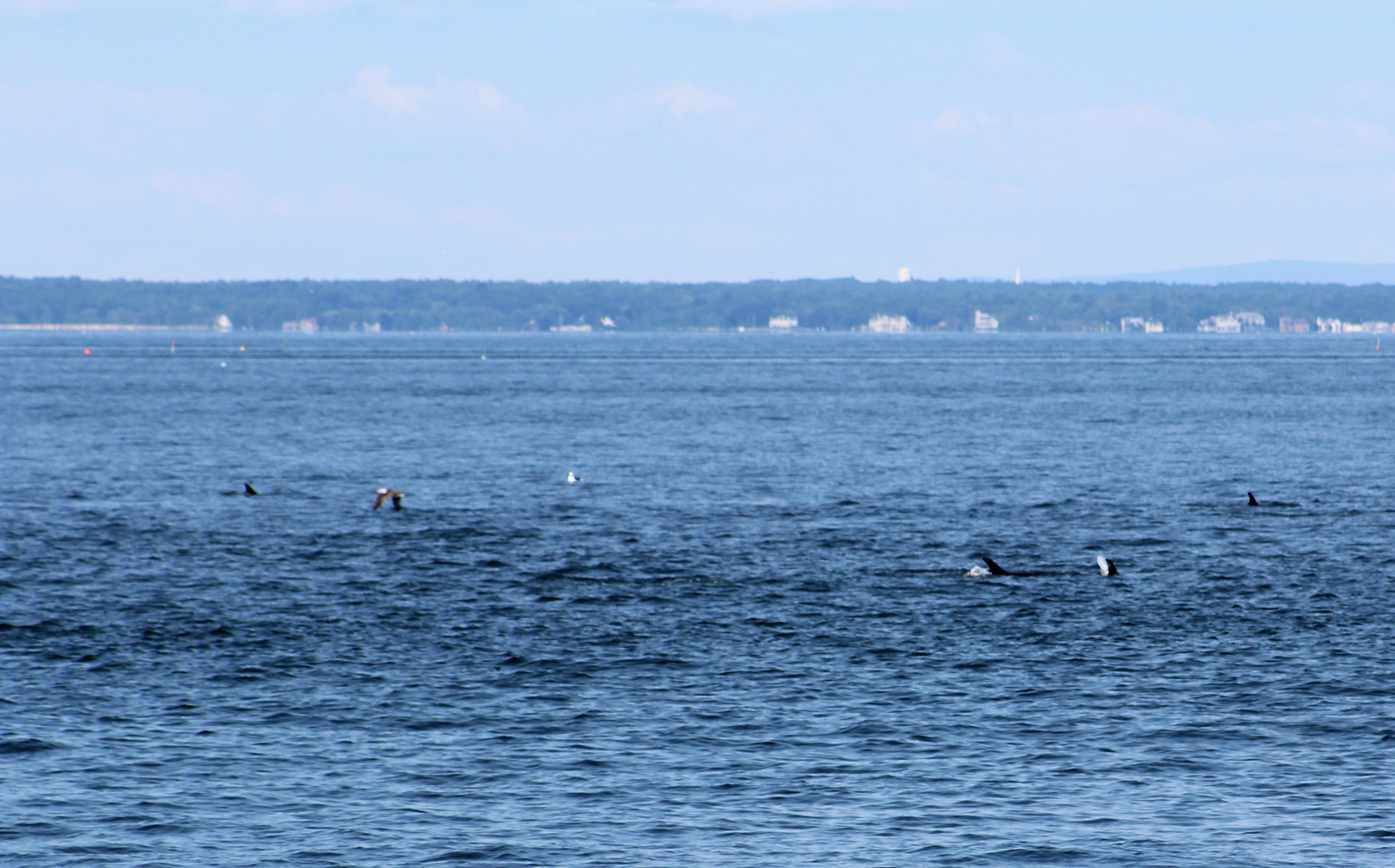
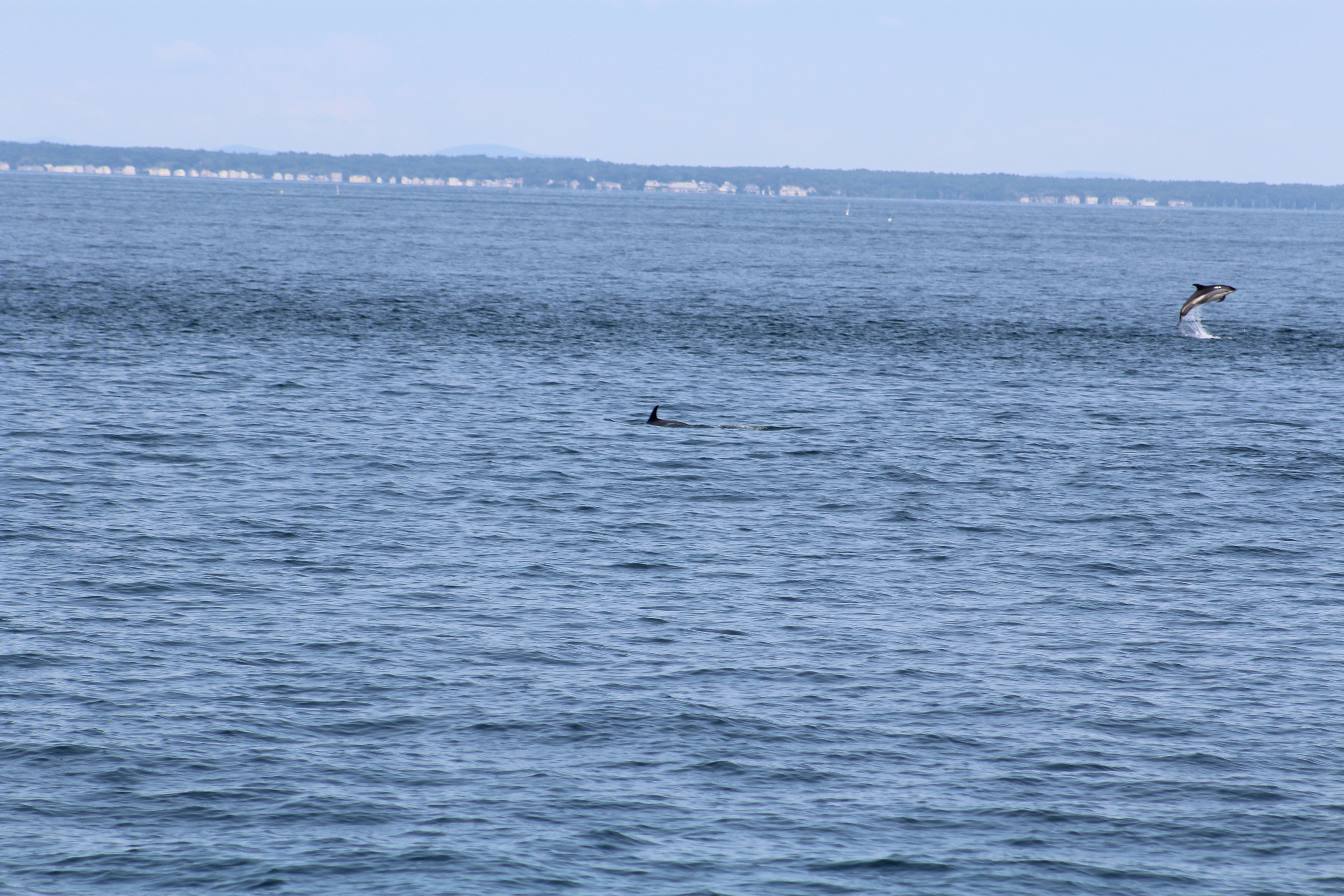
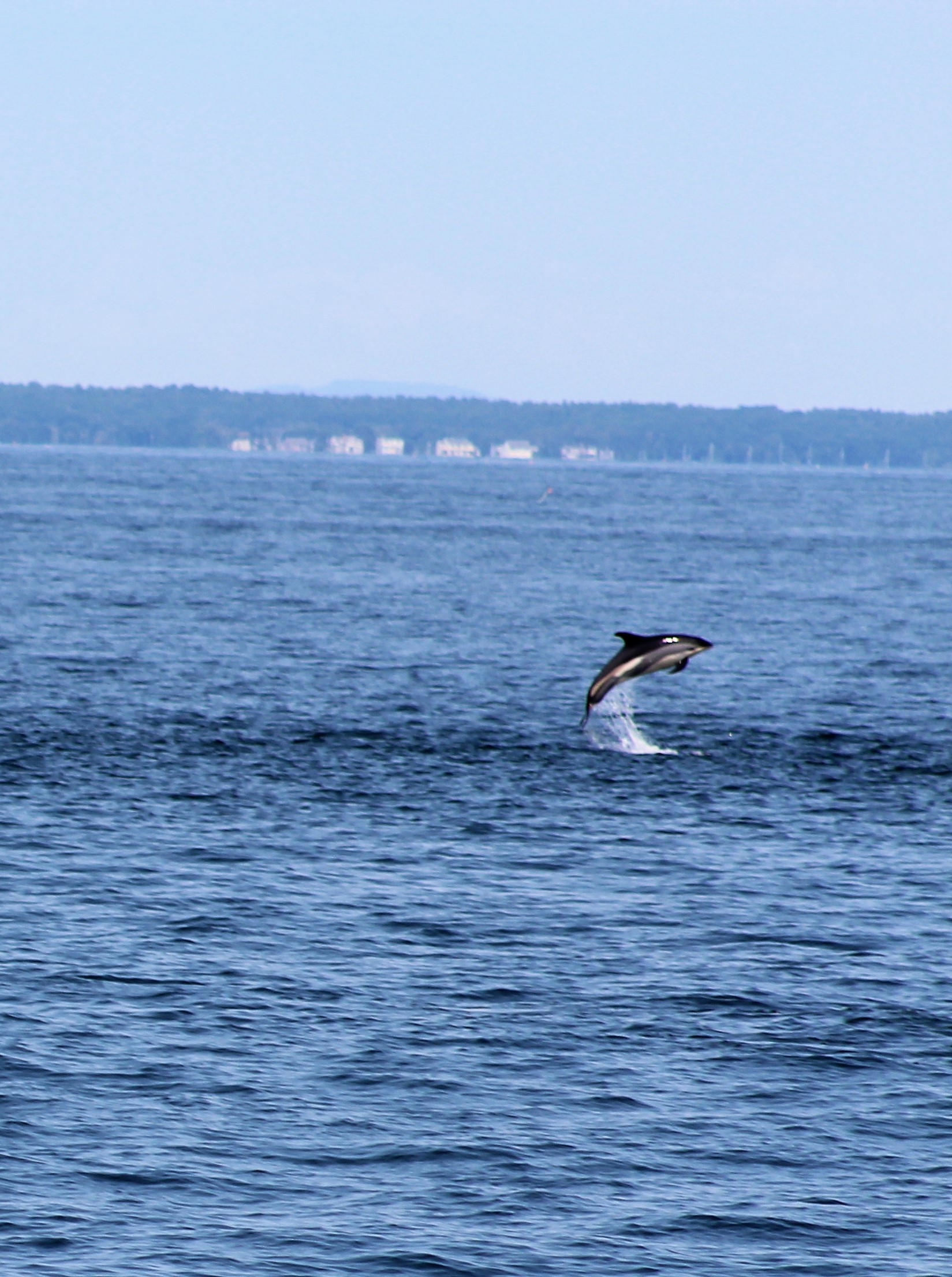
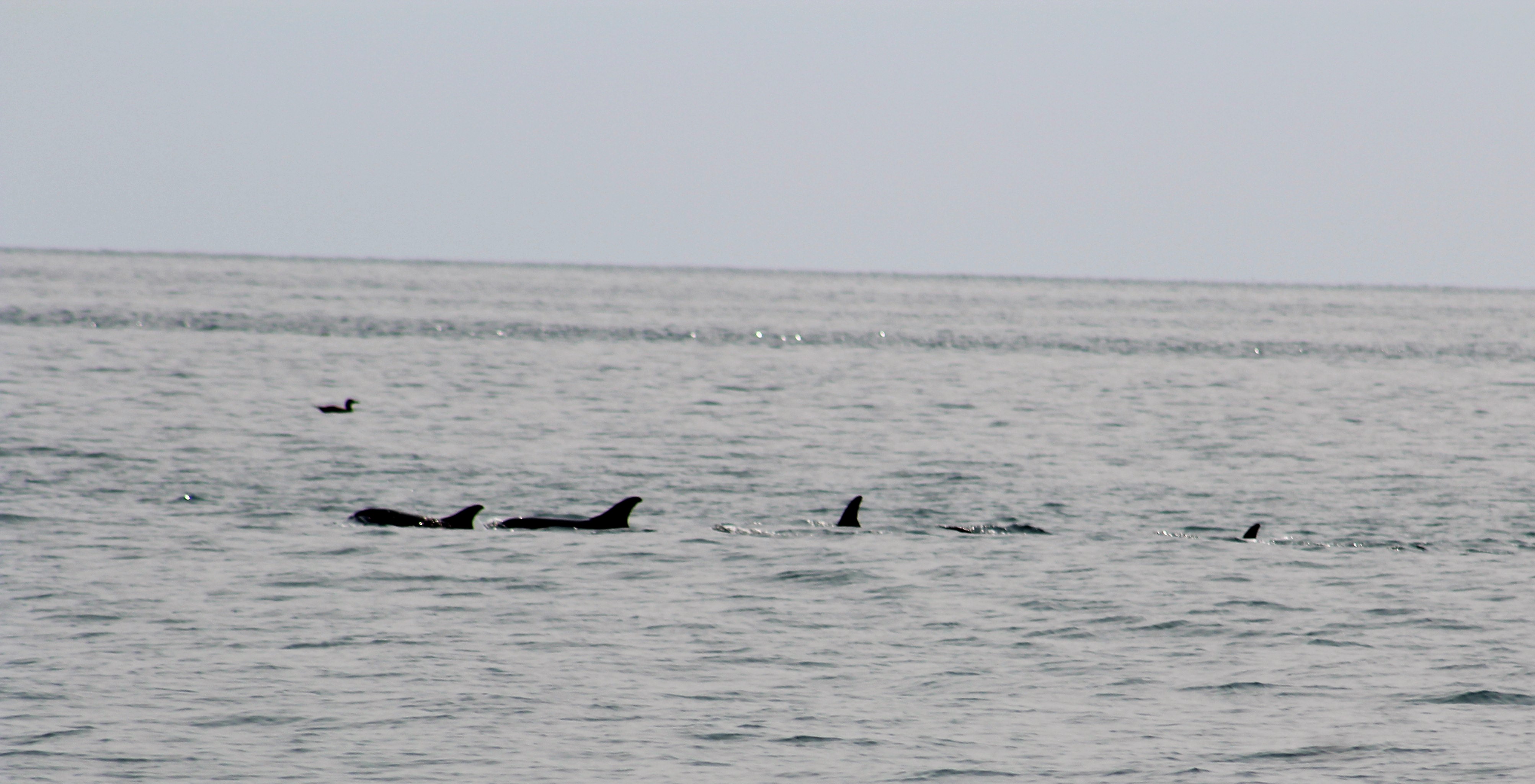
    A little while later the skipper spotted some splashing activity in the water.  Upon investigating the crew found themselves surrounded by a large Pod of dolphins.  There were over a hundred of them swimming and feeding in the waters around the boat.

    1.5

    1.3

    These dolphins looked very different than the ones further south.  These were multi-colored.  The top was very dark grey, almost black.  Then they had a lighter grey color along side, and then a white stripe by their tail fin.

    1.4

    This was another first for the crew.  The dolphins are Atlantic White-Sided Dolphin.

    1.6

    After the personal dolphin show the crew completed the run to Portsmouth, New Hampshire.  The crew could not find a dock in Portsmouth so they crossed the river over to Kittery, Maine and had a harrowing experience in the current.

    3 Entry to Portsmouth
    Entry into Portsmouth

    Coming to the dock, the river runs through a mooring field full of boats.  The current was running about 4 knots when the crew arrived.  The current was pushing the boat around pretty good as they maneuvered thru the mooring field barely missing a couple of boats.  After passing the marina, the skipper rotated the boat around 180 degrees and backed the boat into the current and dock.  The people on the boat beside where the skipper was docking saw him coming, put down a couple of extra fenders, and then helped catch lines and get Still Waters II secured.

    Boat Name of the Week

    USS_Nautilus_SSN-571_-_0857101
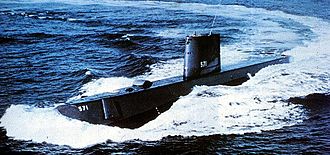
    USS Nautilus, SSN 571, circa 1965
    • Launched January 21, 1954
    • Commissioned September 30, 1954
    • January 17, 1955, she cast off her lines and CO Wilkinson called out, “Underway on nuclear power”
    • First submarine to complete a submerged transit of the North Pole, August 3, 1958
    • Decommissioned March 3, 1980

    Next Week –

    The crew will continue to head north exploring the coast of Maine.

    Loop On – The water goes on forever and the adventure never ends.
    Eric the Red

  • Truth: Stranger Than Fiction

    Hello virtual crew members and fellow adventurers!

    Eric here with the latest travels of Still Waters II.


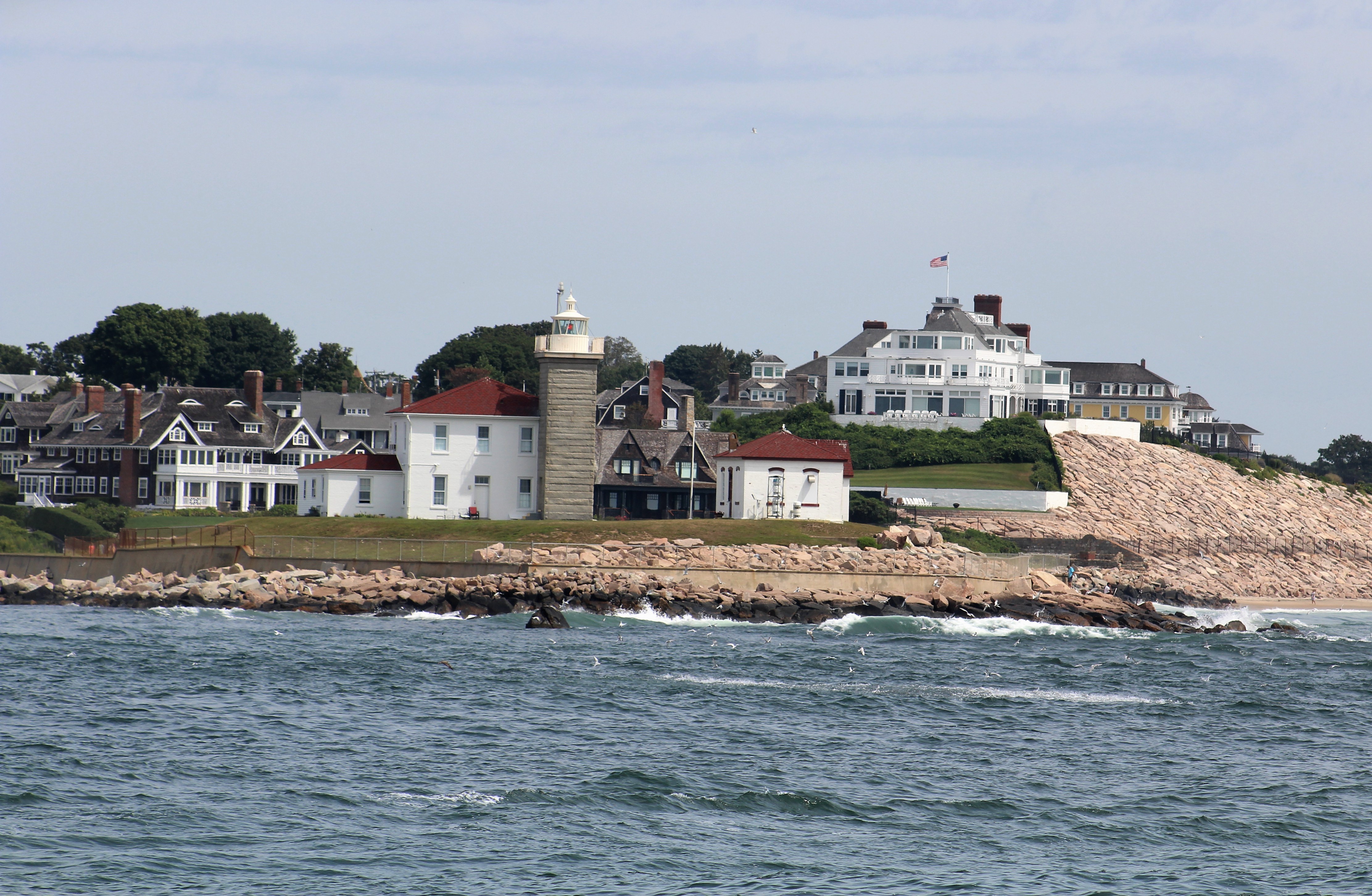
    99 Watch Hill Light
    Watch Hill Light


    Summary of week:

    Boston

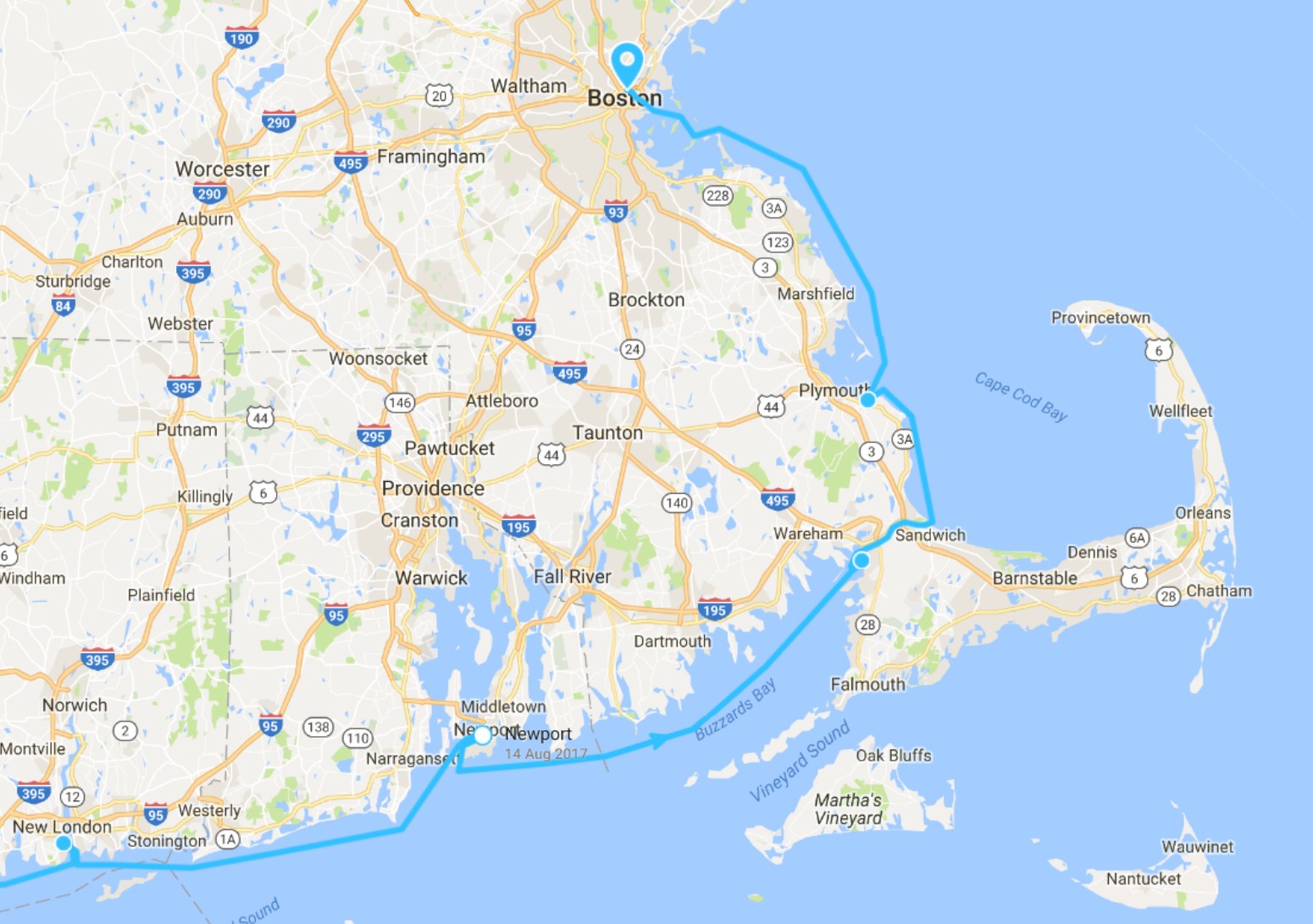
    The crew left for Newport, Rhode Island on Monday and explored the mansions of the rich-and-famous on Tuesday.  Wednesday, the crew anchored at the entrance of the Cap Cod Canal to time their passage with the tide and current.  On Thursday, they transited the Canal and anchored off the shore at Plymouth, Massachusetts.  Friday, the crew completed their run to Boston.

    This week’s journey of discovery did answer the following questions:

    1. How did Rhode Island get its name?
    2. Did the Vanderbilt’s succumb to the three-generation fall?
    3. What is the truth about Paul Revere’s Mid-Night Ride?

    Click on the link to read the day-to-day travel log.  This includes weather of the day, sea conditions, log of the days travel, and a summary of the experience.

    At The Box Office

    This week’s video shows Still Waters II bobbing gently in 4-6-foot swells on her run from Newport to the Cape Cod Canal.  If you watch closely you will notice a couple of 10-foot swells roll under her keel.  Then a few clips of her entering the Cape Cod Canal.  Enjoy!

    To see past videos, click on the link to the Still Waters II Vimeo site.  The library now contains 33 videos of Still Waters II cruising America’s Great Loop.

    Sunday, Aug 13, 2017

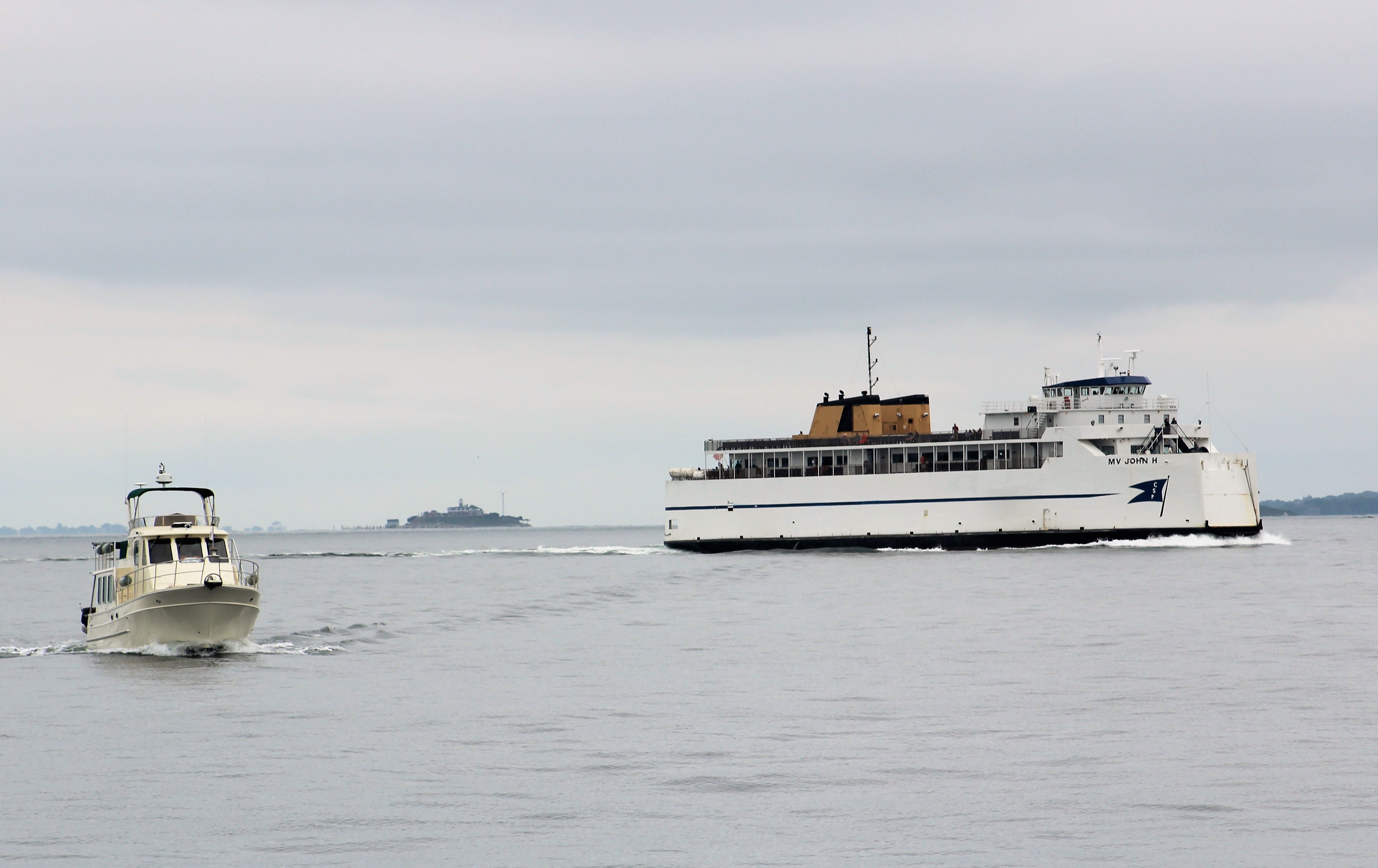
    There have only been a few stops that the crew was happy to leave, and vowed to never return.  They have added the Burrs Marina in New London, Connecticut to that short list.  The marina staff and people keeping their boats at the marina were all fine folks.  The problem was with the Ferry Boats that run up and down the Thames River.  The wake from the Ferry Boats started early in the morning and lasted till after dark.  Still Waters II rocked-n-rolled all day long in her slip.

    89 Ferry
    Offending Ferry

    The crew was glad to have found this last-minute slip, but now understands why there was availability at the marina when everything else within 10 miles was sold out.

    Monday, Aug 14, 2017

    The run to Newport, Rhode Island was filled with the rocky coast that the crew imagined that they would see in New England.  The number of lighthouses continues to increase as the hazards in the water also begin to rise.  The lights mark areas of shallow rock formations called ‘ledges,’ so many of the lights have the word ‘ledge’ in their name.

    95

    The other observation is that though the crew is out in the Atlantic Ocean, these waters are named ‘Sounds.’  For example, today the crew cruised in the Fisher Island Sound and the Block Island Sound.  From the skipper’s point of view, when you can see the mainland off the port side of the boat and only water on the starboard side of the boat, you are in the Big Pond.  In these parts, the Big Pond would be the Atlantic Ocean.

    100 Ferry

    When Giovanni Verrazzano arrived at what today is named Block Island back in 1524, he described the island as about the size of the Greek Isle of Rhodes.  However, the first settlement of modern Rhode Island was not started until 1636 at Providence.  Interesting enough, Rhode Island was the first colony to declare independence from the British, but the last colony to approve the Constitution of the United States.

    97 East Point Fisher Island
    East Point of Fisher Island

    Newport has a long nautical history and is a very popular place for boaters.  The mooring field has just over a thousand mooring balls.  They are first-come-first-serve and the crew was glad to find a vacant ball upon their arrival.  The first marina they called said they were full.  The second dock master said he thought he had one ball left, gave the crew the number and a general description where to find the ball.  The skipper weaved in and out of the moored boats until he finally found the empty ball.

    103.1
    Entrance to Newport

    Tuesday, Aug 15, 2017 

    In the Gilded Age, Newport became the summer home for the rich-and-famous. ‘Summer Cottages,” as their owners called them were open for living for six weeks in the summer.  The Preservation Society of Newport has managed to save several of these mansions and allow self-guided tours.  The crew decided to tour two mansions, both built by Vanderbilt’s.

    You might recall that Cornelius Vanderbilt started his climb from poverty by starting a ferry business with one sail boat.  That business eventually became known as the Staten Island Ferry.  He moved from sailboats to steamships during the age of steam.  He then moved into the railroad business.  He became the richest person in America in the early 1850’s but lived a very modest lifestyle.  Upon his death in 1877, he left his 100 Million estate to his oldest son.

    William Henry Vanderbilt grew the business empire to 200 Million in just 10 years.  He also is the one who started the Vanderbilt culture of living large off the new money he inherited.  He built the first family mansion on Fifth Avenue in NYC.  He really did not like running the family business so he established the first corporation to run the business for him.  Upon his death in 1885, he claimed the amount of money was too great for any one person to manage, so he divided the estate between two of his sons.

    Cornelius Vanderbilt II is described as a socialite.  He built ‘The Breakers’ in Newport between 1893-1895.  The mansion has 62,482 square feet of living space on a footprint of about one acre.  He had seven children.  Strangely:

    • The first child died at the age of five of childhood illness
    • The first son died of typhoid fever while attending Yale University
    • The second son was disinherited for marrying a woman the family did not approve
    • The third son died aboard the RMS Lusitania when a German U-boat sank the ship

    That left the fourth son, Reginald Vanderbilt to inherit the family fortune when Cornelius died an early death in 1899 at the age of 55.

    In the book, Fortune’s Children the fall of the House of Vanderbilt, Reggie is described as living the life of a rich playboy.  The book also claims he did it with dedication and skill.  Reggie’s fast living left him dead at 45 from cirrhosis due to alcoholism.

    105.25
    The Breakers


    In the cluster of pics above, the bottom right picture shows a wall with ‘silver’ wall finishings.  The interesting thing about the ‘silver’ finish was that it never corroded as one would have expected silver to do.  The Preservation Society wanted to find out what the ‘silver’ was so they used modern technology to solve the mystery.  Turns out that the ‘silver’ wall is actually Platinum, a metal more scarce and expensive than gold.

    William Vanderbilt I is described as an American heir.  He built ‘Marble House’ from 1888-1892.  After his divorce in 1895 he went to Europe to live out his life.

    He had two sons, William Vanderbilt II and Harold Vanderbilt.  William was a fast car enthusiast and was into auto racing, travel, and leisure activities.  Unfortunately, his only son was killed in an auto accident.

    Harold was into yacht racing and playing bridge.  He defended the America’s Cup three times in 1930, 1933, and 1937.  He was a world class bridge player also winning the North American Bridge Championship in 1932 and 1940.  However, Harold had no children and the name of Vanderbilt faded into the history books.

    106.1
    Marble House


    In the book of Genesis, chapter 5, there is a list of Adam’s descendants.  In the middle of the list, verses 12-18 we find the following names: Kenan, Mahalalel, and Jared.  If you look these names up in Hebrew, you would learn that the names mean Material Acquisition, Exuberance (letting go with no restraint), and Decline.

    Ancient Jewish Wisdom teaches that once our heart moves towards material acquisition, the next generation will be exuberant, and the third generation will be in decline.

    The Vanderbilt family lived this pattern out to a T.  Once William Vanderbilt started building and acquiring property rather than running a railroad the family future was sealed.  The Breakers and Marble House are both excellent examples of exuberance of the second generation.  Reggie’s playboy lifestyle with his cousins consumed with leisure activities in the third-generation lead to the decline of the House of Vanderbilt where the name died with no male heirs.

    Certainly, something to think about as America has been on a Material Acquisition binge for a while.  The second generation is currently living a life of Exuberance, as many people are living a life with no standards and no restraint.  Is it any wonder that many people believe that our country is currently in Decline?

     Wednesday, Aug 16, 2017       

    The crew began their three-day journey to Boston.  The first stop was to anchor near the beginning of the Cape Cod Canal.  The swells in the open water were consistently 4-6 foot with occasional swells 9-10 feet.  The swells were about 13 seconds apart so the ride was a pleasant slow roll as the waves passed under the keel.

    107 Breakers in RI
    Leaving Newport, these are the breakers that the summer cottage was named after

    At one point the crew began to overtake a sailboat.  The sailboat was about a half mile off the starboard beam.  As the swells would roll by the sailboat would drop down in the trough between waves and the crew would lose sight of the boat and just be able to see the mast of the sailboat.

    109 Buzzard Bay
    Saw this ship as we entered Buzzard Bay

    They dropped the anchor initially in the Phinneys Harbor and had supper.  The skipper noticed that the wind had changed direction (by 180*) and intensity.  He went out to make sure the anchor would catch when the wind blew the boat the opposite direction.

    110 Cleveland Ledge Lighthouse
    Cleveland Ledge Lighthouse

    The anchor did not hold so the crew had to reset the anchor.  Once the anchor was back onboard, the skipper decided to move behind an island to get out of the wind.  They dropped the anchor and had a nice calm night on the hook.

    112 Anchored in Phinney's Harbor
    Phinneys Harbor

    Thursday, August 17, 2017

    The tide and current dictated that the crew should enter the Cap Code Canal about 1100, so the crew had a leisurely morning.  At 1100, they weighed anchor and headed over to the Canal.  When they entered the Canal, the Admiral noticed a posted sign that said Speed Limit 10 mph No Wake.  Let’s just say that there were plenty of boats exceeding both the speed limit and No Wake requirements.  It felt like the boat was in a washing machine for the first mile or so.

    113 RR Bridge over Cape Cod Canal
    Open RR Bridge over Cape Cod Canal

    Upon exiting the Canal, the crew was in Cape Cod Bay.  They altered course and headed towards Plymouth.  The crew had wanted to visit the Pilgrim Museum upon arrival, but due to the late start the museum was closed by the time the crew arrived.

    115 Cape Cod.JPG
    First look at Cape Cod

    The skipper also checked the weather and noticed that a storm was brewing off shore and would arrive Friday afternoon.  Since they could not visit the museum, they decided to drop anchor out in the Bay rather than spend the hour getting into Plymouth.

    116 Sunrise Plymouth Bay
    At anchor in Plymouth Bay

    After dropping the anchor, the skipper deployed the dinghy so that he could move a lobster trap.  He was afraid that the float and line might tangle in the anchor chain if the wind changed direction.

    Friday, August 18, 2017

    The crew weighed anchor at first light and set out for Boston with hopes of beating the predicted storm.  The wind was light and the waves were 1-2-foot following seas.  The crew made good time and arrived in Boston Harbor around 1000.

    120.2 Boston Light
    Boston Light, location of the first lighthouse in America in 1716

    They were surprised by the number of islands scattered around the entrance to Boston.  There are some 30 plus islands protecting the entrance to town.

    120 Enter Boston Channel

    121.1
    Cruising by downtown Boston

    After they docked the boat, the rain started to fall and the winds began to pick up.  After the storm blew through, the crew decided to set out on foot and explore the Freedom Trail towards Bunker Hill.

    124.3 View from top of Bunker Hill Memorial
    Looking at the marina from the top of the Bunker Hill Monument (294 steps to the top)


    Saturday, August 19, 2017

    The crew took a Hop-on-Hop-off trolley ride around Boston.  They started the tour at the USS Constitution.  The town has really changed significantly since the last time the skipper was here back in 1992.  The tour guide made a point to reinforce that Boston had four main business sectors:

    1. Financial
    2. Medical
    3. Technology (he called it the Silicon Valley of the east coast)
    4. Tourism

    He also mentioned that the improvements in the city are keeping the graduates of MIT and Harvard gainfully employed.  There were new condos being built all over town.

    The Admiral has a keen interest in Real Estate Markets, so upon return to the boat she looked up housing prices in the area.  The cheapest one-bedroom condo around the marina district was $750,000.


    25
    Million Dollar Condos in Boston


    The tour guide pointed out one building that was recently sold for 31 Million after being listed on the market at 28 Million.  The increase in price due to competition between buyers.

    15.4
    Old state House
    • Oldest public building in Boston, built in 1713
    • The Boston Massacre occurred under the balcony on March 5, 1770
    • The Declaration of Independence was read from the balcony on July 18, 1776

    After taking the tour around town the crew hopped off the bus at the Old State House and started the Freedom Trail back to the boat.

    15.1
    Changing of the Guard at the Old State House

    One of the big narratives on the tour was Paul Revere.  The Freedom Trail takes you by Paul Revere’s home and by the Old North Church.  The story that was told along the trail conflicted with the skipper’s previous understanding.

    21.4
    Paul Revere with Old North Church in background

    Turns out that the truth was that three men rode to Lexington and only one made it to Concord.  Paul Revere was captured after leaving Lexington by the British.  They took his horse and he walked back to Lexington on foot.  He never made it to Concord.  And how about that famous line “The British are coming; the British are coming!”  Did not happen.  His actual message, “The regulars are coming out.”

    Of the three men who rode, only Dr. Prescott made it to Concord .

    Reminds the skipper of the old joke, what were Paul Revere’s last words on the mid-night ride?  “Whoa horse”


    Map from paulreverehouse.org


    To get the real story about Paul Revere’s ride, click the link above in the picture.

    So where did all the miss information originate from?  Short answer – Henry Wadsworth Longfellow in his 1860 poem, Paul Revere’s Ride.

    He knew his poem was historically inaccurate, but his purpose in writing the poem was to warn of a future civil war so he took poetic license with the facts.  Some how the poem became the definitive ‘truth’ about the event and these ‘truths’ made there way into textbooks.  Hmm, so much for that ‘free’ public school education.  I guess you get what you pay for.

    With the Hop-on-Hop-off tour, the crew also got a cruise on the Boston Harbor Tour Boat.  Rather than walk to the USS Constitution, the crew took the Tour Boat and enjoyed the narration about the harbor.

    Boat Name of the Week

    12.6

    USS Constitution – the world’s oldest commissioned naval vessel afloat.  She was launched in 1797.

    Next Week –

    The crew will stay and explore Boston and surrounding areas most of the week.  They will leave on Friday and try to make it to New Hampshire and Maine.

    Loop On

    The water goes on forever and the adventure never ends.
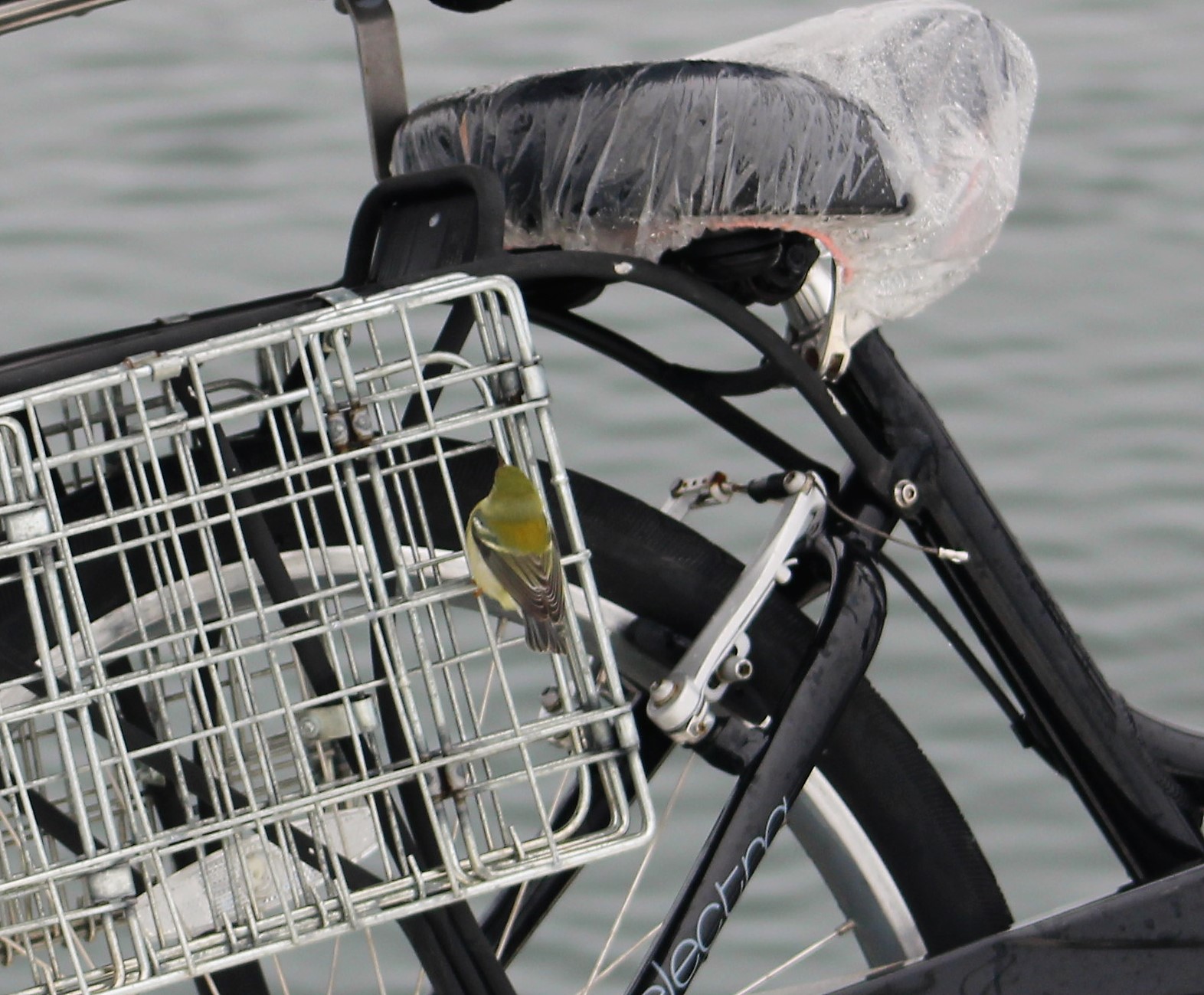
    Eric the Red


  • Take Me Out to the Ball Game

    Hello virtual crew members and fellow adventurers!

    Eric here with the latest travels of Still Waters II.


    67.8
    Smiling Mr. Mets before the loss to the Rangers


    Summary of week:

    New London

    The crew left Liberty Landing on Monday and headed to Port Washington on the Long Island Sound.  Thursday the crew went further down the New York side of the Long Island Sound.  On Friday, the crew crossed the Sound and entered the Connecticut River to anchor for the night.  Saturday the crew made a short jump to New London where they will stay for the weekend.

    Click on the link to read the day-to-day travel log.

    Still Waters II VIMEO site

    At the Box Office, this week is a video of Still Waters II leaving Manhattan and cruising to Port Jefferson.

    Manhattan from Still Waters II on Vimeo.

    Click on the link to the Still Waters II Vimeo site for other videos.

    Sunday, Aug 6, 2017

    The Admiral wanted to attend church service at the Brooklyn Tabernacle.  The skipper spent some time and figured out that they could take a subway within two blocks of the church.  To get to the subway, the crew took the ferry back over to Manhattan.  They then walked  past the 911 Memorial to catch the subway over to Brooklyn.  After arriving in Brooklyn, they walked two blocks and got in line at 1030 for the 1100 service at the Brooklyn Tabernacle.  At 1045, the line started moving and the crew entered the building.


    Brooklyn Tabernacle
    The line wraps around the corner


    The worship started on time and the church and choir sang for most of the first hour.  Wonderful worship experience.   Jim Cymbala spoke for 30 minutes or so and the congregation left about 1230 so the third service of the morning could start at 1300.

    It was a great way to spend a Sunday morning.

    Monday, Aug 7, 2017

    The crew left Liberty Landing in an overcast, cloudy, dismal grey morning.  The forecast was for rain for much of the day and night.  The crew crossed the Hudson River and entered the East River just south of the Battery at Lower Manhattan.  The crew got a 4-knot push by the current as they transited the East River.

    55
    Looking down the East River with JFK Bridge in background
    56
    Lighthouse on East River

    As they continued towards the Long Island Sound, the homes began to get larger until they pulled into Manhasset Bay.  Then the homes became large colossal Mansions.

    73 Mansions Port Washington

    73.2

    Turns out the second largest home in America is located on Long Island, the Oheka Castle.  The skipper will try to figure out how to visit this home on the way back from Maine.  The largest mansion in the US you ask? The Biltmore Estate in Asheville, North Carolina.

    Oheka Castle
    Oheka Castle

    As the crew approached Port Washington they located the town mooring field and found the yellow mooring balls.  The yellow mooring balls are free for the first two nights.

    The crew will swing on the mooring ball for the next few days and cruise further down the Sound on Thursday.

    60.1
    Still Waters II on yellow mooring ball #3

    Tuesday, Aug 8, 2017 

    The rain continued through the night and into the morning hours, but finally dried up after lunch.  The crew decided to call the Water Taxi to get a ride to shore.

    The mooring fields in these parts usually have a Launch (or Water Taxi) to ferry people back and forth from their boats to shore.  A nice amenity when you consider the size of some of the mooring fields.

    57 Port Washington Water Taxi
    Conner operating the Water Taxi

    After arriving at the Town Dock. the crew set off to scout out the local train station for a trip in the morning.  After finding the train station, about a mile from the Town Dock,  the crew headed to the Public Library to attend to a little business, print some documents, and charge devices.

    While using the printer at the Library the skipper had an interesting conversation with the Librarians.  He had a 72-page document that he needed printed.  The charge should have been $7.20.  After he put the first two dollars in the machine, the machine decided it would not accept anymore money.  The skipper decided to print the first 20 pages and then try to print the rest of the document.

    58 View from Port Washington Library
    View from Port Washington Library

    To the skipper’s surprise, the whole document printed.  When he glanced over at the pay machine it was still showing $2 available.  He pressed the button to return the cash and the machine only would give a message that he needed to print one page before any money would be returned.

    The skipper went over to the book checkout station and informed two ladies working the counter that he thought the machine was broken and that he owed them $5.20.  They both gave him a quizzical look and in unison both said “you just need to run for it.””

    He asked them if they wanted the $5.20.

    They responded “no.”

    Not the response he was expecting, so he did as advised and ran upstairs to the second floor and began to edit his document.

    61 Port Washington Sunset
    Sunset from Port Washington

    Wednesday, Aug 9, 2017            

    The Texas Rangers were in town to play the Mets.  The crew took the Water Taxi back to the Town Dock, they then walked the 15 minutes to the Train Station and bought tickets to the stadium.

    64.4

    When the skipper first asked for two round trip tickets to the Mets drop off point, the clerk asked “Why do you want to go there?”

    The skipper responded with, “You a Yankees fan?”

    The clerk smiled and said “Yes”

    The skipper announced that they were from Texas and were going to go watch the Rangers play.

    The clerk said, “oh that will be acceptable, I will sell you the tickets.”  The skipper got a big kick out of the exchange.

    It was about a 30-minute ride on the train to the ballpark.  The crew had a near miss while trying to get off the train though.  When the train stopped, the side door of the car the crew was on did not open.  The skipper noticed that there was no platform to step off onto.  Someone yelled out to go ahead into the next car and exit.  When the skipper got to the next car, he could not get the door open to enter the car.  He finally got the door open and they rushed to exit the train as the doors were closing.

    After arriving, the crew walked around the Flushing Meadows Park for a while.  This is home to the US Open Tennis and the famed Arthur Ashe Stadium.

    65 Park

    The Unisphere was the centerpiece of the 1964 World’s Fair, and is the world’s largest globe.  The sphere is 120 feet in diameter and weighs 700,000 pounds.  The water fountains were placed to make the globe appear that it is floating in air.

    65.5

    65.11

    As game time approached the crew made their way to the ballpark to enjoy the game.  The game was enjoyable because the Texas Rangers won, but it was a strange game.  In the first inning, with runners on first and third, the Met’s pitcher balked and caused the Rangers to take the lead.  All nine batters in the Rangers lineup saw the plate in the first inning.

    67 Mets stadium

    In the top half of the second inning, the Met’s pitcher continued to struggle.  By the end of the second inning he had already thrown 72 pitches.  The skipper mentioned at that pace the pitcher was not going to last long.  He did not.  He was replaced in the top half of the fourth inning when the Mets took the field.   He had thrown 87 pitches in just three innings.

    67.1
    The original home run apple from Shea Stadium

    Then later in the game, the Rangers had the bases loaded and the Mets pitcher decided to walk the batter.  It is not often that you see two runs scored without the ball even put in play.

    The Mets only score was strange also.  Initially, the second base umpire called the hit just a hit and the batter had a stand up double off the outfield fence.  The Mets fans were booing pretty loudly.  The home plate umpire called a conference.  While the umpires were discussing the situation, the scoreboard operator showed the ball striking an orange M&M on the outfield fence above the orange paint.  Anything over the orange line is a home run.  He continued to show the ball hitting the fence several more times, and it was clearly a homerun. The second base umpire finally raised his hand over his head and made a circle motion indicating a home run.  The Met on second completed his jog around the base paths to the fans delight.

    67.12
    The orange line and M&M’s on left field fence

    The left field wall with the orange paint signaling a home run even if the ball does not clear the fence is only one of several strange things about this field.  I guess the designers are trying to keep some of the quirks of both the old Polo Grounds and Shea Stadium alive and well.

    After the game, the crew reversed course and returned to the marina.  The crew went to the local Stop-n-Shop grocery store for a few provisions.  After the purchase, the water taxi picked them up at a dock across the street from the store and returned the crew to Still Waters II.

    71
    View from Stop-n-Shop Dock


    Thursday, August 10, 2017

    The crew left Port Washington and headed down the New York side of Long Island Sound to Port Jefferson.  The weather was great and the cruise was full of beautiful scenery.

    Execution Rocks Lighthouse was in the Sound as the crew left Manhasset Bay.

    75 Execution Rock Lighthouse

    A sailboat along the route

    76

    Lighthouse onshore

    78 Eatons Point Neck Lighthouse

    Entrance to Port Jefferson.

    79 Entrance to Port Jefferson

    The crew anchored out for a calm night in the harbor before moving on the next morning.

    Friday, August 11, 2017

    The day got off to a slow start as the crew had trouble pulling the anchor out of the mud.  When the anchor chain had been pulled back onboard, the chain was taught down to the anchor, but would not break free.  After 30 minutes of attempting to use the boat to break the anchor free the skipper resorted to additional means.  He fastened a line to the anchor chain and tied the other end off to a boat cleat.  This prevented the chain from playing back out when the boat put tension on the chain.  With this aide the anchor let loose and came up with a huge mud ball.

    From Port Jefferson they charted a course across the Sound towards the Connecticut River.  They passed the Faulkner Island Lighthouse.  The water was amazingly calm with the exception of large boat wakes by sport fishing boats.

    82 Faulkners Island Lighthouse

    When they approached the Connecticut River they looked for the Katherine Hepburn home.  The home was destroyed back in 1938 by a hurricane.  The home was rebuilt and reopened in 1939.  Kate lived here till her death in 2003.  It is currently on the market at the bargain price of 11 Million, recently reduced from 14 Million.

    83 Kathyrn Hepburn Home
    Paradise according to Katherine Hepburn

    After travelling four miles up the Connecticut River, the crew dropped the anchor in a scenic side creek.

    85.1

    Saturday, August 12, 2017

    Just before weighing the anchor, the skipper got an e-mail from the marina in Mystic that the crew planned to stay in for the weekend, that the marina was now full and could not accept Still Waters II.  The skipper started looking for another marina and could not find anything in Mystic.  He then started looking in the New London area.  He finally found a marina in the Thames River.  With a slip secured, the crew weighed anchor for the 24-mile run to New London.

    As they were leaving the anchorage, the RR Bridge began to close.

    86 RR Bridge

    The bridge has a sign that displayed a twenty minute wait for the bridge to re-open.  In that wait, two trains passed over the closed bridge.

    86.3

    Once the RR Bridge opened they made their way to the Connecticut River entrance and headed back into the Long Island Sound.

    87.1

    The waves in the Sound were 1-2 feet, but were frequently overcome with 3-5 foot wakes from the many ferry boats and sport fishing boats.

    89 Ferry

    The crew entered the channel leading into the Thames River and saw three lighthouses.

    90 Lighthouse entrance to Thames River

    91.1 New London Harbor Lighthouse

    92

    The crew was glad to have a spot to spend the weekend.  The skipper will have to spend some time figuring out their next moves on their way to Maine.

    Boat Name of the Week 

     Bow to My Stern

    Next Week –

    The crew will head towards Boston.  They would like to make stops in: Mystic, Connecticut, Newport, Rhode Island, and Plymouth, Massachusetts before arriving in Boston. However, they may just motor to Boston and rent a car to go visit these ports.  Time will tell.

    Loop On

    The water goes on forever and the adventure never ends.
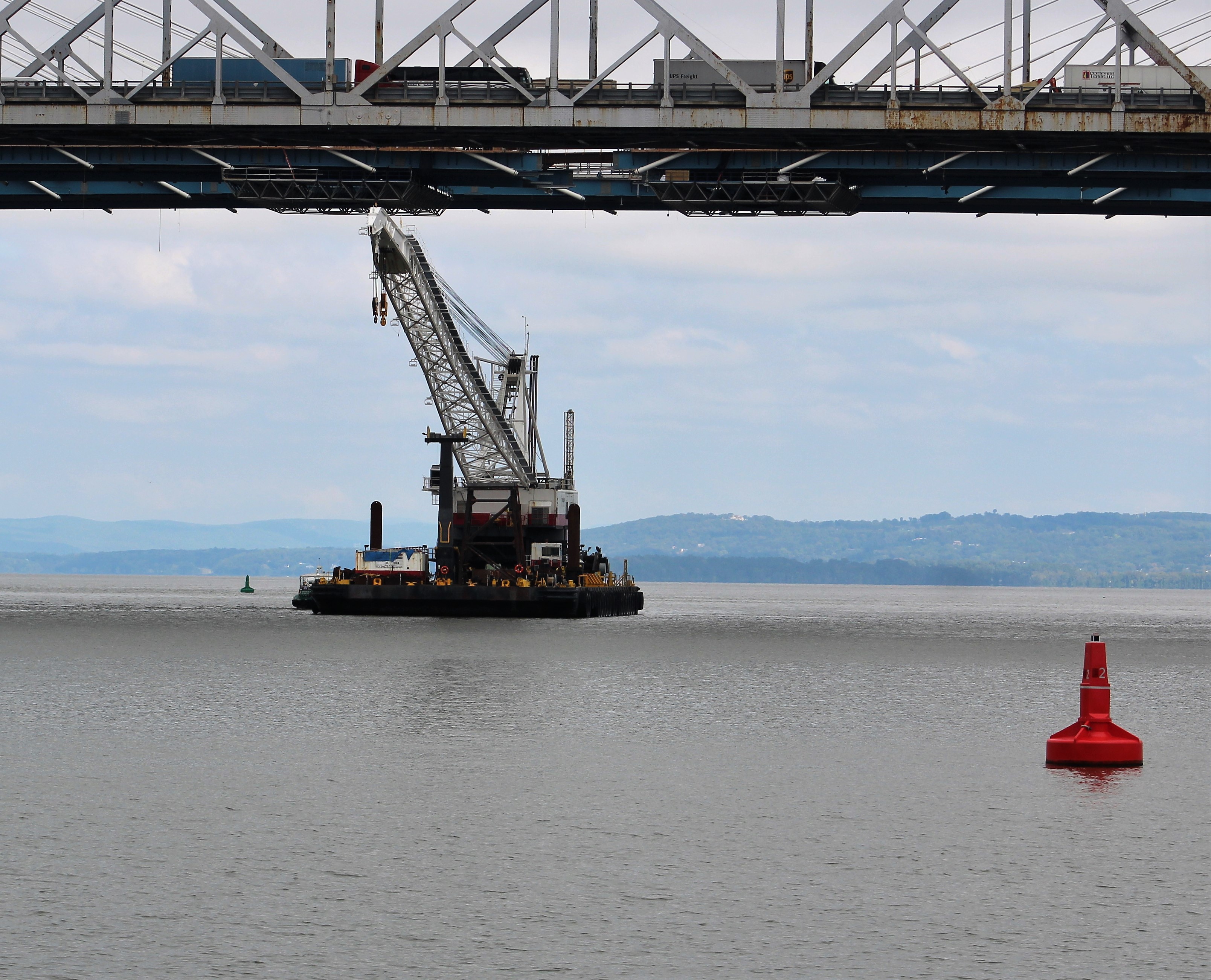
    Eric the Red

  • Welcome to New York

    Hello virtual crew members and fellow adventurers!

    Eric here with the latest travels of Still Waters II.


    IMG_0320.JPG
    Michelle, Emma, Chloe, and Athena in NY for a few days


    Summary of week:


    map

    This was another short travel week for the crew.  On Sunday, they left Atlantic City and cruised the inside route up to Brielle.  On Monday, they cruised the outside and made their way to Liberty Landing Marina in Jersey City, directly across from lower Manhattan.  On Tuesday, they took a cruise around Manhattan Island and returned to Liberty Landing.

    Click on the link to read the day-to-day travel log.

    Still Waters II VIMEO site

    There is no new video this week because the skipper somehow saved the video on the computer and now cannot find the video anywhere.

    Click on the link to the Still Waters II Vimeo site to see past videos.

    Sunday, July 30 , 2017

    Because of the high winds Friday night and all day and night on Saturday, the Atlantic Ocean waves were predicted to be greater than four feet all day.  With that prognosis, the skipper decided that the crew would take the inside route up to the Manasquan Inlet.

    The Admiral correctly remembered that the current could be bad at the marina and was not to keen on stopping there again.  Her intuition would prove accurate later in the day.

    The first surprise of the day turned out to be the scenery.  Just shortly after leaving Gardiners Basin, the crew found themselves in a salt marsh.  The area reminded them of the marshes in the Carolinas and Georgia.

    42 NJ Marsh.JPG

    A look back over the salt marsh at Atlantic City.

    43 Atlantic City

    The second surprise of the day was the amount of boat traffic out on the water.  Seems everyone with a boat was out enjoying the nice weather.  The crew had been warned that there would be many boaters on the water in New Jersey on the weekend, but this was crazy.

    45.1

    45.2

    The skipper got a bit off course at the Little Egg Inlet.  Two red markers were extremely close to the shore and because they were in an inlet, the skipper assumed that the red markers were channel markers showing red right return.  He slowed, pulled out his binoculars and looked for the yellow triangle signaling the red marker would also be an ICW marker.  He saw no yellow triangle on the red marker so that reinforced the channel marker assumption.  He also looked at his chart plotter and the sailing line showed to keep the red markers to starboard (right).

    The skipper headed north with the red markers on starboard and found himself in five foot of water in just a few minutes.  He slowed again and looked at Active Captain.  There was a hazard note claiming that the sailing line was on the wrong side of the red markers and that many people go aground at this spot.  The hazard note also mentioned that Sea Tow also patrols the area regularly because so many boats go aground in the area.

    46 Little Egg Inlet
    Coast Guard Station at Little Egg Inlet

    The skipper put the engines in reverse and began to slowly back out of the shallow water.  About the time the crew was clear of the hazard, a yellow Sea Tow boat appeared asking if the crew needed help.  The crew waved Sea Tow off and got back on the right side of the red markers.

    The last surprise of the day came when the crew approached the marina.  The directions were to go to the fuel dock and do the paperwork to check-in.  The marina would then provide docking instructions for the slip.  When the crew arrived at a RR Bridge just before the fuel dock, the RR Bridge Tender sounded his horn signaling the bridge was about to close.

    49 Barnegat Inlet Lighthouse
    Barnegat Inlet Lighthouse

    The skipper put the engines in idle to wait for the bridge to re-open.  The current was pushing the boat towards the closed bridge so the skipper bumped the engines in reverse to back away from the bridge.  The starboard engine died.  The skipper quickly restarted the engine, but it died again when put into gear.

    Using only the port engine, the skipper was able to rotate the boat away from the bridge.  He noticed that the end of the T-dock was open at the marina so he maneuvered the boat over to the dock and got secured.

    While securing the boat to the dock the crew discovered that a line had fallen into the water.  Based on the starboard engine issue it appears the line must be wrapped around the shaft. With the office closed, there was nothing that could be done tonight so the skipper will have to deal with that first thing in the morning.

    Monday, July 31, 2017

    The skipper woke early and headed to the office to find a number to a diver to check out the situation under the boat.  The office called a diver who was in Brooklyn and he agreed to drive down and check things out.


    1 Diver Mark.JPG
    Diver in the water cutting the line loose


    1.1.JPG
    Cutting 40 feet of line off the starboard shaft


    1.4.JPG
    Mark the diver

    After getting the line removed from the shaft, the skipper tested the engine and all seemed to be well.  Time to shove off and head to New York City.

    Looking out the inlet, the seas seemed to be calm which would make for a beautiful cruise to the Big Apple.

    3 Leaving MAnasquan Inlet

    Looking down the coastline as the crew left Manasquan, the New Jersey shore was packed with folks out enjoying the beach.

    3.1

    With so many people on the beach, the crew understands why they see so many airplanes dragging advertisement signs up and down the beach.  From Cape May all the way to Sandy Hook they could usually see two or three planes flying with advertisement.

    2

    The crew arrived at the Verrazano Narrows Bridge, which is the unofficial entrance to the Upper Hudson Bay, about the same time as a large container ship.

    6.1

    Still Waters II and the container ship needed to cross paths.  The skipper hailed the container ship and let the captain know he was crossing in front of his ship.  The captain said ok because he would be using tugs to turn him to port towards the container yard.  He mentioned that we would be out of his way before he proceeded.  Armed with that info, the skipper turned towards lower Manhattan and crossed in front of the large container ship.

    7 Manhatten

    The next chore was to cross over and dodge all the ferry traffic to get a good view of Lady Liberty.

    8 Statue of Liberty

    8.1

    Then it was just a few miles or so to the Liberty Landing Marina.  The crew enjoyed the calm before the storm, so to speak, because four visitors arrive tomorrow.

    IMG_0246

    Tuesday, August 1 , 2017 

    The guests arrived a little after the noon hour and got settled onto the boat.  The Admiral fixed lunch for all, and then it was time for a four hour cruise around Manhattan.

    The skipper guided them to the Statue of Liberty.  There were many tour boats loaded with visitors so the skipper was kept busy trying to stay clear of the tour boats.IMG_0249.JPGThen it was time to cross over and go under the historic Brooklyn Bridge.  It took 14 years to span the East River between Manhattan and Brooklyn.  When the 1,595 foot bridge opened in 1883, she became the first steel-wire suspension bridge and the longest suspension bridge in the world.IMG_0252.JPG


    IMG_0256.JPG

    The view of the Chrysler Building from the water.

    IMG_0257


    An interesting looking lighthouse.

    IMG_0261

    The new Yankee Stadium.

    IMG_0265

    Last bridge headed back into the Hudson River.

    IMG_0275

    Headed south on the Hudson River with George Washington Bridge in sight.

    IMG_0278

    From there it was another six miles back to the marina.

    IMG_0284

    Wednesday-Saturday, August 2-5, 2017

    The guests should write a recap of their adventures in New York City so I will not go into any details at this time.  However, while the ladies were exploring Macy’s the skipper learned some history of the building in the background, the Hotel McAlpin.

    IMG_0323

    This is where Jackie Robinson was living when he got the call from the Brooklyn Dodgers to break the color barrier in Major League Baseball.

    Image result
    Harry K. Thaw

    But there is a lesser known tenant, that history has forgotten, that also lived in the hotel that had a large impact on the US court system, Harry K. Thaw.  Mr. Thaw killed Stanford White in an apparent revenge killing because Mr. White allegedly sexually assaulted Mr. Thaw’s wife, so the story goes.

    Mr. White was in the upper levels of New York society, was an architect by trade, and designed homes for the rich and famous of the day, the Astor’s and Vanderbilt’s.


    Image result for stanford white
    Stanford White

    The murder trial was dubbed the “Trial of the Century” by the reporters back in 1906.  The first trial ended with a hung jury and the second trial found him not guilty by reasons of insanity.  Most remarkable considering that he killed a man with hundreds of witnesses after months of premeditated threats.


    The trials made law history because it was the first time that a judge sequestered a jury in the US.

    Image result for Evelyn Nesbit Stanford White
    Evelyn Nesbit, 16 year old mistress to White, chorus girl, and later wife of Thaw


    Mr. Thaw was an heir to a multi-million dollar fortune and his mother used the family fortune to keep her little boy out of trouble several times over the years.  She was the front runner for todays helicopter mom.

    Look this cast of characters up for some very interesting reading.  O.J. Simpson does not even hold a candle to the escapades of Mr. Thaw.


    Lastly, it was very interesting walking around and seeing New York through the eyes of two young teenage girls.  They relate everything back to some movie or current music video.

    For example, when they walked through Grand Central Station they were excited because this is the room where they rounded up the animals from Madagascar.  Forget about the beautiful building and paintings on the ceiling.  When they saw the clock in the center of the station it was, “oh look there is the clock that …..”

    IMG_0328.JPG

    In Central Park they went on and on about some dog in a movie from Alaska that has a statue in the park.  They were so excited to have their picture taken with Balto.

    IMG_0299.JPG

    Well, until they learned that Alice in Wonderland was in the Park also.  Balto quickly became yesterdays news.

    IMG_0365.JPG

    Yes, it was certainly an interesting week.

    Name of the Week

     We did not see any outstanding clever boat names this week.

    Next Week –

    The crew will leave Liberty Landing on Monday and head into the Long Island Sound.  They should make a few stops on the New York side and then cross over into Connecticut.

    Loop On

    The water goes on forever and the adventure never ends.
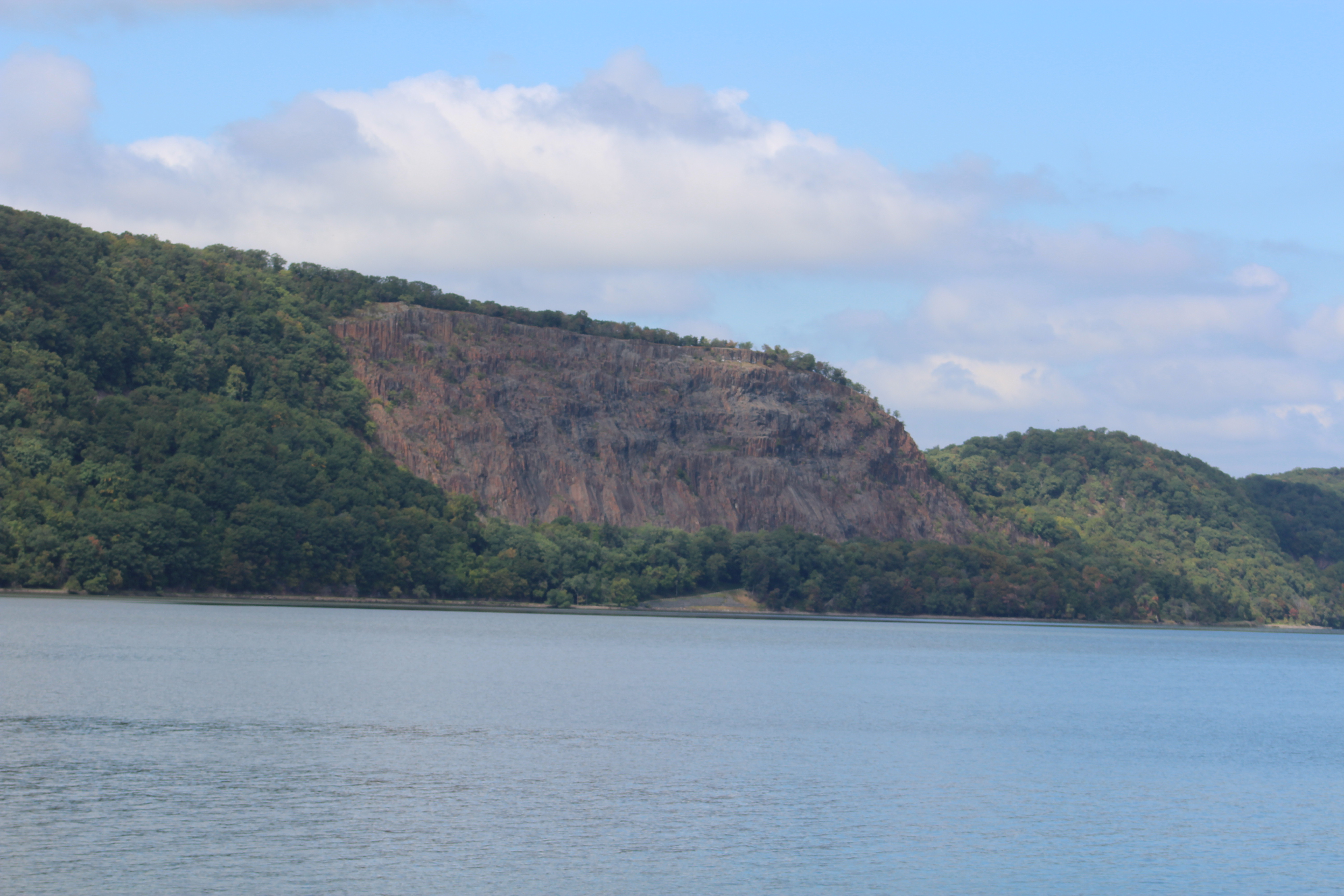
    Eric the Red

  • Sweetness, Four in One

    Hello virtual crew members and fellow adventurers!

    I would like to offer a hearty Welcome Aboard to Jen and Mike O. of Atlantic City, our newest virtual crew members.

    John Wooden often said that you will be the same person five years from now except for the people you’ve met and the books you’ve read.  This past week, the crew met many very interesting people who have enriched their lives.

    4
    Milton Hershey and kids

    Now, the latest travel update of Still Waters II.

    Summary of week:

    Atlantic City

    Monday, the crew took a road trip thru the Amish territory around Lancaster on their way to explore Hershey, Pennsylvania.  Wednesday, the crew sailed thru the Chesapeake & Delaware Canal and enjoyed a night on the hook in the Salem River.  Thursday, the crew made it down the Delaware Bay and pulled into Cape May, New Jersey.  The fourth state they have visited this week.  Friday saw the crew out in the Atlantic Ocean on their way to Atlantic City.

    Click on the link to read the day-to-day travel log.

    Still Waters II VIMEO site

    At the Box Office, this week is a three minute video showing Still Waters II negotiating 2-3 foot swells with a five second period.  The crew got to enjoy this rock and roll motion for five hours, lucky them.

    Click on the link to visit other videos at the Still Waters II Vimeo site.


    Monday, July 24, 2017

    The crew took a road trip today to Hershey, Pennsylvania to visit the birthplace of the mouthwatering milk chocolate Hershey Bar.

    1

    Milton Hersey’s story of failure and success was very interesting.  He went bankrupt in his first adventures as a confectionary.  He finally found success and developed a multimillion dollar caramel candy business.  He sold the caramel business and then started experimenting with developing his idea of milk chocolate.

    His family thought he was nuts for selling the caramel business and trying to start a new business with an untested milk chocolate bar.  History stands on the side of Milton Hershey making a good decision though.  What do you eat more of: caramel candies or milk chocolate?

    2

    The first Hershey bar dropped out of the mold in 1900.  He continued to perfect his milk chocolate sweetness and added the Hershey Kiss in 1907.  He introduced almonds to the mix in 1908 and really went nuts.

    Mr. Hershey married but his wife fell ill several years after their marriage.  They never had children, so in 1909 they put their fortune (60 Million) in a Trust Fund and started a school for orphaned boys, the Hershey Industrial School.   His wife died in 1915 and he never remarried.

    5.1
    Street Light on Chocolate Avenue

    However, they had a near miss back in 1912.  They had purchased tickets for the maiden voyage of the Titanic.  A last-minute business issue arose and the Hershey’s had to cancel the trip back home until the business issue was settled.  It is sometimes the little things in our lives that end up making the biggest impact.

    in 1918, Mr. Hershey transferred control of his company to the Hershey Industrial School Trust fund.

    6
    Stacks from the original Hershey Factory

    The Admirals favorite candy, the Reese’s Big Cup, was also started in Hershey, PA by an employee of Hershey’s.  Mr. Reese thought that if Hershey could make money selling candy, surely he could also.  He continued his employment at the Hersey factory, but started making his peanut butter cups out of his garage.  Eventually, Hershey bought out Reese’s in 1963.

    The crew went to find Milton Hershey’s home, High Point.  They went into a church parking lot that overlooks the mansion.  While looking around, they found this home which was built CIRCA 1732.  It is still located at its original building spot.

    10

    While driving back to the boat they passed several Amish folks out driving around the small towns.

    Amish 2

    The country side was beautiful green as far as the eye could see.  This time of year back in Texas, the sun has killed most anything green and everything is a golden brown dead color.

    13

    Tuesday, July 25, 2017 

    The crew spent the day relaxing around the boat.  Late in the day however, there was a little excitement.  A 90-year-old man took his sailboat out of the marina and anchored in some shallow water.  He was cleaning the hull.

    14 92 year old cleaning boat

    Turns out he was prepping for the sailboat race on Wednesday night.  His 92 year old wife begun to worry about him because it was taking so long.  She got another fellow to walk out and keep an eye on him while he was in the water cleaning the hull.

    After the cleaning job was complete he climbed back aboard the sailboat raised the anchor and managed to drop the anchor locker door on his foot.  He went back below in the boat to treat his wound.  He reappeared after 20 minutes or so and finally motored back into the marina just at dusk.

    14.1

    The whole episode reminded the skipper of his father who used to say “I am going to go full speed ahead in my life all the way to the end.  Only problem is full speed is just not what it used to be.”

    The 92 year old worried wife still teaches art at a local college.  The Admiral was comforting the Art Teacher as she waited on her husband to return to the marina.  As you can see, it was getting dark before he got back to his slip.

    14.2 92 year old wife

    The crew will also give a shout out to Carrol and her two grand sons. She has been coming from Pennsylvania to spend her summers at the marina for 30 years.  She stays on her boat The Big G.

    17 Carol and grandsons

    Wednesday, July 26, 2017

    The crew got back underway today.  They were passing thru the C&D Canal when the skipper suggested that they pull into Chesapeake City for lunch.  The place was packed last Sunday when the crew came and visited with Grace and Roger.  The skipper wanted to find out what all the fuss was about.  They entered the small harbor and tied up at the end of a T-dock at the Chesapeake Inn and had the local fish-n-chips.

    20

    After lunch, they shoved back off and completed cruising the canal.

    21

    When they arrived at the Delaware River, there were large ships coming from each direction.  The skipper made it across the River and then turned up into the Salem River where the crew dropped the anchor for the day.

    26 Delaware Bay

    Thursday, July 27, 2017

    The crew weighed anchor and began the trip to Cape May.  The skipper timed the currents fairly accurately, so they got about a 2 knot push all the way down the bay.  Unfortunately, the wind was out of the south which made for a lumpy boat ride.  When the wind and the current are opposed, the wind causes the waves to stack up close together and make for rough seas.

    They did see this Osprey eating breakfast as they left the Salem River.

    30

    Passing the Ship John Shoal Light about halfway to Cape May.

    33 Ship John Shoal Light

    After about 60 miles of getting bounced around in the Delaware Bay, the crew finally pulled into the Cape May Canal and some smooth water.

    34

    Initially, the crew had planned to stay at Cape May for two nights.  However, while checking in at the marina office the dock master asked the skipper if he had looked at the weather for Saturday.  The skipper noted that he had reviewed the data early in the morning but not lately.  The dock master informed the skipper that a large storm was now predicted for Saturday.

    Decisions, Decisions, Decisions.  The skipper paid for two nights and then went back to the boat to review the latest weather data.

    Friday, July 28, 2017

    When the skipper woke up, the first thing he did was check the weather again.  The forecasted approaching storm was getting worse.  The skipper and Admiral decided that it would be best to go ahead and leave for Atlantic City today so they began to make preps to shove off.  Thank goodness the Cape May marina gave a refund for the second night.

    These youth were out getting some sailing time in on their sunfish sailboats as the crew left the Cape May Harbor.

    35 Cape May

    Looking back at Cape May from the inlet while headed out into the ocean.

    36 Leaving Cape May

    The weather, wind, and wave conditions for an outside run to Atlantic City were not ideal, but were better than running the narrow shallow New Jersey ICW.  The crew decided to take their chances out in the Atlantic Ocean.  The seas were 2-3 foot swells with a period of about 5 seconds.  These conditions made for a rolly ride to Atlantic City.

    Seems as though every community along the beach in New Jersey has some kind of amusement or water park.

    37

    As the crew approached Atlantic City they noticed a helicopter about two miles off shore from the crew.  Initially, it looked as though the copter was just sitting motionless above the water.  As the crew got closer, they could make out a ship near the copter.  They then noticed the copter haul someone up into the copter.

    38 CG Reswcue

    After this bit of excitement the crew turned their attention to finding the Atlantic City Absecon Inlet.

    40 Atlantic City

    The crew maneuvered their way to the Gardiner Basin and got settled into a slip.  The slip was in a great spot because it looks like the crew will be blocked effectively from the projected high winds and waves.  The skipper took extra time and care in securing the boat.  The winds are projected to reach 30 mph during the night, with gusts to 40.

    About the time the skipper completed securing the boat, he heard a couple talking about Still Waters II.  He poked his head out and asked if they were fellow Loopers.  They responded that they were in the planning stages for the Loop.

    The Admiral invited the ‘Planning” Loopers aboard.   Our crew spent the evening discussing the Loop and answering questions.  When the storm finally arrived and the rain began to fall Jen and Mike headed for home just around the corner.

    Saturday, July 29, 2017

    While Jen and Mike were leaving the boat last night they invited the crew to lunch.  About noonish, Jen and Mike arrived and the four wore off for a fun afternoon.

    First stop was lunch at the Wingcraft Restaurant.  The conversation continued to revolve around the Loop and the boat that Jen and Mike have purchased.  They have a love for old items in need of restoration.  Their home back in Ohio is over one hundred years old and they have brought the property back to life.  Such is their goal with their boat.  They have bought a 1960’s Bertram Yacht in need of love.

    41 Jen & Mike
    Jen and Mike

    After lunch, they went to the boat yard to look over their latest project.  The boat definitely has character.  They have a great vision for the restoration project and I am sure it will be better than new when they are complete.  Good luck with your project boat and eagerly anticipate seeing her back in the water and cruising the Great Loop.

    Boat Name of the Week

    The skipper did not get a picture of the boat name this week, but the winner goes to Foster who is the Harbor Host for the upper Chesapeake Bay.  Foster came by one night to visit the crew and answer any questions about the area.  It was a wonderful visit.  Thanks Foster!

    His boat name you ask?

    Quo Vadimus

    Hailing port?

    Nowhere, Oklahoma

    Put it all together, and what do you get?

    Quo Vadimus (Latin for –  ‘Where are you going?”

    Nowhere

    OK

    Did I mention that Foster has a great sense of humor?

    Next Week –

    The crew is on their way to New York City where they will meet their daughter, oldest granddaughter, and the guests BFF’s on Tuesday.  The crew needs two good weather days to get to NYC from Atlantic City.  Let’s hope these winds die down and they make it to New York by Tuesday.

    Loop On

    The water goes on forever and the adventure never ends.
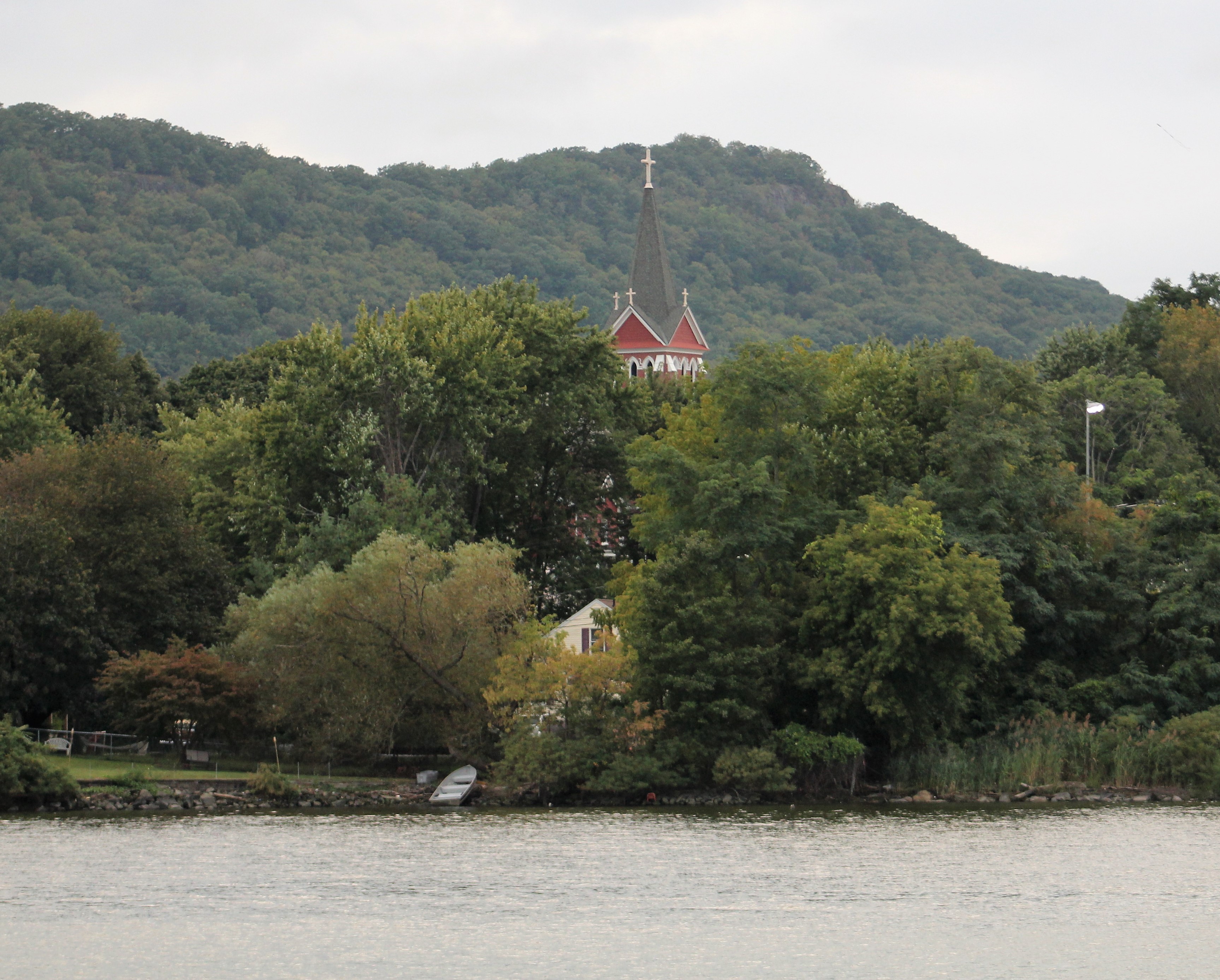
    Eric the Red