Author: Dave

  • Blown into Port Saint Joe

    Hello virtual crew members and fellow adventures!
    5t8t92301
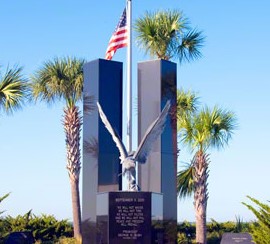
    Panama City 911 Memorial

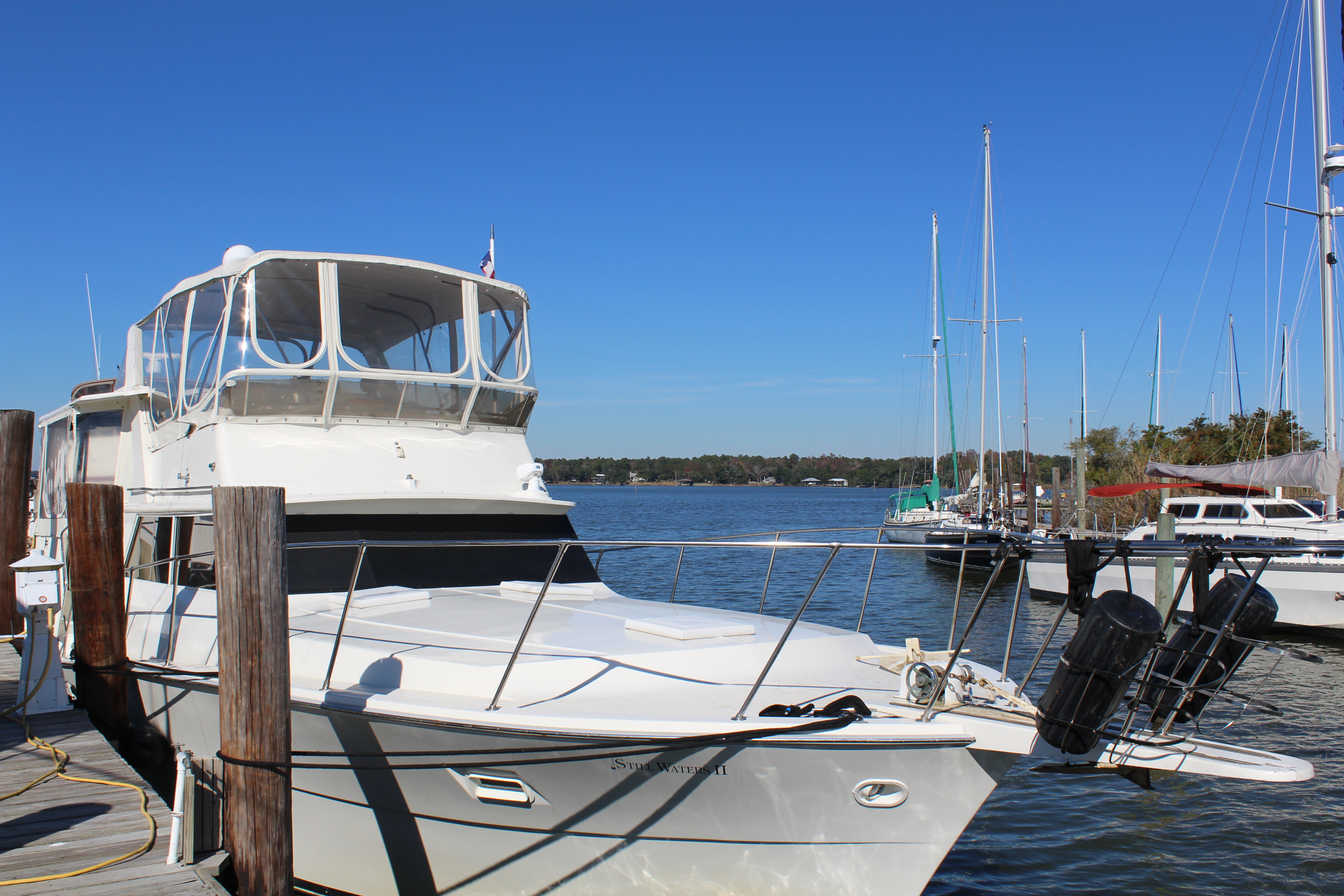
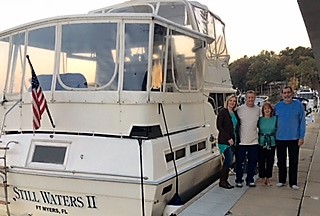
    Eric here catching you up to date on the latest travels of Still Waters II. Click on this link to see the day- to-day travel log.

    Summary of week:

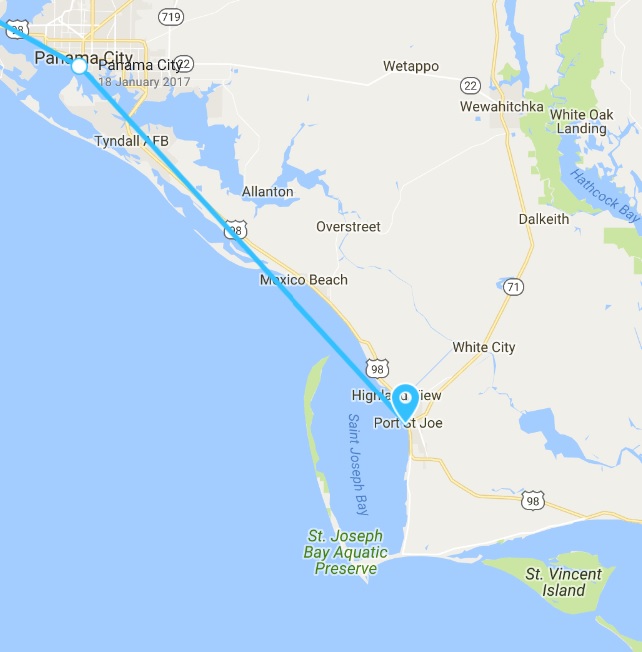
    After a week stay in Panama City to allow the weather to literally blow through, the crew finally made passage to Port St. Joe.  The crew continues to lay and wait here for a weather window to open so they can safely cross the Gulf.
    port-st-joe

    Sunday, January 22, 2017

    As reported in last week’s blog entry, the winds have really decided to kick it up a notch.  Today the Coast Guard was putting out Gale Force Wind Warnings (winds > 40 mph).  The wind did not disappoint.

    By 1000 the winds were blowing 15-20 mph.  Unfortunately, the wind direction was out of the east-southeast.  This caused three foot waves to form and come directly into the marina and against the beam of Still Waters II.

    The skipper spent the next four hours adding and adjusting lines and fenders to protect the boat from the dock.  It got so bad that the skipper could not stay on the boat because she was bobbing up and down so bad.  He took a seat on the dock in between adjusting lines and fenders.

    Finally, about 1400 the wind shifted direction from the west-northwest which caused the waves to shift also, so now the waves were hitting the break water wall.  This resulted in the waters in the marina to calm down and become almost smooth.  With the wind shift, the winds also picked up intensity.  The wind speed quickly rose to the low 30’s with gusts over 40.

    The winds stayed strong through the rest of the day and began to die off during the night into the low 20’s.  On Monday, the winds continued to drop in intensity until they finally got back down to normal, less than 10 mph about dark.
    img_0039
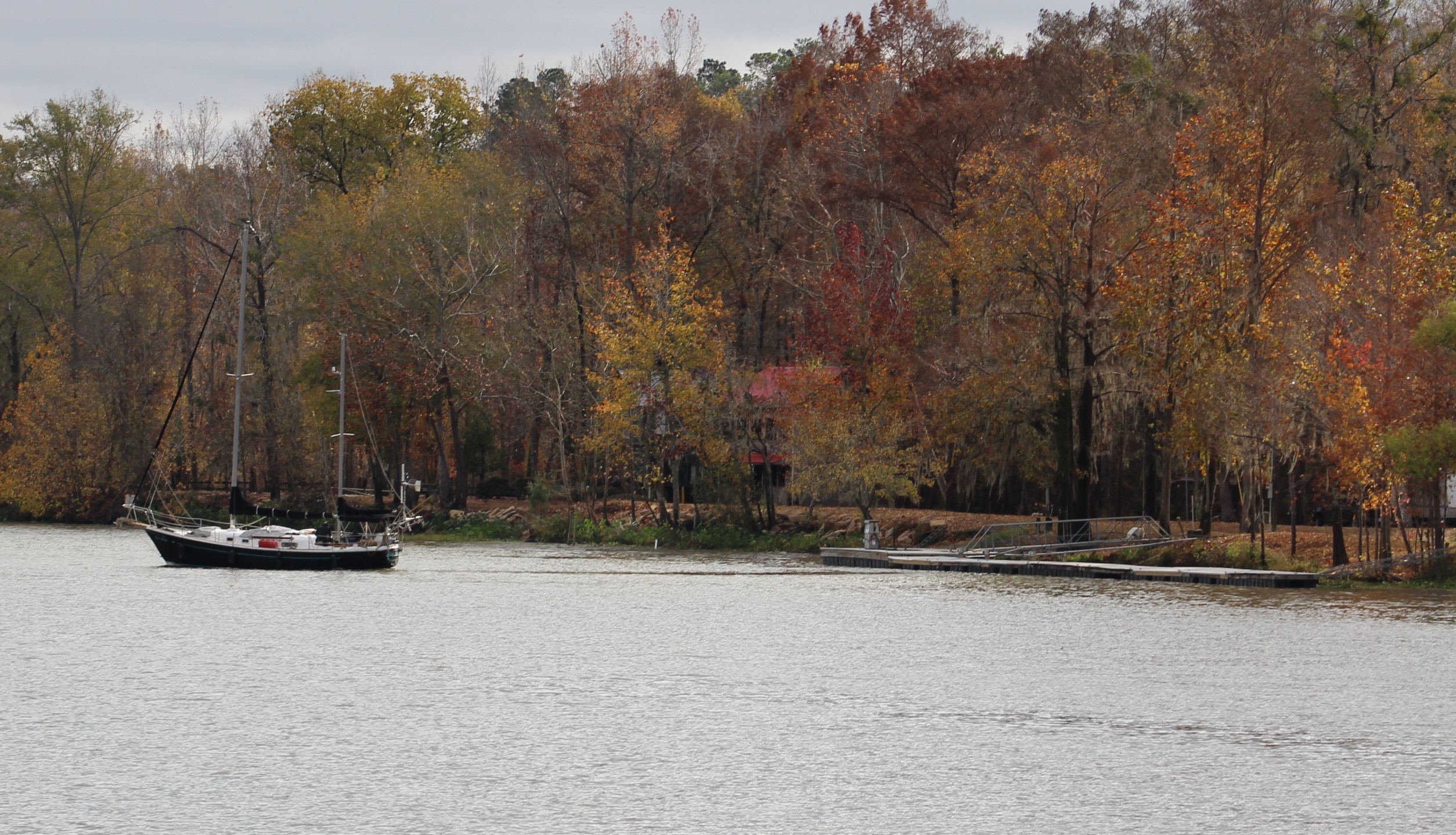
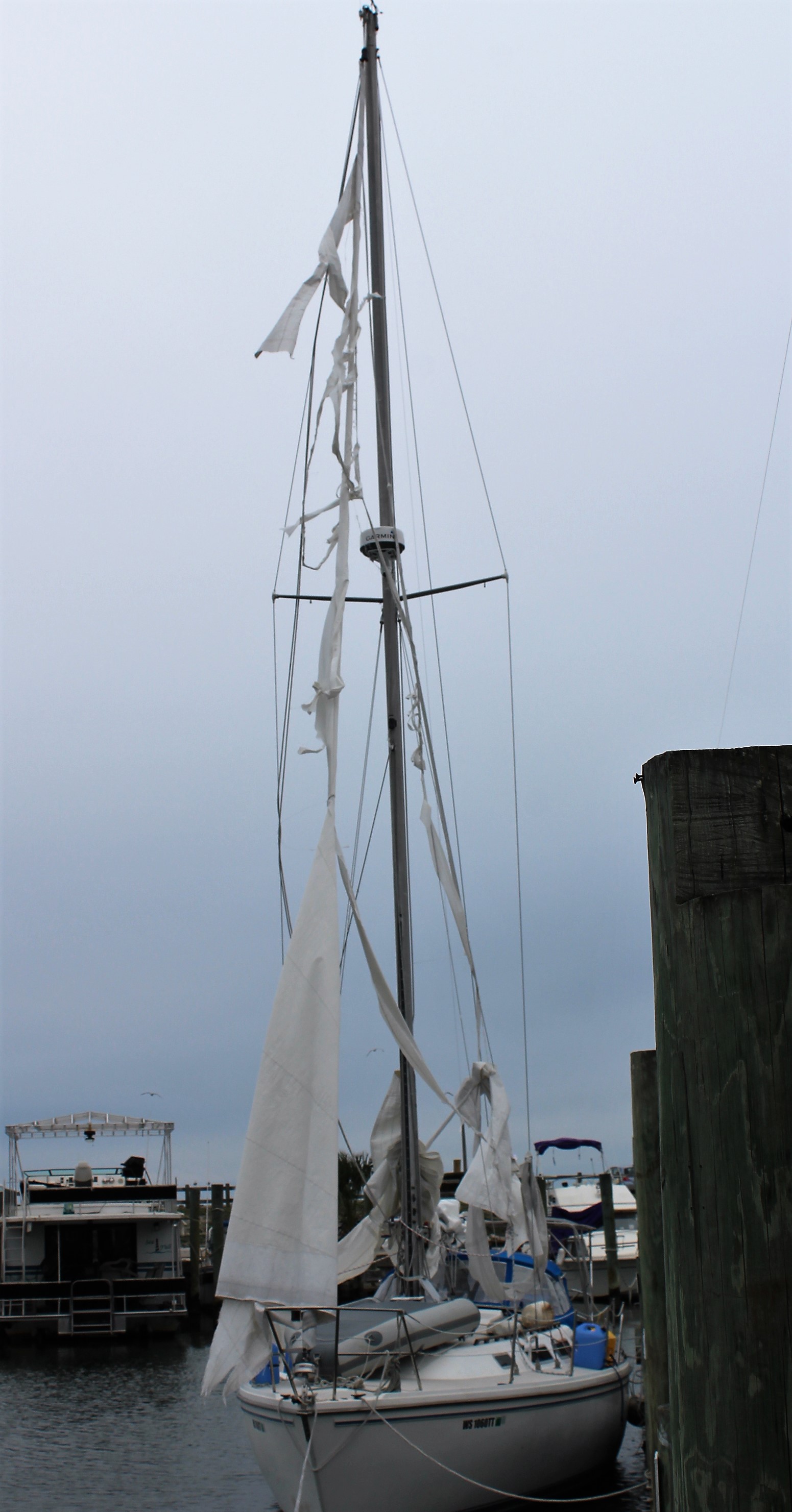
    This sailboat did not survive the wind

    The good news is that Still Waters II suffered no damage.  Many of the other boats were not as fortunate.  When the winds were out of the east on Sunday, the boats were swinging up and down as much as 3-5 feet.  This caused damage to several boats as they crashed into the wood docks.  In addition, the high winds ripped the canvas and bimini tops off several boats.

    And you are probably asking yourself, “Where was the Admiral during the Sunday afternoon fun?”  She had gone to Church.  When she left Church she got a severe weather alert with a tornado warning.  She did the smart thing and went shopping at Home Depot to wait out the warning.

    By the time she got to the boat, the wind had shifted direction and the marina water had calmed down.  The skipper told her he was glad she missed the fun.

    Tuesday, January 23, 2017

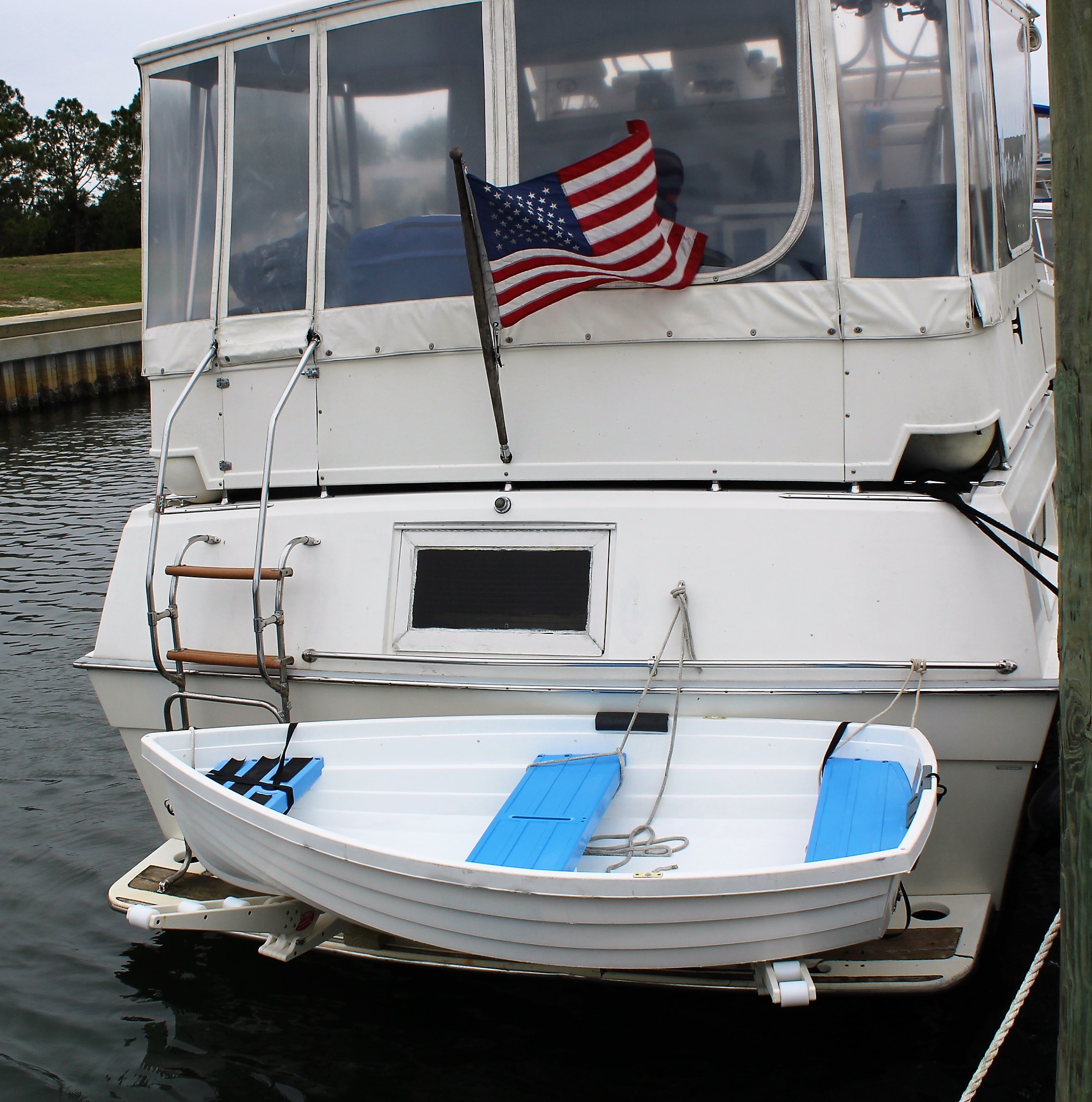
    While in Panama City, the crew bought a new dinghy.  This was a safety purchase as they prepare to cross the Gulf.  Better to be prepared for the unexpected in case something happens to the mother ship.

    For example, a local boater shared a story with the skipper where a series of unfortunate and seemingly unrelated events resulted in an explosion onboard his boat.  The boat burned to the water line before the fire department could arrive and extinguish the fire.

    The skipper spent most of the day adjusting the davit system to hold the dinghy on the swim platform.  Hopefully with these adjustments the crew will not lose a third dinghy.
    img_0040
    Walker Bay dinghy mounted on davits

    Wednesday, January 25, 2017

    With the weather cooperating today, the crew headed east to Port St. Joe with no issues.
    img_0010
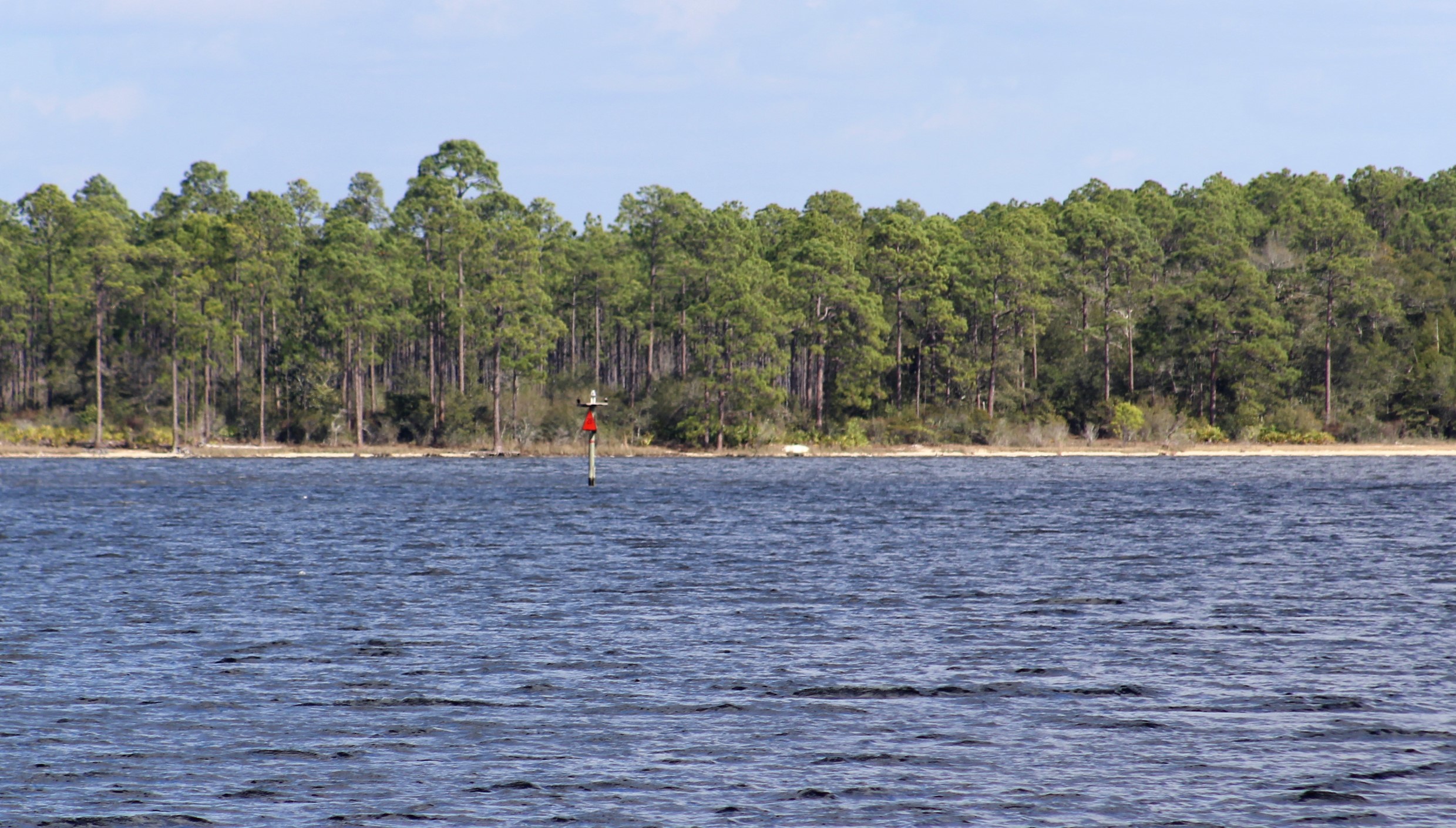
    Leaving the East Bay

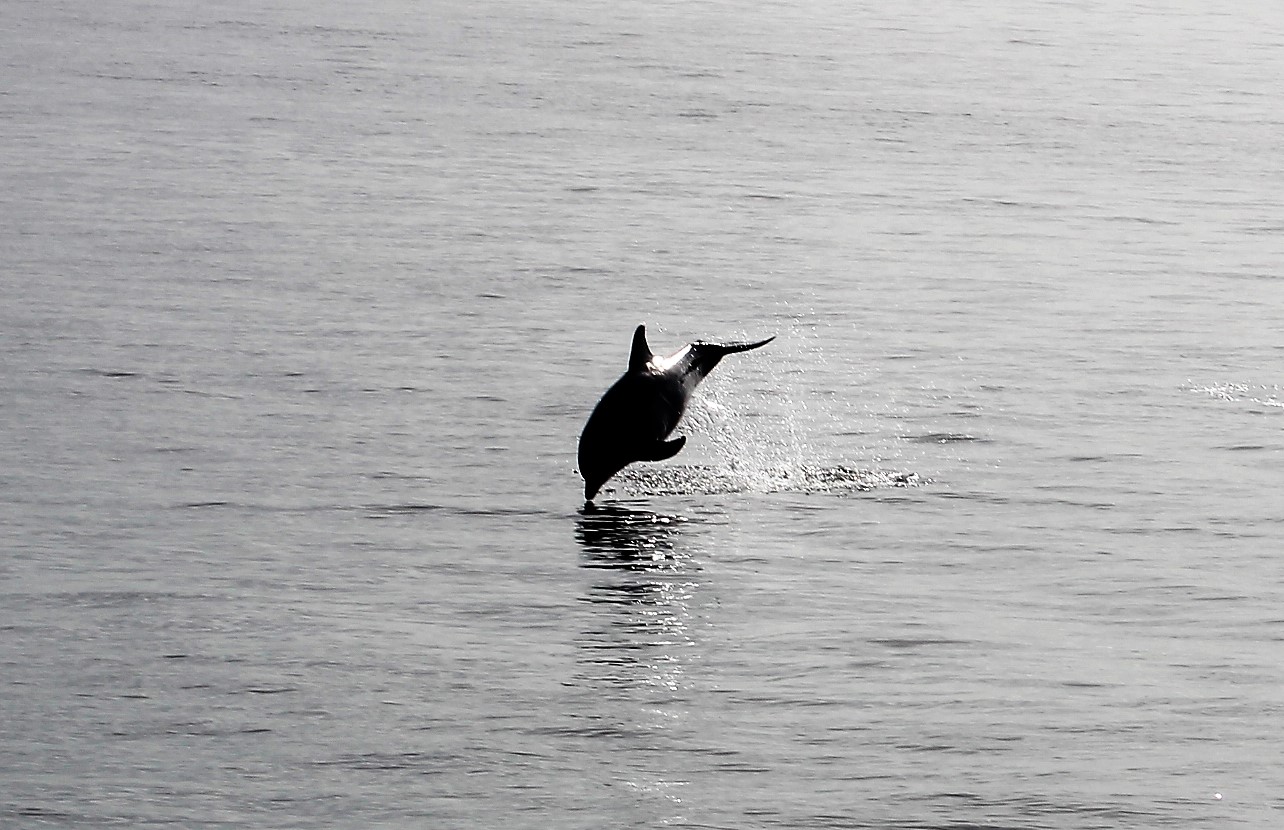
    While passing through the East Bay a dolphin decided to play in the wake of the boat.  At one point, the dolphin jumped completely out of the water as high as the helm on the boat.  Interesting looking eye-to-eye with a dolphin when you are 10 feet above the water line.
    img_0011
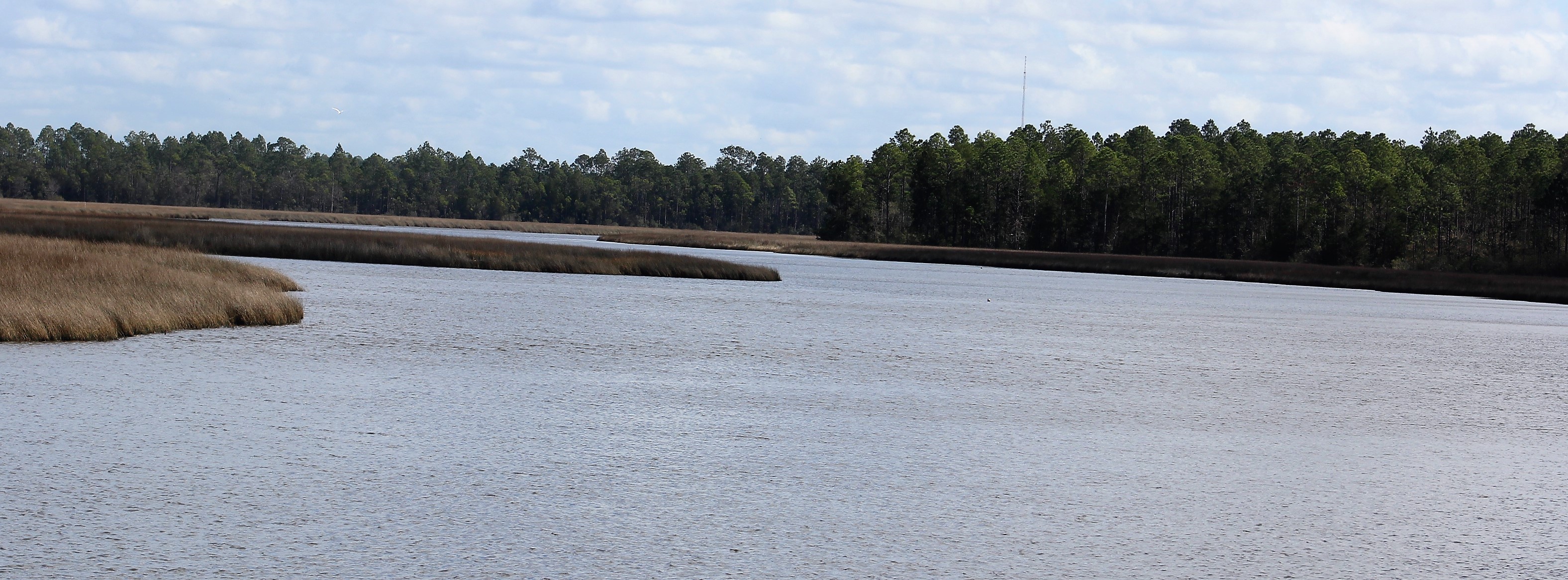
    Salt Marsh in Wetappo Creek

    The crew made it far enough east to enter the Eastern Time Zone.  The loss of an hour caused the crew to arrive at Port St. Joe Marina just 30 minutes before closing.

    The crew is not sure how long they will stay here, so the Marina Staff took a credit card and put it on hold much like a reservation at a hotel.
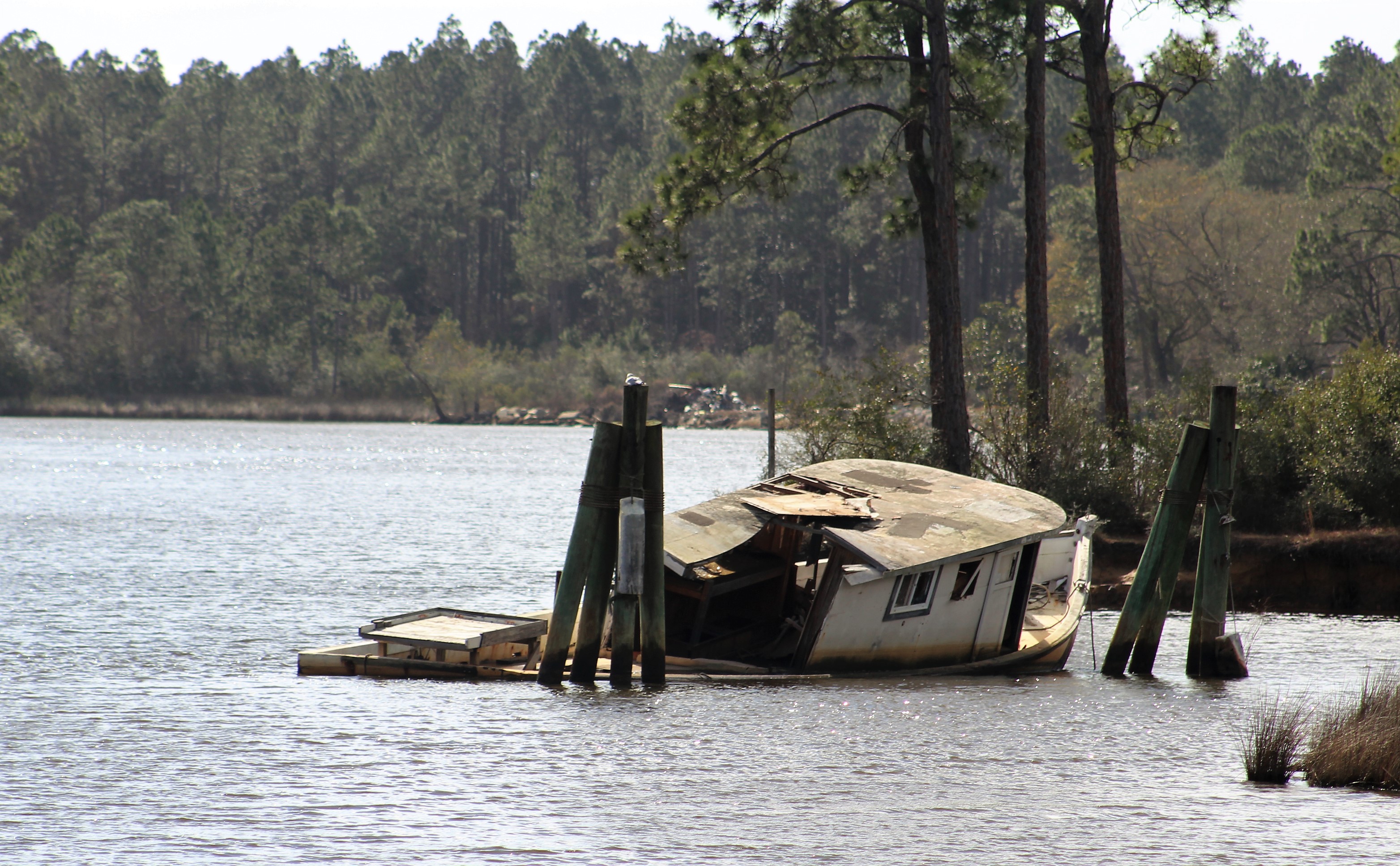
    img_0013
    The crew saw more derelict boats on this run than anywhere on the loop


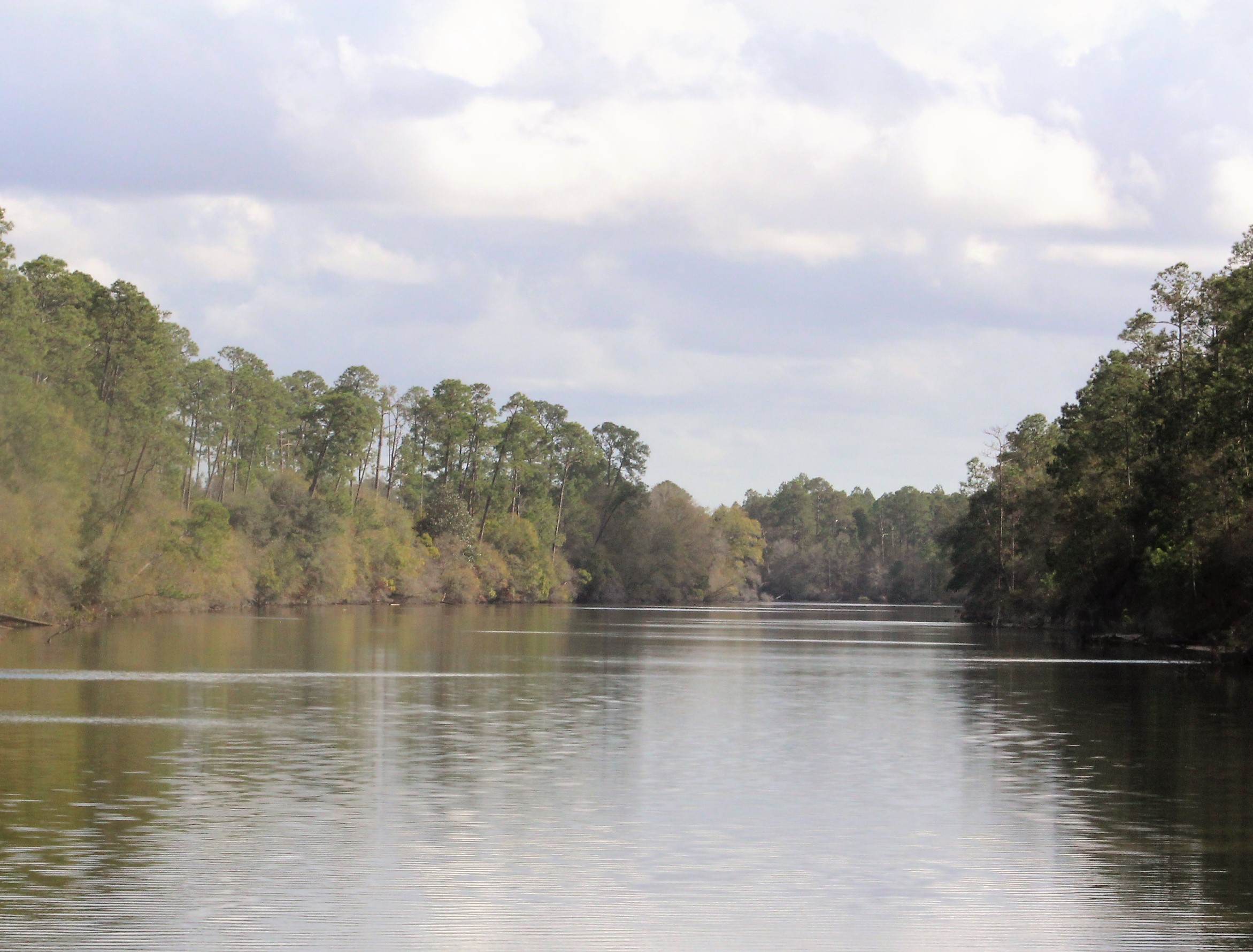
    img_0015
    Continuation in Wetappo Creek


    img_0019
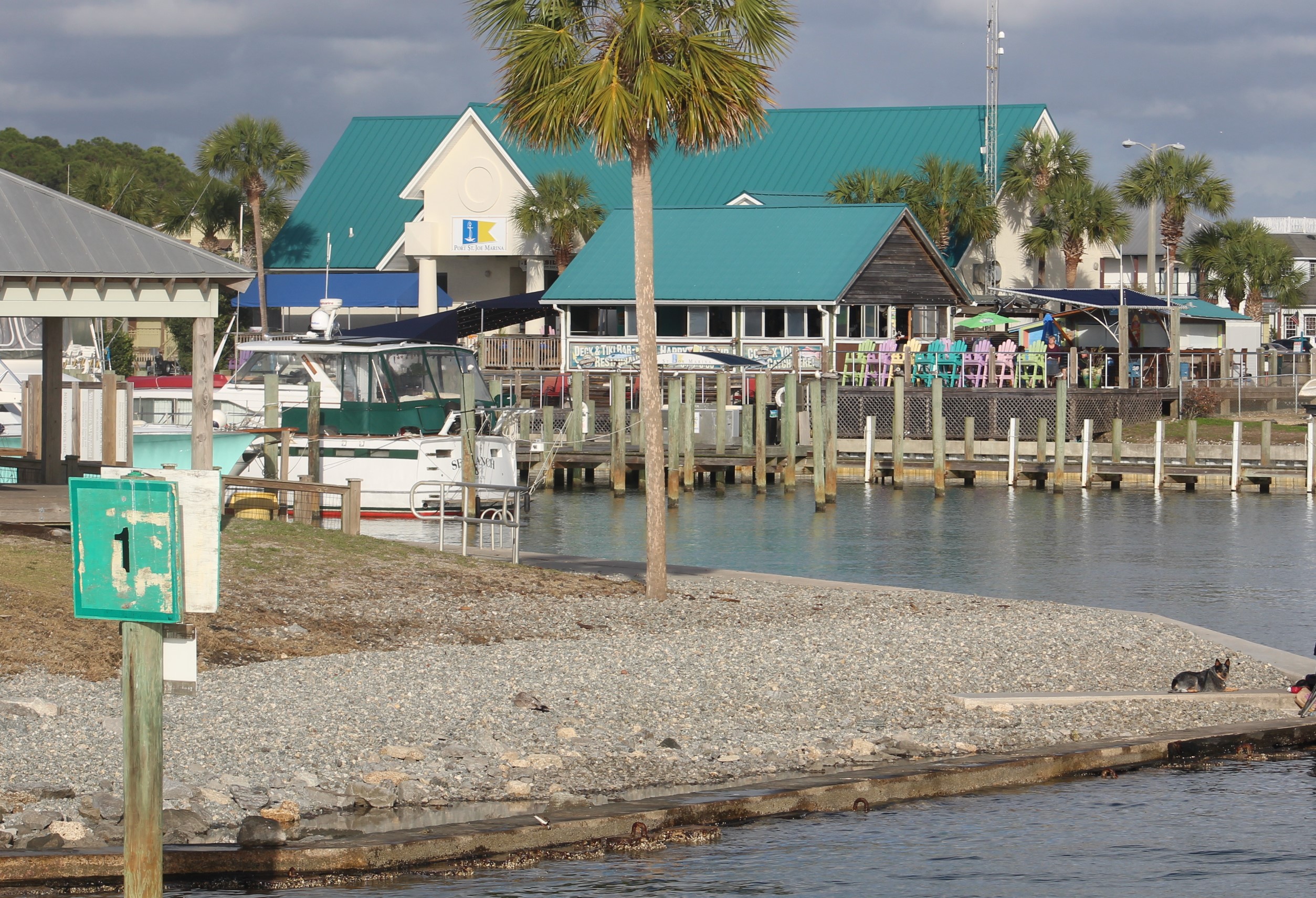
    Entering the Port St. Joe Marina basin

    Shore Excursions at Port St. Joe

    The crew wandered around the small downtown area on Thursday afternoon. They found this interesting store display of a guy having a bad day.
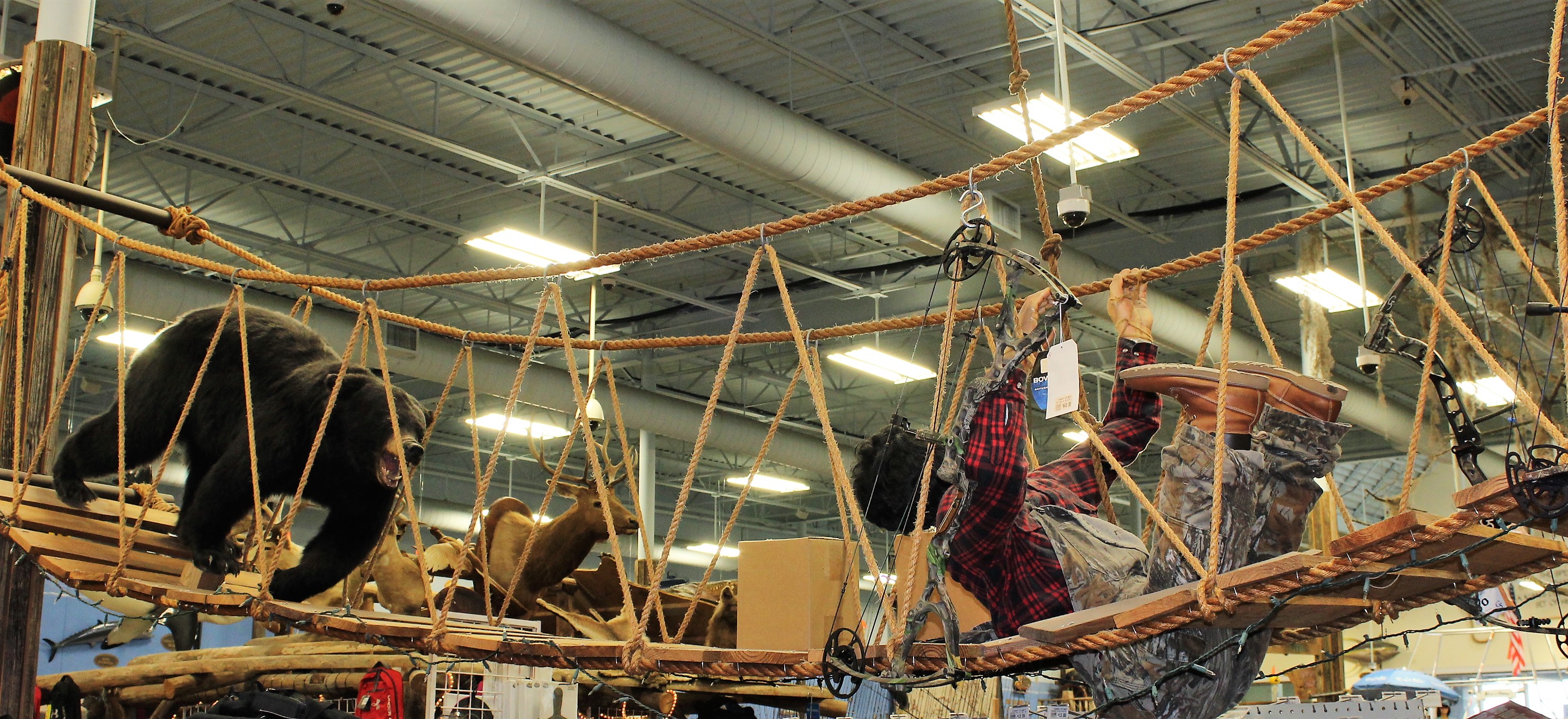
    img_0021

    They then walked over to the area Welcome Center and enjoyed the view of the bay.
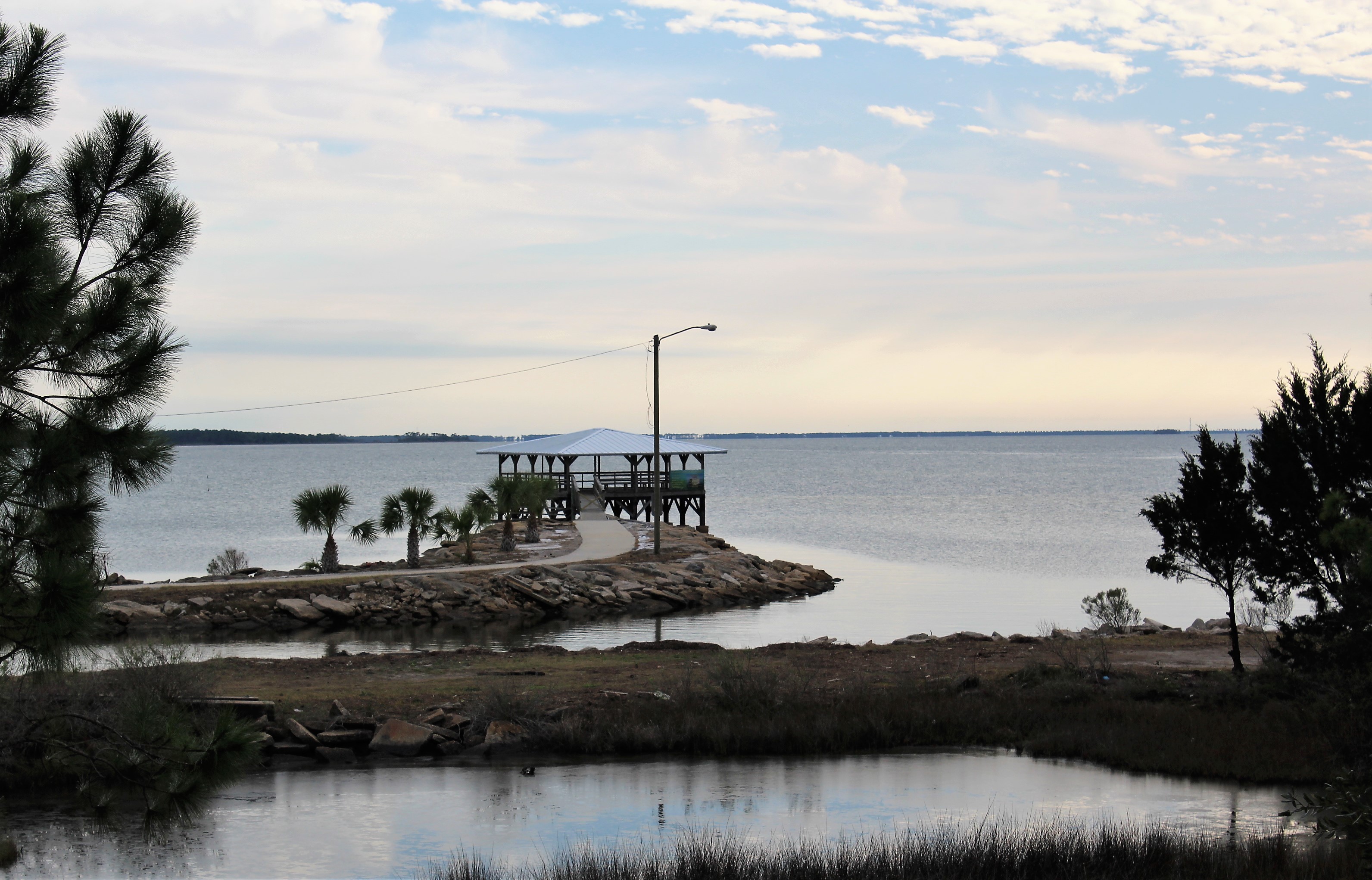
    img_0023

    On Friday, Abaco Lady and the Journey pulled into the marina.  There are now seven loopers at Port St. Joe.  People are moving east to take advantage of the weather window to cross the Gulf Tuesday and Wednesday.

    Saturday, we walked over to the SanDollar with Journey and Abaco Lady to enjoy a good breakfast.  Conversation was exciting as stories were swapped about the Loop and the fun that has been had.

    Latter in the day, The Lord’s Provision arrived and joined the party at Port St. Joe.  The crew of Still Waters II will probably buddy boat across the Gulf together.


    Next Week – As mentioned several times, the next big challenge in front of the crew is to cross the Gulf over to the West Coast of Florida.

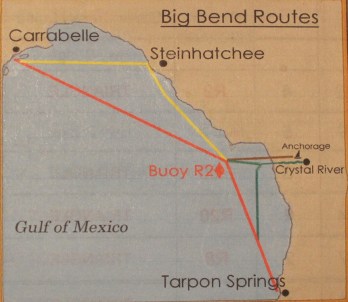
    The following pic and information is from Alan Lloyd’s Navigation Notes.
    img_0034

    1. Tarpon Springs Route – 175 miles

    Carrabelle to Buoy 2 – 112 miles

    Buoy 2 to Tarpon Springs – 63 miles

    Steinhatchee Route (yellow/red) -206 miles

    Carrabelle to Steinhatchee – 85 miles

    Steinhatchee to Buoy 2 – 58 miles

    Buoy 2 to Tarpon Springs – 63 miles

    The brown and green routes have a controlling depth of only 4.5 feet.  With the draft of the boat at 3’ 9 inches, the margin of only 9 inches to going aground is not worth the risk.  These routes are off the table for the crew.

    The crew plans to travel at 9 mph, so it will take about 20 hours to cross over to Tarpon Springs on the red route.  This can be done in one long cruise starting about 2100 and arriving in Tarpon Springs about 1700 the next day, an hour before sunset.  The pro of this route is that you only need one weather window to cross.  The con is that you cruise 9 hours in the dark and will not get much sleep, if any in those 20 hours.

    The pro of the Steinhatchee route is that you have more daylight time and less night time travel.  However, the con is that you need two days of good weather to cross.  This time of year, getting two days back to back is rare.  The weather windows seem to be about a week apart, so after arriving in Steinhatchee, the crew might be stuck for a week waiting for the next good day.

    And what may a good day look like, says you?

    The crew is using the following criteria:

    Winds less than 10 mph

    Wave height less than 2 feet

    The skipper is using Eddy’s Weather Wag to help gage the criteria, as well as consulting three independent marine weather sites to pick the window.  But as you know, predicting the weather no easy task.

    For example, on Monday, January 23rd, Eddy was predicting a Saturday/Sunday weather window.

    Ahoy Fellow Loopers!

    Told you it would get worse!  Latest check of sea conditions at Buoy 42036 show 15 footers rolling across that part of the Gulf.                                                          

    It will take a while for things to settle down out there.  The predicted Saturday-night / Sunday weather-window (28th-29th) will likely be the next crossing opportunity.   

    By Wednesday, January 25th, Eddy had this to say:

    Ahoy Fellow Loopers!

    It looks like a conspiracy!  Mother Nature and King Neptune are not only dismantling this weekend’s projected weather-window, but they’re also taking away Florida’s warm, balmy temperatures!                                   

    Is there no end to this merciless mistreatment?  How long can we endure 50 degree temperatures at night?  How can you be expected to keep a tan when daytime highs are only in the 60s?  And that’s just here in south Florida!  Our fellow Loopers who are trapped along the northwest Gulf coast are suffering even worse.

     I’m hopeful that the arrival of a new month will change all this.  If we collectively concentrate on sending out positive vibes, perhaps we could effect that change by the last day of this month.  That would show Mother and King where the real power lies!  To paraphrase: “Let our people go” (across the Gulf)!

     Then on Thursday, January 26th, Eddy had these encouraging words:

    Ahoy Fellow Loopers!

    This morning, four out of four on-line weather sites that I reviewed predict that a weather window will be available for a Tuesday-night / Wednesday crossing.  That would be January 31st and February 1st.  Just like most people, sometimes these sites get it right and sometimes they don’t.

     However, only one of those four sites is still predicting that a Saturday-night / Sunday crossing opportunity.  That would be January 28th & 29th.  This particular site has been very reliable in the past for getting it right.

      So (to paraphrase Dirty Harry) the question you have to ask yourself is, “Am I feeling lucky”?  

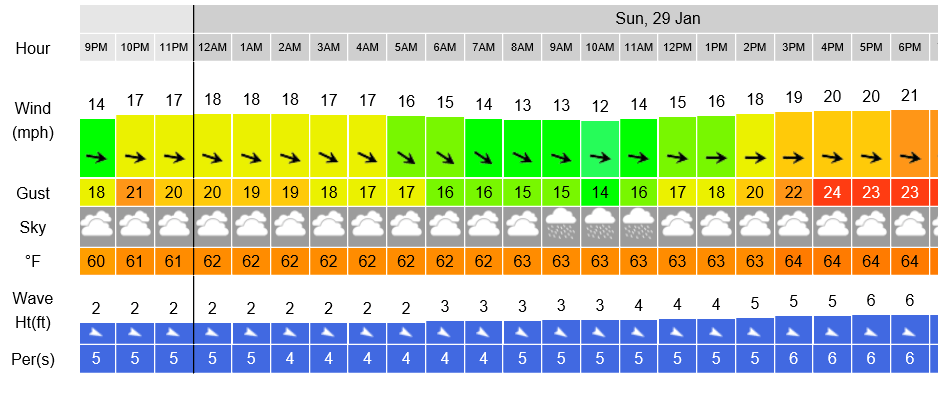
     Our crew is not feeling lucky.   The sites the skipper uses to watch the weather do not meet the crew’s criteria for safe travel.  For example, this is the Sail Flow page wind and wave height prediction for Saturday/Sunday.  Wind is never below 10 mph and the waves build to 6 feet.  No thank you.
    weather1

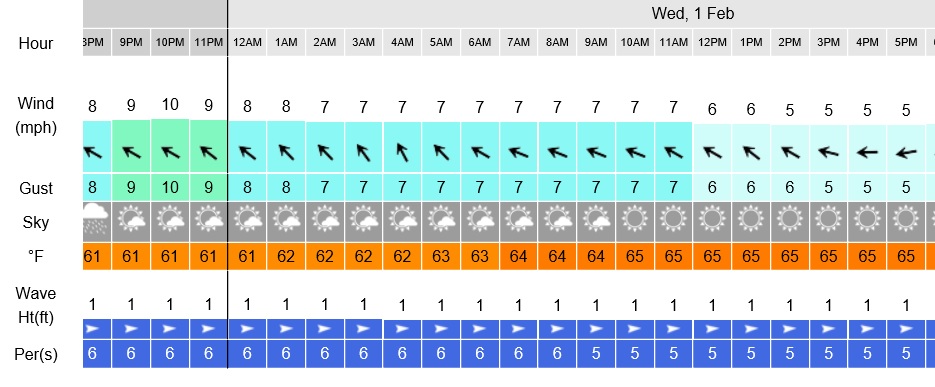
    However, the Tuesday night/ Wednesday crossing is looking promising.  Winds less than 10 mph (even the gusts are under 10) and waves only 1 foot for the whole run.  Now that is what I’m talking about!
    weather2

    IF, and that is a big IF, the weather predictions hold, THEN this is the anticipated Float Plan for the crew next week:

    Monday – travel to Carrabelle and stay at the Moorings Marina.

    Tuesday –

    1-      Move the boat after lunch and anchor at Shipping Cove by Dog Island (this will shave an hour off the night time travel)

    2-      Weigh anchor about 2100 and enter the gulf via East Pass

    3-      Target Buoy R2 (N28-56.5 W83-11.0) west of Crystal River

    Wednesday –

    1- Arrive near Buoy R2 about 0900

    2- Arrive near Buoy R4 (N28-14.8 W82-49.9) about 1500

    3- Arrive at Turtle Cove Marina, Tarpon Springs about 1700

    After crossing the Gulf the crew will get some well deserved sleep and figure out what their next move will be.

    Loop On – The water goes on forever and the adventure never ends.
    Eric the Red

  • The Emerald Coast

    Hello virtual crew members and fellow adventures!

    Eric here catching you up to date on the latest travels of Still Waters II. Click on this link to see the day- to-day travel log.

    8-emerald-coast

    Summary of week:

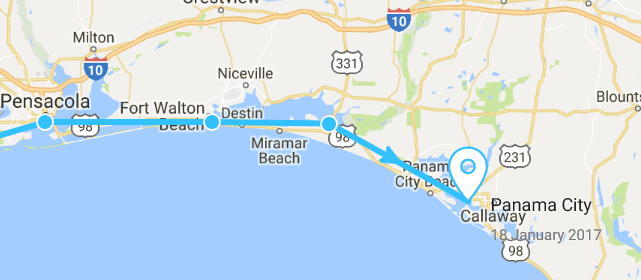
    The crew departed Pensacola and cruised three days last week as they headed east along the Emerald Coast.  The first stop was in Fort Walton Beach.  The crew continued east and stopped in Destin to dock and dine for lunch at Dewey Destin’s Seafood Restaurant.  Then they made their way across Choctaw Hatchee Bay and dropped anchor near the HWY 331 bridge.  Next stop was Panama City where the crew held up to allow some nasty weather packing high winds and rain to pass.

    38-trip-pic

    Monday, January 16, 2017

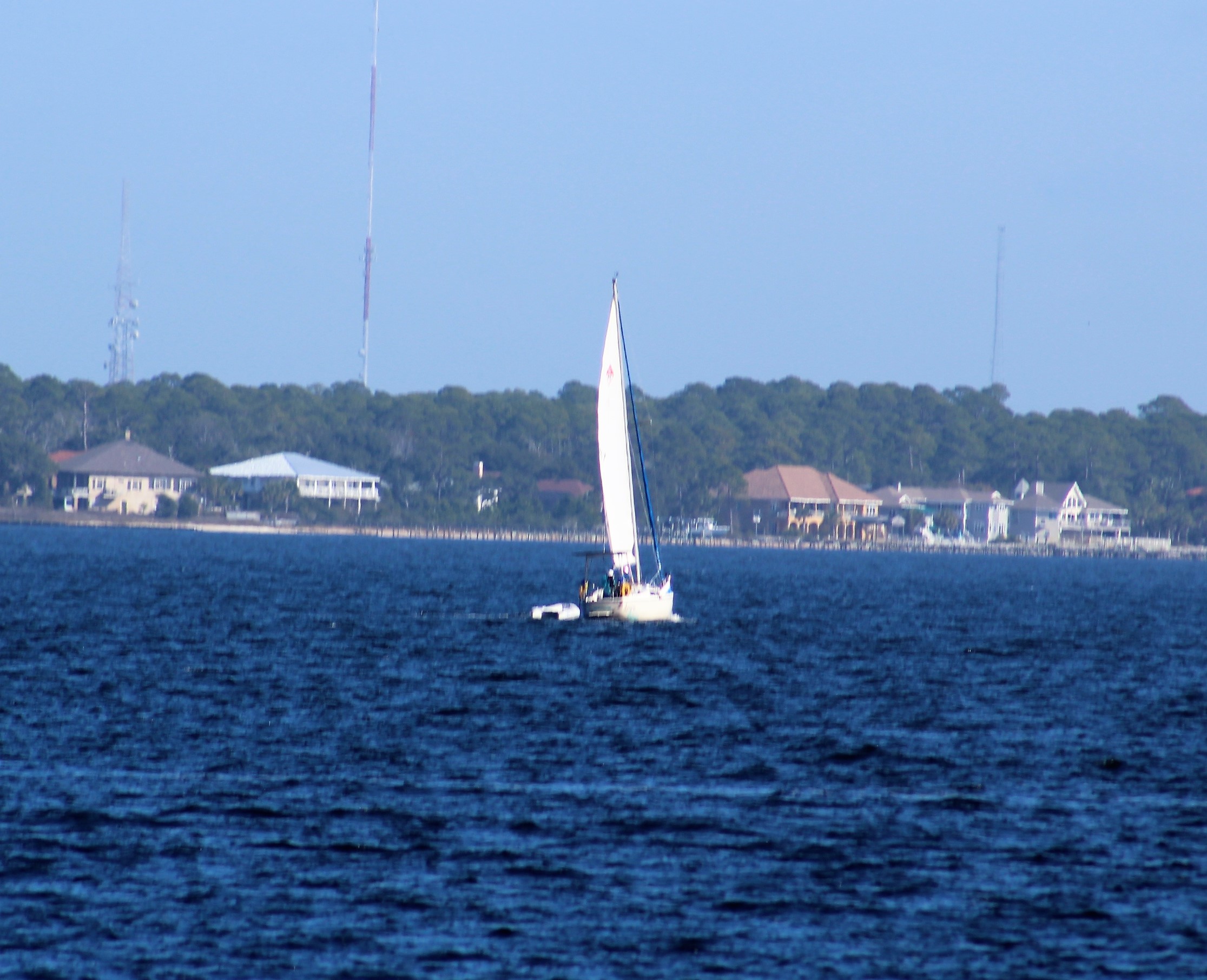
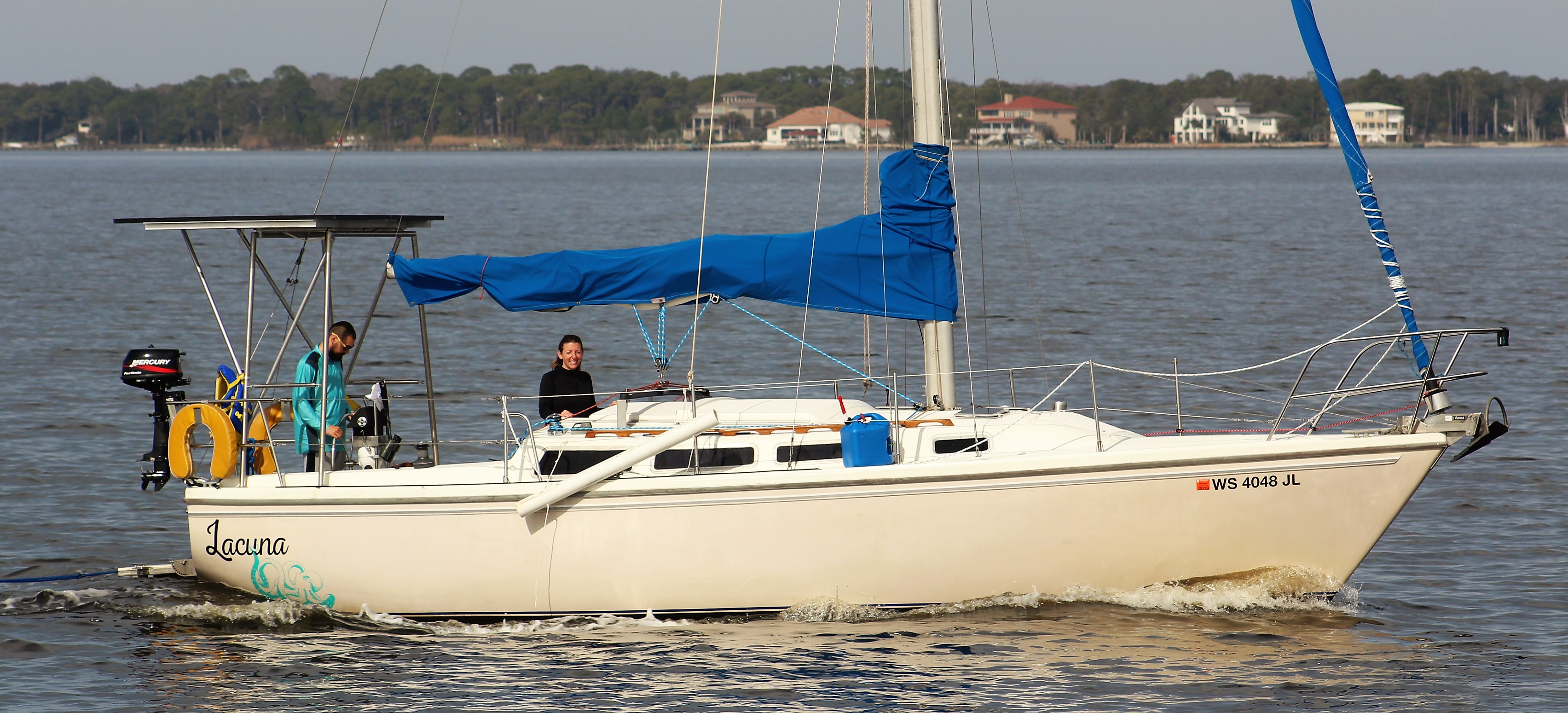
    The cruise to Fort Walton Beach was uneventful.  Along the run though the crew passed a sailboat, Lacuna, while running in the Santa Rosa Sound.

    3-santa-rosa-sound
    Lacuna in Santa Rosa Sound

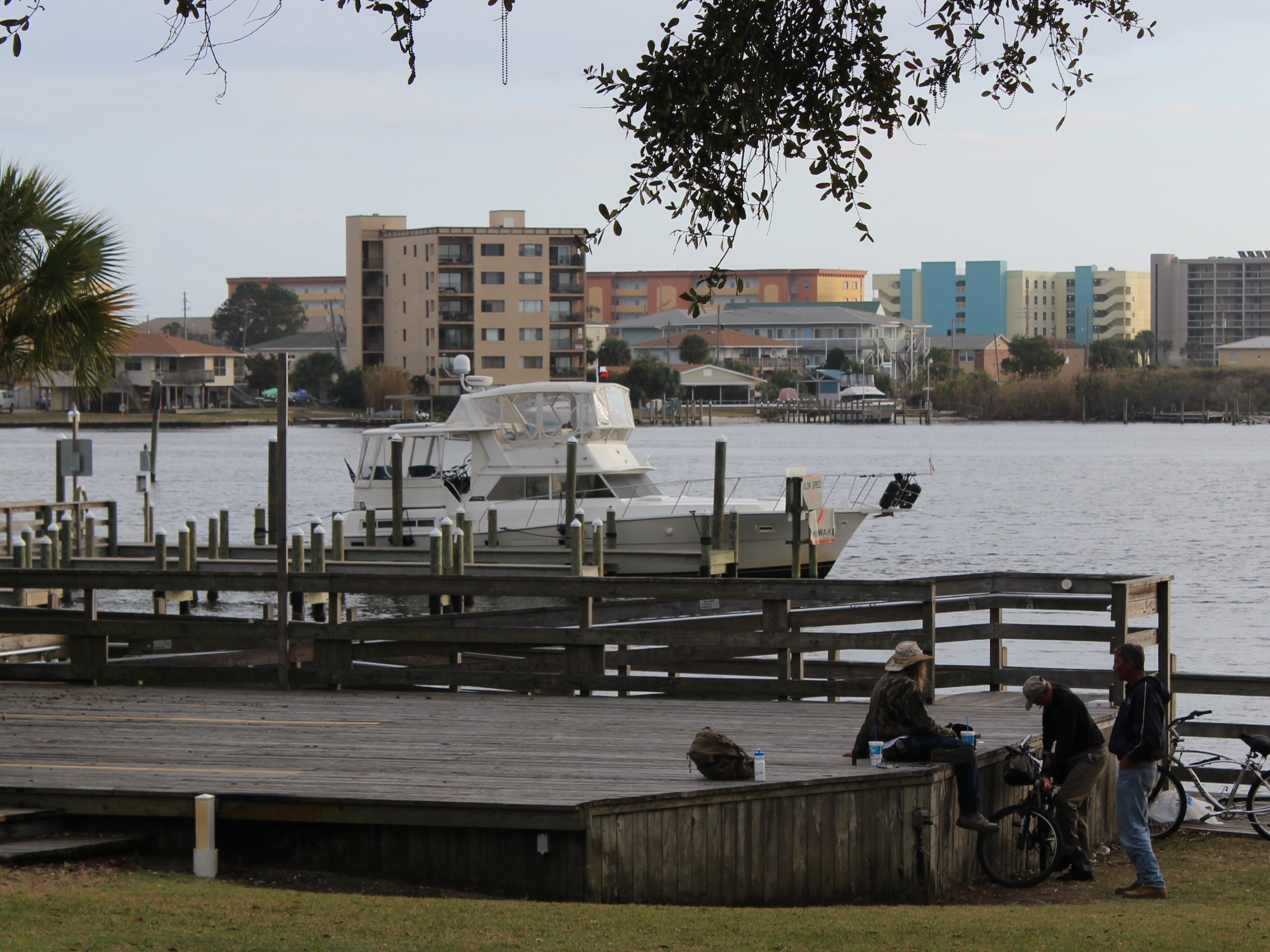
    About two hours after our crew landed at the Ft Walton Beach City Marina, the sailboat pulled in also.  A good example of the adage in boating, “everyone ends up at the same place, the only difference is how much did you spend on fuel to get there.”

    5-ft-walton-beach
    Still Waters II in Fort Walton Beach City Marina

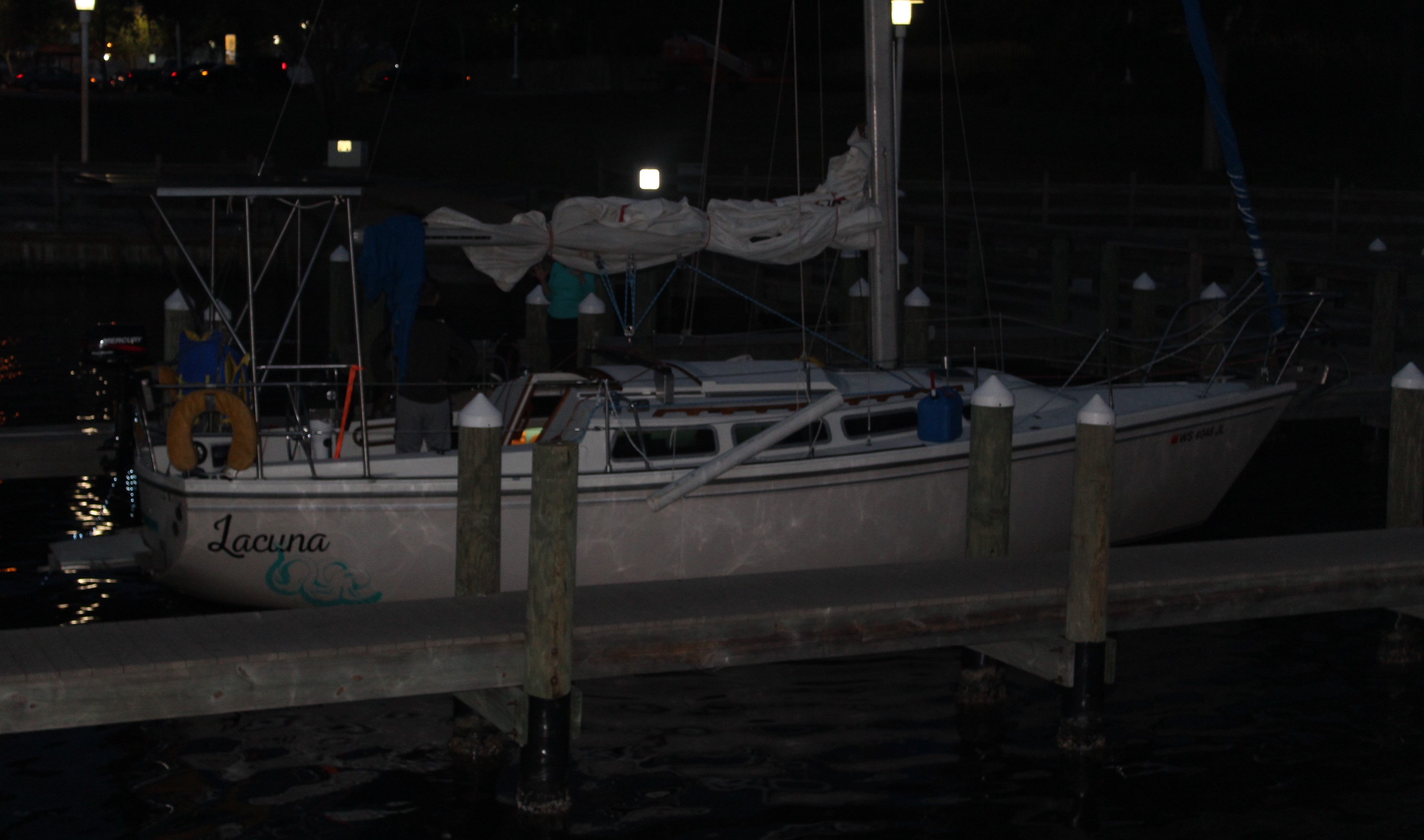
    Turns out the crew of the Lacuna, Mike and Jen, left from Wisconsin back in October to start the loop but are not members of America’s Great Loop Cruising Association.  They are a young couple who are working onboard via the internet as they do the loop.  The definition of Lacuna is gap or hiatus.  They explained that they are taking a lacuna from their dirt dwelling life to cruise the loop.  Very inspirational.

    7-ft-walton-beach
    Dock neighbors for the night

    Tuesday, January 17, 2017

    Before the crew got started this morning they welcomed some folks from Kentucky onboard.  They were doing a photo shoot at the City Park and Marina.

    9-photo-shoot

    The young man is on Instagram at braden_shannon for any of the single virtual crew members who might be interested.

    39-brandon
    Braden, the model

    The crew also spent some time with Mike and Jen, the crew of the Lacuna, comparing notes and stories.  Seems the two crews are on about the same schedule to move east along the pan handle of Florida and stage for the Gulf crossing.

    11-mike-and-jen
    Mike and Jen in Choctaw Hatchee Bay


    13-dewey-destins-seafood
    Dewey Destin’s Seafood

    The crew shoved off a bit after 1000 a.m. and made the hour run over to Destin to stop and enjoy a Dock and Dine at Dewey Destin’s  Seafood.

    They landed at the end of the T-dock.  The restaurant does not look like much but the food was very good and the portions for lunch were  unexpectedly huge.  The crew took a to go box and have enough food left for another meal.

    As the crew was walking back down the dock to leave, a couple stopped the crew and asked if they were doing the loop.  The crew answered yes, and had an interesting conversation with the couple.  Turns out the couple are neighbors with Ron and Eva Stob, the originators of the Great Loop Cruising Association.  Small, small world.

    After the conversation, the crew shoved off from the dock and headed back to the Bay.  The dolphins were ready to play today and this one was very acrobatic as he jumped out of the water several times.

    16-dolphin

    17-dolphin

    The crew ran another 20 miles, and dropped anchor for the night near the Choctaw Hatchee Bridge. (HWY 331)

    18-anchor-at-choctaw-hatchee-bridge
    Anchored a quarter mile from bridge

    Wednesday, January 18, 2017

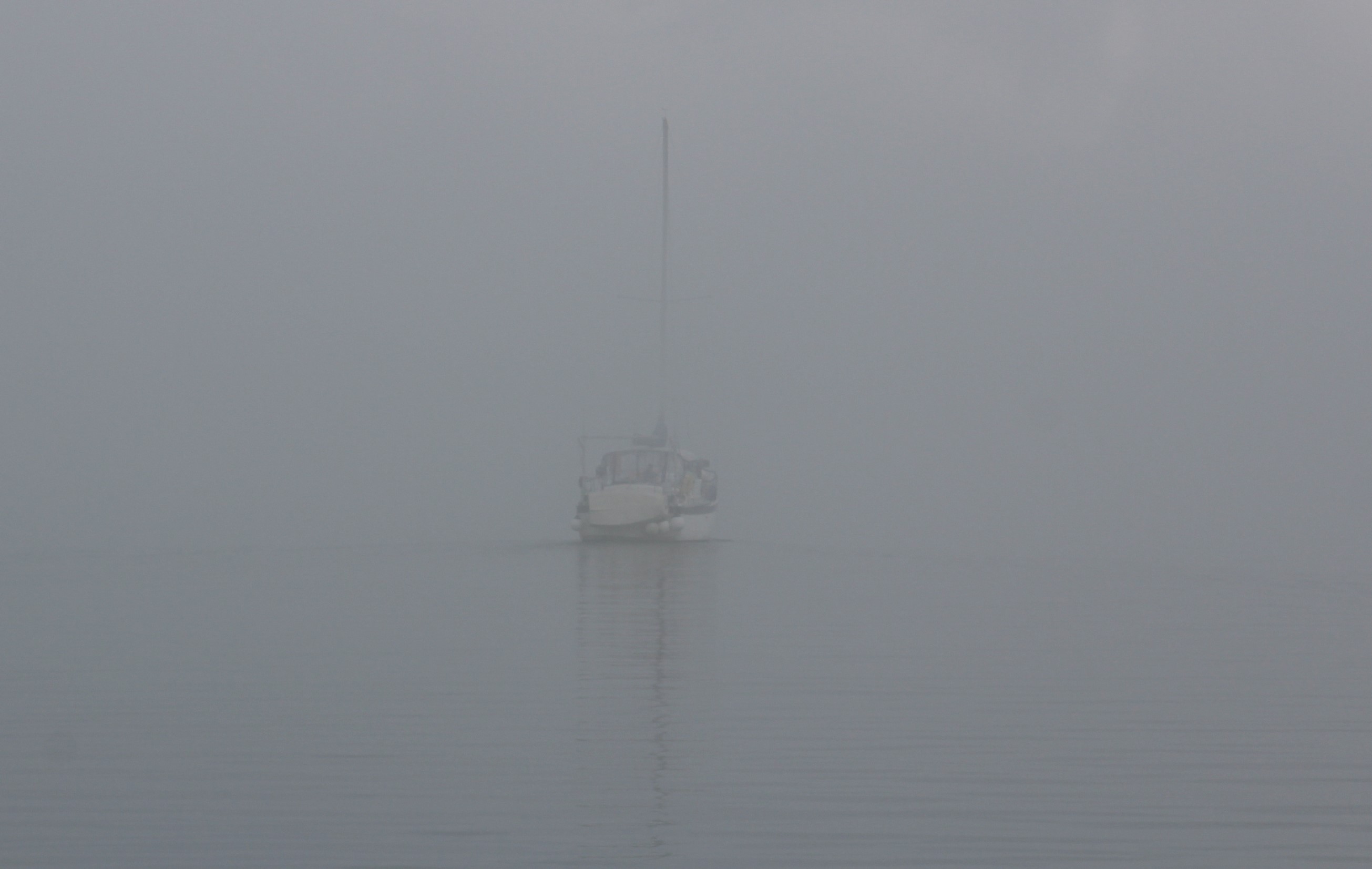
    The crew woke up to heavy fog this morning.  The crew could hear vehicle traffic on the bridge but could no see the bridge.  The skipper was getting impatient with the fog, so at 1000 he called the Panama City Marina and learned that the fog had cleared over there.  The crew discussed their options and decided to go ahead and leave at 1100 even if the fog was still present.

    img_0022
    Looking at the bridge at 1100

    At 1100, the fog was still socked in so the crew raised the anchor and headed east four miles with the hope that when they entered a narrow 16-mile channel that less water would mean less fog.

    As they approached the canal opening the crew could not find the green day marker that was supposed to mark the entrance of the channel.  They could not see the day marker on the radar either.  Finally they saw a small object on radar that turned out to be a small Coast Guard boat in the position of the missing green day mark.  Looked like the Coast Guard was deploying a floating green can.  After passing the Coast Guard boat, the skipper noticed the green day mark washed up on shore.

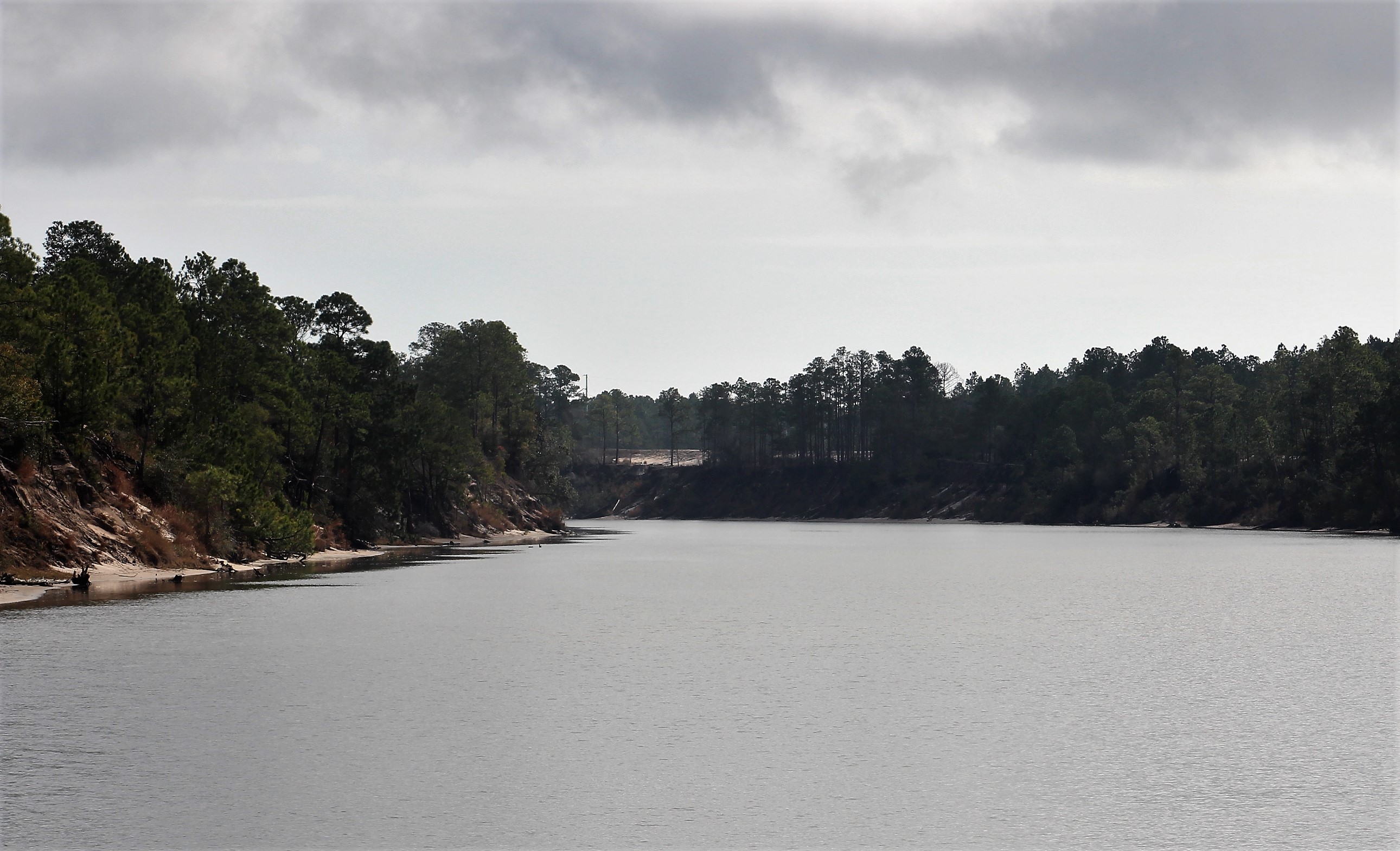
    Within a half mile of entering the narrow channel, the fog was completely gone and the crew cruised in partly cloudy skies the rest of the day.  The channel turned out to be a big surprise with good scenery.

    19-ehl-255-grand-canyon
    Finally no fog


    20-ehl-260
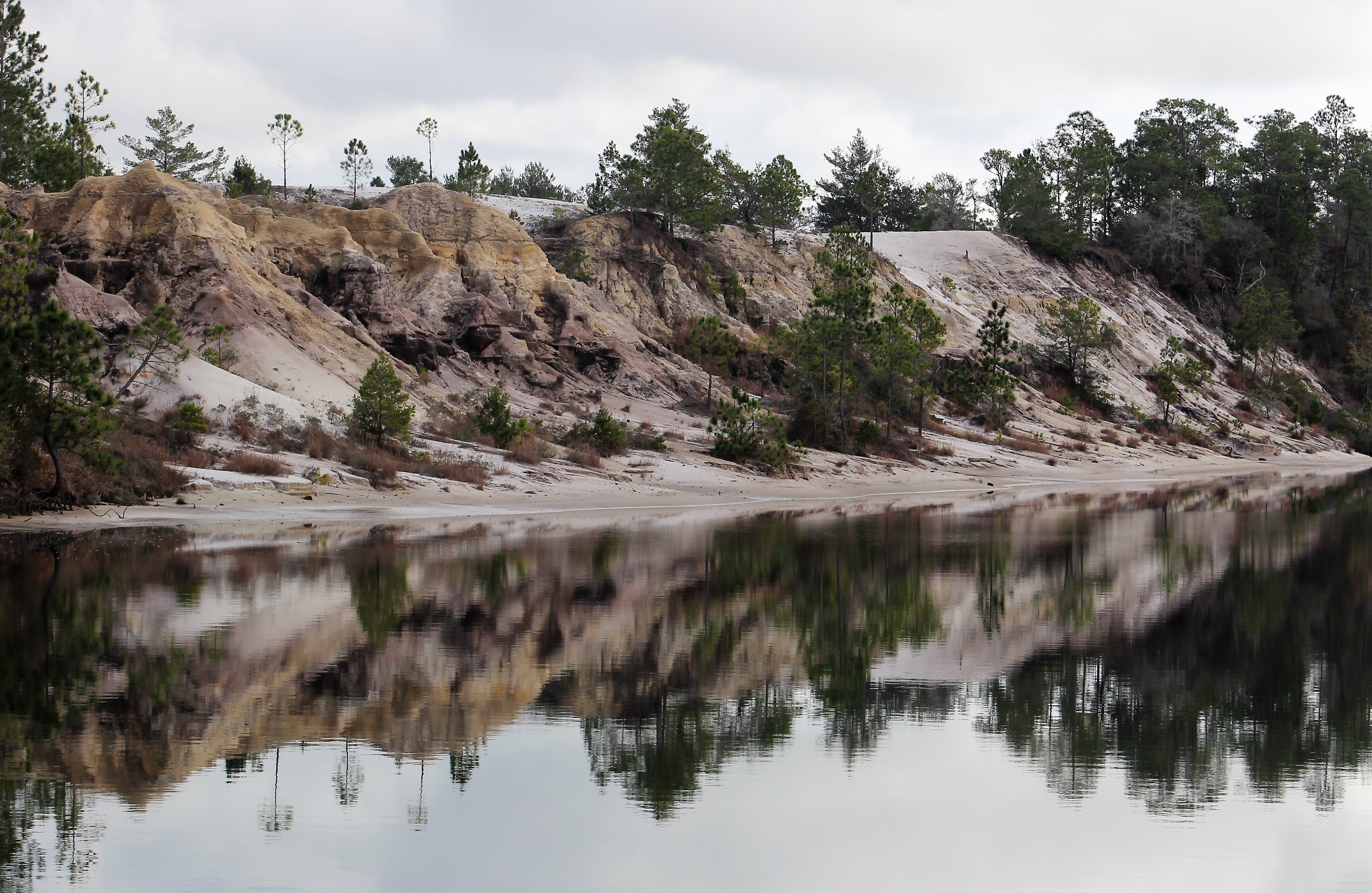
    Some pretty shoreline and reflection

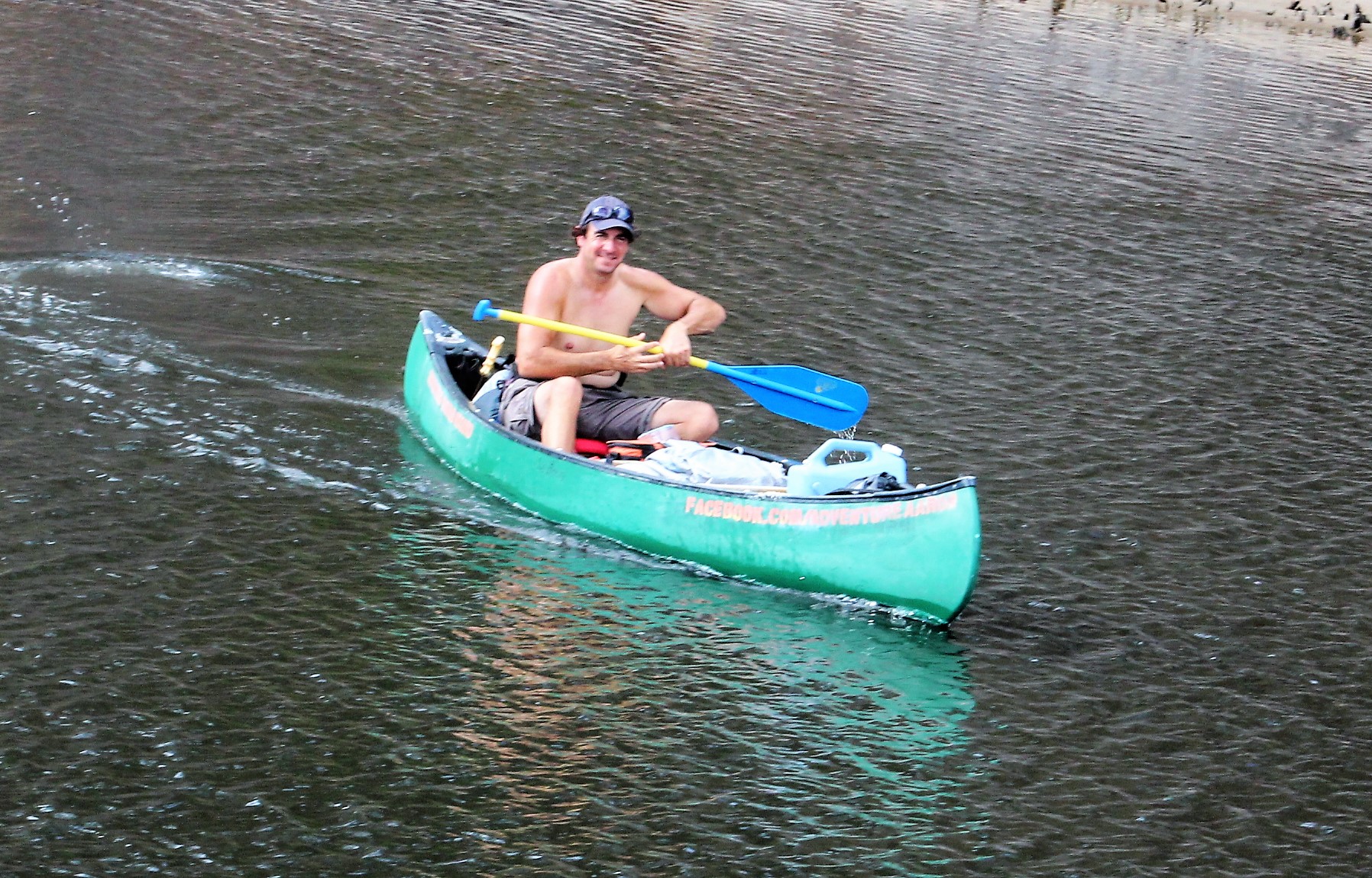
    While running through the narrow channel, also referred to as the ‘Grand Canyon,’ the crew passed a man paddling a canoe.  Not all that unusual, except this canoe had Guinness World Record painted along the side of the canoe.

    22-adventure-aaron
    Adventure Aaron

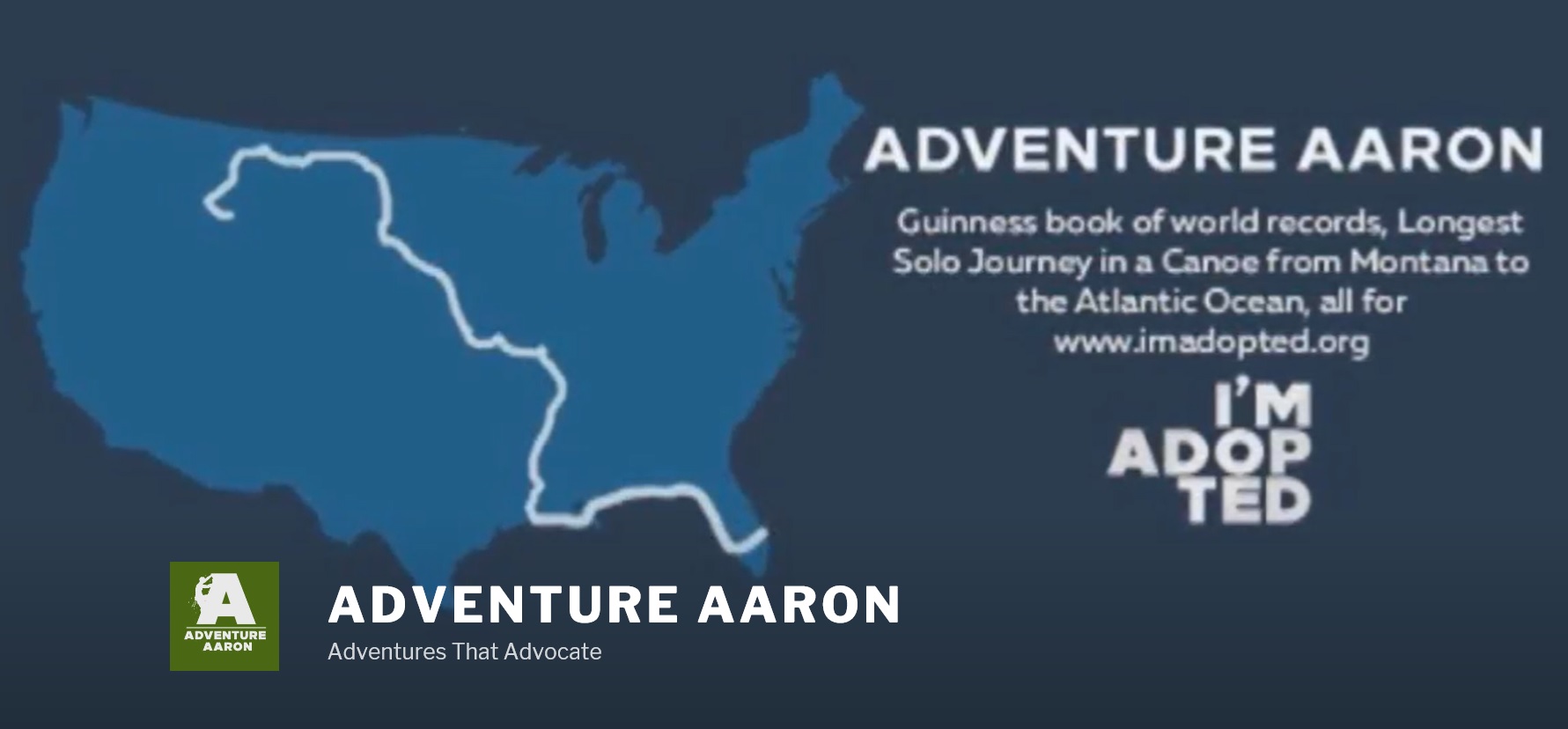
    The crew stopped in the channel and the man paddled over to Still Waters II.  His name is Aaron.   He started his current adventure on the Missouri River in Montana.  He is paddling to raise awareness about adoption.  His goal was to paddle the Missouri River to the Mississippi River, and then the Mississippi River down to the Gulf.

    adventure-aaron

    He said once he arrived at the Gulf he still had gas in the tank so he turned east and started paddling the Gulf Intercostal Water Way.  His new goal is to paddle to the Atlantic Ocean.  He has a website if you would like to learn more about Aaron and/or his cause.  http://adventureaaron.com

    www.imadopted.org

    The crew found this interesting since their own daughter and son-in-law just started their own adventure by adopting a sibling group of four in 2016.

    After talking with Aaron the crew pressed on to Panama City Marina.

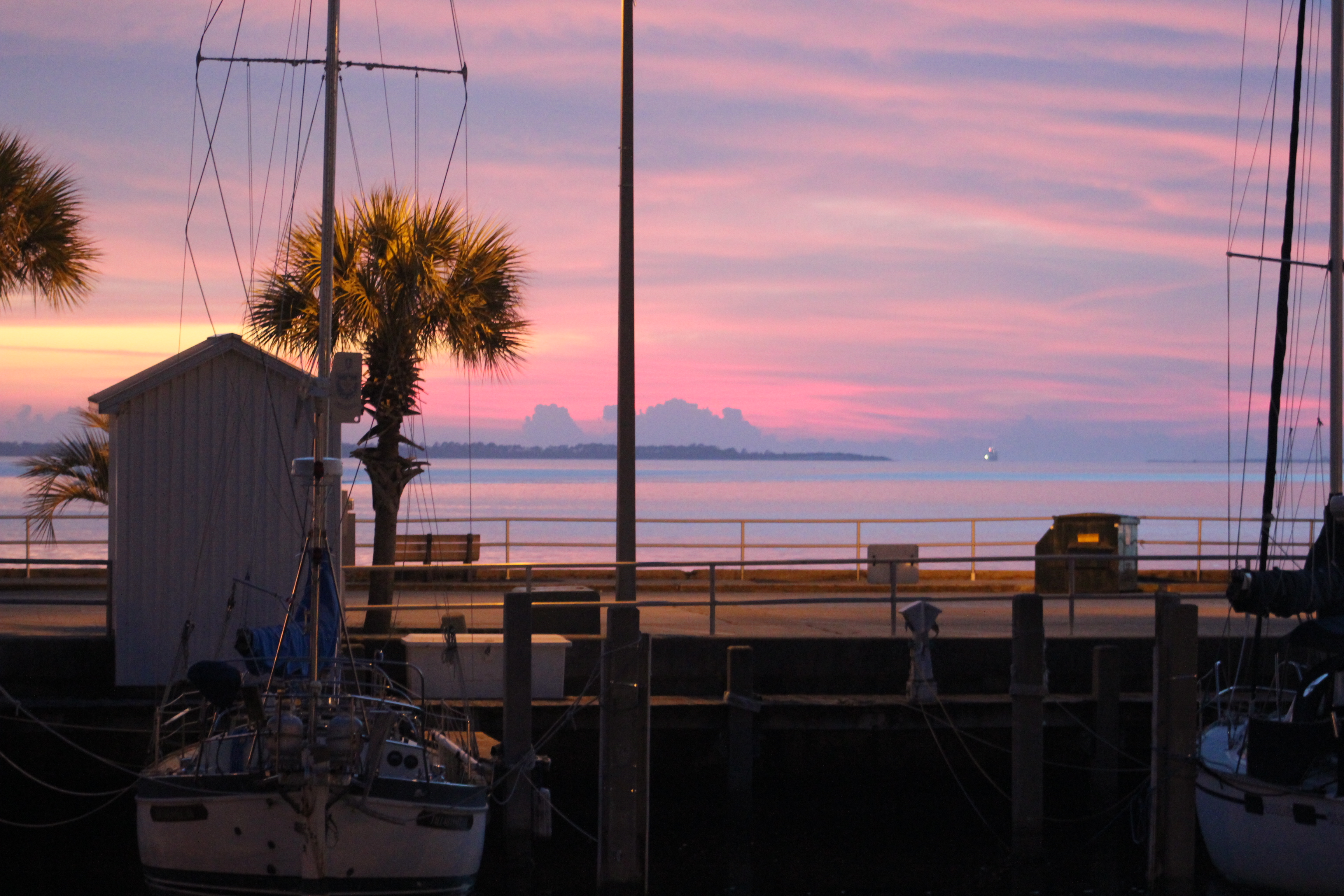
    28-panama-city-marina-sunset
    Sunset from sundeck of Still Waters II at Panama City Marina

    Shore Excursion – Panama City

    The crew decided to rent a car for the weekend and explore the area.

    34-panama-city

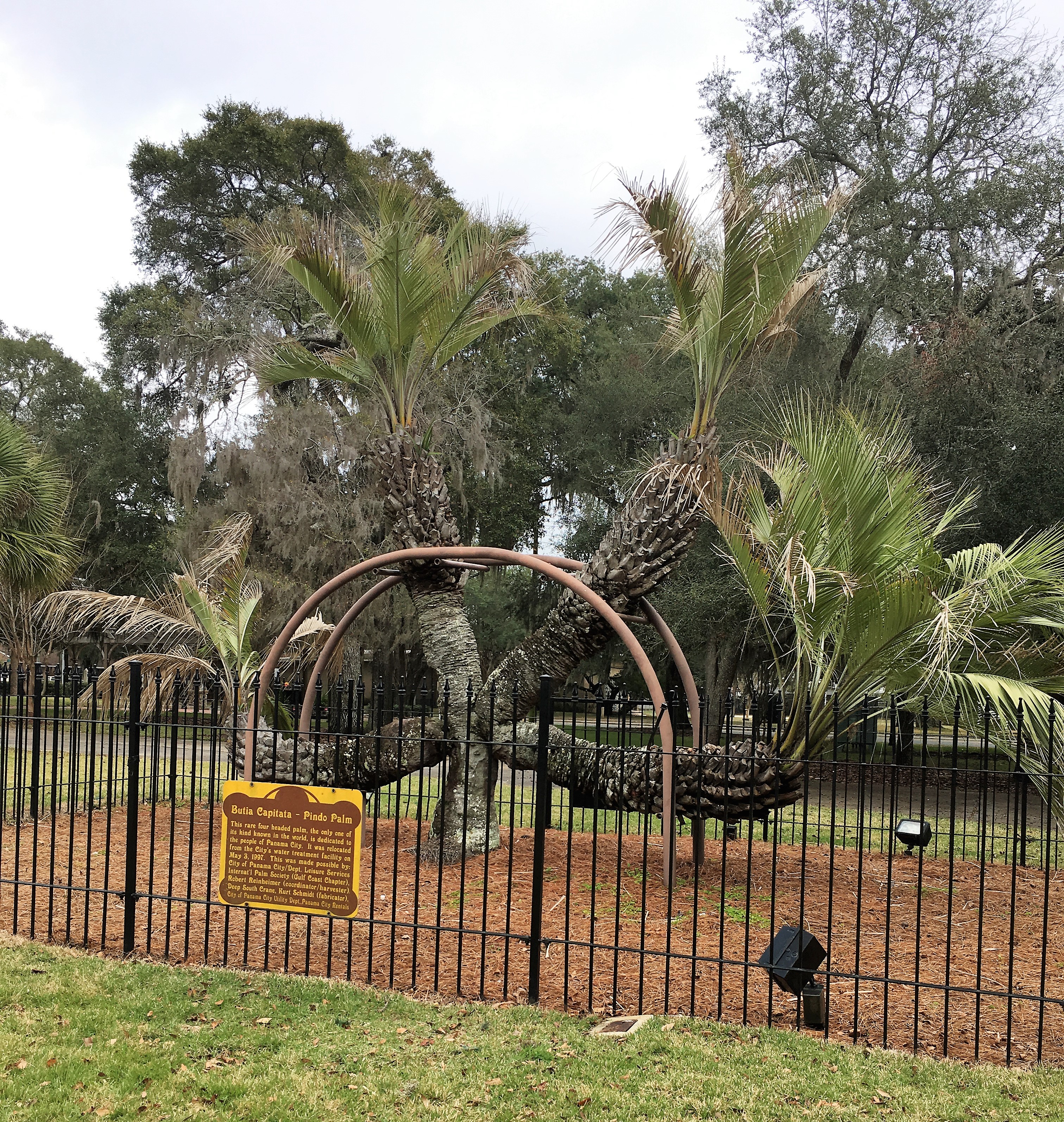
    This next photo is of a four headed palm tree.  Thought to be the only one in the world.  It is located in a city park in St Andrews.

    37-palm-tree
    St Andrews Park

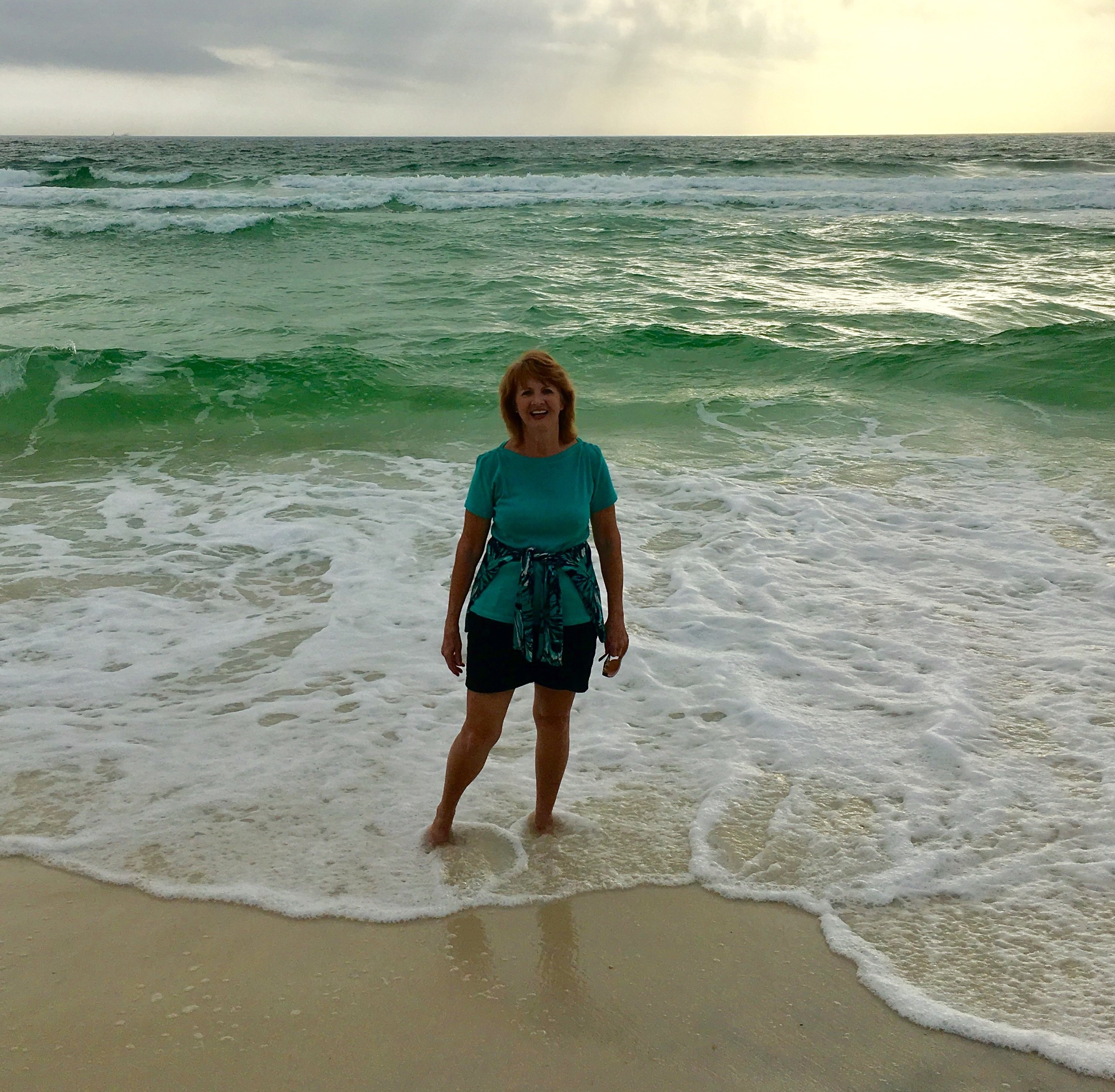
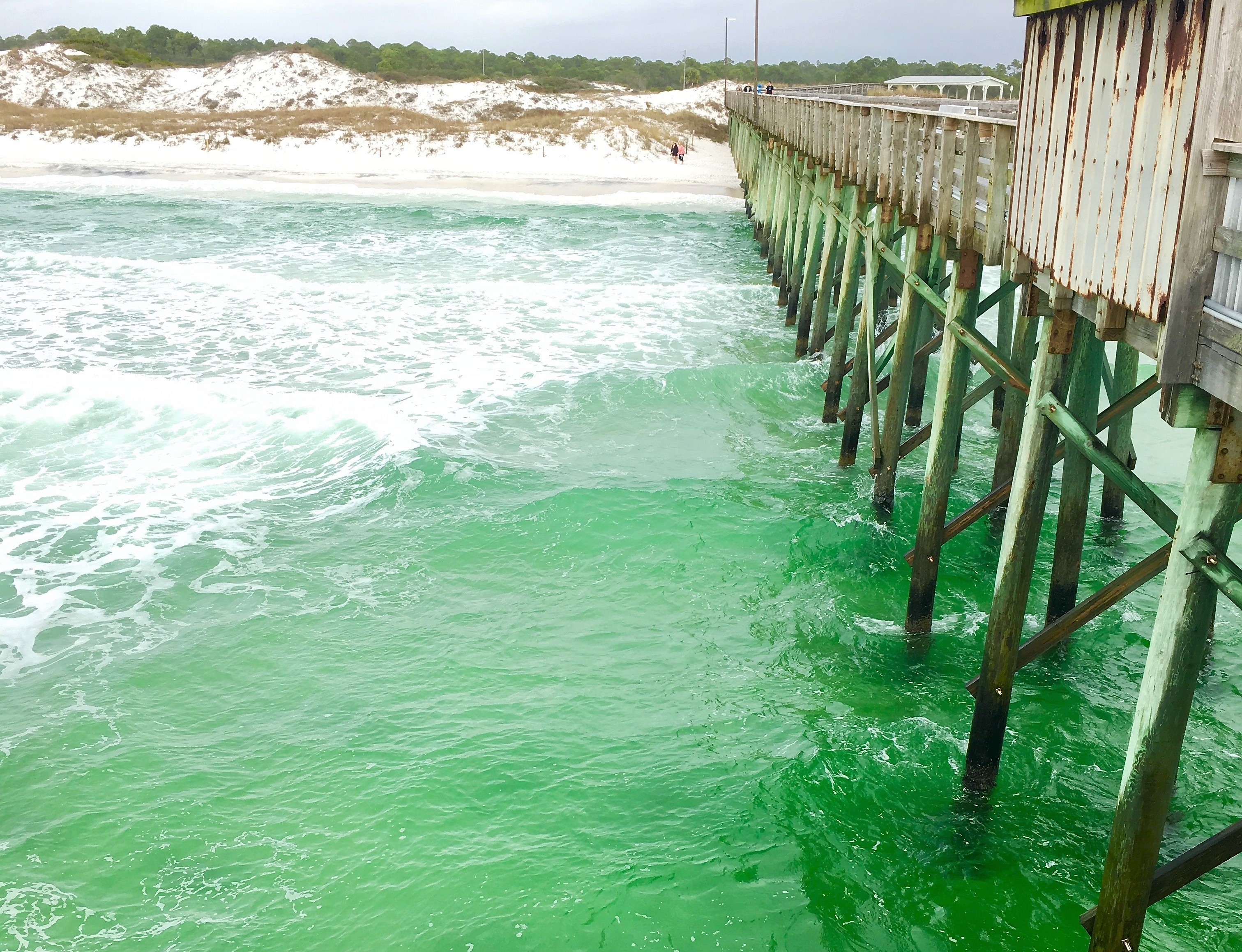
    The next two pics show why this area is called the Emerald Coast.

    31-emerald-water
    Beach at St Andrews State Park


    36-fishing-pier

    While shelling along the shoreline, the crew found this rare shell back turtle coming ashore.  Turtles should not arrive until March so this must be a scout.

    30-turtle

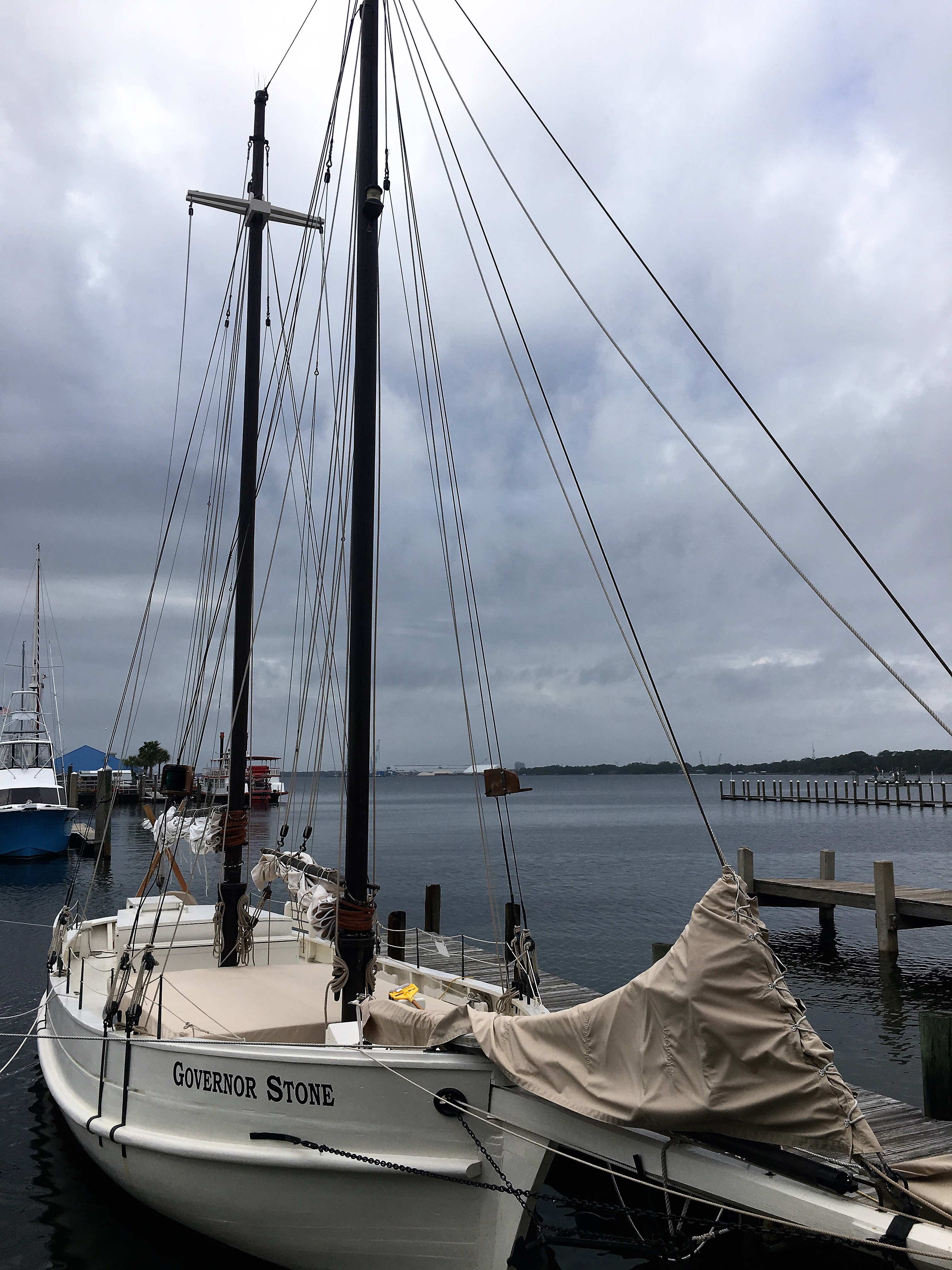
    The Governor Stone is the last known working Gulf Coast schooner.  She served during WWII, and has worked as an oyster buy boat, a rum runner during prohibition, a resort day sailor, a private yacht, and a sponge boat.  She is now a floating sailing museum.

    29-schooner

    She was built in Pascagoula, Mississippi in 1877, and has actually been sunk three times.

    Next Week – The weather and wind is predicted to be bad through Monday, winds at 24 mph and gusts over 30.  The crew will stay put till mid week and then make their way  over to Port St. Joe.  They will stay at Port St Joe until a weather window opens to cross the Gulf.  When a weather window opens they will move further east to Carrabelle, Florida where they will launch their Gulf crossing to Tarpon Springs.

    Loop On – The water goes on forever and the adventure never ends.
    Eric the Red

  • Pelicans in Paradise

    Hello virtual crew members and fellow adventures!

    img_3594
    Welcome back onboard as we begin to cruise in 2017

    Eric here catching you up to date on the latest travels of Still Waters II. Click on this link to see the day- to-day travel log.

    img_0098

    Summary of week:

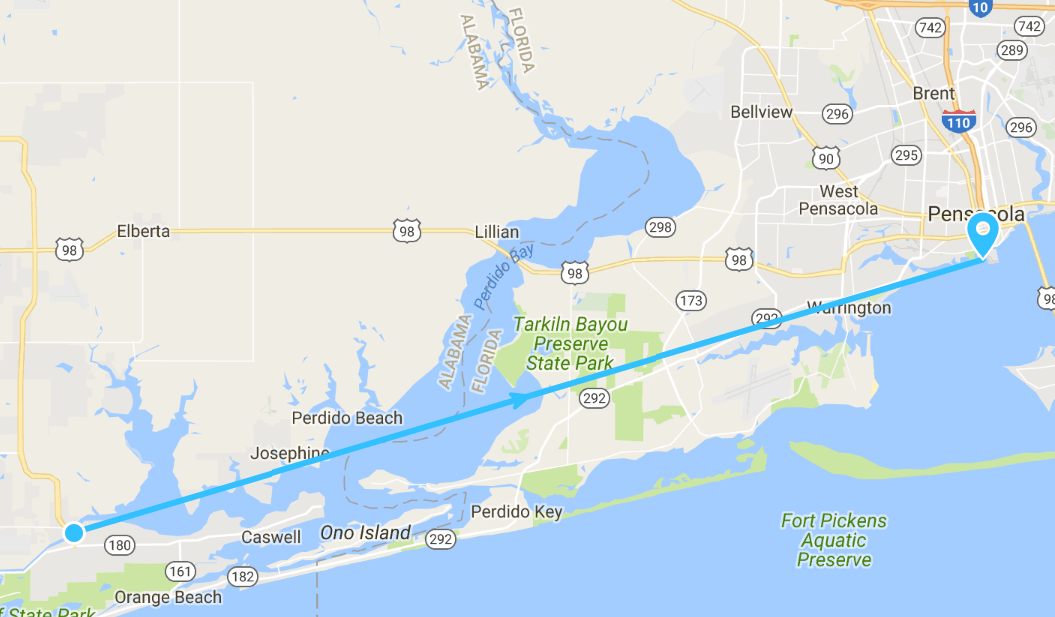
    After spending a month at The Wharf in Orange Beach, Alabama the crew finally cruised a whole day last week.  They left The Wharf on Friday the 13th and made their way to Palafox Pier in Pensacola, Florida.

    pensacola

    But before we get started cruising, the crew would like to give a shout out and congratulations to LeryLynn for crossing their wake as they made the run to The Wharf.

    img_0065
    Wayne and Lynn with their Gold Burgee


    fullsizerender-1
    Celebrating new Gold Loopers Lynn and Wayne.  Brenda and Scott also at the party.


    Friday, January 13, 2017

    The crew had planned to cruise along the panhandle of Florida with The Lord’s Provision. However, Roger came over in the morning and informed our crew that Grace was ill and was headed to the hospital.  The skipper helped Roger move The Lord’s Provision over for a pump out and get resettled in her slip before setting out for Pensacola.

    img_0061
    Still Waters II at rest at The Wharf
    img_0064
    Leaving The Wharf

    The cruise was exceptional for dolphin watching.  The crew counted about 35 dolphins swimming and playing in the water today.

    dolphin

    img_0069


    Just before noon, the crew re-entered Florida waters after leaving them in April 2016.  Little-by-little, the crew is sneaking up on their goal of crossing their wake in Ft Myers.  Today was a major milestone in this quest.


    Cruising along the Gulf Islands National Seashore.

    img_0070

    Entering Pensacola Bay.

    img_0072

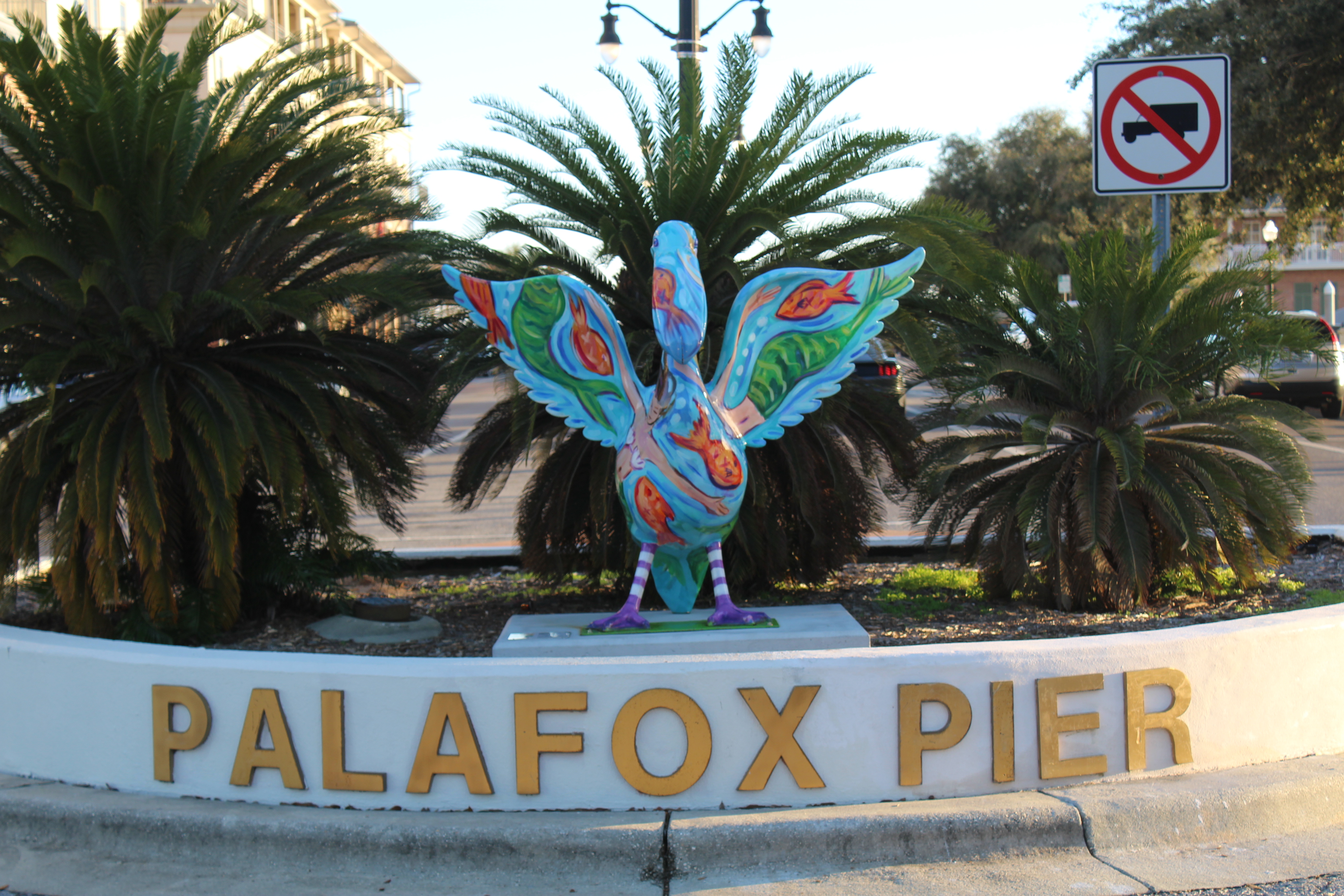
    After crossing Pensacola Bay, the crew landed at Palafox Pier.  After securing the boat, the crew headed out to learn about the history of Pensacola.

    img_0075


    img_0076
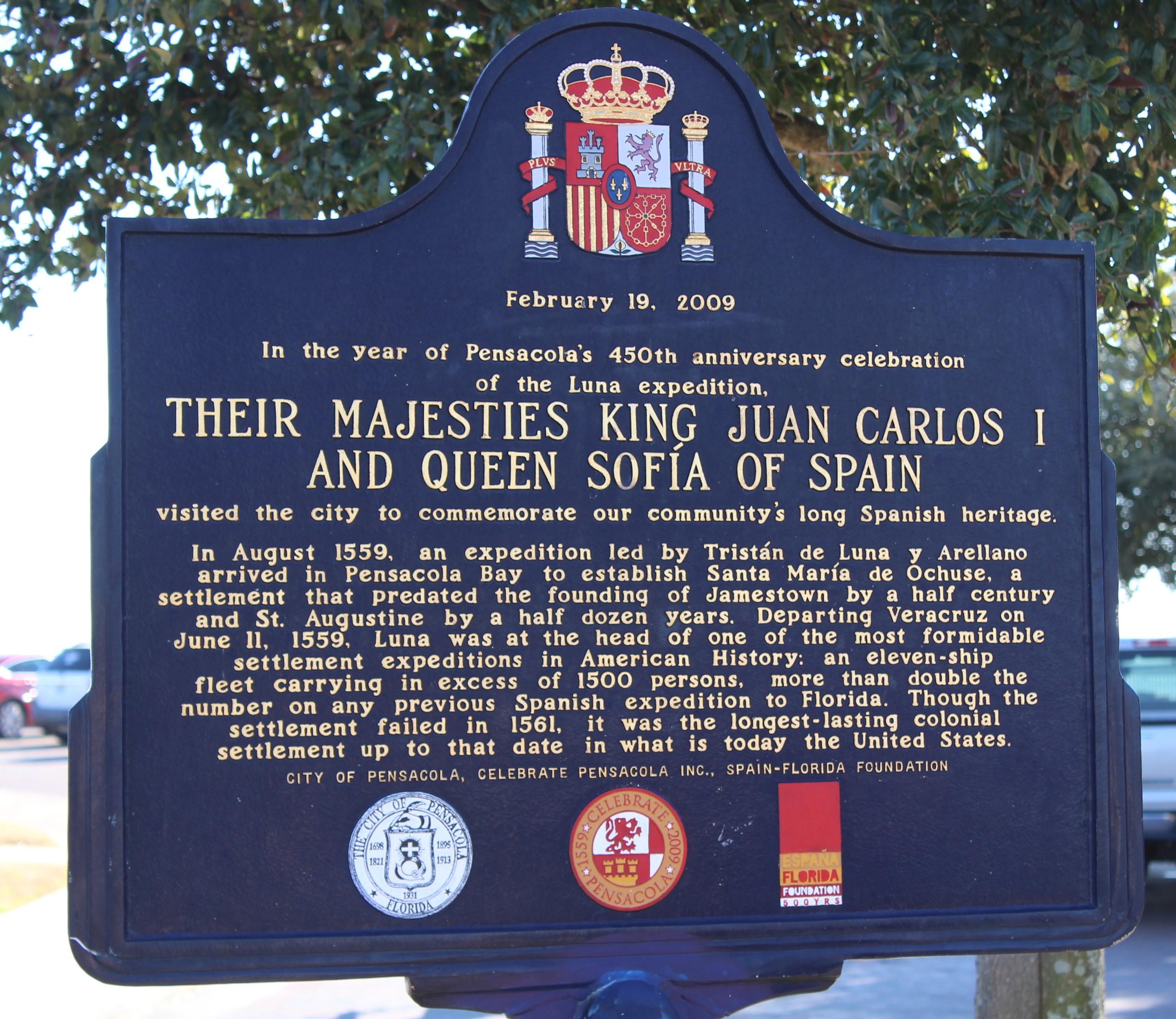
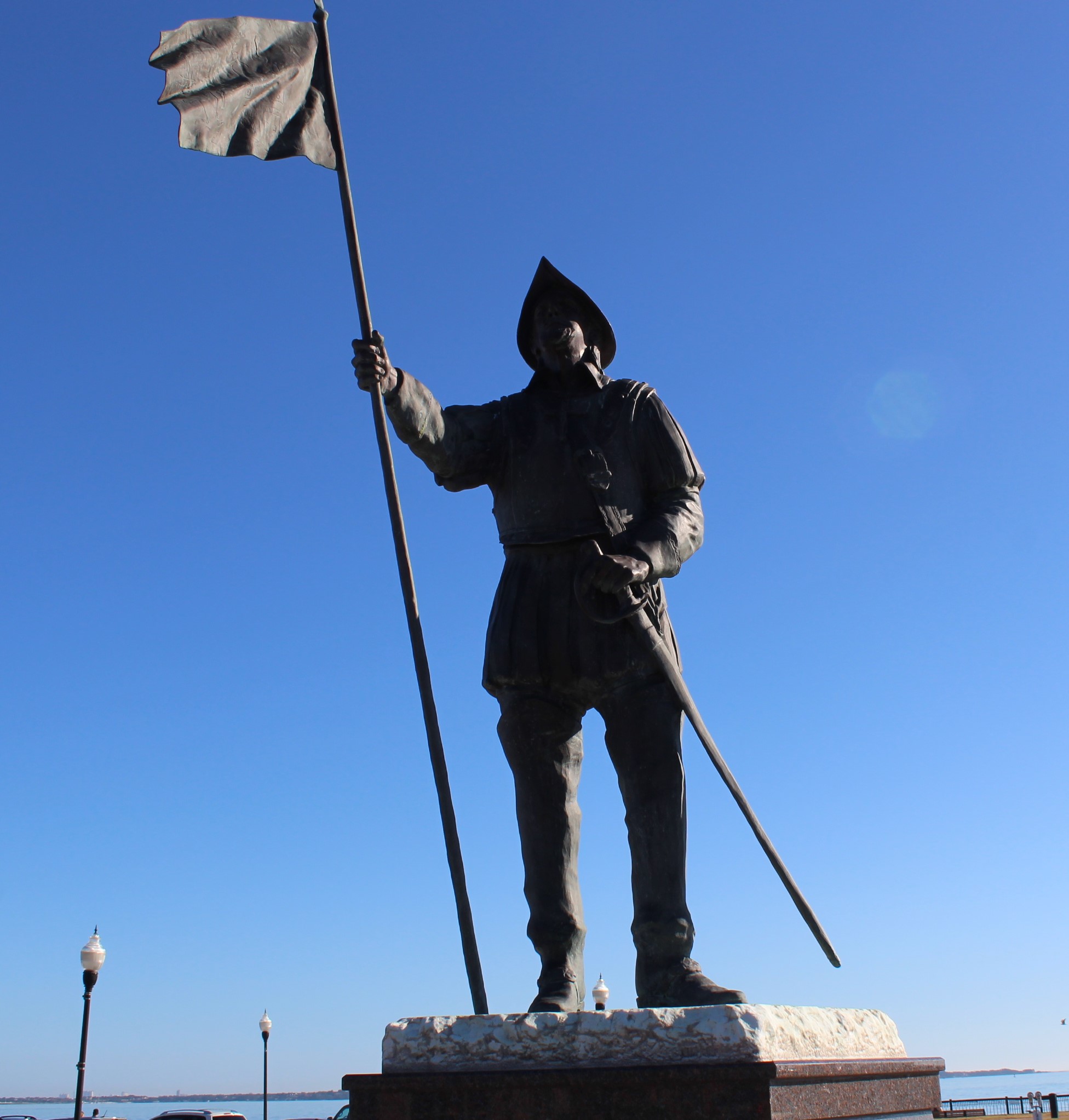
    Luna who landed in Pensacola in 1559

    The Pensacola colony got off to a rocky start.  In September 1559, they were wiped out by a hurricane.  The survivors continued to try to make a go of it for two more years but finally abandoned the colony in 1561 and returned to Veracruz.

    img_0095

    The Spanish settled the area again in 1698 to guard Florida from the French who were expanding eastward from New Orleans.  This Spanish period lasted till 1719.


    img_0096

    The French then controlled the area 1719-1722. As with the first colony, a hurricane destroyed Pensacola and the French burned what survived.  The French then moved back west to New Orleans.


    The Second Spanish period was 1722-1763.  The Spanish reclaimed the area and moved Pensacola from the barrier islands to its present location.

    The Treaty of Paris-1763, transferred Florida to the British following the French and Indian War because the Spanish had sided with France.

    The Third Spanish period was 1781-1819.  Following the Revolutionary War the British gave the land along the coast all the way to the Mississippi River back to the Spanish.

    united_states_1803-04-1804-03-narrow

    Spain sold the Louisiana territory to France.  The French then sold the land to the United States in 1803.  This basically surrounded the Spanish area known as East and West Florida by the growing United States.

    img_0079
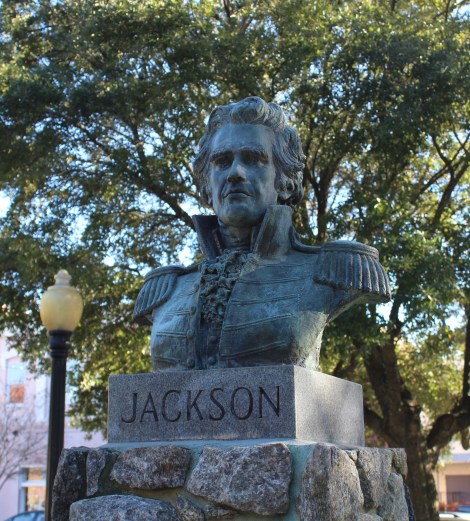
    Andrew Jackson led the US invasion to Spanish West Florida

    In 1819 the United States invaded Pensacola and took control of the area.  In 1821, Spain sold Florida to the United States.


    img_0097

    On January 10, 1861, Florida became the third state to leave the United States and join the Confederate States of America.

    Following the Civil War, Florida was readmitted to the Union on June 25, 1868.


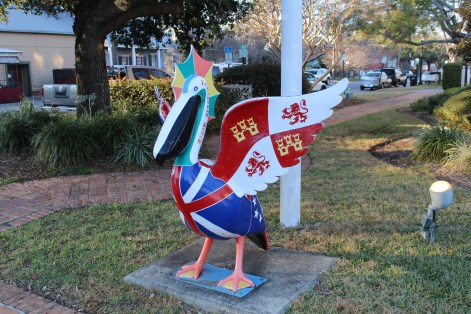
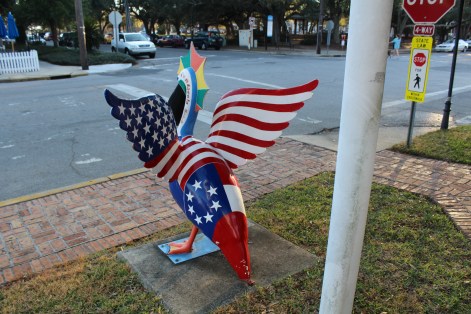
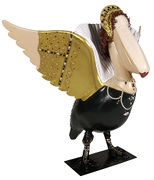
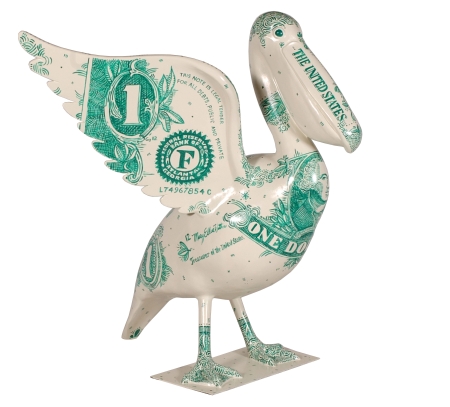
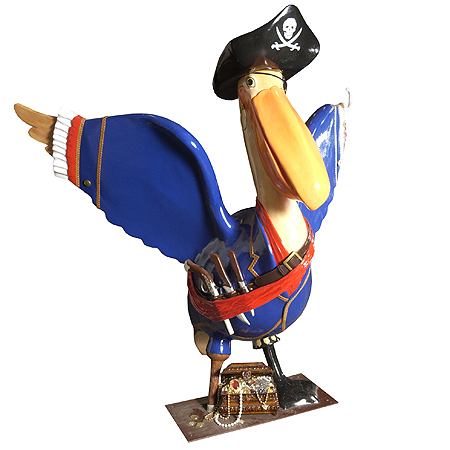
    While walking around historic Pensacola the crew began sighting Pelicans in Paradise, a public art display scattered around Pensacola.  The crew found 14 of the  Pelicans that were within walking distance of the marina.

    Some of the crew’s favorite pelicans:


    A few feathered friends that were too far away to go find on foot.

    154px-pelicanelizabeaki

    pelicanpelvis
    Pelvis
    pelicanbuck
    Buck
    pelicanpeglegpete
    Peg Leg Pete


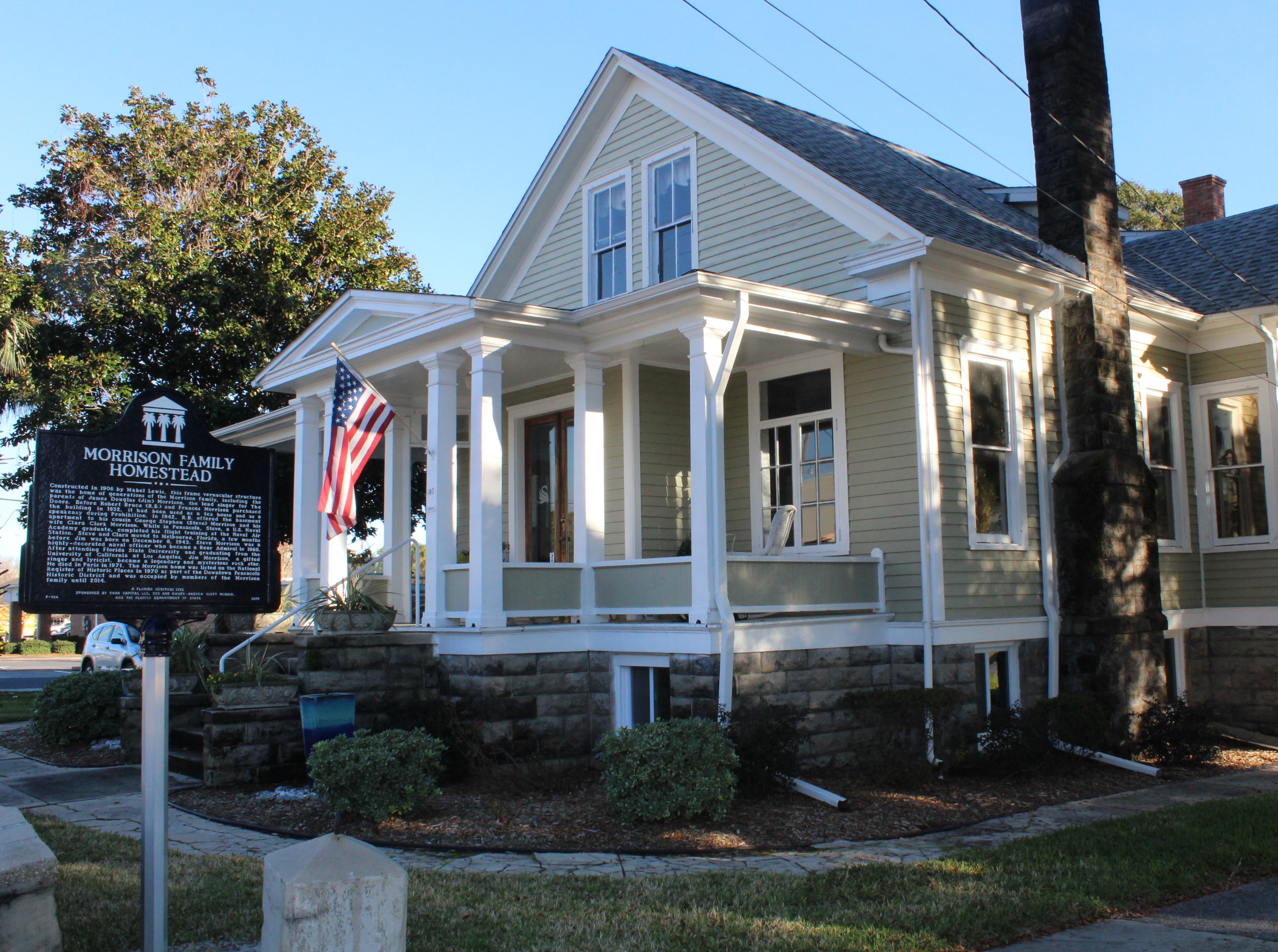
    While walking around historic Pensacola looking for Pelicans, the crew stumbled upon this modern piece of history, The Morrison Family Homestead.  The home was built in 1906.  The Morrison family bought the home in 1932.  The lead singer of the Doors, Jim Morrison, was born and raised in this home.  Who would of known?

    38-morrison-home

    Next Week – The crew plans to continue along the panhandle of Florida and visit Fort Walton Beach, Panama City, and Port St. Joe.  The crew will stage in Port St. Joe and wait for a weather window which will allow them to cross the Gulf over to the west coast of Florida.

    Loop On – The water goes on forever and the adventure never ends.
    Eric the Red

  • Fog, Fog, Fog, and more Fog

    Hello virtual crew members and fellow adventures!

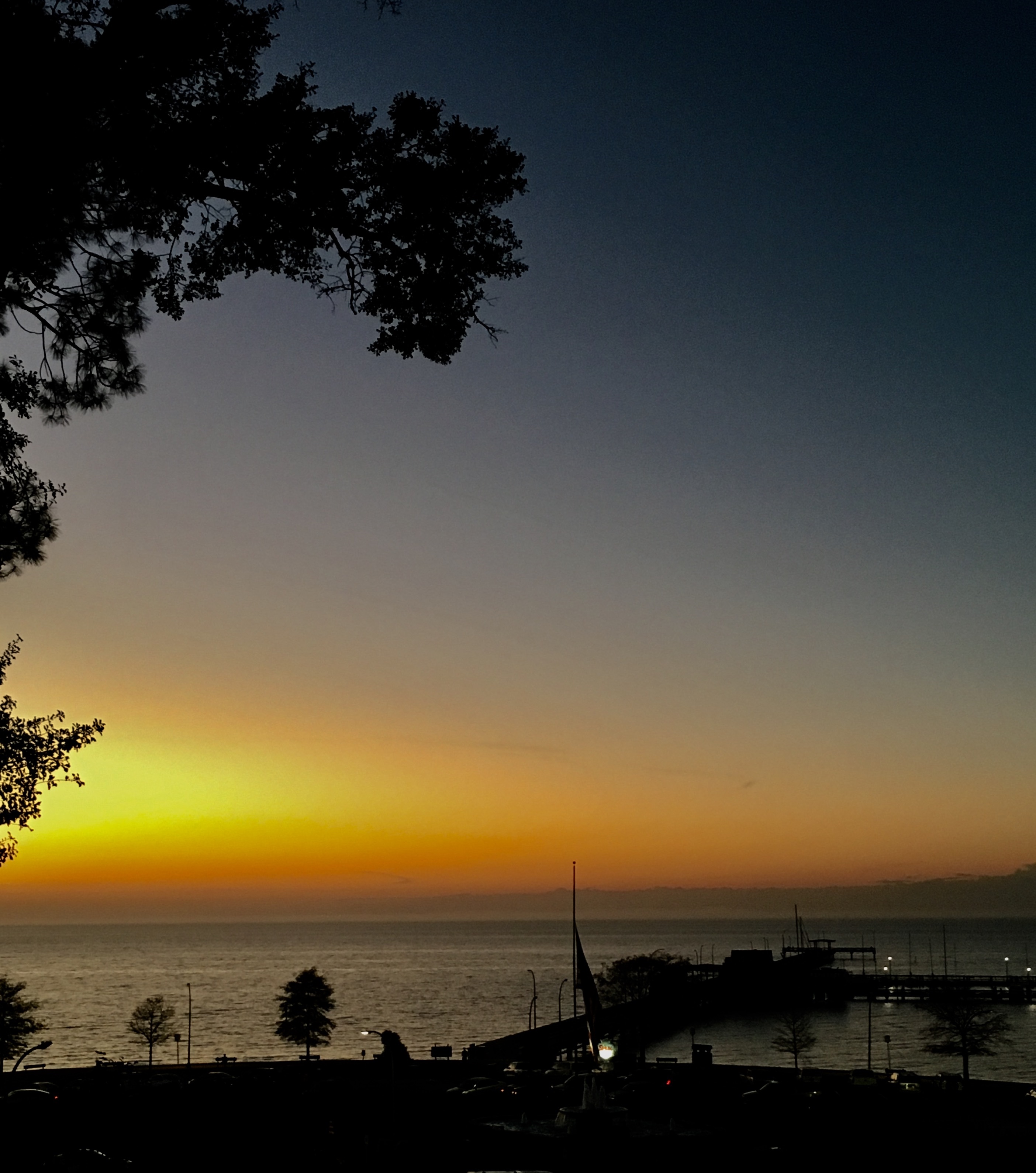
    The sun is setting over Mobile Bay and the 2016 cruising season.


    bay-sunset
    Fairhope Municipal Pier and Marina


    Eric here catching you up to date on the latest travels of Still Waters II. Click on this link to see the day- to-day travel log.

    orange-beach

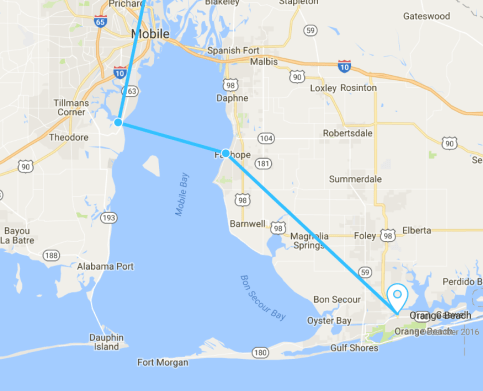
    Summary of week:  There is a small community on the east side of Mobile Bay that the crew wanted to visit so they left Dog River on a rising tide to make their way to Fairhope, Alabama.  After visiting a few days, they shoved off for the ultimate destination this week, The Wharf in Orange Beach.  They made one stop along the way to enjoy a late lunch at LuLu’s.

    Sunday, December 11, 2016

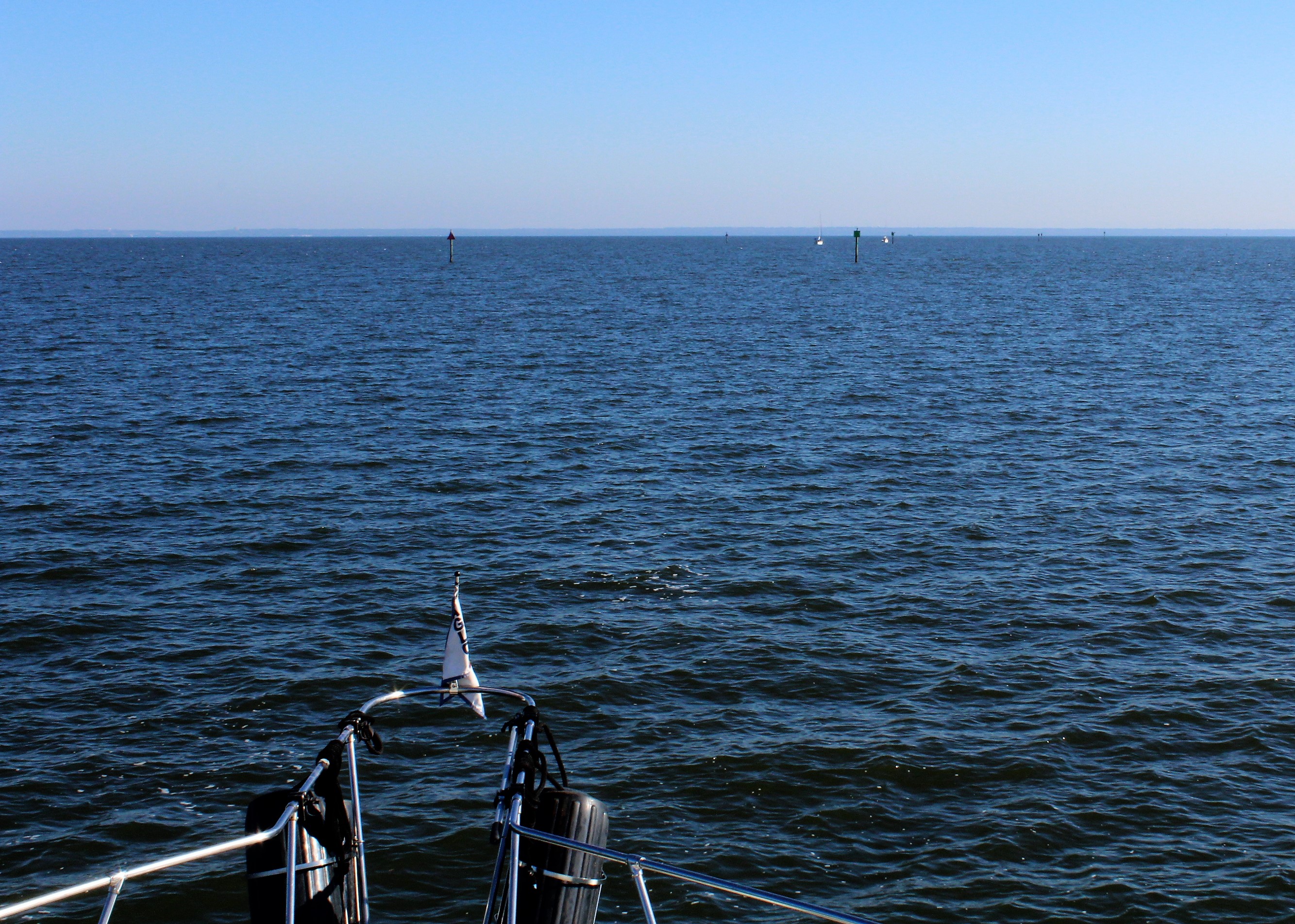
    Mobile Bay is known for shallow water so the crew took it slow and easy as they travelled the 10 miles across the Bay.  The channel leading out into the Bay seemed much larger since the crew was not fighting the howling winds and waves.  They crossed the Big Ship Channel with no vessels in sight and then steered towards the Municipal Pier in Fairhope.

    img_0001
    Following two sailboats out of the Dog River channel and into the Bay

    Active Captain navigation alerts warned to stay on the south side of the entrance channel to the Municipal Marina to find the deepest water.  As the crew entered the channel the water depth dropped to five feet.  The depth stayed five feet all the way to the dock.  As the crew was docking, the Admiral noticed the crews of Arora B and Bright Angel standing on the pier.

    img_0002

    After the boat was landed safely, the crew enjoyed lunch at Shucks, a restaurant right on the pier known for its oysters. After lunch, it was time to go explore the town.

    img_0004

    Fairhope has ranked high on many lists as a best place to retire.  After visiting the crew can see why.

    img_0006
    One of many public art fixtures along the shore

    The town was started as an experiment by 28 followers of economist Henry George back in November 1894.  They formed an Association with a vision to “establish and conduct a model community, free from all forms of private monopoly, and to secure to its members therein equality of opportunity, the full reward of individual efforts, and the benefits of co-operation in matters of general concern.”

    img_0020

    The corporation initially bought 4,000 acres along the east shore of Mobile Bay.  Then the corporation leased the land back to the people.  The corporation kept the land along the Bay for the general good of the community.  Many of the town folks gather along the shore each night to watch the sunsets over the western shore.  The Bay front property is now all parks, walking and biking trails.

    A few locals out enjoying the bike trail along the shore.

    img_0012img_0016img_0017

    Today, there all still 1800 lease holders of the original 4,00 acres.

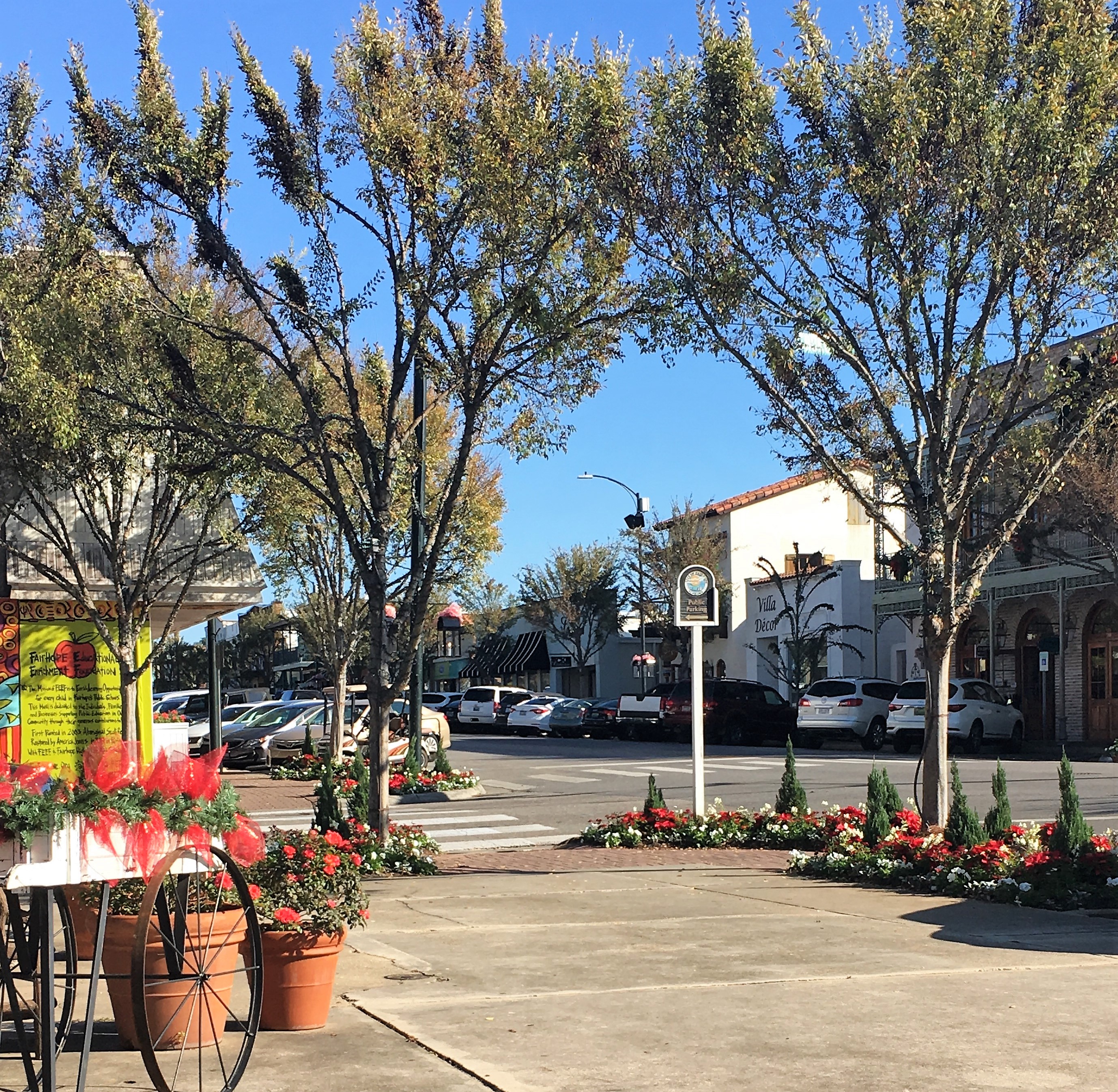
    The 4×4 block downtown area is beautiful.  The streets are lined with trees, there are large brick paved sidewalks, colorful flower gardens and hanging baskets decorate the area.  The people were friendly and took a lot of pride in their town.  Definitely, a place to come back and visit again.


    fairhope
    Downtown Fairhope


    Tuesday, December 13, 2016

    One of the things the crew tries to do when the weather is looking bad is to weigh the risk and rewards of venturing out in bad weather.  There was dense heavy fog when the skipper woke up.  On Monday, the fog lifted around 0900.  Today, the forecast was calling for the fog to lift at 0900 also.  The crew waited till 0900 and the fog was beginning to burn off again.  The crew cast off the lines at 0915 and headed out into Mobile Bay.

    img_0021
    Not to bad out here, visibility greater than a mile

    Unfortunately, as the crew got further from shore the fog got worse.  The skipper plotted a new course that would keep them closer to shore, in 10 foot of water, and away from the Big Ship Channel.  The crew cruised south the length of the Bay in the heavy fog for four hours.

    img_0022
    Visibility less than a quarter mile

    The risk seems to be way more than any reward at this point.  Just when you think it cannot get any worse though, it does.  The skipper was trying to turn the radar on so he could at least “see” any ships on the radar screen before the ships got to close.  Only problem was that the radar did not seem to be cooperating.  After a half hour of frustration, the skipper decided it would be best to stay focused looking out the front rather than the non-functioning radar screen.

    Good news, at about 1240, the crew entered the Gulf Intercostal Waterway (GIWW).  Bad news, there might be more vessels in the area.

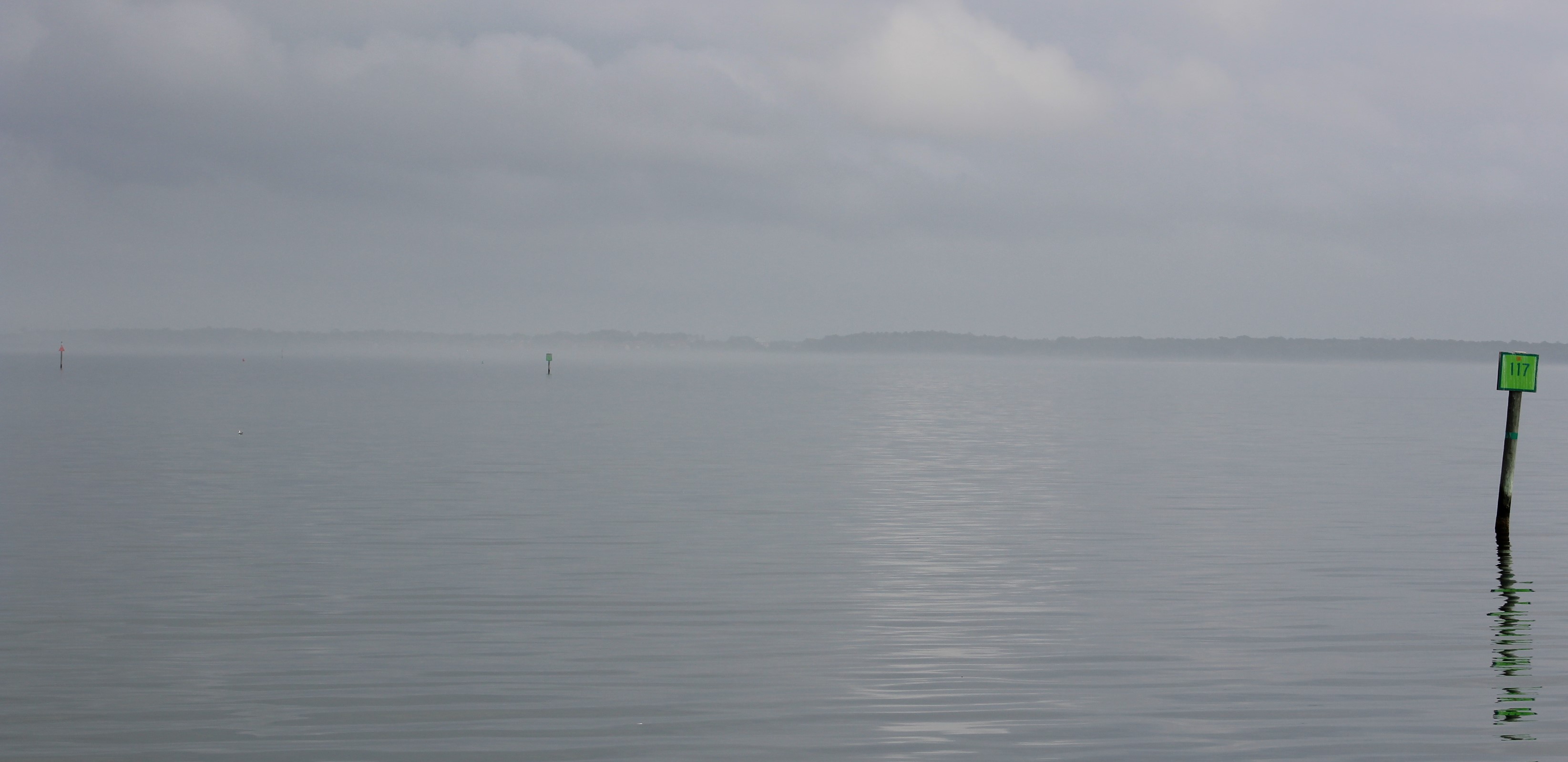
    The navigational aids marking the GIWW Channel were only a half mile apart, but the fog was still so heavy the markers were not spotted until the crew was almost on top of them.

    As the crew continued east towards land the fog began to slowly  lift.  The crew did over take this sailboat.  I guess our crew are not the only fools caught by the ‘fog will clear at 0900 weather forecast.’

    img_0023
    Sailboat less than 100 yards as we overtake them

    It was a good feeling when the skipper could finally see a string of navigational aids leading the way east.  Not a good day when the view below is good.

    img_0025
    Red and green marks in the distance

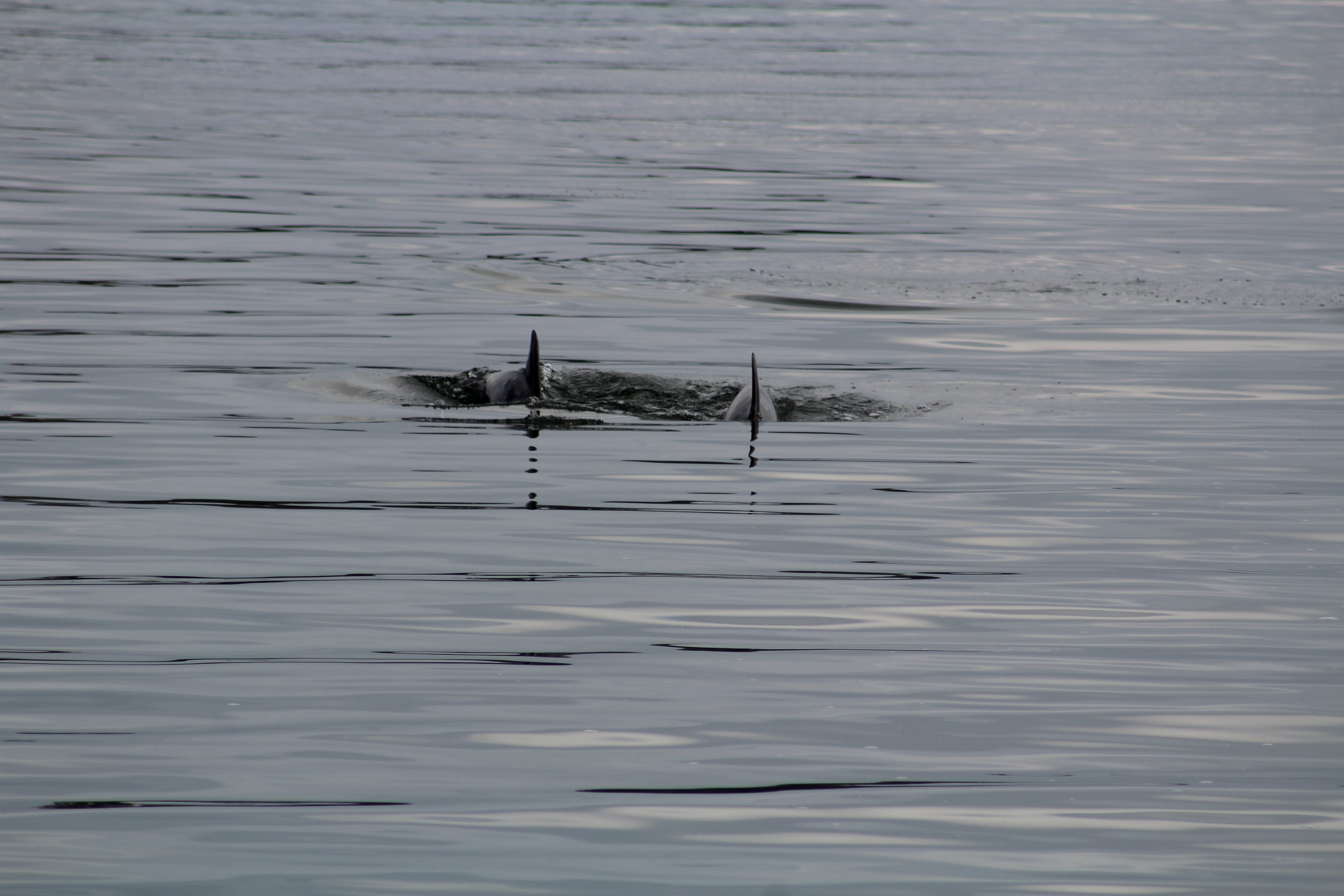
    Once the fog cleared, the crew began to see multiple pods of dolphins.  They probably saw 30-40 dolphins in the five miles to LULU’s.  The Admiral was excited to start seeing dolphins again.  She went out on the bow so she could watch the dolphins swim in the bow wake.  One dolphin jumped completely out of the water twice as he raced to the boat.

    img_0028
    Pair of dolphins swimming towards the bow wave

    But if you think the Admiral gets excited when she sees dolphins, check out Lucas and Marcos when they see dolphins for the very first time in their lives.  Lucas and Marcos are from Peterborough, Canada and are doing the loop with their parents on a 26 foot sailboat.

    Dolphin Video 1

    Dolphin Video 2

    If you want to see Americas Great Loop thru the eyes of second and fifth grade boys, follow their adventure at: Cruising on Living Life.

    The crew decided to do a Dock and Dine at LULU’s.  This is a restaurant operated by Lucy Buffett, that is right, Jimmy Buffett’s sister.  Some of the Admiral’s cousins had eaten here back in October and had to wait 90 minutes to get a table.  Our crew motored up to the joint, docked, and walked up and got a table.  The food was good and the atmosphere was fun.

    img_0046
    Still Waters II docked at LuLu’s

    The crew had another four miles before they docked at The Wharf.  The skipper had called ahead to get their slip assignment at the marina.  The staff told them Dock H, slip 98, stern in, starboard side tie.  Excellent, just the way the crew likes to land.  The Admiral got the lines all ready for the starboard tie and put three fenders down for the floating docks.


    img_0047
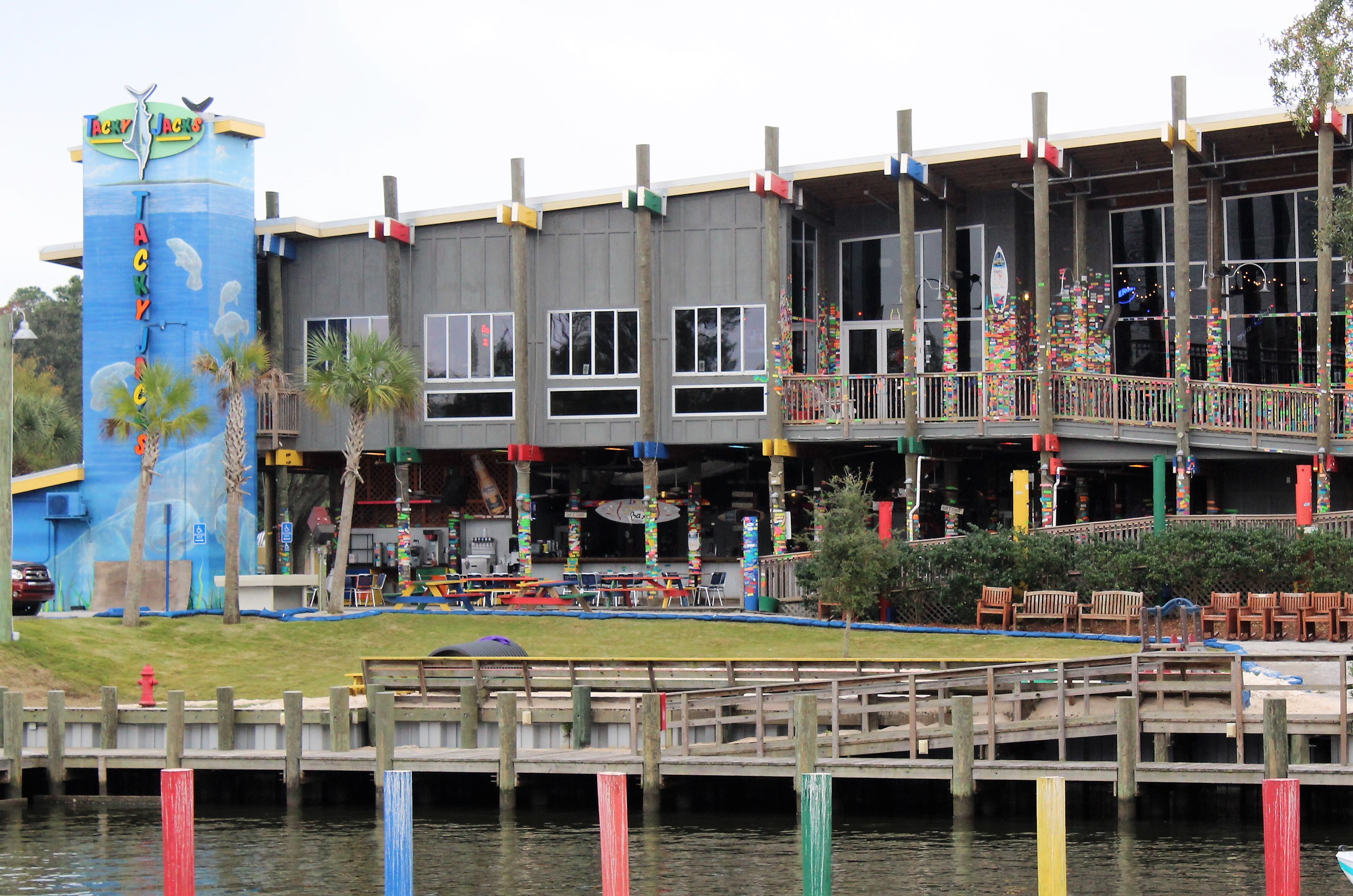
    Passing Tacky Jack’s along the canal

    When the crew arrived at Dock H, slip 98, there was already a boat in the slip.  The dock hand called back to the office and got a new assignment, Dock, H slip 88.  So much for prior proper planning.  This would be a port side tie so the Admiral had to move the fenders and lines all over to the port side.  After the boat was made ready, the skipper backed the boat into the slip.

    The first order of business was to troubleshoot the pesky radar.  As one might expect, now that the radar is not needed it fired right up and started working.

    This is just how some days roll on the Great Loop.

    Next Week – The crew will head back to Texas to enjoy Christmas with family and friends.

    Merry Christmas from The Wharf to all the virtual crew members and fellow adventurers out there, and have a Happy New Year!

    We will resume the Great Loop Adventure mid-January.  Current thoughts are to cruise the Florida panhandle in January.  Then cross the Gulf over to the west coast of Florida early February.

    Loop On – The water goes on forever and the adventure never ends.
    Eric the Red

  • That Had to Hurt

    Hello virtual crew members and fellow adventures!

    La Salle here catching you up to date on the latest travels of Still Waters II. Click on this link to see the day- to-day travel log.

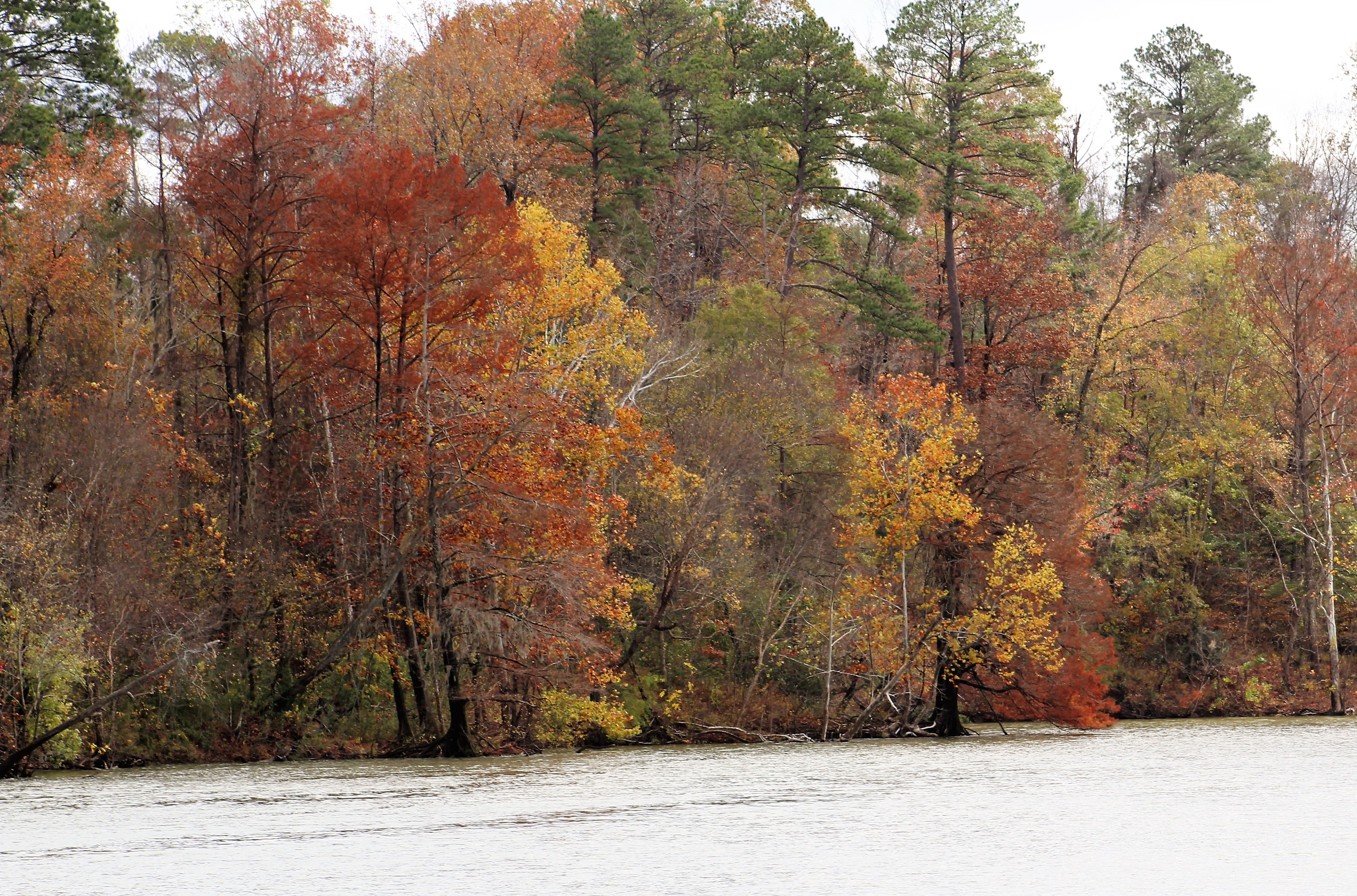
    With a really really really cold spell (temps in the 20’s) and high winds predicted at the end of the week, this will probably be the last of the fall foliage spectacular.  I guess winter will finally arrive.  The extended autumn has been fun though and allowed extended cruising in the inland rivers.

    img_0206

    Summary of week:

    dec-11

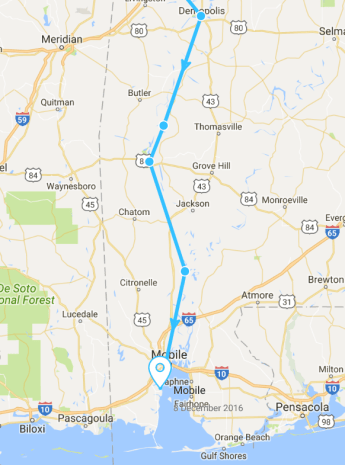
    The crew left Demopolis on Monday morning in fog and light rain.  The goal for the week was to make the 229 miles to Mobile Bay in four runs:

    Monday – anchored in Bashi Creek (71 miles)

    Tuesday – docked at Bobby’s Fish Camp (26 miles)

    Wednesday – anchored in Alabama River Cut-off (66 miles)

    Thursday – docked at Dog River Marina in Mobile Bay. (66 miles)

    Additionally, this stretch of river is very remote with no towns or marinas on the water.  This is a place where the boat needs to run true and drama free.

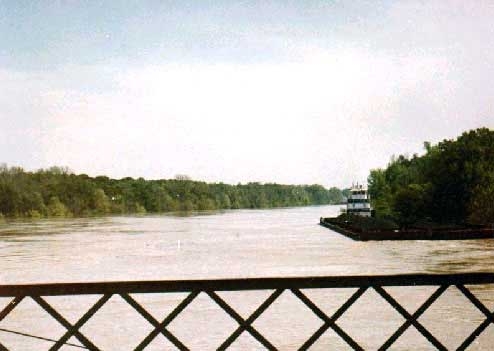
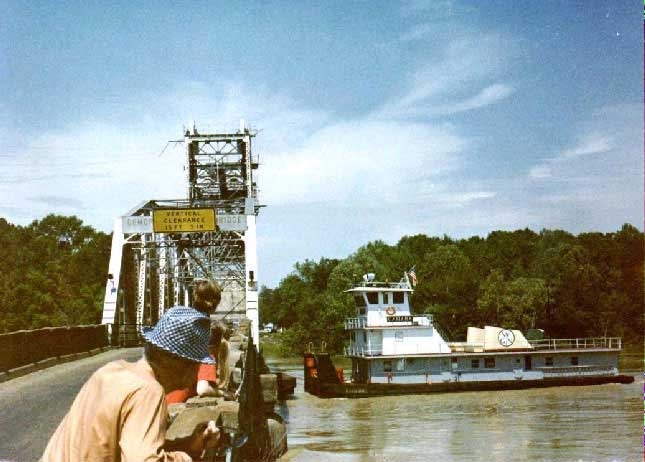
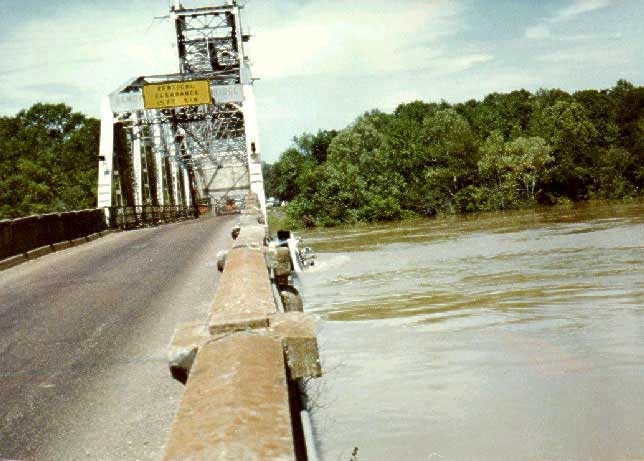
    However,  back in 1979 the tow Cahaba had a little drama that you might find interesting.  The water was flowing 24 feet above flood level on April 19th.  The tow was approaching a bridge about mile marker 200.

    img_0472

    The tow boat Captain had his crew release the tow from the barges.  The crew members stayed on the drifting barges as they floated under an 11-foot clearance under the east section of the bridge.

    img_0473

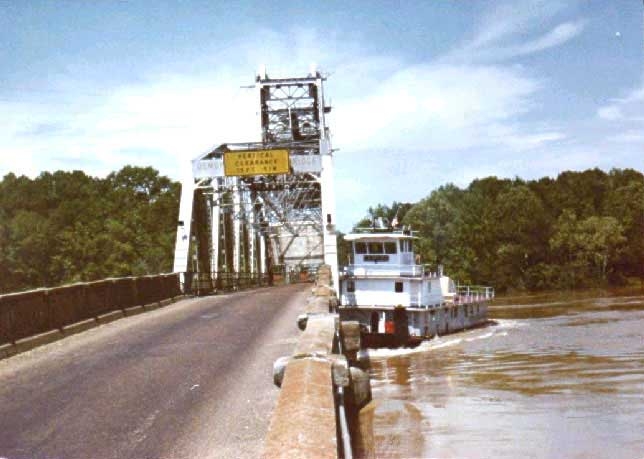
    The tow Captain went to back up so that he could take the tow boat under the center of the lift bridge where he could safely pass under the bridge.  When he went into reverse, he realized the crew forgot to release a line on the starboard barge.  With the force of the current and the line attached to the drifting barges, the tow turned sideways on the bridge.

    img_0475

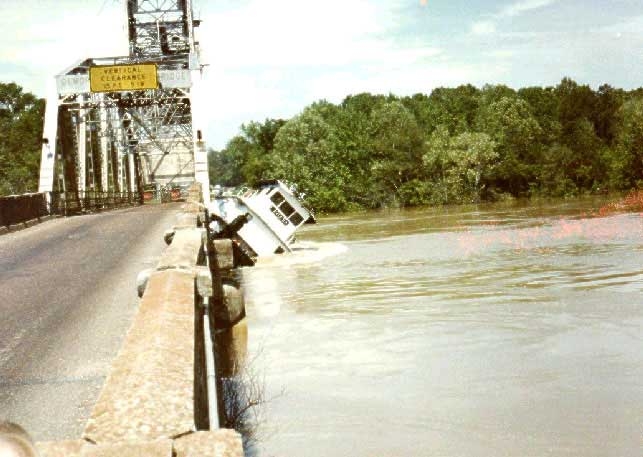
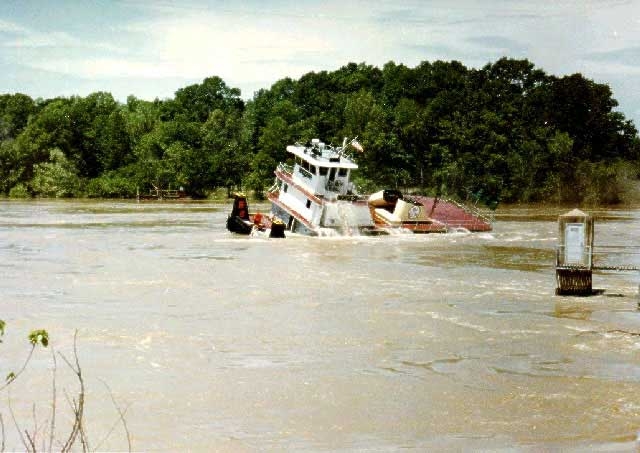
    Eventually the water forced the 30-foot tall tow under the 11- foot bridge clearance.  The tow Captain used his loudspeaker to tell the folks on the bridge to evacuate the area.  In fact he is quoted as saying, “Evacuate the bridge, this ain’t no fire drill.”

    img_0476

    To say the captain got the ride of his life would be an understatement.

    img_0478

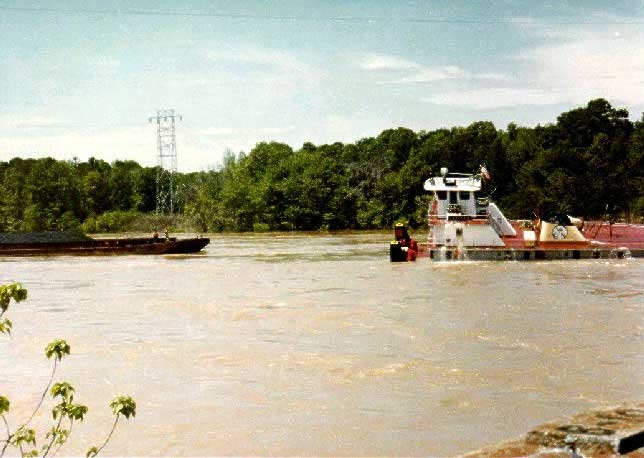
    Miraculously, the tow popped up on the downstream side of the bridge and the starboard engine was still running as the tow actually righted itself.

    img_0479

    The tow captain survived the ordeal in the pilot house.  Look at the water pouring out of the pilot house.

    img_0483

    Notice the crew members still on the barge, bet they were glad they did not take the ride like the tow captain.

    img_0485

    Monday December 5, 2016

    With a 71-mile day with one lock to negotiate, the crew got an earlier than usual start.  The first obstacle was getting passed the dredge that was set up in the mouth of the marina.  The dredge had not started operations for the morning so the operator waved the crew on bye.  Next challenge was to make the Demopolis Lock before the rain started.

    IMG_0189.JPG
    Early foggy morning approach to Demopolis Lock

    The lock operator had already told the skipper he had the lock ready for the crew as they departed the marina.  The lock is only three miles down the river so all looked good to go.

    However, the lock operator called back on the radio and informed the crew that there was an up bound tow unexpectedly arriving.  The lock operator needed to turn the lock around for the tow and wanted to know exactly where Still Waters II was on the water.  With less than a mile to the lock, the lock operator decided to wait for the crew before he drained the chamber for the tow.

    img_0191
    Birds like to float on the bollards to look for an easy meal while the lock drains

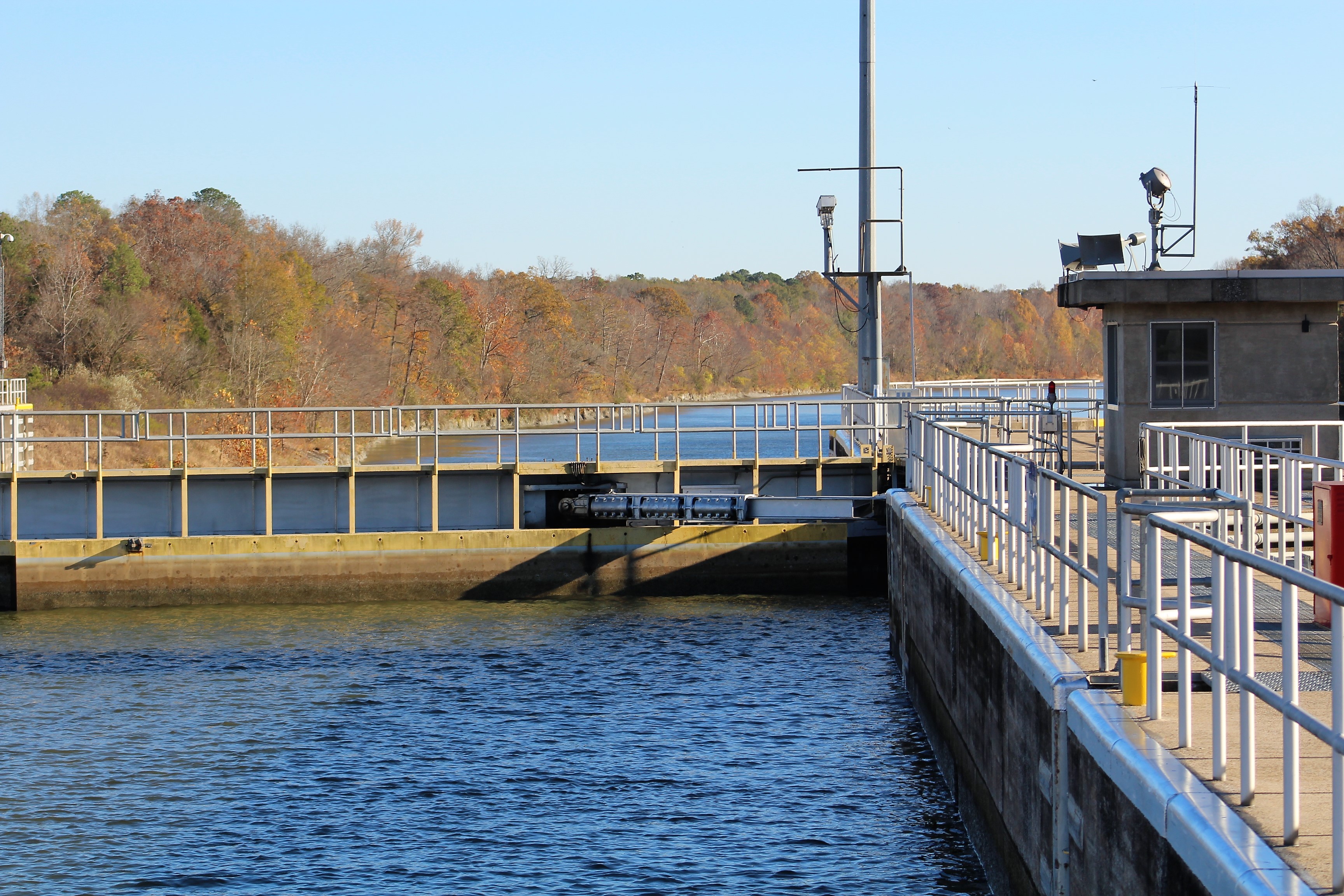
    The crew went right into the lock and once again got a fast drain down 35 feet.  When the gates opened, you could see the tow coming around the last bend before the lock.  More lock FOG!

    img_0197

    The rest of the 68-mile cruise was uneventful while cruising in the rain.

    The crew arrived at Bashi Creek at 1600 and prepared to drop anchor.  The creek is the first prime location to anchor after leaving Demopolis.  Just for the record, this is not a very good spot to anchor.  The creek is barely wide enough for Still Waters II.

    img_0230
    Anchored in Bashi Creek

    To prevent getting pushed into the shore by the wake of a passing tow or wind, the crew dropped both a bow and stern anchor.

    img_0203
    Bashi Creek boat ramp and dock

    The crew first dropped the bow anchor and let out more than enough chain as they drifted back.  They next dropped the stern anchor.  Then they took up the extra chain on the bow anchor until both the bow and stern anchor lines were taught.  This should keep the boat dead center in the narrow creek till morning.  Or so they thought.

    Tuesday, December 6, 2016

    As sometimes happens, easy days become hard days.  Such was today.  The plan was to travel only 26 miles to a famous looper stop, Bobby’s Fish Camp.  Basically a 160 foot dock and a catfish restaurant.

    The bow and stern anchors did a good job of keeping the boat in the creek.  Maybe just too good of a job.  The wind was blowing hard out of the west which was going to push the boat forwards and towards the shore as the crew tried to weigh the stern anchor.

    The plan was to play out the bow anchor and pull the boat back towards the stern anchor and then pull the stern anchor up.  Because of the strong wind, when slack was put in the bow anchor line the skipper was not able to pull the boat back against the wind.  Net result was the boat was now very close to shore and the low water level alarm was sounding.

    After many failed attempts to make progress on the stern anchor line, the wind eventually blew the boat around enough that the line was tangled under the boat.

    The skipper finally had to go swimming to free the line from the prop and rudder.  Once the line was clear of the boat, the crew finally got the boat over the stern anchor but could not dislodge the anchor from its muddy hold.

    Next plan was to move forward and weigh the bow anchor first.  Finally, a little success.

    They then moved the stern anchor line to the bow, and then use the boat to free the stern anchor. After nearly two hours of wrestling anchors, both anchors were finally on deck.

    The skipper started looking for the easy button because he wanted to hear the words “That was easy.”

    With the anchors up the crew made their way to the legendary Bobby’s Fish Camp.    Unfortunately, our crew will not enjoy the fried catfish because the restaurant is only open Thursday thru Sunday.

    img_0211
    Sailboat pulling away from Bobby’s dock as the crew arrived

    Two other boats joined Still Waters II on the dock at Bobby’s.  One is an 84-foot yacht on its way to its winter home in Fort Lauderdale.  Two delivery captains are working together to deliver the boat for the owners.  The boat spends the college football season in Knoxville where the owners enjoy the home football games.

    img_0215

    Close quarters at Bobby’s

    img_0212

    An interesting sign near the dock.

    IMG_0213.JPG

    Wednesday December 7, 2016

    With a planned 66-mile day to the Alabama River Cut-off and one lock, the crew left earlier than usual.  They hoped to make the anchor spot before dark which is about 1645 these days.

    The crew opted for going to the right thru the lock rather than the ride over the dam.

    img_0217

    The run started out with heavy cloud cover that made it look like it was a misty rain.  After clearing the lock there was plenty of water going over the dam so the boat got a nice one knot push with the current.

    img_0222
    Water flowing over the dam

    After clearing the lock today, the crew is only 5 feet above sea level.  The water will be tidal now and start to turn brackish and become saltier as they run south.

    img_0226
    More bluffs along the water

    About noon the sun finally started to break thru the clouds and warm things up a bit.

    img_0227

    The crew made their goal of anchoring before sunset and now set to spend a silent night on the hook.

    img_0232
    At anchor in the Alabama River Cut-off

    Thursday, December 8, 2016

    Another early start to ensure that the crew makes it 66 miles to Dog River Marina, south of Mobile, Alabama.  There is a cold front packing temperatures down in the low 30’s expected to arrive tonight and the crew wants shore power so they can stay warm.  The crew weighed anchor and began the last day on the Tombigbee Waterway.

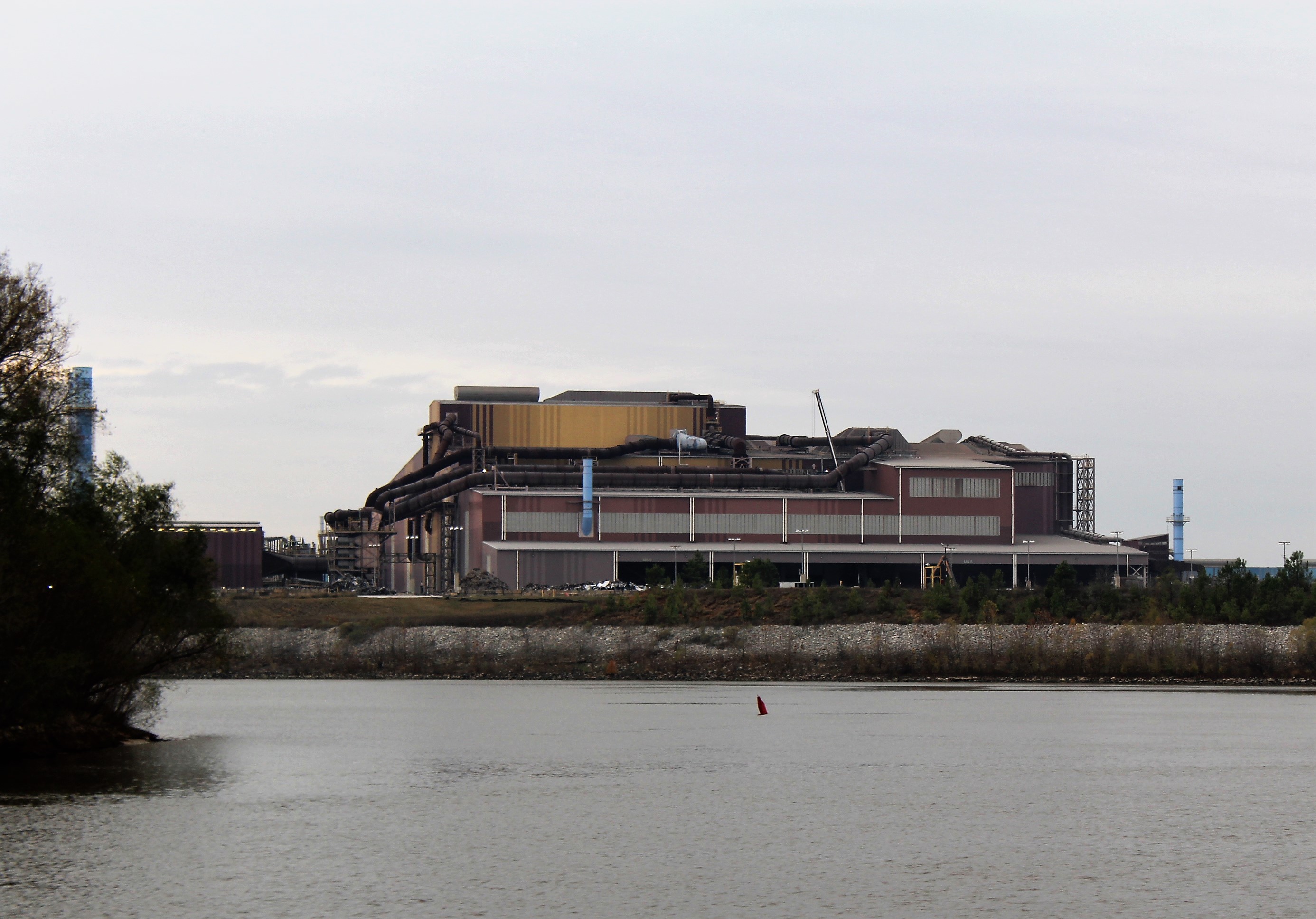
    The crew ran by this large steel plant that opened back in 2010.

    img_0233

    The site encompasses 3,600 acres and the mill employees 2,600 workers.  This was the first of many industrial projects in this section of the river.  The closer the crew got to Mobile the more industry was encountered.  Nice to see signs of civilization again after cruising through some extremely remote areas the last few days.

    img_0239

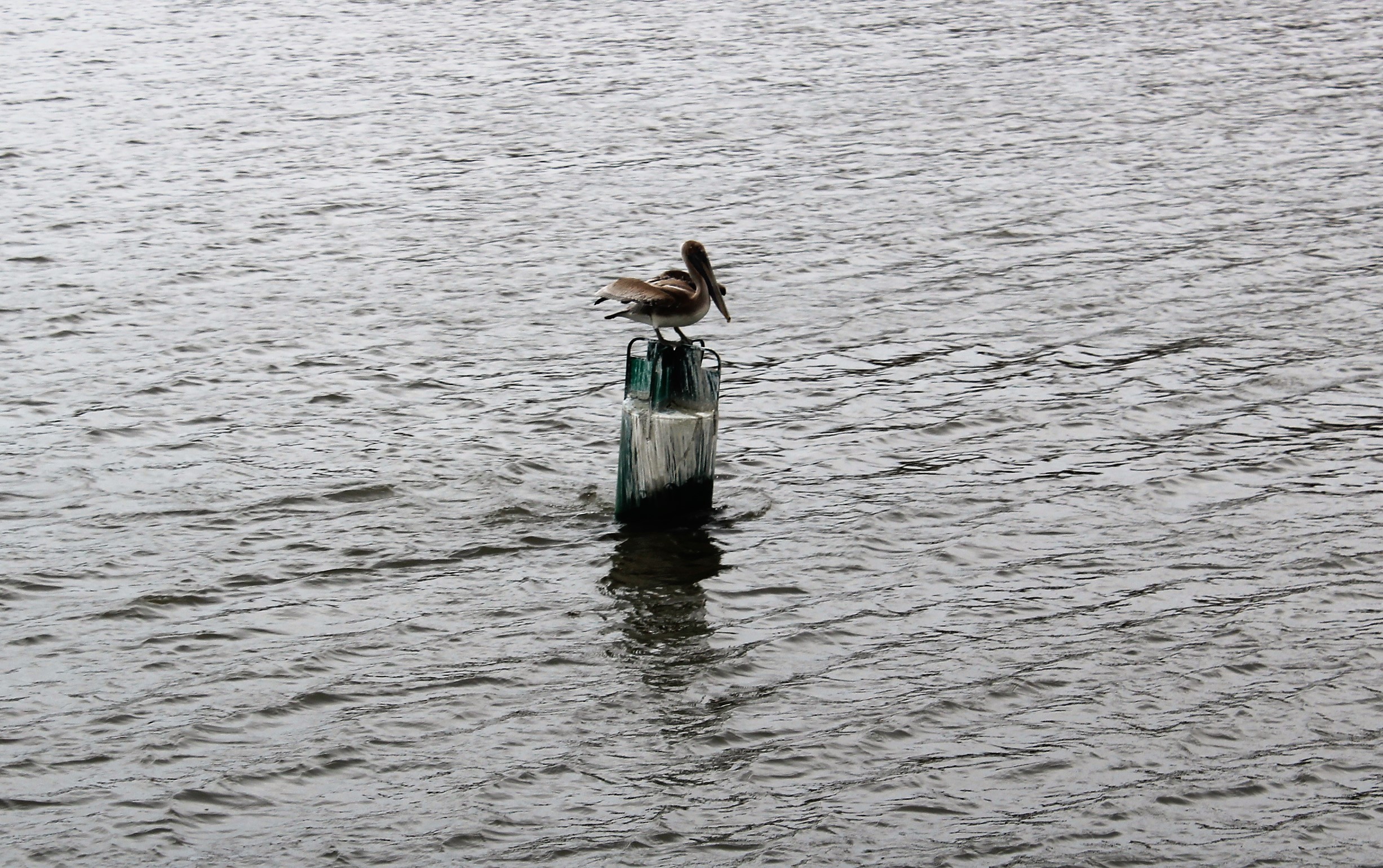
    The first sign that the crew is approaching the gulf.  A Brown Pelican painting a green can white.

    img_0240

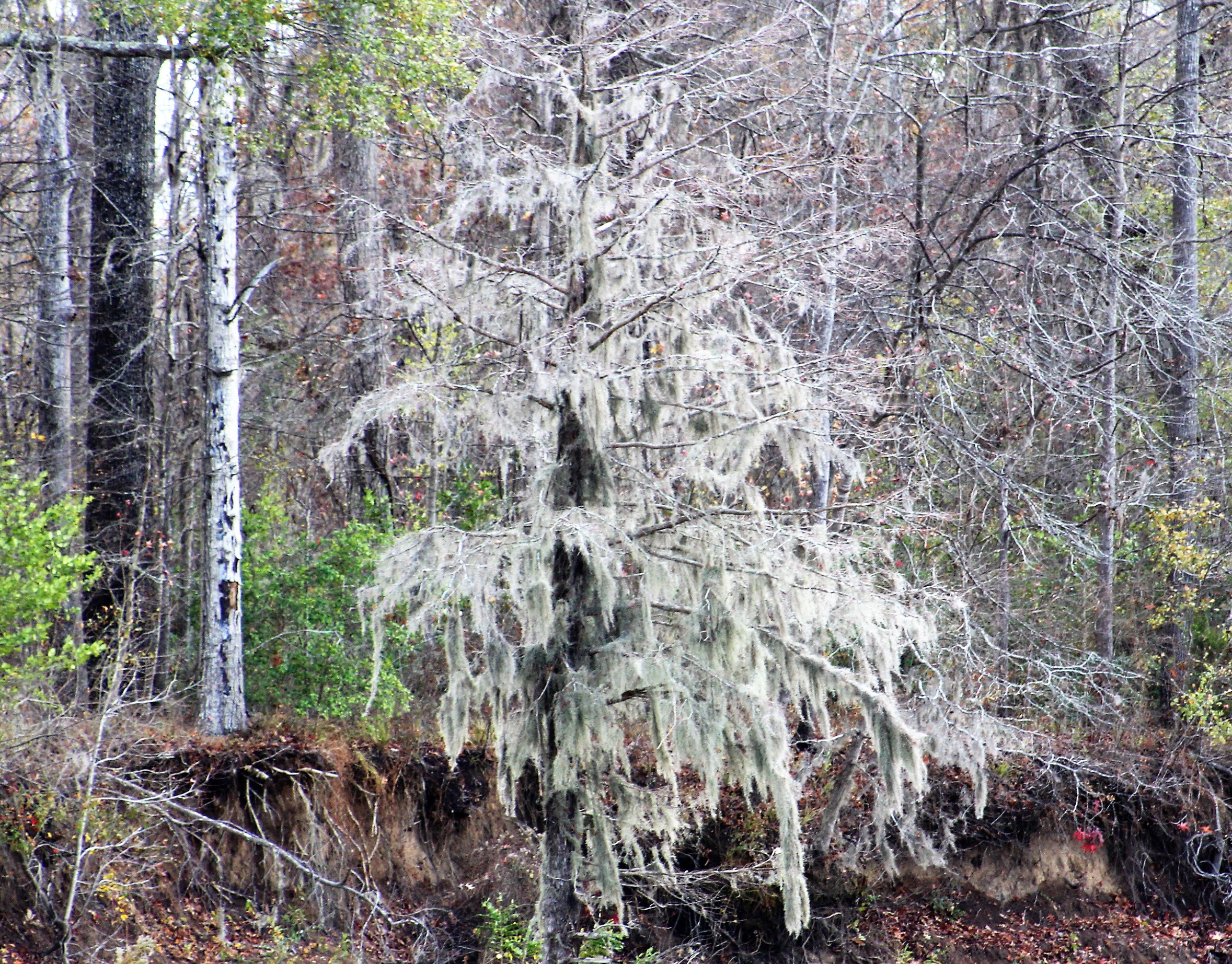
    Trees with Spanish moss began to appear.

    img_0205-2

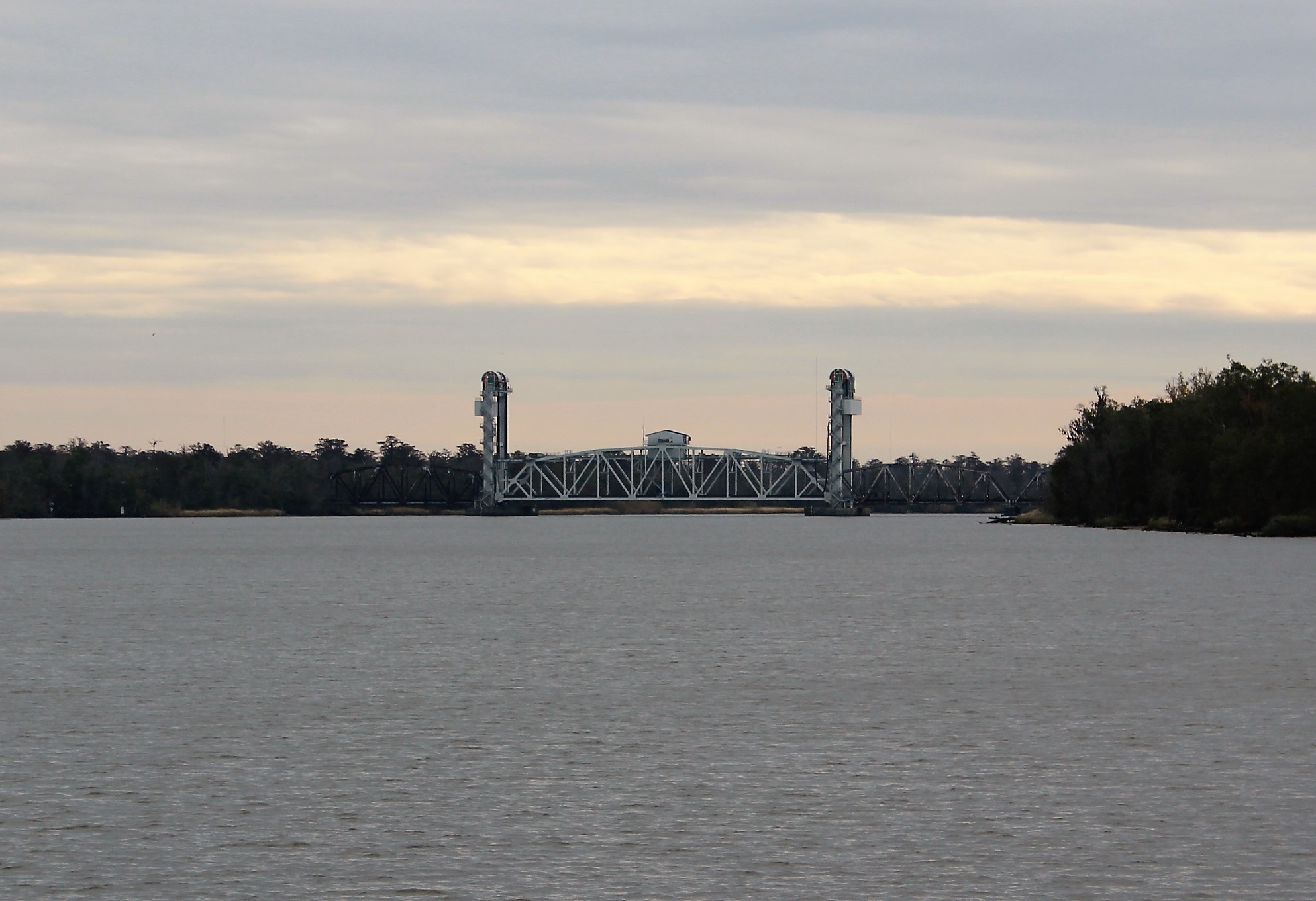
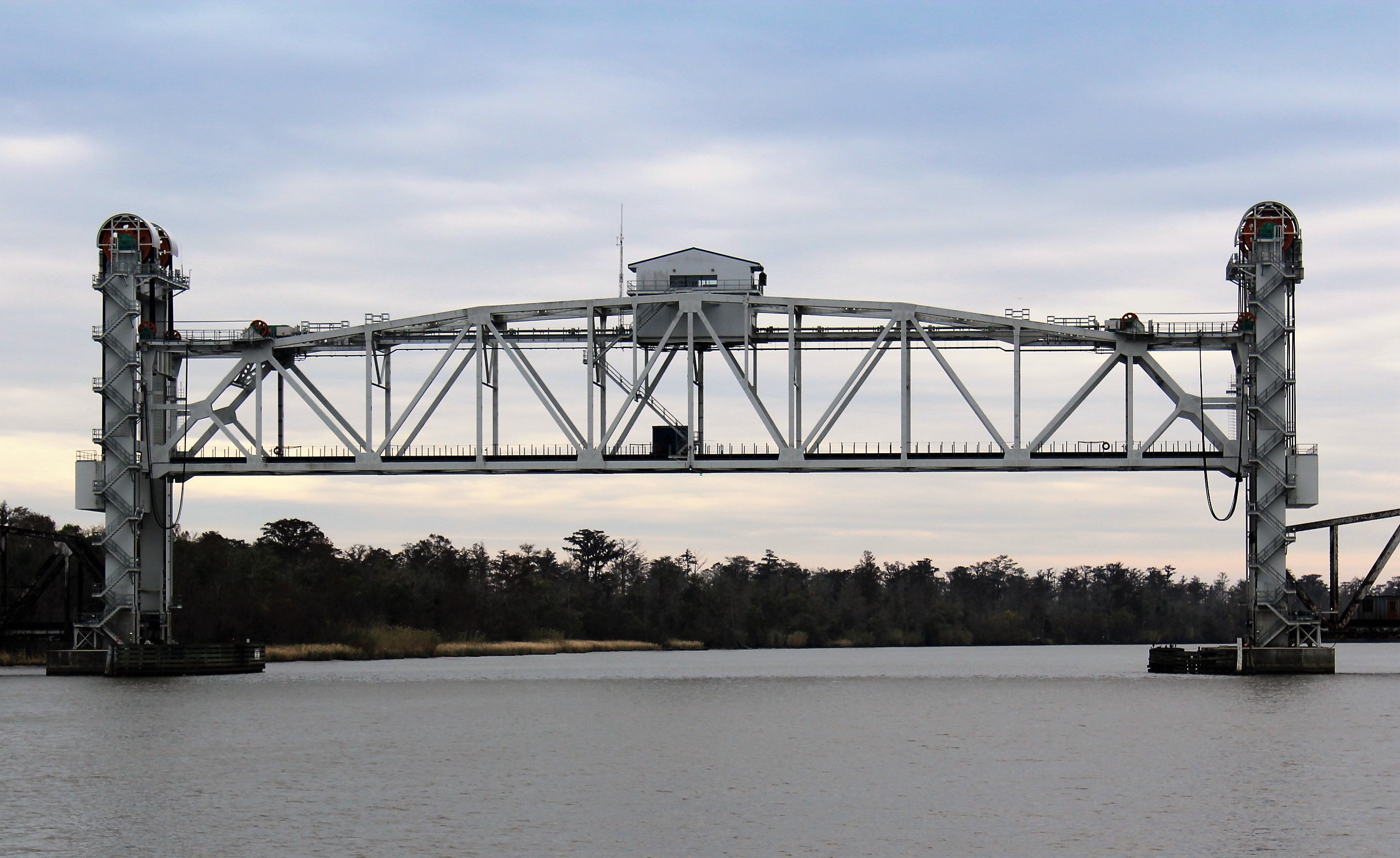
    Encountered this four foot clearance railroad bridge 14 miles north of Mobile.

    img_0242

    The bridge tender was gracious and had the bridge open as the crew approached.

    img_0243

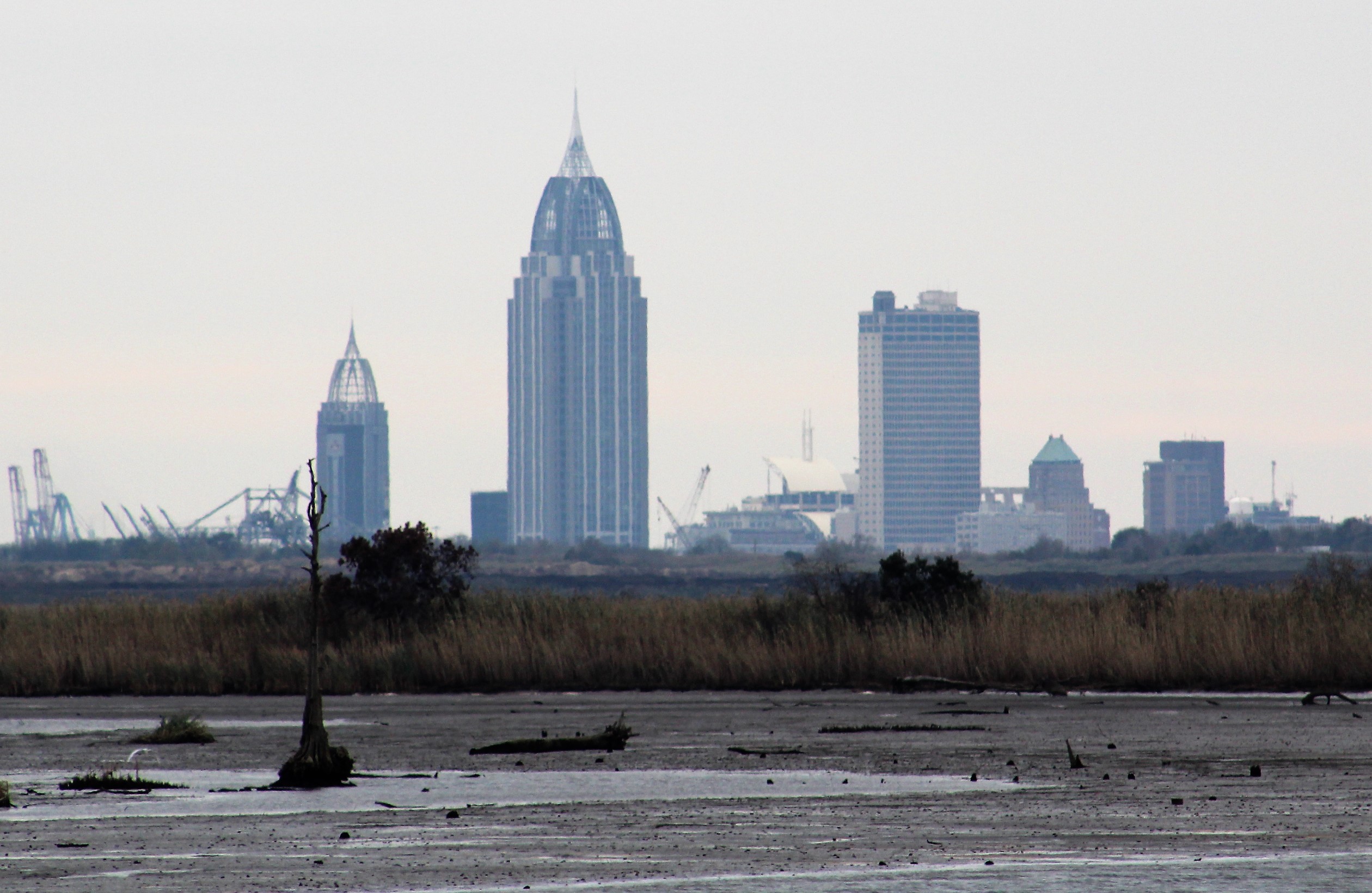
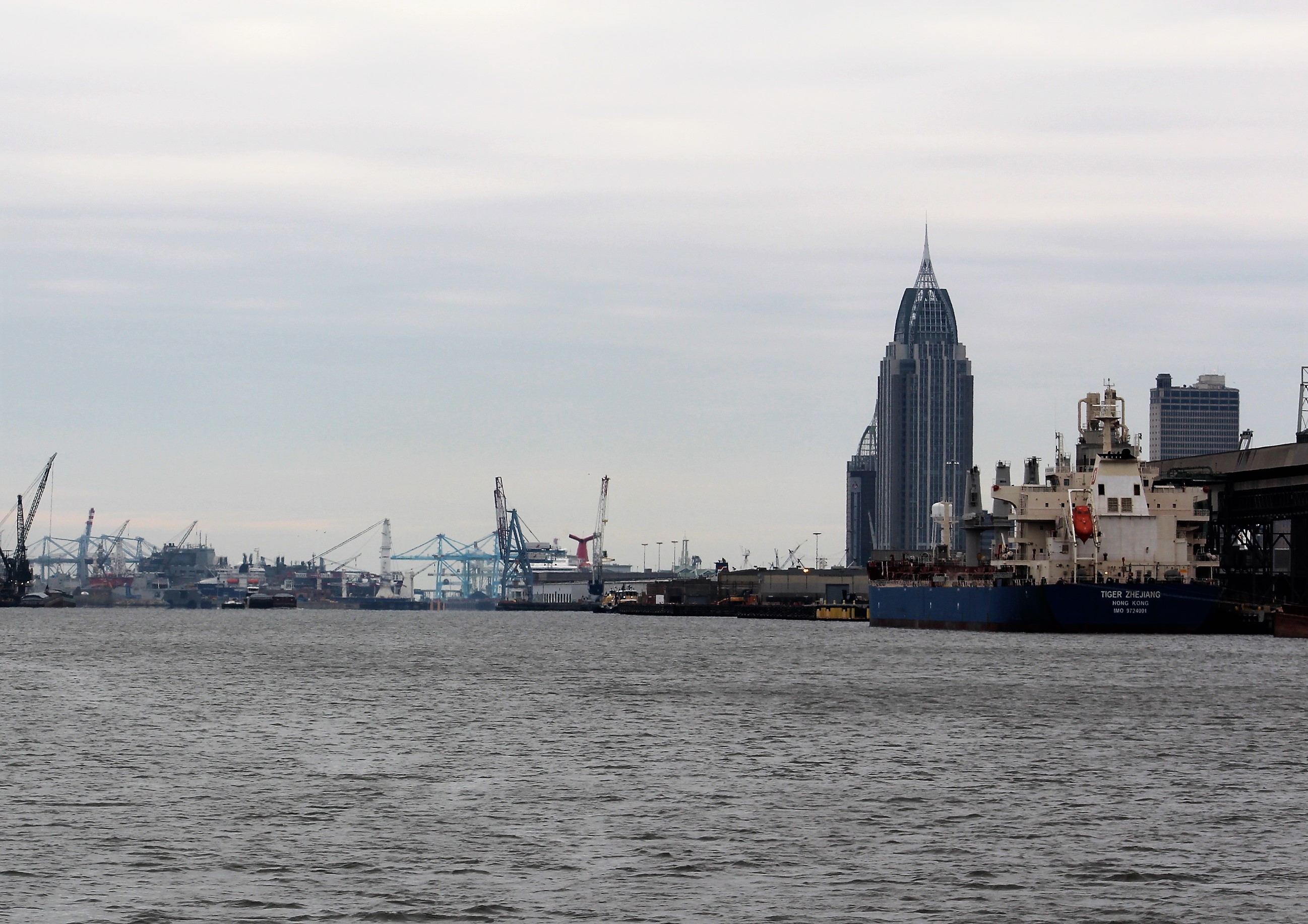
    The first view of Mobile.

    img_0262

    The water front in Mobile was a buzz with activity.

    img_0265

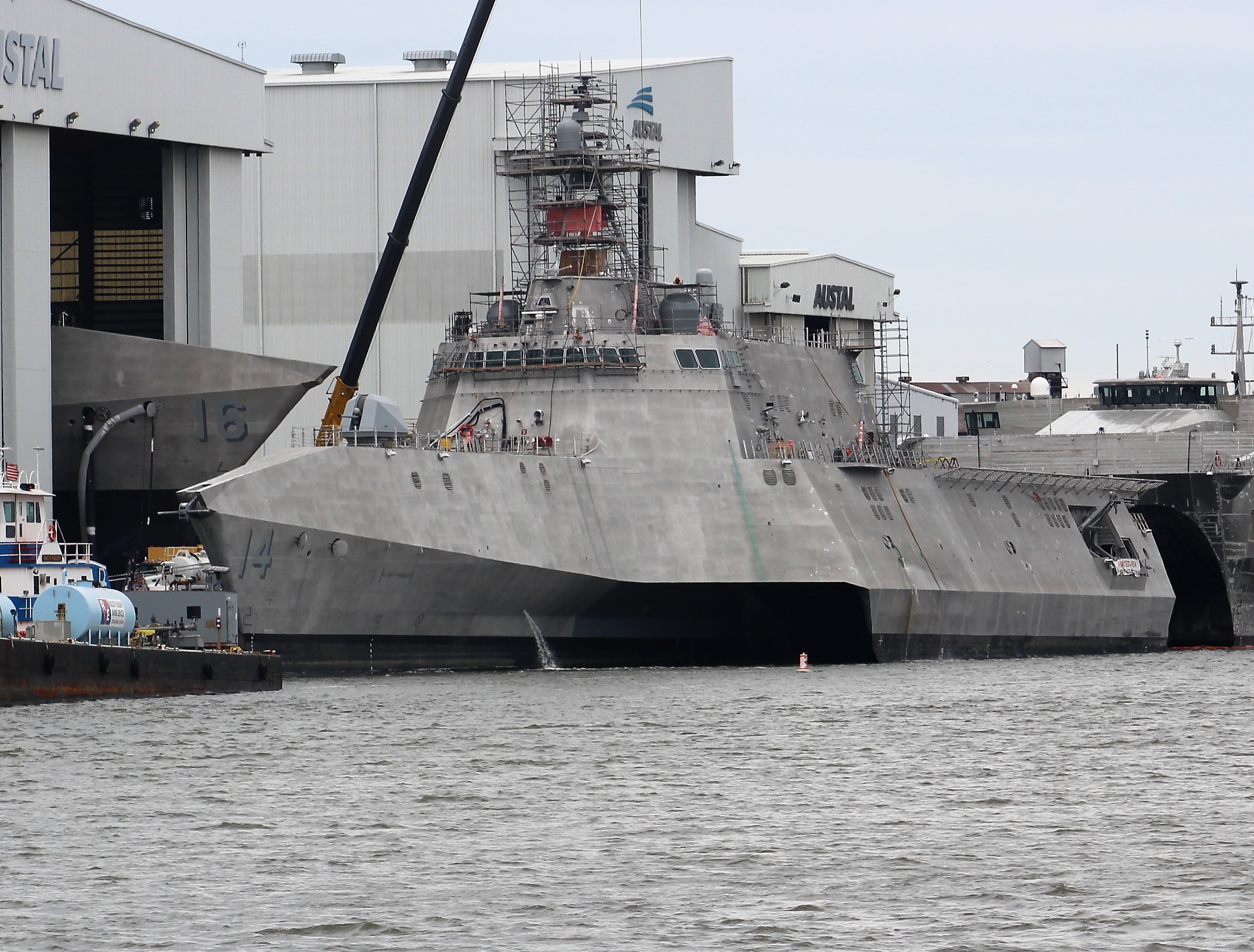
    New Navy ships (targets as submariners like to call them)  being built in Mobile.

    img_0268

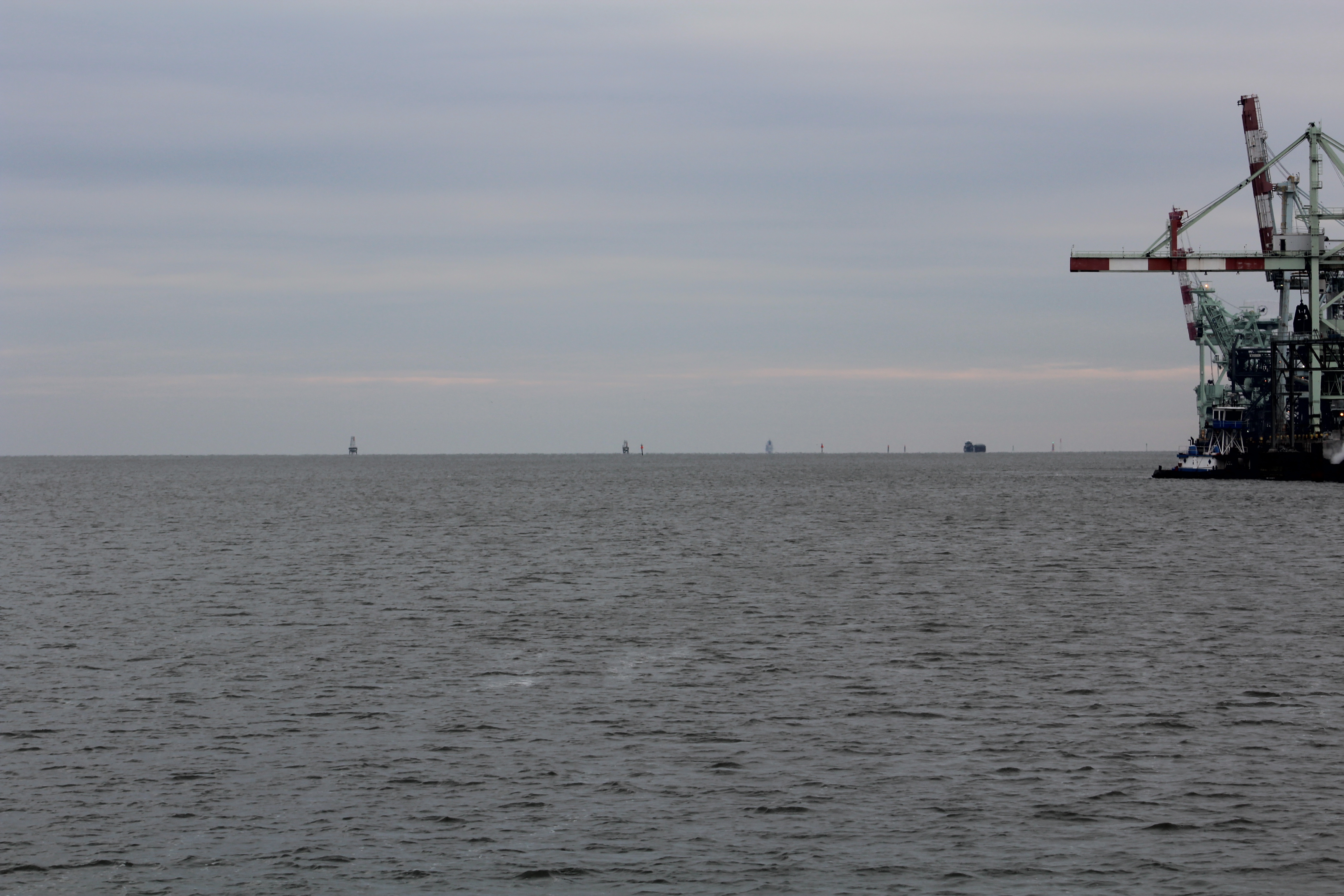
    Looking south out into Mobile Bay.  Been a while since the crew saw this kind of open water.

    img_0270

    The run down the bay was more exciting than wanted.  That cold front is arriving and bringing some strong winds from the north.  The wind was 13 mph with gusts over 20.  This caused three to five foot seas and the wind was blowing the water out of the already shallow bay.

    The last four miles to the marina required the crew to travel westerly which meant that there were beam seas off the starboard while the wind tried to blow the boat out of the narrow channel.  The channel was barely 6 feet deep and was running at 5 feet most of the way.

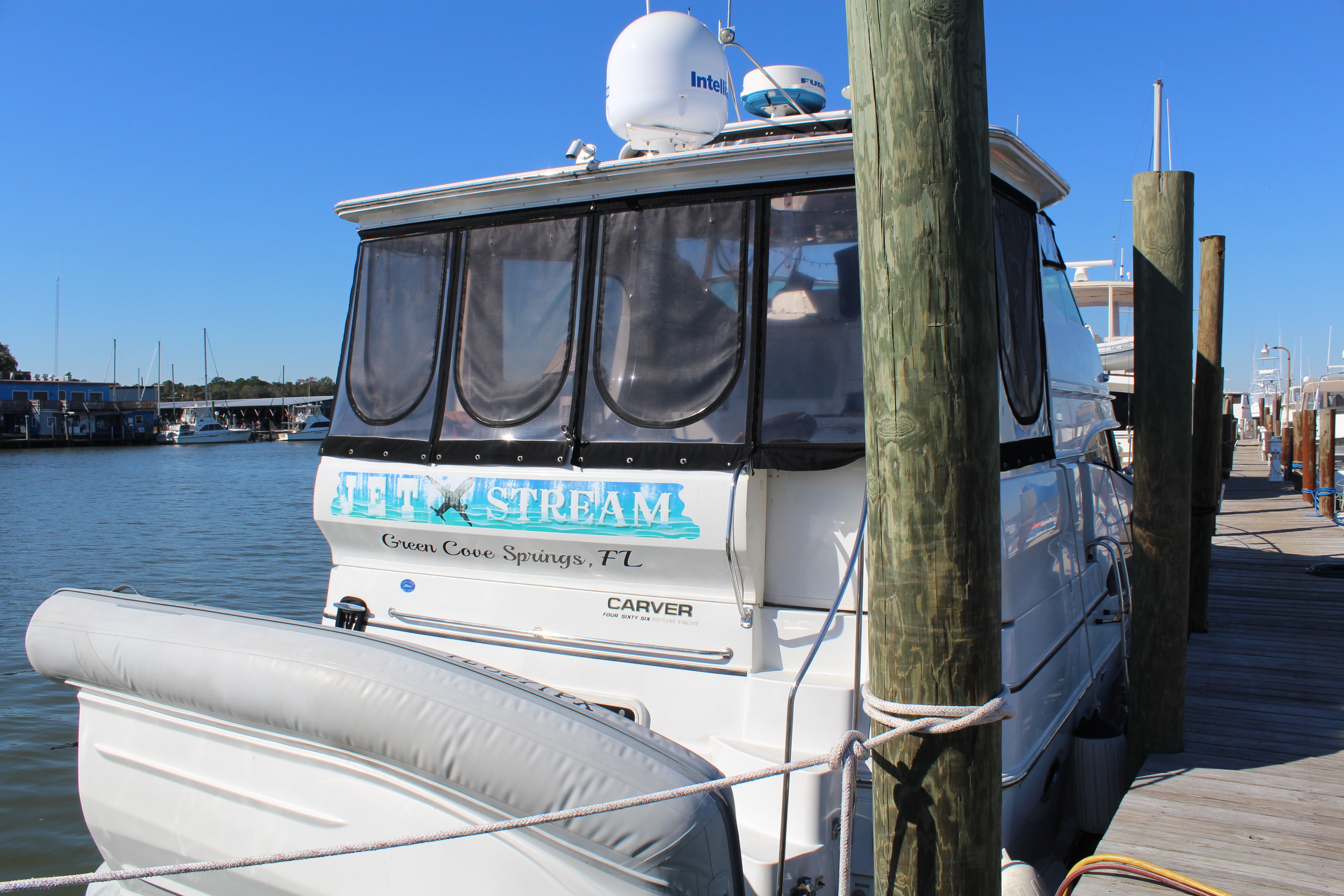
    Upon arrival at the marina, they saw the boat Jet Stream tied to the dock.

    img_0273
    Captain Scott was an American Airline Pilot out of DFW, another home boy

    After taken on fuel and getting settled at the dock the crew went over to pay Jet Stream a visit.  They had not seen each other since leaving Jacksonville back in April.  Jet Stream must have sensed the arrival of our crew because KC had just completed baking some cookies.  Timing is everything, cookies hot out of the oven.  Life just does not get any better than this!

    img_0272
    Still Waters II at rest at Dog River Marina

    Next Week – The crew will run over to the east side of the bay and visit the town of Fairhope.  Then continue south to the Gulf Intercostal Waterway  and head east to Orange Beach.   The plan is to stop at the Warf and stay through the holidays.

    Loop On – The water goes on forever and the adventure never ends.
    It is with sadness that I have to inform you that this will be my last post.  Eric the Red will return next week to join the crew on their voyage east back to Fort Myers.  I have been negotiating with the skipper to turn west and head to the Mississippi River, but he will have none of it.

    I failed to find the Mississippi River on three previous occasions from excursions from Matagorda Bay back in the 1680’s.  Since I am this close, I just have to take the turn west at the Gulf and finally find where the Mississippi River dumps into the Gulf.

    It has been fun travelling and exploring the inland rivers with you for the last three months.

    Au Revoir,

    La Salle


  • End of the Tenn-Tom Waterway

    Hello virtual crew members and fellow adventures!

    La Salle here catching you up to date on the latest travels of Still Waters II. Click on this link to see the day- to-day travel log.

    But, before we get started, we need to welcome three new virtual crew members aboard:

    Samuels S.

    Alexa A.

    Makayla K.

    Glad to have you aboard and hope you enjoy the cruise!

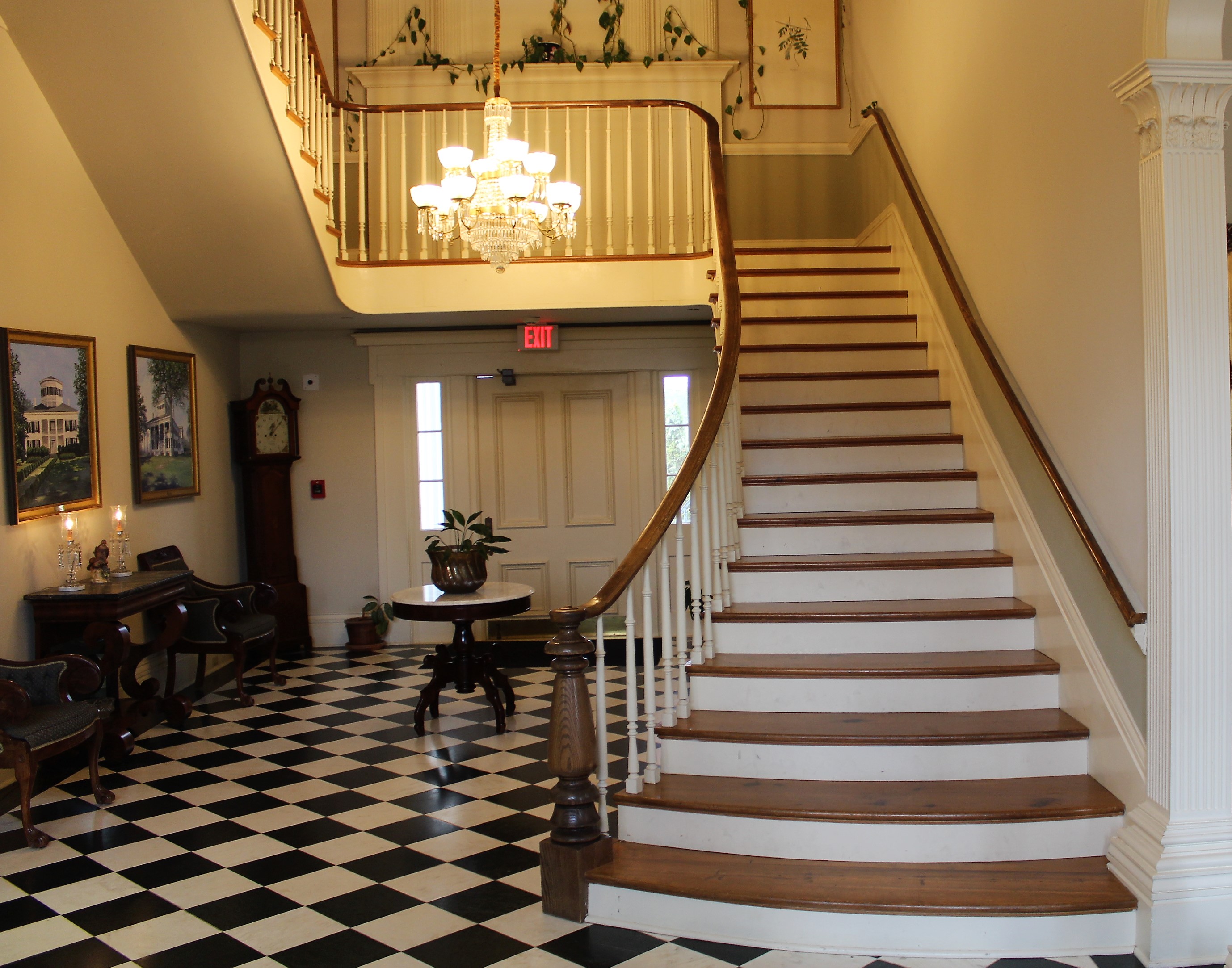
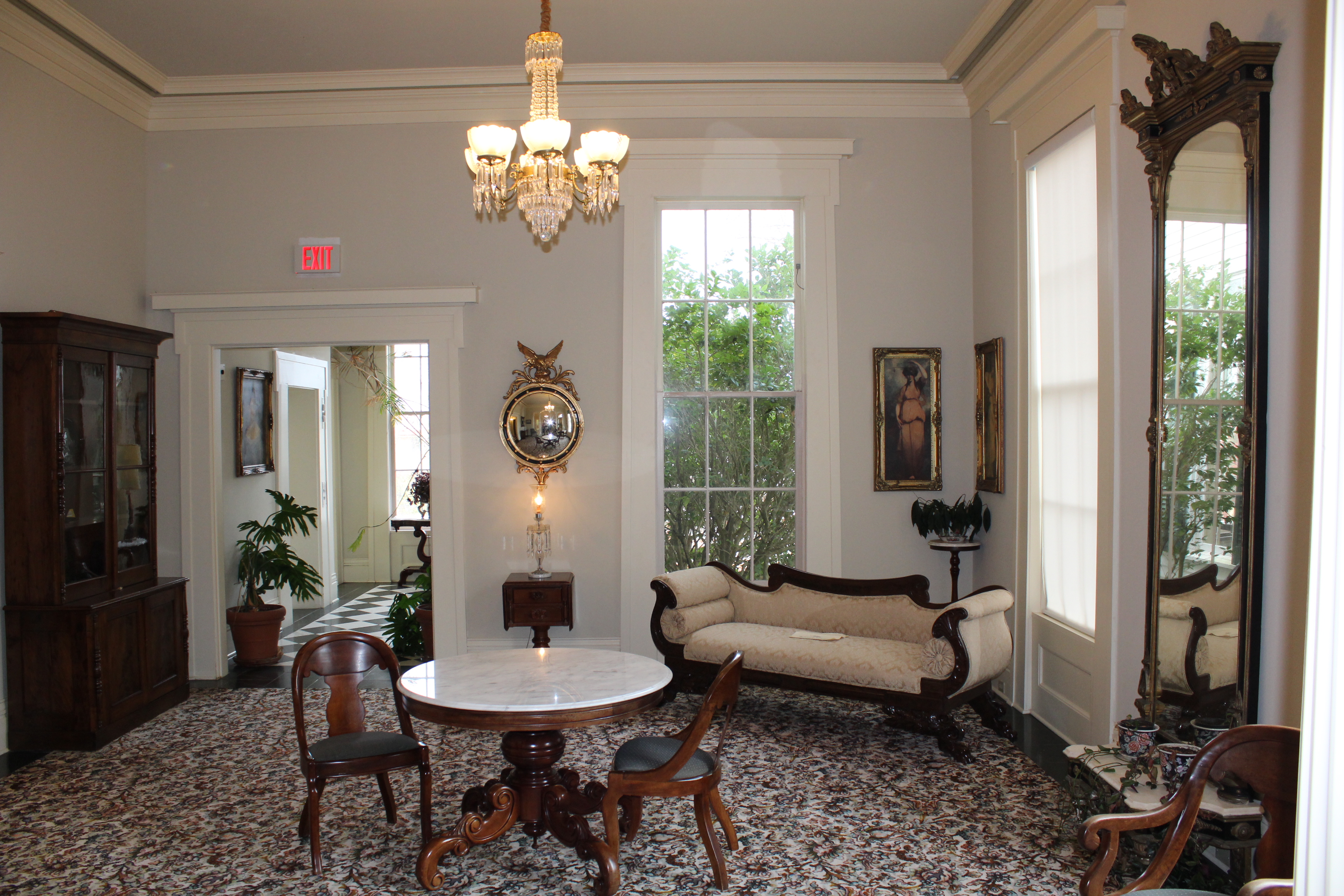
    During the week of Thanksgiving the crew took the week off and headed to Texas for Thanksgiving.  Before leaving Columbus though, they took the time to visit the Waverly Mansion.

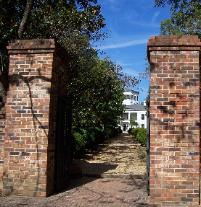
    waverly-mansion-gate
    Walking thru the front gate at Waverly

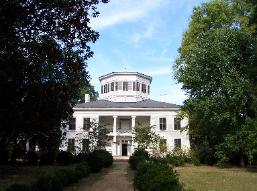
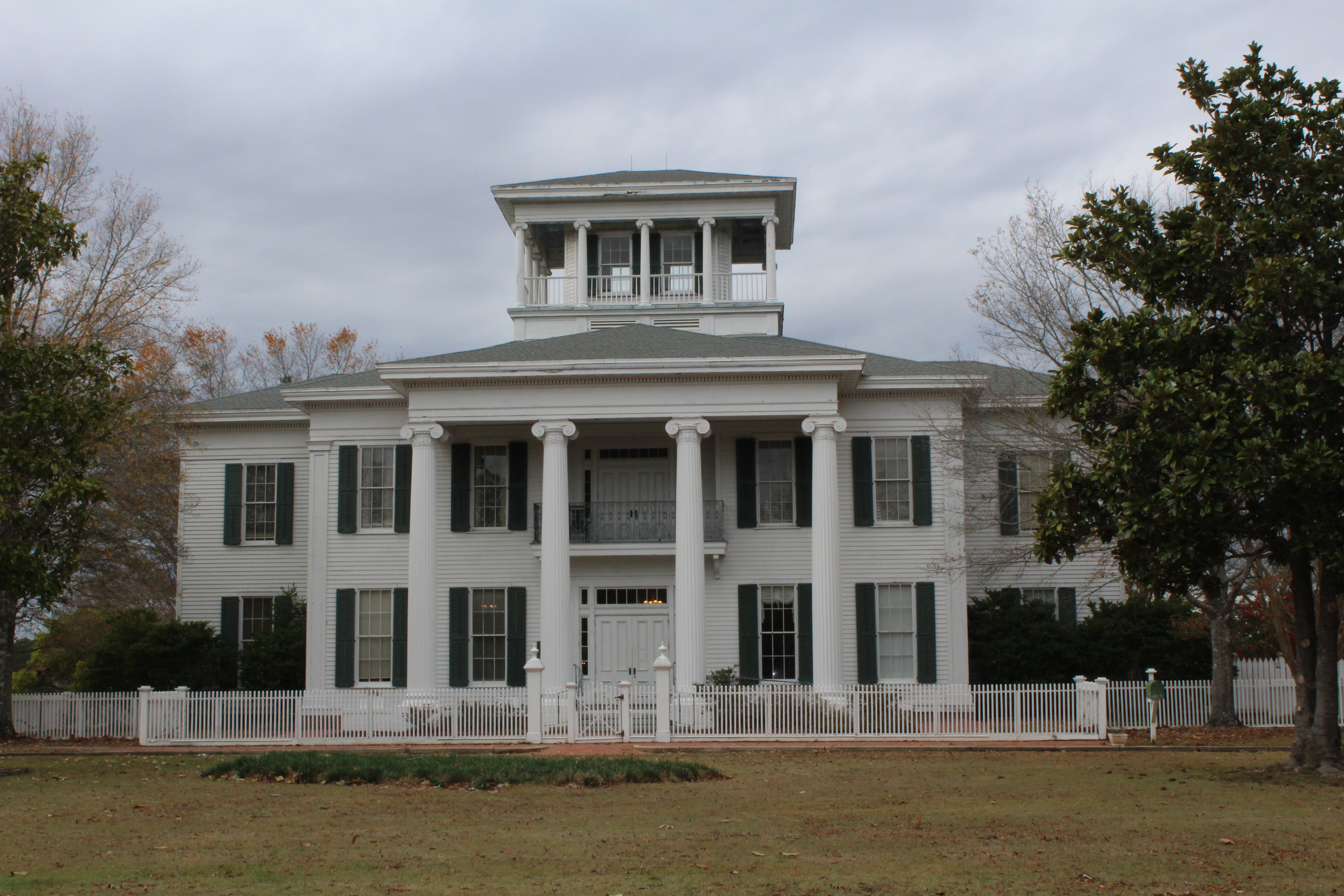
    After entering the grounds you see one of the finest antebellum homes in the south.

    waverly-mansion-house

    The home has an interesting history.  The mansion was built back in 1852.  The Lady of the house died before the home was completed.  The man of the house moved his 10 children in and soldiered thru the Civil War.

    Ultimately, two bachelor sons lived in the home until their deaths.  The last son died in 1913 and the home remained empty until 1962.  Most amazing the original mirrors and chandeliers survived the 50 years without damage from vandals.  The local town teenagers would visit the house to have parties and see the supposed ghosts of the mansion.

    The Snows bought the mansion in 1962 and spent 23 years restoring the home.  Mr. Snow still lives in the mansion today with one of his daughters.

    waverly-mansion
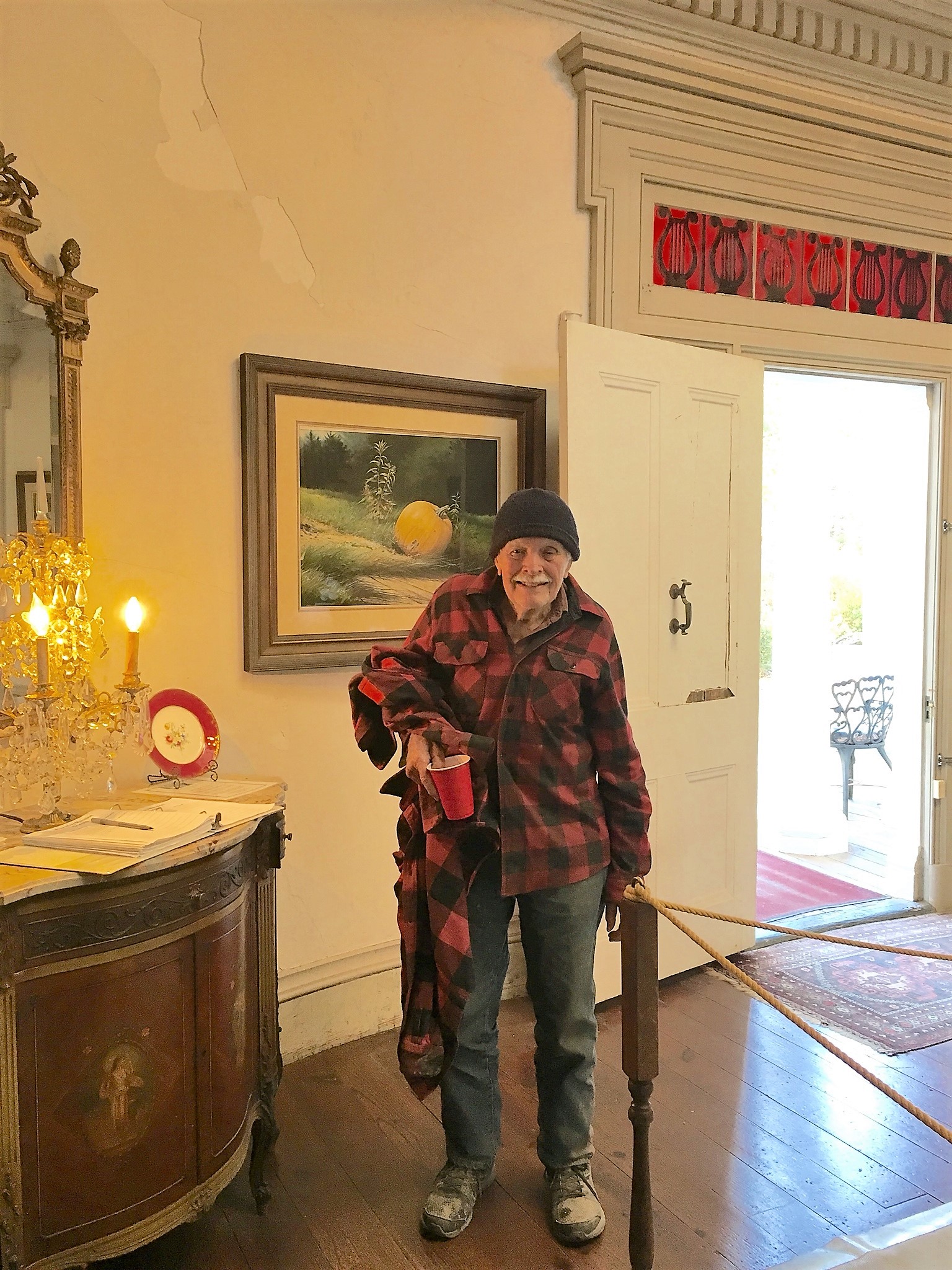
    Mr. Snow gave the Admiral a kiss while the skipper was not looking

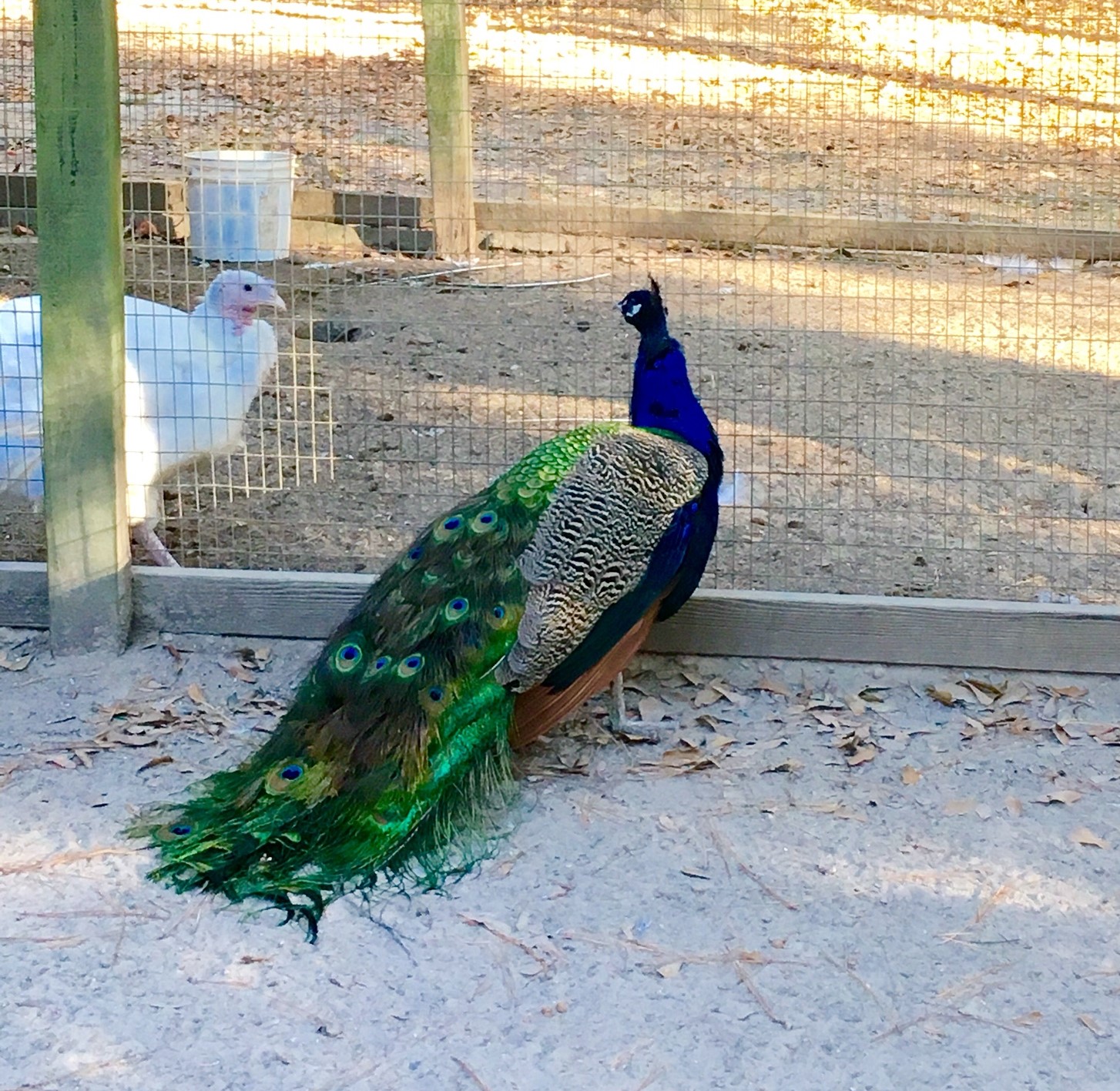
    The grounds had a few pens where the crew found some peacocks and turkeys.

    waverly-peacock

    Not sure if the turkey survived the holiday but the crew made it back to the boat on Monday and headed south on Wednesday.

    Summary of week:  The weather was not cooperating due to heavy rains, so the crew did not shove off until Wednesday morning.  The rain was dearly needed as this area has been without any measurable rain in months, and the rain did help put out the fires in the Smokey Mountains.  On Monday, there were 25-30 mph winds.  On Tuesday, the winds continued with additional rain and thunder.  The crew spent most of the evening under either a tornado watch or warning.  One tornado touched down in north-west Alabama killing several folks.

    demopolis

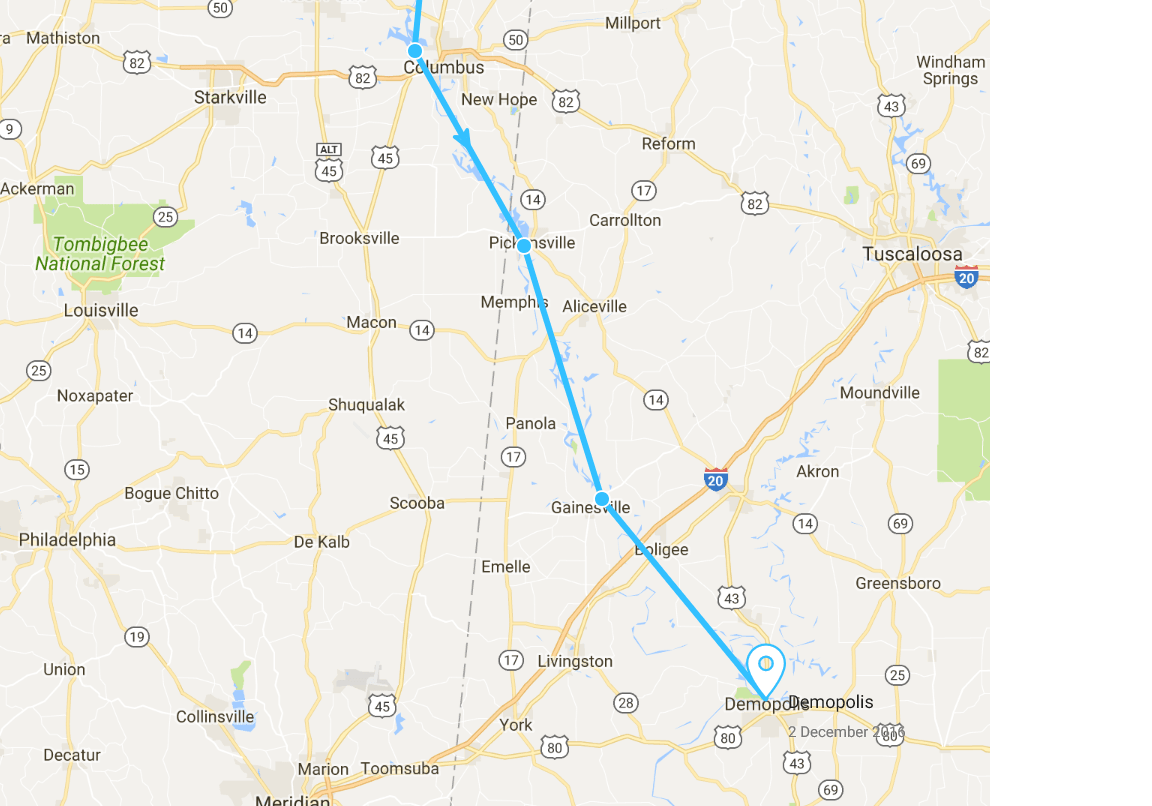
    Finally on Wednesday, the crew got underway and continued south on the Tenn-Tom Waterway.  They reached their destination in Demopolis on Friday with two intermediate stops.

    Wednesday, November 30, 2016

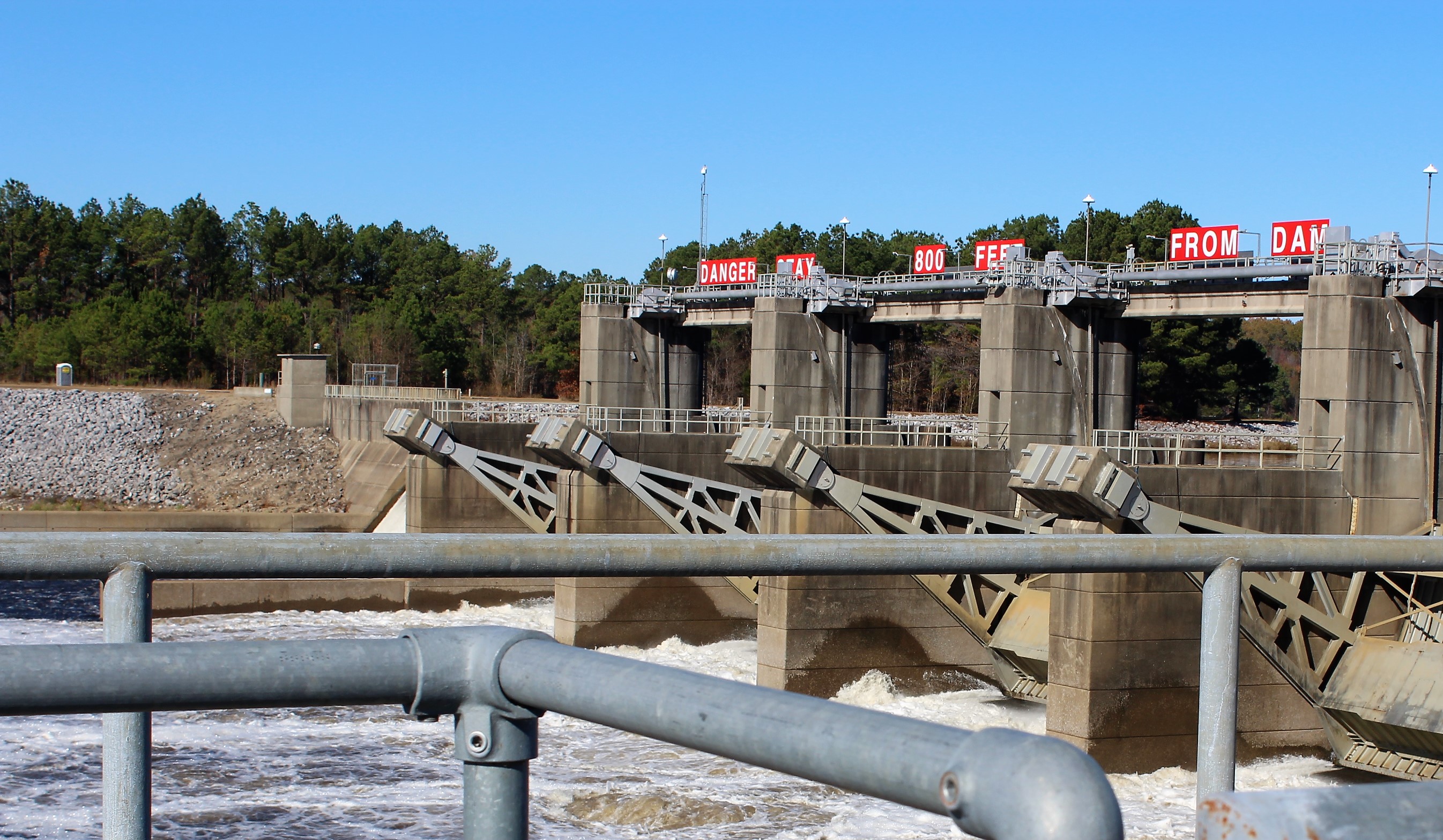
    The crew shoved off from the dock and made their way through the Stennis Lock with minimal delays.  After clearing the lock the skipper noticed that the boat was moving about a full knot faster than normal for this engine rpm.  The water run-off from all the rain is responsible for this added speed.

    img_0129
    Water flowing thru the open gates at the dam

    The water run-off is also responsible for all the floating debris washing down the river.  The crew must be extra vigilant the next few days to prevent hitting some of this flotsam and causing boat or prop damage.

    img_0115

    The skipper expected that most of the leaves would be off the trees because of the wind and rain.  However, many of the trees are still sporting their fall colors.

    img_0109

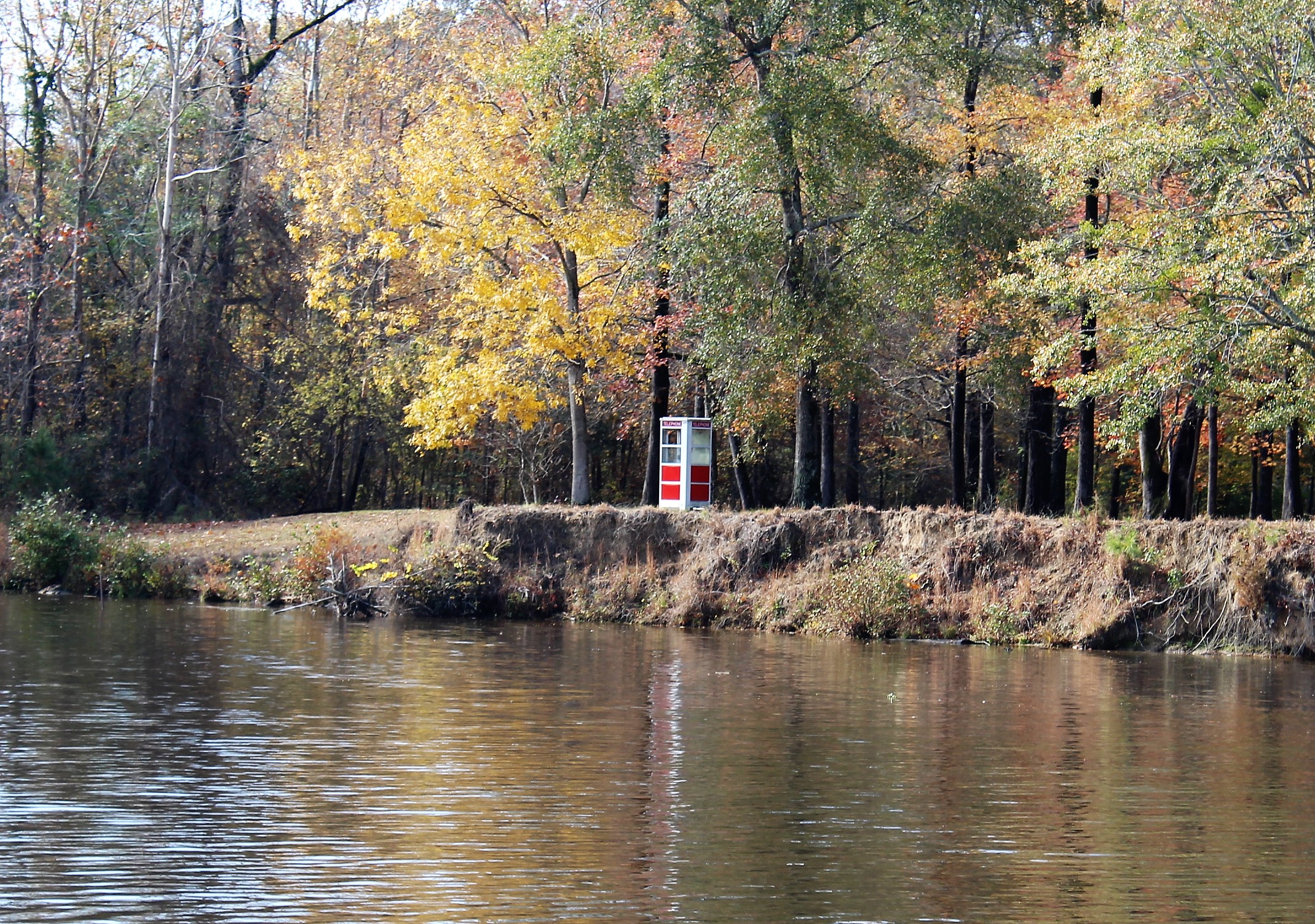
    In addition to the fall color, the crew also spotted a few interesting things in peoples’ yards.  This ‘old school’ phone booth must be Maxwell Smart, Agent 86, secret homestead.

    img_0117

    Then they cruised by this home with a totem pole out front.

    img_0119

    About noon the waterway wound itself far enough east that the river re-entered Alabama.  The crew then cruised under the HWY 86 Bridge and then settled into the Pirate Cove Marina for the afternoon.

    img_0120

    After docking, the crew walked down to the Bevill Lock to visit the Visitor Center.  The Visitor Center is patterned after the 1830-1860 Greek revival homes of the era.  The exterior of the building is based on the Erectheum, an iconic temple in Athens, Greece.  It looks very much like the Waverly Mansion that the crew visited in Columbus.

    img_0123

    A few shots inside of the Visitor Center:


    img_0124
    Notice the Waverly Mansion painting on the wall


    img_0125

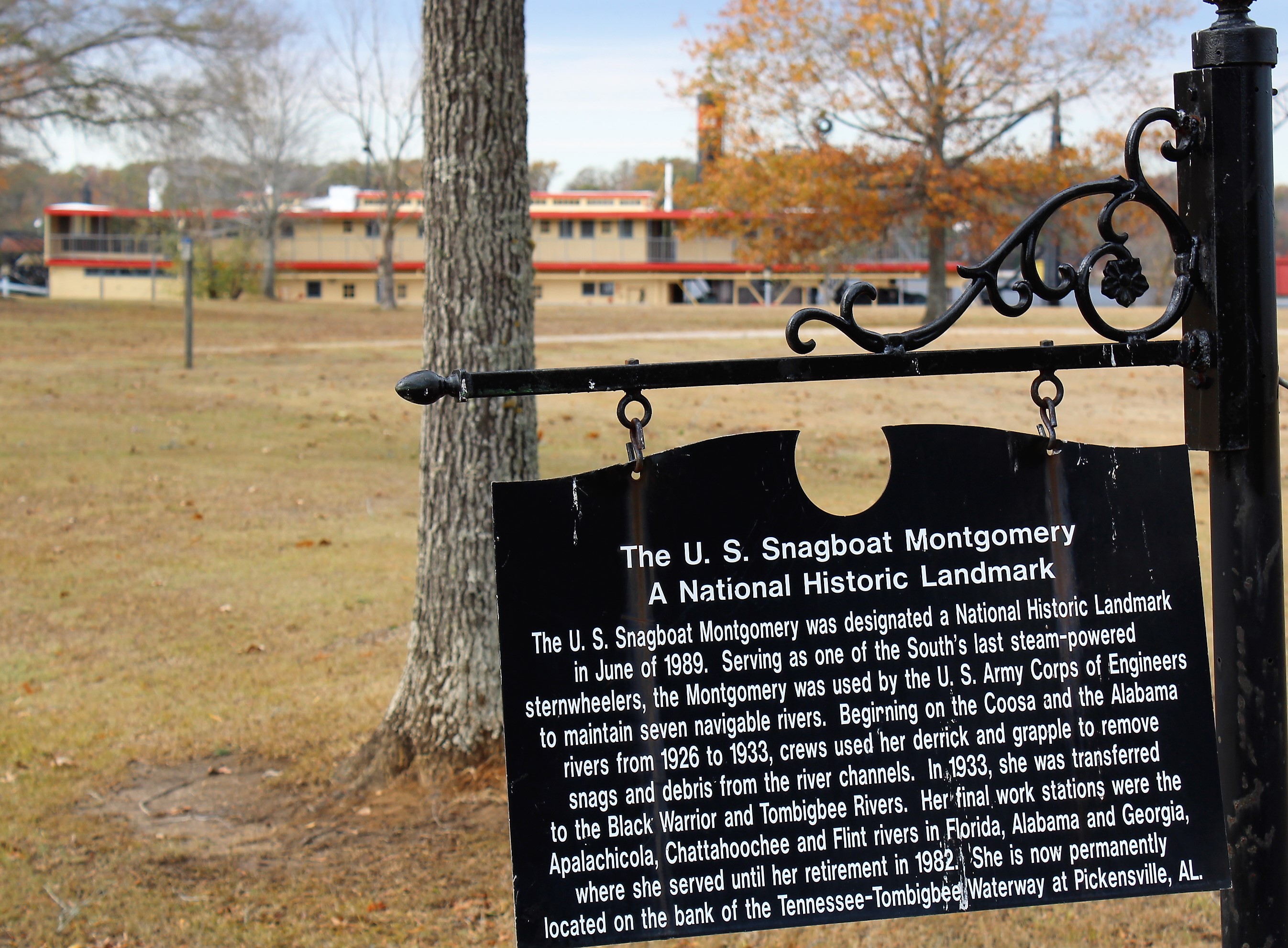
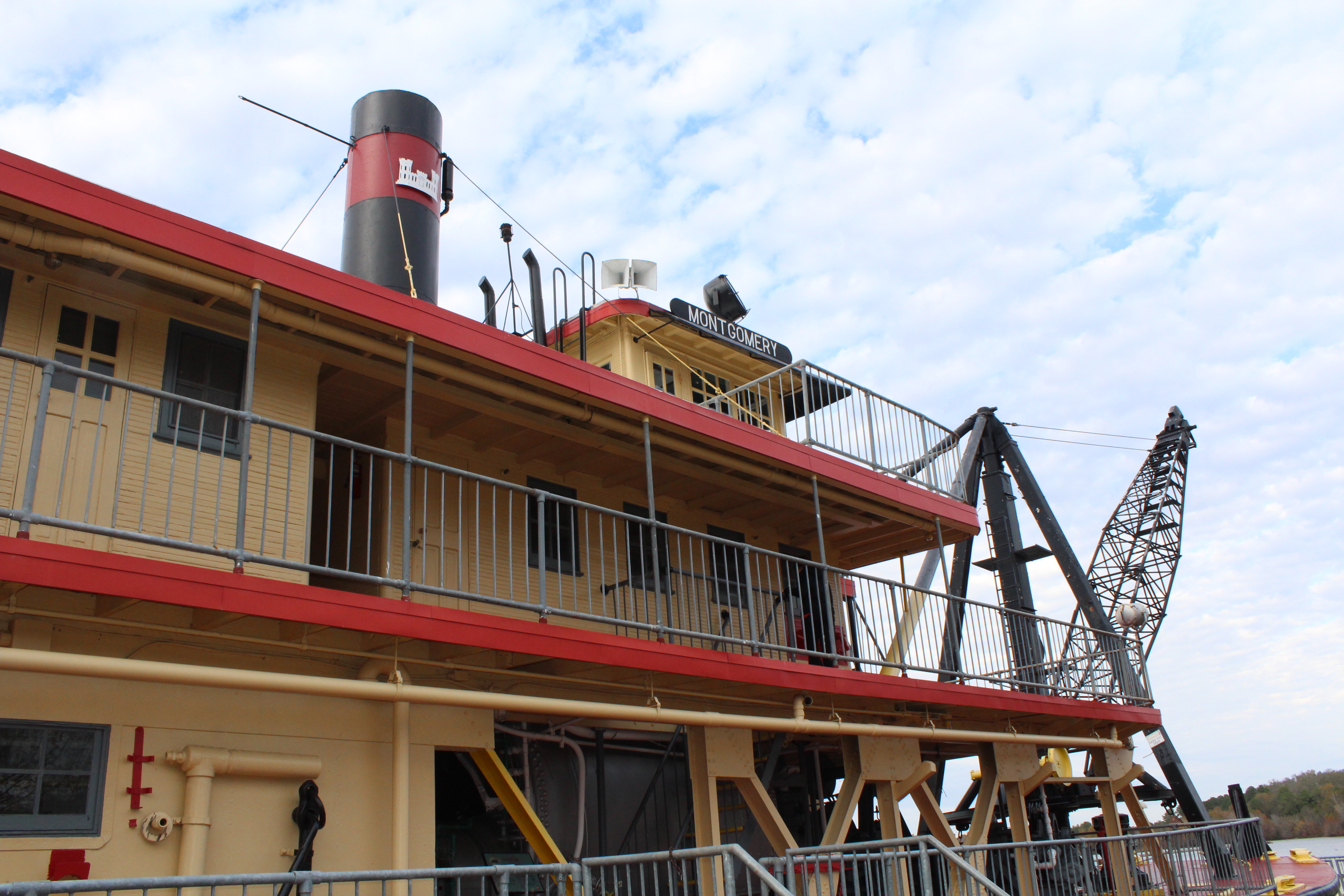
    The crew also toured the US Montgomery which is a National Historic Landmark on display next to the Visitor Center.  The vessel was the last steam-powered sternwheeler to work the inland rivers.  She was retired in 1982.

    img_0122

    img_0127

    Thursday, December 1, 2016

    The day got off to a slow start when the skipper radioed the lockmaster and learned that a tow was about to enter the lock just outside the marina.  The lockmaster said it would be an hour before he could lock our crew down.  Better to be tied to the pier than float around by the lock so the crew relaxed and waited at the marina.

    After getting word that the lock was ready for the pleasure craft, the crew shoved off the dock and entered the lock.  Upon exiting the lock the crew found that the water was still spilling over the dam so they continued to get a 1 knot push from the current.

    Notice the muddy water from the rain runoff.

    img_0131

    The run-down river was interesting today.  The scenery continued to change.  The trees went from the hard wood forest to include Cyprus and pines.  The shore has begun to get more of a sandy loam rather than the red clay.  The river bank has also begun to lower.

    img_0133

    img_0135

    With about 10 miles to the anchor spot for the night the crew decided to go another 6 miles and clear the Heflin Lock today rather than first thing in the morning.  Only problem was they passed a tow boat 6 miles from the lock.

    img_0138

    As a reminder, locks are supposed to take commercial traffic before pleasure craft.  The skipper decided to roll the dice and see if they could speed up enough to make the lock without having to wait on the tow.  The skipper increased the shaft rpm with the engines and settled at 10 mph.

    When they rounded the last bend before the lock they still had two miles to run.  The lockmaster saw them and radioed the tow and asked for his estimated time of arrival to the lock.  The tow Captain responded that he was at least 45 minutes from the lock.

    The lock master then asked the tow captain if it would be alright to put a pleasure craft thru the lock before he arrived.  The lock master told the captain that he would turn the lock around and have the gates open for him when he arrived

    The tow captain agreed and said he would dial it back a bit to give more time. The crew entered the lock and got one of the fastest drain downs to date.  When the gates began to open the lock master sounded the horn to signal the crew to untie and leave.  Normally the horn does not sound until the gates are completely open.

    img_0139
    Secured in the Heflin Lock

    The skipper got the message to get out of the lock.  The admiral removed the line holding the boat to the bollard and yelled “All Clear.”  The skipper moved the boat off the lock wall and exited the lock while the gates were still swinging open.  The skipper called the lockmaster and informed the lockmaster that the boat was clear of the gates.  The skipper looked back and noticed the gates closing.

    About 20 minutes later, the skipper heard the lock master radio the tow and tell him that the lock was ready for the tow to enter when he arrived.  A win-win for everyone.

    The crew pulled into Ox Bow Creek just below the lock and celebrated their lock success by grilling hamburgers on the bow of the boat.

    img_0140

    Friday, December 2, 2016

    The crew got started as soon as they could after the fog lifted.  Thirty degree nites cause thick fog in the mornings with the still warm water.  By the time the fog lifted, the skipper noticed that the water runoff from the dam had stopped.  It would be a calm day on the water.

    Notice that there is no current flowing around the green navigational aid.

    img_0141

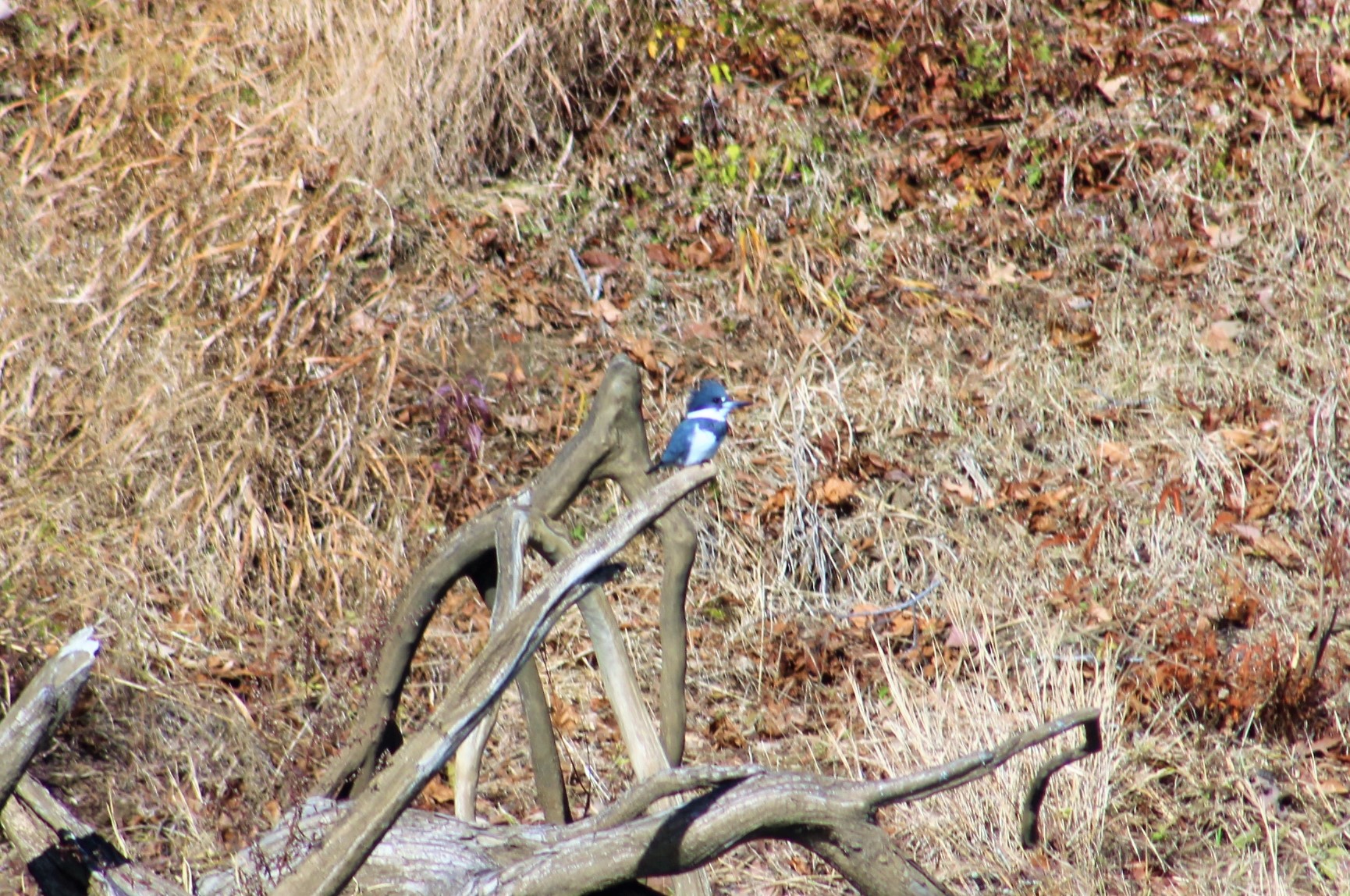
    The cruise was another enjoyable day.  With the sun shining, the 50 degree outside temperature is very comfortable in the enclosed helm.   The wildlife was also taking advantage of the sunshine with many birds standing along the shore.

    img_0143

    A Kingfisher soaking in the sun.

    img_0164

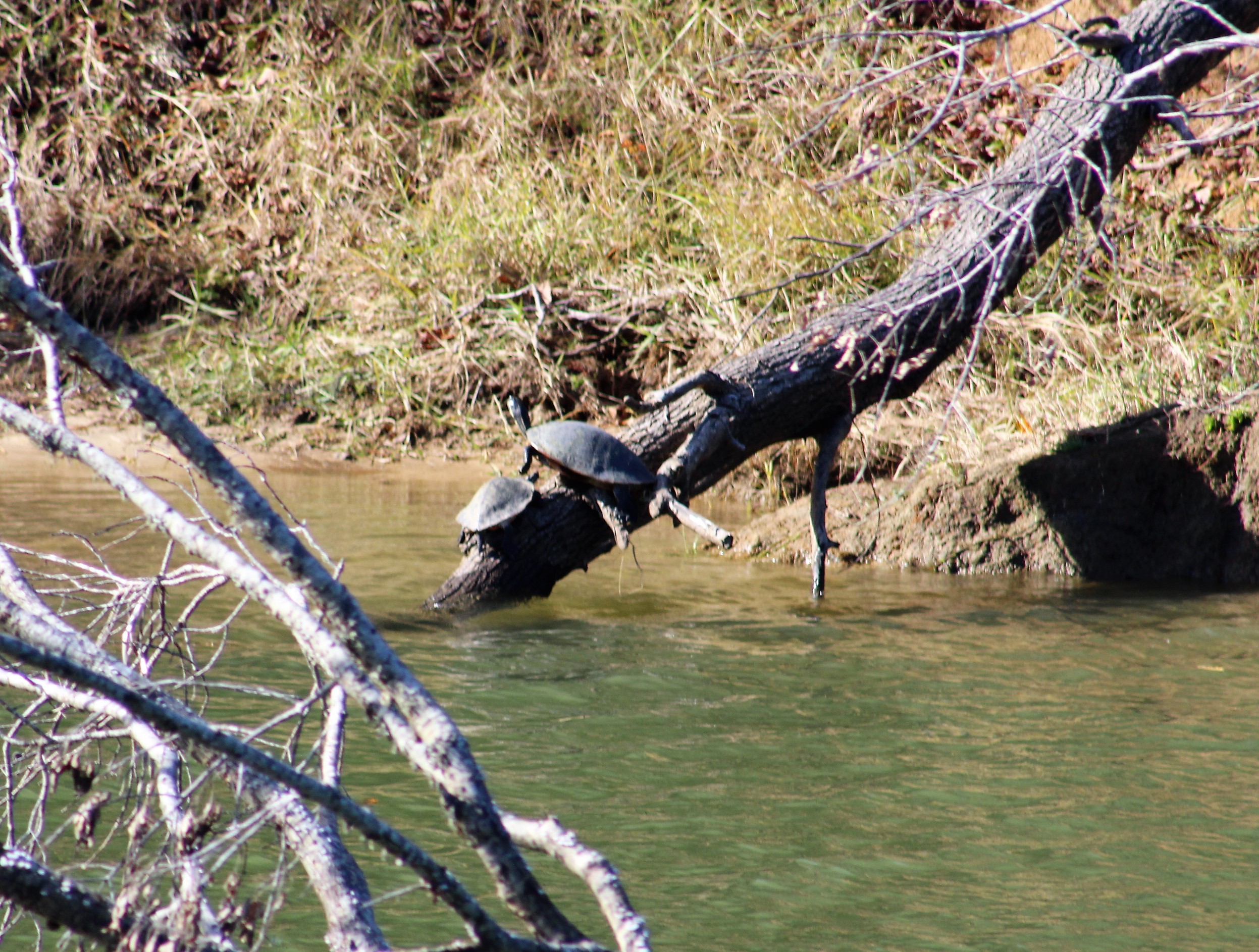
    The turtles were also sunbathing.

    img_0170

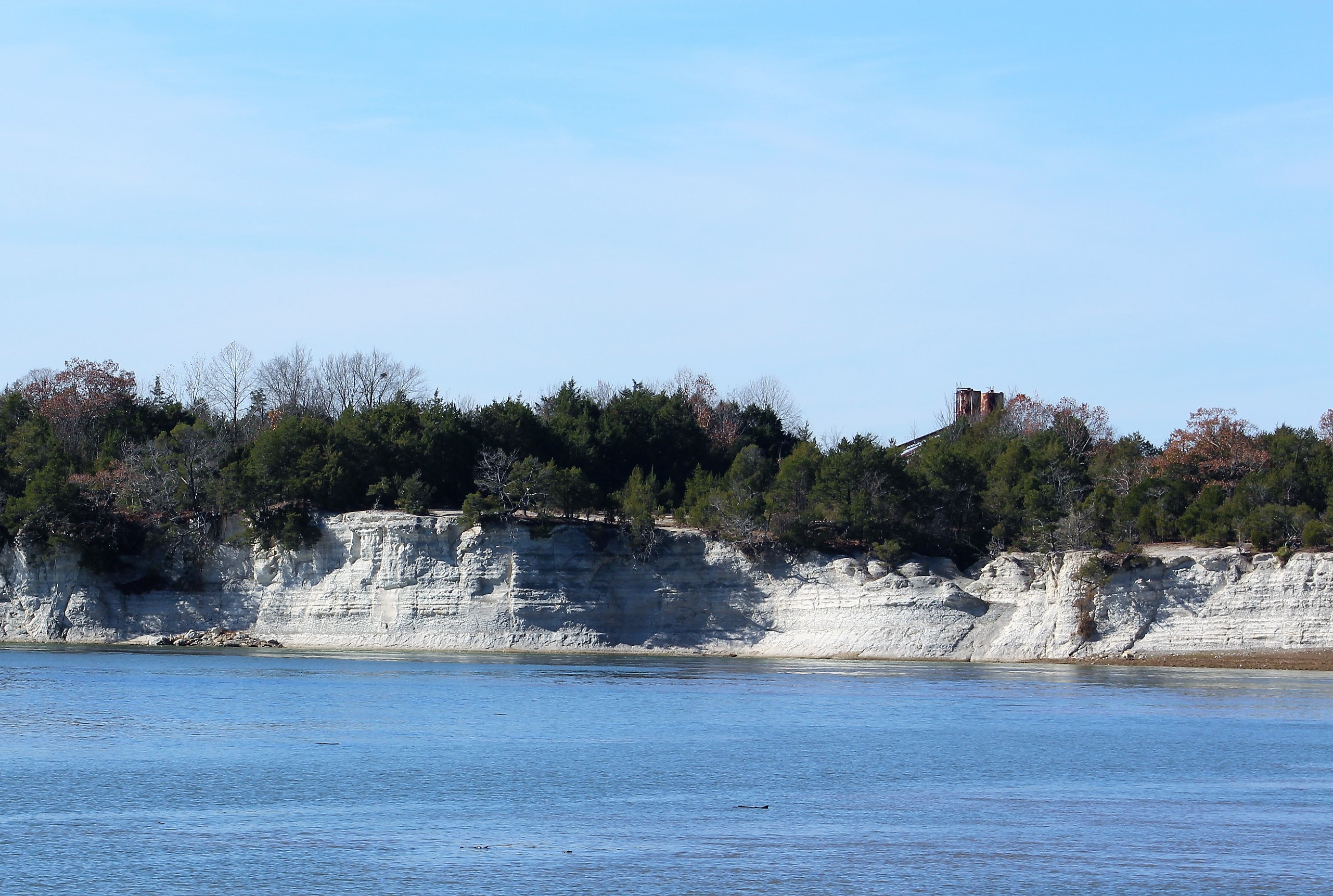
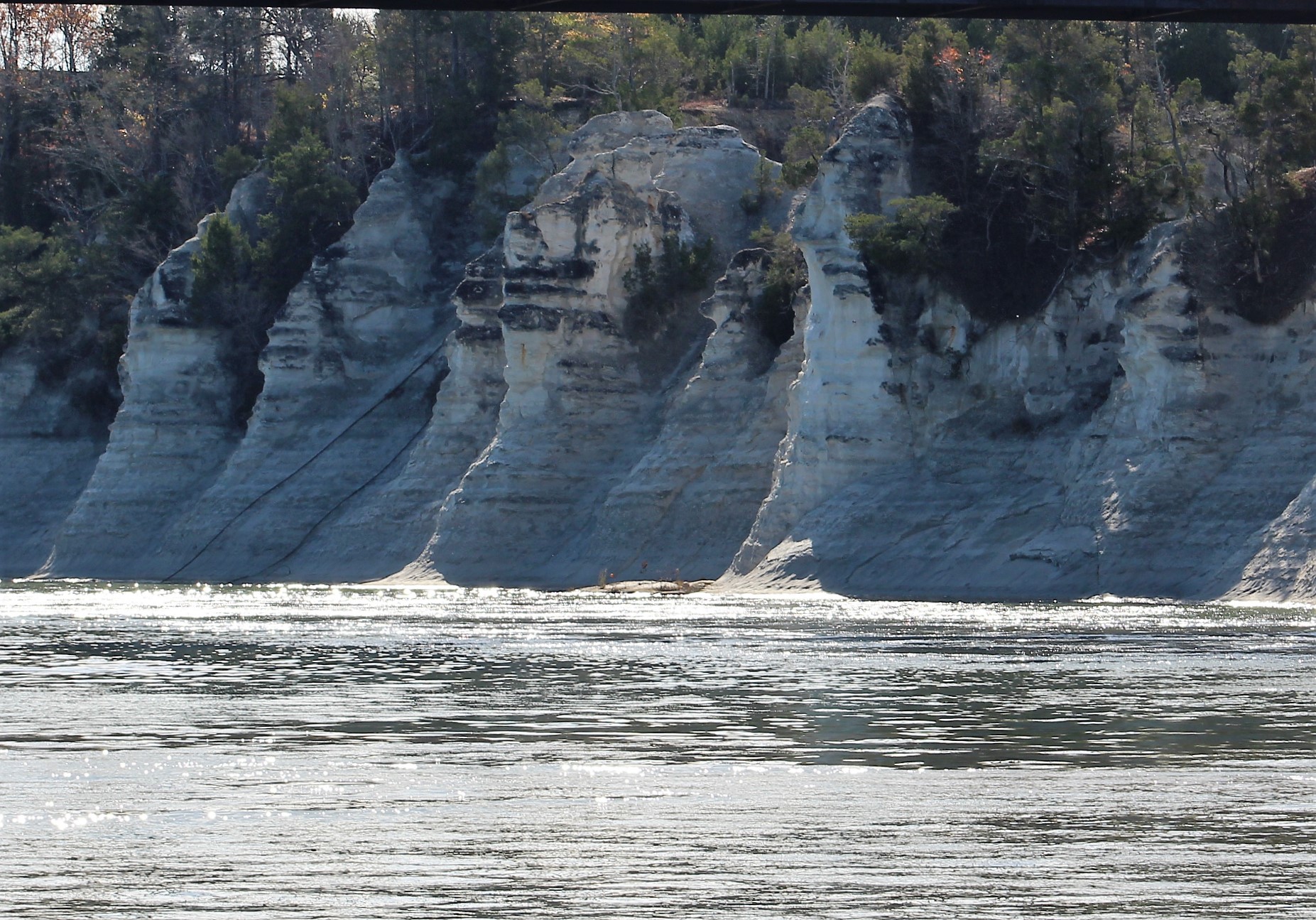
    There were some very interesting shore formations along the route today.  The cliffs were high white bluffs.

    img_0151

    img_0153

    In the following shot can you spot a dolphin or penguin?

    img_0181

    The river was very winding today so as the crew was making their way thru these white cliffs they caught a down bound tow.

    img_0158

    There was a short straight run of river past the above bend.  The Captain of the tow told the crew to pass on the 1 so the skipper sped up and passed the tow in the straight narrow river section.

    Yes, the skipper is only a few feet away from the tow as they go by, as you can see while looking out the window.img_0162

    But that is because there is not much room over to the shore side as you look out the window on the other side.

    img_0161

    A little after 1300, the crew  passed the 225 mile marker which means that we are now halfway down the Tenn-Tom on the way to Mobile, Alabama.

    img_0180
    About mile 225

    At mile 217 the Tenn-Tom Waterway ends and the Black Warrior-Tom Bigbee Waterway begins.  The junction of the Black Warrior River.

    img_0188

    After passing this tow pushing his barges into the shore, the crew entered the Kingfisher Marina.

    img_0187

    Next Week –  The crew will head out on Monday and make their way down the Black Warrior-Tom Bigbee Waterway to Mobile Bay.  Only 2 locks to clear and the boat will be back in salt water.  Looking forward to spotting the first dolphins in the Bay.


    Loop On – The water goes on forever and the adventure never ends.
    La Salle

  • Headed South on the Tenn-Tom

    Hello virtual crew members and fellow adventures!

    La Salle here catching you up to date on the latest travels of Still Waters II. Click on this link to see the day- to-day travel log.


    IMG_0061.JPG
    Last look at the Tennessee River.  Left turn onto the Tenn-Tom just after the hill in the foreground.


    Summary of week: The crew started the week with something that you are not supposed to have on a boat, namely a schedule.  However, they have some good friends that live nearby in Jackson, Tennessee.  Their schedules did not work out when the crew passed by about a month ago.  So this time the crew would make an extra effort to rendezvous with Bob and Kellie on Tuesday.

    On Monday and Tuesday the crew completed their cruise on the Tennessee River.  On Thursday, they started the next leg of their journey on the Tennessee Tombigbee Waterway.  They completed the week when they pulled into Columbus, Mississippi.

    Sunday, November 13, 2016

    If improving business processes is your thing, then by all means, please read on.  However, if you find process improvements as exciting as watching grass grow, you may be better off skipping down to Monday.  You have been warned!

    The crew went walking around the marina and out to the river to observe the river traffic.  While sitting, and watching the water go by, the skipper took notice of the gravel business across the water.  He had previously learned that it takes 70 dump truck loads of gravel to fill one barge.  While watching the operation, he began to wonder how long it would take to fill one complete barge.

    img_0094-2
    Gravel Operation on the River

    He broke out his stop watch and began timing the cycle of trucks dumping their loads in the barge.  He timed ten trucks.  After the tenth truck the tow called a time out from the dump trucks and took some time to reposition the barge.  The cycle time to dump ten loads and reposition the barge for the next ten loads was 20 minutes.  Based on this cycle time, he extrapolated that seven cycles to fill the barge would take 2 hours and 20 minutes.

    A look around showed that this was the fourth and last barge to be loaded for the day.  Some simple math would lead to the conclusion that the total evolution to fill all four barges would take at least 9 hours and 20 minutes.

    Since this work was taking place on Sunday, and assuming that these truck drivers were getting paid by the load and not the hour, it was easy to conclude that if they could fill the four barges more efficiently they could get done sooner and go home to enjoy some good Sunday afternoon football.

    With the goal of shortening their weekend work day the skipper began to analyze each cycle of the trucks dumping their load.

    The normal cycle time for a truck to move into position and dump their load of gravel in the barge was around 1 minute and 45 seconds.  The best practice was 1 minute and 27 seconds.  Worst case was one driver who took 3 minutes and 28 seconds.

    What the skipper observed though was a lot of variability in the times it took for various parts of the cycle.  For example, some drivers could back the truck up to the barge in less than 10 seconds while most were taking almost 30 seconds.  Another example was that once at the barge, some drivers took as long as 30 seconds to release the load while some drivers could dump the load in 10 seconds.

    Based on his observations, the skipper concluded that if you took the best practices of each segment of the process and removed the variability of each driver, that the cycle time for each load dump could be reduced from the normal 1 minute 45 seconds to 50 seconds.  Removing just a little over 1 minute of waste from each cycle.  That does not seem like much but look at the overall effect.

    The time it takes to fill one barge would drop down to just under one hour so all four barges could be filled in four hours instead of 9 hours and 20 minutes.  This would result in the drivers getting paid the same amount of money in less than half the time.  The drivers would not have to work any harder or any faster, just take the waste out of their process.  Which would result in the drivers being at home watching football with their family all afternoon.  A win-win for everybody.

    The skipper used to say back in his working days that he could improve any process by as much as 50% with one hand tied behind his back.  Did I mention that the Admiral was rolling her eyes and laughing at the skipper during his analysis work.

    Monday, November 14, 2016

    Remember that schedule that I mentioned earlier, well today is the day that the schedule drove the decision making.   The crew had planned to cruise about 60 miles but the plans were changed when they ran into an issue in Decatur at the RR Bridge.

    IMG_0044.JPG
    Smooth day on the water

    The bridge was closed for maintenance.  The vertical clearance is only eight feet so the crew had to wait for repairs to complete before they could pass under the bridge.  After an hour and a half wait, the work wrapped up and the bridge tender opened the bridge.

    img_0046
    Love the smooth sailing

    The crew had docked at a marina while they waited on the work to complete.  They shoved off the dock and got back underway.  Because of the long delay the crew talked it over and decided that they would cruise long enough to clear the Joe Wheeler Lock.  They are trying to get back to Aqua Yacht Harbor to meet some friends Tuesday night and cannot afford to have any more of these delays.

    img_0049
    Joe Wheeler Lock

    After passing through the Joe Wheeler Lock at dusk (1645), the crew talked it over some more and decided to make the additional 15 miles to clear the Wilson Lock.  The risk of running at night was minimized because there is a full moon to help guide the way.

    night-cruise
    Night cruise by the light of the full moon

    By deciding to get passed both the Wheeler and Wilson locks they should have no problems making it to Aqua Yacht Harbor on Tuesday.  The crew passed through the Wilson Lock with minimum delays and traveled another three miles to a marina in Florence and conclude their four hour run at night.

    night-cruise-2
    In the Wilson Lock at Night

    Tuesday, November 15, 2016

    The small town of Florence is worth coming back to and spending more time exploring.

    img_0053
    Weekend Project – Took 16 years to build

    In 1818, Italian surveyor Ferdinand Sannoner laid out the town and named it after Florence, Italy.  W.C. Handy, known as the ‘Father of the Blues”, was born here in 1873.  Helen Keller was born across the river in Tuscumbia, Alabama.

    img_0054
    Crew spent the summer cruising the Ohio River

    This would be the last day cruising the Tennessee River.  Turned out to be another beautiful day on the water.  With light winds in the morning, the water was once again glass smooth.  The scenery continued to be excellent.

    img_0055
    More smooth sailing

    bob-and-kellieAfter landing at the dock, the crew anticipated the arrival of Bob and Kellie.  Interesting enough, the two couples actually met in OKC watching the Women’s College World Series of softball, many years ago.  However, the couples had not seen each other since June 2015 because the crew skipped the World Series in June 2016 due to their Loop Adventure.  The four spent the late afternoon and evening catching up on life.  It was great time had by all.

    Wednesday, November 16, 2016

    The crew will start the next leg of their journey towards Mobile, Alabama on Thursday.  The trip to Mobile is 450 miles from where the crew sits today on Pickwick Lake.  The trip down to Mobile will be on two waterways.

    img_0066
    Turning right onto the Tenn-Tom Waterway

    The Tennessee-Tombigbee (Tenn-Tom) Waterway is a man-made channel that goes from mile 450 at Pickwick Lake to mile 217 at Demopolis, Alabama.  The Tenn-Tom is then further divided into three sections: Divide Cut, Canal Section, and the River.

    The second waterway starts below Demopolis and is called the Black Warrior-Tombigbee Waterway.

    img_0074
    Looking down the Divide Cut

    My French ancestors first brought forth the idea of connecting the Tennessee River and the Tombigbee River way back in the 1700’s.  However, it took until December 1972 before shovels started to move the dirt to make the waterway.  The work was completed in December 1984 and the first tow passed through the waterway in January 1985.  The waterway was officially opened and dedicated June 1, 1985.

    IMG_0076.JPG
    Entering Bay Springs Lake

    Fun Fact:  More earth was moved to complete the Tenn-Tom Waterway than was moved to complete the Panama Canal.

    Thursday, November 17, 2016

    The run today took the crew through the Divide Cut of the Tenn-Tom Waterway that connected the Tennessee River with the Tombigbee River.  The Cut is 280 feet wide and 12 feet deep.  150 million cubic yards of earth were moved to complete the Divide Cut.

    IMG_0075.JPG
    Trees along the Divide Cut

    Since the waterway was completed back in 1985, the land has healed itself and now the shore is lined with trees which makes for a beautiful cruise.

    The fall colors are again more vivid now that the crew has made some distance south and dropped almost 400 feet in elevation over the last week or so.

    img_0069
    Overtaking a tow in the Divide Cut

    After cruising through the Divide Cut for most of the day, the cut finally opened into Bay Springs Lake.  The crew docked at the Bay Springs Marina, in preparation to start the Canal Section on Friday.

    Friday, November 18, 2016

    The run today started the Canal Section of the Tenn-Tom Waterway which consists of 6 dams and locks connected by a man-made channel that runs beside the Tombigbee River.  The channel was dug rather than using the existing river because the river twists and turns so much in these next 52 miles.  These twists and turns would have added unnecessary miles to the trip.

    IMG_0082.JPG
    Notice the drill marks in the rock

    The run took most of the day because the crew had to negotiate four locks.  Two of the locks were open and waiting for the crew to enter upon arrival.  One lock required waiting to allow the chamber to be filled so the crew could lock down.  And one lock had an up bound tow to lock up before the crew could lock down.

    IMG_0088.JPG
    Looking down the Canal Cut from Montgomery Lock

    All in all, a successful day with four locks.  At the end of the run the crew pulled into the Smithville Marina.  The marina is run by Scott Cox.  His family has owned the property since 1886 when his great grandfather initially purchased the land.  The family were farmers but had to give up farming when the Tenn-Tom was built because most of their farm land was taken and flooded.  Jesse Cox (Scott’s dad) started the marina and RV park after the waterway opened. The marina has seen better days and is in need of some serious rehab.

    img_0099
    More fall foliage spectacular

    Back on April 27, 2011 an F5 tornado ripped through the town of Smithville and impacted the marina.  Jesse was one of thirteen people killed by the tornado.  The crew found the folks at the marina very helpful and would return here for another night at the dock in the future.

    Saturday, November 19, 2016

    The north winds howled all night long and had Still Waters II pinned along the east-west facing dock.  A good man named Jim came over and helped the crew maneuver off the dock and get back underway in the stiff wind.  Boaters helping boaters is a theme that the crew continues to see play out in this adventure, thanks Jim for the help.

    tow-pass-3

    Skipper over taking a tow in close quarters in the Canal Section.  That tow in the background is less than 40 feet from Still Waters II.

    After getting clear of the dock the crew headed over to the first of three locks for the day.  The lockmaster had the gates open and the crew went straight into the lock.  The lock master called ahead to the next lock that is only five miles downriver and let the lock know the crew was coming his way.

    Upon arrival at the second lock the crew once again found the lock gates open and once again went straight into the lock.  When the gates opened to let the crew out, they noticed a tow coming around the next bend.  They were glad to clear the lock before the tow arrived.

    img_0102
    Tow in the distance at Smithville Lock

    When they arrived at the third lock the gates were open but a tow was coming out.  The lockmaster told the crew to stay out of the way and enter the lock as soon as the tow was clear.  Then again, when the gates were opened to let the crew out they noticed another tow headed to the lock.

    img_0105
    Tombigbee River joining the Canal Section – marks the beginning of the River Section

    All in all, another very successful day negotiating tows and locks.  Oh, I almost forgot to mention, the Admiral was practicing at the helm today and maneuvered Still Waters II off the lock wall, out of the locks and passed the waiting tows in the three locks today.

    img_0108
    The River Section of the Tenn-Tom Waterway

    The crew pulled into the Columbus Marina where Still Waters II will lie until after the Thanksgiving Holiday.

     Next Week –  With the Thanksgiving Holiday on Thursday, the crew has decided to leave the boat and take a week off from cruising.  Food, family, friends, and football will be the activities of next week.  The crew wishes all the virtual crew members and fellow adventurers a Happy Thanksgiving!

    Being French and all, I do not really understand this Thanksgiving thing, but I have been informed that I have the week off and my next post will not be until December 4th.

     Loop On – The water goes on forever and the adventure never ends.
    La Salle

  • Headed West on Tennessee River

    Hello virtual crew members and fellow adventures!

    La Salle here catching you up to date on the latest travels of Still Waters II. Click on this link to see the day- to-day travel log.

    Summary of week:  The crew arrived back on the boat from their trip to Texas in the wee hours of Wednesday morning.  After getting some sleep, they spent Wednesday afternoon preparing to set out on their return trip down the Tennessee River.

    The crew managed to travel three days from just above Chattanooga and ended up in Ditto Landing Marina in Huntsville, Alabama for the weekend

    img_370
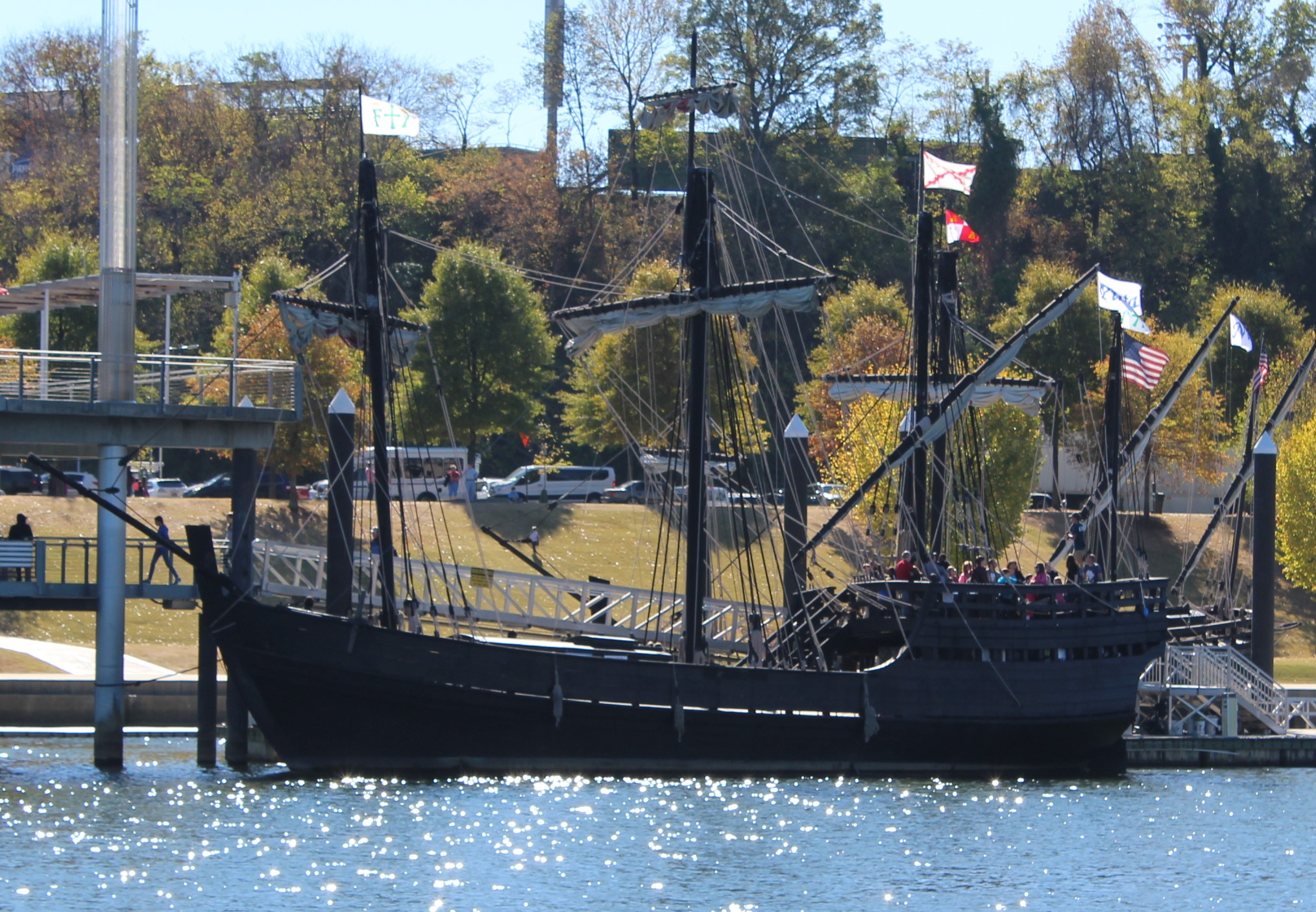
    Replica Pinto and Nina were docked in Chattanooga as the crew went by

    Thursday, November 10, 2016

    The crew decided to shove off and start back west because of the cool weather.  They had about 6 miles to go before arriving at the Chickamauga Lock.  Unfortunately, there was a tow just beginning to lock up so the lock master said to find a place out of the way because it was going to be a while.  The crew’s experience is the wait would be at least three to four hours.


    img_367
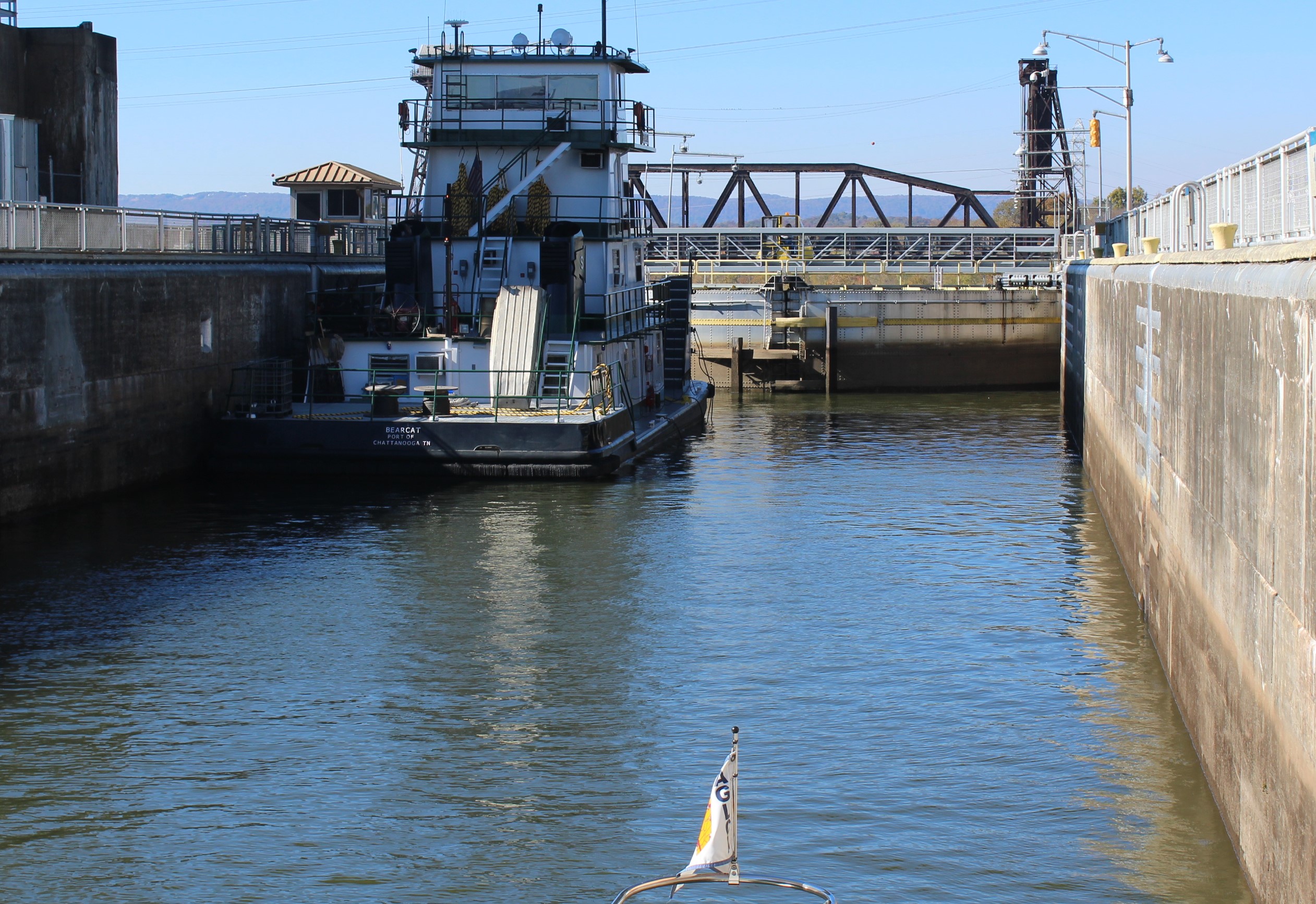
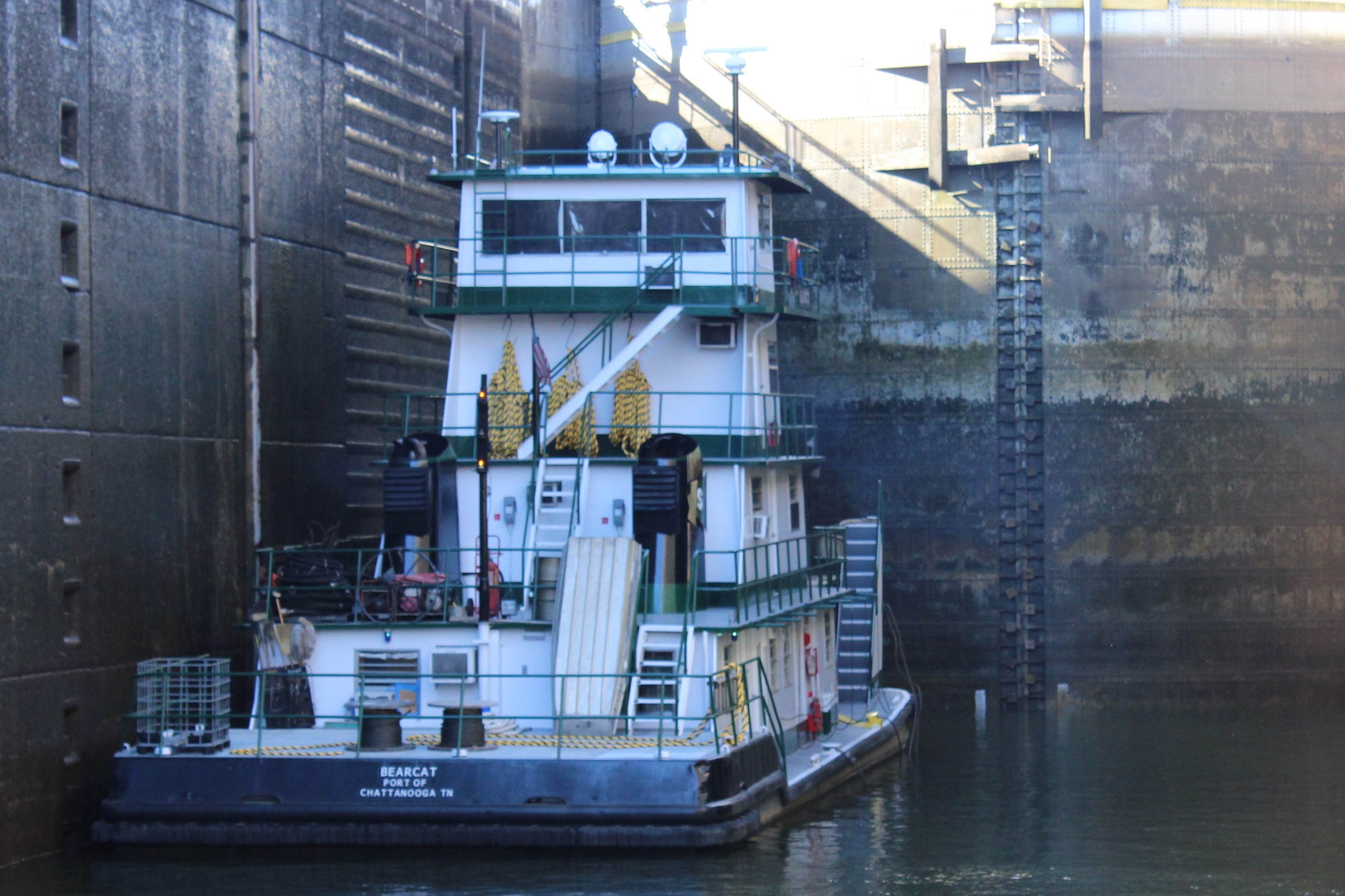
    Bearcat in the Chickamauga Lock

    However, the lock master called on the radio and informed the crew that he would allow them to lock down with the tow Bearcat as he went back down to get more barges.  So after the tow secured his two barges above the lock, the crew followed him into the lock for the 44 foot drop down to the Nickajack Lake level.  The crew only had to wait about an hour to get in the lock.

    Locking through with a commercial tow was a first for the crew.

    img_368
    Locking down 44 feet with Bearcat

    The next part of the cruise was the 25 miles thru the ‘Grand Canyon of Tennessee.’

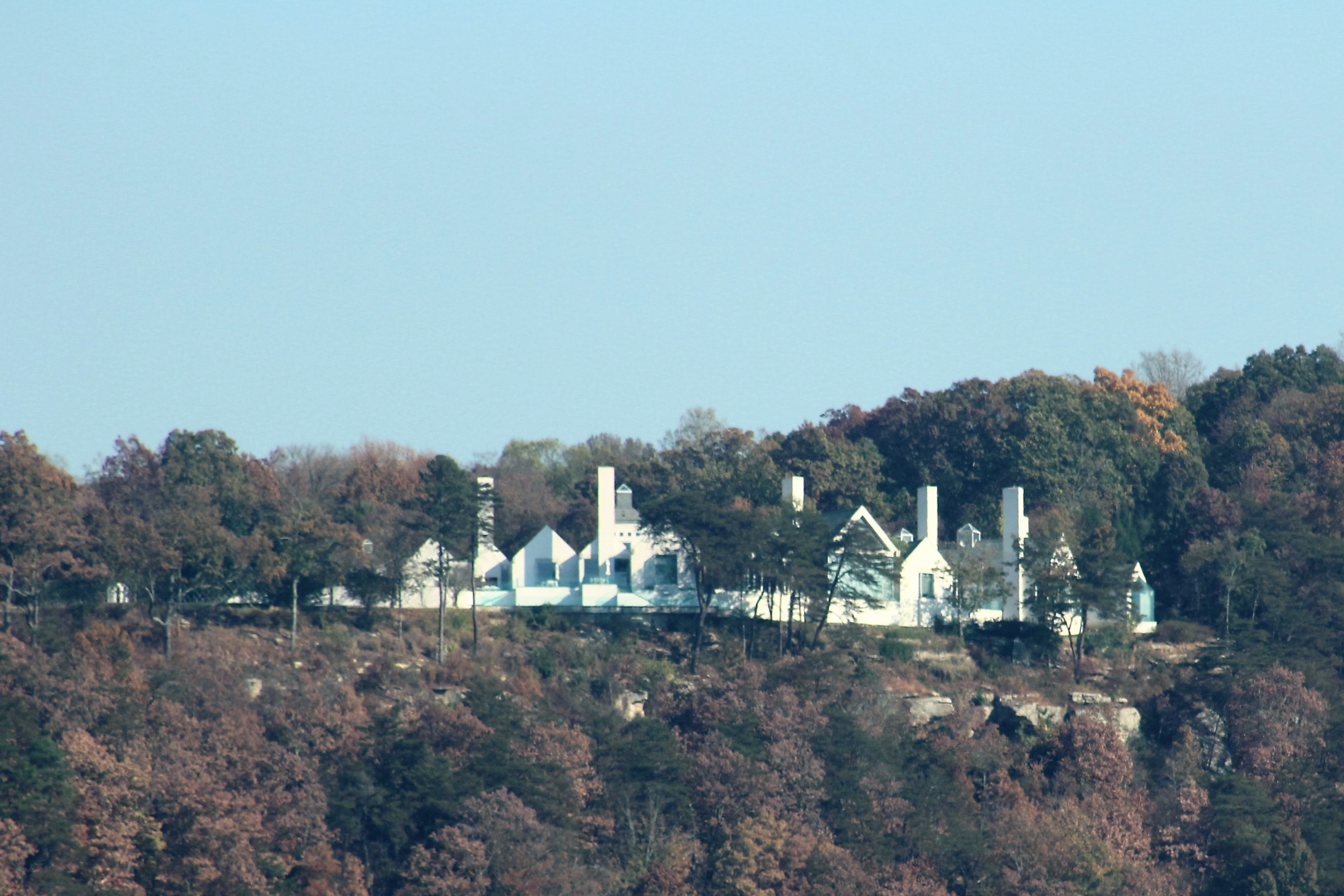
    The crew saw this large house up on the hill.  Locals say it is owned by the DuPont’s.

    img_373
    20,000 sq ft under one roof

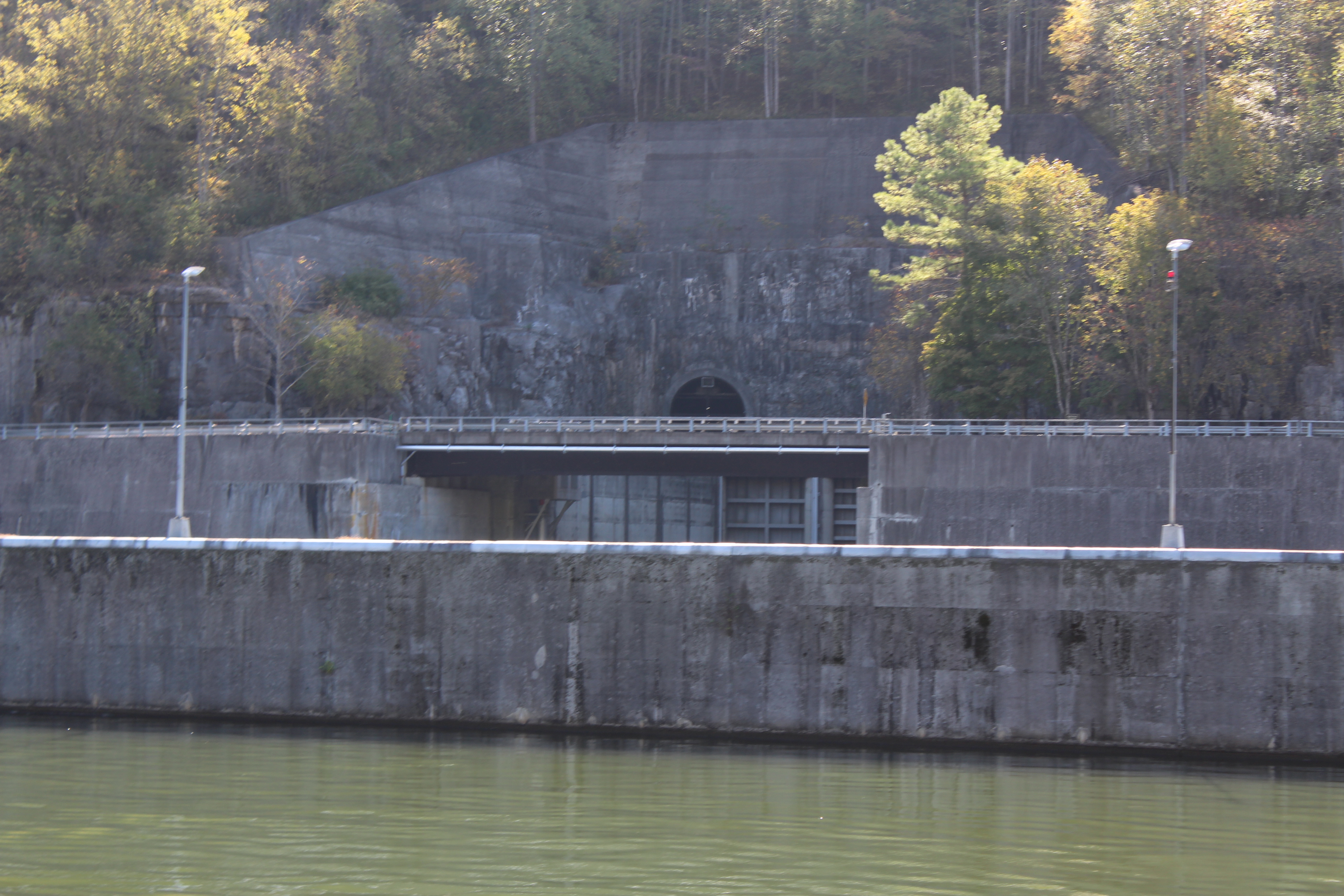
    Another interesting structure in the canyon was the Raccoon Mountain Pumped Storage Project.  At the top of Raccoon Mountain is a large reservoir, 528 surface acres, 107 billion gallons of water.  It takes 28 hours to pump water from the river below to fill the reservoir.

    The facility has four hydroelectric generators for a net of 1628 MWs.

    When power is cheap they pump water up the hill to the reservoir for storage.  During peak demand (think high prices) they drain the lake back to the river and sell the electric power.

    The crew passed by where the water comes back into the river.


    img_0167
    The gates are behind the wall


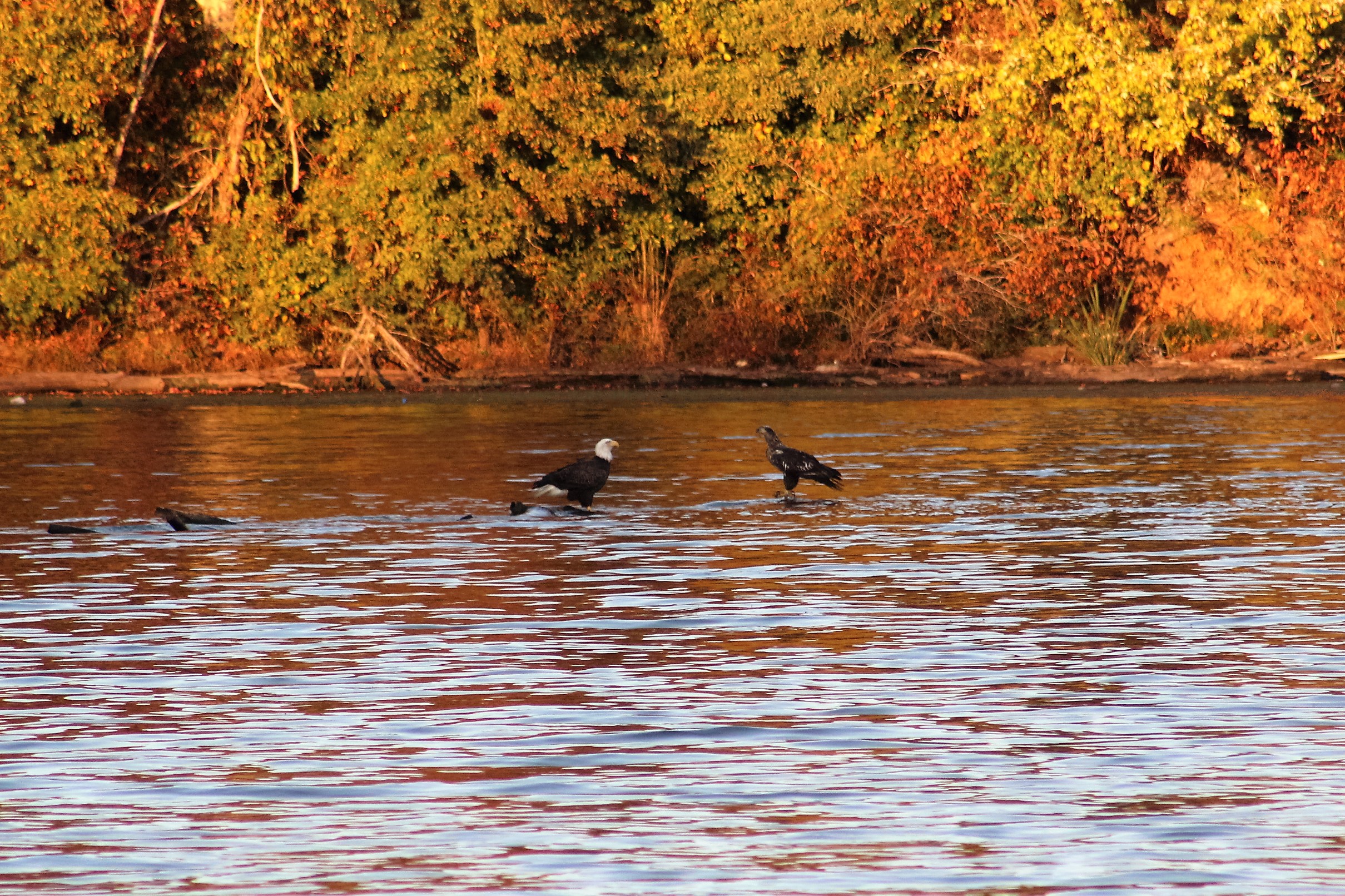
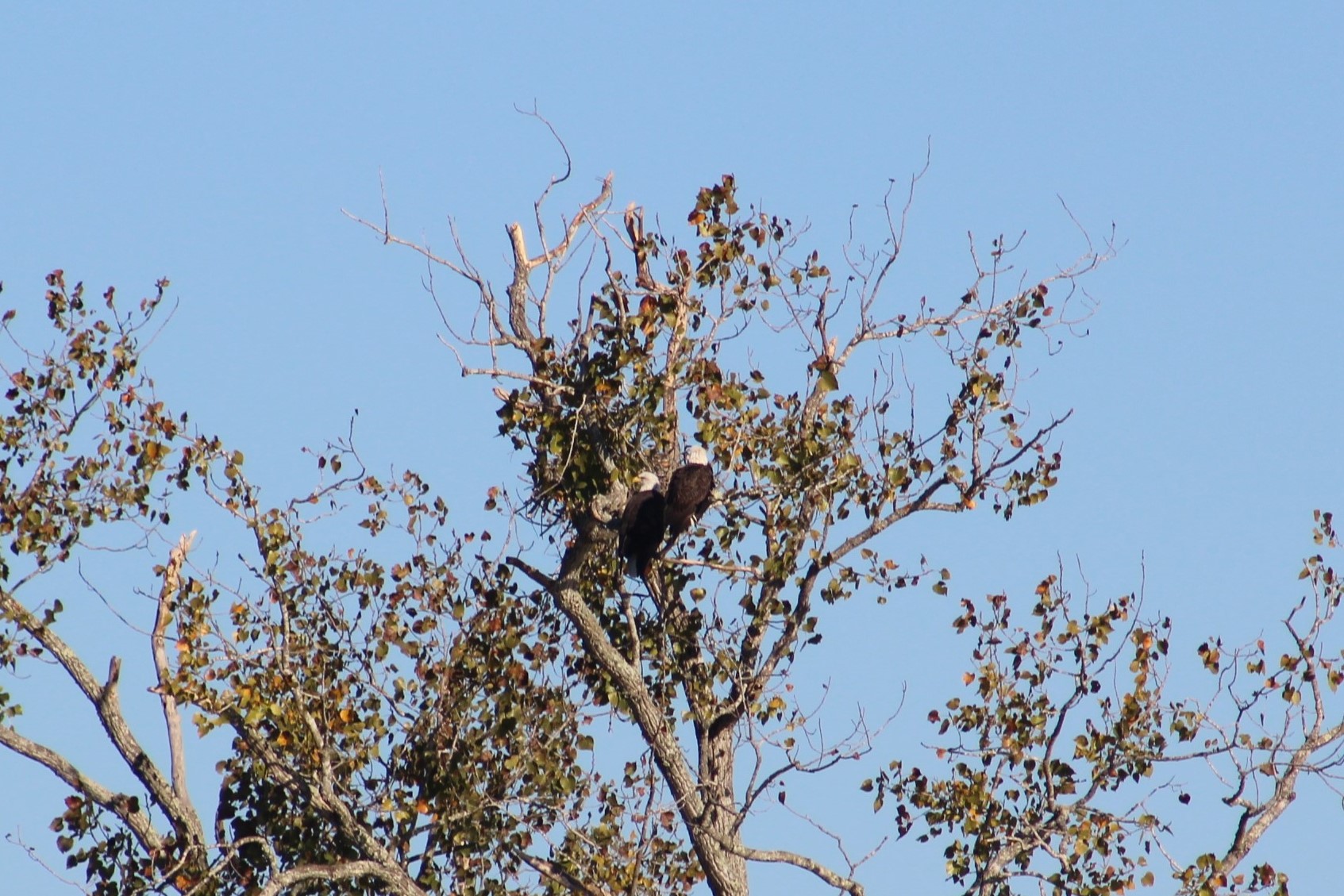
    The crew then arrived at the Shellmound Recreation Area, and landed along a 30-foot dock.  Upon arrival, the skipper spotted a Bald Eagle that looked like he was standing on the water.  As he observed the eagle and was trying to take a picture, a second young eagle landed for the photo bomb.

    img_375


    img_378
    Shellmound Recreation Area


    Friday, November 4, 2016


    img_380
    Short dock at Shellmound Recreation Area


    The crew woke up to an early sunrise and shoved off from the dock after the fog lifted.  The Nickajack lock was only about a mile away and the lock master had the gates open to allow the crew to cruise into the lock and get secured.  The lock dropped the crew 37 feet down to Guntersville Lake level.


    img_386
    Guntersville Lake

    The cruise was mostly through wilderness refuge areas so the scenery was great with very few homes along the shore.  As the crew approached Guntersville though, the wildlife areas gave way to residential development.  The crew got docked at 1600 and decided to take a mile hike to the nearest restaurant to enjoy a night out on the town.

    Gilbreath ...
    Gilbreath House

    They walked by a home with an historical marker in the yard.  The home was built in 1851 and was only one of seven buildings to survive the Civil War in Guntersville.

    The marker explained that the owner of the house was a mason.  Just so happens that the Union officer in charge was also a mason.  The officer in charge ‘spared’ his fellow mason’s home when the home owner begged the Union officer not to destroy the house.


    Saturday, November 12, 2016

    The crew left the dock and made their way over to the Guntersville Lock.  Along the way, they passed two interesting sites.  However, they only saw one of the sites.  The first site is on Goat Island.  The island gets its name from a local goat rancher who allowed his goats to roam free on the island before the Civil War.  During the Civil War the Union troops harvested the goats for food.


    img_385
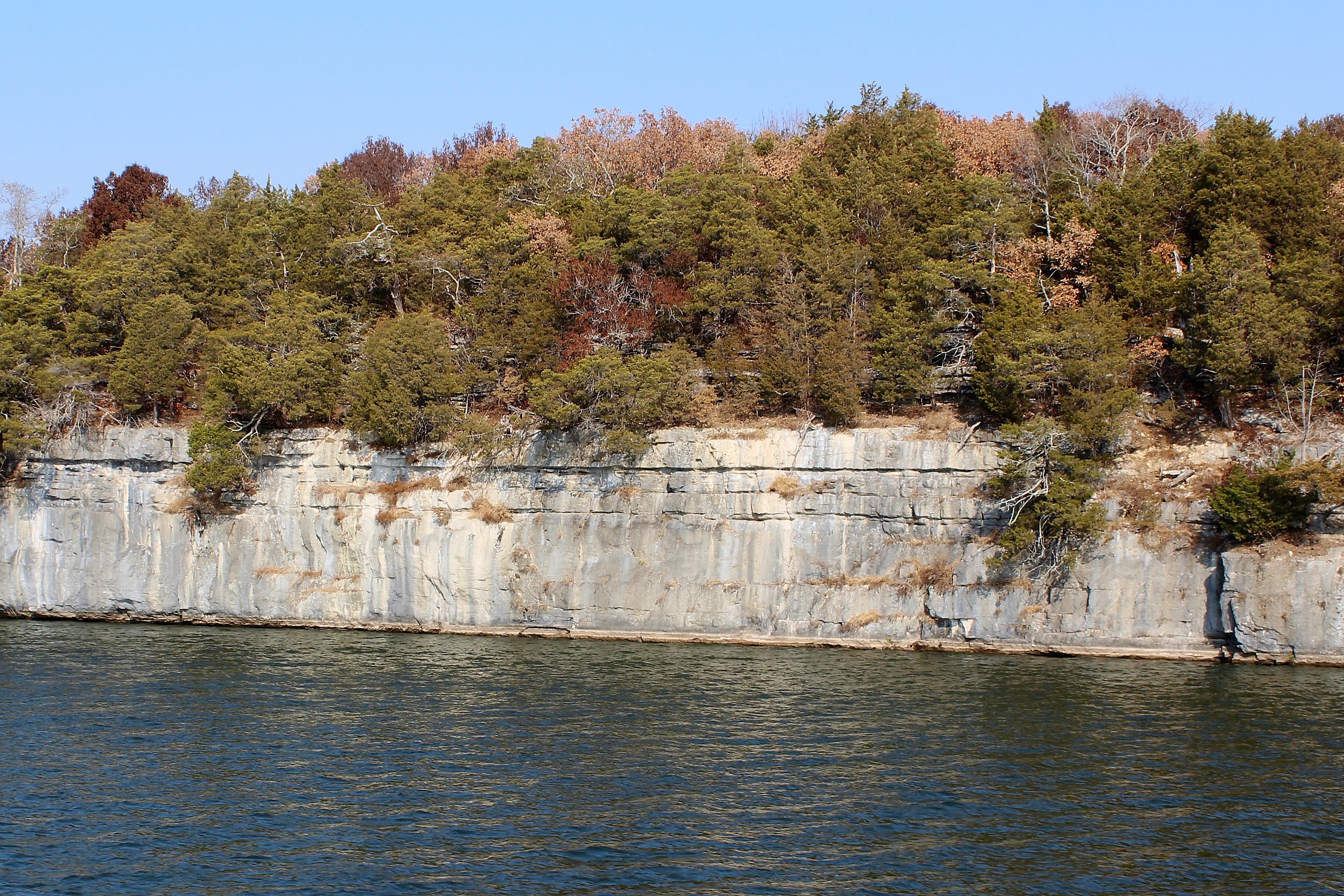
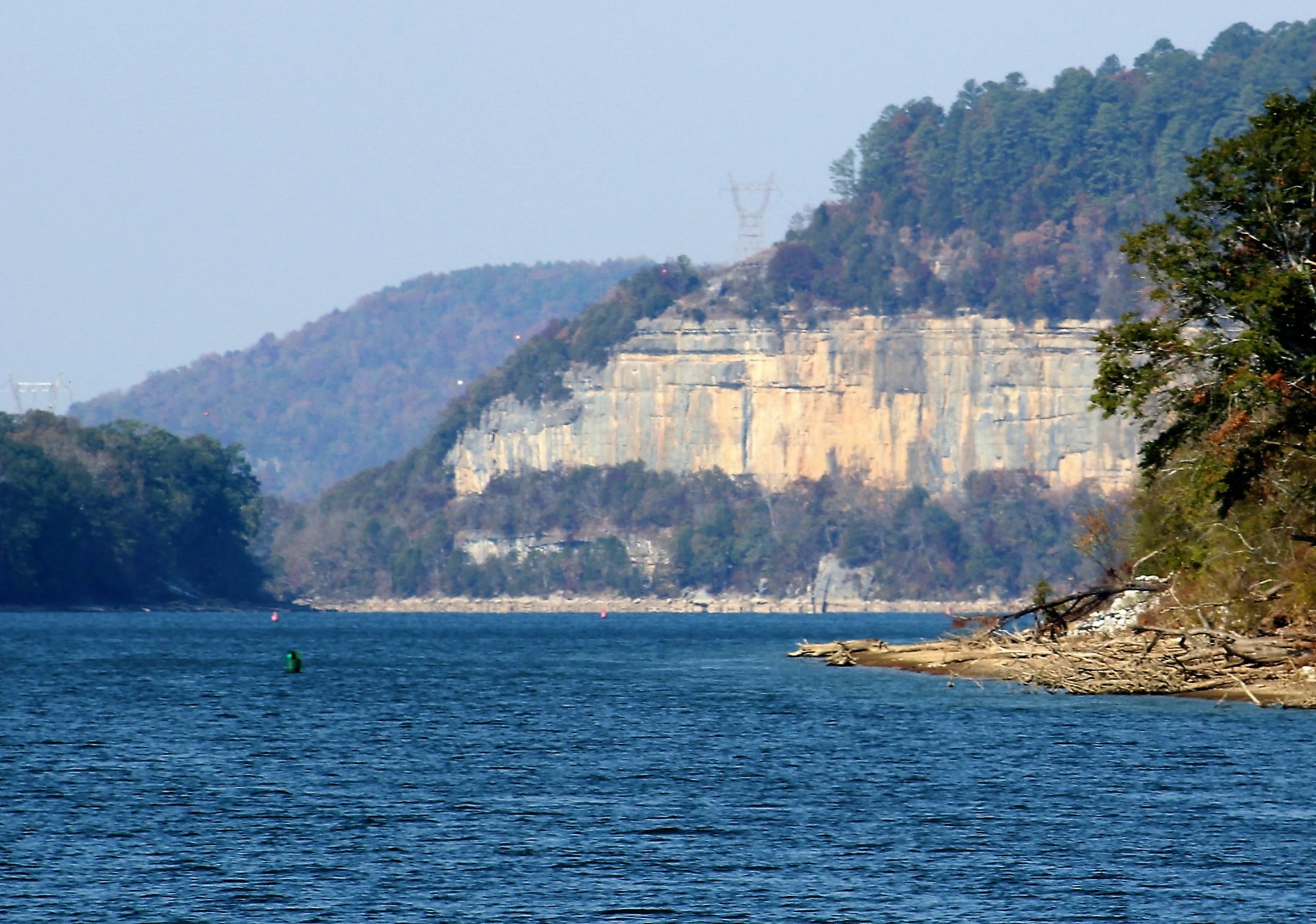
    70 foot cliffs at Goat Island

    Supposedly, carved in the rock face is the following: ‘Gen Andrew Jackson 1813-1914, Ala. D.A.R.’  The crew looked but could not spot the carving.  Looks like the island trees have blocked the view from the water.

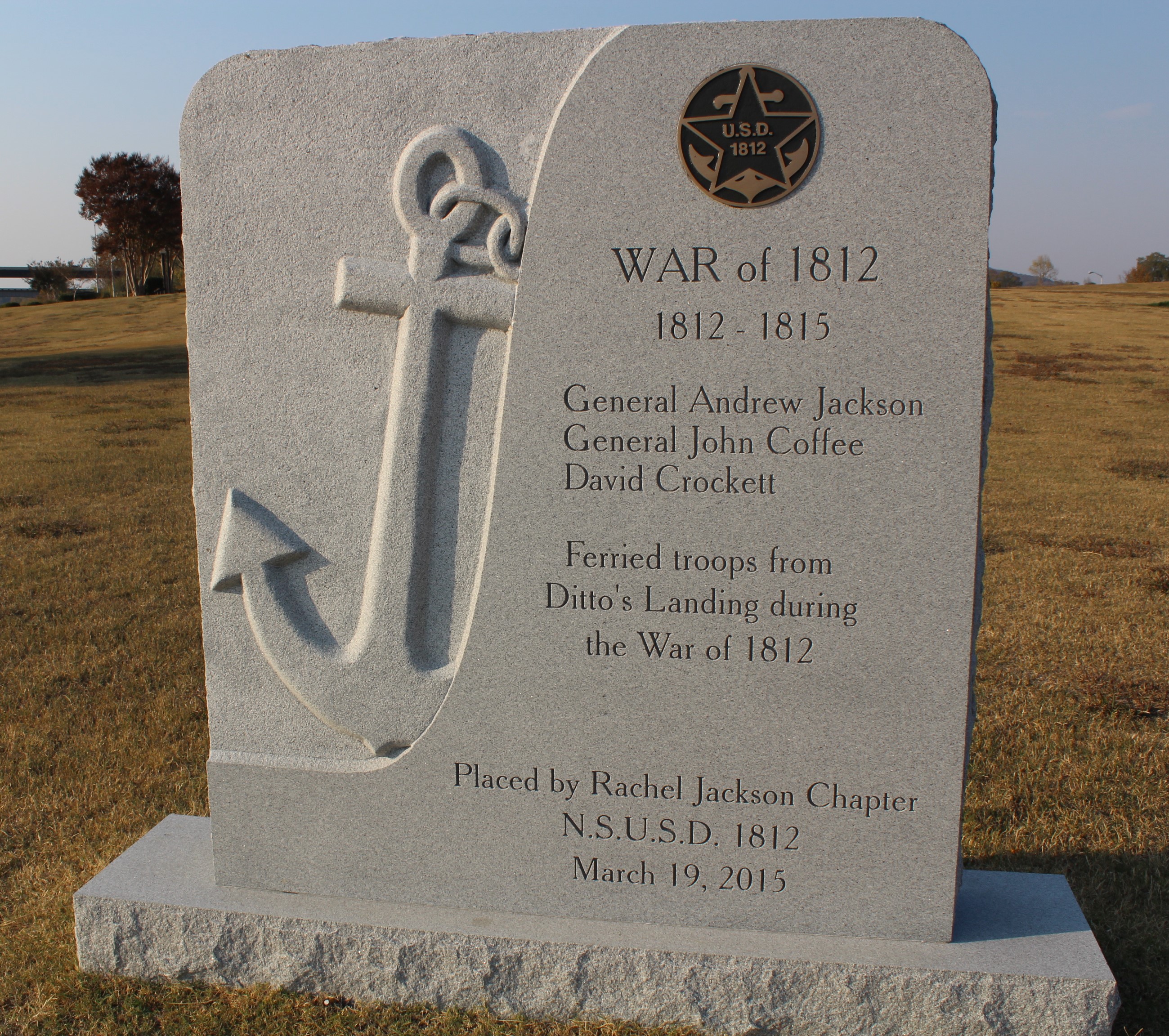
    The carving was made back in 1914 by the Daughters of the American Revolution.  The 1813 commemorates the year that the General was in the area and used a cave, that is now under water, as a supply depot in his war against the Creek Indians.

    img_394

    The Creek and Indian War was a side war during the War of 1812.  General Jackson defeated the Creek with the help of the Cherokee.  The Creek lost all their lands and had to relocate west to the Indian Territory of Oklahoma.  After the General became President, he rewarded the Cherokee for their support by moving them along the Trail of Tears to Oklahoma also.


    img_387
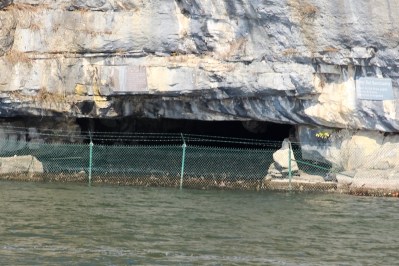
    Grey Bat Cave


    The second site is a Bat Cave Sanctuary.  The sanctuary is to protect the Grey Bat.  It is estimated that 20-50 thousand grey bats use the cave.


    The crew then entered the lock and made the 40 foot drop to Joe Wheeler Lake.  The crew decided to make it a short day and stop at the Ditto Landing Marina for the weekend.


    img_392
    First view of Joe Wheeler Lake after the lock


    Next Week – The crew will continue their return trip on the Tennessee River to Aqua Yacht Harbor, and then start their journey down the Tenn-Tom River towards Mobile, Alabama.

    Loop On – The water goes on forever and the adventure never ends.
    La Salle

  • Rescue at Sea

    Hello virtual crew members and fellow adventures.

    La Salle here catching you up to date on the latest travels of Still Waters II. Click on this link to see the day- to-day travel log.

    Summary of week:  Based on some local knowledge that was shared with the crew at the Fort Loudon Marina, the crew decided to nix the trip to Knoxville and head to the Little Tennessee River and the Tellico River instead.  They spent three nights at the foot of the Smokey Mountains before heading back towards Chattanooga.


    nov-4
    This week’s movements from Ft Loudon Marina, to Vonore, to Ball Play, to Tallassee, to Kingston, and then back to Dayton


    Sunday, October 31, 2016

    Saturday evening, the crew met the first of several local boaters from the Fort Loudon Marina.  Rand and Cheryl have a trawler that they cruise about in.  Rand was also the first to suggest cruising the Little Tennessee River rather than making the trip up to Knoxville.

    Sunday afternoon, Claudia met another boater, Pam.  Pam and her husband are just about ready to launch their ‘Loop Adventure’ aboard Bye George.  Pam and George came by Still Waters II later in the day to pick our crew’s brains about doing the Loop.  Somewhere along this journey our crew has gone from novices to experienced loopers, more than happy to share their experiences with those just getting started.


    img_0257
    Looking out from Fort Loudon Marina


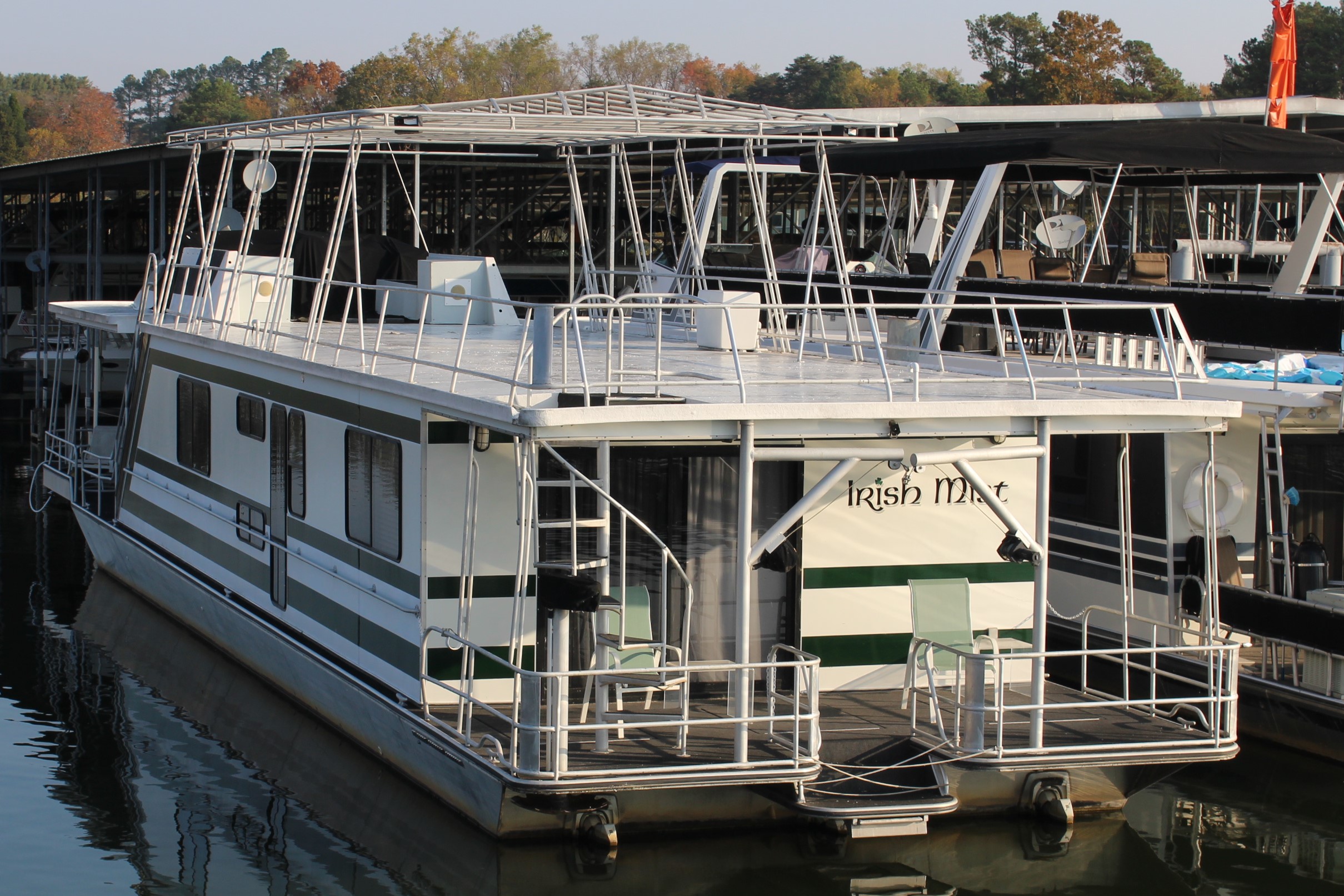
    The crew also had another enjoyable surprise.   Back in the 2015/2016 winter, you may recall that the crew stayed in the Ortega Landing Marina in Jacksonville, Florida.  Just down the dock from the crew was a sailboat named Journey, and she is crewed by Dana and Michael.  They have been ‘In Progress’ on the loop for about five years.  Turns out that Dana and Michael have put Journey up in heated storage on the Erie Canal.  Also, turns out that their homeport is Fort Loudon Marina.  Dana noticed Still Waters II and came over and said hello.  Later in the evening, our crew went over to visit with Dana and Michael aboard their houseboat, Irish Mist.  Great evening catching up on each other’s travels.

    img_0262

    Monday, October 24, 2016

    The Little Tennessee River started making the national news back in the late 1970’s.  If you were alive back then, do you remember the Snail Darter?

    Image result
    Snail Darter

    The Snail Darter was one of the first test cases for the new Environmental Protection Law.  The little unknown fish brought the Tellico Dam project to a screeching halt.

    The Snail Darter was discovered in the shallow waters near the dam after the dam was approximately 80% complete.  The Snail Darter was added to the endangered species list and then environmentalist went to court to stop the building of the dam.  The Supreme Court upheld the lower courts positions that the dam could not be completed.  Basically, upholding the new Environmental Protection Law protecting endangered species.

    img_0263
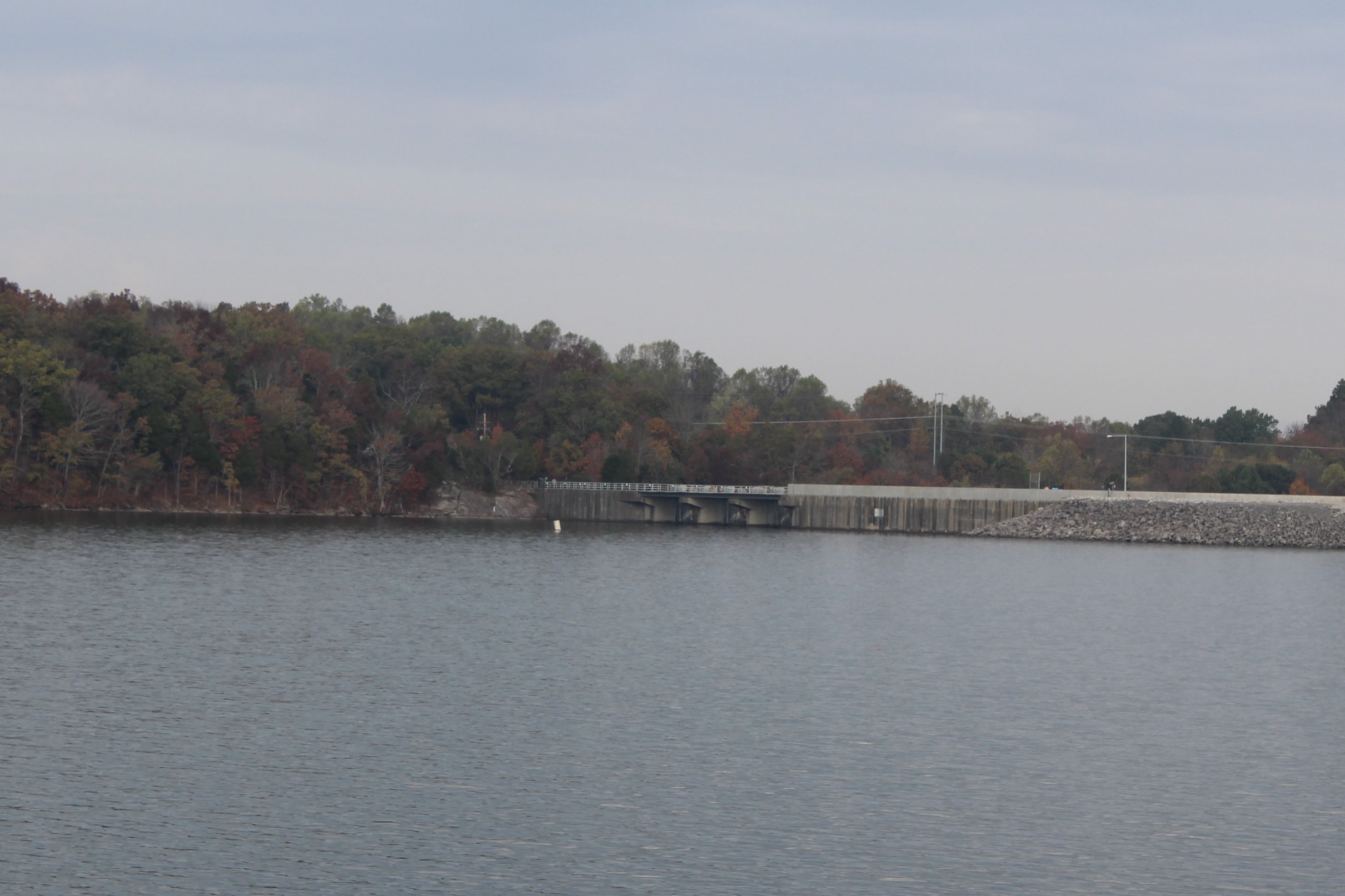
    The completed Tellico Dam

    As you can see though the dam is complete and there is a Tellico Lake.  So how did that happen?

    Well, after the Supreme Court decision, the Tennessee legislators snuck a rider into an unrelated bill that exempted the Tellico Dam project from the Environmental Protection Law.  Once the bill was signed into law the construction on the dam was completed.

    You may be glad to know that biologist have found other snail darter populations in other waters.  Biologist also relocated the snail darter to other areas before the dam was complete.  In 1984 the snail darter was moved from endangered to threatened.

    img_0264
    After cruising some more beautiful areas, the crew stopped at the Sequoyah Birthplace Museum

    The crew was not sure if they would be able to get to the dock because the water depth was not plotted on the charts.  The skipper eased the boat, ever so slowly, to the dock and found 12 feet of water all the way to the dock.  As the crew was securing the boat two other boats arrived and tied up on the dock.

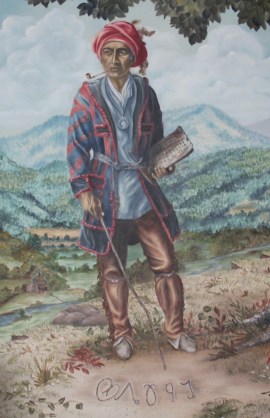
    img_0271
    Sequoyah

    Our crew left the dock and headed to the museum.  The museum discusses Sequoyah and how he developed the written Cherokee alphabet and written word.

    He called the written word on paper ‘talking leaves.’

    He was born in 1776 in Tuskeegee near the museum.  He joined General Andrew Jackson and fought for the US during the war of 1812.  During the war he observed the US soldiers writing letters back home.  After the war, he decided to  create a written system in Cherokee.  The system eventually contained 85 symbols.

    The museum makes a point that never before, or since, in the history of the world has one man, not literate in any language, perfected a system for reading and writing a language.

    After visiting the museum, the crew decided to walk the 1.5 miles to the Fort Loudoun State Park.  The park has a nice Visitor Center and a replica fort.  The fort is a replica because they had to raise the land 20 feet so that the location would not be flooded by the Tellico Dam.

    img_0280
    Looking out from inside Fort Loudoun

    The fort was the furthest west that the British ever built a garrison.  The fort was built in 1756 to provide security for the Cherokee Nation women and children as the men went west to help the British fight the French during the French and Indian War.

    As the Cherokee were returning home from battles conducted further north in Pennsylvania they stole some horses to shorten their time on the trail.  Stealing horses was a time-honored tradition in the Indian Culture.  The white folks were none to pleased about the loss of their horses and killed 33 Cherokee in attempts to get the horses back.

    The Cherokee Culture also had a Blood Law that they honored.  If you killed the Cherokee, they blood avenged their deaths with the blood of the same number of your deaths.  So, the Cherokee killed 33 white folks on their way home.  When they reached Fort Loudoun the British and Cherokee began to negotiate a treaty to stop the bloodshed.

    The British held the Cherokee negotiators in the Brigg for several months.  The British finally released three of the Cherokee but kept 24.  The Cherokee decided to lay siege to the fort to get the return of their 24 brothers.  In August 1760, the British finally surrendered the Fort to the Cherokee.

    Part of the treaty for the surrender of the fort was that the Cherokee would provide a safe escort for the British soldiers and their families out of Cherokee Nation held lands. The Cherokee escorted the British soldiers 15 miles from the fort the first day. However, during the night, all the Cherokee left the British.  The next morning the Cherokee attacked the British soldiers and took the women and children back as slaves.  The Cherokee later traded the women and children back to the British.

    Another interpretation that the visitor center laid out was the importance of the French and Indian War on shaping the future of the American colonies.  The British finally won the war and in the Paris Treaty, the French surrendered all of Canada to the British.  The French had also given Spain all the lands west of the Mississippi, basically ending the French presence in the New World.


    Map showing the British gains following the Treaty of Paris in pink.  Spanish gains are in yellow.


    But the land mass changes were just the beginning of the end for both the British and the French.  The British began taxing the colonist to help pay for the large debt left following the war.  These taxes stirred the hearts and minds of the colonist and eventually lead to them fighting for their independence from British rule.  The French also had a huge war debt that weakened the French Monarchy and eventually lead to the French Revolution.

    But all this may have you wondering, if Spain owns the land west of the Mississippi in 1760, how did the French sell this same land to the United States in the famous Louisiana Purchase of 1803? Well that is a story for another time and another place as we make our way south.


    img_0292
    Sunset at Sequoyah Birthplace Museum


    Tuesday, November 1, 2016 

    The crew made a very short cruise this morning to mile 8 on the Tellico River.  There is a red buoy at mile 8 that the locals warned the crew not to pass.  The red buoy marks the end of the navigable waters of the Tellico River.  Small fishing boats can go further up the river, but Still Waters II will be happy to drop anchor here by the red buoy and take in the scenery for the rest of the day.  This may just be the best anchor spot on the whole loop thus far.

    Wednesday, November 2, 2016     

    The crew decided to move over to the end of the navigable waters on the Little Tennessee River and check out the mountain views from there.  The cruise took the crew past Fort Loudoun and the Tellico Blockhouse.

    img_0281


    The Blockhouse was built in 1794 with its primary purpose to protect the Cherokee Nation from the white settler’s encroachment into the area.  The war department also built a trading post here to provide supplies to the Cherokee.  It took 35 deer hides to trade for a rifle and ammo.  Unfortunately for the deer population, as more Cherokee began hunting with rifles the deer population took a rapid decline.   Before the Cherokee left the area, hunting parties went from three days to three weeks because the number of deer nearby continued to decline.

    As the crew went around a horseshoe bend, they noticed a set of markers standing near the water’s edge.  Each of the markers stand for one of the Cherokee Nation clans: Deer, Wild Potato, Wolf, Paint, Bird, Long Hair, and Blue.

    IMG_0320.JPG

    There was also a marker indicating the town of Tanasi, the capital of the Cherokee Nation from 1721-1730.  It was during this time-period that the term Tanasi was also applied to the river.  In 1762, Lt. Henry Timberlake modified the spelling and assigned the name ‘Tennessee’ to the river on a map that he was preparing.  Then in 1796, the name was selected for the 16th state of the Union.

    The views from the anchor on the Little Tennessee River.


    Thursday, November 3, 2016

    The crew weighed anchor and set off for Fort Loudon Marina.  The wind was unusually calm which made for excellent cruising.  The crew made good time getting back to the Tennessee River, so rather than head to the marina they locked down to Watts Bar Lake.  The lock dropped the crew 70 feet, and they were back under way.  The crew then cruised about another 25 miles and called it a day when they dropped anchor in the Painted Rock Cove.


    IMG_0331.JPG
    Calm day on the water


    IMG_0334.JPG
    Fort Loudoun from the water

    IMG_0341.JPG


    IMG_0350.JPG
    Painted Rock Cove


    Friday, November 4, 2016

    Some days in life are strange, then some days are even stranger.  This was one of those kinda days for the crew.  The skipper awoke to the news that one of his aunts had passed on to the next life.  This was no surprise for she had been on hospice care for several days.  However, it is always a shock and sad when someone moves on to the next stage of life.  The crew decided that they would make a long run and try to get to a marina with a rental car agency nearby so they could arrange for a trip back to Texas to attend the funeral.


    IMG_0351.JPG
    Saw these two early in the morning


    Then the crew got a surprise when they arrived at the Watts Bar Lock to find that the lock was closed until 1600 because divers were in the water doing maintenance.  That will make the long day on the water even longer as the crew must wait three hours to clear the lock.


    IMG_0355.JPG
    Interesting way to mark some shallow water


    While the skipper was talking with the lockmaster, he slowed the boat down.  No since rushing to the lock to wait three hours.  The Admiral noticed a kayak that looked to be in distress.  The kayaker was about a half mile away from Still Waters II.  The Admiral used her man-over-board training to maintain constant visual contact on the kayak while the skipper talked with the Lockmaster.  It looked as though the kayak was sinking.  Sure, enough, the kayak finally turned over and dumped the young man into the drink.


    IMG_0357.JPG
    Boats supporting work at the lock


    The Admiral commented that they needed to go see if they could help the young man.  The wind was blowing the kayak away from the young man, and it appeared that he was swimming towards an Island that was 0.75 miles away.  The closest land to him at the time.

    rescue-5
    Red Kayak barely afloat

    The skipper turned the boat around and headed to the young man.  By the time that the crew arrived, the young man was struggling to stay afloat even though he had on a life jacket.  He also had a backpack, fanny-pack, full camo gear, and boots.  He was trying to get the backpack off to unload some weight.  The young man could hold on to the swim platform and get his backpack and fanny-pack off his body and onto the swim platform.  He was then able to climb up the swim ladder and get safely aboard.

    The skipper then turned the boat to see if they could also rescue the kayak.  The Admiral fetched the boat hook and gave it to the young man.  He could reach over and pull the kayak over to the boat once they got within six feet of the kayak.  He then managed to get the kayak up on the swim platform and eventually the dingy davits.


    rescue-1
    Jordan resting before getting on swim platform

    With the excitement over, the crew learned that the young man’s name is Jordon.  He was out taking photos of wildlife.  He mentioned that he was sure glad that he had taken out a one year insurance plan on his new camera.  Jordon said that the drain plug had come out of the kayak.

    As he was paddling, water began to enter through the drain plug opening.  After a while the water began to cause the kayak to sit lower in the water.  Then as he paddled up a wave the back end started going under water, taking in even more water.

    Eventually the kayak was filled with water so he rolled it over to get out of the kayak and swim for safety.

    rescue-2
    Wrestling the kayak aboard

    With the introductions done and some light conversation, the skipper asked Jordan where he needed to go to get back to his car.  Jordon said that he was over at the boat ramp near the lock.

    When the skipper arrived near the lock some small TVA boats would not let him go to the boat ramp.  One of the little boats finally came over to tell the skipper to back out of the area.  The skipper explained what he was trying to do, so the little TVA boat guy said to load the kayak and Jordan on his boat and he would take him to shore.

    rescue-3
    Still smiling after transfer to TVA boat


    With Jordan off loaded the crew headed for a little cove where there was an abandoned dock to wait for 1600.

    rescue-4
    Waiting on the lock at the dock

    The lockmaster called the skipper at 1605 and reported that it was now safe to enter the lock.  The crew was clear of the lock at 1645 but still had about 30 miles to go to make the marina.  Based on the projected time for sunset, the crew would arrive about 30 minutes after dark.


    img_0359
    Exiting lock at 1645


    img_0364
    Still 6 miles to go, or about 40 minutes to marina

    This is the fourth time the crew has navigated at dark.  Luckily, the crew was at this marina just last week so they are familiar with how to approach and land at the dock, even in the dark.  With the sunset at 1845, the crew made the last 45 minutes at dusk.  The last 15 minutes were sure enough in the dark.

    Next Week – The crew will take a break from cruising to attend the funeral for Aunt Pat.  They are a day away from Chattanooga, so they may move there late next week..


    Loop On – The water goes on forever and the adventure never ends.
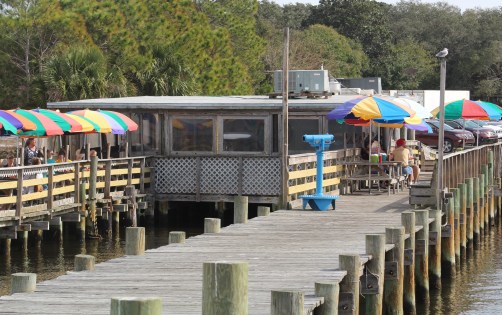
    La Salle

  • The Mountains Are Calling

    Hello virtual crew members and fellow adventures.

    La Salle here catching you up to date on the latest travels of Still Waters II. Click on this link to see the day- to-day travel log.

    Summary of the week – The crew arrived in Chattanooga on Monday and took a couple of days to enjoy the town.  Then they set off up river to make their way to Knoxville.  They ended the week in Fort Loudon Marina, about 50 miles southwest of Knoxville.

    oct-29

    Sunday, October 23, 2016

    The crew shoved off early from the Guntersville Lock (0755) in preparation for a long cruise.  The goal was to arrive at the Nickajack Lock in the late afternoon and depending on the availability of clearing the lock, either anchor above or below the lock.  These plans were almost immediately crushed when the skipper ran the boat up on a sand bar coming out of the break wall guarding the docks.  He immediately shut off both engines to prevent them from sucking sand and mud up into the engine cooling system, strainers, and heat exchangers.  That was a sick feeling for the skipper.

    Since the engines had not warmed up completely, the skipper was only idling along into the current.  However, the boat got wedged up on the sand bar pretty good.  After the Admiral checked the bilges below decks and confirmed that there was no water entering the boat, the skipper tried to rock the boat off the sand bar.

    He initially started the port engine and bumped the engine into reverse.  The boat nudged back a little bit.  He bumped the port engine in reverse again and the boat moved back a little more.  He started the starboard engine, then bumped both engines into reverse.  The boat pulled itself off the sand bar and the crew was finally under way.  The sick feeling was washed away with feelings of joy as the boat headed towards the days first bridge.

    img_0150

    The cruise across northern Alabama on the Tennessee River was extraordinary.  The view was obstructed a few times by industry along the banks, but for the most part this is a very isolated and remote area.  By 1500 the crew left Alabama and re-entered Tennessee.

    img_0141

    Then it became obvious that the Nickajack Lock would be within reach to lock through if there was no commercial tow traffic.  As the LeryLynn and Still Waters II were making the final approach to the lock, they were joined by a Ranger Tug, Tug O’ My Heart.  The three boats entered the lock and were raised 40 feet up to the Nickajack Lake.

    img_0143
    First look at Nickajack Lake

    Upon exiting the lock, the crew headed over to a small park that had two free docks.  One dock was already full of boats.  The second dock was full of fisherman. Rather than run the fishermen off the dock, the crew decided to go around to the next cove and anchor for the night.  Turns out the anchor option was a perfect spot to swing on the hook for the night.

    img_0144
    Looking across the lake from the anchorage

    Monday, October 24, 2016

    With the cool night (44) and warm water, there was a heavy fog at day break.  The crew had to wait for about an hour before they could see far enough ahead to safely navigate up river.  Also, this next section of river is touted to be some of the best scenery so it would be worth the wait to let the fog clear out.

    img_0146
    LeryLynn waiting for the fog to lift

    By 0900, the crew had weighed anchor and made their way to the ‘Grand Canyon of Tennessee.’  This area was some of the best that the crew has seen on the entire loop.  The river made about a dozen u—turns over the 32 miles to Chattanooga, with the mountains towering over 1,000 feet above the river.

    img_0159
    Entering the Canyon

    When the crew approached within 10 miles of Chattanooga they came by Williams Island.  This Island played a part in the Great Locomotive Chase that took place back in April 1862.  You may have heard the story told that James J. Andrews led 21 men behind enemy lines in Marietta, Georgia.  The goal was to capture a railroad engine, drive the train north 100 miles to Chattanooga, and destroy the track and communication lines as they returned north.

    img_0163
    Which way to go?  Sometimes you have to stop looking at the scenery and remember there are other boats out here.

    On April 12, 1862, Andrews and his 21 men boarded the GENERAL and then waited for the engine to stop for water and allow the passengers to eat breakfast.  While the passengers and train crew were off the train at the nearby hotel having breakfast, the team unhooked the passenger cars and took off in the engine.  William Fuller and two other train crew members initially gave chase on foot.  Fuller soon came upon a hand propelled cart and continued the pursuit on rail.  Fuller then traded the cart for the engine Yonah, when Andrews failed to destroy the engine as he passed the engine.

    640px-texas1
    The Texas locomotive in the Atlanta Cyclorama

    Fuller traded the Yonah in for the William R. Smith in Kingston.  However, four miles later Fuller abandoned the Smith due to destroyed tracks and continued the pursuit on foot for three miles.  Finally, Fuller came upon THE TEXAS and once again began to close in on the GENERAL.  When it became clear to the crew of the GENERAL that they would not make Chattanooga, they began jumping off the engine and running to the woods to avoid capture.  Within the week, Andrews and his 21-man team had all been captured.  Turns out that Andrews was captured right here on Williams Island.

    img_0174
    Looking back at Williams Island where Andrews was captured

    On June 7th Andrews was hanged in Atlanta.  On June 18th, seven more of the raiders were hanged.  The remaining 14 soldiers planned and executed a daring escape rather than swing from the end of a rope.  Eight of the 14 made it to safety.  The other six were recaptured.

    null
    Private Jacob Parrot

    On March 25, 1863, these six were involved in a prisoner swap and meeting with the Secretary of War, Edwin Stanton.  He was so moved by their story that he excused himself and then returned with six new medals.  He told the six that Congress had recently passed a law allowing medals for valor on the combat field.  Stanton stepped in front of the youngest member of the team, Private Jacob Parrot and pinned the very first Medal of Honor ever awarded.  After pinning the remaining five soldiers he took them to the White House to meet President Lincoln.


    img_0175
    Approaching Lookout Mountain


    img_0176
    Looking up Lookout Mountain as we cruise by


    fullsizerender-1
    Looking down Lookout Mountain at Chattanooga – pic by Lynn Merritt


    img_0179
    Preparing to dock in downtown Chattanooga


    img_0199
    Safely on the pier in Chattanooga

    Tuesday, October 25, 2016 

    The crew docked in downtown Chattanooga upon arrival in town yesterday.  The dock is located near what was the original Ross Landing, a ferry crossing on the south shore of the Tennessee River.  The ferry was run by the Cherokee Chief, John Ross.  The ferry allowed transport of goods and services from the US on the north side of the river to the Cherokee Nation on the south side of the river.

    img_0191

    The crew decided to visit the Aquarium that is right beside the docks.  The Aquarium is housed in two separate buildings.  One is dedicated to fresh water fish and one dedicated to salt water fish.  The Aquarium also is showing a special exhibit on monster fish from around the world.  The crew spent about five hours wandering around the exhibits.  A few of the favorites were the sea horses, jelly fish, and freshwater sting rays.

    img_0193

    On the way to the Aquarium the crew passed an interesting art project commemorating the Trail of Tears.  The project had Cherokee Art on a wall overlooking a waterfall.  The forced removal of the Cherokee from 1838-1839 to Oklahoma took place in response to a speech that President Andrew Jackson gave to Congress in 1829.  The speech called for the relocation of all Indians east of the Mississippi River to Indian Territory (Oklahoma).  Congress responded to the speech by passing the Indian Removal Act in 1830.  Always remember – words matter.

    img_0195

    You may be wondering why the need to move the Cherokee Nation back in the late 1820’s.  Well, as the skipper likes to say, “Follow the money.”

    The Cherokee Nation was south of the Tennessee River and extended into what is now north Georgia.  Some white folks illegally had crossed into the Cherokee Nation and discovered gold in the north Georgia mountains in 1828.  The Cherokee were making it difficult for the white man to steal the Cherokee’s precious medal.  So, the Indian Removal Act was the response to allow miners to go for the gold.

    The Cherokee Nation split into two factions.  Those wanting to negotiate the best possible land in Oklahoma, became the Ridge Party.  John Ross, the legitimate Chief of the Cherokee Nation lead the majority in the National Party.  The US government negotiated a treaty with the Ridge Party.  The Treaty of New Echota in 1835, was never approved by the Cherokee Nation Council.  The treaty required all the Cherokee’s to relocate by 1838.

    The Trail of Tears was the result of the US Army’s forced removal of the Cherokee from their land in 1838, in accordance with the unapproved treaty.  Twenty-five percent of the Cherokee’s died on their way to Oklahoma, including the wife of John Ross.  Cherokee tradition required leaders who gave up ancestral lands to die.  Two of the three Ridge Party leaders were mysteriously killed by fellow Cherokee who were carrying out the tradition.  The third narrowly escaped with his life.

    img_0197

    Wednesday, October 26, 2016       

    There is an Art Museum just up the river from the docks.  The museum has some interesting public art displayed around the museum.

    FULL COUNT is a four-piece sculpture with a pitcher, catcher, batter, and umpire.

    img_0180

    img_0182

    FREE MONEY is a piece with a couple dancing on a money bag.

    img_0186

    Interesting enough, the sculptor of FREE MONEY also made a piece titled LAST PENNY.

    What is fun about art is the different perspectives one can contemplate about the art itself.  These two pieces can invoke a very different emotion if viewed separately, or together.  If viewed together, the order in which you ponder the pieces also makes a difference, rags to riches or riches to rags.  Hmmmmm…….

    img_0184

     Thursday, October 26, 2016

    The crew cast off from the deck to begin their trek to Knoxville.  They had hoped to go all the way to Knoxville, but were not sure if the weather would hold long enough to make the run and get back south.  Looks like another week of 80-degree weather so they will keep heading north.  They might regret this decision later, but for now it seems to be the right thing to do.

    img_0200
    Entering Lake Chickamauga

    The weather was indeed perfect.  The crew continued to cruise through beautiful fall foliage.

    After clearing the Chickamauga Lock they cruised around a bend and left the channel to cruise up the Hiwassee River about three miles.  They had found a few anchorages to try for the night, but were uncertain about the approach depths due to low water levels.  The crew was unable to get very far off the main channel before finding 4-foot water.  They tried three locations before giving up and heading to the back-up plan, the Blue Water Resort.

    img_0206
    Lake Chickamauga

    The Blue Water Resort is on Richland Creek that winds its way to Dayton, Tennessee.  You may recall the famous Scopes trial was conducted in Dayton back in 1925.  The skipper is trying to figure out how to go visit the restored courtroom and museum related to the trial.

    img_0212
    Looking up the creek to Dayton from the sundeck

    Friday, October 27, 2016

    These short days make for shorter cruise days.  This morning the sun did not break through until after 0730.  Then there was still light fog in the area.  The crew got off the dock a little after 0900, but almost immediately got socked in by the fog.  The skipper slowed to an idle speed and moved all the way over to the port shore.  Looking to starboard you could not see the shore.  The skipper was sure hoping no tow boat was coming.

    img_0216
    A little fog is pretty


    img_0217
    This much fog is flat out dangerous – glad no tow was coming

    While they were running slow along the shore the skipper did spot one Bald Eagle standing on a nest.  He marked the location and hopefully the crew can get a better look on the return journey.  After about four miles the fog finally gave way to the sun and the rest of the day was beautiful.  The scenery continues to get better each and every day.

    img_0218
    This is a little better view looking out the front

    After clearing the Watts Bar Lock, the Crew entered the Watts Bar Lake.  The lake is easily the best lake along the Tennessee River so far.  Its remote location from both Chattanooga and Knoxville seem to have kept the development down.  Also, the lake has islands and bluffs that are just drop dead gorgeous.

    img_0219

    After six hours of cruising, the crew found a cove to pull into and drop anchor for the night.

    img_0234
    The end of another great day

    Saturday, October 28, 2016

    The crew had to wait for the fog to lift again this morning before setting out.  After the fog lifted the crew headed to Fort Loudon Marina.  The marina has a good fuel price and only charges a minimal transient fee rather than a charge by the foot of boat length.

    img_0235
    The Lake is starting to narrow and look more like a river


    The journey on Watts Bar Lake continues to be spectacular.  The crew has timed the fall foliage color change just about as good as can be done.  The views just continue to dazzle.  The only problem is that the pictures just do not do the actual scenery justice.

    img_0253

    After a good cruise, the crew arrived at the Fort Loudon Lock with the gates open and just waiting for us to arrive.  After getting secured in the lock the lockmaster raised the boat 60 feet to the level of Lake Loudon.  After clearing the lock, the crew had their first view of the Great Smokey Mountains in the distance.

    img_0256
    Entering Lake Loudon

    After landing at the marina, a couple came over to talk with the crew.  The couple highly recommended scrapping the plans to go to Knoxville and head into the Tellico and/or Little Tennessee River instead.  They painted a convincing argument so the skipper may spend some time recalculating the next route.

    img_0260
    Calmly at rest in Fort Loudon Marina


    img_0248
    The closer the crew gets to Knoxville the more of this type of graffiti adorns structures, sorry Bob


    img_0258
    It’s called Fall for a reason, the leaves are beginning to let go and fall


    Next Week – John Muir was quoted as spinning the phrase, “The mountains are calling and I must go.”  The crew has decided to answer the call of the mountains, so they will go explore the waters of the Little Tennessee River and head to the Smokey Mountains.  They will spend several days exploring the area and then start back to Chattanooga.

    img_0259
    Faint grey blue outline of the Smokey Mountains in the background


    Loop On – The water goes on forever and the adventure never ends.
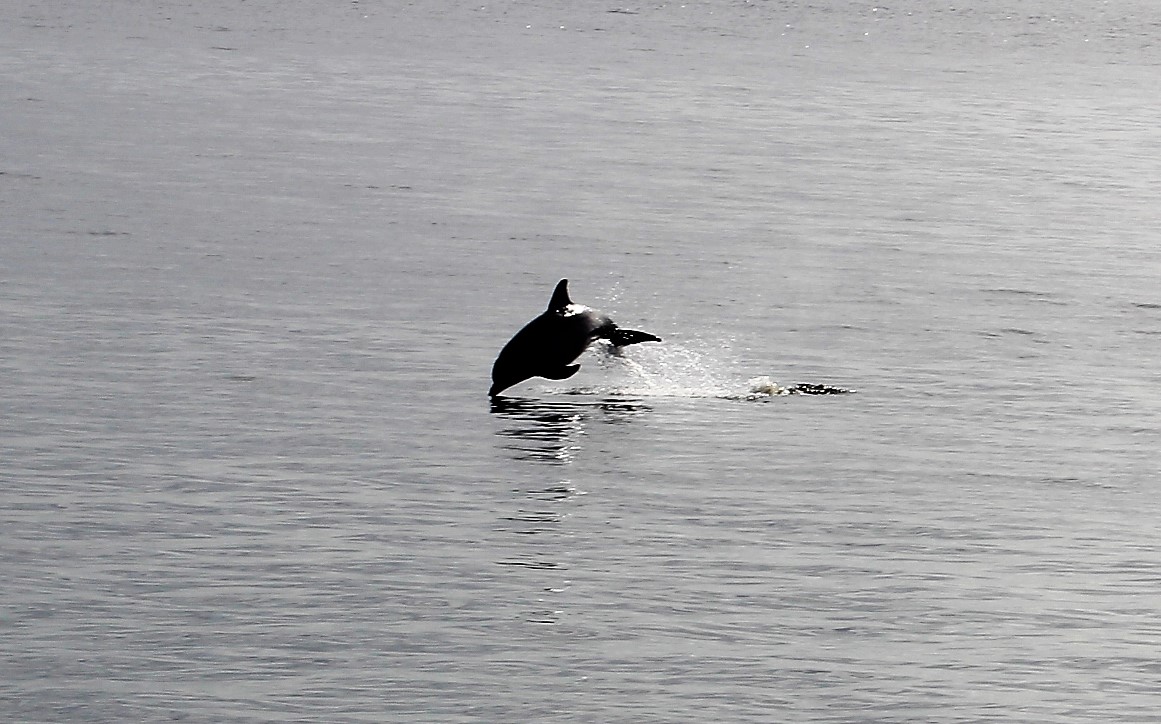
    La Salle