Author: Dave

  • Albemarle Loop Side Trip

    Hello fellow adventurers and virtual crew members!

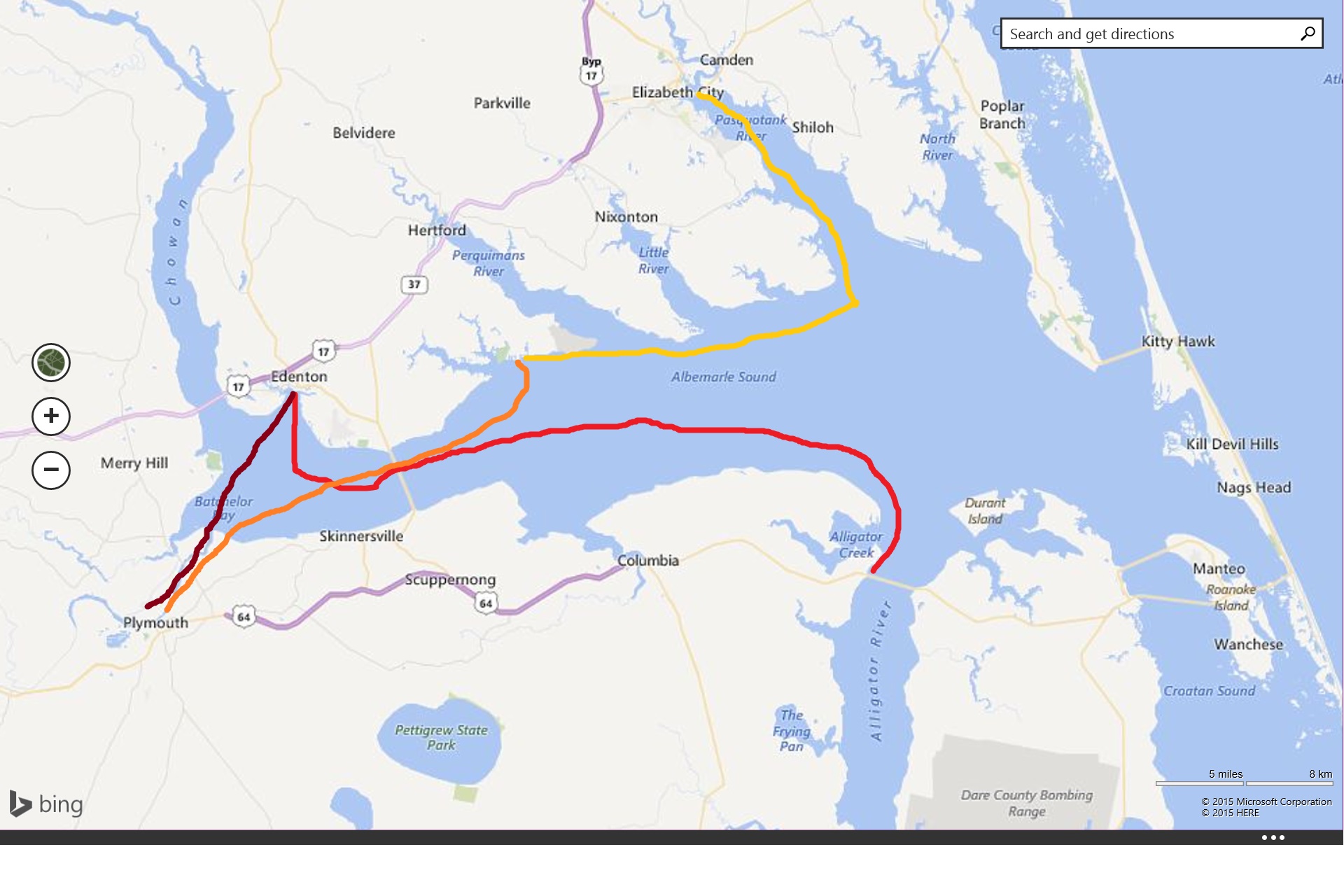
    Eric here reporting on the Albemarle Sound Loop side trip.  The sound is 50 miles, east to west.  Kitty Hawk is on the east side of the sound on the Outer Banks while Edenton flanks the west side of the sound.

    The Albemarle Sound marinas are sponsoring 48 hours of free dockage in each marina.  Our crew plans on stopping in 4 of the 6 participating marinas.
    Albemarle Sound
    Albemarle Sound

    The float plan is to travel from Alligator River Marina to Edenton Harbor Marina, then to Plymouth Landing Marina, then to Albemarle Plantation Marina, and lastly the Elizabeth City Mariners’ Warf.

    Edenton Harbor Marina

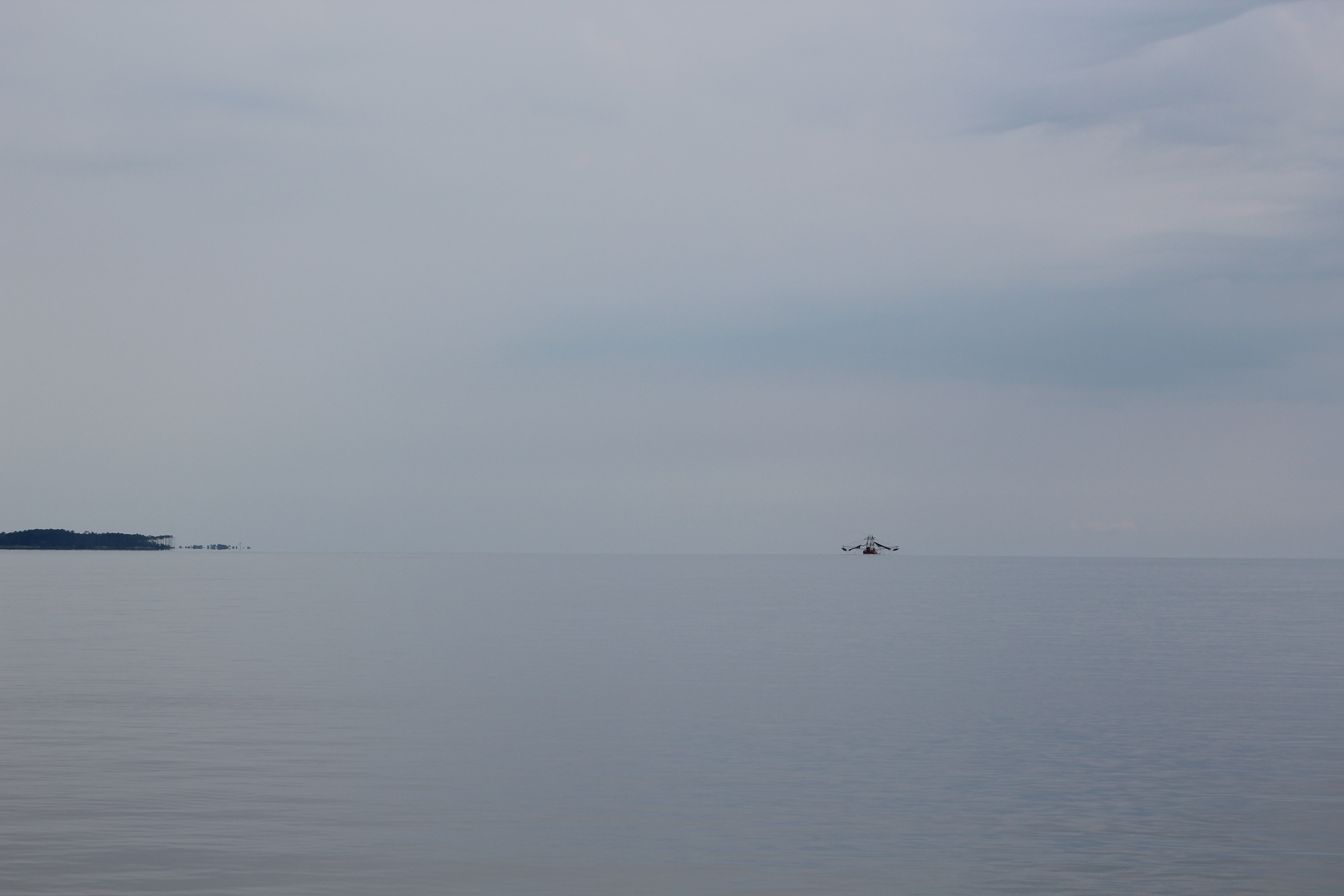
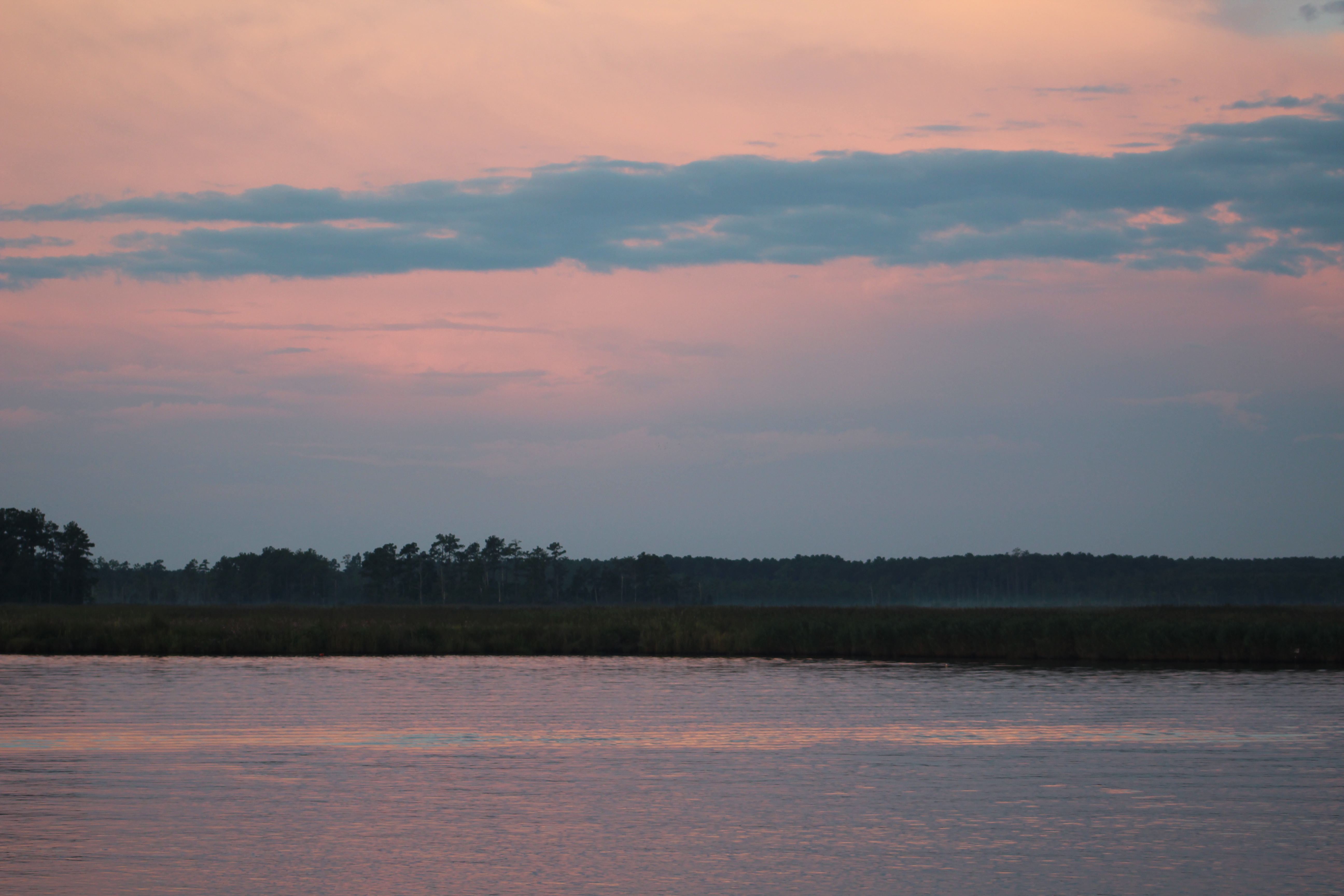
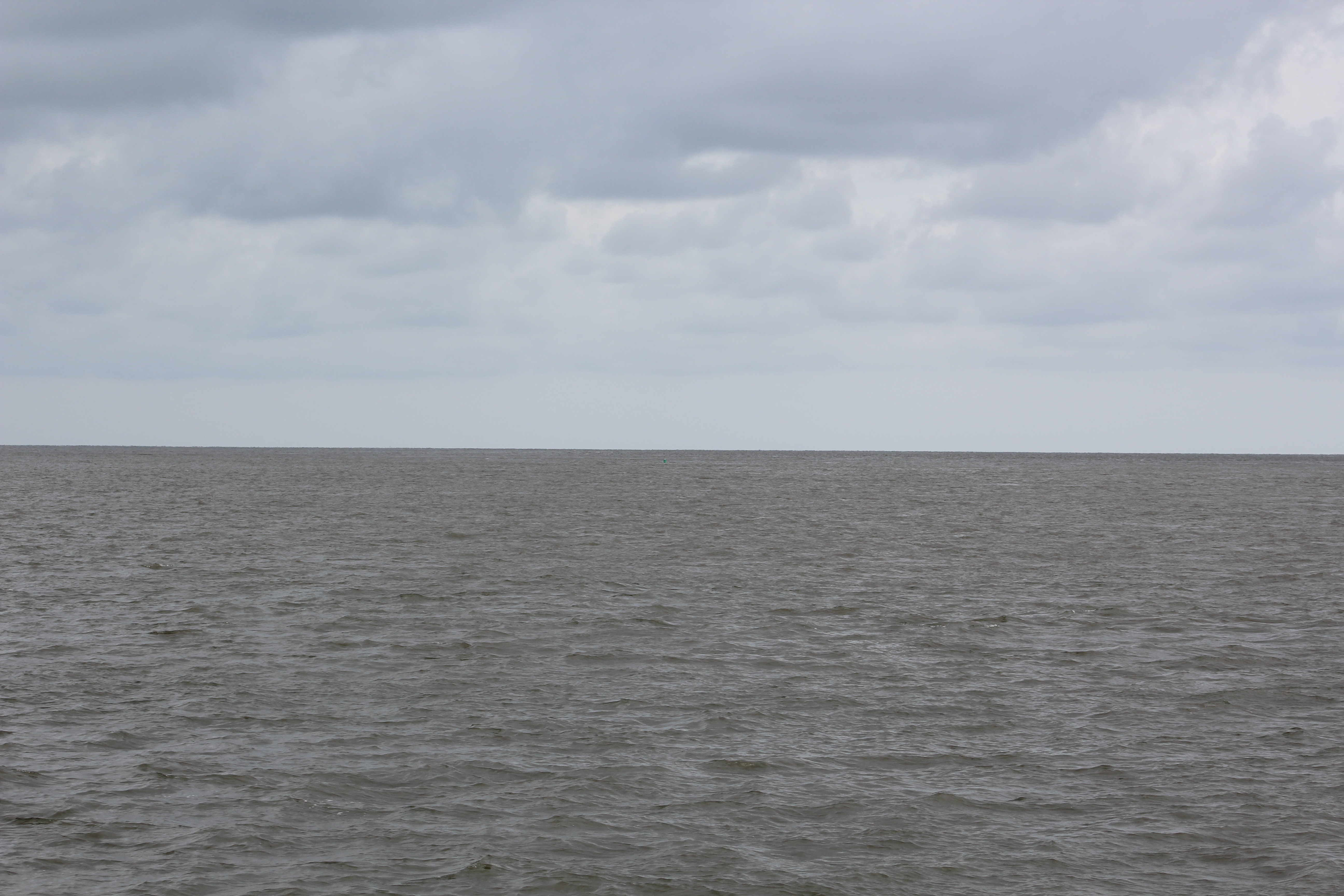
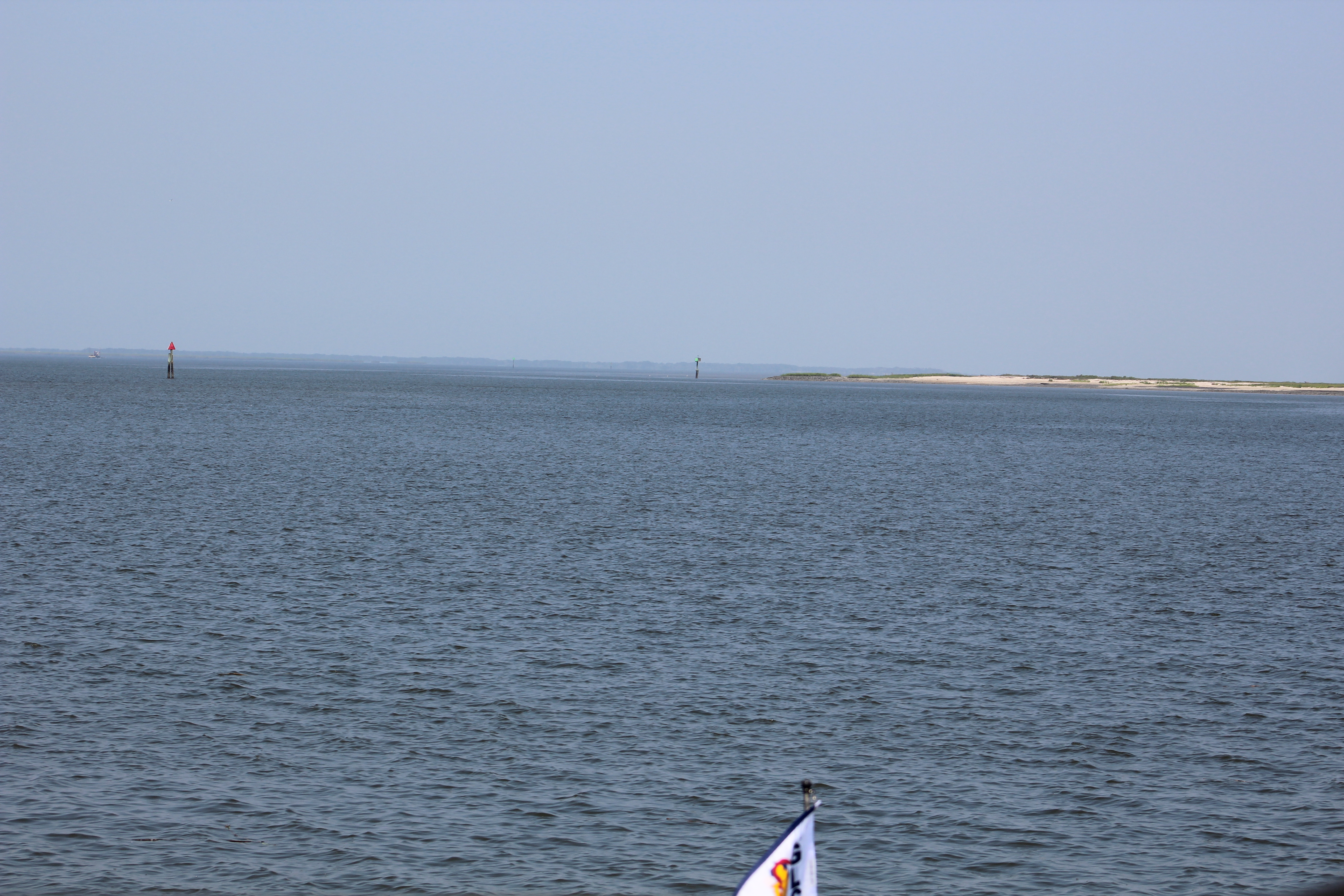
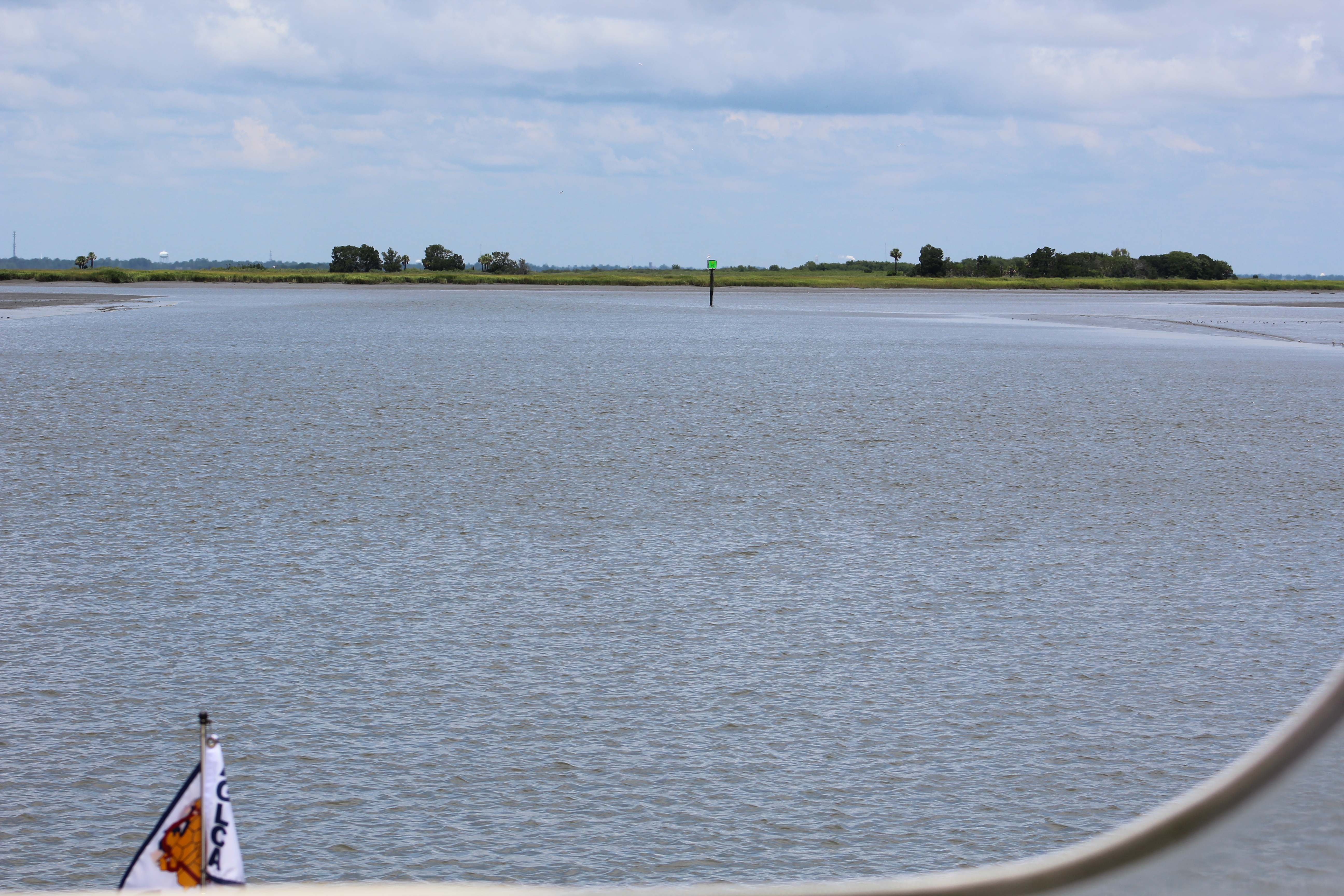
    The trip to the west end of the sound took 5 hours and 20 minutes. The scenery did not change much as they were surrounded by water and distant views of land.

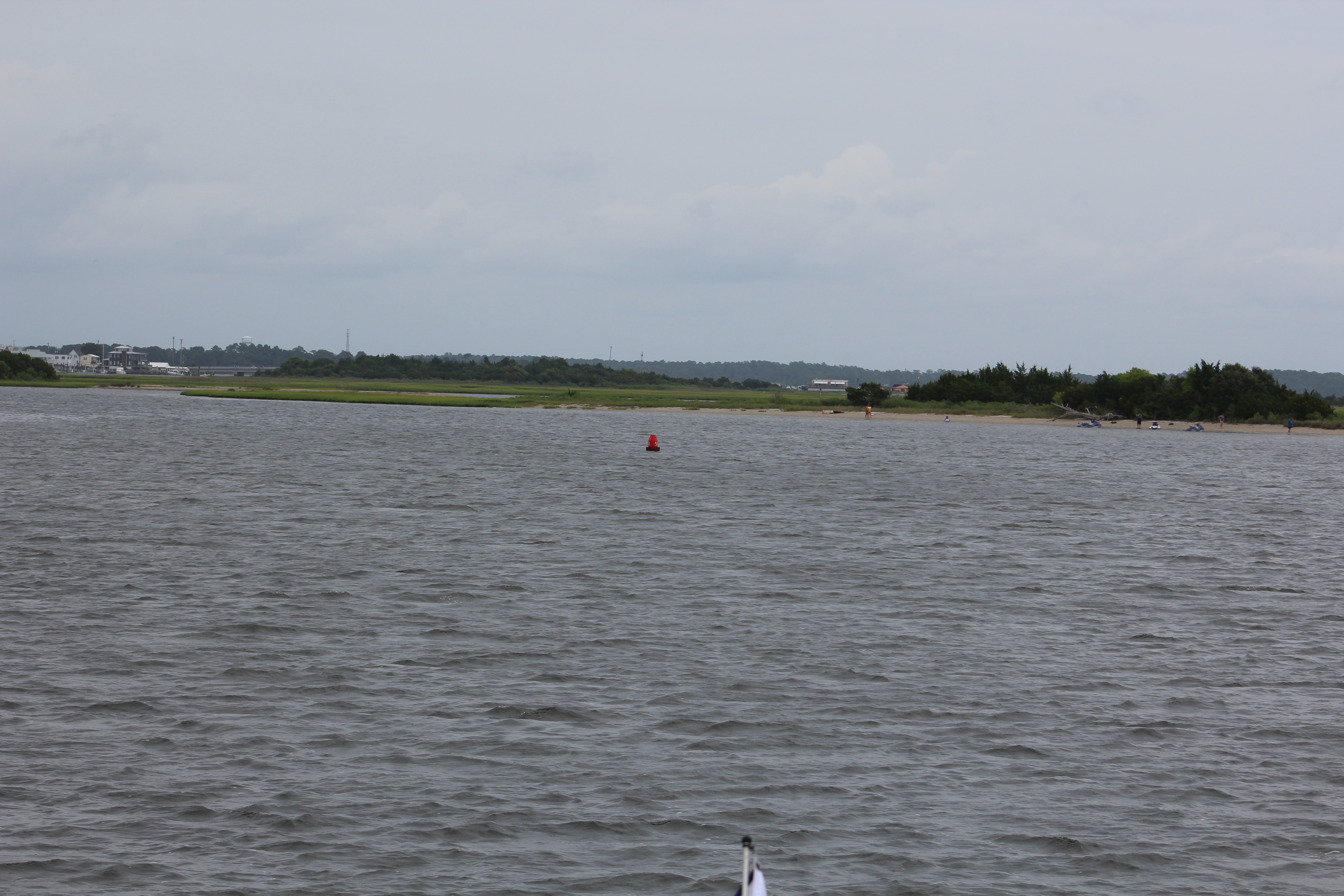
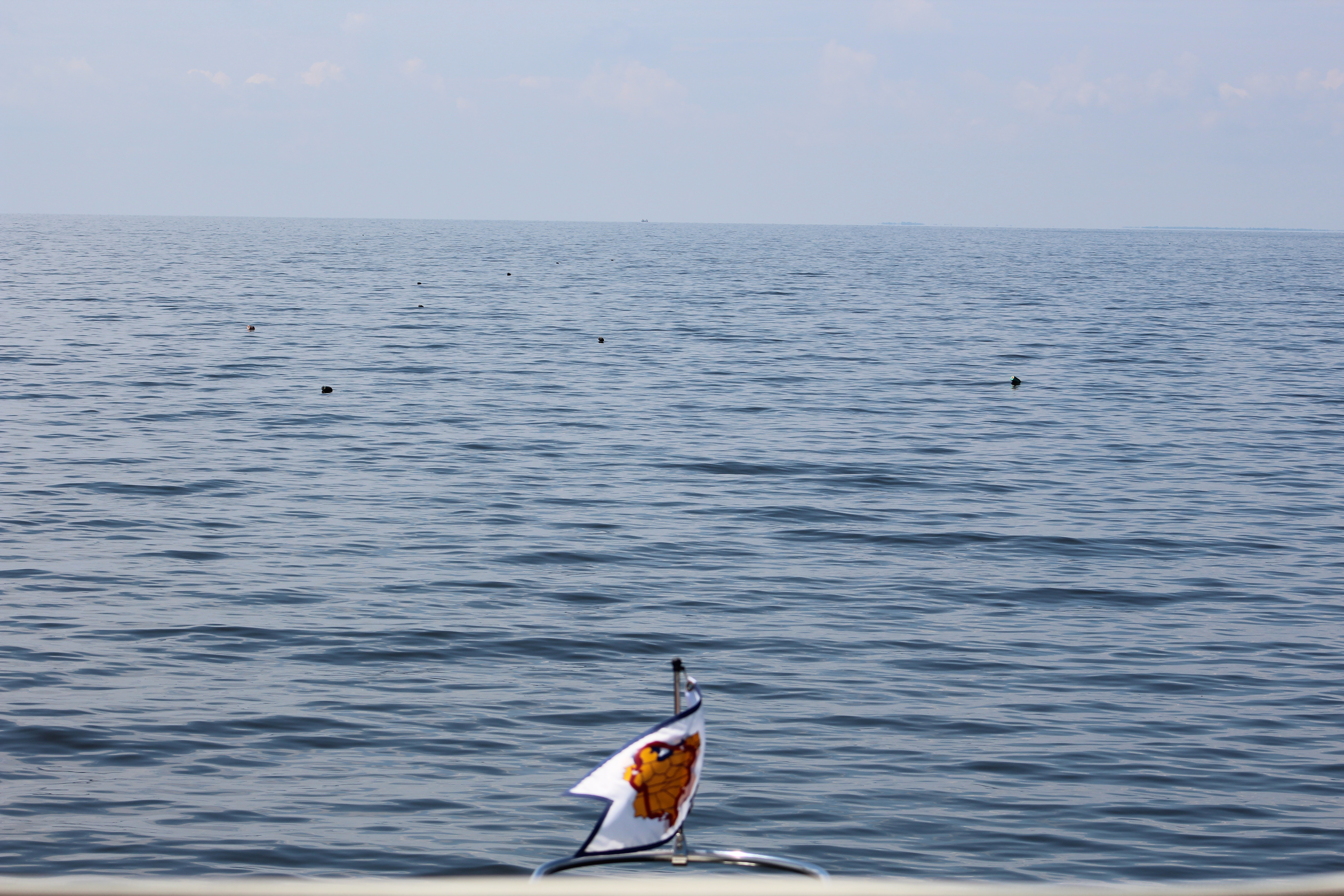
    The challenge of navigating these waters were all the crab pots in the water.  Each crab pot is marked by a floating buoy.  Depending on the color of the buoy, some are easier to see than others.  The orange buoys are the easiest to spot.  The white ones are difficult when the waves are white capping.  The blues and greens are tough to see, and the skipper seems to spot them within yards of the boat.  Took the skipper and the mate watching to keep the vessel out of trouble.  One crab pot tangled up in the prop equals a bad day cruising.
    Crab Pot City
    Crab Pot City

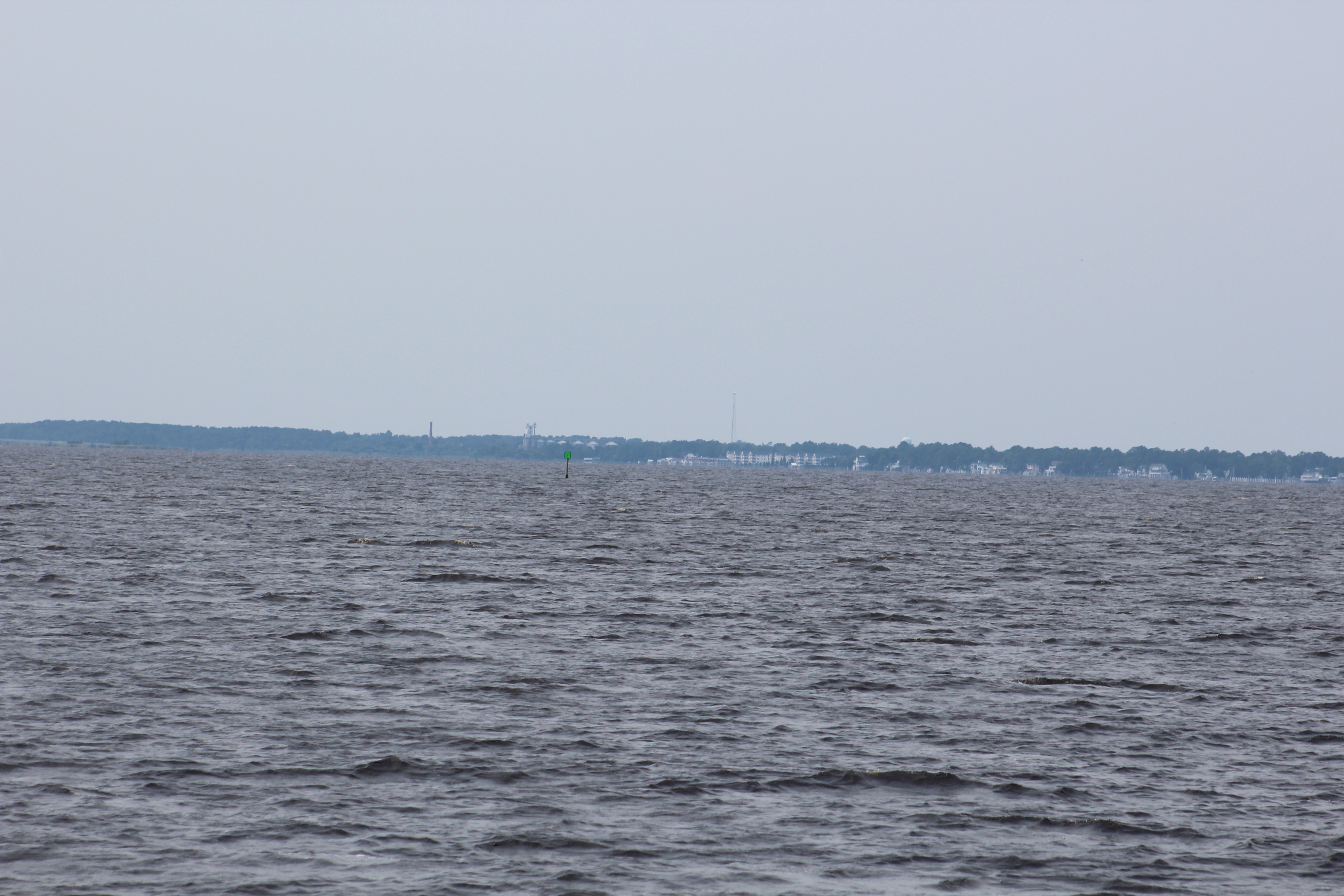
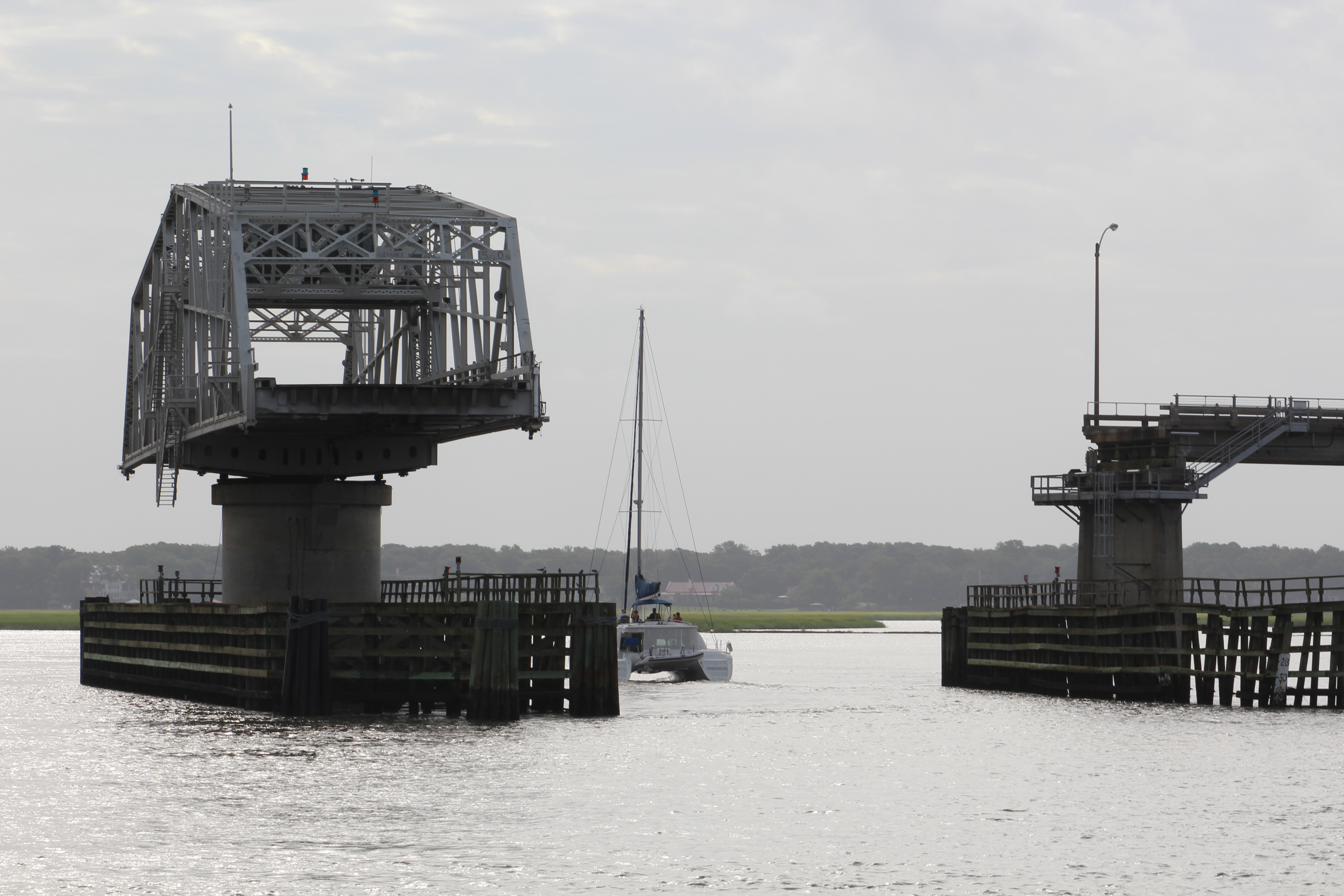
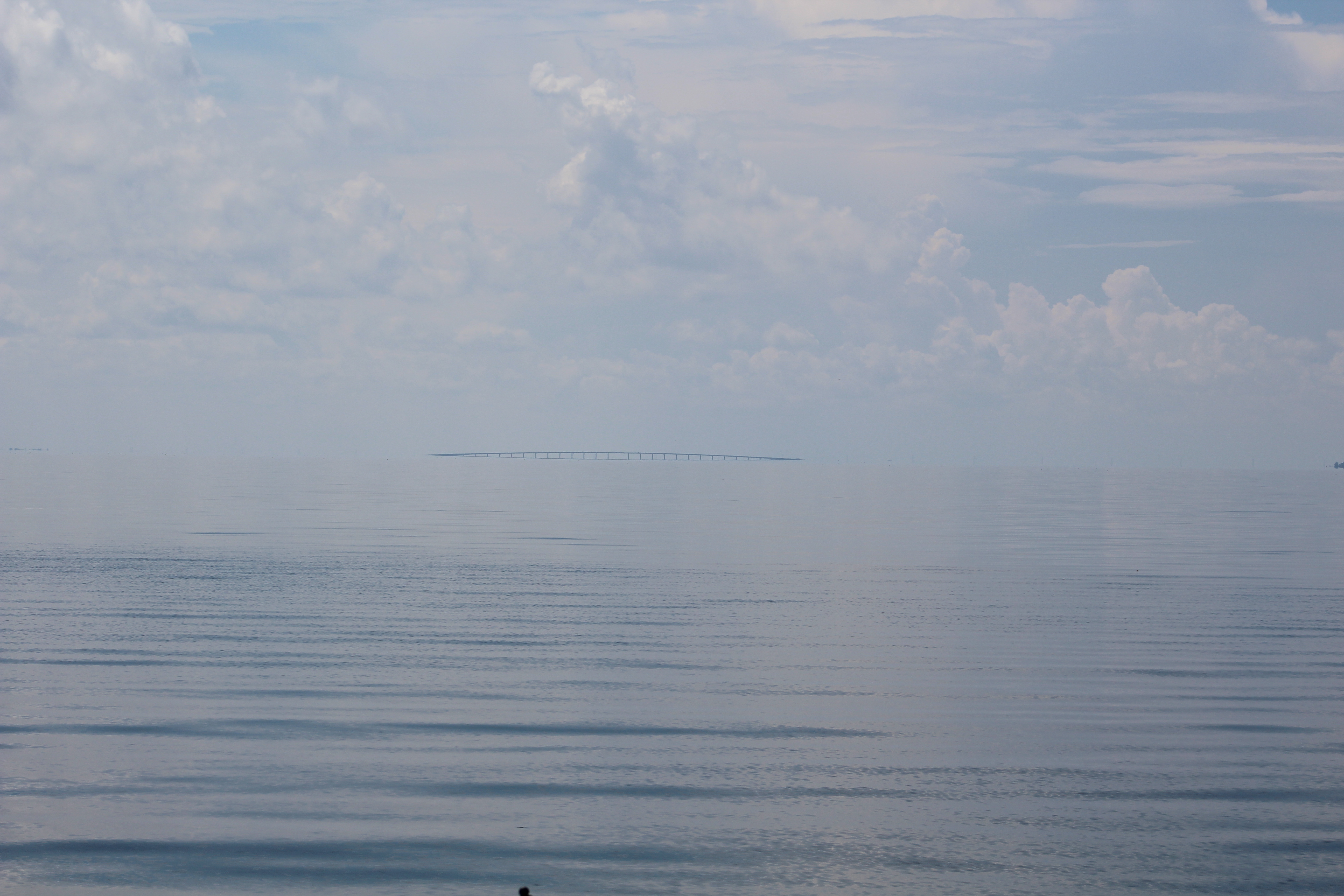
    Upon the approach to town there is a 65 foot vertical bridge that spans the sound.  The bridge is 4 miles long from shore to shore.  When the crew first saw the bridge, they could see the 65 foot portion but not the rest of the bridge.  Looked interesting to see a bridge to nowhere.
    Bridge to Nowhere
    Bridge to Nowhere

    Once safely in Edenton, the crew walked around town to see the sights and learn the history of the town.

    The town was first settled back in 1658 by some folks who left Jamestown, Virginia.  The site became the first permanent settlement in North Carolina.  The town was incorporated back in 1722.  Edenton was actually the capital of North Carolina from 1722 to 1743

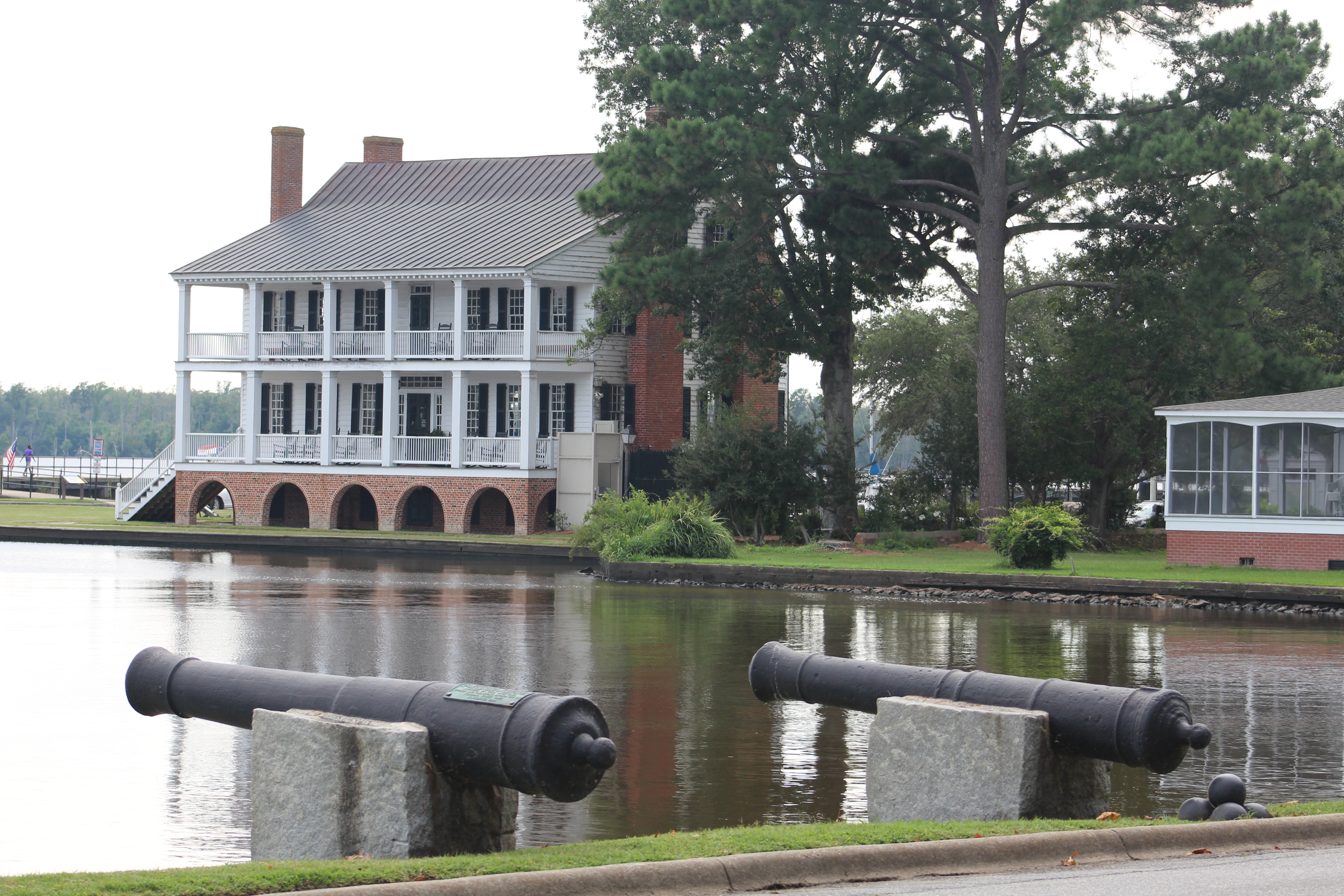
    In 1774 Edenton had their own Tea Party.  Penelope Barker led a group of 51 women in a boycott of English Tea.  The London papers described the women as uncontrollable.  The Barker House is on the waterfront and available for touring.
    Barker House
    Barker House

    During the civil war the town melted down the church bells to cast 4 cannons.  The town was conquered early in the war and the “Edenton Bell Battery” was taken for use by union troops.  Following the war, 2 of the 4 cannons were returned and now reside by the Barker House.
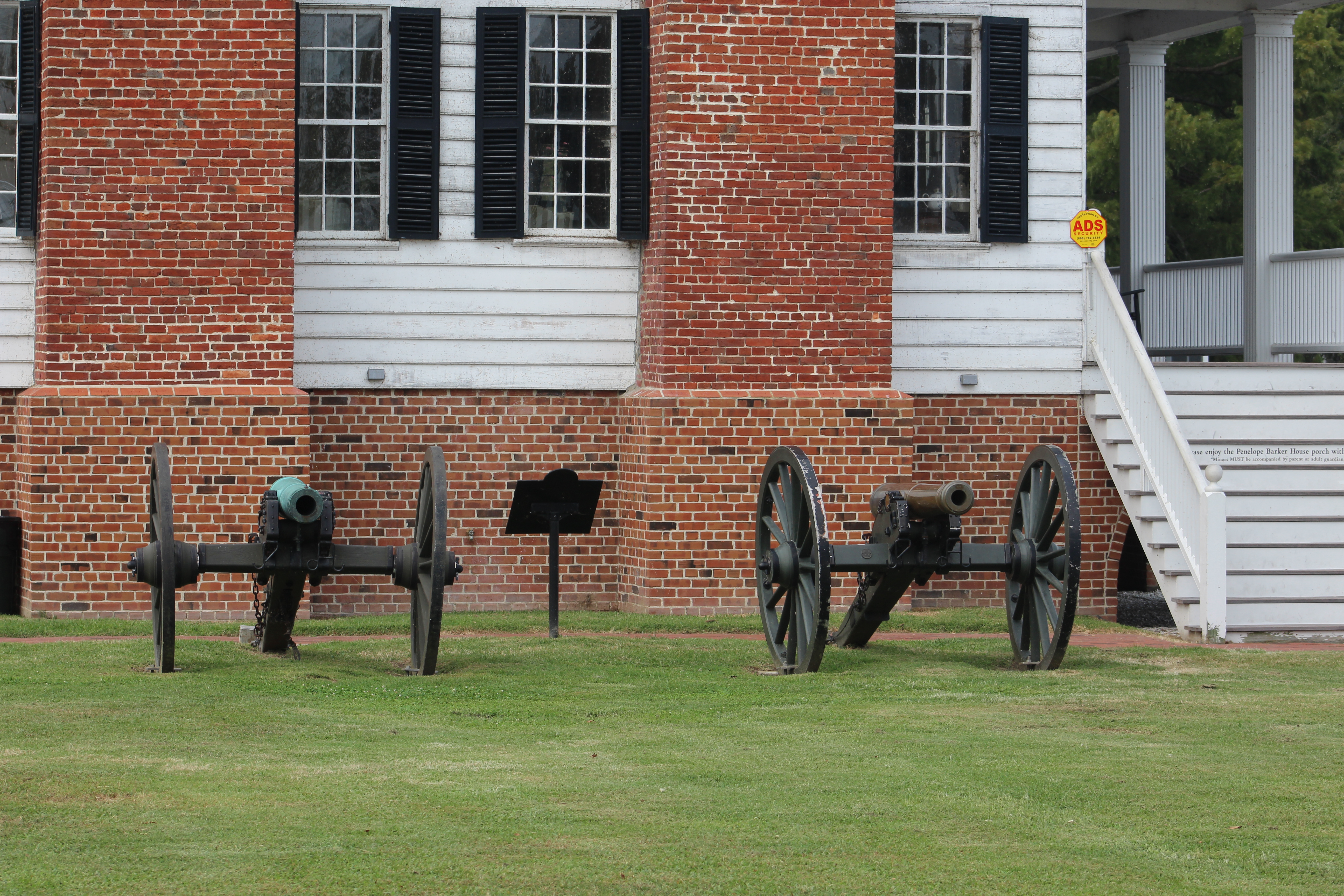
    Church Bells to Cannons
    Church Bells to Cannons

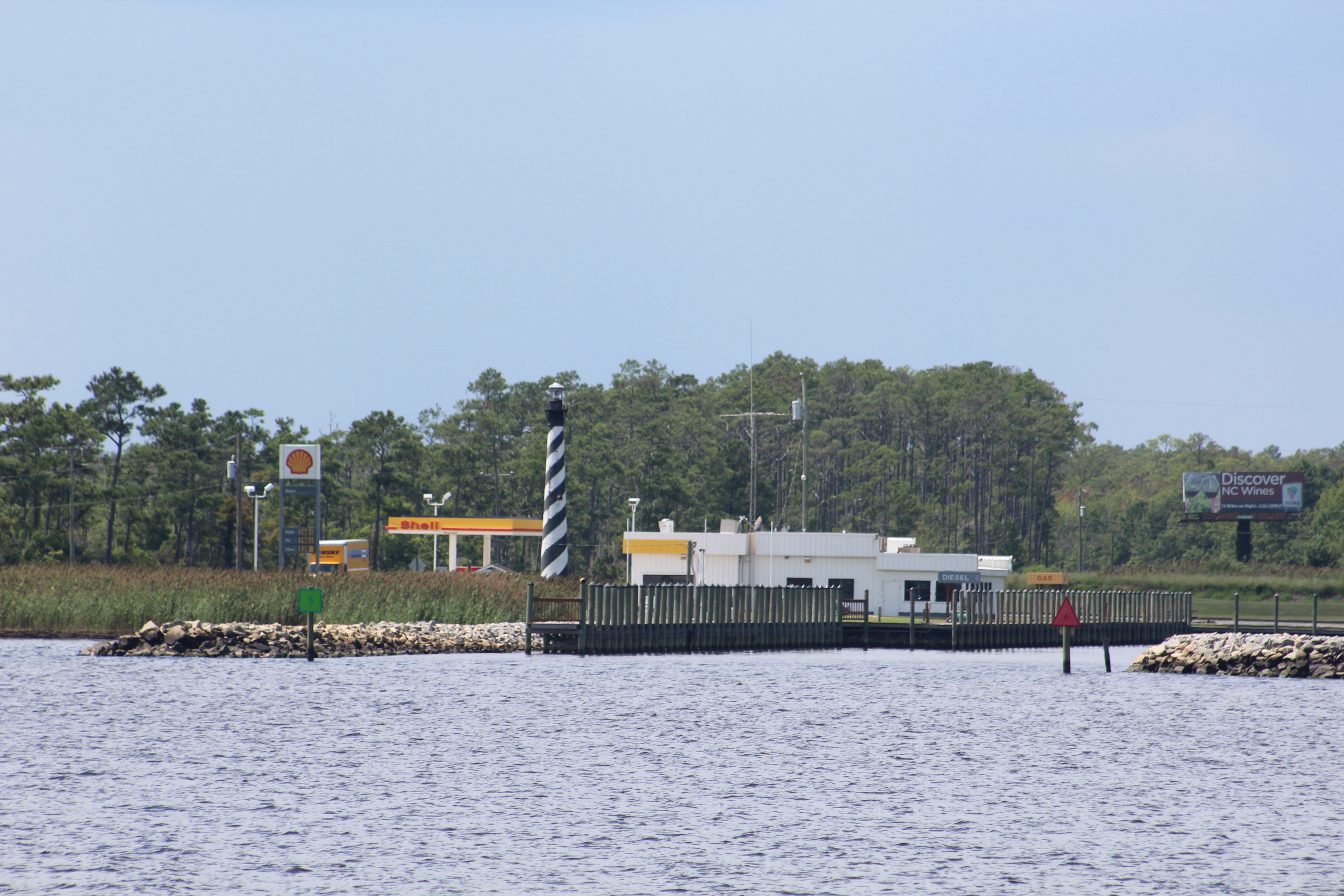
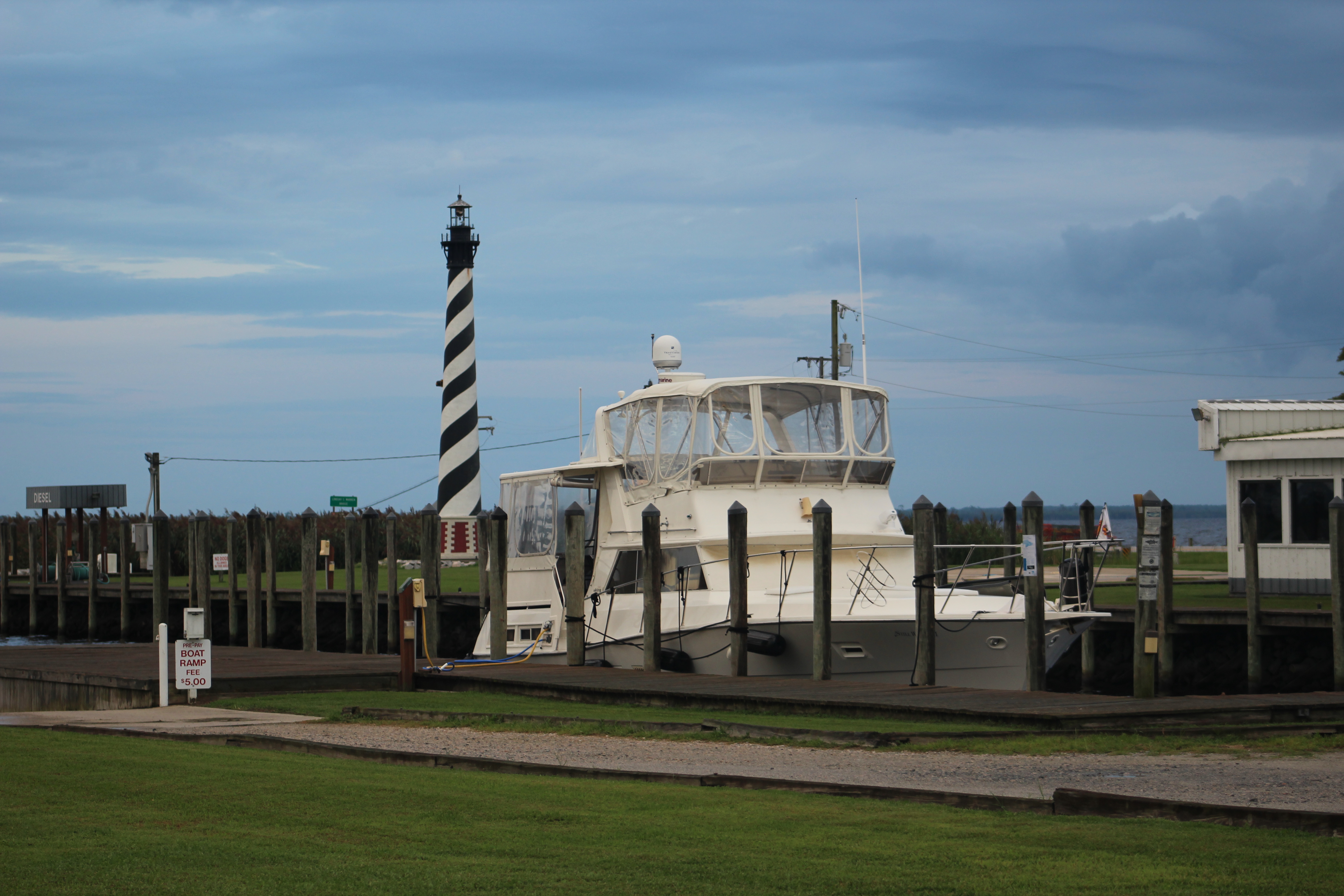
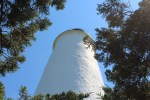
    The last point of interest that the crew visited was the Roanoke River Lighthouse.  This is actually the third Lighthouse built.  After decommissioning in 1955, Emmett Wiggins moved the structure from the Roanoke River to Edenton to use as a personal residence.
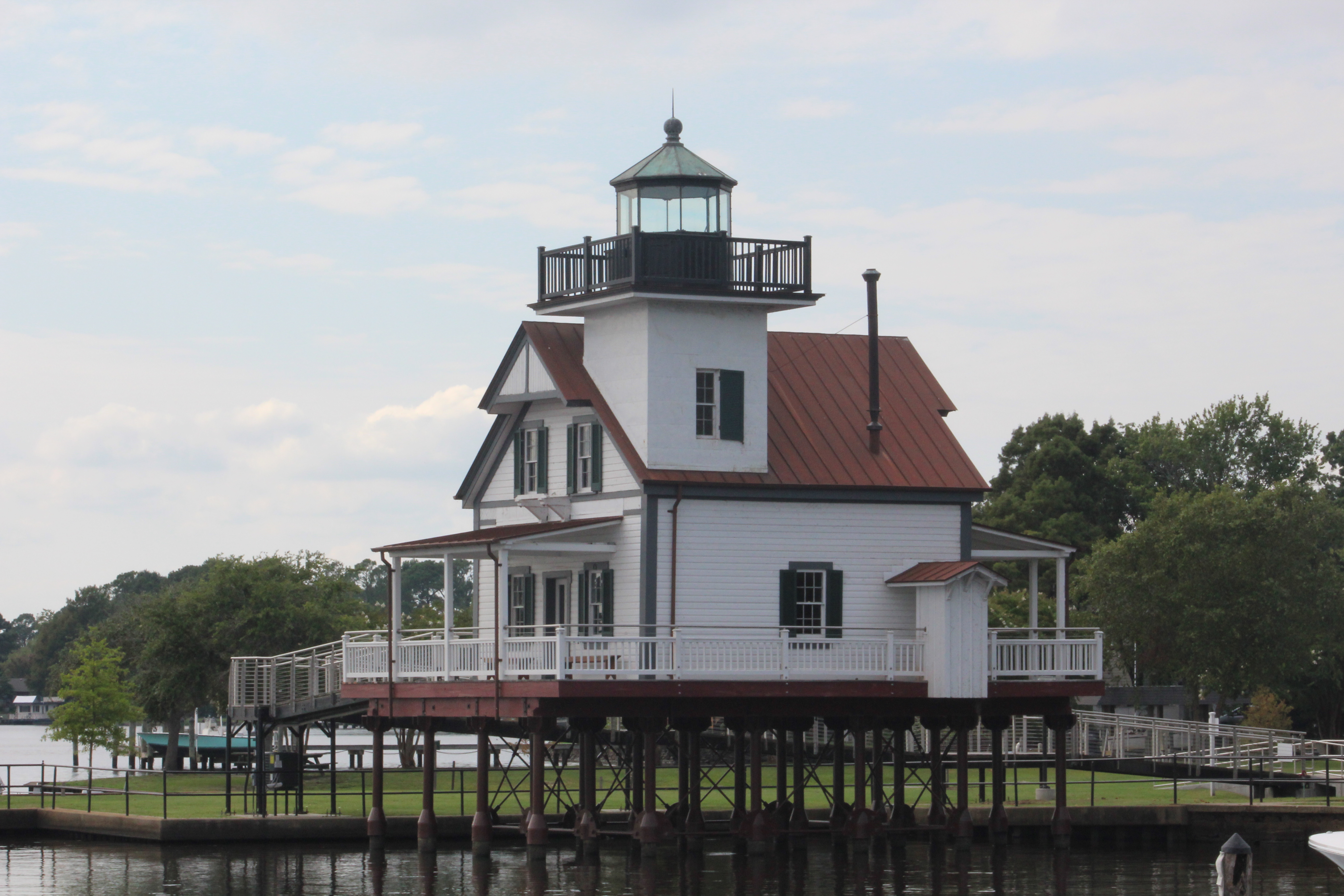
    Third Roanoke River Lighthouse
    Third Roanoke River Lighthouse

    But the thing that will be most remembered by the crew will be the May Fly invasion.  The morning after arriving in the marina the boat was covered by thousands of May Flies.  Worse yet, when they died they left a green spot from the algae they had been eating.  Needless to say, after weeks of cleaning and getting the boat looking ship shape, the bug invasion has left Still Waters II looking more like a spider café.  The dead bugs and green spots will take more than a few days to clean up, but heck, what else were the crew going to do?

    Plymouth

    The run over to Plymouth took about 2 hours.  The wind was out of the north so the crew rode the waves with the wind on the stern of the boat.  When they turned west to enter the Roanoke River, the crew took a few hard rolls as the wind and waves were directed at the beam of the boat.  They quickly entered the mouth of the river and all was calm.
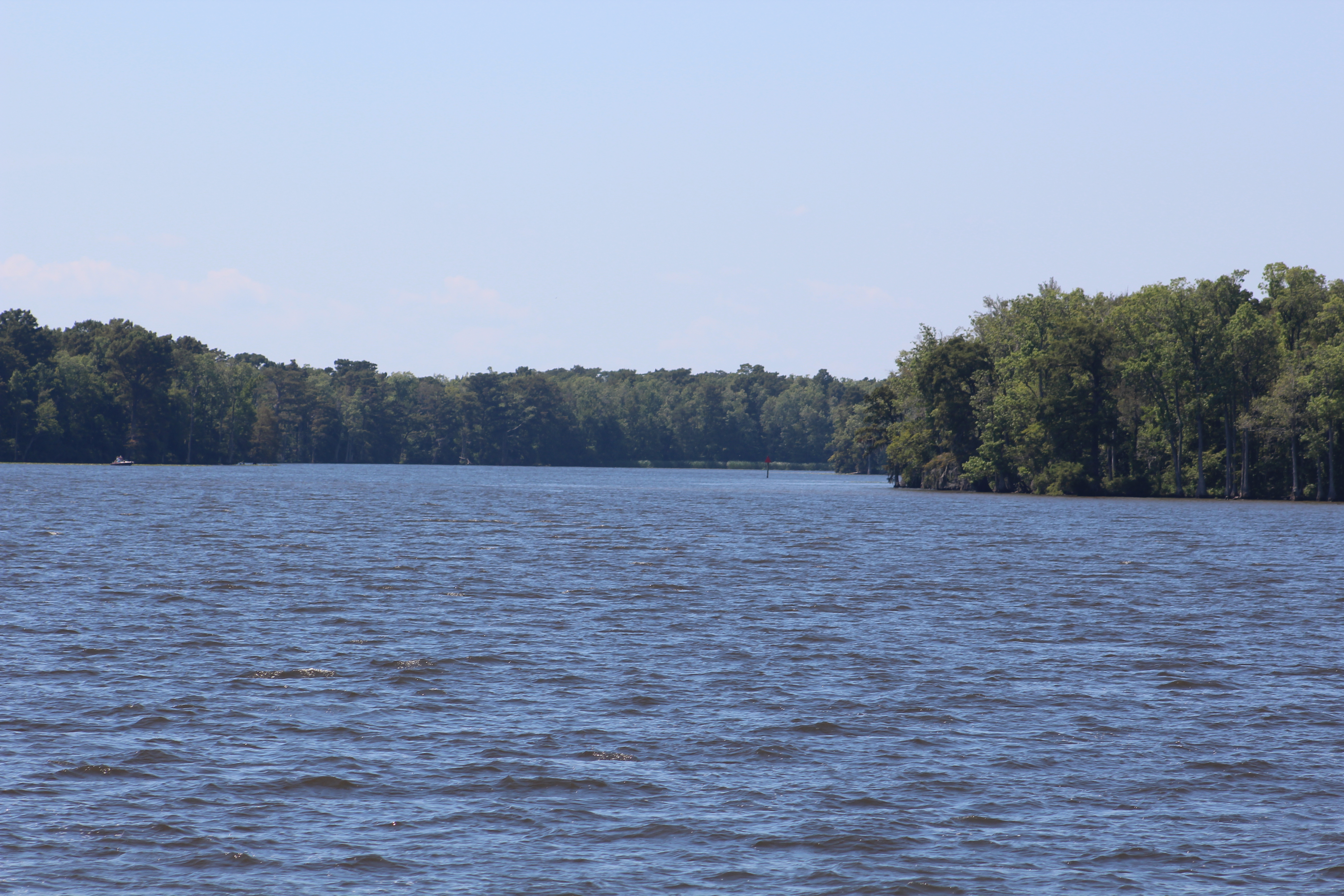
    Entering Roanoke River
    Entering Roanoke River

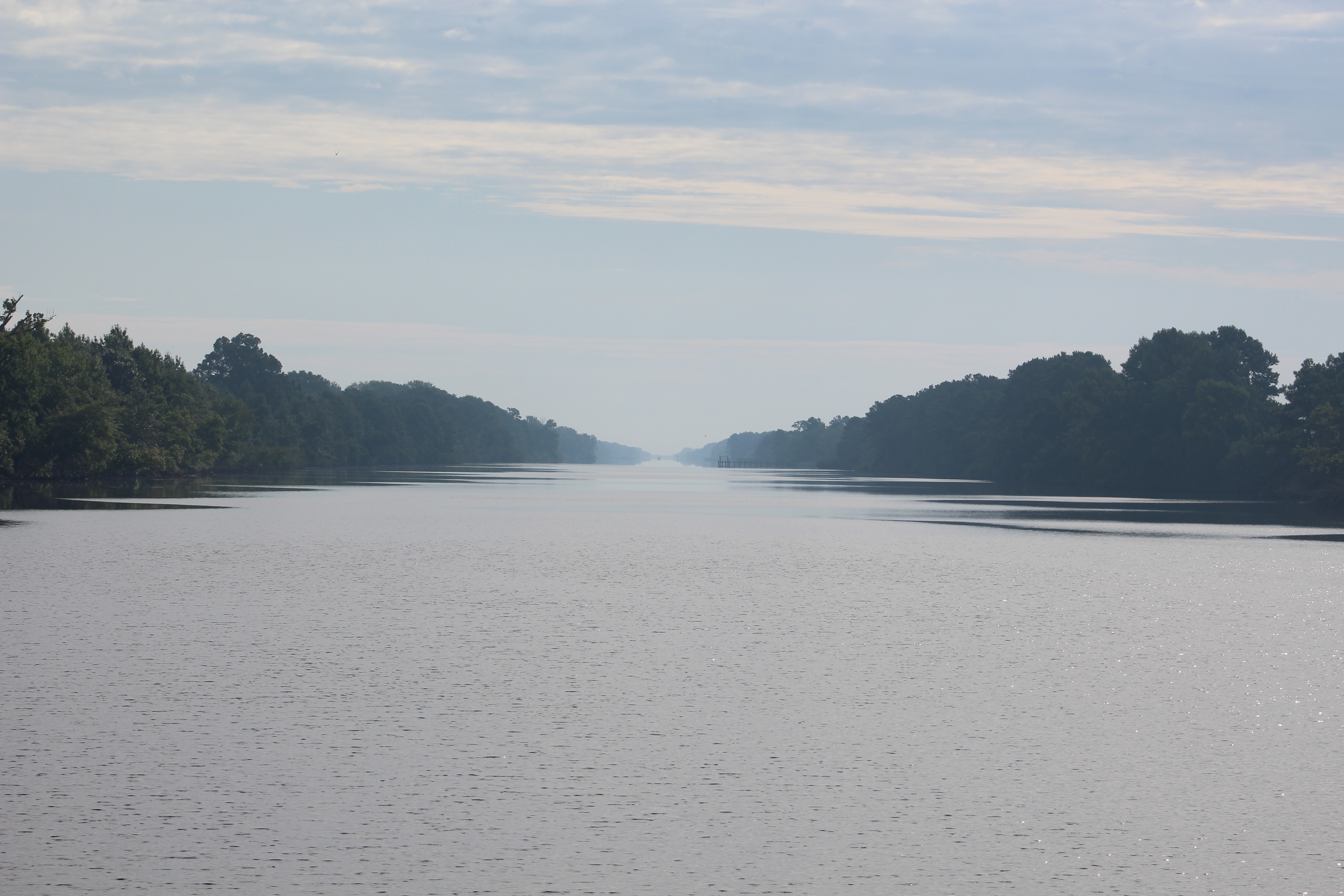
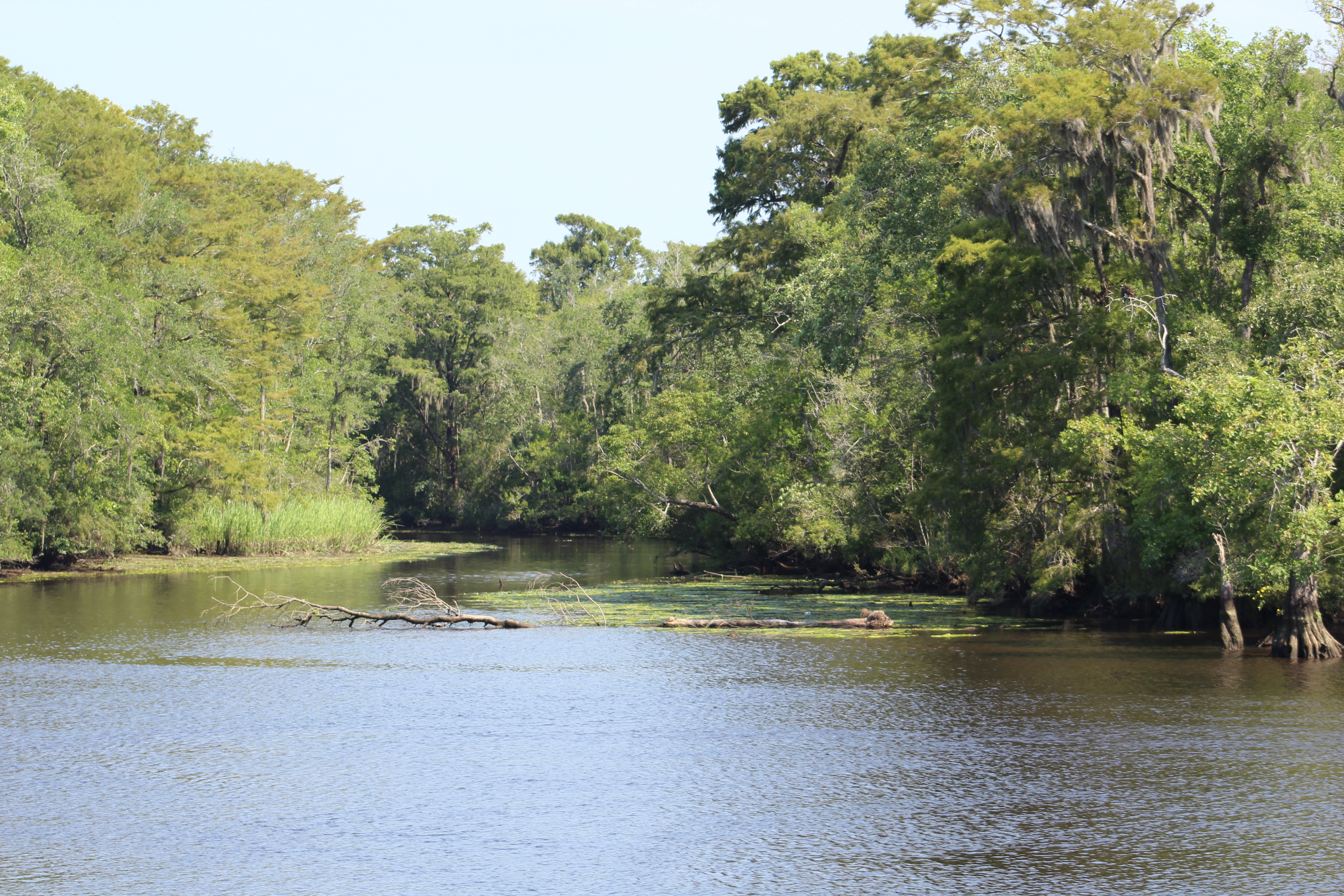
    The 4 mile run up river was beautiful.  Cypress trees initially line the banks of the river. Hard woods line the river bank by the time the marina is reached.

    There was a fishing tournament in progress and the bass boats were flying up and down the river.  Someone should tell these guys you have to have a line in the water to catch fish.
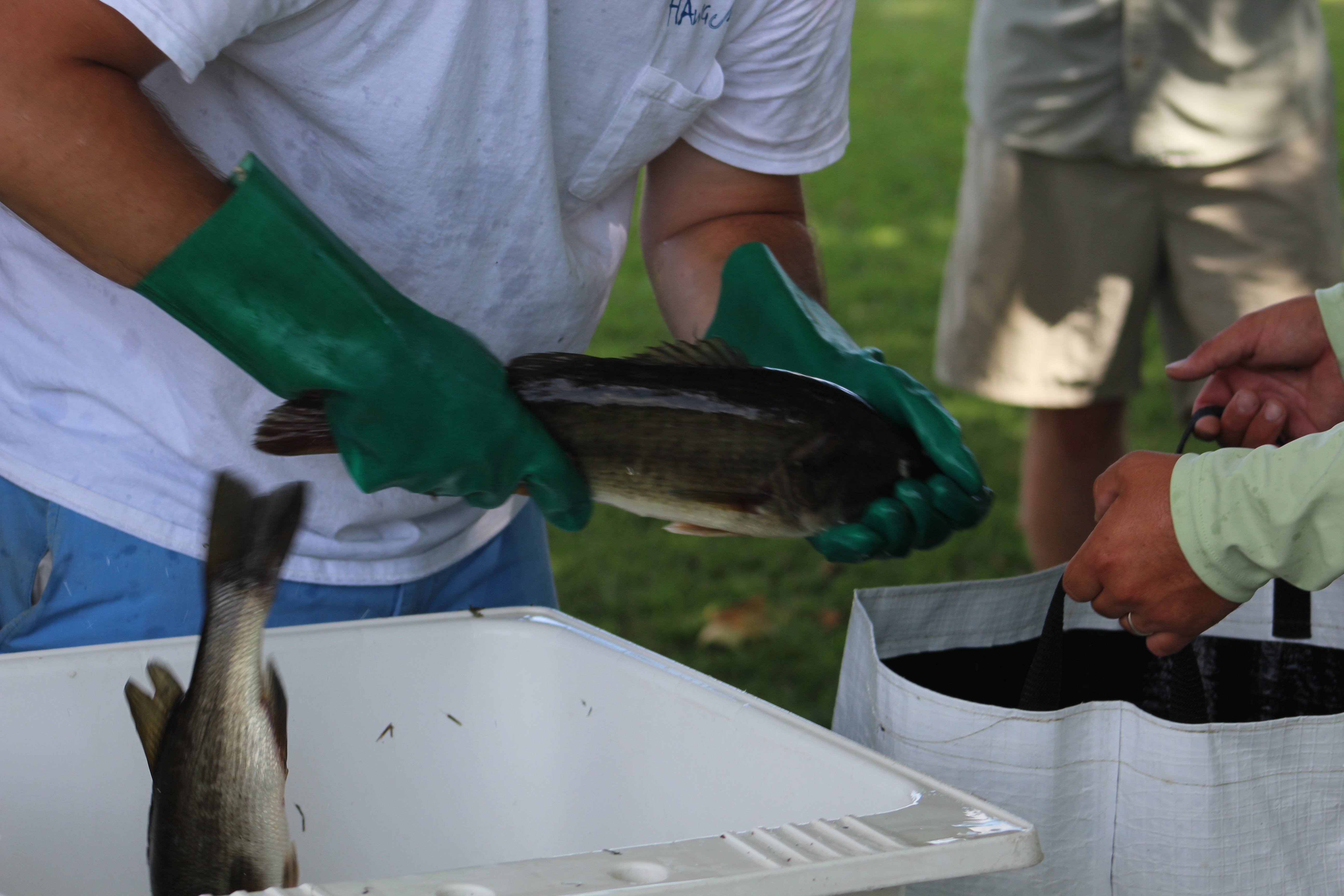
    The weigh in
    The weigh in

    Once docked, the crew learned the fish weigh in was only a quarter mile down river so they walked down to observe the process.  The tournament was sponsored by the Greenville Bass Club and had 60 boats participating in the tournament.  From 3 to 3:30 the fisherman began bringing in the catch.  Most boats had 5 bass with a total weight around 15 pounds.
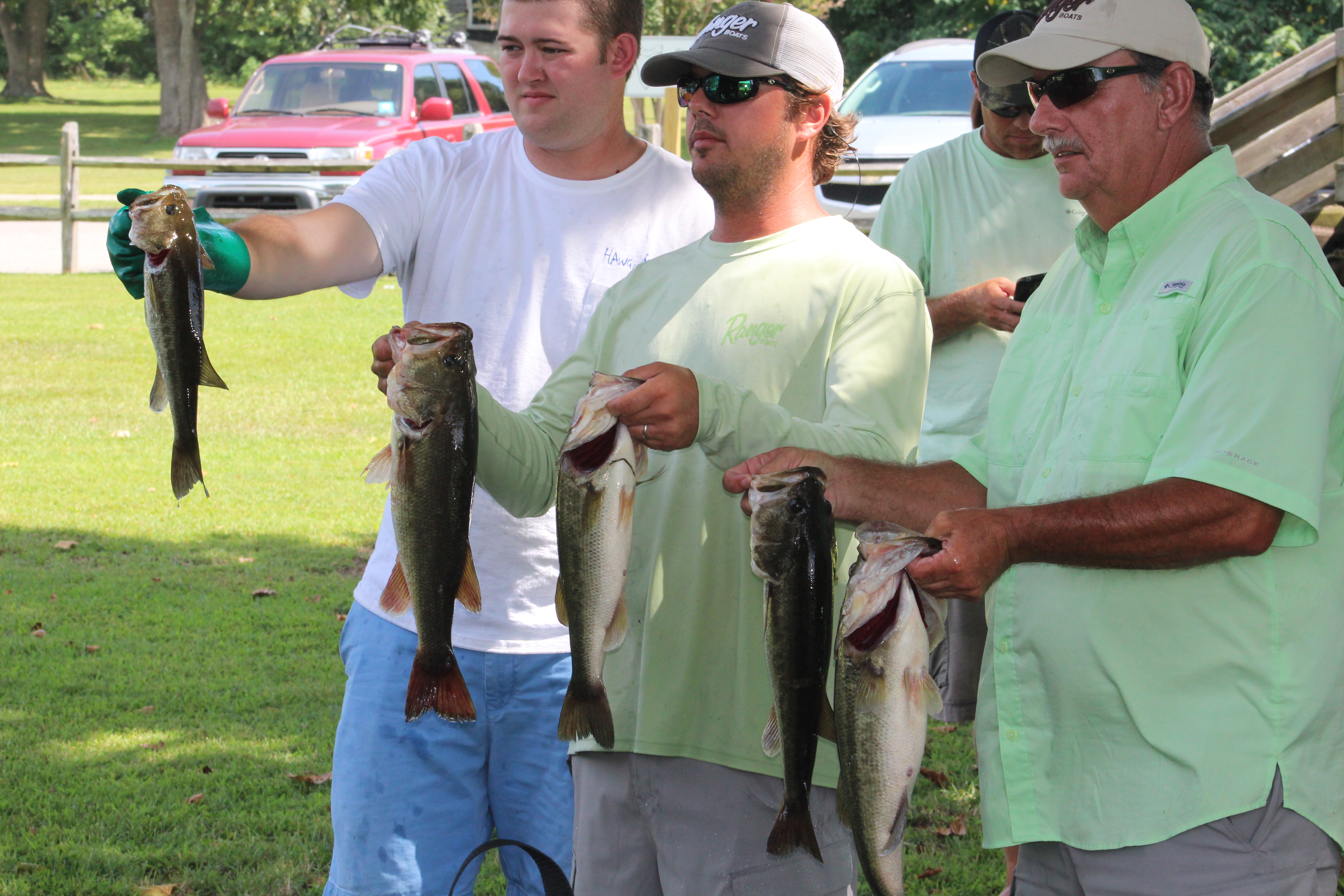
    First Losers, i.e. 2nd Place
    First Losers, i.e. 2nd Place

    The big bass winner was 7 lbs 11 oz, and this team also won first prize for total weight of exactly 20 lbs.  The hardest part of observing the weigh in was watching the fisherman go release the fish back in the river.  Seems our skipper is a catch and release fisherman also, he just prefers to release fish into hot oil.
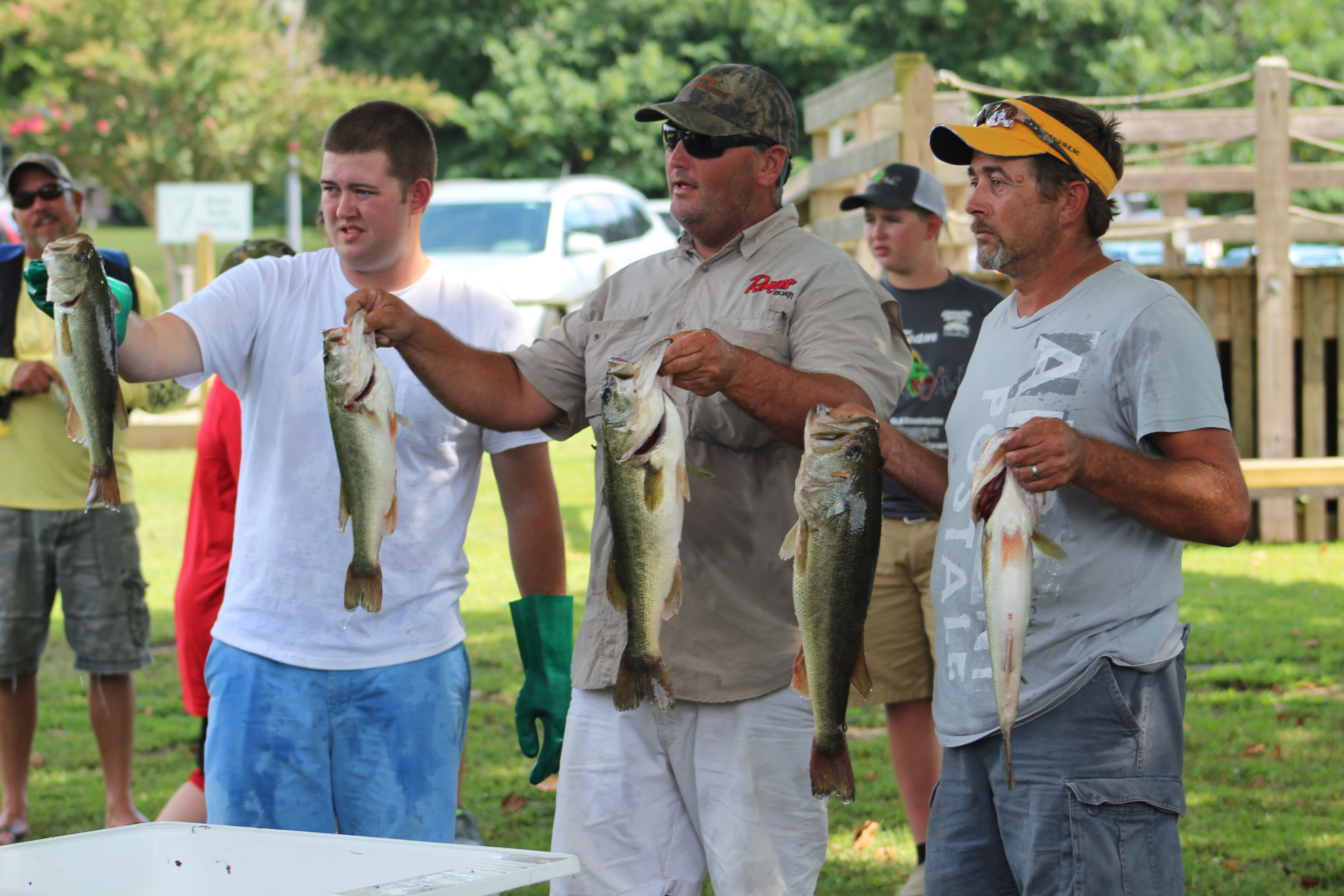
    Winning Team
    Winning Team

    Just next to the marina is a replica of the Roanoke River Lighthouse.  Remember the ‘real’ one is over in Edenton Harbor.  Seems a little odd that the community on the Roanoke River has the replica and their rival town has the real deal.  The skipper asked the Dock Master about the replica and got an ear full about the situation.  Looks like the skipper stepped on a raw nerve with that question.
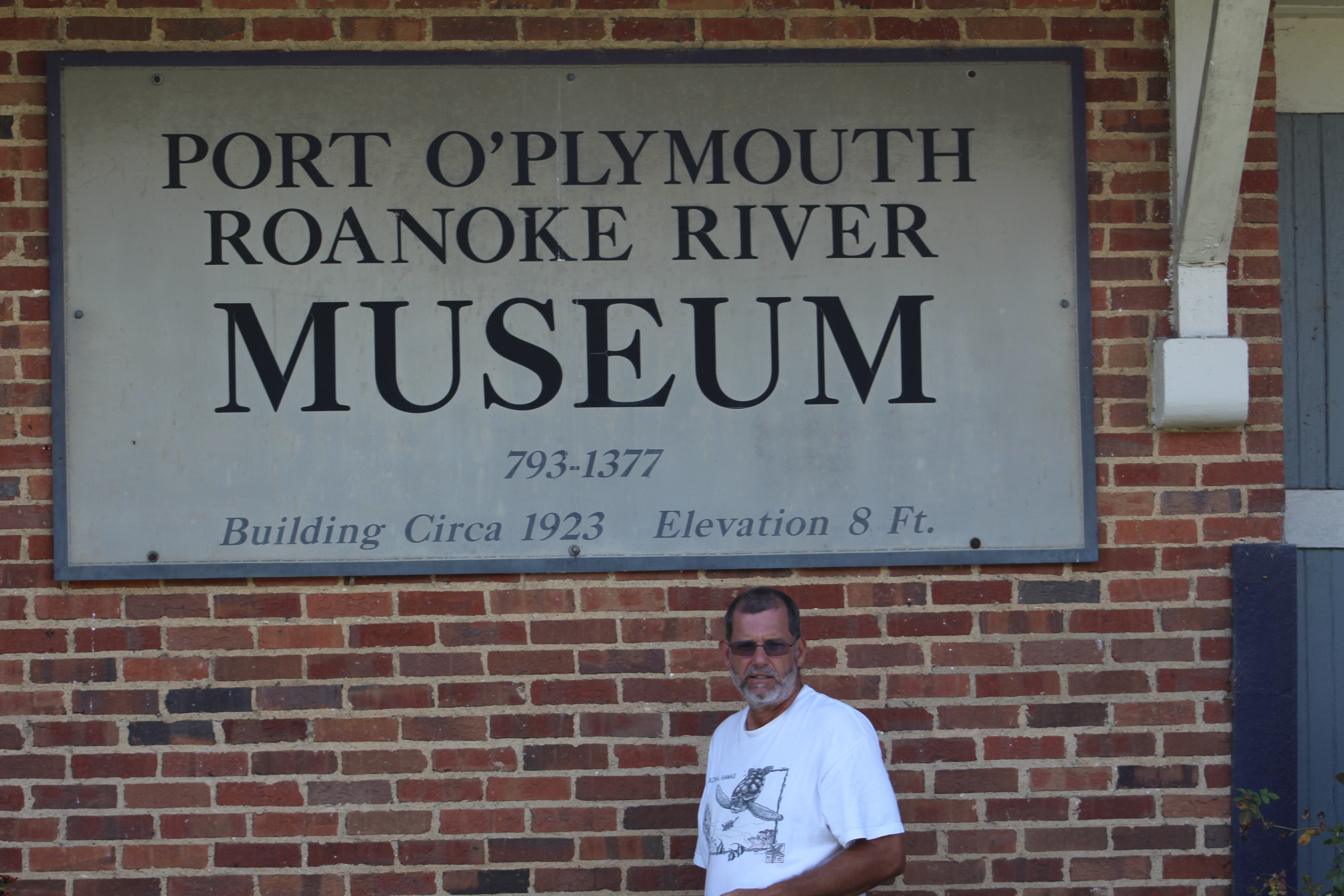
    Taking time to Geocache
    Taking time to Geocache

    Plymouth, North Carolina has a rich 400 year heritage.  Robert Lane was the first European in the area back in 1584.  By 1680, people began settling in the area.  The town of Plymouth was established in 1787 and by 1857 it was one of six major ports in North Carolina.  The town was also one of two ports of entry in North Carolina so it had a Customs House on Water Street.

    Due to the strategic location of Plymouth, the Civil War saw plenty of action in the area.  The Union forces occupied the town early in the war.  In April 1864 the confederates won their last major victory of the war by retaking the town.  The CSS Albemarle was crucial in the victory by sinking the USS Southfield.
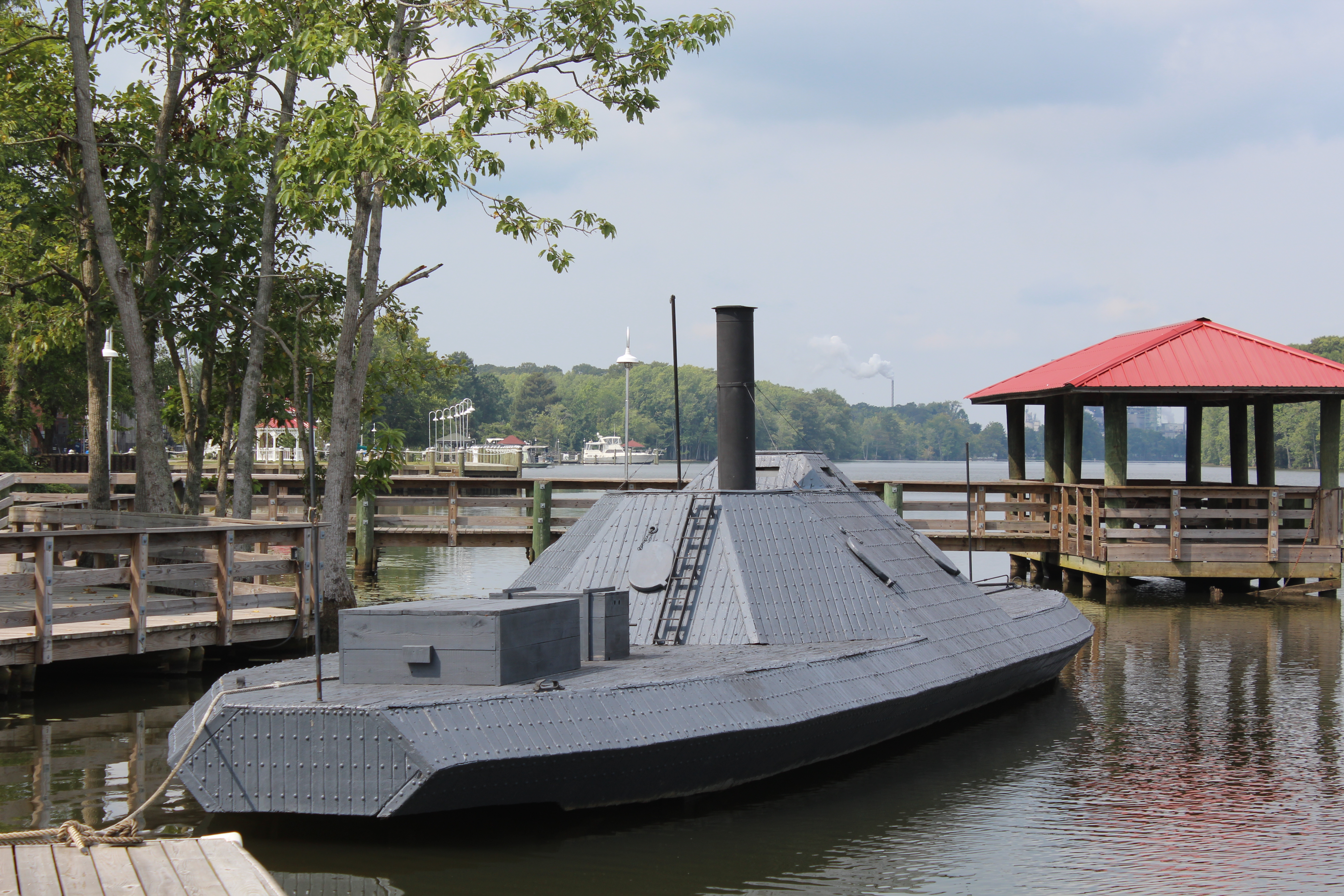
    Working 1/3 scale model of CSS Albemarle
    Working 1/3 scale model of CSS Albemarle

    However, it was a short lived victory.  In October of 1864, the CSS Albemarle was sunk and the Federal Army was able to retake the town.
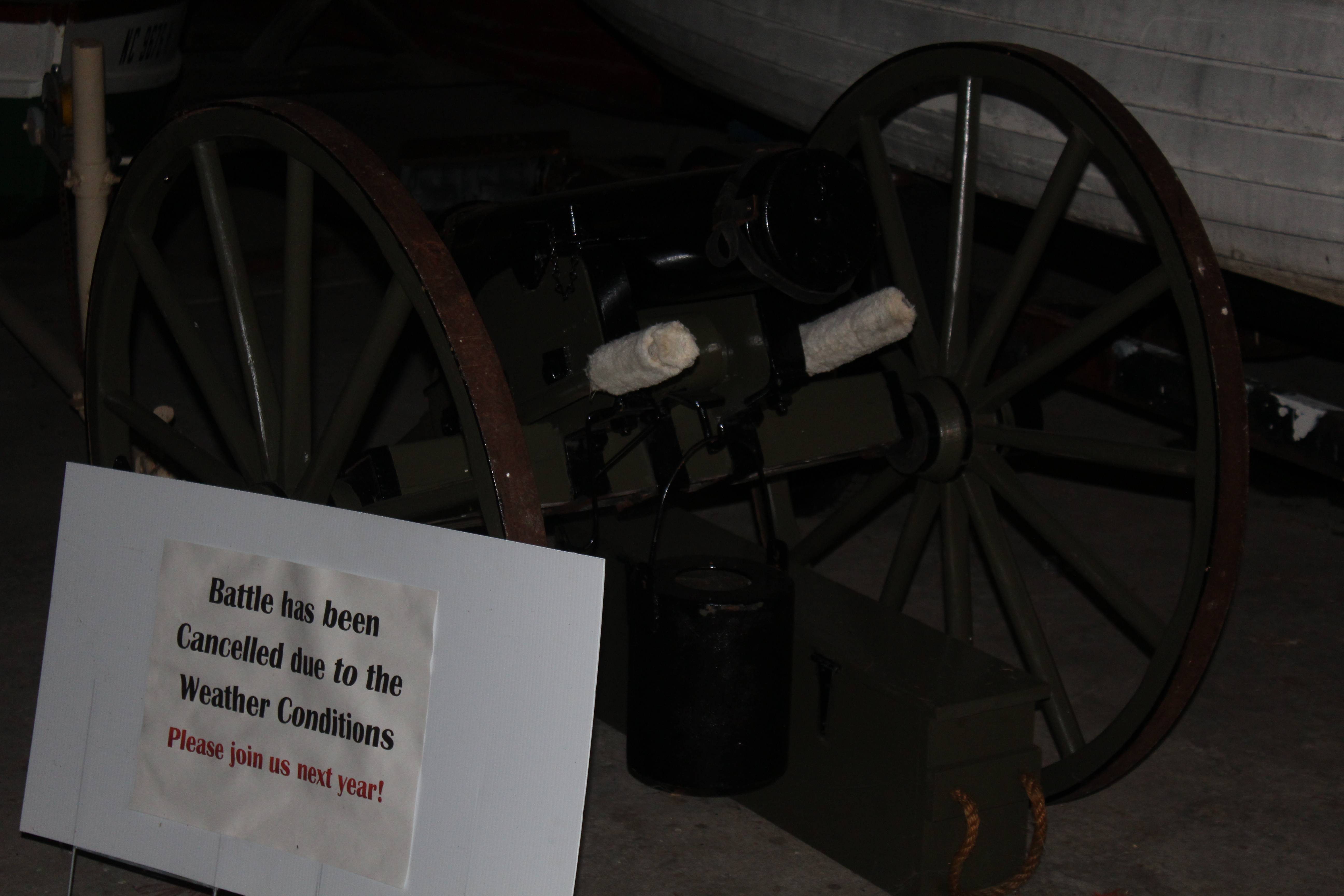
    Cannon used in reenactment of Battle of Plymouth - Sign cracked the skipper up
    Cannon used in reenactment of Battle of Plymouth – Sign cracked the skipper up

    The little town is working hard to revive its past to lure tourist to the area.  The crew agrees with the Plymouth travel brochure that the area is a great place to come visit, relax, prop your feet up, soak up the history, and enjoy the natural experience.

    Wildlife

    Speaking of natural experience, one unexpected find in the town was the God’s Creation Wildlife Museum.  A business man in town has been hunting all over the world.  He has some of his mounts on display.  A lady in the office gave us a guided tour of each of the four galleries.  This was a real treat and well worth the stop.
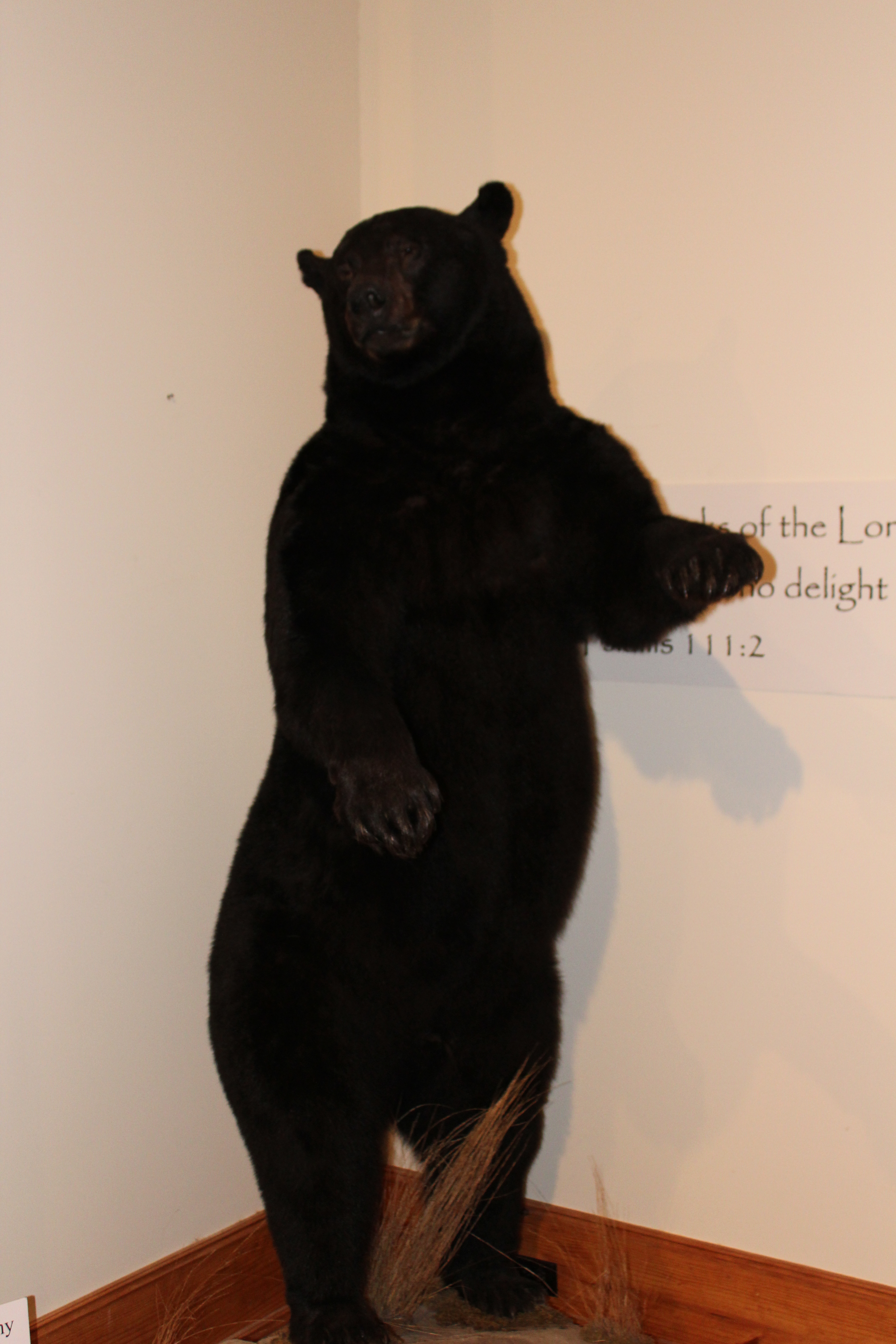
    708 lbs Black Bear, taken by owners daughter. Set youth and female record in N.C.
    708 lbs Black Bear, taken by owners daughter. Set youth and female record in N.C.

    Go to WWW.wildlifemuseum.net for a virtual tour of the museum.
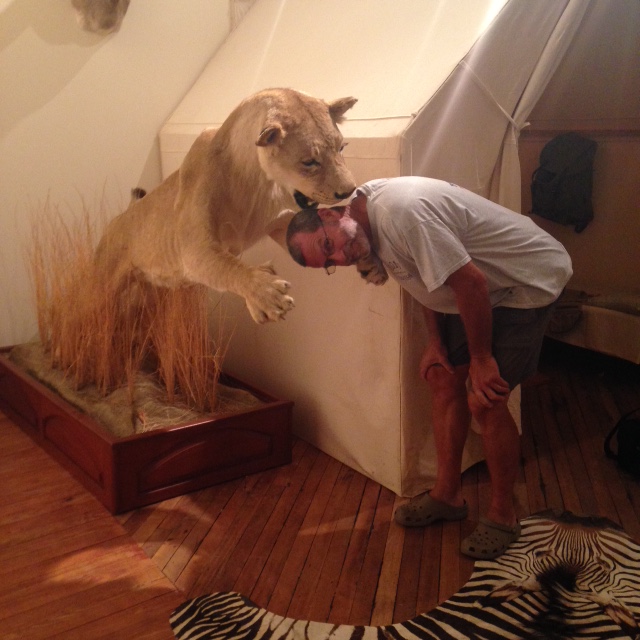
    Joking around in the museum
    Joking around in the museum

    The only constant in this world seems to be change.  Yes the crew has changed their plans again.  They have met some other cruisers who have recommended a stop in Columbia, so the crew is adding the stop to the Albemarle Sound loop.

    They called ahead on Tuesday, but the marina did not have a spot for them.  Supposedly, a boat is leaving Wednesday morning from Columbia.  If so, the crew will head over and check the little town out.  Little is probably an overstatement.  Last census in 2010 shows a population of 900 folks.
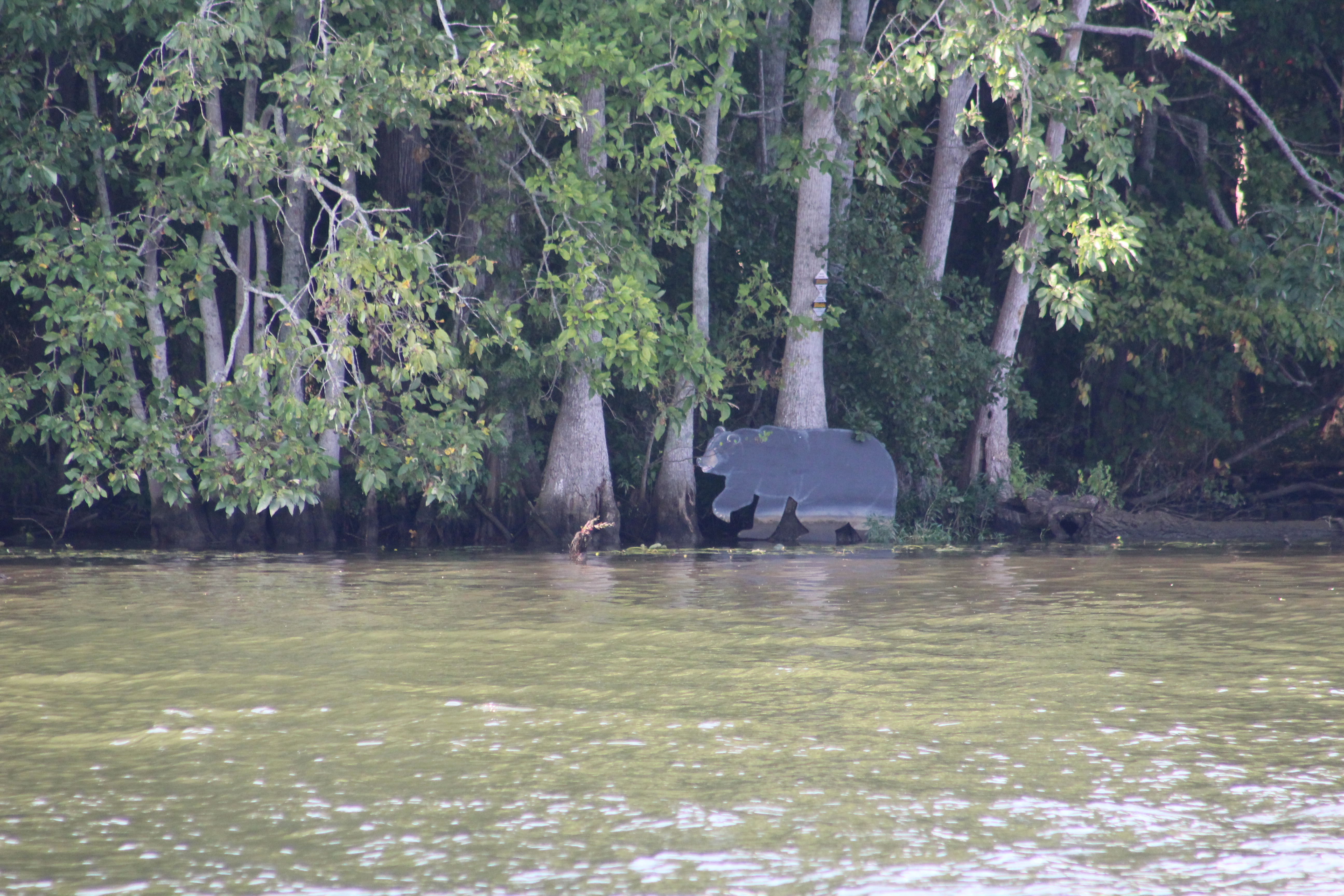
    Still looking for a live black bear
    Still looking for a live black bear

    Local Factoid – The weather in the area does not get cold enough for the black bears to hibernate so they enjoy the local cornfields and other crops year round leading to the record sizes of bears in these woods.
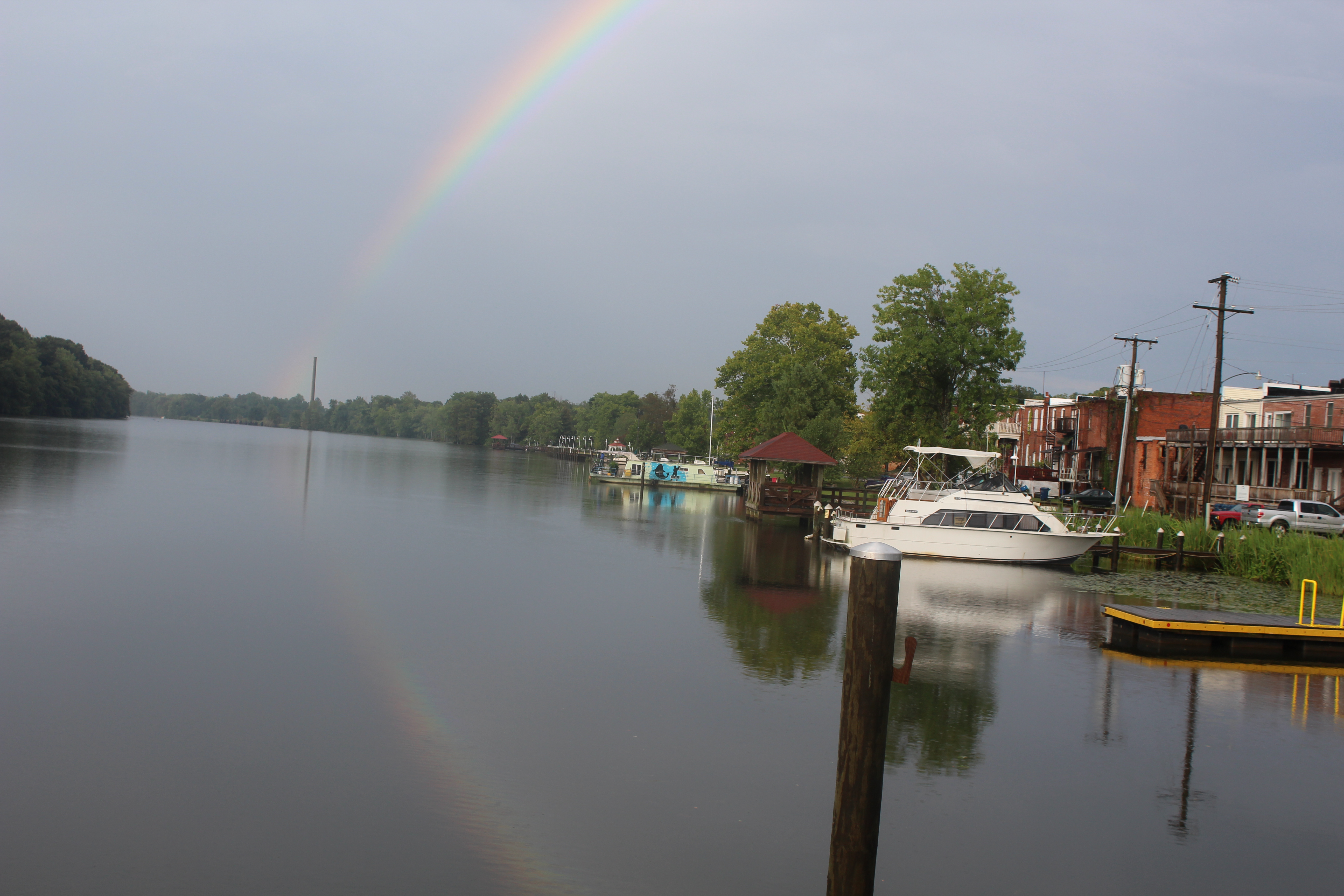
    Rainbow on River
    Rainbow on River
  • Run to Alligator River

    Hello fellow adventurers and virtual crew members!

    Eric here with the latest update on the north migration of Still Waters II and crew.

    On Tuesday, August 18th, the crew left the little charming town of Oriental (population 900 in the 2010 census) and headed towards Belhaven, NC.

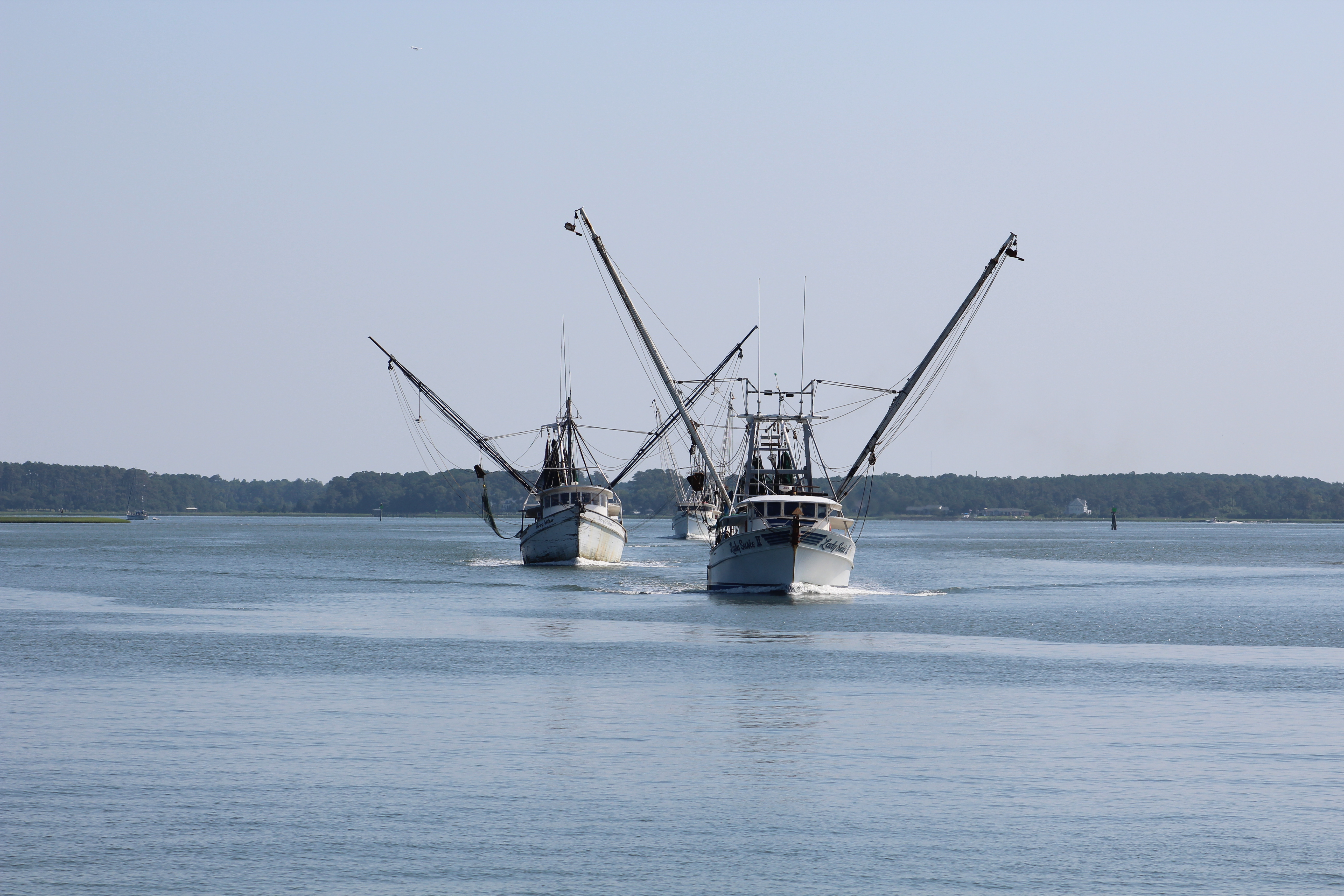
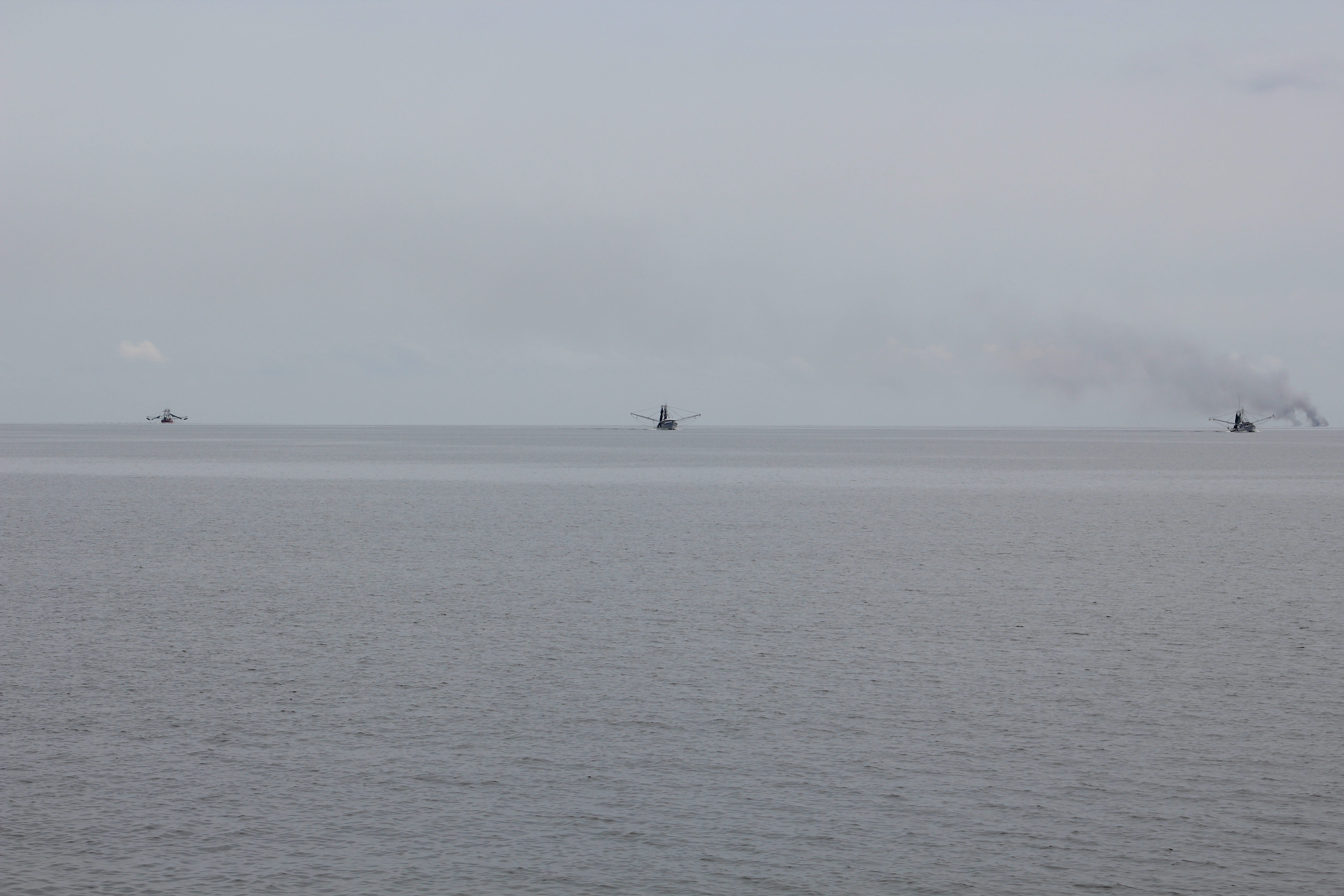
    Shrimpers returning from sea
    Shrimpers returning from sea

    The crew was met with returning shrimp boats once they got out of the harbor.  The wind was calm and the large Neuse River looked like glass.  They found the Neuse River Junction with ease and made a left hand turn up the Bay River for 5 miles.

    Neuse River
    Neuse River

    Then it was another 5 miles up Gale Creek and Upper Spring Creek.  The skipper gets a kick out of these names.  He says a creek back in Texas is usually dry in the summer and can easily be jumped over when full.  These creeks in the Carolina’s are at least a half mile wide, the rivers are miles wide, and the sounds look like oceans.  So much for everything is bigger in Texas.

    Large body of water in these Carolina's
    Large body of water in these Carolina’s

    Five miles up Goose Creek dumped the crew into the Pamlico River.  It was 5 miles wide and led to the Pungo River.  It was 10 miles up the Pungo River when they reached Belhaven.  The crew decided to travel another 10 miles up-river and anchor for the evening at the mouth of the Alligator River-Pungo River Canal.

    Anchorage spot at the south end of canal
    Anchorage spot at the south end of canal

    This canal was the last link of the ICW to open, which completed the Atlantic Inter Coastal Waterway back in September 1928.  Belhaven, the closest town, was the center of celebration to dedicate the opening.  Belhaven is the self – proclaimed “Birthplace of the ICW.”

    South entrance to canal
    South entrance to canal

    On Wednesday, August 19th, the skipper was up about 0630 reading on the sundeck when a little fishing boat came darting by way to close.  The fishermen were yelling “Time to wake up, Time to wake up.”  The fishermen did not notice the skipper until he waved at them.  They immediately moved further away and quit yelling.  The skipper thinks these two are future Darwin Award winners.

    The 20 miles through the canal were uneventful but beautiful.  The skipper had a keen eye out for deer and black bear but saw none. The crew did spot 2 flocks of turkeys and 1 bald eagle though.

    As they exited the canal they entered the Alligator River. The crew was provided their own private air show while cruising the river. Two military jets were performing maneuvers overhead.  The jets would fly by, make an arcing u turn, fly into the distance, perform an aerial 360 degree loop and then buzz by Still Waters II at a low altitude. They performed this routine 4-5 times before finally disappearing in the horizon.

    The crew’s timing for docking was perfect. The marina is known for its hamburgers cooked by Ms Wanda and the crew was looking forward to taste testing the burger. For some unknown reason, the marina store closed at 1500 rather than the usual 1800. The crew got tied up at the dock about 1400 and went over and ordered burgers. The dock hand had told the crew that Ms Wanda was closing the grill at 1430.  She did an excellent job of grilling the burgers and the crew was happy that they made it in time for last call.

    IMG_0106
    Alligator Marina

    Still Waters II was the only vessel in the marina. This marina is geared for transient boaters making the spring and fall runs up and down the east coast. Looks to be a peaceful night in North Carolina.

    All alone in the marina
    All alone in the marina

    Nothing could be finer

    Than being in Carolina

    In the morning…………

    Next on the agenda is to cruise the Albemarle Sound.  The crew will divert off of the ICW and head over to Edenton, NC.  They will then work their way back east to Elizabeth City and prepare for the Dismal Swamp run.

  • Jessica’s Reflection

    Eric is delighted to share a blog entry by Jessica.  The following are her words and reflections of her adventure on Still Waters II………..

    I arrived aboard Still Waters II on the evening of August 8th in Myrtle Beach, South Carolina.

    Leaving Myrtle Beach
    Leaving Myrtle Beach

    Having only been on a boat 2 other times in my life, I had no clue what I was in for. All I knew was I was in need of a vacation, I had never been to the Carolina’s, and I love to fish.

    Never in a million years did I think I was about to experience the most relaxing, and enjoyable vacation I have had in a long time.

    On August 9th we pulled out of Myrtle Beach and headed north.

    After sitting up in the helm with David and Claudia for about an hour, I began to learn about the boating life style. I learned about the red and green makers to keep you on course. Red meaning it is the side closest to the heartland and if there is a small triangle in it you are in the ICW (Inter-coastal Waterway).

    At the Helm
    At the Helm

    After a few hours David asked me if I wanted a turn at the wheel. I was like heck yeah! In the back of my head thinking I’m about to speed this sucker up because you are going way too slow and people are passing us! I quickly learned that you actually have to pay attention to where you are going because depths of water change rapidly and that going slower saves gas. Whamp. Whamp!

    Lockwood Folly Inlet - Whamp - Whamp
    Lockwood Folly Inlet – Whamp – Whamp

    During my week aboard, I learned how to tie knots, help dock the boat, and pilot the boat all while taking in the sights. I did have a mishap while fishing one night. Somehow while reaching down to grab some bait, I managed to drop my polarized Rayban sunglasses to the bottom of the marina. Rookie mistake!

    Location of sun glasses
    Location of sun glasses

    Eric editorial comment – Jessica thought about diving for her glasses. The water was only about 7 feet deep. But then she remembered the gator in the water and decided the gator could keep the glasses.

    Where are my sun glasses?
    Where are my sun glasses?

    When we arrived in Ocracoke, NC, I learned about Blackbeard and that we were staying in the waters that he pirated.

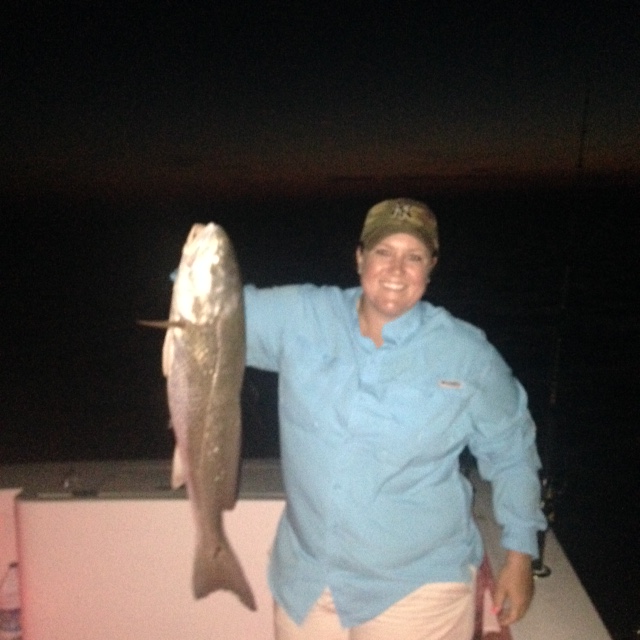
    The night before I left, David got us a fishing charter and I got to reel in a 30″ Red Drum!

    IMG_3653

    I had a blast aboard Still Waters II. I think I have found a new love and now all I need to do is figure out how to make enough money to retire, buy a boat, and join them along Americas Great Loop.

  • The Good, The Bad, and The Ugly

    Hello fellow adventurers and virtual crew members!

    Eric here providing the latest update on Still Waters II, and crew. After seeing Jessica off on her trip back to Texas, the crew took a 2.5 hour cruise up to Cape Hatteras. On Saturday, it was all about being a tourist and sight-seeing. Then on Sunday it was a cruise back across the Pamlico Sound to the little town of Oriental. A one day layover in Oriental, and the crew will be back on the ICW headed to Norfolk, Virginia.

    The Bad

    The ride to Cape Hatteras was much rougher than the trip to Ocracoke Island. The seas were a consistent 3-5 feet, with the occasional 7-8 foot waves. Lucky for the crew, it was only a short distance. They docked at the Hatteras Village Marina, which is more fishing camp than marina. The docking was a bit challenging though.
    The wind was blowing unobstructed right down the marina. When the skipper turned the vessel towards the slip to back in, the wind immediately broad sided the boat and pushed her out of the area to get into the slip. After 2 tries, the marina took pity on the skipper and allowed him to pull into a wider slip which made for easier dockage. The skipper made it into the new slip on the first try. After getting the boat secured, water, and electrical hook-ups completed, the crew strolled around the village to see the sites.
    The Good
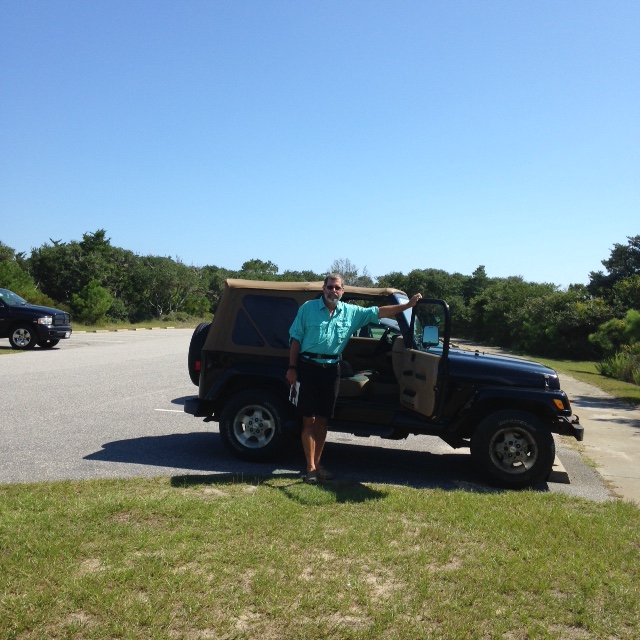
    On Saturday, August 15th, the crew rented a Jeep from Island Cruisers and spent the day exploring the Outer Banks (OBX) as the locals refer to the area.

    Wheels for the day
    Wheels for the day

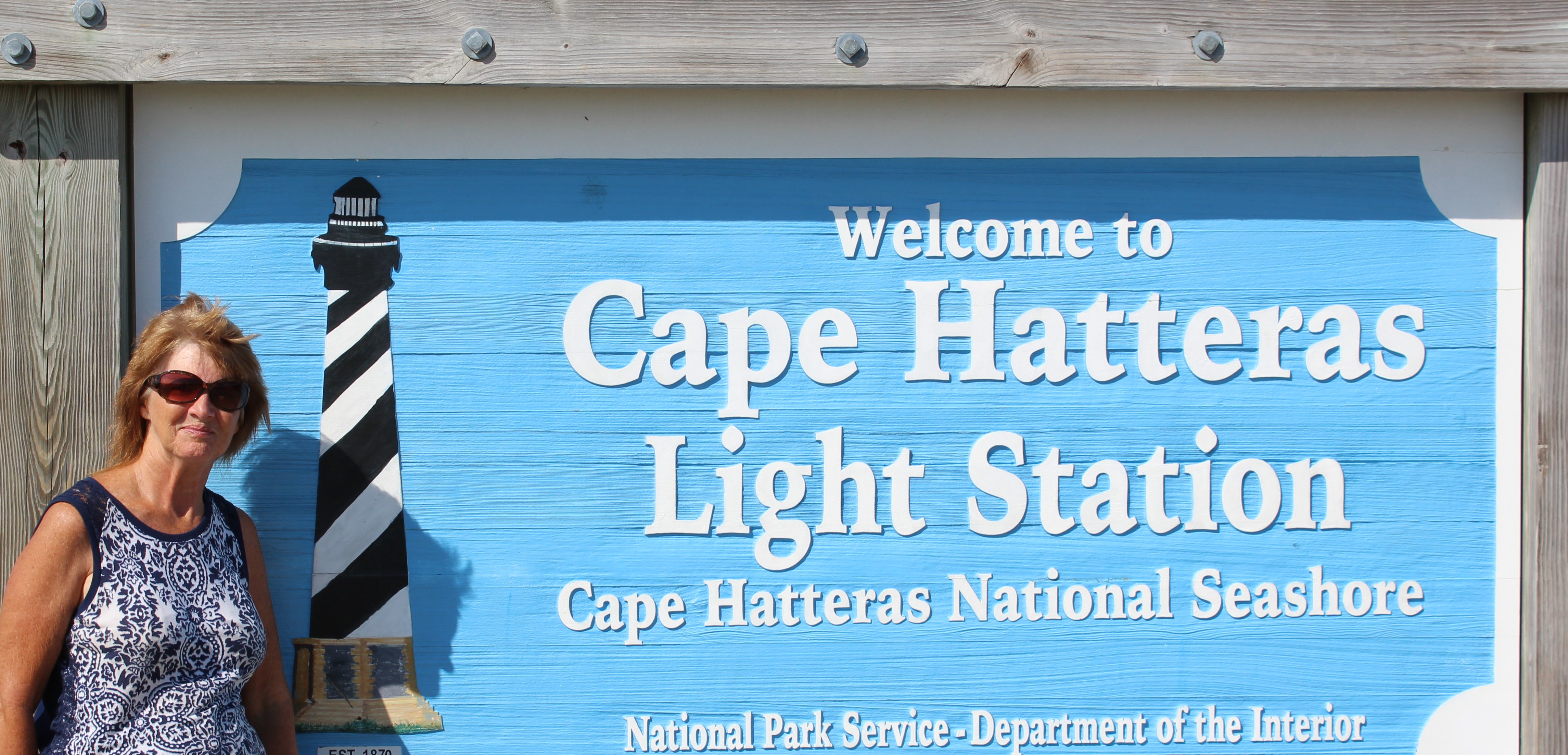
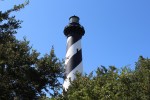
    Cape Hatteras Lighthouse

    Jeep hair at Hatteras
    Jeep hair at Hatteras

    This lighthouse has probably become the most famous in the nation since the civil engineering marvel of moving the lighthouse back in 1999. The lighthouse was built back in 1870 and is the second tallest lighthouse in the world.


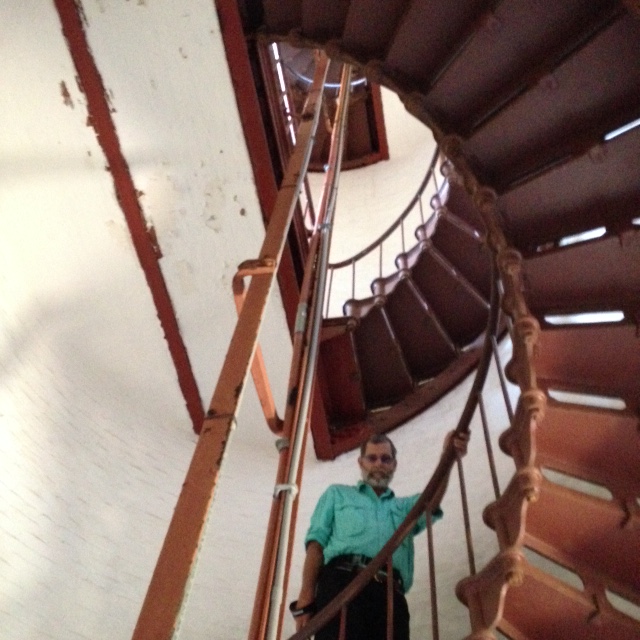
    However, it is the tallest brick lighthouse at 198.5 feet. There are 248 steps to the top of the lighthouse (about a 12 story Building), split up into 8 sections with 31 steps. After each 31 steps there is a landing. There were also 9 steps from the outside to get to the ground floor of the lighthouse. Grand total of 257 steps. The day was bright, so visibility was excellent from the balcony.

    Climbing Hatteras
    Climbing Hatteras
    Grassy Sand Dune is original location prior to 1999 move
    Grassy Sand Dune is original location prior to 1999 move

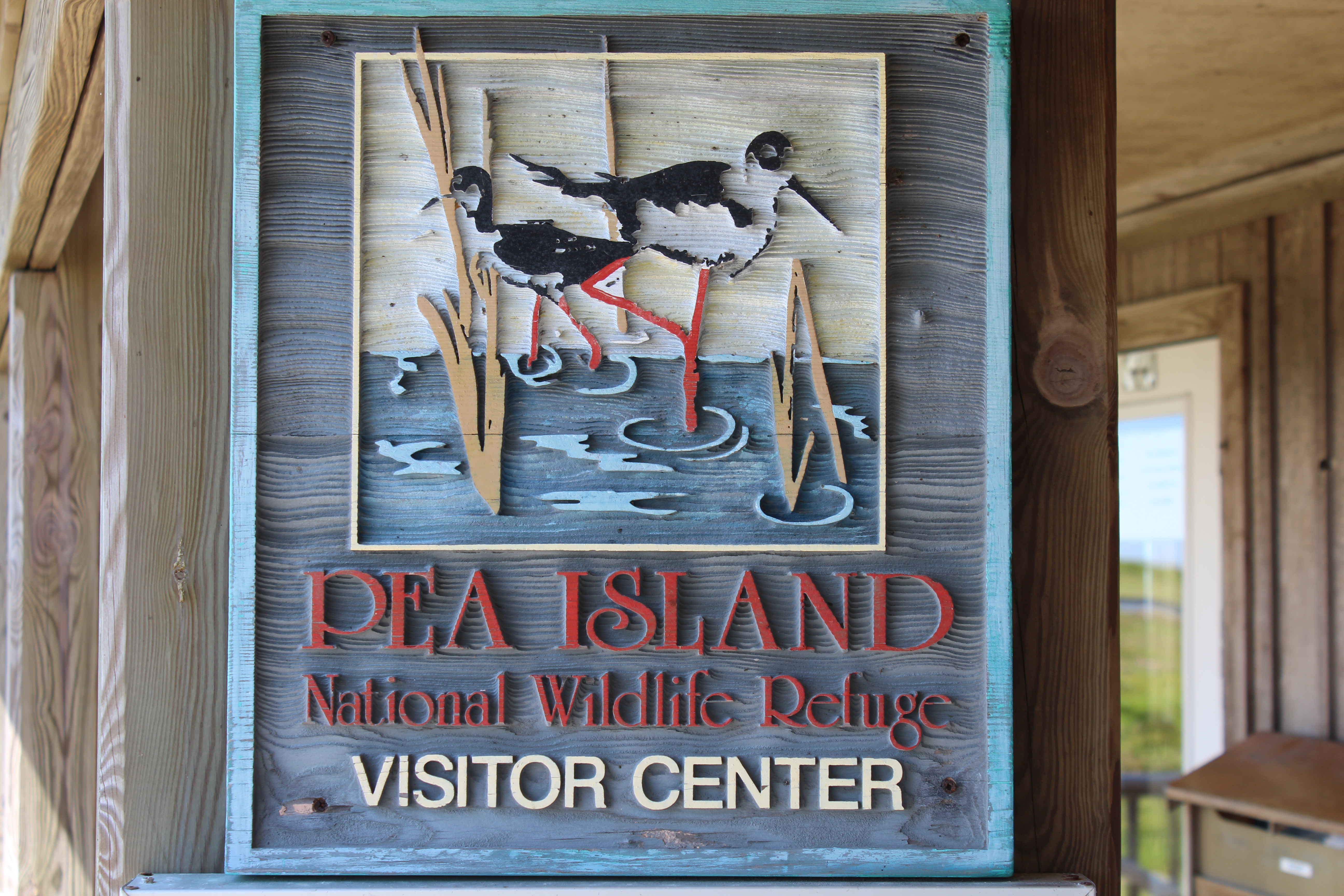
    Rufuge Visitor Center at Pea Island

    IMG_0707
    This was an interesting stop. The visitor center sits beside some natural fresh water ponds. Because of the fresh water, the ponds attract hundreds of birds. The visitor center and trail had several telescopes set up for bird viewing.
    Nature Trail
    Nature Trail

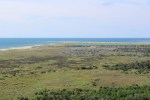
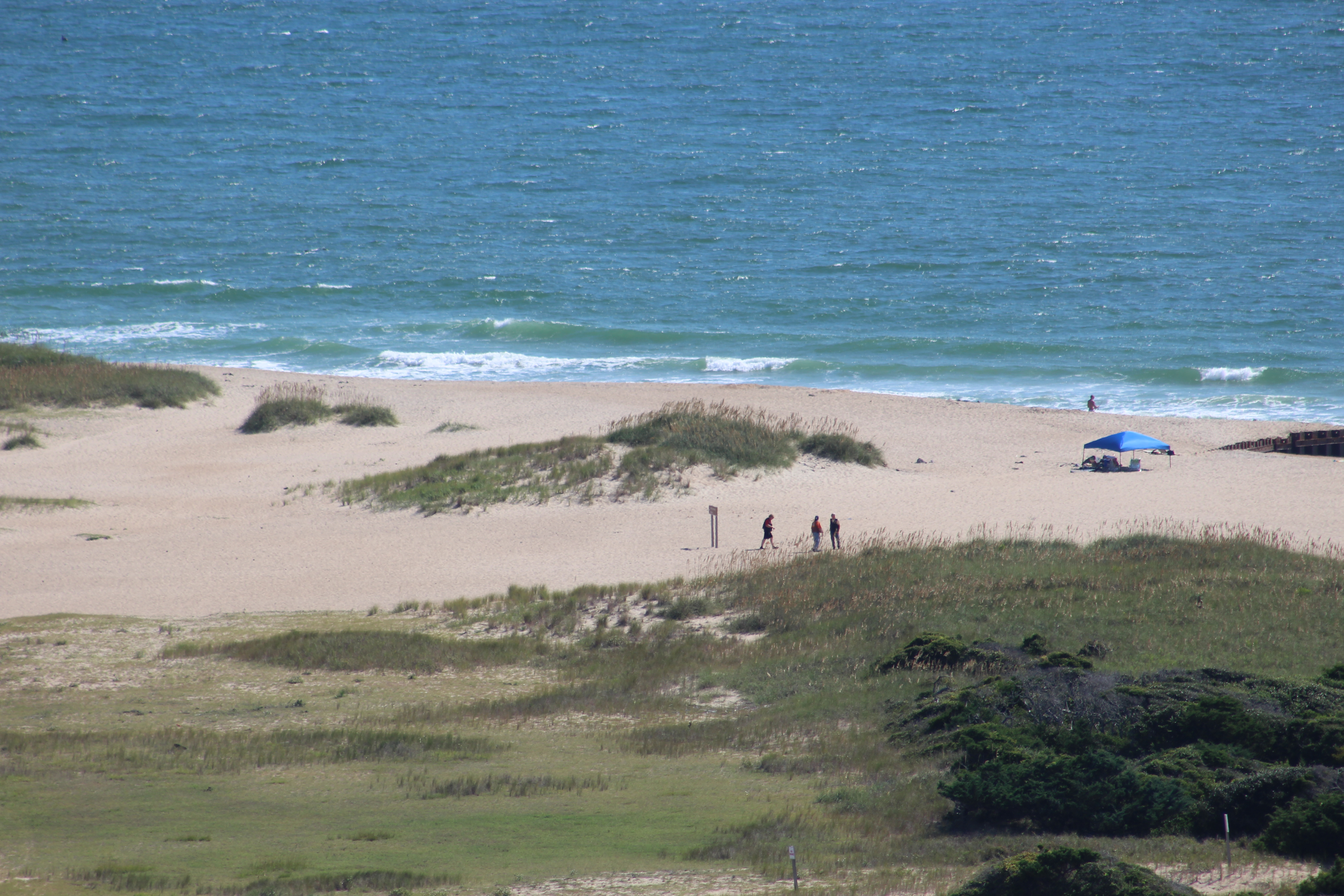
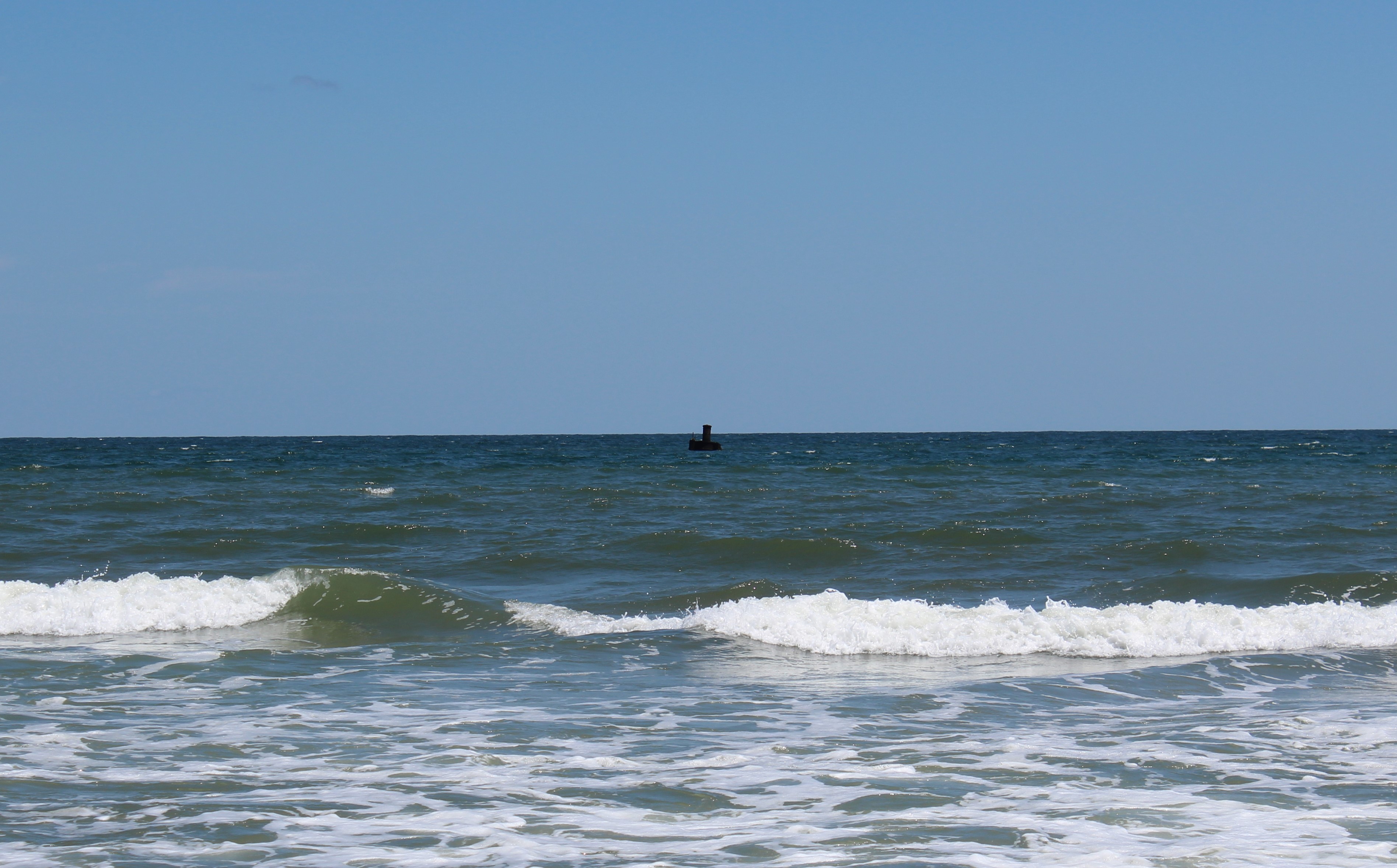
    Across the road from the visitor center, a ship wreck is visible just off of the beach. Our crew took the time to go look at the shipwreck and pick up a few sea shells.

    One of 600 ship wrecks in the area
    One of 600 ship wrecks in the area
    Look for black spot in center of pic for ship
    Look for black spot in center of pic for ship

    This area is called the Graveyard to the Atlantic due to the number of shipwrecks just off of the coast. About 600 wrecks are here due to shallow shoals, storms, and war.
    Another interesting bit of info comes from the name of the Island. The birds eat a little pea that grows in the bushes in the marsh. The peas are not eatable by humans, and if you try to plant them in a planter the plant will die. Seems the plant needs the shifting sand around their roots to survive.


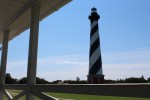
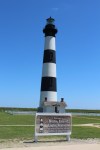
    Bodie Island Lighthouse
    This lighthouse was just over 200 steps to the top (10 story building) with 9 landings. Again, the view was spectacular from the top.


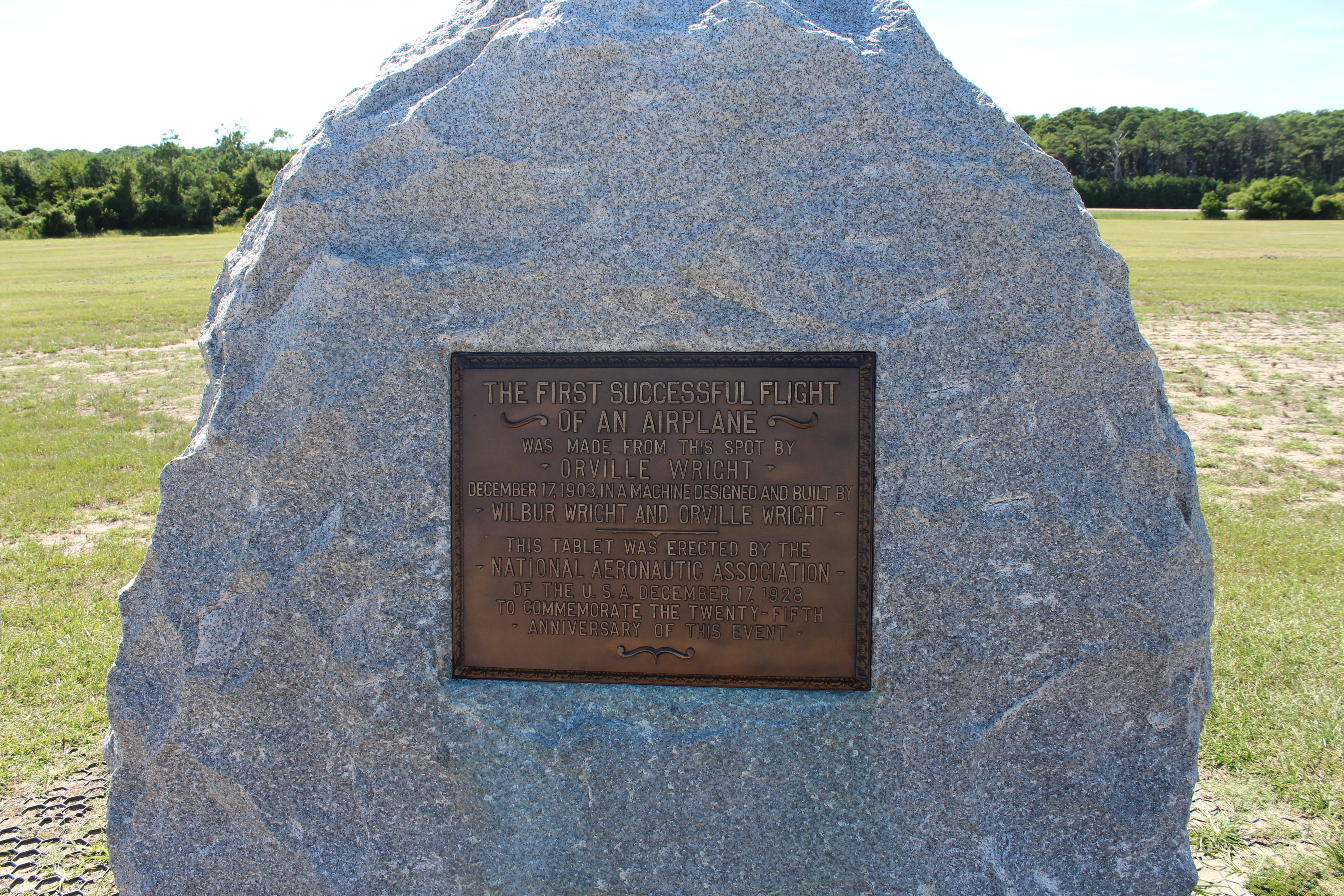
    Wright Brothers National Memorial
    This was a really cool site to visit. The birth place of the aviation industry.

    Where it all began
    Where it all began

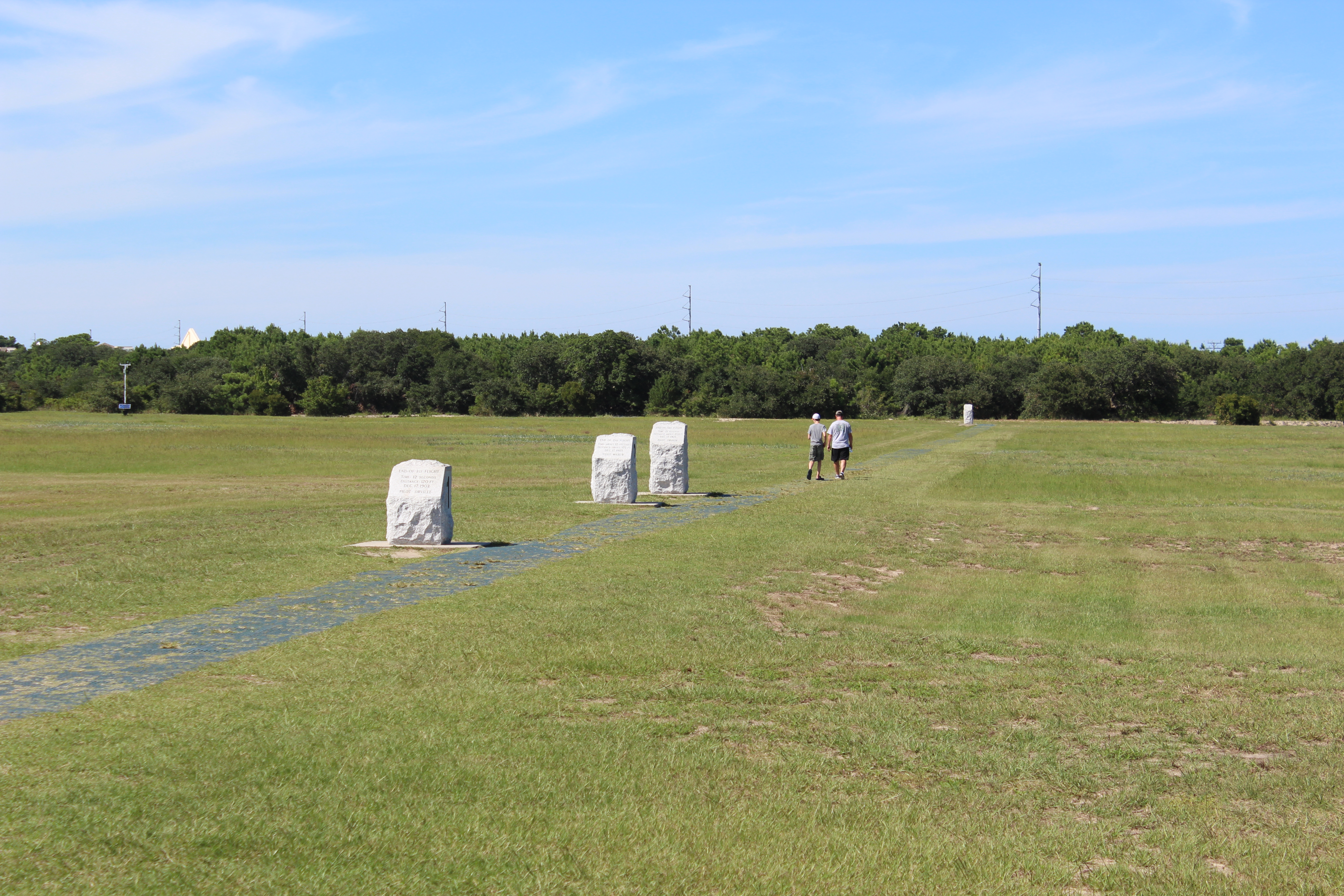
    There is a large boulder placed where the first powered plane took off. The brothers made 4 flights on December 17, 1903. There is a marker showing the distance of each of the 4 flights.

    Standing at boulder, white stones mark the flight landings
    Standing at boulder, white stones mark the flight landings

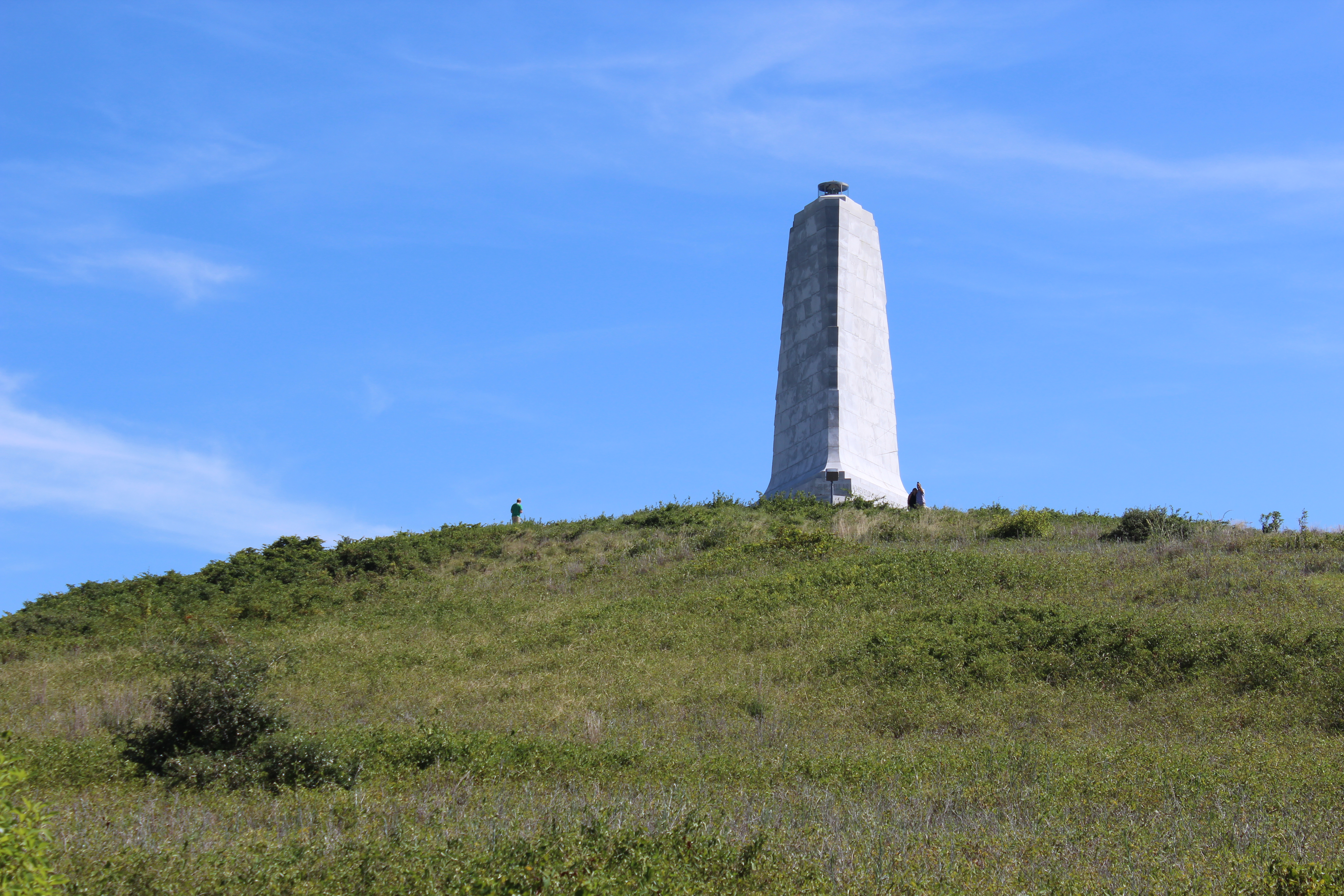
    To make it to the point of powered flight, the brothers flew thousands of glider flights off of Kill Devil Hill in 1900 and 1901. At the top of the hill, there is a monument to the brother’s achievements. Back in the day, the brothers had to carry the glider up the sand dune. Luckily they have planted grass and built a sidewalk to make the climb easy for visitors.

    Kill Devil Hill
    Kill Devil Hill


    With the major sightseeing complete, it was time to take advantage of the vehicle and provision in the Jeep. A stop at a local store was in order and groceries were bought. Then a few more stops to shop, and the crew finally returned to the marina at sunset.
    The Ugly
    On Sunday morning, the crew departed Hatteras Village Marina at 0930. Before leaving the skipper had noticed that the port-a-bote was not secured properly. Looked like the trip on Friday must have pulled the dingy off of one of the davits holding her to Still Waters II. The skipper made some temporary repairs and got the dingy mounted the best he could. However, his best was not good enough.
    About thirty minutes after leaving port, the skipper heard a loud banging noise. He turned and looked aft and he saw the dingy had fallen into the water. The dingy was secured at the bow and stern but was plowing sideways through the water.
    He idled the engines and called the mate up to the helm so he could go get a closer look at the problem. As the mate ensured the wind did not blow them into shallow water, he noticed that all the seats and oars were missing from the dingy.
    The skipper untied the line holding the stern of the dingy. This got the dingy floating behind the mother ship, albeit full of water. One of the things Port-a-bote advertises is that the boat is unsinkable. Well, with the boat full of water and the skipper standing in the middle of the boat, it did not sink.


    With the bow line attached to the center of Still Waters II stern, the crew tried towing the dingy at slow speed, but she flipped upside down rather than ride on the keel. So it was time to try to get the dingy out of the water and on deck. This seemed like a good idea, but turned out to be much harder than anticipated.
    The first plan was to unscrew the 2 wing nuts on the transom and try to collapse/fold the boat and pull it onboard. The skipper put on his lifejacket and climbed down to the swim platform. Unscrewing the wing nuts proved near impossible. While the skipper was seated on the swim platform he would barely reach the nuts. When a wave would come, he floated out of reach of the nuts. It took a while to get in rhythm with the waves, but finally success was achieved.
    The next obstacle was to try and fold the boat and pull her onboard. That did turn out to be impossible. The skipper was knocked off the swim platform twice during this little evolution and getting back on was no easy matter. The bumps and bruises will remind him of this for a while.
    After losing the line to the boat 3 times and having to circle around to recapture the line it was time for a break and re-analysis of the problem. If they could have sunk the dingy it would be on the bottom of Pamlico Sound, but as advertise it just will not sink.
    A new plan was hatched to use the anchor chain to help lift the boat up on deck. The skipper maneuvered the dingy to the bow, dropped the anchor, and attached the dingy to the anchor chain. When the anchor was raised the bow of the dingy came up and emptied the dingy of water. Now the crew worked together and managed to pull the dingy up on deck.
    After 2 hours of wrestling the dingy, the skipper finally won. This was not the kind of memory the skipper was trying to make. But I am sure when he is old and sitting in a rocking chair on the front porch, he can reflect back on this little incident and smile.
    For now, the skipper is none too happy with the dingy. Looks to be a total loss.
    Oh well, it is time to pull into Oriental and rest.

    IMG_0760


    P.S. As one might imagine, the skipper was more than a little sore when he woke up on Monday morning. Good thing Monday was a planned rest day because it sure looks like the skipper needs some rest.

  • Journey with Jessica

    Hello fellow adventurers and virtual crew members!

    Eric here providing the latest update on Still Waters II, crew and guest.  Since the last update, the crew traveled to mile 170 on the inner coastal waterway, then took off for a side trip to the outer banks of North Carolina.

    The run consisted of four days of travel with stops at Bald Head Island Marina, anchorage near Wrightsville, dock in Morehead at Port Side Marina, and finally the National Park Service dock at Ockracoke Island.

    As always, there are new challenges and things to learn along the way.  These last few days have provided plenty of opportunity to learn for our crew.

    Run to Bald Head Island

    The crew left North Myrtle Beach on Sunday, August 9, at 0919.  In less than 5 minutes they were at the Barefoot Landing Bridge and made their way on up the narrow rock pile.

    Danger sign warning of the rocks
    Danger sign warning of the rocks

    The crew entered into North Carolina at 1055 near the Little River Inlet.  The skipper began to give the passenger, Jessica, a few lessons in navigating the waterway.  She is a quick study, and by lunch she was behind the wheel guiding the boat northward.

    At the Lockwoods Folly Inlet, the water depth suddenly went from 10 feet to less than 4 as the boat glided over a shoal.  The young skipper in training responded quickly and got the engines in idle and there was only a slight bump as they made way for deeper water.  Jessica made a comment that the water sure changed depth quickly.  These inlets are always a little tricky as they bring in sand from the ocean.  Once again reinforcing the need for constant vigilance at the helm.

    Passing through Southport, NC
    Passing through Southport, NC

    Rather than stay in Southport, the crew decided to venture off of the ICW and make the 2 mile side trip to Bald Head Island.  The decision was rewarded with a nice evening of walking and exploring the sites, a surprise alligator in the marina, ice cream and fishing.  The fishing was not as productive as hoped for, but lots of small fish were caught and two croaker were actually large enough to keep and fillet.

    Entering Bald Head Island
    Entering Bald Head Island

    The mate broke out the tape measure and announced that Jessica’s croaker was larger than the skipper’s croaker.  There is an official appeal submitted because the skipper did not witness the “official” measurement.

    Run to Top Sail Beach

    On Monday, August 10th, the crew left the dock at 0930 and headed north.  The days challenge would be trying to meet the bridge schedule.  There are two bridges in the path that must be opened, but these bridges open on a schedule.  If you are not there on time you get to wait for the next opening.

    Entering Mason Boro Sound
    Entering Mason Boro Sound

    The skipper calculated the distance and speed needed to make the Wrightsville Beach Bridge for the 1300 opening.  Unfortunately he missed the opening by about 5 minutes.  They were at the end of the line to pass through the bridge and when they were about a hundred yards from the bridge, the bridge tender decided to close the bridge (time 1315).  The mate and passenger both urged the skipper to gun it and make it through, but the skipper backed off and they toured Wrightsville by water while killing the hour for the next bridge opening.

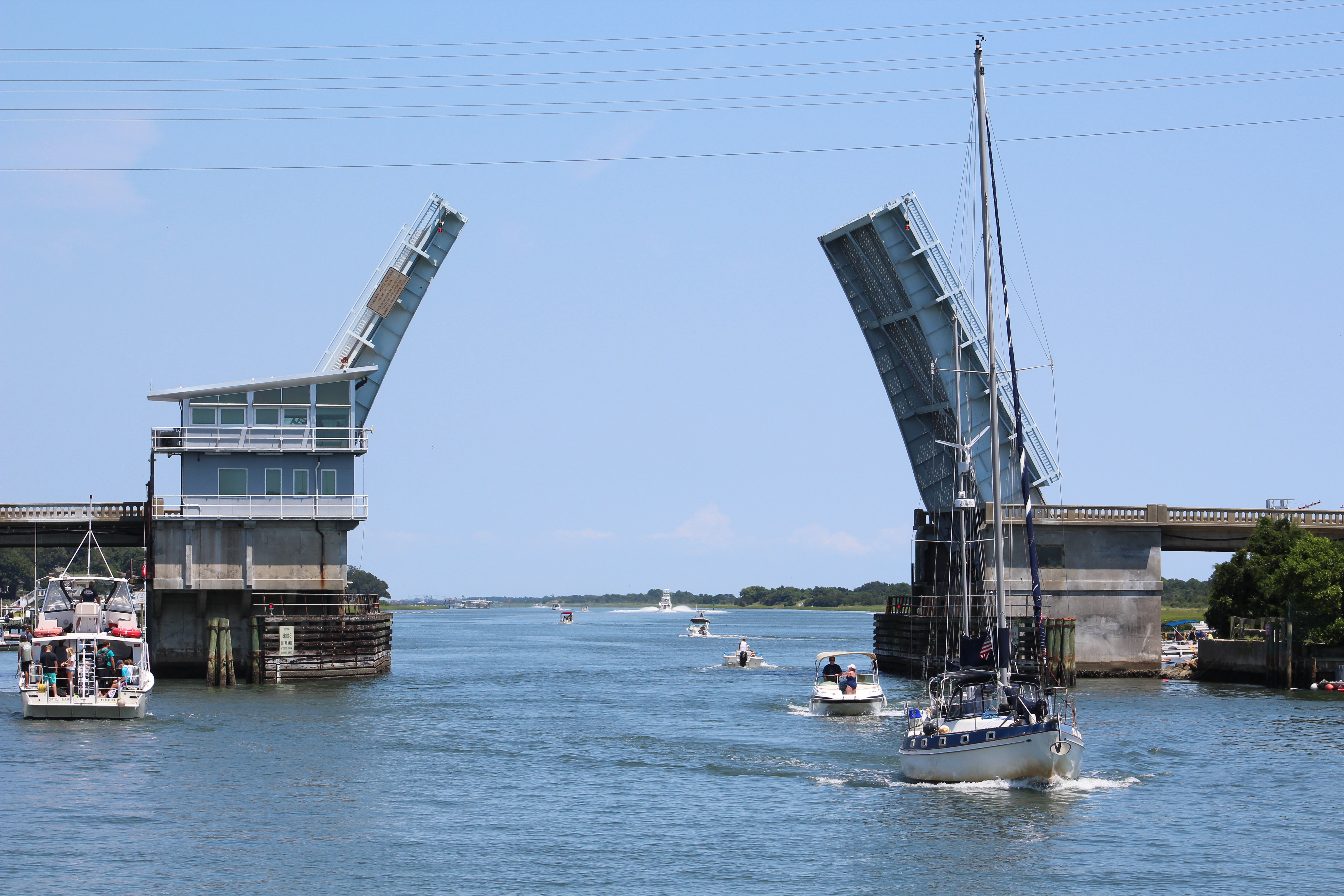
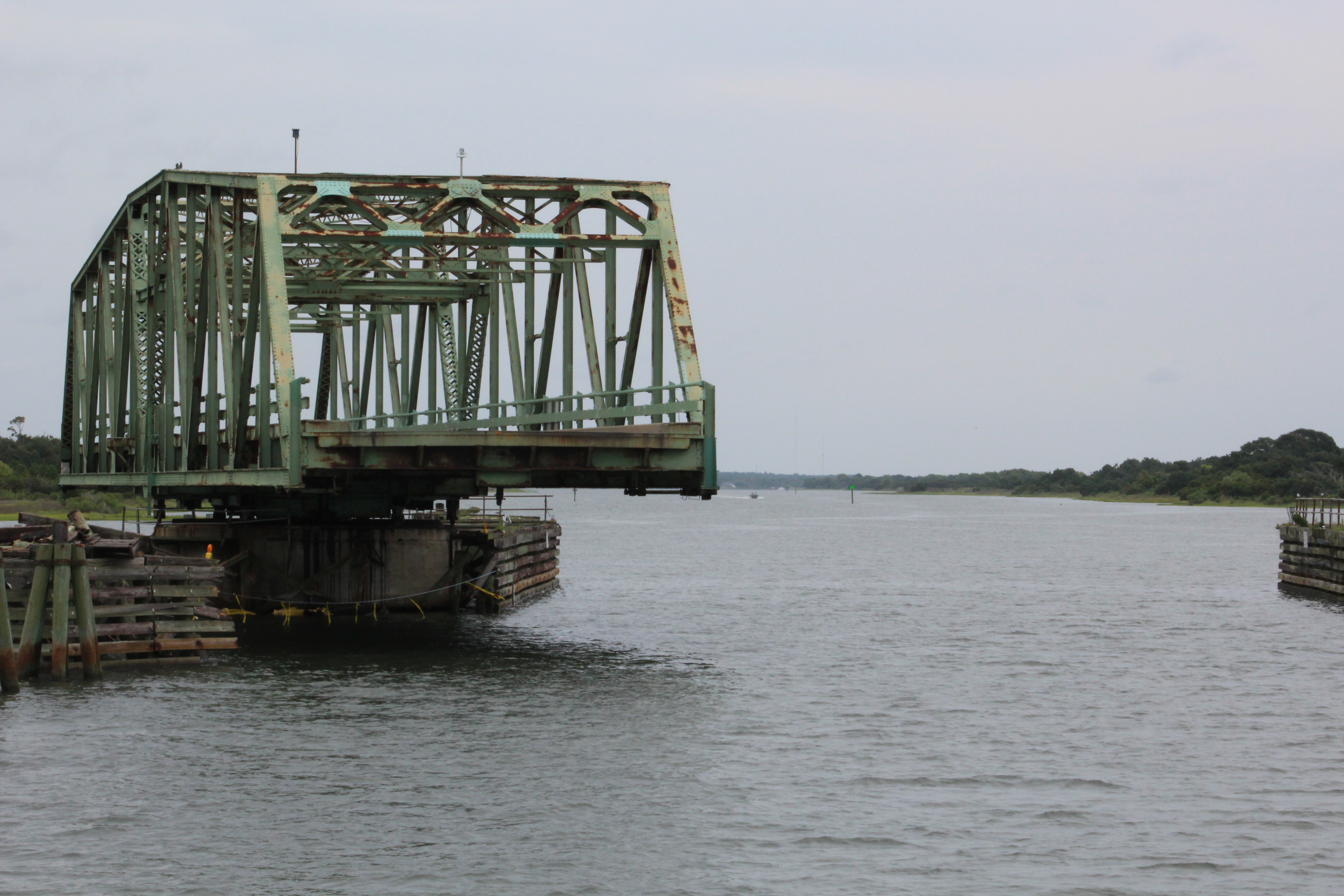
    Bridges, Bridges , and more Bridges
    Bridges, Bridges , and more Bridges

    They were the second boat through for the 1400 bridge opening, but now needed to make the 8 miles to the Figure Eight Island Swing Bridge for its scheduled opening on the hour and half hour.

    As they approached the Figure Eight Island Swing Bridge the mate looked at the time and announced that they only had 2 minutes before the opening, but based on their location, it looked like they would miss the 1430 opening.  The skipper made a quick calculation and announced that they would make the distance in 2 minutes.  This proclamation was met with doubt and a few off color comments.  The skipper gave the engines more throttle and the engines responded.  In moments she was up and planning at 16 knots.  Jessica had a look of surprise at the speed after 2 days of 7 knots.  Needless to say, they easily closed the distance and had to actually wait for the bridge to open.

    IMG_0574

    Jessica took the wheel again for the last two hours of the cruise and guided our crew to the eventual anchor spot at Top Sail Beach.  The crew got the anchor to hold on the first try, and spent the rest of the evening fishing.

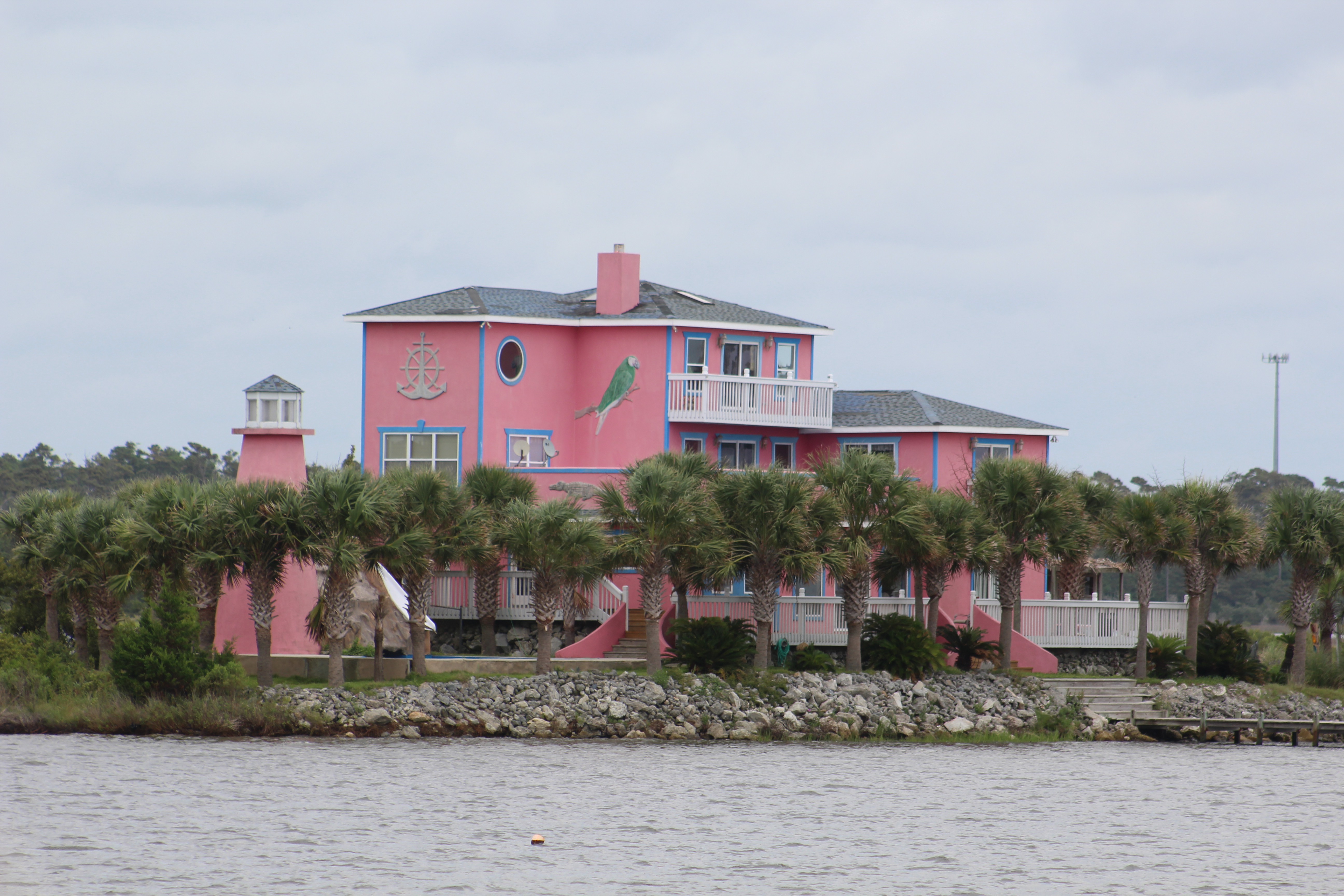
    Can you say pink house
    Can you say pink house

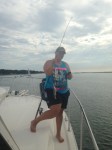
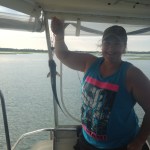
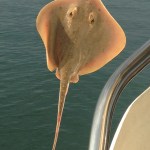
    It was an interesting time of fishing.  The caught a couple of small black tip sharks, a puffer fish, many spot fish and croaker, and one sting ray.  Unfortunately, nothing was large enough to fillet so it was all catch and release.

    IMG_0628

    Run to Port Side Marina in Morehead

    On Tuesday, August 11th, the crew pulled anchor at 0925 and headed north.  The days cruise was mostly in the narrow channel, interrupted occasionally by inlets to the Atlantic Ocean.  Inlets included the New River Inlet, Browns Inlet, Bear Inlet, and Bogue Inlet on the approach to Swansboro.  The crew stopped at Casper Marina in Swansboro to fuel and decide their next move.  The weather was building and storms were on the way.

    IMG_0592

    After fueling they made the decision to continue onward 30 miles so that they could be in a position to cross the Pamlico Sound if the weather was good on Wednesday.  As they headed north, they seemed to stay just on the edge of the storm and keep in light rain.  Jessica took the wheel again for a few hours and guided the crew through the Bogue Sound in the wind and choppy seas.  As they approached the marina, the skipper took the helm and the crew readied the boat for docking.

    IMG_0612

    The wind was building and the skipper requested a starboard side tie and easy docking.  It seems the dock master and skipper have a different opinion of what an easy dockage looks like.  The dock master directed them to back into a slip with the wind and current pushing the boat away from the dock.

    On the first try, the skipper backed alongside the dock and made the right turn into the slip, but the wind and current quickly moved them too far off of the dock to get lines to the dock hand.  The skipper pulled forward, lined up again and started backing up and making the turn.  They were closer to success but still unable to get the lines over to the dock hand.

    Shear Madness
    Shear Madness

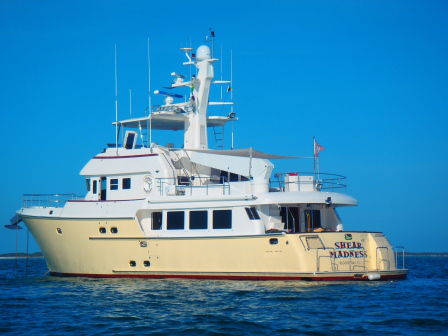
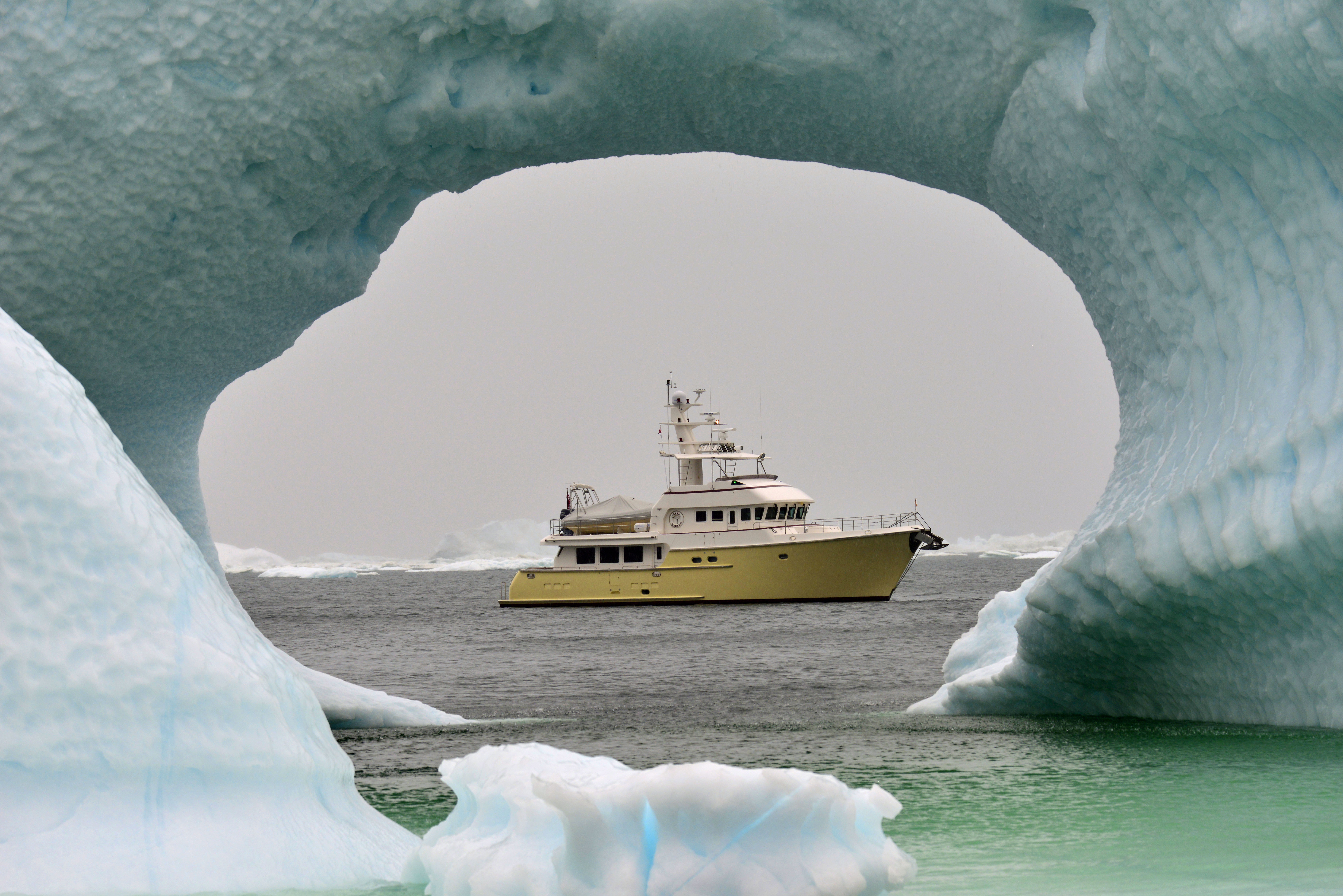
    On the third try, the skipper maneuvered the boat within a foot of the dock and a 72 foot Nordhaven yacht before making the turn to the slip.  Lines were tossed and the dock hand got the boat secured to the dock.  As the crew completed docking the wind really began to howl and the waves were crashing over the dock.  Good thing they got in when they did.

    Picture of Shear Madness taken with a drone
    Picture of Shear Madness taken with a drone

    They waited 2 hours for the storm to pass then walked down to the local tavern for more fish, shrimp, and chips.  After dinner, they walked back to the boat and within minutes another storm blew in. The 72 foot Nordhaven was blocking most of the wind and wave action but it was still a rocky night on the water.

    While passing the time waiting to get to eat, Jessica googled up the 72 foot Nordhaven, Shear Madness, next to Still Waters II and found their blog, shearmadness72.  Check it out to see how the truly wealthy handle the struggles of sea.

    Run to Ocracoke Island

    The morning was spent trying to figure out the next move.  It is getting time for Jessica to head back to Texas so an exit strategy needed to be determined.  After numerous searches, a workable plan was developed and a cruising schedule to match was made.

    The crew left the dock at 0950 and headed for the Newport River, then Core Creek, and then Adams Creek.  While passing through Adams Creek the crew met a south bound boat headed for Matagorda Bay.  The boat was brand new, built in Rhode Island, and the captain was taking her to her new home in Texas.

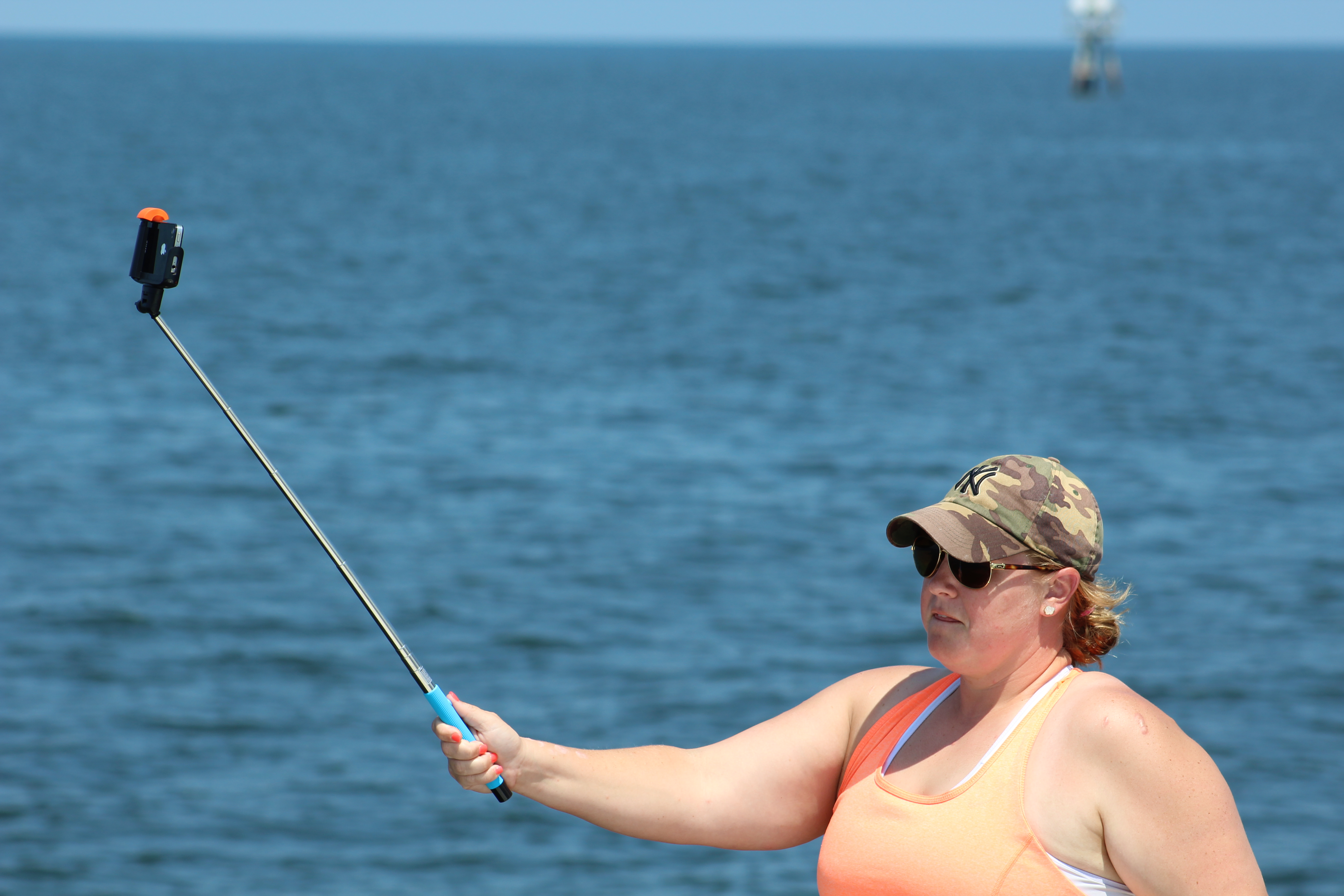
    Jessica selfies on the bow
    Jessica selfies on the bow

    After passing Oriental the crew headed out into the Pamlico Sound.  The waterway guide states that Oriental is not the end of the world, but you can see it from there.  As you look out from this point you see the earth fall away out across the sound.  As the crew ventured further out into the Sound, there was a time that land was barely visible in only one direction.  Eventually land was spotted and the crew found the inlet to the marina.  Upon entering into Silver Lake, they motored to the National Park Service dock, but it looked full.  This area is first come first serve.  There was one hole left open but the skipper did not think it was long enough for them to fit into.  They motored around the small lake and found all the marinas full.

    Approach to Ocracoke Island
    Approach to Ocracoke Island

    They headed back over to the Park Service to re-survey the one spot that was available.  They crept up to the spot and pushed the bow up to the corner of the pier.  You know it will be an interesting docking when you draw a crowd on your approach. Jessica jumped off the boat and secured the bow.  The skipper then used port reverse on the port main engine to swing the stern up along the dock. They had a whole three feet of clearance to the boat just aft of them once they got squeezed into the dock.  The crowd dispersed disappointed with no damage, but amazed that they shoe horned her into the dock.

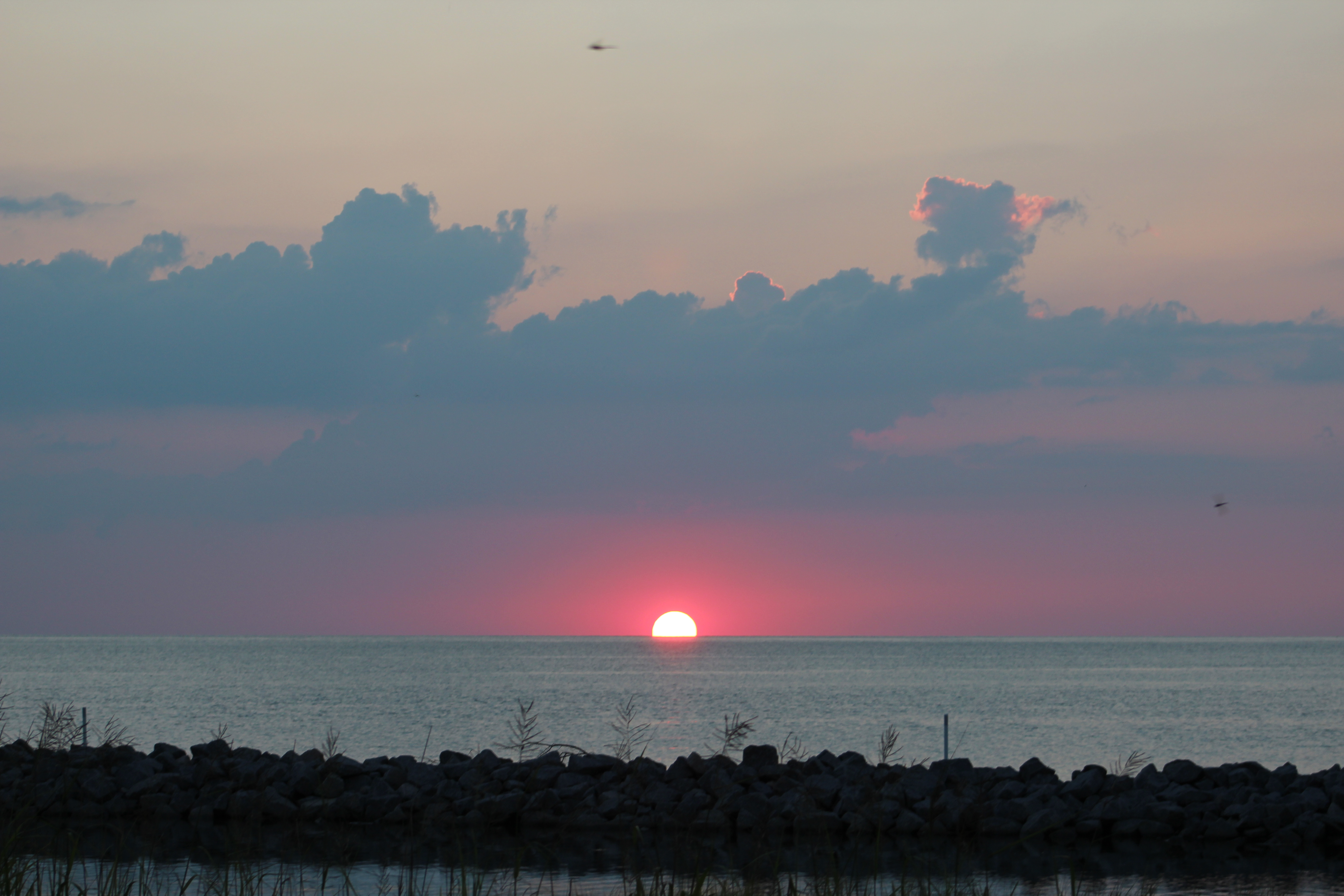
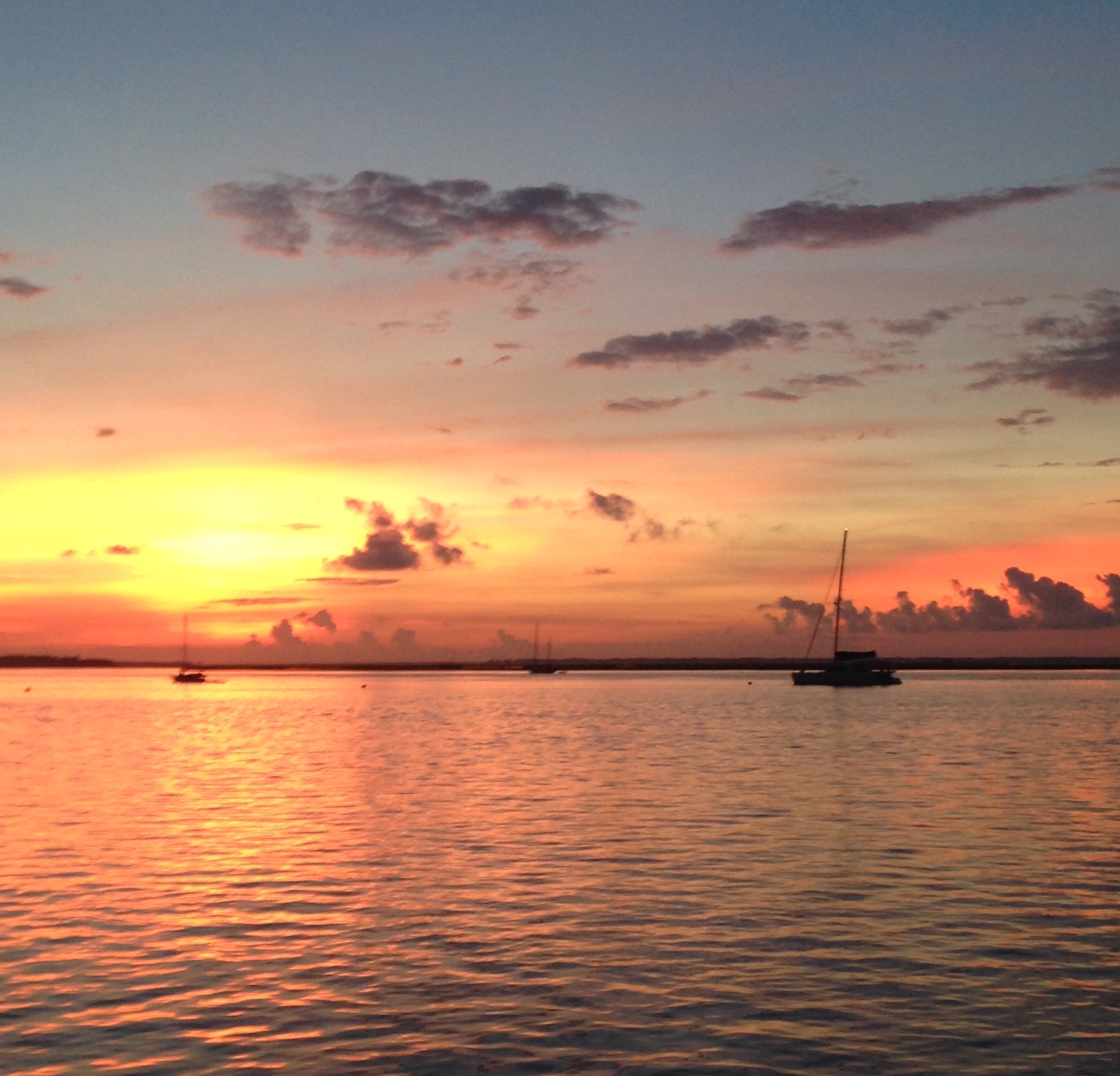
    Sunset from Ocracoke Island
    Sunset from Ocracoke Island

    Shore Excursion Ocracoke

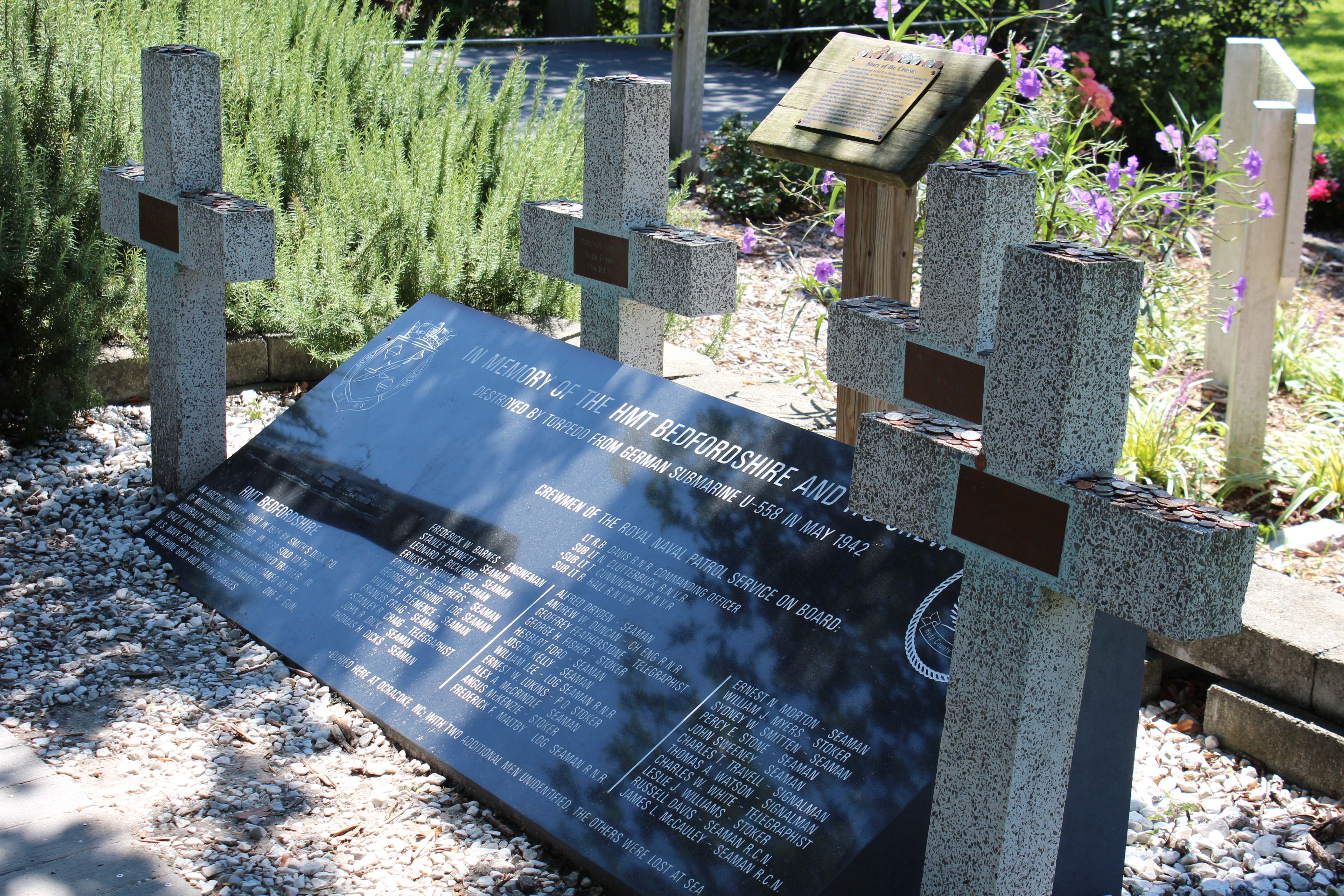
    Thursday was spent exploring the island.  They first went and visited a British cemetery.  Four British sailors who washed ashore after the sinking of the HMS Bedfordshire are buried in the cemetery.  British tradition dictates that the sailors be buried on British soil.  The small graveyard is leased by Great Britain, and cared for by the US Coast Guard.  The British flag fly’s overhead and the ground is technically British soil.

    British Markers
    British Markers

    Next up was the Ocracoke Lighthouse.  The crew pedaled over to the lighthouse which was built in 1818.

    They then pedaled out to the 15 miles of unspoiled beaches.  The water was a pretty green turquoise and the beach was a brownish sand.

    Last stop was the Teach’s Hole Blackbeard Museum.  Edward Teach, alias Blackbeard the Pirate spent most of his time in these waters.  After 2 years of serious pirating, the authorities finally killed him off of Springer Point.

    Blackbeard Exhibit
    Blackbeard Exhibit

    On the way back to Still Waters II, the crew rolled into SmackNally’s for a late lunch.  While eating, the skipper noticed one of the charter boat captain’s had an opening for an evening of red drum fishing.  They signed up for the charter and fished from 1830 to 2300.  Unfortunately they did more fishing than catching.  However, the good news to report is that Jessica caught her first red drum.  He was 30 inches long and over the slot limit in North Carolina, so back in the water he went.  That was the only fish they caught, but it was an exciting evening of fishing.  And as the skipper likes to say, “A bad day fishing is better than a good day at work.”

    Time to say Goodbye

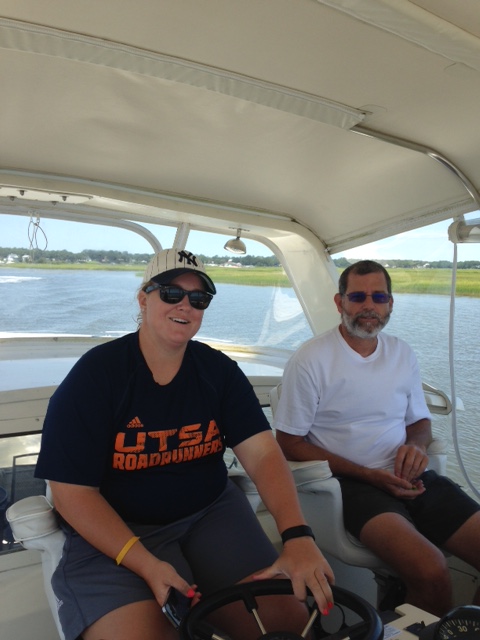
    Friday morning, Jessica got up at 0600 and prepared to depart.  She left Still Waters II at 0645 and walked over to the ferry.  She took the 3 hour ferry ride back to the mainland, and then caught a shuttle service to Greenville.  On Saturday, she will fly back to San Antonio and get ready for another year of coaching at the University of Texas San Antonio.

    In her short time onboard she mastered piloting the boat, knot tying, and all around deck hand duties.  The mate will certainly miss her help during docking and undocking.

    As for our crew that took a very rough 3 hour ride over to Hatteras Island and docked at the Village Marina.  The wind was strong out of the north and whipped up 3-5 foot waves, with occasional 7-8 footers.  The crew was glad to get back into port and relax after the rolling water roller coaster ride.

    But, Just another day in paradise!

  • Run to North Myrtle Beach

    Hello fellow adventurers and virtual crew members!

    Eric dropping in to update you on the latest run to Myrtle Beach.  Seems there is an abundance of activities here in Barefoot Landing and I have been busy taking in the sites with the crew.  In addition, the skipper’s son showed up Saturday with Nikki and Abbie for a day cruise.  Lastly, the mystery guest arrived and is on board and ready to cruise north with the crew.

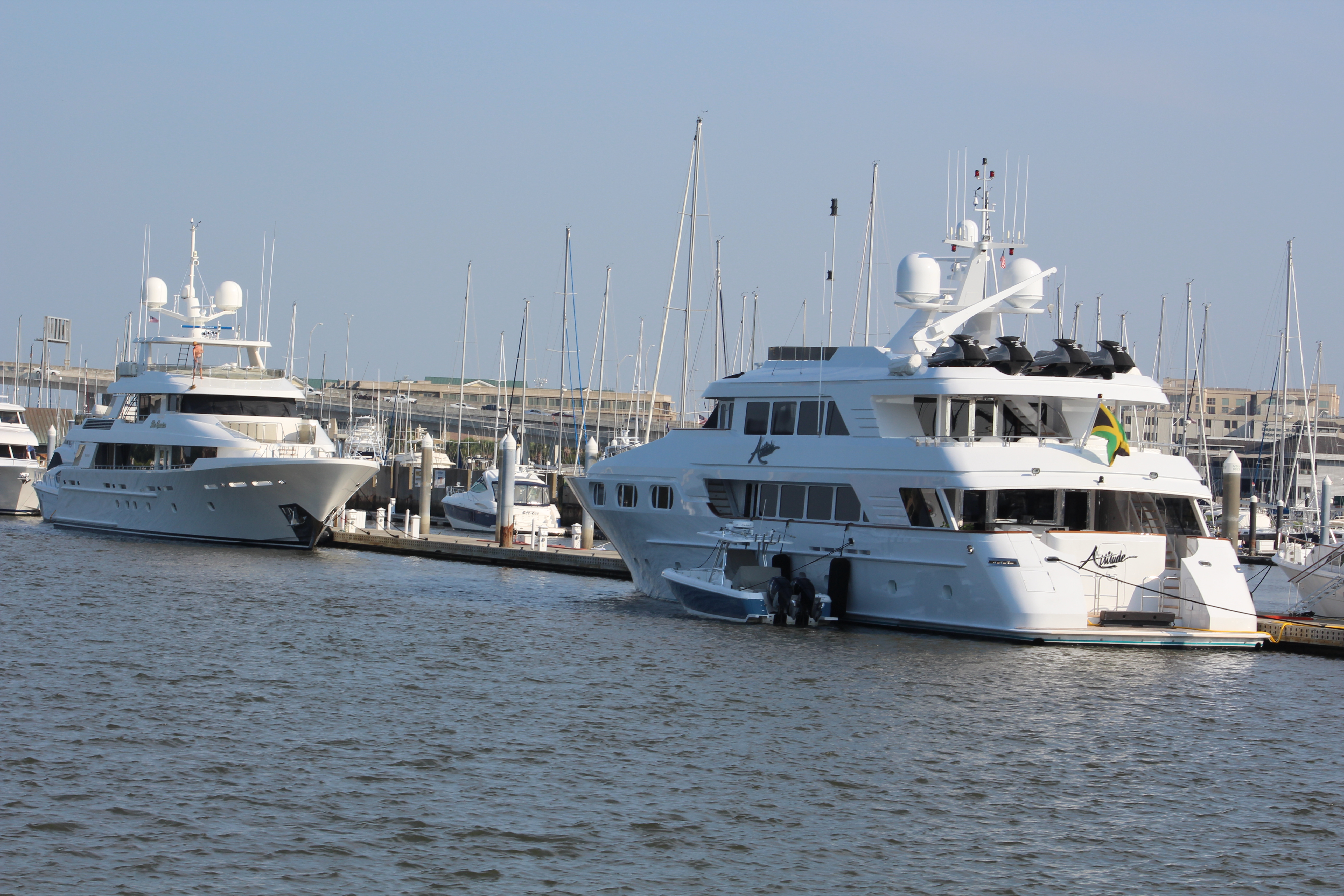
    Mega Yachts on Mega Dock
    Mega Yachts on Mega Dock

    The run from Charleston to North Myrtle Beach was a total of 118 miles over two days, including 11 bridges, a fuel stop in Georgetown, and an anchorage.

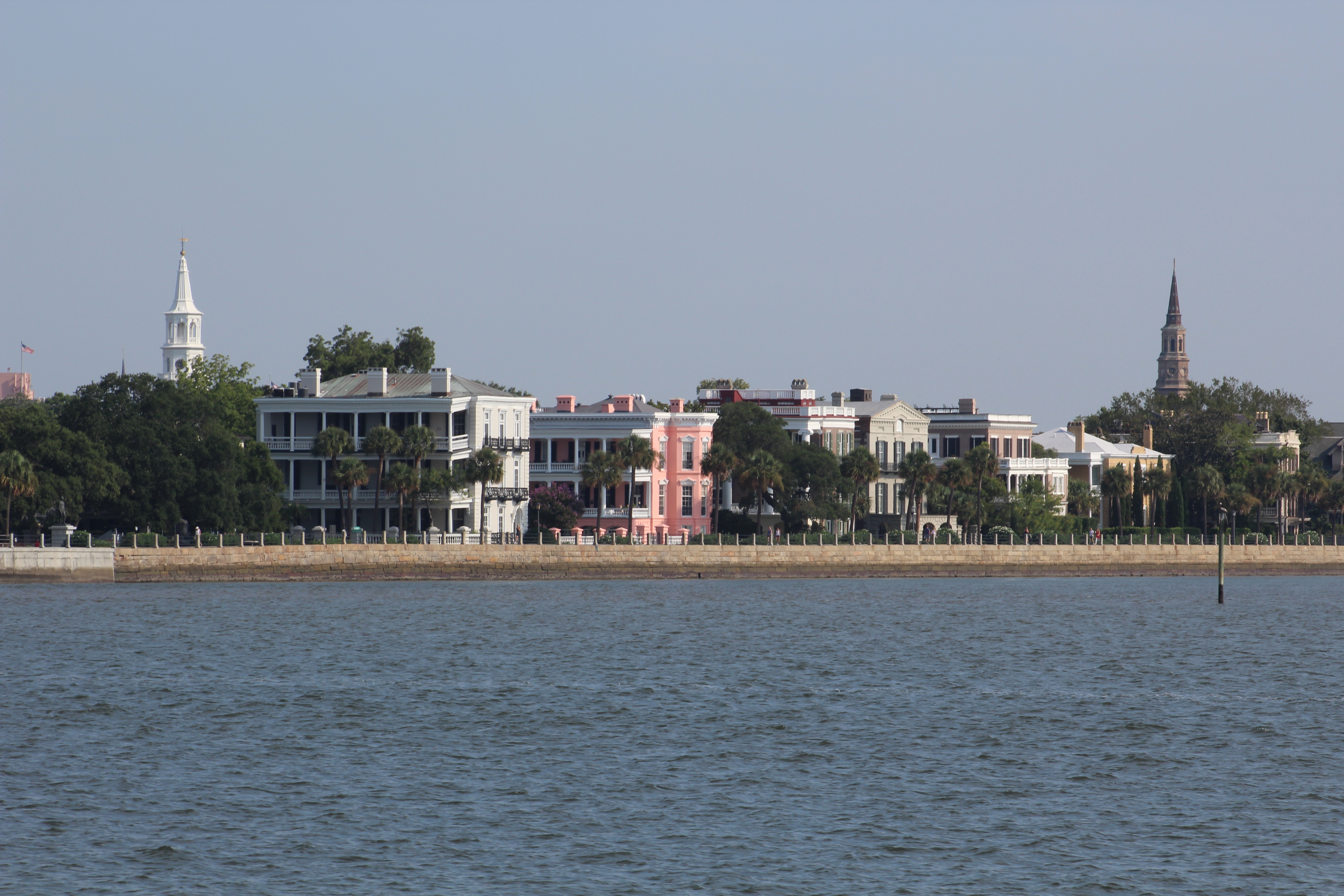
    Waterfront Homes
    Waterfront Homes

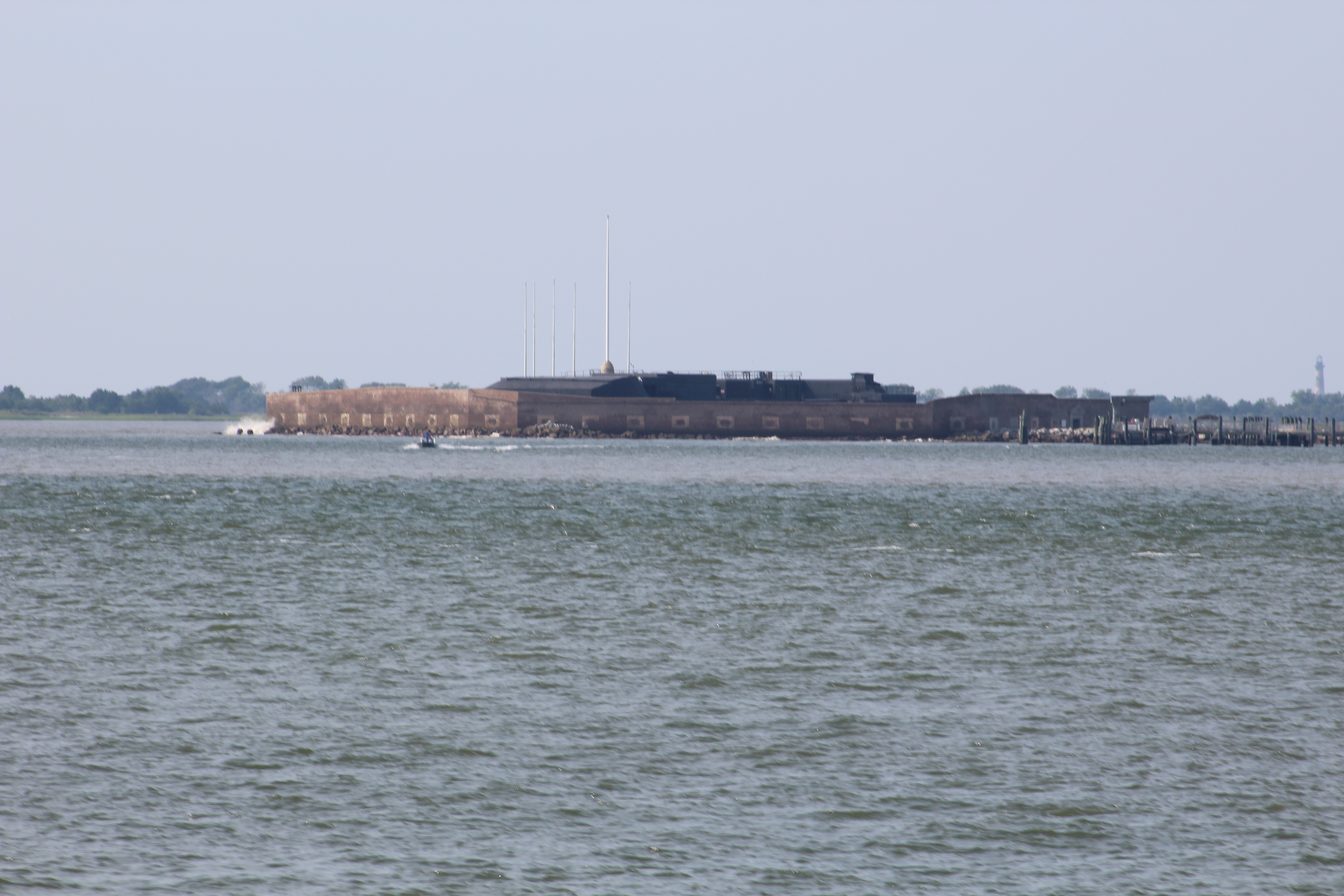
    The crew left Charleston on Wednesday, August 5, 2015 at 0915.  The course out of the harbor allowed a view of the historic homes along the water front as well as an interesting view of Ft Sumter from the boat.

    Ft Sumter
    Ft Sumter

    After crossing the harbor the crew entered Sullivan Island Narrows.  As the name implies, this is a narrow cut.  In fact much of the day would be spent in these narrow cuts with places with names like Four Mile Creek Canal, Estherville Minim Creek Canal, and Western Channel.  As usual, the skipper maintained a constant vigil and navigated these waters with ease.  (Never mind the fact that he seems not to breathe often and spends much time all tensed up.)

    Some narrow passages
    Some narrow passages

    A mid-day decision was made to refuel in Georgetown and press on to Myrtle Beach.  The crew will have to put Georgetown on the list of places to stop next time because all reports seem to be very positive on the town.

    After fueling, the crew moved north another two hours and finally anchored in Thoroughfare Creek, just off of Waccamaw River at mile 400.

    Thoroughfare Creek, Anchorage
    Thoroughfare Creek, Anchorage

    On Thursday morning at 0915, the crew pulled anchor and set off for Barefoot Landing Marina in North Myrtle Beach.  This run was gorgeous.  The cypress trees with Spanish Moss lined most of the way, and the water was much wider than the narrows from the day before.  Also, the wildlife was abundant through this region and kept the skipper’s eyes constantly moving to see what was next.

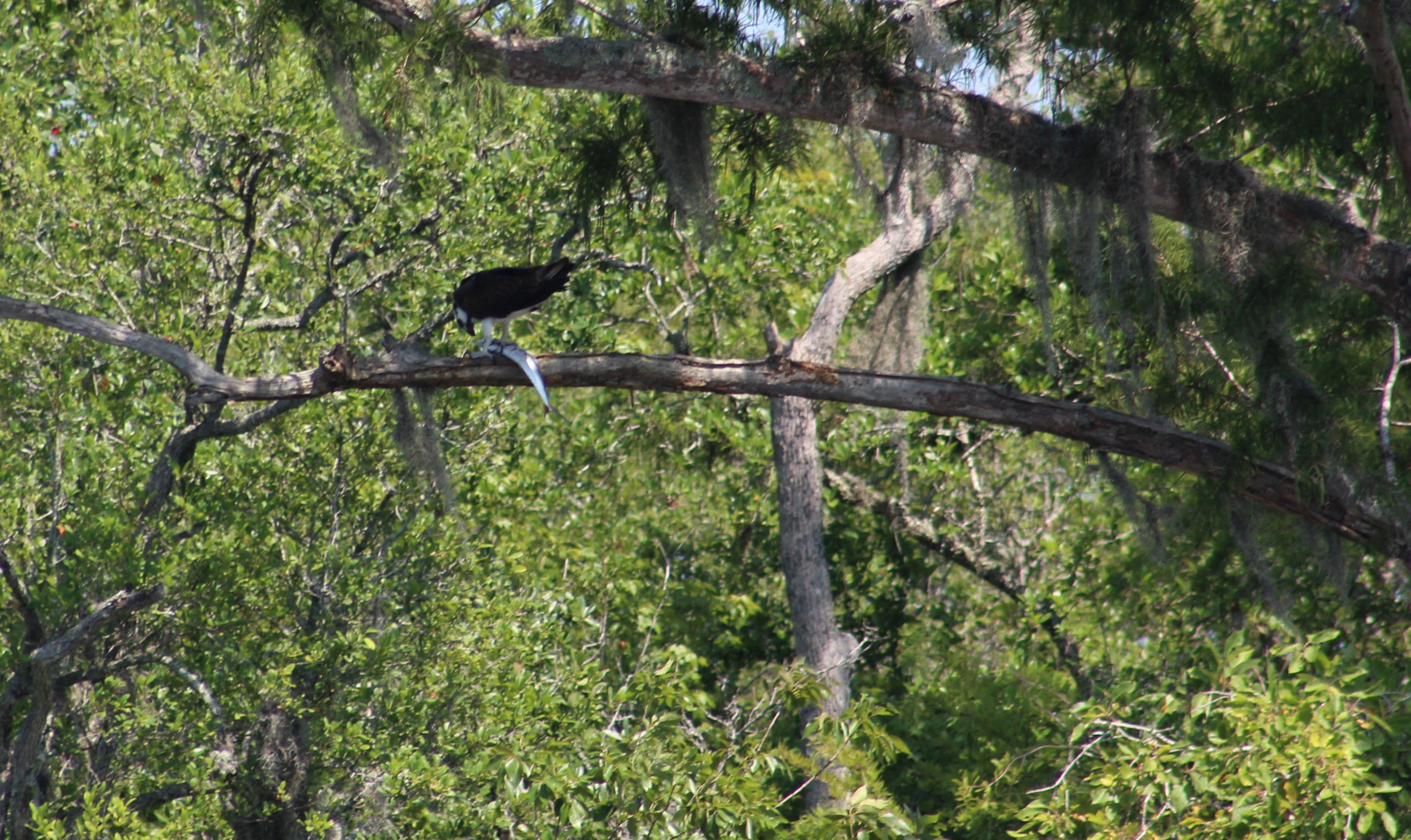
    Osprey eating fish
    Osprey eating fish

    As the crew began to approach Myrtle Beach, the large homes began to take over the scenery.  However, with a nickname of “The Rock Pile” this area required eyes on the water and not much sightseeing.  The bottom begins to change from sand and mud to larger and larger rocks.  Many a boat has met its end here, but Still Waters II found a clean path to the marina.

    Friday was a work day on the boat making final preps for visitors.  A five mile bike ride to Home Depot was completed in the morning.  Repairs made to several small items.  Then a two mile bike ride to the grocery store for final provisioning for this leg of the journey.  While out riding the bike, the skipper passed a sign that announced that Vanna White’s home town is North Myrtle Beach.  Who would of known.

    On Saturday, August 8th, Mike, Nikki, and Abbie showed up for a little day cruise.  They managed to stretch the three hour drive from Columbia, SC into five hours so they did not arrive until about noon.  They boarded the boat, got their safety briefing, and set off for a short cruise.  They went about two hours and then turned around and returned to the marina.  They arrived back at the marina and docked at 1610.  It was now time to go to the airport and pick up the mystery guest.

    Mike drove the skipper to the airport and they picked up Jessica Rogers.  She will be spending a few days with the crew as they continue north.

    For those not in the know, Jessica is the daughter of Karen Rogers, the skipper’s cousin, who spent many a summer day vacationing with the Fuller family back in the 60’s and 70’s.  It is wonderful to carry on the tradition into the next generation.  Jessica will be onboard a few days before returning to work when school starts at the University of Texas San Antonio where she is a softball coach.

    Welcome aboard Jessica!

  • Run to Charleston

    Hello fellow adventurers and virtual crew members! Eric here reporting on the latest movements of Still Waters II.

    Almost as good as the skipper makes
    Almost as good as the skipper makes

    Our crew departed Savannah, GA on Sunday August 2 at 0950 and made way towards Beaufort, S.C.  The Savannah River is the border between Georgia and South Carolina, so it did not take long for the crew to venture into their third state.  This passage to Beaufort included 2 sounds, 2 bridges, and 48 more miles of rivers bordered by mud and sea grass.

    On Monday, August 3, our crew pushed north to the historic town of Charleston, SC.  It was only last November that our crew came to Charleston for a one day seminar on the Great Loop, still with a J.O.B. and no boat.  My how things have changed in the last 6-8 months.  The run to Charleston was 66 miles of rivers interrupted by 5 bridge crossings.

    Run to Beaufort Prior to departure, our skipper jumped on the free water taxi and took the round trip on the Savannah River, 3 stops to get back to the beginning.  This allowed the skipper to get some shots of Still Waters II tied up along the river front.

    Docked in Savannah
    Docked in Savannah

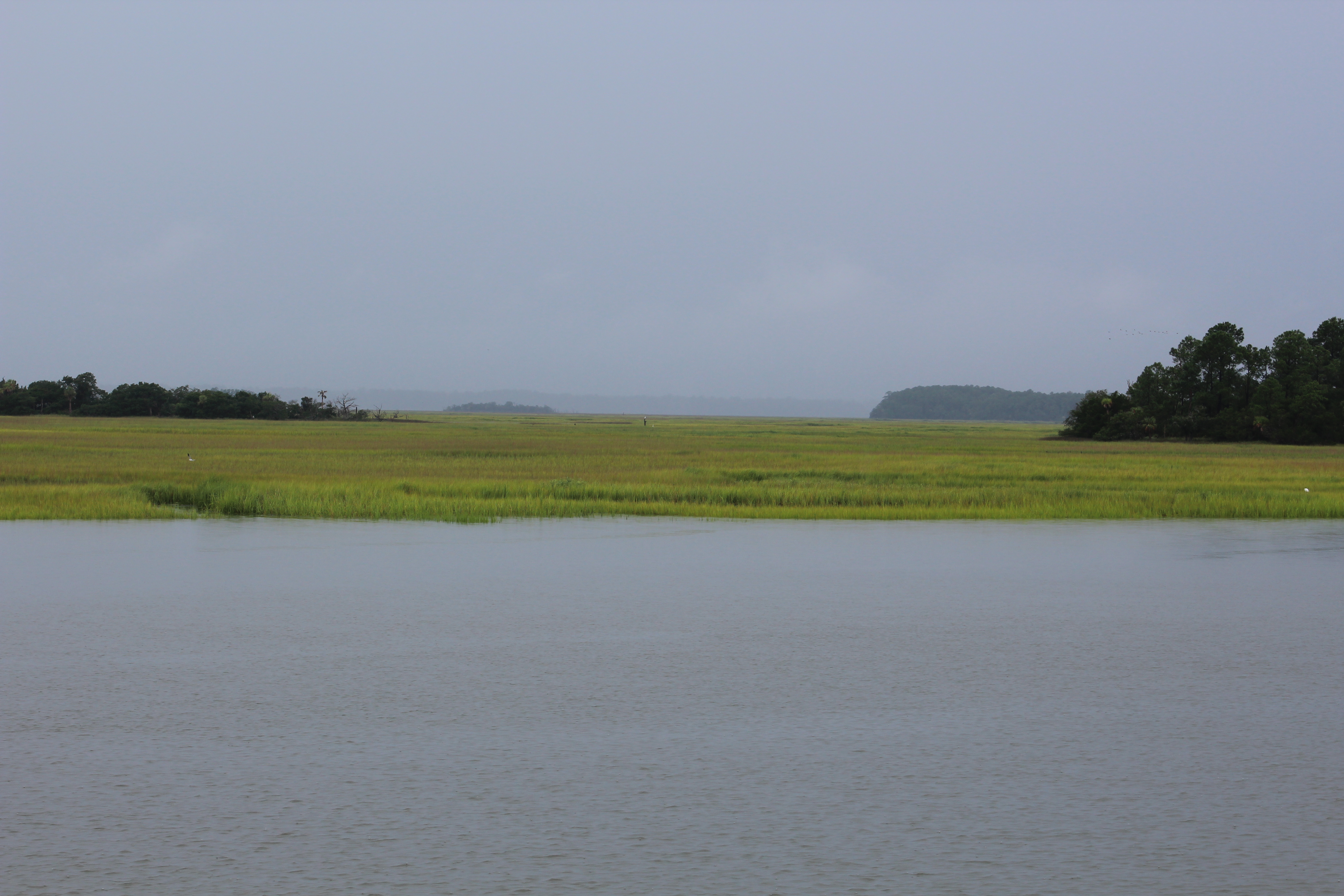
    Other than the rain that dogged the crew most of the morning, the trip was uneventful. This coastal area of South Carolina is referred to as the ‘low country’.  A couple of characteristics of the area is the pungent odor which hangs in the air due to the marsh mud that is exposed at low tide.  The second is the endless expanse of marsh grass.  As the crew has moved north, the marsh is beginning to be broken with large live oak trees with huge canopies and hanging Spanish moss.

    IMG_0211
    Rivers are a little bigger here than back home in Texas
    Endless marsh grass
    Endless marsh grass
    IMG_0204
    Starting to see more trees as we move further north

    Upon arrival at Beaufort, our crew decided to swing from a mooring ball for the night.  They picked T-3, moved in, the mate snagged the line, and the line was not what they were expecting.  As Gomer Pyle used to say, “Surprise, Surprise, Surprise.” One consistent thing about boating is everything seems to be different. No universal standards.  The skipper quickly looked around the mooring field to see how other boats were tied on while the mate tried to keep the strange mooring line in hand.  The skipper developed a strategy and the mate executed without problems. There is a day dock beside the marina that is free to use, so after a few minutes of rest and allowing time for the marina to dock a few boats that all arrived at the same time, the crew motored over to the day dock and went ashore.
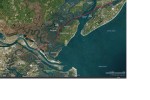
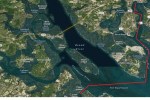
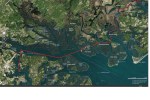
    Still Waters II at the day dock
    Still Waters II at the day dock

    They walked down the little town, looked at some historic homes, and did some window shopping.  They roll up the welcome mat early on a Sunday evening.  They wandered down to the water front park and found a large porch swing and took in the sites.  After a bit, they noticed the weather was changing for the worse and more rain was headed their way, so they got back on board the boat and motored back to the mooring ball for the evening. Run to Charleston Just outside the marina where the crew moored, there is a swing bridge that does not operate from 0700 to 0900 to allow people with a J.O.B. to get to work on time without interruption from the boaters.  The first opening is at 0900, so the crew followed a sailboat through the bridge at the first opening. IMG_0231 Still Waters II followed the sailboat for half a day.  After 35 miles, the sailboat made a U-turn and headed back to Beaufort.  Our crew pressed on to Charleston. The only real excitement came near the end of the trip when they entered Elliot Cut at idle speed.  With the engines in neutral, they were making 9.3 knots just carried by the current though the narrow cut.  With engines in idle, it made control of the vessel a little tricky as they floated towards Charleston. Thanks to Geoff’s training, our skipper was able to steer through bumping the engines rather than being a wheel weanie.  When they popped out into the Ashley River, the marina was right there.  All they had to do was find there docking assignment. They were put on the Mega Dock, so named because of some of the mega yachts tied up here in Charleston.  Makes Still Waters II look like a canoe. Shore Excursions Provisioning seams to always be harder than it should.  The crew needed a few items from the grocery store, so our skipper found a Piggly Wiggly only 2 miles away.  As luck would have it, a condo development is being erected smack dab on top of the old Piggly Wiggly.  A check of the map app, showed a Publix’s only 2 miles further down the road.  So off in search of the new shop.  Upon arrival, the goods were procured and the trip back on the bicycle was started.  Somehow, the 4 mile round trip turned into a 10 mile trip with 4 large bridge crossings.  Good thing the mate sat this trip out.  She would not have been impressed. image The mate took time to go walk down historic Charleston.  She loves the old houses and churches.  She wandered around for several hours in the historic section.  She reported that the young girls were buying loads of stuff at some stores called “Forever 21” and “H&M.” image Last bit of news today is a report of a little boat maintenance by the skipper.  He had been warned of this nasty job and was not looking forward to its eventual completion.  That’s right, time to change out the duckbill check valves.  These little rubber parts just so happen to be in the sewer line from the head to the holding tank.  It just does not get any nastier than that.  A couple of hours latter, the duckbills were changed out and the skipper was in need of a shower. A little history that our skipper must have forgotten. The H.L. Hunley was the very first submarine to sink a warship.  Happened back on February 17, 1864 during the war of northern aggression.  Within the hour she also sank here in the Charleston Harbor killing her 8 crew members. image Interesting enough, but more intriguing is that this was her third sinking.  She initially sank August 29, 1863 during sea trials, killing 5 crew members.  She sank again on October 15, 1863, killing all 8 crew members, including Horace Hunley. image She was found in 1995 and has been raised again in 2000 and is currently in a pool of water as restoration is in progress. Run deep, run silent. The crew hopes to get some good pictures of Ft Sumter tomorrow as they motor north to Georgetown.

  • Run to Savannah

    Hello fellow adventurers and virtual crew members!

    Eric here reporting on the latest movements of Still Waters II.   She and the crew made their way to Savannah, Georgia.  This is the third time to visit the historic city, but the first time to arrive by boat. The journey took two days, including the crew’s first anchoring overnight before arriving in Savannah on Friday, July 31.

    Brunswick to Wahoo River to Anchor

    Big water in a sound
    Big water in a sound

    This leg of the journey was 53 miles, 3 sounds, 2 bridges, and many miles of winding Georgia rivers.  Thursday, July 30, saw our crew depart the dock at 0930 and make their way back under the Sydnie Lanier Bridge.

    After crossing under the bridge, the crew found themselves in the first of three sounds for the day.  St Simons Sound afforded another lighthouse viewing and look at the Atlantic Ocean.  After crossing the sound, they entered Mackay River for 12 miles.

    Lighthouse at St Simons Sound
    Lighthouse at St Simons Sound

    The river brought them to Buttermilk Sound and then 4 miles up the Little Mud River, 2 miles up the North River, 7 miles up Old Teakettle River, 3 miles in the Creighton Narrows, and finally a mile in the Front River.

    Lighthouse at Buttermilk Sound
    Lighthouse at Buttermilk Sound

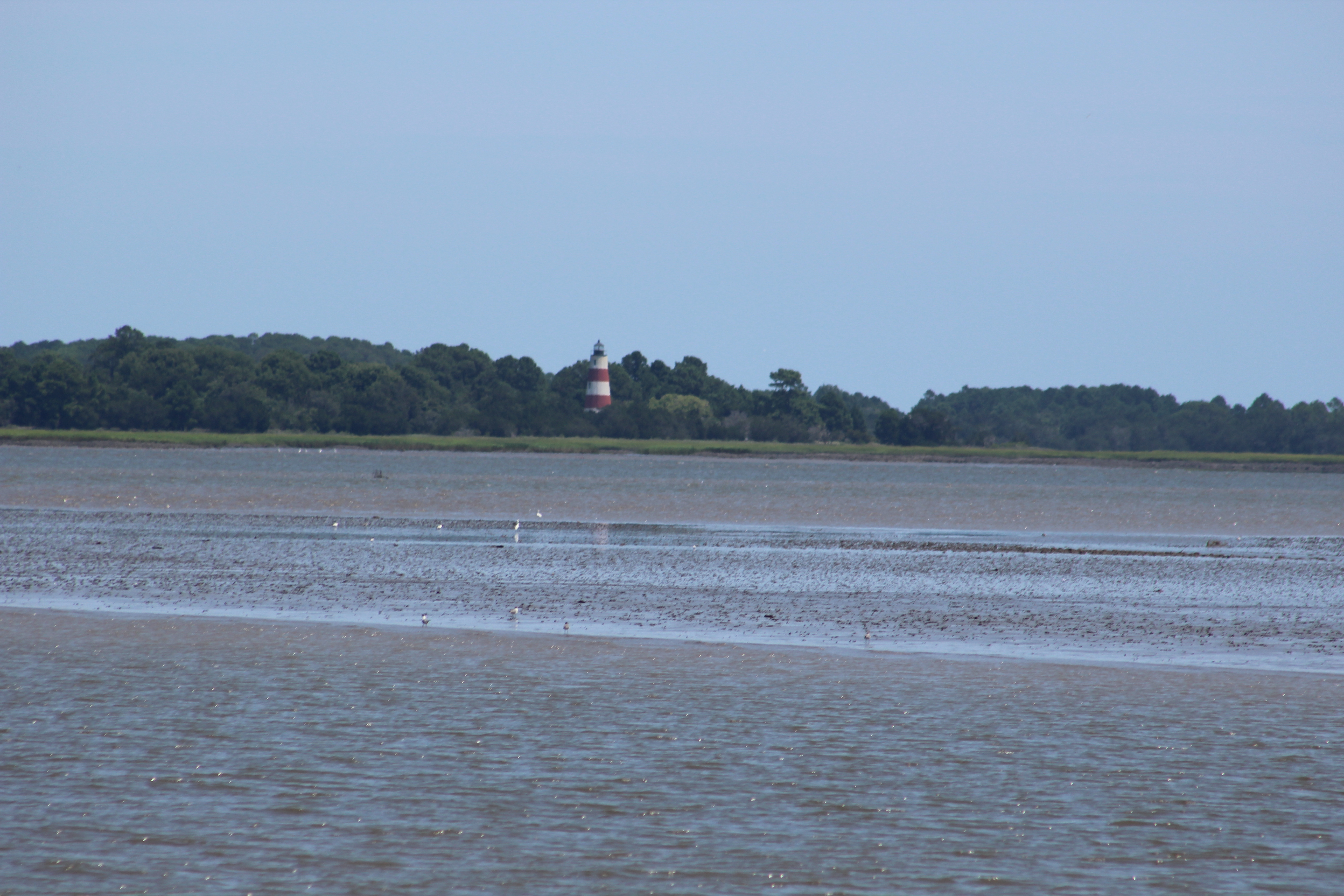
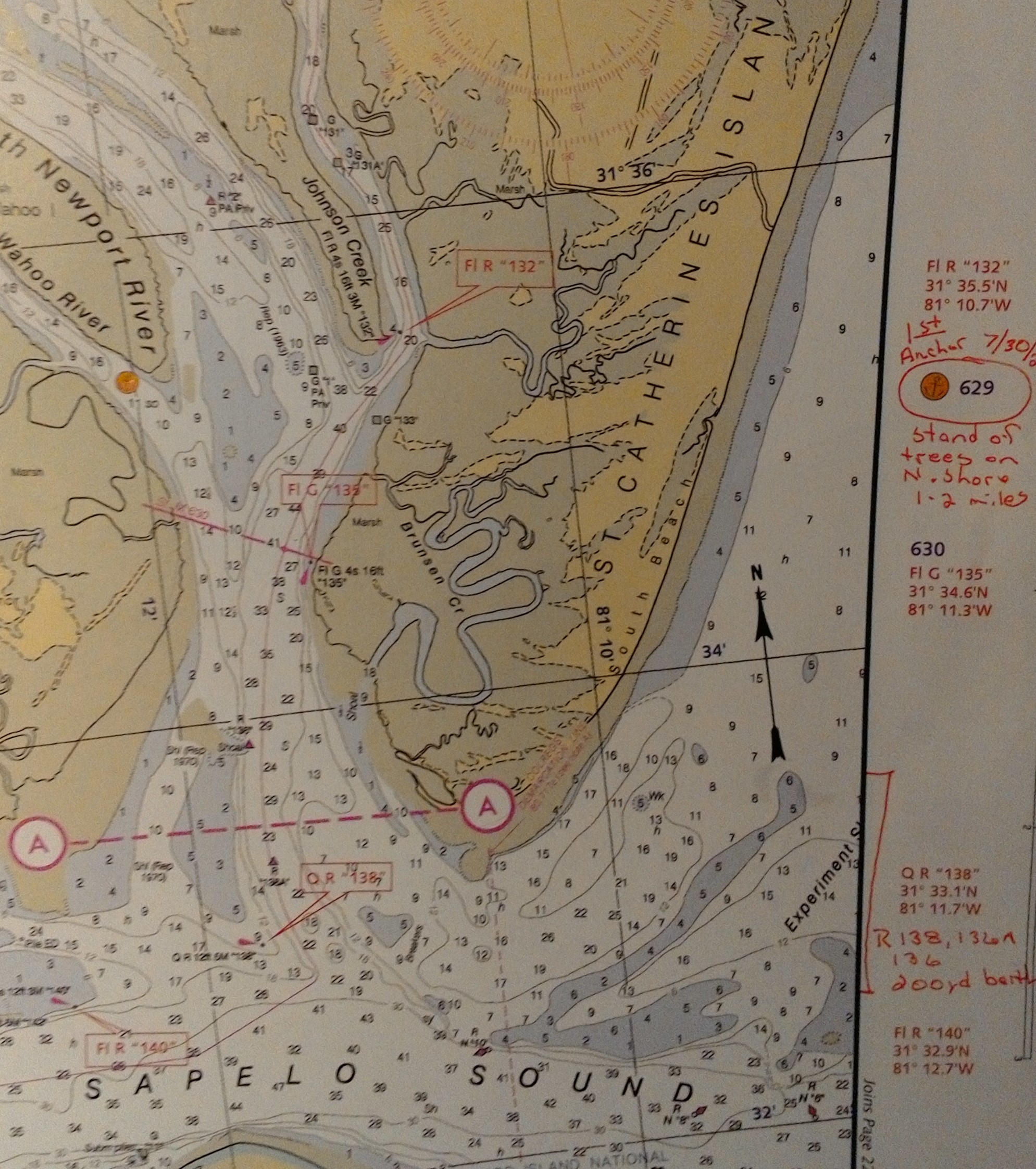
    The Front River led them to their third sound of the day, Sapelo Sound.  After crossing the sound is was just a few miles up the Wahoo River to find a place to anchor.  The waterway guide suggested a stand of pine trees on the north shore.

    Little orange dot is anchor spot
    Little orange dot is anchor spot

    The skipper did not sleep well during the night as he had one eye open keeping an eye on the anchor while trying to rest.

    Wahoo River to Savannah

    With a long 62 miles ahead of them, the crew pulled the anchor and got underway at 0848.  Friday was much the same with many miles of rivers, 3 bridges, and 1 sound.

    One interesting spot was at mile 604.  A narrow passage named Hells Gate is known for shoaling problems.  When our crew past over the area, the tide was out and the water was extremely narrow and shallow.  The depth gauge registered a measly 4 feet of water (remember her draft is 3 foot 9 inches), but no bottom was touched and the crew was headed to Savannah.

    Another interesting spot on this journey was a little spot called Isle of Hope.  Nice homes in the area and lots of people out enjoying the water.

    There were several miles of no wake zones in the Isle of Hope and Thunderbolt which led to some much slower travel than anticipated.  The crew made the final turn onto the Savannah River about 1610, called the marina, and the only dock hand was about to leave for the day.  The marina asked if they would need help docking.  Hello, yes this crew needs help docking, they need all the help they can get.

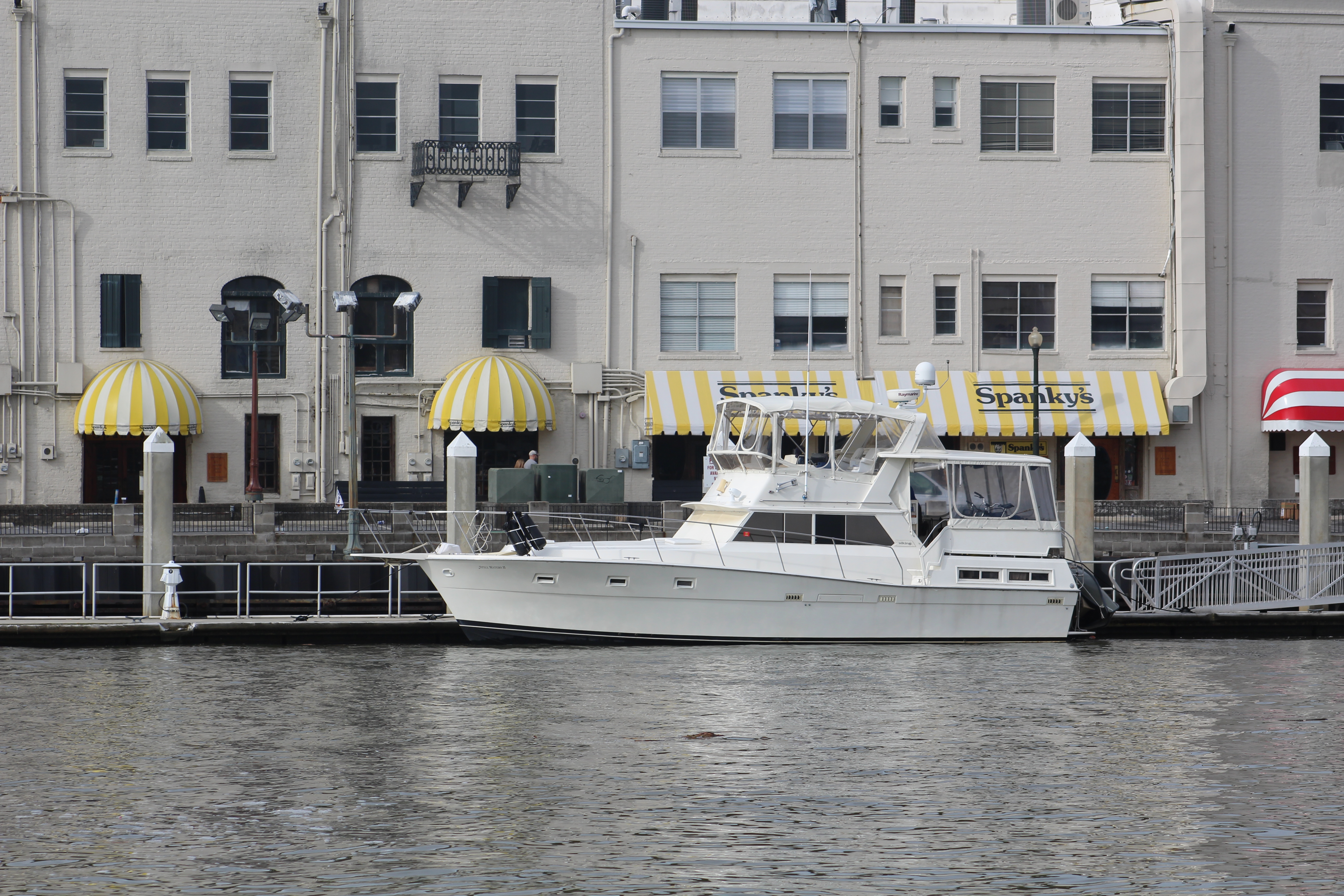
    They arrived at the dock at 1630, and had Still Waters II safely tied up before 1645, and only marginally delayed the dock hand going home.  She is docked along river road with Joe’s Crab Shack off of the bow, and Spanky’s off the stern.

    Friday night was hopping with tourist up and down the river front..  About 2300, a young couple thought they would trespass the dock, board the boat, walk across the sundeck, go forward to the bow, and take a few pictures.  Claudia was startled, and when the couple realized the crew was onboard, they jumped off the boat and ran back up the dock and then disappeared into the crowd.  Another sleepless night for the skipper.

    The crew spent most of Saturday working small jobs on the boat and taking in the sites of Savannah.  Then they spent a little time geocaching around the Waving Girl sculpture.

    One of Savannah’s favorite stories involves the life of Florence Martus (1868 – 1943), who was known well by Savannahians and sailors of the sea as the Waving Girl. The daughter of a sergeant stationed at Fort Pulaski, Florence later moved to a cottage along the river near the entrance of the harbor with her brother George, the Cockspur Island Lighthouse keeper.

    As the story goes, life at the remote cottage was lonely for Florence whose closest companion was her devoted collie. At an early age, she developed a close affinity with the passing ships and welcomed each one with a wave of her handkerchief. Sailors began returning her greeting by waving back or with a blast of the ship’s horn. Eventually Florence started greeting the ships arriving in the dark by waving a lantern.

    Florence Martus continued her waving tradition for 44 years and it is estimated that she welcomed more than 50,000 ships during her lifetime. There is a lot of unsubstantiated speculation about Florence having fallen in love with a sailor who never returned to Savannah. The facts, however, about why she started and continued the waving tradition for so many years remain a mystery.

    In any event, Florence Martus grew into a Savannah legend, known far and wide. On September 27, 1943, the SS Florence Martus, a Liberty ship, was christened in her honor.

    The Waving Girl Statue by renowned sculptor Felix De Weldon, the sculptor of the United States Marine Corps Memorial in Arlington, Virginia (also known as the Iwo Jima Memorial,) depicts Florence with her loyal collie.

    The Waving Girl Statue is located on the  eastern end of River Street, overlooking the Savannah River from the bluff.

    Sunday, our crew will be headed to Charleston, with a stop in Beaufort, South Carolina. The mate has her eyes set on shopping in Charleston.  Seems she needs to get ready for a mystery guest who will be arriving at the end of next week.

  • Run to Brunswick, GA

    Hello fellow adventurers and virtual crew members!

    Eric here reporting on the latest movements of Still Waters II.  With a week long lay over in St. Augustine, she is on the move to Brunswick, Georgia.  Our crew is fond of Georgia after spending two years living in Atlanta from 2011 to 2013.  They are eager to get back to the ‘Peach State.’

    To navigate the 88 miles to Brunswick, they plan a three day cruise with stops in Palm Cove Marina located in Jackson Beach, Fernandina Harbor Marina on Amelia Island, and then on to Brunswick.

    Voyage to Palm Cove

    The crew departed the dock at 1000 and then immediately went under the Lions Bridge.  The bridge claims a height of 25 feet, the cruising guide said 22 feet, and the water level marker said 21 when she slid under due to tides.  Seems the bridge tender was a little nervous though because she stepped outside and watched the vessel pass under.  With an air clearance of 17 feet 6 inches, there was plenty of room to spare.

    image

    A right turn towards the St Augustine inlet gave a pretty view of the Atlantic Ocean off of the bow.  But with the strong currents, there was little site seeing for the skipper as he negotiated the navigational aids in the inlet.

    Next obstacle was the Villano Beach Bridge as they left the inlet but entered the headwaters of the Tolomato River.  They stayed in the river for about 16 miles when they then entered the Palm Valley Cut.

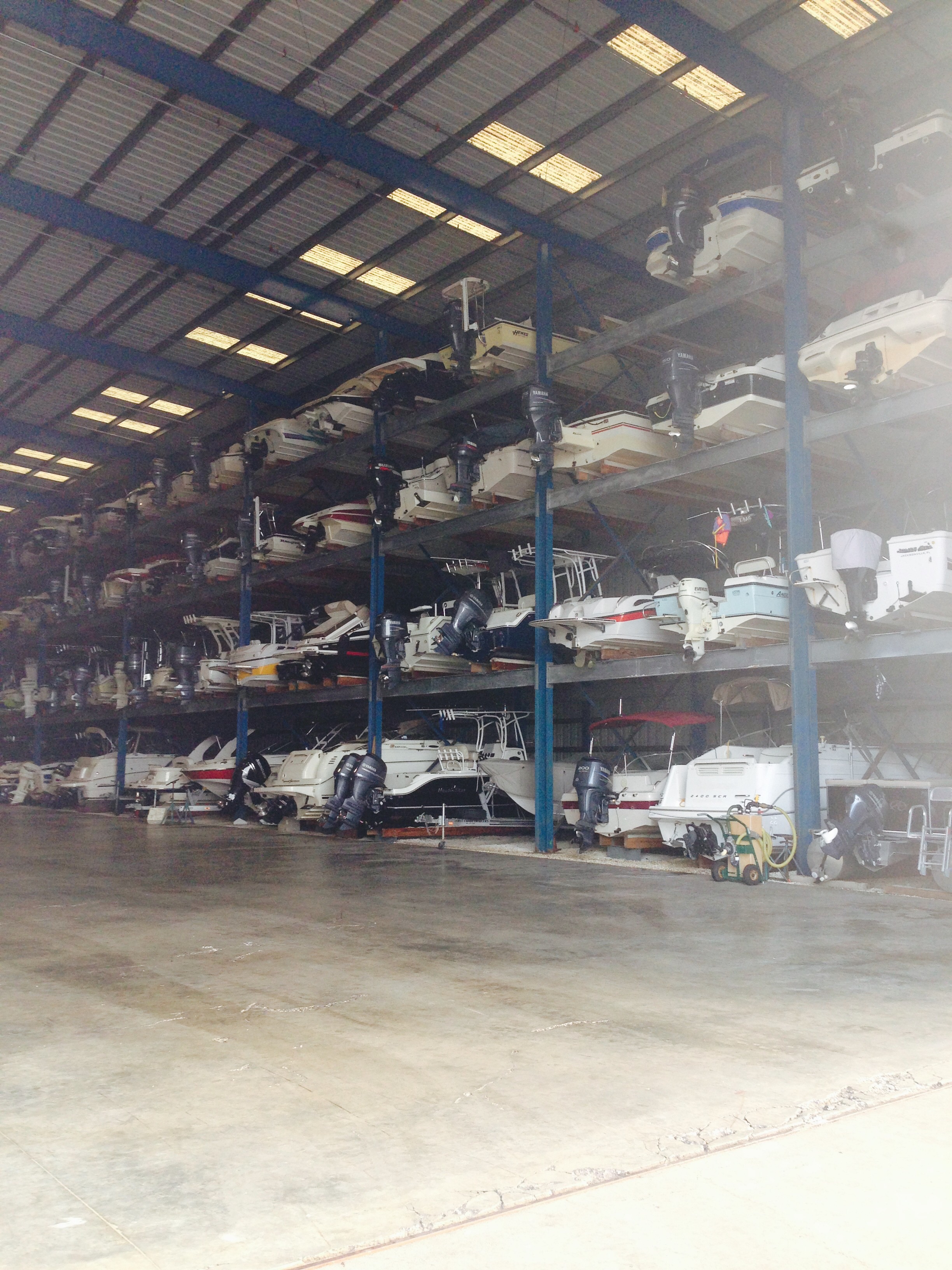
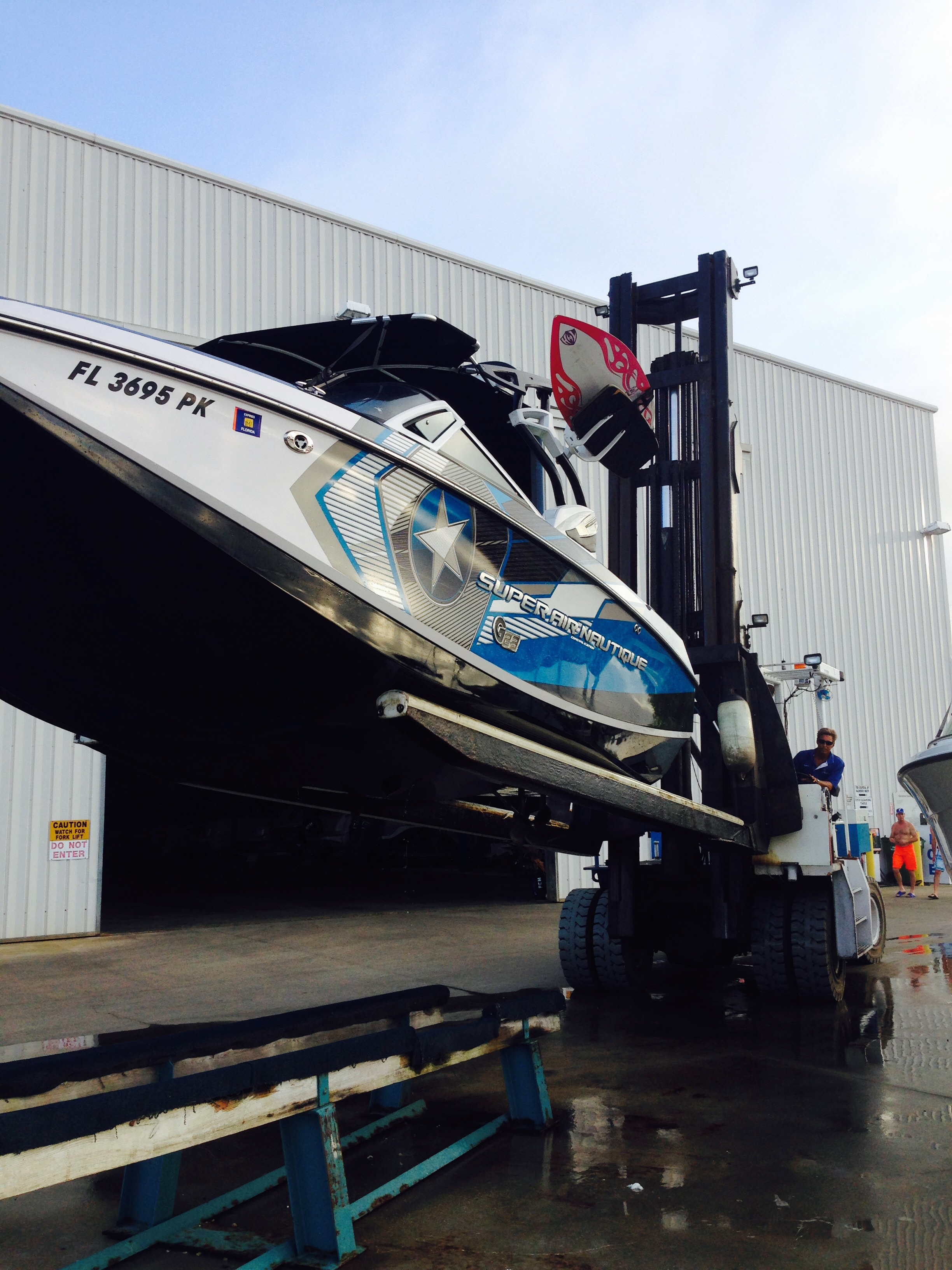
    One of two boat barns
    One of two boat barns
    Lift to move boat in and out of the water
    Lift to move boat in and out of the water

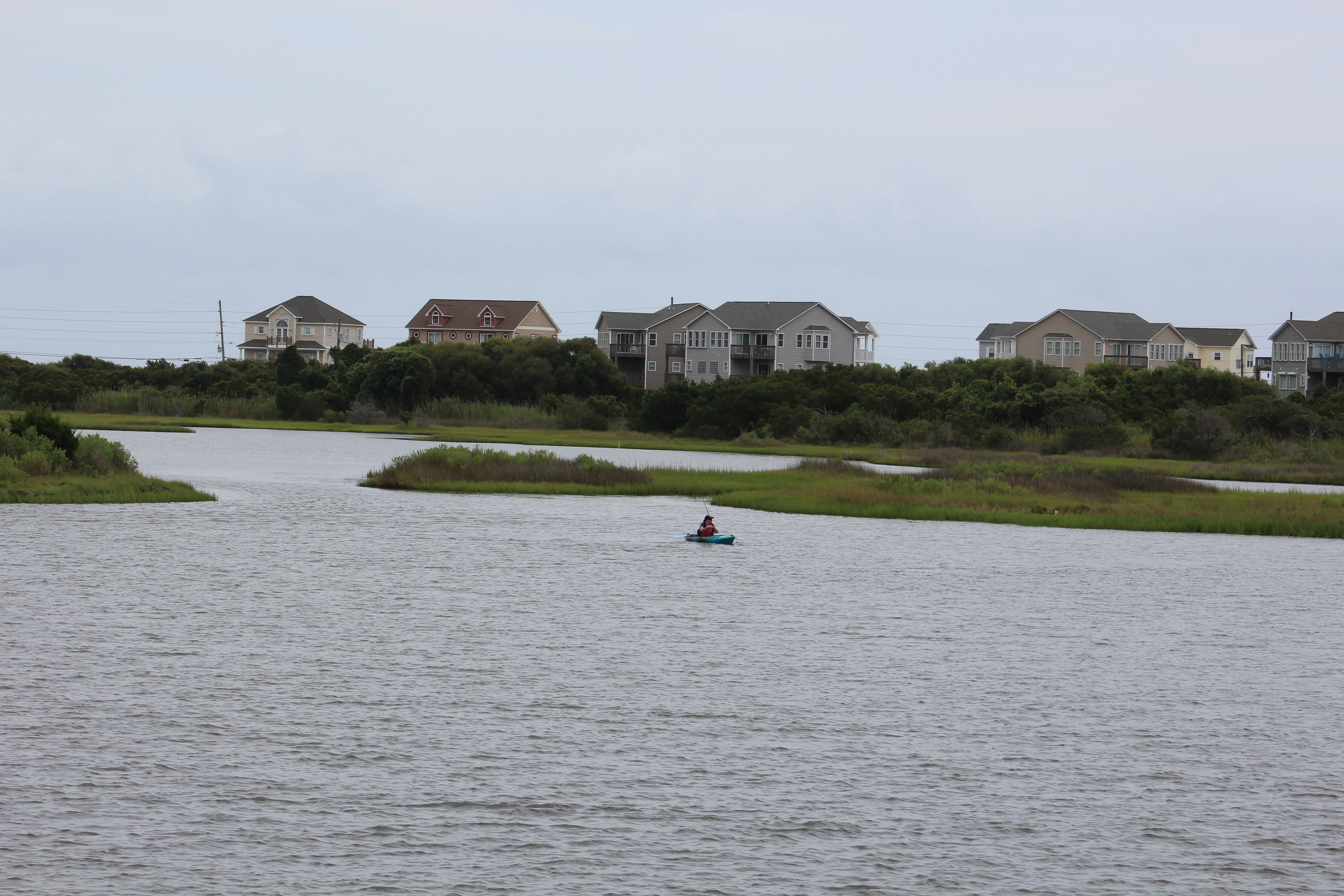
    The waterway guide mentioned strong currents at this bridge that tend to push your boat sideways.  This was a spot on warning.  To compound problems passing through this bridge, there also just happened to be a young lady fishing in a kayak in the middle of the bridge.  She began to paddle out of the way as the crew approached.  As luck would have it, she caught a fish on one of her poles and the fish made a run directly under Still Waters II.  Not sure what pound line was on the pole, but the boat snagged her line and pulled the kayak towards Still Waters II before the line finally broke.  Our skipper does not need these kinds of special challenges while crossing under bridges.

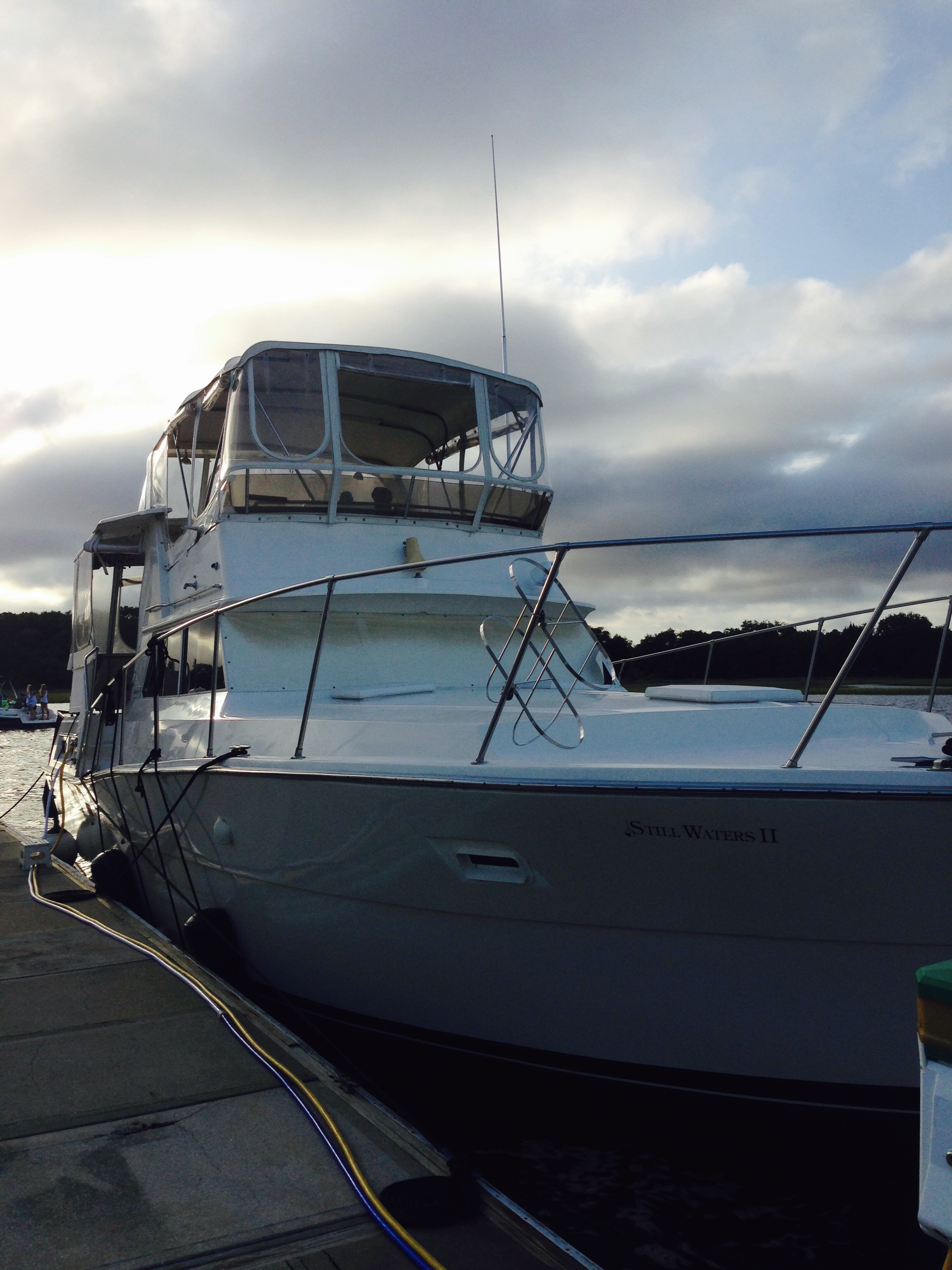
    The  rest of the voyage proved uneventful as they motored the cut and admired the homes lining the east side.  After passing under the final bridge of the day, our crew arrived at the Palm Cove Marina and docked at C-Dock on the T head at 1445.

    image

    After taking a short break and cooling off, our crew took a swim in the pool and then headed to Publix to buy a few groceries since the store was only a half mile down the road.  They then finished off the day by listening to a pod cast of a 12 Stone Church sermon.

    Voyage to Fernandina

    The crew was up and about making ready for the trip to Fernandina.  They left the dock at 1000 and headed north in very calm and glass like water.  The 5 miles along Pablo Creek, before crossing the St John’s River, were eerily calm.  Oh, and did I mention that the chart plotter stopped working just as they got ready to cross the St John’s River.

    The skipper had his paper charts out already, but one could tell he was more than a little stressed with the chart plotter incident.  He quickly called Claudia to the helm as he went below to get a different chip for the chart plotter.  Hmmmmm, that one did not seem to work either.  Oh well, guess the crew will just cross on the paper charts.

    With a big tug coming to meet them, they moved further to the west in the river.  Problem is they were looking for a right turn up Sisters Creek.  They missed the turn, but quickly recovered when they found red marker 26 which was north of the creek.  They made a U-turn and found Sister Creek on the second try.  After passing under the Sister Creek Bridge, Claudia took the helm again as our skipper found the chart plotter smarts book and tried to trouble shoot the plotter problem.

    He called it troubleshooting, I call it Easter egg hunting.  But it seems if you push enough buttons and flip enough pages in the smarts book, the chart plotter will respond and come back to life.

    Sister Creek ran for about 5 miles and the joined Sawpit Creek which ran for another 5 miles to the Nassau Sound.

    A ‘sound’ refers to a narrow sea or ocean channel between two bodies of land.  In this area, and all the way to Virginia, the crew will cross many sounds.  With the chart plotter working, this crossing was a piece of cake.

    On the North East side of the sound, our crew found the navigational aids and entered into the South Amelia River.  They navigated to Kingsley Creek and then into the Amelia River.  At the transition from the South Amelia River to the Kingsley Creek, the waterway guides warn of shoaling.  Well our skipper found some shallow water.  The depth sounder was consistently showing 7 feet of water when suddenly the depth went to 3 feet.  The skipper immediately took the throttles to neutral and there was a small thud sound as the props hit the mud bottom.  Claudia was down below fixing lunch and came up to see what that sound was. They slowly started hunting for some deeper water and found some to starboard.

    I overheard the skipper tell his mate that it is days like today that make you understand why the crew has ‘docktails’ once they safely reach port.  You need a shot of something to calm the nerves.

    View of downtown Fernandina
    View of downtown Fernandina

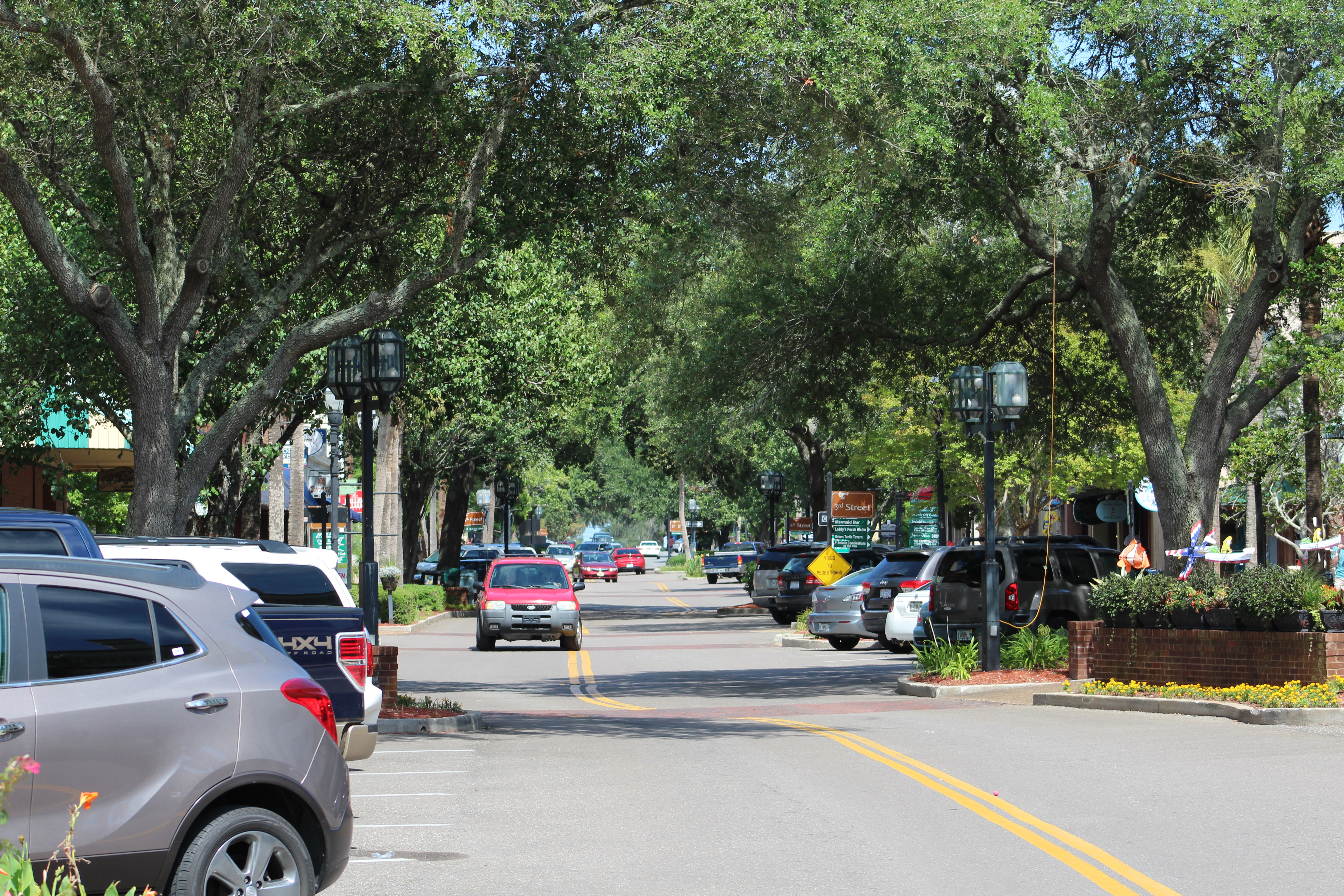
    After reaching Fernandina, the crew went ashore to see the sites. The first stop was the visitor center at the end of the pier.  The lady working the desk had just gotten back from the DFW area visiting her grandkids.  After talking Texas for a few minutes, she gave the crew the skinny on Fernandina, and the crew set off exploring.

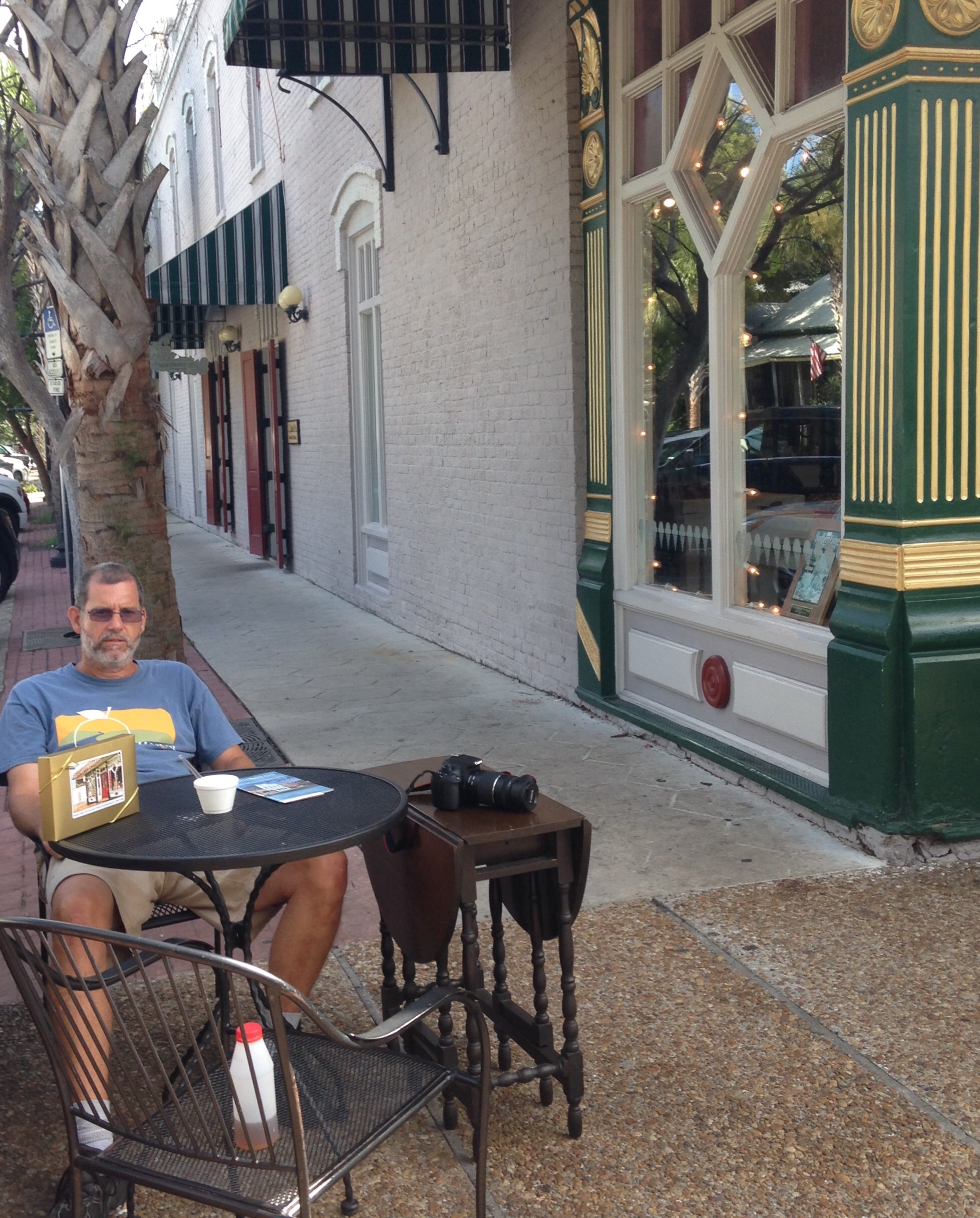
    The skipper is nicknaming this the fish & chips, fudge, and cream loop.  He seems to be trying to find the best in each category.  To find the best though you have to sample all in each area.  And yes there was both a fudge and ice cream store in town.  The name of the joint is Fantastic Fudge and they have been in business here since 1988.

    Sitting outside Fantastic Fudge
    Sitting outside Fantastic Fudge

    Our crew made the stop at Fantastic Fudge on the way back to the boat.  Seems the mate purchased a drop leaf table for the dining room and the skipper is carrying the table back to the boat.  He claimed he needed to stop to get some energy to make the trip all the way back to the boat.  Likely story, and he is sticking to it.  And yes, the fudge and ice cream were great.

    The sun is setting on the Florida adventure
    The sun is setting on the Florida adventure


    Voyage to Brunswick

    With a little further to travel today, our crew was up and leaving the dock at 0905.  They have Georgia on the mind.  By 0928, they were entering the Cumberland Sound and into Georgia waters.

    The sound played a few mental tricks with our crew though.  They had been warned of this back in their training, but this was the first time they actually saw these strange markers.

    Up until now, as they travel north, they have kept red markers to port and green markers to starboard.  The red markers also have a yellow triangle, and the green markers have had a yellow square.  The triangle and square denote the marker as an ICW marker.

    Today, as they were crossing the Cumberland Sound, they were actually in a channel from the Atlantic Ocean, so the markers were in the red right returning mode.  Red markers to starboard and green markers to port.

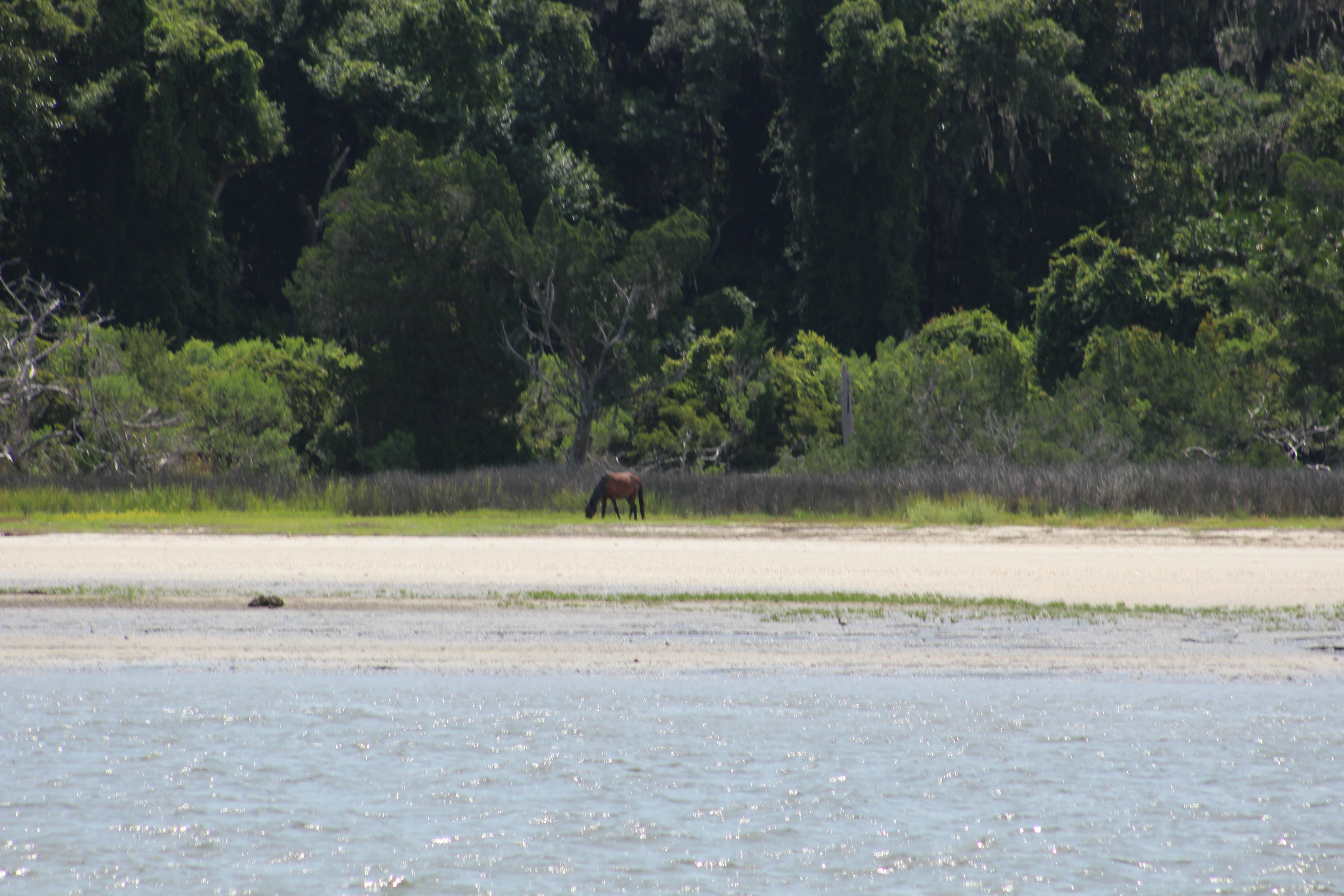
    Wild horse left by the Spanish on Cumberland Island
    Wild horse left by the Spanish on Cumberland Island

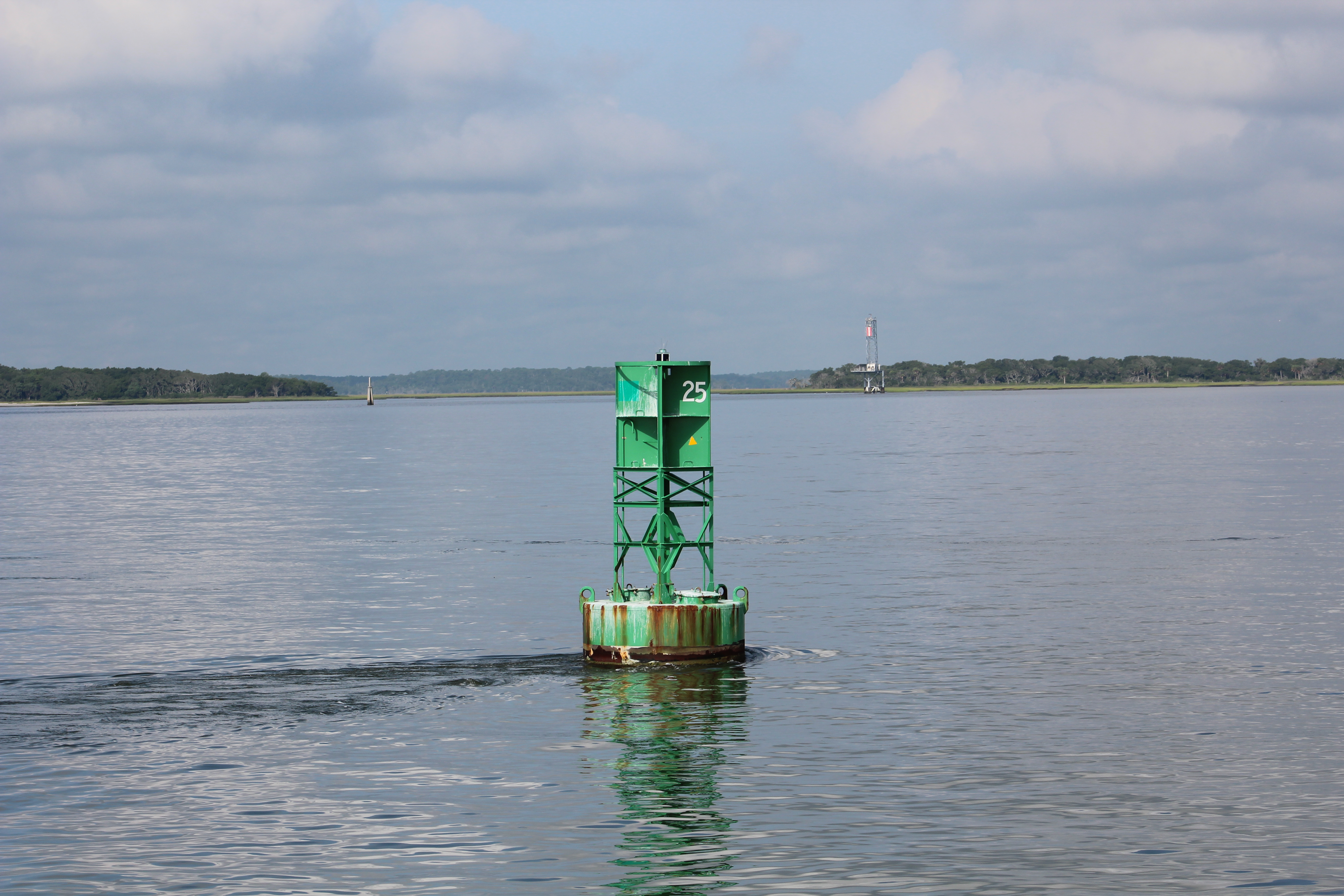
    However, the yellow markings stayed the same, so now the green markers had yellow triangles and the red markers had yellow squares.

    Tricky marker
    Tricky marker

    Very tricky and confusing for our skipper.  With a little help from the mate, they managed to cross with no issues.

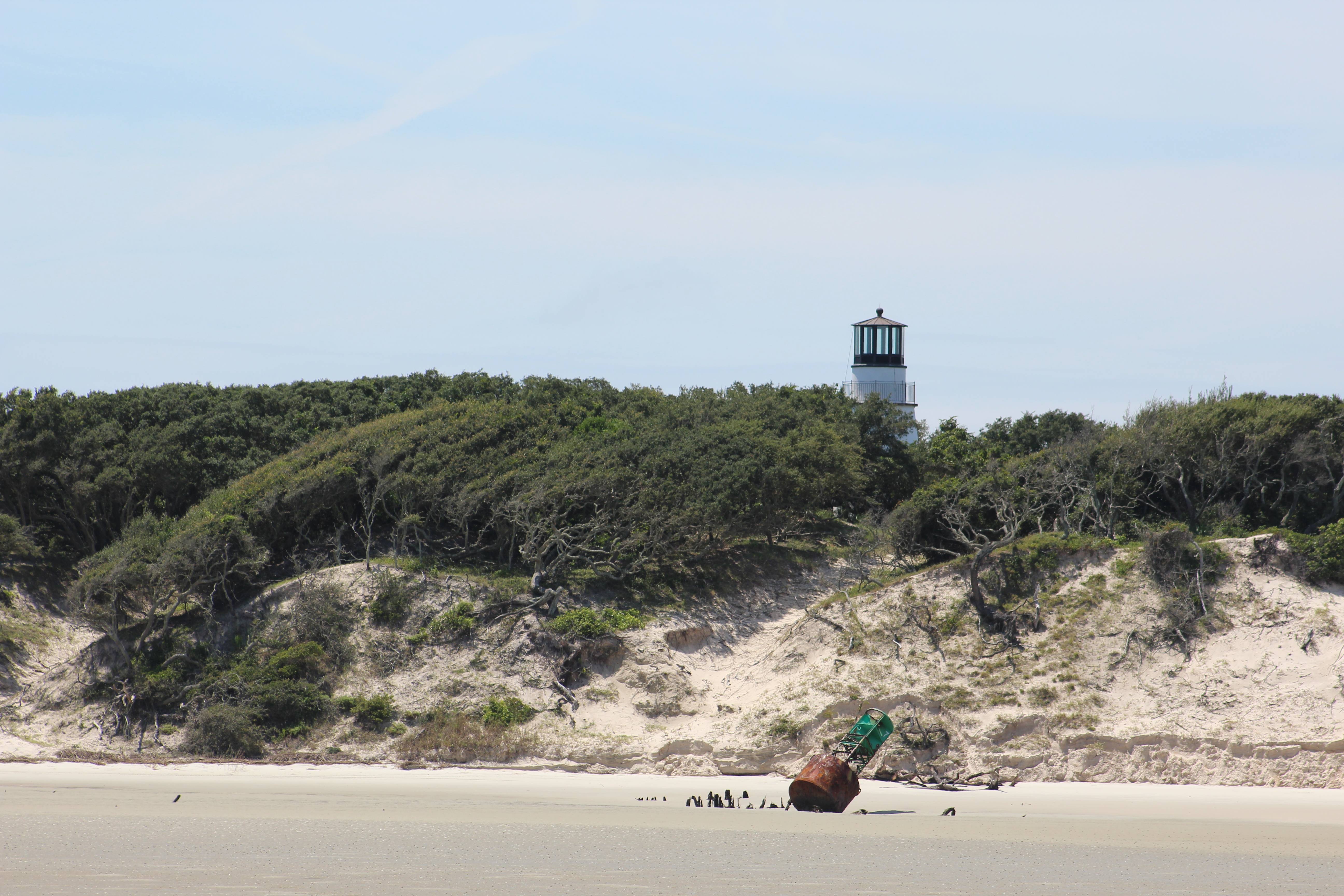
    Interesting place for a channel marker
    Interesting place for a channel marker

    The next obstacle was crossing the Jekyl Sound.  The markers here took an interesting set of twist and turns as the ICW made its way north.

    By days end, the crew entered passed through Jekyl Creek, which was very narrow and shallow.  Five miles of five feet of water makes for a weary skipper.

    Narrow and shallow Jekyl Creek
    Narrow and shallow Jekyl Creek

    After exiting the creek it was an easy cruise over to the Marina for docking.  Once docked, they discovered their electric cord did not reach, so they got to practice docking again and moved over one slip.

    Time to take a day of rest before moving on to Savannah.

  • Shore Excursions – St Augustine

    With a week spent in St Augustine exploring the history of the area, it is time to chronicle the visit and prep for cruising further north.

    As last reported, our crew entered the port last Sunday, July 19 and wandered the streets to get the lay of the land.

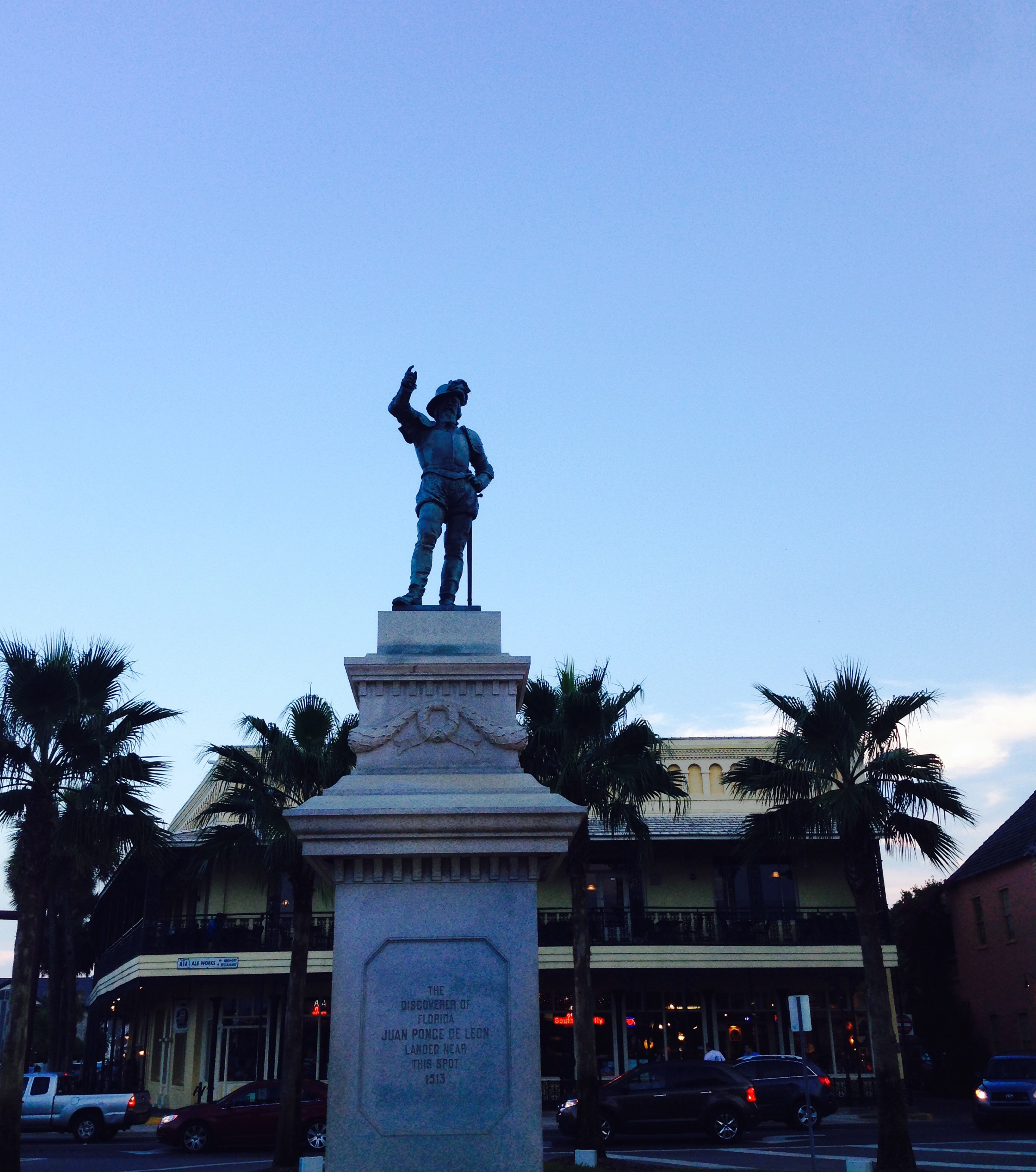
    Ponce de Leon greeting you as you enter the plaza.
    Ponce de Leon greeting you as you enter the plaza.
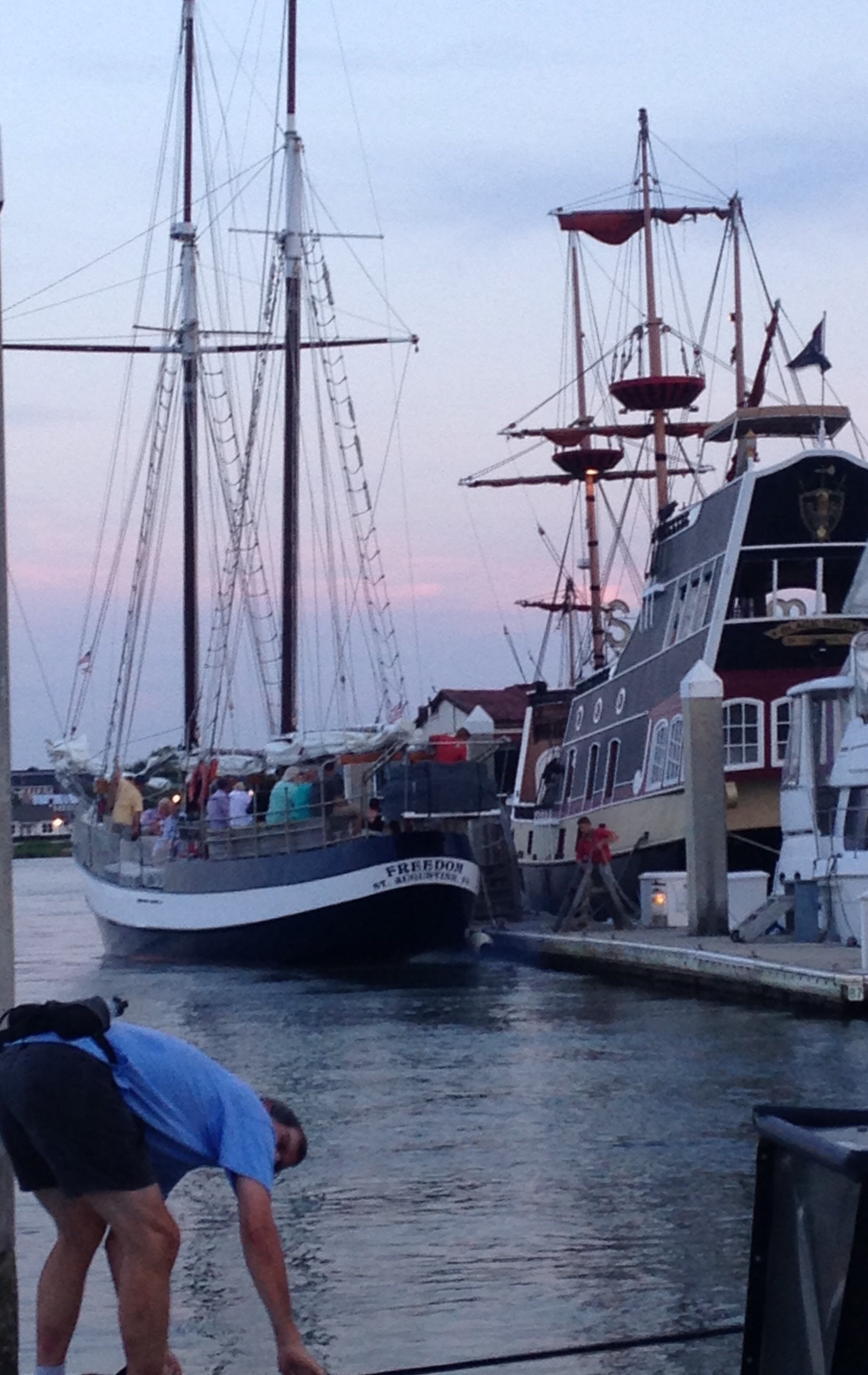
    Two ships docked directly behind Still Waters II. They go out twice a day. The pirate ship is 'The Raven'.
    Two ships docked directly behind Still Waters II. They go out twice a day. The pirate ship is ‘The Raven’

    MONDAY

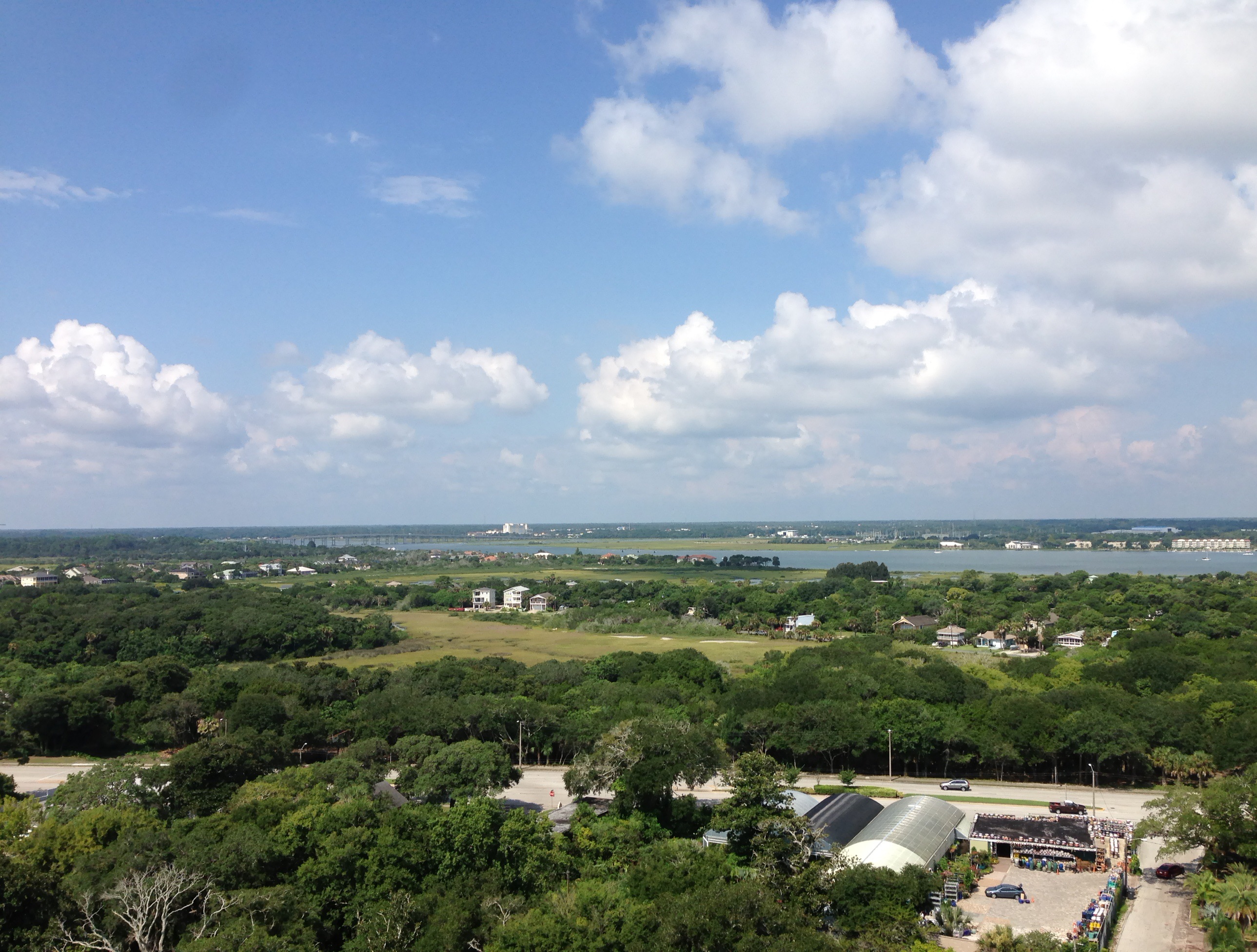
    A 2 mile bicycle ride took our explorers to the lighthouse.  One gets to climb to the top and take in the surrounding views if you can make the 219 stairs.  The climb also gives you a better perspective for the keeper who had to make the climb once every two hours carrying a 5 gallon pail of hot oil to keep the light shining, all night long, every night.  Not an easy life. The lens in the lighthouse today dates back to 1874 and was built in Paris, France.

    Views from the top.

    image image

    The Keeper House was built in 1876.

    The original selfie, mirror with lighthouse in the background.

    image

    Tuesday

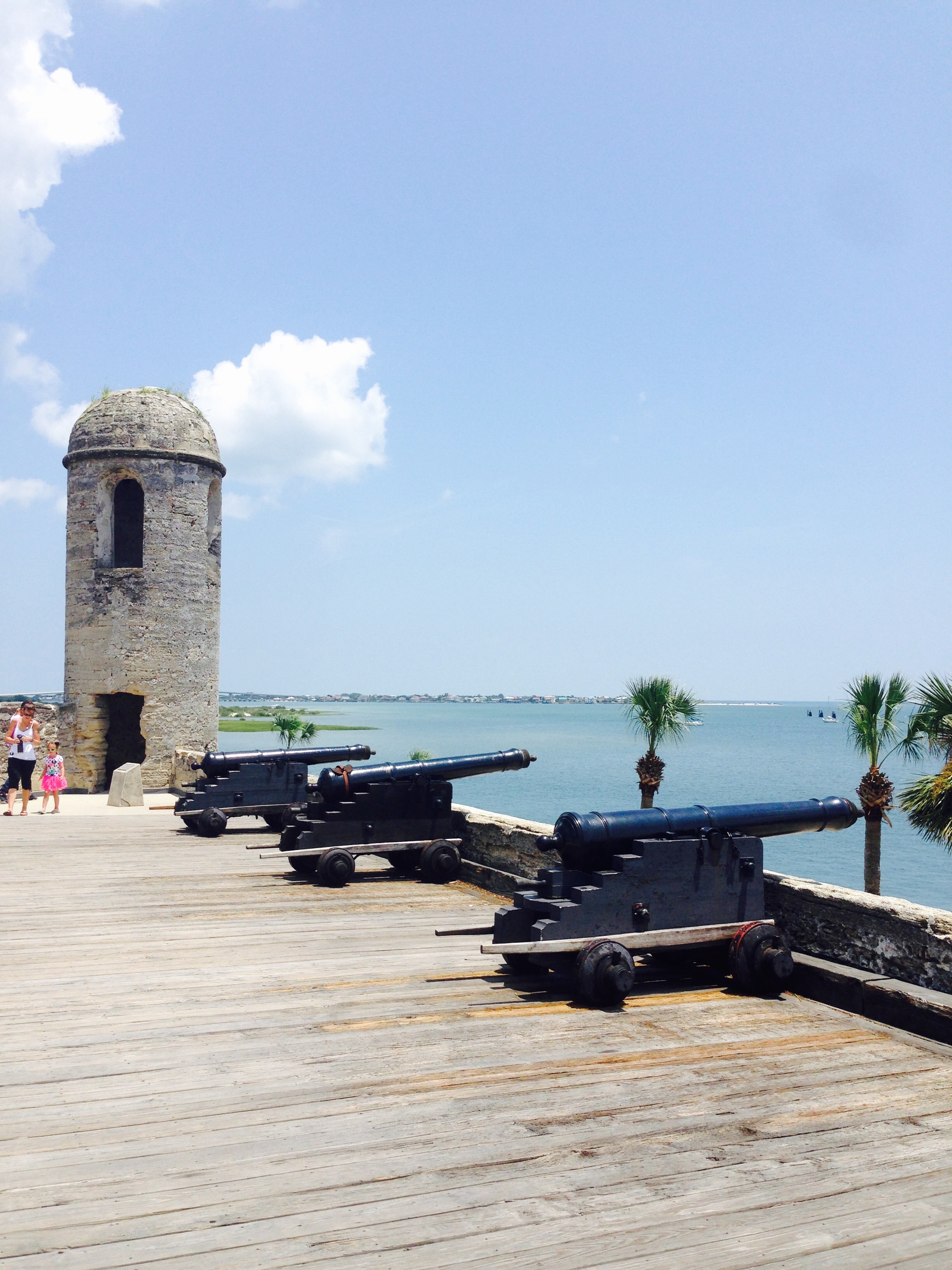
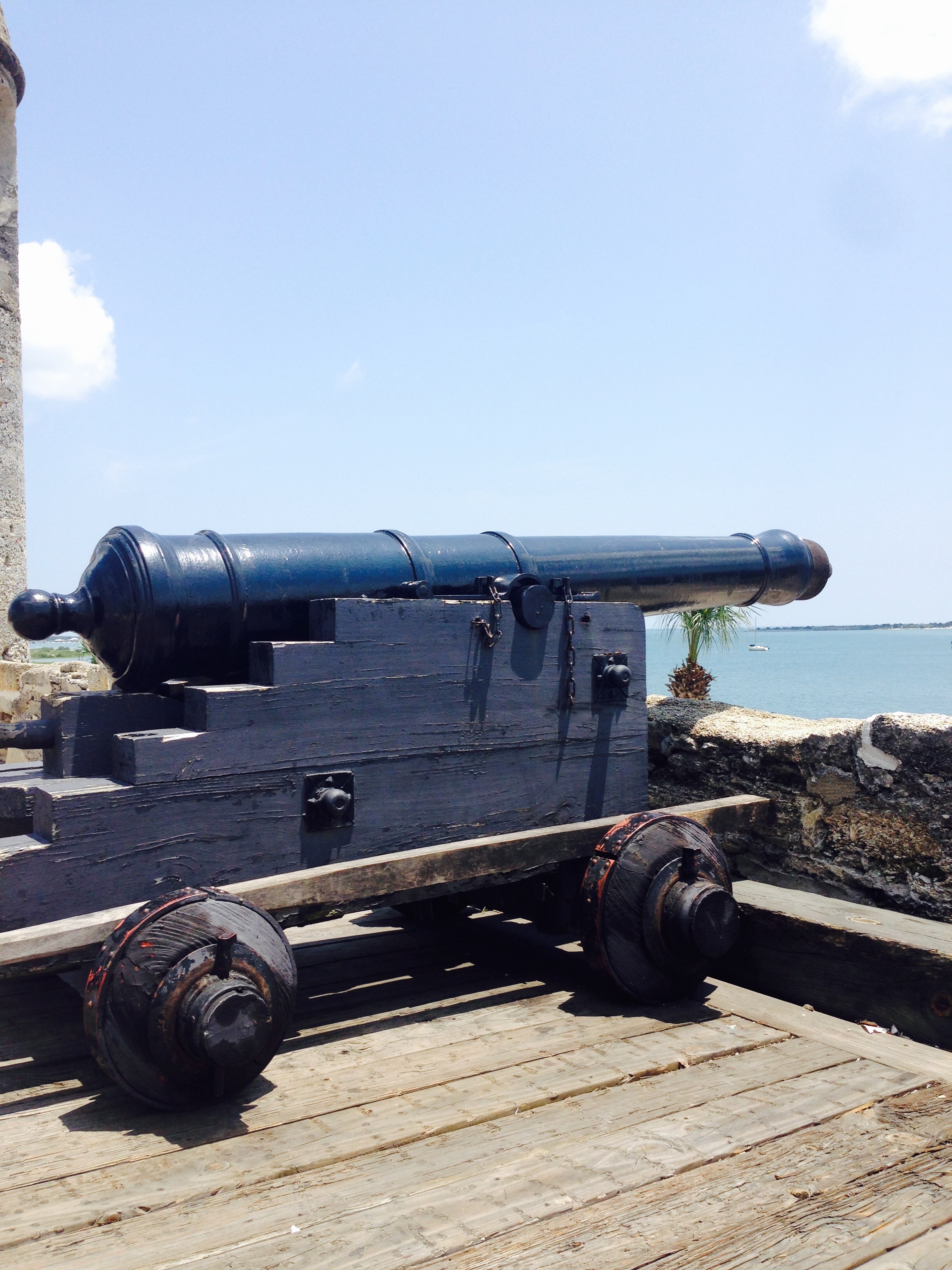
    We find our explorers headed to the Castillo de San Marcos, the fort to protect the spainish from those pesky British who are just north of here in modern day Georgia.  The fort was completed in 1695.  The Brits attacked two different times but never could take the area.  In disgust, they burned the civilian part of town to the ground in the early 1700’s.

    Protecting the harbor
    ” Protecting the harbor

    In 1763, the British finally get Florida as part of a peace treaty.  They do not hold on to the territory very long.  As part of losing the Revolutionary war with the young Americans, the Brits give Florida back to Spain.

    image

    In 1821, Spain cedes Florida to the U.S.

    Wednesday

    A new adventure was in order to start looking for decor and design for the boat.  That is right, adventure shopping. Not really sure what is up with that, we never decorated our Viking vessels. Interested to see how this ends up, but looks like the mate is just getting started. First the crew had to figure out how to navigate the bus system to get to the stores on the shopping list.  Then shop till you drop.  Then make it back to the Marina before the last bus run of the day.  And yes, articles of decoration have been purchased.  Seems the mate is just getting warmed up though and I suspect the skipper has a few more of these adventures in his immediate future.

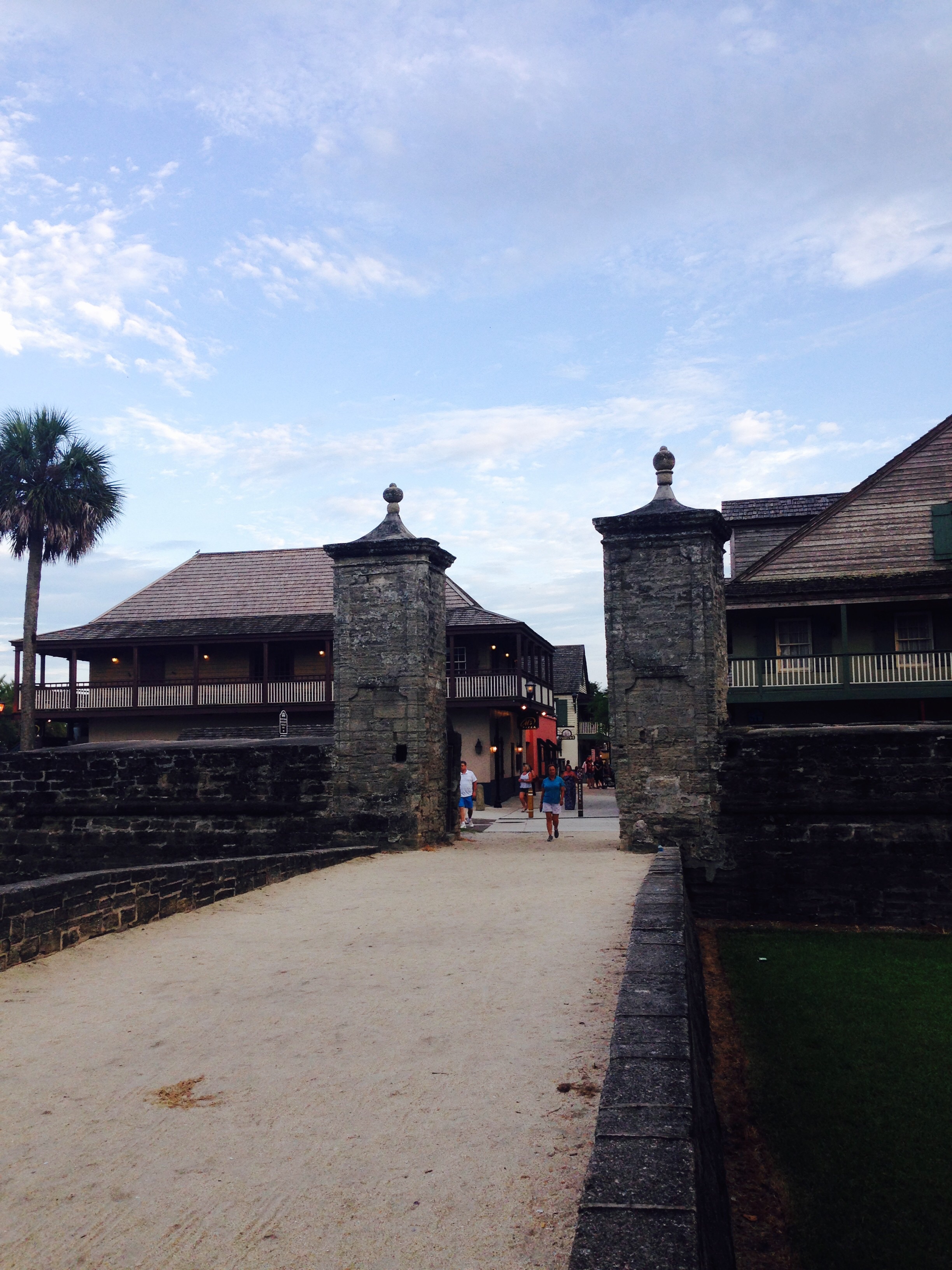
    Old City Gate
    Old City Gate

    Thursday

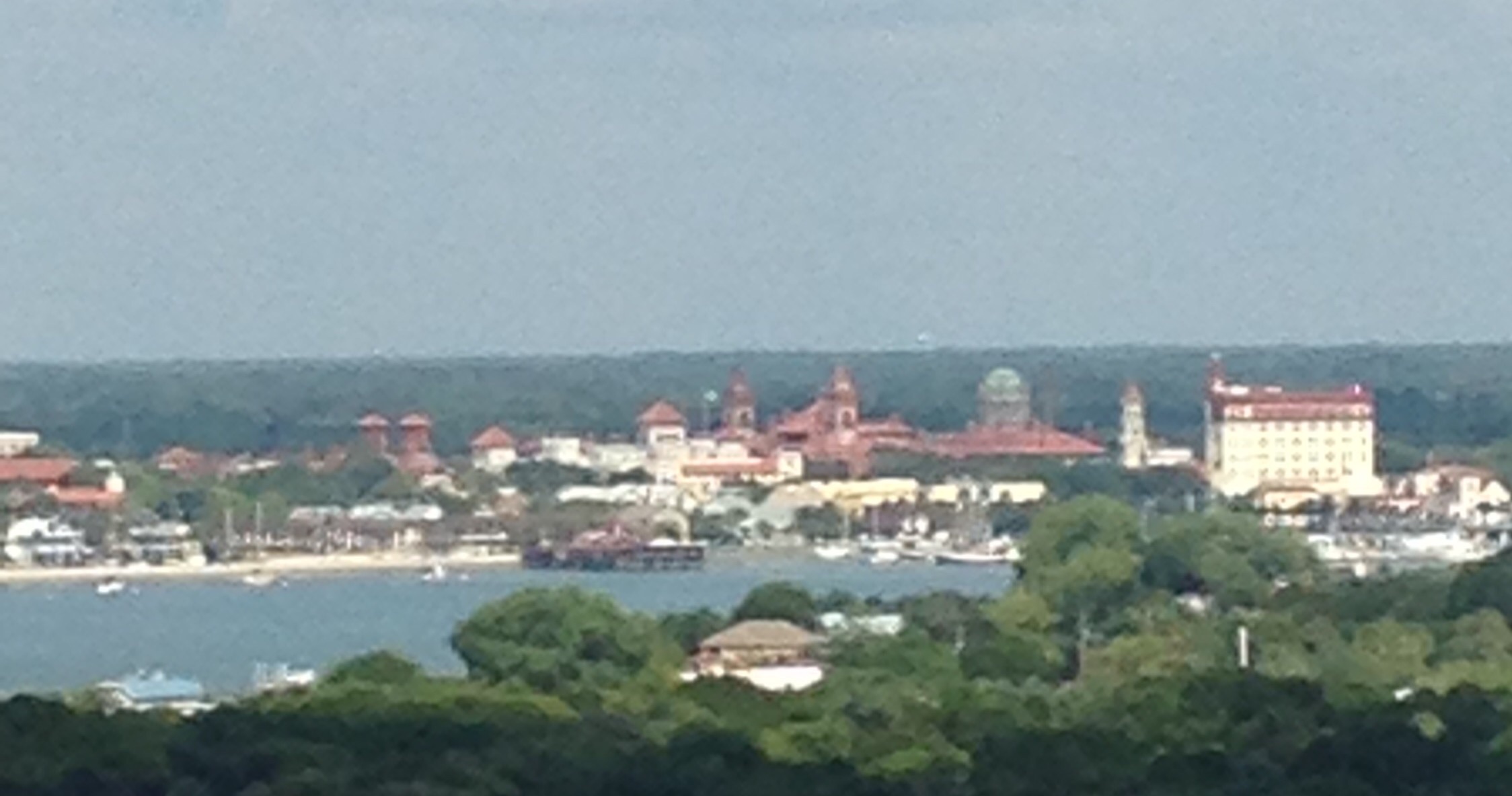
    The crew went to the Lightner Musuem.  Interesting display of late 1800’s household items.  The musuem was originally the Hotel Alcazar, built in 1887.  The Hotel was built by Henry Flagler, who was one of John D Rockefeller’s original partners at Standard Oil.

    Friday

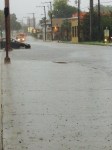
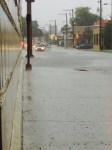
    Hard day of work cleaning Still Waters II.  Not much adventure in that, but she is starting to look better and better.  The skipper got an early start by walking 2 miles for supplies because his bike had a flat.  On the hike he found a bike shop and got new tubes. He also found a bike better suited for the mate.  After walking back 2 miles, the crew decided that they would go look at the bike after cleaning and working on the boat.  They decided to buy the bike,  but on the way back to the Marina they got caught in a downpour.  They managed to get under an awning, but the wind was so strong the rain was just blowing sideways.  Needless to say, not a dry spot left.  The flooding was severe, and was reported about two feet deep in the old part of town.

    Saturday

    More shopping adventures, and dinner out on the town.

    Time to get ready to cast off.  The Float Plan for the next few days is to head north to Fernandina, and then cross over into Georgia and stop in Brunswick.