Hello virtual crew members and fellow adventurers!
Eric here catching you up to date on the travels of Still Waters II.
Click on the Travel Map above or this link to see the day-by-day travel log. The crew completed the Trent Severn Waterway which also marks the half way point around the loop for all crew and virtual crew members. After completing the last lock at Port Severn, the crew crossed the bay to Victoria Harbor.
Monday August 1, 2016
After a day of rest on Sunday, our crew made the first drop at the Kirkfield Lift Lock. This is the second largest lift lock in North America with a 48-foot lift.
View from the top of the Kirkfield Lift Lock
Watch the following video for a virtual ride down the Kirkfield Lift Lock.
After the lift lock it was another narrow shallow canal. There has been little to no rain in these parts all summer and the water level is about a foot below normal. The shallow water is worse than normal and the crew found themselves in 4-5 foot of water with weeds until they got out of canal lake.
There was this interesting bridge built in 1905 as the crew passed into the Talbot River.
In the Talbot River there were a couple of swing bridges that the crew had to get open to continue the journey. Parks Canada bridge tenders had the bridges open with little delay.
Then it was two hours to pass thru five locks that were about a mile apart. These locks dropped Still Waters II an additional 63 feet.
This slideshow requires JavaScript.
Looking north across Lake Simcoe
After the fifth lock, the crew entered Lake Simcoe. This lake has a bad reputation because a west wind can cause large 6-8 foot waves. Our crew crossed the 20 miles with a southerly breeze in their back. Since the boat had not been run at top speed in a few weeks, the skipper brought her up on plane and they crossed the lake travelling at 10 knots.
Saw this nice boat on the way in to the marina
The crew then made their way to the Port of Orillia Marina where they will stay for three nights. They are docked by two looper boats that they have not met before. They also have run into ‘Avocet’ here, and have already caught up on the happenings since they last met back in Ottawa.
The first night in the marina the ‘Home Office’, docked next to Still Waters II, held an impromptu concert and sang oldies but goodies into the night.
While going ashore in Orillia the skipper has found the best butter tarts in Canada. The bakery also sells cinnamon rolls and monkey bread. What a great place to be for a few days. The walk to the bakery each morning is about the most exercise the skipper gets most days.
In town there were several art projects called story poles. Different businesses sponsored the art and a few of them are here for your viewing.
Thursday, August 4, 2016
The crew shoved off from the dock about 0915 and headed towards Lock 42. The passage today was through small lakes and narrow passages connecting the lakes. These narrow passages were cut back in 1905 before the advent of modern machinery. The reason the cuts are so narrow is the granite rock was cut using dynamite and manual labor.
After the 21 foot drop at the Couchiching Lock the crew headed to today’s final destination at Lock 43, Swift Rapids. Because of the lack of rain, the swift rapids were more a slow trickle. Upon arrival at the lock the crew found ‘On Business’ waiting for them to help tie the boat to the wall. The crew grilled burgers and dogs with Andy and Twylla for an enjoyable evening.
Friday, August 5, 2016
Looking out from top of Lock 43
The crew had moved over on the blue line last night so they would be first thru the lock this morning. ‘On Business’ actually entered first and Still Waters II followed behind. Once in the lock it was a 47 foot drop in about 8 minutes.
This lock is nicknamed ‘The Giant’ because it is the largest lift of the traditional locks in the system. The lock was reworked back in 1965 and is also the most modern lock on the system.
Dark Circles – Holes in the subfloor of lock
The subfloor of the lock has multiple holes to allow the water to fill or drain the lock. This allows for a faster smoother ride while filling and draining the lock.
At bottom of The Giant – waiting for the gate to open
After the giant drop, the crew worked their way thru some more narrow cuts and small lakes.
Most of the shore line was covered with summer cottages so the speed limit was set at 10 Km/HR (6.2 mph). A few of the cottages for your viewing pleasure:
Loaded in the Rail Car
After an hour and half of taking in the scenery, the crew finally arrived at the Big Chute Marine Railway. The crew has been hearing about this lock that is not a lock for over two years. In the books it is Lock 44; however, it is actually a 100 ton travel lift that takes the boat completely out of the water, then travels up and over a granite rock, and then down 58 feet to splash the boat back in the water.
Looking down the rail while crossing the road
Upon arrival, the crew docked the boat and walked over to the Big Chute to watch the operation. They observed some boats unload on the low side and then watched as a large yacht loaded. They then walked the path alongside the Big Chute and watched the re-launch on the high side.
The skipper decided he had had enough training, so the crew headed back to the boat and took their turn up and over on the Big Chute.
On Business headed down after crossing road
The launch back in the water
Hope you watch the video and take a virtual ride on the Big Chute with the crew.
Front row seat to watch boats load/unload at the Big Chute
After getting back in the water, the crew docked for the afternoon to wait for a storm to blow past. The skipper heard a coast guard warning of gale force winds out in the Georgian Bay. The wind got up, but nothing in the range of 40 mph. By the time the storm passed the winds dropped back to normal, the crew had decided to just stay at the Big Chute and complete the Trent Severn tomorrow.
Last Look at the Big Chute – Boats loading to go up the hill
Saturday, August 6
The skipper finally spotted a few bears
As often happens on this loop adventure, the simplest things can sometimes get complicated. After a simple eight mile cruise the crew arrived at the Trenton Lock. This is the smallest lock in the system and as you will read causes a little competition for entry into the lock.
There were about four boats already circling in the basin waiting to enter the lock when Still Waters II arrived. Three of these boats made the lock and the fourth boat went over and tied on the blue line. That boat tied in the middle of the blue line so that there was not room for Still Waters II to tie up in front or behind the boat. That left the skipper in the basin all alone circling in the 15 mph winds for 30 minutes while waiting for the next lock opening.
When the boats locked down, the lock staff loaded the boats below for the lift up. As the boats began to raise in the lock, the free for all started. At least six smaller boats and one large boat coming from the grey wall and area marinas all got in their boats and headed for the lock. They were all maneuvering for position to enter the lock ahead of the one boat on the blue line. The skipper was trying to hold his position close to the lock with the bow into the wind.
Once the lock gates opened and the boats in the lock cleared the lock the smaller boats began the rush for the lock. Parks Canada staff finally took charge of the situation and backed the small boats out of the way to let the large boat on the blue line into the lock. There was not room for two large boats so the crew would have to wait for the next opening.
Port Severn Lock
When the large boat moved off the blue line the skipper maneuvered for the blue line and got tied up while the smaller boats were circling and backing away from the lock. The lock staff finally allowed some of the smaller boats to enter the lock with the one large boat. Then one of the more aggressive small boats came over and pulled to the blue line in front of Still Waters II.
While waiting for the lock to turnaround, another four boats had arrived to the Lock. Parks Canada came over and told everyone the order that they would load the lock. Mr. Aggressive was to go first, followed by Still Waters II. Then a couple more smaller boats would enter to fill up the lock. When Mr. Aggressive was to enter, his boat would not start.
Still Waters II entered the lock and then was joined with three other boats. As they were locking down the skipper could still see Mr. Aggressive troubleshooting his start problem. While the skipper wishes no harm or trouble on any boater, this issue could not have happened to a nicer guy.
The beginning of the Georgian Bay
An hour and a half after arrival at the lock, the crew finally cleared the lock and completed the Trent Severn Waterway leg of the journey. This also marks the beginning of the Georgian Bay leg. The skipper is also claiming that they are now half-way complete with the loop.
Speaking of milestones, the crew has been traveling with ‘On Business’ for a few days. The crew of ‘On Business’ made the Severn Lock just ahead of our crew and went right down without waiting. When Still Waters II finally cleared the lock and got to the Georgian Bay they noticed ‘On Business’ anchored and waiting for the crew to arrive. The two boats then headed to Queen’s Cove Marina together.
On Business crosses her wake as she enters Queen Cove Marina
Upon entry into the marina, ‘On Business’ crossed her wake and officially became a coveted Gold Looper after 357 days on the loop. Congratulations to Twylla and Andy.
Andy and Twylla changing to the Gold Burgee
Tune in next week to see the progress of the crew through the beautiful Georgian Bay. These waters are considered some off North America’s best cruising grounds and also rank in the top three areas to cruise in the world.
The water goes on forever and the adventure never ends.
Hello virtual crew members and fellow adventurers!
Eric here catching you up to date on the travels of Still Waters II.
Click on the Travel Map above or this link to see the day-by-day travel log. The crew only travelled one day because they were on the hard in Buckhorn from Monday to Saturday.
Monday July 25, 2016 thru Saturday, July 30
The crew left the lock at Buckhorn in the morning and travelled 1 mile to the Buckhorn Marina. The marina had arranged for a trailer to haul Still Waters II out of the water. The crew initially tied up at the fuel dock to await the arrival of the trailer. Once the trailer arrived and was positioned, the crew moved the boat over and loaded her on the trailer. However, the truck was not strong enough to pull her out of the water.
Bringing in the heavy equipment
The marina staff went and got a large piece of machinery, attached to the truck, and between the two vehicles they hauled her up out of the water.
Still Waters II on the hard
The marina staff moved the boat over out of the way as much as possible and set her down where she would rest for the rest of the week.
The fiberglass guy (Joel) got busy right away grinding on the repair areas. The Admiral showed her southern hospitality and kept Joel in sweet iced tea all week. Joel is a true craftsman. After the repairs were complete, Still Waters II looks as good as new and you cannot tell where the repairs were made.
Before
After
Before
After
Joel – Work In Progress
The crew spent each evening watching the sun go down from this point at the marina.
Discovered these interesting rocks while hiking around.
The crew has spent the week mostly relaxing, and taking in the Kawartha ice cream. There seems to be 37 flavors offered.
Andy, Twylla, and Dave on the quest for the best ice cream flavor. Notice Claudia’s small bowl on the table as she snaps the pic.
At this point the crew has sampled about 10 flavors, but are not ready to make a recommendation on the best flavor yet. There is still much more analysis needed before making a final recommendation. However, the skipper and Admiral are dedicated to the cause of complete analysis before leaving the area though.
Saturday, July 30
Trailer for launch
The crew splashed back in the water around noon. As usual these launches gather the attention of those nearby. In this case, the local boaters were enjoying a long holiday weekend and were gathered to watch and wish the crew off well. The skipper sat around a camp fire with three other couples Friday night and enjoyed sharing tales and stories. One of the best parts of this adventure is getting to meet the fine folks around the waterways. There are none finer than the people at Buckhorn Yacht Marina.
In addition to the boaters at the marina, the marina owners are top notch also. The marina is family owned with four generations involved now. The patriarch bought the place back in 1974 when the marina only had three slips rented. The sons now carry on the business and have built a marina with a great reputation. People from all over Canada send their props here to get worked. In fact, on Friday morning a plane landed in the water and tied up at the fuel dock to pick up refurbed boat props.
But, after a week delay, it was time to get going. Upon launching, the crew headed out to see if they could find a spot to dock for the night. As mentioned before, it is a three day weekend, and many people were out on the water enjoying the day.
Boats leaving Bobcaygeon Lock
The Bobcaygeon lock was full so the crew decided to move on to Fenlon Falls. The lock master at Fenlon Falls informed the crew that this was going to be the busiest weekend of the season and that the three locks: Buckhorn, Bobcaygeon, and Fenlon Falls would be the busiest on the system. The crew decided to push on to Rosedale. The scenery along the way was great.
Fenlon Falls
After making the 4 foot rise at the Rosedale lock, Still Waters II is now 597 feet above the water level on Lake Ontario, and 850 feet above sea level. This marks the high point on the loop. Future locks will now start dropping the boat back down towards sea level. The lock master also said that the next lake, Balsam Lake, is the highest navigable lake in North America. The skipper has not taken the time to fact check that info but sounds good none the less.
From Rosedale the crew was informed that they would be able to find a place to stay at the Kirkfield Lift Lock. The challenge would be getting there safely. There is a narrow canal that runs for a few miles from Balsam Lake to the Kirkfield Lift Lock. The canal is narrow because it was man made thru a rock formation called the Canadian Shield. There was a sign posted at the entrance of the canal that stated that boats over 40 feet long have to do a securite radio message prior to entrance. The canal is so narrow that two large boats cannot pass so the skipper had to make sure that no one was east bound in the canal prior to entering.
Under water rocks out the port window
With no response from other boaters the crew entered the canal and headed to the Kirkfield Lift Lock. Not only is the canal narrow, it is also shallow. The depth alarm which is set at 6 feet was alarming most of the time. The skipper finally turned the alarm off to get some peace and quiet. There were stretches in the canal where the water was consistently only 5 feet deep. The water was also clear so you could see the rocks lining the bottom of the canal.
Rock Wall lining the canal
After four miles of this entertainment, the skipper noticed that the Skipper Bob Publication had this note at mile 167.2 to 168.5, Trent Canal. Now the narrow rock walls even take a turn to the west. Are you having fun yet?
The skipper gave one of his famous replies to that question, “If this is fun, then we are having it.”
After about another mile of this fun, the Lift Lock came into view and the crew tied up for the night. The crew plans to stay at the Lift Lock on Sunday and start the Talbot River section of the waterway on Monday.
Sunset over the Kirkfield Lift Lock
Tune in next week to see how the crew manages the Kirkfield Lift Lock and the Big Chute Railway. They should complete the Trent Severn by weeks’ end and be staged to enter the much talked about waters of the Georgian Bay.
The water goes on forever and the adventure never ends.
The crew made stops at Campbellford, Healey Falls, Peterborough, Burleigh Falls, and Buckhorn this past week.
Sunday, July 17, 2016, The crew left Lock 9, Meyers, late morning and headed out to Lock 10, Hagues Reach. Upon arrival at Lock 10 the Lockmaster came down and informed the crew that his lock mate had called in sick and that it takes two folks to operate the locks. He would be sharing workers from Lock 9 until someone could be called in to work. The crew tied up on the blue line to wait. The plan was for lock 9 to lock a boat up, then have someone drive up to Lock 10 and lock both boats up.
Two boats actually arrived about the same time as the second lock worker. The gates were opened and the crew locked thru with the two other boats. The lockmaster directed the third boat to raft up next to the second boat. This was the first time the crew had been in a lock with boats rafted together. The skipper asked the lockmaster why they did not just tie up on the port wall rather than rafting. The Lockmaster replied that the turbulence in the lock was from port to starboard while filling and people have trouble staying on the port wall. Rather than have them come off of the wall and bounce off another boat, he prefers to just raft together.
Lock 10, Hagues Reach lifted the boat 24’. Upon clearing the lock the crew headed up to Locks 11 & 12, the first set of flight locks on the Trent Severn.
Inside lower lock at Ranney Falls
Locks 11 & 12, Ranney Falls. This set of flight locks raised the boat 48’. When you are down in the first lock it seems a long way up to the top. After exiting the first lock, the boat immediately entered the second lock to complete the flight. After exiting the second lock it was just a little over a mile to the town of Campbellford where the crew plans to spend a few days.
There is a Rotary Trail that circles back to the Ranney Falls from Campbellford. Upon arrival back at the Falls, the crew crossed over the gorge on a 300-foot suspension bridge 35 feet above the water. There was a nice view of the falls from the bridge.
Ranney Falls from the Suspension Bridge
World’s Finest Chocolate factory outlet was also a nice hike. The visitor center hands out free samples of the candy and directions to the factory. Needless to say, the crew took the hike. The Admiral bought Malted Milk Balls while the skipper opted for the chocolate covered caramels.
There is also a bakery within easy walking distance. The skipper made the hike every morning to sample the merchandise. So far the chocolate covered donuts, donut holes, and banana nut muffins are outstanding.
Butter Tarts / Muffins
The bakery also has a thing called a butter tart. The crew has been hearing about butter tarts ever since this adventure began. Seems everyone passing thru this area just raves about butter tarts. Well of course the skipper had to try one (maybe 4). A butter tart is like eating pecan pie without the pecans on top. The skipper says it is hard to go wrong with Karo syrup.
Another interesting phenomena in the Old Mills Park right next to the marina wall is all the people with their smartphones playing some game called Pokemon Go.
There must be at least 5-10 people in the park at any given time trying to catch some virtual critter. The other phenomena in the park is the folks sitting on a park bench 5 yards from the boat eating ice cream. The ice cream store is on the corner and the skipper is on his way to see why so many folks are eating this particular ice cream.
$2 coin statue in Old Mills Park- artist of coin is from Campbellford
Wednesday, the crew shoved off from the Campbellford wall and continued west on the Trent Severn Waterway. The trip was mostly along the Trent River today. Very picturesque with the green trees coming down to the banks of the river.
The crew also passed thru 6 locks today on their way to Hastings. Two of the locks were a set of flight locks that raised the boat 54-feet. The water is starting to get clearer as the ground is transitioning from mud to rock. The channel is also starting to get narrower.
At lock 15, Healey Falls, the skipper had a good chat with a lock hand. The guy is a Health Physicist and is trying to get hired on at the local nuclear power plant. The skipper answered lots of questions after the guy learned that the skipper had retired from working nukes in the US.
At lock 18, Hastings, there was a rock announcing that Hastings is the ‘hub of the Trent.’
For our crew this marks the end of the Trent River portion of the waterway that ran mostly thru remote farm land and small towns.
Thursday, the float plan for today was to cruise to lock 20, Ashburnham and moor along a park wall. The day would take the crew most of the length of Rice Lake and then into Otonabee River to Pererborough. As often happens on this adventure, flexibility is the name of the game. A fellow looper caught and passed the crew just as they were entering Otonabee River. By the time the crew arrived at the planned lock to moor for the evening, you guessed it, the boat that passed the crew had taken the last available spot on the wall.
Ok. Plan B. The Parks Canada folks reported a spot open above the Peterborough Lock just another mile or so. The crew pressed on and cleared lock 20 and then arrived at the famed Peterborough Lift Lock, the highest Lift Lock in the world.
As the skipper arrived, a bull horn announcement was made that the lock gate was opening. Then a green light came on and the skipper motored into the large tub of water.
Another bull horn announcement told the crew to move to the center of the tub and tie off on the black handrail. After the vessel was secured the lock tender closed the gate. After another minute, another announcement that the lock was about to move.
Then the crew got an elevator ride up 65 feet into the air. At the top, the bull horn announced that the gate was open and please depart.
After exiting the tub, the crew spun around and tied up along the lock wall. The crew was the only boat here for the night. After a quick bite to eat the crew went to the Visitor Center to learn about the Peterborough Lift Lock.
Fun Facts on Peterborough Lift Lock:
Built between 1896 and 1904
Excavated 40 feet down to hit bedrock
The hydraulic rams were then excavated an additional 75 feet into the rock
When completed in 1904, the lock was the world’s largest concrete structure
No reinforcing steel was used in construction of lock, (reinforcing steel was a novel idea viewed with skepticism)
How it works……
The lock lifts and lowers boats in two water filled chambers that each weigh 1,300 tons when full of water
The chambers sit on top of hydraulic rams
The hydraulic rams are interconnected so that any movement in one ram causes an equal movement of the other ram
Per Archimedes’ pricipals of physics, boats displace water equal to their weight; therefore, the weight of a loaded chamber of boats remains the same 1,300 tons.
After the chambers are loaded with boats, the gates are closed, and then an extra foot of water is added to the upper chamber, adding 130 tons of water.
The crossover valve is opened between the two rams. Since the upper chamber weighs more than the lower chamber due to the 1 foot of extra water, gravity pulls the upper chamber down
Since the two rams are interconnected, the lower chamber then rises in response to the upper chamber moving down.
While in the Visitor Center, the crew also learned that there was a geo-caching series around the Peterborough Lock. The crew obtained a cache passport from the Visitor Center staff and went on the hunt to find the geo-caches. The hunt took the crew from the top of lock 21, back to the Visitor Center, to a Community Garden, and then down to lock 20. The hunt was successful and all caches were found.
In the morning, the skipper returned to the Visitor Center and exchanged the completed passport for special edition geo-coins.
Friday, the crew once again had a float plan that was changed near the end of the day. The original plan was to have a short day (14 miles) and stop after 6 locks at Young’s Point. However, the lockmasters and weather had other plans. The crew got off to a good start but found four canoes full of kids at the first lock.
The canoes locked thru with Still Waters II. Because the canoes were in the lock, the lock tender raised the level slowly. The 14’ lift took almost 30 minutes.
After leaving the lock the crew headed to the next lock that was only a mile away. When the crew arrived the gate was still shut so the crew tied up at the blue line. The skipper went up to talk with the lock tender and was informed that a boat was coming from the other direction and they would be waiting for that boat to arrive and locking him down first. The lock tender said that they would be conserving energy today because of the heat. Seems 90 degrees is a bit much for these Canadians. The skipper said something about the cold front that was blowing thru and that he was enjoying the cool weather.
By the time the boat got locked down, two other boats arrived with Still Waters II to lock up. Any time there are multiple boats it adds time to load and unload the lock as well as more time to fill the lock with water. It took over an hour after arriving at the lock to get lifted up and move on. And so the rhythm of the day was set, it took about an hour for each lock the rest of the day.
Under the notion that no good deed goes unpunished, the skipper allowed one of the boats to pass him since the boat would travel the last 5-6 miles faster. The thought was that the boat would make the lock before the skipper and could move on through. However, about the time the crew arrived at the lock they noticed the boat was towing a small boat. Once they arrived at the lock, they learned that the little boat had run out of gas. The big boat had stopped and towed the little boat to the lock. After Still Waters II entered the lock the two boats entered. Once again the lock tender raised the water level very slowly. So much for letting them go by to make the lock. On the other hand, our crew did not have to do the rescue.
A catch and release guy
Upon exiting the lock, the crew learned that there was no room to stay for the night so they would have to push on for the next lock. This would cause the crew to cross Clear Lake and Stoney Lake in the high winds that had been building all day. Such is life. This added an hour and a half to what had already turned into a long day.
Glass House on Stoney Lake No throwing stones in glass houses
The cruise across Clear Lake and Stoney Lake was fabulous. The water is just about crystal clear, and the scenery was breath taking.
After finally making the Burleigh Falls lock and securing the boat, the crew walked to the falls and took some time to soak in the cool water.
Saturday, well this was supposed to be another short easy day, but as the week has unfolded, nothing has been short or easy. Today would be no different for the crew. After making the two locks (Lovesick and Buckhorn) on the float plan today, the crew settled in at the top of the Buckhorn Lock. The first surprise was to learn that they are having problems with their electrical system (or hydro as the Canadians like to call it) and we would not be able to get power. Seems that they are adding onto the system and the modification is causing problems. Oh well, the crew has 200 Watts of solar power now and this will be no problem.
Skipper installing 200 Watts solar power on Still Waters II
The crew walked up to a pizza place in town that was recommended by the lock master. The skipper had returned to the boat while the Admiral was out window shopping. The skipper was down below decks when he heard screaming and then the boat rocked. He ran topside to see a rather large houseboat up against the side of Still Waters II. The crew of the houseboat was fending off the two boats as the wind was pushing the houseboat into Still Waters II.
The skipper jumped out on the swim platform to assist getting the houseboat off Still Waters II. It looked like all the efforts would be successful until a crew member yelled “ALL CLEAR.”
The house boat captain gave full throttle to his engine which caused the back of the boat to swing into Still Waters II. The port aft corner rub rail on Still Waters II punctured thru a wood panel and ripped a 1- foot long hole in the side panel. The house boat corner rail then caught the stern of Still Waters II and gave her a nice rock.
When all was said and done, the damage assessment to Still Waters II is as follows:
Rub rail busted
9 inch crack thru the gel coat and into fiberglass of the aft port corner transom.
Fiberglass scuff marks and black paint transfer where the house boat rubbed along side Still Waters II
The good news is that nobody got hurt in the 10 seconds of panic. The owner of the house boat rental company dropped by and has arranged for a haul out and repairs of Still Waters II.
Houseboat damage, notice the bent corner post
Rub rail damage
Cracked gel coat and fiberglass on transom
Other than the houseboat drama, Buckhorn has been a good stop. The dam here was originally built for a mill to grind grain. The granite rocks made for good grinding wheels.
Town Mascot- Buckhorn
Tune in next week to learn what the impact of repairs will have on the forward progress of the crew. The skipper believes this could easily be a 5-day delay in Buckhorn.
The water goes on forever and the adventure never ends.
Hello virtual crew members and fellow adventurers!
Eric here catching you up to date on the travels of Still Waters II.
After a whirlwind driving tour to Texas and back to Trenton, Ontario, our crew took a couple of days to unwind and prep for the next leg of the journey. On Friday, July 15, 2016 the crew finally left the marina and headed under the bridge to start the Trent-Severn Waterway.
Friday the crew needed to take on fuel and pump out the holding tanks before setting sail, so they pulled over to the town dock and took care of business. Afterwards the skipper pulled out into the channel and took a couple of pics to mark the start of the Trent-Severn.
The Trent-Severn Waterway is another ‘World-Class Boating Adventure.’ After 87 years of construction, the final link was completed in 1920. This allowed a fully navigable water system from Trent, Ontario to Port Severn, Ontario on the Georgian Bay. The 386 km (241 miles) waterway consists of 40 locks, 31 miles of manmade canals, and about 150 dams. The 40 locks include 36 conventional locks, 2 flight locks, 2 lift locks, and 1 marine railway. The Peterborough Lift Lock is the highest hydraulic lift lock in the world, 65-foot vertical lift. The Kirkfield lift lock is the second highest hydraulic lift lock in North America, 49 feet. The marine railway will raise and lower vessels over land for a total lift of 58 vertical feet. There will be much to see and do on the Trent Severn.
First mile of the Trent Severn
The crew only went 8 miles on the first day. They passed through 6 conventional locks that raised the boat a total of 116 feet. The wind was playing havoc on piloting the boat in the narrow locks. One time a gust caught the stern of the boat and pushed it towards the mooring wall. The skipper had to do a 360 rotation to get back under control prior to entering the lock. Never a dull moment on Still Waters II.
Entering Lock 1, Trenton
At the Frankford Lock there was an information board about building the locks in this area. The labor was completed by Irish immigrants using picks and shovels. They worked ten hours a day, six days a week, and were paid a whole $1.75 a day for the effort. The skipper thinks they were well under-paid by the looks of the granite rock that is beginning to surround most of the area.
Lock 2, Sydney
The Locks are all kept very nice, manicured, and flowers seem to be everywhere.
Sharing the Lock wall at Lock 8, Frankford
Saturday, with only a short run of 18 miles today, the skipper decided to take a late start. The crew shoved off about 1100 and made the first of three locks at 1230. The Skipper Bob Publication discusses an ice cream store near the lock so the skipper inquired how far a walk it might be to procure some ice cream. The lockmaster pointed across the water and said it was in the one and only store. After clearing the lock, the crew swung the boat around and docked. The ice cream turned out to be the best cream at the best price so far on the loop. Three BIG scoops of ice cream for only $5 Canadian (~$4.00).
Interesting fishing platform
The lady of the store is a large collector of M&M stuff. She mentioned that her collection was now well over 1,000 pieces. One piece that was proudly on display in the store was a Kyle Busch racing helmet.
After finishing off the ice cream the crew headed back up the river to completed the next two locks.
Surfs Up
While crossing a small lake, the skipper noticed a ski boat throwing a huge wake. The bow was pointed nose up with the stern of the boat plowing into the water. Behind the boat was a guy on a surf board. He was holding a rope, but the rope was slack. He was actually staying with the boat by riding the wave. He eventually let go of the rope and was doing 360 turns and crossing back and forth over the wake behind the boat.
Thru the woods on Centennial Trail
After stopping at Lock 9, the crew took a 1 mile hike back to Lock 8 on the Centennial Trail. The trail needs a little maintenance but it was a good hike.
After arriving back at lock 8, the Lockmaster showed the crew a snapping turtle nesting site. He said the eggs should hatch sometime the first part of September.
Upon hiking back to Lock 9, the crew found that they would be the only boat along the wall tonight. A lovely peaceful night on the water.
The crew will spend next week making their way to the famed Peterborough Lift Lock where they will take a 65 foot lift in a large bathtub. Come back next week to see how the adventure continues to unfold.
The water goes on forever and the adventure never ends.
Mel and Jessica here with our account of our Canadian adventure. On June 29th we decided to book flights to Canada for July 1st-7th to meet up with Jessica’s cousin, alias the skipper.
Jessica & Mel
When booking an international flight a day and a half before you go there really isn’t a whole a lot of planning that goes into it. All we knew was we needed to get to Smiths Falls to get on board Still Waters II. After the flight was booked, we quickly learned we booked our tickets on the worst travel day in Canada. We booked the cheapest flight, which was to the regional airport of Waterloo, thinking it would be a piece of cake to get a rental car and get to the boat. Wrong.
Swim Call
July 1st is Canada Day and nothing is open. Somehow we found a bus to take us from the Waterloo airport to the Toronto airport. From there we were able to get on a train to the Rogers Centre to see the Blue Jays game. We arrived in the 12th inning and got to see the last half of the game that lasted 19 innings and the Indians won. We spent the night in a suite in the Rogers Centre and were able to watch Canada Day fireworks out our window.
New helmsman and navigator
On July 2nd we got up, had breakfast, discovered how amazing maple syrup from Canada is, and rented bikes to explore downtown Toronto. We saw Lake Ontario, toured the Steam Whistle Brewery, and then hopped on a 3 hour train to Smiths Falls. We arrived in Smiths Falls on the evening of the 2nd in time to meet David and Claudia for dinner.
Fish’n, Grill’n, and Chill’n
The morning of July 3rd we departed from Smiths Falls and headed down the Rideau Canal. Right off the bat, we learned first hand about the lock system. One of us would get at the bow of the boat and the other the stern and we would secure the boat to the cables to make sure the boat didn’t hit the wall or another boat. It was so fascinating to see the boat rise or lower 20 plus feet within minutes. Over our 6 days on the boat we experienced 20-30 locks. On July 4th we docked in Jones Falls in front of Hotel Kenny that was built in 1877. That night we fished but all we caught were small sun fish that weren’t big enough to keep. While fishing we discovered Mel likes to catch fish but she doesn’t want to take them off the hook. Good thing David is a nice guy because Jessica wasn’t gonna let her off the hook that easy
Jessica at the bow and Mel at the stern in a lock
On the 5th we arrived in Kingston, our favorite stop of the trip. This was the first city type town we had seen in 3 days and we were ready to explore. After getting a slurpee and walking around the town for about 30 minutes we decided to stop at Toucans for some wings. While there we ended up getting a free Moosehead beer hat. When we arrived back at the boat in our new hats, Claudia wanted to know how we acquired them. The story goes, while at Toucans we entered a drinking contest. We were told that if we each could drink four 20 oz beers within 90 seconds we would get a free hat and wouldn’t have to pay for the beers. We immediately looked at each other and said “challenge accepted.” Needless to say we were each wearing a hat when we arrived back at the boat. However, we probably should have asked what the hats looked like before we accepted the challenge. We got the ugliest dad-looking trucker hats on the planet. I guess you live and you learn.
Boating is such hard work
As we sit on the plane back to Texas talking and laughing about our amazing week aboard Still Waters II, we want to thank David and Claudia for opening up their home to us. We had great conversations, good food and tons of laughs. And Claudia there is one thing we have to admit, we really didn’t enter a drinking contest 😜. They were giving away free hats at the restaurant and we just thought that story was way cooler than we got a free hat. Cheers to our next adventure eh!
Hello virtual crew members and fellow adventurers!
Eric here catching you up to date on the travels of Still Waters II.
This week the crew has completed their journey of the Rideau Canal. The crew has also made a quick trip back to Texas to celebrate the adoption of 4 new grandkids. Click on the Travel Map above to see the day-to-day travel log.
Also, a hearty Welcome Aboard to marcoislandmm3 and oralierice1604 who have joined us as virtual crew members.
In addition, the crew also had a couple of real crew members join them for the week. Jessica Rogers and Mel Torres caught up with the crew in Smiths Falls and traveled onboard a few days before de-boarding in Trenton.
Jessica manning the bow line
Sunday, July 3, the crew needed to take on fresh water and pump out the holding tanks before setting sail, so they pulled over to the town dock and took care of business. With those duties completed the crew and their two new passengers set sail for the Narrows Lockstation.
As they first took off the skipper began training the newest crew member in the ‘qualifications’ to pilot the boat.
Mel manning the stern line
The first qual is Lookout. The skipper explained the function of the lookout and rules of the road for the ‘give way’ and ‘stand on’ vessels in passing situations. During the lesson several boats appeared, which presented an opportunity to identifying vessels and apply the passing rules.
With these lessons mastered, they moved on to the second qual, Navigator. The skipper explained the navigational aids and how the navigator works with the person piloting the boat. The helmsman watches the chart plotter, engine gages, and steers towards the next navigational aid. The navigator looks at the charts to identify the upcoming navigational aid and then finds the marker in the water. Then the navigator points out to the navigational aid to the helmsman. After practicing the navigation skills for a while the new crew member was ready to pilot the boat.
Mile 60.5, The crew gave the new passengers some on-the-job training as they locked up the final Smiths Falls Lock for a rise of 8 feet.
Mile 62.8, The new passengers took over the locking duties and worked the boat up the Poonamalie lock for a lift of 6 feet.
Mile 82, The crew docked below the Narrows Lockstation for the day. The Narrows Lock was added to the system to raise the water level of the Upper Rideau Lake three feet. This allowed flooding swamp land that was causing malaria in the workmen building the canal.
Locking thru the Narrows Lock
Monday, The crew had a short day so they did not leave until 1000. After making the 3 foot rise in the Narrows Lock, Still Waters II was at the highest water level of the Rideau Canal. This means that the locks from now on will start to drop the boat back towards sea level as they approach Kingston.
Mile 87, Newboro Lockstation dropped the boat 8 feet. The new passengers are starting to be productive crew members.
Mile 92, Chaffeys Lockstation lowered the boat 11 feet.
Mile 94, Davis Lockstation lowered the boat 9 feet.
Mile 98.8, Jones Falls Lockstation initially lowered the boat 14 feet. Then after moving a whole .1 mile the crew entered a flight of three locks that lowered the boat 45 feet. After exiting lock 42, the crew motored across the water and docked at the Kenney Hotel for the night.
Jones Falls Lockstation
While locking thru the Jones Falls lock, the crew started talking with the crew of a pontoon boat. The two couples asked if they could come aboard after docking and the Still Waters II crew said yes. The two couples on the pontoon boat are seriously in the boat buying mode and wanted to see Still Waters II. One of the men who came aboard was a minor league hockey player and NHL Referee. It is just amazing who the crew meets out on the water.
Tuesday, The Float Plan for the day was to go to the Brewers Lockstation and then decide to stay or go on to Kingston. Upon arrival at the Lower Brewer Lockstation, all the mooring spots were taken so it was an easy decision to go the remaining 14 miles to Kingston. The skipper phoned the marina and made reservations, while the crew handled the lock.
Mile 105, Brass Point Swing Bridge had to be opened to allow passage into Cranberry Lake.
Mile 110, Upper Brewers Lockstation (43/44), down 18 feet.
Mile 111, Lower Brewers Lockstation (45), down 14 feet. The Washburn Swing Bridge also had to be operated to allow passage thru the bridge.
Mile 113 to 121, Crossed Colonel By Lake. Colonel By was the man in charge of building the Rideau Canal. After completion of the Canal he returned to England to face charges of misappropriation of funds while building the canal. He was eventually exonerated, but the trials and accusations tarnished his otherwise excellent career. He resigned his commission and died in obscurity. He would be shocked today to learn that the town he created (Bytown) to be the headquarters for canal construction is now named Ottawa and is the head of the Canadian government. He would also be surprised to find a lake named after him. All along the canal there were many tributes to the engineering obstacles he had to overcame to build the canal.
Mile 121, Kingston Mills Lockstation (46), down 10 feet. Also, Kingstone Mills Swing Bridge had to be opened to enter the lock. Upon arrival at the lock, there were a few boats locking up so Still Waters II tied to the blue line to wait her turn to enter. The swing bridge was opened to allow the boats to leave the lock. The lockmaster came over to the skipper and informed him that they would close the bridge and allow traffic to pass due to the number of cars that were backed up. After allowing the cars to pass over the bridge, the bridge was reopened and Still Waters II was allowed to enter the lock.
Mile 121.2, Kingston Mills Lockstation (47/48/49), down 38 feet. This flight of three locks had a very impressive view when looking down from the top. The crew was glad to finally have all the Rideau Canal locks behind them.
Mile 125.5, The last obstacle for the day was getting past the LaSalle Causeway Bridge. The crew was targeting the 1500 opening. The channel from the Kingston lock to the bridge was very narrow. Barely enough room to allow passage of two boats. A seat cushion which was up on the bow was caught by the wind and blew overboard into the water. Once it was discovered that the cushion was missing, the crew spotted the cushion in the water. However, the wind had already blown it out of the channel which would mean some tricky navigating to try and recover the cushion. Also, because of rush hour traffic, there is no 1600 or 1700 bridge openings. If an attempt was made to fetch the cushion, the crew would have to bob in the water for three hours for the 1800 bridge opening. The skipper decided the risk rewards payoff was not worth fetching the cushion and made the 1500 bridge opening.
Confederation Basin Marina
Mile 126, The crew docked in the Confederation Basin Marina. The crew was assigned slip BW 09 which was going to take a stern in approach in crosswinds. There was also another boat already in the adjoining slip so it was going to be a tight fit to back in the slip. Another sign that this was not your ordinary landing was the fact that the marina sent 4 dock hands to help the crew dock. The skipper managed to get the stern over towards the dock and the crew tossed a breast line over to the dock hands. The dock hands got the line cleated quickly which allowed the skipper to back the boat into the slip with no issues. Good job to all the crew and dock hands.
Wednesday, the crew took an early wakeup call and shoved off from the dock about 0700. The float plan was to make the run from Kingston all the way to Trenton. The run would be about 8 hours and the crew wanted to have time to look around Trenton before the town closed up for the evening.
On the way to Trenton
After running near idle speed for much of the Rideau Canal, there was much carbon build up on the engine exhaust to burn off. To burn the carbon build-up off, the skipper put Jessica behind the wheel and brought the boat up to full speed. Still Waters II got up on plane and cruised at 18.5 knots (21.3 mph). Initially, the exhaust was smoking pretty bad, but after a while the hotter exhaust burned the carbon off and the smoking stopped. The boat stayed on plane until the crew approached a bridge. They brought the speed back down and idled under the bridge.
The crew then spent another hour or so cruising and arrived at the Port Trenton Marina.
Thursday, the crew finally decided that they would make the trip back to Texas to join in the Adoption Celebration. The crew’s daughter and son-in-law have adopted a sibling group of 4 young children to join the existing 4 bio kids. The adoption is complete and a party to celebrate is scheduled for Saturday in Bryan, Texas.
A rental car was obtained in the morning, and the crew drove their guests to the Toronto airport. After dropping the guests off, the crew headed south for a long trip to Texas.
Friday, the crew made it to Nashville about 0300 and decided it was time for a few hours of sleep. When the sun came up the skipper woke up and they were back on the road. The crew had not told anyone they were headed to Texas so they decided to have a little fun in making the announcement.
The skipper took to Facebook with this post: Adele reports:
Rumor Has It
That a black rental car left Ontario yesterday and has now been spotted in Memphis, Tennessee.
The crew finally arrived in Bryan around 1900.
Saturday, the crew spent a wonderful day celebrating the addition of the 4 newest family members with family and friends.
The crew will spend the first part of next week making their way back to the boat in Trenton. After returning to the boat the crew will make final preps and then start the Trent-Severn Waterway.
Come back next week to see how the adventure continues to unfold.
The water goes on forever and the adventure never ends.
Hello virtual crew members and fellow adventurers!
Eric here catching you up to date on the travels of Still Waters II.
This week the crew has been travelling the Rideau Canal between Ottawa and Kingston, Ontario. Click on the Travel Map above or this link to see the day-by-day travel log.
Still Waters II on the blue line waiting to enter the canal
But first a little history lesson on the Rideau Canal.
The Canal has had three periods of usage. The canal was initially built to be used by the military to move troops and supplies further away from the American border along the St Lawrence River following the War of 1812. The canal was started in 1827 and opened in 1832.
The canal was never used for its designed purpose, but caused an economic boom to the towns up and down the canal as freight was shipped using the canal. As railroads began to dominate the shipping business the canal freight business peaked around 1860. However, the canal continued to be used for commercial purposes into the 1920’s.
The canal in now used mainly by pleasure boat craft who make the 125 mile run from Kingston to Ottawa. From Kingston, 14 locks are used to raise the pleasure craft 165 feet. Then 31 locks are used to lower the pleasure craft 275 feet into the Ottawa River. However, our cruise director is taking us in the opposite direction, so we will be cruising from Ottawa to Kingston. These left handed cruise directors seem to do everything backwards.
Most of the locks still use manual labor to operate the gates and valves to move the water and boaters thru the system. Parks Canada uses lots of college students on summer break to crank the gates. The cranks are actually called crabs by the locals up here.
Calm evening on The Pond
Fun Facts about the Rideau Canal:
The amount of water in an average Rideau Canal lift is 343,424 gallons. So if you wanted to drink a lock dry you would need to drink 5.5 million cups of water.
The gates for the locks are made of Douglass Fir at the canal shops in Smith Falls. The gates last about 20 years before they need to be replaced.
The born on date of the gate is stamped into the gate near the top.
There are 45 locks along the Rideau Canal.
The highest lock lift is 26 feet at Smith Falls.
The lowest lock lift is 2 feet in Kilmarnock.
A Rideau Canal lock chamber is 134 feet long and 33 feet wide.
Along the 125 mile canal there are 292 islands and 675 miles of shoreline.
In 2007 the Canal was named a World Heritage Site.
There is also a website for the Rideau Canal for those that might be interested in more information on this section of the adventure.
Now onto the travels of Still Waters II as she negotiates the Rideau Canal.
Sunday, June 26, the crew left Hull Marina in Quebec and crossed the Ottawa River to get on the blue line at 0845 and signal the lockmaster that the crew was ready to take the flight of 8 step locks up into the Rideau Canal.
On the gray line in Ottawa
The canal opens at 0900, and shortly after a large number of Parks Canada college kids showed up and started getting the first lock ready for entry. The crew entered the first lock shortly after 0900 and began the journey up with a sailboat. This was exhausting and fun for the crew. They made the 8 locks in about two hours. Along the way up, crowds formed, took pictures, and chatted the crew up about where they were from and how did they get here from Florida.
After clearing the last lock, the skipper noticed Avocet moored along the lock wall. The crew of Avocet waved and then pointed the crew to a good spot to tie up and assisted in getting Still Waters II safely moored along the wall. One of the many pleasures of looping is leap frogging other loopers and then catching up telling sea stories with them once the crews land in the same port. And so it was with the crews of Avocet and Still Waters II. The crew of Avocet had heard of the border crossing horror story and wanted to hear the first-hand account.
Later in the day, Miss My Money, showed up and parked directly behind Still Waters II. The two crews enjoyed the evening listening to a Jazz Concert and the stories of an Ottawa police officer that was also moored along the wall.
Monday, the crew went to the 1000 Changing of the Guard Ceremony on Parliament Hill.
After the ceremony concluded, the skipper went and found a Canadian Flag to fly from the bow. Hard to believe that a Canadian Burgee could not be found in the capital of Canada. The skipper did buy a Canadian flag, modified the flag to fly from the bow flag pole, and mounted the flag.
Leaving Ottawa
The crew decided to leave Ottawa ahead of the forced exit on Tuesday morning. Seems the American President is coming to town and all the boats have to be off of the lock wall by 0700 Tuesday morning. This will be a little difficult because a bridge just down a half mile will not open till 0900. But the skipper is sure the authorities will have the area cleared shortly after 0900. When the crew left at 1300, only six boats were still downtown.
The crew only went 14 miles but had to clear 5 locks.
View from the blue line.
Mile 4.2, The first locks were at Hartwells lockstation with a step of two locks with a total lift of 21.5 feet.
Mile 5.2, The next set of locks were at Hogs Back lockstation. This was a flight of two locks also for a total lift of 14.5 feet. As you can see in the pic, the second gate is already open as the crew leaves the first lock. Also notice the swing bridge opening.
Long Island
Mile 9.3, Lock 13 at Black Rapids lockstation had a total lift of 9.2 feet.
Mile 14.5, The crew motored on to the Long Island lockstation but stopped below the lock for the evening. The setting is a tranquil park with the lock providing a constant water fall over the gate. No other boaters are at this lock tonight so the crew has the place all to themselves.
Tuesday, After one vessel locked down the crew entered lock 14 for a three step flight that would raise Still Waters II 25 feet. The three locks took about an hour to clear. The crew continues to refine their skill at locking, making a couple of more changes today.
Close Quarters in the L
The locks are still physically demanding, but are getting easier as the technique improves. There were two other boats in the lock also this morning. This makes for some close quarters inside the lock. Not much room for error.
Mile 15-40, After clearing the locks, the crew headed south to a place called Burritt’s Rapids. The name is for the rapids that the lock was meant to bypass to make the river navigable. The posted speed limit in most of this section is 10 km/ hr or 6 mph. This made for a slow go today as the crew headed 25 miles south.
Mile 40, The crew arrived and docked below the lock 17. There is a 200 foot floating dock here with a small picnic ground. Best of all there is hydro, or electricity as we call it in the good old USA.
The crew will spend two nights here before making the next jump down river.
Wednesday, The crew spent the day relaxing and watching other boaters lock through. The skipper did take a 4 mile hike along the Point-to-Point Trail. While hiking, he ran into two young men who were hiking the Rideau Trail from Ottawa to Kingston. The trail runs along the length of the canal. The young men were setting up camp and stopping at Burritt’s Rapids for the day. Also, the skipper found a geocache full of trinkets in front of this purple house.
In the afternoon, the crew moved the boat through lock 17 so they could leave at 0900 in the morning without having to delay getting through the lock.
Thursday, The crew shoved off from the Lock 17 upper wall and left with three other boats.
Passing thru swing bridge
Parks Canada had a swing Bridge they had to open 0.5 miles down river to allow the four boats to continue. The employees opened the bridge just after 0900 after starting work.
Mile 43.1, the four boats arrived at Lower Nicholsons lockstation, cleared Lock 18, with a 6.5 foot lift. Once you clear Lock 18 the crew had to also clear Locks 19/20. Boats are not allowed to stop in between these locks.
Exiting Clowes Lock
Mile 43.3, Upper Nicholsons lockstation (19) provided a lift of 8 feet.
Mile 43.8, Clowes lockstation (20) provided a 7.6 foot lift.
Mile 46, Arrived at the Merrickville lockstation, locks 21-23 provide a lift of 24.7 feet. After exiting lock 23 the crew went around a point and docked along a wall in Merrickville.
Locking thru at Merrickville
After docking the skipper noted that there was no more room for a boat their size along the wall. It was a good thing they moved up lock 17 yesterday to be in a position to leave at 0900. A boat that stayed down at Lock 17 had to continue past Lock 23 because there was no more room at 23.
The crew has decided to spend two days here and celebrate Canada Day in Merrickville.
Friday, July 1, 2016, Today is Canada Day. The locals are putting on a big parade at 1130 and then celebrating at the park here at the lock all afternoon.
The day will end with a fireworks display over the Rideau Canal. The crew had been warned that they needed to sit tight on Canada Day because the Canadians can throw a good party. They were told to get somewhere and sit tight.
Merrickville Artist
The best part of Canada Day was that the fudge factory was selling 1.5 lbs of fudge for the price of one pound. The skipper reports that it is some mighty fine fudge indeed. Some of his favorite candies made into the fudge, skor, butterfingers, and reese’s peanut butter cups. How can you go wrong with that.
This little town known as Merrickville has an interesting link to the Rideau Canal. William Merrick Sr. arrived in the area from Springfield, Massachusetts in 1793. He received a 200 acre land grant for his loyalty and good character. He built a dam across the Rideau River and built a grist, saw, and carding mills harnessing the waterpower. A small community grew up around the mills and became known as Merrick’s Mills.
Ruins of the old mills
During the canal construction in 1826, the community was 300 strong and selected as one of the places for a lock. In 1831, when this section of the canal was ready to be opened, William Merrick decided to dam the Rideau River to make repairs to his mills. This caused low water levels downstream and prevented opening the canal. Soon after, a new law was introduced that prevented unauthorized changes to the waterway. Go figure.
Saturday, the weather was very windy so the initial plan was to sit tight one more day and continue towards Kingston on Sunday. However, there are some guests arriving sometime today. The guests flew into Toronto and are taking a train to Smiths Falls. To help them meet up with the boat, the crew decided to motor on up to Smiths Falls.
The run was only 14 miles and the crew caught all three lock stations perfectly so there was no waiting on the lock.
Guys riding electronic bridge while the girls crank the crab to open the gate, hmmm
Mile 54, the Kilmarnock lockstation raised the boat 2 feet in one lift.
Mile 57.6, the Edmonds lockstation lifted the boat 9 feet in one lift.
Mile 59.3, Old Slys Lockstation lifted the boat 16 feet in two lifts.
Mile 60.2, Smiths Falls lockstation lifted the boat 26 feet in one lift. This lock is now numbered 29a and replaced three locks that are still visible.
Hanging at Lock 29a waiting for guests to arrive.
Come back next week to catch up on the unfolding adventure aboard Still Waters II as the crew and guests continue south on the Rideau Canal to Kingston.
The water goes on forever and the adventure never ends……….
Hello virtual crew members and fellow adventurers!
Eric here catching you up to date on the travels of Still Waters II. But first a hearty welcome to Livingoutloud64 as our newest virtual crew member.
This week the crew travelled within 10 miles of Montreal and then headed west on the Ottawa River. Click on the Travel Map above or this link to see the day-by-day travel log.
St Lawrence River
On Sunday, the crew took a well-deserved rest day. As the crew interacted with some of the local boaters in the marina, it soon became apparent that the crew was the talk of the marina. Everyone seemed to have a theory on the Customs chaos and all had a good laugh about it, now that it is over.
The Ottawa Flight of 8 Locks
Also, the skipper thinks his French skills are better than they actually are. I just do not have the heart to tell him. But he should of gotten a clue from this little episode. One lady walked by and he greeted her with a “Bonjour.” (hello) She responded by some long sentence in French. The puzzled look on the skipper’s face must have given him away because the lady stopped speaking French and asked him in English if he spoke French. He responded with “ Je parle fransais (I speak French) while holding his thumb and pointer finger close together, indicating very little. She busted out laughing.
On Monday, the crew headed back down the St Lawrence River. There would be four challenges to overcome in the cruise. Two timed bridge openings and two locks.
8 Foot Lift Bridge going open to allow passage
The day started great as the crew arrived at the first bridge 10 minutes early. It got even better when the bridge tender opened the bridge right away and the crew passed through early. It was only 5 miles downriver to the next bridge so the skipper was just going to idle to the bridge. But because of the wind and current they arrived at the bridge at 1130, 30 minutes before the noon opening. The skipper noticed however that the bridge tender signaled them to continue towards the bridge. The bridge tender opened the bridge and allowed the crew past the 8 foot obstruction.
Commercial traffic exiting the lock
It was just five more miles down to the first lock. Upon arrival at noon, the crew docked at the pleasure craft pier and bought a lock pass to proceed. The crew was informed that it would be 1530 before they could enter the lock because of commercial traffic. The crew shutdown the engines and waited four hours before they got a green light to enter the lock. During that time, they watched four large ‘laker’ ships transient the lock.
Still Waters II entering the lock
Once the crew got in the lock it was a quick 10 minute ride down 42 feet. When the gates opened they headed the one mile to enter the second lock and ride down another 42 feet.
Exiting the Lock
After exiting the second lock it would be an hour and twenty minutes across Lac Saint Louis to The Royal St Lawrence Yacht Club. The marina was closed when the crew arrived at 1800 but a man came down and helped them dock. Pierre asked if the crew was doing the loop and shared that he was a gold looper from the class of 2012.
The Royal Yacht Club Challenge Cup dating back to the late 1800’s
He also shared that there was some kind of strike going on in Montreal and he advised against going there. The skipper called the Montreal Old Port marina and the marina recording affirmed that a strike was in progress and the marina was closed.
Time for the skipper to recalculate his route planning.
On Tuesday, the crew took a day off and worked around the boat, took a walk in the town of Dorval, and went to the store to provision some needed food items. The skipper also spent some time recalculating their next moves since they will not be headed to Montreal. Two hundred employees have decided that going on strike and shutting down Old Montreal at the beginning of the summer tourist season was a good idea. The crew talked with some Americans who had rented a car and gone to Old Montreal the day before. They told the crew that it was not worth the trouble since most areas were closed. The other Americans were leaving and headed down river to Old Quebec.
With that bit of intel, the crew has also decided to leave and head towards Ottawa. The Ottawa River portion of the loop will run 97 miles from the Sainte Anne de Bellevue lock to Ottawa.
Ottawa River
On Wednesday, the crew delayed leaving until 1045 so that they could get fuel and pump out the holding tank. The crew waited for a rain shower to pass before moving to the fuel dock. After fueling, the crew headed for the Sainte Anne de Bellevue lock.
Floating dock inside lock
As has been the case so far, no lock experience is the same. This lock has a floating dock with two Parks Canada employees on the dock to tie up the boat. After raising the water 3 feet, the employees collect the fee from the boaters. The crew bought both a season pass for locking and a season pass for mooring on the lock walls. The break-even point on the passes is eight lock days and eight mooring days. The crew plans to spend way more than eight days locking and mooring while traversing the Canada canals so they bought the season pass.
Mile 95-80, the crew crossed the Lac Des Deux Montagnes. Crossing the lake was very scenic with mountains rising from the shore of the lake. This was also the widest point on the Ottawa River. There are some points that were more than three miles wide.
On the blue line at the Carillon Lock
Mile 72, the crew arrived at the Carillon Lock at 1535. The lock closed at 1600, but a boat must be at the blue line 30 minutes before closing to lock through. The blue line is painted down the approach from the lock. Entering into the blue line area signals the lockmaster that the boat wants to lock through. Since the crew would not make the blue line, the crew tied up to the lock wall to wait till morning. The first ascend lockage will be at 0930 in the morning, so the crew will be ready to take the 65 foot ride up.
The best thing about being on the down side of the lock though was the evening entertainment. A group of young men showed up to fish. The skipper sized up the situation immediately and determined that these young men were not really fisherman.
Can you find the guy holding the spinning reel upside down
The skipper could not determine how many were initially in the group. They kept making multiple trips back up the stairs to their cars. You know, one trip for the fishing pole, one trip for the chair, one trip for the tackle box, one trip for whatever. It was almost 15 minutes before the first hook hit the water. What an embarrassment. When the trips back to the car finally slowed down, the skipper determined that there were nine young men. At the 40 minute mark the skipper thought that they were going to have nine hooks in the water but it would not happen. Just about the time #9 was about to cast, #8 had tired of sitting and reeled in his hook. He then laid his pole down and went down the wall to talk with one of the other guys.
I guess he has never heard the skipper say you cannot catch fish if your hook is not in the water. Two hours later, there was only three poles in the water and six guys standing around talking. One guy has managed to catch two small fish though. The others are still getting pitched a shutout.
Since the fish were not biting and the boys were bored, they resorted to throwing rocks in the water. The one guy still fishing was not happy, reeled in his line, and headed to the car. He must have the keys because the rock throwers all stopped throwing rocks and followed the leader out of the canal.
The Admiral went down and picked up all the trash they left on the canal wall. Along with the trash they left a fishing net, a multi-purpose tool, and a wireless radio speaker. Rookies.
Guillotine Gate being opened
On Thursday, the crew got up and prepared to ride the Carillon Lock. The skipper pulled the boat up to the Blue Line to signal that they wanted to lock through. About 0935 the gate began to rise so the skipper started the engines and the Admiral pulled in the lines.
One of the cardinal rules in lifting and rigging is never get under the load. However, with this lock the gate is a guillotine and is lifted up. The boater then enters under the gate. The skipper is not a big fan of this maneuver so he minimized his time under the gate. There are only two of these type of locks in North America. The crew has already passed under the other one on the Erie Canal.
After entering the lock, Parks Canada employees took the lines and secured them to a floating dock. After three boats were secured the gate went shut and water flooded the chamber raising the boats 65 feet. The whole evolution took 35 minutes.
The lock was at mile 72 on the Ottawa River and the crew is headed to mile 42. Along the way they crossed two large Baies. Miles 60-57 they were in the shallow waters of the Baie Greenville. Miles 54-50 they crossed the Baie De L’ Original.
All along the shore were small towns. The tallest building in each of these towns is a church with a large steeple. On the south shore is Ontario and on the north shore is Quebec. It is interesting how the steeples are different in each providence.
In between the towns is wide open country speckled with farms. The other reoccurring structure on the shore are the grain silos.
Upon arrival at the Le Chateau Montebello the crew explored the large log structure that is now the Fairmont Hotel. Originally built in 1930, as a private retreat (members included prime ministers, royalty, and Canada’s business elite) the property has a rich history of hosting world leaders and foreign dignitaries.
1981 – hosted the G7 Economic Summit, Ronald Reagan was in attendance
1983 – Bilderberg Conference and NATO Conference
1989 – Annual Conference of New England Governors and Eastern Canada Premiers
2007 – North American Leaders Summit, George W Bush was in attendance
2016 – Crew and Virtual Crew members of Still Waters II
The building is a six-point star, with 10,000 hand-cut and set red cedar logs. The structure was completed in 3 months with the work of 3,500 craftsmen.
There is also a big event in town this weekend. Town consists of 900 people and 1,000 cows. However, once a year this little village hosts Canada’s largest rock fest. While preparing to dock, the skipper noticed a tent village on the north shore and wondered what was going on. The crew walked into town and was entertained by the young, enthusiastic, high energy crowd.
The crew stopped and talked to two young men to ask for directions. Turns out that they are from Colorado, sorta. One of them is actually teaching in Cambodia at an orphanage and the other actually lives in Colorado. The teacher makes the annual pilgrimage to the Rock Fest.
There is sure plenty of strange colored hair and tattoos walking around. This has the makings for total out of control chaos by the end of the weekend. On the way back to the boat, a group of young men passed the crew. They were smoking pot and had a beer in each hand. The crew stopped to allow some distance to grow between them and the young men.
While standing and waiting, another group of three walked up to the skipper and asked if the crew had come to partake in the revelry. The skipper said no. The young man then asked what the crew was doing in town then. The skipper replied that the crew was boating and on the way to Ottawa.
Magician is on the left
The young man then said that he thought the skipper was smart enough to name every band performing over the weekend. With 128 artist performing, the skipper would not fare well naming any of the bands. The skipper said no, probably not. The young man reached up and pulled a program out of the skipper’s ear with a list of all the bands. He showed the list to the skipper and said look what I found in your brain.
After getting back to the boat the skipper googled up Rock Fest and the bands and just as he thought, he did not recognize a single name.
The last amusing thing of the day was walking back to the boat. When the crew reached a wooden foot bridge with a posted sign of 8 ton weight limit, the pot smoking beer drinking crew was lined up and crossing the bridge one person at a time. When the crew walked across the bridge with one of the young men in the middle of the bridge they all started jabbering in French. The skipper could make out that they were concerned that the bridge would collapse with all the added weight.
The skipper just laughed at them and shook his head. Yes, the young men are already as high as a kite and the concert does not start until tonight. He hopes they survive the weekend.
It is probably a good thing that the marina is booked full through the weekend. The crew will leave in the morning.
On Friday, the crew shoved off from the dock at 0930 and headed back to the town of Montebello to take a few pics of the tent city that has sprung up around town. Yesterday, every flat piece of grass seemed to have a tent pitched with campers nearby. Some people were just laying on mats in the shade. Luckily, the concert wound down around midnight and the crowd was pretty calm. But they were getting an early start on Friday morning. The crew started to hear music again at 0900.
After getting the pics, the skipper turned back west and the crew headed towards Ottawa. The scenery was much the same as yesterday with small towns and farms scattered along the shores.
Mile 17, there was a very busy ferry crossing. There were at least three ferries’ in the crossing at any one time. The skipper threaded the needle between the boats and crossed without incident.
Mile 10-5, the skipper started to notice more and more homes along the shore. Then the homes became larger and larger. Then the homes started to have airplanes along with boats in the water. The crew saw at least 5 planes in front of homes. Must be some money in Ottawa.
The crew decided to drop anchor for the day and found a spot protected from the northeast wind and the boats in the channel. Unfortunately, when they dropped the anchor at Lower Duck Island, they also dropped the Canadian Curtesy Flag into the water. Not sure how that happened. Surely the crew will be able to find another Canadian flag in the capital of Canada.
At anchor at Duck Island, 5 miles from Ottawa
On Saturday, the crew pulled the anchor and went to mile zero on the Ottawa River at the Alexandra Bridge.
They passed the Rideau Falls as they approached the McDonald-Cartier Bridge. The crew docked across the river from Ottawa in the Hull Marina. After docking they bought a bus tour ticket that had a hop-off hop-on feature that went to 15 historic sites, museums, and government buildings.
The crew caught the tour bus at stop 5 which was a hockey player nicknamed the Rocket. Seems he was a big deal up here in the frozen tundra. He was the first player ever to score 50 goals in less than 50 games.
The bus tour went by the Prime Ministers residents. Remember those big houses on the river yesterday? Well, one of them was the Prime Minister’s House. The others are homes of Ambassadors.
When the tour bus got to downtown Ottawa, the crew disembarked to walk around for a while.
They strolled along Parliament Hill and made their way down to the flight of 8 locks that they will climb in the morning. There were no boats in progress of locking, but the crew found one boat, Chimera II, on the blue line waiting to ascend. Jim and Gwen started the loop at Kingston, ON so when they complete the Rideau Canal they will cross their wake and become coveted Gold Looper’s.
The Ottawa Flight of 8 Locks
The crew also found a BBQ cook-off in progress. There were many BBQ stands cooking and selling their special brand of BBQ. Sure smelt good. One of the stands was advertising Texas BBQ. After completing the 8 locks tomorrow, the crew plans on checking out the Texas BBQ.
Many of the buildings and statues in the downtown area and Parliament Hill are in some serious restoration mode. After getting back on the last bus of the day the crew learned that the restorations are for their sesquicentennial celebration in 2017.
The last bit of news this week has to do with shutting down the 8 locks in Ottawa next week. Some rumors state that the locks will be shutdown all week, while the Parks Canada website states that they will be closed only on Thursday. However, the lock walls will be closed to transient boaters on Wednesday. After the crew ascends the 8 locks tomorrow, they will talk with the lock master to determine when they will have to leave.
Come back next week to catch up on the unfolding adventure aboard Still Waters II.
The water goes on forever and the adventure never ends……….
Hello virtual crew members and fellow adventurers!
While waiting for the wind to lay down and get less than 15 mph, the skipper decided it was time to replace the batteries on Still Waters II. The house battery bank had a few bad cells and the batteries were not holding a charge at all. After pulling the batteries from the engine compartment the skipper checked the date on the existing batteries. They were vintage 2002 batteries. Yes, new batteries certainly were needed.
On the wall at Oswego waiting to cross Lake Ontario
After a two day maintenance and upkeep period the crew was ready to shove off and tackle the obstacles of completing the Erie canal, completing the Oswego Canal, crossing Lake Ontario, cruising the 1000 Islands, and then head down bound on the St Lawrence River.
Day 8 Erie and Oswego Canal
Lock E23
The crew only had a mile to travel to the last lock on the eastern Erie Canal. Lock E23 dropped our crew 7’ along with a sailboat. After exiting the lock, Still Waters II passed the sailboat and headed to the three rivers junction. At this junction, the boater can turn left and continue on the western Erie Canal or turn right and head up the Oswego River to Lake Ontario.
Right turn to Oswego
Our crew has decided to make the right turn and head north to Lake Ontario. The main reason is that there are some 15.5 foot bridges on the western Erie that Still Waters II cannot sail under.
Construction on the Oswego Canal started in 1826 and the canal was open for traffic in 1828. In 1917, the old canal was abandoned and the canal moved into the Oswego River since most ships were now self-propelled. This marked the end of an era for the mule drawn canal boats.
The cruise down the river required negotiating 6 locks that dropped the crew 114 feet. The crew tried a new strategy for fender placement around the boat today. The big change was hanging a fender horizontal along the rub rail at amidships. The new strategy worked to perfection and the crew had no issues while locking today.
View on Oswego Canal
The crew stopped along the Lock wall north of Lock 7 and just south of Lock 8. If the weather is good in the morning the plan will be to go through lock 8 and then head out into Lake Ontario. About halfway across the lake, the crew will turn to starboard and work their way through the thousand islands and eventually dock in Clayton, NY.
An interesting sailboat with a rich history was at the Lock O7 Wall, the ‘When and If.’ The boat was built for General Patton and was named When and If based on the following famous line:
“When the war is over, and If I live through it, Bea and I are going to sail her around the world.”
– General George S. Patton
Click on WHEN and IF to go to a link to learn more about the vessel and its current mission to fulfil the dream of the General since the original goal died with him in 1945.
The skipper dreams of circumnavigating the globe someday. The Great Loop is training for the crew and for the Admiral to get used to cruising without land in site. As she grows her sea legs, the skipper gets to cruise around while the Admiral can see land most of the time.
Crossing Lake Ontario
With a good weather window and low wind, the crossing of Lake Ontario was a non-event. Four boats entered Lock O8 at 0800. After the drop of 10 feet, the gate opened and the four boats headed to the break waters for the Lake. Mascot is the trawler on the left and that is a mast-less 26 foot McGregor sailboat doing the loop on the right below.
Around 1130, and near the Gallo Islands, the skipper noticed that part of the chart was whited out and showed no data. After about 15 minutes of trying to figure out what the heck was happening, the skipper finally realized that the white out was Canadian waters. The computer chip in the chart plotter was a US only chip.
One of the times land is a distant memory
The Admiral took over the helm and the skipper went down below to go and get the Canadian chip. To the skippers’ surprise, there was no Canadian chip. However, he does have two Bahama chips, one of which should have been a Canadian chip. Oh well, the skipper has a couple of days to develop a solution to the problem since the crew will not officially enter Canadian waters till then.
Lake Ontario was beautiful. The water and surrounding area was absolutely gorgeous.
Fuller Bay
One area that caught the skipper’s eye was Fuller Bay. There was a white lighthouse overlooking the bay.
At about 1330, the crew exited the Lake and entered the head waters of the St Lawrence River. While running this river mostly in an easterly direction, Canada was on the north side of the boat and the US was on the south side of the river. The crew only went about 15 miles on the St Lawrence River before pulling into the transient docks at Clayton, NY.
After docking, the skipper tried to find a Canada chip in town, but the effort was not rewarded with the desired outcome of a new chip. Once he exhausted all avenues, the crew decided to walk the waterfront.
St Lawrence River, mile 15 to 63
Home in Clayton, NY
The crew timed their departure from the dock so that they would arrive at Boldt Castle around noon. When the crew arrived, there were several small boats tied along the dock. The skipper only saw one spot that Still Waters II might fit. The spot was between a bass boat and a pontoon boat. He pulled up between the two boats and determined he had at least five feet of clearance. The folks in the bass boat had just arrived and were getting out of their boat. They stuck around to help the crew dock and make sure their little bass boat survived.
The Admiral threw a bow line over to the bass boat. They cleated the line just behind their boat. The skipper then put the port engine in reverse and slid Still Waters II up against the dock. The bow pulpit was overhanging the bass boat, and the swim platform on the stern was about five feet from the pontoon boat. A perfect fit.
The crew spent about three hours on their shore excursion in and around the grounds at Boldt Castle. The short story is that the wife died in January 1904. The scheduled completion and grand opening was scheduled for February 14. With the death of his wife, George Boldt suspended all work on the Castle. He never stepped foot back on the Island and allowed the Castle to fall into disrepair. The Castle has been undergoing restoration since about 1978, and they have almost completed the task.
In case you were wondering who and the heck is George Boldt? Well, he was the man behind the Waldorf-Astoria Hotel. His hotel chef invented Thousand Island Salad Dressing. He introduced room service to the hotel industry and he coined the phrase: “the customer is always right.”
Singer Castle
After departing the Castle, the crew travelled further east through the ‘thousand Islands’ and passed another famous Castle – the Singer Castle. The Singer Castle only does tours on the weekends this time of year so the crew passed by and did not stop.
If this house could talk
After four additional hours of cruising, the crew finally stopped at 1945 at a little town called Ogdensburg. It is actually the oldest incorporated town in New York. It also happens to be the home of the Remington Art Museum. The crew will visit the museum in the morning and then set sail up the St Lawrence River.
St Lawrence River, mile 63 to 100
The crew enjoyed the shore excursion to the Remington Art Museum. The museum is located in an old house that Mrs. Remington lived in after the death of Frederic Remington. The widow left all their belongings to the city of Ogdensburg.
The museum has the world’s largest collection of Remington artwork. The museum was good but the house was better. The home has had its share of interesting owners. Along with showcasing Remington’s work, the museum tells the story of his life. In one upstairs room, the story of the house is told, and an interesting story indeed. The home was originally built by a man who migrated from Europe. He spent his life fortune (28 million dollars) trying to make a go of it in upstate New York. He purchased 200,000 acres of property and built the home that now houses the Remington museum. He eventually returned to his homeland, tried and failed at other businesses, and eventually committed suicide by jumping off of a bridge.
The Lady
A nephew took ownership of the property and home. The nephew did well in the states and at his death the property was sold at auction to the third owner. However, the nephew caused a huge stir in the tiny community when he won a ‘Lady Friend’ in a gambling game. The new owners moved in and raised their family here, eventually selling the property to George Hall. George was friends with the Remington’s, and allowed the widow Remington to live in the home until her death.
After the museum, the crew went and had lunch at a local diner that was highly recommended by some local boaters. The food was good and the price was better. But it was now time to shove off and head down river.
The skipper was met with a surprise when he looked down in the engine room to perform pre-engine checks. Seems he left the oil fill cap off of the starboard engine after adding oil yesterday. Oil splatter was everywhere. After an hour delay cleaning up his mess, the skipper went to start the engines and the starboard engine did not even make a sound.
The skipper went back down in the engine room to look around. Since the engine made no noise what so ever, the skipper reasoned that the problem had to be electrical. Right above the oil fill are a bunch of wire terminations. While cleaning these wires, the skipper must have loosened one of the connections because he found one loose termination. He tightened the one wire and the engine started right up and ran well all day.
Prescott – Ogdensburg International Bridge over the St Lawrence River
Once on the water the crew had to figure out how to lock through the Iroqoiuis Lock. They initially tied up on the port side commercial wall while they looked for the pleasure boat dock. About the time they saw the proper dock, a Canadian came up and pointed out the dock also.
Large heavy laden vessels leave large wakes
The crew moved the boat over to the starboard pleasure craft dock and the skipper went up to a little cage area. He purchased the lock permit and talked on the phone with the lock master. The lock master gave them a green light and they passed through the lock. This was very anticlimactic because they were only lowered about 4 inches. The lock master did give the crew a booklet that explains the next six locks.
Deer at the anchor spot
After passing out of the lock, the crew set sail for the Croil Islands to find an anchorage near Talcotts Point.
St Lawrence River, mile 100 to 152
Saturday, June 18, 2016, was the one year anniversary of our crew moving aboard Still Waters II. What a year it has been. I would like to thank everyone who has also come aboard as a virtual crew member to share in this epic adventure. Count Dracula has been keeping up with the numbers and is glad to report the following stats:
707 hours of cruising
4,936 miles cruised
Passed under and/or through 357 bridges
Cleared 37 Locks
Through it all, the crew has actually developed some good seamanship skills. It is pretty awesome to see how far they have come onboard Still Waters II. Who would of thunk it.
On today’s journey, the crew experienced some more Boat FOG (favor of God). After pulling anchor the crew headed to the Eisenhower Lock. The locks on the St Lawrence Seaway are used mainly for commercial traffic. They reluctantly allow pleasure craft to also use the locks. However, the vessel must be at least 20 feet in length.
Ship leaving the Eisenhower Lock
The skipper had called ahead and found that up bound commercial traffic would also arrive at the lock at 0920 and 1020. The goal was to try and make the lock so that the crew could enter between the two commercial vessels headed toward Lake Ontario.
When Still Waters II arrived at the lock, the first vessel was preparing to leave the lock. The lock master told our crew to head over to an area south of the channel and wait till after the 1020 vessel left the lock and he would then allow the crew to lock through. The crew did as directed. While heading to the holding area south of the channel, the lock master radioed back and gave directions to enter the lock after the 0920 vessel was clear of the lock.
Still Waters II entering lock
He had changed his mind and would allow Still Waters II to lock down on the turnaround as the lock master prepared the lock for the arriving 1020 vessel.
Inside the lock, the crew found a new experience. This lock has floating bollards recessed into the lock wall.
Exiting lock with 1020 ship arriving
The technique used to lock down is to cleat a line on the bow, pass the line around the bollard, and then make the line fast to the original cleat. Then do the same thing with a stern line.
Once the boat was attached to the bollard the lock master started to drain the chamber. It was a ten minute ride down 42 feet in the lock. The lock master opened the gate and Still Waters II exited and passed the arriving 1020 vessel.
Holding Still Waters II off the Snell Lock wall
Three miles down river, the crew passed through the Snell Lock and was lowered an additional 42 feet. Many people had warned the crew that delays can take up to four hours just to get in the locks. Our crew managed to clear both locks in less than an hour. Now that is Boat FOG.
Another interesting milestone was when the crew crossed the 45 degree parallel. At this point, the crew is half way between the north pole and the equator.
Officially in Canada at Green 1
And finally, the crew passed out of American waters and into Canadian waters at navigational aide, green 1. There are some old customs about entering countries via the water. The vessel displays a yellow flag on the bow of the vessel until the ship clears customs. The yellow flag is called a quarantine flag. The name and color go back to the days of immigration and the yellow fever scares. The yellow flag was a declaration that no crew or passengers were sick.
Still Waters II was fitted with a yellow flag as she entered Canadian waters. When she and the crew clear customs, the yellow flag will be replaced with a small Canadian Curtesy flag. They have moved the AGLCA Burgee to the port antenna while in Canadian waters.
When the crew arrived at Valleyfield to take a marina and to clear customs, the crew was a bit surprised to find that the 400 slip marina was completely full. This is hard to believe because the crew could see empty slips, but those boats could be out on the water and expected to return later. This is a very busy pleasure boating center.
Busy busy busy
There is a steady stream of pleasure boats leaving and arriving. The skipper thinks maybe that some of the problem on getting a slip is the language barrier between these French speaking Canadians and his Texas dialog.
So with no slip available, the crew motored over to an area north of town and dropped anchor for the night.
Or so they thought.
The skipper was tired when they first dropped anchor so he laid down and took a short nap. When he woke up he began searching for the phone number to call Canadian Customs and to phone in the crew’s arrival since they could not check-in at the marina. He called the phone number at 1930 and started a strange chain of events.
As expected, the customs agent asked for boat documentation information, passenger information, and passport information. This was consistent with the others who had phoned in upon arrival in Canada. The other thing that is usual is for the customs agent to thank you and tell you to have a nice trip while in Canada. This would not be so for our crew.
Somewhere during the questioning, the customs agent inquired about the skipper’s middle name by calling him David Charles Fuller. The skipper denied that Charles was his middle name and stated that his middle name was Wayne. After this exchange, the customs agent asked a few more questions and put the skipper on ignore. After about 5 more minutes the customs agent returned and informed the skipper that he needed to report to Creg Quay Marina for an 2030 appointment with Border Control. The skipper mentioned that it was getting late and would be dark soon. The customs agent said the crew could pull anchor and return to American waters (3-4 hours away) or report to Creg Quay Marina, the choice was his. The skipper said he would report to the marina.
After hanging up the phone, the skipper grabbed the charts to figure out where the marina was located. Yikes! The marina is 14 miles back west. The skipper does not know much but he does know that he cannot make the 14 miles by 2030. He called the customs agent back and informed the agent of the time problem. The customs agent was kind enough to move the appointment all the way to 2100. The skipper mentioned that he probably could not make that either but would call back with an estimated time of arrival once they got out in the channel. The customs agent agreed and requested a call back once they determined their arrival time.
After scurrying around and making sure the boat was ready to go the Admiral manned the helm while the skipper hauled the anchor. Of course the area where the boat was anchored was saturated with weed growth, so it took longer than normal to get the anchor up without 2 bales of weeds.
With the anchor finally up it was to miles to the main channel at a slow speed due to all the other boaters returning to the marina at the end of the day. In some places, the channel was only wide enough for one boat at a time. Once they reached the main channel the skipper increased speed to 10 knots and determined that they should arrive about 2200. The skipper then called the customs agent back and he graciously changed the appointment to 2200. He also commented that the Boarder Control Agents would meet the crew at the dock.
With a little more Boat FOG, the crew enjoyed a beautiful sunset and a nearly full moon that helped them see in the dark as they made way to Creg Quay. After traveling 10 miles in the main channel, the skipper turned towards the marina for the final 2 miles of the journey.
Unfortunately, these markers were not lit and impossible to see. The Admiral was providing the Look Out while the skipper basically steered by watching the chart plotter. He also kept looking up to try and see the markers that led to the marina. The crew batted 100% and did not see a single one of the 7 pair of markers on the way into the marina. The skipper later learned from a local that the markers are not actually in the water, just show on the electronic and paper charts. The US is also testing the idea of virtual navigational aides. After navigating in the dark, the skipper has decided he does not like virtual buoys.
Looking out at marina entrance
Once they arrived at the Marina entrance they discovered that it was a bit narrow and shallow. The Skipper made 4 attempts to enter the marina but was met with 4 foot 1 inch water each time. With a 3 foot 9 in drat this is not the margin of safety that the skipper likes. The skipper finally backed the boat into some 10 foot water and called the customs agent to report the dilemma. The customs agent put the skipper on ignore once again, and returned with more instructions after about 5 minutes.
The customs agent said the Canadian Border Patrol could see the crew was having trouble getting into the marina and requested to talk to the crew directly. With an exchange of phone numbers, the crew made contact with the Canadian Border Patrol at 2215. The Border Patrol informed the skipper that they had gotten a retired police officer to come out on a jet ski to lead the skipper into the marina. Sure enough in a few minutes a little jet ski with a big white light appeared.
Captain Jet Ski told the skipper that the channel was wide enough for the boat to get through. The Admiral informed Captain Jet Ski that they knew it was wide enough, the problem was that it was not deep enough. He assured the crew that it was actually deep enough and to just follow the white light.
With great reservation the skipper started to follow Captain Jet Ski into the marina at a snails pace. When the chart plotter got to 4 feet 1 inch again the sphincter muscle tightened and a few prayers were lifted up. The skipper continued to just bump the engines forward a little at a time. After moving forward about 20 yards the depth finally started to get better until the boat was floating in 6 foot of water. Captain Jet Ski then pointed them to a dock and instructed the crew to tie up.
It is never good to draw a crowd when docking, but by now a small crowd had formed to see what all the commotion was about. The boat directly behind where they wanted the skipper to dock turned his stern lights on while the boat owner in front came out with a flashlight and was shining the light on his bow.
The skipper managed to get close enough to the dock that the Admiral tossed a line over. A gentleman grabbed the line and helped pull the boat over. He continually kept saying, “Go slow, take your time, you can do this.” After getting tied up to the dock, the skipper learned that the gentleman was the owner of the boat behind Still Waters II with the whole 3 foot of clearance between the two boats.
After docking, two Border Patrol Agents then stepped forward and boarded the boat. They informed the crew that normal procedure was to have the crew leave the boat while they searched it, but they were making an exception and allowing us to stay aboard. One agent went below decks to search the vessel while the other agent stood between the crew and the exit on the sun deck. Hmmm.
The agent on the sun deck then opened a brief case, removed a file, then removed a sheet of paper from the file. He then pulled out his flashlight so he could read the paper, and then asked the skipper the following question, “What is your national number?”
The skipper replied, “do you mean my Social Security Number?” Of all the questions this guy could ask that question was totally unexpected.
Border Agent, “yes.” The skipper rattled off the social security number and was starting to think thoughts of what the heck is going on here.
The Border Agent then reopened the brief case and carefully filed the sheet of paper back in the rightful file. He closed the brief case and then asked to see the passports. The crew handed over both passports. The first one he opened was Claudia’s. He closed it and set it aside. Then he opened David’s and gave it a good look over. Looking up and comparing the picture to the person standing in front of him. After a long pregnant pause he finally asked if the skipper had ever been in Canada before. You could start to feel the tension leave the boat as a normal conversation started to unfold.
After completely searching the boat, the agents stamped the crew’s passports and wished them a great journey and good time while in Canada. But, before the agents got off the boat the skipper had a few questions for them. He mentioned that most boaters reported that they just had to phone in to clear customs and he asked if the crew had done something inappropriate.
The Agent responded that nothing was wrong, that down around Kingston (where most boaters report in at) that they do not have enough agents to check the vessels so they do the phone only method most of the time. However, up here they have more agents and can take the time to visually search. (That did not pass the common sense test. Why not redeploy agents where they are needed. hmmm)
The skipper then pried a little more and found that the reason they wanted the boat to come to Creg Quay was because they did not have any jurisdiction up where the boat was in Valleyfield. (interesting word – jurisdiction). And with that, the Border Agents left. The skipper checked the time and it was now 2330. What a strange 4 hours since placing a phone call to Canadian Customs.
The crew talked amongst themselves and have concluded that they must have been looking for a David Charles Fuller. Our skipper will just add this to the ever growing list of humorous stories about mistaken Dave Fuller’s. Such as the bank lost paycheck, the $6,000 relocation check when he had not moved, the American Express business travel card fiasco (every time a certain Dave Fuller used his travel card for business, our skipper’s travel card got charged.), and the miss understanding of identity between the skipper and a verbose poster to the AGLCA forum who is named Dave Fuller and lives in Marietta, Georgia.
And what used to be his favorite, the wedding dress story. Yes, a wedding dress showed up from UPS in a box at work. UPS delivered the box to the company mail room. The mail room called and informed the skipper that he had a package for pickup. Since he was not expecting anything, this got the best of his curiosity so he walked over to the mailroom and received his package. He returned to his office to open the package. To his chagrin, he opened the package with an audience. When he pulled out the wedding dress in front of the crowd of ex-sailors (oh, did I mention he was single at the time) the ribbing began.
There was actually a receipt in the box from a cleaner’s in Granbury, TX about 7 miles north of the power plant. The skipper called the cleaners. They were happy to hear from him. Seems the dress had been missing for 6 weeks and the wedding was scheduled for the weekend. The bride was informed and drove out to pick up her dress. Turns out the groom’s name was – Dave Fuller. The mystery of how the dress left the cleaners, got in a box mailed to a nuclear power plant, and eventually landing on Dave Fuller’s desk remains a mystery.
Still Waters II displaying Canadian Courtesy Flag
But as with the Customs story, all is well that ends well.
Story Update – when the skipper went to pay the marina for the nights dockage the clerk was intrigued by the story. Seems the crew is the talk of the marina this fine Sunday morning. She informed the skipper that there is an active smuggling ring that the authorities are trying to catch. Both sides of the border are working to catch those involved. She explained that is why there are more agents up here rather than closer to the border. Interesting, interesting indeed. However, she did give the crew free dockage for Saturday night (more Boat FOG) and only charged for the Sunday night stay.
In the coming week the crew will make way to Montreal. Come back next week to catch up on the unfolding adventure aboard Still Waters II.
The water goes on forever and the adventure never ends……….
Hello virtual crew members and fellow adventurers!
Welcome aboard to Sharon P. as our newest virtual crew member! Too bad those Michigan Wolverines did not live up to their billing. But like the skipper, I am a Big 12 fan so I was glad to see the Sooners win the Softball Championship.
Henry Hudson here with a few parting words as I and the crew have parted ways. The skipper took time on Monday to re-measure the air clearance of Still Waters II. He was hoping that he could take down the track-vision satellite and anchor light to get enough clearance to pass under a few 15 foot bridges on the Champlain Route. When these measurements and tactics came up empty, he finally decided that they would scrap the Champlain Route and take the Erie Canal.
Since I have never seen the head waters of the Hudson, or travelled to Lake Champlain, I have decided to go north while the crew turned West. Eric has returned to continue the adventure. It was fun cruising my namesake river with you. Be safe on the canal.
Henry Hudson
The crew spent most of Monday working around the boat and studying up on the Erie Canal. Back in the day, many stated that the canal was an impossible engineering feat and a colossal waste of money. The canal finally opened in 1825 as the largest public works project ever undertaken by a state. The canal opened the great lakes and mid-America to the consumers of the east coast.
But everything has a season, and so it was with the canal. With the advent of trains to carry cargo, the canal fell out of favor. However, the canal re-invented itself as a passageway for recreational boaters such as you and I.
Waterford
The Waterford Town dock was the first stop along the Erie Canal. There is a mule statue along the waterfront paying homage to the past. When the canal first opened, mules would pull the ships loaded with cargo along the canal.
The skipper went up to Lock 2 and purchased a 10 day permit to transient the Erie Canal and Oswego Canal.
Day 1 Erie Canal: Lock Training
The next morning, Tuesday, 4 boats agreed to leave about 0900 and transient the locks together. The first lock was a first rate goat rope. One boat got pushed off the starboard wall and their crew lost control of the ropes. Their boat began to drift towards Still Waters II on the port wall. The Lock Master noticed and changed the water flow. This resulted in the boat getting pushed back against the wall but caused Still Waters II to then drift off the wall. The crew was able to pull Still Waters II back against the wall but not before much grinding and gnashing of teeth.
Floating at the top of Lock 2
After the Lock was full of water and had lifted the boats 34 feet, the Lock Master kept the gates shut and went around the different boats and gave them all some on-the -job training. He had some good pointers to help everyone develop better skills locking through the system.
There would be plenty of practice because in this first 1.5 miles there are 5 locks which lifted the boats 34 feet per lock. These 5 locks are referred to as ‘The Flight of Five.’ By the end of the day the crew completed a total of 7 locks for a total lift of 211 feet.
Entering Lock 3
Leaving Lock 4 enter Lock 5
Waiting for Lock 7 to open
Waiting for Lock 8 to open
Day 2 Erie Canal: Gaining Proficiency
The crew shoved off the Lock 8 wall at 0915 and fell in behind another boat to Lock E9. The temperature was a cool 52 degrees, and with the 12 mph winds it felt much worse. In the first Lock, the boat the crew was traveling with lost hold of the ropes and had to restart their engines as the water was filling the lock chamber. Because of the swirling current as the lock fills, the boat drifted across and hit the lock wall on the opposite side as they started. The captain regained control and got back over on the starboard wall. But then they lost their hold on the ropes a second time. The wind was really causing them problems. Reminded the crew how the first lock yesterday started.
The skipper could tell the Admiral was struggling to keep control of the bow lines she was holding. He cleated his line and went to take the bow line from her. She then moved aft and took the stern line. They managed to clear the lock with no issues.
On the second lock, the wind had gained strength so the crew decided to follow the same game plan of the skipper taking the bow line. As the skipper maneuvered the boat into the lock, The Admiral secured a bow line. The skipper then went and secured a stern line. He went back to the helm, secured the engines, and then took the bow line. The Admiral handled the stern line and all went well.
The crew needed to get their holding tanks pumped out so they made a stop in Amsterdam, at the River Link Park. The wind just kept building so they decided to call it a day and wait till the morning to push further west.
After the two locks the crew had only risen 30 feet. Avocet cruised by after our crew stopped for the day.
Day 3 Erie Canal: Going Solo
Today found Still Waters II going through 5 locks by themselves. This was certainly much easier and stress free. The total lift for the day was up 47 feet. Traffic on the Canal is picking up and causing some places to be full. With that said the crew did find a good spot to stop because others had cancelled due to the high winds. The winds started at 12 mph and built to 20 mph. This caused most people to sit tight. However, our crew pushed westward because the locks were not going to be that difficult.
Crew did see one bald eagle while cruising today. He flew in and landed on the North shore just upstream of the boat.
The crew stopped in St Johnsville marina and met another looper boat from Canada, ‘On Business.’ The crew met Andy and Twylla McKendry and enjoyed speaking to them about the Canadian waters that lay ahead.
Day 4 Erie Canal: High Point
The weather is once again dictating the moves of Still Waters II. Forecasts show 20 plus mph winds for Sunday and Monday that would make crossing Lake Oneida foolish. Rather than wait for good weather next week, the crew has decided to put in a couple of longer than planned for days to get across on Saturday, while the wind is relatively calm. Calm being a relative term because the wind is blowing 12-15 mph.
The crew put in 38 miles with 5 locks. One lock was 16 feet, three locks were 21 feet, and one lock was 40 feet. Wrestling the lines in the locks makes for a tired crew. After clearing Lock 20, the crew was at the highest point on the Erie Canal. The Locks tomorrow will start dropping the crew back towards sea level.
Day 5 Erie Canal: Dreary Erie
With the weather about to turn even worse, the crew got an early start with a goal to get across Lake Oneida by mid-afternoon. They left in the rain as the skipper monitored the weather radar. He was adjusting speed as they travelled west and managed to arrive while the rain began to slacken.
With about a 20 minute rain delay the crew entered and negotiated their first down lock on the Erie Canal. The lock lowered the boat 25 feet. The crew commented that these down locks are much easier than the up locks. Another mile and the crew went down another 25 feet in Lock 22. The crew then headed out across Lake Oneida.
Sailboat on Lake Oneida
With the wind out of the Southwest the swells were on the boats starboard quarter and made for an uneventful crossing. The crew then pulled into Winter Harbor Marina to wait out the high winds that are predicted for the next couple of days before heading North to Oswego.
The skipper noticed that the crew of ‘Tasteful Traveler’ was in a nearby marina. He checked their blog and found that they were on a sabbatical back home in Minneapolis. Our crew will leave Brewerton before the ‘Tasteful Travel’ crew returns next week so we will give them a shout out and say “hope to see you on the water soon.”
The plan next week is to exit the Erie Canal and take the Oswego Canal to Lake Ontario. Cross Lake Ontario and head up the St Lawrence River to Montreal.
Come back next week and see how the crew has progressed. The skipper likes the Highwaymen and so I am altering a line from their signature song as my closing from now on.
The water goes on forever and the adventure never ends.
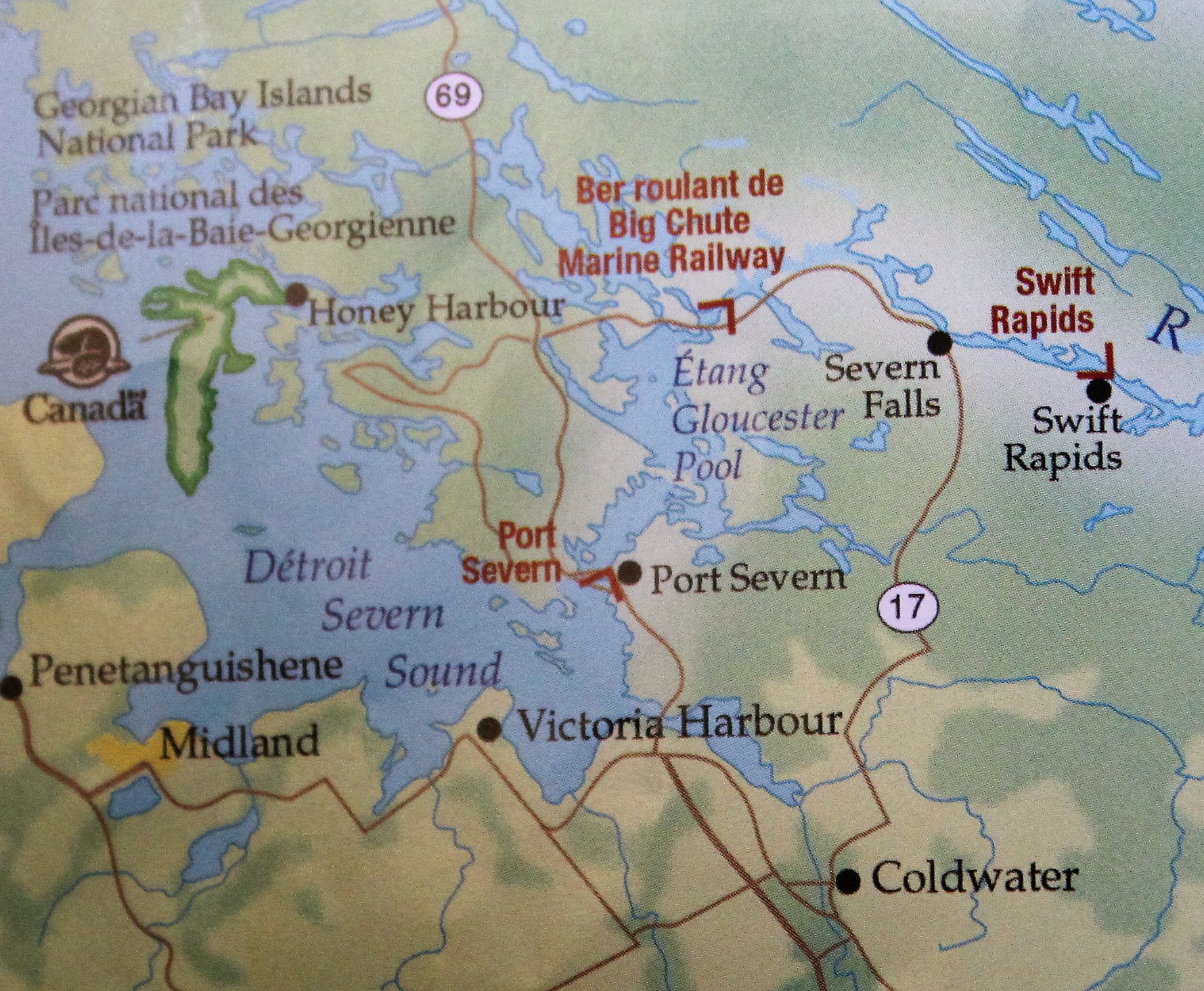
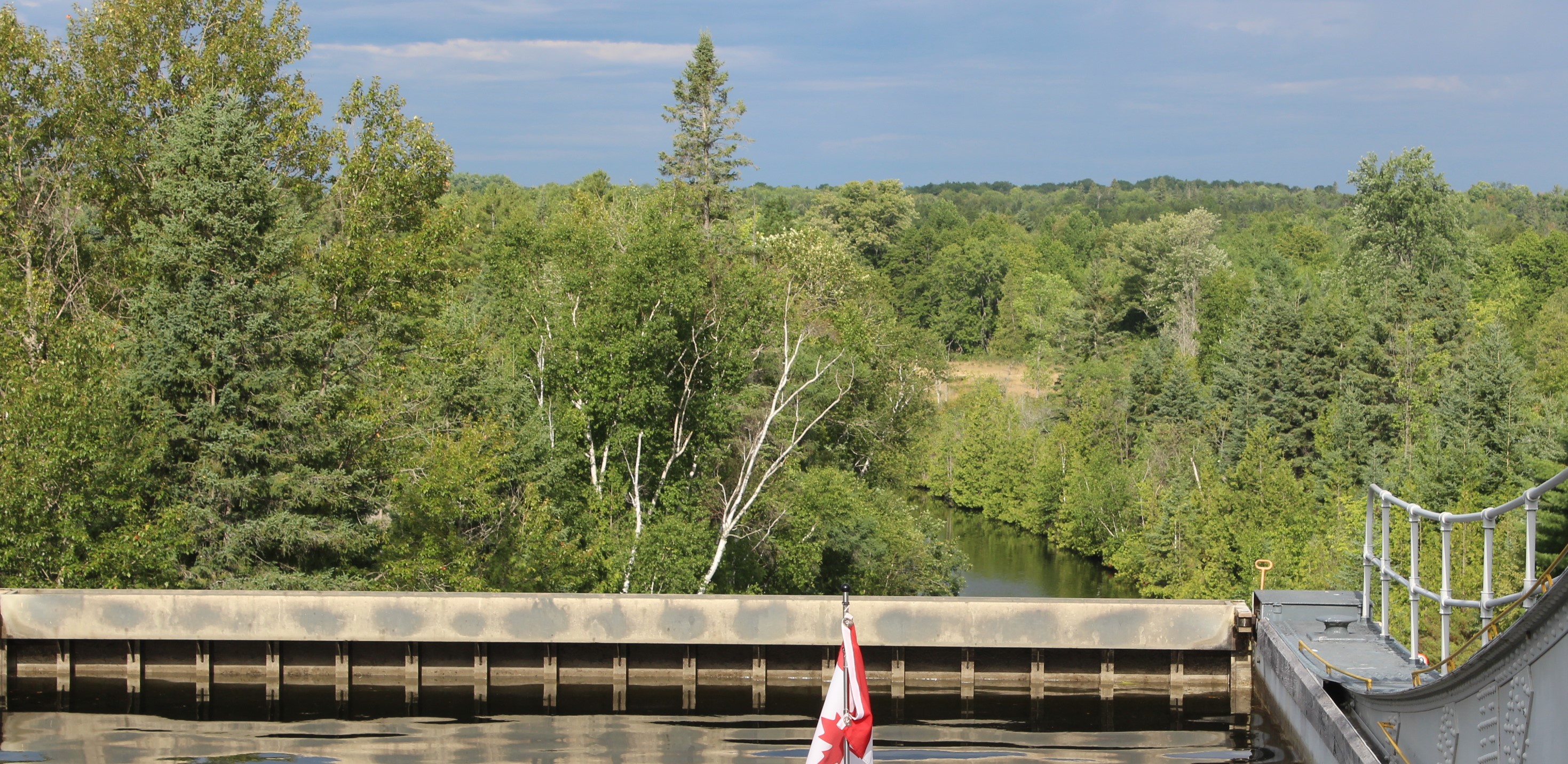
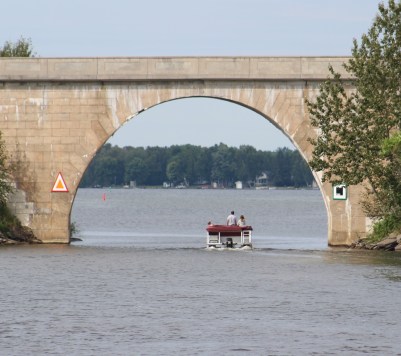
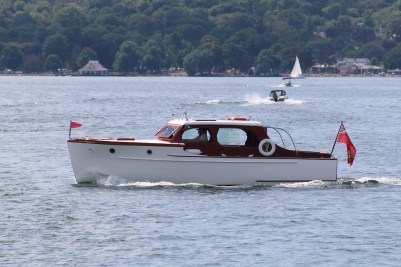
 While going ashore in Orillia the skipper has found the best butter tarts in Canada. The bakery also sells cinnamon rolls and monkey bread. What a great place to be for a few days. The walk to the bakery each morning is about the most exercise the skipper gets most days.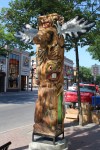
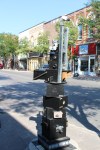
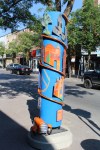
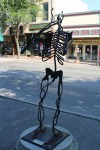
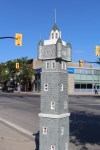
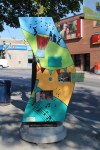

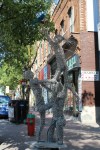
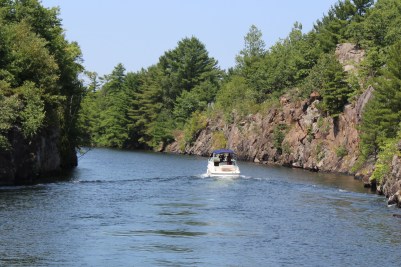 The crew shoved off from the dock about 0915 and headed towards Lock 42. The passage today was through small lakes and narrow passages connecting the lakes. These narrow passages were cut back in 1905 before the advent of modern machinery. The reason the cuts are so narrow is the granite rock was cut using dynamite and manual labor.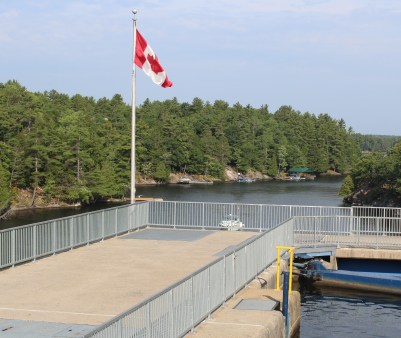
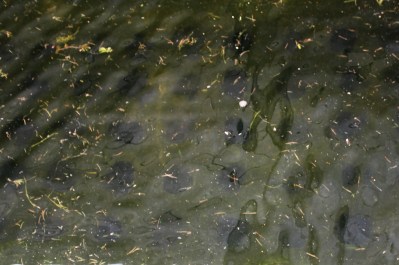
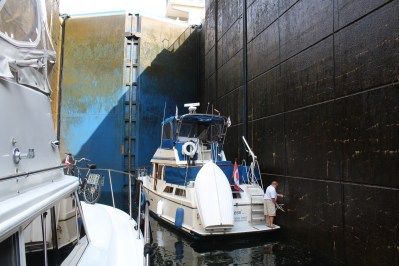
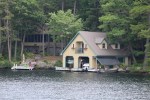
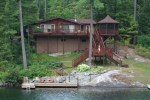
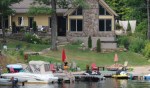
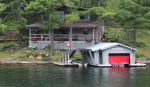

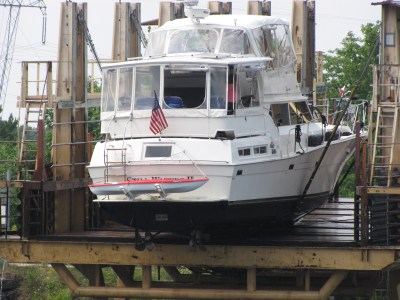
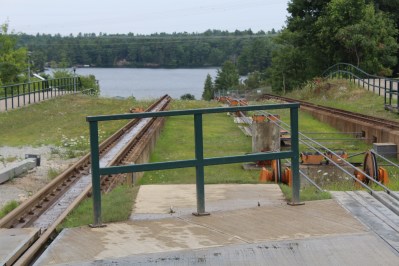
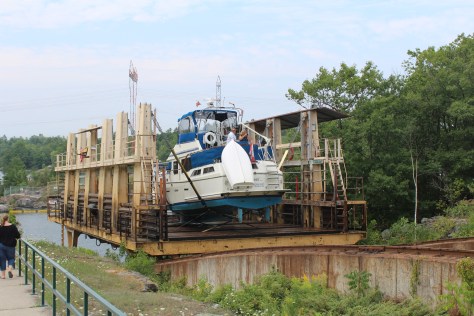
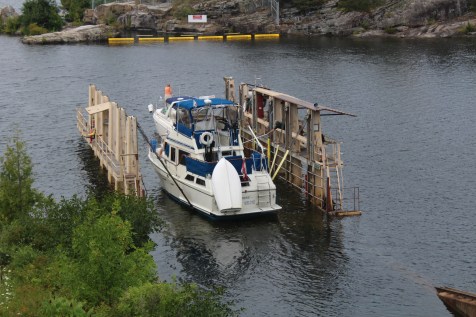
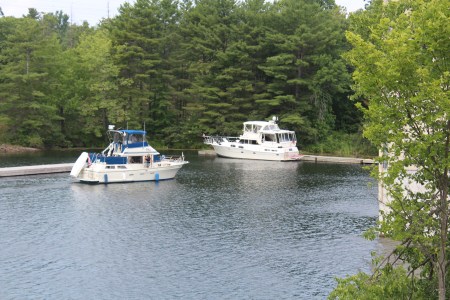
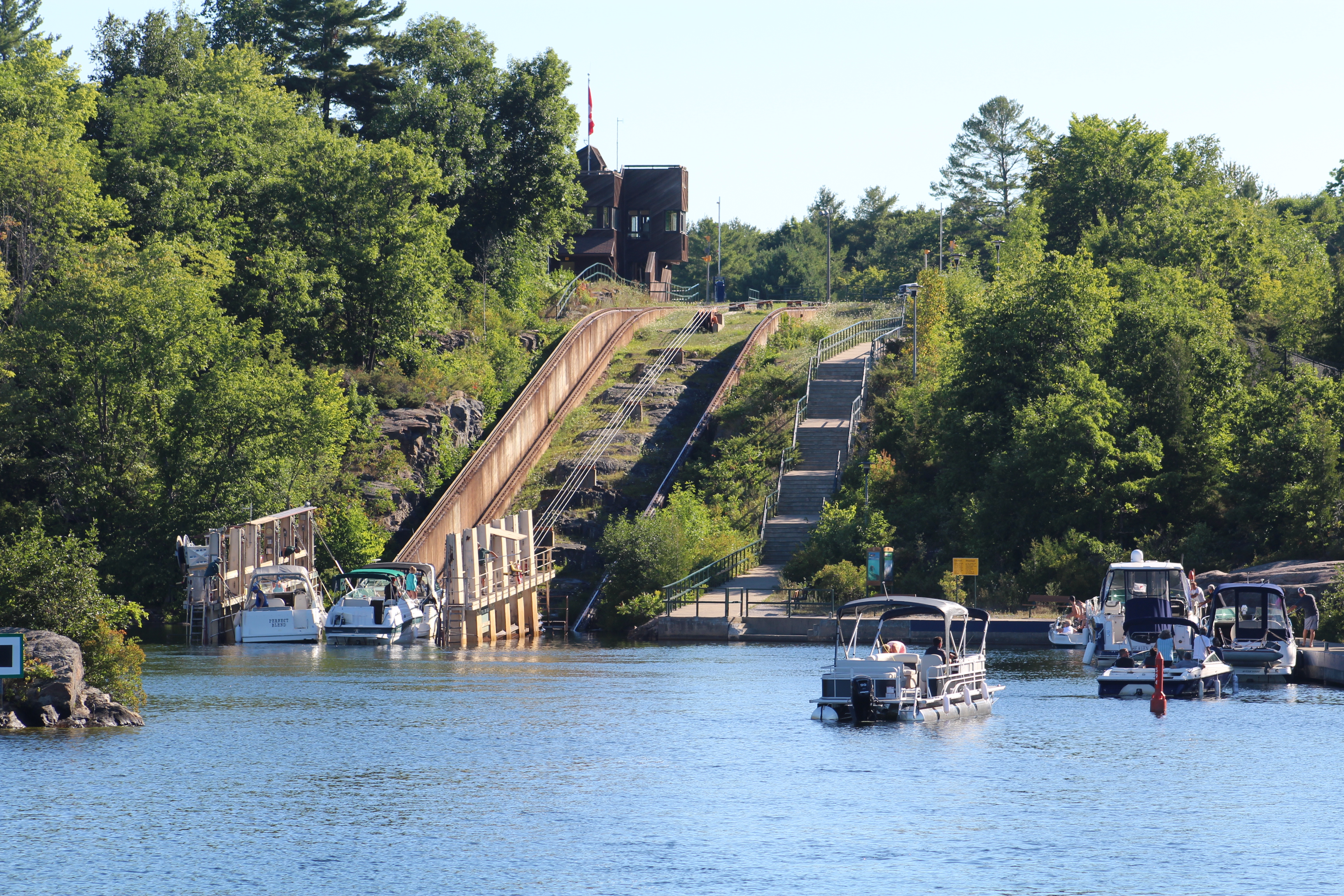
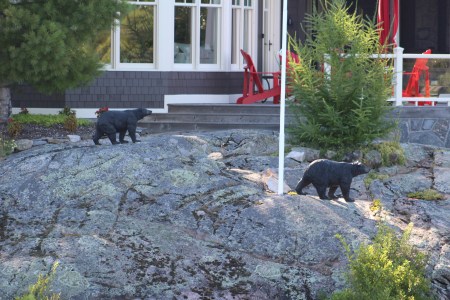
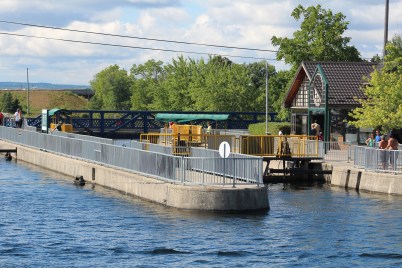
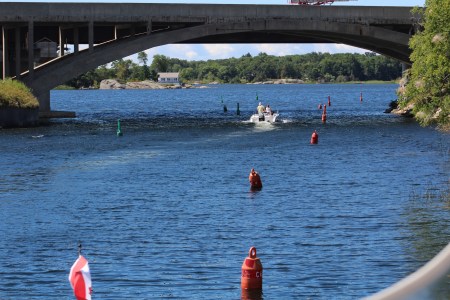
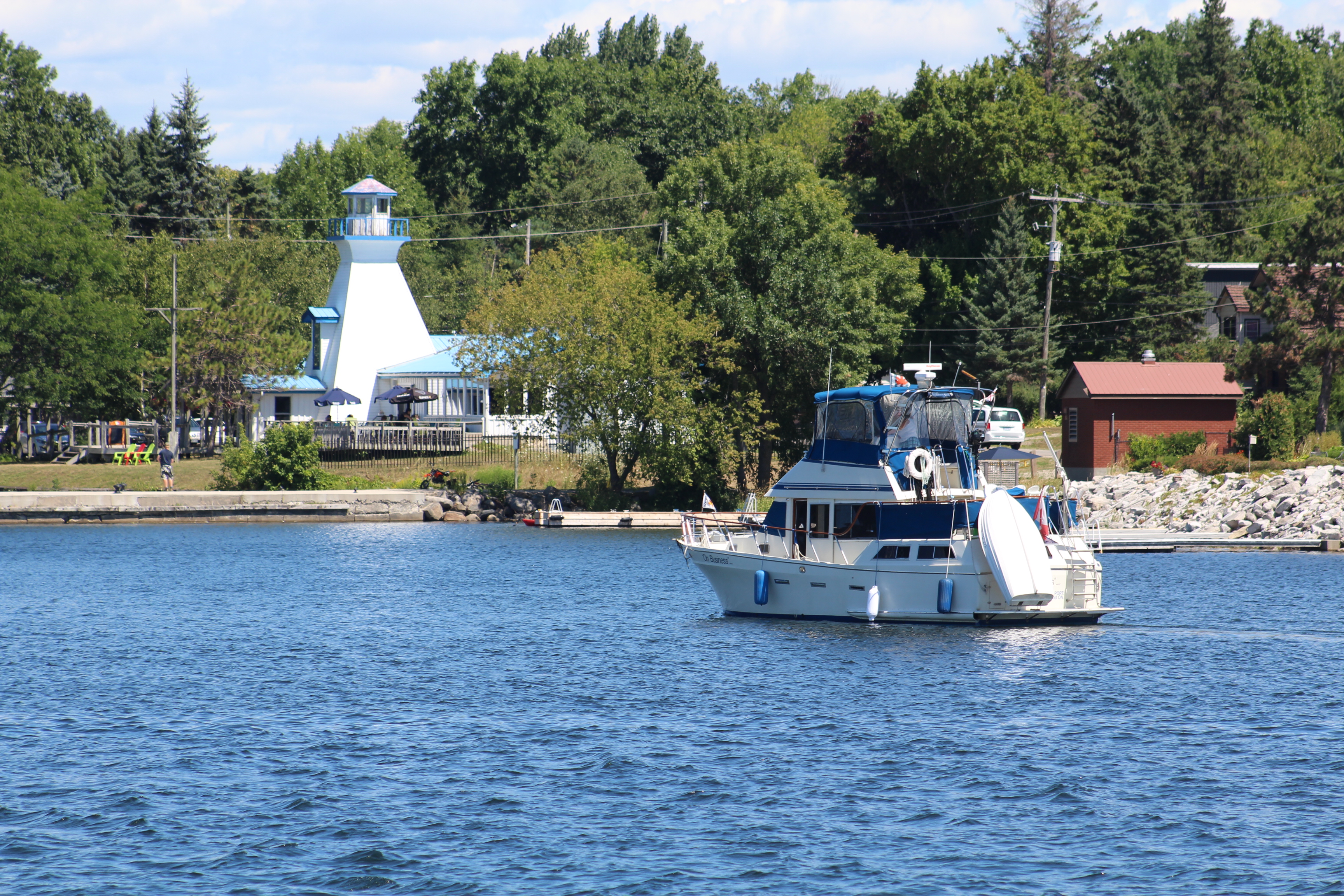
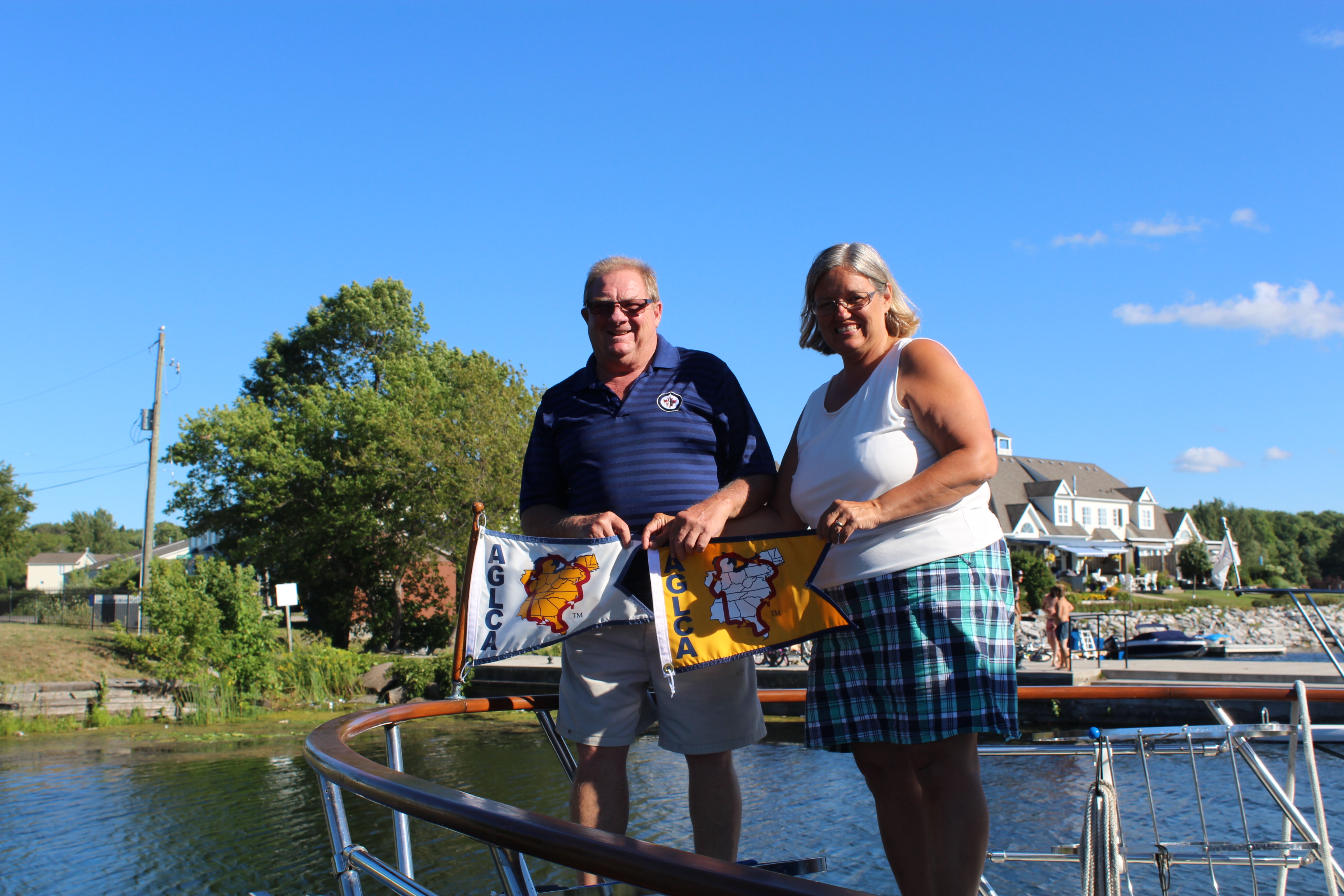
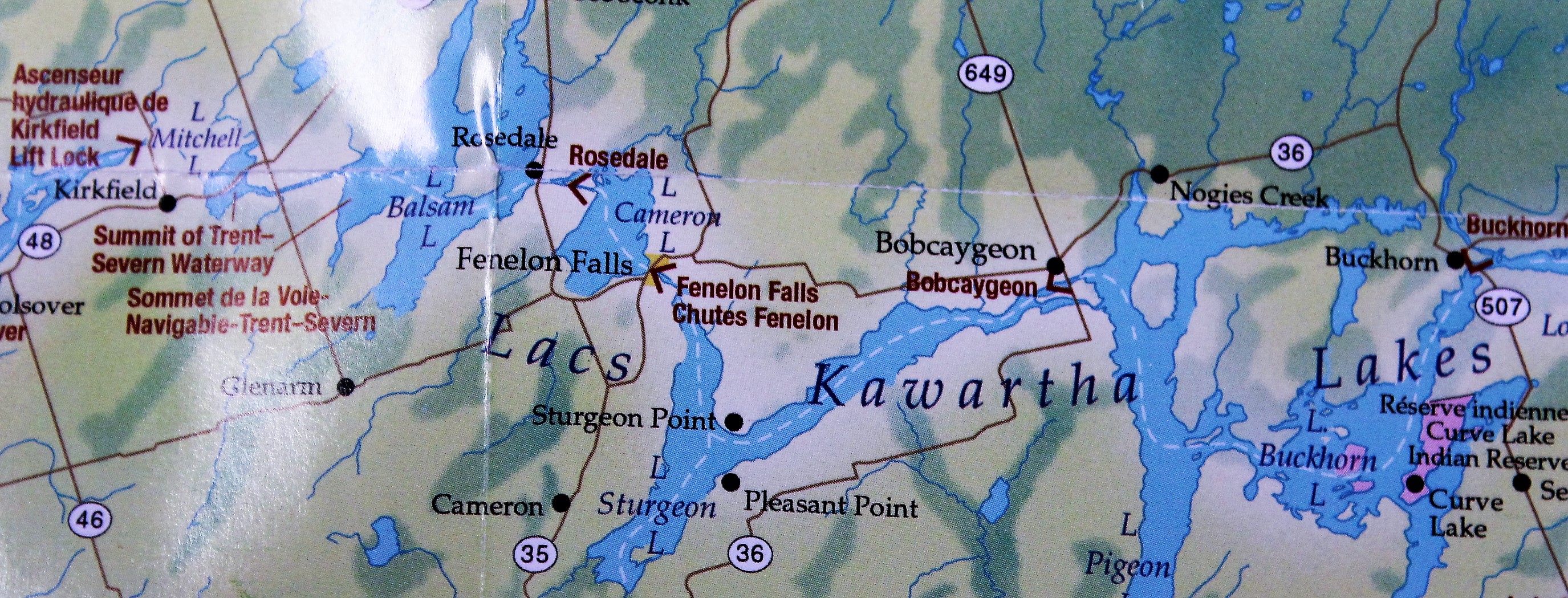
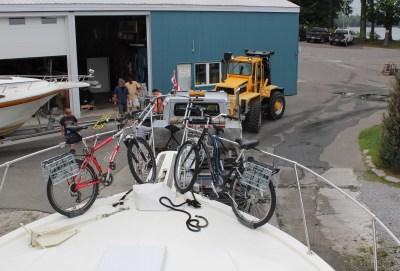
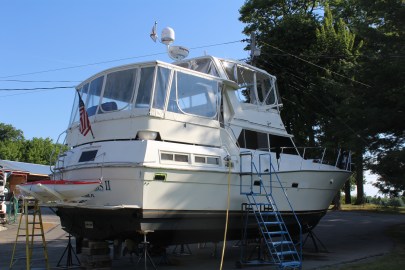
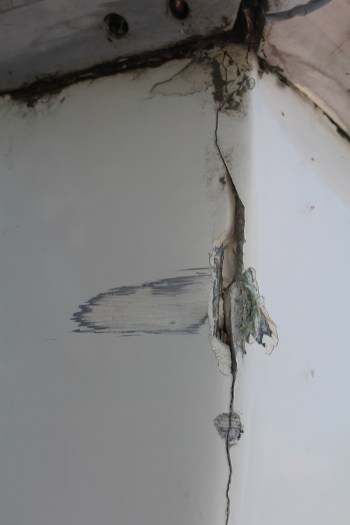
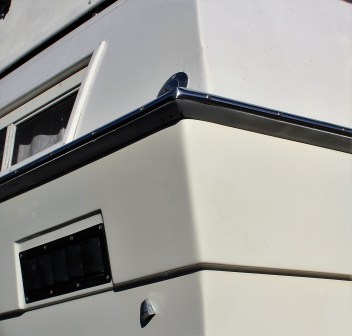

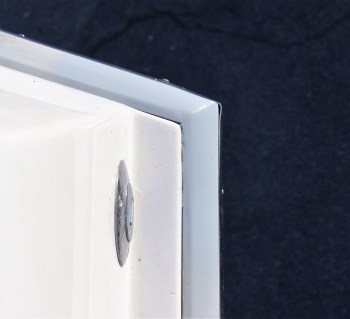
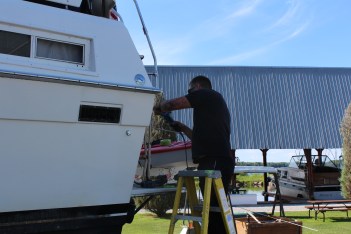
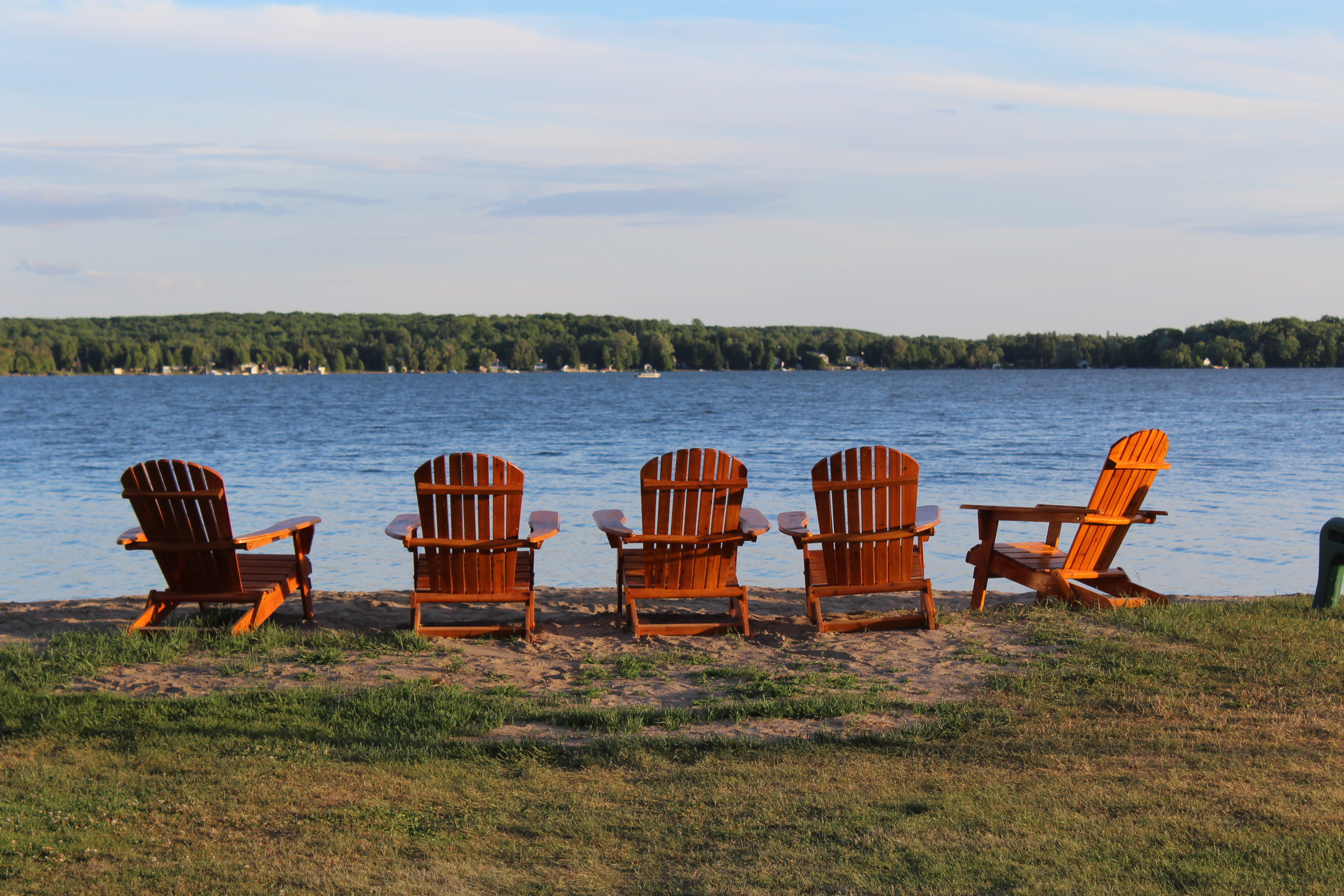
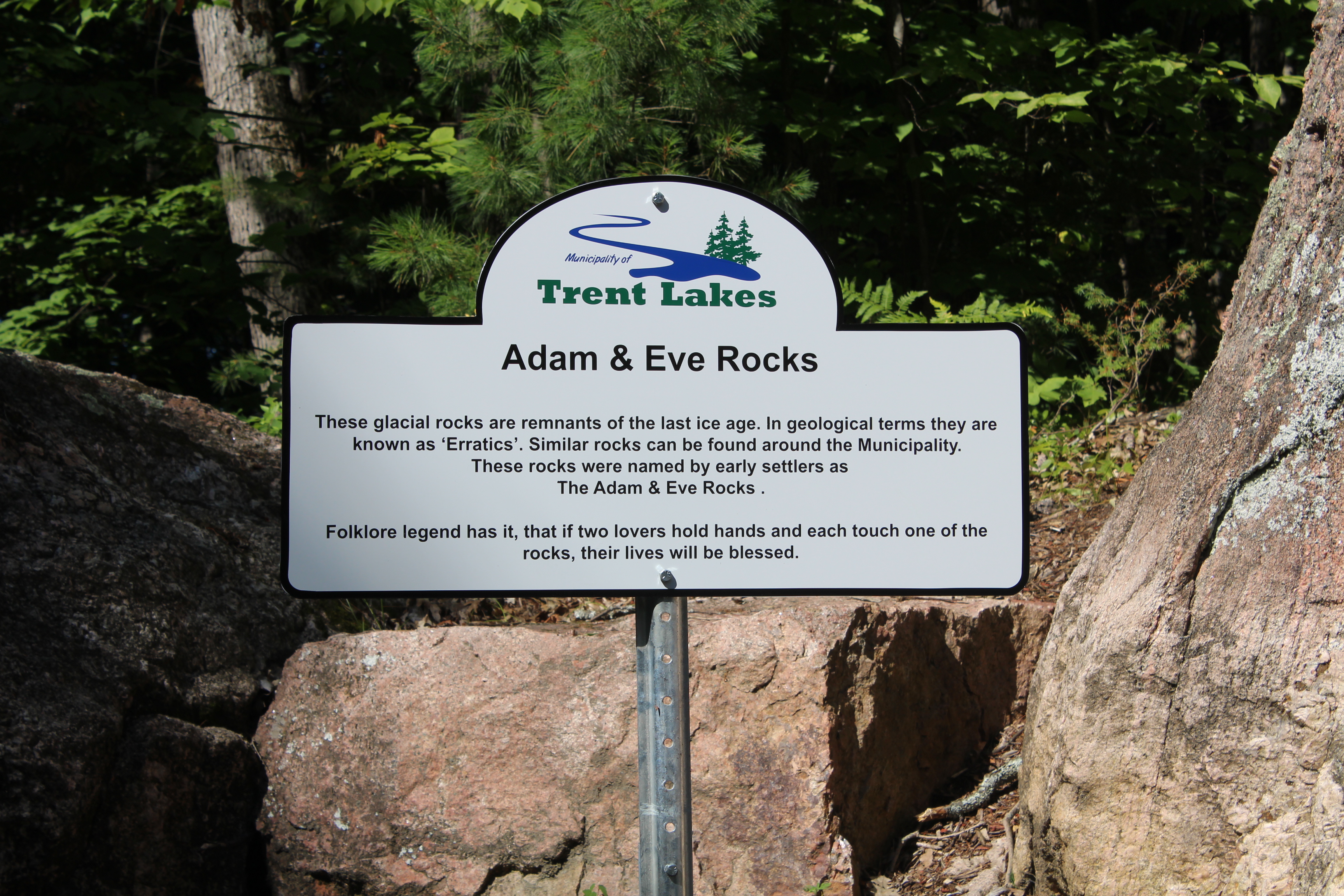
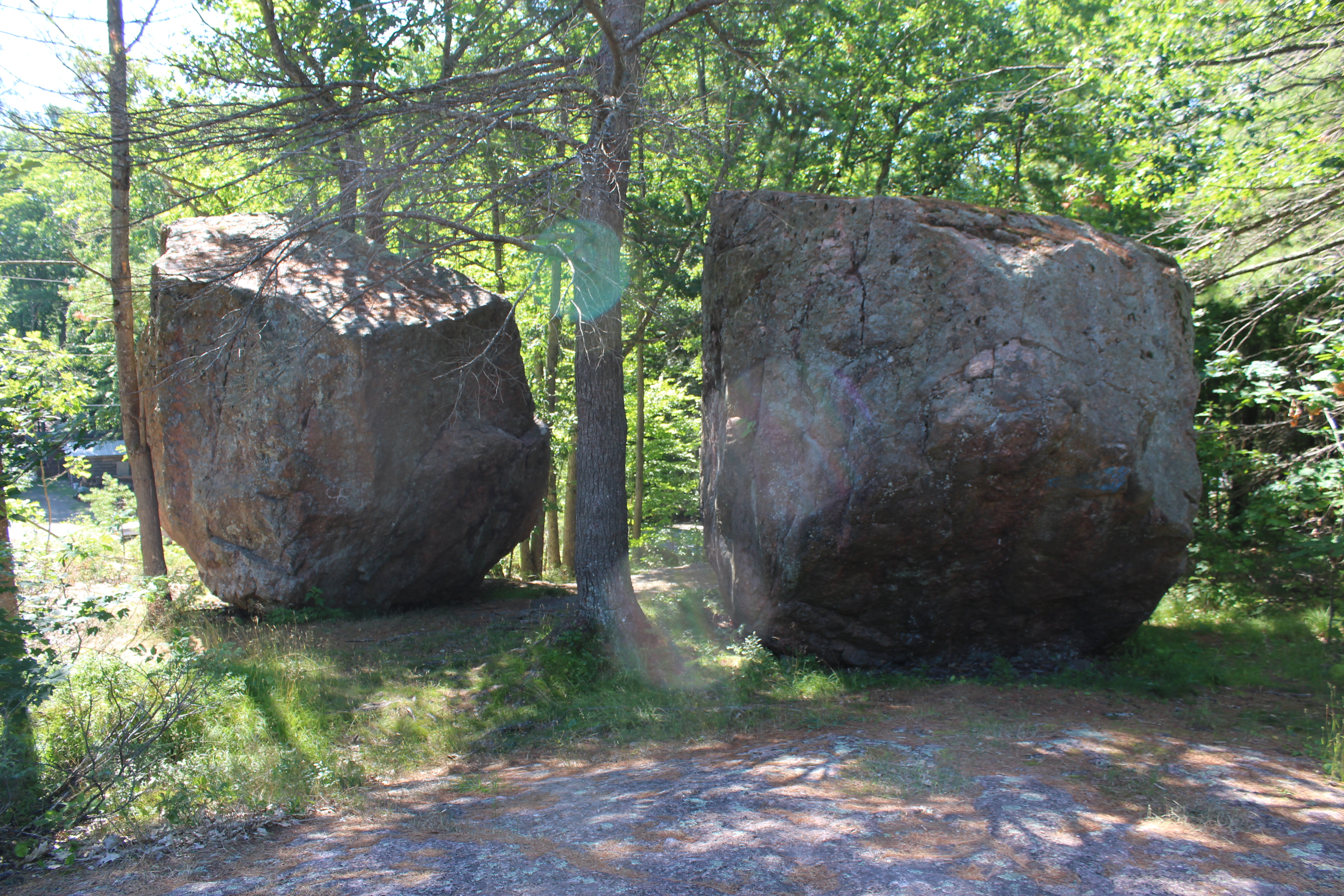

 But, after a week delay, it was time to get going. Upon launching, the crew headed out to see if they could find a spot to dock for the night. As mentioned before, it is a three day weekend, and many people were out on the water enjoying the day.
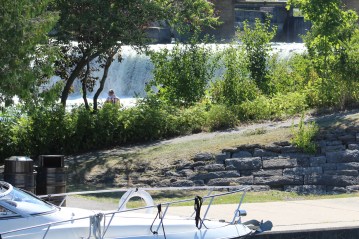
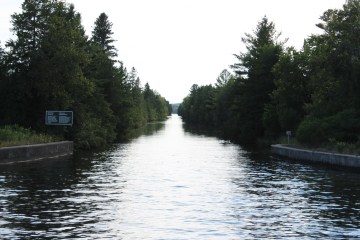 From Rosedale the crew was informed that they would be able to find a place to stay at the Kirkfield Lift Lock. The challenge would be getting there safely. There is a narrow canal that runs for a few miles from Balsam Lake to the Kirkfield Lift Lock. The canal is narrow because it was man made thru a rock formation called the Canadian Shield. There was a sign posted at the entrance of the canal that stated that boats over 40 feet long have to do a securite radio message prior to entrance. The canal is so narrow that two large boats cannot pass so the skipper had to make sure that no one was east bound in the canal prior to entering.
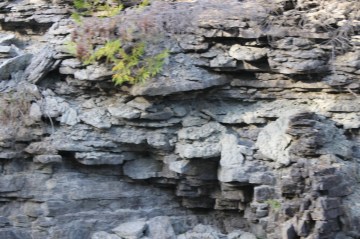


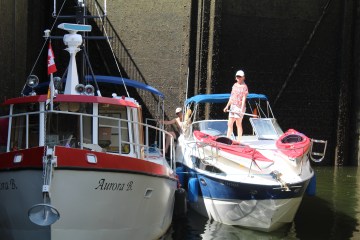 Two boats actually arrived about the same time as the second lock worker. The gates were opened and the crew locked thru with the two other boats. The lockmaster directed the third boat to raft up next to the second boat. This was the first time the crew had been in a lock with boats rafted together. The skipper asked the lockmaster why they did not just tie up on the port wall rather than rafting. The Lockmaster replied that the turbulence in the lock was from port to starboard while filling and people have trouble staying on the port wall. Rather than have them come off of the wall and bounce off another boat, he prefers to just raft together.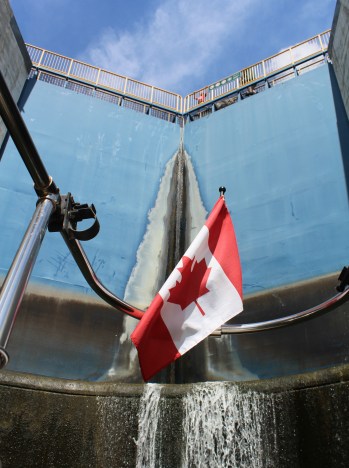
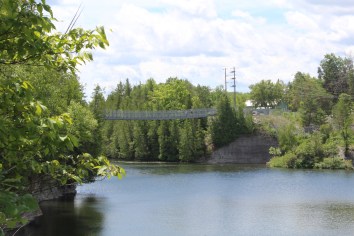

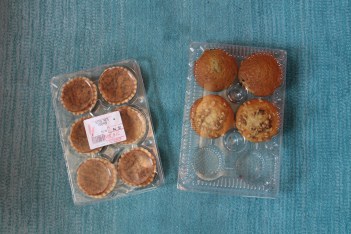
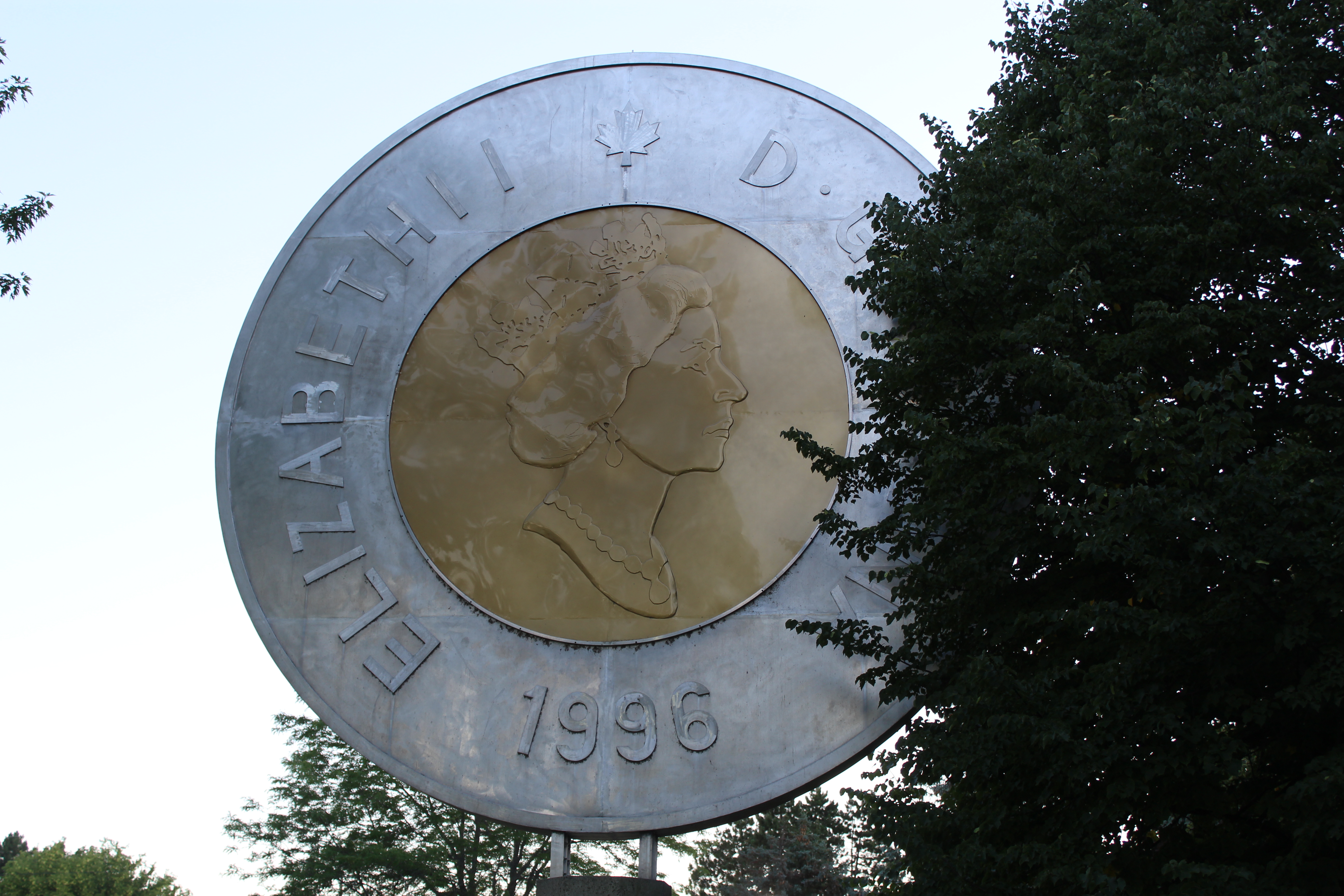
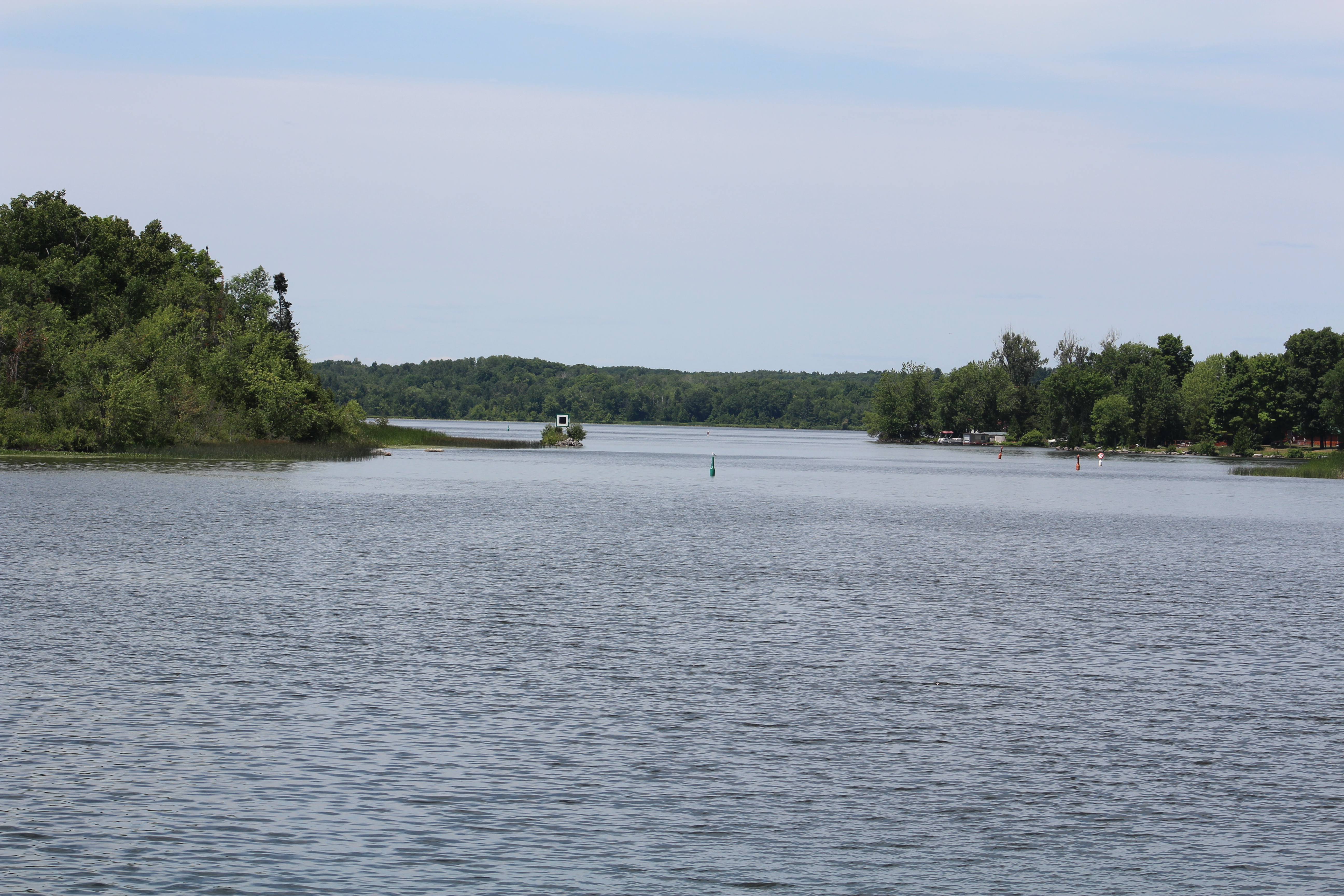

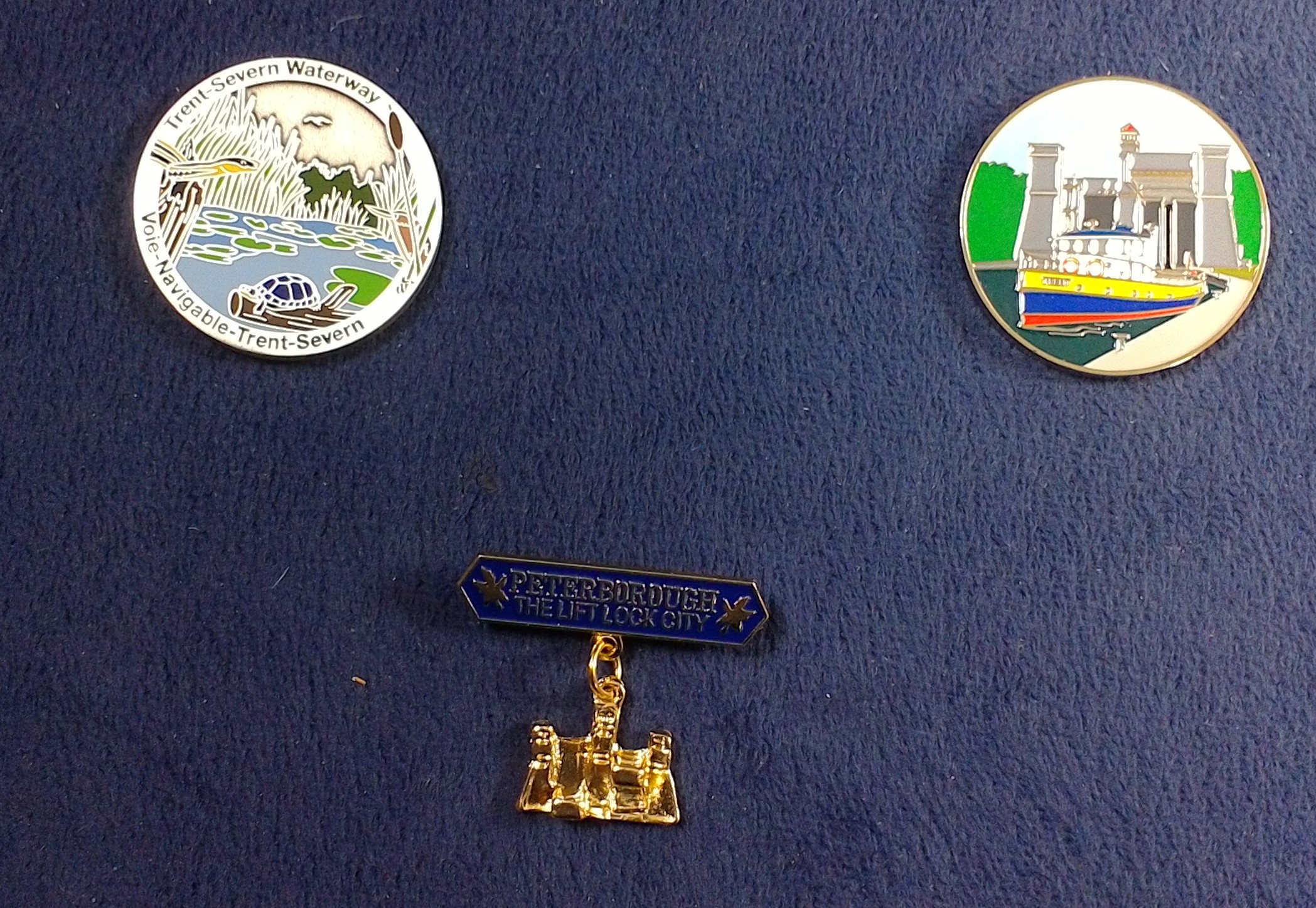
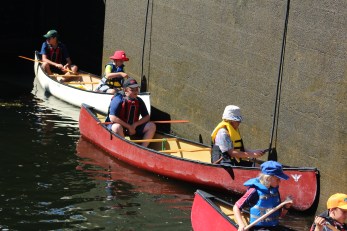 The canoes locked thru with Still Waters II. Because the canoes were in the lock, the lock tender raised the level slowly. The 14’ lift took almost 30 minutes.
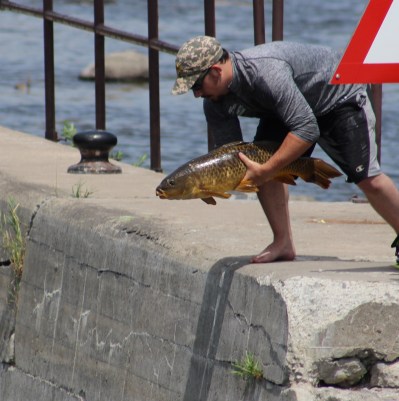
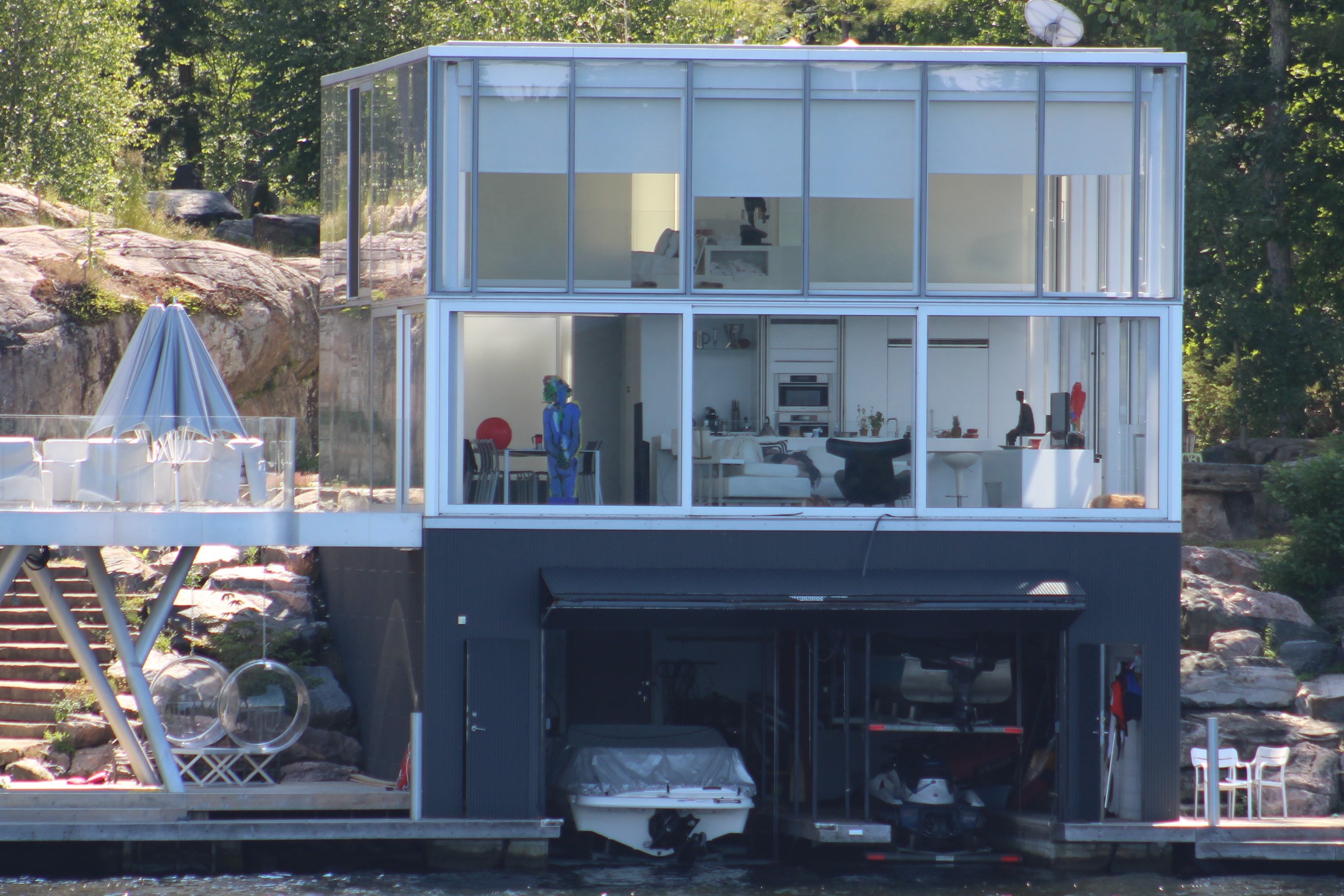

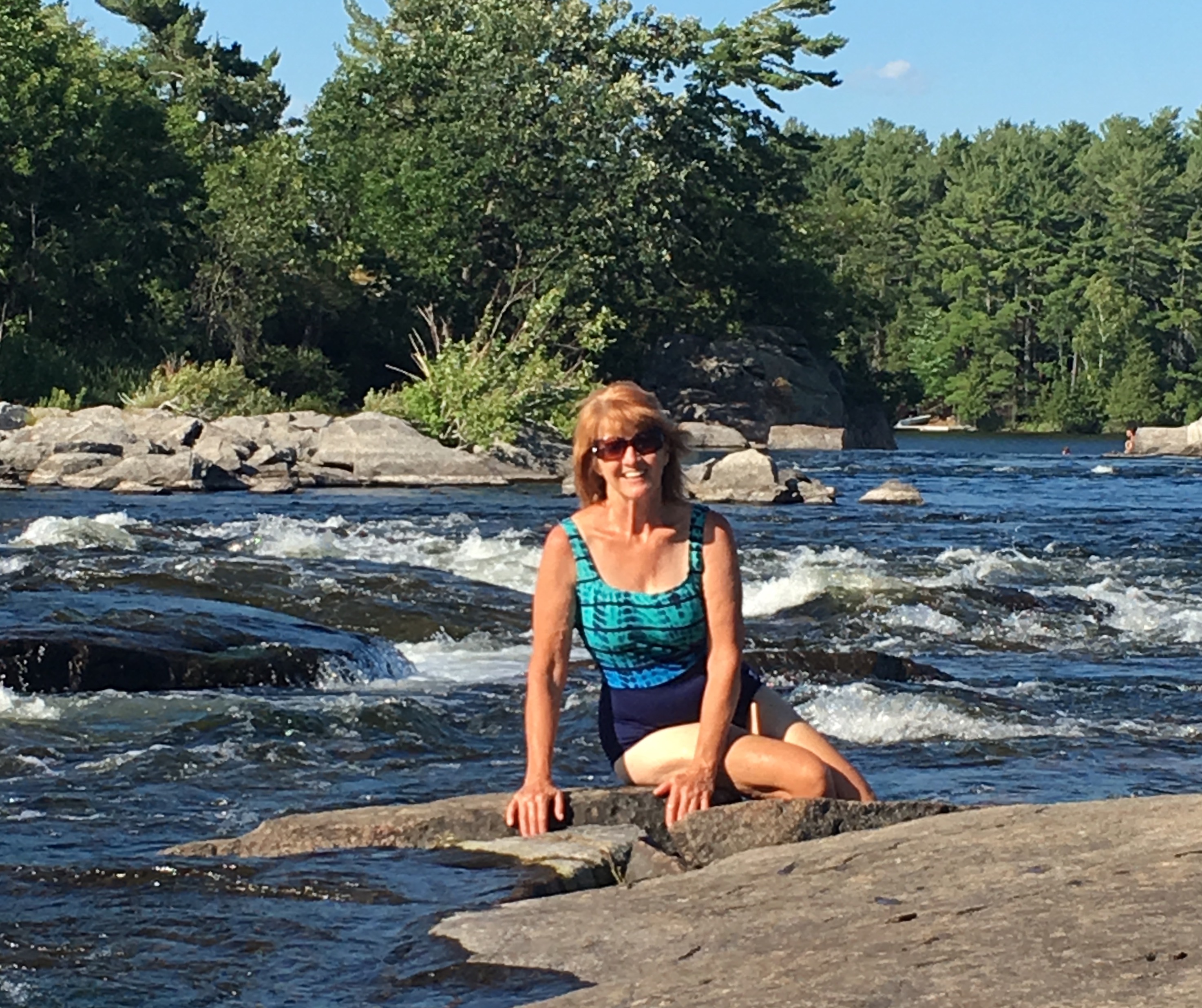
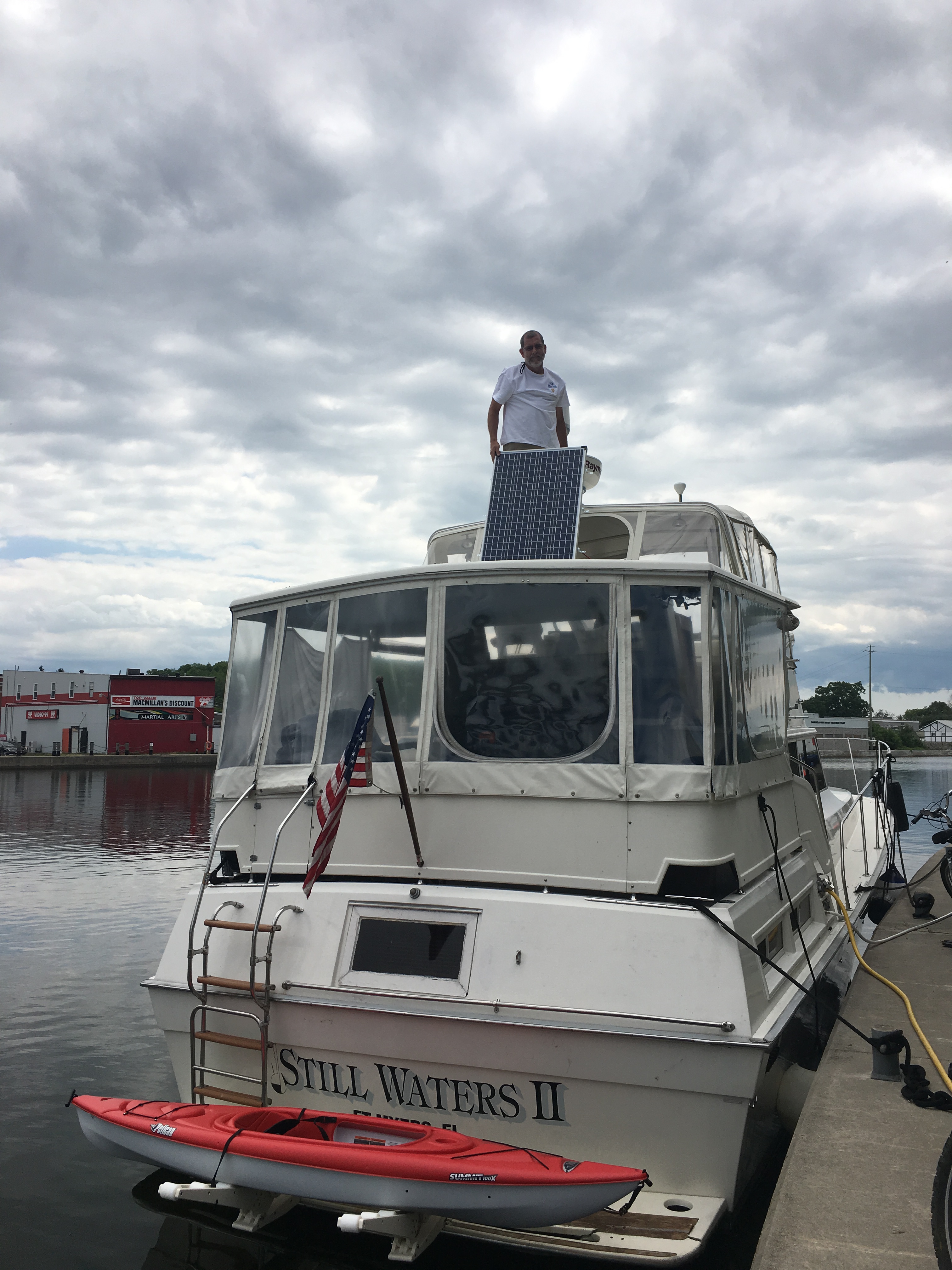
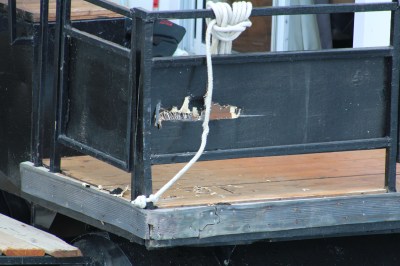
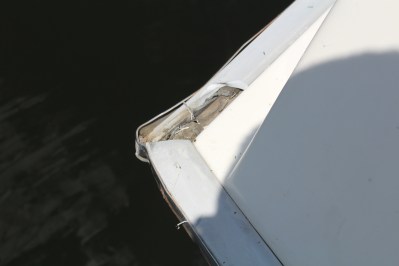


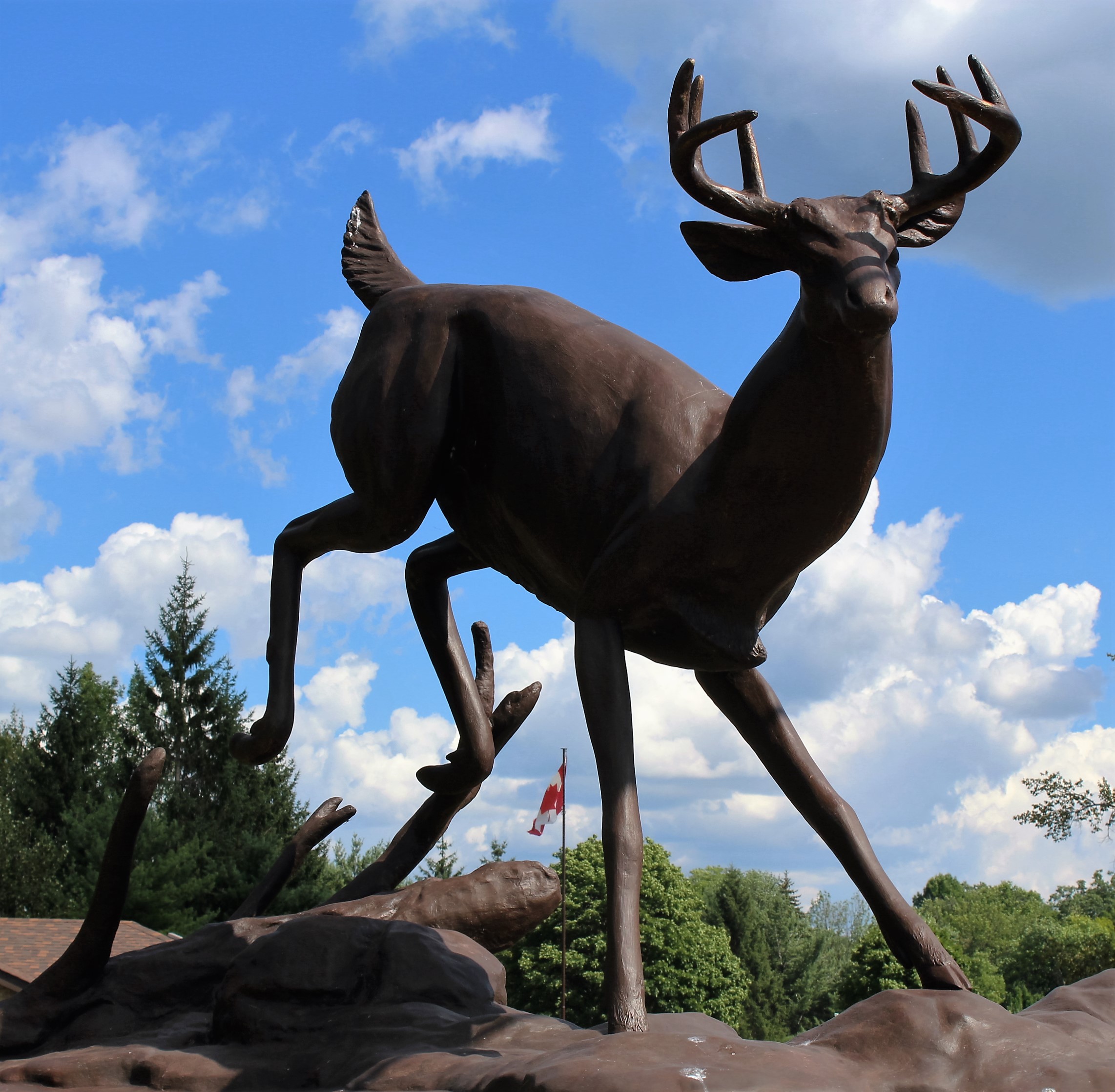
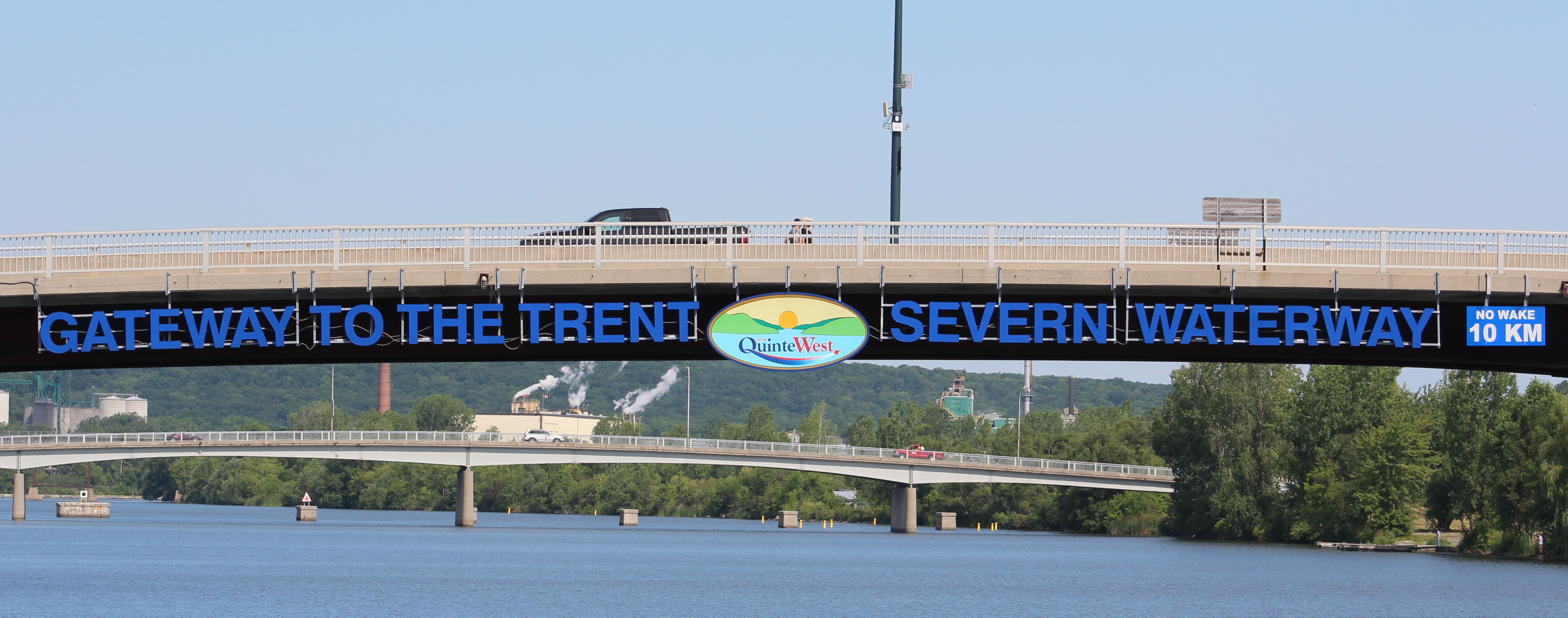
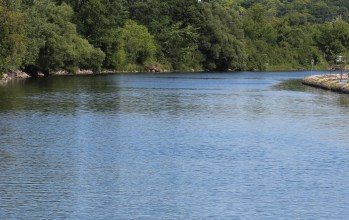
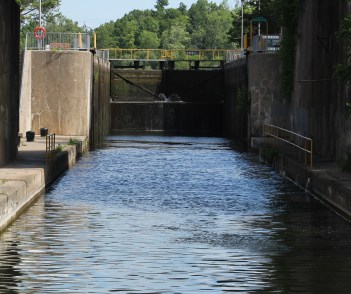

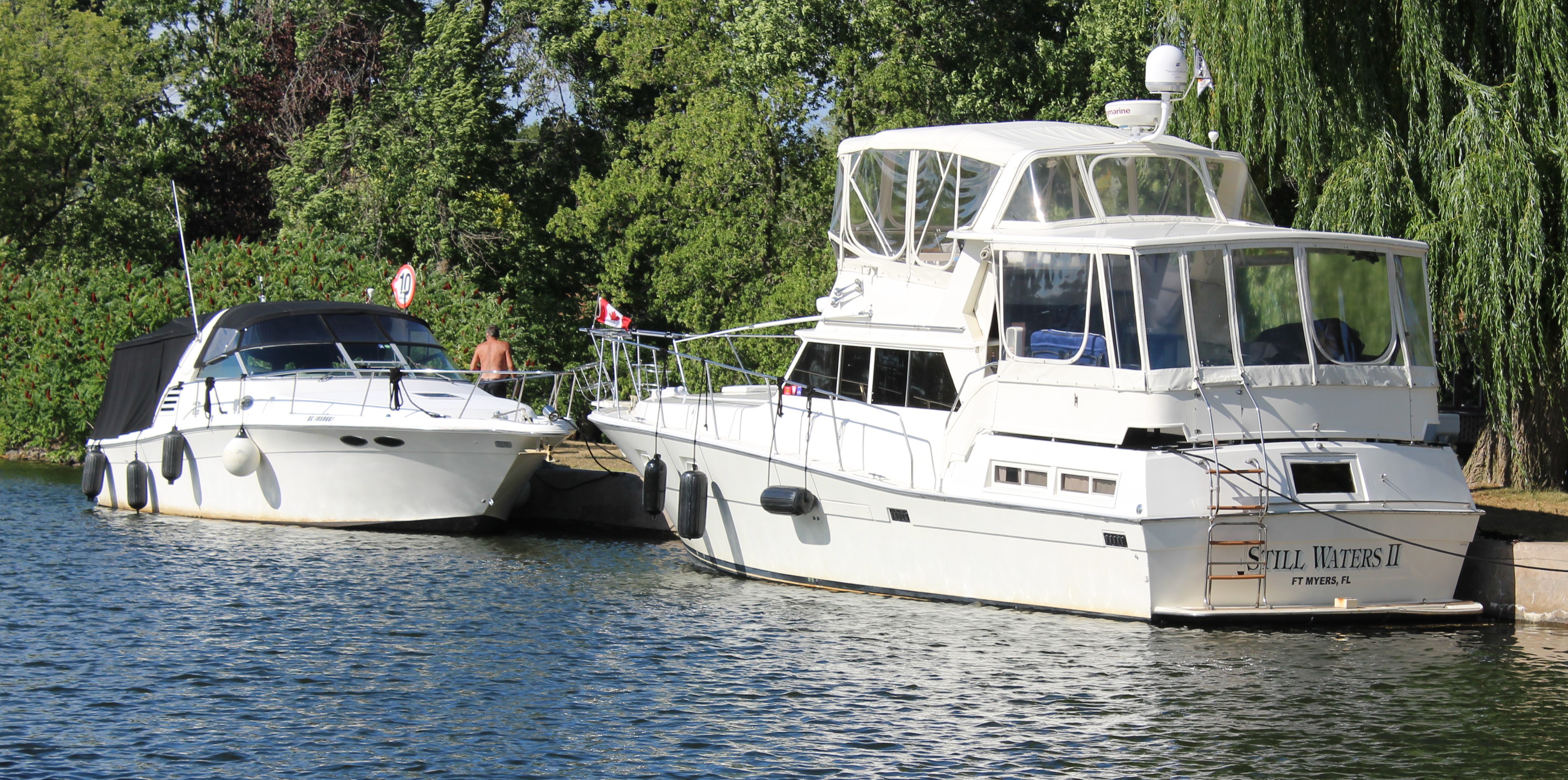

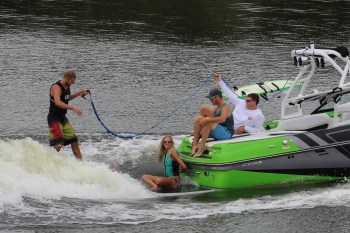

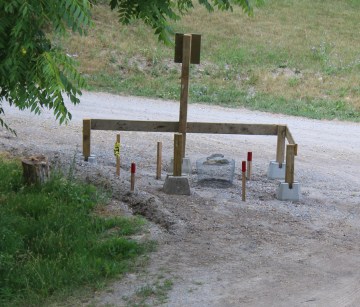 After arriving back at lock 8, the Lockmaster showed the crew a snapping turtle nesting site. He said the eggs should hatch sometime the first part of September.
 Upon hiking back to Lock 9, the crew found that they would be the only boat along the wall tonight. A lovely peaceful night on the water.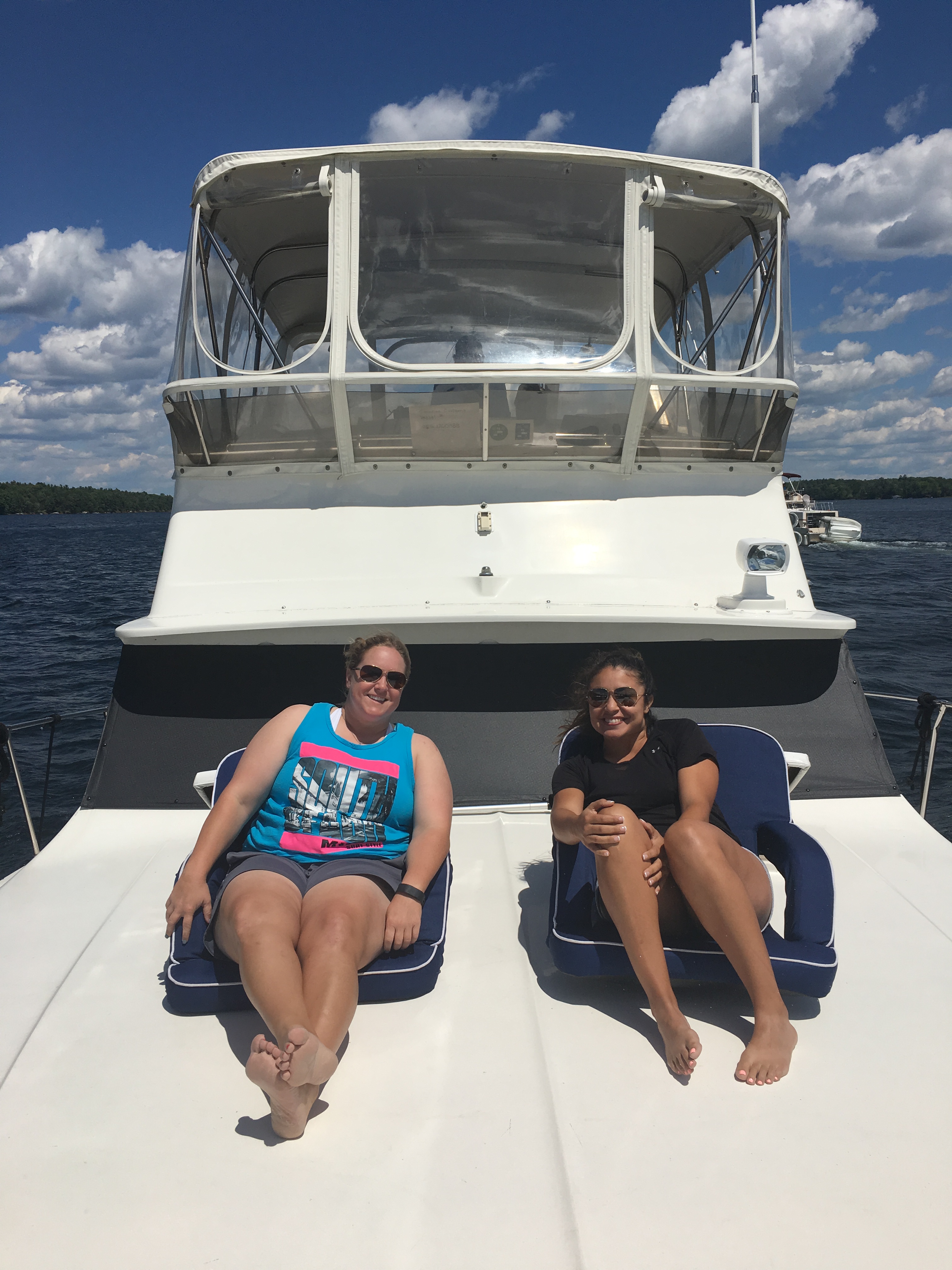
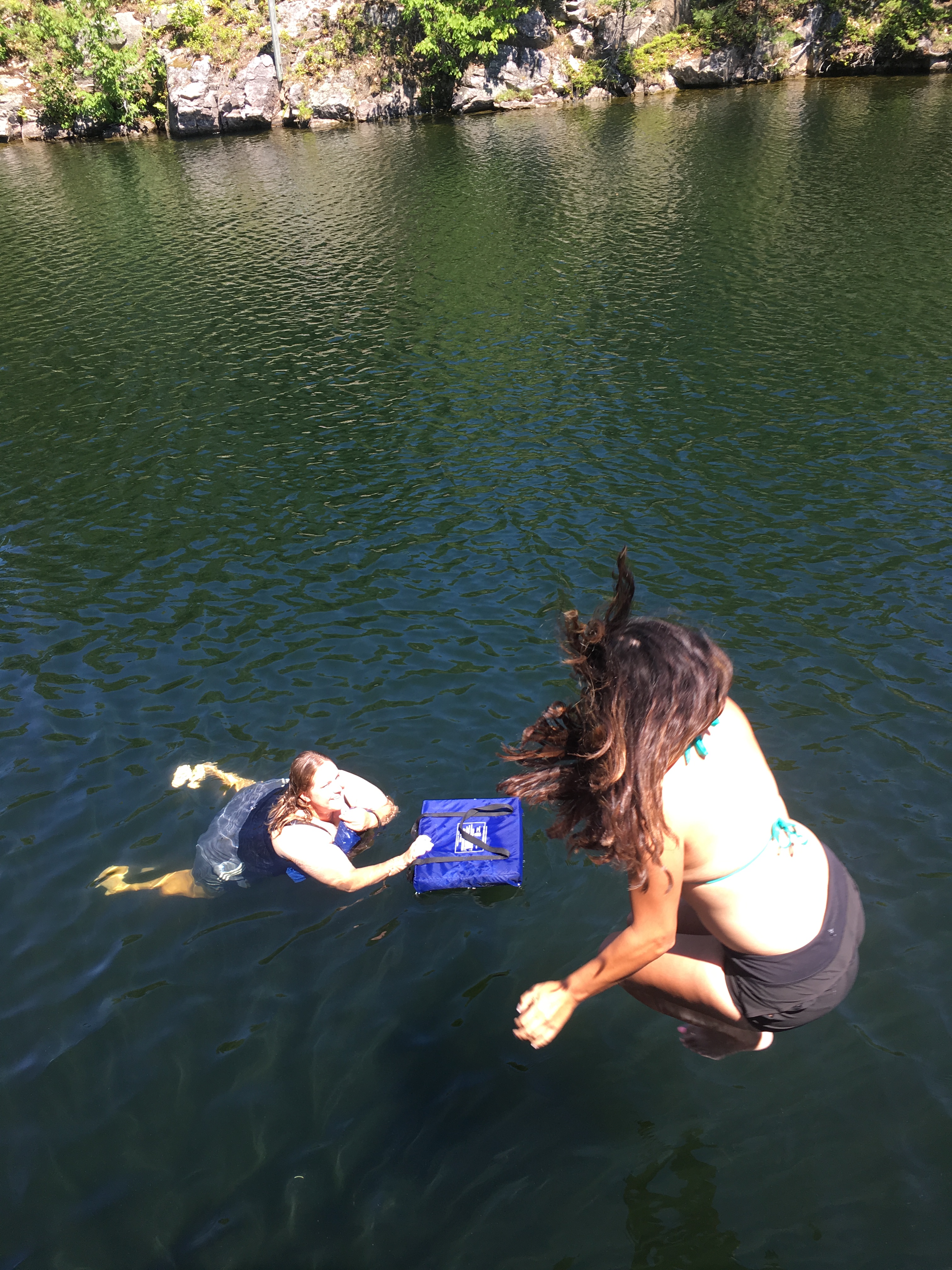
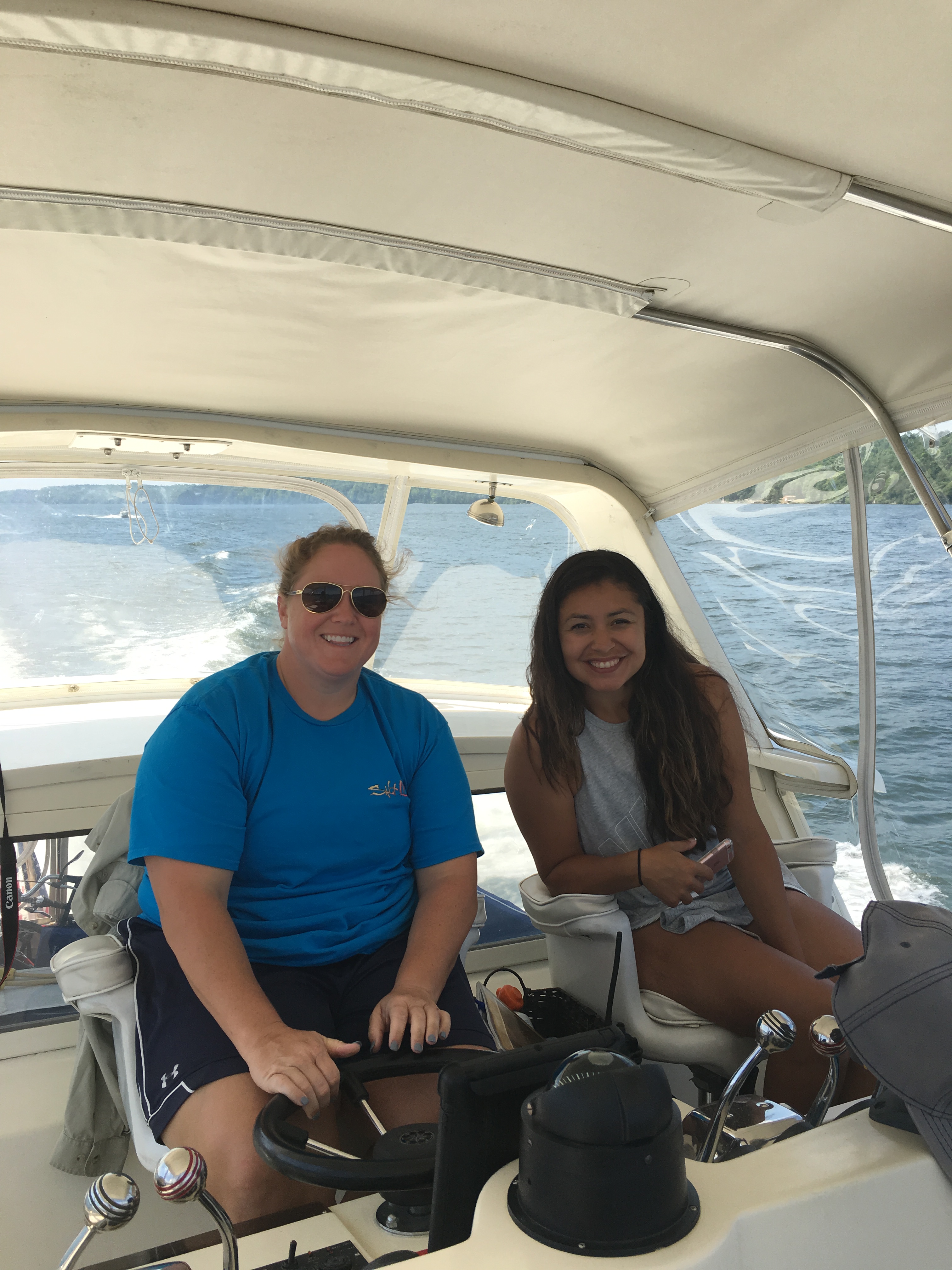
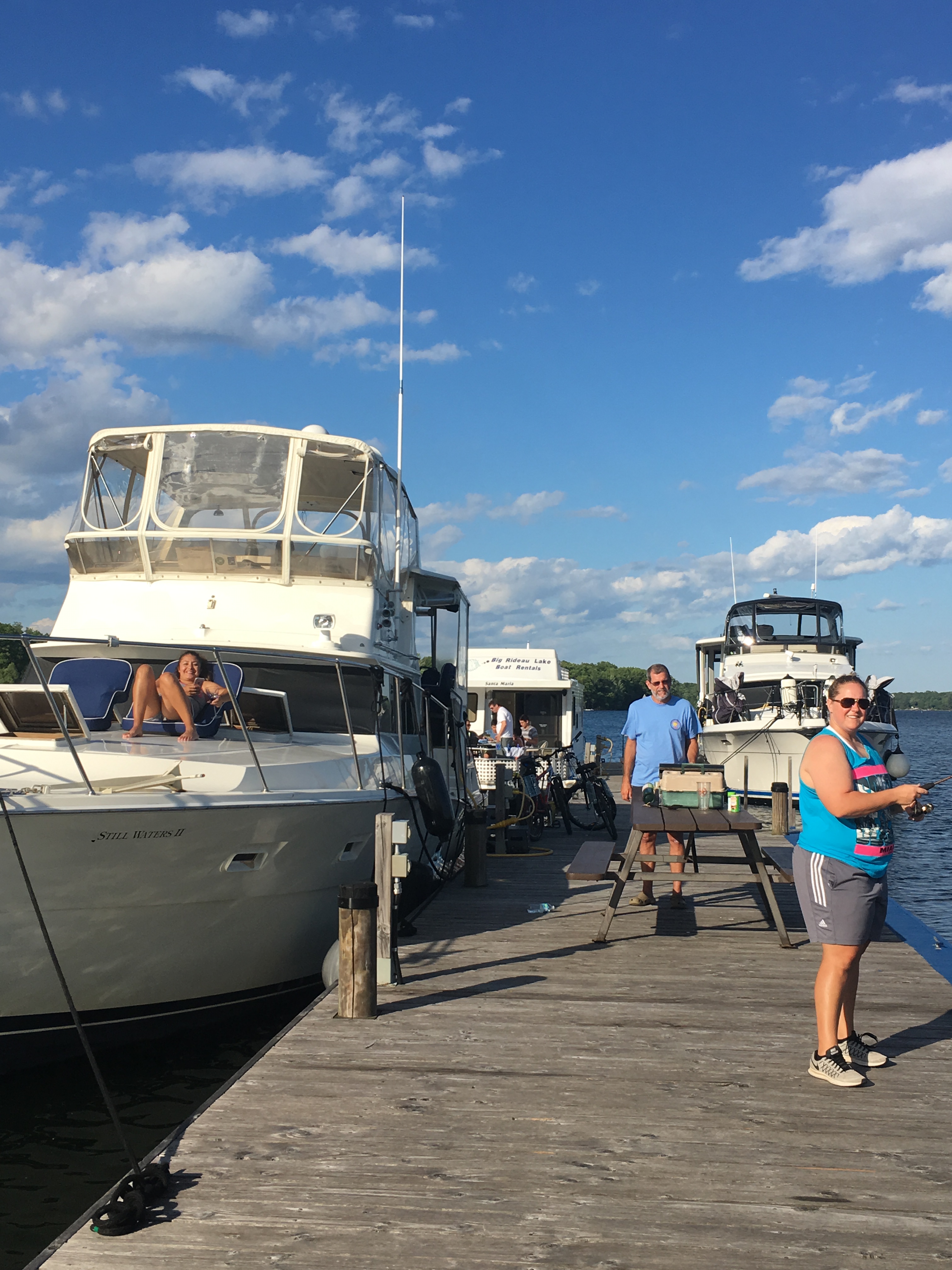
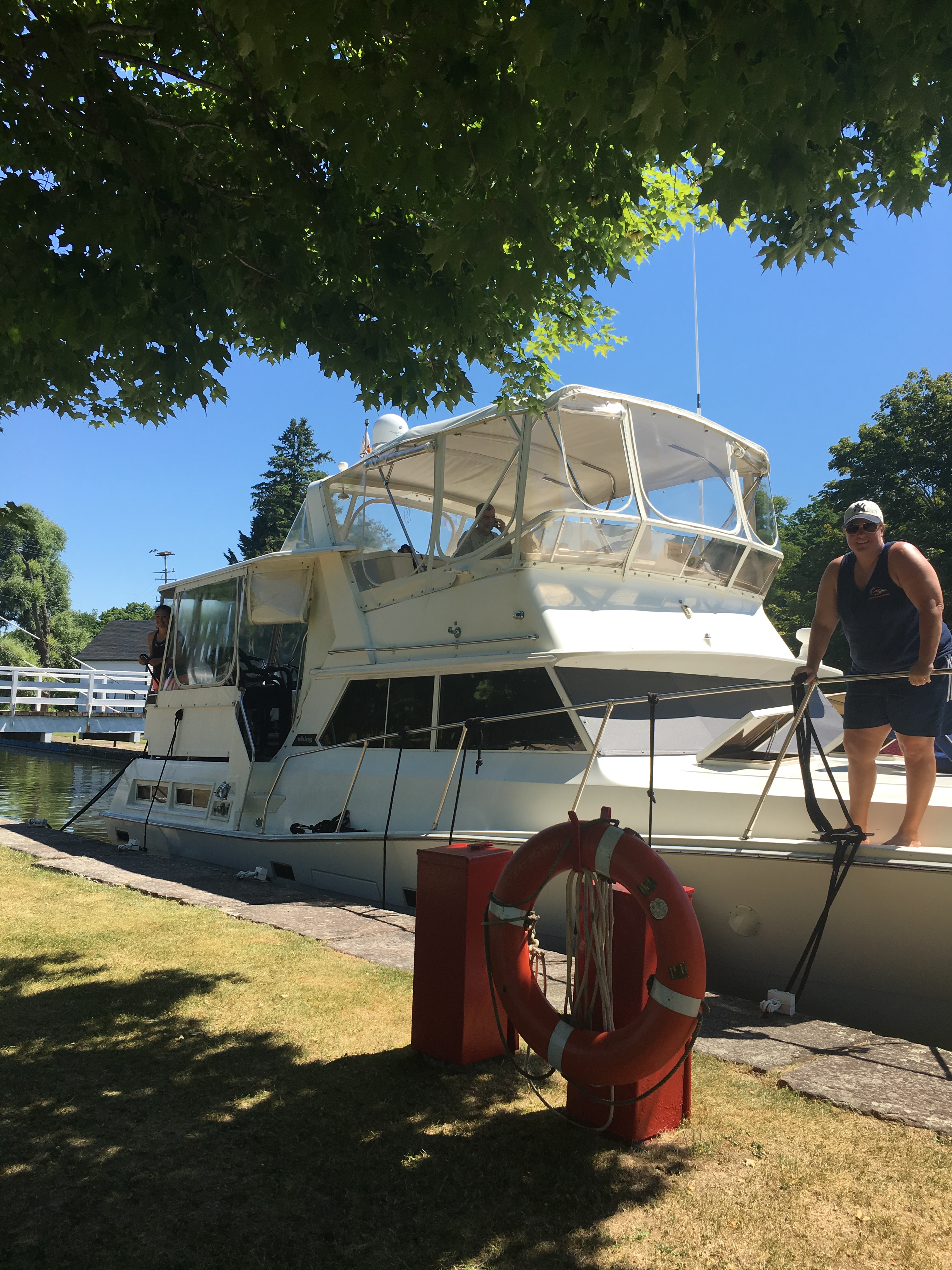
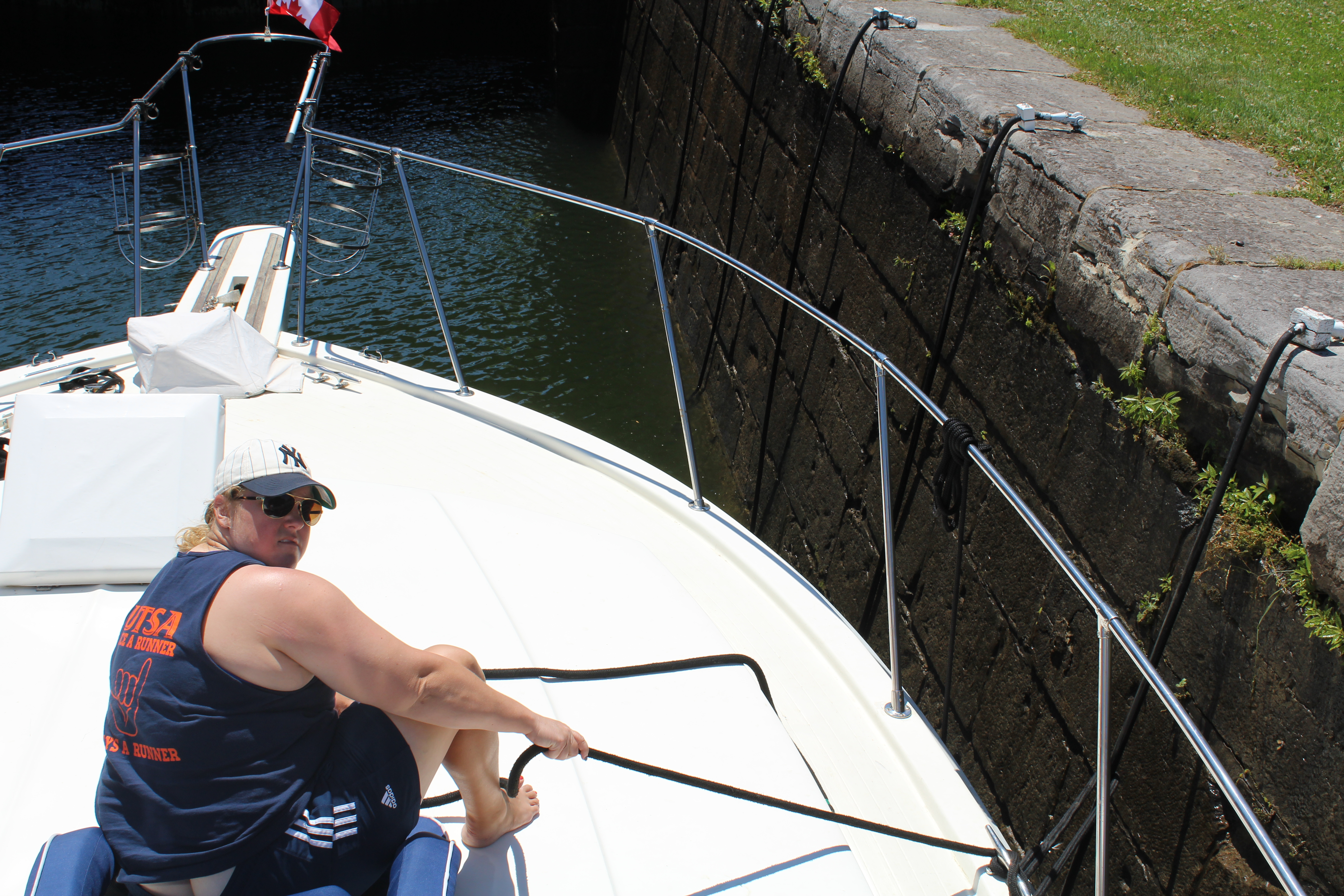
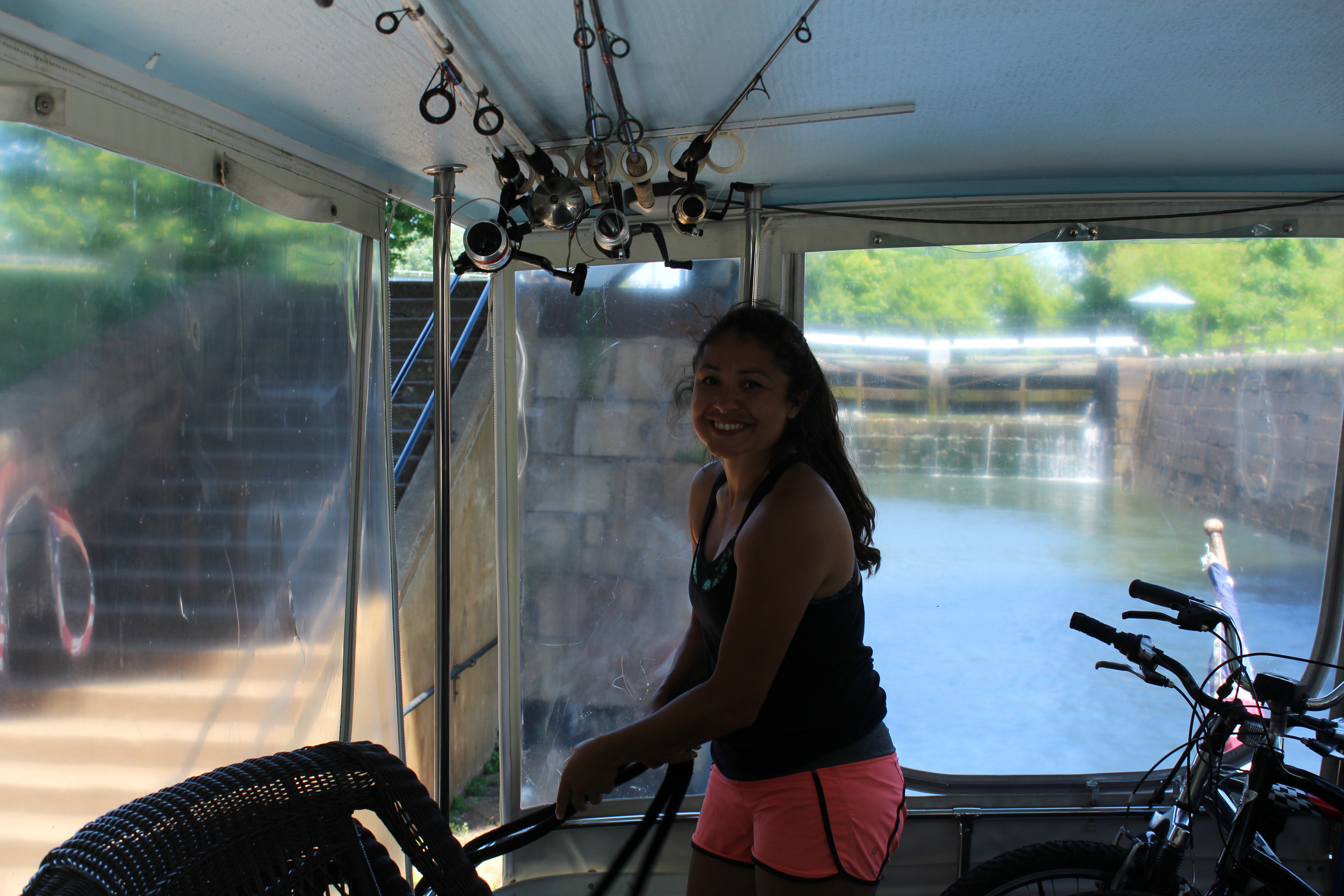
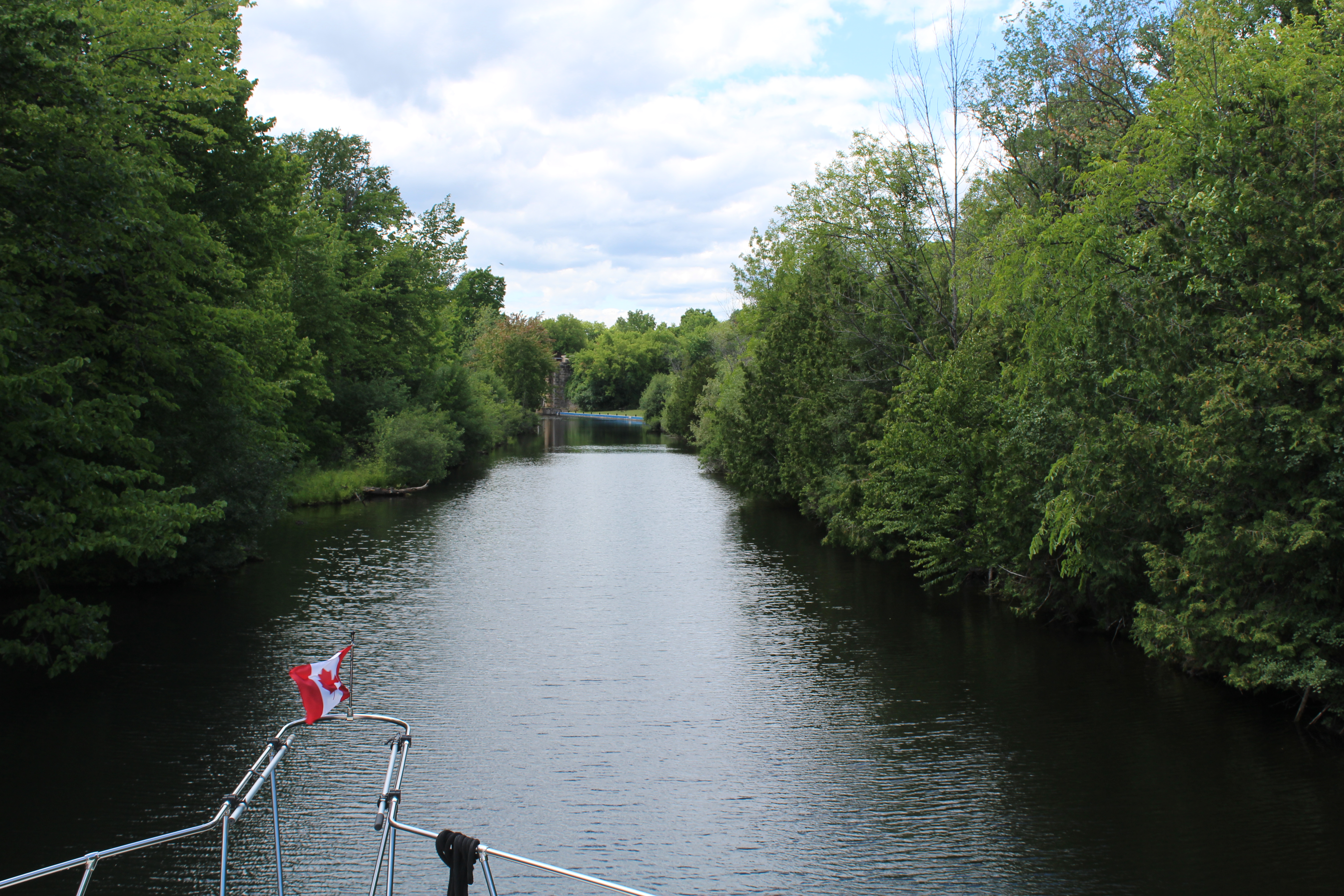
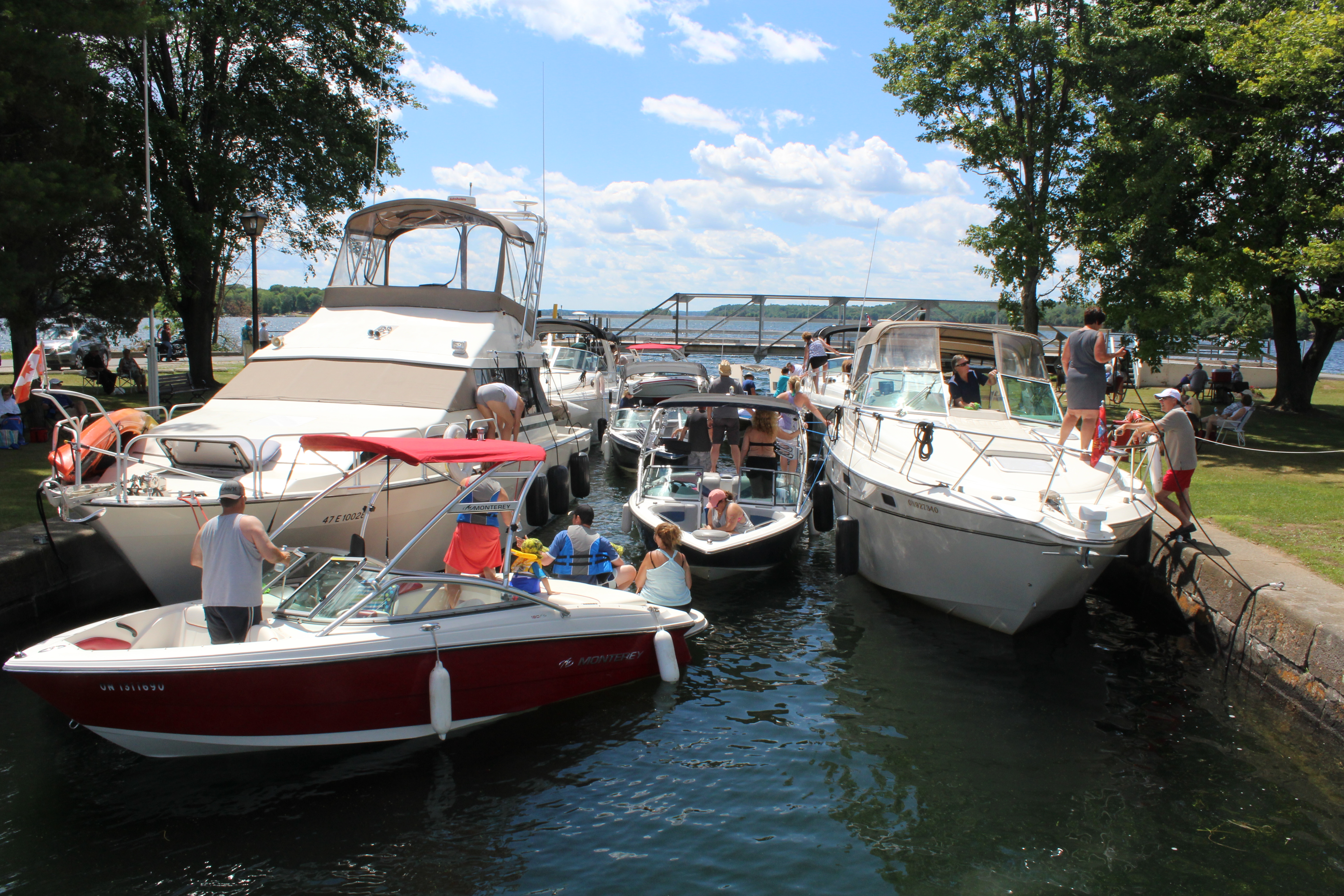
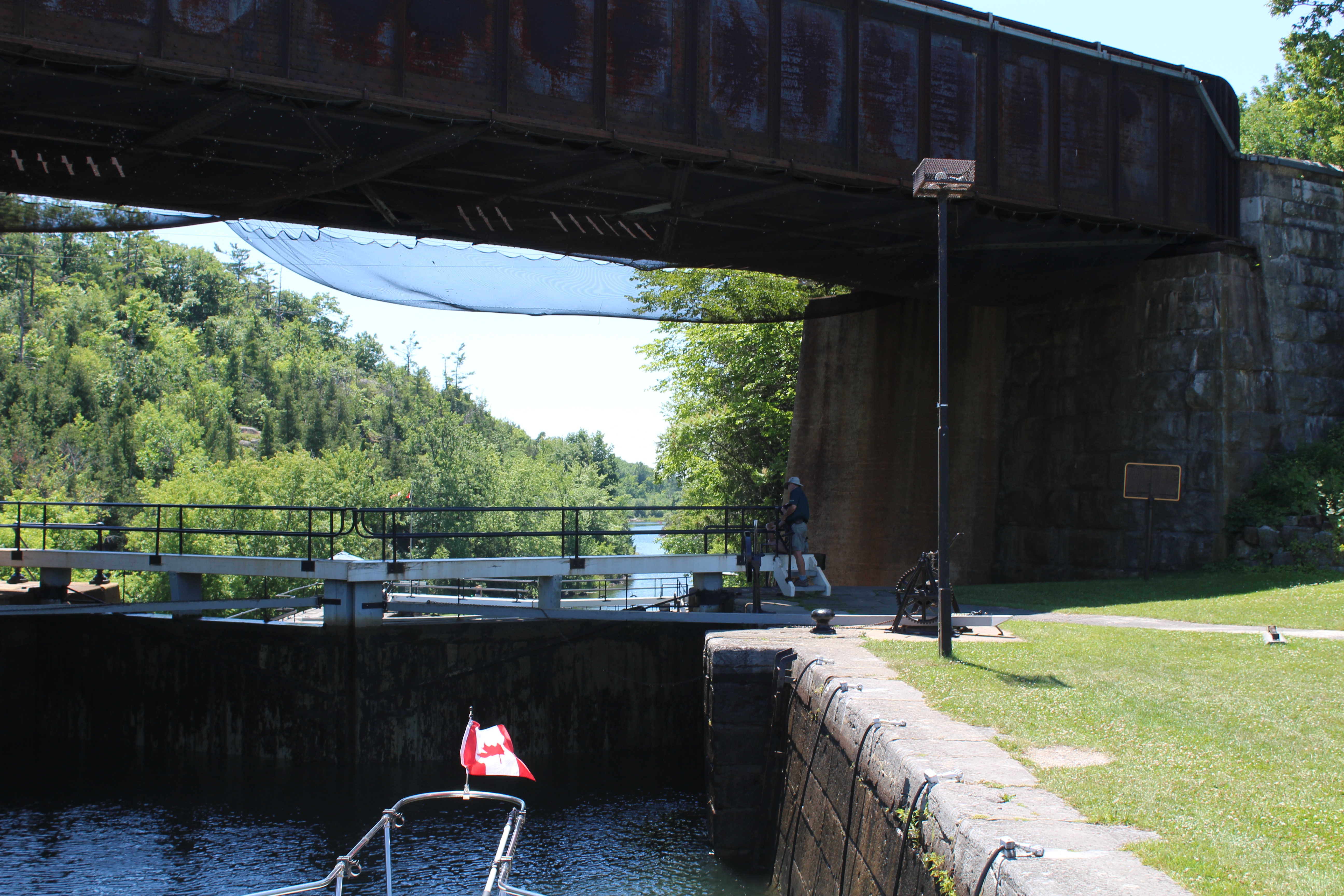
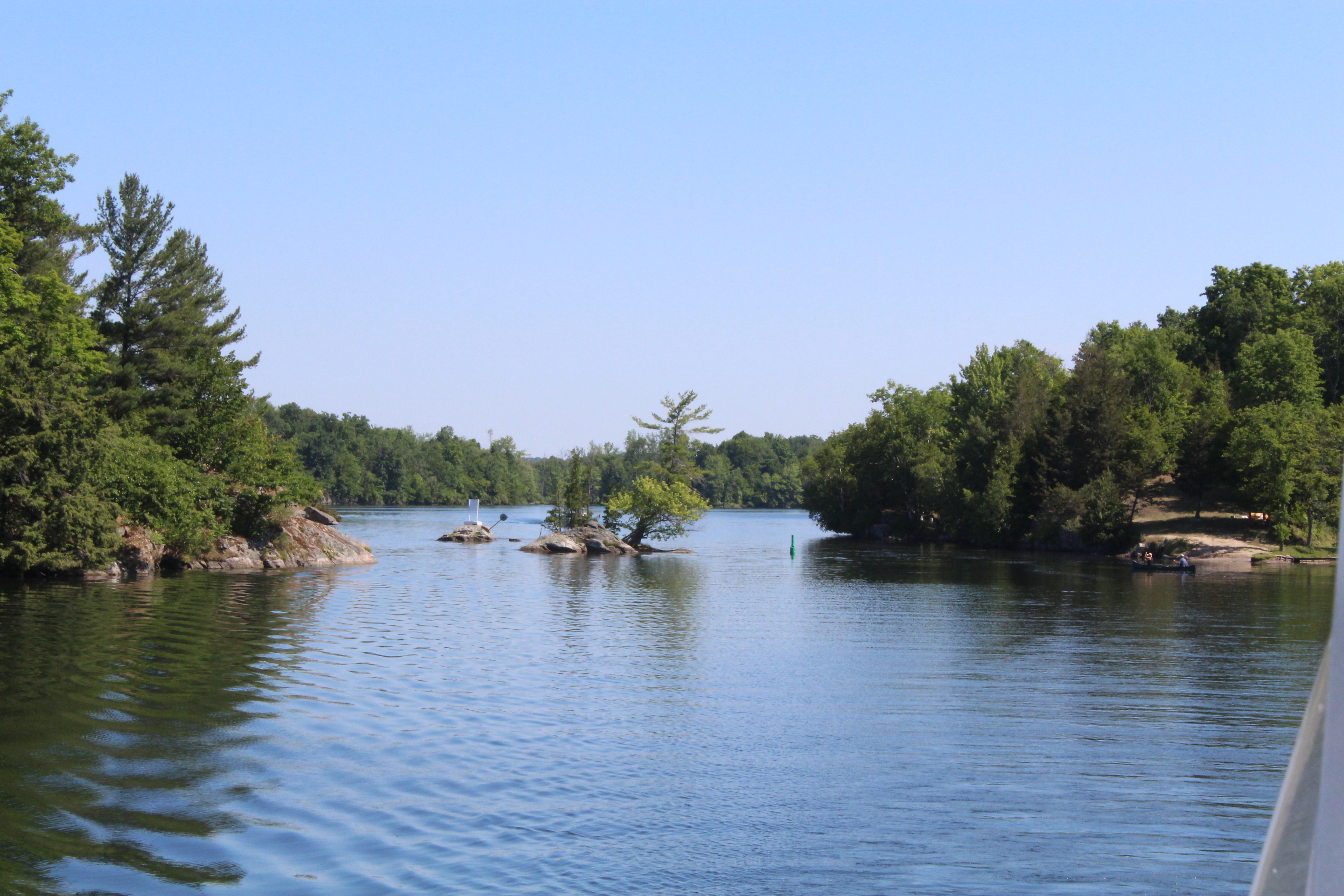
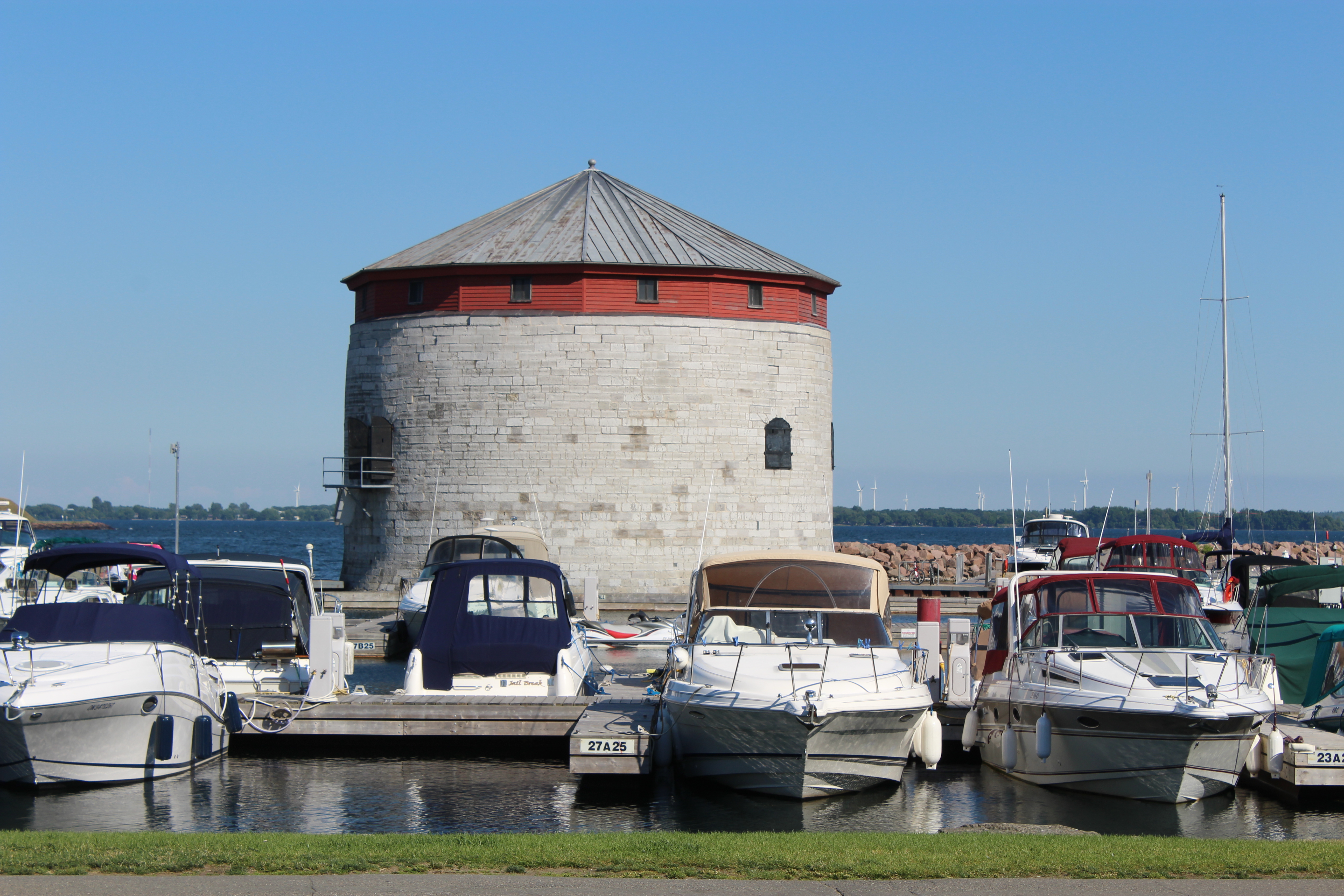
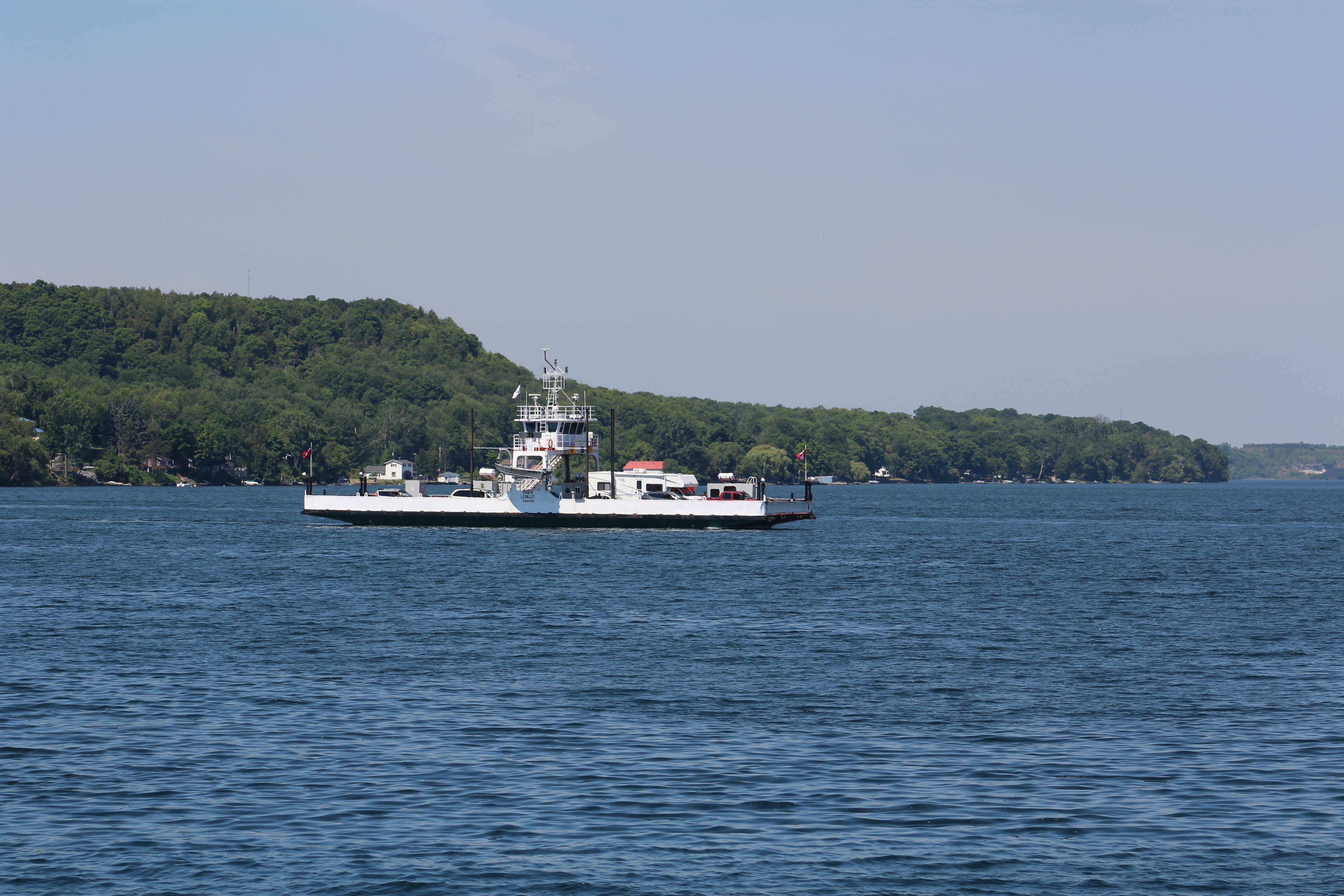
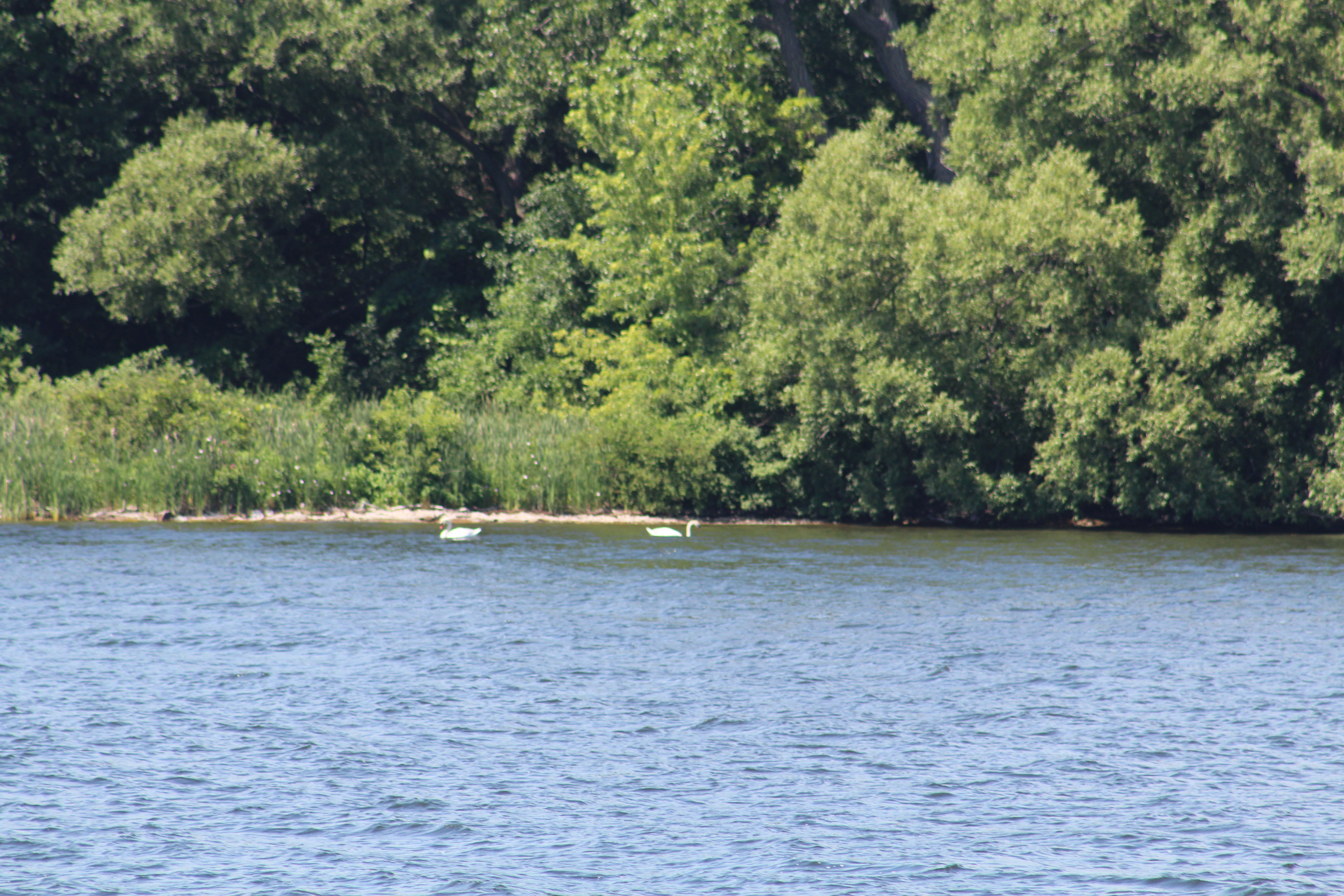
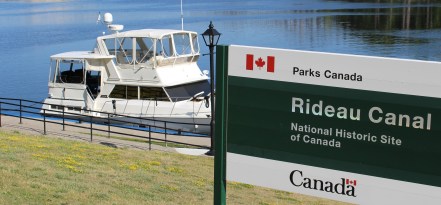
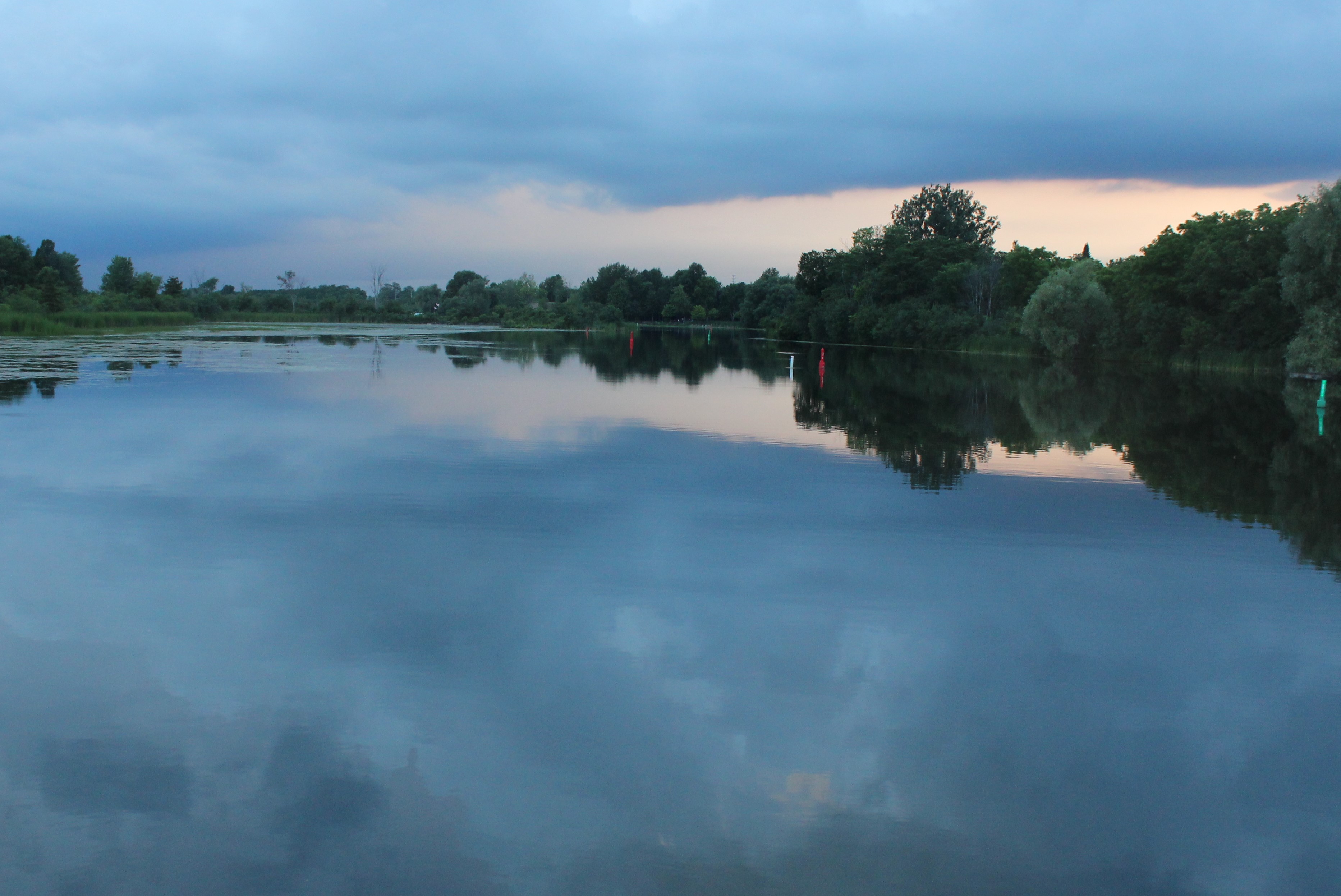
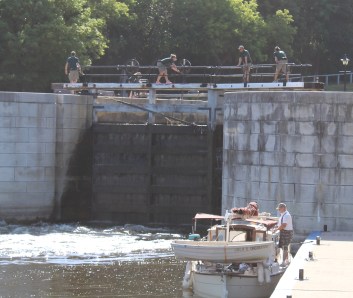
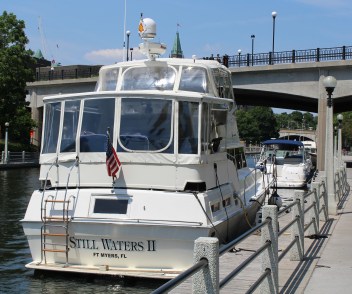


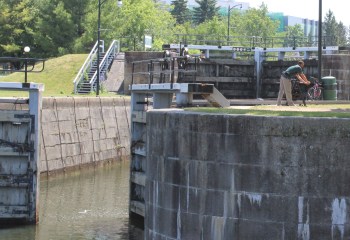
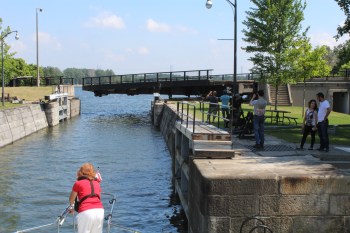
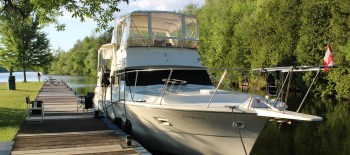
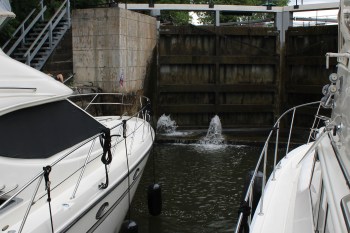
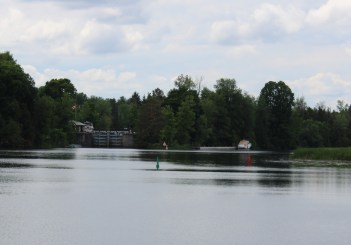


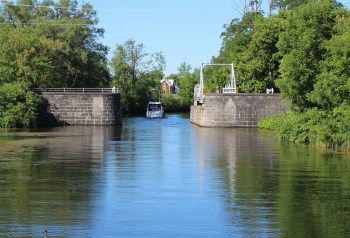
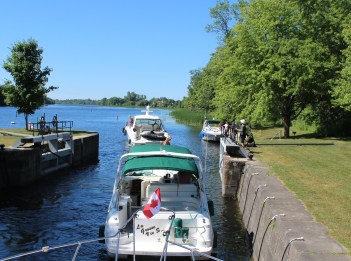
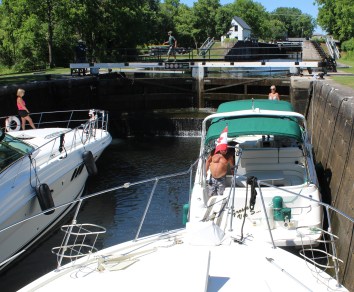


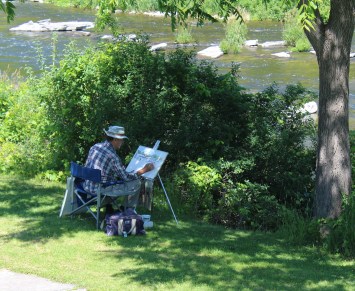
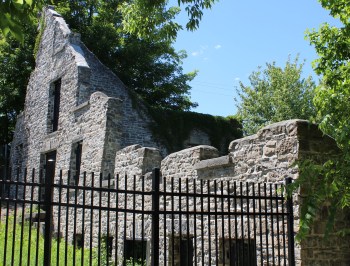
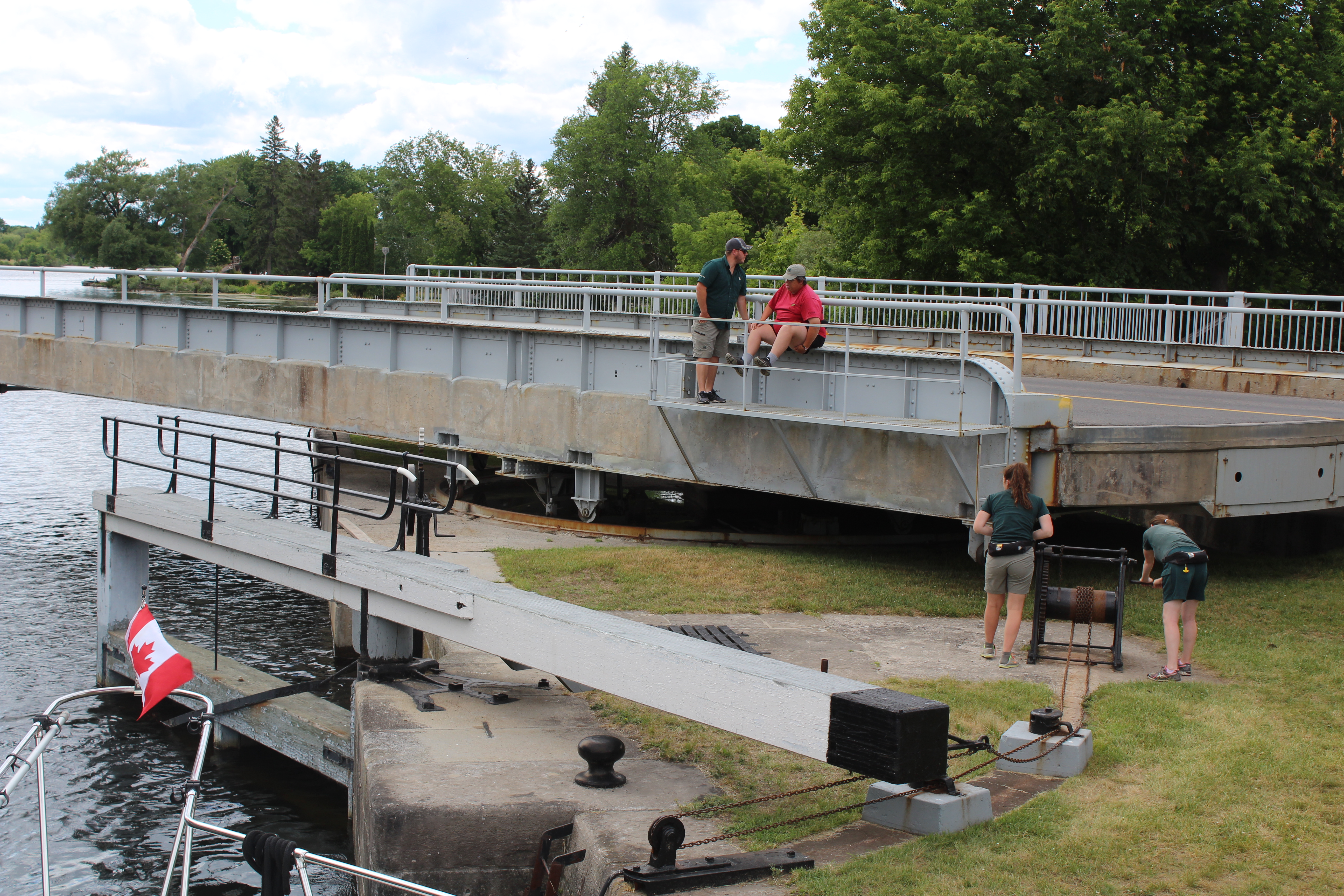
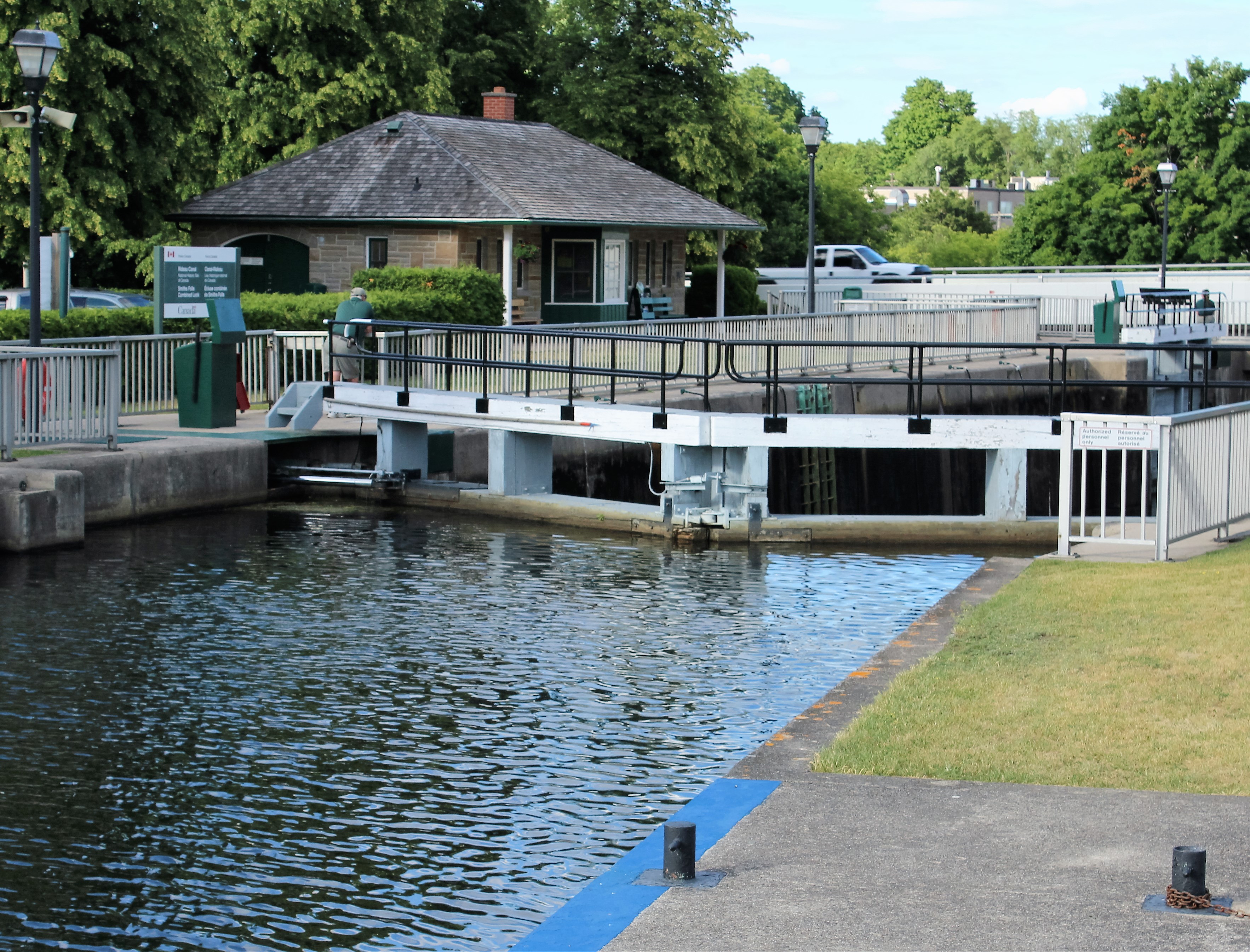
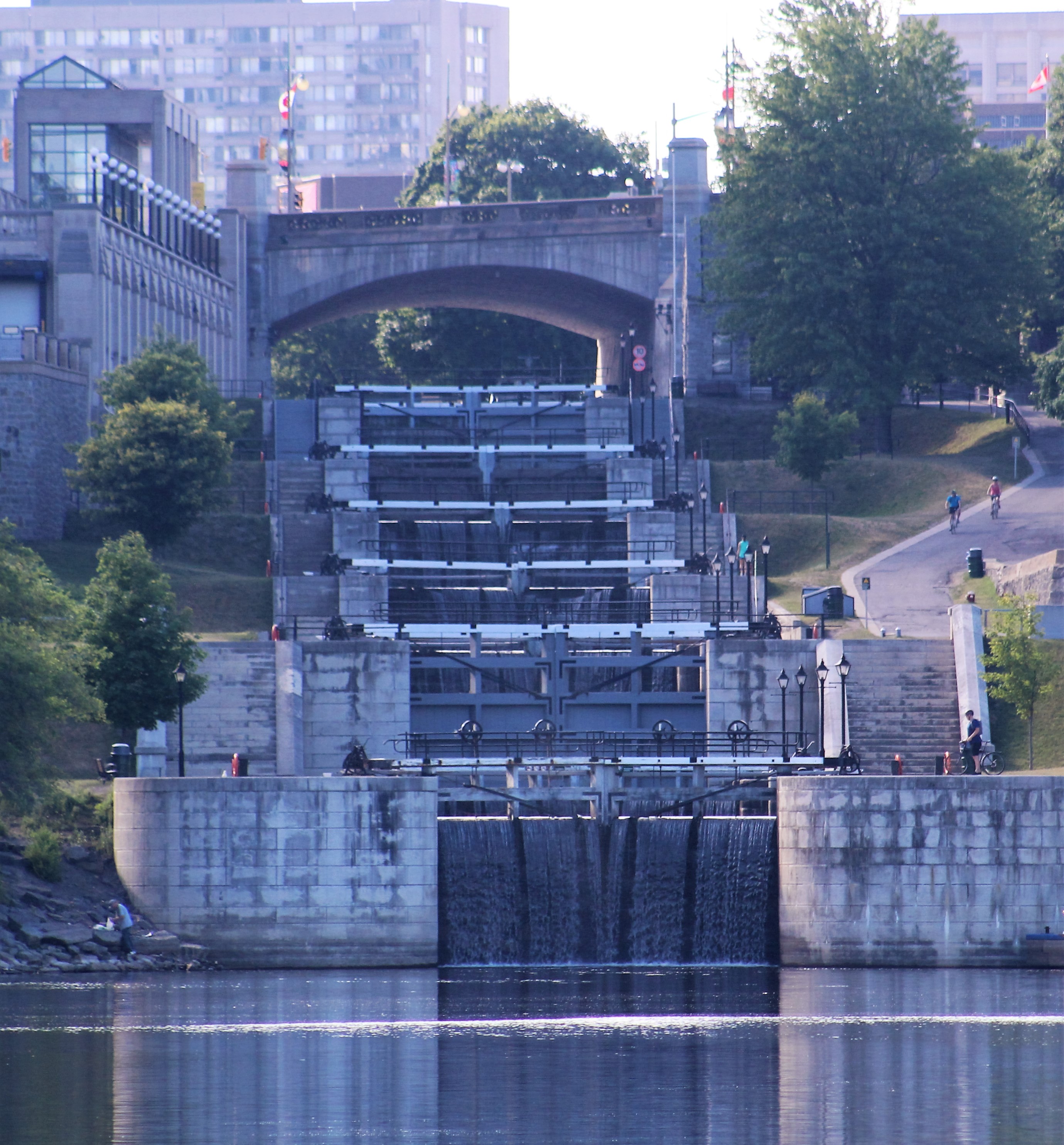
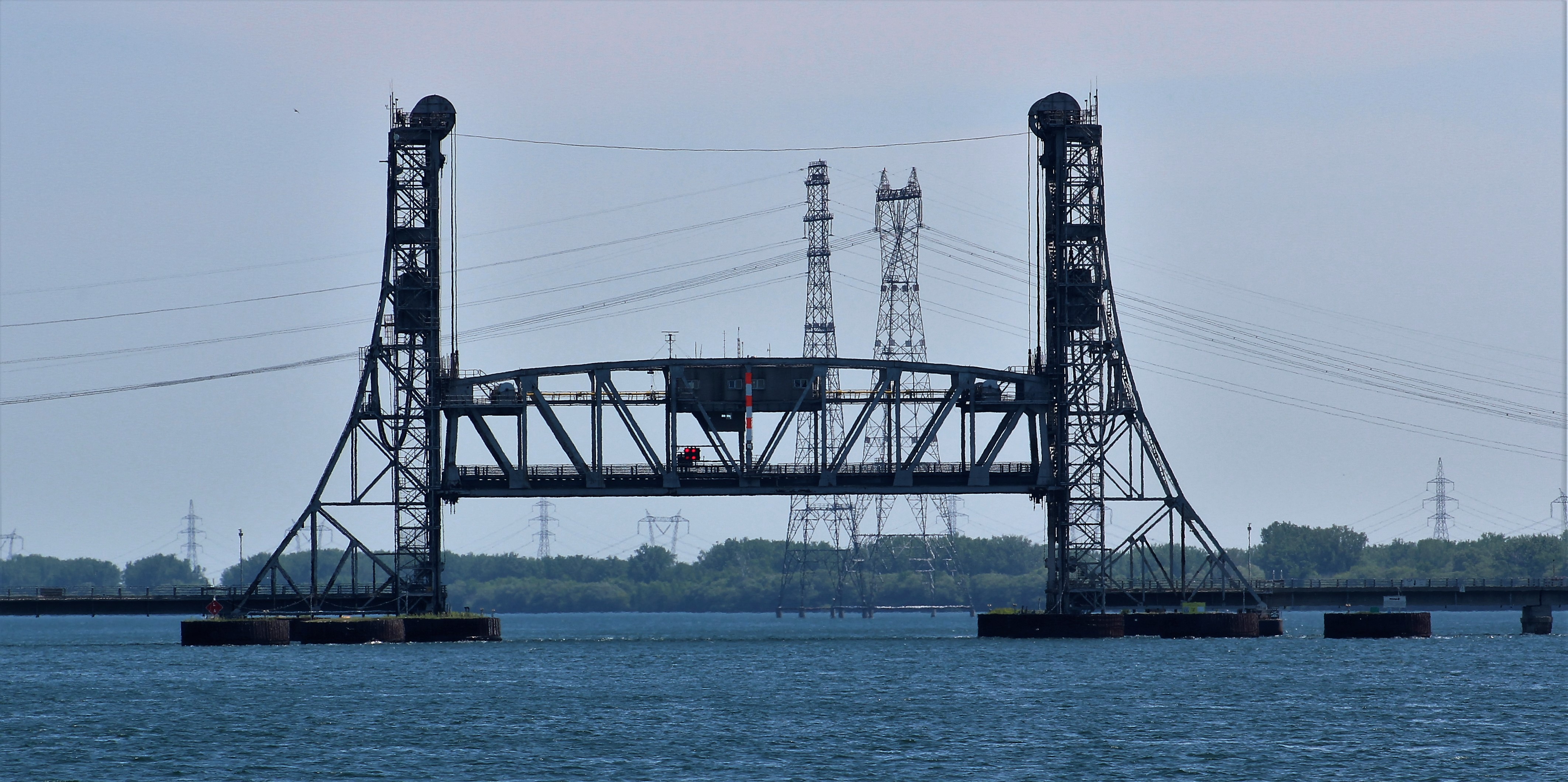
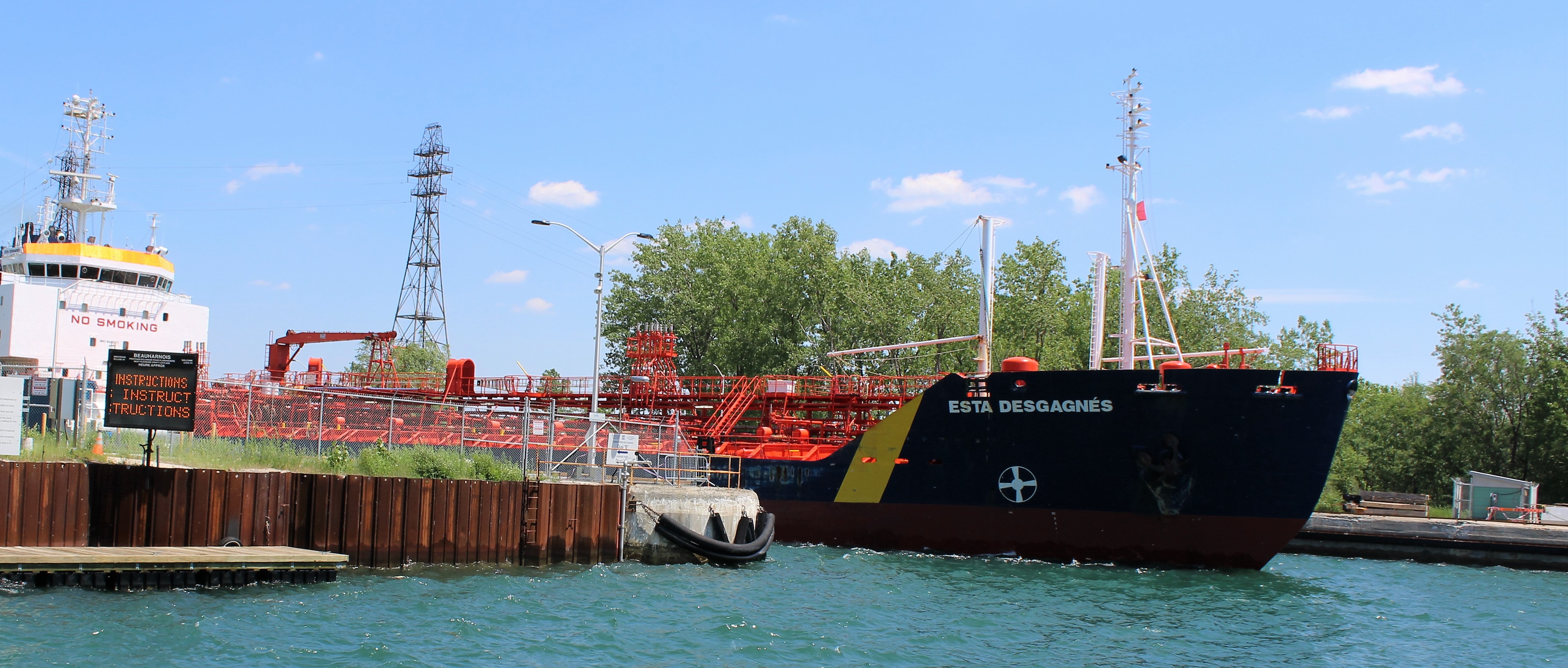
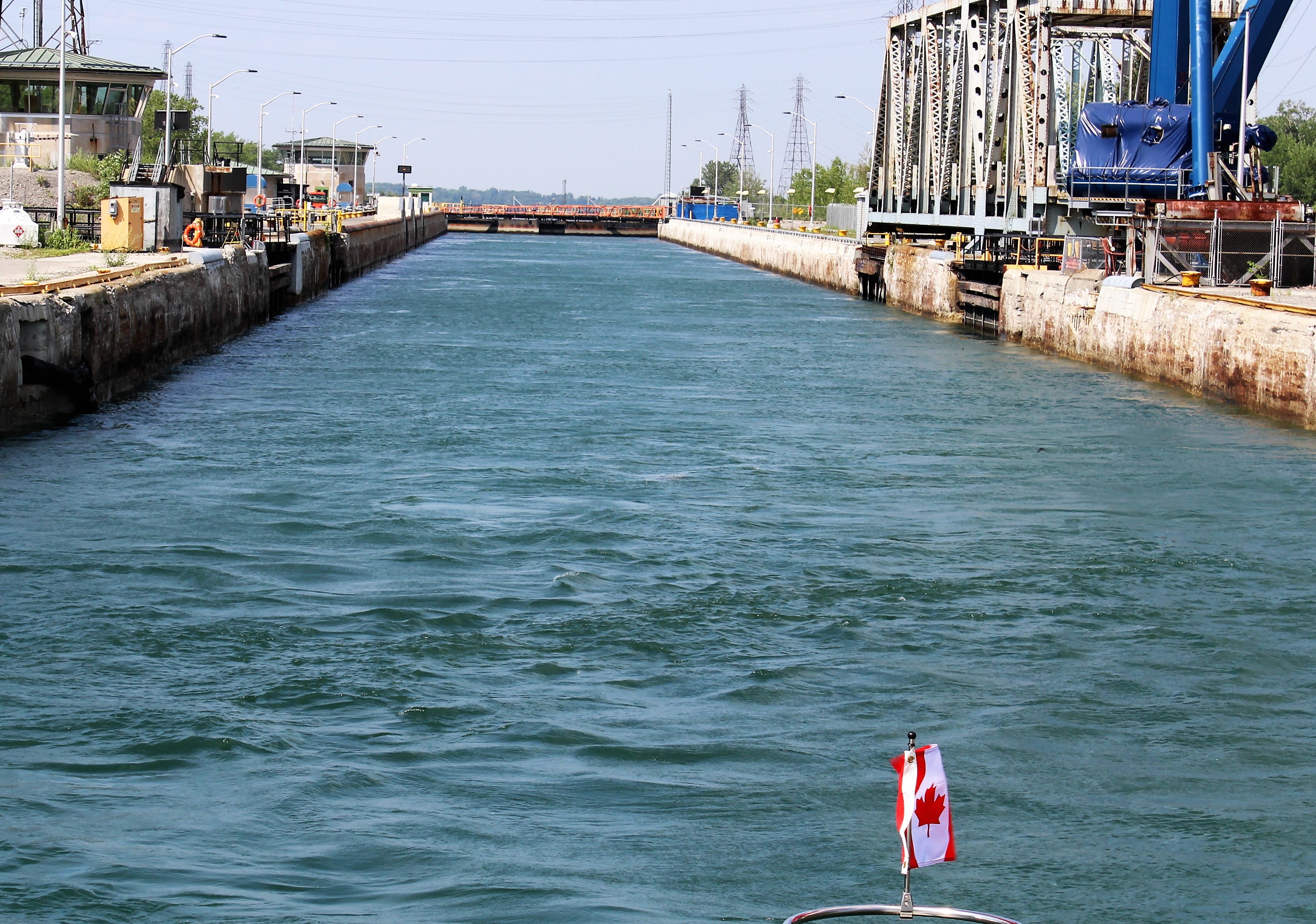


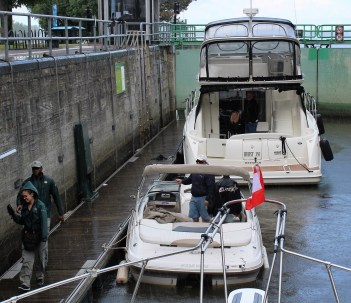


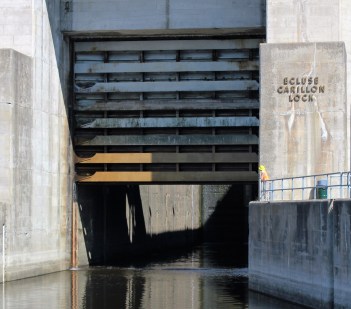
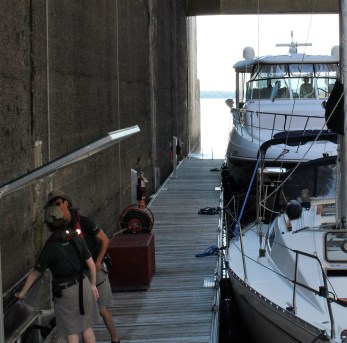
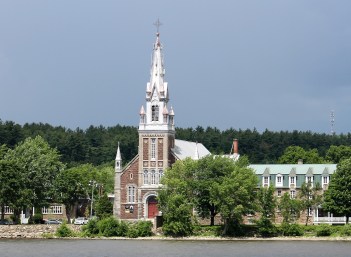 All along the shore were small towns. The tallest building in each of these towns is a church with a large steeple. On the south shore is Ontario and on the north shore is Quebec. It is interesting how the steeples are different in each providence.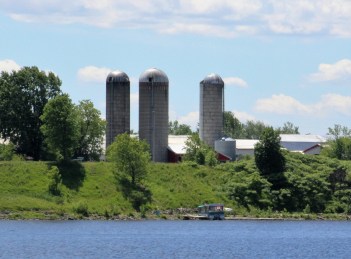
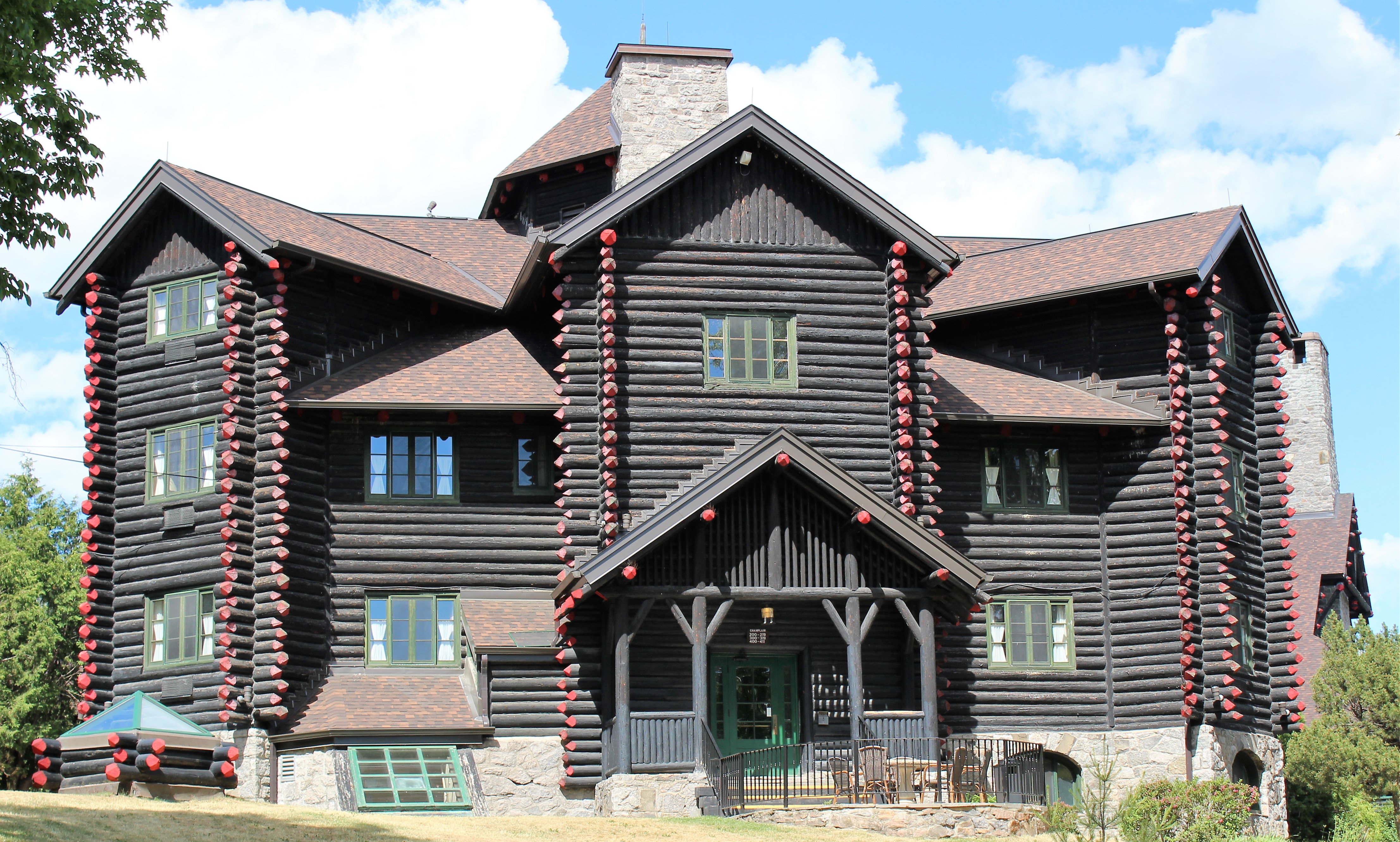
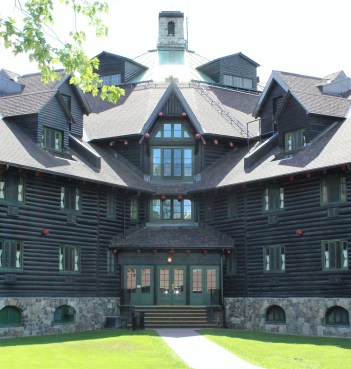 The building is a six-point star, with 10,000 hand-cut and set red cedar logs. The structure was completed in 3 months with the work of 3,500 craftsmen.
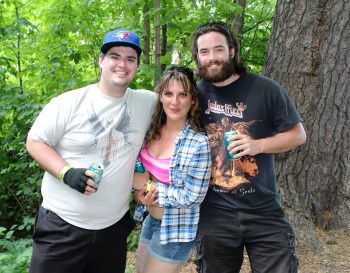
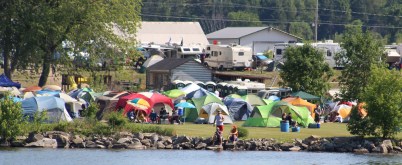
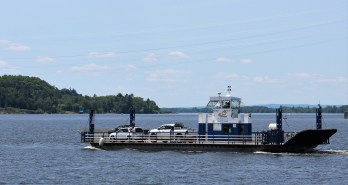
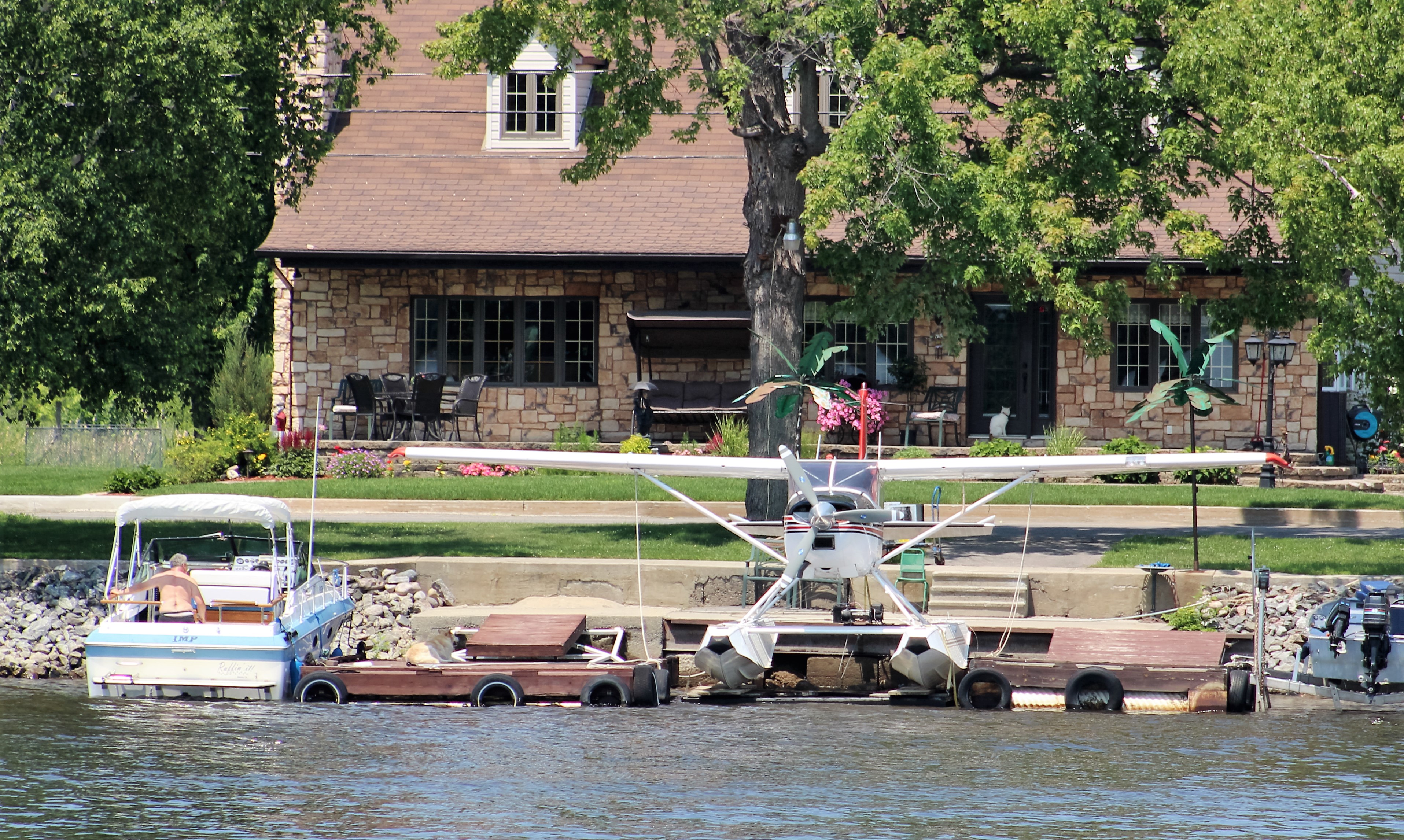
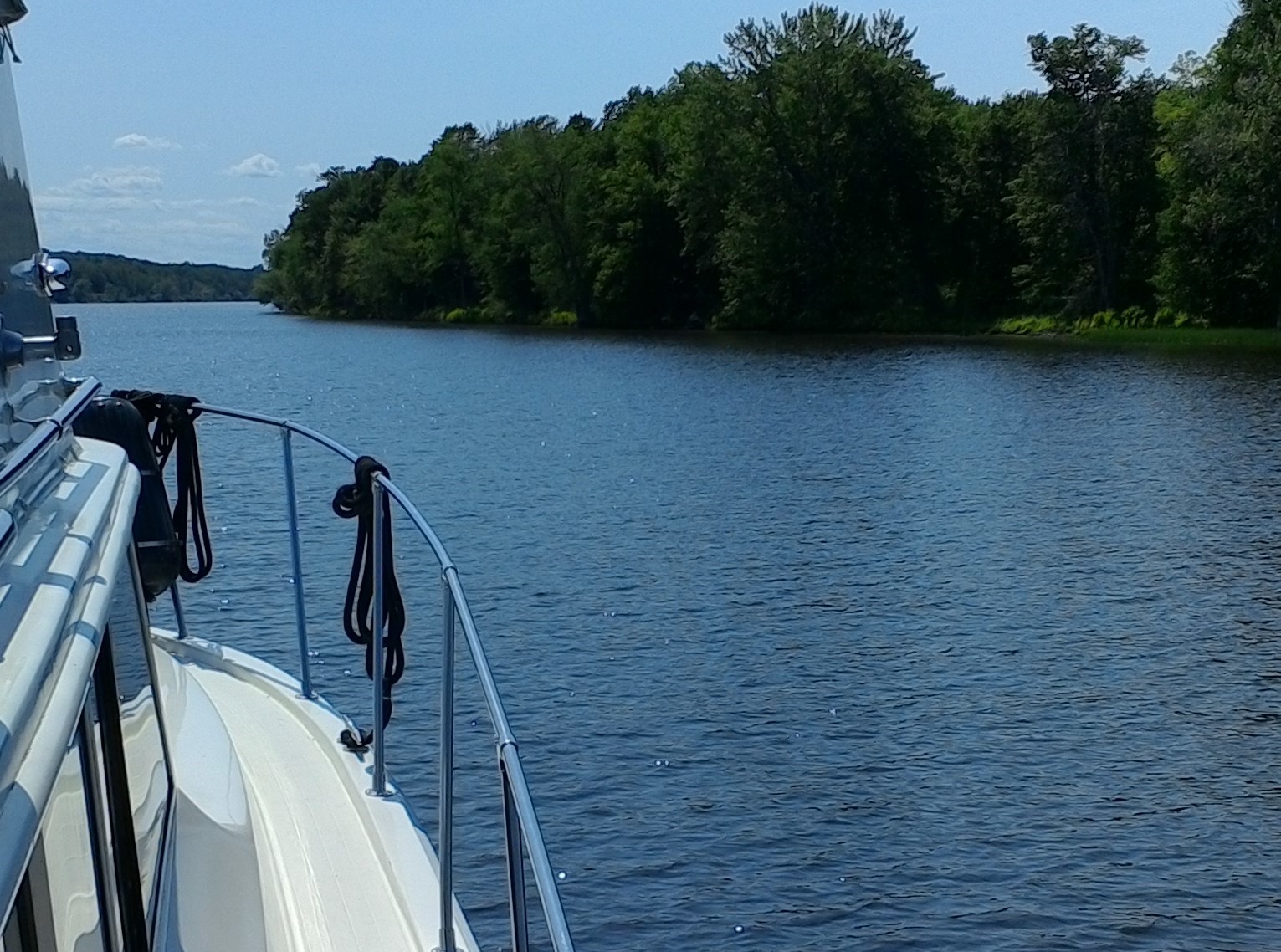
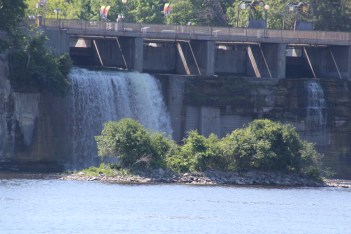
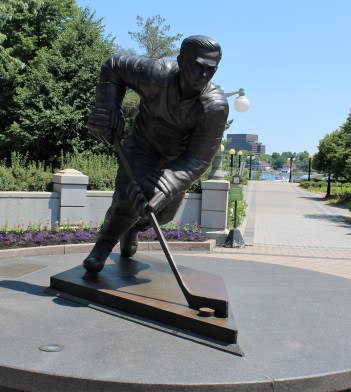
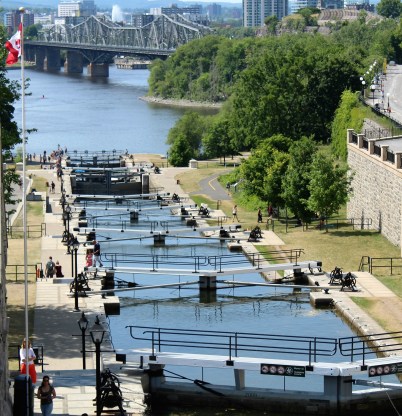
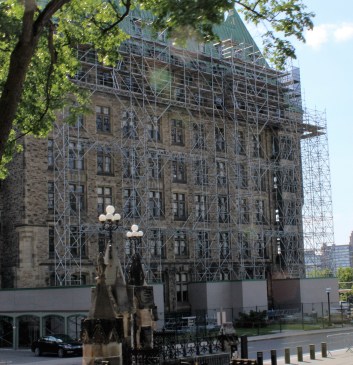

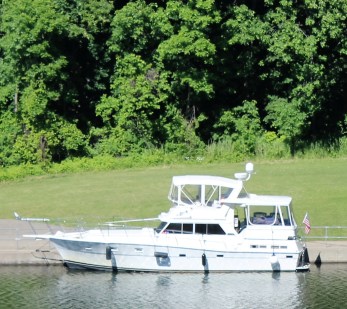
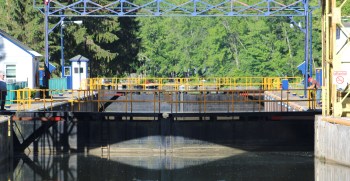
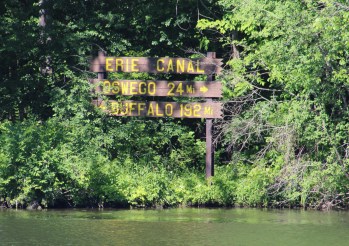


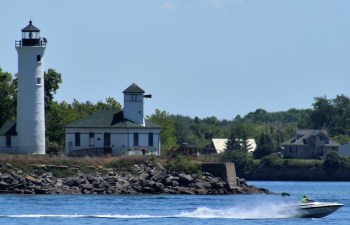
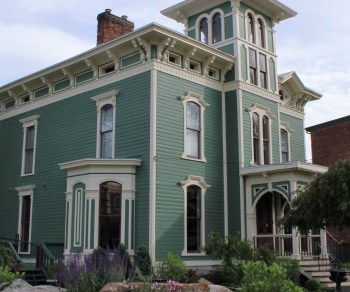


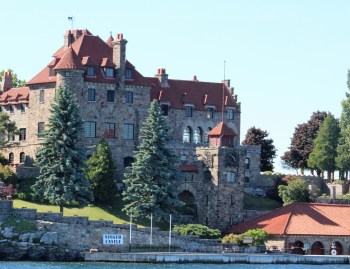
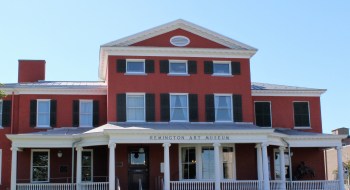
 The crew enjoyed the shore excursion to the Remington Art Museum. The museum is located in an old house that Mrs. Remington lived in after the death of Frederic Remington. The widow left all their belongings to the city of Ogdensburg.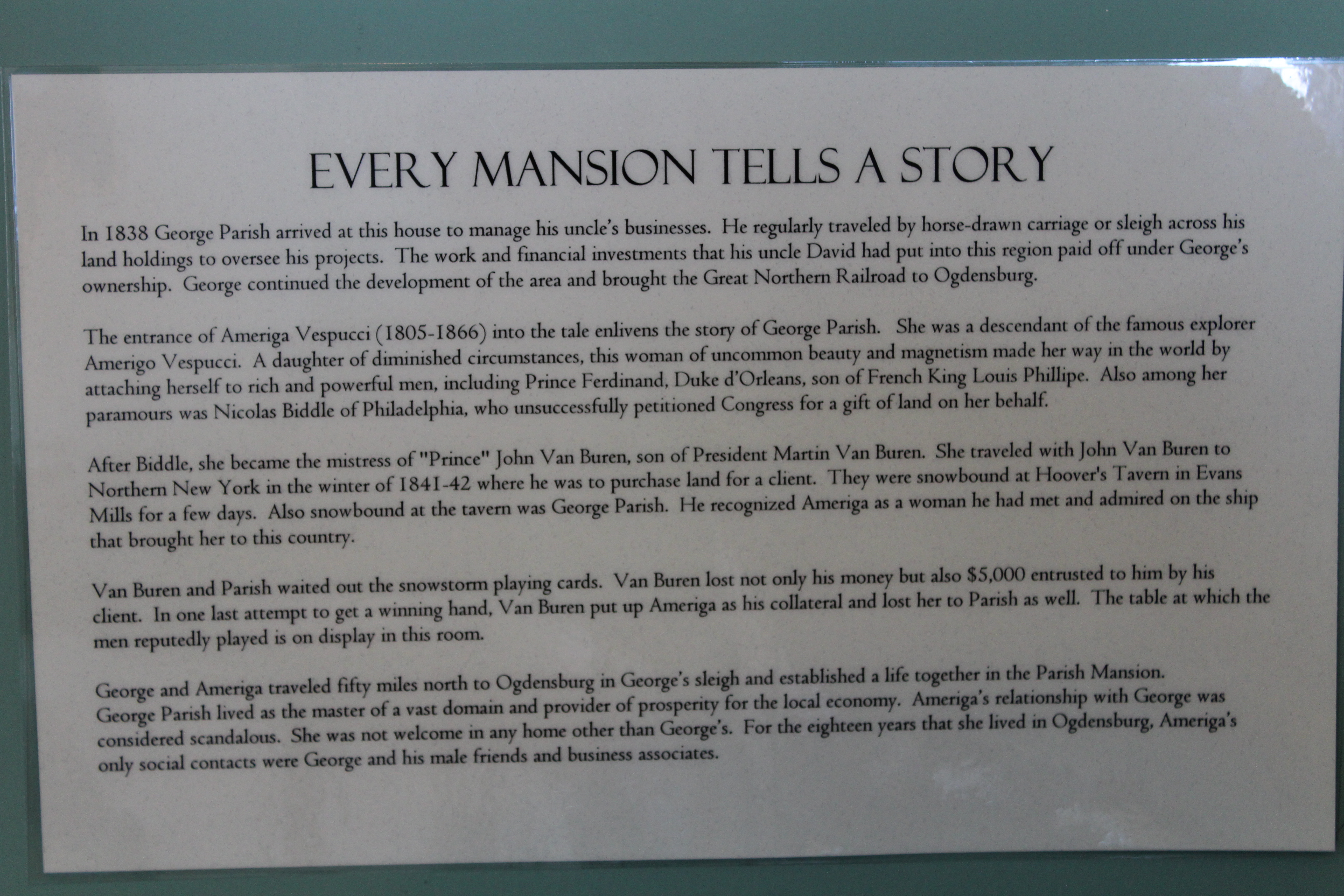
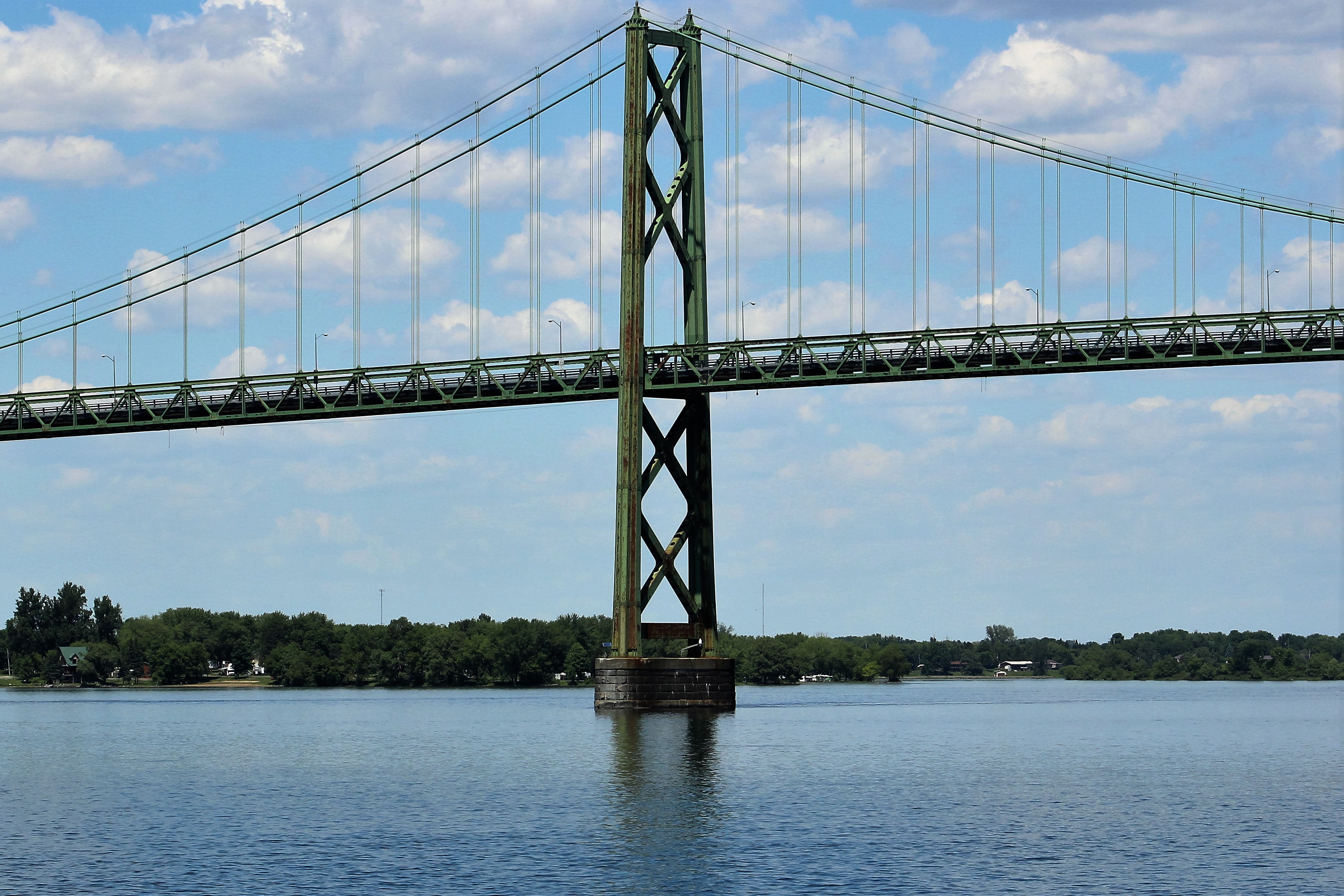
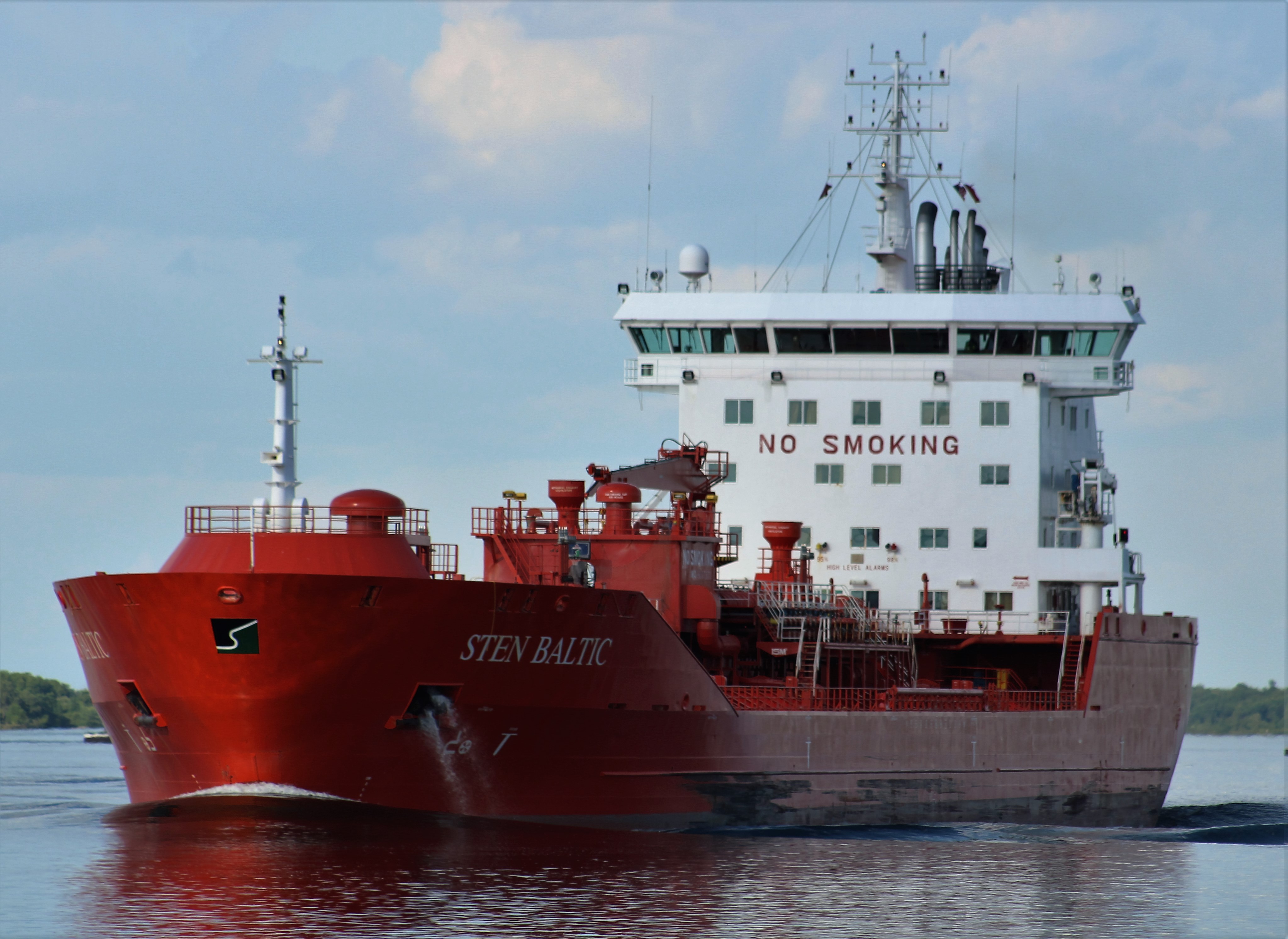

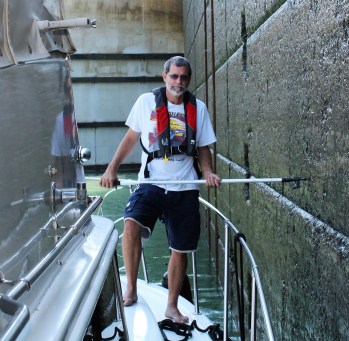
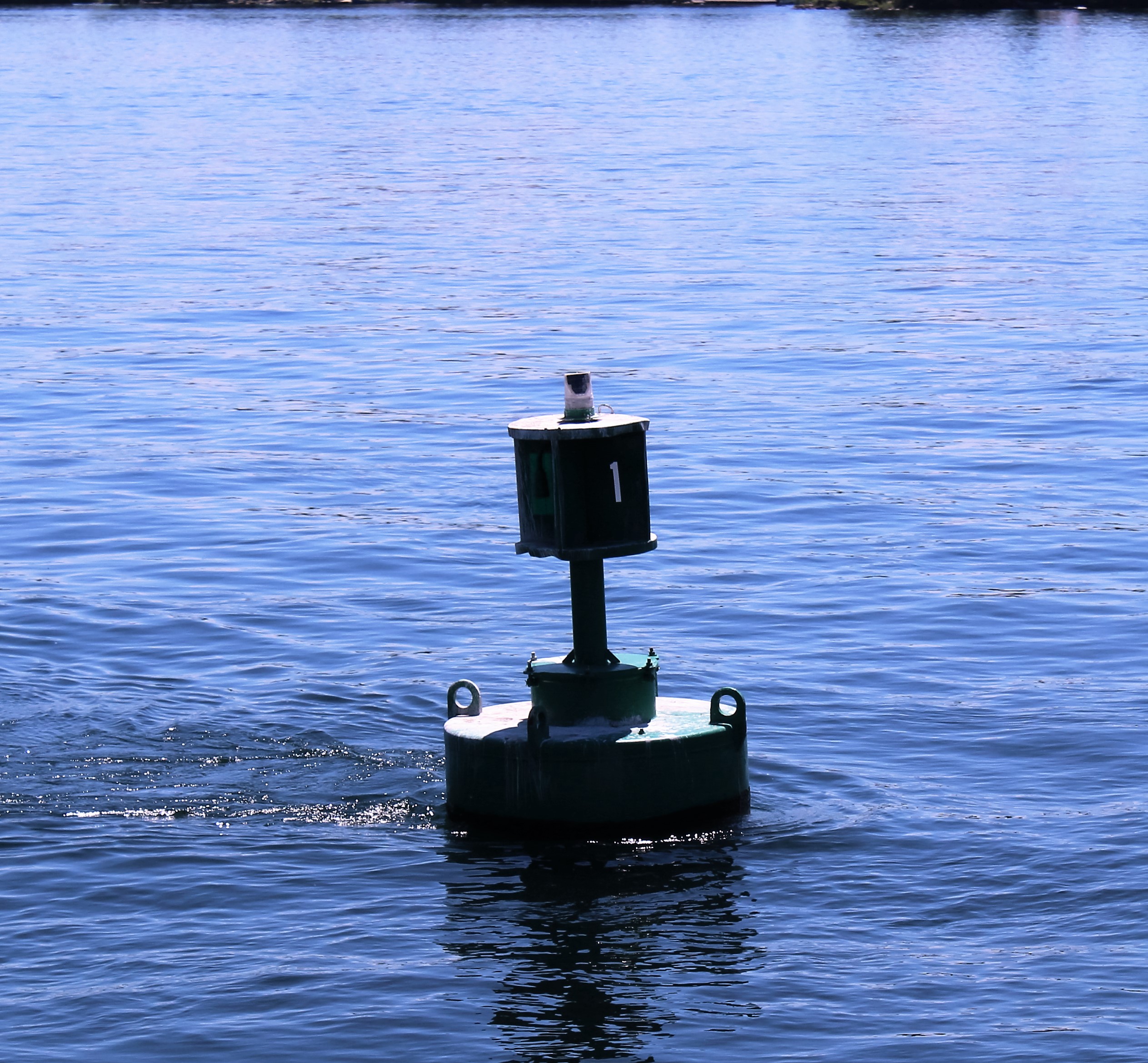
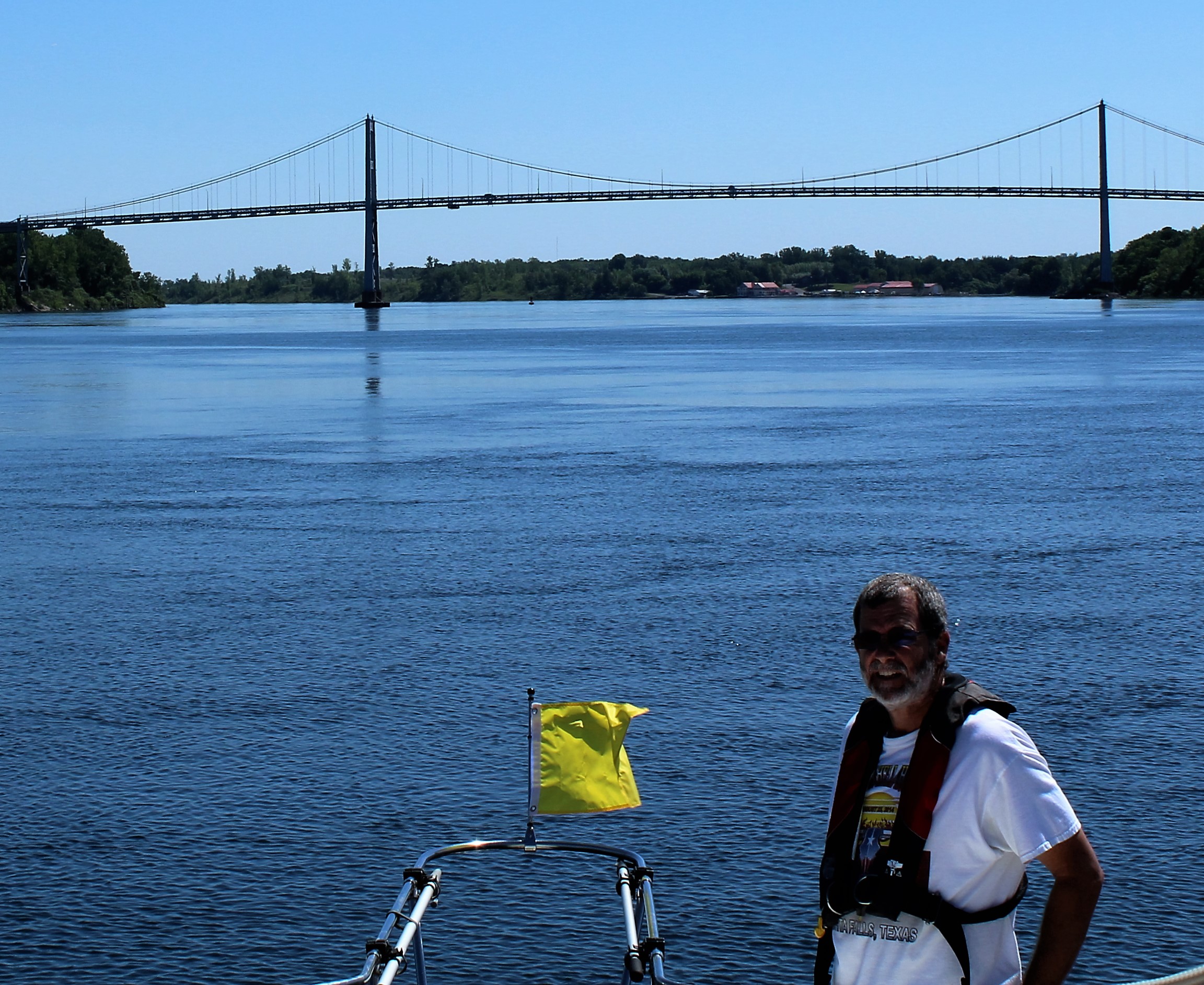
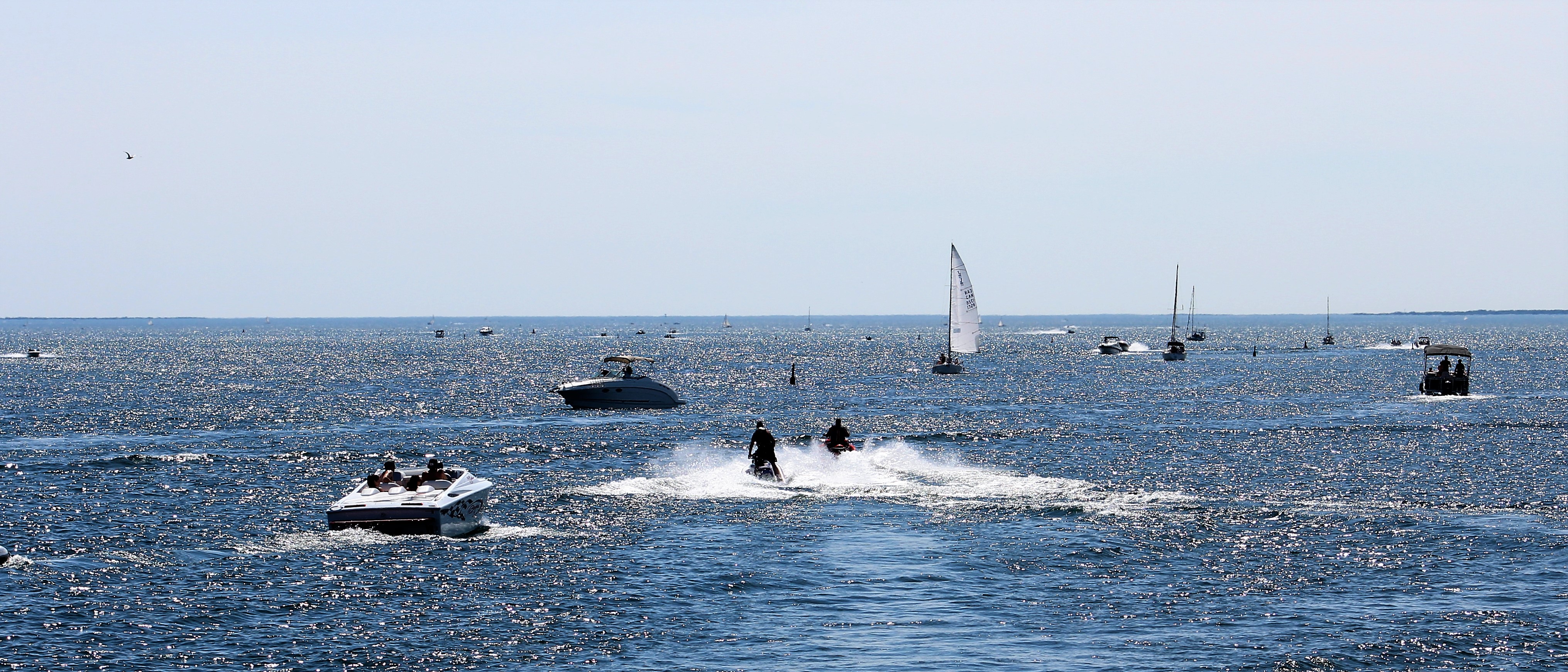
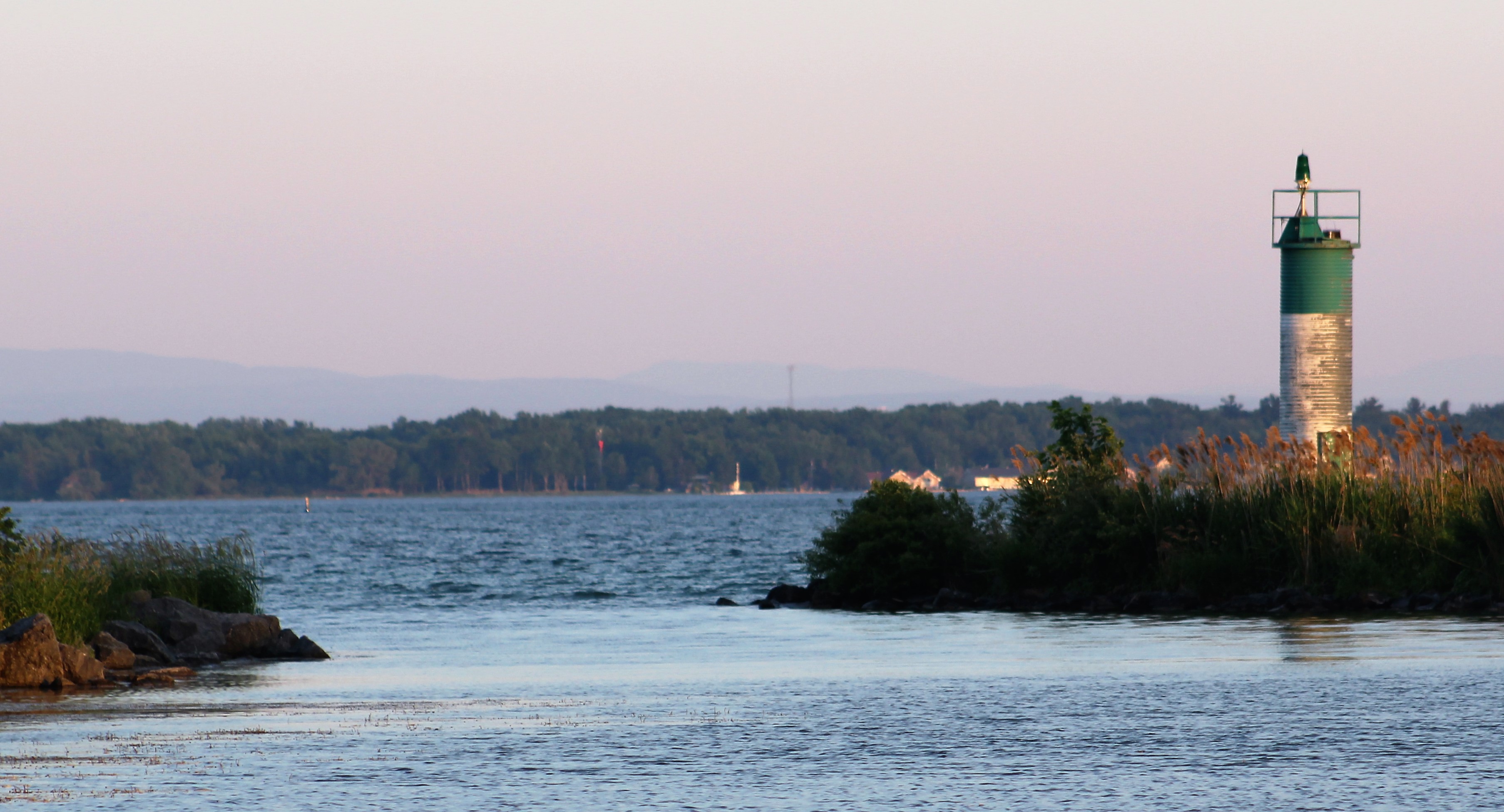
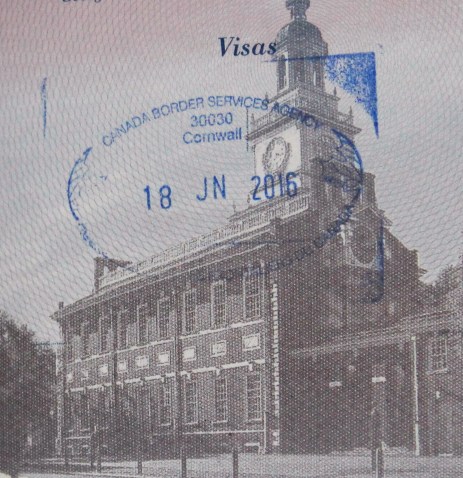
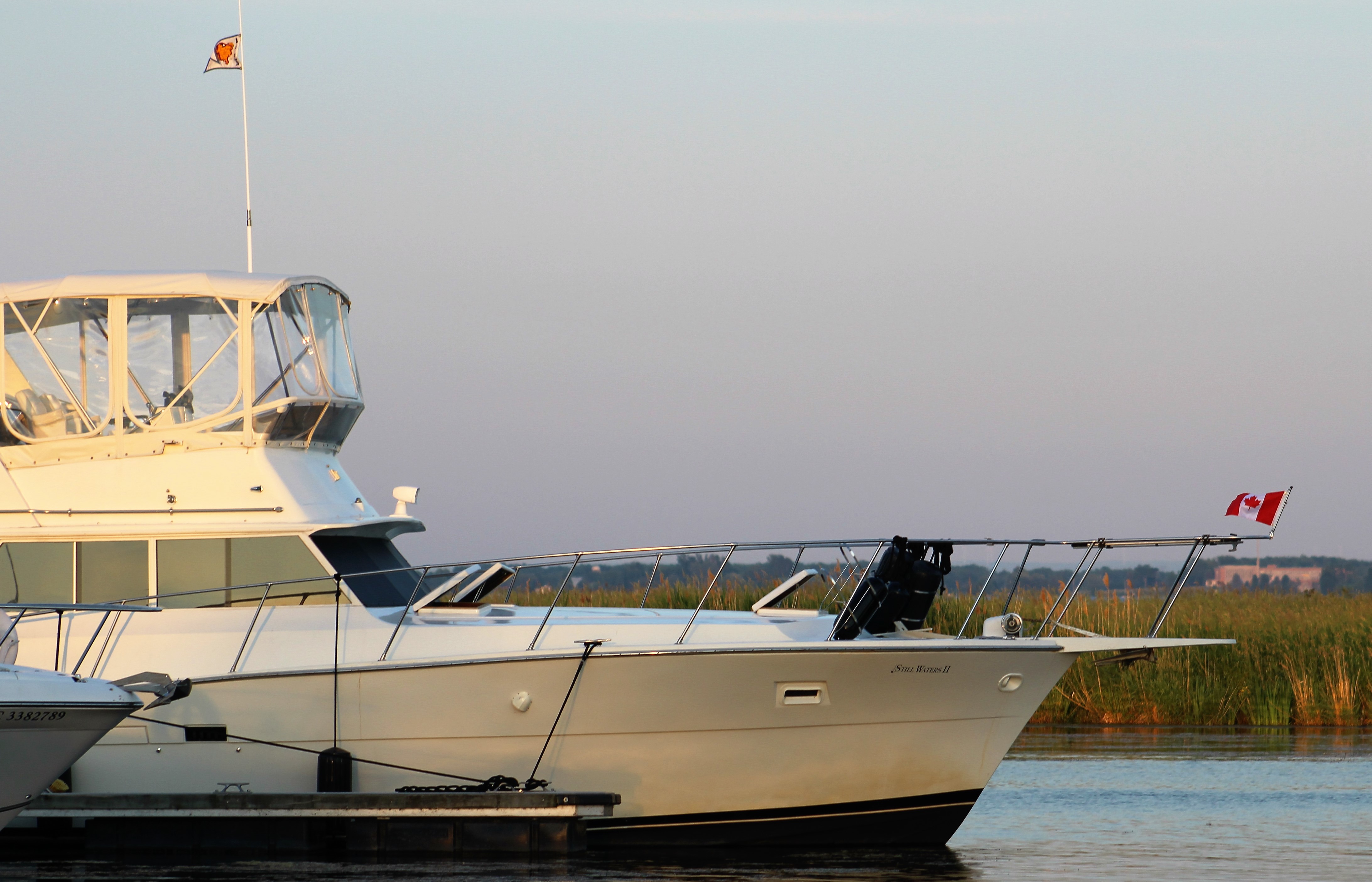
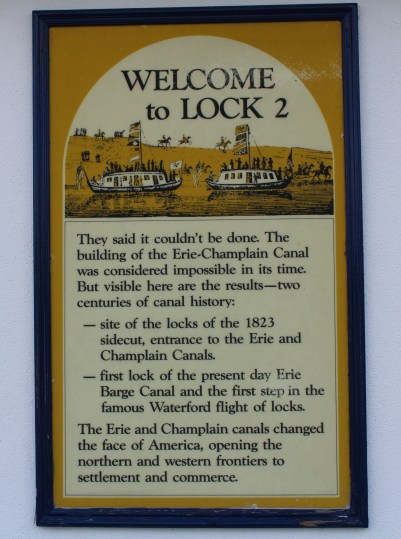
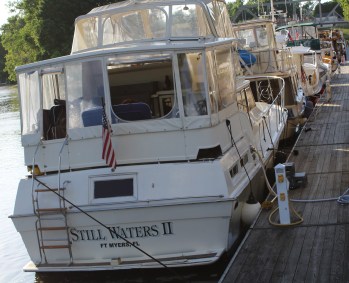
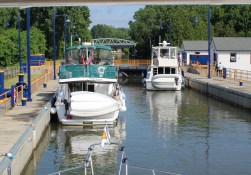
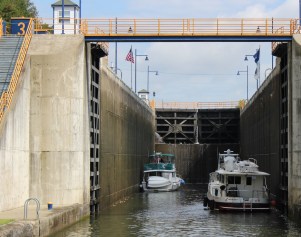
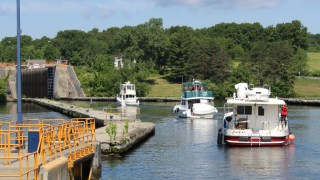
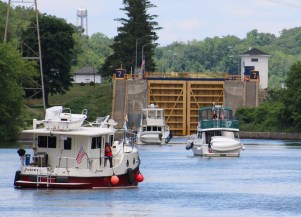
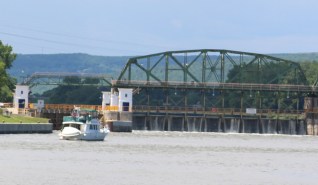
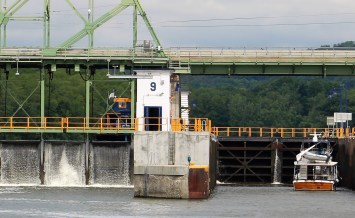 The crew shoved off the Lock 8 wall at 0915 and fell in behind another boat to Lock E9. The temperature was a cool 52 degrees, and with the 12 mph winds it felt much worse. In the first Lock, the boat the crew was traveling with lost hold of the ropes and had to restart their engines as the water was filling the lock chamber. Because of the swirling current as the lock fills, the boat drifted across and hit the lock wall on the opposite side as they started. The captain regained control and got back over on the starboard wall. But then they lost their hold on the ropes a second time. The wind was really causing them problems. Reminded the crew how the first lock yesterday started.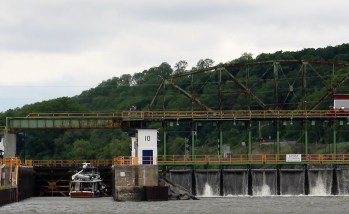
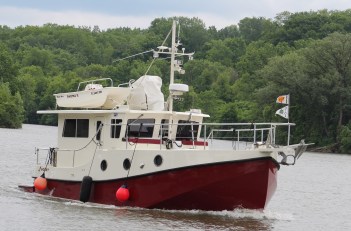
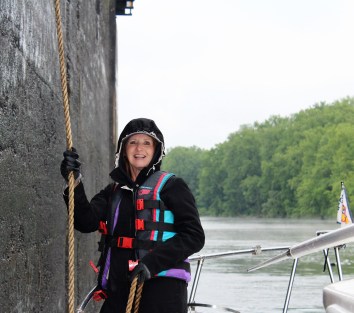 With about a 20 minute rain delay the crew entered and negotiated their first down lock on the Erie Canal. The lock lowered the boat 25 feet. The crew commented that these down locks are much easier than the up locks. Another mile and the crew went down another 25 feet in Lock 22. The crew then headed out across Lake Oneida.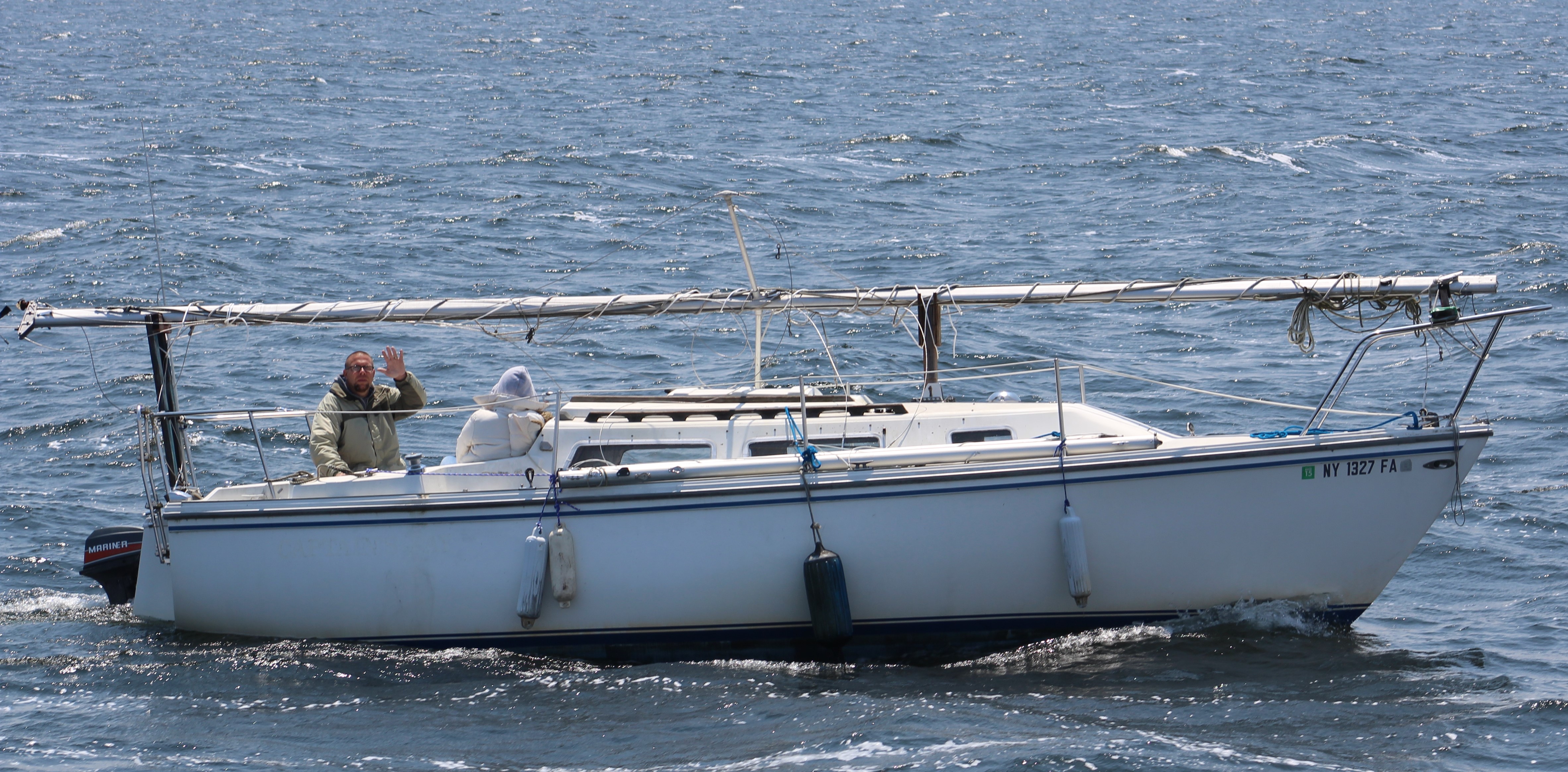
 Voyaging America's Great Loop Aboard Still Waters II