Category: Uncategorized

  • Hik’n, Driv’n, and Cruis’n

    Hik’n, Driv’n, and Cruis’n

    Ahoy from Bras d’Or Lakes. Hello virtual crew members and fellow adventurers!
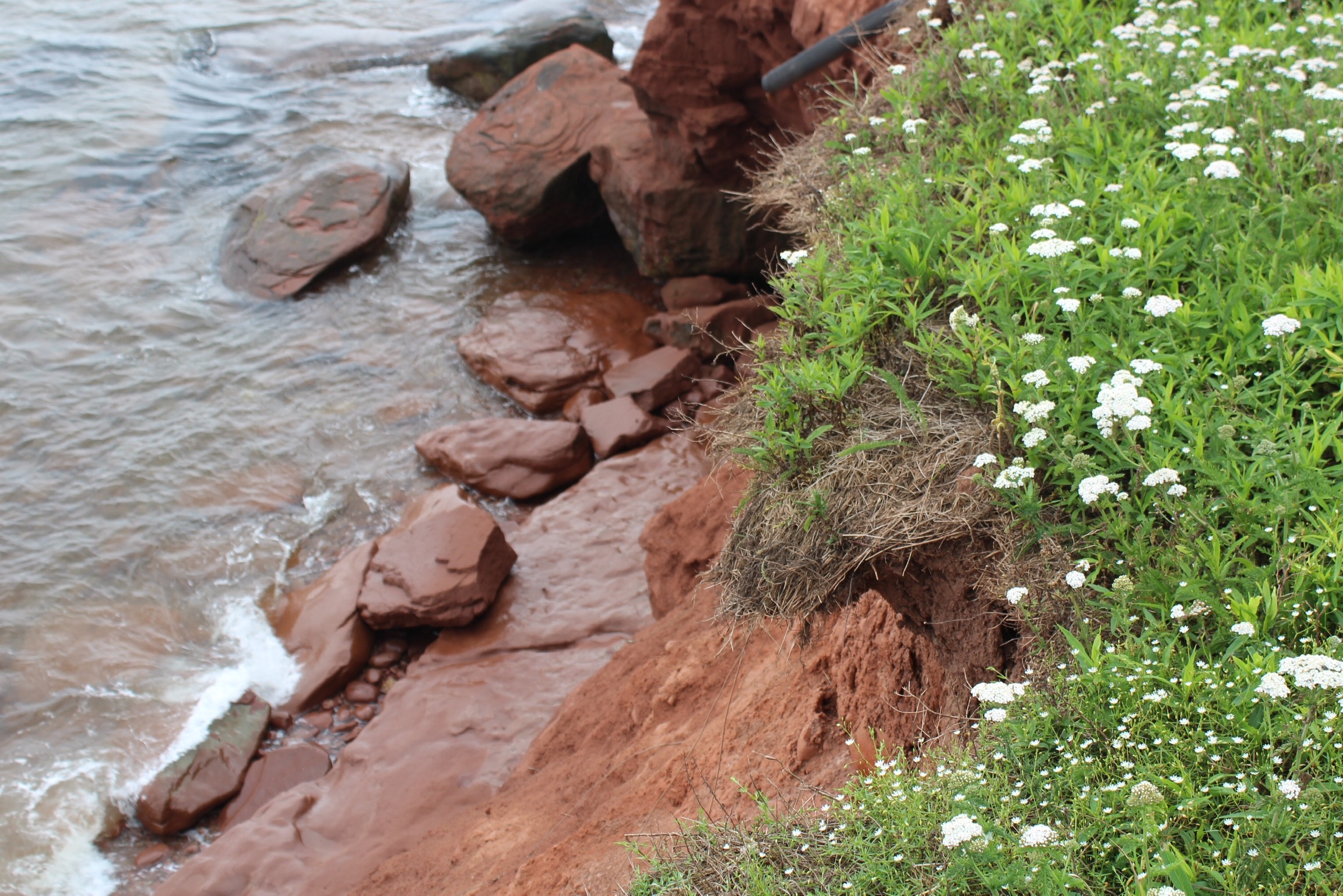
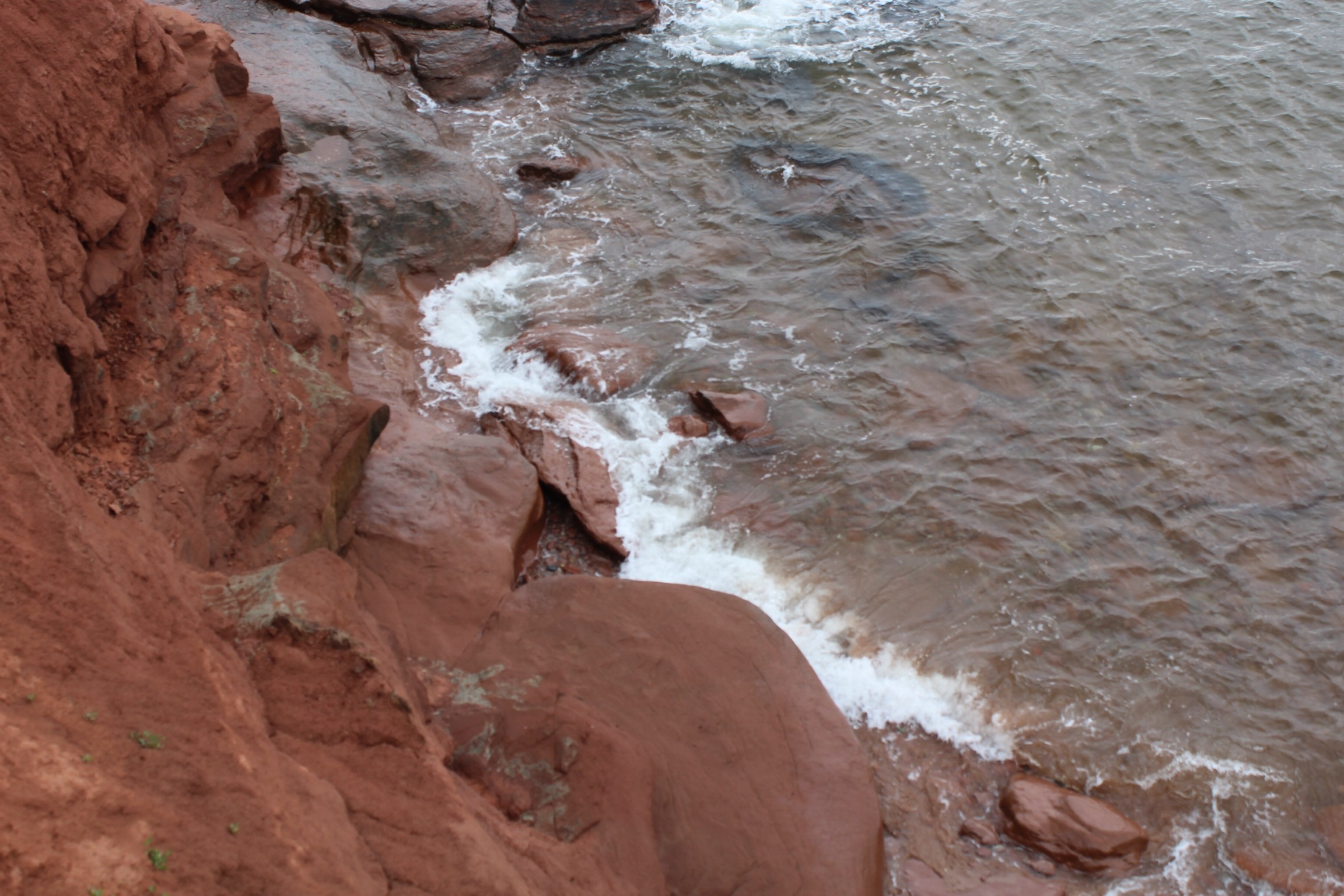
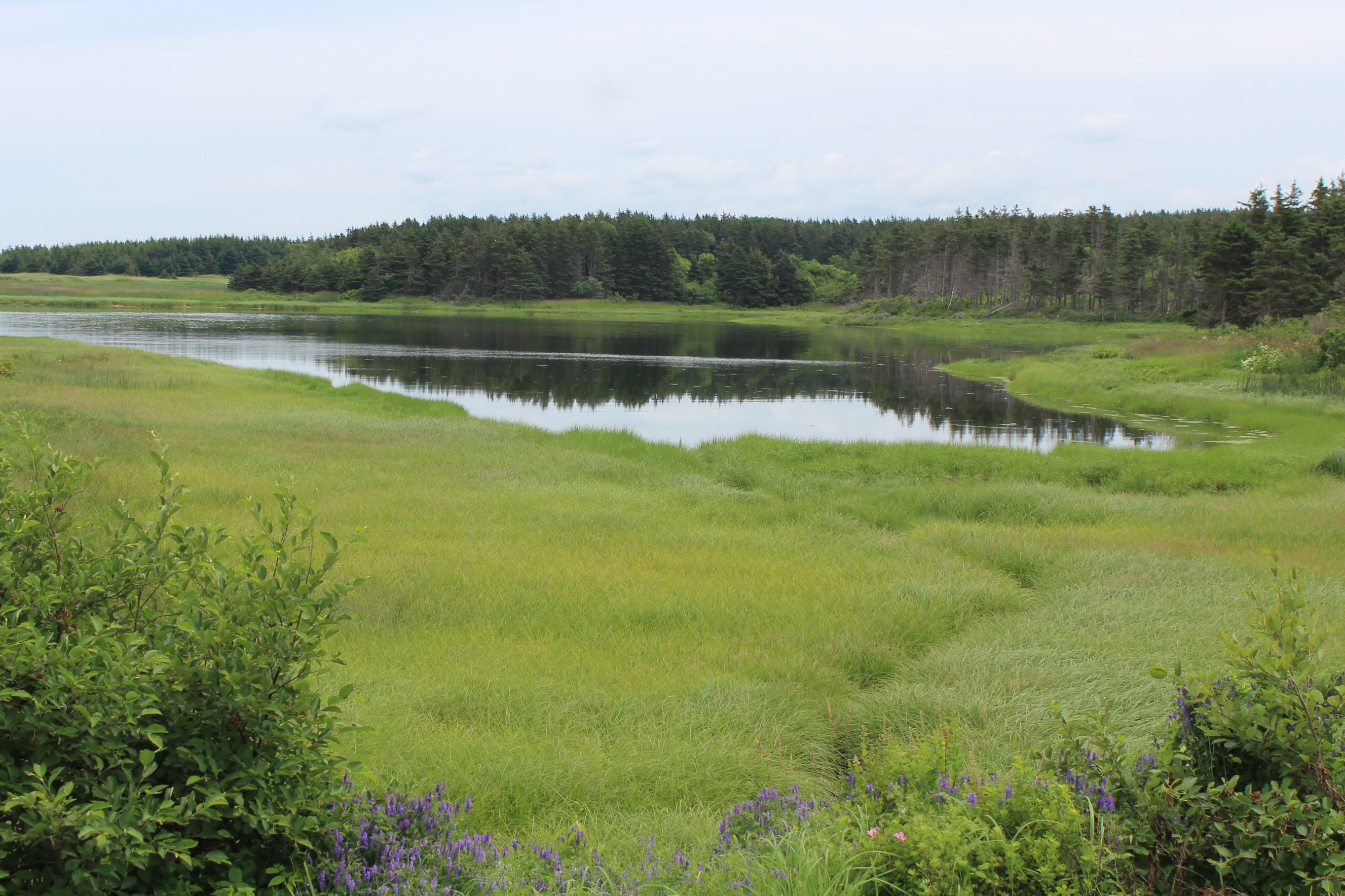
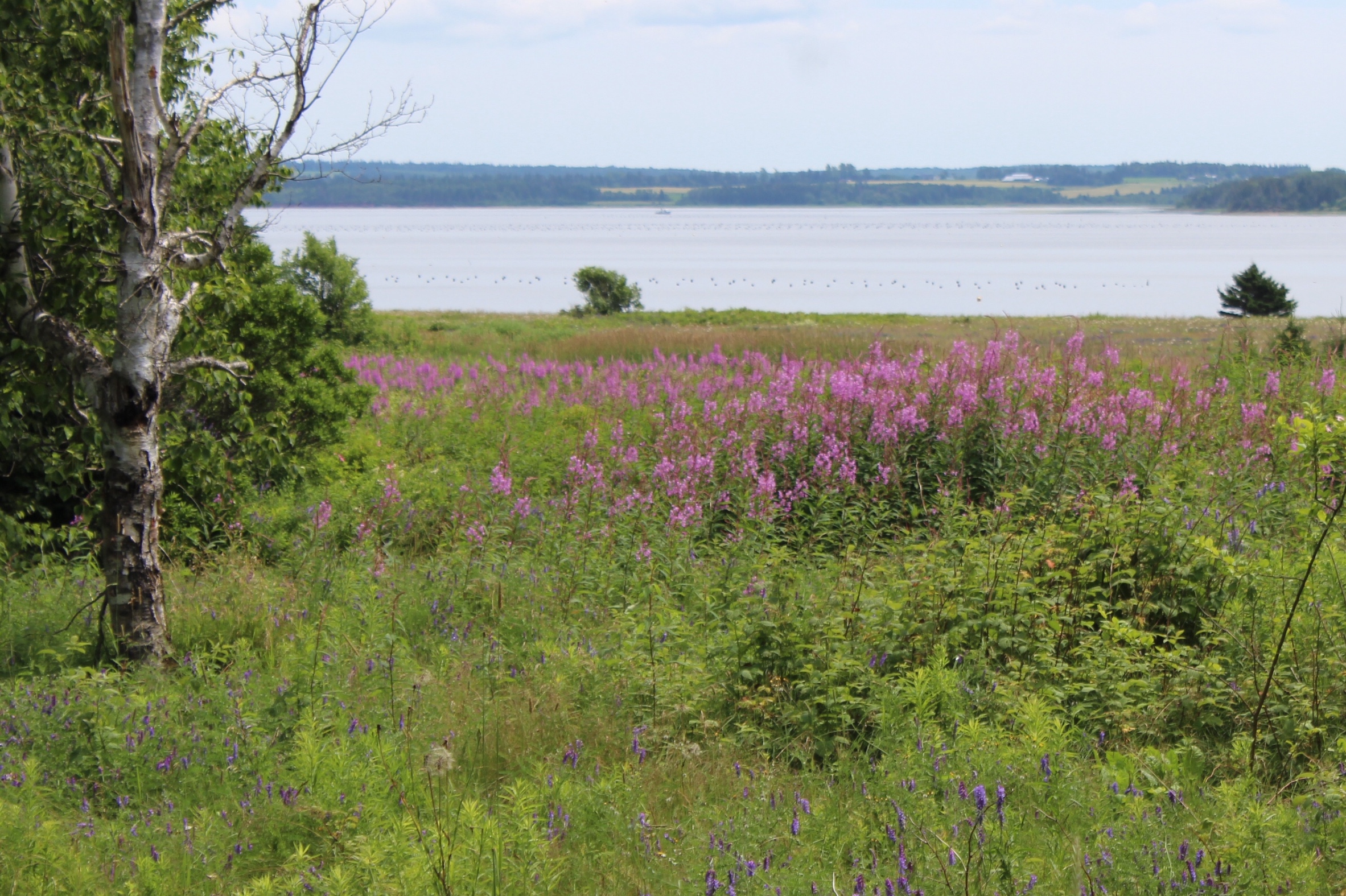
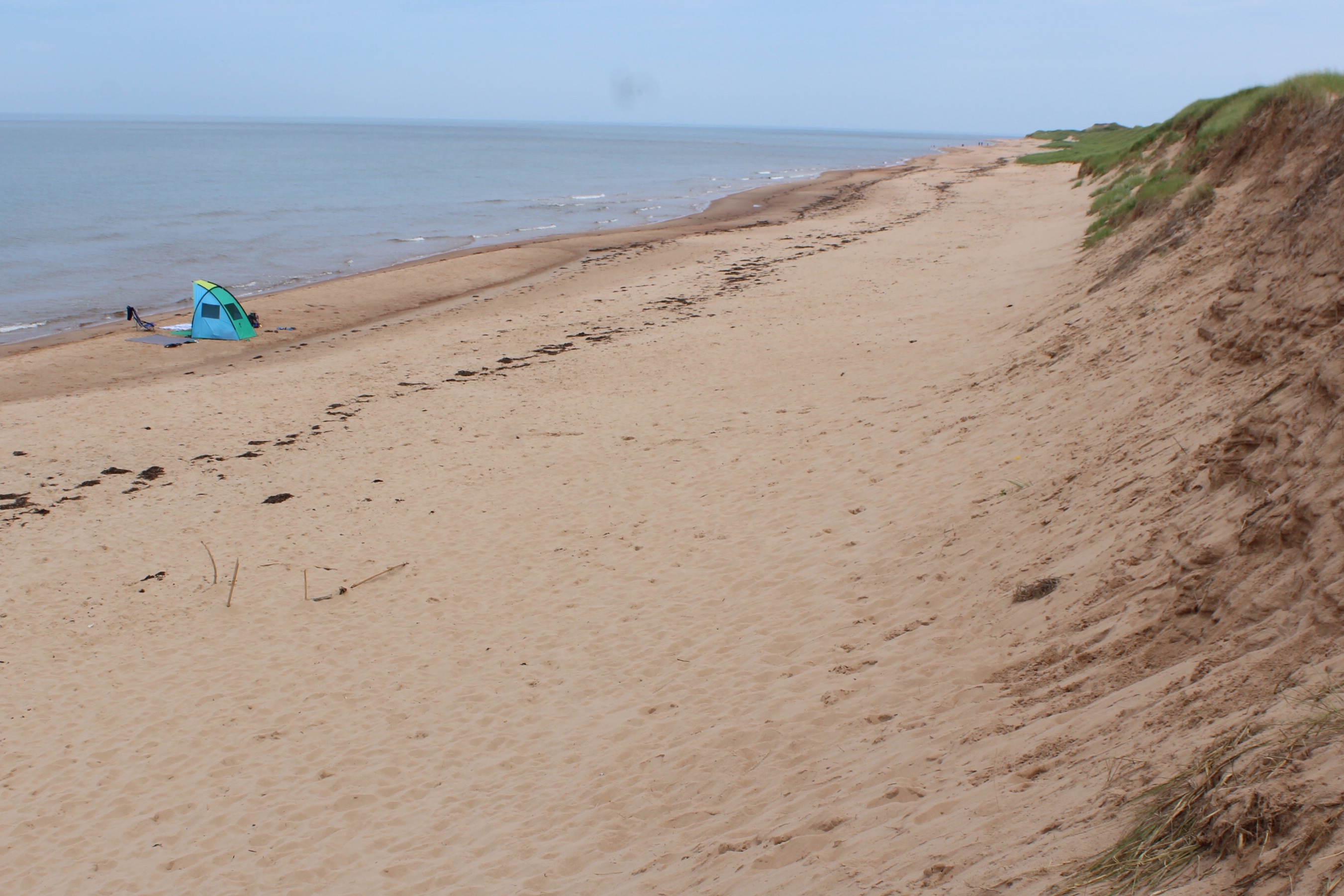
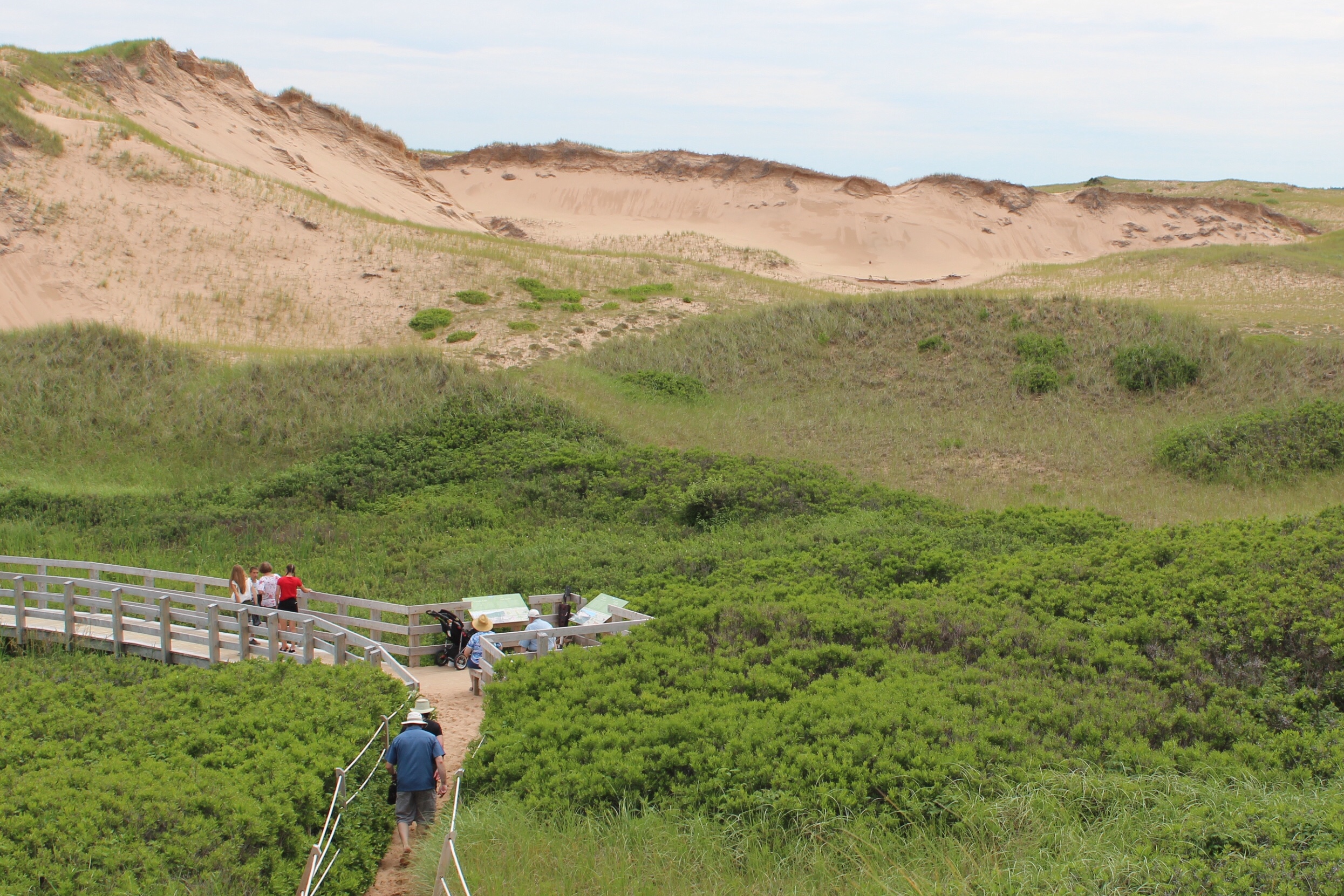
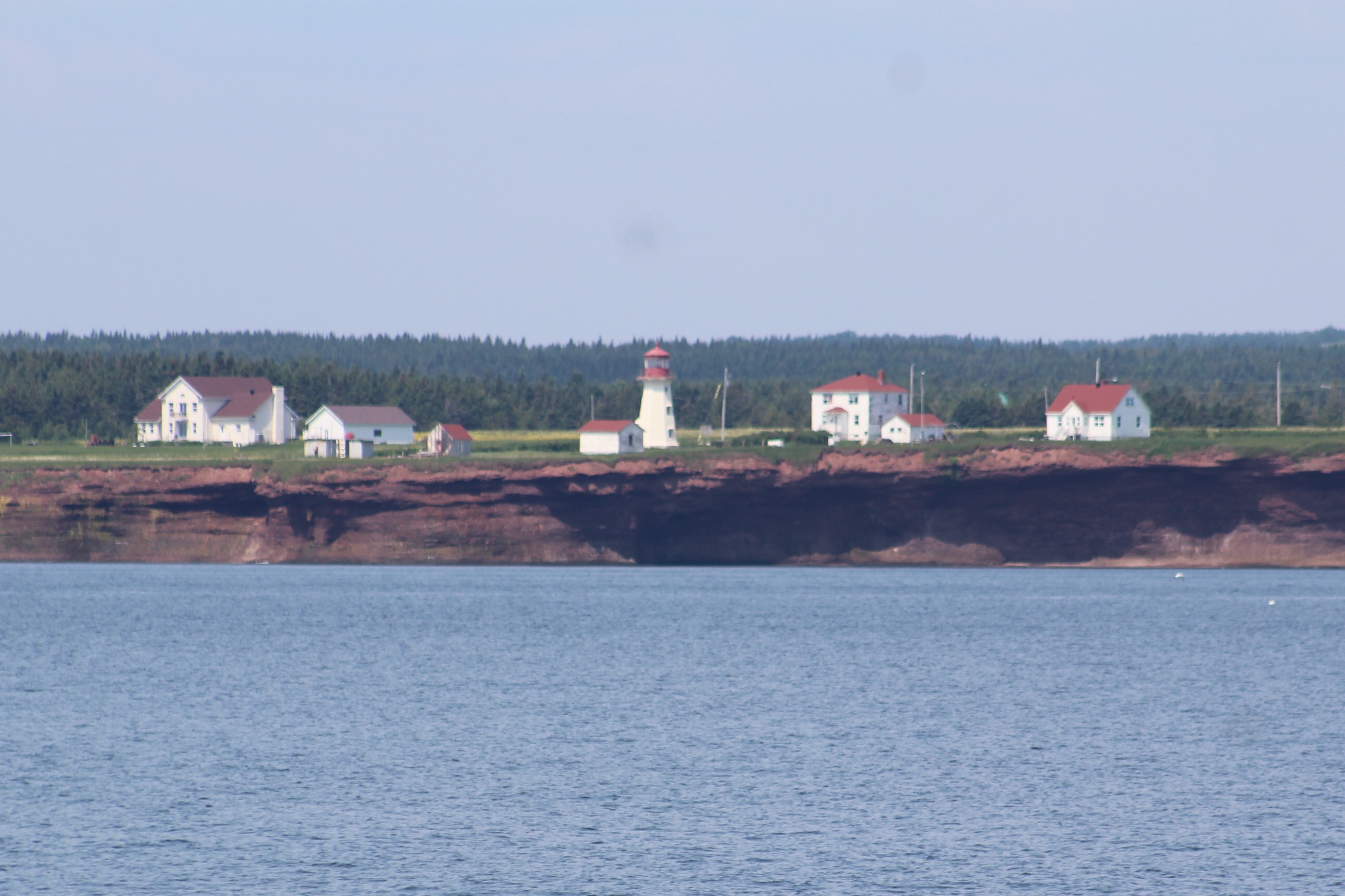
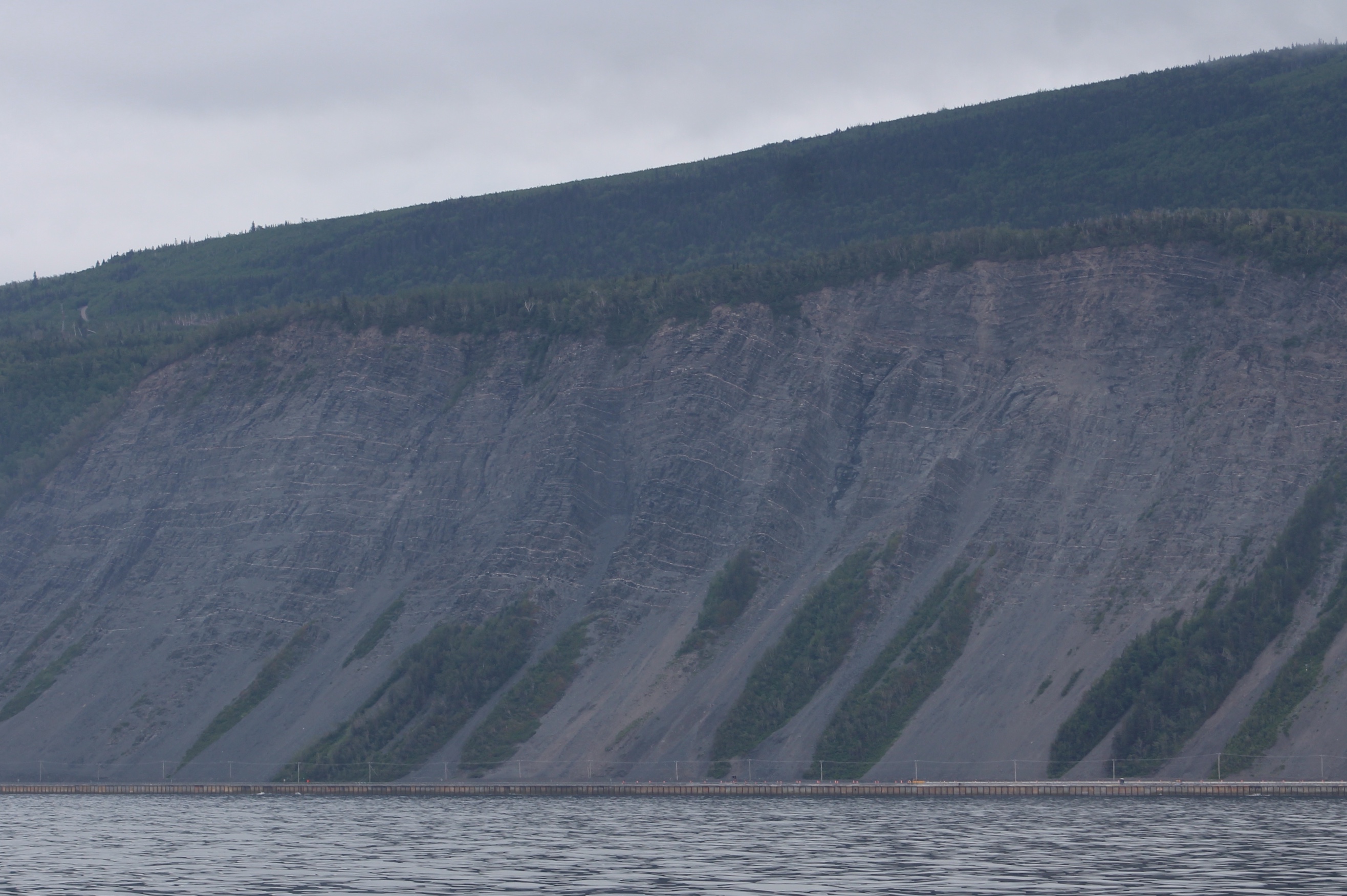
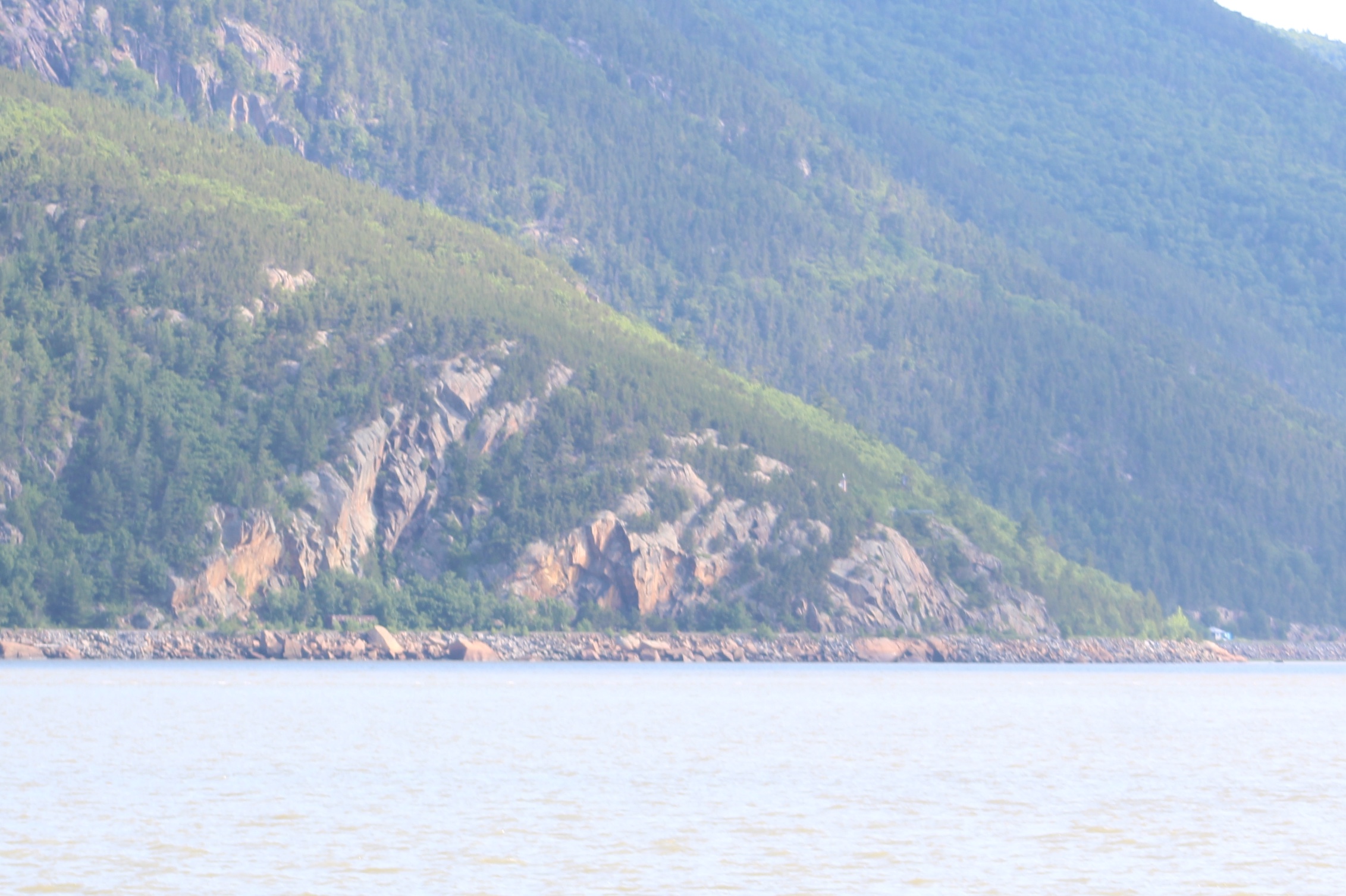
    Looking down the most eastern point of PEI

    Summary of the Week

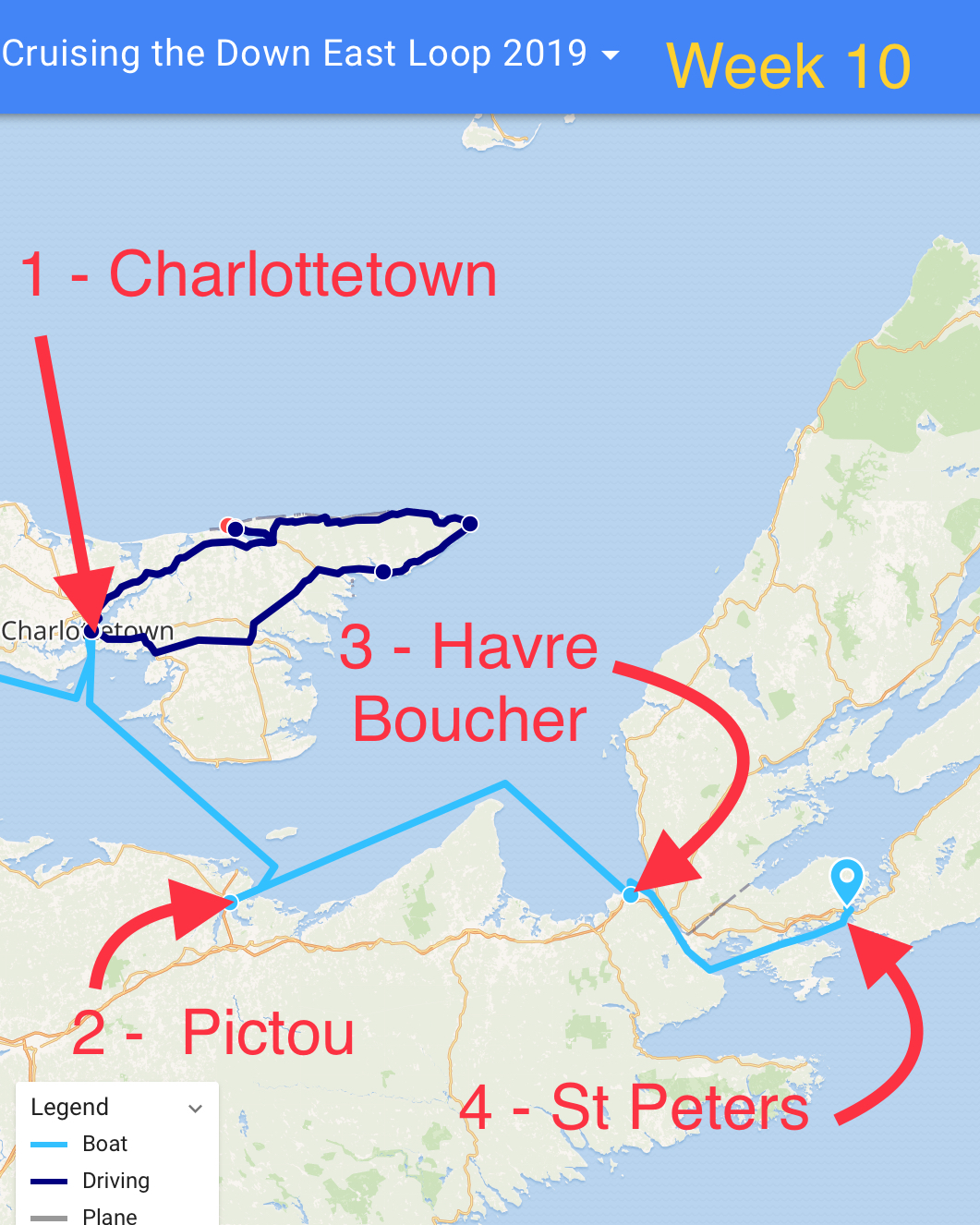
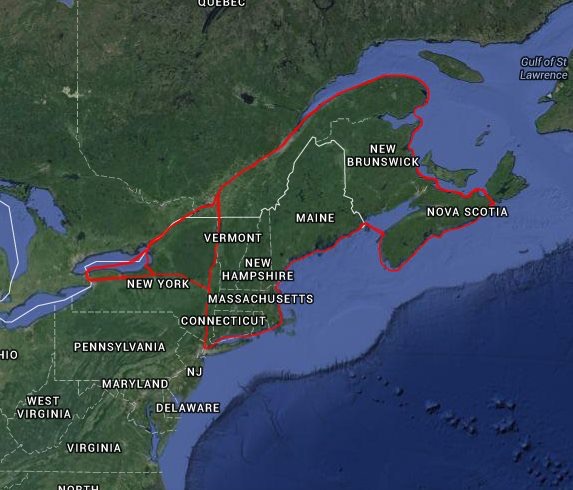
    The crew managed four travel days on the water this week. They also rented a car and took a day to explore Prince Edward Island, PEI. Tuesday, the crew travelled to the Provincial capital of PEI, Charlottetown (1). Wednesday the crew explored the Island by car. Thursday, the crew set out for Pictou (2). Friday, found the crew anchored in Havre Boucher (3). Then they ended their travels for the week in St Peters (4) on Saturday.

    Click on the Still Waters II Travel Map to see detailed Voyage Logs.

    The voyage of discovery did answer the following questions this week:

    1. What was the second boom economy on PEI based upon?
    2. How often is a black fox breed in the wild?
    3. Why were Acadians deported from the maritime islands?
    4. Why is the dirt and sandstone red on PEI?
    5. What was the name of the boat that brought the first Scottish settlers to Nova Scotia?
    6. Where did these first folks establish their first settlement?

    At the Box Office

    To see past videos, click on the link to the Still Waters II Vimeo site.  The library contains videos of Still Waters II cruising America’s Great Loop.

    Sunday, July 21st

    Today was National Ice Cream Day. Hope you celebrated this wonderful day with your favorite ice cream. The skipper’s favorite ice cream is a family recipe perfected by his dad. In honor of his father, here is the recipe: per half gallon to be made, mix the following ingredients:

    3 eggs, beat/whip them up good before adding sugar

    1 cup sugar, slowly add the sugar to egg mixture while stirring the eggs

    1 teaspoon vanilla, again add slowly while stirring into mixture

    1 can fat free evaporated milk, continue to stir up mixture

    1 can sweetened condensed milk, continue to stir into mixture. If the ice cream is too sweet for your taste, cut back on this milk for your taste.

    Pour the mixture into the ice cream bucket. Now fill the bucket to the fill line with whole milk. (You can substitute 2% milk if you are counting calories.) If the bucket has no fill line, fill the bucket 3/4 full.

    Assemble your ice cream maker per manufacture instructions, add ice and rock salt. Turn till the ice cream hardens in the bucket.

    Variation for fruit ice cream. Add 1 cup puréed fruit per half gallon. Add to the mixture before you top off with milk to the fill line.
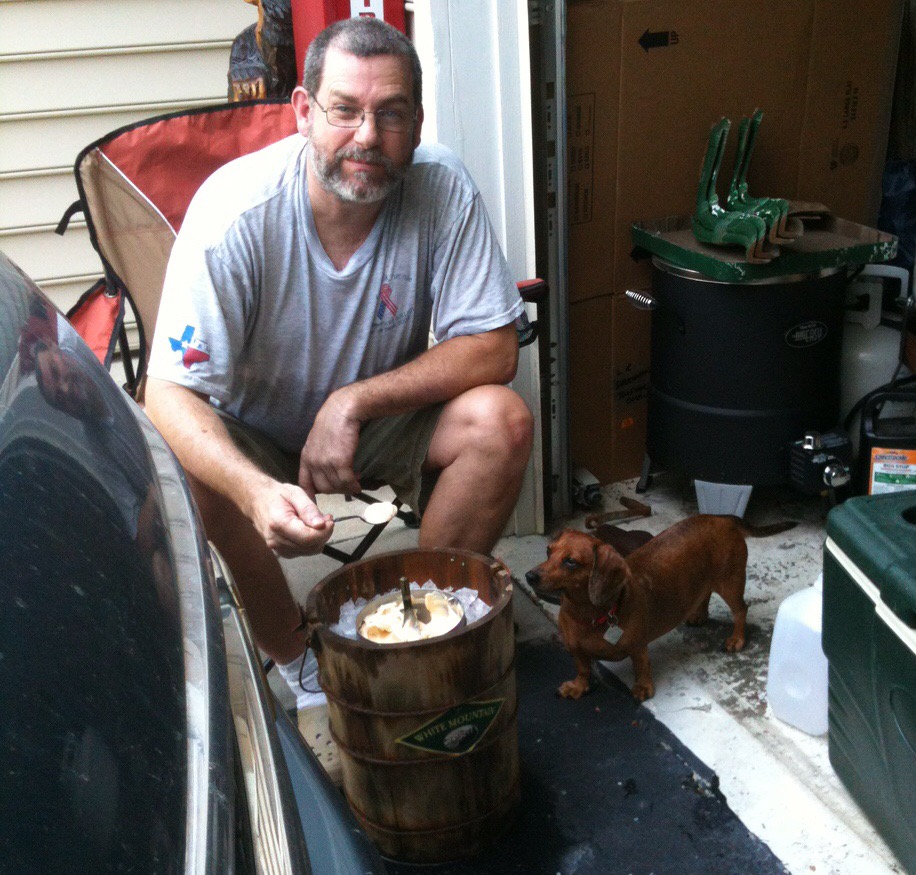
    The skipper about to test a batch of freshly churned peach ice cream

    Monday, July 22nd

    The crew had planned to rent a car in Summerside and expand their exploration of PEI. Unfortunately, while trying to book a car, the skipper discovered there were no cars available. He expanded his search for a car over to Charlottetown and again no cars available from three different vendors. Then he got a tip from Confetti, and was able to score a car for Wednesday.

    In the mean time, the skipper went to visit a few museums while the Admiral went shopping.

    The first museum that caught the attention of the skipper was the International Fox Museum and Hall of Fame. You may be wondering why a fox museum might interest the skipper. The answer is captured here from the skipper’s sister’s blog.

    When I was 12 my dad got a call on a Saturday afternoon from a friend. Two hours later we were foster parents to 3 baby foxes whose mama had been killed and whose den had been found by Daddy’s friend. The babies were so young their eyes weren’t yet open. We fed them with eye droppers filled with a combination of evaporated milk and water. We hadn’t had Wiley E. Fox, Pepper and Mary Elisabeth very long when they were stolen while we were at school one day. The next day, after a call to the junior high principal and his impassioned appeal over the morning announcements, Wiley and Pepper were returned. I got to leave school in the middle of the day to take them home. We had them for several years. They were as “tame” as a wild animal could be. They loved to be brushed, walked on their leashes and they reveled in the attention they got from us and our friends.

    The skipper (left) and brother Danny with their pet foxes
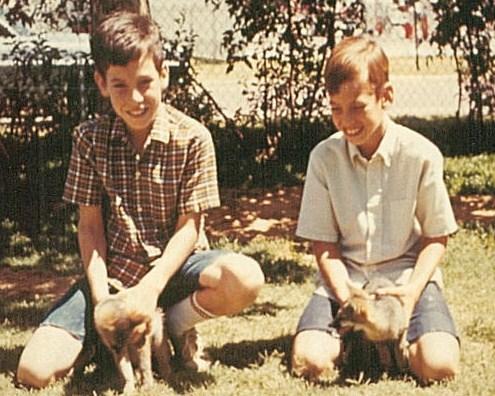
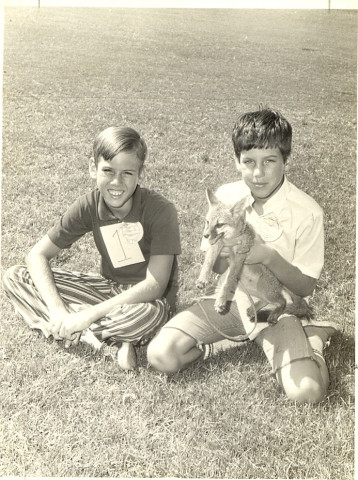
    Wiley left home one day (ran out the open front door) and never looked back. We saw him from time to time in the wooded area behind our school. After his departure The Boys shared Pepper until he, too, decided it was time to go “home” to the woods. My brothers entered Wiley and Pepper into the annual Pet Show at Woodland West Recreation Center. They always won first place for Most Unusual Pet.

    Pepper winning first place ribbon
    The Fox Museum told the story of Prince Edward Island’s second economic boom period from the late 1880’s to WWII. A resident of the Island had trapped a couple of black fox and with the help of a friend, learned how to bred them in captivity in the 1870’s. The French Fur Trade was already big business, shipping pelts from North America to Europe. These new black pelts were a fashion hit with the upper crust of society in Europe.

    In the early days of the Fox Trade, three different breeders cornered the market on these exclusive black pelts that sold around $1,000 a pelt at auction houses in Europe. The three breeders signed a pact not to sell breeding pairs of Fox to any other people wanting in the lucrative business.

    Eventually, one of the three sold a breeding pair of Fox to a nephew under the promise that he would not breed and sell pelts. The nephew kept his word. For three years he bred his fox to grow a sizable inventory. Then he sold live fox breeding pairs rather than pelts. His pairs were sold for $5,000, more than double what a pair of pelts sold for.

    Silver Fox pelts as a variation to the solid black pelts
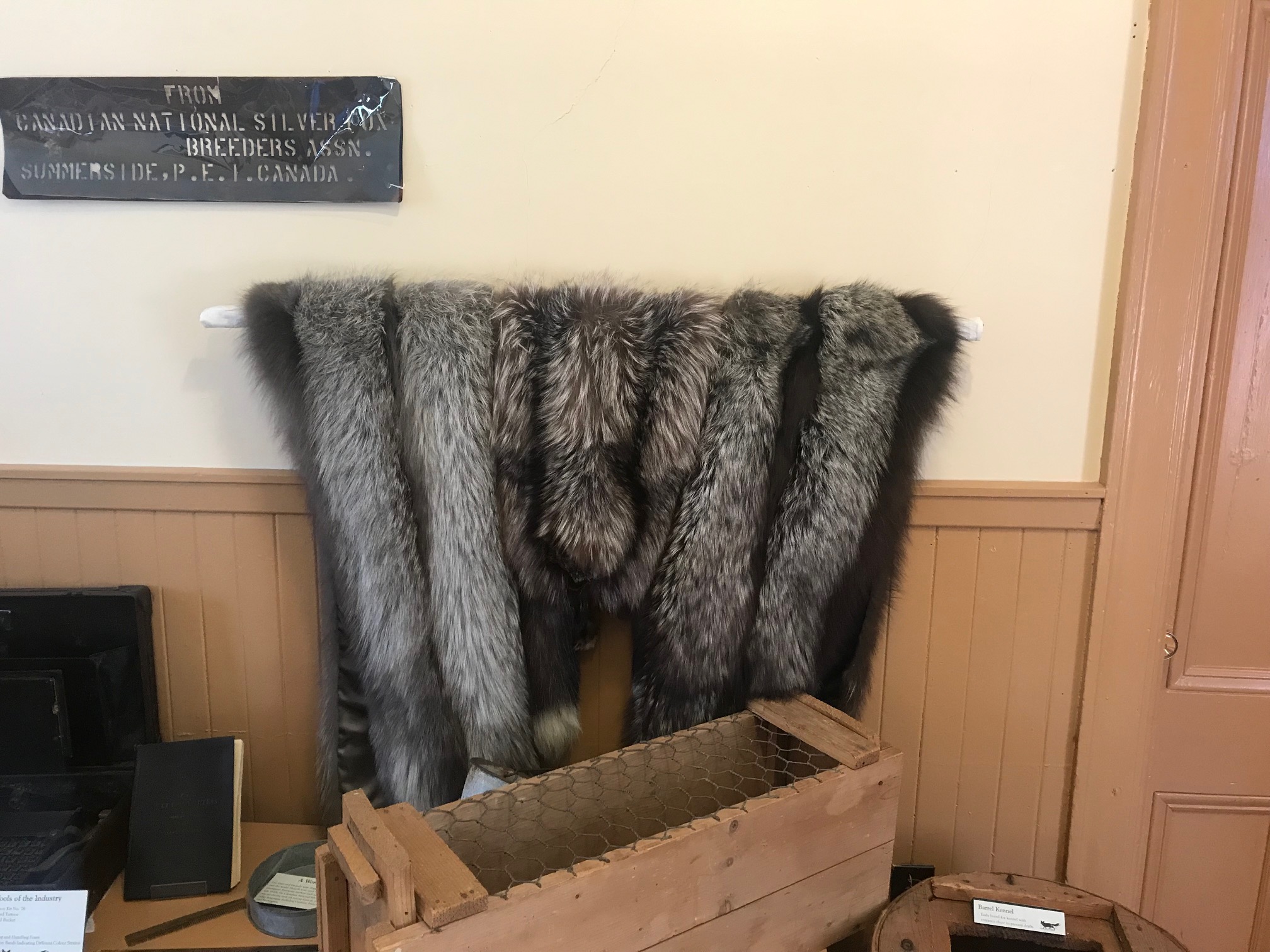
    With that kind of money to be made, the other three fox farms also began to sell breeding pair. It did not take long for the market to saturate and the free market economy based on supply and demand busted the ‘Boom Day’s.’ By the end of WWII, with women’s fashion no longer seeking fox coats, a pelt sold for only $7.

    This was all interesting, but the skipper wanted to know if a black fox was unique to the Island. The museum did not answer this mystery so he asked a worker. She informed him that these were actually just ‘run of the mill’ red fox. However, in nature, one out of 1,000 liters will contain a black colored fox. Because these fox were on a remote island, more black fox were present and able to bred in the wild.

    With that mystery solved, it was time to ride six miles out to the Acadian Museum, to learn about their story. As mentioned last week, the Acadians originally migrated to the region from France. Initially, the Acadian population was mostly along the Bay of Fundy coastline of modern day Nova Scotia.
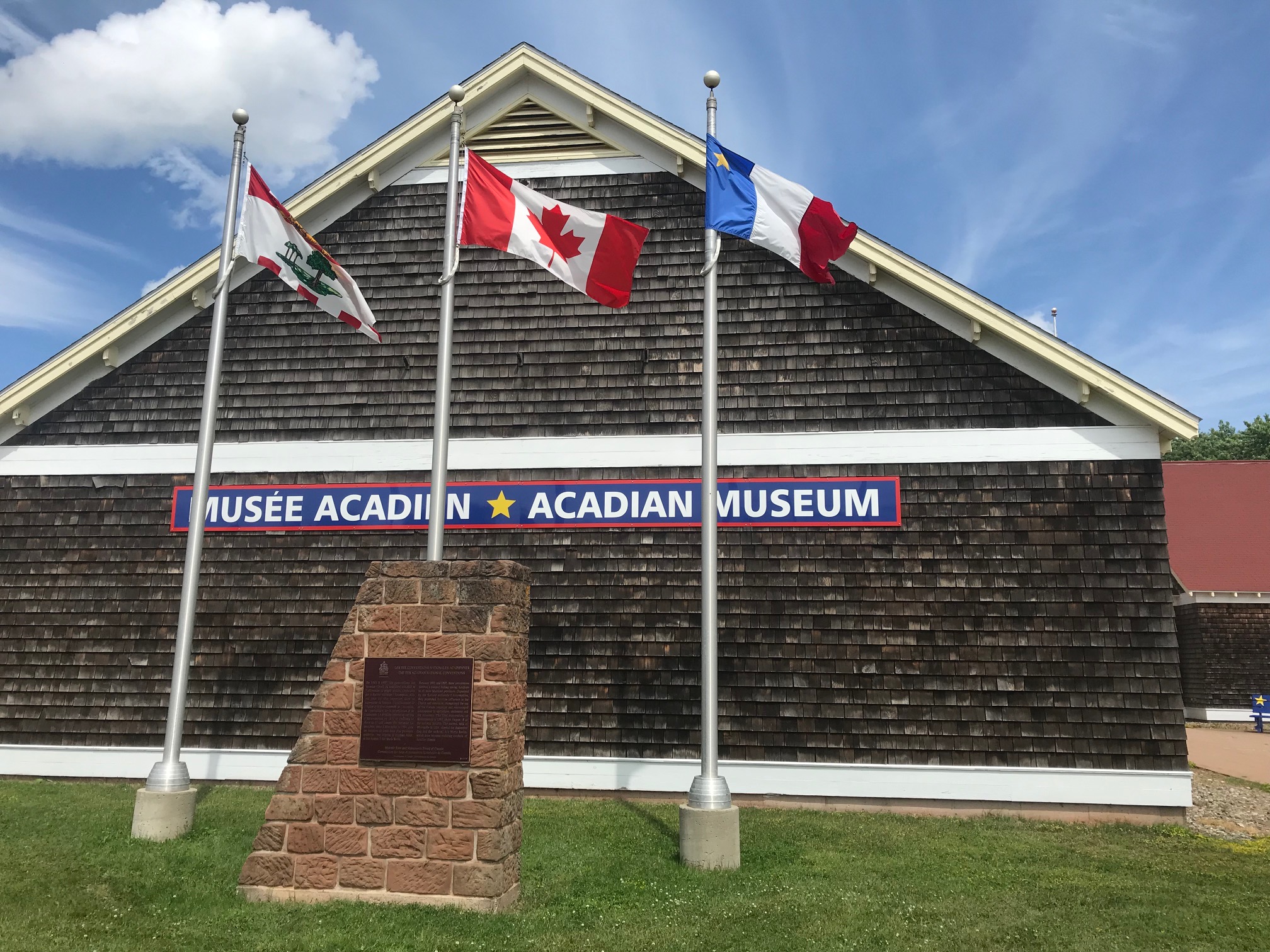
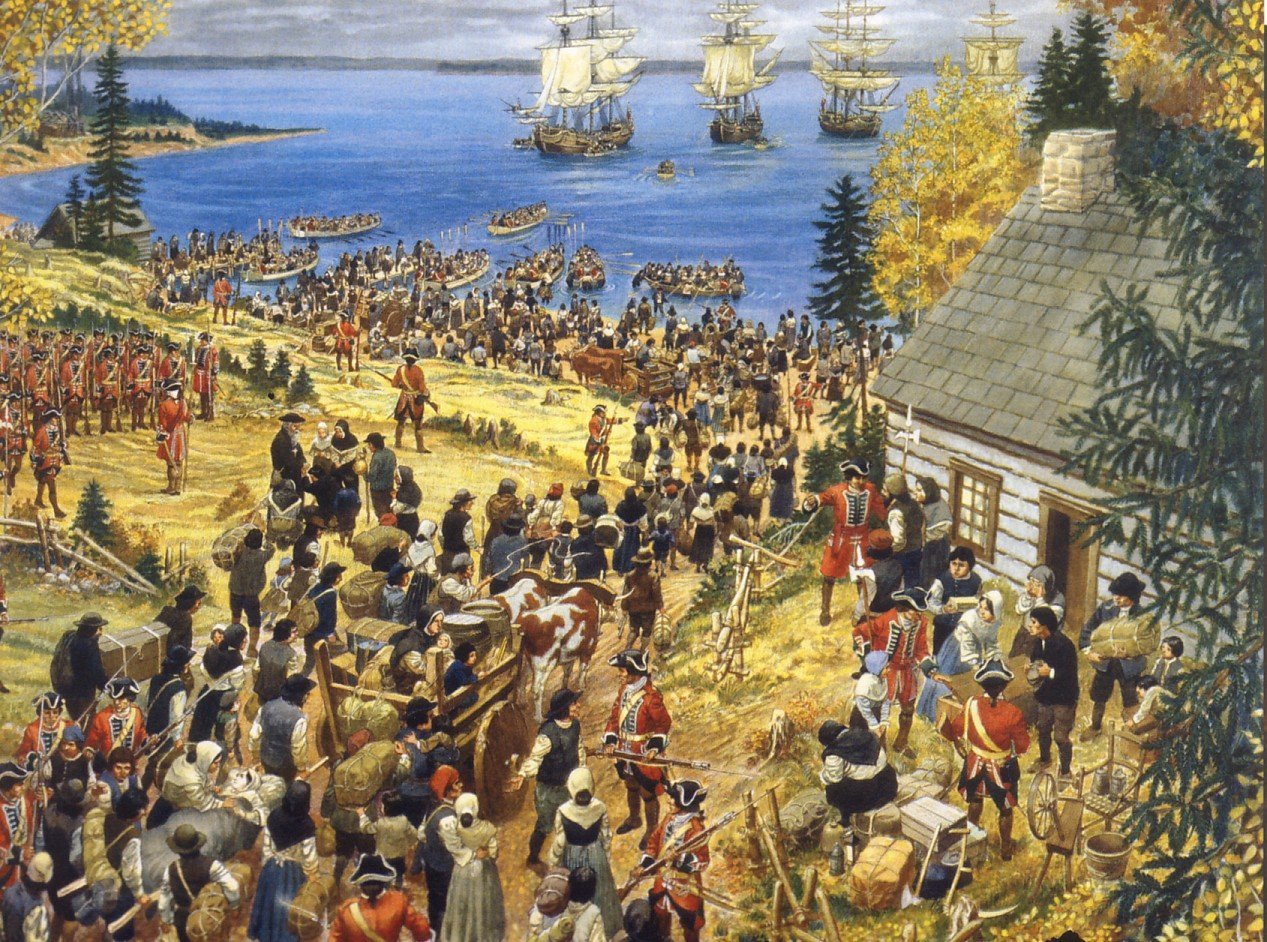
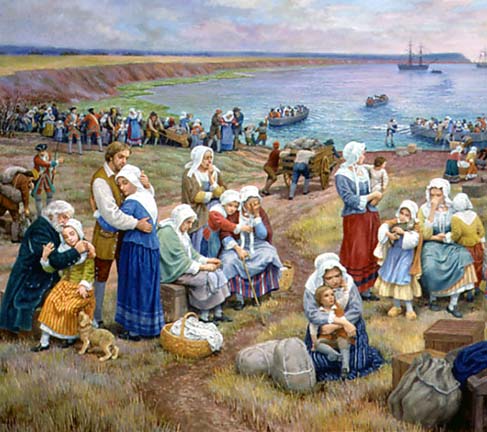
    As the British won lands during the French and Indian War, they began deporting the French from the lands. Following the Treaty of 1763 that transferred New France to Britain, the British wanted their new colonist to take an oath of faith supporting the new Protestant Rulers. When these Acadians refused based on their French Catholic views, the British deported them back to France.

    Expulsion of Acadians by Lewis Parker
    Ships Take Acadians into Exile by Claude T. Picard
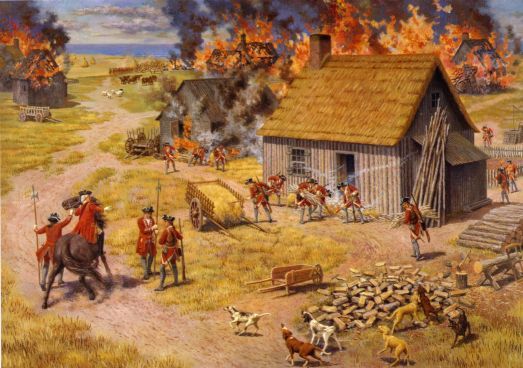
    In the 1780s and 1790s, these deported Acadians began to migrate back to their former settlements. However, they found these areas now settled by American settlers and Loyalists from the Revolutionary War. Therefore, the Acadians searched out new areas and settled in western Nova Scotia, Prince Edward Island, and the eastern shore of New Brunswick.

    Settlements are Burned by Claude T. Picard
    With a better understanding of these Acadians, the skipper headed back to the boat to prepare for departure to Charlottetown tomorrow.

    Tuesday, July 23rd

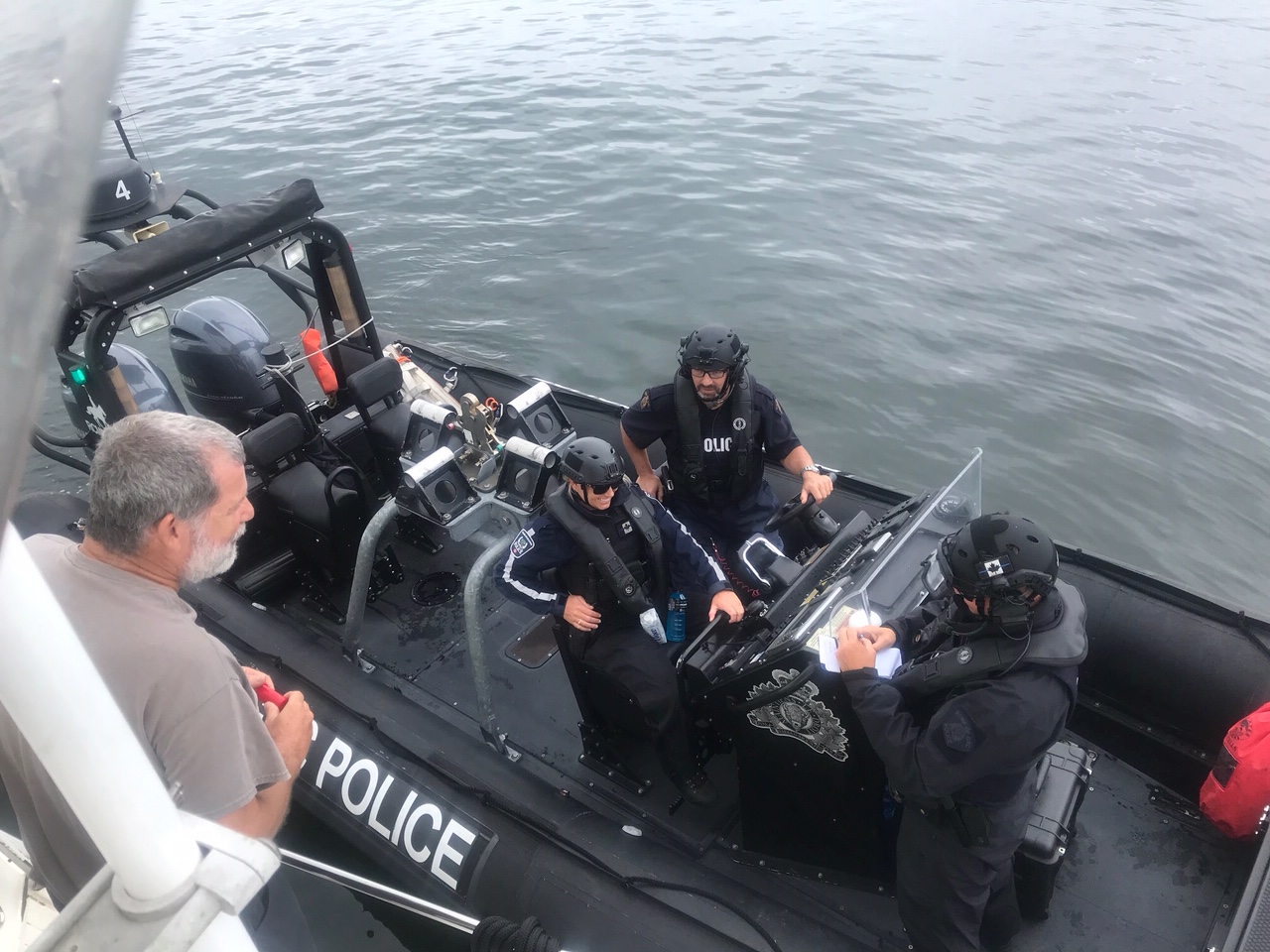
    The run to Charlottetown proved to be uneventful, well except for the potential boarding opportunity provided by Canadian Border Patrol as the crew approached the inlet to town. The Border Patrol boat came speeding out of the harbor and closely cruised by Still Waters II. The Border Patrol Boat then passed behind Still Waters II and circled around on the starboard side. By now, they had gained the skipper’s full attention. The Boarder Patrol Boat then passed behind Still Waters II a second time and pulled up close the port side.
    The skipper observed the agents on board give him hand signals to slow down, so the skipper put the engines in neutral and just drifted. He came down out of the helm and called down to the Admiral, who was in the salon, that Customs was stopping them. She came up to see what was going on.

    The three agents pulled along side Still Waters II and began to ask a boat load of questions. But the majority of the questions centered around the agents trying to understand how the skipper and Admiral had gotten that big boat all the way to Charlottetown. It truly intrigued them. Once their curiosity was satisfied, they asked to see the cruising permit that the crew received when they checked into customs just north of Lake Champlain. Luckily, the Admiral knew right where the piece of paper was and went to retrieve the permit.

    After the agents copied information from the permit down, they asked if the crew had seen any suspicious activity while they were out cruising. The skipper replied that the only thing suspicious that they had seen were three people dressed in black running around in a black boat. Once the agents realized he was talking about them, they laughed and wished the crew safe travels.
    Once the crew got settled in their slip, they walked to the rental car company, PEI Rental Cars, to see if their car was ready for pickup. Upon arrival, the owner apologized and said the people who had the car had extended till 1800 and were in the process of driving back to the office.

    The crew decided to try some fish and chips while they waited for the car to return. They ordered a 2 piece cod dinner that they planned to split. When the food came out they each had a large helping of fries and 2 large pieces of cod. When the bill arrived, they were only charged for 1 plate. The skipper brought the error to the servers attention and said that they would pay for two since they had eaten all the food. The server said no, that she served them the 2 piece dinner and had split the plate. The skipper is still not sure how they count to 2 in Prince Edward Island but he will gladly eat 4 large pieces of cod and pay for 2 anytime.
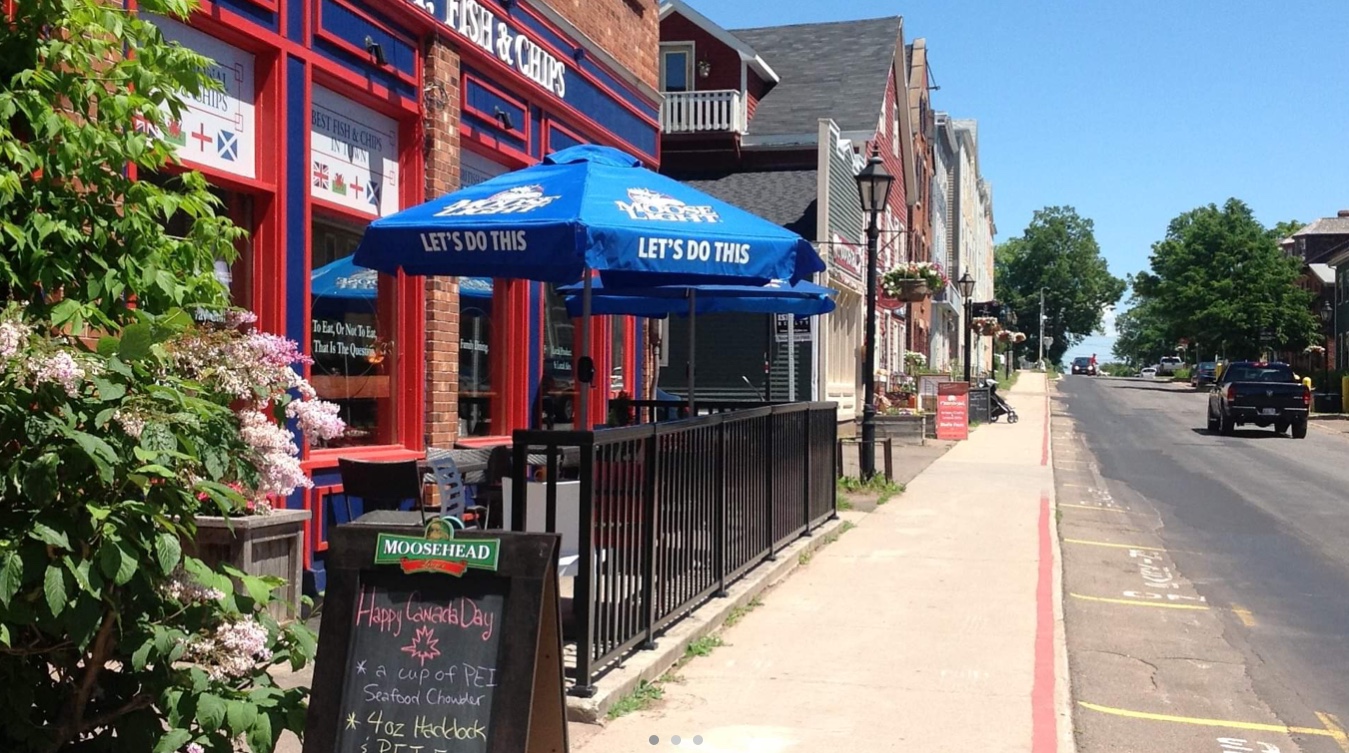
    Water Street Fish & Chips

    The crew finished dinner, procured the car, and went on a provisioning run at the local Walmart a few miles away. When the Admiral went to pay, she learned two things rather quickly. For starters they do not bag your products at this Walmart, it is ‘bag your own’ country. Secondly, they do not provide any bags.

    Luckily, the Admiral always carries her own bags so the latter was not an issue. The crew learned that PEI has passed a law outlawing plastic bags, and the law just went into effect. Most of the stores on the Island claim they have not had time to come up with a bag solution. Seemed apparent to the skipper that they all had found the same solution, require the customer to provide their own bags. Our crew can remember when those plastic bags were the environmentally friendly answer to tree killing paper bags. So, how long will it be before this answer is also found to be wrong?

    Upon return to the boat, the challenge was to find a place to park. After circling around a bit, the crew found a parking lot that was empty and within view of the boat.

    Wednesday, July 24th

    A cruise ship pulled up to the dock this morning and docked just outside the marina. About 0830, the skipper looked out and noticed the empty parking lot was filling up with tour buses and shore excursions. He also looked over at the rental car and all appeared to be fine.

    At 0845 the crew departed the boat and walked over to the rental car. When the skipper reached in his pocket to pull out the keys, he glanced over towards the car, and failed to see the vehicle. He asked the Admiral if she could see the car, she pointed and said it WAS right there.

    Seems the crew had parked in the taxi cab waiting line for the cruise ship, and the cab drivers had the car towed. Ouch. Then they had to pay a cab driver to take them to the tow company to fetch the rental car. Double ouch. This day certainly got off to a crummy start.

    Once the car was rescued from the impound yard, the crew set out to explore the eastern and northern shores of Prince Edward Island (PEI).

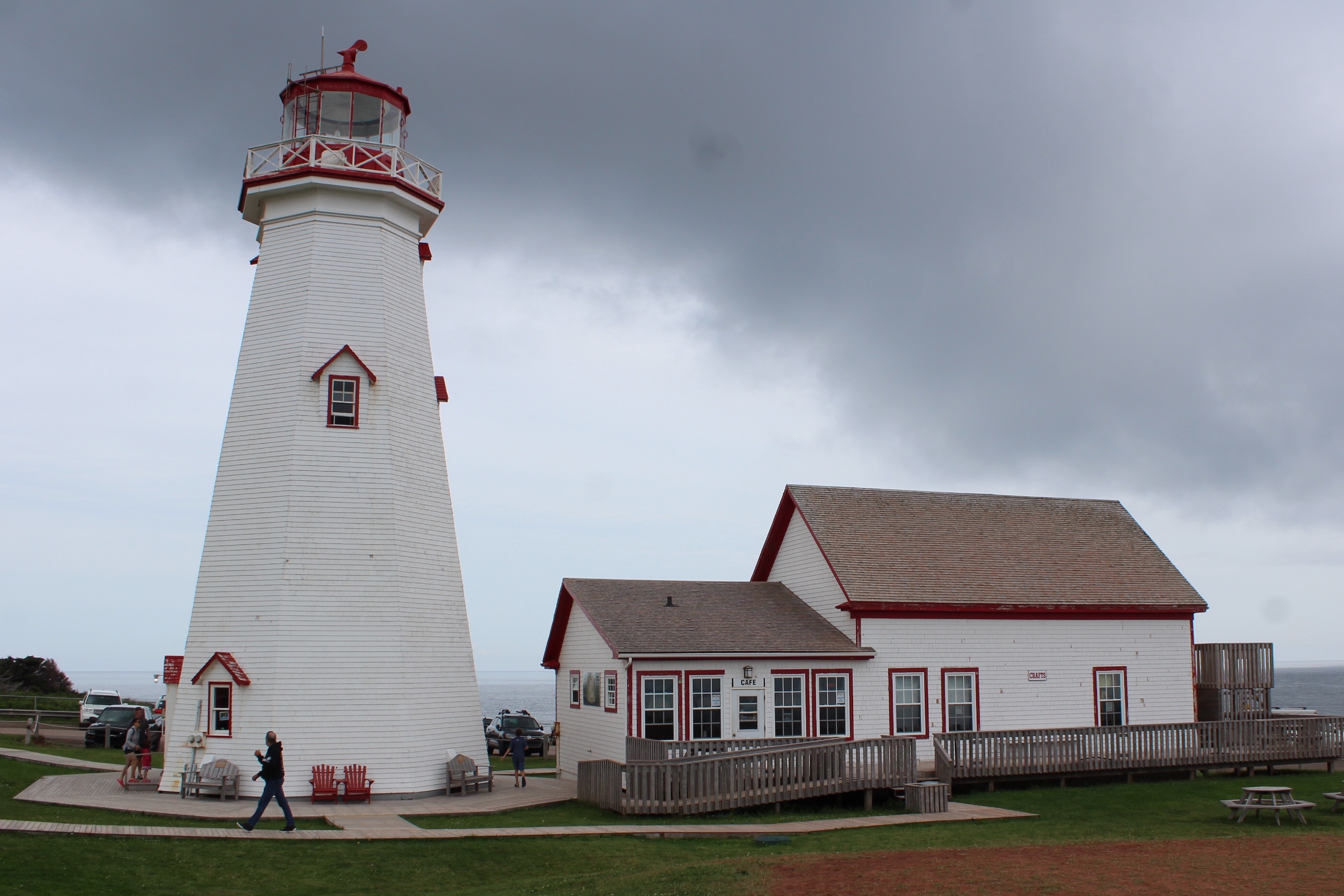
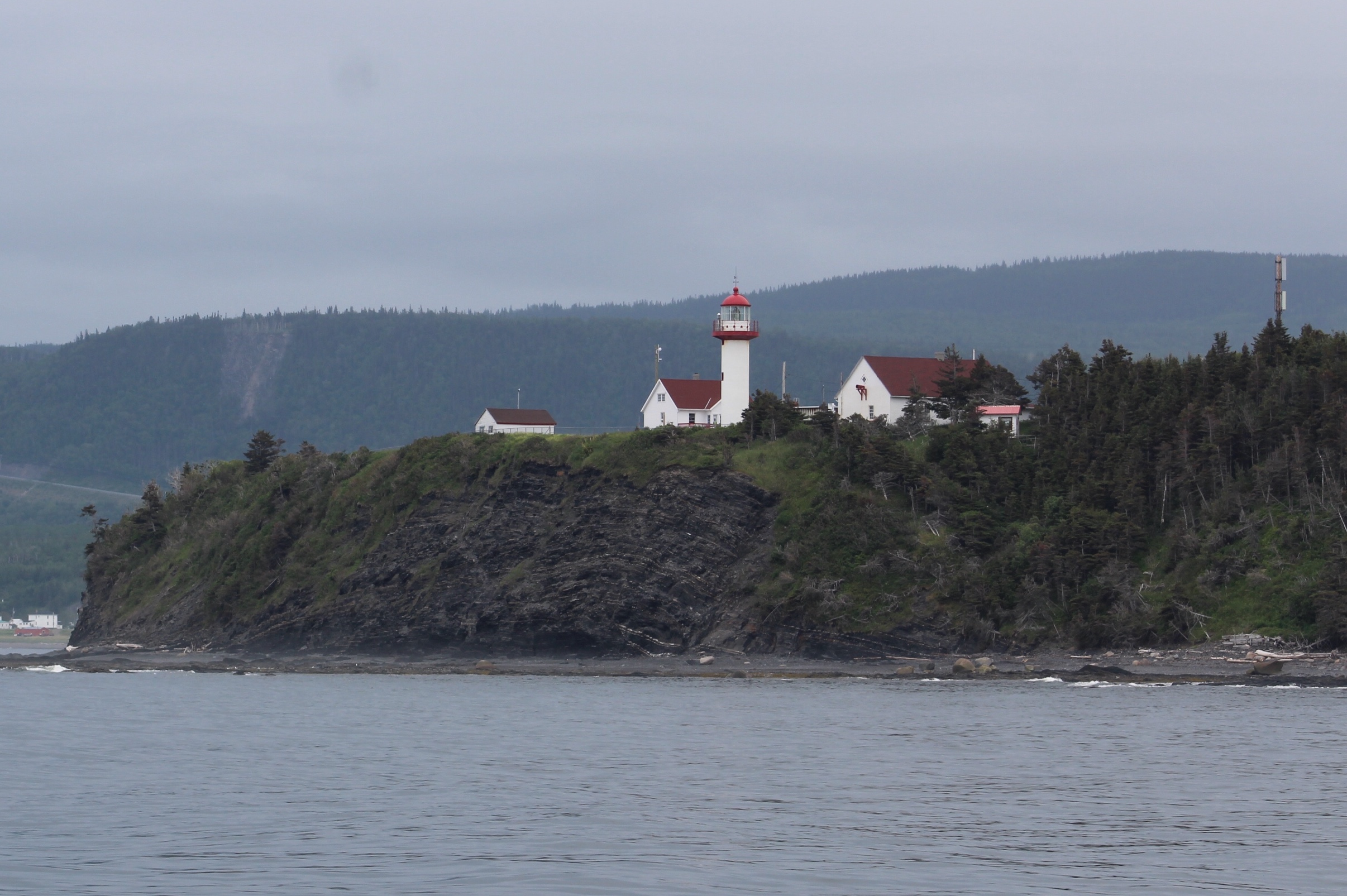
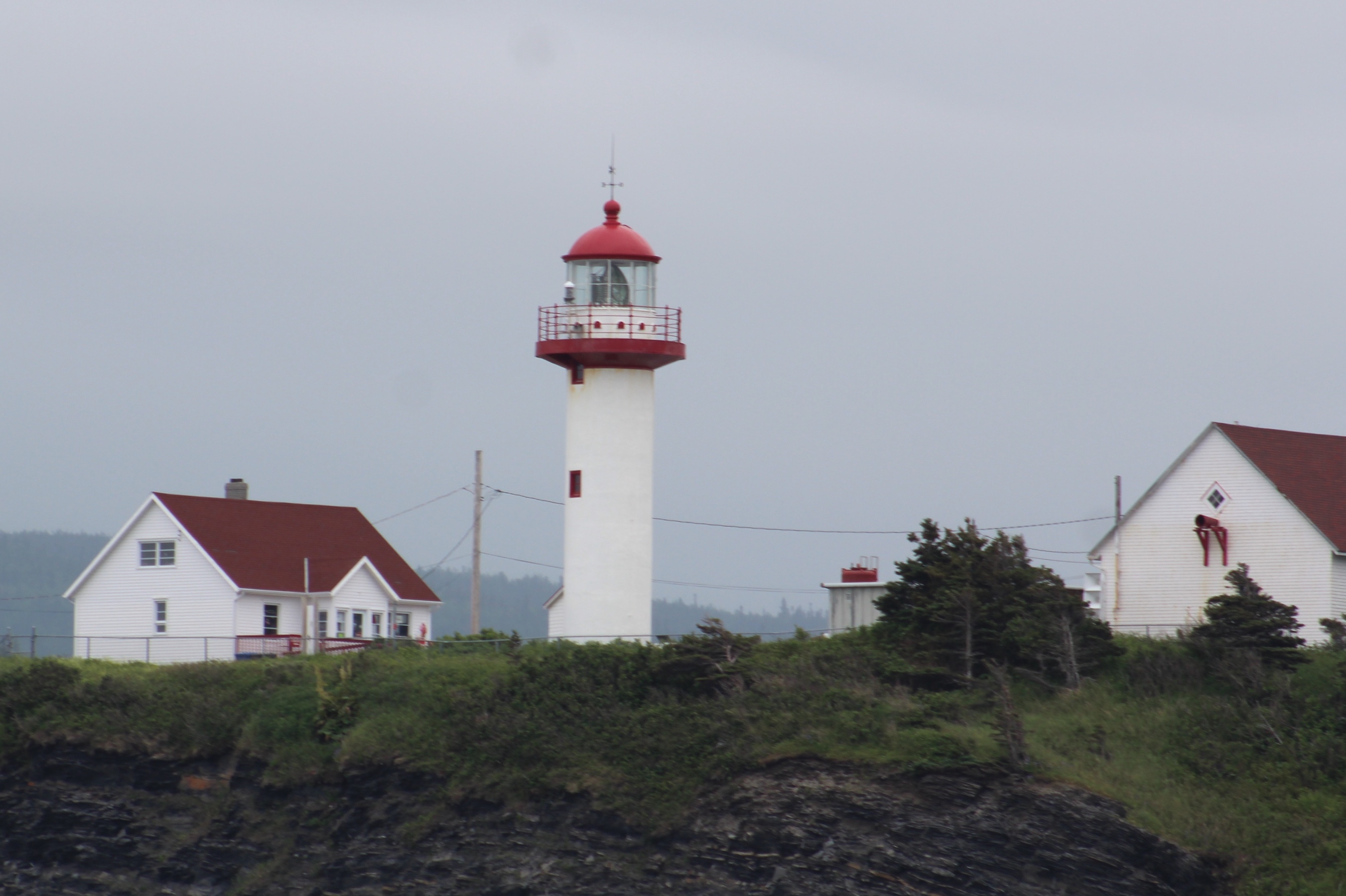
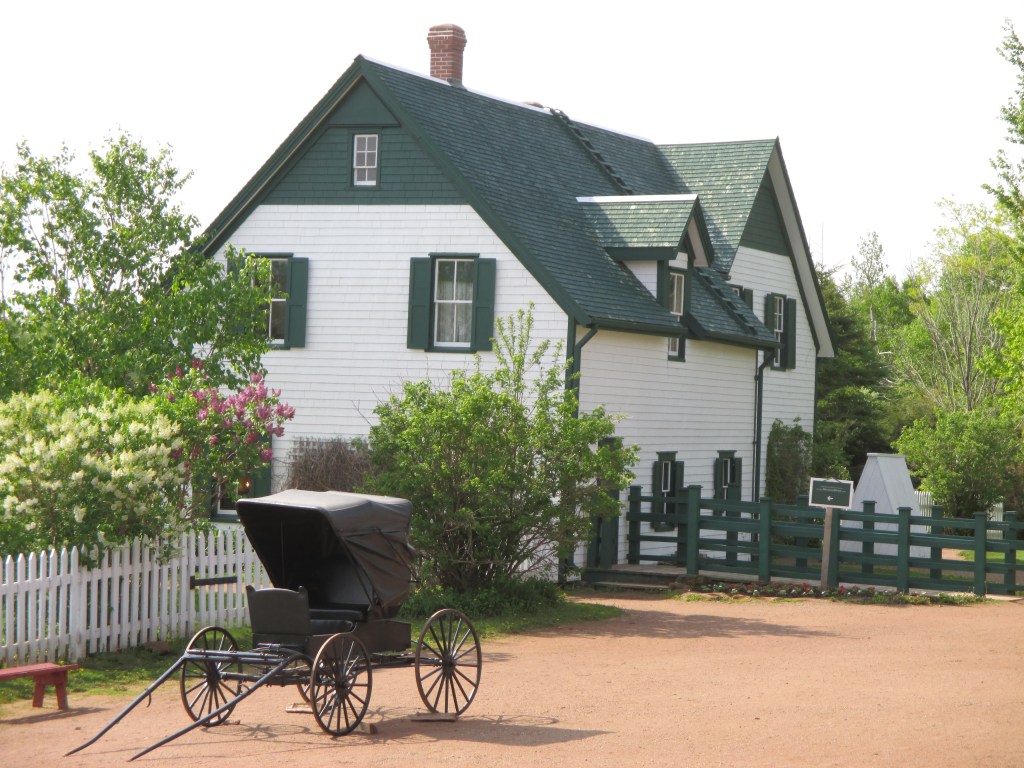
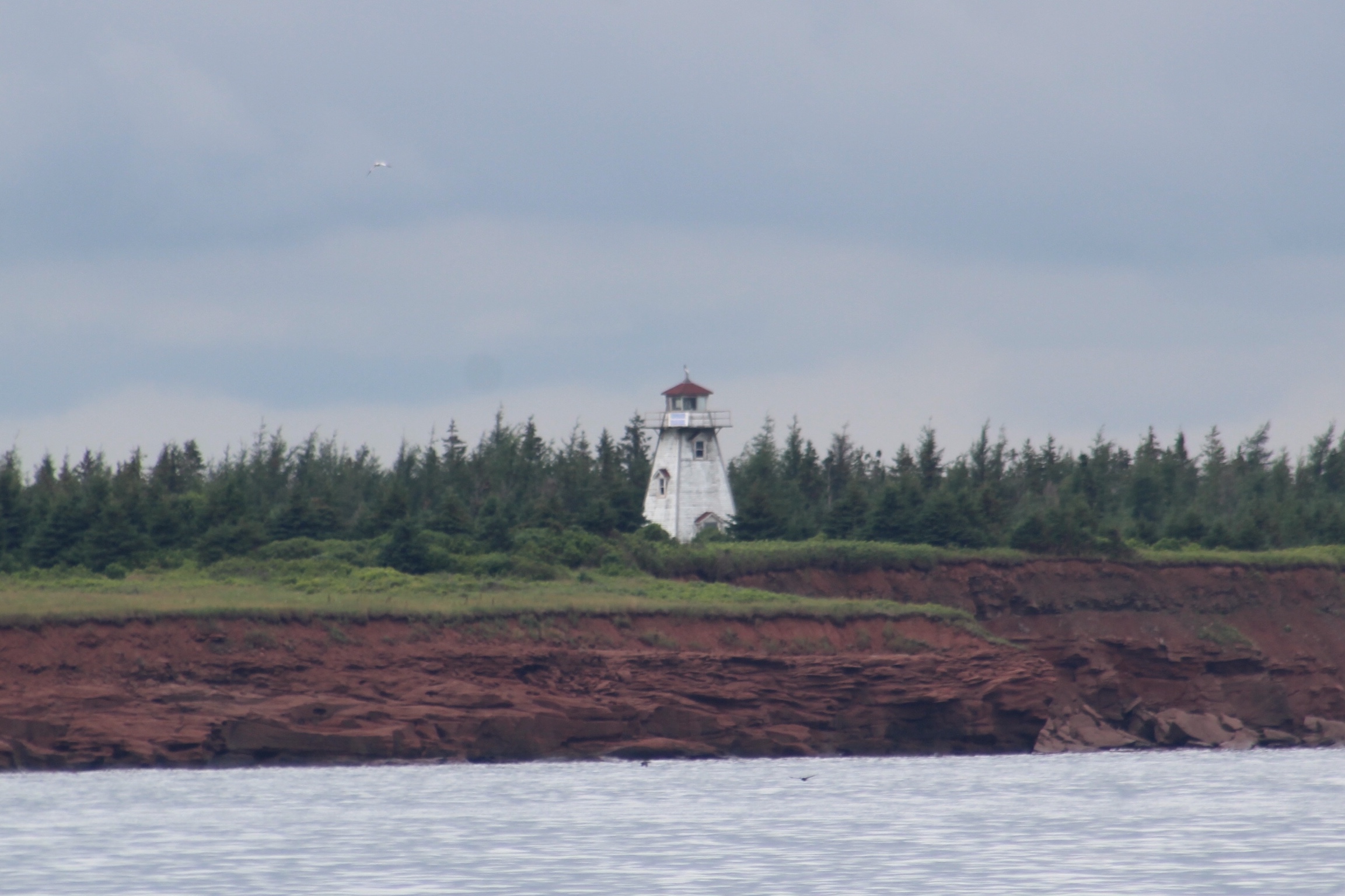
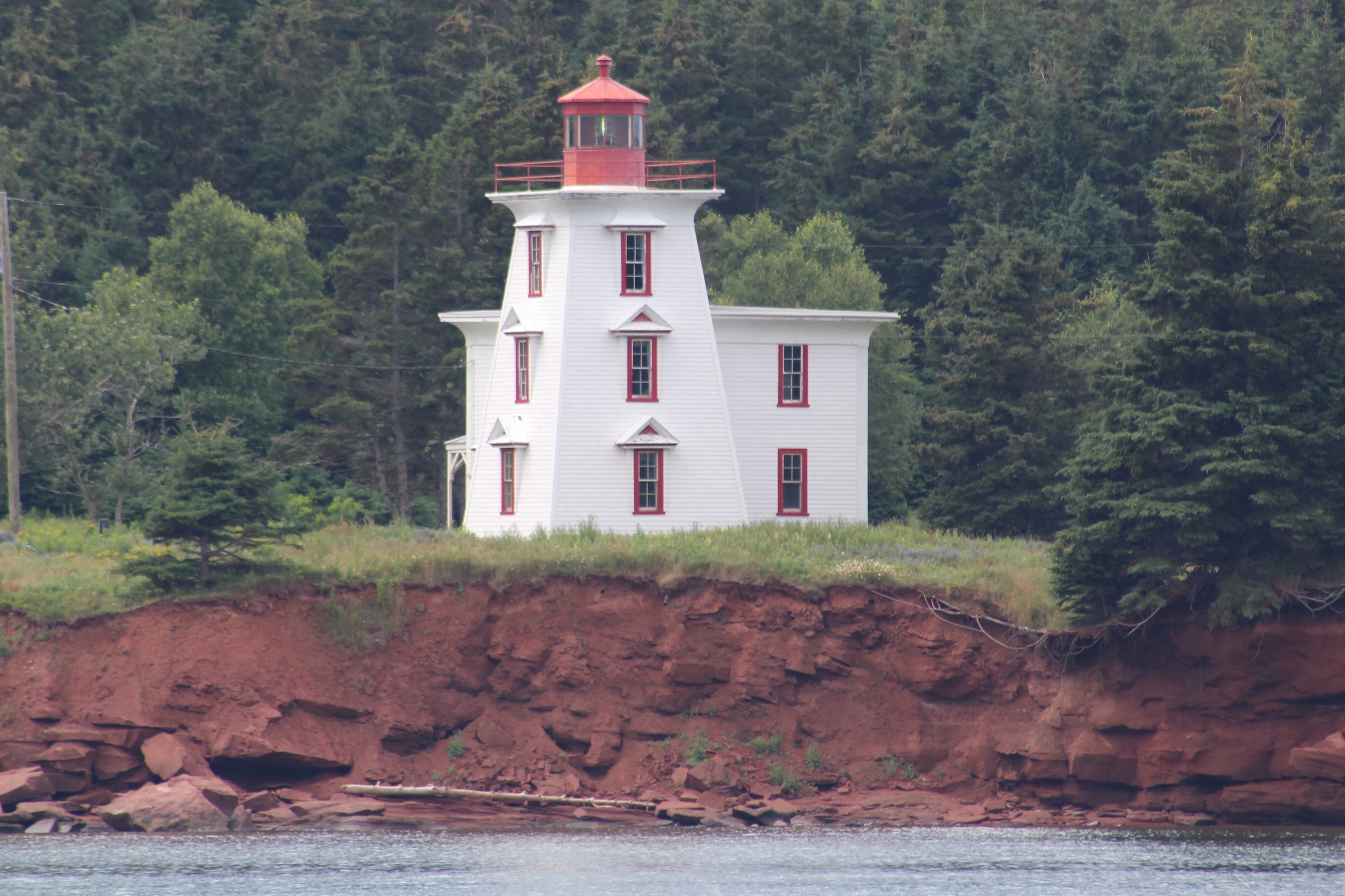
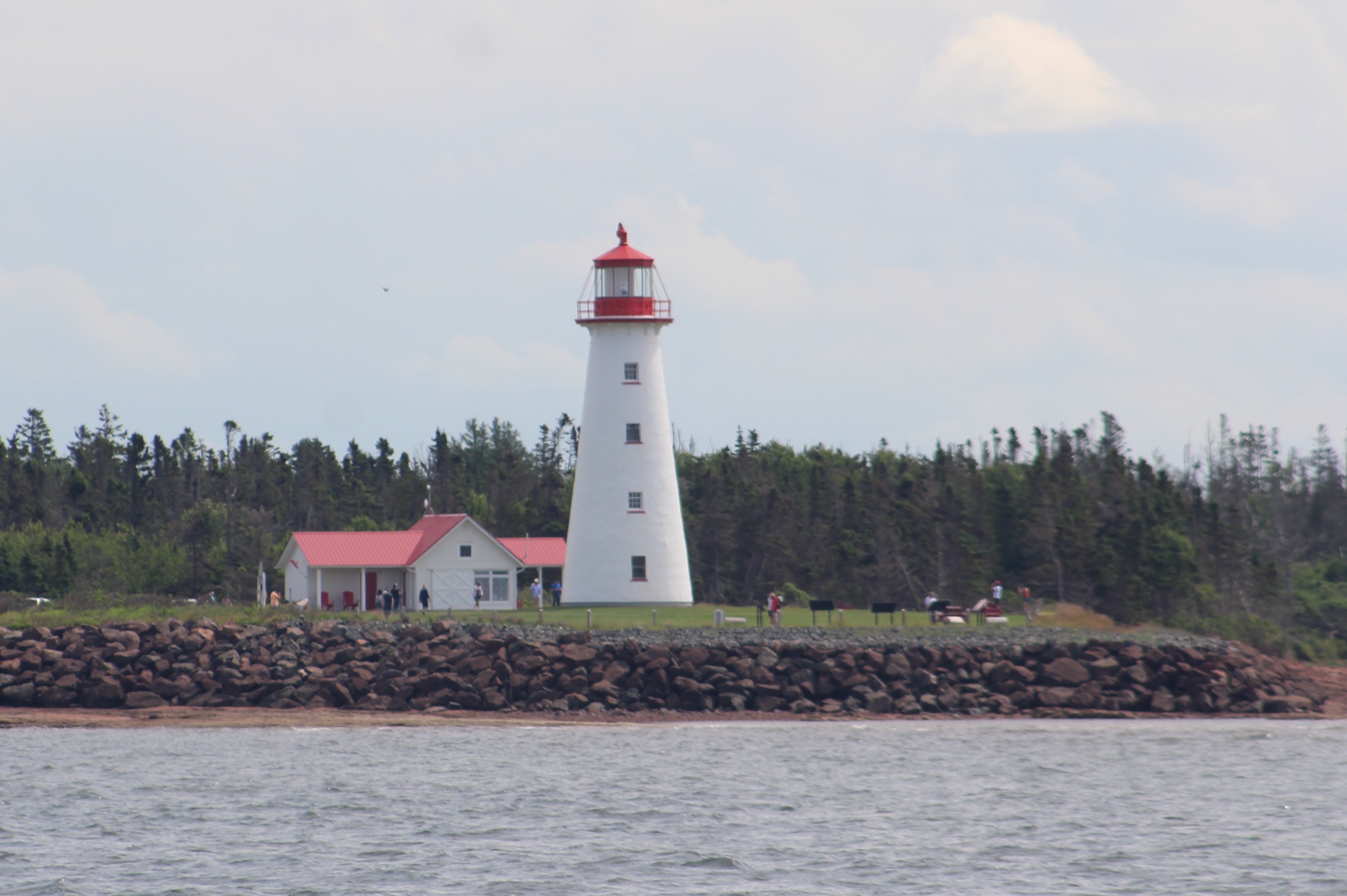
    They made stops at the Sorous Lighthouse, East Point Lighthouse, and the Greenwich Sand Dunes.

    When they arrived at the Sorous Lighthouse, a crew was busy setting up a tent for the annual Sea Glass Festival. There was a young boy following one of the workers around as he hammered in tent stakes.
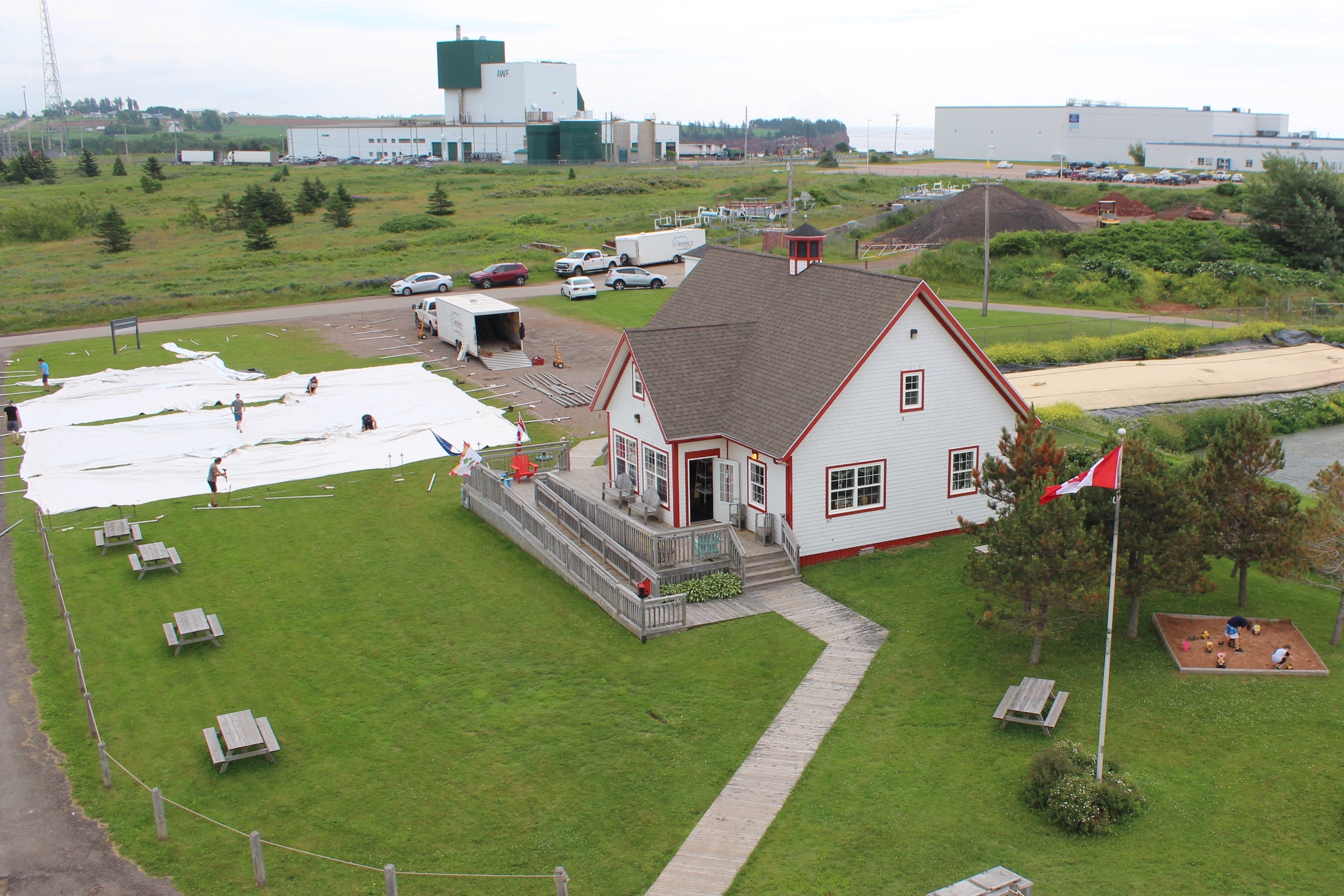
    The young boy was busy hammering the worker with questions. In fact, the boy could ask questions faster than a Gatling Gun can fire rounds. At one point the worker paused from hammering tent stakes and answering questions to make a comment about the boy’s T-shirt. He said, your mom sure dressed you right today.

    The skipper was not sure what to make of the comment, but continued to observe the strange dance before him while he waited for the Admiral to finish shopping down the gift shop. At some point the boy tired of his endless questions and turned to find his mom. When the skipper saw the T-shirt he could only laugh at the worker’s earlier comment.

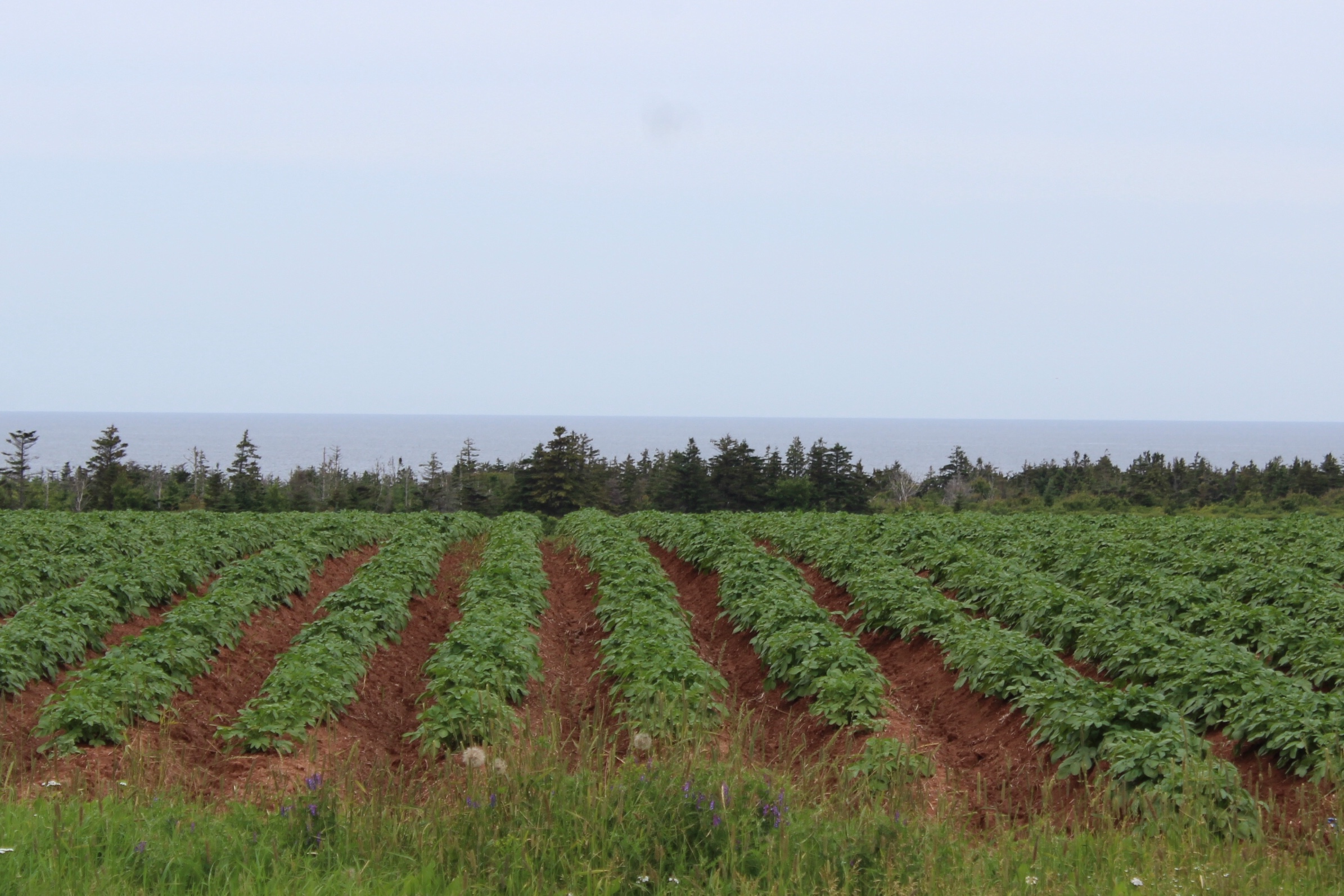
    But Why? brings us to the question of why is all this dirt on PEI red? The dirt on the Island is rich in iron ore. When the iron ore is exposed to the air and water it rusts staining the dirt and giving it the red rust coloration.

    After exploring the eastern portion of PEI, the crew drove over to Cavendish to try and see the Anne of Green Gables House. Upon arrival they found where the two cruise ships full of tourist were spending the day. The parking lot was full of cars and tour busses. The grounds were covered like ants at a picnic with people. The crew did not have time to fight the crowds and return the rental car on time, so the skipper turned out of the parking lot to head back to Charlottetown.
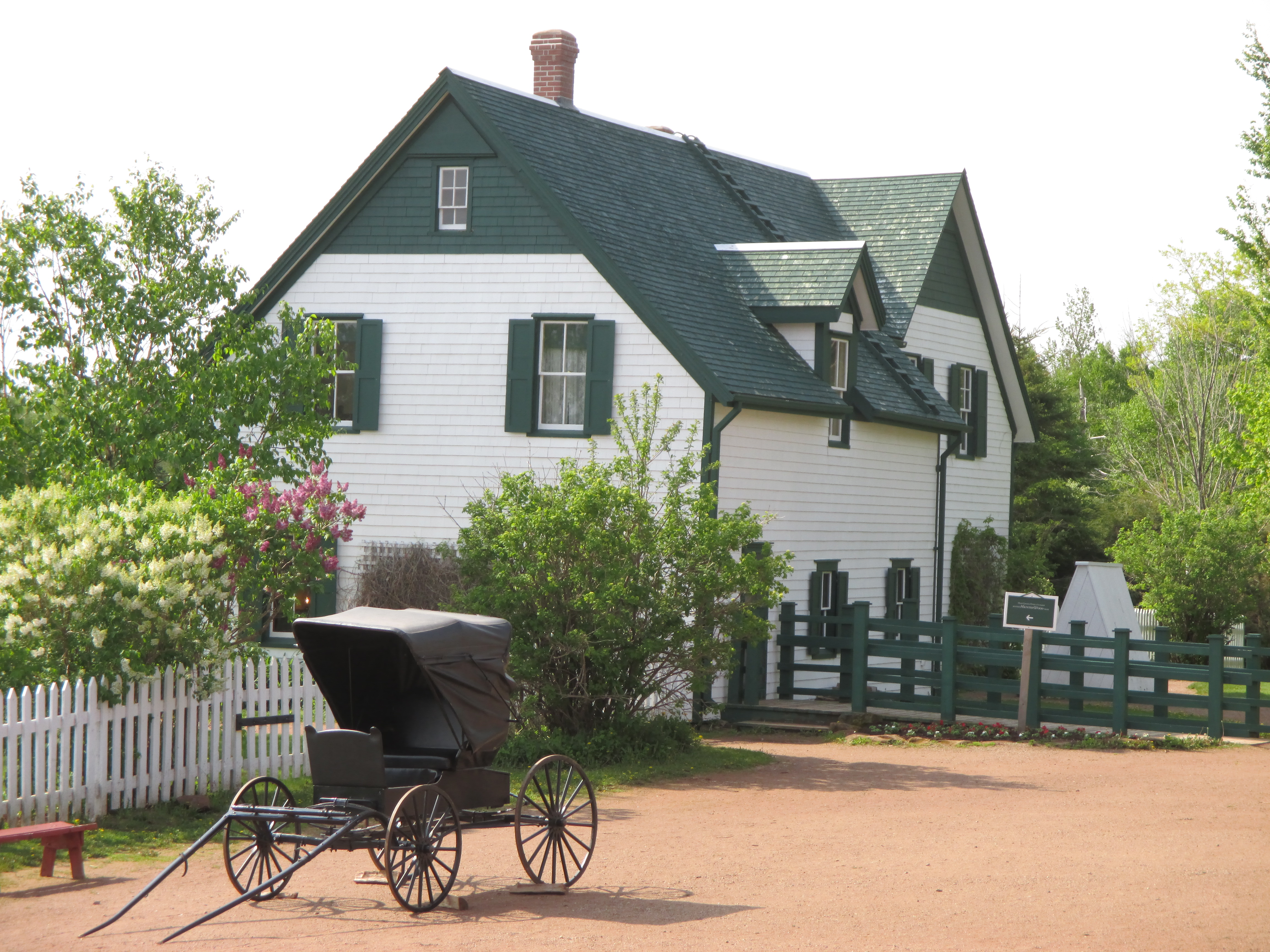
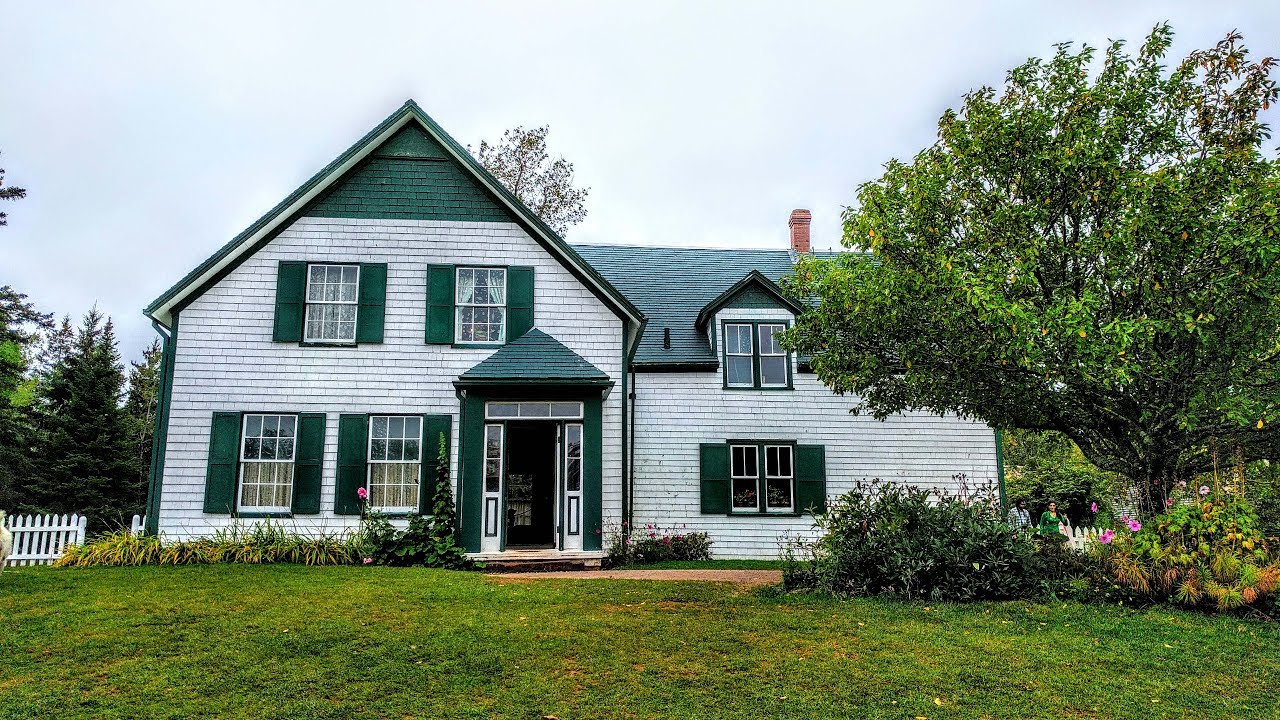
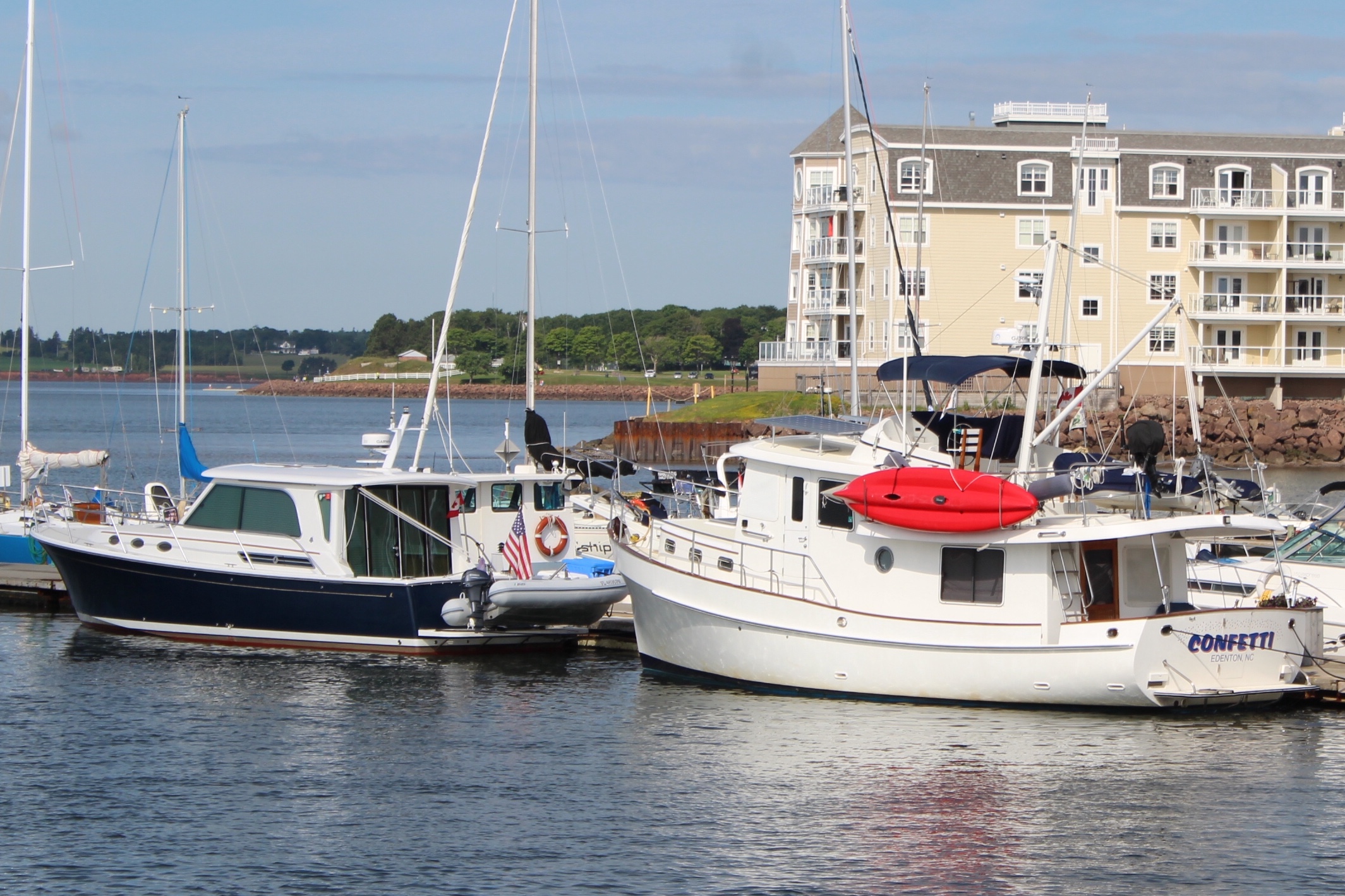
    After returning the rental car the crew went over to Confetti and Island Office where they joined the two other crews for dock tails before finding a restaurant for dinner.
    Thursday, July 25th

    The crew left PEI in the morning to cross the Northumberlad Strait to Nova Scotia. The run across the Strait was much less dramatic than the loss of the rental car the day before. Most of the day was wide open big water with not much to see.
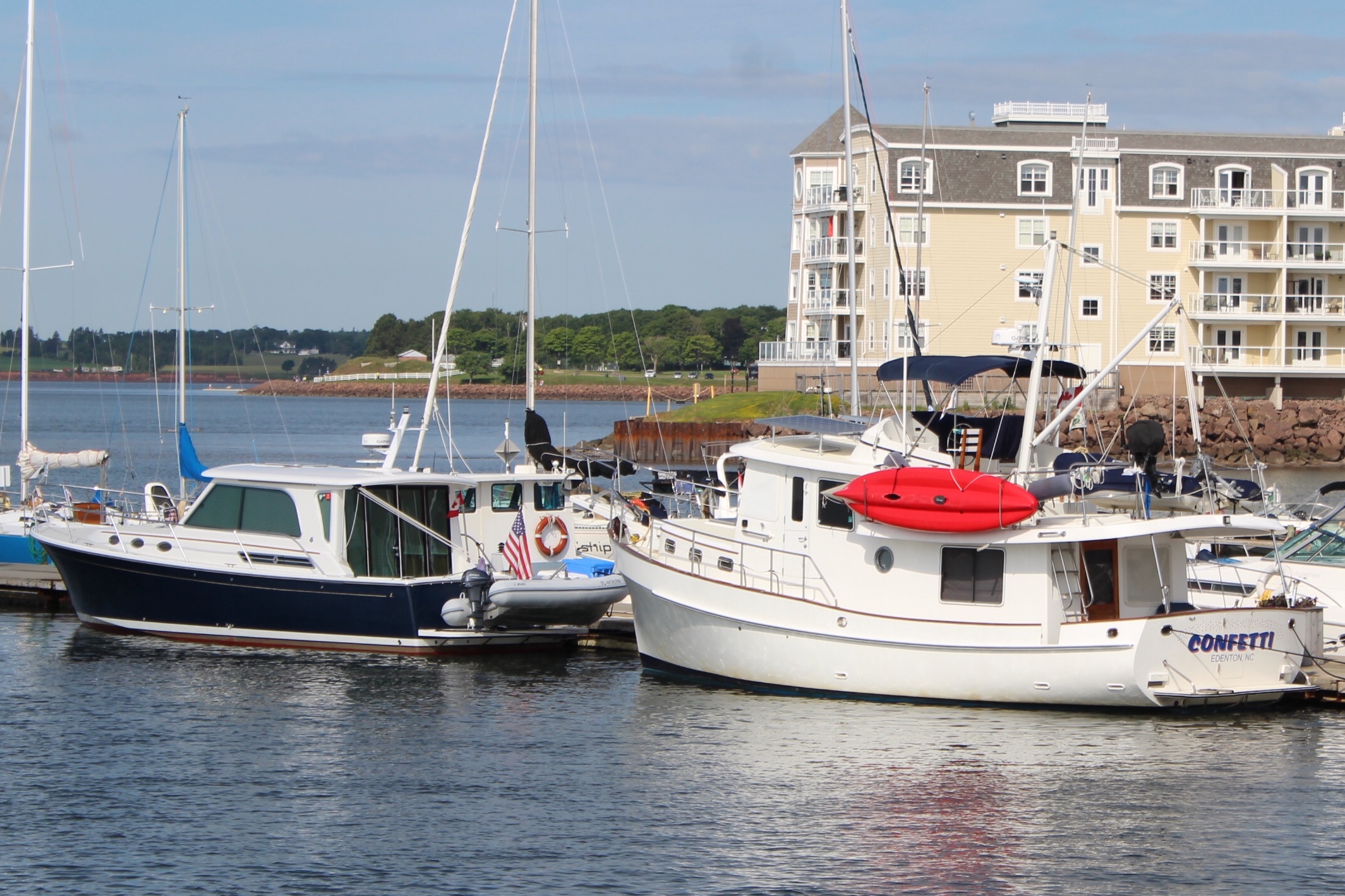
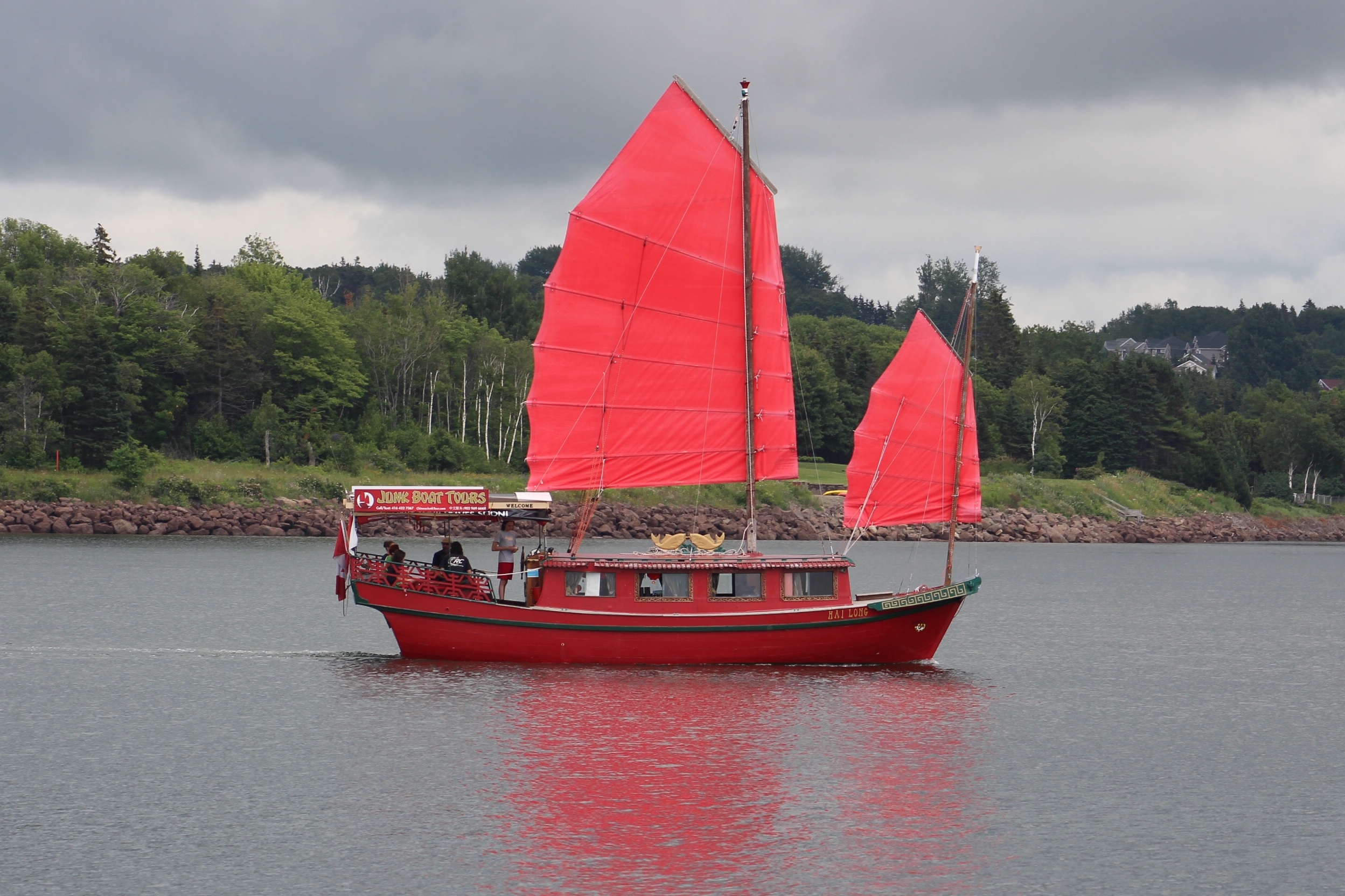
    They ended the day by anchoring across the marina in Pictou. There was an interesting looking, rather large, old wooden boat beside the marina. The vessel is a replica of the Hector.
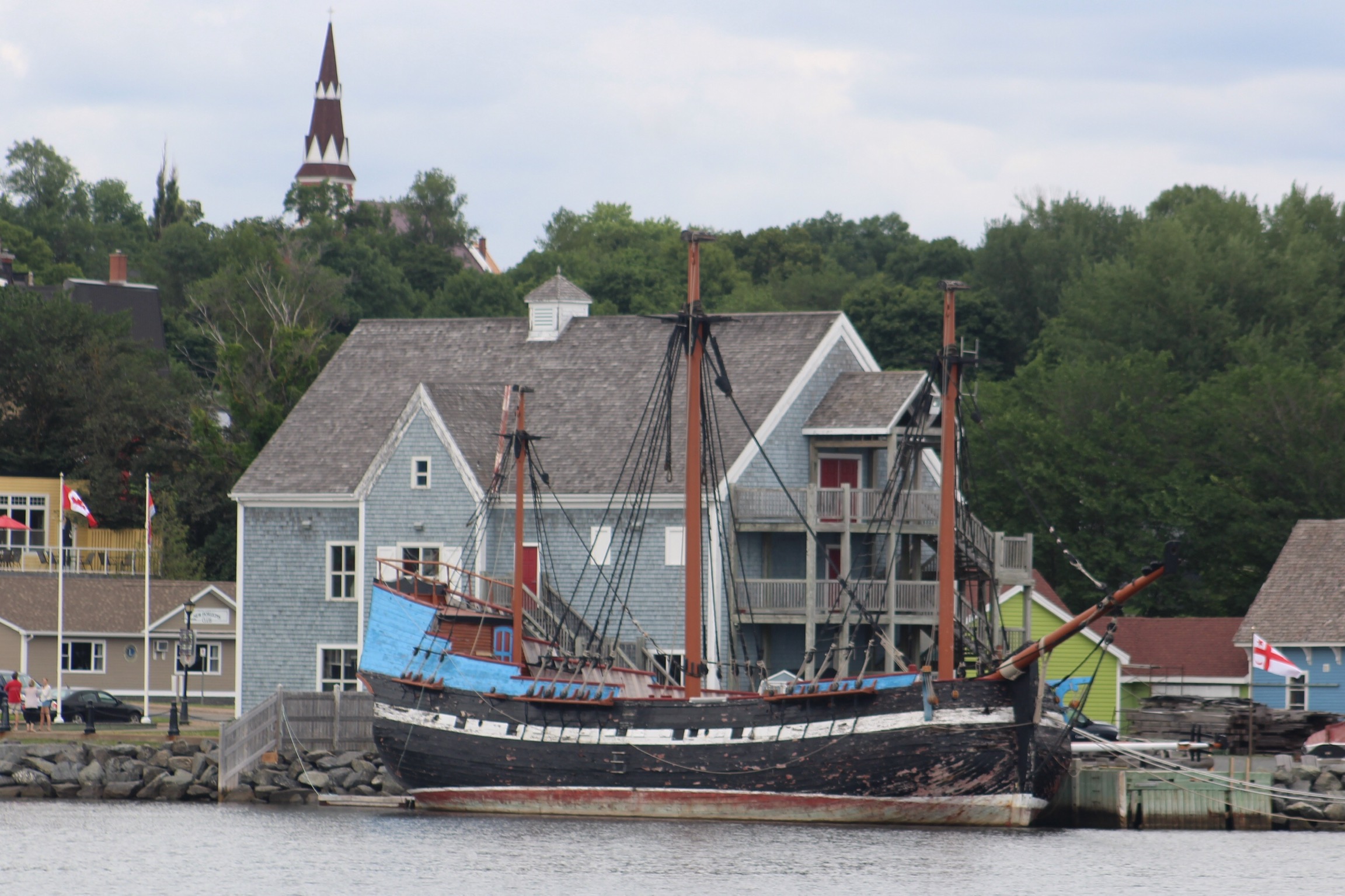
    The original Hector left Scotland in 1773 and brought the initial 189 Scottish settlers to New Scotland, modern day Nova Scotia. These first colonists established the Village of Pictou as their new home and hence it’s nickname, “The Birthplace of New Scotland.”

    Friday, July 26th

    The crew had another successful run in the big open water today in fabulous cruising conditions. The first forty miles were dedicated to reaching Cap George, where they altered course into St George Bay. Within just the first few miles they began seeing whales and harbour porpoises. By the end of the run they had spotted three whales and at least 10 porpoises.
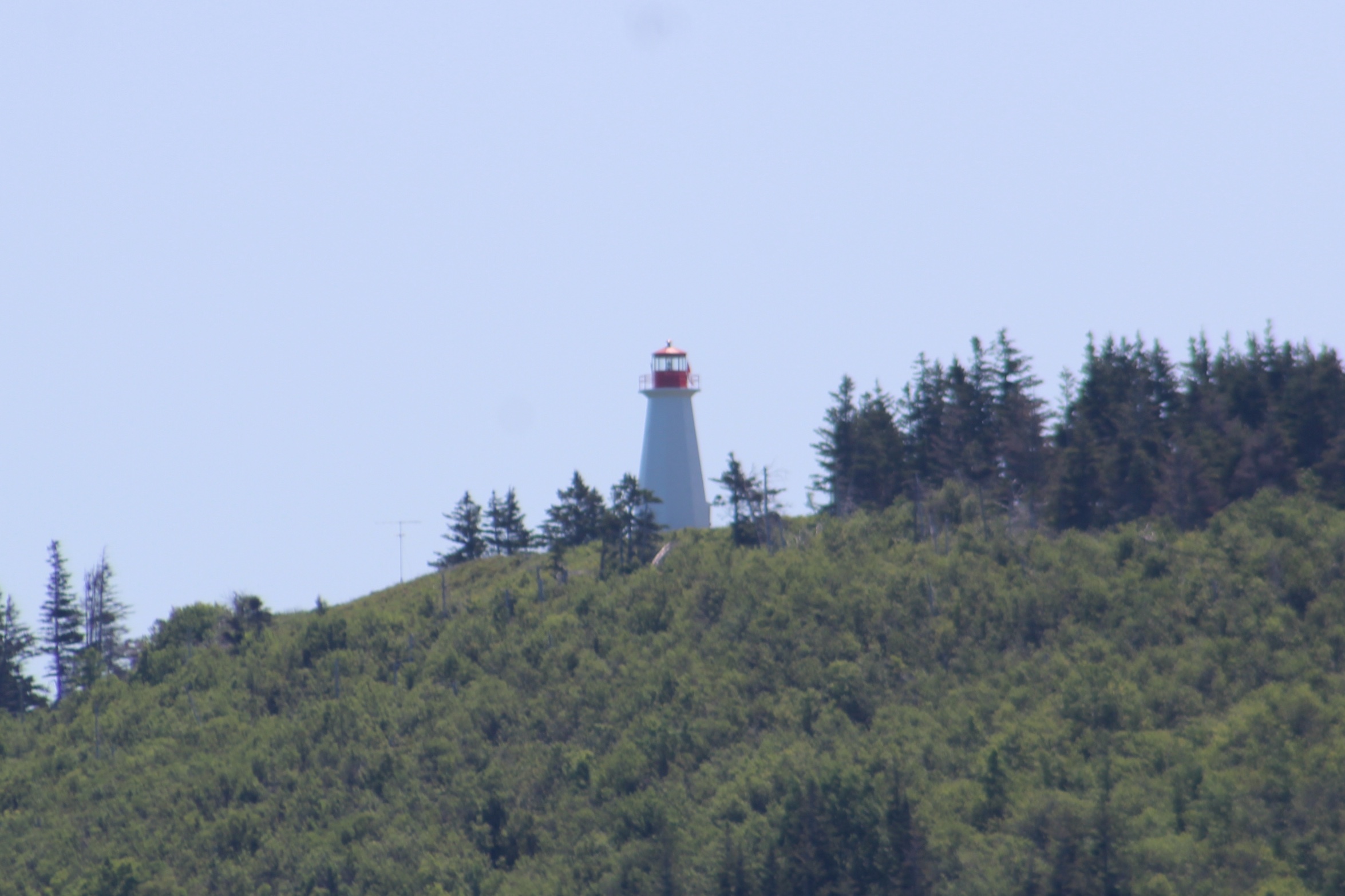
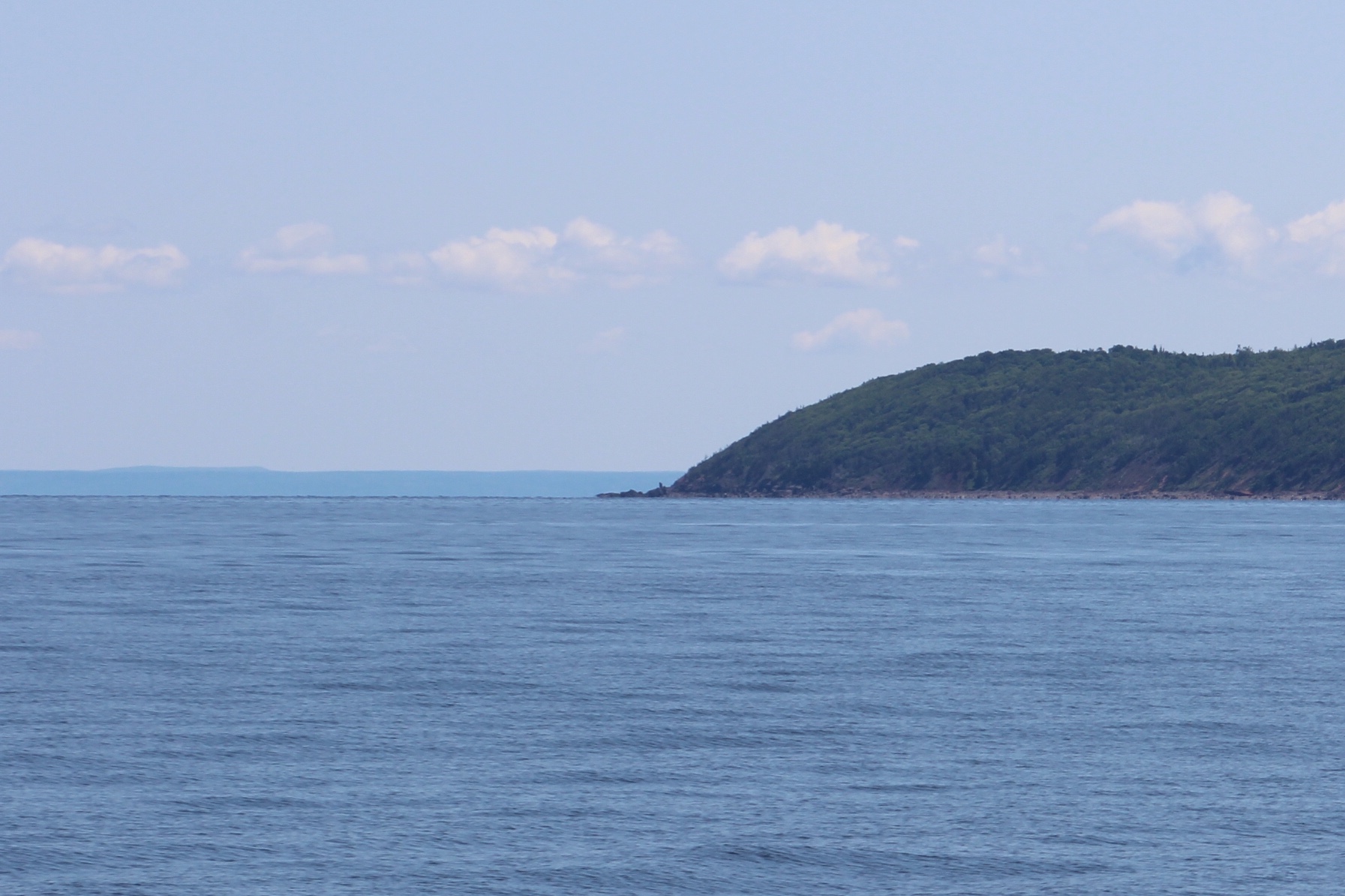
    The final destination today was an anchorage in a well protected cove. Once anchored the crew sat back to relax and enjoy the peaceful surroundings. Unfortunately the peaceful day was interrupted by bad news from a fellow boater on the Down East Loop.
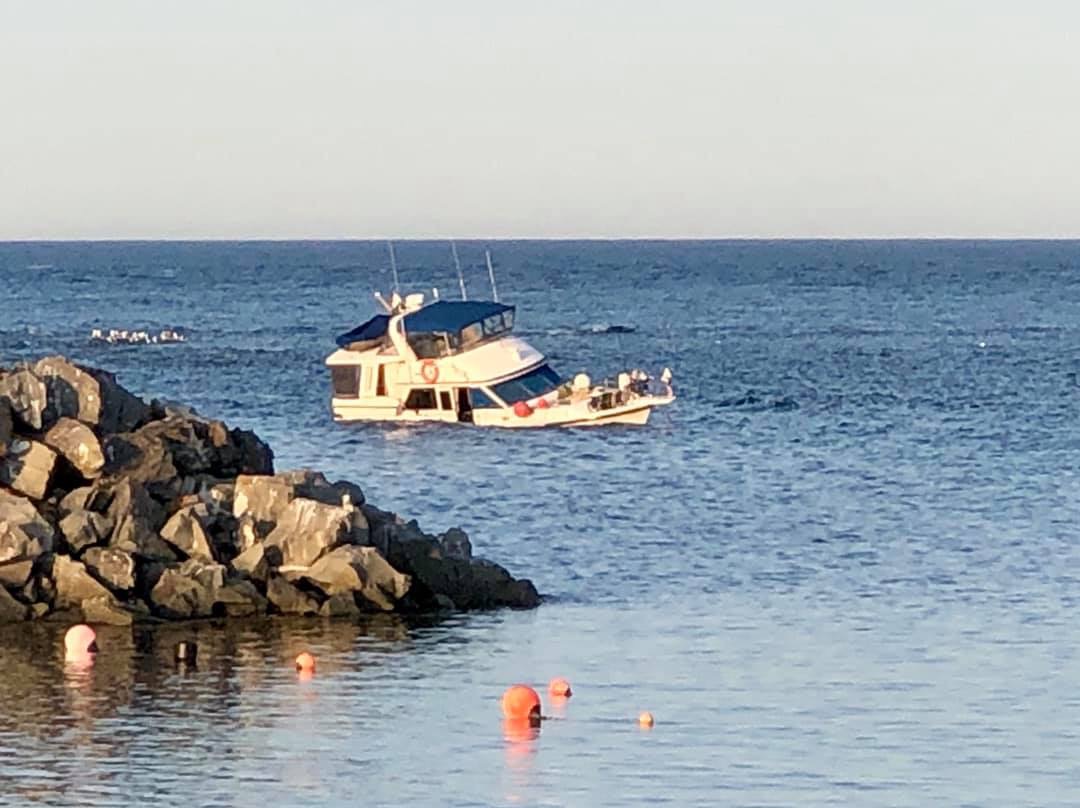
    Seems Laughter joined the ranks of shipwrecks along the St Lawrence River. Yesterday while trying to enter the marina at Rivière de Madeleine, the crew were abruptly hit by strong winds that shoved them into the rocks.

    Two weeks ago when our crew was there they encountered strong winds in the late afternoons. The cruising guide called this phenomena, Katabatic Winds. The winds turn a calm, peaceful sea breeze around abruptly. The winds starts to blow from shore and rapidly builds to 30-35 knots.

    The only good news with this story was that the crew managed to get to shore safely. The whole ordeal was a not so subtle reminder just how quickly conditions can change from a great day, to your worst day, in just a matter of moments.

    Saturday, July 27th

    The crew weighed anchor and got under way towards Bras d’Or Lakes. Their goal was St Peter’s Marina. After just a few miles they entered the Strait of Casno and headed to the Casno Lock.

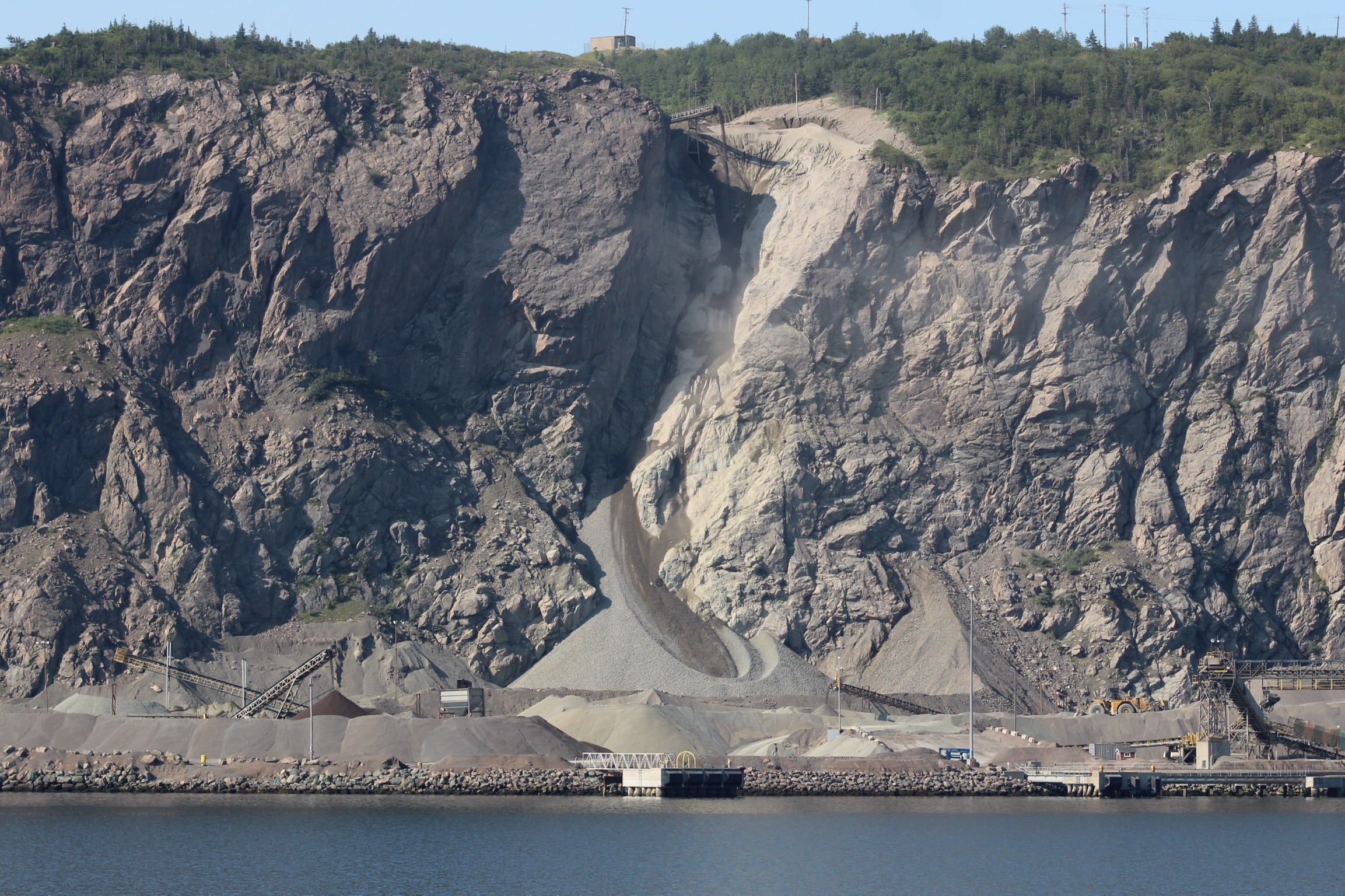
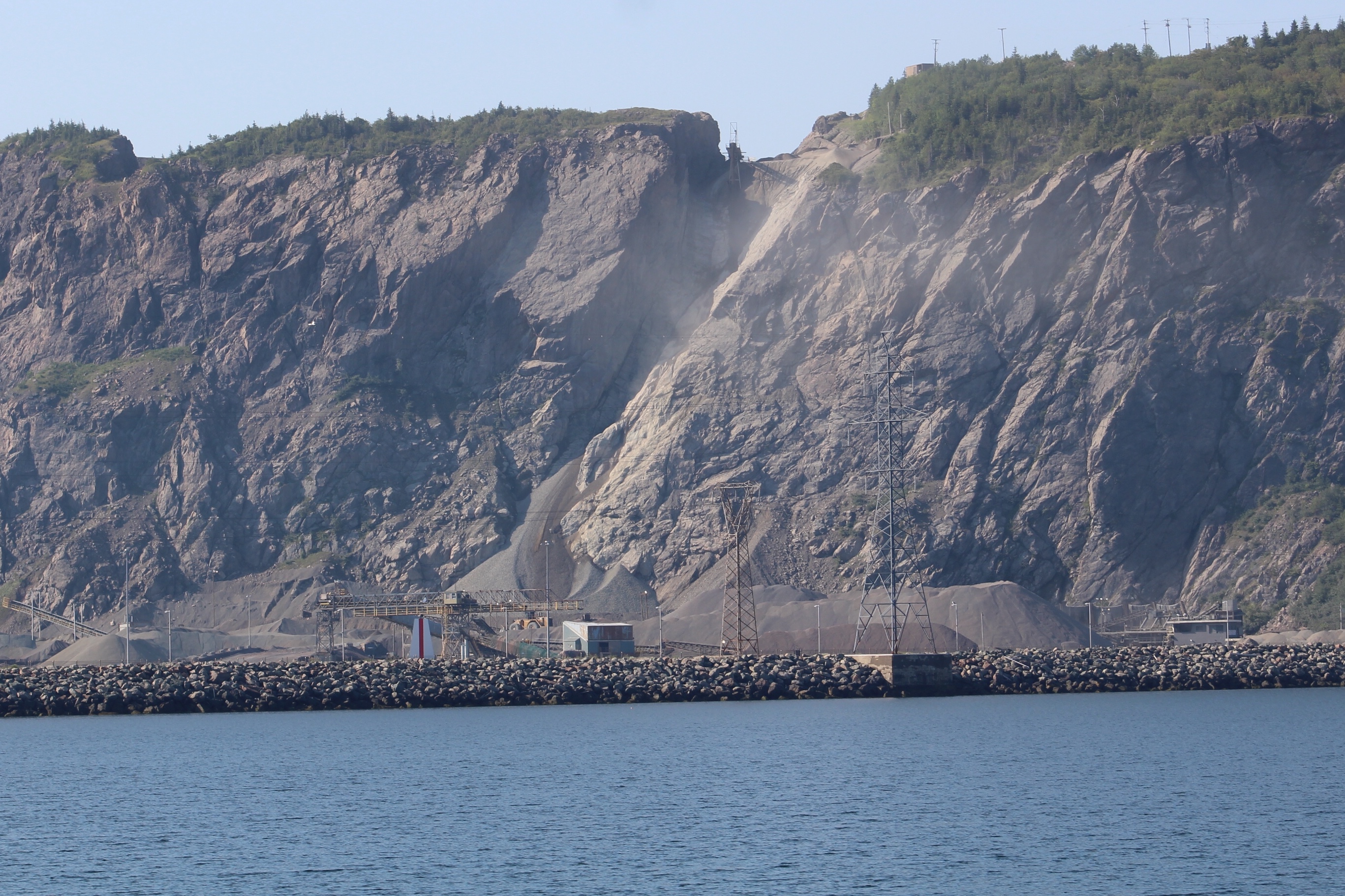
    The lock and causeway were opened in 1955 to to help ships traverse the Strait. Prior to the causeway, the current would rip through the Strait at 6-7 knots. The engineering challenge was how to fill the 155 foot deep Strait to stop the current. The solution was determined to be right before their eyes. They quarried 10 million tons of rock off of Porcupine Mountain to backfill the Strait and create the roadbed.
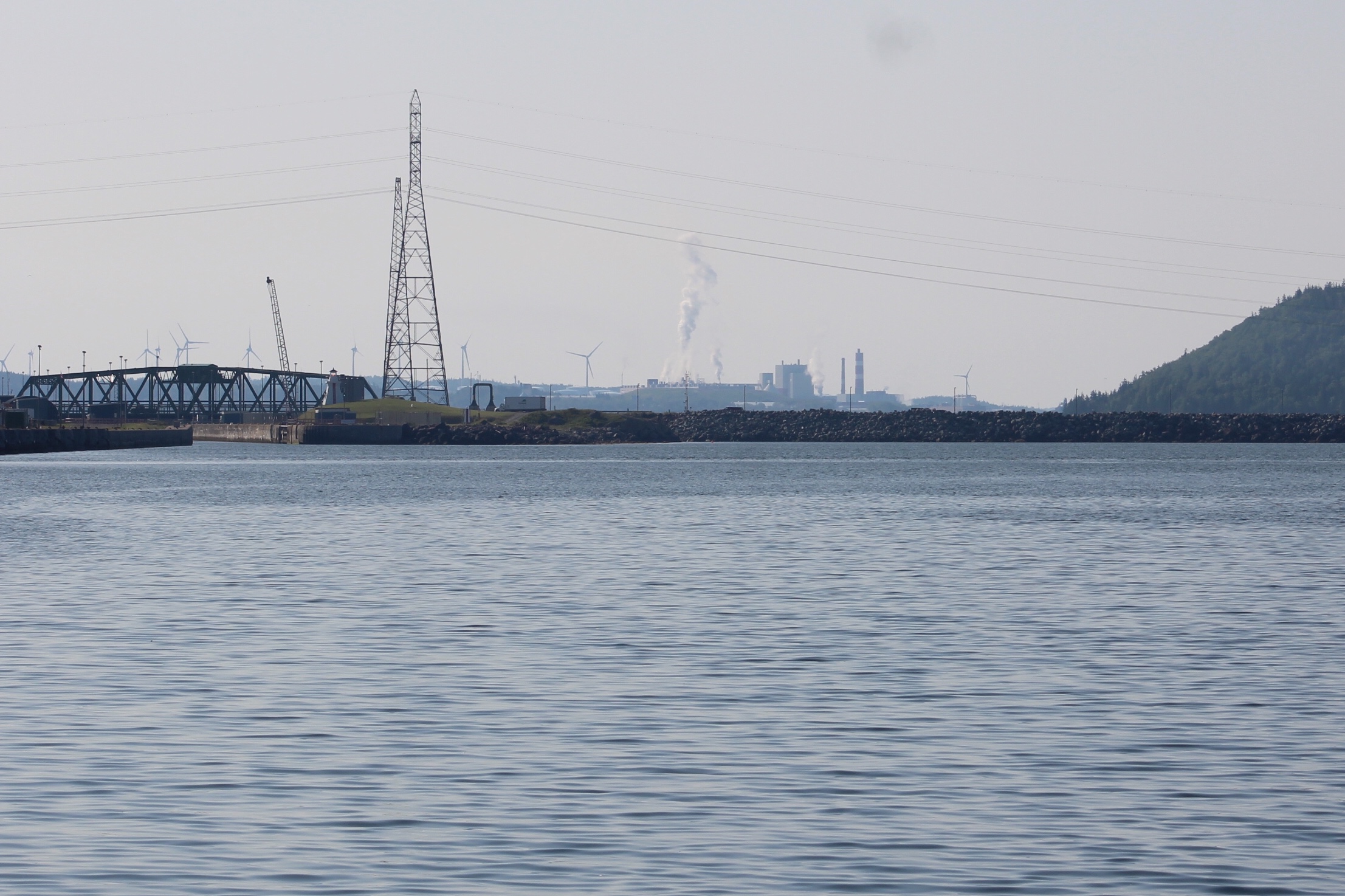
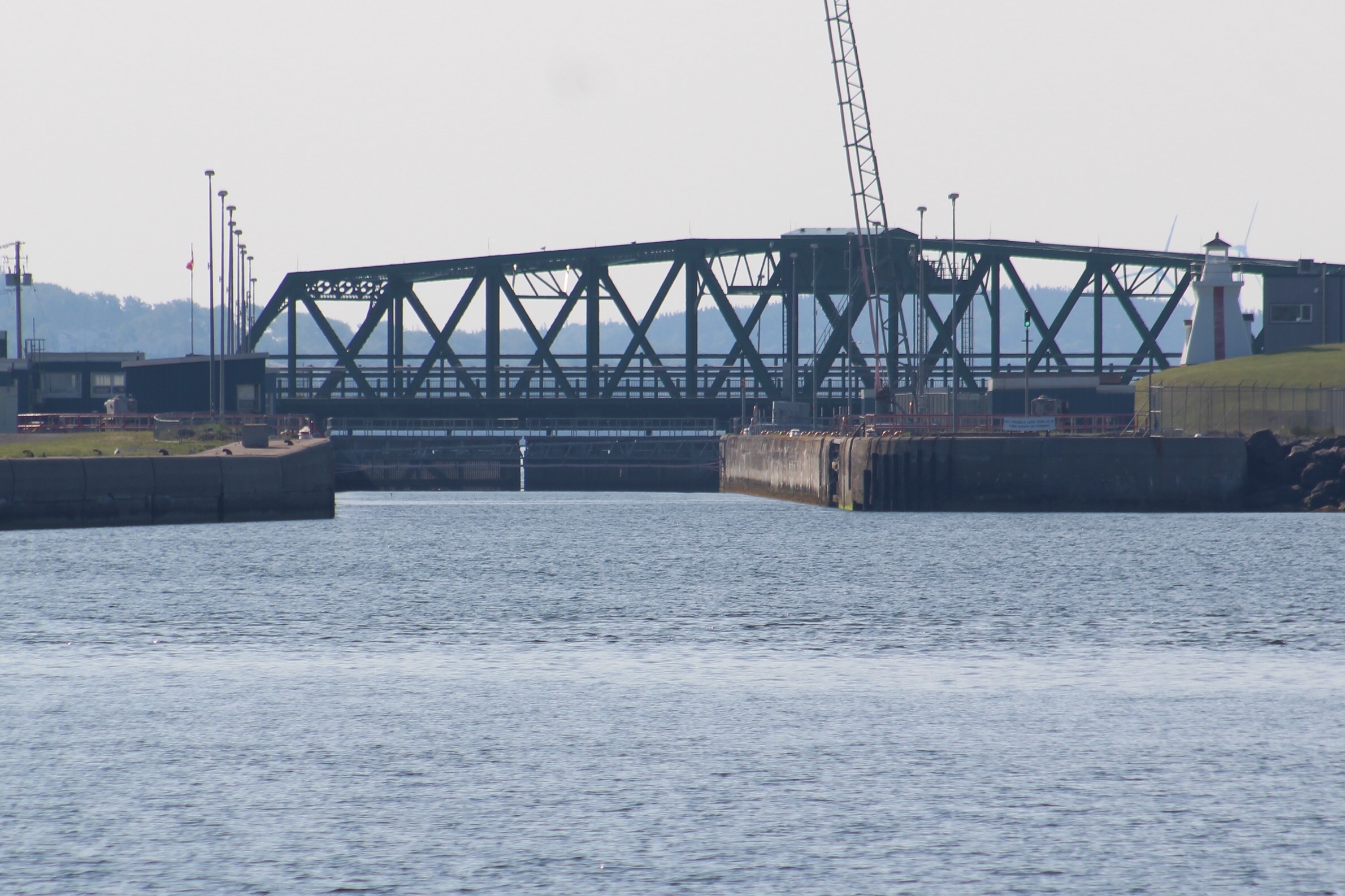
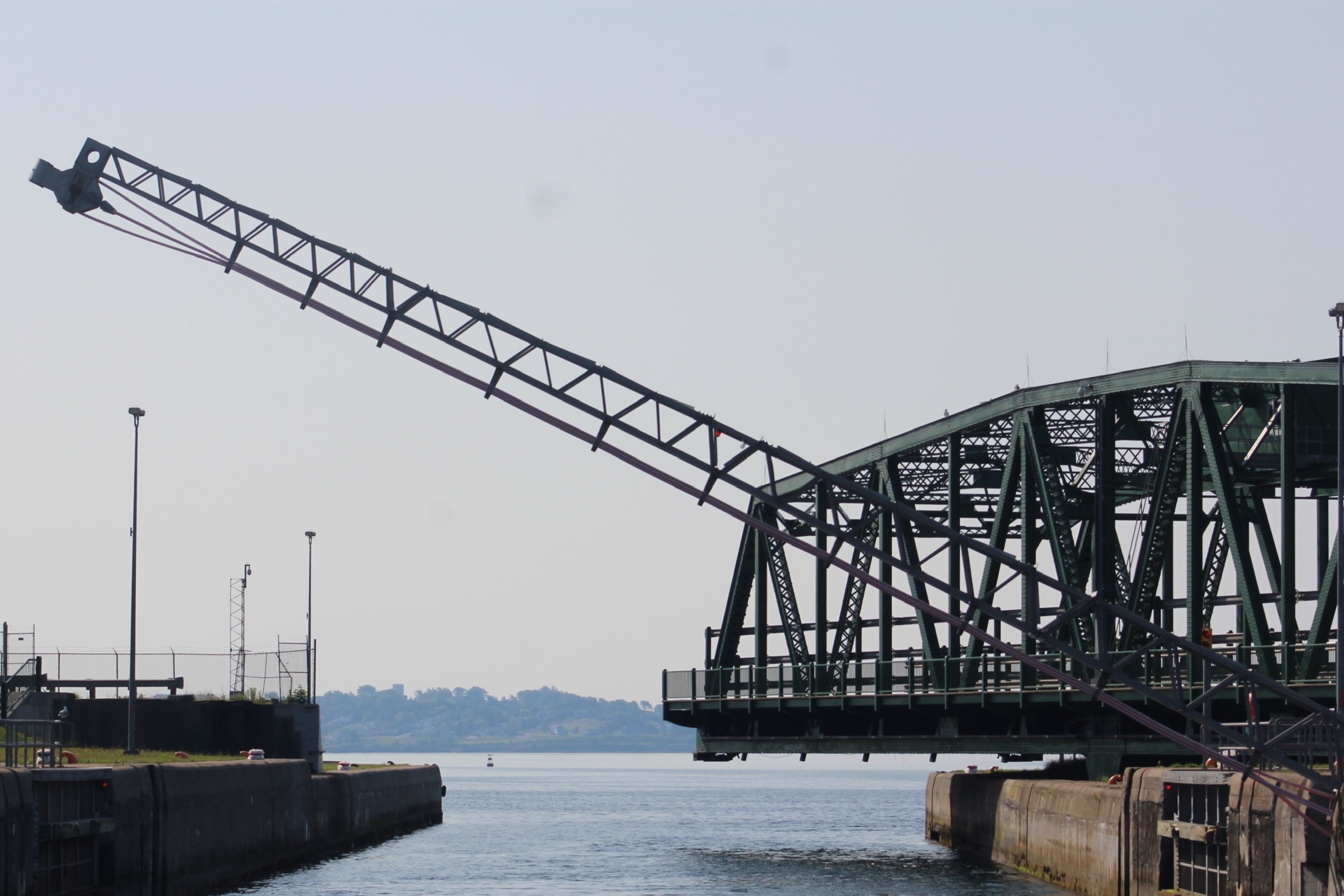
    After clearing the lock, the crew made way to the Bridge over the Lenox Passage. The Bridge was under repair which might cause the crew some problems and cause a 10 mile detour. When they arrived at the bridge they found scaffold built out into the waterway making the tight squeeze just a bit smaller. The crew worked together to pilot Still Waters II under and past the hazards.

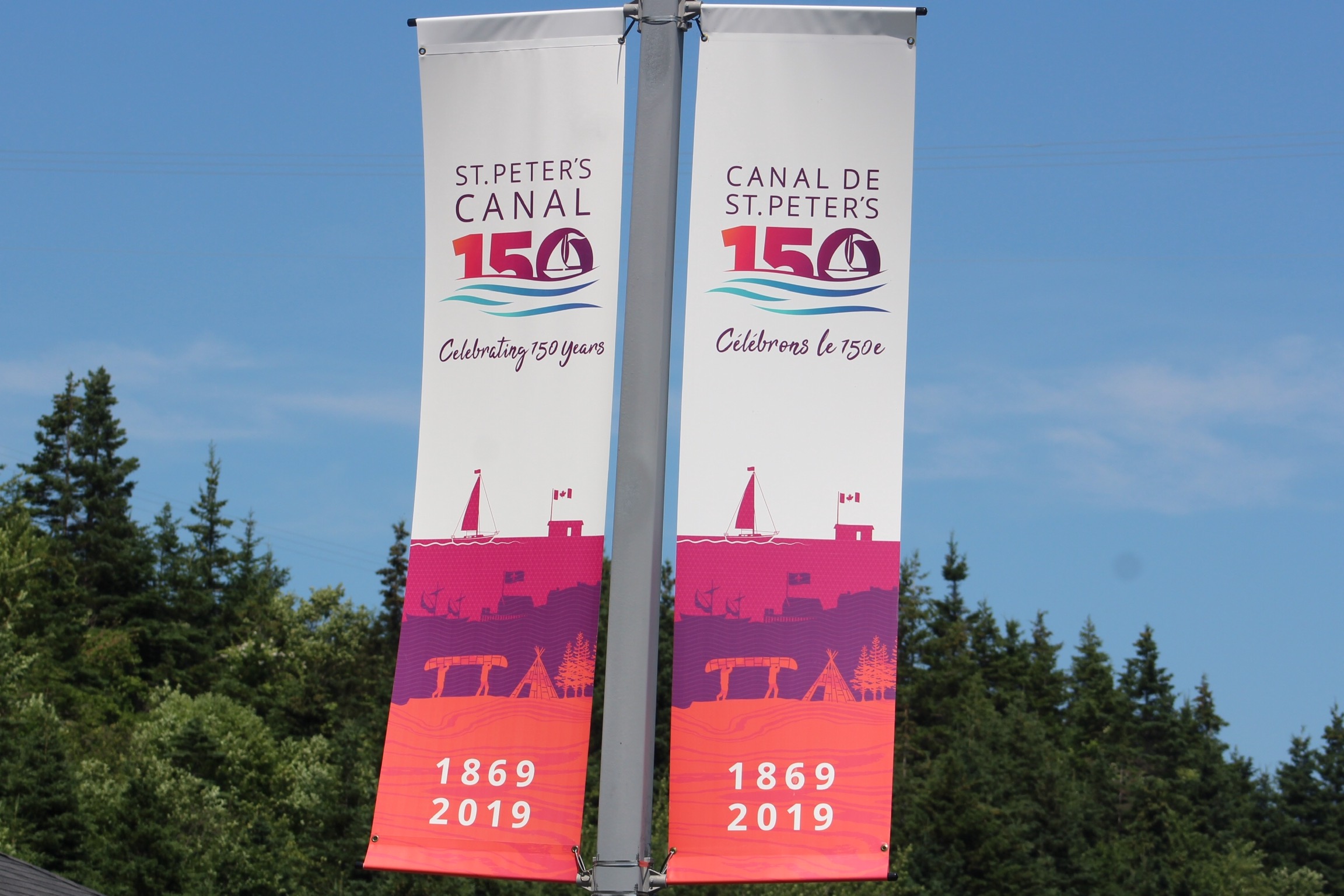
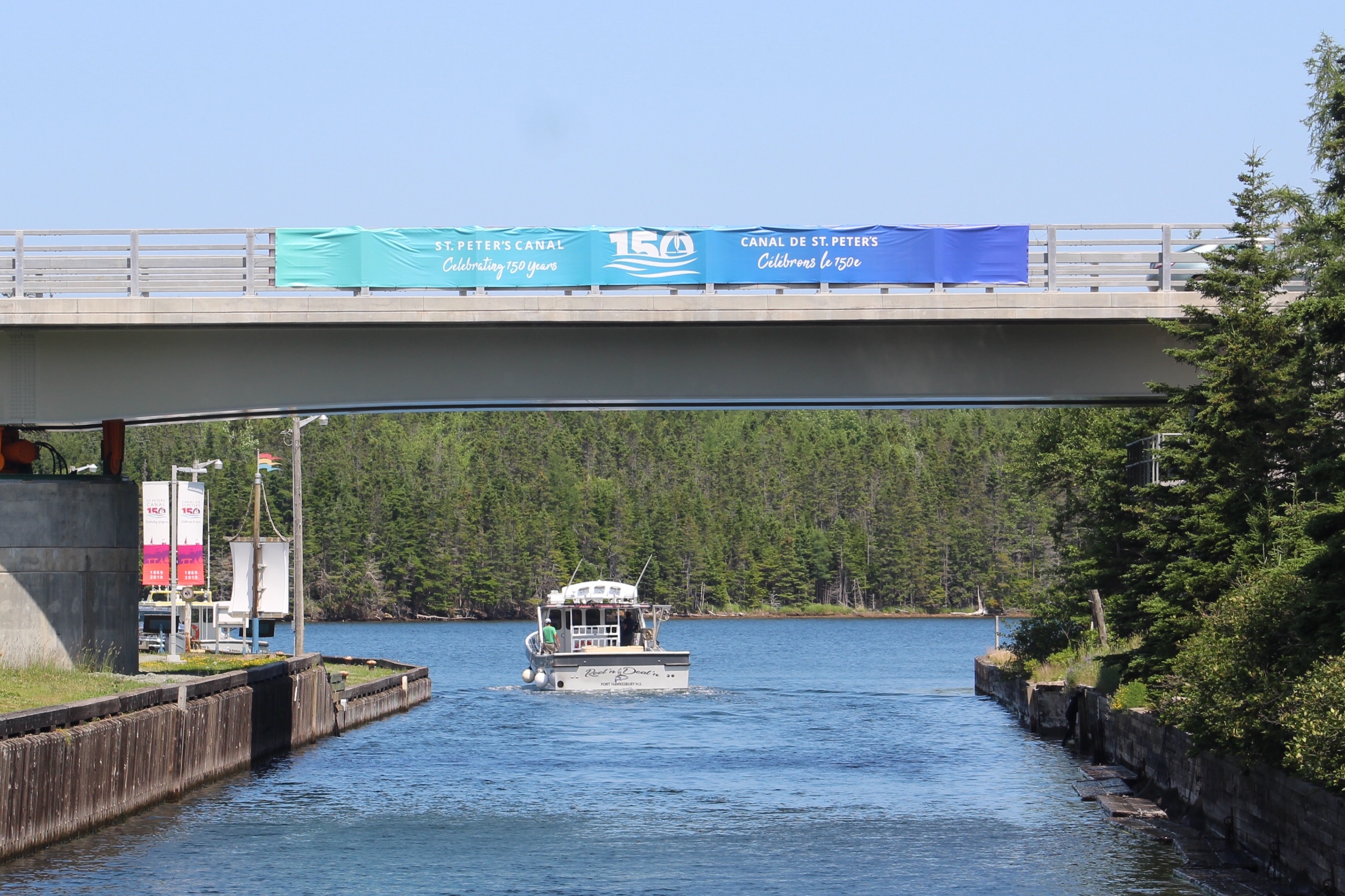
    Next challenge was the St Peter’s Lock. When the crew arrived at the lock, the gates were swinging open to allow passage. The lock and Canal were first put into operation back in 1869. To celebrate the 150th year of operation, the lock was passing out Certificates of Commemoration. Still Waters II was the 424th vessel to transit the St Peter’s Canal in 2019.
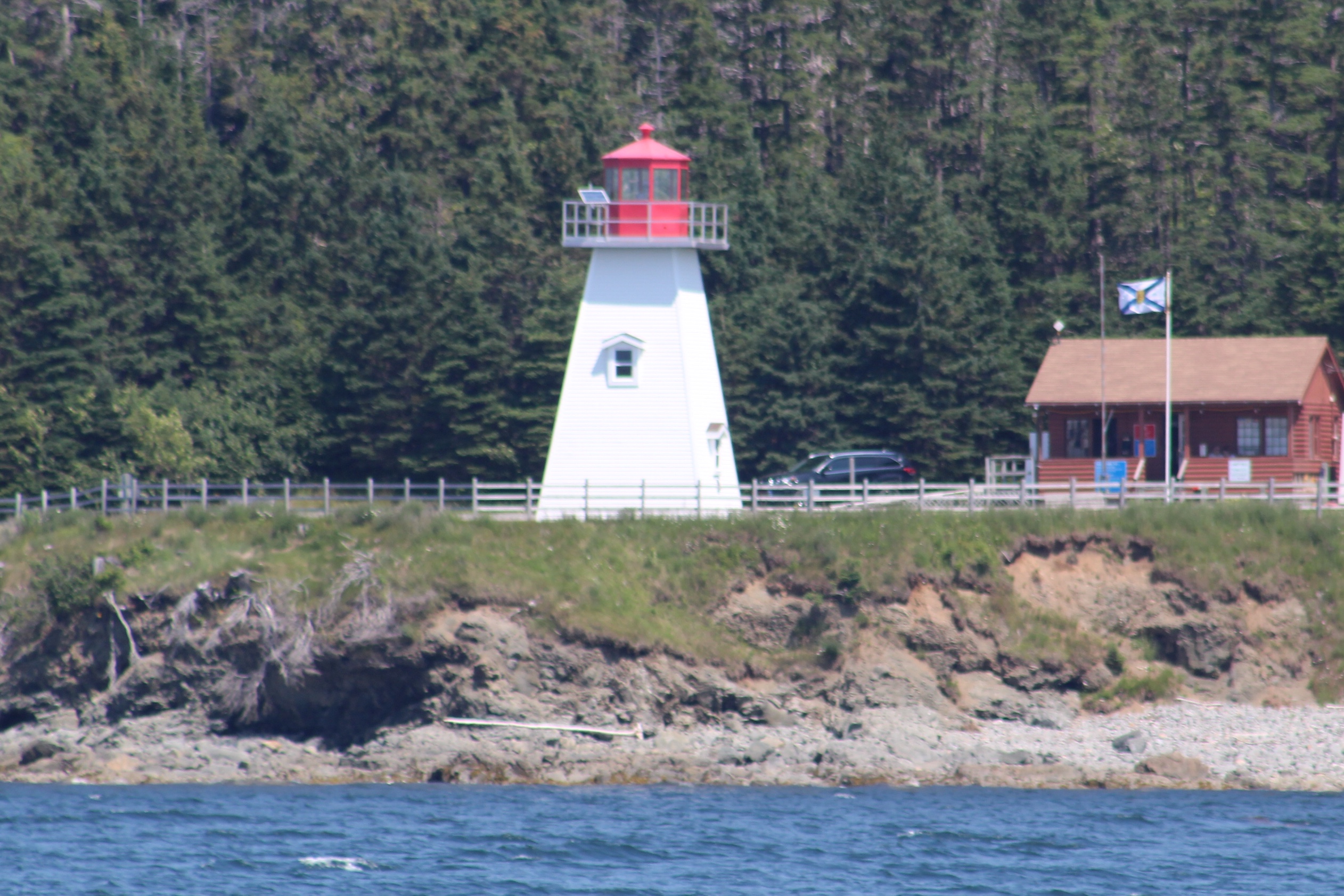
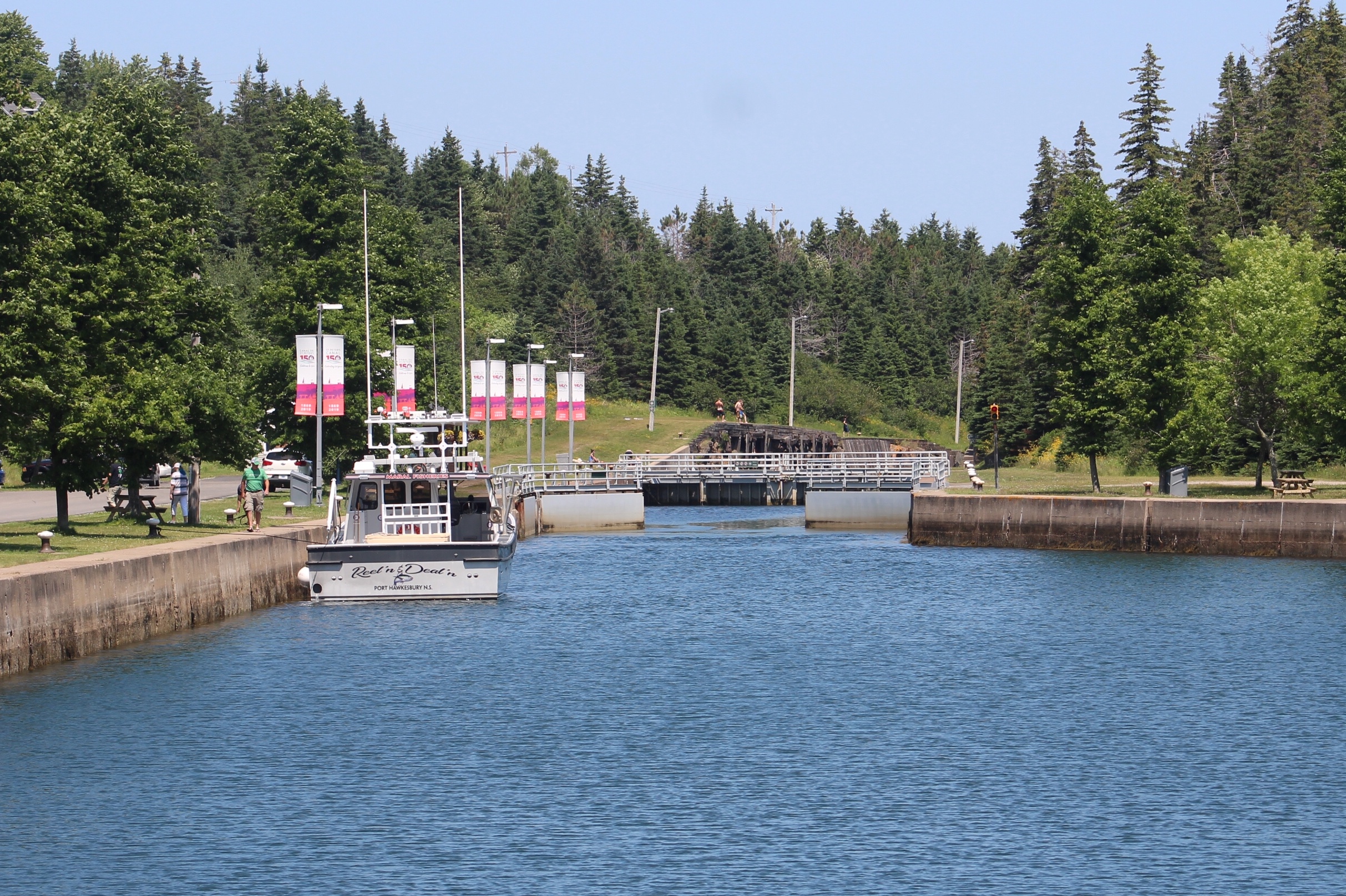
    After the Canal, the crew turned towards the St Peter’s Marina to bring the run to a close. They found Island Office already tied to the pier. They had arrived yesterday making the run from Charlottetown in just one day. The two crews walked into town and had an enjoyable dinner together.

    All in all, it has been a great week for the crew.

    Boat Name of the Week

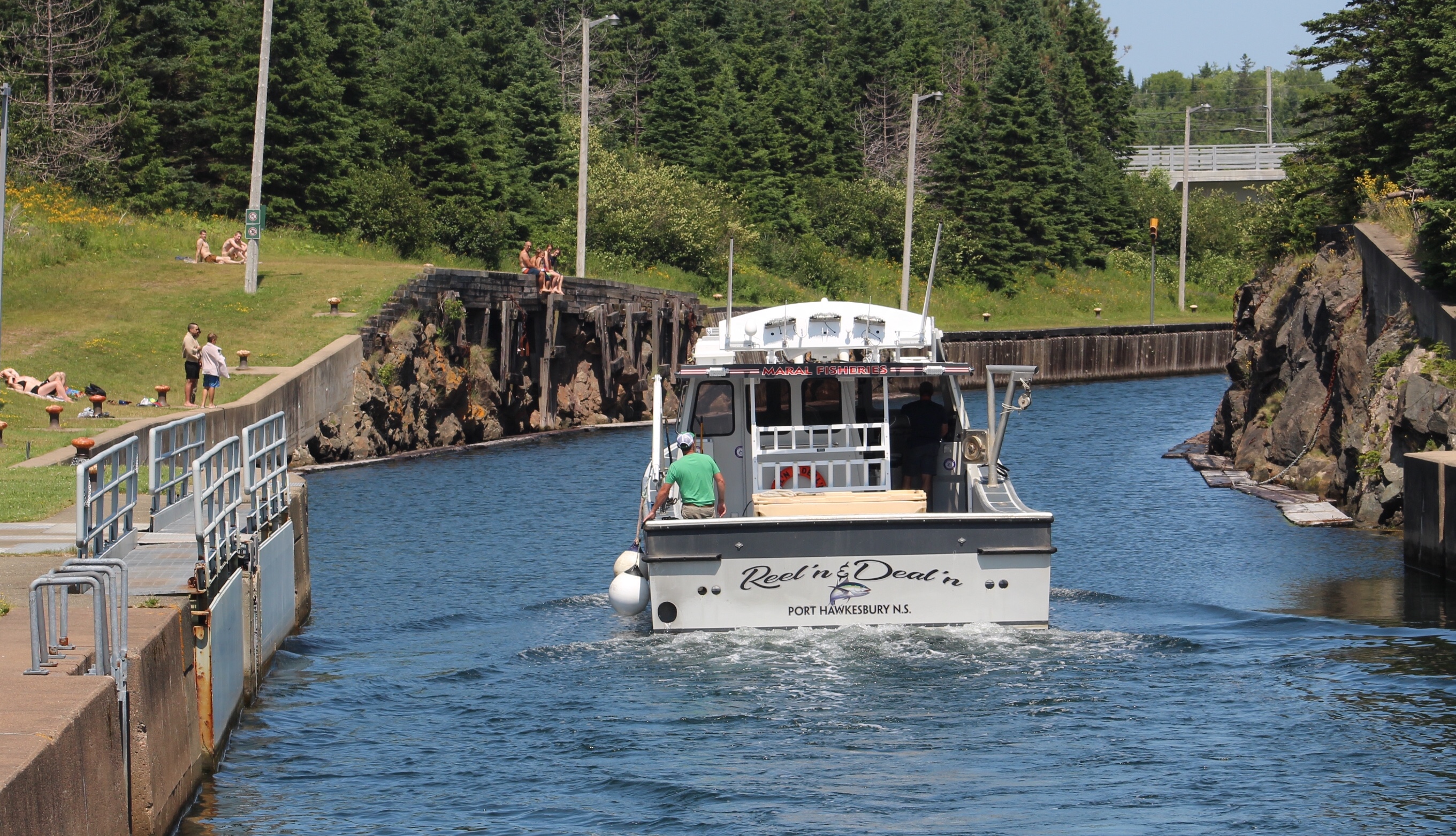
    Followed Reel’n & Deal’n thru the St Peters Lock
    Next Week –

    The crew will spend the week exploring the Bras d’Or Lakes region and this island paradise before returning to the mainland of Nova Scotia.
    Loop On – Where the road ends, the water begins. The water goes on forever, and the adventure never ends.

    Eric the Red

  • Cruising the Maritimes

    Cruising the Maritimes

    Ahoy from Prince Edward Island, and a hearty hello to our virtual crew members and fellow adventurers!

    In Shippagan, New Brunswick

    We had more people join the ranks as virtual crew members this week by following the blog. Welcome aboard to Map195. And a special welcome aboard to Alex and Marilyn, thanks for the tour of your one of a kind boat, it is beautiful.

    Summary of the Week

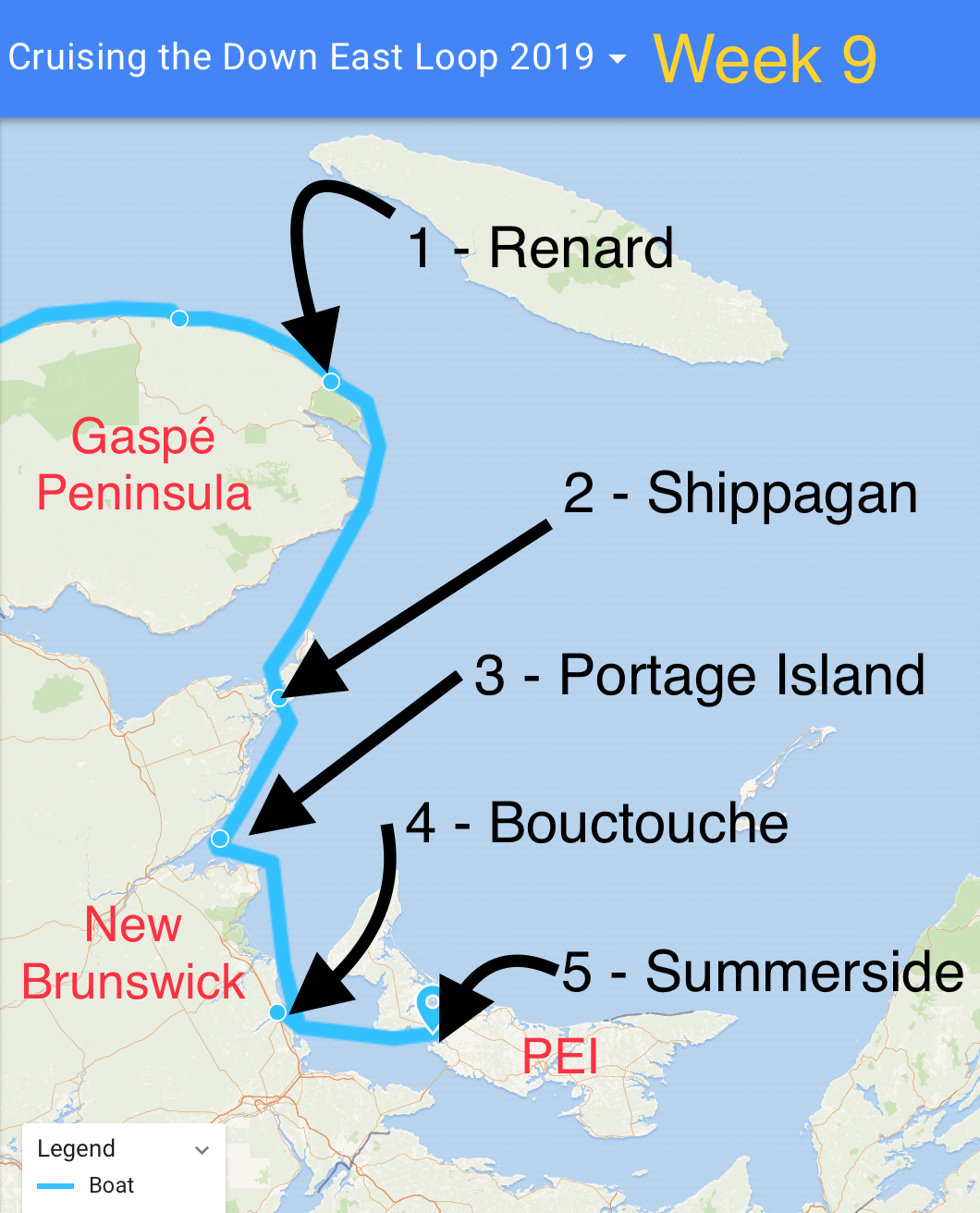
    The crew managed to make 5 runs during the week and actually arrived in Summerside (5) on Saturday. This was truly amazing based on the amount of open water the crew crossed this past week. Thank you Lord for calm winds and still waters. Along the way to Prince Edward Island, they also made the following stops: anchored in the fishing village of Renard (1) on Monday, made a long run to Shippagan (2) on Tuesday, after taking a weather delay day on Wednesday, they anchored off Portage Island (3) Thursday, then on Friday they made Bouctouche (4), and completed the week by pulling into Summerside (5).

    Click on the Still Waters II Travel Map to see detailed Voyage Logs.


    The voyage of discovery did answer the following questions this week:

    1. What Ocean liner holds the record for most casualties during a peacetime accident?
    2. Where did the accident occur?
    3. What was the final fate of the U20 sub that sank the Lusitania?
    4. What does the yellow star on the Acadian flag represent?
    5. What causes different color lobsters?

    At the Box Office

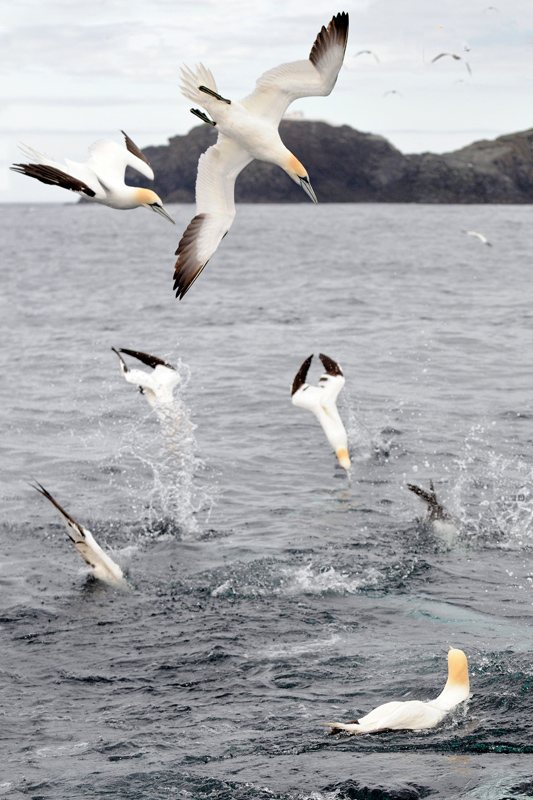
    This week’s video shows Still Waters II watching Gannets on their morning feeding frenzy. Enjoy!

    To see past videos, click on the link to the Still Waters II Vimeo site.  The library contains videos of Still Waters II cruising America’s Great Loop.

    Sunday, July 14th

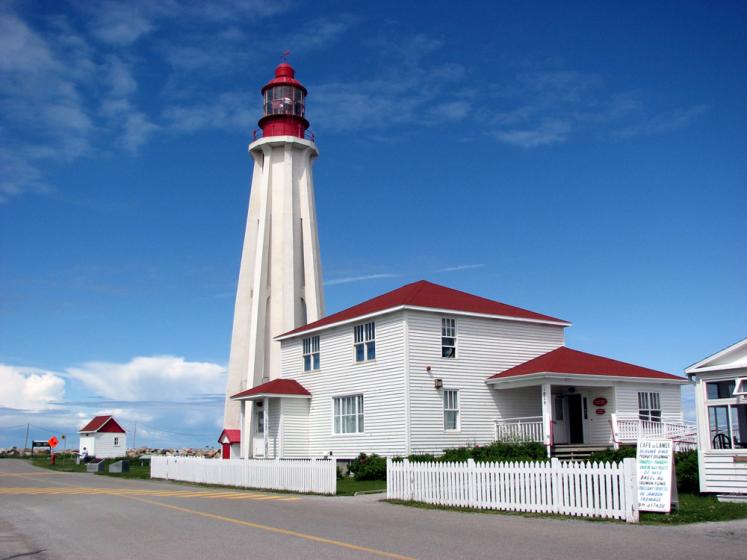
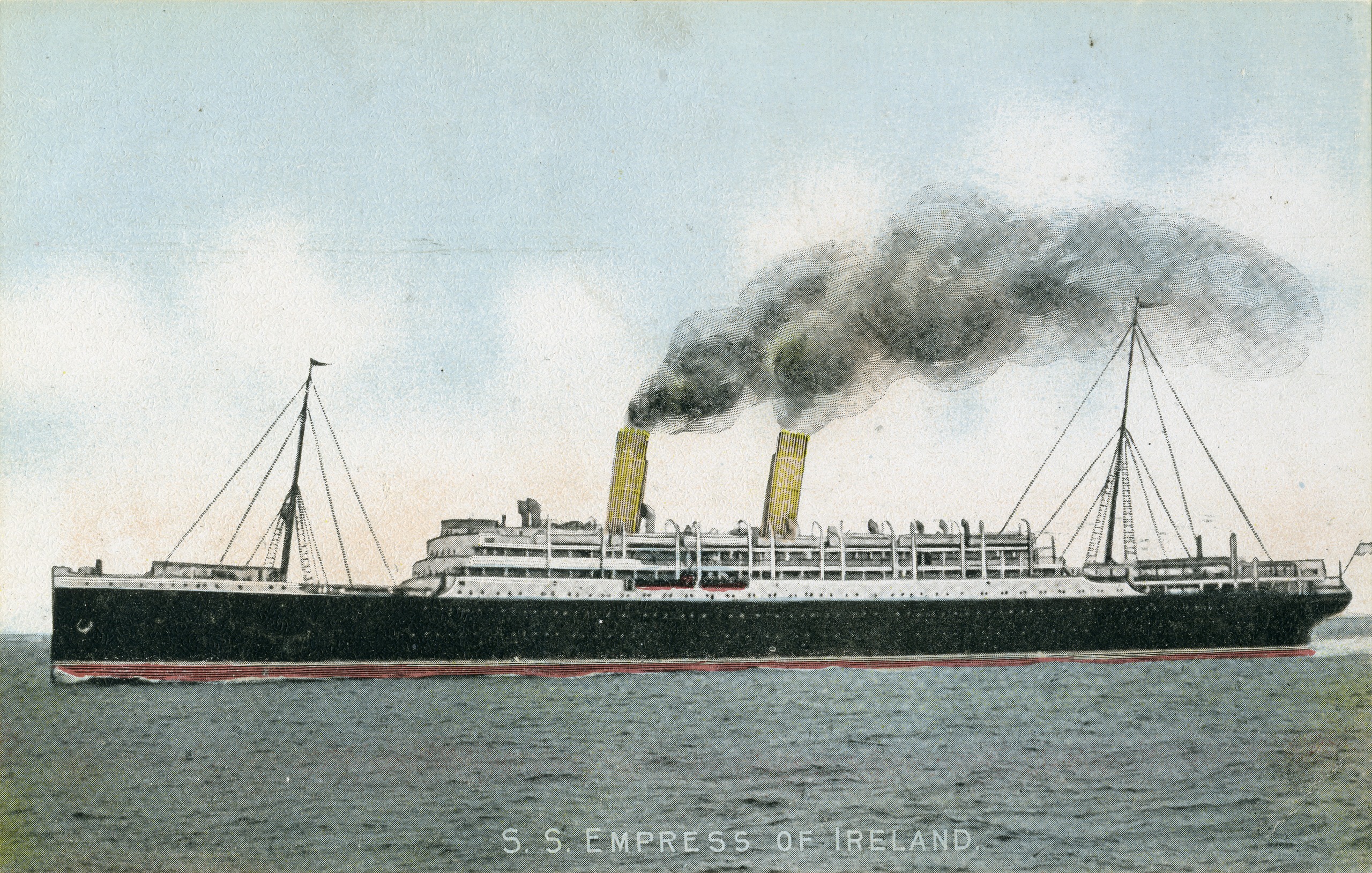
    In the early morning hours of May 29, 1914, the RMS Empress of Ireland dropped the pilot off at Pointe-au-Pere lighthouse and continued towards the open waters of the Gulf of St Lawrence. Unbeknownst to them, the Storstad, which carried 11,000 tons of coal, was on a collision course with them. The heavy fog that night prevented any attempt by the navigators to alter course and avoid a collision.

    Pointe-au-Père, second tallest lighthouse in Canada

    The Storstad collided into the side of the Empress of Ireland. The bow rammed 20 feet into the ocean liner opening a huge hole in her side. The skipper of the Empress directed the captain of Storstad to maintain a full bell to keep the hole plugged.

    The strategy failed, the ships separated, and in less than 14 minutes from the collision the Empress of Ireland lay on the bottom of the St Lawrence River. The loss of life was large due to the fact that most passengers and crew were asleep at the time of the crash. The Empress holds the record for the most number of passengers lost on a liner in peace time. The 840 deaths beats the more famous Titanic by a mere 11. The sinking is also Canada’s worst peacetime marine disaster.

    However, there has been an interesting story circulating for years about a man named Frank Tower who is linked to both the Empress and the Titanic. As the story goes, he was a crew member aboard the Titanic. He was one of the 215 crew members who survived the sinking.

    He then took a job on the Empress of Ireland, and somehow managed to be one of the 201 crew members who survived that collision.

    But wait, there was one more famous ship sinking, the Lusitania which was sunk by a German U- boat (U20) off the Irish Coast and drug the US into WWI. And yes, Frank happened to survive that sinking also.

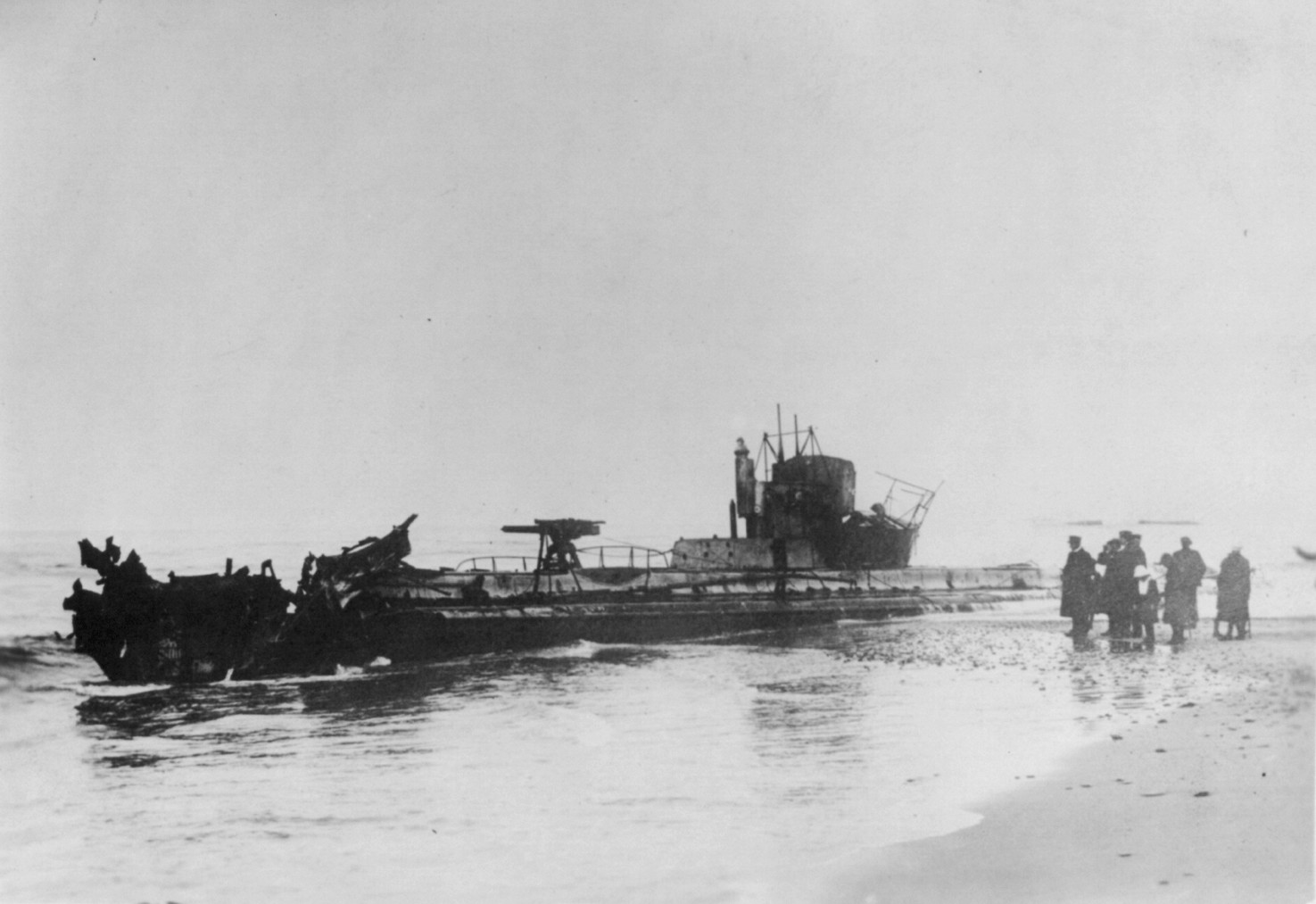
    U20 ran aground, blew up torpedoes in bow compartment to destroy vessel

    The skipper ran a probability assessment that one person could have survived all three disasters. The probability that Tower could have survived the three wrecks, 0.125. That got the skipper digging for more information.

    Turns out Frank Tower was not listed as a crew member on any of the three ships. He was not listed as a passenger either. The skipper began to wonder if this story could be true, or not. In his search for the truth, the skipper tracked the Urban Legend down to a Ripley’s Believe it or Not! Encyclopedia of the Bizarre: Amazing, Strange, Inexplicable, Weird and All True! publication.

    Now this brings us to an interesting quagmire, in today’s Information Age, which one is true? The internet or Ripley’s? Inquiring minds want to know?

    Yes, this is exactly what the skipper does with his time when waiting out weather delays. Trying to unravel the mysteries of life.

    Monday, July 15th

    The crew woke to fog, rain, and wind this morning. Strange combination. After studying the weather apps for an hour, the skipper determined it would probably be a decent enough day to travel. Now to convince the Admiral of the same.

    He started the discussion with, “if we go out there and it is worse than expected, we can always come back to the dock.” He followed that up with, “I also have a plan B stop 20 miles down river where we can pull into if conditions deteriorate.” Then concluded with, “but I believe conditions will improve as the day goes on.” The Admiral mulled it all over and agreed to give it a shot.

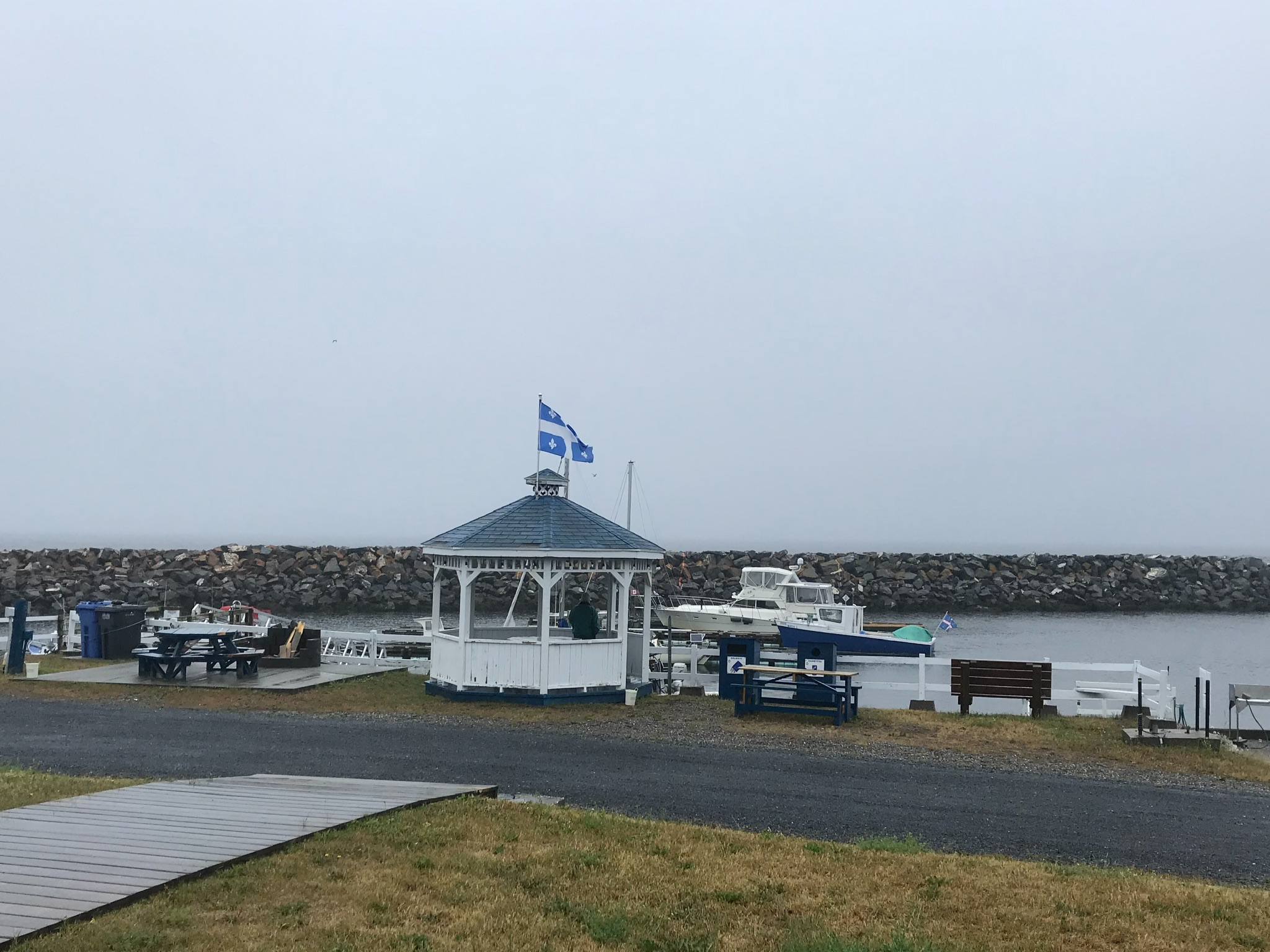
    From shore, looking out to sea, across the marina

    The crew headed up to the marina restaurant for breakfast, and to allow for some time to pass with hopes the fog would lift just a little. After hearty cheese omelets the crew rigged the boat for heavy seas and shoved off.

    After they got out of the marina, conditions were tolerable so they nixed returning to the dock, hugged the shore to try to minimize the effect of the 15-20 mph southwest winds, and made way towards the Plan B spot downriver.

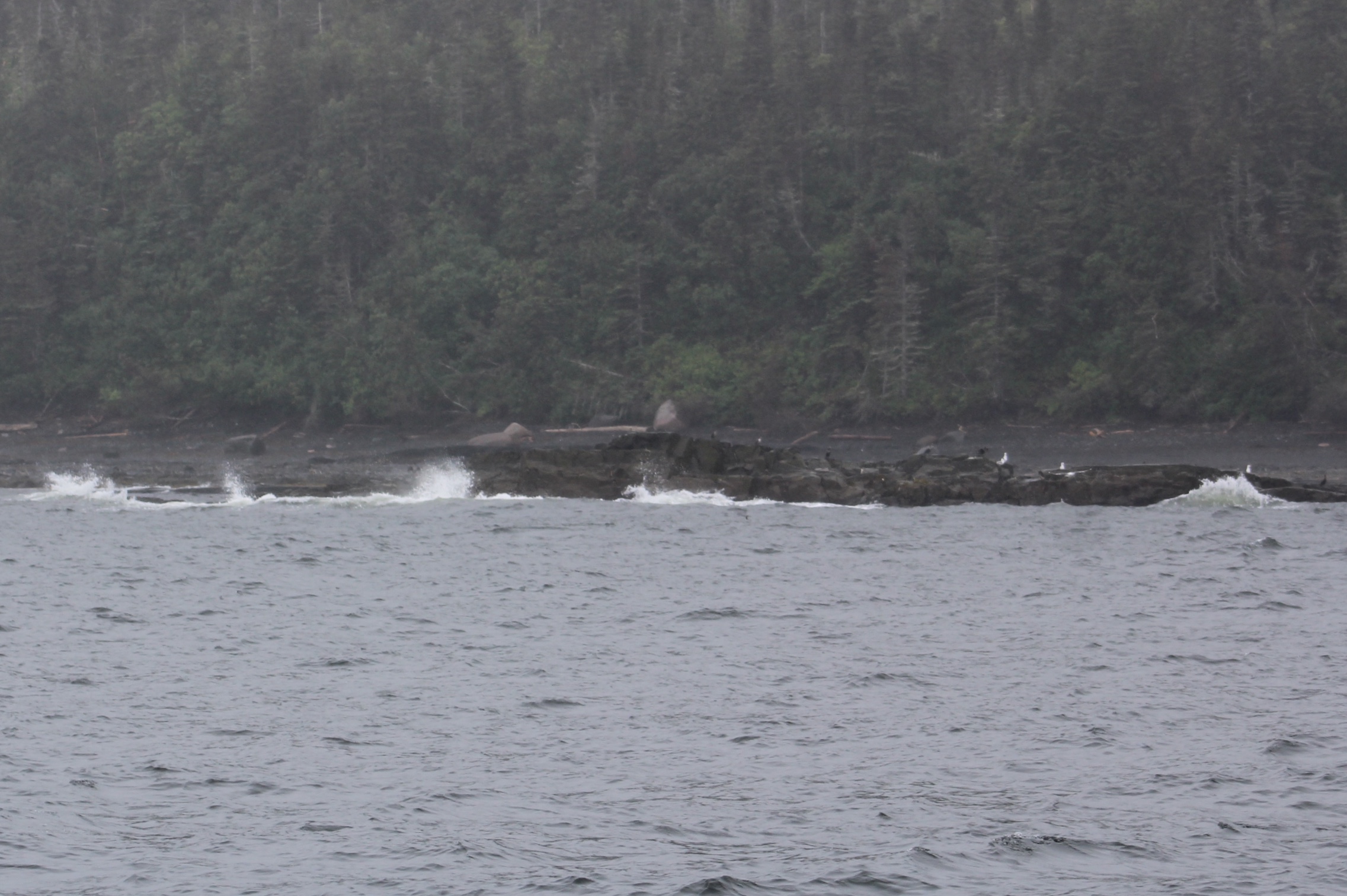
    Watching waves crash into the rocks

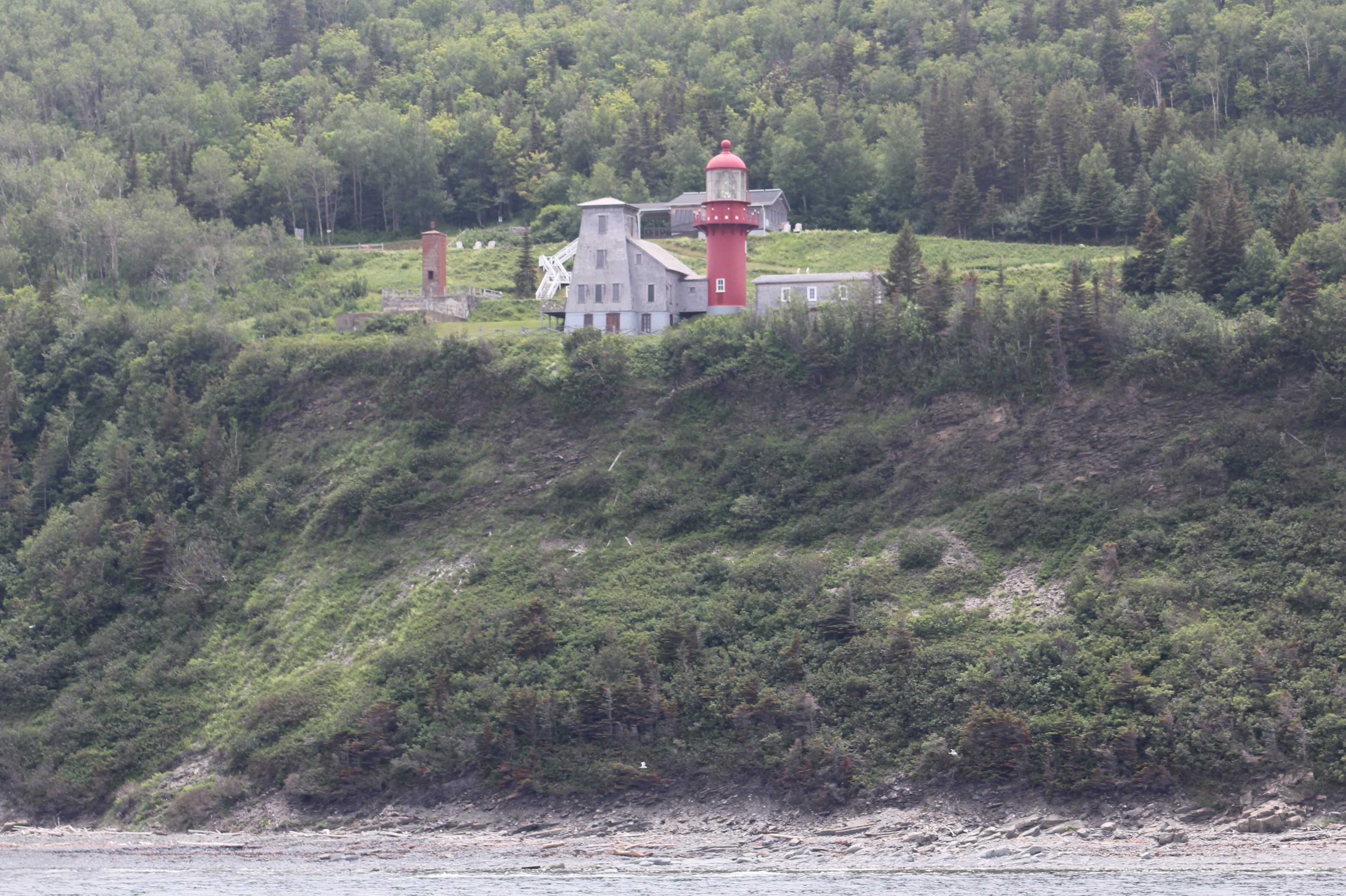
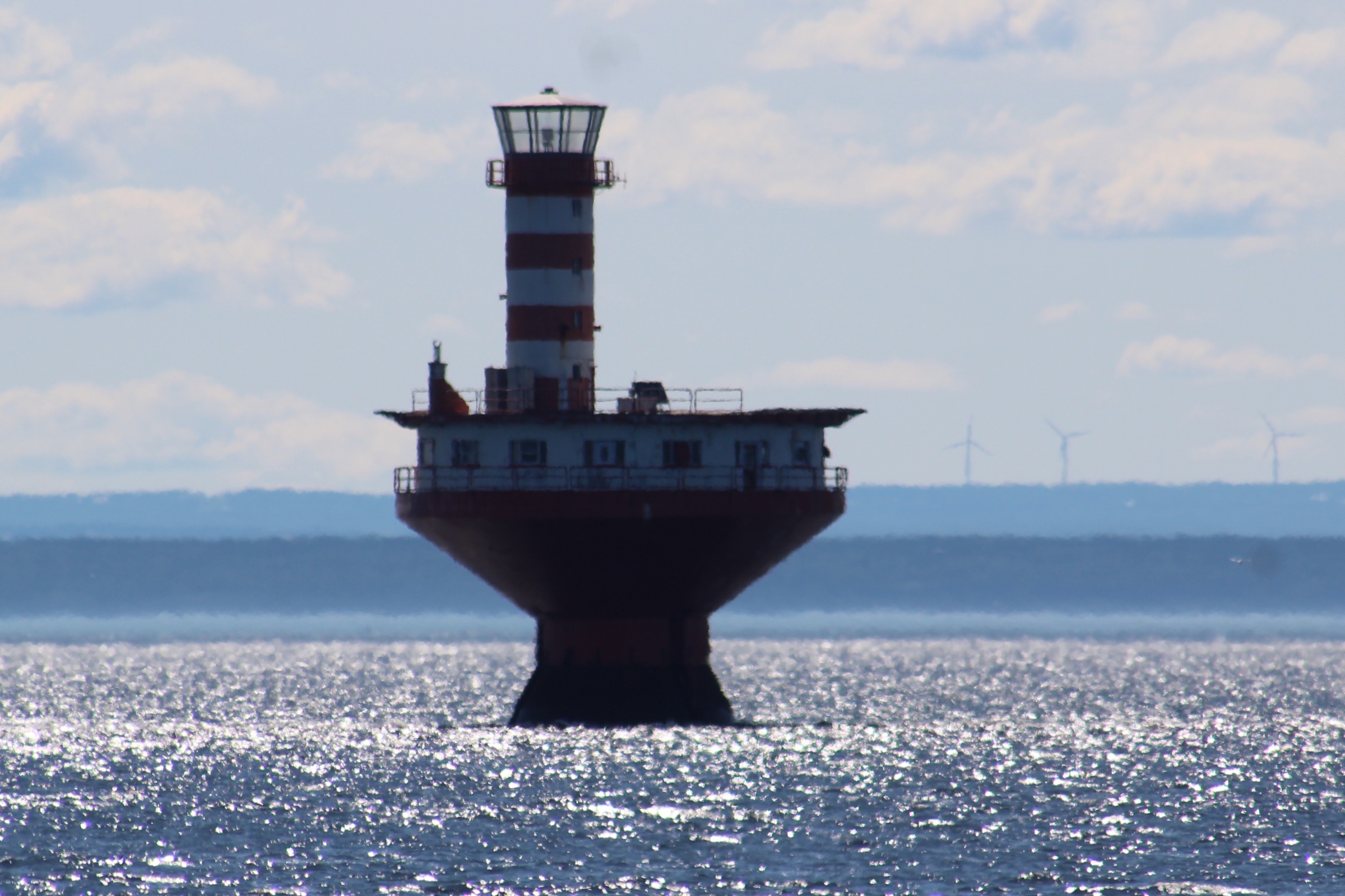
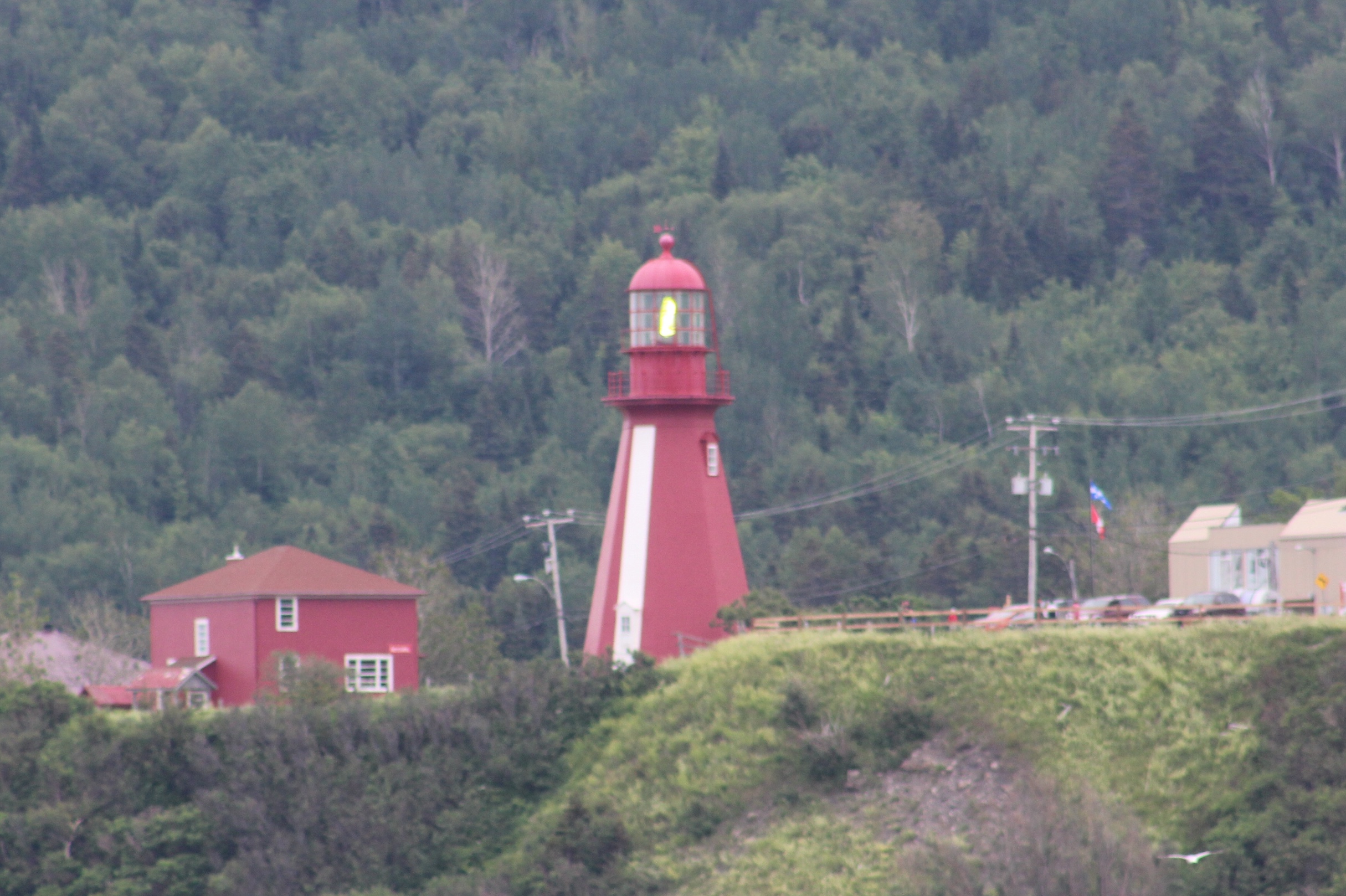
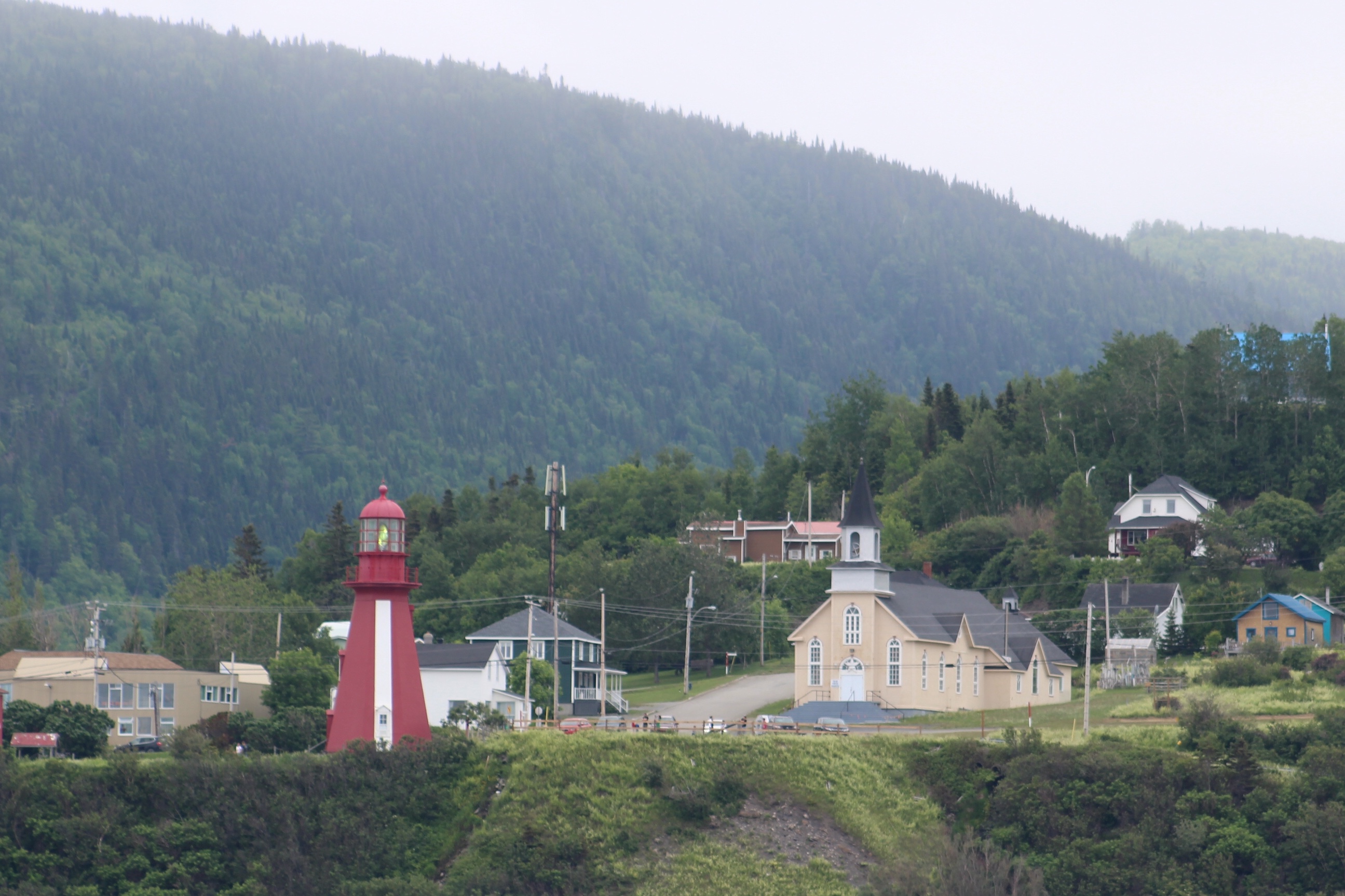
    Passed interesting lighthouse up on shore

    Crew surprised by number of houses along the shore

    As well as many small villages strung out along the shore

    After two hours of cruising, they arrived at Plan B. As hoped, the conditions had improved enough to convince the crew to push on toward Rivière Renard. As they continued, the fog began to lift and the sun finally decided to make a showing and shine through the clouds. By the time they reached the basin at Renard, the winds had died off enough that the Admiral suggested they anchor rather than take a marina. So anchor they did.

    View from anchorage

    By night fall, the winds had completely dissipated. A last weather check showed favorable conditions for an early morning departure. Hope it holds.

    Tuesday, July 16th

    Ever experienced a time that was so good that you did not want it to end? Well, that was the reality for today’s run. The wind and waves combined for a pleasant cruise on the water, while the scenery along the shore line was spectacular.

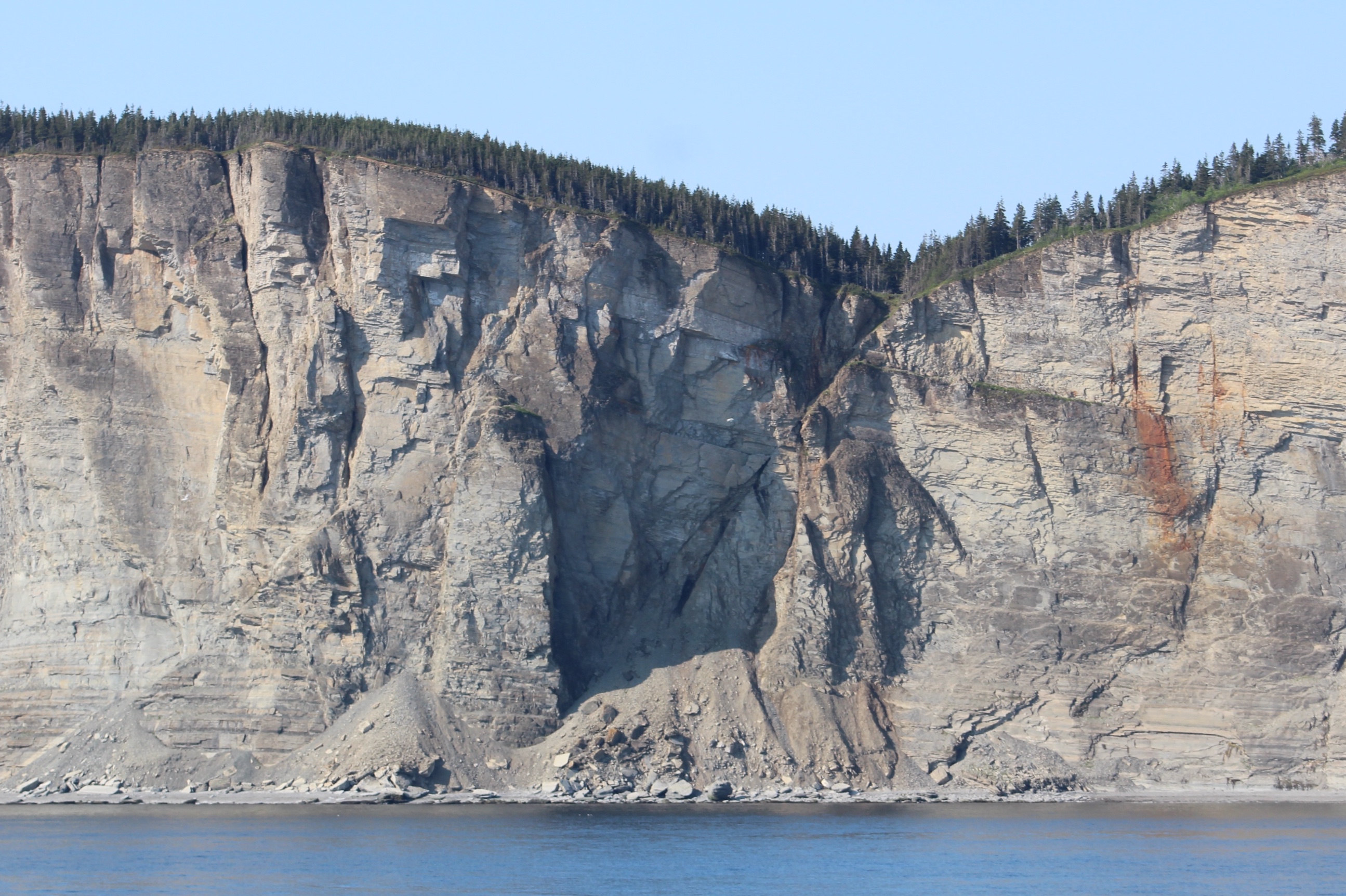
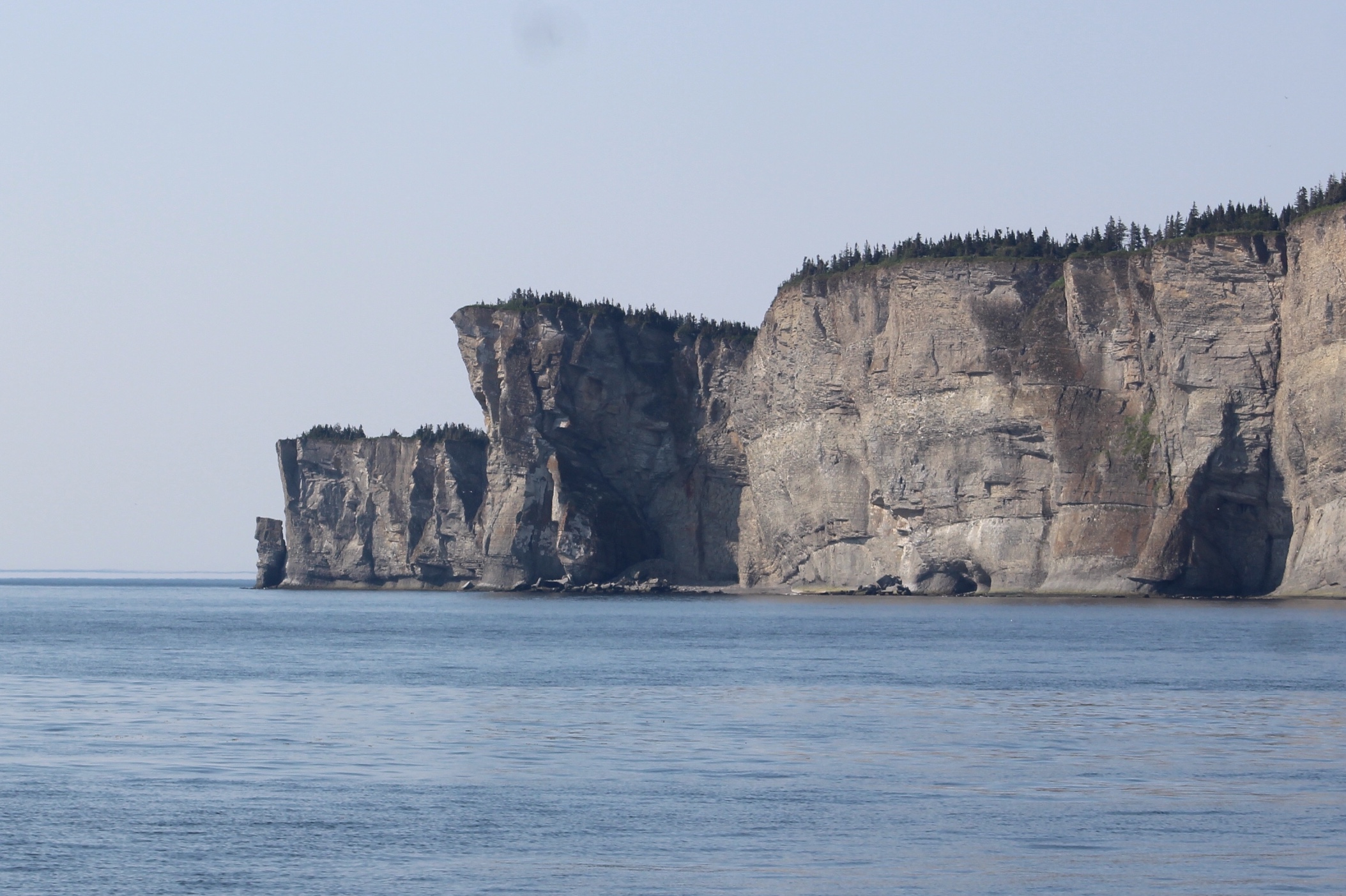
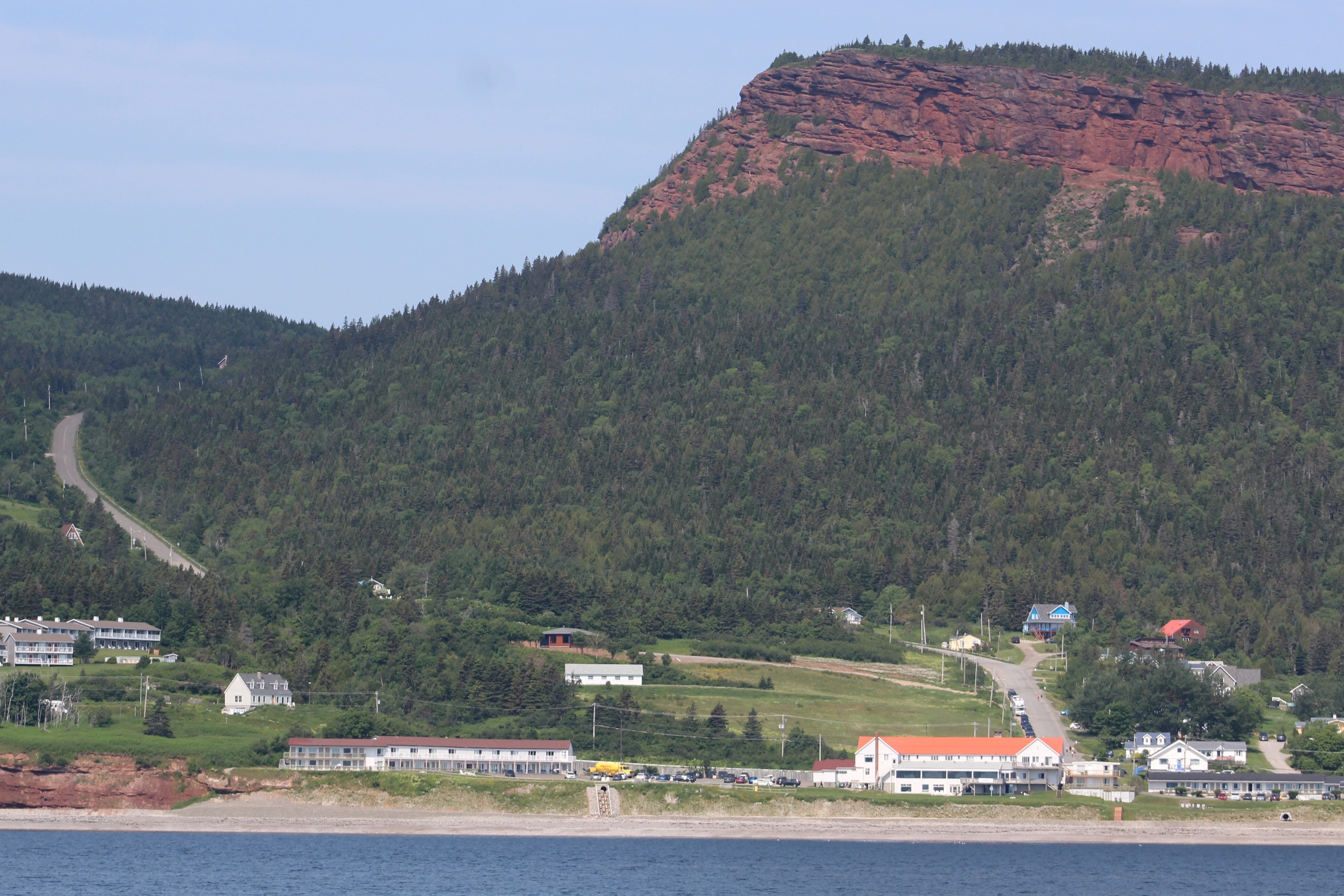
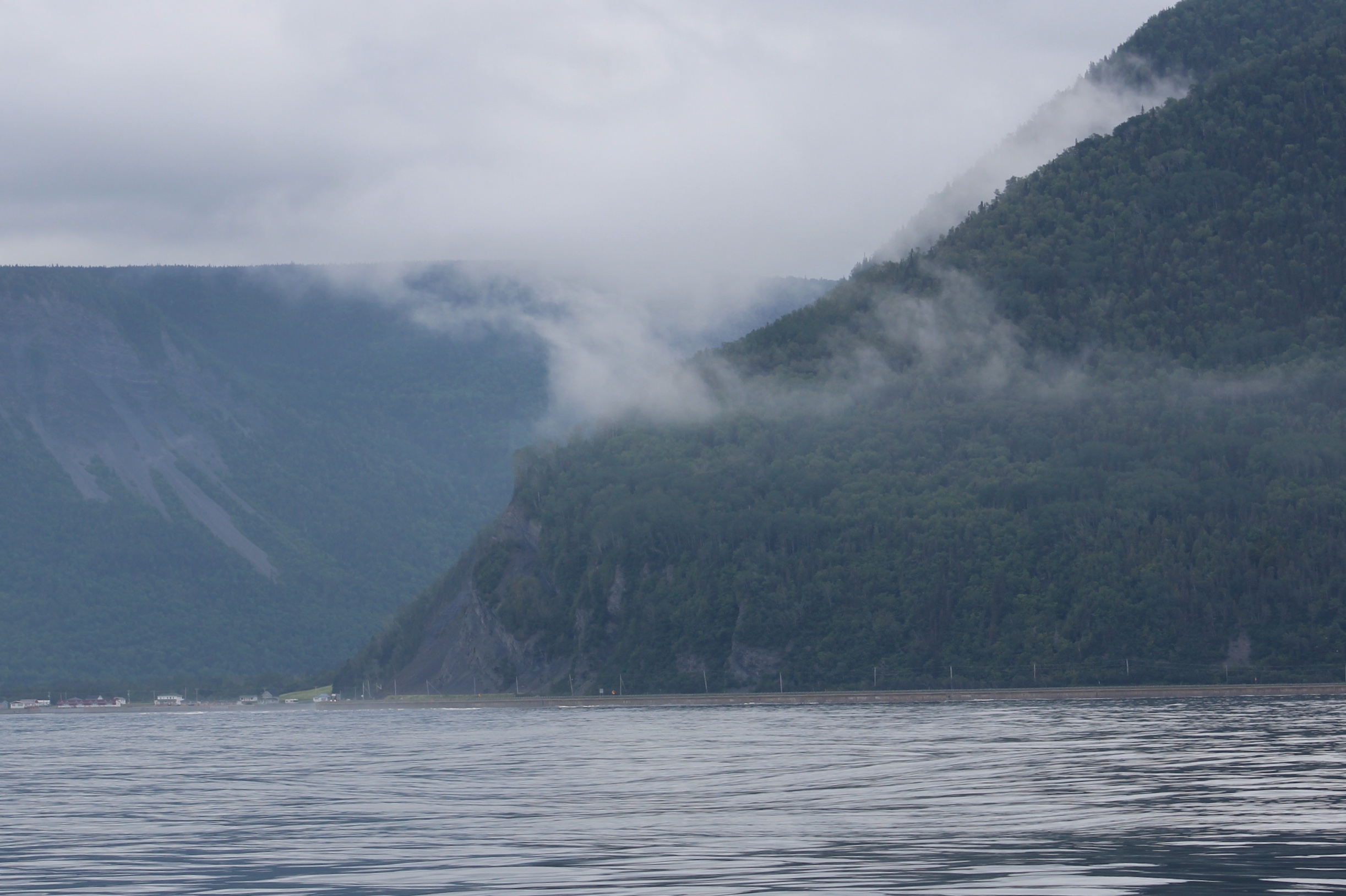
    The Gaspé Peninsula lived up to its reputation of rugged scenery. The high rock cliffs were truly amazing to see and watch as the crew cruised around the Peninsula.

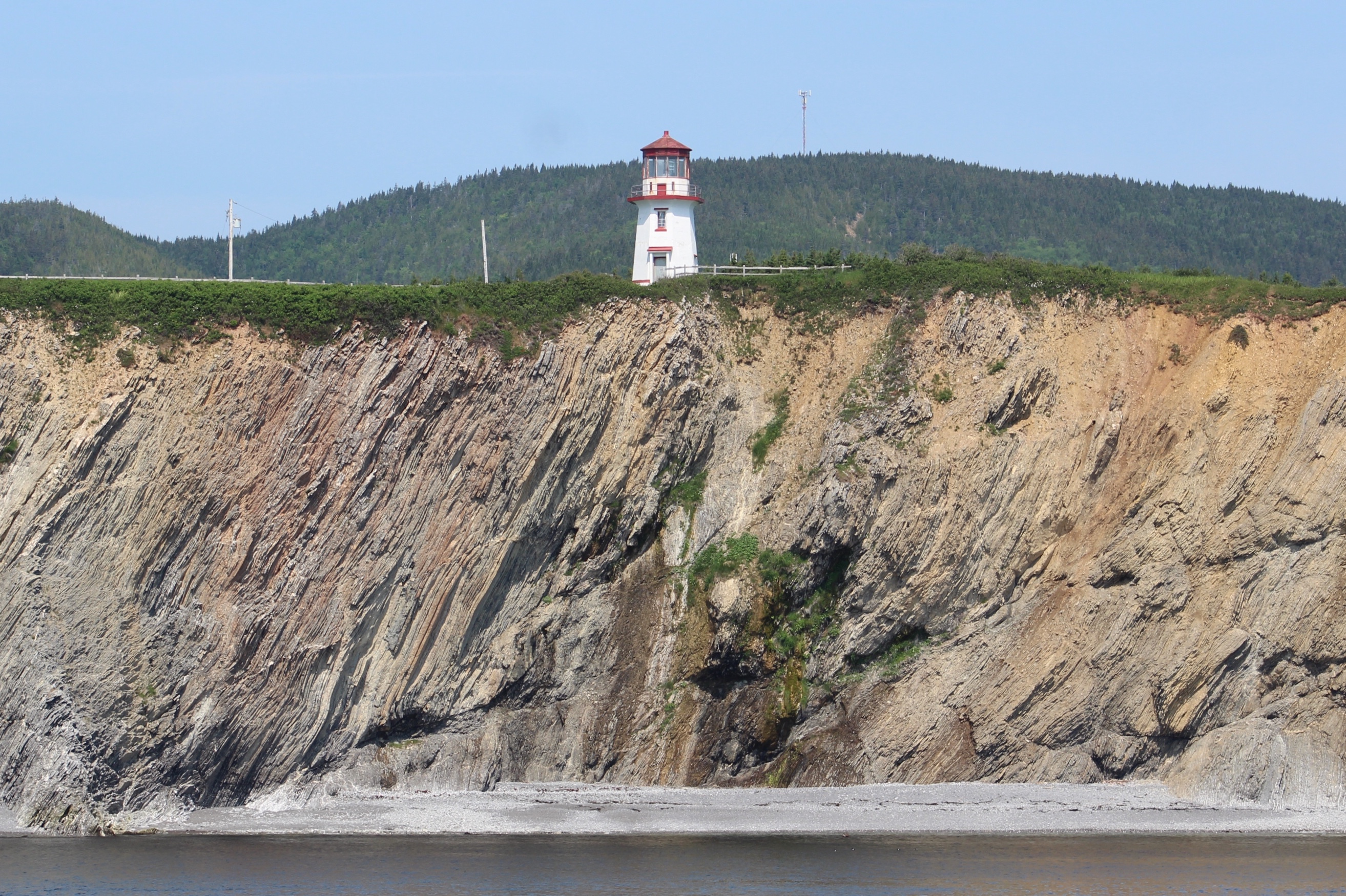
    Scattered along these cliffs were what seemed to be a never ending supply of lighthouses. The crew was thankful that it was a clear blue sky day so they could see them all.

    A local back in Madeleine told the crew that he had sailed all the way to the Bahamas and back home. He went on to say his worst experience on the water was rounding the Gaspé Peninsula and crossing the Bay of Chaleur. He warned the skipper to pick his weather window carefully. So far the wind and waves have provided a wonderful calm relaxing run.

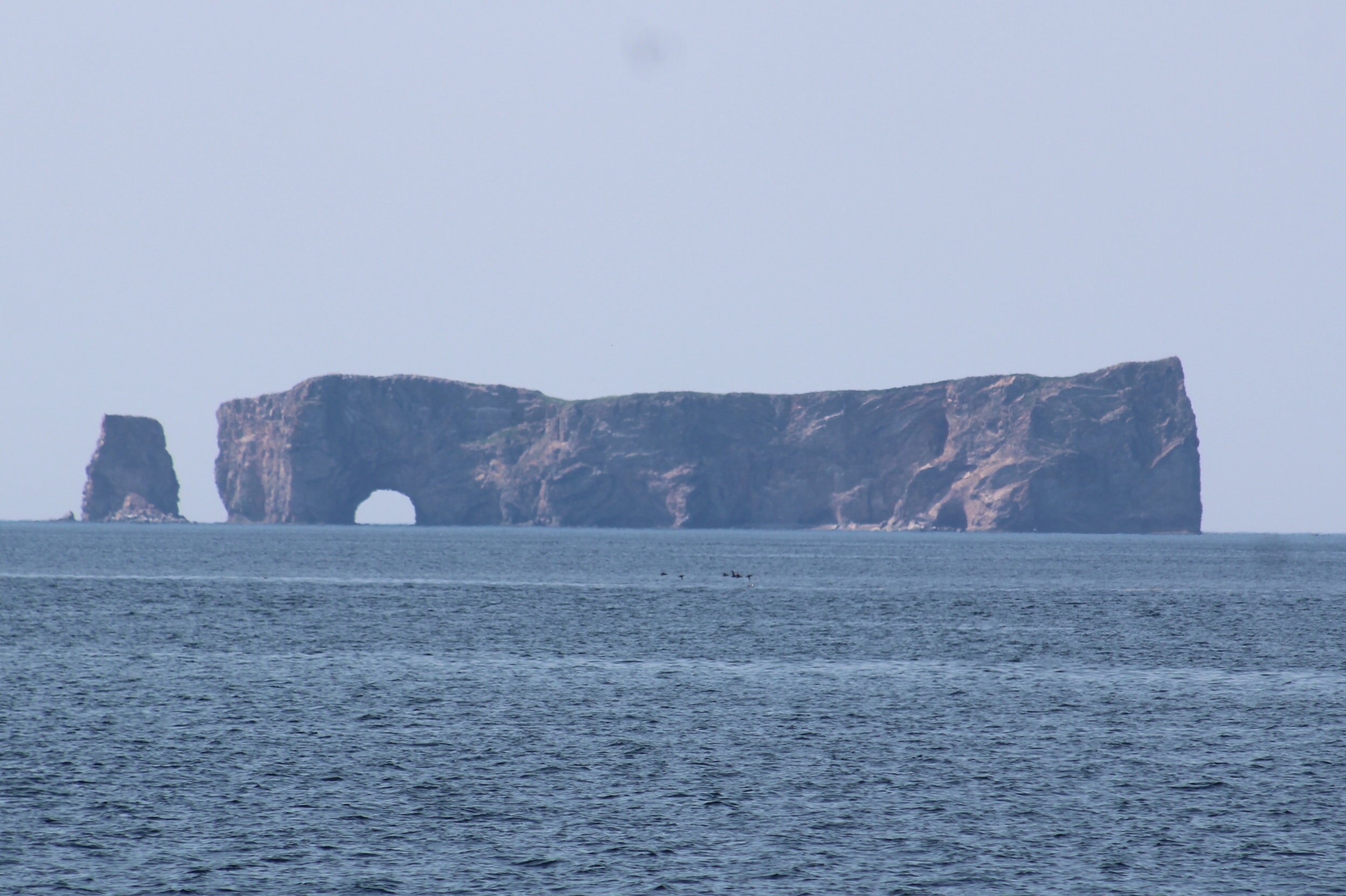
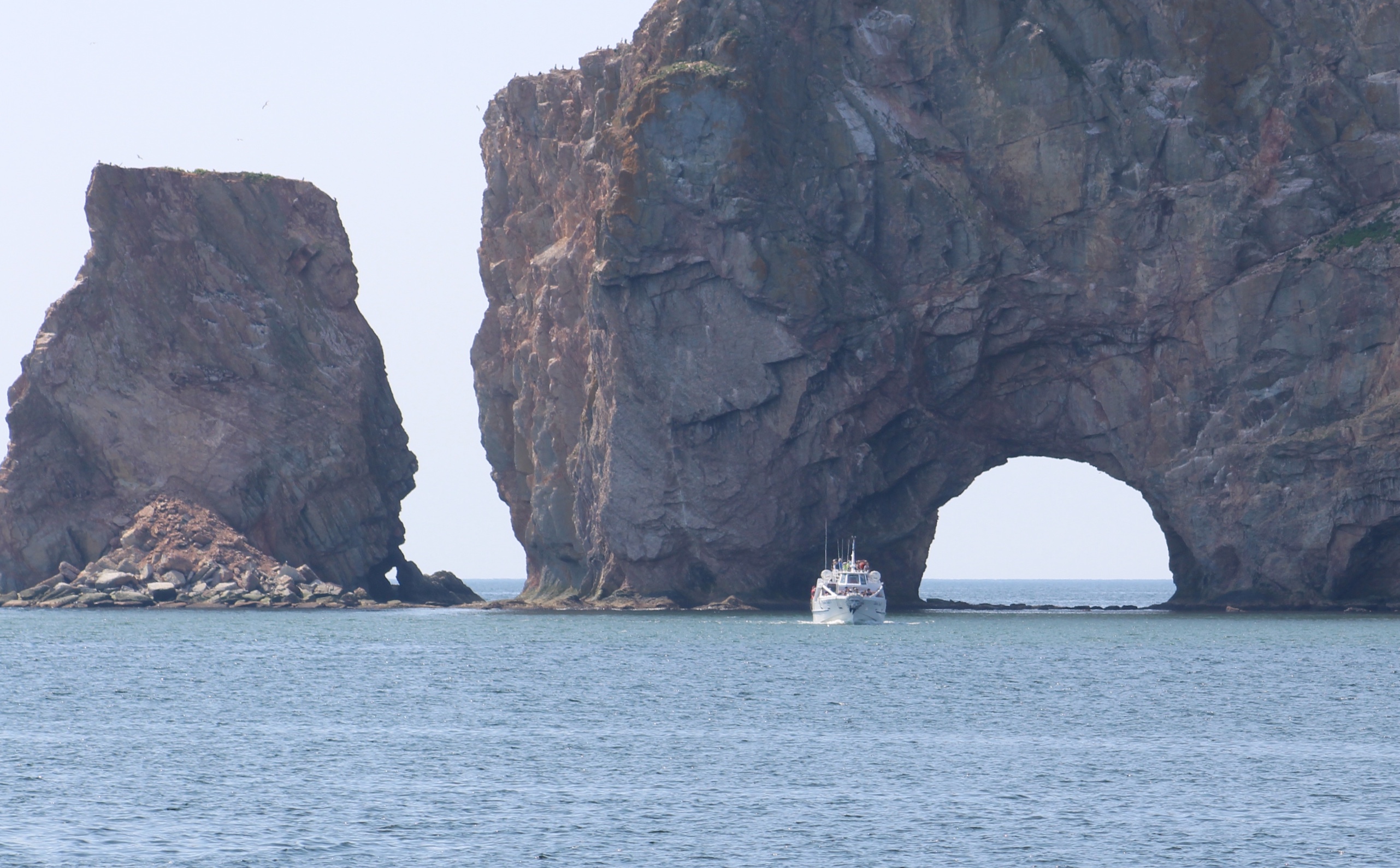
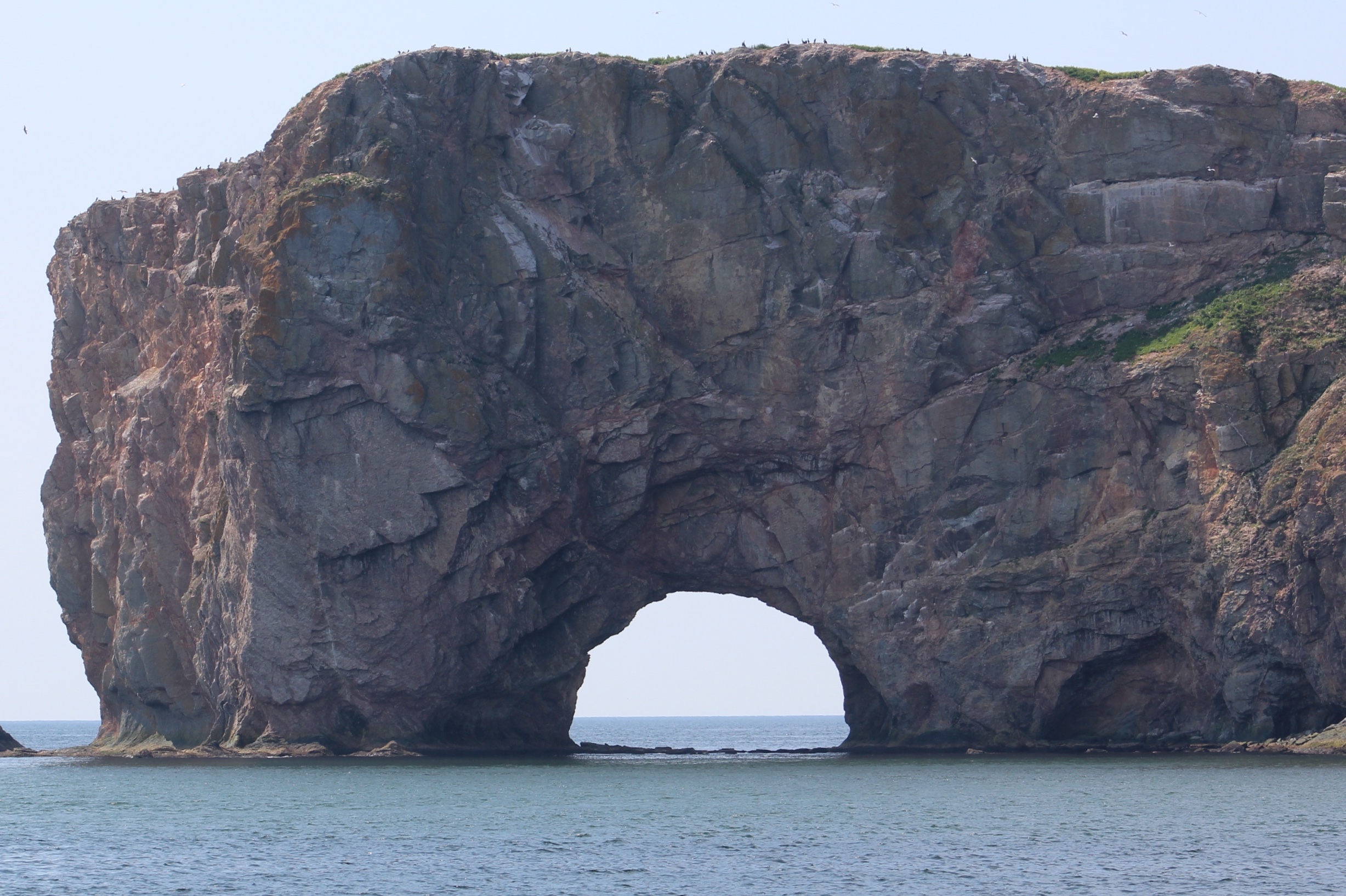
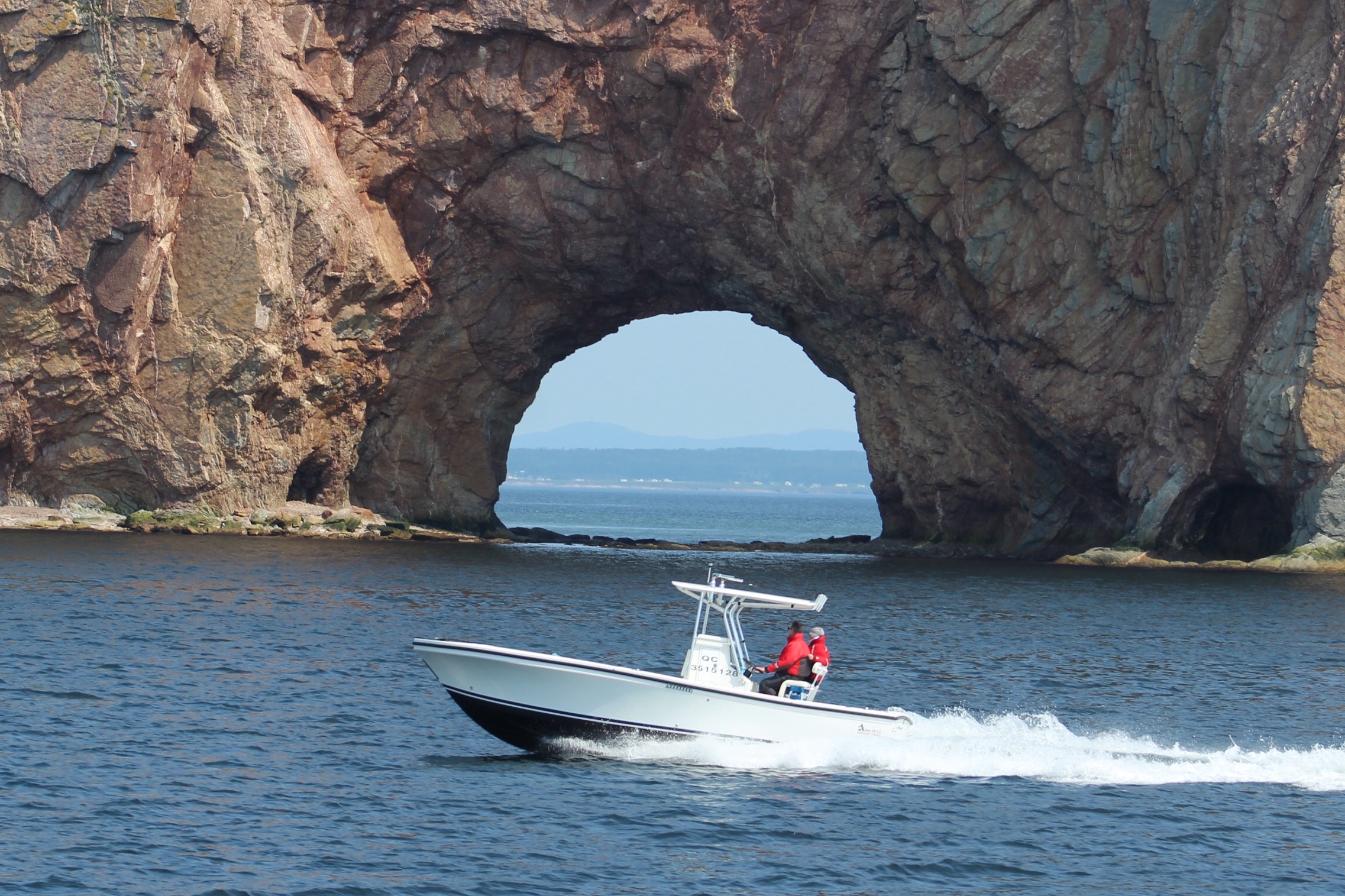
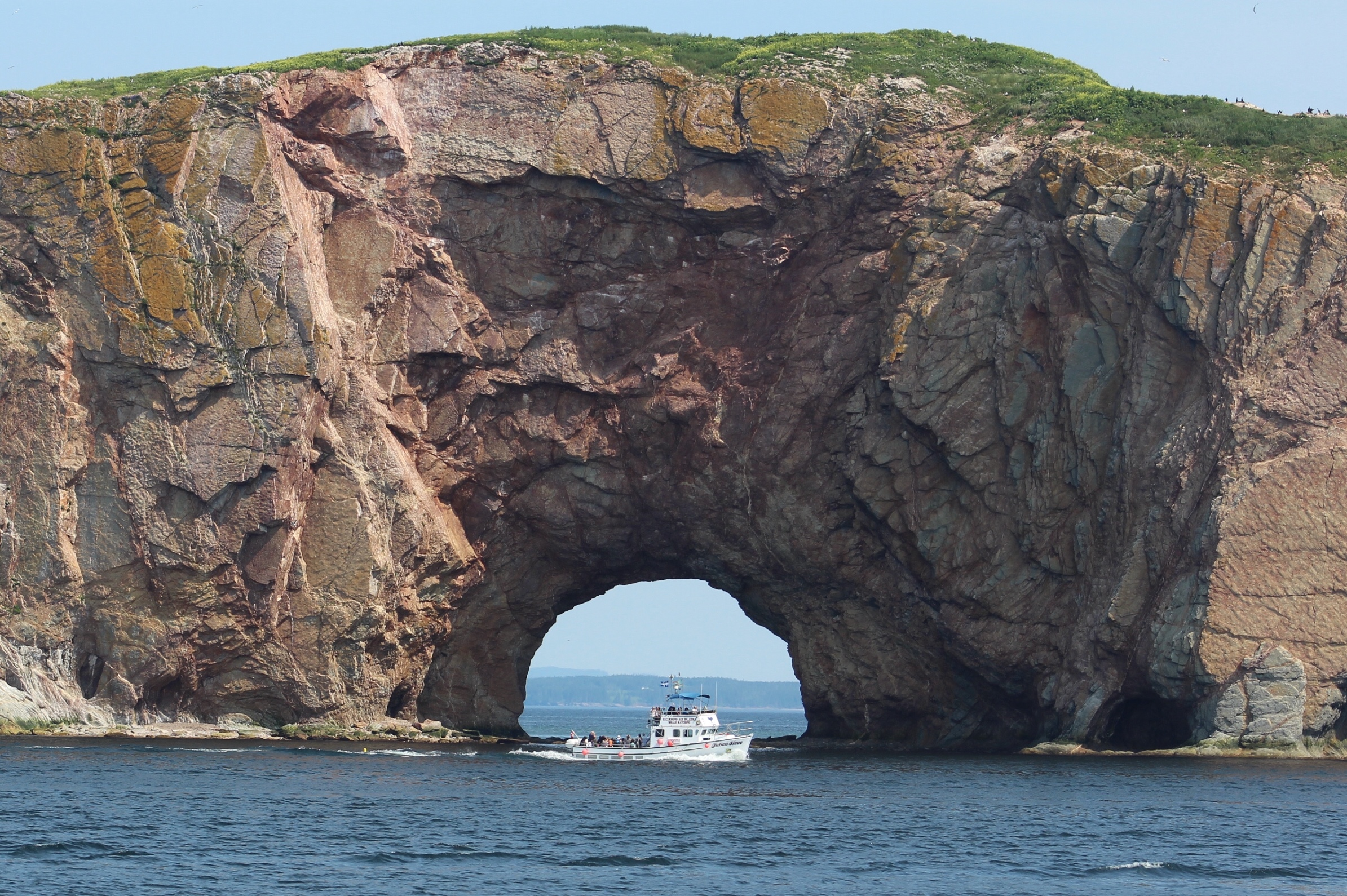
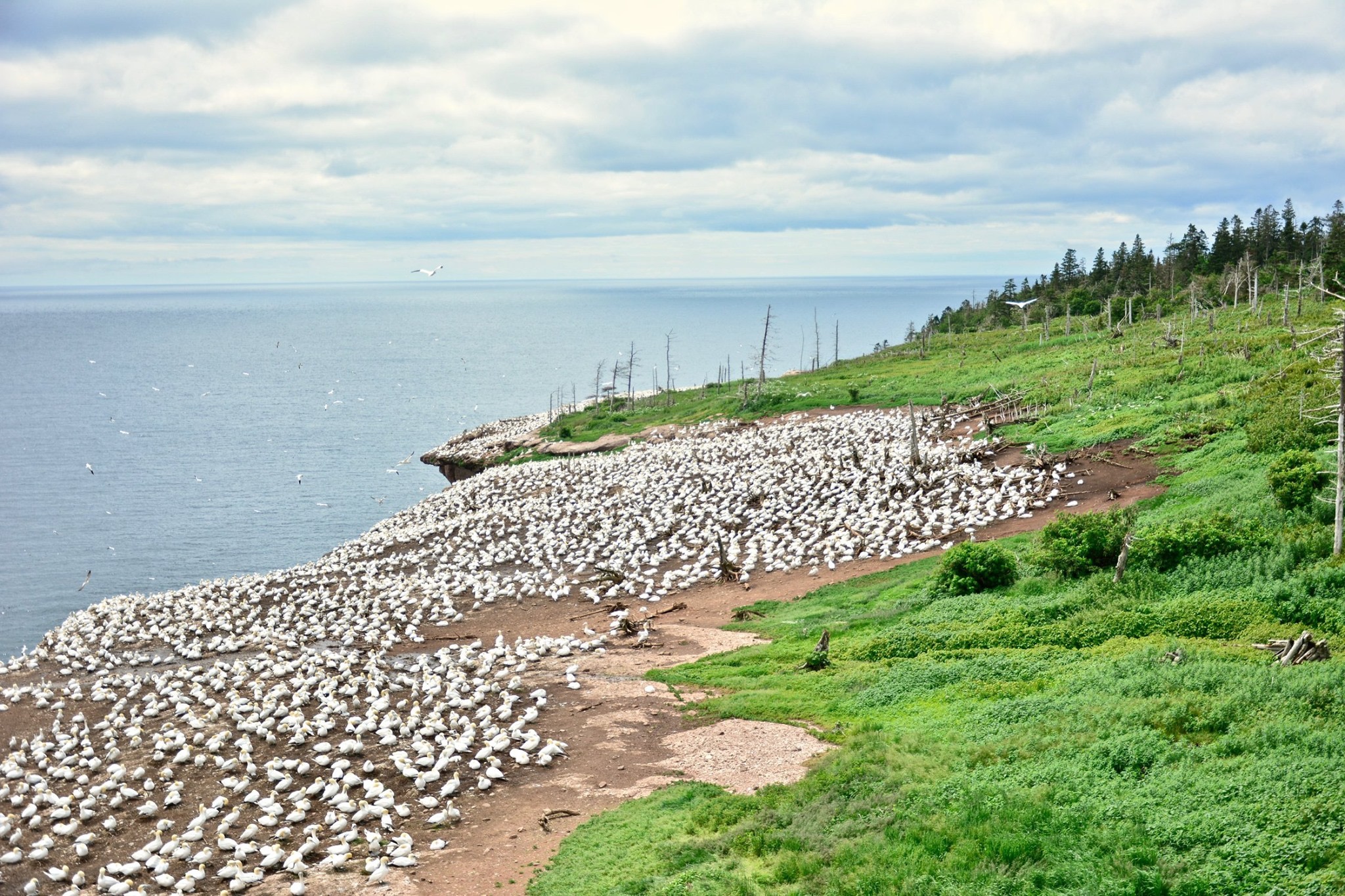
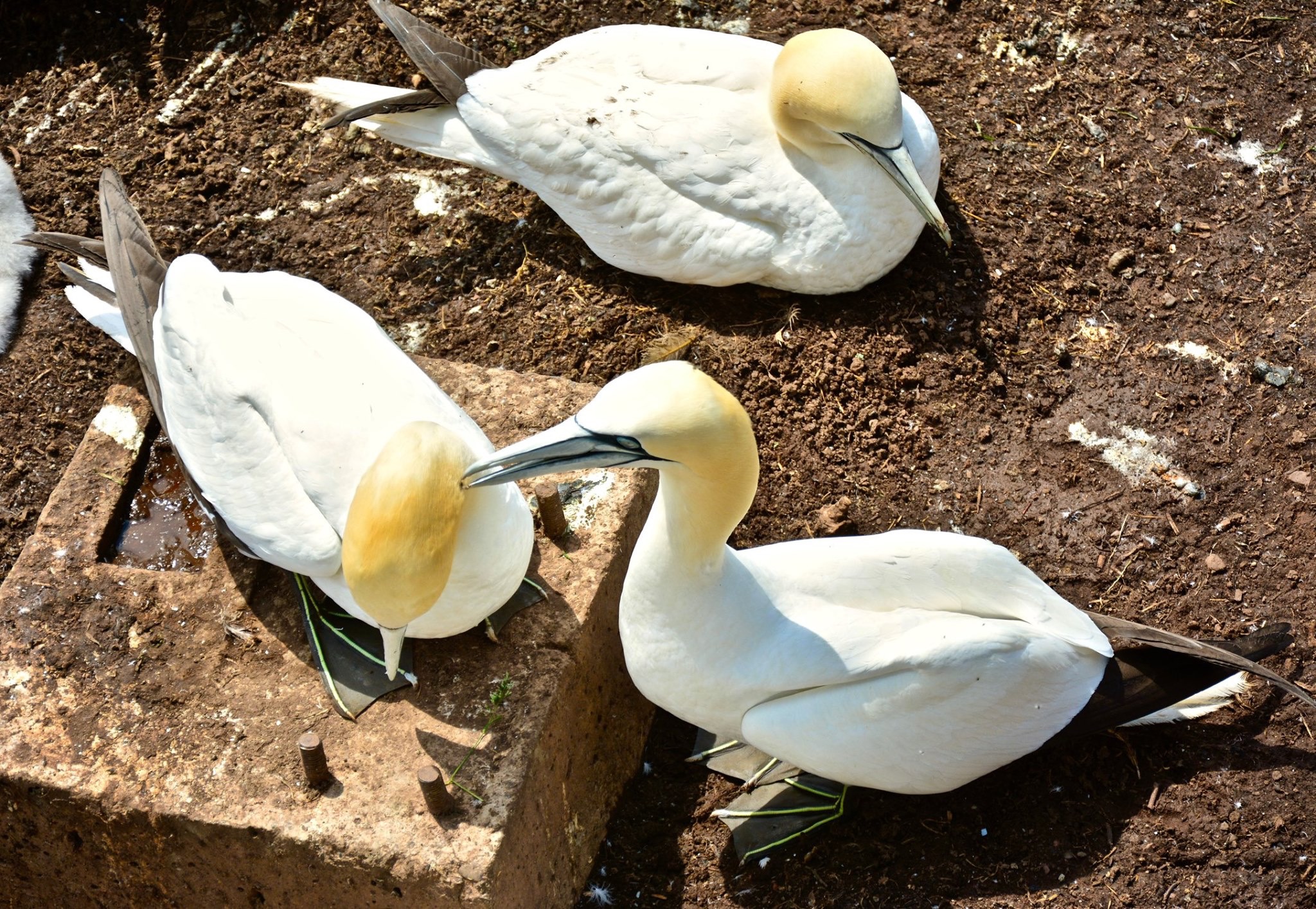
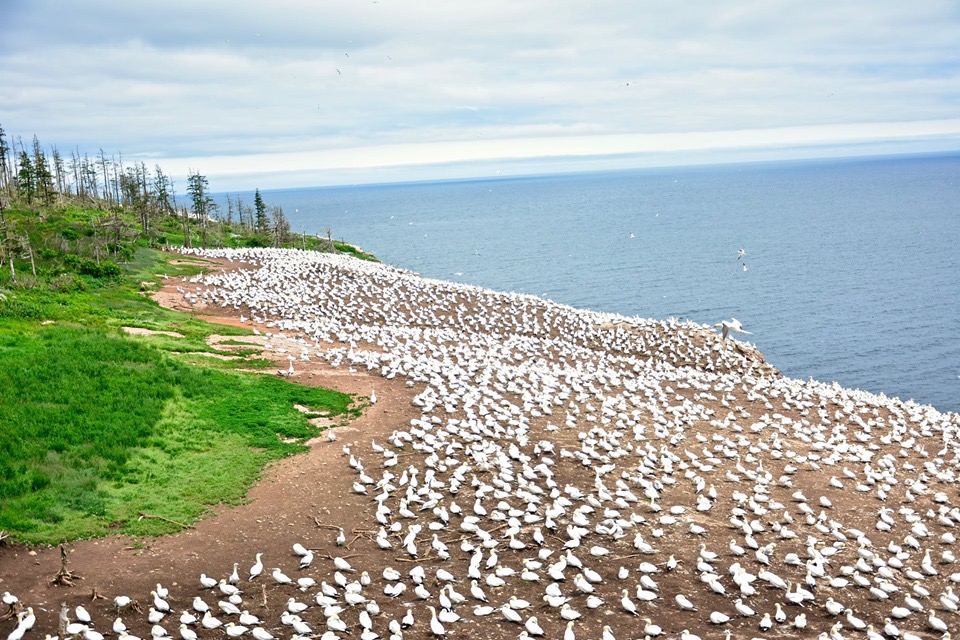
    After the crew rounded the Cap Gaspé, they set their sights on Perce Rock and the Isle of Bonaventure. Both are Bird Sanctuaries protected by Parks Canada.

    The skipper had planned to drop anchor by Isle of Bonaventure and hike over the island to the birds nesting along the shore. But all these birds reminded the skipper of some words of wisdom, ‘A bird in the hand is worth two in the bush.’

    With the favorable conditions out on the water and the warning from the local, the crew decided to skip both Bonaventure and the Beaufils Marina and go ahead and cross the Bay of Chaleur while the window was open. A final check of the weather showed the crossing window would close overnight with no good window in the foreseeable future.

    The skipper altered course to cross the Bay and got comfortable for the additional 45 miles tacked onto today’s run, making it 98 miles long. The crossing went well with a few seal sightings, one whale sighting, and meeting a couple of dolphins swimming north. The end of the long day found the crew safely docked in Shippagan, New Brunswick.

    Turns out the crew made an excellent decision. Confetti posted on a Down East Loop page about the Beaufils Marina and suggested people bypass the stop because the docks are not in the water this season. In addition to this info, the crew of Confetti also posted some pictures of their time spent on Bonaventure. Thanks to Vicki and Mack for sharing their adventure on Bonaventure, the following pics are from their hike around the island.

    Wednesday, July 17th

    The weather was tolerable for a run to Miramichi Bay, but the conditions were forecast to be even better tomorrow. Based on that info, the crew decided to stay put today and explore Shippagan.

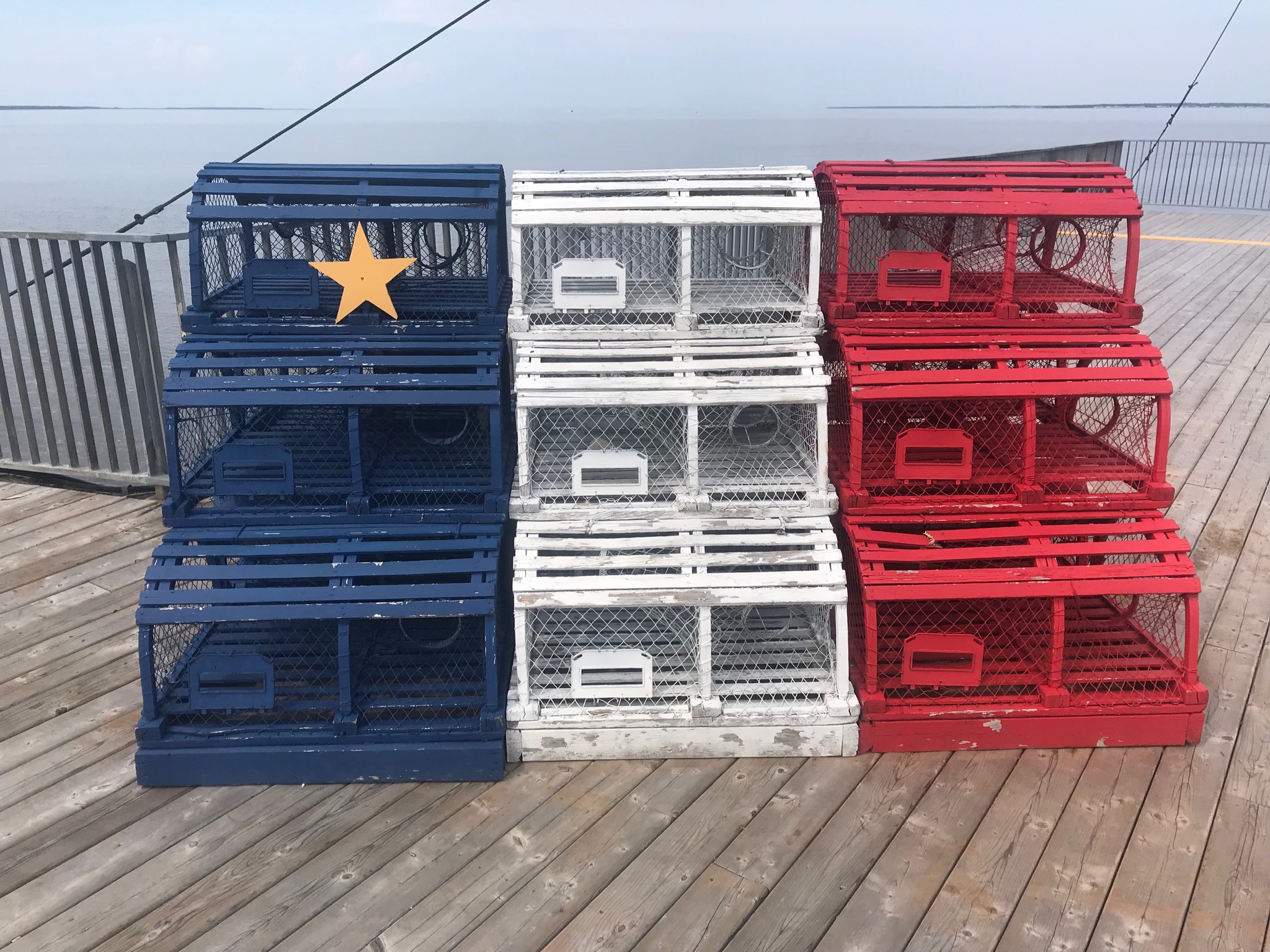
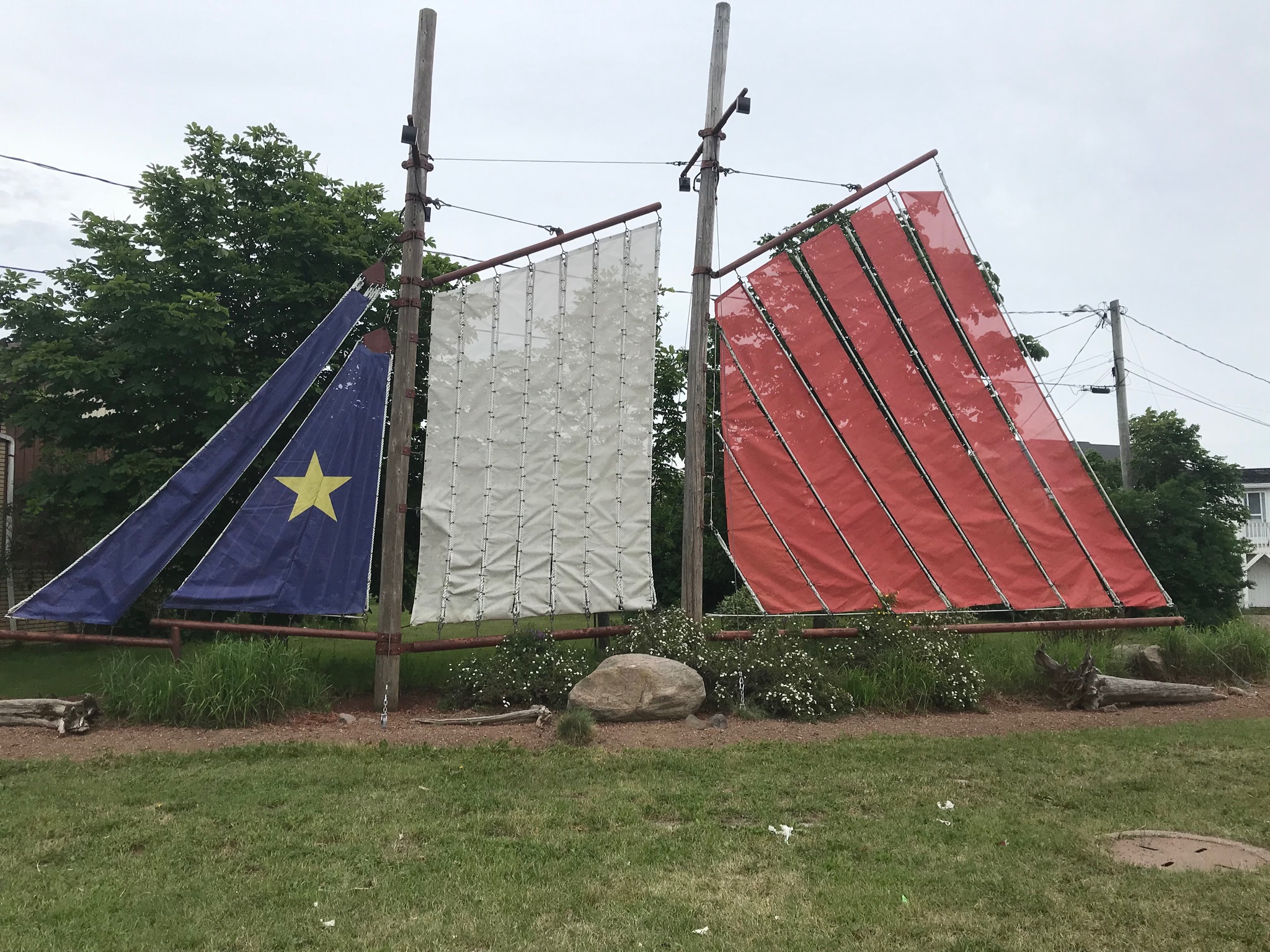
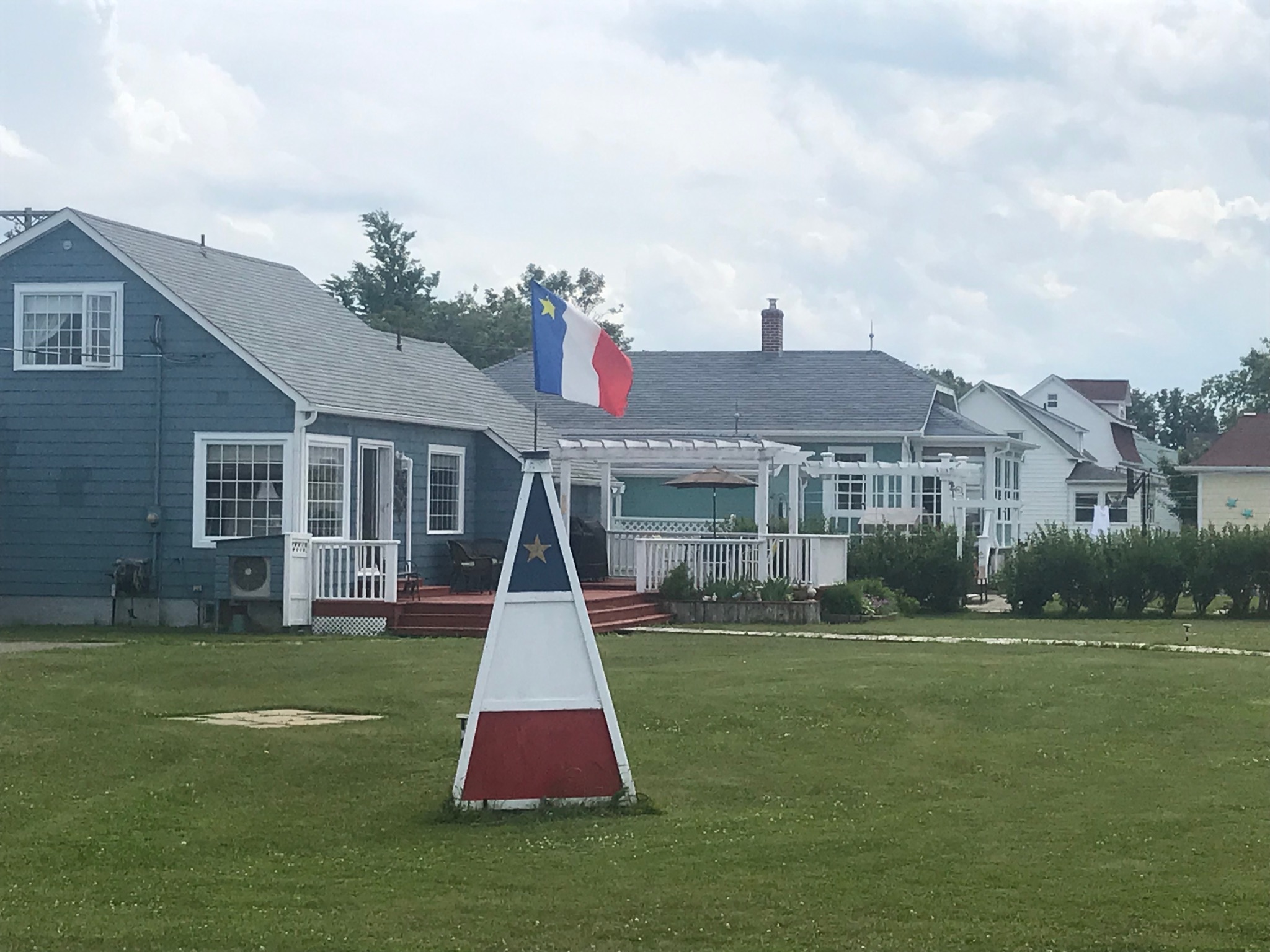
    The first thing the skipper noticed was a French Flag flying, but with a yellow star in the blue field. That was odd looking.

    There must be some significance to the flag because it shows up everywhere one looks.

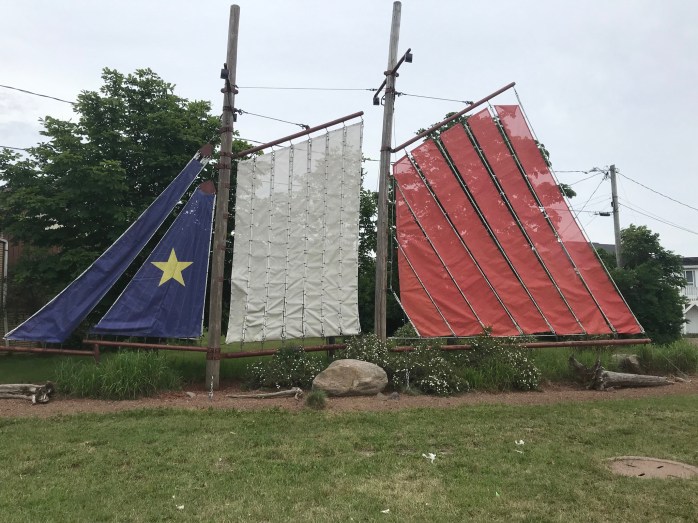
    The flag honors the heritage of the Acadian’s who first settled here in the 1700’s from France. The yellow color represents the Papacy while the star symbolizes the patron saint for mariners, Mary. The star is placed on the blue field because blue represents Mary.

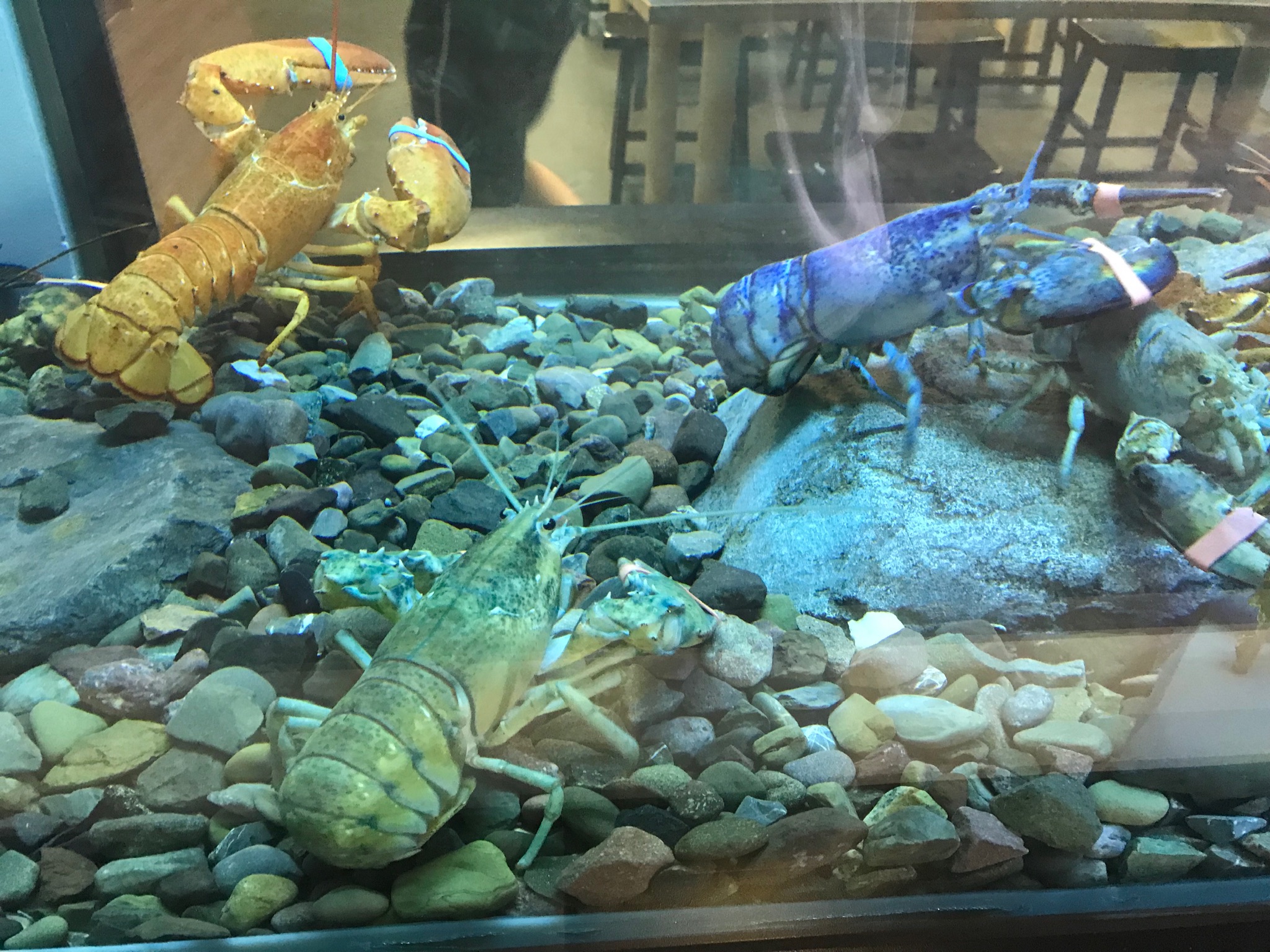
    The skipper also went to the Aquarium to learn about the sea life that lives in the water surrounding this area. He found an explanation of why lobsters are different colors but turn red when boiled. Short answer was they have red pigment in their shells, but red is made up of shades of yellow and blue. So lobsters display different colors depending on the makeup of the blended shades. However, when put in hot water the pigments all merge to give the characteristic red lobster.

    The skipper also got to see about six different species of cod, but the most interesting fish were the sturgeon that they had in several tanks depending on their size.

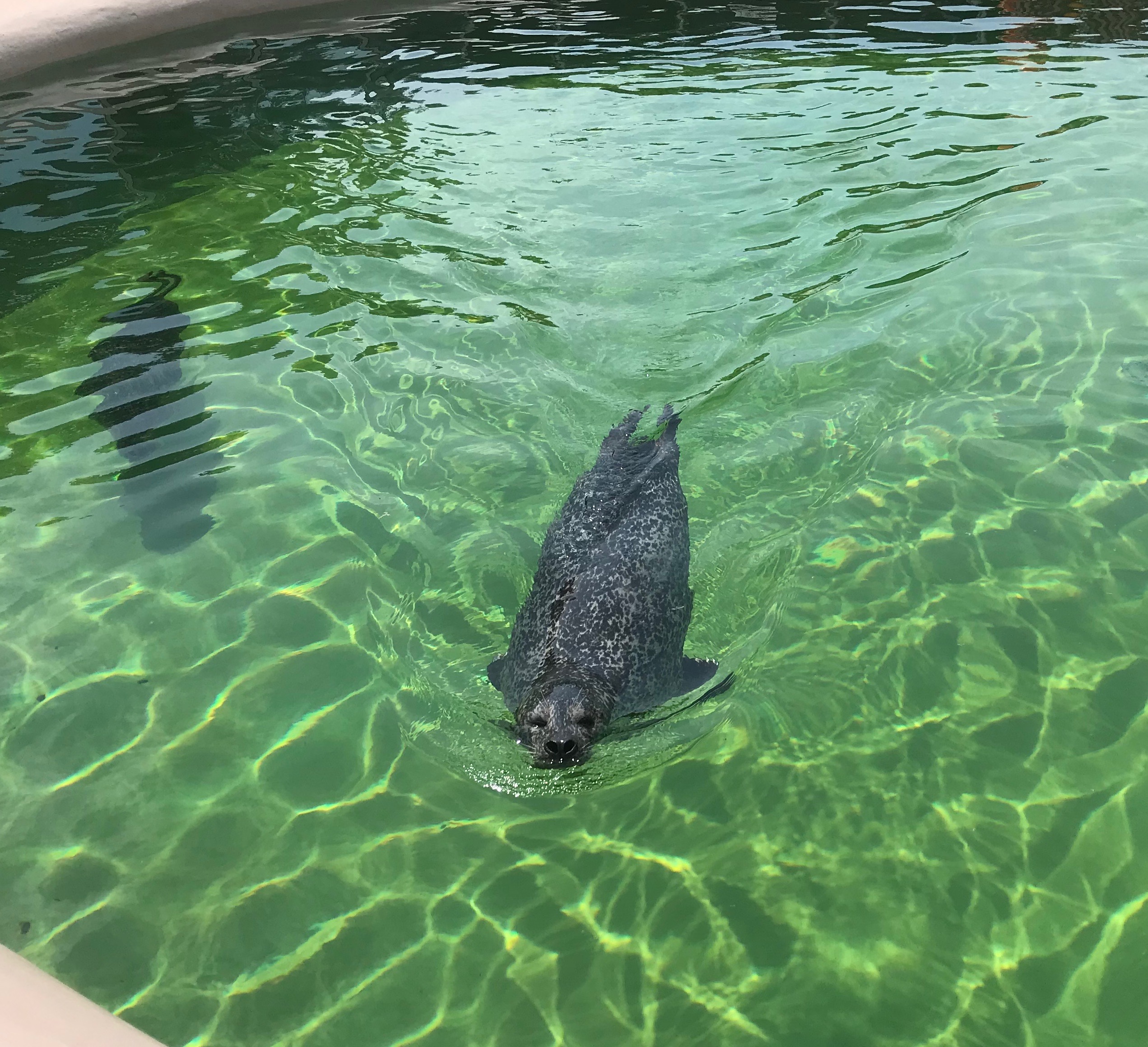
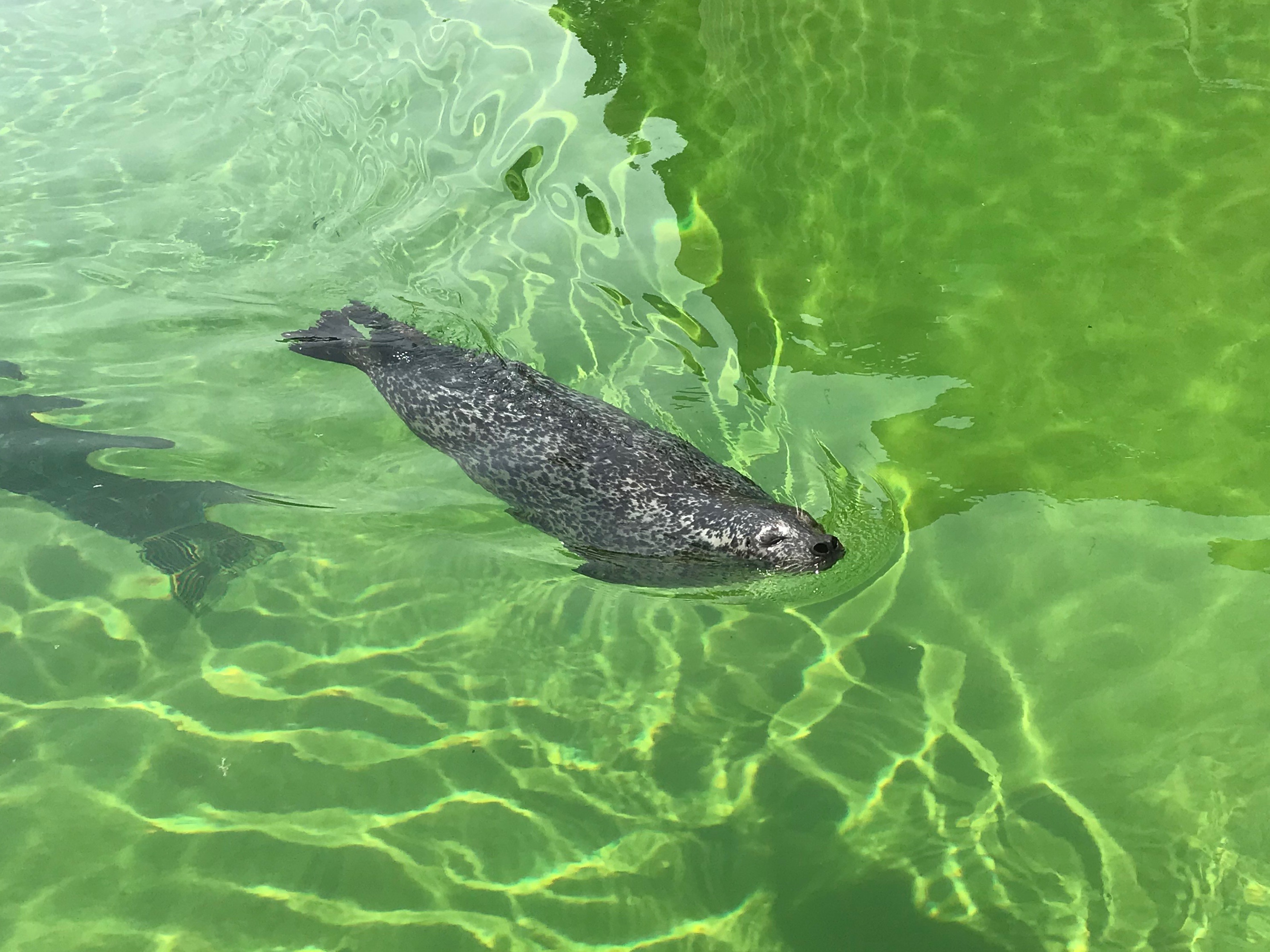
    They also had three seals in a pool so the skipper was able to get a few Harbor Seal pics.

    Thursday, July 18th

    The skipper was interviewed for an AGLCA POD Cast in the morning. After the interview, he made a dash over to Tim Horton’s for another round of donut holes. And yes, he remembered to order only 20 this time. The delay in departure allowed the crew to see Alex and Marilyn one last time. Our crew got a tour of the one of a kind boat owned by Alex and Marilyn. Thanks for asking the crew aboard. Oh, and you have a really neat boat!

    Once the crew got underway they passed under a lift bridge and worked their way out of the winding channel to open water. They passed a light marking the channel entrance. This light was the last thing the crew saw for about 50 miles besides the open water.

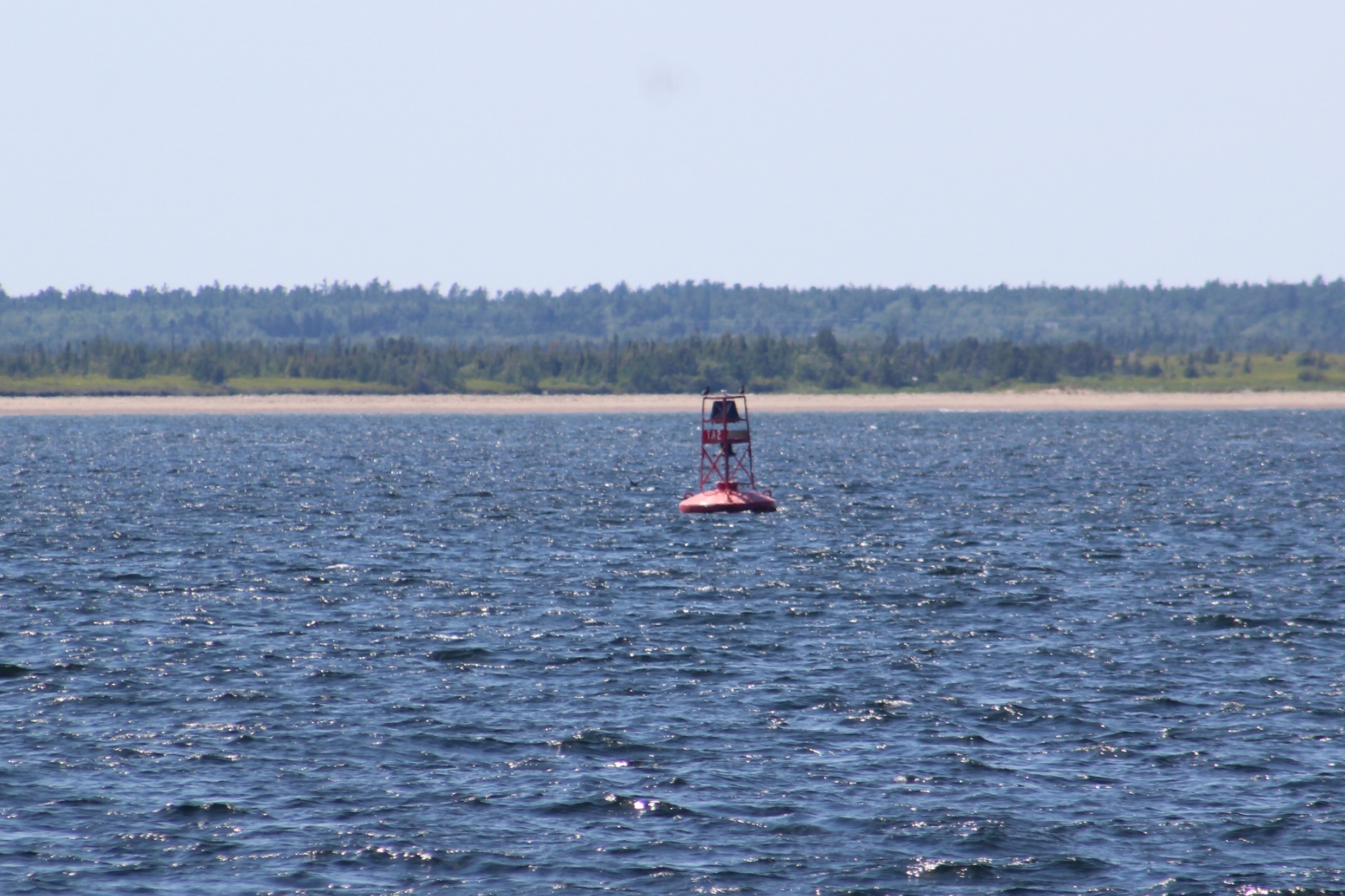
    After those long boring miles, the skipper sighted a buoy that marked the entrance to the Miramichi River. Kinda sad when a floating navigational aide brightens up your day.

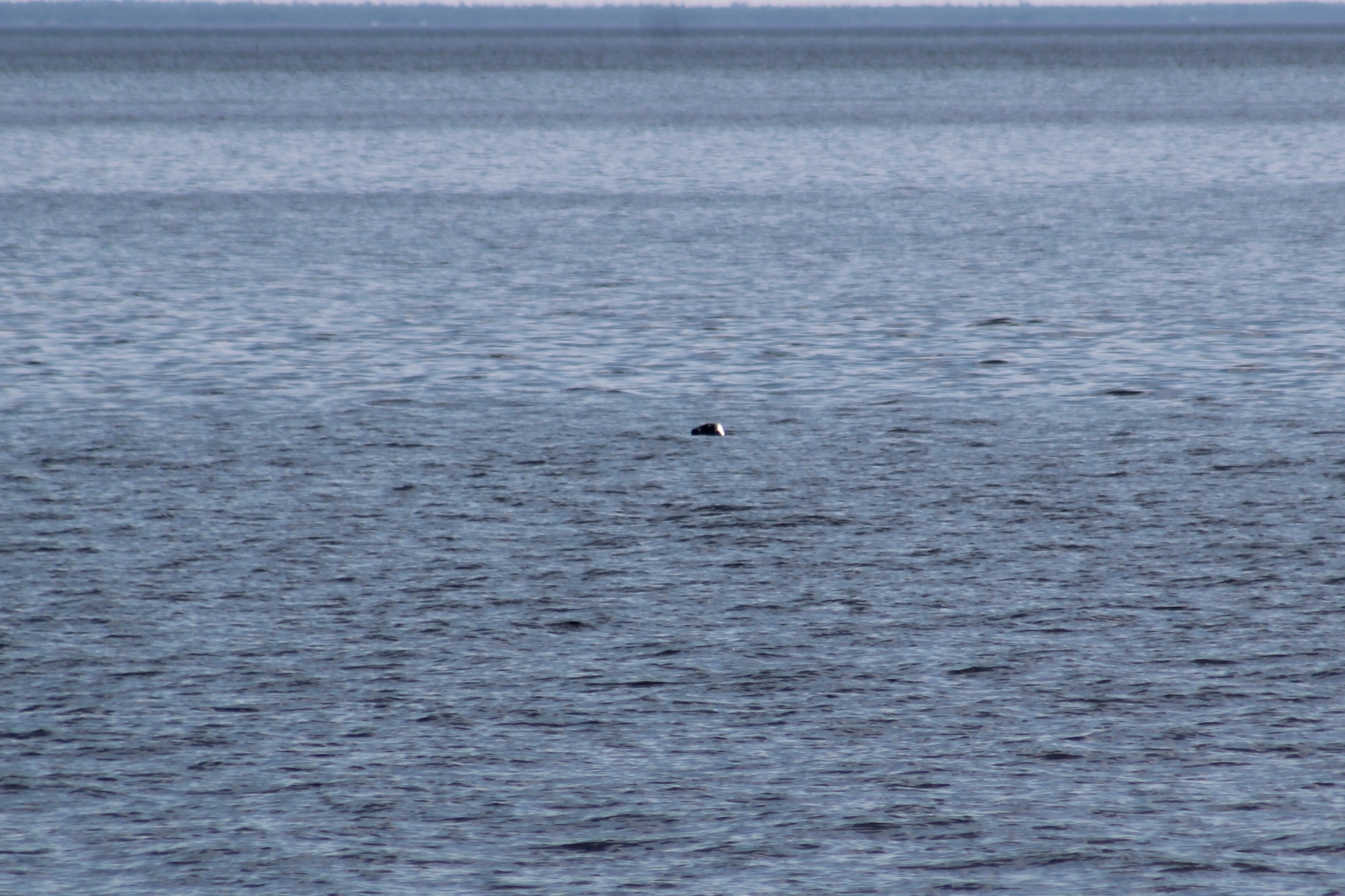
    The skipper tried for 30 minutes to find enough water on the north side of Portage Island to enter the anchorage. After plowing mud a few times he decided to try the south side of the Island. Once anchored, they began to see seals with their heads up admiring Still Waters II. At one point, there were nine seal heads above water looking around. Can you spot the one below?

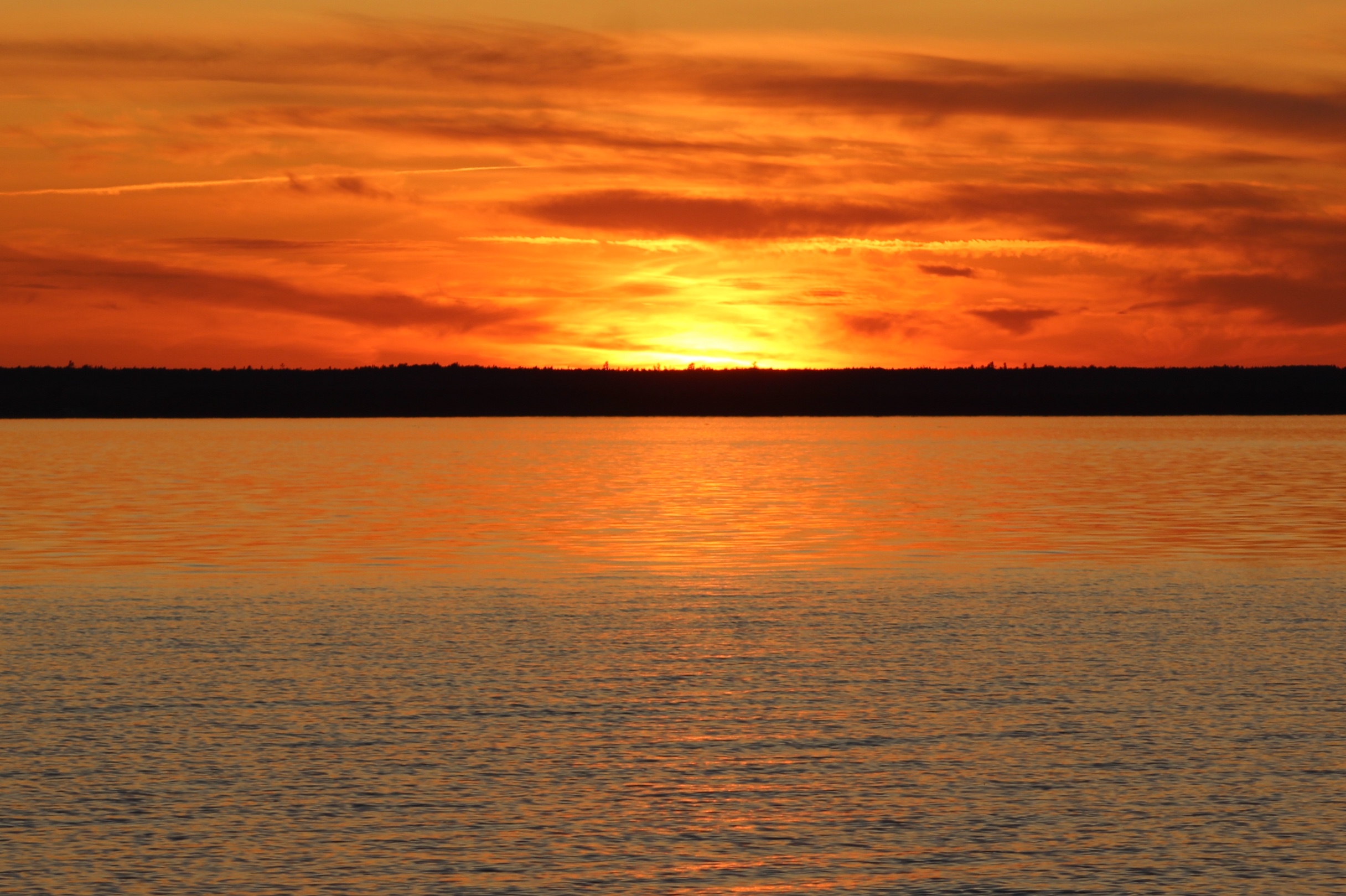
    The sun decided to go hide behind the shore and close the curtain on the seal show.

    Friday, July 19th

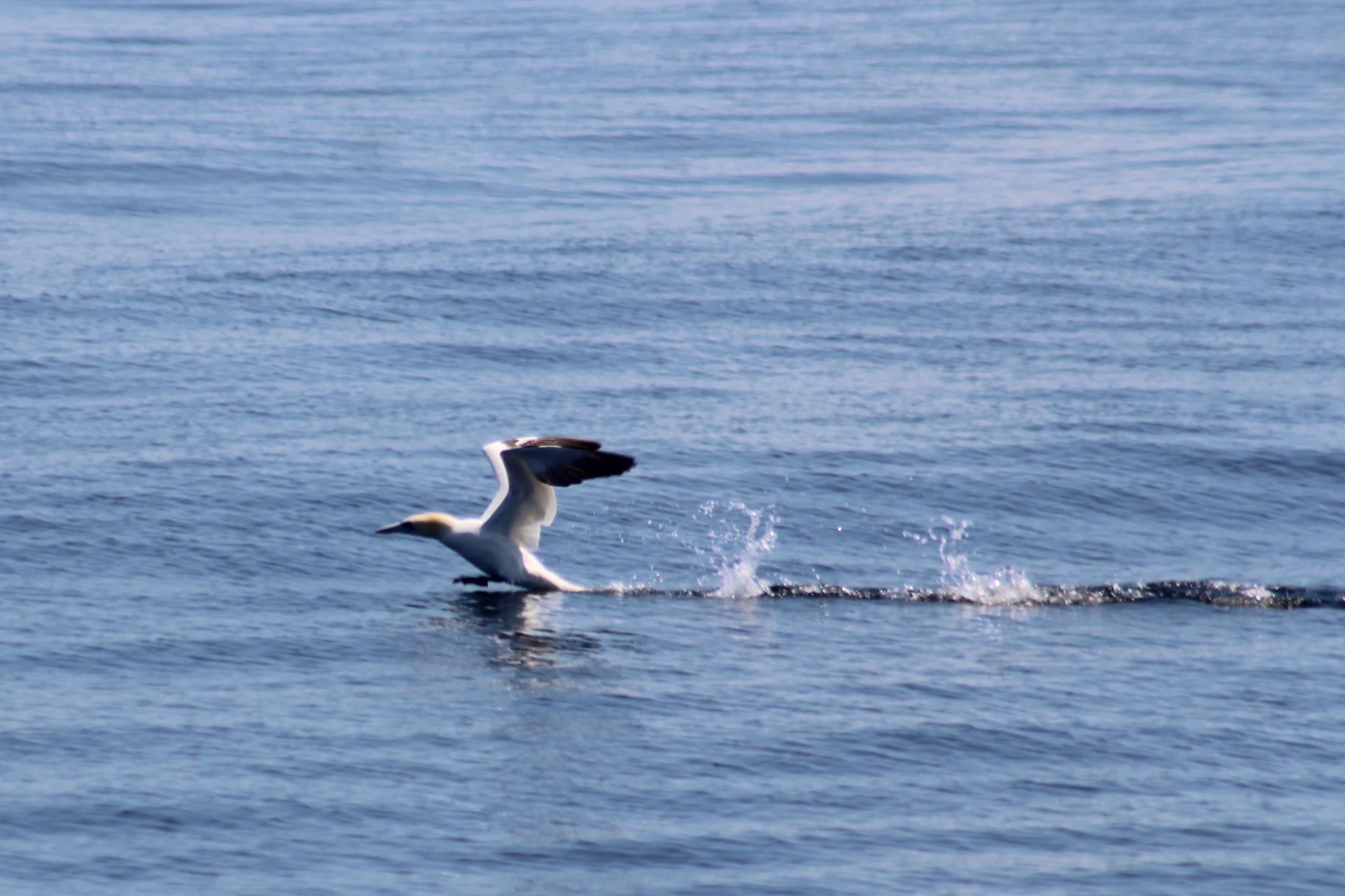
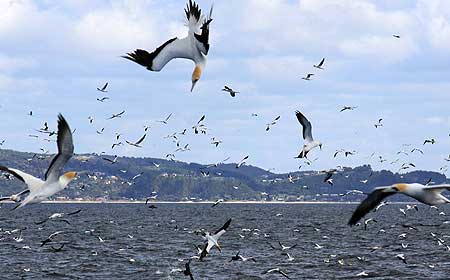
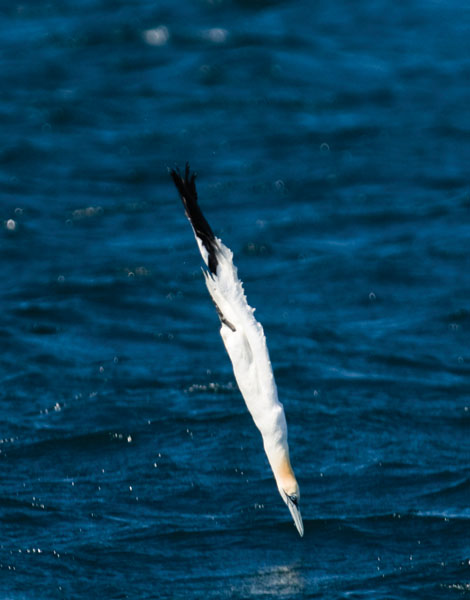
    The crew weighed anchor and headed out of the Miramichi River. They found themselves surrounded by several hundred Gannets flying about in a wild feeding frenzy. Once a bird spots a victim swimming in the waters below, the bird banks and plunges toward the water below. Just before hitting the water, they tuck their wings and assume the looks of a javelin to spear the prey.

    After watching the sorties fly their morning breakfast missions, the crew rounded Point Escuminac, and entered Northumberland Strait.

    This light marks the reef as boats make their way around the Point.

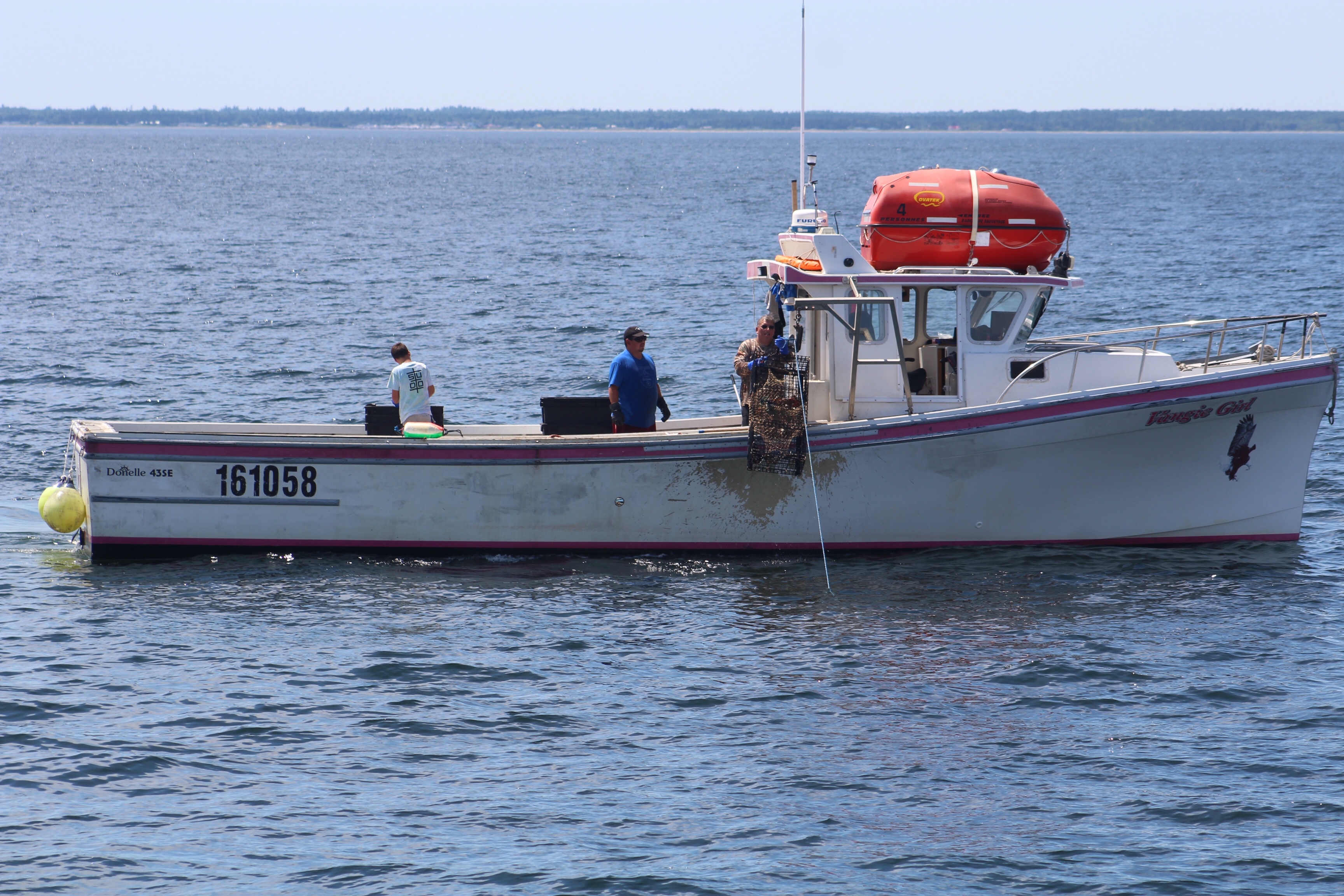
    The run in the Northumberland Strait would be another 40 mile long boring run in open water. A couple of lobster boats were about the only thing the crew saw for most of the day.

    Hauling in the catch.

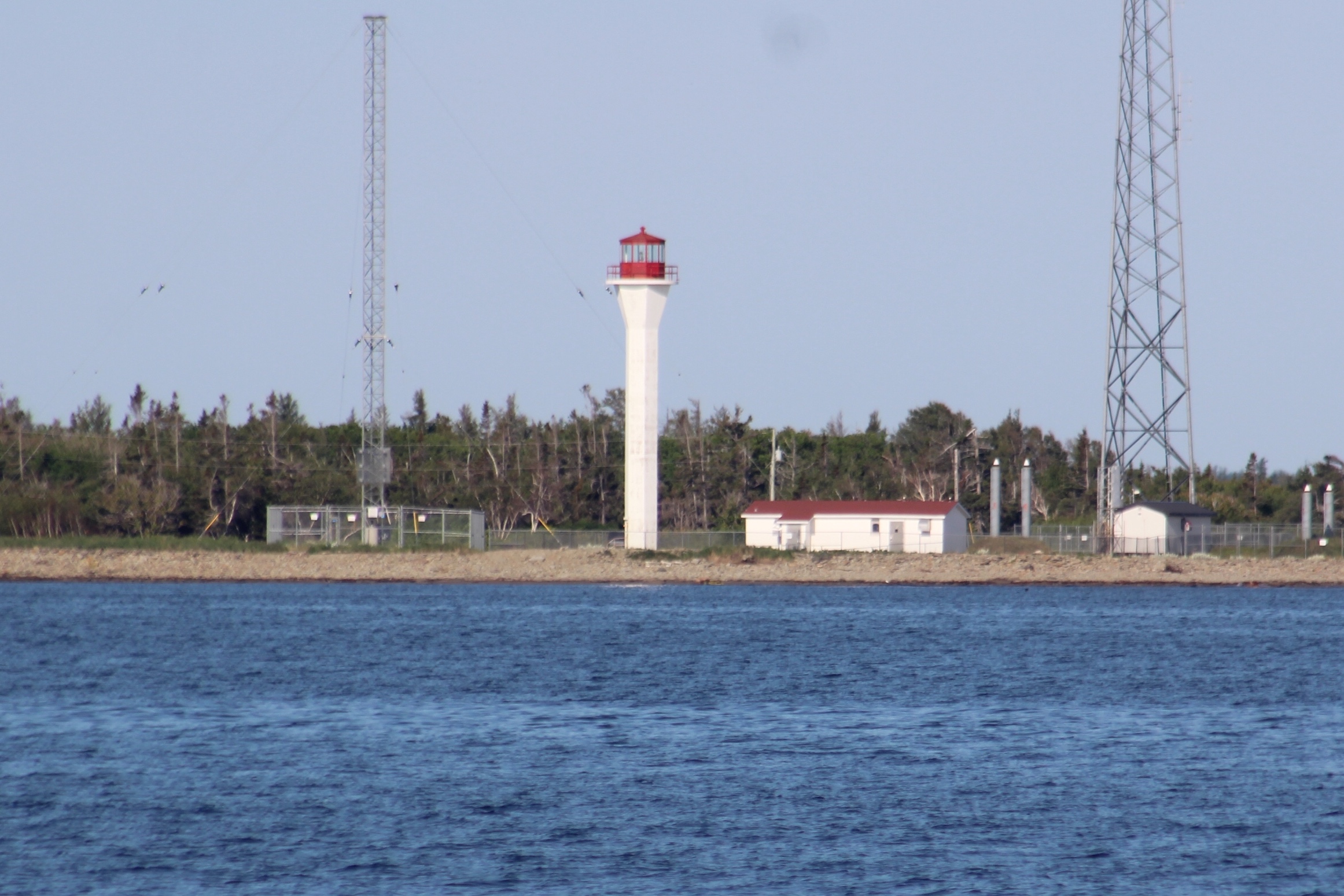
    Eventually the lighthouse marking the entrance channel came into view. The crew rounded their way into the narrow winding channel. After an hour they arrived at the marina. The best thing about this marina was a working pumpout. It had been 19 days since the crew last pumped out their holding tanks because none of the small fishing villages along the Gaspé Peninsula had a working pump out system.

    The marina office and captains lounge was housed in this building.

    The building was once office space for a saw mill that once occupied this space. Hence the name, Saw Mill Marina. The crew walked around town and learned that a Farmers Market is scheduled for the morning. Sounds like an event to explore.

    Saturday, July 20th

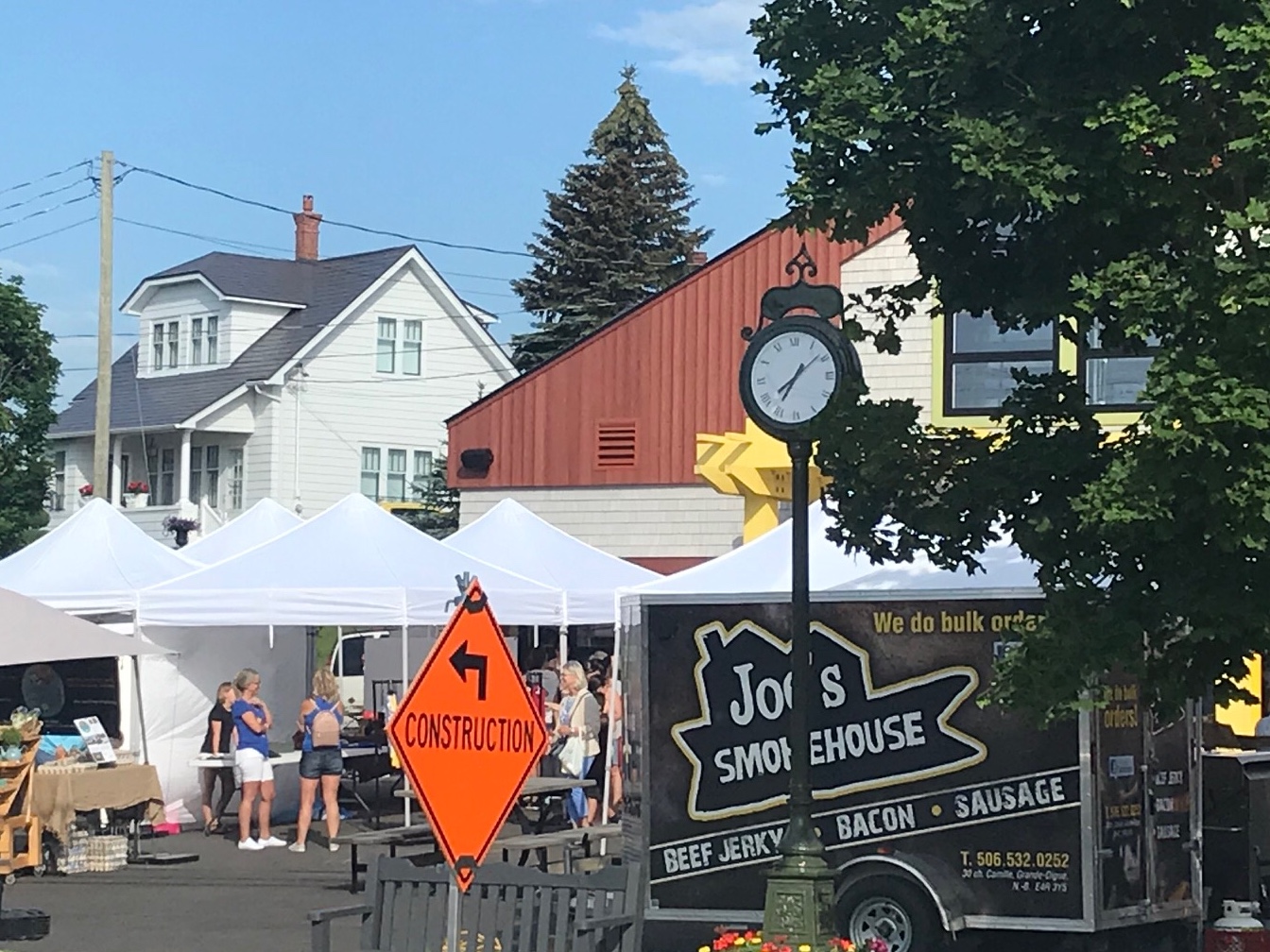
    The crew walked to the Farmers Market and were exceptionally surprised with the quality of the market. Cars were parked both sides of the road as far as the eye could see.

    The skipper had a good visit with a local bee keeper selling his honey. The bee keeper had a show hive on a table and you could watch the busy bees going about their business taking care of the Queen.

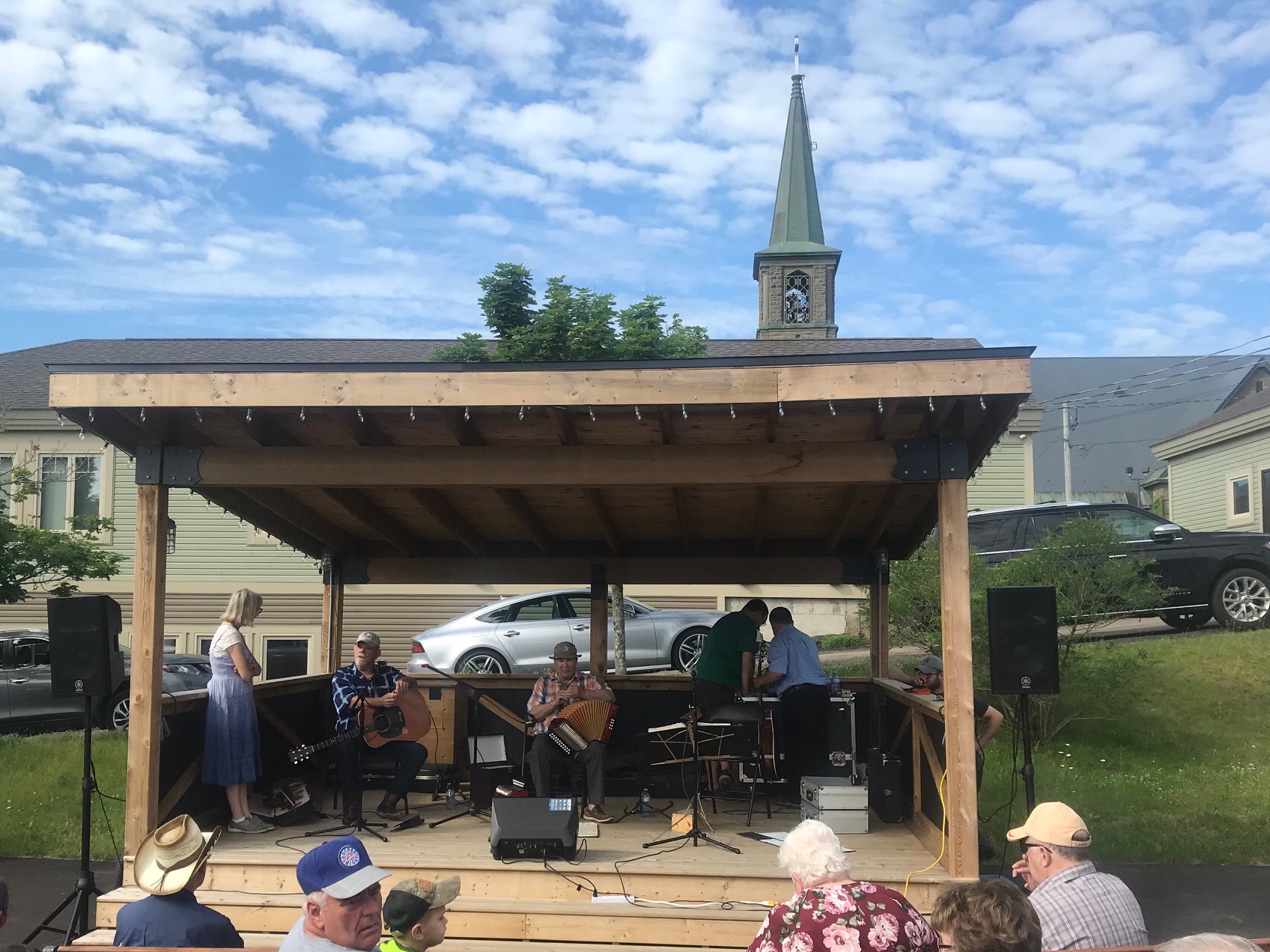
    Band setting up to play at the Market

    The crew enjoyed the Market until around 10. They then headed back to the boat and shoved off the dock to make way to Prince Edward Island. The crew had another wonderful calm cruising day across the Northumberland Strait. After the 30 mile crossing, they arrived at Summerside where they will stay for the weekend and launch their exploration of PEI.

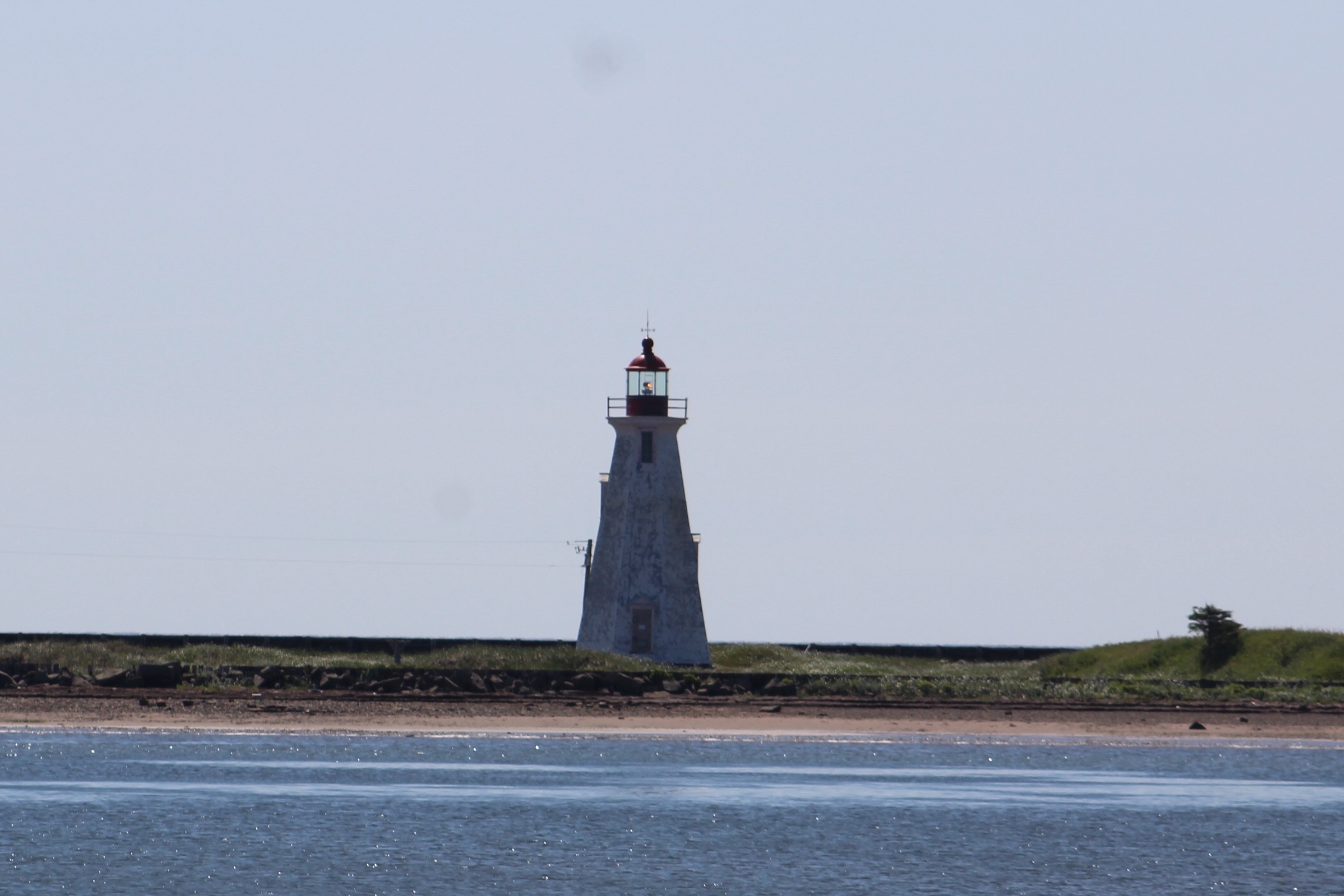
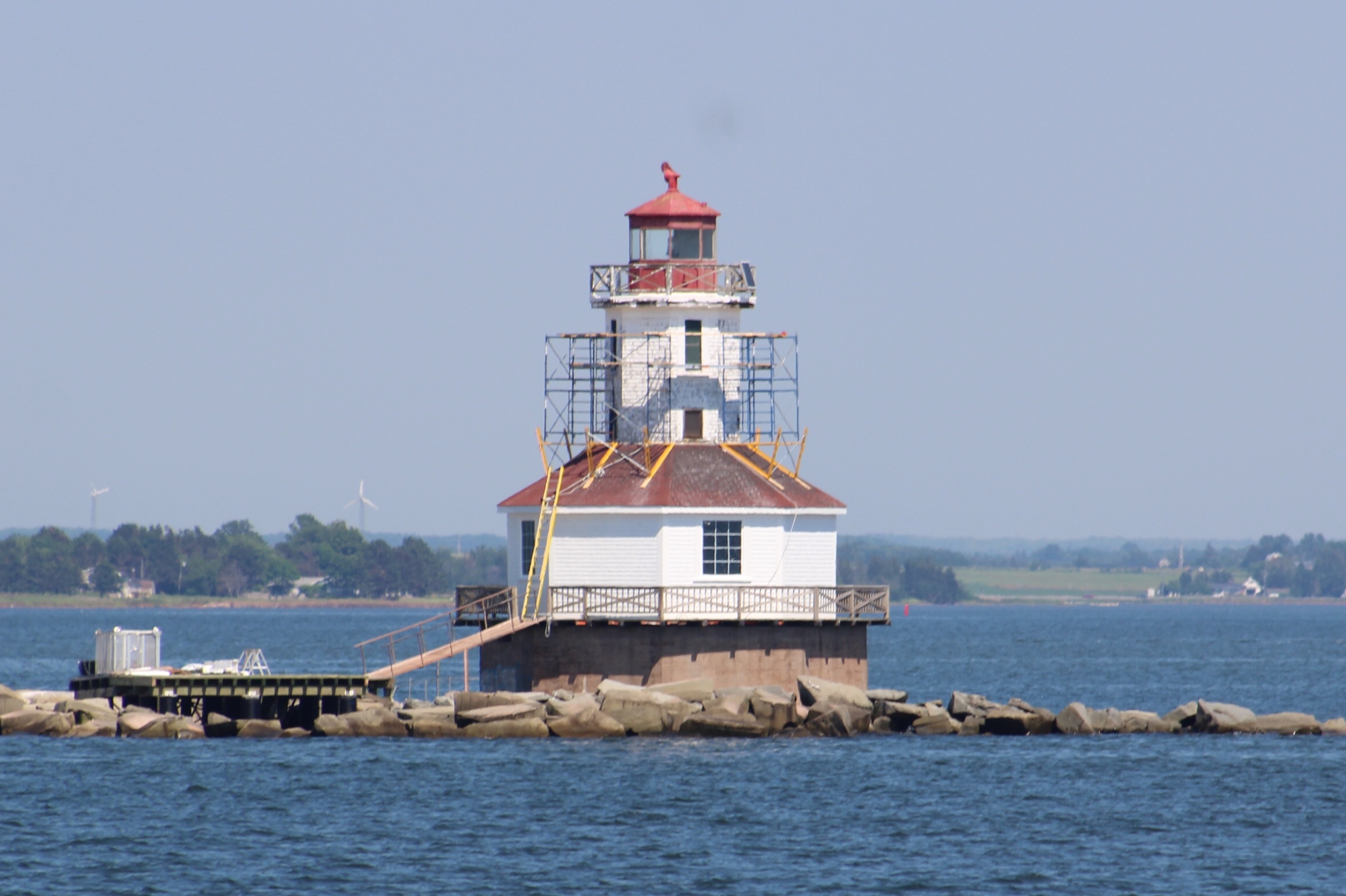
    Lighthouse announcing arrival at Summerside

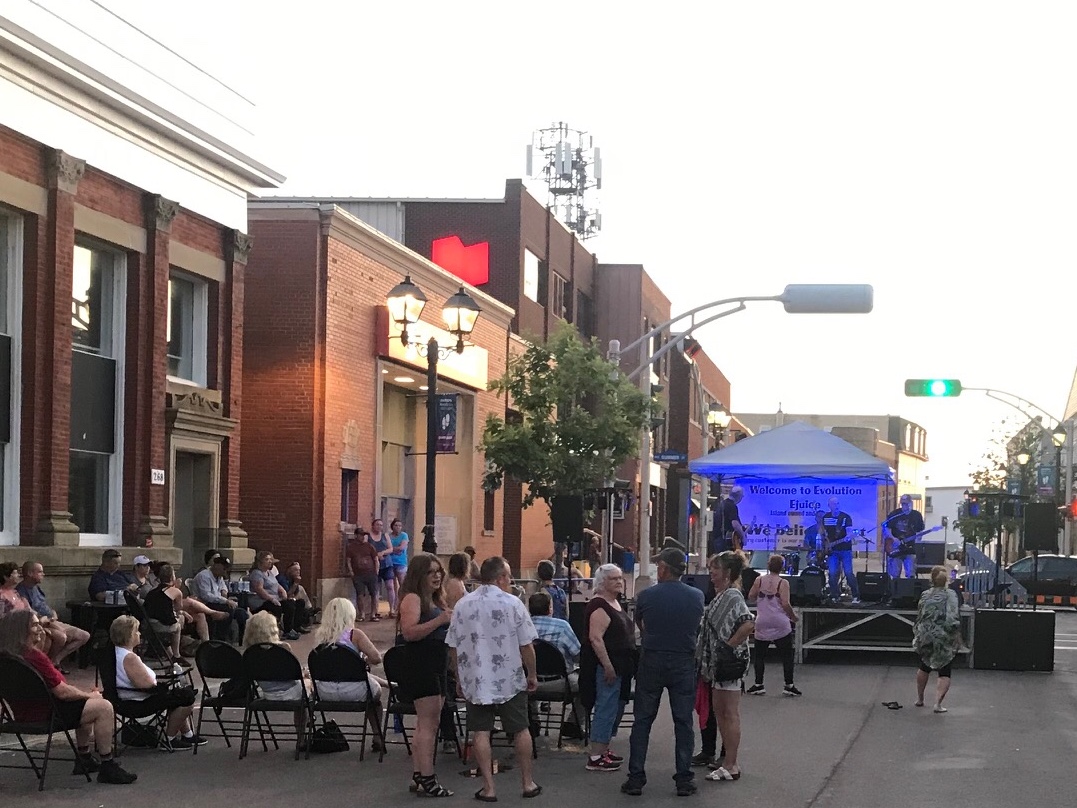
    The crew went walking around town and found a street concert underway. Actually, it was the first annual Mike’s Family Reunion. Mike being a Restaurant sponsoring the concert. They had bands playing from 1300 to 2300. Each band played a 45 minute set. The crew listened to three of the bands, but Looper midnight showed up so they called it a night and headed back to the he boat.

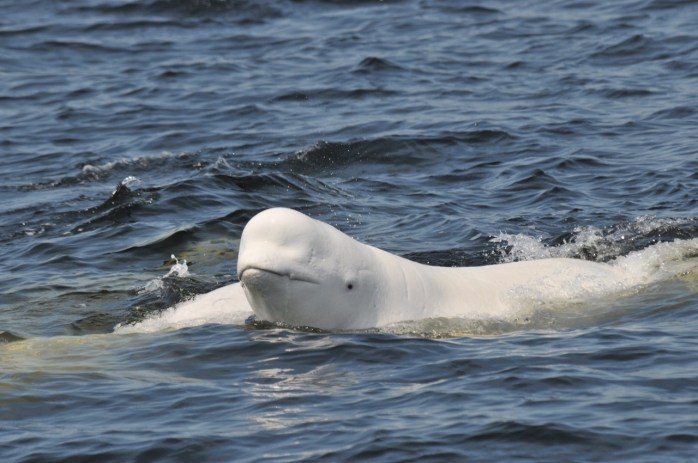
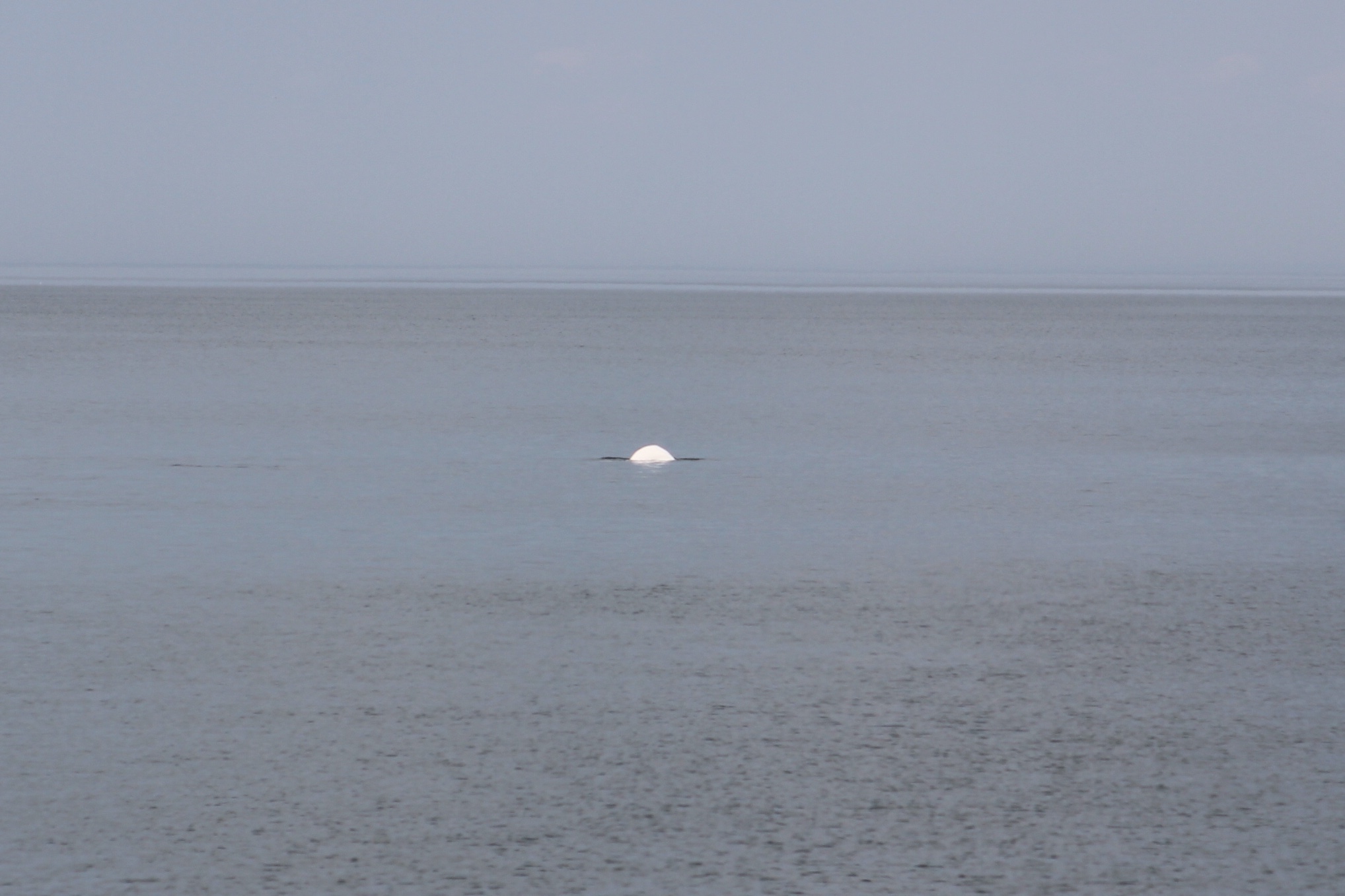
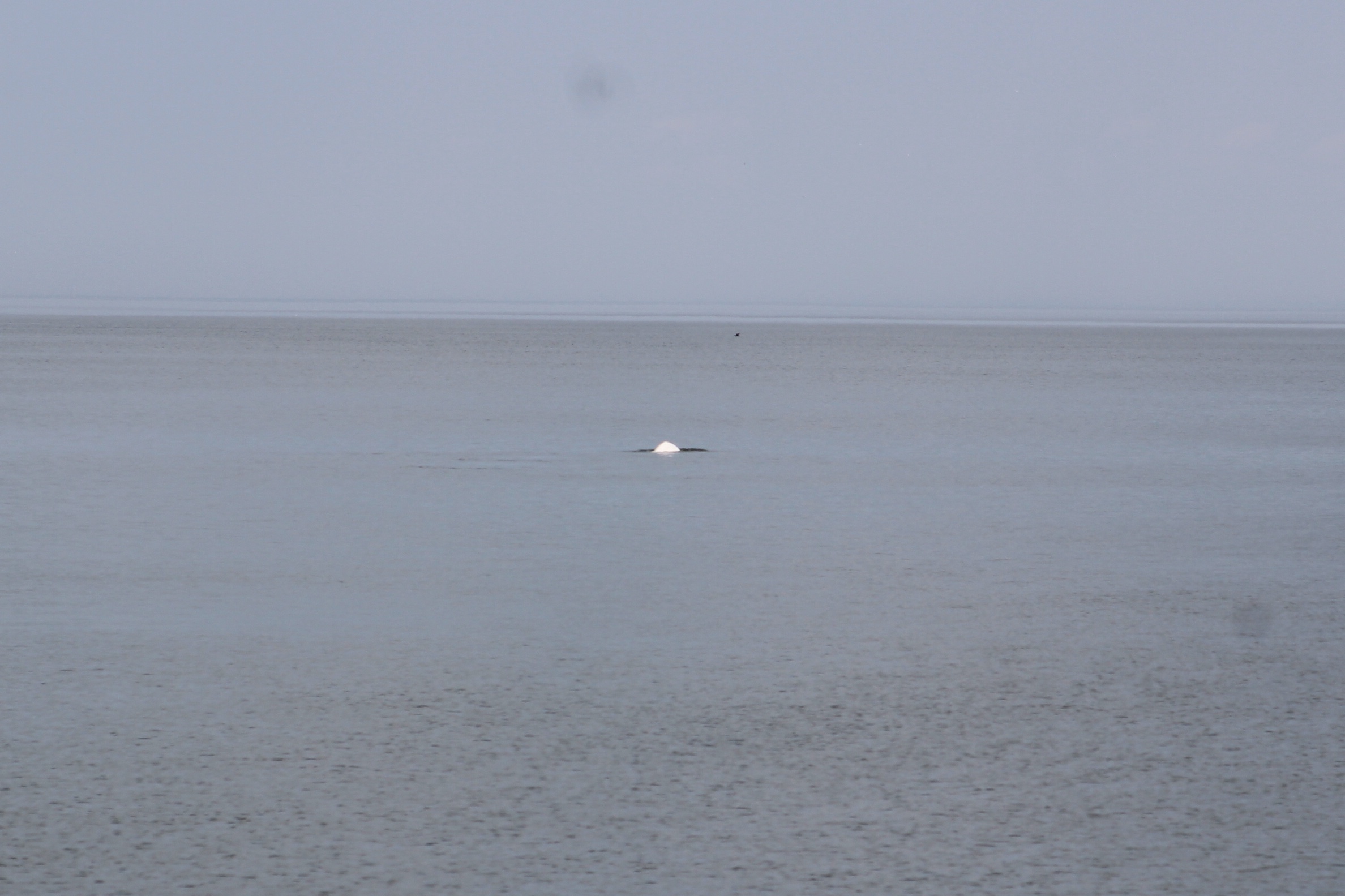
    Whale Pic of the Week

    Next Week –

    The crew will spend the first part of the week exploring Prince Edward Island. They will then start towards Bras d’Or Lakes.

    Loop On – Where the road ends, the water begins. The water goes on forever, and the adventure never ends.

    Eric the Red

  • Whales, Waterfalls, and Waves

    Whales, Waterfalls, and Waves

    Ahoy from the Gaspé Peninsula and hello to our virtual crew members and fellow adventurers!

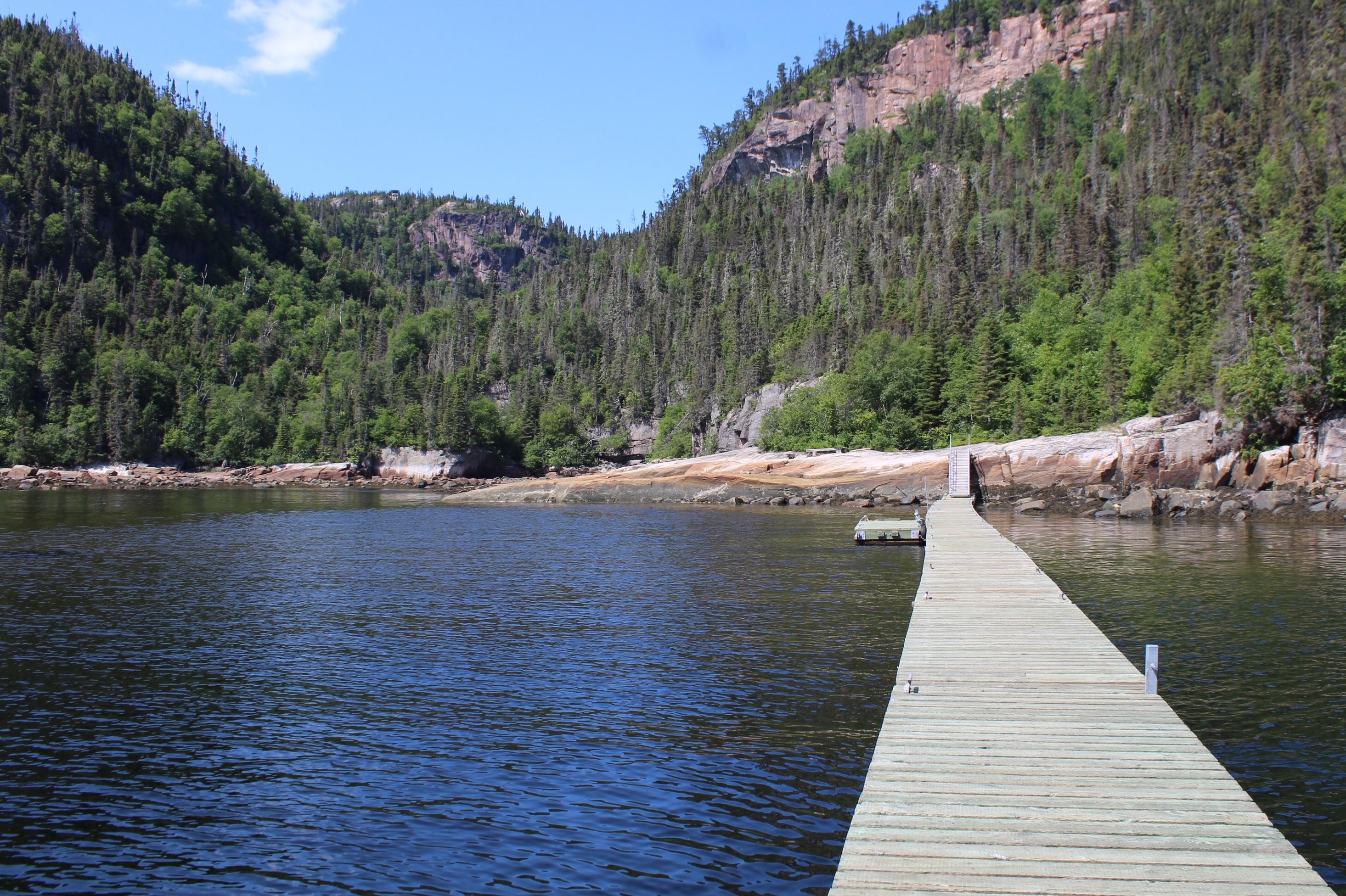
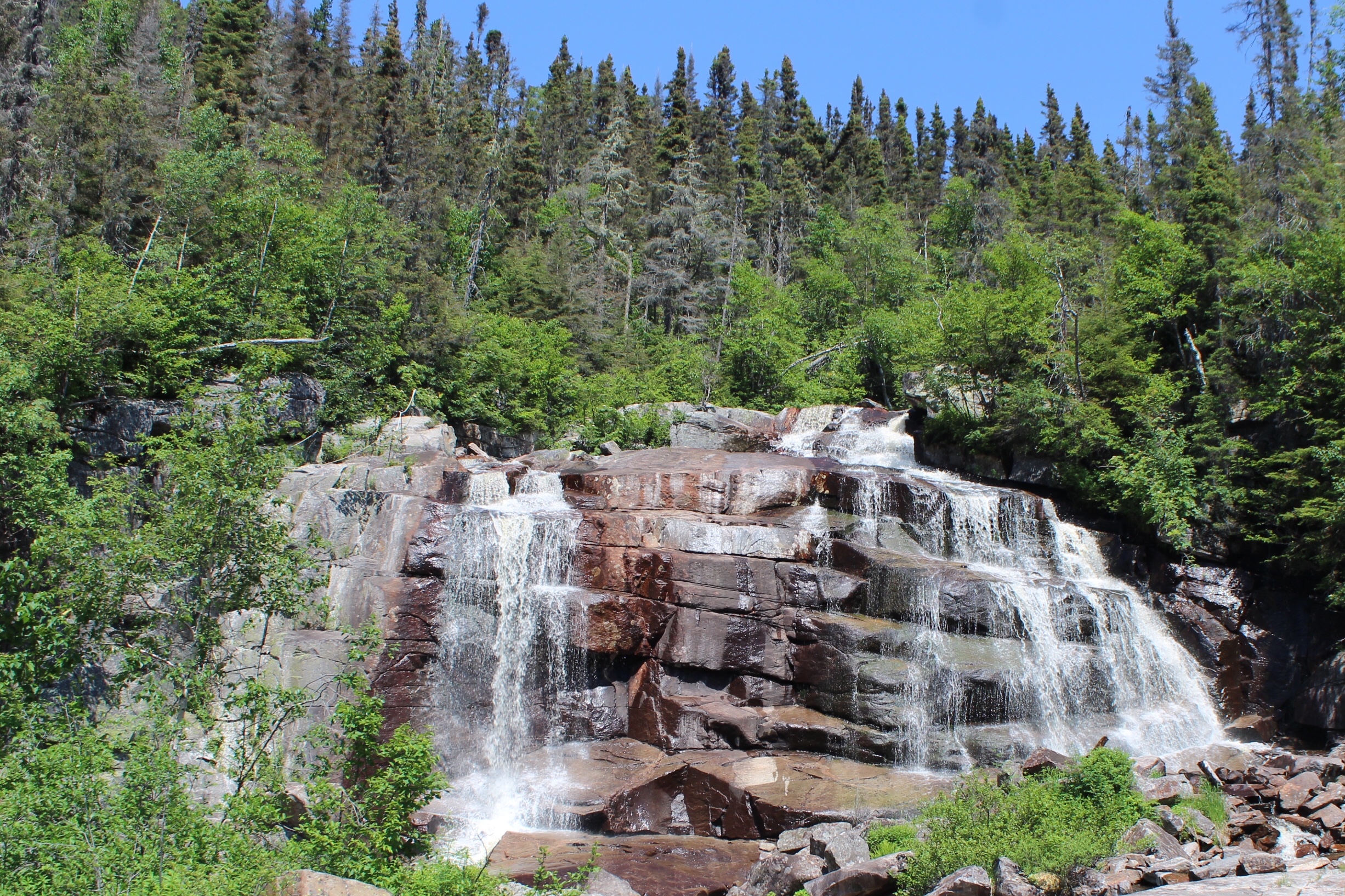
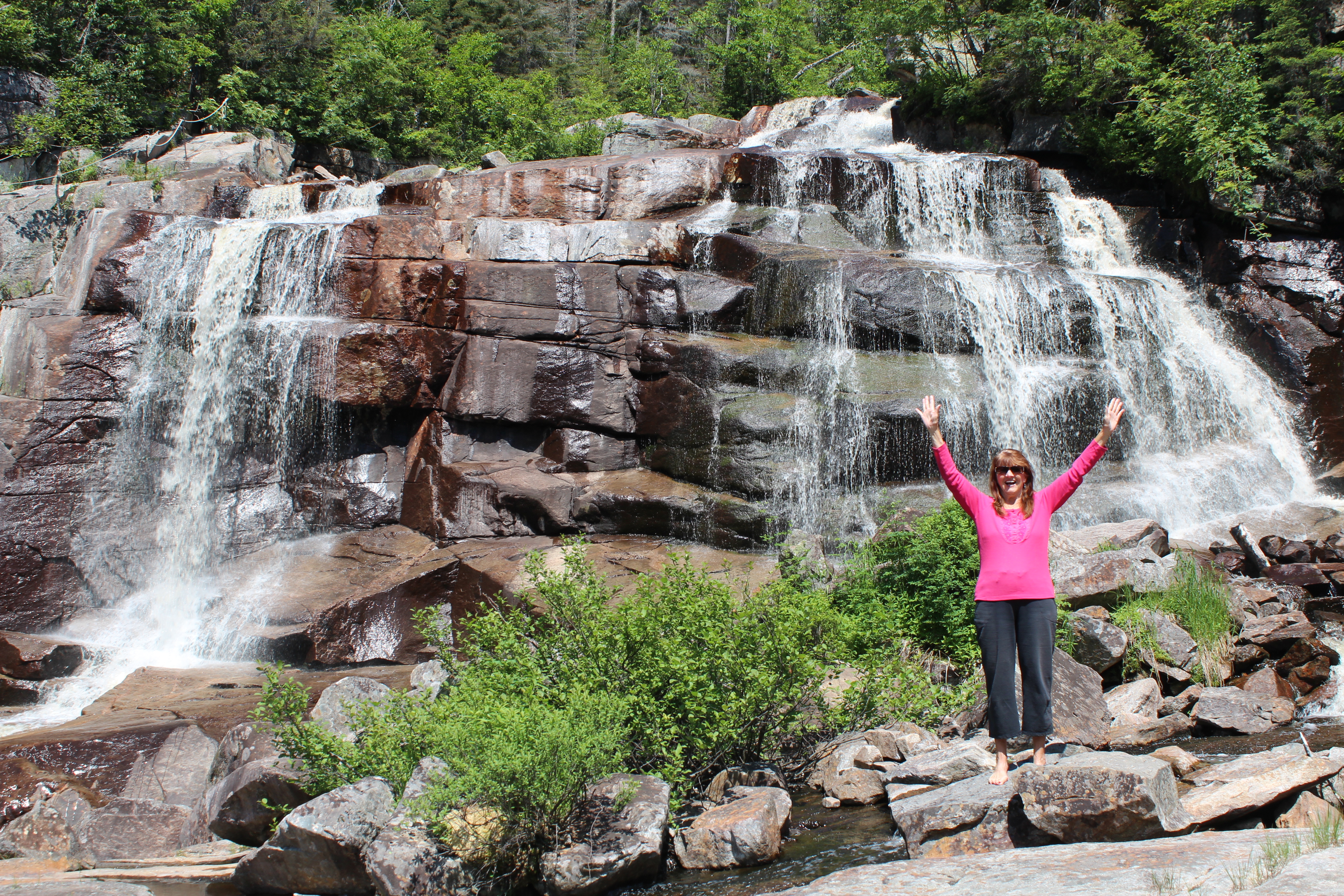
    The end of the dock leads to the waterfall in the Baie de Pancrace.

    I would like to welcome the crew of Island Office aboard as virtual crew members. They are also currently in progress on the Down East Loop, and a week or so behind our intrepid crew. Bienvenue a bord!

    A hearty Welcome Aboard also goes out to a blogger named KINDNESS, I kindly thank you for following the crew’s blog and coming aboard as a virtual crew member. And remember a couple of benefits of virtual crew members, you never have to wear life vests or get sea sick while enjoying the cruise.

    Summary of the Week

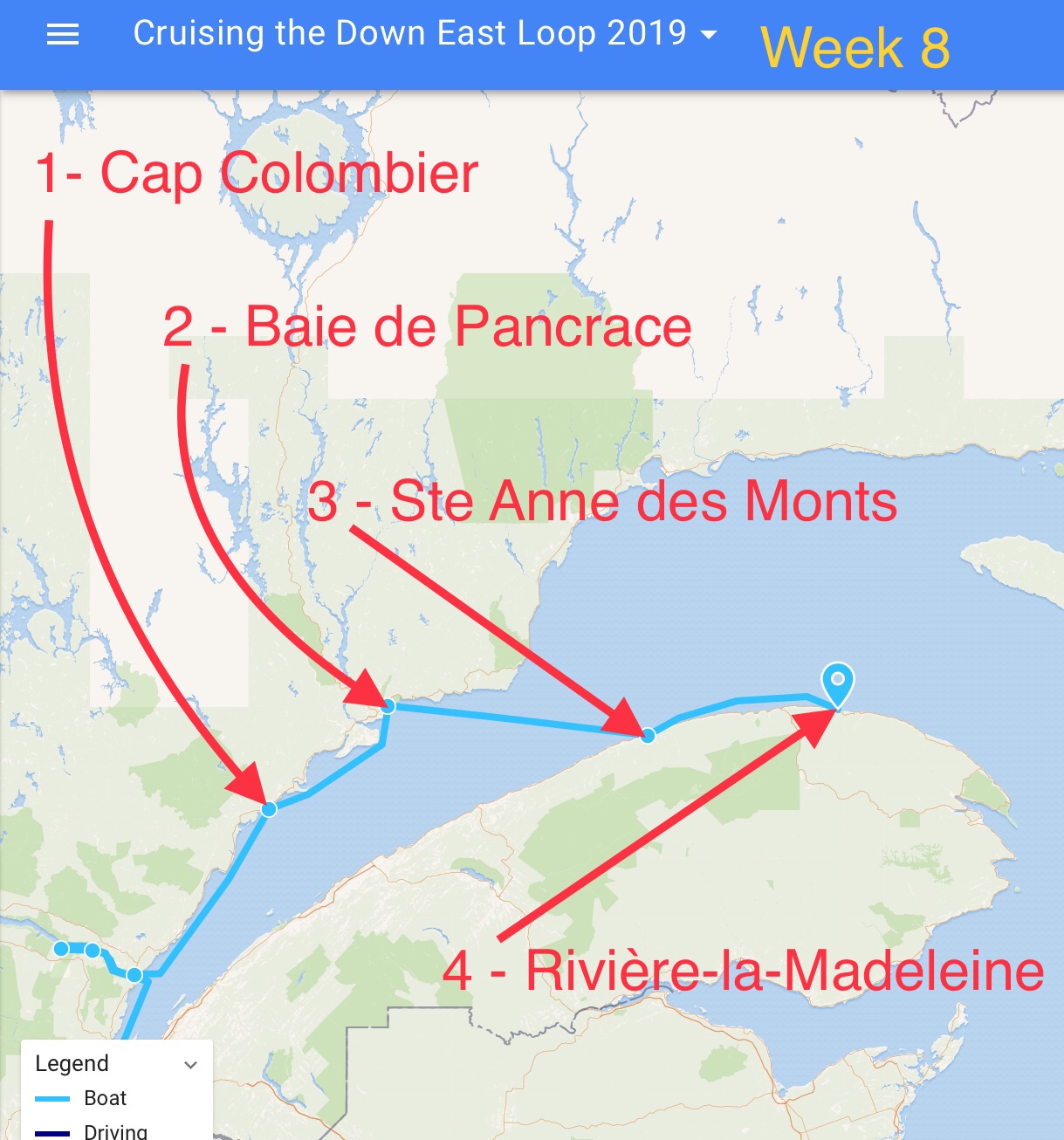
    After waiting Sunday and Monday for the winds to calm down, the crew were able to leave Tadoussac on Tuesday and find a beautiful anchorage in Cap Colombier (1). Wednesday, they moored on a dock at Baie de Pancrace (2) to view a waterfall that did not disappoint. Thursday, they crossed from the north shore to the south shore and got their first good look at the Gaspé Peninsula. They took a mooring at Ste Anne des Monts (3). Weather kept them put on Friday, but they made Rivière- la- Madeleine (4) on Saturday to end the week.

    Click on the Still Waters II Travel Map to see detailed Voyage Logs.

    The voyage of discovery did answer the following questions this week:

    1. How many Canadians does it take to change a lightbulb?
    2. What is a Fjard?
    3. The southern end of the Appalachian Mountains are in Georgia, but where does the range terminate on the northern end?

    At the Box Office

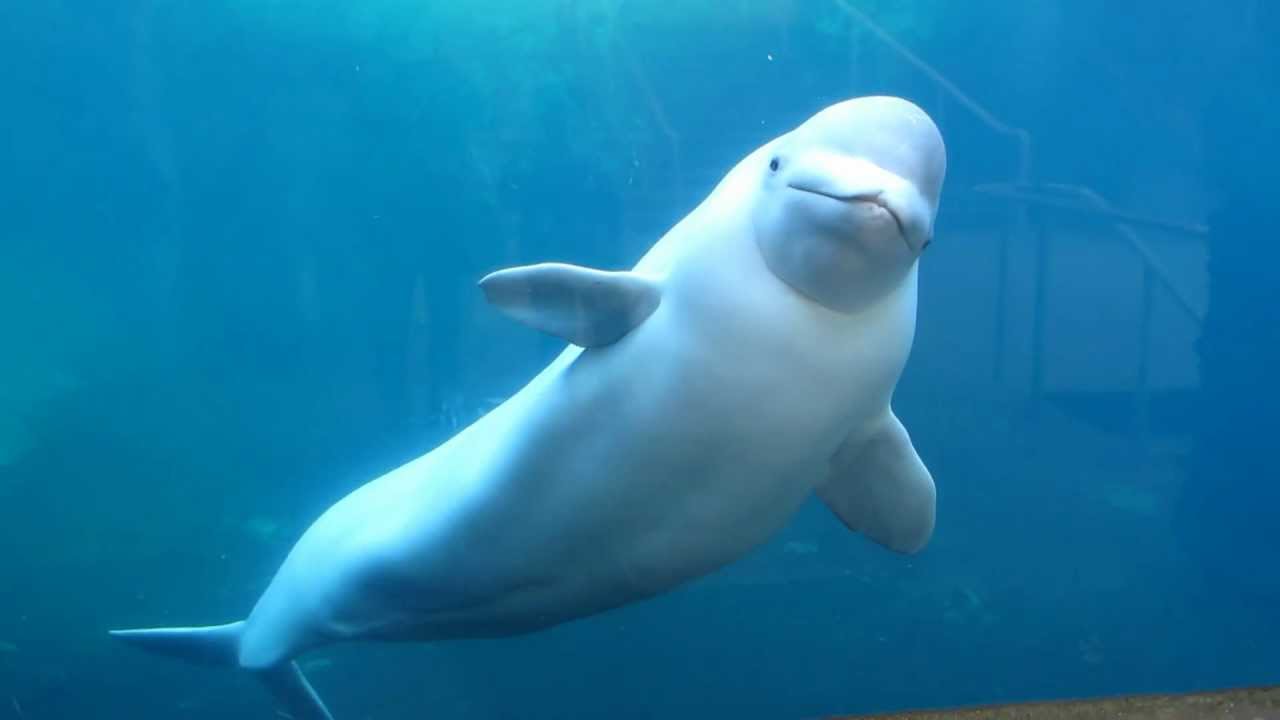
    This week’s video shows Still Waters II as she watches a pod of Beluga Whales swim with a Narwhal. Enjoy!

    To see past videos, click on the link to the Still Waters II Vimeo site.  The library contains videos of Still Waters II cruising America’s Great Loop.

    Sunday, July 7th

    The crew spent a relaxing day getting beat to death by the wind. The sustained winds have blown over 20 mph for the better part of the night and day. The forecast does not look good for a Monday departure, but the rest of the week should see some good cruising days.

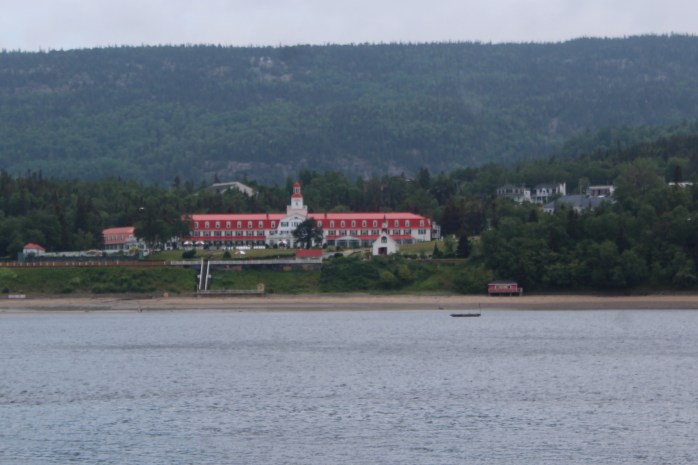
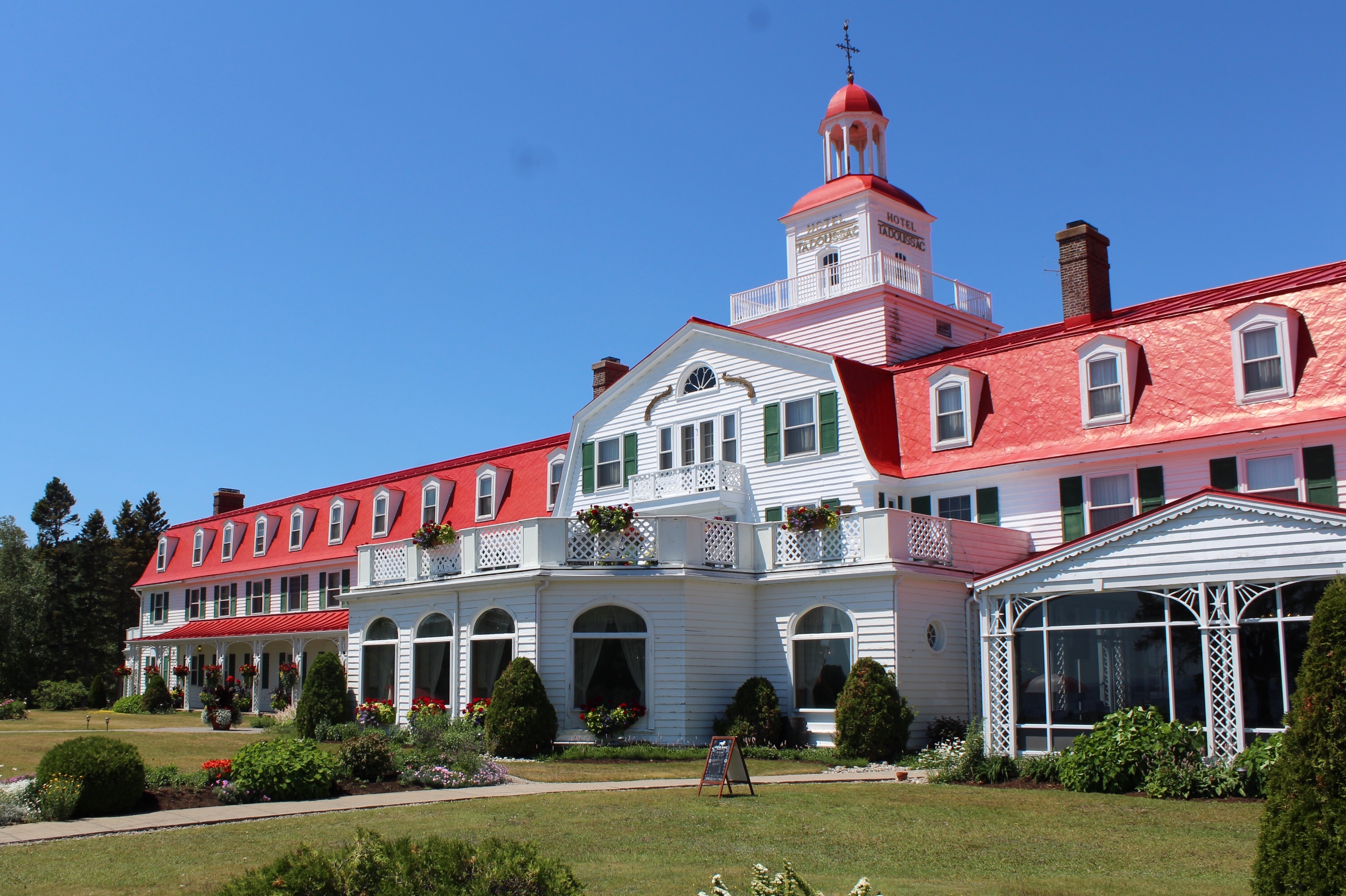
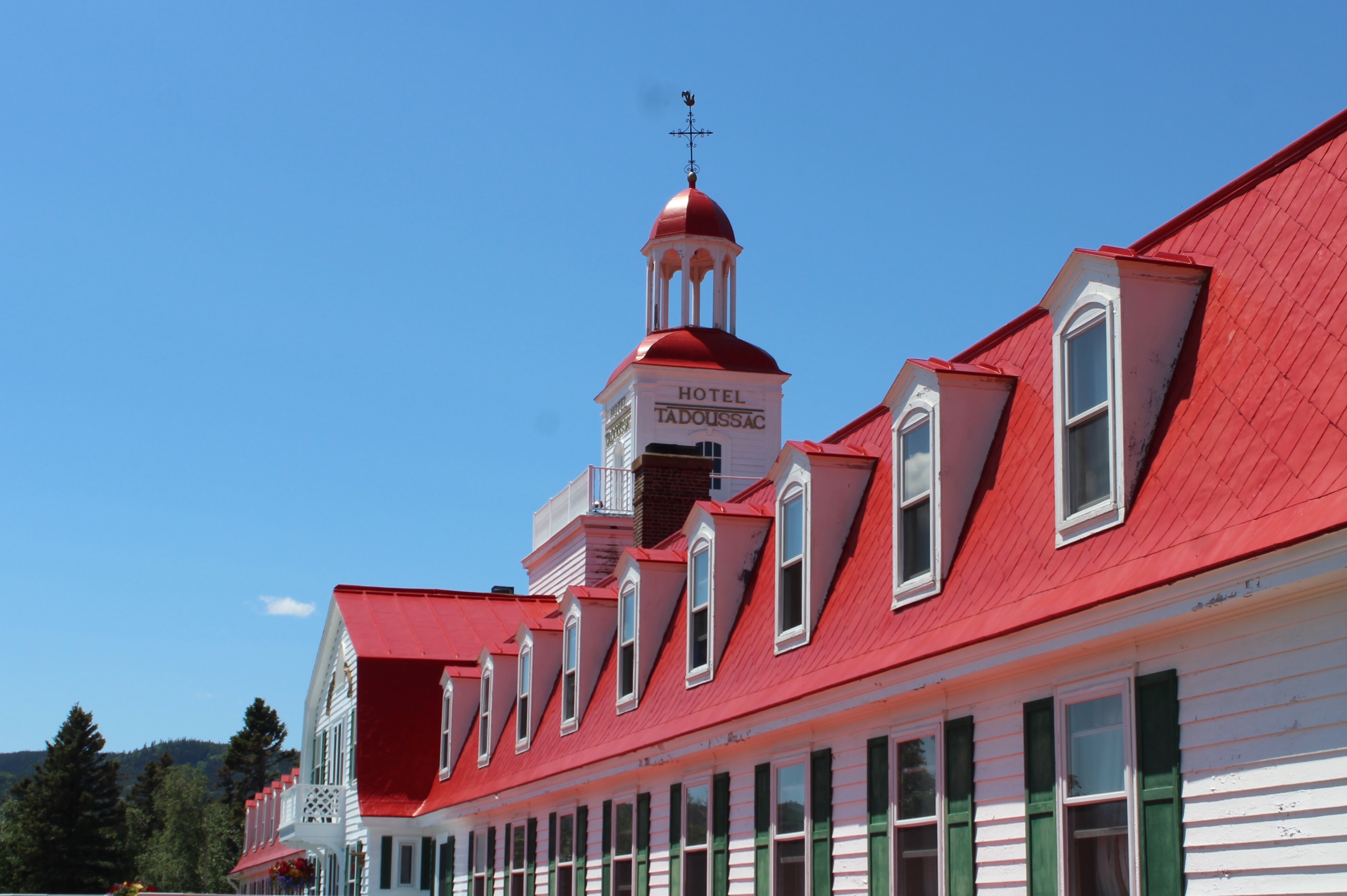
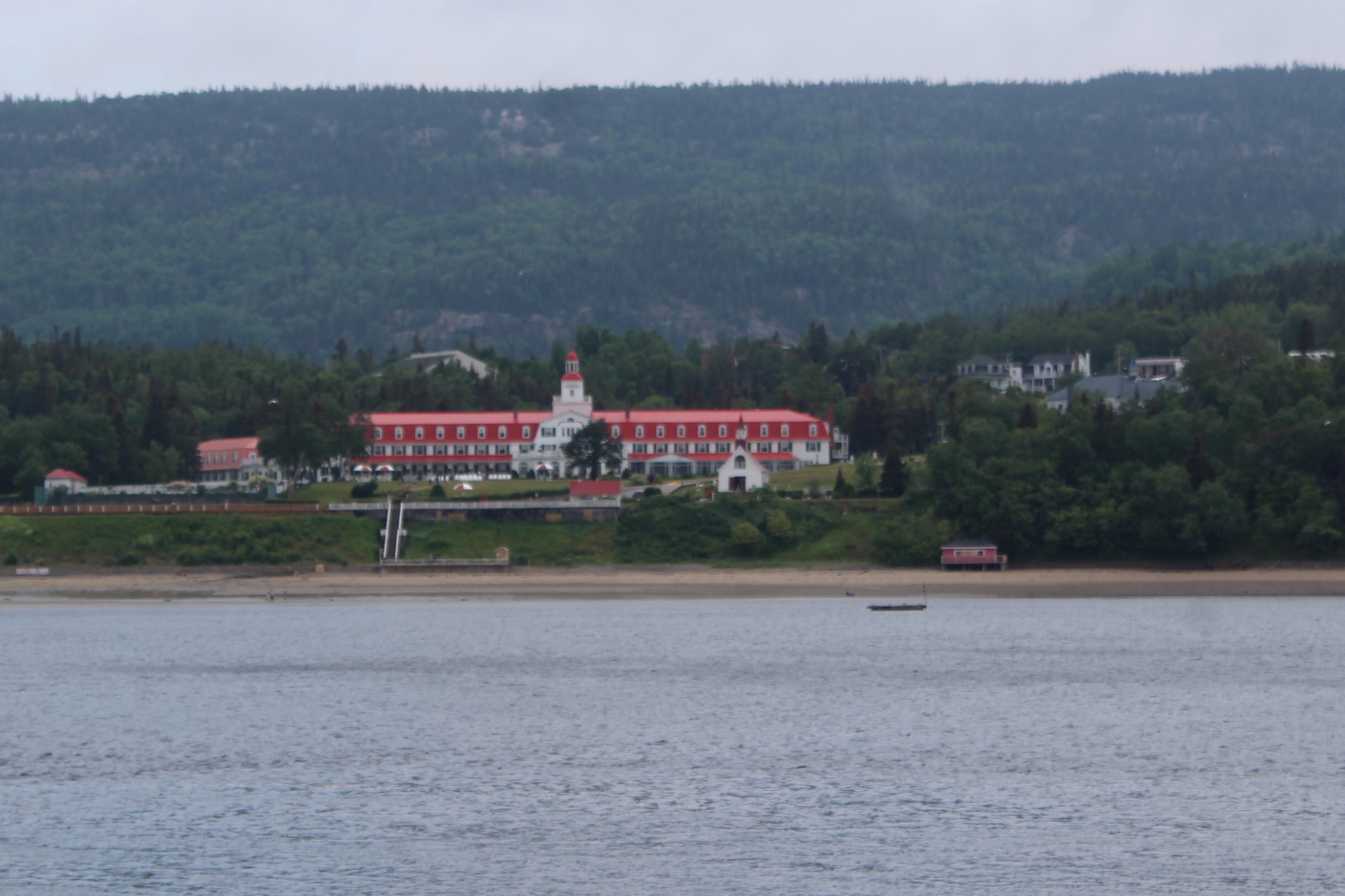
    The Tadoussac Hotel dominates the landscape of the waterfront on Baie de Tadoussac.

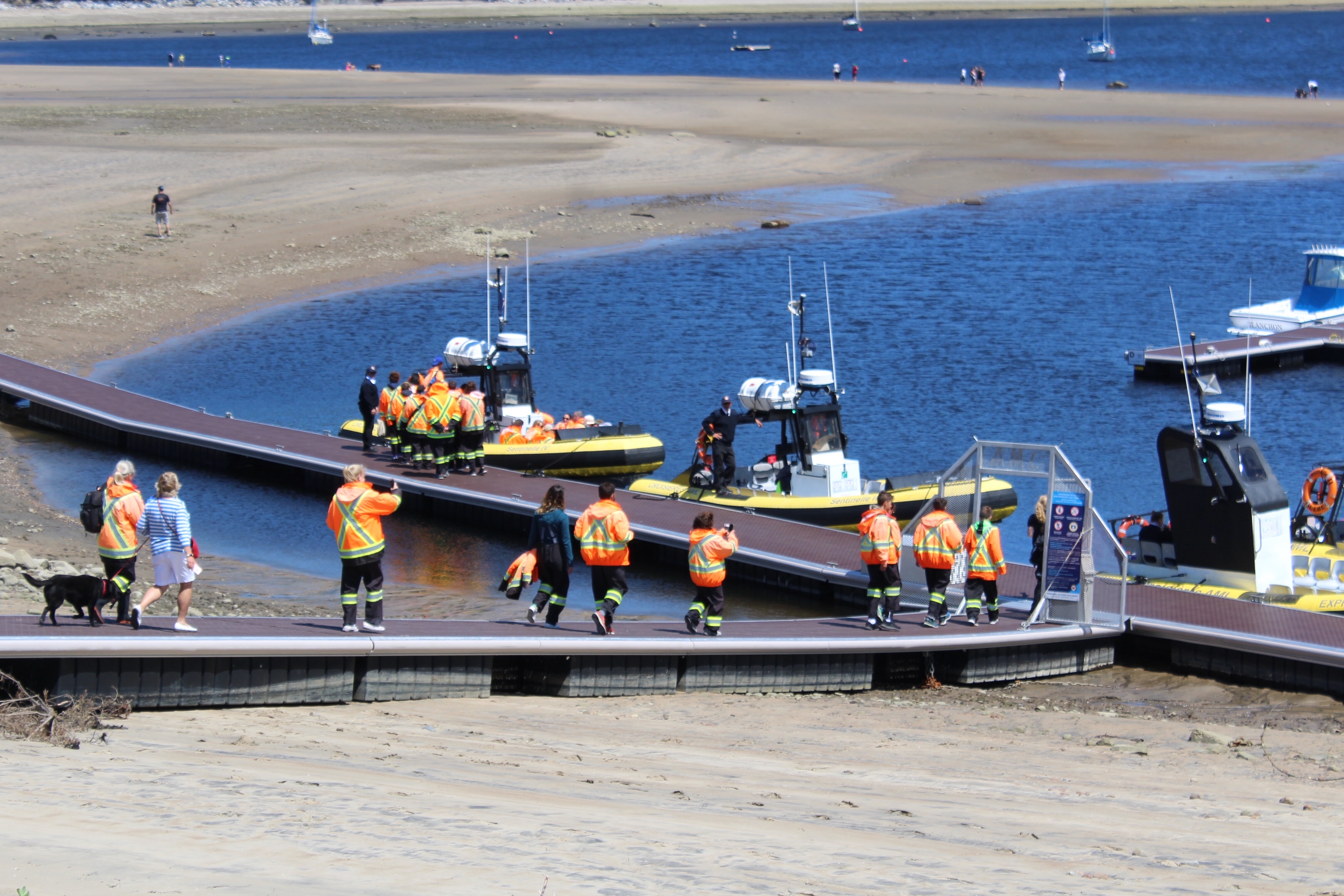
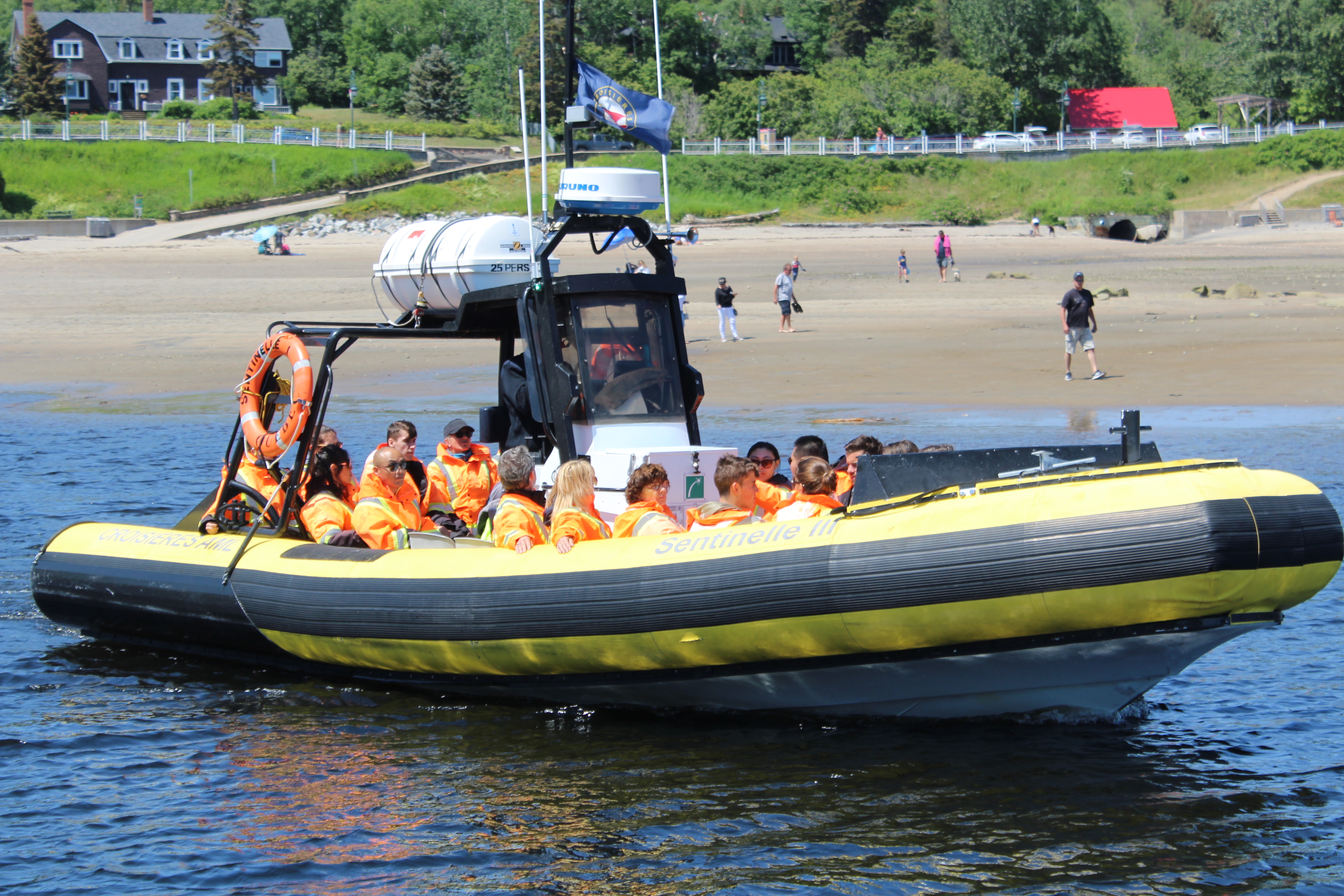
    While waiting for the winds to become favorable, less than 10 mph according to the Admiral, the crew went out walking around Indian Point again to spot whales from the shore line. They successfully viewed several pods of Beluga Whales. But they did not get as close as these folks will, all bundled up in their foul weather gear.

    And yes, the beach will practically disappear when the tide comes back in raising the level of the dock about 12 feet.

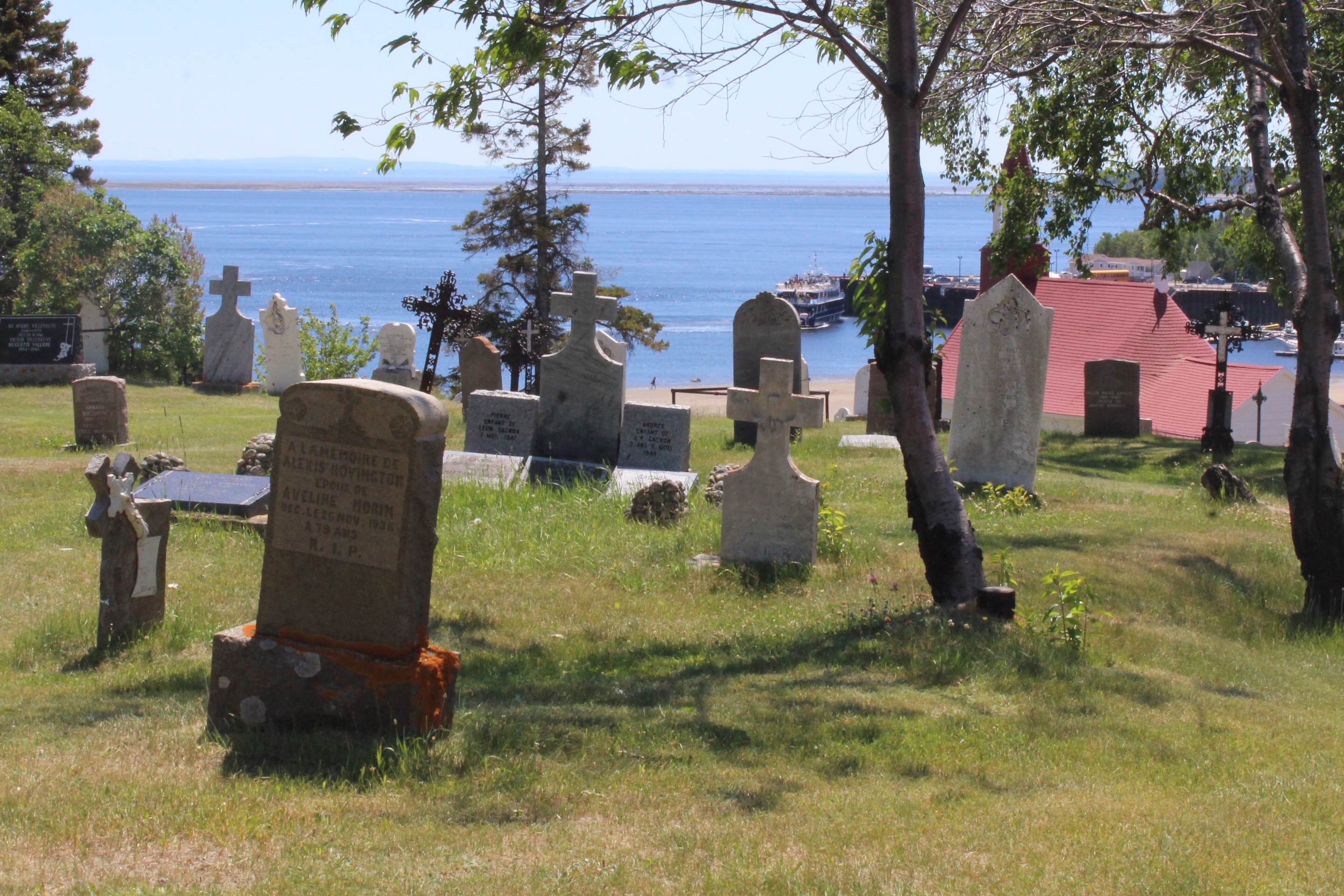
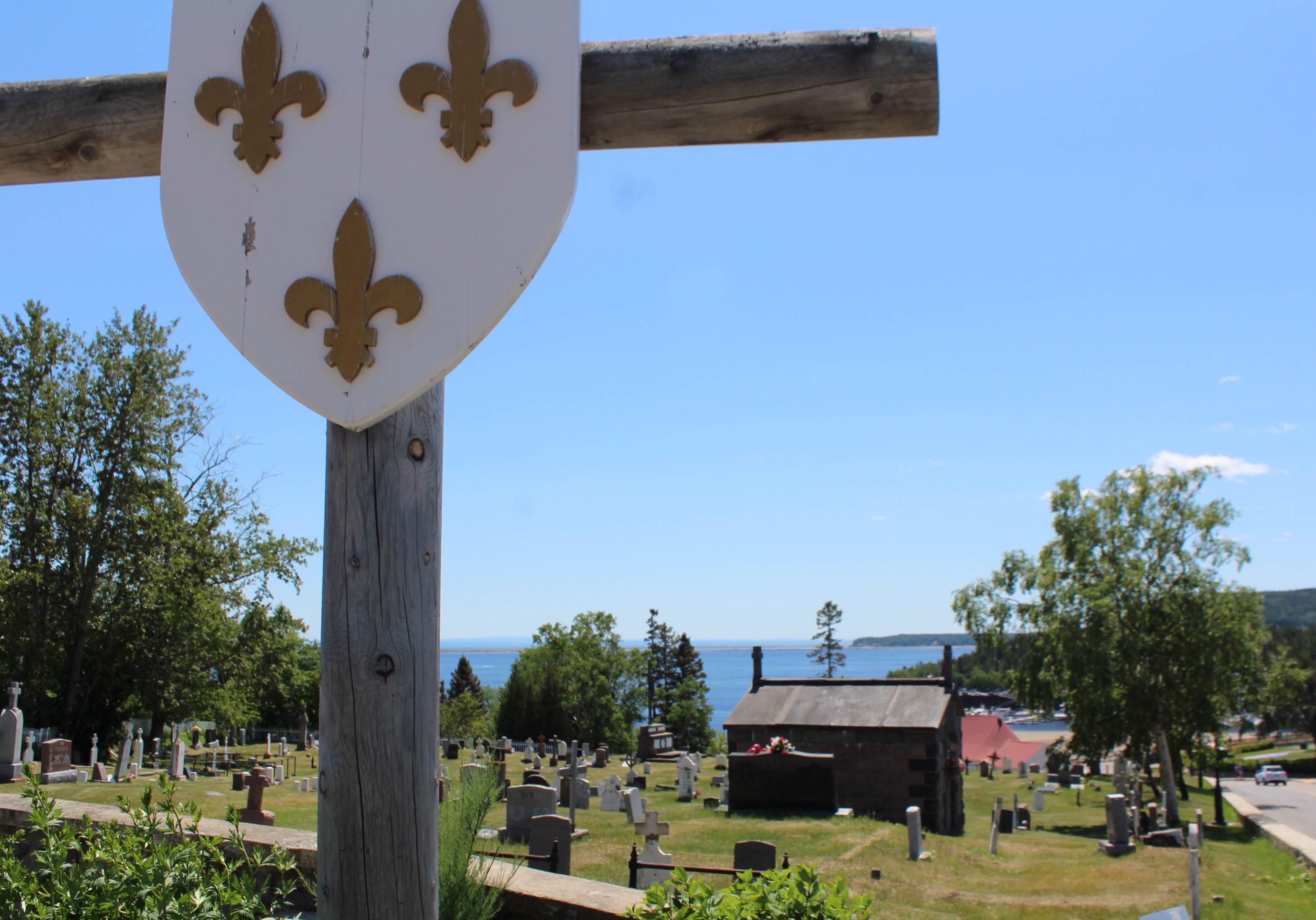
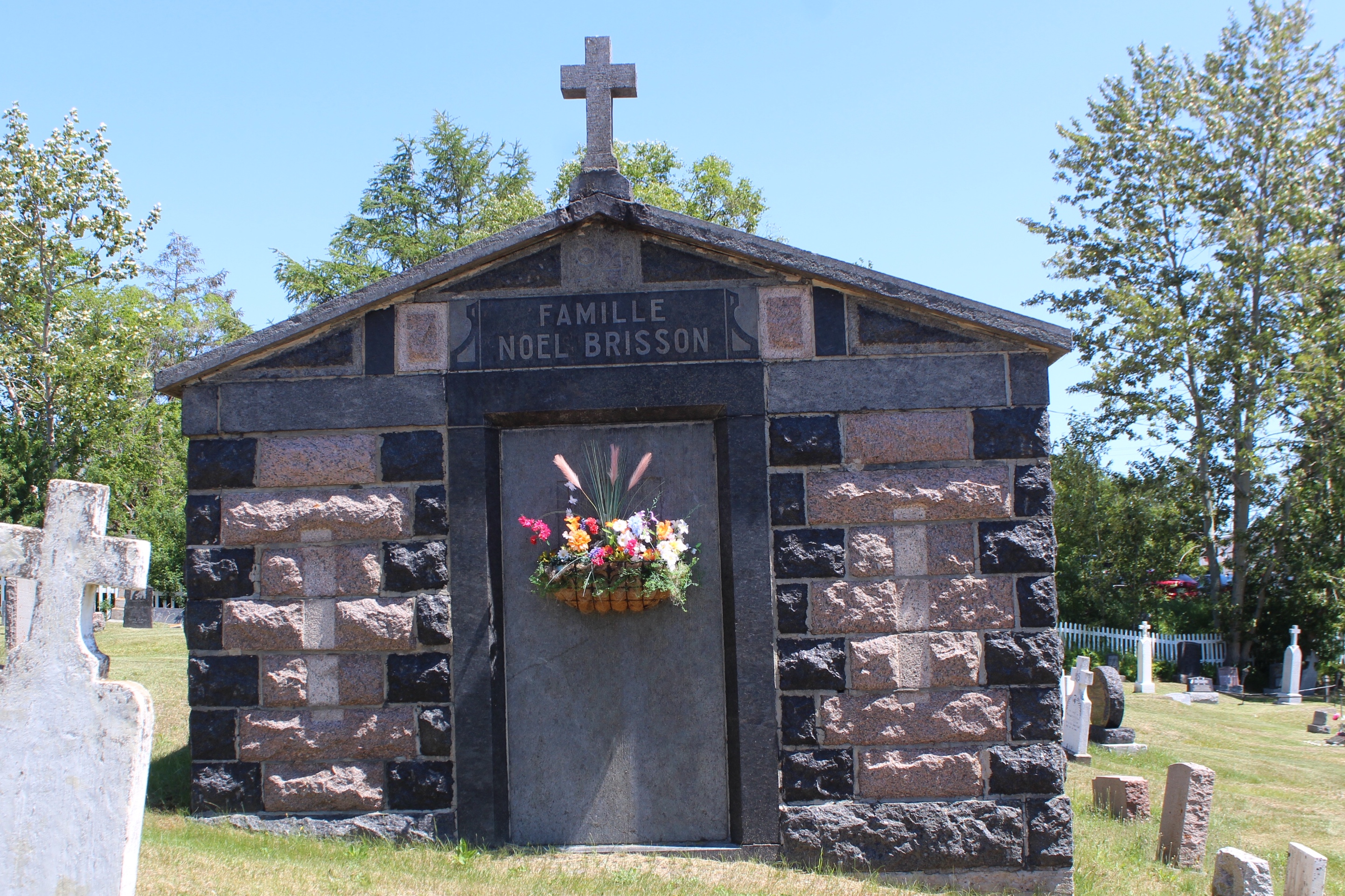
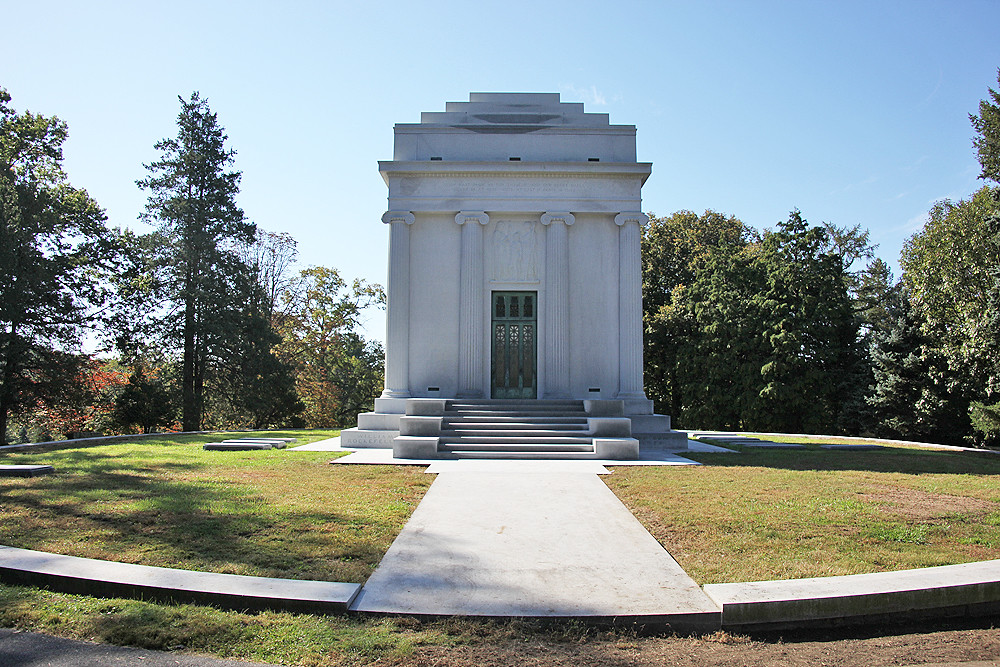
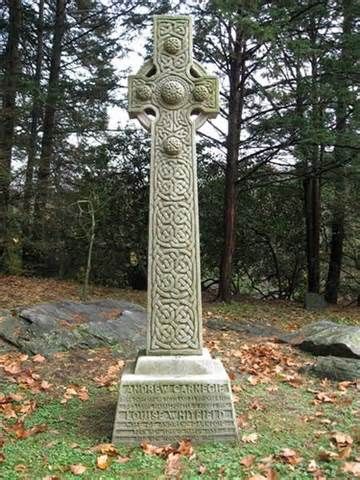
    The skipper did go walk around for awhile and the cemetery caught his eye. Most of the tombstones were of modest means, some nothing more than wood with a name carved into the material. However, the mausoleum seemed a bit out of place. Maybe the person was the Rockefeller of Tadoussac. Reminded the skipper of the Sleepy Hollow Cemetery they visited back in the fall of 2017. Rockefeller was by far the largest over the top fixture in the cemetery. Guess that was what being the richest man in the world will buy you. But then again, Andrew Carnegie was also the richest man in the world for awhile and has only a simple Celtic Cross marking his remains.

    Monday, July 8th

    As expected and forecasted, the winds are still blowing. They were 22 mph when the skipper first got out of bed, but had dropped to 15 mph by noon. The crew has a go-no-go policy, one no vote by any crew member and the boat stays moored to the pier. With the winds predicted to remain at 15 mph for the rest of the day it was almost a certainty that the Admiral would vote thumbs down on a departure today.

    The skipper showed a little wisdom and just went and paid for another night at the marina. Tomorrow promises to be a good day with winds less than 7 mph. Now where has that ‘Honey Do Boat Project List’ disappeared to?

    Oh by the way, did you know that there are at least 13 species of whales that call this area their summer home? The most commonly seen whales here are the :

    St Lawrence River Whale Fun Facts:

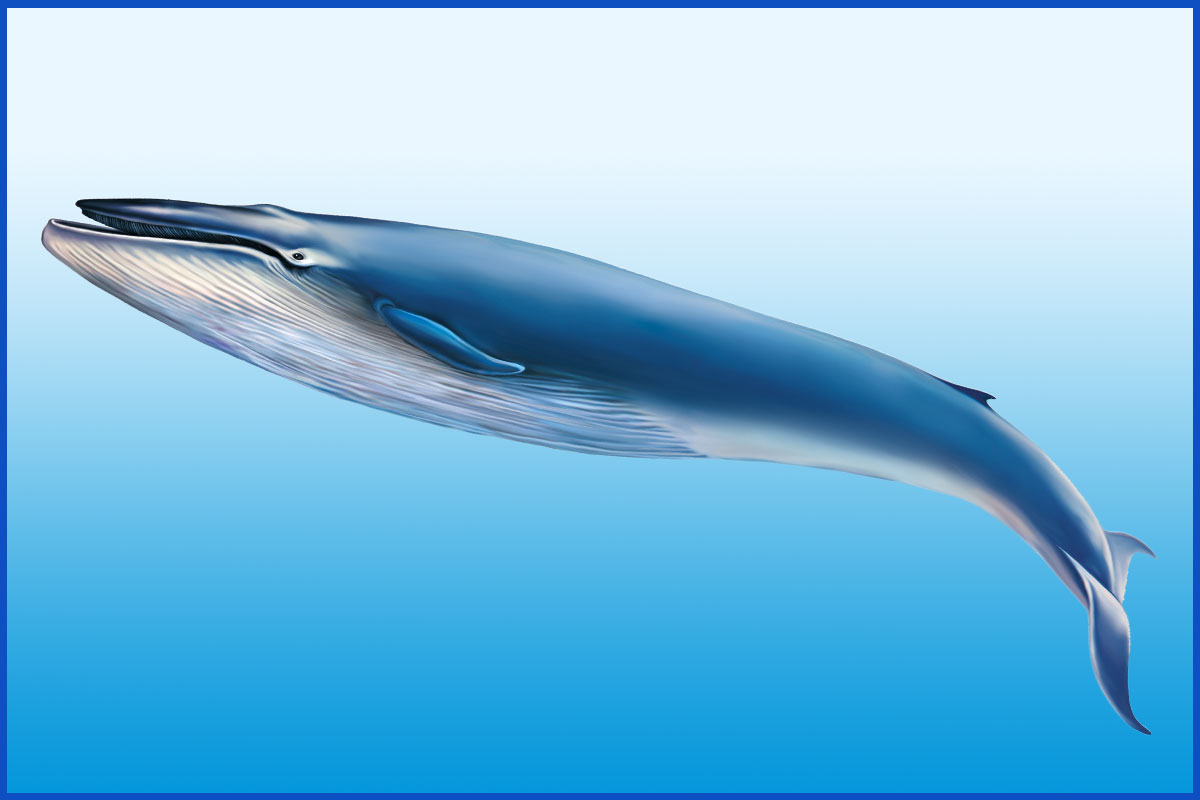
    Blue Whale – largest mammal, 80-100 feet long, so big he needs 4 tons of food per day, only 60-100 are in this area, only 1,000 in the Atlantic Ocean

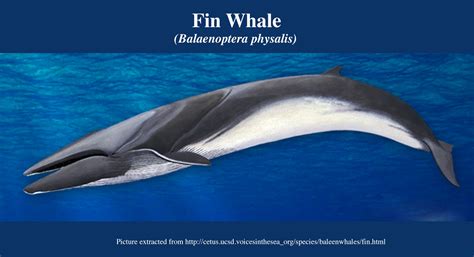
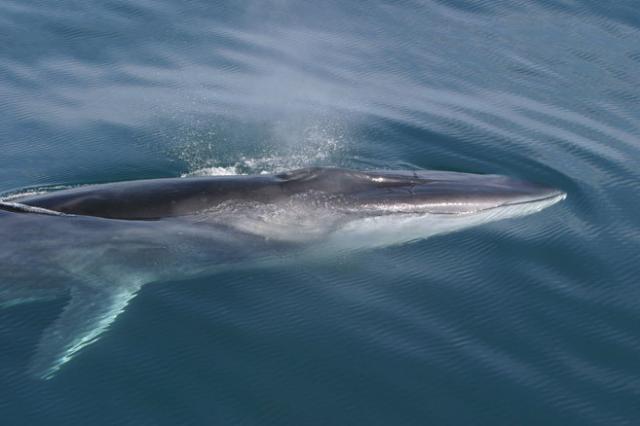
    Finback Whale – fastest swimming whale, 80 feet long, eats 2 tons per day, can dive over 700 feet deep

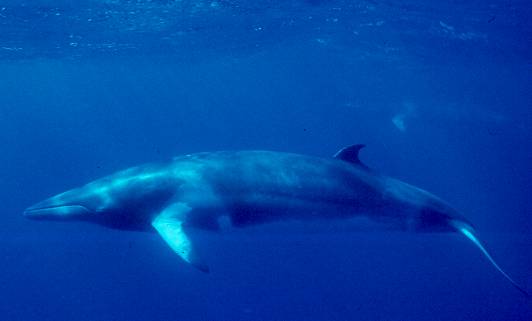
    Minke Whale – most abundant baleen whale, 25-30 feet long, has a white strip on the flipper, will blow 5-8 times on surface then dive up to 20 minutes

    Beluga Whale – only whale that can turn its head, 10-16 feet long, can be heard whistling like a canary, born grey at birth, then turn bluish grey, then after 4-9 years they turn white

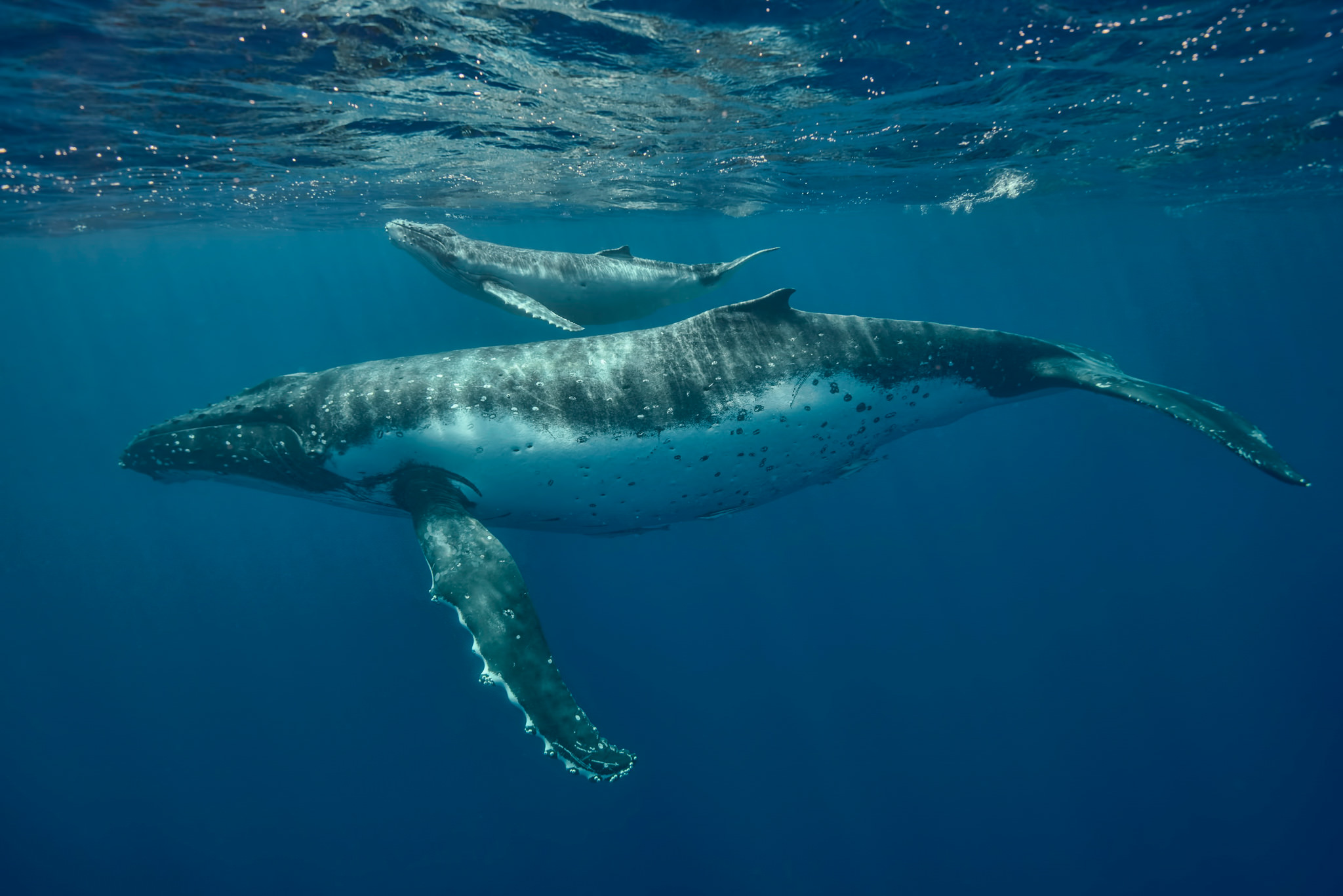
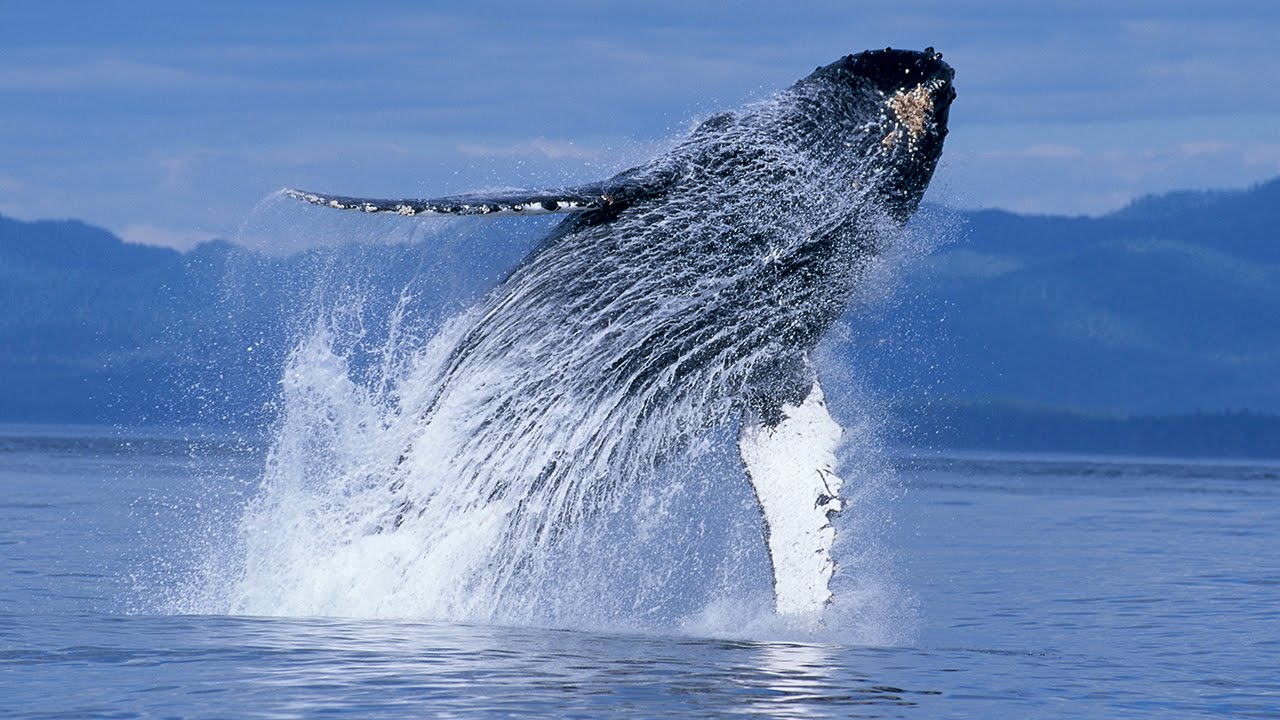
    Humpback Whale – most acrobatic whale, 40-50 feet long, eat 1.5 tons of food per day, pectoral fins are about a 1/3 it’s body length, displays its tail when diving

    Tuesday, July 9th

    The winds have died back down and conditions are favorable to cruise so the crew headed out of Tadoussac this morning. The skipper made a last minute change to the cruising itinerary though. Rather than cross the St Lawrence River to the south shore, he has decided to remain on the north shore for a few more days.

    The crew started seeing Beluga Whales almost immediately. By the time they got back out to the lighthouse they had lost count of the sightings, but saw at least 5 separate pods. And, they did spot one Humpback Whale as they turned towards red marker 54.

    The skipper had a conversation with the Captain of Confetti the other day about the purpose of the large wooden structure that appears along side the lights marking the coastline. Neither of them knew the purpose of the structure so Mack went out to solve the mystery. The answer reminds the skipper of an ole joke, “How many Canadians does it take to change a lightbulb?” Well turns out the answer is at least two if your job is changing out Lighthouse bulbs in these remote parts. Because there are no roads to these lights, the wood structures were built as helicopter landing pads.

    With that perplexing mystery solved, the crew continued along the north shore to their anchor spot for the night. Turns out that this spot was popular with the locals, as there were 5 sailboats at anchor when the crew arrived. Since this is a large bay though, there was plenty of room for everyone.

    Wednesday, July 10th

    The crew weighed anchor early and headed out along the north shore again. Today the crew has the Baie de Comeau in their sites. More specifically, the crew is headed to a Fjard that is in the bay. The crew had never heard of a Fjard before, and apparently neither had the auto spell correct function either. But basically a Fjard is a baby Fjord. The draw to this Fjard though is the waterfall feature at the headwaters.

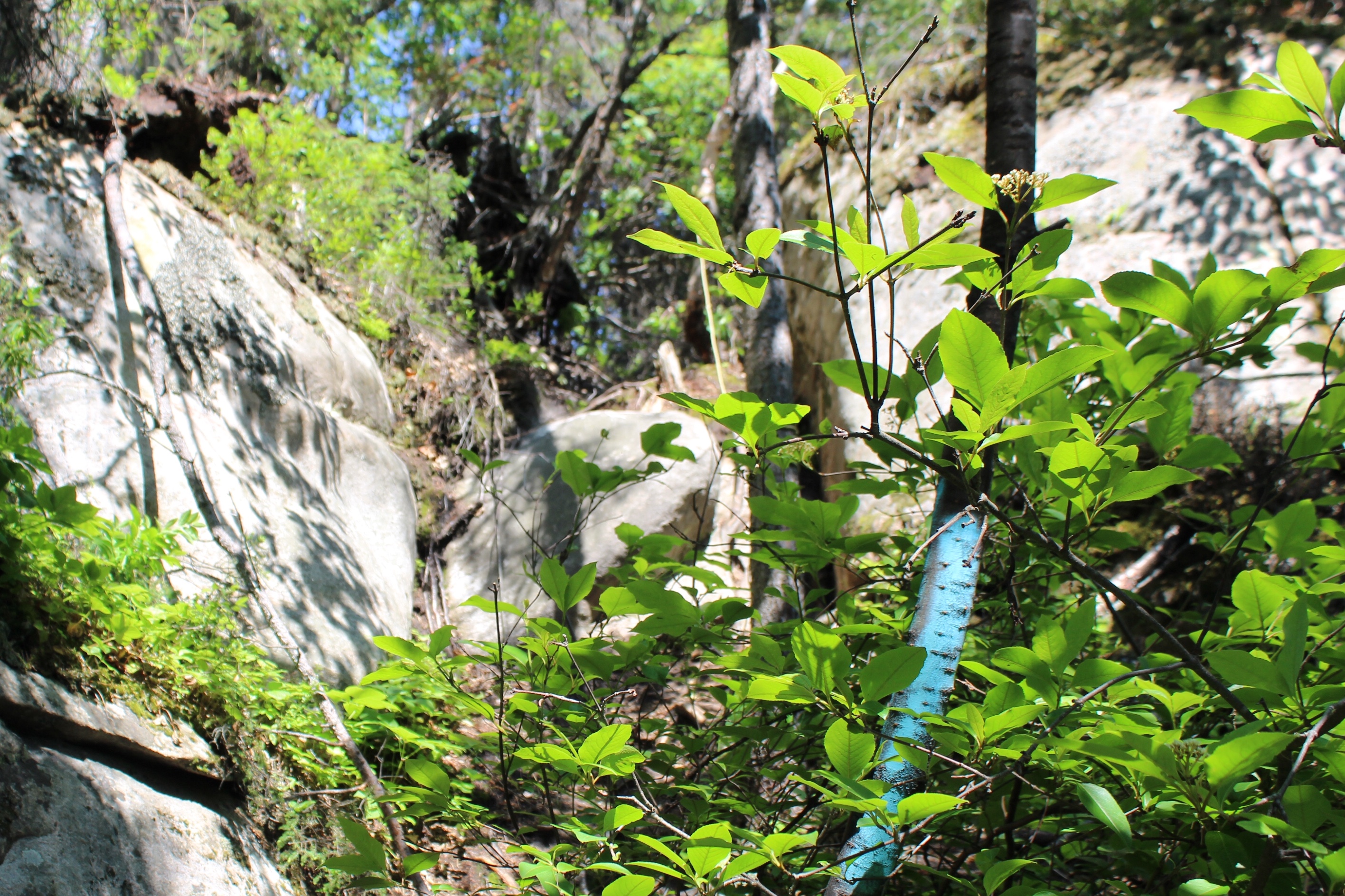
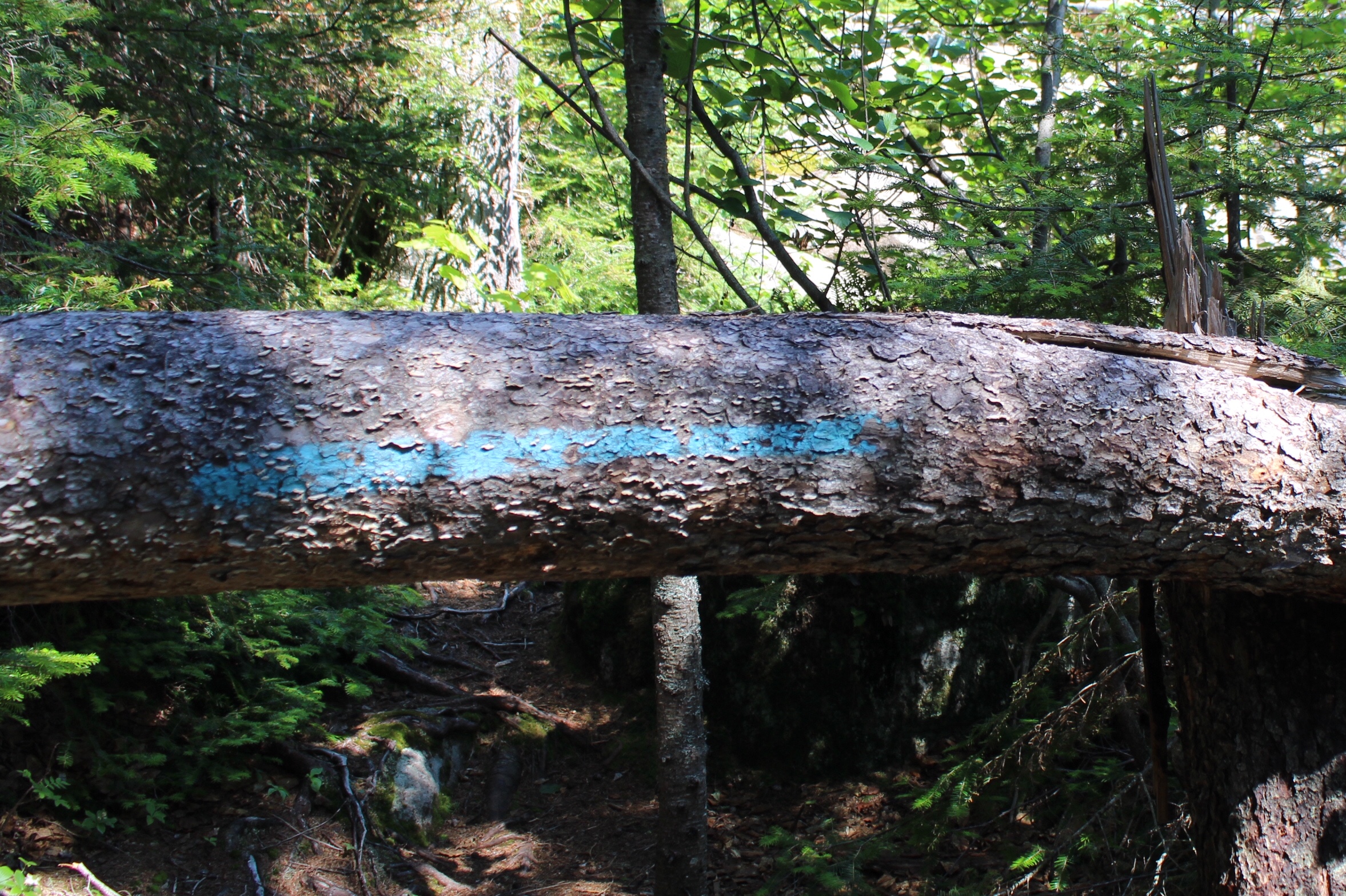
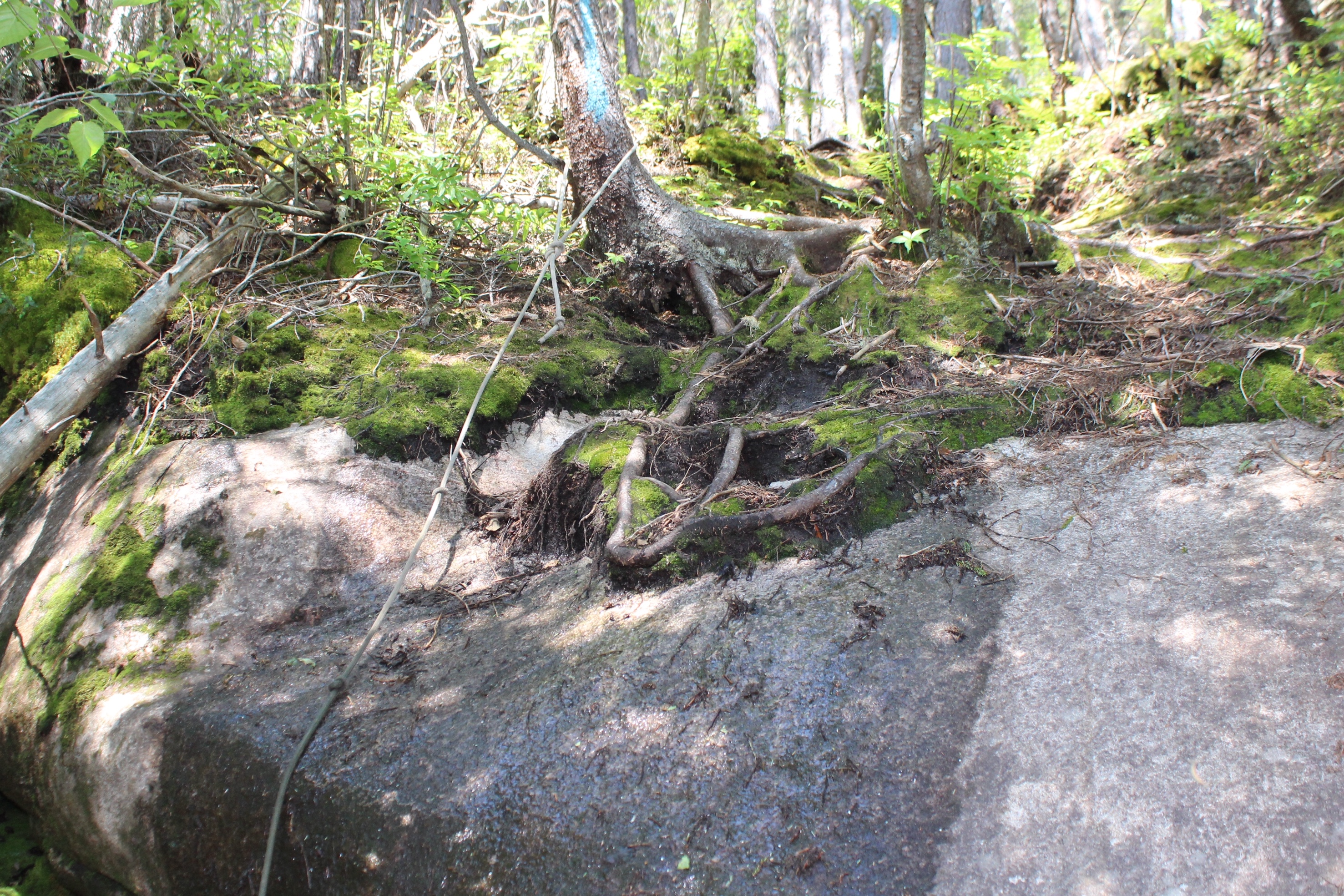
    The skipper decided to put his mountain goat skills into play and climb the ropes course to the top of the waterfall. After making it to the top, he noticed a trail marked with blue blazes. He decided to follow the trail to see where it led. Well let’s just say it was very anticlimactic after seeing the waterfall.

    Thursday, June 11th

    The crew would cross the St Lawrence River today and arrived on the south shore at Saint Anne des Monts. If it was only just that easy. The voyage would be a little over 70 miles and the winds were predicted to pickup in the afternoon to over 15 mph, which can cause greater then 3 foot waves. If you are a new virtual crew member, that means a very uncomfortable ride.

    To mitigate getting caught out in high winds, the skipper shoved off the dock at 0400 to begin the 8 hour tour. All went well for the first three hours as the water remained fairly flat with waves less than a foot. But then things began to change. The waves started building to two feet as the crew no longer had the blocking effect of the north shore.

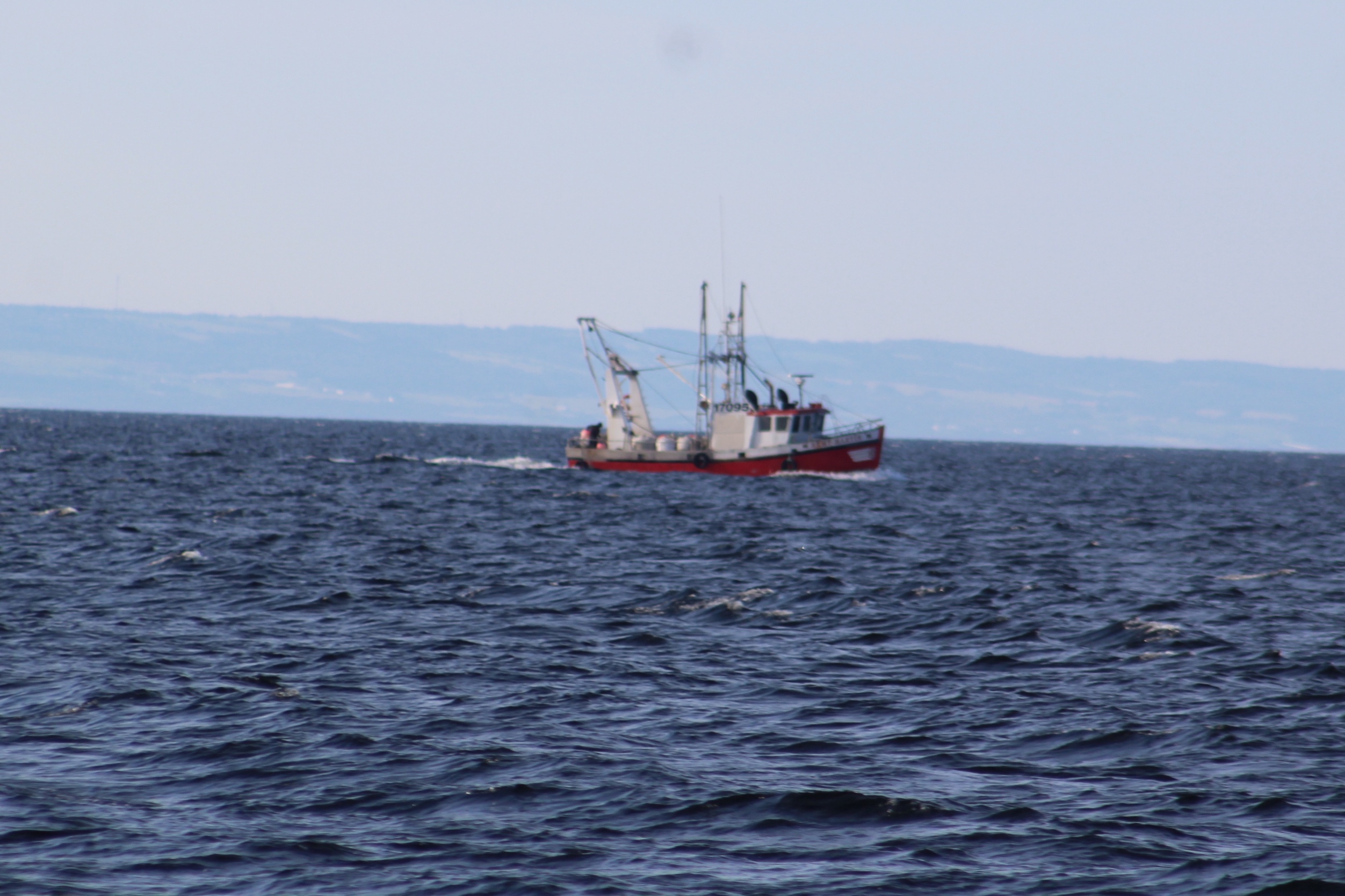
    Commercial fishing boat

    The long unobstructed fetch allowed the waves to build to 3-4 feet as the crew found themselves out in the middle of the river with no protection. Worse, the waves were pounding the port beam of the boat which was rolling the boat side to side. The skipper finally abandoned his course and turned towards the south bank. This caused the waves to hit the stern, following seas, and Still Waters II began surfing the waves.

    This made for a much more comfortable ride, but now the skipper had some decisions to make, for instance where to go to get off the water. He consulted his smarts books and quickly realized there were no good options once he reached the shore. Either direction, east or west, would be 30 miles to the nearest marina or cove to duck in out of the wind.

    The Appalachian Mountains come to an end at the south shore of the St Lawrence River, and the crew was more than ready for the day’s cruise to end on the south shore as well.

    Strangely though, as the crew got closer to land the winds began to lie down. The land should have had no effect on the wind since it was blowing from the northeast. The skipper picked up his phone to look at the weather radar and discovered that out in the middle of the river, two fronts were running into each other causing the large confused waves. The wind on the south shore was around 10 mph while the wind on the north shore was around 20 mph. Armed with that info, the skipper decided to continue on to Sainte-Anne des Monts.

    Once the waves were consistently 1-2 feet again, the skipper turned back to the east and made way for the marina. He also kicked the throttles up a bit to minimize the amount of time the crew were out on the water. They were sure glad when they made the turn into the marina basin inside the breakwater wall.

    First view of Sainte Anne des Monts

    Not sure what happened here, but it looks like Still Waters II was put in the time out corner of the marina.

    Friday, July 12th

    Well this wind delay is brought to you by the 15-20 mph winds out of the east. The forecast does look favorable for a travel day on Saturday with winds under 10.

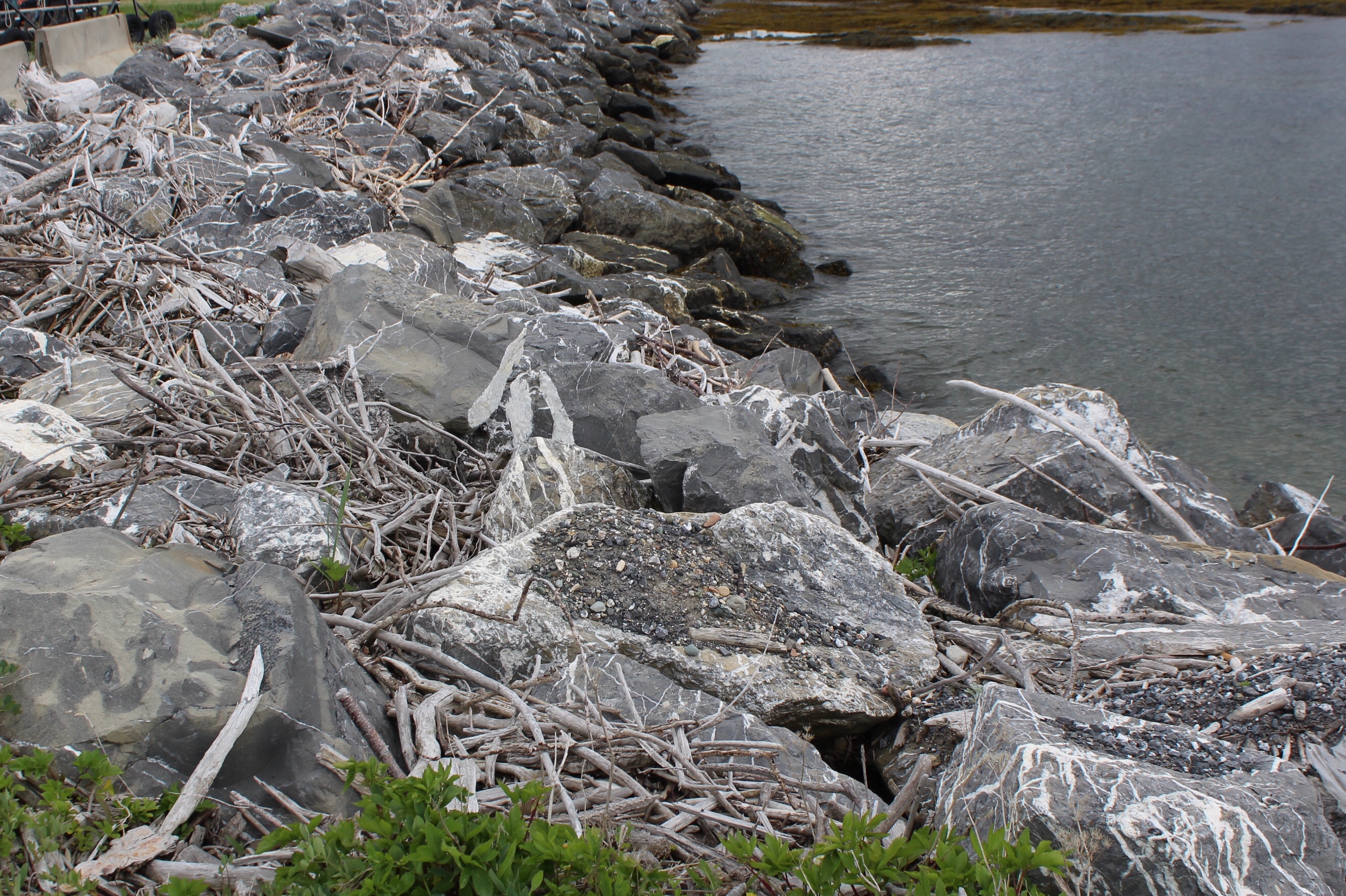
    In the mean time, the crew walked around town to take in the sights. One of the first things they noticed was the amount of driftwood in the bay that washes up on the rocks. One of the crews grandsons would be in stick heaven here.

    Aiden’s driftwood heaven

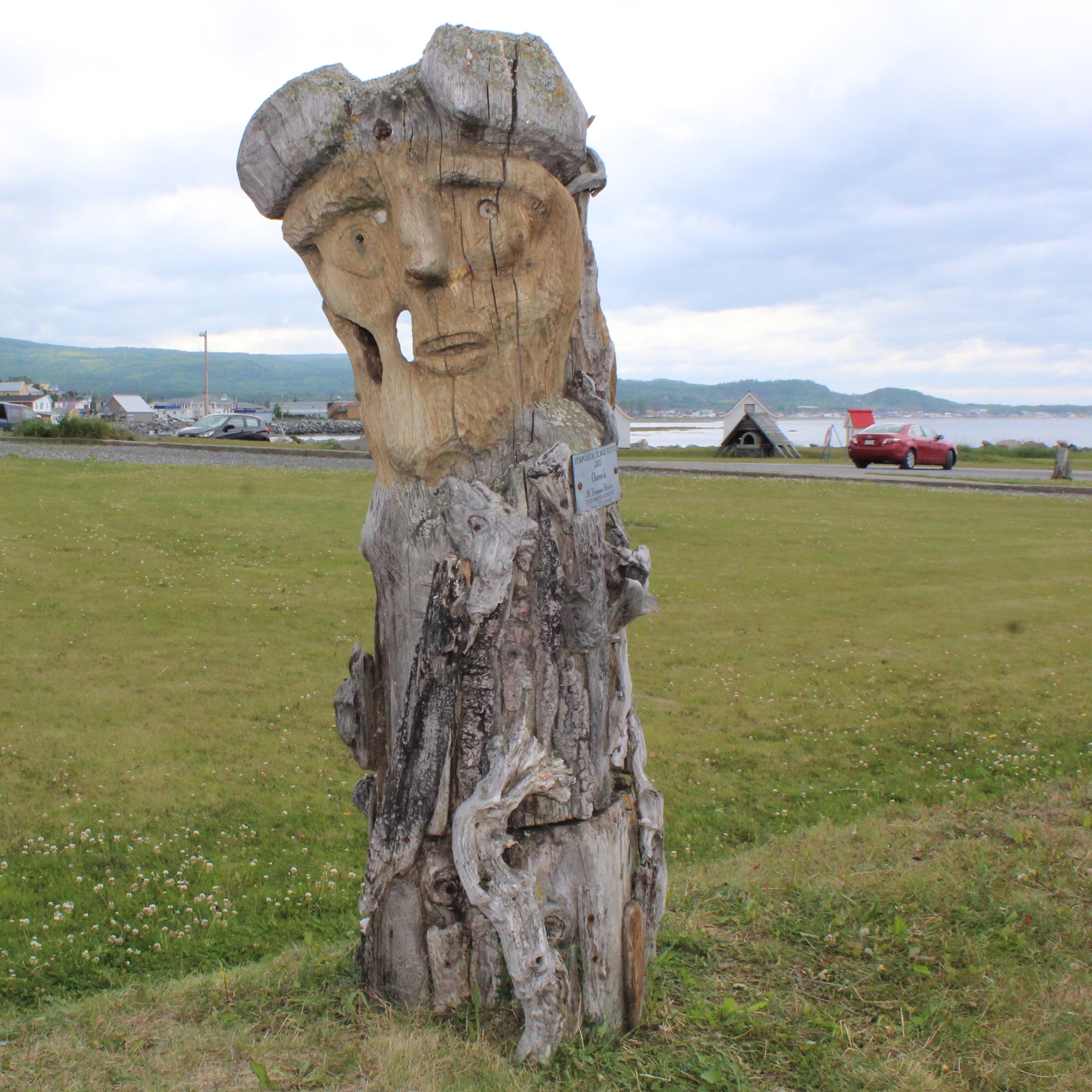
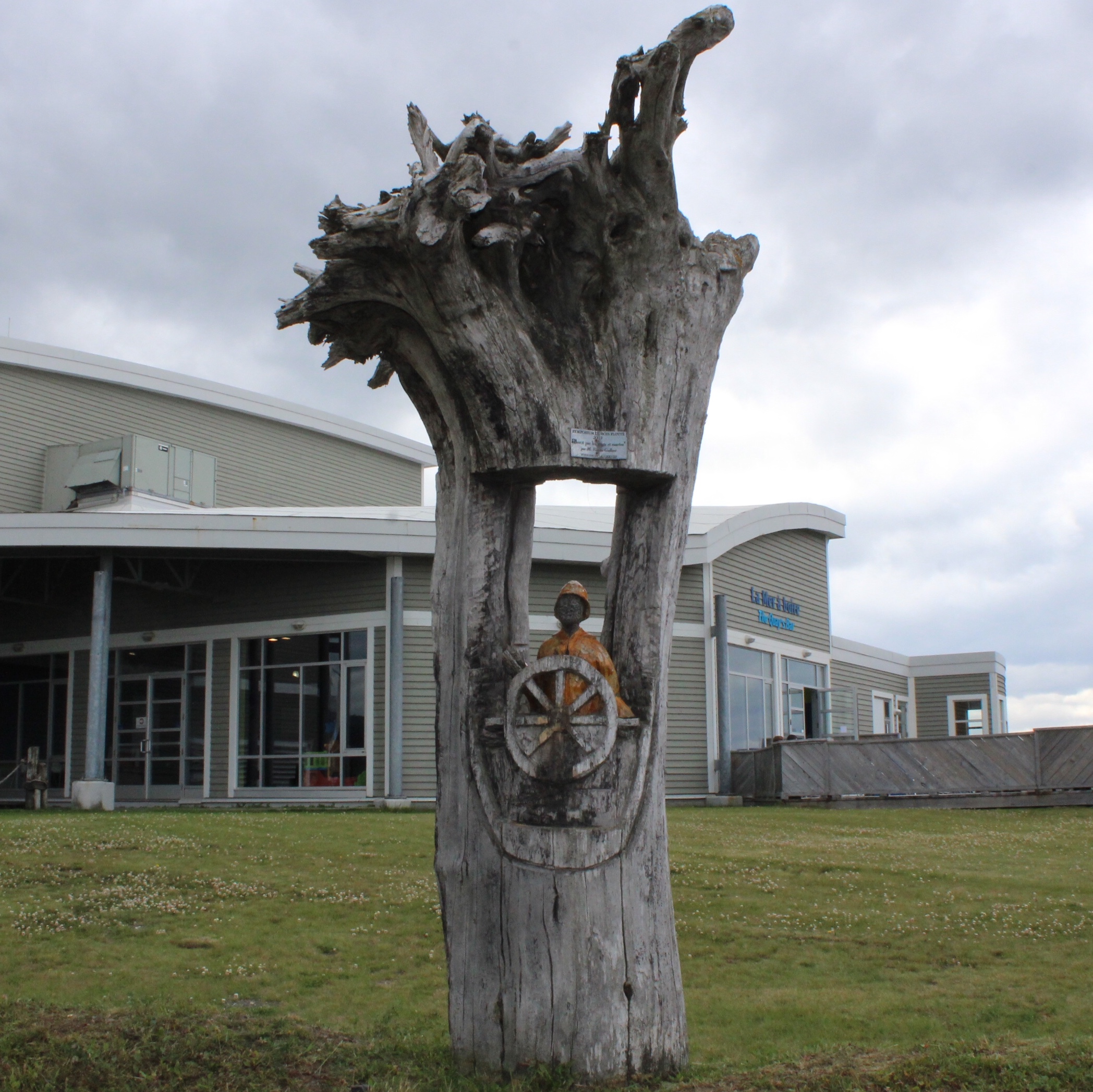
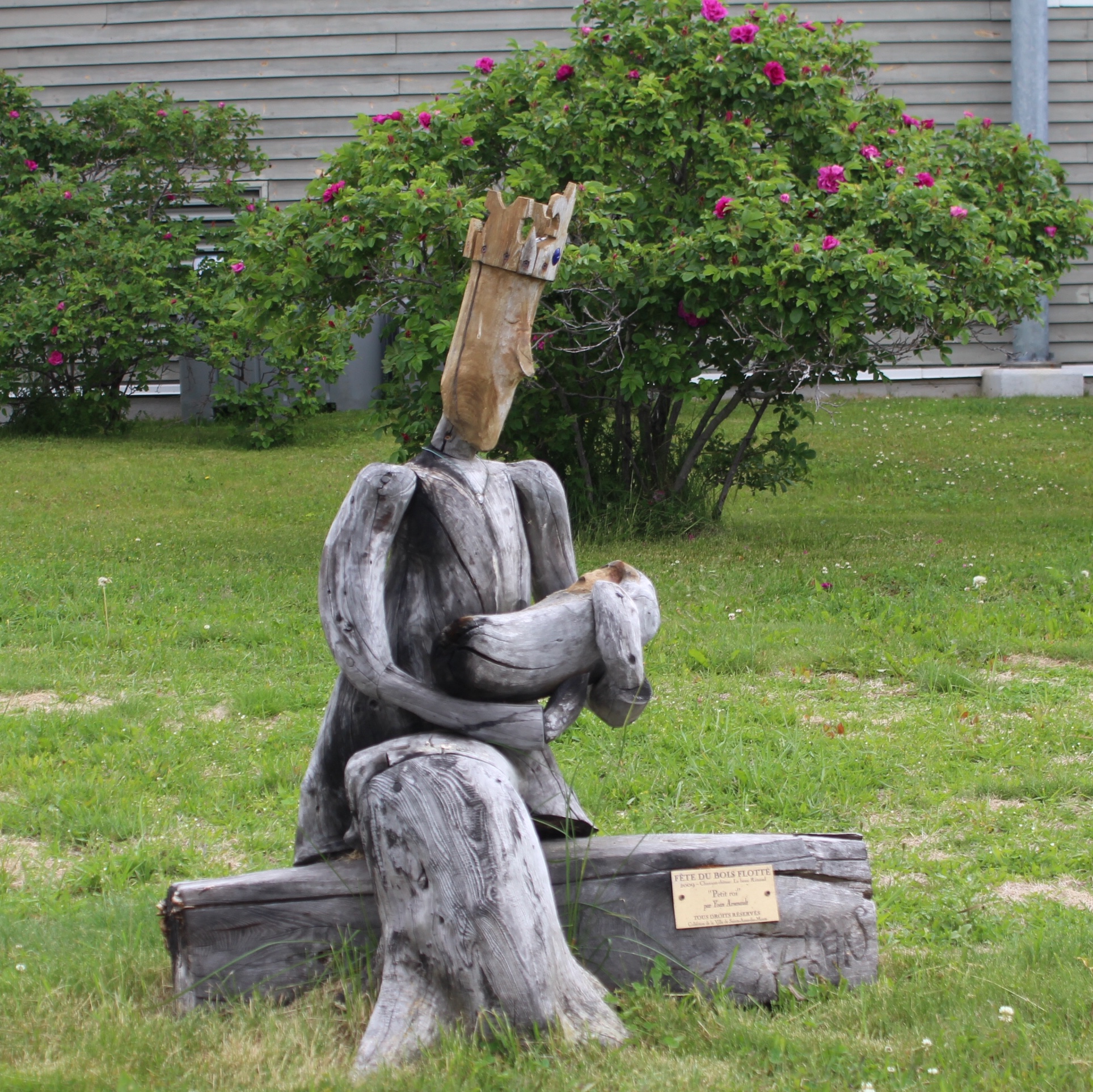
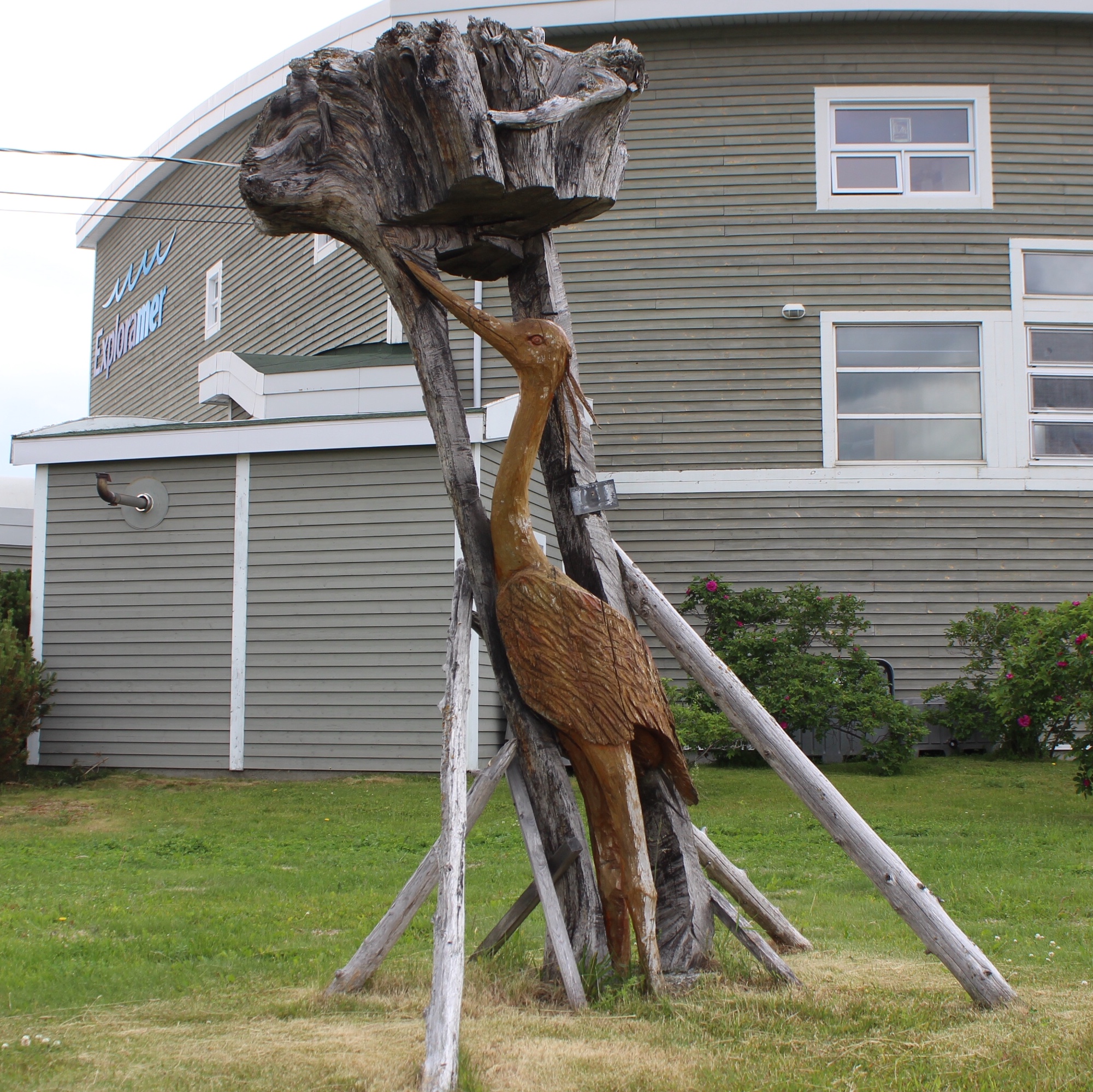
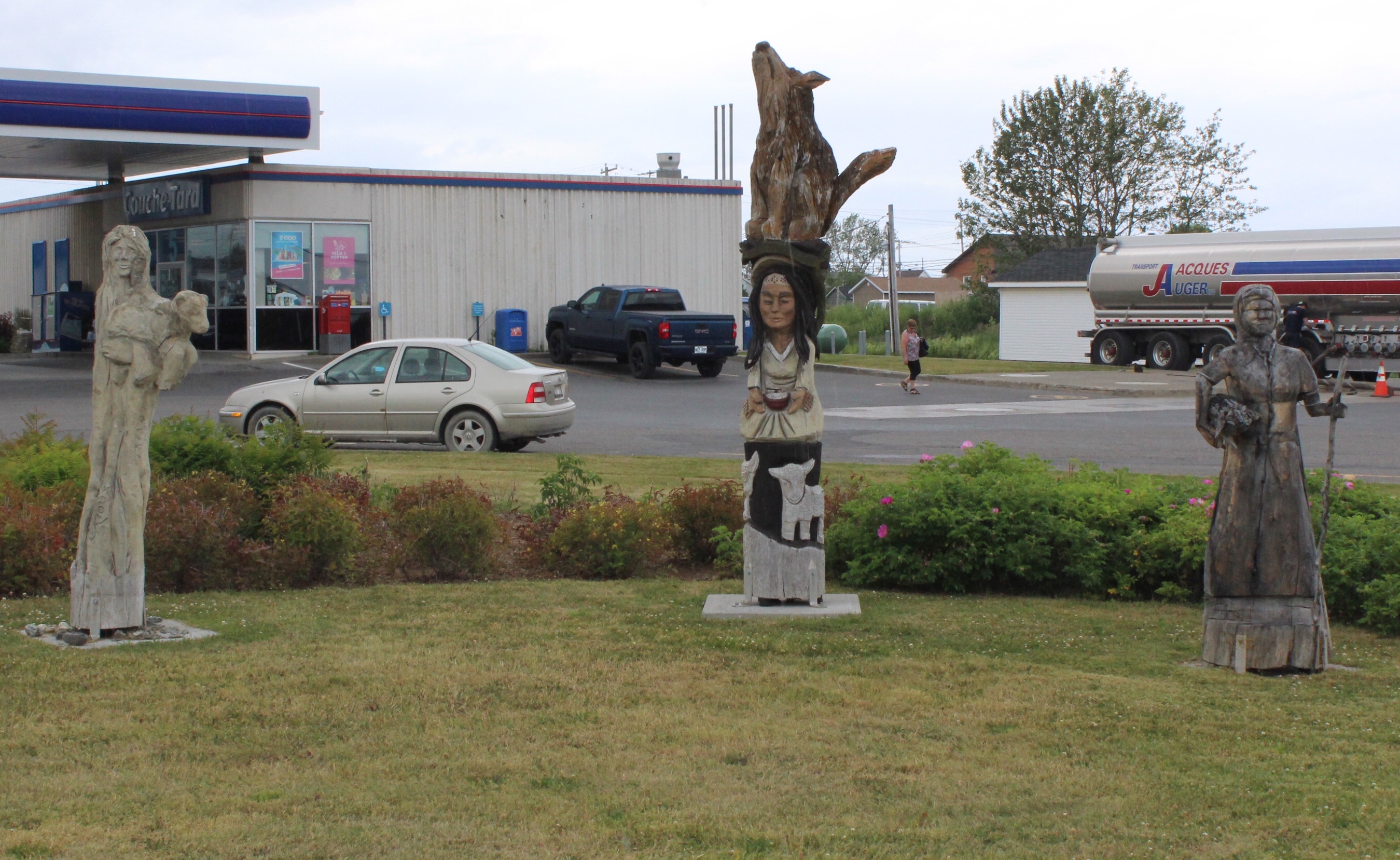
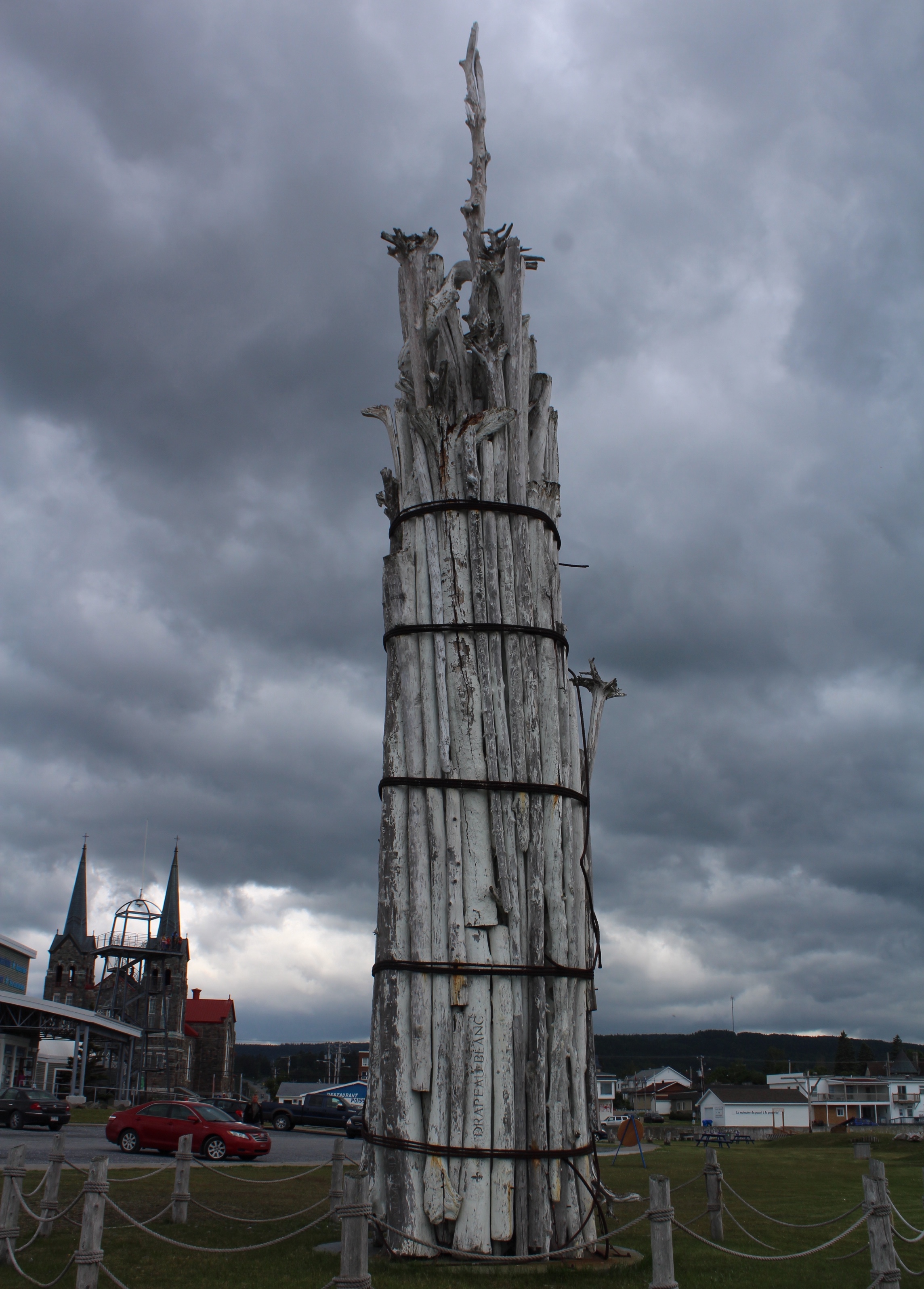
    The local art scene uses this driftwood as there medium to show case their talents. The crew learned from a local that they have an ordinance where businesses must donate some public park or art funds to get a building permit. Hence the large number of art projects seen around town.

    Some of the driftwood art in town

    Saturday, July 13th

    The day got off to a humorous start. The crew had decided that the skipper would make an early morning donut run before departure. When the skipper arrived at the local coffee shop, he found the glazed donuts and donut holes the crew wanted. When the French speaking donut gatherer came to the counter, the skipper ordered Trois (3) beignets glacés (glazed donuts). The donut gatherer sacked the three donuts and handed the bag over to the skipper. So far, so good. Then things quickly turned on a dime.

    The skipper then ordered two dozen trout de beignets vitres (24 donut holes). The look on the donut gatherer’s face made it apparent that all communication had ceased. In fact, the skipper was getting the proverbial deer in the head light look. So the skipper held up two fingers while saying deuce, then four fingers while saying quarte.

    The donut gatherer turned his back on the skipper, reached for two small boxes, and then presented the boxes to the skipper. At this point the light bulb came on when the skipper remembered these folks are on the metric system. One box was labeled 10, the other 20. The skipper smiled and humbly pointed to the box labeled 20. Mission accomplished!

    The crew headed out towards Rivière-la-Madeleine this morning. The marina and town are nothing more than a petite fishing village. The key word here was petite.

    The crew did have a good cruise though. They ran 1.5 miles offshore and witnessed 50 miles of rugged country. They also cruised past two lighthouses. Then when within five miles of the marina they saw a Finback Whale. They idled in the area for 20 minutes but the whale never came back up for a breath of fresh air.

    The skipper gave up on the whale and headed to the marina.

    Whale Pic of the Week

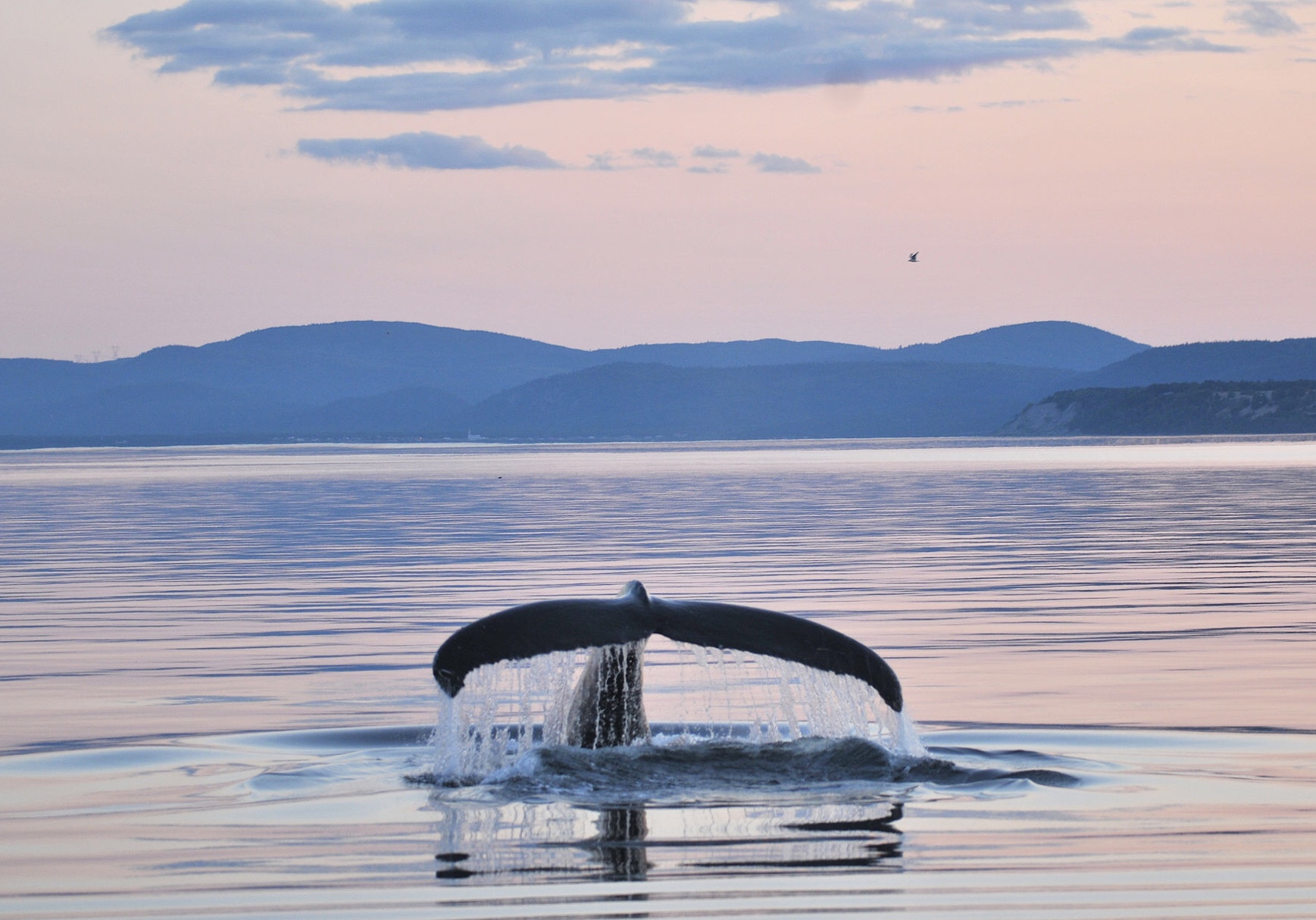
    Since the crew has marginal French speaking skills and finding a good French boat name has been more challenging than expected, this is temporarily the whale pic of the week. The pic will come from Baleines en direct, a nonprofit organization connected to the museum in Tadoussac. You can follow them at http://baleinesendirect.org

    Humpback Whale Tail

    Next Week –

    The crew will spend the week timing their travel days with good weather windows as they round the Gaspé Peninsula. Locals have warned them to pick their weather windows carefully. Because of the venturi effect between the Peninsula and the islands to the east, even light winds can accelerate thru the gap and make for some rough cruising. With that in mind, the crew hopes to make Prince Edward Island, but will allow the weather to dictate just how far they get next week.

    Tune in next week and see if the crew makes it to Prince Edward Island or not. For those virtual crew members susceptible to sea sickness, this is the time to put on your ear patch or take your medication. Batten down the hatches cause here they go.

    Loop On – Where the road ends, the water begins. The water goes on forever, and the adventure never ends.

    Eric the Red

  • On the Whale Tail Trail

    On the Whale Tail Trail

    Hello virtual crew members and fellow adventurers!

    Caught this tail off the coast of New Jersey

    Welcome aboard to usfman and NASIRUDDIN Foundation who started following the blog and became our latest virtual crew members! Glad to have you aboard? Special shout out to all virtual crew members who take the time to read and comment on the blog. It encourages Eric to keep chronicling the adventure.

    Summary of week

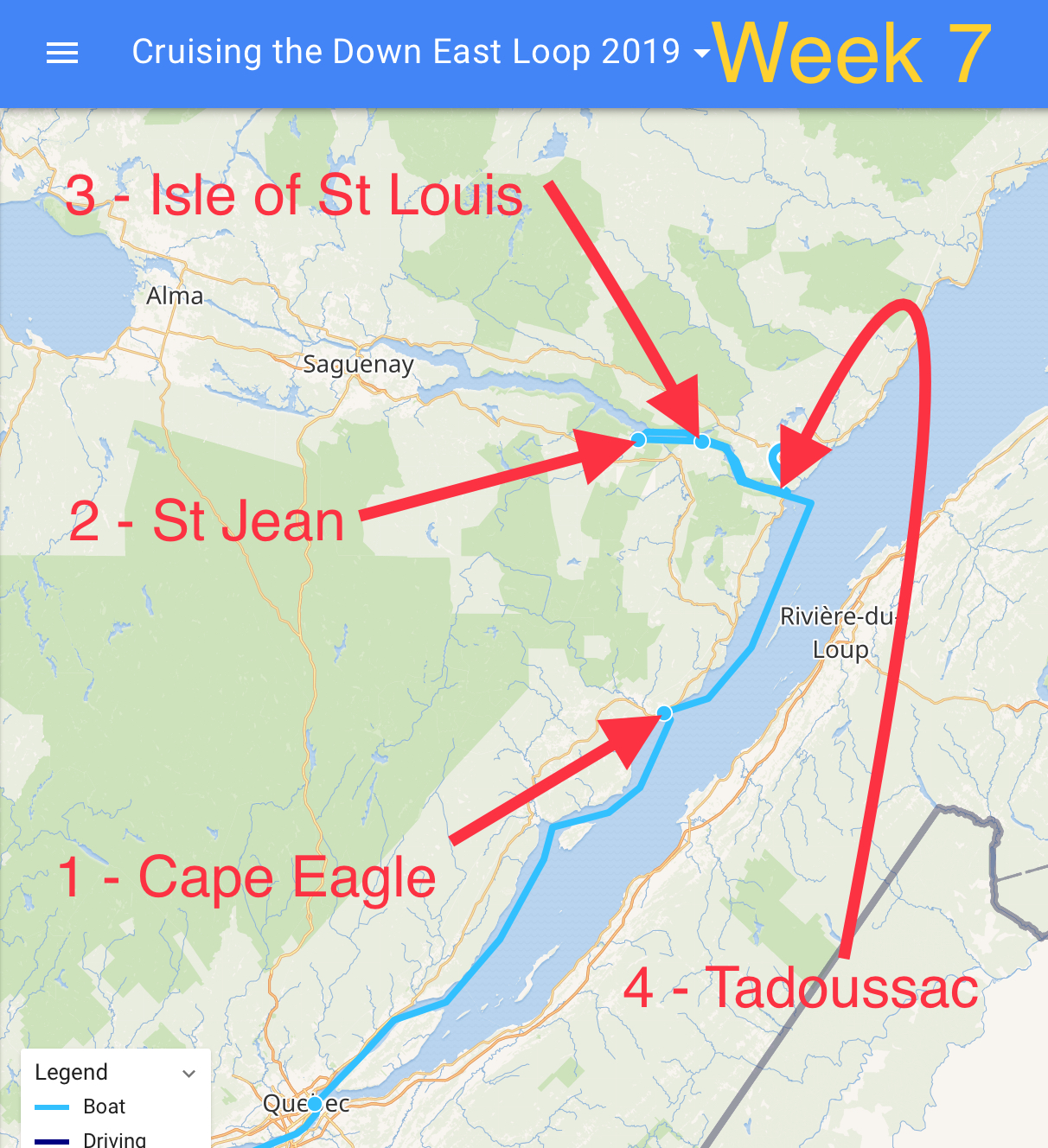
    The crew made four voyages this past week. They left Quebec on Tuesday and took a marina at Cape Eagle (1) in the evening. Then it was a foggy morning on Wednesday as they made their way into the Saguenay Fjord and stayed at the St Jean marina (2). Thursday, the crew went further up to the Bay of Eternity, then turned around and anchored a couple nights off the Isle of St Louis (3). They ended the week with a voyage to Tadoussac (4) on Saturday morning. The crew has lost count of the number of Beluga Whales they have seen in the past week, but the number is easily over a dozen and probably approaching 20.

    Click on the Still Waters II Travel Map to see detailed Voyage Logs.The voyage of discovery did answer the following questions this week:

    1. What is the National Day of Canada, and what does it pay homage to?
    2. Which water fall is taller, Niagara or Montmorency?
    3. What is a ‘sugar ‘loaf’?
    4. What is a Fjord?
    5. What is a nickname for a Beluga Whale?

    At the Box Office

    This week is a video of the first whale the crew ever saw on the Great Loop. The humpback whale spray from the blow hole startled the skipper when it came up just 10 yards off the port side of the boat. The skipper managed the wherewithal to grab his phone and capture the unforgettable moment on video. Enjoy!

    To see past videos, click on the link to the Still Waters II Vimeo site.  The library contains videos of Still Waters II cruising America’s Great Loop.

    Sunday, June 30th

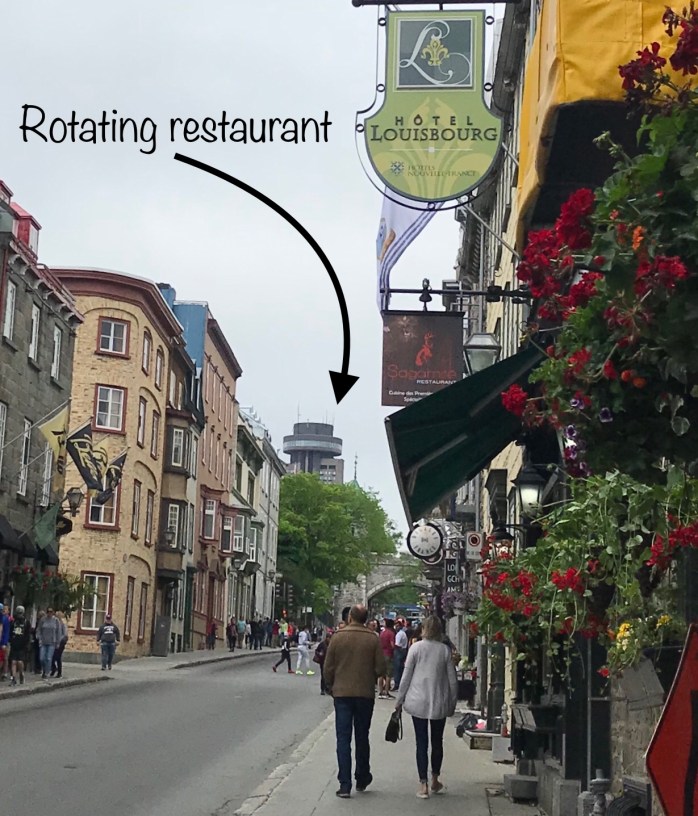
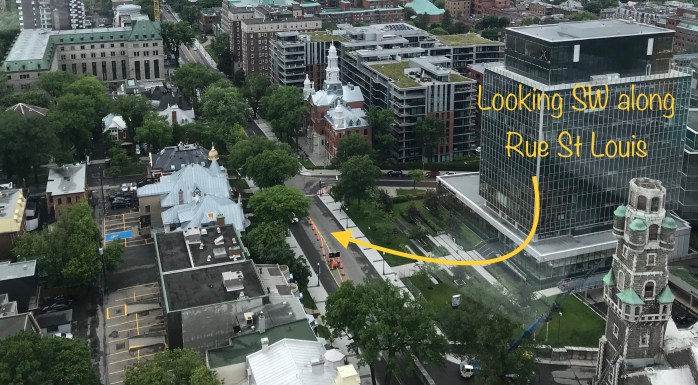
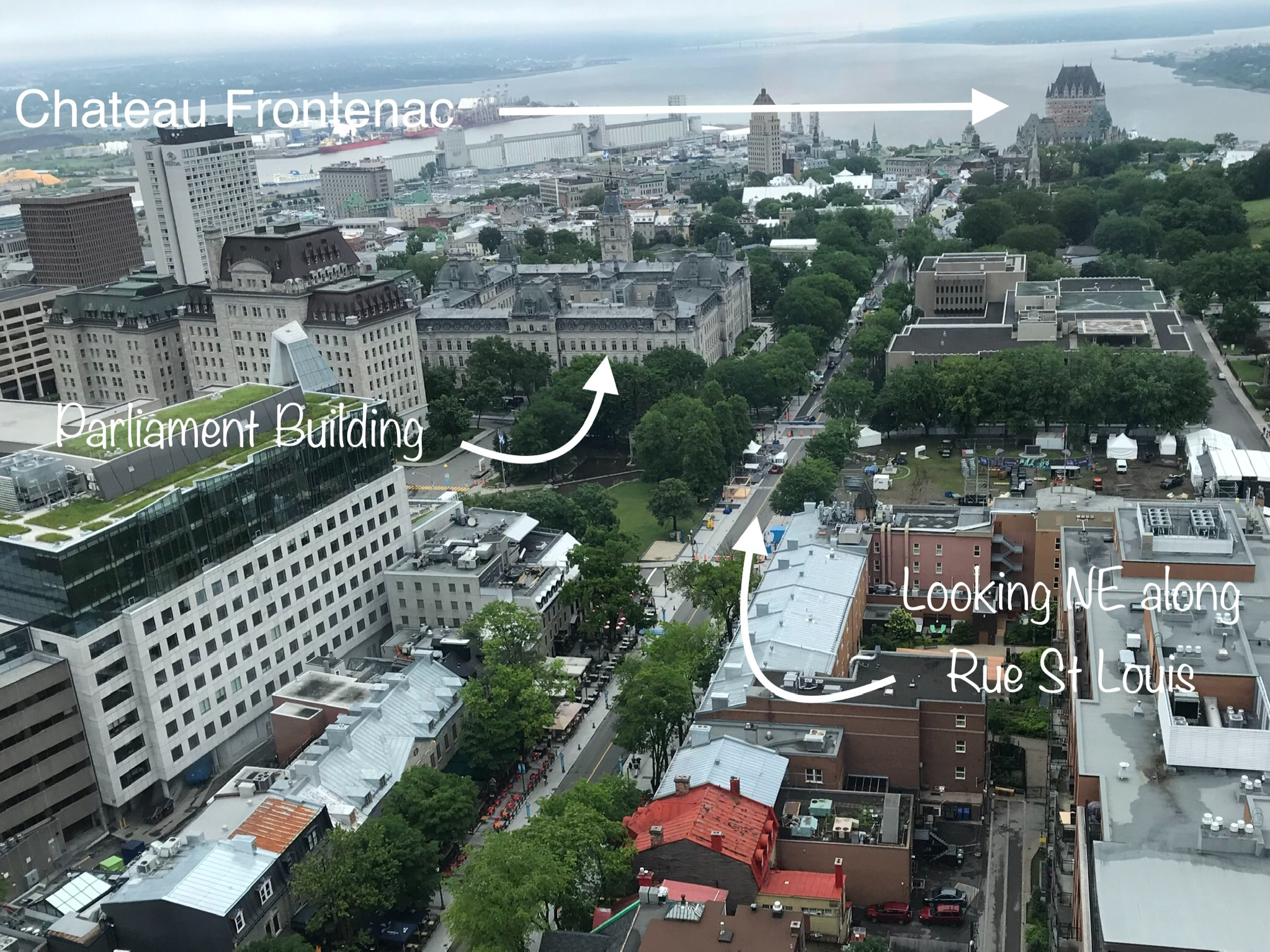
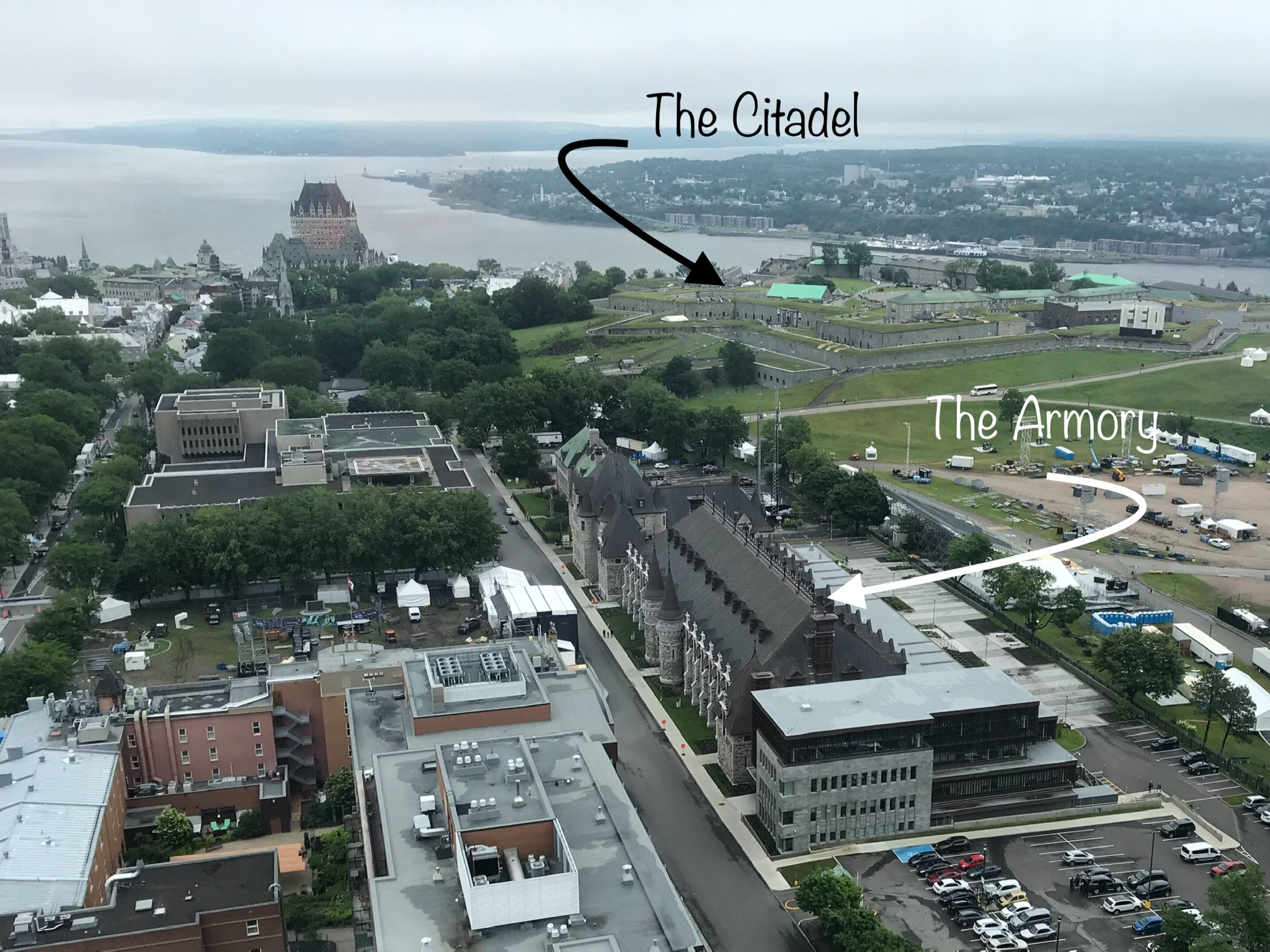
    Today the crew decided to go eat at Ciel for Sunday Brunch. It is one of those restaurants in a tower with a rotating platform.

    Took about an hour to circle and get a 360 degree view of Quebec City.

    Monday, July 1st

    Happy Canada Day! This is the National Day of Canada which celebrates the founding of Canada back on July 1, 1867 by uniting the colonies of Quebec, Nova Scotia, and New Brunswick.

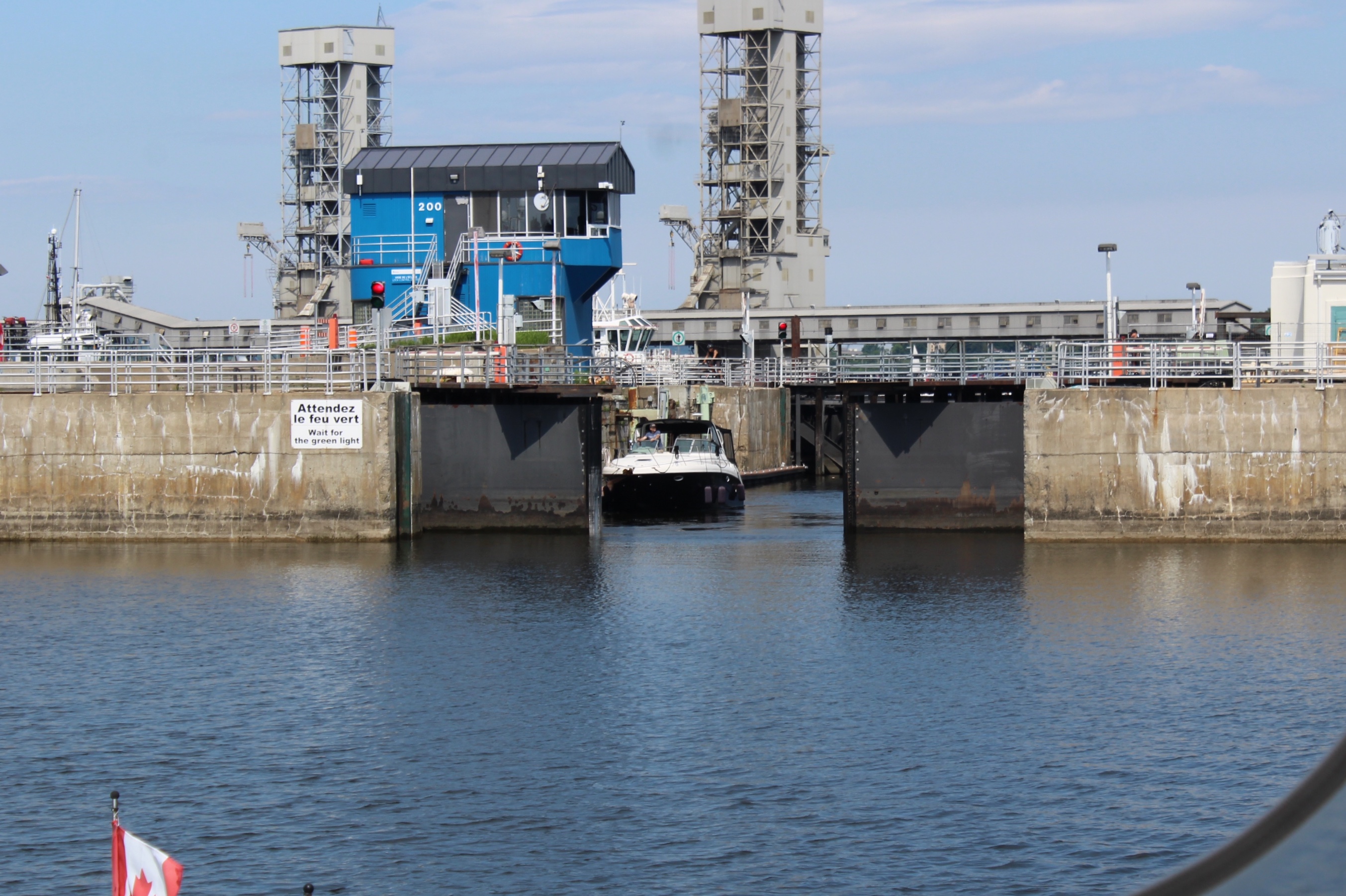
    The crew spent the day preparing for departure into the Charlevoix region of Quebec. After going to the local grocery for provisions, the crew moved the boat thru the lock guarding the marina basin, and took a spot on the floating dock.

    Waiting to enter lock

    Because of the tides and current, the cruising guides tell prudent skippers to leave two hours before high tide at Quebec City. High tide is at 0620 in the morning, necessitating an early departure at 0420. Sunrise is at 0454, so as soon as the skipper can safely see, the crew will shove off.

    Tuesday, July 2nd

    Well, it was finally time to say good bye to this magical place called Quebec. The skipper was surprised how light it was at 0400. He did the morning fluid engine checks and started the engines. The Admiral was up and moving and the crew cast off and were out of the marina by 0430.

    Quebec at 0430 as the crew pulls away from marina

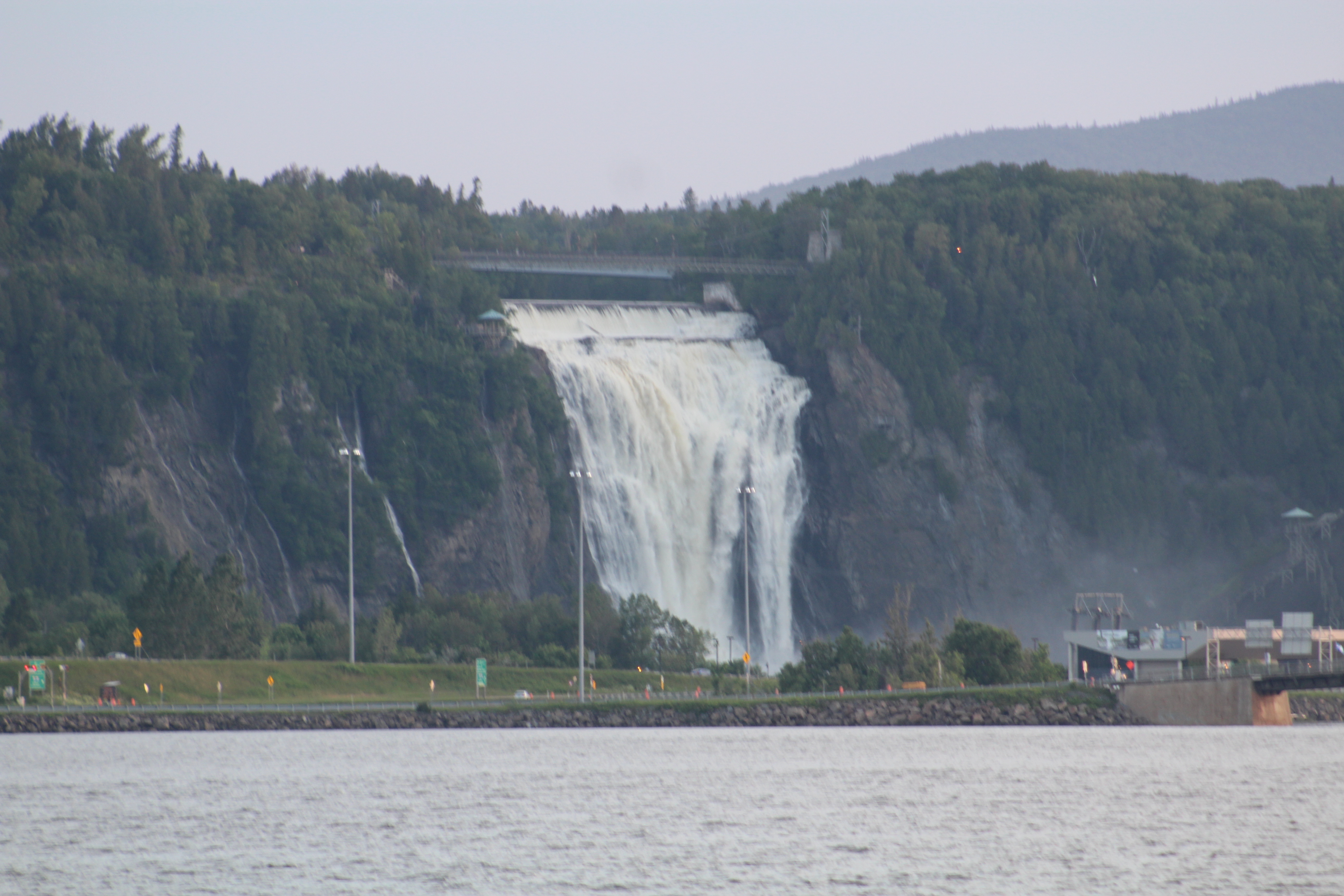
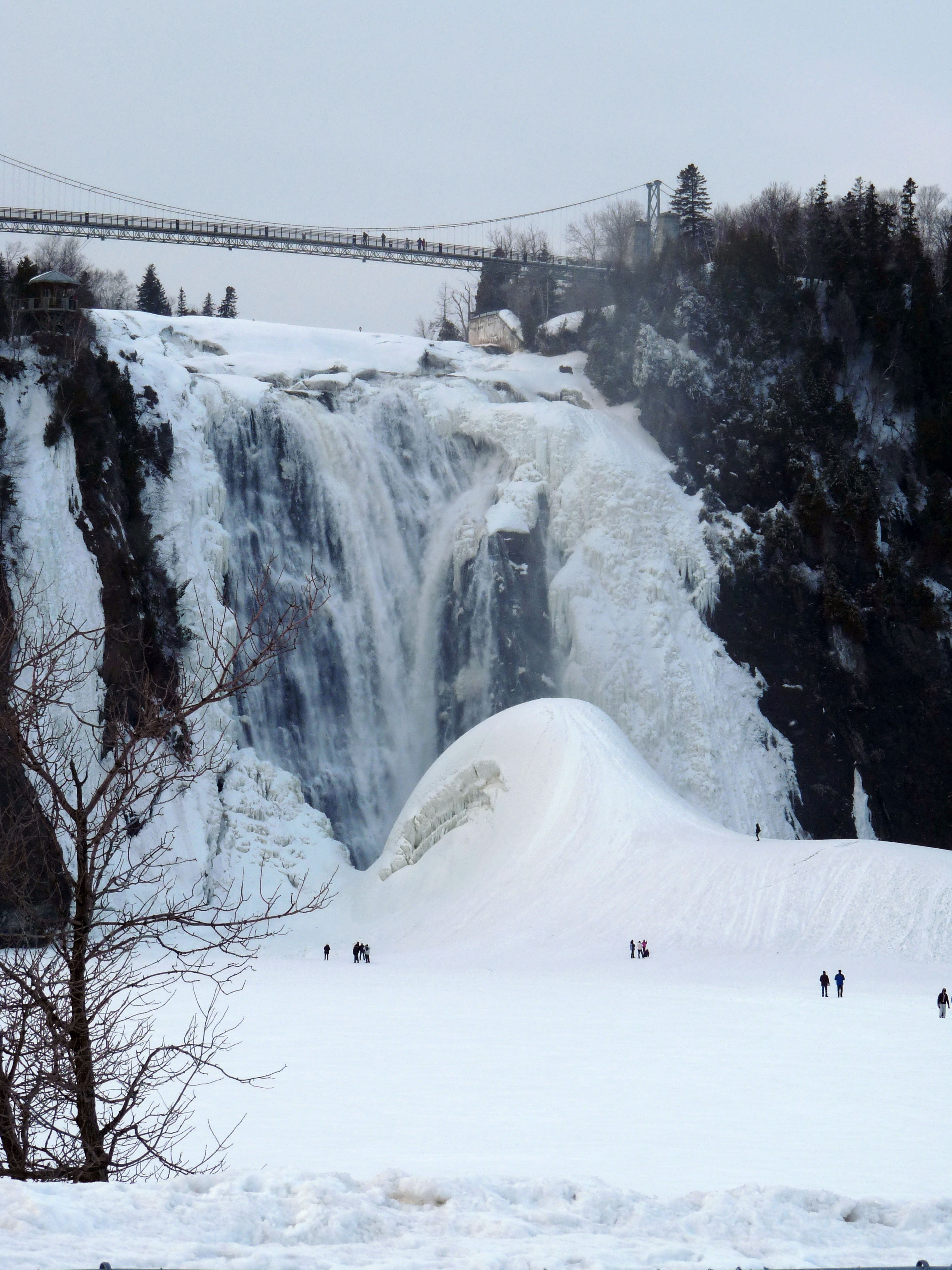
    There was not much time before the first attraction of the day, Montmorency Falls. The Falls are 272 feet above the base below, 98 feet higher than Niagara Falls.

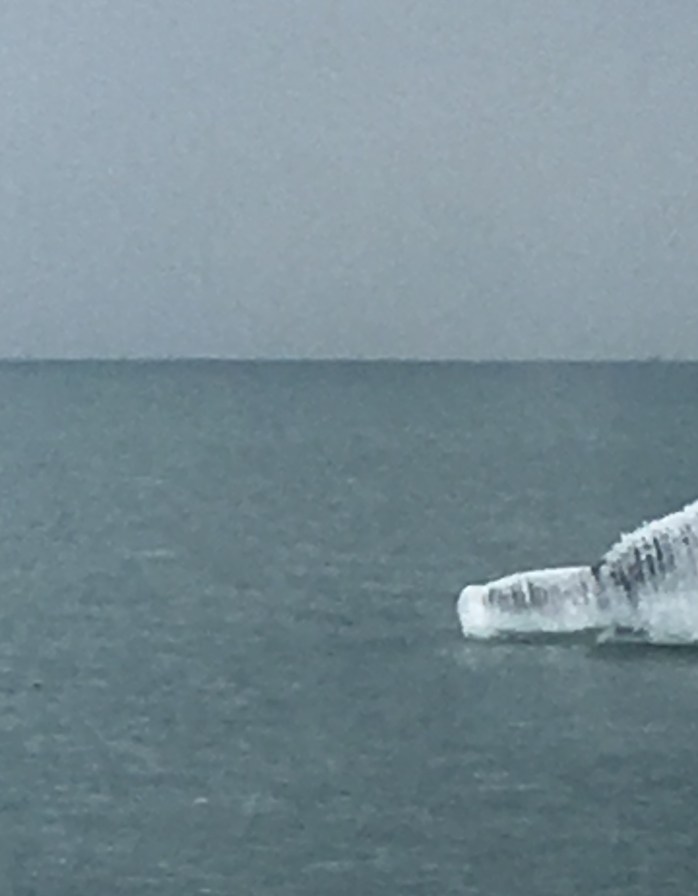
    In winter, the spray at the bottom of the falls creates a large ‘sugar loaf’. Since the skipper doubts he would ever be in the frozen tundra to see this feature, he found this pic to view from the warm comfort of the boat.

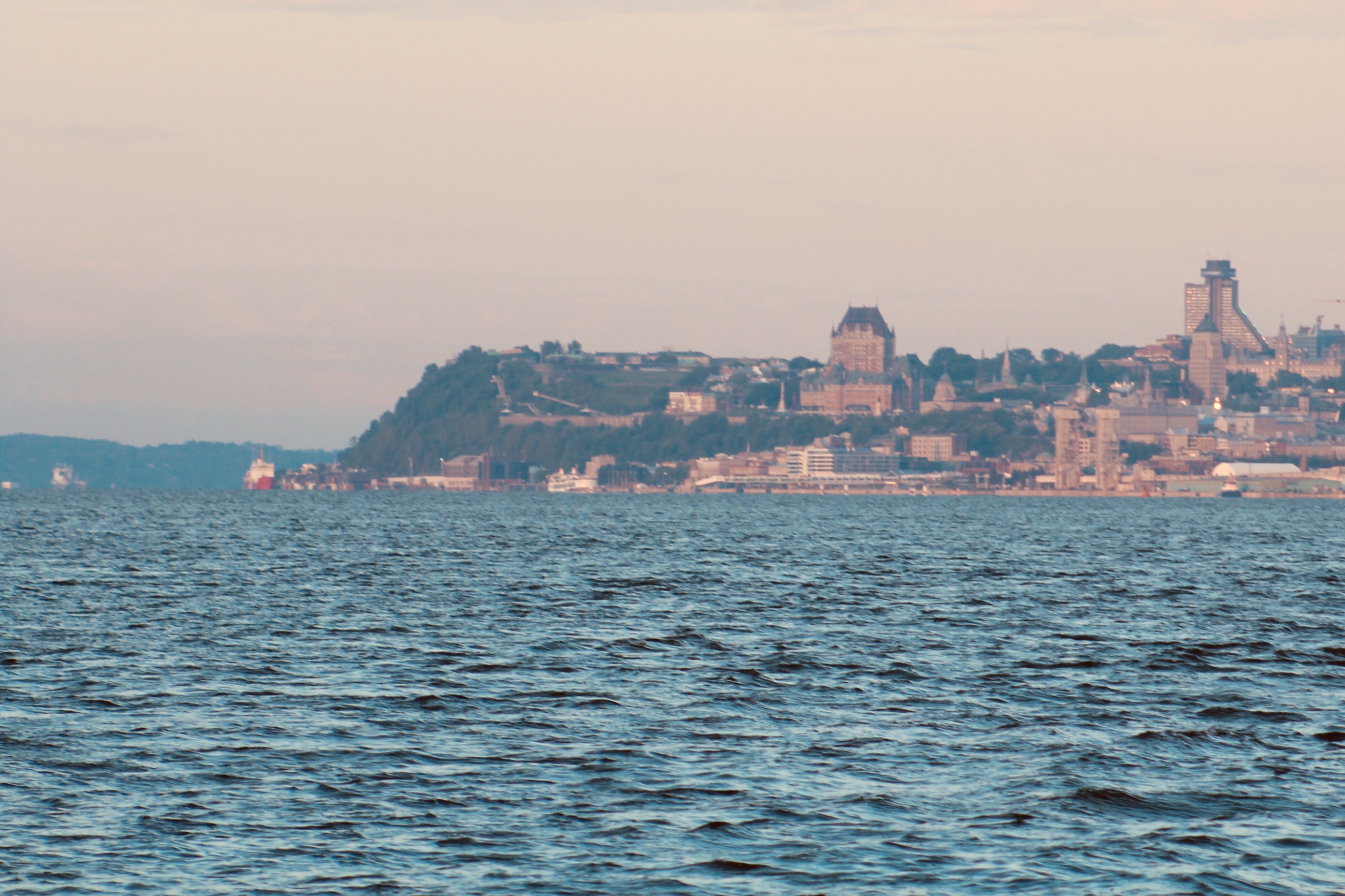
    One last look over the shoulder at Old Quebec City.

    The region that the crew will be cruising in over the next week is called the Charlevoix, named after Pierre Francois-Xavier de Charlevoix, a French Jesuit explorer. The region is characterized by the Laurentian Mountains that come right down to the river.

    An interesting fun fact about the region is that 90% of the area residents live in the Charlevoix Crater. The crater, formed from an asteroid hit, smoothed and flattened a 34 mile diameter section of the mountains and allowed farming and settlement.

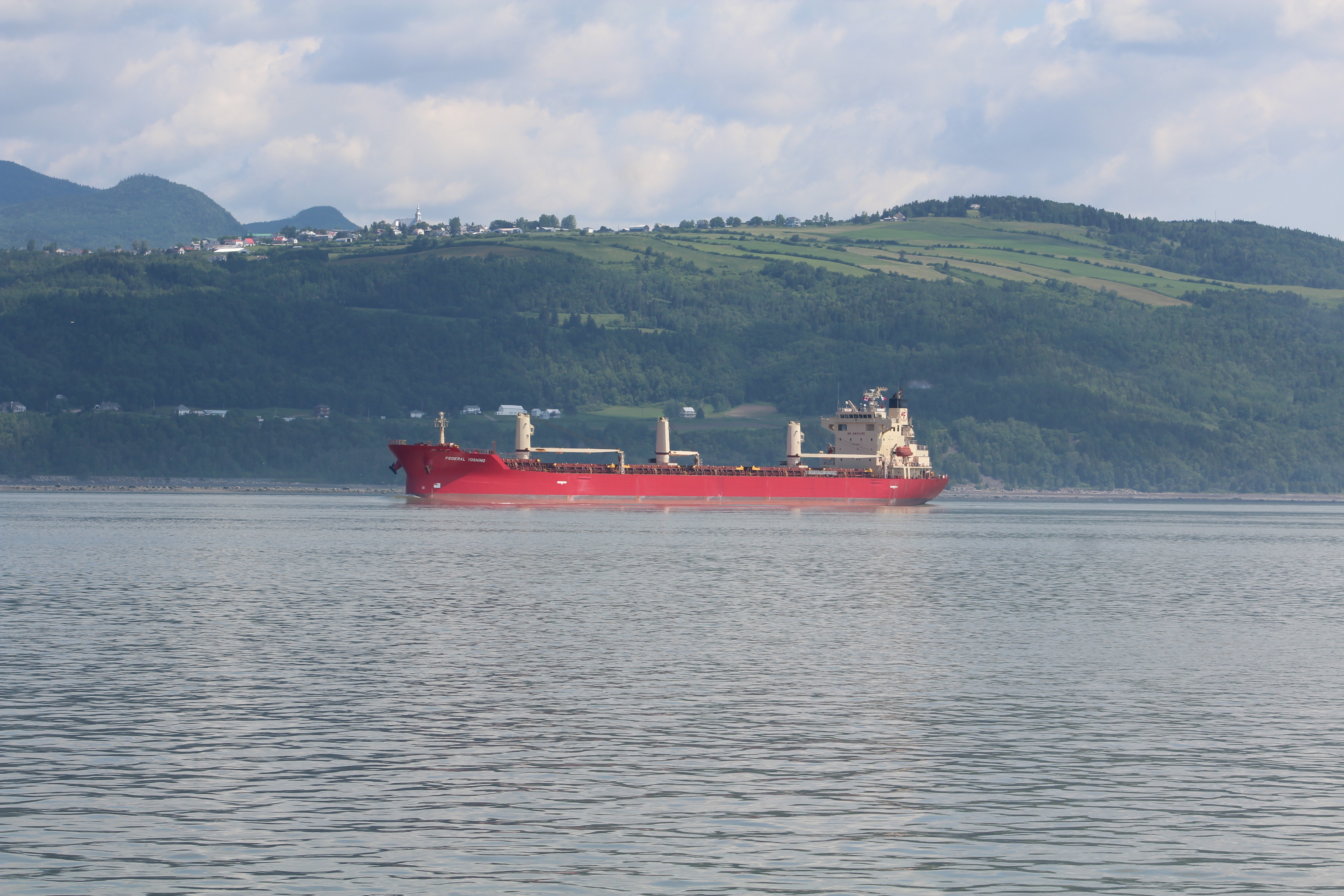
    The crew continues to meet large craft from around the world plowing the waters of the St Lawrence River.

    The day’s cruise came to a surprising end when the skipper spotted something in the water, could it be, a Beluga Whale, here? The crew did not expect to see any whales until tomorrow as they approach the Saguenay Fjord. But just one mile from the marina breakwater wall they spotted not one but two Beluga Whales. What a deal, they could even hear the two whales communicating with each other with their high pitched canary sounds. Hence their nickname, sea canary.

    Wednesday, July 3rd

    The cruising guides all suggest to leave Cape Eagle four hours after high tide at Point-au-Pere. For the crew, that meant leaving at 0702. When the skipper first looked outside he was a bit surprised to see the heavy fog. There was not much choice but to leave as suggested and hope the fog burns off quickly.

    So much for hope. The fog hung in there until about noon before it started to lift. That makes for a stressful day when you cannot see much past the bow.

    The skipper tracked this sailboat on the radar for what seemed like forever. The sailboat overtook the skipper at less than a quarter mile.

    I know what you are thinking, and yes the skipper let a sailboat overtake him. Normally this would be an embarrassment, but today, well today, the skipper was trying to time his arrival at the Prince Shoal Lighthouse. Because of the flooding, the current is stronger than normal and the skipper was running an hour ahead of schedule. He had pulled the throttles back to idle speed and was still making over 10 mph speed over ground.

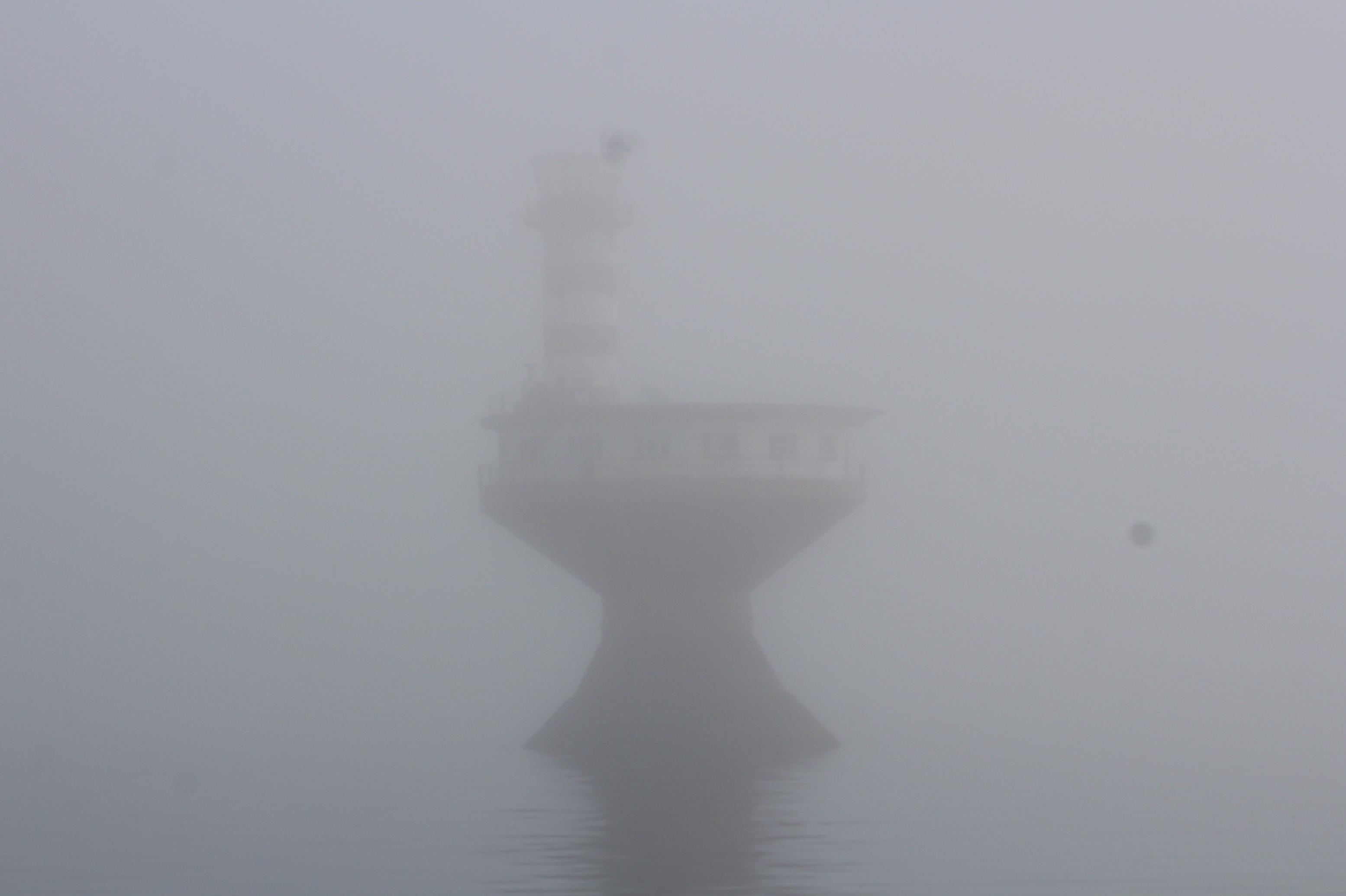
    Prince Shoal Lighthouse in the fog

    The crew arrived at the Lighthouse 45 minutes ahead of schedule. Rather than find slack current as planned, they ran head on into a 2 knot current. Once the crew entered the Saguenay River, the crew began to hear fog horns blowing. The radar showed no targets within a mile and a half but the horns sure sounded close. Amazing how sound carries over water.

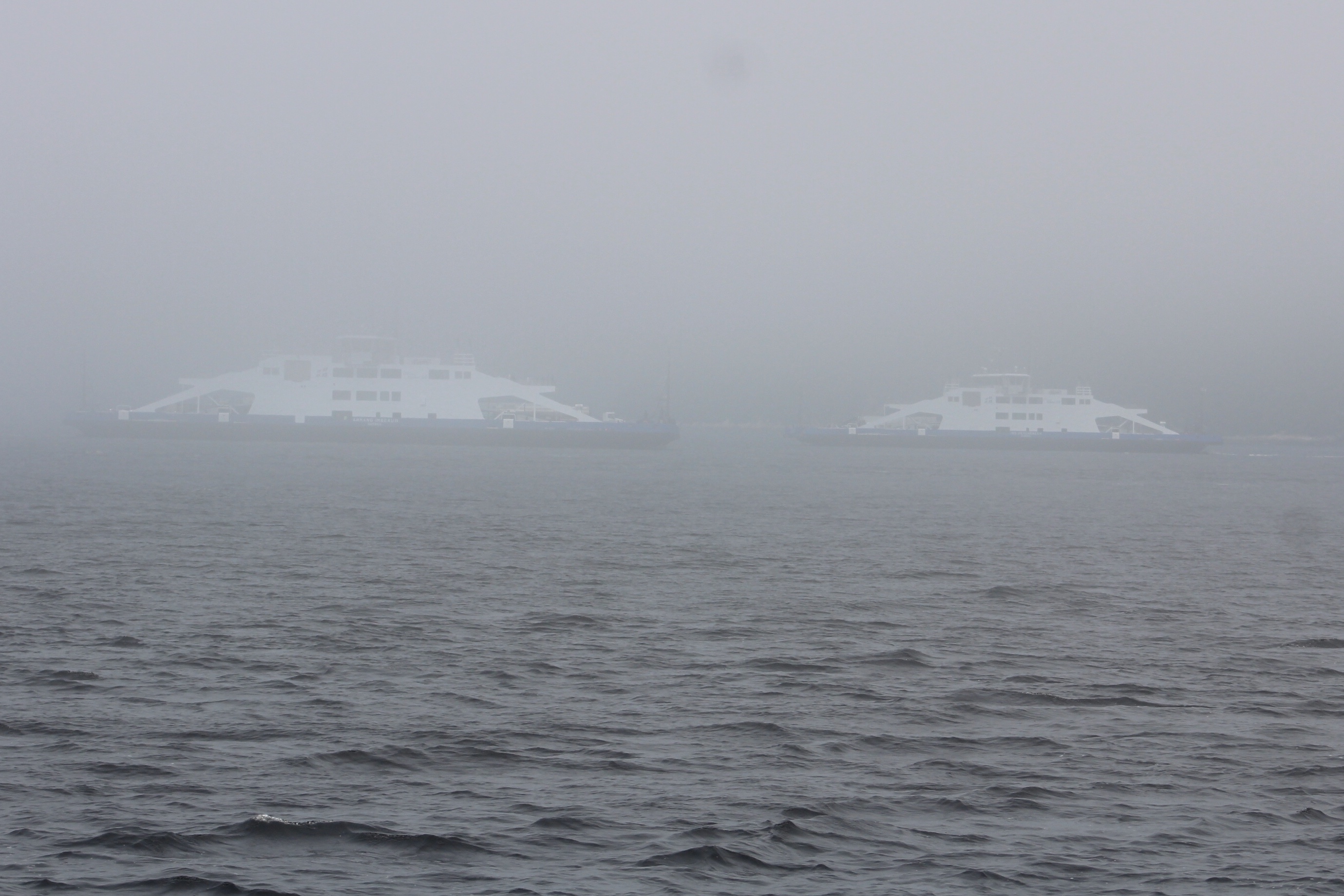
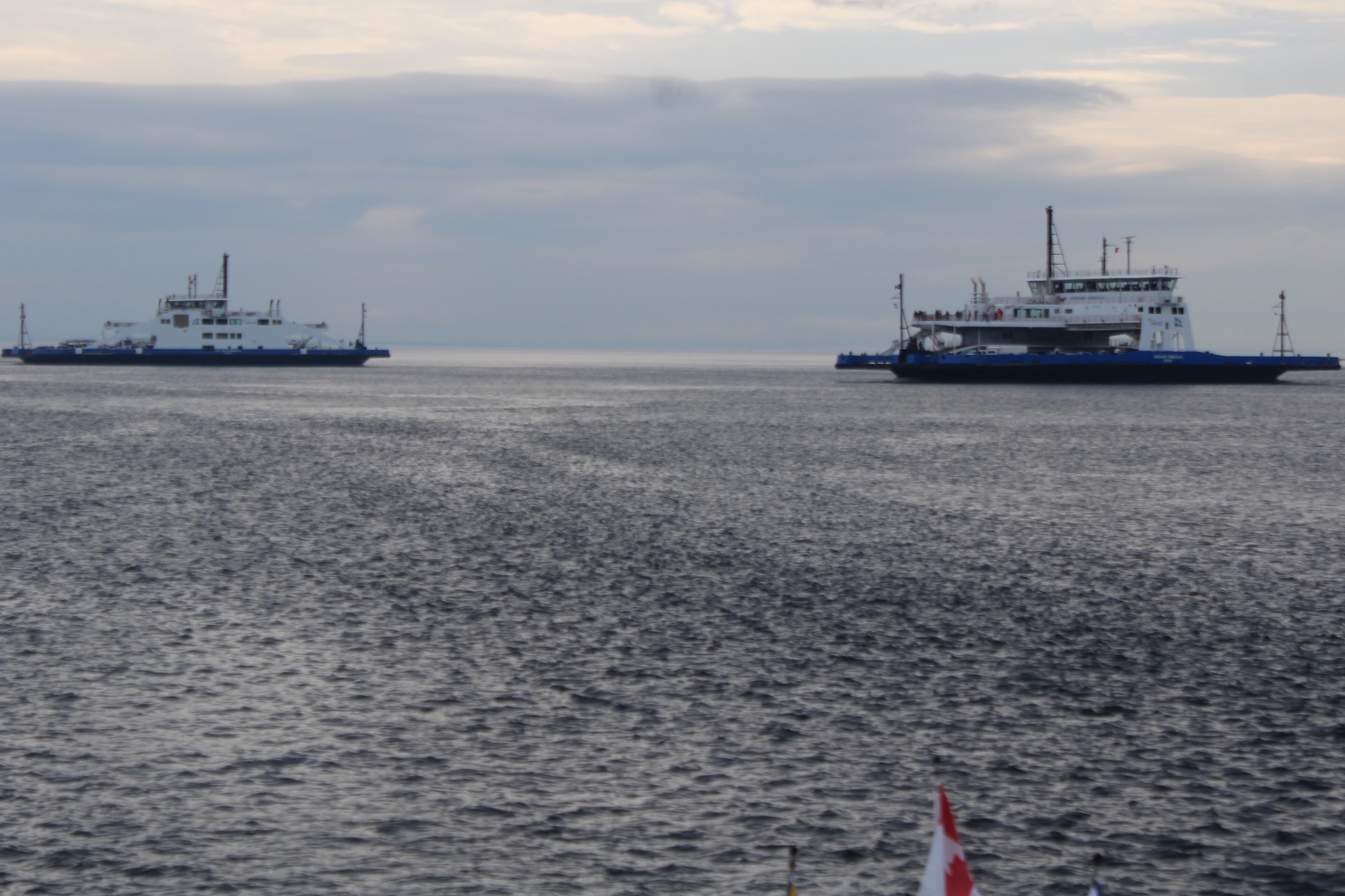
    Ferry Crossing at Tadoussac

    In just a few minutes two large vessels appeared on the radar, and then a few minutes later the crew could finally see the source of the horn blasts.

    Between the Lighthouse and the Ferry Crossing, the crew saw seven more Beluga Whales. Unfortunately, with the fog, ferries and other boats in the area, there was only time to watch the whales. Hence no pics were taken.

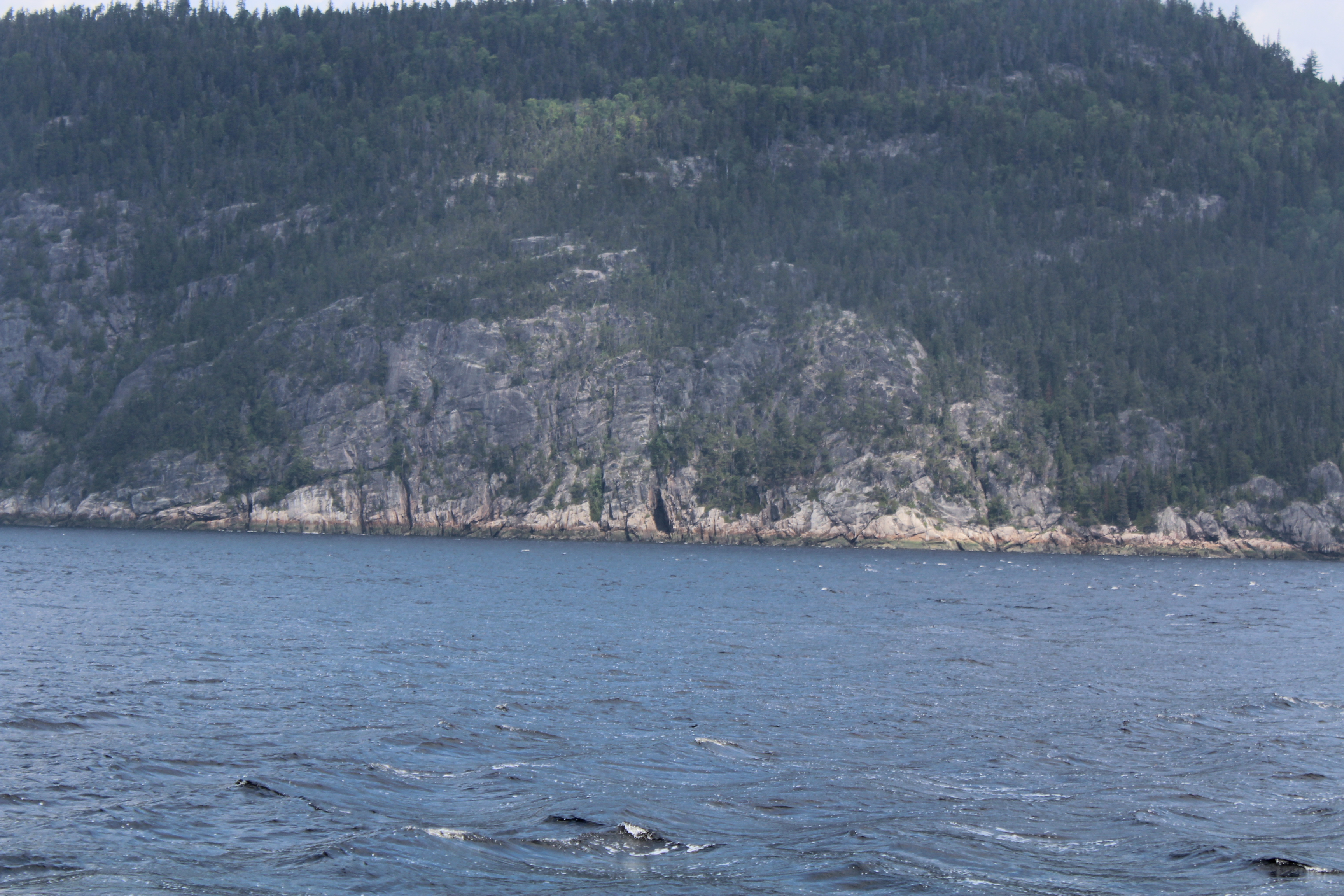
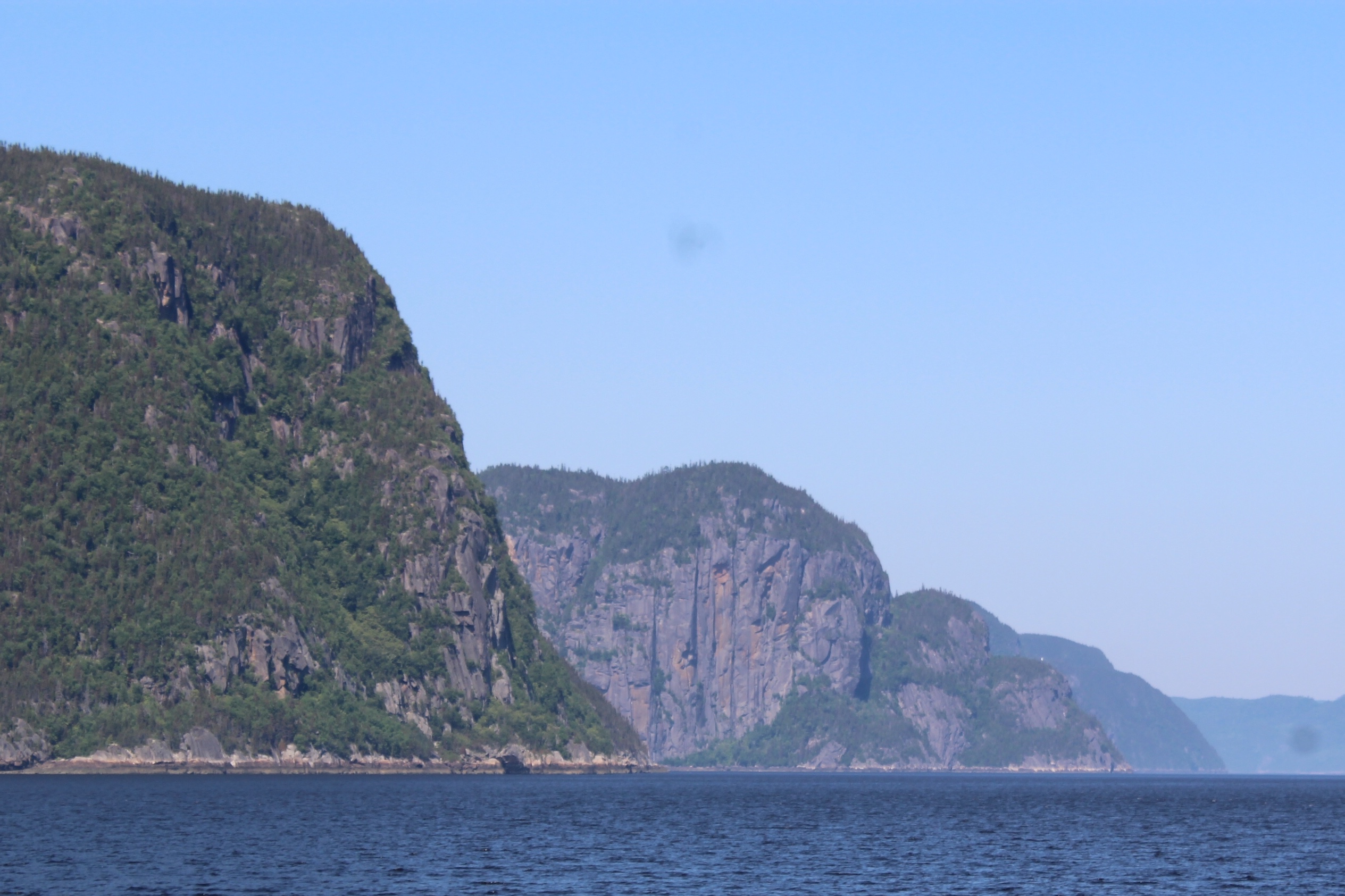
    When the fog began to lift it made for some spectacular views. The mountains came straight down to the waters edge (by definition, a Fjord), and then continue down under water for several more hundred feet. The crew cruised over some waters 750 feet deep today.

    The crew continued up the Saguenay Fjord taking in the beauty of the mountains while keeping an eye out for more whales. However, no more whales were spotted, but it is worth the trip up river just to marvel at the scenery.

    The crew took a slip at the St Jean Marina and plan to go to the Baie d’Eternity tomorrow.

    Thursday, July 4th, Happy Independence Day!

    I will start the day with an old Patriotic story that beckons back to the days of our wonderful country to commemorate Independence Day. Since the crew cruised Champlain Lake, I will use characters that hail from that region for the story. Ethan Allen, an American Revolutionary War Hero from Vermont, George Washington who needs no introduction, and the antagonist should be obvious.

    As I remember, Ethan Allen ventured over to the British Isles after the war to make a visit to old friends. While there, his friends continued to make fun of his new country, the United States of America, and its new leaders. Of course, this means President Washington was the butt of the shenanigans. One stunt the British pranksters played was to put a picture of George in a most conspicuous spot in the privy, or outhouse. Ethan Allen saw his Commander in Chief in the privy, but made no mention of the picture upon return to the gathering of his friends.

    This certainly caught the British by surprise, so one of them finally asked, “Ethan, did you notice George Washington in the privy?” For which Ethan Allen replied, “well it seemed like an obvious place for an Englishman to keep a picture of George so I didn’t think much about it.”

    This was certainly not the response the Londoners were expecting, so they asked the obvious follow up question, “Why is that?” To which Ethan wittingly answered, “there is nothing that will make an Englishman shit so quick as the site of General Washington.”

    Hope you had a wonderful Independence Day, brought to you by George Washington and his band of Patriots.

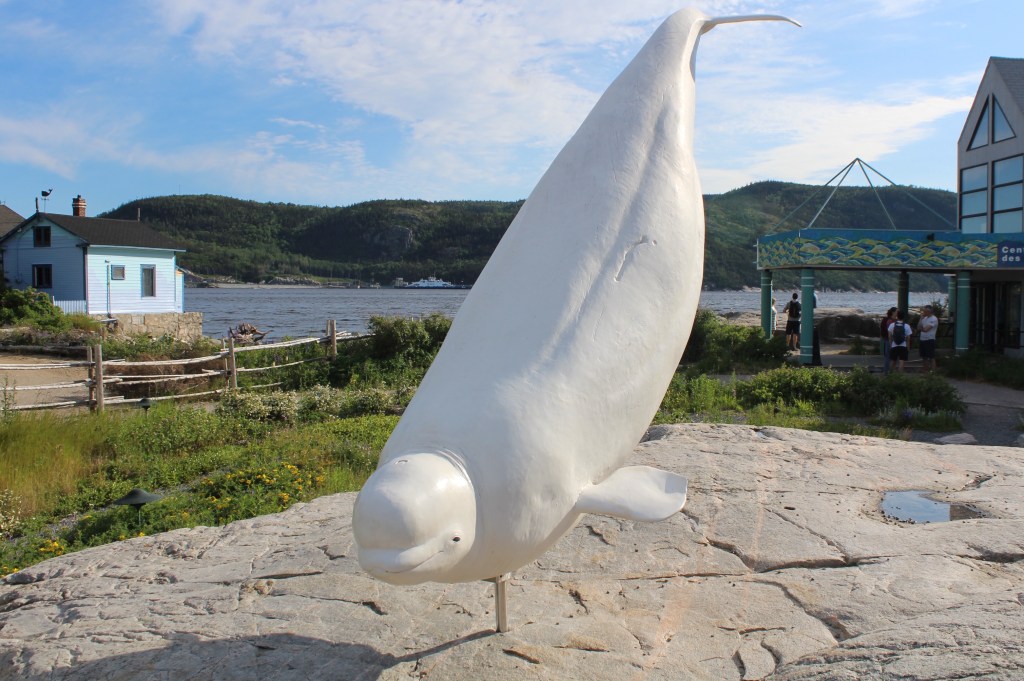
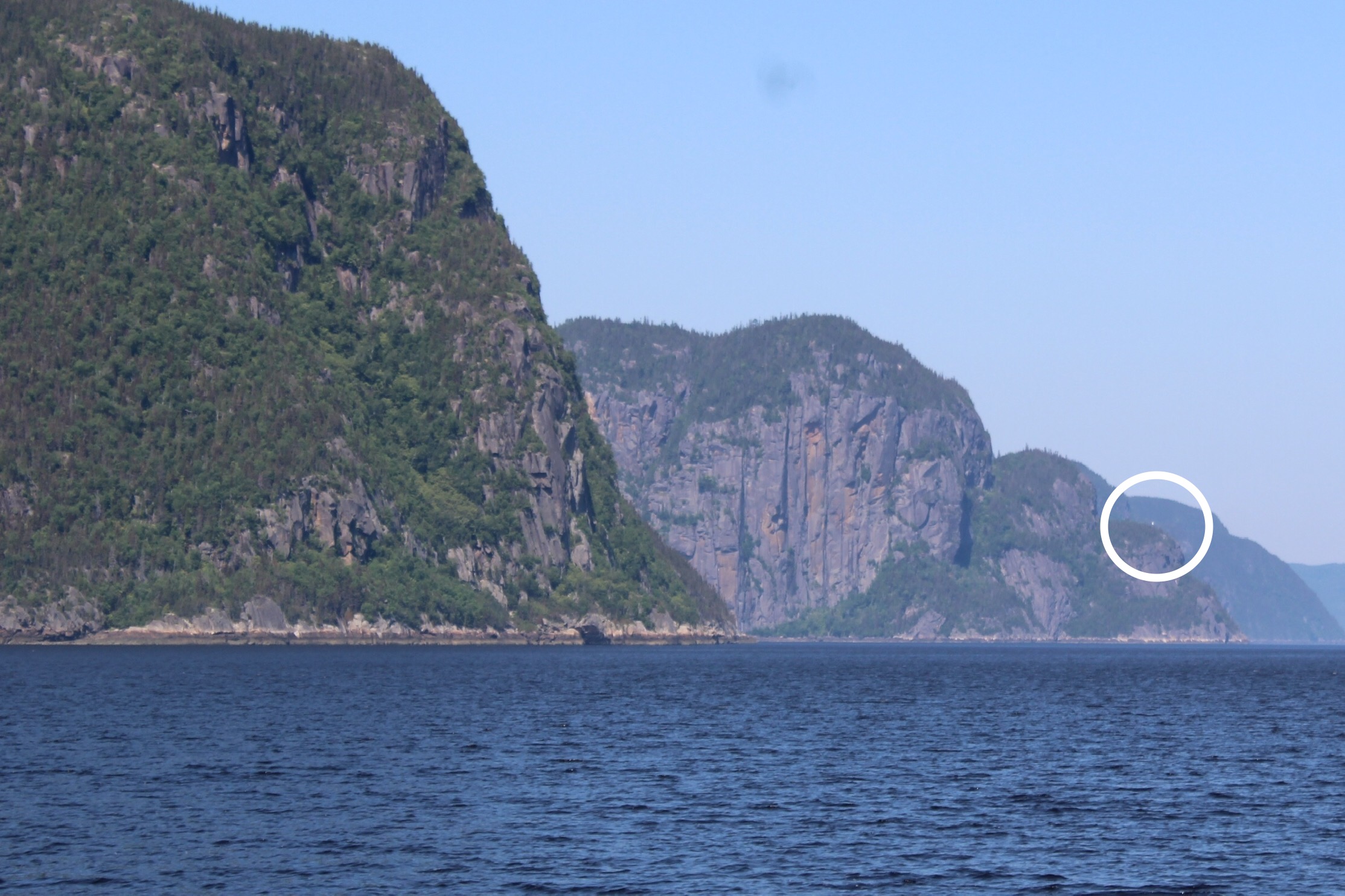
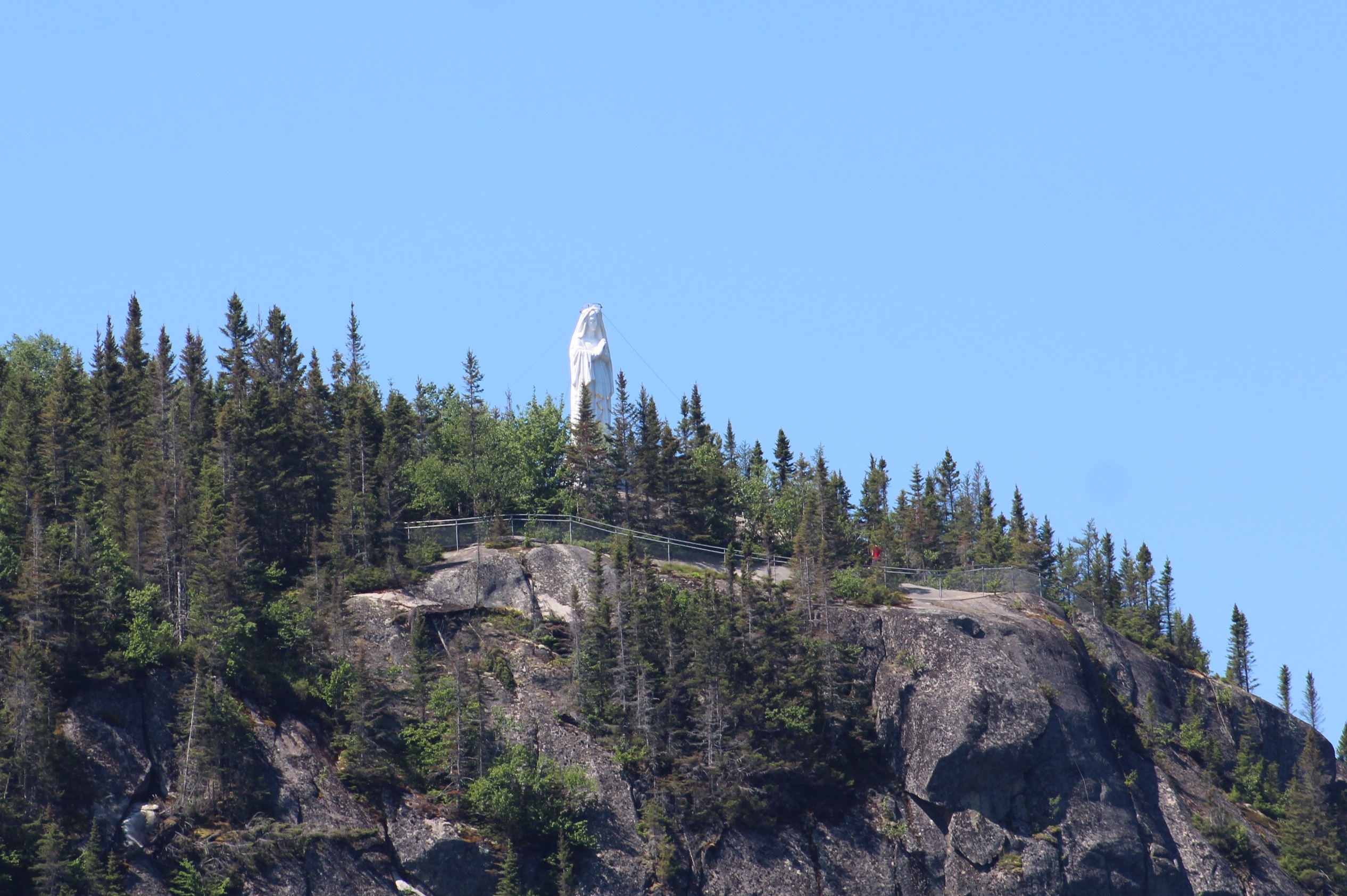
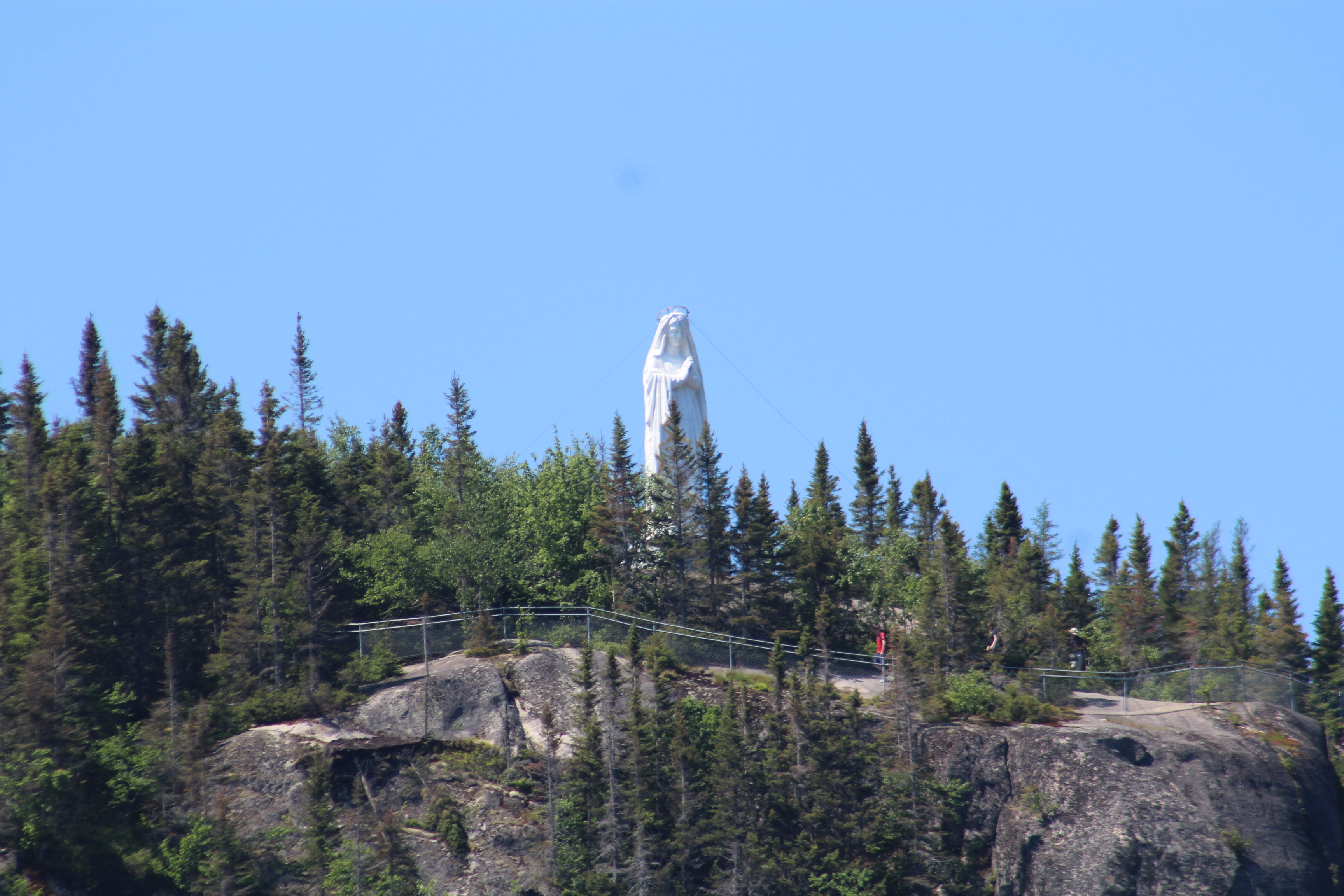
    The crew made way to the Bay of Eternity up the Saguenay Fjord. The main goal was to see the statue that sits atop a hill at the entrance to the Bay. The crew could make out the white statue several miles before they arrived. As they approached the entrance, the statue grew is stature and came to dominate the point.

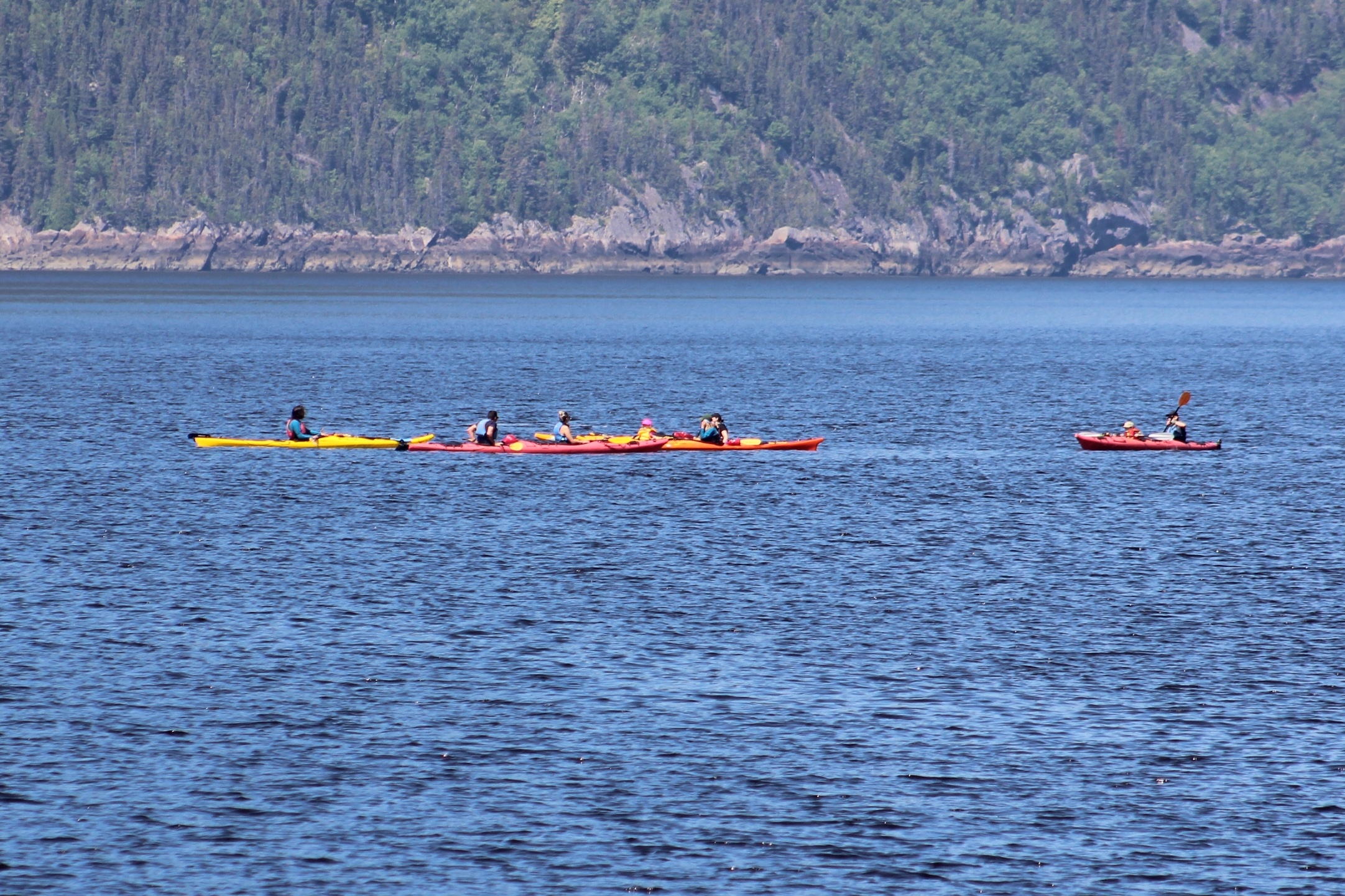
    After the photo shot, the skipper had to dodge some kayakers who had paddled out to the statue. Once safely past the paddlers, he entered the Bay to see if he could find a spot to anchor.

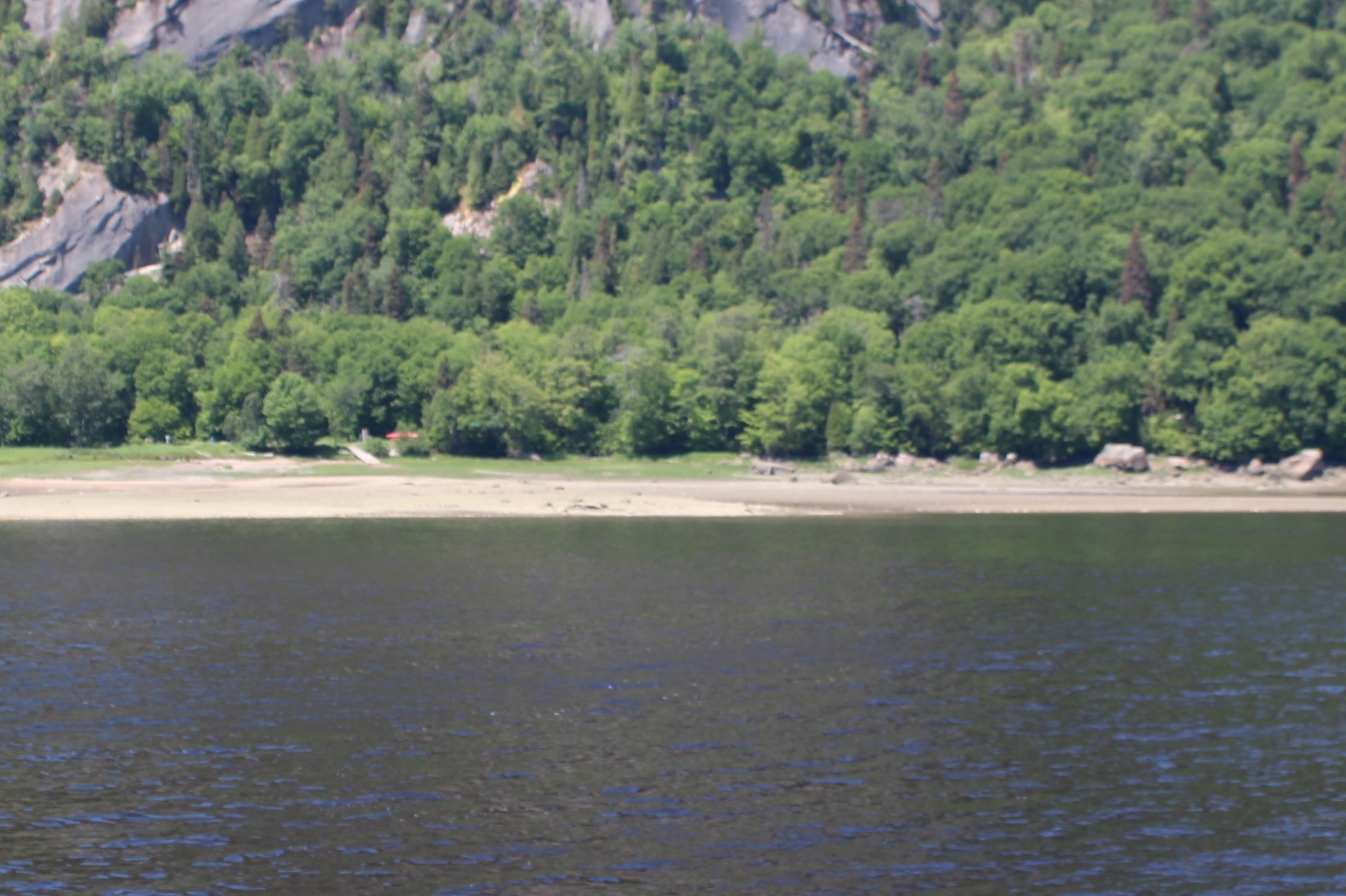
    The crew arrived at low tide so they could sound for water depth to locate a spot they could safely anchor. The problem is finding a spot because the water level drops so fast close to shore. Since the tide change is around 15 feet, the skipper was looking for a sliver of water 5 foot deep at low tide. At what looked to be the best spot, he stuck the bow into some soft sand/mud. Then took a sounding at the back of the boat, 55 feet deep. After considering the risk rewards proposition of this task the crew decided it would be best not to anchor and skip the hike to the statue.

    The end of the Bay of Eternity

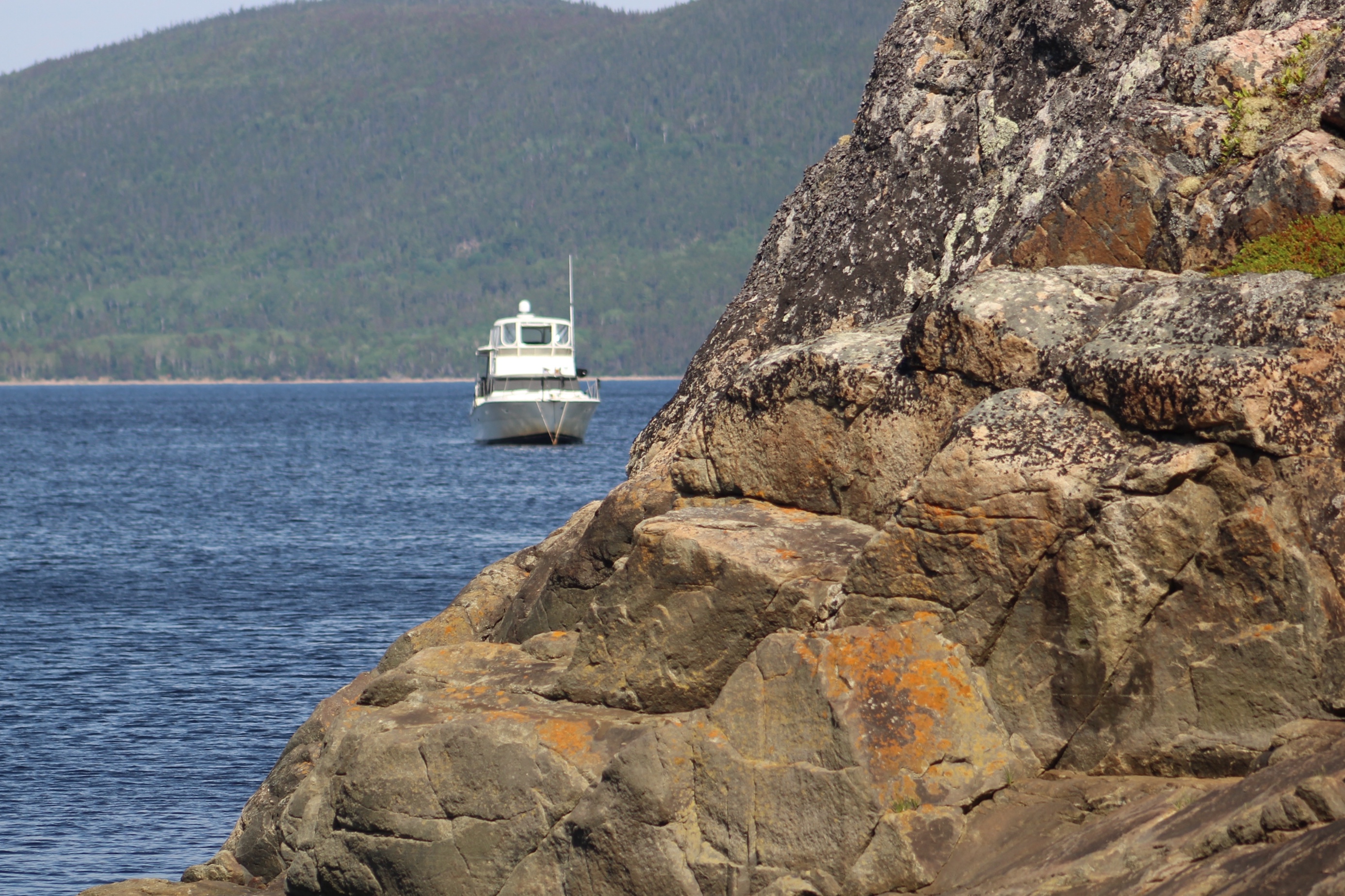
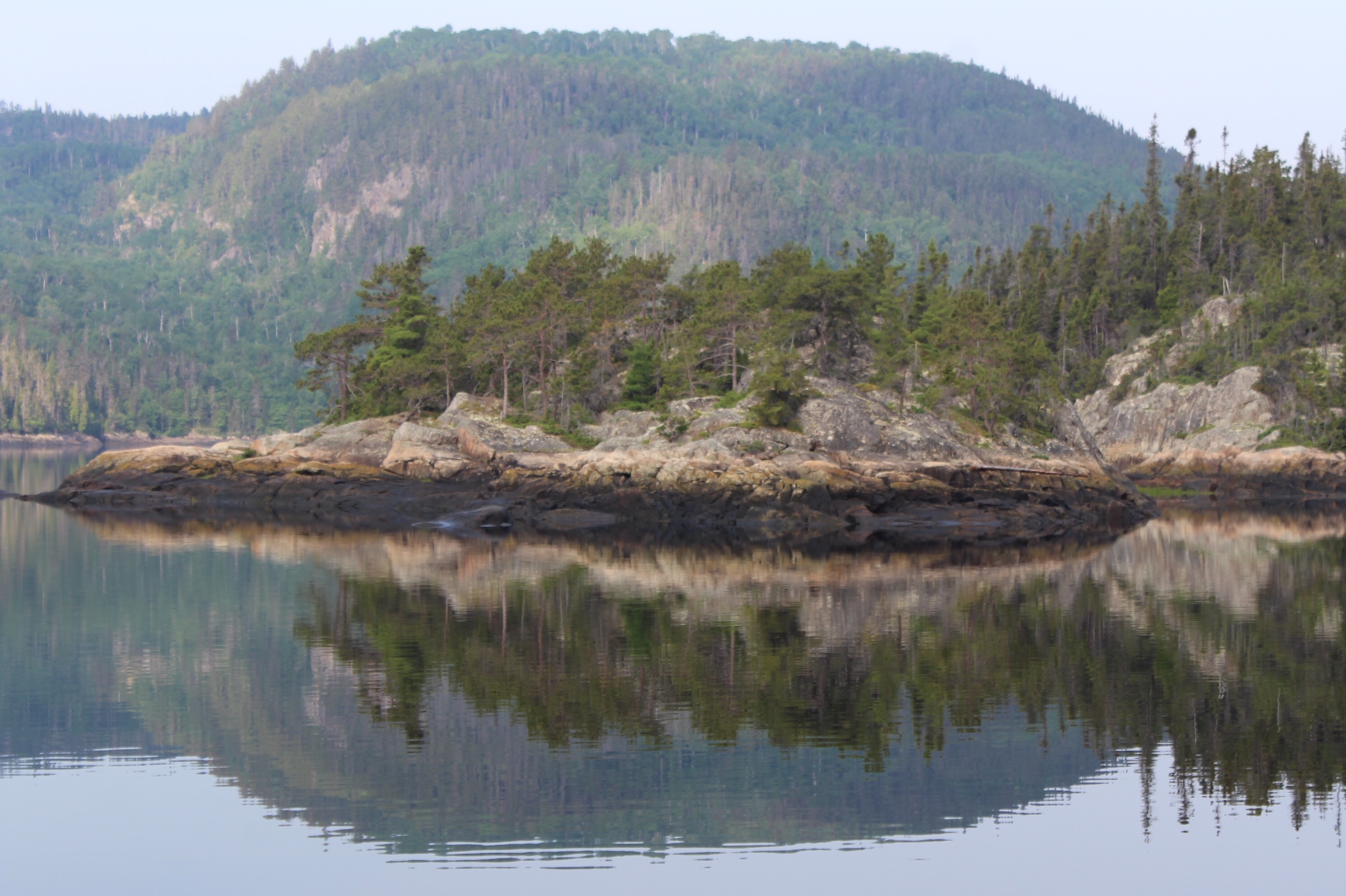
    The crew turned around and headed to the Isle of Ste Louis where they dropped the anchor in 10 feet of water, played out 150 foot of chain, and still had 20 feet under the keel. That should hold them just fine for the next few days.

    Still Waters II at anchor

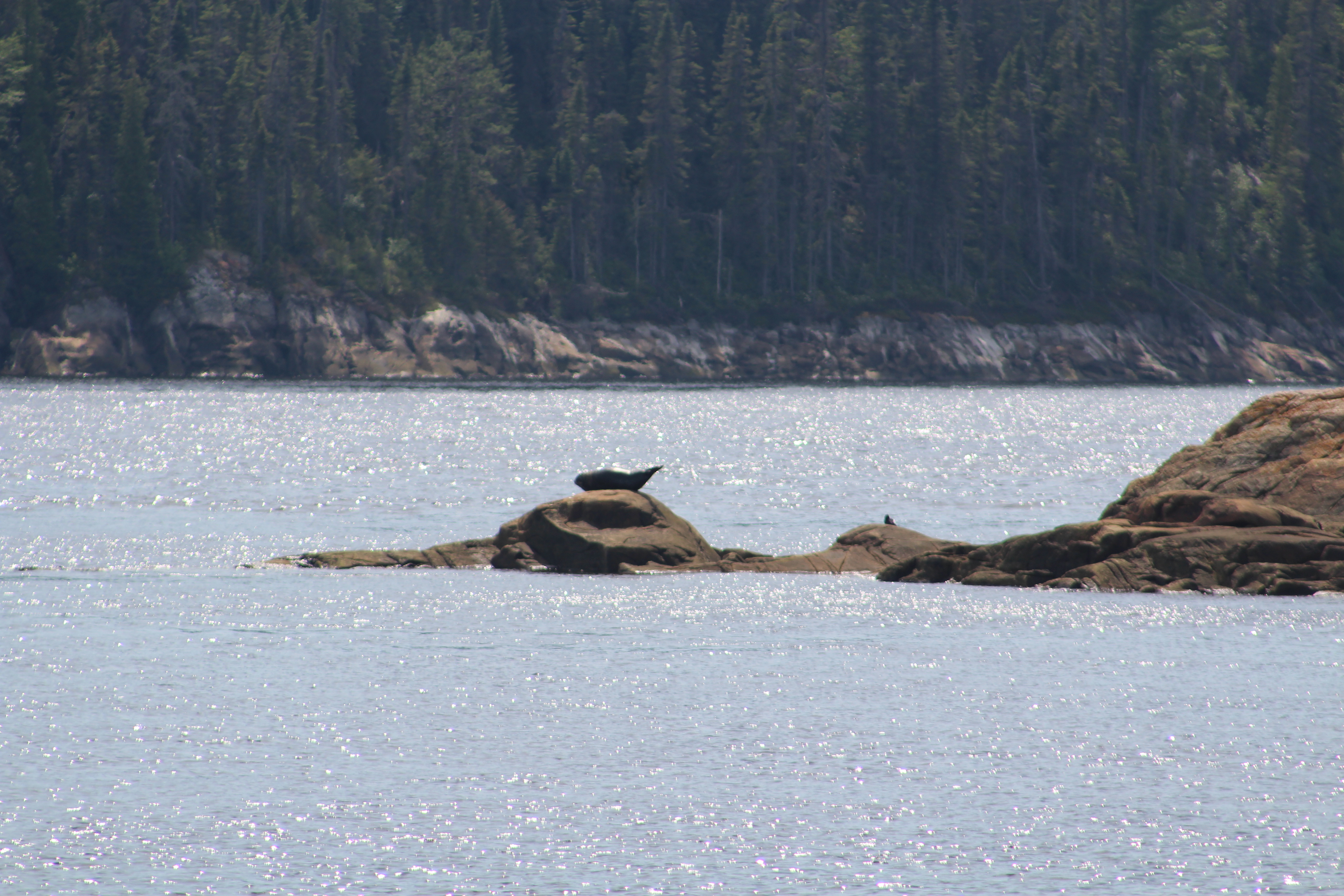
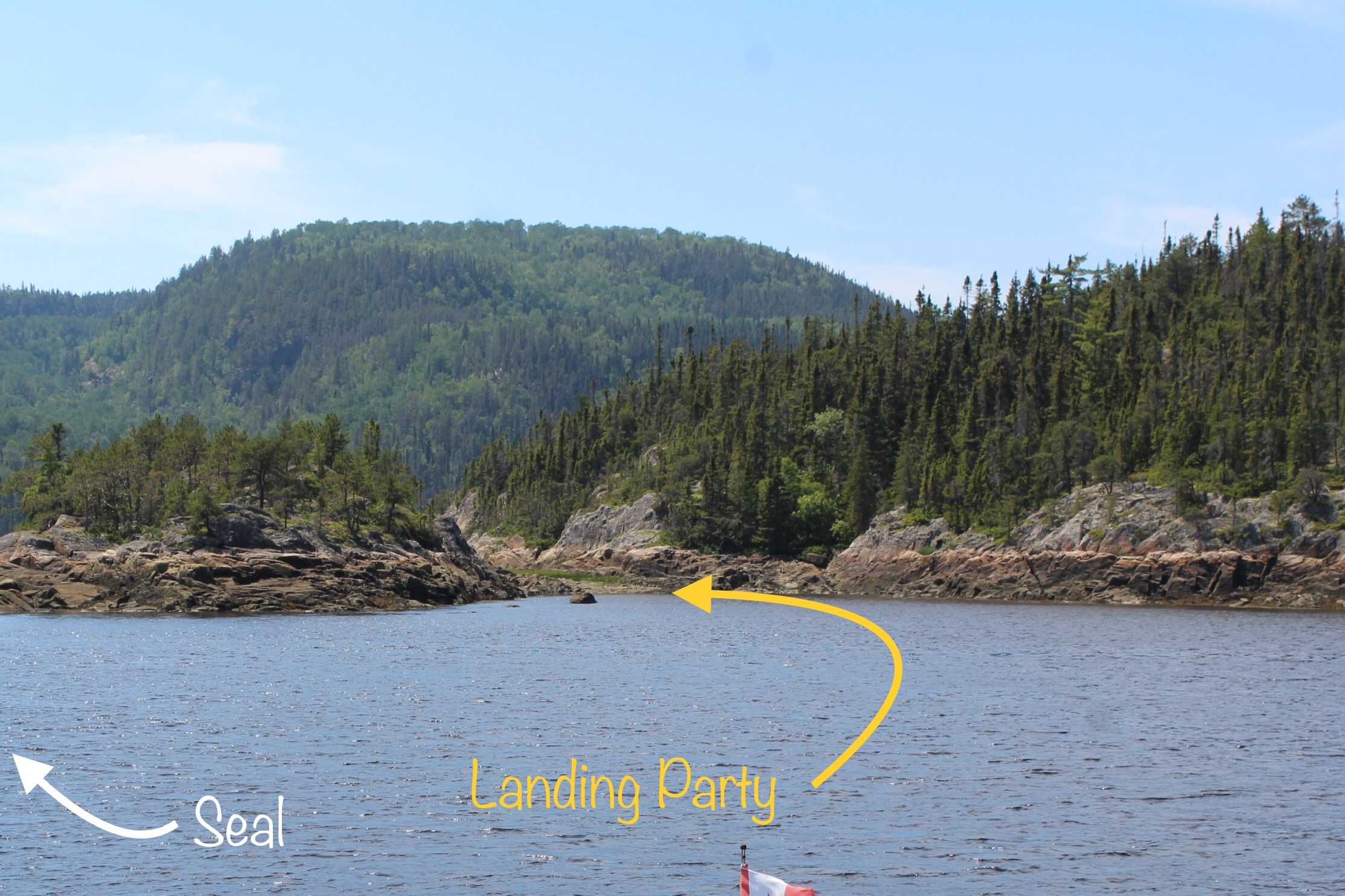
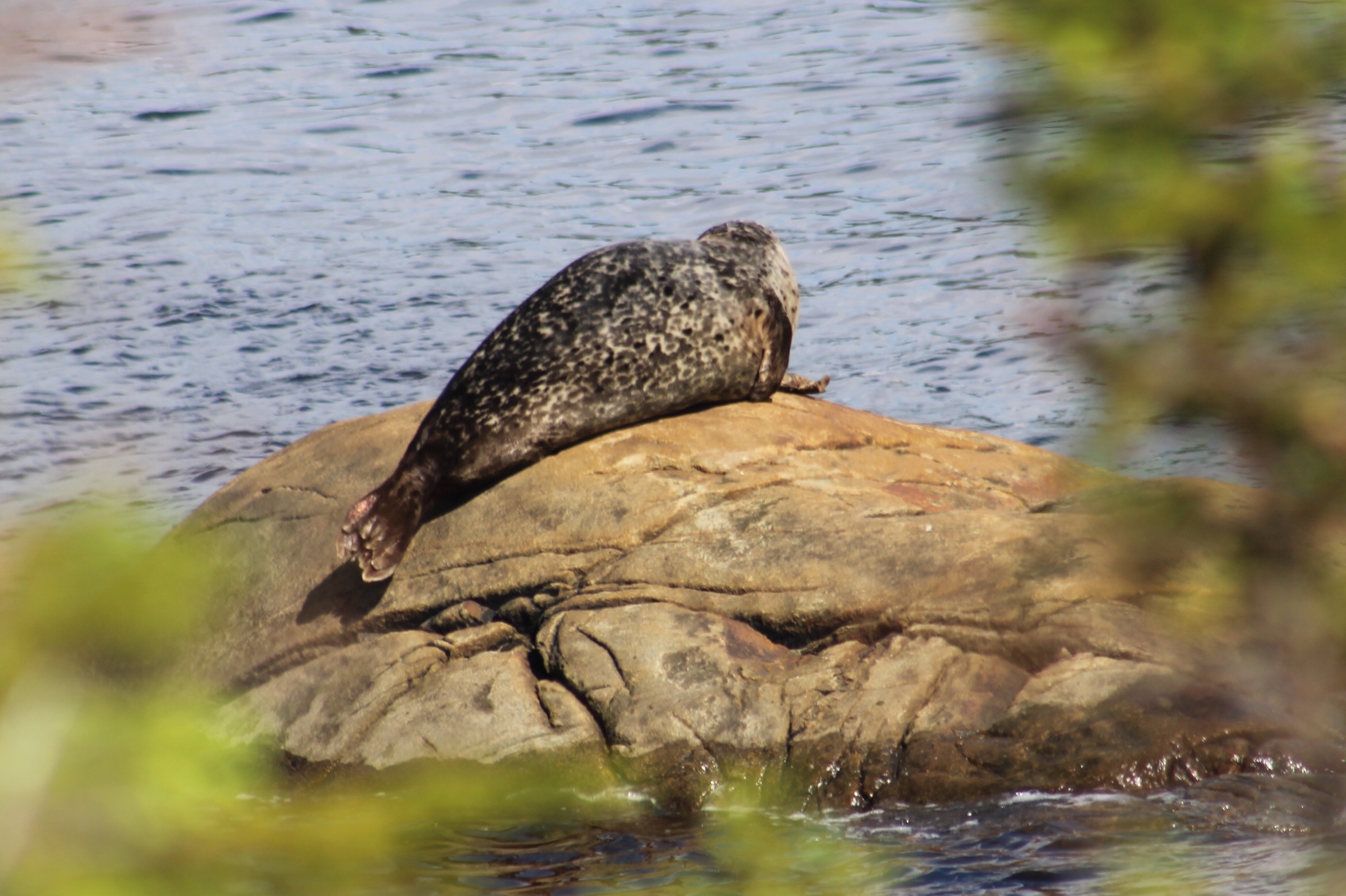
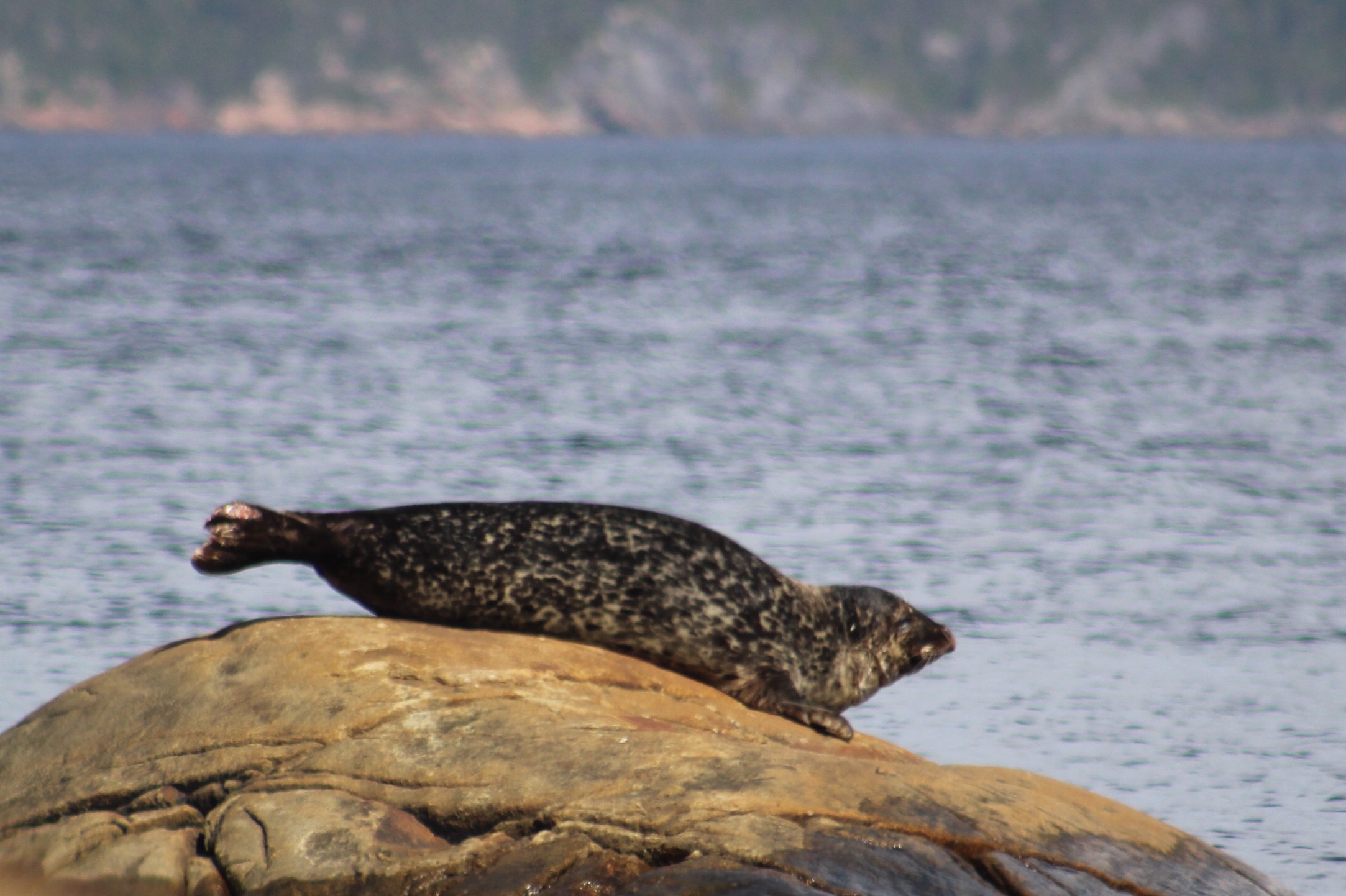
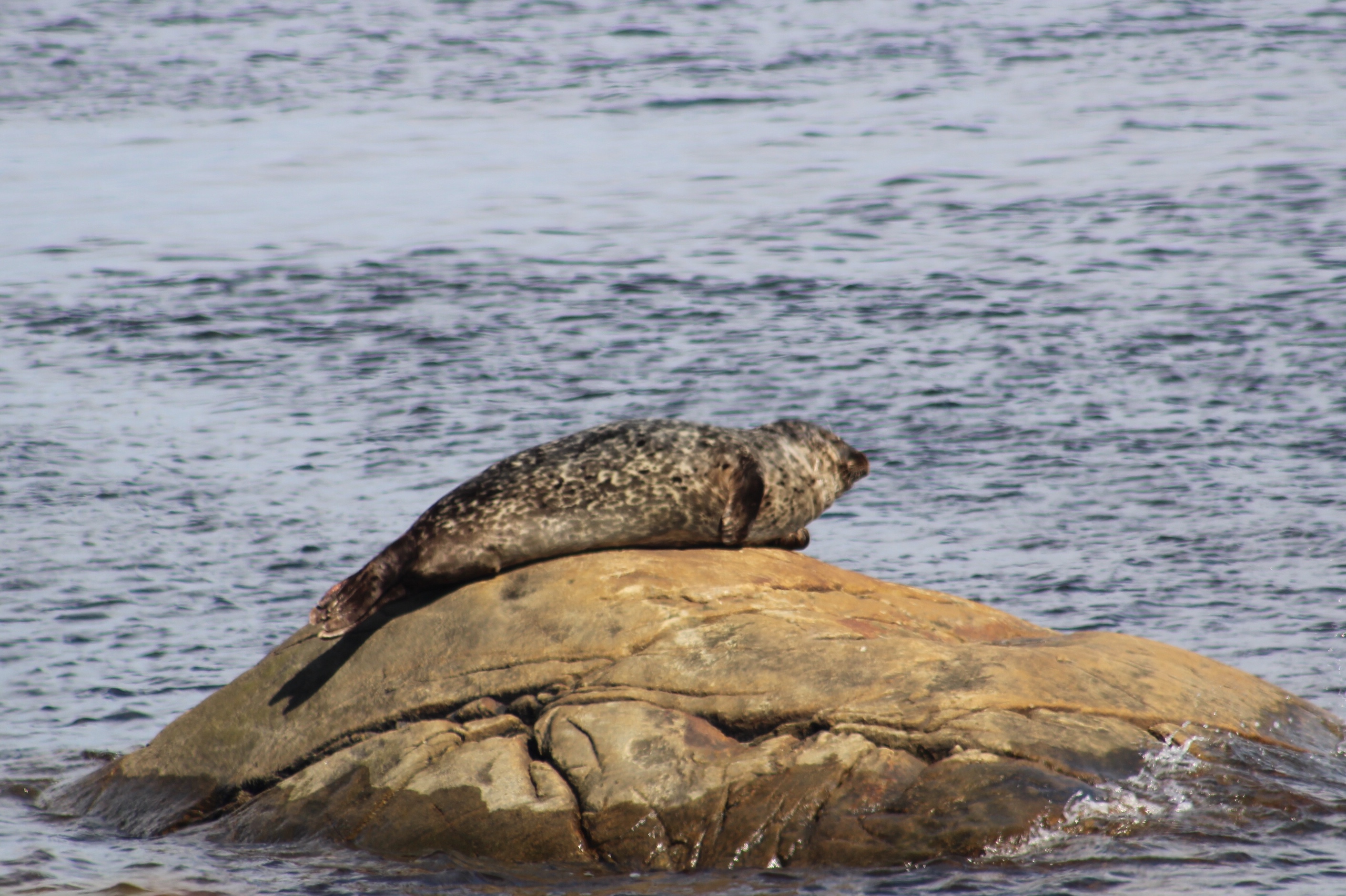
    Within the hour of anchoring, the Admiral noticed a Harbor Seal sunbathing on a rock protruding out of the water.

    After watching the seal for a while, the skipper decided to use his stalking skills to sneak up on the unsuspecting seal. These skills would have made a French fur trader proud. The skipper dropped the dinghy, and rowed ashore out of view of the seal.

    After securing the dinghy, the crew snuck around the backside of the island and had a great view of the seal. After repositioning a bit, the skipper was able to get some good pics of the sunning Harbor Seal.

    After a bit, the seal got a little nervous and slipped back into the water. Or did he know the tide was rushing in and his rock would soon be under water? By the time the crew got back to the boat, the rock was barely visible.

    Friday, July 5th

    The crew took a wonderful relaxing day just watching the water and scenery around them. There was not a whole lot else to do because they had no cell service out in this neck of the woods. The crew did get caught up on a few boat chores and got plenty of quality reading time. All in all, a great day!

    Saturday, July 6th

    The crew woke to rain and light fog. After the rain stopped, the crew weighed anchor and started towards the town of Tadoussac. The skipper kept the throttles set at idle speed and was making 10-11 mph as the current ebbed out with the tide. Once a cell signal was achieved, the skipper called the marina to make a reservation. Luckily the marina had a spot for them.

    After arrival, the crew took lunch aboard and then set out to go explore the Whale Interpretive Center. All the displays were in French; however, the museum had books that were in English that explained the displays. A very good curated museum.

    After dinner, the crew hiked a loop trail to see if they could spot some whales from shore. Their walk was rewarded with several pods of Belugas swimming out in the entrance channel to Tadoussac.

    Boat Name of the Week

    Who knows what all these boat names mean since they are written in French.

    Next Week –

    The crew will continue to search for whales along the north shore of the St Lawrence for a few more days. They will then cross to the south shore to the Gaspé Peninsula and visit Saint Anne des Monts. If the weather is good they may even begin to round the peninsula and head south towards New Brunswick.

    Loop On – Where the road ends, the water begins. The water goes on forever, and the adventure never ends.

    Eric the Red

  • Quebec City – Par Excellence

    Hello virtual crew members and fellow adventurers!

    The crew would like to welcome damoeretti98 aboard as the latest virtual crew member. You to can be a virtual crew member by following the blog.

    Summary of Week

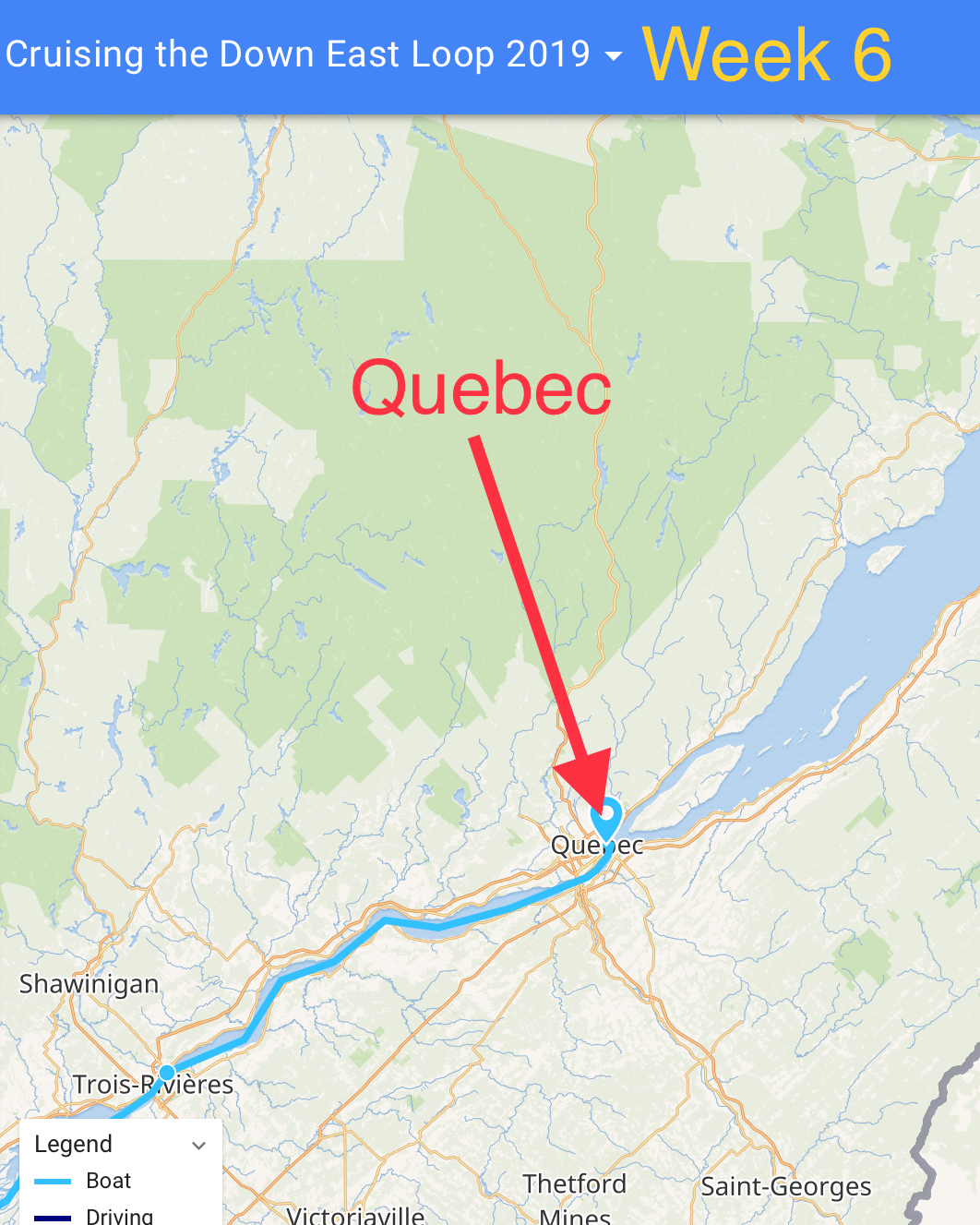
    The crew put in only one long but fast travel day last week. They left Three Rivers on Monday afternoon and arrived in Quebec where they stayed in Marina Port Quebec. The rest of the week was dedicated to shore excursions exploring the old city of Quebec.

    Click on the Still Waters II Travel Map to see detailed Voyage Logs.

    The voyage of discovery did answer the following questions this week:

    1. Who founded Quebec City, and in what year?
    2. What is the meaning of the word Quebec?
    3. What is the most photographed hotel in the world?
    4. How did Quebec come to have the Fountaine de Tourny?
    5. What medal has the Fountaine won?
    6. Why is French the first language of Quebec?
    7. How did British appeasement to Quebec help fuel the flames of the American Revolution?
    8. Who started the French and Indian War?

    At the Box Office

    To see past videos, click on the link to the Still Waters II Vimeo site.  The library contains videos of Still Waters II cruising America’s Great Loop.

    Sunday, June 23rd

    Where is the video camera when you need it?

    The Admiral watched a boater try to land on the dock with two unsuccessful attempts. She suggested the skipper go out and help the boater.

    The skipper jumped right up, well maybe that part is not true, and went to see if he could assist the man dock his boat in the high winds. When the guy made his third attempt, he came towards the dock hot, put his engine in neutral as he glided towards the dock, grabbed his stern line in one hand, and with a big grin of success jumped over to the dock.

    His feeling of success did not last long. As he pulled the stern line in to fasten to a cleat, he realized he forgot to fasten the other end to the boat. The big grin turned in to a look of horror as he watched his boat drift away.

    He quickly ran down the dock and boarded a boat. He was able to jump across from the boat to his craft and regain control. He restarted his engines and made his fourth attempt to dock. A woman who was on board the boat the man boarded came out to see what was going on as a small crowd began to form. It is never good when you become the show while docking your boat.

    On the fourth attempt, the skipper was able to get the previous stern line that was laying on the dock attached to the boat and the other end fastened to a cleat. The woman then told the skipper that the guy was one of the best mariners they had in the marina. The skipper nodded and replied that even the best people have bad days, and it looked like that guy was having a bad day.

    Monday, June 24th

    Maurice was a boater the crew met when they arrived on Saturday. He is a Gold Looper and shared some local knowledge to help the crew make way to Quebec. Maurice handed the skipper a note that explained how to time the tide and current for the run to Quebec. Basically the note said leave Three Rivers eight hours before low tide in Quebec. He also noted that low tide for Monday would be 1937, so the best time to leave would be 1130.

    The skipper thanked him for the information and then verified the data. Two other cruising guides had the same recommendation for departure. The skipper also verified the time of the low tide to be 1937.

    Leaving Three Rivers

    With all this good info in hand, the crew shoved off about 1110 so they could get back in the St Lawrence River by 1130. When they got in the river, the skipper set the throttle for what normally would be 7 mph. The boat was making 11-12 mph for most of the trip. At one point where the river got very narrow, the boat was surfing the current at 15 mph.

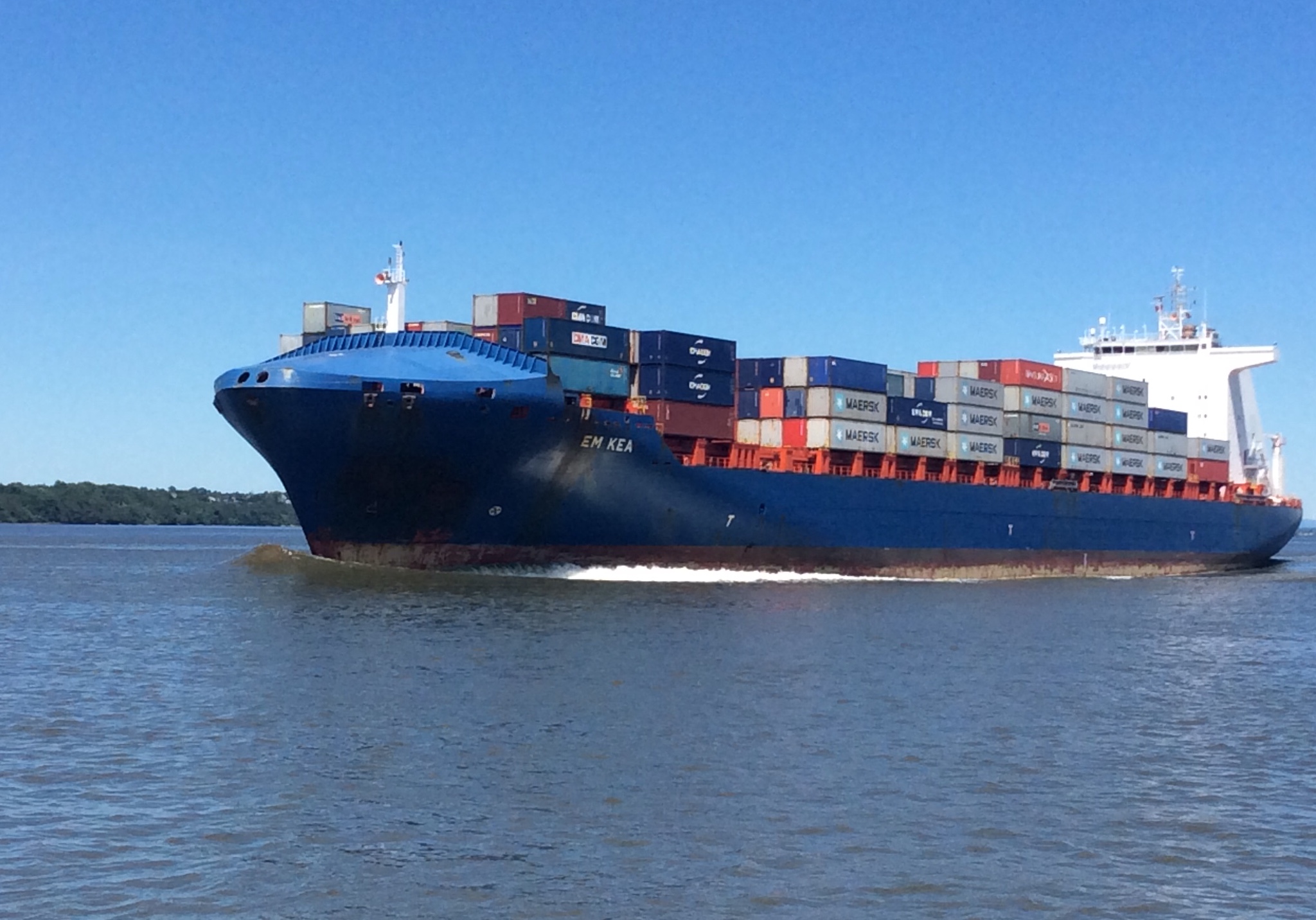
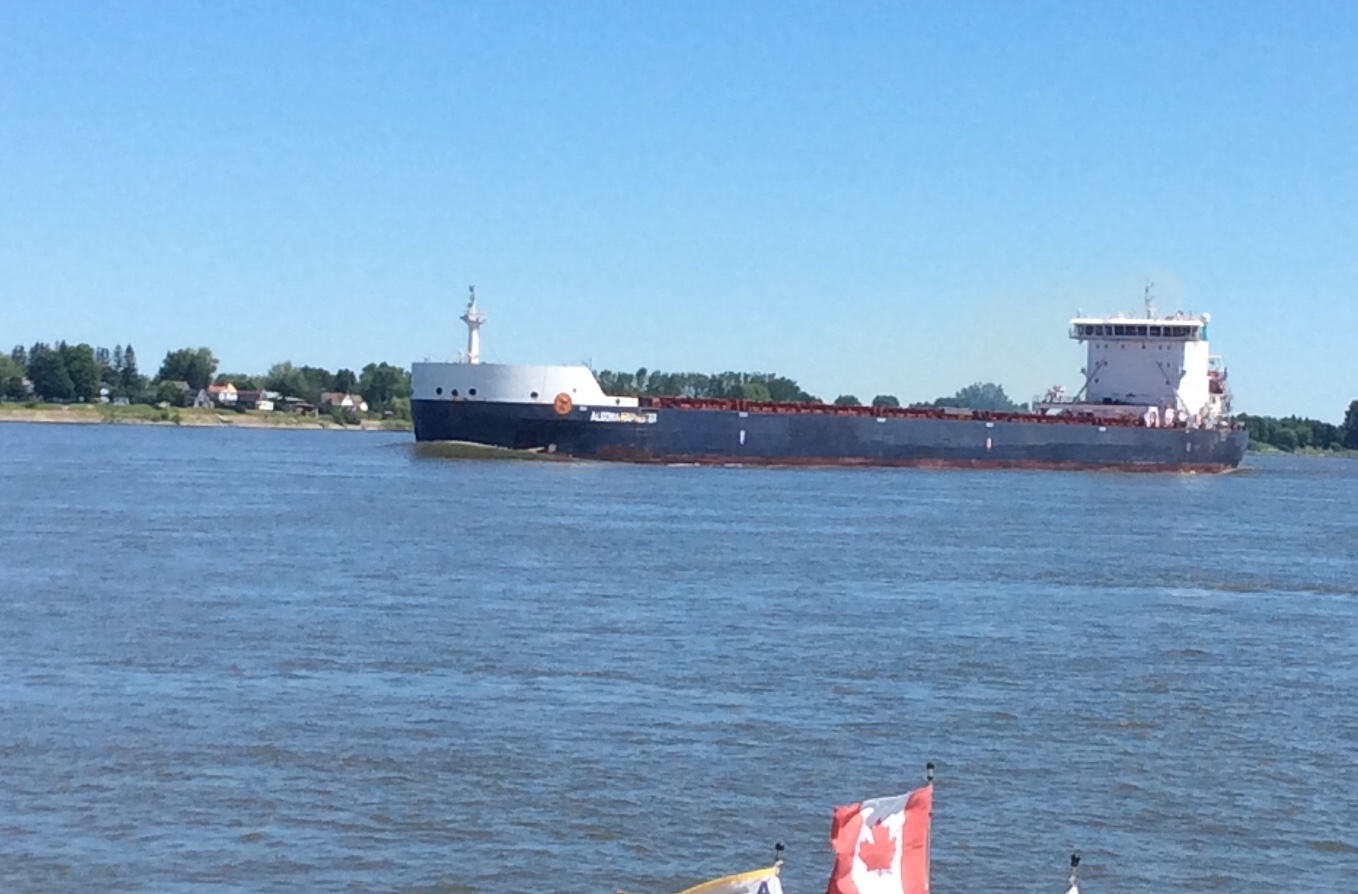
    Numerous large vessels in the St Lawrence River

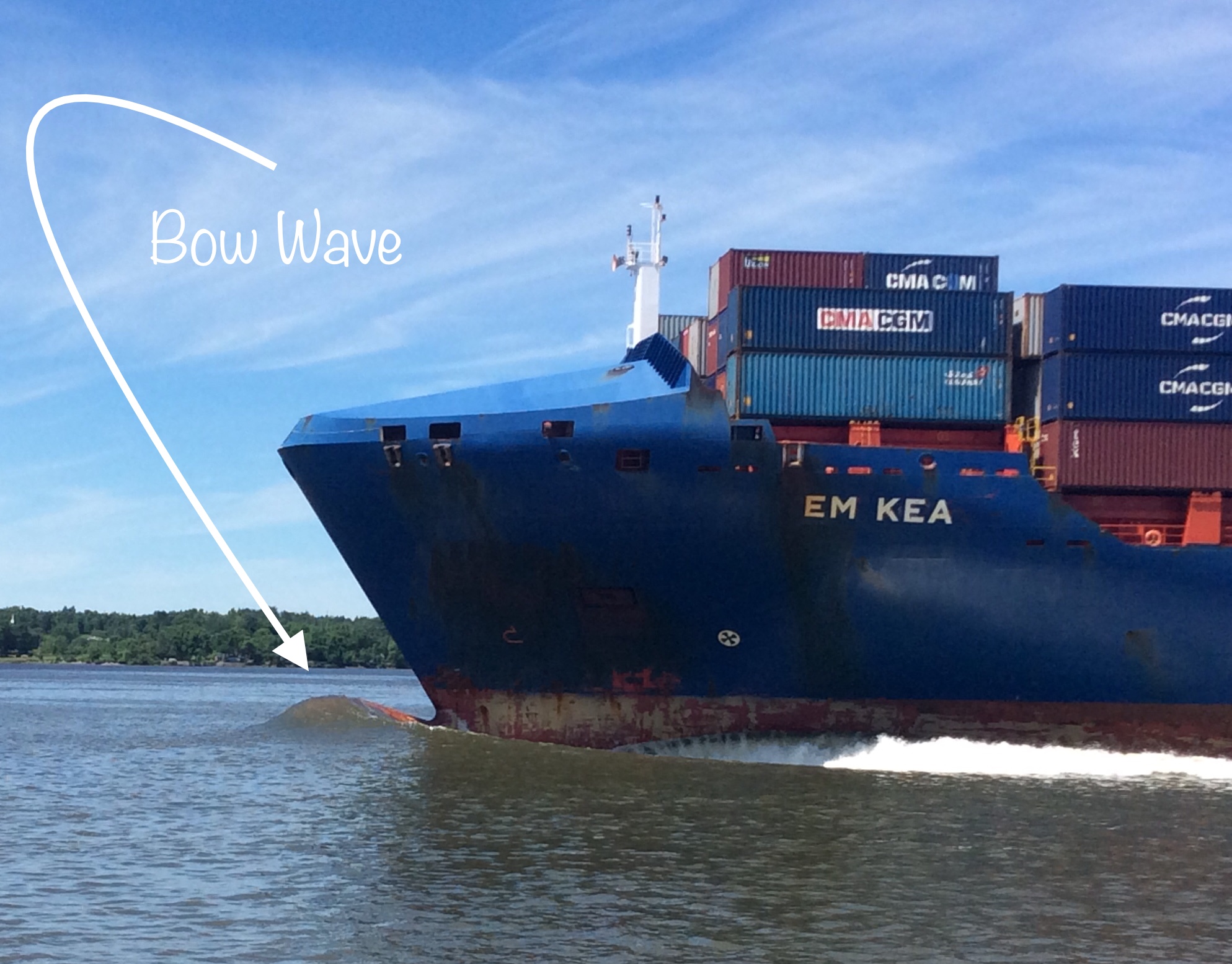
    Check out that bow wave

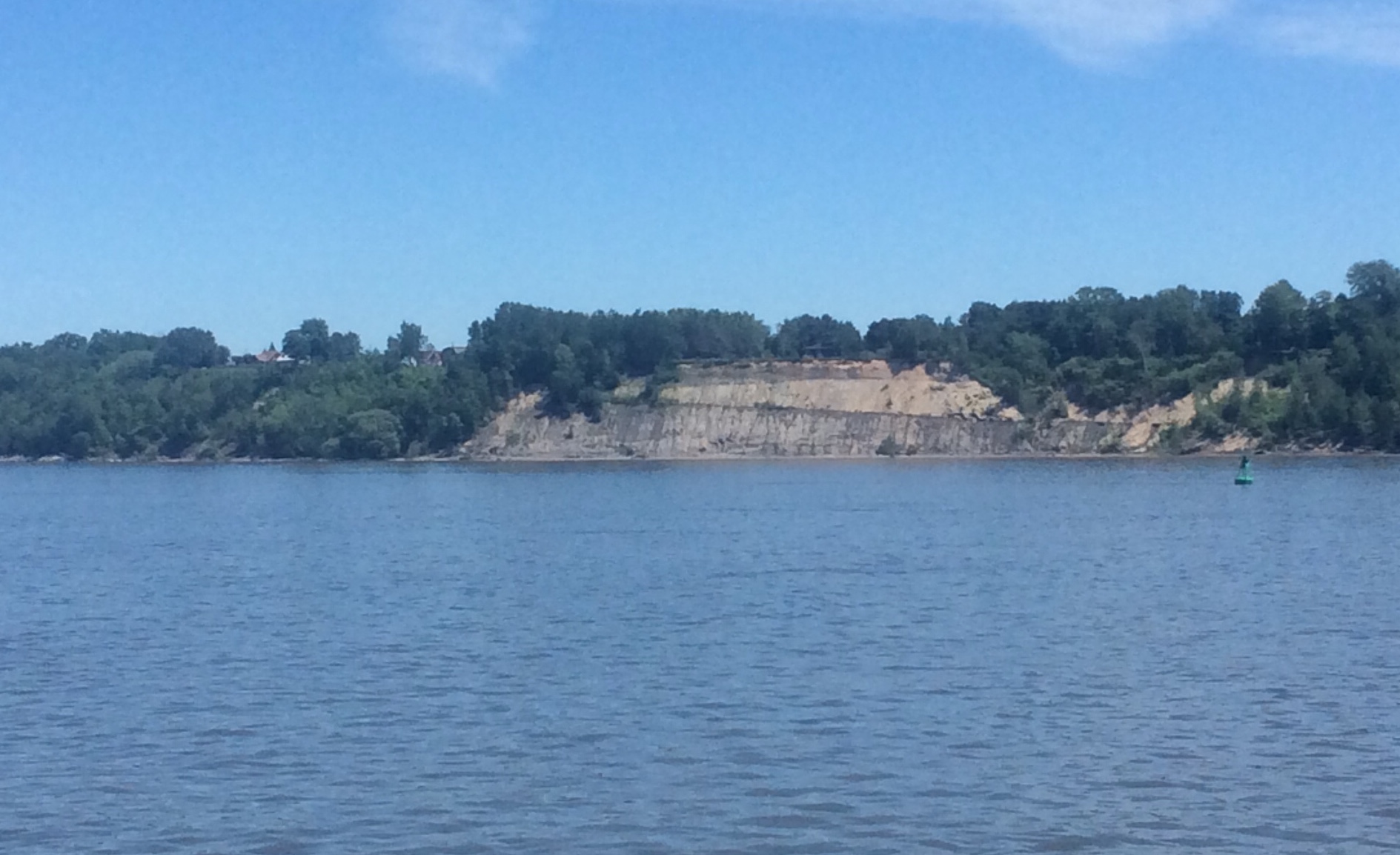
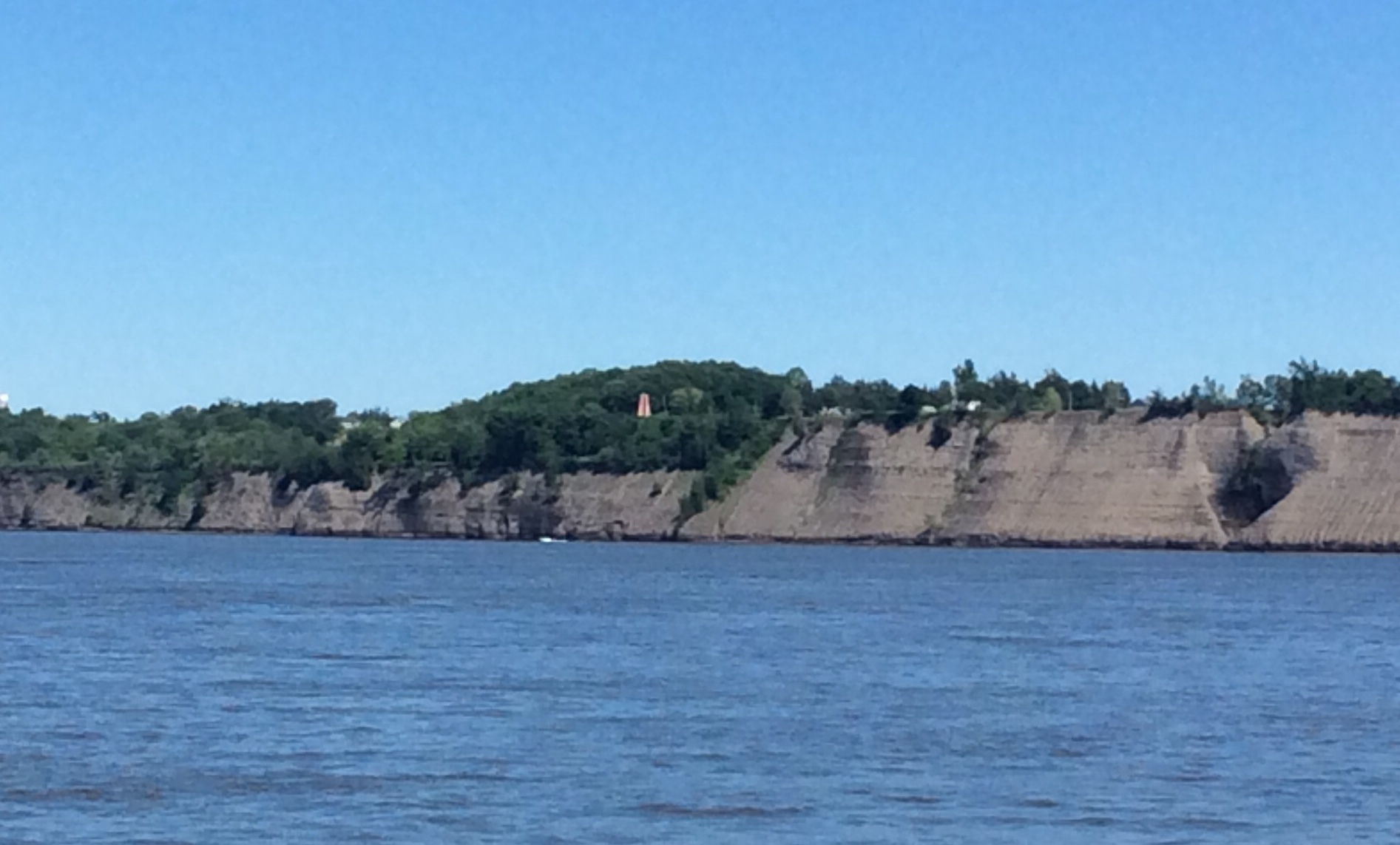
    Surprised by sandy cliffs along the banks

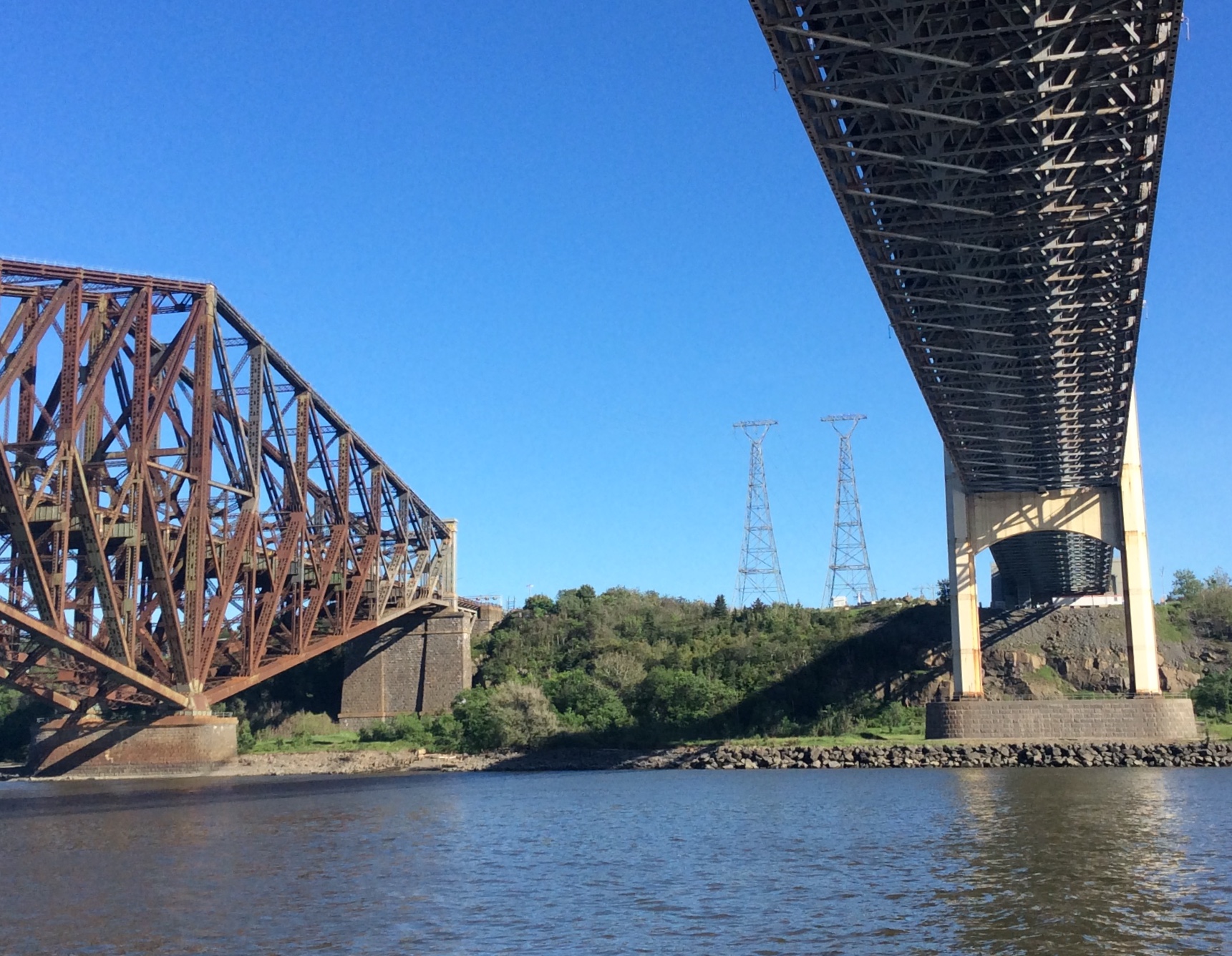
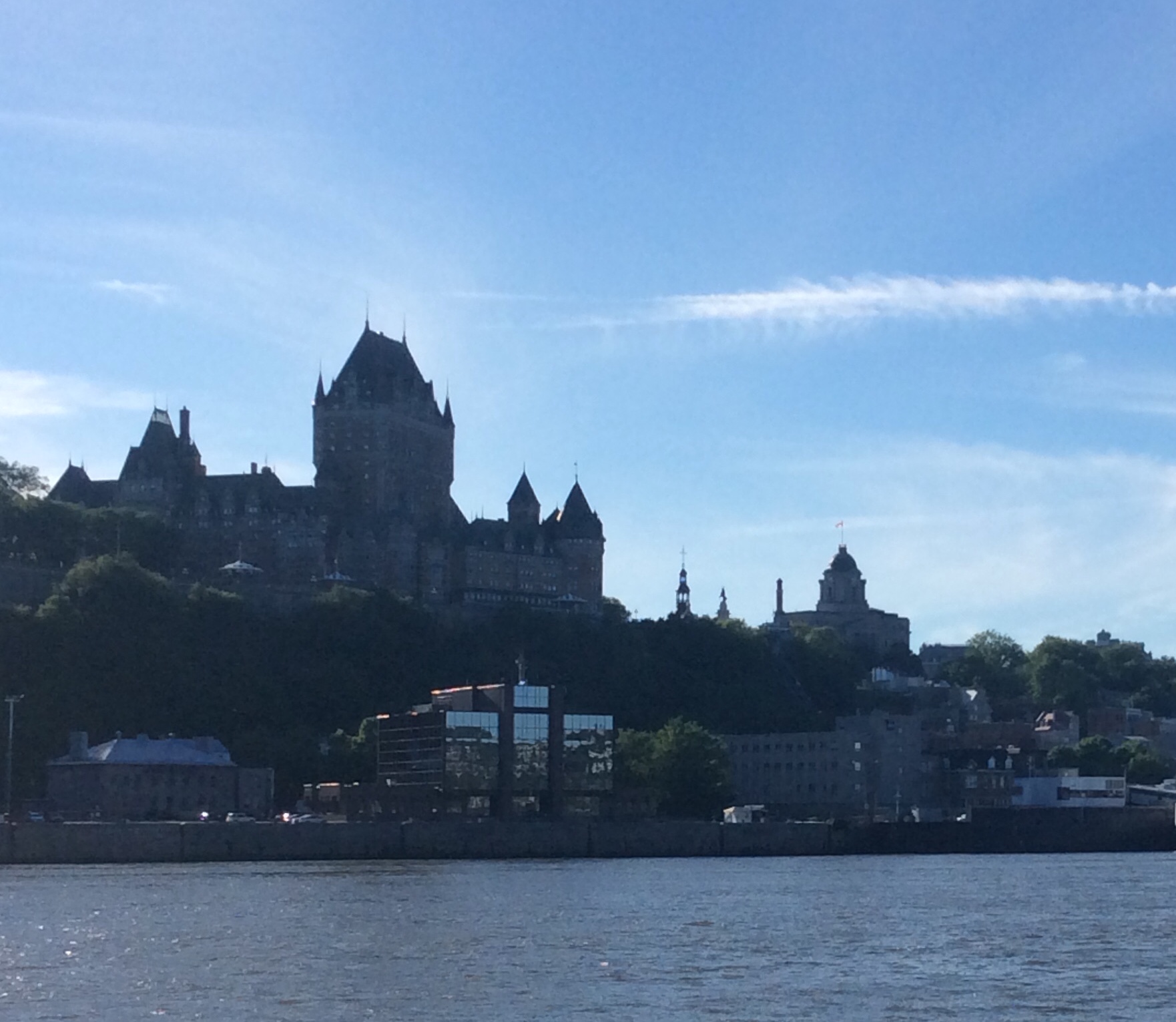
    After passing under a couple of bridges, the crew got there first glimpse of the Old City.

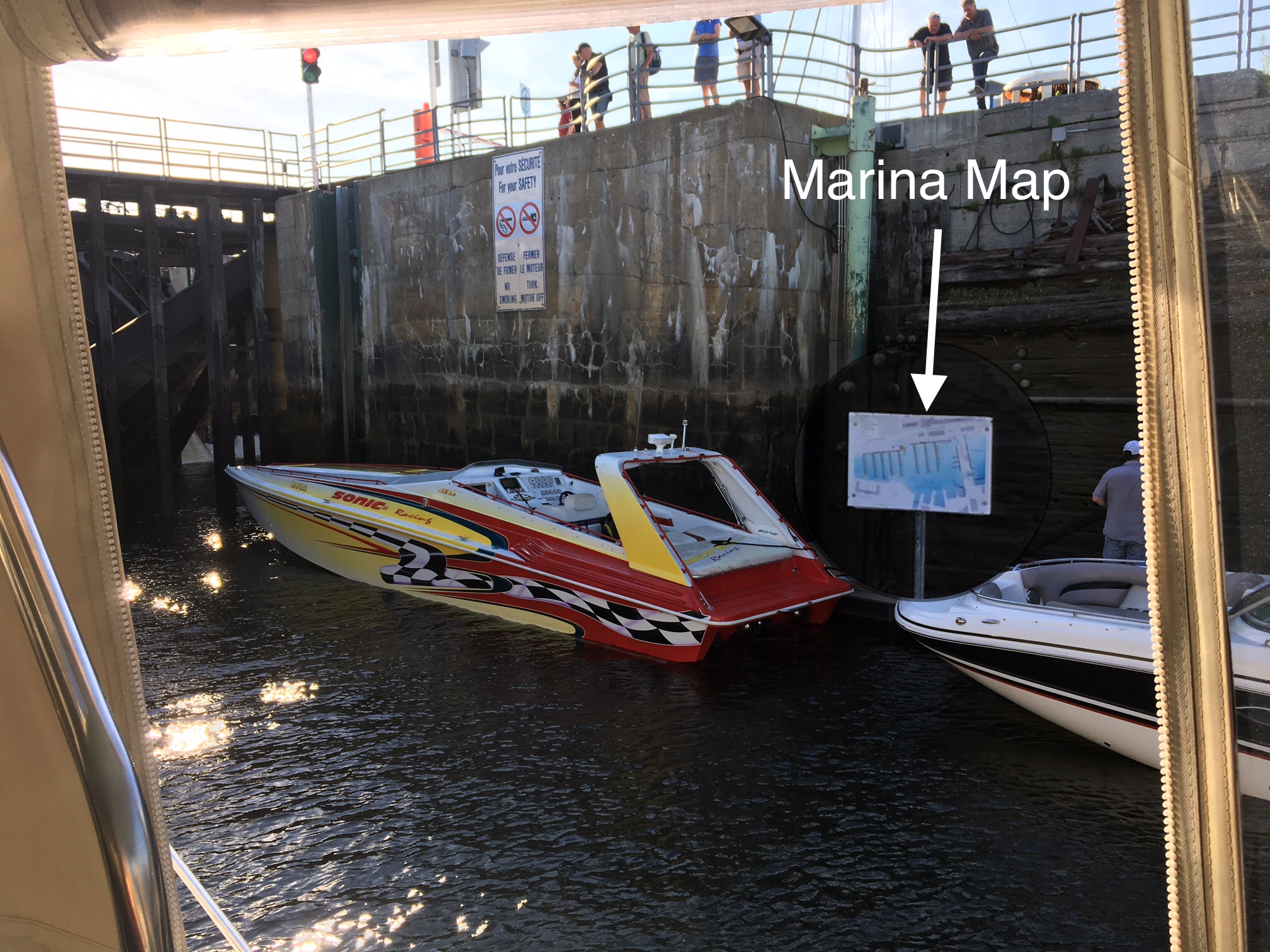
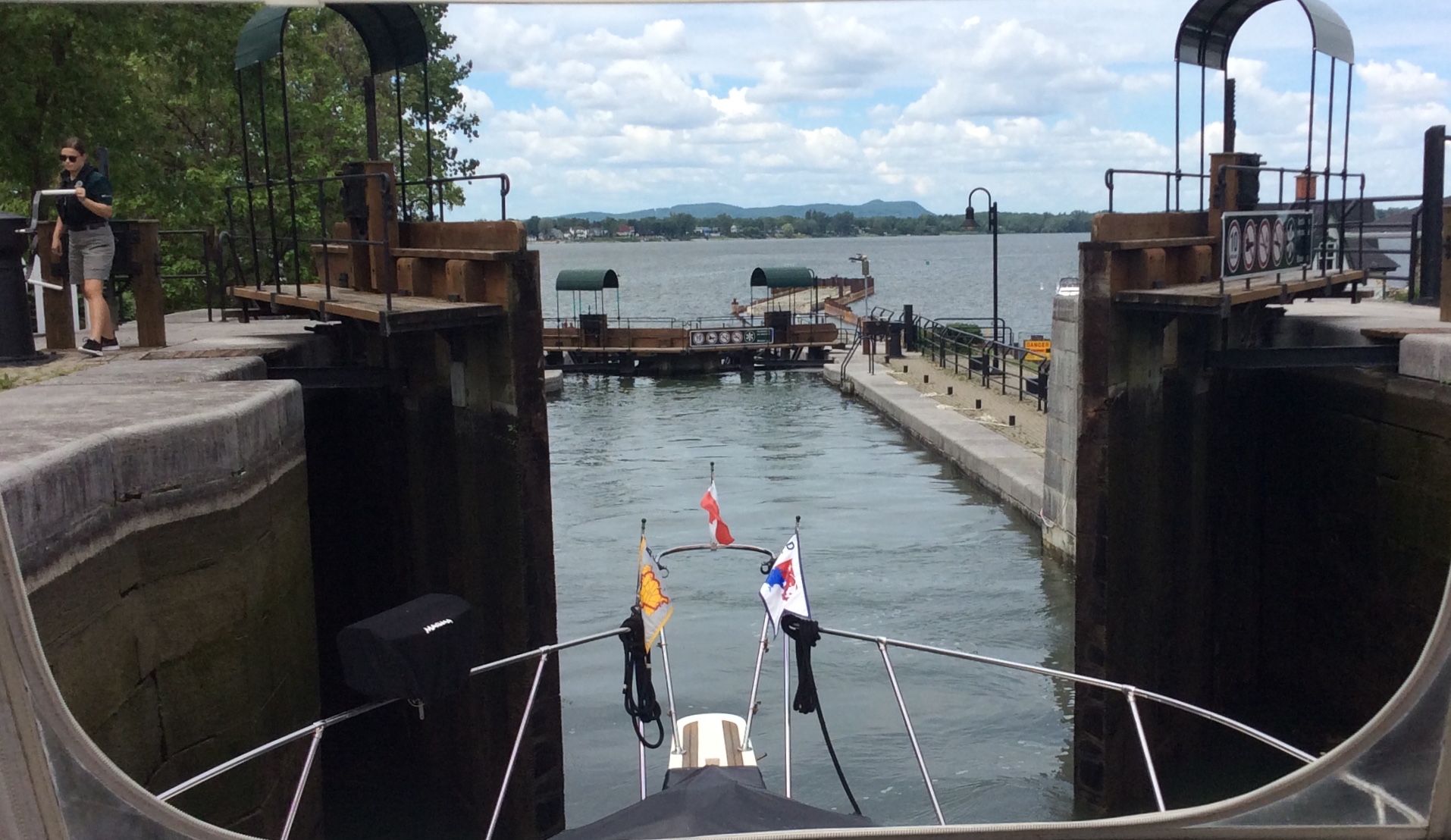
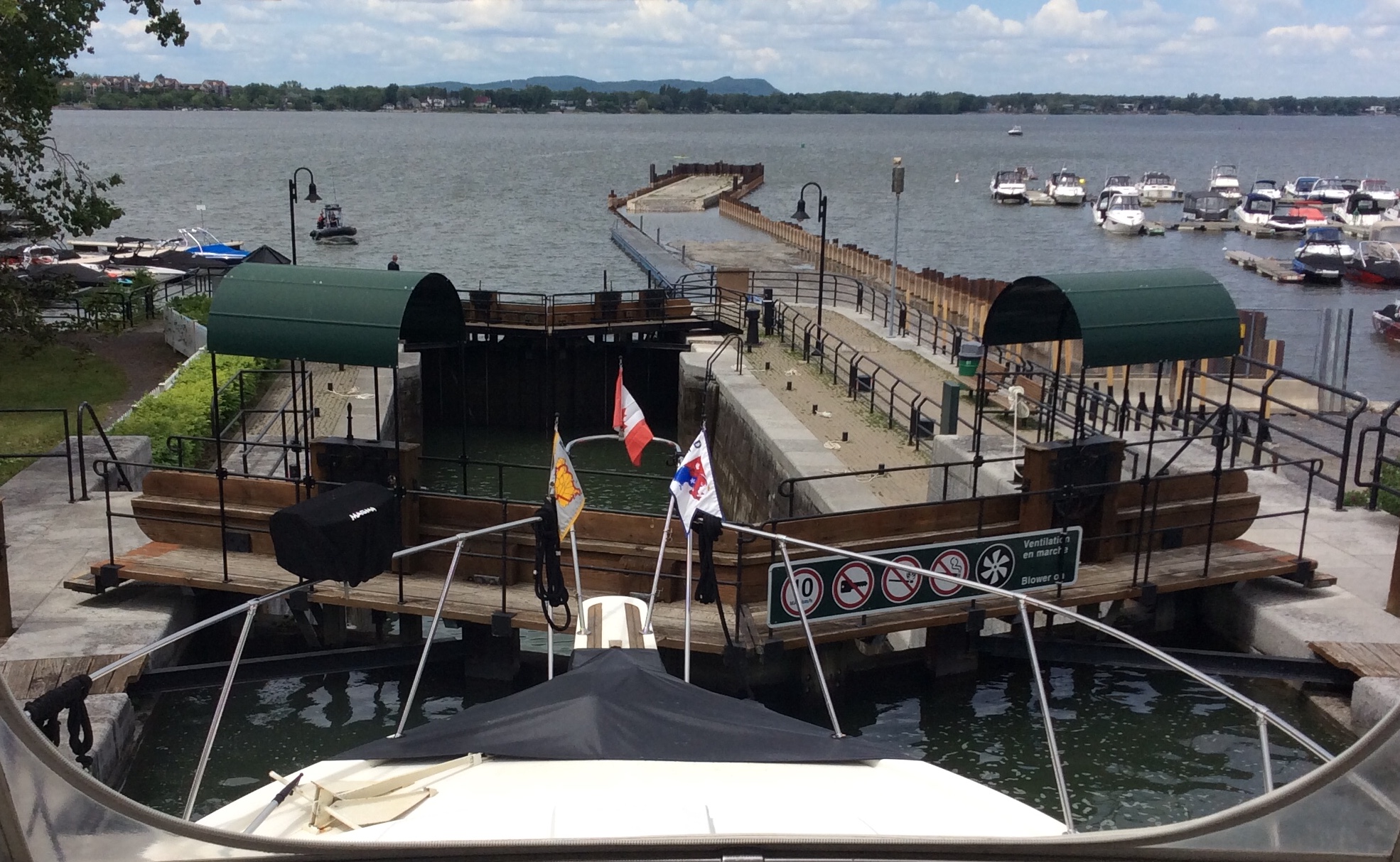
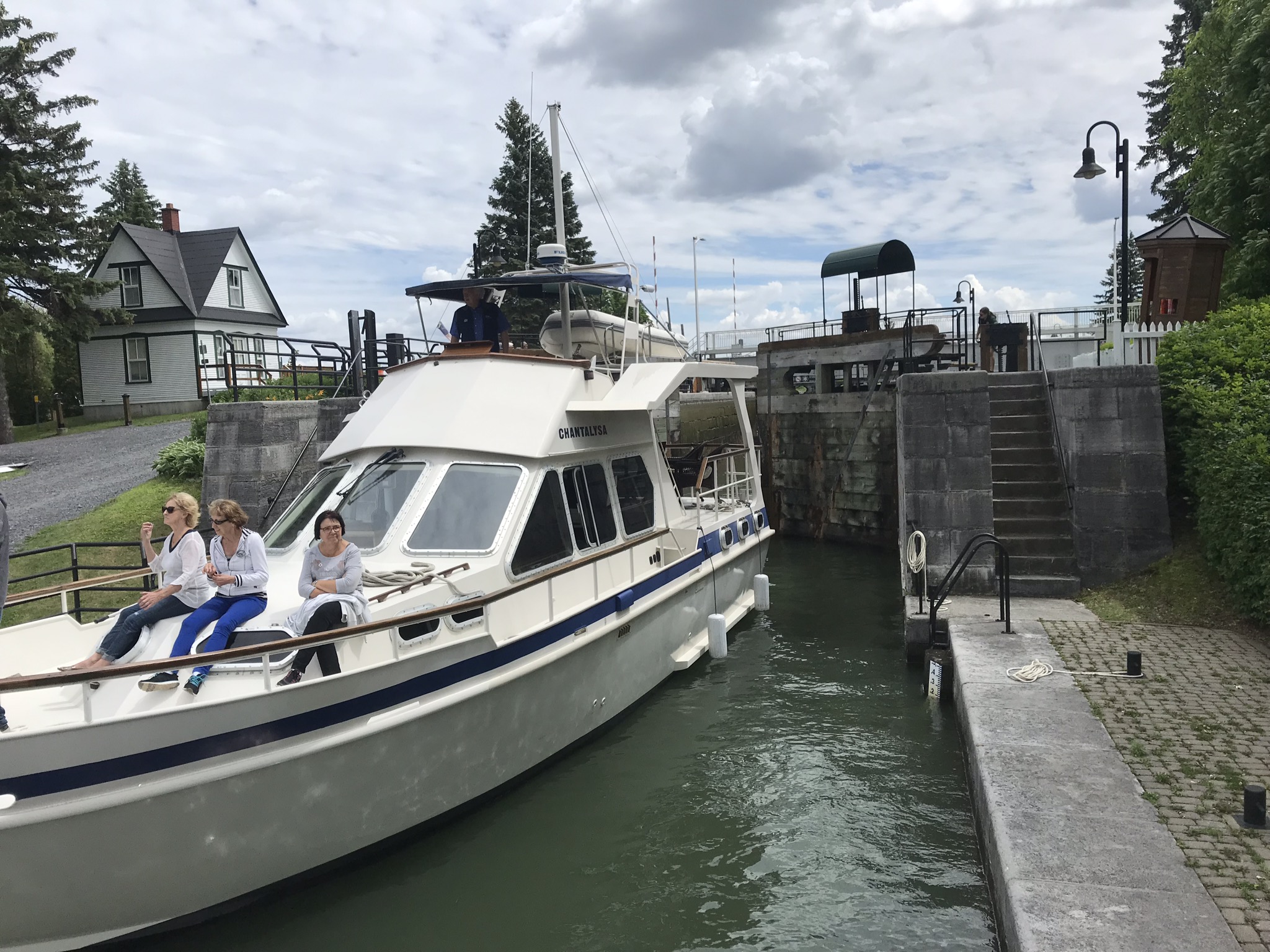
    To get to the marina, the crew would have to pass thru a lock. The lock functions to hold the marina basin at a constant level while the St Lawrence River fluctuates around 20 feet due to the daily tide changes. The crew locked thru with five other boats. The folks on the boat behind Still Waters II came up and asked how they got the boat to Quebec from Ft Myers. The crew always likes to answer this type of question. The locals were surprised with the answer.

    View from inside the lock

    While waiting for the lock gates to open, the skipper had also called the marina on the VHF radio. Luckily the dock attendant could speak English and informed the skipper that he was assigned slip H1. One really cool feature of the lock is a marina map posted on the floating dock. The skipper was able to find the slip on the map before the gates opened.

    Once the gates opened, the crew made way to their slip and were happy to see a dock hand assist them on getting secured to the dock. The crew has decided to spend a week in Quebec to explore the old city.

    Tuesday, June 25th

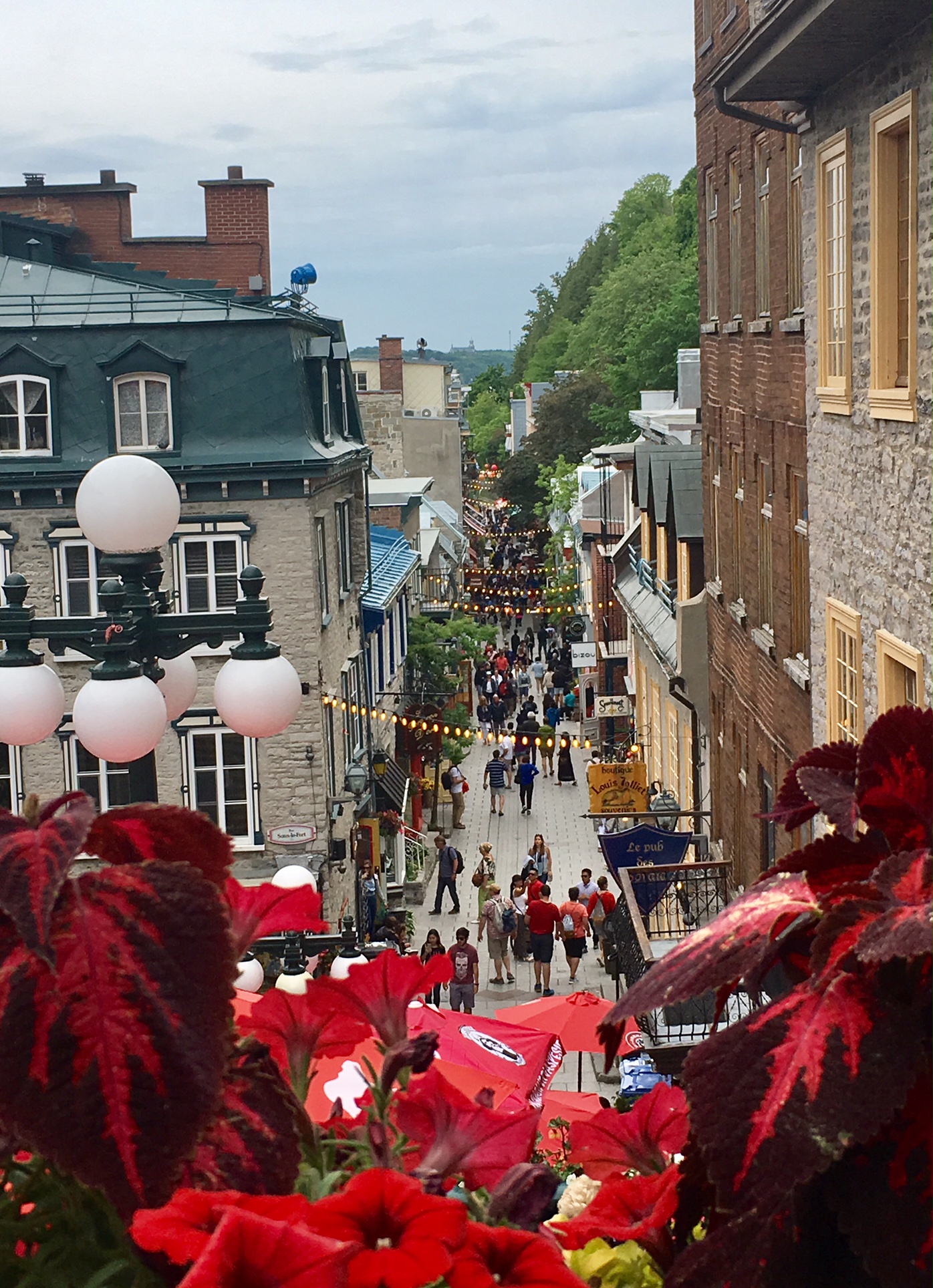
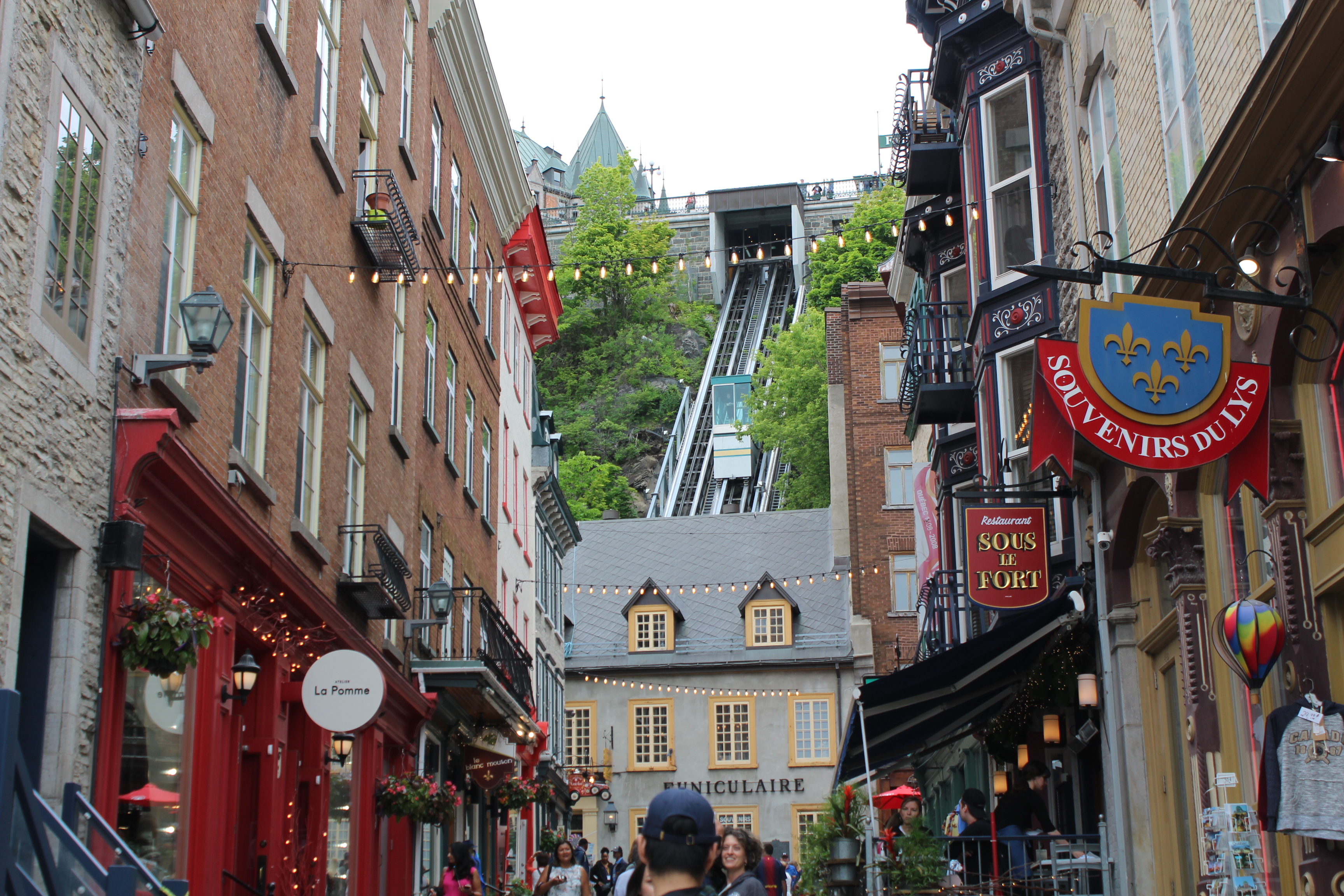
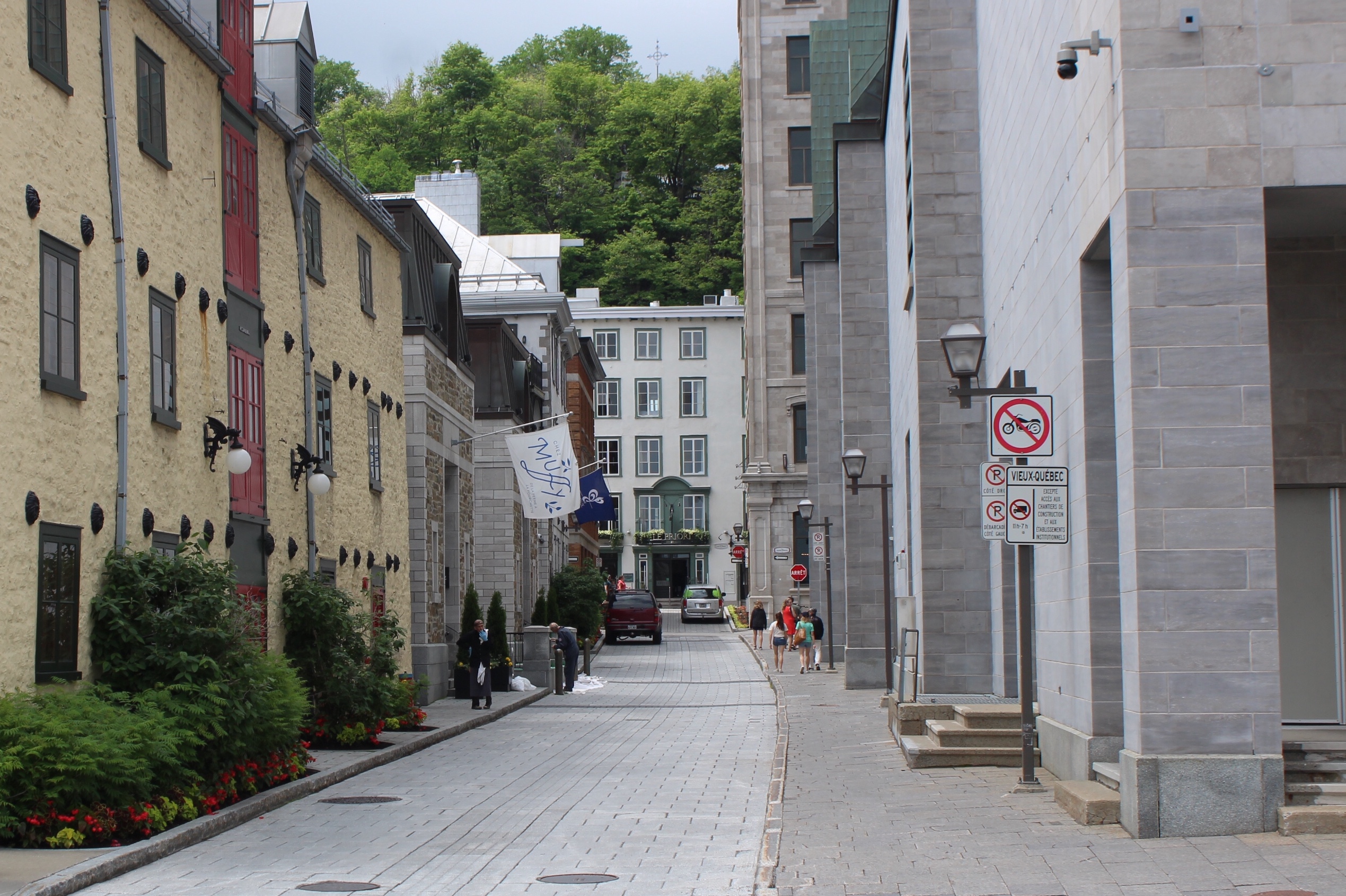
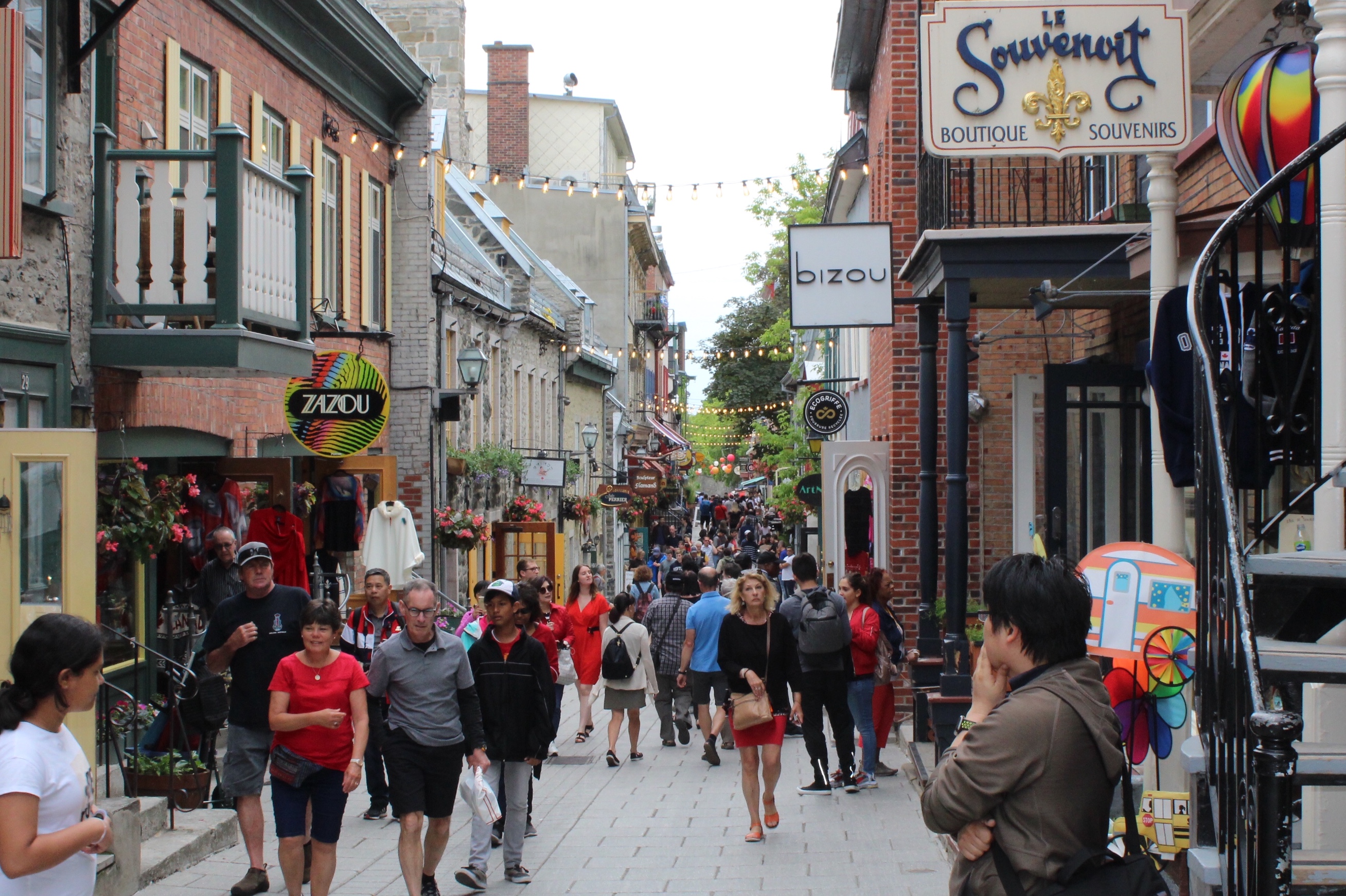
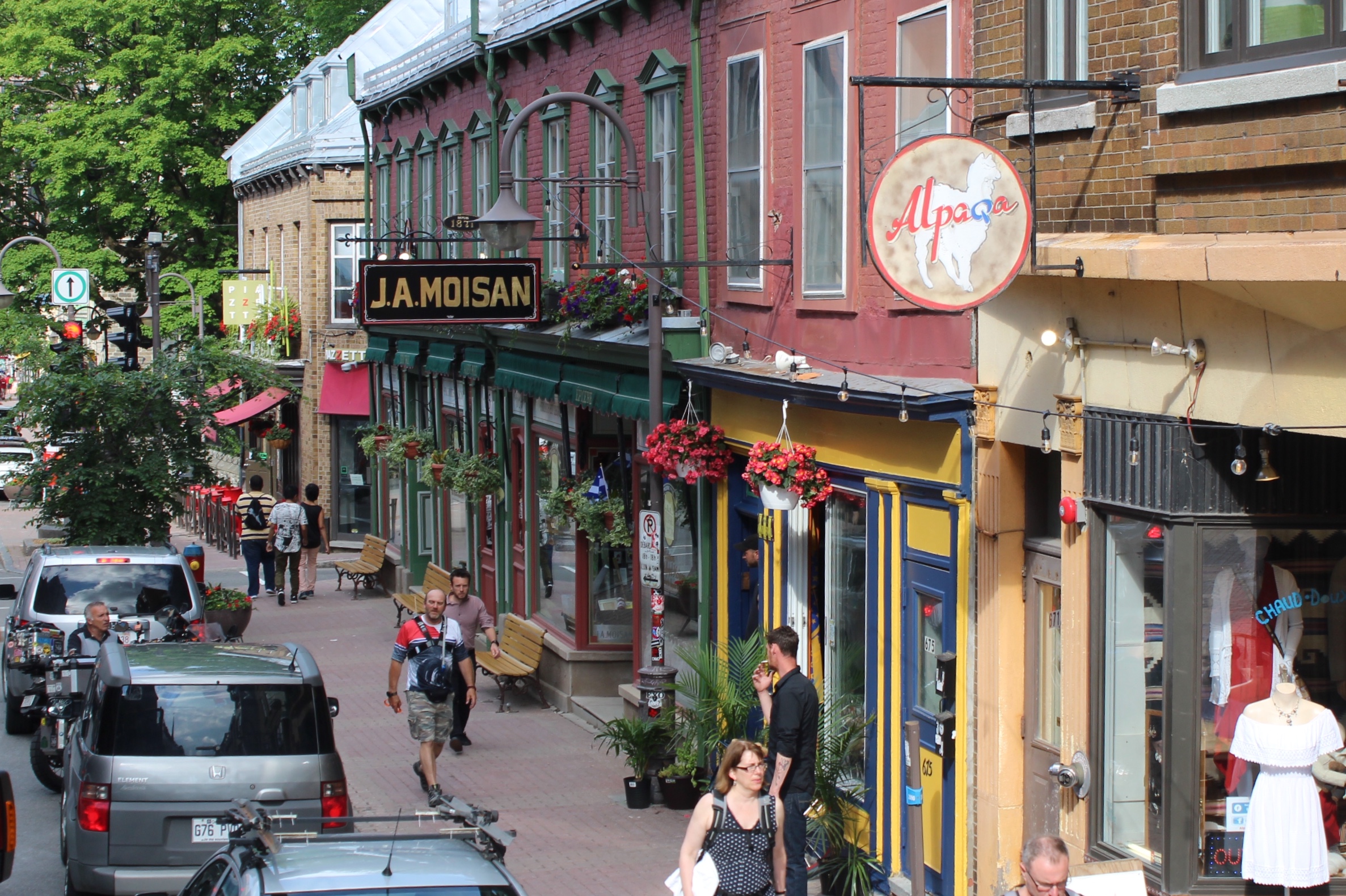
    The crew elected to walk around town and try to get a feel for the layout. They started out walking around the lower town of Old Quebec. This area is below the walled upper city. The narrow roads are cobblestoned and lined with boutiques and sidewalk cafes.

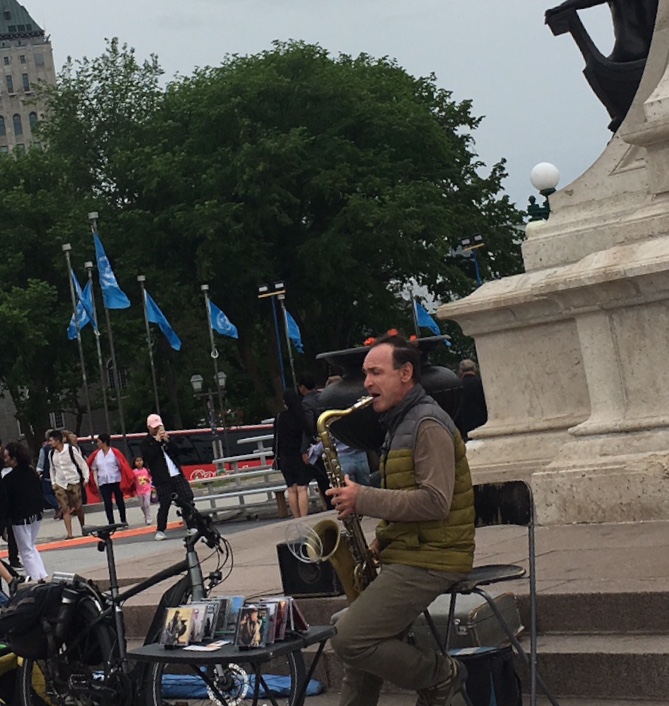
    The crew climbed the stairs to get into Up Town Old Quebec. After walking around some more they stopped for lunch and snagged an outdoor table. Even had a sax player nearby serenading the airwaves with his music.

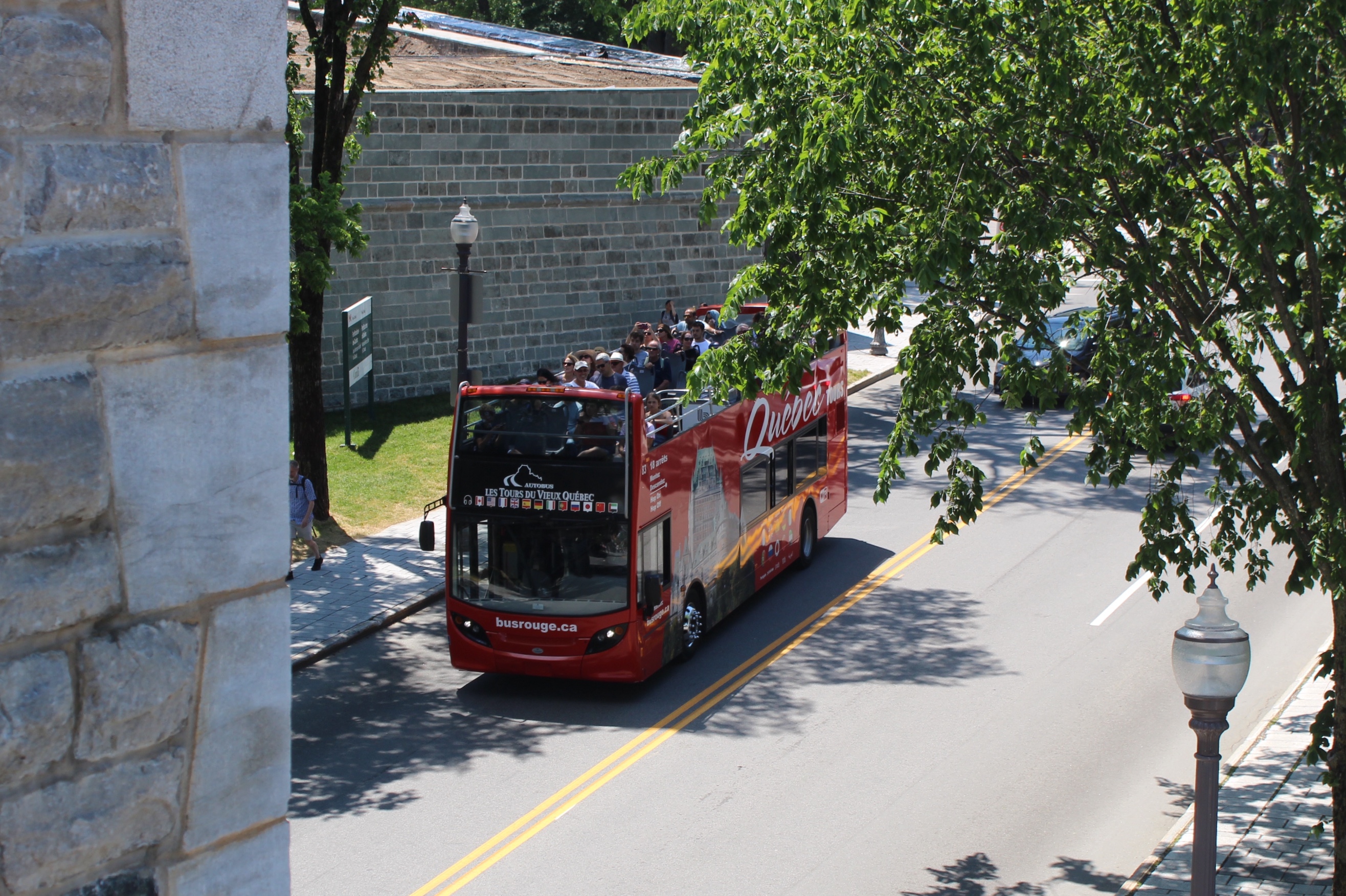
    After lunch it began to rain so the crew decided to take a Red Bus Tour to broaden their look of the city and learn some of the history of the area.

    Wednesday, June 26th

    The crew continued their shore excursion of old Quebec City by foot. When your city is 400 years old, founded in 1608 by Samual de Champlain, you are likely to have a few firsts.

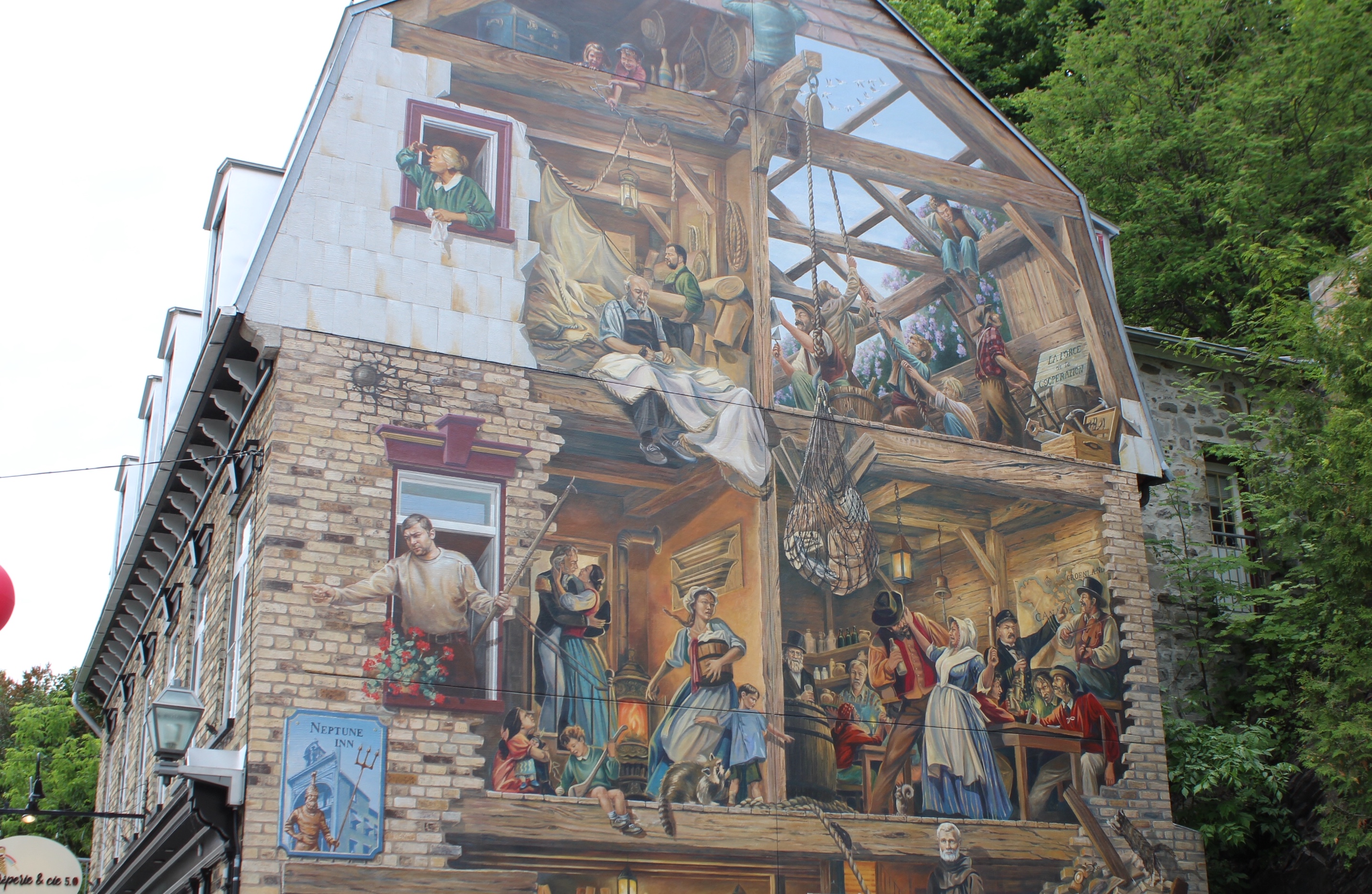
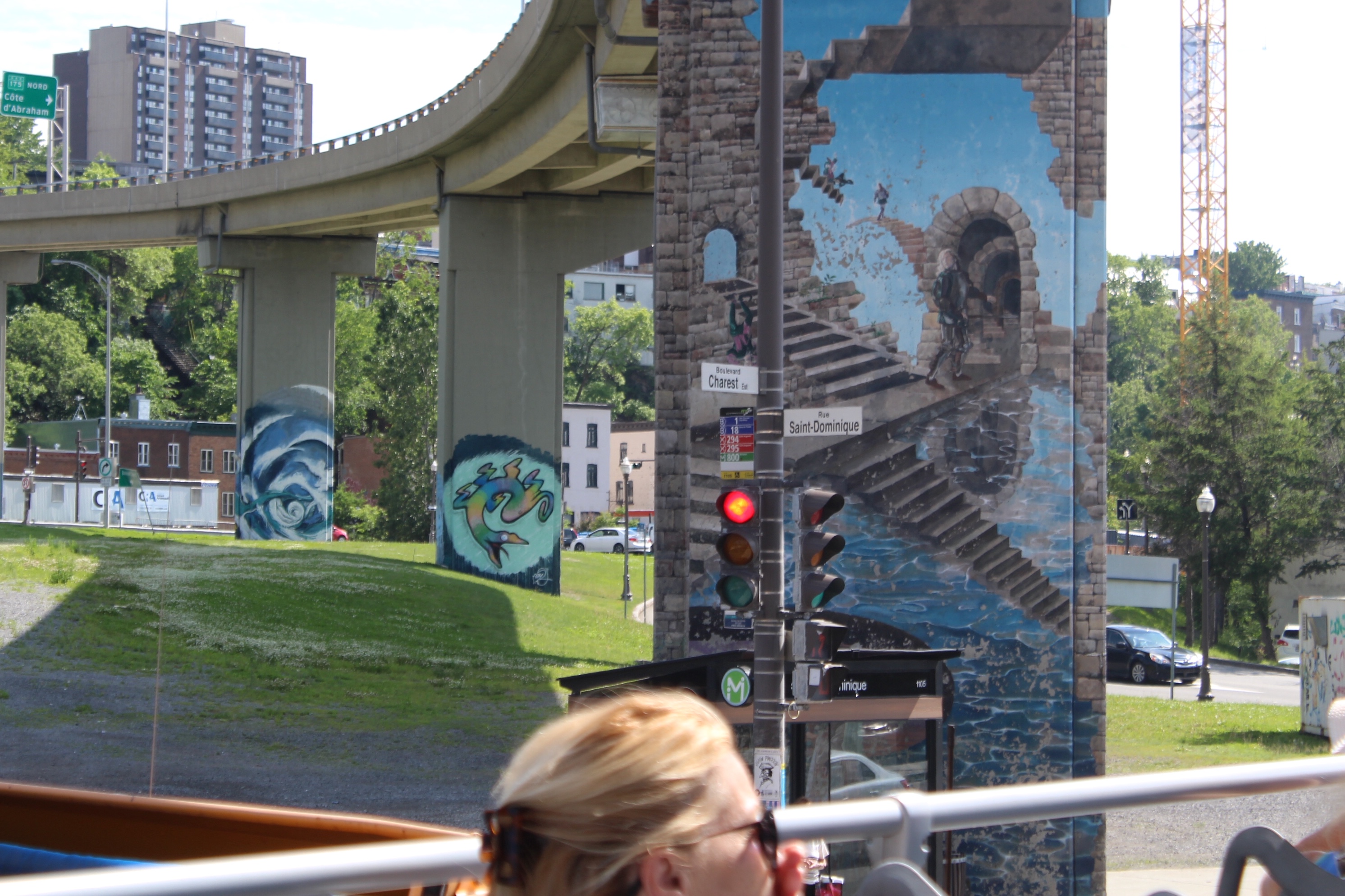
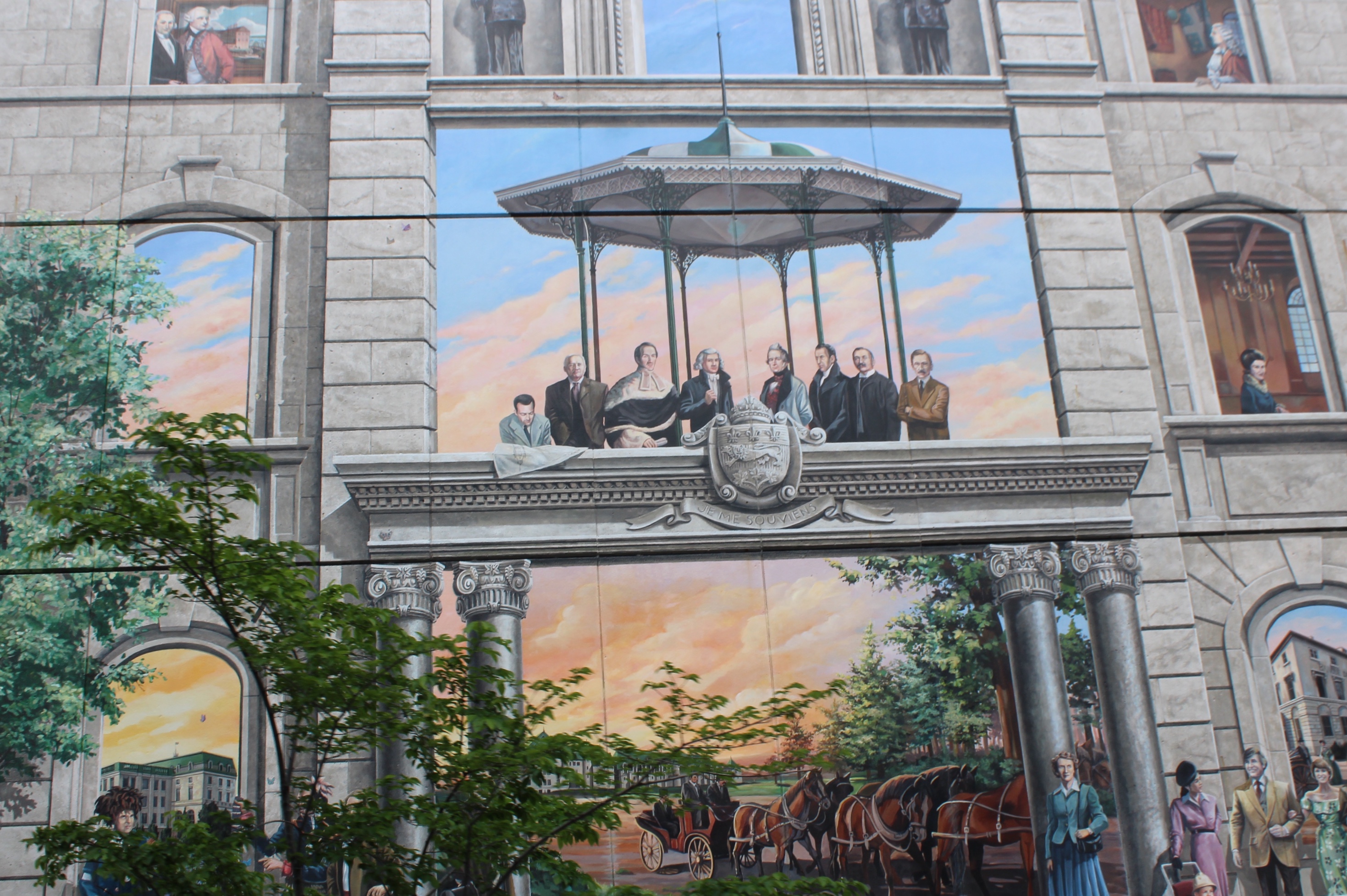
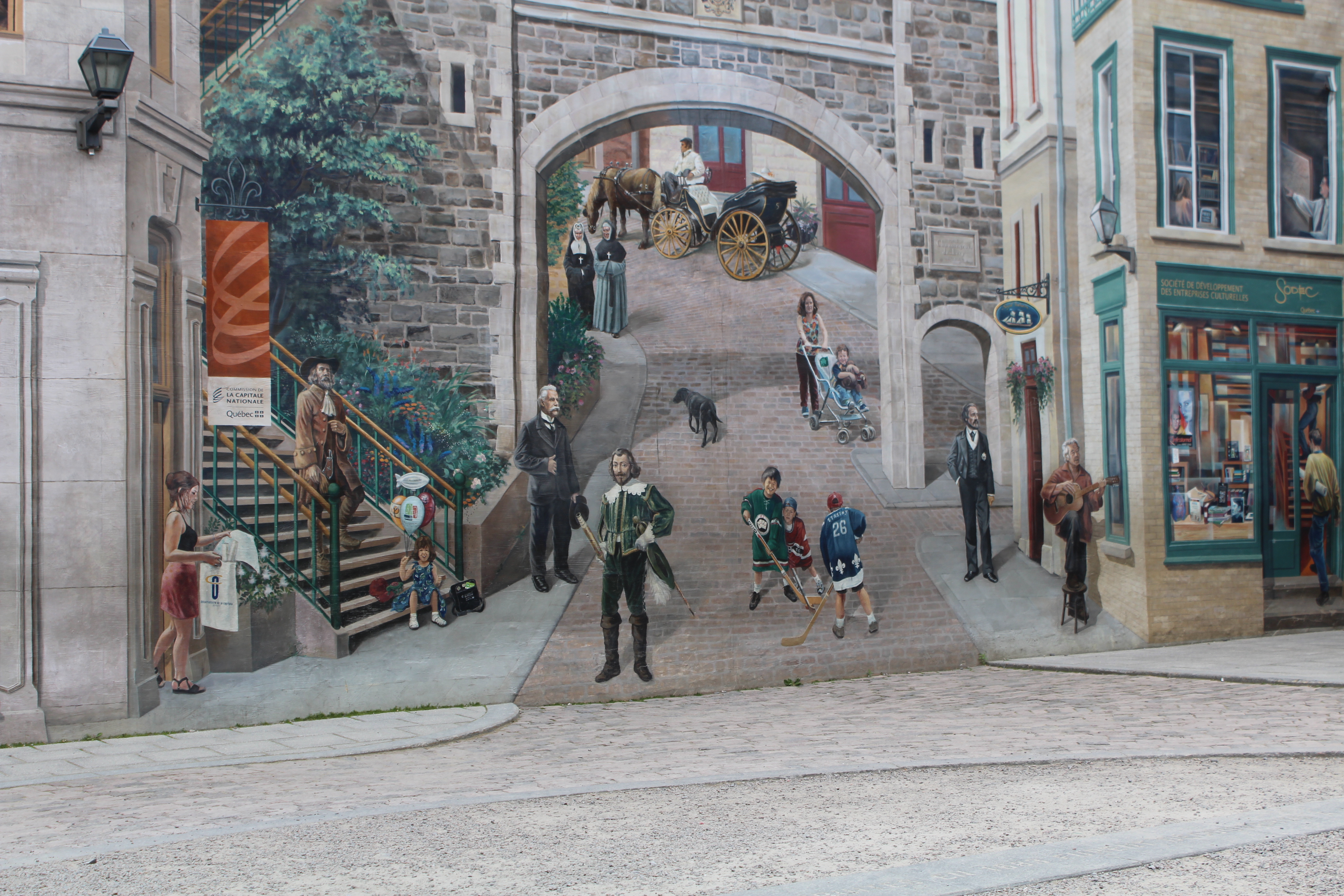
    These Quebecers also like their outdoor art, especially murals that adorn several buildings and pay homage to their history.

    Champlain located his home town of Quebec on the St Lawrence River for its military advantages, narrow river and high bluffs. In fact, Quebec means ‘where the river narrows.’ Quebec is the only city still with walled fortifications in North America.

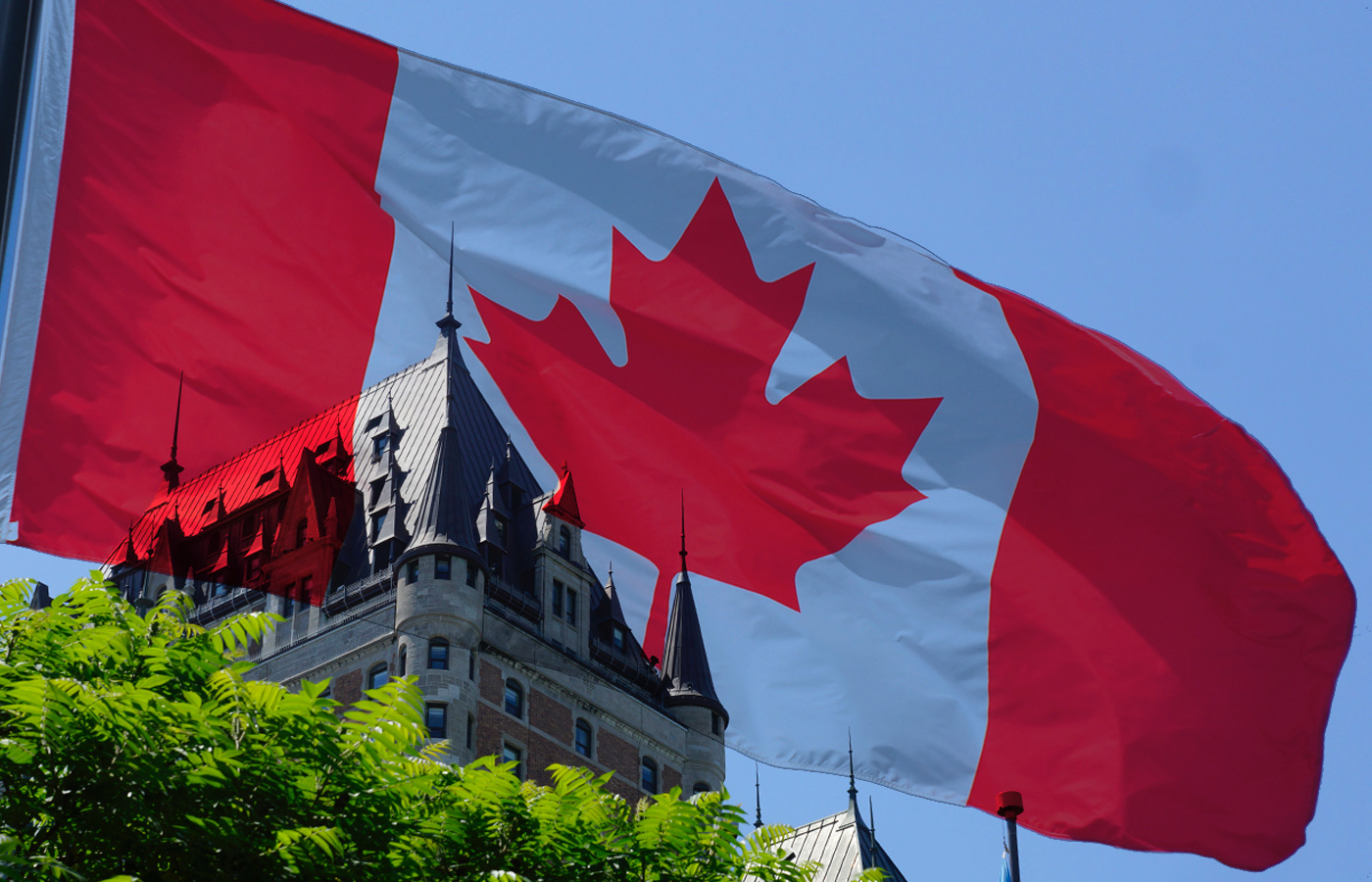
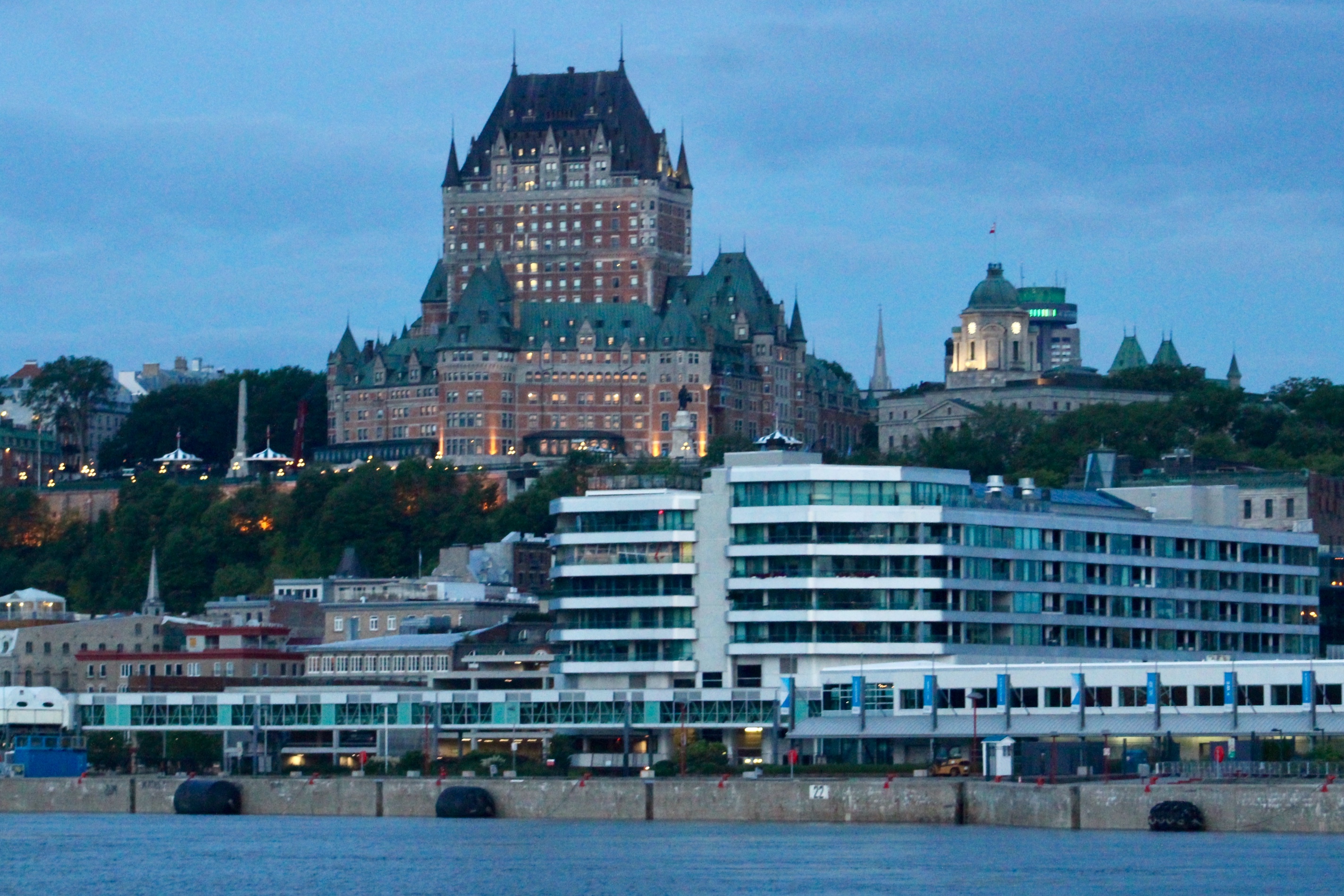
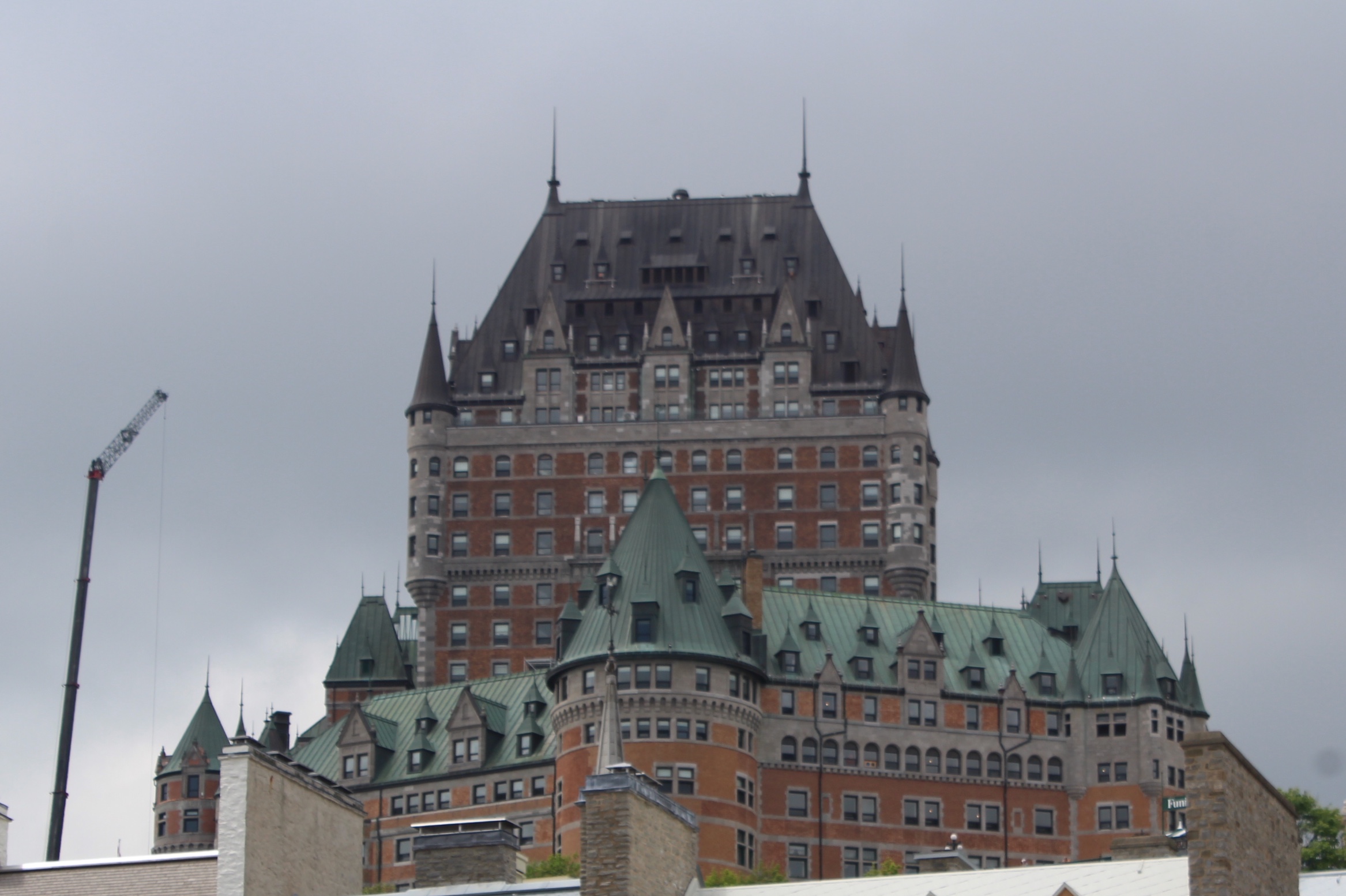
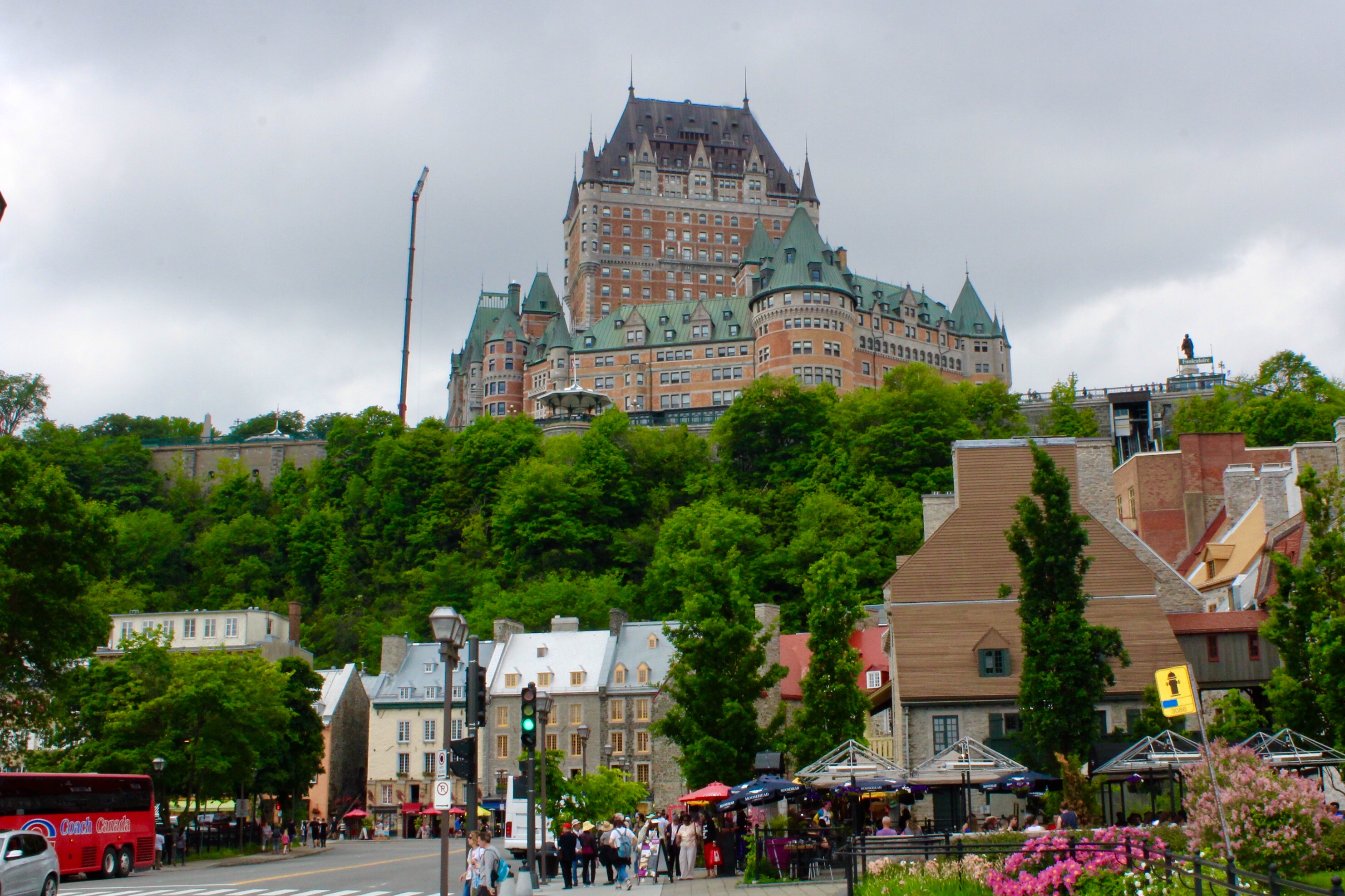
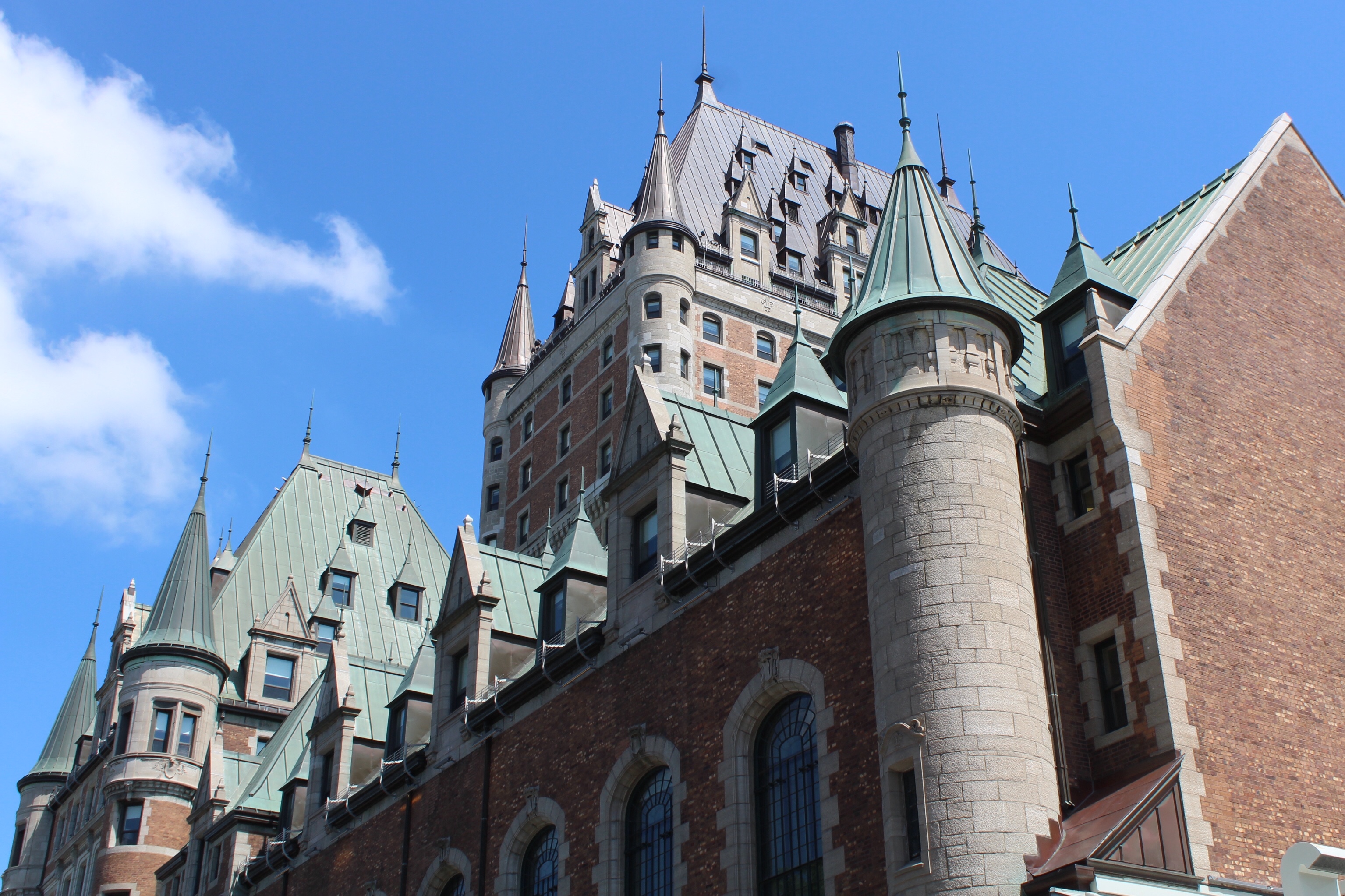
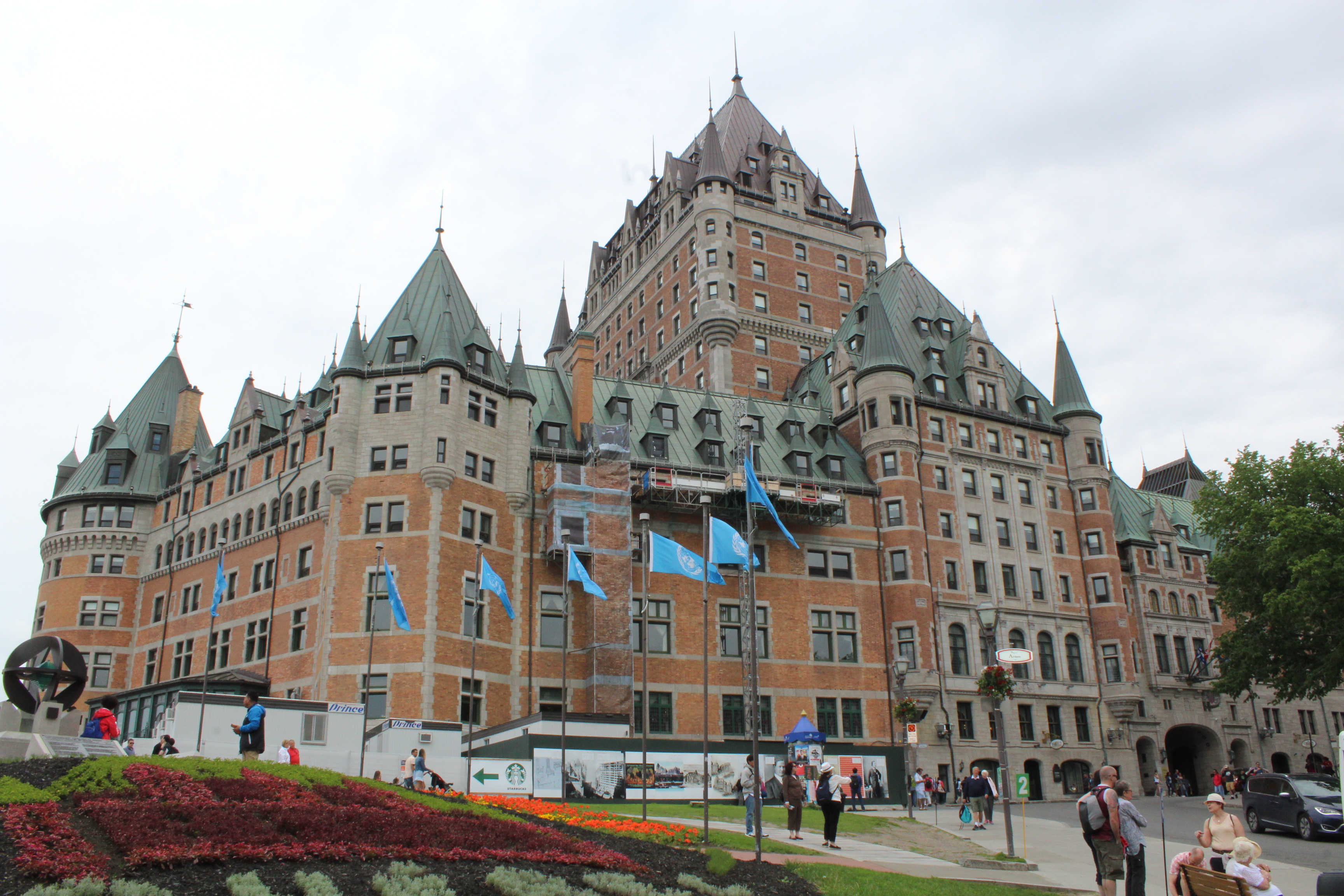
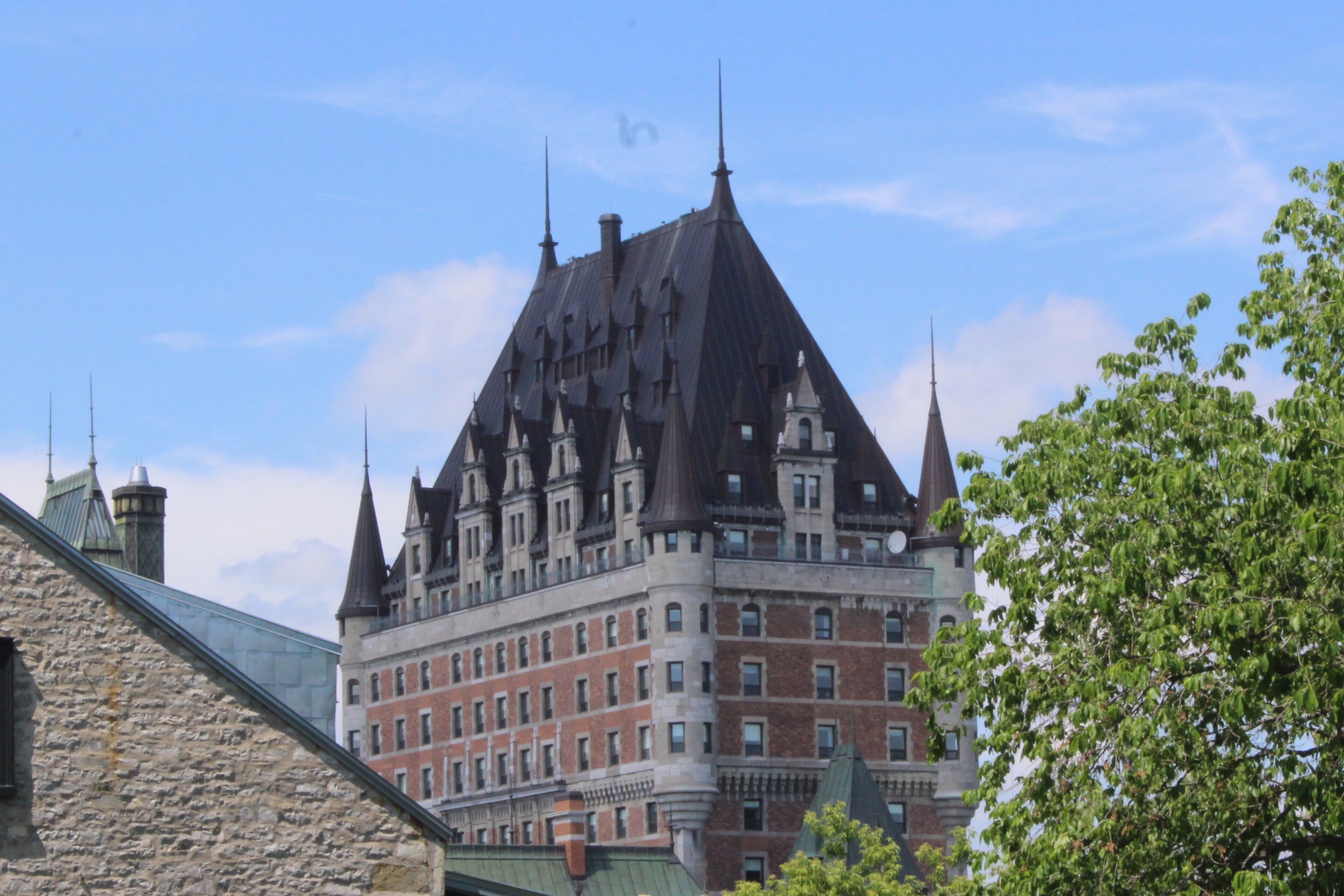
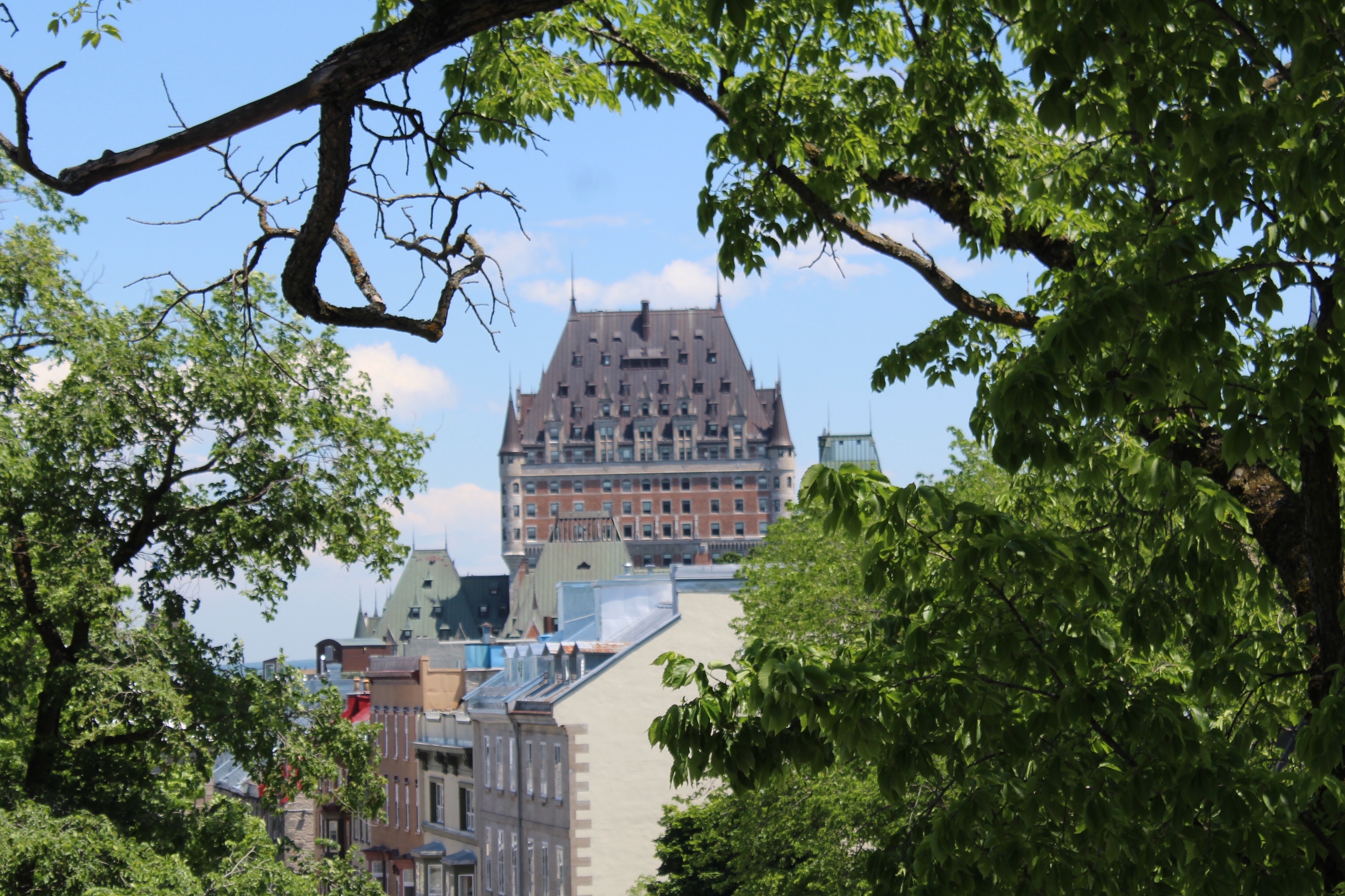
    Le Chateau Frontenac (advertised as the worlds most photographed hotel) has 611 rooms and opened in 1893. The hotel dominates the skyline as it stands 260 feet tall and sits 177 feet above the river below.

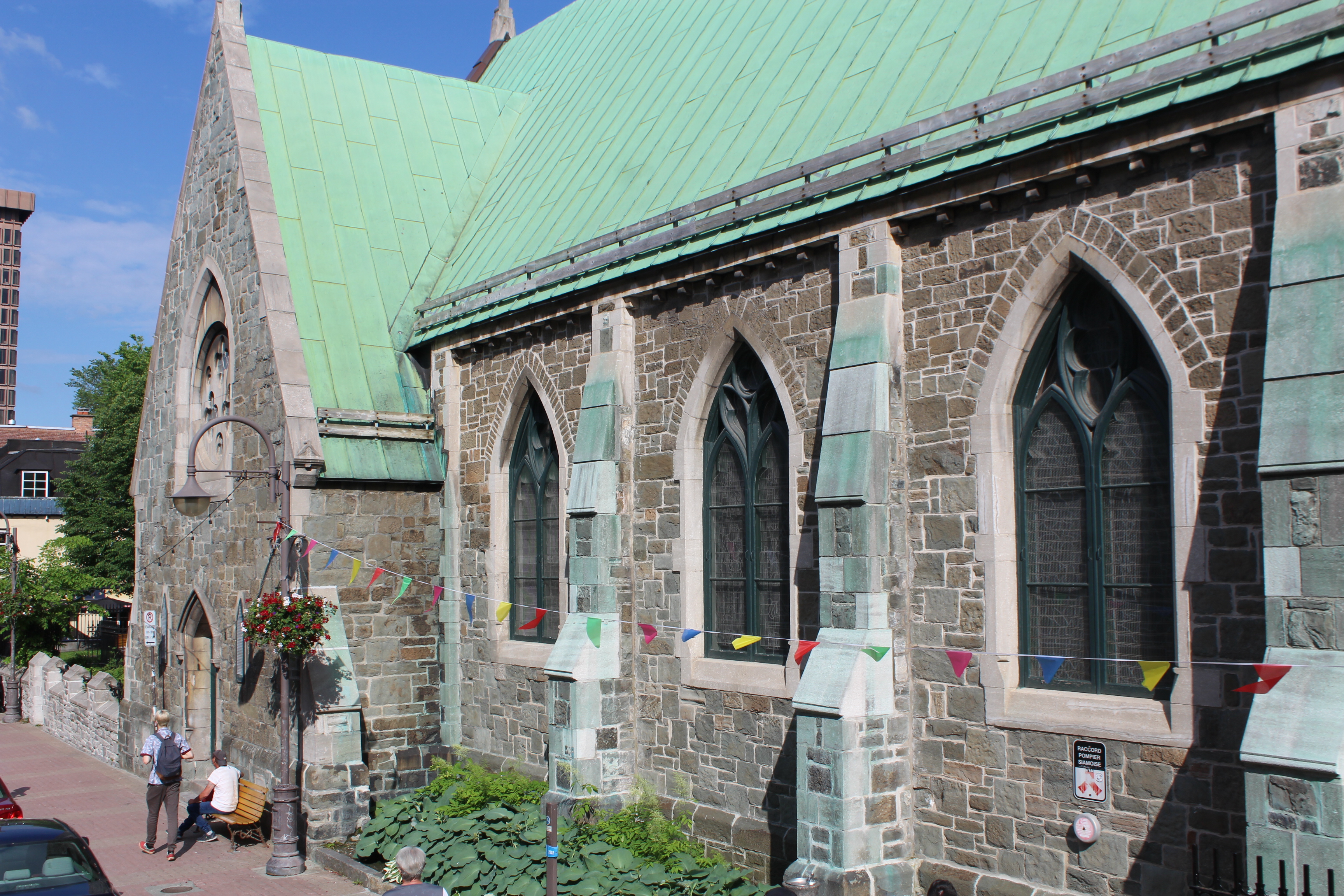
    There was much renovation and modernization as the locals like to call it all around town. One sign of the modernization can be seen in the roofs of many of the historic buildings. Many of these buildings have copper roofs. When the cooper roof is first laid it is, well bright and shiny cooper colored. None of the roofs around town sport the new cooper look. It takes a few years, but the shiny cooper initially turns a brown color. Many of the buildings have the brown roof look. It then takes another 2-3 decades before the roof turns the green color associated with historic buildings.

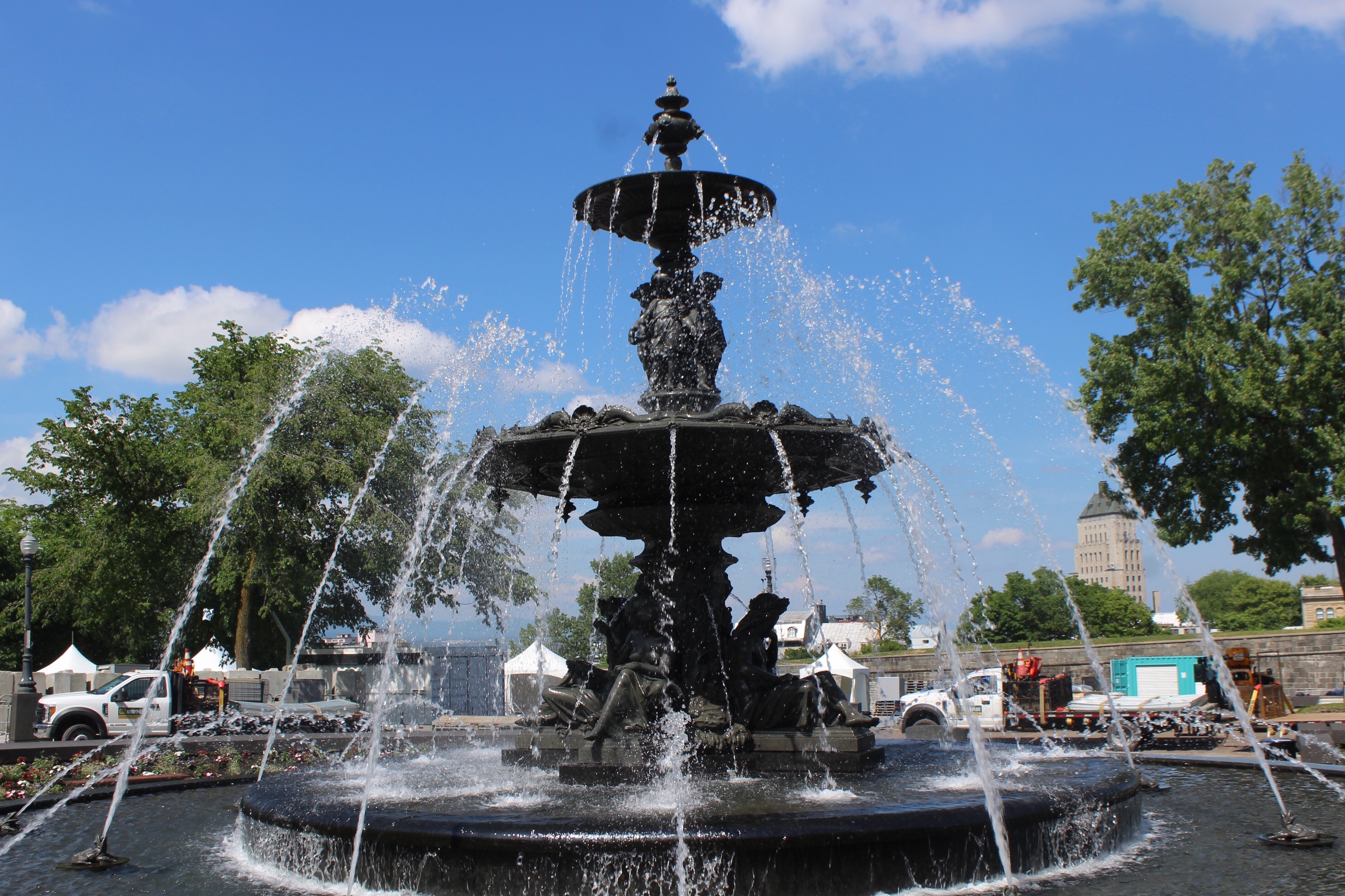
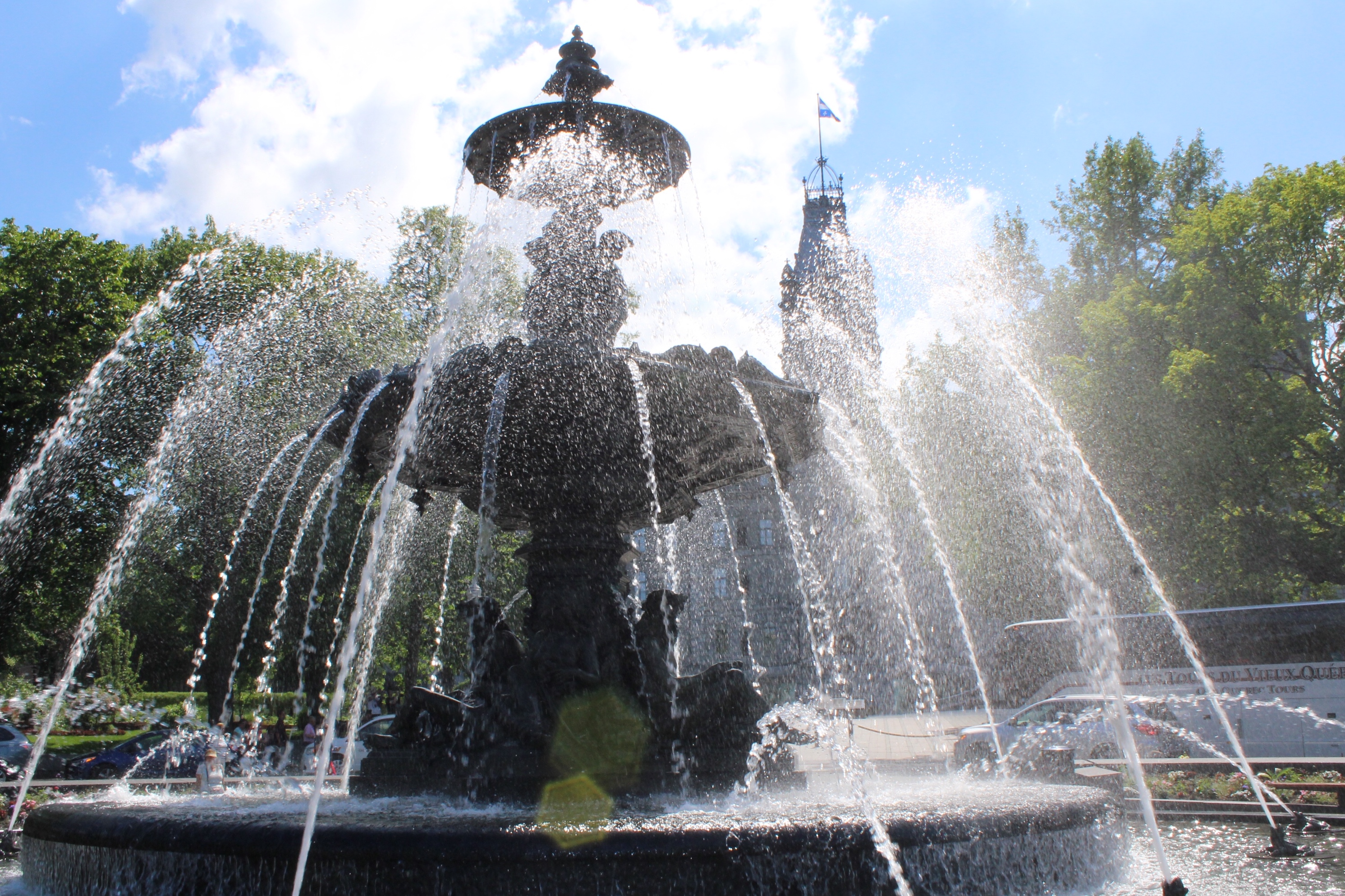
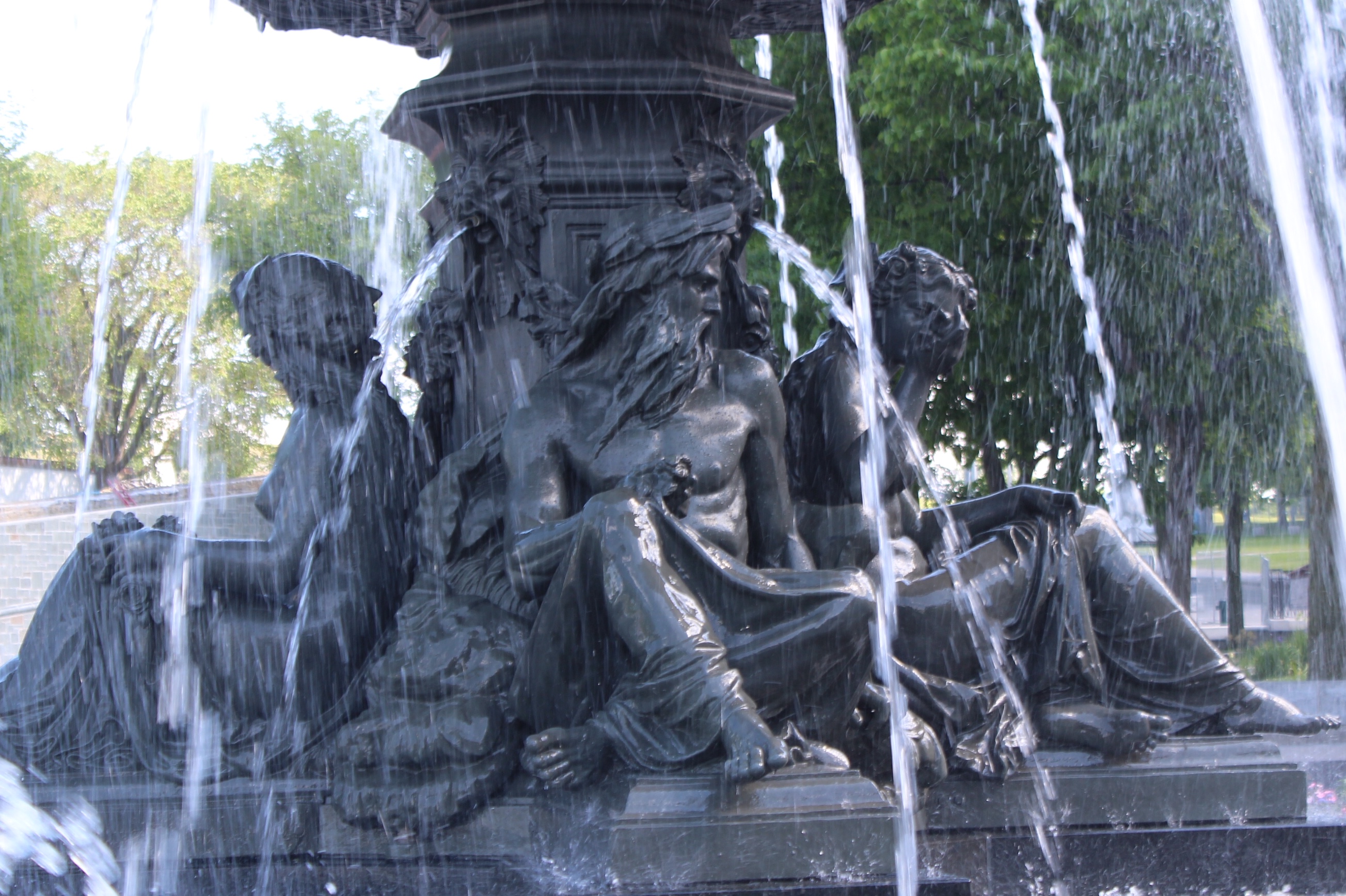
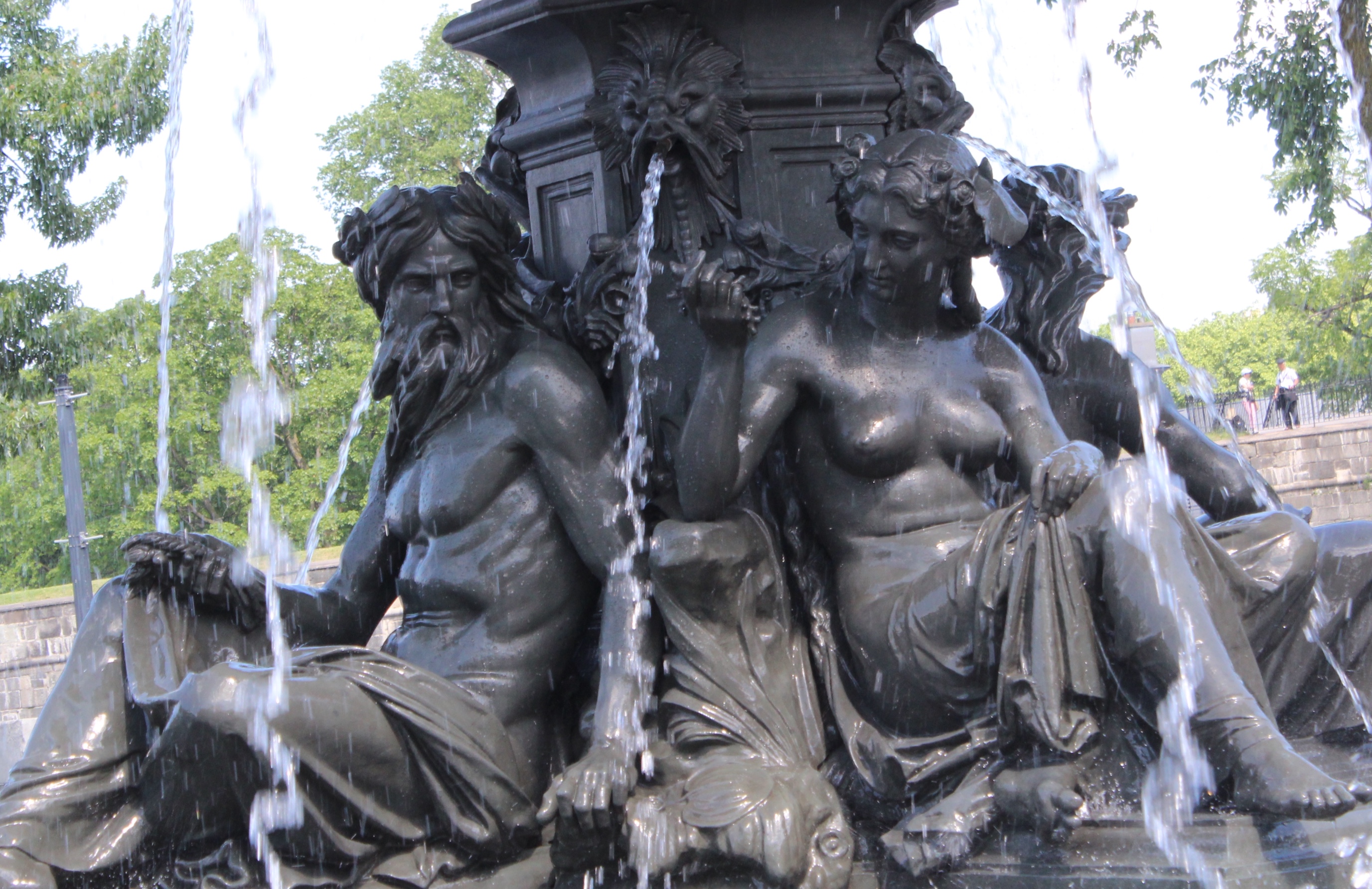
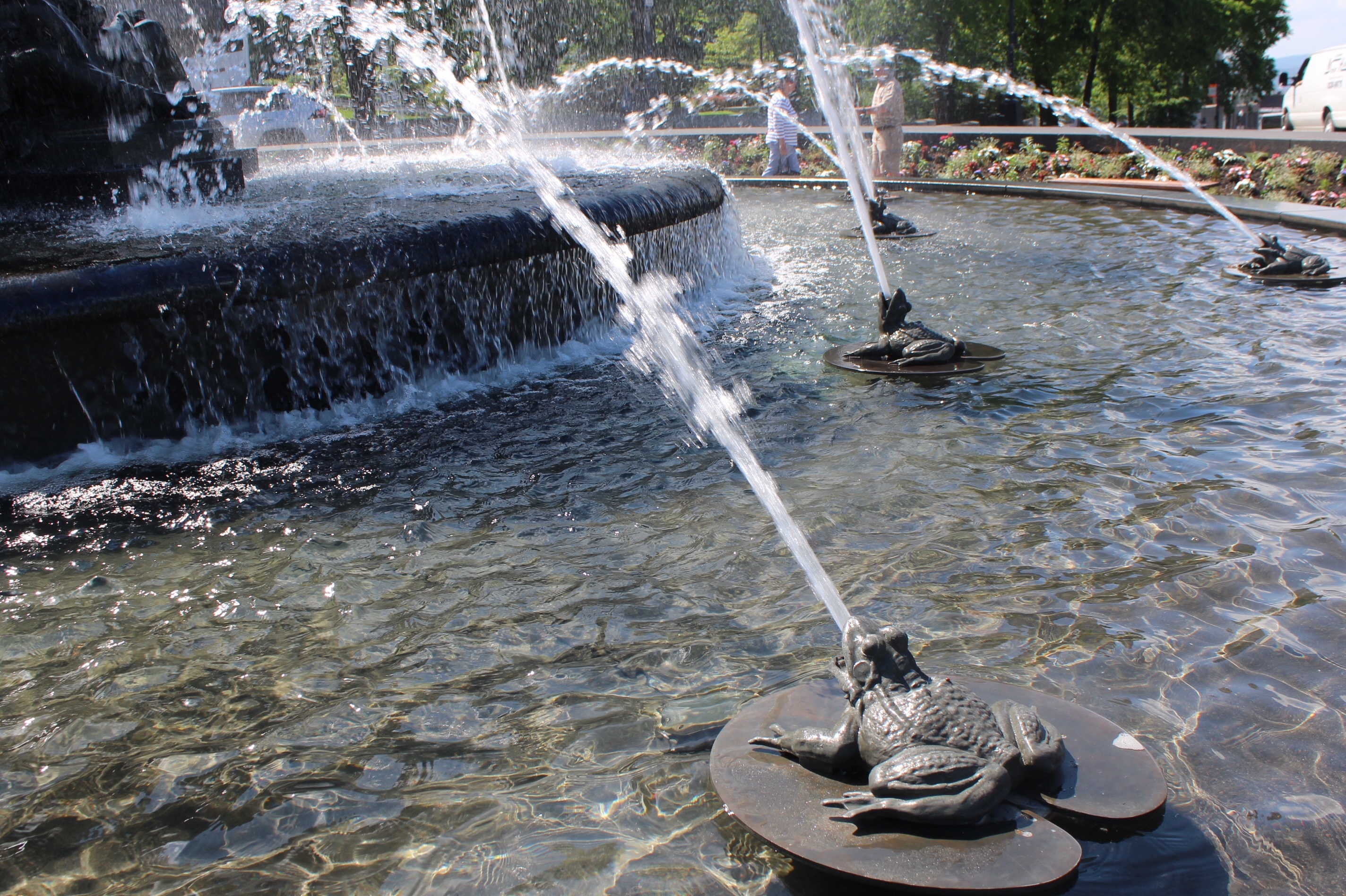
    At the foot of Parliament Hill a water fountain has the place of honor inside a traffic circle. The Fontaine de Tourny was a gold medal winner at the Paris World Fair in 1855. The French gave the fountain to Quebec to commemorate their 400th birthday.

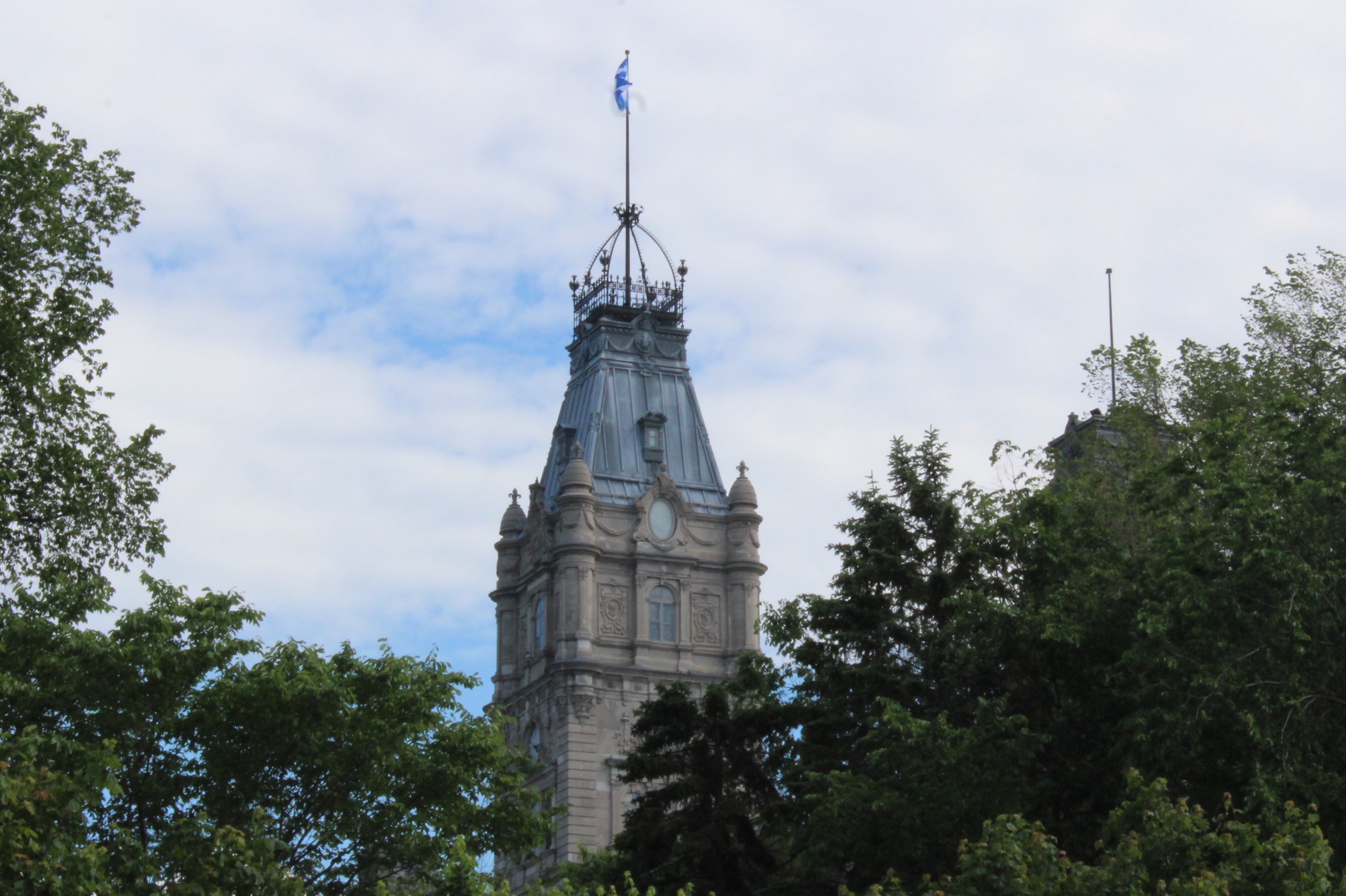
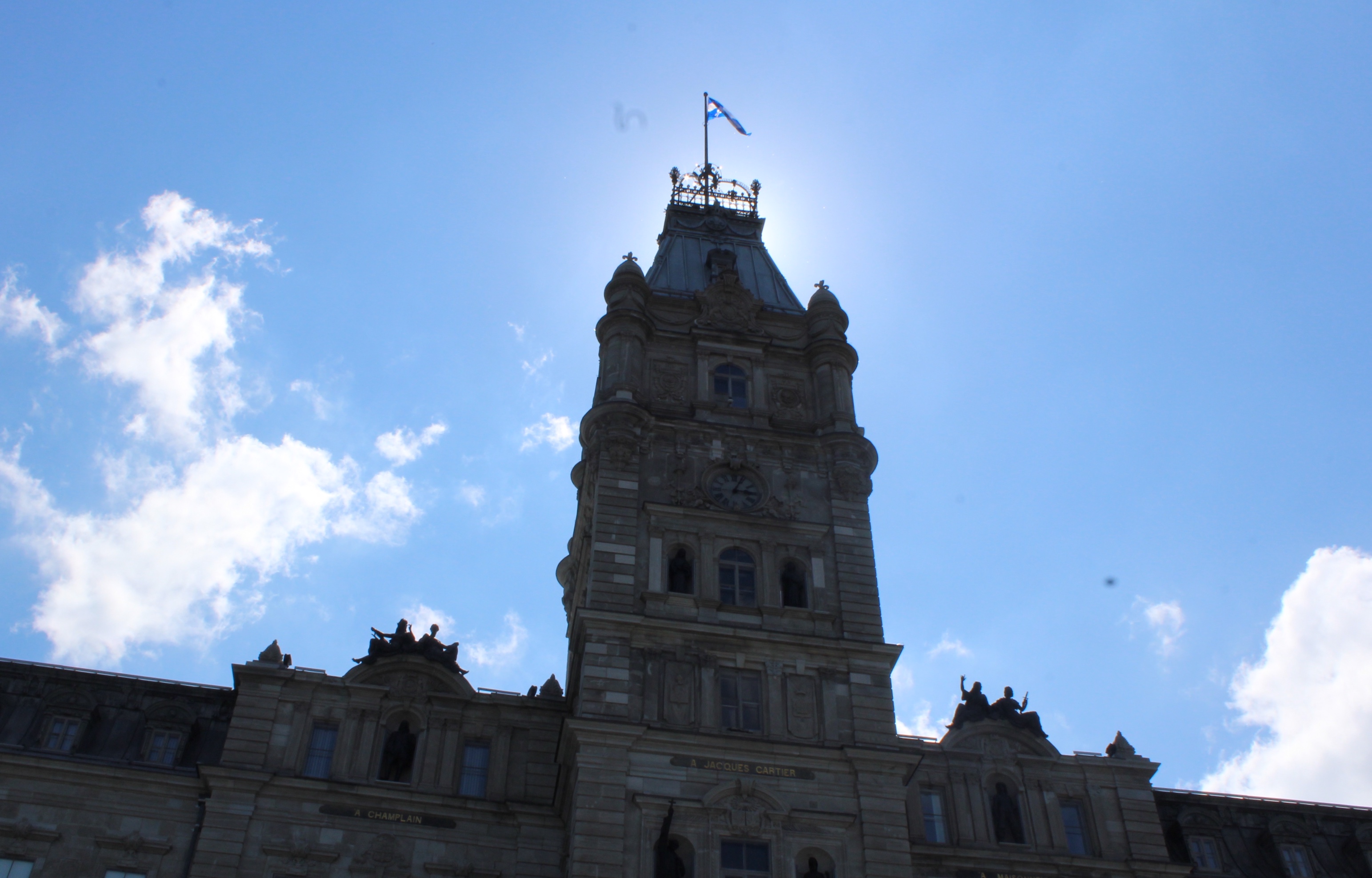
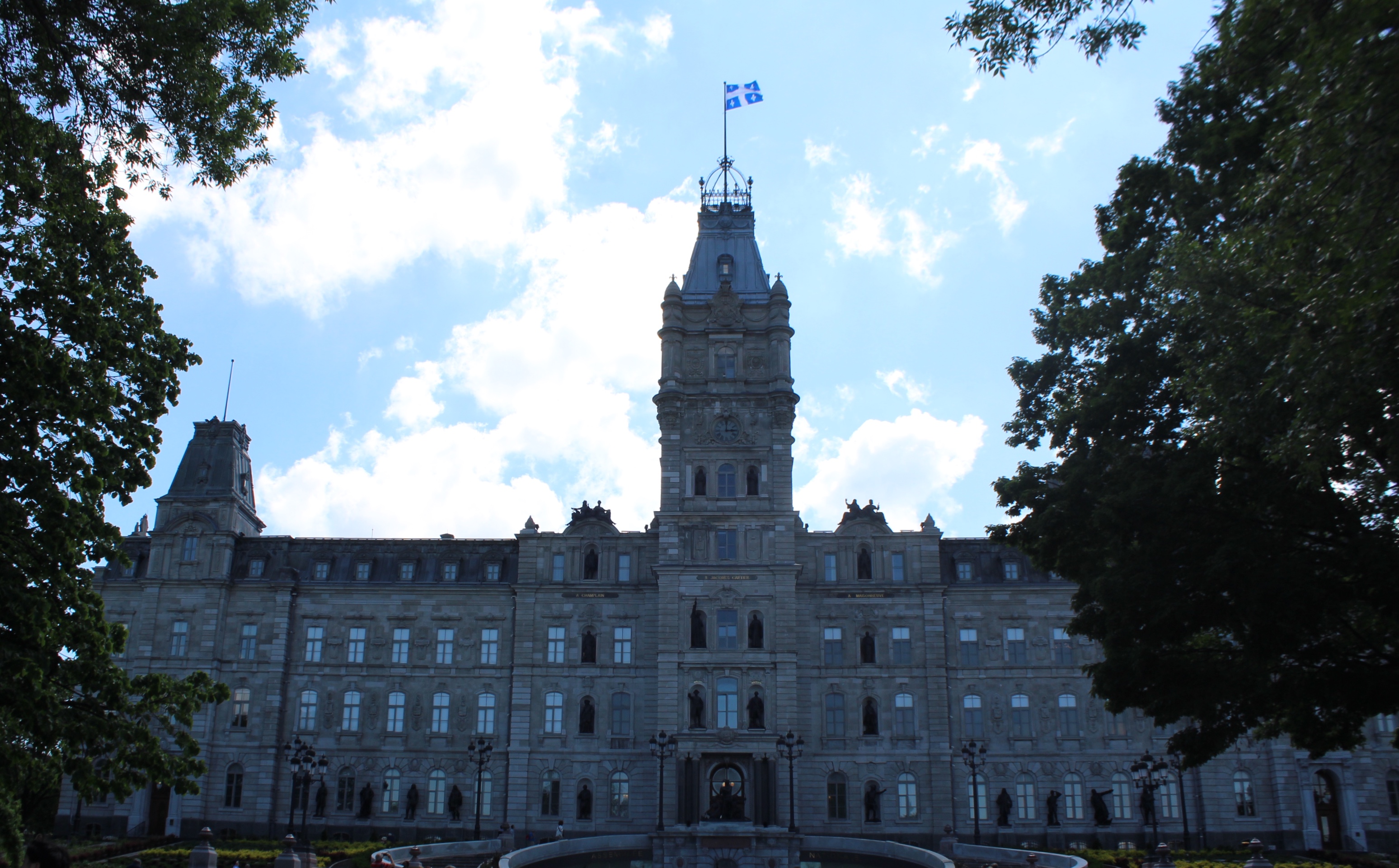
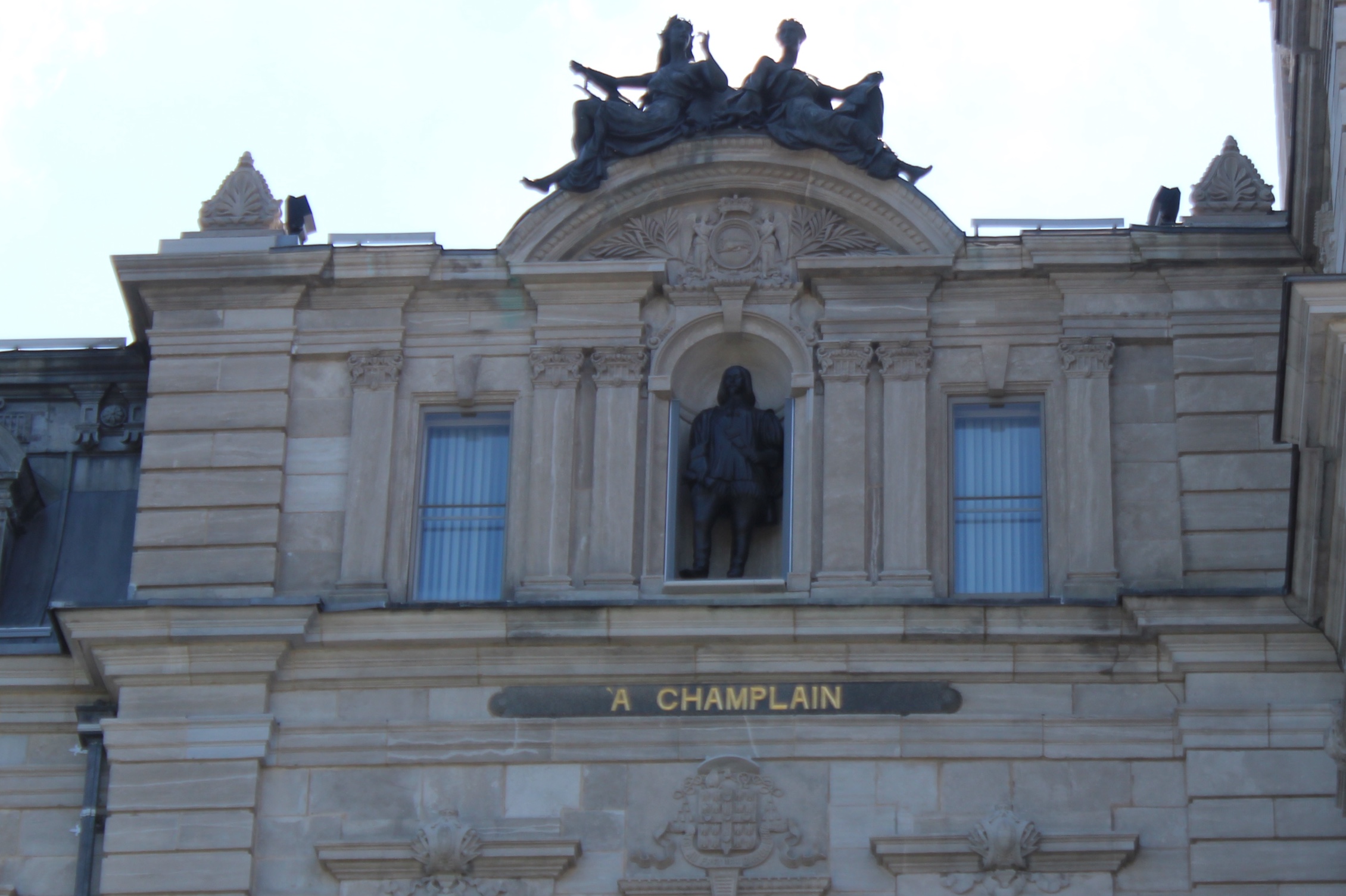
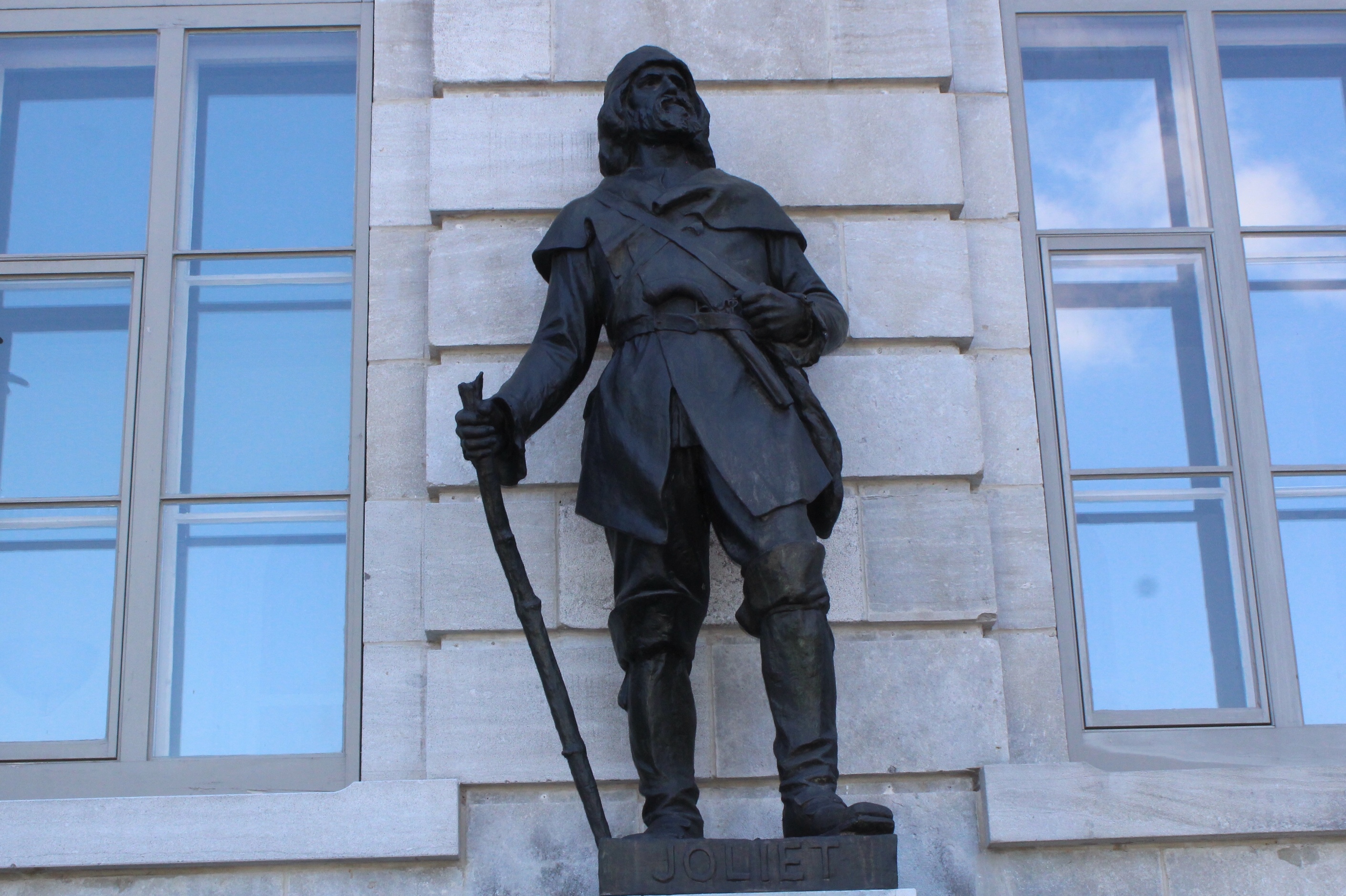
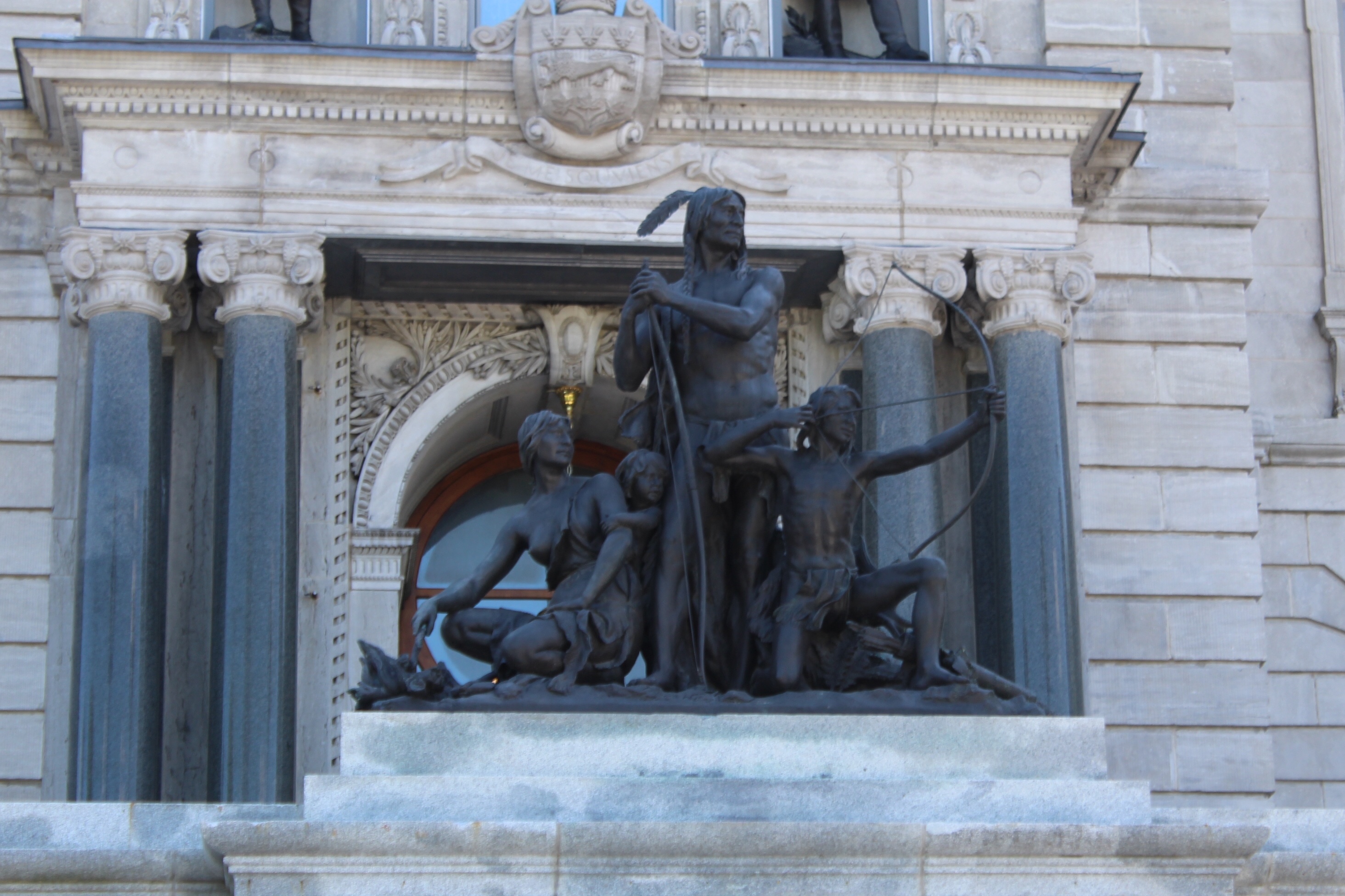
    The Parliament Building was another spectacular site. Built into the structure are 24 historic figures who have had a major impact on Quebec.

    Thursday, June 27th

    So how is it that the Canadian providence of Quebec came to speak French? Inquiring minds want to know.

    While researching this mystery the skipper found the answer in the Paris Treaty of 1763 which ended the French and Indian War (as it is known in North America) or the Seven Year War (as it is known in Europe).

    The boundaries in the America’s between the French and British were loosely defined in the 1750’s. The French decided to build a series of forts to solidify their claim of the lands west of the Appalachian Mountains.

    Fort Duquesne, at modern day Pittsburgh, got the attention of the British. The British sent a young 22 year old Lt Colonel George Washington on a scout mission to see what was going on.

    In May of 1754, LT Colonel Washington accidentally ambushed a group of French soldiers and exchanged musket fire with them. When the shots stopped 10 French soldiers were dead and Lt Colonel Washington was later given credit for starting the Seven Year War.

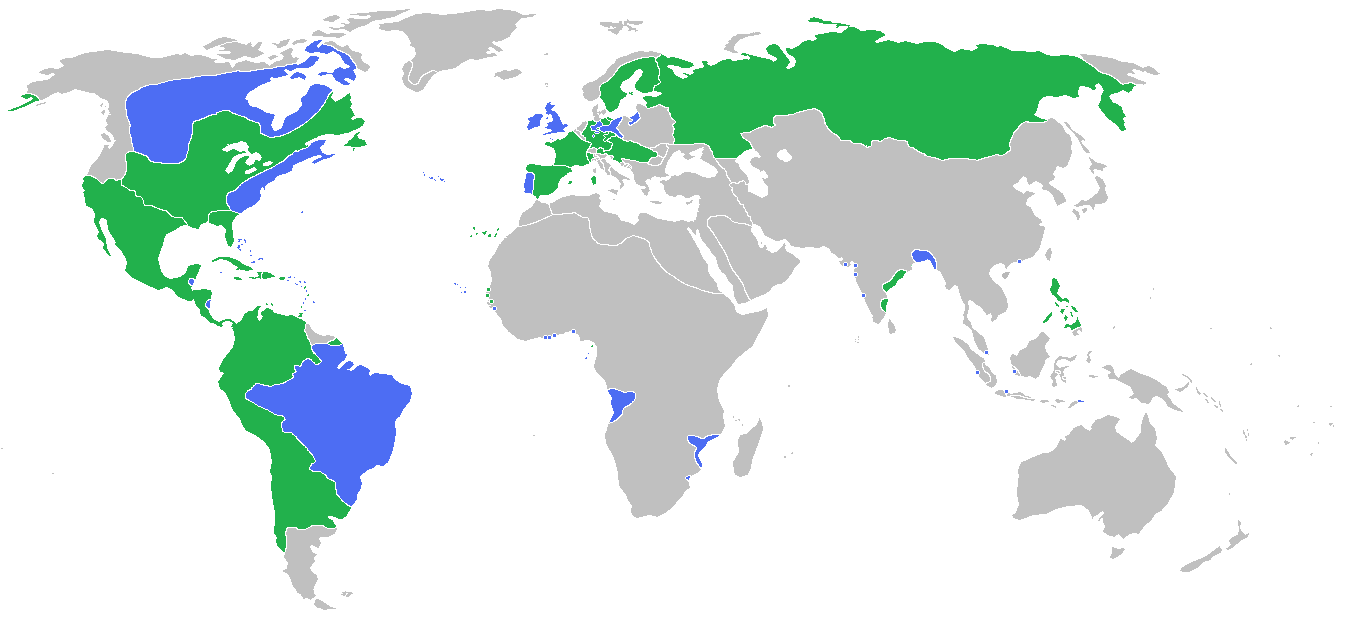
    Once war broke out and treaties were enforced, the conflict turned into a world wide conflict fought on five continents.

    Blue for British and their allies
    Green for French, Spain and their allies

    As the war progressed the British laid siege to Quebec for three months in the summer of 1759. By September British General Wolfe had figured out a way to attack the French Fort at Quebec. A mile south of the fort, the French had built a trail/road to allow bringing provisions from their ships to the fort.

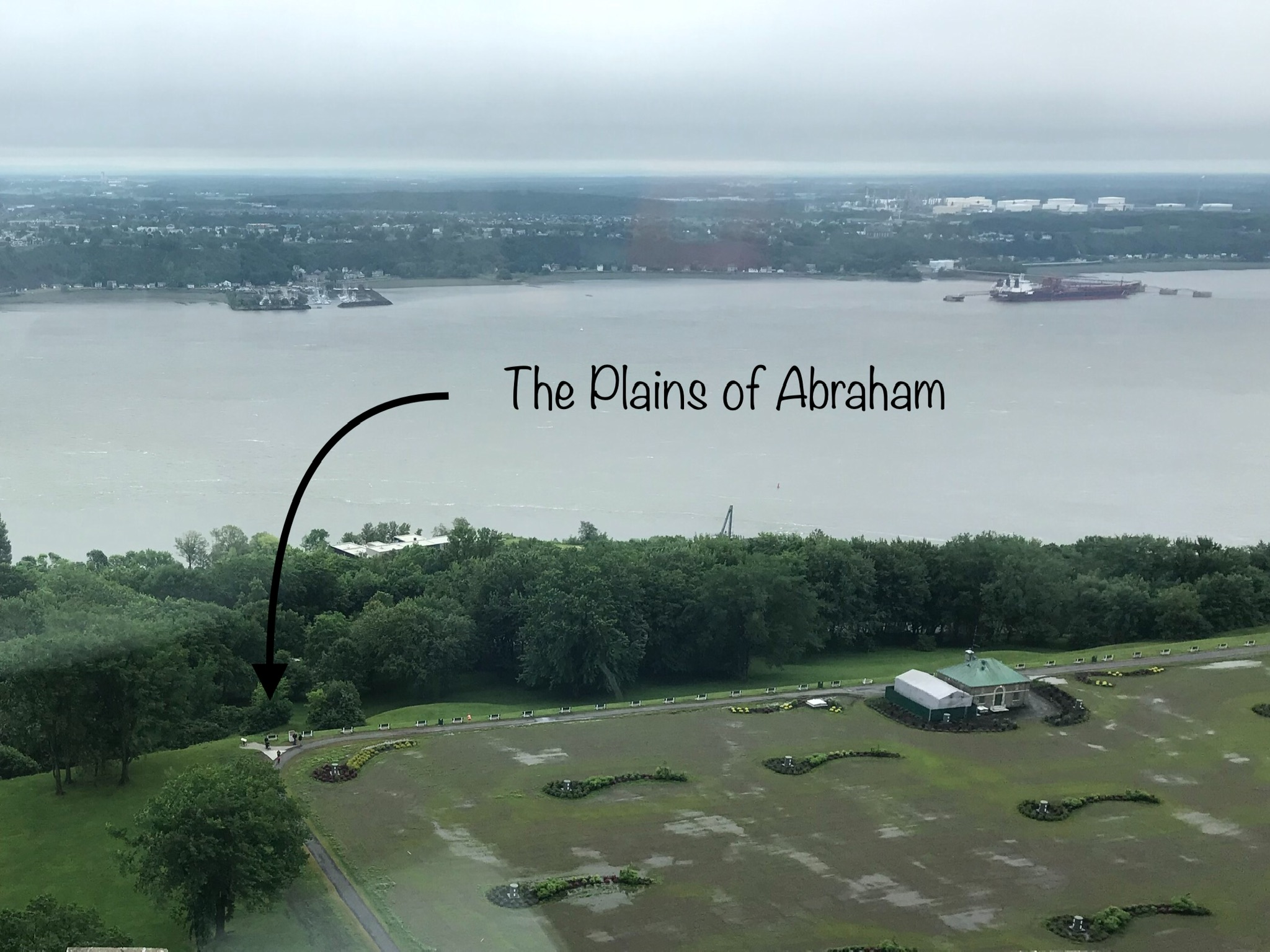
    General Wolfe moved about 4,400 troops up this trail during the night of September 12th. The troops then took positions west of the fort in the Plains of Abraham, farm land owned by a fellow named Abraham.

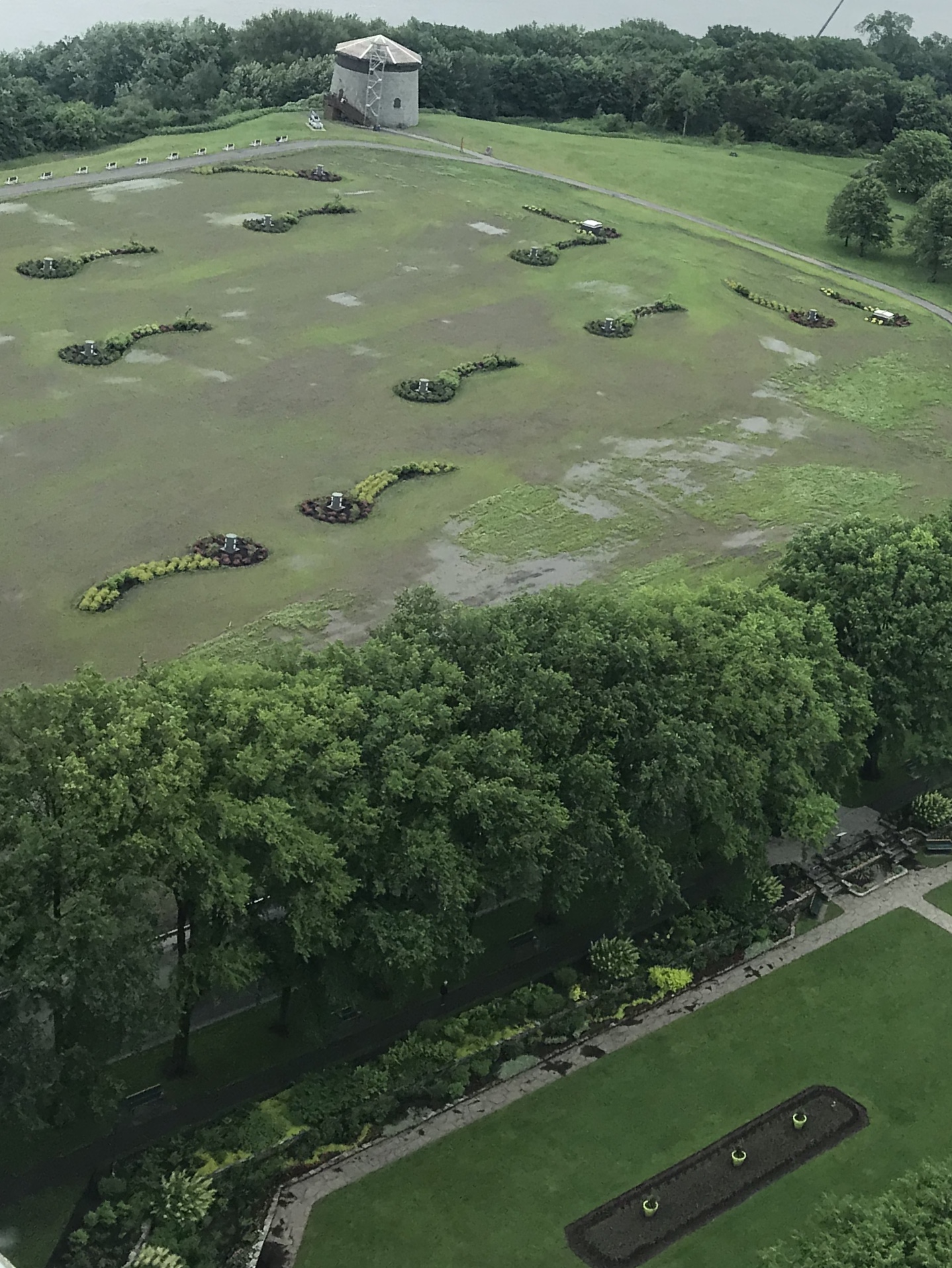
    Plains of Abraham now a city park.

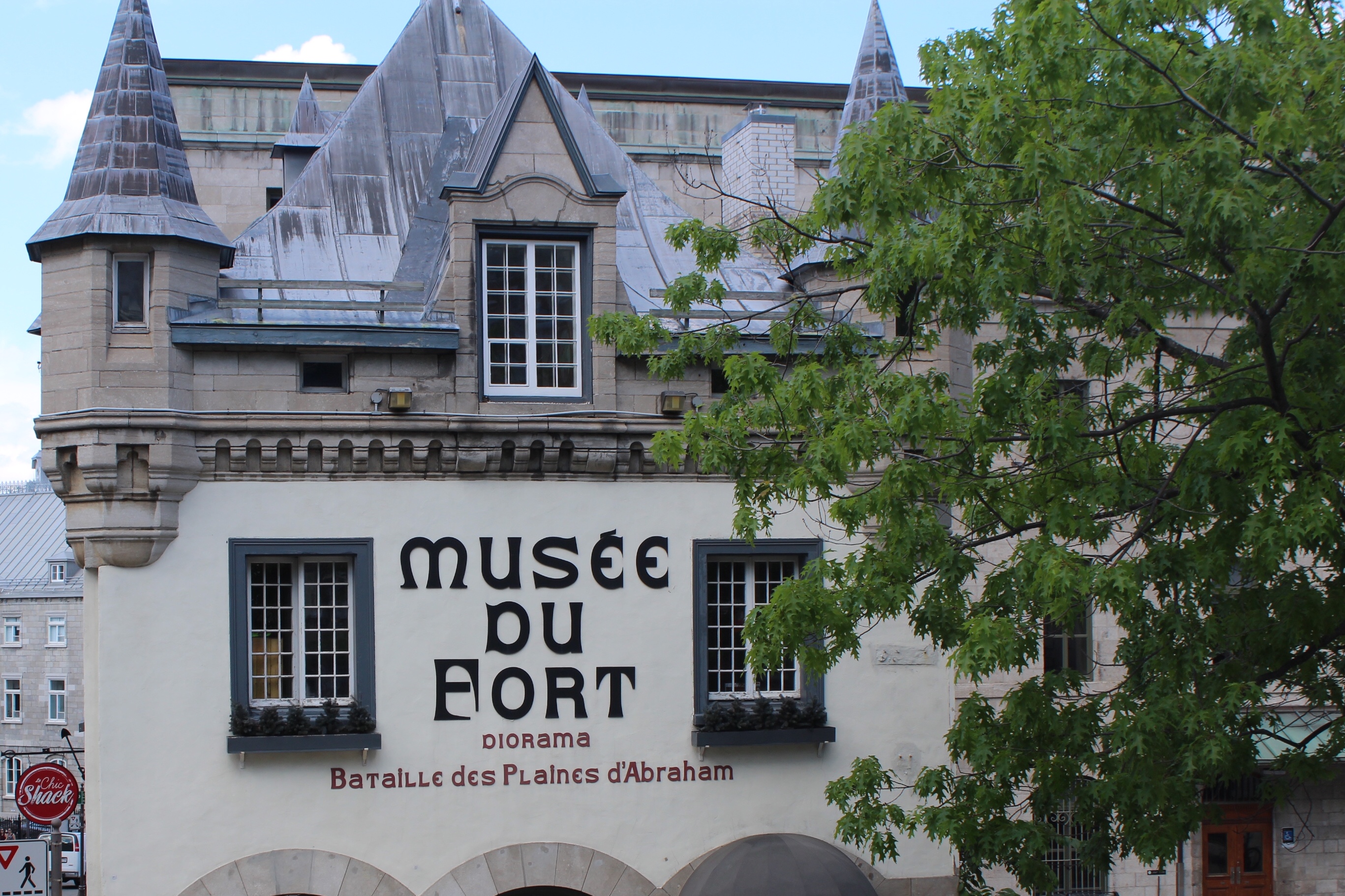
    The British formed two lines across the farm land and all men were ordered to load two musket balls in their weapons. The men then laid down and waited for the French to attack. The French General Montcalm grew impatient and ordered bayonets and a direct attack on the British troops in the field. The British troops allowed the French within 30 feet before the first line fired the first volley, mowing down many of the French soldiers. Then the second line of British soldiers sent a second volley to put the French troops left standing in total chaos. The battle lasted less than an hour (ok, more like 20 minutes) with a decisive British victory. When it was over, both Generals would be dead, and the French would never control New France again.

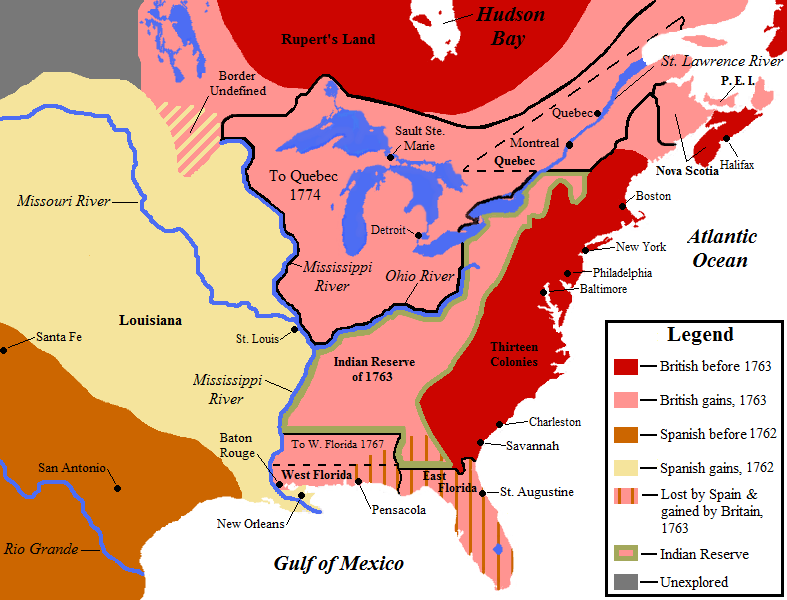
    The Paris Treaty of 1763 forever changed the world map and impacted the events that would transpire over the next 25 years, that then greatly influenced the next two hundred plus years of world history.

    For starters, the British got all the French lands east of the Mississippi River, as well as New France which is now the providence of Quebec. The Spanish had to cede over Florida to the British.

    Article IV of the Treaty guaranteed the French Catholics the right to leave the region. Those who stayed, swore allegiance to the crown of Britain but were allowed to continue their Catholic worship.

    In 1774, the British Parliament passed the Quebec Act that moved the treaty into law. Mostly to appease the French Catholics who were the majority of settlers in the region. The law allowed Catholic worship, use of French law, and the use of the French language.

    You may be wondering why the British would want to appease the French Canadians. So if you recall your history lessons, you might remember those pesky patriots along the Atlantic were getting out of hand. Recall the Boston Tea Party took place December 1773. Those Patriots did not like the Quebec Act one bit. They had plans for all that land west of the Appalachian Mountains and the plan certainly did not include a bunch of non-Protestant French speaking people. The Patriots took the Act as punishment for the American colonies. The unrest resulted in the first shots of the Revolution in 1775 at Concord and Lexington, just north of Boston.

    During the American Revolution, the Patriots went north to both Montréal and Quebec and tried to get the Canadians to join the revolt but the Canadians would have none of it. The appeasements obviously worked, and Quebecers still speak French as their first language to this day as a result of the Quebec Act of 1774.

    Friday, June 28th

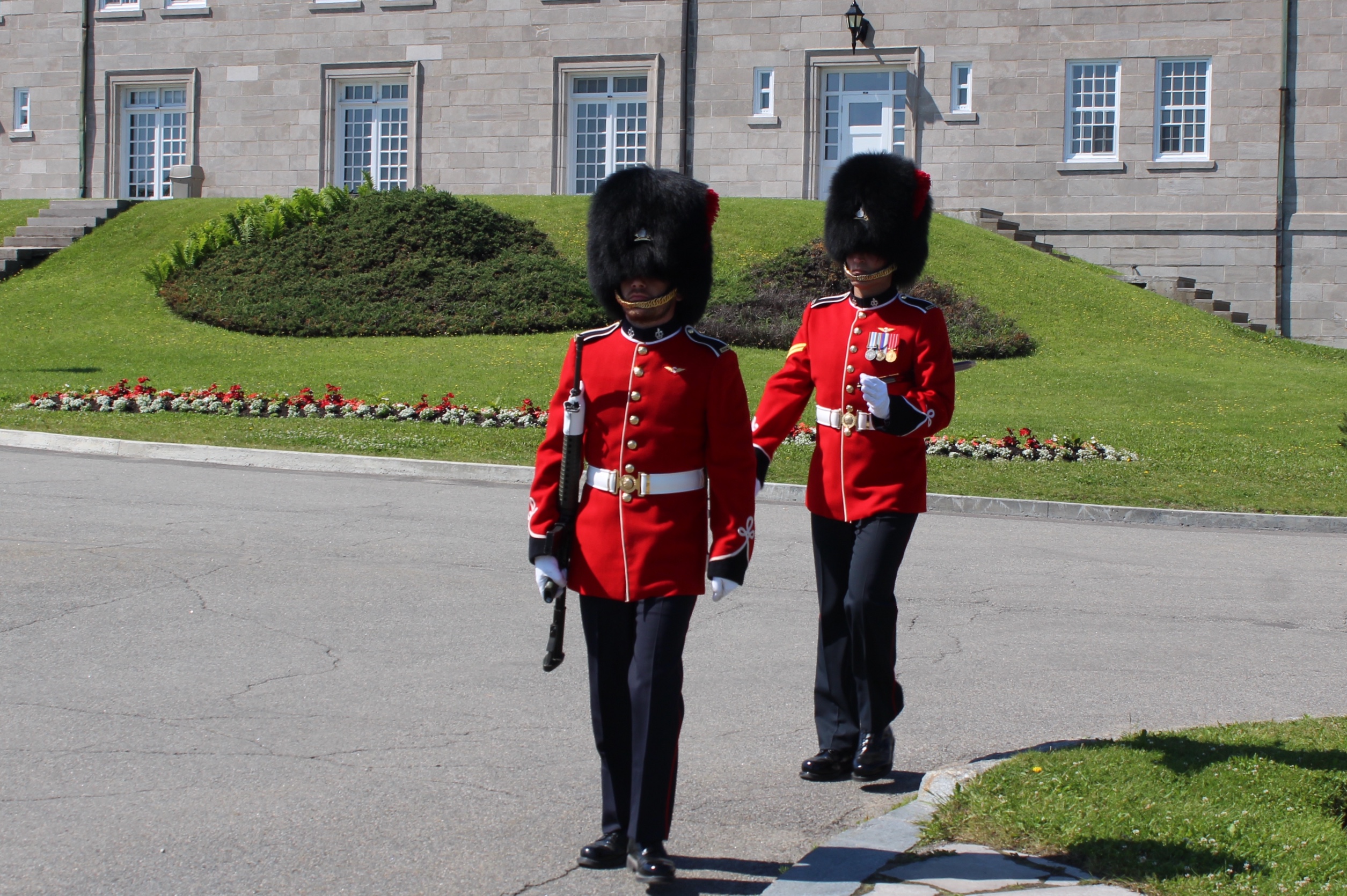
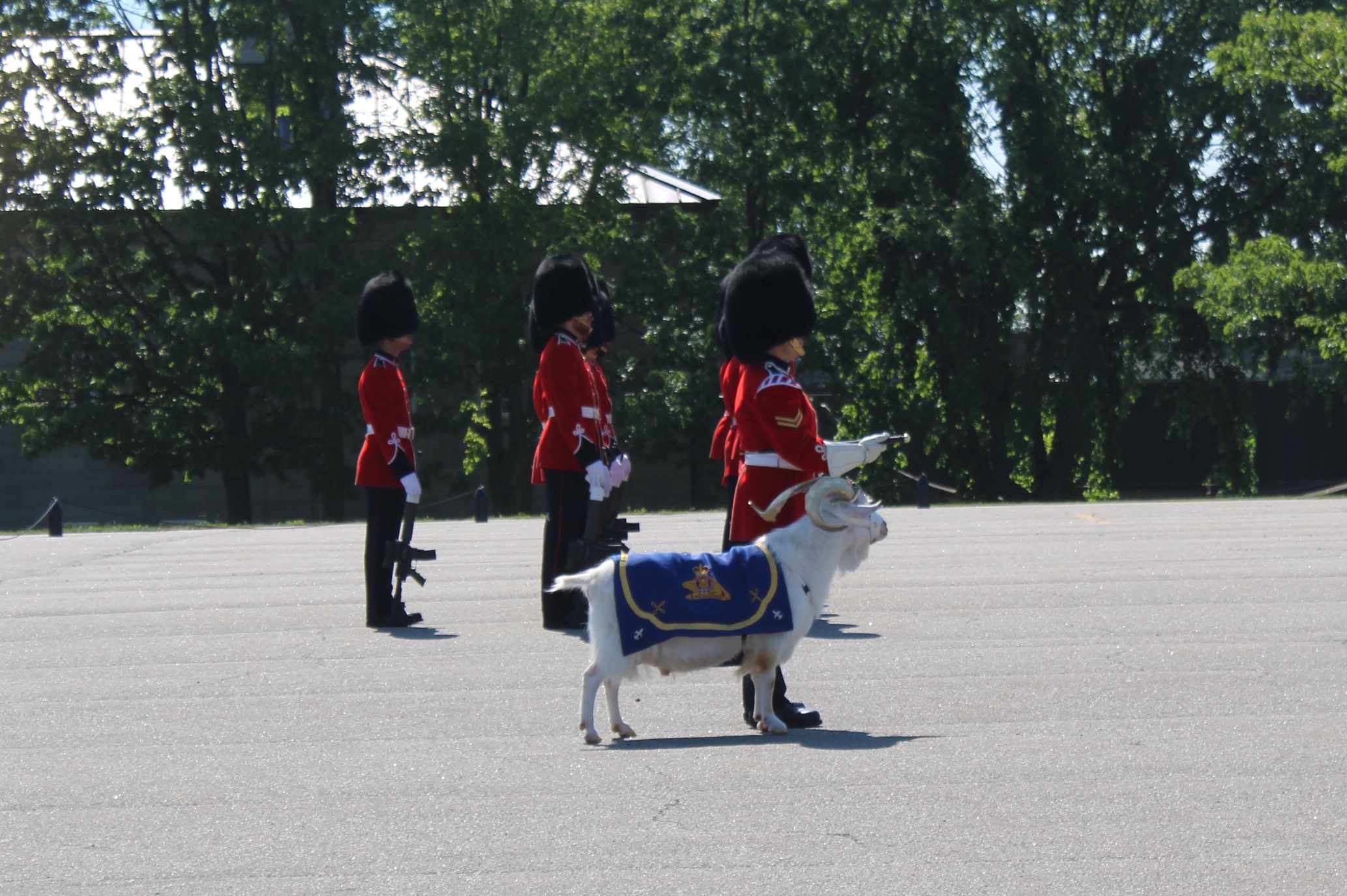
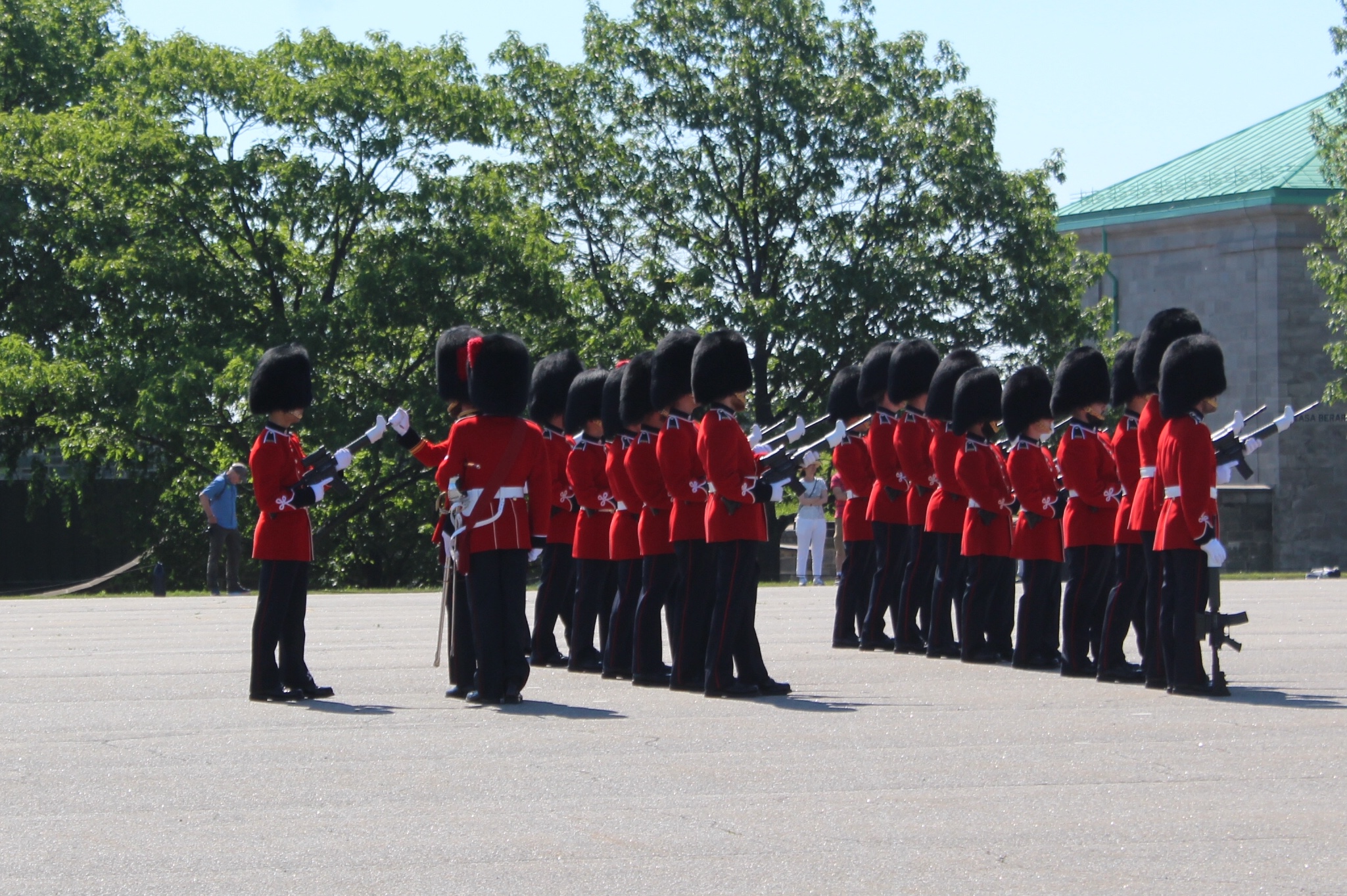
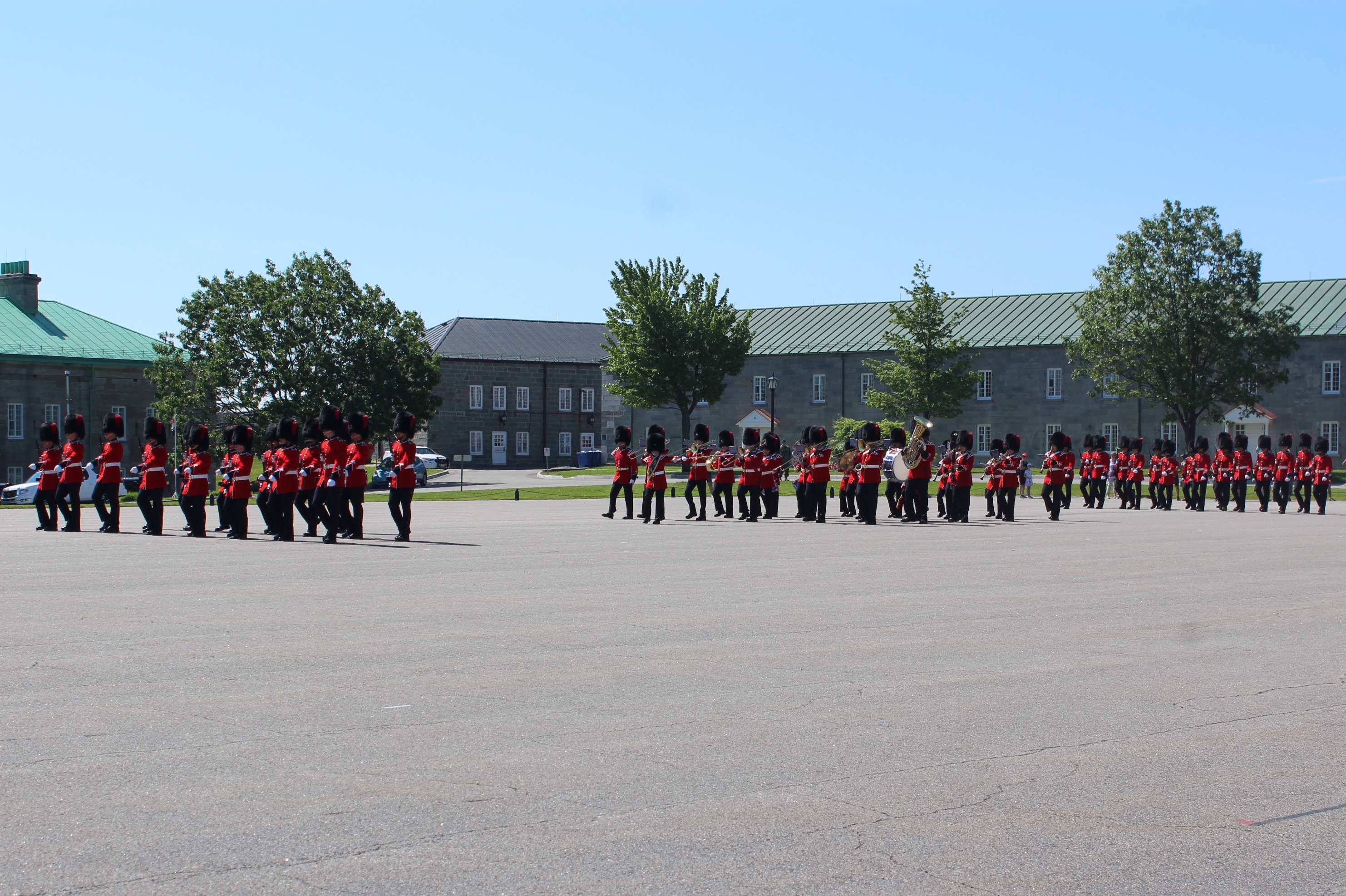
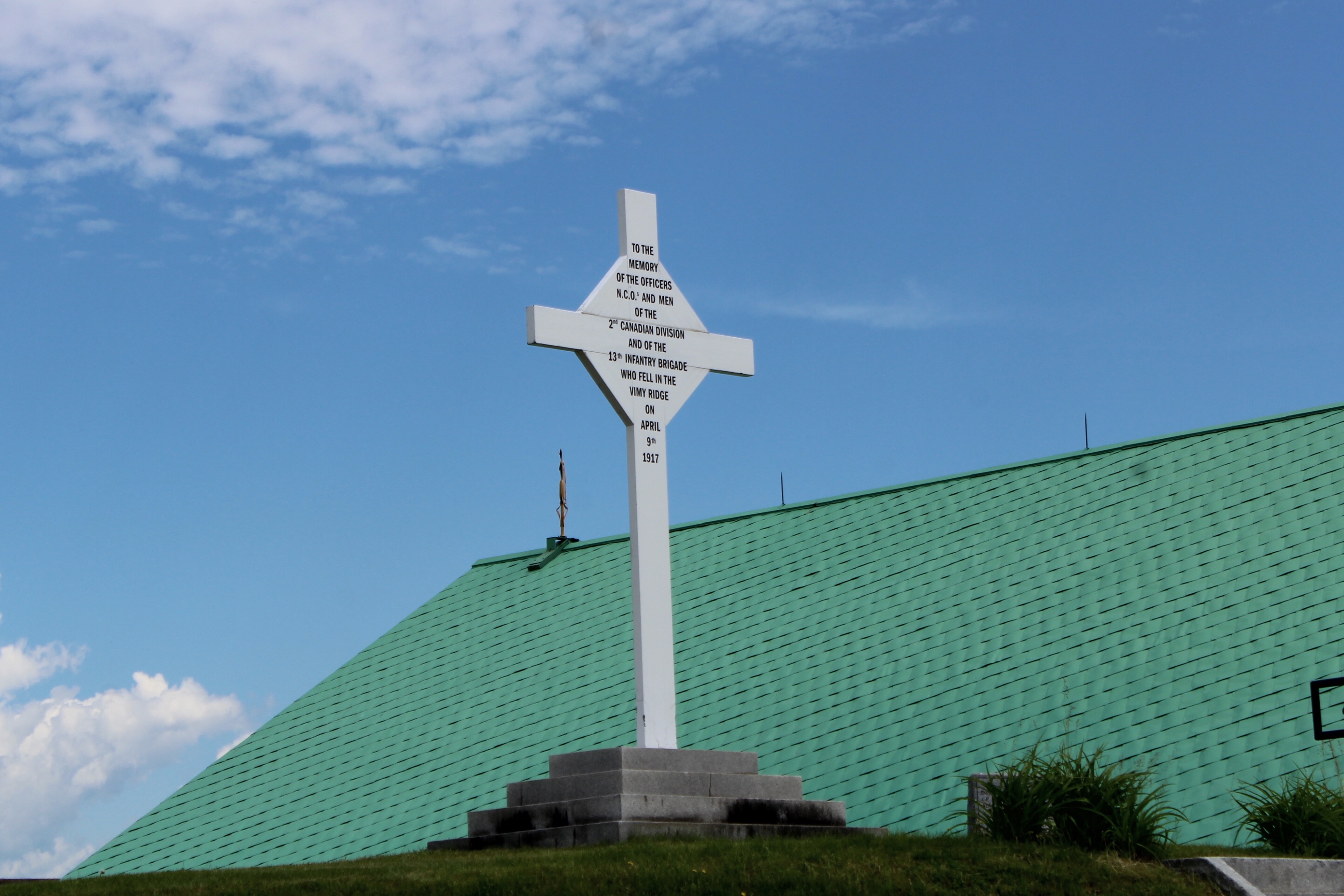
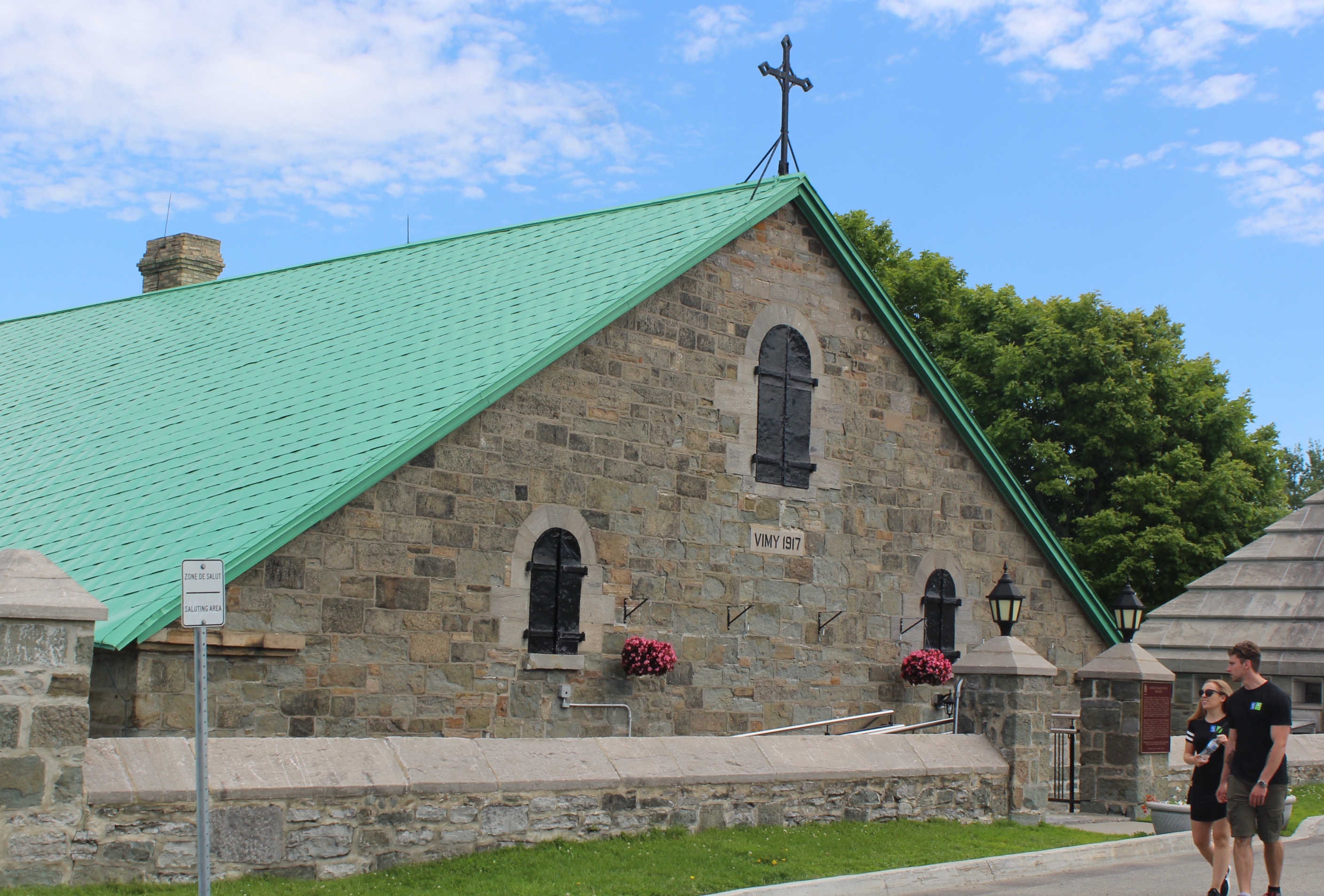
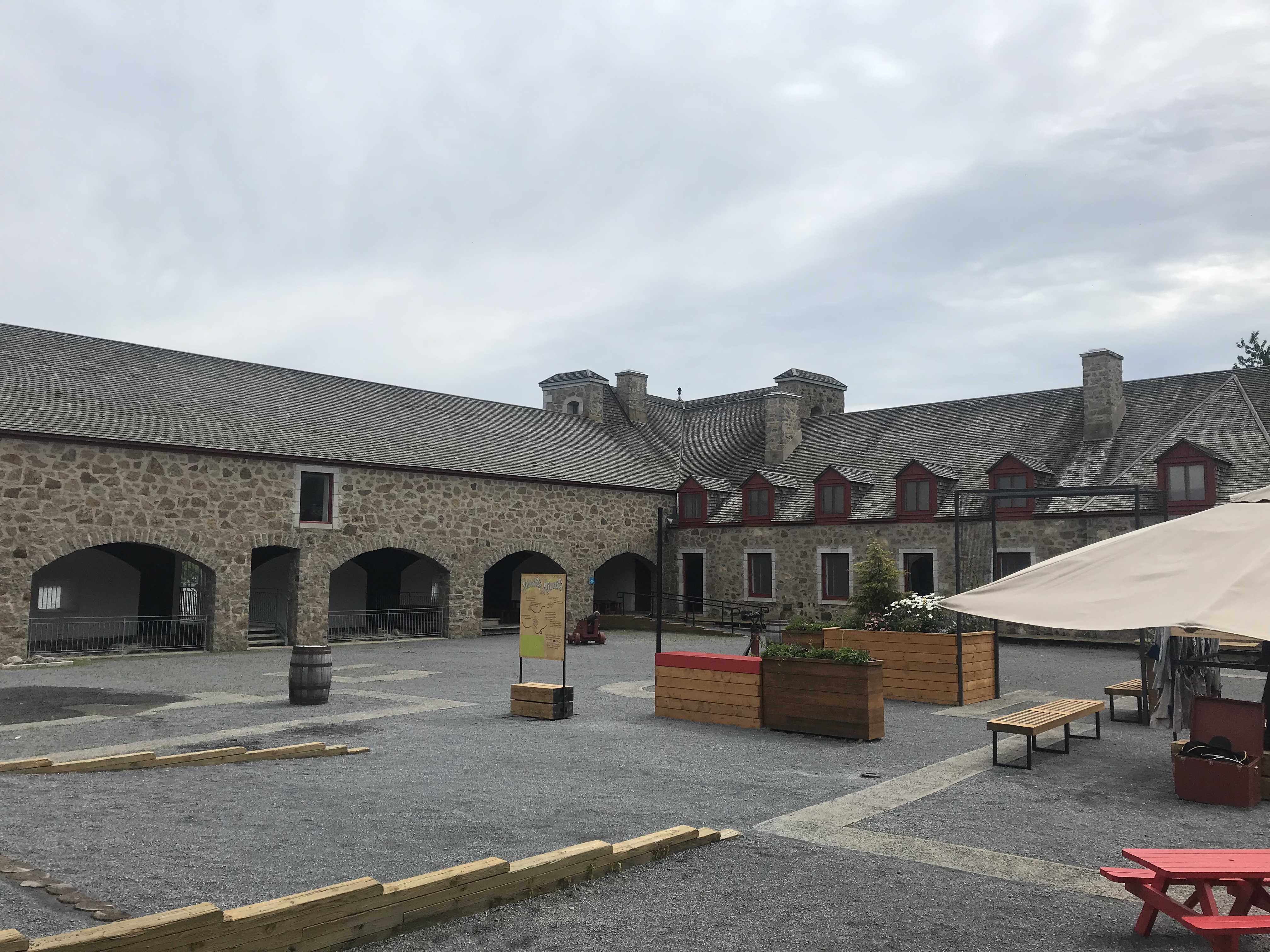
    The crew decided to go watch the Changing of the Guard ceremony at the Citadel. The Citadel was built to protect the British interest in Canada because of American invasions during the American Revolution and the War of 1812. The fort was built between 1820 and 1850. The Guard Ceremony was British Military traditions but with French commands, interesting.

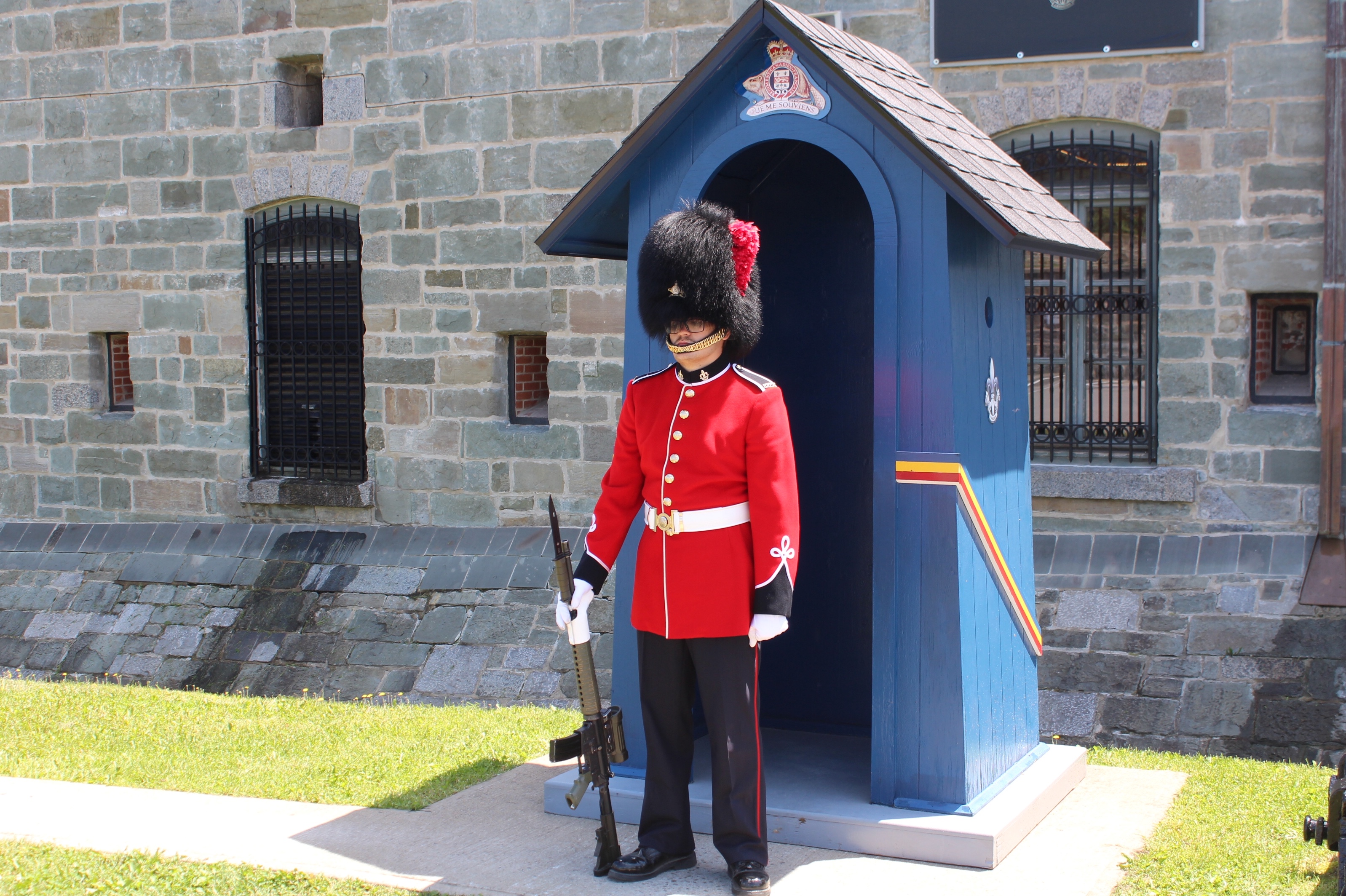
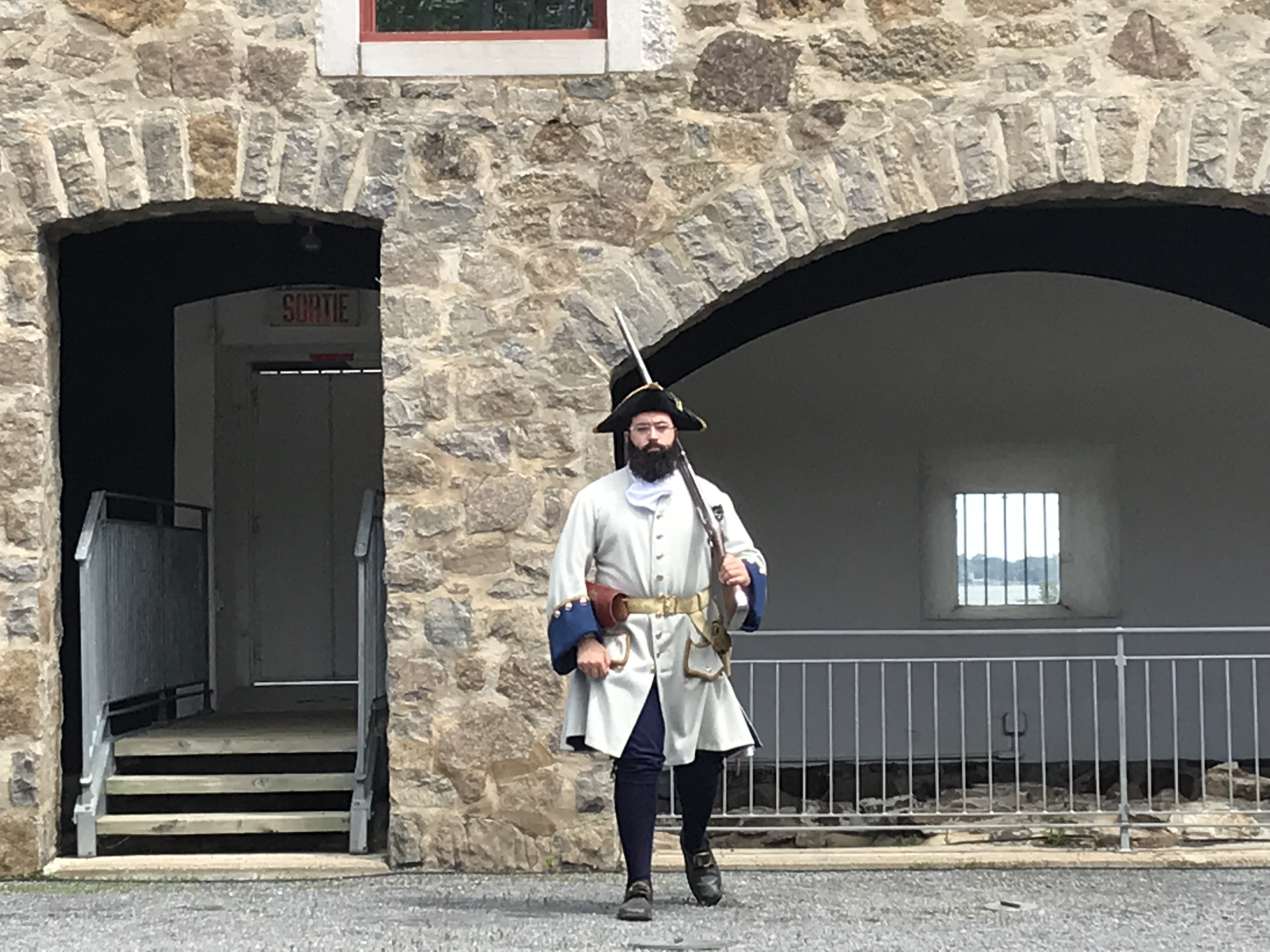
    The Dress Uniforms look very much like the British military, but there are actually two subtle differences. The Canadian’s hat is made of Bear skin and their buttons have a Beaver on them paying homage to the fur trade of the French who first settled the region.

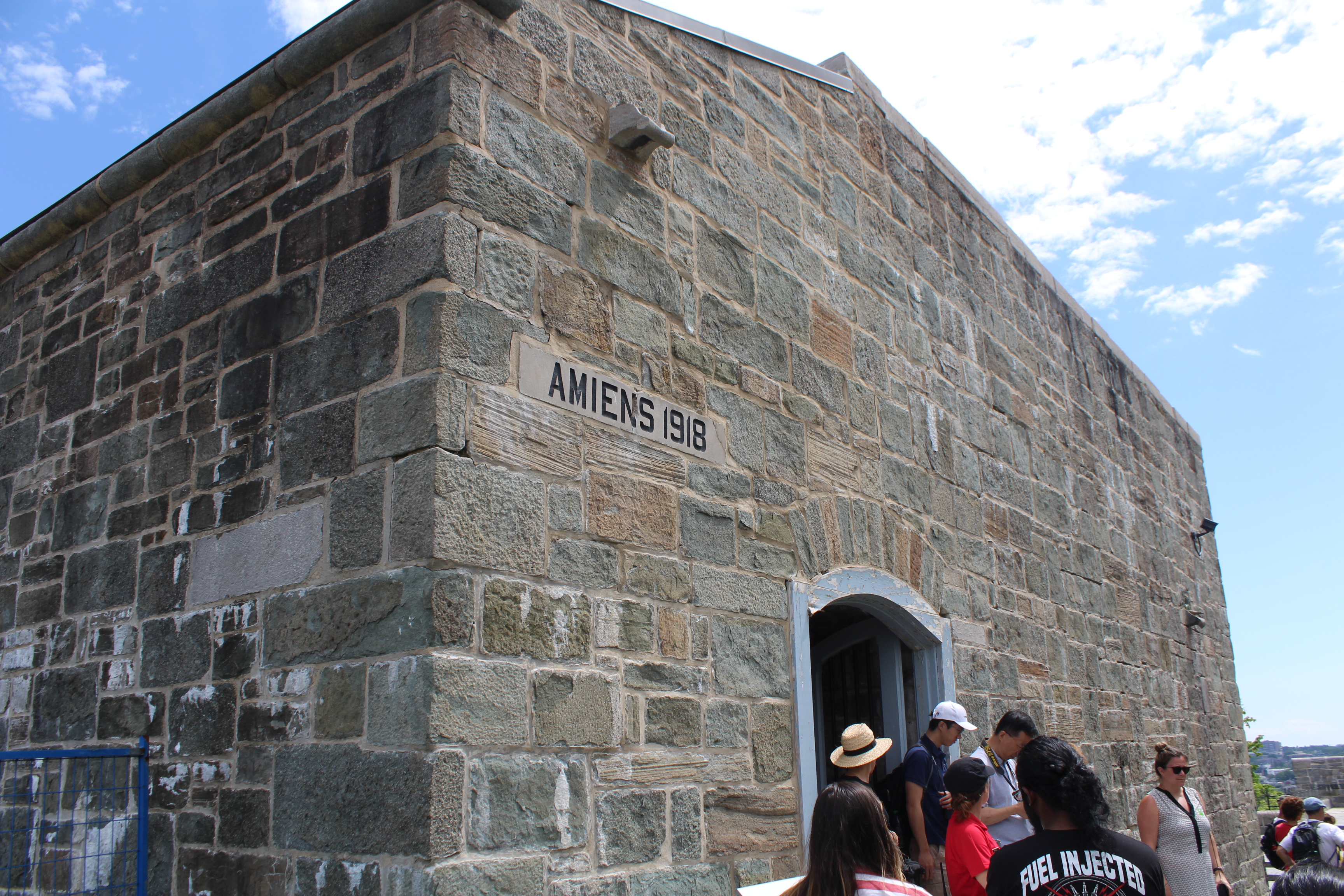
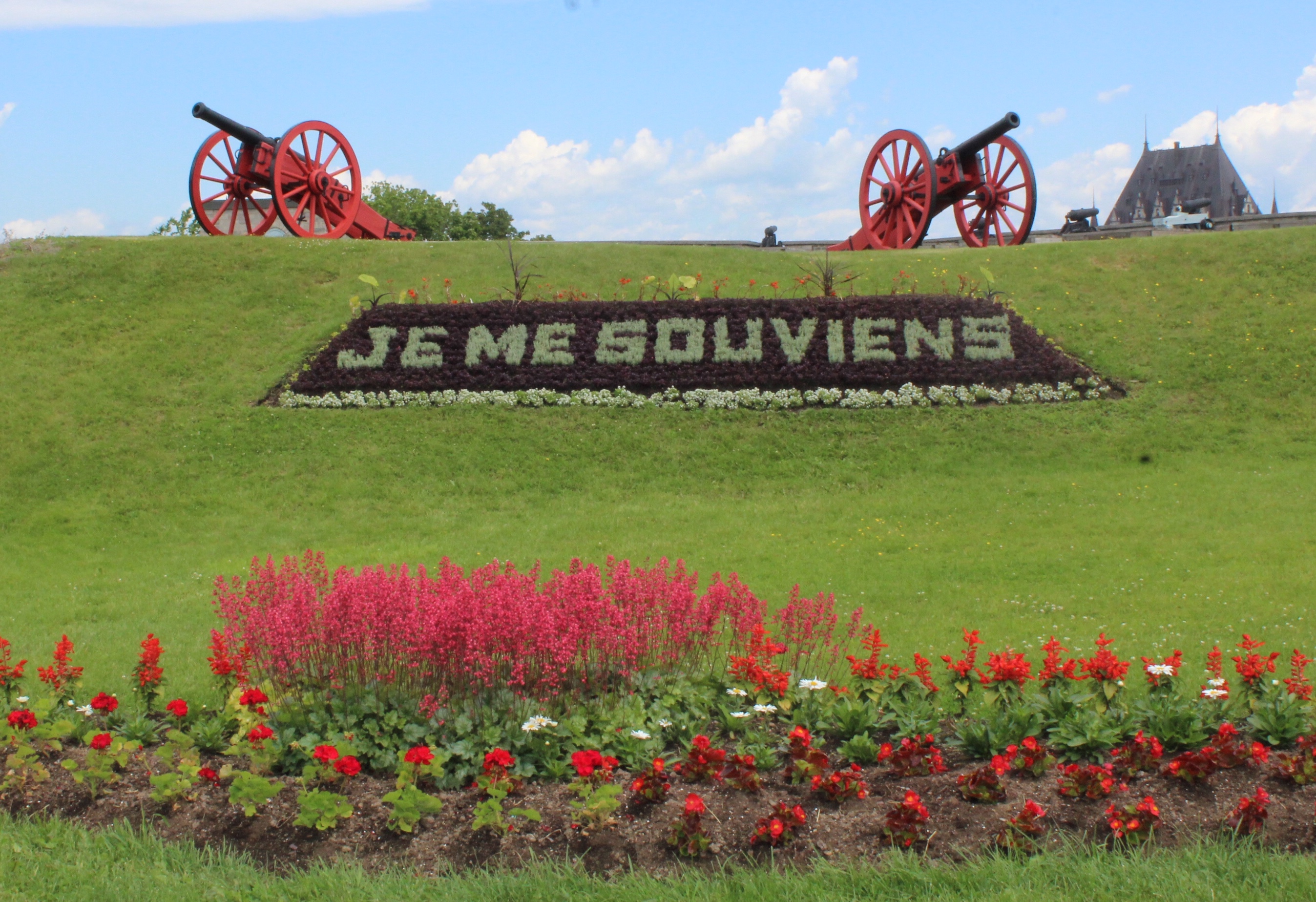
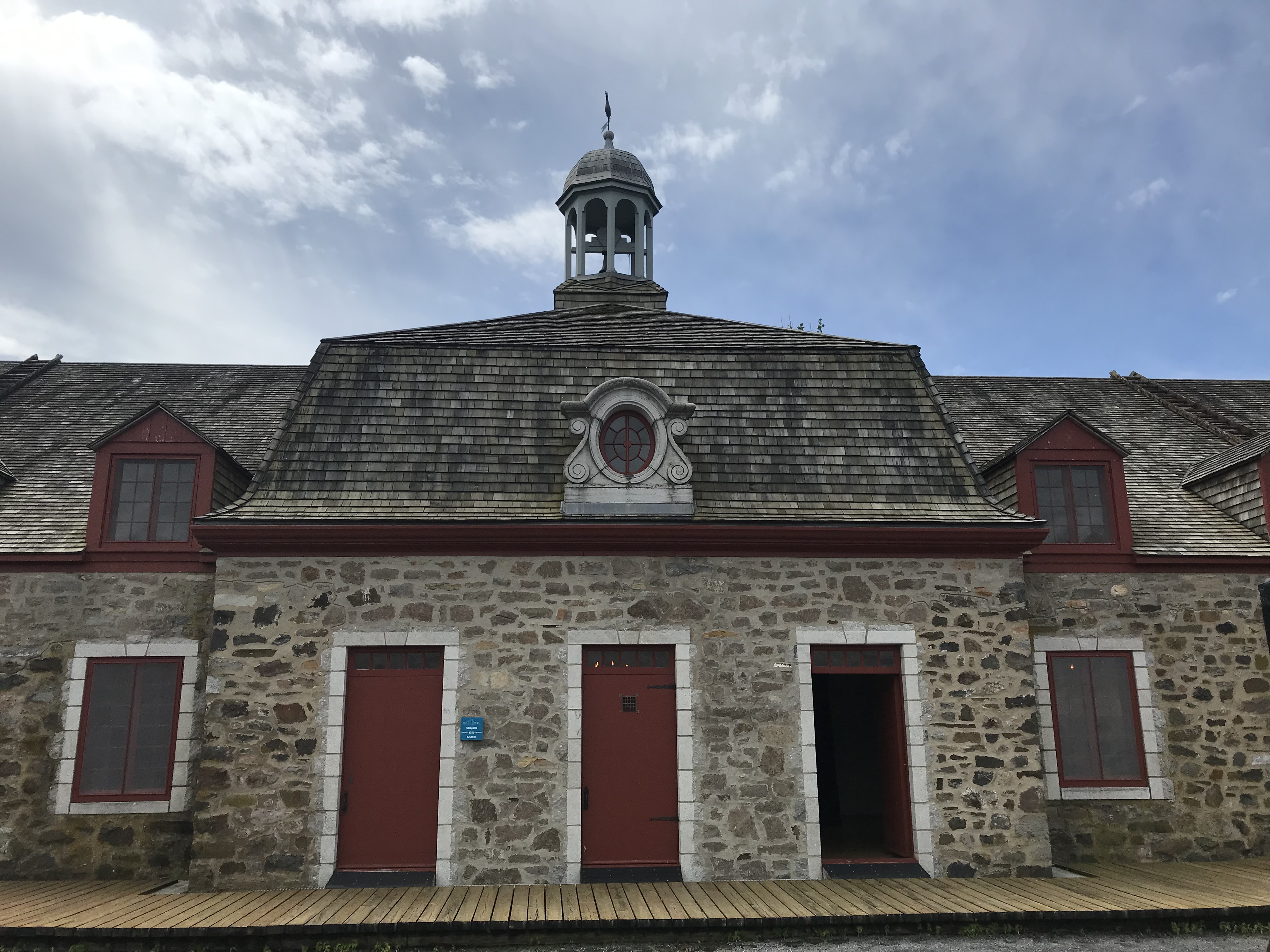
    Following the ceremony, the crew took a tour of the fort. The tour ended at the Chapel. They have an interesting tradition where members of the 22nd Regiment enter the Chapel once a day and read from the Book of Remembrance that contains all the names of 22nd Regiment who have lost their lives in war. They read one page per day. Which leads to their motto, Je Me Souviens, or I Remember.

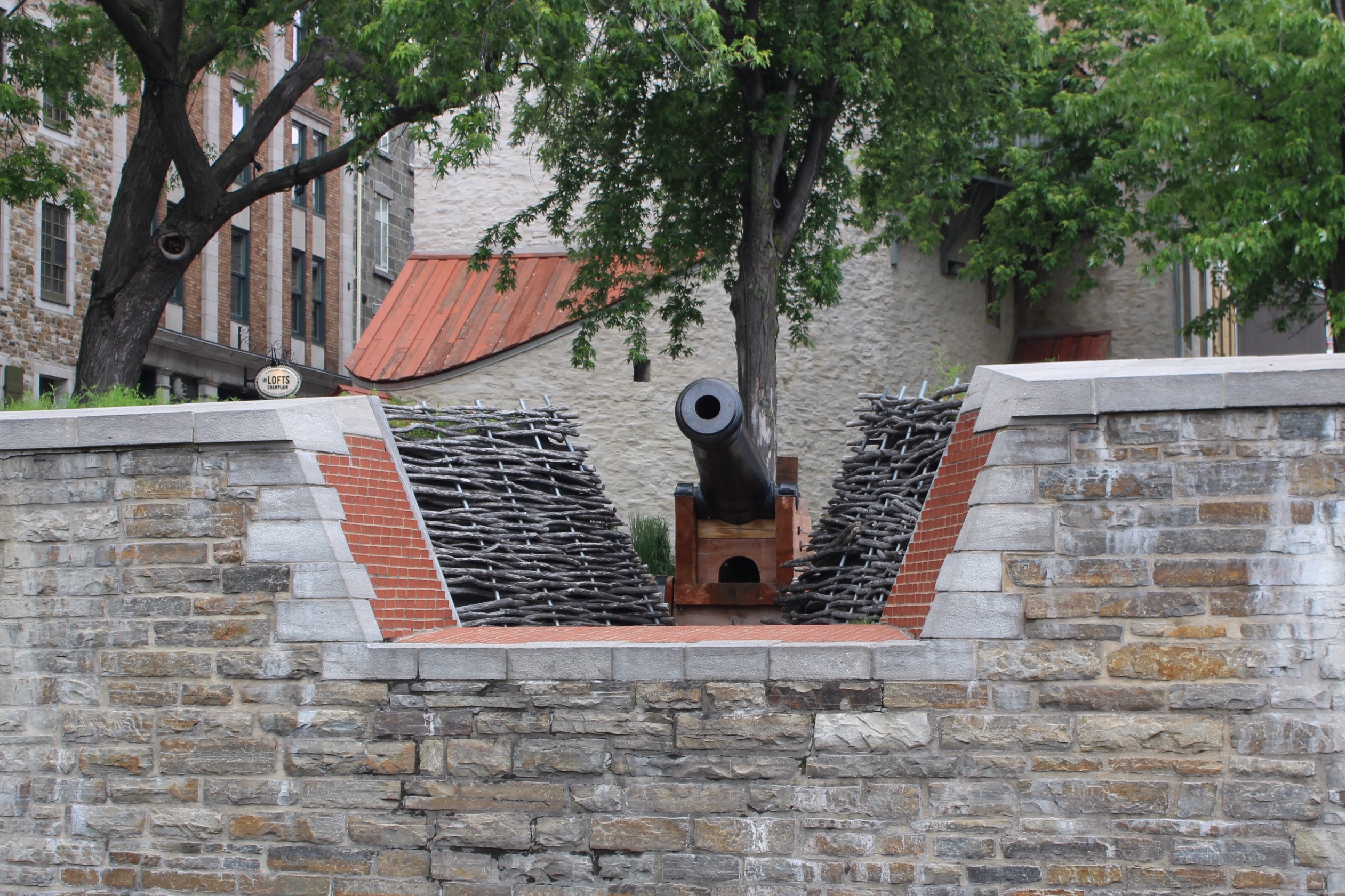
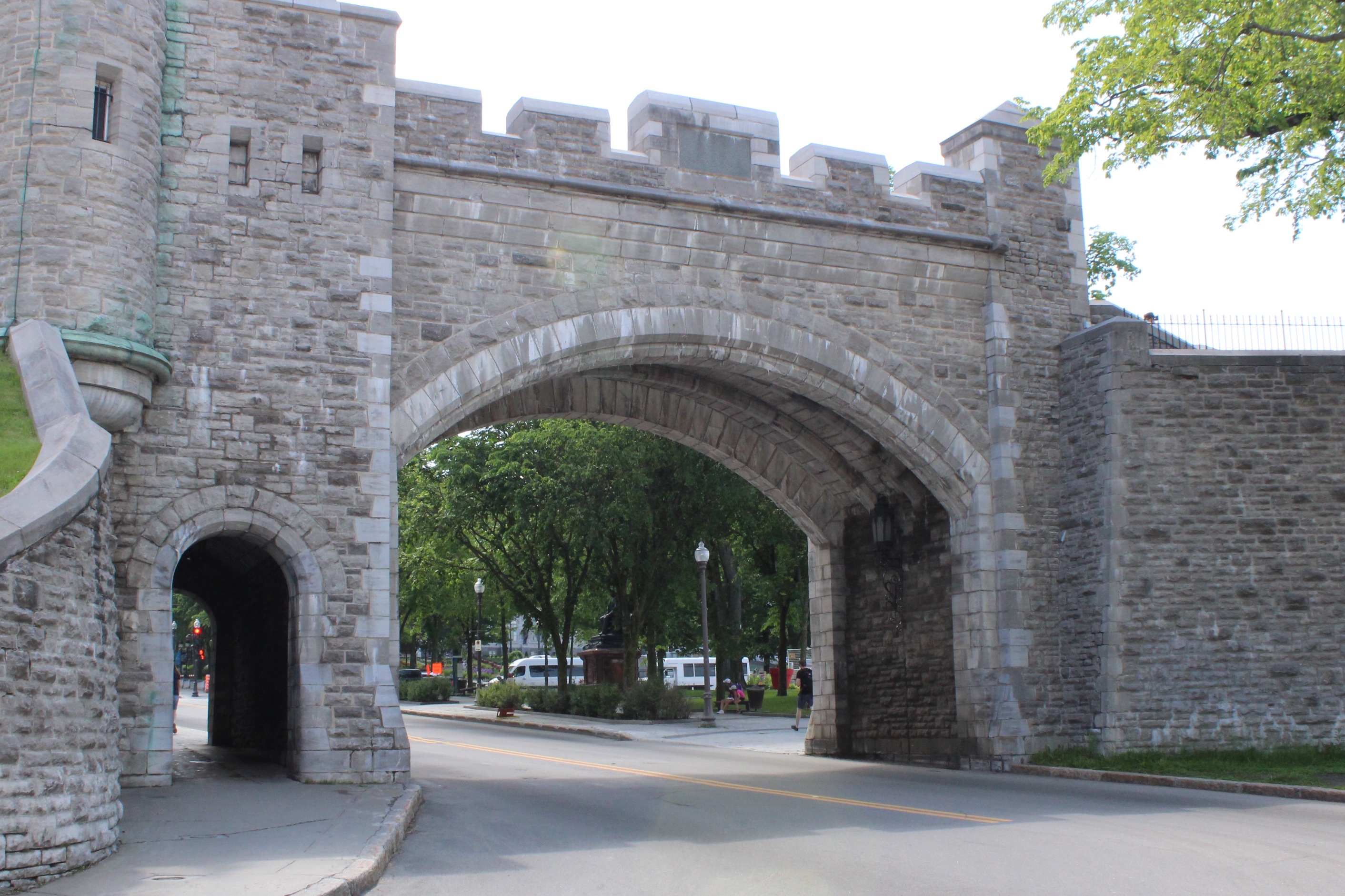
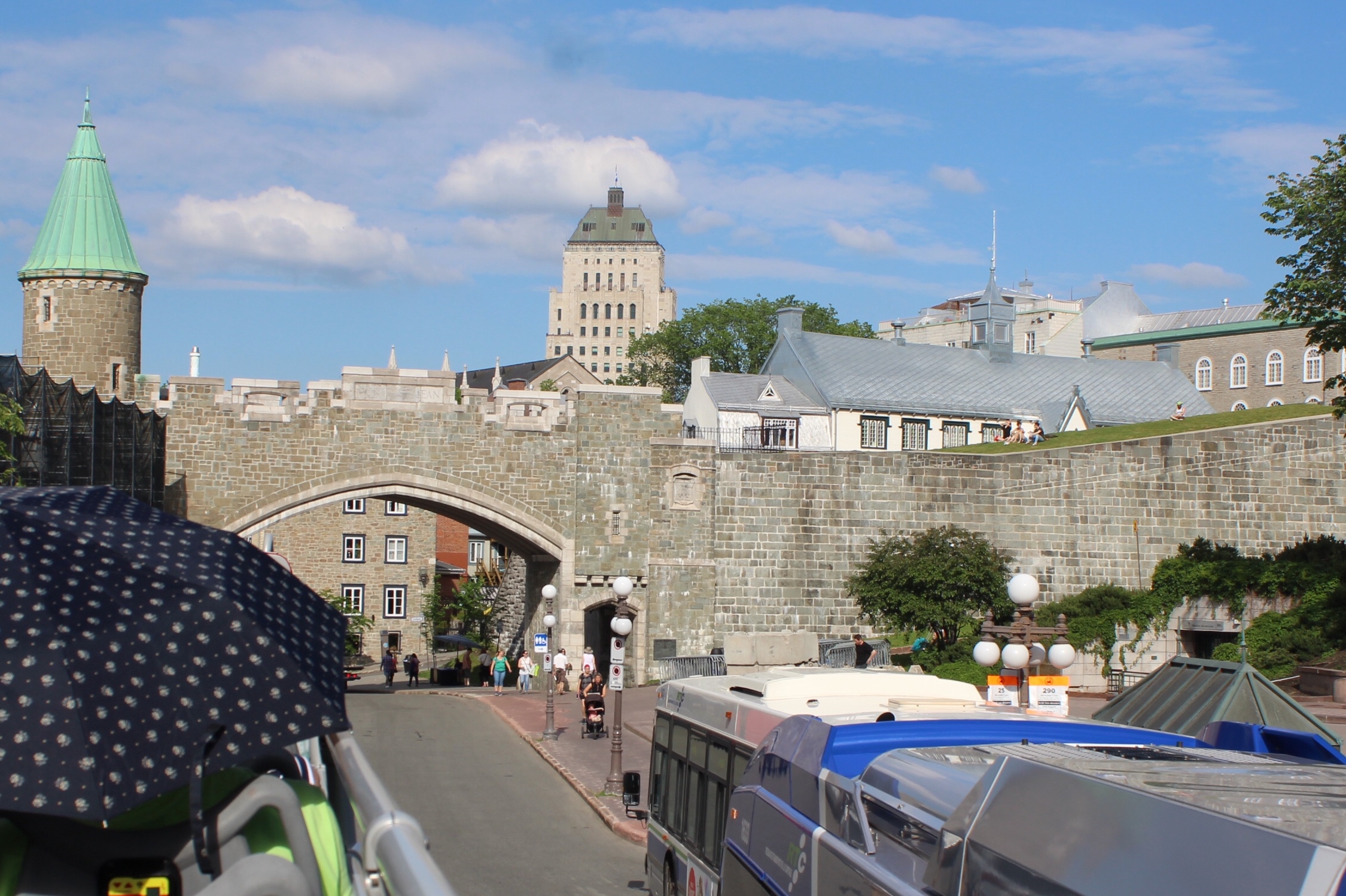
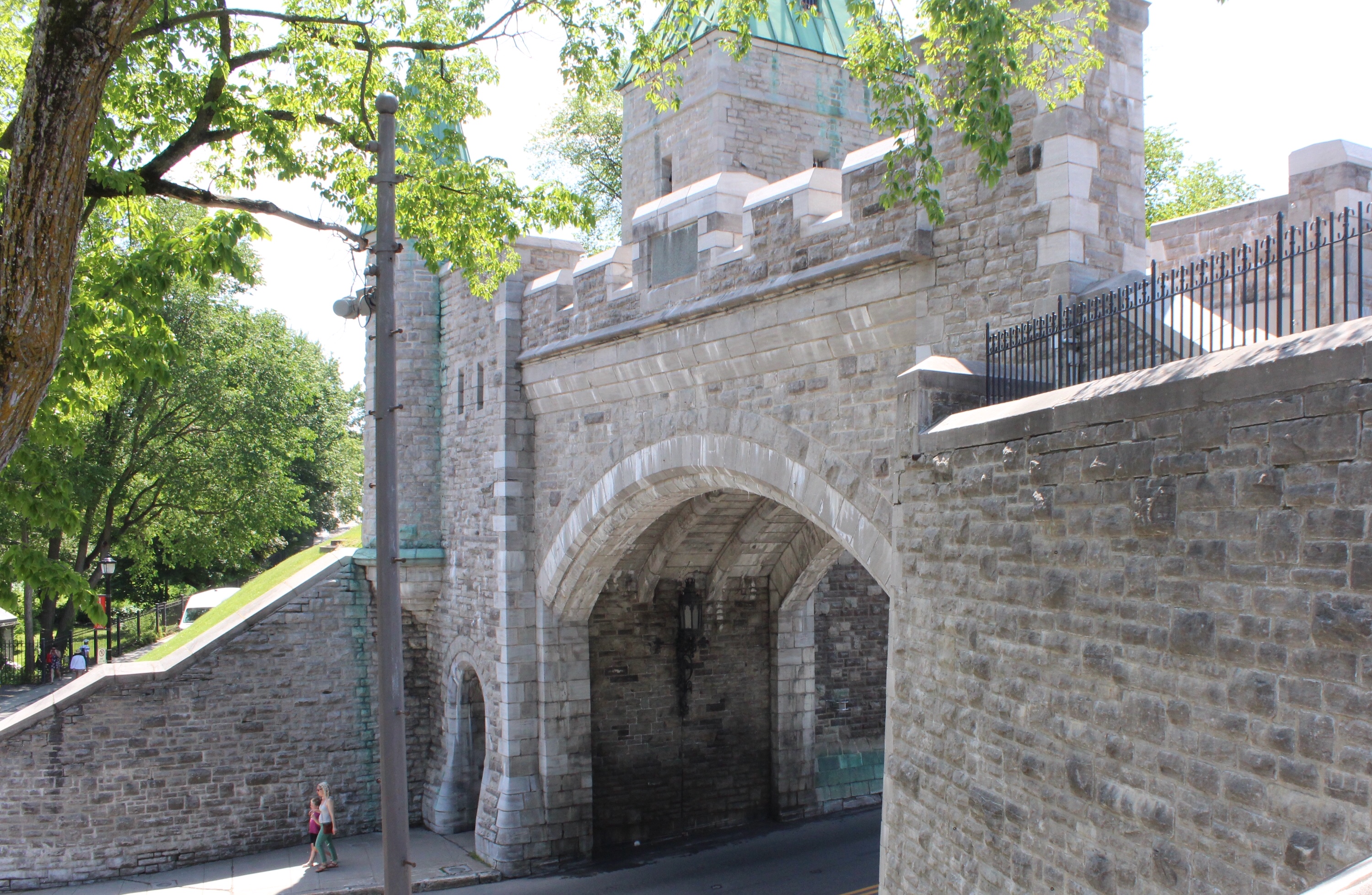
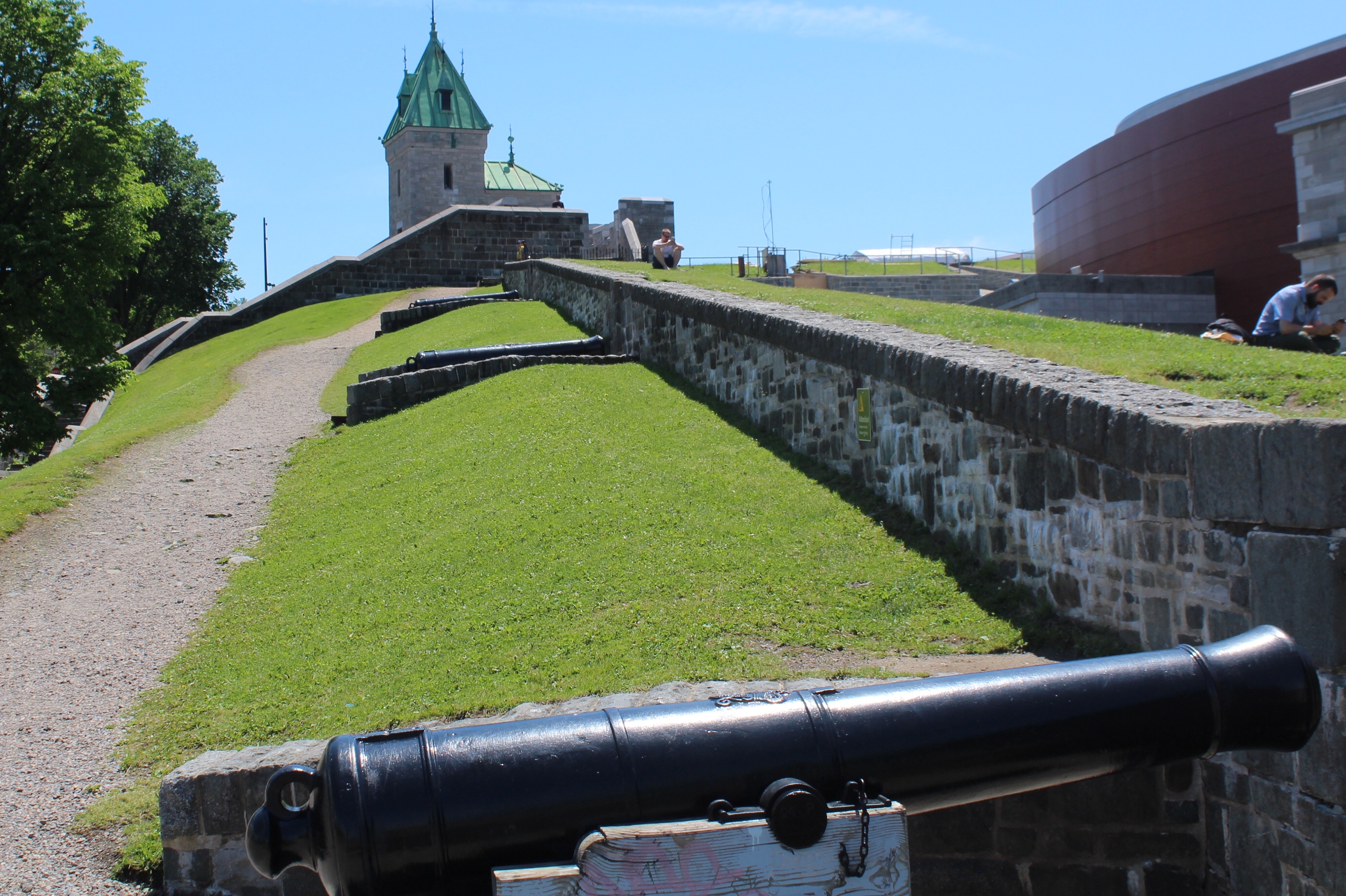
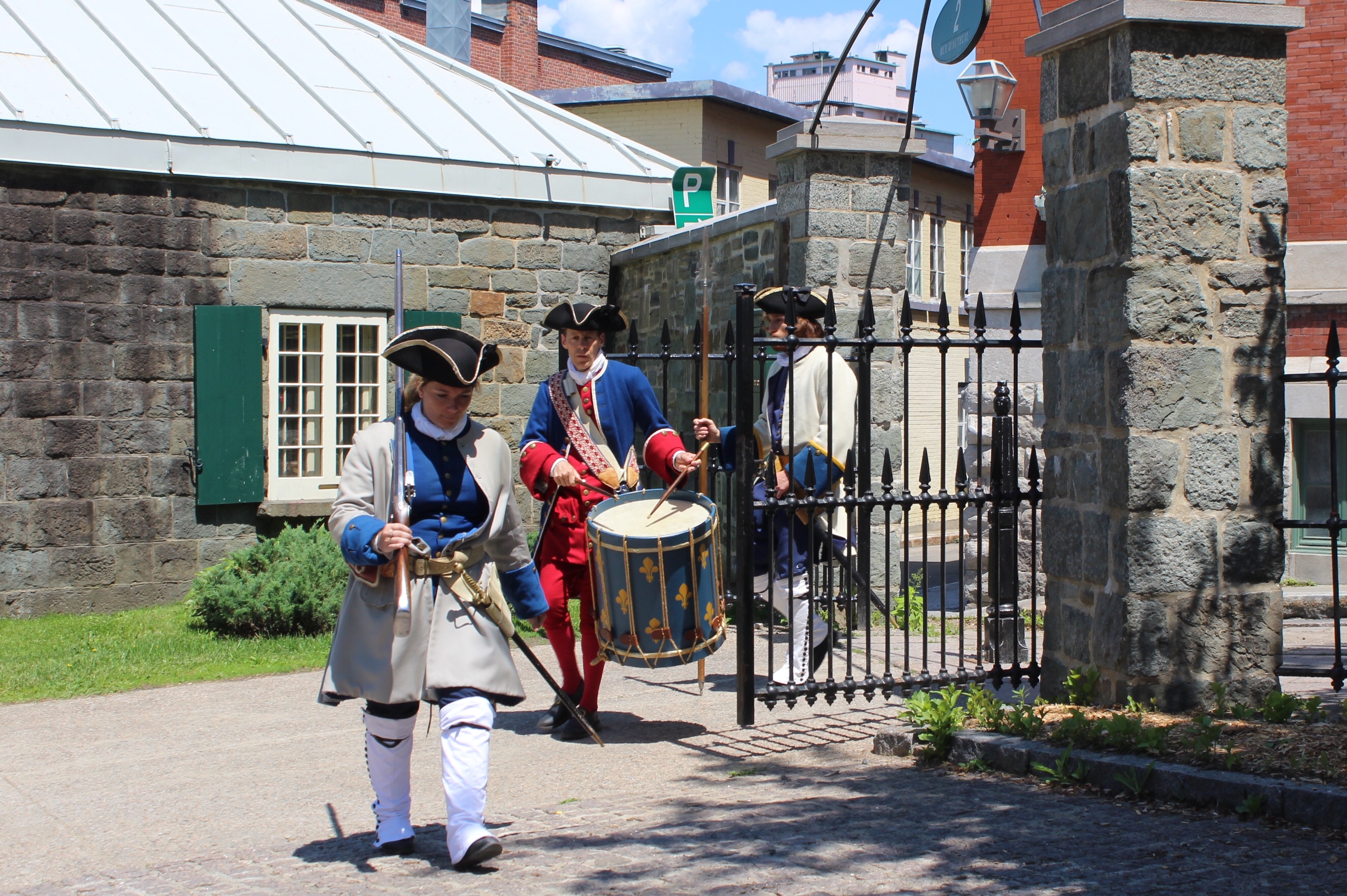
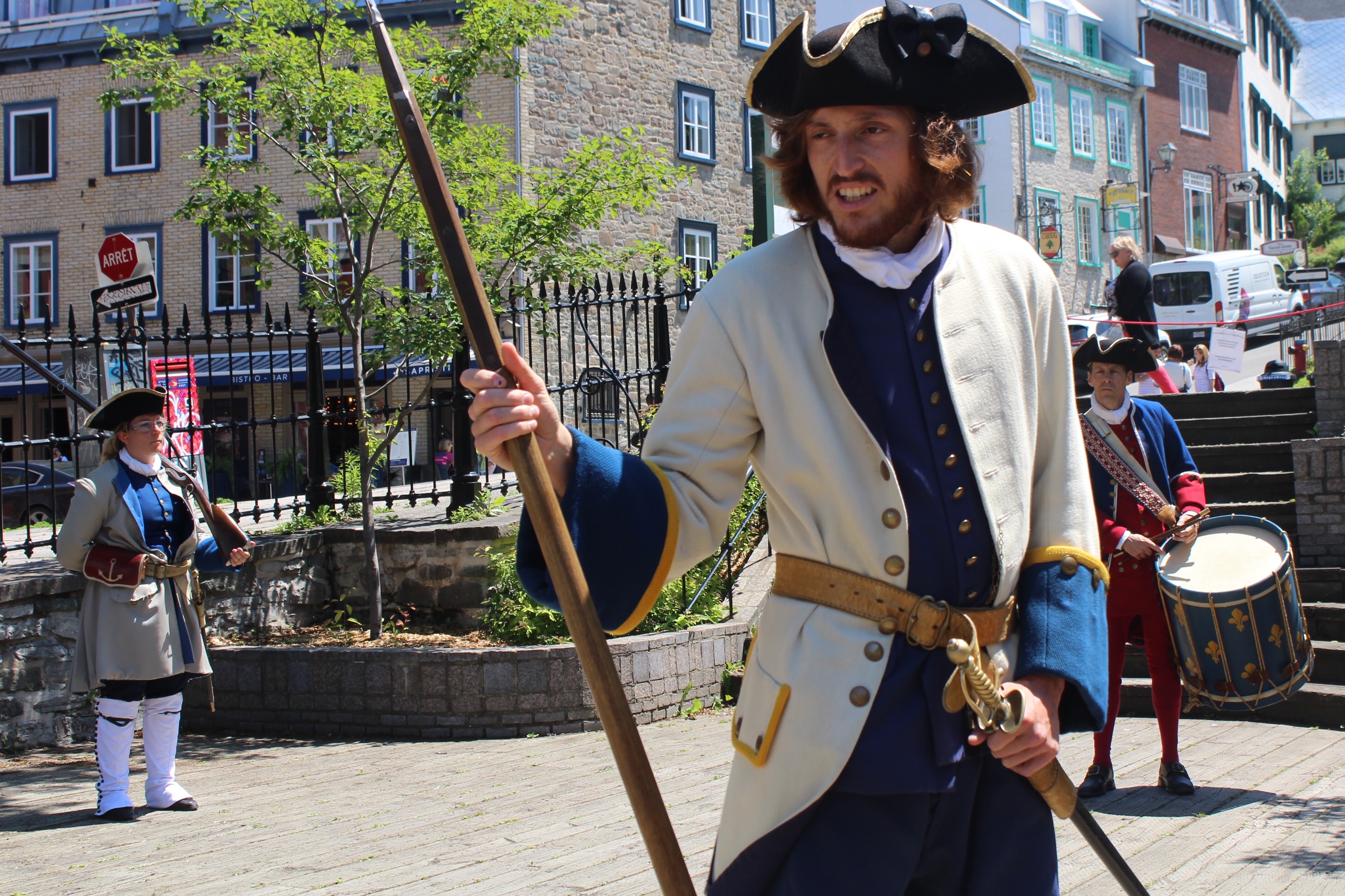
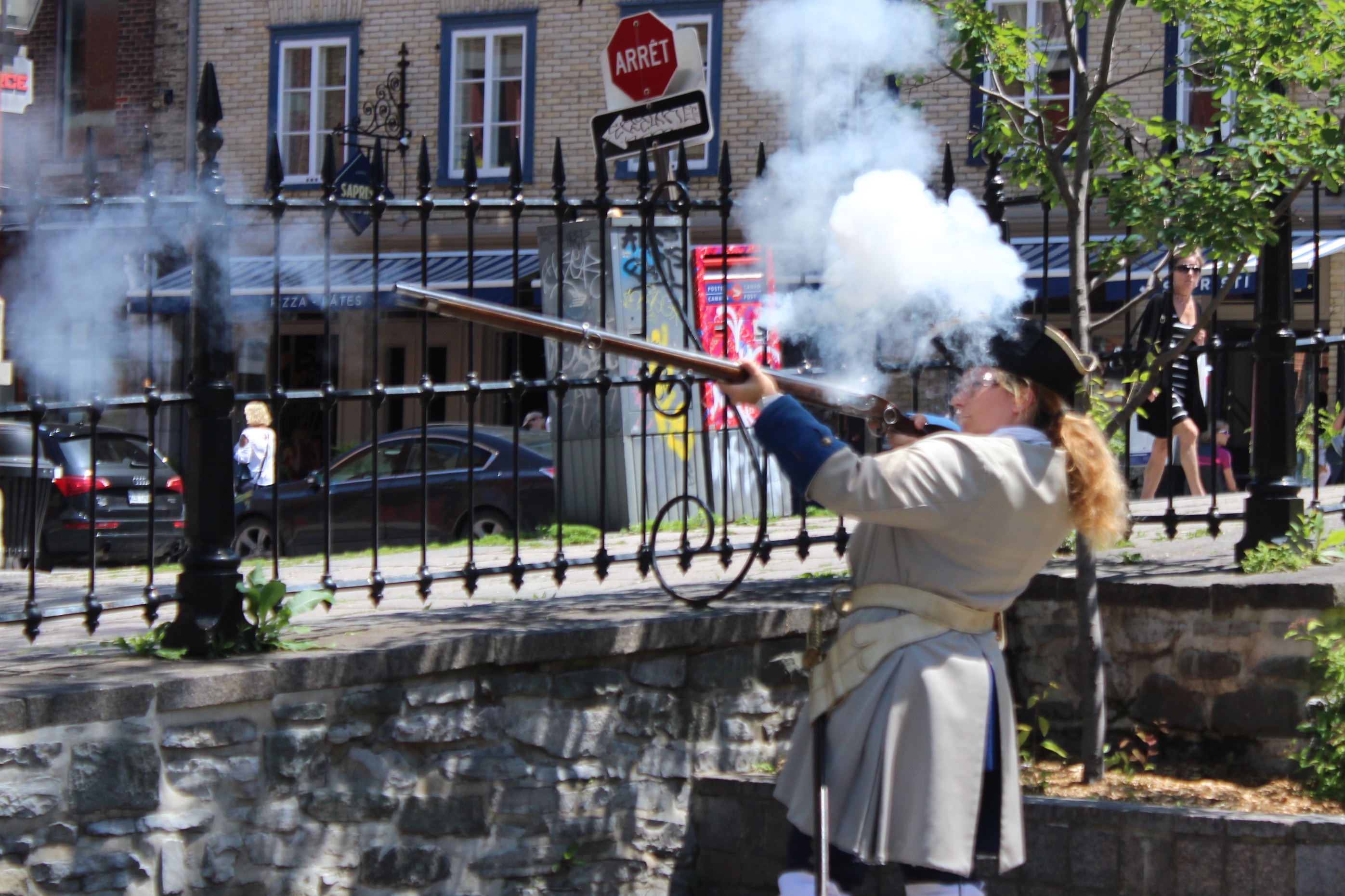
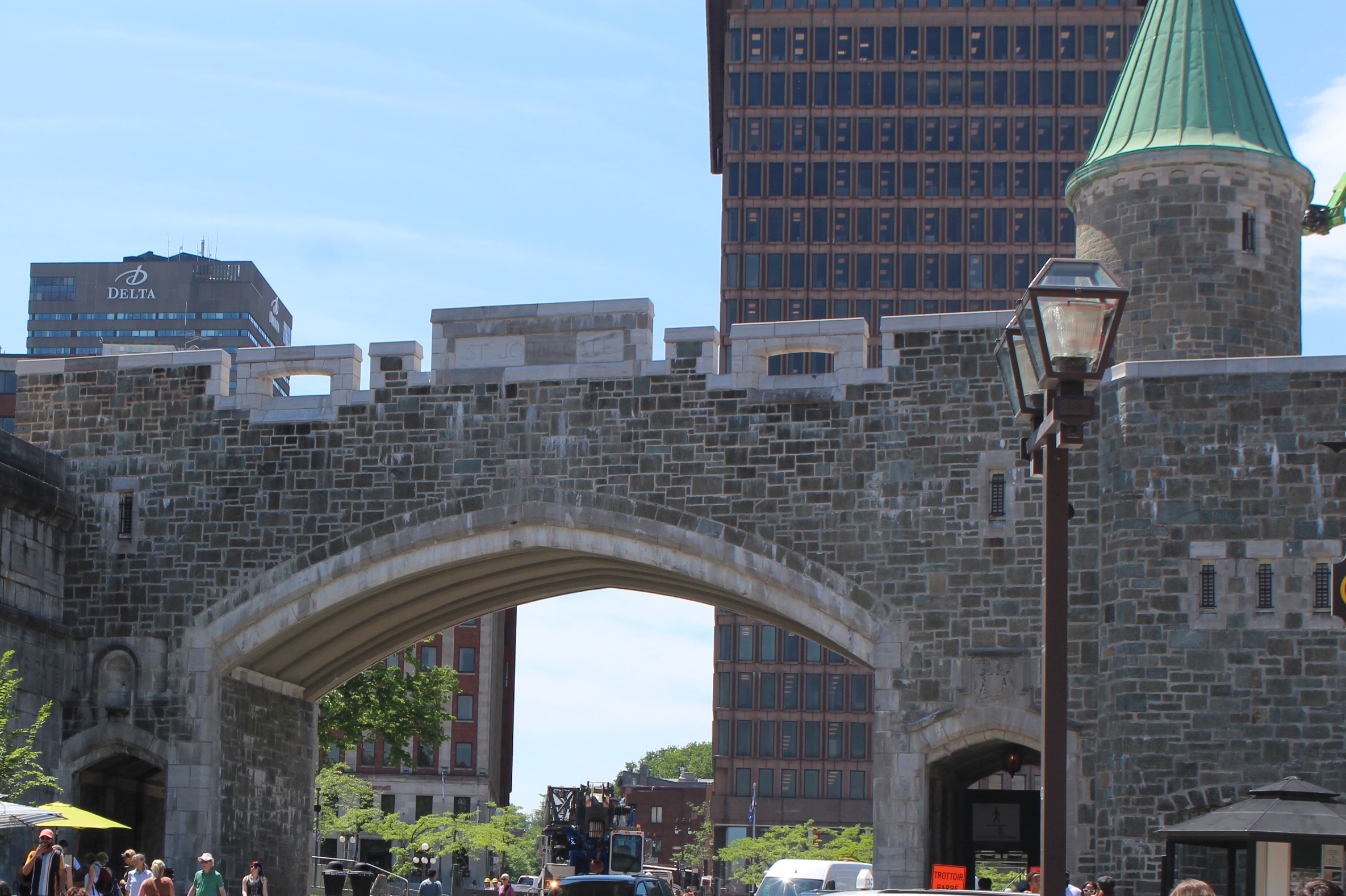
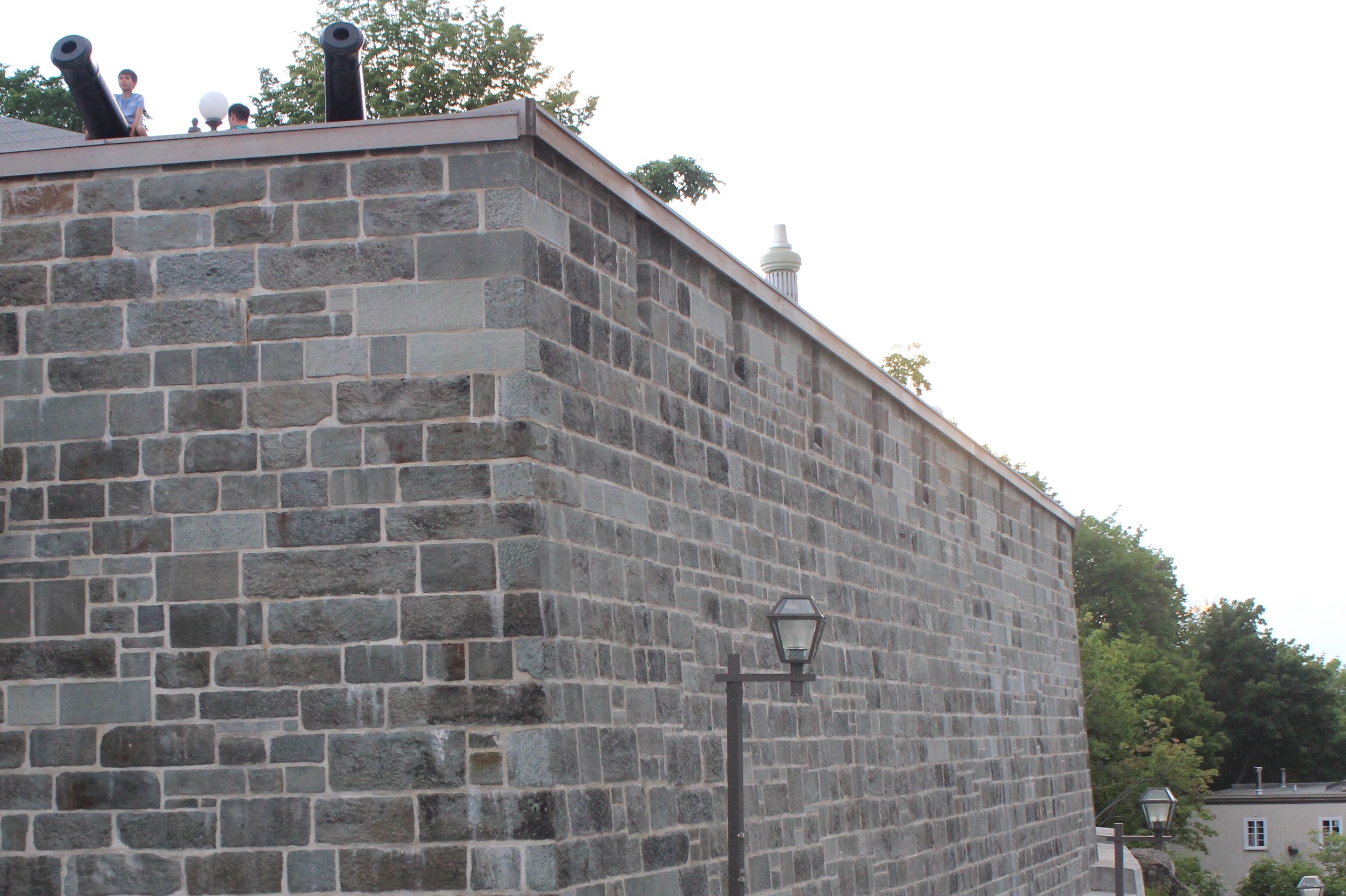
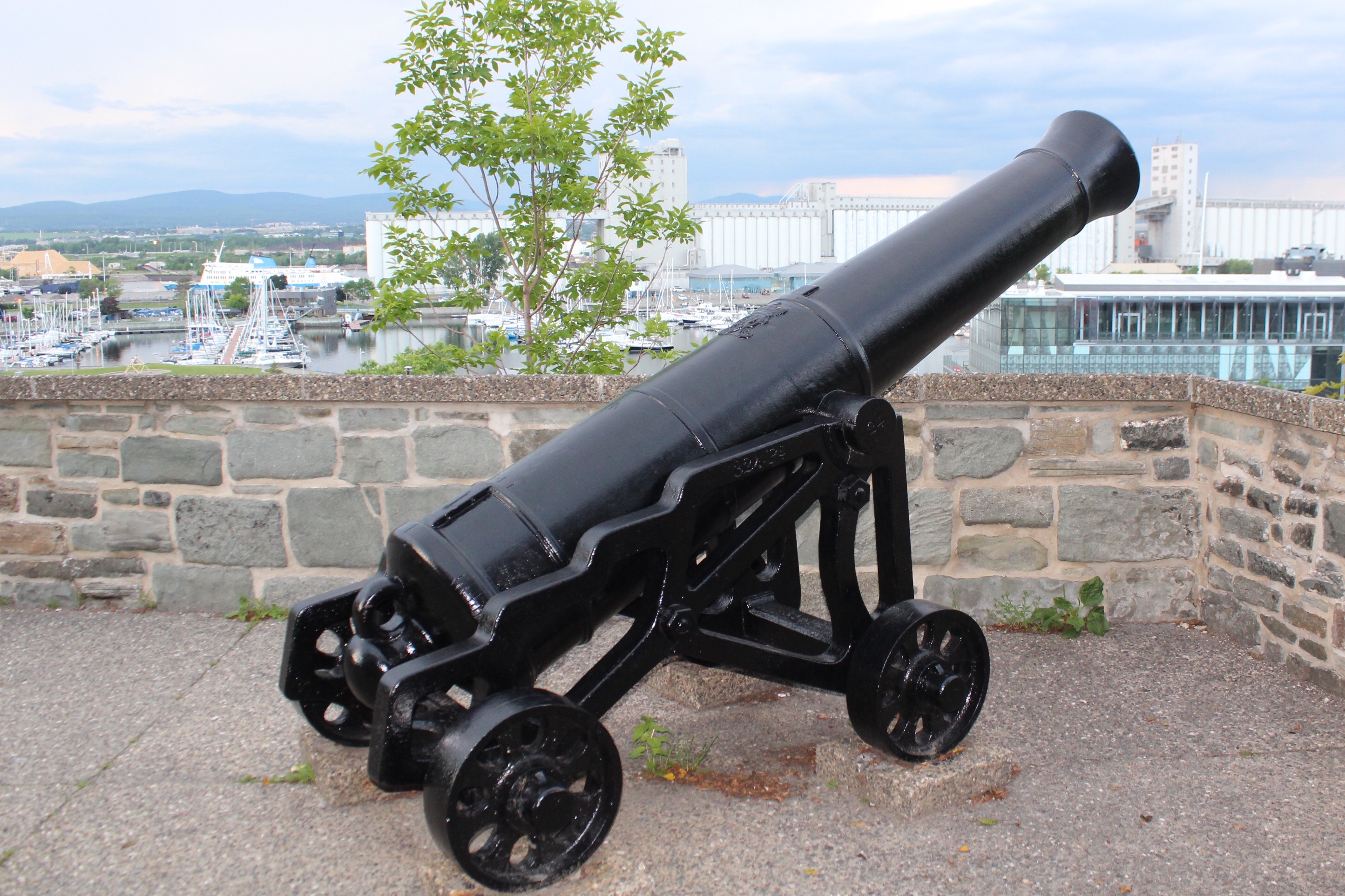
    The crew then set out on foot to walk some of the 4 miles of walls which line the old upper town. While doing so, they came across a ‘live fire’ demonstration at the St Jean Gate.

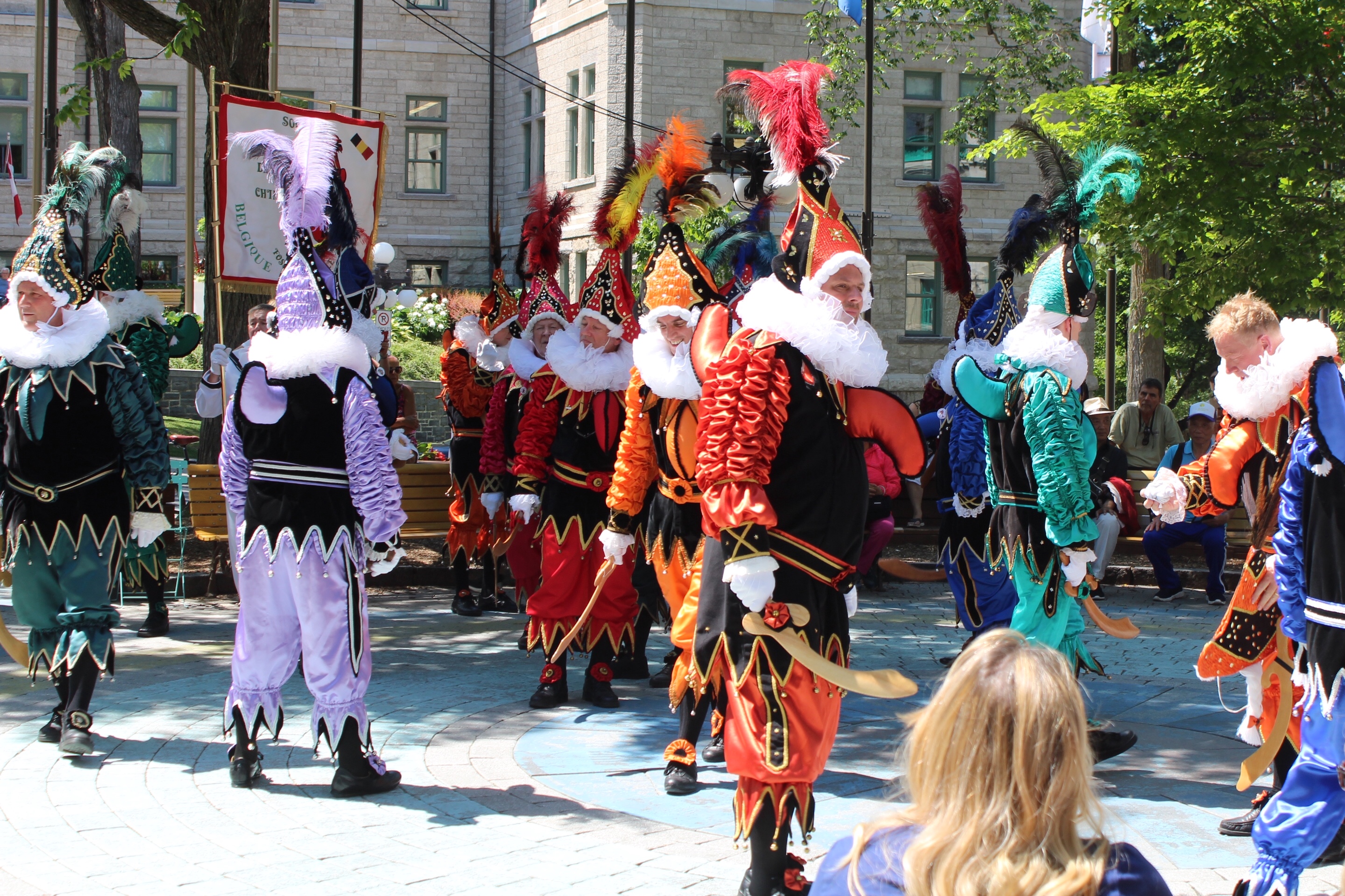
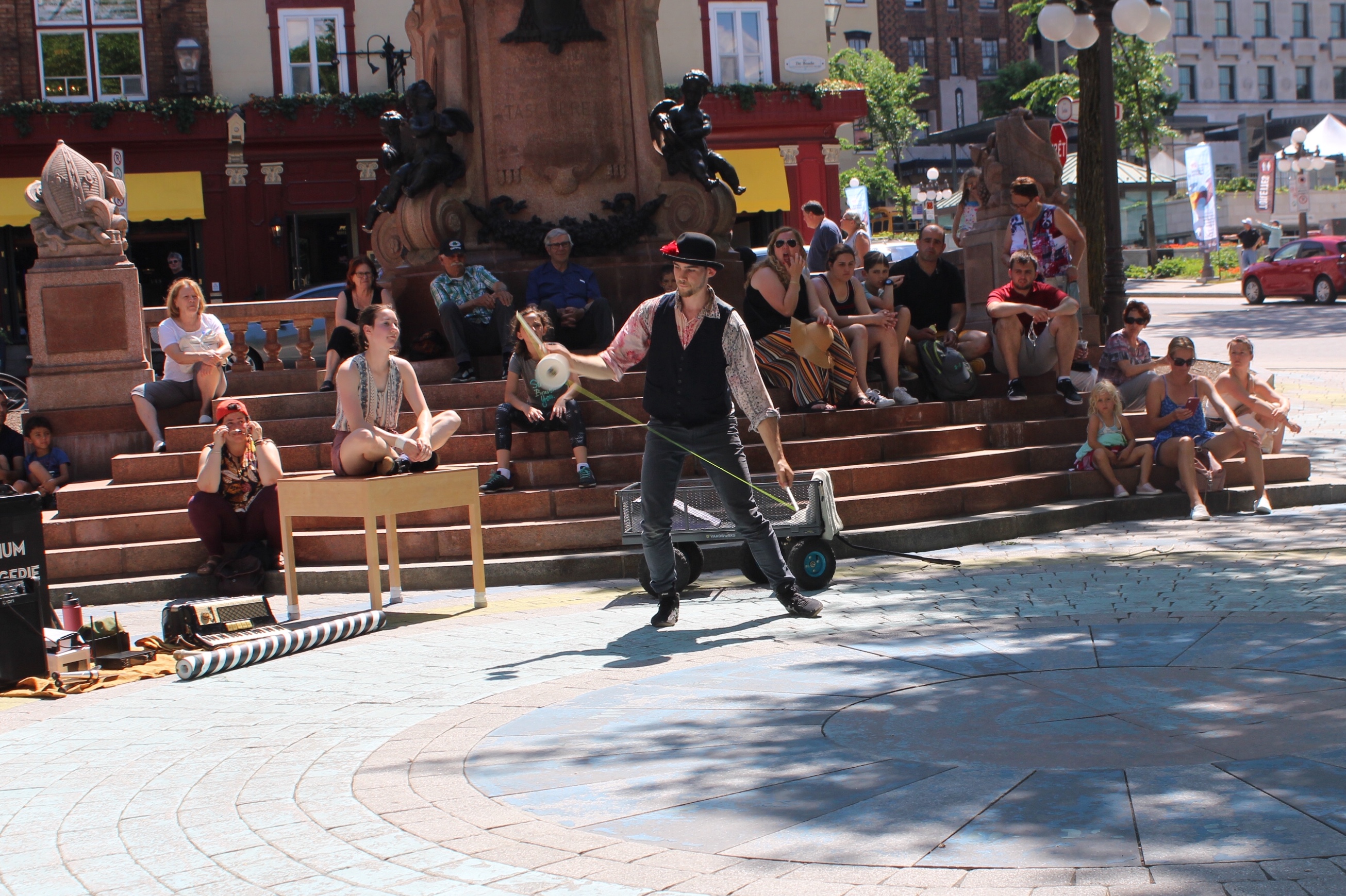
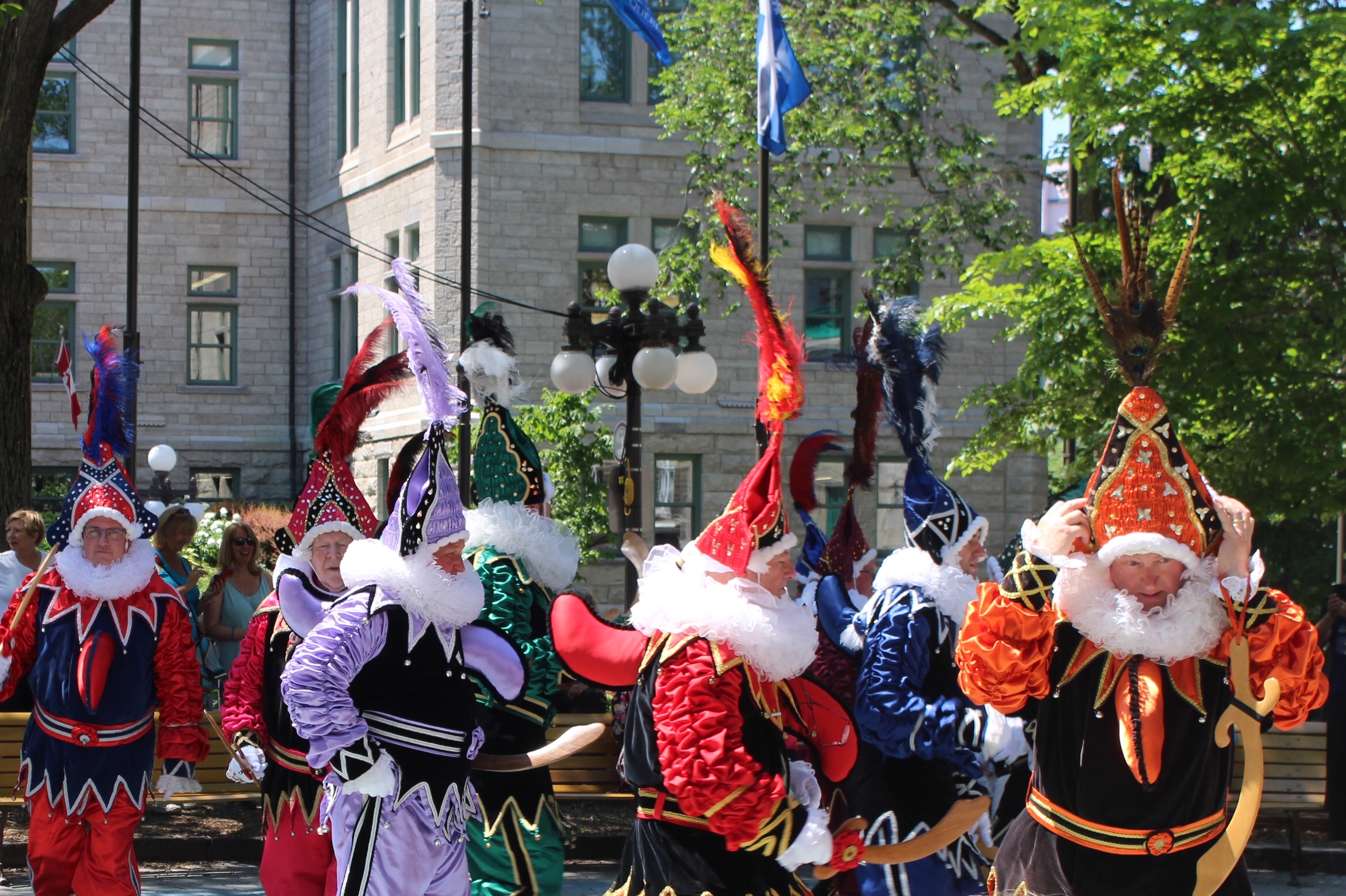
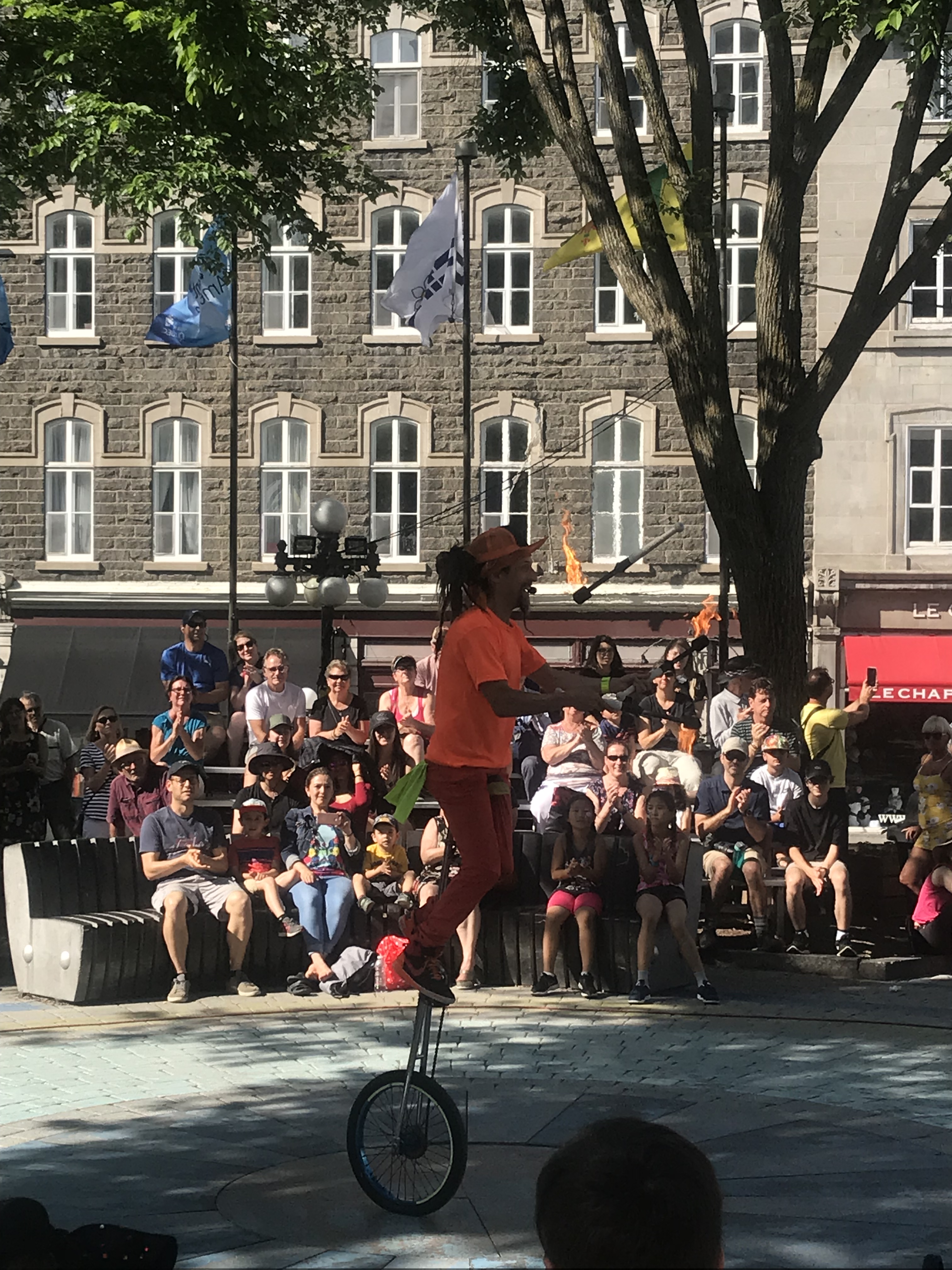
    The crew also enjoyed a few street performances while walking around town.

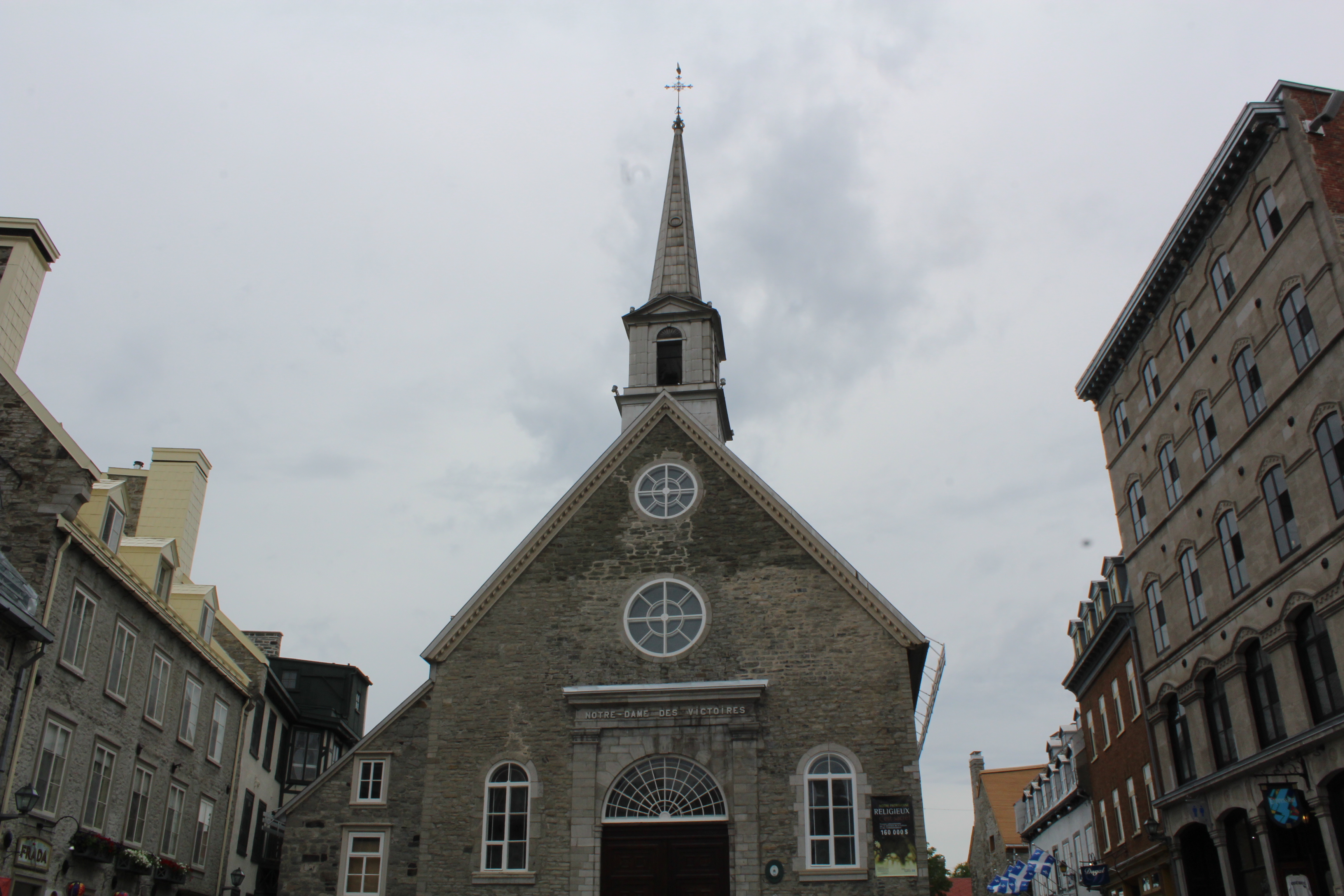
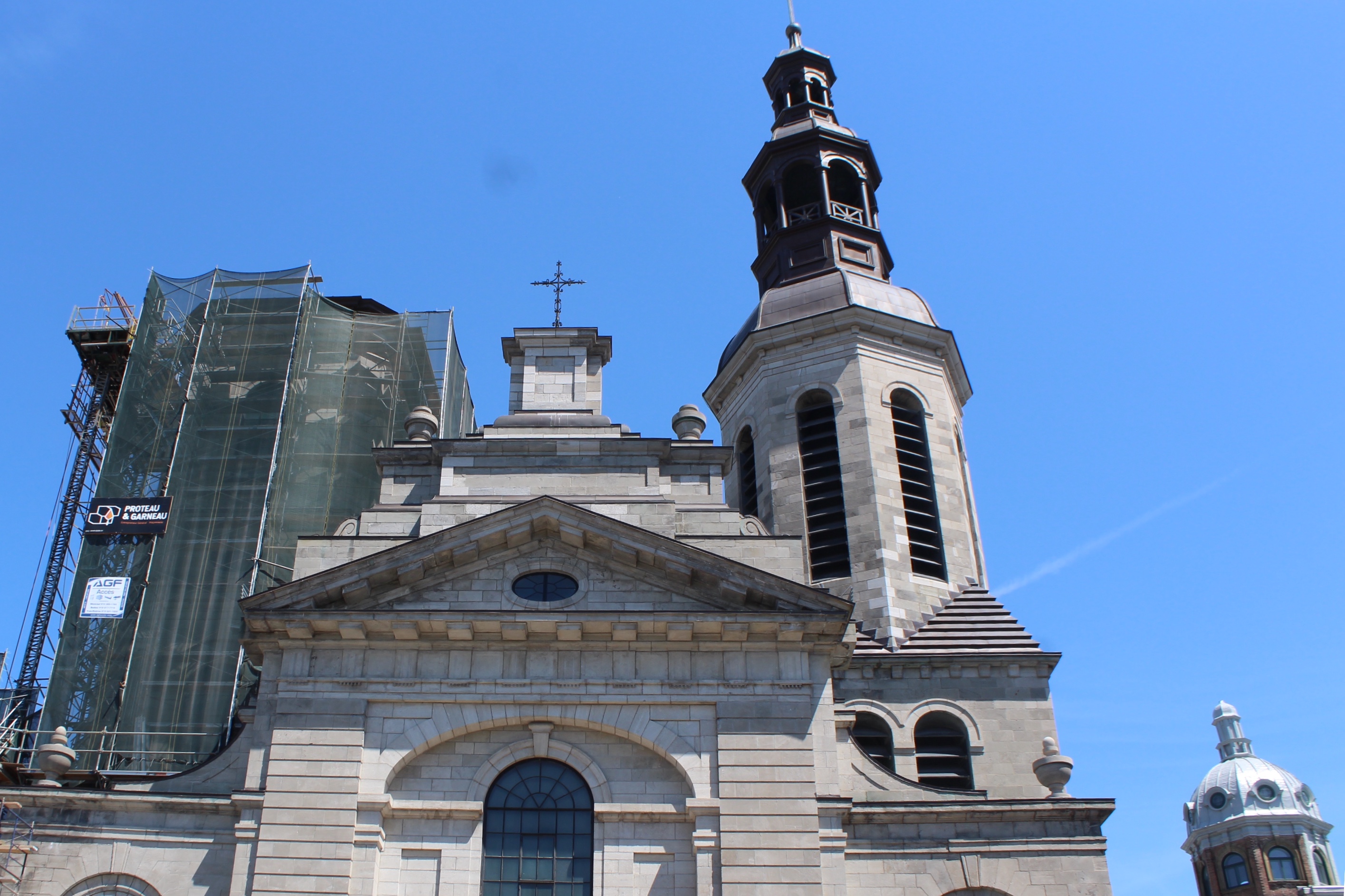
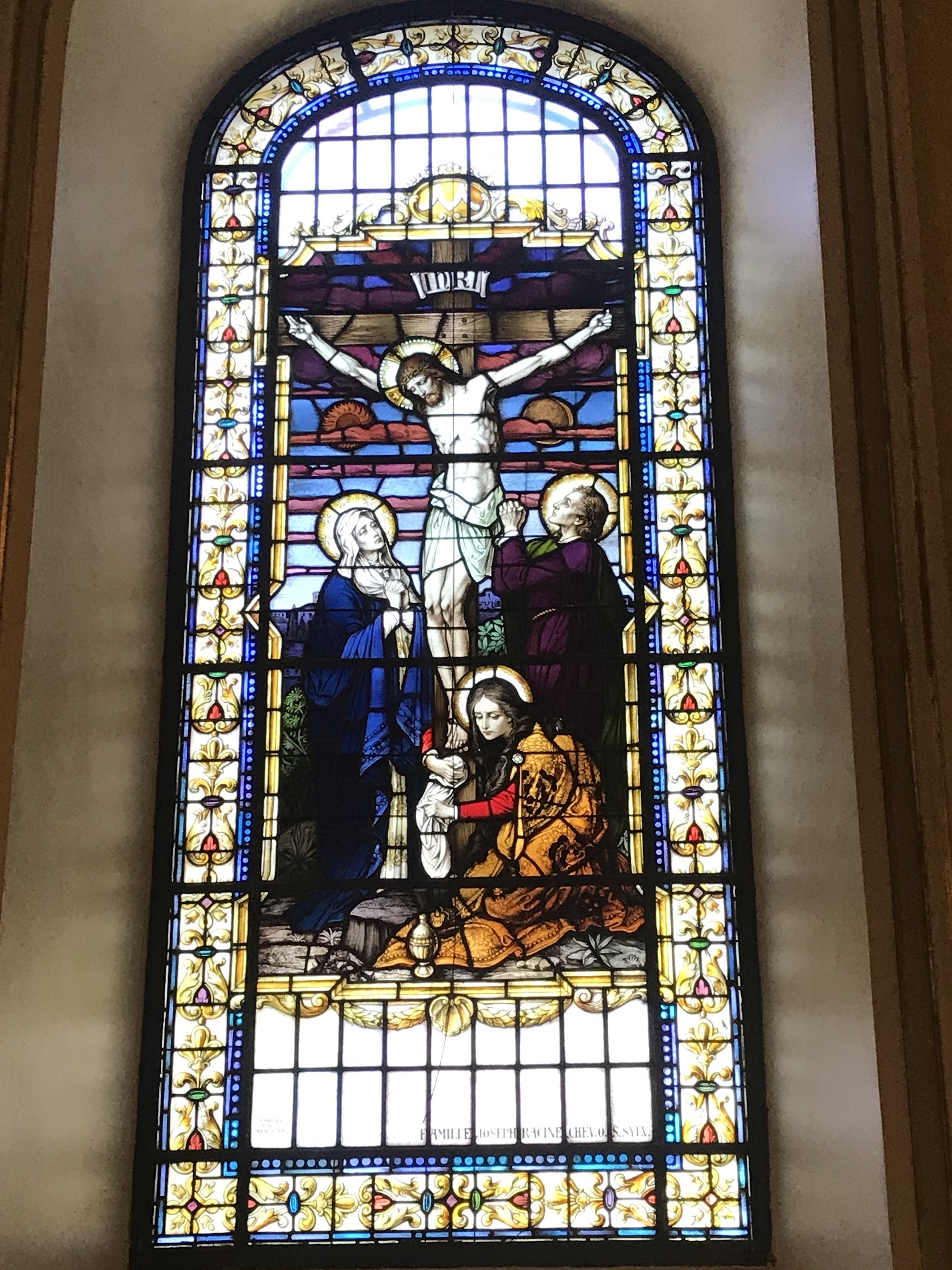
    The last stop of the day was the Norte Dame Cathedral. As with many of the other buildings around town the Cathedral was undergoing some major modernizations as they say here in Quebec. However, the doors were open and welcoming all comers to view the beauty within.

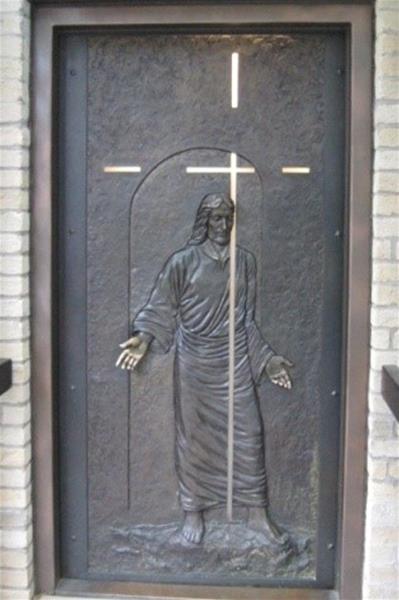
    While walking around, the crew heard a tour guide mention something about a door at the Notre Dame Cathedral. The skipper did an internet search to find out what the tour guide was talking about. What he learned was that there are eight Catholic Churches that have ‘Holy Doors.’ One of the eight Holy Doors just happens to be in the Cathedral here in Quebec. The skipper turned around and went to go put his eyes on the Holy Door.

    The Holy Doors are sealed shut until the next Jubilee year that the Catholics will celebrate in 2025. At that time the doors will be opened and people can make a pilgrimage to walk thru the doors. Part of the symbolism of walking thru the door is the passage from sin to grace, based on John 10:9, “I am the Gate, Whoever enters thru me will be saved.”

    Boat Name of the Week

    Next Week

    The crew has loved their stay in Quebec City, but they must press on because winter comes early and the crew wants no part of the winter festivals celebrated here. They will head east and cruise the Saguenay Fjord in search of whales.

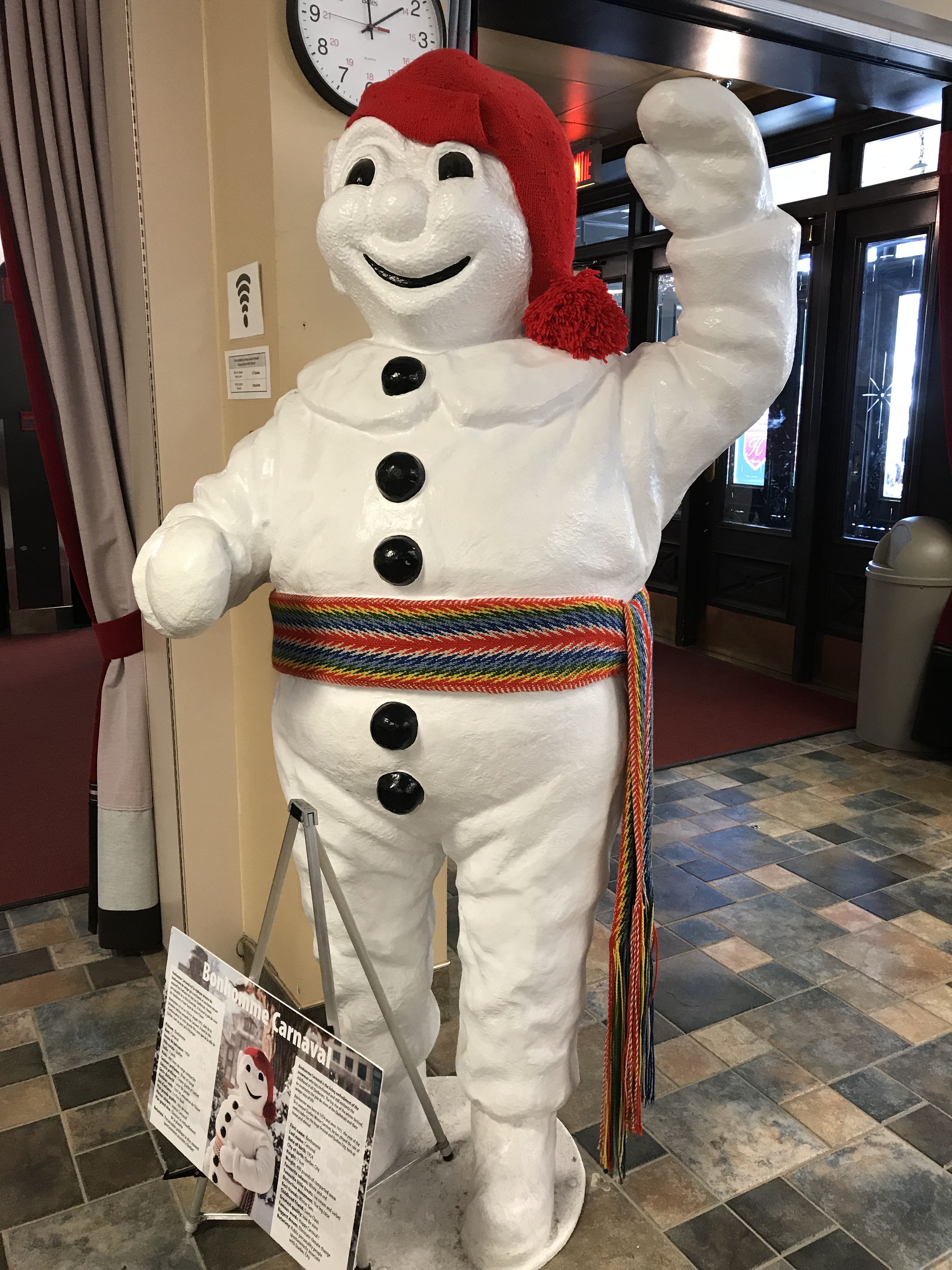
    Winter Carnival mascot of Quebec

    Loop On – Where the road ends, the water begins. The water goes on forever, and the adventure never ends.

    Eric the Red

  • Bonjour le Canada

    Bonjour le Canada

    Hello virtual crew members and fellow adventurers!

    The crew would like to welcome tom m. aboard as our newest virtual crew member.

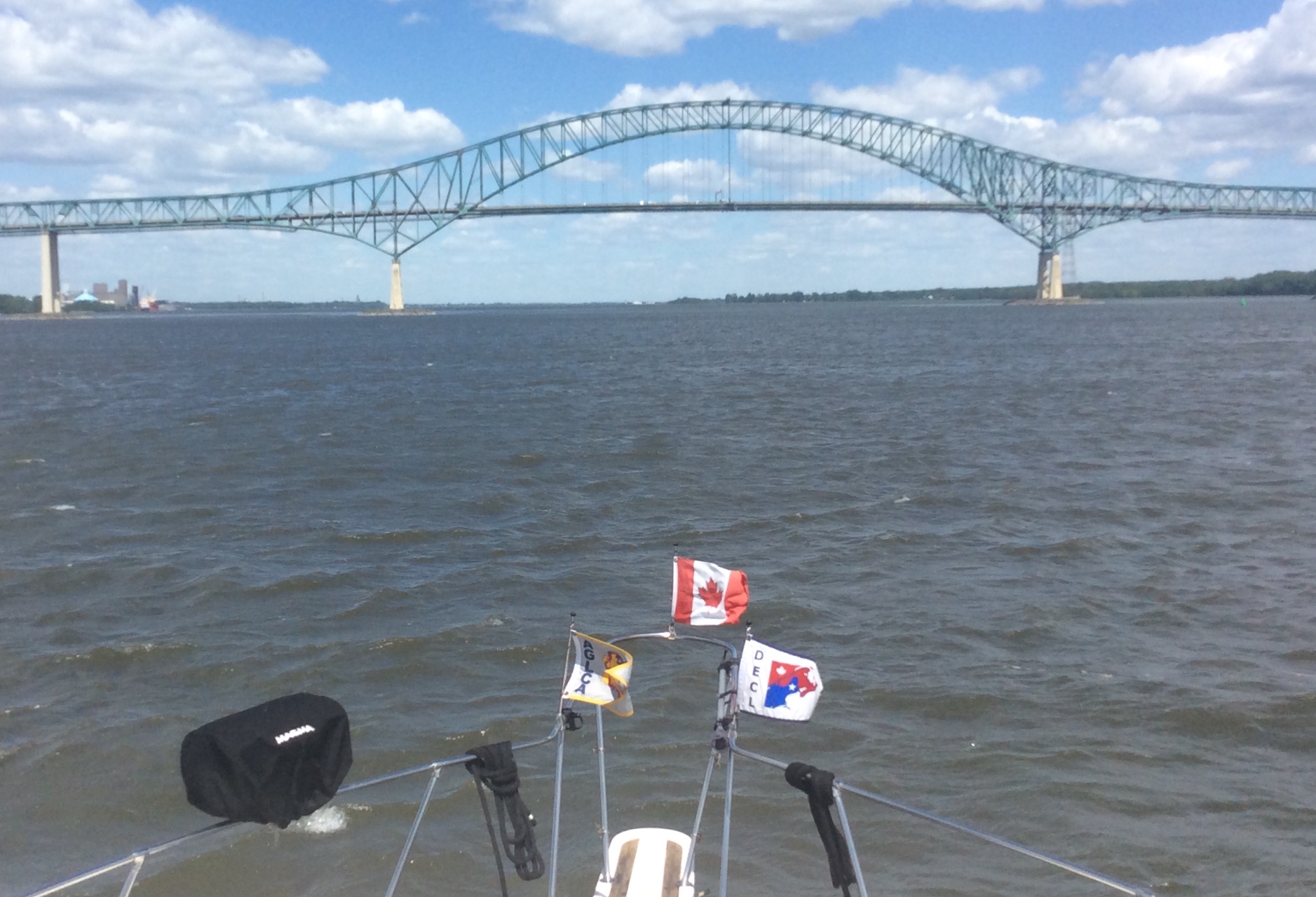
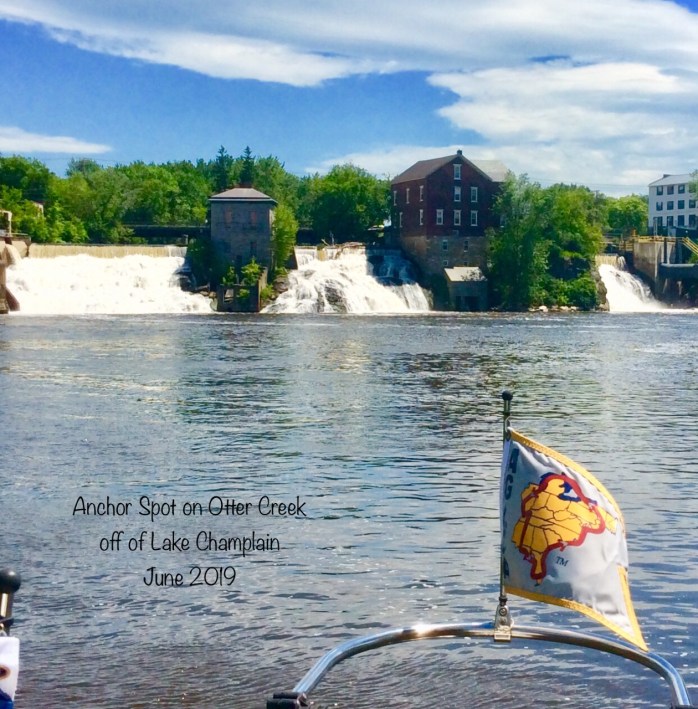
    Now that Still Waters II has entered Canada, she proudly displays her Canadian courtesy flag in the place of honor off the bow. She also is flying her club AGLCA Burgee, and her Down East Flag.

    Summary of week:

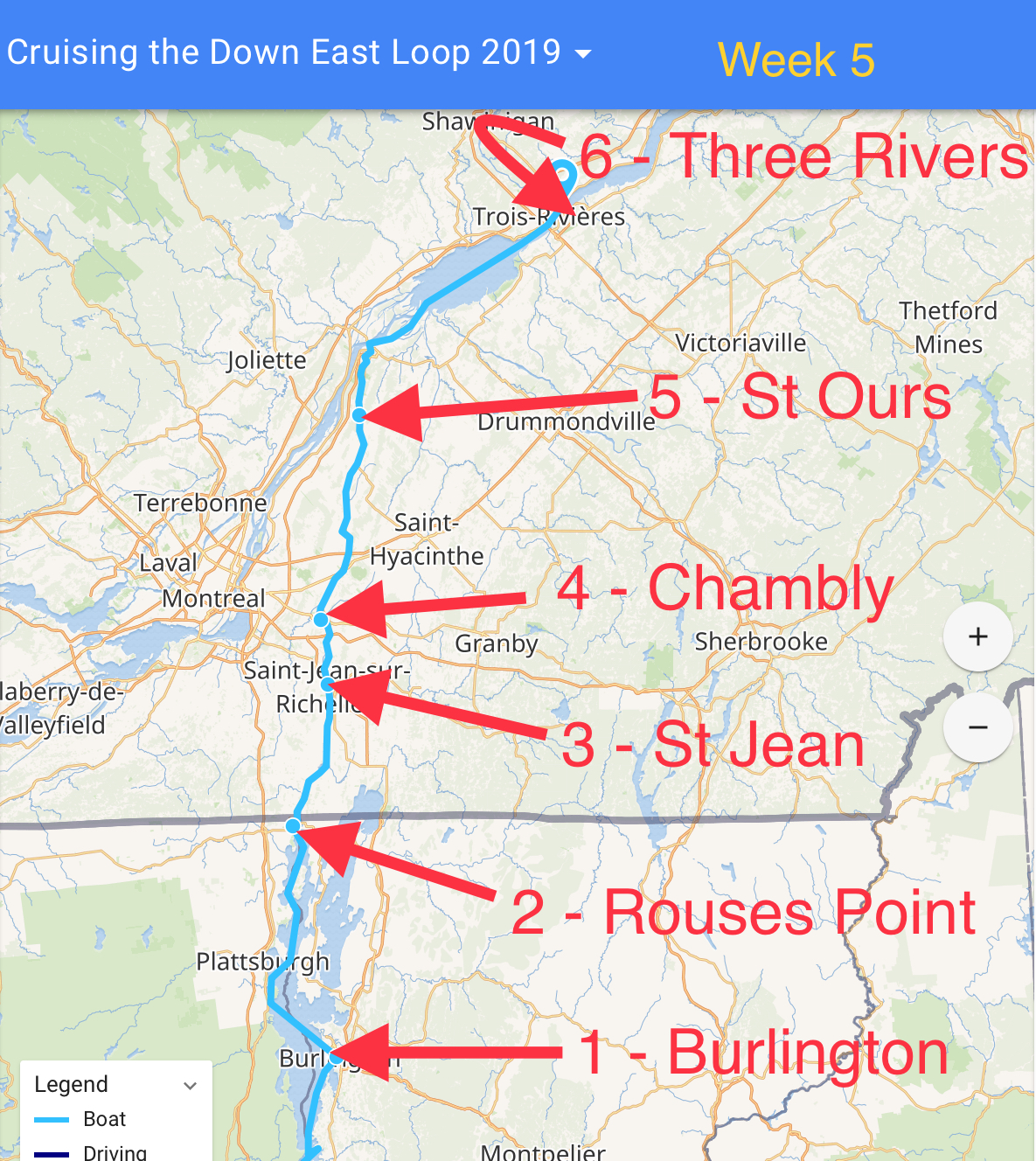
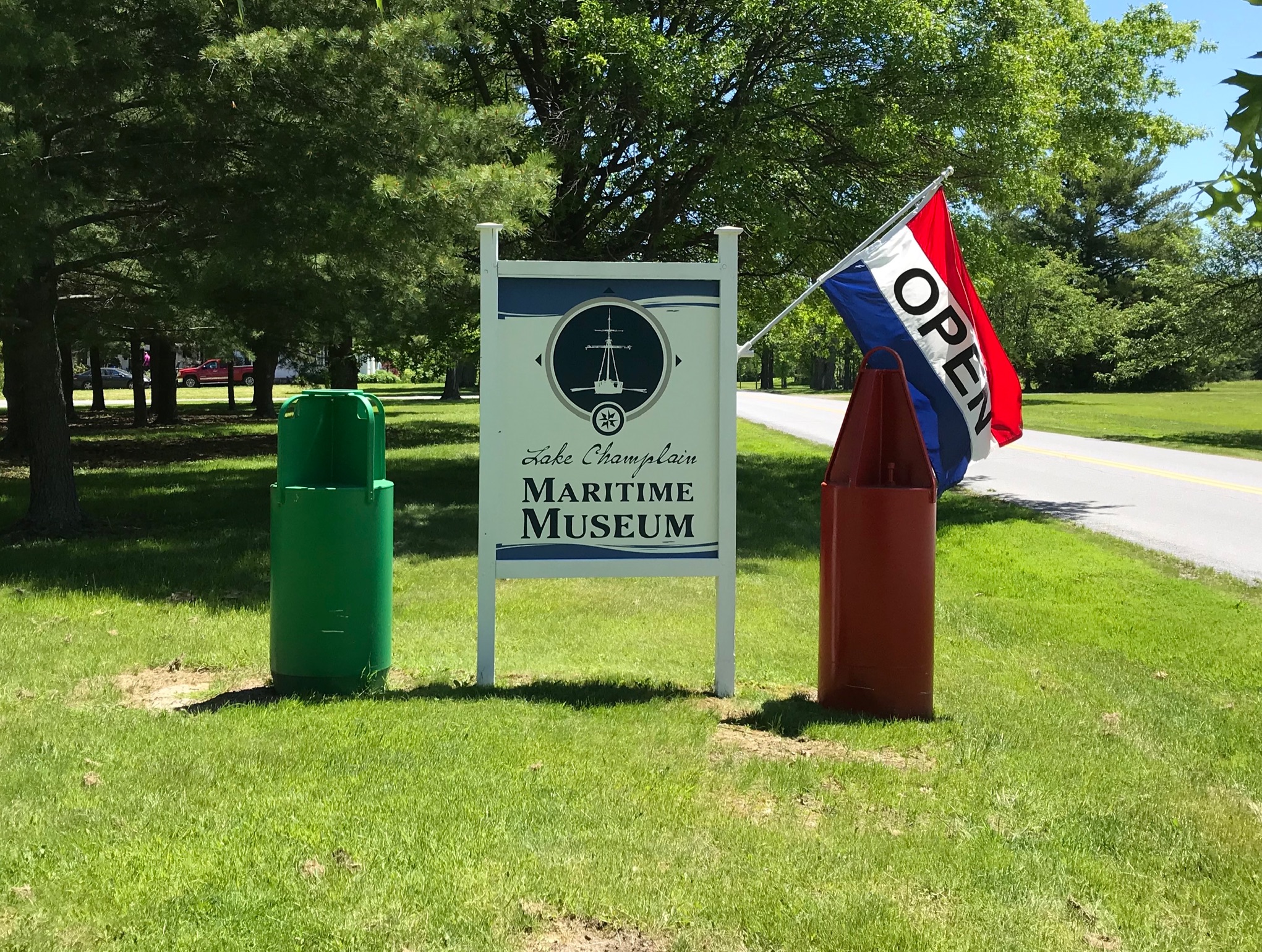
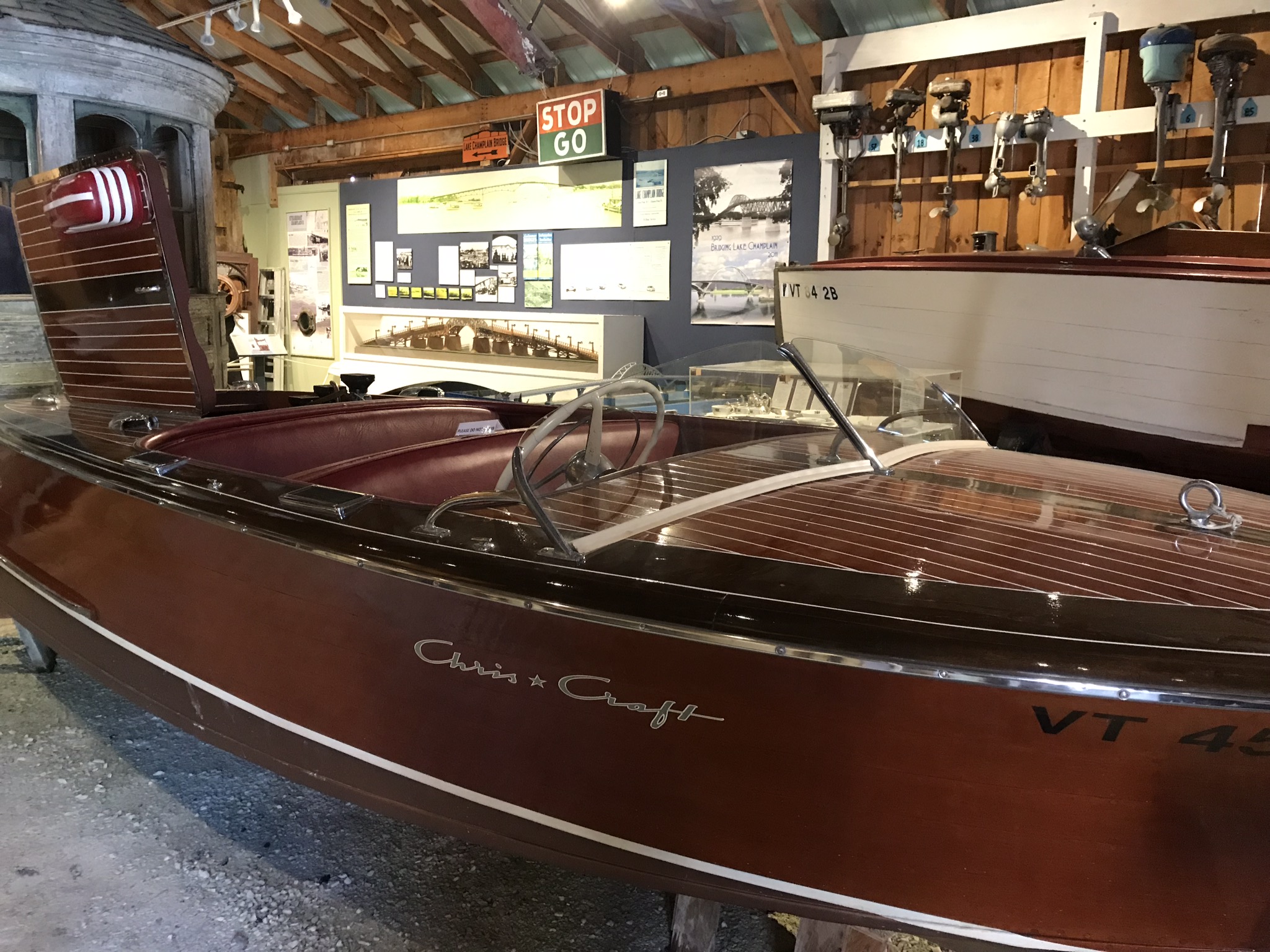
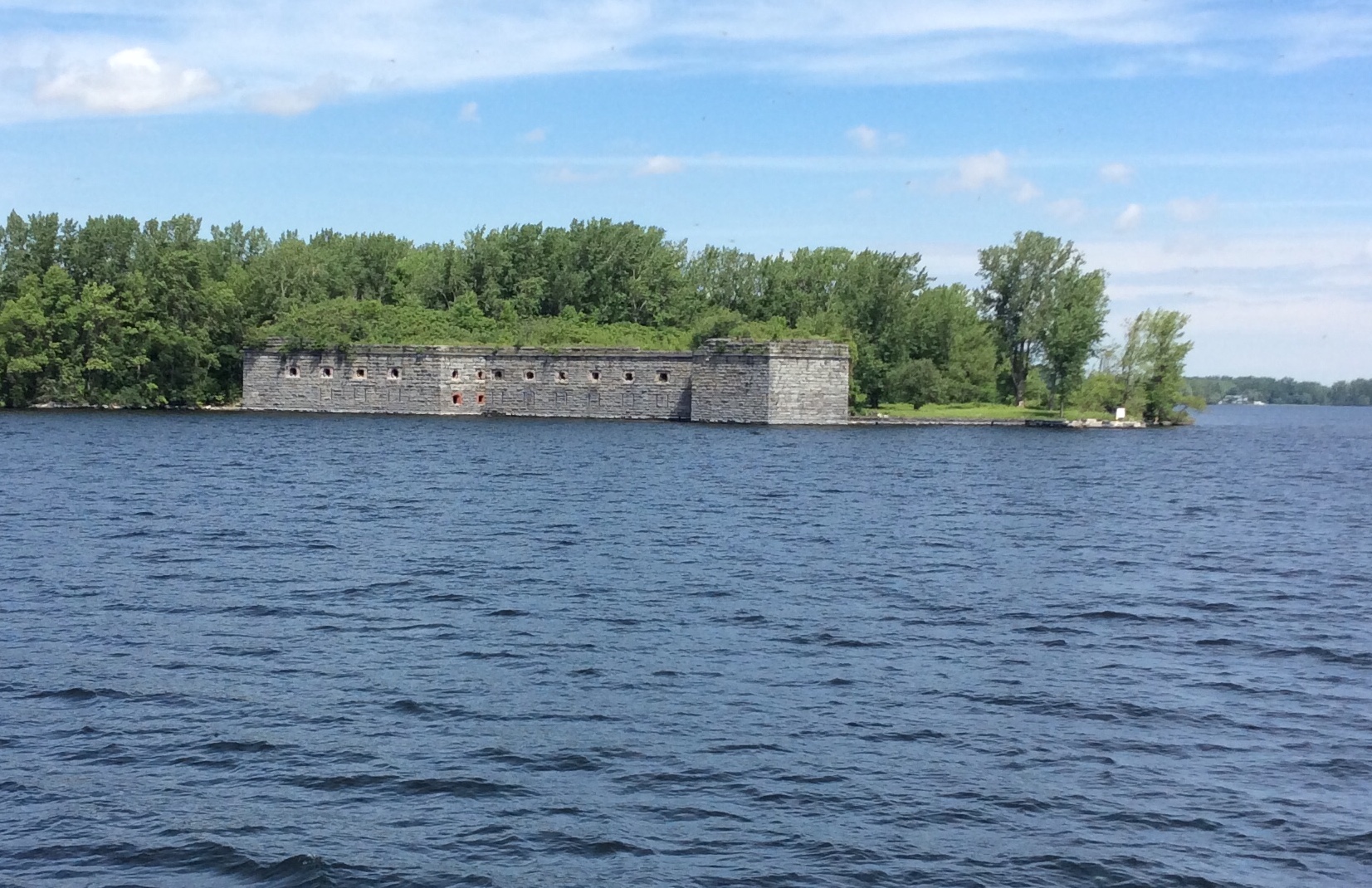
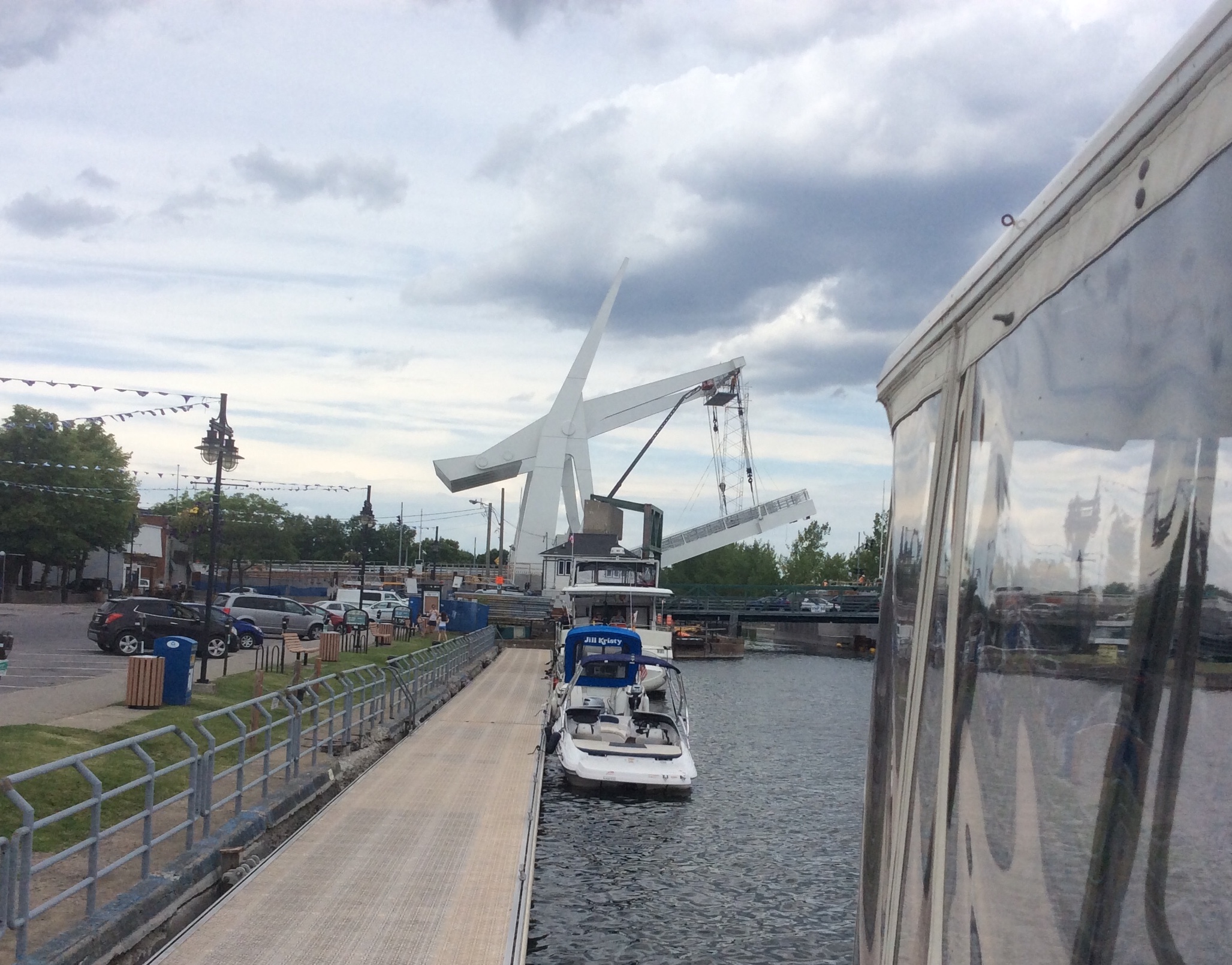
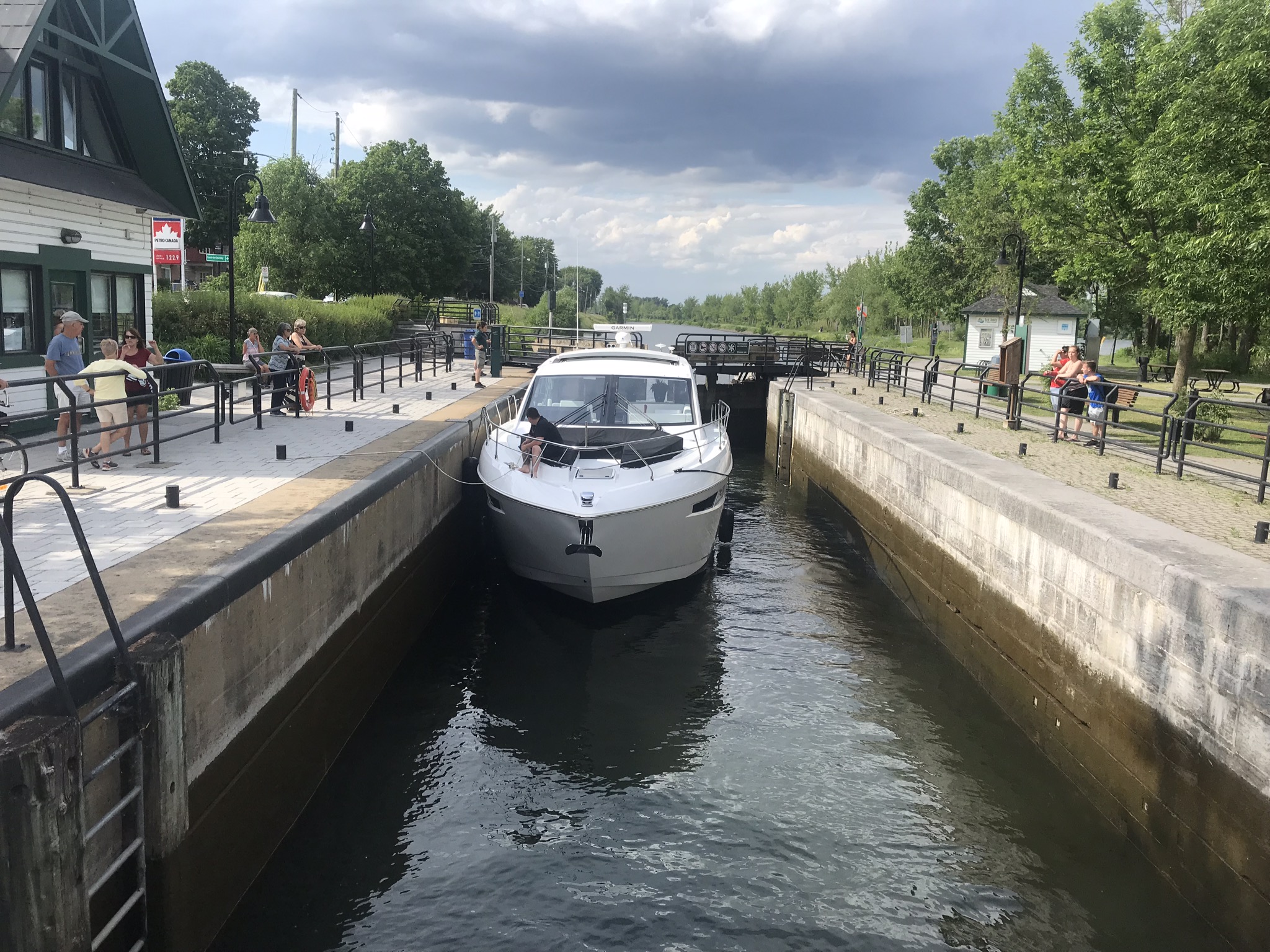
    The crew had a good mix of cruising and sight seeing this week. On Monday, they visited the Lake Champlain Maritime Museum and stayed the night in Burlington (1). Tuesday the crew cruised around Valcour Island and then docked at Gaines Marina at Rouses Point (2). Wednesday, the crew checked into Canadian Customs and then took a spot on the St Jean (3) Lock. Thursday was a short day that ended up in Chambly (4). Friday, the crew visited Fort Chambly before making way to St Ours (5) Lock. The crew ended the week with a cruise to Three Rivers (6).

    Click here to read the daily Voyage Logs and Travel Map for last week.

    The voyage of discovery did answer the following questions this week:

    1. Who commanded the first US Navy Fleet?
    2. Who won the Battle of Valcour?
    3. What is the first Great Lake?
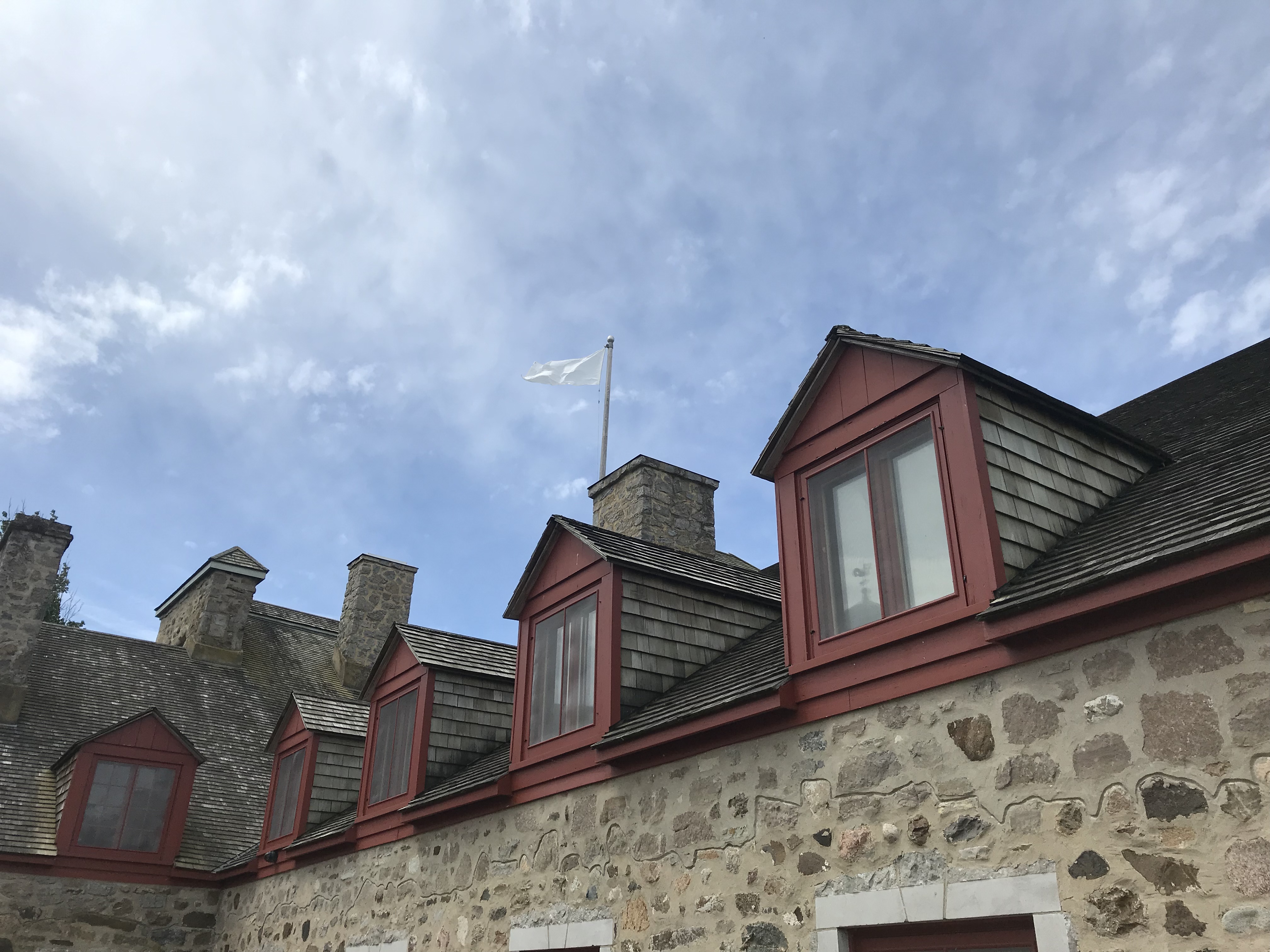
    4. What flag flies over Fort Chambly?

    At the Box Office

    To see past videos, click on the link to the Still Waters II Vimeo site.  The library contains videos of Still Waters II cruising America’s Great Loop.

    Sunday, June 16th the crew

    Sometime mid-morning, one of the boats left the town dock so the crew weighed anchor and moved over to the town wall.  Of course, this turned out to be easier said than done.

    Because of the high Lake level, the town has not put the floating docks in the water this season.  This leaves some 4 inch vertical pipes exposed ready to damage the fiberglass side of Still Waters II.  The skipper managed to get the boat in close without incident, had a spring line down to prevent the current from pushing them forward into the boat off their bow.  The skipper then stepped off the boat to secure the stern line which would prevent the bow from hitting a post.

    The current had other plans though.  The current caught the stern and started pushing it further from the dock.  This caused the bow to close in on that pesky post.  The skipper rushed forward to fend the boat off the post. He also directed the Admiral to get up in the helm.  He began giving “port forward”, “starboard reverse”, “neural” commands to the Admiral. After what seemed to be 10 minutes of sheer excitement, the Admiral managed to walk the boat back to the wall, and the skipper was able to secure the stern line.  That was not easy, but teamwork got the boat safely docked.

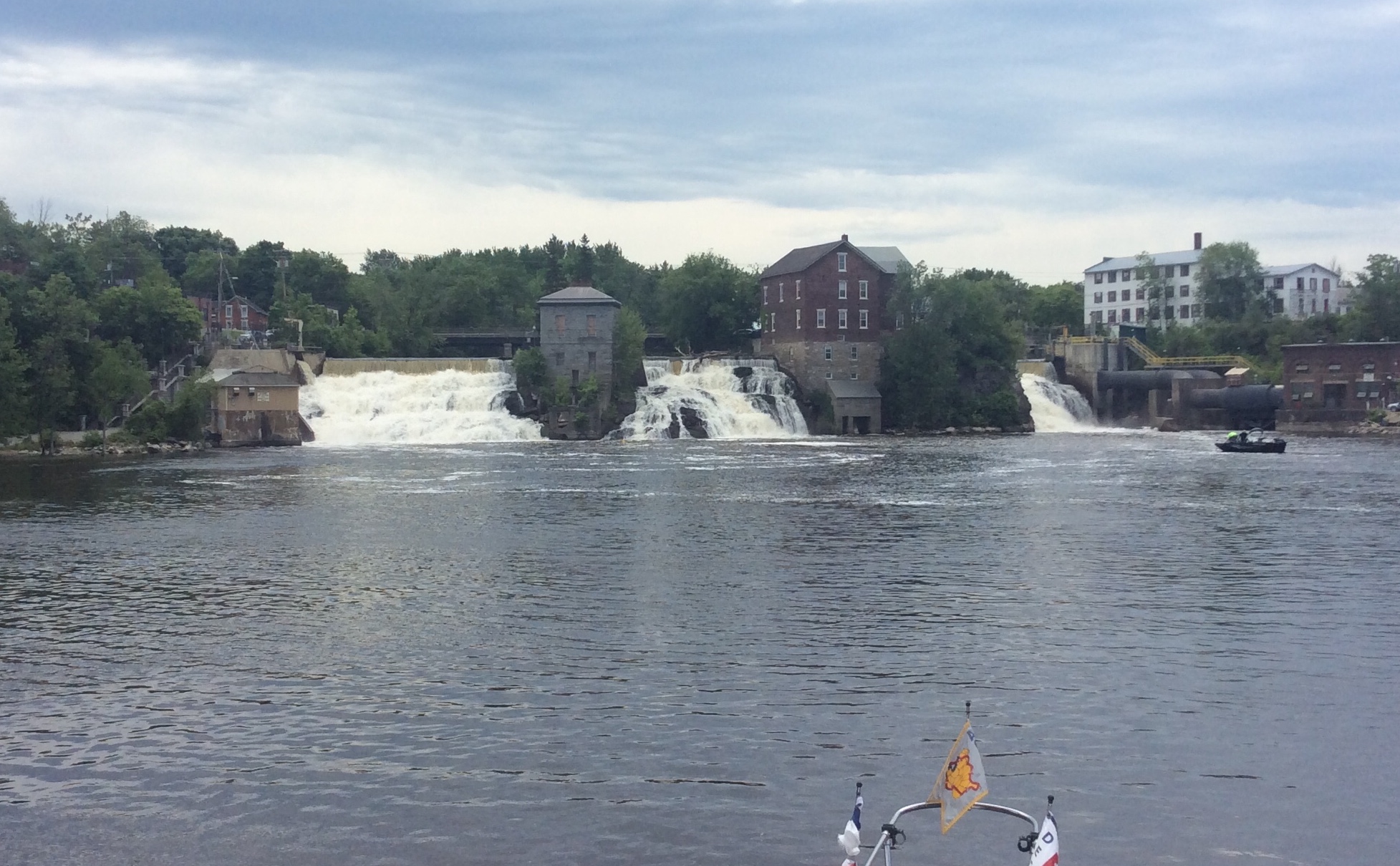
    With the boat secured, the crew took a stroll around town and got a close look at the waterfalls.

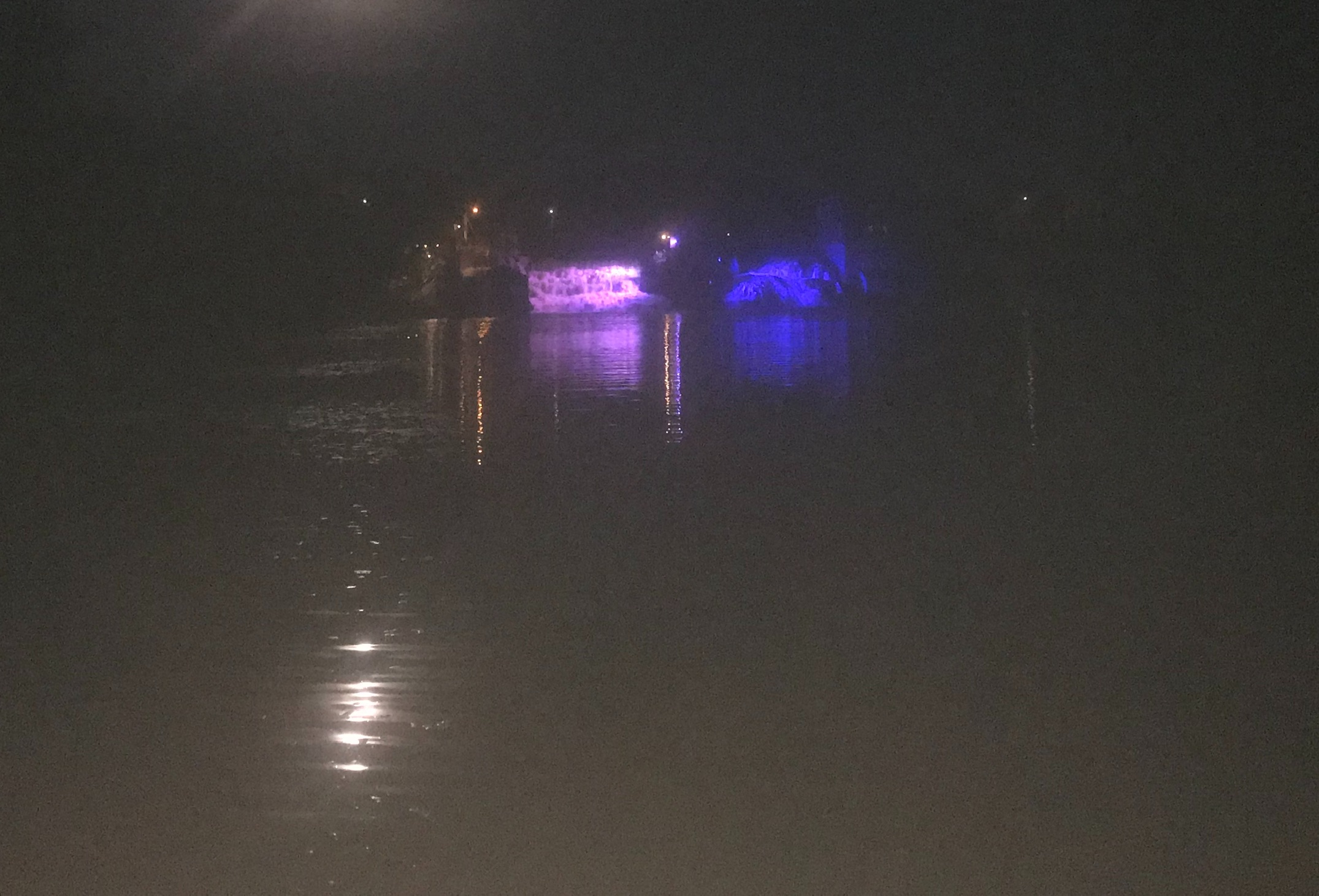
    The best thing about moving the boat was that the stern was now facing the waterfalls.  After dark, the Admiral noticed through the stern window that the Falls were lit up with colored lights.  They remained lit until at least midnight as the skipper finally fell asleep instead of thinking about how to get off the wall in the morning.

    Monday, June 17th

    Turns out all that planning and loss of sleep was a waste of time.  The wind was favorable and was blowing such that the boat easily drifted away from the metal pipes when the crew cast off.

    After seven miles, the crew exited Otter Creek and headed south towards the Lake Champlain Maritime Museum.  Upon arrival, the crew took a mooring ball near the Museum dock.  The skipper launched the dinghy and the crew made way to the dinghy dock.  They then walked up the hill to find the Museum office. 

    The crew spent about three hours in the museum.  Their top three exhibits were the wooden boat collection, antique boat motor collection, and the ship wreck exhibits.  There are some three hundred known wrecks on Lake Champlain.  Who knew.  The museum offers a monthly trip out to a wreck and uses a remote operating vehicle to dive the wreck while you observe the wreck topside on camera.  They had several videos of the operation and it looked like a boat load of fun.

    1947 Chris Craft
    Artist rendition of finding the Philadelphia on the bottom of Lake Champlain

    The museum offered a 20% discount on lunch at the Old Mill restaurant.  The crew walked over and had an interesting lunch.  The guy who sat them had a British accent, while their server was from Bulgaria.  Then an airplane landed and taxied to the backdoor of the restaurant.  The Admiral got her first Lobster Roll of the season, while the skipper stuck with the tried and true, medium rare hamburger. And yes, the food was excellent.

    Replica of the Philadelphia

    The museum had a whole building dedicated to the Battle of Valcour Island. Benedict Arnold led a group of vessels that were built back in Whitehall against a much superior armada of British ships.

    The New York had the largest number of casualties. All but one individual lost their lives when one of the cannons exploded on board. The canon below was found where the New York went down and is thought to be the failed canon.

    After lunch, the crew headed back to the boat, then made way to Point Bay Marina.  The skipper learned that they were selling diesel fuel at 2.99/gallon.  Since he knew that Burlington was selling fuel for 3.39/Gallon and Rouses Point price point was 3.79/gallon, this was a no brainer.

    After taking on fuel, the crew headed to their final destination of the day, Burlington Boathouse.  Once docked, the skipper headed for the camera store.  The computer screen no longer recognizes the keyboard.  This has resulted in no means to download pictures from the Canon Rebel Camera to the computer.  The skipper is looking for adapters to get pictures from the camera to the laptop screen or iPad.  The search continues. Until a workable solution is found the crew will use iphones and iPads for cameras.  Quality is not as good but is workable.

    Tuesday, June 18th

    Next to the Boathouse is an area dedicated to sailors because of the impact of the naval engagements along Lake Champlain.

    The memorial area also had stones for both the Battle of Valcour and the Battle of Platsburg during the War of 1812.

    When the crew left Burlington and headed towards Rouses Point near the Canadian border, the skipper took a little side trip around Valcour Island.  On the west side of Valcour Island is where Benedict Arnold set up his small fleet of ships to ward off the far superior British Navy in October 1776.  All but one of the American ships were captured, sunk, or burned to the waterline in the two day battle.  Though the ships and battle were lost, the overall mission was a success.

    Valcour Island is to the right in the pic below. The water seen is where Benedict Arnold set up his small fleet to fight the British.

    I hear you asking, ‘How can that be? A loss is a win?’

    Easy, the mission was to delay the British from advancing down Lake Champlain and into the Hudson River Valley.  Since it was so late in the year by the time the British secured victory over Lake Champlain, they did not have time to fortify their position before winter arrived.  Consequently, the British returned to Montreal and Quebec to layup for winter.

    This delay allowed the Patriots time to reinforce their positions at Ft Ticonderoga and eventually win the Battle of Saratoga that we discussed last week.

    A Lighthouse now stands on Valcour Island overlooking the battle scene

    This is why some scholars refer to Lake Champlain as the first Great Lake, cementing its place in our nation’s history.

    After the little detour, it was time to get back on course and get to Gaines Marina for the night.

    Wednesday, June 19th

    Before leaving the marina, the crew went over and pumped out the holding tanks.  They are not sure of the availability of pump out stations in the areas ahead, so decided to leave with empty tanks. The task should have been $10, but before the skipper paid for services rendered, he started a conversation with the dockmaster. The skipper reported a few problems with their slip; the water did not work, the electric hook up panel was not properly installed, and there was a broken lamp with glass on the dock.

    The skipper suggested that the dockmaster go look at and fix the issues.  He also mentioned that he was able to secure work arounds so the issues did not impact their stay.

    The skipper then turned to the clerk at the counter to pay for the pump out service.  The dockmaster told the clerk that the pump out was free and wished the skipper a good day.  Well, the Day has certainly got off to a good start.

    The crew shoved off the dock, cruised into Canadian waters, and then landed at the Customs Dock.  The skipper is sure hoping his good fortune continues and there is no repeat of the Customs fiasco from 2016.

    Fort Montgomery on the way to the Canada Customs Wharf

    The skipper and Admiral went inside to meet with the Customs Officer.  The Officer reviewed the boat documentation paperwork and asked where the crew was going.  The skipper responded that they would be cruising the Down East Loop and gave a high level description of the route.  The officer then asked how long the crew would be in Canada.  The skipper responded about two months.  So far so good.

    The next question was a bit of a surprise.  Not the question, because it was expected.  It was the way the question was asked.  The Officer stated, ‘I see you are from Texas, do you have any guns or weapons onboard?’  The skipper replied, ‘Not on board.’

    The follow-up question was asked with a bit of a smirk and sarcasm, ‘Do you own any weapons?’ Which the skipper gladly answered with a big grin, ‘Yes of course I own weapons, but I did leave then all back in Texas.’ This might have just started to slip down the rabbit hole and go south.

    The Officer then stated, ‘I am only going to ask you this one more time, If I go down to your boat and conduct a search will we find any weapon?’ The skipper invited them to go search but assured the Officer that they would find no weapons.

    With that dance completed, the Officer asked if October 1st would be sufficient time to explore Canada and return to the US.  The skipper said that would be plenty of time.  The Officer completed the paper work, returned the passports, and wished the crew safe travels.

    With that little task behind them, they shoved off and made way to St Jean where the crew will spend the night at the beginning of the Chambly Canal.

    On the dock at St Jeans

    There was a park near the dock with public art displayed and even had a working piano inviting you to come bang out a tune.

    The Chambly Canal runs 12 miles beside the Richelieu River and allows boaters to bypass rapids in the river.  The Chambly Canal opened in 1843 and facilitated exports of Quebec’s industries to the United States.  The Canal is still operated manually, well except Lock 9 which is operated hydraulically. One of the locks may have been updated, but the one thing that stands out the most is just how small the Chambly Locks were built.

    One boat and the lock is about out of room

    Thursday, June 20th

    Today was the last day for restricted operations of the Chambly Canal.  Tomorrow, the canal will be fully staffed and operational.  However, today there are only two lock openings.  The crew was assigned the 1330 opening to begin passage of the Chambly Canal along with Jill Kristy and Wild Goose. Three boats in those little locks, this could get exciting.

    At 1030 the Lock Master contacted the three boats and directed them to prepare to relocate to the floating dock just before Lock 9.  Total travel distance would be less than quarter mile but required coordinating two bridge openings.  The crew moved and waited for their start time.

    On the dock waiting on lock

    The empty lock calling our name

    Still Waters II waiting for gates to open and a green light

    At the appointed time, the crew started the engines and moved into Lock 9 with a port side tie.  Jill Kristy came in next and took a position on the starboard wall.  Next, Wild Goose came in behind Still Waters II on the port side. It was a tight fit but the three boats managed to squeeze into the 100 x 23 foot lock.

    The rain decided to fall and dampen the excitement of the days cruise.  With only about 12 miles to go at 6 mph, 6 locks, and 5 bridges to open the crew was not looking forward to getting soaked.  But soaked was exactly what they got.  Then once they landed at the park just before Lock 3, the rain stopped.

    Time to find the Parks Canada employee, get the hydro (electric power) hooked up, and turn on the dryer and get all these wet cloth dry.

    Friday, June 21

    The current day Fort Chambly is actually the fourth Fort built on the location.  The first three were all made of wood and were initially built to protect the French assets from the Iroquois.  The current Fort was built in 1711 and saw action in the American Revolution. 

    Watched a firing re-enactment
    Fort Chapel
    Internationally recognized French Battle Flag flying over Fort

    The skipper was surprised to find out that the architect was a Fuller

    The crew also went and got a good look at the Chambly Rapids before shoving off.

    After learning a bit about New France history, the crew walked back to the boat and prepared for the last three locks on the Chambly Canal. This also meant saying good bye to the crews of Jill Kristy and Wild Goose, they will be turning towards Montreal and our crew will not see them again this season.

    The crew was joined with one other boat thru the three step locks.  The lockage went fine until the last lock.  Because of strong North winds, the Admiral was having trouble keeping the bow of the boat in position along the lock wall.  The skipper went up and traded positions with her and managed to get the bow back along the port wall.  When the gates opened, the skipper made the line fast, started the engines, while the Admiral cleared the lines.  They were both glad to be done with those little locks.

    Gates opening separating the two locks
    In second Lock
    Today’s Lock Partners
    Last of the three locks

    The crew cruised by Fort Chambly and had a good view of the Chambly Rapids.  They crossed the Bay of Chambly and entered the Richelieu River.

    The crew was getting a knot or more current push so they made quick work of the 30 mile cruise to St Ours.  After getting settled, a second Looper boat showed up.  This was just their second day on the Loop.  They were eager to swap boat cards, announcing that the crew were the first Loopers they had ever met.

    About sunset, the skipper got a call from Jill Kristy.  Richard wanted to know if the crew was getting a free concert like him.  The skipper said no, we have peace and quite here.  Richard mentioned that a band had set up just outside the lock walls and that they had really good speakers.  The skipper took that as the music must be really loud.  Richard also stated that there was a boat with at least 20 folks on board and that they had all been drinking all afternoon.  He also described their lack of toilet etiquette.  Seems the drunk boaters are just dropping their drawers and relieving themselves in the Park.

    Well it is some Québec three day paid holiday, St Jean de Baptist Day, also known as the Quebec National Holiday.  Looks like the crew might be in for an interesting weekend.

    Saturday, June 22

    The crew made the first lockage at 0900 when Parks Canada opened.  The St Ours Lock has been updated since it’s initial construction back in 1849.  The lock is now sized the same as the Erie Canal locks.  However, it has a floating dock you tie off on and float up or down with the dock.

    While entering the lock, a sailboat tied up on the dock just behind Still Waters II.  The couple were moving the new to them sailboat to Montreal.  The skipper asked them why they bought a sailboat and the young man answered, ‘because sailboats are the best.’

    While talking with the young couple, the lock gates began to swing open so the group broke up and got back to business.  After leaving the lock, the crew had another 12 miles on the Richelieu River.

    At the end of the Richelieu, the crew turned right onto the St Lawrence River.  With the recent rains, the crew was getting an additional 2 mph push from the current.

    The crew met this large wooden sailboat, Pride II, making way on the St Lawrence River headed to the Great Lakes. She launched from Baltimore.

    The winds were supposed to shift around from the West during the day.  Instead, the winds built intensity out of the North which caused 2-3 foot waves to form on Lac St Pierre.  This caused the two hour crossing to be a bit more bumpier than the Admiral likes.  However, the further east the crew made way, the calmer the conditions became.

    The end of the Lac and sign that the crew are about to the Three Rivers Marina

    Once across the Lac, the crew found the marina and made contact over the radio.  Have I mentioned yet that the crew is in Quebec and the locals all proudly speak French?  The staff person on the radio rattled out a bunch of French words that the skipper had no clue as to meaning.  The skipper answered back in English and a new voice answered back over the radio with a little English.  Enough information was exchanged that the skipper found the slip (Joliet 156) and docked the boat.

    After docking, a couple came down the dock and introduced themselves. Renee and Maurice are Gold Loopers and Three Rivers is there home marina.  They were able to provide the crew with invaluable info on the area and how to time their arrival to Quebec City.

    Boat name of the week

    Apres Sail

    The crew met these folks aboard their motor trawler back on Lake Champlain. They used to race sailboats on the Chesapeake Bay.

    In case you were wondering, Apres is French and translates to After in English, so the name of the boat is After Sail.

    Next Week –

    The crew will go to old Quebec City. They made reservations for four nights, but if they need more time to see all the sights they may extend the stay and spend the weekend.

    Loop On – Where the road ends, the water begins. The water goes on forever, and the adventure never ends.

    Eric the Red

  • Nameless Hero

    Hello virtual crew members and fellow adventurers!

    Summary of week

    The crew had a good week making the following stops along the Champlain Canal: 1- Mechanicville on Monday, 2- Ft Edward on Tuesday, and 3- Whitehall on Thursday. They then made two more stops on Lake Champlain: 4- Ft Ticonderoga on Friday and 5- Vergennes on Saturday.

    Click on the Still Waters II Travel Map to see detailed Voyage Logs.

    The voyage of discovery did answer the following questions this week:

    1. Where did the poem ‘Twas the night before Christmas…….’ first appear in print?
    2. Who is credited with being the author?
    3. What battle is considered the ‘Turning Point of the Revolutionary War?’
    4. Who was the hero of the battle, but is unnamed in the Memorial?
    5. What is the purpose of the Glen Falls Feeder Canal?
    6. What was the profession of the man who built Skene Manor?

    At the Box Office

    This week’s video shows Still Waters II as she views the waterfalls at the end of navigation on Otter Creek. Enjoy! 

    To see past videos, click on the link to the Still Waters II Vimeo site.  The library contains videos of Still Waters II cruising America’s Great Loop.

    Sunday, June 9th

    The conditions on the Hudson River were fabulous. The water was flat calm and the sky was clear with no rain in sight.

    The only real issue was keeping a good Look Out stationed to prevent hitting the debris washing down river due to the flooding.

    Or, making sure the geese get out of the way. They think they own the waterway and always have the right of way.

    After passing thru Albany, the crew approached the Troy Lock. The first of many locks in the crew’s future until they get to the St Lawrence River. Sometimes it is hard to imagine just how large these locks and dams are when looking at pictures. For perspective, do you see the fisherman in the John Boat up by the Lock?

    While in Troy, the skipper made an interesting find.

    At first glance, it appears as though Dr Moore was the author and the poem first made an appearance right here in Troy, N.Y. However, the family of Major Henry Livingston would take you to task for that opinion. They claim that Henry is the author. A literary study was conducted on both men’s body of work and concluded that Henry probably was the author. But as you can see, Dr Moore has the memorial plaque.

    After the lock, it was only a few more minutes and the crew landed at the Visitor Center in Waterford. The crew will launch there cruise up the Champlain Canal tomorrow morning.

    Monday, June 10th

    The crew followed the arrow to the right and started north up the Champlain Canal. The Canal uses the Hudson River for the first 37 miles and then the Canal will continue to Lake Champlain by a man made cut.

    Hudson River portion of Champlain Canal

    Three miles up the Canal and the crew came to the first lock.

    A short four miles later, the crew arrived at the second and last lock of the day. The crew were the first to Mechanicville, but by day’s end there were five Looper Boats along the wall.

    The crew of Miss My Money invited the Loopers along the wall (Misty, Wild Goose, and Still Waters II) over for burgers so the 4 crews enjoyed an evening of swapping a few sea stories, which is always a good time.

    Tuesday, June 11th

    Rain began to fall around 2100 last night and a steady wave of showers continued until morning. This was bad news for the crew because the rains caused the water levels to rise which caused the already low bridge clearances to shrink.

    The lowest bridge on the Champlain Canal had a 17 feet 9 inch clearance before the rain started. The skipper called the Lock 3 attendant and was told that the bridge was 16 feet 10 inches at 0800. Currently, air draft of Still Waters II was measured at 15 feet 10 inches.

    Still Waters II crawling under a low bridge

    Armed with this information, four captains decided it best to get going before the water level rose further and made passage impossible.

    Misty, Missy My Money, and Wild Goose in Lock 3

    The low bridge showed to be between 16′ 8” and 17′ when the crew passed under. At first it did not appear that they would slide under the bridge, so the skipper stopped halfway under and took a look at the radar dome before continuing. To his surprise, they had a foot of clearance so he continued under without incident.

    The other captains were calling the skipper and assuring him he had plenty of room. However, it did not go unnoticed that the other three captains all took their good sweet time crawling under the bridge also.

    After clearing Lock 4, it would be 15 miles to the next Lock, so all the boats set their throttles at different speeds and settled into a nice cruise day. The rain clouds began to break up and make room for a little sunshine.

    The country side was mostly farm land. This one barn did catch the eye of the skipper though.

    As the crew approached Schuylerville, they noticed the top of a 155 foot stone obelisk. The Saratoga Monument stands where British Lt. General John Burgoyne camped before surrendering October 17, 1777. The surrender is commonly known as the ‘Turning Point of America’s Revolutionary War.’ The victory here paved the way for our freedoms that we enjoy today.

    One interesting feature of the monument are the bronze statues built into the structure that commemorate the leaders and hero’s of the battle. General Schuyler faces east in the direction of his estate. Colonel Daniel Morgan faces west where his troops were located during the battle. General Horatio Gates faces north where the British Invasion started. But most interesting of all is the south facing area. The area has no statue but is dedicated to General Benedict Arnold’s contribution to the victory. He led the charge that eventually led to victory. It was during this charge that he was shot and wounded in the leg.

    The Boot Monument, like the above Saratoga Monument, does not mention him by name, but gives him credit to service to the young country. The inscription reads, “In memory of the most brilliant soldier of the Continental Army who was desperately wounded on this spot, winning for his countrymen the decisive battle of the American Revolution and for himself the rank of Major General.”

    A story is told how his fellow country men thought of him after his treasonous act, and goes something like this: When Benedict Arnold was leading the forces of the King against his former compatriots in Virginia, among his prisoners was a certain witty officer, who, in answer to Arnold’s question, “What will the Americans do with me if they catch me?” replied, “They will cut off the leg which was wounded when you were fighting so gloriously for the cause of liberty, and bury it with the honors of war, and hang the rest of your body on a gibbet.”

    Benedict Arnold has a third nameless memorial at West Point. There is a plaque for each of the generals of the Revolutionary War that hang in the Old Cadet Chapel. However, you will not find a plaque with Benedict Arnold’s name. However, there is one nameless plaque with: Major General, Born 1740.

    Have you ever wondered how many schools, libraries, bridges, buildings, parks, and roads would be named after Benedict Arnold if his gun shot wound at the Battle of Saratoga would have been mortal and he died on the day of his greatest victory? The skipper has.

    As he continued to ponder this thought experiment, the crew made way to Lock 5 where Wild Goose had held the lock doors open waiting for Still Waters II‘s arrival. After being raised 19 feet, the crew followed Wild Goose on to Lock 6.

    At Lock 6, the two boats were joined by a third boat named Salty. The Lock raised the trio 16 feet and they headed to Ft Edward where they would stop for the day.

    Still Waters II on the wall at Ft Edward

    Wednesday, June 12th

    The crew had initially planned to leave at 0900 and cruise to Whitehall. When 0900 arrived they were the only boat on the wall, eight others had already departed. The crew talked it over and decided to take the day off. Mainly based on the fact that there are only three power pedestals in Whitehall and the chances of getting power tonight would be slim to none. The only down side to this plan is the weather. It is supposed to start raining in the morning, so the question will be can the crew make Whitehall before the rain, or will they be locking in the rain?

    The skipper decided to ride his bike three miles to the Glen Falls Feeder Canal, Five Combine Locks. The Feeder Canal was first built in 1822. Its purpose was to provide water to the high point on the Champlain Canal. In 1824 a new dam was built and the feeder Canal was stretched seven miles long from Glen Falls to Champlain Canal.

    In 1832, the feeder Canal was widened so the Canal could deliver boat traffic to the Champlain Canal. The 13 new locks (15 feet wide and 100 feet long) were installed along the seven mile Feeder Canal to overcome the 130 foot drop from Glen Falls to the Champlain Canal.

    The Locks were abandoned in the early 1900’s, but the first five locks are still visible from the Feeder Canal Heritage Bike Trail.

    Lock one dam

    Lock one

    Lock 3 dam

    Thursday, June 13th

    The skipper woke up and checked the weather, a normal routine while boating. The forecast showed rain expected to fall around 1100 so the crew cast off the lines and were waiting when Lock 7 opened for business at 0700. The crew was surprised to see another boat already waiting at the lock when they arrived.

    A few minutes after 0700, the Lock-master opened the gates and gave the green light to enter the lock. After the 10 foot step up, the skipper headed for Lock 8 while the Admiral headed for her second cup of coffee.

    After stepping up 11 feet in Lock 8, the crew was at the highest point on the Champlain Canal, 140 feet above sea level. The skipper was keeping an eye out to find where the Glen Falls Feeder Canal empties into the Champlain Canal.

    Looking upstream at Glen Falls Feeder Canal

    While making way to Lock 9, the crew passed this old building falling into the canal. Check out those storm clouds developing.

    The crew stepped down 16 feet in Lock 9 and headed to Lock 11. You may be asking what happened to Lock 10. After the blueprints were completed for the Champlain Canal System, engineers decided Lock 10 was not necessary, so it was never built and it was further decided not to bother updating the blueprints. When this project was being built in the early 1900’s, those blueprints were hand drawn and took much effort to revise.

    View for much of the morning

    After Lock 11, the crew stopped just short of Lock 12 and tied up on the wall in Whitehall. The good news for the day was that predicted rain held off long enough for the crew to hook up power and water without getting wet.

    Friday, June 14th

    The skipper was a bit under the weather, or maybe a flu bug that hit late yesterday. While the skipper was resting the Admiral decided to go check out the Skene Manor, up close and personal.

    Skene Manor was built by Joseph H. Potter in 1874. Not only was Joseph a gothic style Victorian Castle builder, he was also a Supreme Court Justice. The Castle remained a private residence until 1946. The manor spent a short time as a restaurant, and in 1959 was placed on the National Registey of Historic Buildings.

    Looking down from Skene Manor to the Whitehall docks.

    Then looking up from the docks

    The Admiral returned to the boat a bit after the noon hour, the skipper was starting to feel better, so they slipped the lines and made way for Lock 12, the last lock on the Champlain Canal. After exiting the lock they were in Lake Champlain and headed north to Ft Ticonderoga.

    The first look at Lake Champlain

    A Vermont farm on the edge of the lake

    Ft Ticonderoga as the crew approached from the south

    Closeup from the fall of 2017

    Upon arrival at the Fort, the winds were blowing from the south so the skipper motored to the north side of the Fort and dropped anchor.

    Saturday, June 15th

    Shortly after weighing anchor, the crew approached Crown Point State Historic Site. The site contains two historic forts, one from the French and one from the British. The French destroyed their fort in 1759 while evacuating to Canada to avoid the British.

    The British then built their fort in the early 1760’s. The American Patriots captured the fort early in the Revolutionary War. They sent the cannons over to Boston to help in the protection of the city. The British recaptured the Fort in 1777 and remained in control until the end of the war.

    Crown Point is now home to the Champlain Memorial Lighthouse

    After traveling another 15 miles, the crew came to the mouth of Otter Creek. The crew tried to navigate up the creek back in 2017 but the lake level was too low and the mouth too shallow. This time with lake levels 3.5 feet above normal, passage was simple and easy.

    The crew ran 7 miles up the creek to the town of Vergennes. The crew was a bit surprised when they found two boats already tied up on the town wall. With no room at the inn, the crew anchored in the basin just beyond the town wall. This spot gives a great view of the Vergennes Falls.

    This might just be the best anchor spot in 4 years of boating.

    Next Week –

    The crew will complete the cruise of Lake Champlain and enter Canadian Waters. They will cruise north along the Richelieu River and make way to the St Lawrence River. The crew is excited about next week, this will be all new unexplored areas for them.

    Loop On – Where the road ends, the water begins. The water goes on forever, and the adventure never ends.

    Eric the Red


  • Onward and Upward

    Onward and Upward

    Hello virtual crew members and fellow adventurers!

    Welcome aboard to Dave and Barbara, of Miss My Money. Hope to cross paths this next week as both crews, head up the Champlain Canal.

    Summary of week:

    Not much progress the last two weeks as the crew waited for the opening of the Champlain Canal.

    The crew traveled from Bear Mountain State Park on Memorial Day and took a slip at Shadows Marina in Poughkeepsie (1). The next day, the crew headed to Oklahoma City to watch the Women’s College World Series. The crew returned to Poughkeepsie on Thursday, June 6th. The Champlain Canal opened on June 5th, so the crew headed north and anchored out off Houghtailing Island (2).

    Click on the Still Waters II Travel Map site to see detailed voyage logs.

    The voyage of discovery did answer the following questions this week:

    1 How much money was offered to Benedict Arnold to swap sides in the Revolutionary War?

    2 What was the prize that the British hoped to gain from Benedict Arnold?

    3 Who do historians credit for pushing Benedict Arnold to his treasonous actions?

    At the Box Office

    To see past videos, click on the link to the Still Waters II Vimeo site.  The library contains videos of Still Waters II cruising America’s Great Loop

    Monday, May 27th

    This tends to be one of the crew’s favorite cruising days as they go by West Point and Bannerman’s Castle on their way to Poughkeepsie.

    Bannerman’s Castle

    As the crew passed by Bannerman’s Castle they wondered if there was any resolution in the alleged kayak murder mystery. Back in April 2015, an engaged couple went for a kayak paddle around the island that the castle sits on. The woman returned ashore but the body of the man was found a month later down the river near West Point.

    The woman was charged with murder and has been sitting in jail awaiting trial, while expressing her innocence. She claims that it was just a boating accident involving bad judgement. For example, drinking while paddling, not wearing a life jacket, and kayaking in cold stormy weather.

    Forget the fact that she admitted she removed the drain plug from his kayak so it would fill with water and sabotaged his paddle so it would come apart and not work properly.

    The prosecution offered her a plea deal in the summer of 2017, where she agreed to criminal misconduct, negligent homicide, and would be released from jail for time served.

    The family of the deceased was not impressed, so they filled suit preventing her from getting any insurance money [just a mere half million policy] and also filed civil lawsuits. Both sides have reached an agreement where by little miss negligent homicide gets no money, gets deported back to Russia, and family drops civil lawsuits for the death of their son. So much for her big American Dream.

    Her greed for the insurance money is one of the oldest motives for murder. Greed was also the motivation for another high crime during the Revolution War. However, the crime this time was treason.

    West Point

    Benedict Arnold had just been named commander of West Point on August 3, 1780. His wife was a British Loyalist, and pressured her husband to surrender West Point to the British. On August 15, 1780 the British offered Arnold 20,000 pounds for the fort. On August 30, 1780 Arnold sent a letter back to the British accepting the offer. Unfortunately for Arnold, the British contact was captured on the way back to New York City. The contact was eventually found guilty of crimes and hung in Tarrytown.

    Arnold learned of the capture and managed to find his way to British troops before the Patriots could capture him.

    Besides greed, these two stories have a second connection. Historian Wetherell says that the shortest explanation for Arnold’s treason is that he “married the wrong person.”

    Tuesday, May 28th

    Walkway Over the Hudson Trail Map, just under 4 miles

    On Mid Hudson Bridge, looking north

    On Walkway Over the Hudson Bridge, looking south

    While the crew waits on the Champlain Canal to open, they will do a little land time, rent a car, drive 1,500 miles to Oklahoma City, and watch the Women’s College World Series with their softball family.

    14 years ago eating BBQ between games

    3 years ago at the stadium

    Monday, June 4th

    Three of the grandsons showed up in OKC on Sunday. The extended crew spent the afternoon at Riversports kayaking, zip lining, and climbing the obstacle course tower.

    After playing hard all afternoon, it was time to get something to eat.

    Wednesday, June 5th

    The crew learned that the Champlain Canal is now partially opened. About half the Canal, the first five locks, have been made operational. Rumor has it that the canal will be fully open by Friday. This is good since the crew is about half way back to New York and itching to get headed north.

    Thursday, June 6th

    Good news, the Champlain Canal is now fully operational as of 1300.

    Saturday, June 7th

    After making it back to the boat on Thursday and resting on Friday, the crew headed north on the Hudson River. They did not leave the marina until 1330 so they could ride the current north. Strange that the river flows both ways this far north, 100 miles above New York City. Must be why the Indians called it ‘the river that flows both ways.’

    Culinary Institute from the water

    The crew monitored their progress as they passed lighthouses along the route.

    Espous Meadows Lighthouse

    Kingston Lighthouse

    Saugerties Lighthouse

    Hudson City Lighthouse

    At the end of the day, the crew dropped anchor off Houghtailing Island.

    View from anchorage

    Boat name of the week

    Miss My Money

    Next Week –

    The crew will transit the Champlain Canal and make way past Fort Ticonderoga to Vergennes on the eastern shore of Lake Champlain.

    Loop On – Where the road ends, the water begins. The water goes on forever, and the adventure never ends.

    Eric the Red

  • Hello and Good Bye Big Apple

    Hello and Good Bye Big Apple

    Hello virtual crew members and fellow adventurers!

    The skipper wrote a little poem to welcome everybody back on board for the Down East Loop.

    Upon her decks she welcomes you
    The lady’s name is Still Waters II

    Treat her kindly while aboard
    And she’ll bring you safely back a shore

    We had a few new folks come aboard in New York City to join the virtual crew by following the blog. Welcome Aboard: Jake A., Lori D, and Rob W.

    Statue of Walt Whitman in Bear Mountain Zoo

    E93D7D8E-7599-4911-8A7A-1D7F230CFF5E

    The skipper is no Walt Whitman, but the crew discovered this poem (written by Walt) carved in rock at the Bear Mountain Zoo. Who knew, Walt knew, that you were coming aboard and wrote this poem just for you.

    427059A6-38CA-4A55-85AC-741CBBA2952B

    Summary of week:

    IMG_0844

    The crew travelled from Atlantic City to New York City on Wednesday to anchor by Ellis Island. On Thursday, they headed up the Hudson River and anchored in Haverstraw Cove.  Then on Friday they moved up the Hudson to Bear Mountain to spend the Memorial Day weekend.

    Click on the Still Waters II Travel Map site to see detailed Voyage Logs of last week’s travel days.

    The voyage of discovery did answer the following questions this week:

    1 Who is buried in Grant’s Tomb?
    2 Where was George Washington’s first victory after retreating from New York City?
    3 Who is credited as America’s first international author, and what is the name of his home?

    At the Box Office

    To see past videos, click on the link to the Still Waters II Vimeo site. The library contains videos of Still Waters II cruising America’s Great Loop.

    Wednesday, May 22

    Normally, the crew would consider a weather window of less than 10 mph winds and less than 2-foot waves as favorable to run out in the Atlantic Ocean.

    Today’s forecast was for winds less than 5 mph and waves less than 1 foot. Based on the forecast, the crew decided to leave at first light, about 0530, and try to make a 100-mile run all the way to New York City. The weather did not disappoint. The sea conditions were practically perfect all the day long.

    IMG_0830

    After a long 8 hours running 3 miles off shore, the crew finally caught a glimpse of the New York Skyline in the distance as they approached Sandy Hook. However, it would be another three hours before the crew passed under the Verranzo Narrows Bridge and entered the upper Hudson Bay.

    Verranzo Narrows Bridge in background

    IMG_0831

    Lower Manhattan after bridge, orange boat is Staten Island Ferry

    16 Staten Island Ferry and Lady Liberty

    Then another hour and the crew arrived at Lady Liberty. The advantage of arriving after 1800 was that the tour boats had all closed for the day so there was no competition trying to get a good picture of The Statue of Liberty.

    2 Statue of Liberty
    After taking advantage of the photo op at the statue, the crew motored into the anchorage behind the statue. Unfortunately, the anchorage already held eight other boats and there was not much room for Still Waters II. The crew tried to set the anchor in the one spot that was left. But it became clear pretty quickly why that spot was still available. The anchor would not set because of weeds and grass fouling the anchor.
    The crew decided to go around and anchor beside Ellis Island and enjoy the night skyline of lower Manhattan. The skipper had to weave his way through a sailboat race, but finally managed his way into the anchor area.

    As expected, it was very rolly as the water taxi wakes continued to create havoc on the boat until after dark. But in the end, the view was worth the trouble.

    Thursday, May 23

    The crew spent a rolly night on the hook. Hope none of the virtual crew members got seasick as you regained your sea legs on day 1 of the voyage.

    The skipper decided the best time to weigh anchor was about 0900 so they could ride the current on the Hudson River. The water taxis were busy plowing thru the water causing the normal washing machine effect as the crew headed north up the Hudson River along Manhattan Island.

    Fleet Week started on Wednesday so there were 15 Naval Targets docked in various locations around Manhattan.

    4 Fleet Week

    Grant’s Tomb overlooking Hudson River

    5 Grant's Tomb

    The skipper always thinks of the riddle, “Who is buried in Grant’s Tomb?” when he sees or hears about General Grant. So, he sent a picture of the Tomb to 7 of his grandchildren and popped the question, “Who is buried in Grant’s Tomb?” Within just a few minutes the first response rolled in from the boys……..”Maybe someone named Grant.”

    So, the skipper encouraged them to try again. He also provided a hint, the key word in the riddle is ‘buried.’ The oldest granddaughter got on the internet and announced it was Ulysses S. Grant and his wife. Where upon the skipper said, “yes they are in the tomb but are not BURIED in the tomb, so the proper answer is Nobody.”

    The skipper ended his dialog with the G’kids with, “This concludes both your history lesson and grammar lessons for the day. You are welcome. That skipper, always splitting hairs of little words like buried.

    As the crew went past the north end of Manhattan Island, they set their sites on the Dutch villages of Sleepy Hollow and Tarrytown, just past the Tappan zee Bridge.

    Sleepy Hollow Light

    11 Sleepy Hollow Light

    One of the more famous characters from this region is Ichabod Crane from the Headless Horseman story by Washington Irving. The Sunnyside resident was America’s first international author and his home is visible from the water.

    Sunnyside

    9 Washington Irving's Sunnyside

    John Gould’s Lyndhurst Mansion is just beyond Sunnyside. Lyndhurst was actually used to film scenes of the TV series Dark Shadows.

    10 Lyndhuest Mansion

    The crew continued on up the Hudson River Valley and dropped anchor in Haverstraw Cove. The skipper readied the dinghy and the crew went ashore for a cultural shock in the Village of Haverstraw.

    Hudson Valley

    12 Hudson Valley

    Not sure what the crew was expecting, but a Latino town was certainly not the picture they had. The crew walked about three short small blocks before turning around. In those few steps, they saw no less than 10 Barber Shops and 6 small grocery stores. Folks were sitting and standing around watching the gringos walk around town.
    They stopped in one small store and bought cokes and cheese. While inside, a man blocked the skippers exit from an area in the back of the store. Thinking fast, the skipper reached for a door on a refrigerated unit, opened the door, reached in while saying excuse me and nabbed a coke. The man stepped aside and the skipper brushed by the guy as he headed for the cash register by the front door. Strange, strange indeed.
    After paying, the crew made way back to the mother ship just as a down pour started. The stormy night was just getting started.

    Friday, May 24

    The crew turned in at 2100 once there was no visible light for what Looper’s joke as Looper midnight. Unfortunately, at midnight the crew heard a bump in the night. Then another bump. The skipper hopped out of bed and looked out to see a boat pulling away. Once the boat moved, the skipper noticed that they had drug anchor and were only 20 yards from shore.

    He ran up into the helm, fired up the engines, turned the helm over to the Admiral, and went out to the bow to raise the anchor in the howling wind and rain. After getting the anchor up, the crew spent the next hour unsuccessfully trying to reset the anchor. And then suddenly, the wind and rain stopped and it was once again flat calm. Just like that.

    The crew set the anchor and the skipper checked the radar to discover several more waves of storms in their future. The skipper spent the night in the helm while the Admiral slept on the couch in the salon. Luckily, they did not drag anchor for the rest of the night. The other boat in the anchorage was not as fortunate. He drug three more times before sunrise. Then three more times before 0800. Even though the winds were in the high teens with gusts over 20, he elected to leave and try his hand somewhere else.

    Around 0900, the gusts reached 30 mph and the gravel bottom just did not provide the holding necessary for those winds speeds and Still Waters II began to drag anchor again. That was it for the skipper, he had had enough, weighed anchor and also left.
    With the winds out of the northwest, the skipper hugged the western shore of the Hudson River and headed north towards Bear Mountain State Park.

    Stoney Point Lighthouse

    13.1

    While headed north they passed the Stoney Point Lighthouse. Stoney point once housed a Fort controlled by the British. When George Washington retreated from New York City, he headed north up the Hudson River and attacked the Fort. The Patriots lost 15 men in the fight but managed to take the Fort. The battle had little significance in the outcome of the war, but it did provide a huge morale boost for the Patriots after they had to retreat from New York City.

    Still Waters II on Ferry Dock

    17 Bear Mountain Dock

    Upon arrival at Bear Mountain, the crew decided to attempt to land on the old Ferry Dock. After scoping it out the crew managed to get a line over on the south side of the dock and get lines down to hold them fast.

    The winds were predicted to fall off late in the afternoon, so the crew decided to get off the boat and go exploring. They stumbled onto the Bear Mountain Zoo, who knew?

    Bear Den at Bear Mountain Zoo

    9060934A-F471-49D2-A77D-5604DF3CD9A3
    They took the trail thru the zoo and discovered a couple of Bears. Fitting to find Bears in Bear Mountain Zoo. There were several other exhibits with animals, but the best exhibit was a sign along the trail.

    71E75A2E-9C05-4876-8C5F-3CA8EC38E36C
    That is a good sign, but not the one I am about to talk about.

    All along the trail were small signs explaining the different types of trees and shrubs along the path.  As well as other factoids.  Then they came up to this sign and it explained that the utility pole was made of white pine. The skipper thought that the timing was perfect, especially since his Dad was an outdoor enthusiast, lineman by trade, and it just happened to be his birthday.

    1F72C561-22CB-4C91-BC04-E5831D911EA6

    Saturday, May 25

    The crew decided to tackle the Bear Mountain portion of the Appalachian Trail, about a 2-mile hike with 1,000 foot of elevation gain.

    FD16FBE7-C263-46F0-BDB5-8E8F9EE26D7F
    The trail monitors have spent the last 14 years cutting a new trail to the top of Bear Mountain. Cutting thru rocks and laying over 1,000 steps along the trail path. The new section opened in 2018.

    2AB90749-99E1-480A-8A1F-69E43F67BF31

    Overlooking Bear Mountain Bridge

    AE3D28DB-1F94-4400-93BF-AA164728BAFE

    The reward for making it to the top was an unobstructed 360-degree view from the Perkins Observation Tower that sits atop Bear Mountain.

    9E0FB9D5-79AC-4A1D-A865-99AD4567F8A8

    New York Skyline 60 miles away

    FC552662-0152-44DB-99C6-BEF64CA22305

    Someday the skipper hopes to thru hike the Appalachian Trail from Springer Mountain in Georgia all the way to Maine. While walking thru the zoo though, the skipper was answering some questions about the trail to a young couple in the zoo with their kids. The skipper mentioned his dream of hiking the trail someday and the women said, “you better get started.” The skipper turned towards the Admiral and commented, “I think this young lady just said I am old.” She quickly countered, “Oh no, I did not say you were old, I said you should start soon.” Everyone got a good belly laugh from that line.

    Boat name of the week

    Papa’s Paradise

    Next Week –

    The Erie Canal System was scheduled to open May 17th.  Due to flooding issues, the Canal has been slow to fully open.  The Champlain Canal has yet to open, and there is no estimated opening as of this writing.  The crew will move the boat to Poughkeepsie on Monday, then take a shore excursion to Oklahoma City to watch the NCAA Women’s World Series of Softball.  Maybe the Champlain Canal will be open when they return and they can continue the Down East Loop.

    Loop On – Where the road ends, the water begins. The water goes on forever, and the adventure never ends.

    Eric the Red

  • Down East Loop

    I’m back and looking for virtual crew members to join the crew of Still Waters II on her Down East Loop Adventure.

    The crew has successfully worked their way up the east coast and are currently in Cape May, New Jersey.  They now sit less than one week out from launching their Down East Loop adventure which will start once they arrive in New York City.

    You may be wondering though, What is the Down East Loop?

    Down East loop

    The short answer is that the Down East Loop is approximately a 2,700 mile adventure.  The crew will leave New York City and head north on the Hudson River.  At Waterford, New York, they will cruise the Champlain Canal to Lake Champlain, then the Chambly Canal to the St Lawrence Seaway.

    Once on the Seaway, they will make a right turn and cruise out and around New Brunswick.  The crew will take the Northumberland Strait between Prince Edward Island and Nova Scotia.  After rounding Nova Scotia, the crew will cross back to the United States to Maine.
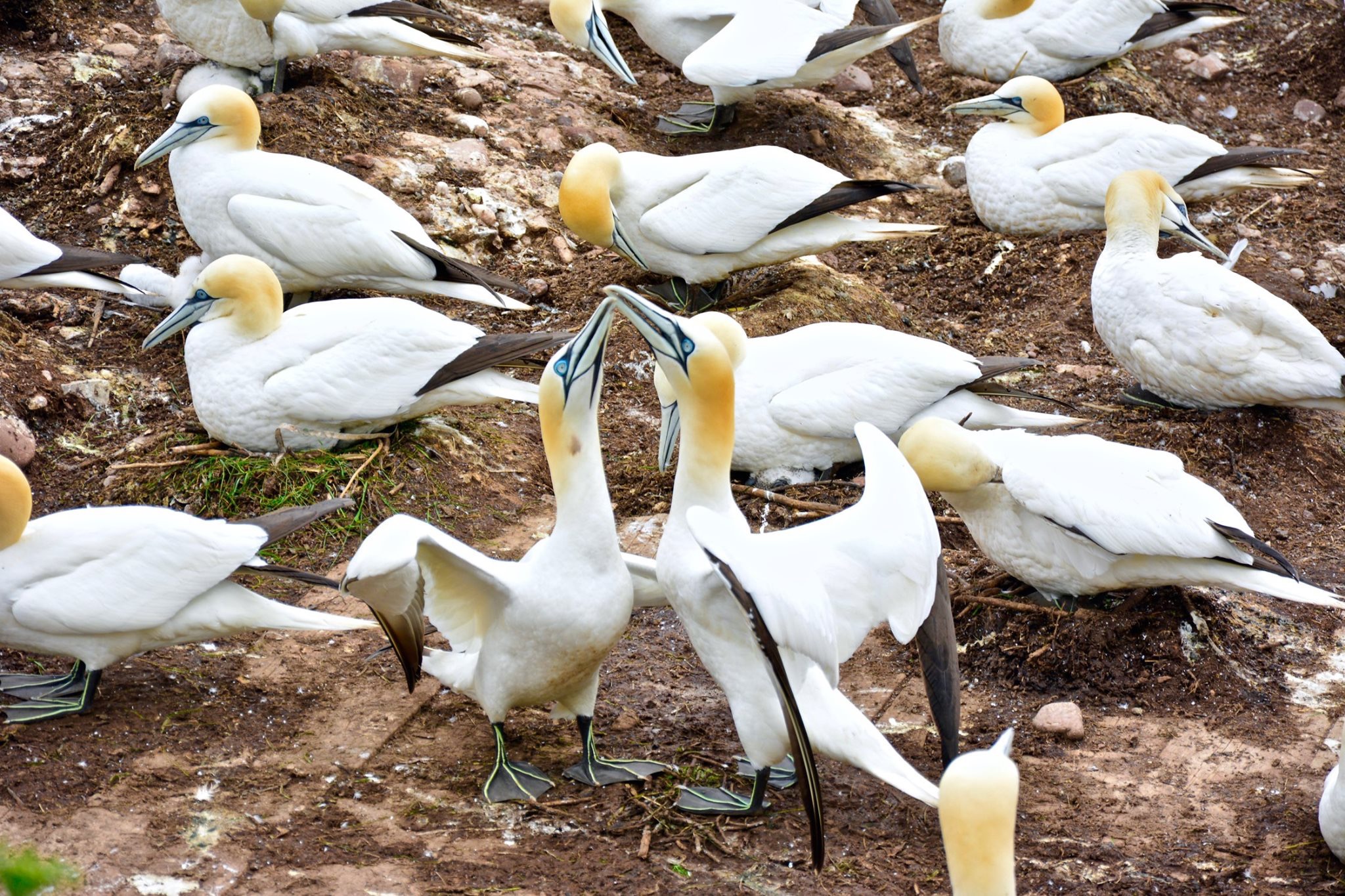
    They will then work their way south back to Cape Cod, then west along Long Island Sound and return back to New York City to complete the Loop.  They hope to return to New York City some time in  late September.
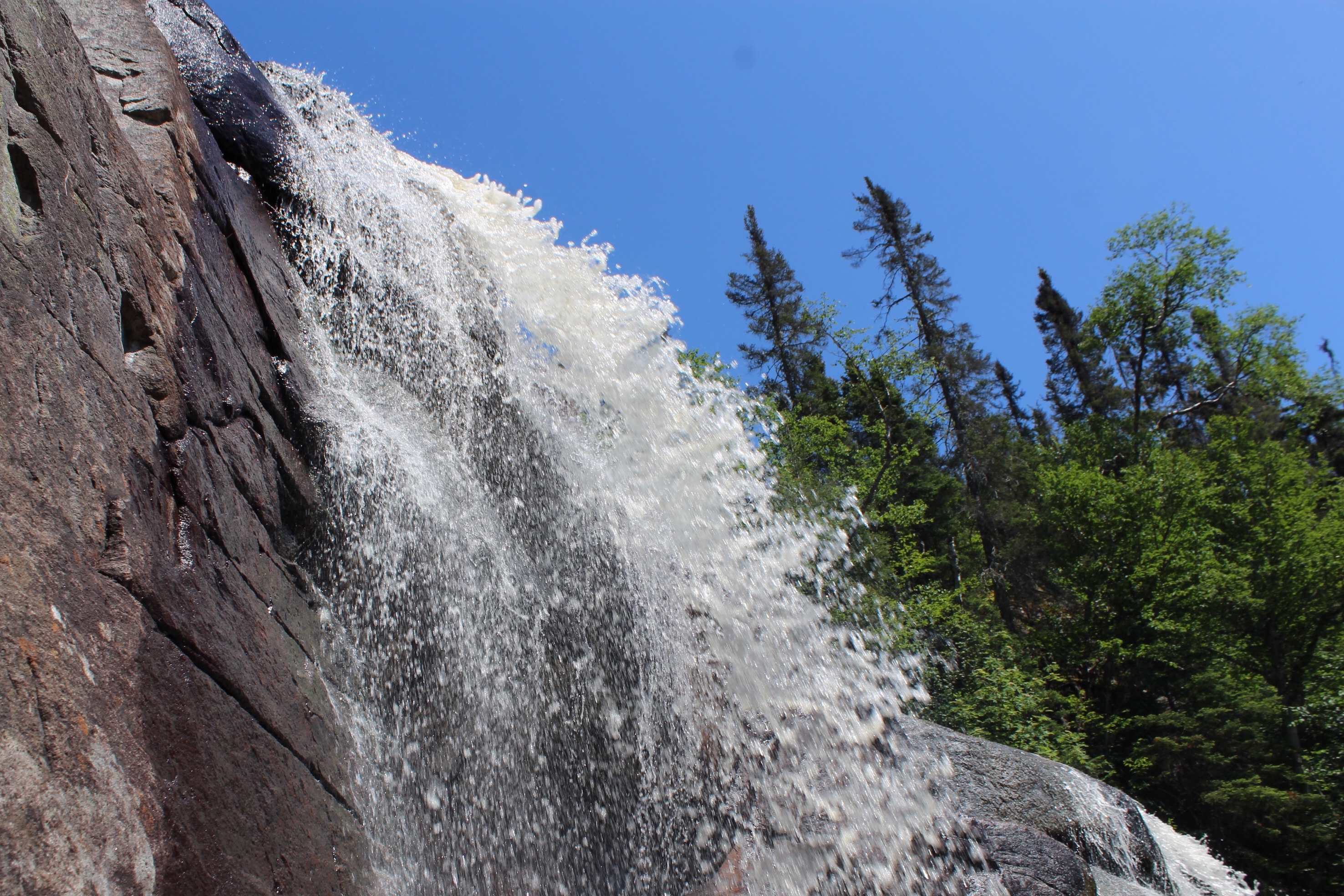
    I will re-start my weekly updates starting next Sunday, May 26th, chronicling the travels, challenges, and history of the waters that Still Waters II and crew cruise.

    Hope to see you back on board as virtual crew members and hope you enjoy the cruise.

    Eric the Red