Tag: Illinois River

  • Where Two Rivers Meet

    Where Two Rivers Meet

    Hello virtual crew members and fellow adventurers!

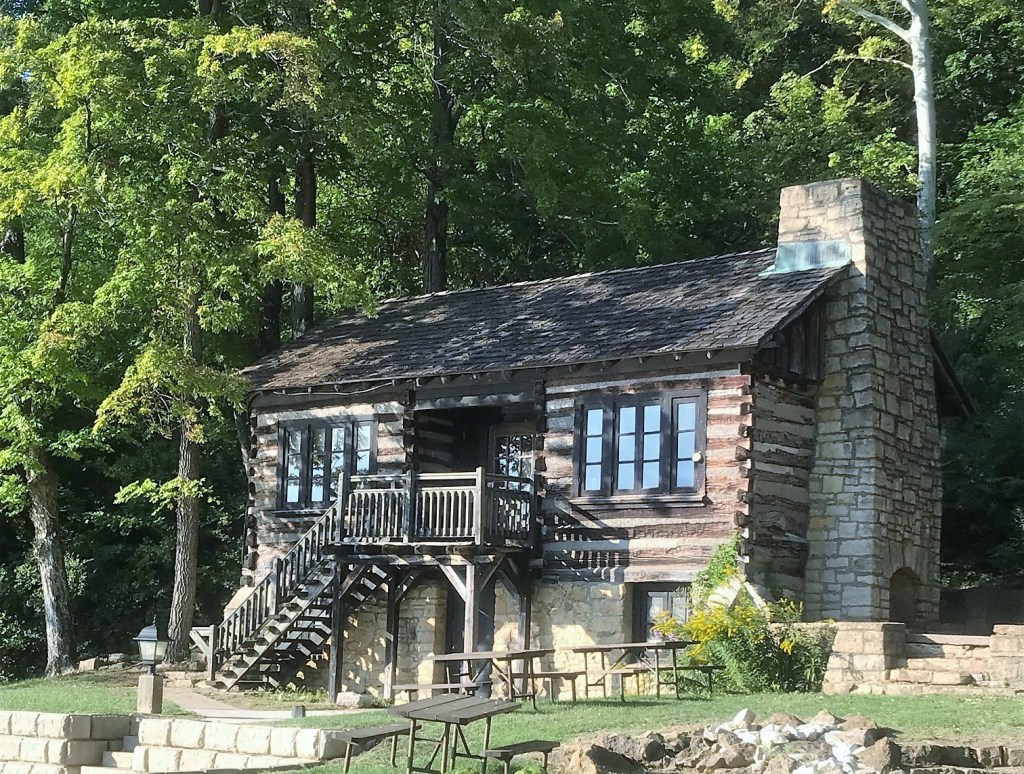
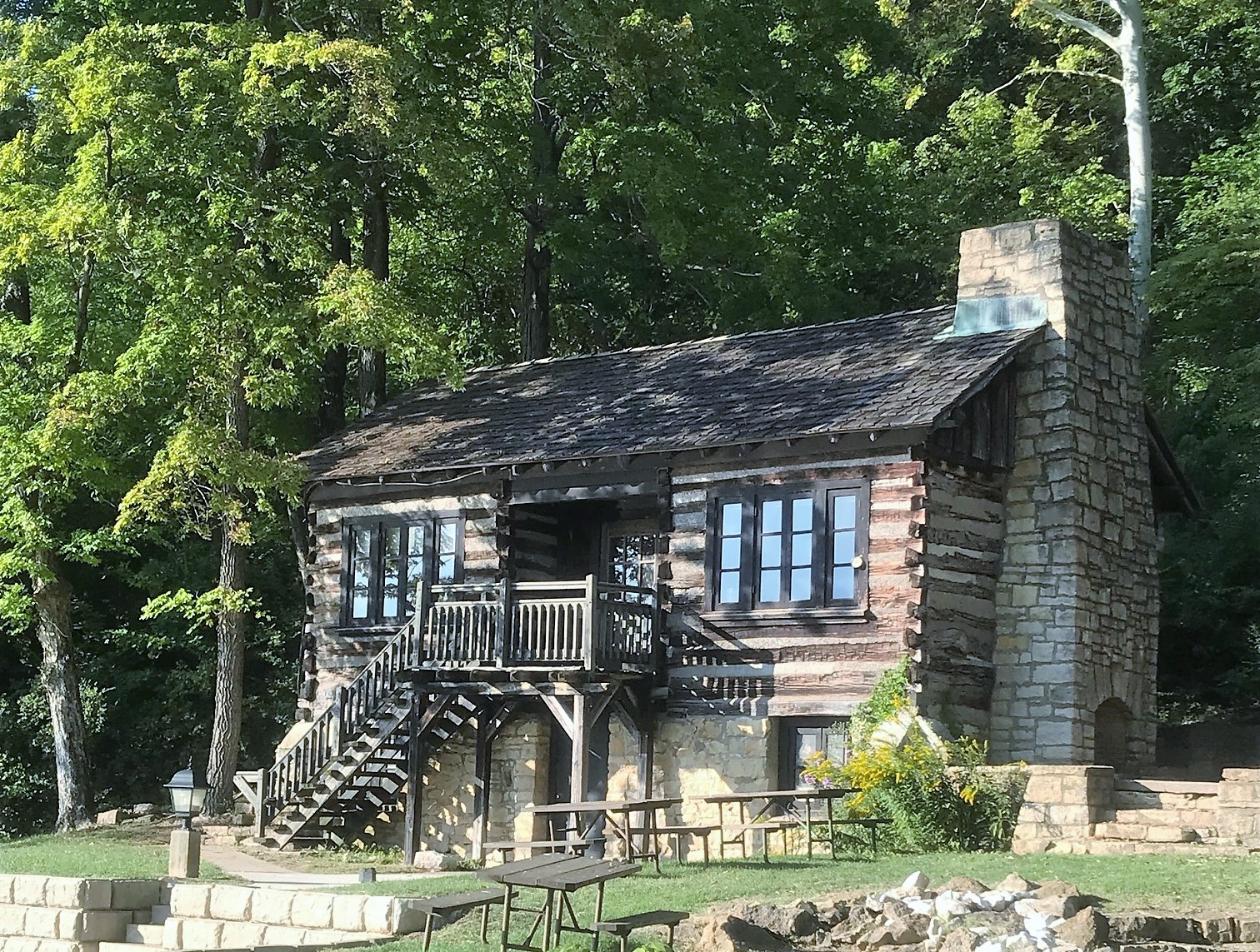
    Log Cabin in Marquette State Park in the Land of Lincoln
    46


    Mark Twain Quote of the Week

    Twenty years from now you will be more disappointed by the things you didn’t do than by the ones you did.

    So throw off the bowlines, sail away from the safe harbor.  Catch the trade winds in your sails.

    Explore.  Dream.  Discover.

    This quote has been attributed to Mark Twain, but has not been verified. But the skipper thinks it is a good one to start with anyway.   Kind of describes what the crew has been doing for the last several years.  

    Welcome aboard to D. Wright.  Hope you enjoy the ride up the Mississippi River.

    Summary of week:
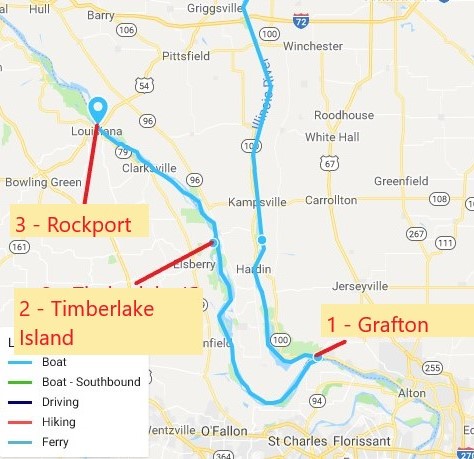
    Rockport


    The crew has been sitting in Grafton (1) (mile 0 on Illinois River, Mile 218 on upper Mississippi River) for most of the week waiting on the crest of water to go down stream so they can head up the upper Mississippi River.  Both the Illinois River and Mississippi River are in flood stages due to rain falling north of Grafton.

    The crew headed north on Friday, and anchored at mile 258 near Timberlake Island (2).  Saturday, the crew made way to Rockport (3) where they will spend the weekend at the Two Rivers Boat Club.

    While waiting the skipper has been doing some research on Louis Joliet and Jacques Marquette.  He and the Admiral have also been working on a few boat projects during this down time.

    Click here to read the day-to-day travel log. This includes weather report, sea conditions, captain’s log, a summary of the day’s experience, and a few pics of the route.

    The voyage of discovery did answer the following questions this week:

    1. Who were the first Europeans to explore the upper Mississippi River?
    2. How far south did they journey down the Mississippi River?
    3. Who and when was the mouth of the Mississippi discovered?

    At the Box Office

    This week’s video shows Still Waters II  following the American Queen up the Mississippi River.  Enjoy!

    To see past videos, click on the link to the Still Waters II Vimeo site.  The library contains videos of Still Waters II cruising America’s Great Loop.

    Boat Projects

    The main project the skipper tackled this week were stopping a few water leaks into Still Waters II when it rains.  They managed to get a covered slip in Grafton, so it seemed to be a good time to remove and re-caulk many of the old joints around the boat.

    Since the washing machine has decided to die, the Admiral has been busy lugging clothes to the laundry facility.  Finding a new washer that will fit thru the 23 inch door opening has proven to be problematic, but the search continues.  If the skipper knows what is good for him, he better be finding a new washer though.

    Exploration of the Upper Mississippi River

    Since Mackinac Island, the crew has seen many statues, towns, bridges, roads and other infra structure named after both Louis Joliet and Jacques Marquette.  The skipper decided to find out more about these two guys in between working on the caulk project.

    41 MarquetteJacques Marquette, also known as Pere Marquette and James Marquette, was a French Jesuit missionary.  He is credited with founding the first European town in Michigan, Sault Ste. Marie in 1668.  Actually he founded a Catholic mission.  French colonists eventually established a fur trading post there also.
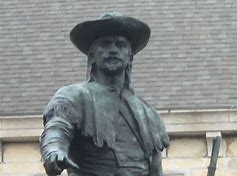


    42 Joliet

    Louis Joliet was a French Canadian explorer.  Initially he was on a path to be a Jesuit priest, but decided to follow his dreams as a fur trader instead.



    43

    Joliet and Marquette took Mark Twain’s quote serious, and teamed up to explore the upper Mississippi.  They left St. Ignace, Michigan with two canoes and five other adventurers on May 17, 1673.  A month later, they had made it down Lake Michigan and to the end of Green Bay.  Then portaged across modern day Wisconsin and landed at the Mississippi River near present day Prairie du Chien on June 17.

    The expedition then traveled south along the Mississippi.  When they got within about 400 miles of the Gulf of Mexico, they began encountering natives with European goods.  They decided that they would turn around and head back north before they had an unfriendly encounter with Spanish explorers.  You may recall from your history lessons that Hernando de Soto discovered the southern entrance of the Mississippi back in 1541.

    The Cross Marks the spot where the expedition first stopped on the Illinois River
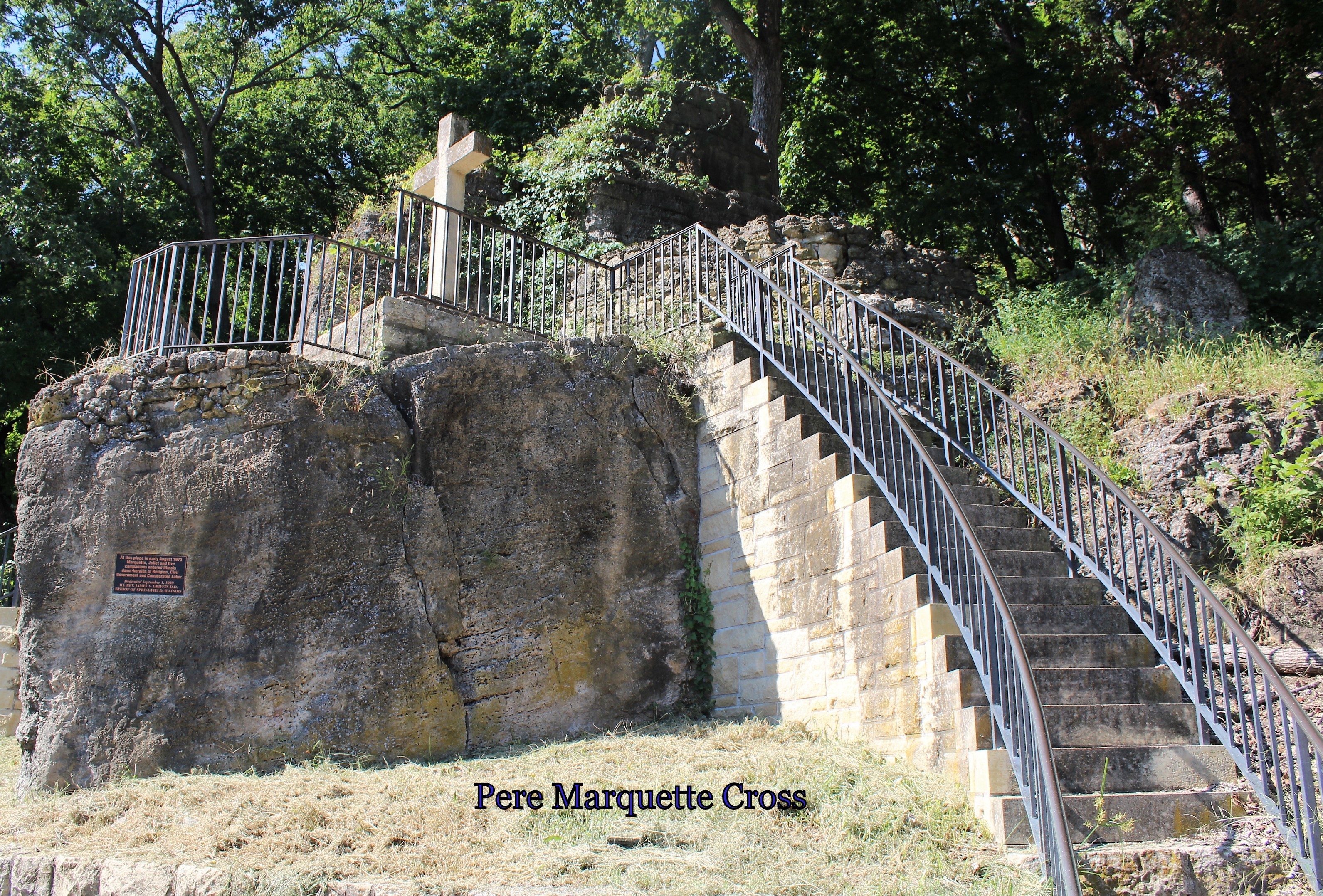
    36

    The expedition turned back at the mouth of the Arkansas River.  When they arrived at the Illinois River, natives informed them of a shorter route to Lake Michigan.  The expedition continued north on the Illinois River to the Des Plaines River, near modern Joliet.  From the Des Plaines River, they used the Chicago Portage to the Chicago River and then went downstream to Lake Michigan.

    5 Degrees to Peter Jenkins

    The crew hosted ‘Docktails’ aboard Still Waters II with three other boats.  One of the boaters, Bert, told an interesting story about a disillusioned young man, Peter Jenkins, who wrote several books about his journeys walking across America.  He left New York in 1973 and arrived in Oregon in 1979.

    Bert aboard his boat, Touch the Horizon
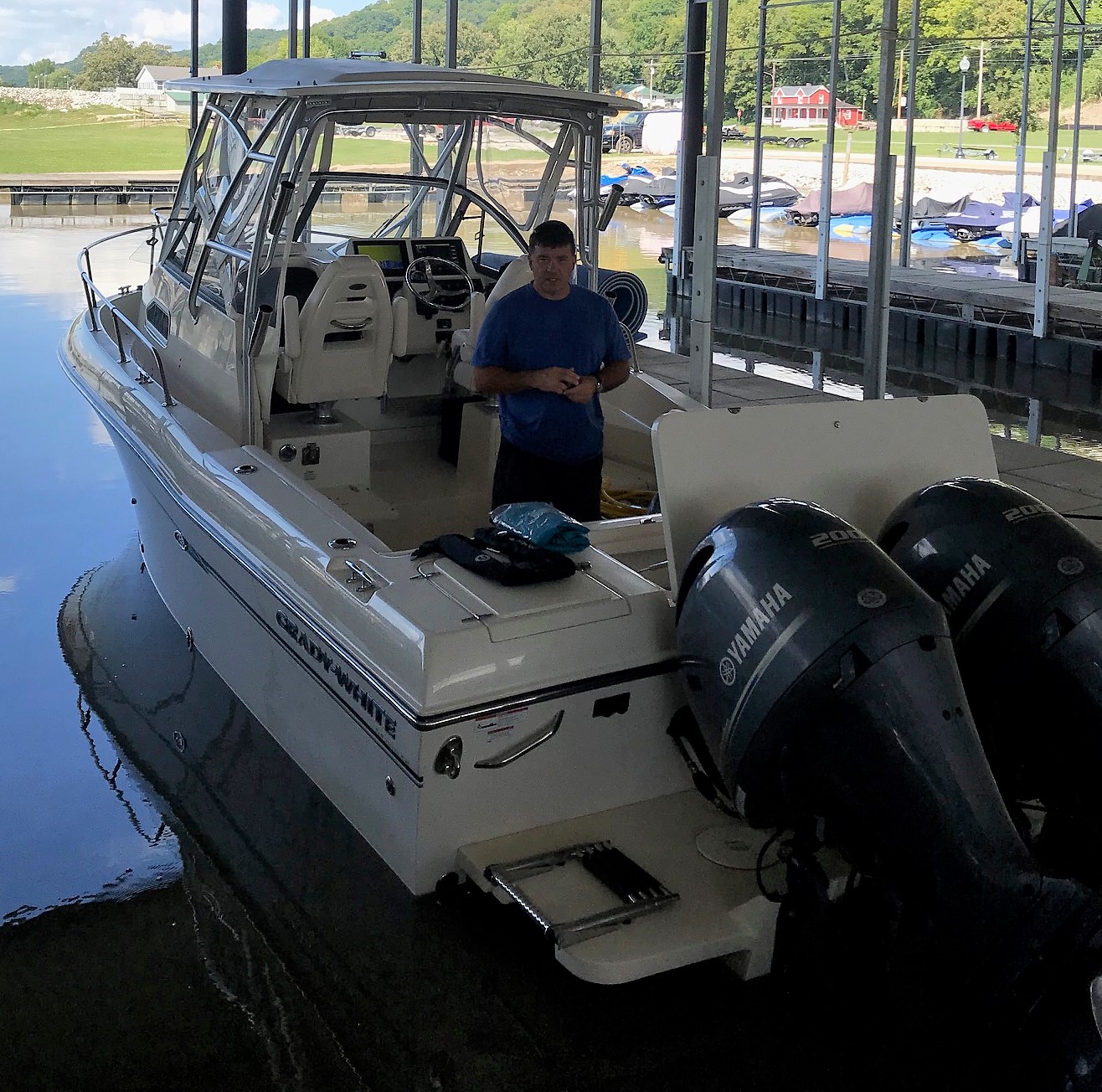
    44 Bert

    But even more interesting is that in the books, Peter uses a JanSport Backpack.  He started using the JanSport Backpack because Norman, one of the co-founders of the company gave him a backpack early in his journey.  Bert talked about how he had met Norman while doing volunteer work together.  Norman told Bert about meeting Peter and giving him the backpack.  Norman also told Bert about the books.  Bert recommended the books as good reads.  So now the crew is 4 degrees from the author and you are 5 degrees.  Is that cool or what.  And yes the skipper also has a nice JanSport Backpack.

    This sign is stating the obvious
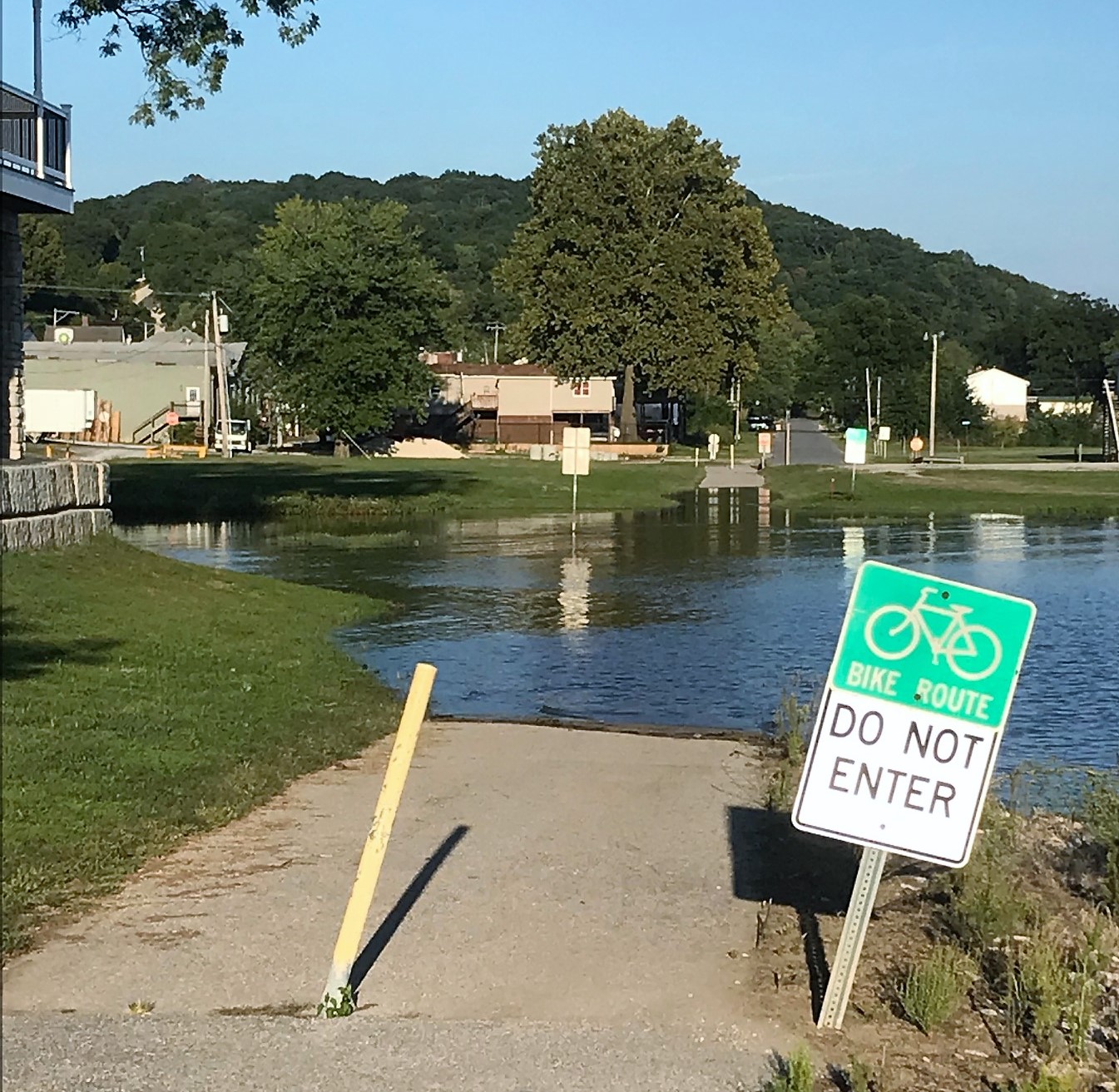
    45

    Friday, September 14th

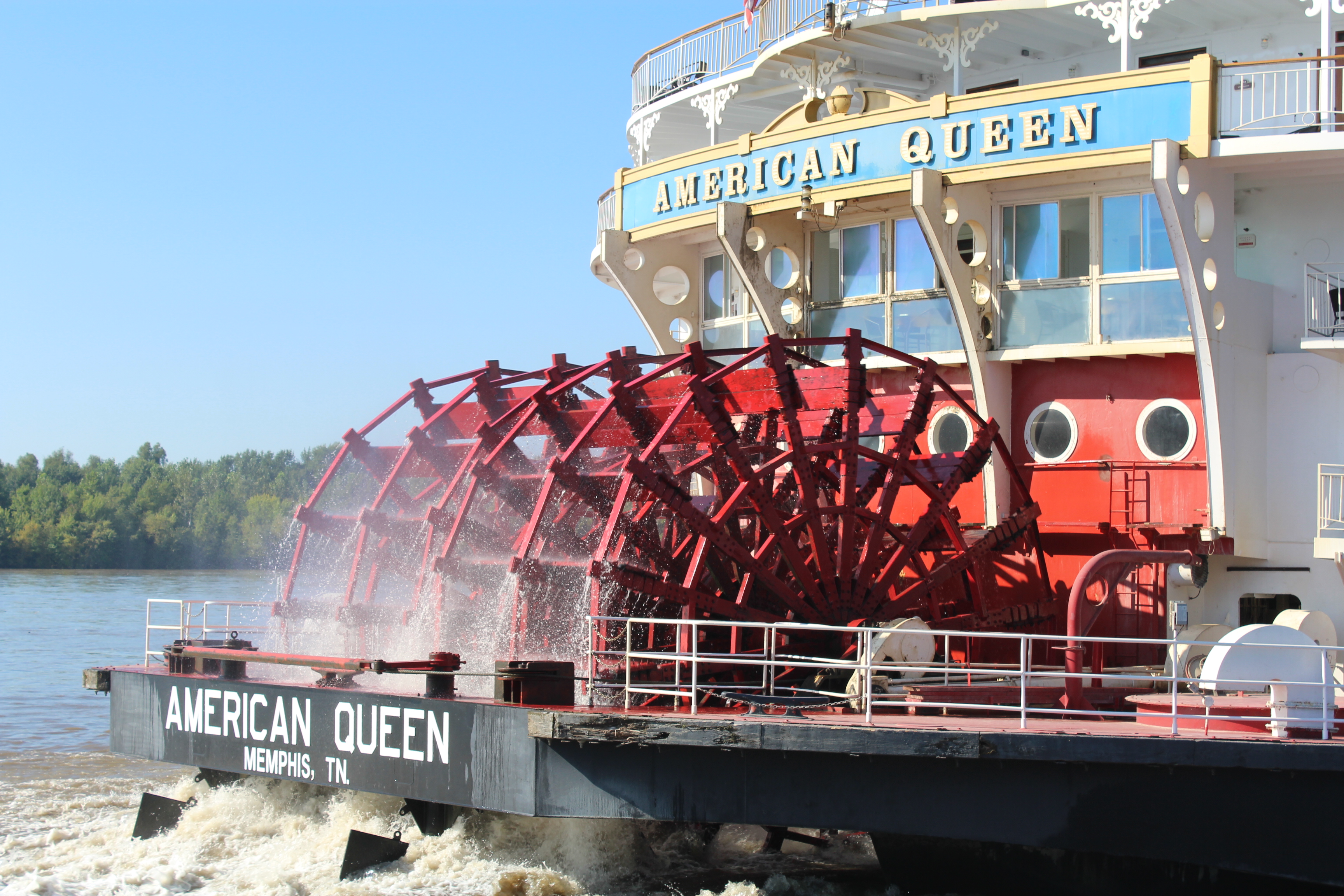
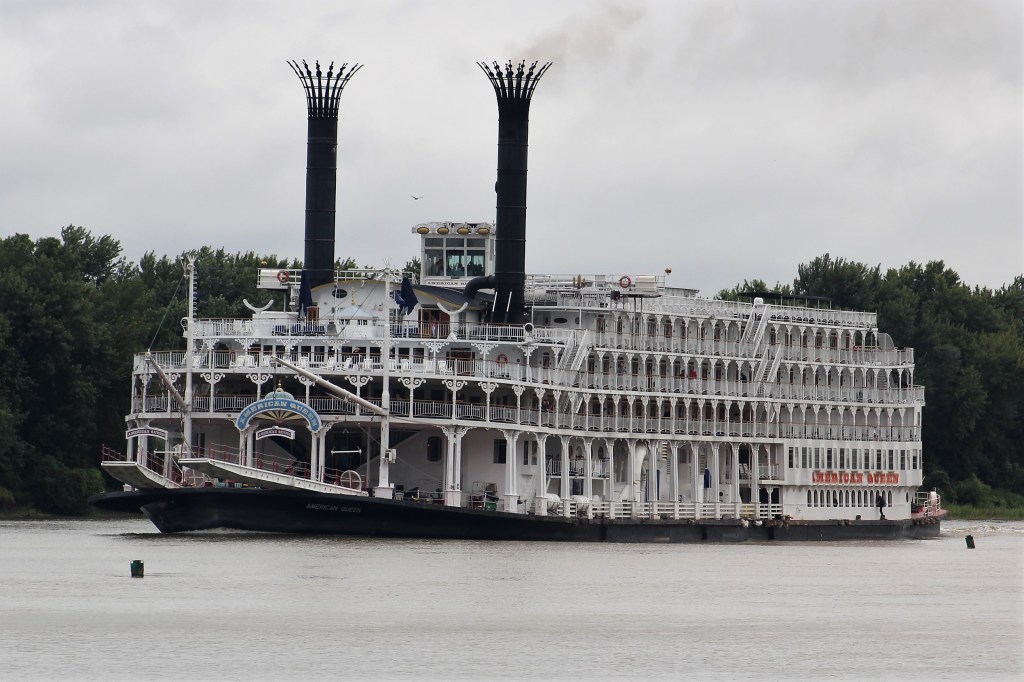
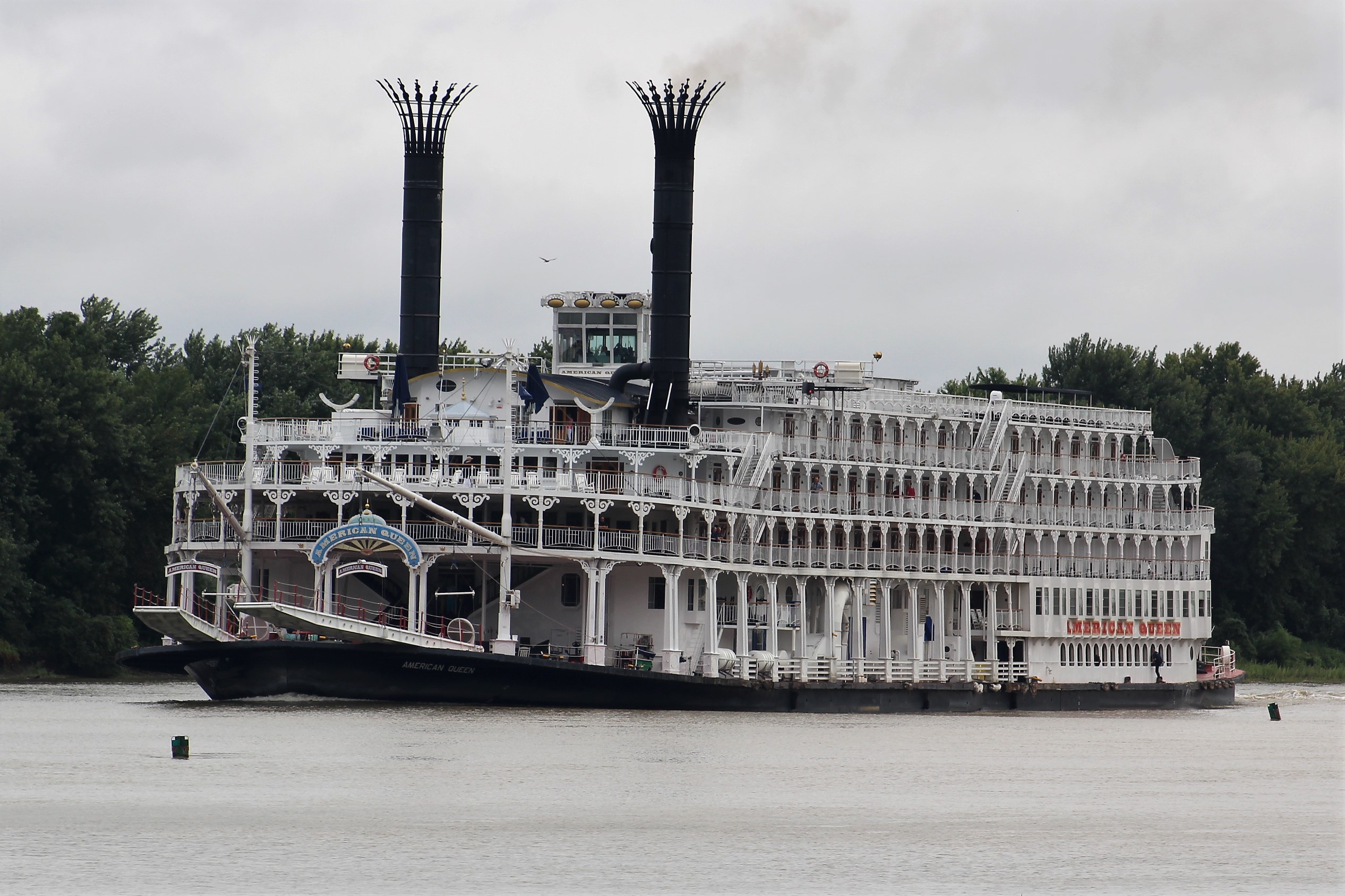
    The crew left Grafton and started their way up the Mississippi River at mile 218.  As they were about to pull out of the marina, the American Queen appeared and passed by.  The skipper then pulled in behind her.

    American Queen at close quarters
    IMG_0003 (1)

    They would spend the day following her up the river.  The crew was not sure what to expect as they ventured north.  The river is very rural and very picturesque.  The crew traveled north 42 miles and did not see any towns along the banks.  This also means there are no cell towers so they have been cut off from the outside world for the day.  It is amazing how dependent our culture has become on the internet.

    Wonder if Huck Finn explored this cave?
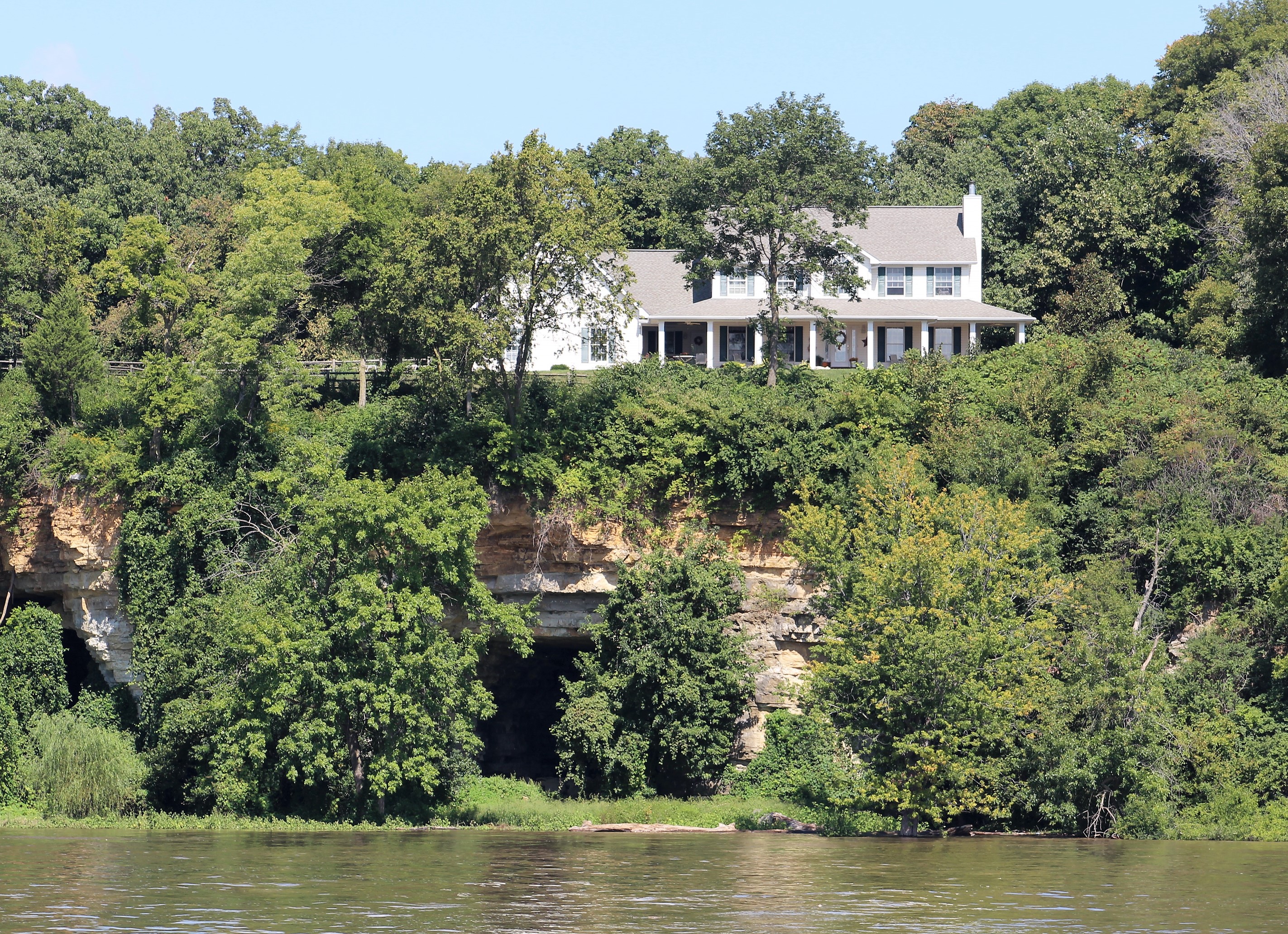
    IMG_0006 (1)

    In addition to following the American Queen all day, the skipper spent most of the day playing ‘dodge debris.’  The high water level has caused much debris to float downstream.  The crew is familiar with two boats who have hit debris and caused broken transmissions.  They have heard rumors that there are at least another dozen boaters with prop problems or transmission issues because of the debris.  The skipper has kept a diligent Look Out for debris and as yet has not hit any.

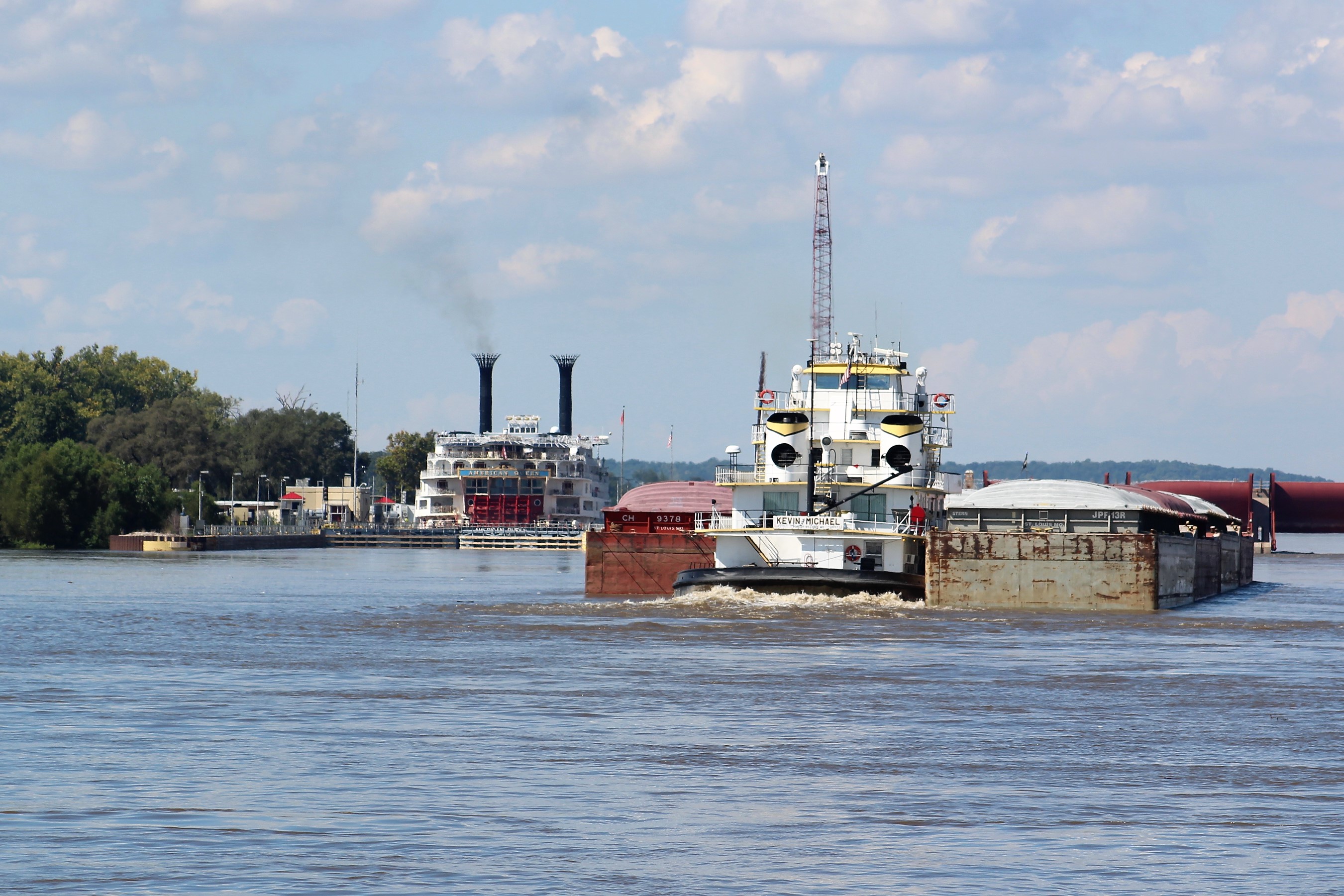
    When the crew arrived at Lock 25, the American Queen was in the Lock and there was an upbound tow waiting to enter.  To the surprise of the crew, the Lockmaster put Still Waters II thru the lock before the tow.  As it turned out, the 15 foot step up turned out to be only one foot due to the river running high.

    Lock 25 
    IMG_0011

    After the Lock, the crew travelled another 16 miles up river.  However, with the high water level also comes high current flows.  The head current was 3 mph so the crew was only making 5 mph Speed of Ground (SOG).  This leads to a long three hours to go those 16 miles.

    When the crew arrived at the anchor spot, the skipper anchored just south of Timberlake Island.  His hope was that the Island would protect them from any debris floating downstream.  It was only a few minutes after dropping the anchor that the crew experienced a large debris field.  As hoped the currents around the Island carried the debrief off to the sides of Still Waters II.

    Debris Field drifting while anchored

    14.1

    Saturday, September 15th

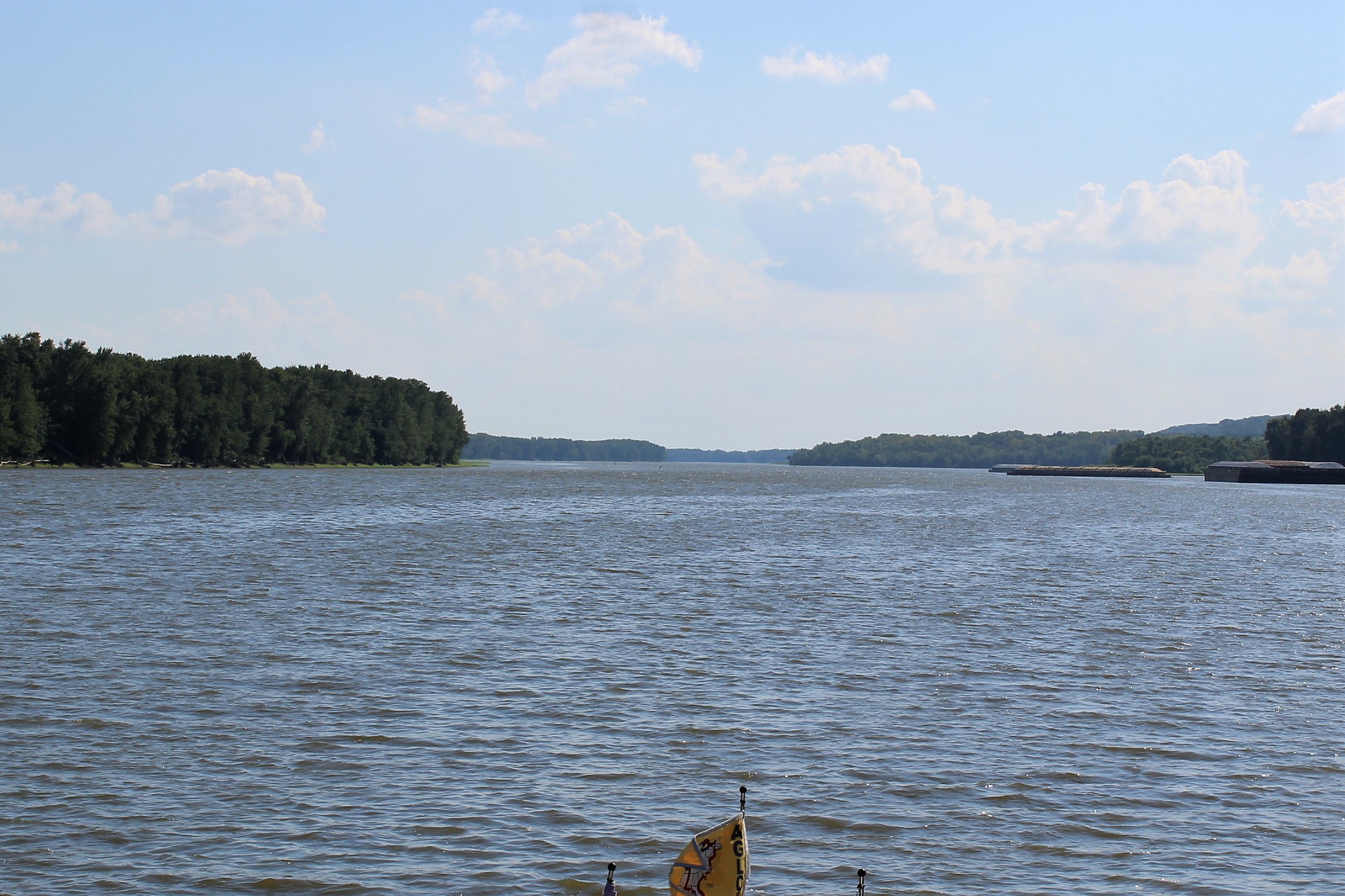
    The crew pulled anchor and continued upstream.  Another surprise of the river has been the number of Islands that are sprinkled between the banks.  The Islands add to the beauty of the area.

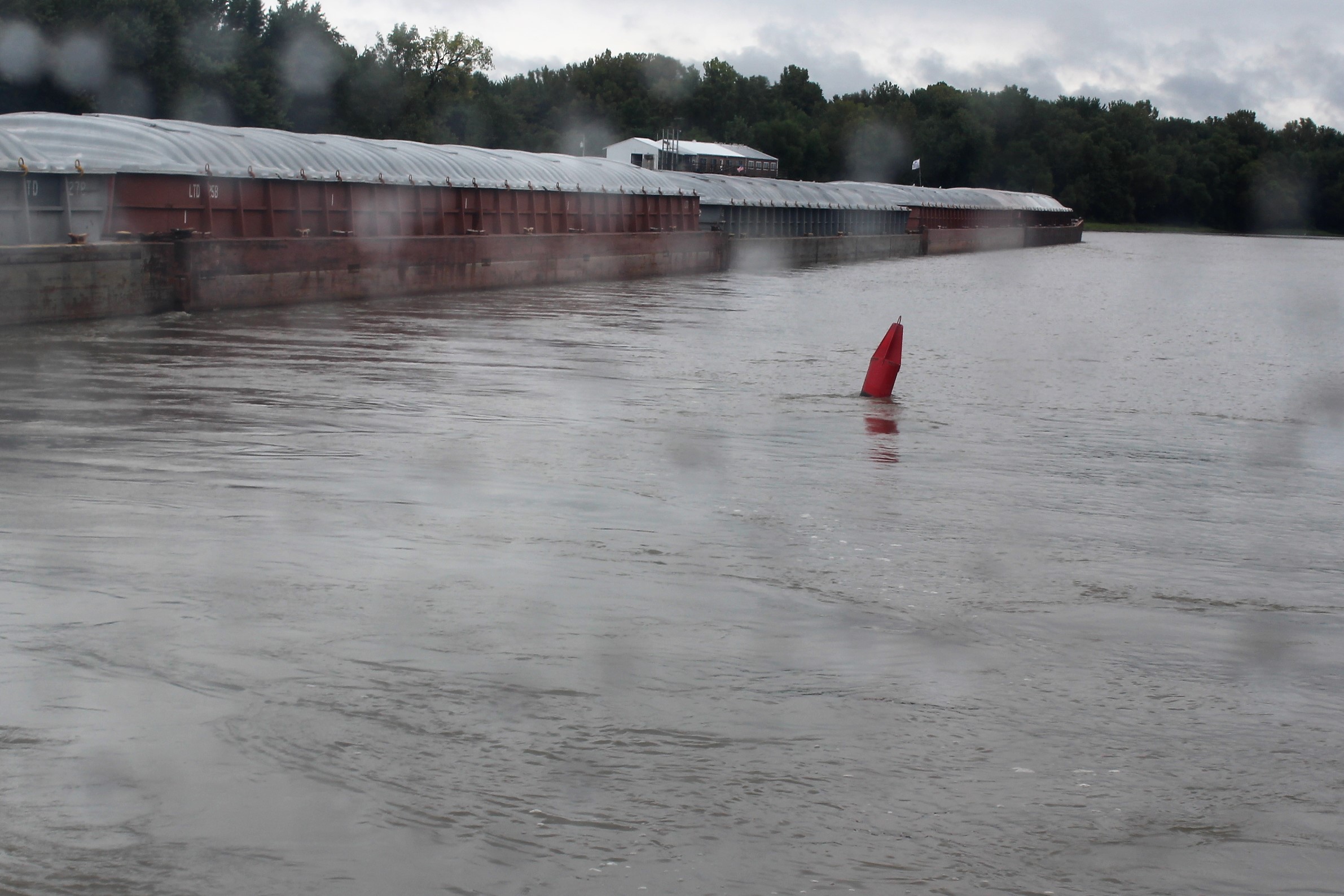
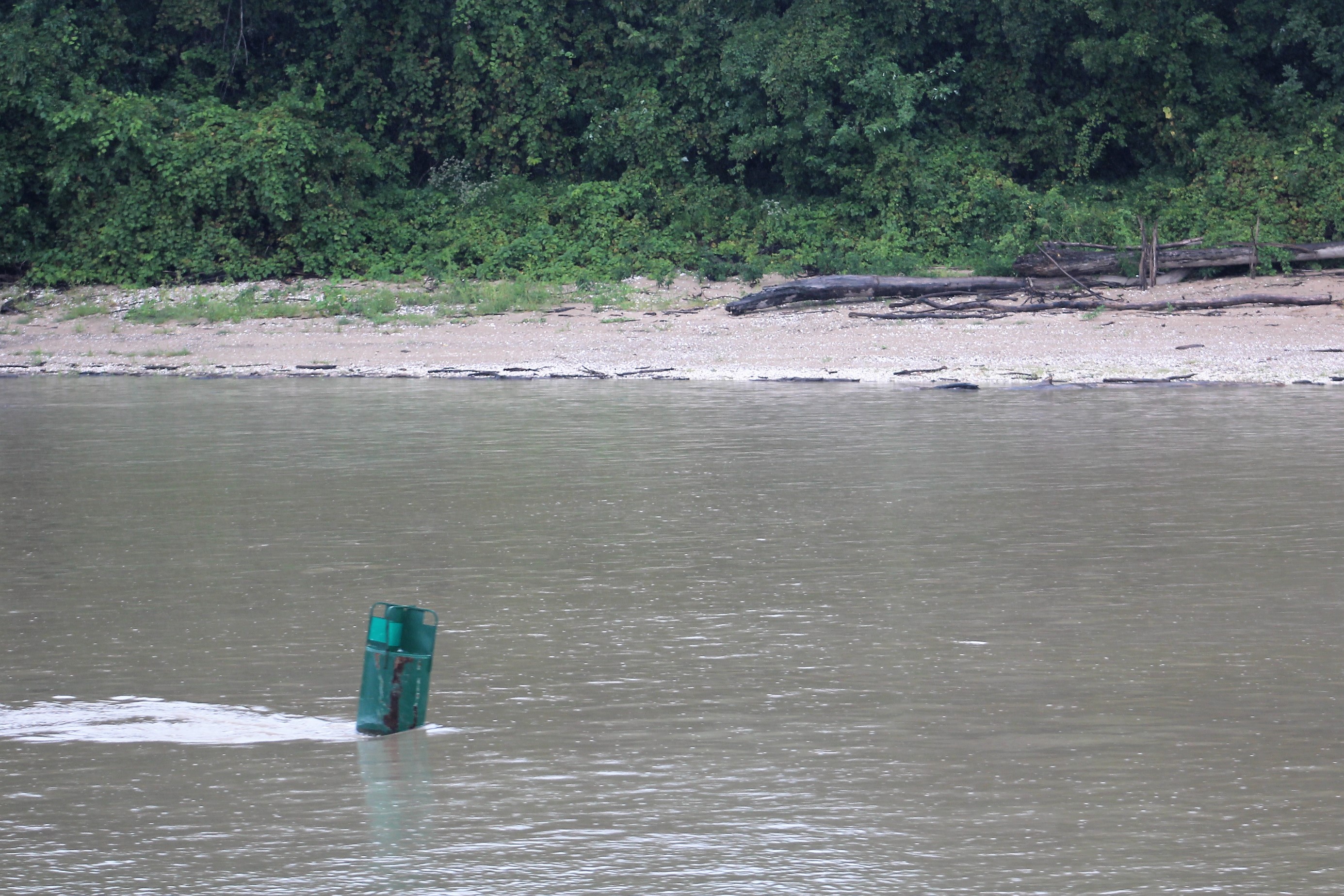
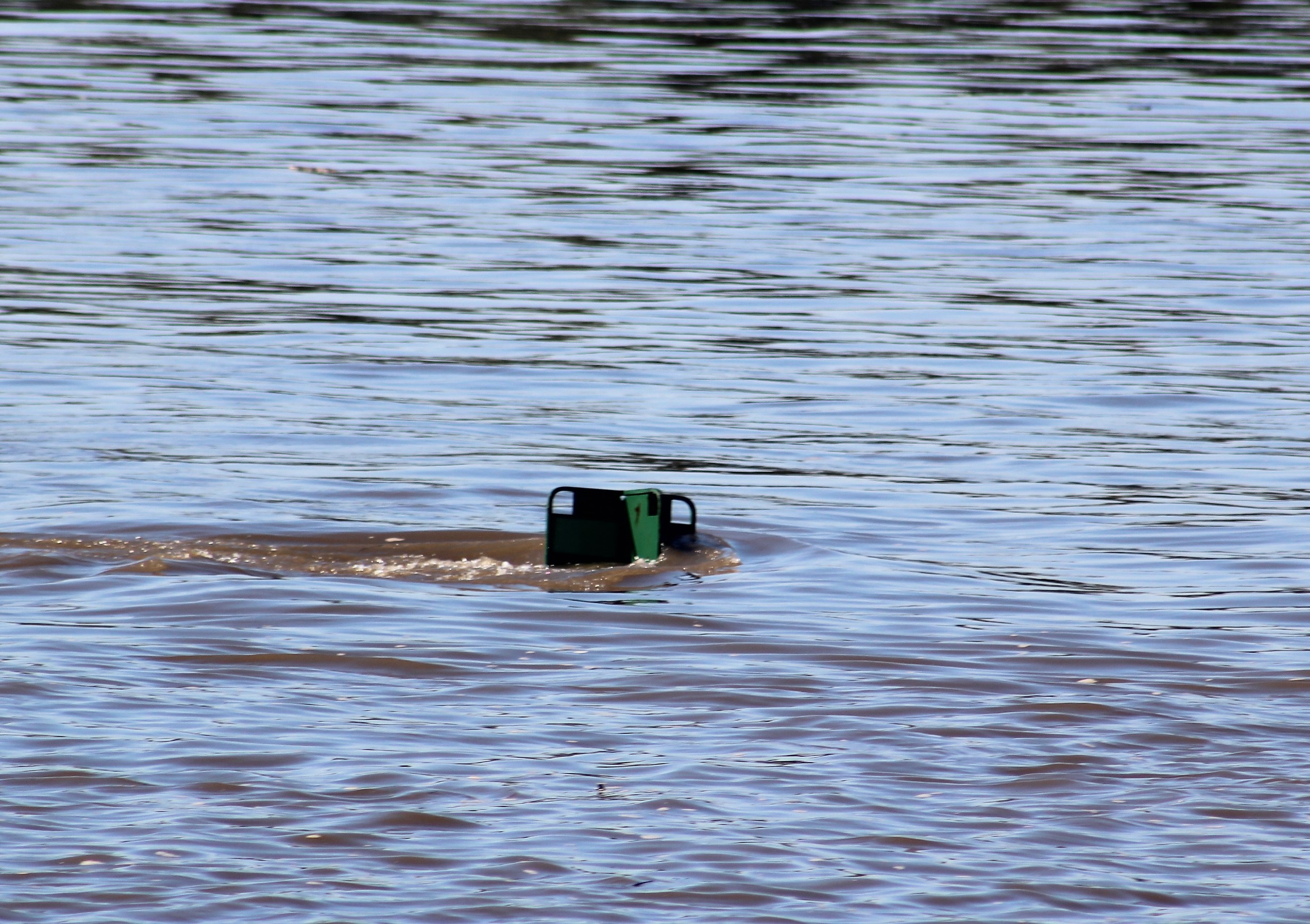
    The crew also saw first hand a situation that they had been warned about, disappearing navigational aides.  Because of the high water levels and current, sometimes the markers get pulled underwater.  Then the marker pops up out of the water.  The warning for navigating is that pilots should not ass/u/me the marker is off station or missing and cruise over the area.  Boats have been surprised when the force of the marker knocks a hole in the bottom of their boat when the buoy pops out of the water.  There have been many missing markers and the skipper has been giving them all a wide berth.

    Now you see it
    IMG_0021

    Now you don’t

    IMG_0018

    Buoy fighting for air

    IMG_0020

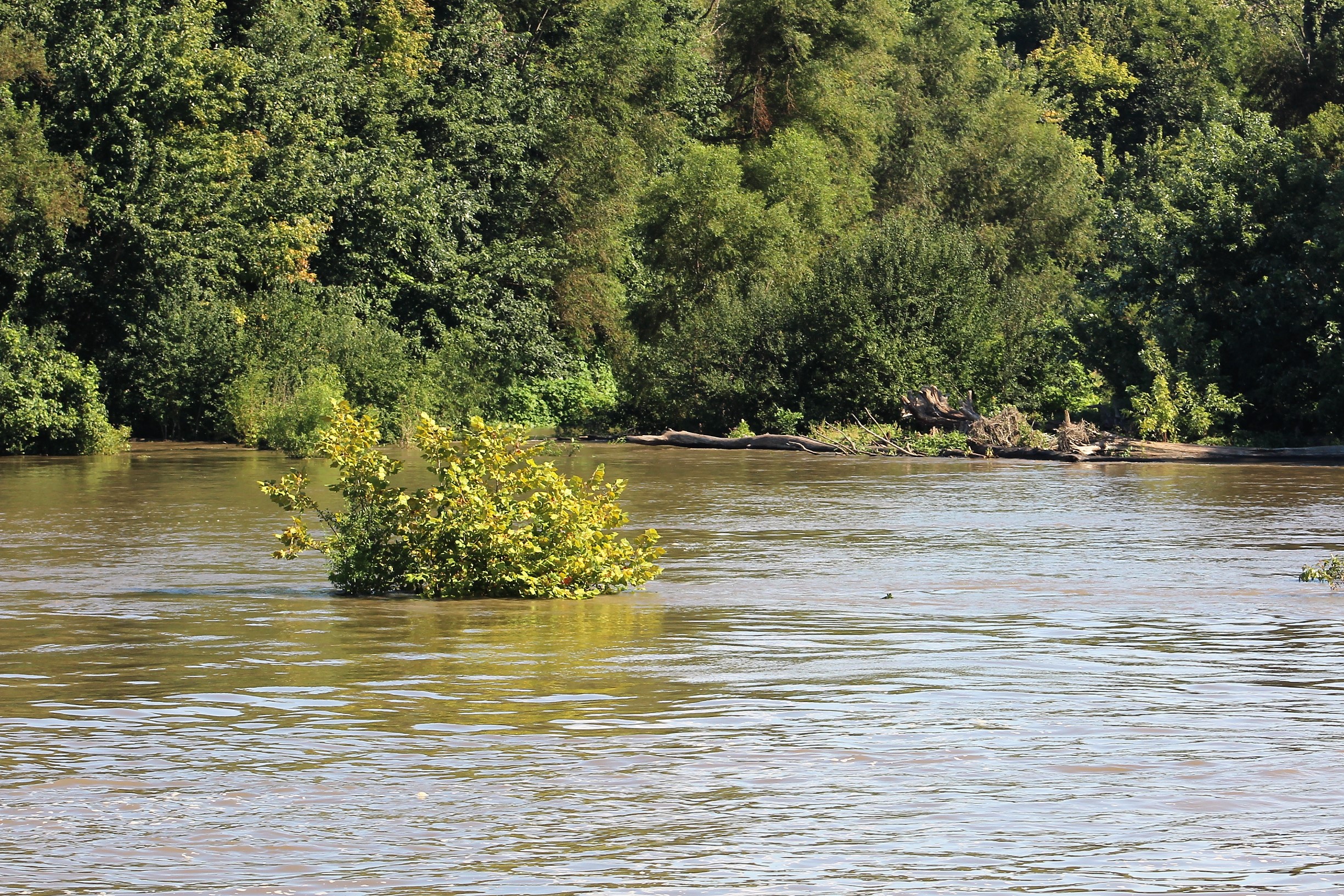
    When the crew arrived at Lock 24, there was a tow just entering the Lock.  The Lockmaster told them it would be about 45 minutes to get the tow up before he could get Still Waters II.  After the tow pushed out of the Lock the crew then entered.  As with Lock 25, it was only a 1 foot step up and the Lockmaster allowed the crew to just float in the Lock.  Normally both Lock 24 and 25 would raise the boat 15 feet to the next pool level.  Just an indication of how high the water is running over the dams.

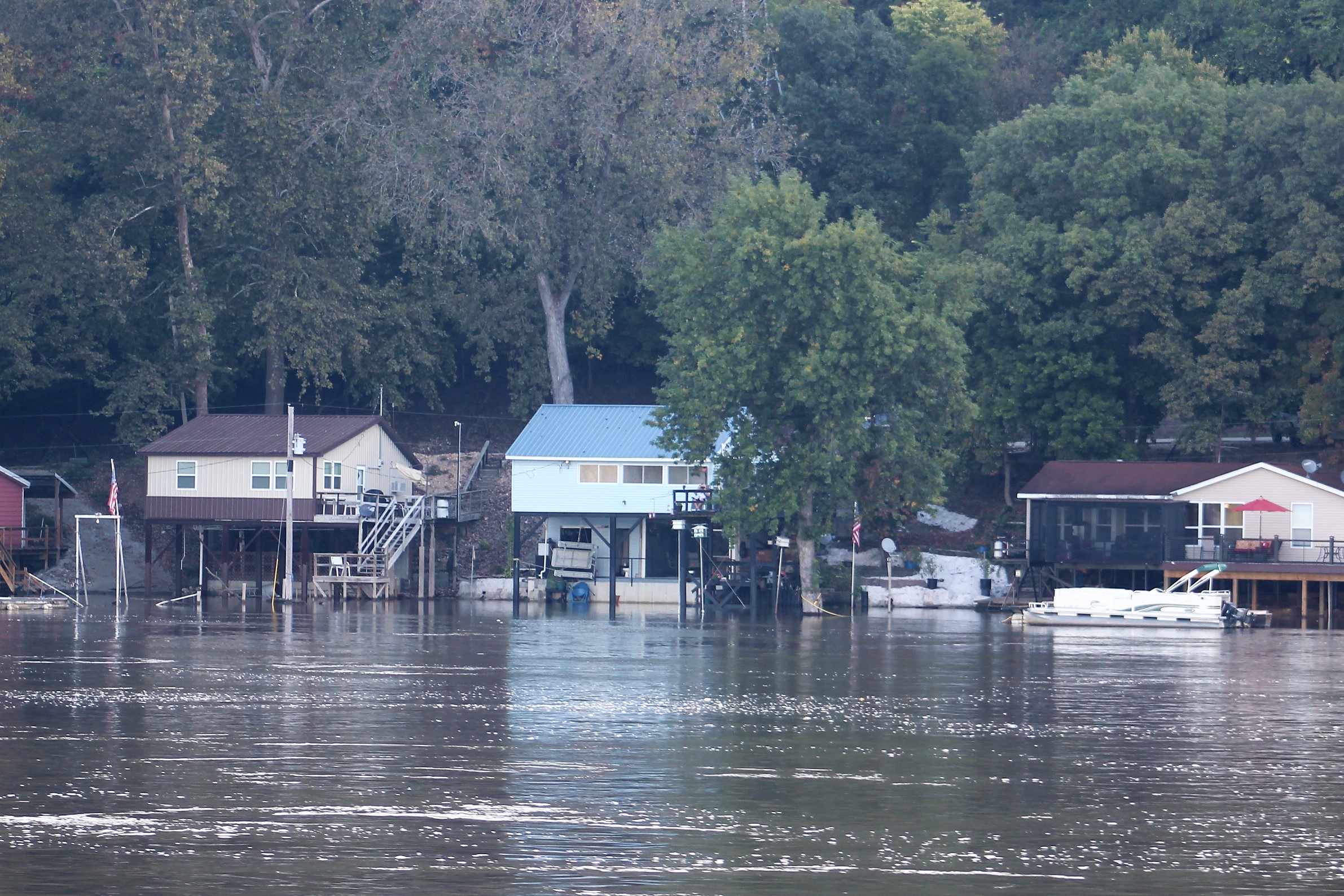
    Flooding along the river
    IMG_0023

    IMG_0029

    Boat name of the week

    Boat US has released their top 10 names of 2018 based on graphic sells:

    1. Grace – This name reflects the elegant and tranquil qualities of the boat, oftentimes owned by someone seeking peace through boating.

    2. Freedom – A patriot to its core, this boat symbolizes the meaning of freedom in all senses of the word: freedom to explore, freedom to dream and freedom to discover the world by water being most important.

    3. Seas the Day – While this boat owner may feel a loss of control over a declining retirement account, he or she is completely in charge while boating and intends to get the most out of the boating lifestyle.

    4. Therapy – Capitalizing on all the joys boating has to offer, this name takes into account the healing nature that boating provides its owner.

    5. Second Wind – This boat is perhaps owned by parents constantly yearning for that second boost of energy in life. Spending time with their boat gives them rejuvenation despite the craziness of being mom or dad.

    6. Serenity – Born out of the “hippie era,” this name illustrates peacefulness in both the boat and the owner. Simply explained, this boat owner is completely untroubled while out on the water.

    7. Perseverance – A relentless vehicle that never stops exploring, this boat likely has more than 10 years on it with a few dents and scratches but also holds countless memories of good times.

    8. Rum Runner – A party boat by nature, this boat often hosts big personalities and guarantees a good time with laughs galore.

    9. Knot on Call – The moment a boater steps onto this boat, his or her responsibilities are left at the dock. The owner enjoys and encourages leaving worries behind and fully immersing in the boating experience.

    10. Pura Vida – More than just a Costa Rican saying meaning “pure life,” it reflects a way of everyday living by example – one that thrives on no worries, no fuss and no stress.

    Next Week –

    The crew will continue northbound with hopes of making short daily runs of about 25-30 miles due to the strong head current.  They hope to make about 200 miles during the week and end up at Le Claire, IA by the end of the week.
    Loop On – Where the road ends, the water begins. The water goes on forever, and the adventure never ends.

    Eric the Red

  • Building A Better World

    Building A Better World

    Hello virtual crew members and fellow adventurers!

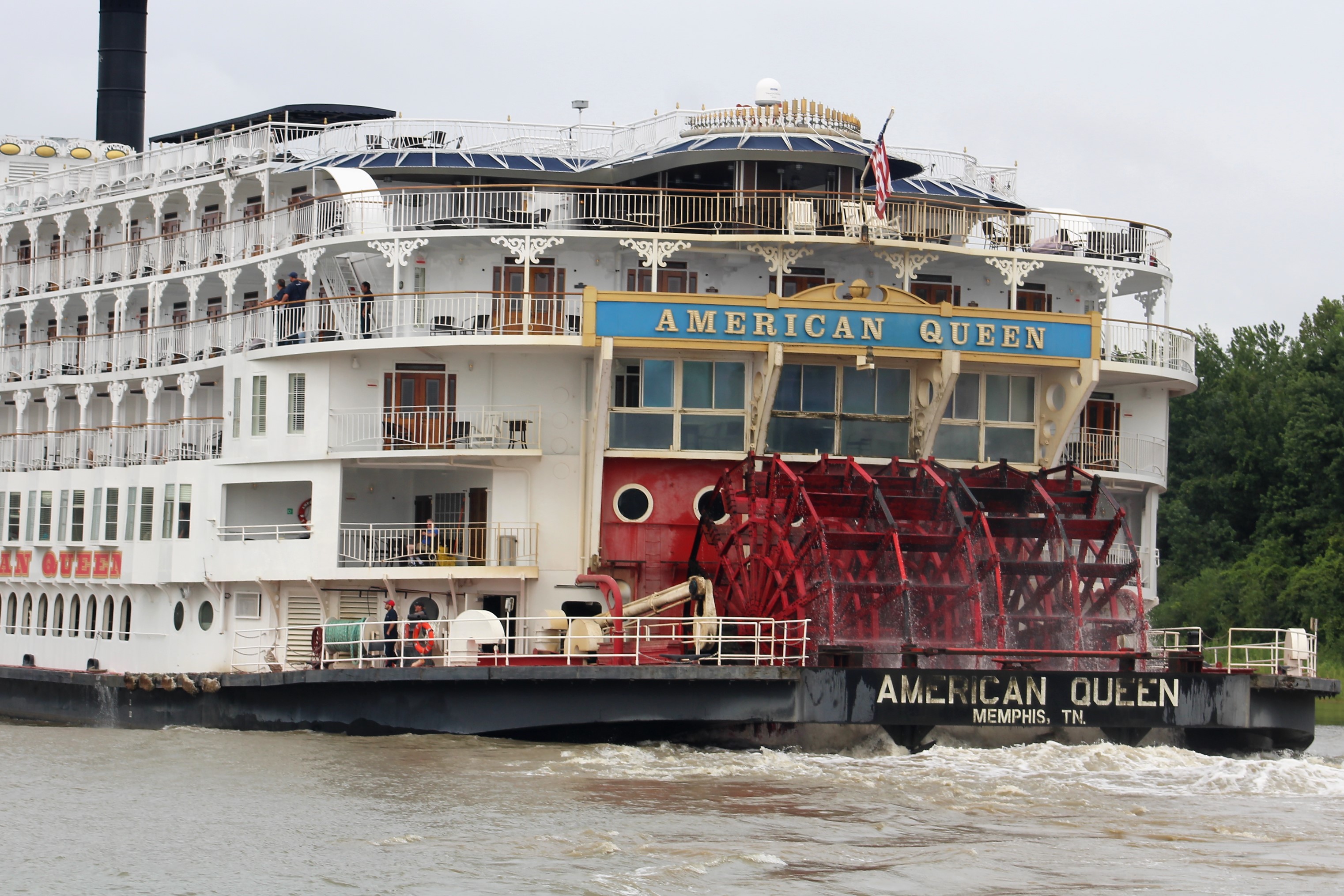
    The American Queen, the largest steamboat ever built, or so they claim

    17 American Queen

    Met this beauty on Tuesday headed towards Peoria.

    17.1

    Summary of week:

    Grafton

    The crew completed their cruise down the Illinois River this past week where they made the following stops:

    1 – Peoria, mile 161, where they visited the Caterpillar Visitor Center

    2 – Bar Island, mile 85

    3 – Hurricane Island, mile 25

    4 – Grafton, mile 0


    Click here to read the day-to-day travel log. This includes weather report, sea conditions, captain’s log, a summary of the day’s experience, and a few pics of the route.

    The voyage of discovery did answer the following questions this week:

    1. What is the largest steamboat ever built?
    2. Who won the Olympic Gold Medal in basketball in 1952?
    3. What is flood level at Grafton?

    At the Box Office

    This week’s video shows highlights as Still Waters II completes her voyage down the Illinois River.  Enjoy!


    To see past videos, click on the link to the Still Waters II Vimeo site.  The library contains videos of Still Waters II cruising America’s Great Loop.

    Sunday & Monday, Sept 2nd & 3rd

    With the Labor Day Weekend in full swing, the crew decided to stay put and enjoy the amenities of the Heritage Harbor Marina rather than take their chances on the water with the local drinking and boating crowd.

    A nice surprise was a visit from Bill H., the captain of Perfect Day.  Bill swung by to say hello.  He has returned to his boat from California and is prepping to go down to Green Turtle Bay where his wife will then join him the rest of the way down to Florida.  It was great to catch up with him.  The crew last saw Bill and Lori back in late summer 2016 in the North Channel of Lake Huron.

    Bill, Thanks for making time in your schedule to visit

    33

    On Monday morning, the crew enjoyed a free breakfast provided by the marina staff.  The staff made to order omelets, pancakes, biscuits, and orange juice.  The locals said they do this every Labor Day.  What a deal.

    Monday afternoon, the skipper attended a captain’s brief given by the Dock Master about river conditions all the way down to mile zero on the Illinois River.  The big take away from the brief was that the water level is currently 3-4 feet lower than normal and many anchorages are therefore unavailable.  For example, all three anchor spots that the skipper had planned to use are too shallow to enter.

    Back to the boat to recalculate the stops south.

    Tuesday, Sept 4th

    After taking on some fuel to ensure the crew can make Grafton, the crew headed to the Staved Rock Lock, eleven miles downstream.  The skipper checked the Lock Report to learn that there were two upbound tows at the Lock.  When they were two miles from the Lock, the crew met one of the upbound tows.

    3 Meeting a Tow

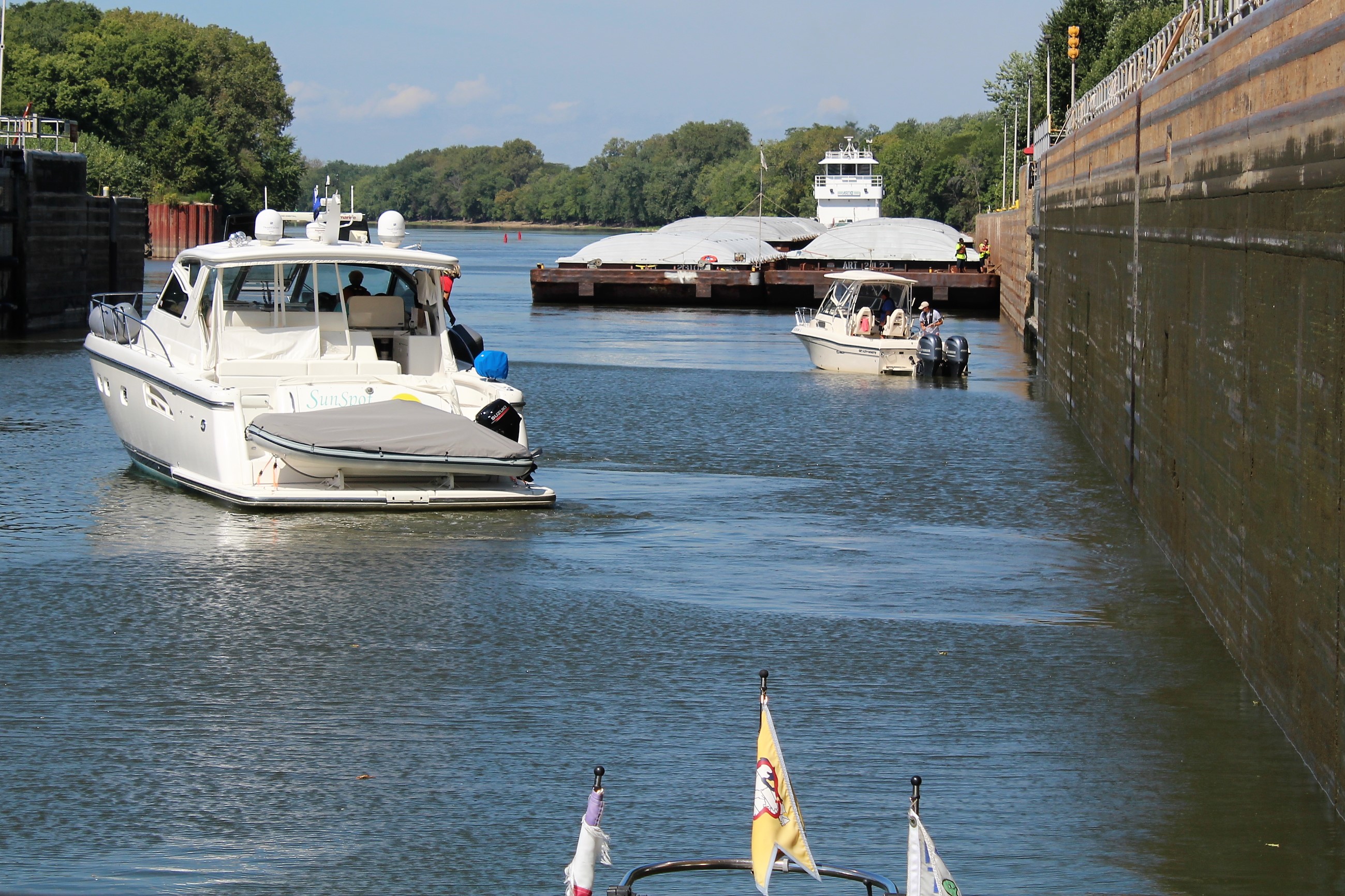
    The skipper called the Lock Master to announce the arrival of Still Waters II.  The Lock Master had already started the procedure to drain the Lock to get the other upbound tow.  However, the Lock Master said he would reopen the gate and let Still Waters II down.  The crew arrived at the Lock and waited a few minutes before the gates swung open.  When the gates opened, the crew noticed two other motor boats already in the Lock.  Well our crews good fortune was the other boaters 30 minute delay.  Our crew thanked the Lock Master for holding the Lock.  If they had not made the Lock, they would have had to wait three hours to get down.

    Leaving the Starved Rock Lock, with up bound tow ready to enter

    6 Leaving Starved Rock Lock

    With the good fortune of the Starved Rock Lock timing and the low water levels in the Illinois River, the crew decided to travel all the way to Peoria and try to snag a spot on the free dock.  They arrived at the dock at 1830 and found one spot that they could land.  But some other boaters warned them that there were no cleats to tie off on at the dock.

    Buffalo Rock along Right Descending Bank

    5 Buffalo Rock

    The skipper went ahead and landed on the dock anyway and then set about trying to figure out how to secure the boat to the dock.  With a little bit of ingenuity and the help of Scott from Last Call, they got the boat safely secured.

    The boat may have been secured, but at 0100 in the morning the Admiral was awakened by some people talking just outside the boat on the dock.  She got up and looked out the window to notice them climb aboard Still Waters II.  She woke up the skipper and informed him that somebody was on the sundeck.  The skipper hopped out of bed and went to the salon doors to look through the glass doors.  Three people, one man and two females, standing on the sundeck looking around.  The skipper threw the salon doors open, yelled as loud as he could and directed the folks off the boat.

    Down Bound on Illinois River

    10 Down Bound

    He startled them pretty badly, and they all jumped off the boat and ran down the dock.  One lady, using the term lady loosely of course, ran right out of her shoes.  After they got about fifty yards down the dock they stopped running.  The lady asked the guy to go back and get her shoes.  He slowly started back to the boat with one hand up saying he did not want any trouble, just wanted to get the shoes.  After the shoes were retrieved, they all disappeared into the night.  The skipper wonders how many of them needed an underwear change after he scared the daylights out of them.

    Wednesday, Sept 5th

    The crew decided to spend the day in Peoria and visit the Caterpillar Visitor Center.  Cat has a large presence in the area.  The Visitor Center was run with both current and retired employees.

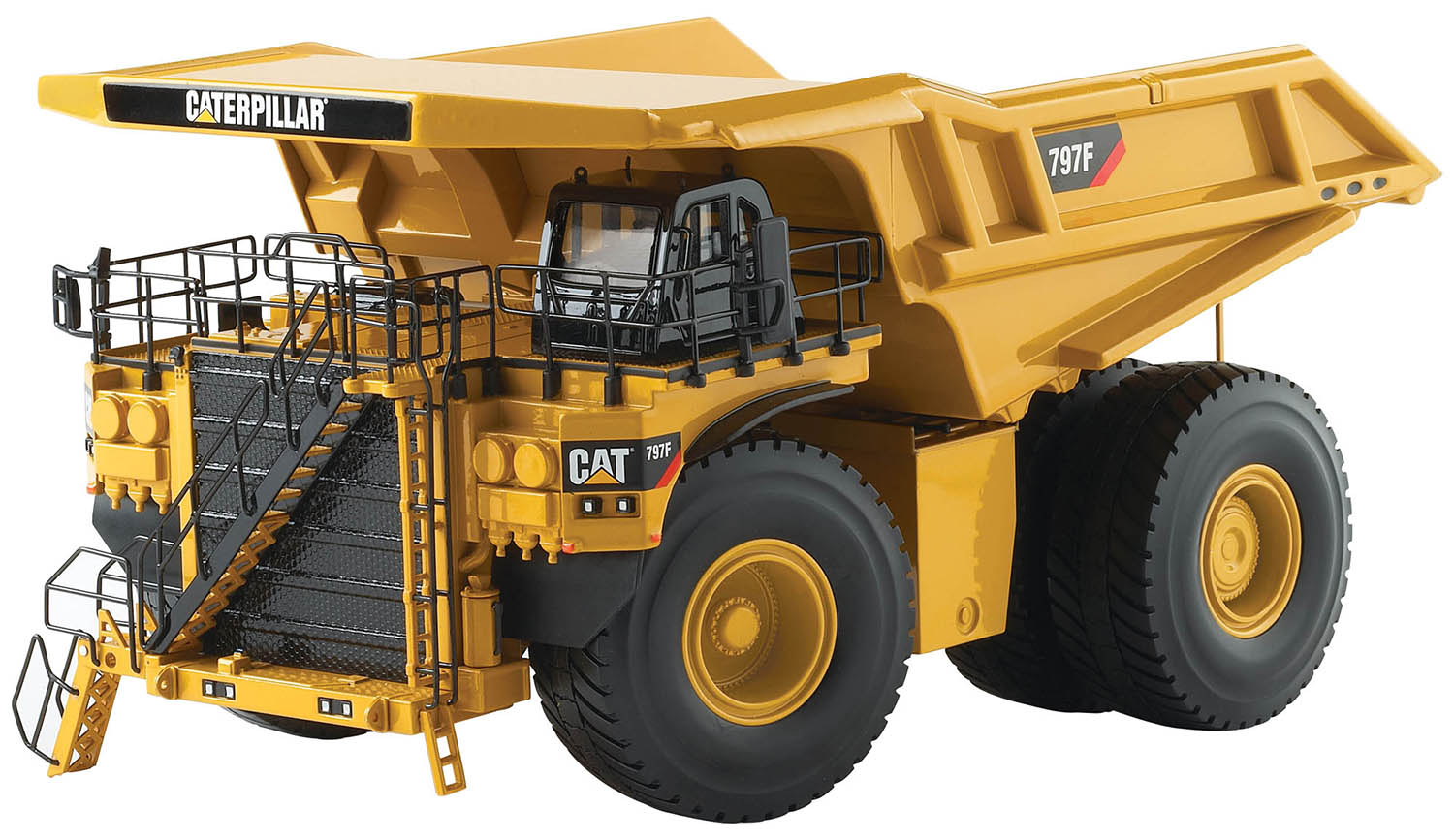
    The tour starts with a short film.  The theater for the film was built into the truck bed of a very large dirt hauler, a 797F Mining Truck.  The truck was three stories tall.  The film talked about the history of Cat and their relationship with their customers, especially focusing on how they are building a better world together.  After the film the crew explored several other floor displays of heavy equipment.  In the corner of this floor the crew found one of the best curations ever, simulators for Cat equipment.

    797F Mining Truck

    34 (2)

    The crew took turns trying to master an excavator.  Seemed like an easy task, just move a few buckets of dirt to cover a pipe.  This was much harder than it looked.  After about 5 different attempts, the skipper was finally successful in covering the pipe in less than the three minutes allotted.

    The crew then spent another couple of hours exploring the history of Caterpillar.  The biggest discovery though turned out to be the Peoria Cats.  Before the modern NBA became successful, there was an industrial basketball league sponsored by companies.  The players actually worked for the company sponsor.

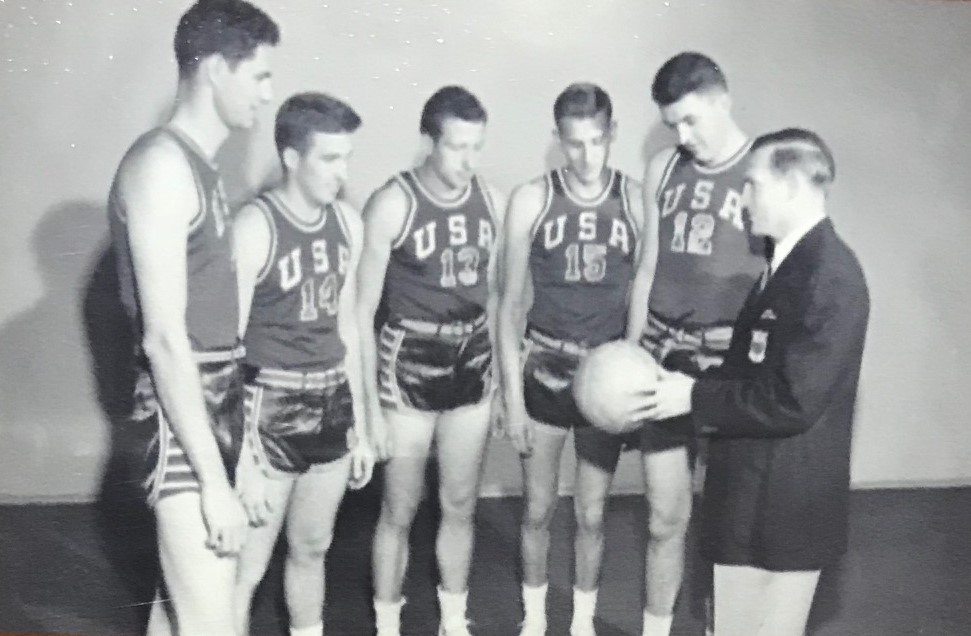
    Coach Womble and the 5 Peoria Cats that made the US Olympic Team

    IMG_2409

    The Peoria Cats, sponsored by Caterpillar, were one of the more successful teams.  So successful that in 1952, the team won the championship game which gave them a birth in the US Olympic basketball team playoffs at Madison Square Gardens.  The Cats beat the University of Kansas 62-60.  The win resulted in their coach being named as the US Basketball team head coach.  He was then allowed to pick the seven member US Team.  He picked 5 of his Cats players, one player from the Phillips 66 squad, and one player from Kansas.  The US Team went on to win the Gold Medal in Helsinki, Finland by defeating the Russians 36-25.

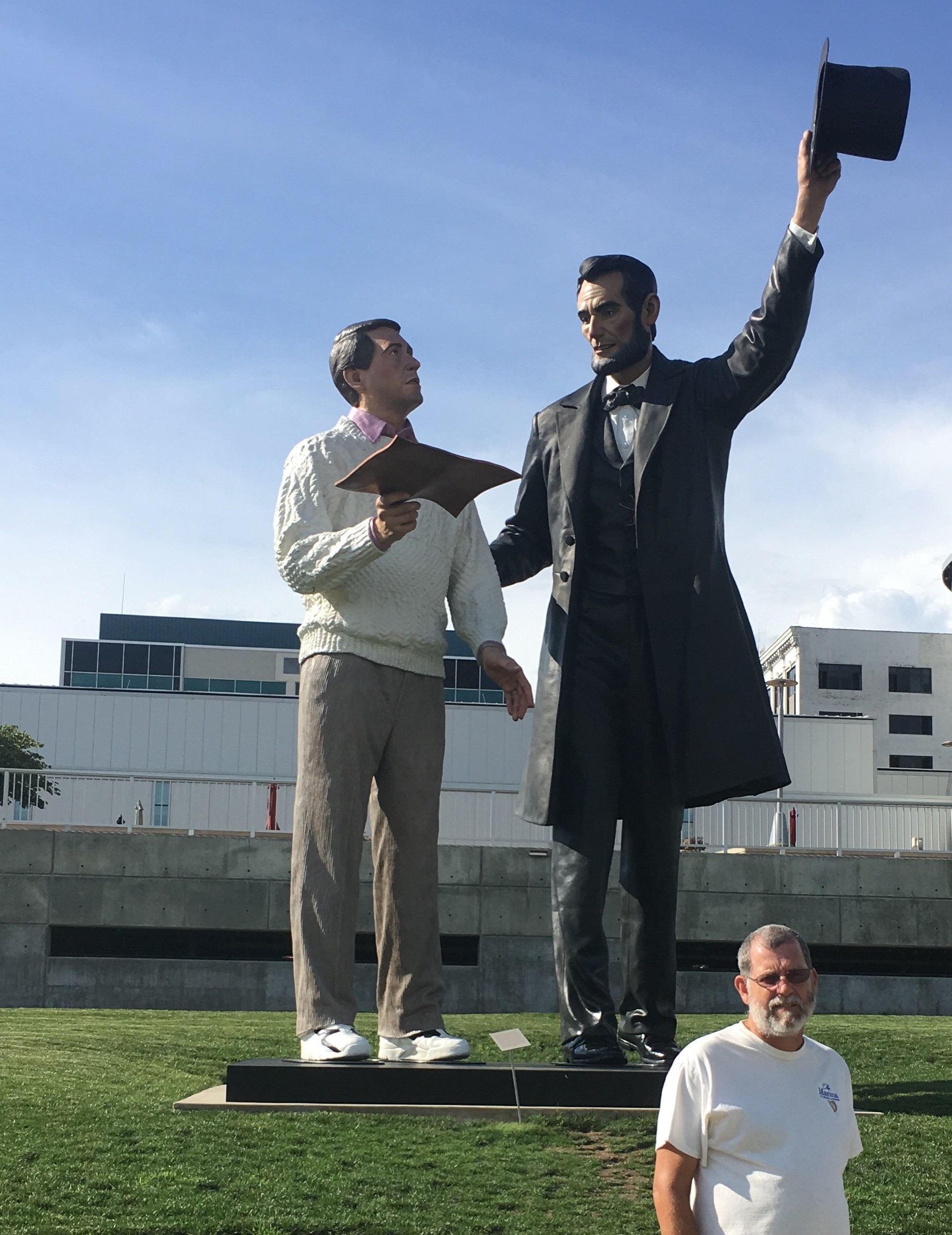
    Next door to the Caterpillar Visitor Center is this interesting statue of Lincoln with a Common Man, and no our skipper is anything but common

    32.jpg

    Thursday, Sept 6th

    The crew shoved off the dock in Peoria and continued down the Illinois River.  The Peoria Lock was only three miles down stream and the Lock Master had the gate open when the crew arrived.  They got secured in the lock and were lowered 10 feet down to the next pool level.

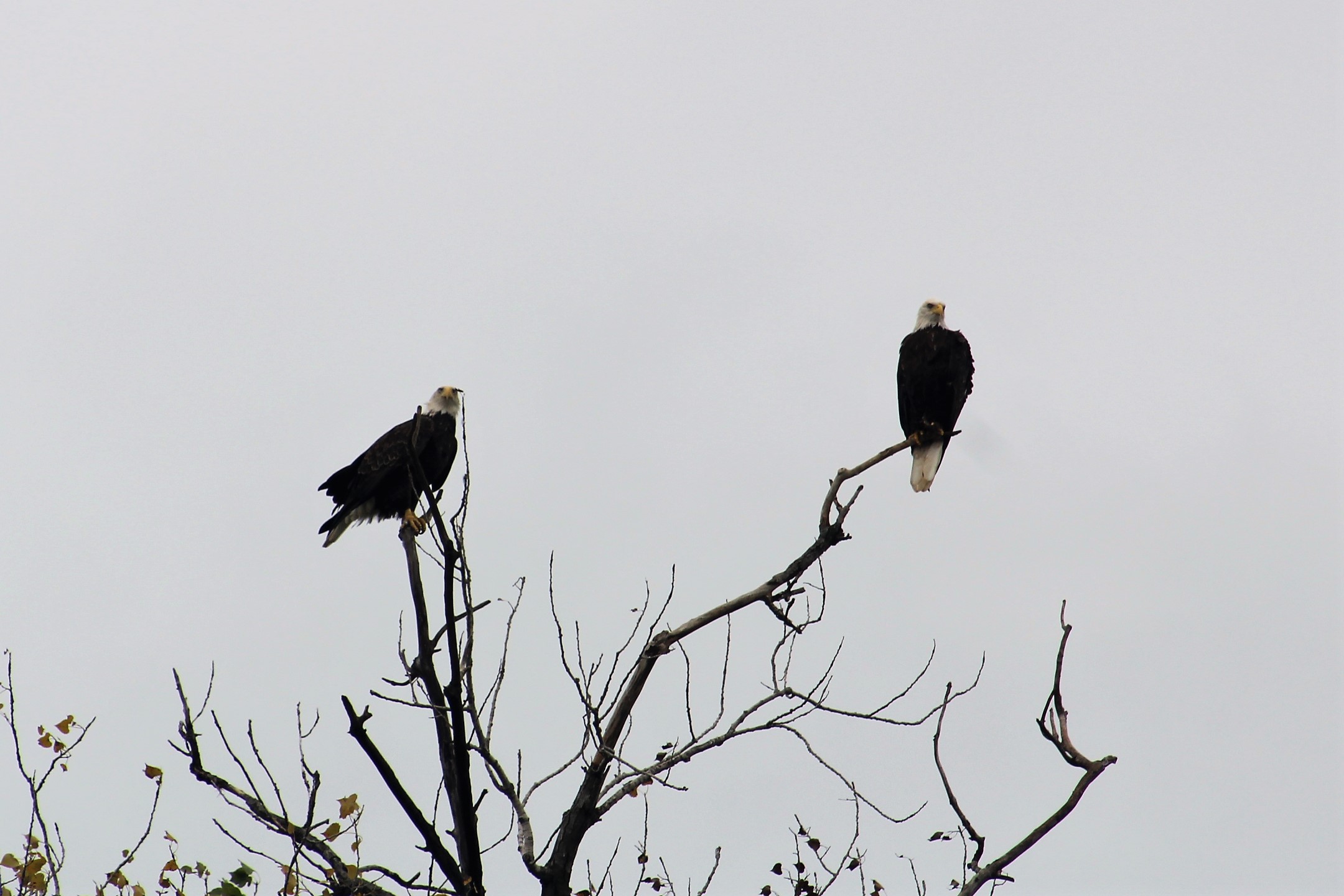
    Bald Eagles along the route

    16 Bald Eagle

    The day’s cruise was mostly uneventful with dodging large tows (3×5 barge arrays) and spotting Bald Eagles.  The crew anchored out beside Bar Island with another boat named Last Harvest.

    Had to get on wrong side of the red marker to let this tow get by, at one point the barges were actually rubbing the red marker

    15 Close Call

    It has started to rain, and with rain in the forecast for the next several days.  The river level is down several feet, so the run off may raise the river to normal pool levels.  The down side of that is that more debris will be swept down stream.

    Shoreline with beached debris waiting to float down river

    22 Current and Future Debris

    Friday, Sept 7th

    The skipper woke early to try and size up the possibility of getting through the next Lock which is only a few miles down stream.  The Lock Report website showed an upbound tow with 3 barges currently in the lock.  The skipper calculated that the upbound tow would probably push out of the lock around 0830.  There was also a down bound tow waiting to enter the lock with 15 barges.  This tow would take about 3 hours to lock through.

    The Lock Master would not answer the phone, so the skipper decided to raise the anchor and go to the lock and see if they could get through before the 15 barge tow.  Late Harvest also pulled anchor and headed down.

    When the two boats arrived at the lock, they could see that the upbound tow was being raised in the lock.  When the gates opened the tow pushed out a ways then stopped to attach back to all his barges.  While this evolution was in progress, the Lock Master hailed the skipper and told them that once the up bound tow cleared the lock to come on inside.  He would lock the two pleasure craft down while the up bound tow passed the down bound tow and the down bound tow maneuvered into position to enter the lock.  Score another one for more Lock FOG.

    Just for a little perspective, 10 loopers left the Joliet Wall yesterday to travel to Ottawa and stay at Heritage Harbor.  Last week when our crew made this trip, they left the Wall at noon, made the three locks down stream and pulled into Heritage Harbor about 1920, for a 7.5 hour day.  These 10 boats did not have the same good fortune.  They left the Wall at 0830, had to wait 1 1/2 hours to get through the first lock.  Then waited another 1 1/2 hours at the second lock.  They arrived at the third lock at 1730, but did not exit the lock until after 2100.  By then it was pitch dark for the last few miles to the marina.  Total time for the same trip, 14 hours and 44 minutes. This is a more normal locking experience while in the Illinois River.  The crew has had very good fortune all the way down the Illinois River.  This is why the crew gets very excited when they breeze right through a lock with little delay.

    Late Harvest floating in the La Grange Lock

    20 Late Harvest

    As it turned out, the drop in the La Grange Lock was only 2 feet, so the Lock Master also let the two boats just hover in the lock without tying up.  What a deal.

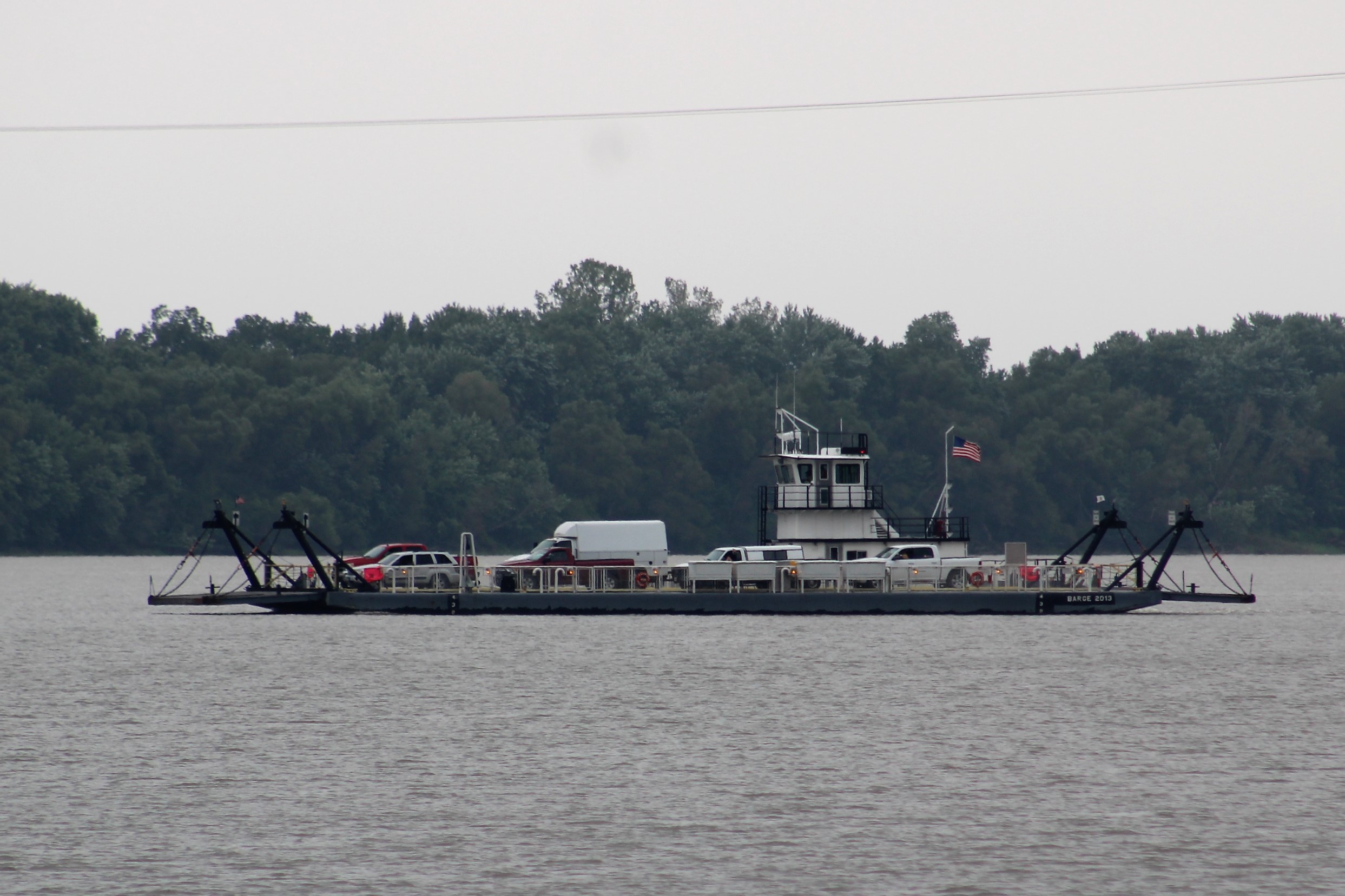
    Kampsville Ferry Crossing

    25 Kampsville Ferry

    After exiting the lock it was 0900, so the crew decided to go six more hours down to about mile 26 where they anchored behind Hurricane Island.  The rain followed the crew all day, and it looks as though the river has risen about a foot since yesterday.

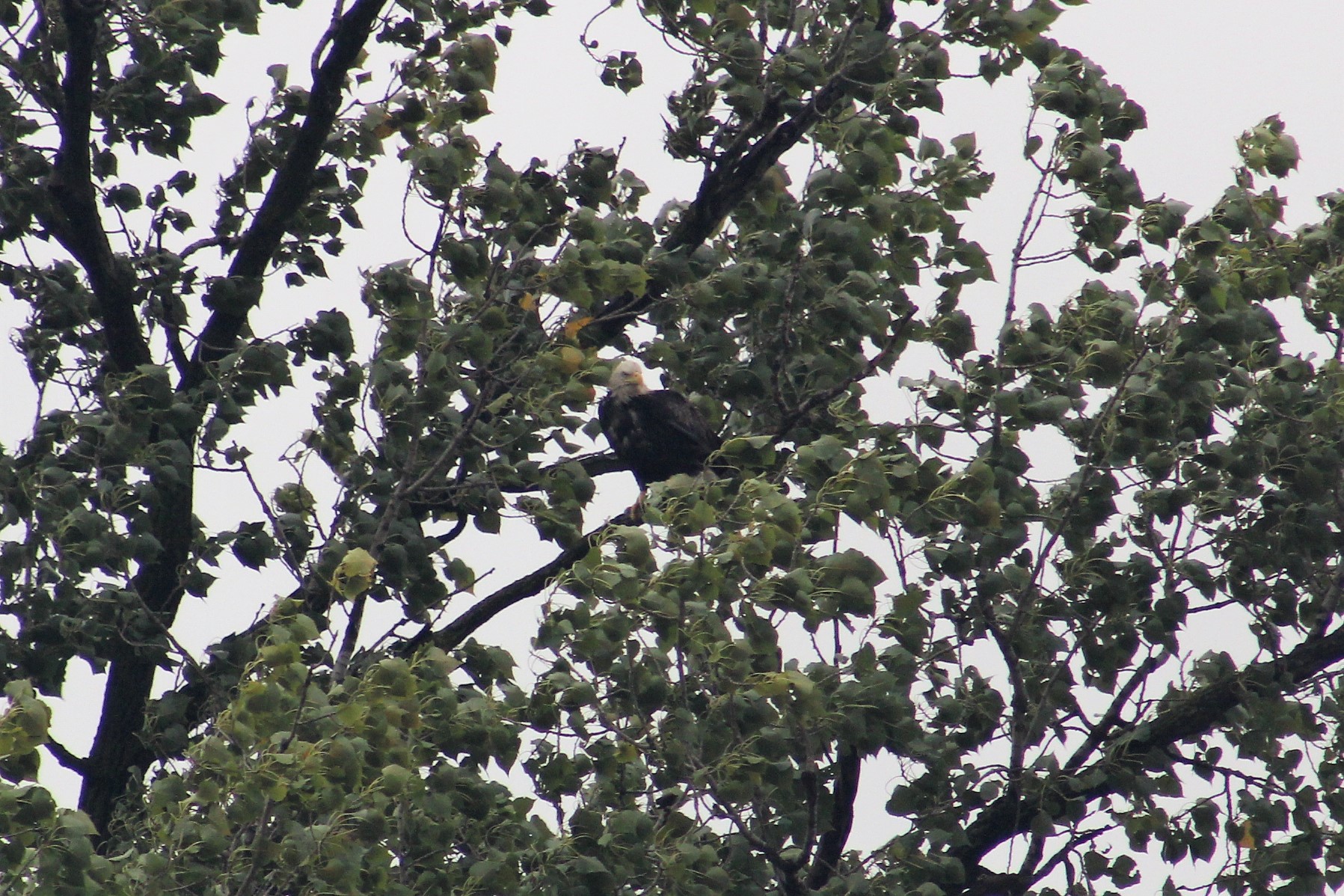
    Another Bald Eagle

    28 Bald Eagle

    Saturday, Sept 8th

    The rain continued all night long and finally stopped around 0900.  By the skipper’s estimate, it looks as though the water is up another 2 feet.  When the rain stopped, the crew raised the anchor and headed down towards Grafton.

    Another Ferry Crossing

    31 Ferry Crossing

    About 5 miles from Grafton, the weather took a strange twist.  The forecast was for winds out of the north east at 5-10 mph.  The first clue that something was changing was when the skipper noticed that 1 foot swells were starting to form on the river.  Then he noticed that the wind had changed direction and was mostly out of the south east.  Then the wind picked up to 15-20 mph.  Funny how this seems to happen just about the time to dock the boat.

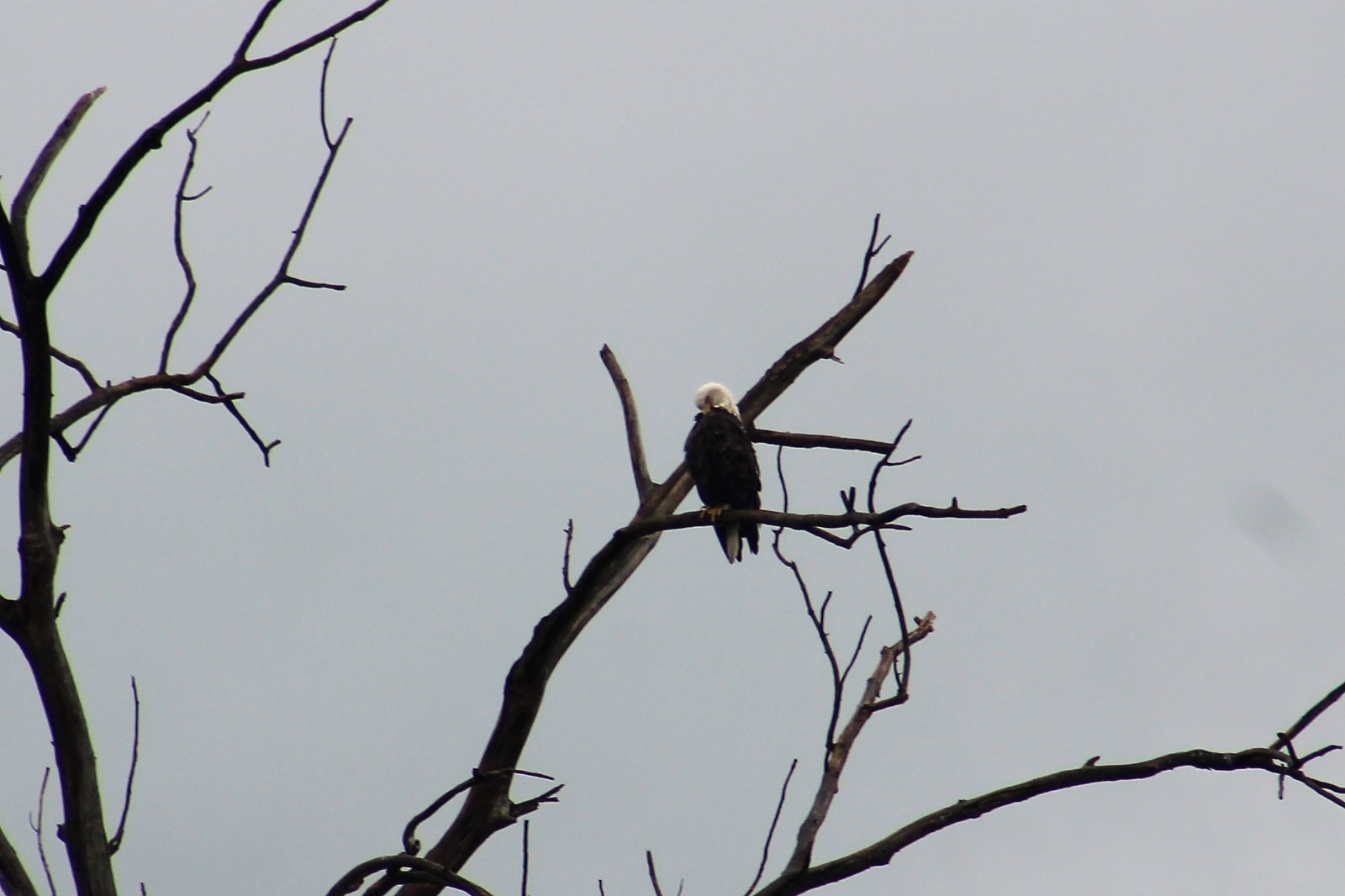
    Bald Eagle in the Land of Lincoln

    30 Bald Eagle

    The rain is supposed to continue through the weekend so the crew will monitor the changing river levels and determine the best time to make their next move.

    Boat name of the week

    In honor of all the spiders in these fresh waters.

    35

    Next Week –

    With all of the rain that has been dumped on Wisconsin and Illinois, the upper Mississippi River has reached flood levels in several areas.  The crew had planned to run up the upper Mississippi River to Minneapolis, but that might be in jeopardy because of the river levels and flooding.  Time will tell.

    Grafton is mile 0 of the Illinois River and mile 218 of the upper Mississippi.  The crew will monitor the river levels and determine the best course of action.  If it is safe and the marinas are open, they will continue north on the upper Mississippi.

    If not, they will start the run south on the upper Mississippi and head towards Hoppies Marina.

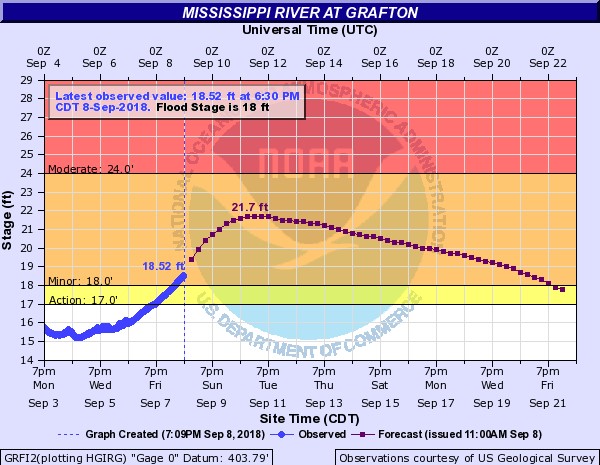
    The projected river level for Grafton, 18 feet is flood level

    graftona

    Loop On – Where the road ends, the water begins. The water goes on forever, and the adventure never ends.

    Eric the Red

  • Following the Fall Color South

    Eric here catching you up to date on the latest travels of Still Waters II. Click on this link to see the day- to-day travel log.

    Also, I would like to welcome a new virtual crew member aboard on our journey.  You can become a virtual crew member also by going to the website and clicking on the ‘follow’ button.  Welcome aboard Jenny G!!

    Lastly, as many of you know, I am an Atlantic sailor and thought I would find a better narrator for this next leg of the journey down the Inland Rivers.  Someone who has been here before because you deserve the very best guide and pilot possible.  So I would like to introduce you to your next guide on this adventure, none other than …………………………………………. the French explorer Rene-Robert Cavelier, Sieur de La Salle.
    I will catch back up with you down the river, Eric the Red signing off.

    Les membres de l’equipe virtuelle bonjour et autres aventuriers.  Oooppps.  I forgot.  Eric told me that most of the virtual crew members and fellow adventurers do not speak French.

    Please forgive me.  Let me try again.  Hello virtual crew members and fellow adventures. Since I have a long name you may call me La Salle for short.  I started exploring these waters that you are about to cruise back in 1666, so you are in good hands.  You may recall from your history lessons, I am the one who claimed the Mississippi water shed for the French King.  And for those of you who really know your history, I have a Texas connection with the skipper.  But I will save that for later in case we sail to Matagorda Bay.  You may say that that was NOT my finest hour.

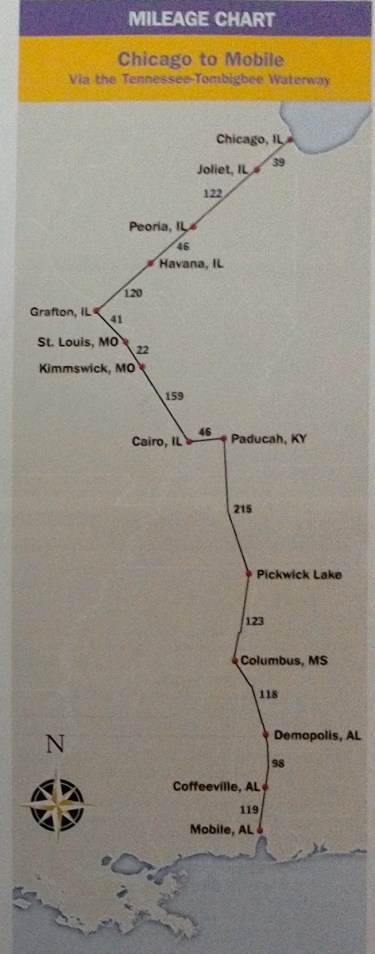
    The skipper refers to these waters as the inland rivers.  There is actually about 25,000 miles of inland rivers that are navigable.  For this leg of the journey though, from Chicago to Mobile, we will only cruise about 1,300 miles.  More if we take a few side trips to Nashville and to Chattanooga.

    win_20160925_13_34_59_proThe basic route is as follows:

    1. Illinois Waterway (Chicago, IL to Grafton, IL.)
      1. Route 1: Chicago River thru downtown Chicago, Sanitary & Ship Canal, Des Plaines River, Illinois River
      2. Route 2: Calumet River joins route 1 south of Chicago, north of Joliet

    2. Upper Mississippi River (Grafton to Cairo, IL)

    3. Ohio River (Cairo to Paducah, KY)

    4. Tennessee or Cumberland Rivers (Paducah to Kentucky Lake, TN)

    Route 1: Cumberland River to Tennessee River (Paducah to Barkley Lake, TN)

    Route 2: Tennessee River (Paducah to Kentucky Lake, TN)

    5. Tennessee River to Tenn-Tom Waterway (Kentucky Lake to Pickwick Lake, TN)

    6. Tenn-Tom Waterway to Gulf Coast (Pickwick Lake to Mobile, AL)


    You may be wondering why the Lower Mississippi River is not listed as an option,  more specifically the 855 miles from Cairo to New Orleans.  The main reason is that this route is primarily industrial commercial traffic with very few recreational marinas to allow stops for fuel or food.

    Hope this answers your question from last week Dr. Mary Alice B.

    So to get started, let’s review the past week: The week started out with the crew taking Route 1 of the Illinois Waterway through downtown Chicago to the Illinois River.  The route from the Lock at Chicago to Grafton, Illinois was about 327 miles.

    Saturday, September 17, 2016

    The skipper spent Friday working to lower the ‘air draft’ of Still Waters II to below 17.5 feet.  This would allow the crew to cruise through downtown Chicago which has a fixed bridge of 17.5 feet.  The skipper was able to get the boat clearance down to 15 feet 8 inches.

    On Saturday morning the crew met up with the Admiral’s cousin and family: Cyndy, Steve, Brandy, and Rich.  The four passengers got their safety briefing from the skipper and the boat headed over to the Chicago Harbor Lock.  This lock was put into place to cause the Chicago River to reverse flow.

    img_0221

    Prior to the lock, the Chicago River flowed into Lake Michigan.  Problem was that the Chicago waste water flowed into the Chicago River.  The drinking water was taken from Lake Michigan.  So, as you can see, the folks were polluting their own drinking water.  The Chicago population suffered from many diseases and illnesses due to their self-polluted drinking water.

    img_2993
    Brandy and Cyndy on bow, good thing the skipper lowered the air clearance


    img_2964
    Brandy and Rich on the bow


    img_3006
    Cyndy, Steve, and Brandy in the helm


    fullsizerender
    Brandy, Rich, and the skipper in the helm

    La Salle Color Comment: Brandy works in the marketing business and does work behind the camera professionally.  I think she knows how to get in front of the lens also.


    To solve the problem, Chicago dug the Sanitary Canal that would connect the Chicago River to the Illinois River.  They put the lock in place to prevent the flow into Lake Michigan.  So now the treated waste water flows into the sanitary canal, to the Illinois River, and then into the Mississippi River.

    I am not sure that the downstream neighbors are all that thrilled with having all of Chicago’s waste water; however, Chicago now has a clean source of drinking water.  As the skipper is fond of saying: the solution to pollution is dilution.

    Drawing of the home of Jean Baptiste Point du Sable as it appeared in early 1880’s

    The cruise through downtown Chicago was fun.  Pointe du Sable was the earliest recorded resident at the mouth of the Chicago River that eventually grew to become the city of Chicago.


    wolf-point-kennedy-hines.jpg

    This high rise now sits on the point once occupied by Jean Baptiste.  The building is owned by the Kennedy’s.


    The crew saw their first set of large tows on the river today.  The largest tow was two barges wide and four barges in length (2X4) for a total of 8 barges.  The crew hears that this is still a small tow compared to what they will see further down river.  But for now, it is the record.

    img_0227At one point the crew had to wait for about 20 minutes while a tug repositioned his barges.  The tug and barges completely blocked the river and there was no room to squeeze by them.
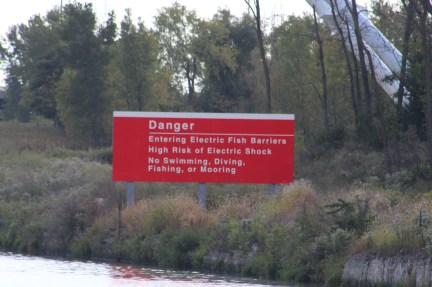


    img_0228The crew also passed through the electric fence barrier.  This barrier is to prevent the Asian carp from migrating north into the Great Lakes and hurting the fishing industry that seems to be holding on by a thread.
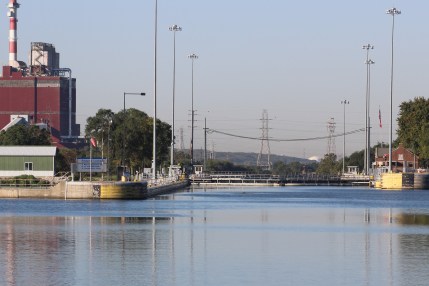
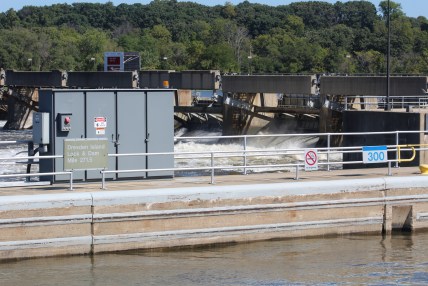
    img_0230
    Lockport Lock


    After passing through the Lockport Lock, the electrical gremlin re-appeared.  The skipper had secured the main engines while in the lock.  The starboard engine failed to start when the lock gate opened.  The skipper limped out of the lock on the port engine.  He finally got the starboard engine to start by paralleling to the port battery.  After the engine started the starboard battery bank was only showing about 10 volts.  With only 10 minutes to dock, this problem will have to wait to be solved another time.

    After docking, the crew and passengers enjoyed a wonderful meal prepared by Cyndy.  A great day aboard Still Waters II.

    Sunday the crew spent the morning going to church and enjoying a good lunch with Cyndy and Steve.  Then it was back to the boat for a fun afternoon of story telling and laughs. It was a great weekend spent with family.

    Monday, September, 19, 2016

    With three locks on the schedule and a desire to get 46 miles down river, today has the makings for some fun times.  After the skipper woke up with the chickens, he called the lockmaster for the Brandon Lock to determine what the commercial traffic looked like in the morning.  Remember, commercial traffic has priority over pleasure craft.  The lockmaster informed the skipper that there would be a window between 0800 and 0900 to clear the lock.  The crew readied the boat and headed towards the lock.

    The lockmaster was in the process of filling the lock chamber so the crew waited about 15 minutes and entered the lock with Tidings of Joy.  Even with this preplanning it still took about an hour to lock down the 34 feet.  These are some very large locks. (100 feet wide and 600 feet long)

    img_0239After clearing the Brandon Lock, the crew headed down river towards the Dresdon Lock on the Des Plains River.  The skipper had called ahead to the lockmaster and the lock was being readied for the crew when they arrived.  Good news, no commercial traffic and hardly any delay.  Tidings of Joy cleared the lock with Still Waters II and the boats finally entered into the Illinois River.
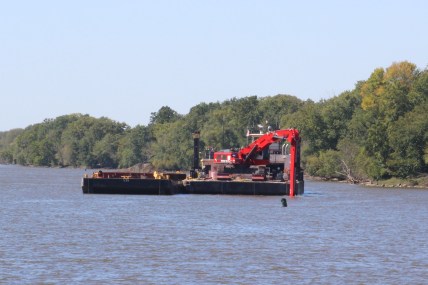
    img_0243About 12 miles down river, the crew came upon a dredge that was trying to deepen the channel.  The dredge operator told the skipper to pass on the 2 whistle.  This was the first time the crew has been given whistle orders.
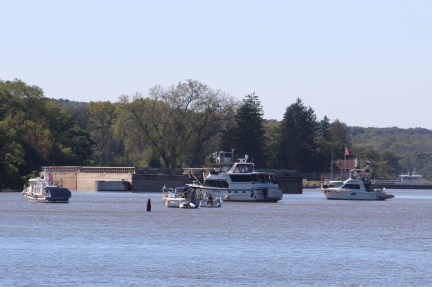
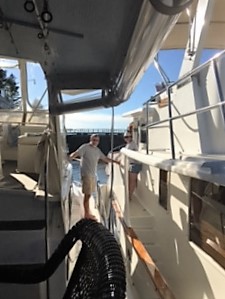


    The whistle orders go back to the days when steam ships were king of the waterways and radio had not been invented.  When two ships approached head-on one ship would sound the whistle with one or two short blasts.  The other vessel would acknowledge the whistle blast with the same one or two short blats.  Then each captain would steer their ship in the appropriate direction:

    1 whistle blast – steer to starboard

    2 whistle blast – steer to port

    In the modern world, the steam whistle is no longer used but the verbal commands still exist.  Since the dredge said to pass on the 2, the skipper steered to port and kept the dredge on his starboard (right) side.

    img_0247
    4 boats anchored waiting on lock

    After the dredge, the good run came to an abrupt stop.  The skipper rounded a bend in the river while he was approaching the Marseilles Lock. Just in front of the lock gate, the skipper counted four looper boats anchored.  Calls to the lockmaster went unanswered and finally one of the boats informed the skipper it would be several more hours before they could enter the lock.  The captain also informed the captain that the flotilla of four boats had been waiting to enter the lock since 0900.


    The crew dropped anchor and began to wait for the commercial tow traffic to complete their operations.  After our crew waited about two hours, the skipper noticed that it appeared that the gate was opening.  The skipper called out over the radio that it appeared that the gate was opening; however, it could be wishful thinking or even a mirage.  The other boats then noticed the gate opening and all the boats began the process of weighing anchor.

    img_3028
    Rafted to Tidings of Joy

    The lockmaster gave the green light to enter the lock and seven pleasure craft were glad to get into the lock.  There were not enough floating bollards for each boat so the lockmaster directed Tidings of Joy to raft up against Still Waters II.  After nearly 6500 miles this would be the first rafting experience for both crews.  The captain of Tidings of Joy did a great job of easing his boat over to Still Waters II, and our crew took their lines and cleated them to Still Waters II.  Once secured the lock master dropped the boats 24 feet down.


    After exiting the lock, it was just three miles to the marina.  The marina closed at 1700, but stayed open late to assist five of the seven boats get tied up and secured at the marina.  The crew was pleasantly surprised that the marina had a courtesy car.  The crew used the car to make a Wal-Mart run.  On the way to Wally World, the crew drove past Washington Square in Ottawa.

    Image result for ottawa lincoln douglass

    The square is the location where Abraham Lincoln and Stephen A. Douglass held their first of six political debates.  On August 21, 1858 the two men argued for three hours before a throng of 10,000 on the subject of the introduction of slavery into new western states.


    Tuesday, September 20, 2016

    img_0256
    Two Asian carp jumping behind boat

    The crew got off on a good start today.  After arriving at the one and only lock for today, the crew was moved right into the lock and locked down 29 feet.  While waiting for the lock gate to open, the crew watched a boat drive around with an attachment on the front of the boat that made it look like he was plowing water.  The skipper noticed that in certain areas the Asian Carp would start jumping out of the water.  Not sure what the boat was doing, but it was fun to watch.


    img_0259After entering the lock, a couple of ladies visiting the adjoining Lock Visitor Center pointed out a Bald Eagle that was perched in a tree about a half mile away.  That was the first Bald Eagle the crew had seen in a long time.  How appropriate since the crew is in the Land of Lincoln.
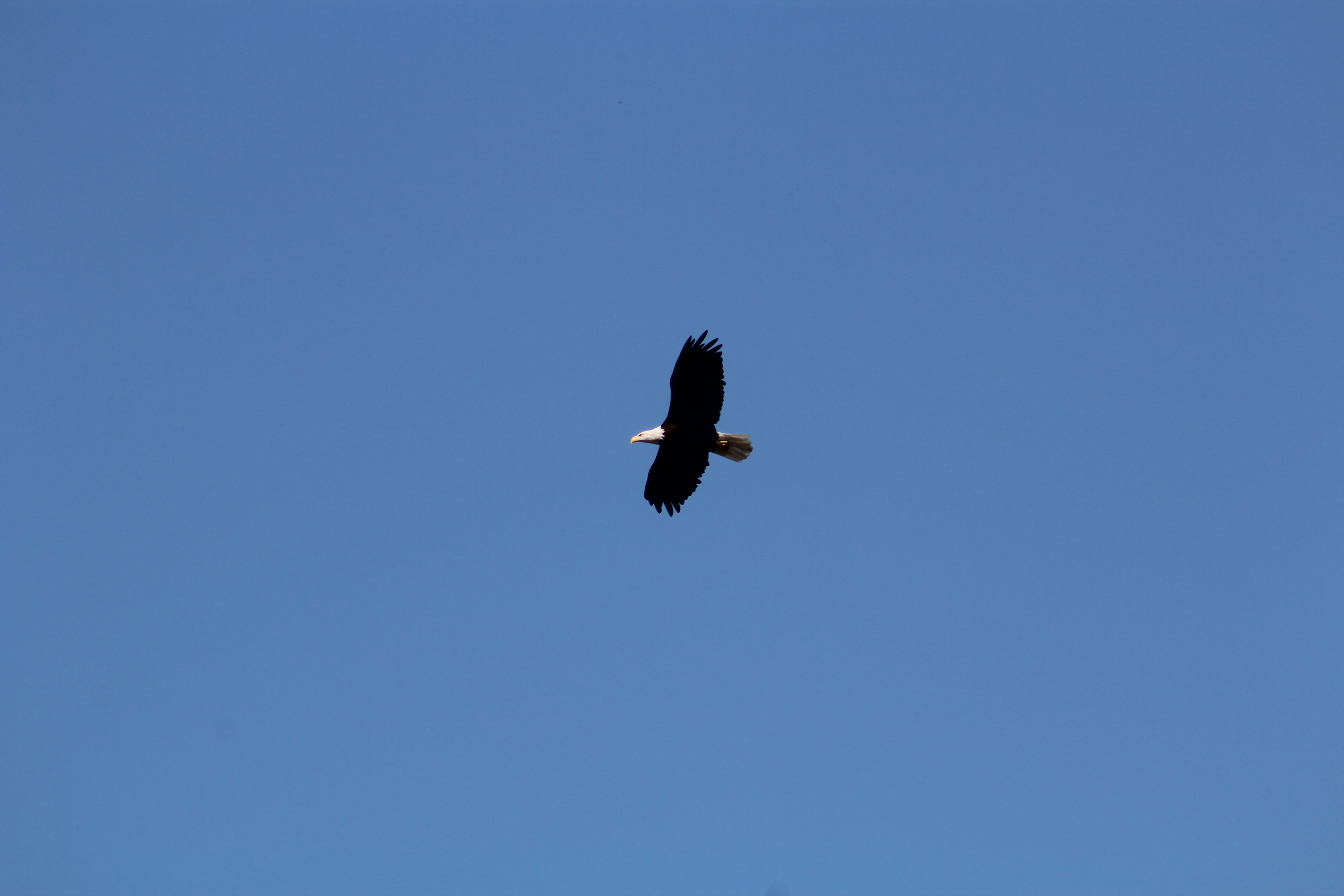
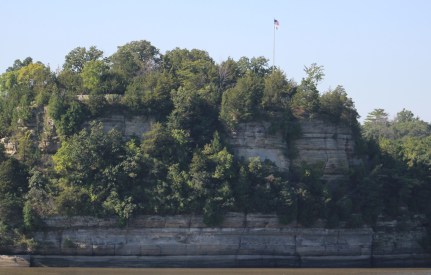
     

    Then a short time later, the skipper noticed another Bald Eagle soaring above the river.  As the boat approached, the eagle drifted right over the top of the boat and looked in to see if anything good to eat was available.  After spotting no dinner, the eagle went and landed in a tree along the river bank.

    img_0268

    img_0257The next lock was named after a rock formation that is nearby.  With a name like ‘starved rock’, you know there has to be a story.  The legend goes that the Ottawa Indians were seeking revenge for the assassination of their leader, Pontiac in 1769.  The Ottawa attacked a band of Illiniwek along the Illinois River.  The Illiniwek climbed the rock to seek refuge.  However, the Ottawa set siege to the rock until the band starved to death.  So much for taking the high ground.
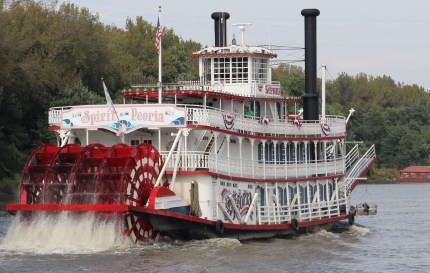
    Wednesday, September 21, 2016

    img_0288Last night the Admiral kept asking if it was raining.  With no clouds in the sky, you could see all the stars in their full glory.  Well, this morning when the skipper awoke and went out on the sundeck he saw what the Admiral had been hearing.  There were dead May Flies at least four inches deep around the anchor light.  And these were giant May Flies.  After cleaning bugs for a while, the crew weighed anchor and headed out towards Peoria.

    This would be a short cruise day of only 25 miles.  The big surprise today was the Monarch Butterflies that were flying south.

    img_0306These are the lucky fourth generation Monarch Butterflies.  If you consider flying from here all the way to Mexico lucky.  The fourth generation is born in September and October, and unlike the other three generations do not die after two to six weeks.  Instead, this fourth generation migrates south to warmer climates and will live for six to eight months.  Starting a new first generation that hatch in February and March and start the migration back north in search of locations to lay more eggs.  The second generation is born in May and June.  The third generation will be born in July and August and complete the northern migration.  Their offspring are the fourth generation which the crew saw headed south today to complete another life cycle of Monarch Butterflies.
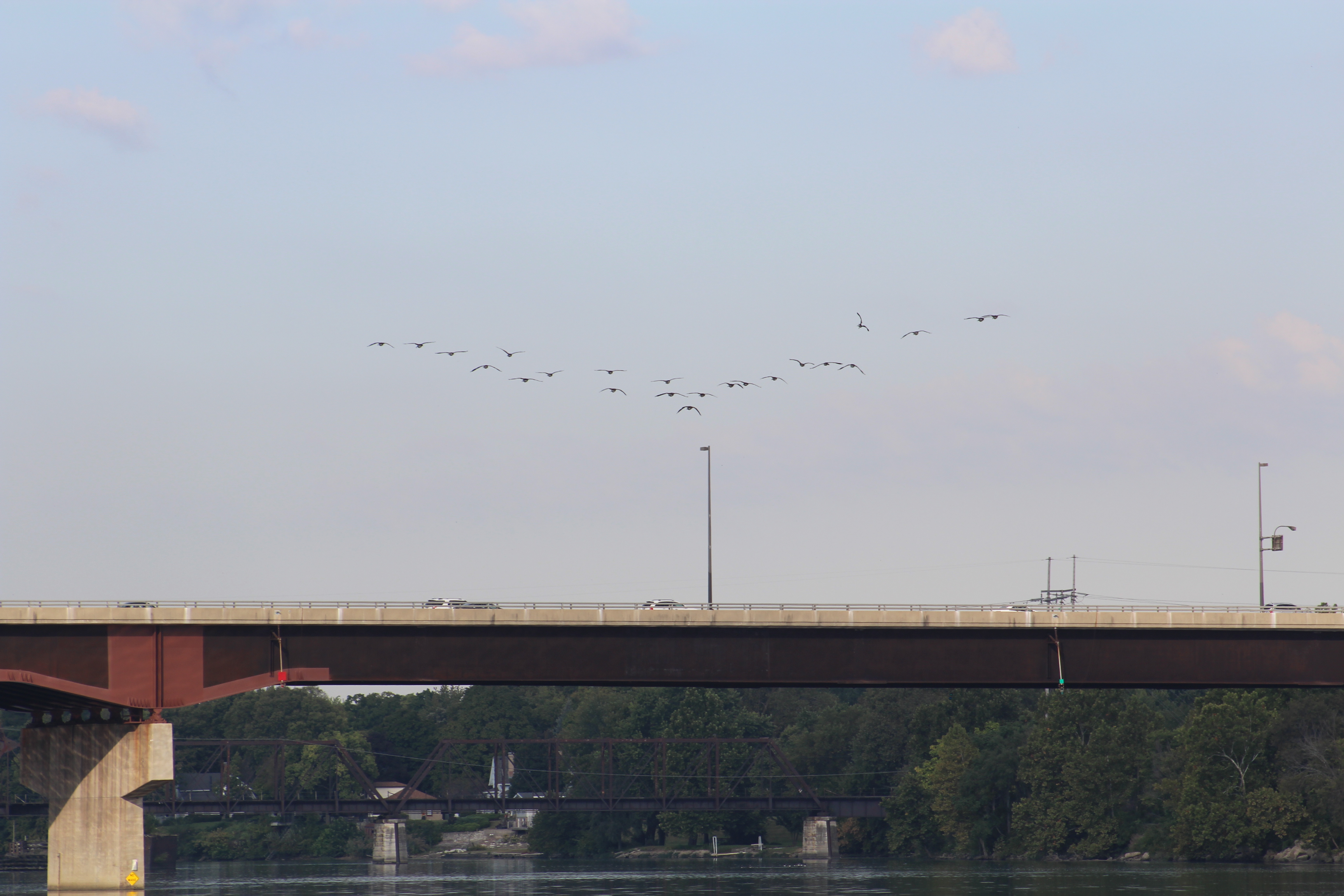
    img_0248
    Geese headed south


    After docking in Peoria after only a half day of cruising a big storm kicked up about 1500 with 20 – 25 mph gusts.  The river was white capping like Lake Michigan.  The crew was glad they were not trying to dock in those winds.

    img_3047
    The skipper, Al, and Ruth

    You may recall that Al Darelius came onboard back in Washington, D.C. last year.  Well, Al now lives about an hour south of Peoria, so he brought his wife, Ruth, up to meet the crew.  The two couples went out to eat and had a wonderful evening.  Al and Ruth plan to start the Loop in the Fall of 2017.  They have actually completed about 600 miles of the Loop, mostly moving their boat up and down the Illinois River.  She is currently berthed in Green Turtle Bay.  Our crew hopes to make Green Turtle Bay the first weekend in October and meet back up with AL and Ruth.


    I actually built a fort near today’s marina stop back in January 1680.  Fort Crevecoeur, which later led to the modern city of Peoria.

    Thursday, September 22, 2016

    Today was a good day to cruise along the shores of the Illinois River.  The banks continue to be lined with rural settings and trees starting to show their fall colors.  Then every so often, the scenery is interrupted by a small town where the barges are stacked along the river bank.

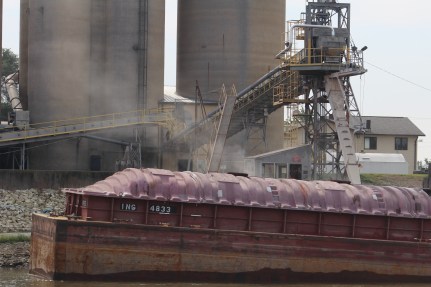
    img_0296People are actively working to either load or unload the barges.  The barges that are full of material sit low in the water at the 10-12 foot water line marked on the side of the barge.  Empty barges float high in the water at the 2-3 foot water line.  Very interesting to sit back and watch the workmen.
     

    The crew saw three tows on the water today.  One tow was 3×4 hauling black coal up the river.  However, the crew saw a new record barge tow, 3×4+2 for a total of 14 barges.  The crew has been told that these are baby tows compared to the ones they will see on the upper Mississippi River.

    Friday, September 23, 2016

    Birding was the theme of the day.  When the skipper first woke up and went out on the sundeck, the swallows were thick in the air.  The swallows were darting about and putting on an ariel acrobatic performance.    After the crew weighed anchor and continued their journey down the Illinois River, they passed an irrigation ditch.  The ditch was lined on both sides with White and Blue Herons, there had to be more than 20 birds.

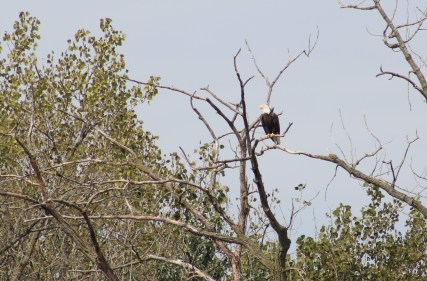
    img_0277Then the crew saw eight Bald Eagles throughout the day.  Four were fully mature and four still had their juvenile plumage.  One Eagle plunged into the river but came up empty and went to sit in a nearby tree.  He choose a bare limb that gave him a good view overlooking the water for his next attempt at fishing.
     

    img_0236
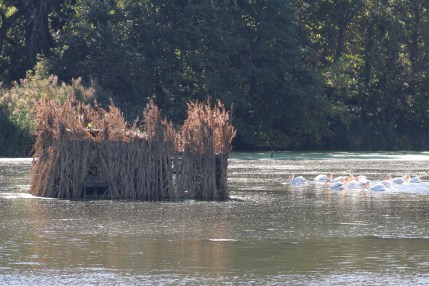
    One of many duck blinds along the river

    The ducks have also started their southward migration.  Duck hunting season must be soon because there were several boats loaded with duck decoys making their way to hunting blinds.  The crew has not heard any shots yet, but that cannot be too far off.


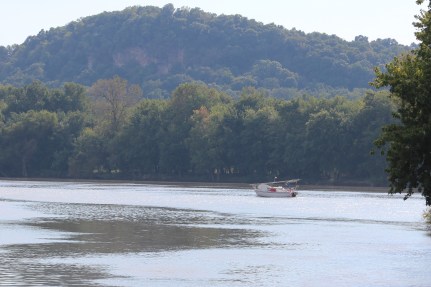
    Near the end of today’s travel, the shore scenery began to change.  Small hills are starting to rise off of the shore to provide some added dimension to the otherwise flat farmland.

    img_0307
    Living Life cruising past after anchor

    The crew pulled up into a narrow creek to anchor for the night.  They dropped anchor dead center in the middle of the creek but there is not enough room for the boat to swing around without hitting the shore.  In addition to the bow anchor, the skipper tossed out a stern anchor to prevent the boat from swinging into shore.  A new first for the crew.


    Saturday, September 24, 2016

    img_0309
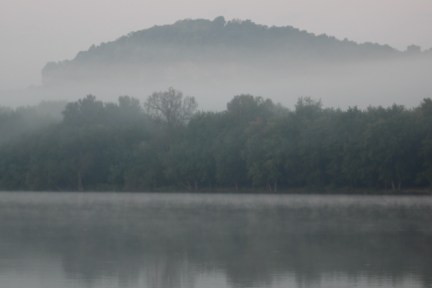
    Same view as yesterday, but morning fog

    This turned out to be a beautiful day to cruise.  The weather was warm but the south breeze kept the crew cool.  As the crew continued down bound on the Illinois River, the river continued to get wider and wider until finally it converged with the mighty Mississippi River.  The skipper could tell the current was picking up by all the turbulence in the water.  He put the engines in idle speed and was still making 8.5 knots as the crew passed the marina entrance.  He then turned back up stream and entered the marina and pulled over to the fuel dock to take on fuel.


    img_0289
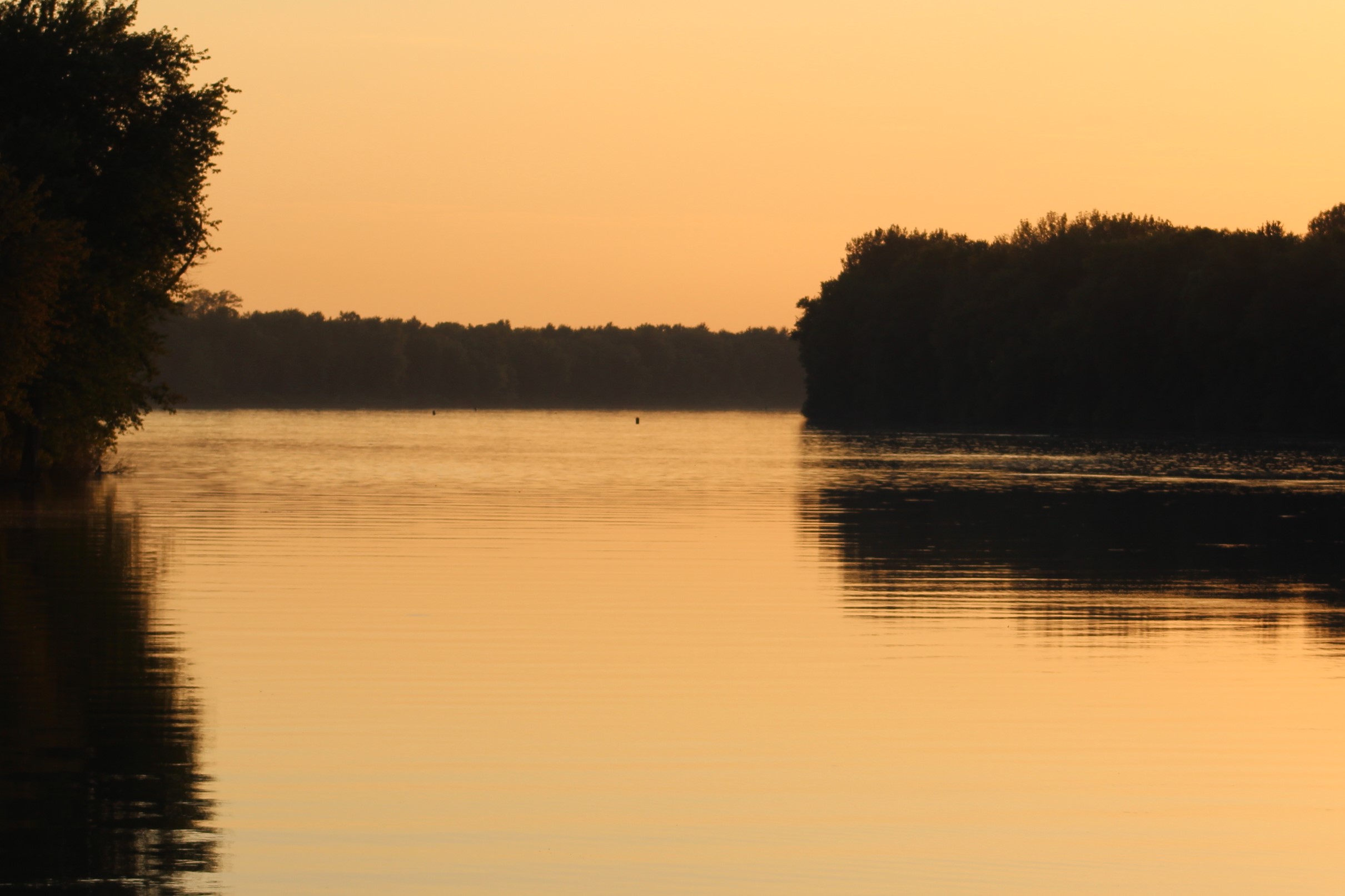
    Sun setting on this weeks adventure


    Next Week – The crew will head down the Mississippi River to Cairo, Illinois.  Then head up the Ohio River to Paducah, Kentucky.

    Loop on – The water goes on forever and the adventure never ends.

    La Salle the River Pilot and Explorer Extraordinaire