Tag: Lake Champlain

  • Strange Remains

    Hello virtual crew members and fellow adventurers!

    Eric here with the latest travels of Still Waters II.

    Waterforf dock
    Still Waters II on the dock at Waterford, New York


    Summary of week:

    NorrieSPThe remnants of hurricane Nate kept the crew in Ft Edwards through Monday.

    On Tuesday, the crew made a short run to Mechanicville.

    On Wednesday, the crew made it out of the Champlain Canal and docked in Waterford.

    Friday, the crew continued south down the Hudson River and anchored next to Houghtailing Island.

    Saturday, the crew ran down to Norrie State Park, in Hyde Park, to enjoy the weekend.

    Click on the link to read the day-to-day travel log.  This includes weather report of the day, sea conditions, captain’s log of the days travel, and a summary of the experience.

    This week’s journey of discovery did answer the following questions:

    1. Who is Jane McCrae?
    2. What do historians consider the ‘turning point’ of the American Revolution, and what is the connection to Jane McCrae?
    3. Where is the hometown of Uncle Sam?

    At the Box Office

    This week’s video shows Still Waters II cruising the Champlain Canal, Locking down C-4, and cruising under a 17 foot bridge.  Enjoy!

    Return on Champlain Canal from Still Waters II on Vimeo.

    Cruising the Champlain Canal

    To see past videos, click on the link to Still Waters II Vimeo site.  The library now contains 40 videos of Still Waters II cruising America’s Great Loop.

    Monday, October 9, 2017

    The remnants of hurricane Nate rained down all day so the crew decided to stay put rather than make four locks in the downpour.  The skipper did manage time to find a break in the rain and go buy two half gallons of ice cream though.  This Stewarts ice cream is good, but does not hold a candle to Blue Bell or Braums from back home in Texas.  

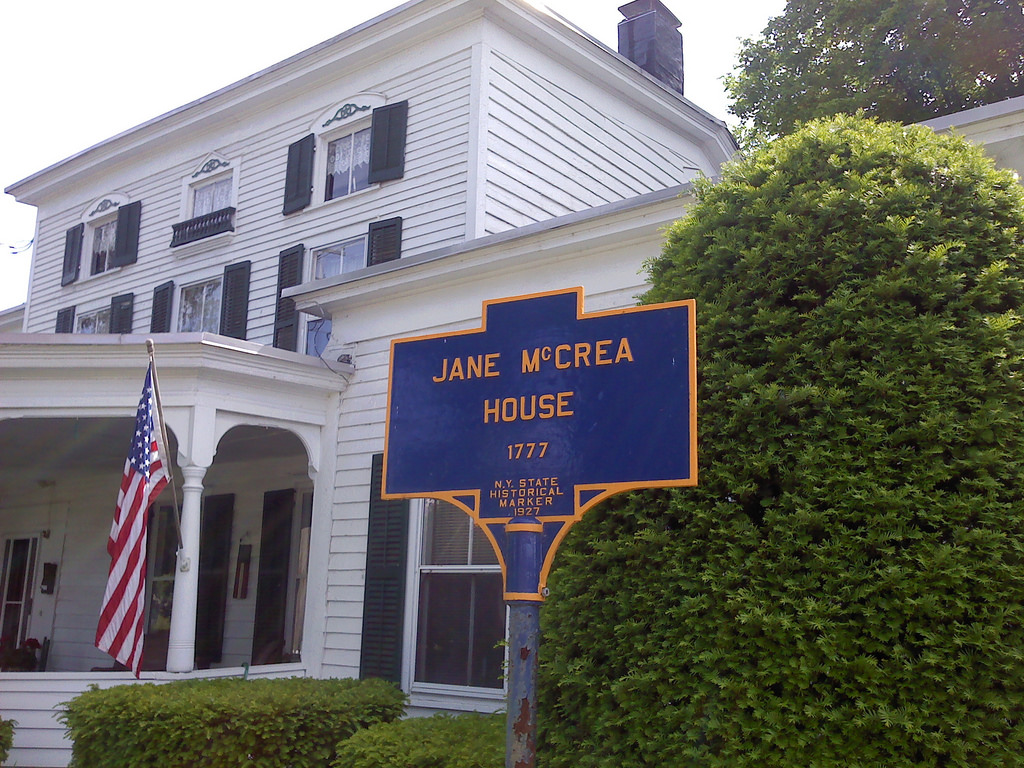
    While walking to the store, he passed an historical marker sign that read: ‘Home of Jane McCrae.’  He wondered who she was, but really did not think much more about her.
     

    14355875436_28c87ee22b_b
    Jane never lived in the house in the background


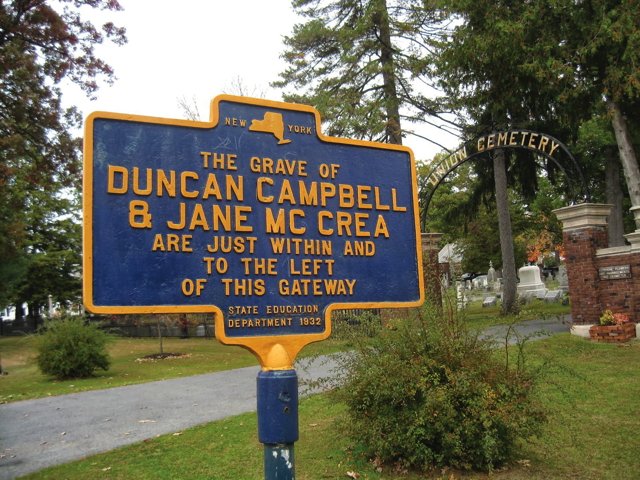
    Later in the day, the Admiral found a window in the rain and decided to go take a walk.  While she was out walking she came across an historical marker near a cemetery that read: ‘Second burial location of Jane McCrae.’  When she got back to the boat she googled up Jane to see what the deal was and found a very interesting story.
    edeb62ae8a51d4907693563ea76ee4ec--the-south-native-americans

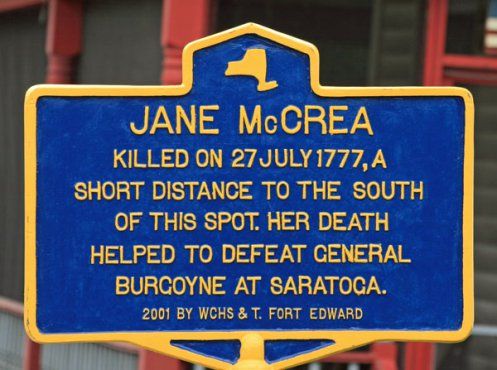
    Seems Jane was killed in 1777 under less than honorable conditions.  She was a Loyalist to the Crown of England.  Jane was also engaged to a British Officer.  Jane heard that her fiancée was marching south from Montreal towards Fort Ticonderoga, so she moved towards Ft Edwards where she stayed with another woman named Sara McNeil.  Most of the Patriots evacuated the area when rumors spread that the British were on the move south.

    Once the British arrived at Fort Ticonderoga, they sent a group of British soldiers and some native Indians down to Ft Edwards to escort the two women back up to Ft Ticonderoga. 

    The Indian scouts were leading the way south and killed a few settlers along the journey.  By the time the Indians, the British, and the women got back to Fort Ticonderoga, Jane McCrae was dead.

    From here the stories diverge drastically depending on who you listen to.

    The two women got separated on their return to Fort Ticonderoga.  Sara arrived first.  When the Indians arrived, they had a scalp that Sara believed to be that of Jane.  Sara reported this to some British officers who started an investigation.  Most of the Indians claimed that they came across some militia and the rebels shot her.  However, they could not explain why they scalped her. 

    The_Death_of_Jane_McCrea_John_Vanderlyn_1804_crop

    One Indian claimed that they began arguing on who was going to get credit for saving Jane and get some kind of reward from the British for bringing her safely to her fiancée.  When one Indian figured out he would get no reward, he killed her and scalped her for a trophy so the others could not collect the reward.

    There are several other variations of these two tales but we do not have time to cover all the different forks in the road.  One interesting side note though is that some report that Jane was in her wedding dress and that when she arrived at Fort Ticonderoga she would marry her fiancée.

    The Americans latched onto the latter story and began putting additional spin on the tale.  Many in New York were Loyalists, and the Americans were trying hard to convince them that the British could not protect them; therefore, they needed to come over to the Patriot side and help defeat the British.  The result of Jane’s death did cause many who were sitting on the fence to side with the American’s.

    Interestingly enough, the story does not end here though.  Jane may have faced a horrible death at the age of 17 with a tomahawk to the skull, but her body has not rested in peace since her death, either.

    She was originally buried in Ft Edwards in 1777.  In 1822, she, with many others, were moved to allow expansion of the Champlain Canal.  She was placed in the same plot, but above Sara McNeil.
    MemorialmarkerUnionCemetery

    In 1852, she was moved again.  This time to the Union Cemetery in Ft Edwards.

    In 2003, a team of forensic scientists exhumed Jane’s body to see if they could determine her cause of death.  When they dug up the grave they found one coffin with two full sets of skeletons, well minus one skull.  They took DNA samples of the bones and reburied them in the one coffin.

    In 2005, the forensic team exhumed the casket once more.  Based on DNA, they were able to separate the skeletal remains into two mostly complete skeletons and determine that the missing skull was Jane McCrae’s.  The other skeleton was determined to be Sara McNeil.  The remains were put in separate caskets and reburied.
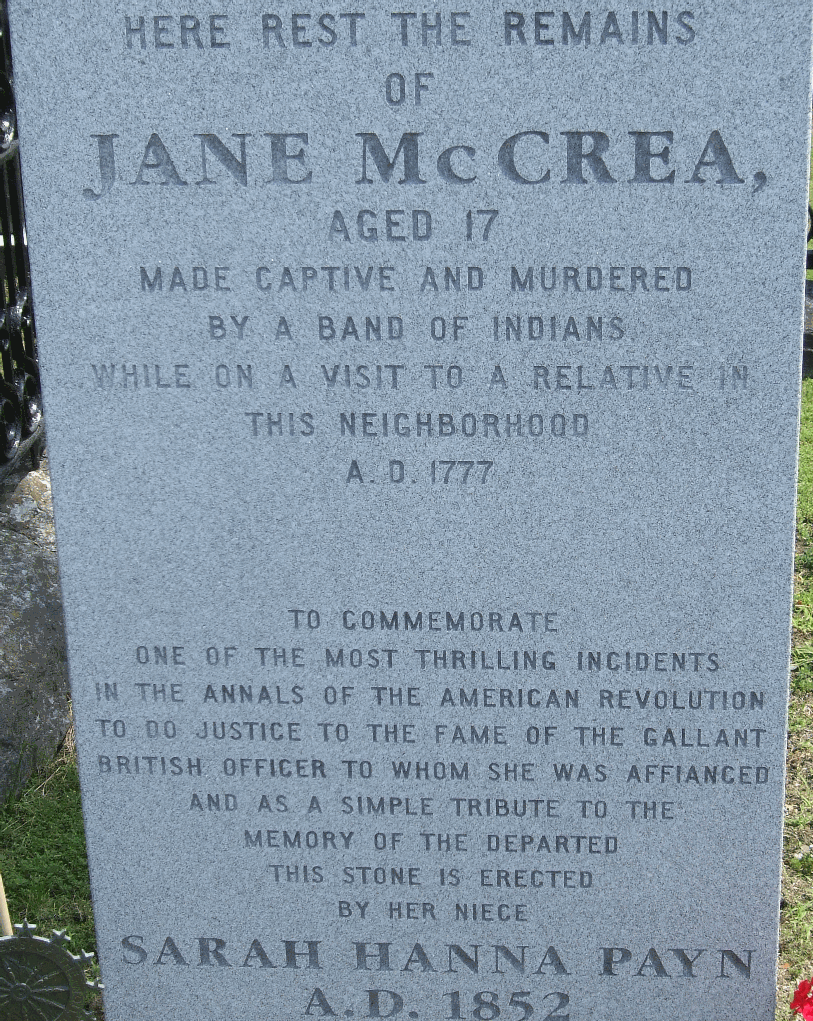
    McCrea_Tombstone_large

    Oh, the forensic team could not determine cause of death of Jane.  The few ribs that remained however, did not show any gunshot damage.  The mystery continues. 

    And how about the turning point of the Revolution you may be asking yourself.  Well because of the news spin by the Americans, many joined forces with the Patriots.  These new recruits were part of the forces that defeated the British in the Battles of Saratoga in September and October of 1777.  The French decided to join the fight against the British based on the American wins in Saratoga.  The Battle of Saratoga is also considered one of the top fifteen most significant battles in world history.

    Tuesday, October 3, 2017

    The crew woke to a beautiful sunshiny morning.  When they shoved off the town wall they headed south seven miles to Lock C-6.  When they arrived at the Lock, there were two boats already set in the Lock.  The Lockmaster said: “come on in but do a port side tie.”

    The Admiral scrambled to move the fenders from starboard to port as they entered the lock.  In the rush, the Admiral forgot to grab her gloves.  Once she had her line attached to the boat she walked back to the sundeck and grabbed her gloves. 

    In the 3-5 seconds that she was gone, the lockmaster had started draining the lock.  The bitter end of the line caught on itself and tightened around the cleat as the boat began to lower with the water level.  She tried to break the line free but was unsuccessful.  The skipper noticed that the line was not sliding thru the cleat, so he went forward and tried to break the line free and also was unsuccessful. 

    By this time the line was beginning to stretch and get under tension due to holding the bow of the boat up.  The skipper grabbed his pocket knife and barely touched the line and the strands of the line immediately cut thru.  The boat fell about a foot back into the water once the line was cut. 
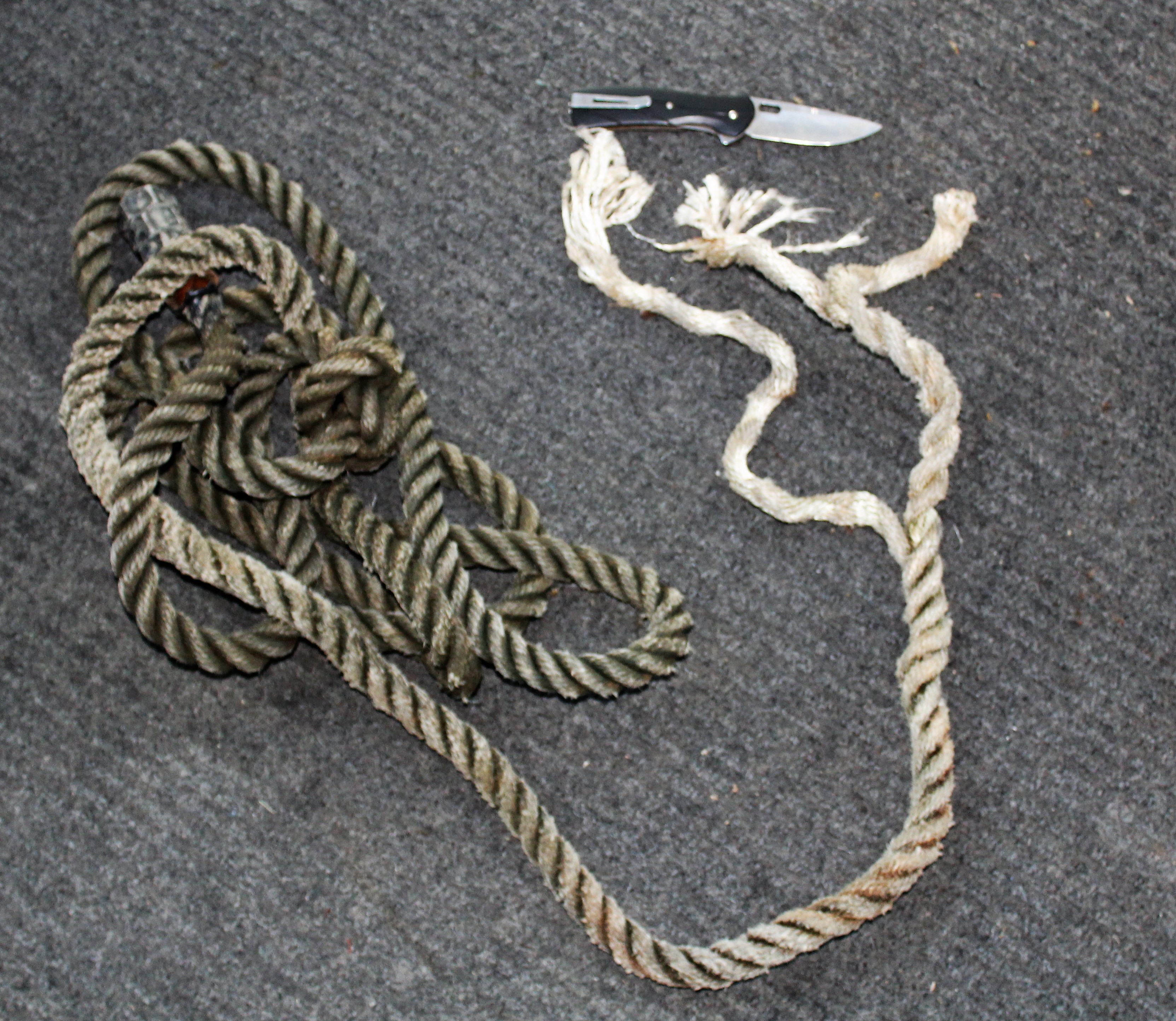
    25 The Rope that hung up

    All turned out well.  No one got hurt, and there was no damage to the boat.

    After this harrowing experience, the crew did just fine as they cleared three more locks.  The Admiral also decided to deploy fenders on both sides of the boat so there would be no more last-minute surprises.  They are now ready to lock thru on either side of the lock.

    Wednesday, October 11, 2017

    One of the Canadian boat captain’s that went thru the locks with Still Waters II yesterday came down to help our crew shove off the town wall.  He also commented on the near lock disaster yesterday.  He said that he heard the line stretching and making strange noises.  He also said that when the skipper cut the line, the end above the cut shot up above the boat.  He also commented that he had gone and placed a knife on the deck in case he ever needs to cut a line. Well if nothing else, the crew helped train some Canadian boaters. 
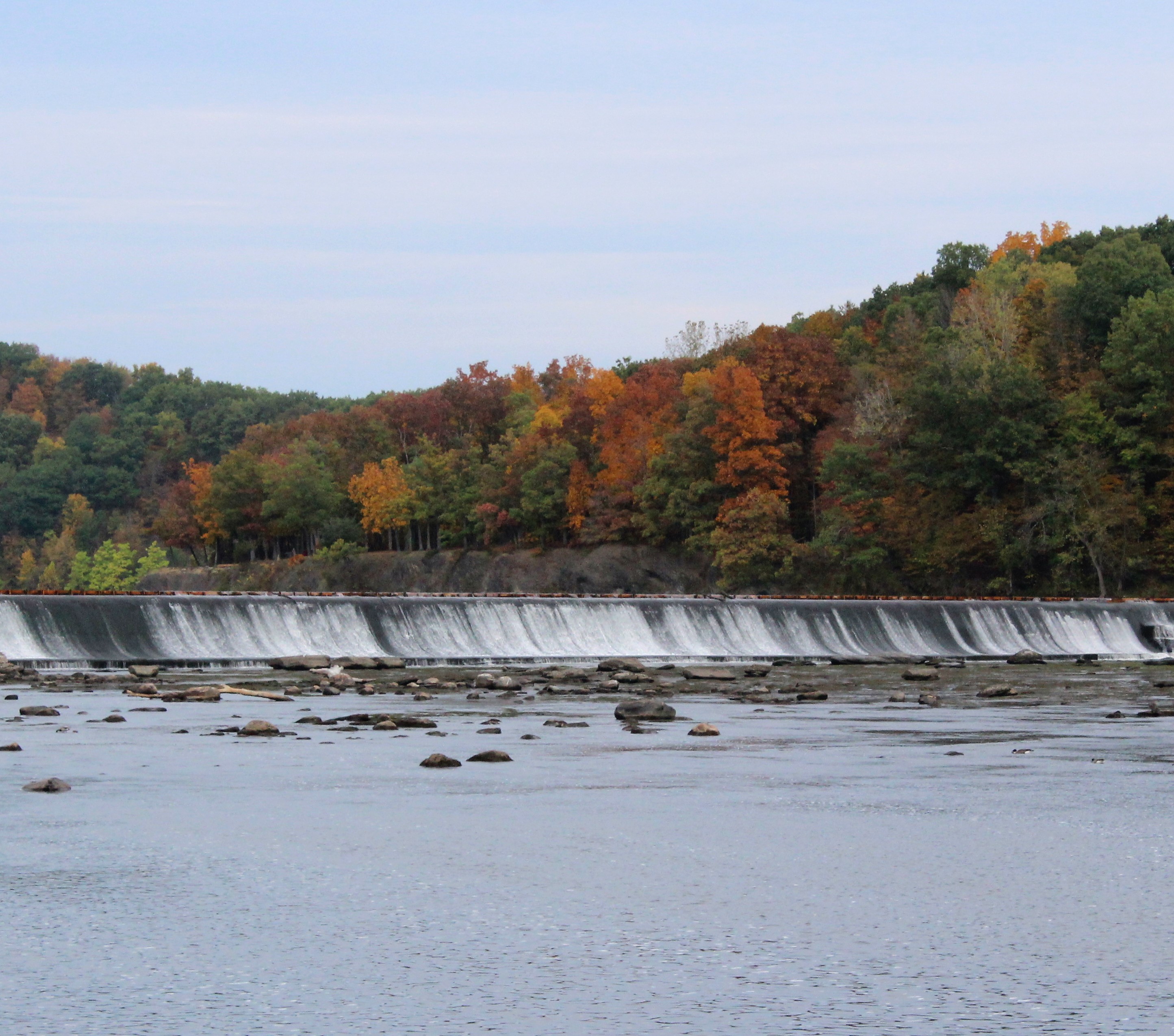
    26 Lock C-2 Dam

    The crew only needed to make a 10 mile run and clear two locks before docking on the town wall in Waterford.  With the locks closing for the season today, the crew was glad to find room on the wall for Still Waters II.

    Waterforf dock


    Thursday, October 12, 2017 

    The crew decided to take a day off and explore the town of Waterford.  The Admiral wandered over to Troy and found this interesting sign that required a little research.
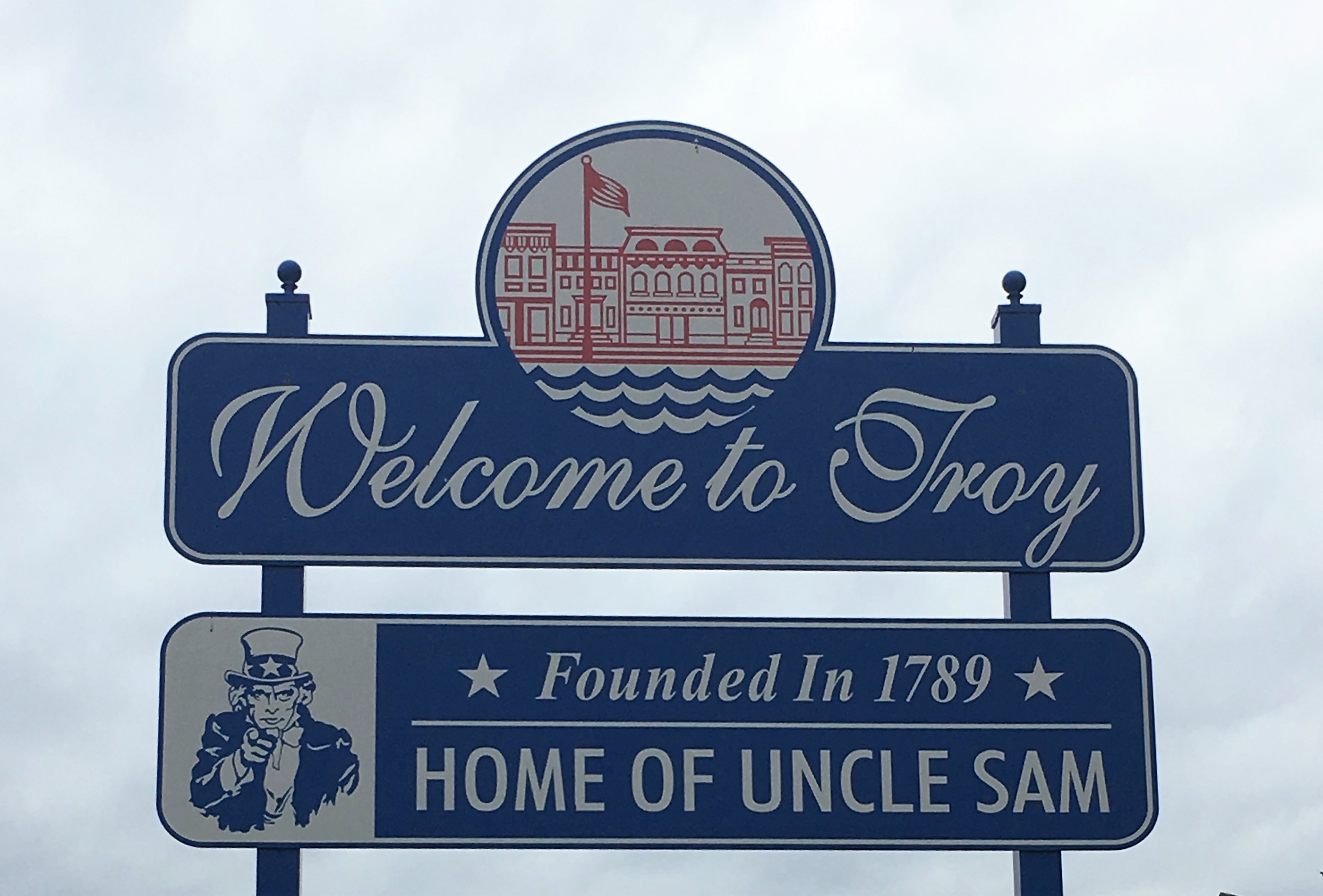
    Troy

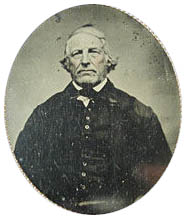
    Turns out that two brothers started a meat packing business in Troy.  One of the brothers name was Samuel Wilson and he had a local nickname of Uncle Sam. 
     

    Samuel_wilson_portrait
    Samuel Wilson


    During the War of 1812, the brothers got a contract with the government to supply meat to the soldiers.  The meat was packed in wooden barrels and shipped to the troops.  Some soldiers familiar with Sam and his meat packing business began referring to the U.S. stamped on the barrels as Uncle Sam.  By wars end, the troops were referring to all gear with a U.S. stamp on it as supplied by Uncle  Sam, which lead to the acceptance as the nickname of the U.S. government. 

    In the 1860’s, a political cartoonist named Thomas Nast began using an image that eventually became what we now consider the image of Uncle Sam.  Nast is also credited with developing the Donkey image for the Democrats, and the Elephant for the Republicans. 

    In September 1961, Congress recognized Samuel Wilson as ‘the progenitor of America’s national symbol of Uncle Sam.  Can you see the resemblance?

    727072-uncle_sam

    Friday, October 13, 2017 

    The run from Waterford to Houghtailing Island was uneventful.  Well except for another near miss in the Federal Lock.  The skipper was manning the aft line when it got tangled in the swim ladder on the swim platform. 

    As he was feeding the line thru the cleat as the boat lowered, he noticed the bitter end was hung up on something.  He tried to shake it free but that did not work.  He had about three feet of slack line still, so he jumped down on the swim platform and found the end jammed in the swim ladder.  He was able to pull the line free and climbed back up on the sundeck. 

    The Admiral noticed him coming back onboard and asked what he was doing.  He explained about the jam and commented that he sure was glad this would be the last lock to deal with for a while.  You must be ever diligent with these locks because bad things can happen in the blink of an eye. 

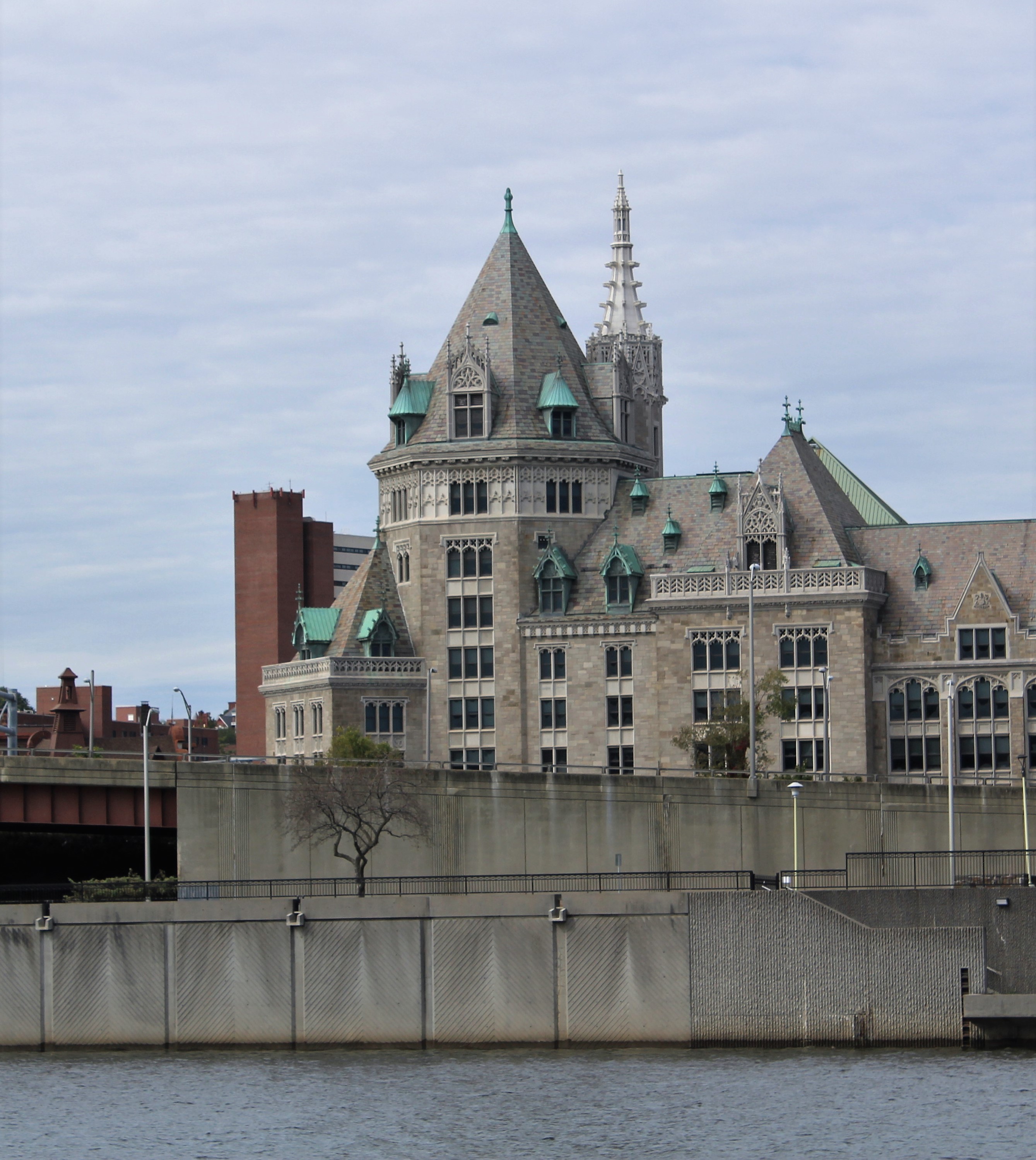
    After safely exiting the Federal Lock, the crew passed thru Troy and Albany.  This interesting building is part of the NY University system in Albany. 
    IMG_0138

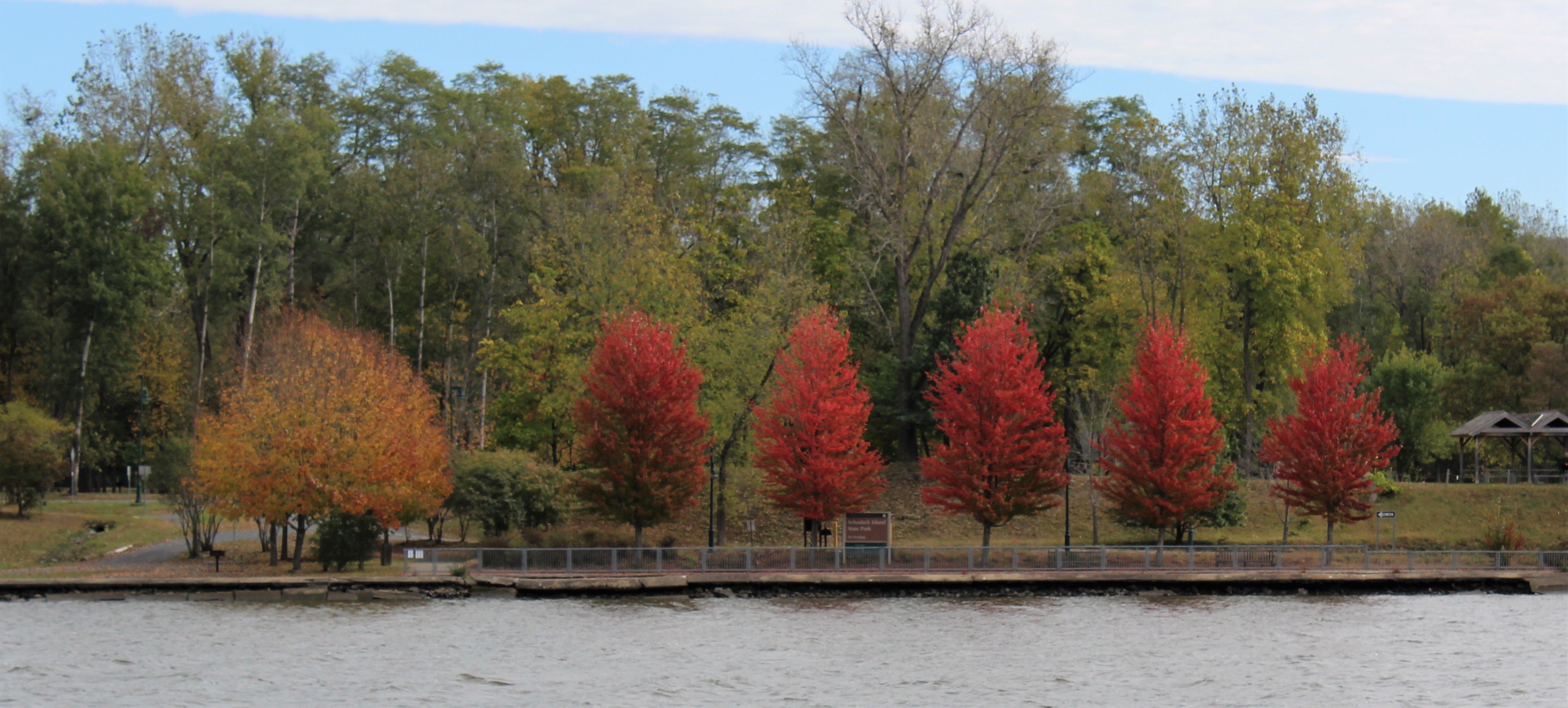
    The crew then saw these trees standing along the shore as they pulled into their anchor spot to bring the day to an end.
    IMG_0139 

    Saturday, October 14, 2017 

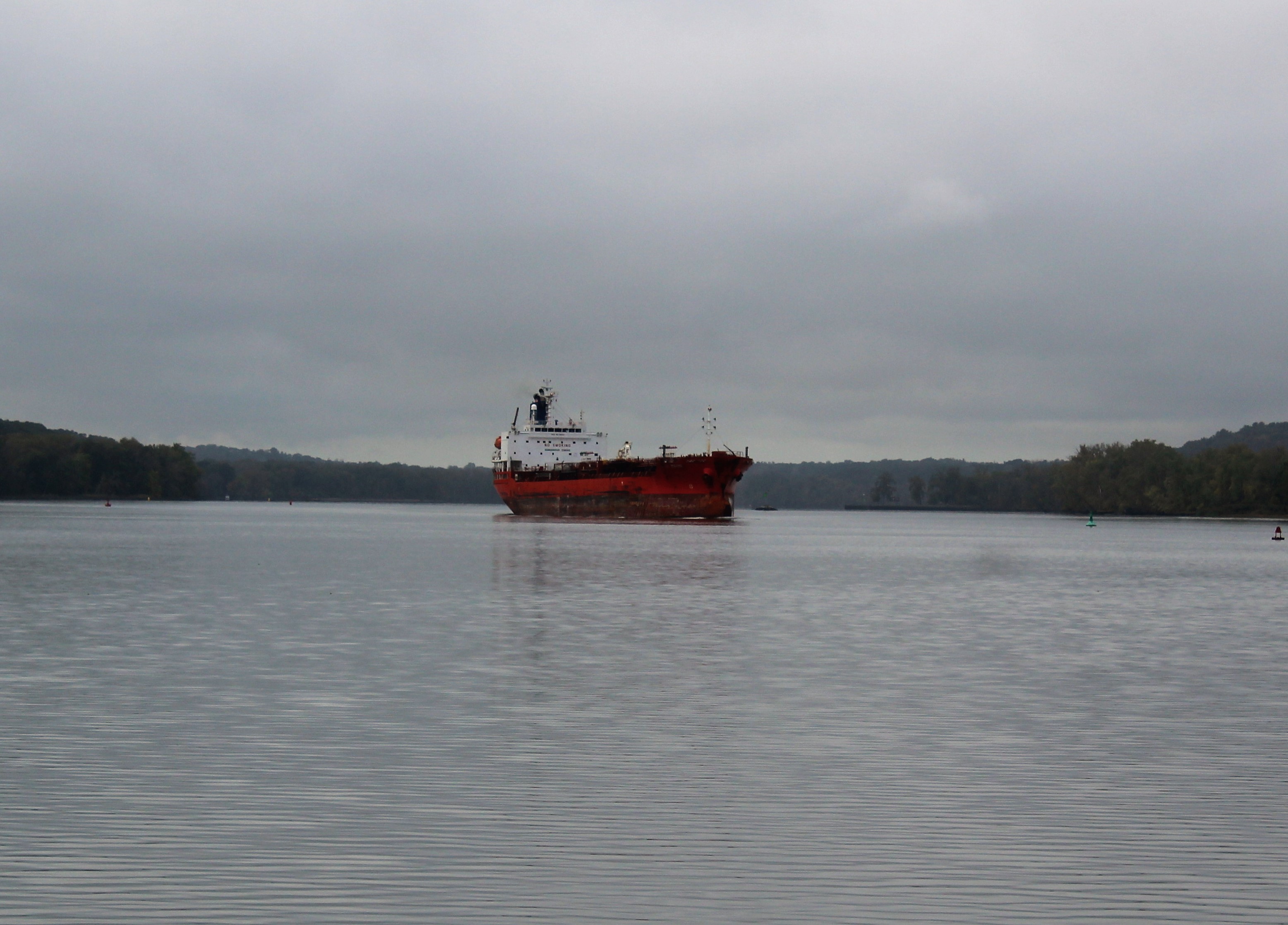
    The crew weighed anchor and headed back to the main channel in the Hudson River.  They were greeted by this big ship as they reached the Hudson. 
    IMG_0140.JPG

    After the ship got past, the skipper noticed a couple of Bald Eagles near a nest.  One of the Eagles was perched directly above the nest.  Can you see it? 
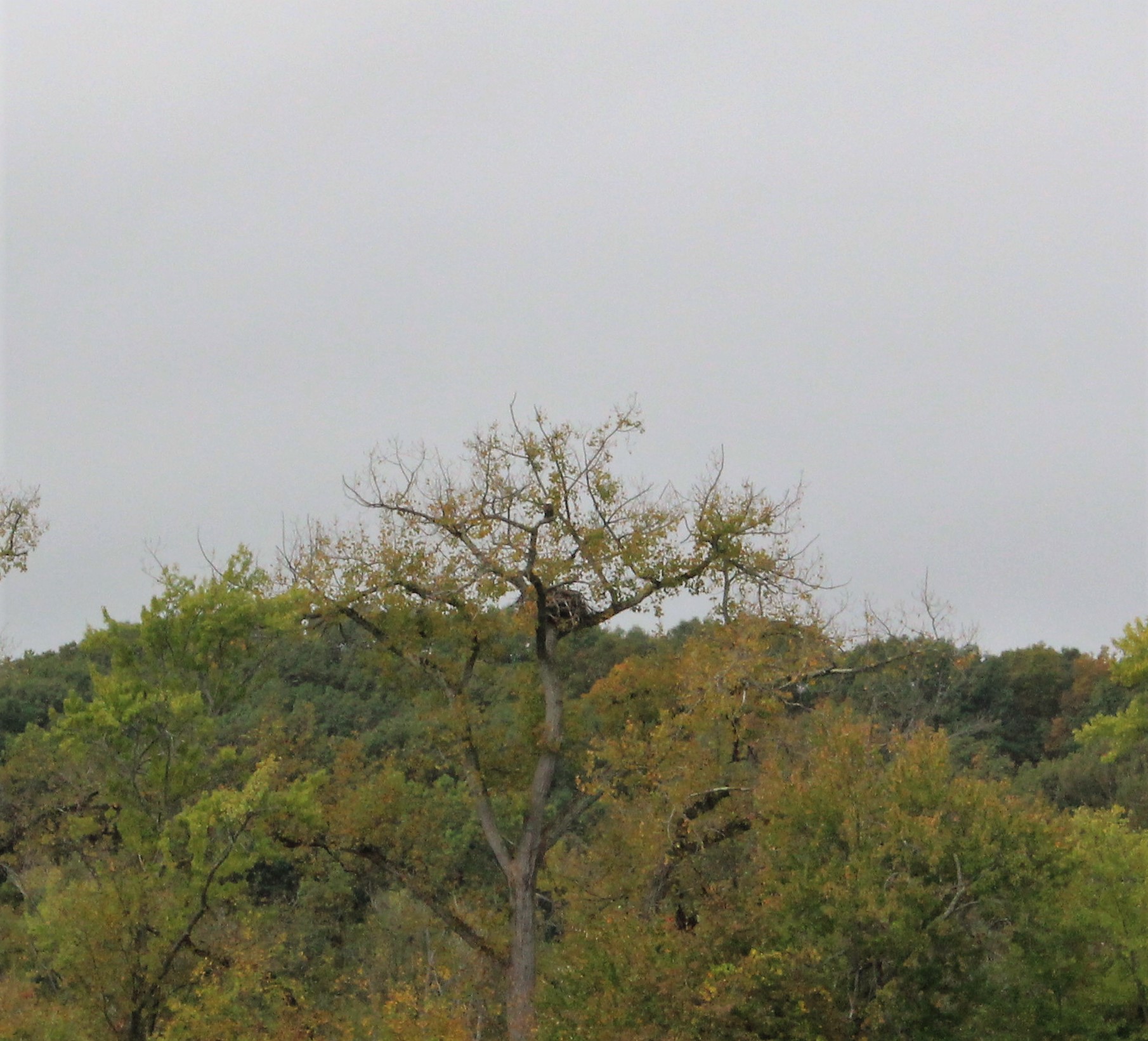
    IMG_0143

    I’m not sure how the skipper spots this stuff, but he does have eye for the wildlife.
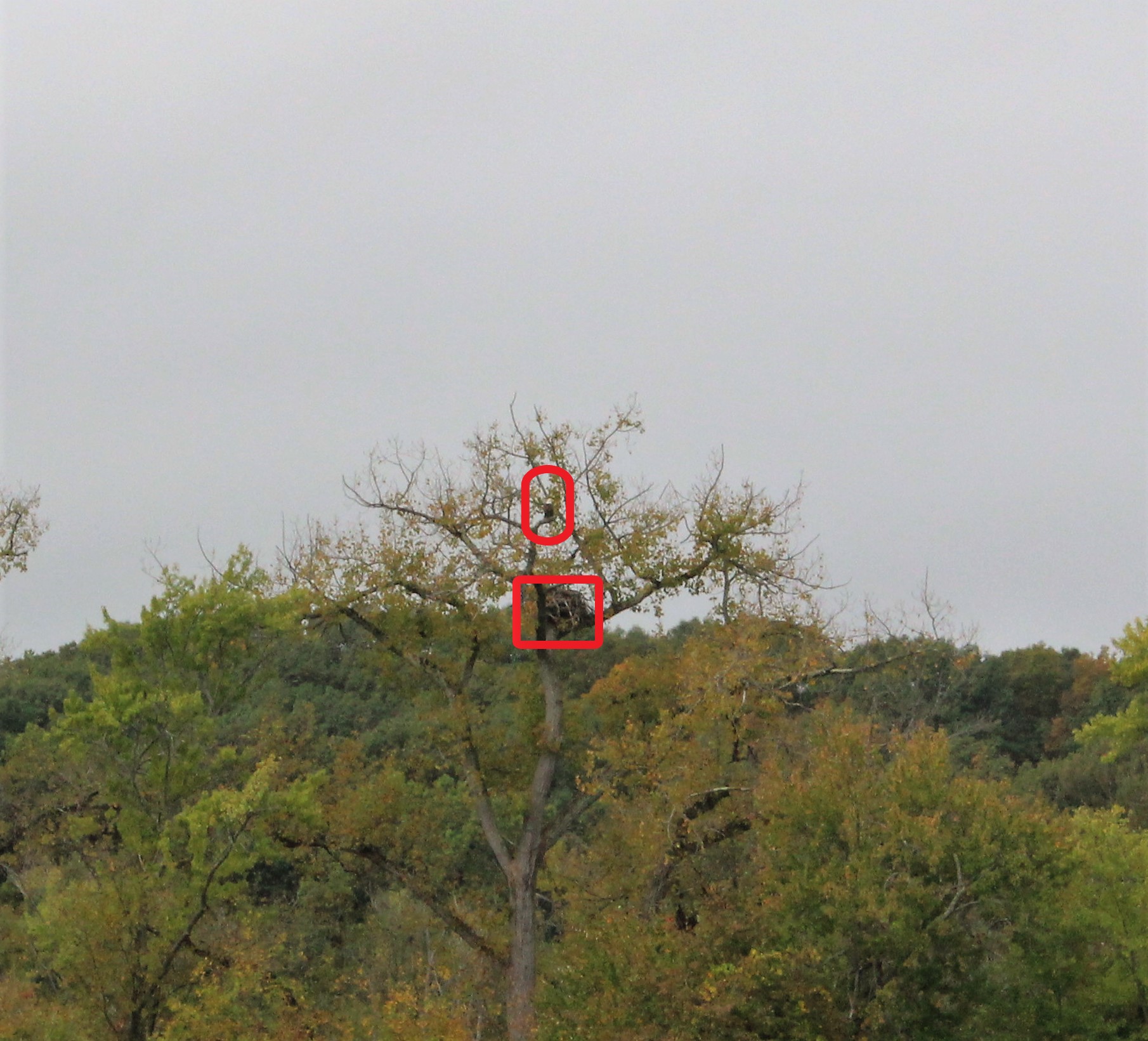
    Eagle Nest

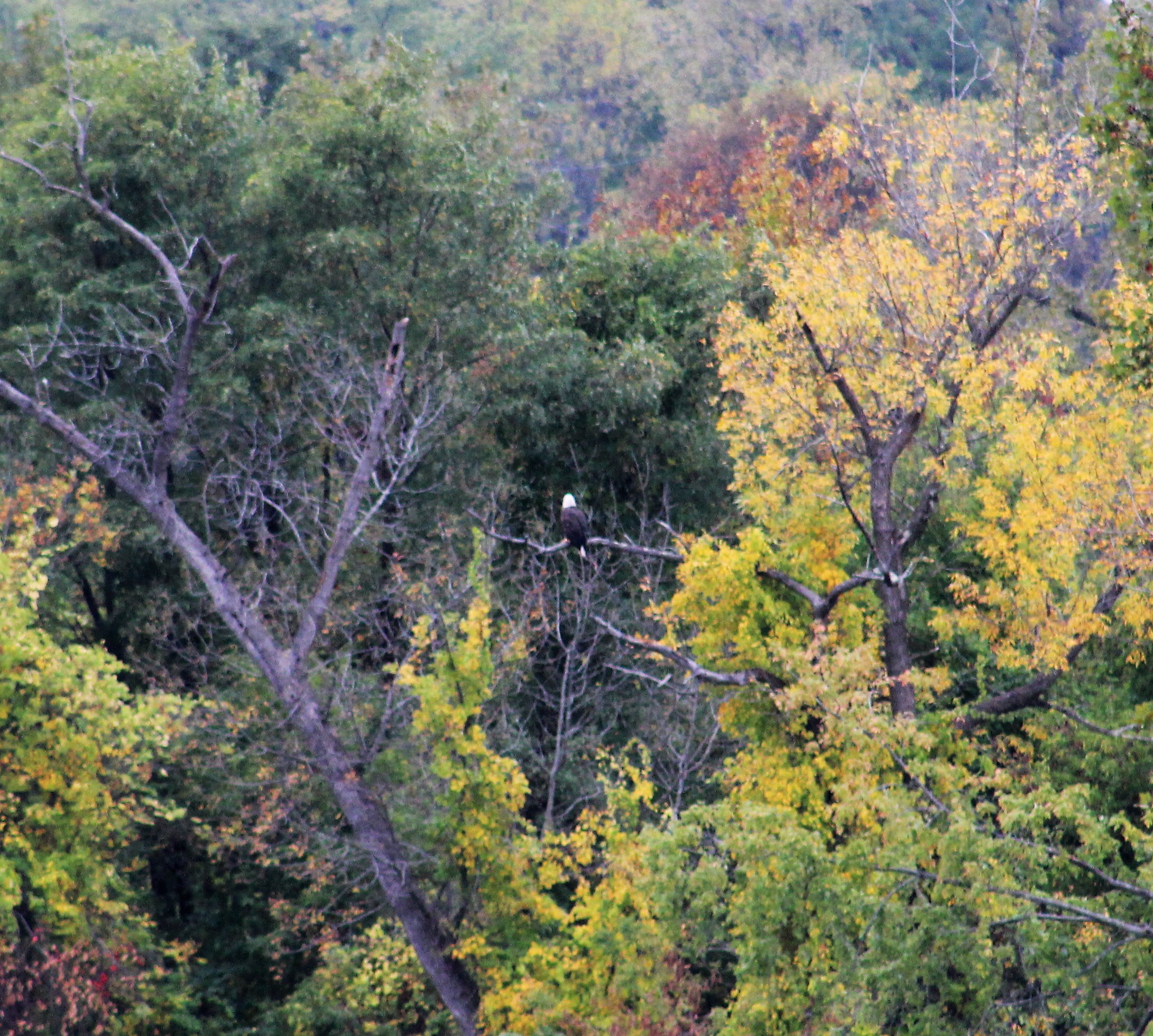
    For example, he spotted this Bald Eagle in a tree while docked at Waterford.  The Eagle was a little over a mile away.
    IMG_0131

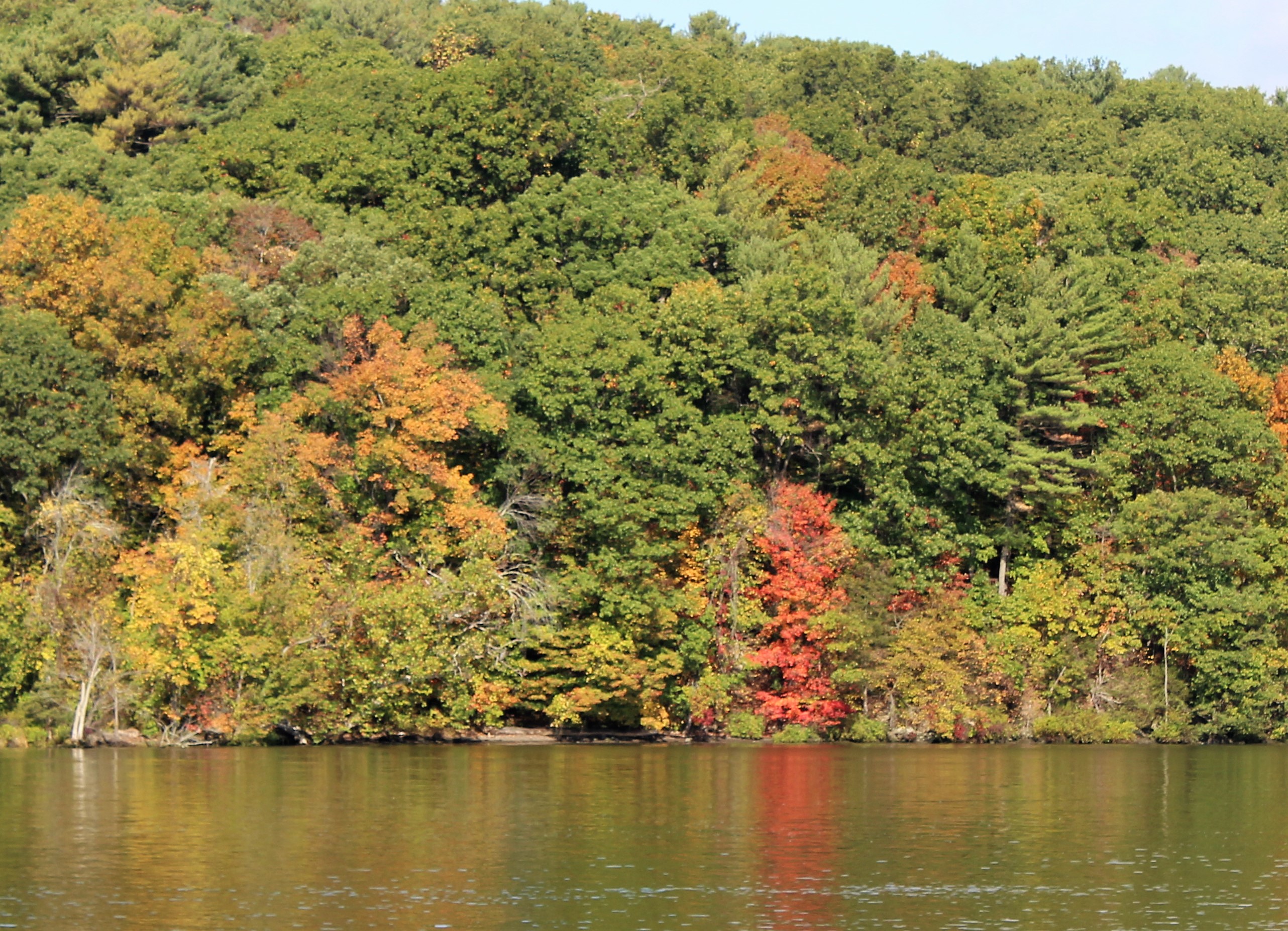
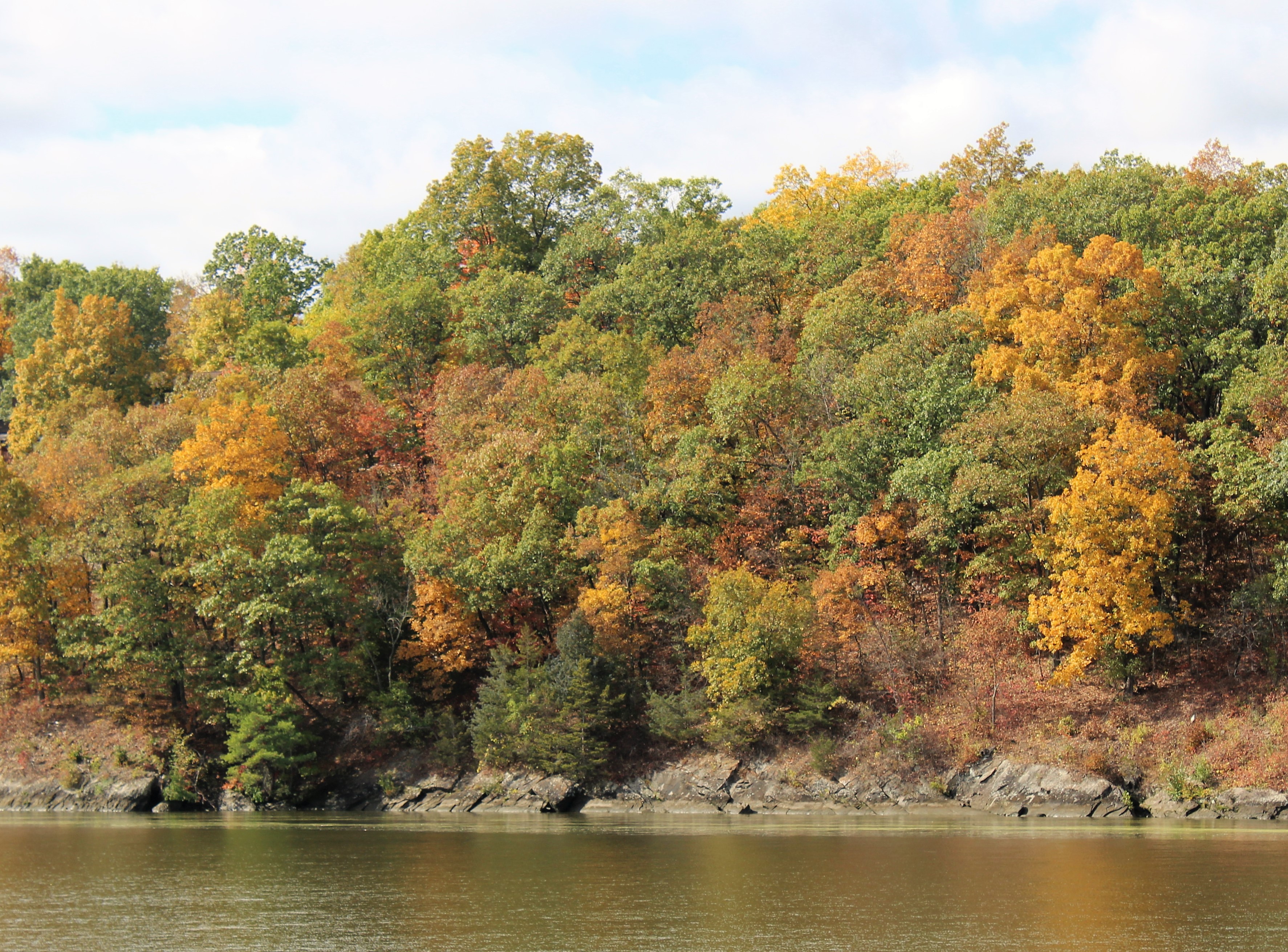
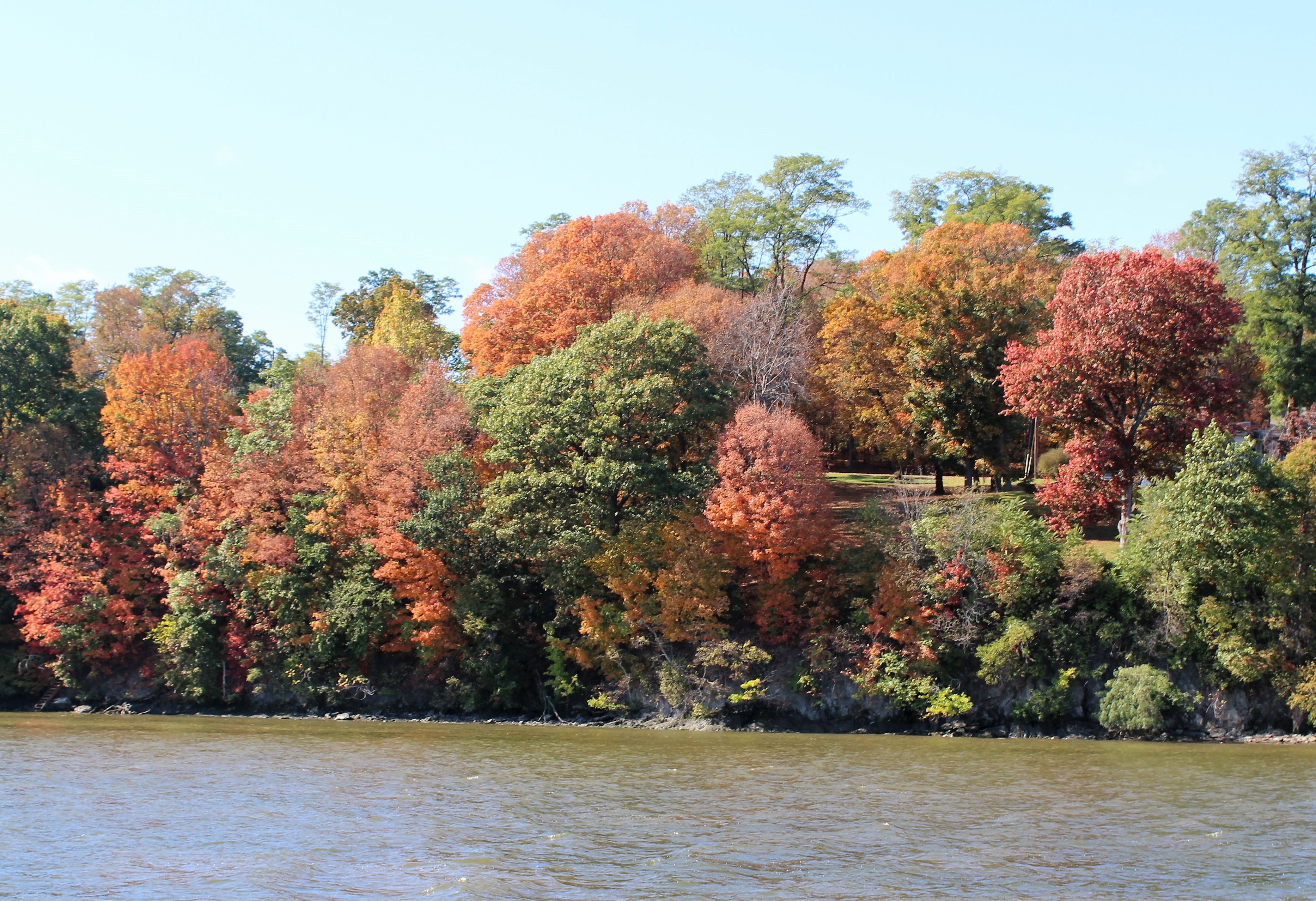
    The color along the banks was breath taking today.   
    IMG_0146

    IMG_0147

    There were many boaters out enjoying the day and good weather.  While taking in the sights these fast speed boats all zoomed by and gave the crew a little wake action. 

    IMG_0151

    This is why many Loopers do not cruise on the weekend. 

    After some more good scenery, the crew finally pulled into the Norrie State Park marina where they will sit for the remainder of the weekend.
    IMG_0153

    IMG_0154

     Boat Name of the Week


    IMG_0133
    Replica of 1800’s canal boat


    Next Week –   

    The crew will continue south down the Hudson River towards NYC.  It is only two travel days to NYC, but they will keep an eye on the wind and waves between NYC and Cape May. 

    They need three good weather days in a row to run out in the Atlantic Ocean to Cape May.  So movement further south will depend on how the weather is predicted to be Wednesday, Thursday, and Friday of next week.

    Loop On – The water goes on forever and the adventure never ends.

    Eric the Red


  • Leap Frog

    Hello virtual crew members and fellow adventurers!

    Eric here with the latest travels of Still Waters II.

    33.1
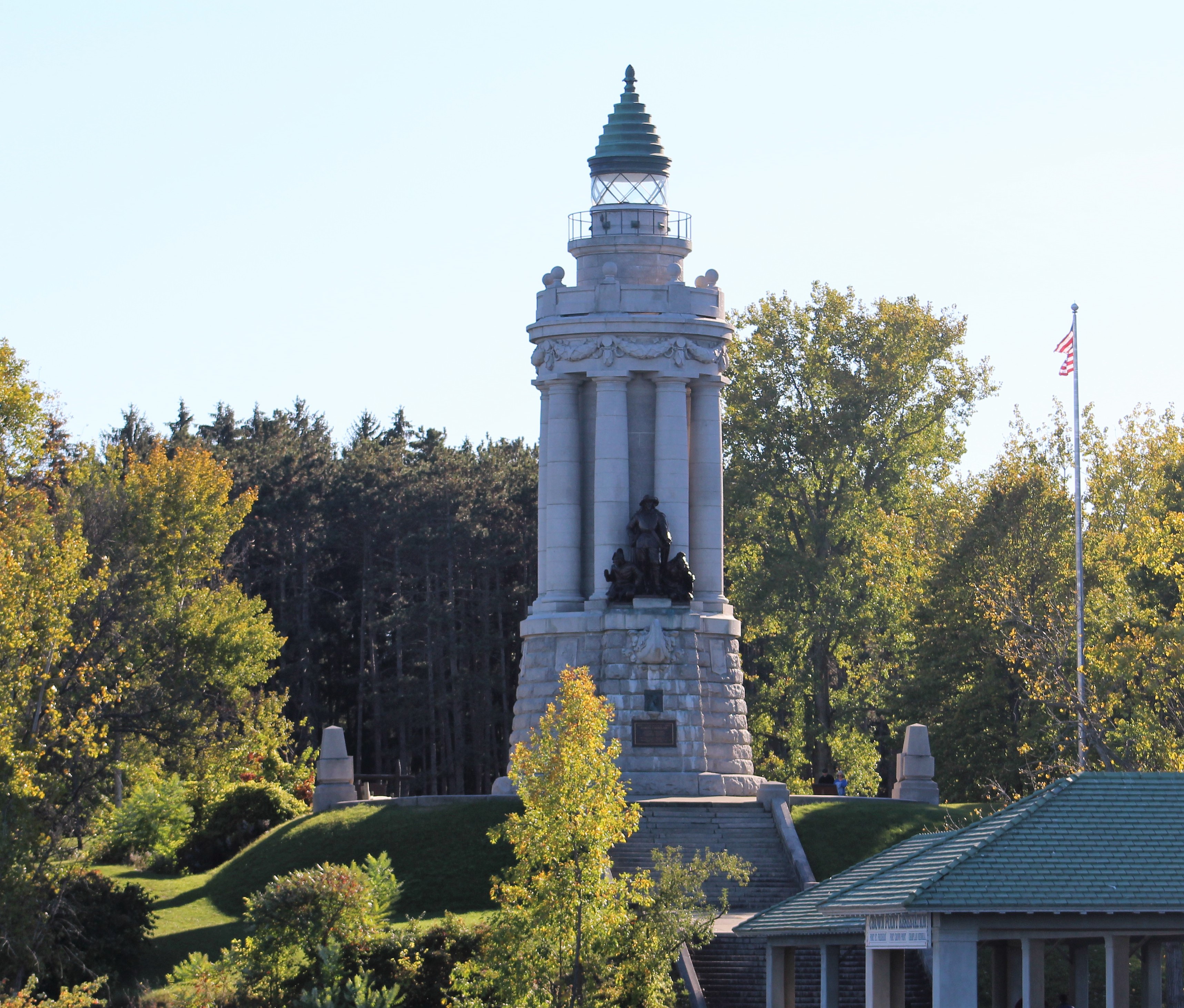
    Champlain Memorial Light


    Summary of week:

    Untitled

    On Monday, the crew anchored in Bulwagga Bay on Lake Champlain.

    Tuesday, the crew moved on to Burlington, VT.

    Thursday, the crew turned south and anchored below Ft. Ticonderoga.

    Friday, the crew returned to Whitehall.


    Saturday, they ended the week with a stop in Ft. Edwards Yacht Basin.


    This week’s journey of discovery did answer the following questions:

    1. Where is the Birthplace of the US Navy?
    2. Where was the initial sighting of Champ, the Lake Champlain water dragon?
    3. Who was the wealthiest women in the world at the time of her death in 1916?

    Click on the link to read the day-to-day travel log.  This includes weather report of the day, sea conditions, log of the days travel, and a summary of the experience.

    At the Box Office

    This week’s video shows Still Waters II  completing the Champlain Canal, entry into Lake Champlain, and the view at anchor at Fort Ticonderoga.  Enjoy!

    To Lake Champlain from Still Waters II on Vimeo.

    To see past videos, click on the link to the Still Waters II Vimeo site.  The library now contains 39 videos of Still Waters II cruising America’s Great Loop.

    Sunday, October 1, 2017

    The town of Whitehall was first settled in 1759 as the colonial town of Skenesborough by a British Army Captain named Phillip Skene.  The town was located at a strategic location where goods and supplies were moved from Canada to the markets in Albany and New York City.

    As the area grew in importance, Phillip Skene grew a plan to make Skenesborough the county seat.  When that goal was achieved in 1773, he set about growing his influence over the area known today as Vermont and the Adirondacks.

    He went to England in early 1775 to petition for the area to become its own Crown Colony.  While he was away, the American Revolution got its start in April 1775 at Lexington and Concord.

    On May 9, 1775, American Patriots secured the town and held Mr. Skene’s family as hostages.  The militia also commandeered Mr. Skene’s schooner, Katherine, outfitted her with cannon, and put her under the command of Benedict Arnold.

    On May 18th, Colonel Benedict Arnold used his new ship to capture a British ship that was later renamed the Enterprise.

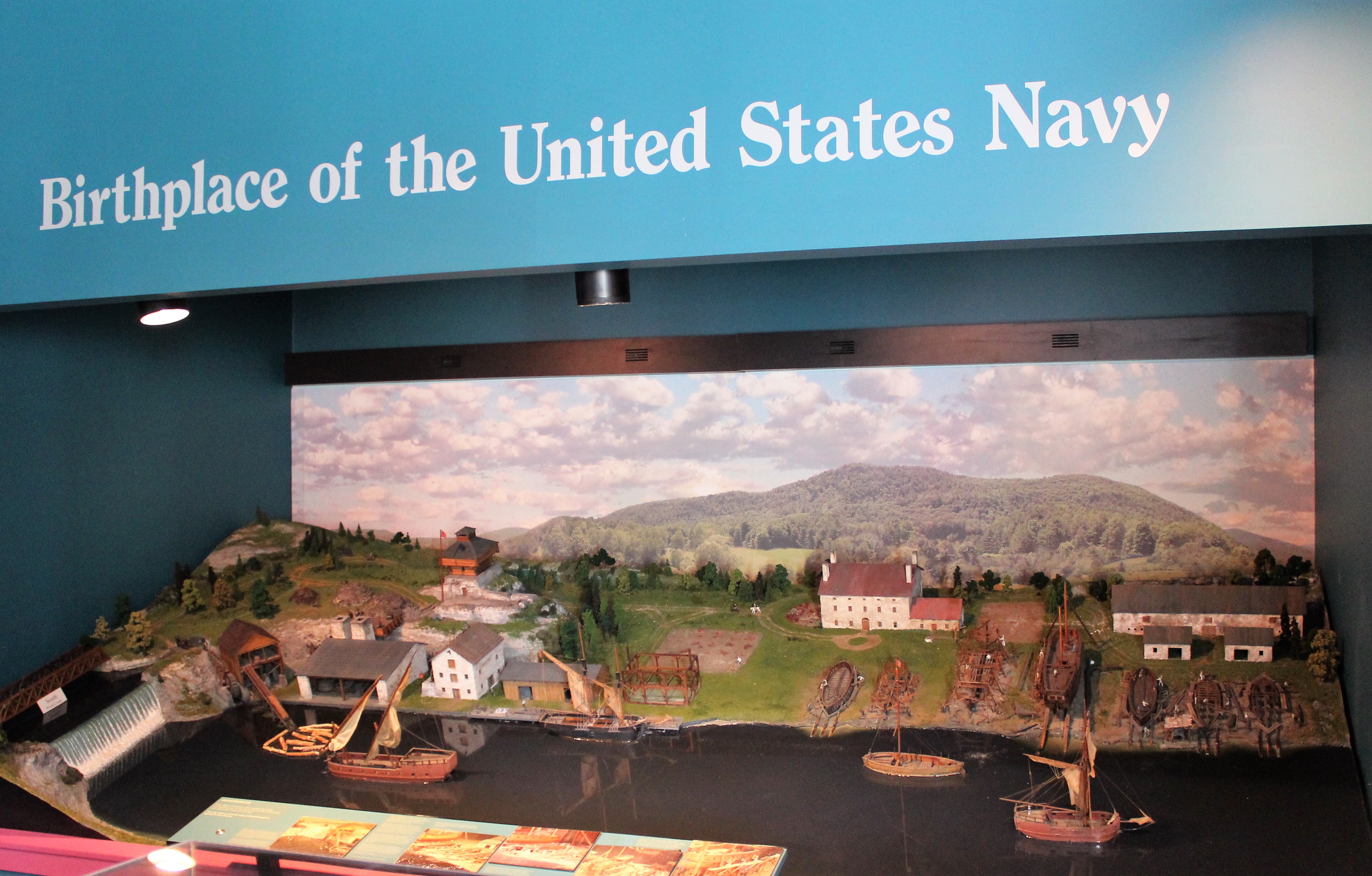
    During the summer of 1776, Colonel Arnold oversaw the construction of 13 ships in Skenesborough to protect the Colonies from a British invasion from the North.  The new fleet of ships meet the British War ships in October 1776 near Valcour Island on Lake Champlain. While most of the new ships were lost during the battle, the fleet did enough damage to the British War ships that the British Navy turned around and did not venture further south into the colonies in 1776.


    18 Whitehall Museum
    Whitehall in summer of 1776

    Based on these actions, the town now claims that they are the ‘Birthplace of the US Navy.’

    Of course, Philadelphia, PA; Providence, RI; Marblehead Mass; and Beverly, Mass. All dispute this claim.  But that is a story for another day and time.

    But one thing to ponder.  If Colonel Arnold was serving in the Continental Army, the ships he built were Army vessels, were they not?

    Monday, October 2, 2017

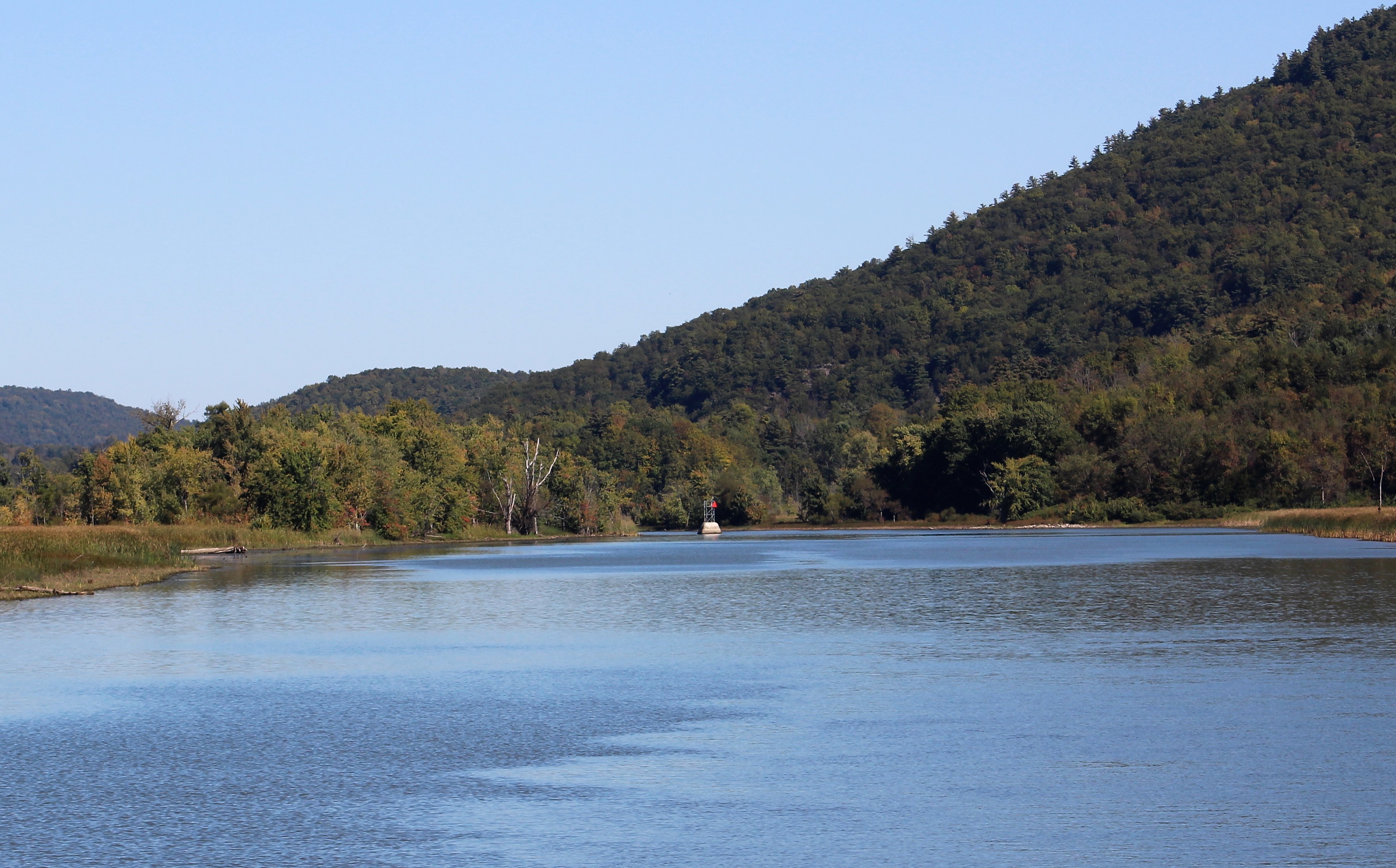
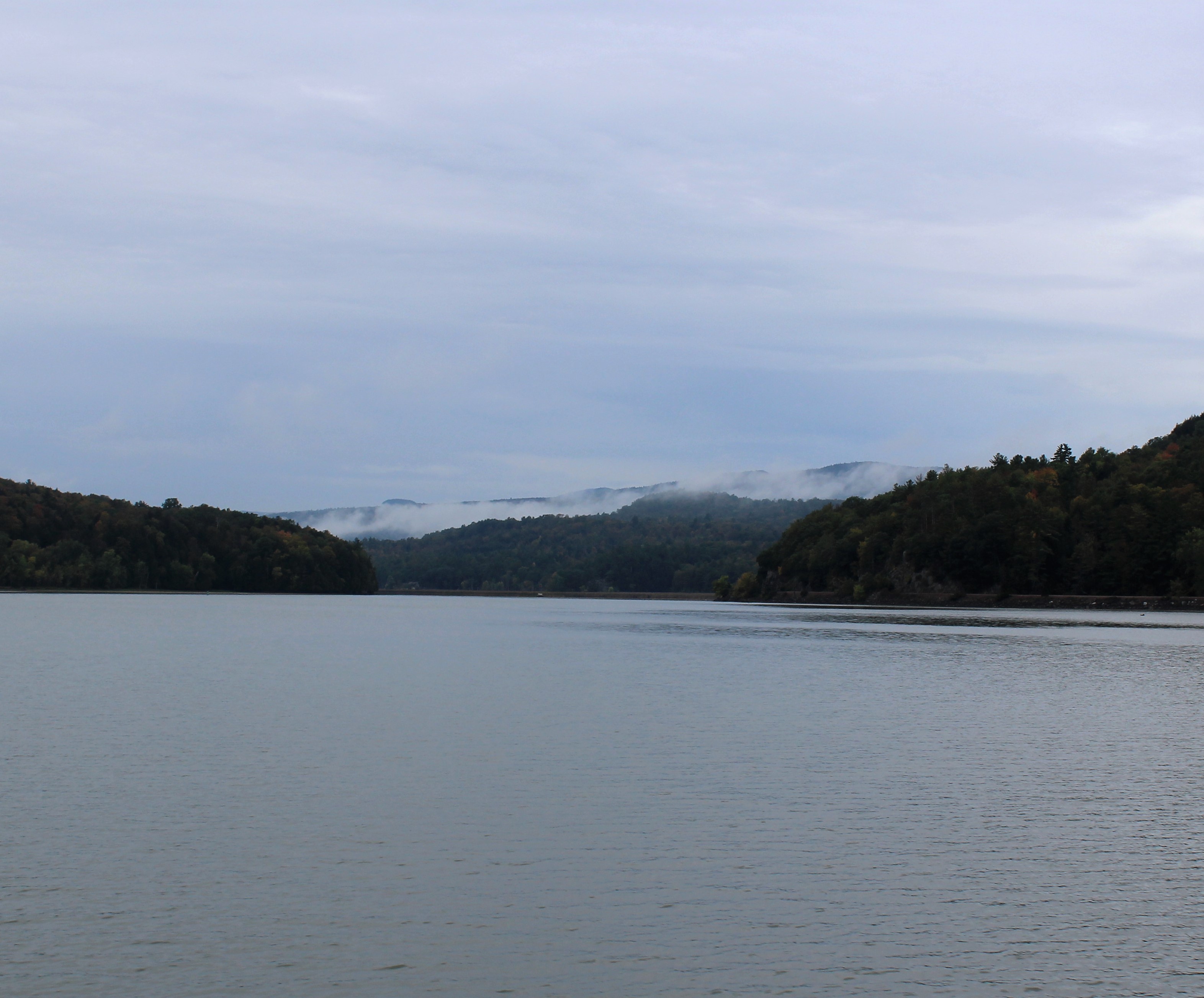
    After waiting for the fog to clear, the crew cleared Lock C-12 and entered the headwaters of Lake Champlain.  At this point the Lake is more of a narrow shallow river as seen in the two photos below.

    20 Headwaters of Lake Champlain

    20.1

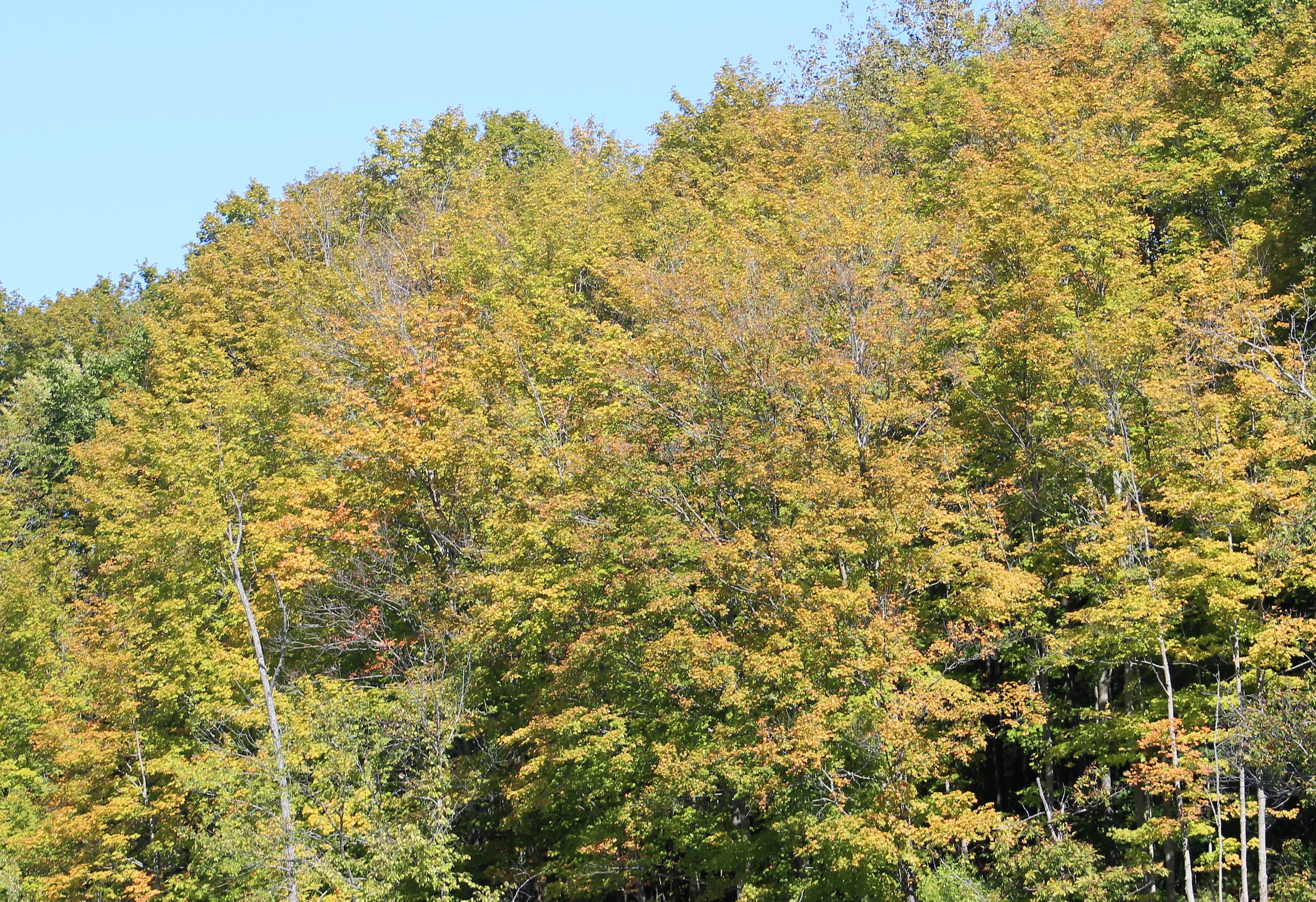
    Because the temperatures have been warm until just recently, the fall color tour is off to a slow start.  However, the night time temperatures are starting to drop into the 40’s, so maybe the color change will begin in earnest.  The trees are mostly light greens and yellow at this point.

    21

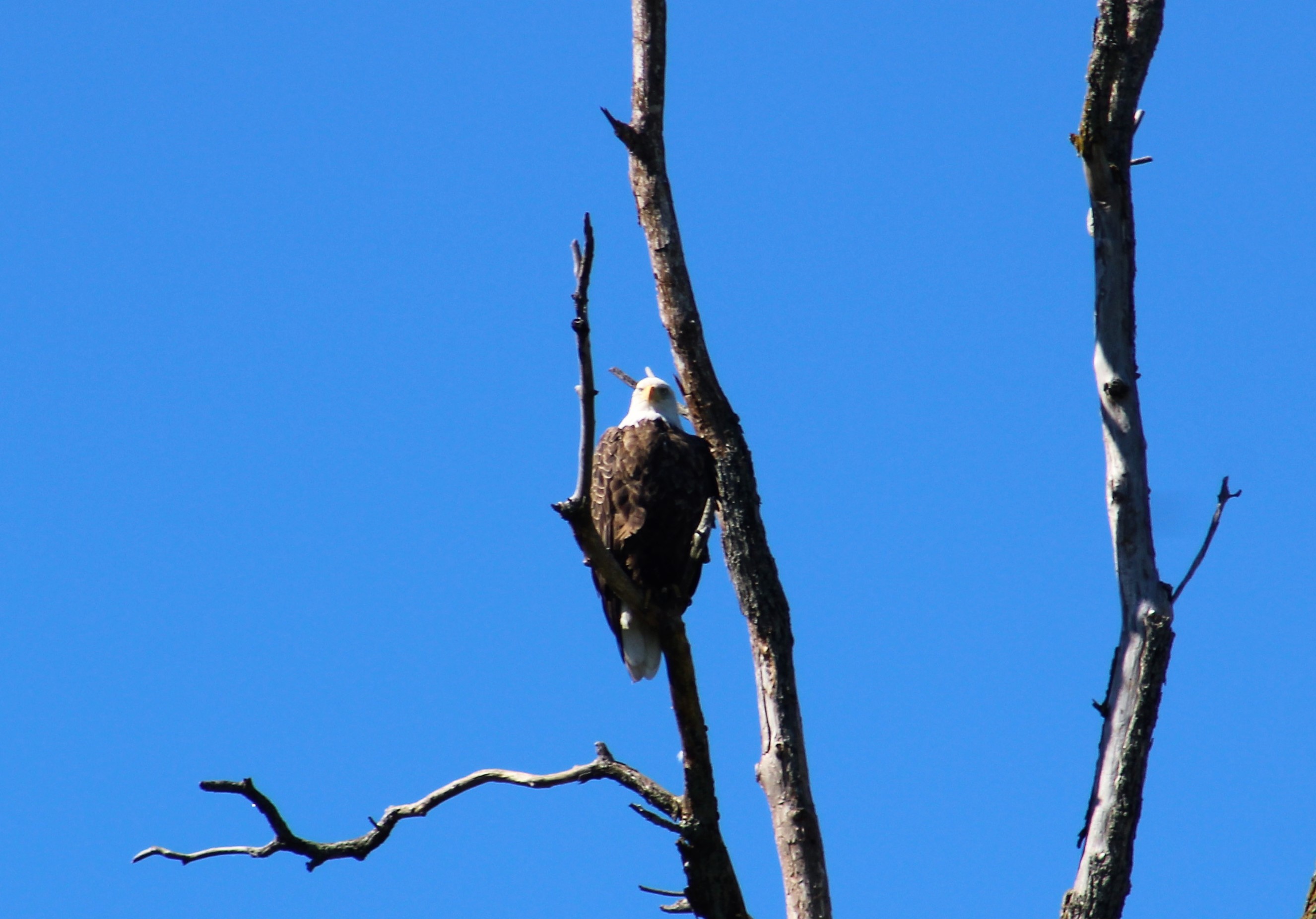
    The skipper did spot another Bald Eagle perched in a dead tree keeping an eye on the river as they cruised by.

    24

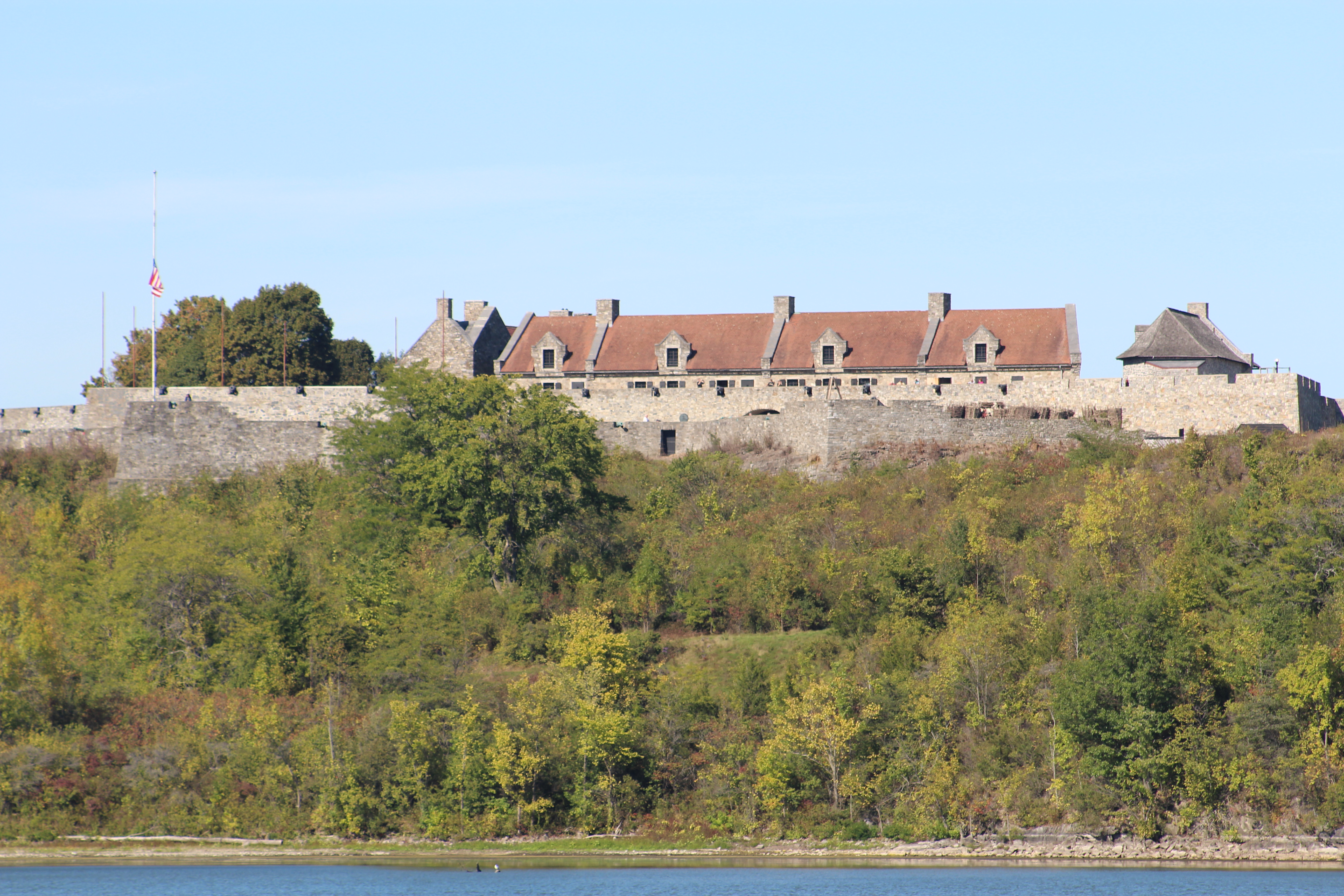
    By early afternoon the crew cruised by Fort Ticonderoga.  Ethan Allen is credited for taking the Fort from the British in 1775 without firing a shot.  Ehtan has an interesting history before and after his heroics at the Fort.

    29.1

    Prior to the Fort incident, he and his Green Mountain Boys were busy keeping New Yorkers out of the disputed land now known as Vermont.  Two different groups laid claim to the land and both were selling land grants to the same area.

    When Allen’s side lost in court in 1770, they took to vigilante tactics to keep the winning New Yorkers out of the area.  By 1775, the Green Mountain Boys had created a large reputation for their tactics.  Hence, they were asked to help in the siege of Fort Ticonderoga.

    After the Fort incident, Allen decided to march on Montreal.  This did not work out so well for him as he was captured on September 24, 1775 in his failed attempt.  He remained a Prisoner of War until May 3, 1778 when a prisoner swap was negotiated with the British.

    A few interesting things about Ethan Allen:

    1. There is no portrait, drawing, or likeness of him known to exist
    2. His final resting spot in the cemetery where he was buried is also unknown
    3. 1n 1858, a 42-foot foot tall monument was erected in the cemetery with this inscription……’Vermont to Ethan Allen……..and buried near the site of this monument’

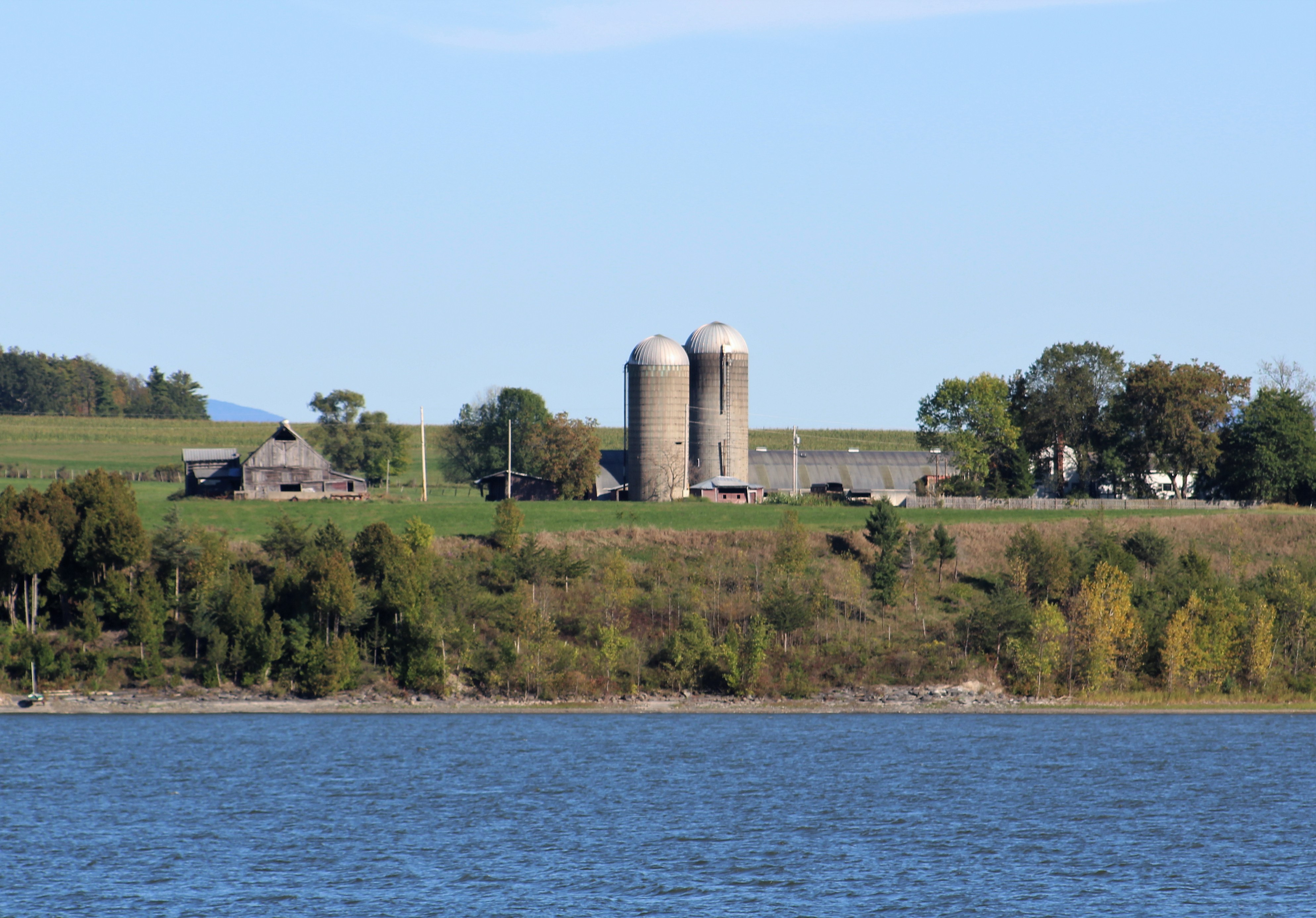
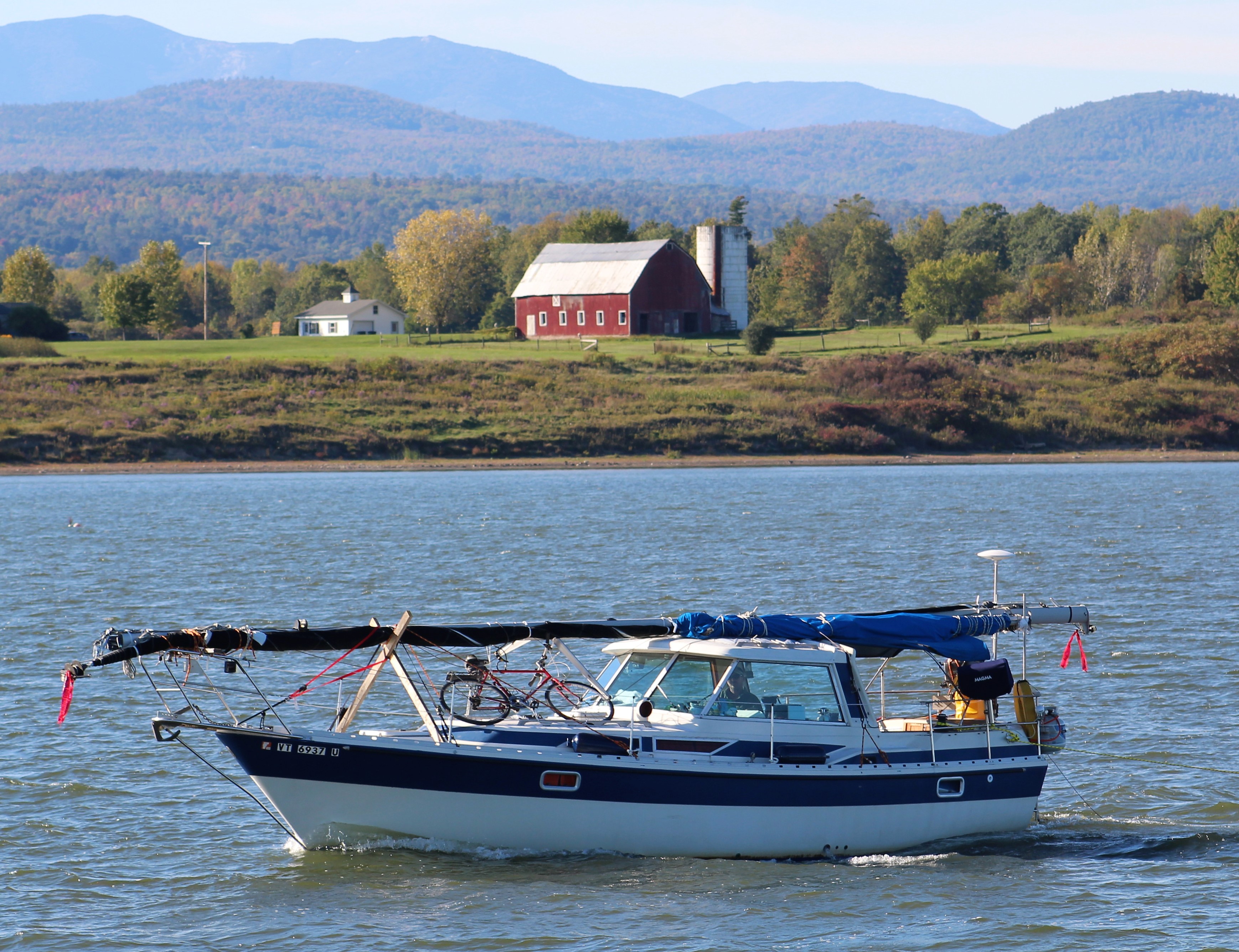
    The farms continue to line both sides of the lake.  A Vermont farm:

    30 Vermont Farm

    A New York Farm:

    31 New York Farm

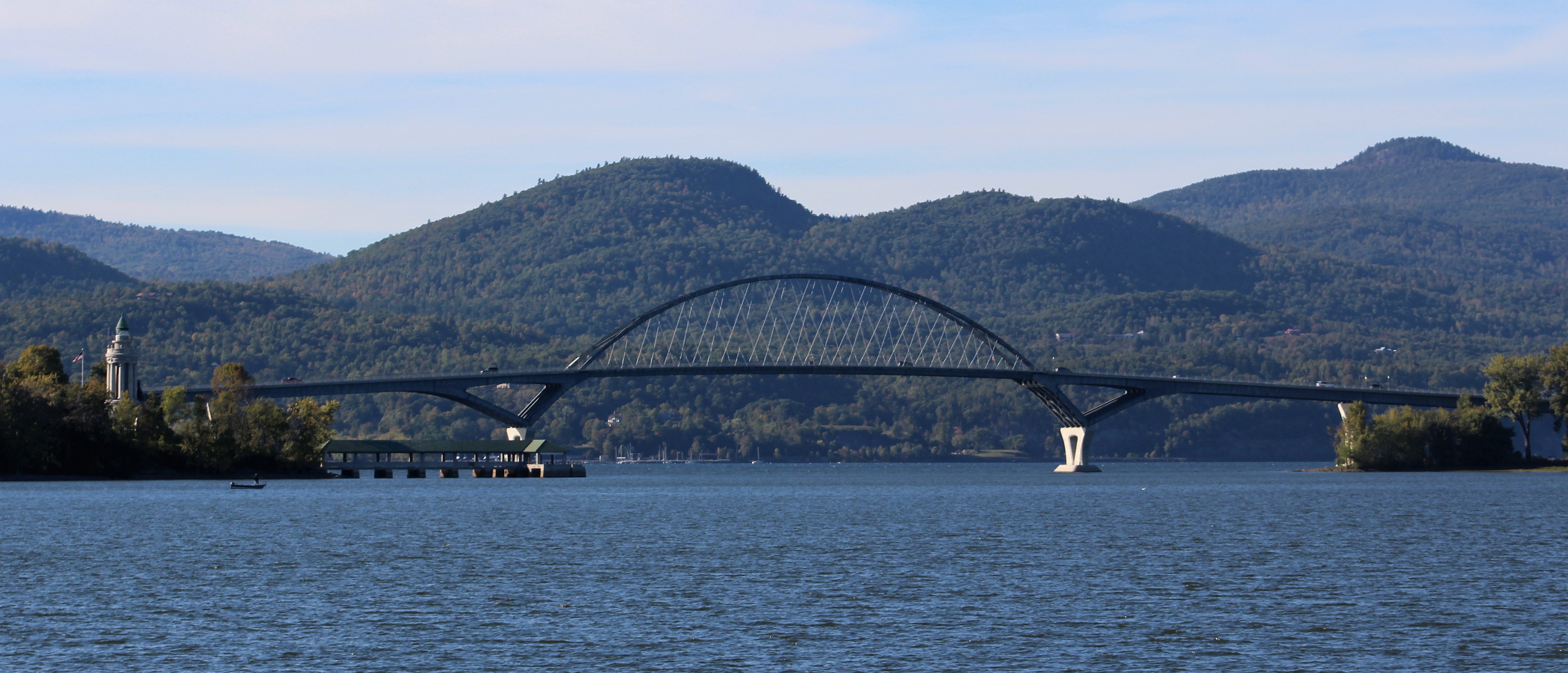
    The day came to an end after passing underneath this bridge, turning left into the Bulwagga Bay, and dropping the anchor.

    32
    Champlain Memorial Bridge

    Bulwagga Bay is the place credited as the home of Champ, the Lake Champlain dragon.  Supposedly, Samuel de Champlain saw a 20-foot serpent here in the 1600’s.

    The earliest genuine report of Champ was also made in the Bay in 1819.  A Captain Crum saw a 187-foot long black monster with a flat head that raised some 15 feet out of the water.

    In 1873, more Champ sightings began to take place which lead to P.T. Barnum offering a $50,000 reward for Champ, dead or alive.

    The skipper kept a lookout for Champ most of the night but had no sighting to report.

    Tuesday, October 3, 2017

    The anchor retrieval took a bit longer than usual this morning.  Well, maybe 30 minutes longer.  The anchor chain was covered in grass and weeds.  It was a slow tedious process to clean the chain while bringing the anchor back on board.  No wonder Champ lives in this Bay, obviously there is plenty to eat.

    After leaving the Bay, the crew headed north into Lake Champlain.  The Lake finally opened as can be seen in this look ten miles up the lake.  The depth of the lake also changed dramatically.  The deepest depth noticed on the chart plotter was 392 feet.

    34 10 mile fetch on Lake Champlain

    The crew had wanted to cruise up Otter Creek to visit Vergennes.  However the lake is about 4 feet below normal pool level and when the skipper tried to enter the creek he was met with some shallow 4-foot water.  Rather than risk a prop strike, the skipper backed out and headed on to Burlington.

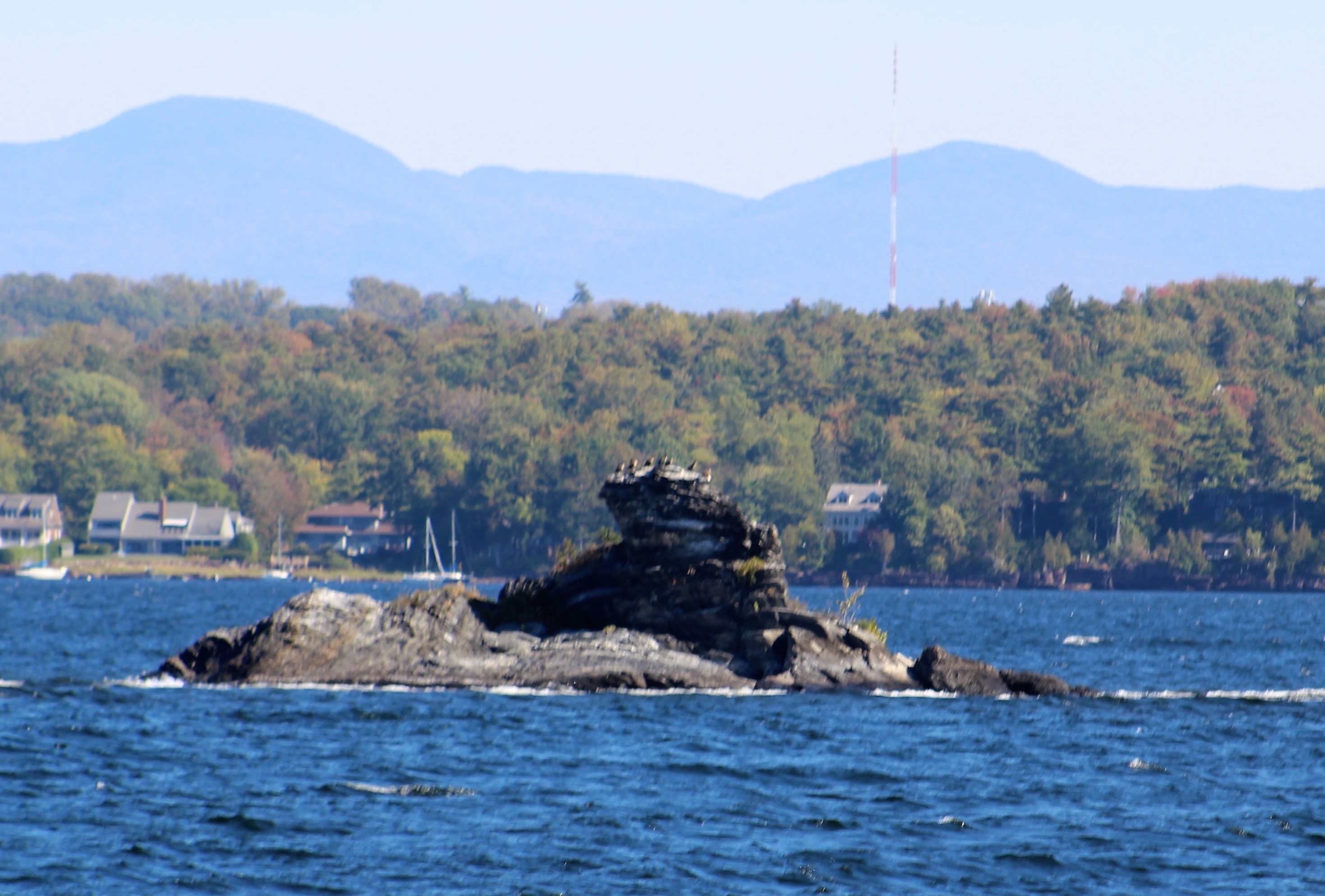
    On the north run to Burlington, the crew past by a rock formation jetting out of the water named Rock Dunder.

    37 Rock Dunder

    According to local legend, the rock got the name during the Revolutionary War.  During the Battle of Lake Champlain, the British mistook the rock for an American vessel.  The British fired on the rock all night long.  When the morning light showed that they were wasting ammunition firing at a rock, the Hessian officer declared: “It’s a rock by dunder.”

    After safely passing the rock, the crew headed towards Burlington.  Four miles out from Burlington:

    36 Burlington 4 miles from shore

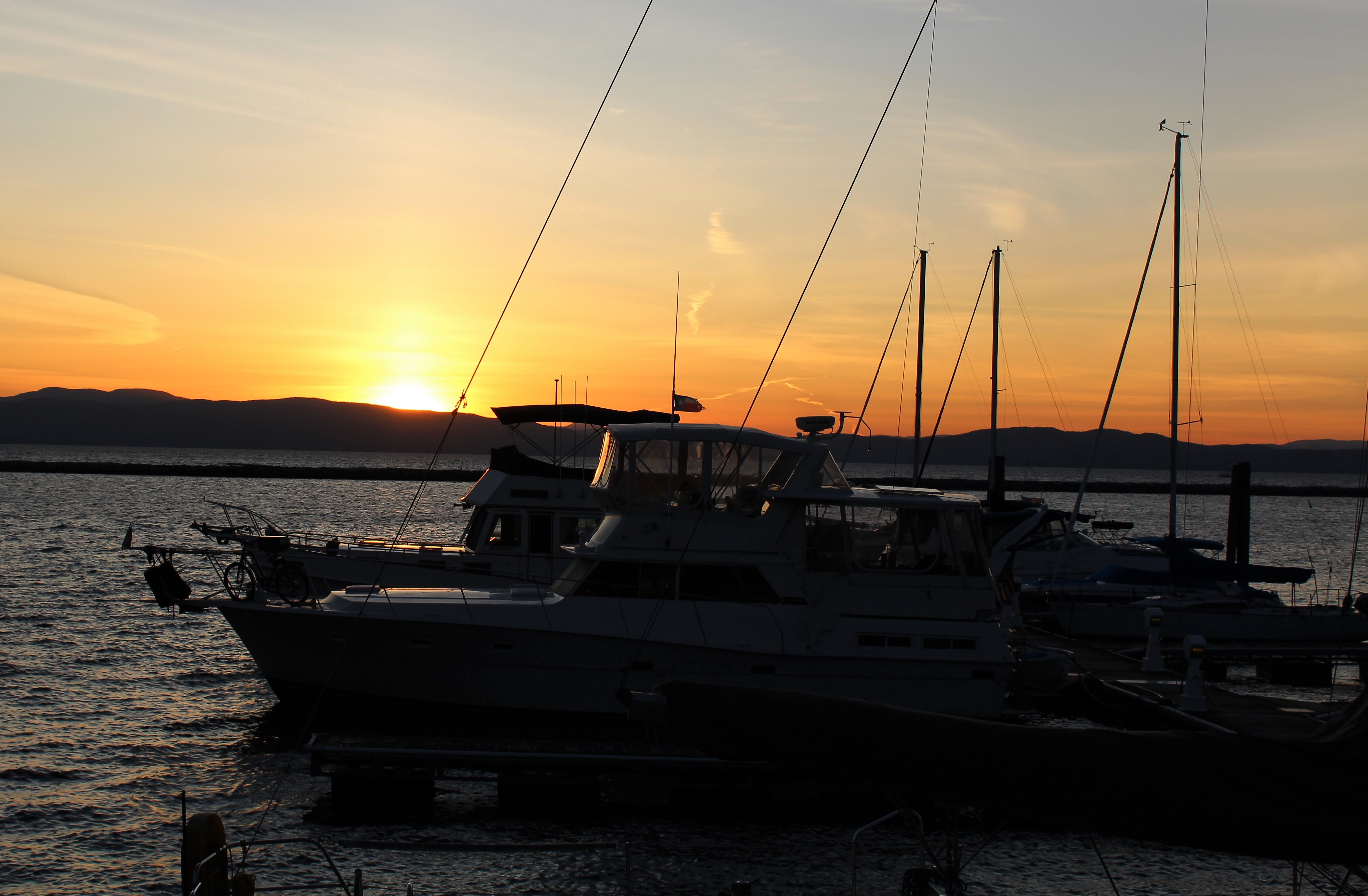
    After docking, the crew went exploring in town.  When they returned to the boat, they were greeted with this sunset over the Adirondack Mountains in New York.

    42

    Wednesday, October 4, 2017

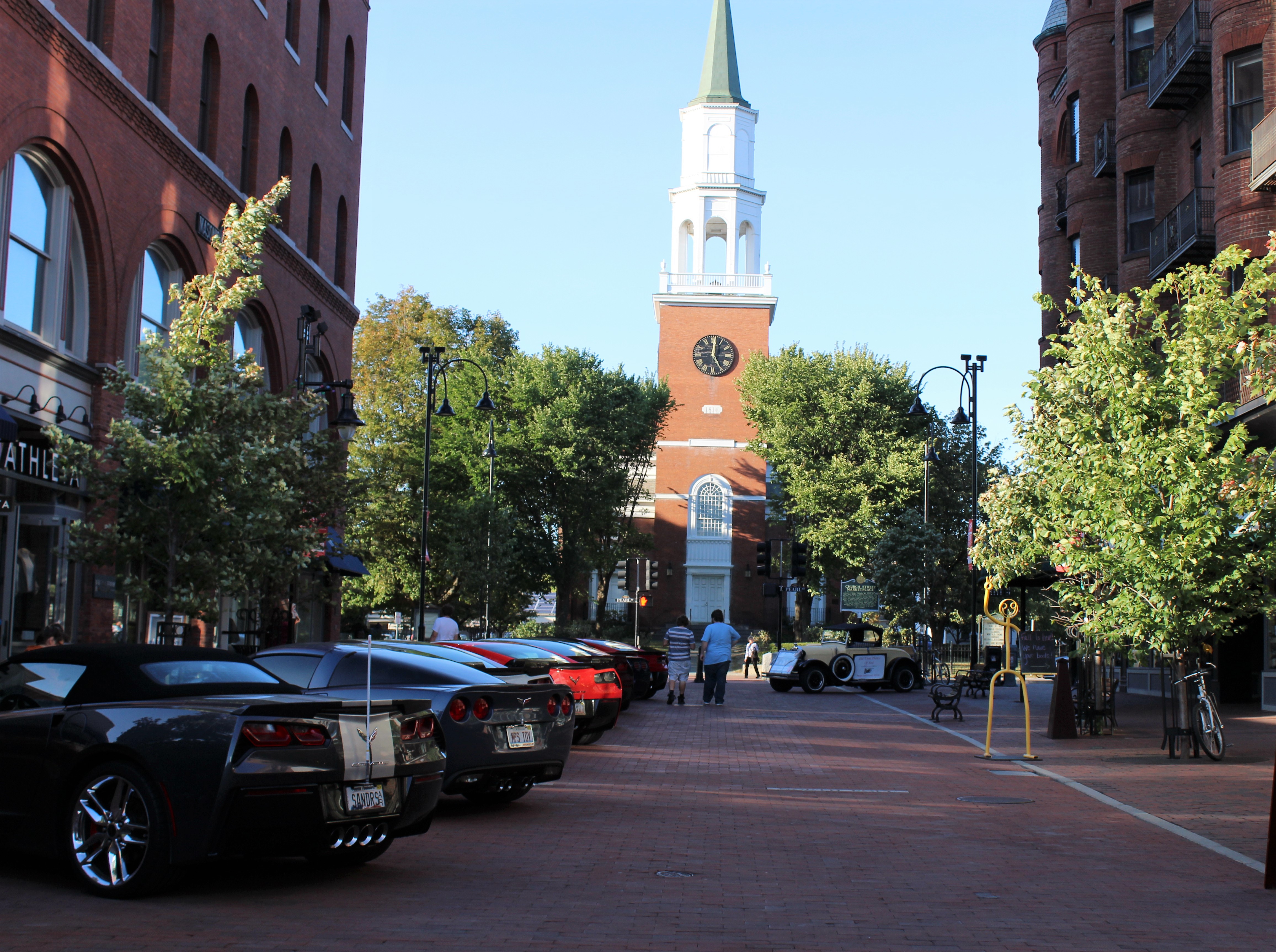
    From the waterfront, it is a short walk up hill to Church Street which is the main drag in town.  Church Street is a pedestrian street with no cars allowed.  Many businesses, eateries, and pubs line the street.  There was a corvette car show the day the crew walked around.  You can see the cars with the church in the background.

    41 Church Street

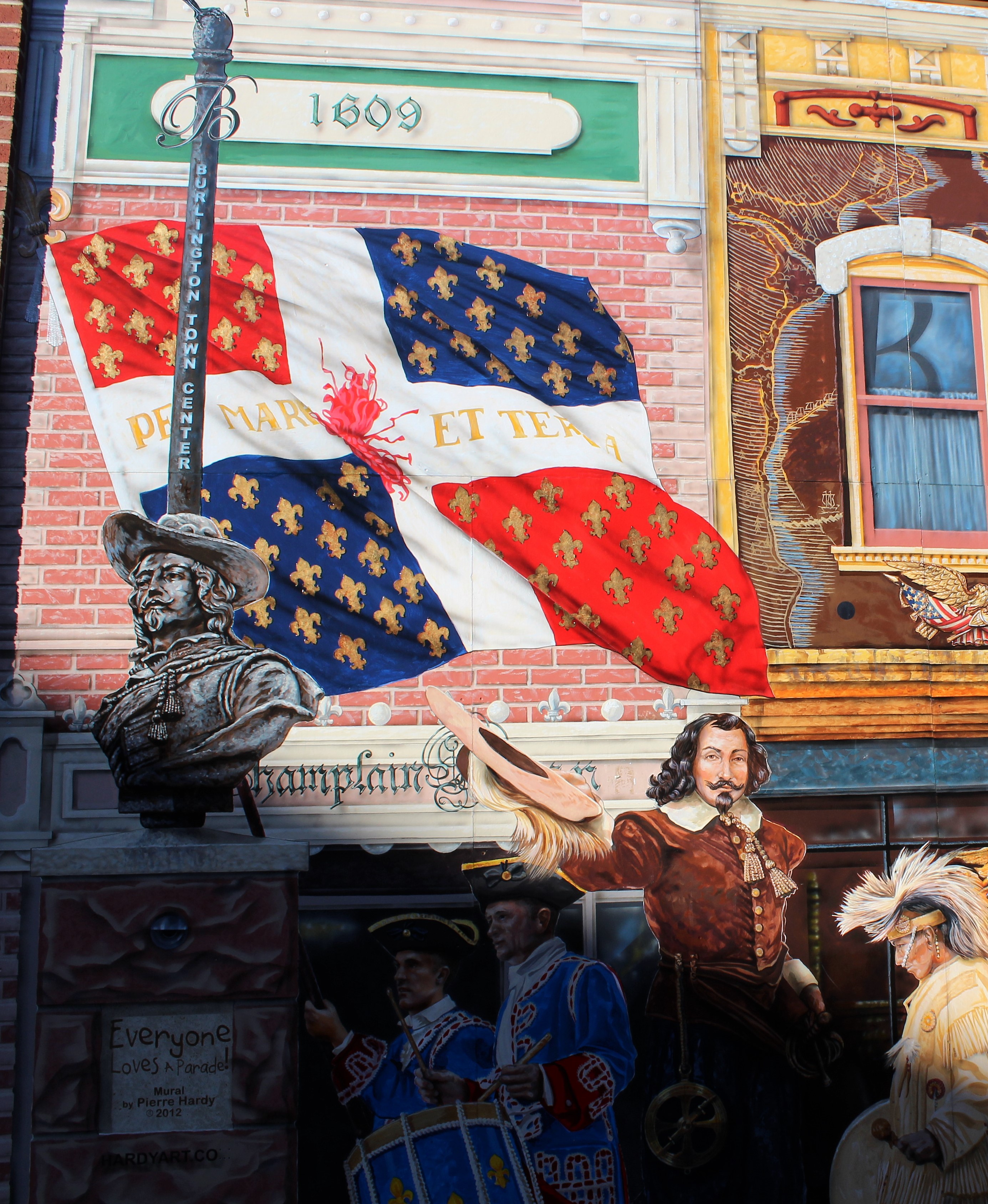
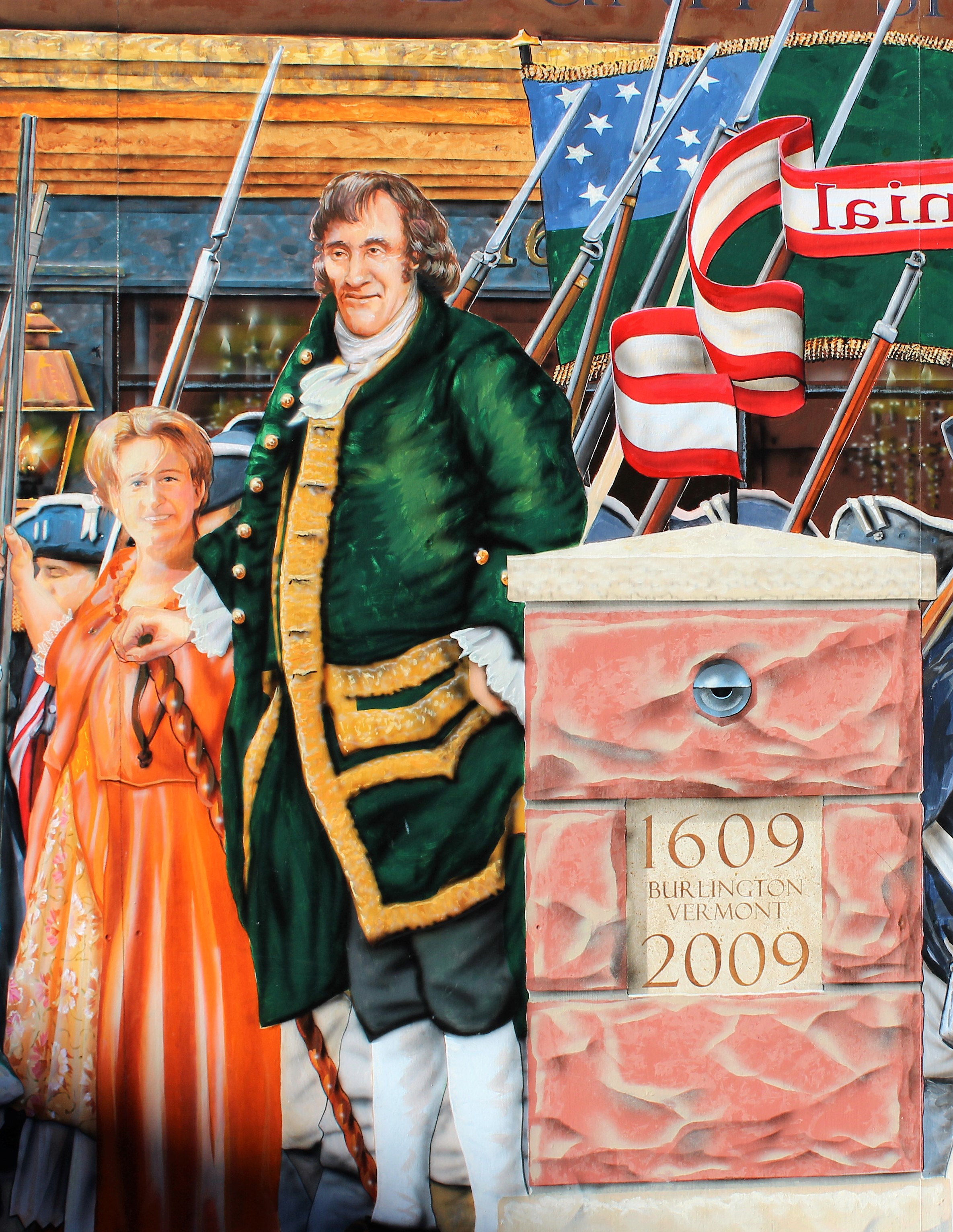
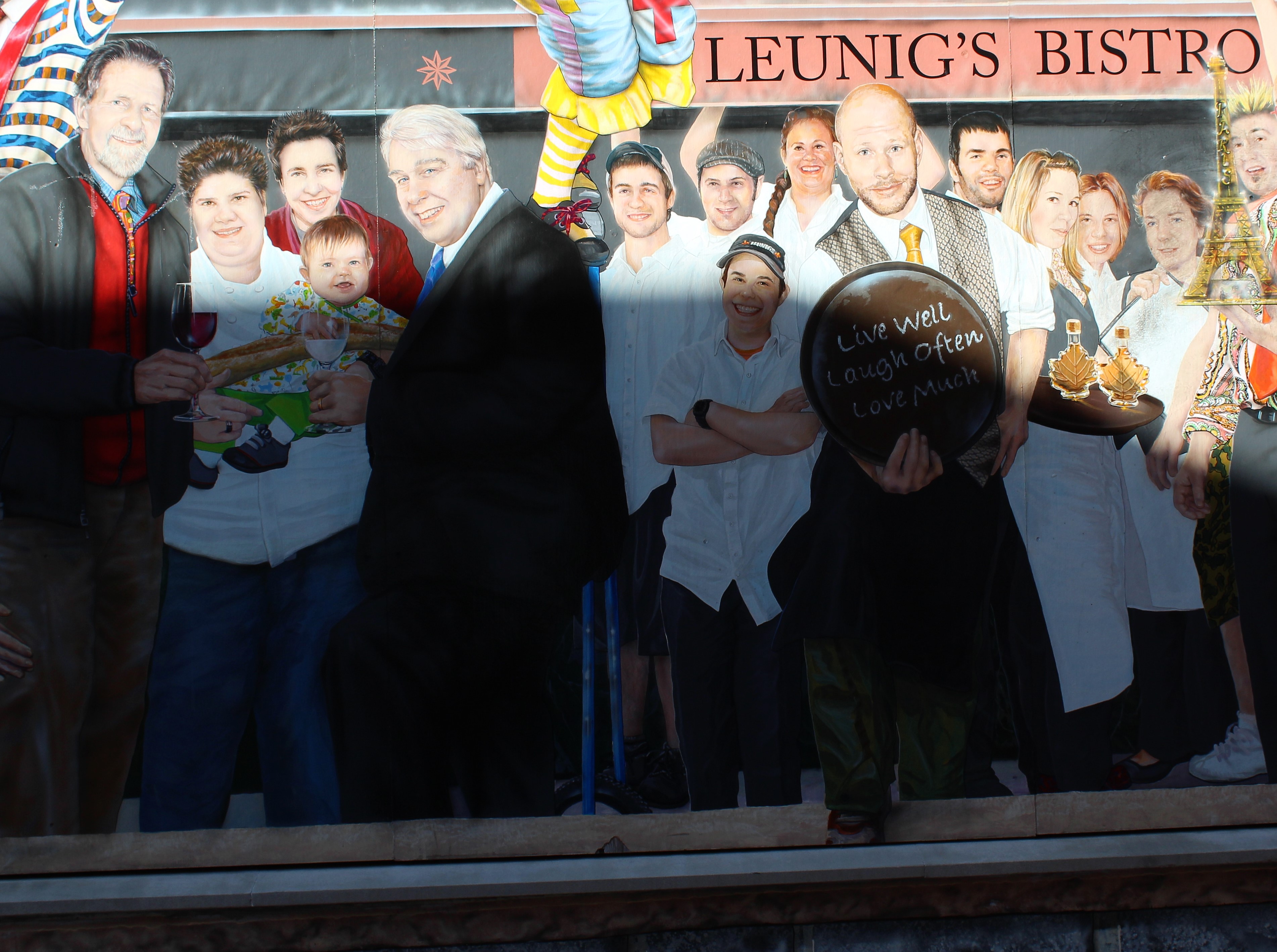
    Also along Church Street was a mural that was a Who’s Who of Vermont history.  The Parade of people along the wall was fascinating.  Of course, the wall started in 1609 with Samuel de Champlain credited with the first to map Lake Champlain.
    40 Mural

    Ethan Allen was represented in his green jacket giving a nod to his Green Mountain Boys.

    40.2 Ethan Allen

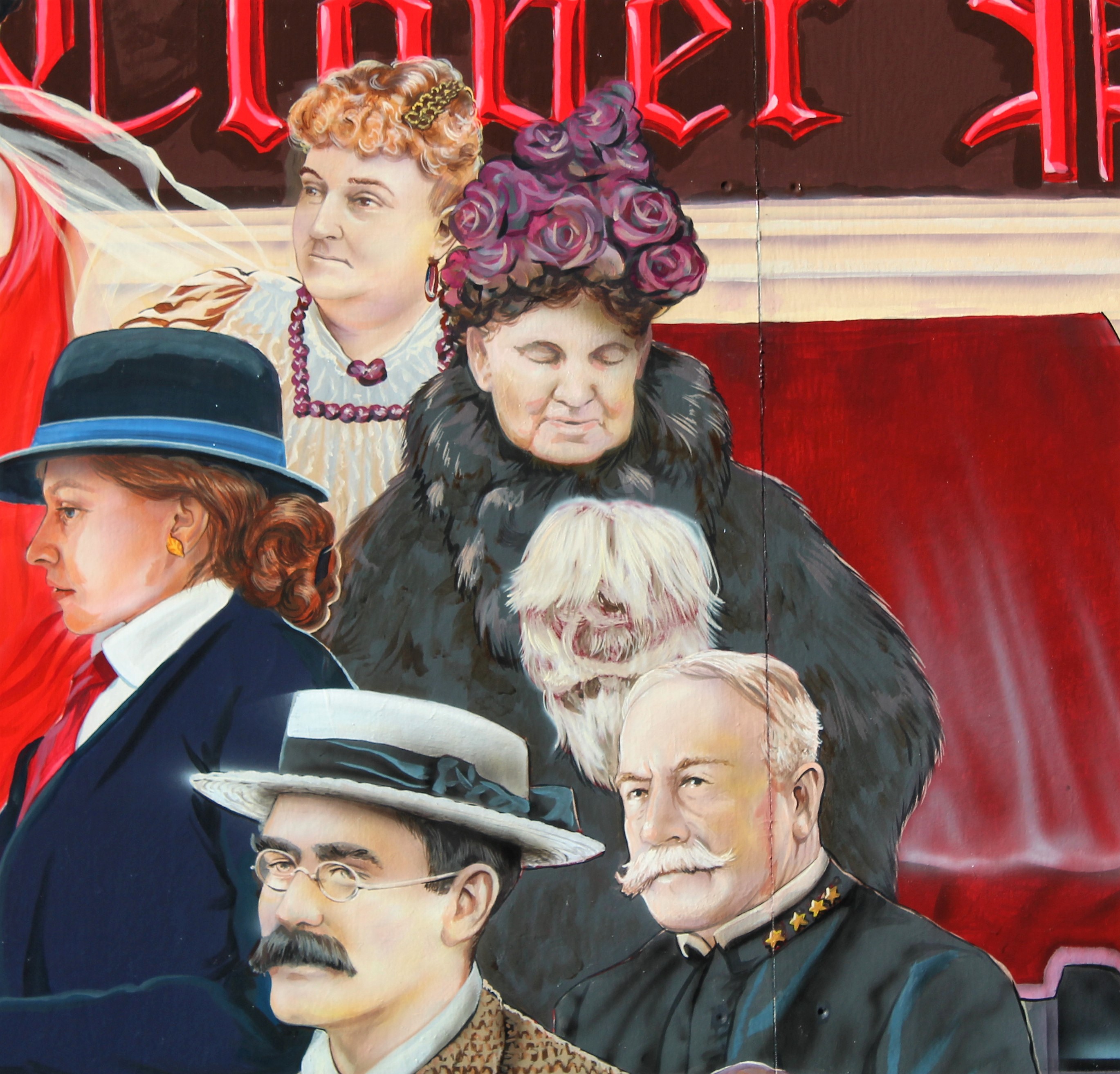
    A real surprise was Hetty Green.  When she died in 1916 she was reported to be the wealthiest women in the world.  Worth somewhere between 100-200 million dollars.  She made the Guinness Book of World Records as the “World’s Greatest Miser.”  Hetty is the lady with flowers in her hat.

    40.4 Hetty Green

    It is reported that in her later years she developed a hernia.  However, she refused to have a doctor repair the hernia because the cost was $150.

    Strangely enough, she bequeathed her fortune equally between her two children.  The son died a few years later and left his money to his sister.  When she died in 1951 she gave the 200-million-dollar fortune to charities.

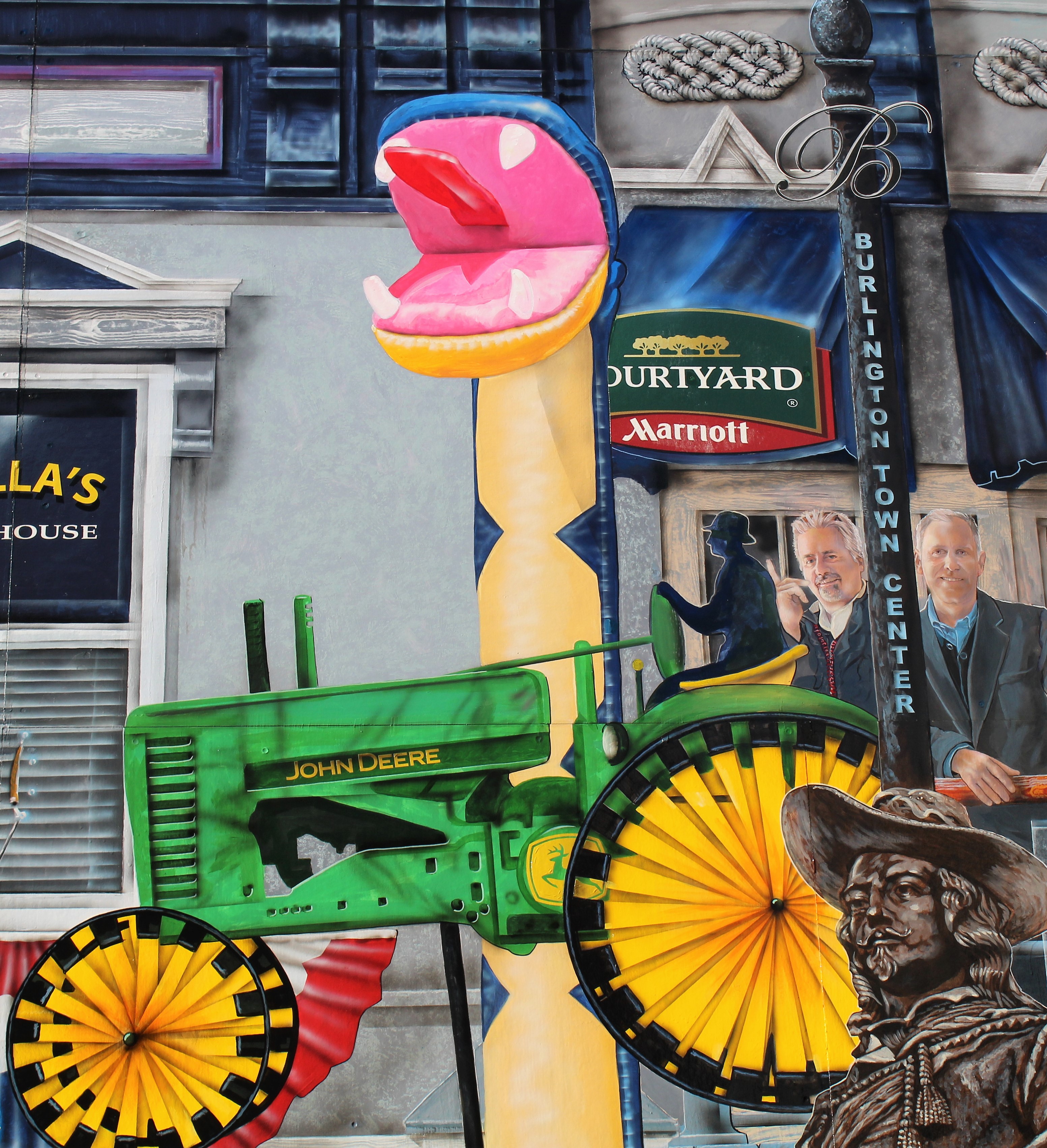
    Champ made the wall as well.  You can see him above the John Deere tractor which was also started in Vermont.

    40.5 Champ

    Lastly was a Robert Fuller.  He is on the far left of the photo below.  He is a co-owner of Leunigs Bistro.  He also was a co-sponsor for the mural.  The skipper found it interesting that Robert has the same life motto as he:  Live Well, Laugh Often, and Love Much.

    40.3 Robert Fuller

    The crew would like to stay here longer and explore more, but they must turn around if they are to get out of the Champlain Lock system before October 11th.  They have decided that they will return by this route in 2018 to go to Montreal and Old Quebec City.

    Thursday, October 5, 2017

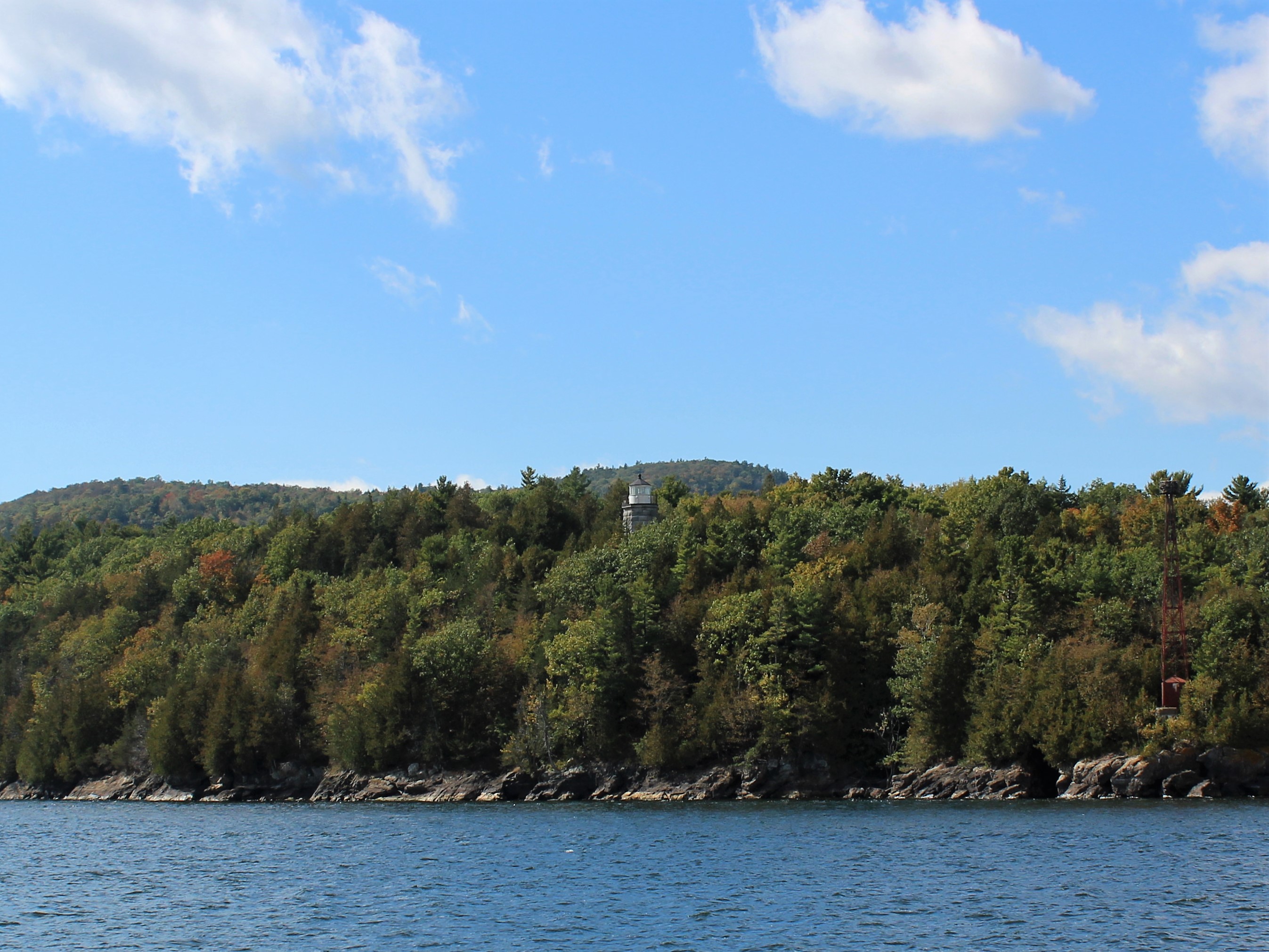
    The return south took the same path as the north bound run.  A major land mark is the Split Point Light.

    2 Split Rock Point Light

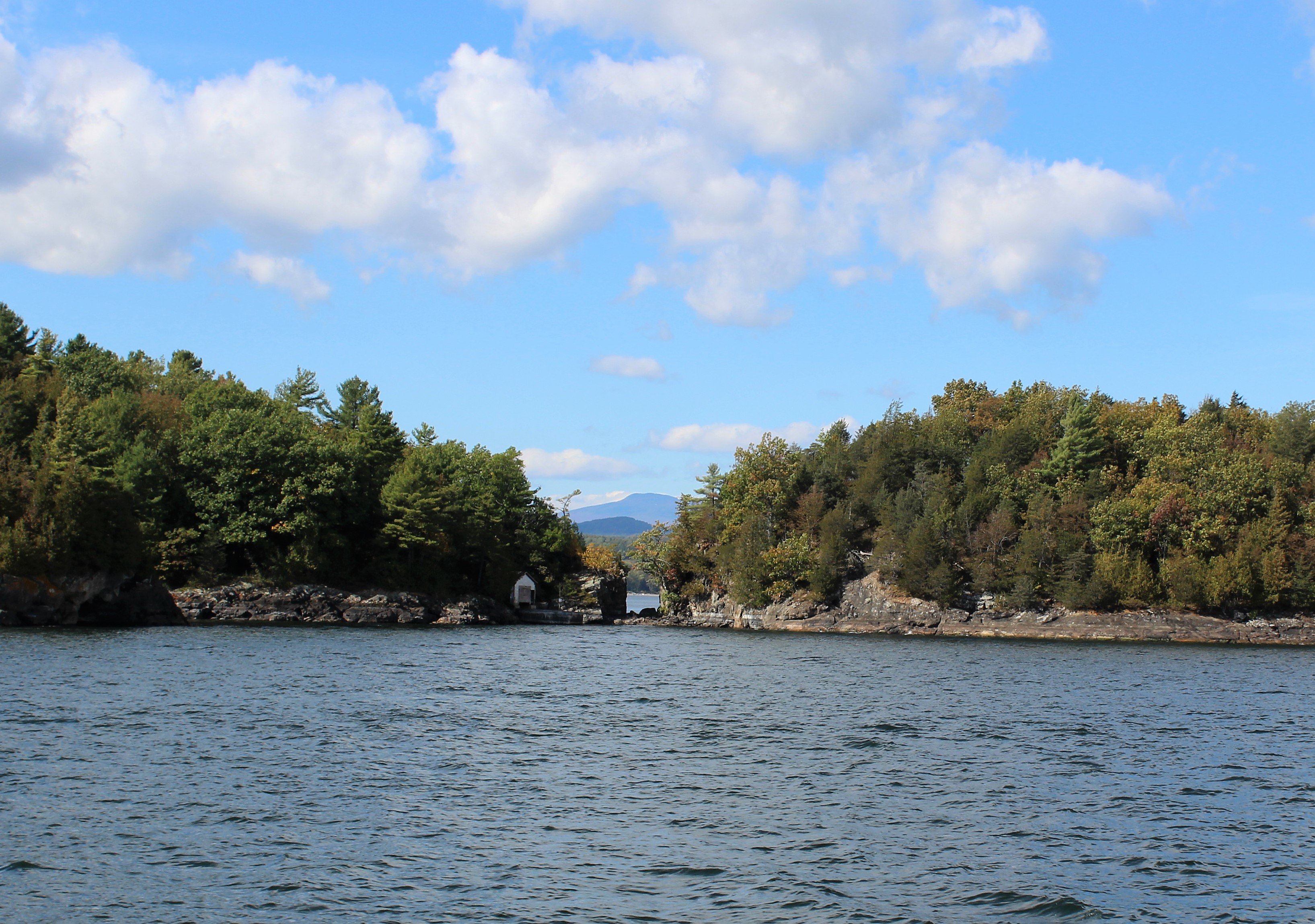
    The point gets its name because of the island that is split off from the main land.  Notice the ‘tunnel’ between the land masses.

    3 Split Rock Point

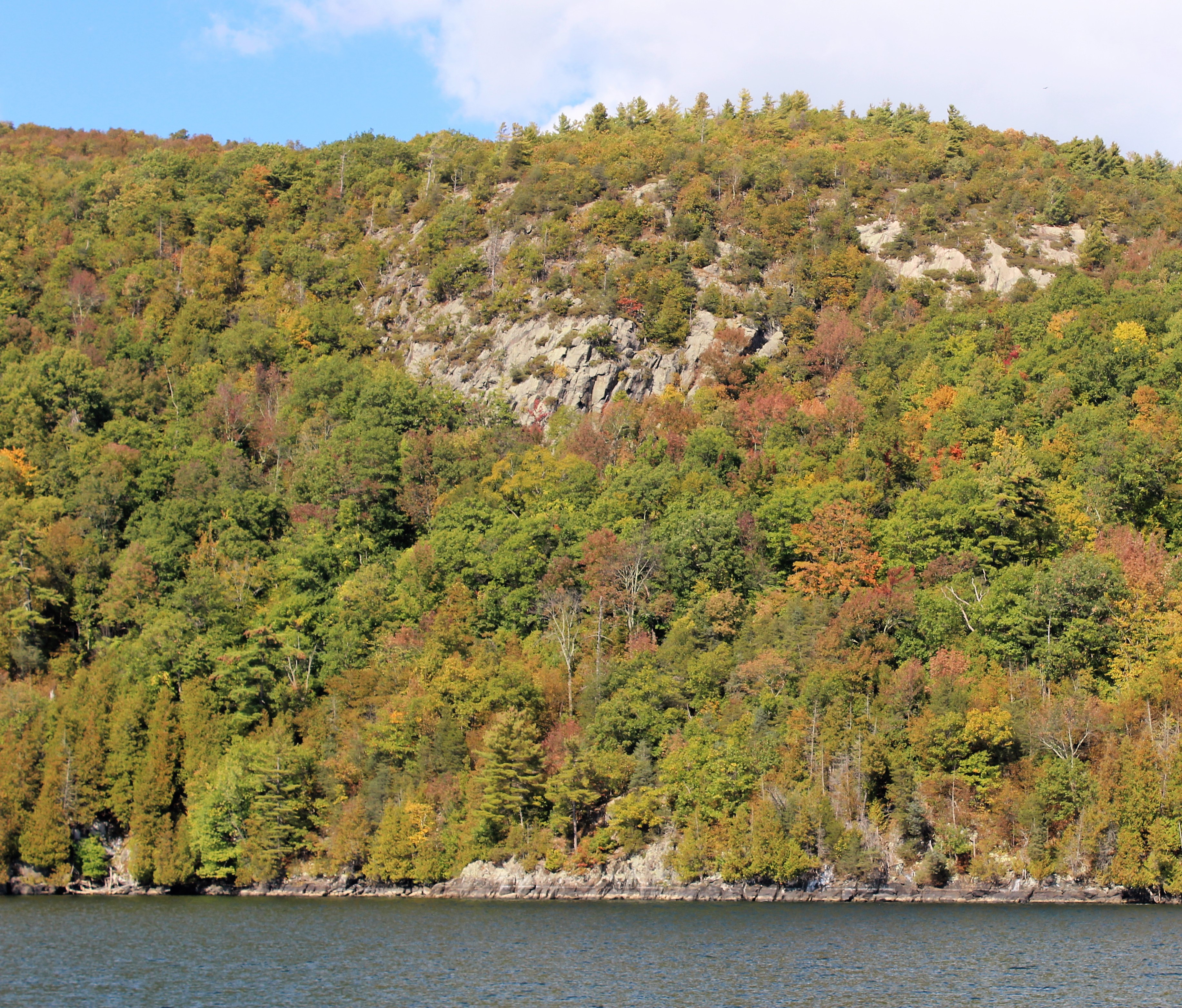
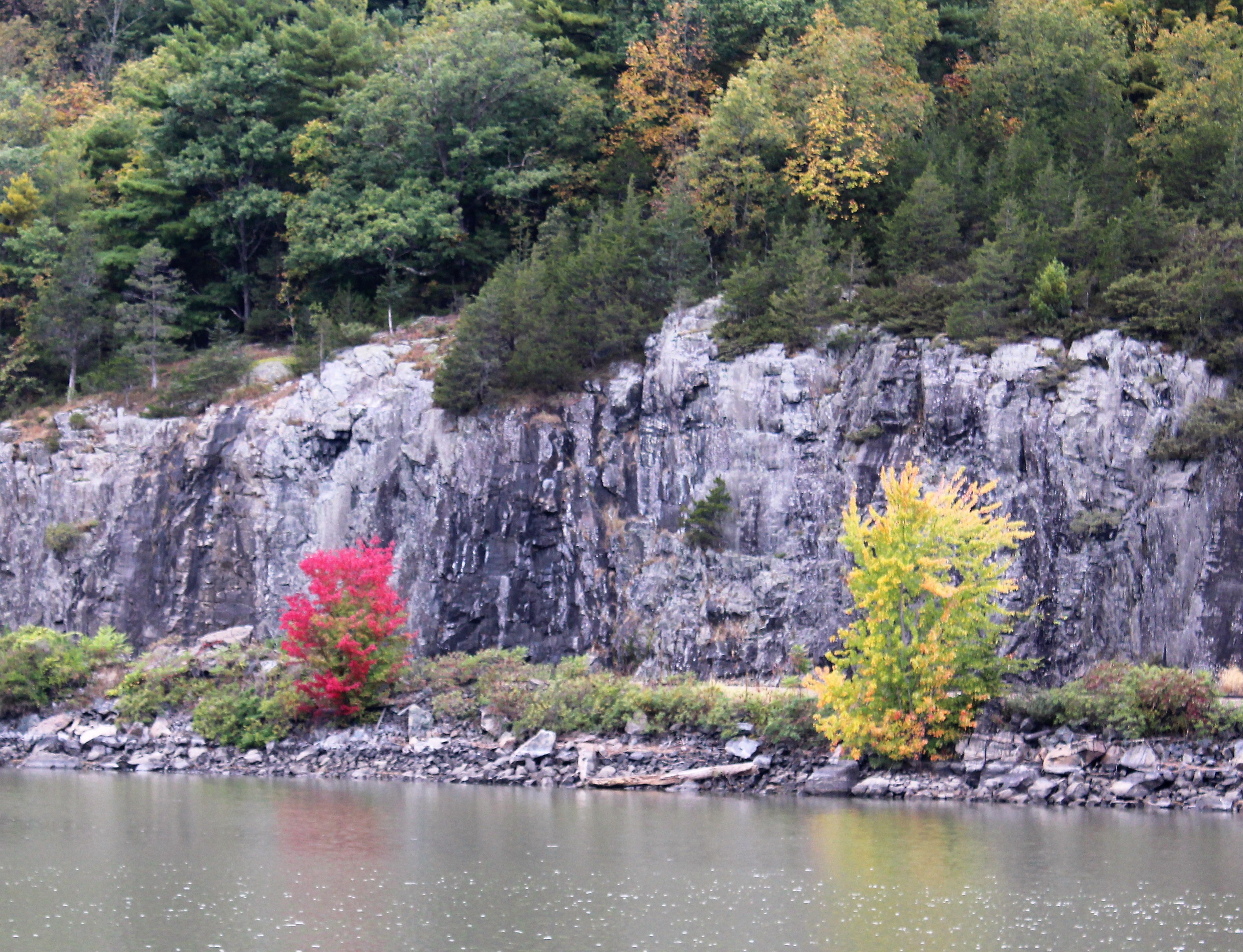
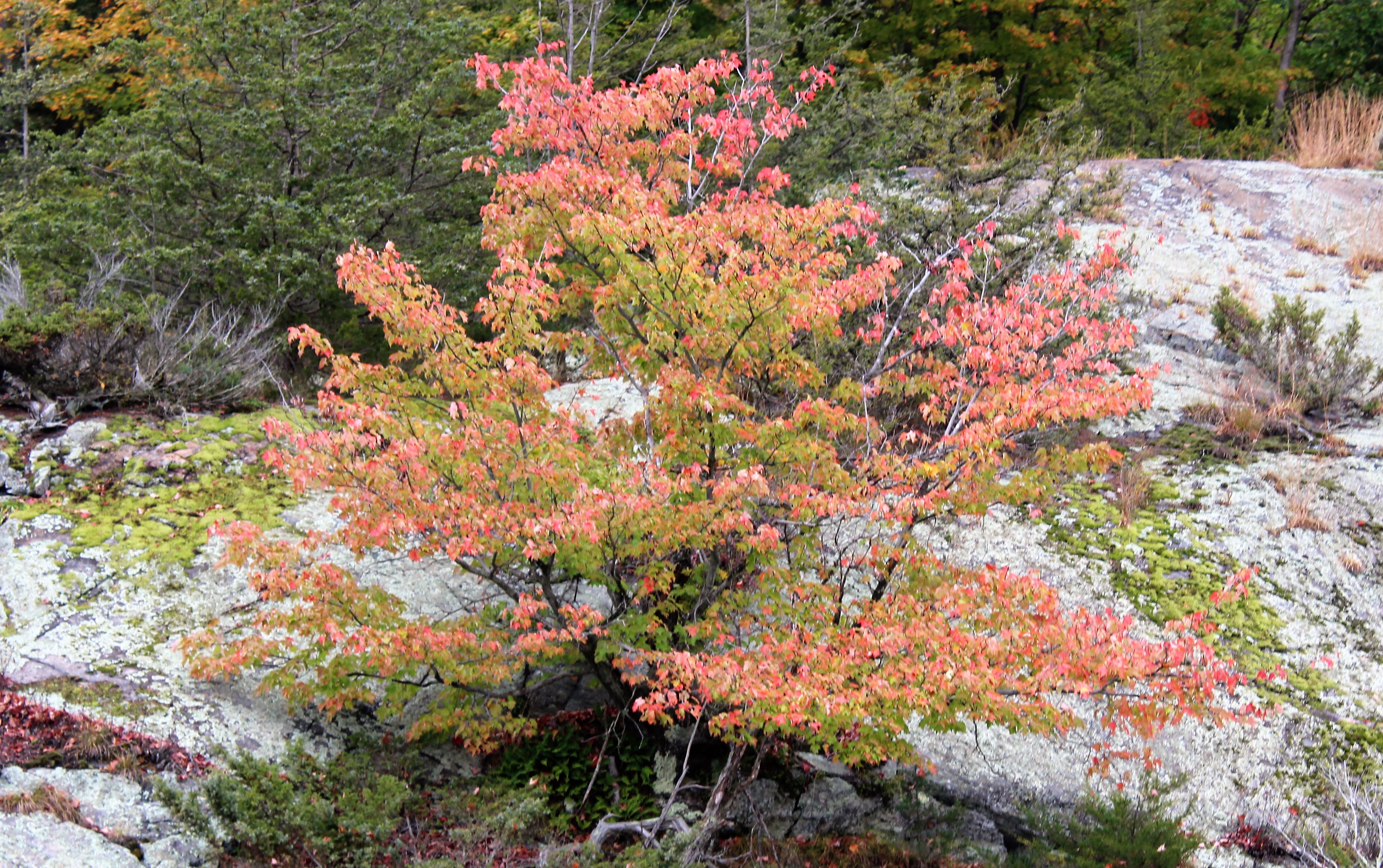
    The trees have started to turn more color, but it is still off to a slow start this fall.  Maybe the Farmers Almanac’s prediction of a mild winter in the northeast will turnout to be true.

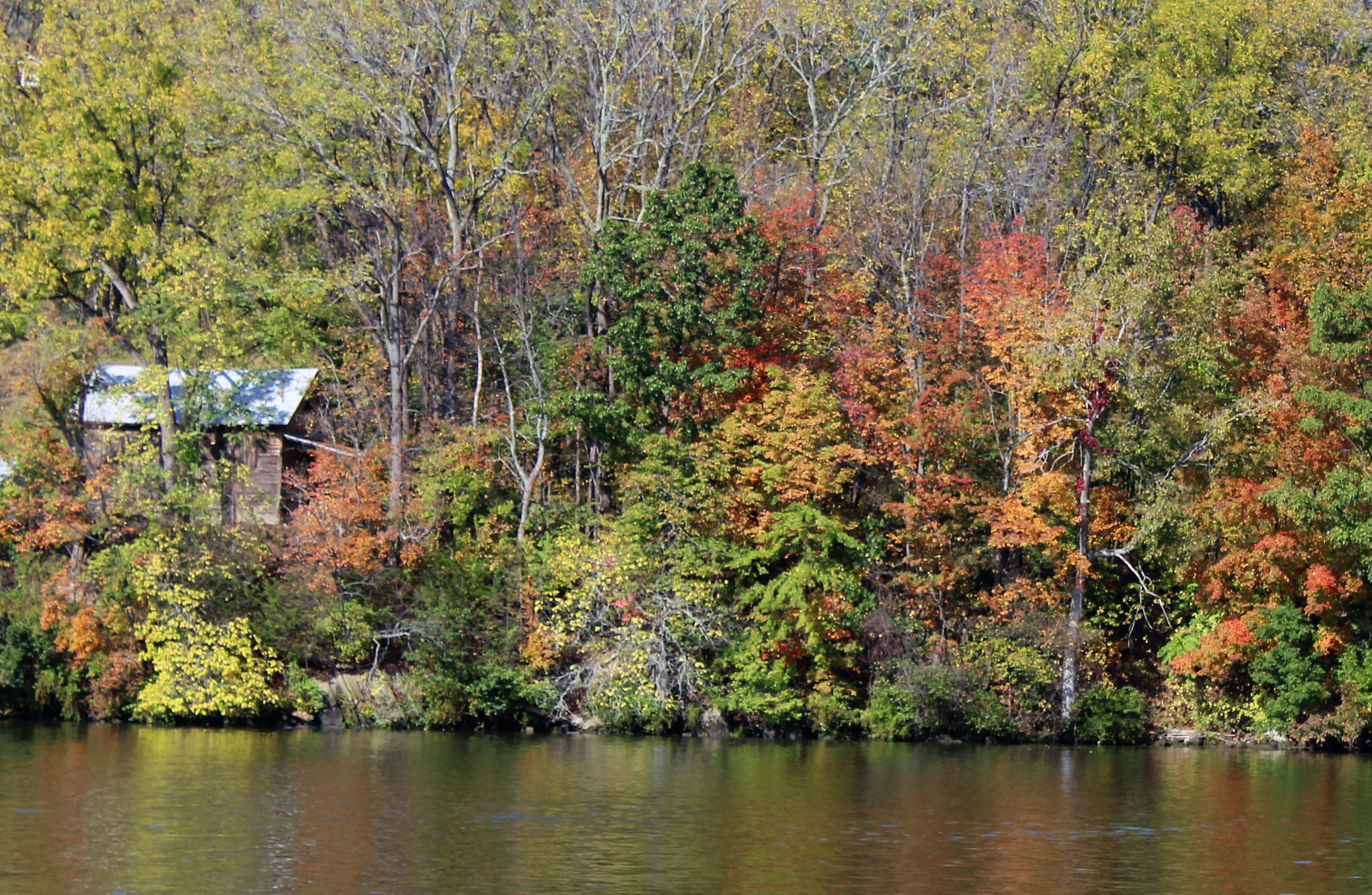
    4 Fall Color

    5

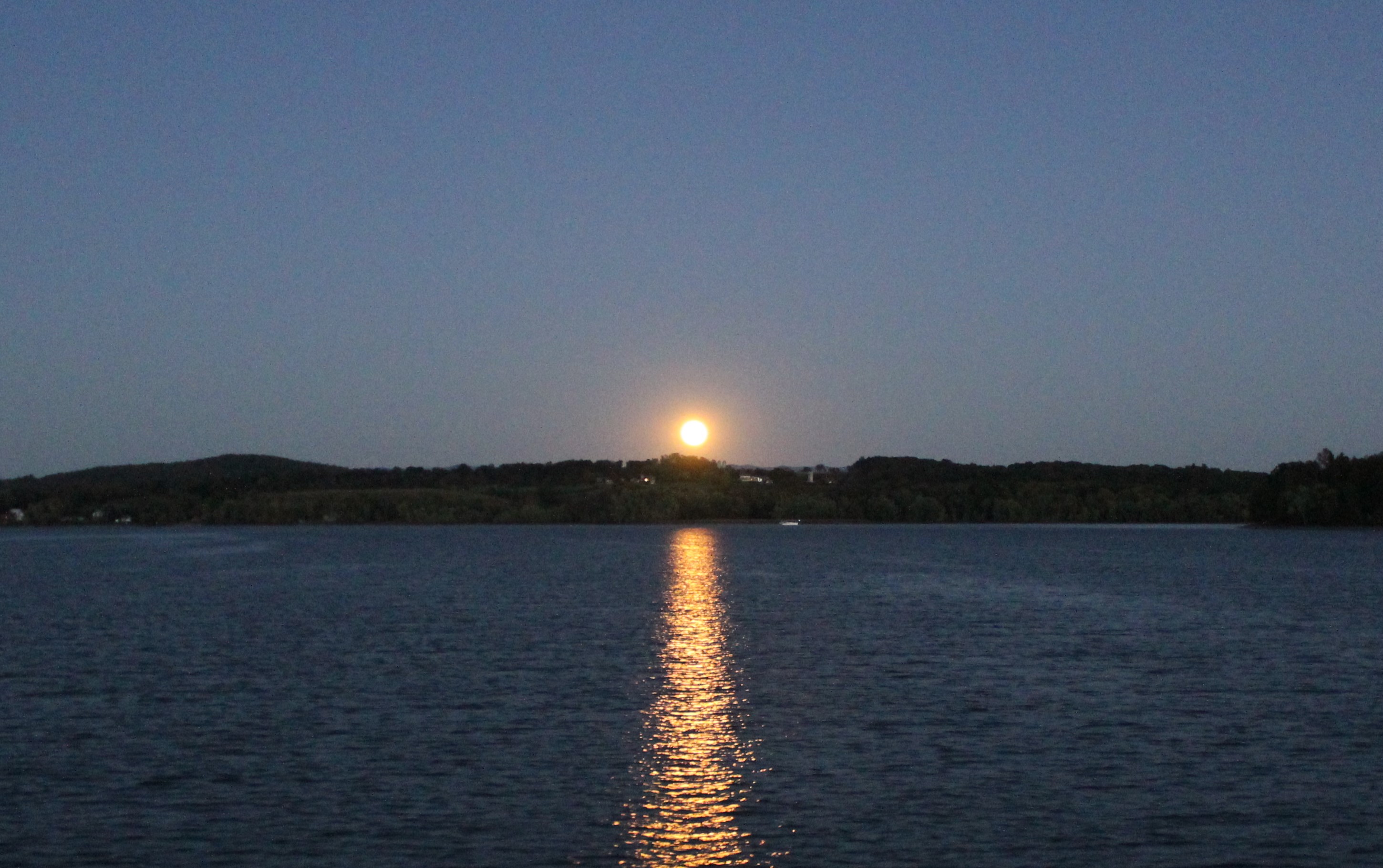
    The harvest moon came up over the Vermont Green Mountains.

    9 Harvest moon

    Friday, October 6, 2017

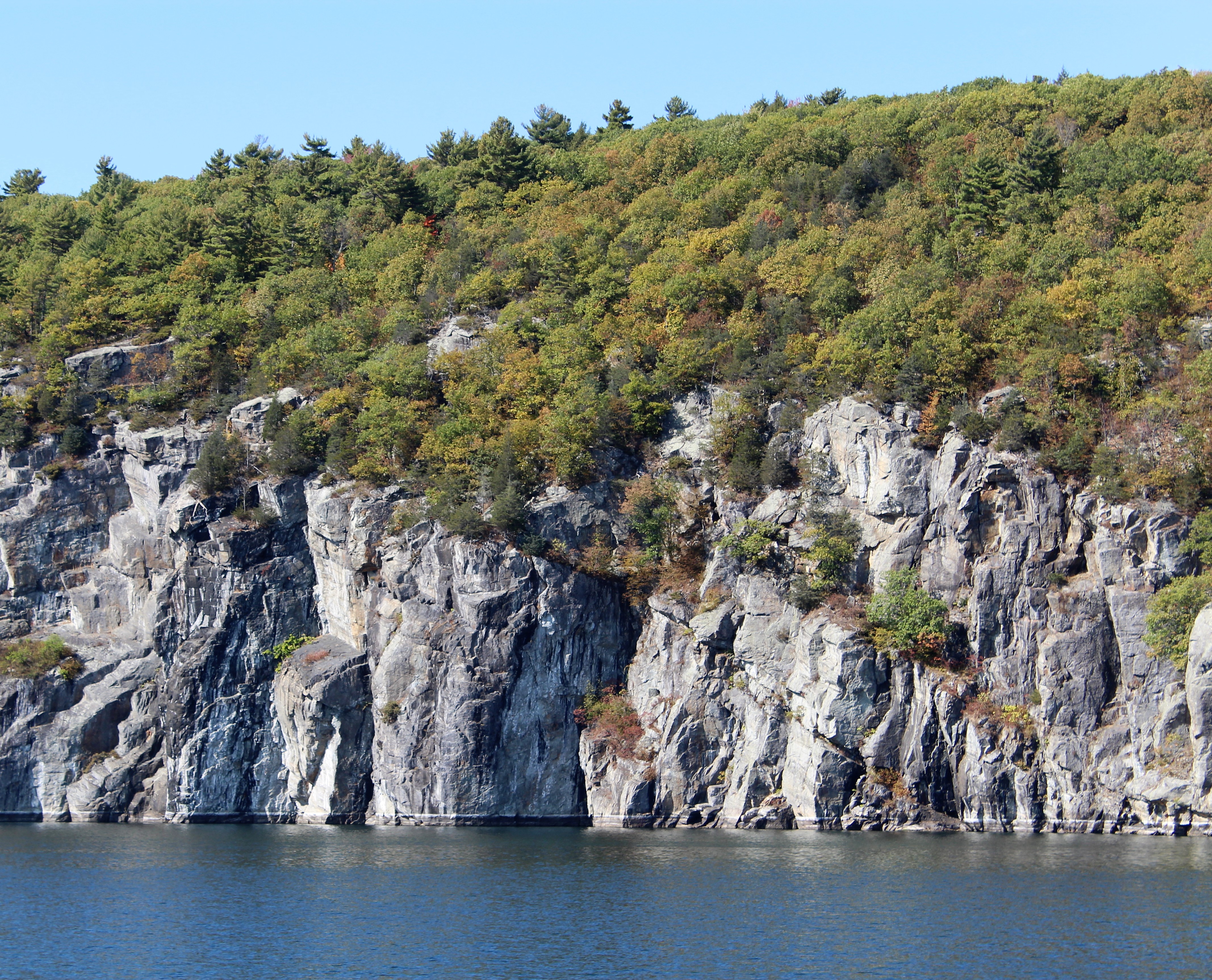
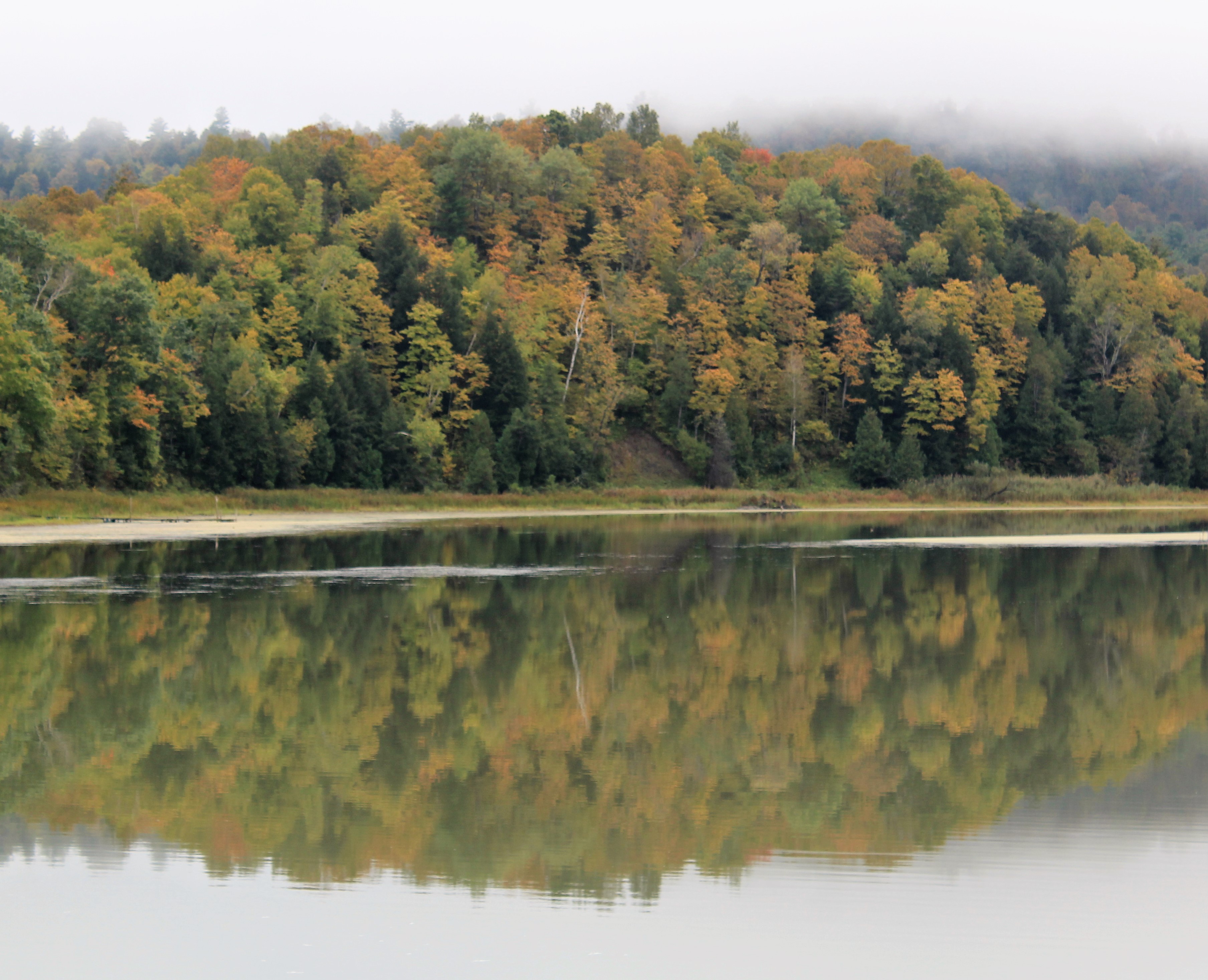
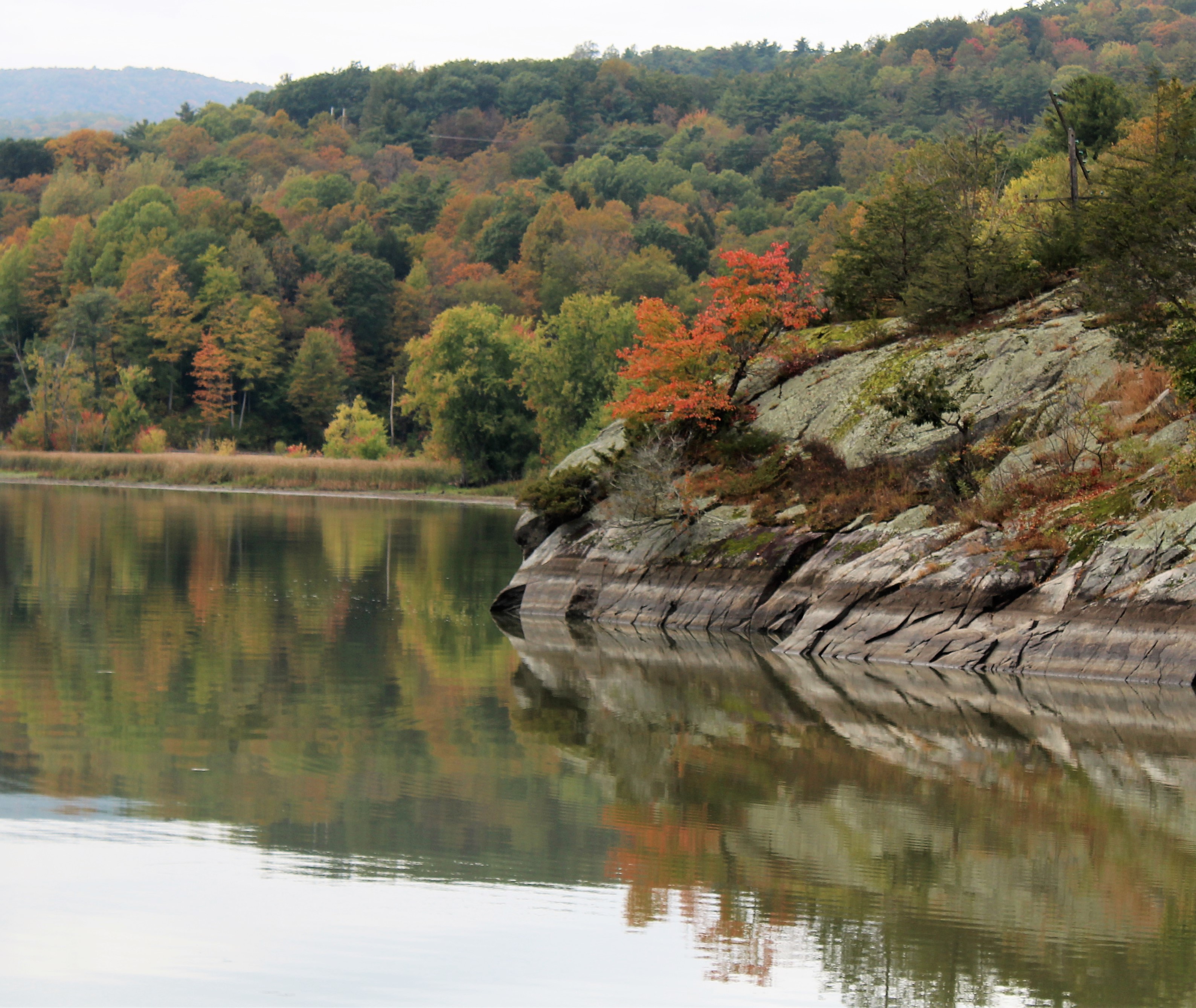
    The crew weighed anchor and headed back into the headwaters of Lake Champlain.  The cruise was uneventful, but there was some good scenery to view along the shore.

    10

    11

    12

    13

    Saturday, October 7, 2017

    The crew woke to a rainy day.  After the rain stopped the crew shoved off the wall at Whitehall and headed towards Ft Edwards.  There would be four locks to negotiate along the way.  Some scenery along the way:

    14

     17

     19

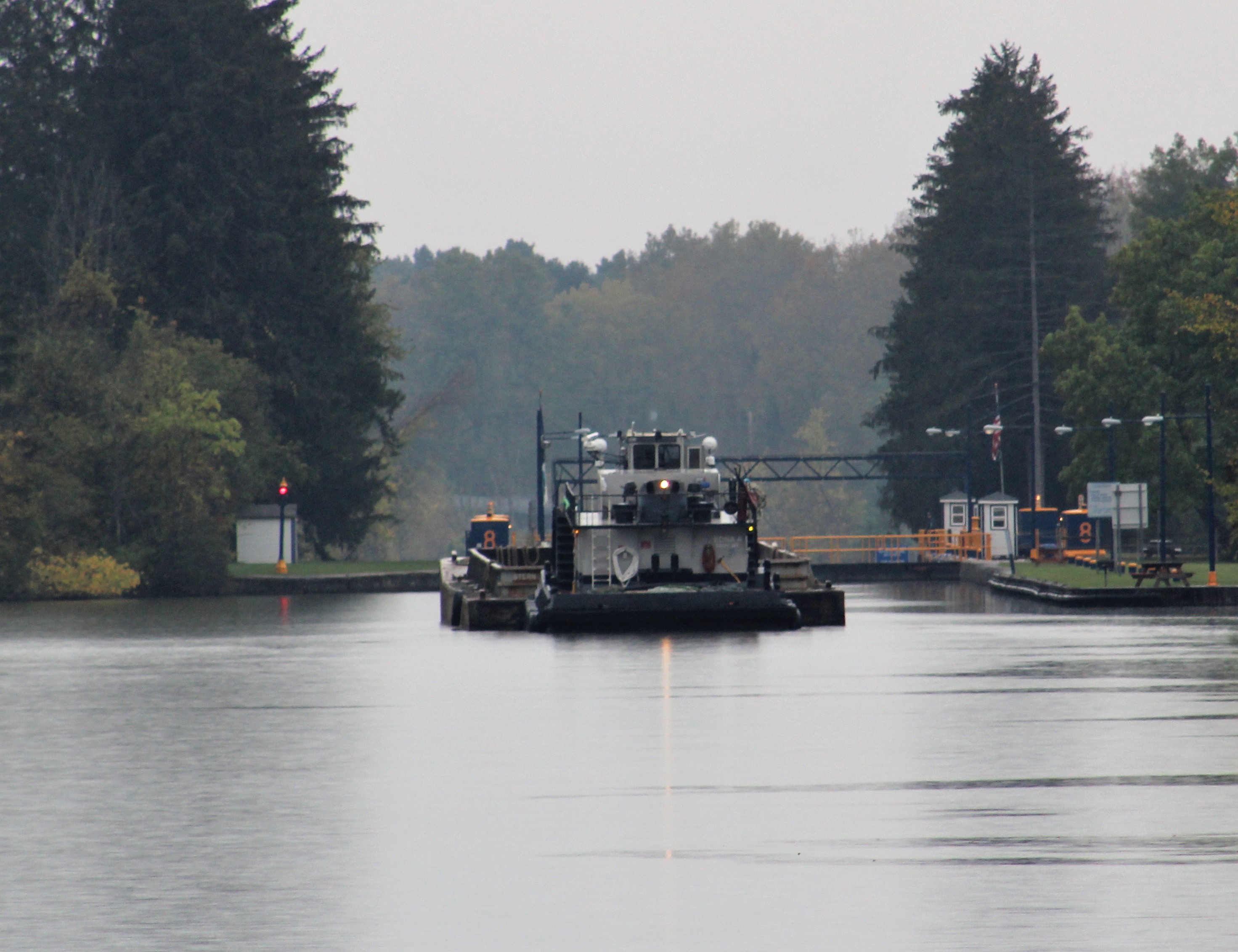
    The crew spent 2.5 hours waiting for the locks today.  The main reason was a tow that was ahead of the crew.  The tow was just far enough ahead to cause delays in two of the four locks.

    20

    One of the more interesting aspects of the boating lifestyle is all the fascinating people along the waterways.  The crew met a couple in Burlington that have been on their boat since May 2017.

    Our crew left Burlington a day ahead of these new boaters.  Our crew ended up catching their lines though in Whitehead.  The two crews spoke for about 30 minutes before going their separate ways.  The new boaters are from Michigan.  One graduated from Michigan State, the other from Michigan.  They plan on going all the way to Mechanicville on Saturday so they can watch the rivalry game at a sports bar.

    Our crew will stop earlier in Ft Edwards, but hopes to leap frog them again on the southbound journey.

    41.3

    After clearing Lock C-7, the crew turned up a side creek to dock for the weekend at Ft Edwards.

    Boat Name of the Week

          No good candidates this week.

    Next Week

    The crew will continue South on the Champlain Canal.  The Canal closes October 11th, so the crew will then continue back south on the Hudson River towards New York City.

    Loop On – The water goes on forever and the adventure never ends.

    Eric the Red