Tag: Massachusetts

  • Thar She Blows

    Hello virtual crew members and fellow adventurers!

    Eric here with the latest travels of Still Waters II.
    IMG_0064
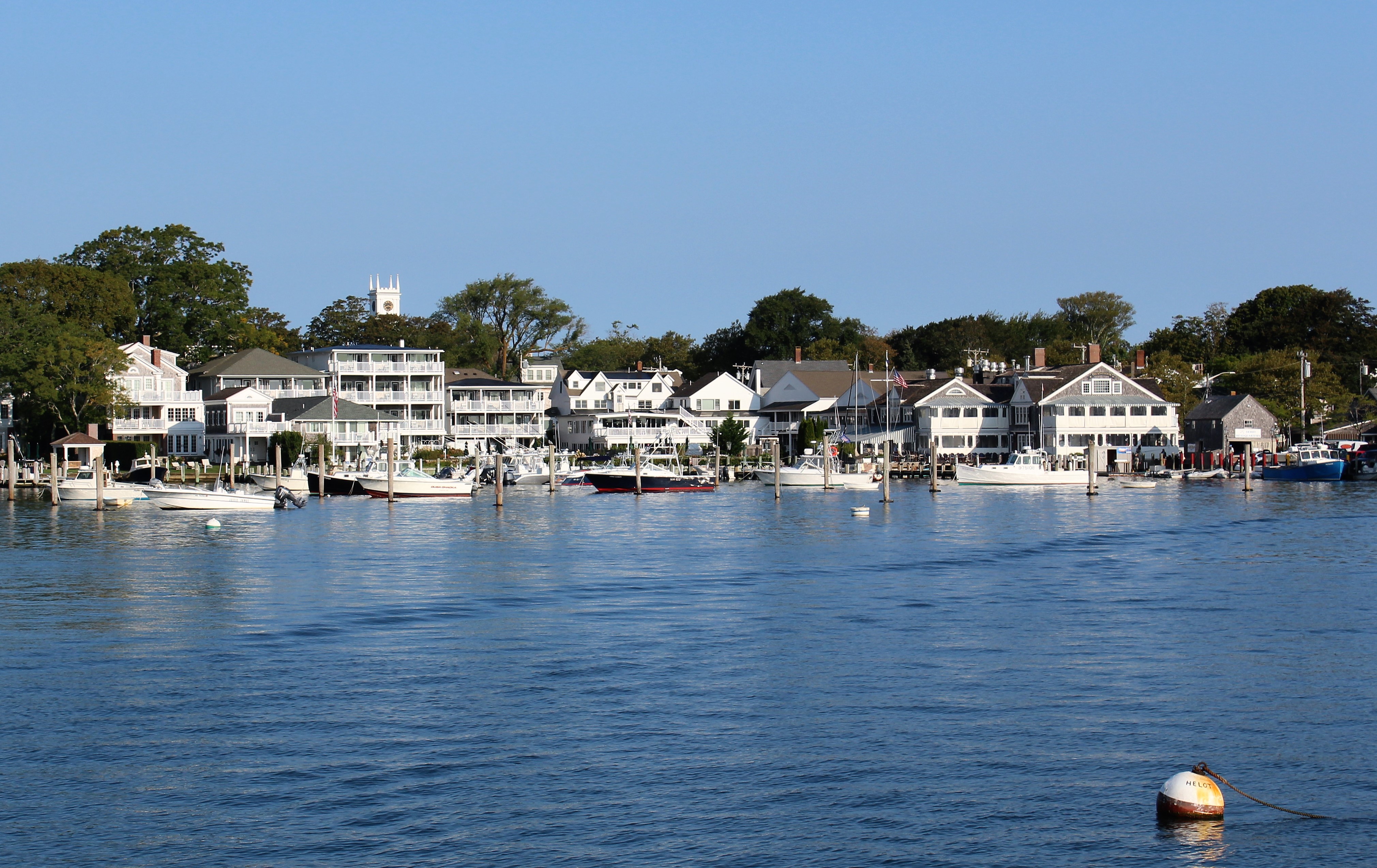
    Edgartown on Martha’s Vineyard


    Summary of week:

    Groton

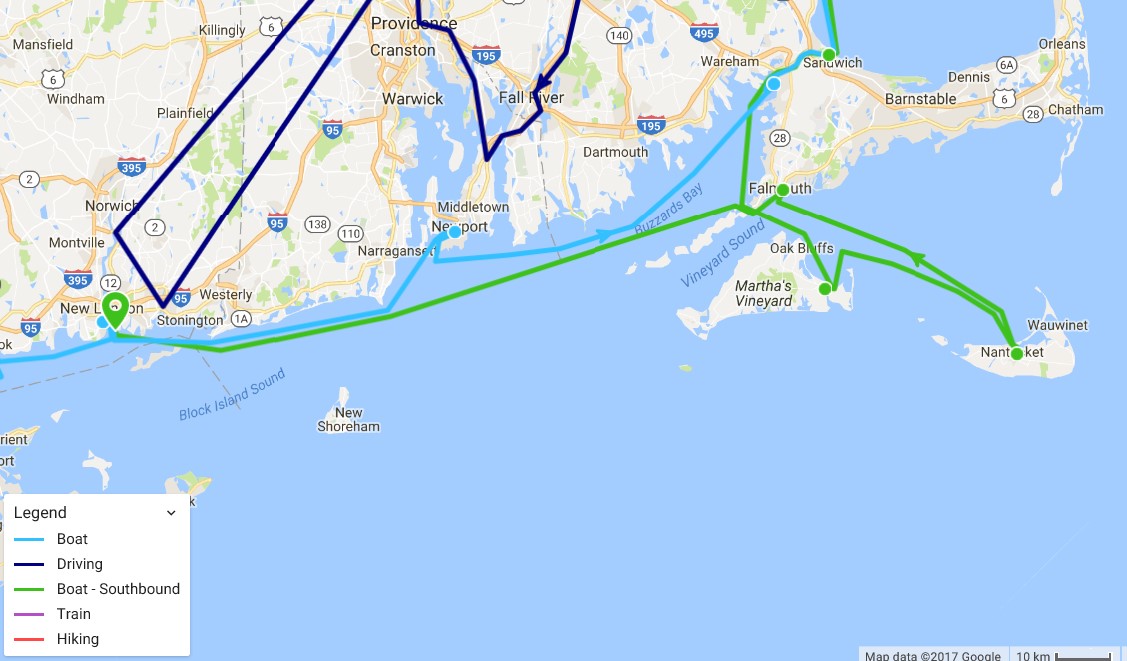
    The crew spent the week exploring the greater Cape Cod region.  They travelled from Sandwich, thru the Cap Cod Canal, and then on to Martha’s Vineyard on Monday.  Wednesday, they moved over to Nantucket.  Because of Hurricane Jose, the crew headed back to the mainland with a stop at Falmouth on Friday.

    This week’s journey of discovery did answer the following questions:

    1. Who was the first European to discover Martha’s Vineyard?
    2. Where is the only Civil War memorial, dedicated to both the Union and Confederate Soldiers, that is above the Mason Dixon Line?
    3. What are sperm whale teeth made of?

    Click on the link to read the day-to-day travel log.  This includes weather report of the day, sea conditions, log of the days travel, and a summary of the experience.

    At the Box Office

    This week’s video is on hold as the crew continues to travel to get out of harms way of Hurricane Jose.

    To see past videos, click on the link to the Still Waters II Vimeo site.  The library now contains 33 videos of Still Waters II cruising America’s Great Loop.

    Monday, Sept 11, 2017

    The crew got an earlier start than normal so they could ride the current thru the Cape Cod Canal.  This strategy allowed the crew to navigate the seven-mile canal in less than 45 minutes.  With the early start, the crew saw many fishermen along the canal banks.
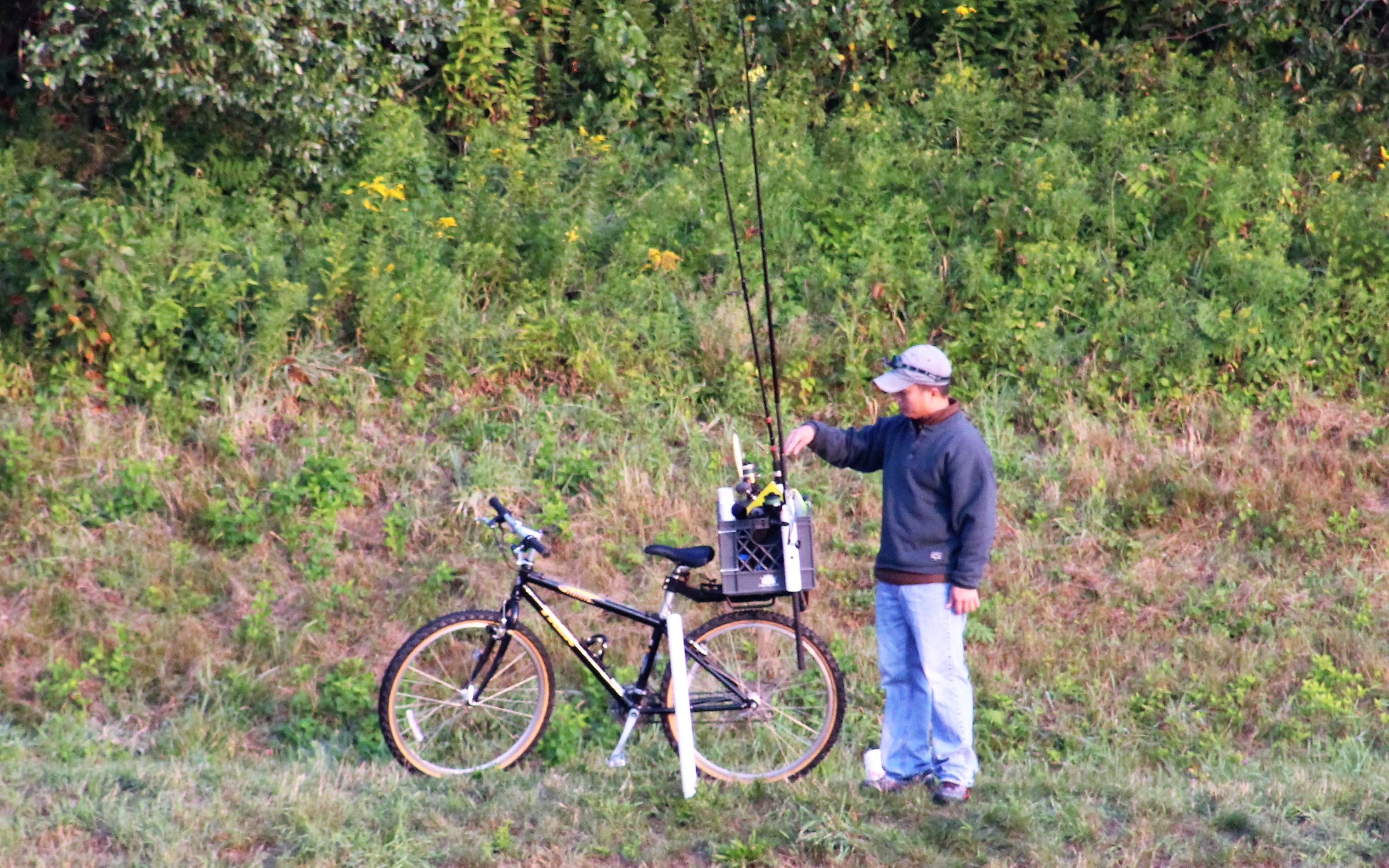
    5 Fishing Cape Cod Canal

    There is no road along the canal; however, there is a bike trail.  The fishermen have rigged some interesting accessories to their bicycles so they can get to their favorite fishing spots along the canal path.
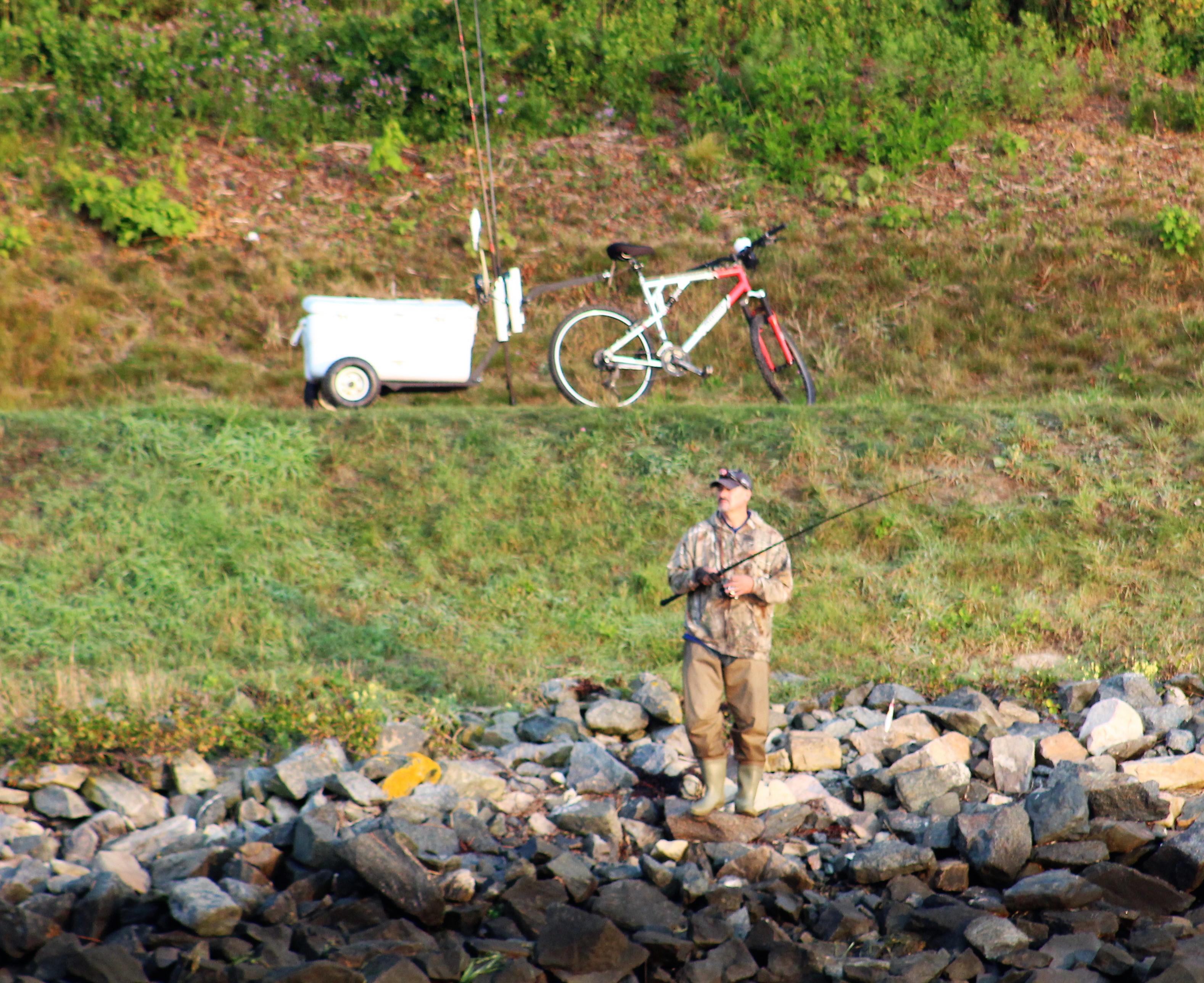
    5.1

    After crossing thru Cape Cod at the Woods Hole Passage, the crew entered the Vineyard Sound and headed toward Edgartown on the far east side of Martha’s Vineyard Island.

    After taking a mooring ball for two days, the skipper dropped the dinghy in the water and the crew headed to shore to explore.
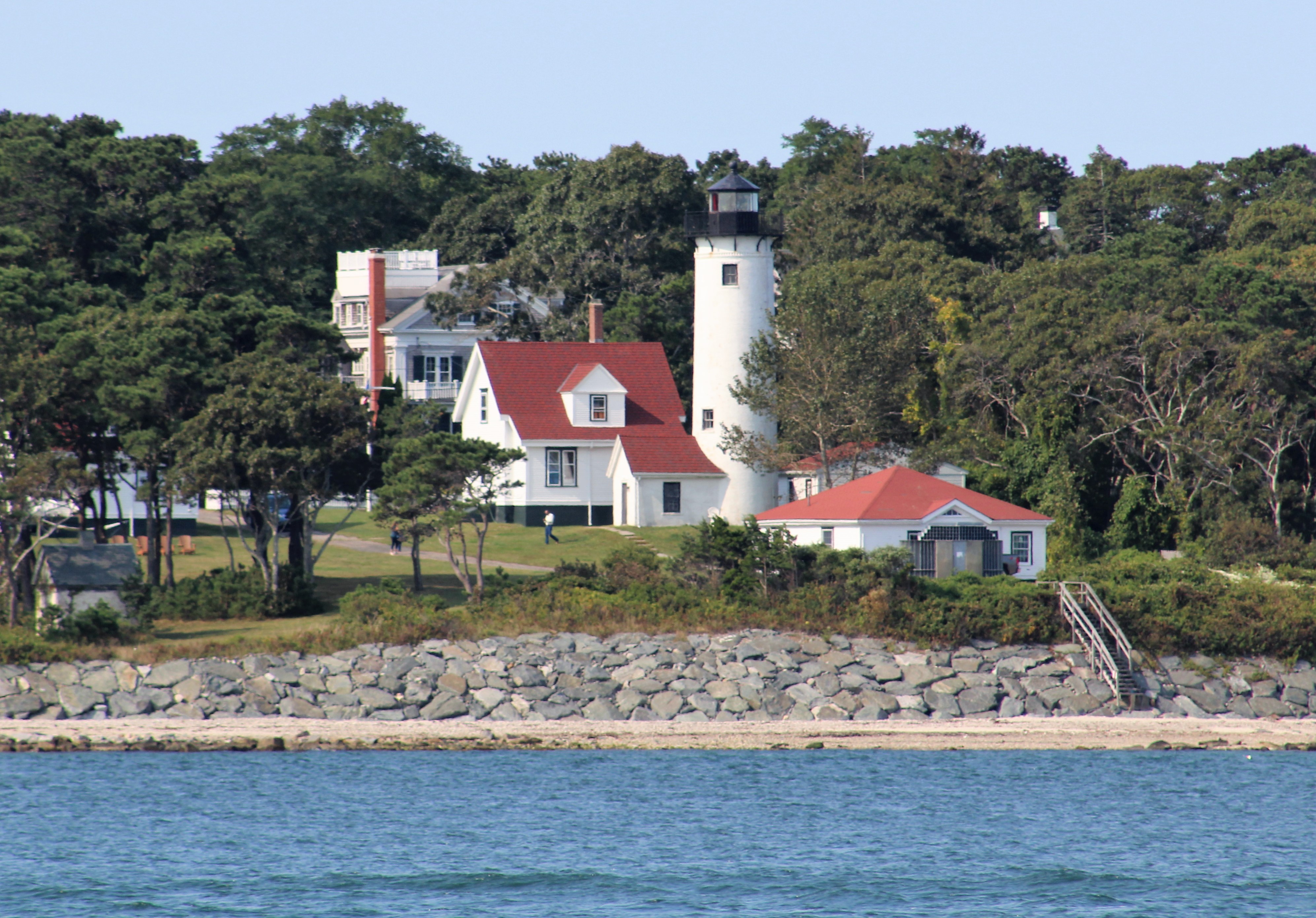
    7 West Chop Light
    West Chop Light on Martha’s Vineyard

    The homes have shingles for siding.  The shingles are cut from Maine white pine trees.  The wood shingles can last up to 100 years without being replaced.  The shingle has a light off white color when first placed on the home.  After the shingle ages, it turns this grayish brown color.
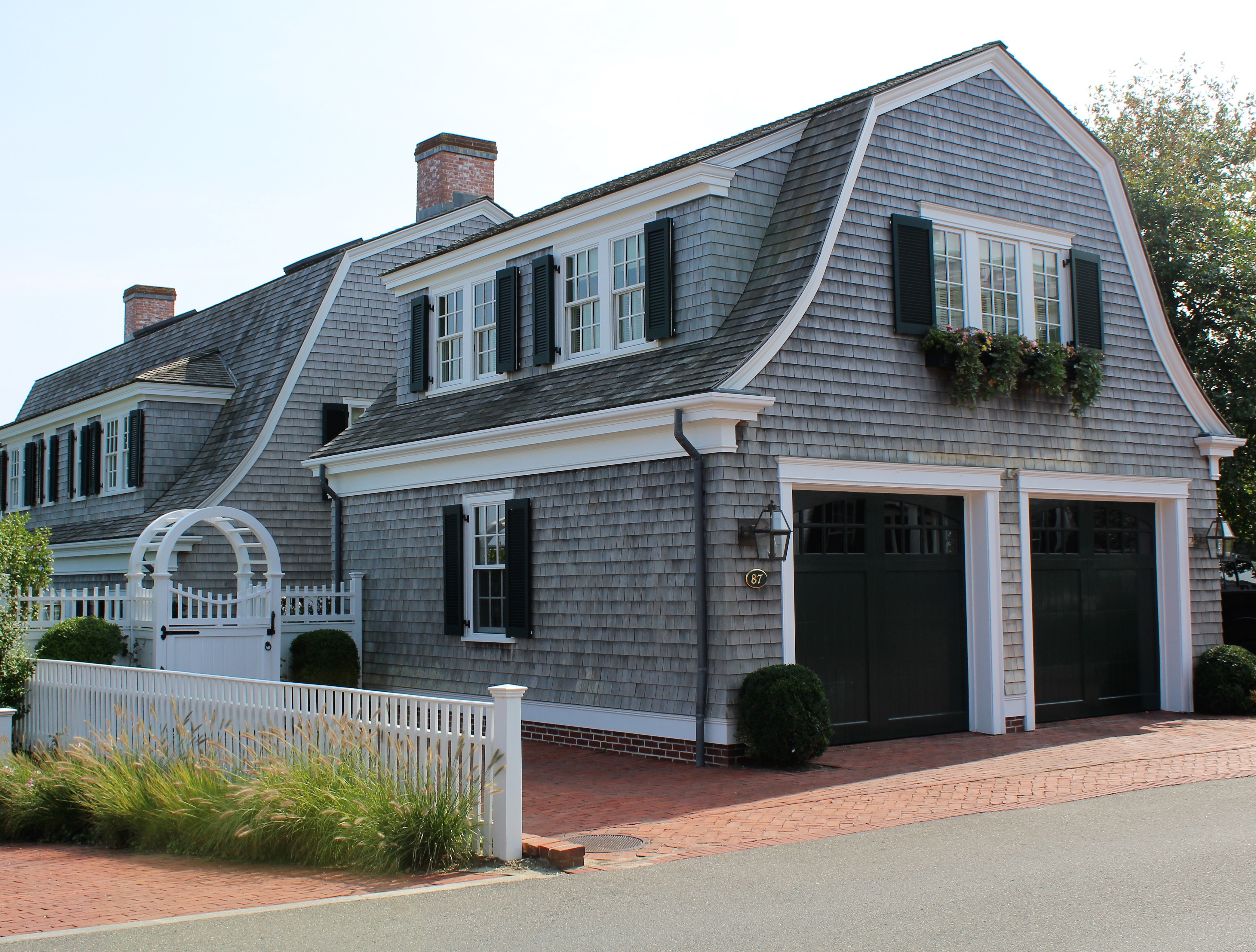
    9.2.1

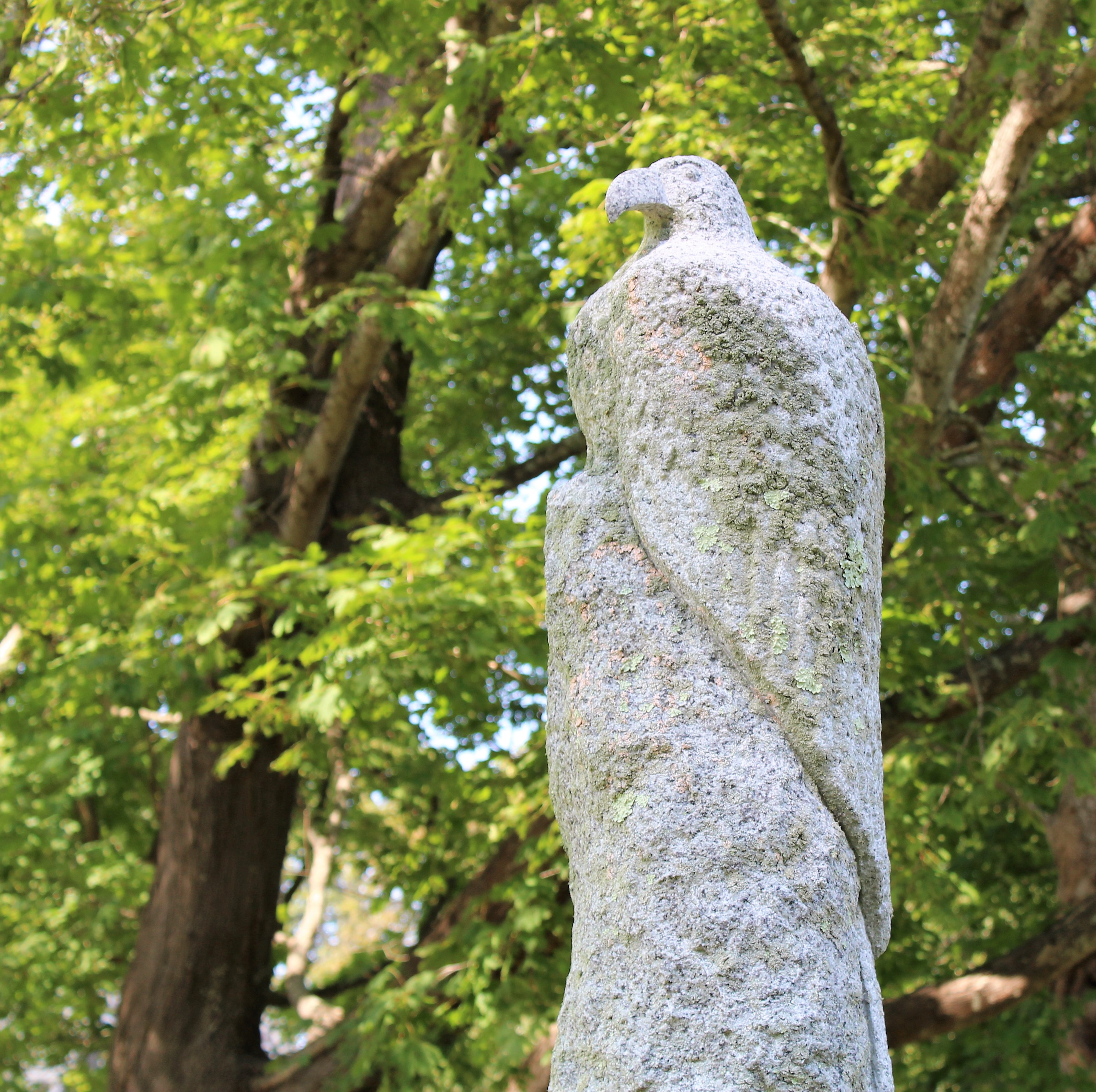
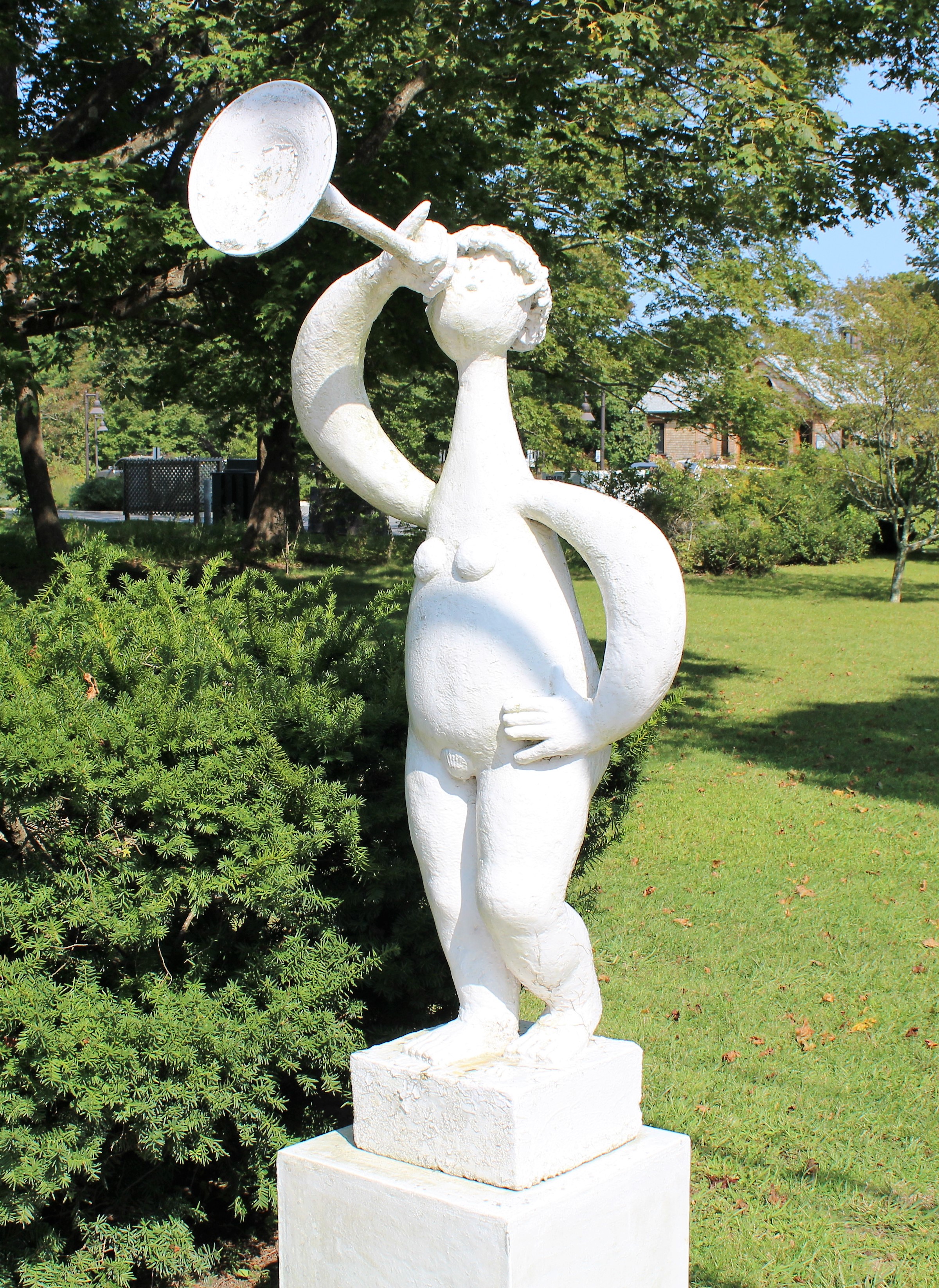
    The crew also came across some interesting yard art for sale.  This guy was relaxing at an art gallery on the water front.

    9 Edgartown

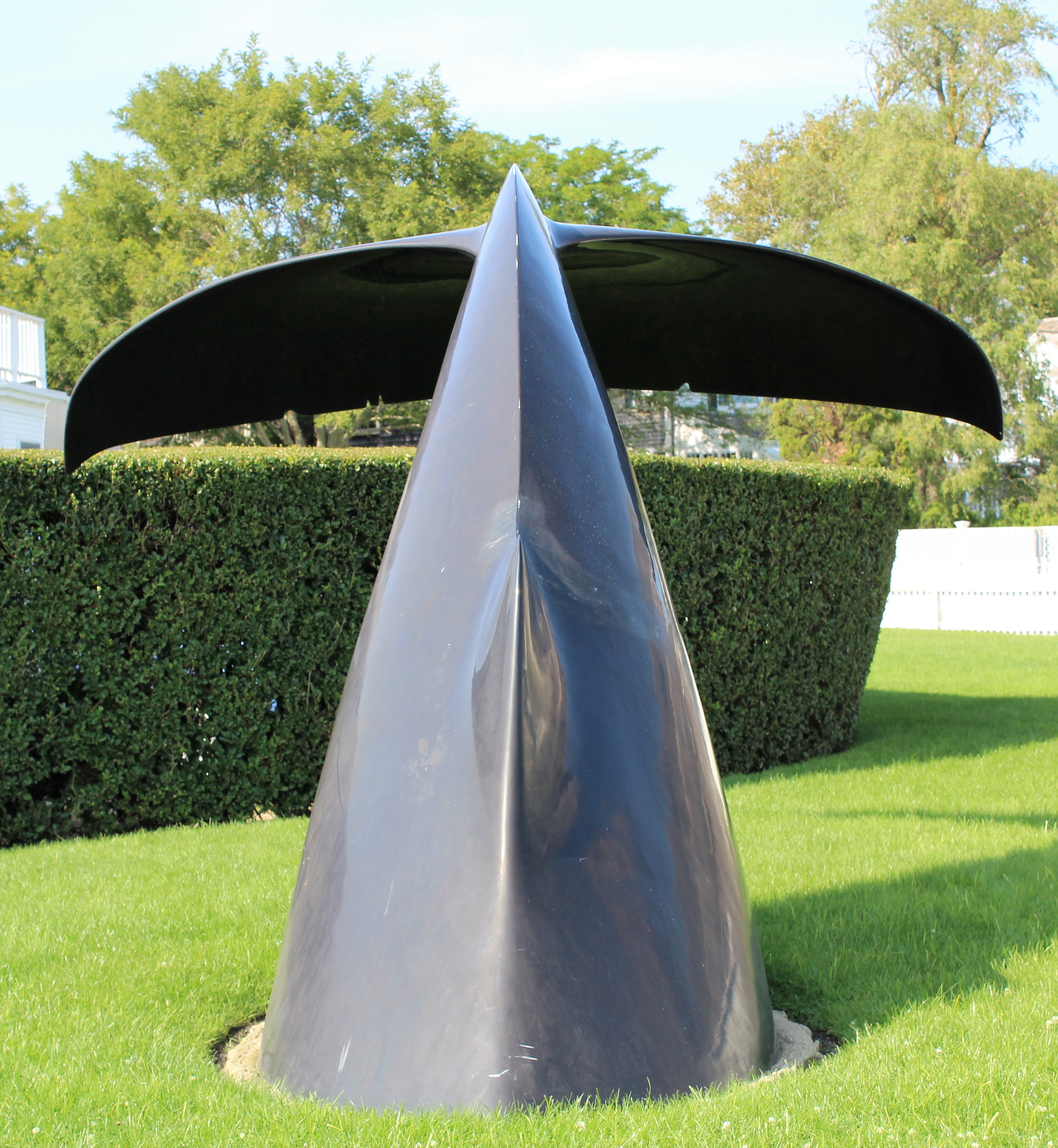
    This whale tale was at another art gallery along the water front.
    9.2.4

    The crew found the Visitor center/bus stop and bought all day tickets to tour the island on Tuesday.  After sampling the local ice cream, the crew headed back to the mother ship swinging on a mooring ball.

    Tuesday, Sept 12, 2017 

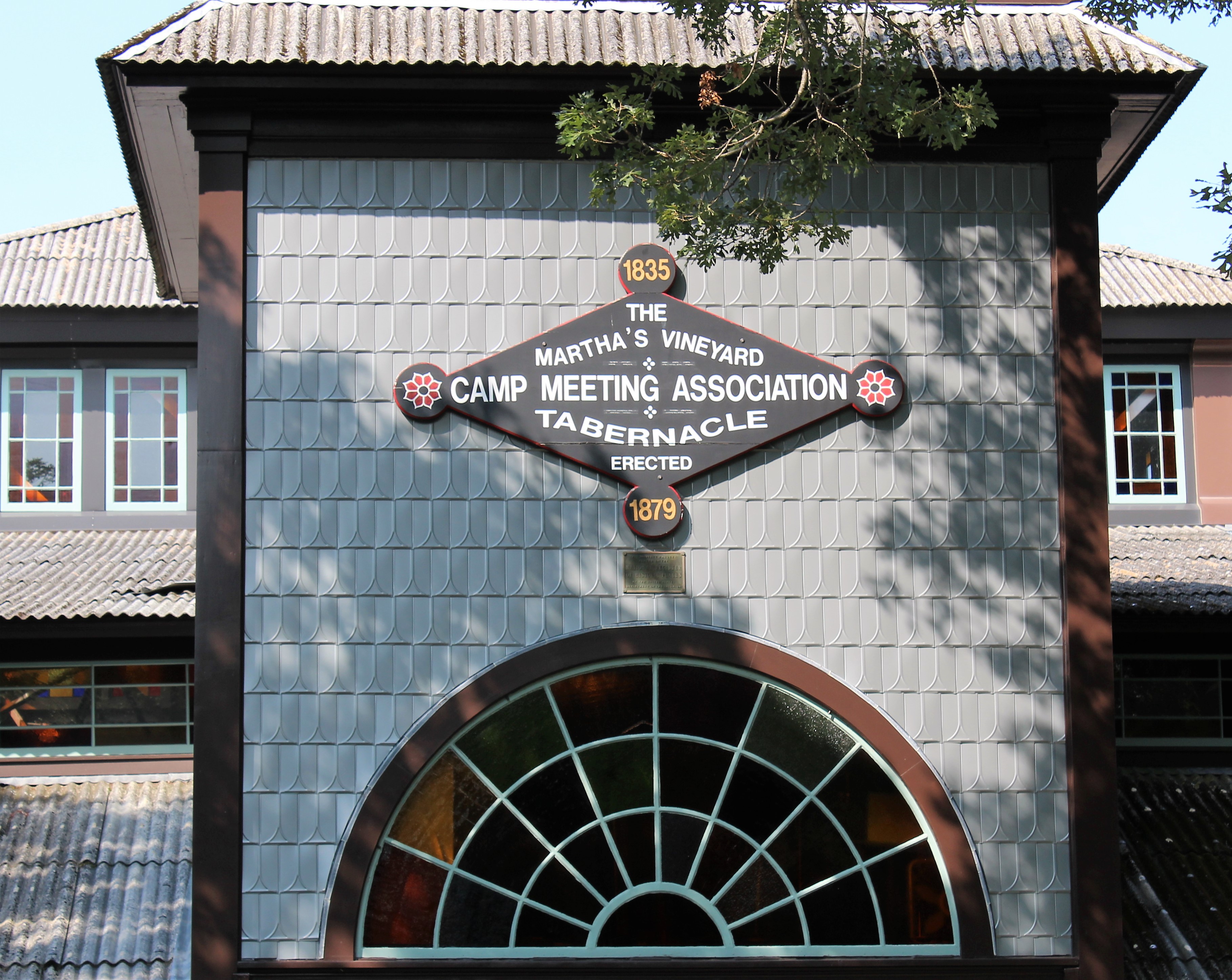
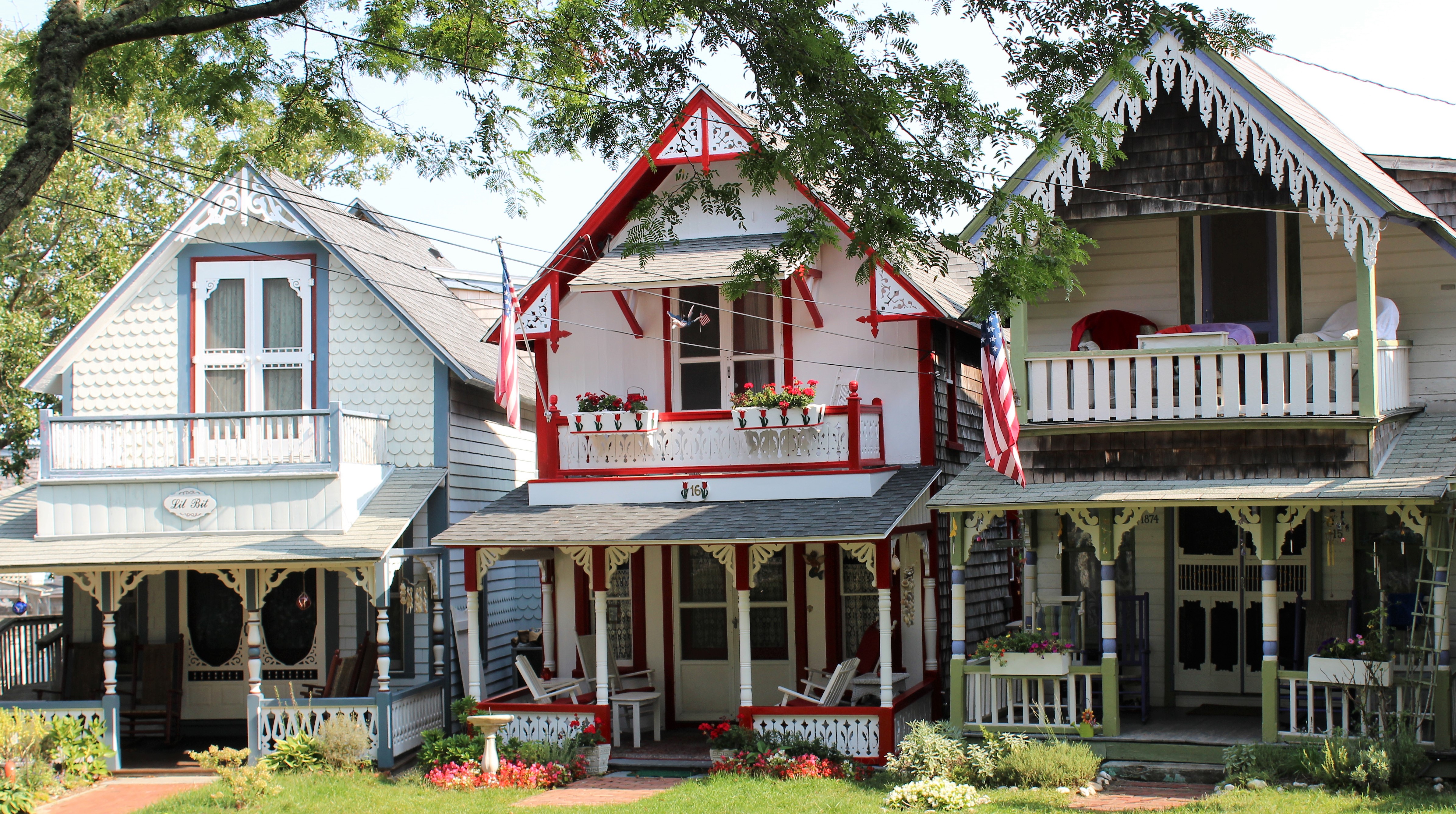
    The crew took the dinghy back ashore and walked back to the bus stop to catch the 10:00 a.m. bus.  The first stop was Oak Bluffs.  This area is known for three things: the Martha’s Vineyard Tabernacle, the gingerbread cottages, and Flying Horses.
    IMG_0038

    IMG_0034

    IMG_0040

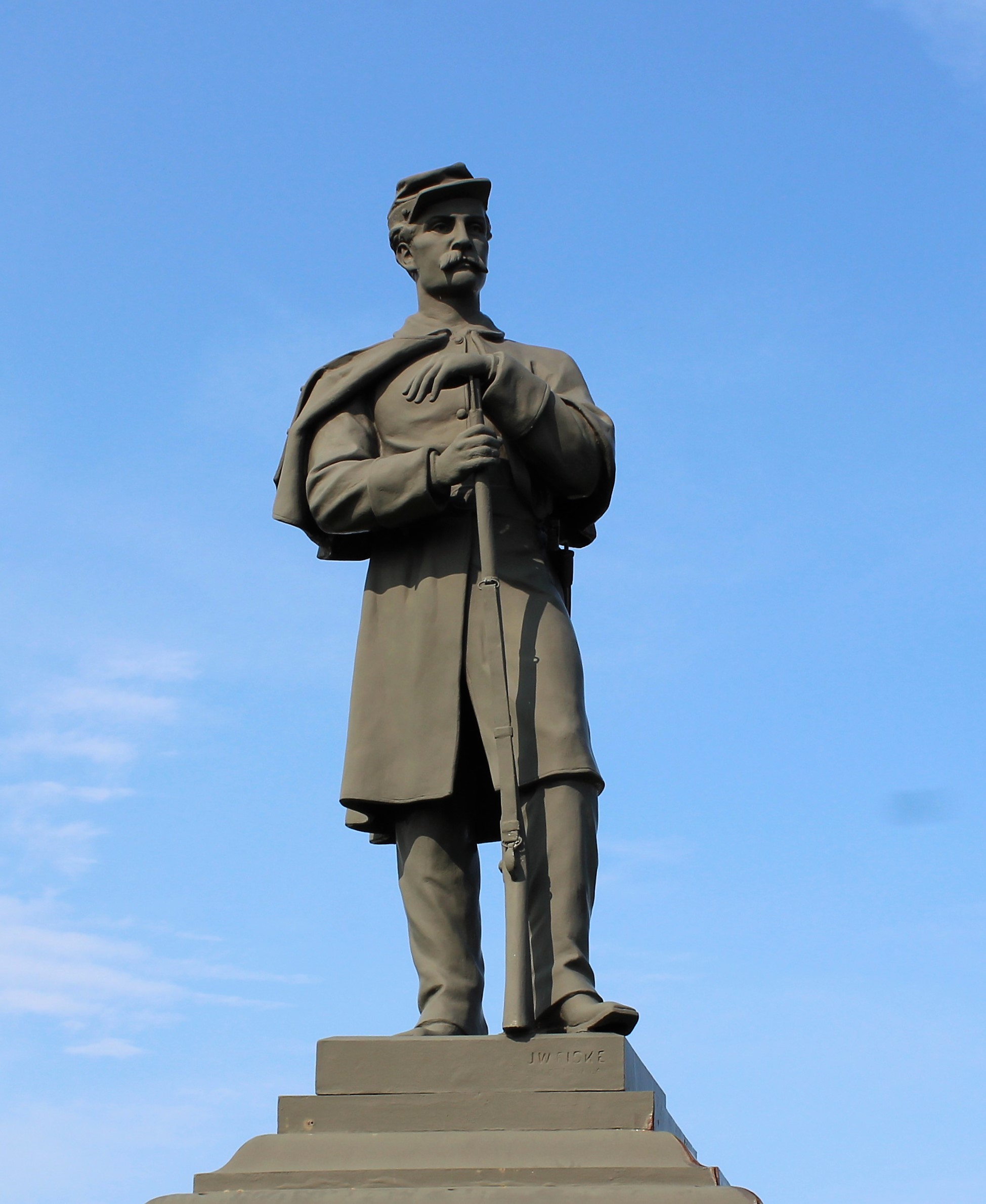
    However, with all the statue controversy around the country, the skipper was intrigued by a Union Soldier that had a Confederate plaque honoring Confederate soldiers.  Seemed strange, so the skipper went in search of the back story of the statue.
    10.1

    The statue was erected by Charles Strahan who was from Maryland.  When Maryland did not succeed from the Union, Charles joined the 21st Virginia Regiment and was wounded in battle early in the war.  He also fought at Gettysburg later in the war.  He was near Lee at Appomattox when the surrender took place.

    After the war, Charles made his home on Martha’s Vineyard and made his living by running the Martha’s Vineyard Herald.  The local members of the Grand Army were not pleased with their new resident.  Charles southern charm finally won the locals over.  In an effort to build bridges and heal the divide in the local community, Charles purchased the statue and had it dedicated in 1891.

    At the dedication, Charles said “That this comes from one who once wore grey, I trust will add significance to the fact that we are once more a union of Americans, a union which endears with equal honor the citizen of Georgia with the citizen of Maine; that Massachusetts and South Carolina are again brothers; that there is no North nor South, no East nor West, but one undivided, indivisible Union.”

    Charles had inscriptions on three sides of the statue honoring the Grand Army and the local chapter.  He left the back side of the monument bare and later wrote that he hoped that the locals would some day offer a tribute to their old foes on the inscribed side of the monument.

    Finally, in 1925 a few surviving members of the local post of the Grand Army took the challenge.  Charles was also able to attend the ceremony at the age of eighty-six.  The fourth plaque reads, “The chasm is closed.  In memory of the restored Union this tablet is dedicated by Union veterans of the Civil War and patriotic citizens of Martha’s Vineyard in honor of the Confederate soldiers.”

    The statue remains the only memorial north of the Mason-Dixon Line dedicated to soldiers on both sides of the conflict.  If the people who actually shot at each other can find a way to build a bridge and get over the war, makes you wonder why our population today (150 years later) cannot find a way to do the same.

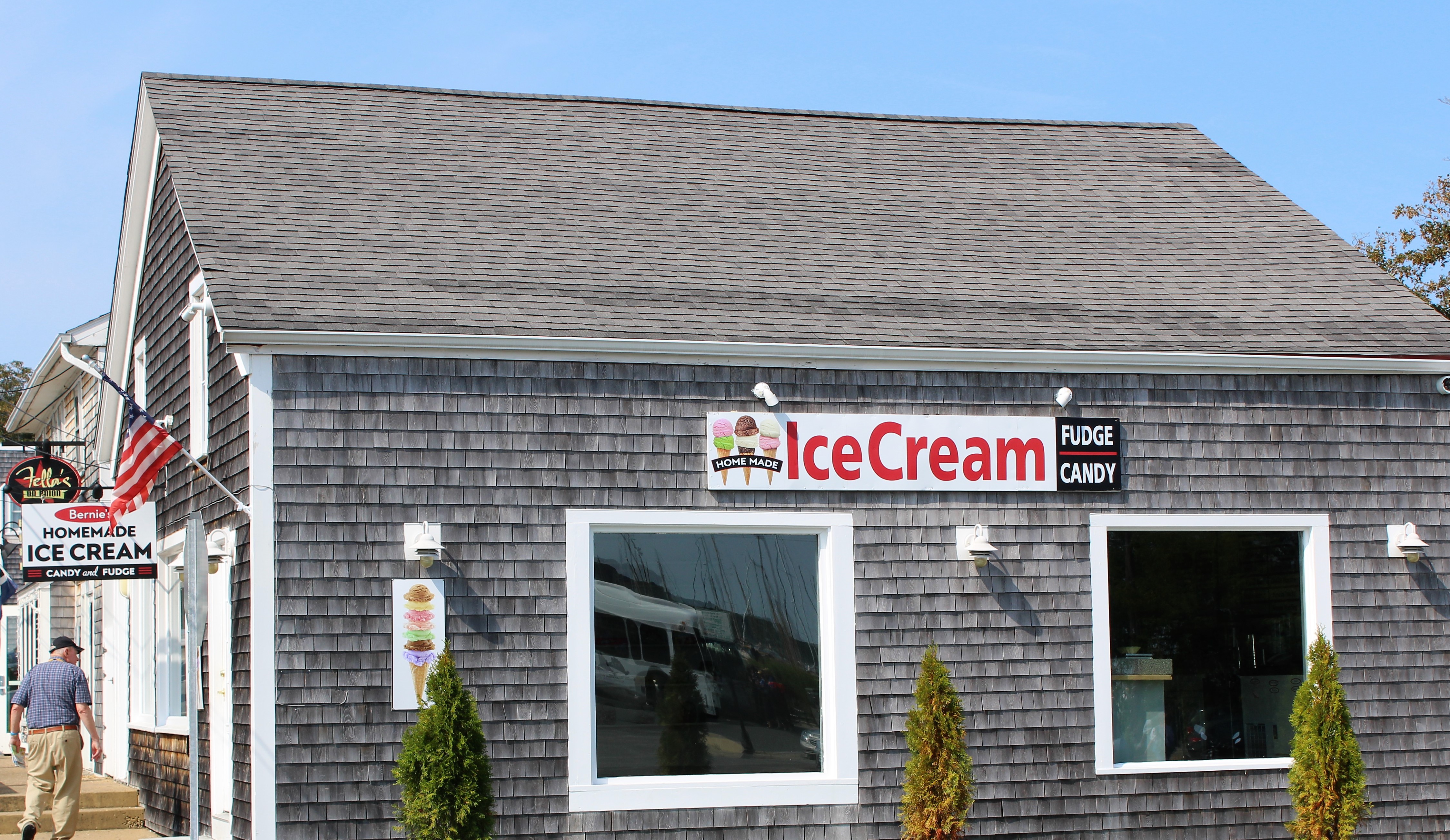
    The next stop on the bus was Tisbury where the crew walked around and enjoyed lunch.  So far the crew has concluded that the island has more bicycle rental shops and ice cream stores per capita than any place they have ever been.
    IMG_0043

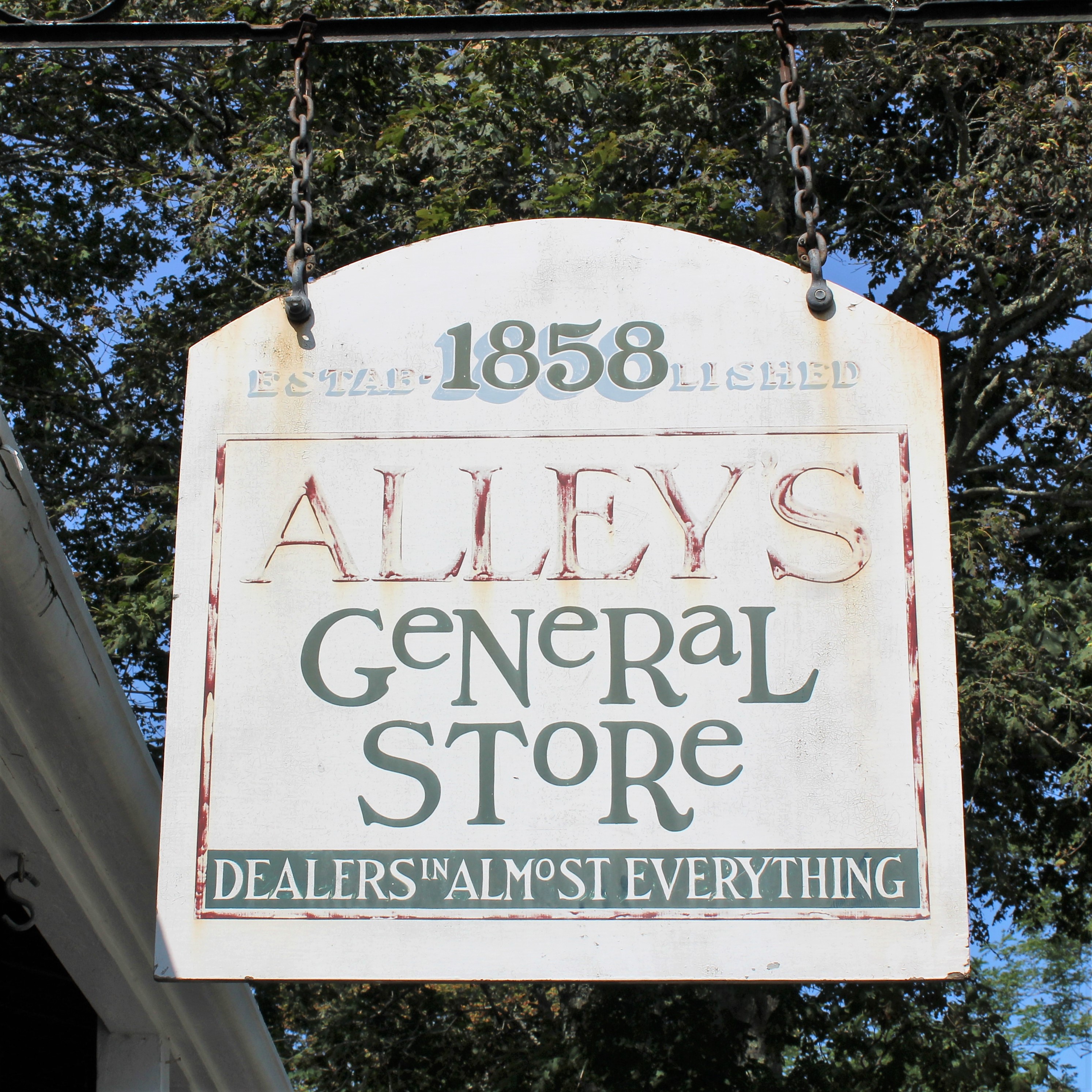
    Next stop was at West Tisbury.  Not much here except a general store that claims to sale just about any and everything.  After going inside, the crew can confirm that indeed they sell just about everything.
    IMG_0046

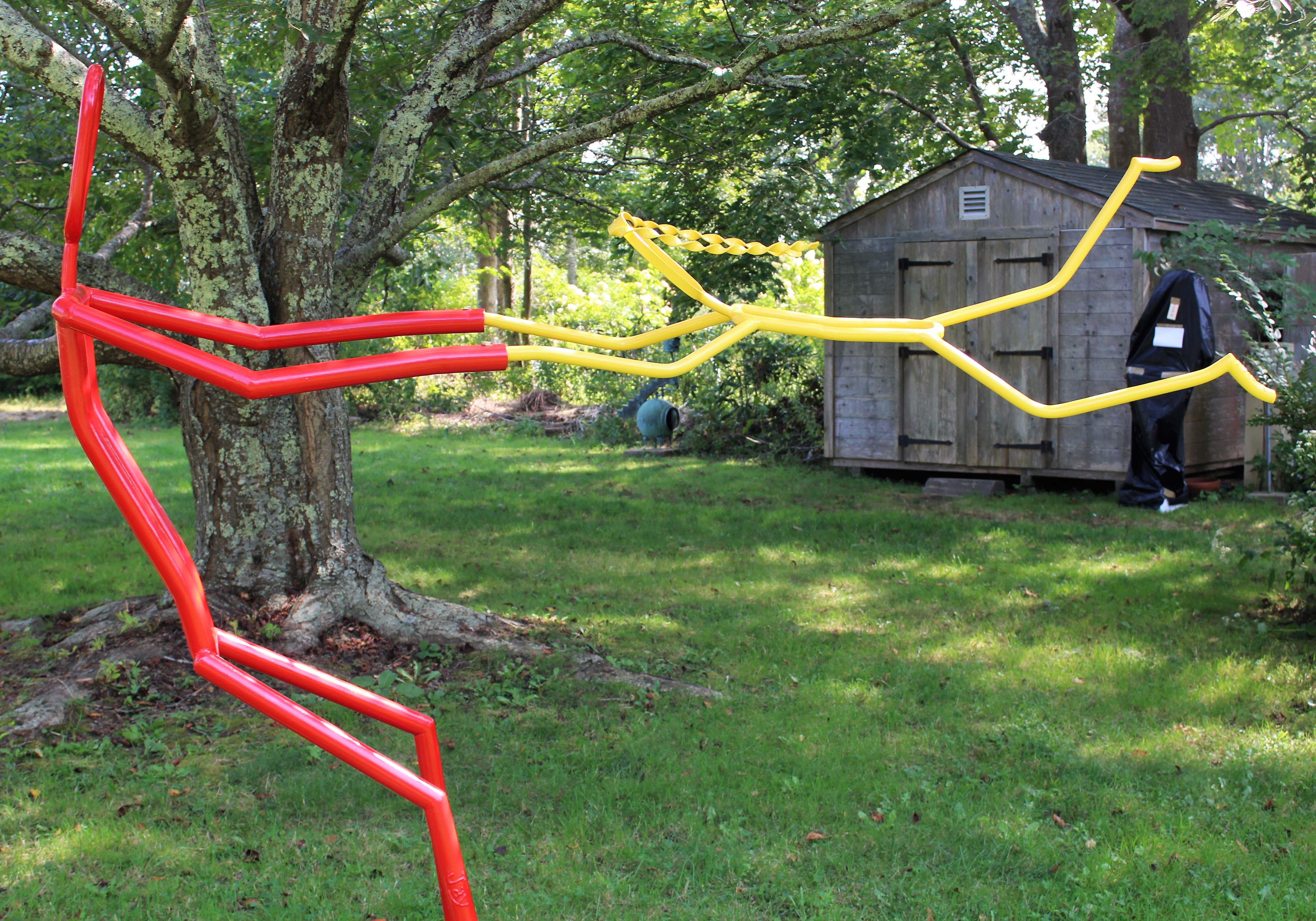
    The crew then strolled thru an outdoor art gallery while waiting on the next bus.  The artist has a large range of medium and subjects.
    IMG_0049

    IMG_0050

    IMG_0051

    The next stop was Aquinnah.  The bus driver on this leg of the journey used to be a tour bus driver so he gave the bus occupants his old spiel on the way to Aquinnah.  The bus driver relayed the story of the first Europeans that visited Martha’s Vineyard.  The first being someone I hold near and dear to my heart, yes, none other than my son Leif Erikson.  He initially named the Island Vineland.

    The next ‘discoverer’ was Verrazano, who sighted the Island in 1524 and called it Claudia, in honor of the mother of Francis II.

    The next ‘discoverer’ was Bartholomew Gosnold of England in 1602.  He is credited for naming Cape Cod for the codfish he found in the water.  He named Martha’s Vineyard after his mother Martha and all the grape vines that were plentiful on the island.  He is also credited with naming the Elizabeth Islands after Queen Elizabeth.
    IMG_0054

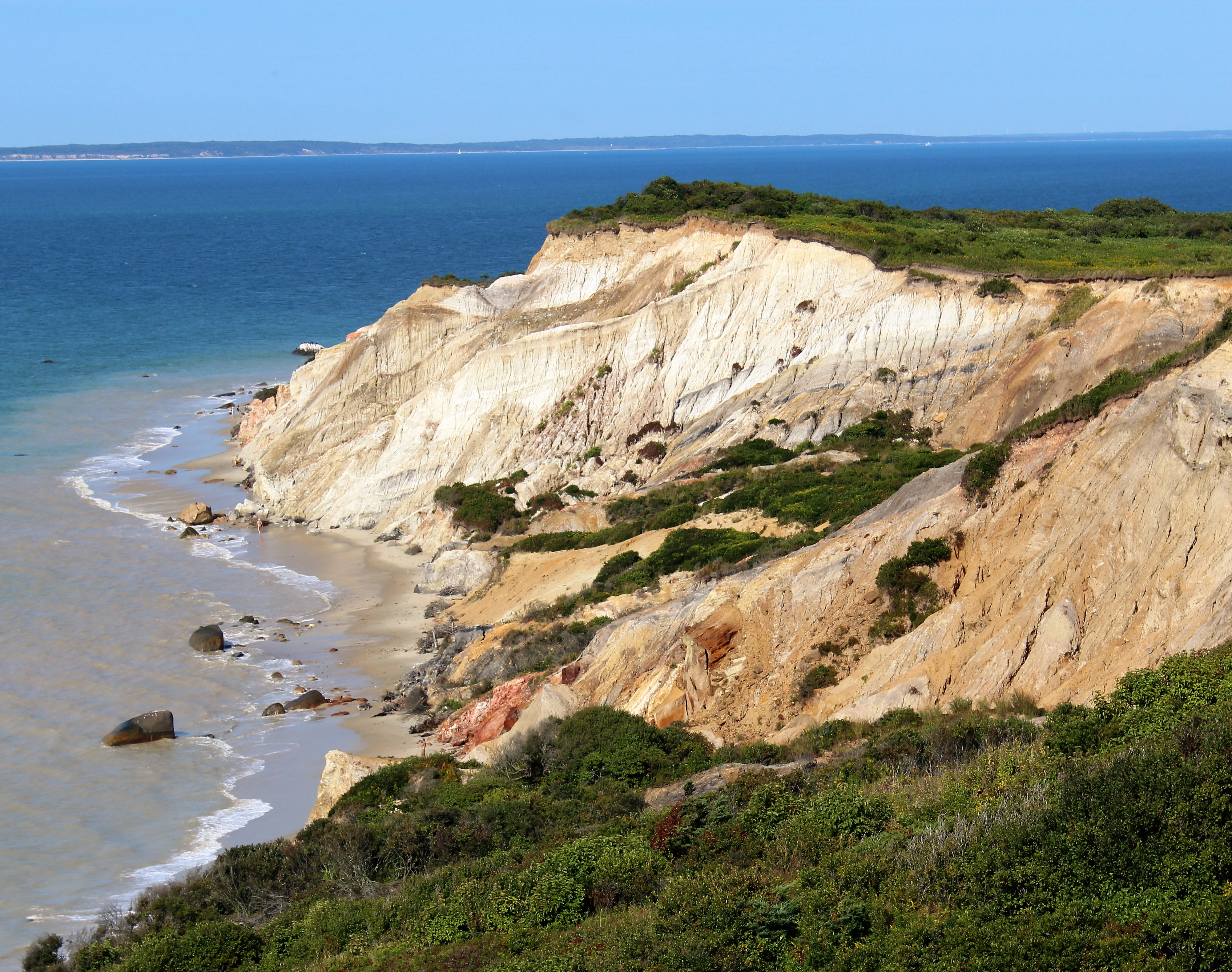
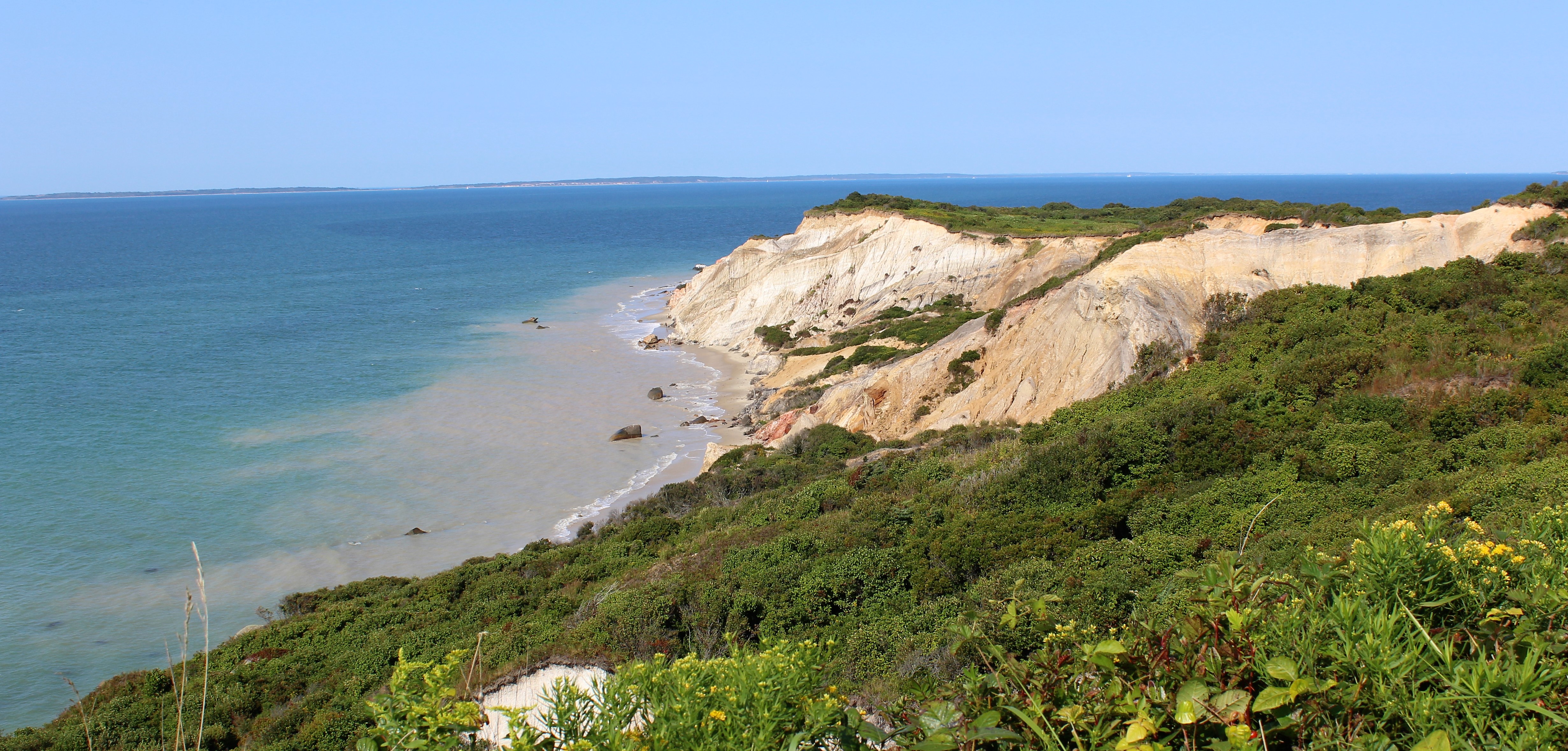
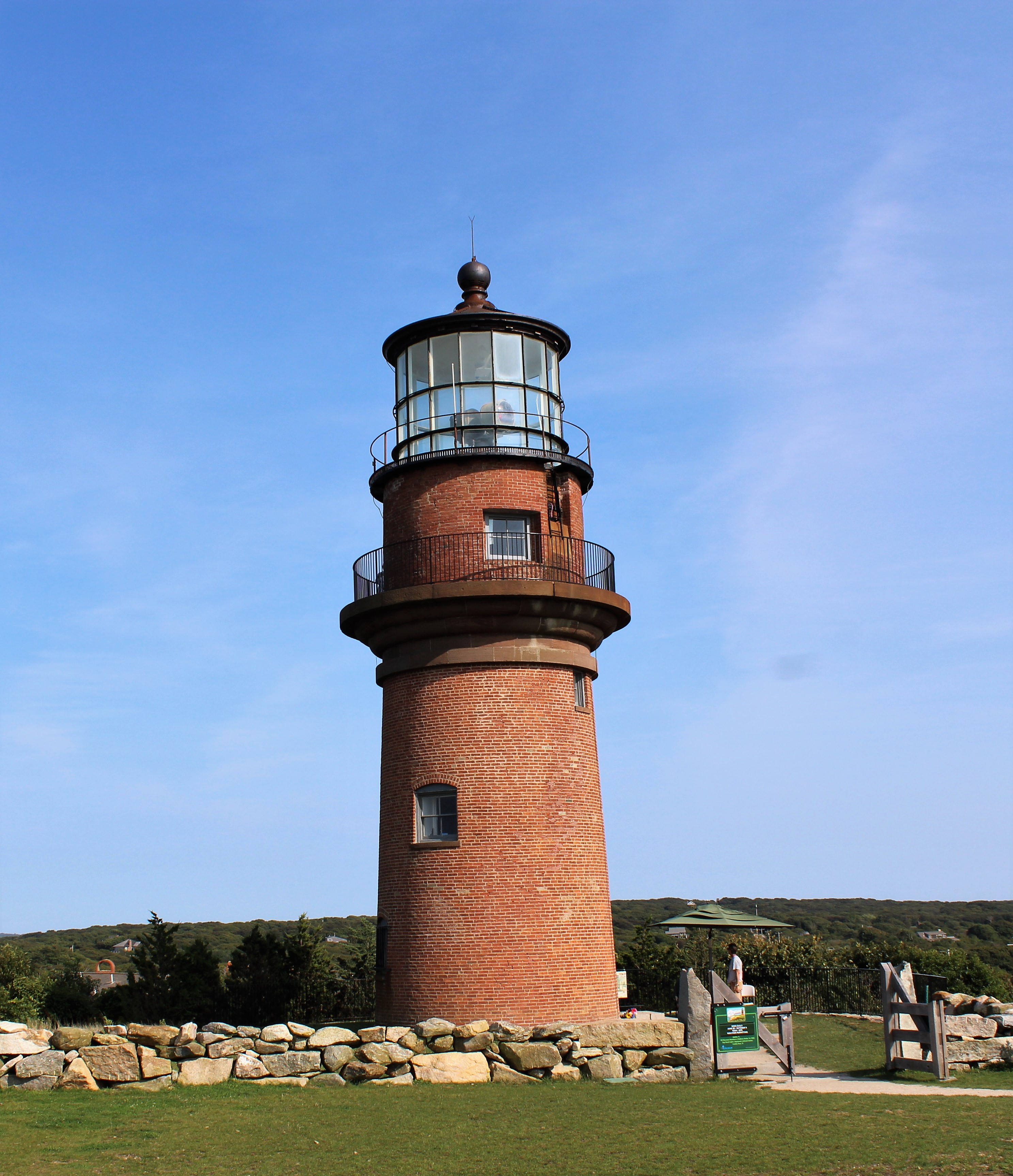
    At this stop the crew could see the famed clay cliffs of Martha’s Vineyard.  They also went up to the Aquinnah Lighthouse.  The views were spectacular.
    IMG_0055

    From here the crew took the bus back to a transfer station and made one last leg back to Edgartown.  After finding an ice cream store, the crew made their way back to the mother ship to conclude another wonderful day.
    IMG_0060

    Wednesday, Sept 13, 2017      

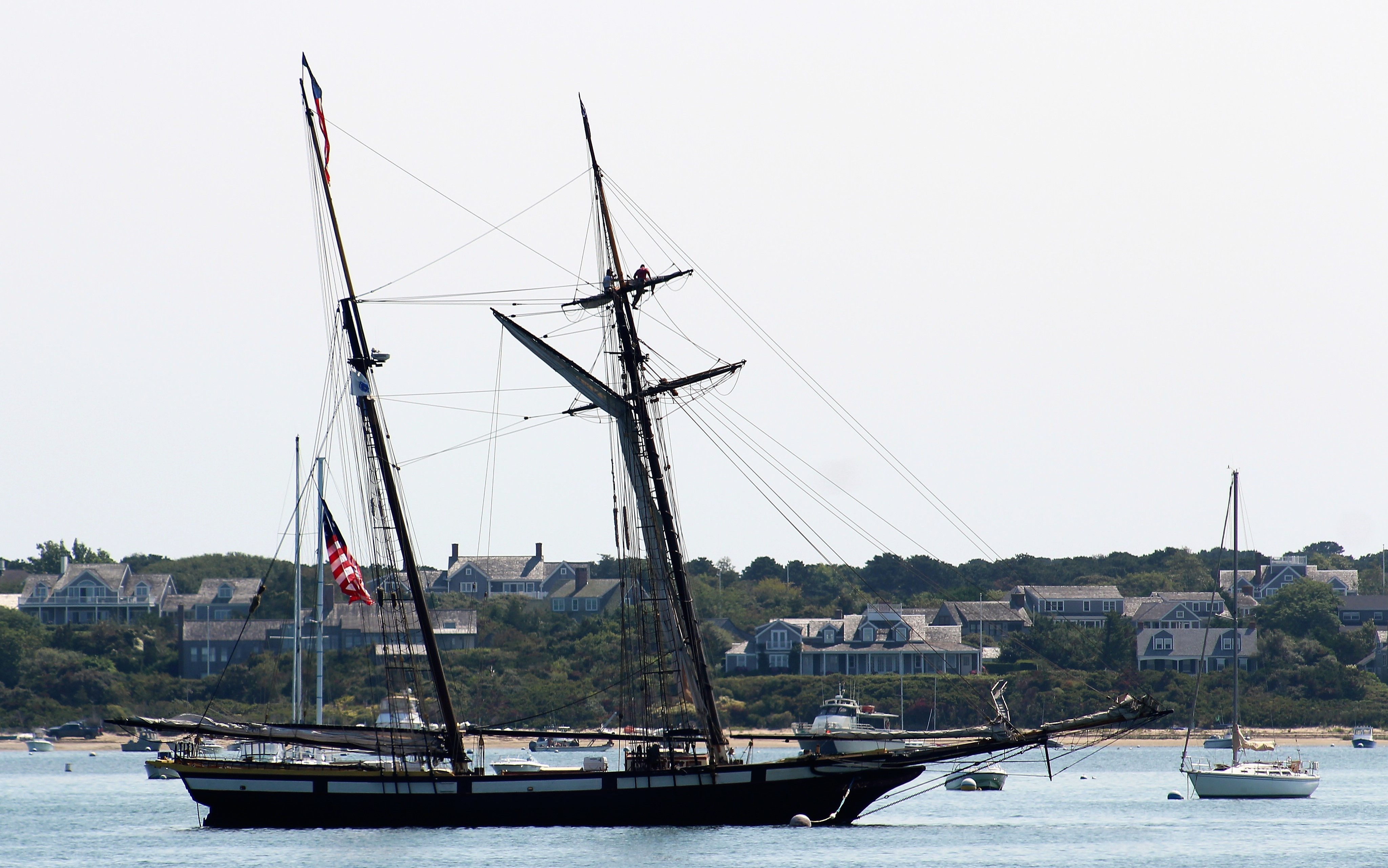
    Today the crew left Martha’s Vineyard and headed over to the Island of Nantucket to learn about the 1800 whale industry.  It was a good cruise over but an interesting indirect route.  The waters between the two islands is shallow and shoals often so the channel runs north into deeper water back towards Cape Cod, then turns and runs west for a while, then turns south to Nantucket.

    Replica whaling ship at the entrance to the harbor to greet all boaters.
    IMG_0069

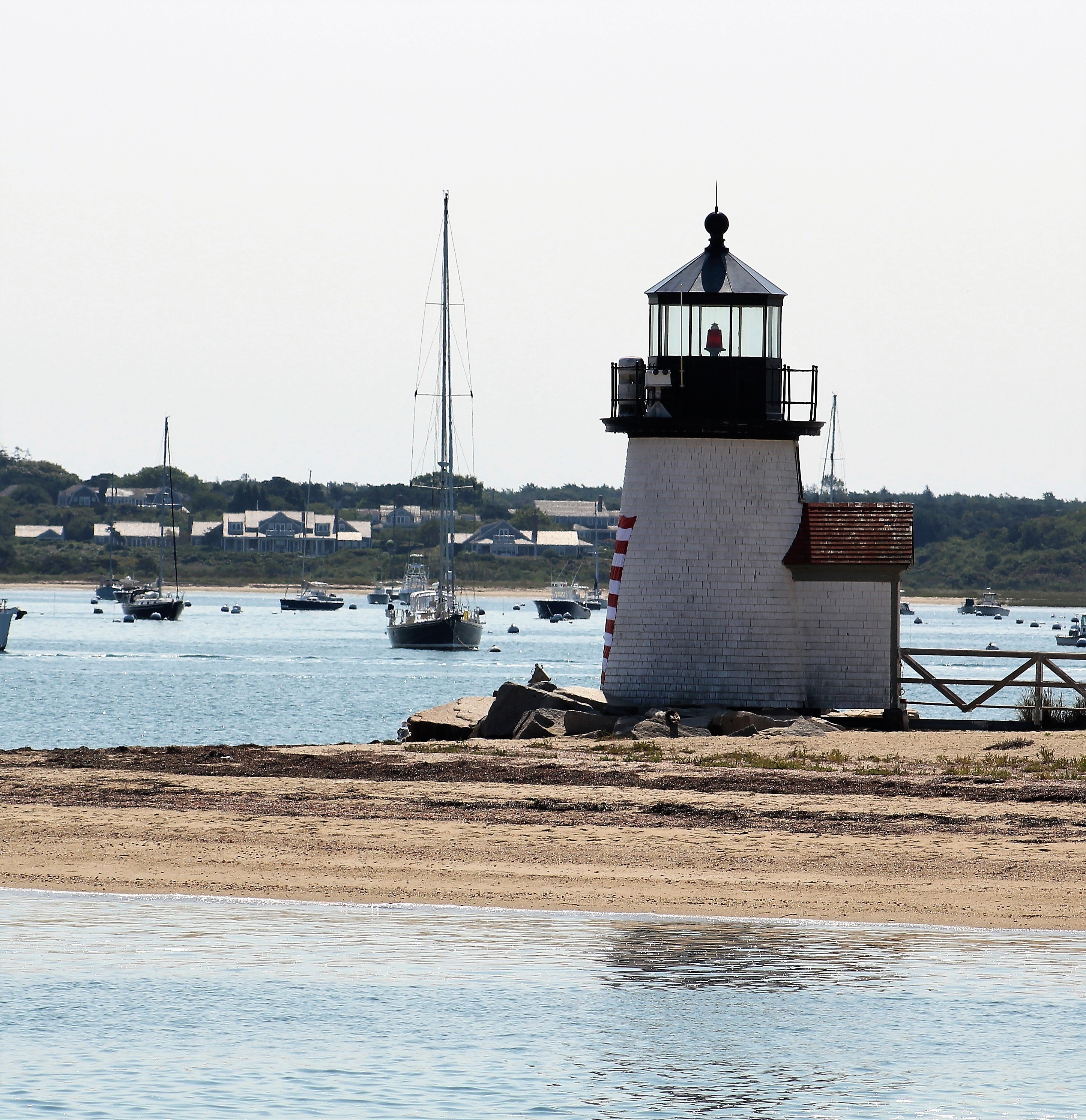
    After arrival in port, the crew took a mooring ball and relaxed in the harbor watching all the other boaters come and go.
    IMG_0070

    Thursday, Sept 14, 2017

    Today the crew dinghied ashore to explore Nantucket and the Whaling Museum. The museum did an excellent job show casing the hey day of the whaling industry in Nantucket.
    IMG_0077

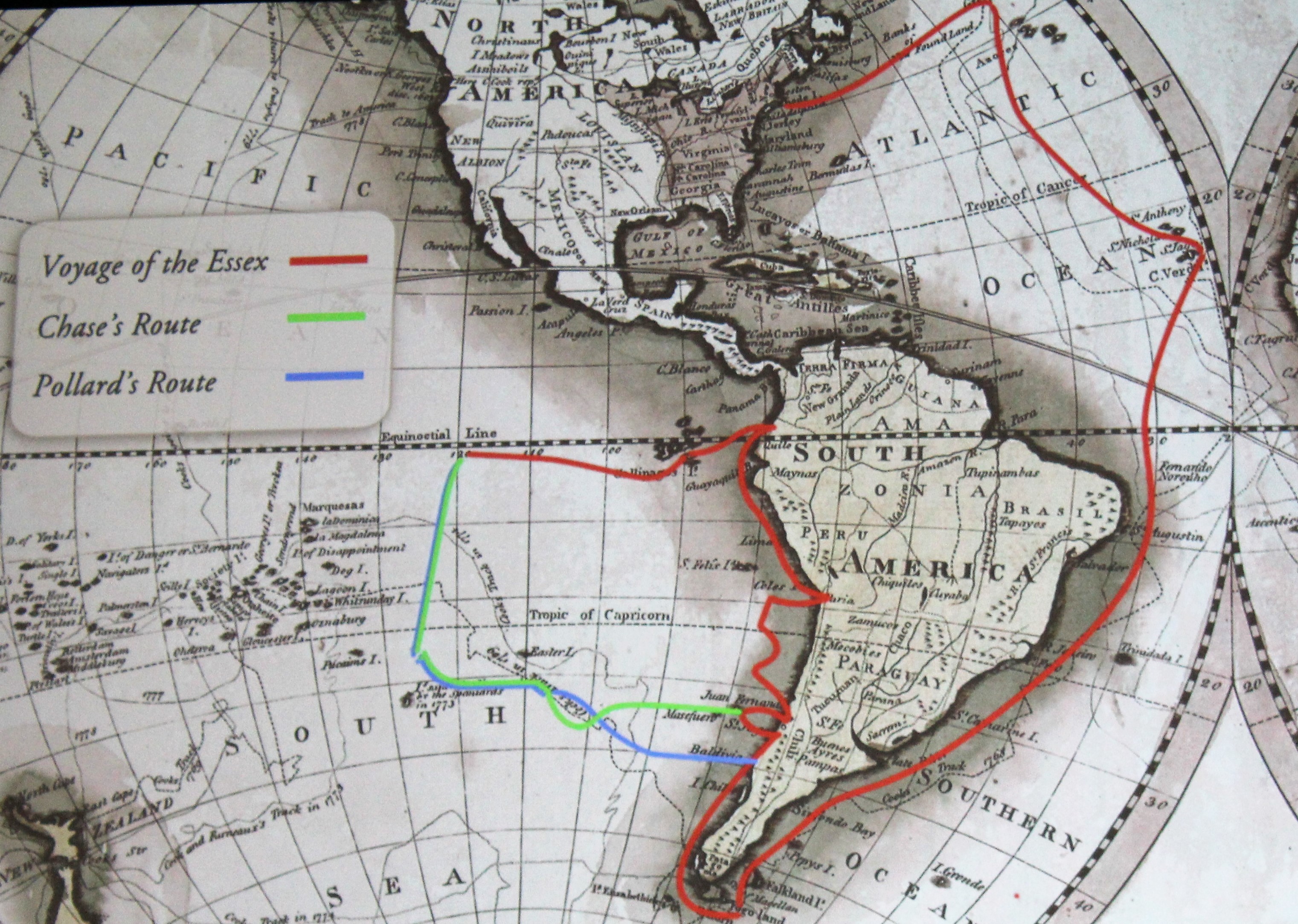
    One of the best exhibits was the Essex Gam.  A storyteller presented the tale of the ill-fated voyage of the whale ship Essex.  After rounding Cape Horn, she was sunk by a renegade whale which rammed the ship twice which led to the sinking of the Essex.  Three small whale boats were salvaged along with water and food before the Essex sank. The men then endured a challenging ordeal before they were rescued.  Eight of the twenty-two men managed to survive the ordeal.  The events of the Essex are what inspired Herman Melville’s Moby Dick.  But since the truth is stranger than fiction, I suggest you read In the Heart of the Sea: The Tragedy of the Whaleship Essex.

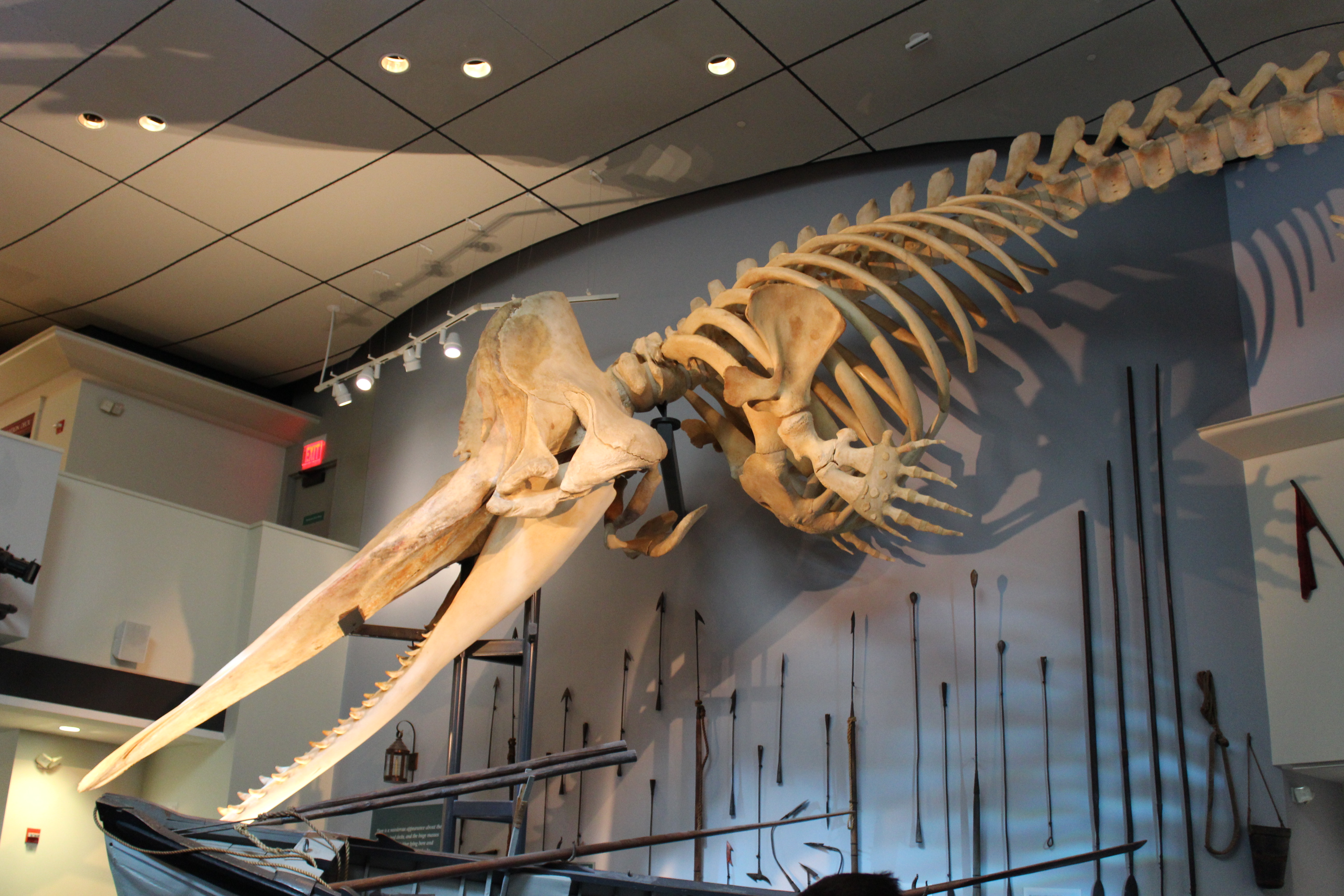
    The museum also has a forty-six-foot sperm whale skeleton.
    IMG_0078

    The whale washed ashore on the eastern end of Nantucket Island during the Christmas Holiday season in 1997.  The whale died January 1, 1998.  After scientist completed their studies, the whale was buried.  In the spring of ’98, the whale was dug up and suspended in the ocean to allow sea creatures to remove the remaining flesh from the bones.  The skeleton was then prepped and made available for the museum.

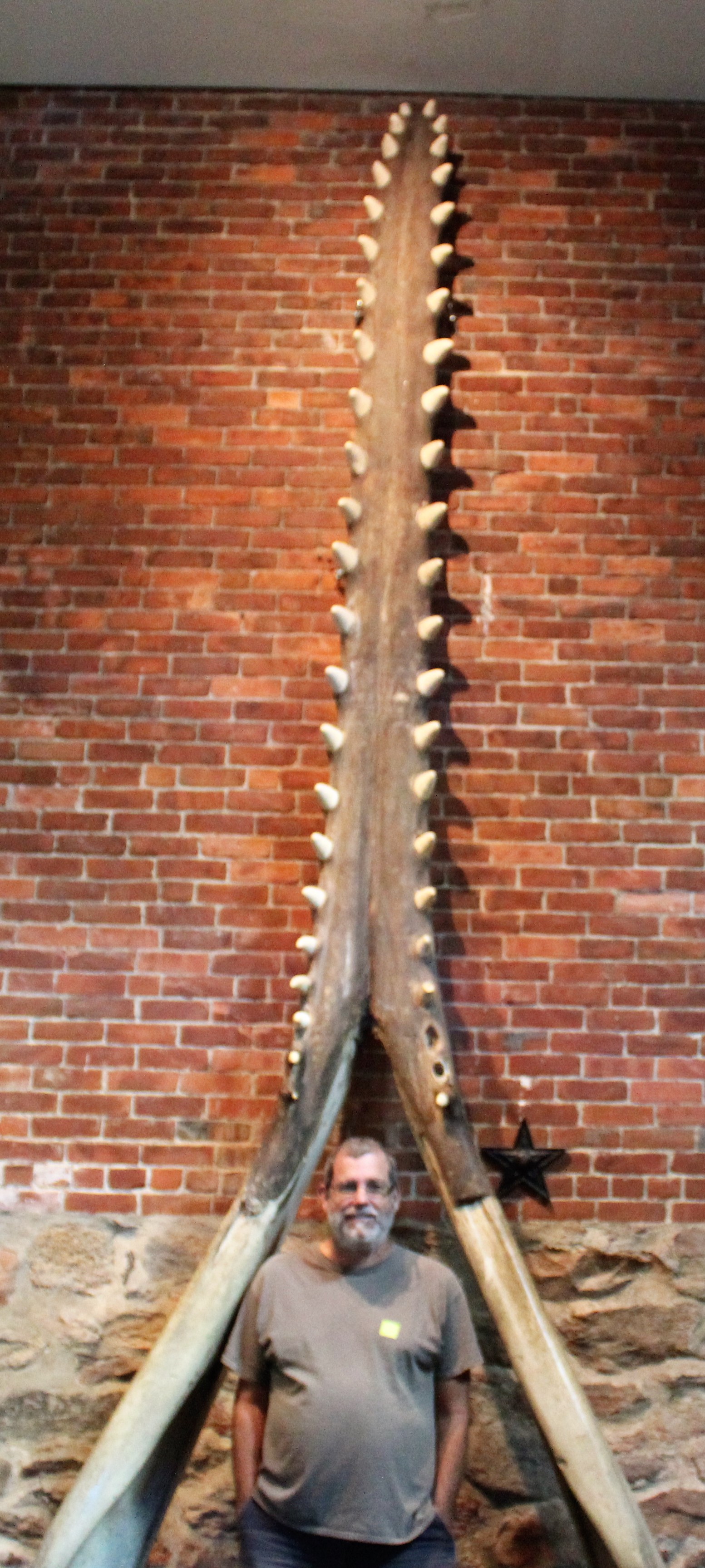
    The skipper in the lower jawbone of a sperm whale.  The sperm whale has ivory teeth.
    IMG_0074

    Friday, Sept 15, 2017

    The skipper has been keeping one eye on hurricane Jose while the crew has been exploring the Cape Cod area.  Based on predicted storm conditions in the area, the crew has decided to head back to the mainland.

    The weather decided to be strange today though.  After departing from the island, a heavy fog sat in and took visibility down to less than a half mile.  Since the crew is making way along the fast ferry channels, this is a bit uncomfortable.
    IMG_0092

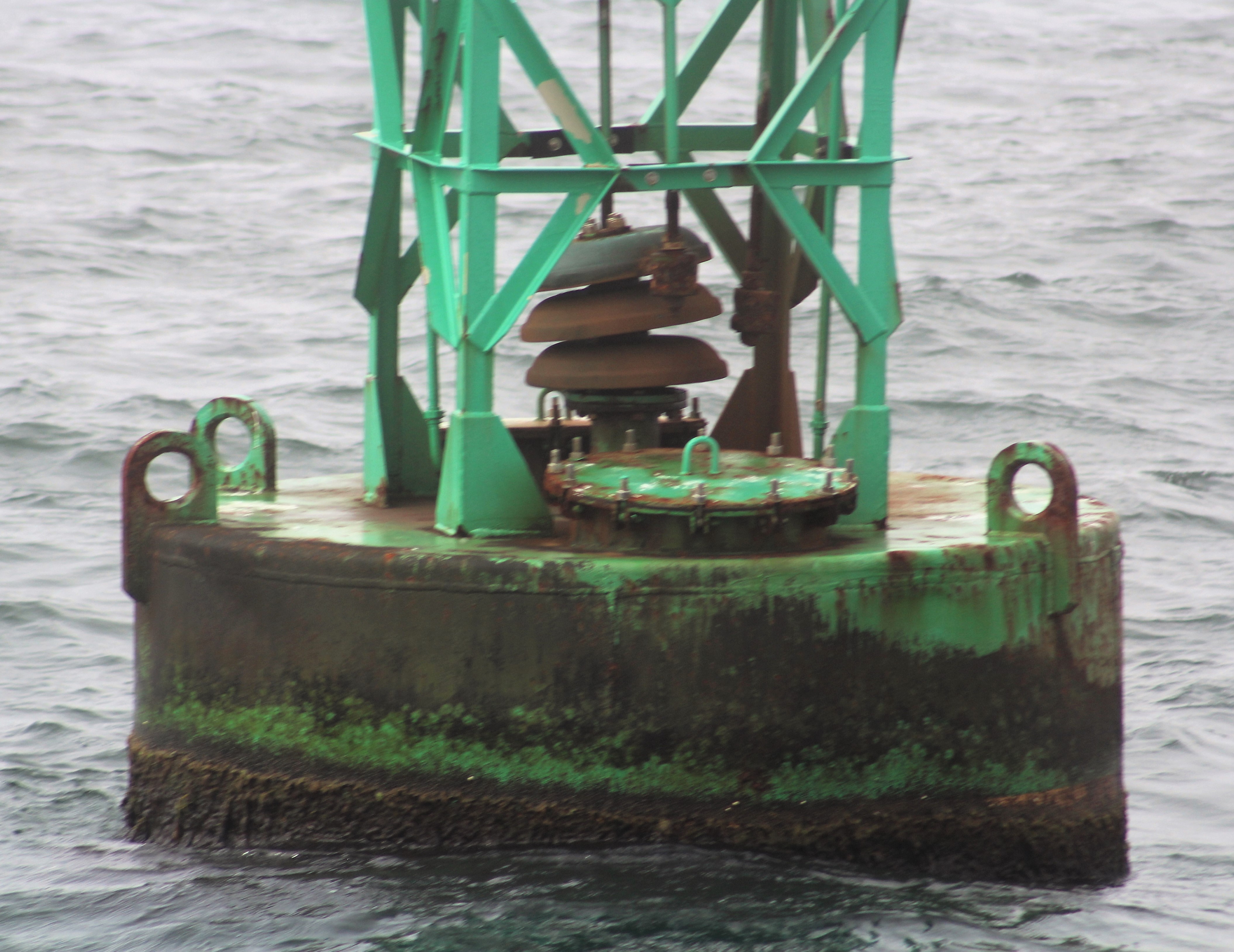
    The crew was fortunate and did not see or hear of any ferries along the route.  At one point the skipper was looking for a green marker to verify they were on the right course.

    IMG_0094

    The GPS showed them less than a half mile from the green marker, but he could not see the navigational aid.  Finally, he started hearing the bell ringing on the marker.  Then suddenly it sprang into view about a quarter mile off the bow.
    IMG_0095

    Then as the crew approached within two miles of land the fog finally lifted, the sun came out, and it was a beautiful afternoon.

    Saturday, September 16, 2017

    With hurricane Jose taking aim on New England, the crew has decided it is high time to get to safer ground.  This is why our crew has a fast boat.  They travelled 80 miles today back to Groton where they took a mooring ball for the evening.

    Since the travel was in the fog with less than a quarter mile visibility, there are no pics.  The skipper did say he was a bit tired after straining all day looking out for other boats.  He said it was a strange feeling to cross a boat wake when you never saw the boat.

    Boat Name of the Week

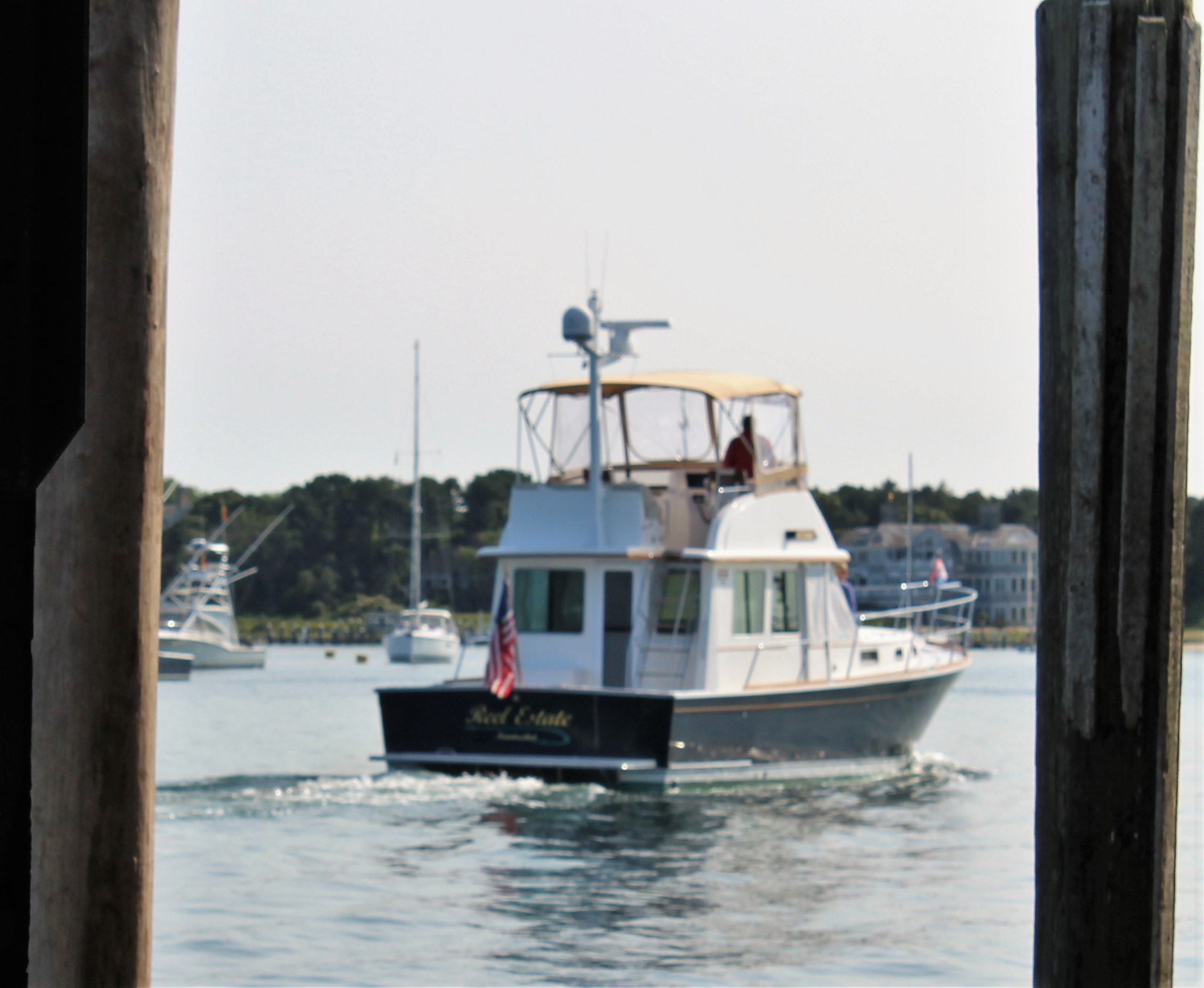
                Reel Estate
    9.2.3

    Next Week –

    At this time, it looks like the best guess is that high winds and storm surges will hit the lower New England area sometime Tuesday ahead of Jose.  Based on these predictions, the crew has decided to keep moving and head towards the Hudson River.  It is two hundred twenty-five miles to the Hudson River.  The goal is to travel long and hard Saturday, Sunday, and Monday so that the boat is far enough up the Hudson River to be out of harms way.

    Loop On – The water goes on forever and the adventure never ends.
    Eric the Red

  • Firsts, Firsts, and more Firsts

    Hello virtual crew members and fellow adventurers!

    Mystic
    In Mystic, Connecticut

    Eric here with the latest travels of Still Waters II.  But first a hearty Welcome Aboard to Bob K. as our newest virtual crew member.  Looks like you are in Colorado for your annual fly fishing adventure.  Remember, you cannot catch fish if the hook is in the air.

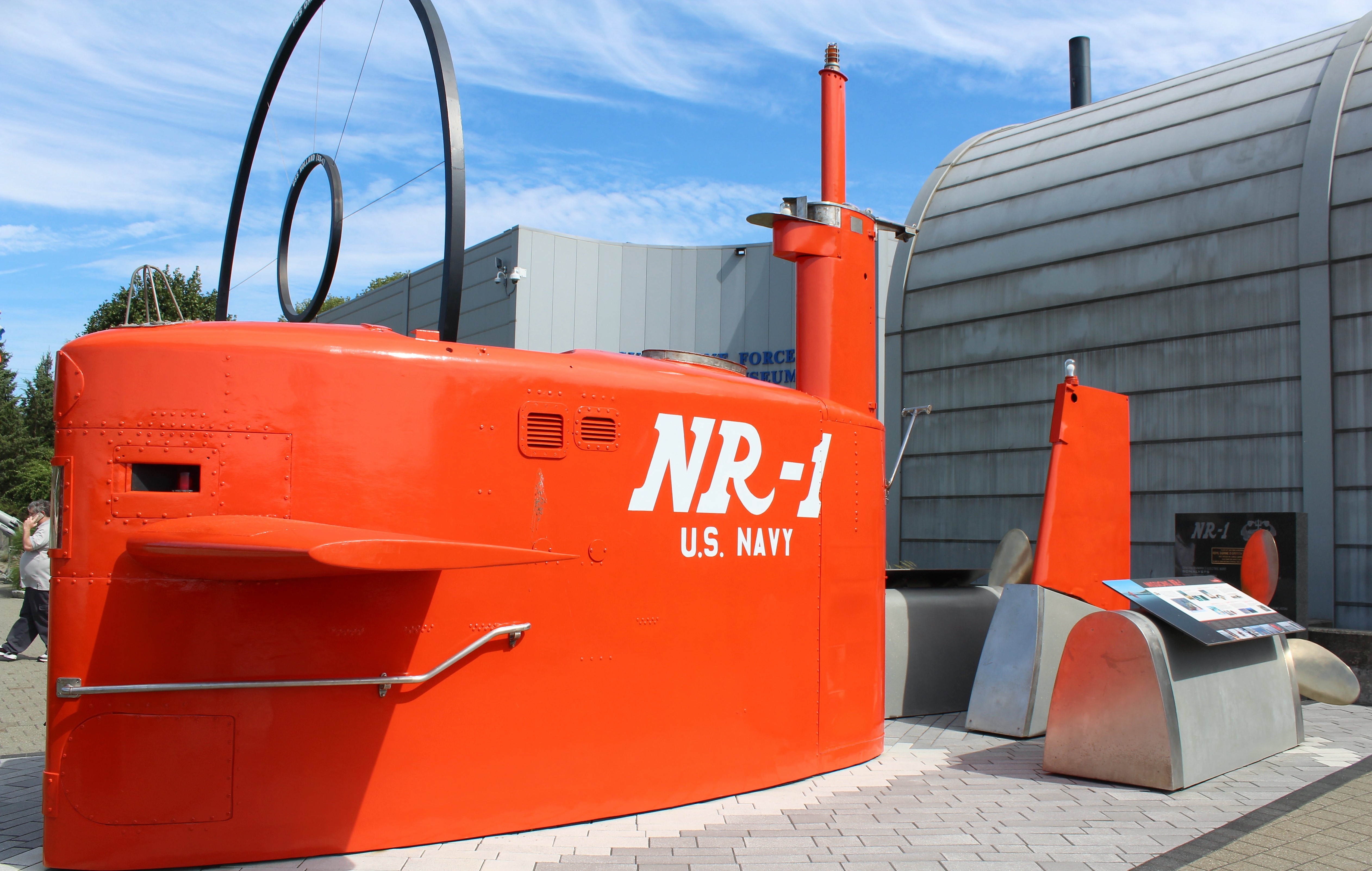
    And look, the crew found your old boat at the Submarine Museum in Groton.

    59.16

    Summary of week:

    Maine

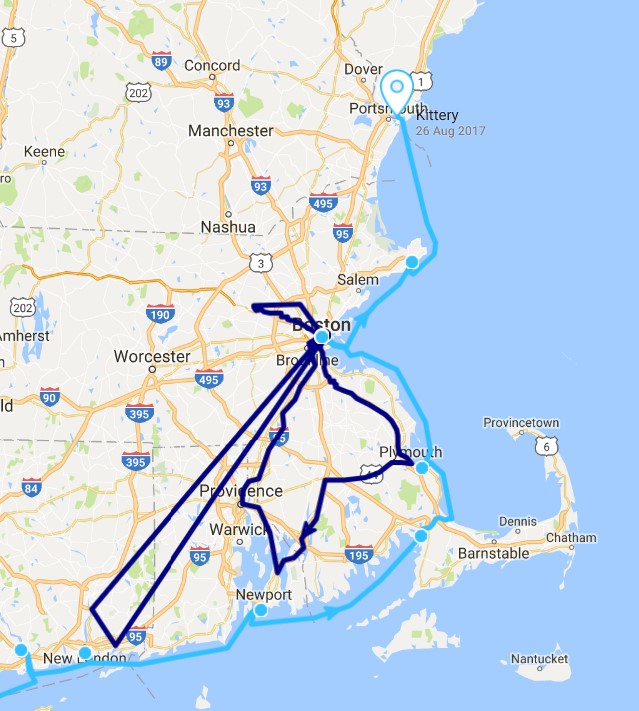
    The crew rented a car and took three road trips out of Boston:

    1. Visited Plymouth Rock and the Green Animals Topiary Garden
    2. Visited Lexington, Minute Man National Park, and Concord
    3. Visited the Submarine Museum in Groton and had a ‘Little Slice of Heaven’ at Mystic Pizza.

    On Friday they got back to cruising the waterways and headed to Gloucester.  On Saturday they pushed northward to Portsmouth but could not find dockage in New Hampshire so they went to Kittery, Maine across the river.

    This week’s journey of discovery did answer the following questions:

    1. Where was the shot “Heard around the world” fired?
    2. What was the real reason the regular British Army headed to Concord?
    3. What is an Atlantic White-Sided Dolphin.

    Click on the link to read the day-to-day travel log.  This includes a weather report of the day, sea conditions, log of the days travel, and a summary of the experience.

    At the Box Office

    This week’s video shows Still Waters II entry into Boston Harbor, swinging on the mooring ball in Gloucester Bay, and the Atlantic White-Sided Dolphin.  Enjoy!

    To see past videos, click on the link to the Still Waters II Vimeo site.  The library now contains 34 videos of Still Waters II cruising America’s Great Loop.

    Sunday, Aug 20, 2017

    28

    The crew had a leisurely day, walked around Boston some more, and grilled ribeye steaks.  The main objective was to find the Rose Kennedy Greenway Rose Garden down by the waterfront.  Rose was 104 years old when she passed away.  There are 104 rose bushes planted in her honor in the rose garden.  The Greenway itself is a 17 acre linear 1.5 mile park that runs through Boston along the old route of  JFK Expressway.

    Monday, Aug 21, 2017

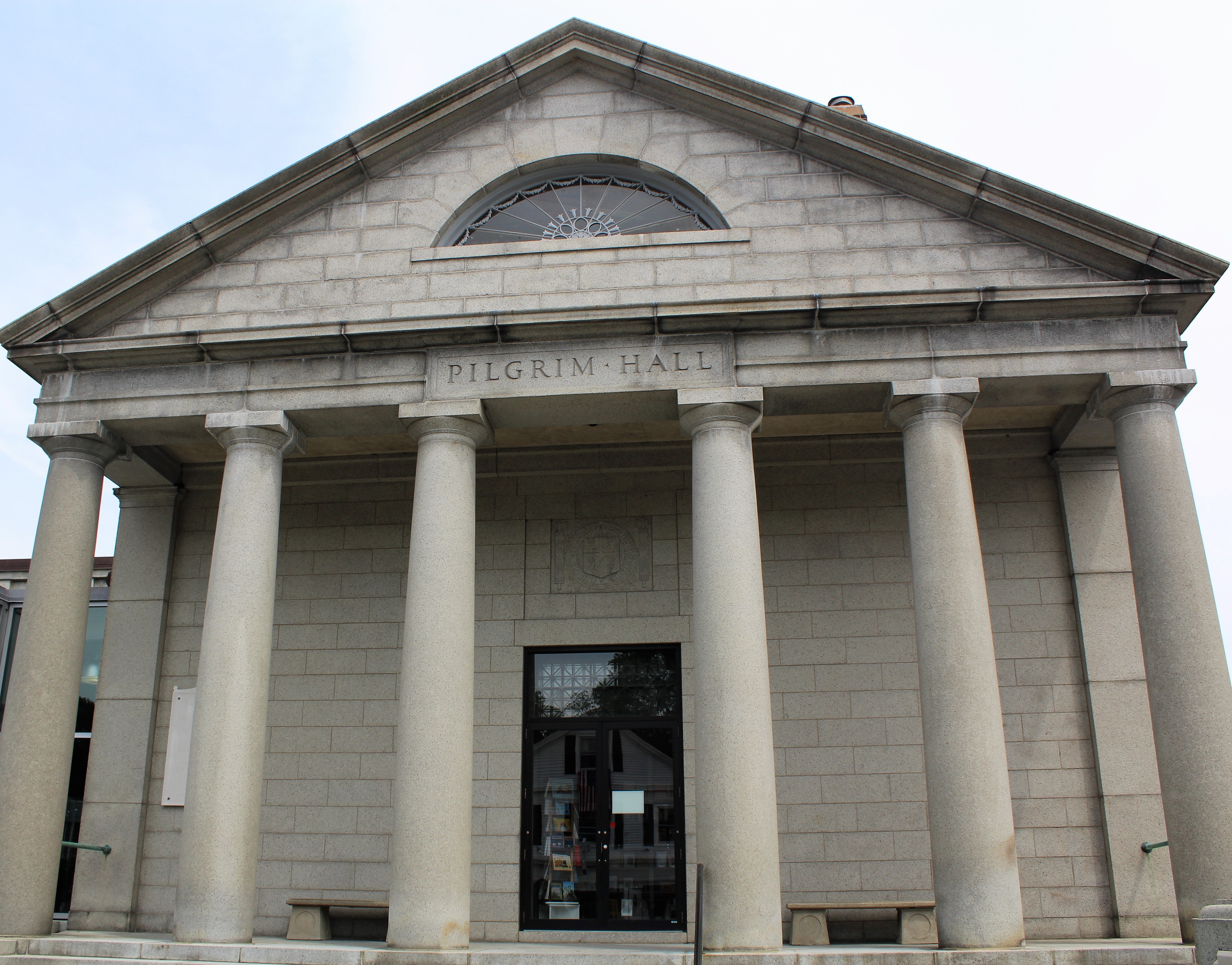
    Today the crew set their sites on Plymouth.  They visited the Pilgrim Hall Museum and walked down to the waterfront to see Plymouth Rock.  The Pilgrim Hall Museum is the oldest continuously operating museum in the United States.  It was built in 1824.

    33
    The First Museum

    A film ran in the lower exhibit gallery that did an excellent job of telling the story of the Pilgrim migration from England to the Netherlands, and then on to the New World.  It took ten years to move the Pilgrims from their Dutch homes to Plymouth.  The Mayflower being the most famous ship bringing the Pilgrims to their new home at Plymouth in 1620.  The others:

    • Fortune in 1621
    • Anne in 1623
    • Little James in 1625

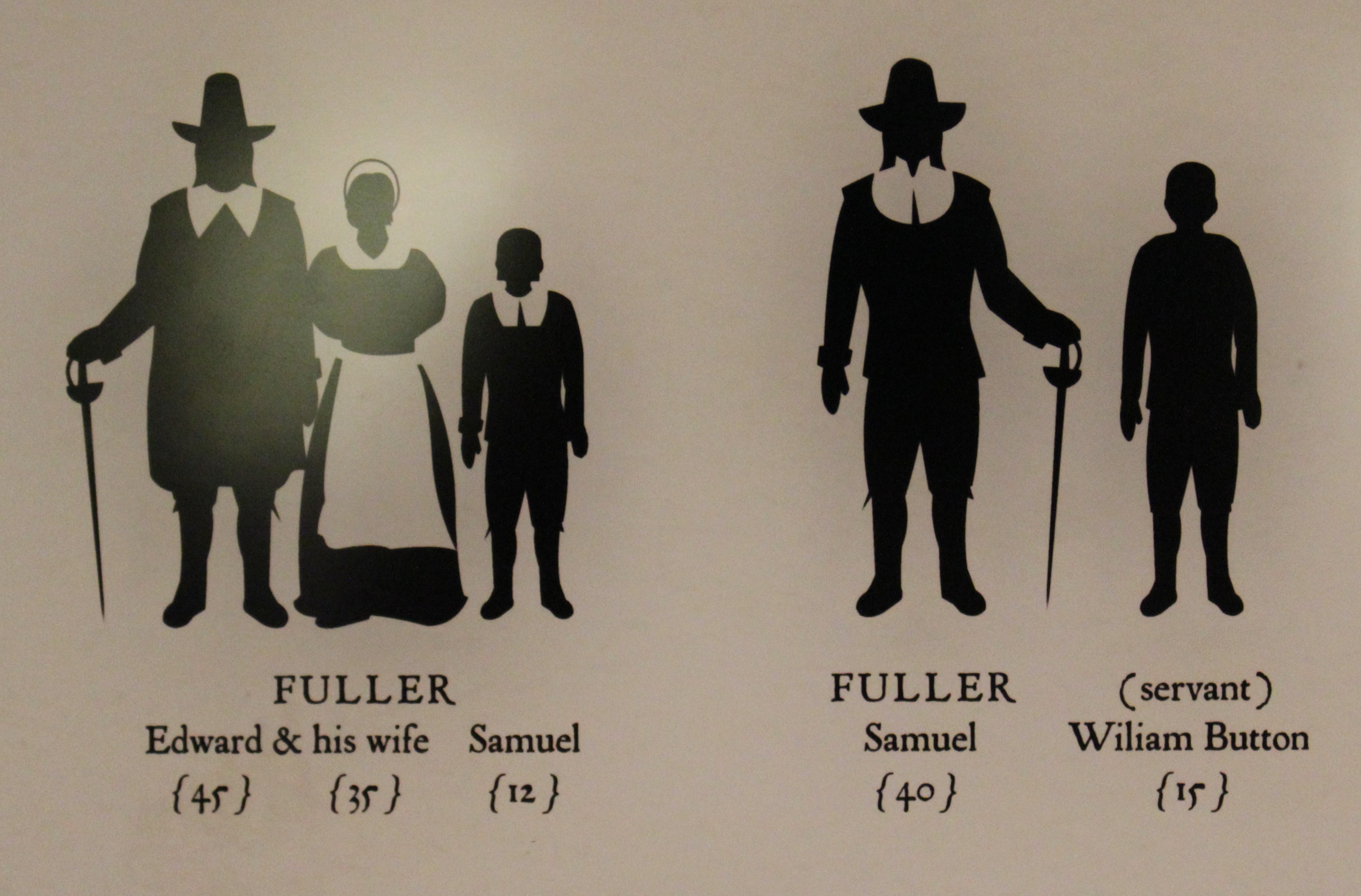
    The passengers on these first four ships were referred to as the ‘First Comers.’  The first Fullers arrived in the New World aboard the Mayflower.

    There were two brothers who sailed over together.  They all survived the trip over and the landing. The two older men, Edward and Samuel signed the Mayflower Compact.

    35 Alive at Landiong

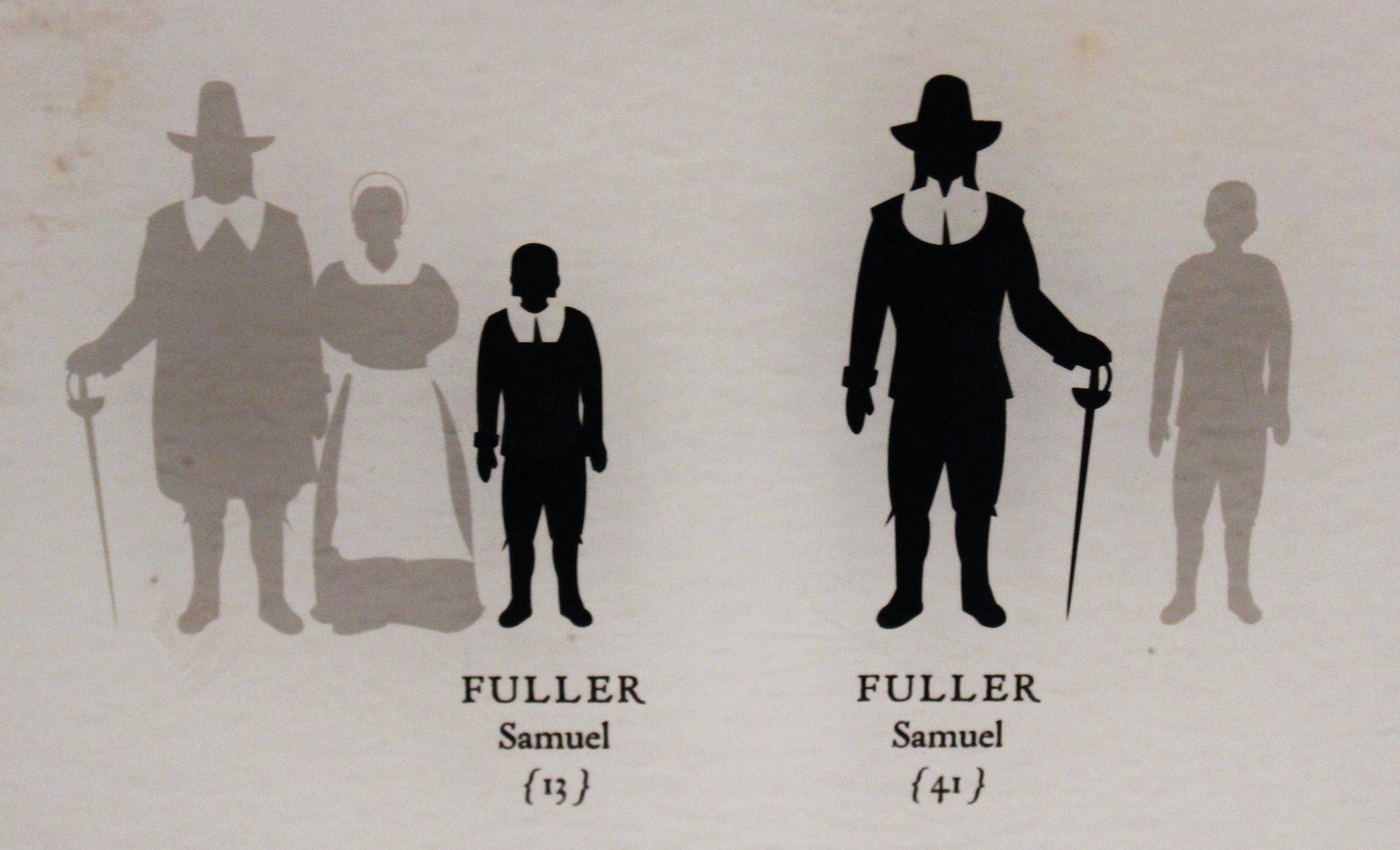
    However, just a few survived the first winter.  Survivors at the end of year one.

    35.1 Alive at first Thangsgiving

    One other thing the skipper learned about these Fullers was that Edward had two sons.  The oldest son, Mathew, stayed behind in the Netherlands and did not come to Plymouth until 1640.

    38.1
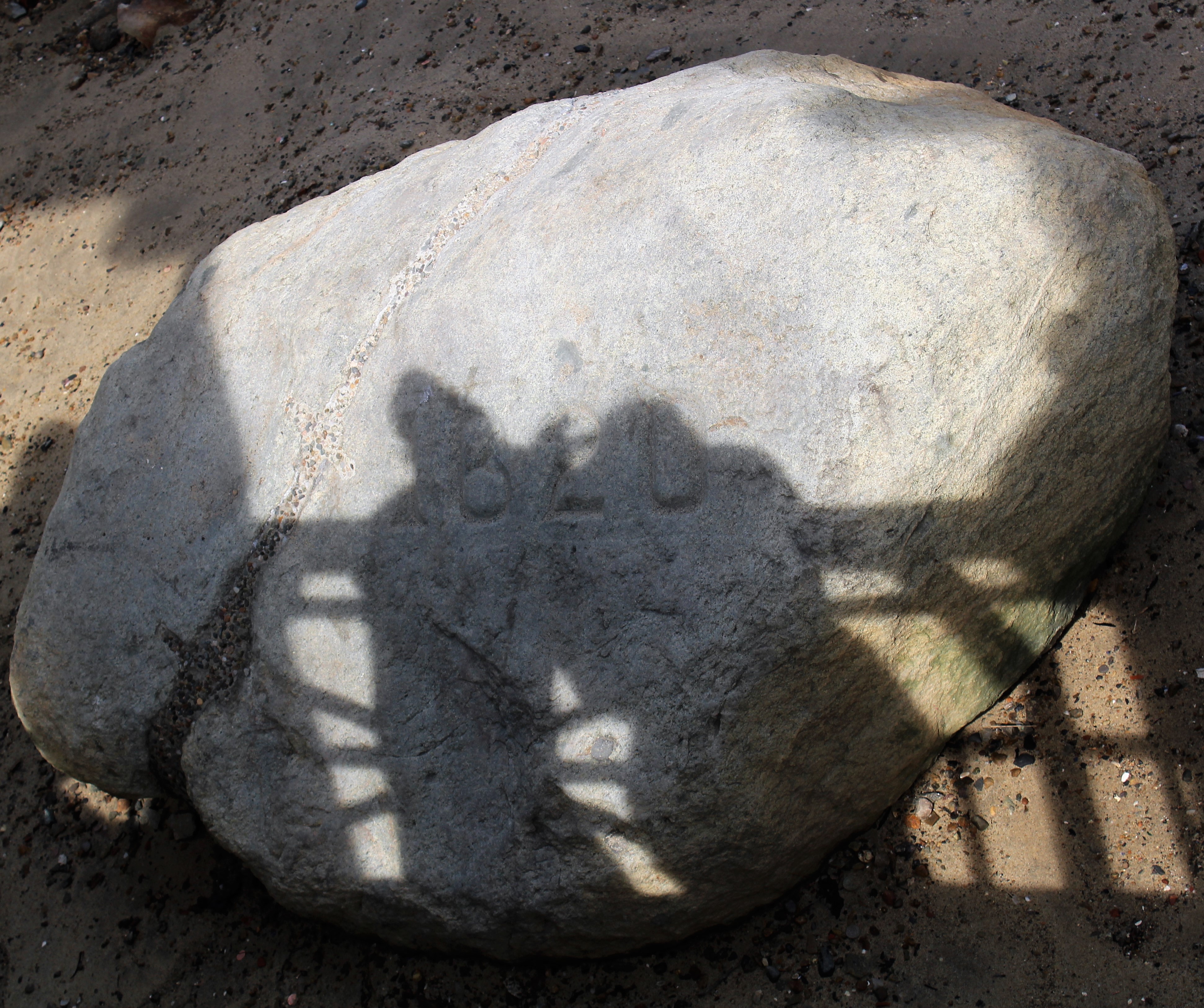
    Plymouth Rock

    After walking down to the waterfront to look at the famous Plymouth Rock, the crew headed to Portsmouth, Rhode Island to visit the Green Animals Topiary Garden.

    The country estate was purchased by Thomas E. Brayton in 1877.  He hired Joseph Carreiro to be the gardener.  Joseph created most of the topiary prior to 1945.  Alice Brayton inherited the estate in 1940.  According to the workers at the property, Alice hosted an engagement party at the property for Jacqueline Lee Bouvier and John F. Kennedy.

    There was also a vegetable garden that was guarded by three scarecrows that were built in the 1940’s.

    Tuesday, Aug 22, 2017 

    The crew headed to Lexington, Battle Road Trail, Concord, and Sleepy Hollow Cemetery today.

    If you recall from your history lessons or last weeks blog, you might remember that Paul Revere rode to Lexington to warn John Hancock and John Adams that the British Regulars were on the way to arrest the two trouble makers.  Following the Revere path, the crew travelled to Lexington.  The British left Boston at nightfall on April 18, 1775 by crossing over to Charlestown.

    Upon arrival in Lexington, the first thing that was a surprise was just how small the Greens were where the Minute Men met the Regulars.  Hard to imagine 70 Minute Men and 700 British regulars in the small space.

    50 Lexington Green
    Lexington Green

    The other surprise was how the town folk of Lexington have a chip on their shoulder about where the first shot heard ’round the world was actually fired.  The folks in Lexington are quick to point out that the first shots and first Patriots were killed right here on the Lexington Green.  At 5:00 a.m. on the 19th, the British arrive and find 77 militia men on the Lexington Green.  A shot rings out and the British Regulars fire a volley.  After the shots, eight militia men become the first dead.  The militia scatters and the British Regulars continue to Concord rather than look for Hancock and Adams.

    45.1
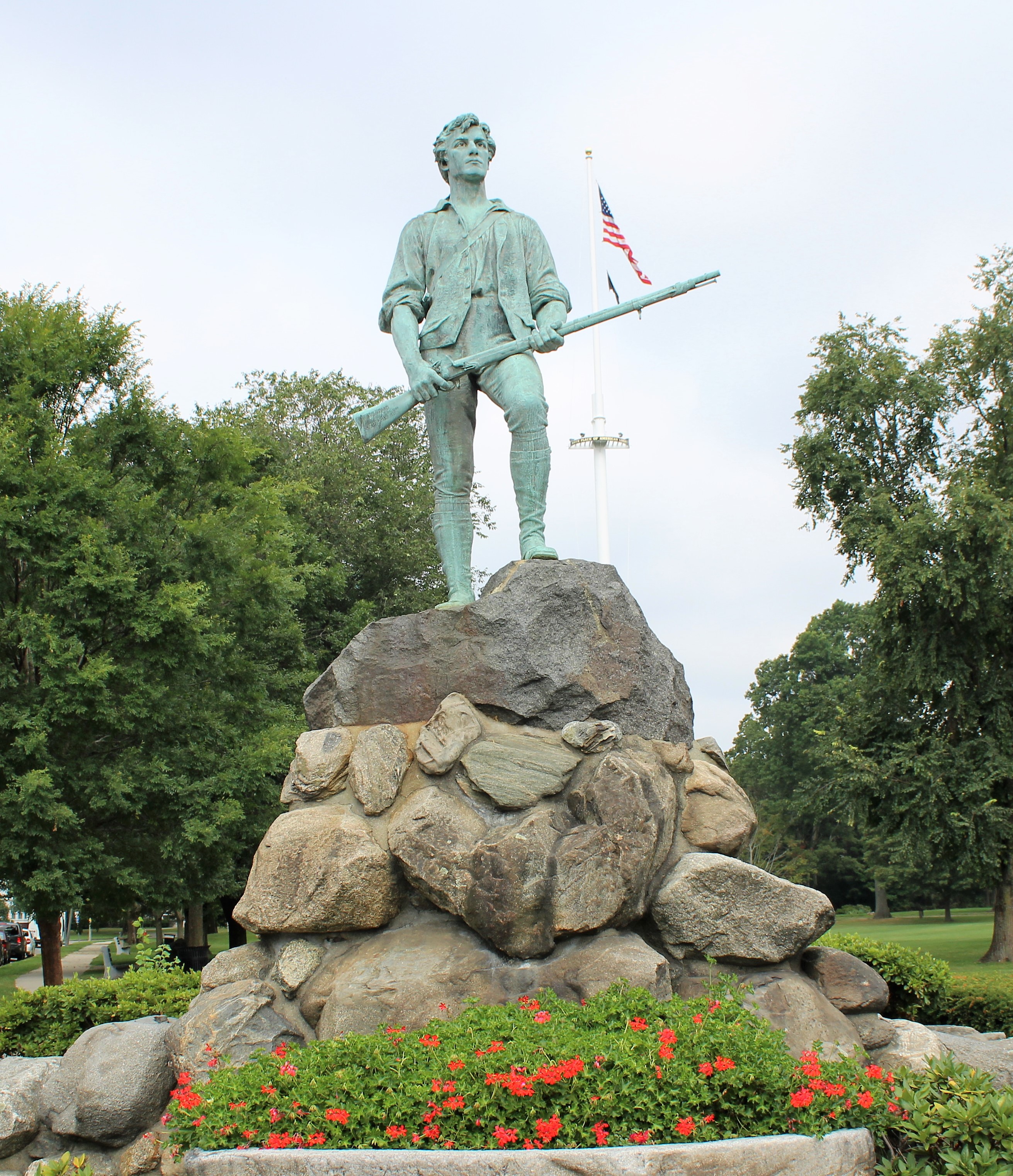
    Lexington Minute Man

    After walking around the Greens, the crew headed towards Concord along the Battle Road Trail. They stopped at the Minute Man National Historic Park.  The Visitor Center had an outstanding video that showed the timeline from when the British troops started their march towards Concord on April 18, 1775 to their return to Boston on April 19, 1775.

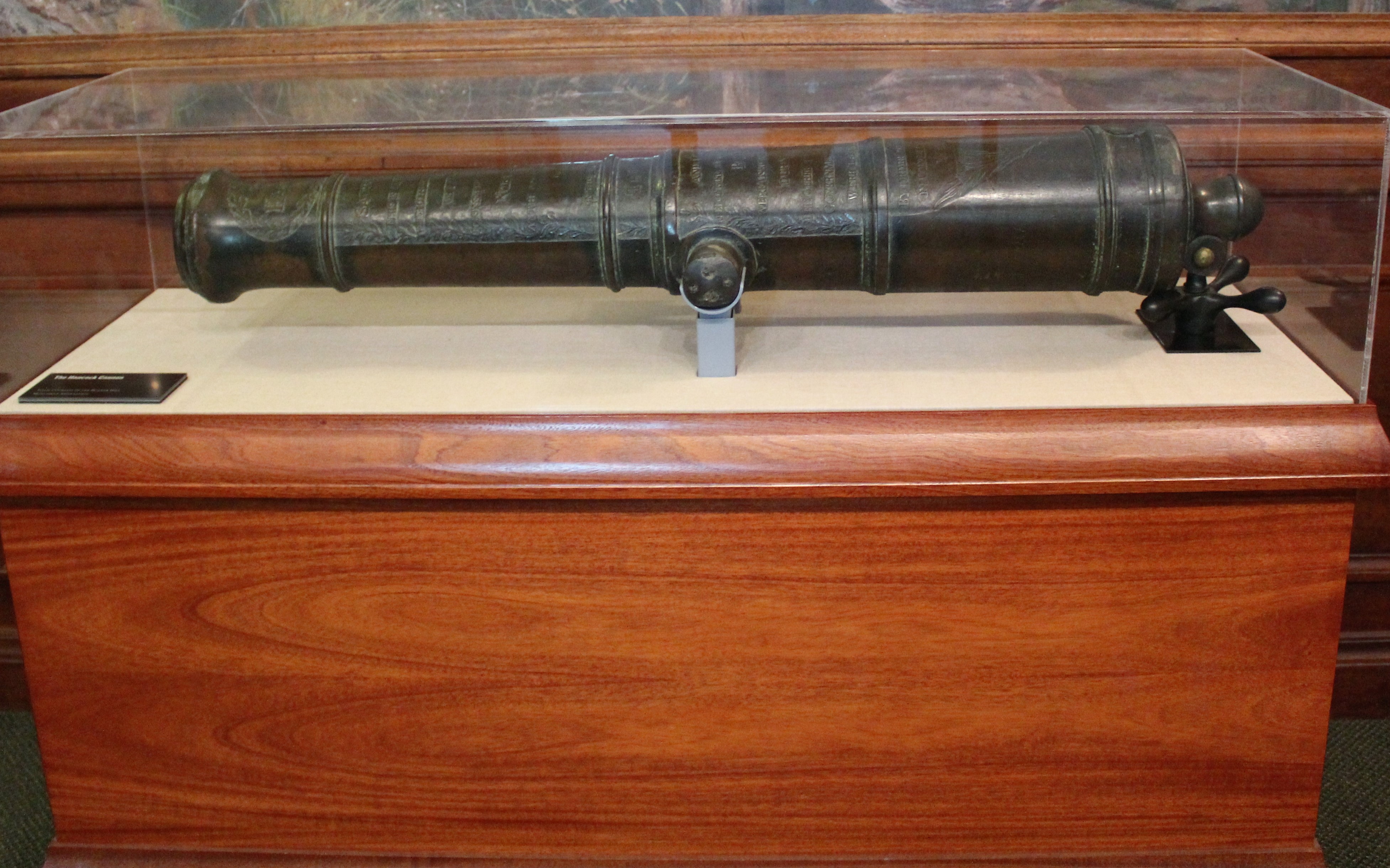
    The Visitor Center also started the dialogue that the British were not out to arrest Hancock and Adams, but were actually in hot pursuit of four canon and arms for 15,000 men that had been hidden in Concord.  Their goal was to find and destroy the cache of weapons and ammunition.


    51 Canon
    Hancock canon that the British were after

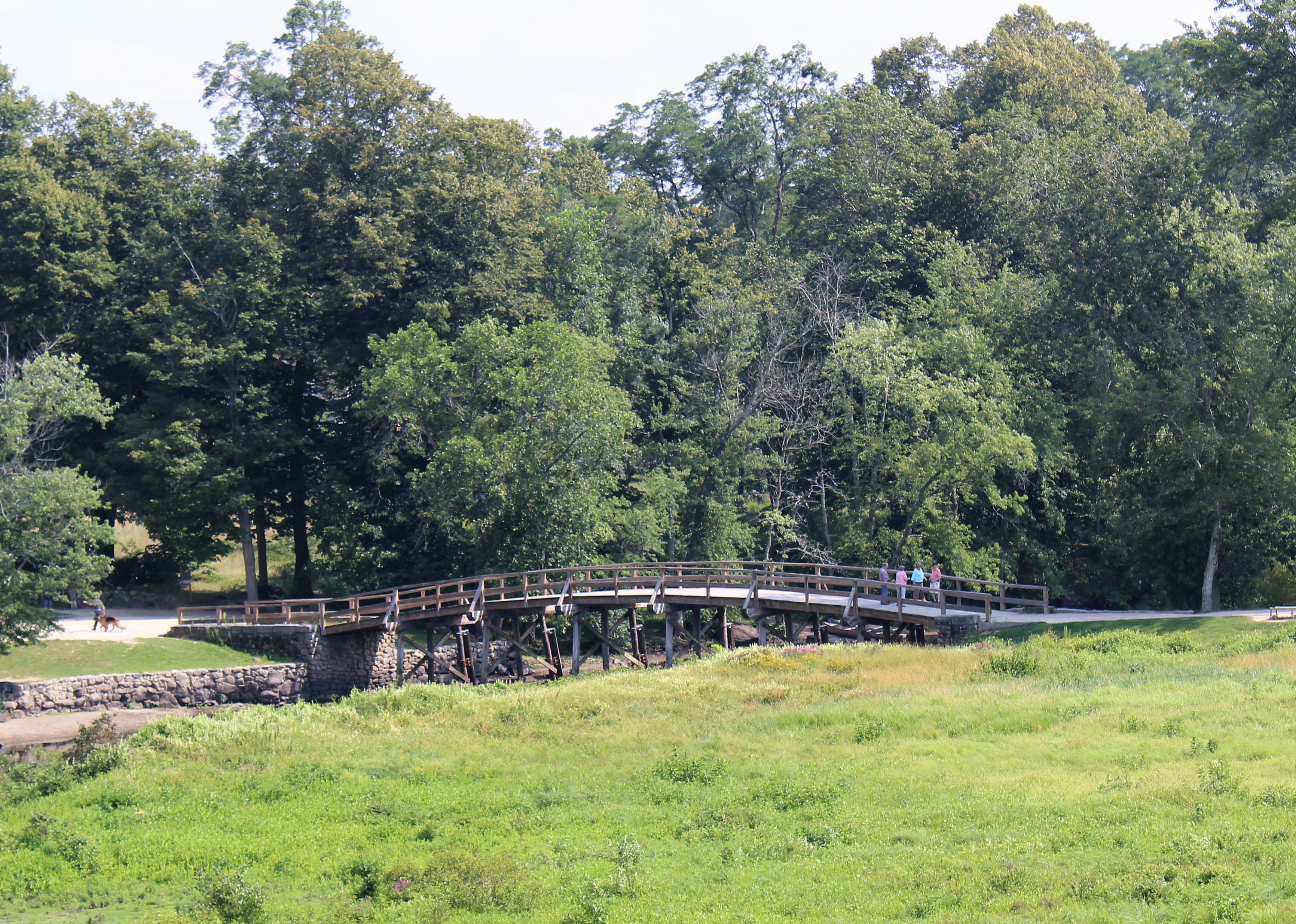
    The crew drove on to Concord on the Battle Road Trail and passed the location where Paul Revere was captured.  Upon arrival in Concord the crew found the North Bridge Visitor Center.

    53 North Bridge
    North Bridge

    The Visitor Center described the events of the early morning.  The British Regulars arrive at 0700 and begin to search Concord for the arms.  The militia has moved to some hills outside of town to observe the British.  At 0900, the British begin to burn a small cache of weapons that they found.  At 0930, the militia heads to town to stop the burning.  They encounter British soldiers on the North Bridge.  The British fire and kill two militia men.  The militia returns fire and kill the first British soldiers of the day.  Both groups disperse from the bridge and no further shots are fired at the bridge. 

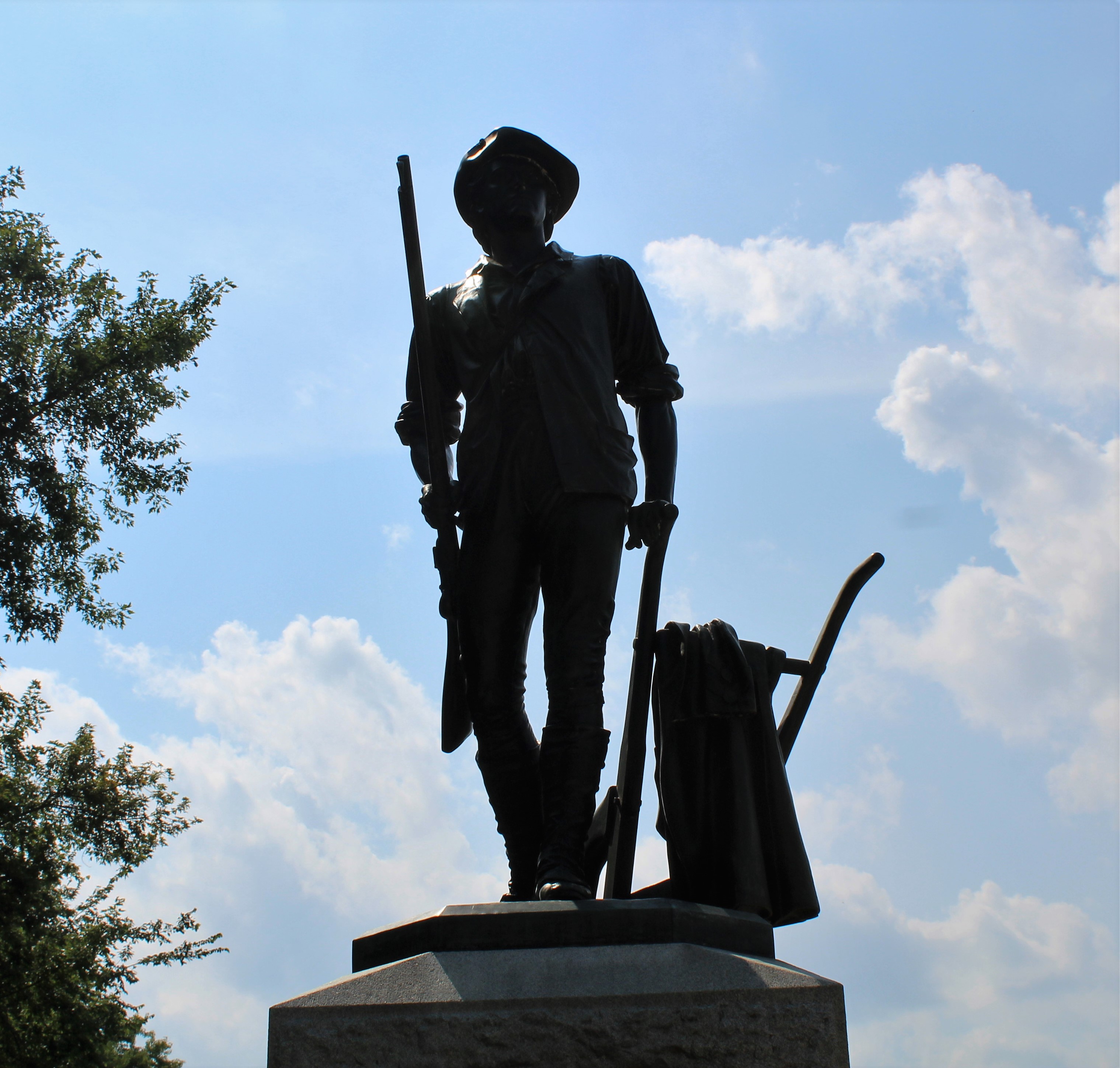
    There is a Colonist memorial on the side of the bridge where the minute men approached.

    55 Concord Patriot
    Concord Minute Man with his gun and plow

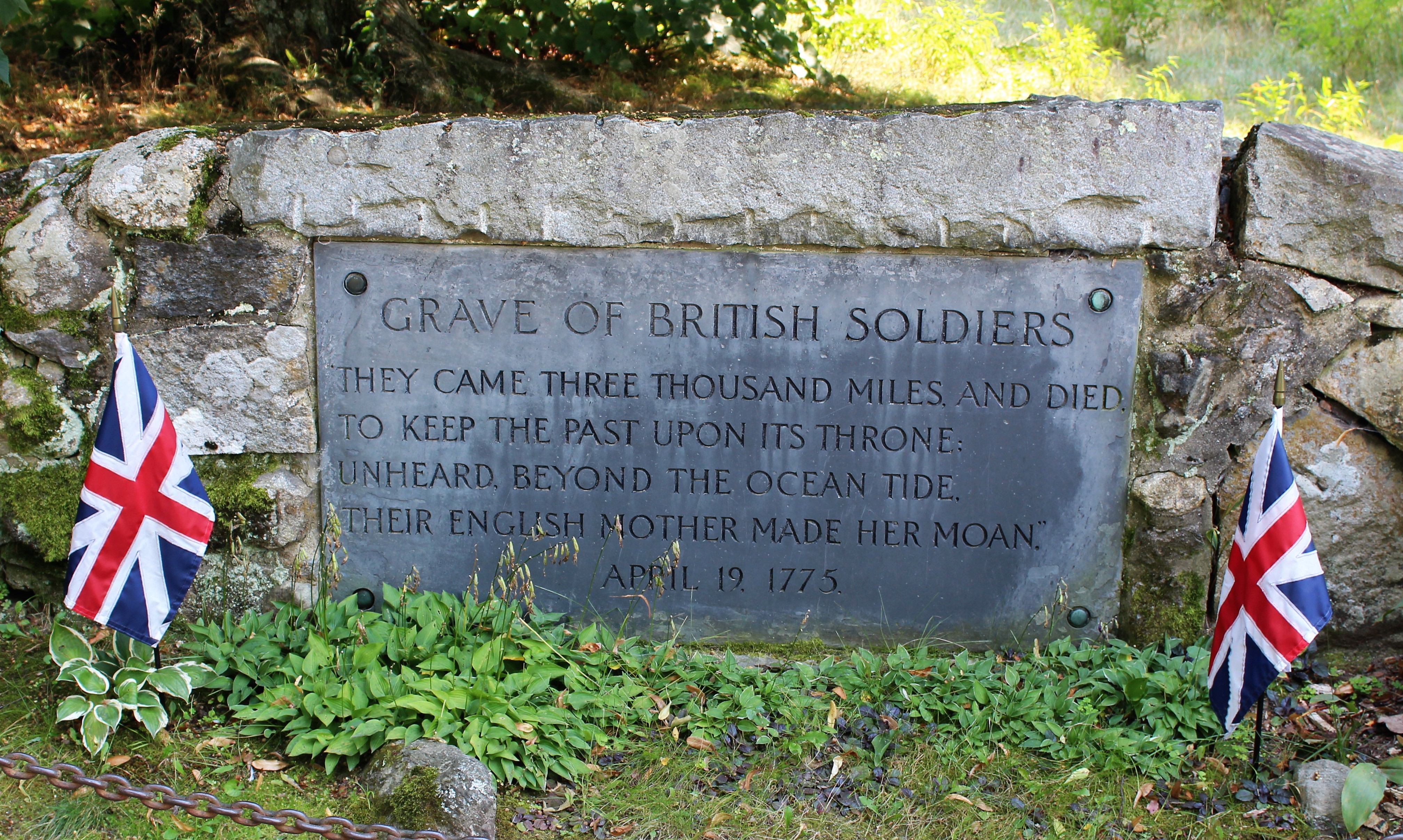
    On the British side of the bridge is a grave of the first British Soldiers killed.

    57

    By 1230, the British troops have regrouped and begin the long march back to Boston.  The militia men start a running battle along the Bay Road back to Boston.  The fighting ends when the British arrive back in Boston about 1900.  The British have 73 dead and 174 wounded.  The Colonist have 49 dead and 41 wounded.  

    It would take the Declaration of Independence and another hard eight years of war before the Colonists would win the Liberty they so desperately were seeking.  Makes one stop and ponder what you would be willing to fight for to maintain the freedoms and liberty that we seem to take for granted.

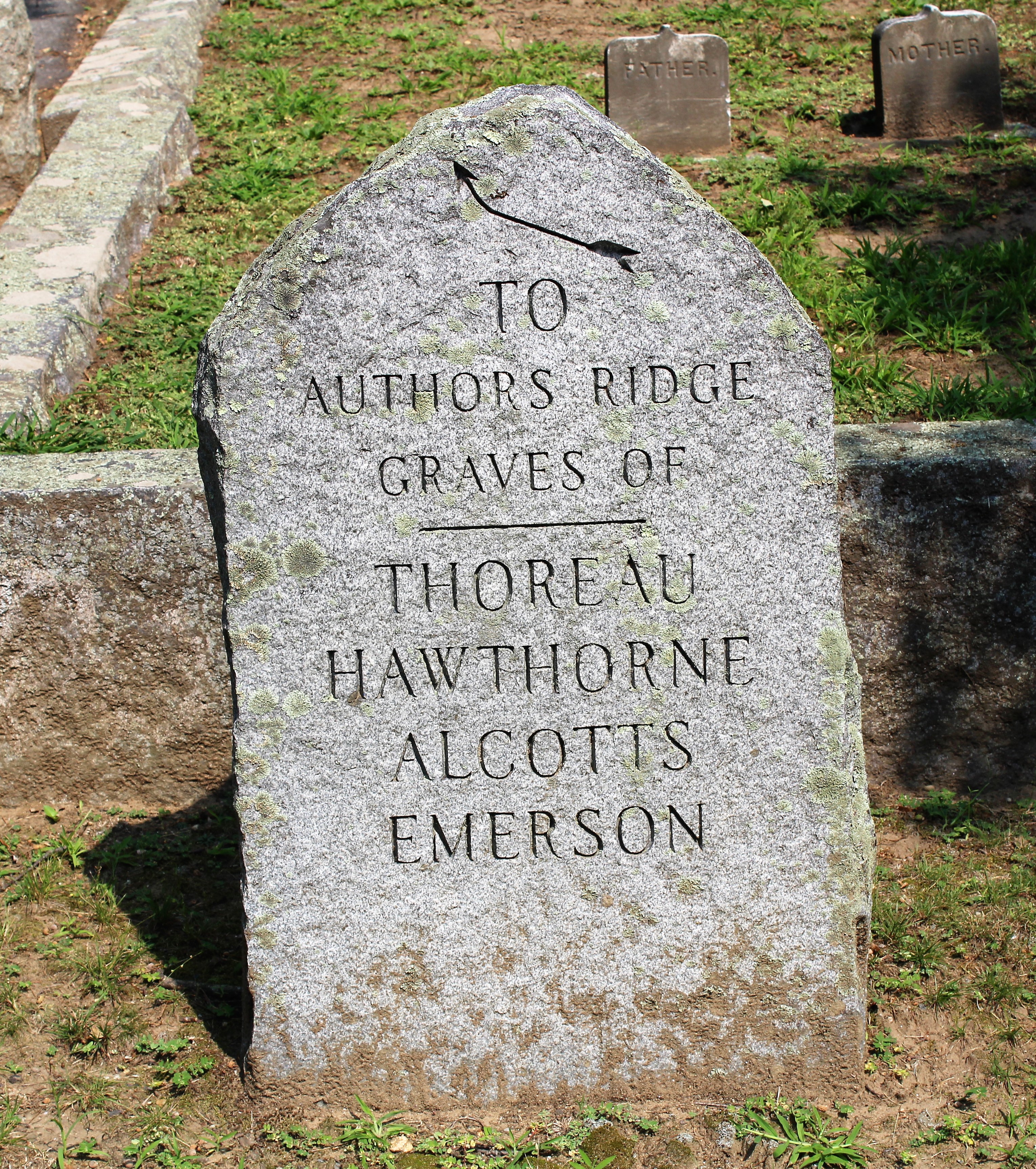
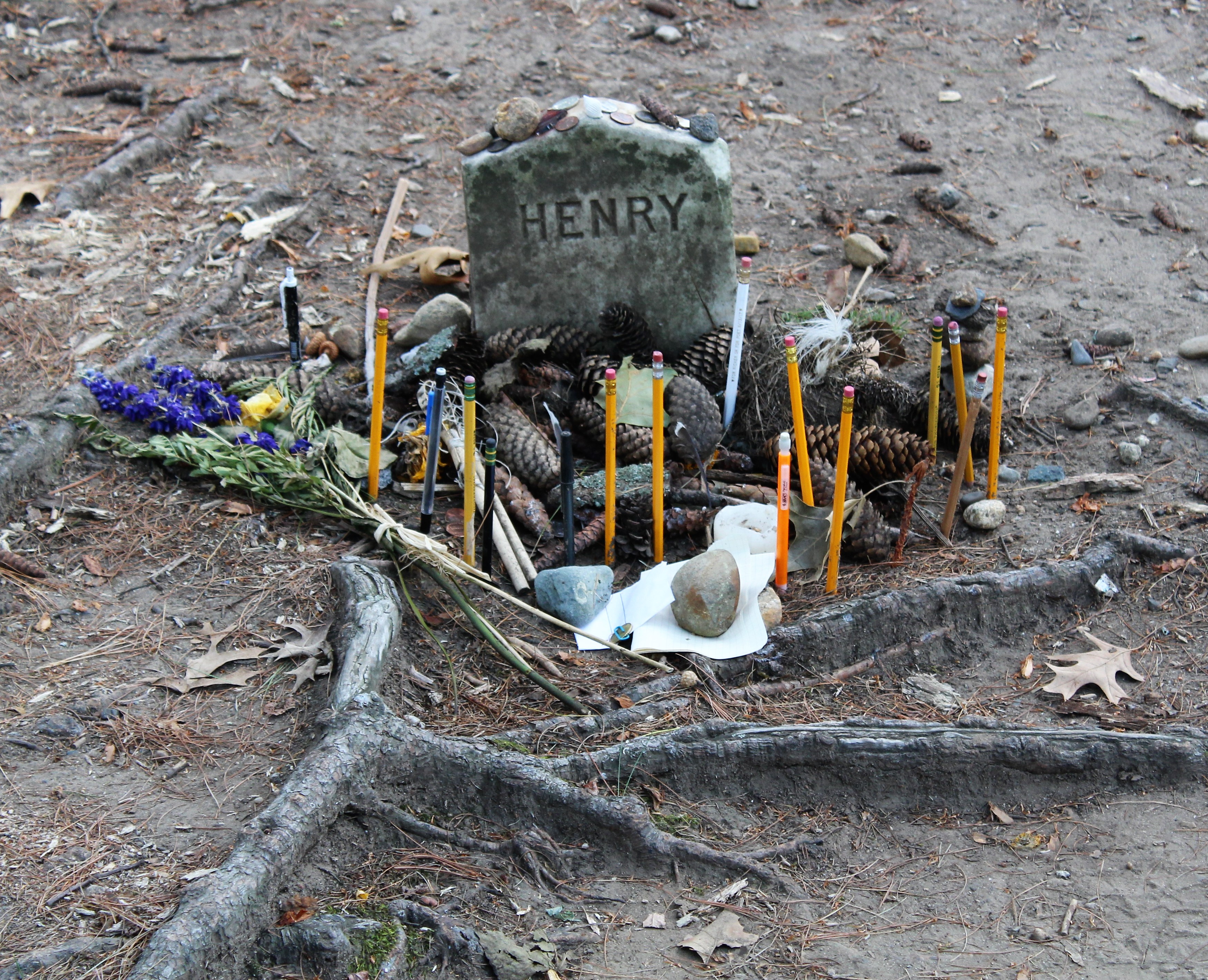
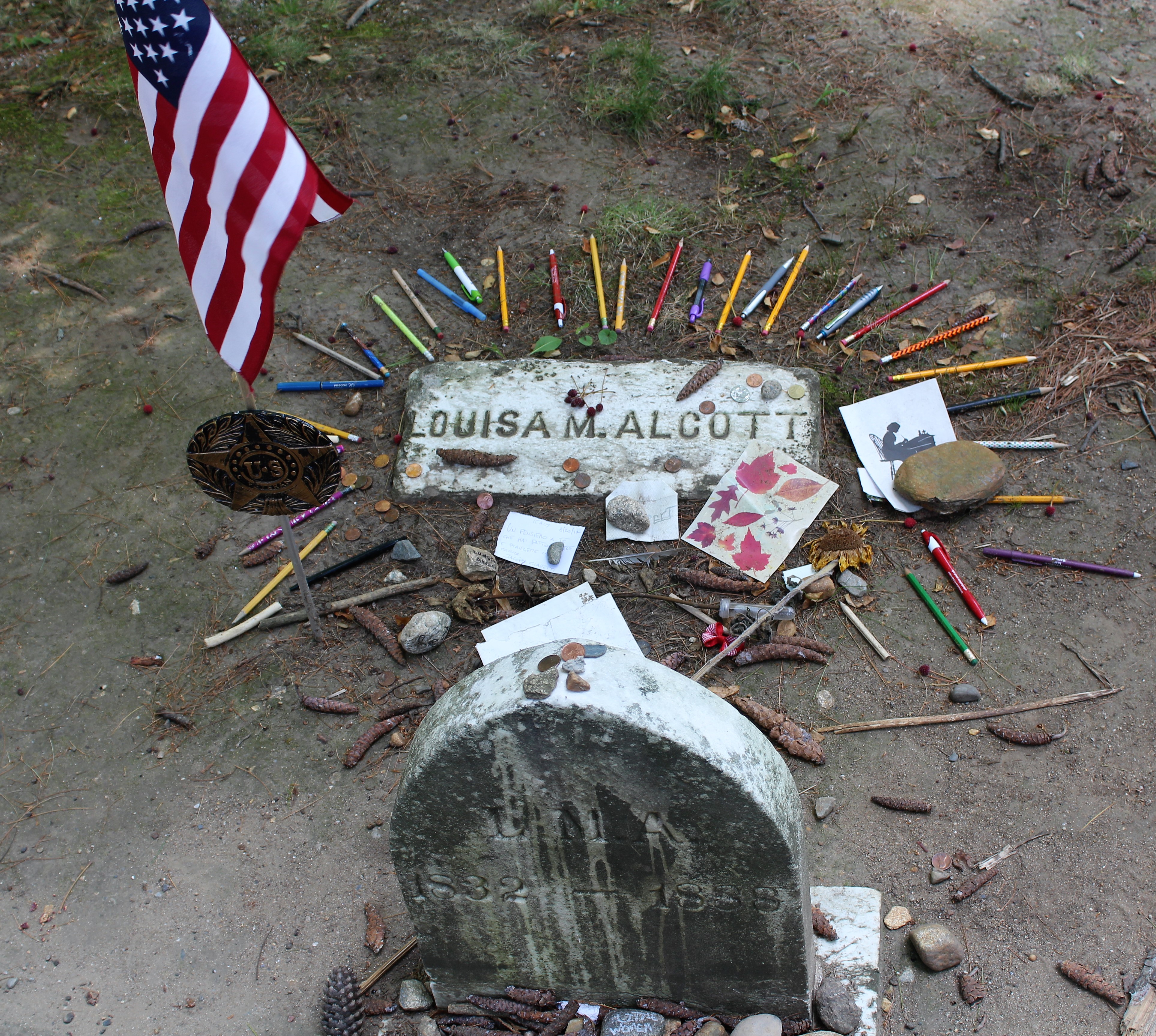
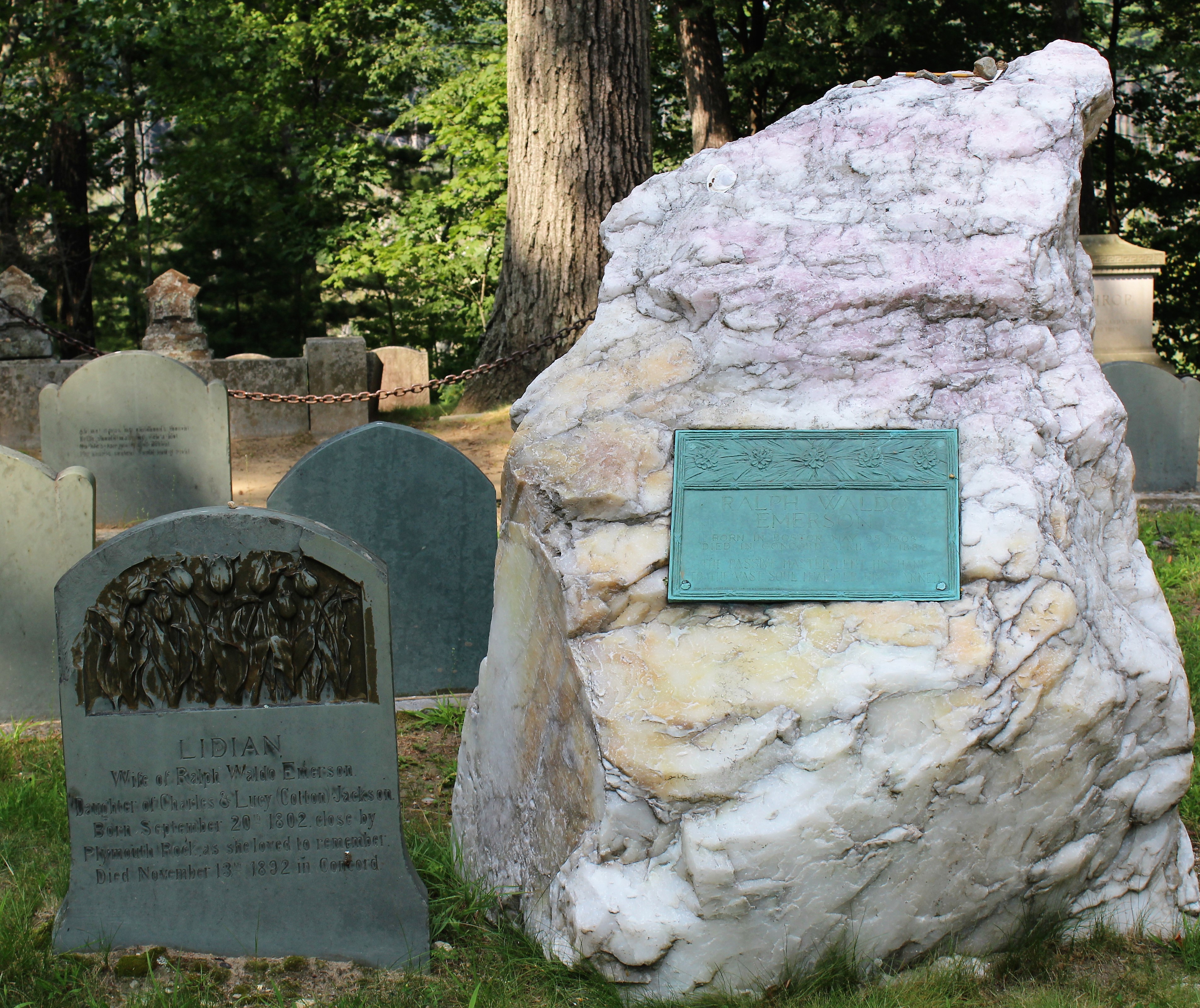
    After the war was over and the British were gone from the America’s, a war of words ensued that shaped the thinking of the young Americans and the generations that followed.  Interesting enough, some of these writers are buried in the Sleepy Hollow Cemetery in Concord.  They are buried on Authors Ridge in close proximity to each other.

    58 Sleepy Hollow Cemetery

    58.2

    58.3

    58.4

    58.7

    Wednesday, Aug 23, 2017       

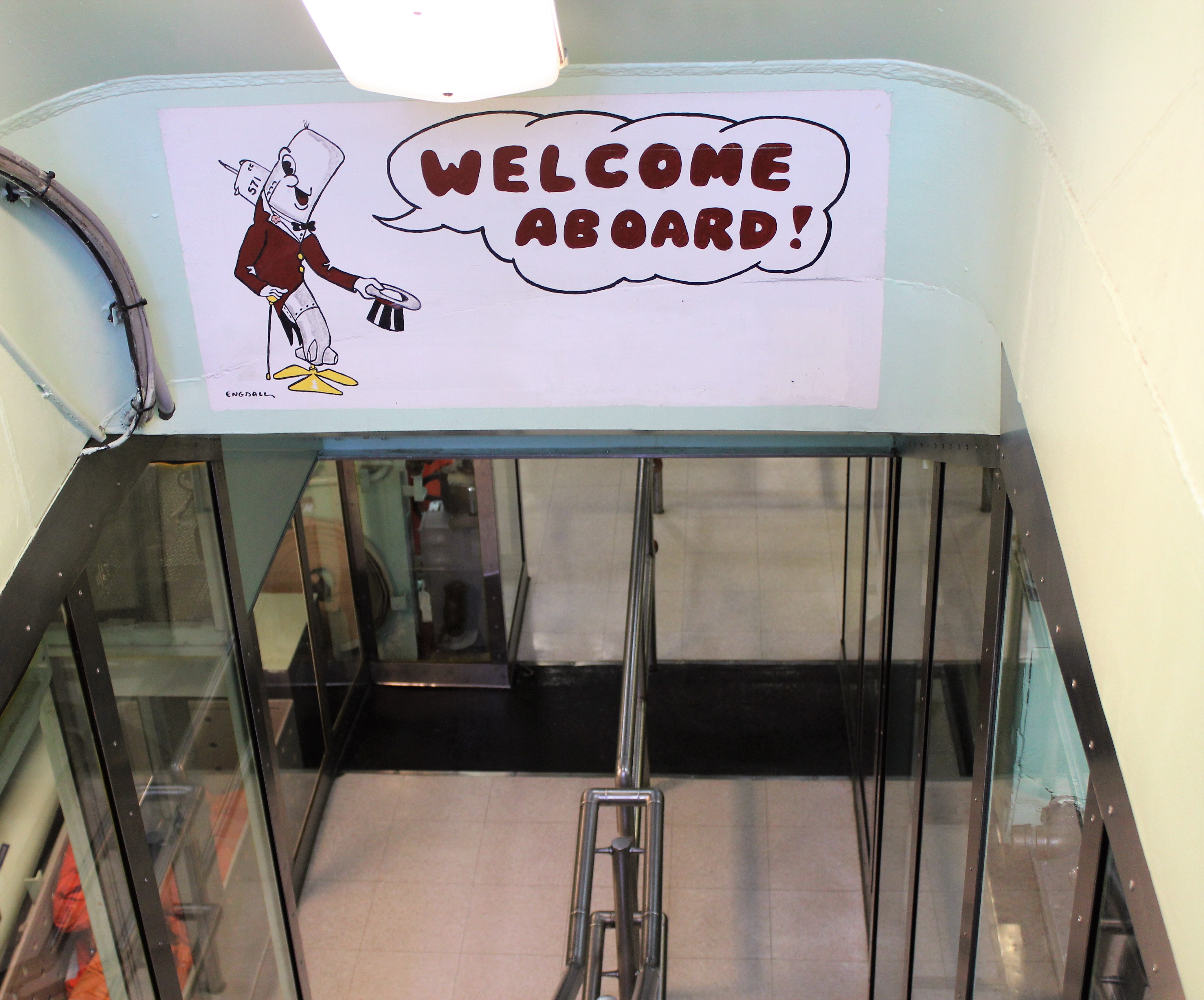
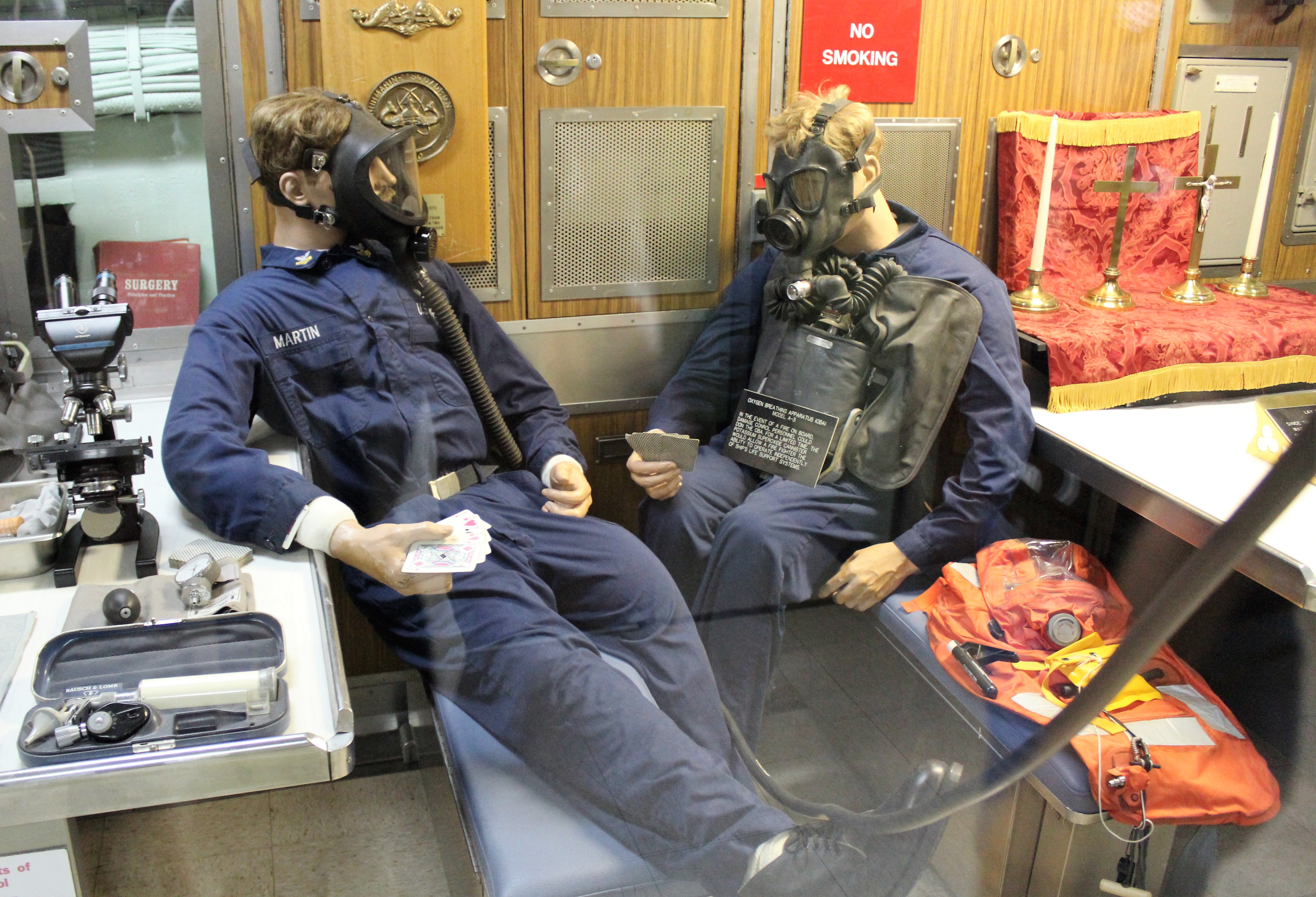
    Today the crew was headed to Groton, Connecticut to visit the first nuclear powered submarine, USS Nautilus, SSN 571.

    59.5

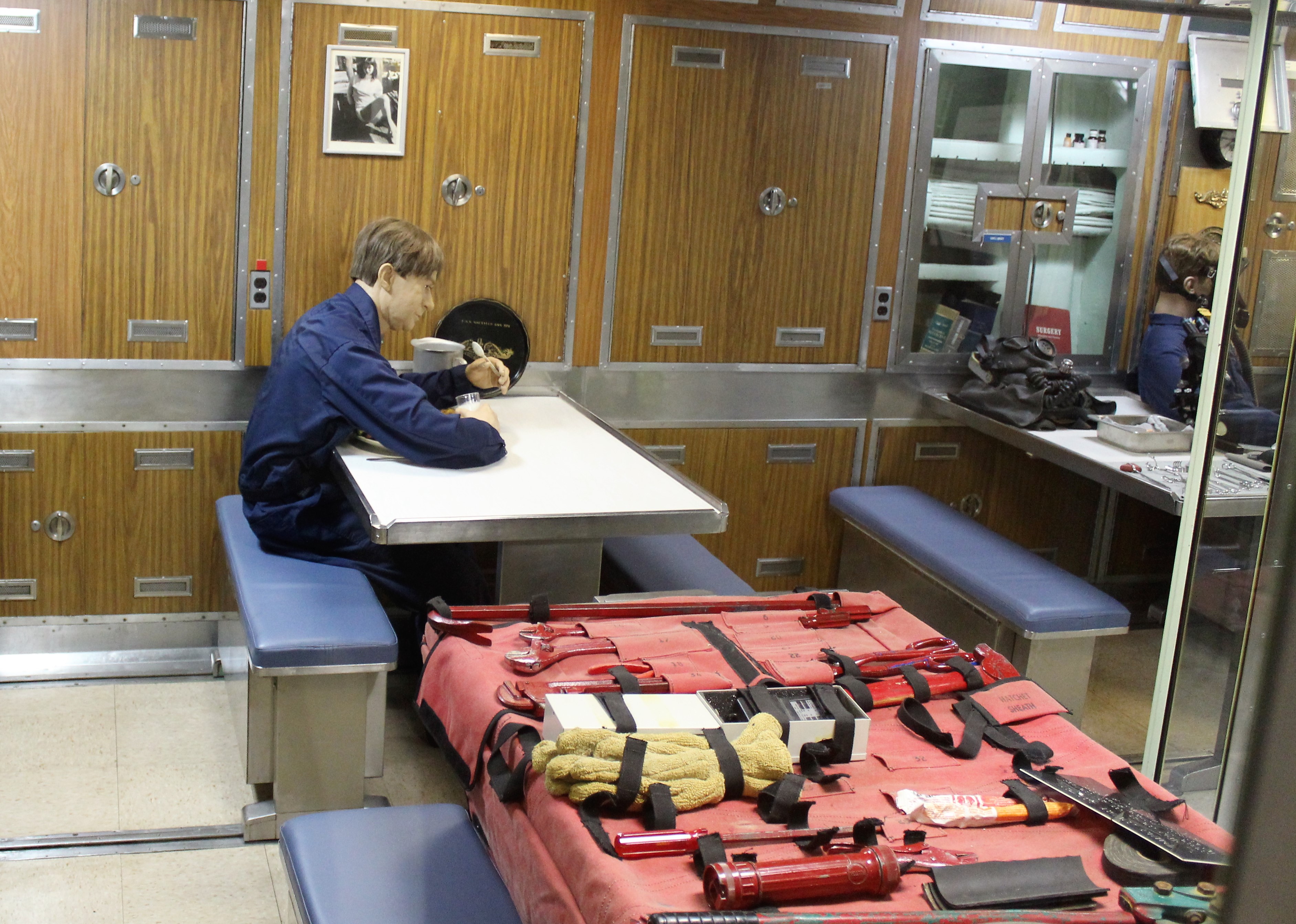
    The crews mess

    59.6

    59.7

    The galley

    59.8

    The museum told the history of development of submersible vessels.

    59.10
    The Turtle, tested but failed during the Civil War

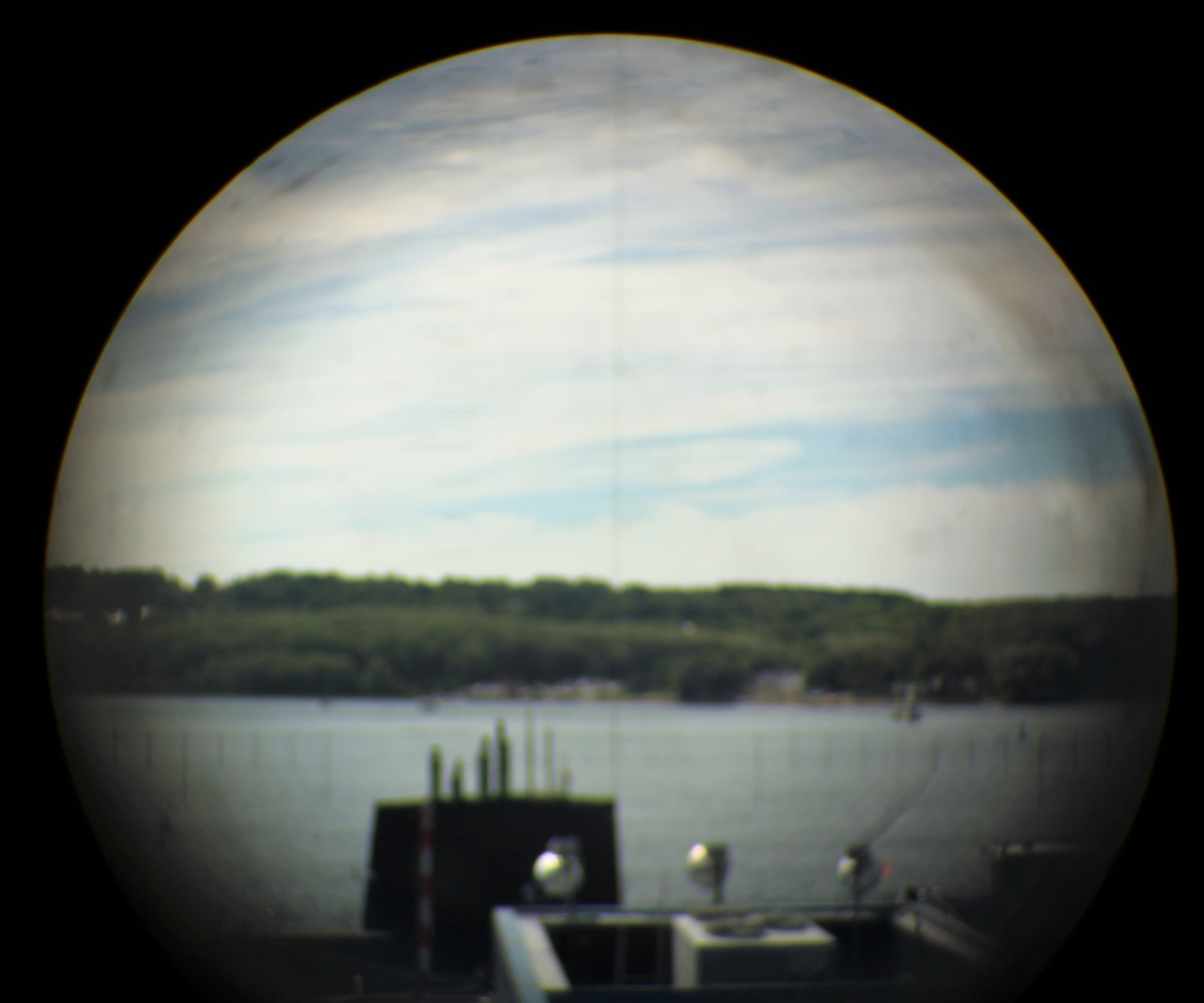
    The USS Nautilus thru the periscope in the museum.

    59.11

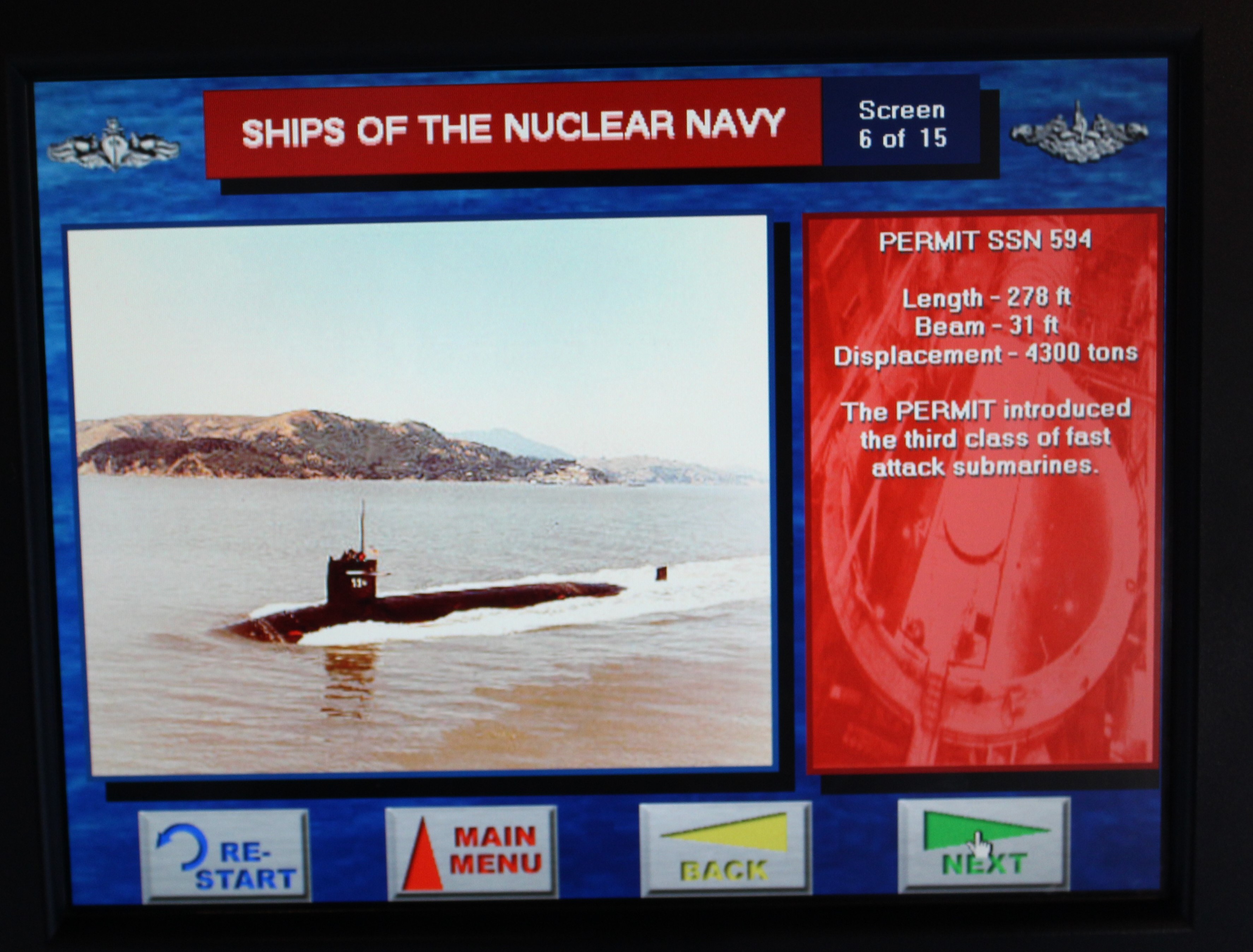
    The skipper even found a display about the submarine he served aboard, the USS Permit, SSN 594.

    59.12

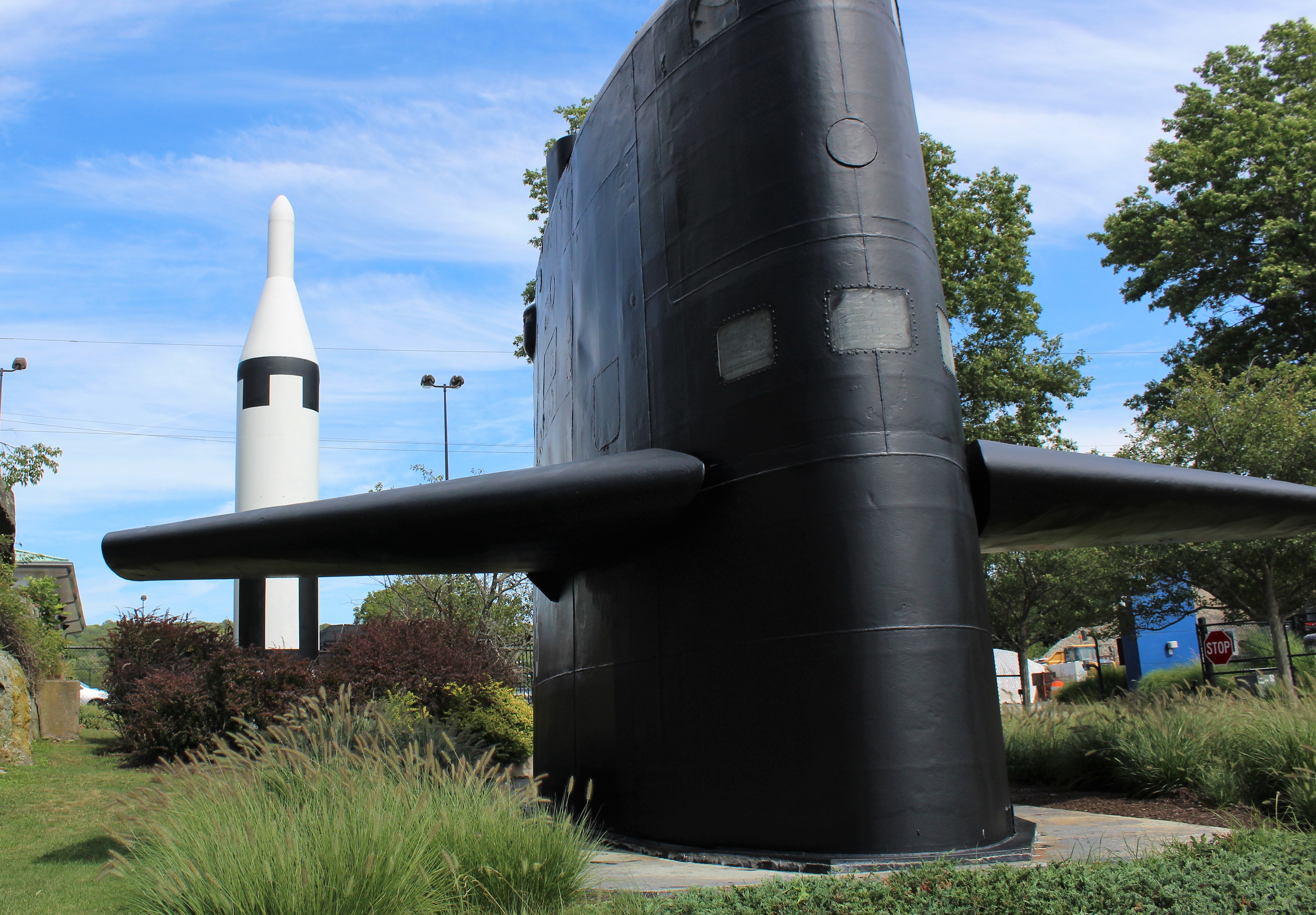
    Outside the museum they had the sail of the very first ballistic submarine, USS George Washington, SSBN 598.  Eventually, there were 41 of this class submarine built as a deterrent for the Cold War.

    59.24

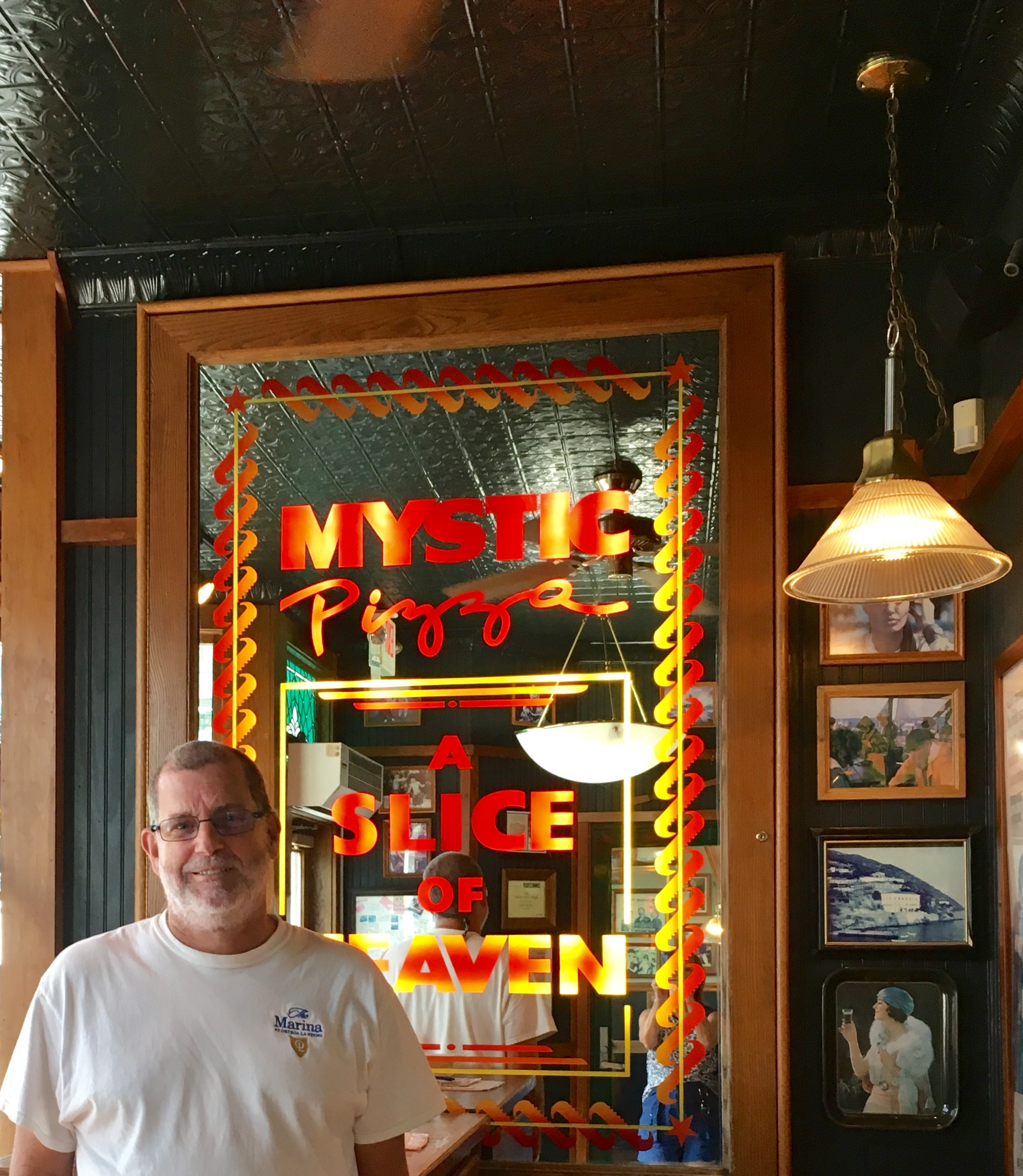
    After the skipper got his submarine fix satisfied, it was time to head over to Mystic Pizza and try their ‘Little Slice of Heaven.’  The crew had a Hawaiian Pizza that was surprisingly good.  While waiting on the pizza, the customers can watch the movie Mystic Pizza on various TV sets scattered around the tables.  The menu has a bit of Mystic Pizza history, ands ends with the line, ‘The pizza that made the movie famous.’

    Mystic Pizza

    After pizza, it was a short stroll around town and a long drive back to Boston.

    Thursday, August 24, 2017

    Nothing really exciting to talk about today other than finding a bakery to try an original Boston Cream Pie.  Let’s just say it was anti-climatic.

    Friday, August 25, 2017

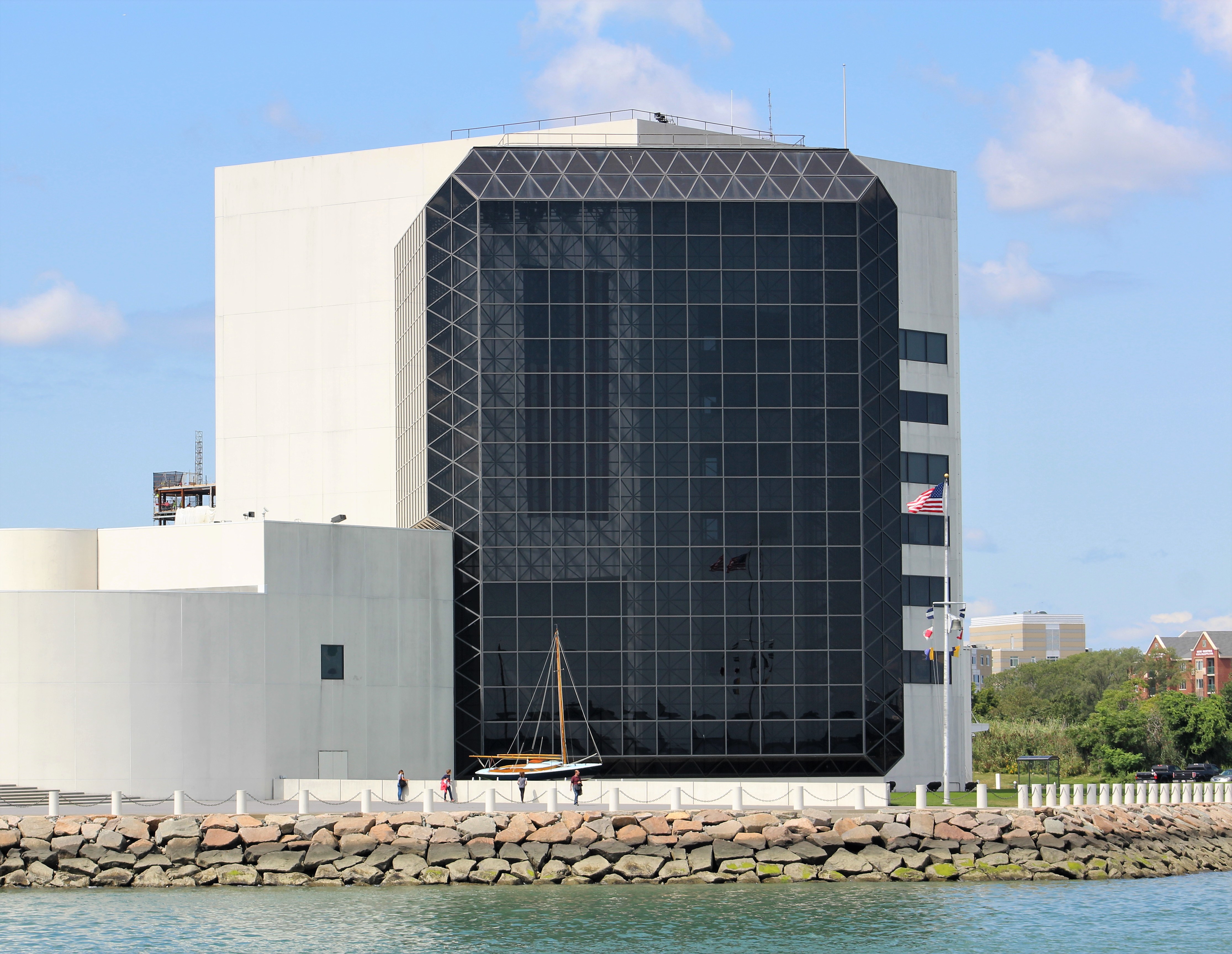
    Today the crew tried to go to the University of Massachusetts to visit the JFK Library.  Unfortunately after several attempts to find a place to dock the boat, the crew had to abandon their efforts.


    61 JFK Library
    JFK Library


    They did get tied up on the pier beside the Library, but the sign says that the pier is for drop off and pick up only with a 10 minute max time limit.  The crew stretched the 10 minutes to 30 so they could have lunch before setting off for Gloucester.

    65 Gloucester.JPG

    Upon arriving in Gloucester Bay, the Harbor Master assigned the crew Ten Pound Ball #4.  After searching the mooring field for almost an hour, the skipper finally gave up and called the Harbor Master back and asked for assistance.  The Harbor Master sent a skiff over to show the crew where the #4 ball was located.  Turns out there was a boat on the #4 ball already, so the skiff operator directed the crew to ball #3.  That was easy.

    The view from the #3 mooring ball:

    65.3

    65.4

    65.2

    Saturday, August 26, 2017

    The big excitement for the day was watching marine mammals.  The skipper spotted a whale about a hundred yards off the port side of the boat.  The whale surfaced several times then broached and went under to not be seen again.

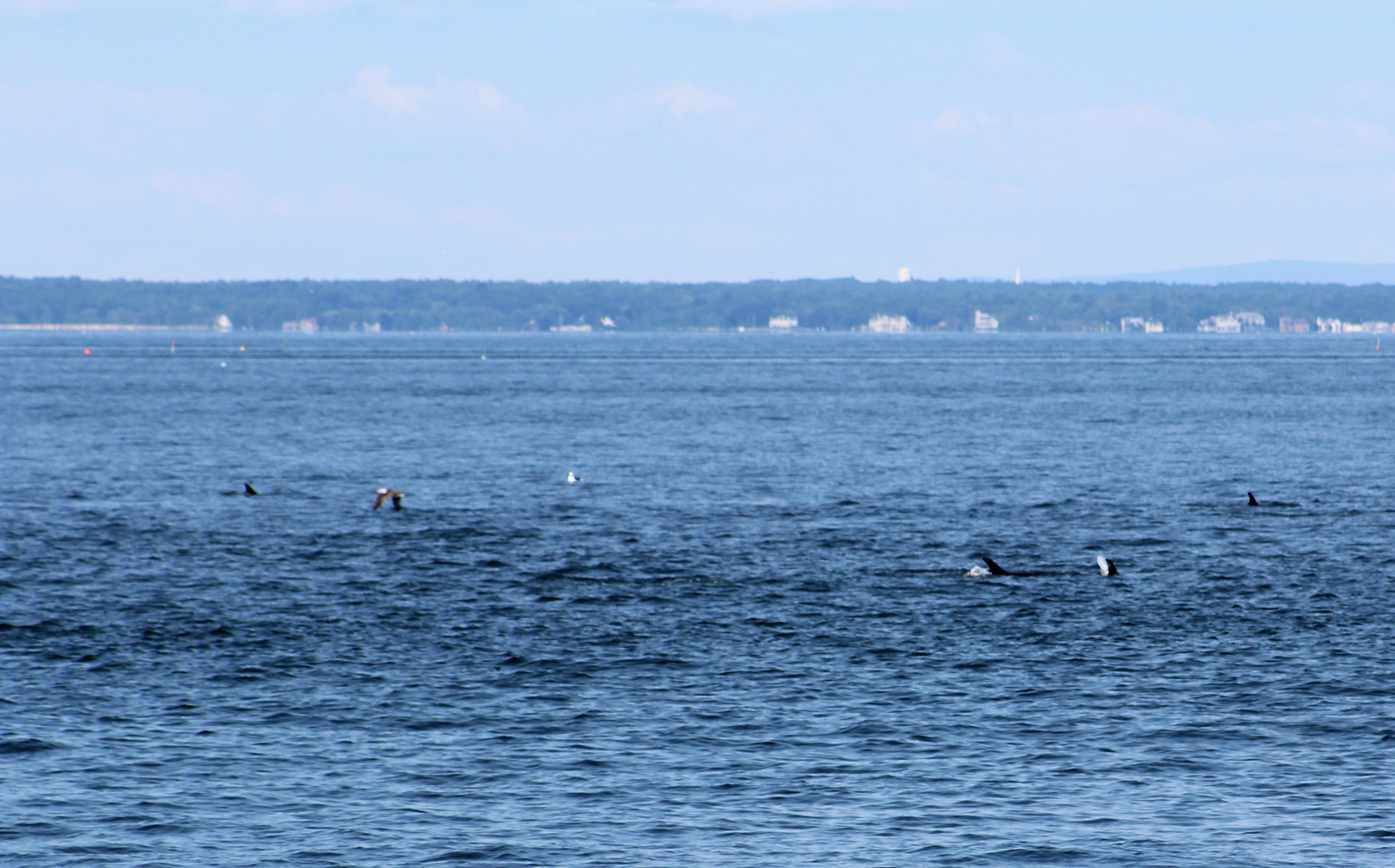
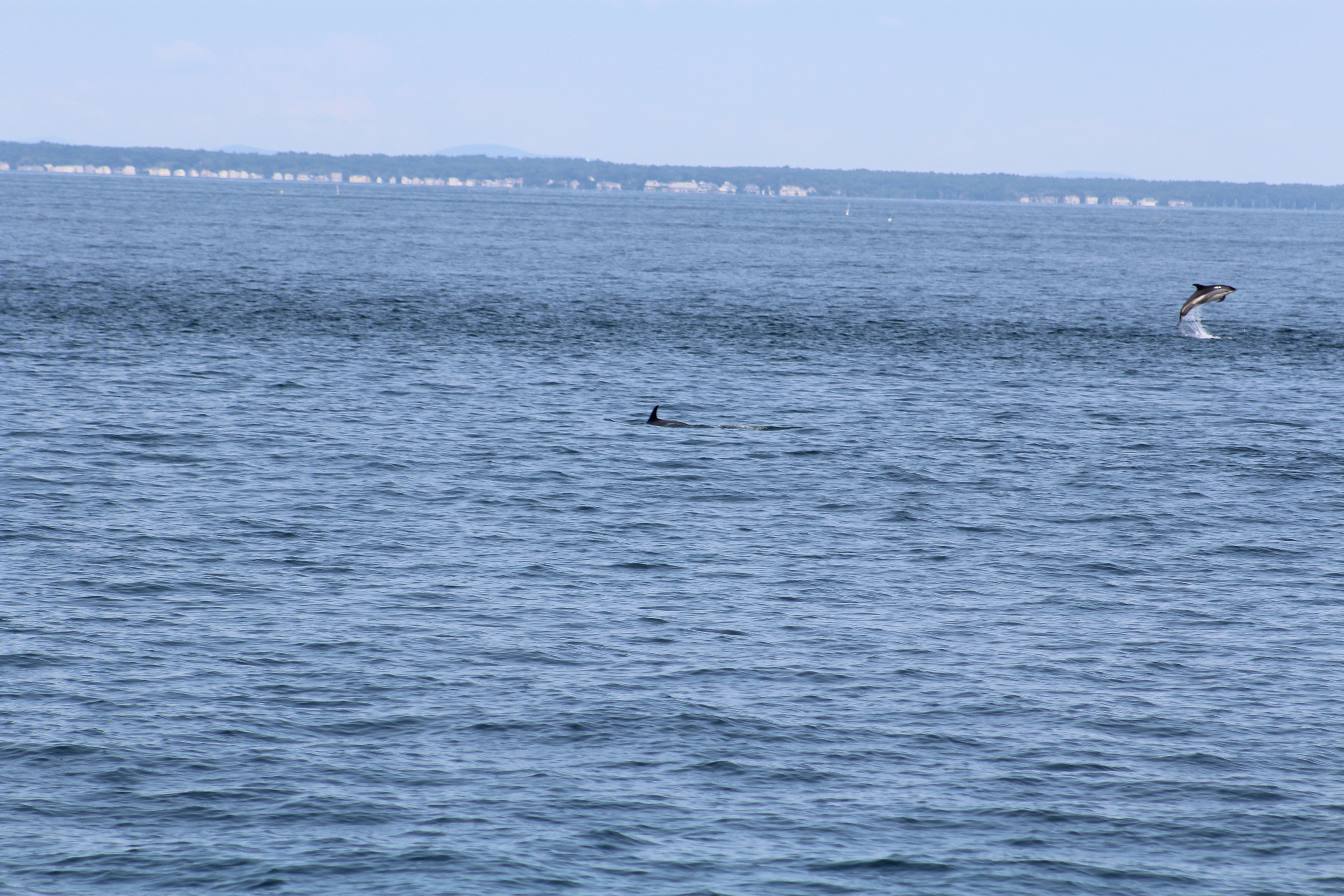
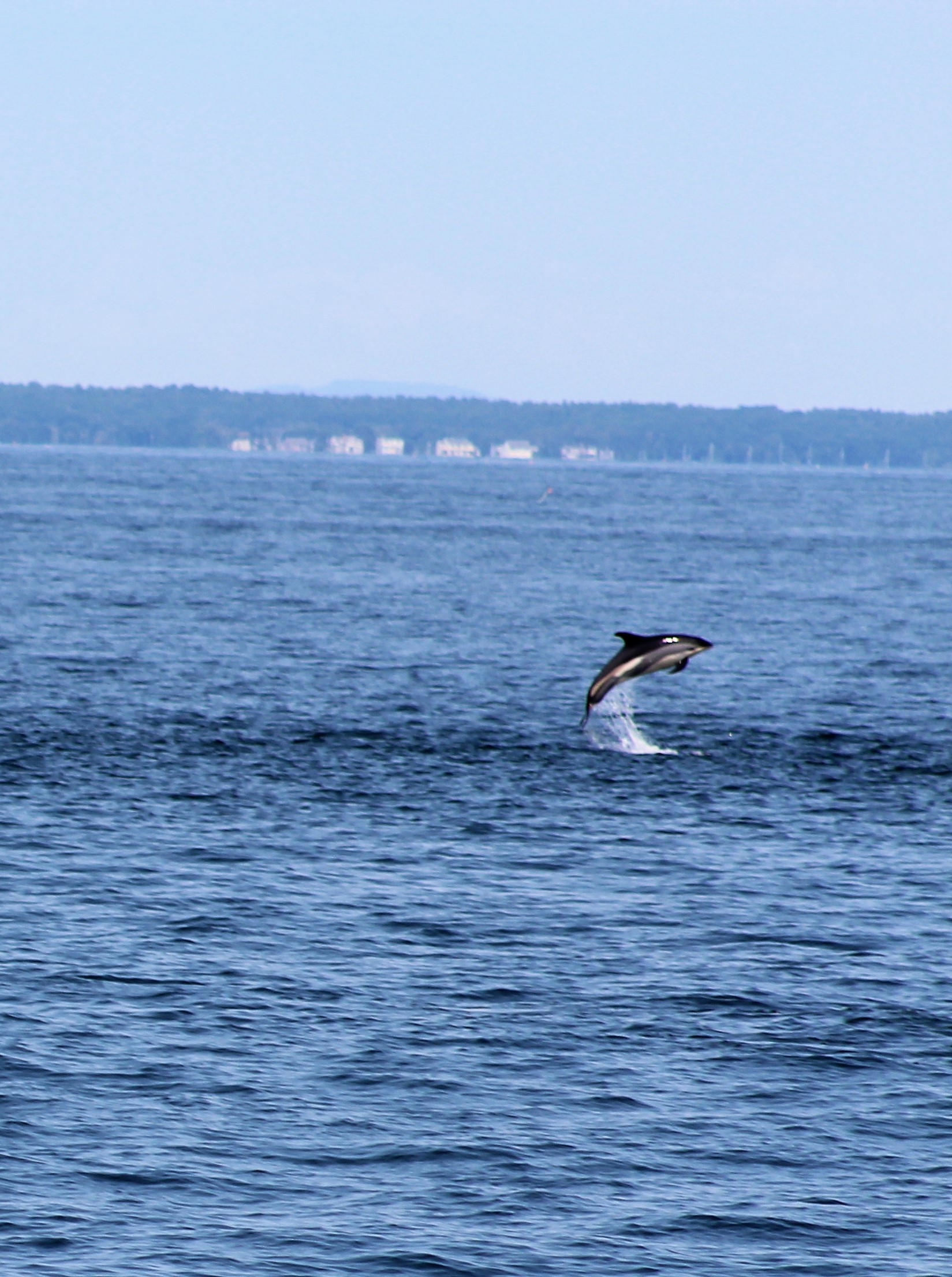
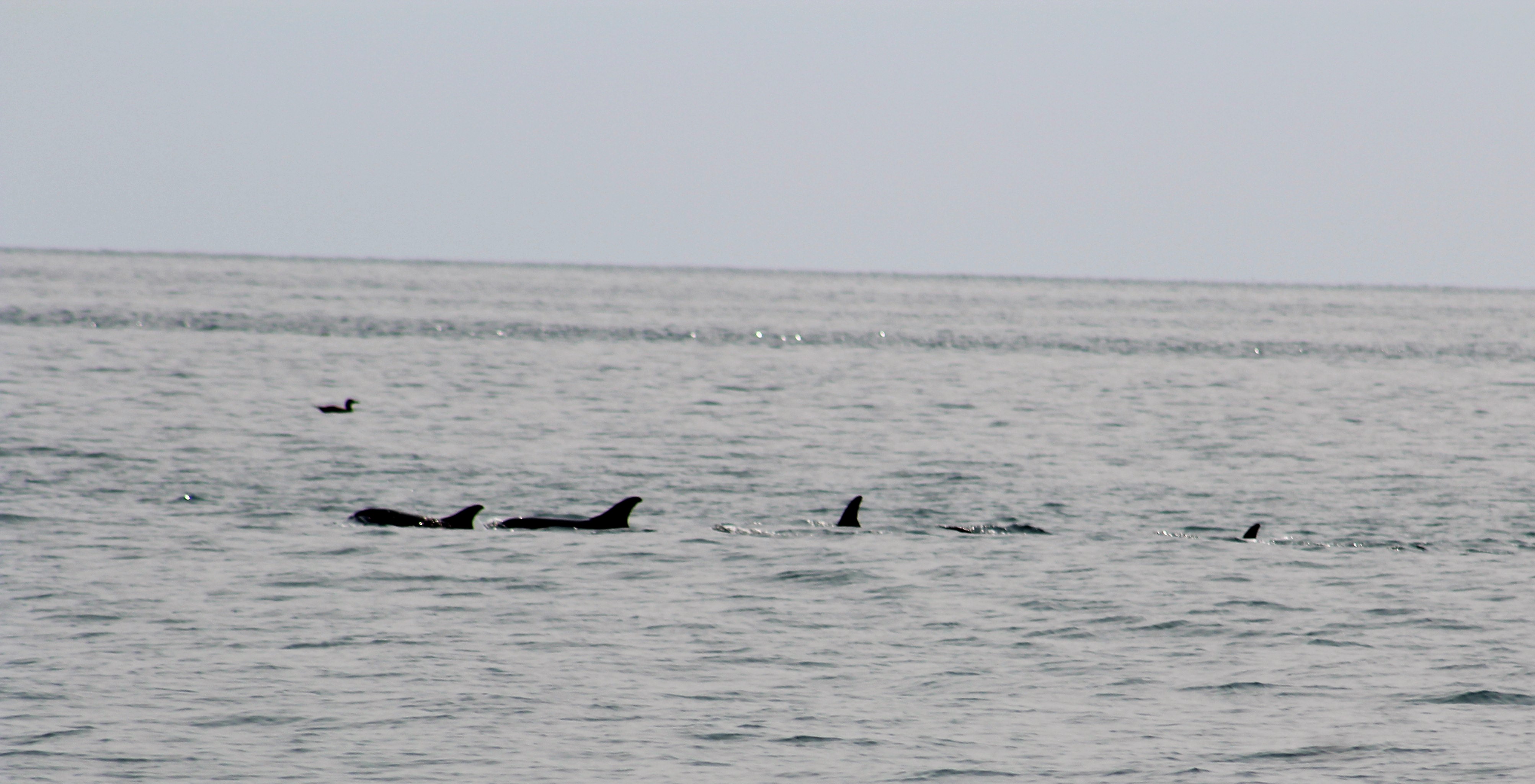
    A little while later the skipper spotted some splashing activity in the water.  Upon investigating the crew found themselves surrounded by a large Pod of dolphins.  There were over a hundred of them swimming and feeding in the waters around the boat.

    1.5

    1.3

    These dolphins looked very different than the ones further south.  These were multi-colored.  The top was very dark grey, almost black.  Then they had a lighter grey color along side, and then a white stripe by their tail fin.

    1.4

    This was another first for the crew.  The dolphins are Atlantic White-Sided Dolphin.

    1.6

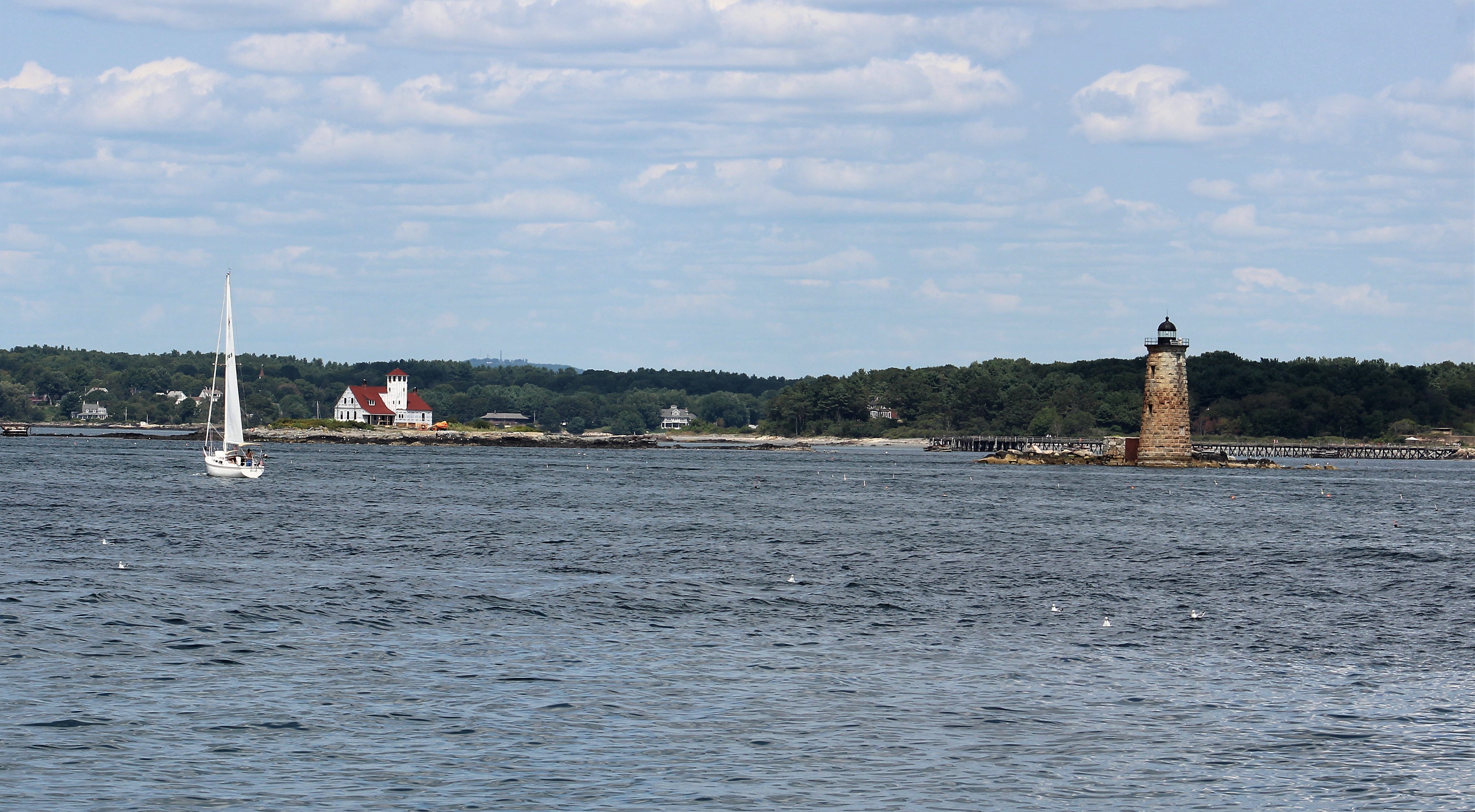
    After the personal dolphin show the crew completed the run to Portsmouth, New Hampshire.  The crew could not find a dock in Portsmouth so they crossed the river over to Kittery, Maine and had a harrowing experience in the current.

    3 Entry to Portsmouth
    Entry into Portsmouth

    Coming to the dock, the river runs through a mooring field full of boats.  The current was running about 4 knots when the crew arrived.  The current was pushing the boat around pretty good as they maneuvered thru the mooring field barely missing a couple of boats.  After passing the marina, the skipper rotated the boat around 180 degrees and backed the boat into the current and dock.  The people on the boat beside where the skipper was docking saw him coming, put down a couple of extra fenders, and then helped catch lines and get Still Waters II secured.

    Boat Name of the Week

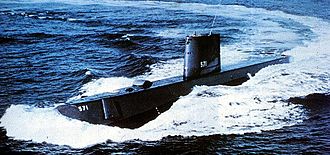
    USS_Nautilus_SSN-571_-_0857101
    USS Nautilus, SSN 571, circa 1965
    • Launched January 21, 1954
    • Commissioned September 30, 1954
    • January 17, 1955, she cast off her lines and CO Wilkinson called out, “Underway on nuclear power”
    • First submarine to complete a submerged transit of the North Pole, August 3, 1958
    • Decommissioned March 3, 1980

    Next Week –

    The crew will continue to head north exploring the coast of Maine.

    Loop On – The water goes on forever and the adventure never ends.
    Eric the Red

  • Truth: Stranger Than Fiction

    Hello virtual crew members and fellow adventurers!

    Eric here with the latest travels of Still Waters II.


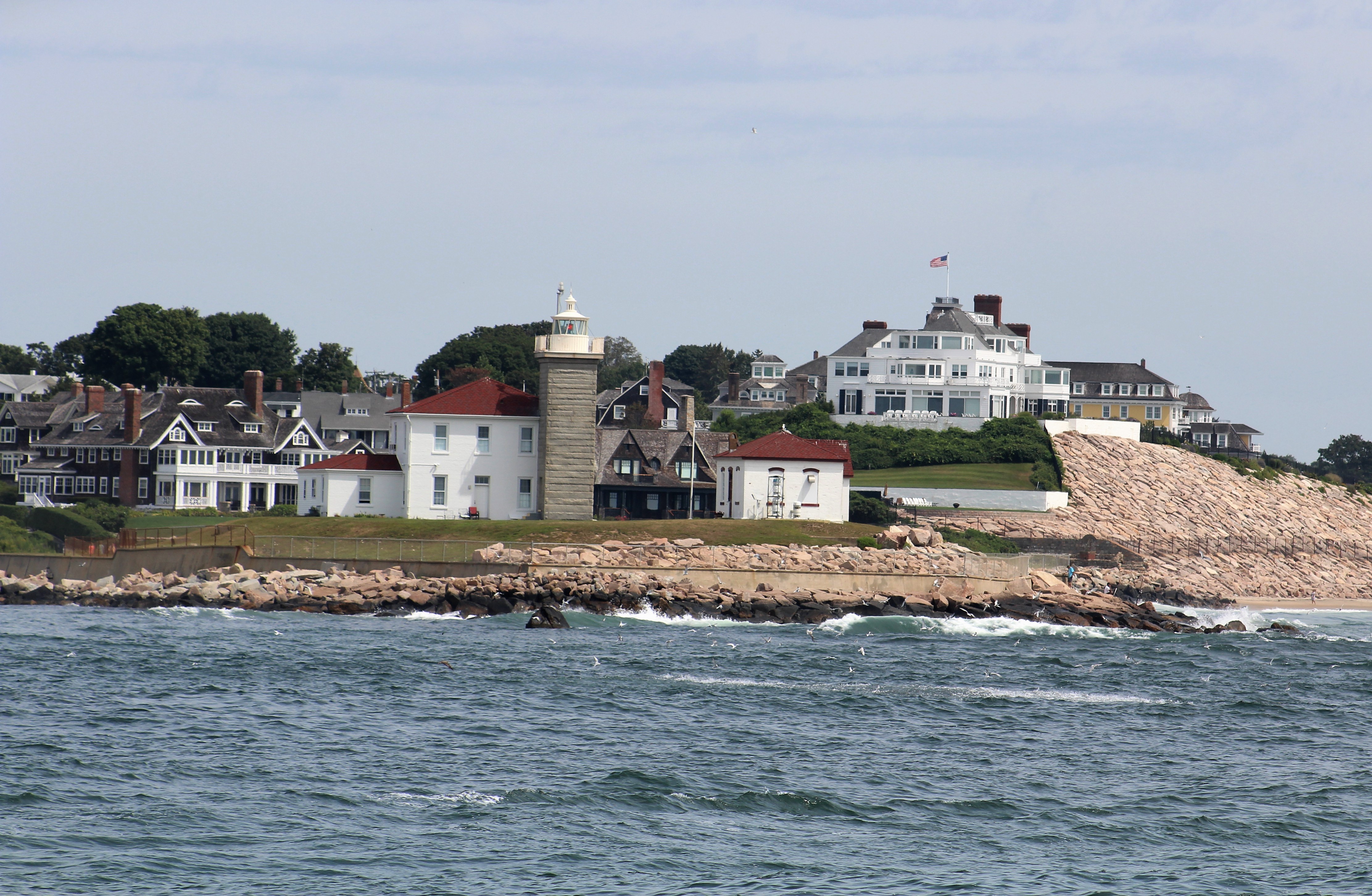
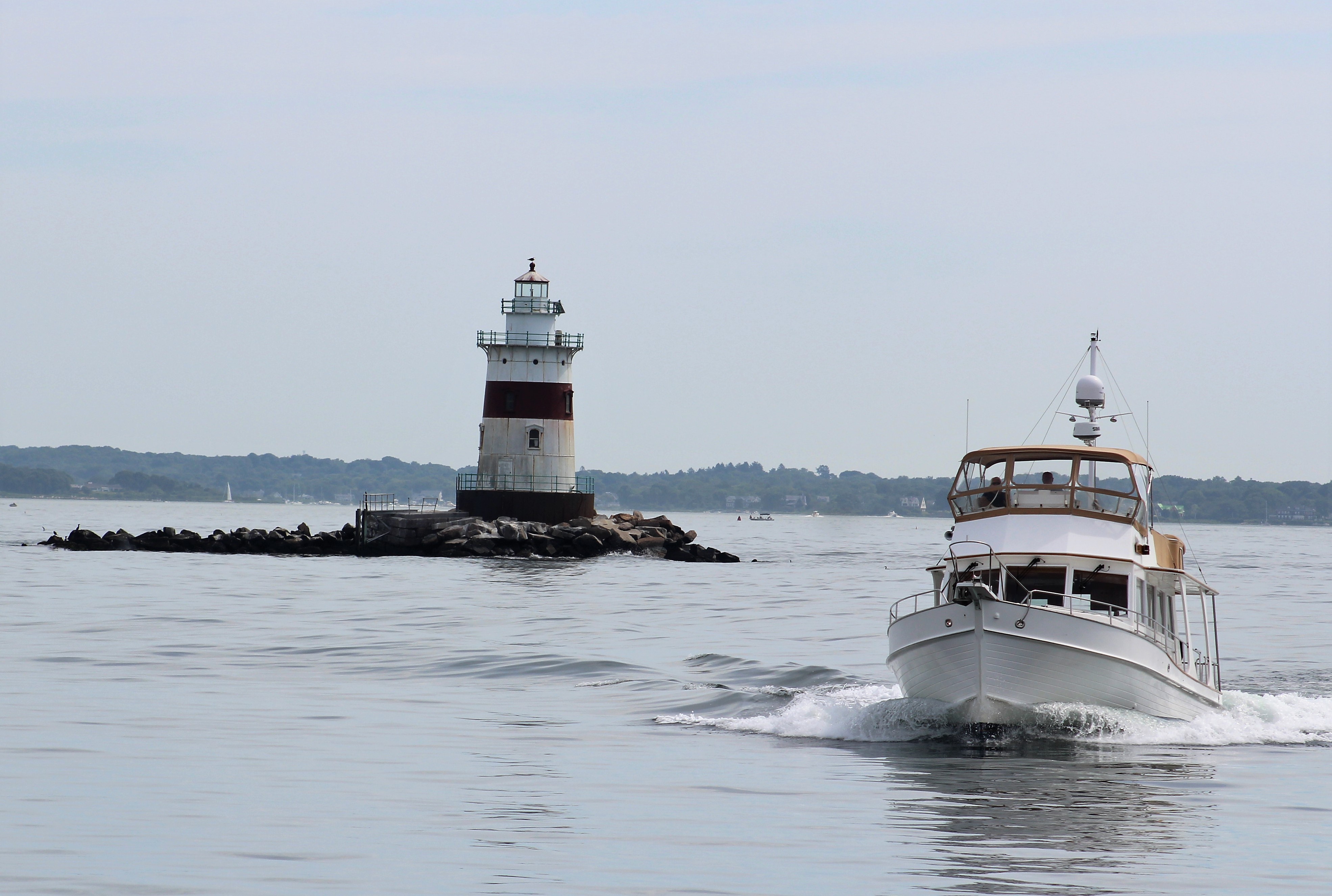
    99 Watch Hill Light
    Watch Hill Light


    Summary of week:

    Boston

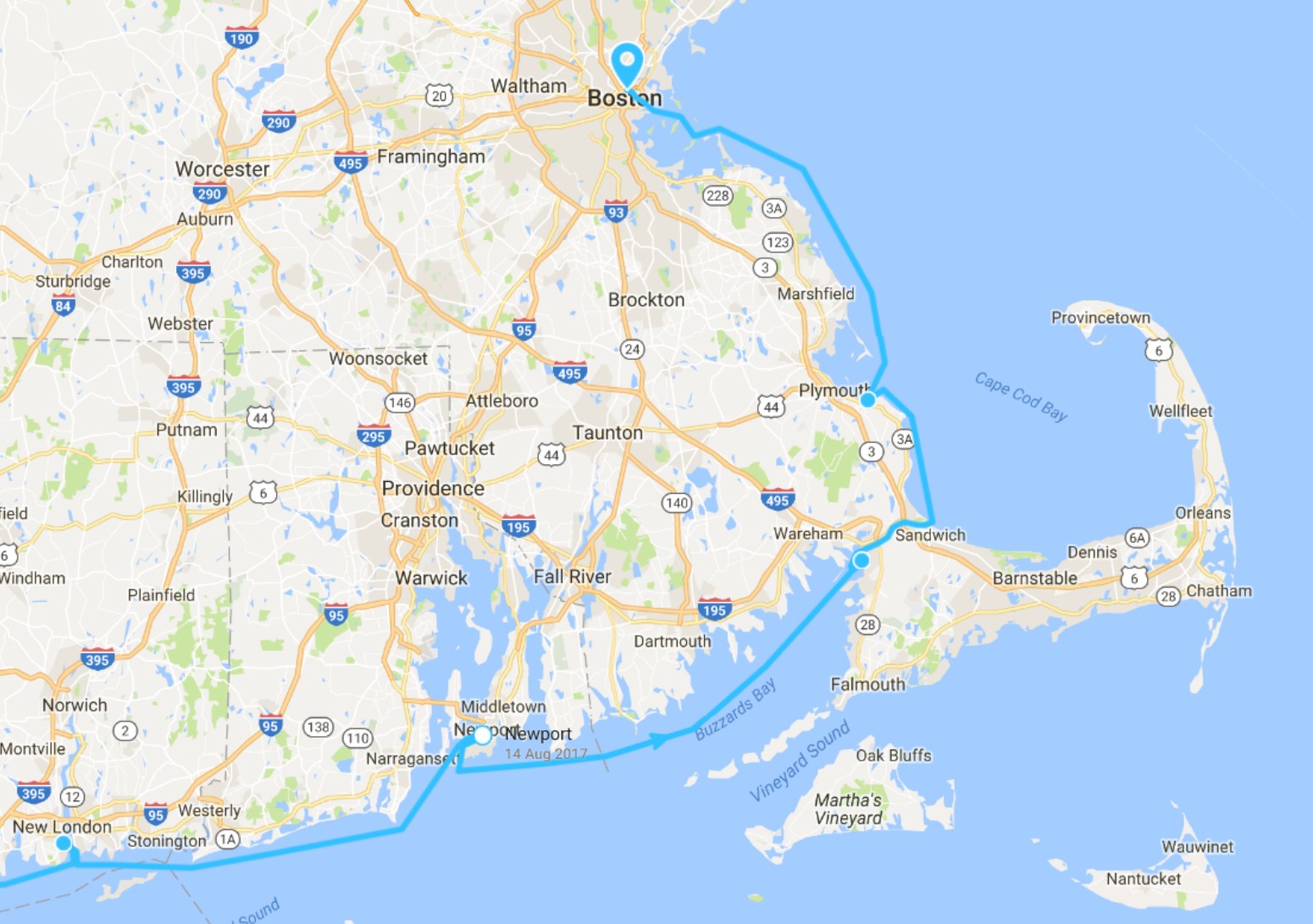
    The crew left for Newport, Rhode Island on Monday and explored the mansions of the rich-and-famous on Tuesday.  Wednesday, the crew anchored at the entrance of the Cap Cod Canal to time their passage with the tide and current.  On Thursday, they transited the Canal and anchored off the shore at Plymouth, Massachusetts.  Friday, the crew completed their run to Boston.

    This week’s journey of discovery did answer the following questions:

    1. How did Rhode Island get its name?
    2. Did the Vanderbilt’s succumb to the three-generation fall?
    3. What is the truth about Paul Revere’s Mid-Night Ride?

    Click on the link to read the day-to-day travel log.  This includes weather of the day, sea conditions, log of the days travel, and a summary of the experience.

    At The Box Office

    This week’s video shows Still Waters II bobbing gently in 4-6-foot swells on her run from Newport to the Cape Cod Canal.  If you watch closely you will notice a couple of 10-foot swells roll under her keel.  Then a few clips of her entering the Cape Cod Canal.  Enjoy!

    To see past videos, click on the link to the Still Waters II Vimeo site.  The library now contains 33 videos of Still Waters II cruising America’s Great Loop.

    Sunday, Aug 13, 2017

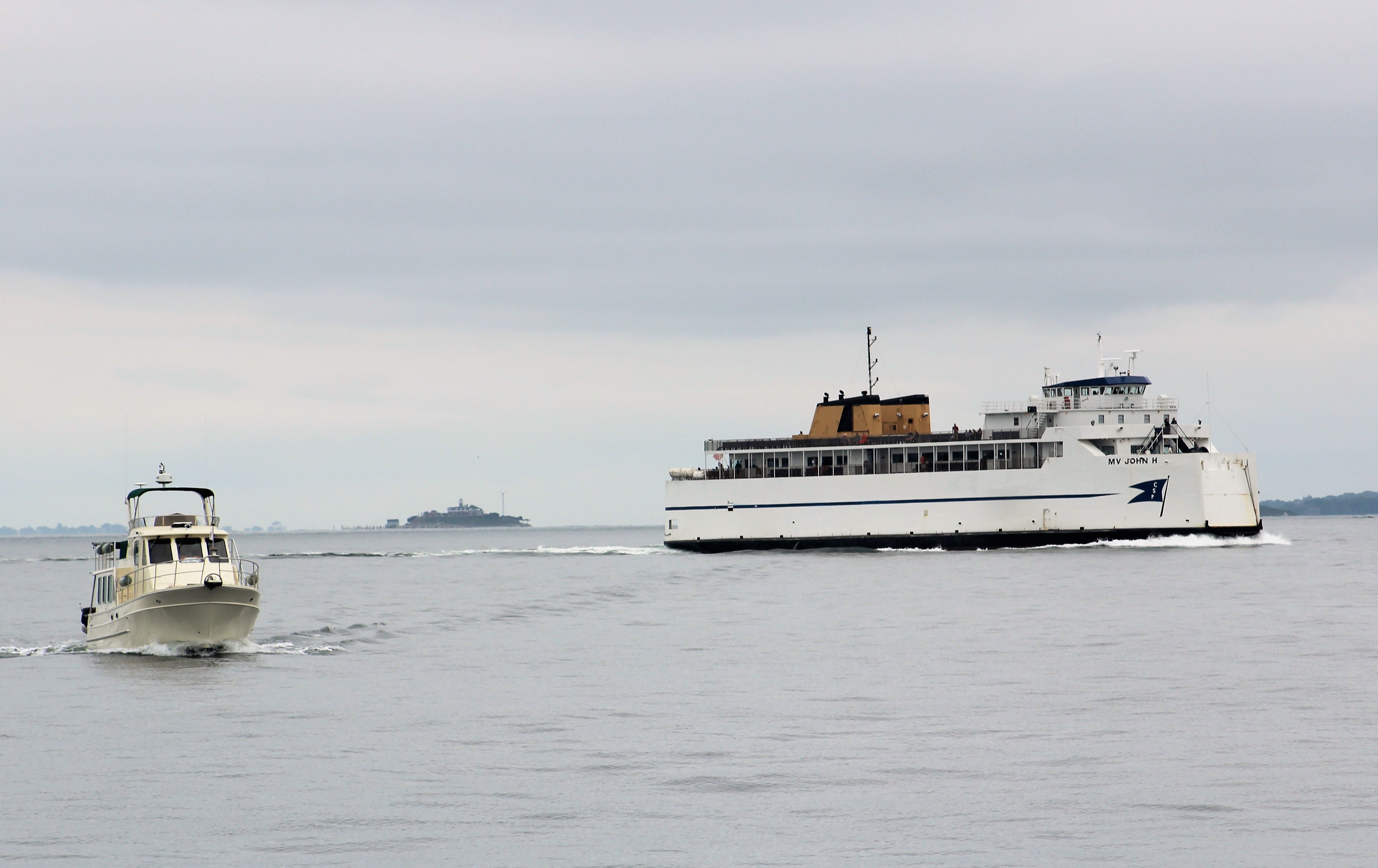
    There have only been a few stops that the crew was happy to leave, and vowed to never return.  They have added the Burrs Marina in New London, Connecticut to that short list.  The marina staff and people keeping their boats at the marina were all fine folks.  The problem was with the Ferry Boats that run up and down the Thames River.  The wake from the Ferry Boats started early in the morning and lasted till after dark.  Still Waters II rocked-n-rolled all day long in her slip.

    89 Ferry
    Offending Ferry

    The crew was glad to have found this last-minute slip, but now understands why there was availability at the marina when everything else within 10 miles was sold out.

    Monday, Aug 14, 2017

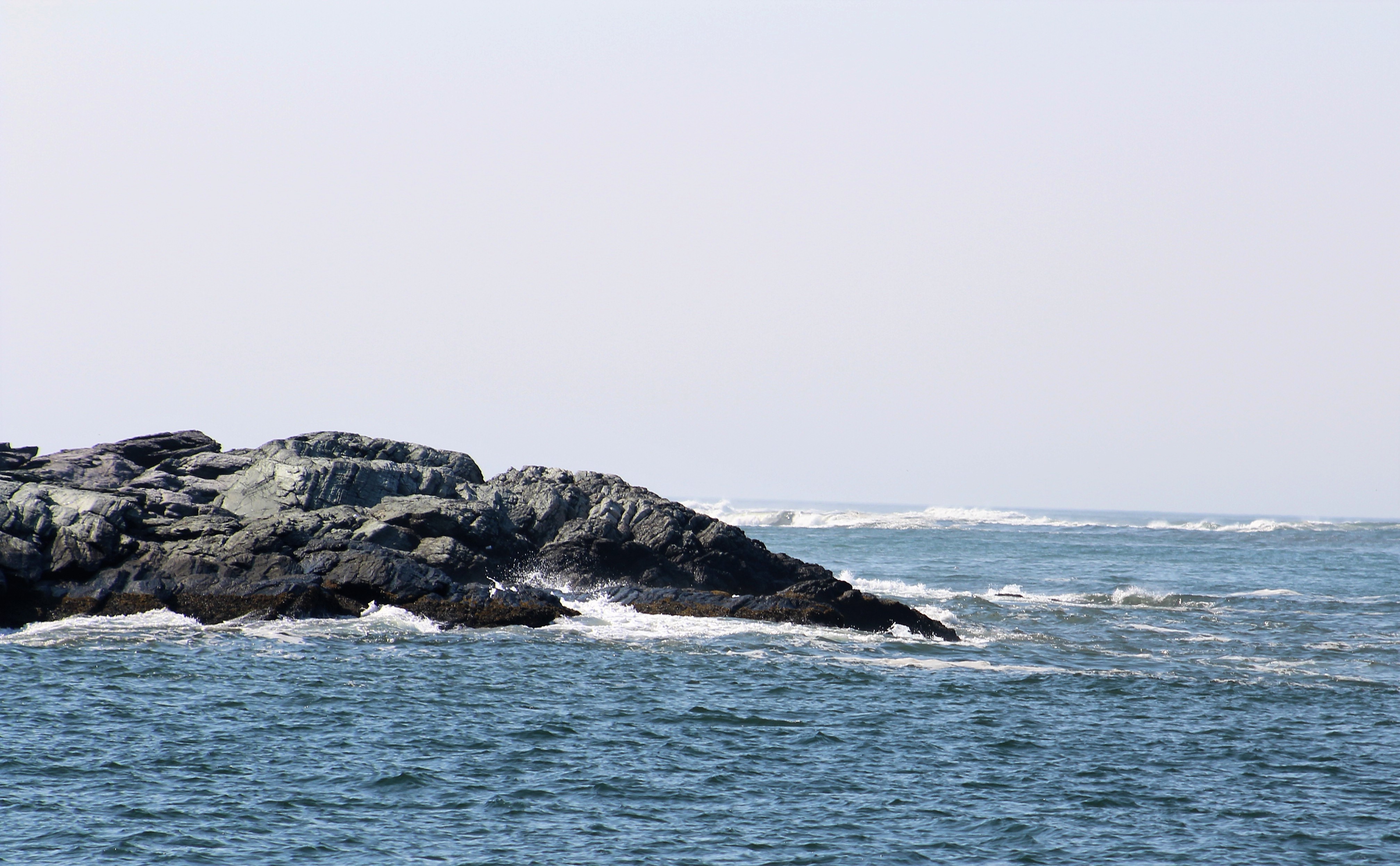
    The run to Newport, Rhode Island was filled with the rocky coast that the crew imagined that they would see in New England.  The number of lighthouses continues to increase as the hazards in the water also begin to rise.  The lights mark areas of shallow rock formations called ‘ledges,’ so many of the lights have the word ‘ledge’ in their name.

    95

    The other observation is that though the crew is out in the Atlantic Ocean, these waters are named ‘Sounds.’  For example, today the crew cruised in the Fisher Island Sound and the Block Island Sound.  From the skipper’s point of view, when you can see the mainland off the port side of the boat and only water on the starboard side of the boat, you are in the Big Pond.  In these parts, the Big Pond would be the Atlantic Ocean.

    100 Ferry

    When Giovanni Verrazzano arrived at what today is named Block Island back in 1524, he described the island as about the size of the Greek Isle of Rhodes.  However, the first settlement of modern Rhode Island was not started until 1636 at Providence.  Interesting enough, Rhode Island was the first colony to declare independence from the British, but the last colony to approve the Constitution of the United States.

    97 East Point Fisher Island
    East Point of Fisher Island

    Newport has a long nautical history and is a very popular place for boaters.  The mooring field has just over a thousand mooring balls.  They are first-come-first-serve and the crew was glad to find a vacant ball upon their arrival.  The first marina they called said they were full.  The second dock master said he thought he had one ball left, gave the crew the number and a general description where to find the ball.  The skipper weaved in and out of the moored boats until he finally found the empty ball.

    103.1
    Entrance to Newport

    Tuesday, Aug 15, 2017 

    In the Gilded Age, Newport became the summer home for the rich-and-famous. ‘Summer Cottages,” as their owners called them were open for living for six weeks in the summer.  The Preservation Society of Newport has managed to save several of these mansions and allow self-guided tours.  The crew decided to tour two mansions, both built by Vanderbilt’s.

    You might recall that Cornelius Vanderbilt started his climb from poverty by starting a ferry business with one sail boat.  That business eventually became known as the Staten Island Ferry.  He moved from sailboats to steamships during the age of steam.  He then moved into the railroad business.  He became the richest person in America in the early 1850’s but lived a very modest lifestyle.  Upon his death in 1877, he left his 100 Million estate to his oldest son.

    William Henry Vanderbilt grew the business empire to 200 Million in just 10 years.  He also is the one who started the Vanderbilt culture of living large off the new money he inherited.  He built the first family mansion on Fifth Avenue in NYC.  He really did not like running the family business so he established the first corporation to run the business for him.  Upon his death in 1885, he claimed the amount of money was too great for any one person to manage, so he divided the estate between two of his sons.

    Cornelius Vanderbilt II is described as a socialite.  He built ‘The Breakers’ in Newport between 1893-1895.  The mansion has 62,482 square feet of living space on a footprint of about one acre.  He had seven children.  Strangely:

    • The first child died at the age of five of childhood illness
    • The first son died of typhoid fever while attending Yale University
    • The second son was disinherited for marrying a woman the family did not approve
    • The third son died aboard the RMS Lusitania when a German U-boat sank the ship

    That left the fourth son, Reginald Vanderbilt to inherit the family fortune when Cornelius died an early death in 1899 at the age of 55.

    In the book, Fortune’s Children the fall of the House of Vanderbilt, Reggie is described as living the life of a rich playboy.  The book also claims he did it with dedication and skill.  Reggie’s fast living left him dead at 45 from cirrhosis due to alcoholism.

    105.25
    The Breakers


    In the cluster of pics above, the bottom right picture shows a wall with ‘silver’ wall finishings.  The interesting thing about the ‘silver’ finish was that it never corroded as one would have expected silver to do.  The Preservation Society wanted to find out what the ‘silver’ was so they used modern technology to solve the mystery.  Turns out that the ‘silver’ wall is actually Platinum, a metal more scarce and expensive than gold.

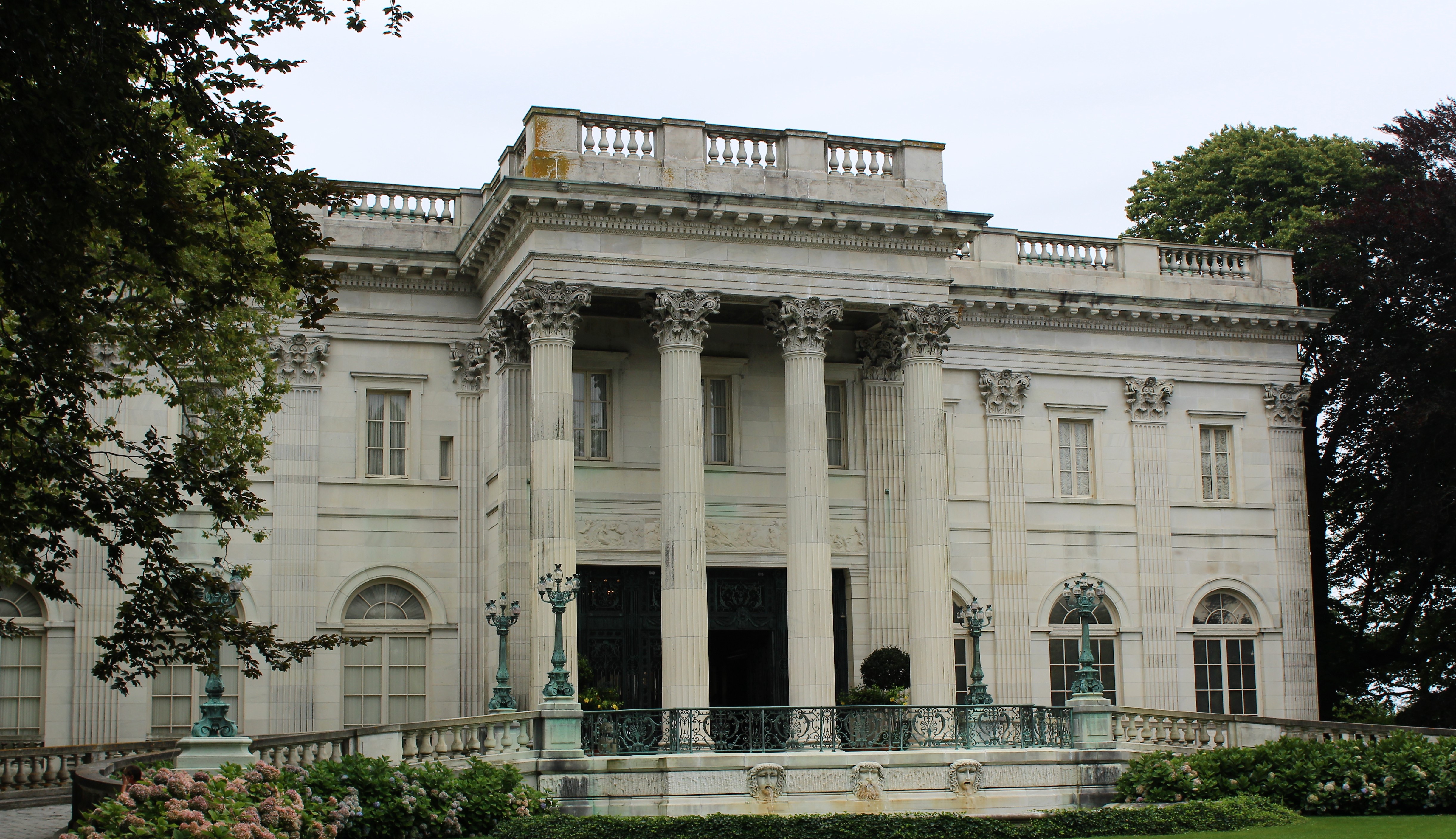
    William Vanderbilt I is described as an American heir.  He built ‘Marble House’ from 1888-1892.  After his divorce in 1895 he went to Europe to live out his life.

    He had two sons, William Vanderbilt II and Harold Vanderbilt.  William was a fast car enthusiast and was into auto racing, travel, and leisure activities.  Unfortunately, his only son was killed in an auto accident.

    Harold was into yacht racing and playing bridge.  He defended the America’s Cup three times in 1930, 1933, and 1937.  He was a world class bridge player also winning the North American Bridge Championship in 1932 and 1940.  However, Harold had no children and the name of Vanderbilt faded into the history books.

    106.1
    Marble House


    In the book of Genesis, chapter 5, there is a list of Adam’s descendants.  In the middle of the list, verses 12-18 we find the following names: Kenan, Mahalalel, and Jared.  If you look these names up in Hebrew, you would learn that the names mean Material Acquisition, Exuberance (letting go with no restraint), and Decline.

    Ancient Jewish Wisdom teaches that once our heart moves towards material acquisition, the next generation will be exuberant, and the third generation will be in decline.

    The Vanderbilt family lived this pattern out to a T.  Once William Vanderbilt started building and acquiring property rather than running a railroad the family future was sealed.  The Breakers and Marble House are both excellent examples of exuberance of the second generation.  Reggie’s playboy lifestyle with his cousins consumed with leisure activities in the third-generation lead to the decline of the House of Vanderbilt where the name died with no male heirs.

    Certainly, something to think about as America has been on a Material Acquisition binge for a while.  The second generation is currently living a life of Exuberance, as many people are living a life with no standards and no restraint.  Is it any wonder that many people believe that our country is currently in Decline?

     Wednesday, Aug 16, 2017       

    The crew began their three-day journey to Boston.  The first stop was to anchor near the beginning of the Cape Cod Canal.  The swells in the open water were consistently 4-6 foot with occasional swells 9-10 feet.  The swells were about 13 seconds apart so the ride was a pleasant slow roll as the waves passed under the keel.

    107 Breakers in RI
    Leaving Newport, these are the breakers that the summer cottage was named after

    At one point the crew began to overtake a sailboat.  The sailboat was about a half mile off the starboard beam.  As the swells would roll by the sailboat would drop down in the trough between waves and the crew would lose sight of the boat and just be able to see the mast of the sailboat.

    109 Buzzard Bay
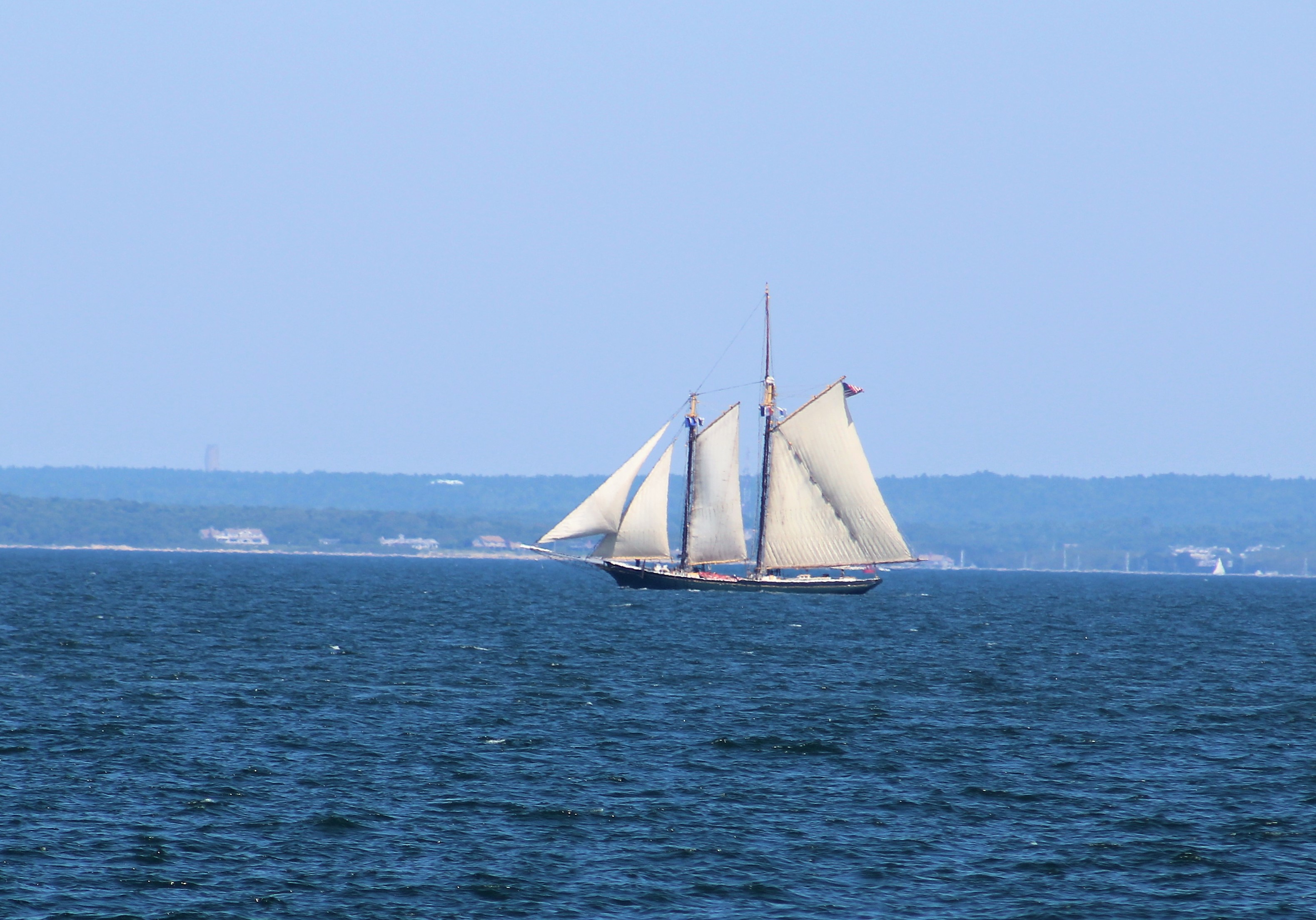
    Saw this ship as we entered Buzzard Bay

    They dropped the anchor initially in the Phinneys Harbor and had supper.  The skipper noticed that the wind had changed direction (by 180*) and intensity.  He went out to make sure the anchor would catch when the wind blew the boat the opposite direction.

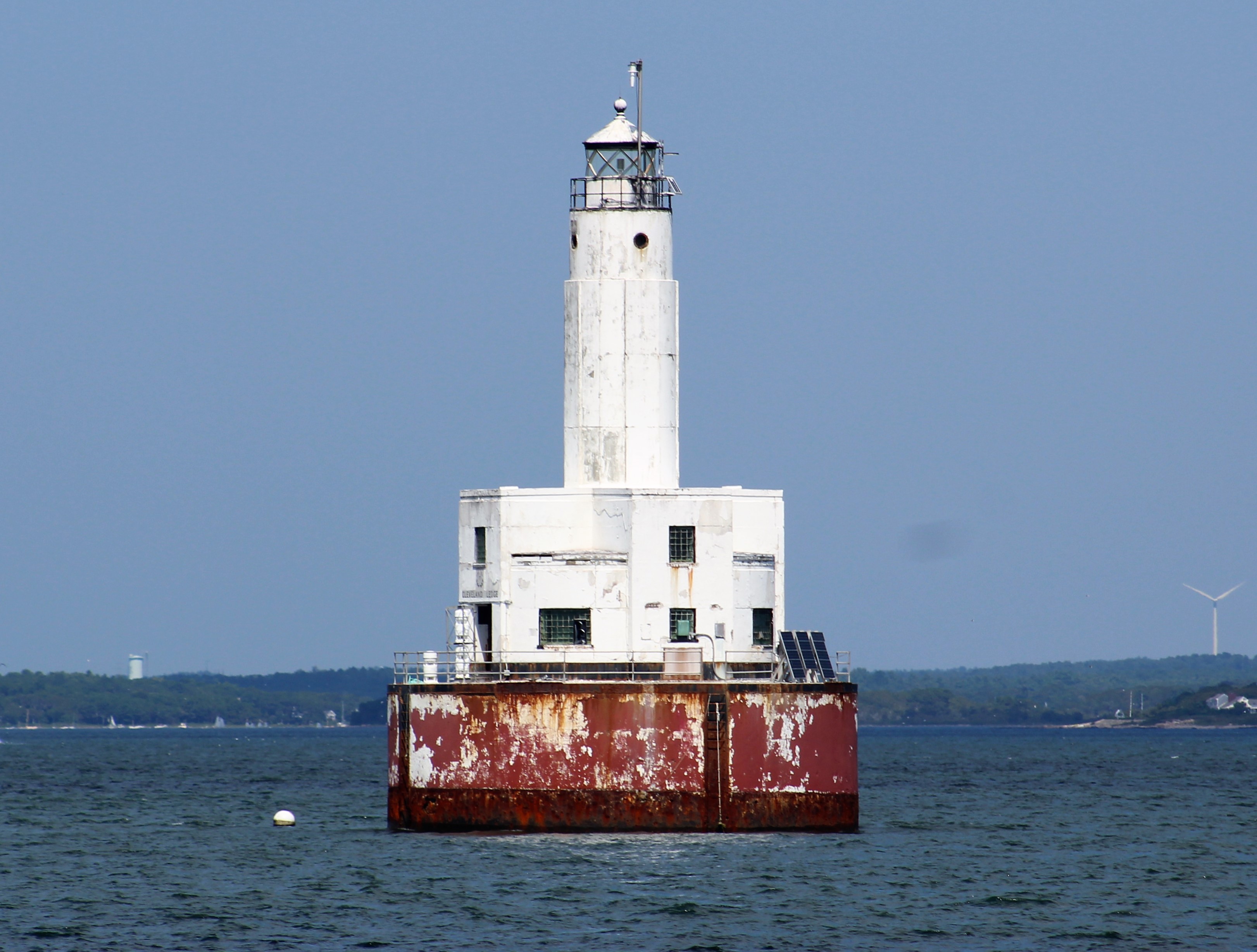
    110 Cleveland Ledge Lighthouse
    Cleveland Ledge Lighthouse

    The anchor did not hold so the crew had to reset the anchor.  Once the anchor was back onboard, the skipper decided to move behind an island to get out of the wind.  They dropped the anchor and had a nice calm night on the hook.

    112 Anchored in Phinney's Harbor
    Phinneys Harbor

    Thursday, August 17, 2017

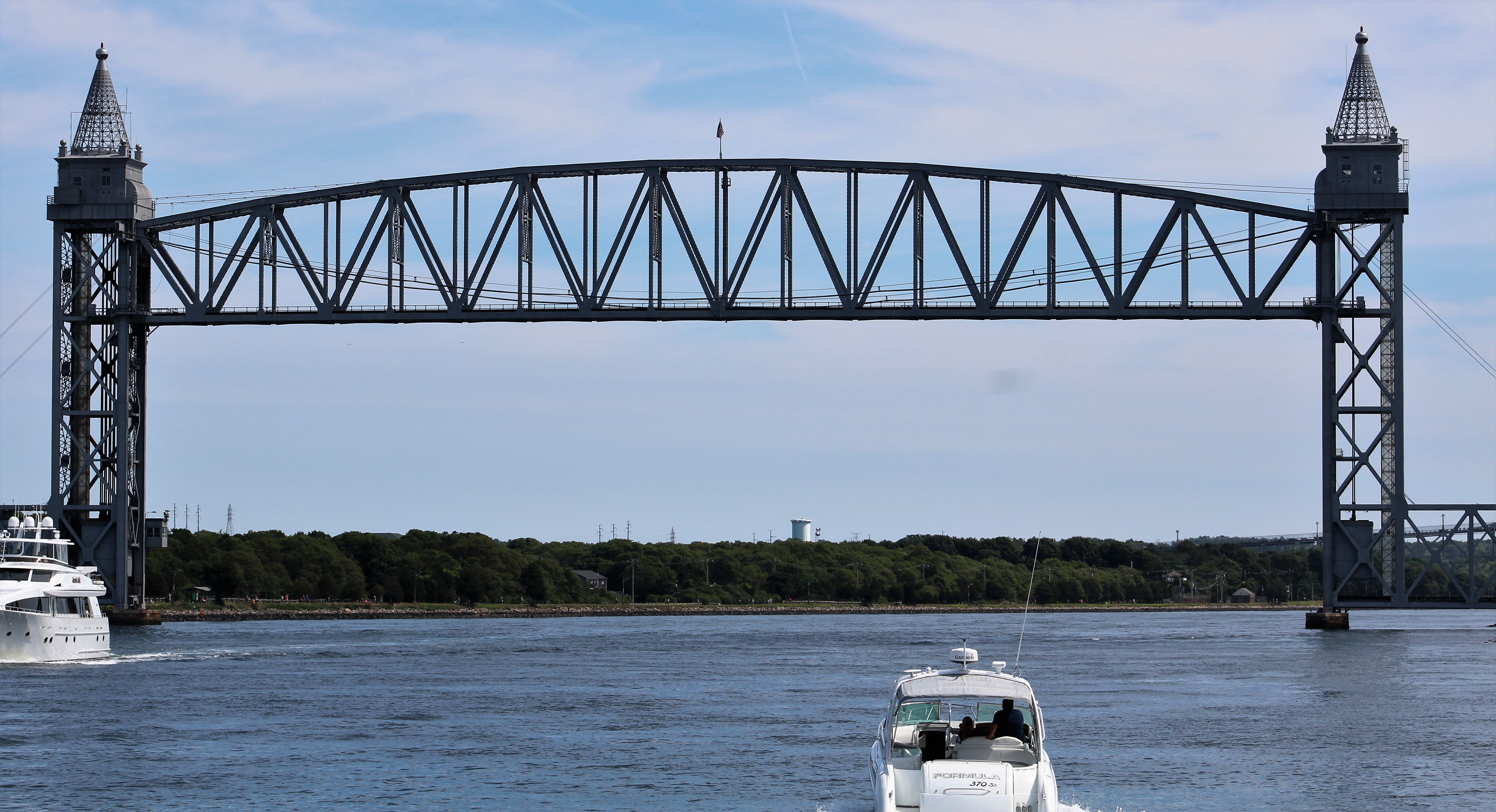
    The tide and current dictated that the crew should enter the Cap Code Canal about 1100, so the crew had a leisurely morning.  At 1100, they weighed anchor and headed over to the Canal.  When they entered the Canal, the Admiral noticed a posted sign that said Speed Limit 10 mph No Wake.  Let’s just say that there were plenty of boats exceeding both the speed limit and No Wake requirements.  It felt like the boat was in a washing machine for the first mile or so.

    113 RR Bridge over Cape Cod Canal
    Open RR Bridge over Cape Cod Canal

    Upon exiting the Canal, the crew was in Cape Cod Bay.  They altered course and headed towards Plymouth.  The crew had wanted to visit the Pilgrim Museum upon arrival, but due to the late start the museum was closed by the time the crew arrived.

    115 Cape Cod.JPG
    First look at Cape Cod

    The skipper also checked the weather and noticed that a storm was brewing off shore and would arrive Friday afternoon.  Since they could not visit the museum, they decided to drop anchor out in the Bay rather than spend the hour getting into Plymouth.

    116 Sunrise Plymouth Bay
    At anchor in Plymouth Bay

    After dropping the anchor, the skipper deployed the dinghy so that he could move a lobster trap.  He was afraid that the float and line might tangle in the anchor chain if the wind changed direction.

    Friday, August 18, 2017

    The crew weighed anchor at first light and set out for Boston with hopes of beating the predicted storm.  The wind was light and the waves were 1-2-foot following seas.  The crew made good time and arrived in Boston Harbor around 1000.

    120.2 Boston Light
    Boston Light, location of the first lighthouse in America in 1716

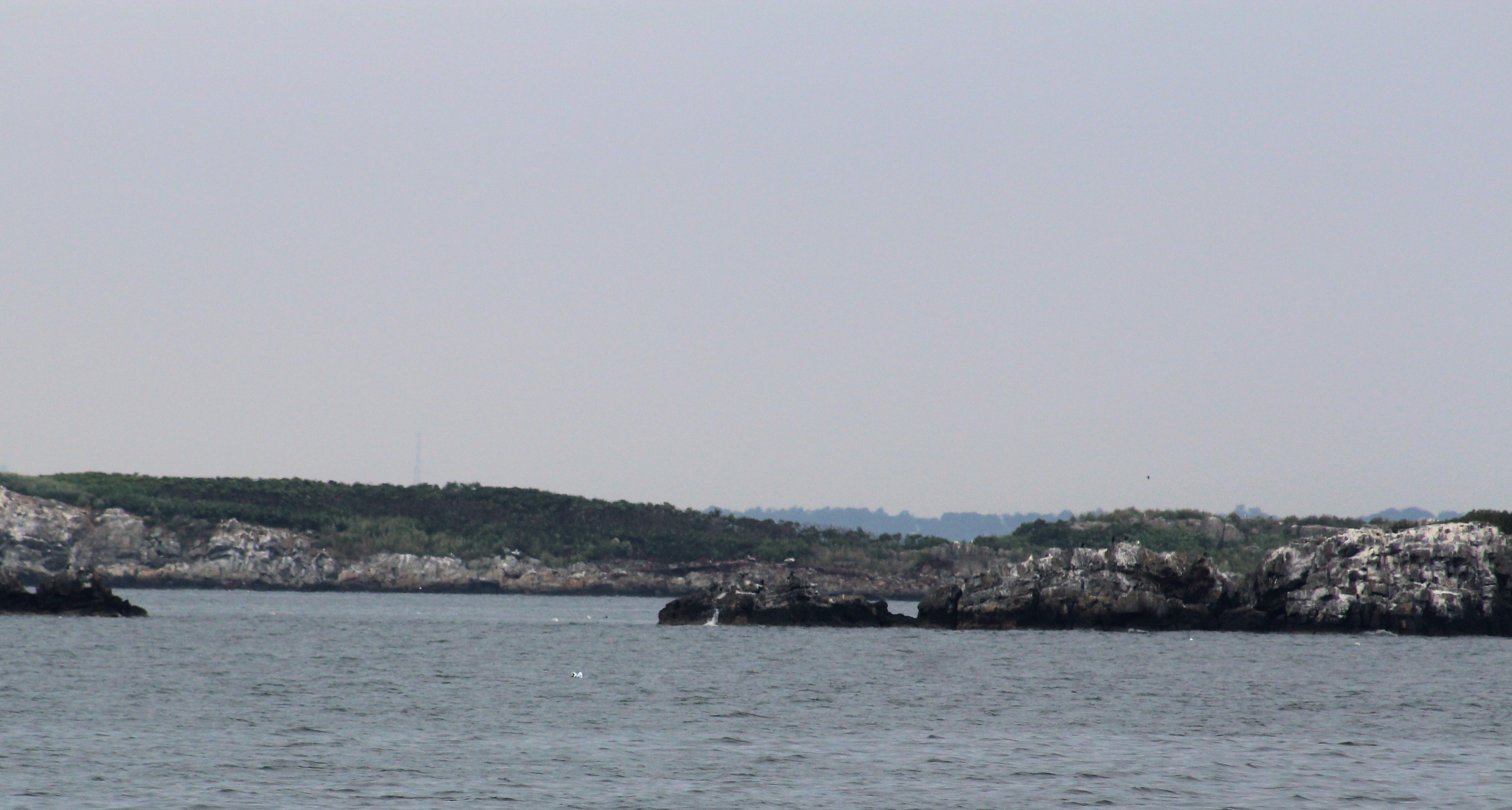
    They were surprised by the number of islands scattered around the entrance to Boston.  There are some 30 plus islands protecting the entrance to town.

    120 Enter Boston Channel

    121.1
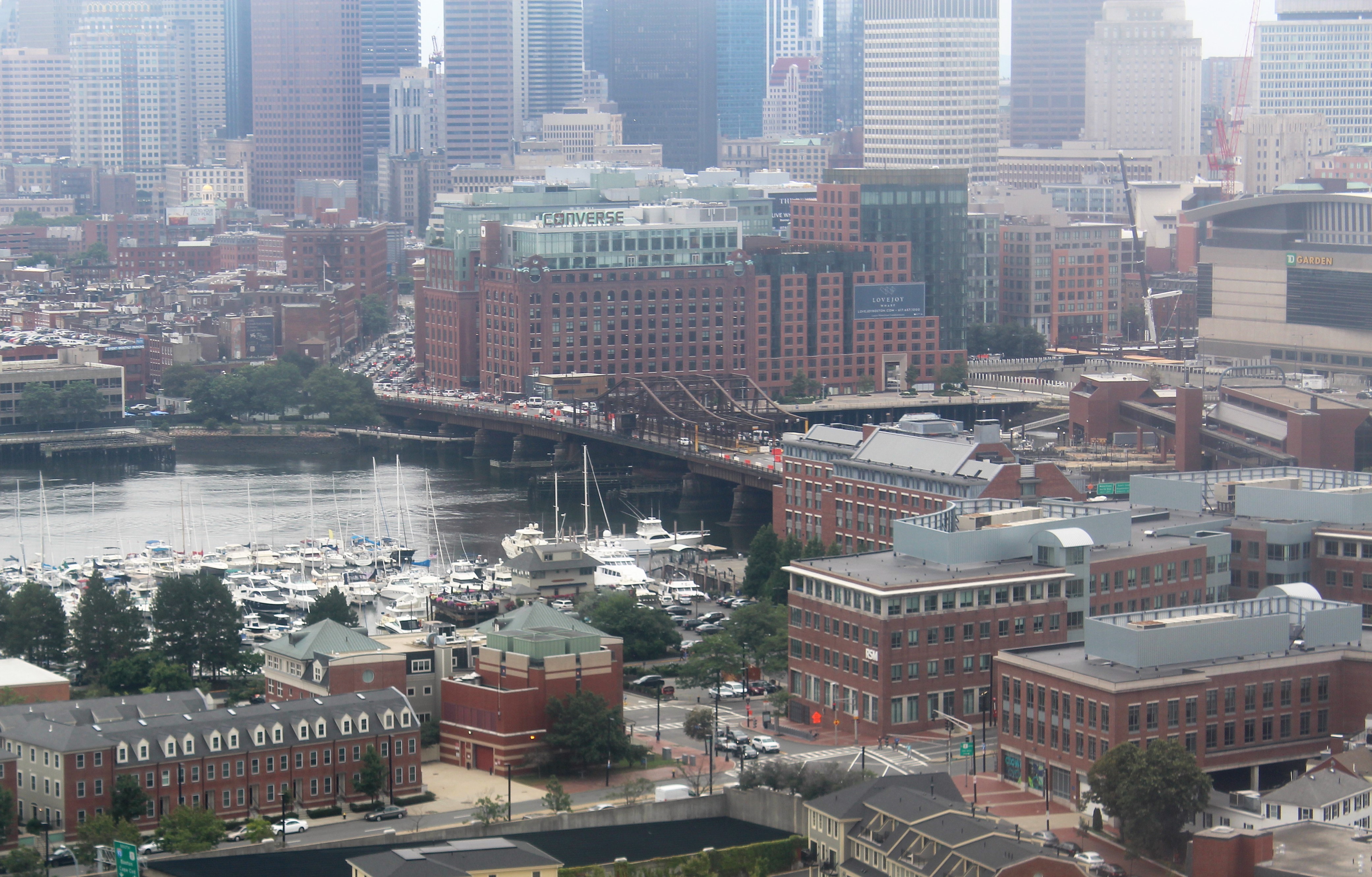
    Cruising by downtown Boston

    After they docked the boat, the rain started to fall and the winds began to pick up.  After the storm blew through, the crew decided to set out on foot and explore the Freedom Trail towards Bunker Hill.

    124.3 View from top of Bunker Hill Memorial
    Looking at the marina from the top of the Bunker Hill Monument (294 steps to the top)


    Saturday, August 19, 2017

    The crew took a Hop-on-Hop-off trolley ride around Boston.  They started the tour at the USS Constitution.  The town has really changed significantly since the last time the skipper was here back in 1992.  The tour guide made a point to reinforce that Boston had four main business sectors:

    1. Financial
    2. Medical
    3. Technology (he called it the Silicon Valley of the east coast)
    4. Tourism

    He also mentioned that the improvements in the city are keeping the graduates of MIT and Harvard gainfully employed.  There were new condos being built all over town.

    The Admiral has a keen interest in Real Estate Markets, so upon return to the boat she looked up housing prices in the area.  The cheapest one-bedroom condo around the marina district was $750,000.


    25
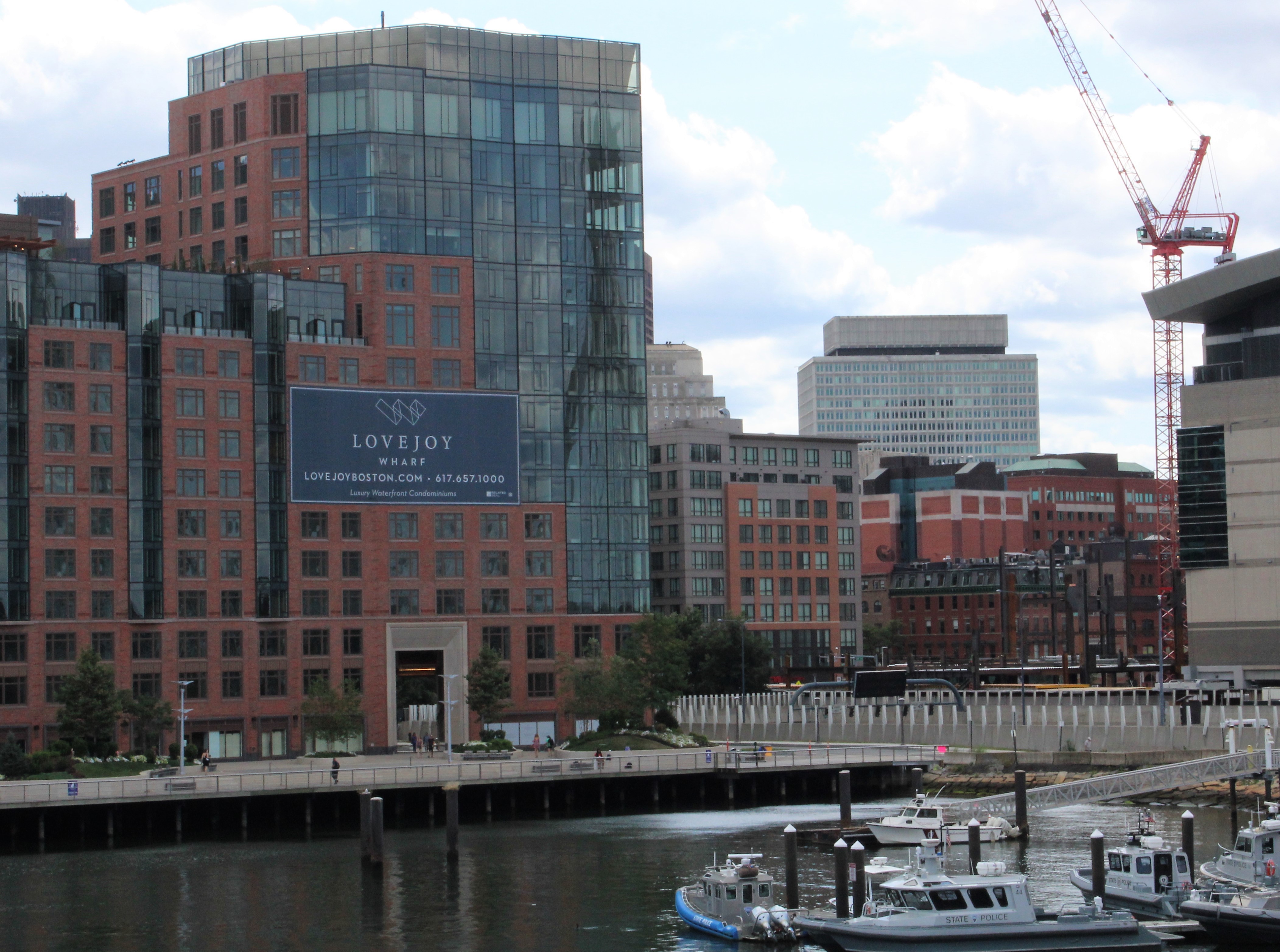
    Million Dollar Condos in Boston


    The tour guide pointed out one building that was recently sold for 31 Million after being listed on the market at 28 Million.  The increase in price due to competition between buyers.

    15.4
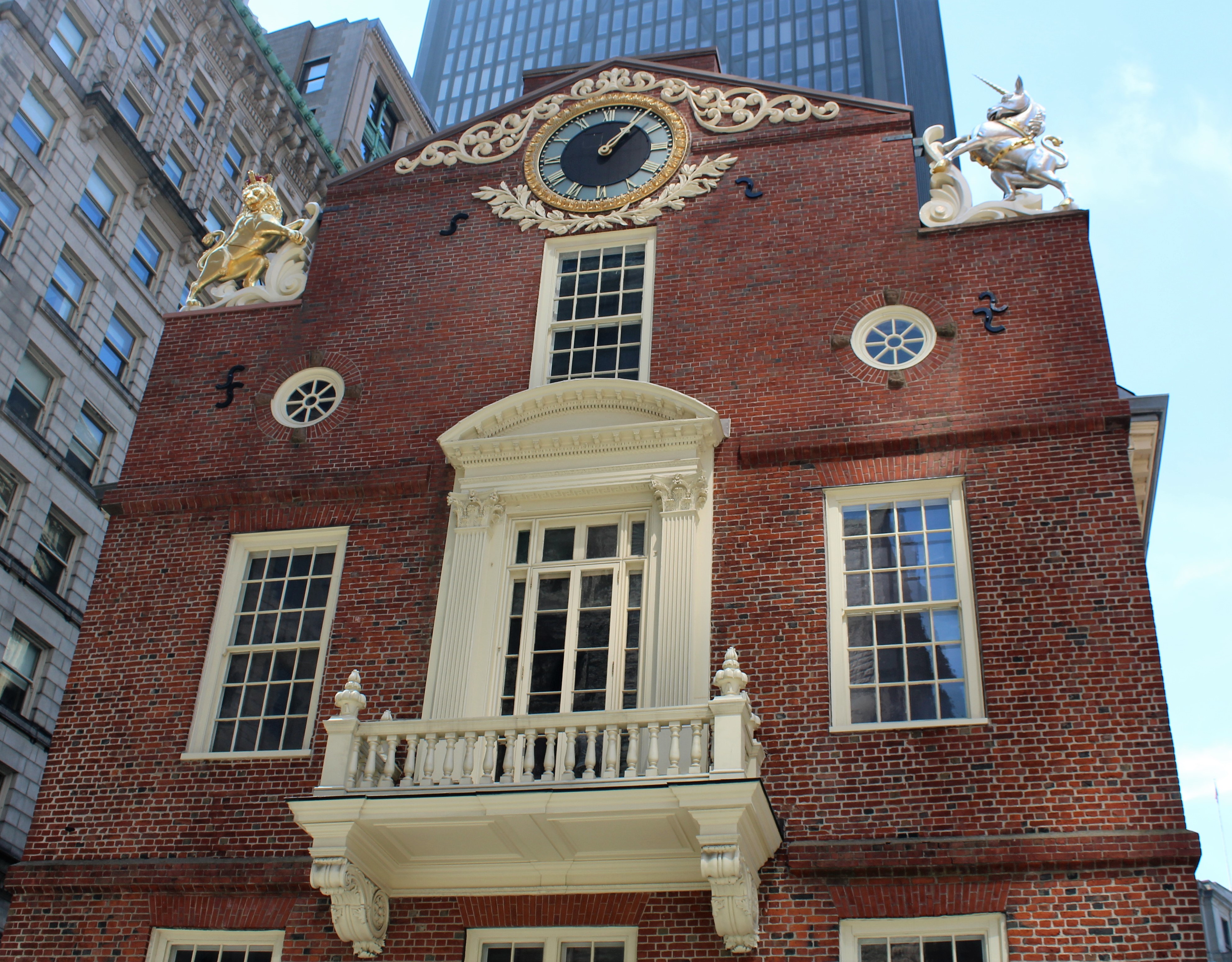
    Old state House
    • Oldest public building in Boston, built in 1713
    • The Boston Massacre occurred under the balcony on March 5, 1770
    • The Declaration of Independence was read from the balcony on July 18, 1776

    After taking the tour around town the crew hopped off the bus at the Old State House and started the Freedom Trail back to the boat.

    15.1
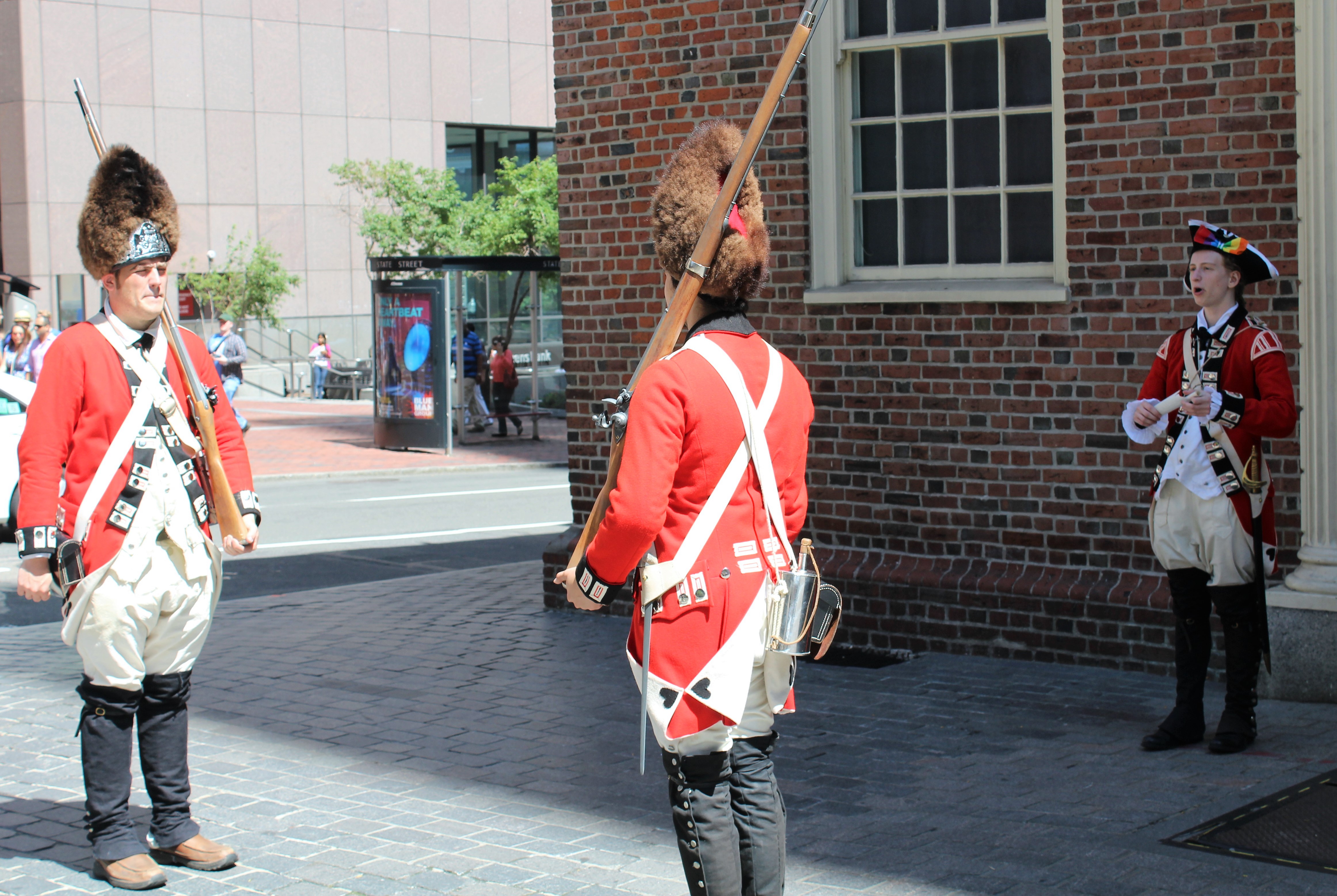
    Changing of the Guard at the Old State House

    One of the big narratives on the tour was Paul Revere.  The Freedom Trail takes you by Paul Revere’s home and by the Old North Church.  The story that was told along the trail conflicted with the skipper’s previous understanding.

    21.4
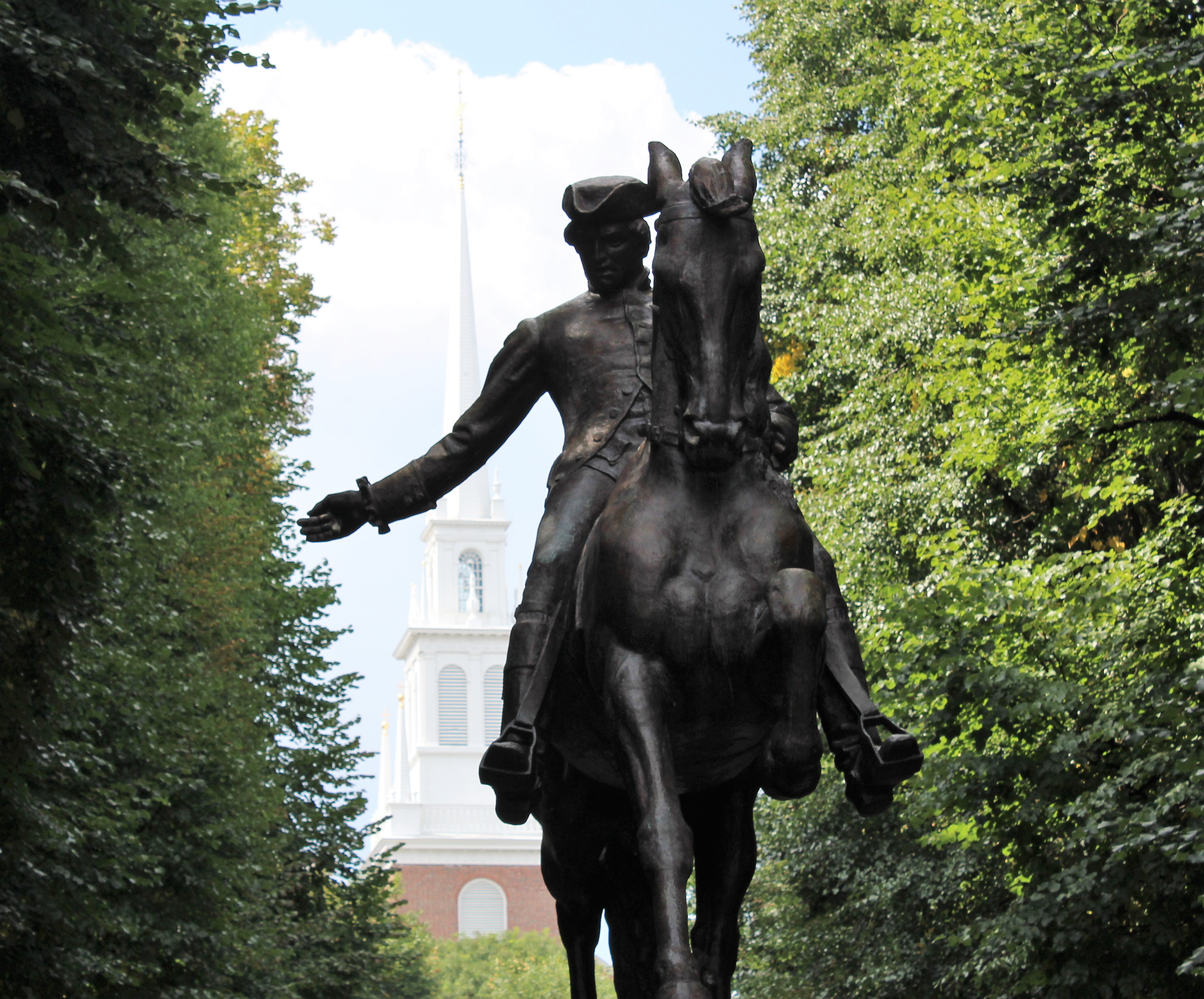
    Paul Revere with Old North Church in background

    Turns out that the truth was that three men rode to Lexington and only one made it to Concord.  Paul Revere was captured after leaving Lexington by the British.  They took his horse and he walked back to Lexington on foot.  He never made it to Concord.  And how about that famous line “The British are coming; the British are coming!”  Did not happen.  His actual message, “The regulars are coming out.”

    Of the three men who rode, only Dr. Prescott made it to Concord .

    Reminds the skipper of the old joke, what were Paul Revere’s last words on the mid-night ride?  “Whoa horse”


    Map from paulreverehouse.org


    To get the real story about Paul Revere’s ride, click the link above in the picture.

    So where did all the miss information originate from?  Short answer – Henry Wadsworth Longfellow in his 1860 poem, Paul Revere’s Ride.

    He knew his poem was historically inaccurate, but his purpose in writing the poem was to warn of a future civil war so he took poetic license with the facts.  Some how the poem became the definitive ‘truth’ about the event and these ‘truths’ made there way into textbooks.  Hmm, so much for that ‘free’ public school education.  I guess you get what you pay for.

    With the Hop-on-Hop-off tour, the crew also got a cruise on the Boston Harbor Tour Boat.  Rather than walk to the USS Constitution, the crew took the Tour Boat and enjoyed the narration about the harbor.

    Boat Name of the Week

    12.6

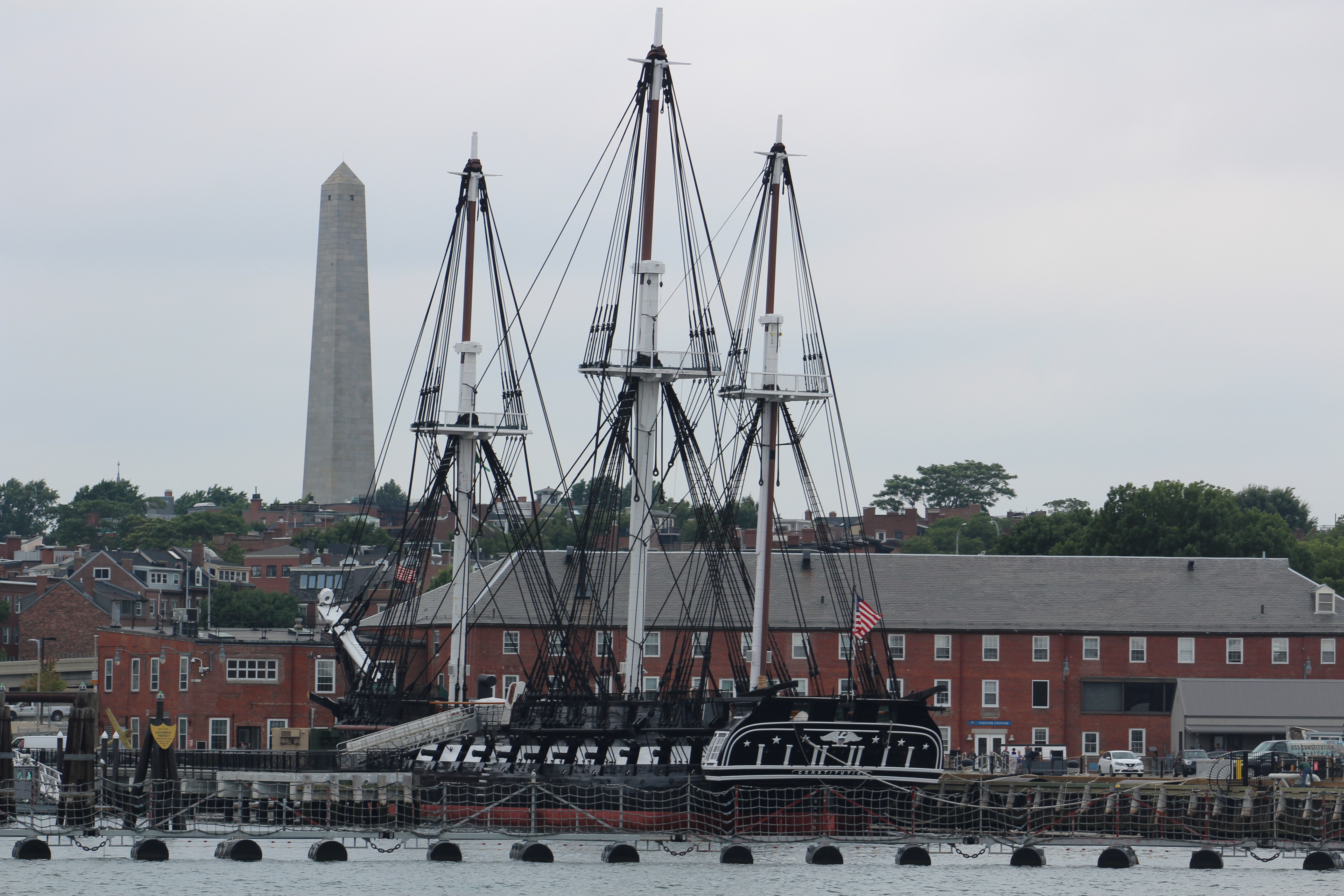
    USS Constitution – the world’s oldest commissioned naval vessel afloat.  She was launched in 1797.

    Next Week –

    The crew will stay and explore Boston and surrounding areas most of the week.  They will leave on Friday and try to make it to New Hampshire and Maine.

    Loop On

    The water goes on forever and the adventure never ends.
    Eric the Red