Tag: New York

  • Onward and Upward

    Onward and Upward

    Hello virtual crew members and fellow adventurers!

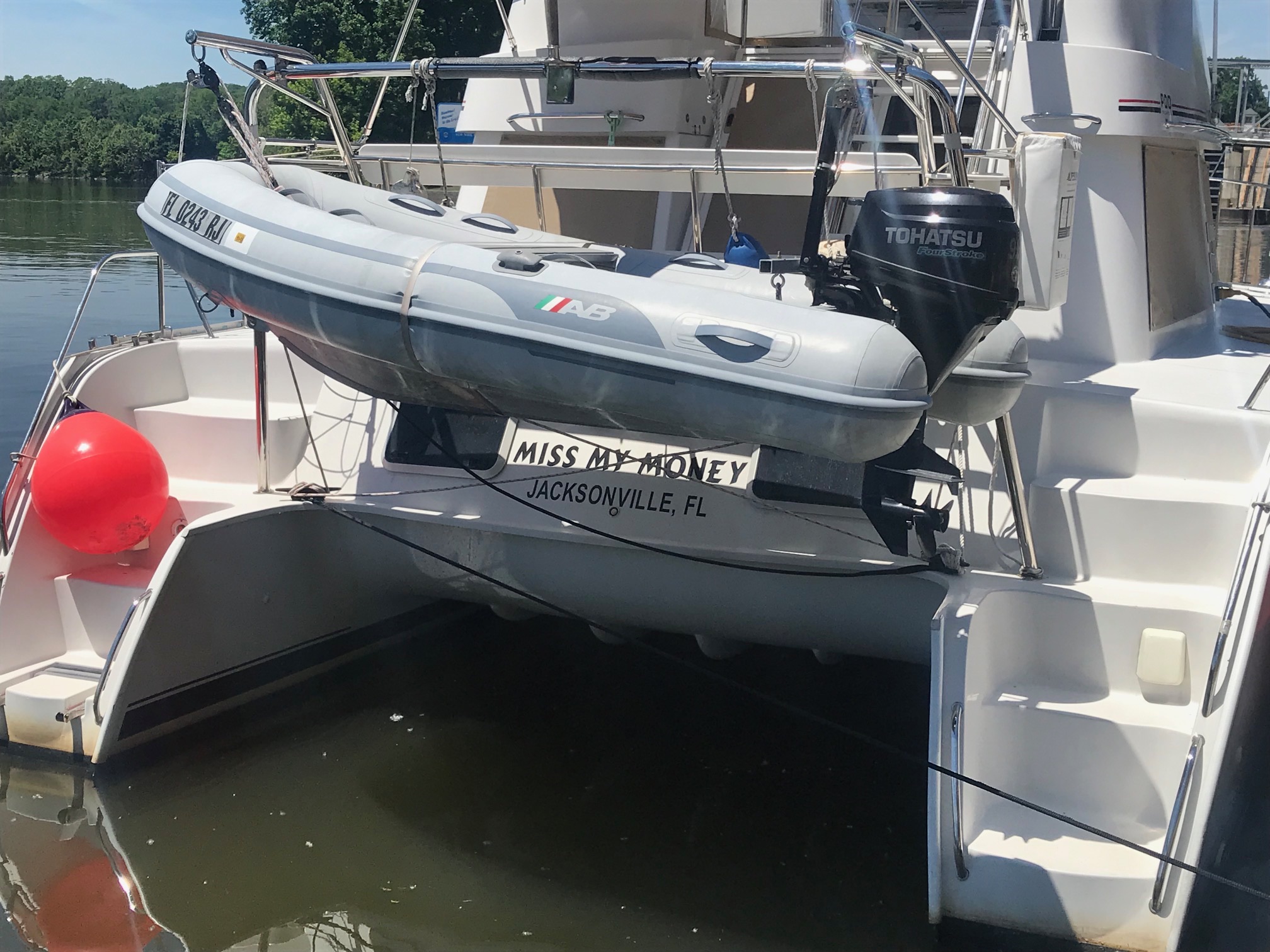
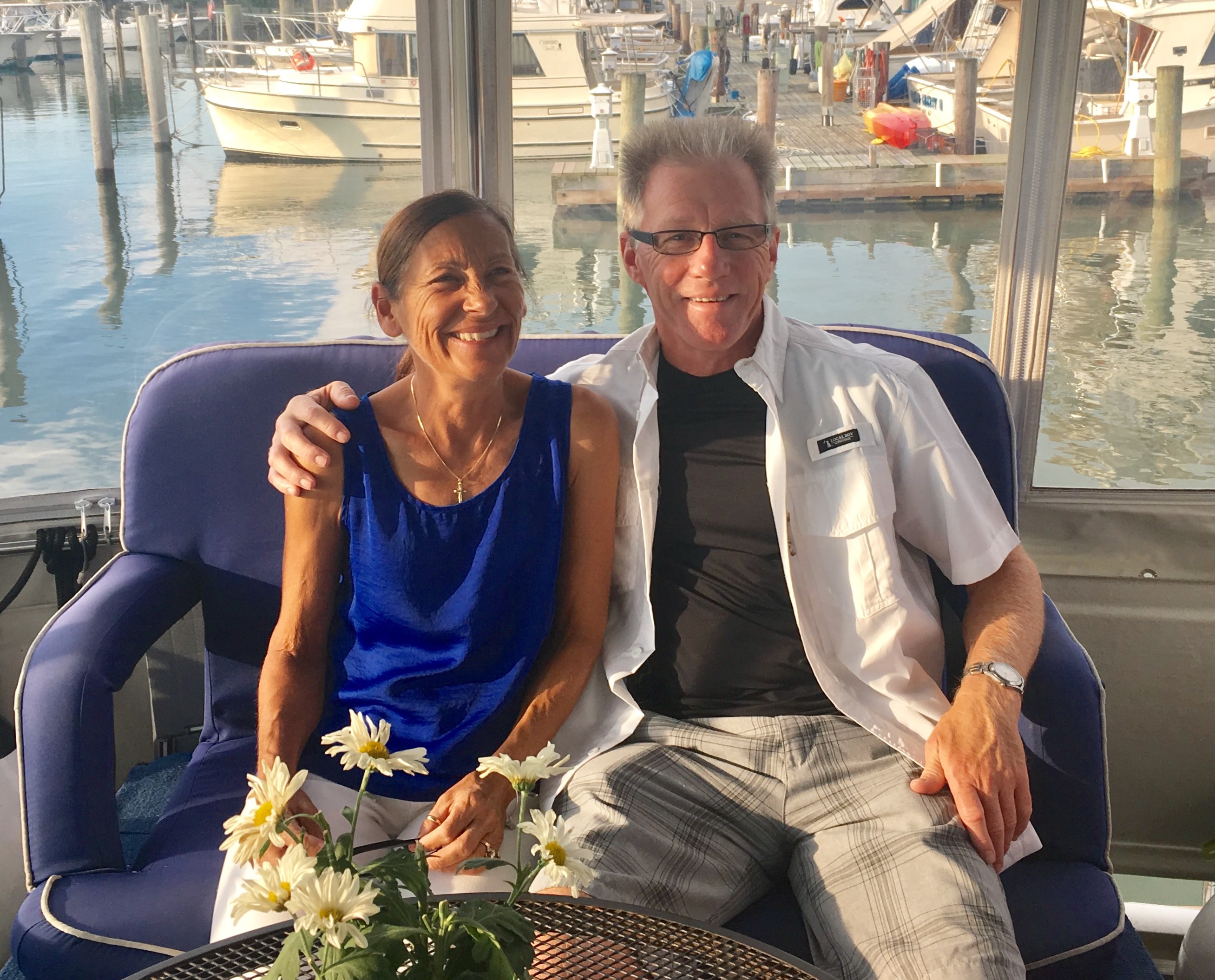
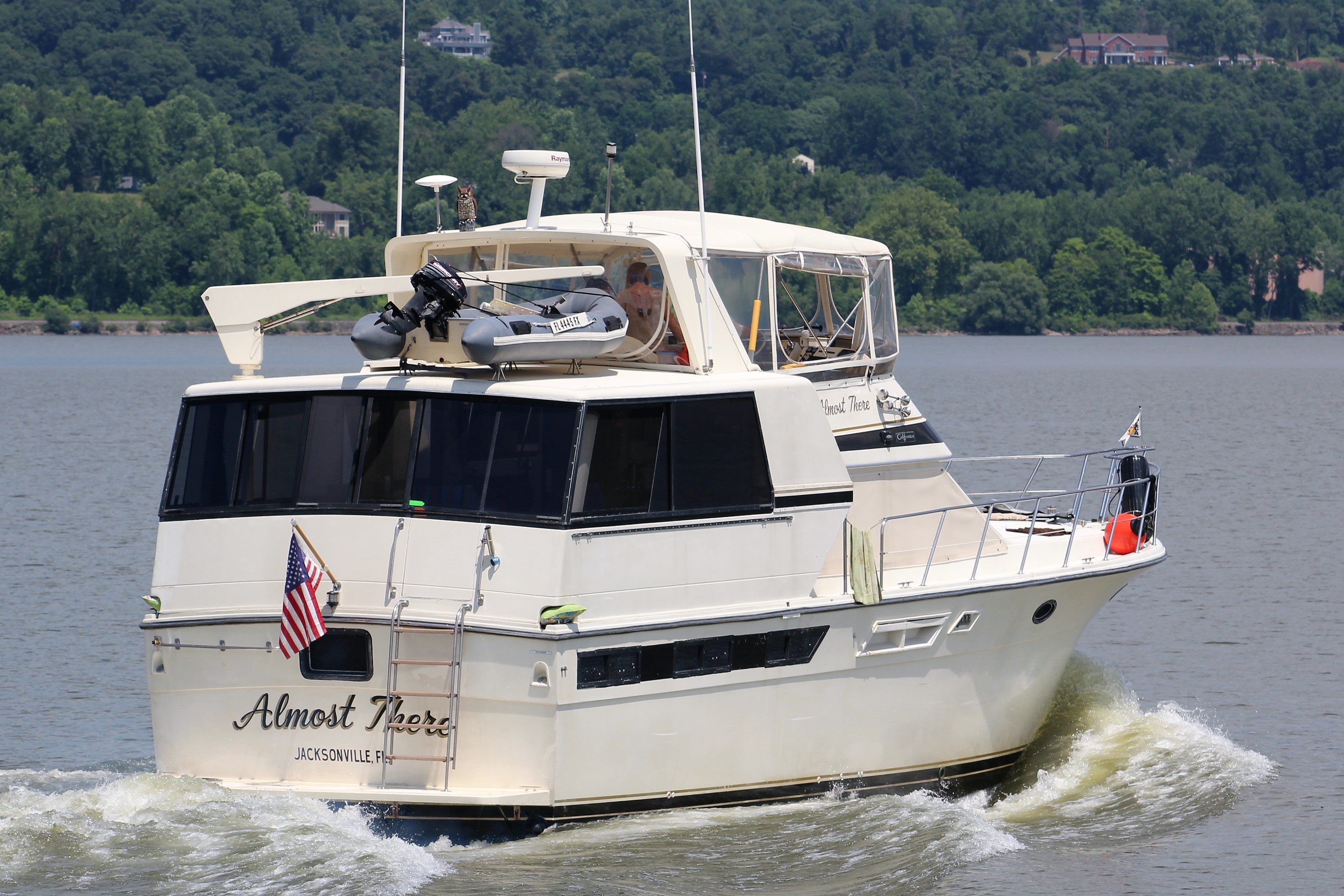
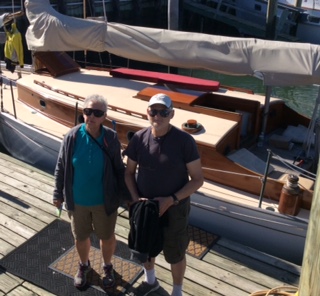
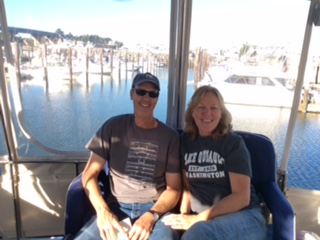
    Welcome aboard to Dave and Barbara, of Miss My Money. Hope to cross paths this next week as both crews, head up the Champlain Canal.

    Summary of week:

    Not much progress the last two weeks as the crew waited for the opening of the Champlain Canal.

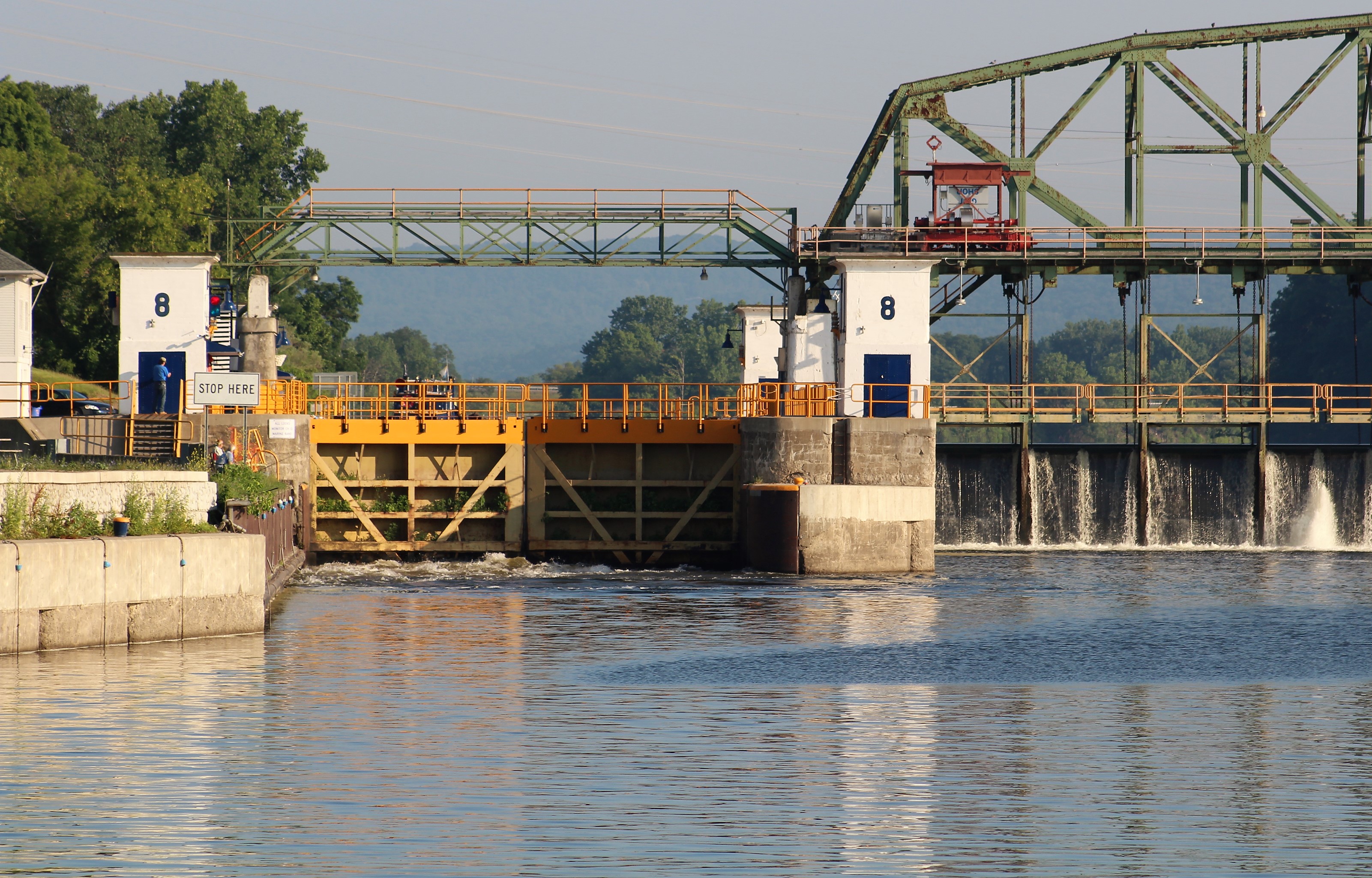
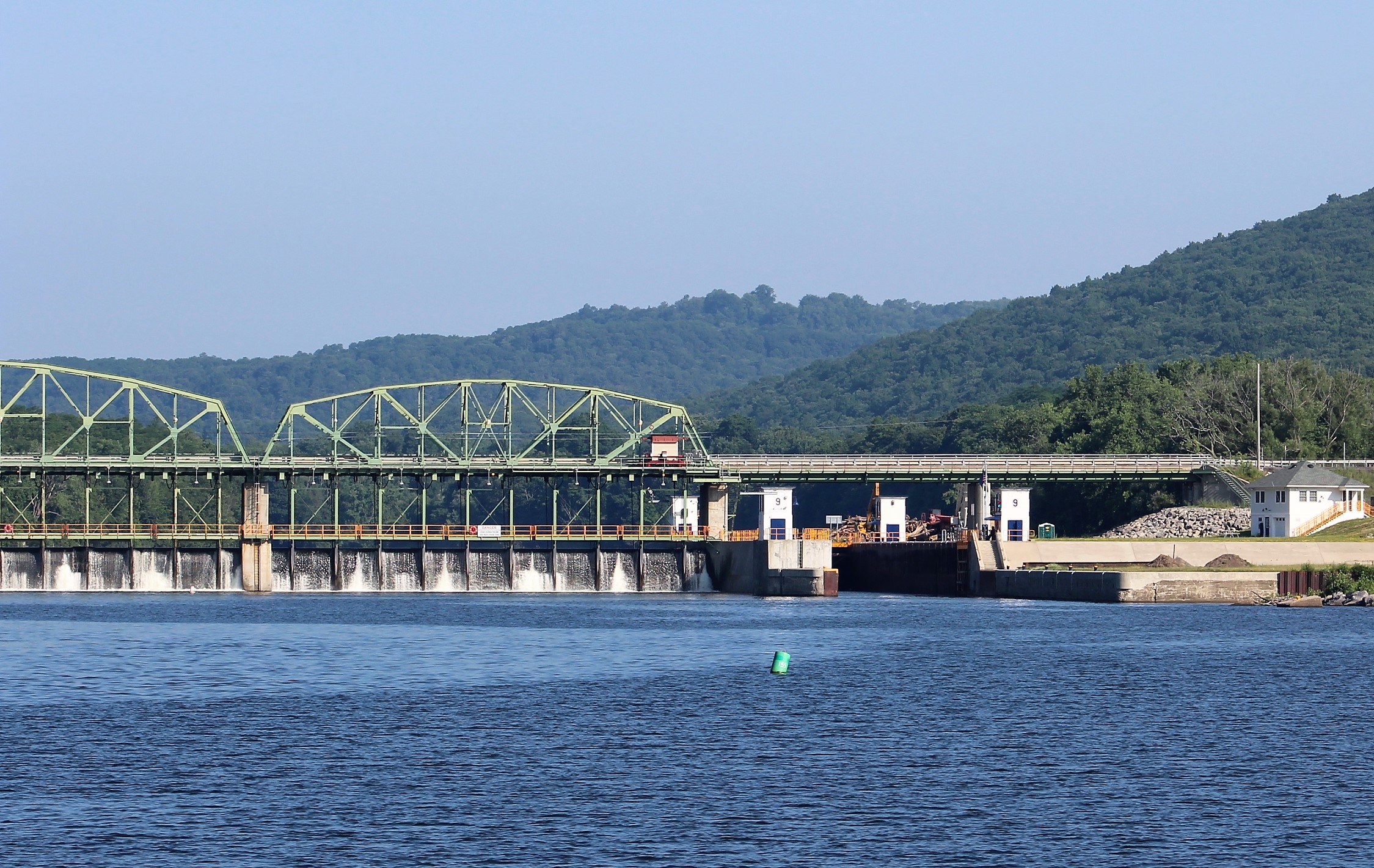
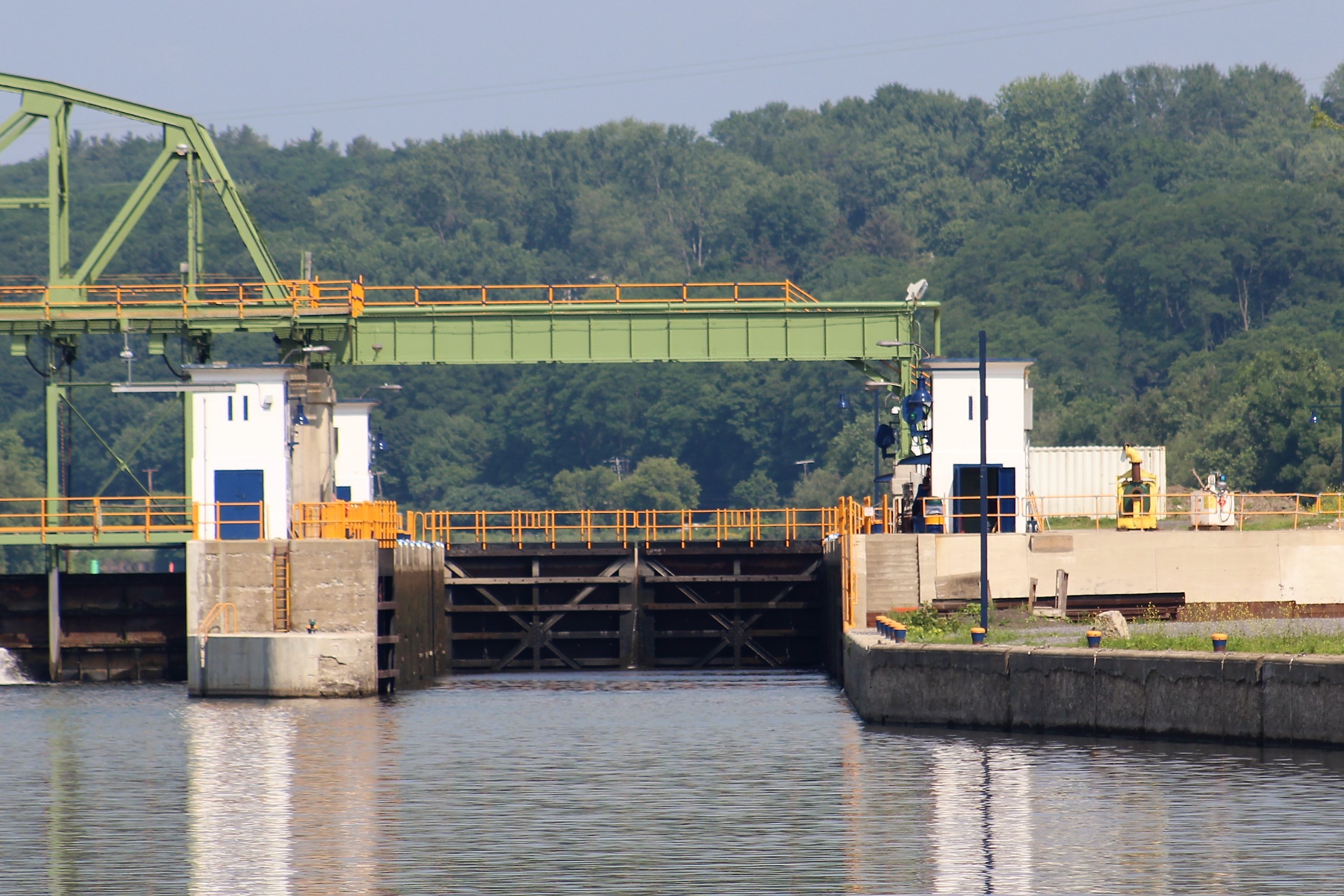
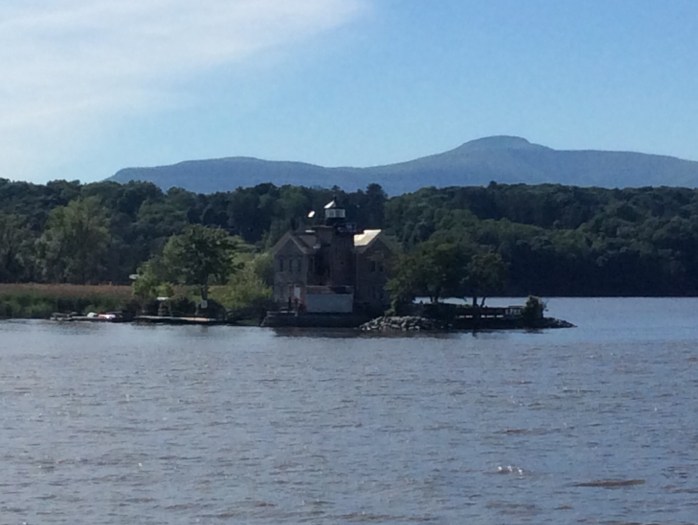
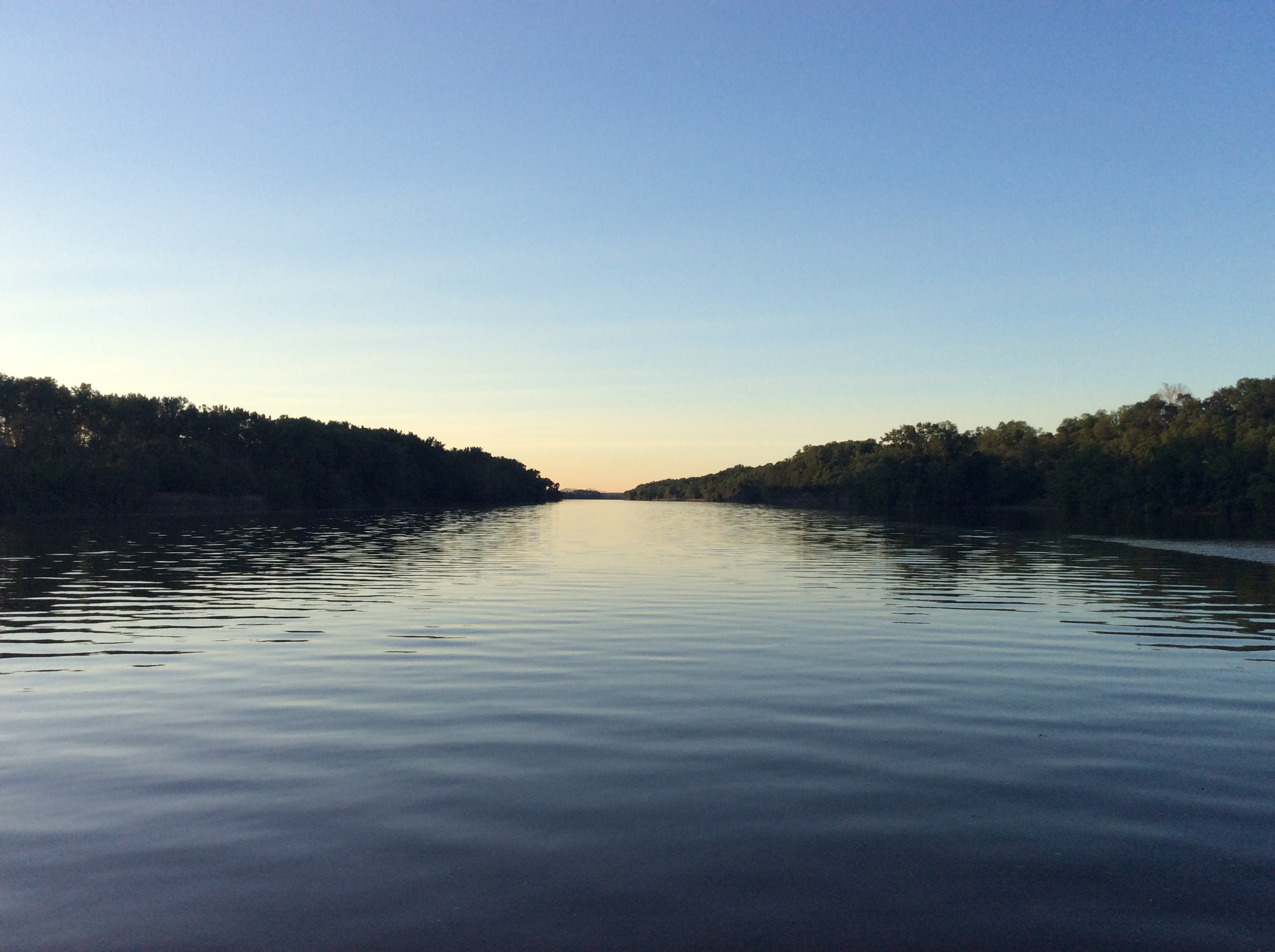
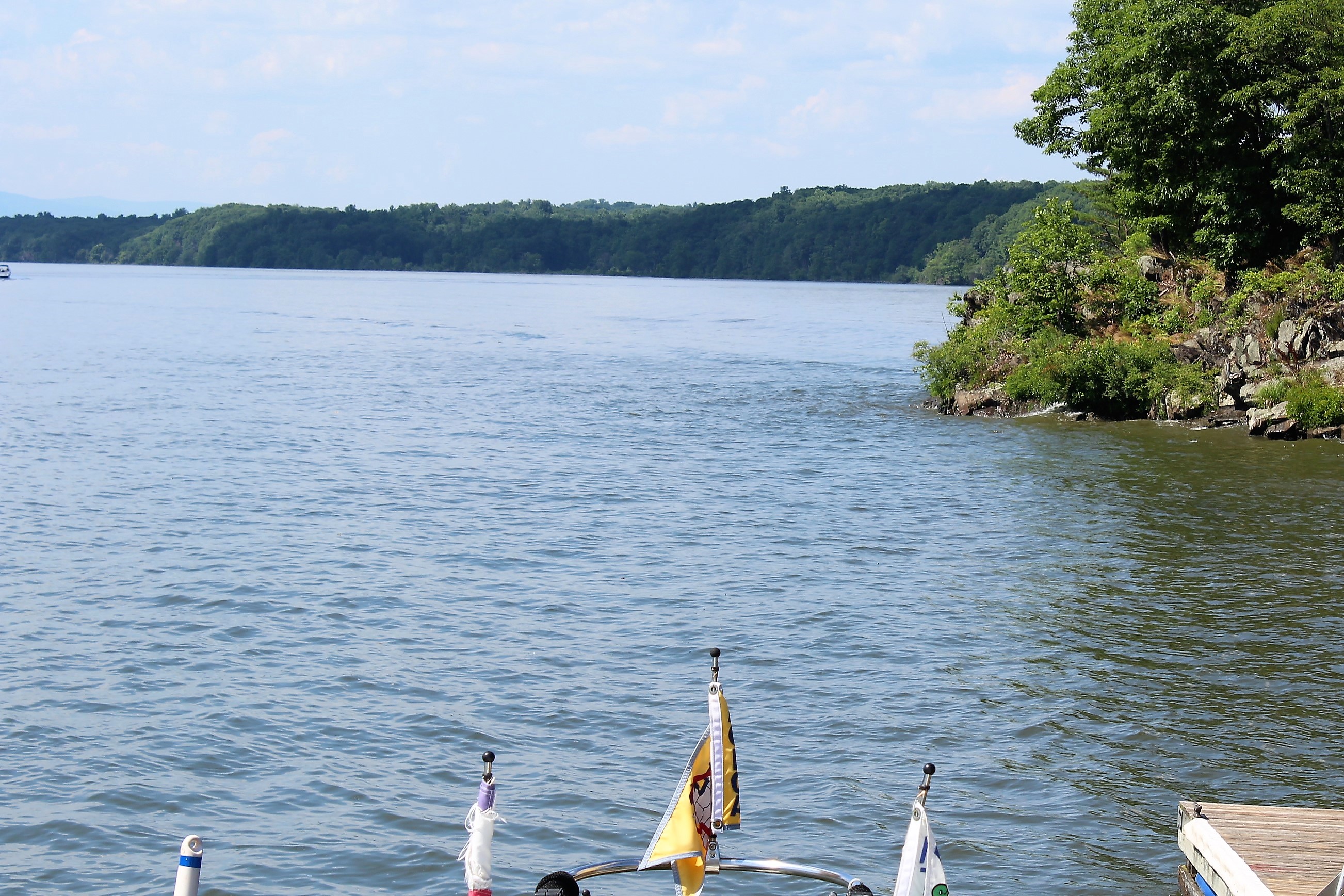
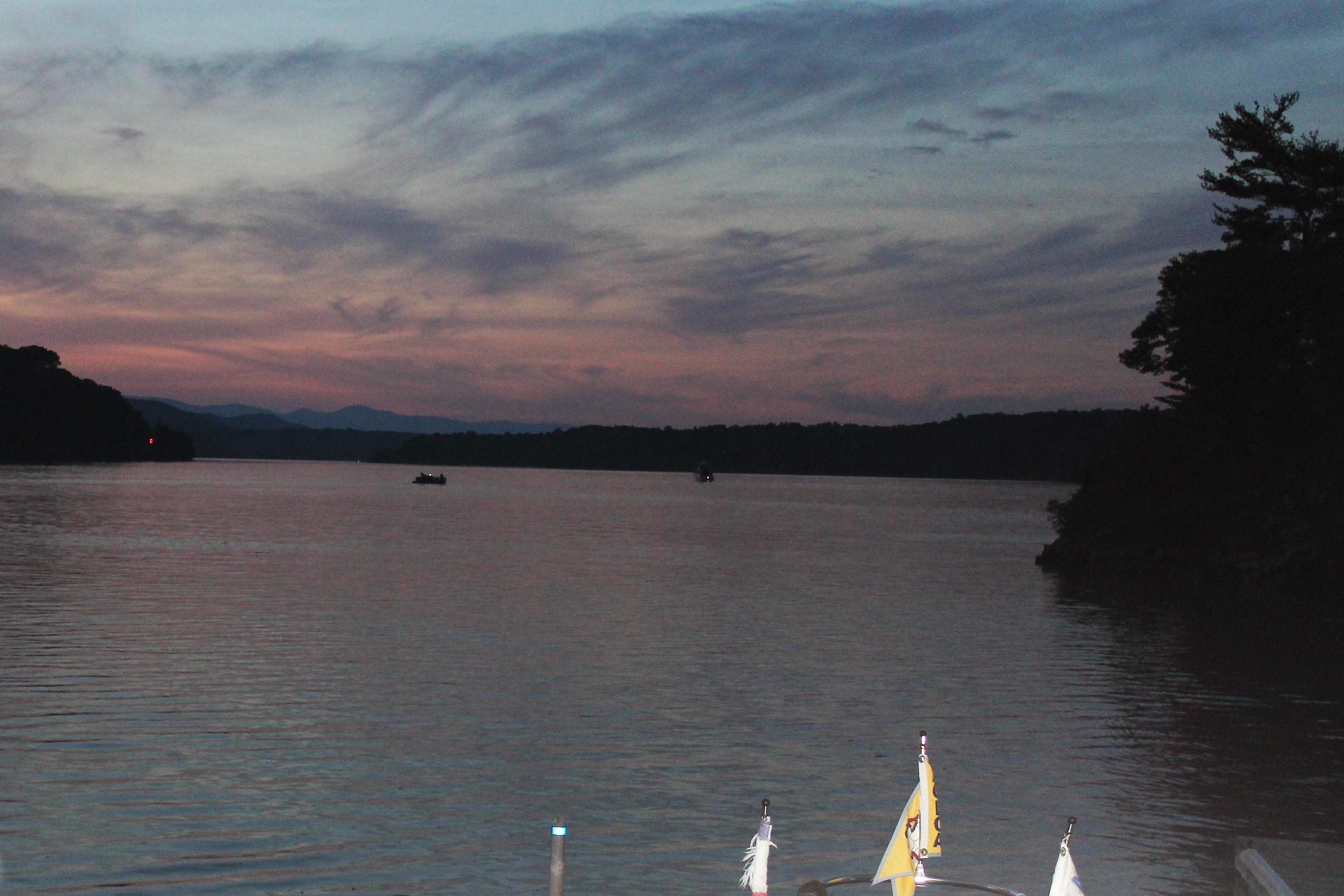
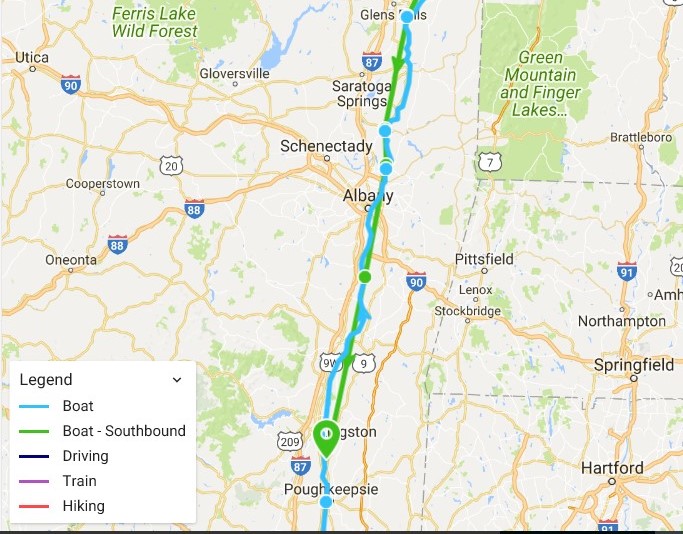
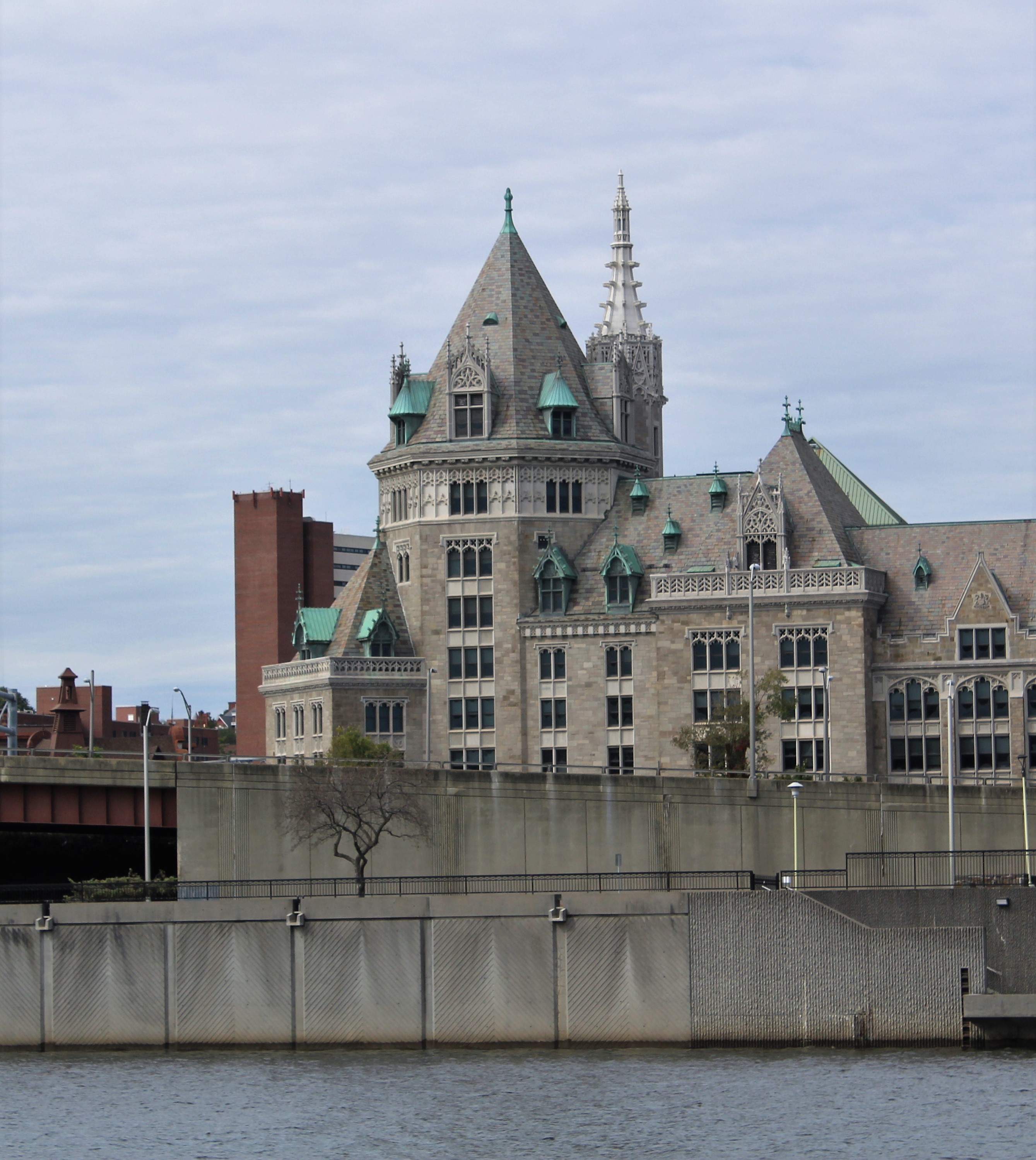
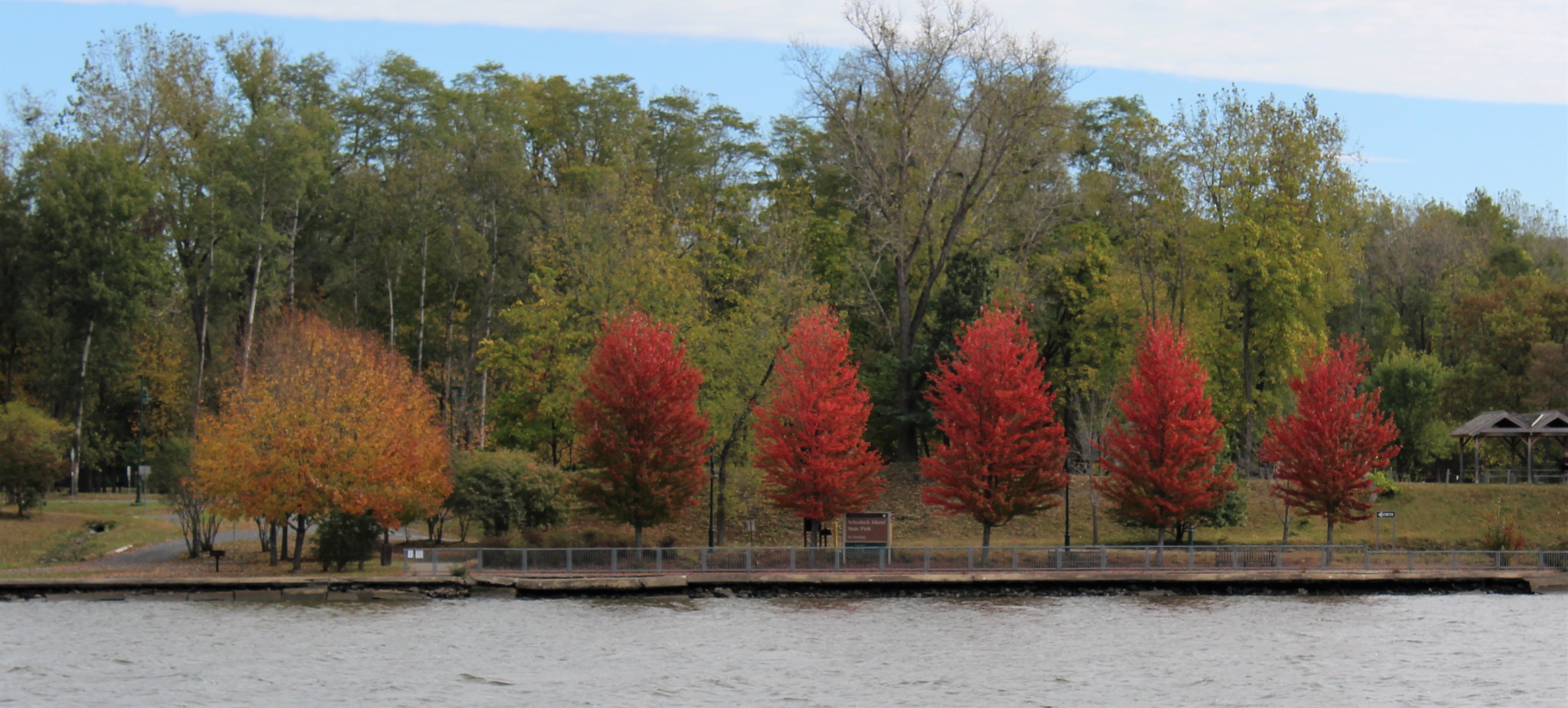
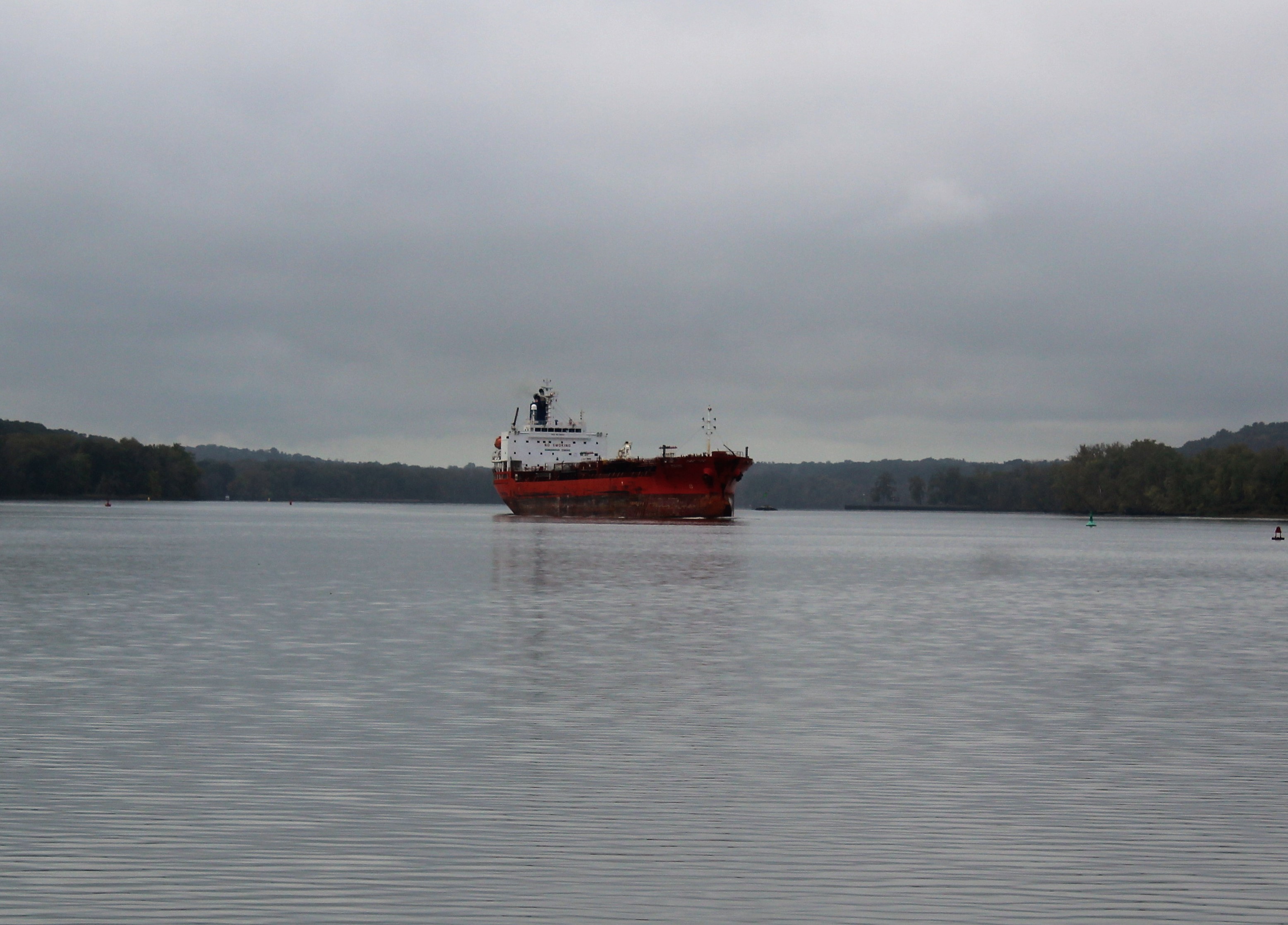
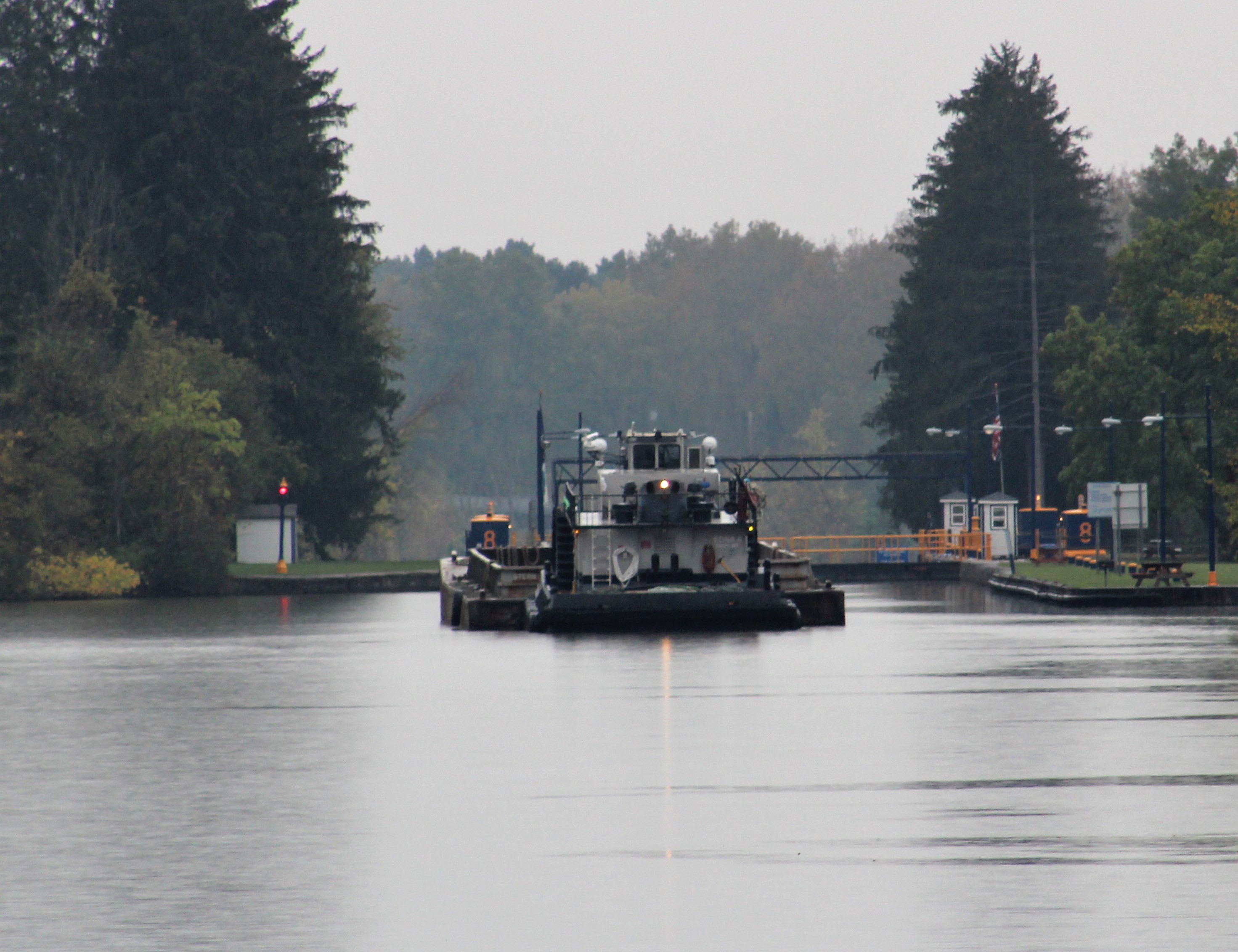
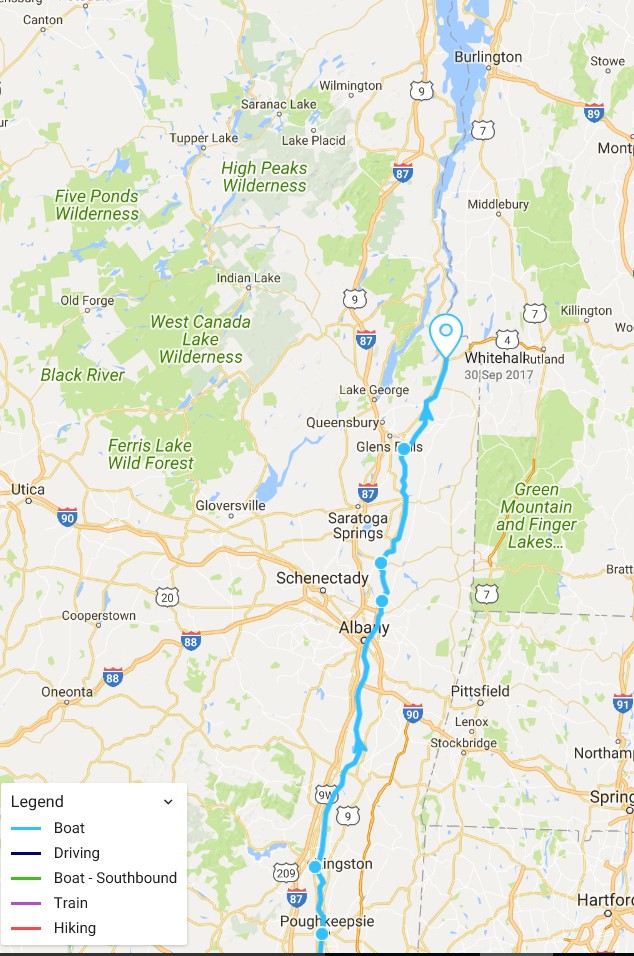
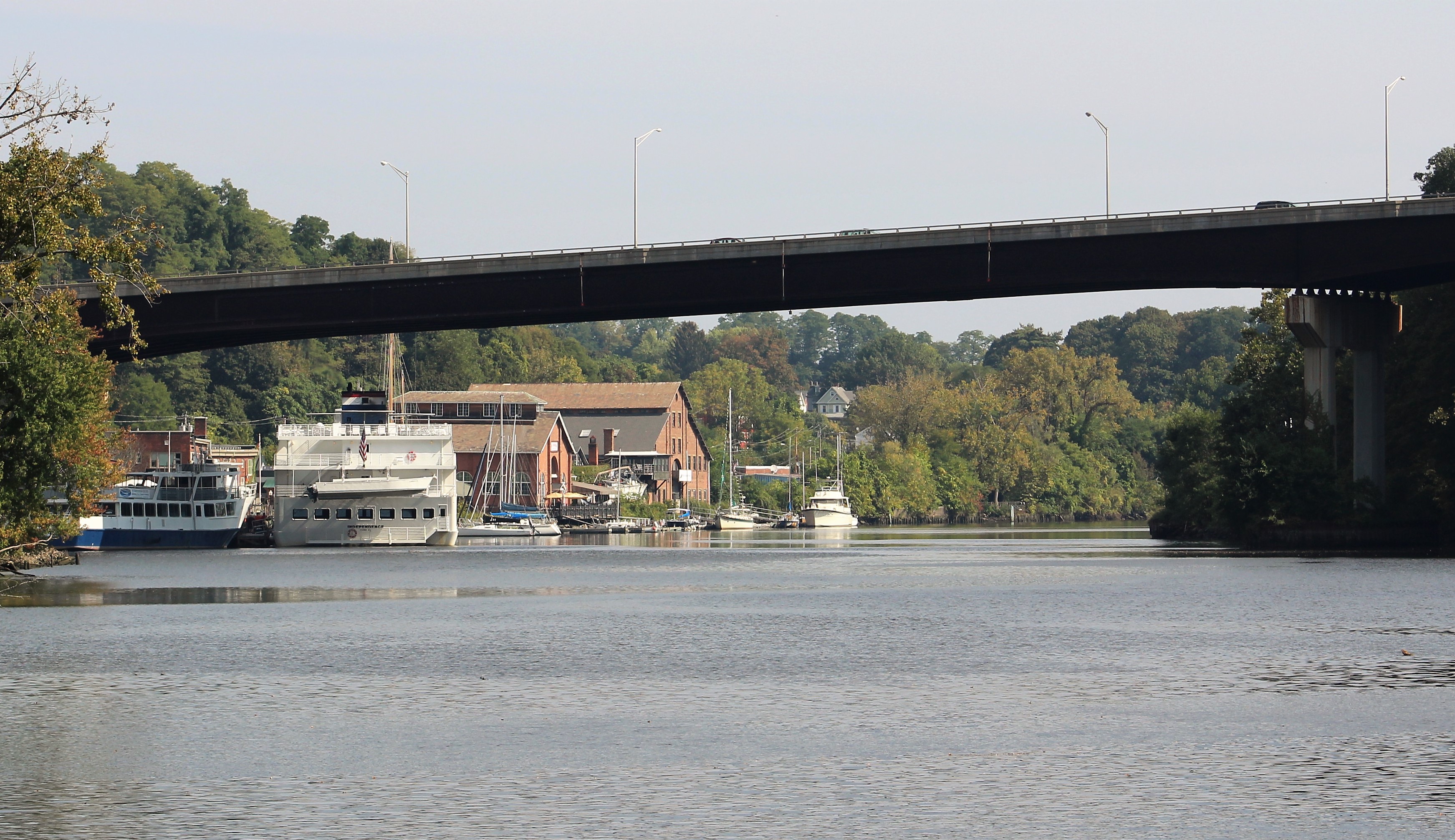
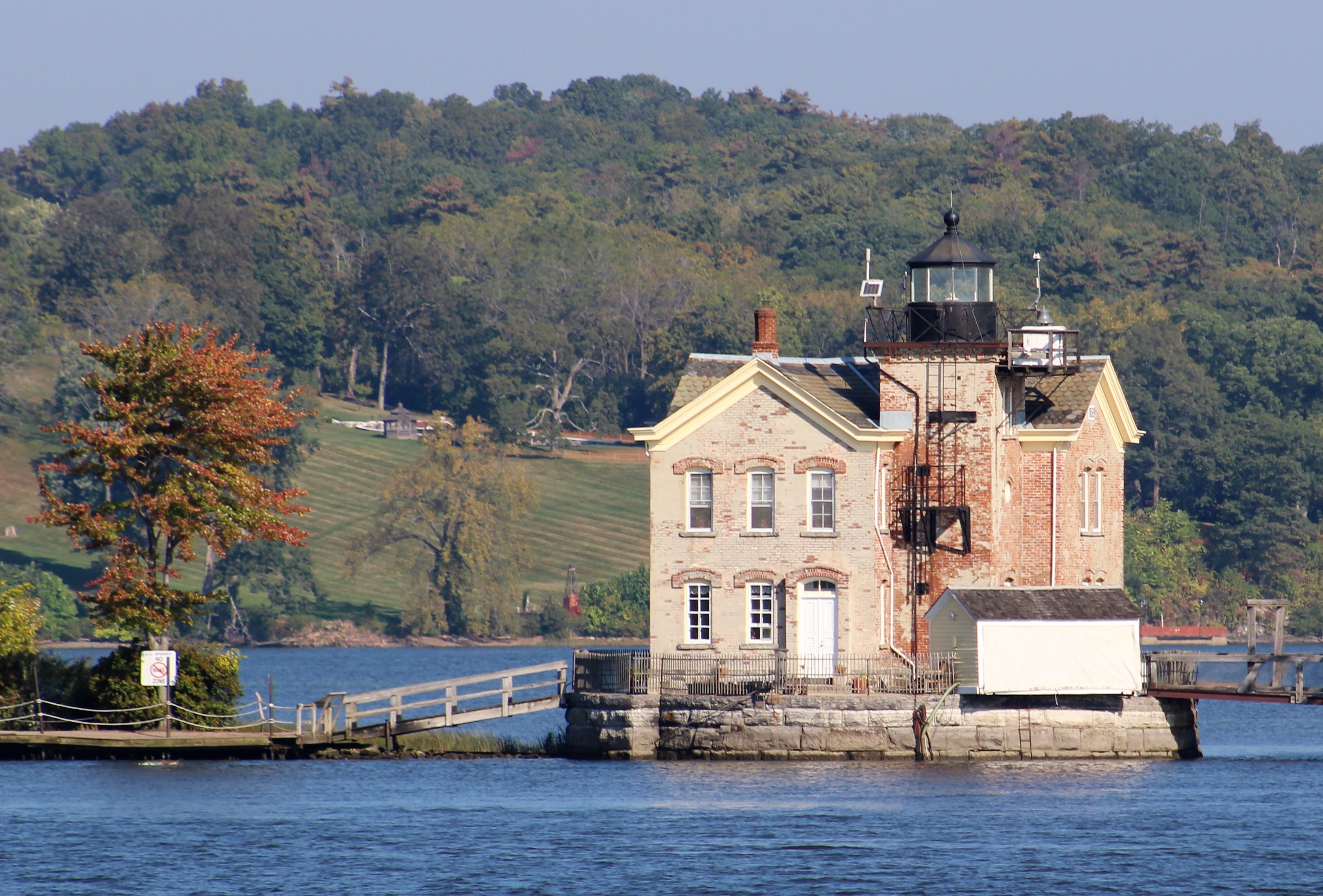
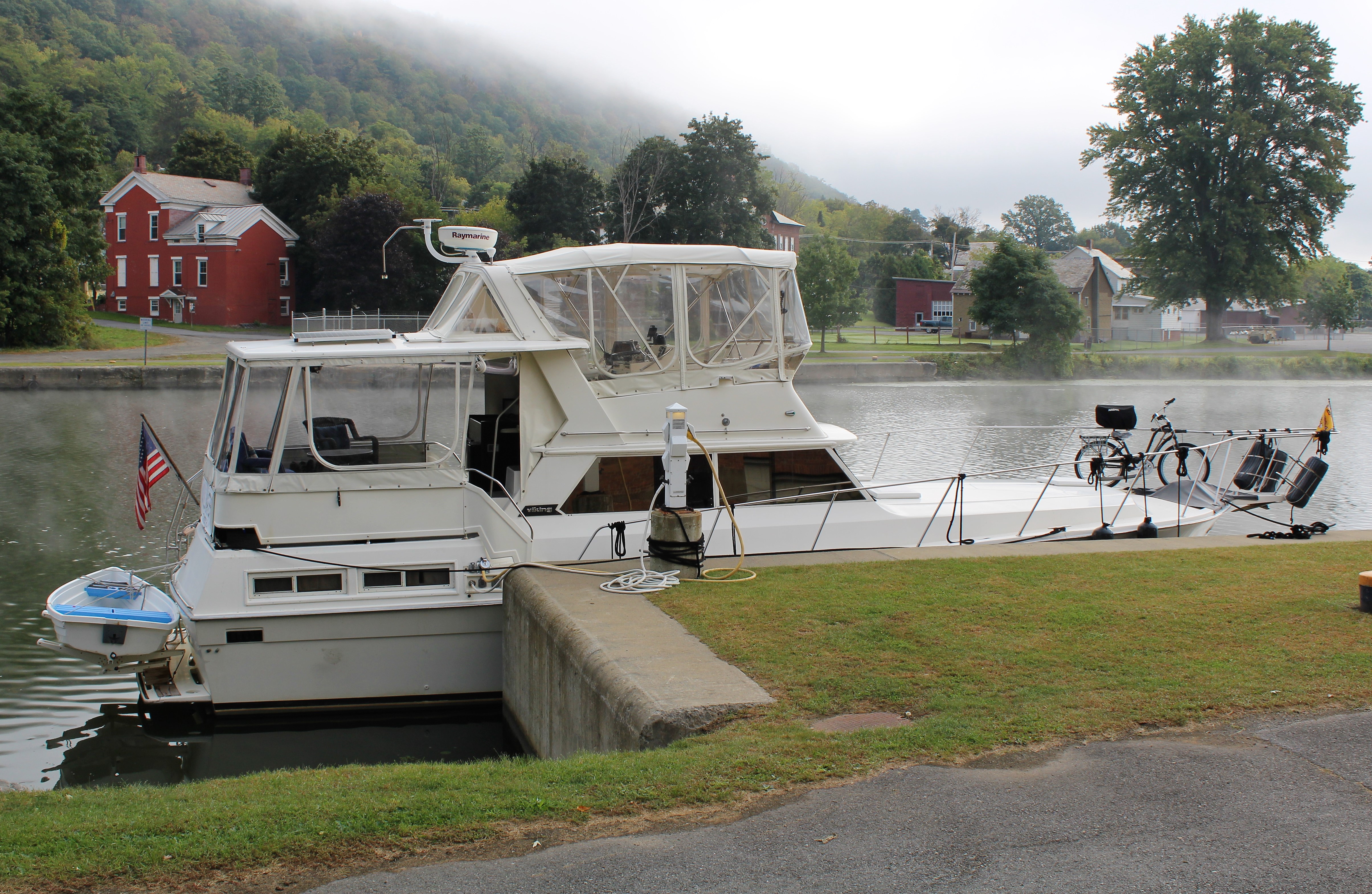
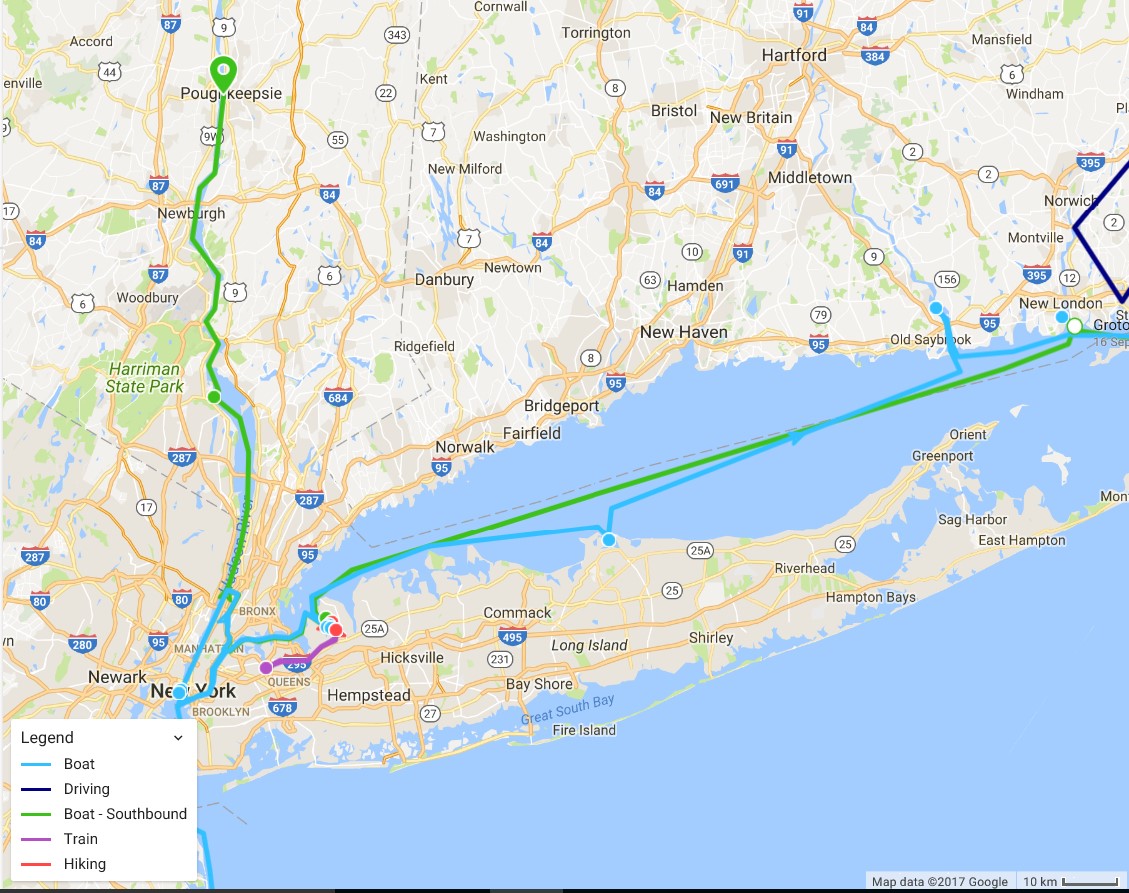
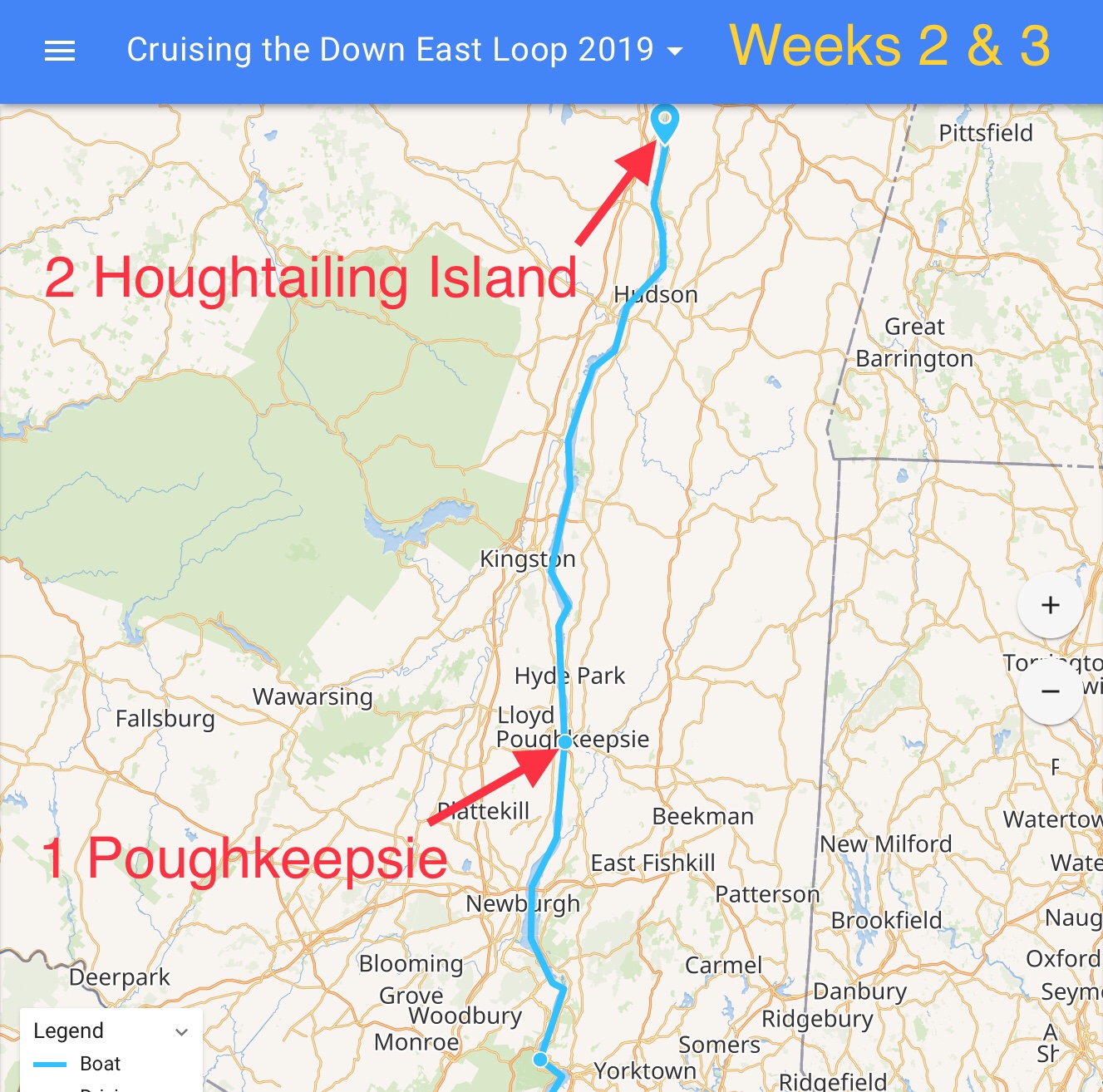
    The crew traveled from Bear Mountain State Park on Memorial Day and took a slip at Shadows Marina in Poughkeepsie (1). The next day, the crew headed to Oklahoma City to watch the Women’s College World Series. The crew returned to Poughkeepsie on Thursday, June 6th. The Champlain Canal opened on June 5th, so the crew headed north and anchored out off Houghtailing Island (2).

    Click on the Still Waters II Travel Map site to see detailed voyage logs.

    The voyage of discovery did answer the following questions this week:

    1 How much money was offered to Benedict Arnold to swap sides in the Revolutionary War?

    2 What was the prize that the British hoped to gain from Benedict Arnold?

    3 Who do historians credit for pushing Benedict Arnold to his treasonous actions?

    At the Box Office

    To see past videos, click on the link to the Still Waters II Vimeo site.  The library contains videos of Still Waters II cruising America’s Great Loop

    Monday, May 27th

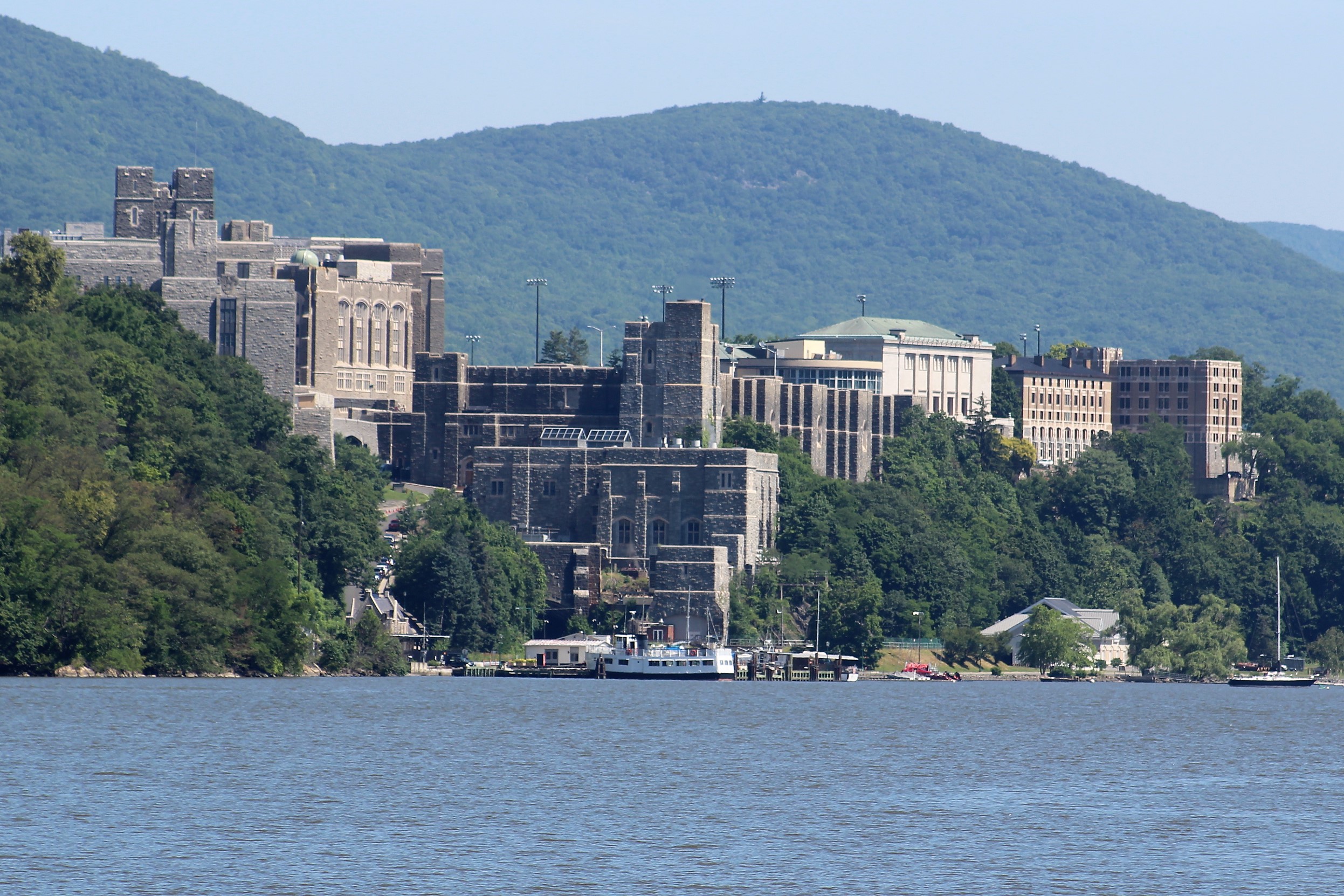
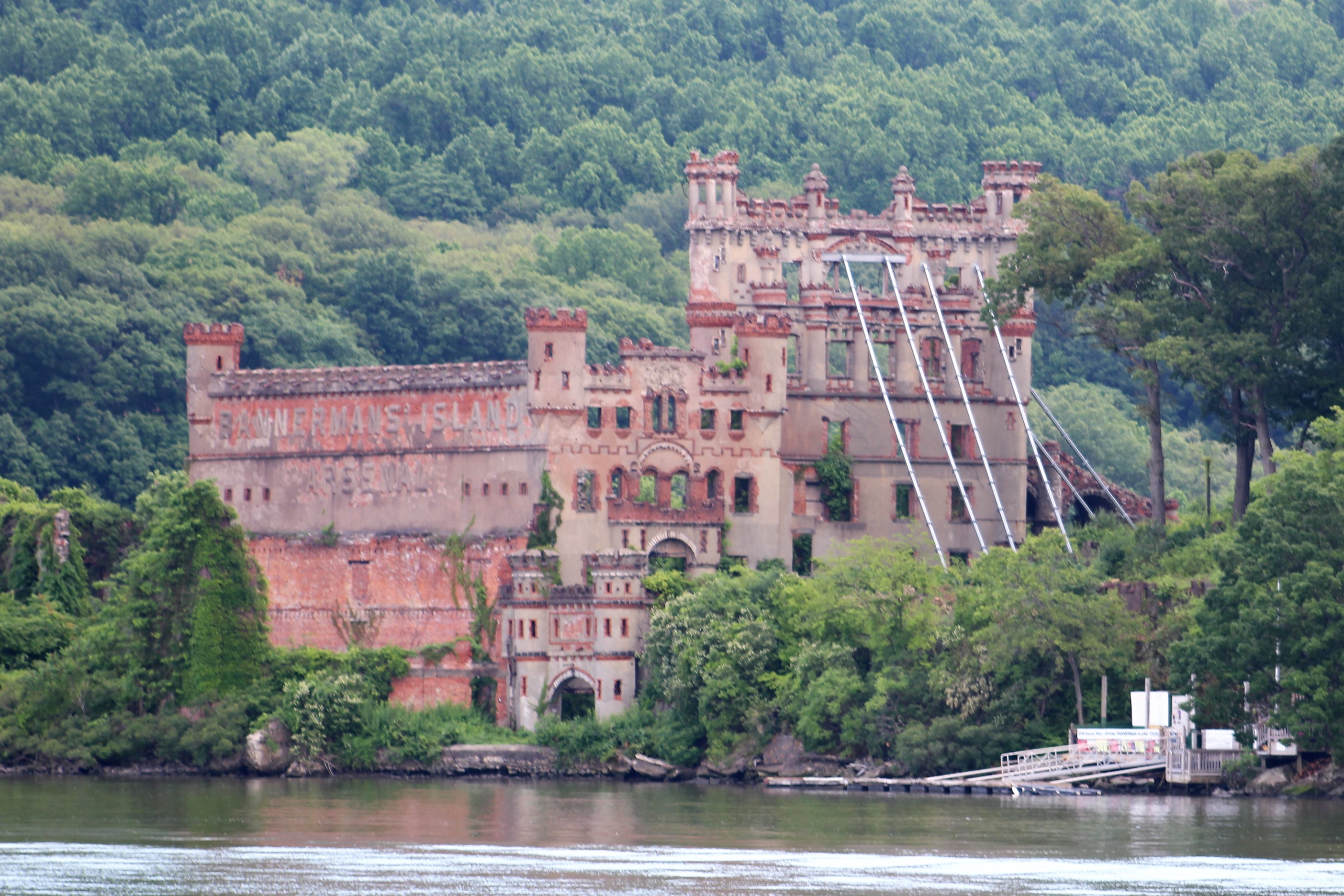
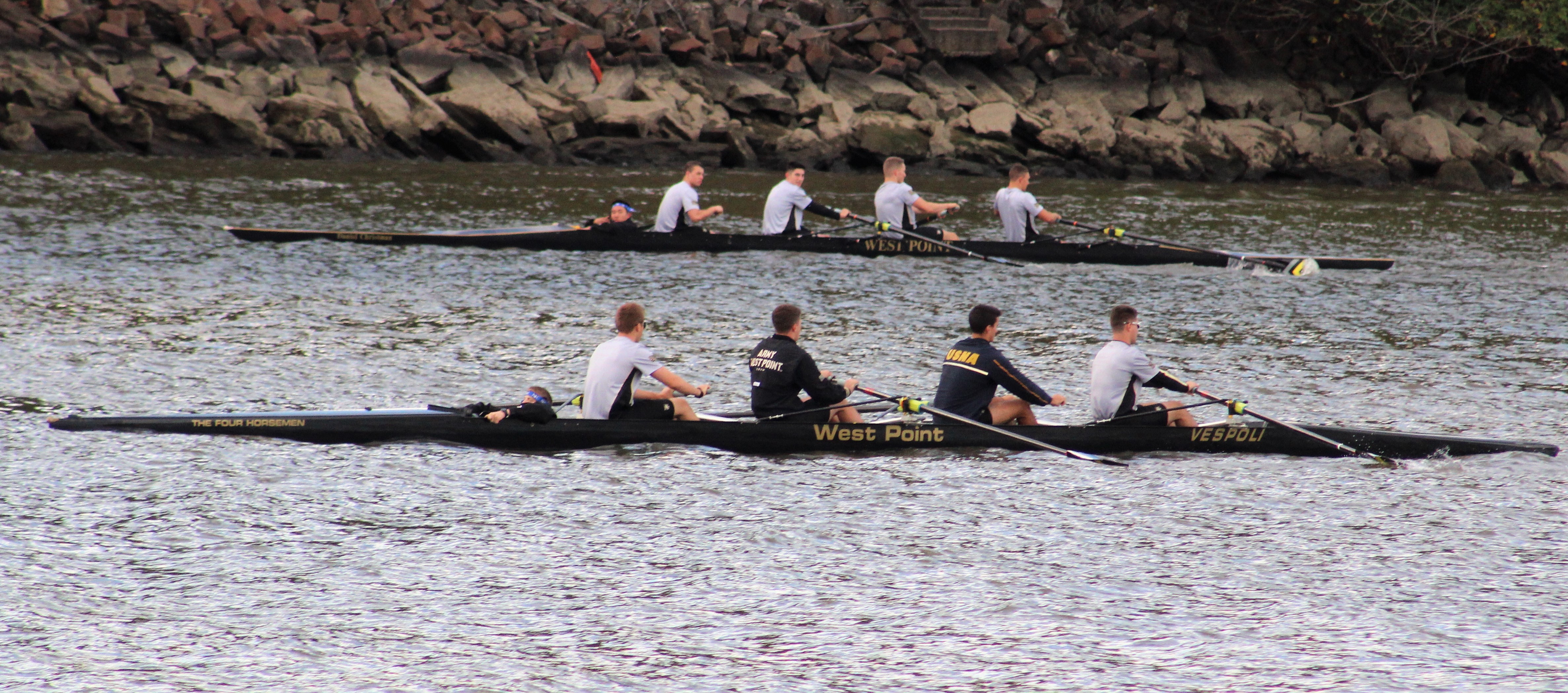
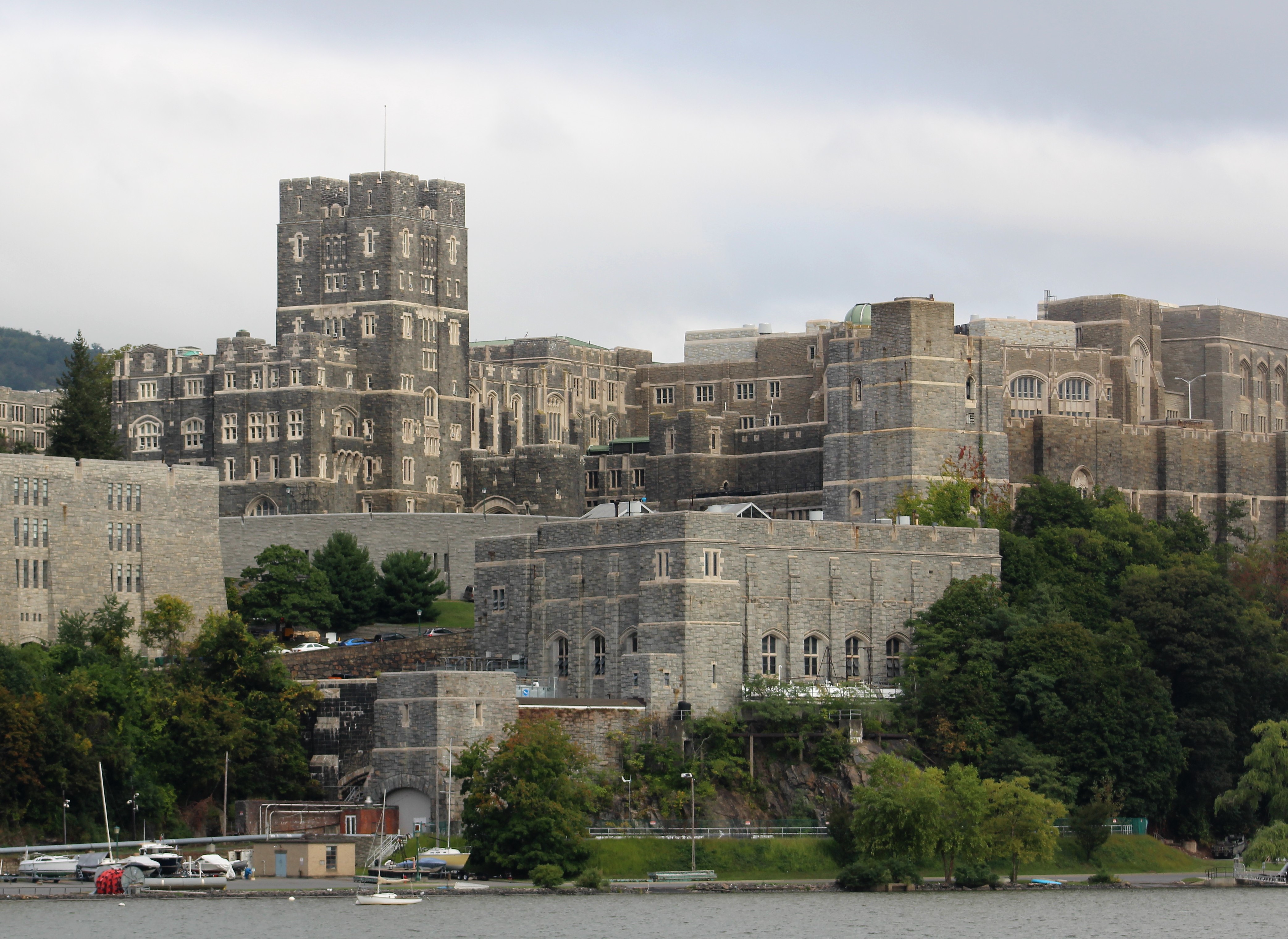
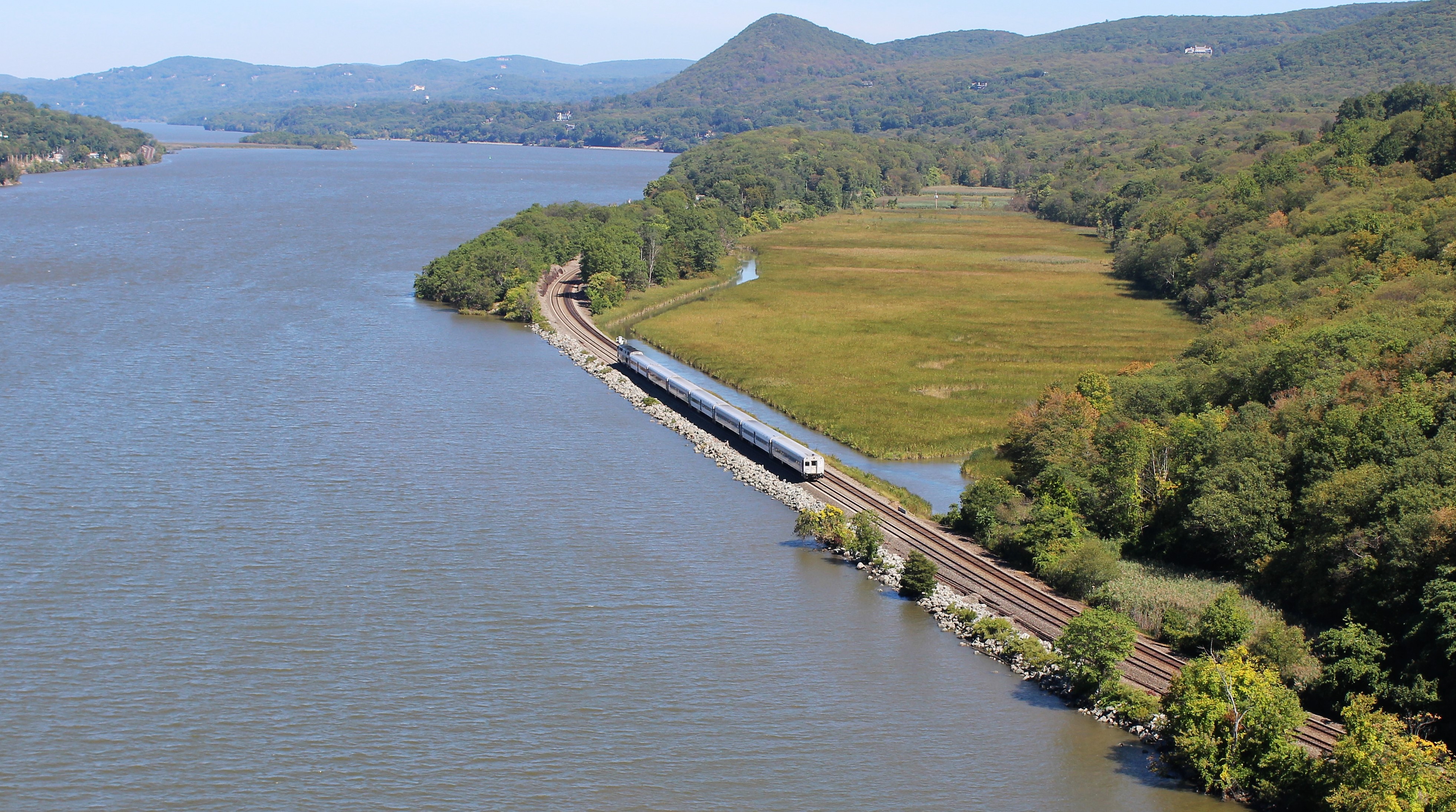
    This tends to be one of the crew’s favorite cruising days as they go by West Point and Bannerman’s Castle on their way to Poughkeepsie.

    Bannerman’s Castle

    As the crew passed by Bannerman’s Castle they wondered if there was any resolution in the alleged kayak murder mystery. Back in April 2015, an engaged couple went for a kayak paddle around the island that the castle sits on. The woman returned ashore but the body of the man was found a month later down the river near West Point.

    The woman was charged with murder and has been sitting in jail awaiting trial, while expressing her innocence. She claims that it was just a boating accident involving bad judgement. For example, drinking while paddling, not wearing a life jacket, and kayaking in cold stormy weather.

    Forget the fact that she admitted she removed the drain plug from his kayak so it would fill with water and sabotaged his paddle so it would come apart and not work properly.

    The prosecution offered her a plea deal in the summer of 2017, where she agreed to criminal misconduct, negligent homicide, and would be released from jail for time served.

    The family of the deceased was not impressed, so they filled suit preventing her from getting any insurance money [just a mere half million policy] and also filed civil lawsuits. Both sides have reached an agreement where by little miss negligent homicide gets no money, gets deported back to Russia, and family drops civil lawsuits for the death of their son. So much for her big American Dream.

    Her greed for the insurance money is one of the oldest motives for murder. Greed was also the motivation for another high crime during the Revolution War. However, the crime this time was treason.

    West Point

    Benedict Arnold had just been named commander of West Point on August 3, 1780. His wife was a British Loyalist, and pressured her husband to surrender West Point to the British. On August 15, 1780 the British offered Arnold 20,000 pounds for the fort. On August 30, 1780 Arnold sent a letter back to the British accepting the offer. Unfortunately for Arnold, the British contact was captured on the way back to New York City. The contact was eventually found guilty of crimes and hung in Tarrytown.

    Arnold learned of the capture and managed to find his way to British troops before the Patriots could capture him.

    Besides greed, these two stories have a second connection. Historian Wetherell says that the shortest explanation for Arnold’s treason is that he “married the wrong person.”

    Tuesday, May 28th

    Walkway Over the Hudson Trail Map, just under 4 miles

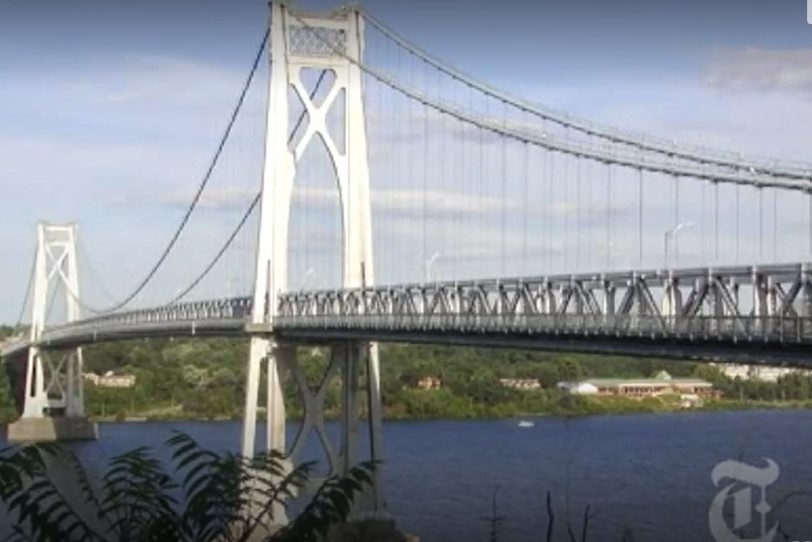
    On Mid Hudson Bridge, looking north

    On Walkway Over the Hudson Bridge, looking south

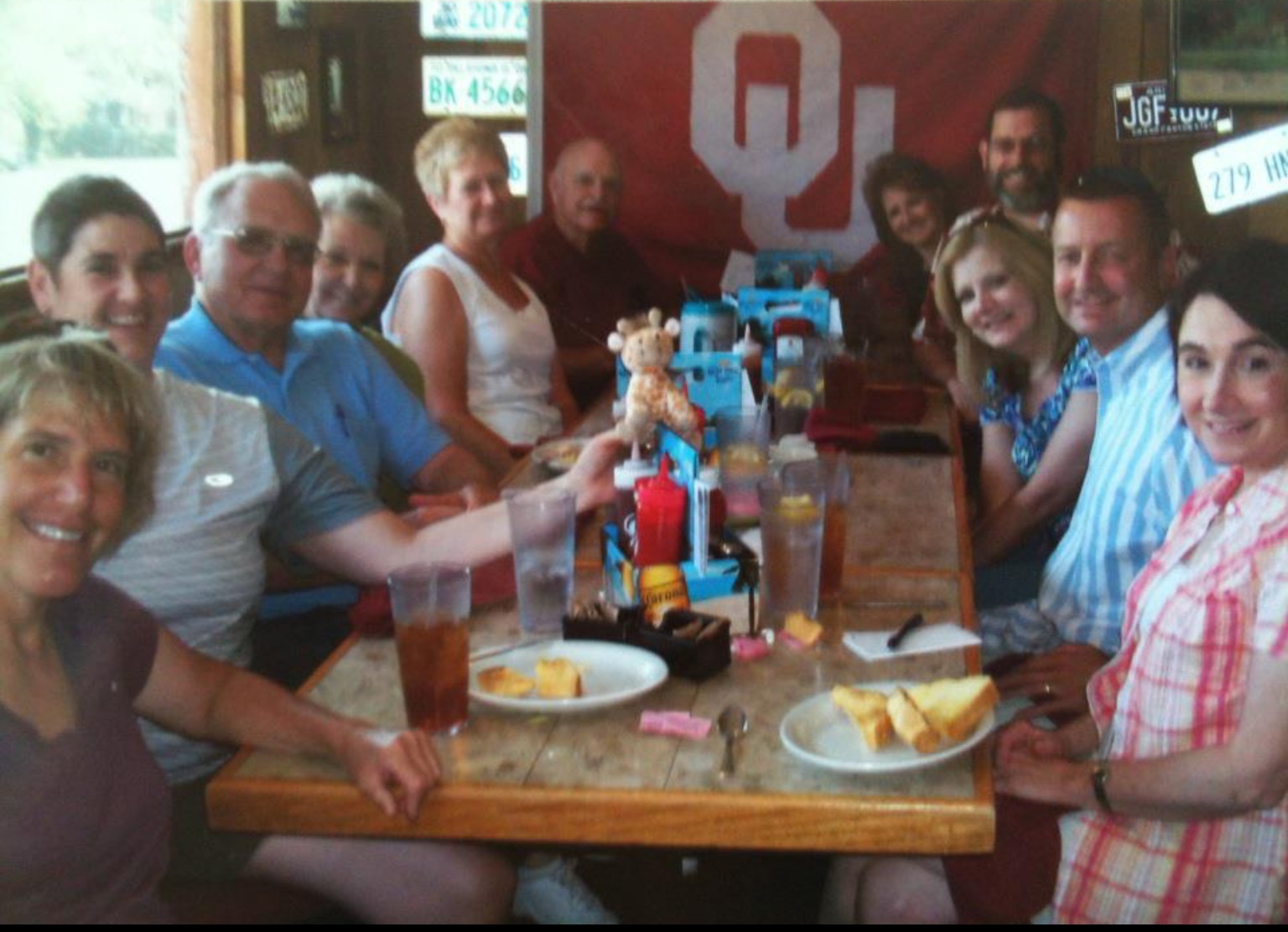
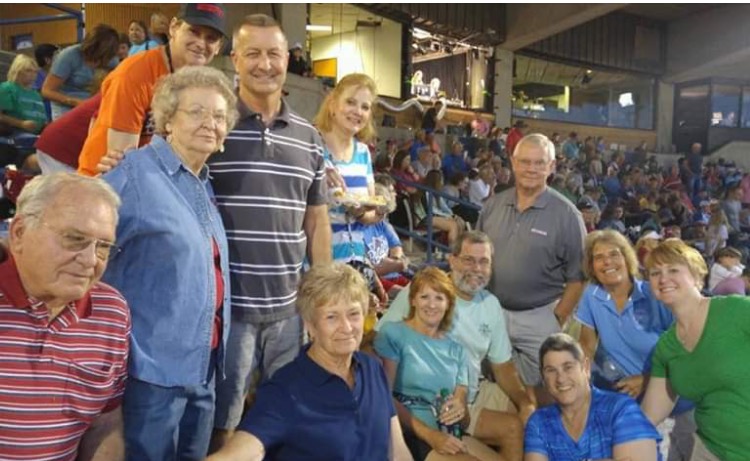
    While the crew waits on the Champlain Canal to open, they will do a little land time, rent a car, drive 1,500 miles to Oklahoma City, and watch the Women’s College World Series with their softball family.

    14 years ago eating BBQ between games

    3 years ago at the stadium

    Monday, June 4th

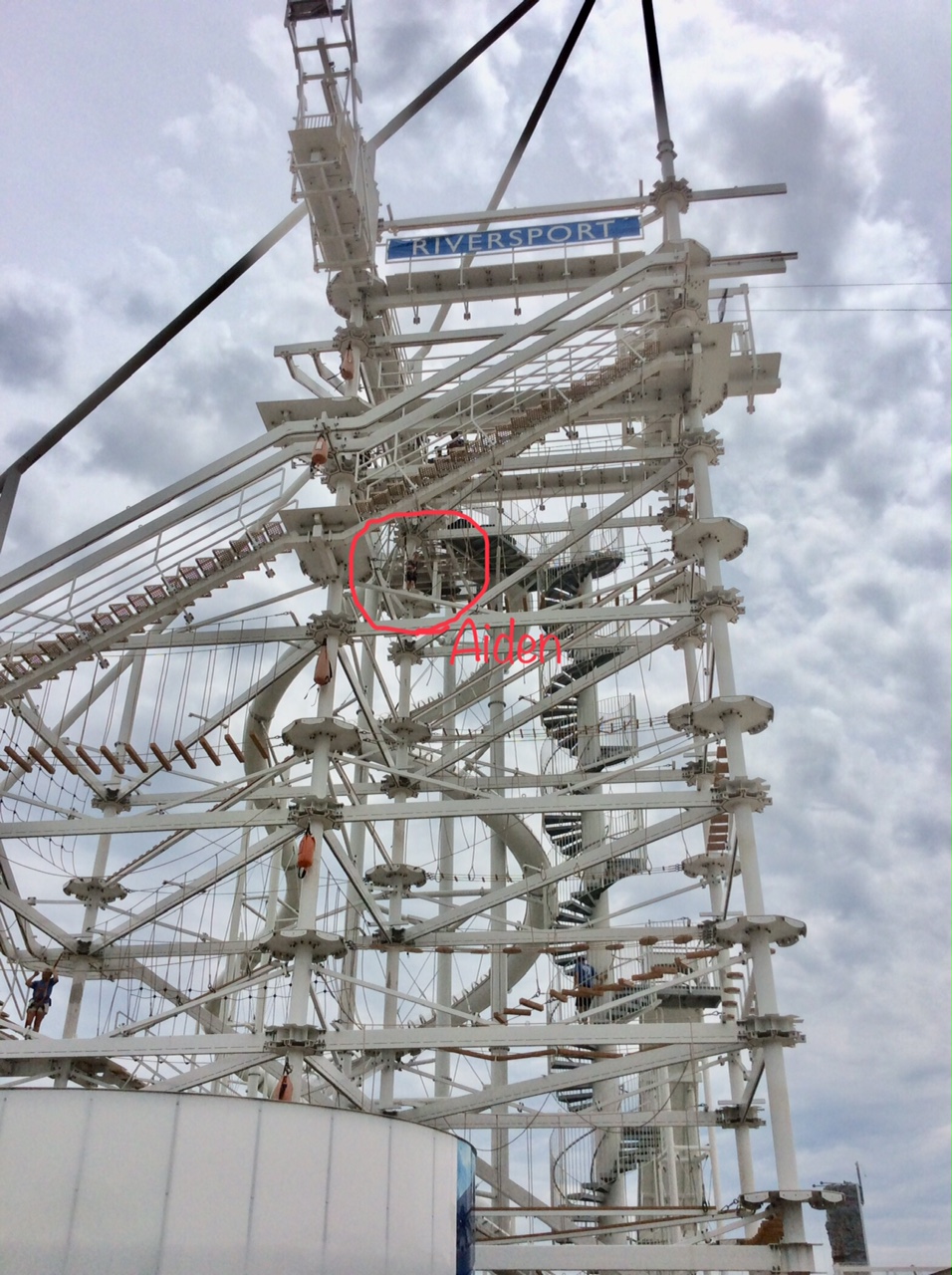
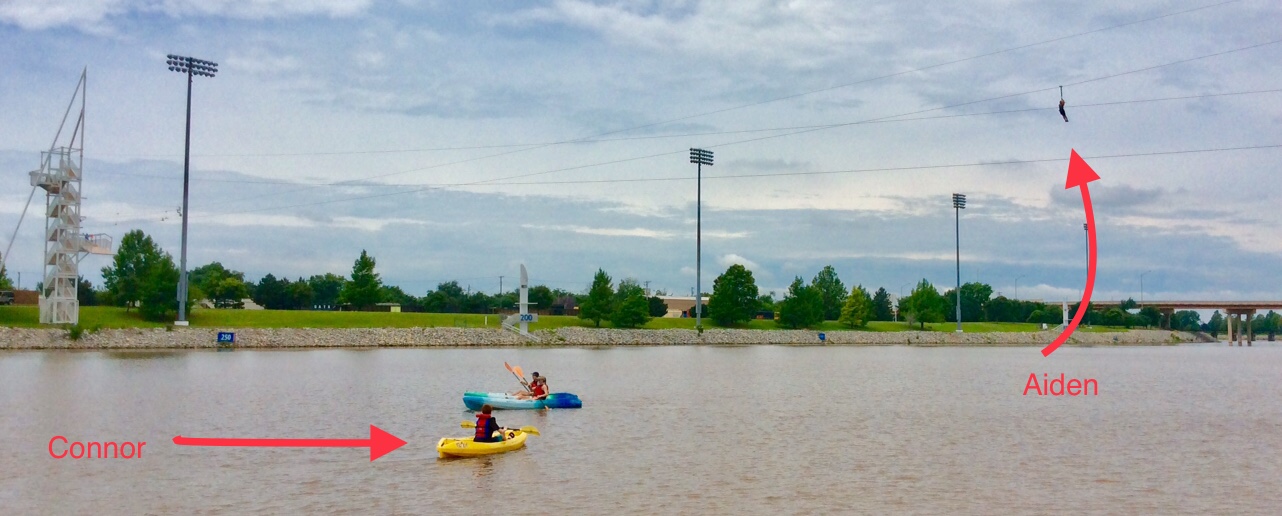
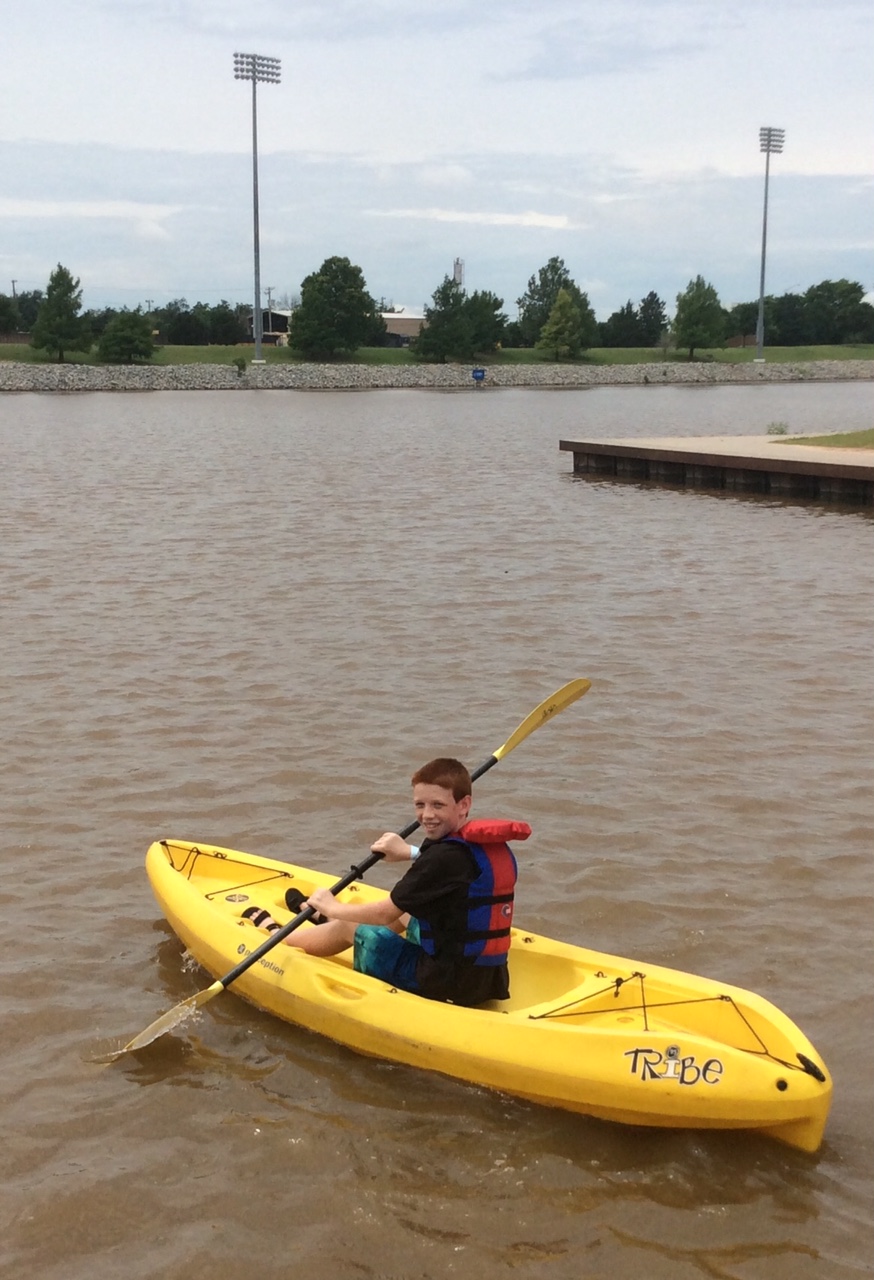
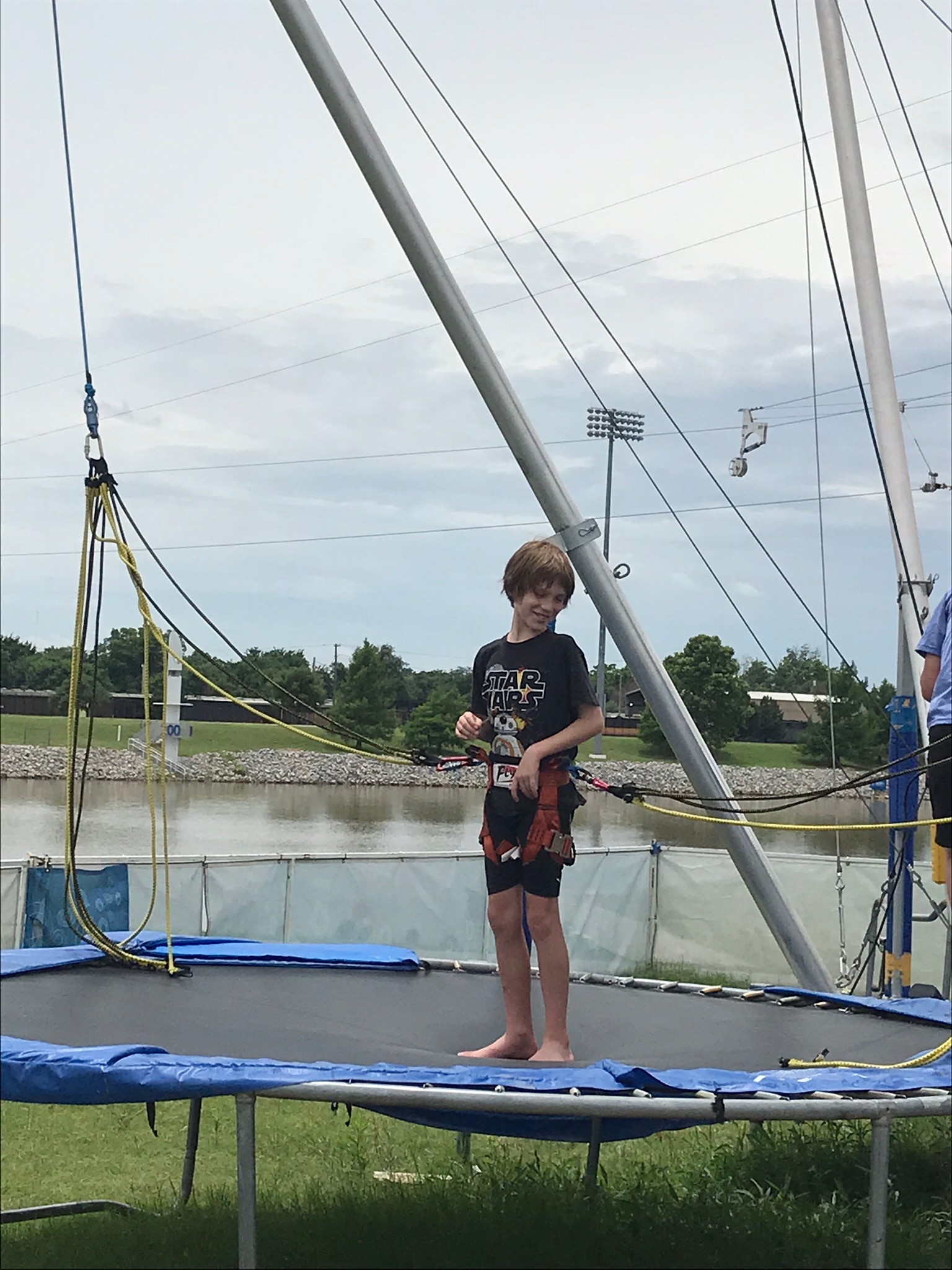
    Three of the grandsons showed up in OKC on Sunday. The extended crew spent the afternoon at Riversports kayaking, zip lining, and climbing the obstacle course tower.

    After playing hard all afternoon, it was time to get something to eat.

    Wednesday, June 5th

    The crew learned that the Champlain Canal is now partially opened. About half the Canal, the first five locks, have been made operational. Rumor has it that the canal will be fully open by Friday. This is good since the crew is about half way back to New York and itching to get headed north.

    Thursday, June 6th

    Good news, the Champlain Canal is now fully operational as of 1300.

    Saturday, June 7th

    After making it back to the boat on Thursday and resting on Friday, the crew headed north on the Hudson River. They did not leave the marina until 1330 so they could ride the current north. Strange that the river flows both ways this far north, 100 miles above New York City. Must be why the Indians called it ‘the river that flows both ways.’

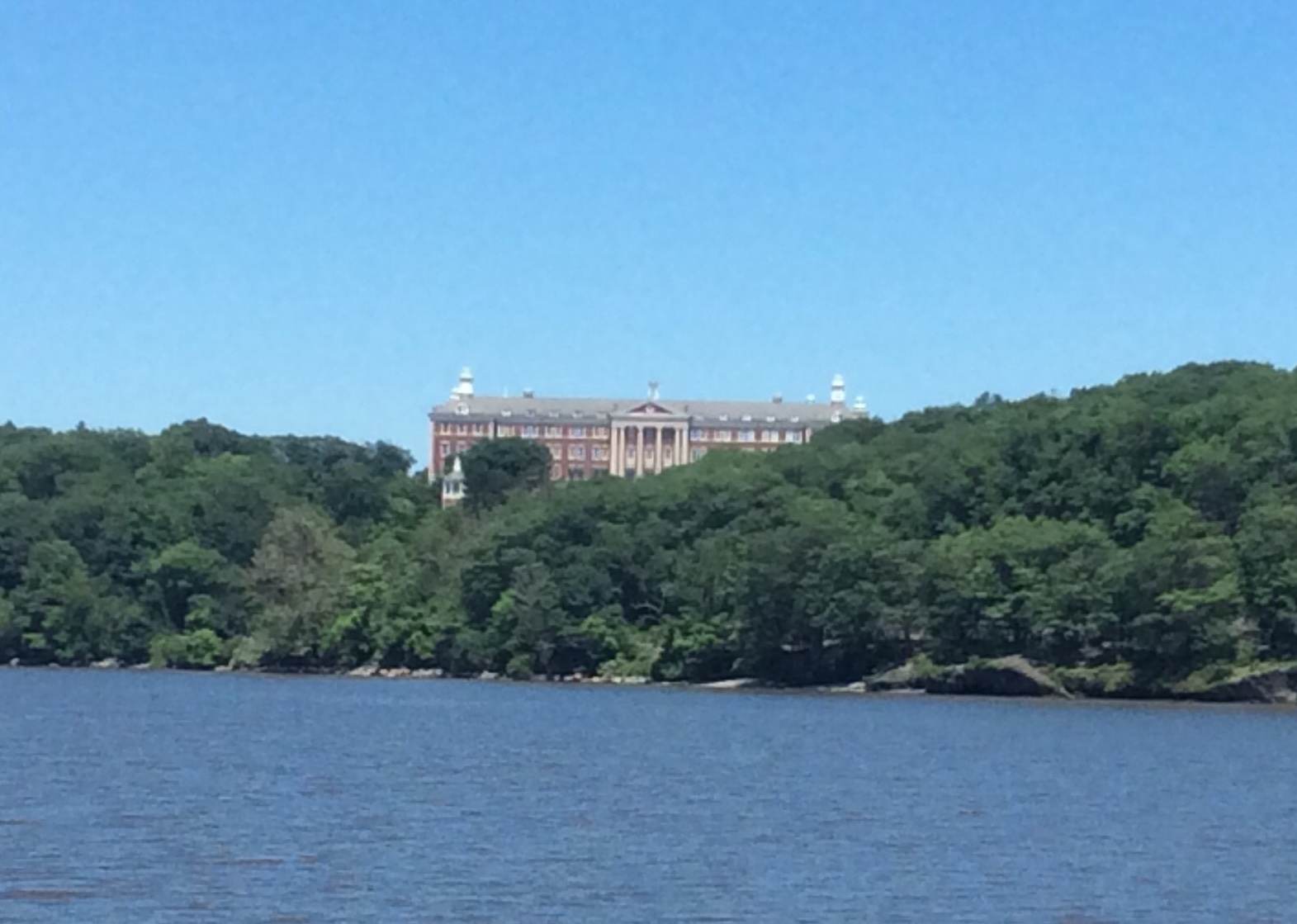
    Culinary Institute from the water

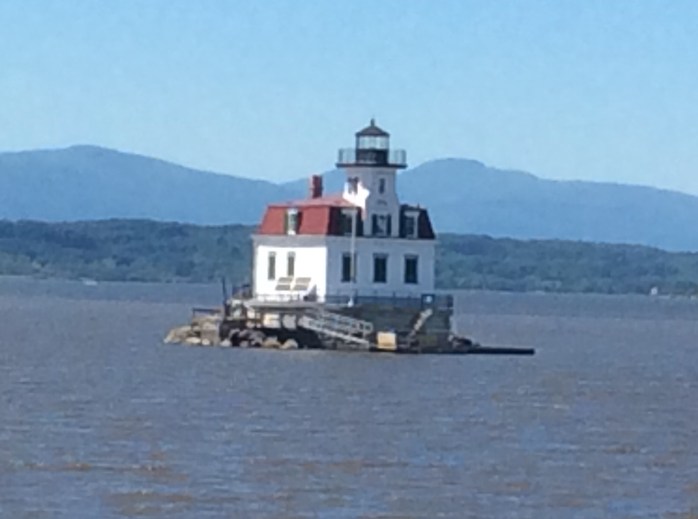
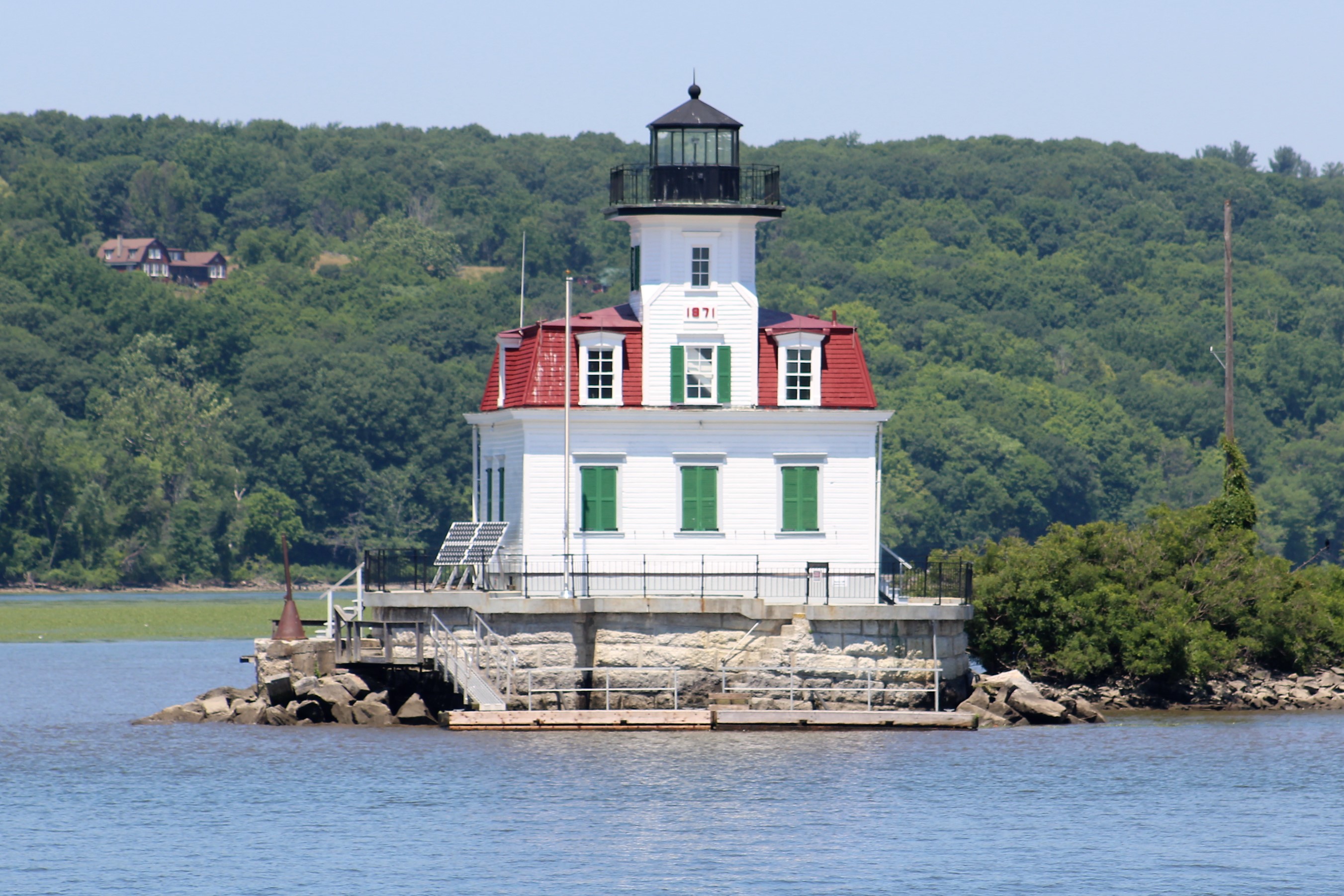
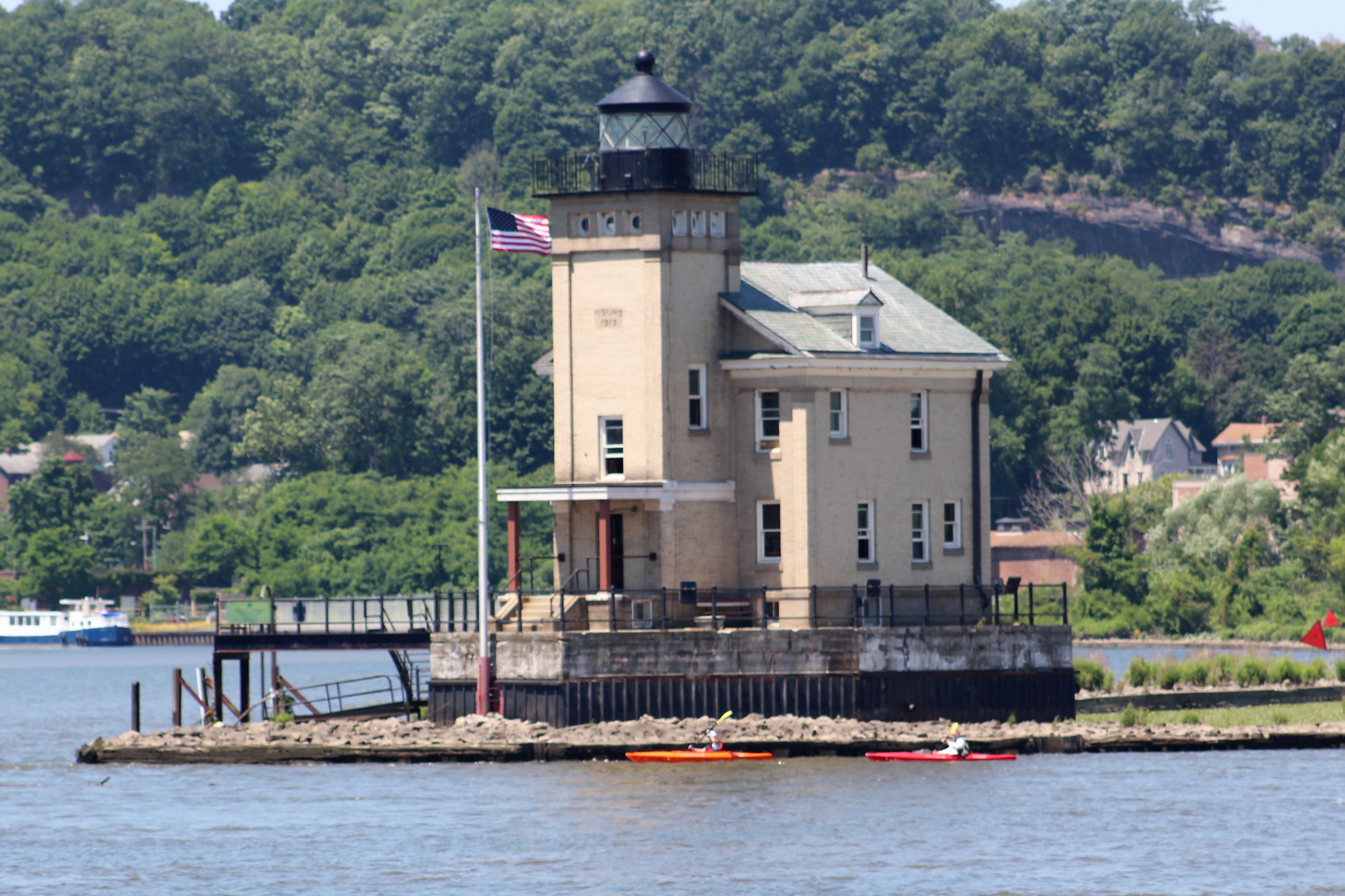
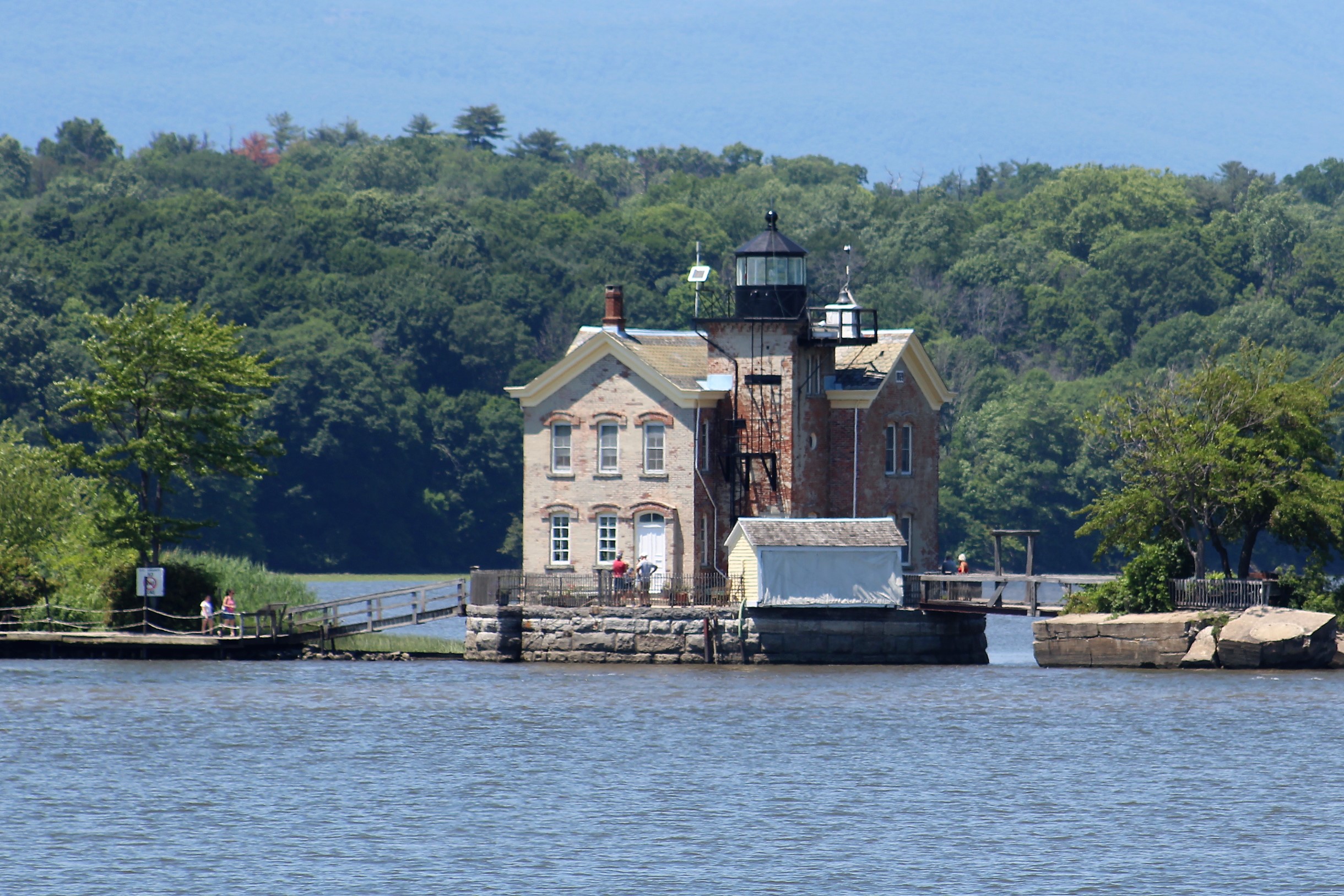
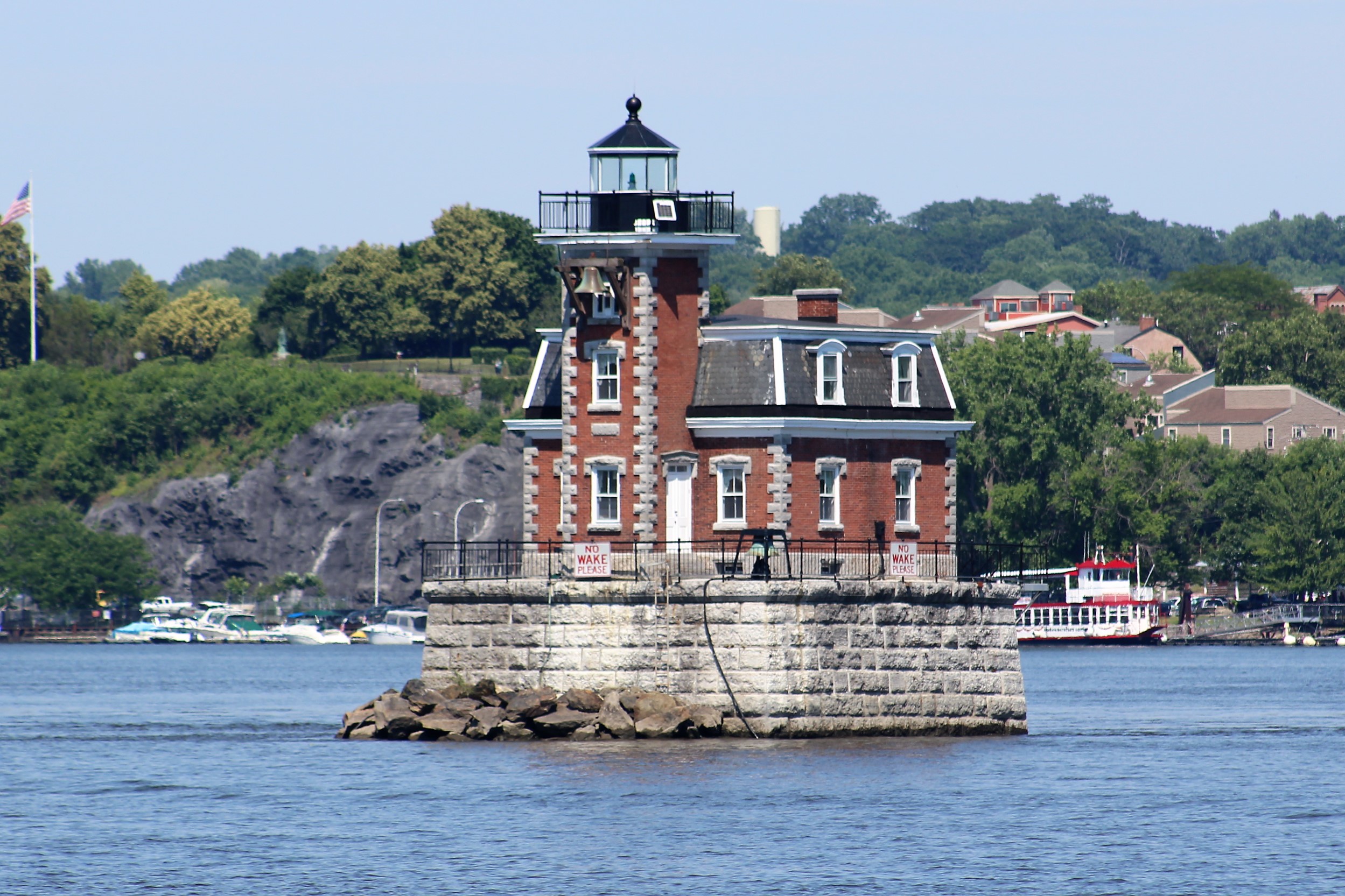
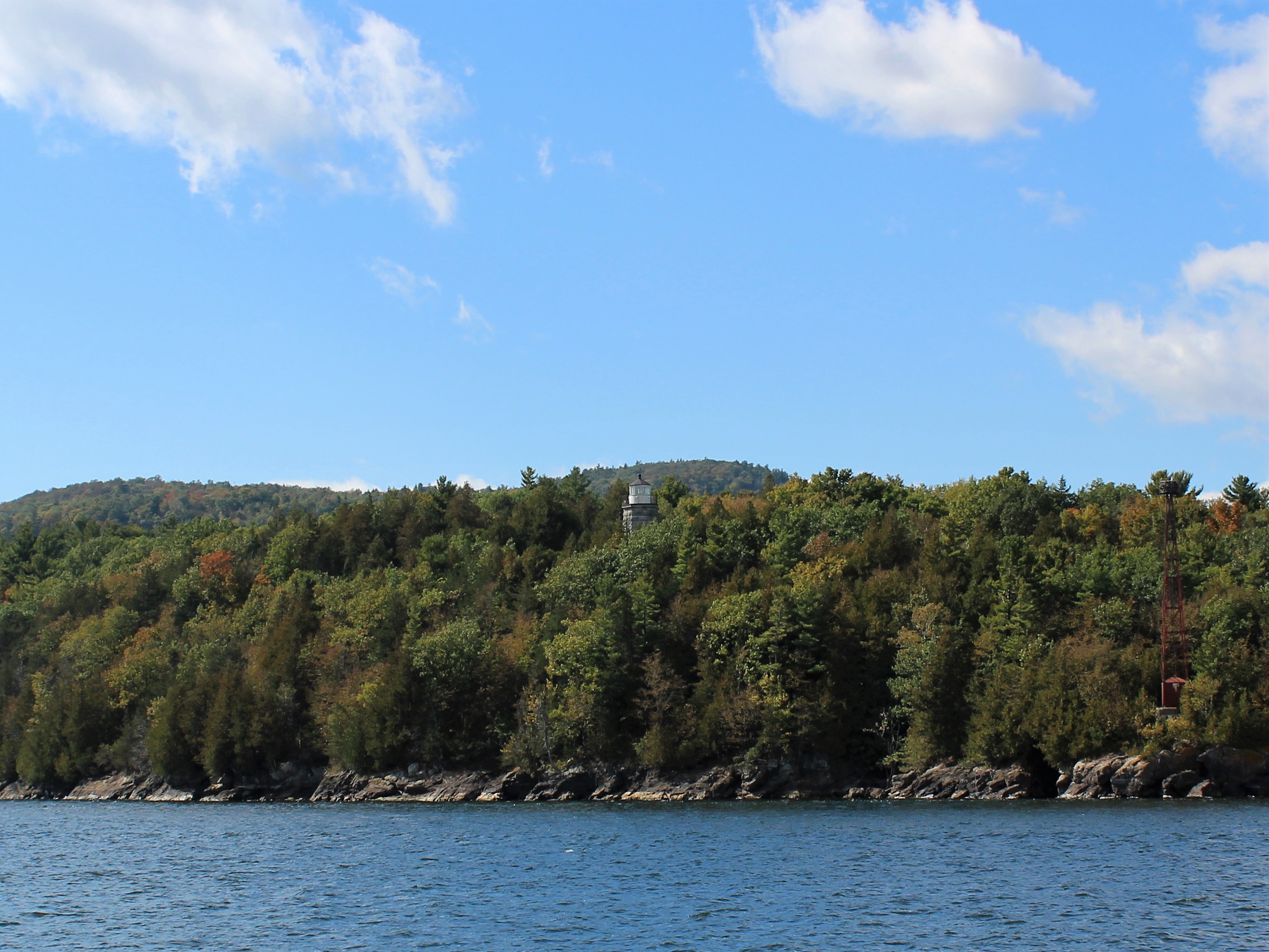
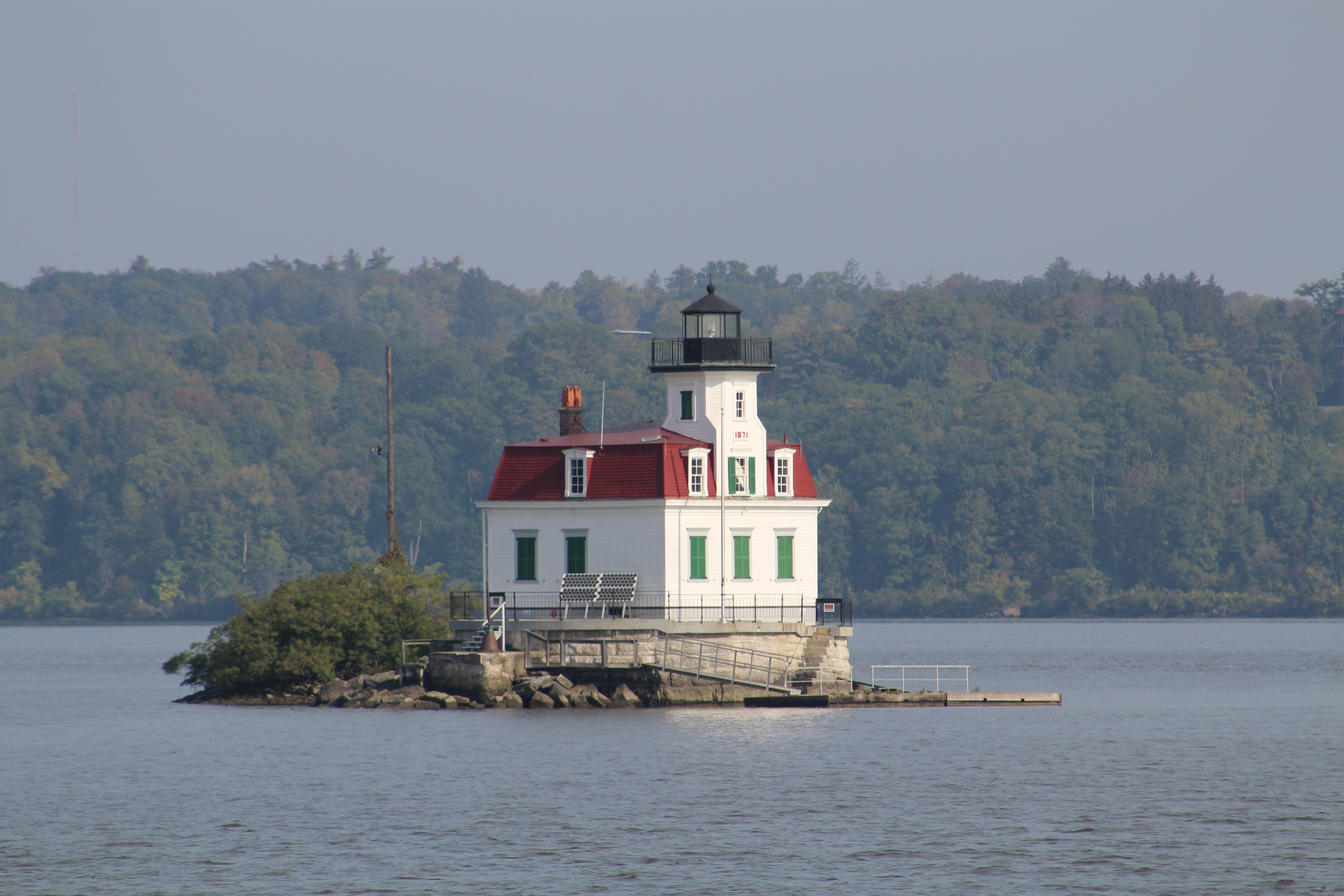
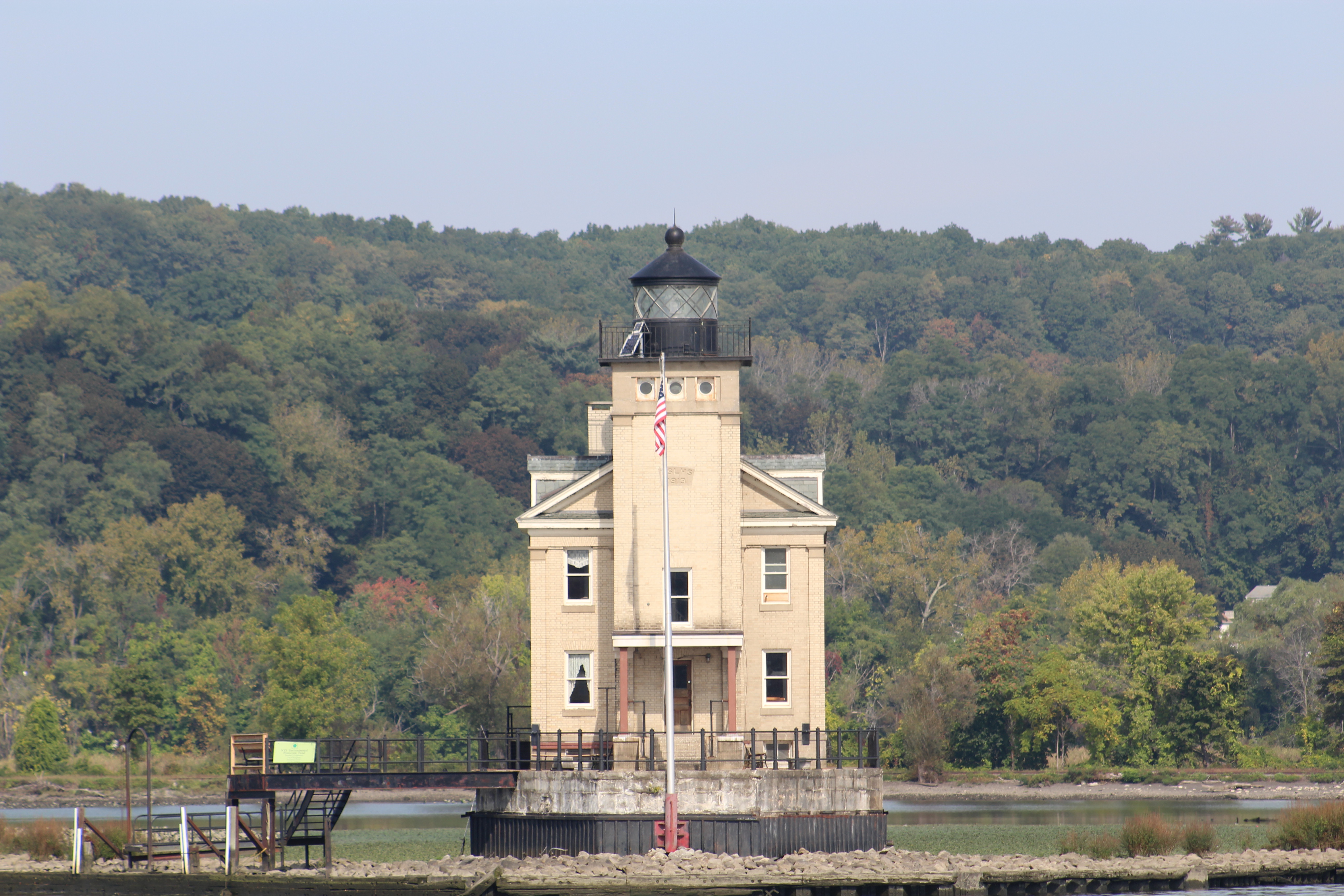
    The crew monitored their progress as they passed lighthouses along the route.

    Espous Meadows Lighthouse

    Kingston Lighthouse

    Saugerties Lighthouse

    Hudson City Lighthouse

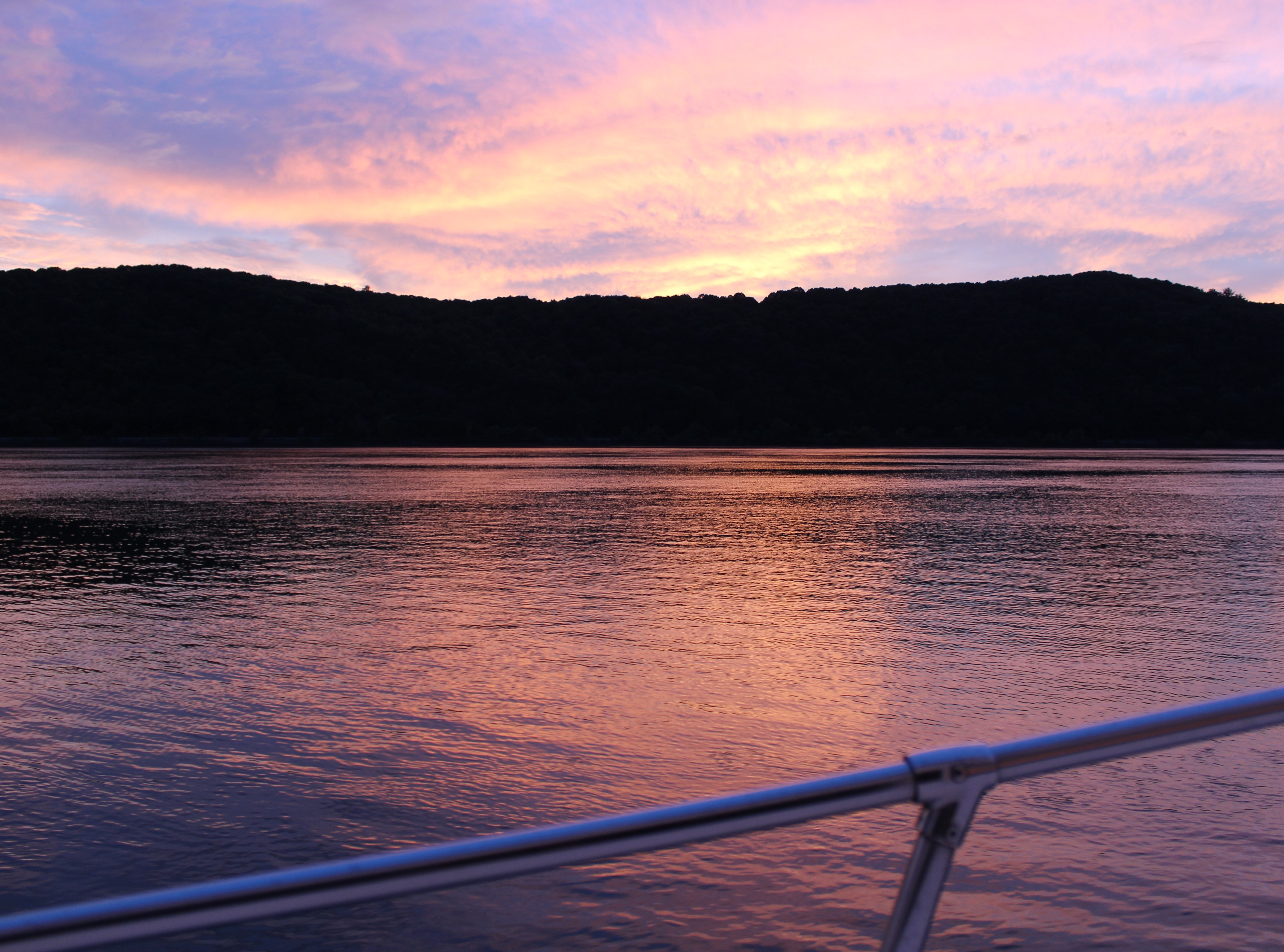
    At the end of the day, the crew dropped anchor off Houghtailing Island.

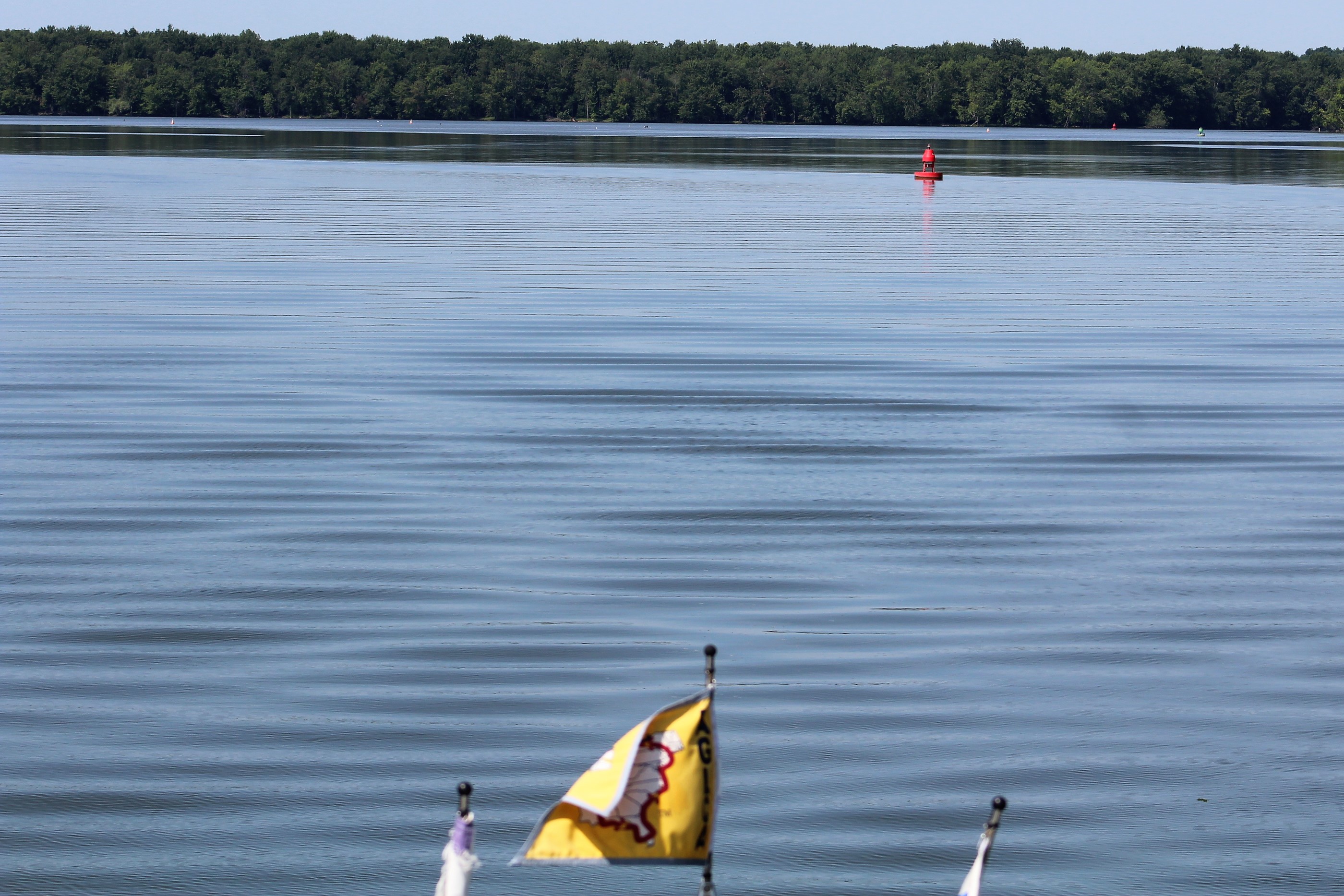
    View from anchorage

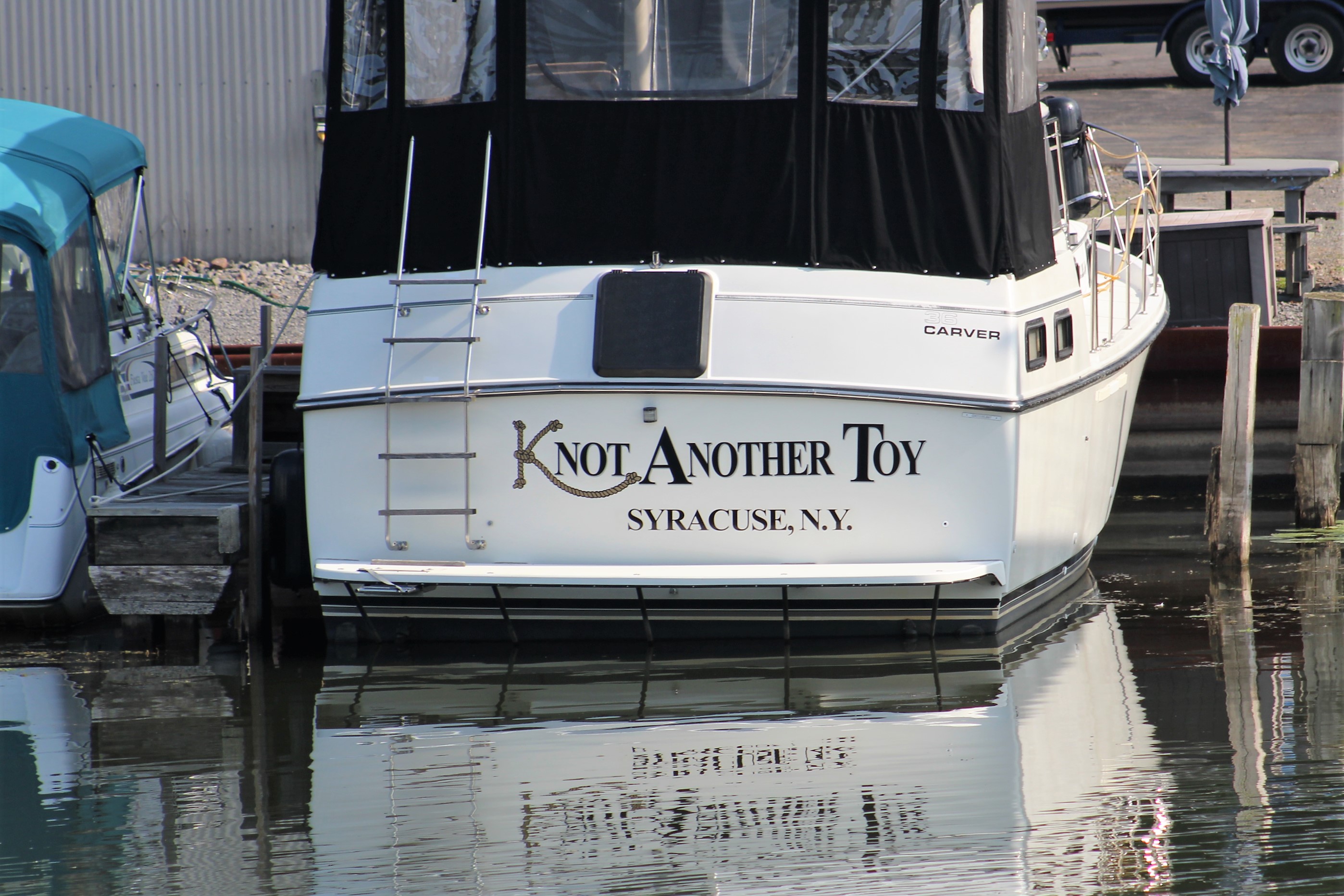
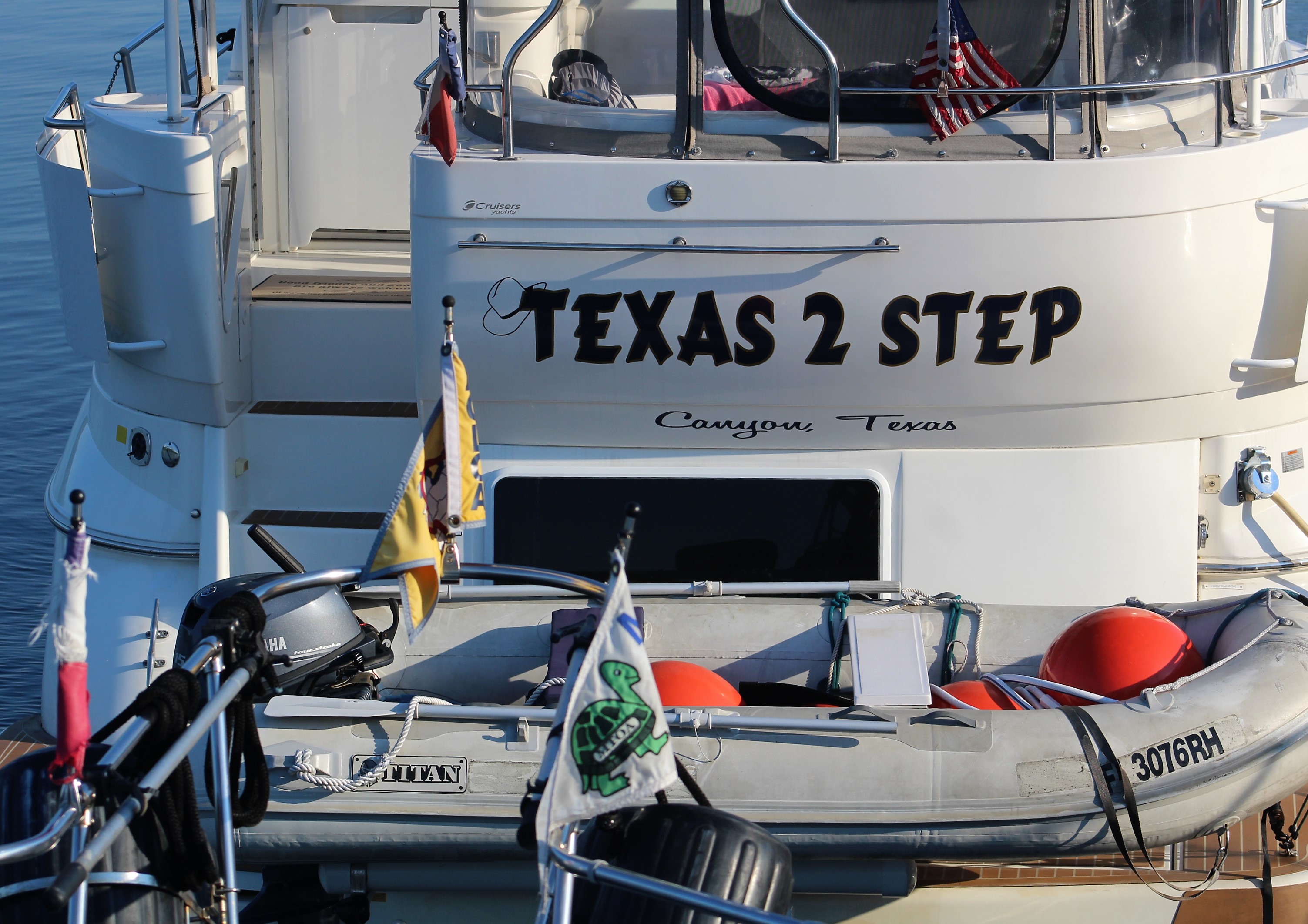
    Boat name of the week

    Miss My Money

    Next Week –

    The crew will transit the Champlain Canal and make way past Fort Ticonderoga to Vergennes on the eastern shore of Lake Champlain.

    Loop On – Where the road ends, the water begins. The water goes on forever, and the adventure never ends.

    Eric the Red

  • Who Do I Pay?

    Who Do I Pay?

    Hello virtual crew members and fellow adventurers!

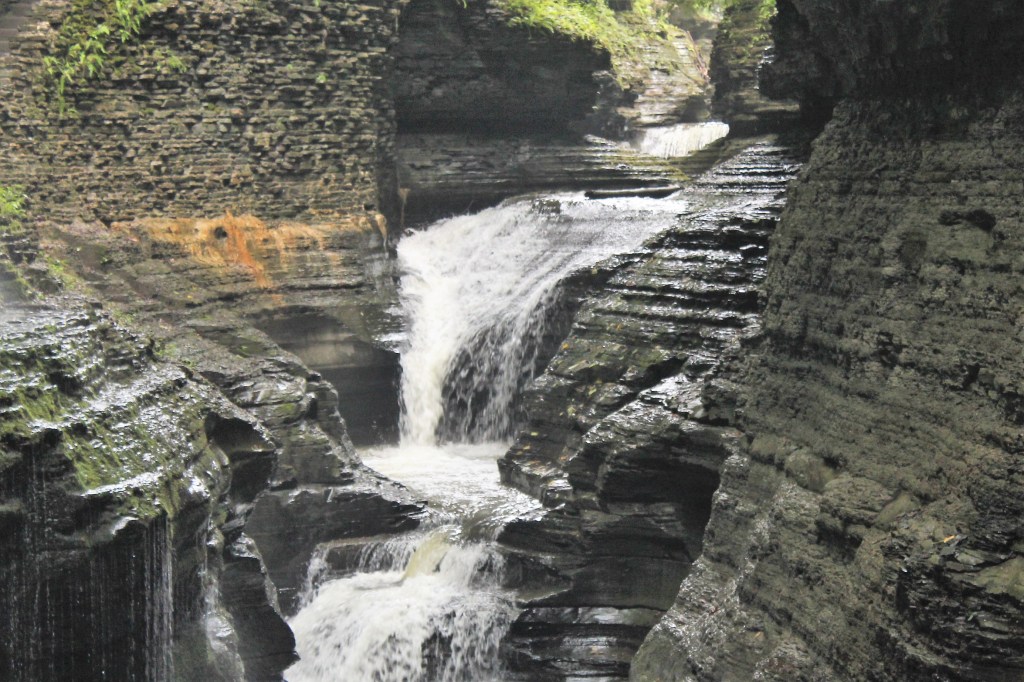
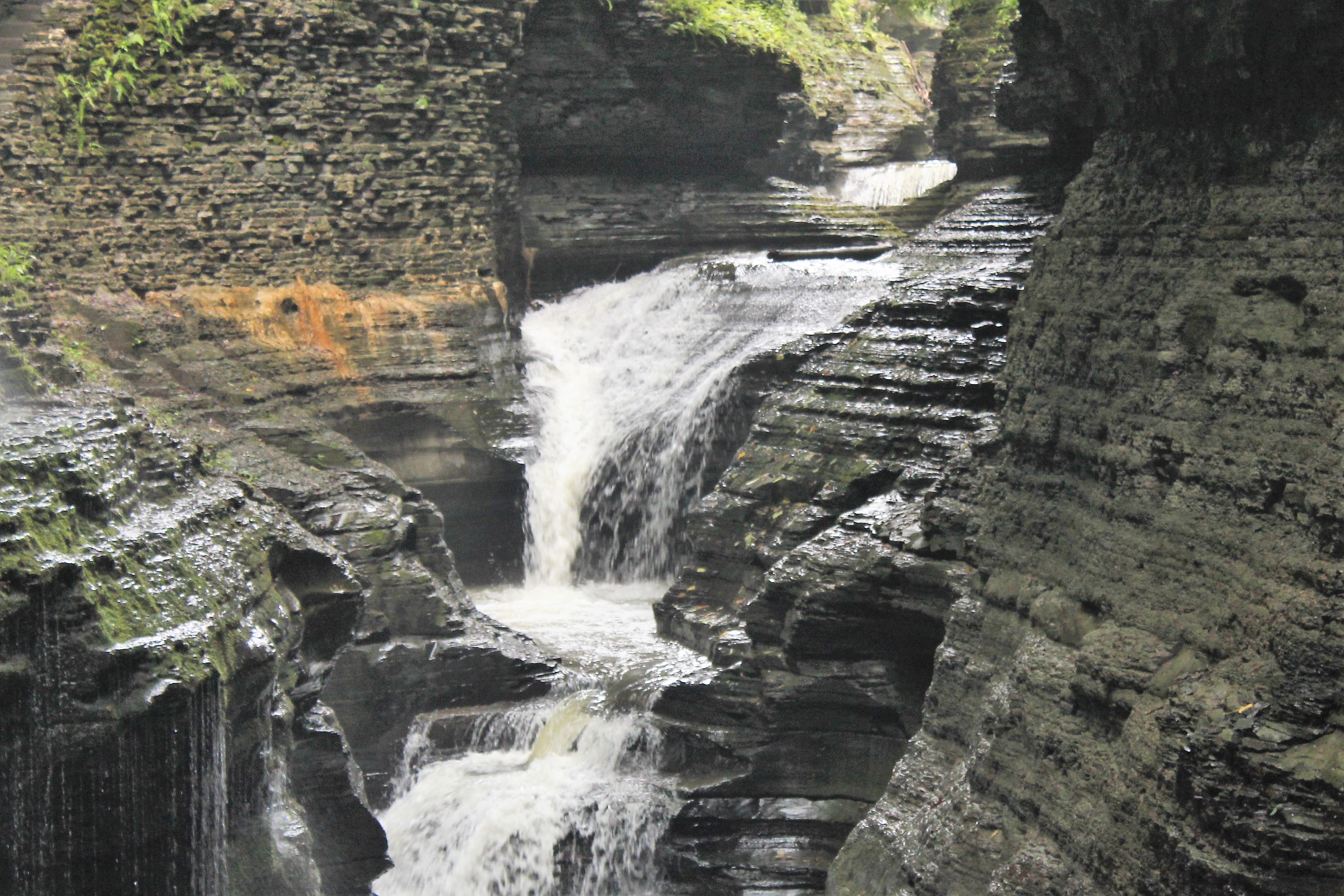
    One of the many waterfalls at Watkins Glen State Park

    51.8b

    Summary of week:

    Spencerport

    The crew moved around most everyday during the last week, though many of the moves were short distances:

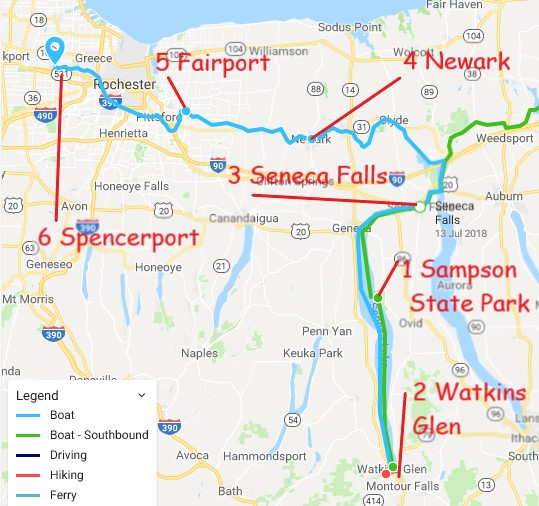
    1. Sunday afternoon, the crew moved down to Sampson State Park on the east shore of Seneca Lake
    2. Monday, the crew made it down to the south end of Seneca Lake, where they visited the Watkins Glen State Park on Tuesday
    3. They returned to Seneca Falls on Wednesday, after a stop at Belhurst Castle for lunch on the western shore
    4. Newark was the stop on Thursday
    5. Followed by Fairport on Friday
    6. And they ended the week in Spencerport on Saturday

    Click here to read the day-to-day travel log. This includes weather report, sea conditions, captain’s log, a summary of the day’s experience, and a few pics of the route.

    The voyage of discovery did answer the following questions this week:

    1. When and where was the first road race in the United States following World War II?
    2. Who built the walkways and archways at the Watkins Glen State Park?
    3. Who designed Belhurst Castle?

    At the Box Office

    This week’s video shows Still Waters II as she works her way up the 19 Watkins Glen waterfalls.   Enjoy!

    To see past videos, click on the link to the Still Waters II Vimeo site.  The library contains videos of Still Waters II cruising America’s Great Loop.

    Sunday, July 15th

    The crew decided to put a few miles on the water after Church.  They headed towards Sampson State Park about a third of the way down Seneca Lake.  After they got docked another transient boat showed up and provided the evenings entertainment.  The couple on the boat were easily in their late 80’s.

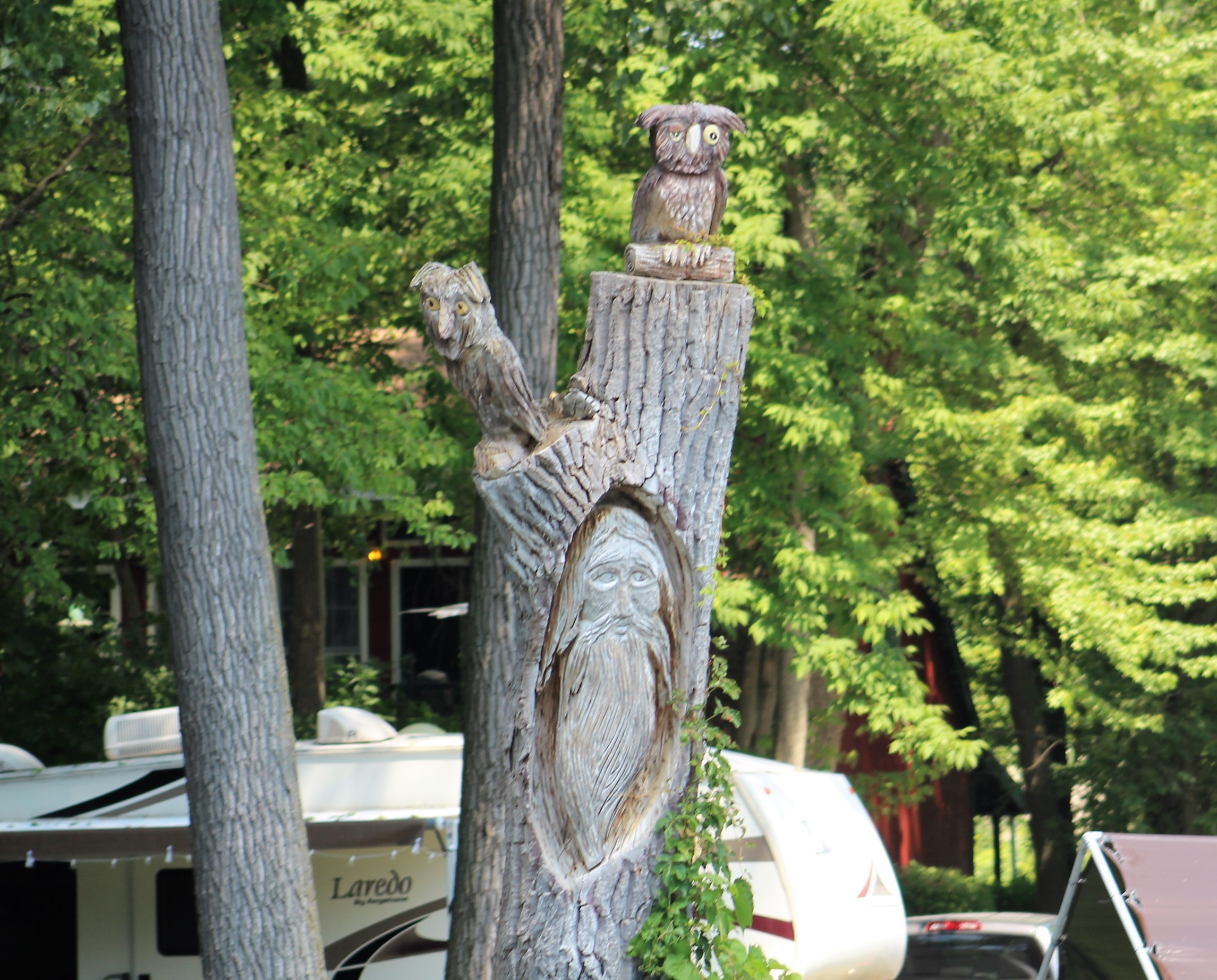
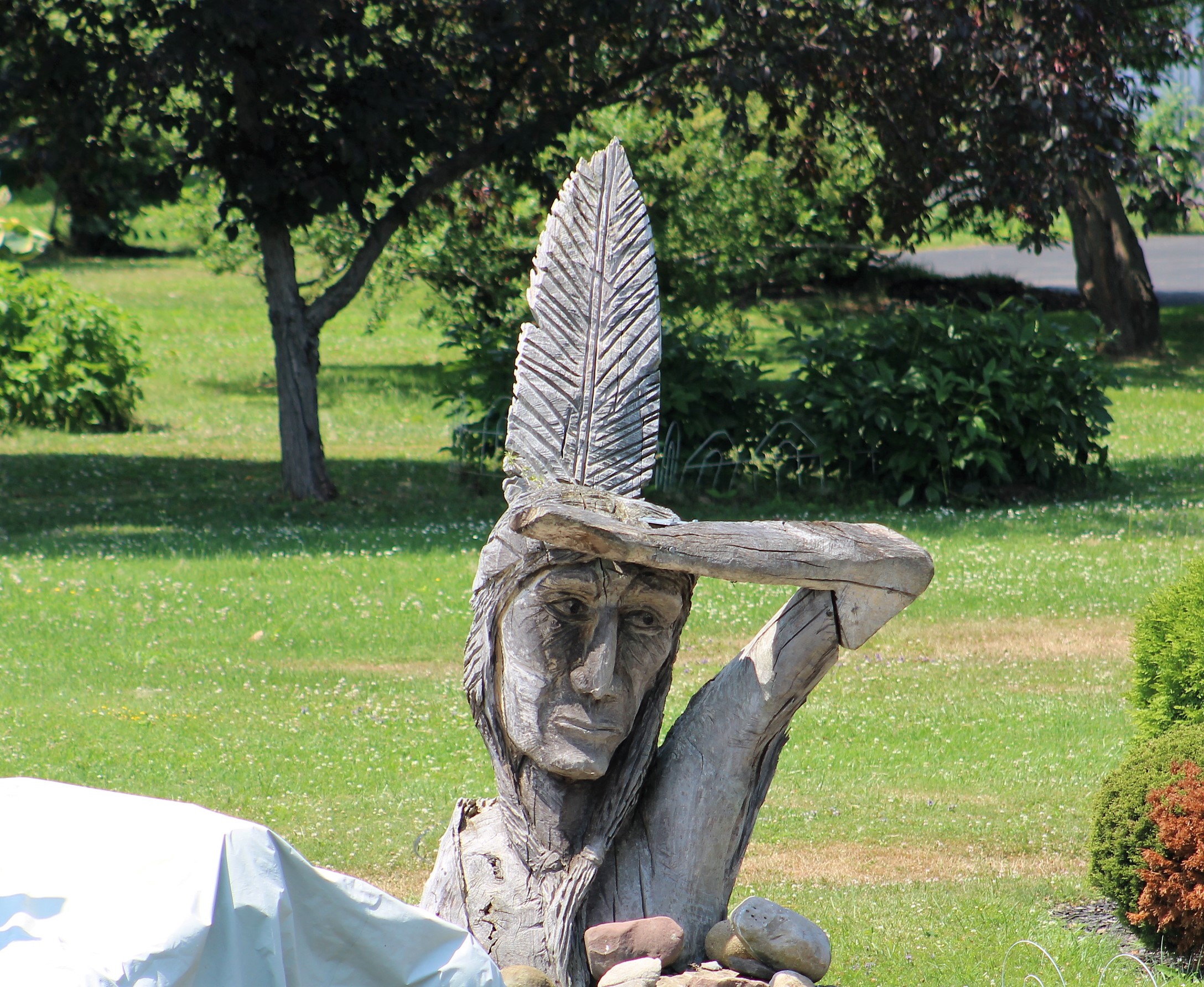
    A few wood carvings along the Cayuga-Seneca Canal

    38

    40

    While trying to dock the boat, the man was pulling into the slip, stern first.  He could not turn around to see, so his wife was standing at the back of the boat providing the following information:

    Wife, “You are about to hit a post, YOU ARE ABOUT TO HIT A POST.  YOU HIT THE POST!!!”

    Husband, “Did I hit something?”  As he pulled forward.

    The skipper got off Still Waters II to see if he could lend a hand.  As the man started backing up again, he headed straight for the post, again.  The skipper was able to shove the 25 foot boat away from the post to prevent another collision.  The skipper then grabbed the handrail of the boat and help guide the boat back.  The skipper was looking for a line to tie the boat up with when he noticed they had no lines or fenders ready to deploy.  The skipper just held the boat for about ten minutes while the couple got some lines to tie down the boat.

    The view looking south down Seneca Lake

    42 Seneca Lake looking south

    Once the boat was all secure, the skipper noticed that the hailing port was Marathon, Florida, down in the Keys.  That got the skipper’s attention so he asked if they had brought the boat up from Florida.  The man responded’ “Sure did!  Put her on a trailer and drove her up here at 70 miles per hour.”

    The man grew up in Nova Scotia during the depression.  He said that he moved to the states when their potatoe crop came in but they were unable to get them to market.  Because of the Depression, there was no infrastructure to move the potatoes to the starving people in the cities.  He mentioned that his father moved the potatoes into the barn and they just walked away.  He said that was why they called it the Depression, because it was depressing.

    There are several more stories to tell that would make you laugh, but I will stop here.  The skipper and Admiral are just impressed that the couple are still going strong, good for them.

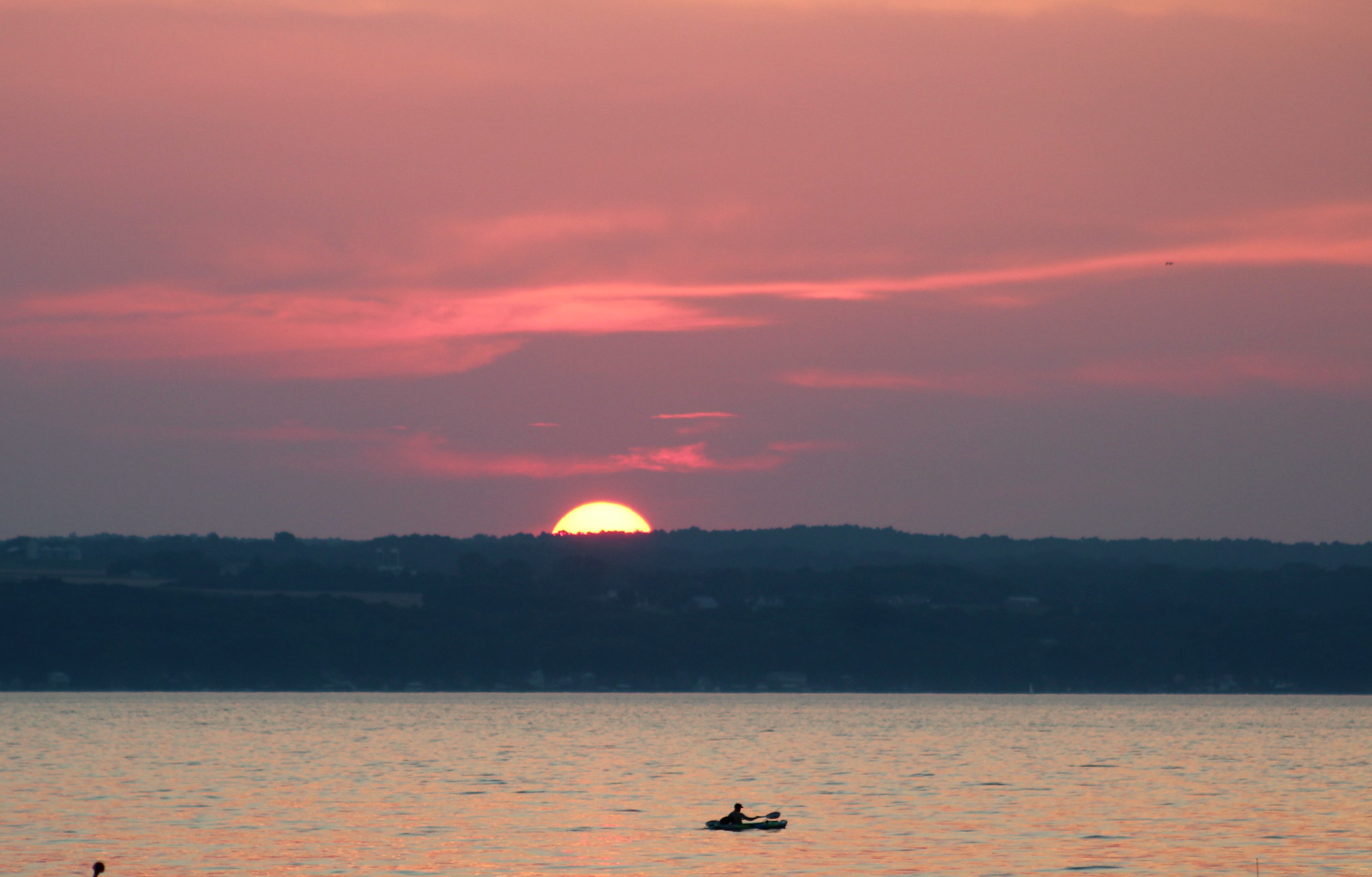
    Sunset from Sampson State Park, looking west across the lake

    43.2

    Monday, July 16th

    The crew set off this morning for the southern reach of Seneca Lake, and the village of Watkins Glen.  The dock master had asked that they arrive before noon so he could meet them and not be late to his doctors appointment.  The crew obliged and arrived about 1120.

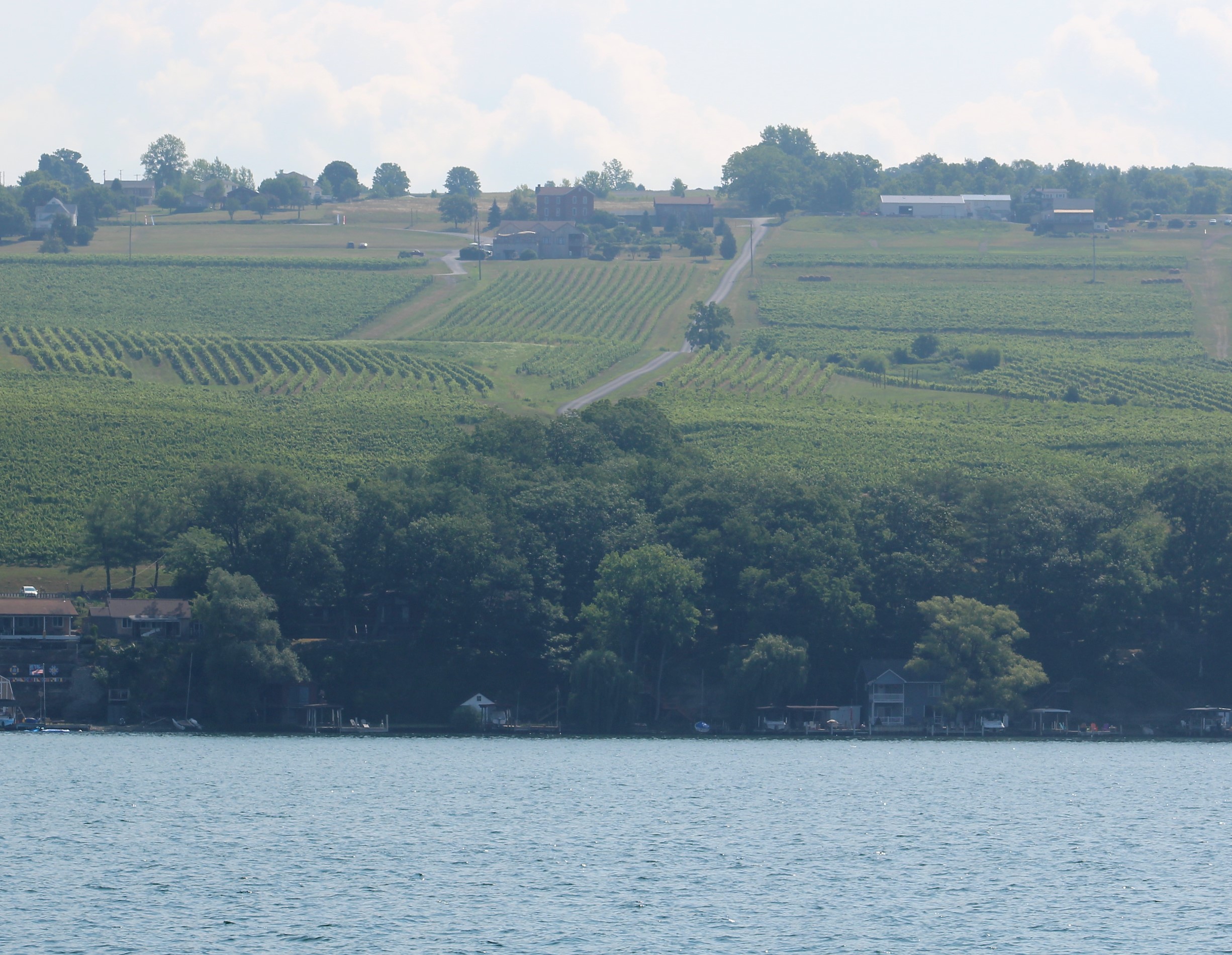
    Bloomer Creek Vineyard on the east shore of Seneca Lake

    45 Bloomer Creek Vineyard- East Shore

    After getting secured in the marina, the crew walked around the Village.

    47.1

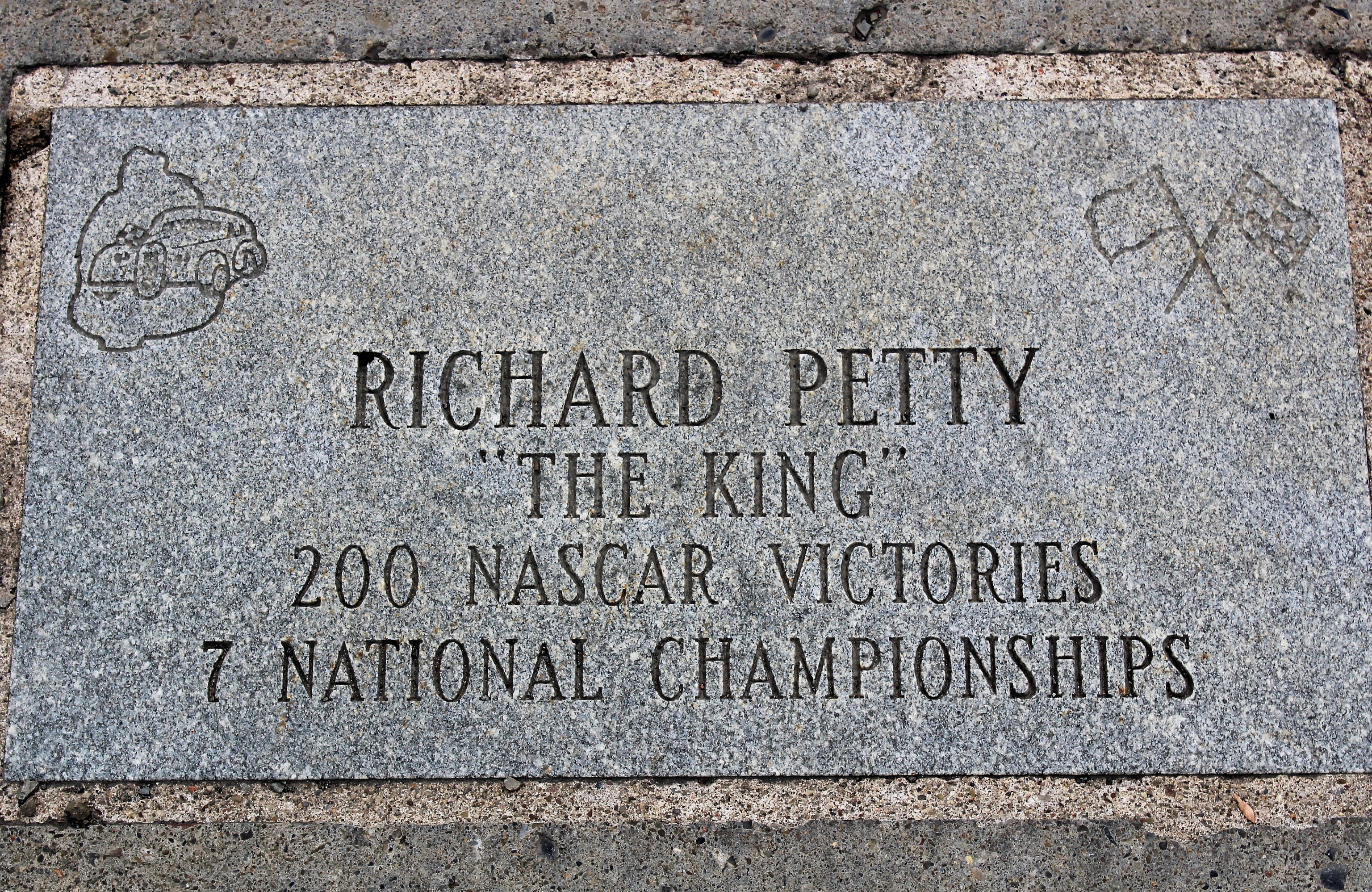
    One of the first things they noticed were the motor speedway plaques in the sidewalk.  The town has a Drivers Walk of Fame that was started back in 1993 to honor drivers who have competed at Watkins Glen.

    49.2

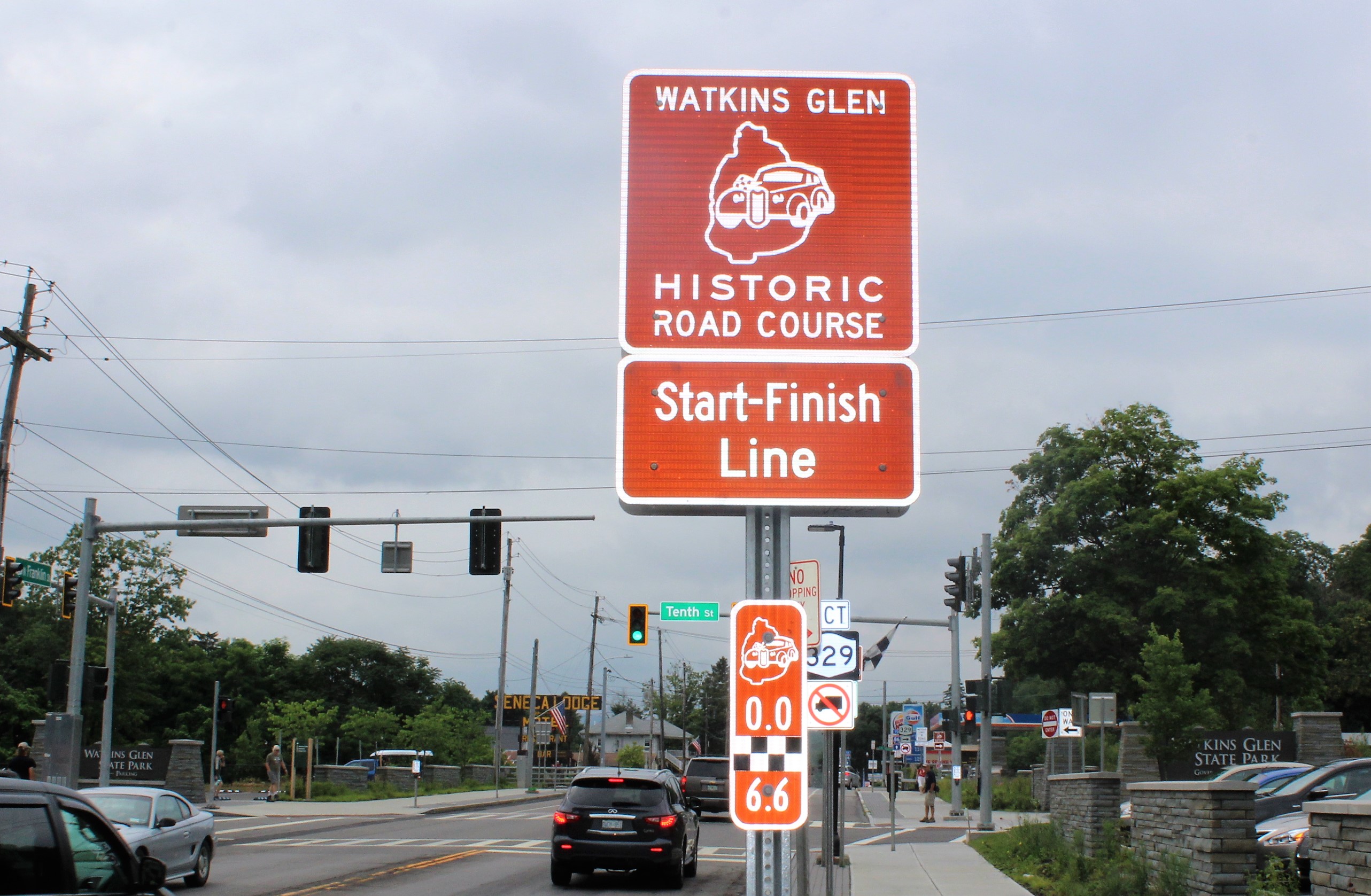
    Racing seems to be a big thing in town.  In fact, racing has been a big deal in town for a long time.  The first post-WWII road race in the United States took place here on October 2, 1948.  The 6.6 mile circuit ran through the existing roads in town with spectators watching from the sidewalks.  At the town Visitor Center, you can pick up a road map of the original course and drive the original circuit for yourself.

    Start Finish Line of the Watkins Glen road race

    49 Race Way

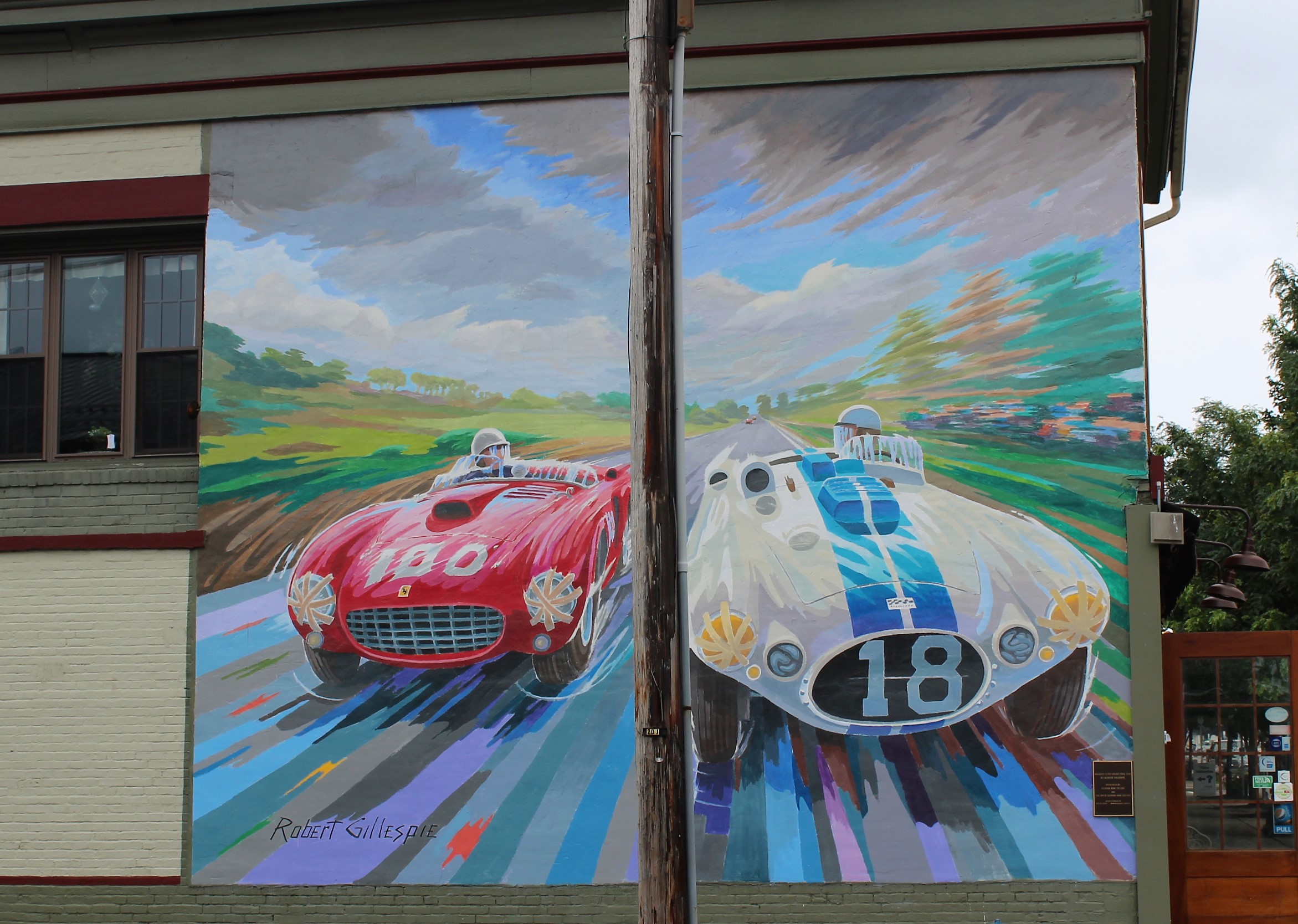
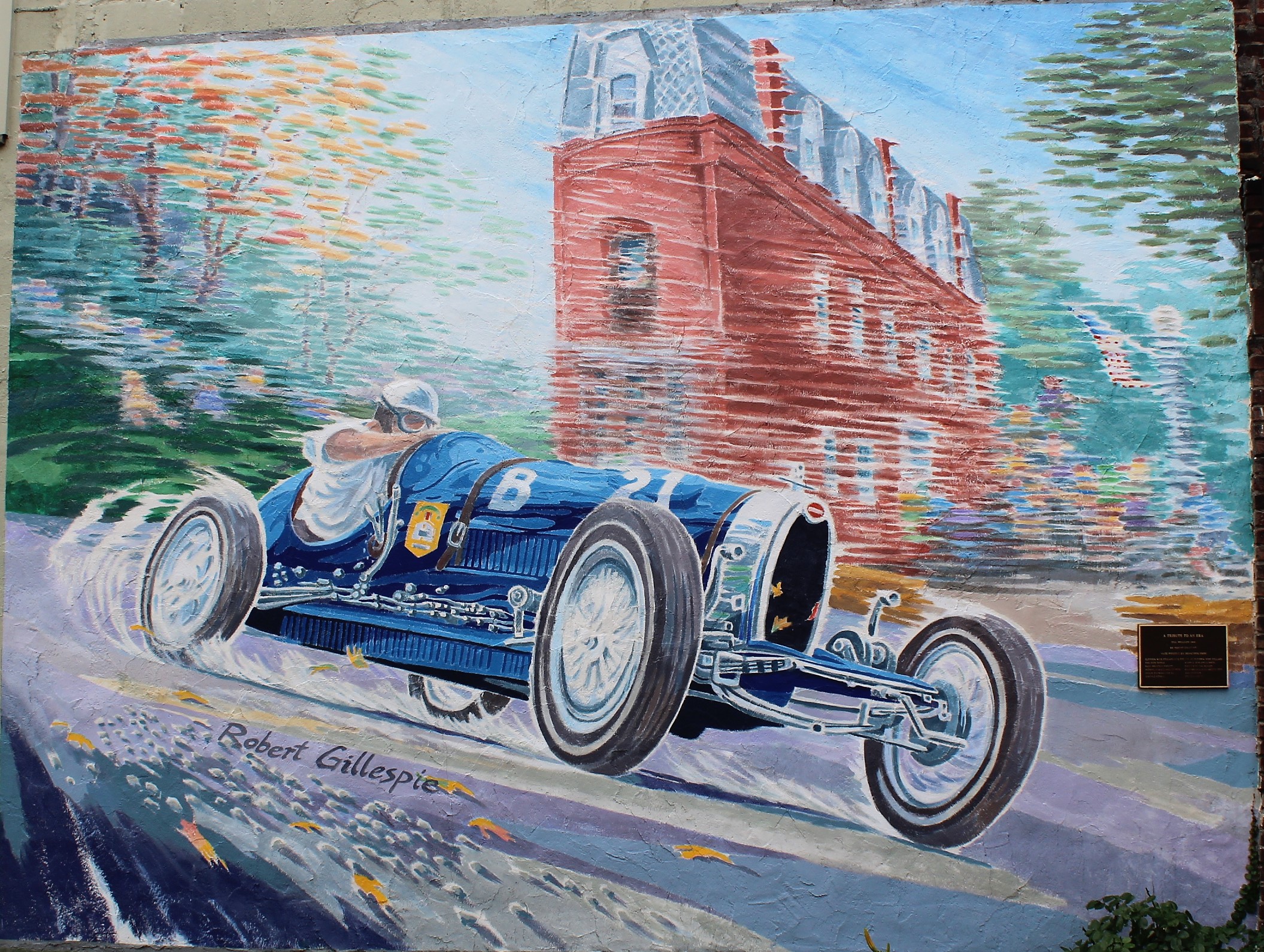
    A few murals in town about racing

    48 Race Mural

    48.1

    Another big attraction in town is the Watkins Glen State Park.  The park contains the Gorge Trail that runs along Glen Creek for 1.5 miles and 19 waterfalls.  The crew walked to the park entrance and looked around the Visitor Center and Gift Shop.  They plan to do the Gorge Trail in the morning when it will be cooler and less crowded.

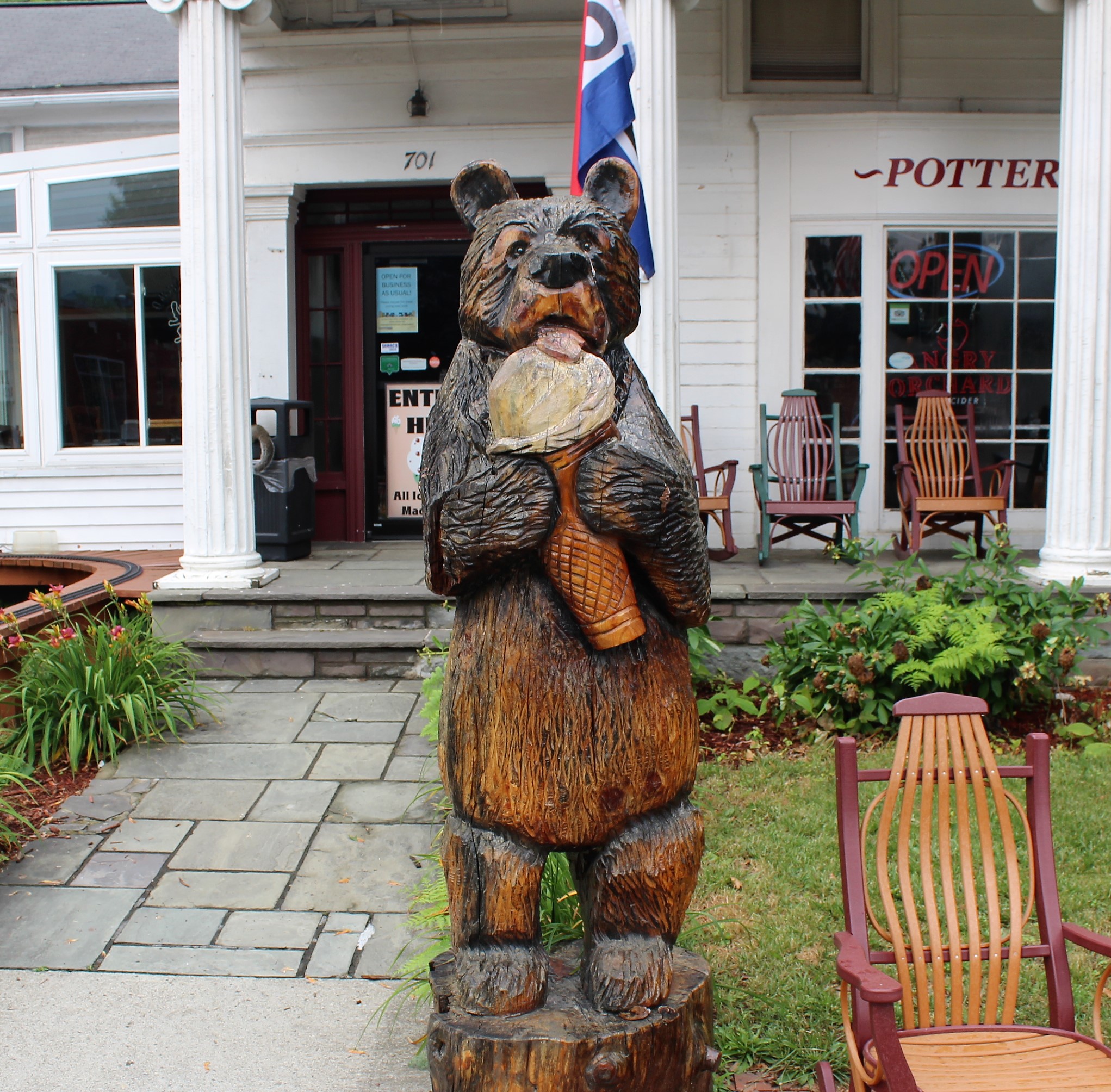
    The crew found this Bear eating ice cream so they went inside to give it a try.

    50 Bear

    Tuesday, July 17th

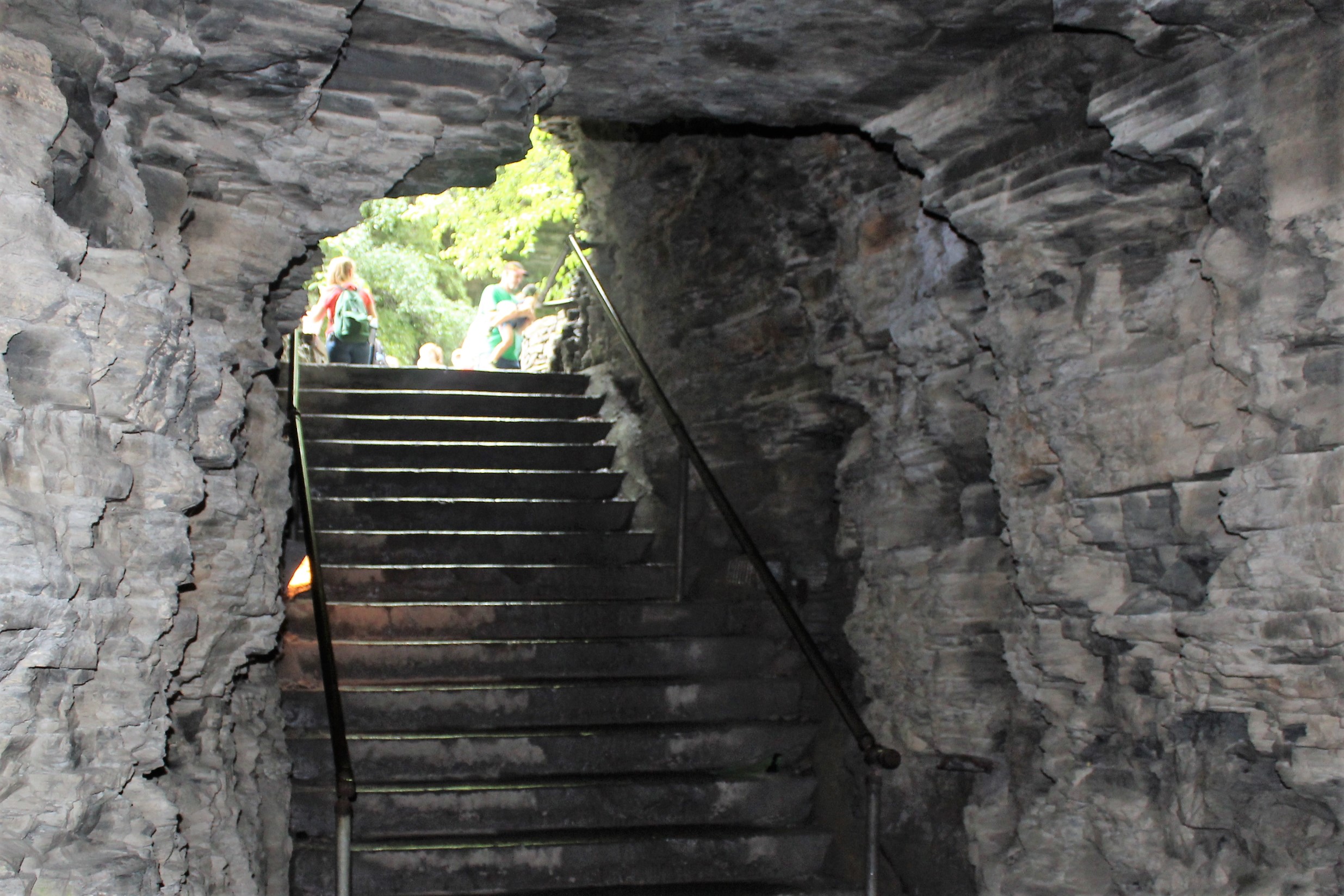
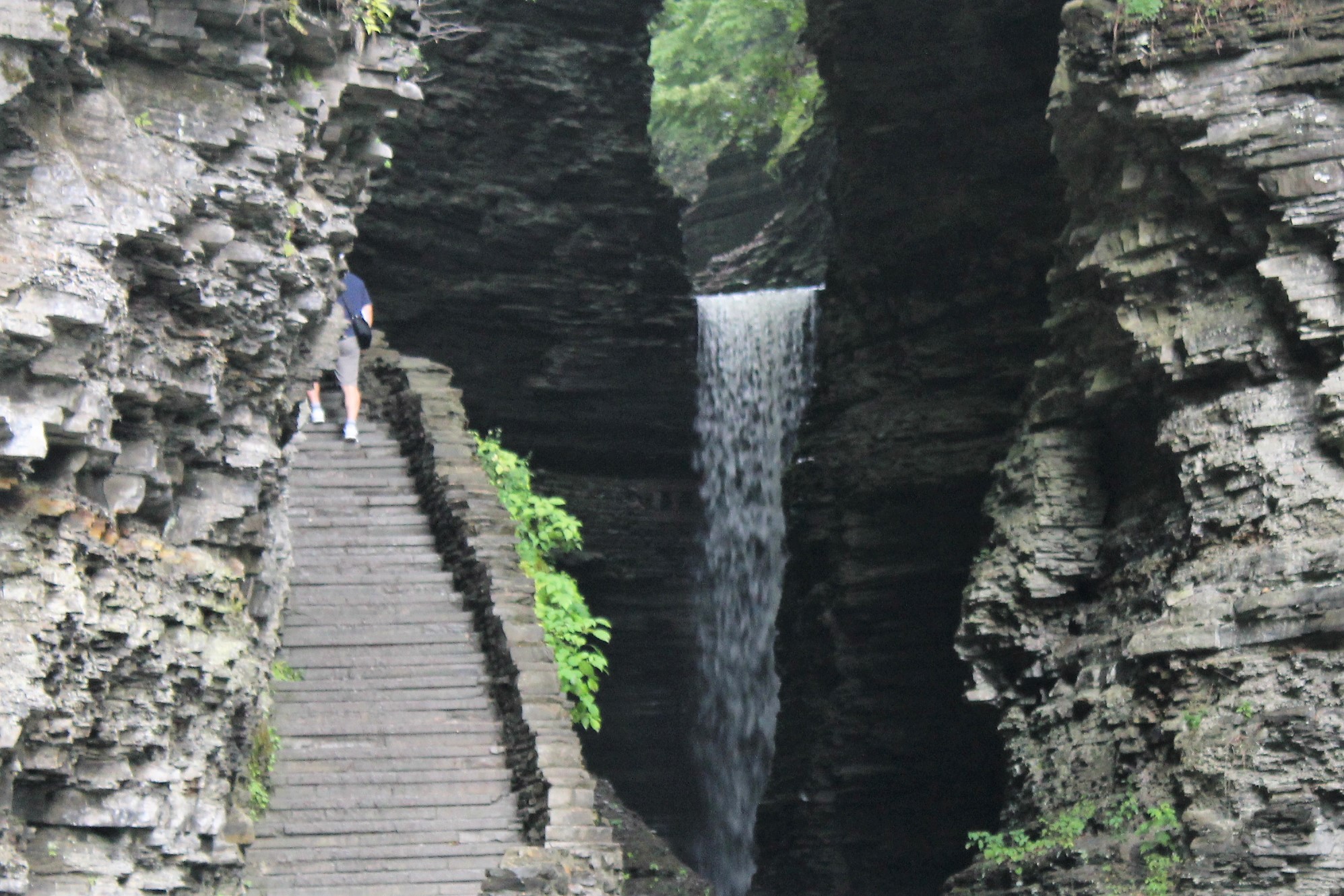
    Well, it poured for most of the night, so the waterfalls should be running well today as the crew hikes the Gorge Trail.  This weeks video highlights the waterfalls, so here are just a few pics to encourage viewing of the video.

    51.3b

    51.6a

    51.8c

    The walkways, steps, trail, and archways in the above pics were all originally built by the Civilian Conservation Corps (CCC), which was a public work relief program for unemployed , unmarried men during the depression.  Like the falls, they have stood the test of time.

    There was a heavy rainfall back in 1935 that caused some serious flooding of the Gorge.   The water level rose nearly 80 feet through the canyon.  The locals claim that the water rose within five feet of the arched bridge in the below pic.

    51.3a

    After returning to the main entrance, the Admiral went in the Gift Shop to look around.  The skipper found a place in the shade to relax.  While waiting on the Admiral, he witnessed a real live ‘Who’s On First” episode.  But this time the confusion centered around the word ‘Park.’

    To set the stage for this conversation, one must understand that there is an $8 parking lot fee to park your car in the State Park parking lot.  Entrance to the State Park and hiking the 1.5 mile Gorge Trail is free.

    So, while the skipper was waiting on the Admiral, a man walked up to a volunteer and asked; ‘Where do I pay to get in the Park. The volunteer answered, “It is free to get in the Park.”  The man said, “No, I paid $8 to get in the Park yesterday at the other entrance.”

    The volunteer countered, “No you paid the attendant $8 to Park, but there is no entrance fee for the Park.  The Park is free.”

    Man, “No I paid $8 to get in the Park, where do I pay to get in the Park here?”

    Volunteer, “The Park is free.  But here, there is no attendant at the parking lot, so you put your money in that machine right over there (pointing at machine), you will get a Parking sticker, and you put it on the dash of your car.  Then you walk up there (pointing at the walkway up to the Gorge Trail) and go take the hike,….. it    is    free.”

    Man, “No I paid $8 to get in the Park yesterday.  Where do I pay today?”

    Believe it or not, this circular conversation went on for nearly 15 minutes.  Finally, the skipper could not take it any longer and asked the volunteer if he might assist him in providing the man an answer to his questions.  The exasperated volunteer said sure.

    The skipper looked at the man and said, “For the rest of this conversation, you are not allowed to use the word ‘Park’.  As this volunteer has been trying to explain to you, yesterday when you entered the area, you came to an attendant guarding the lot where people leave their cars.  You payed the lot attendant $8 to get a pass to leave your car in the lot.  You placed the $8 pass you bought on the dash of your car.  After you got out of your car, you walked around and did not pay anybody to see the sights, because it was free to look around. Today, you need to go to that machine over there and pay $8 to buy another pass to leave your car in the lot.  Then you can walk around here all day long and not pay anybody because walking the Gorge Trail is free.”

    About the time the skipper finished, a lady walked up and said, “Honey, I found a place to park the car for free, and I learned that the Park is free also.  Isn’t this place great!”  She grabbed his arm as she was walking by and headed up towards the waterfalls.

    I am not sure if the man ever got it, but the volunteer did thank the skipper for the intervention.

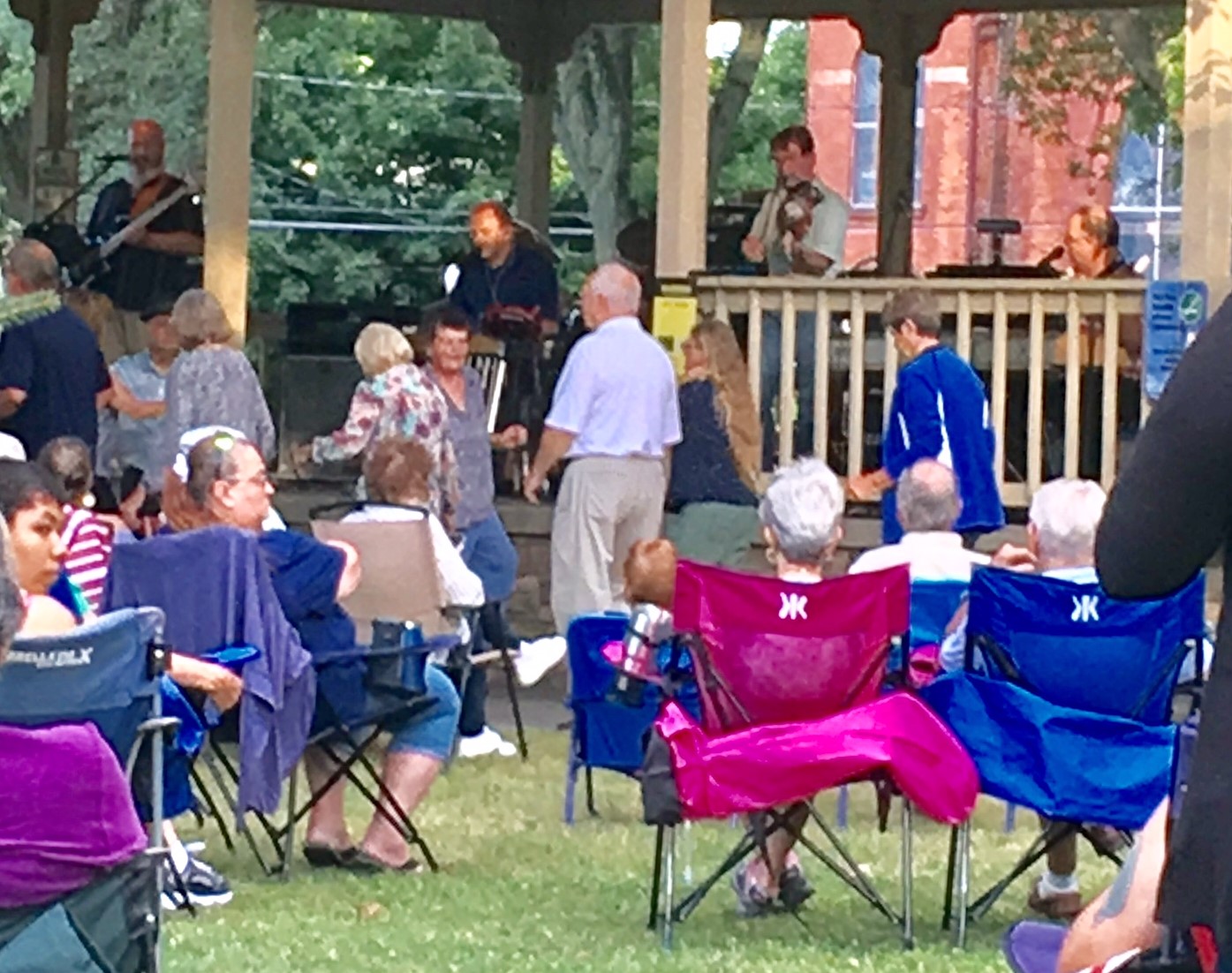
    After returning to the boat, the crew learned that there would be a free concert in the Park about three blocks away from the marina, starting at 1900.  The crew grabbed some chairs and enjoyed the music.  The band played a wide range of music: Texas Swing, Charlie Daniels, Merle Haggard, Beatles, Eagles, and some lesser knowns.

    Concert in the Park

    51.16 (2)


    Wednesday, July 18th

    When the crew first visited the Watkins Glen Visitor Center, they were told that the area is known for four things:

    1. Seneca Lake
    2. Original Road Racing Trail
    3. Waterfall Trail
    4. Wineries/wine trail

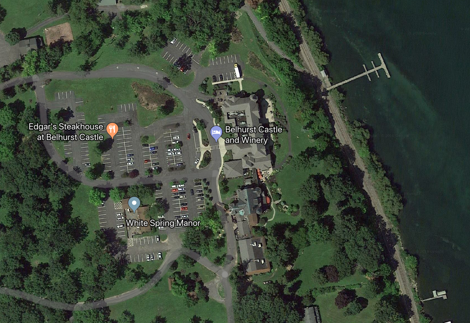
    The crew had experienced three out of four, so the skipper thought he would look for a winery that had a boat dock large enough for them to land and explore the winery.  After using Google Maps to search the lake shore line, he noticed that the only opportunity might be the Belhurst Castle.  The website for the winery did not mention the boat dock, but the skipper found a phone number and called.  The person on the other end of the phone did not know the depth of the water at the dock, so she put the skipper on ‘ignore’ to see if she could find the answer about the depth of water at the dock.  When she returned, she still did not have an answer to the depth question, but she did say people land on the dock all the time.

    Overhead view of Belhurst Castle grounds and the boat dock

    IMG_0671 (2)

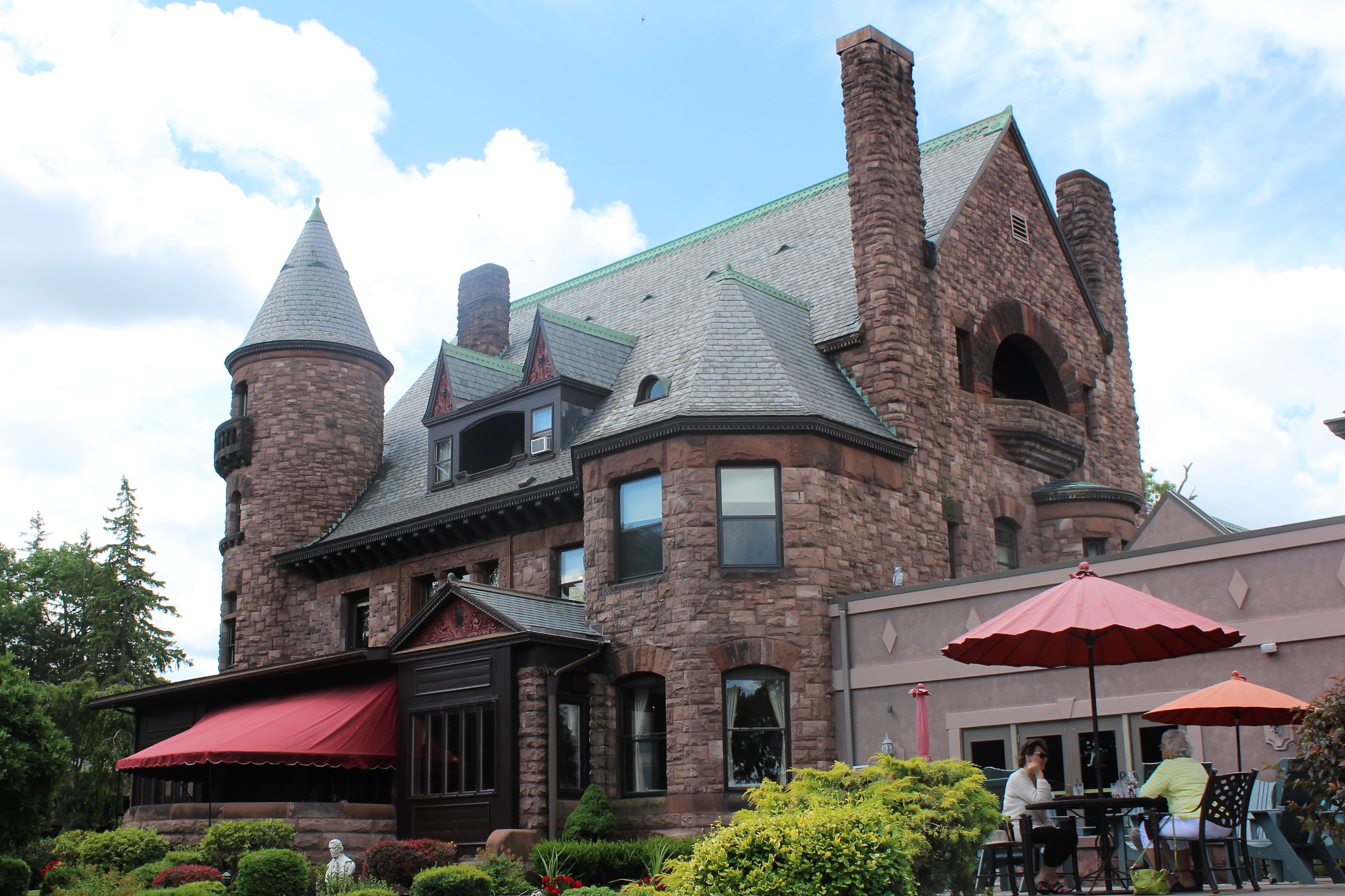
    With that scant bit of info, the crew decided to give it a try, so they shoved off from Watkins Glen and headed towards Geneva to visit Belhurst Castle.  While the skipper was researching the Castle, he learned that the architect was Albert Fuller (1854-1934).  Turns out Albert designed many of the landmark buildings in Albany.  The castle is built in the ‘Richardsonian Romanesque’ style from the 11th century.

    52 Belhurst Castle

    Another interesting story the skipper unearthed was about a man named Henry Hall.  Henry arrived in the area in the 1830’s in a cloud of mystery.  He bought the property that Belhurst sits on today, but put the property in a Deed of Trust to an Isabella Robinson.

    He built a home on the property that the locals nicknamed Hermitage.  As you might gather, Henry was a bit of a recluse.  Upon his death the truth finally came out. Henry was actually William Henry Bucke.  In the early 1830’s, William was the treasurer for a London Opera House.  He emptied the coffers of the theater and started a new life in America.  Isabella was an Opera singer, who could have guessed?

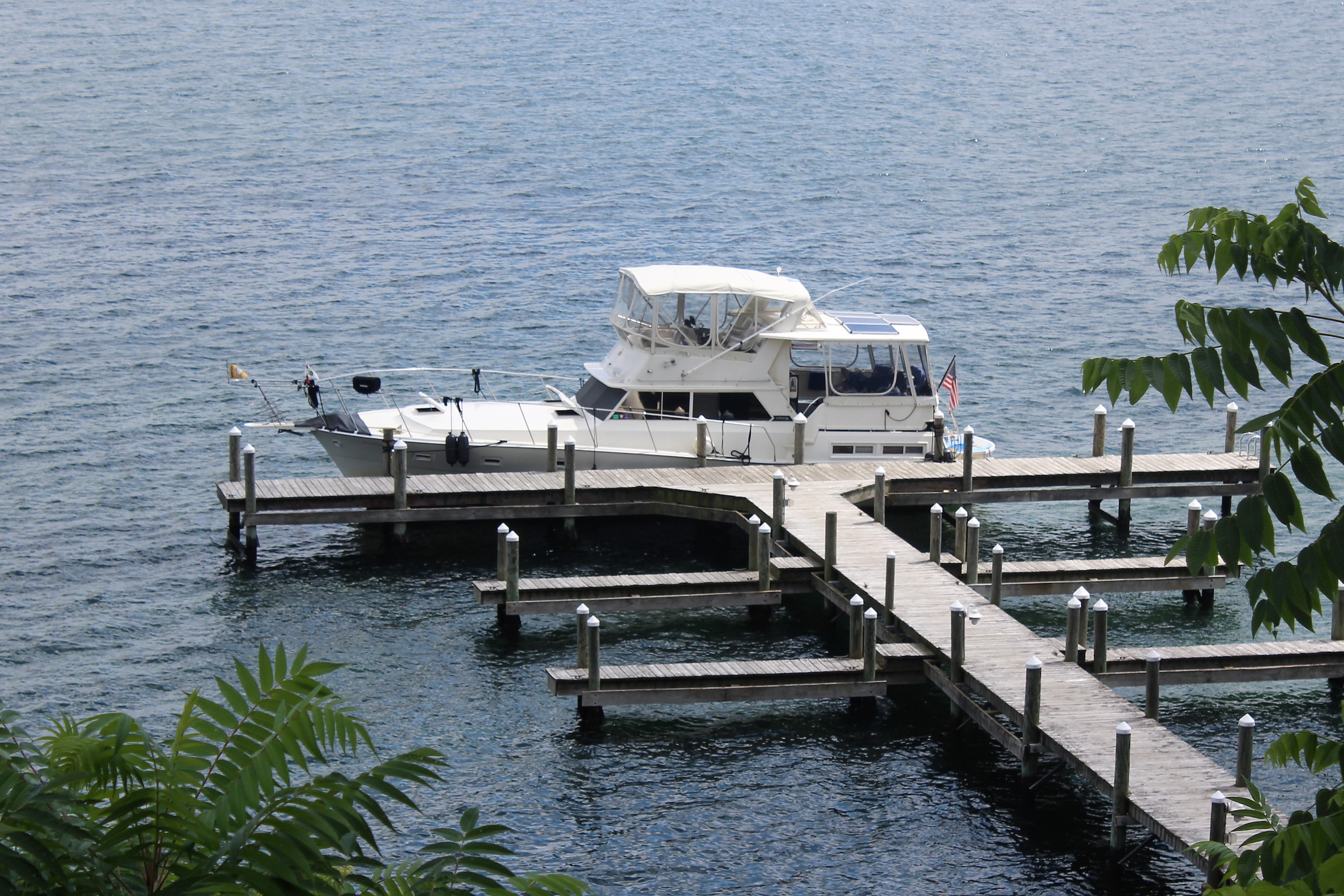
    But back to our crew.  They arrived at the boat dock and made an approach to check the depth.  Of course the charts did not show the depth at the dock.  When they got within 10 yards of the dock the depth alarm went off (3 feet under props).  The water was clear and you could see the bottom.  It looked like mud, so the skipper inched the boat forward so the Admiral could get a line around a post.  (Depth now showing only 1 foot below the prop.)  The skipper made a high risk decision to go ahead and swing the stern of the boat around and land on the dock.  The depth hung in at 1 foot below the props as they landed safely.  They did kick up a large bit of mud in the water though.

    Still Waters II at Belhurst Castle dock

    52.2

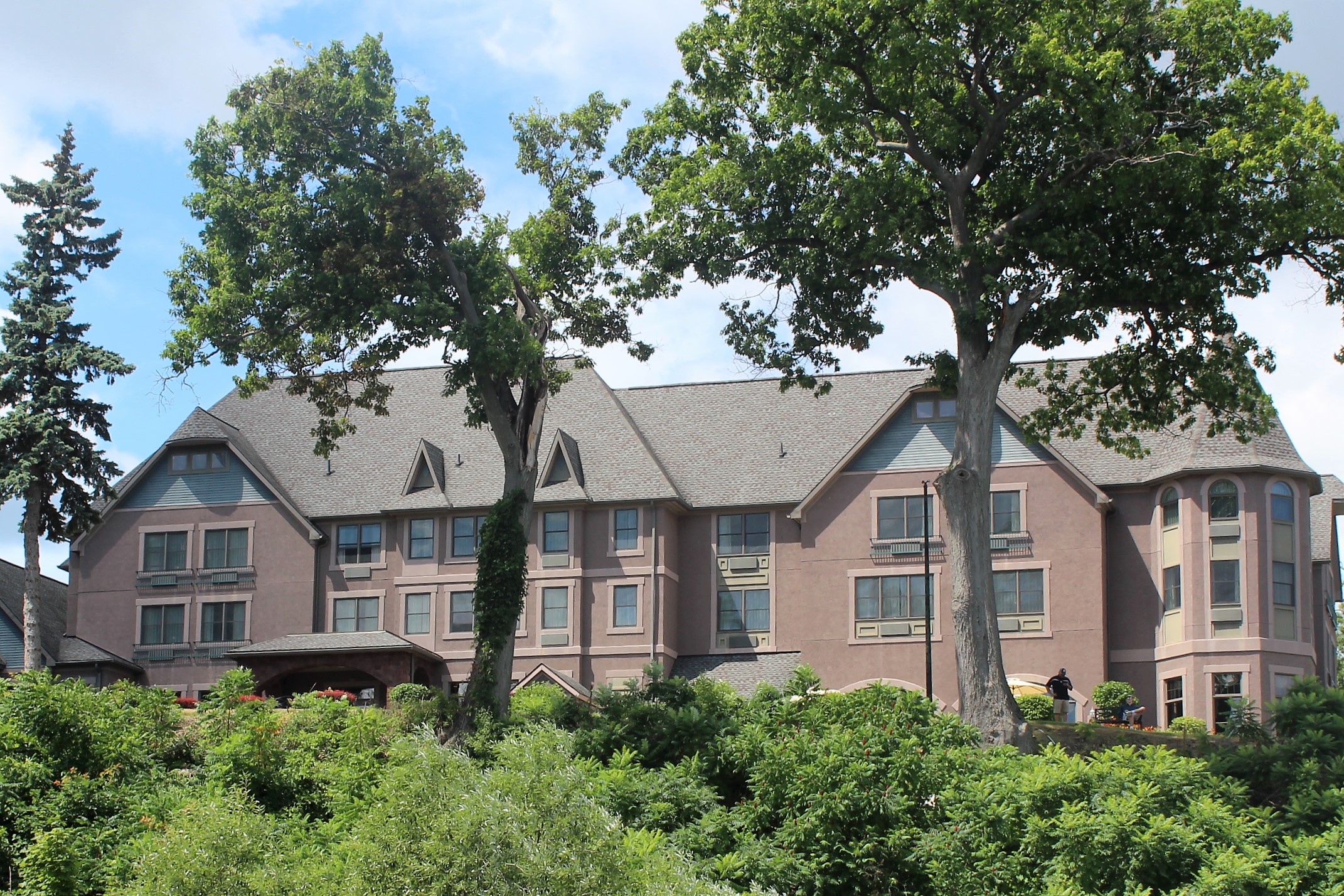
    The crew headed up to Belhurst Castle to enjoy lunch and some wine tasting.

    Modern day addition to the Castle

    52.3

    After lunch, the crew made way back to Seneca Falls for the night.  While on the wall, the crew was surprised by a knock on the boat.  Mike and Jen arrived and the four spent the evening swapping stories.  Mike and Jen will cross their wake when they return to Milwaukee, after departing in the fall of 2016.

    Thursday, July 19th

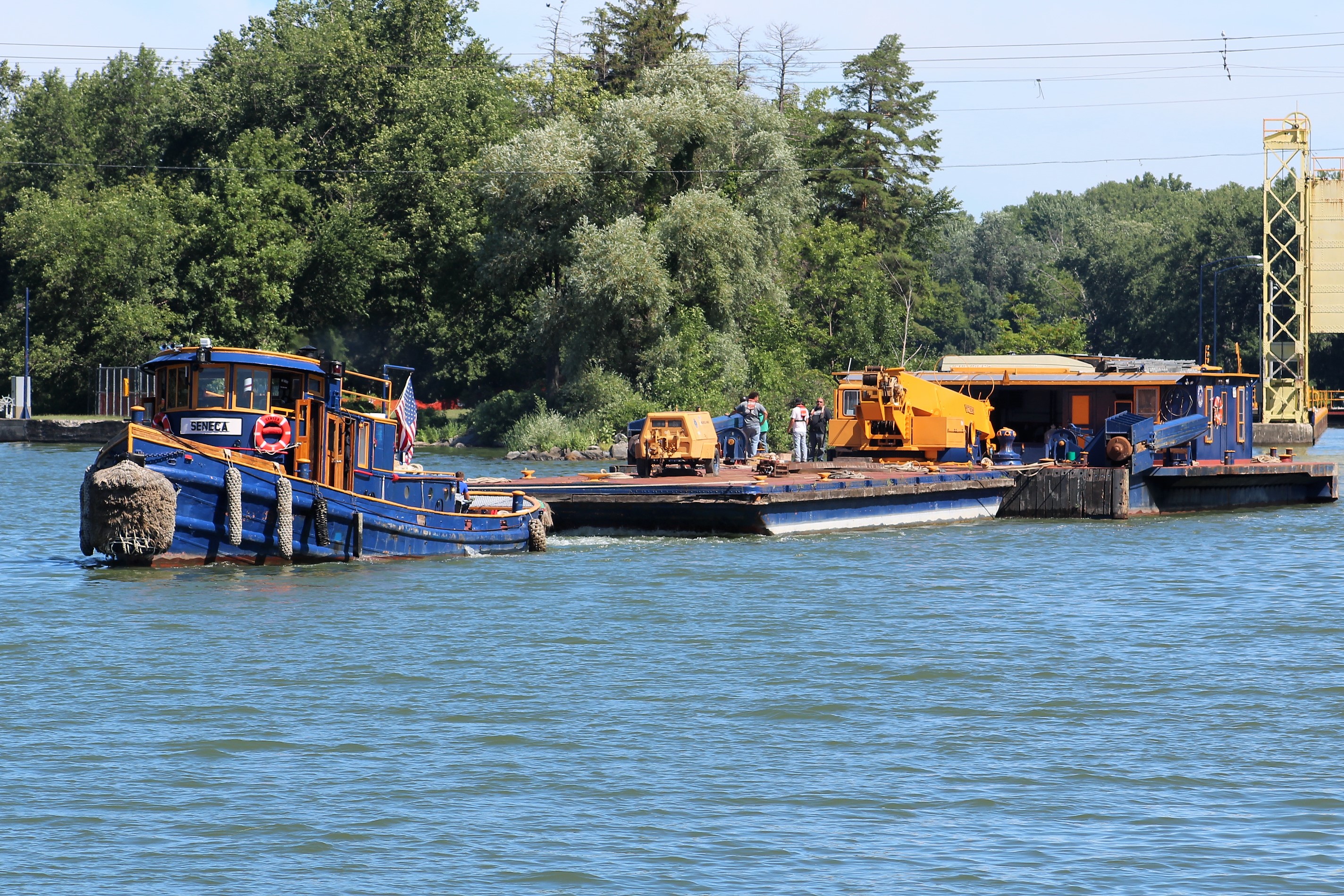
    This was not a very long route day, but turned into a long day due to passing through eight locks.  They had an unusual long wait (40 minutes) at the Cayuga-Seneca Lock 1 due to the Canal workers moving a couple of barges.

    The train of equipment leaving C-S Lock 1

    53.1

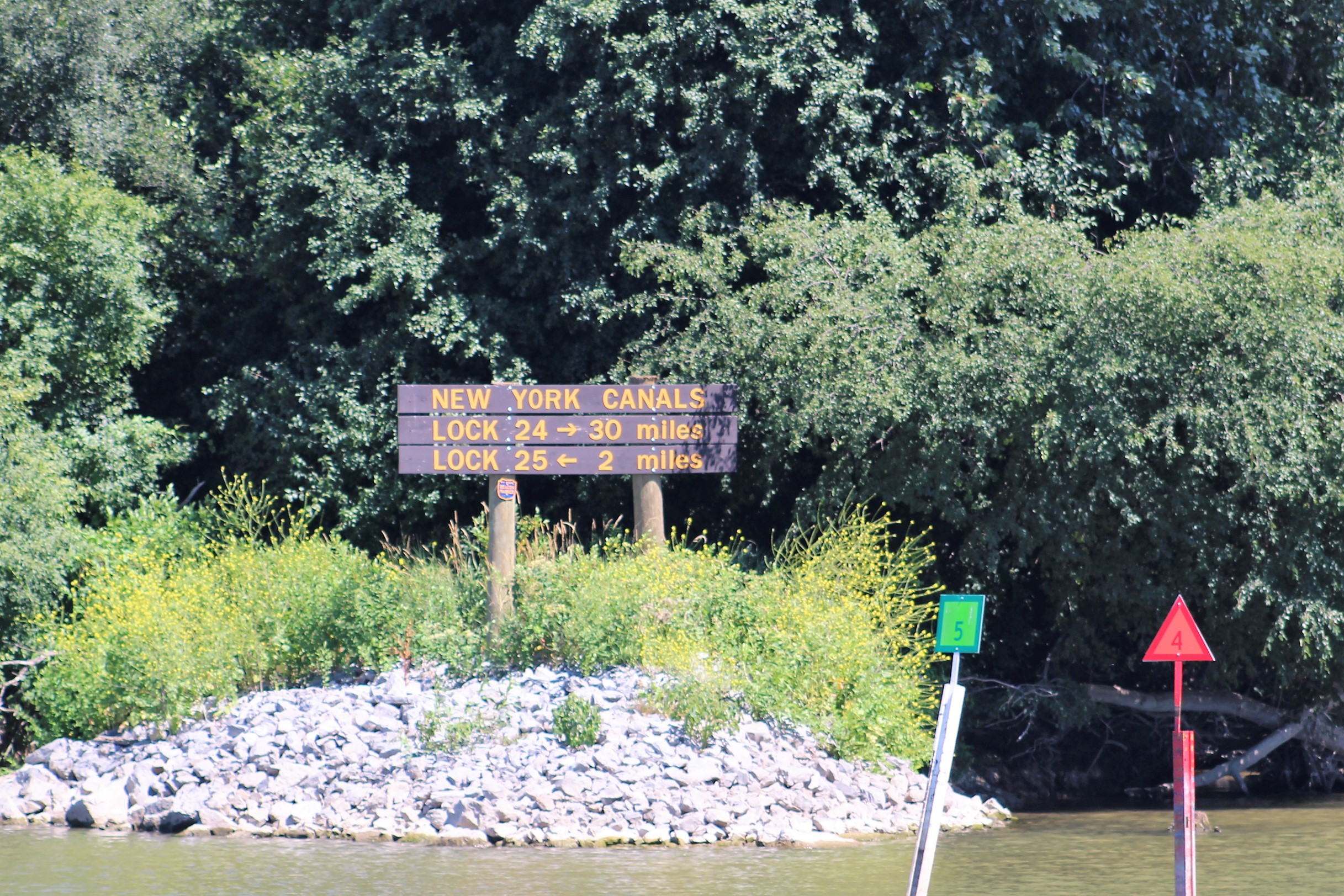
    After passing through C-S Lock 1 the crew quickly arrived at the Canal Junction with the Erie Canal.  The crew turned to port and headed towards Buffalo.

    Canal Junction, back on the western Erie Canal, mile 201

    54 Canal Junction

    The locks are no longer the challenge on the western Erie Canal.  The new challenge is ensuring that the boat can safely pass under the multiple low bridges.  Todays stretch consisted of five bridges that were 16 feet or less.

    Approaching a high 17 foot bridge

    63 Low Bridge

    But today was only practice for tomorrow.  The crew will pass under the lowest bridge on the Erie Canal sometime tomorrow.  Hope they make it, because if not, they will be turning around and doing the Great U-Turn rather than the Great Loop.

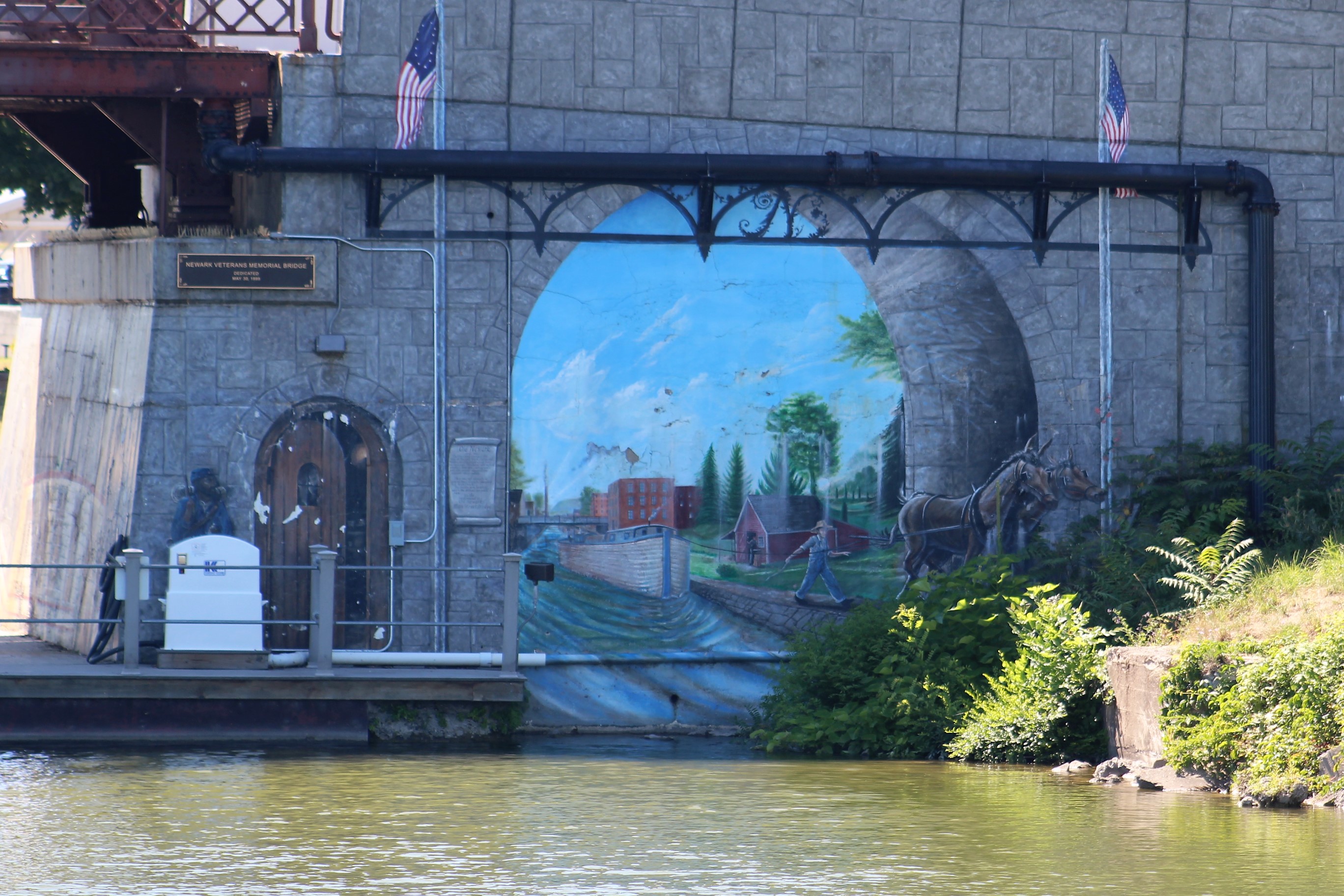
    After seven hours of cruising, the crew pulled onto the wall at Newark.  The area is known for its many murals painted on bridges and buildings.

    Newark mural on bridge as you approach town

    65 Mural in Newark

    Friday, July 20th

    Today would be another day of five low bridges under 16 feet.  The skipper kept thinking of the old adage, $1K for every knot of speed to repair the boat if you hit something.  The last thing the skipper wants to do is tear the canvas enclosure off the flybridge on one of these low bridges.

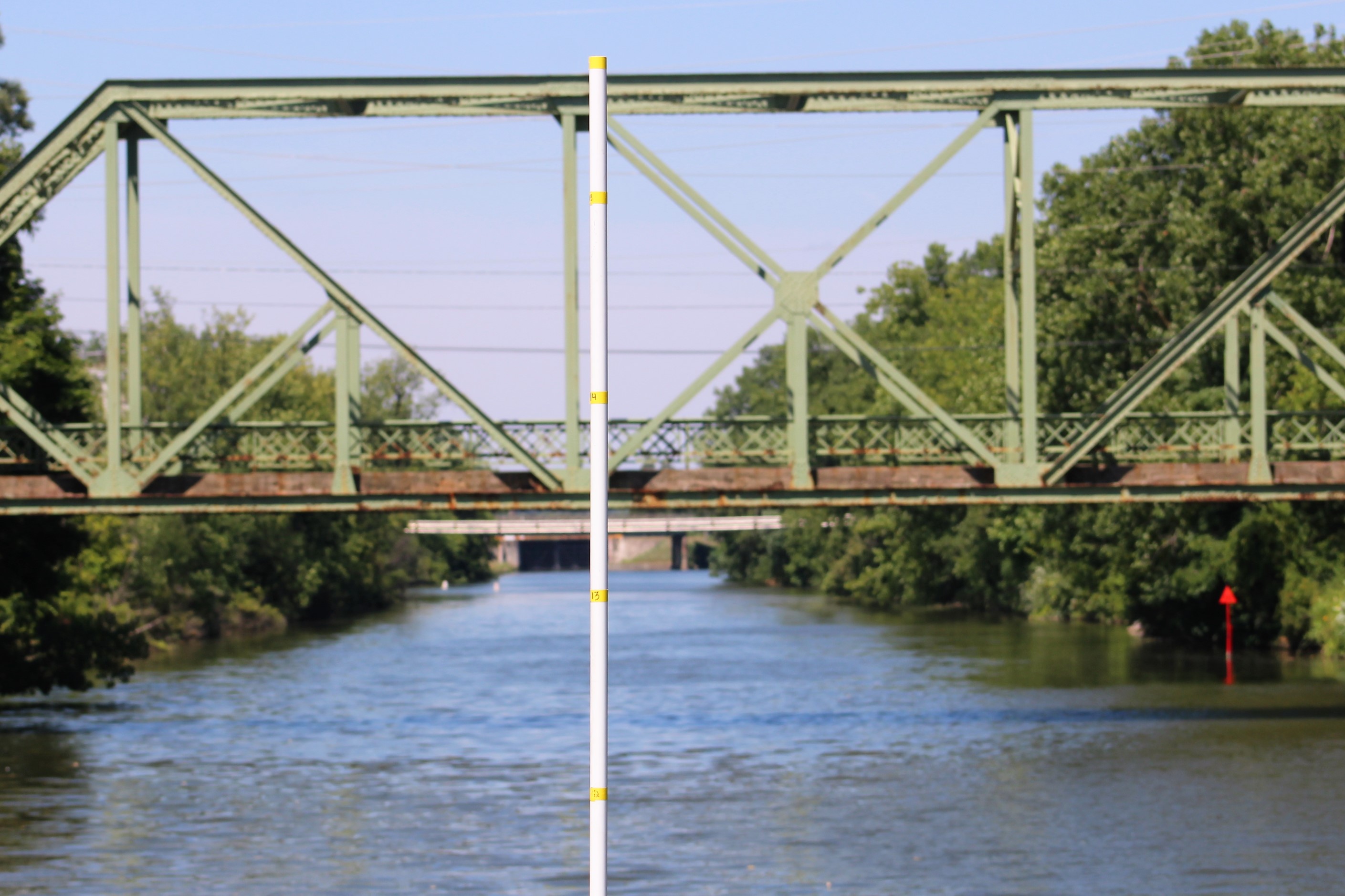
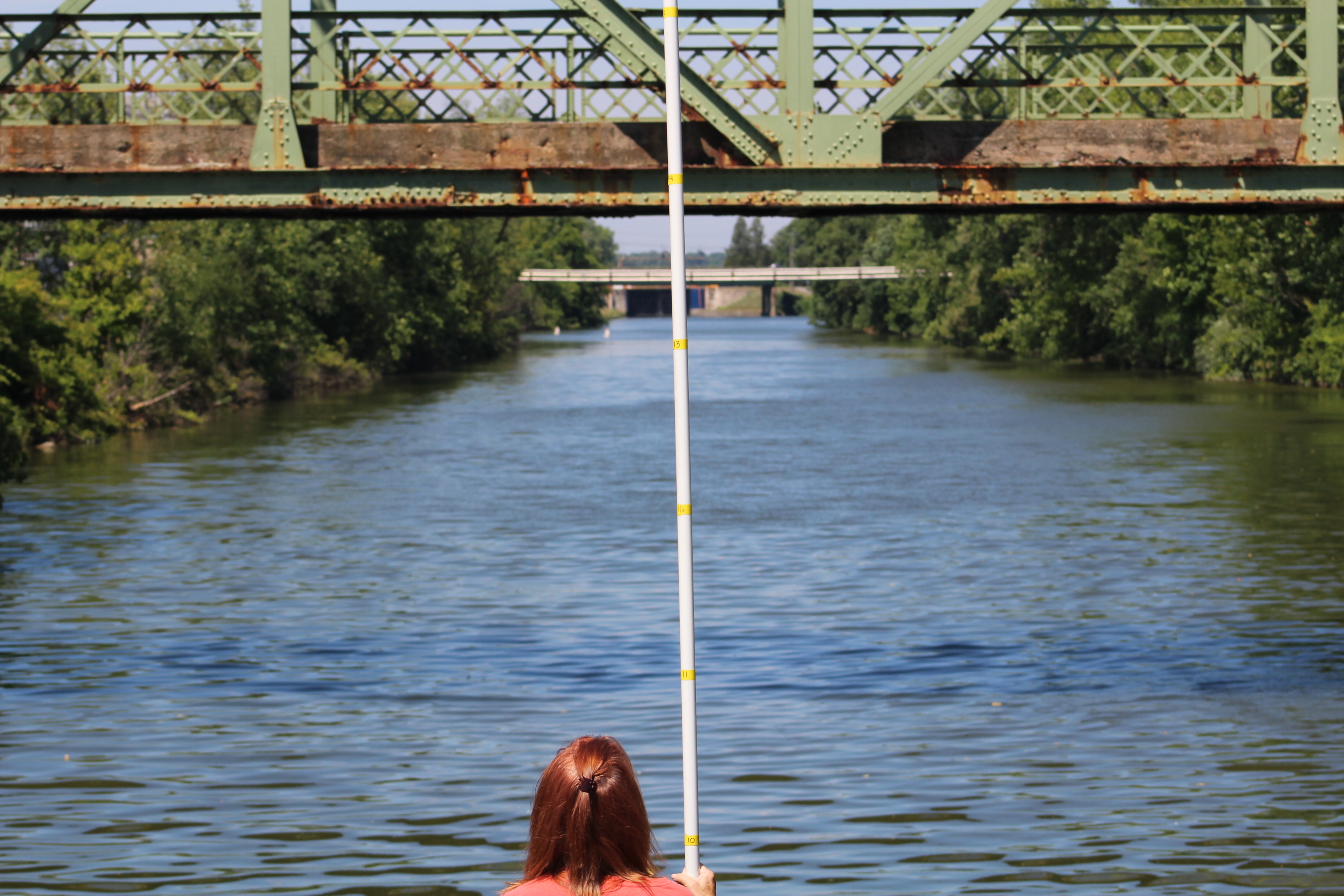
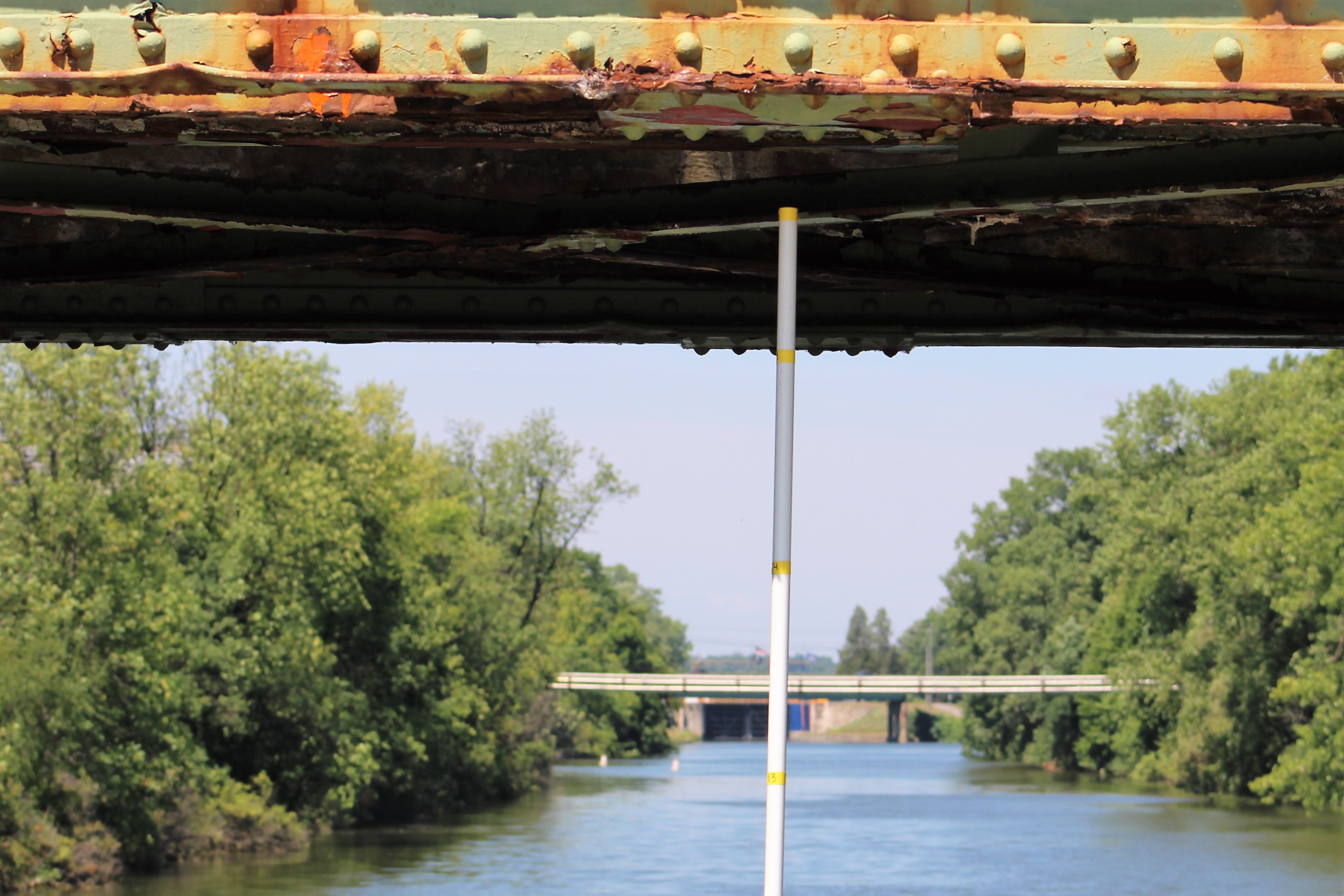
    They practiced using the air draft tool several times as they approached the low bridges.  The Admiral would take the PVC pipe to the bow pulpit, and the skipper would slow to a crawl.  They would then pass under the bridge.  The 10 foot PVC pipe is 5 feet 8 inches above the water when sitting on the bow pulpit.  This gives a total height then of 15 feet 8 inches at the top of the PVC pole.  If the pole makes it under without hitting anything, then the boat will pass safely under the bridge.  The boat clearance is 15 feet with the radar dome taken down and sitting behind the skipper in the helm.

    On station at the bow pulpit as they approach a 16 foot bridge

    78 Air Draft

    The slow approach

    78.2

    And the moment of truth, they can make it under this one

    78.3

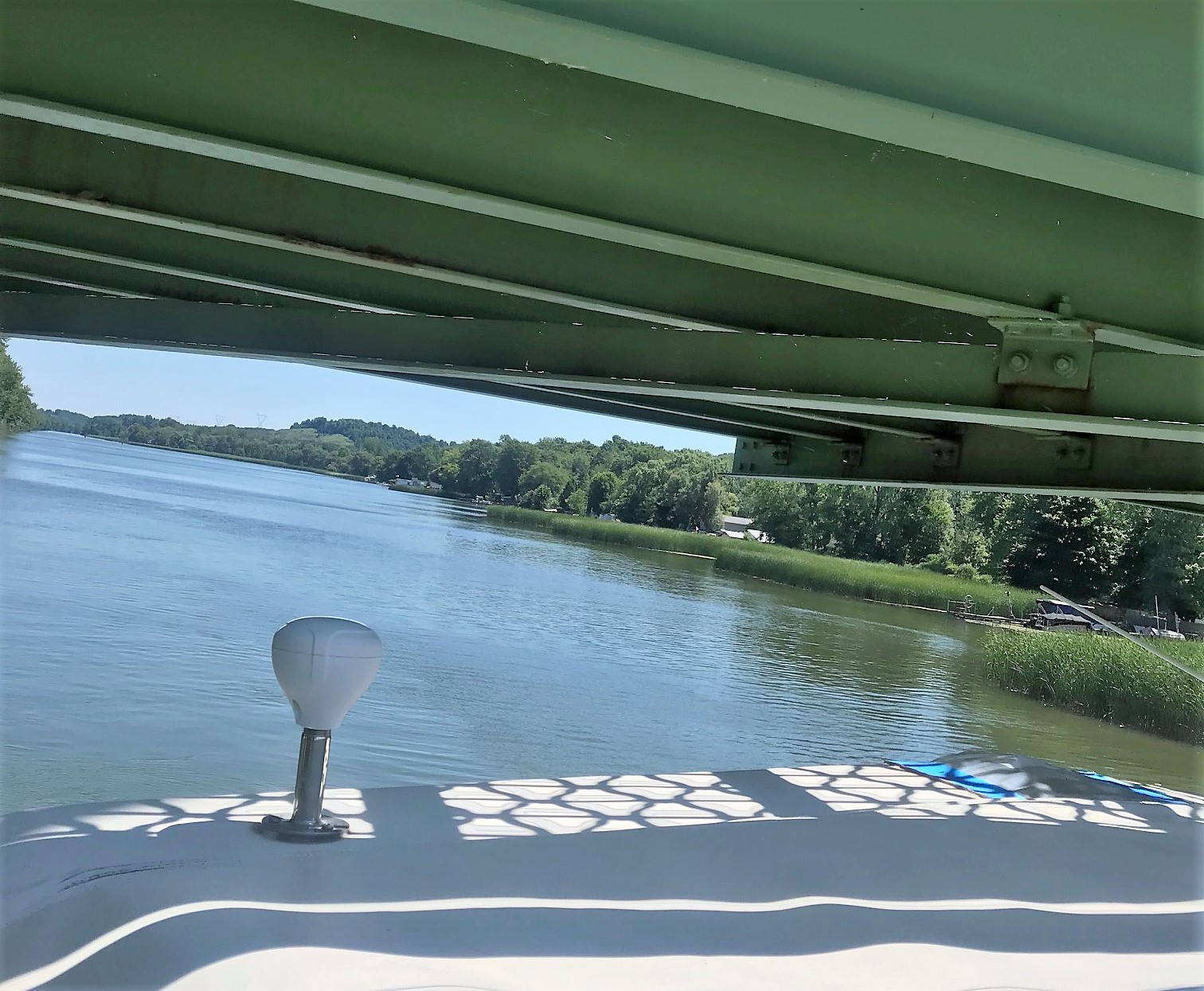
    Not sure what the skipper was worried about, he had at least 3 inches of clearance to the tip of the pole on that one above.  As with many things on the Loop, the lowest bridge turned out to be a non event.  The two railroad bridges before the ‘lowest bridge’ were actually lower than the ‘lowest bridge’.  The lowest bridge is advertised to be 15.6 feet at normal pool level.  The skipper asked the lock operator what the pool level was when they entered the pool with the lowest bridge.  The lock master said it was a half inch high.  So that should not make much difference for getting under the bridge.

    They finally arrived at the ‘lowest bridge’.  There was a home and dock just past the lowest bridge on the starboard side.  A lady was sitting on the dock watching as the crew approached and passed under the bridge.  After the crew slid under the bridge, she clapped and said, “Great Job.”  It would probably be fun to sit and chat with that women.  I bet she can tell a story or two about boats hitting that bridge.

    About 8 inches to the bridge from top of GPS, Clearance at the ‘lowest bridge’.  What was the skipper worried about again?

    78.4

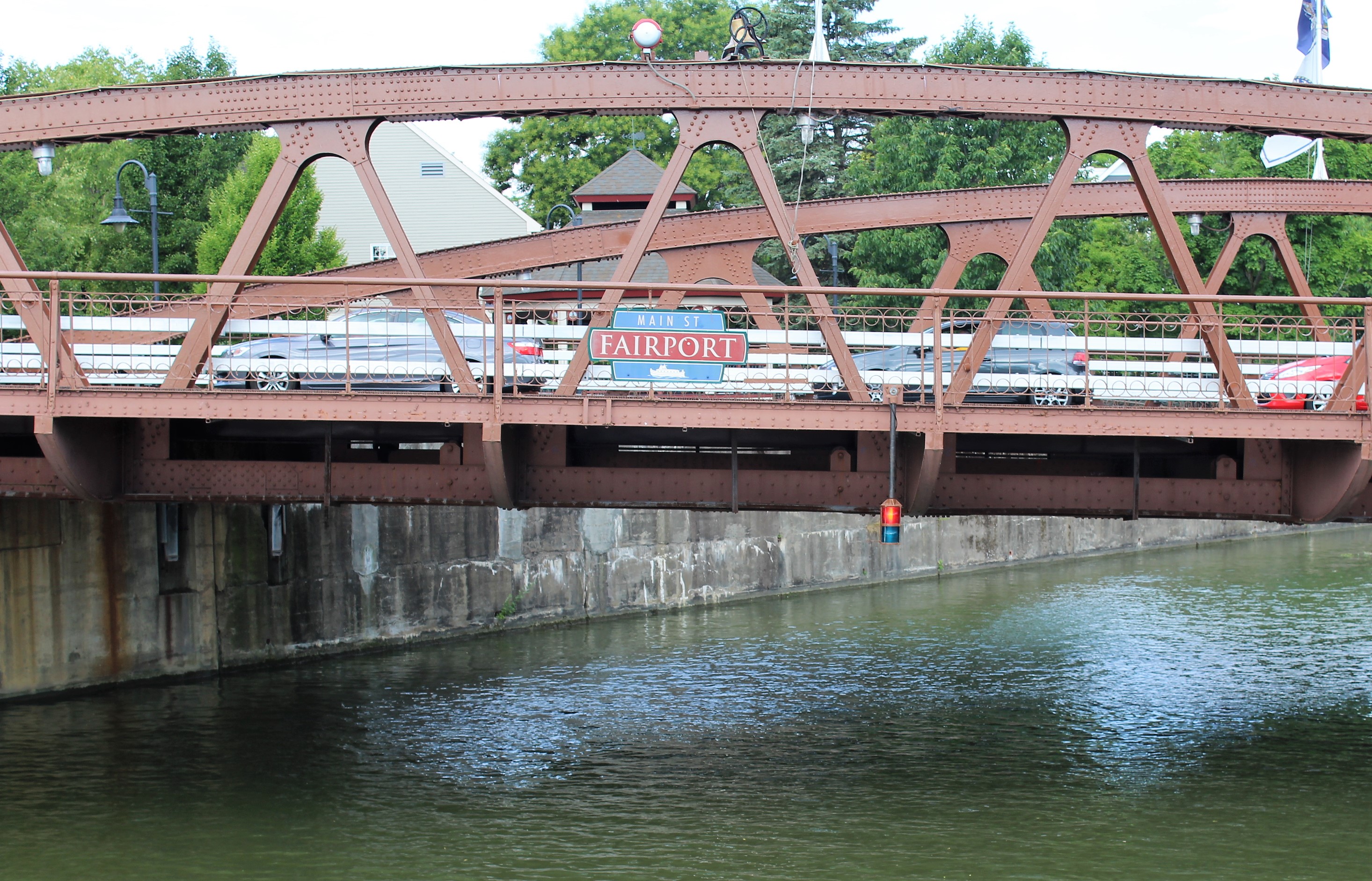
    After they had that non-event behind them, they pulled into Fairport.  Most of the dock space was taken so the skipper was thinking about going on past the bridge to see if there was room west of the Lift Bridge.  The Bridge Operator radioed the skipper and told him he could stay down at the end of the wall in the reserved space because there would be no tows in town tonight.  The skipper said thanks and backed the boat down to the reserved spot.

    Fairport Main Street Lift Bridge

    81 Fairport Main St Lift Bridge

    The crew landed on the wall, but soon discovered that there was no power at this location.   The temperature was 90 and air conditioning sure would be nice if they could get some power.  The skipper walked the docks east of the lift bridge, but there was no spot with power there either.  While returning to the boat, he saw a dock master.  The skipper asked if they could tighten up three boats to make room for Still Waters II on the wall.  The dock master agreed and pulled the three boats closer together.  The hole on the wall was just big enough to land Still Waters II.  The dock master said he would hold the spot, but the skipper needed to hurry because possession is 9 tenths the law on the wall.

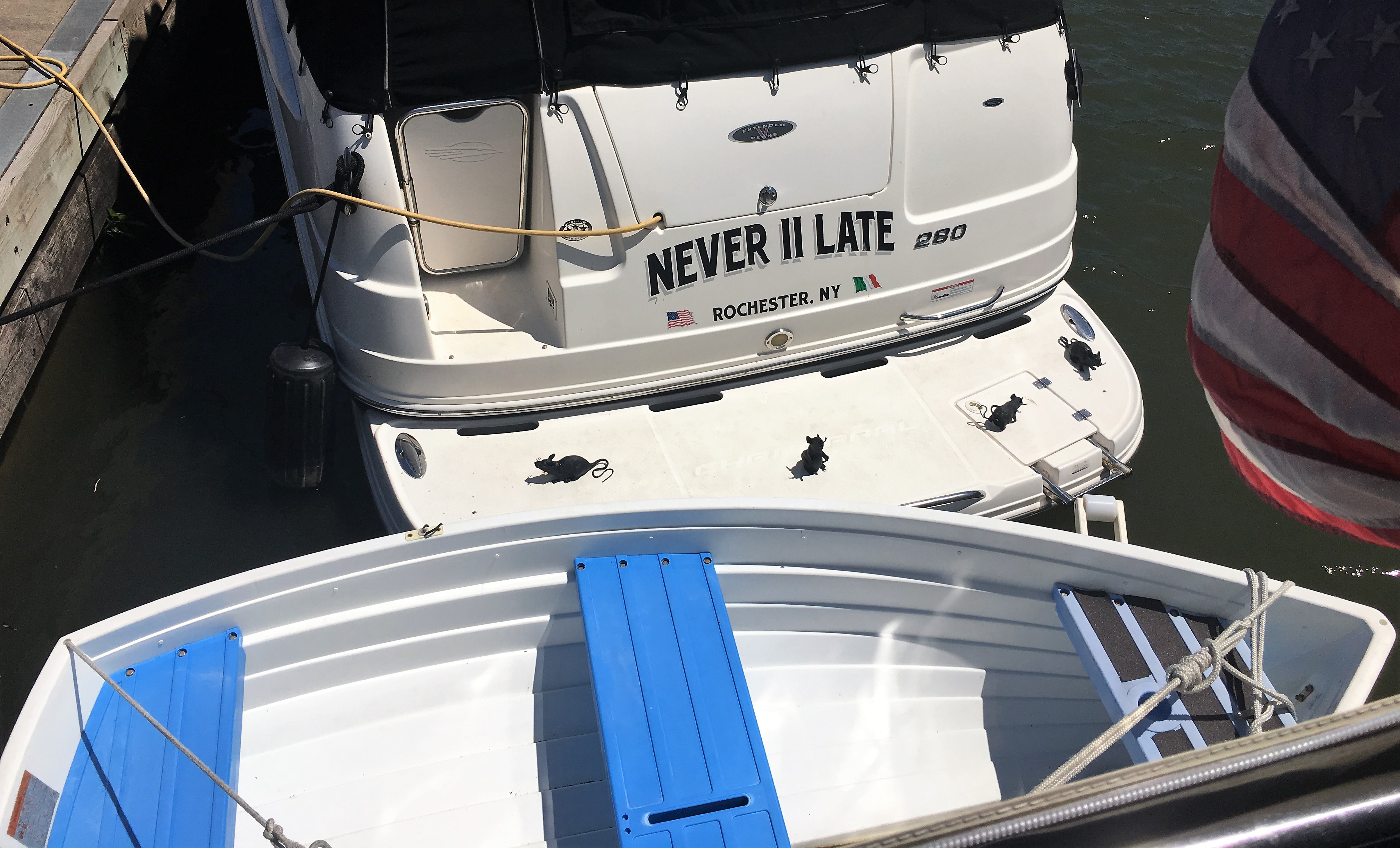
    The skipper fired up the engines and the crew moved the boat to the open spot.  It would be a tight fit, but the skipper managed to shoehorn the boat in the hole. The Admiral said her heart was pounding but looked up and saw that the skipper was as cool as a cucumber.  However, it was a tight squeeze.  Even the rats on the boat behind them were nervous and about to abandon ship.

    The stern gap

    80.4

    The bow gap

    80.5

    Saturday, July 21st

    Today the crew had two locks to rise up 50 feet and 5 more of those pesky 16 foot bridges.  The crew had no problems with those obstacles and enjoyed the cruise today.

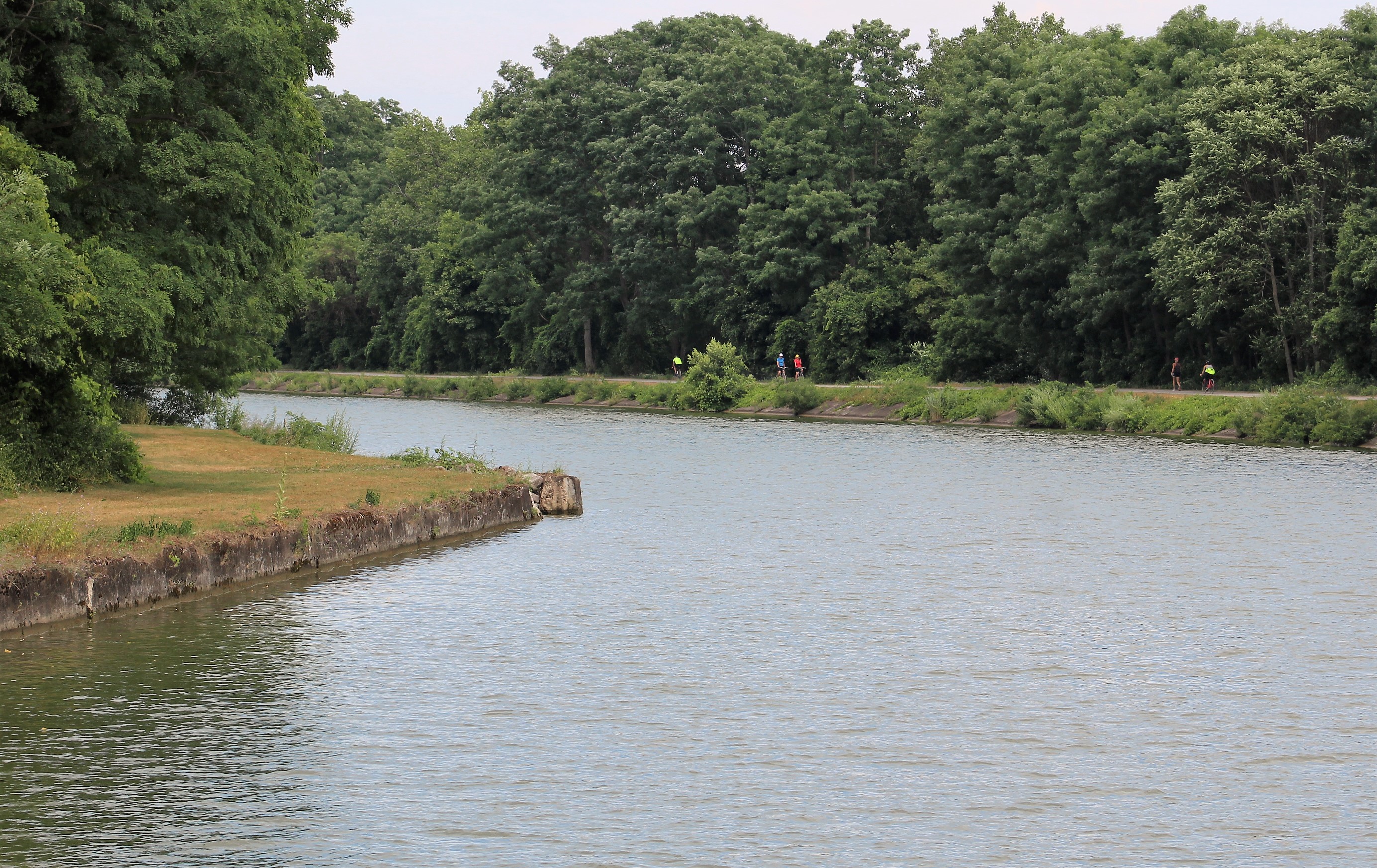
    Much of the canal today had the Canal Bike Trail running along side where the old mule tow path used to be.  In fact, there were many places along the canal today that you could see the tow path on both sides of the canal.

    The flat area is the old tow path

    83 Tow Path along canal

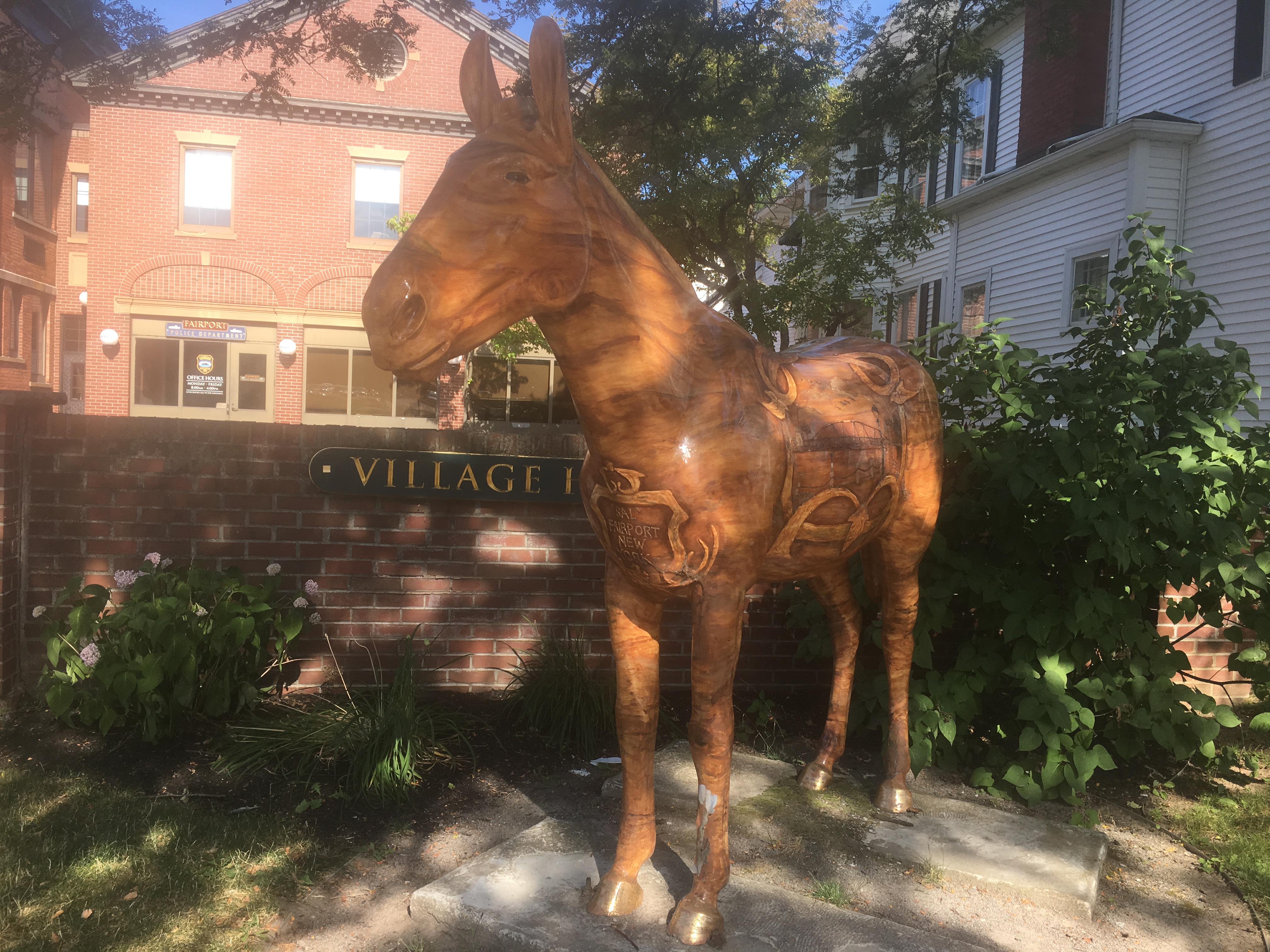
    The mules had to pull the barges 362 miles from Buffalo to Albany back in the original canal days.  That would be a long hard walk.

    Mule in Village of Fairport

    80.2 Sal the mule

    While passing south of Rochester, there were many interesting arched briges across the canal.

    86.1

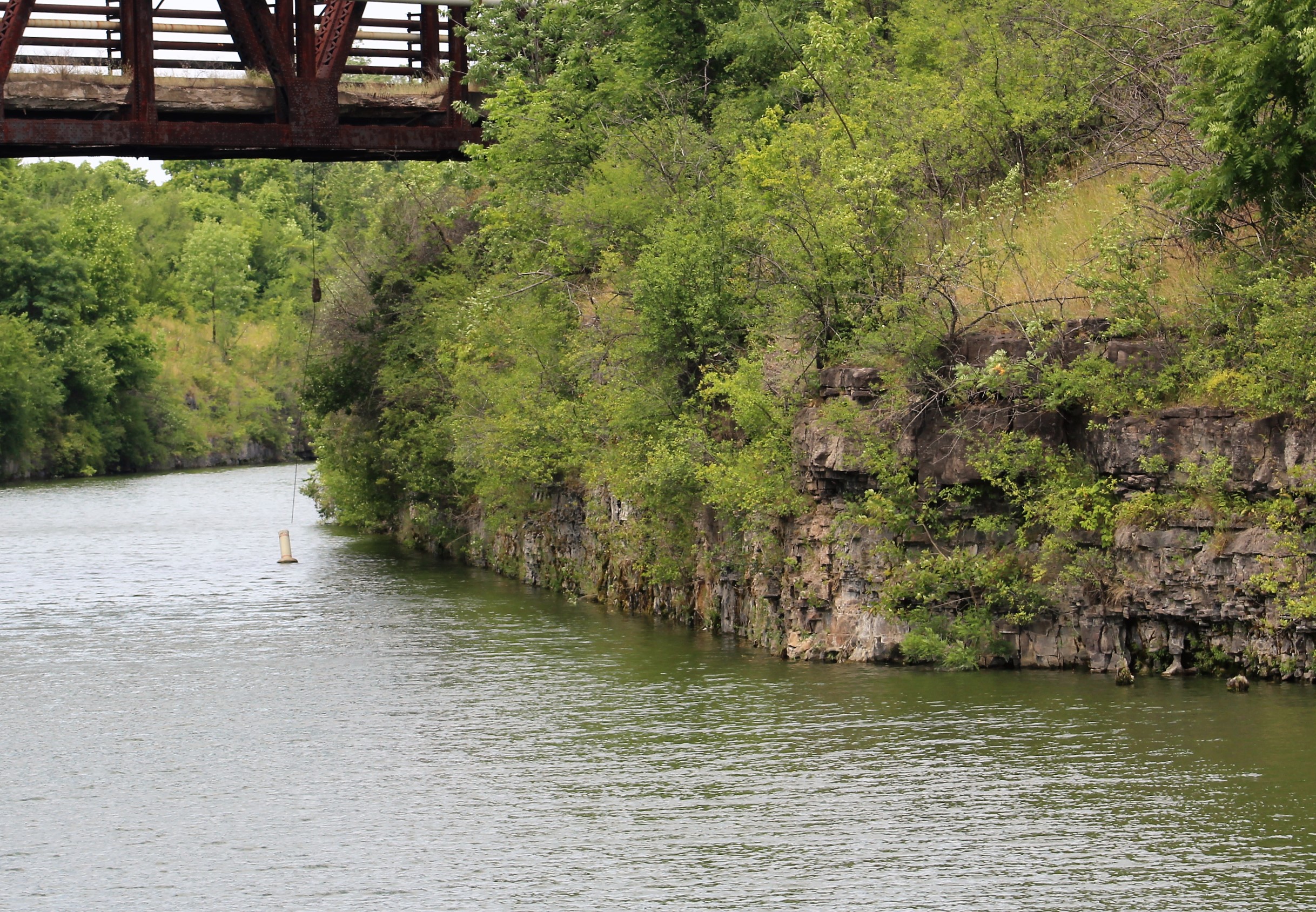
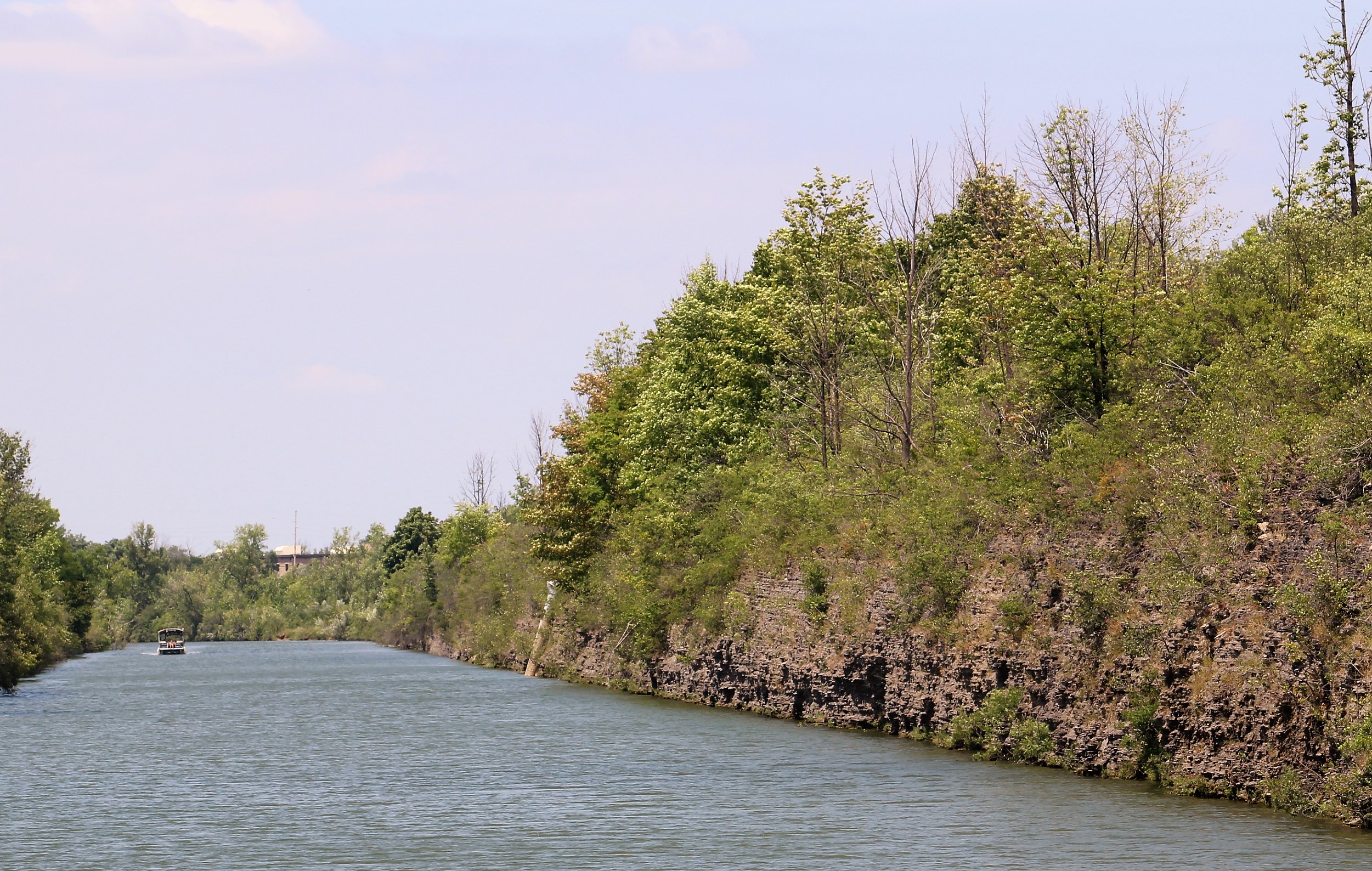
    Then the crew passed through a four mile area named the ‘Rock Cut.’  During the expansion of the canal in 1918, the canal was moved south of Rochester.  To accomplish this task, the builders had to cut through the solid rock in the area.  Hard to imagine cutting though this area with out the modern day earth moving equipment.

    The Rock Cut

    88 Rock Cut

    88.1

    The crew finally stopped in a village named Spencerport.  They will stay here through the weekend and head further west on Monday.

    The Admiral liked the flowers in the yard today

    90.1

    Next Week –

    The crew will move the 68 miles to Tonawanda over three days next week and complete the western Erie Canal.  They will stay a week there and visit the surrounding area, including Niagara Falls.  The grandkids and kids are also expected to arrive late next week, so it should be a fun week ahead.

    Loop On – Where the road ends, the water begins. The water goes on forever, and the adventure never ends.

    Eric the Red

  • It’s Not All Fun and Games

    It’s Not All Fun and Games

    Hello virtual crew members and fellow adventurers!

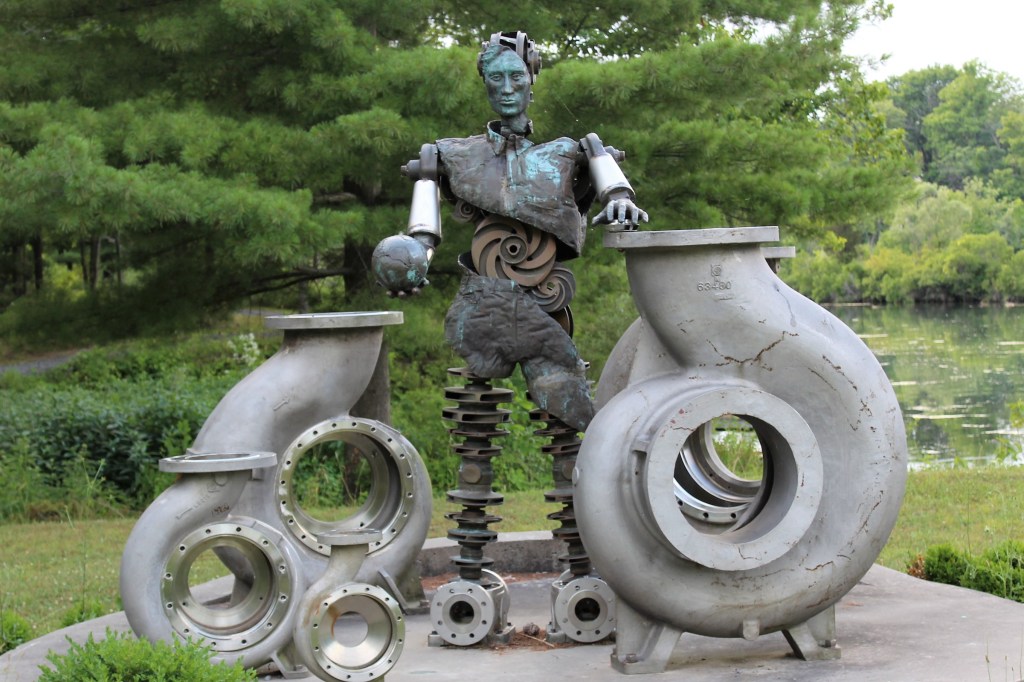
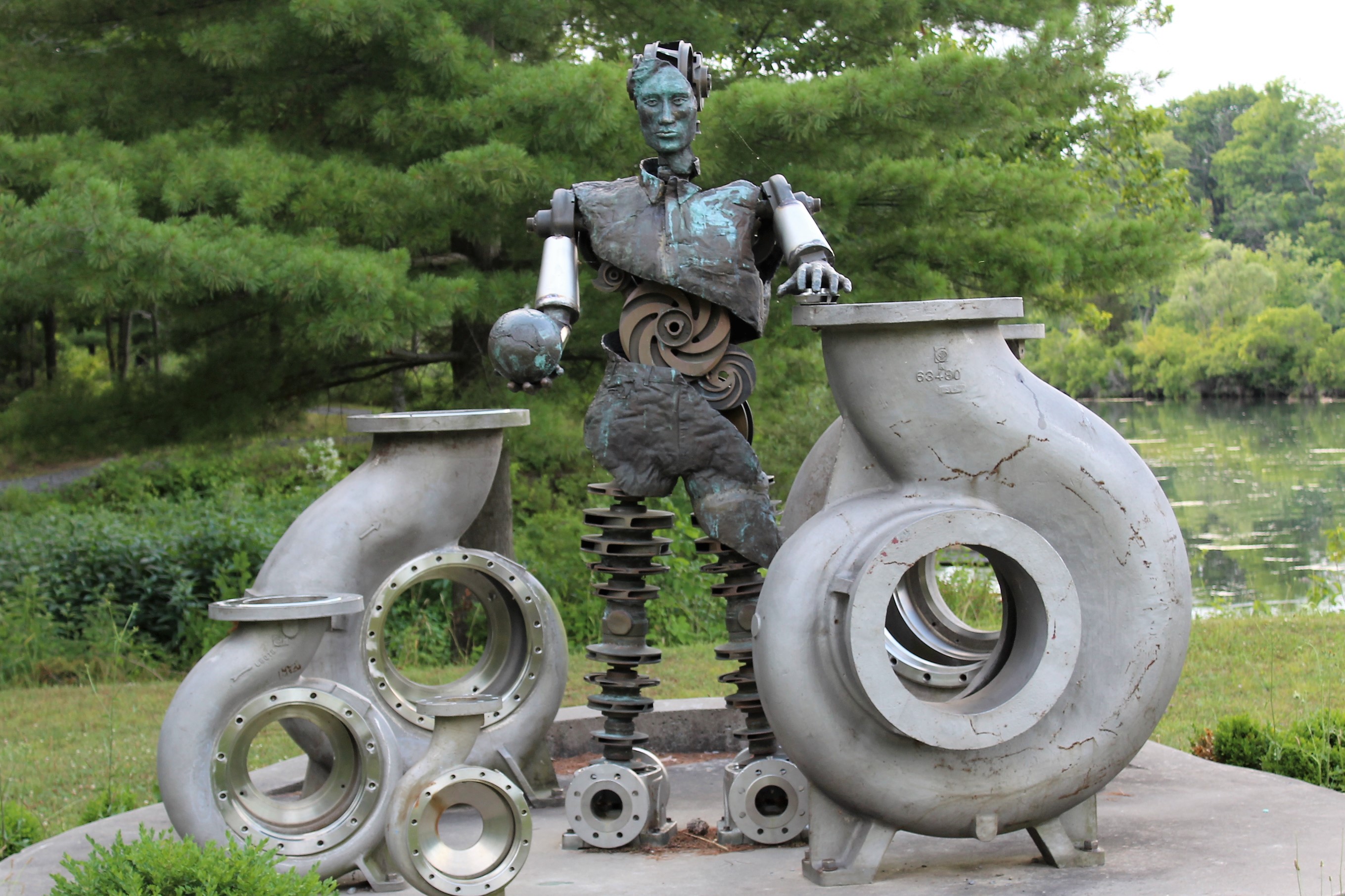
    So what do you do with spare pump casings and impellers you ask?  Well the Gould Pump Company of Seneca Falls sponsored this sculpture on the Ludovico Sculpture Trail.

    24.9

    Summary of Week:

    Seneca Falls

    The crew travelled four days last week making the following stops along the way:

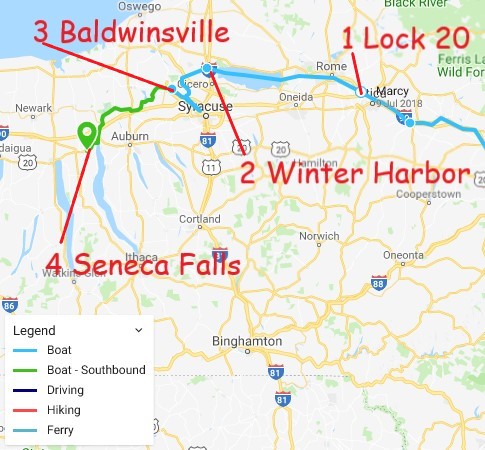
    1 – Monday, they stayed on the Lock E20 wall near Marcy, NY

    2- Tuesday, they travelled to Winter Harbor Marina in Brewerton to get some work done on the boat

    3- Thursday, they officially entered the western Erie Canal and stopped at Baldwinsville for the night

    4- They then started a side trip to the Finger Lakes Region and stopped at Seneca Falls on Friday

    Click here to read the day-to-day travel log. This includes weather report, sea conditions, captain’s log, a summary of the day’s experience, and a few pics of the route.

    The voyage of discovery did answer the following questions this week:

    1. What is the highest point above sea level of the Erie Canal?
    2. When was the last time the Lock E23 power plant was used?
    3. When and where was the first Women’s Rights Convention held in the US?
    4. How did the Haudnosaunee Nation influence the Convention?
    5. What is the ‘bridge scene’ in A Wonderful Life based on?

    At the Box Office

    No new video this week, the skipper has been busy with other boat projects.

    To see past videos, click on the link to the Still Waters II Vimeo site.  The library contains videos of Still Waters II cruising America’s Great Loop.

    Monday, July 9th

    The Admiral was off to the Post Office to mail the youngest granddaughter her birthday gift. While she was off on her errand, the skipper pulled down to pump out the holding tanks.

    The forward holding tank vacuum pump has developed a leak and human waste has dripped into the forward bilge. After pumping the forward tank out, the skipper ran the hose through a window, through the salon, and down into the bilge and got that stuff out of the boat. (Probably a good thing the Admiral was not present to witness this activity.) He will have to repair or replace the pump upon arrival in Brewerton. Now there is a task to look forward to.

    When the crew shoved off the wall, there was another boat approaching.  The skipper allowed the other boat to pass and then fell in behind them and followed them to Lock E19.  When they arrived at the lock, they learned that Island Time had just entered the lock, so the crew would lock thru with two other boats this morning.

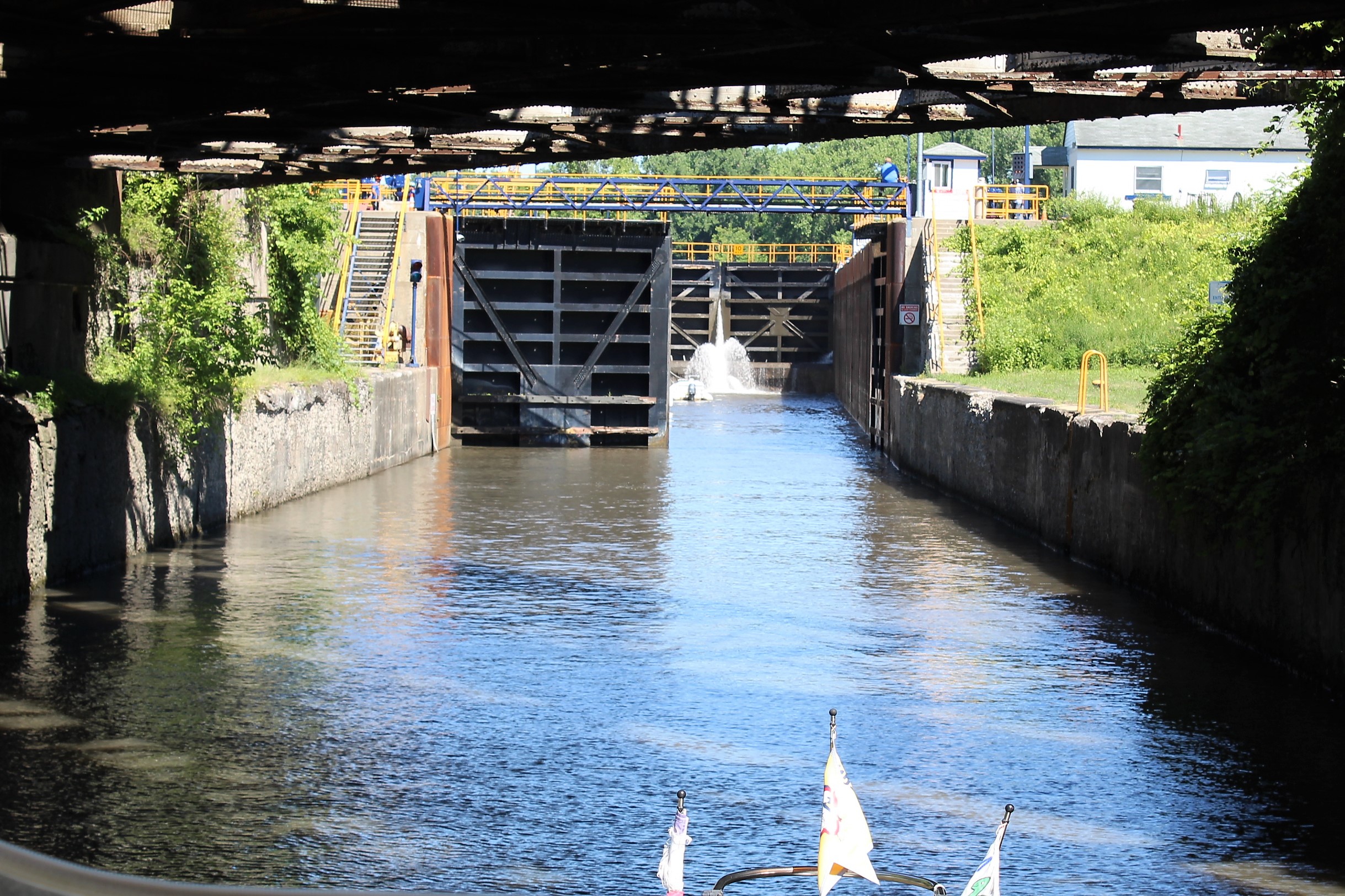
    Arrival at Lock 19, port gate was broken, lift up 21 feet

    46 Lock E19

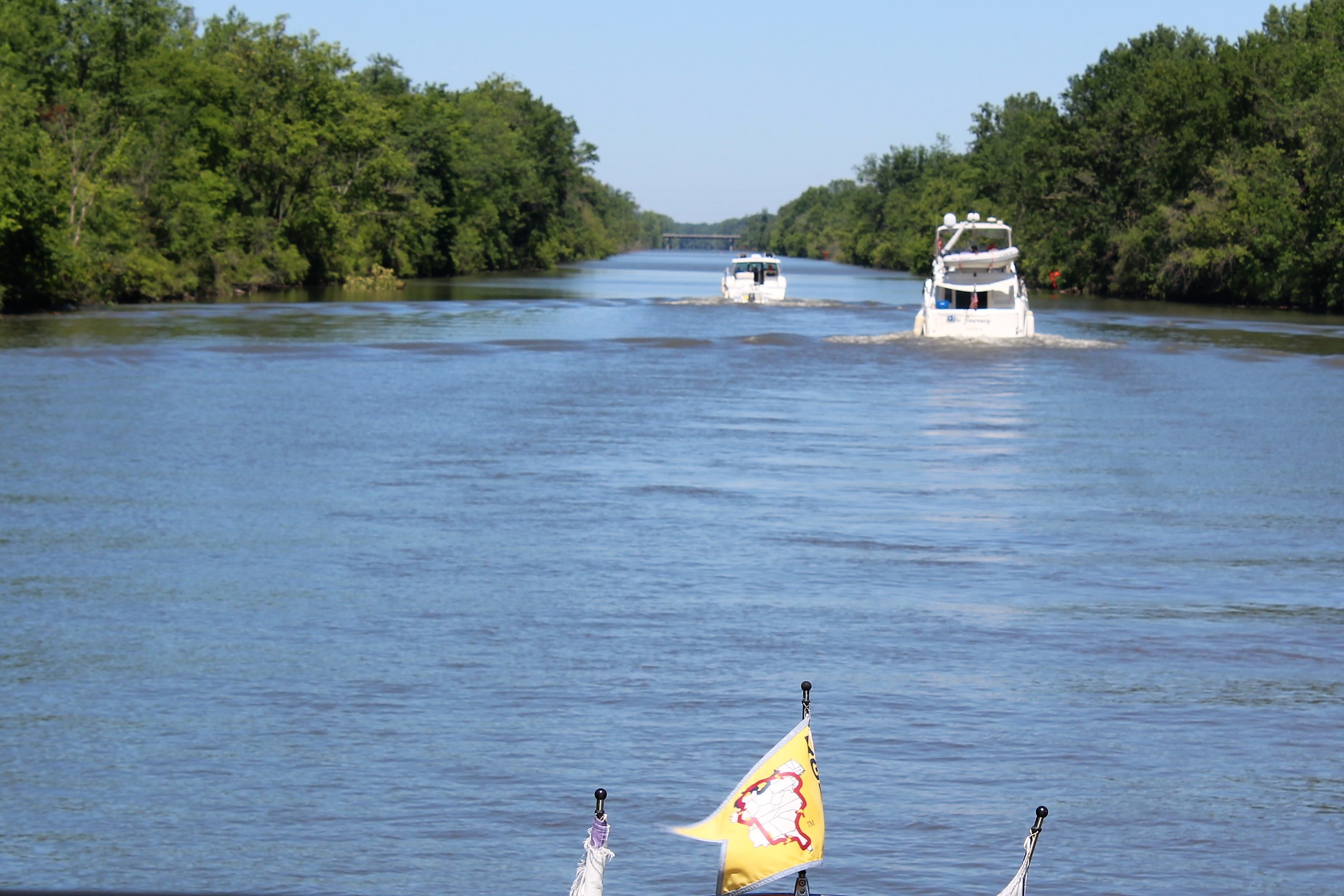
    After exiting the lock, the trio of boats were off towards Lock E20, ten miles away.

    47

    The crew decided to pull off the canal at Utica for lunch.   The dock side restaurant was closed so the crew hiked about a mile into town and found a Denny’s open  After lunch they had one more lock to negotiate and then they stopped for the afternoon.

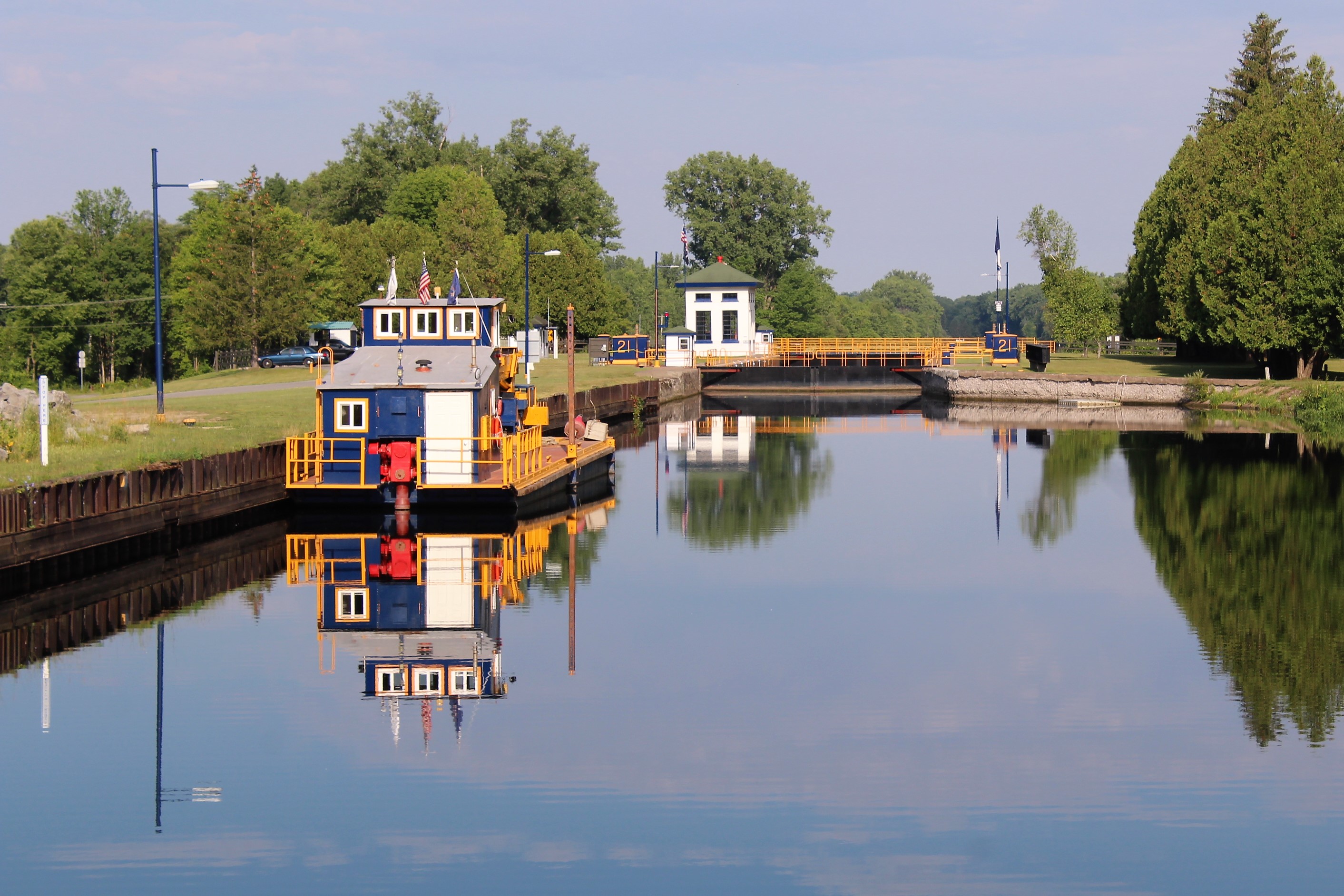
    Lock E20, letting out water, lift up 16 feet

    49.1

    After exiting Lock E20, the boat has climbed to 420 feet above sea level from New York Harbor. This is the high point on the Erie Canal.

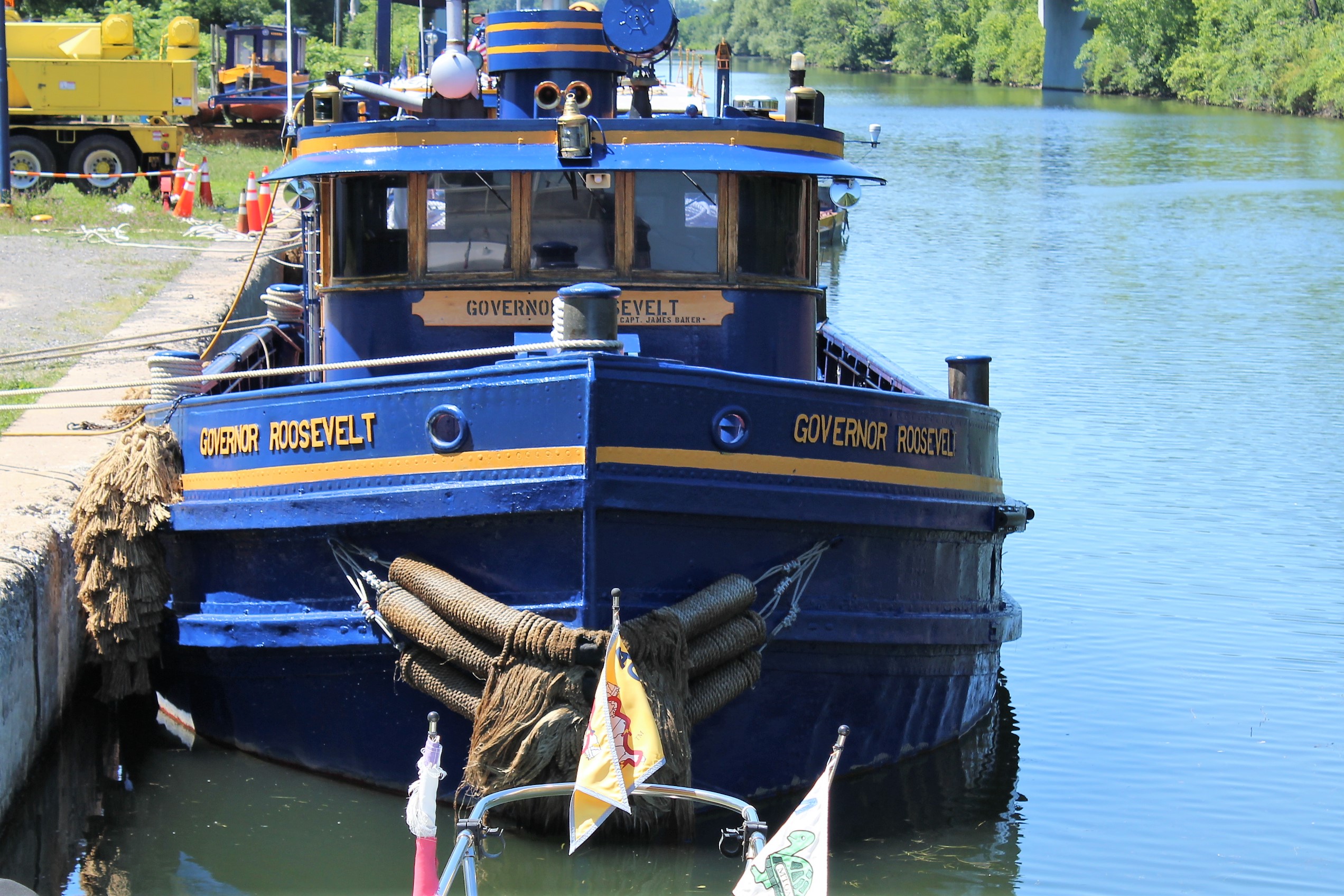
    The crew stopped in front of Governor Roosevelt for the evening.

    50 Gov Roosevelt

    The skipper got the bikes off the boat and the crew rode the Canal Trail for a little exercise.  The Canal Trail could be an adventure in itself.  The Trail consists of just over 220 miles of paths along the canal.

    Tuesday, July 10th

    Today the crew had two locks to negotiate and then needed to get across the open waters of Lake Oneida before the afternoon winds picked up.  The morning was calm though and made for glass like conditions on the canal.

    Mirror reflection of bridge over canal

    52

    Arrival at Lock E21, step down 25 feet

    53 Lock 21

    There was a little excitement upon leaving Lock E21 though. The port main engine decided she would not start. The skipper had to leave the lock on the starboard engine which made getting off the lock wall a bit difficult.

    A virtual crew member, Scott, asked last week, how do you normally get off the lock wall?.  The short answer is that we shove off the wall to get some space (about 1-2 feet) then use the engines to move further off the wall and get underway.

    However, with only the starboard engine running, and the boat up against the lock wall on the port side, the skipper delicately bumped the starboard engine a few times to get some forward momentum while steering to starboard.  Once some water started to flow by the rudder, he was able to steer the boat to the center of the lock.

    After they exited the lock, the skipper went down in the engine room and checked the cables to the starter on the port engine. He managed to get about a half a flat turn on one nut. When he got back up in the helm, the port engine started right up.

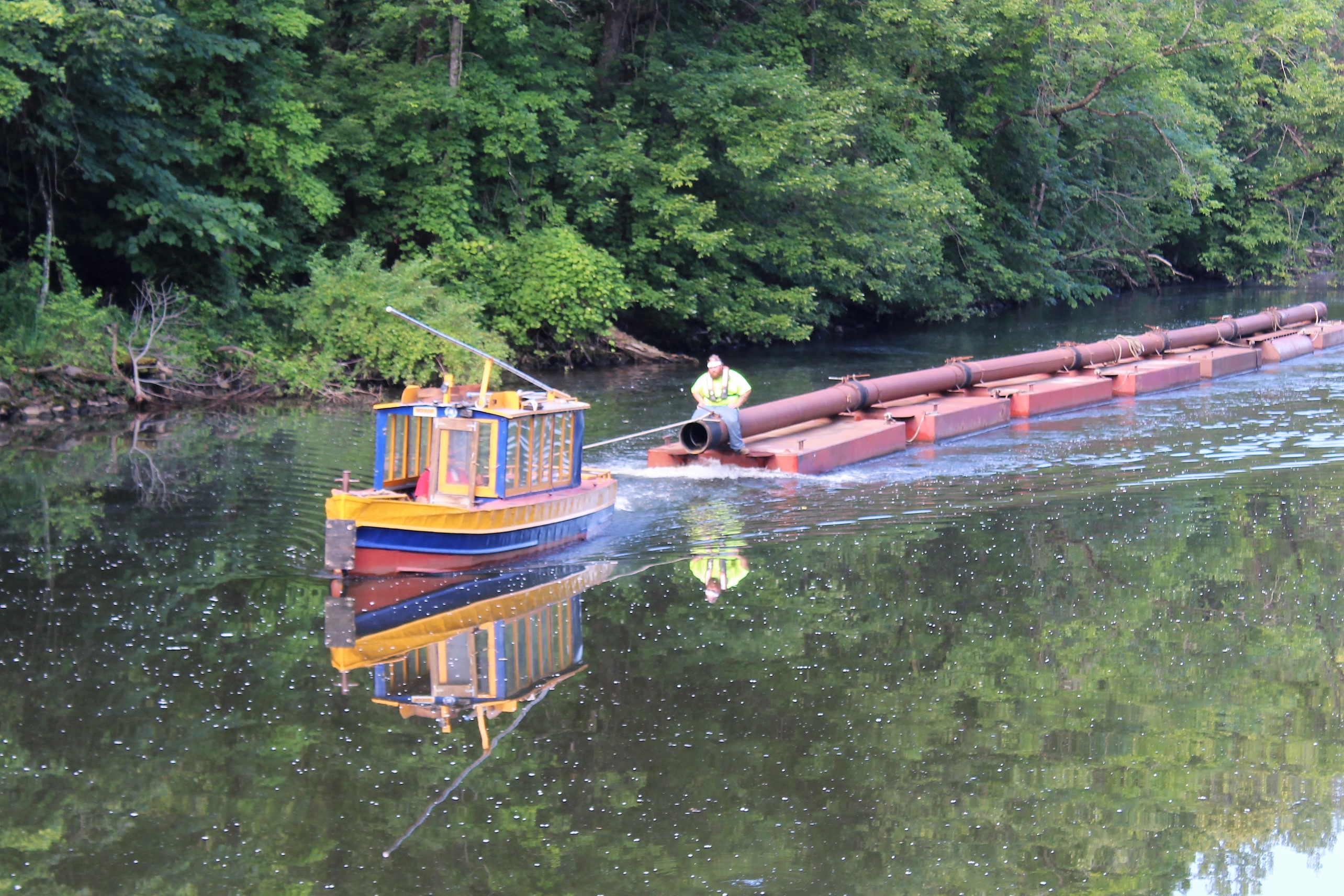
    Passed this little canal work boat on the way to Lock E22.  Do you see the guy riding the tow?  If that tow line breaks, he is in the ‘line of fire.’

    54

    Safely in Lock E22

    55 Lock 22

    There were no issues exiting the second lock. The crew made way to Sylvian Beach and then into Lake Oneida. The lake runs east to west for about 20 miles and is not all that wide. The crossing of the Lake went well. The Lake was fairly calm except for the occasional boat wake, but the waves did build to one foot as the wind started to blow from the west. The crew exited the lake and entered Oneida River before conditions got to bumpy. They then docked at Winter Harbor Marina with about eight other Looper boats.

    Hopefully the marina has the breaker the boat needs to replace the failed Main Line 2 Breaker.

    Wednesday, July 11th

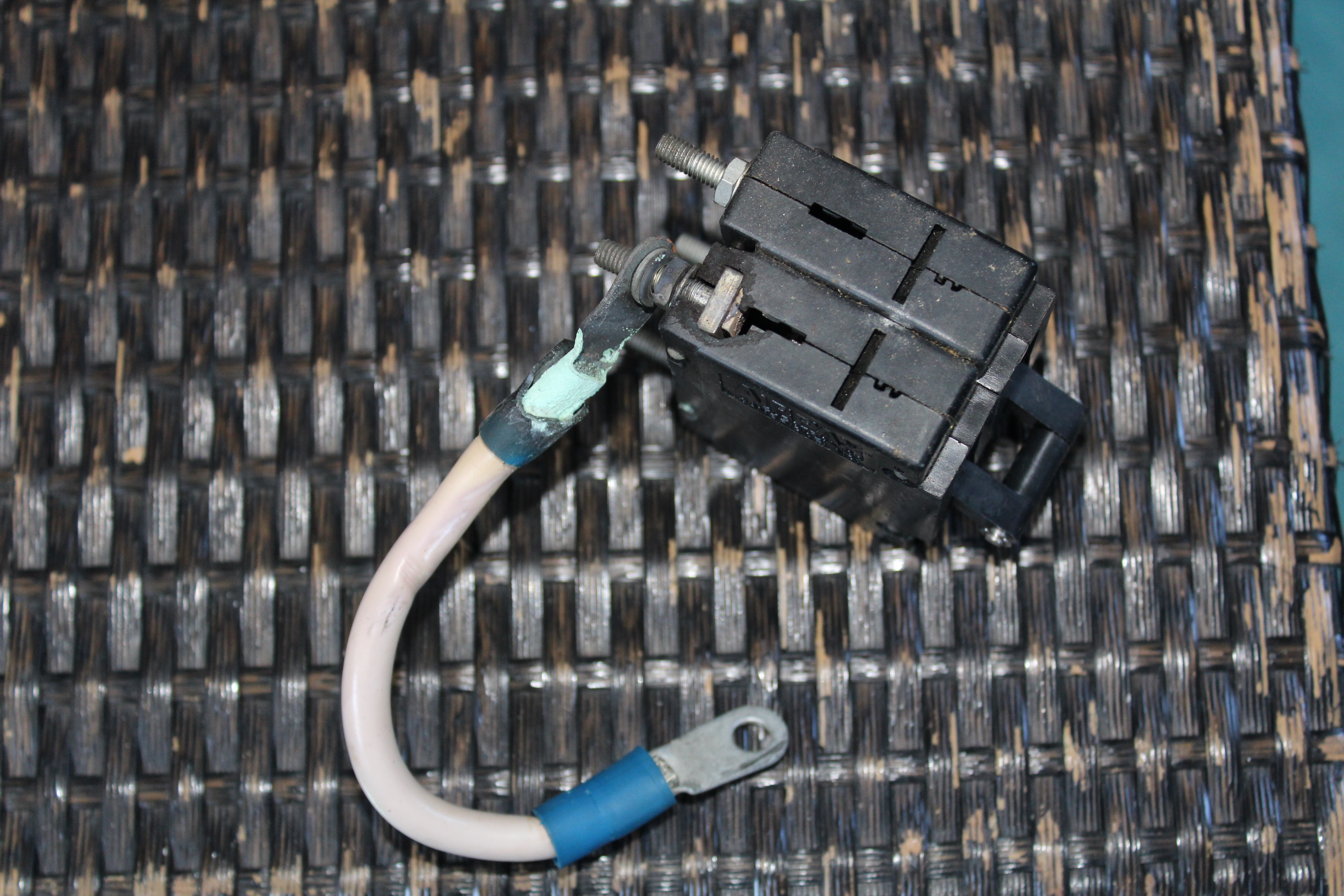
    Today the skipper had several projects to complete around the boat as well as have the marina replace the Main Line 2 Breaker.  The electrician found that the breaker had a loose connection that had arced and sparked.  The arc caused some of the breaker’s molded case to break off and also burnt some surrounding wires that will be replaced.

    The bad breaker and wire

    IMG_0001

    The skipper finally managed to get the radar dome down so that the air draft of the boat is now 15 feet. This will allow the crew to slide under a 15.5 foot bridge on the western Erie Canal. He also built a measuring device to put out on the bow to verify they can clear the bridge. We shall see how it works in a week or so.

    The skipper also replaced that forward head vacuum pump. Let’s just say that was the nastiest job completed on the boat to date. Where is Mike Rowe when you need him?

    With the projects around the boat complete, the crew took a courtesy car to town and bought a few provisions for the next leg of the journey, The Cayuga-Seneca Canal.

    Thursday, July 12th

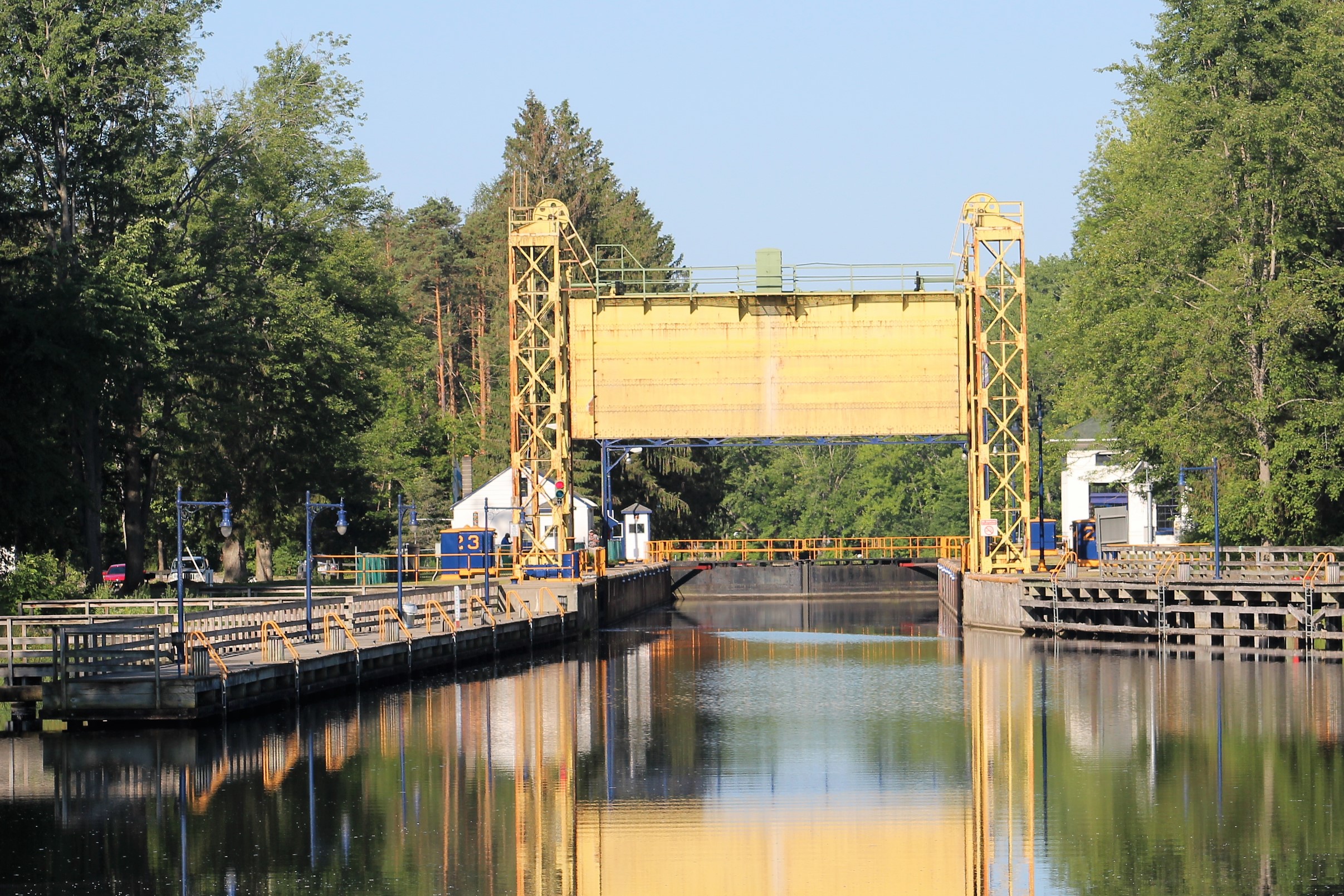
    After topping off the fuel tanks, the crew initially headed towards Syracuse where they had planned to visit the Erie Canal Museum.  After a few miles they arrived at Lock E23. The lock master made them wait for a second boat because the first lock on the Oswego Canal had a problem with the 7 foot lift bridge. They are having to manually open the bridge.  The crew mentioned that they were not going to Oswego, but they got to wait for the second boat anyway. While waiting the crew did learn some interesting things about Lock E23.

    Lock E23, step down 7 feet

    1 Lock E23
    This lock is the busiest lock in the entire system because of its proximity to the eastern Erie, western Erie, and Oswego Canal Junction. The lock master said he locks about 100 boats on a Saturday. On July 4th, he said he locked 132 boats.

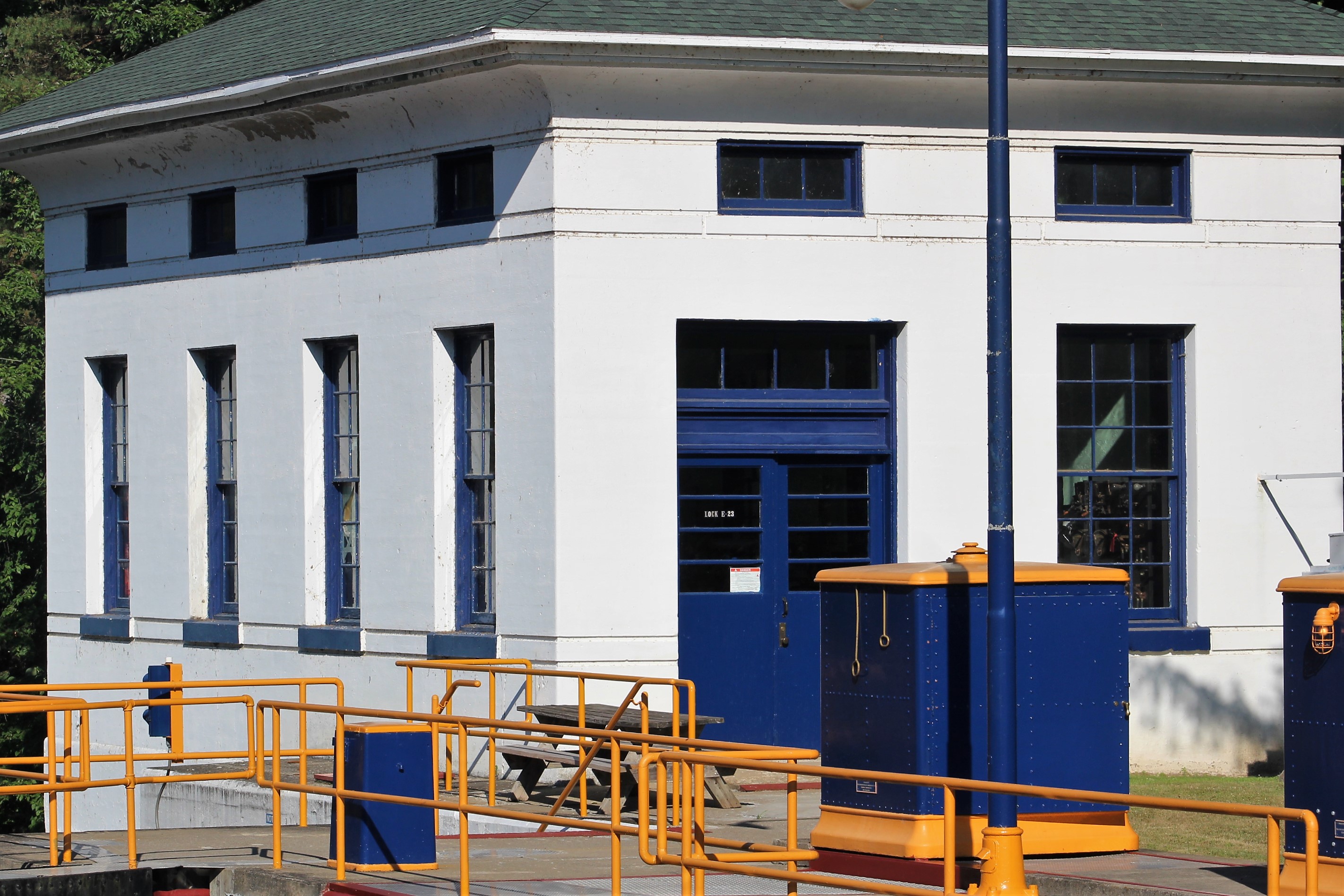
    Power House for Lock E23

    1.1 Power Plant

    Another interesting feature of this lock is that its original power house is still onsite and available.  The generator is maintained and ready to supply power if required as a back-up. However, the lock master said they had not fired up the power plant since the Northeast Blackout of 2003.  There were four boats trapped in the lock when the power went out in 2003, so they started the power plant up to operate the lock equipment and let the boaters out of the lock.

    Looking out of Lock E23

    1.2 View Looking down

    The crew soon arrived at the Canal Junction and officially entered the Western Erie Canal.

    Canal Junction

    2 Canal Junction

    They were not on the western Erie Canal long though, the skipper diverted toward Syracuse across Lake Onondaga. However, when they arrived at the entrance canal to Syracuse a RR Bridge, which shows to be 17 feet on the charts, turned out to be less than 15 feet. The crew could not get under the bridge so they headed back to the Erie Canal and decided to stop at Lock E24.

    Nope, not getting under that bridge

    4.3

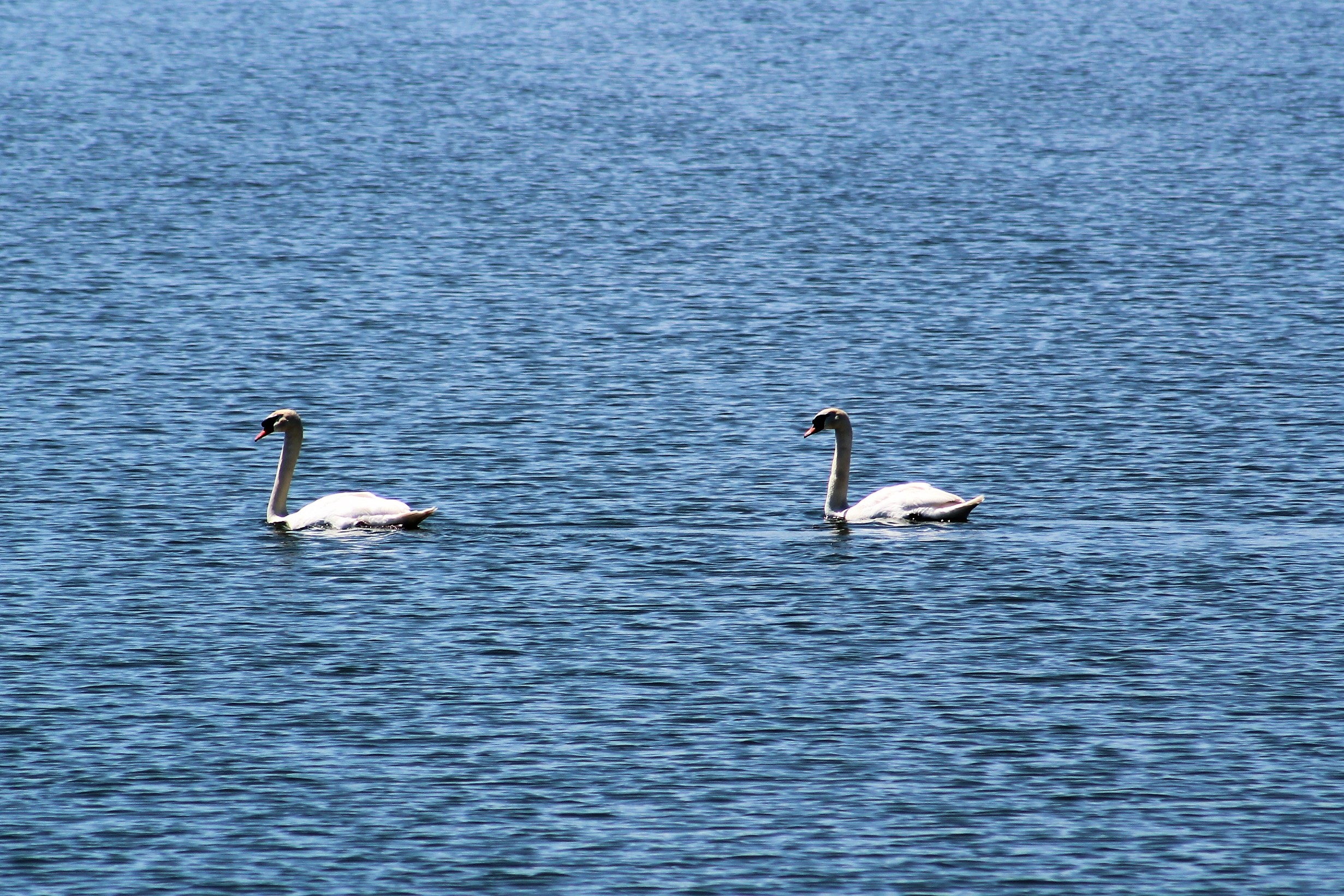
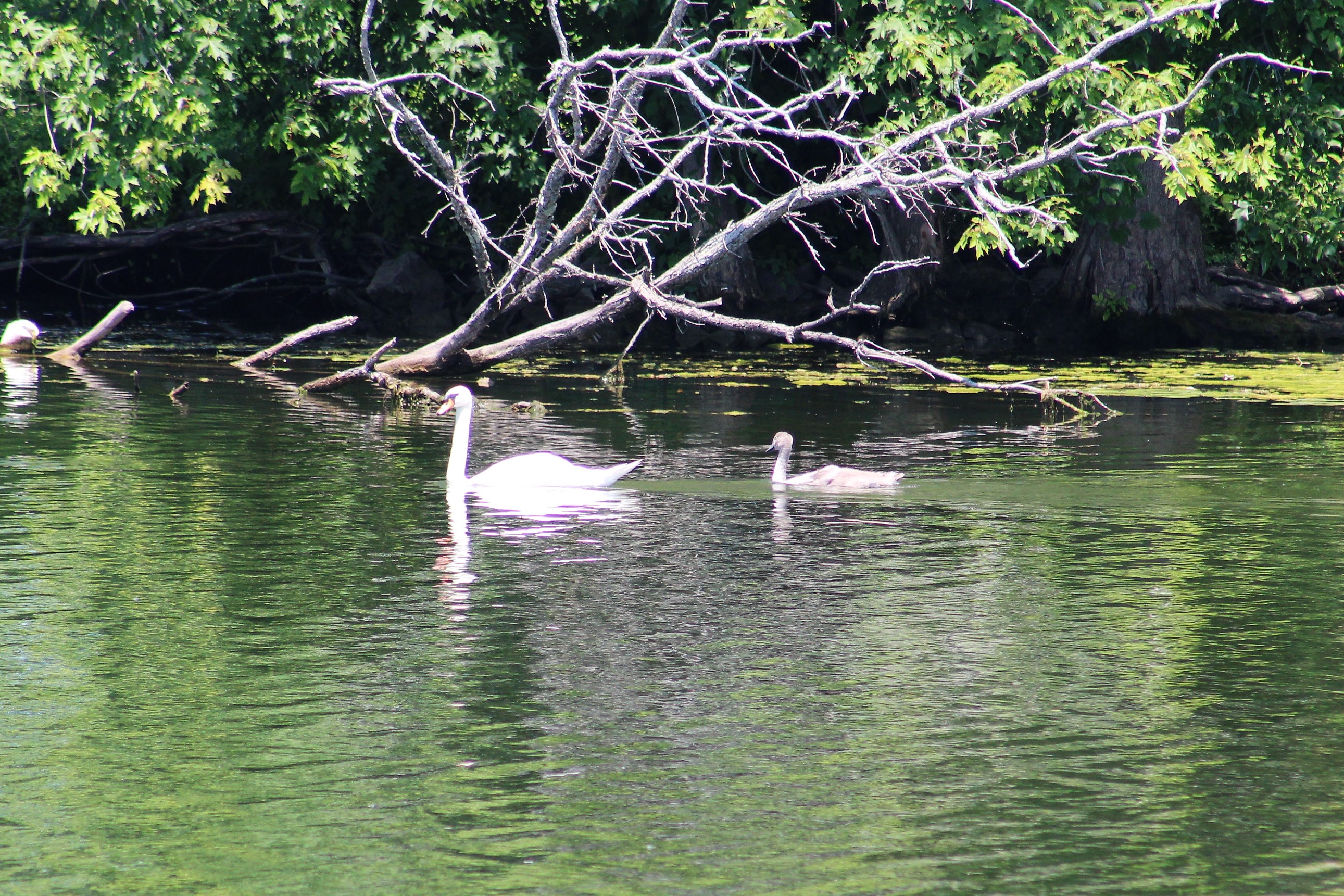
    While making way to Lock E24, the crew saw several swans.  Including one cygnet, or baby swan.

    4.2

    5

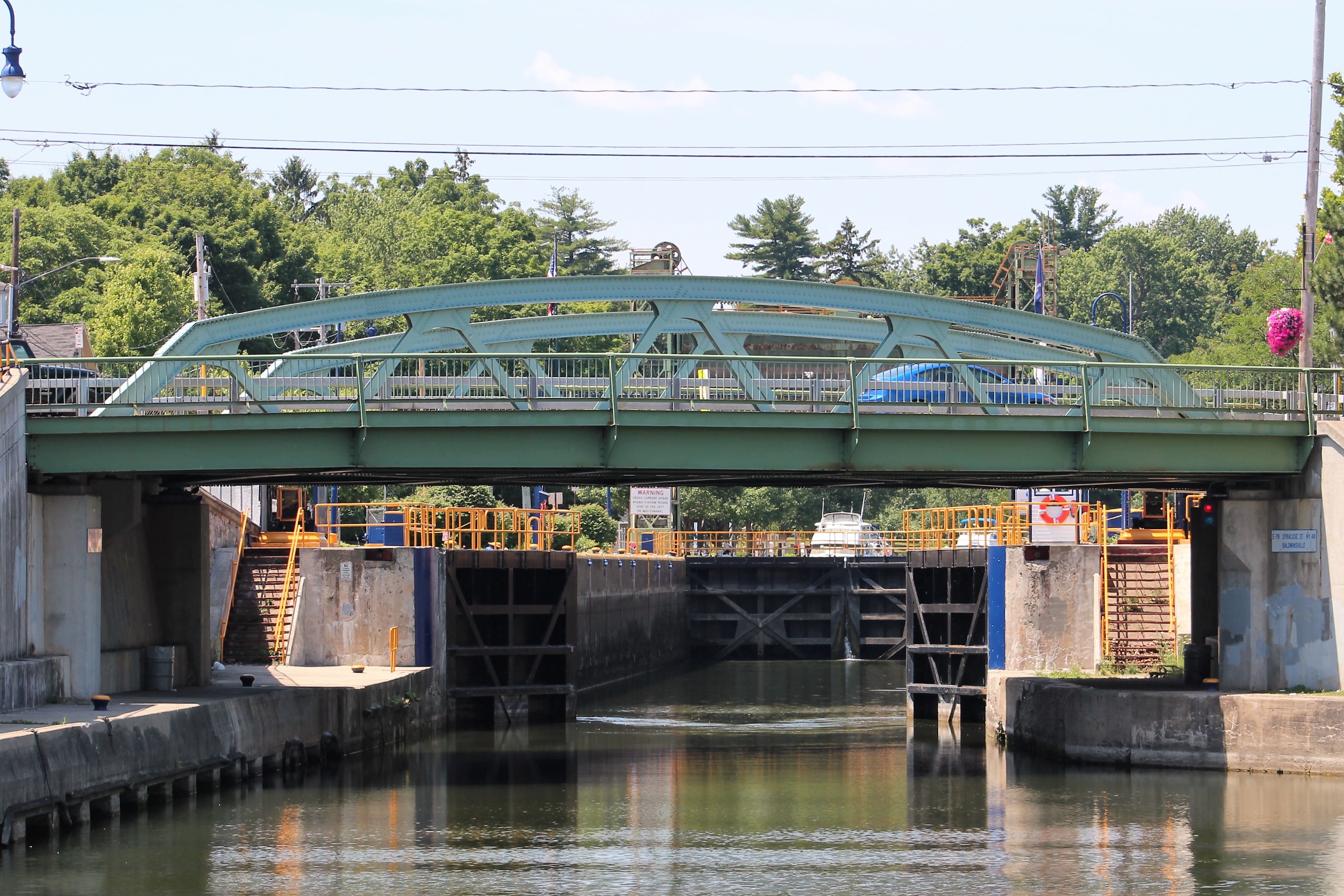
    Upon arrival at Lock E24, the Admiral spotted a Cake and Ice Cream store.  They agreed that they would make that the first stop while exploring the town of Baldwinsville.  A little historical tidbit, Lock E24 was the first lock completed during the modern Barge Canal era of the Erie Canal.  The lock opened May 9, 1910, almost eight years ahead of the canal completion.

    Lock E24, Lift 11 feet

    6 Lock E24

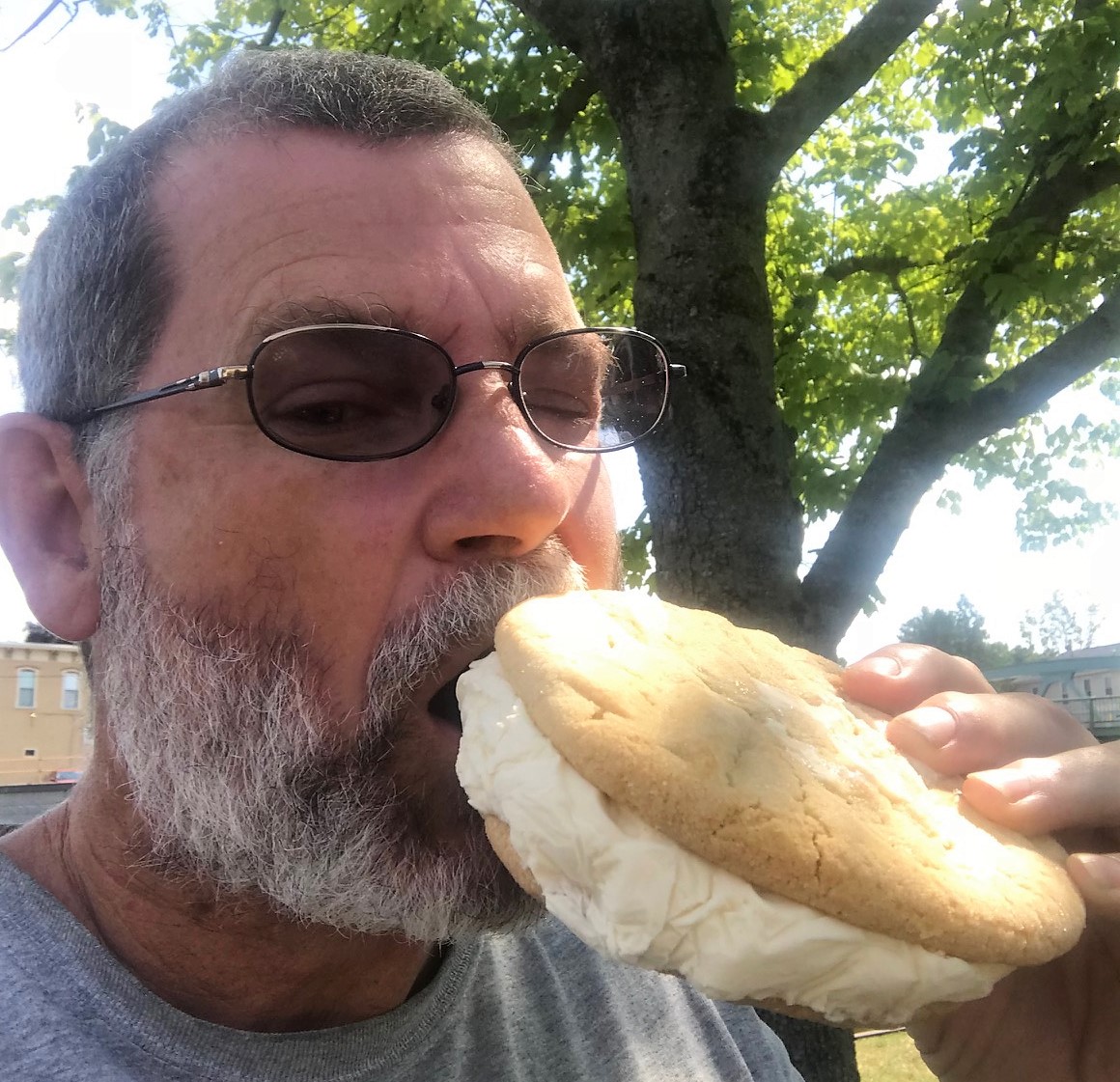
    After clearing the lock, the crew found a spot along the upper lock wall to moor for the night.  The skipper did find the ice cream store.  He bought a big kahuna, two peanut butter cookies sandwiching vanilla ice cream.

    6.2

    Friday, July 13th

    With the crew unable to make Syracuse, and the unscheduled stop at Lock E24 in Baldwinsville, the skipper had to recalculate the next few days moves.  He has decided to head to Seneca Falls for the weekend.  The crew headed down the western Erie Canal to the Canal Junction with the Cayuga-Seneca Canal at mile 201.

    A few sights on the western Erie Canal

    10

    11

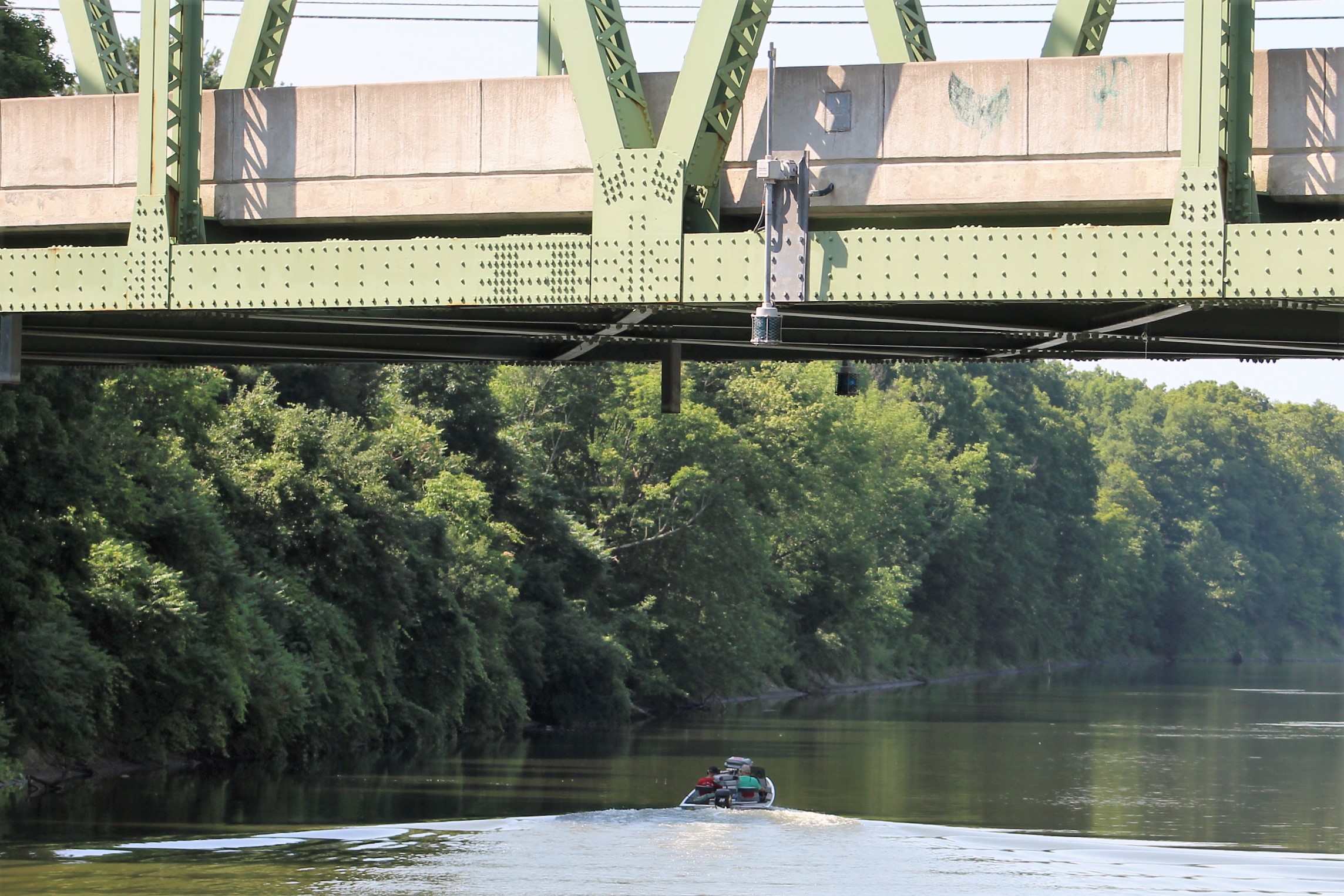
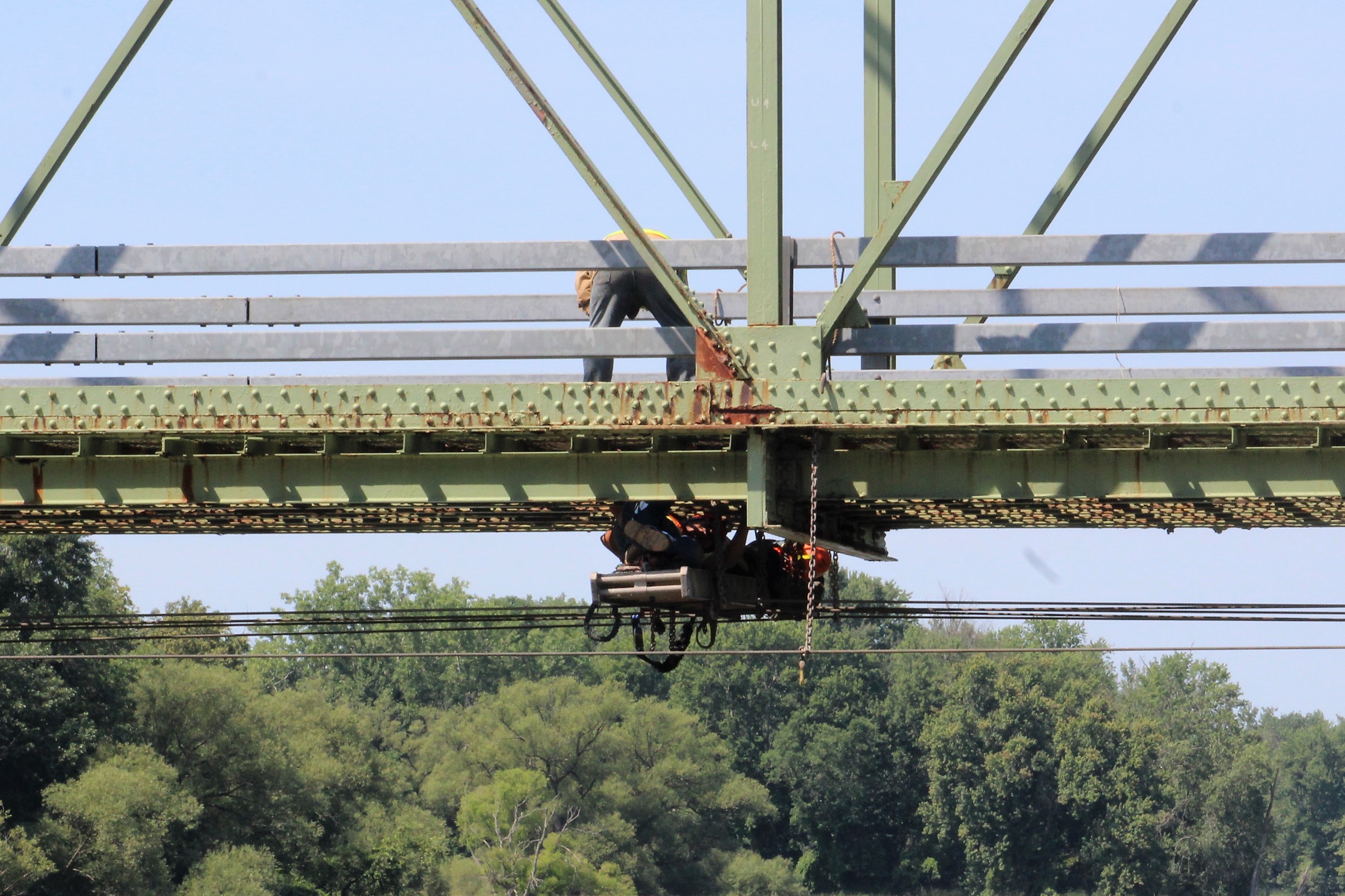
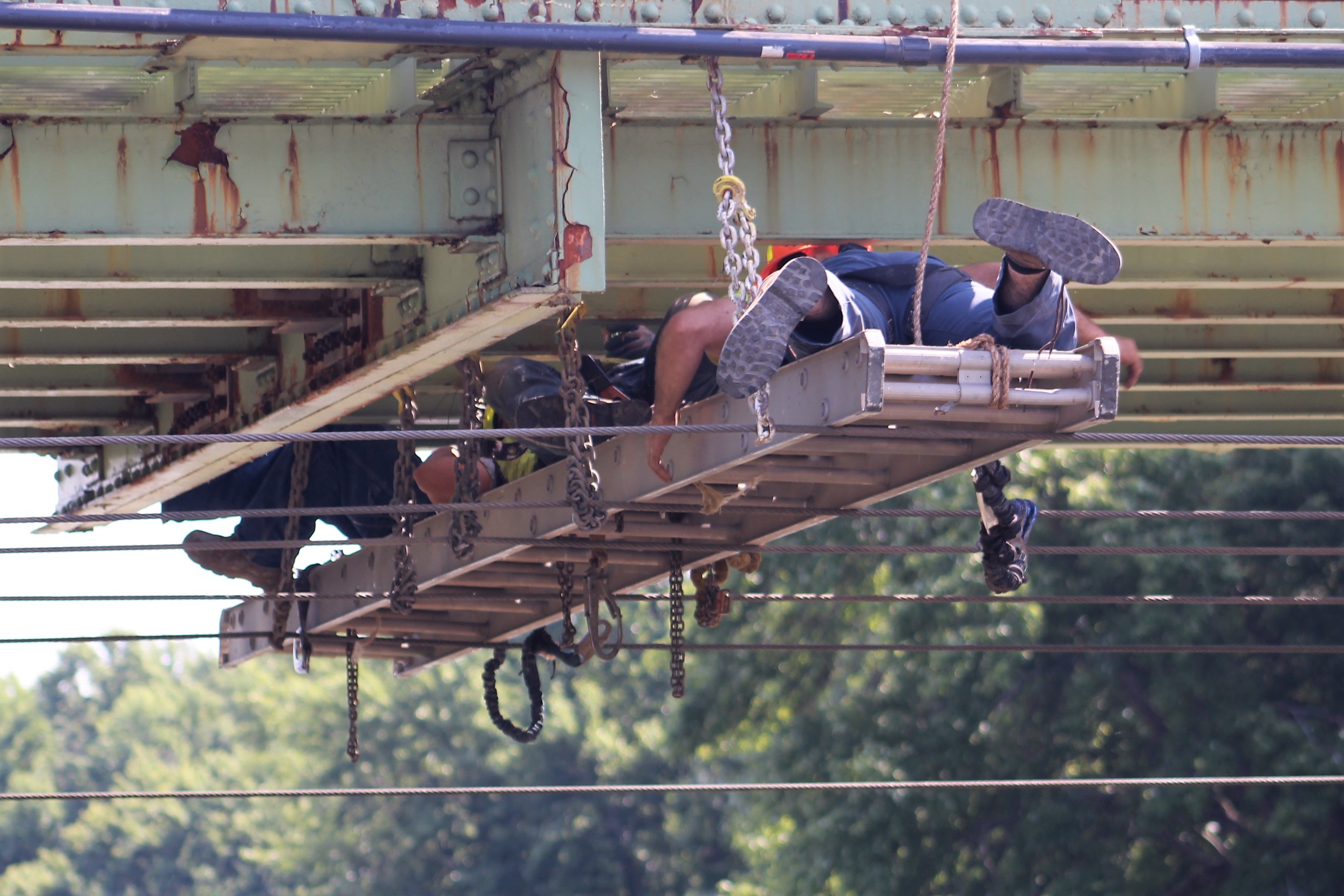
    One surprise caught the crew a bit off guard.  However, it did give the crew a chance to use their new air draft tool for getting under low bridges.  The skipper was approaching a 17 foot bridge, which should have been no problem.  However, he noticed a bunch of cables dangling below the bridge.  As they approached closer, he could tell there were people on a platform working under the bridge.

    12 Men at Work

    The skipper slowed to a near stop, had the Admiral go raise the air draft tool, and then proceeded slowly towards the bridge.  Turned out the crew still had a foot of clearance to the dangling cables below the bridge.  The skipper did notice that the work platform the guys were working on was really an extension ladder.

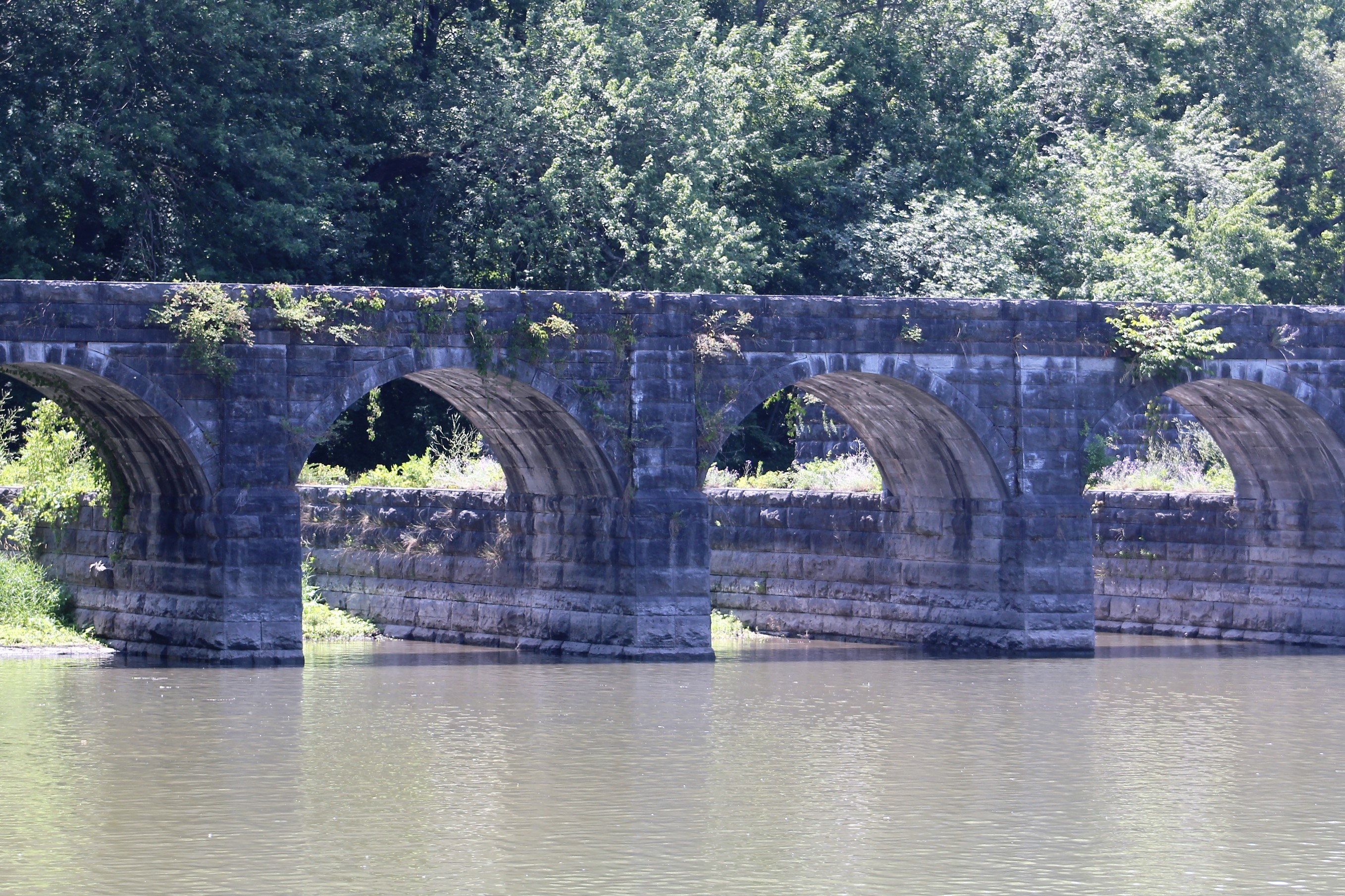
    12.1 A few more miles down the canal, the crew crossed the remains of the Montezuma Aqueduct.  The Aqueduct was built back in the 1862 expansion when the canal designers were having issues with the canal crossing the Seneca River.  The solution was to build this 900 foot long Aqueduct over the Seneca River.

    Aqueduct remains

    17 Aquaduct

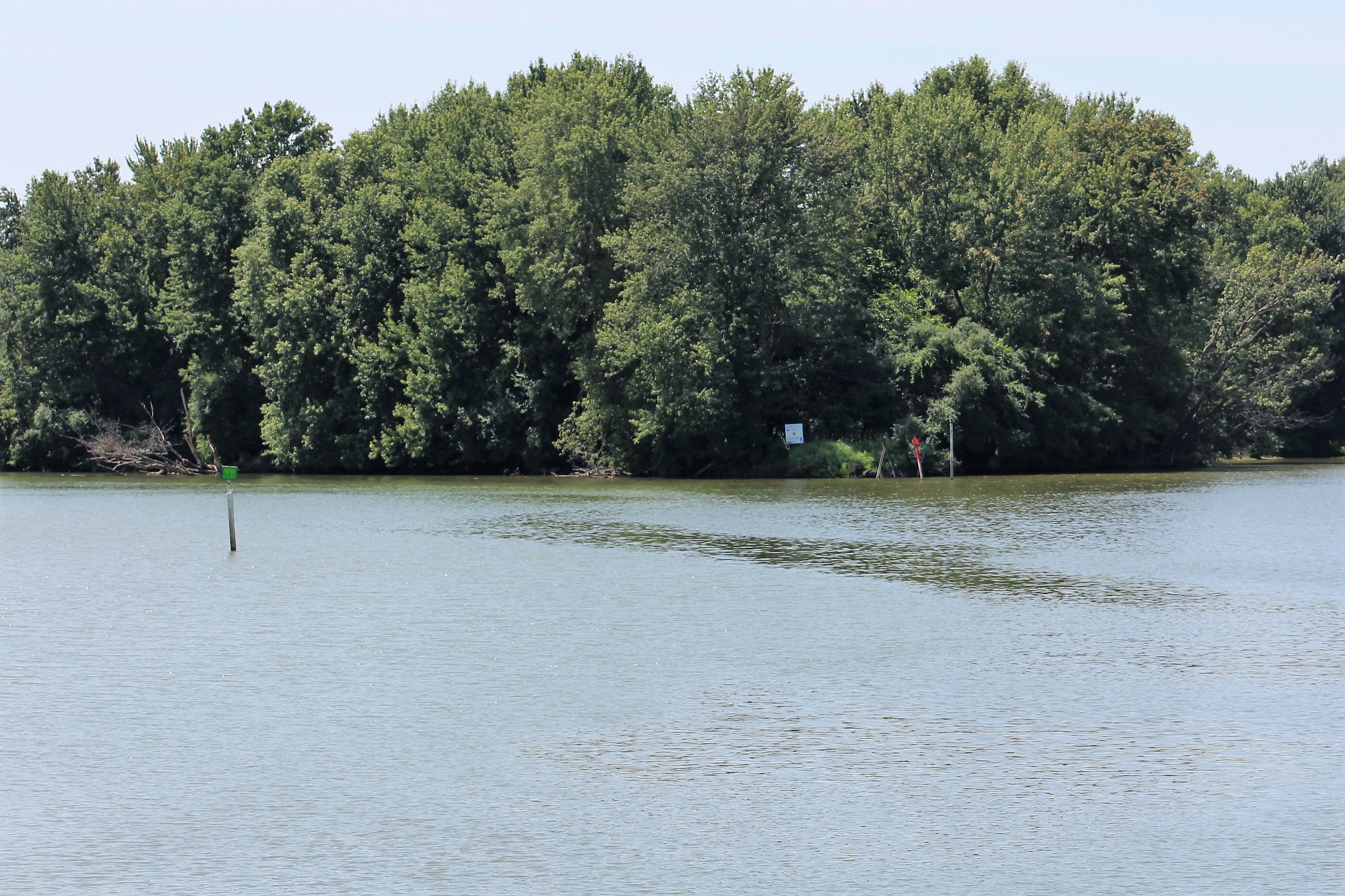
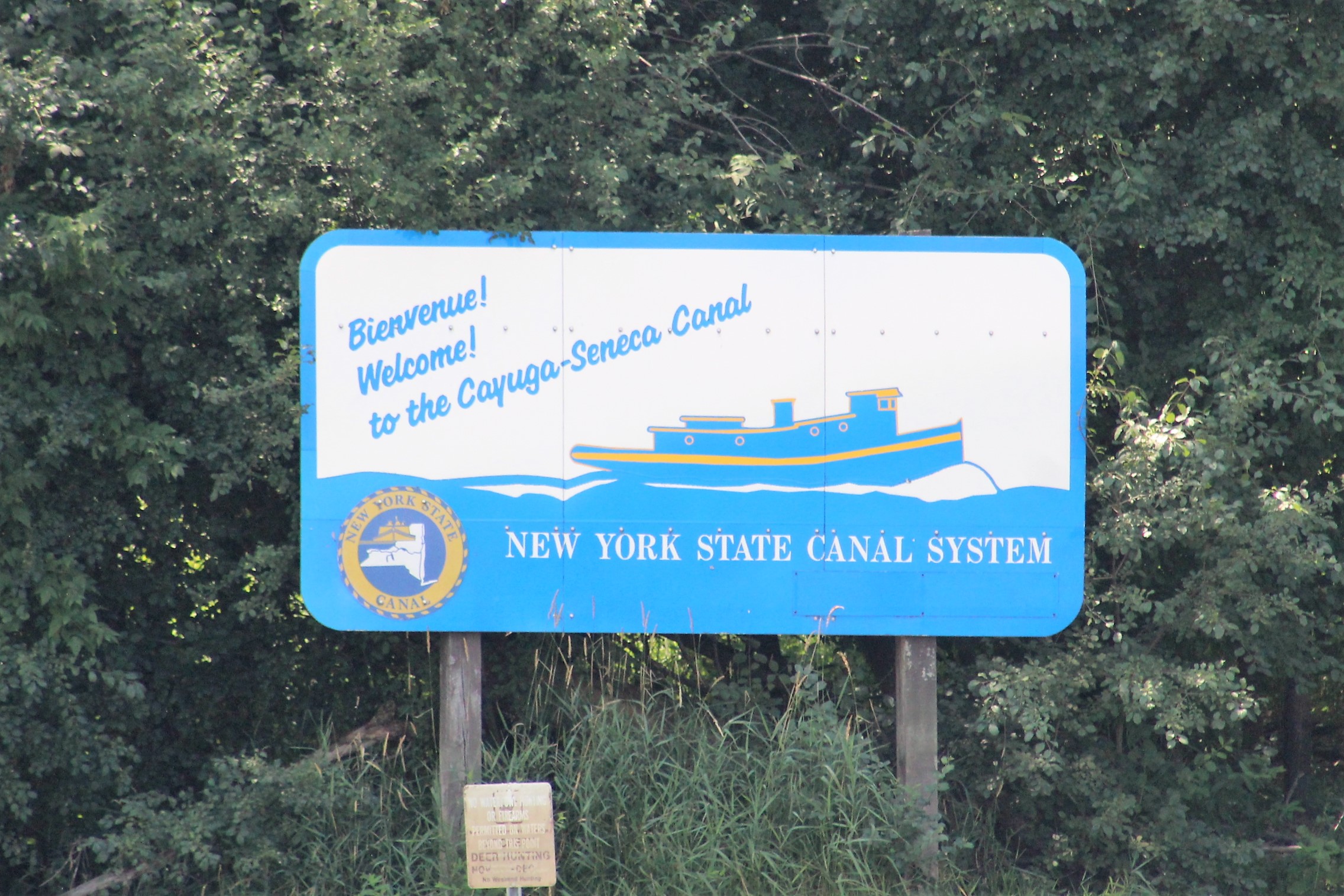
    Just a few more miles and the crew reached the Canal Junction with the Cayuga-Seneca Canal.  The crew headed south (left) to start their side trip into the Finger Lakes Region of New York.

    Canal Junction

    18 C_S Canal Junction

    18.2

    The crew traveled along the Montezuma Wildlife Refuge where they saw many birds and a deer along the bank.

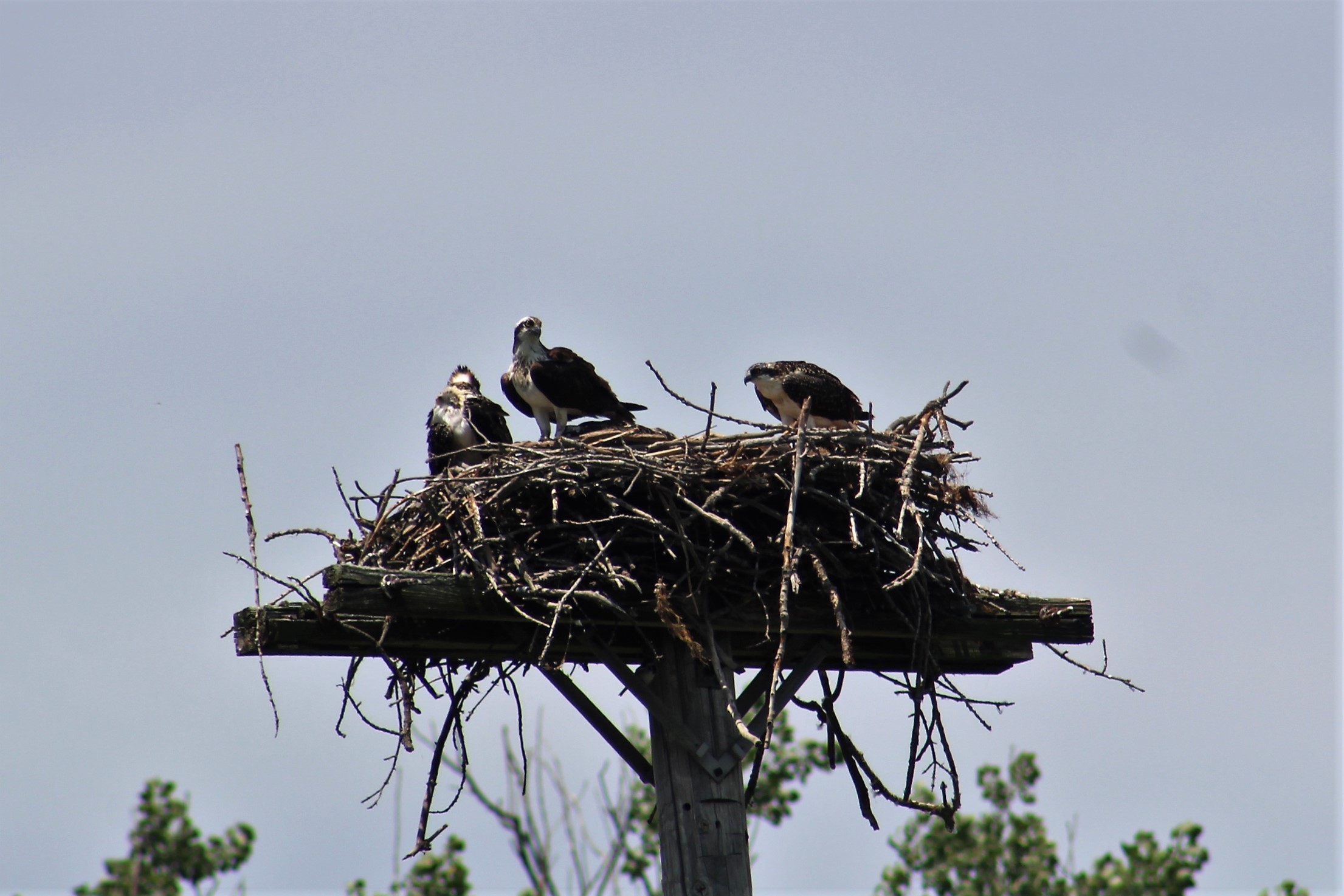
    Osprey Nest

    20 Osprey

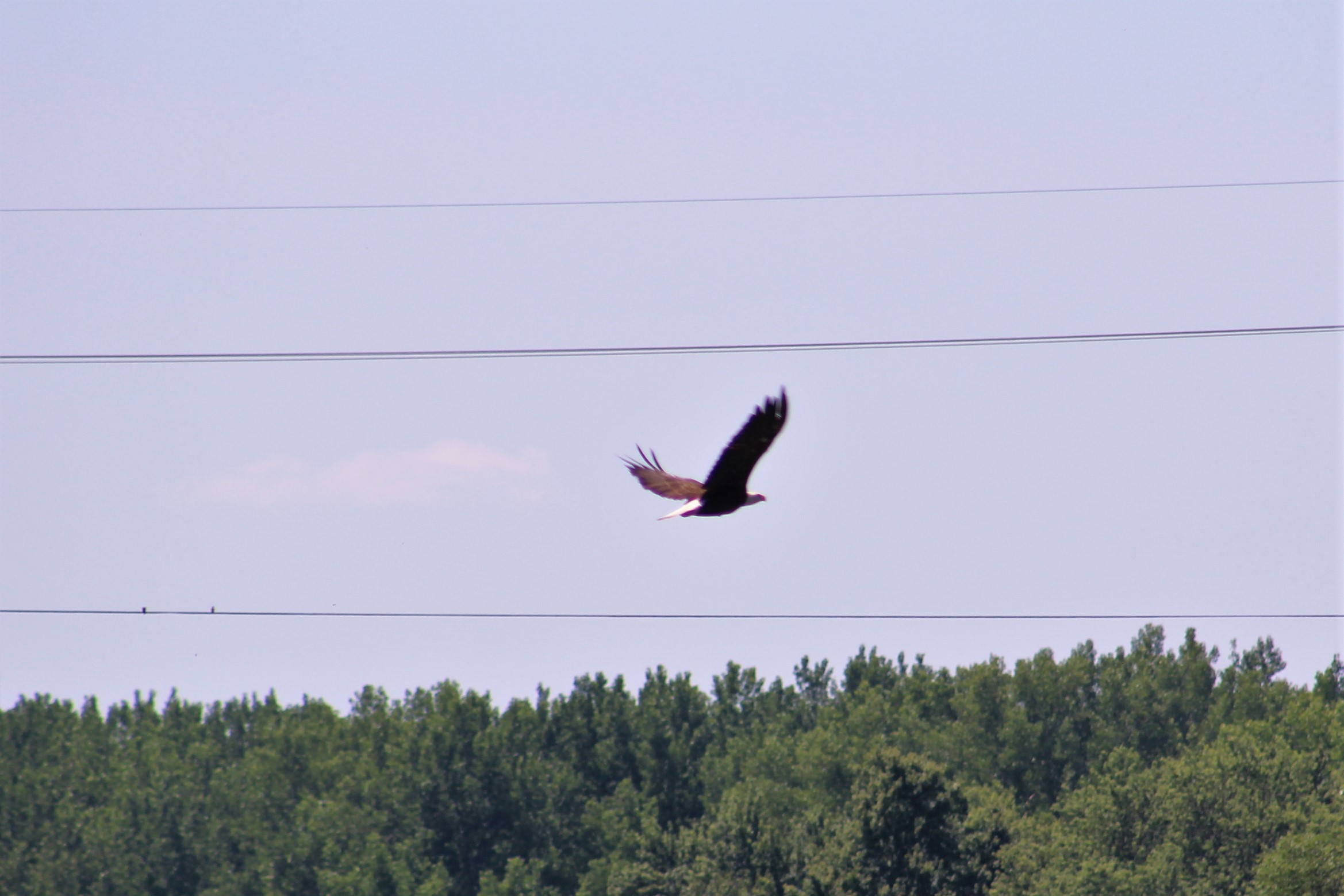
    Bald Eagle in flight

    16 Bald Eagle

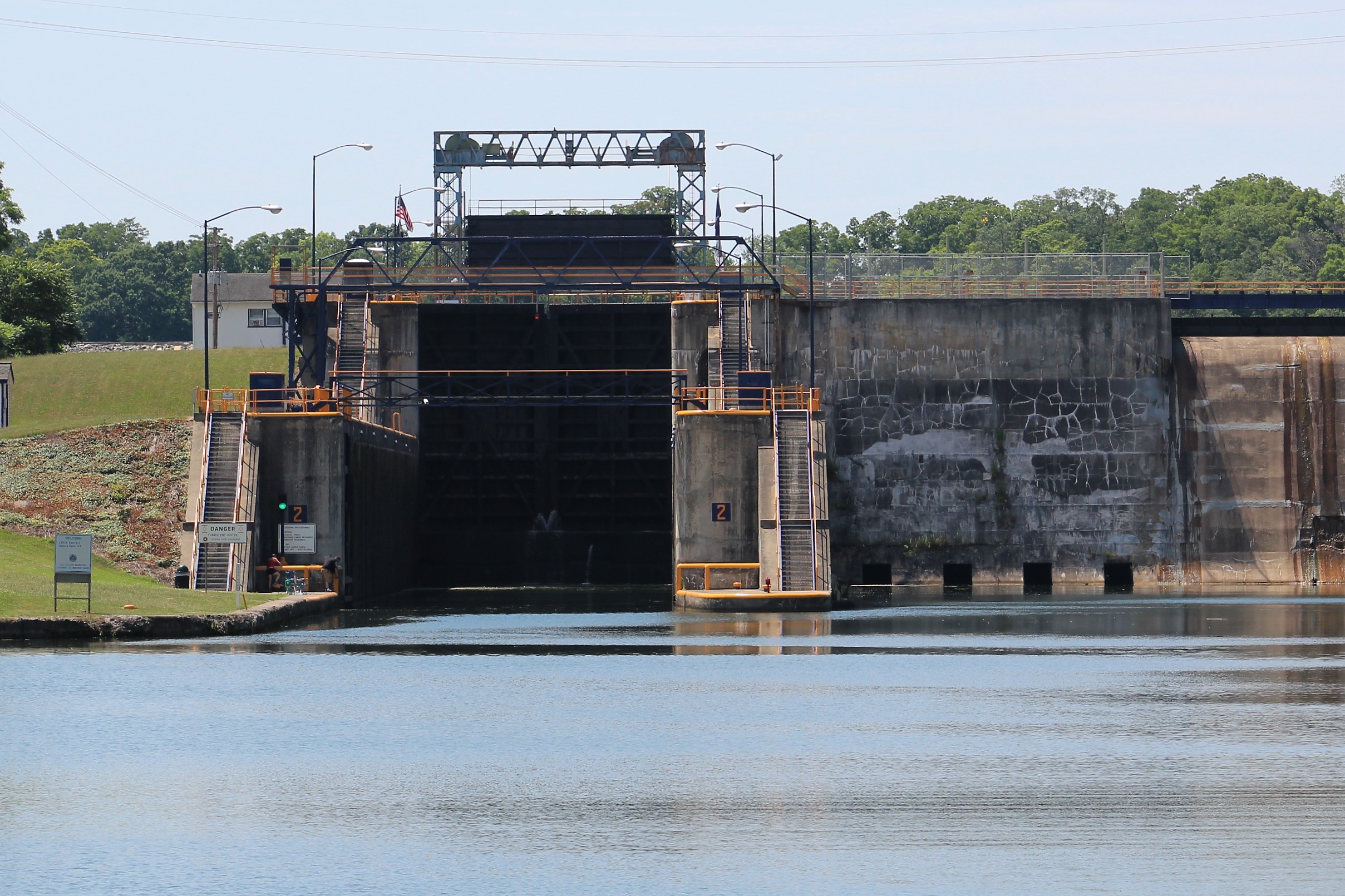
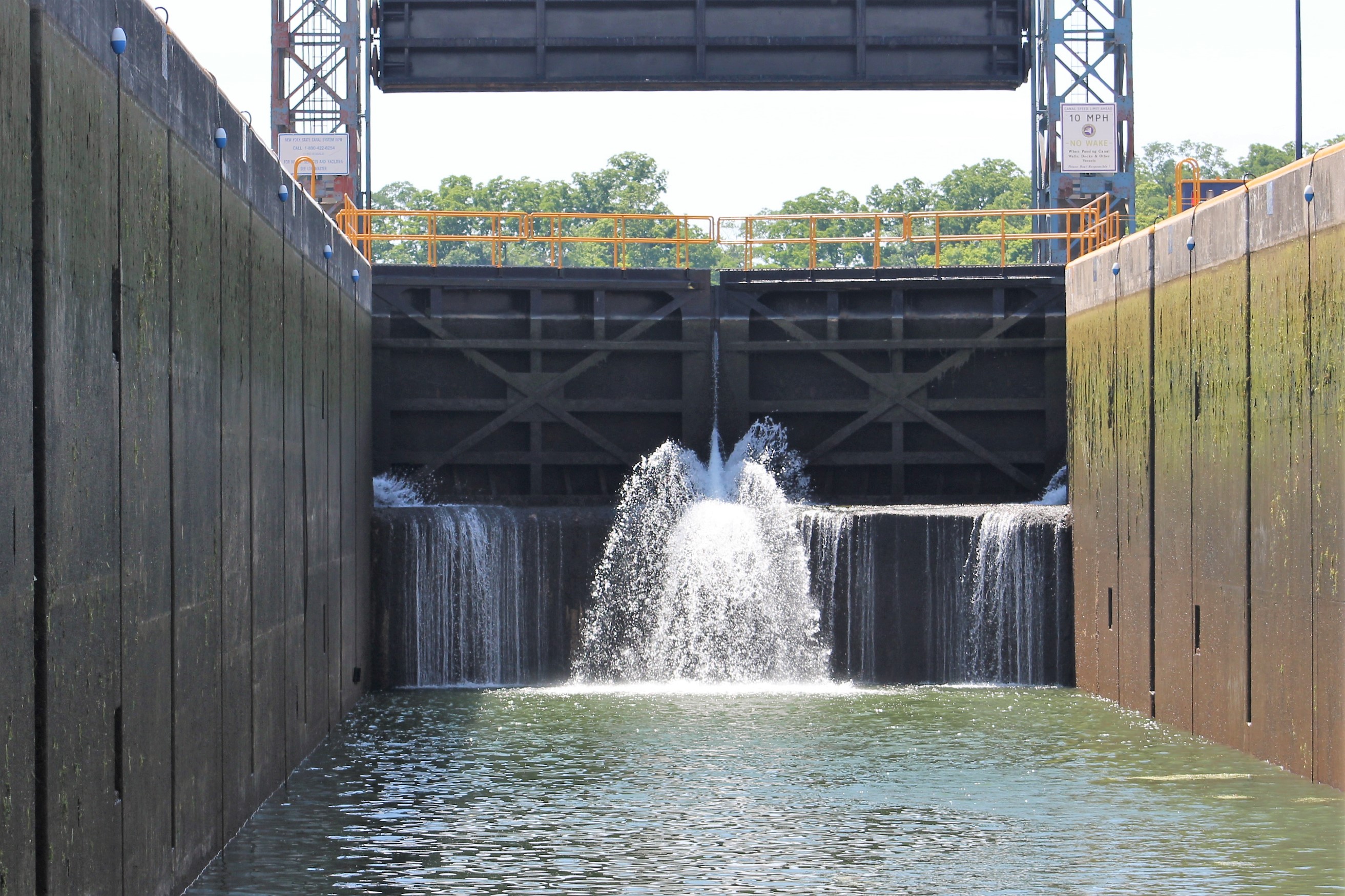
    The crew then arrived at Lock CS1 which raised the boat 7 feet to be the same level as Lake Cayuga.  The crew made a right turn upon exiting the lock and headed towards Seneca Falls where they would encounter Locks CS2 and 3.

    Lock CS1, lift 7 feet

    21 Lock CS 1

    Locks CS2 and 3, combined lift of 49 feet

    22 Lock CS 2

    23 Lock CS 3

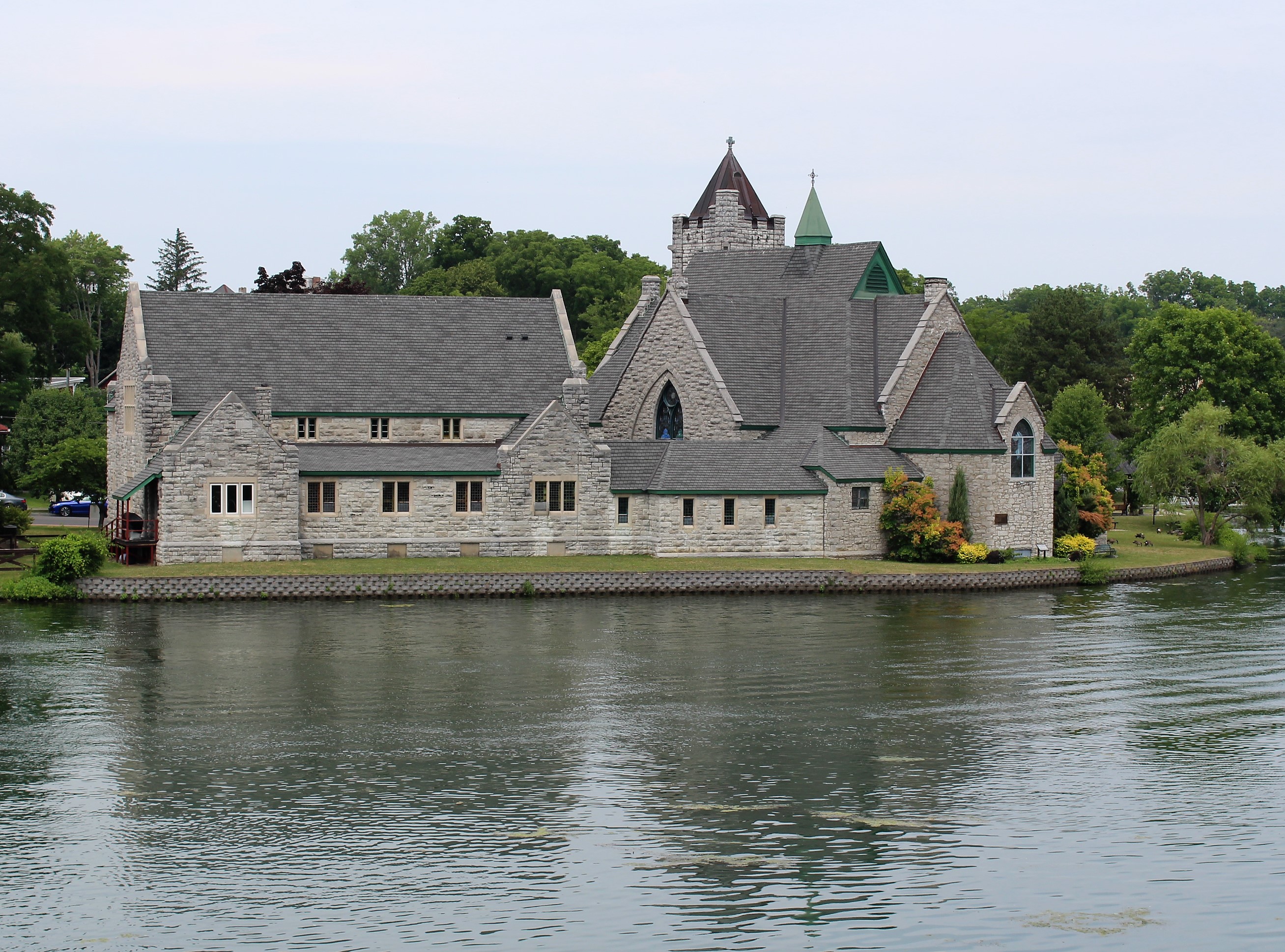
    The first sight of Seneca Falls is this Episcopal Church along the Canal front.

    29.1

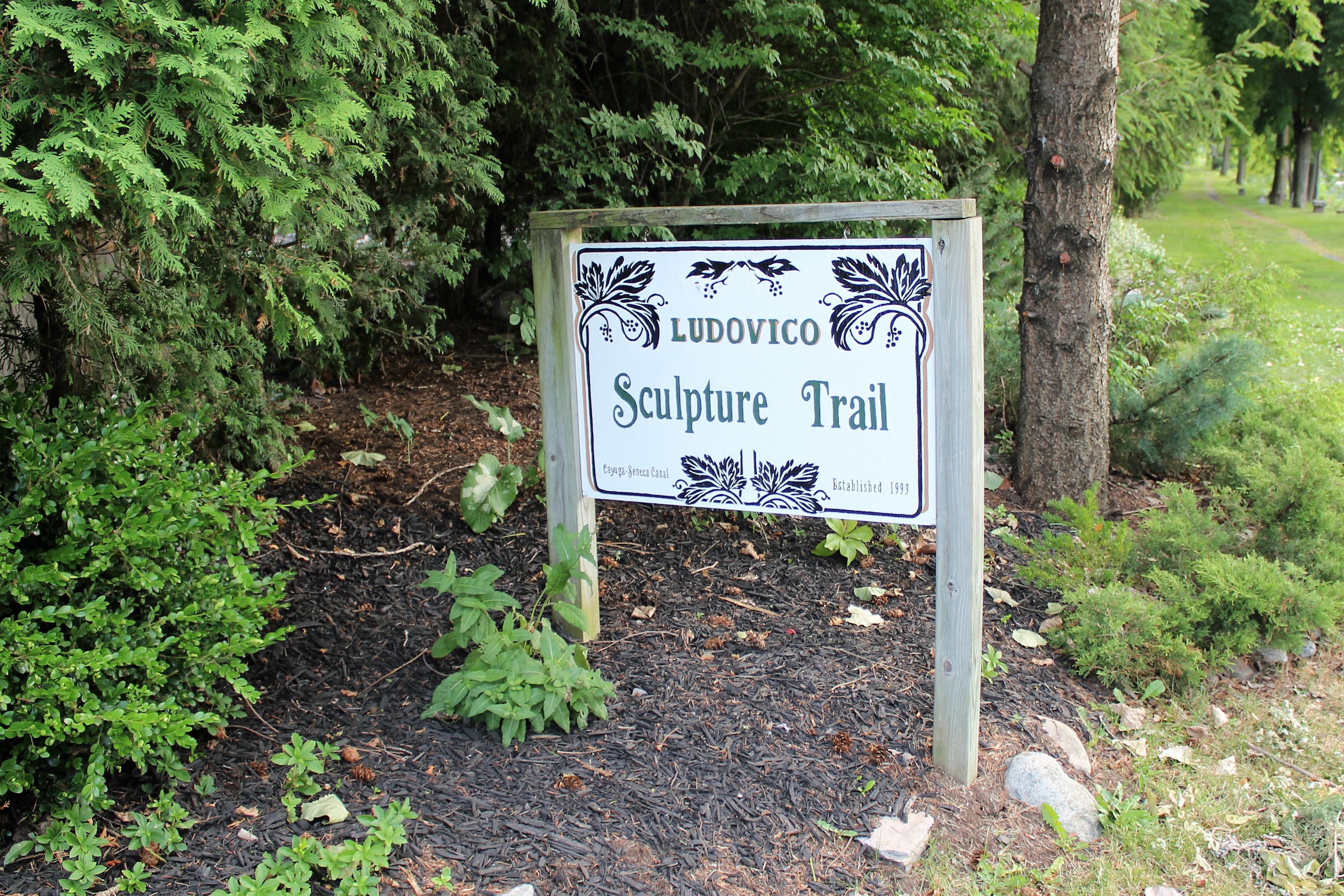
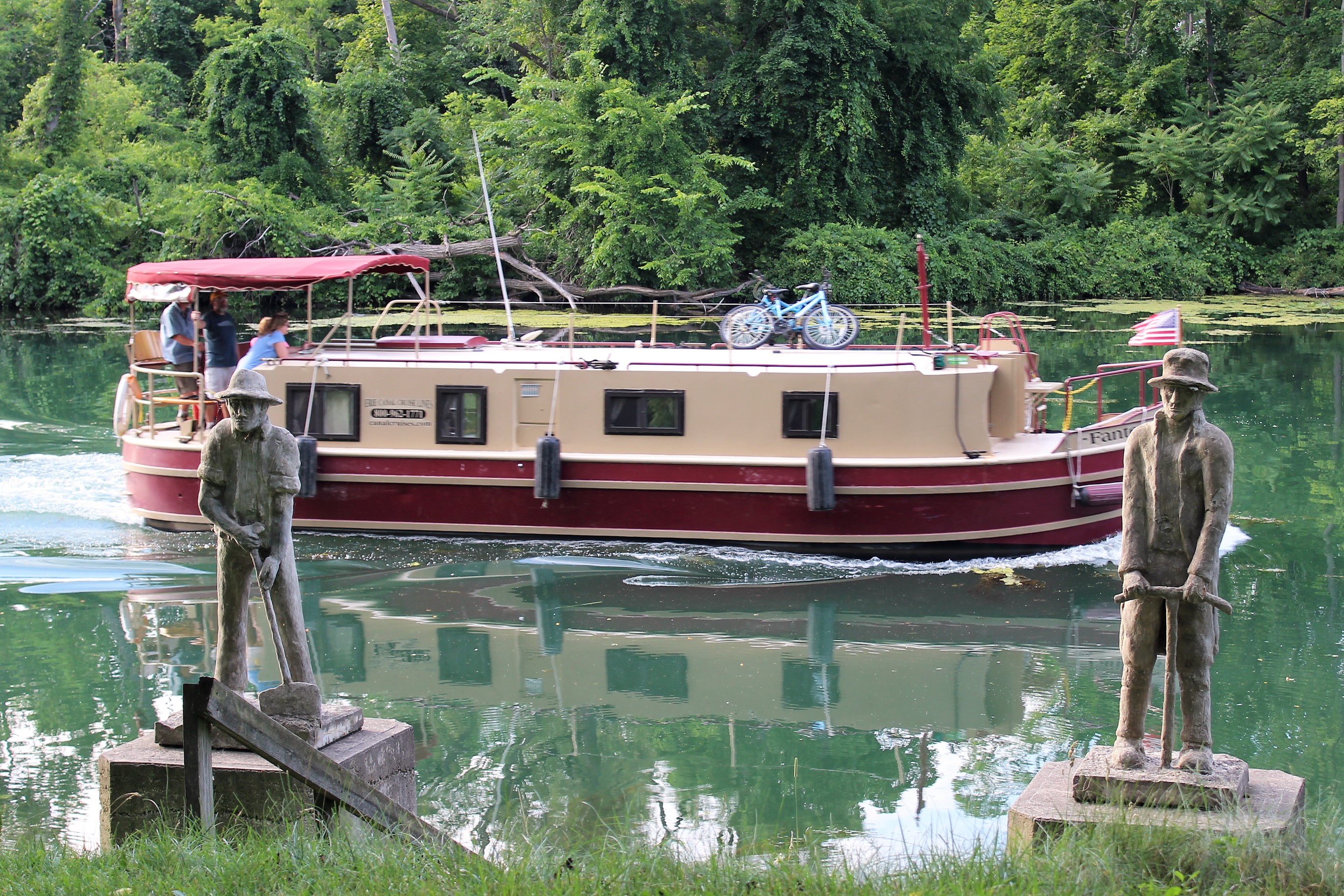
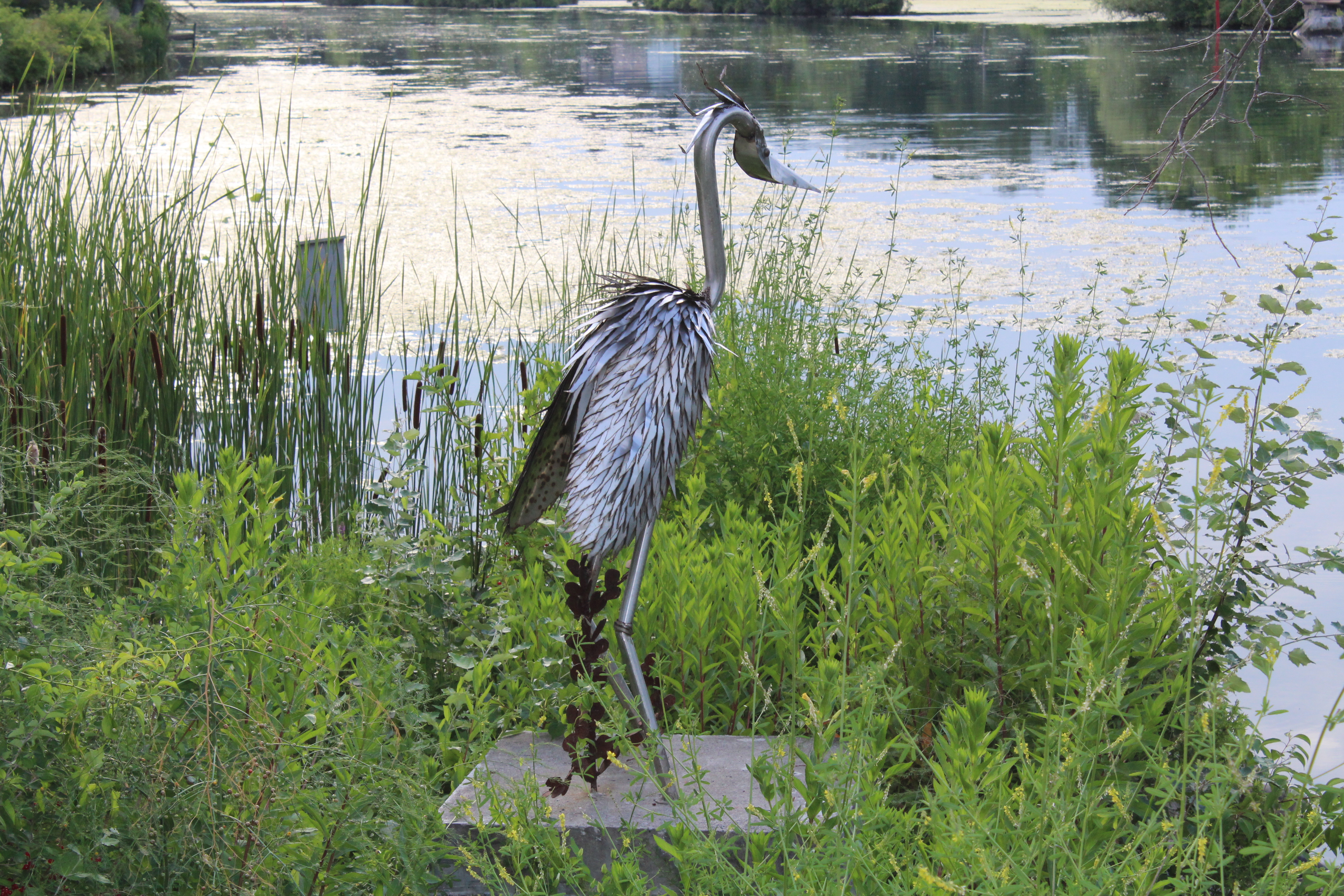
    After making the bend, the crew saw the village walls and found a spot to moor for the weekend.  The skipper noticed a Sculpture Garden Trail Head that was near the boat, so the crew headed down the one mile trail to see the sights.

    24 Ludovico SculptureTrail

    24.3

    24.6

    24.7

    Saturday, July 14th

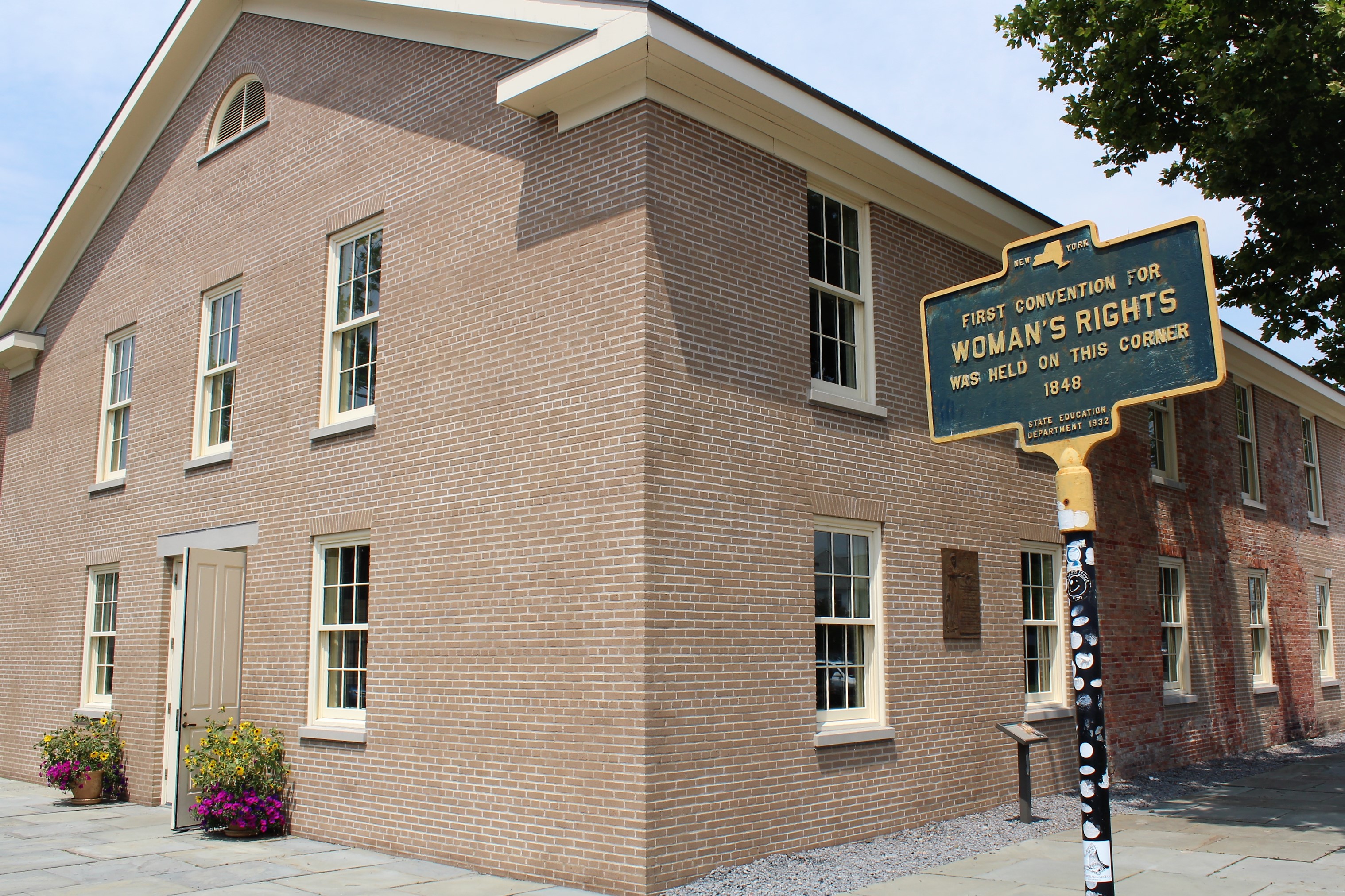
    Seneca Falls turned out to be an interesting stop.  The village has a rich history.  There number one claim to fame is the location of the first Women’s Rights Convention at the Wesleyan Chapel on July 19-20 1848.

    Wesleyan Chapel

    33 NP of Women's Movement

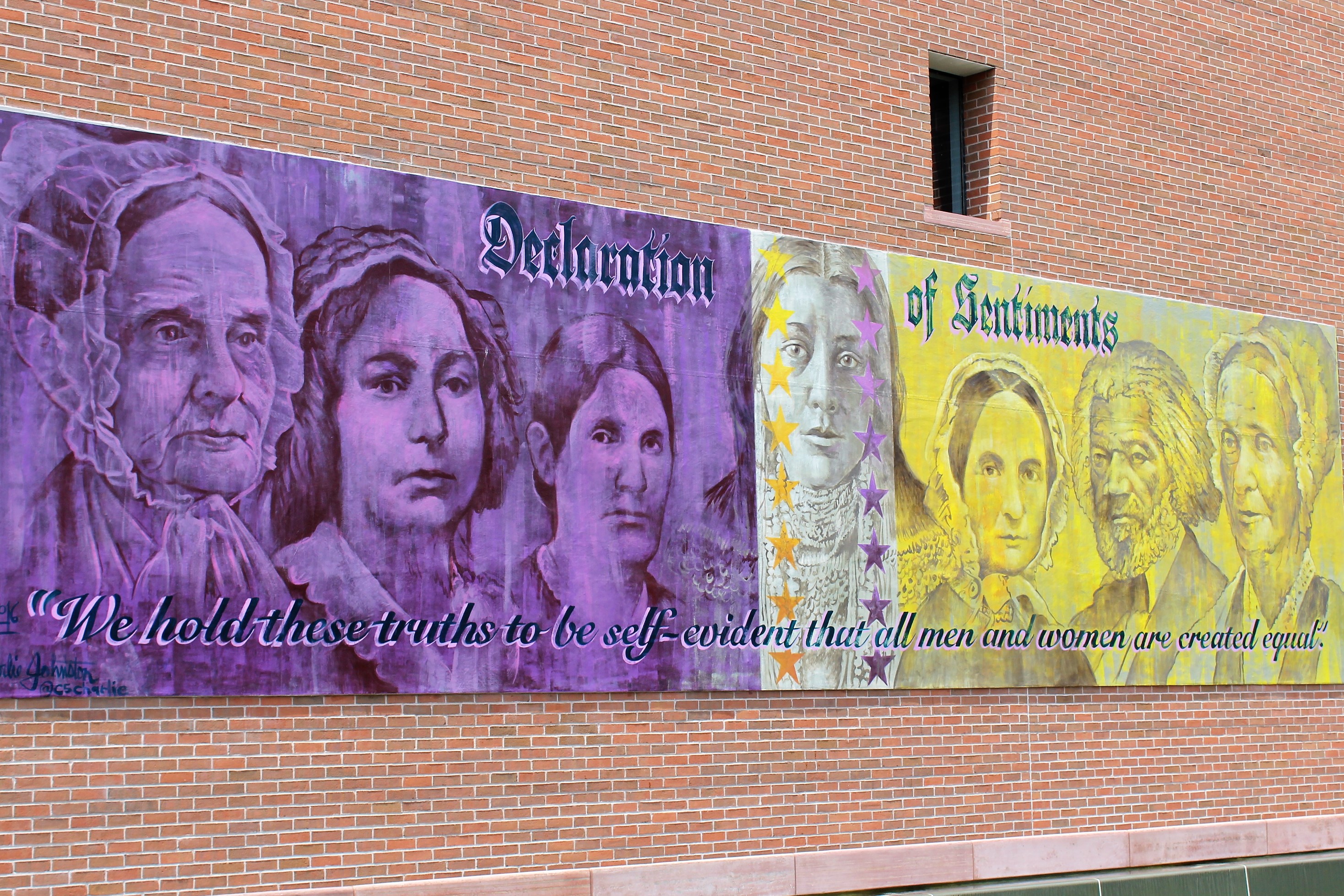
    It was here that the Declaration of Sentiments was signed and eventually led to the 19th Amendment to the US Constitution in 1920.  The Women’s Rights National Historic Park tells the story of how women fought for equality and the right to vote.

    33.2

    Of the 300 folks in attendance at the Women’s Rights Convention, only 100 signed the Declaration of Sentiments.

    32 Seneca Falls Visitor Center

    The town also houses the National Women’s Hall of Fame, which showcases great American Women.  Of the women inducted there, the skipper has to admit that he did not know many of them by name.  He did recognize Susan B. Anthony, Lucile Ball, Clara Barton, Amelia Earhart, and Betty Ford, to name just a few.

    He did discover a Margret Fuller in the Hall of Fame.  She lived 1810 – 1850.  From 1839 to 1844 she held a series of ‘Conversations’ for women of Boston, encouraging women to think and talk together about ideas.  These dialogues led Fuller to write her most important work, Women in the Nineteenth Century (1845), considered a classic work of American feminist thought that had a profound influence on the Seneca Falls Women’s Rights gathering in 1848. (From the National Women’s Hall of Fame)

    Future home of the National Women’s Hall of Fame (under remodel)

    26.1

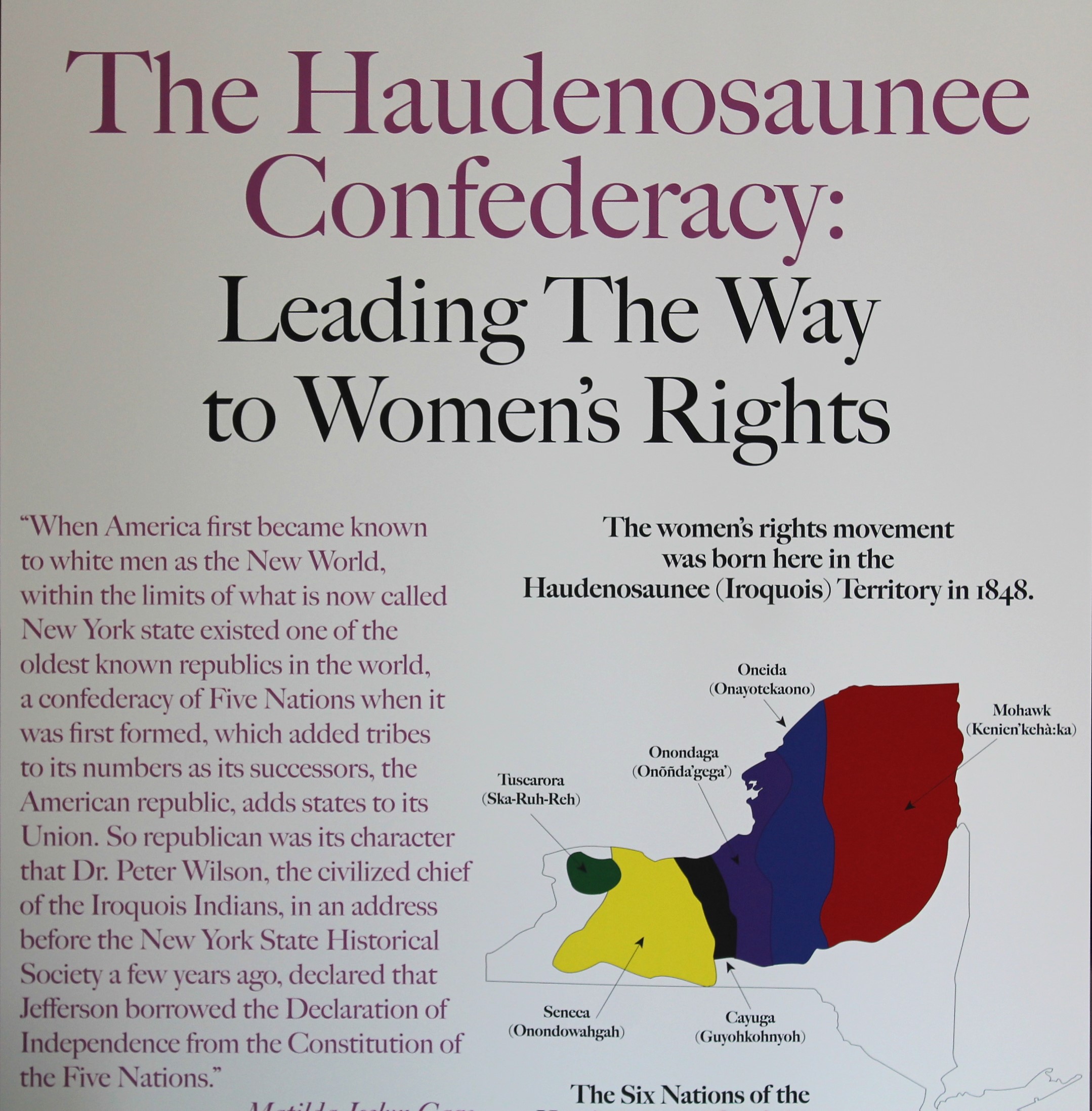
    One of the interesting back stories that the National Park told was of the Haudenosaunee (ho-dee-noe-sho-nee) or Iroquois.  The six nations make up the oldest living participatory democracy on earth.  Their government of unity and equality go back over 800 years.  The chiefs of the Haudenosaunee were invited to speak at the Continental Congress on June 11, 1776.  Many of their ideas of unity and equality made it into our Declaration of Independence.

    33.5

    There was still a presence of these tribes in central New York in the mid 1800’s.  These Native Americans had an impact on the women of Central New York.  The women began to take notice how the native women already had the rights that were denied by the laws of the United States.  For example, the native women had a Council who actually picked the Chief for the six nation Confederacy.  Then the six nations individually voted (both men and women) on the choice.  The nominee had to carry all six nations to become the Chief of the Confederacy.  If the nominee did not carry all six nations, then the Women’s Council would select a second candidate.

    The Quaker and Methodist women of Central New York took notice of the rights of the Native Women and used their observations to form the backbone of the Declaration of Sentiments that was edited and approved at the 1848 Convention in Seneca Falls.

    The Iroquois Women would tell the women fighting for equal rights, We

    • Own the Land, the Lodge, the Children
    • Ours is the right to adoption, life or death;
    • Ours is the right to raise up and depose chiefs;
    • Ours is the right to representations in all councils;
    • Ours is the right to make and abrogate treaties;
    • Ours is the supervision over domestic and foreign policies;
    • Ours is the trusteeship of tribal property;
    • Our lives are valued again as high as man’s.

    These ideals drove the American Women forward towards the right to vote and buy property.

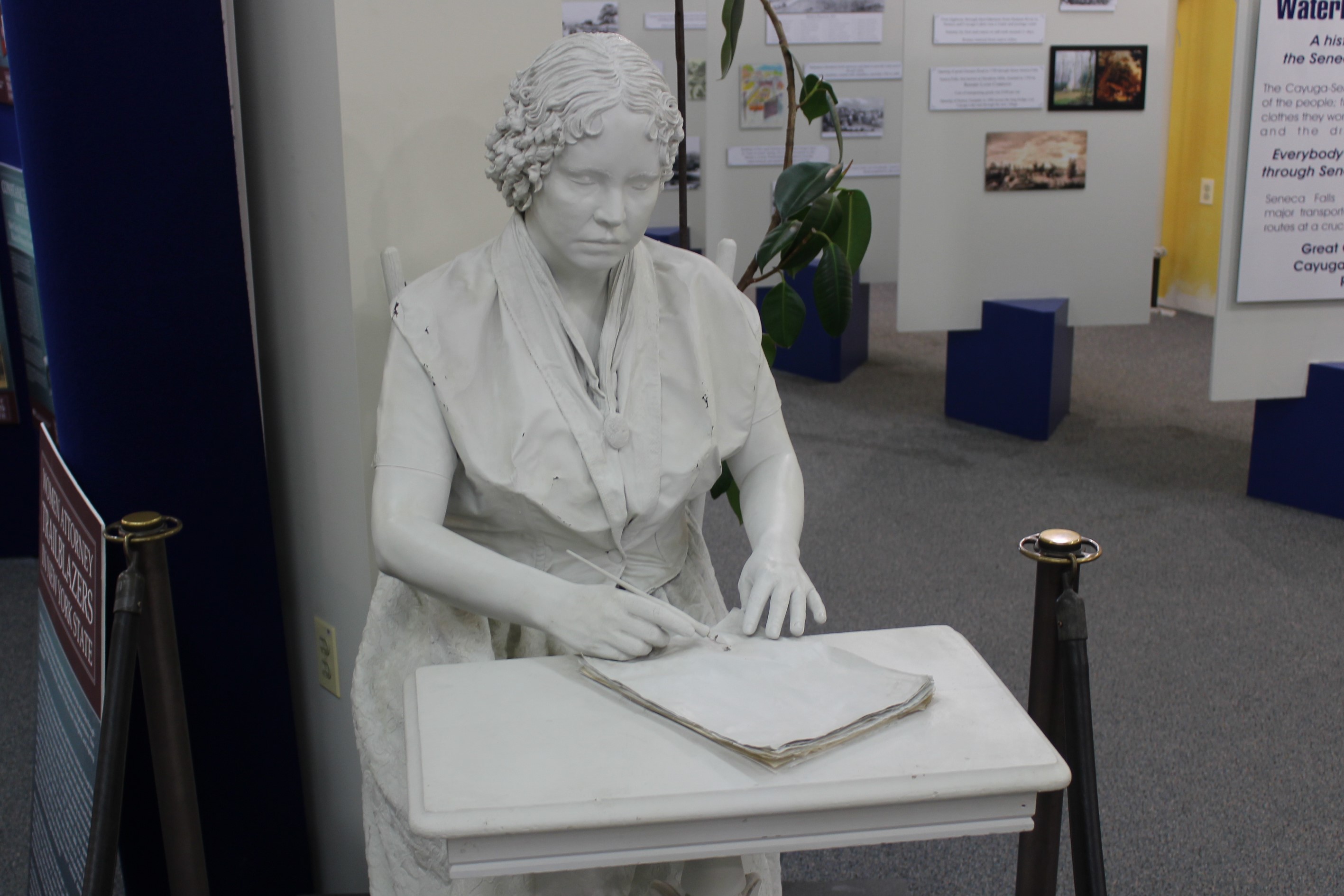
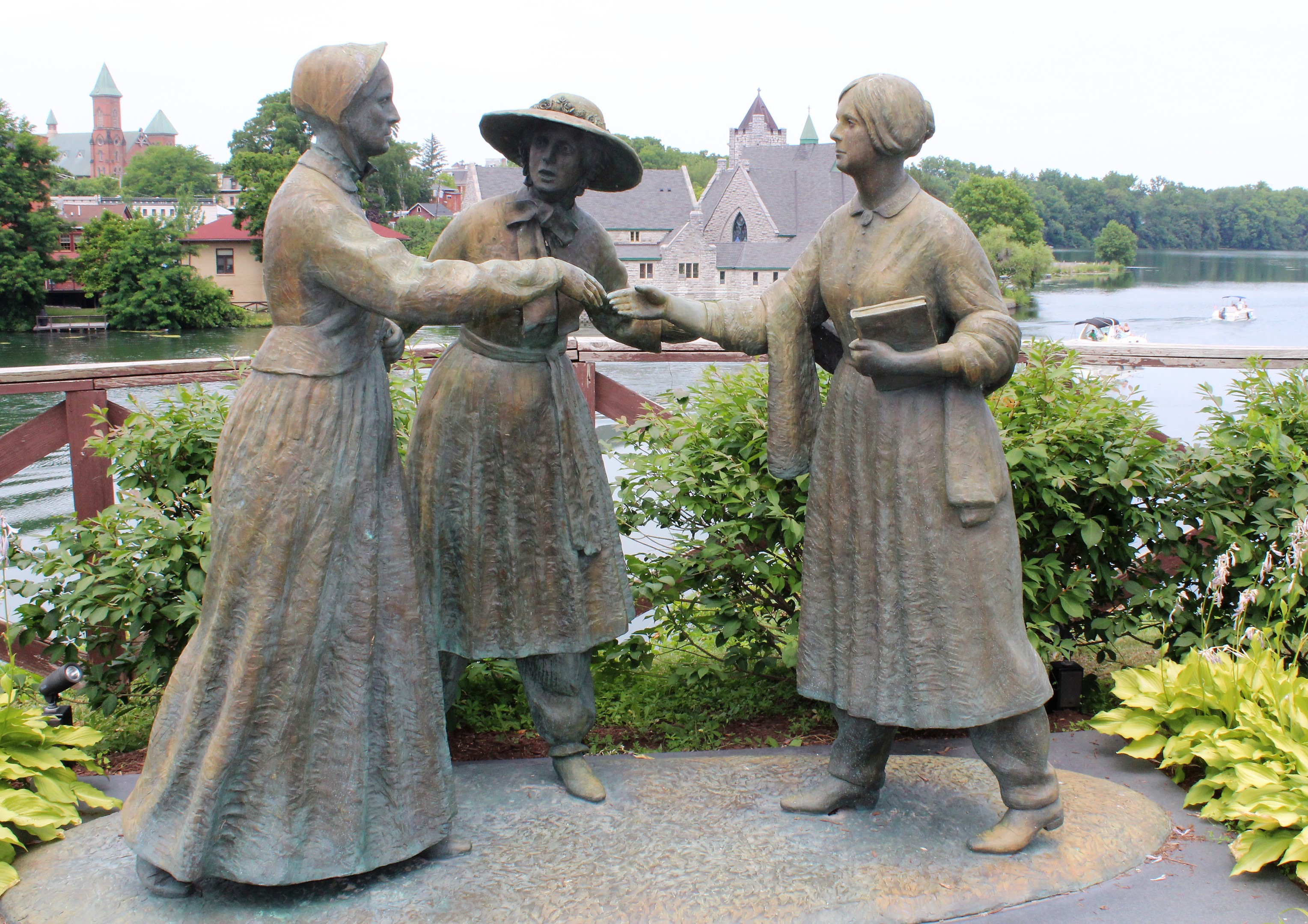
    Statue capturing the meeting of Susan B Anthony and Elizabeth Cady Stanton

    34 Susan B Anthony meets Eizabeth Stanton

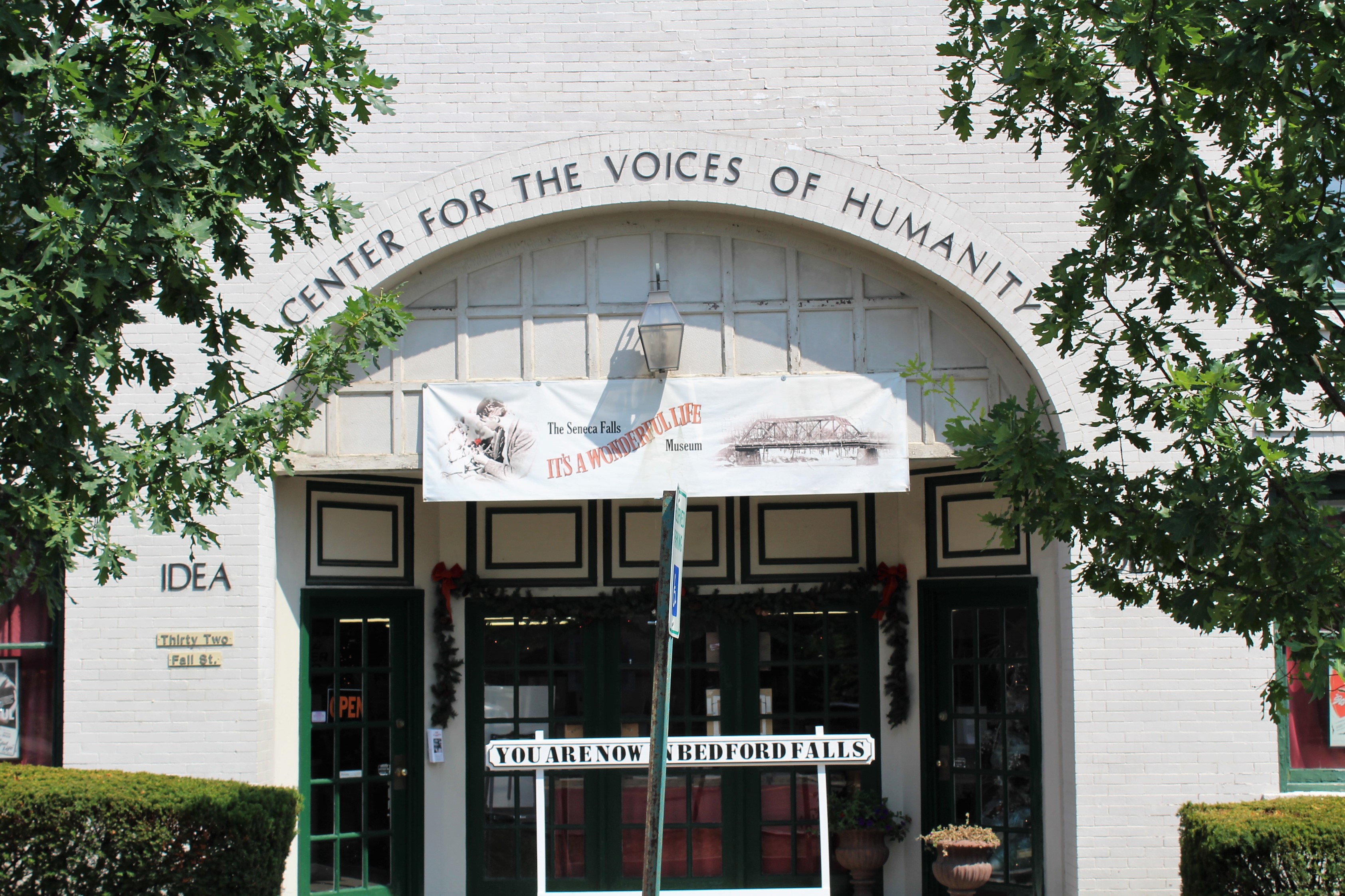
    On another note, It’s A Wonderful Life Museum is also in Seneca Falls.  The locals believe that Seneca Falls was the inspiration for Frank Capra’s script.  He is known to have visited the area while working on the screenplay.

    30 It's A Wonderful Life Museum

    Some similarities between Seneca Falls and Bedford Falls of the movie:

    • Both are located in western New York
    • The film makes reference to surrounding areas such as Buffalo, Rochester, and Elmira
    • Originally, Harry Bailey attended Cornell University, in nearby Ithaca
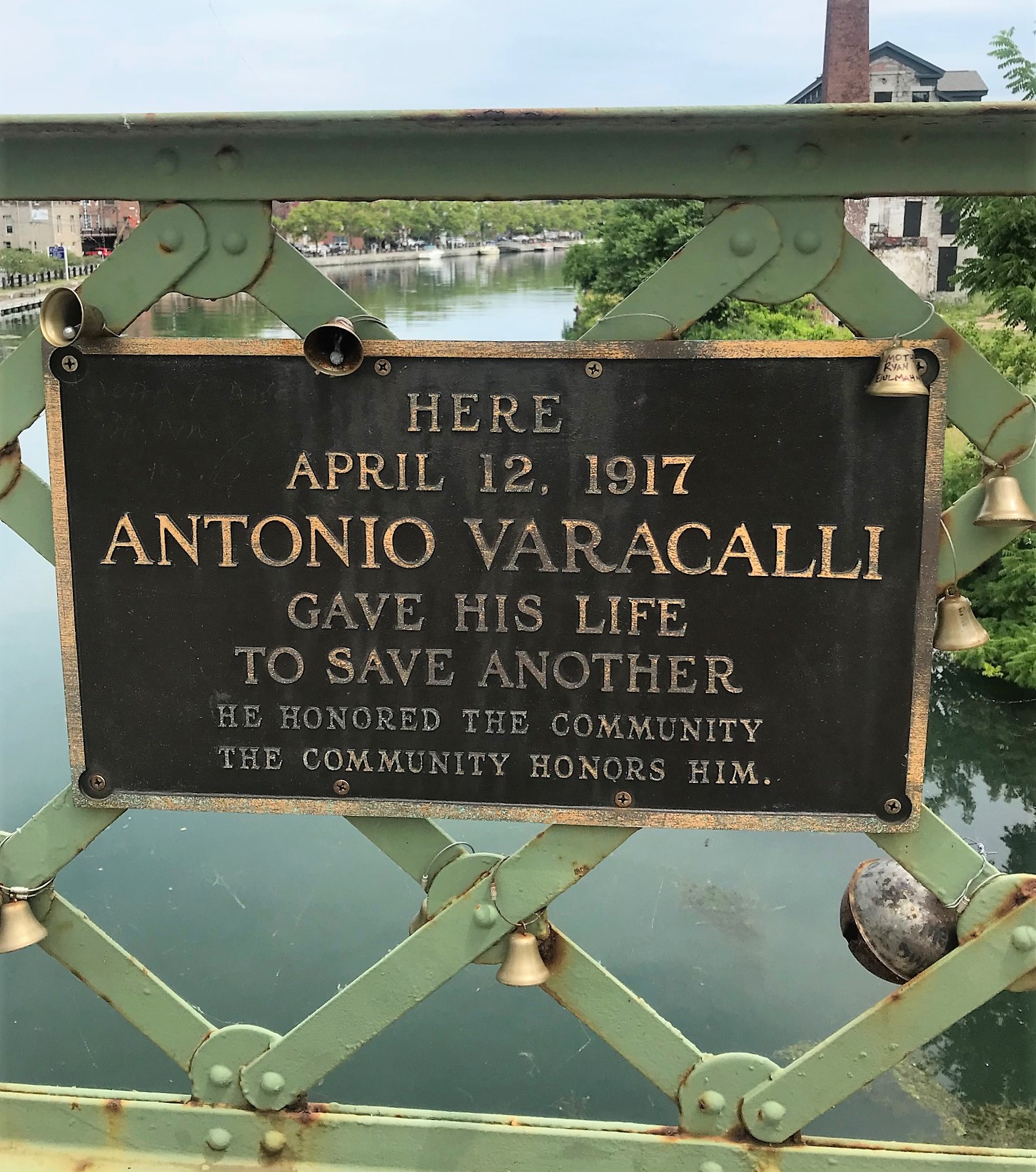
    • The steel bridge in the movie is very similar to the bridge over the canal, down to the detail of the color of the paint
    • The movie has a scene where Harry is contemplating suicide and performs a rescue.  In real life, a lady jumped from the bridge and was rescued; however, the rescuer died.

    35 Bridge (2)

    All in all, Seneca Falls was an interesting stop.

    Boat name of the week

    8

    Next Week –

    The crew will head into Seneca Lake and then move over to explore Cayuga Lake.

    Loop On – Where the road ends, the water begins. The water goes on forever, and the adventure never ends.

    Eric the Red

  • Happy 242 America

    Happy 242 America

    Hello virtual crew members and fellow adventurers!

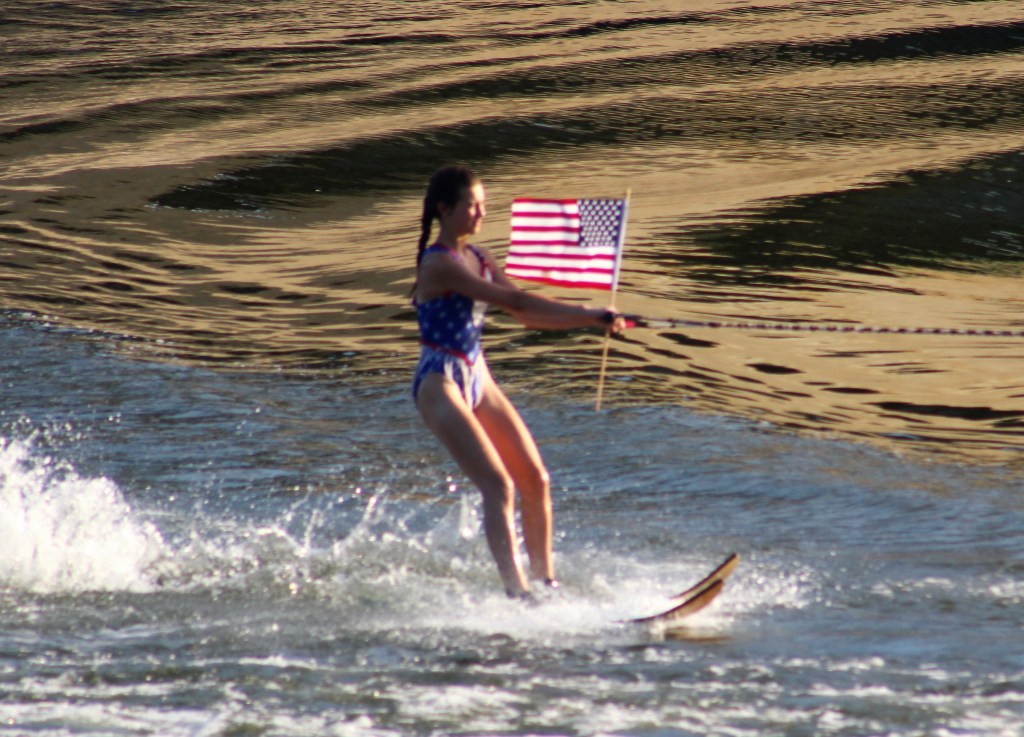
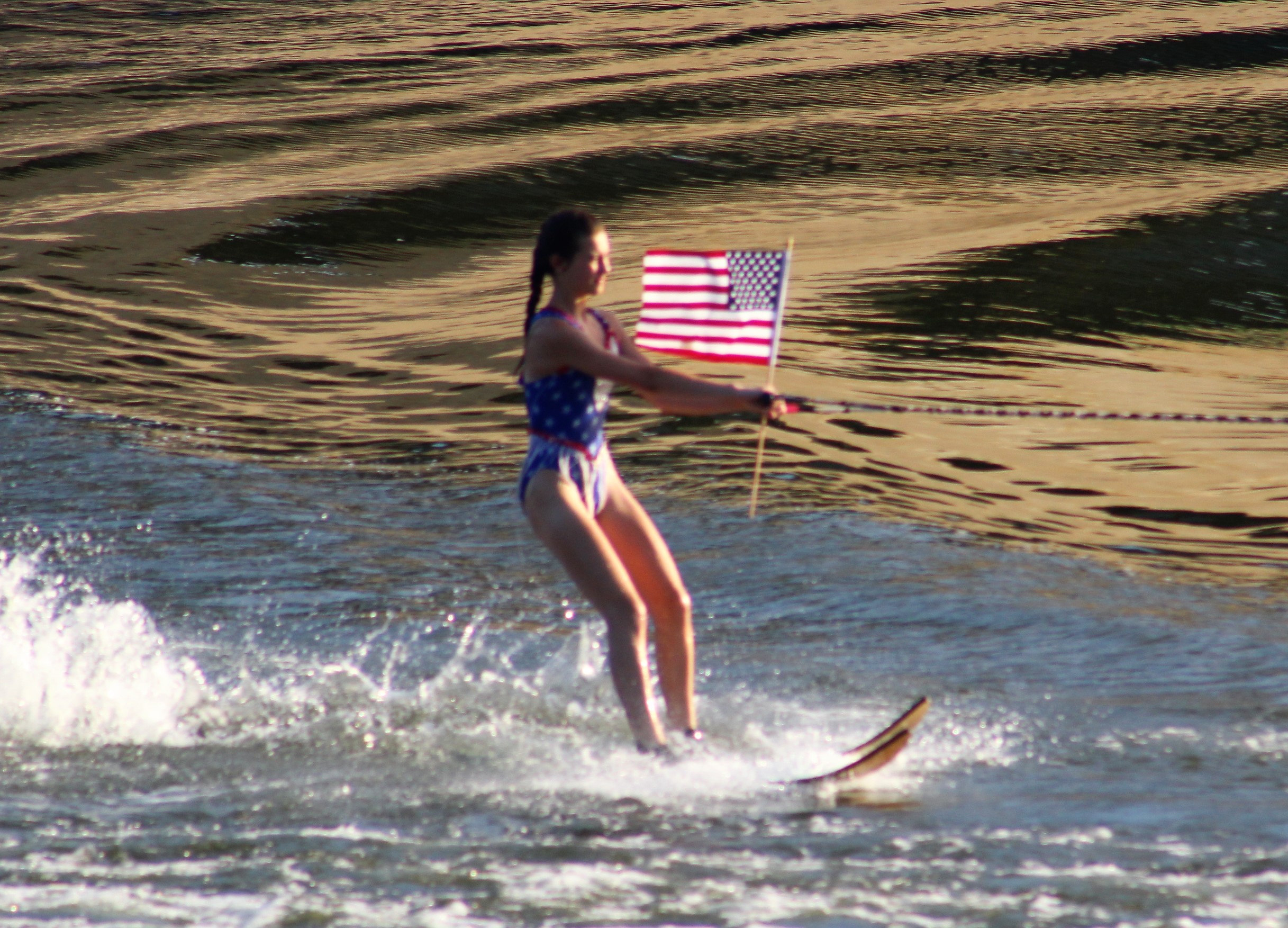
    Ski show in Scotia started with the Star Spangled Banner
    25.2

    Summary of week:

    Ilion

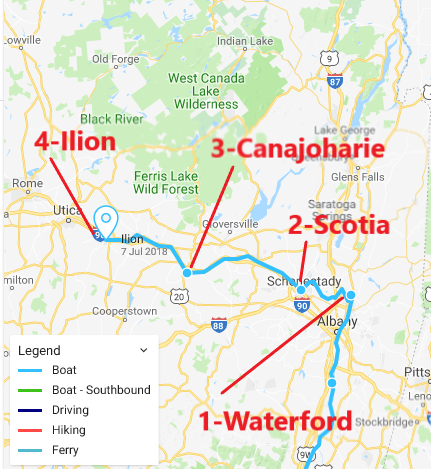
    The crew put in four travel days during the week, setting up a pattern of one travel day followed by one day to explore the area:

    1- Started the week out at the Waterford Visitor Center at the beginning of the Erie Canal

    2- Travelled to Scotia on Tuesday and celebrated the 4th with the locals

    3- Made way to Canajoharie on Thursday

    4- Ended the week on Saturday by stopping in Ilion for the weekend

    Click here to read the day-to-day travel log. This includes weather report, sea conditions, captain’s log, a summary of the day’s experience, and a few pics of the route.

    The voyage of discovery did answer the following questions this week:

    1. Where is the shortest canal system with the largest lift in the world?
    2. What is Cohoes Falls?
    3. Where are 5 barges, made of concrete during WWI?
    4. What is a ‘Boiling Pot’
    5. When and Where did Remington start his ‘Arms’ Factory

    At the Box Office

    This week we have two videos to share.  The first features Sea Horse as she navigates Erie Canal Lock E2.

    The second feature shows Still Waters II on the dock with other Looper boats.  Then she watches as they leave the dock and pass through Lock E2. She enjoys a ski show off her bow in Scotia, and explores Canajoharie Creek.  Enjoy!

    To see past videos, click on the link to the Still Waters II Vimeo site.  The library contains videos of Still Waters II cruising America’s Great Loop.

    Sunday, July 1st

    The crew broke with tradition and decided to travel a short distance on Sunday, and take a rest day on Monday. The main thing which drove this decision was the heat wave that has descended on upstate New York. The temperatures and heat index will be more comfortable on Sunday, than on Monday, to be out on the boat motoring around and locking..

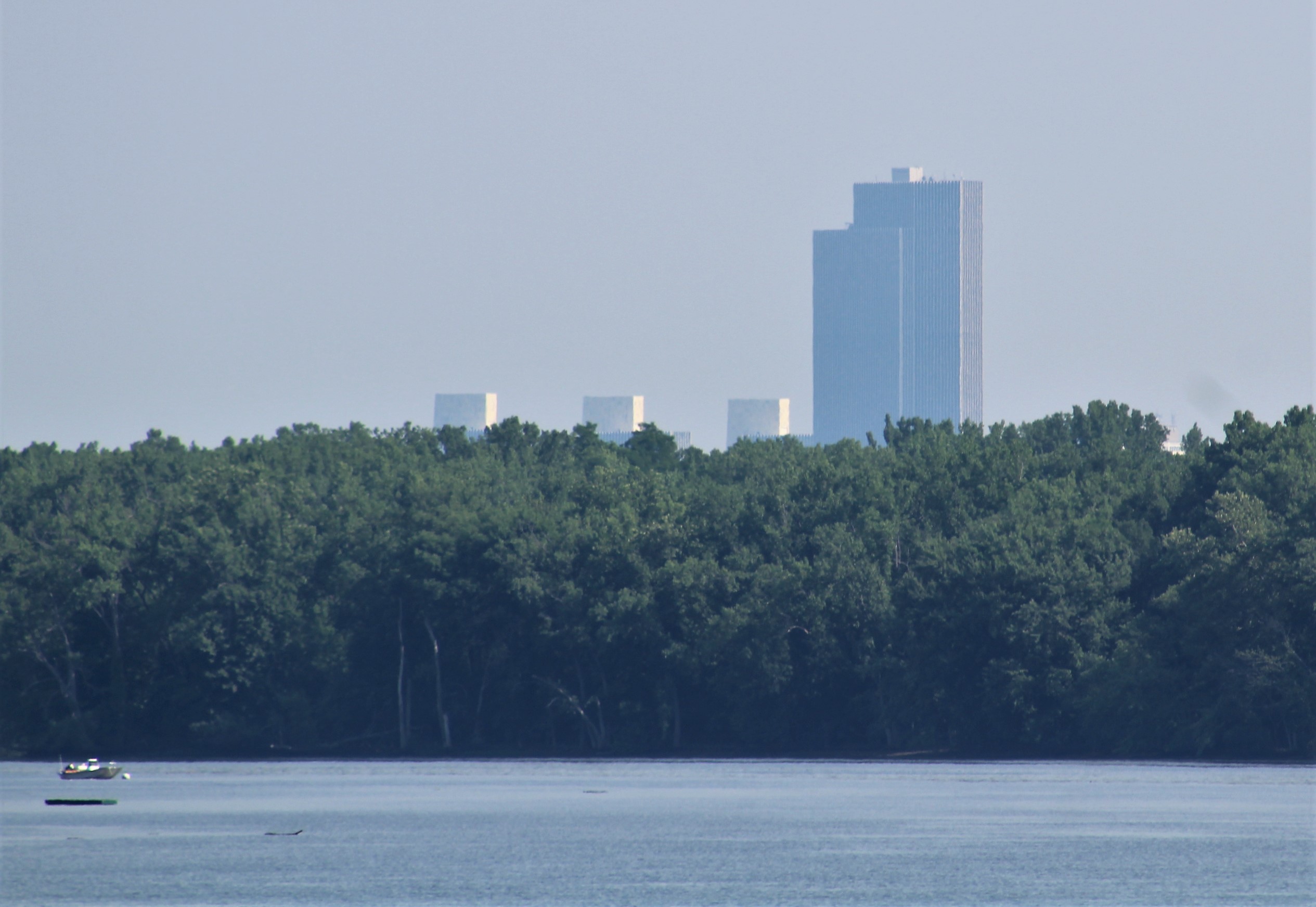
    First site of Albany from the water.
    41 Albany

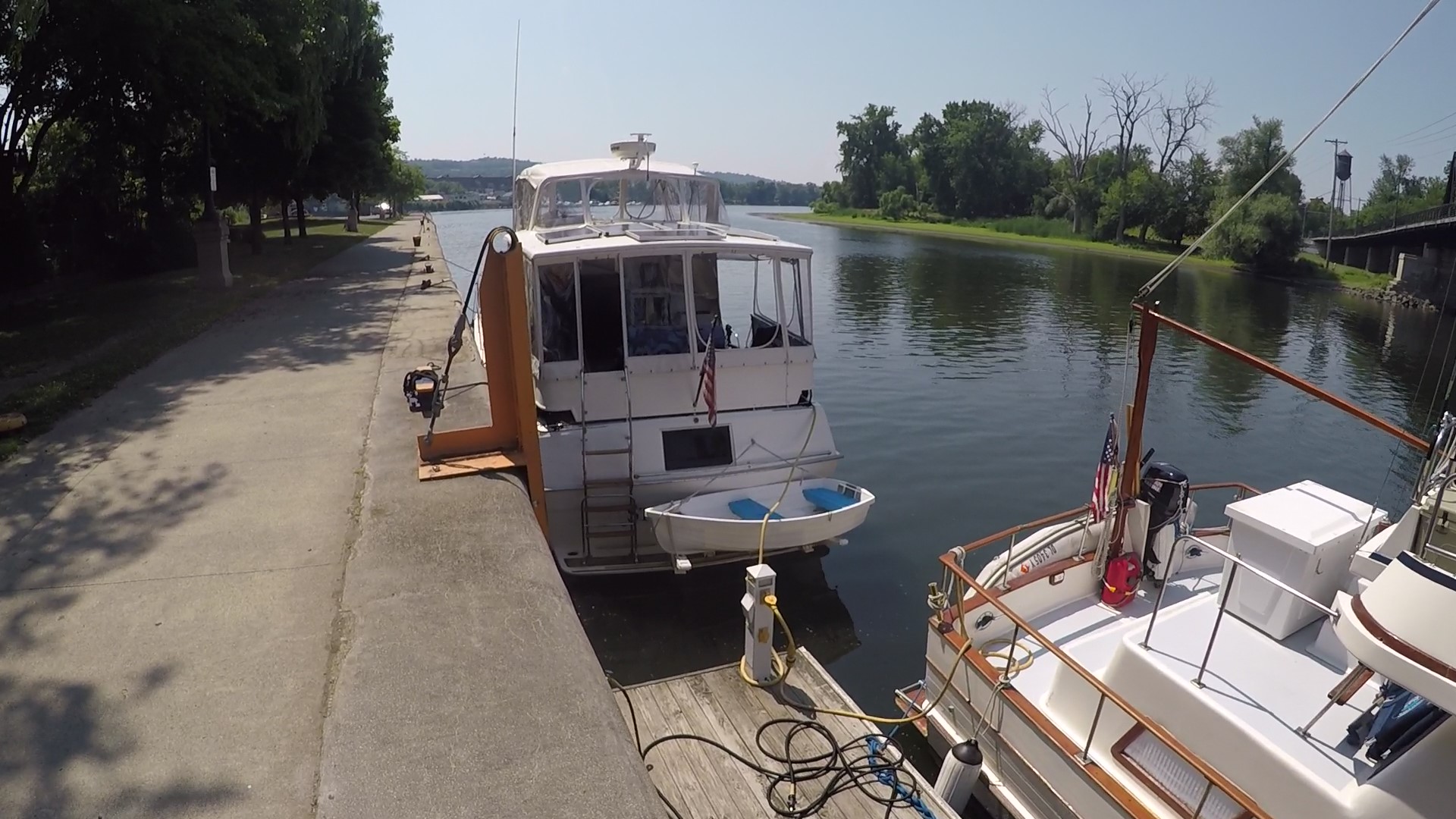
    The crew traveled only a short 26 miles to arrive at the Waterford Welcome Center before noon. The 50 amp power locations were already taken along the dock. But the skipper noticed that the first power pedestal at the end of the dock had an available 50 amp plug with his name on it. He swung the boat around and backed up to the end of the dock and tied up along the concrete wall. The crew managed to deploy the power cable over to the dock and secured 50 amp power which means they can run both air conditioners as the temperature rises to 100 degrees.
    5 Waterford

    The Federal Lock just before Waterford
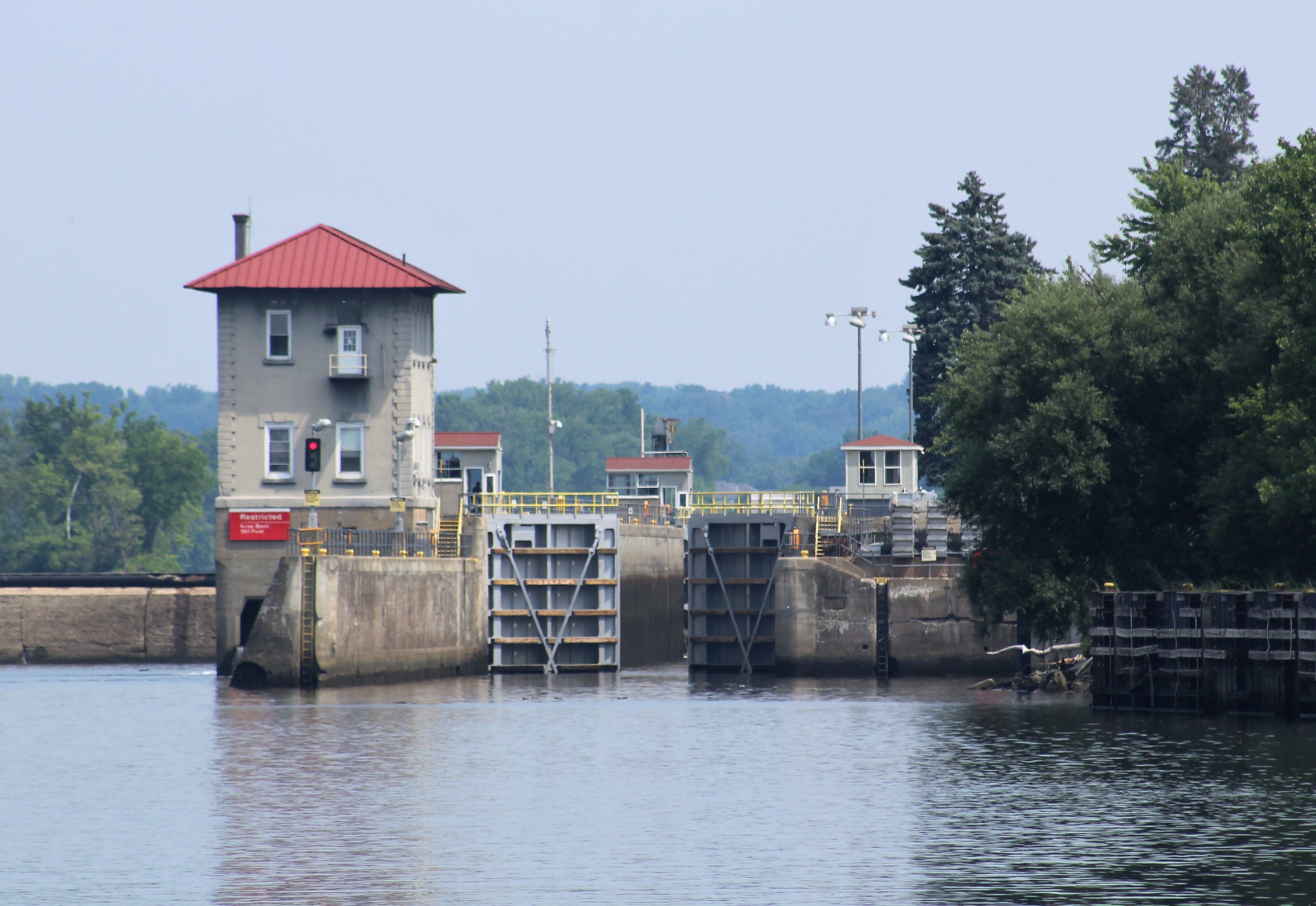
    43 Federal Lock
    Upon arrival at The Welcome Center, the skipper noticed they had a Farmers Market that was in full swing.  However, he quickly learned the Market would close at 1300. After the boat was secured the Admiral was off in search of fresh farm raised tomatoes. She procured some tomatoes and some strawberries for the crew. The skipper, well he purchased some maple syrup coated pecans.

    There are five Looper boats at the Welcome Center. Three of which are from Texas. The crew hopes to meet them all before they launch the Erie Canal Cruise on Tuesday.

    Monday, July 2nd

    The crew plans to travel from Waterford to Buffalo – on the New York Canal System, a distance of 352 miles. However, there are 524 navigable miles of waterways in the System. The canals that make up this System are the Erie, Cayuga-Seneca, Oswego, and Champlain.
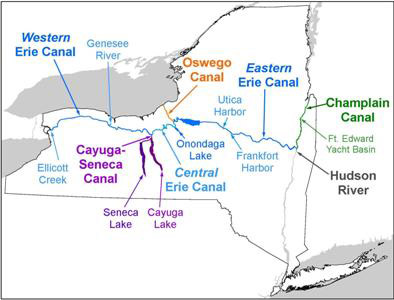
    1 Canal System

    The crew has navigated the eastern Erie, Oswego, and Champlain Canals. This year they will run the eastern Erie again, then the Cayuga-Seneca, and then complete the western Erie. When they arrive in Buffalo, they will have completed all 524 miles of the system.

    The present day Erie Canal has three distinct periods. The original canal was begun in 1817, and opened for commercial navigation in 1825. You may recall that last year when the crew cruised the Champlain Canal, the system was celebrating their 200th birthday, and the state of New York gifted the recreational boaters with free access to the canals.

    Original Erie Canal with mules pulling the barges
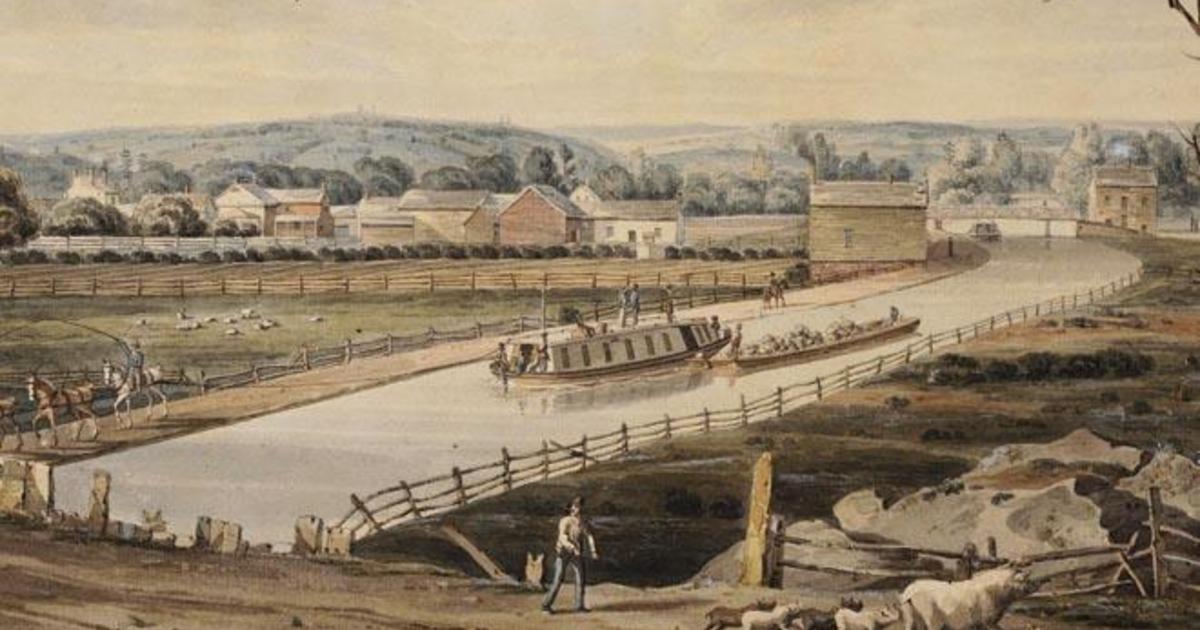
    2 Mule train

    The second period began in 1862 and is referred to as the Enlarged Erie Canal. By 1918, the mules and tows were no longer needed, and were replaced with motorized vessels which required deeper wider canals.  The modern canal abandoned many of the old canal routes and locks, and used existing rivers.
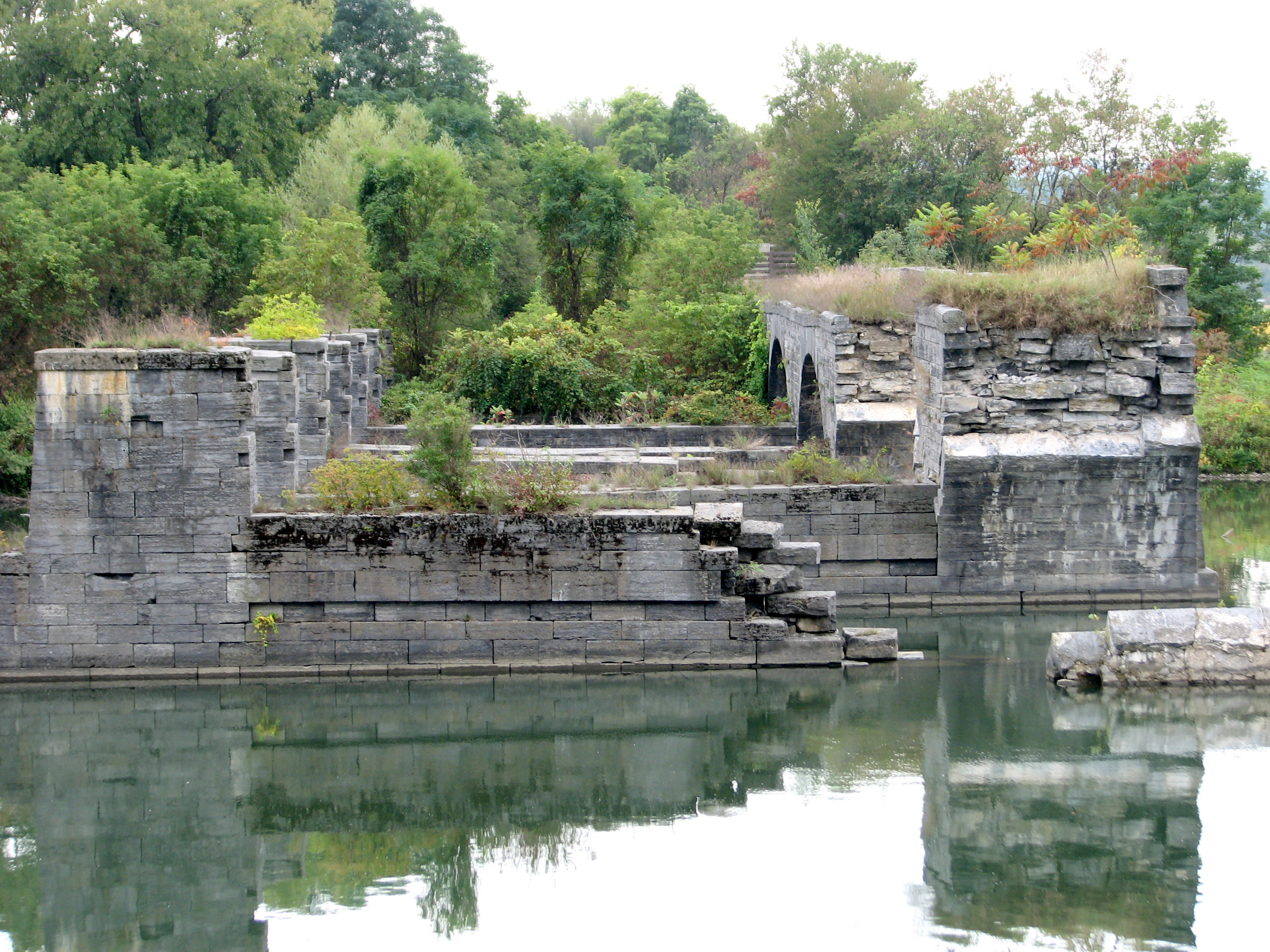
    3 Abandoned Canal

    And guess what, the system is celebrating the 100th Birthday of the modern canal system during 2018. And yes, once again the state of New York has gifted free access to recreational boaters for the 2018 season.  FOG!

    The Erie Canal by the numbers:

    • 524 navigable miles of waterway
    • 34 National Historic Landmarks
    • 24 New York State Parks
    • 11 State Wildlife Management Areas
    • 9 New York State Historic Sites
    • 4 National Park units
    • 4 National Natural Landmarks
    • 2 National Wildlife Refuges
    • 2 New York State Bike Routes
    • 1 National Forest
    • 1 National Scenic Trail

    So much to see and do,………. so little time.

    Tuesday, July 3rd

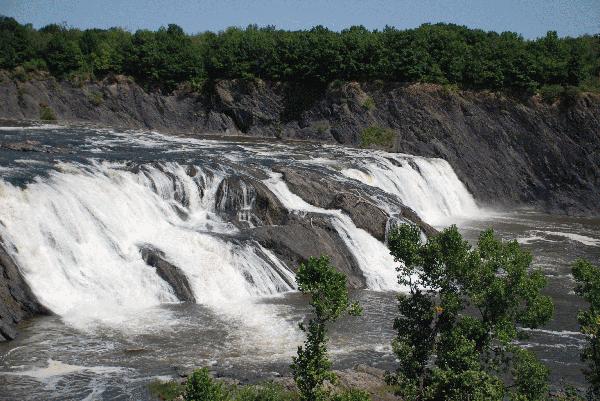
    Ever heard of Cohoes Falls? Probably not. However, believe it or not, it is actually larger than its big sister at the other end of the Erie Canal, American Falls at Niagara Falls.

    Cohoes Falls at full flow
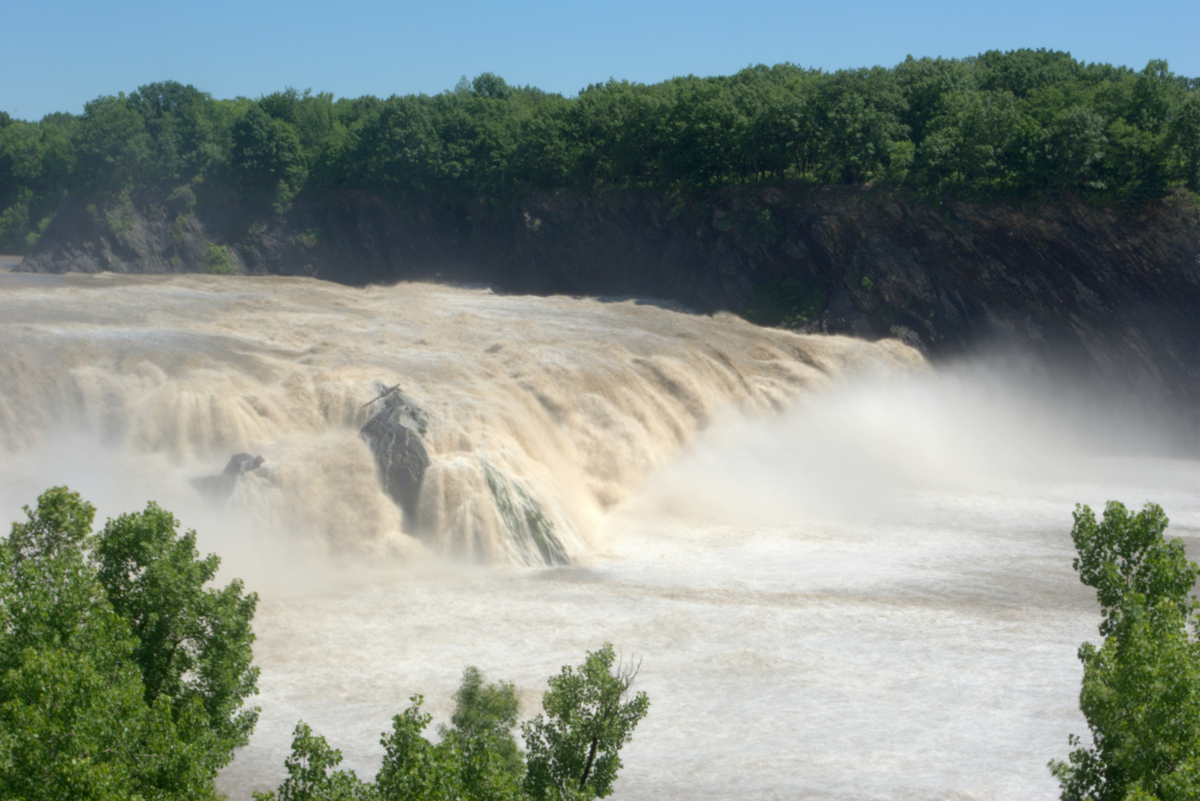
    4.3

    Cohoe Falls in late Spring

    4 Cohoes Falls

    Comparing Cohoes Falls to Niagara Falls:

    Width
    Cohoes – 1,000 feet
    Niagra – 830 feet at American Falls
    Height
    Cohoes – 75-90 feet
    Niagra – 70-110 feet
    Water Flow
    Cohoes – 0 – 90,000 cubic feet per second
    Niagra – 5,000 – 21,000 cubic feet per second
    Tourism
    Cohoes – no tourist industry
    Niagra – tops 28 million tourist per year

    The Cohoes Falls were a major obstacle for the planners of the Erie Canal back in 1817 when work began. The original 1825 Canal went through the town of Cohoes. Back in 1862, when the Enlarged Canal was developed, the canal continued to run through Cohoes.

    In 1918, during the Modern Barge Canal Era of today, the canal was moved to bypass Cohoes and run through Waterford. However, there was still vibrant industry due to the mills in the area of Cohoes. During the Great Depression, the mills closed down and the city leaders were desperate for cash. They leased/sold the water rights to power companies and the Canal System.

    Cohoe Falls in summer
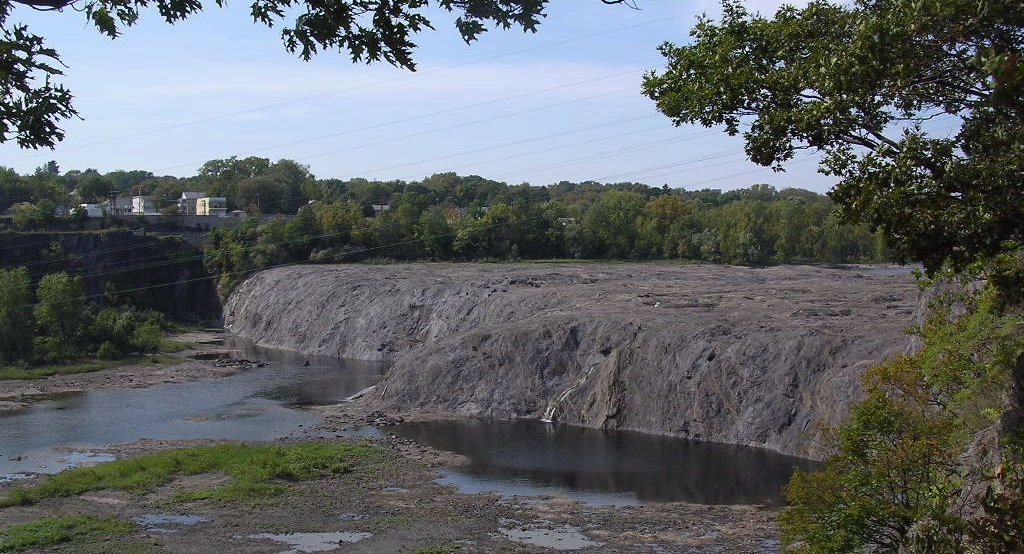
    4.1 Cohoes Falss

    Consequently, the falls run strong following the fall rains, but dry up by late spring/early summer due to water diverted to the power companies and to the Canal Locks. Leading to the no tourist industry for the town today.

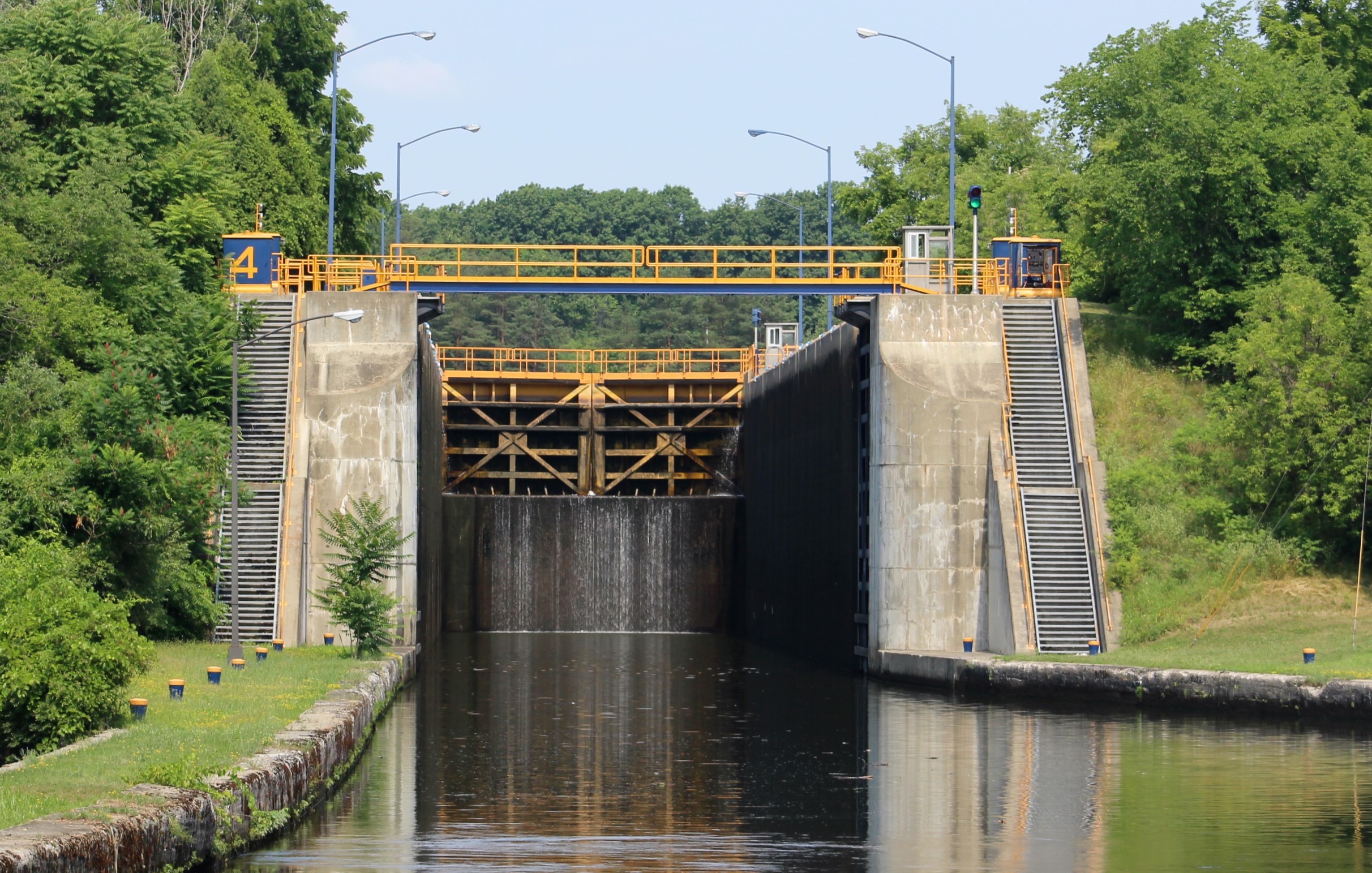
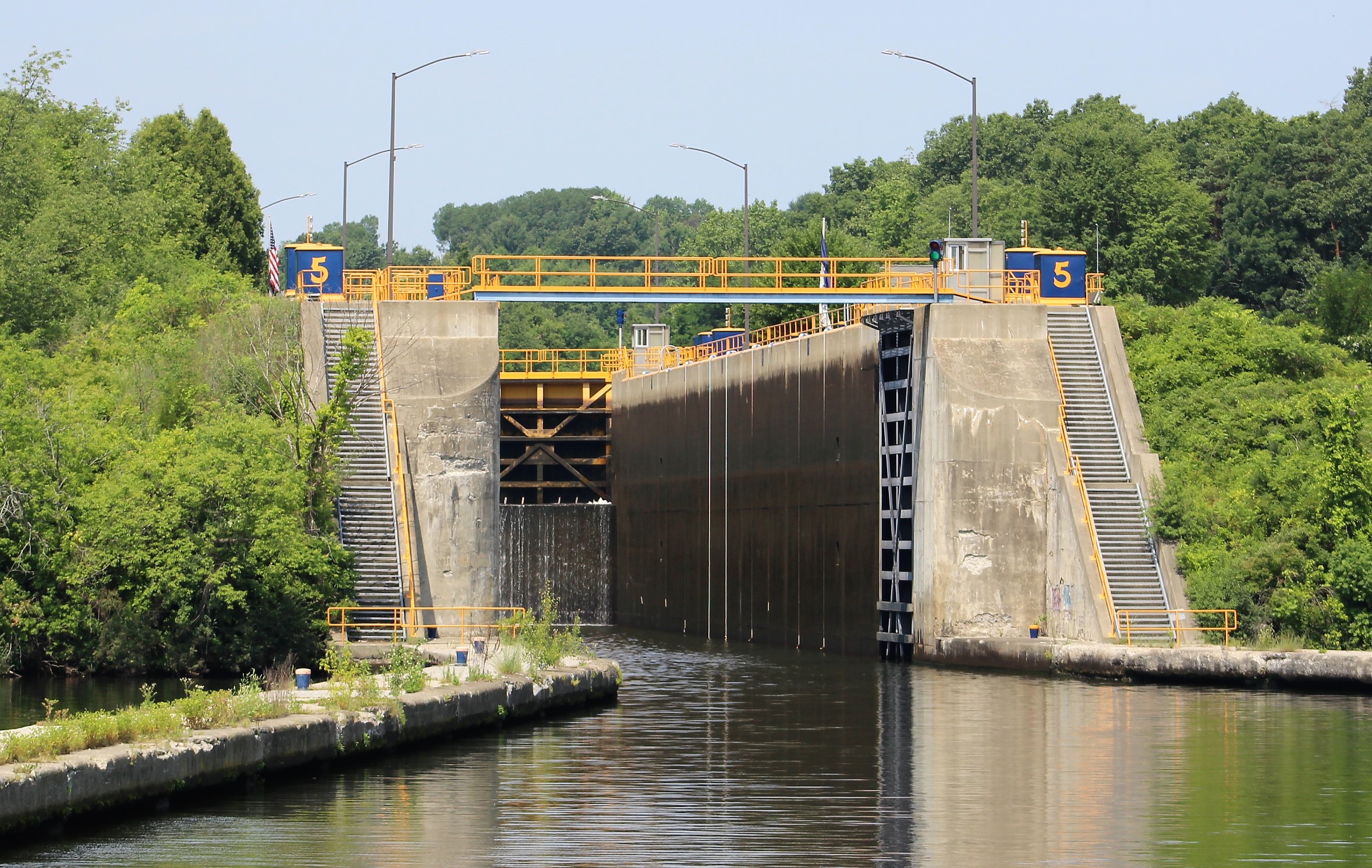
    Speaking of today, the crew starts their official passage through the Erie Canal when they enter Erie Canal Lock E2 at Waterford.  Lock E2 is the first lock of the Waterford Flight of Five, Locks E2-E6. These locks make it possible to bypass the Cohoes Falls, and complete the largest lift in the shortest distance of any canal system in the world.  The five locks will lift Still Waters II 169 feet in just a little more than a half mile of distance. This will surely be a workout for the crew.

    A fleet of six Looper boats all decided to leave together and travel as a group today. They got off the dock around 0700 and headed for Lock E2.  Our Crew stayed back to do one of the skippers favorite tasks, pump out the holding tanks. After the dirty, nasty task was complete, the crew shoved off the dock and headed to Lock E2 to start the Erie Canal Adventure.

    Looper Fleet entering Lock E2 at Waterford to begin the Flight of Five, up 34 feet
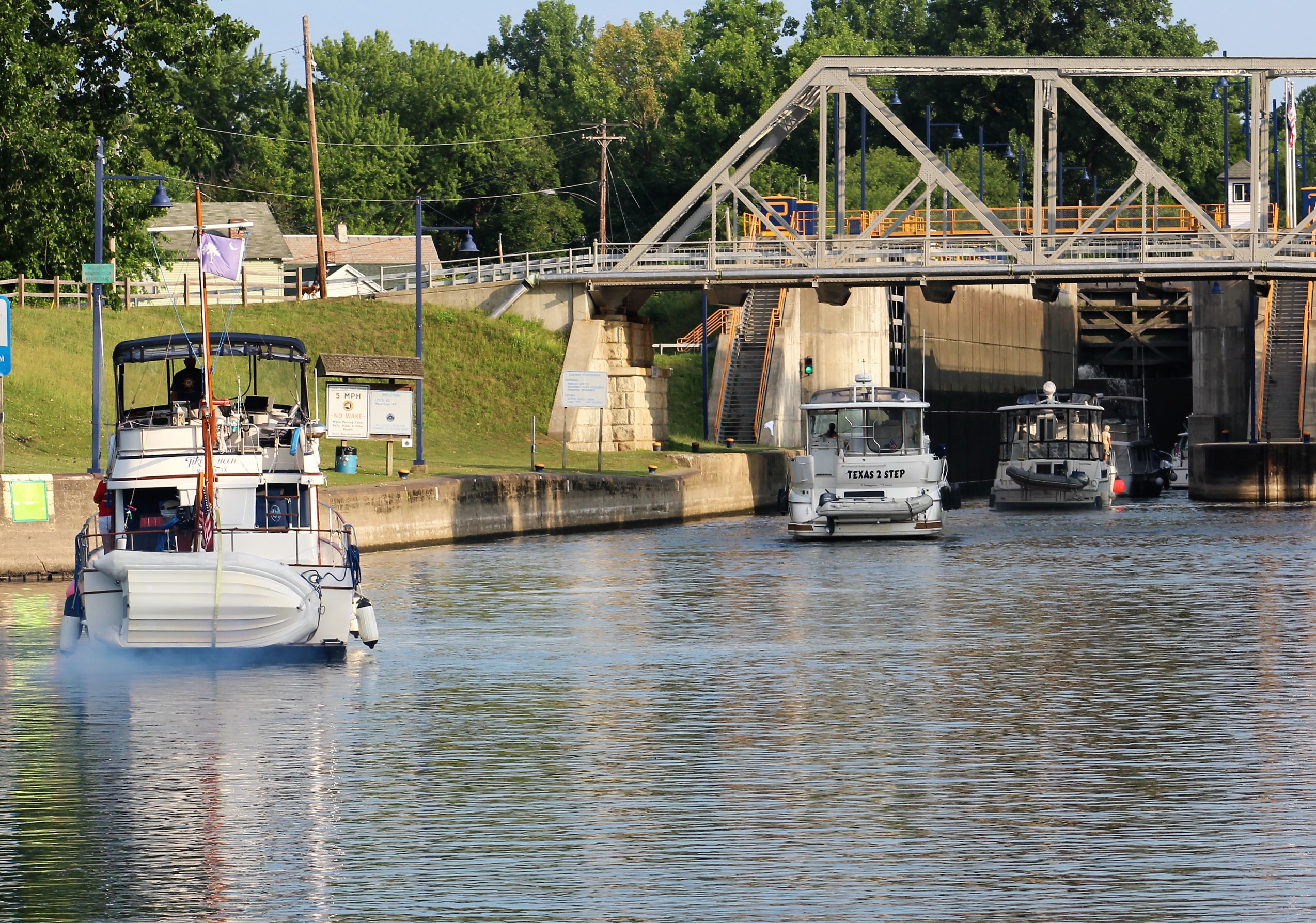
    10.1

    After they exited the Lock, the Lockmaster informed the crew that the Lock E3 operator was pulling double duty today and was operating lock E3 and E5. The Lockmaster told the skipper to pull up to Lock E3 and tie along the wall, it might be a while.  He was right, an hour and half later, the skipper got a radio call from the Lock E3 operator saying he would be opening the gates in about 15 minutes.

    While the crew waited to enter Lock E3, Almost There showed up and joined the wait party.  Our crew managed to tie along the wall under a bridge so they were in the shade while they waited.
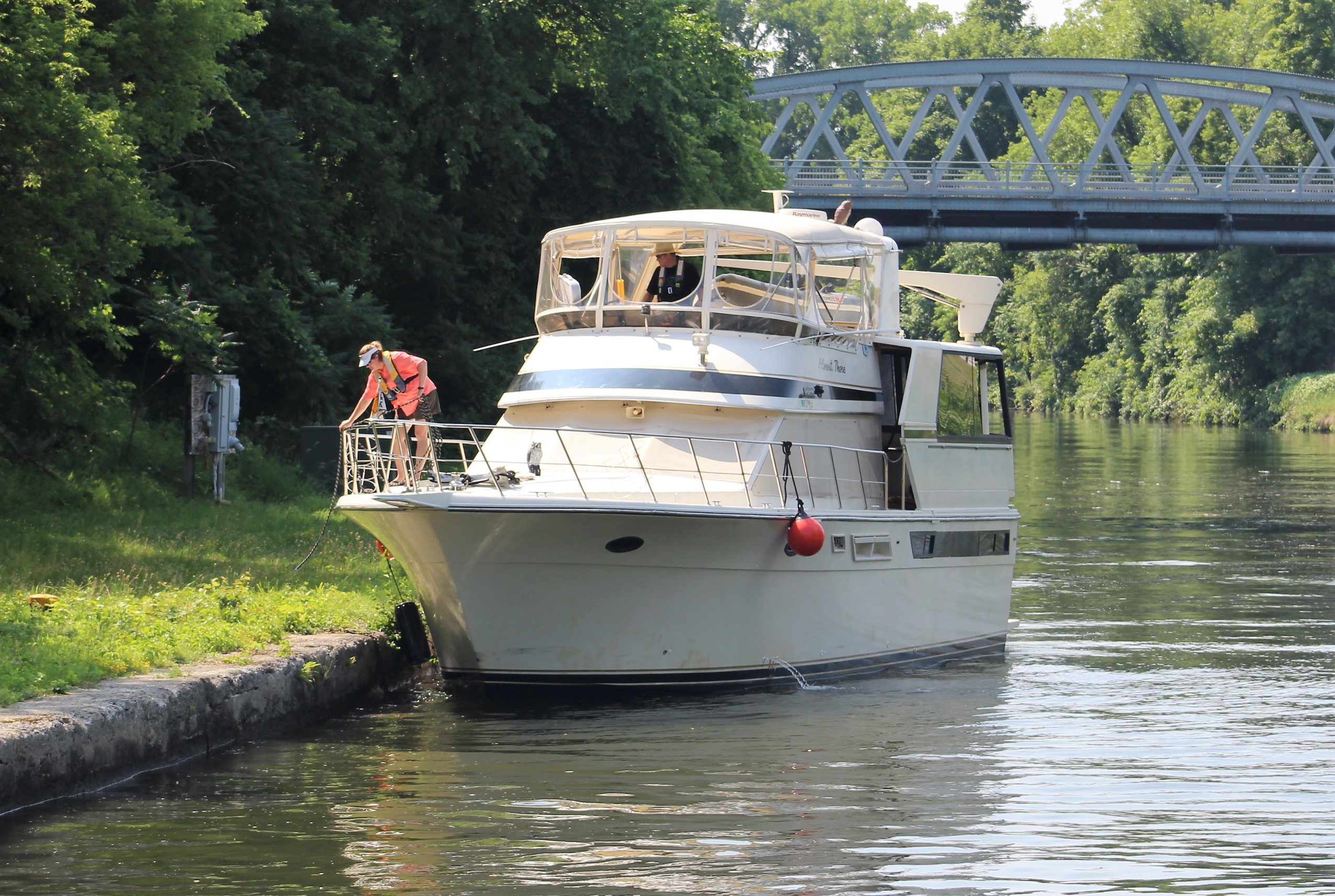
    12.2 Almost There
    The crew got the green light to enter Lock E3 at 1030. By 1145, they had completed Locks E3-6. They had completed the 169 foot rise around Cohoes Falls, but now it was time to find some electricity.

    Lock E3, Waterford, up 35 feet
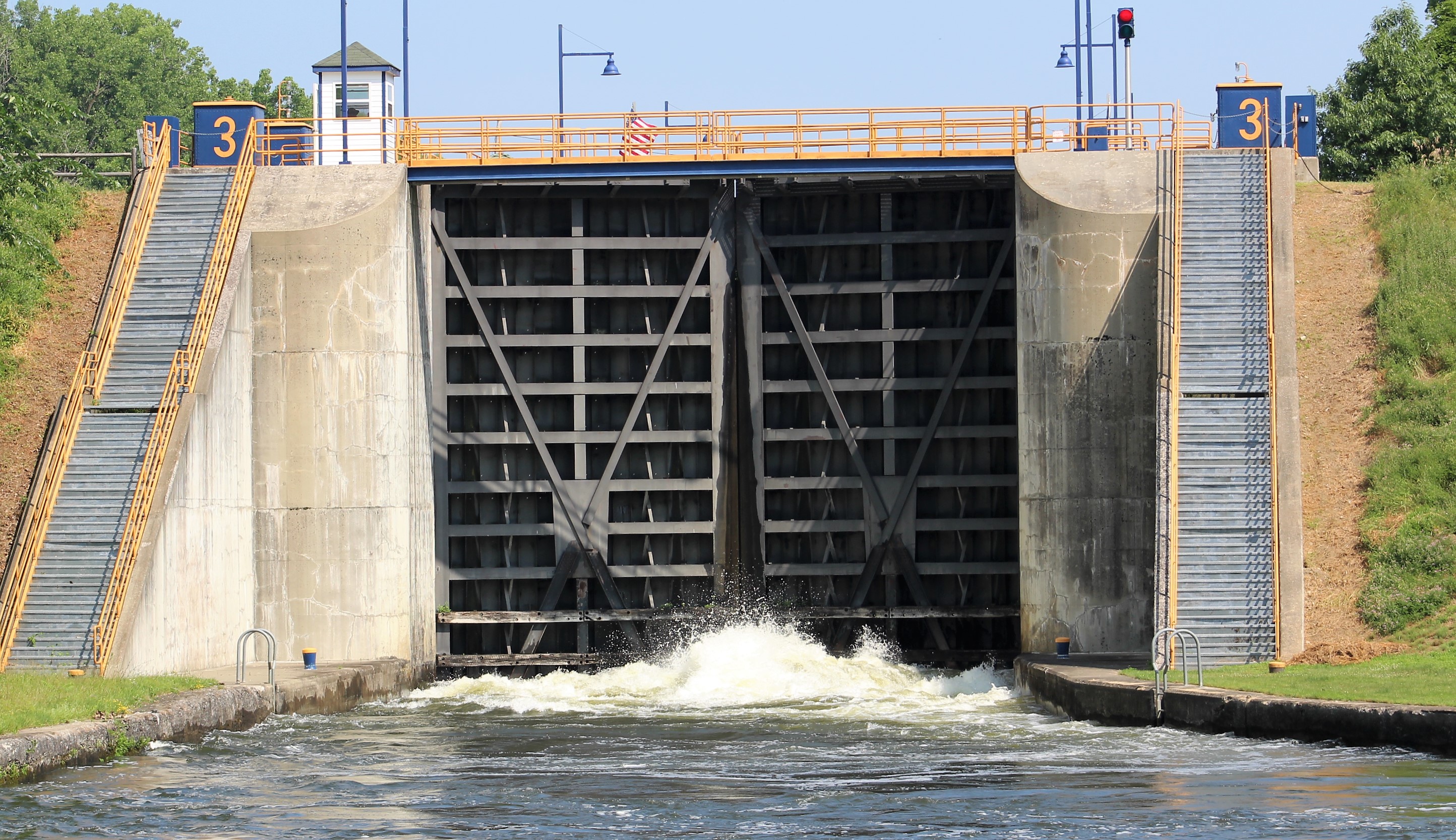
    12.1

    Lock E4, Waterford, up 35 feet

    13 Lock E4

    Lock E5, Waterford, up 33 feet

    14 Lock E5

    Lock E6, Waterford, up 33 feet

    15 Lock E6

    From there, it was about ten miles to Lock E7, so the Admiral got lunch together for the crew. When they arrived at Lock E7, they were informed that they would have to wait for some eastbound boat traffic to lock down before they could enter the lock. When the gates opened, there was a sailboat under tow by BoatUS. It was a narrow squeeze to get three boats abreast as they passed Still Waters II. When they passed the crew got the green light to enter the lock.

    Almost There entering Lock E7, Vischer Ferry, up 27 feet

    22.1

    The dam at Lock E7

    21 Dam Lock E7

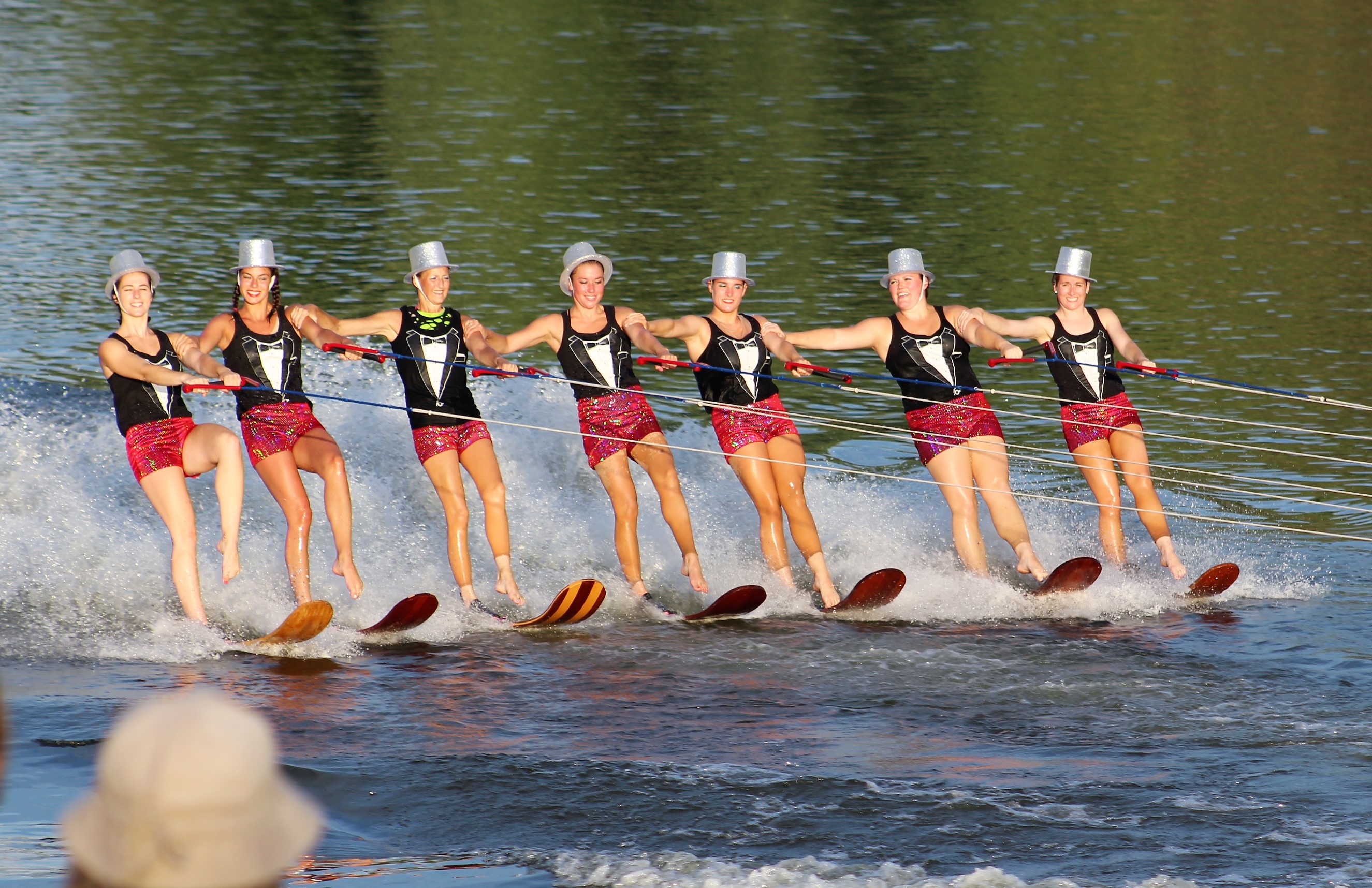
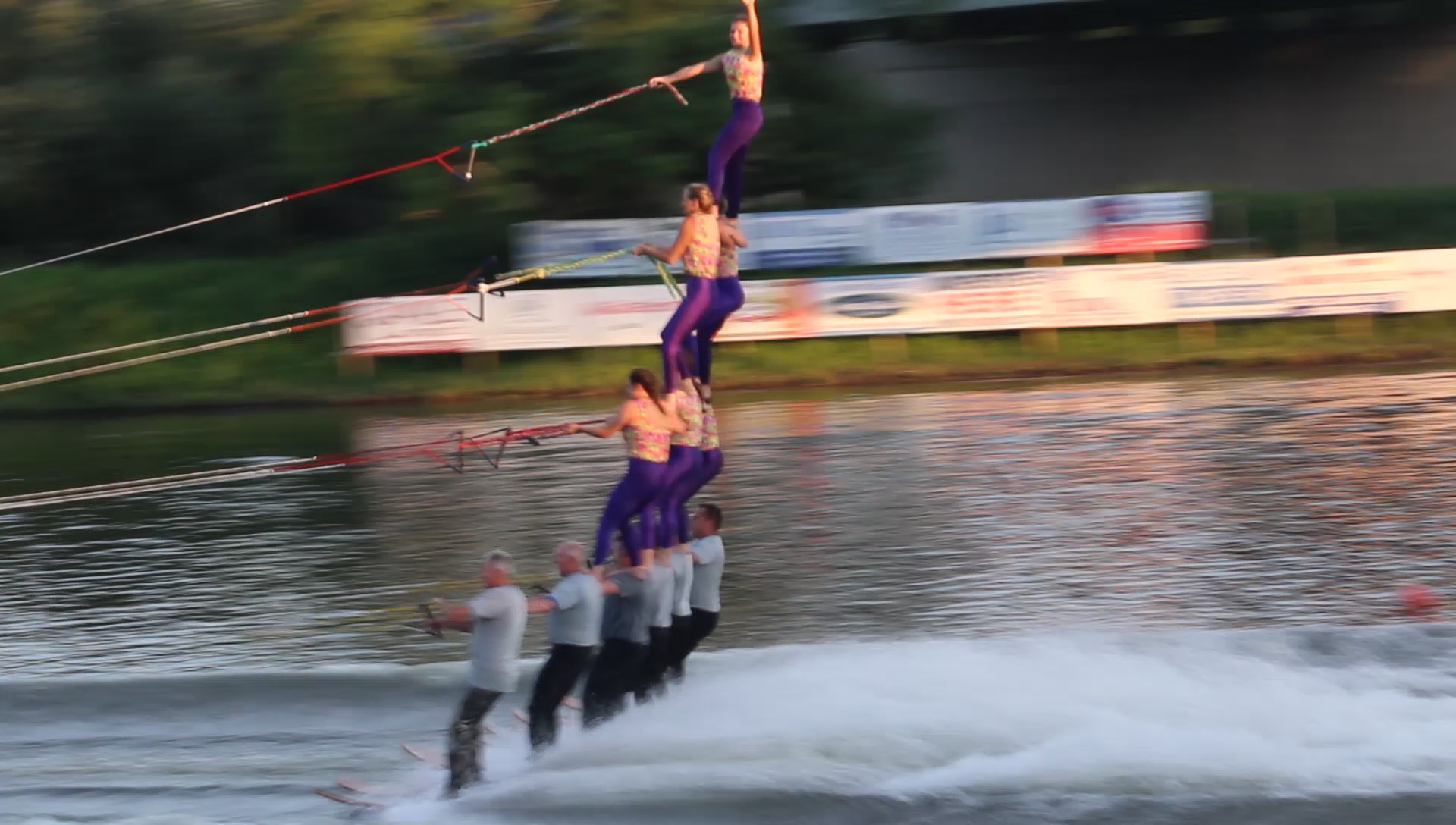
    After exiting Lock E7, it was 8 more miles to the town of Scotia where the crew tied up for the night at the municipal dock.  Upon arrival though, they learned that a ski team puts on a show every Tuesday Night, about a hundred yards north of the dock.

    25 Ski Team Show

    At 1900, the crew wandered down and joined the crowd that had gathered to watch the ski show.
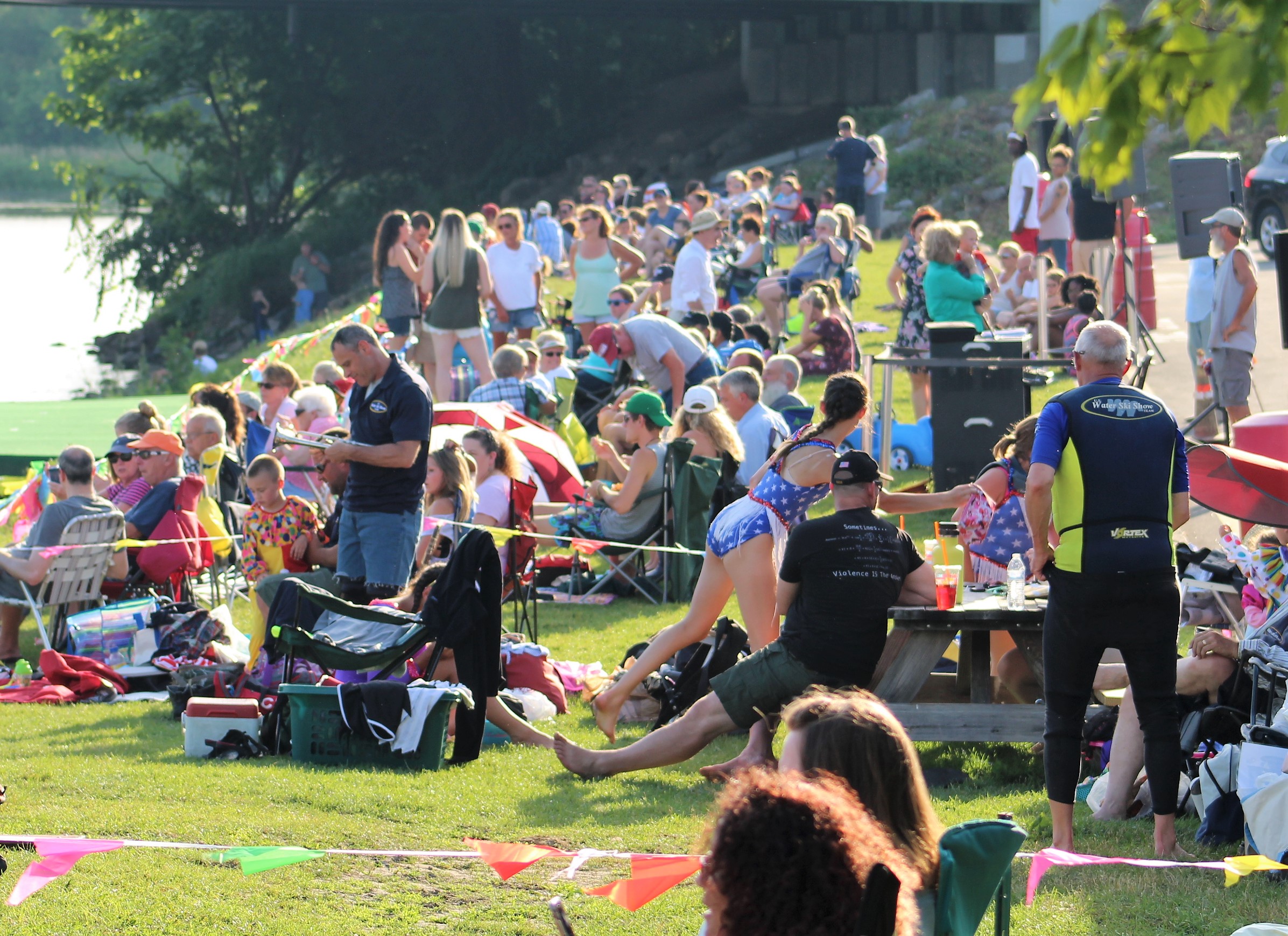
    25.1

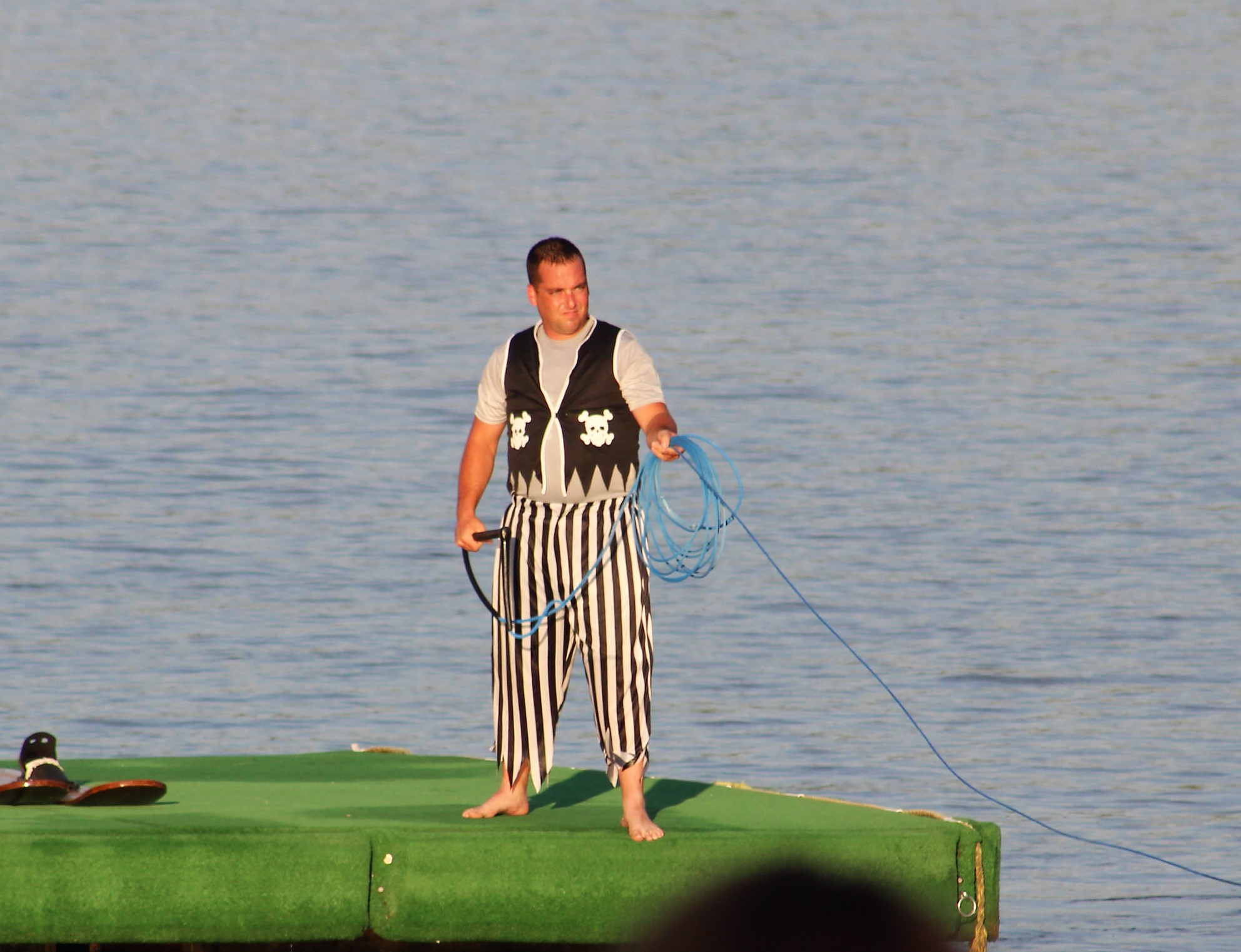
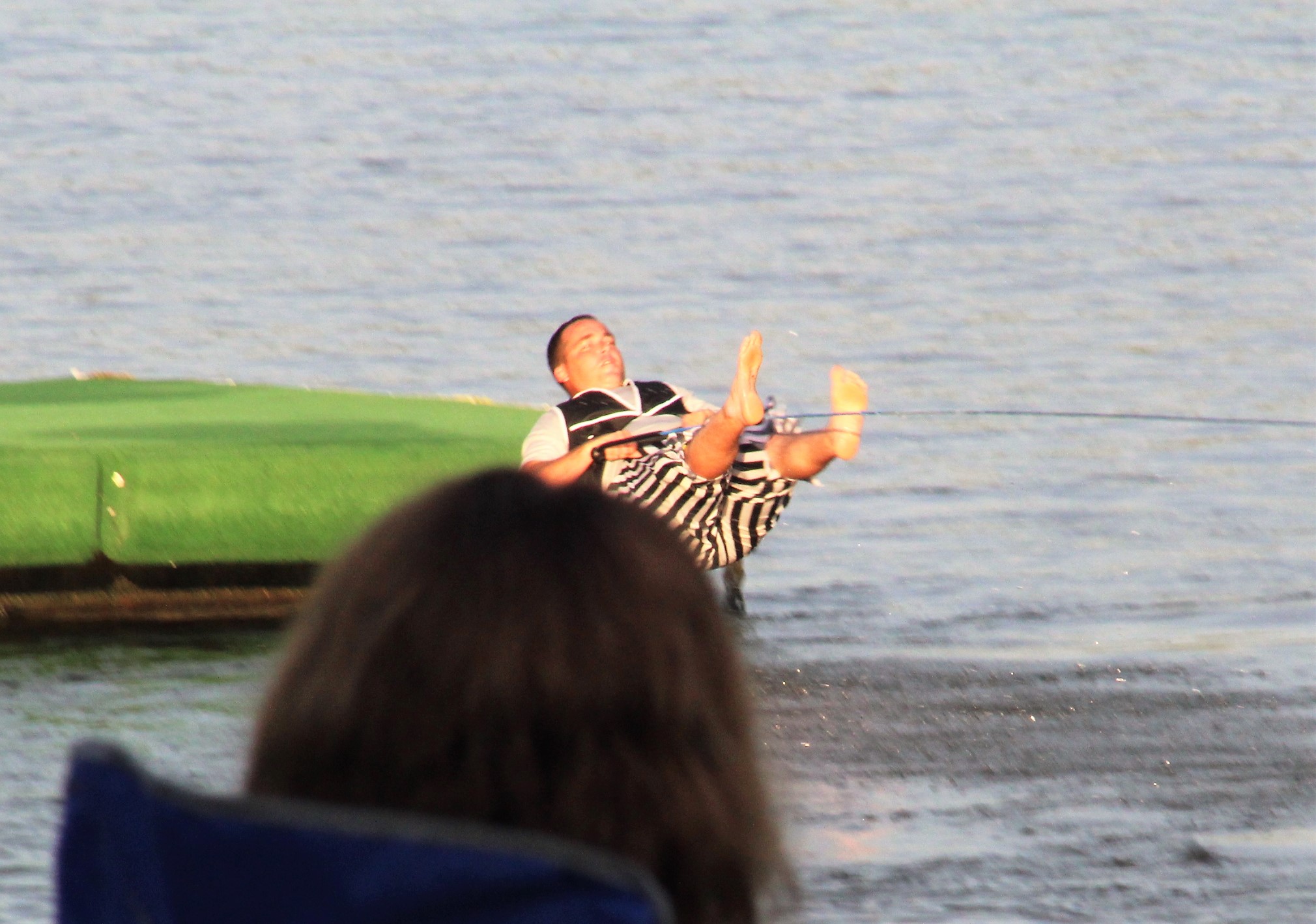
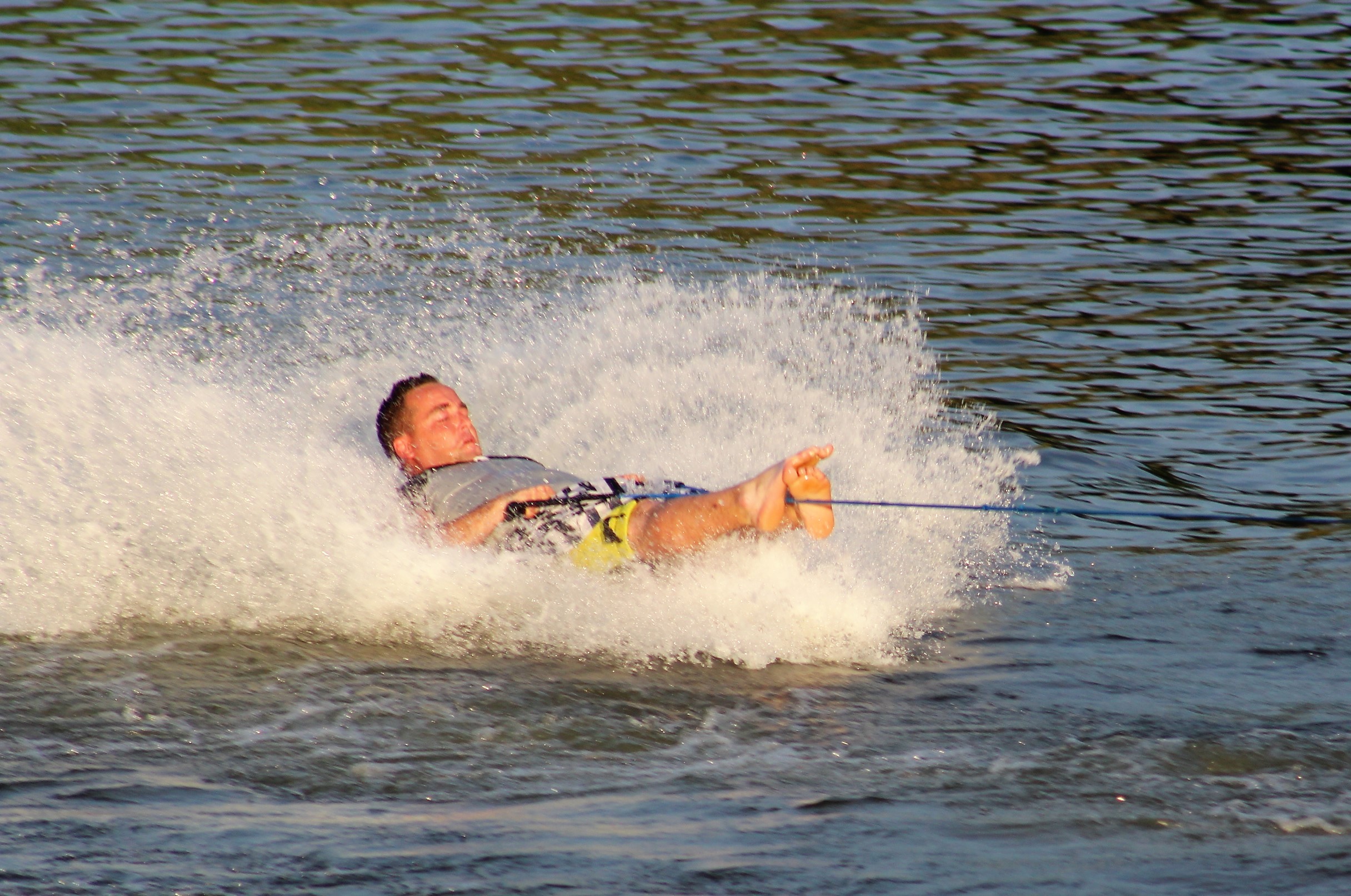
    This was the 50th anniversary of the ski team, so they were doing a montage from past competitions and shows.  They had skiers from all generations of the ski team performing, also. A few pics from the show:25.4 25.10
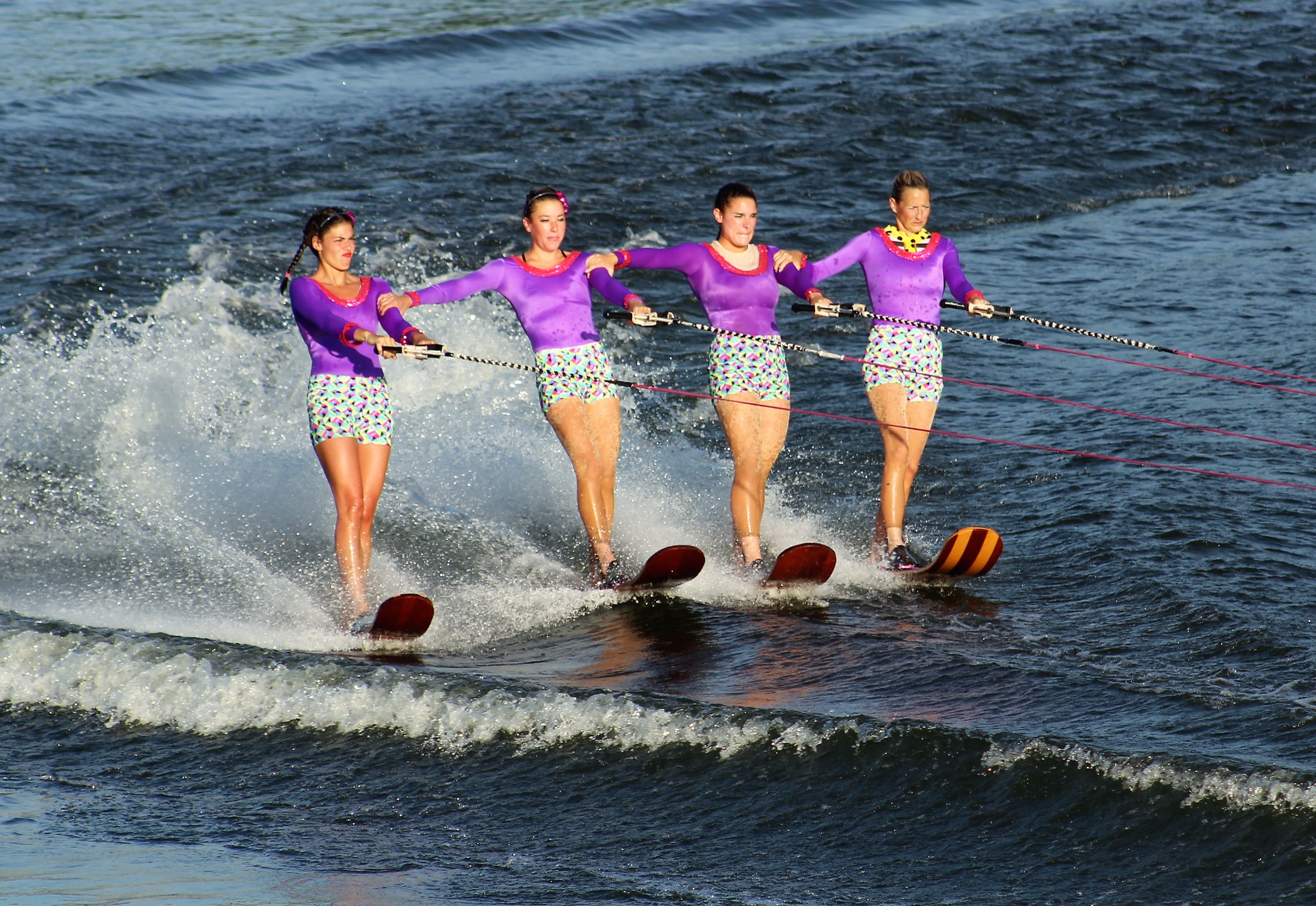
    25.20

    The Bare footer

    25.13

    25.14

    25.15

    25.16

    25.17

    The Grand Finale, 4 tier pyramid

    25.28

    Wednesday, July 4th

    The crew decided to spend a second day in Scotia.  They did not do much, but they did enjoy grilling burgers and dogs at the Freedom Park next to the docks.  Unfortunately, the second line of power went out on the boat in the late afternoon.  The skipper has exhausted his troubleshooting and will have to find a marine electrician to fix the problem.  It looks as though the Line 2 Main Breaker may of failed. The main consequence though, loss of air conditioning during the New York heat wave.

    Off to go see the local fire works demonstration.  The casino is footing the bill, so the crew hopes it is a good show.

    Thursday, July 5th

    The crew set a goal to make Canajoharie by the end of the day.  In 2016, when the crew wished to stop here the docks were full and people were rafted two abreast.  The crew skipped this stop and went two locks further west.

    To arrive at Canajoharie, the crew would have to pass through six locks.  These would be smaller locks, so much easier than Tuesday.  Also, the heat index is near one hundred again today, so it will be necessary to stay hydrated while locking through.

    With calm conditions predicted all day, the Admiral decided she would practice her boat handling skills by motoring off the lock walls once the lock operator opened the gates.  She did an excellent job.

    The winds were non existent when the crew shoved off the dock.  The water was like a mirror. 
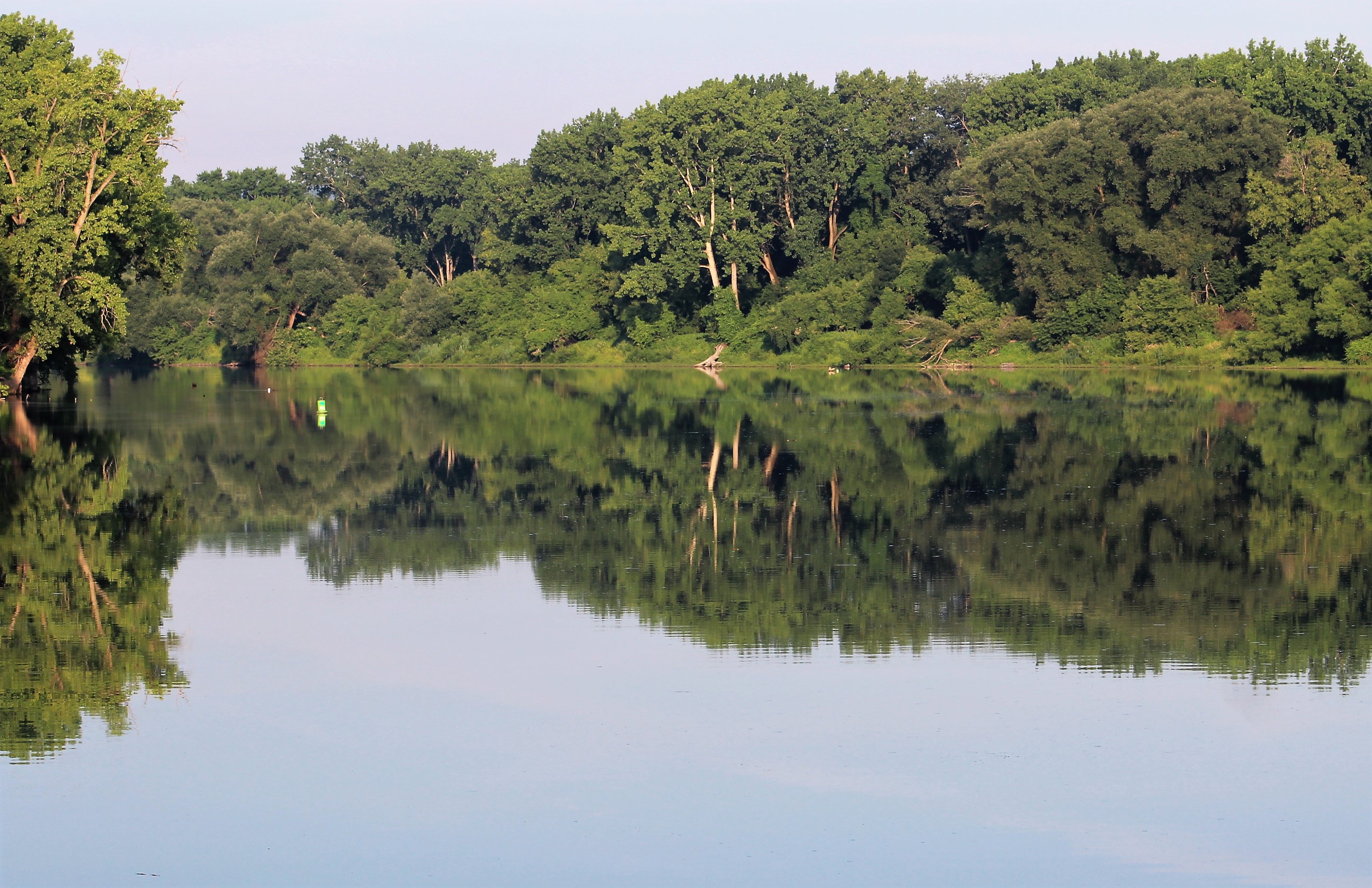
    26 Mohawk River Like Glass

    Lock E8, Scotia, up 14 feet

    27.1

    The crew entered lock E8 with a boat named Patricia Ann.  After the gate closed, the lock operator started to raise the water level in the lock, but then stopped.  The skipper noticed the lock was draining, and then the gates swung back open to allow a third vessel in the lock.

    Today’s lock buddies
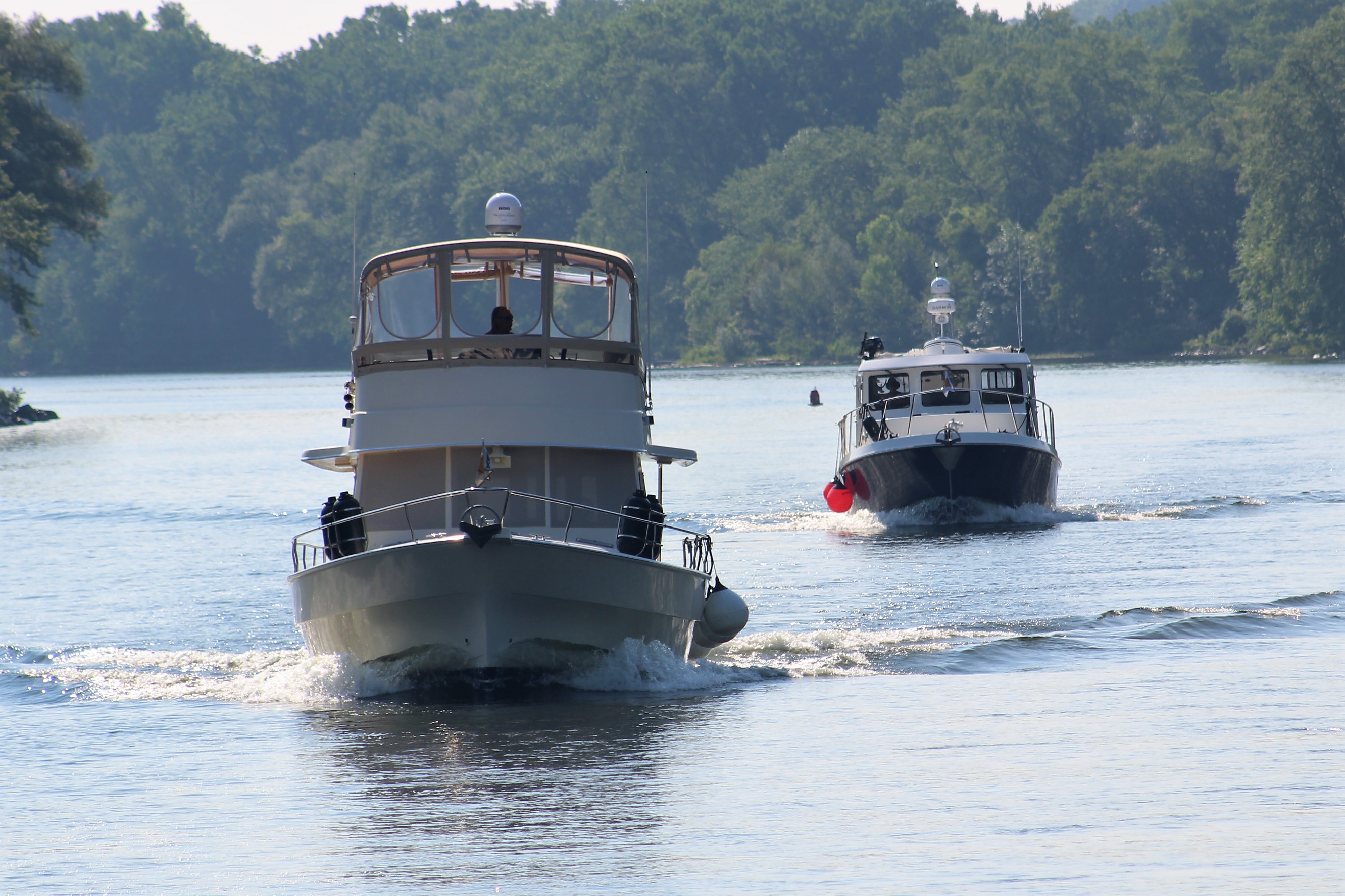
    29 Today's Lock partners

    Lock E9, Rotterdam, up 15 feet

    28 Lock E9

    Lock 9 has an interesting piece of history.  While the skipper approached the Lock, he noticed that the charts plotted a total of 5 sunken vessels, above and below the lock, just to the side of the channel.  The vessels are concrete barges that were built in WWI.  Following the war, the state of New York gained control of the barges and used them as approach walls for the lock.

    And why would the US government build barges and ships out of concrete you ask?  During the war, metals such as steel were at a premium, so they used reinforced concrete rather than steel to build the barges and some ships.  Twelve concrete ships were commissioned during WWI. The government did the same thing during WWII, and commissioned 24 concrete ships.

    Lock E10, Cranesville, up 15 feet
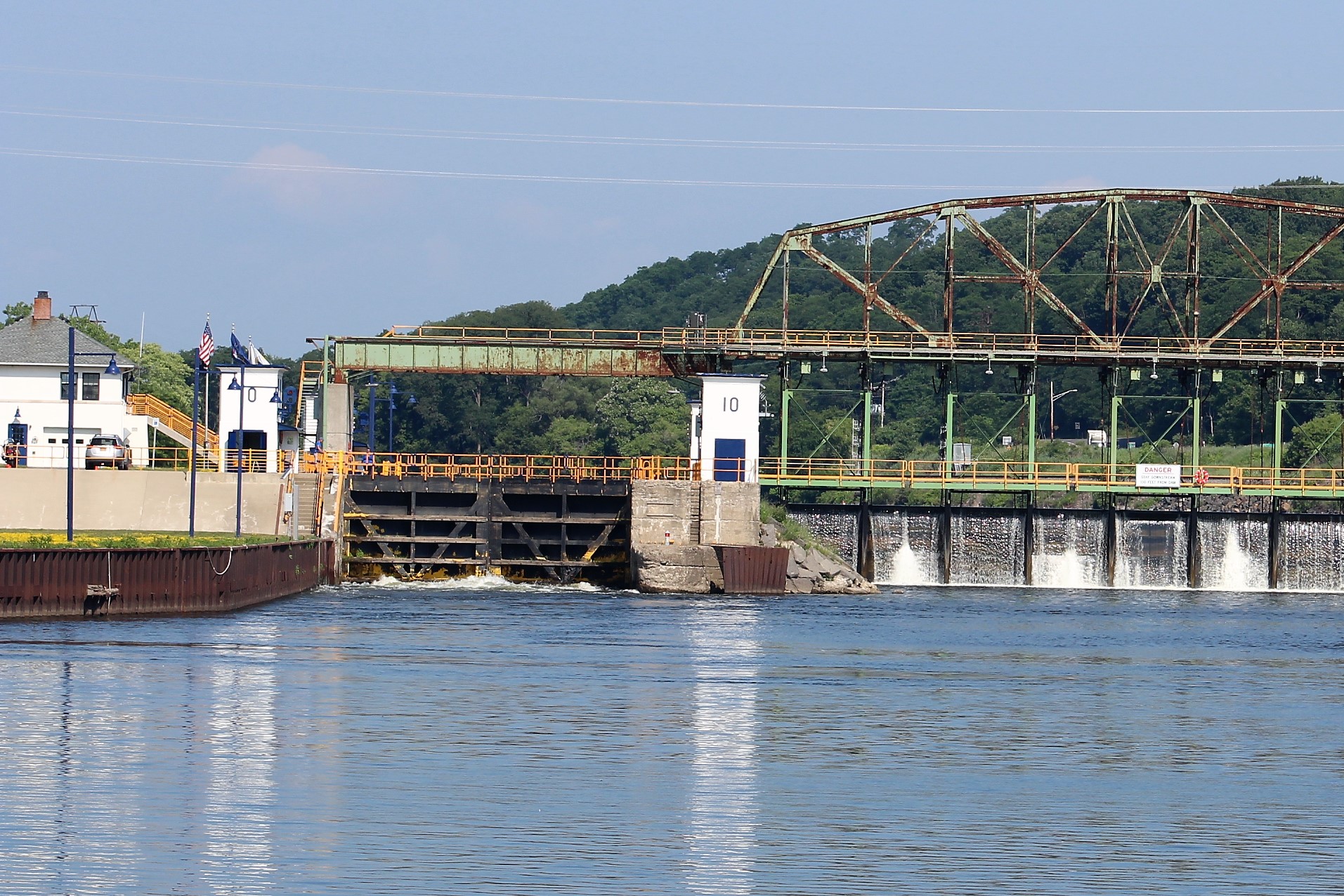
    30 Lock E10

    Lock E11, Amsterdam, up 12 feet

    32 Lock E11

    The Admiral managing the bow line in lock 11

    32.1 (2)

    Lock E12, Tribes Hill, up 11 feet

    33 Lock E12

    While in Lock 12, the skipper struck up a conversation with the Captain of the Patricia Ann.  They are from Alaska, and will also be doing the western Erie Canal.  The crew will probably be seeing more of the Patricia Ann in the days ahead.

    The Patricia Ann
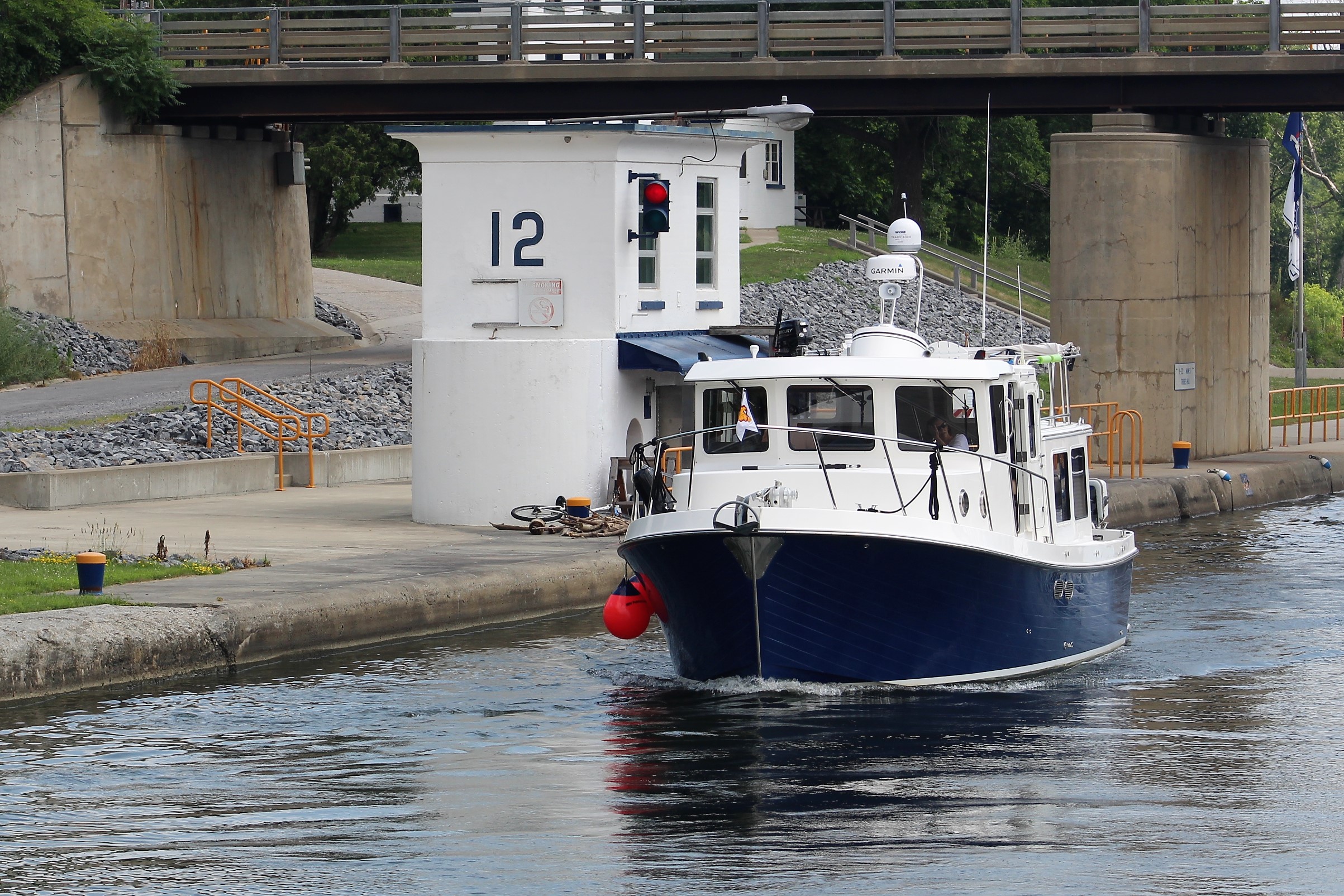
    33.1 Patricia Ann

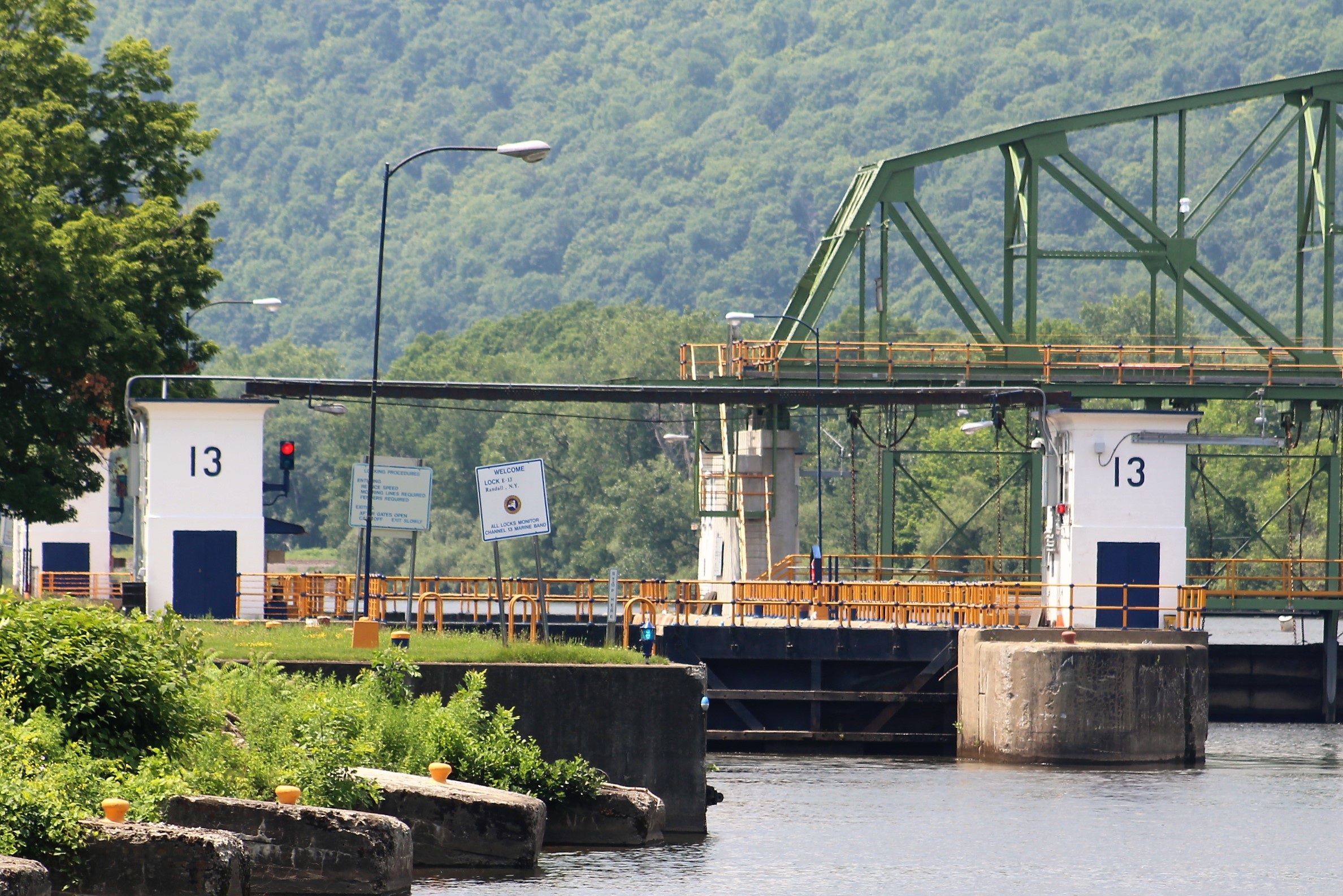
    Lock E13, Randall, up 8 feet, last lock of the day
    34 Lock E13

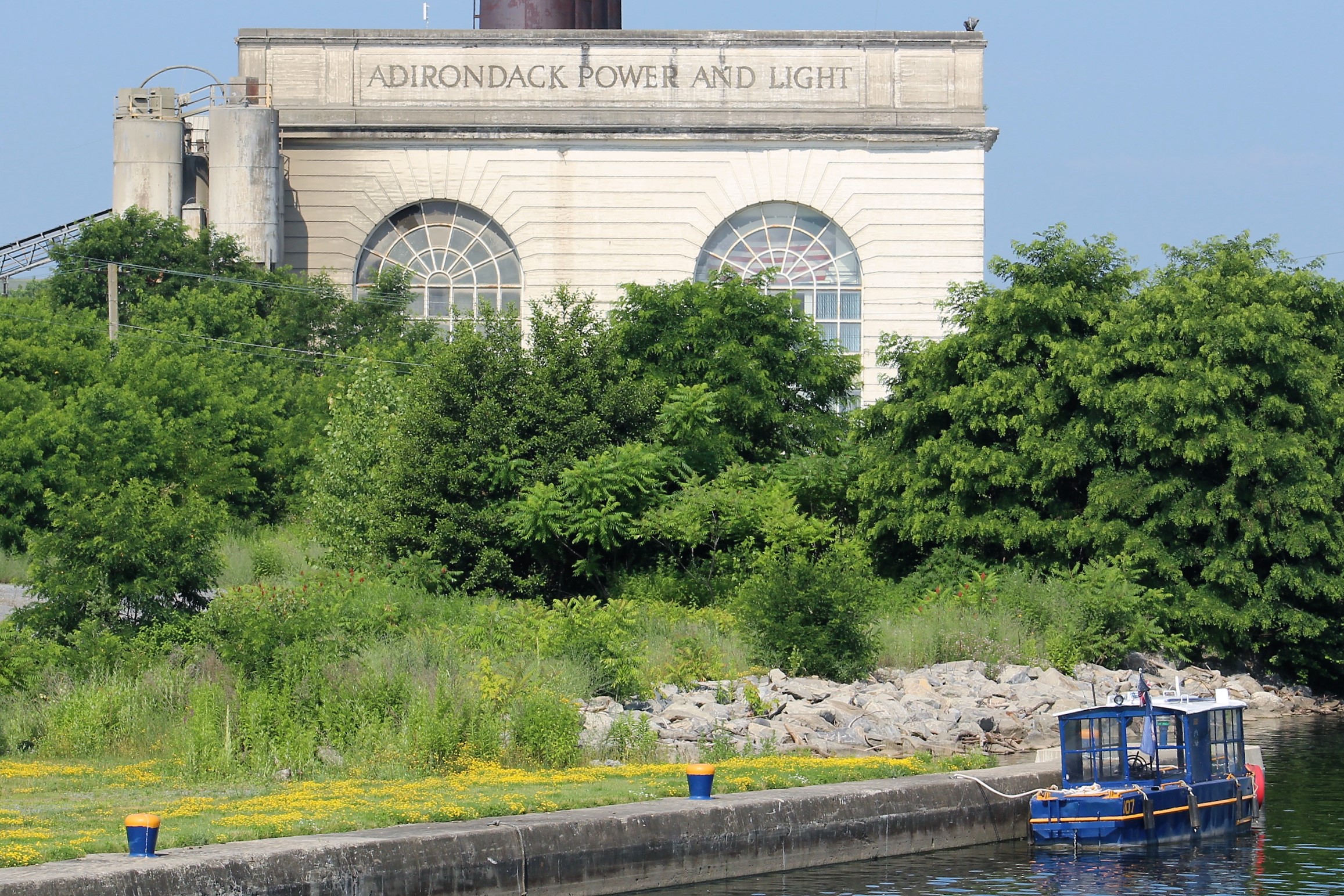
    After exiting Lock E13, it was seven miles to the Riverfront Park in Canajoharie.  On the way, the crew passed an empty building.  Back in the early 1900’s, there was not local power available to operate the locks, so the Canal Authority built local power plants to power the locks.  They contained two 50 KW turbines.
    31 power Plant

    Upon arrival, there was no dock space with electric power.  However, there was space on the terminal wall where the crew tied up.  With no power, there will be no air conditioning which will make for a long hot afternoon.  And probably a long hot night.  Makes you wonder how people survived the summers down south before the invention of air conditioning.

    Friday, July 6th

    The heat wave finally broke.  It is only supposed to get in the mid 70’s today with a low in the 50’s tonight.

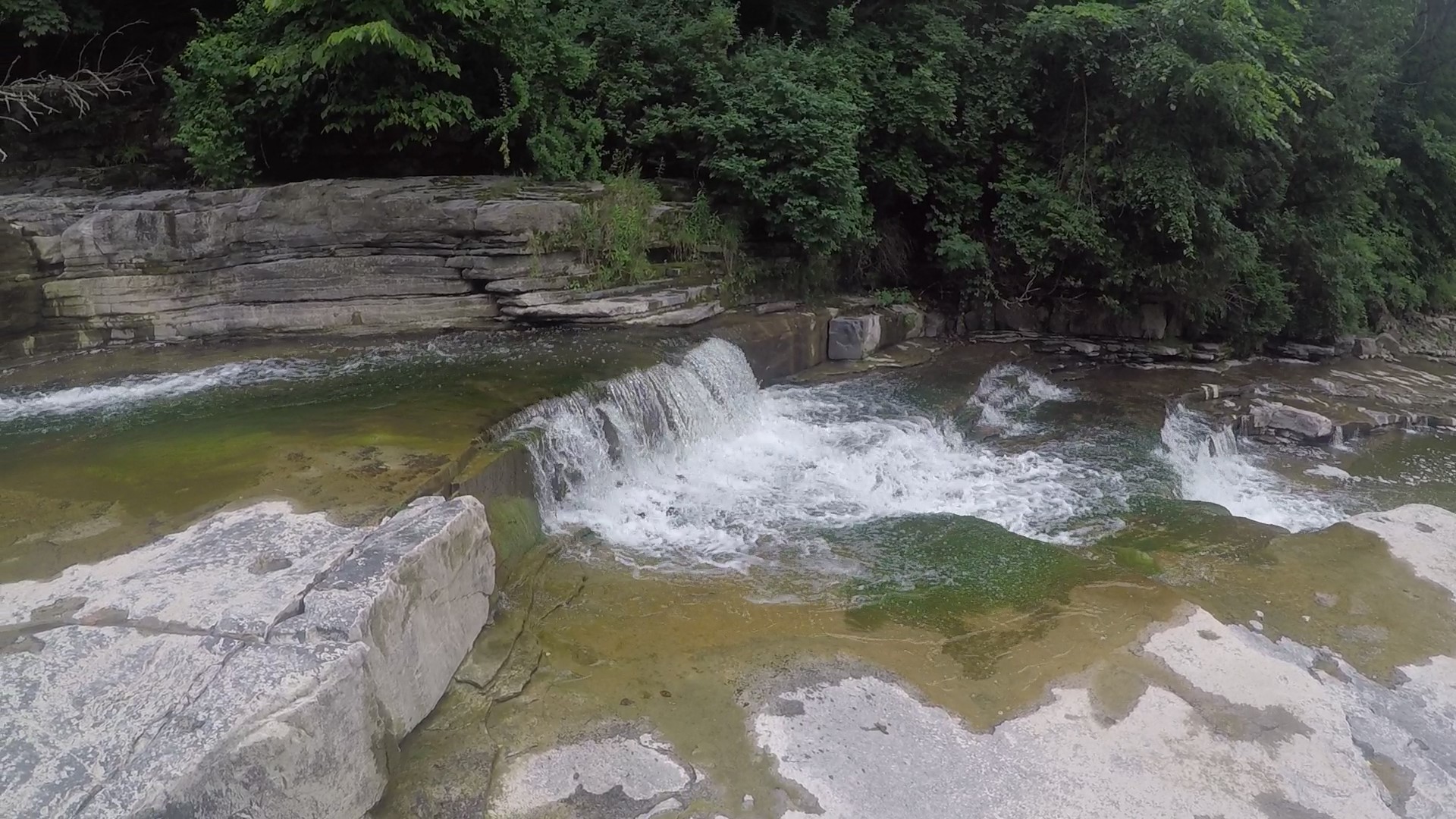
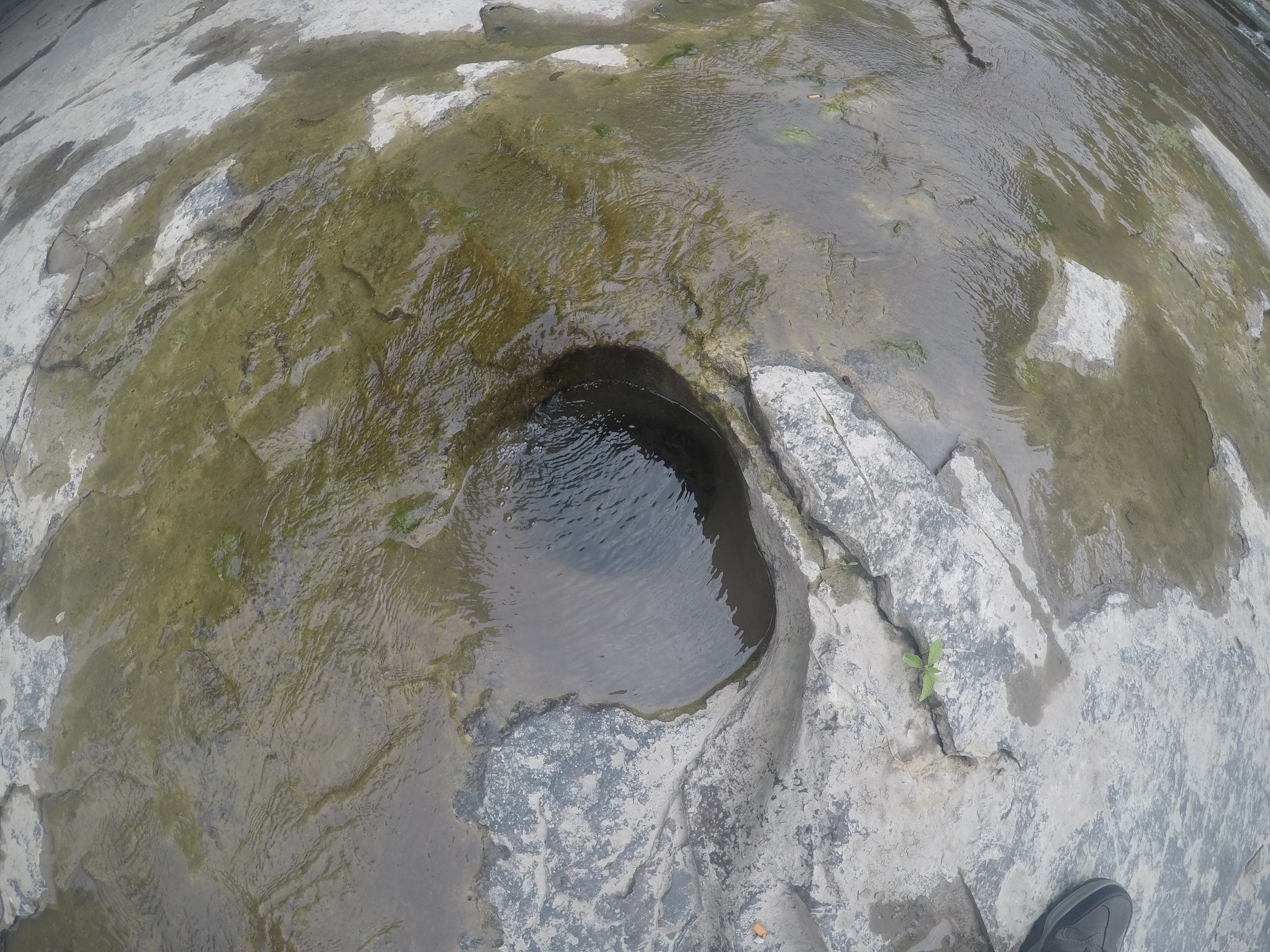
    With the temperatures moderated, the skipper decided to set out and explore the name sake of Canajoharie.  The name is Mohawk for ‘Boiling Pots.’  The Canajoharie Creek bed is lined with soft shale rock.  As the water cascades down the river bottom it has eroded the shale rock into round holes, called ‘boiling pots.’

    The creek bottom looked very much like walking the dinosaur tracks in the Paluxy River back in Glen Rose, Texas.

    Canajoharie Creek
    36.2 Canajoharie Creek

    A small boiling pot, only 1 foot in diameter
    DCIM100GOPROGOPR0836.JPG

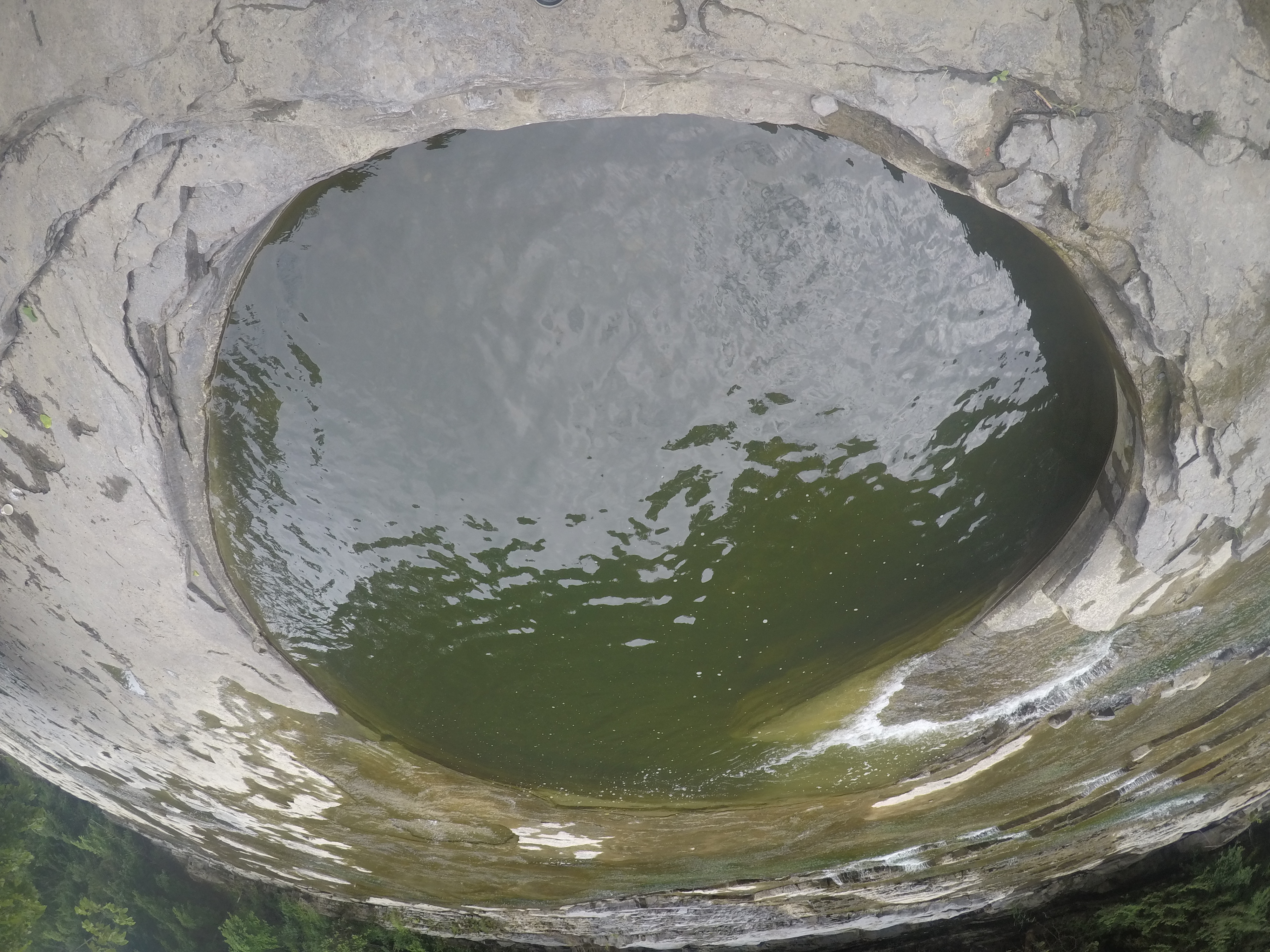
    Larger Boiling Pot, 10 feet in diameter, maybe 5 foot deep
    DCIM100GOPROGOPR0837.JPG

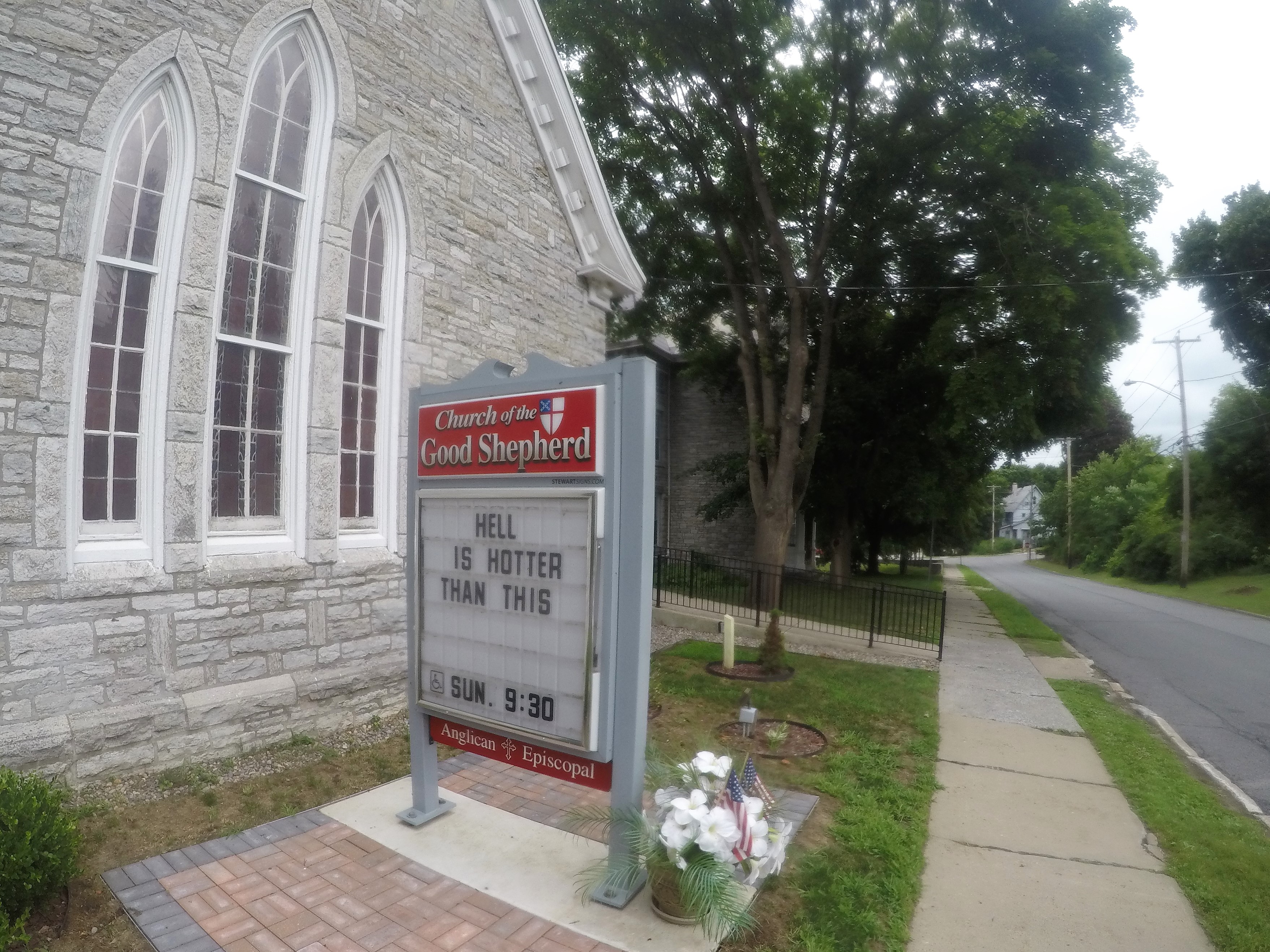
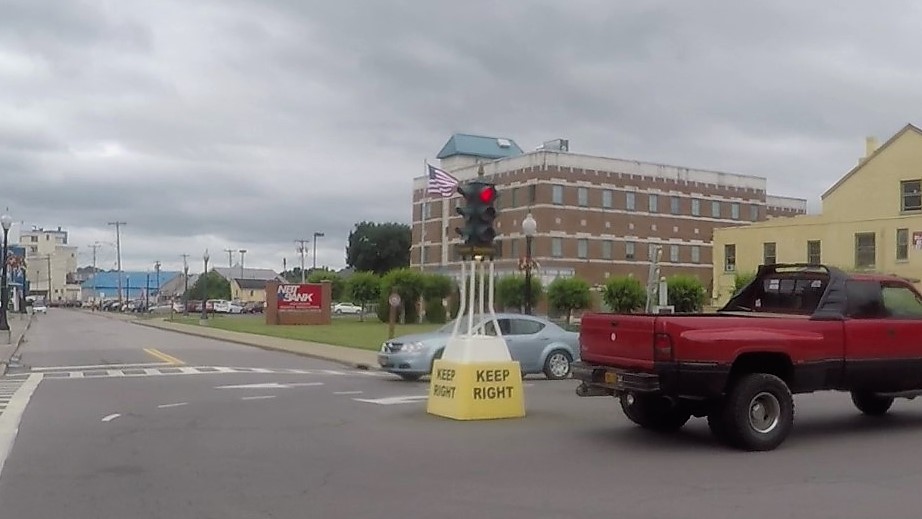
    On the way back to the boat the skipper passed two interesting things.  One was a reference to the hot temperatures over the last few days.  The other was a traffic light that is placed directly in the middle of the intersection.

    Church Warning 
    DCIM100GOPROGOPR0838.JPG

    Traffic Light in the middle of the road
    38 traffic Light

    The skipper decided to do some more troubleshooting on the Main Line 2 bus and breaker.  After taking multiple voltage readings, it looks like the Main Line 2 Breaker has failed.  The skipper cycled the breaker open and shut several times, but still no power getting to the individual component breakers.

    Saturday, July 7th

    Headed out today towards Ilion Village Marina, just past Lock E18.  The crew would get stepped up 196 feet through five Locks, including the largest step on the Erie Canal.  They would also end the day with a great discovery.

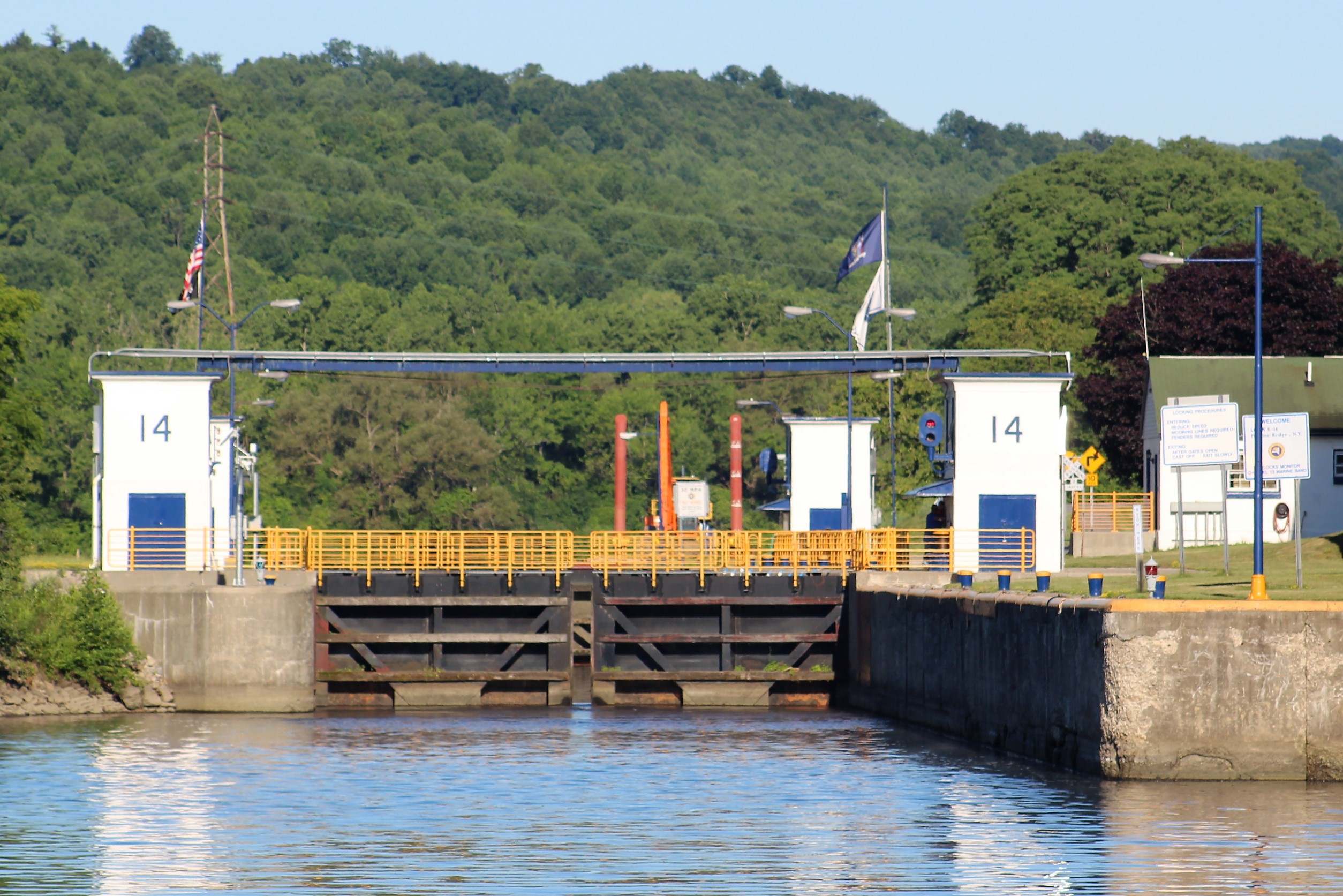
    Lock E14, Canajoharie, up 8 feet
    39 Lock E14

    Lock E15, Fort Plain, up 8 feet, most western Lock that is directly on the Mohawk River
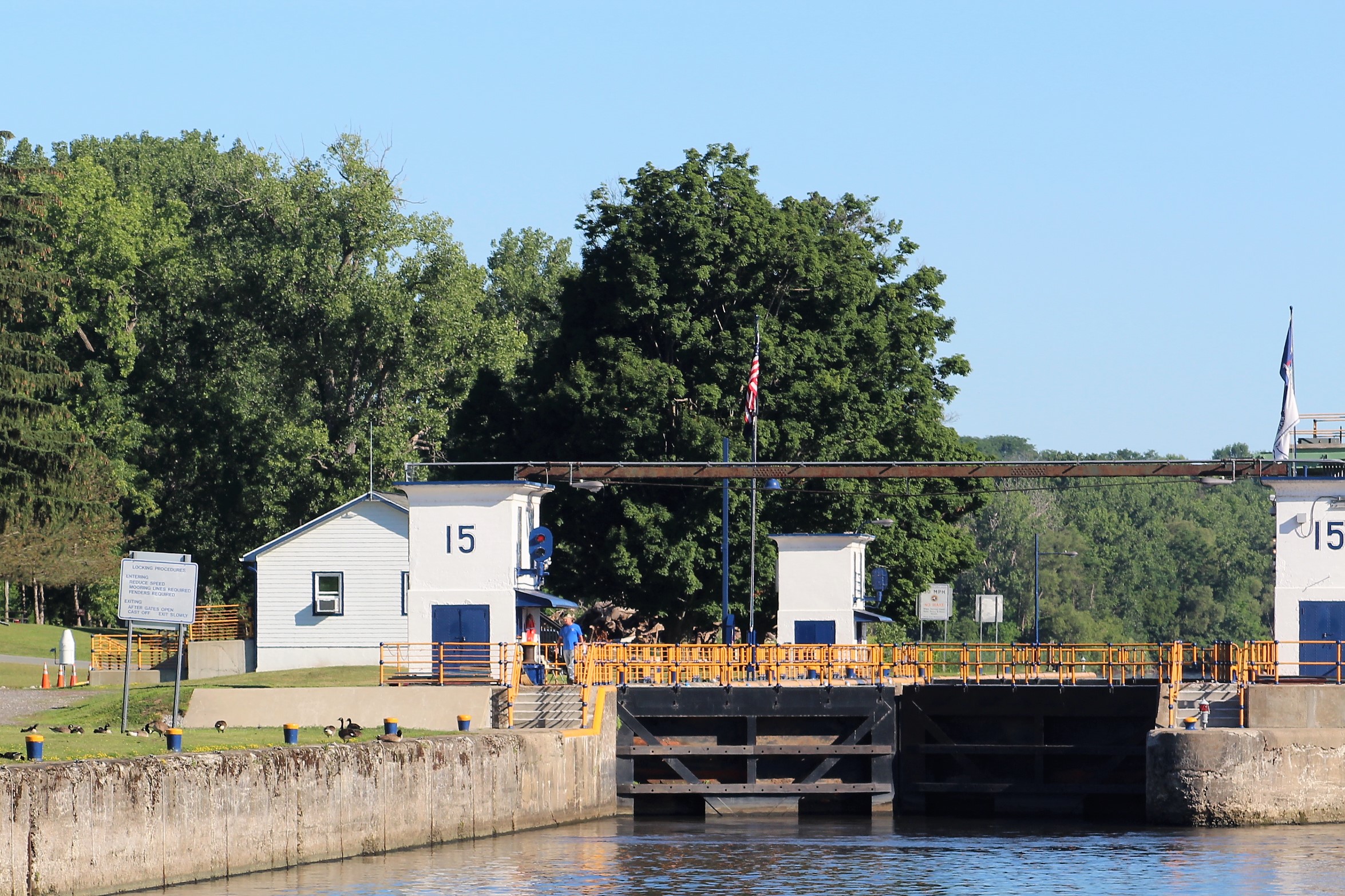
    40 Lock E15

    Lock E16, St Johnsville, up 20 feet

    41.3

    The Mohawk River turns to the right just before the Lock.  During construction of the modern Erie Canal, the designers dug a 3.6 mile ditch along side the old Erie Canal and the Mohawk River.  Lock E16 is the entry into this man-made canal that was dug in 1907.

    The view of the man-made canal
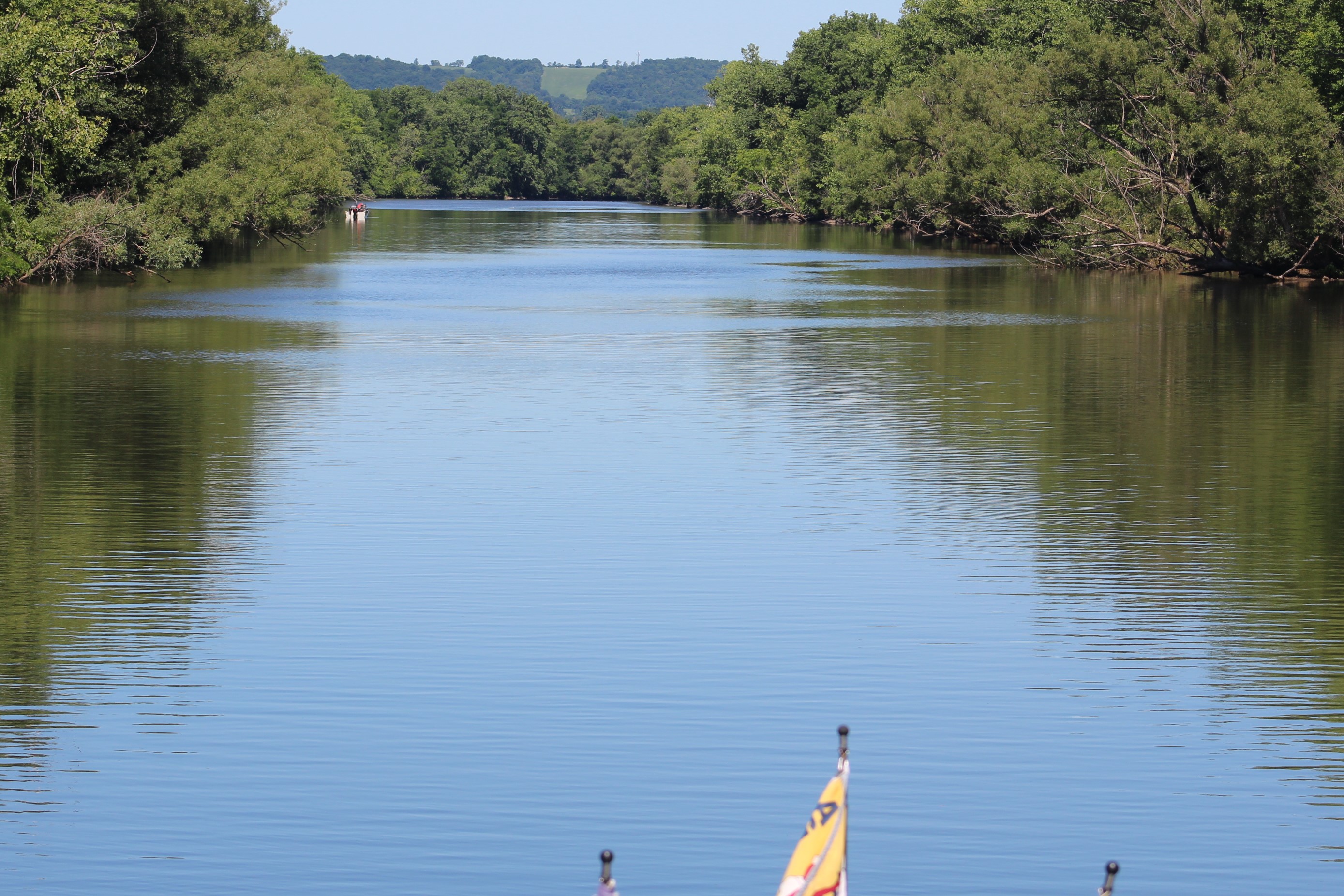
    42

    Lock E17, Little Falls, up 40 feet, being drained so the crew can enter
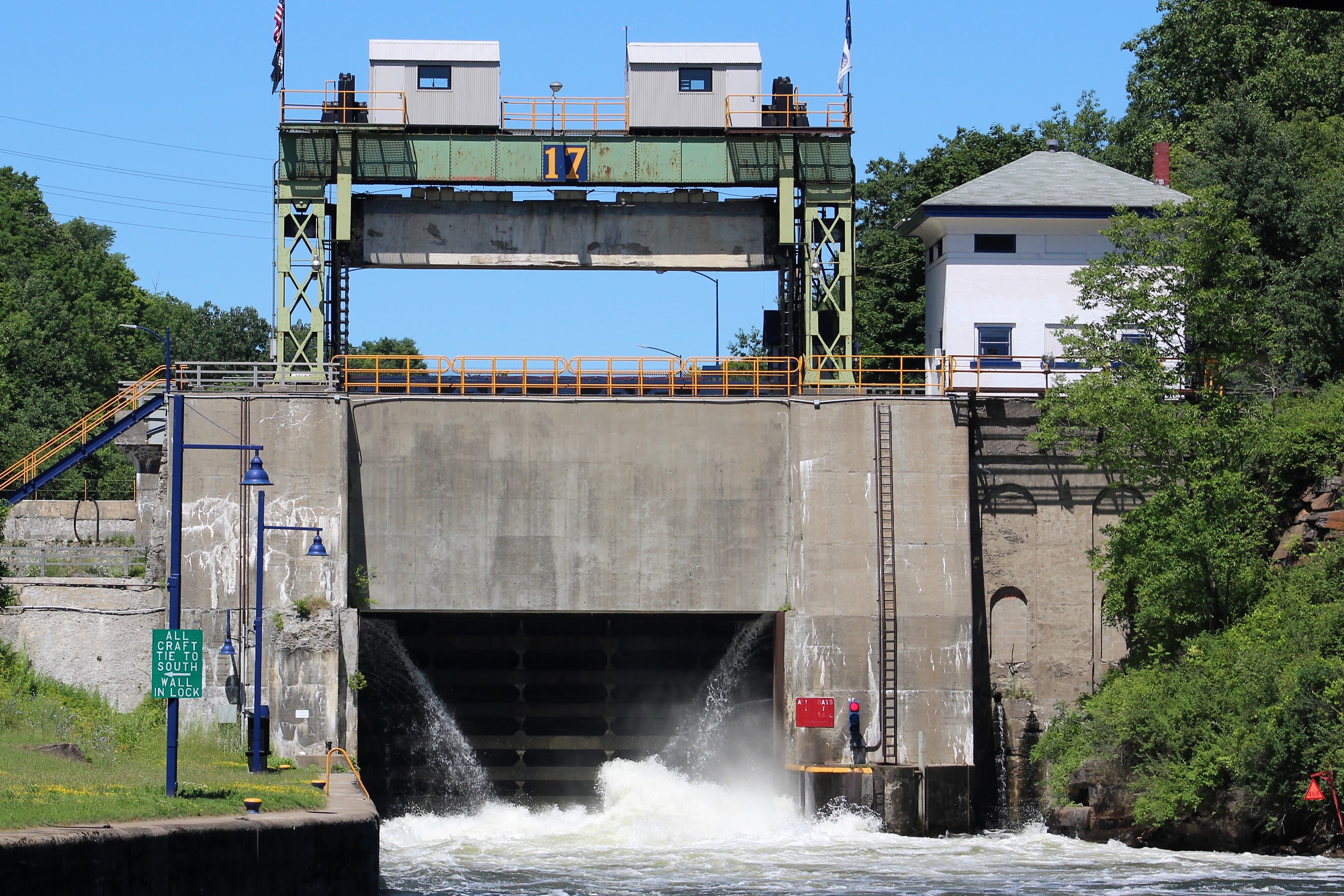
    44.1

    Lock E17 was a design challenge for the engineers back in the early 1900’s.  The lock was built into solid rock and needed a unique solution to fill the chamber.  Part of the design was building a pond that would be used to fill the lock.

    Also, this lock is the largest lift on the Erie Canal.  Part of the design was a guillotine lift gate that the boater goes under.  There are only two such locks in North America  The other one is located on the Ottawa River in Canada.

    The guillotine gate being lifted
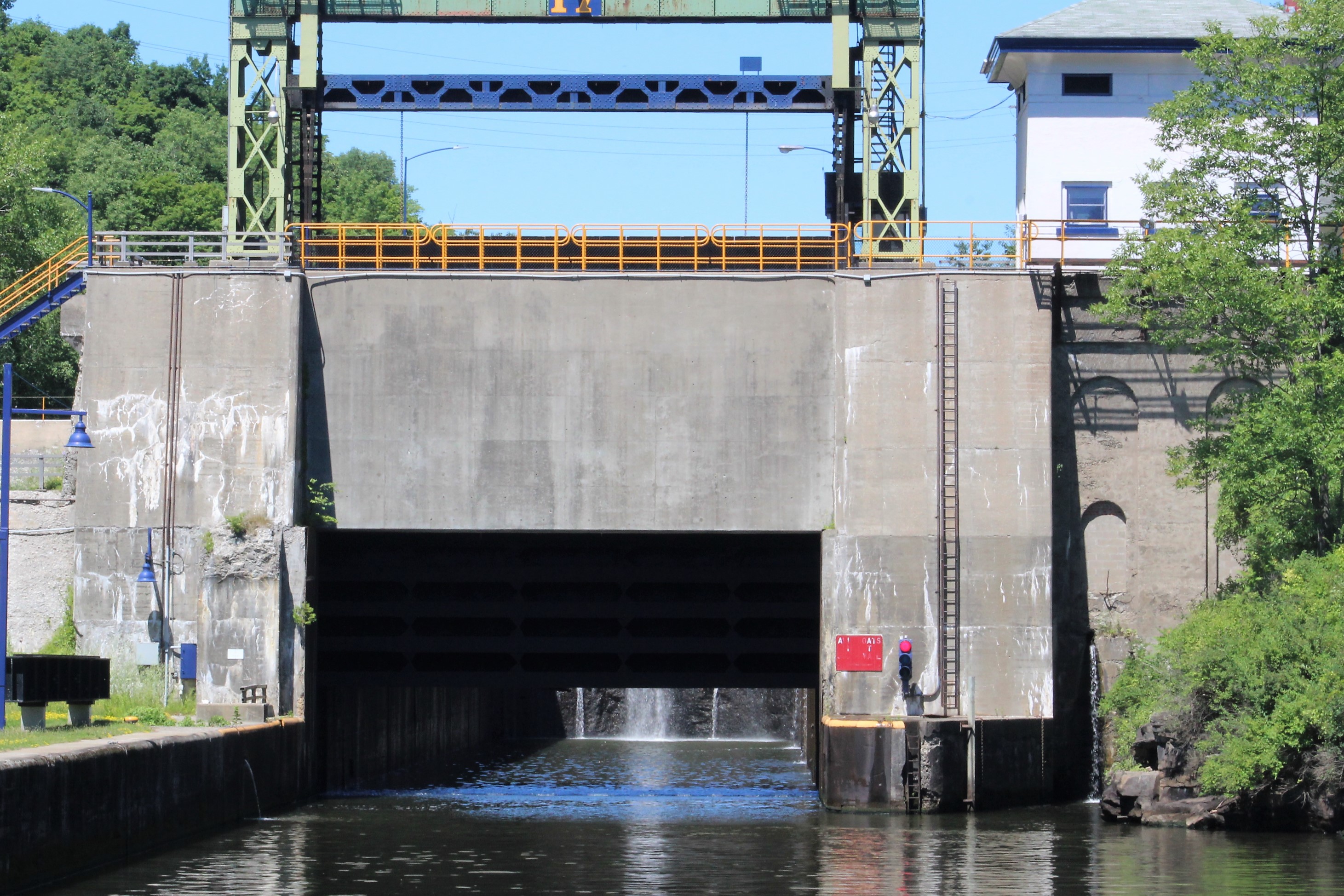
    44.2

    Sea Horse in Lock E17

    44.5 Sea Horse

    The solid rock that was cut for the Lock
    44.7

    Lock E18, out in the countryside west of Little Falls, up 20 feet
    45.2

    On the way up in the Lock, the skipper noticed a large ship on the other side of the east gate waiting to get in the Lock.  The low profile allows the ship to get under the low bridges on the Erie Canal.

    45.3

    While exiting the lock, the Admiral asked the folks where they were headed on their cruise?  They answered New York City.  Well, they have about 240 miles to go.  The skipper looked back and noticed that the design of the ship allows a snug fit in the lock.
    45.5

    After Lock E18, the crew motored just a few more miles and pulled into the Ilion Village Marina.  You probably would never guess that Ilion is pronounced “E-lee-on” rather than “I-Lion,” but it is.  The skipper is having a hard time remembering how to say the name of this place.  I have head him refer to it as the town that starts with an “I”, and then the other person says the town name for him.  A great coping strategy.

    In a more positive note though, after arriving at the marina, the skipper plugged into the 50 amp service.  When he went in the boat, he cycled the Main Line 2 breaker numerous times, and cha-ching, the air conditioners came back on.  FOG!  A great way to finish the week.

    Historical Note – Ilion is the home of Eliphalet Remington, who created his first gun and started the Remington Arms Company back in 1816.  The factory and museum hire 1,300 folks in town making it the village’s largest employer.

    Boat name of the week

    Gettin’ Looped
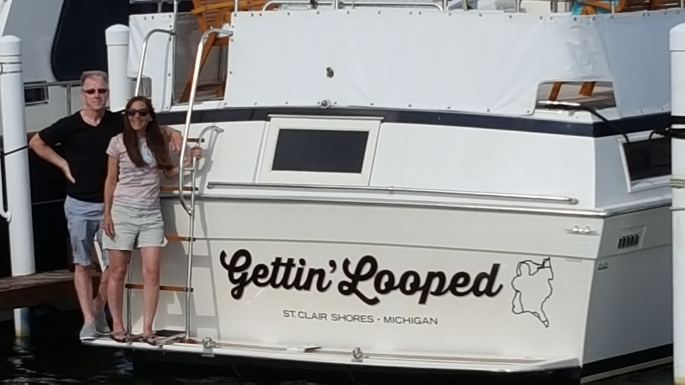
    gett'n looped

    Next Week –

    The crew expects to complete the Eastern Erie Canal early next week.  They will then take a side trip on the Cayuga-Seneca Canal into the ‘Finger Lakes.’  They hope to be in Ithaca, at the southern tip of Cayuga Lake by the end of the week.

    Loop On – Where the road ends, the water begins. The water goes on forever, and the adventure never ends.

    Eric the Red
  • Friends, New and Old

    Friends, New and Old

    Hello virtual crew members and fellow adventurers!

    I would like to welcome Gideon A. aboard as our newest virtual crew member.  As a dear friend, Big Dave S., used to say, “It is an SOS (scoot over some) kind of day.”  It might be a little crowded on this 43 foot boat, but there is always room for more.

    13.4

    Summary of week:

    The crew met an interesting host of people during the past week.  These folks have definitely enriched the crews lives.

    Hudson

    The first half of the week was spent making way from Cape May to New York City, with the following stops:

    1. Anchored across from Atlantic City in Rum Point Basin
    2. Anchored in cove by Tilton Point about 10 miles south of Manasquan
    3. Lady Liberty Marina in NYC

    The second half of the week was spent running up the Hudson River with the following stops:

    1. Anchored in Haverstraw Cove just south of the town of Haverstraw
    2. Stayed at Hyde Park Marina which is walking distance to the Culinary Institute of America where the crew will grab an evening meal
    3. Shady Harbor Marina just north of New Baltimore because it was too hot to anchor

    Click on the link to read the day-to-day travel log. This includes weather report, sea conditions, captain’s log, a summary of the day’s experience, and a few pics of the route.

    The voyage of discovery did answer the following questions this week:

    1. Who is buried in Grant’s Tomb?
    2. Who made the above question famous?
    3. Why isn’t General Grant buried at West Point or other military cemetery?

    At the Box Office

    This week’s video shows Still Waters II leave Cape May and run up the New Jersey coast to Atlantic City.  She then runs inside on the NJ ICW where she encounters a train at Manasquan.  She then runs back outside in the Big Pond to NYC, and begins her voyage up the Hudson River.  In Poughkeepsie, she listens to Bridge Music.  She ends her week watching fireworks off her bow over the Hudson River.  Happy Birthday America!         Enjoy!

    To see past videos, click on the link to the Still Waters II Vimeo site.  The library contains videos of Still Waters II cruising America’s Great Loop.

    Sunday, June 24th

    The skipper noticed another Viking Motor Yacht had arrived at the Marina in the early afternoon. He also noticed that the Viking was flying a White Looper Flag, signaling that they are ‘In Progress” on the loop. The name of the boat, Gettin’ Looped.  The crew of Gettin’ Looped , Mike and Jonell, invited our crew onboard for a tour. Then later, Mike and Jonell came down and toured Still Waters II.

    The boats are still very similar, even after 30 plus years of additions and modifications to each boat.

    Mike and Jonell aboard Still Waters II

    Gettin Looped

    Mike and Jonell stopped by the Viking Manufacturing Facility just north of Atlantic City.  They sent a message that the tour was fabulous.  Our crew will put this on the ever growing ‘Next Time’ list.

    Monday, June 25th

    The ever changing weather has opened a window to cruise three straight days to New York City. So this morning the crew set off on the first leg of the journey up the Jersey coast by heading towards Atlantic City.

    Leaving Cape May Harbor

    1 Leaving Cape May Harbor

    The crew ran about three miles off shore for much of the cruise and did not have much of a view of anything but miles and miles of water.

    Atlantic City in the distance

    2 Atlantic City 15 miles out

    The skipper out getting video for this week’s film

    3.1

    When the crew arrived at the anchor spot they had a bit of trouble. On the first try the anchor did not set. While pulling the anchor back in the chain got stuck in the windlass and tripped the breaker. After resetting the breaker, the skipper un-lodged the stuck chain and dropped the anchor a second time.

    Again the anchor did not hold. This time when the anchor came up it had a big ball of grass stuck on it. The skipper cleaned the anchor off, then dropped the anchor a third time. This time the anchor held, but it seems the brake may have broke on the windlass because the chain was just free wheeling into the water. Just another thing to troubleshoot and fix.

    The crew did make arrangements to stay at Liberty Landing Marina in NYC on Wednesday. They plan to meet Geof, the Captain that originally trained the crew three years ago.

    Geof (far left) and the crew on the last day of training, three years ago

    539AAF07-A12D-4356-AFDD-CF90C491DB08

    Then they made reservations at Hyde Park further up the Hudson River so the Admiral could make reservations at the Culinary Institute for Friday. The Dance Card is filling fast this week.

    Tuesday, June 26th

    The crew completed the second leg of the journey to NYC. They decided to run on the inside route via the NJ ICW. To get past the worst spots of shoaling, they needed to leave about 2 hours ahead of high tide. This just happened to be 0600 today.

    New Jersey ICW

    4. NJ ICW

    The skipper got up and completed his morning routine and had the engines started at 0545. The Admiral got up when the engines started and made her morning coffee. She then went to the helm and helped get the anchor up from the helm while the skipper was out on the bow pulpit. The windlass seemed to work fine and the anchor came up clean.

    They made their way out the basin and headed north on the ICW at mile 66. The first two hours had several spots of shoaling and the water low level alarm went off frequently. The good news was that the skipper never saw less than two feet of water under the props. Other than a few tense moments in low water, all was well with the cruise.

    As the crew approached Tilton Point to drop anchor, the tide was ebbing and they found themselves once again in some shallow water. They managed to keep five feet of water under the boat though. When they rounded Tilton Point, they pulled into the cove and dropped the anchor. The windlass performed as designed and the anchor was set on the first try. Strange after all the problems from yesterday.

    View across the ICW from the anchor spot

    7 From Anchor Spot

    The crew is set to make New York City tomorrow. Always a fun trip to take your own boat into New York Harbor past the Statue of Liberty and Lower Manhattan.  Only issue is the weather, looks as though a storm may build in the early afternoon and carry some 20 plus mph winds.  The skipper will evaluate the conditions in the morning.

    Wednesday, June 27th

    Got away at the crack of dawn this morning. The conditions in the morning were marginal, but the afternoon conditions would be a no go.

    The crew uses the following matrix for deciding to travel or not:

    Wind          Waves           Go-No Go
    0-10              <2 ft                Go
    11-15            <2 ft                Go
    15-20            >2 ft                No-Go

    The winds were predicted to be 20 + in the afternoon with 3-5 foot swells only 4 seconds apart.  That would not be much fun.  However, the window to get around Sandy Hook looked good if the crew left early.  When they reached the Atlantic Ocean, the wind was 11 mph with 2 foot swells at 6 second period. The wind slowly picked up energy as the crew headed north. Conditions were 13 mph winds with 2-3 foot swells as the crew rounded Sandy Hook and made way to the Verrazano Bridge.

    Abandoned Lighthouse in Lower Hudson Bay

    9 Light in Lower Hudson Bay

    As the crew neared the Verrazano Bridge, conditions seemed to weaken and the waters calmed down. After passing under the bridge and thru ‘The Narrows’ into the Upper Hudson Bay, the skipper checked conditions out at Sandy Hook and the winds were up to 20 mph..

    Looking towards Manhattan from below the Verrazano Bridge

    10 Manhattan from under Verrazano Narrows Bridge

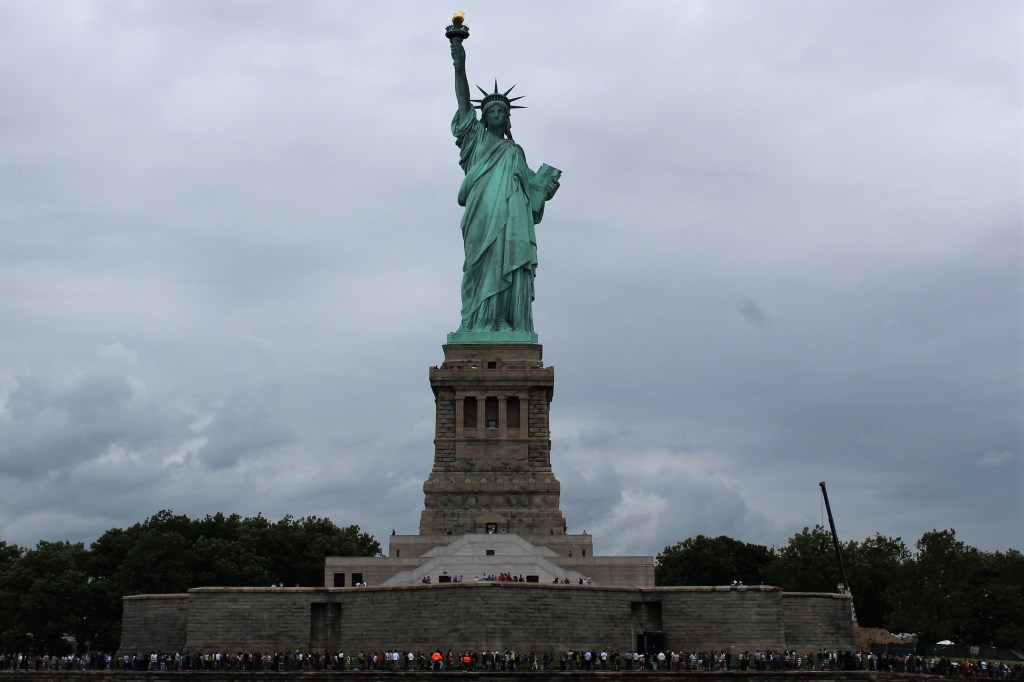
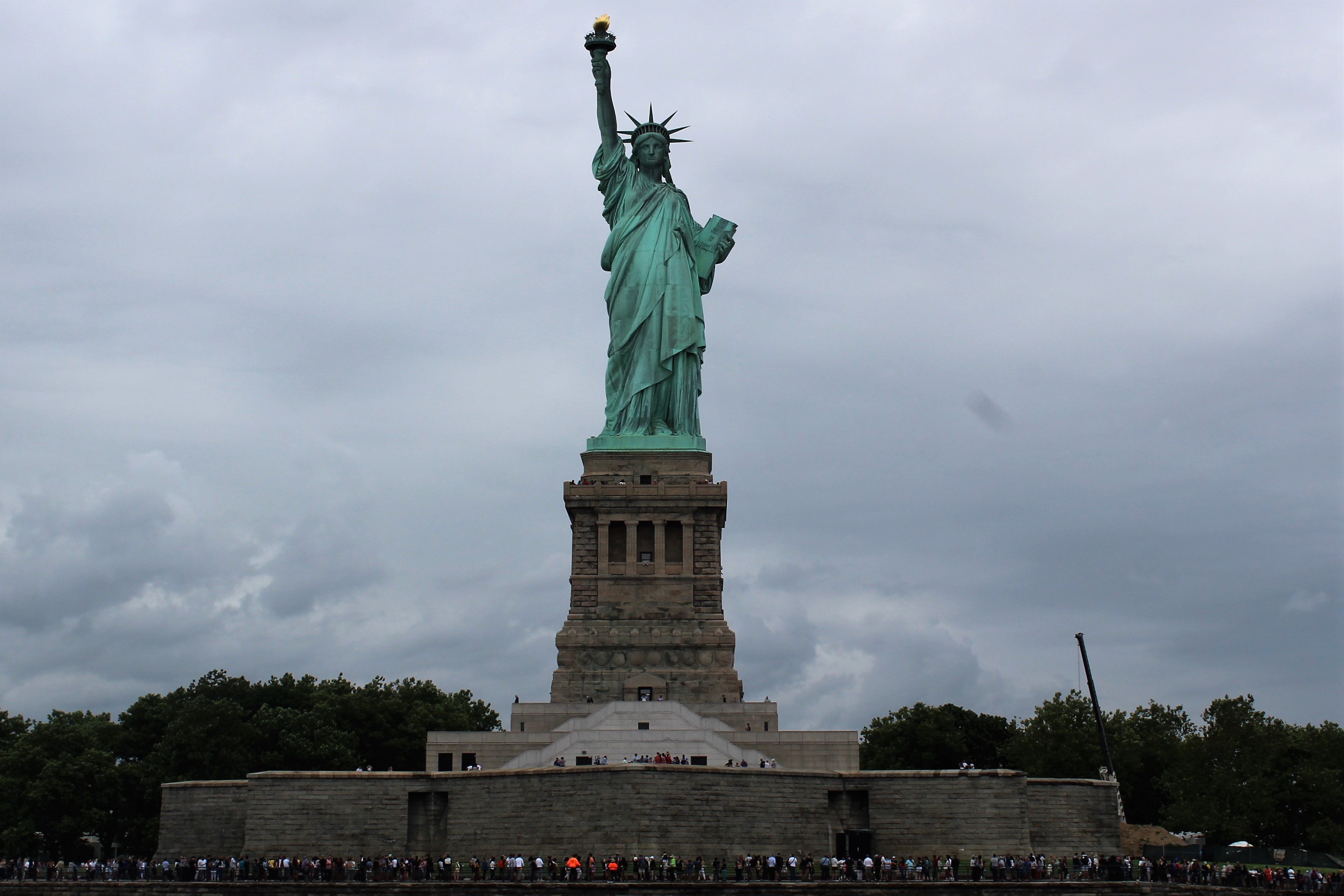
    The crew swung by the Statue of Liberty for a few pics, and were surprised to find they were the only boat there. As they pulled away from the Statue, a tour boat loaded with tourists arrived..

    13.5
    The crew made way over to Lady Liberty Landing and got docked. As the skipper was checking in at the dock office, a 32 foot sail boat arrived on the fuel dock to check into customs. The boat and 4 crew were landing after a four day cruise from Bermuda. The skipper asked how the sail went and the Captain of the sailboat launched into a story of 26 foot waves and a hail storm. The skipper assumed it was not that good of a trip.

    After that story, the skipper checked the wind conditions out at Sandy Hook and found that the wind was well over 20 mph.  Sure glad they left early and missed that mess.

    The view of Manhattan from the boat

    16 View ftrom Boat

    As mentioned earlier, the goal for today was to make NYC and meet up with Geof.  It has been too long since the crew has seen Geof, and they are eager to learn what he is doing working in NYC.  Geof had a business associate with him, Shawn, so they both arrived at the boat around 1730.  After introductions and some good story telling the group set off to find some food to eat.

    New and old friends aboard Still Waters II, Shawn, the skipper, Geof (left to right)

    16.4

    The food was ok, but the price included a charge for the view.

    16.2 Shawn and Geof

    Thursday, June 28th

    The skipper looked at the tide and current charts for the Hudson River and determined that the best time to leave was 0800, so that they would get a 1.5 mph push from the current.

    Unfortunately, there was a steady downpour while the crew shoved off the dock. The crew donned their rain gear, unhooked the water and electric, then slipped the lines, and finally left the dock in the rain.

    After motoring out into the Hudson River, the rain abruptly stopped. This would happen two or three times throughout the day. All at the most inconvenient of times.

    Goodbye NYC

    17 leaving in the rain
    The crew caught site of Grant’s Tomb overlooking the Hudson River. This begged the question, Who is buried in Grant’s tomb?

    18 Grant's Tomb

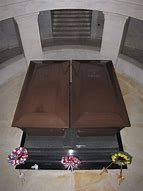
    Well, that is a trick question, or maybe even a riddle. How can that be you ask? Well, for starters, technically no one is buried in Grant’s Tomb. However, both General Grant and his wife, Julia, are ‘entombed’ there above ground in matching sarcophagi.
    18.1
    The skipper wondered why the General was not buried in West Point, or some other military installation. The answer turned out to be because the General’s only request upon death was to be laid to rest beside his wife. Back when he died, wives were not permitted to be buried in military cemeteries.

    His wife choice New York because the site of the memorial was only blocks from where she lived and she could go visit her deceased husband. When Julia died in 1902, she was placed next to the General, granting Grant’s last wish.

    Some give credit for the old question, Who is buried in Grant’s Tomb? to Groucho Marx. He hosted a quiz show, ‘You Bet Your Life,” in the 1940’s and 1950’s. Marx did not like participants to go home empty handed, so if a contestant had not won anything, he would ask this question which would lead to a winning answer.  Maybe Marx is also the inventor of the modern day participation trophy.

    The crew continued north on the Hudson River to the Haverstraw Marina where the skipper planned to top off the fuel tanks.  The skipper noticed that fuel at the Haverstraw Marina was only $2.92/gal, fuel in the surrounding area was priced 3.50-4.00. Yes, just as they were docking the rain began again. And yes after they pulled away from the dock, the sun came back out. It has been one of those days.

    After the fuel stop, the crew dropped anchor in the Haverstraw Cove.  The cove is well protected from winds in any direction and is out of the river current.  While in the cove, a couple of swans swam by.  The skipper also spotted two deer feeding along the shore.

    Views from the cove.

    22 Swans in Haverstraw Cove

    23 View from the Cove

    23.2 Deer

    Friday, June 29th

    Today the crew weighed anchor and headed towards Hyde Park where they have reservations to eat at the Culinary Institute of America.

    Along the way, they passed some of the best sights on the Hudson River, which make this leg of the journey one of the better cruising days. The weather also decided to cooperate and bring out the sunshine.

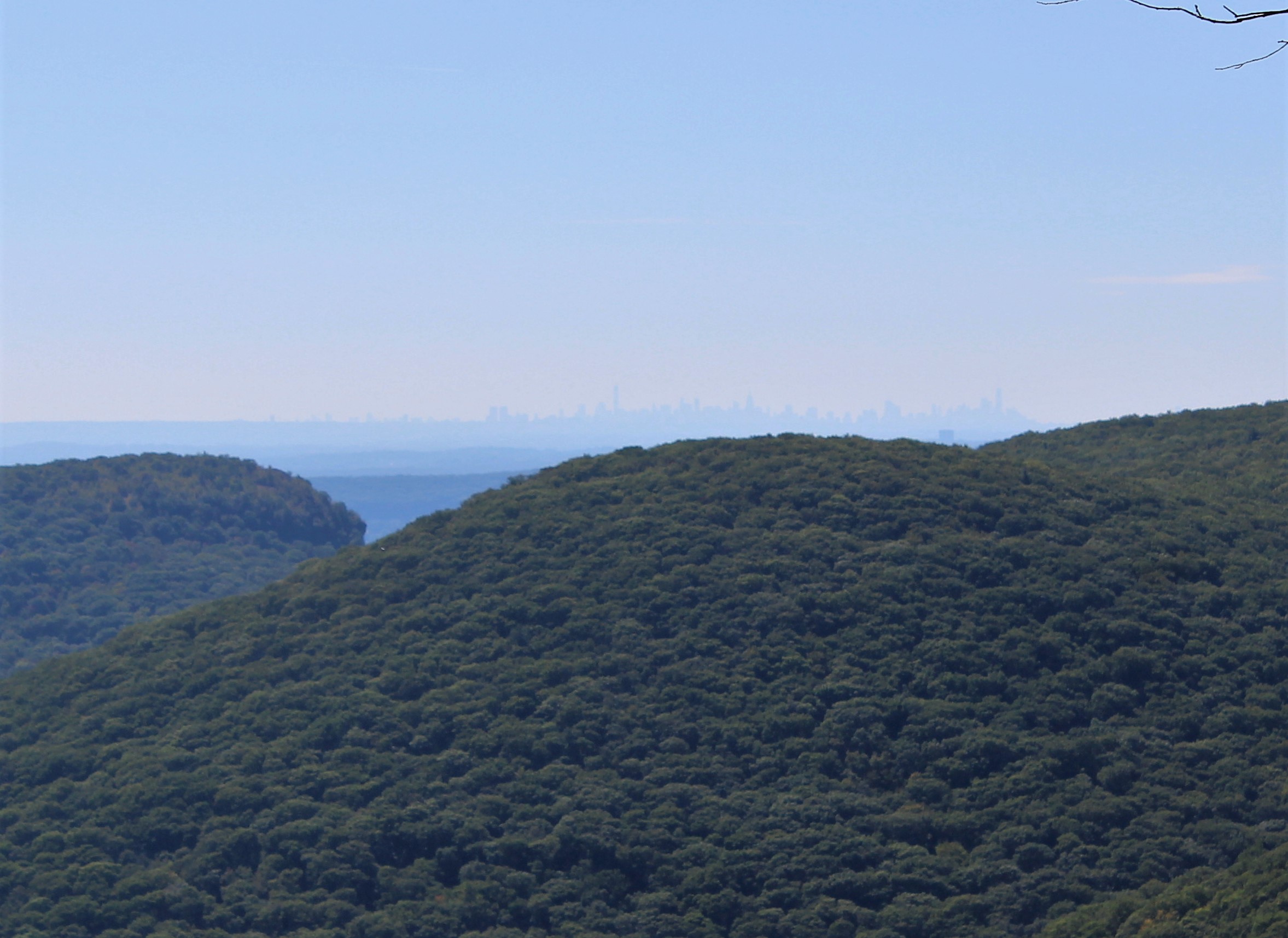
    Cruised by Bear Mountain.  You can actually see NYC from the three story overlook on top of Bear Mountain, on a clear day.

    The Bear Mountain Overlook, from the water

    26.1 Bear Mountain Overlook

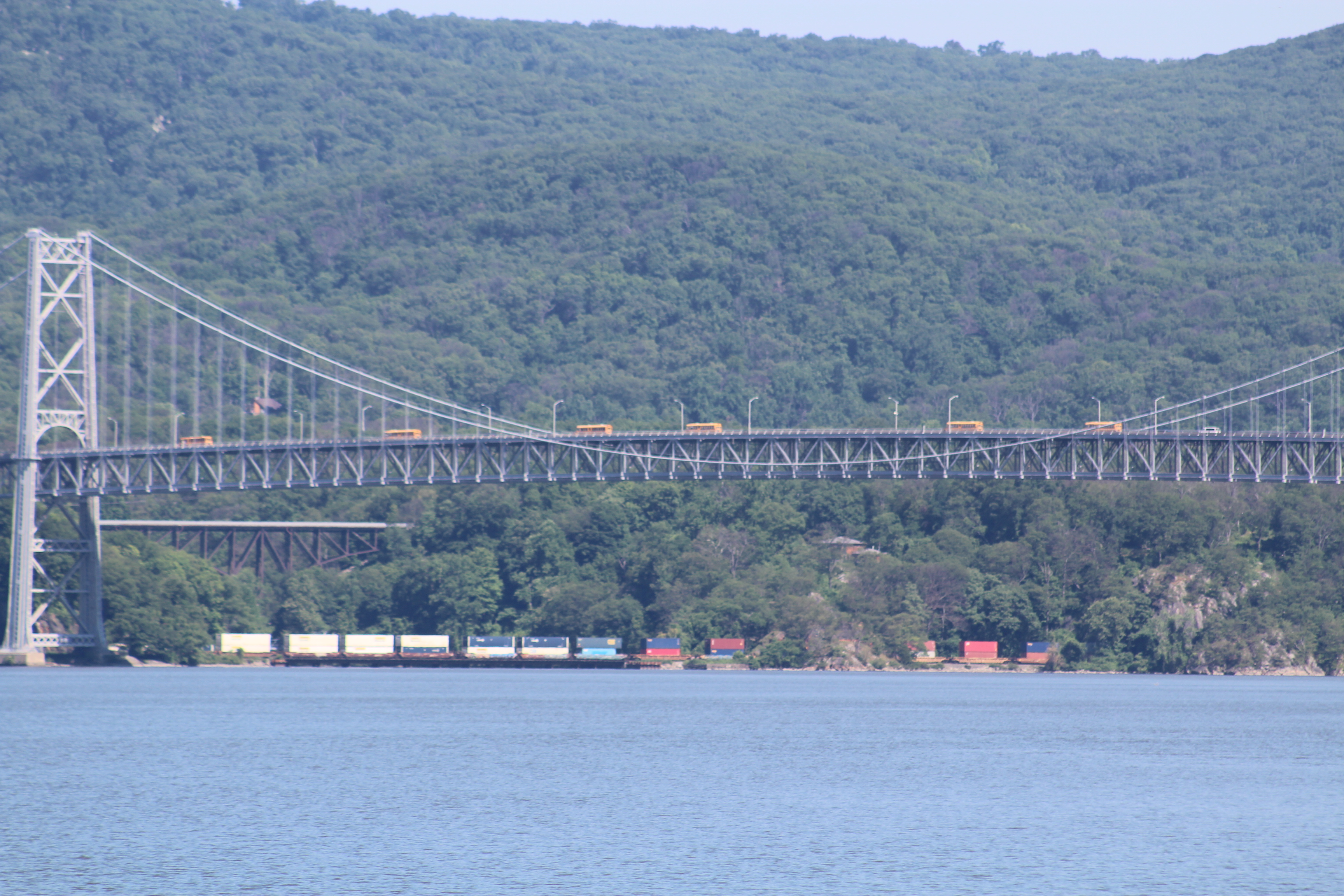
    Bear Mountain Bridge

    26.3

    Cruised by West Point

    28.1
    Cruised by Bannerman’s Castle

    31 Bannermann's Castle
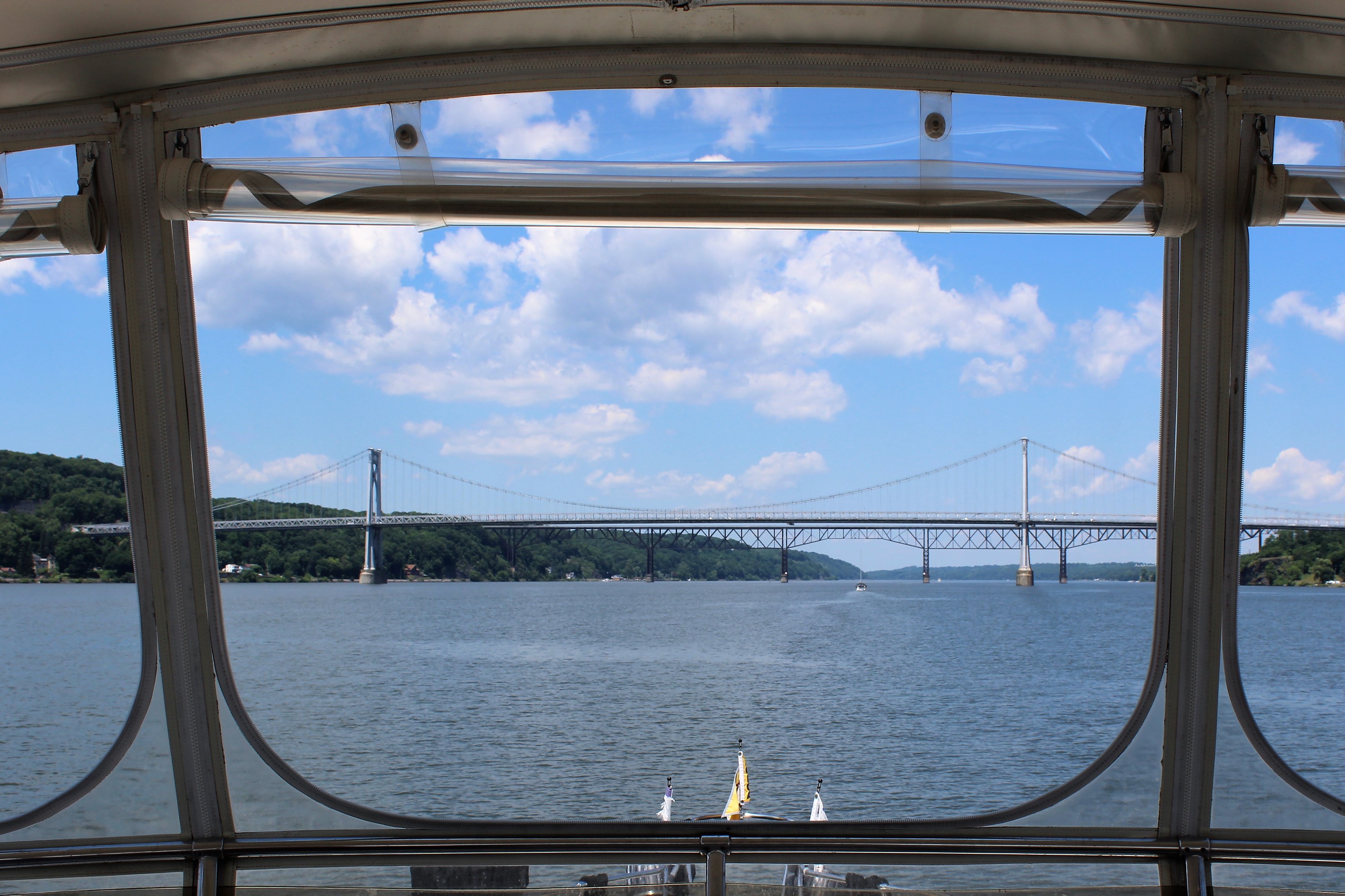
    Cruised under Poughkeepsie Bridge while listening to Bridge Music.  Only other place in the  world you can get this experience is in France at the Eiffel Tower.  A local resident, Joseph Bertolozzi, recorded sounds made from hitting the bridge with different objects, and then composed a dozen songs from the recordings.  

    bridgeopen[1]

    Click here for the New York Times Video story.

    32.4

    The skipper also had several radio conversations with the crew from Almost There.  They are on the Loop headed to the Erie Canal, and then into Canada.

    27.7

    After landing at the dock at Hyde Park, the dock master informed the crew that the CIA would conduct a fireworks show after dark. He pointed to some rocks and said the barge will be just past those rocks so you will have a front row seat.

    33 Hyde Park Marina

    Fireworks barge getting setup for the show.

    33.1

    Watch the video above for a little bit of the fireworks show.

    Saturday, June 30th

    The best time to leave the dock to catch the current north was around 1100 this morning.  The crew shoved off and had a good day of lighthouse viewing.

    The Esopus Meadows Lighthouse, nicknamed ‘Maid of the Meadows’, was first lit in 1872.

    34 Esopus Lighthouse

    The Roundout Lighthouse, first lit in 1917

    35 Kingston Lighthouse

    The Saugerties Lighthouse, first lit in 1869

    37 Saugerties Lighthouse

    The Hudson City Lighthouse, first lit in 1874

    38 Hudson City Lighthouse

    Boat name of the week

    Texas 2 Step, this boat was docked in front of Still Waters II at Shady Harbor Marina.  The skipper talked with the Captain of the boat and learned that they are traveling with a couple of other Texas Looper boats.

    IMG_0084

    Next Week –

    The crew will arrive at Waterford on Sunday, and launch the beginning of the Erie Canal.  The Erie Canal is made up of the Eastern, Western, and Finger Lakes sections.  The crew has cruised the Eastern Erie to the Oswego Canal, so they will travel thru this area as quickly as possible and hope to arrive at the endo of the Eastern Erie Canal by the end of the week.

    Loop On – Where the road ends, the water begins. The water goes on forever, and the adventure never ends.

    Eric the Red
  • Whale Watching Adventure

    Hello virtual crew members and fellow adventurers!

    Eric here with the latest travels of Still Waters II.

    17.1
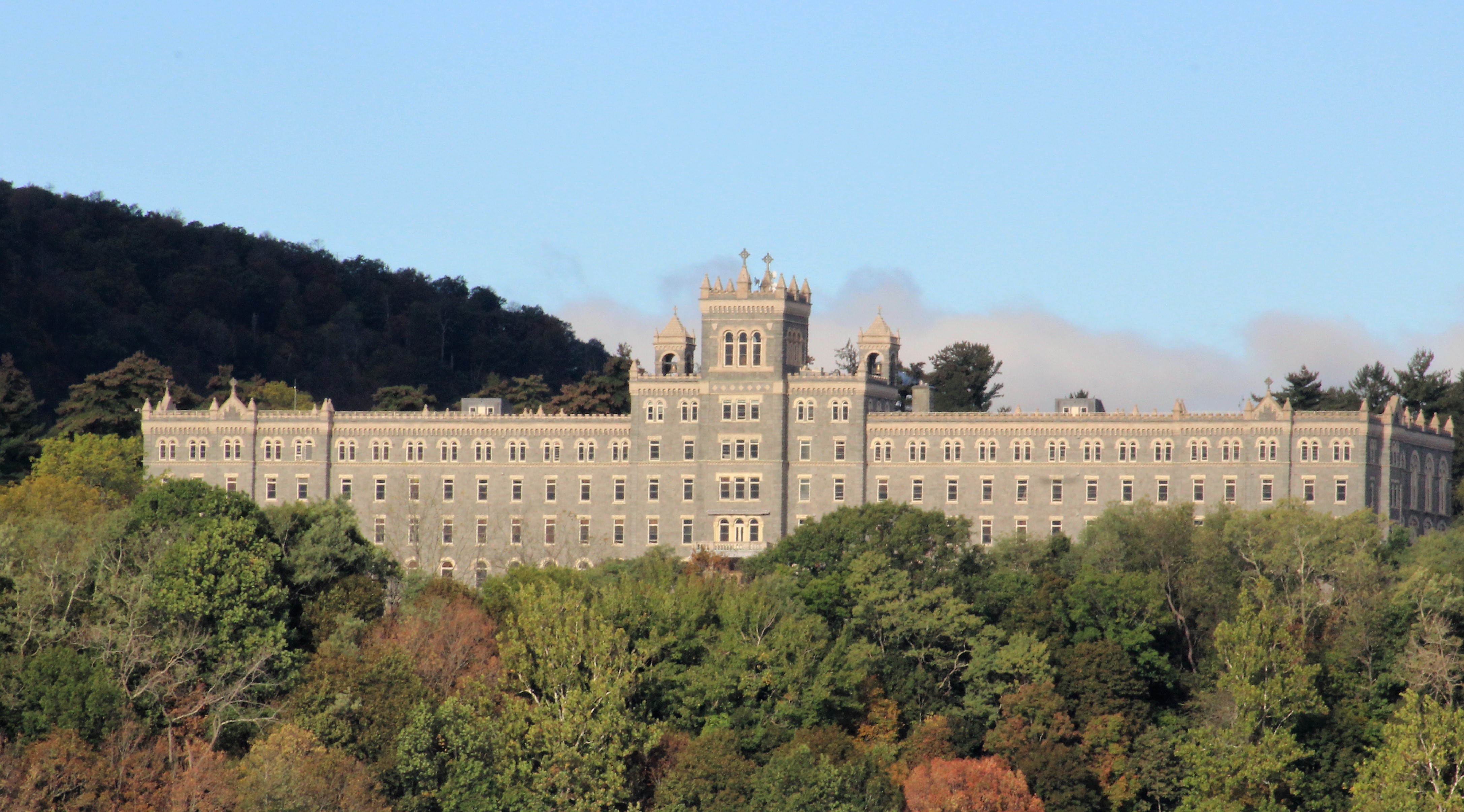
    Monastery high above the Hudson River across from Hyde Park


    Summary of week:

    weekly pic


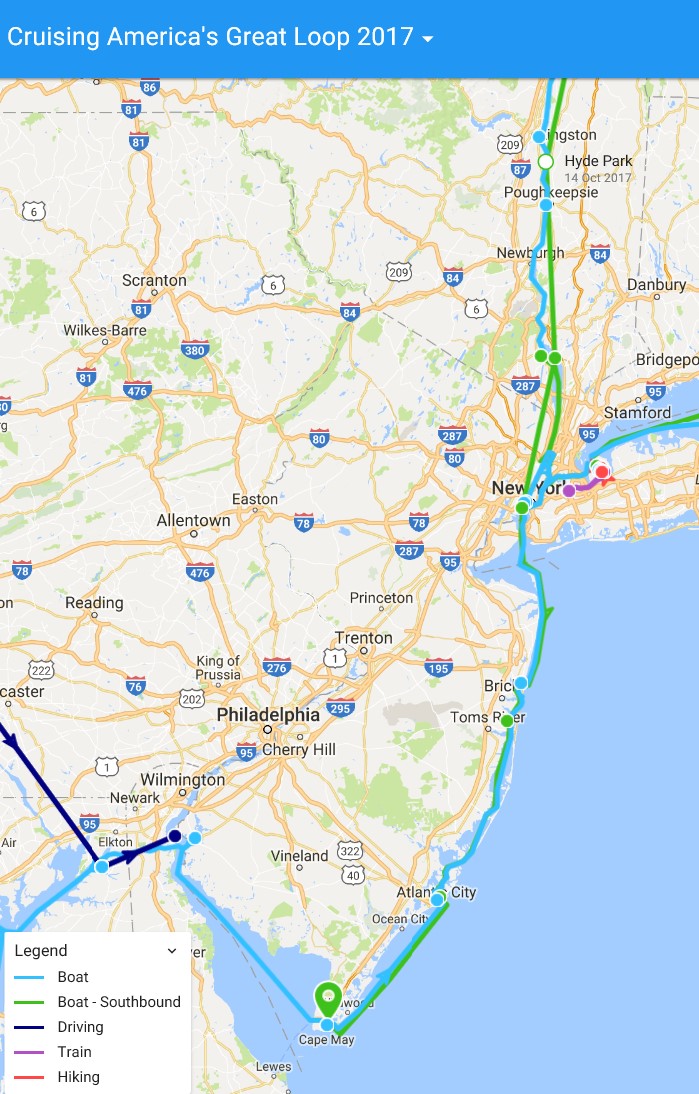
    The adventure continued nearly 250 miles south this week.  From Hyde Park on the Hudson River all the way to Cape May, New Jersey.

    First stop on Monday was at a marina 25 miles north of New York City to get some heat due to a forecasted cold night.

    Then a night on the anchor next to the Statue of Liberty and a great view of Lower Manhattan.

    Then another night on the hook near mile zero on the New Jersey ICW.

    The crew spent a third night at anchor next to Atlantic City before landing in Cape May on Friday.


    This week’s journey of discovery did answer the following questions:

    1. Who are the only civilians buried at the West Point Cemetery?
    2. What was the name of Henry Hudson’s last ship?
    3. What ever happened to Henry Hudson?

    Click on the link to read the day-to-day travel log.  This includes weather report of the day, sea conditions, log of the days travel, and a summary of the experience.

    At the Box Office

    This week’s video shows Still Waters II and crew taking a break to eat at the Culinary Institute of America, at anchor beside the Statue of Liberty, and some whale watching in the Atlantic Ocean.  Enjoy!

    To Cape May from Still Waters II on Vimeo.

    Link to this week’s video to Cape May.

    To see past videos, click on the link to the Still Waters II Vimeo site.  The library now contains 41 videos of Still Waters II cruising America’s Great Loop.

    Monday, October 16, 2017

    Prior to leaving the dock, the skipper noticed a strange contraption mounted to the side of the dock master office.  The dock master came out and gave the skipper lessons on how to use the device.  He was not sure if it still took coins, but did say it had a dial tone and you could dial 9-1-1.

    phone

    The crew decided to do a dock-and-dine at the Culinary Institute of America (CIA) for lunch today.  The skipper worked out the logistics of stopping at the Hyde Park Marina, even though they were already closed for the season.  While the Admiral made the reservations at an Italian Restaurant.

    IMG_0058

    Upon arrival, the crew docked and then walked the mile to the CIA.  The crew tried an assortment of three pastas and some quail.  The skipper also ordered a side of fries, just in case the food portions were skimpy, as can happen at these high end joints.  As expected, the food was excellent.  The hike back to the marina helped walk off the chocolate pudding, bread pudding, peanut butter cookie, and chocolate chip cookie.

    When the crew passed West Point, they saw these guys out rowing their skulls.

    18.2

    The skipper was pretty sure he heard the cadets singing the following ditty to help keep the cadence:

    Row, Row, Row your boat

    Gently out to sea

    Sure wish I had joined

    The Na Veee!

    Remembering this early childhood nursery rhyme also got the skipper thinking of another popular children’s song and its connection to the only civilians buried in the West Point Cemetery.

    IMG_0147

    The crew would be cutting it close to get down river to their anchor spot before dark.  As they continued south, the weather unexpectedly changed.  Instead of sunny skies, clouds moved in and the wind picked up out of the north.  The crew could feel the temperature dropping.

    The skipper checked the overnight weather forecast.  The updated forecast called for 9 mph winds out of the north, with temperatures falling into the mid-thirties.

    The crew decided to skip the anchor and continue a few miles further down river to take a marina at Half Moon Bay for the night.  The crew arrived just after sunset, but before dark set in.

    20 Sunset at Half Moon Bay

    With the wind direction hitting the marina docks at a bad angle, it will be a bumpy night.  On the bright side though, it will be warm with the heater on.

    Half Moon Bay is named after Henry Hudson’s second and third ships.  The following is a replica of the ship which can be seen at the Maritime Museum in Kingston.

    IMG_0075

    This was Henry’s third and final ship.  While searching for the elusive Northwest Passage in 1611, his crew mutinied and placed him, his son, and seven others in a small boat and set them a drift.  The nine drifters were never seen again.

    Tuesday, October 17, 2017

    Our crew decided to drift further down stream and headed towards NYC this morning and left the beautiful Hudson River valley in the rear-view mirror.  The last of the fall color for a while:

    19

    22

    With the mountains behind them, they had this view of Manhattan from a few miles above the George Washington Bridge.

    24 Manhattan thru George Washington Bridge

    The crew decided to anchor directly behind the Statue of Liberty so they would have a good view of Lower Manhattan at night.  The area is not well protected from the numerous NY Water taxi’s and Staten Island Ferry, so it was a little rocky until the ferries stopped running around 2200.  However, the view was worth the wakes.


    26 Lower Manhatten
    Ellis Island


    IMG_0187

    IMG_0184

    Wednesday, October 18, 2017

    Who would have known, those New Yorkers get up early to get to work?  The ferries started running at 0600 and the boat started rocking due to the wakes.  The crew ‘suffered’ thru the wakes until 0930 when they weighed anchor so they could ride the current to Sandy Hook.

    IMG_0189

    The Admiral spotted a whale while the crew was in the Lower Hudson Bay, but it was too far to get any good pictures.

    After rounding Sandy Hook, the crew saw two more whales.  The whales were less than a mile to shore which was a big surprise.

    The skipper brought the boat to idle so they could better watch the whales.  The whales remained several hundred yards away for most of the time.  Then the whales disappeared for a while, so the skipper was about to resume travel when the whales surfaced very close to Still Waters II.  Pretty exciting, yes it was.

    IMG_0241IMG_0250IMG_0254

    The crew continued on to Manasquan and found the two Canadian boats that they had travelled with on the Champlain Canal anchored where the skipper had planned to drop anchor.  Rather than crowd the Canadians, the skipper went a few miles further to his Plan B stop.  The crew did wave at the Canadian’s as they passed by though.

     Anchored in Applegate Cove.

    IMG_0257

    Thursday, October 19, 2017

    The crew weighed anchor and continued south today towards Atlantic City.  They ran inside on the New Jersey ICW.  The experience was much different from what they encountered on the way North when they travelled with every boater in New Jersey on a Saturday.  Today, they were pretty much the only boat on the water for much of the journey.

    They arrived near Atlantic City about an hour before low tide.  There is some shallow skinny water that if they had been any later, they would have had to wait for the tide to come in to pass over.

    IMG_0260 (1).JPG

    For much of this last hour the low-level alarm was buzzing in the background.  The alarm sounds when there is less than five feet of water below the keel.  The boat needs 3 feet 9 inches to stay afloat and off the ground.

    At one juncture the boat drifted over a 3.9-foot spot, which equates to 3 feet 11 inches under the keel.  Sometimes every inch matters, and in this case, it was a difference in passing safely over the area or bumping the ground and having to wait several hours for more water.

    IMG_0259 (1)

     The skipper was mentally tired from navigating all that skinny shallow water and was delighted when the anchor was down and the day was over.

    Friday, October 20, 2017

    The crew has run the inside ICW between Atlantic City and Cape May before and have first hand experience at bumping the bottom at least four times.  Since the outside wind and weather would be favorable to an Atlantic Ocean run, they opted to run outside in the big pond.

    The cruise started off rougher than expected, but things settled down fairly quickly.  The swells were mostly 2-3 feet every 9 seconds moving south east to northwest.  However, the wind was blowing out of the west and was causing 1-foot waves on top of the swells moving west to east.  The skipper kept moving closer and closer to land until the wind-blown waves had no effect on the sea conditions and the crew enjoyed the ride to Cape May.

    The view for much of the day:

    IMG_0264

    The crew did overtake this one interesting little sailboat, notice she is even closer to shore than our crew.

    IMG_0266

    While docking, the skipper noticed a White Burgee, Looper in Progress flag, flying on a boat.  The boat was an Albin Gulf Harbor 45 named Rhapsody.  Her crew is just getting started on their Great Loop Adventure.  They have four days experience so far on the Loop and were extremely excited to meet their first Gold Loopers, the crew of Still Waters II.


    Rhapsady
    Wishing Larry and Sue a great, Great Loop Adventure

    Parked in the slip next to Still Waters II is a 42-foot Jefferson named Misty.  The crew of the Jefferson came on board and talked about the Loop.  They are on day two of their Loop adventure.  Our crew got to share many ideas with Rob and Nancy.  One recommendation was to buy a White Burgee and start flying the flag off the bow.

    Rob and Nancy
    Rob and Nancy, Best of Luck on Your Loop!

    It was fun to share experiences with them and reflect on how much our own crew’s skills have improved over the last few years.  They have grown and learned much in the last few years.  A Friday Flashback pic of our crew back when they were newbies and just getting started on the Loop.

    539AAF07-A12D-4356-AFDD-CF90C491DB08
    Geof the Training Captain, Claudia, and Dave, third day on the Loop

    Saturday, October 21, 2017

    Rob and Nancy have spent many a day at Cape May.  They recommended a bike ride out to the Cape May Lighthouse, so the crew took the suggestion and spent the afternoon exploring the area.  The skipper said it was good to get ten miles in on the bike.  Nancy also reported that they ordered their White Burgee.

    Cape May Lighthouse

    Boat Name of the Week

    Saw this boat at Norrie State Park:

      16

    Next Week –

    Weather once again will become the overriding factor in the days ahead.  Tuesday shows wind speeds in the mid-twenties with gust in the forties.  This dictates that the crew get somewhere well protected and out of the wind.  They have chosen a marina on the Sassafras River off the Chesapeake Bay.

    It will take two travel days to get to the marina, so they will leave Cape May on Sunday and travel north on the Delaware Bay.  The Bay has been a nemesis for them in the past, so they are hoping to catch a break and get a good day on this passage.

    They plan to spend a week in the marina to regroup, rest, and re-provision before heading down the Chesapeake Bay to Norfolk.

    Loop On – The water goes on forever and the adventure never ends.

    Eric the Red
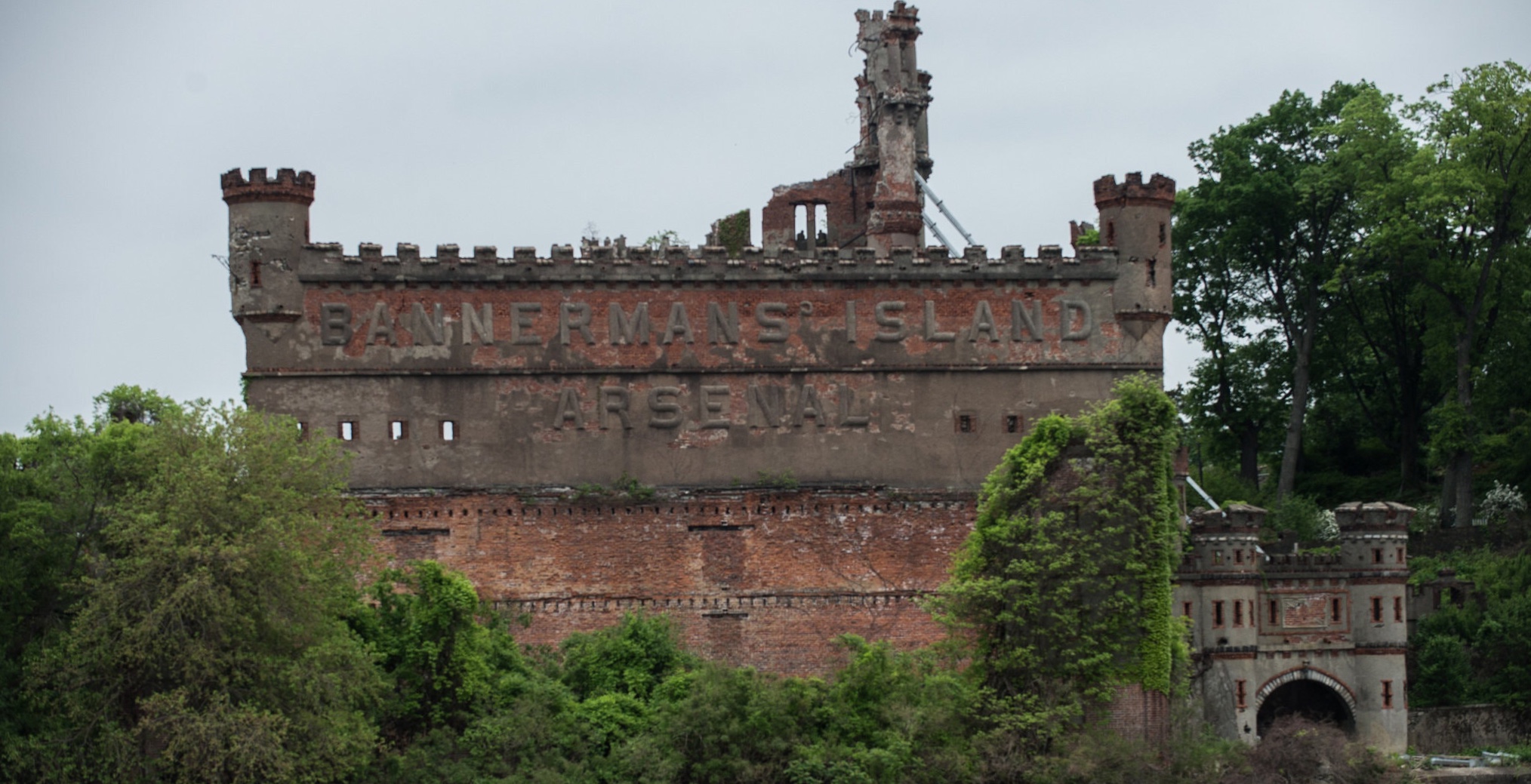
  • Strange Remains

    Hello virtual crew members and fellow adventurers!

    Eric here with the latest travels of Still Waters II.

    Waterforf dock
    Still Waters II on the dock at Waterford, New York


    Summary of week:

    NorrieSPThe remnants of hurricane Nate kept the crew in Ft Edwards through Monday.

    On Tuesday, the crew made a short run to Mechanicville.

    On Wednesday, the crew made it out of the Champlain Canal and docked in Waterford.

    Friday, the crew continued south down the Hudson River and anchored next to Houghtailing Island.

    Saturday, the crew ran down to Norrie State Park, in Hyde Park, to enjoy the weekend.

    Click on the link to read the day-to-day travel log.  This includes weather report of the day, sea conditions, captain’s log of the days travel, and a summary of the experience.

    This week’s journey of discovery did answer the following questions:

    1. Who is Jane McCrae?
    2. What do historians consider the ‘turning point’ of the American Revolution, and what is the connection to Jane McCrae?
    3. Where is the hometown of Uncle Sam?

    At the Box Office

    This week’s video shows Still Waters II cruising the Champlain Canal, Locking down C-4, and cruising under a 17 foot bridge.  Enjoy!

    Return on Champlain Canal from Still Waters II on Vimeo.

    Cruising the Champlain Canal

    To see past videos, click on the link to Still Waters II Vimeo site.  The library now contains 40 videos of Still Waters II cruising America’s Great Loop.

    Monday, October 9, 2017

    The remnants of hurricane Nate rained down all day so the crew decided to stay put rather than make four locks in the downpour.  The skipper did manage time to find a break in the rain and go buy two half gallons of ice cream though.  This Stewarts ice cream is good, but does not hold a candle to Blue Bell or Braums from back home in Texas.  

    While walking to the store, he passed an historical marker sign that read: ‘Home of Jane McCrae.’  He wondered who she was, but really did not think much more about her.


    14355875436_28c87ee22b_b
    Jane never lived in the house in the background


    Later in the day, the Admiral found a window in the rain and decided to go take a walk.  While she was out walking she came across an historical marker near a cemetery that read: ‘Second burial location of Jane McCrae.’  When she got back to the boat she googled up Jane to see what the deal was and found a very interesting story.

    edeb62ae8a51d4907693563ea76ee4ec--the-south-native-americans

    Seems Jane was killed in 1777 under less than honorable conditions.  She was a Loyalist to the Crown of England.  Jane was also engaged to a British Officer.  Jane heard that her fiancée was marching south from Montreal towards Fort Ticonderoga, so she moved towards Ft Edwards where she stayed with another woman named Sara McNeil.  Most of the Patriots evacuated the area when rumors spread that the British were on the move south.

    Once the British arrived at Fort Ticonderoga, they sent a group of British soldiers and some native Indians down to Ft Edwards to escort the two women back up to Ft Ticonderoga. 

    The Indian scouts were leading the way south and killed a few settlers along the journey.  By the time the Indians, the British, and the women got back to Fort Ticonderoga, Jane McCrae was dead.

    From here the stories diverge drastically depending on who you listen to.

    The two women got separated on their return to Fort Ticonderoga.  Sara arrived first.  When the Indians arrived, they had a scalp that Sara believed to be that of Jane.  Sara reported this to some British officers who started an investigation.  Most of the Indians claimed that they came across some militia and the rebels shot her.  However, they could not explain why they scalped her. 

    The_Death_of_Jane_McCrea_John_Vanderlyn_1804_crop

    One Indian claimed that they began arguing on who was going to get credit for saving Jane and get some kind of reward from the British for bringing her safely to her fiancée.  When one Indian figured out he would get no reward, he killed her and scalped her for a trophy so the others could not collect the reward.

    There are several other variations of these two tales but we do not have time to cover all the different forks in the road.  One interesting side note though is that some report that Jane was in her wedding dress and that when she arrived at Fort Ticonderoga she would marry her fiancée.

    The Americans latched onto the latter story and began putting additional spin on the tale.  Many in New York were Loyalists, and the Americans were trying hard to convince them that the British could not protect them; therefore, they needed to come over to the Patriot side and help defeat the British.  The result of Jane’s death did cause many who were sitting on the fence to side with the American’s.

    Interestingly enough, the story does not end here though.  Jane may have faced a horrible death at the age of 17 with a tomahawk to the skull, but her body has not rested in peace since her death, either.

    She was originally buried in Ft Edwards in 1777.  In 1822, she, with many others, were moved to allow expansion of the Champlain Canal.  She was placed in the same plot, but above Sara McNeil.

    MemorialmarkerUnionCemetery

    In 1852, she was moved again.  This time to the Union Cemetery in Ft Edwards.

    In 2003, a team of forensic scientists exhumed Jane’s body to see if they could determine her cause of death.  When they dug up the grave they found one coffin with two full sets of skeletons, well minus one skull.  They took DNA samples of the bones and reburied them in the one coffin.

    In 2005, the forensic team exhumed the casket once more.  Based on DNA, they were able to separate the skeletal remains into two mostly complete skeletons and determine that the missing skull was Jane McCrae’s.  The other skeleton was determined to be Sara McNeil.  The remains were put in separate caskets and reburied.

    McCrea_Tombstone_large

    Oh, the forensic team could not determine cause of death of Jane.  The few ribs that remained however, did not show any gunshot damage.  The mystery continues. 

    And how about the turning point of the Revolution you may be asking yourself.  Well because of the news spin by the Americans, many joined forces with the Patriots.  These new recruits were part of the forces that defeated the British in the Battles of Saratoga in September and October of 1777.  The French decided to join the fight against the British based on the American wins in Saratoga.  The Battle of Saratoga is also considered one of the top fifteen most significant battles in world history.

    Tuesday, October 3, 2017

    The crew woke to a beautiful sunshiny morning.  When they shoved off the town wall they headed south seven miles to Lock C-6.  When they arrived at the Lock, there were two boats already set in the Lock.  The Lockmaster said: “come on in but do a port side tie.”

    The Admiral scrambled to move the fenders from starboard to port as they entered the lock.  In the rush, the Admiral forgot to grab her gloves.  Once she had her line attached to the boat she walked back to the sundeck and grabbed her gloves. 

    In the 3-5 seconds that she was gone, the lockmaster had started draining the lock.  The bitter end of the line caught on itself and tightened around the cleat as the boat began to lower with the water level.  She tried to break the line free but was unsuccessful.  The skipper noticed that the line was not sliding thru the cleat, so he went forward and tried to break the line free and also was unsuccessful. 

    By this time the line was beginning to stretch and get under tension due to holding the bow of the boat up.  The skipper grabbed his pocket knife and barely touched the line and the strands of the line immediately cut thru.  The boat fell about a foot back into the water once the line was cut. 

    25 The Rope that hung up

    All turned out well.  No one got hurt, and there was no damage to the boat.

    After this harrowing experience, the crew did just fine as they cleared three more locks.  The Admiral also decided to deploy fenders on both sides of the boat so there would be no more last-minute surprises.  They are now ready to lock thru on either side of the lock.

    Wednesday, October 11, 2017

    One of the Canadian boat captain’s that went thru the locks with Still Waters II yesterday came down to help our crew shove off the town wall.  He also commented on the near lock disaster yesterday.  He said that he heard the line stretching and making strange noises.  He also said that when the skipper cut the line, the end above the cut shot up above the boat.  He also commented that he had gone and placed a knife on the deck in case he ever needs to cut a line. Well if nothing else, the crew helped train some Canadian boaters. 

    26 Lock C-2 Dam

    The crew only needed to make a 10 mile run and clear two locks before docking on the town wall in Waterford.  With the locks closing for the season today, the crew was glad to find room on the wall for Still Waters II.

    Waterforf dock


    Thursday, October 12, 2017 

    The crew decided to take a day off and explore the town of Waterford.  The Admiral wandered over to Troy and found this interesting sign that required a little research.

    Troy

    Turns out that two brothers started a meat packing business in Troy.  One of the brothers name was Samuel Wilson and he had a local nickname of Uncle Sam. 


    Samuel_wilson_portrait
    Samuel Wilson


    During the War of 1812, the brothers got a contract with the government to supply meat to the soldiers.  The meat was packed in wooden barrels and shipped to the troops.  Some soldiers familiar with Sam and his meat packing business began referring to the U.S. stamped on the barrels as Uncle Sam.  By wars end, the troops were referring to all gear with a U.S. stamp on it as supplied by Uncle  Sam, which lead to the acceptance as the nickname of the U.S. government. 

    In the 1860’s, a political cartoonist named Thomas Nast began using an image that eventually became what we now consider the image of Uncle Sam.  Nast is also credited with developing the Donkey image for the Democrats, and the Elephant for the Republicans. 

    In September 1961, Congress recognized Samuel Wilson as ‘the progenitor of America’s national symbol of Uncle Sam.  Can you see the resemblance?

    727072-uncle_sam

    Friday, October 13, 2017 

    The run from Waterford to Houghtailing Island was uneventful.  Well except for another near miss in the Federal Lock.  The skipper was manning the aft line when it got tangled in the swim ladder on the swim platform. 

    As he was feeding the line thru the cleat as the boat lowered, he noticed the bitter end was hung up on something.  He tried to shake it free but that did not work.  He had about three feet of slack line still, so he jumped down on the swim platform and found the end jammed in the swim ladder.  He was able to pull the line free and climbed back up on the sundeck. 

    The Admiral noticed him coming back onboard and asked what he was doing.  He explained about the jam and commented that he sure was glad this would be the last lock to deal with for a while.  You must be ever diligent with these locks because bad things can happen in the blink of an eye. 

    After safely exiting the Federal Lock, the crew passed thru Troy and Albany.  This interesting building is part of the NY University system in Albany. 

    IMG_0138

    The crew then saw these trees standing along the shore as they pulled into their anchor spot to bring the day to an end.

    IMG_0139 

    Saturday, October 14, 2017 

    The crew weighed anchor and headed back to the main channel in the Hudson River.  They were greeted by this big ship as they reached the Hudson. 

    IMG_0140.JPG

    After the ship got past, the skipper noticed a couple of Bald Eagles near a nest.  One of the Eagles was perched directly above the nest.  Can you see it? 

    IMG_0143

    I’m not sure how the skipper spots this stuff, but he does have eye for the wildlife.

    Eagle Nest

    For example, he spotted this Bald Eagle in a tree while docked at Waterford.  The Eagle was a little over a mile away.

    IMG_0131

    The color along the banks was breath taking today.   

    IMG_0146

    IMG_0147

    There were many boaters out enjoying the day and good weather.  While taking in the sights these fast speed boats all zoomed by and gave the crew a little wake action. 

    IMG_0151

    This is why many Loopers do not cruise on the weekend. 

    After some more good scenery, the crew finally pulled into the Norrie State Park marina where they will sit for the remainder of the weekend.

    IMG_0153

    IMG_0154

     Boat Name of the Week


    IMG_0133
    Replica of 1800’s canal boat


    Next Week –   

    The crew will continue south down the Hudson River towards NYC.  It is only two travel days to NYC, but they will keep an eye on the wind and waves between NYC and Cape May. 

    They need three good weather days in a row to run out in the Atlantic Ocean to Cape May.  So movement further south will depend on how the weather is predicted to be Wednesday, Thursday, and Friday of next week.

    Loop On – The water goes on forever and the adventure never ends.

    Eric the Red
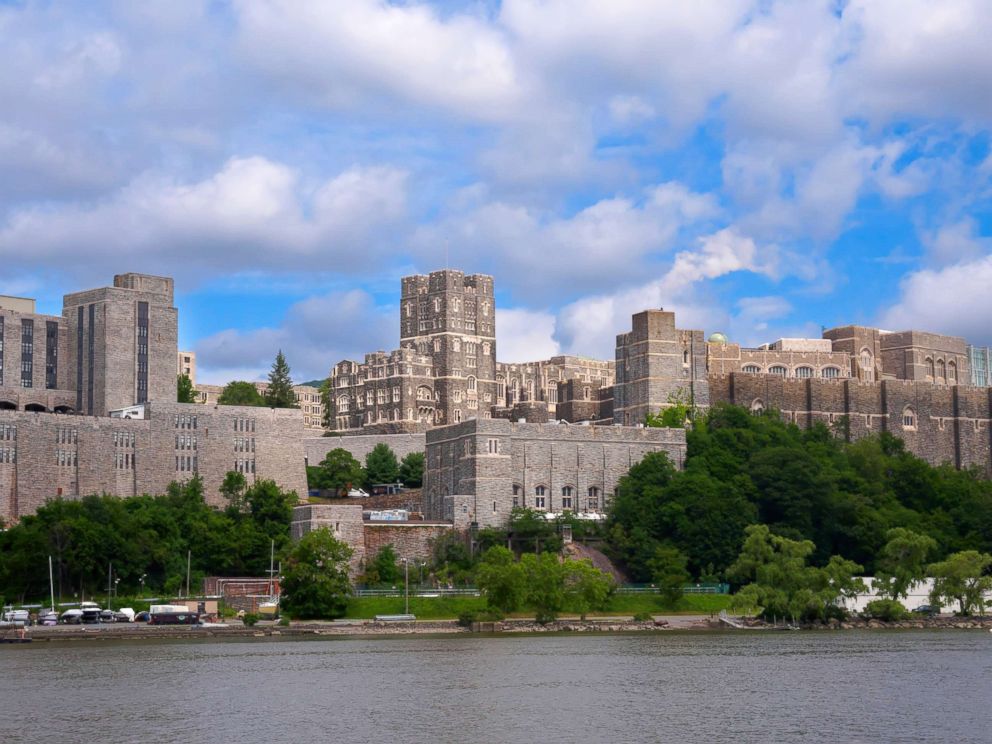


  • Leap Frog

    Hello virtual crew members and fellow adventurers!

    Eric here with the latest travels of Still Waters II.

    33.1
    Champlain Memorial Light


    Summary of week:

    Untitled

    On Monday, the crew anchored in Bulwagga Bay on Lake Champlain.

    Tuesday, the crew moved on to Burlington, VT.

    Thursday, the crew turned south and anchored below Ft. Ticonderoga.

    Friday, the crew returned to Whitehall.


    Saturday, they ended the week with a stop in Ft. Edwards Yacht Basin.


    This week’s journey of discovery did answer the following questions:

    1. Where is the Birthplace of the US Navy?
    2. Where was the initial sighting of Champ, the Lake Champlain water dragon?
    3. Who was the wealthiest women in the world at the time of her death in 1916?

    Click on the link to read the day-to-day travel log.  This includes weather report of the day, sea conditions, log of the days travel, and a summary of the experience.

    At the Box Office

    This week’s video shows Still Waters II  completing the Champlain Canal, entry into Lake Champlain, and the view at anchor at Fort Ticonderoga.  Enjoy!

    To Lake Champlain from Still Waters II on Vimeo.

    To see past videos, click on the link to the Still Waters II Vimeo site.  The library now contains 39 videos of Still Waters II cruising America’s Great Loop.

    Sunday, October 1, 2017

    The town of Whitehall was first settled in 1759 as the colonial town of Skenesborough by a British Army Captain named Phillip Skene.  The town was located at a strategic location where goods and supplies were moved from Canada to the markets in Albany and New York City.

    As the area grew in importance, Phillip Skene grew a plan to make Skenesborough the county seat.  When that goal was achieved in 1773, he set about growing his influence over the area known today as Vermont and the Adirondacks.

    He went to England in early 1775 to petition for the area to become its own Crown Colony.  While he was away, the American Revolution got its start in April 1775 at Lexington and Concord.

    On May 9, 1775, American Patriots secured the town and held Mr. Skene’s family as hostages.  The militia also commandeered Mr. Skene’s schooner, Katherine, outfitted her with cannon, and put her under the command of Benedict Arnold.

    On May 18th, Colonel Benedict Arnold used his new ship to capture a British ship that was later renamed the Enterprise.

    During the summer of 1776, Colonel Arnold oversaw the construction of 13 ships in Skenesborough to protect the Colonies from a British invasion from the North.  The new fleet of ships meet the British War ships in October 1776 near Valcour Island on Lake Champlain. While most of the new ships were lost during the battle, the fleet did enough damage to the British War ships that the British Navy turned around and did not venture further south into the colonies in 1776.


    18 Whitehall Museum
    Whitehall in summer of 1776

    Based on these actions, the town now claims that they are the ‘Birthplace of the US Navy.’

    Of course, Philadelphia, PA; Providence, RI; Marblehead Mass; and Beverly, Mass. All dispute this claim.  But that is a story for another day and time.

    But one thing to ponder.  If Colonel Arnold was serving in the Continental Army, the ships he built were Army vessels, were they not?

    Monday, October 2, 2017

    After waiting for the fog to clear, the crew cleared Lock C-12 and entered the headwaters of Lake Champlain.  At this point the Lake is more of a narrow shallow river as seen in the two photos below.

    20 Headwaters of Lake Champlain

    20.1

    Because the temperatures have been warm until just recently, the fall color tour is off to a slow start.  However, the night time temperatures are starting to drop into the 40’s, so maybe the color change will begin in earnest.  The trees are mostly light greens and yellow at this point.

    21

    The skipper did spot another Bald Eagle perched in a dead tree keeping an eye on the river as they cruised by.

    24

    By early afternoon the crew cruised by Fort Ticonderoga.  Ethan Allen is credited for taking the Fort from the British in 1775 without firing a shot.  Ehtan has an interesting history before and after his heroics at the Fort.

    29.1

    Prior to the Fort incident, he and his Green Mountain Boys were busy keeping New Yorkers out of the disputed land now known as Vermont.  Two different groups laid claim to the land and both were selling land grants to the same area.

    When Allen’s side lost in court in 1770, they took to vigilante tactics to keep the winning New Yorkers out of the area.  By 1775, the Green Mountain Boys had created a large reputation for their tactics.  Hence, they were asked to help in the siege of Fort Ticonderoga.

    After the Fort incident, Allen decided to march on Montreal.  This did not work out so well for him as he was captured on September 24, 1775 in his failed attempt.  He remained a Prisoner of War until May 3, 1778 when a prisoner swap was negotiated with the British.

    A few interesting things about Ethan Allen:

    1. There is no portrait, drawing, or likeness of him known to exist
    2. His final resting spot in the cemetery where he was buried is also unknown
    3. 1n 1858, a 42-foot foot tall monument was erected in the cemetery with this inscription……’Vermont to Ethan Allen……..and buried near the site of this monument’

    The farms continue to line both sides of the lake.  A Vermont farm:

    30 Vermont Farm

    A New York Farm:

    31 New York Farm

    The day came to an end after passing underneath this bridge, turning left into the Bulwagga Bay, and dropping the anchor.

    32
    Champlain Memorial Bridge

    Bulwagga Bay is the place credited as the home of Champ, the Lake Champlain dragon.  Supposedly, Samuel de Champlain saw a 20-foot serpent here in the 1600’s.

    The earliest genuine report of Champ was also made in the Bay in 1819.  A Captain Crum saw a 187-foot long black monster with a flat head that raised some 15 feet out of the water.

    In 1873, more Champ sightings began to take place which lead to P.T. Barnum offering a $50,000 reward for Champ, dead or alive.

    The skipper kept a lookout for Champ most of the night but had no sighting to report.

    Tuesday, October 3, 2017

    The anchor retrieval took a bit longer than usual this morning.  Well, maybe 30 minutes longer.  The anchor chain was covered in grass and weeds.  It was a slow tedious process to clean the chain while bringing the anchor back on board.  No wonder Champ lives in this Bay, obviously there is plenty to eat.

    After leaving the Bay, the crew headed north into Lake Champlain.  The Lake finally opened as can be seen in this look ten miles up the lake.  The depth of the lake also changed dramatically.  The deepest depth noticed on the chart plotter was 392 feet.

    34 10 mile fetch on Lake Champlain

    The crew had wanted to cruise up Otter Creek to visit Vergennes.  However the lake is about 4 feet below normal pool level and when the skipper tried to enter the creek he was met with some shallow 4-foot water.  Rather than risk a prop strike, the skipper backed out and headed on to Burlington.

    On the north run to Burlington, the crew past by a rock formation jetting out of the water named Rock Dunder.

    37 Rock Dunder

    According to local legend, the rock got the name during the Revolutionary War.  During the Battle of Lake Champlain, the British mistook the rock for an American vessel.  The British fired on the rock all night long.  When the morning light showed that they were wasting ammunition firing at a rock, the Hessian officer declared: “It’s a rock by dunder.”

    After safely passing the rock, the crew headed towards Burlington.  Four miles out from Burlington:

    36 Burlington 4 miles from shore

    After docking, the crew went exploring in town.  When they returned to the boat, they were greeted with this sunset over the Adirondack Mountains in New York.

    42

    Wednesday, October 4, 2017

    From the waterfront, it is a short walk up hill to Church Street which is the main drag in town.  Church Street is a pedestrian street with no cars allowed.  Many businesses, eateries, and pubs line the street.  There was a corvette car show the day the crew walked around.  You can see the cars with the church in the background.

    41 Church Street

    Also along Church Street was a mural that was a Who’s Who of Vermont history.  The Parade of people along the wall was fascinating.  Of course, the wall started in 1609 with Samuel de Champlain credited with the first to map Lake Champlain.
    40 Mural

    Ethan Allen was represented in his green jacket giving a nod to his Green Mountain Boys.

    40.2 Ethan Allen

    A real surprise was Hetty Green.  When she died in 1916 she was reported to be the wealthiest women in the world.  Worth somewhere between 100-200 million dollars.  She made the Guinness Book of World Records as the “World’s Greatest Miser.”  Hetty is the lady with flowers in her hat.

    40.4 Hetty Green

    It is reported that in her later years she developed a hernia.  However, she refused to have a doctor repair the hernia because the cost was $150.

    Strangely enough, she bequeathed her fortune equally between her two children.  The son died a few years later and left his money to his sister.  When she died in 1951 she gave the 200-million-dollar fortune to charities.

    Champ made the wall as well.  You can see him above the John Deere tractor which was also started in Vermont.

    40.5 Champ

    Lastly was a Robert Fuller.  He is on the far left of the photo below.  He is a co-owner of Leunigs Bistro.  He also was a co-sponsor for the mural.  The skipper found it interesting that Robert has the same life motto as he:  Live Well, Laugh Often, and Love Much.

    40.3 Robert Fuller

    The crew would like to stay here longer and explore more, but they must turn around if they are to get out of the Champlain Lock system before October 11th.  They have decided that they will return by this route in 2018 to go to Montreal and Old Quebec City.

    Thursday, October 5, 2017

    The return south took the same path as the north bound run.  A major land mark is the Split Point Light.

    2 Split Rock Point Light

    The point gets its name because of the island that is split off from the main land.  Notice the ‘tunnel’ between the land masses.

    3 Split Rock Point

    The trees have started to turn more color, but it is still off to a slow start this fall.  Maybe the Farmers Almanac’s prediction of a mild winter in the northeast will turnout to be true.

    4 Fall Color

    5

    The harvest moon came up over the Vermont Green Mountains.

    9 Harvest moon

    Friday, October 6, 2017

    The crew weighed anchor and headed back into the headwaters of Lake Champlain.  The cruise was uneventful, but there was some good scenery to view along the shore.

    10

    11

    12

    13

    Saturday, October 7, 2017

    The crew woke to a rainy day.  After the rain stopped the crew shoved off the wall at Whitehall and headed towards Ft Edwards.  There would be four locks to negotiate along the way.  Some scenery along the way:

    14

     17

     19

    The crew spent 2.5 hours waiting for the locks today.  The main reason was a tow that was ahead of the crew.  The tow was just far enough ahead to cause delays in two of the four locks.

    20

    One of the more interesting aspects of the boating lifestyle is all the fascinating people along the waterways.  The crew met a couple in Burlington that have been on their boat since May 2017.

    Our crew left Burlington a day ahead of these new boaters.  Our crew ended up catching their lines though in Whitehead.  The two crews spoke for about 30 minutes before going their separate ways.  The new boaters are from Michigan.  One graduated from Michigan State, the other from Michigan.  They plan on going all the way to Mechanicville on Saturday so they can watch the rivalry game at a sports bar.

    Our crew will stop earlier in Ft Edwards, but hopes to leap frog them again on the southbound journey.

    41.3

    After clearing Lock C-7, the crew turned up a side creek to dock for the weekend at Ft Edwards.

    Boat Name of the Week

          No good candidates this week.

    Next Week

    The crew will continue South on the Champlain Canal.  The Canal closes October 11th, so the crew will then continue back south on the Hudson River towards New York City.

    Loop On – The water goes on forever and the adventure never ends.

    Eric the Red
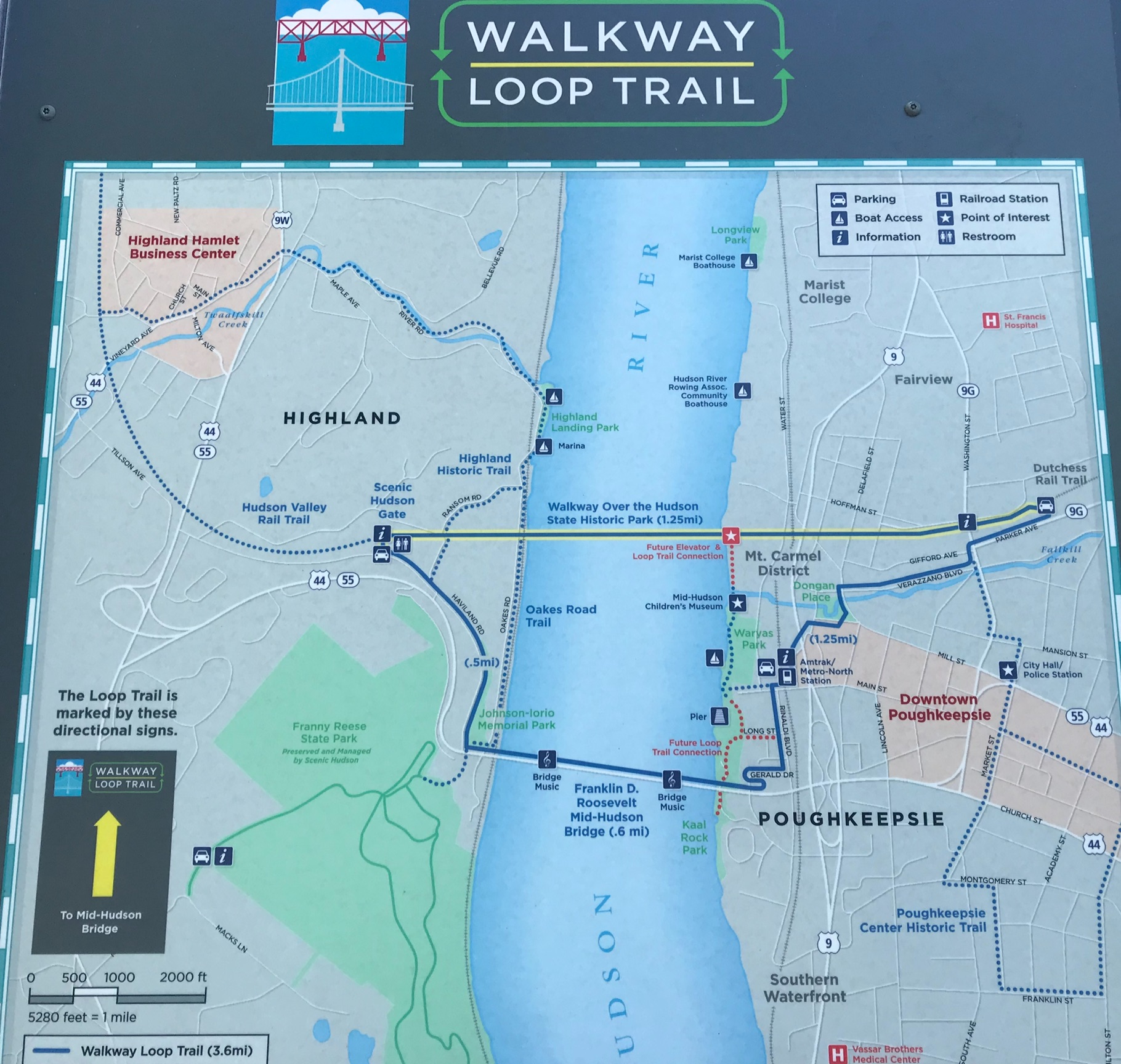
     

  • Fall Leaf Tour

    Hello virtual crew members and fellow adventurers!

    Eric here with the latest travels of Still Waters II.


    IMG_0015
    Skene Manor overlooking Champlain Canal in Whitehall, NY


    Summary of week:

    Whitehall

    When it was time to leave Poughkeepsie on Tuesday, Jose had disappeared, but Hurricane Maria had taken his place.  The winds were not favorable for turning south and running down to Cape May, NJ.  So the crew continued their northbound journey on the Hudson River with a new goal of reaching Burlington, Vermont before turning south.  They have dubbed this new goal the ‘Fall Leaf Tour.’

    Tuesday found them in Kingston.  Wednesday, they made a long run to Waterford to make preps for the Champlain Canal.  Thursday, they entered the Champlain Canal and stayed in Mechanicville overnight.  Friday, they moved to Ft Edwards, and Saturday they stopped in Whitehall.

    This week’s journey of discovery did answer the following questions

    1. Where do the tidal waters end on the Hudson River?

    2. Why is there no Lock number one on the Erie Canal?

    3. Why did the Erie Canal get moved to the NY Transportation Division in 2017?

    Click on the link to read the day-to-day travel log.  This includes weather report of the day, sea conditions, log of the days travel, and a summary of the experience.

    At the Box Office

    This week’s video shows Still Waters II in Champlain Locks C-1 and C-2, where she is lifted 14 feet and 18 feet respectively.  Enjoy!

    Champlain Locks C-1 &amp; C-2 from Still Waters II on Vimeo.

    To see past videos, click on the link to the Still Waters II Vimeo site.  The library now contains 38 videos of Still Waters II cruising America’s Great Loop.

    Tuesday, Sept 26, 2017

    The run to Kingston was uneventful except for the Man-Over-Board (MOB) drill.  This was only a drill.  The Admiral spotted something in the river that turned out to be a lifejacket.  The skipper used the lifejacket to practice their MOB skills.  I am happy to report that the lifejacket was saved without incident.  And it is a good lifejacket to boot.

    The MOB drill took place just off Esopus Island near the Esopus Meadows Lighthouse.

    44 Esopus Meadows Lighthouse

    When the crew reached the Rondout Lighthouse, they turned up the creek and docked at the Maritime Museum.

    45 Rondout Crrek Lighthouse

    Since last visiting the Museum, a Wooden Boat School has been added.  The workers were busy building one boat that they plan to power with solar panels and an electric motor.  Another project was in process where the crew watched the workers bend a piece of plywood around a structure.

    46 Kingston Maritime Museum

    47 Kingston Wooden Boat Works

    Wednesday, Sept 27, 2017

    The “Fall Leaf Tour’ is off to a slow start because the temperatures have not cooled off yet.

    48 Fall Color

    The crew had planned to cruise about half-way to Waterford, 40 miles, and anchor out for the night.  When they arrived at the designated anchor spot at 1400, it was 90 degrees out with no breeze.  The crew decided to push on to Waterford in hopes of getting a spot on the town dock wall with electricity.

    On the way, they passed two lighthouses and a Bald Eagle perched on a navigational aid.

    Saugerties Lighthouse

    49 Saugerties Lighthouse

    Hudson City Lighthouse

    50.1

    51 Bald Eagle

    The native Indians named the Hudson River, ‘The River That Flows Two Ways.’  The tidal water and current effect the Hudson River for 154 miles north of the Battery at the tip of Manhattan.  The tidal water ends once the river reaches the Federal Lock in Troy.

    54.1

    After clearing the Federal Lock, it was only three miles until the crew reached the junction of the Erie and Champlain Canal Systems.

    1 Which Way to Go

    Though the crew plans to take the Champlain Canal to Vermont, the crew turned left to dock at the Waterford Welcome Center at the first lock on the Erie Canal, Lock E-2.

    There is no lock E-1 on the Erie Canal, which begs the question, ‘What happened to Lock E-1?  Well, in the early 1900’s New York decided to upgrade the canal system.  Part of the plan was to build E-1 at the location where the Federal Lock now sits.

    After the blue prints were completed and construction was started in 1903 on other portions of the Erie Canal, it was discovered that the location for E-1 was on land and water owned by the Federal Government.  Negotiations were entered to allow New York to build and operate a lock on the Federal land.

    Ultimately, it was determined that the Federal Government would build and operate the new lock.  By then it was to late to change all the blueprints and names for the other Erie Canal Locks.  The Canal System just scrubbed Lock E-1 and continued with their original plans. And that my friends is why the first lock on the NY Erie Canal was numbered E-2.

    Thursday, Sept 28, 2017

    While in the first lock on the Champlain Canal, C-1, the skipper struck up a conversation with the Lockmaster.  The skipper was inquiring why the locks were closing early this year.

    The lockmaster commented that the Canal System had been moved to the NY Transportation Department in 2017.  As part of the change, the Canal System could now charge more money for the commercial usage of the canal.  As part of the compromise for more money, the Canal System agreed to open the recreational system later and close earlier. Yes, follow the money trail, it usually leads to the answer.  In 2017, the recreational season opened a month later than usual and is closing three weeks earlier than the past so commercial traffic can have sole use of the canals.

    2 Champlain Canal

    The main goal today was to move ten miles to Mechanicville and contact the Lockmaster at Lock C-3.  There is a bridge just past Lock C-3 that is only 15.5 feet of vertical clearance.  The skipper called the Lockmaster and learned that the current pool level created a vertical clearance of 17 feet 2 inches.  Unfortunately, this is not good enough.  Still Waters II requires 17 feet 6 inches of clearance.

    5 Mechanicville Free Dock

    The skipper got busy and took the anchor light and TV antennae down.  This resulted in lowering the vertical clearance to 15 feet 6 inches which should be good enough to squeeze under the bridge.

    6 Drop Heigth

    Friday, Sept 29, 2017

    After clearing Lock three, it was less than a mile to the lowest bridge on the Champlain Canal.  Before leaving the lock, the skipper did ask the Lockmaster about the bridge clearance one more time.  The Lockmaster assured the skipper he had 17 feet of clearance.

    IMG_0001

    When they approached the bridge, the water level board read 17 feet, so the skipper slowly approached and then squeezed under the bridge.  As you can see below, there was plenty of room to spare.

    7 Worried

    There was some great scenery on the route to Lock C-5.  After exiting the lock, the crew approached a confusing bridge.  The Navionics, Blue Chart Garmin, and NY Canal Handbook charts all listed the bridge clearance at different heights.  The visual clearance did not look good.

    IMG_0002

    Once again, the skipper eased the boat up to the bridge while the Admiral climbed out on the roof of the sundeck to ensure they had enough clearance to make it under the bridge.  Just before reaching the bridge some local yelled out, ‘You have plenty of room.’  Well turns out he was right.

    IMG_0006

    The crew continued on to Ft Edwards Yacht Basin without any more nail bitter bridges.

    IMG_0008

    Saturday, Sept 30, 2017

    The crew awoke to rain and cold temps.  It was only 47 degrees when the skipper woke up.  They decided to wait for the rain to stop before leaving the dock.  The skipper says he does not mind being cold, and he does not mind being wet, but he hates to be cold and wet.

    After lunch the crew set out for Whitehall.  As the crew pulled into Lock C-7 the rain started back up.  Luckily it was only a light mist.  By the time they cleared the lock, the sun broke out for a while.

    Lock C-8 was cleared in sunshine.  Just after exiting the lock, the skipper got a radio call from a tug Captain.  He requested the skipper to hold his position while the tug made it through a narrow shallow portion of the canal.  The tow Captain said he gets stuck in the area about half the time.  After about ten minutes, the Captain called back and said he was dragging bottom but thought he would make it through the shallow area.  He told the skipper to come on by and throw a little bit of wake.

    After the tow, the skipper spotted a Bald Eagle perched in the top of a dead tree.

    IMG_0010

    The crew passed many farms along the canal today along with many boaters headed south.

    IMG_0012

     IMG_0013

    When the crew arrived at the Whitehall town dock there were already three boats tied along the wall.  There was barely any room to shoe horn a fourth boat in.  The owner of a sailboat hopped off his boat and ‘walked’ it closer to another sailboat on the wall.  This provided about 30 foot of wall space for Still Waters II to land on the wall with 15 feet of boat hanging out in the open.

    IMG_0016

    Since the temps are scheduled to drop in the low 30’s tonight, the Admiral was happy to be getting electricity for the heaters for the weekend.

     Boat Name of the Week

          Eggs-to-Sea

    Next Week – 

    The crew will continue on to Burlington, Vermont where they will turnaround and head back south.  They will need to be out of the Champlain Canal before the closure on October 11th.

    Loop On – The water goes on forever and the adventure never ends.

    Eric the Red
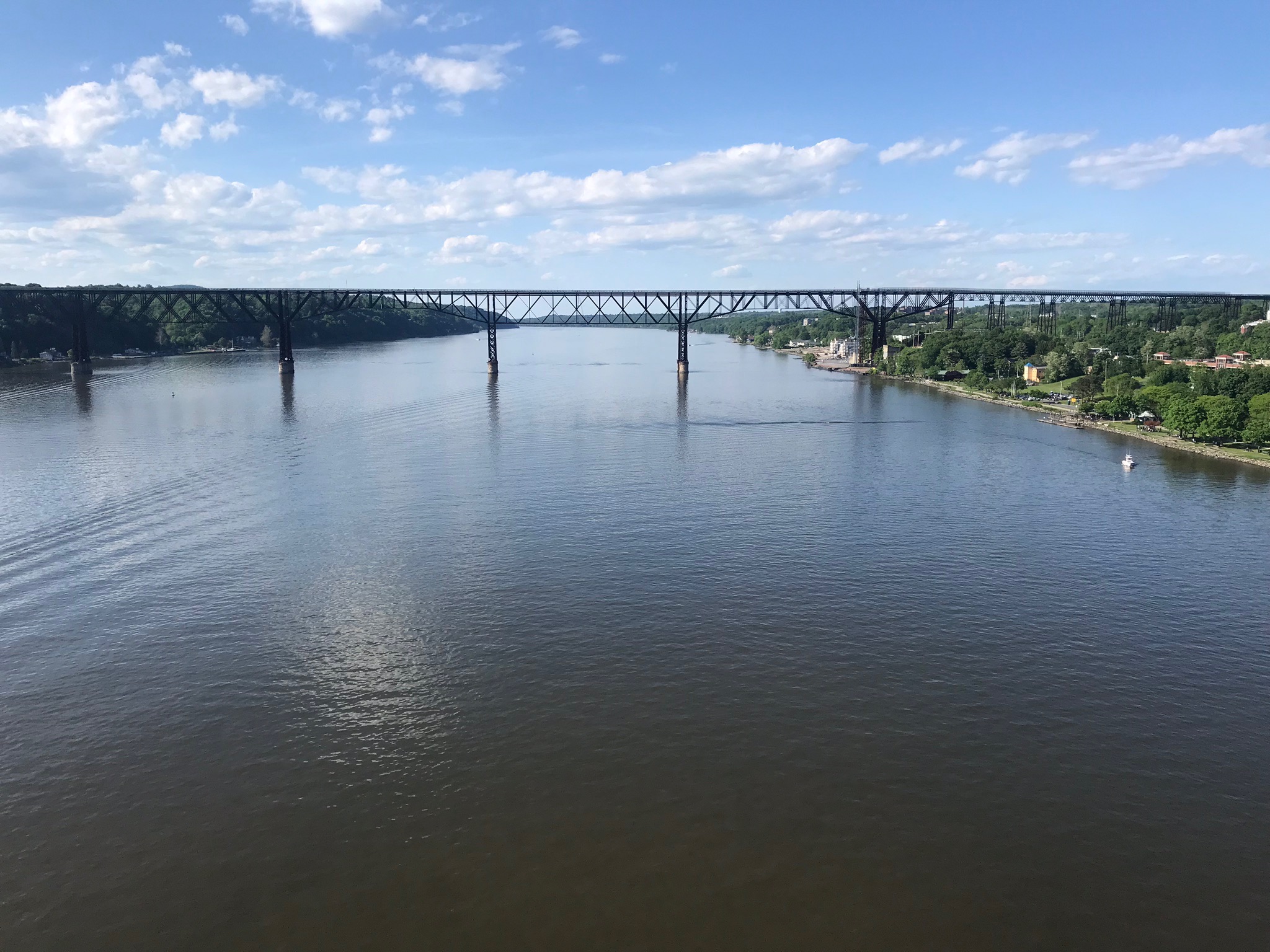
  • Lost My Head in Sleepy Hollow

    Hello virtual crew members and fellow adventurers!

    Eric here with the latest travels of Still Waters II.

    IMG_0178

    Summary of week:

    Poughkeepsie

    Sunday, the crew continued their retreat from Hurricane Jose.  They left New London and headed west and made the length of the Long Island Sound.  On Monday, they left Port Washington and headed north up the Hudson River where they got out of the Tropical Storm Warnings.  On Tuesday, they continued north to Poughkeepsie to gain some safety margin from the storm.
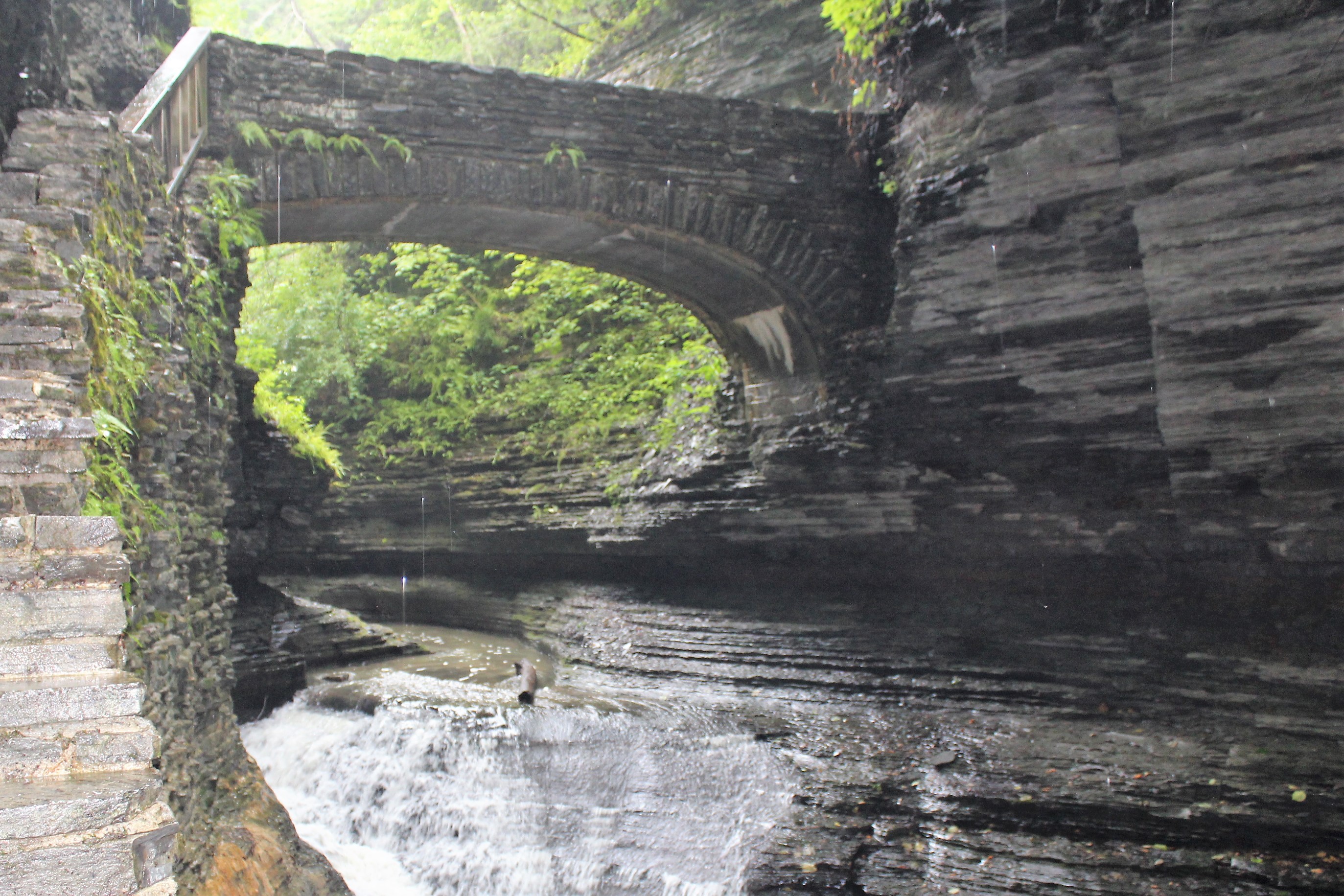
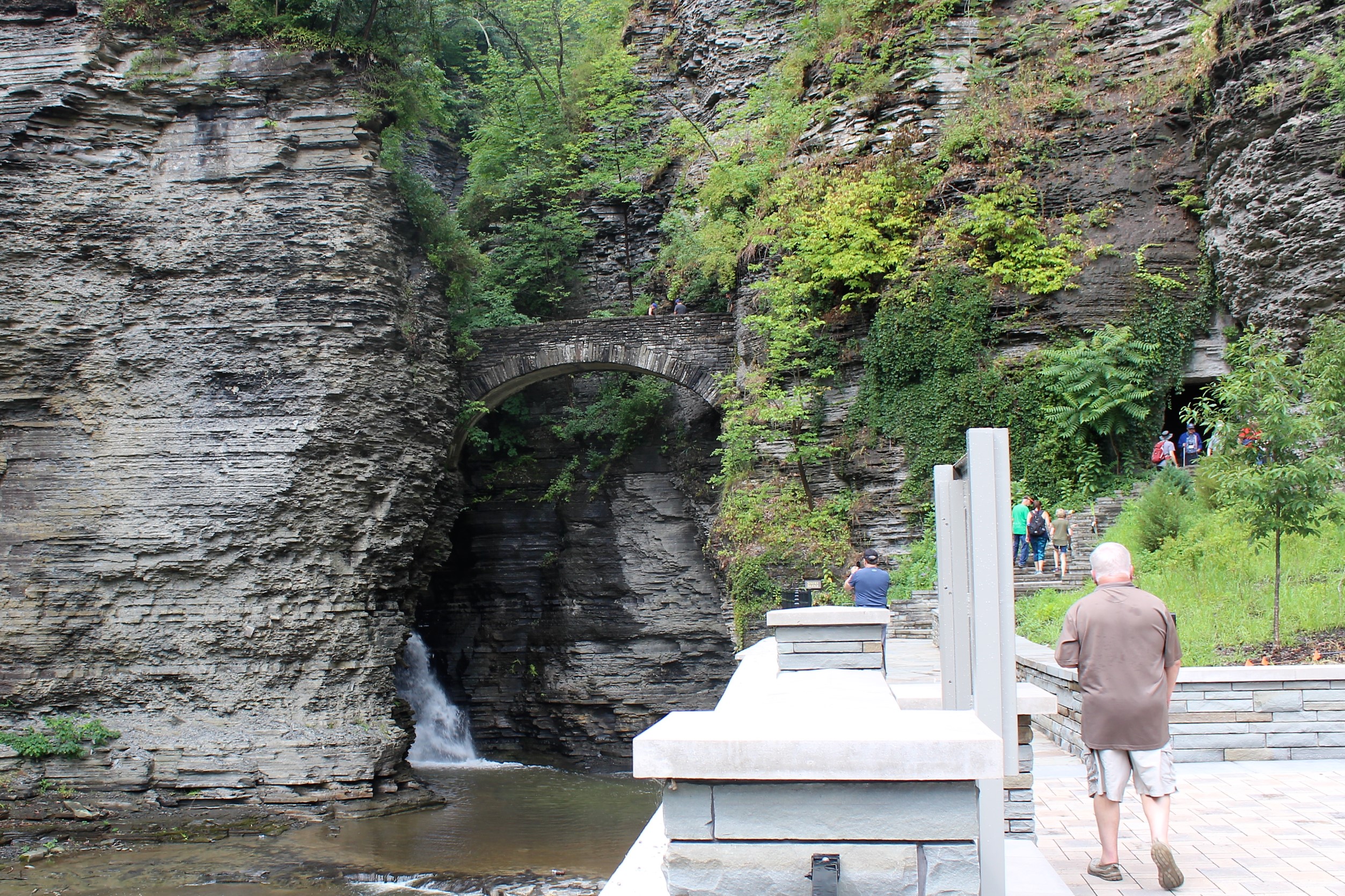
    This week’s journey of discovery did answer the following questions:

    1. How far north up the Hudson River do you have to go to get out of the way of Hurricane Jose?
    2. What in the world is ‘Bridge Music’?
    3. Who was the most hated man in America during the Gilded Age?

    Click on the link to read the day-to-day travel log.  This includes weather report of the day, sea conditions, log of the days travel, and a summary of the experience.

    At the Box Office

    This week’s video shows Still Waters II traveling in the fog as she retreats from Hurricane Jose.   Enjoy!

    To see past videos, click on the link to the Still Waters II Vimeo site.  The library now contains 37 videos of Still Waters II cruising America’s Great Loop.

    Special Feature

    An aerial tour of Poughkeepsie and surrounding area that the crew has been enjoying the past week.  Including walking the bridge loop (4.5 miles) which passes over both bridges in the video.

    https://vimeo.com/164915259

    Special Special Feature

    Joseph Bertolozzi is using the Mid Hudson Bridge near Poughkeepsie, NY, as an instrument and composed 12 songs that are on an album called Bridge Music.  Click on the bridge pic below to launch a video about the project.

    Mid Hudson Bridge

    Sunday, Sept 17, 2017

    The winds from Jose were predicted to be Gale Force in the Long Island Sound on Tuesday.  To try and ensure that the crew does not ever endure that kind of wind again, they opted to travel the 100 miles to the west end of Long Island Sound on a calm Sunday.

    Jose

    However, the crew had to travel in fog with visibility around a ¼ mile or less for most of the day.  This turned out to be very stressful for the crew.

    23

    As the crew crossed a ferry path leaving New London, they could here a fog horn from a boat, could see the boat on radar, but could not see the vessel.  When the ferry was less than a ¼ mile in front of Still Waters II the skipper could finally make out the outline of the ferry.

    Around 0930, the fog began to lift and visibility improved to ¾ of a mile.  This turned out to be good timing because the crew met a tow just off the port side.

    24 Connecticut Fog

    While crossing the Long Island Sound, Still Waters II did pick-up a couple of hitchhikers.  The two little birds would fly around the boat and then land and rest.  Then take off and fly around a while, and then come back and land again on the boat.  They eventually found their way into the sundeck and rode back there sitting on fishing poles until arrival at Port Washington.

    25

    After securing the boat to the mooring ball, it was time for the crew to relax.

    The skipper used the remaining daylight to review the progress of Jose and check the tide tables to determine when to leave in the morning.

     Monday, Sept 18, 2017

    The crew dropped the mooring ball line early and headed to New York City at 0648.  The fog was still around but the visibility had improved out to 2-miles.  The crew left Port Washington and headed to the East River.
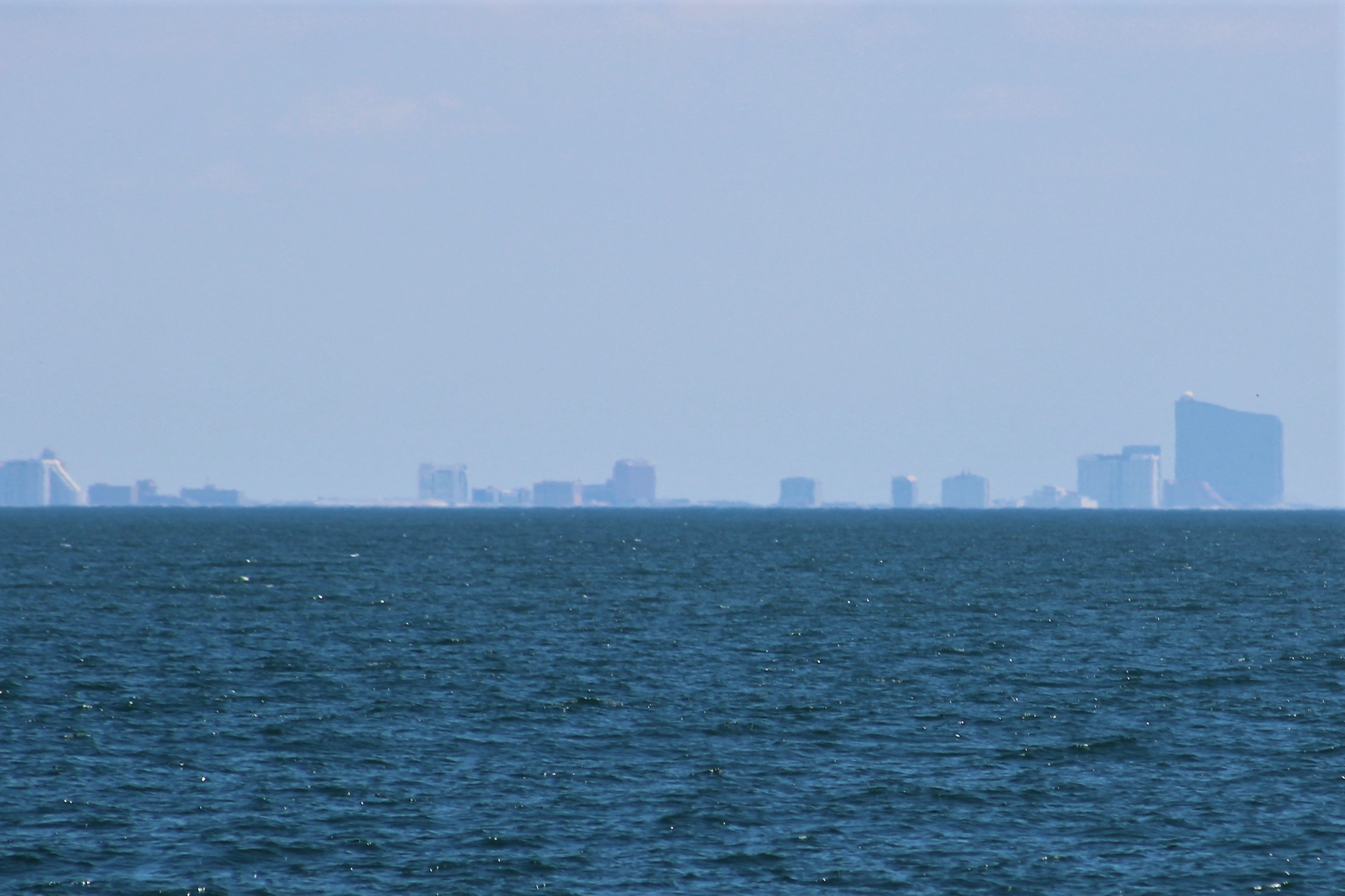
    When the crew reached Hells Gate, they turned towards starboard and headed north up the Harlem River.  At the end of the Harlem River, the crew requested the Spuyten Duvall Swing Bridge to open and the bridge tender immediately began to open the bridge.  The crew passed thru the bridge and into the Hudson River.  They turned to starboard and headed north up the Hudson River to get out of the reach of Hurricane Jose.
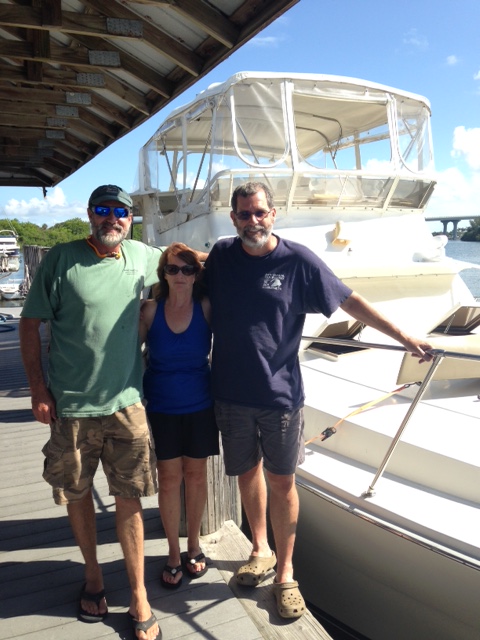
    Once on the Hudson River, the Coast Guard was heard making an announcement over the radio that the Tapenzee Bridge was closed to all water traffic for the day.  After travelling ten miles the crew passed several tows anchored in the River waiting for the Bridge to open at 1600.

    When the skipper was near the work zone he radioed the work crew on the crane in the middle of the channel and was given permission to pass under the bridge.

    27 Hudson River

    After passing under the bridge, the skipper checked his weather sites and determined that the crew was finally outside the Tropical Storm Warnings for Hurricane Jose.  The crew continued north bound to create a little more safety margin.

    27.3

    At the end of the day, the crew dropped anchor in the Haverstraw Cove to spend the night.
    28 Haverstraw Cove

    Tuesday, Sept 19, 2017 

    The crew weighed anchor and continued north bound on the Hudson.  This is one of the more picturesque runs on the River, passing Bear Mountain, West Point, and Batterman’s Castle.

    The skipper noticed this stag deer on the side of the cliffs at Bear Mountain.

    29 Stag at Bear Mountain

    When the crew passed West Point, I am sure I heard the skipper yell “Go Navy, Beat Army!”  But notice that the Army even has a few boats in the pic below.

    33 West Point

    Since last passing by Batterman’s Castle, there was a murder that has been solved.  A couple was kayaking around the island and the fiancé disappeared.  Two years later (Spring 2017) the women finally confessed to manslaughter.  There is probably more to this story than meets the eye.

    The crew made it to Poughkeepsie where they will wait for Jose to dissipate and look to see what Maria intends to do next.

    Wednesday – Thursday, Sept 20-21, 2017      

    The crew has hiked the Walkway Over the Hudson each day.  This is a 4.5-mile loop trail that passes over the Mid-Hudson Bridge and the Poughkeepsie Railroad Bridge.  The Rail Bridge was added to the Rails to Trails Hall of Fame in 2015.

    Friday, Sept 22, 2017

    The crew rented a car and headed South to Tarrytown.   They visited the Lyndhurst Castle.  William Paulding, who was a two time Mayor of New York City, had the home built in 1838 as his retirement cottage.

    IMG_0117

    In !864 George Merritt bought the house and had the original architect double the size of the cottage.  Merritt enjoyed the home for about 10 years but then died an early death in 1873.

    IMG_0120

    After seven years (1880), the most hated man in the Gilded Age, Jay Gould, bought the estate to be used as his summer home.  It is rumored that his contemporaries did not want him in Newport during the summer socialite season so he summered on the Hudson.  Gould was probably ok with that since he had long lasting feuds with most of  his NY business competitors.

    IMG_0126
    Tiffany Stained Glass in Upstairs Library

    For example, he detested the Vanderbilts so much that he would not ride their train that ran right beside his property.  Instead, he built a bridge over the railroad tracks to a dock on the Hudson River and would take his personal yacht back and forth to New York City.

    IMG_0128

    Upon his death in 1892, Jay Gould’s daughter, Helen, took over the management of the estate.  Her contribution was adding the bowling ally overlooking the Hudson River.
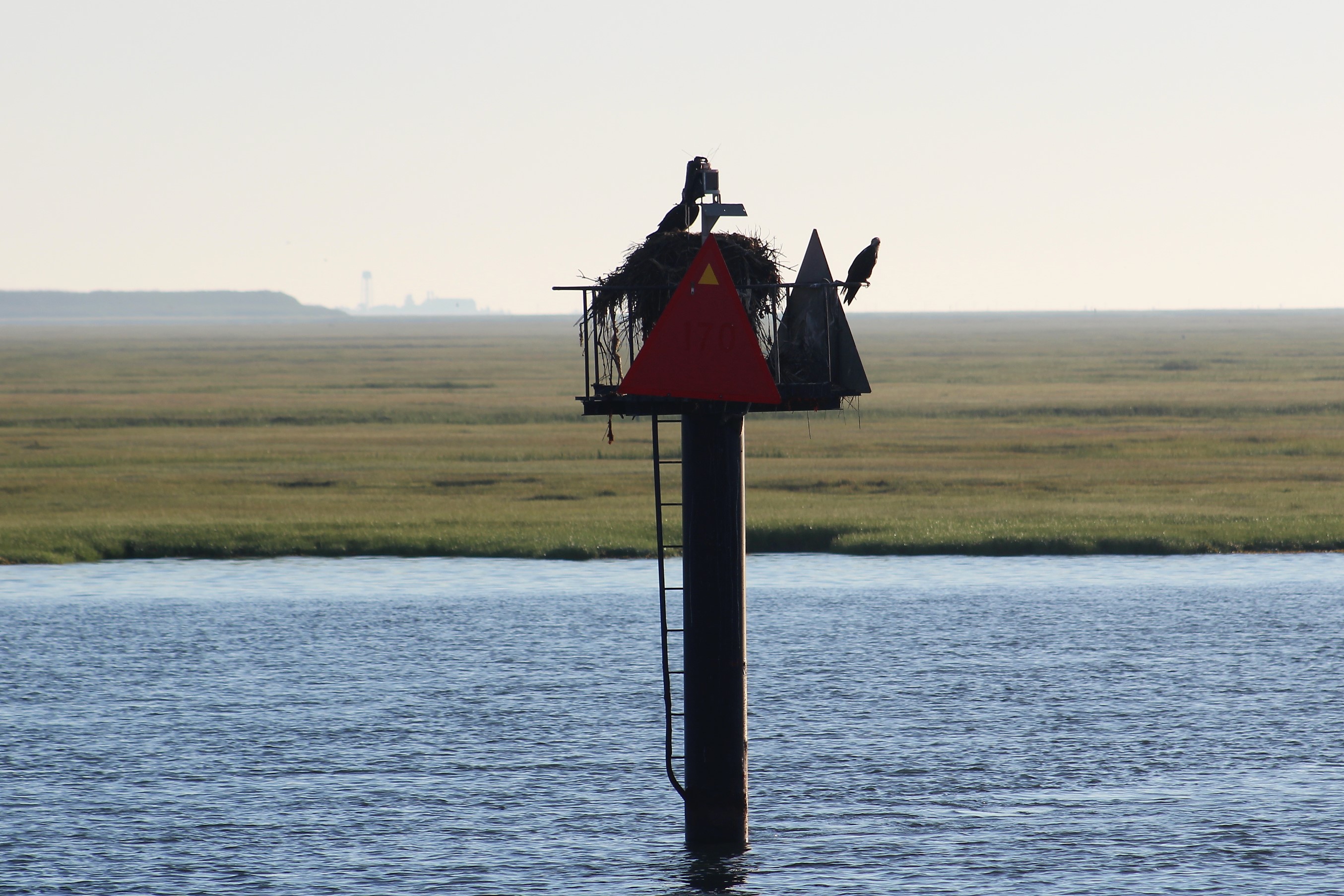
    IMG_0129

    Helen died in 1938 and passed the estate on to her sister, Anna.  The new owner returned from living in France to escape the beginning of WWII and to maintain Lyndhurst.  However, her tastes were more NYC rather than country cottage, so she only visited the estate about three weeks per year.  Interesting enough though, she kept about 150 people employed maintaining the property until her death in 1961.  At that point the estate was passed to the National Trust for Historic Preservation.

    Because the Gould daughters took such care of the place: the home, furnishings, and grounds were in excellent condition when turned over to the trust.  In side the home is one of America’s largest private art collections.  Since the home was a summer cottage, each time it sold and changed hands the contents remained.  The crew was unable to take pictures inside because it was being set up for some kind of Halloween Festival with no pics allowed.

    IMG_0131

    Saturday, Sept 23, 2017

    The crew set off to explore Bear Mountain and Sleepy Hollow today.

    Bear Mountain was a neat surprise.  The crew crossed the Bear Mountain Bridge to get over to the west side of the river.  When this bridge was completed in 1924, it was the longest suspension bridge in the world.  The title lasted for 19 months, when it was bumped to second place by the Ben Franklin Bridge in Philadelphia.
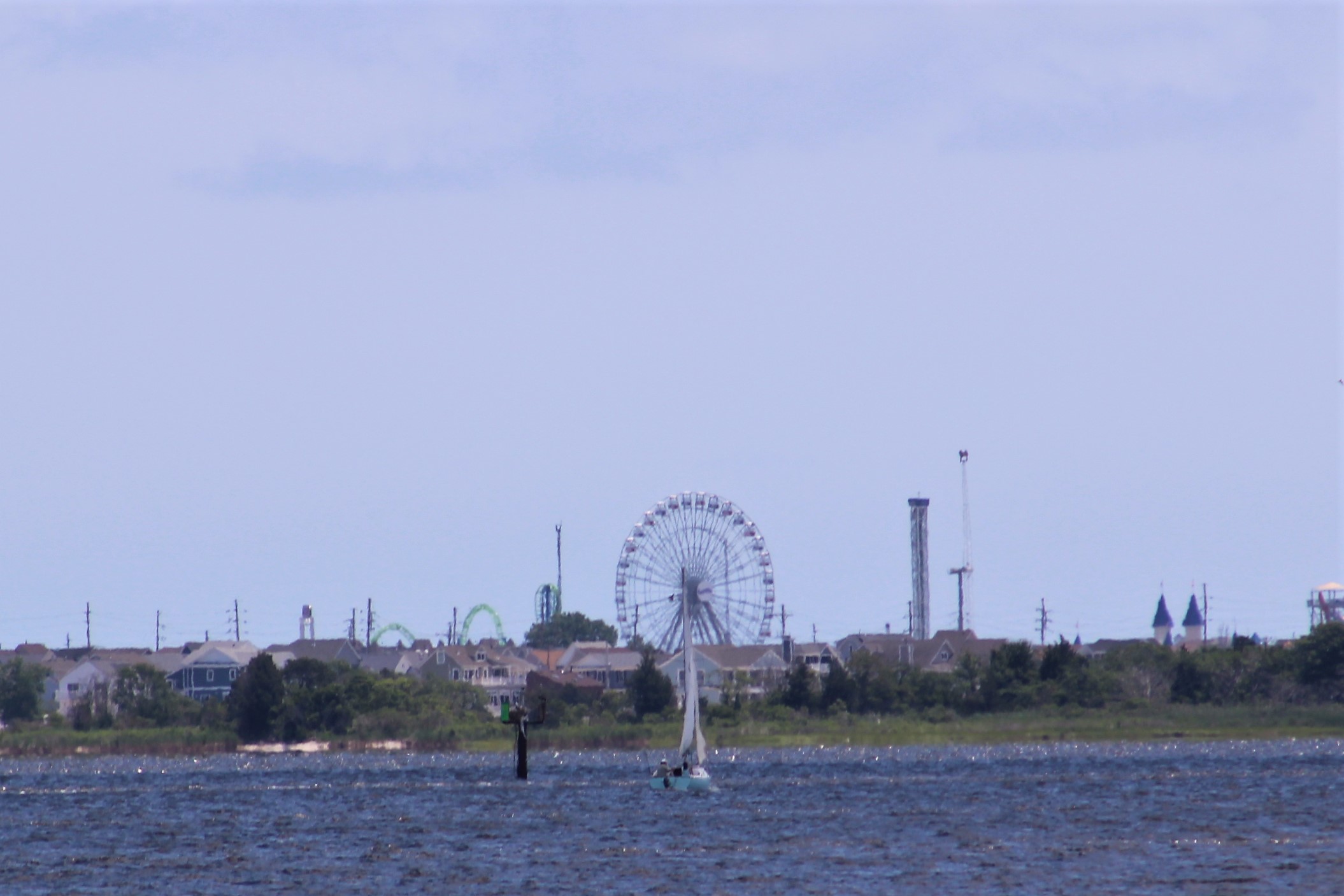
    Bear Mountain Bridge

    A few views from the Bridge:

    IMG_0142
    East Bank


    IMG_0147
    West Bank

    And of course the Admiral was ready to buy this cabin for the north looking view.

    IMG_0151

    The view from the top of Bear Mountain:

    IMG_0134
    Looking North


    IMG_0135
    Looking South at NYC 40 miles away

    This area is also where the Appalachian Trail got its start.  The New Jersey and New York trail folks started the trail here and used the Bear Mountain Bridge to cross the Hudson River.
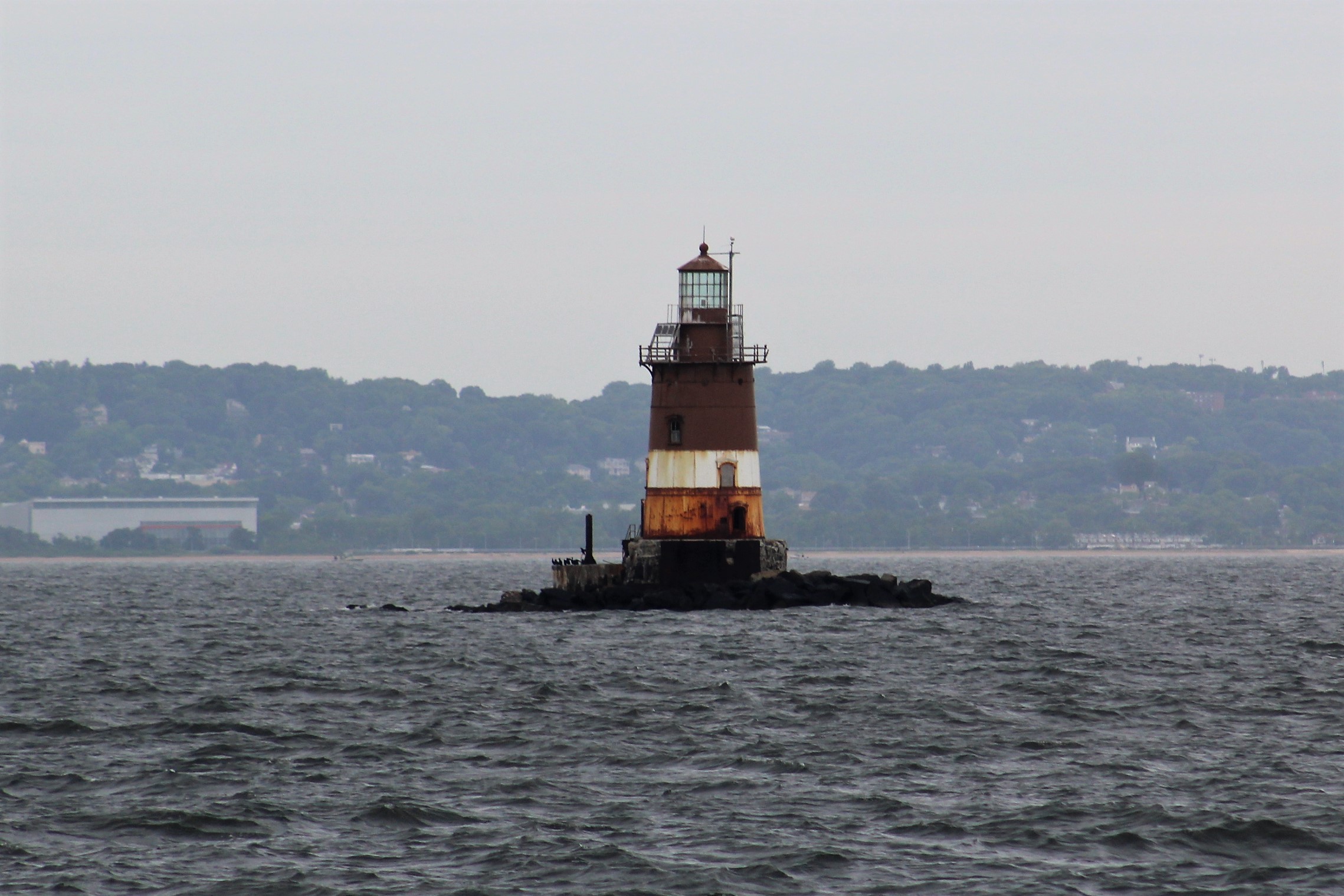
    IMG_0149

    The crew saw a thru-hiker reading his route book on the west shore of the Bridge.  He left Georgia back in March.  When he got to Harpers Ferry in Virginia, he pulled what is called a flip-flop on the trail.  He went to Maine and started south, back towards Harpers Ferry.  His trail name is Re-Pete.
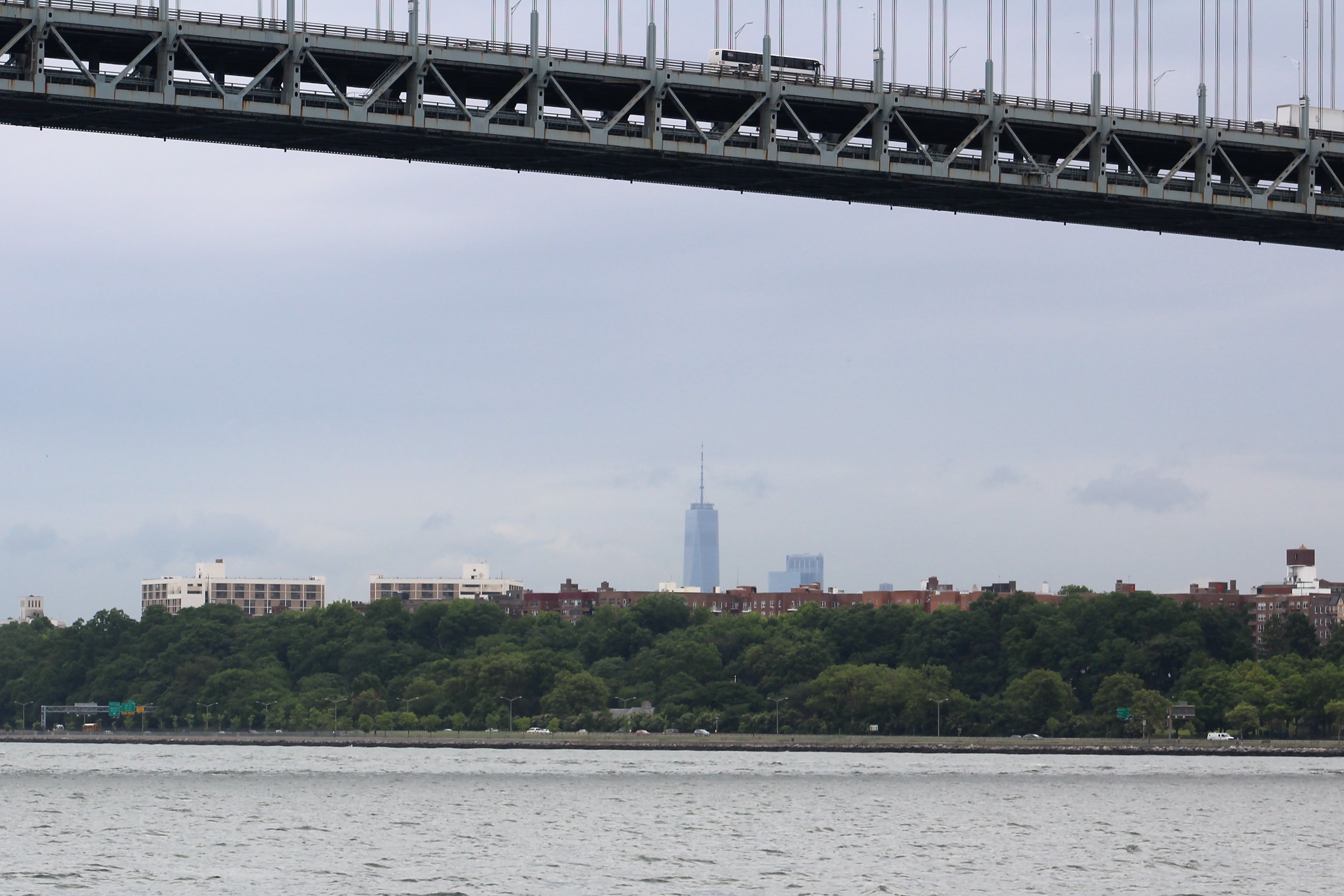
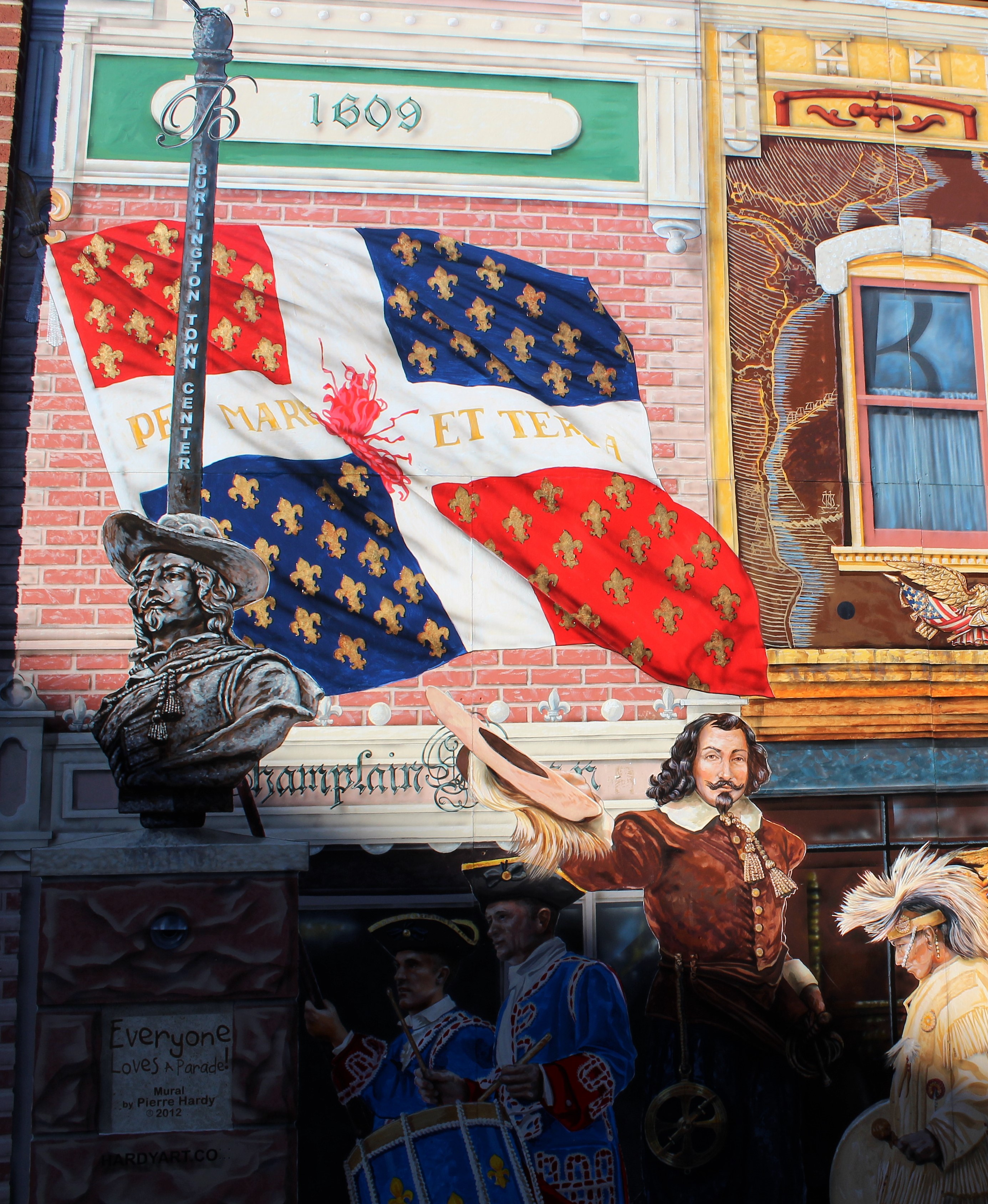
    IMG_0157

    After exploring Bear Mountain, the crew set their sites on Tarrytown and Sleepy Hollow to see if they could follow the path of Washington Irving’s tale, The Legend of Sleepy Hollow.

    To set the stage, you may recall that the story is set in 1790 in the village of Tarry Town in the glen of Sleepy Hollow.

    …….. there lies a small market town which is generally known by the name of Tarry Town. This name was given by the good housewives of the adjacent country from the inveterate propensity of their husbands to linger about the village tavern on market days……

    Our characters are Ichabod Crane and Abraham ‘Brom Bones’ Van Brunt.  Both of which are competing for the hand of Katrina Van Tassel.  And last but not least is the most famous ghost in the Dutch Settlement, the Headless Horseman.

    From the listless repose of the place, this sequestered glen has long been known by the name of Sleepy Hollow. Some say that the place was bewitched during the early days of the Dutch settlement; others, that an old Indian chief, the wizard of his tribe, held his powwows there before the country was discovered by Master Hendrick Hudson. Certain it is, the place still continues under the sway of some witching power that holds a spell over the minds of the descendants of the original settlers. They are given to all kinds of marvelous beliefs, are subject to trances and visions, and frequently hear music and voices in the air. The whole neighborhood abounds with local tales, haunted spots, and twilight superstitions.
         The dominant spirit that haunts this enchanted region is the apparition of a figure on horseback without a head. It is said to be the ghost of a Hessian trooper, whose head had been carried away by a cannonball in some nameless battle during the Revolutionary War, and who is ever seen by the countryfolk, hurrying along in the gloom of the night as if on the wings of the wind. Historians of those parts allege that the body of the trooper having been buried in the yard of a church at no great distance, the ghost rides forth to the scene of battle in nightly quest of his head; and that the rushing speed with which he sometimes passes along the Hollow is owing to his being in a hurry to get back to the churchyard before daybreak. The specter is known, at all the country firesides, by the name of the Headless Horseman of Sleepy Hollow.

    The first order of business was to find the home of Baltus Van Tassel, rich father of Katrina, where the night begins with ghost stories and dancing.

    He came clattering up to the school door with an invitation to Ichabod to attend a merrymaking to be held that evening at Mynheer Van Tassel’s.

    The home was torn down in the late 1880’s to make room for the new High School, which has now been turned into Condo’s.


    14911608063_8958aaa8aa_z[1]
    Photo from Louis Glacer’s Process (1882), reprinted in Jonathan Kruk’sLegends and Lore of Sleepy Hollow and the Hudson Valley
    The Condo’s at the corner of Route 9 and Hamilton Place would be our stating location.

    IMG_0159

    The revel now gradually broke up……………… It was the very witching time of night that Ichabod, heavyhearted and crestfallen, pursued his travel homeward. Far below, the Tappan Zee spread its dusky waters. In the dead hush of midnight he could hear the faint barking of a watchdog from the opposite shore. The night grew darker and darker; the stars seemed to sink deeper in the sky, and driving clouds occasionally hid them from his sight. He had never felt so lonely and dismal.

    IMG_0116

    Ichabod would have travelled north along what is now Route 9 down the hill towards Sleepy Hollow.

    IMG_0167

    All the stories of ghosts and goblins that he had heard earlier now came crowding upon his recollection. He would, moreover, soon be approaching the very place where many of the scenes of the ghost stories had been laid.

    Ichabod would have continued down Route 9.

    IMG_0169

    Just ahead, where a small brook crossed the road, a few rough logs lying side by side served for a bridge. A group of oaks and chestnuts, matted thick with wild grapevines, threw a cavernous gloom over it.

    The locals believe that the small brook is now named Andre’s Brook after the British Officer who was captured here trying to assist Benedict Arnold with the British takeover of the Fort at West Point.  John Andre was also tried and hung nearby.
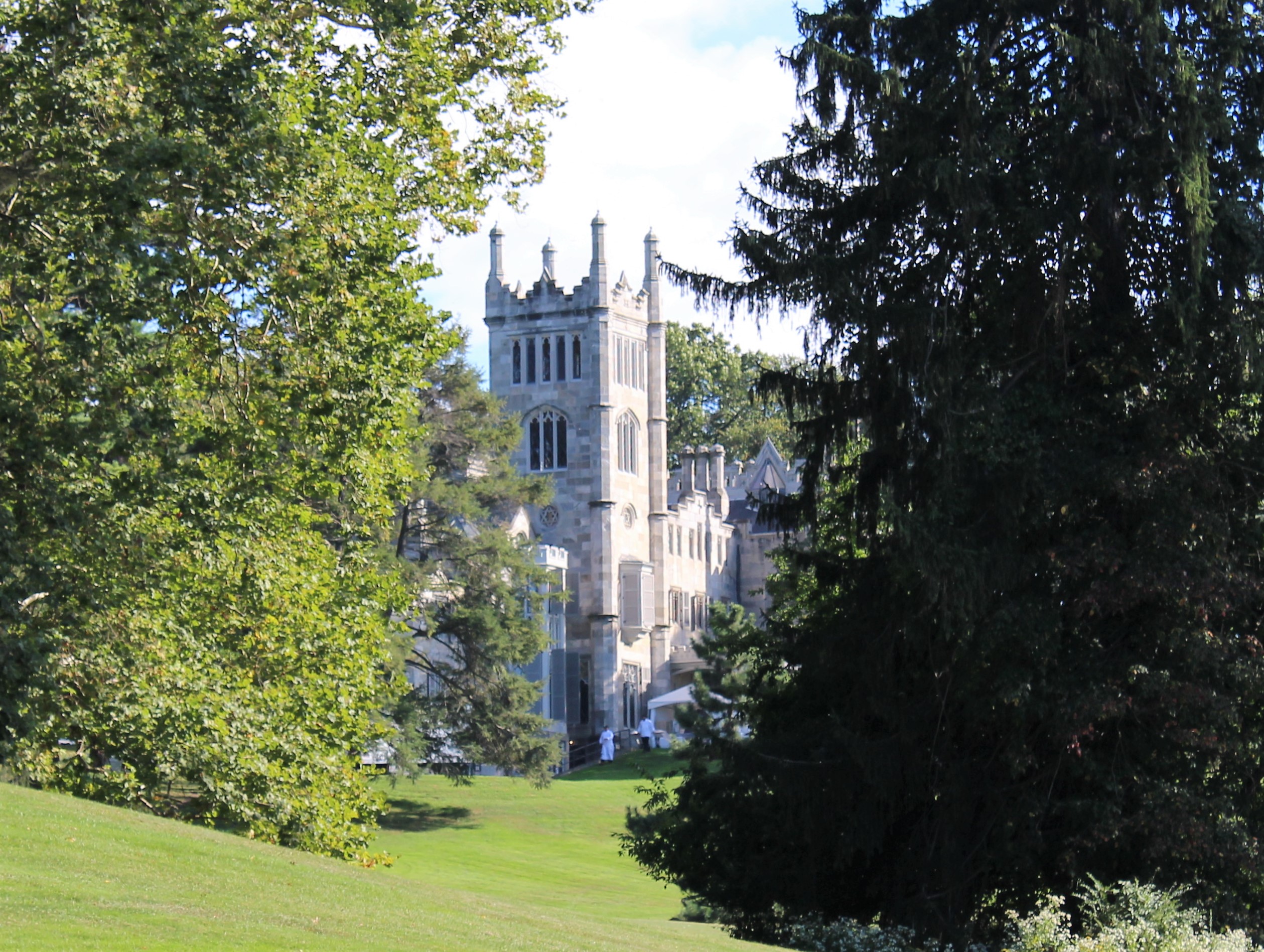
    IMG_0172


    IMG_0164

    The capture of Major John Andre.
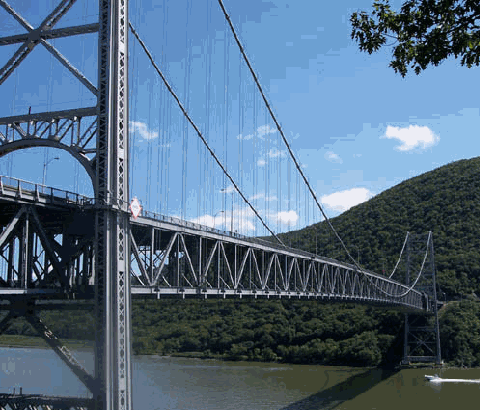
    IMG_0165

    It is at this very spot that Ichabod first encounters the Headless Horseman.

    Just at this moment, in the dark shadow on the margin of the brook, Ichabod beheld something huge, misshapen, black, and towering. It stirred not, but seemed gathered up in the gloom, like some gigantic monster ready to spring upon the traveler.

    On mounting a rising ground, which brought the figure of his fellow traveler in relief against the sky, gigantic in height, and muffled in a cloak, Ichabod was horrorstruck on perceiving that he was headless! But his horror was still more increased on observing that the stranger’s head was carried before him on the pommel of the saddle.

    The rising ground northbound on Route 9.

    IMG_0160

    They had now reached that stretch of the road which descends to Sleepy Hollow, shaded by trees for about a quarter of a mile, where it crosses the famous church bridge just before the green knoll on which stands the church.

    IMG_0173

    An opening in the trees now cheered him with the hopes that the church bridge was at hand. He saw the whitewashed walls of the church dimly glaring under the trees beyond. He recollected the place where Brom Bones’s ghostly competitor had disappeared. “If I can but reach that bridge,” thought Ichabod, “I am safe.”

    You can see the rails of the bridge to the right and below the stop lights with the old church in the background.

    IMG_0180

    Just then he saw the goblin rising in his stirrups, in the very act of hurling his head at him. Ichabod endeavored to dodge the horrible missile, but too late. It encountered his cranium with a tremendous crash – he was tumbled headlong into the dust, and Gunpowder, the black steed, and the goblin rider passed by like a whirlwind.

    IMG_0178

    An inquiry was set on foot, and after diligent investigation they came upon the saddle trampled in the dirt. The tracks of horses’ hoofs deeply dented in the road were traced to the bridge, beyond which, on the bank of a broad part of the brook, was found the hat of the unfortunate Ichabod, and close beside it a shattered pumpkin. The brook was searched, but the body of the schoolmaster was not to be discovered.

    IMG_0177

    Our adventure ends looking over the old church bridge where Ichabod’s hat was found in the water wondering; was it his rival Brom Bones or was it really the headless horseman.

    Brom Bones too, who shortly after his rival’s disappearance conducted the blooming Katrina to the altar, was observed to look exceedingly knowing whenever the story of Ichabod was related, and always burst into a hearty laugh at the mention of the pumpkin, which led some to suspect that he knew more about the matter than he chose to tell.
         The old country wives, however, who are the best judges of these matters, maintain to this day that Ichabod was spirited away by supernatural means. The bridge became more than ever an object of superstitious awe, and that may be the reason why the road has been altered of late years, so as to approach the church by the border of the millpond.

    The changed route of the road between the mill pond and the church.

    IMG_0181

    If you take the road to the right of the church and park, it is only a short walk up the hill to Washington Irving’s grave in the Old Church Cemetery.

    IMG_0190

    Boat Name of the Week

          Travelling in the fog did not lend itself to seeing any boat names this week.

    Next Week –

    At this time Jose is no longer a threat to the crew.  However, Maria is lurking off the east coast now and threatening a landfall between the Carolina outer banks and New England.  The crew will continue to sit here until it is safe to proceed south.

    Loop On – The water goes on forever and the adventure never ends.

    Eric the Red