Tag: Tennessee River

  • Staging for Ohio River

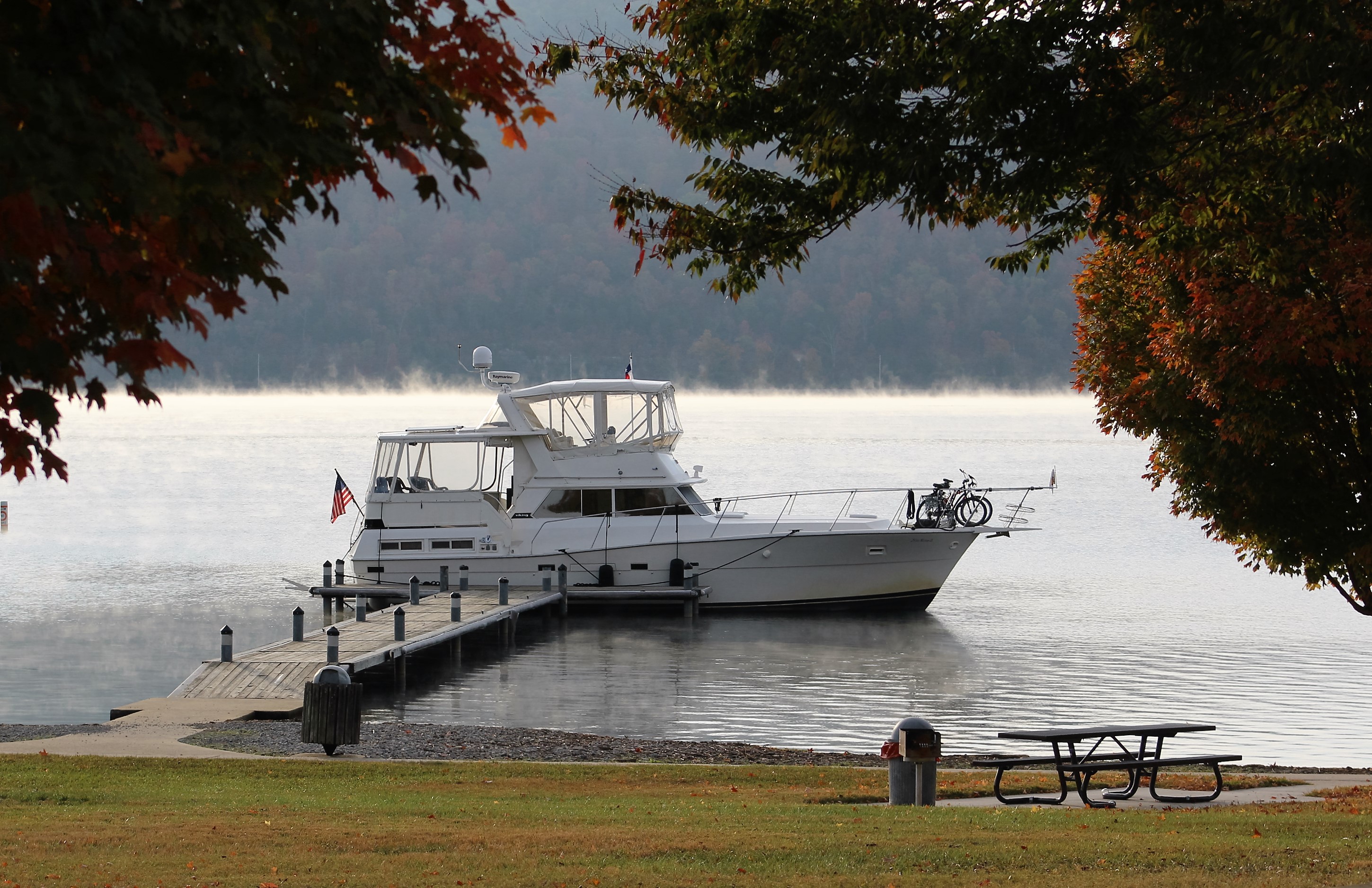
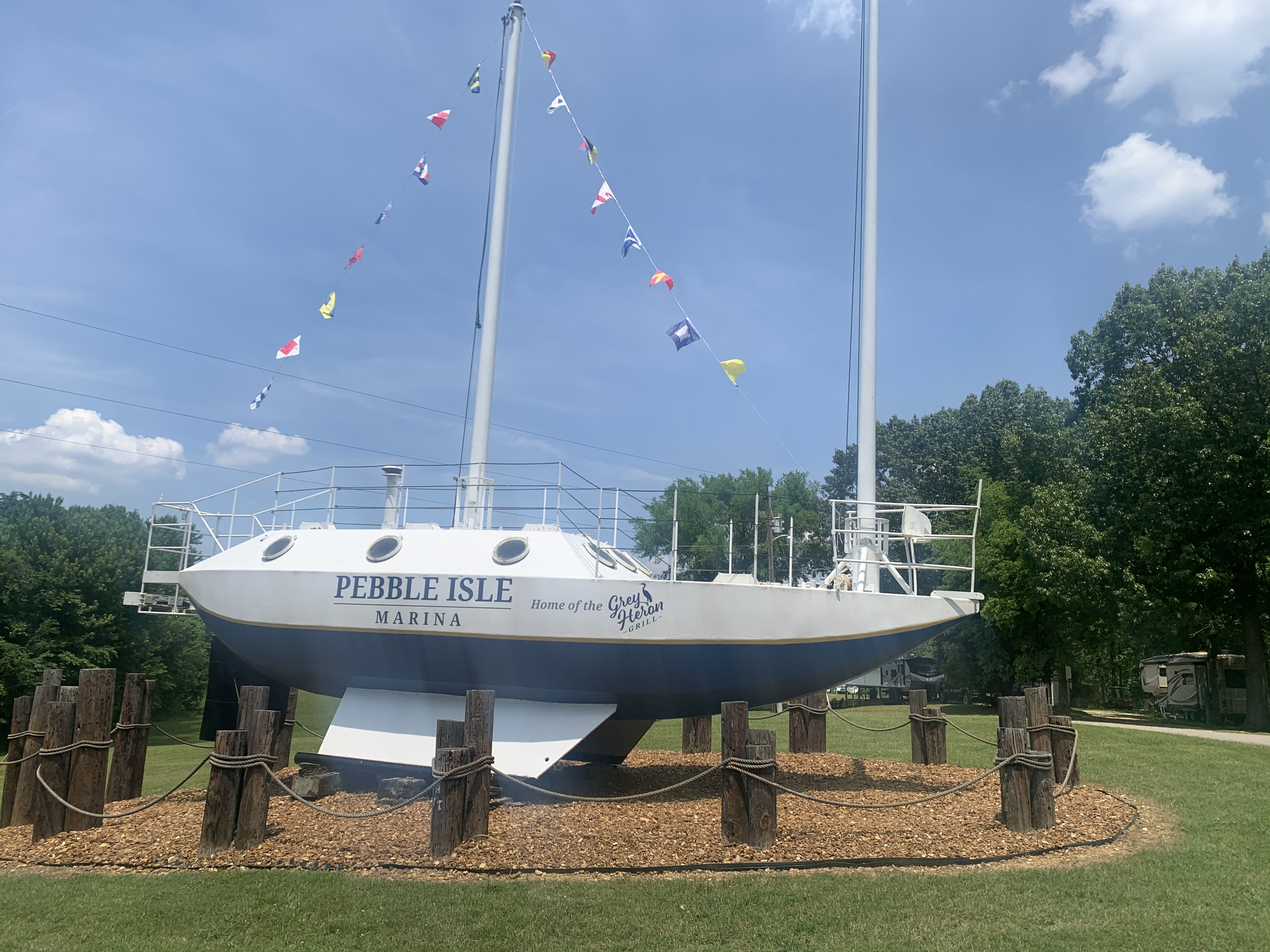
    Ahoy from Pebble Isle Marina
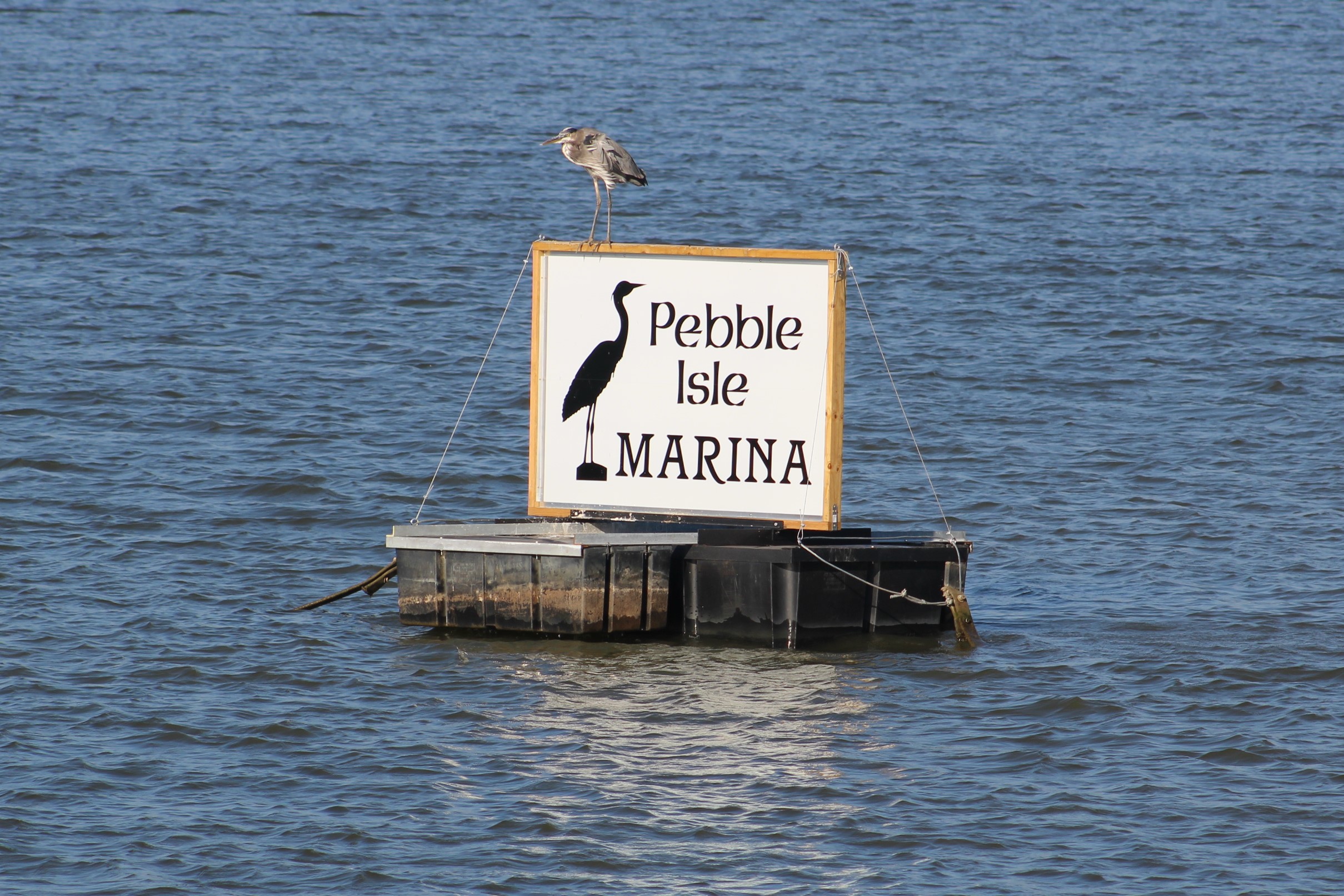
    You only have a few ports left to jump back on board as a virtual crew member before the crew begins their Ohio River Adventure to Pittsburgh this cruising season. Hope to see you aboard.

    Summary of the Week
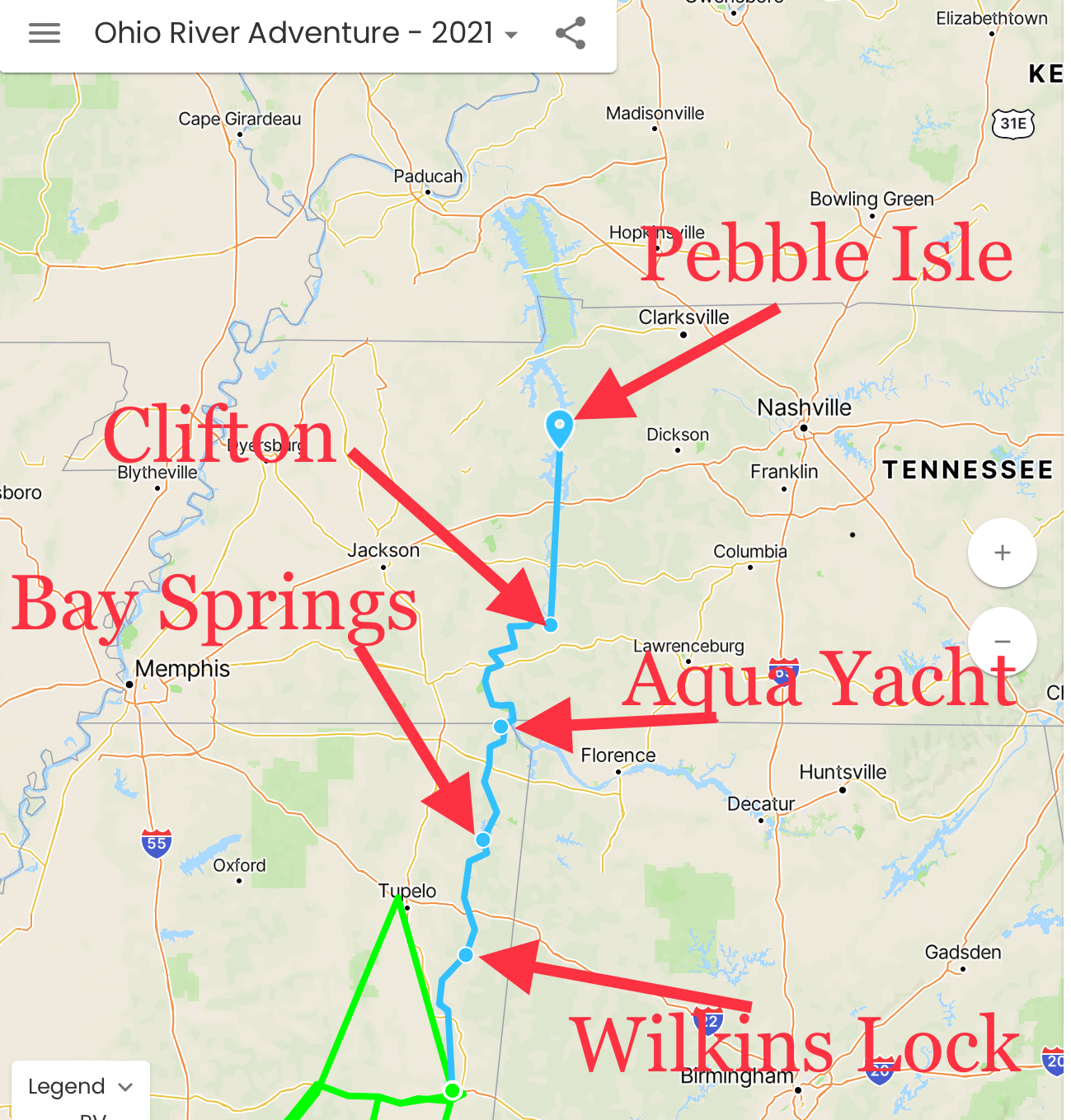
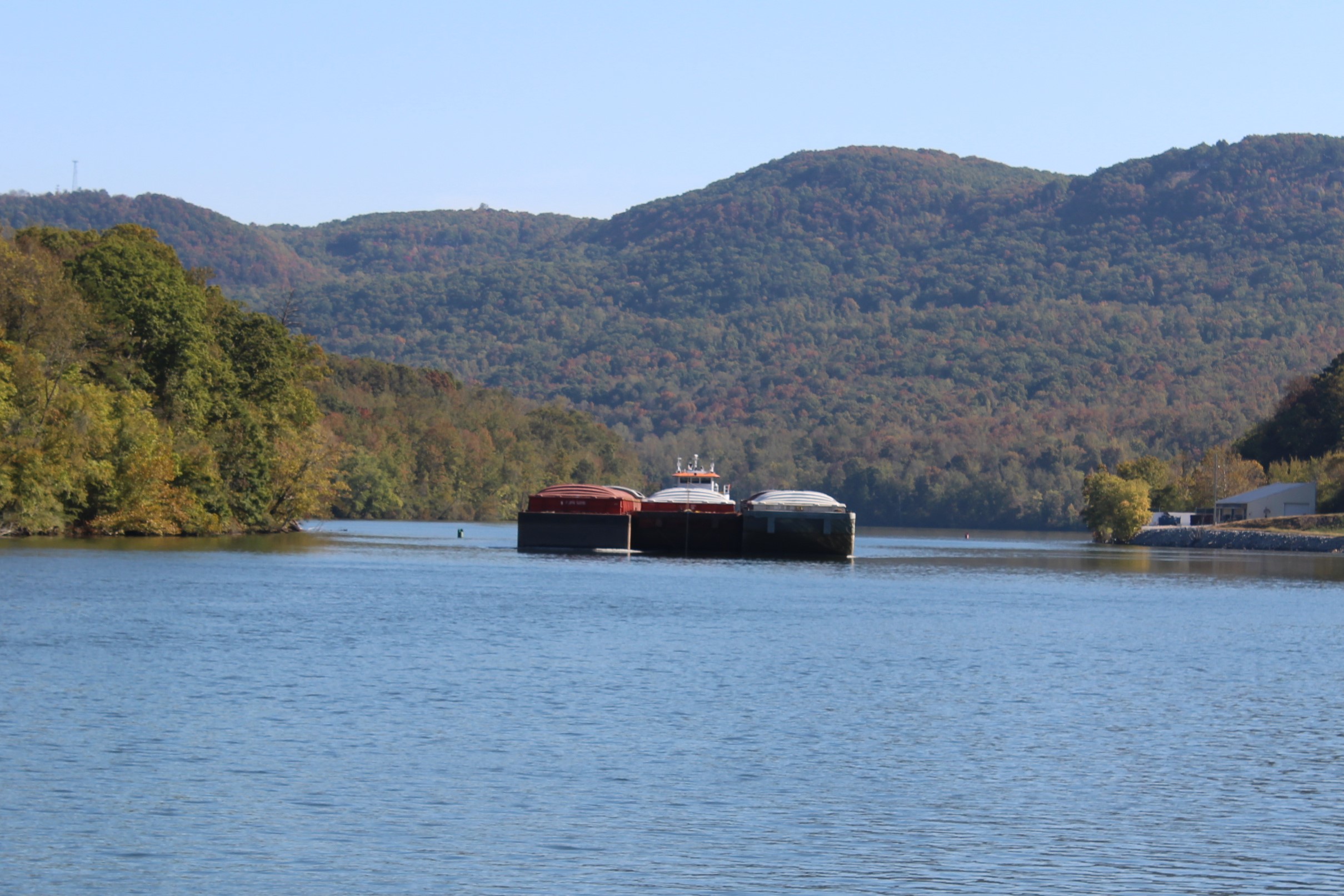
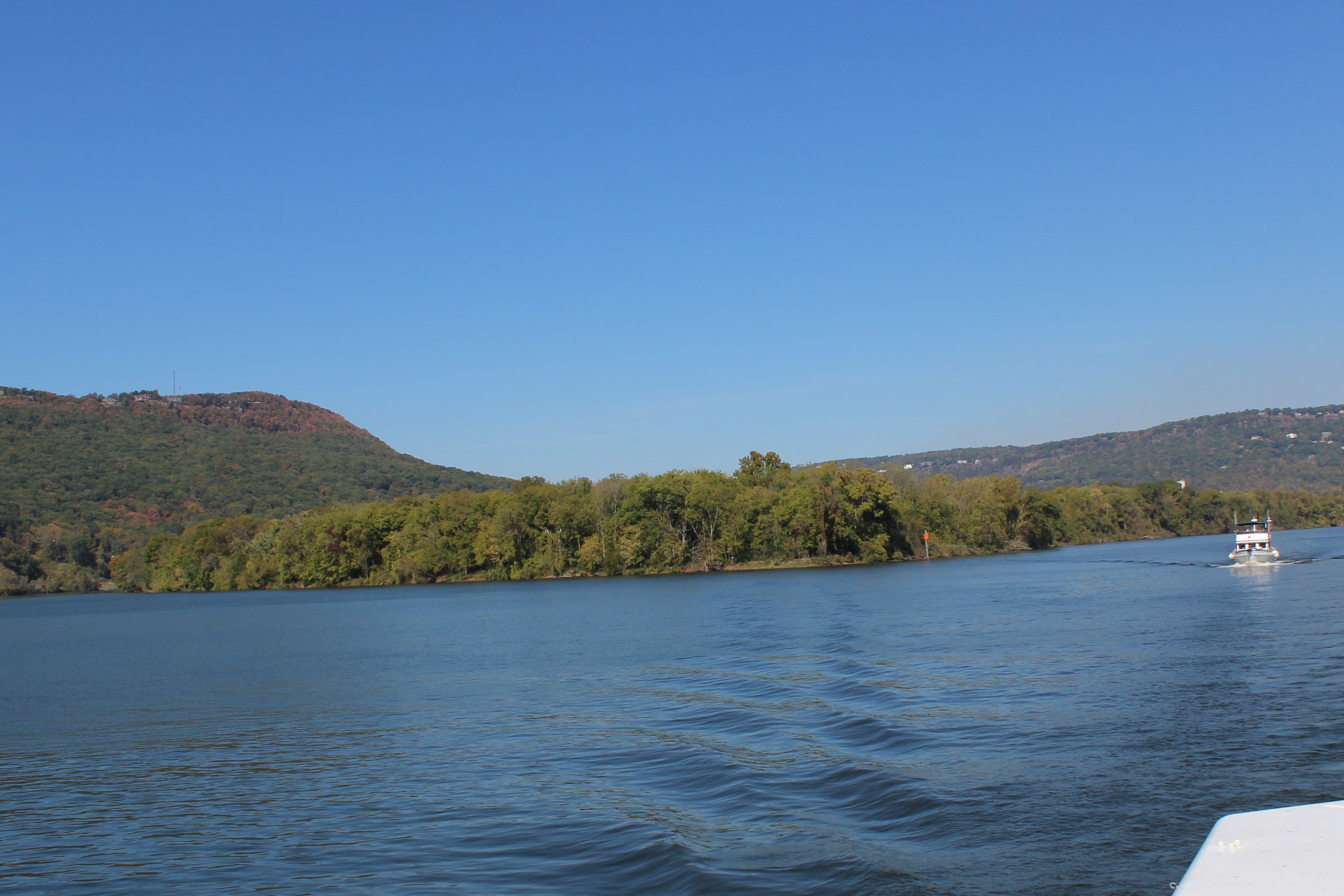
    The crew left the comfort of the Columbus Marina and made way north on the Tenn-Tom Waterway to begin to stage for their Ohio River Adventure. After one night at anchor, near the Wilkins Lock, the crew pulled into Bay Springs Marina to discover 30 gallons of fuel in the engine room bilge. It took two days to clean that mess up, and correct the cause. After the cleanup was complete, the crew next ventured to Aqua Yacht Harbor where they ‘discovered’ The Outpost. They next moved to Clifton where they enjoyed conversing with Susan, one of the new owners of the marina, while they had a sumptuous hamburger. They concluded this week by navigating up to Pebble Island Marina and dodging some 300 plus pontoon boats plying the Tennessee River.

    As a reminder to the virtual crew members, the skipper posts the history of the areas they travel through on this blog each Sunday afternoon. In addition, he also maintains a Travel Map that is updated at the end of each day’s cruise. The Travel Map has a short summary of the day’s journey, pictures, and the Captain’s Log. Click on the Still Waters II Travel Map to see the daily updates.


    The voyage of discovery did answer the following questions this week:

    1. How many miles has our crew cruised since starting this adventure back in June of 2015?
    2. What two states, east of the Mississippi River, has Still Waters II yet navigated?
    3. How many states west of the Mississippi River has Still Waters II visited?
    4. How does an 1800’s author play a part in naming a 1930’s Pickwick Lock & Dam project?

    Few Fun Facts

    The crew has been asked to speak and facilitate various sessions for America’s Great Loop Cruising Association Spring Rendezvous. This has necessitated that the crew have a good internet signal on Tuesday and Thursday nights. Not an easy task to find in this remote area of the US. As such, they have been Marina hopping slowly north as they simultaneously wait for the Marinas along the Ohio River to place their docks back in the water prior to Memorial Day weekend.
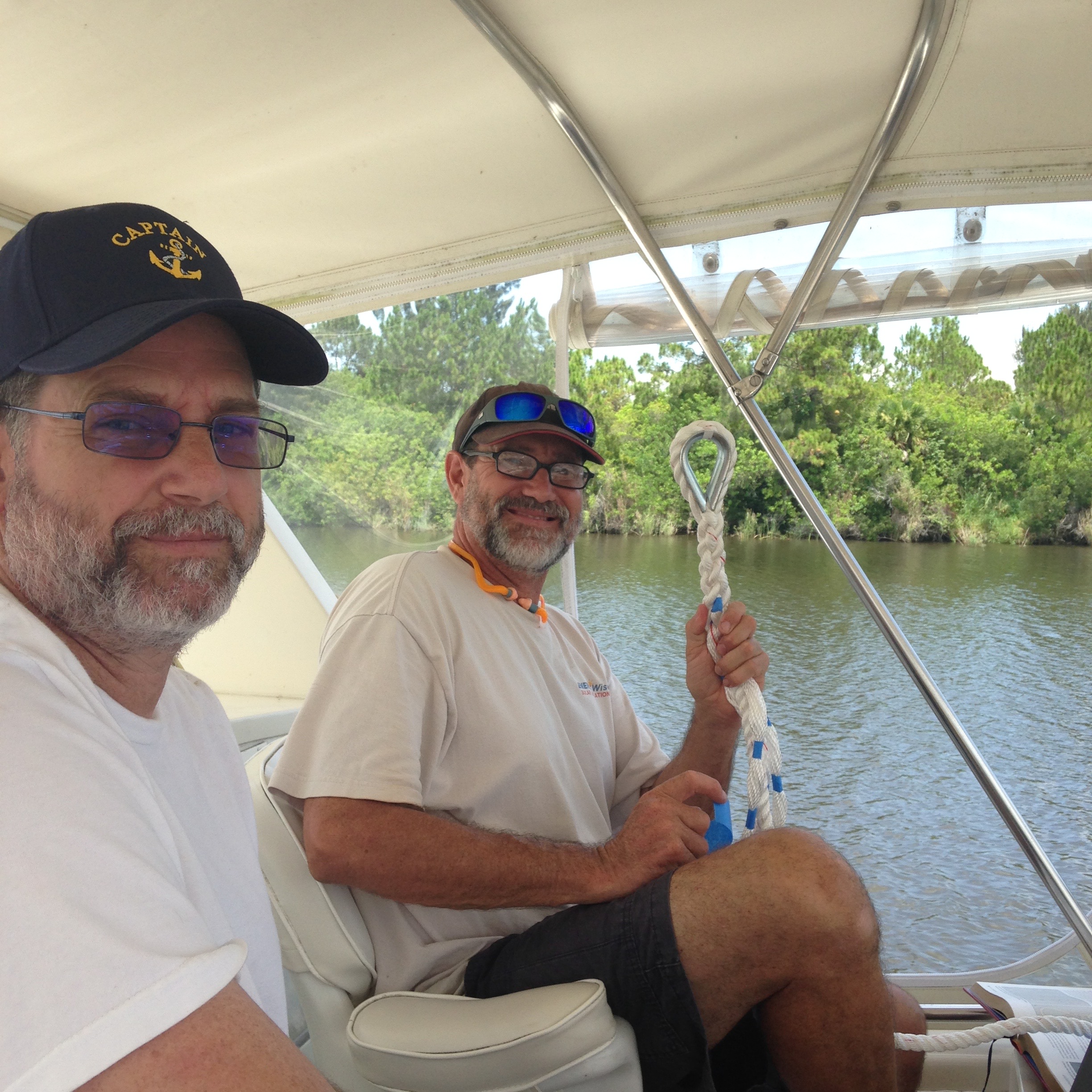
    Second day on the Loop with Training Captain Geof

    In his spare time, the skipper decided to go back and calculate the total miles they have cruised to date:

    1. First Loop – June 2015 to February 2017 = 9,555 miles
    2. Second Loop – February 2017 to January 2019 = 12,615 miles
    3. Down East Circle Loop – January 2019 to January 2020 = 6,073 miles
    4. Tennessee River Adventure – January 2020 to November 2020 = 2,476 miles

    This provides for a grand total of 30,719 miles before the start of the Ohio River Adventure for the 2021 cruising season. Which then begs the question, Why travel to Pittsburgh via the Ohio River? Answer, so that Still Waters II can float in waters of Indiana and West Virginia. These are the last two states east of the Mississippi River she has never visited.
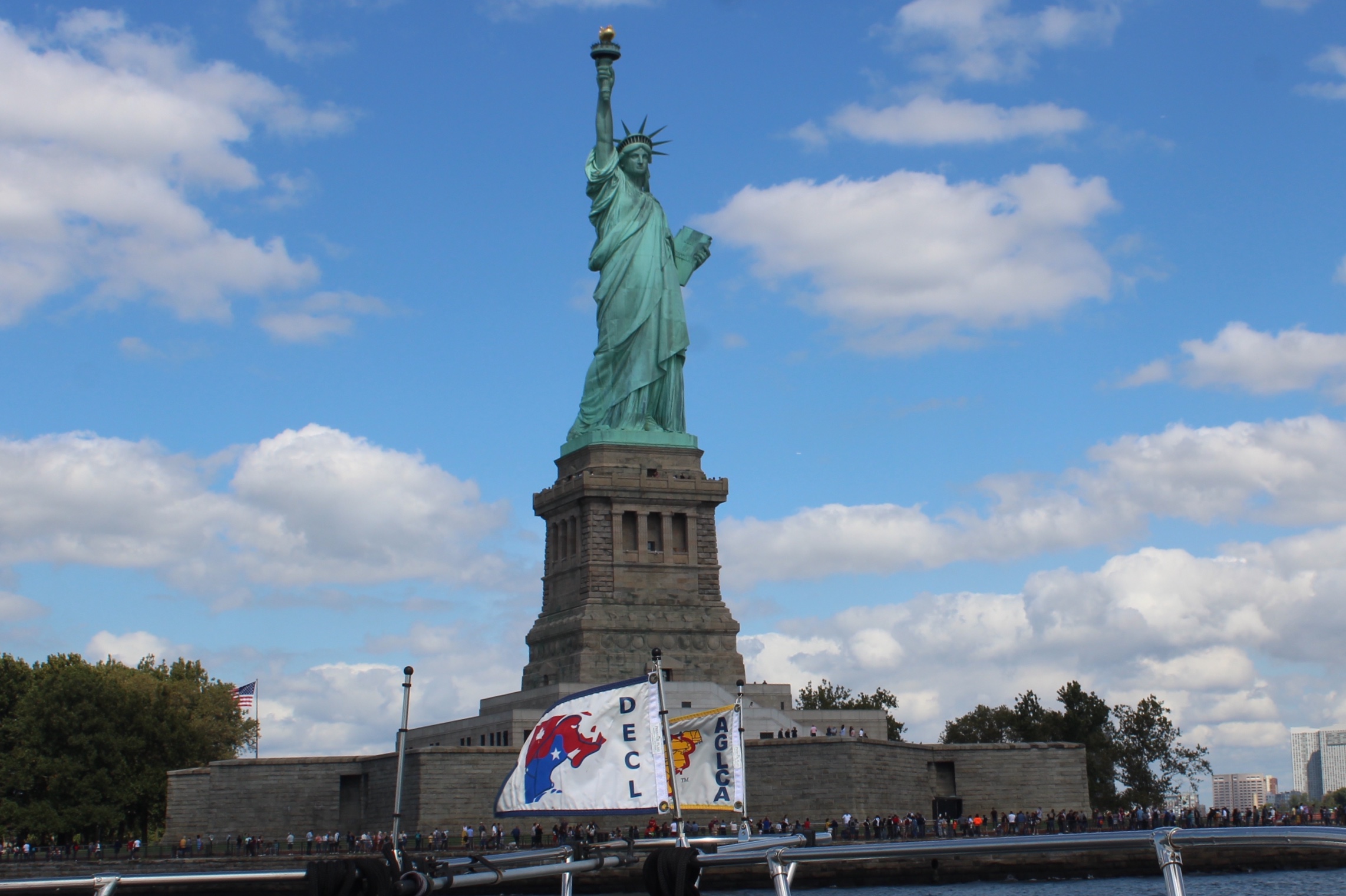
    September 2019, Crossing our wake on the Down East Circle Loop

    Speaking of states, how many states west of the Mississippi River has she visited? You might recall that the crew took her to the end of navigation on the Mississippi River in 2018. Along the way, she visited Missouri, Iowa, and Minnesota west of the Mississippi River.

    How Do You Lose 30 Gallons of Fuel?

    The day started like most days on the Loop with the skipper in the engine room performing fluid checks and general look around for anything unusual. With the checks complete with no abnormalities noticed, the skipper fired up the engines and disconnected shore power and lines. The crew only made about 38 miles over seven hours because they spent two hours negotiating four locks. After the 84 foot ride up the Whitten Lock, the crew docked at Bay Springs Marina. The skipper hooked back to shore power and went to the office to check-in.

    Upon his return, the Admiral asked him what he had sprayed in the cabin because it really smelled bad. (First clue that something was amiss.) The skipper denied any wrong doing and returned to the helm to close out the day’s cruise. Part of this activity is determining how much fuel they burned. He calculated the fuel burn and then went to the fuel gages to verify the result. (Second clue that something was amiss.) With a dumbfounded look on his face, he was trying to figure out how the port engine appeared to have burned 30 gallons more fuel than starboard. He quickly added clue 1 (bad smell) with clue 2 (missing 30 gallons of fuel) and guessed he had a fuel leak. Unfortunately, this was immediately confirmed when he opened the engine room hatch and noticed the fuel several inches above the floor covering the bilge.

    All the skipper could imagine in that moment was how large the fine would be if that 30 gallons of fuel found its way to the lake via a bilge pump. He immediately removed power to the engine room bilge pump, then went and checked the bilges forward and aft of the engine room. Good news, no fuel in the bilges with installed automatic float switch activated pumps.
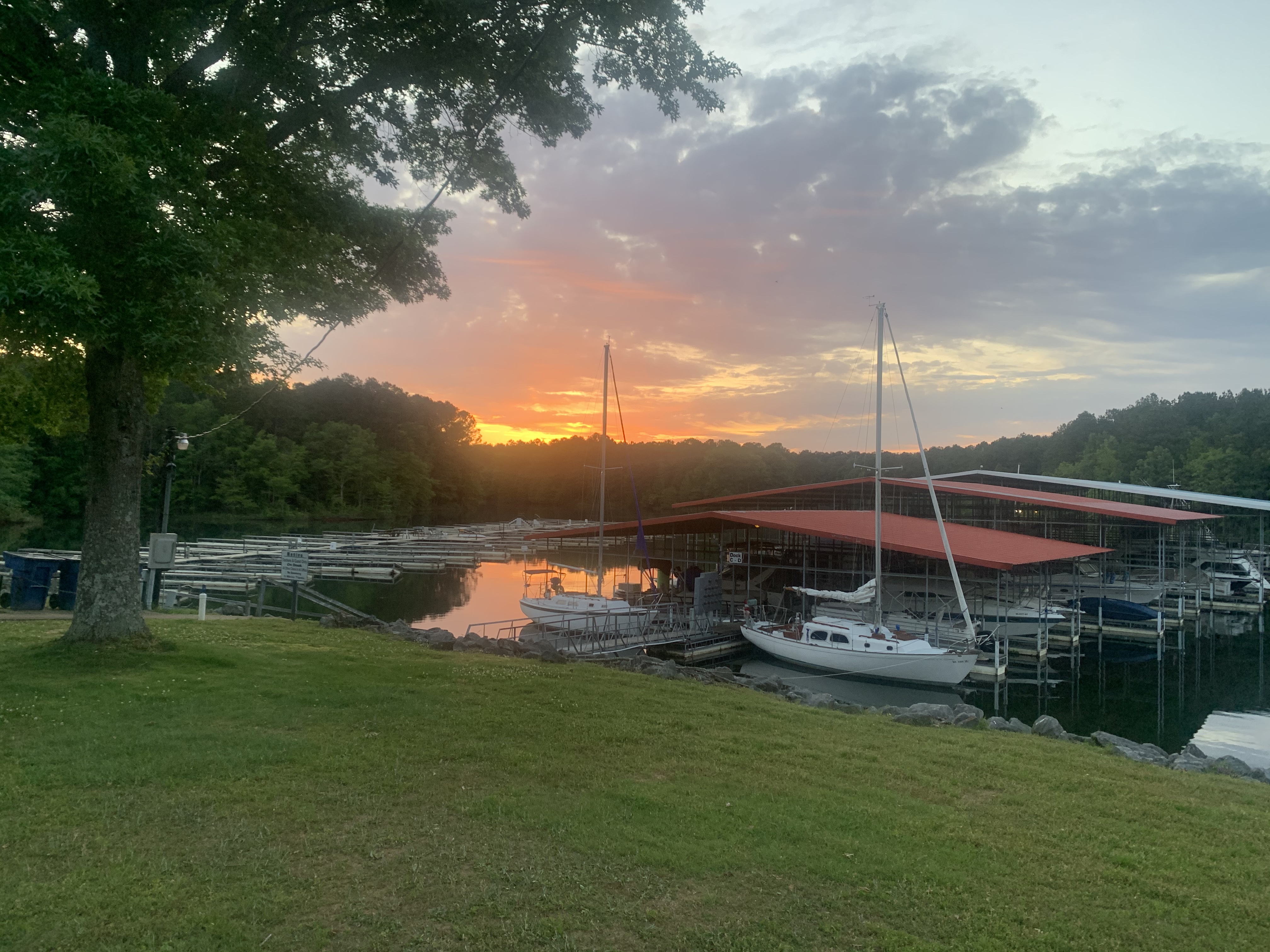
    Sunset at Bay Springs

    The next step in this miserable nightmare was to deliver the bad news about fuel in the bilge to the office and ask for help to recover the fuel. The owner assigned a mechanic the chore of bailing fuel for the last three hours of his shift. After the fuel was removed and a general look around to locate the leak was unsuccessful, the skipper noticed the return valve to the generator fuel tank was cracked open. Further investigation uncovered a fuel overflow trail to the bilge. So it now appeared that the port engine was returning fuel to the generator fuel tank and back pressuring the carburetor causing the generator to leak fuel to the bilge.

    The skipper closed the valve and fired up the engines and no leak was found. Nice when there is an easy fix to a seemingly complex problem. Thank you God. The skipper has now locked that valve closed and then spent the majority of the next day cleaning the engine room bilge. The crew has run another 100 miles and no more fuel has appeared in the bilge. A huge thank you to Bay Springs Marina.
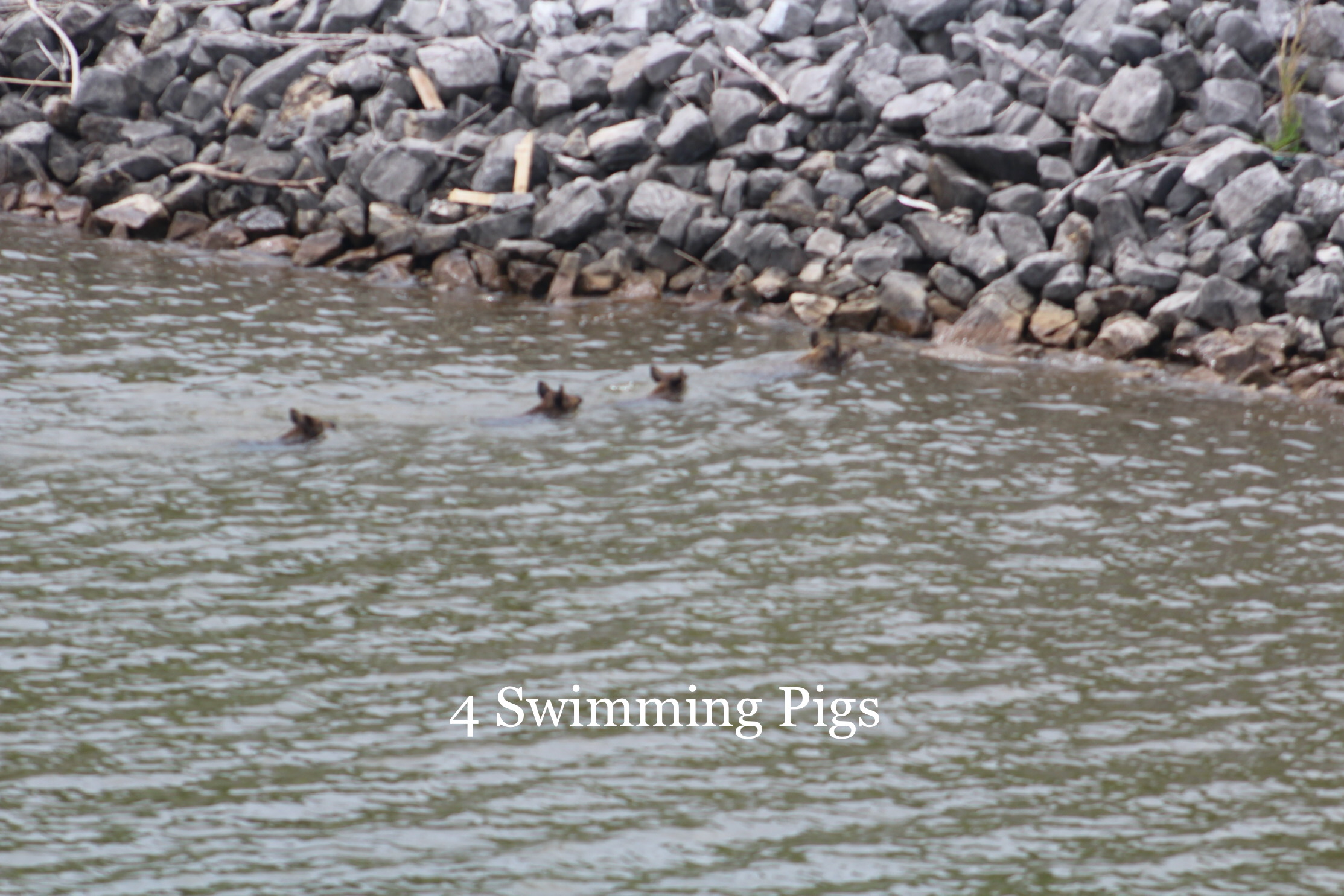
    Four pigs swimming across the Tenn-Tom

    Pickwick Landing

    Normally, large projects such as the Pickwick Lock & Dam are named after historical figures famous in the area in which the construction project is being built. Previously, the skipper had tried to determine who the Pickwick Lake, Lock, and Dam were named after. The search ended with little satisfaction as the locals could only recall that is was named for the local community, Pickwick Landing, back in 1934 when the Dam was under construction.
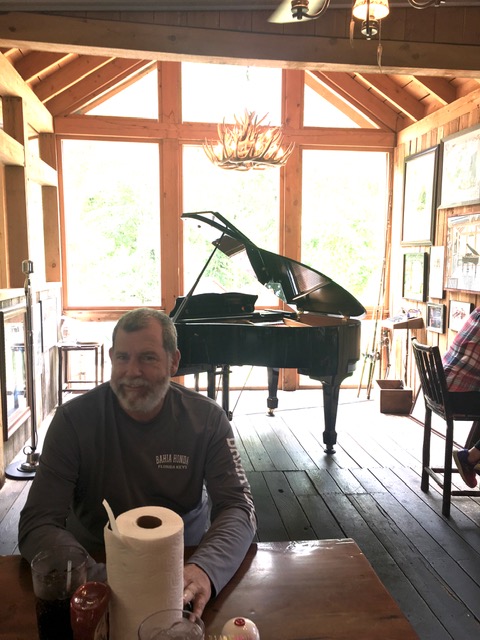
    Inside the Outpost

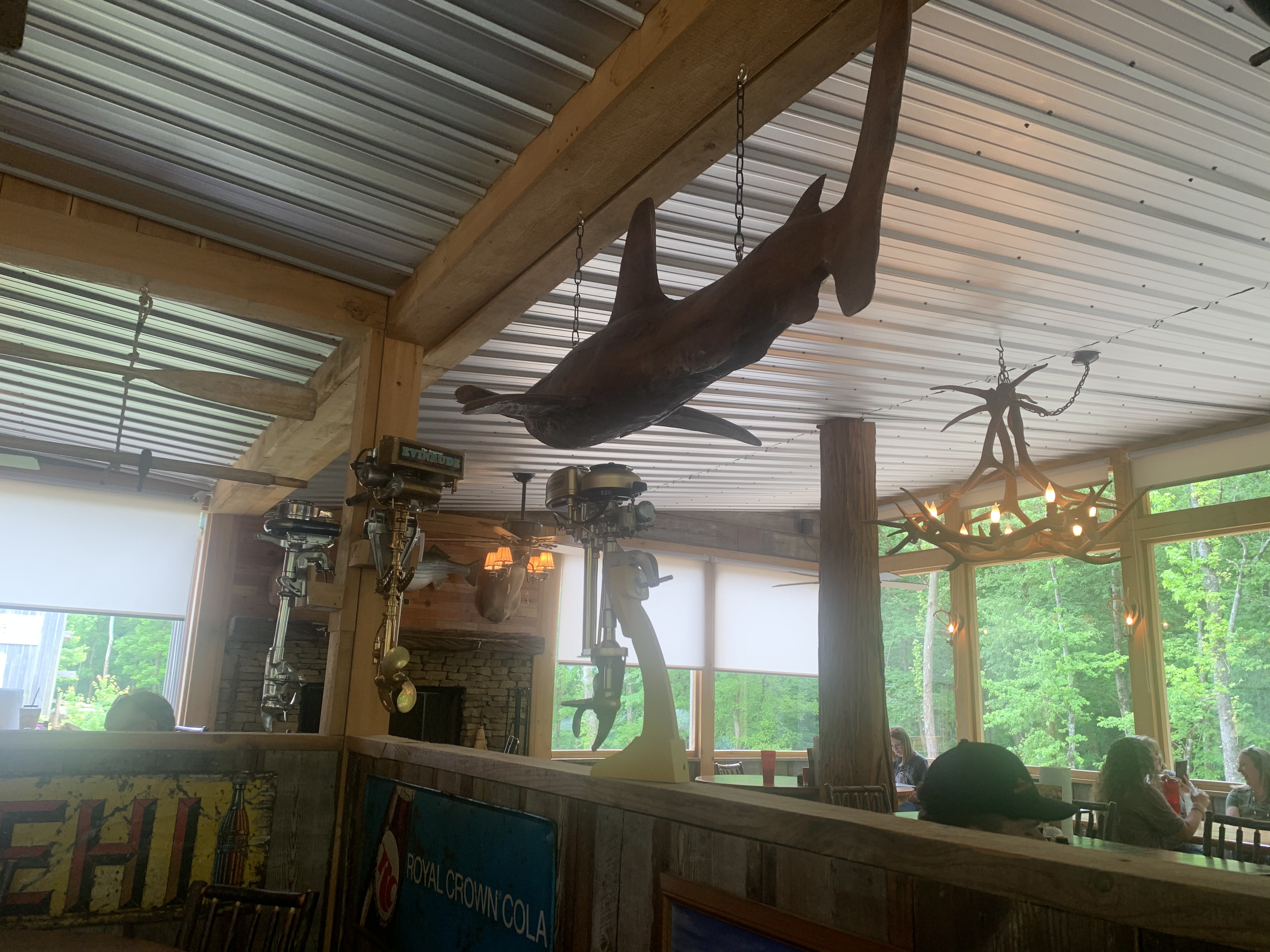
    The answer to the mystery was revealed at an eatery named The Outpost. The crew went to test the venue’s world class reputation for banana pudding and other culinary delights. The banana pudding must be good because they were sold out at 1400, so the skipper settled for key lime pie while the Admiral tried the coconut cream pie. Both were excellent and did not disappoint. But back to naming Pickwick.
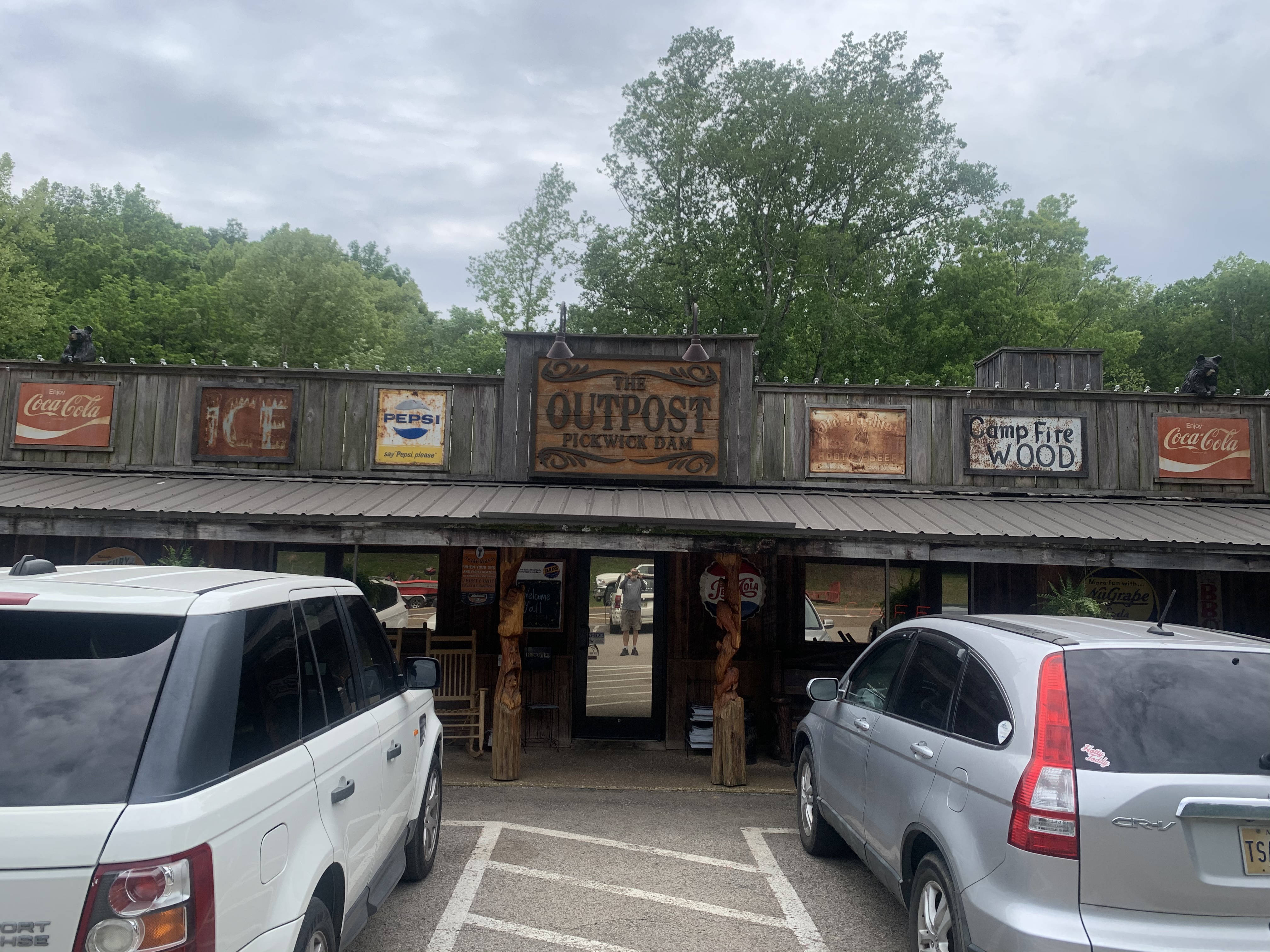
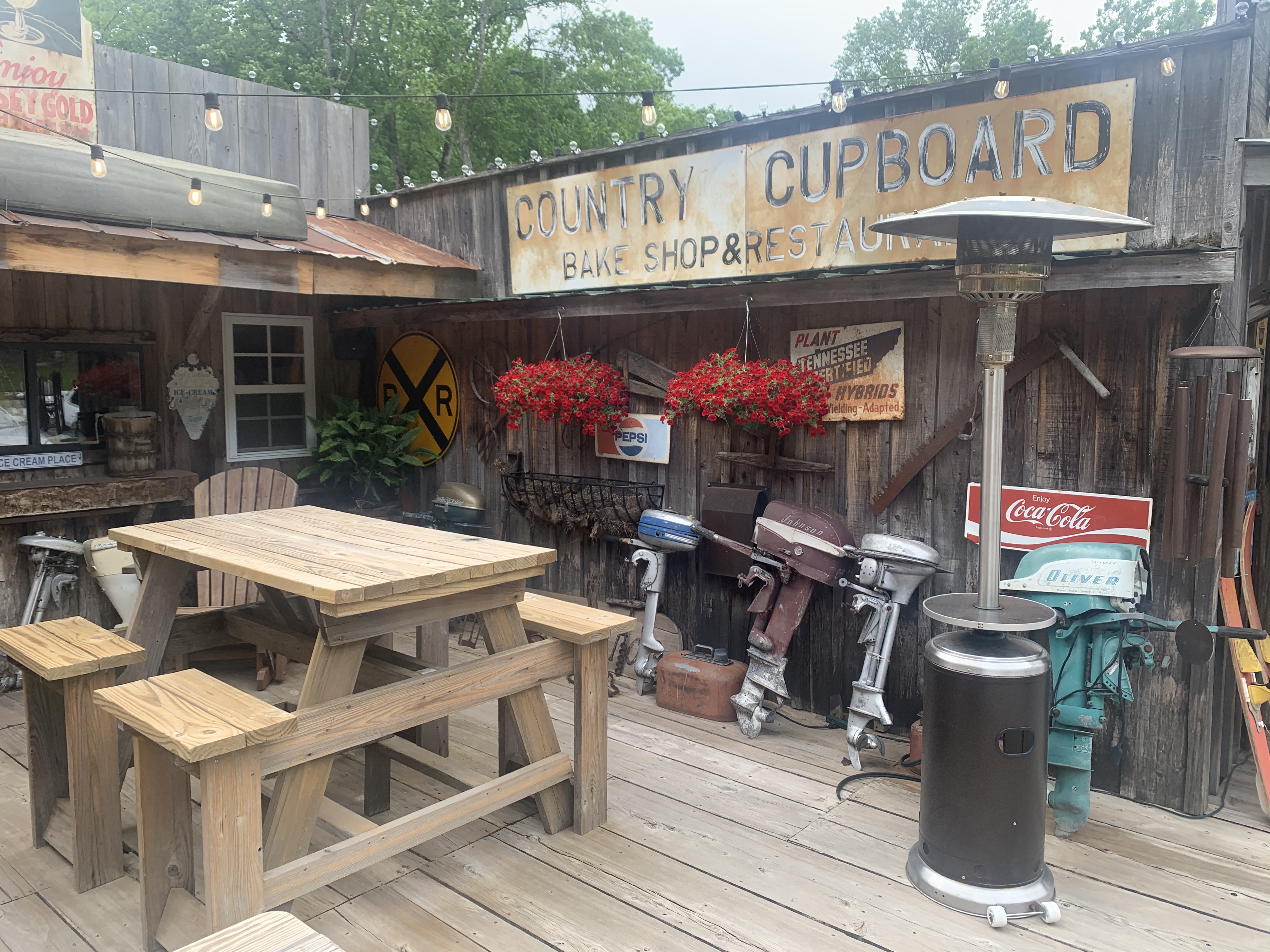
    On the back of the menu, the skipper found the answer to the question he had been seeking. The Lake, Lock, and Dam were indeed named after the local community. Pickwick Landing took its name from the local post office. The area’s first postmaster was fond of the works of Charles Dickens and had named the post office Pickwick in honor of the author’s first novel, “The Pickwick Papers.” Nothing but the dam facts found here.

    Clifton Marina
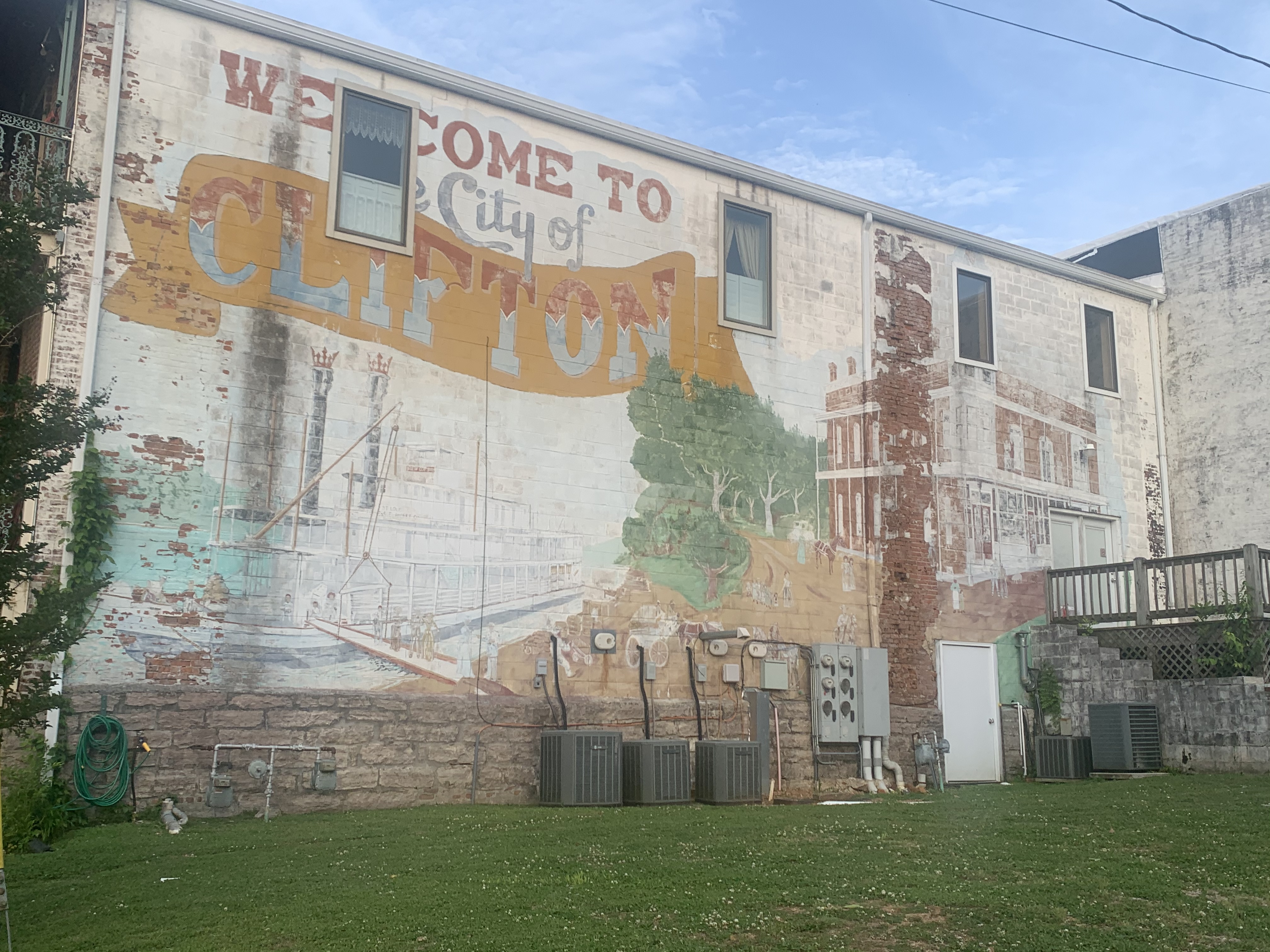
    The crew would need to be in a location with good internet connection on Thursday evening for a Q&A session with the AGLCA Spring Rendezvous. They picked the Clifton Marina largely on the memory of the skipper, not that he remembered a good internet connection, but that the on-site restaurant served a very good hamburger. Upon arrival, he went to check-in at the office and quickly took note that things had changed for the better. He discovered that the marina had new ownership and there was a new sheriff in town, named Susan. She assured the skipper that her chef would produce a burger much better than last visit. But, he had better arrive before 1800 because “last order” was at 1815, not 1816, but 1815. Did I mention there was a new sheriff in town.

    As directed, the crew got their orders in before 1815 and were greeted by a magnificent burger presented by Chef Jeremy. He tried to persuade the crew to try his bread pudding and cheese cake, but surprisingly the crew turned him down. Well, till the next day when they went back and had an afternoon snack. Oh, and one last thing about Chef Jeremy, he also is the marina maintenance man. Now that is an amazing set of diverse skills.
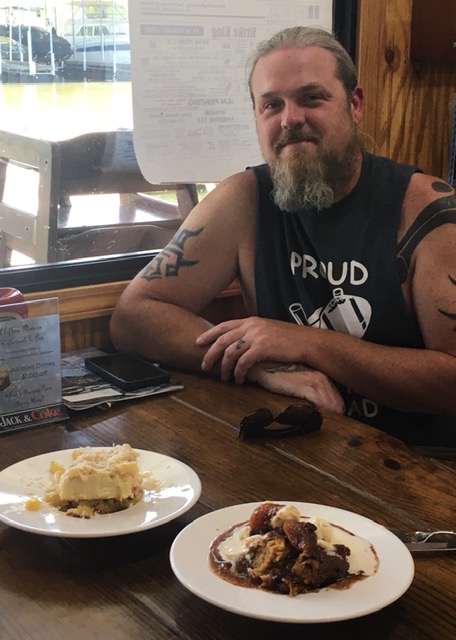
    Chef Jeremy, cheesecake, and bread pudding

    The skipper engaged Susan in conversation and asked how she came to own the marina. The story was fascinating and I will share a few of the high points.

    • Her daughter – in – law, Stacy, had relocated from California and bought a farm in Tennessee in 2018. She was looking on Craig’s List for a pickup truck when in the middle of the trucks a marina for sell pops up. She drove to the marina and stealthily checked it out and took a bunch of photos.
    • Several months later, at the family Thanksgiving Feast, (at a Marina I might add) conversation turned to how they could buy a business and the rest of the family could escape California. Susan’s son brought up the idea of buying a marina, like the one they were presently enjoying.
    • Stacy said, “funny you should mention that,”as she broke out her pictures of the Clifton Marina.
    • After some long conversations and swinging back and forth, they all agreed to pursue the purchase of the property.
    • Early 2019 turned out to be an historic flooding year on the Tennessee River. The closing date for the property just happened to coincide with the day the river crested four feet over the road.
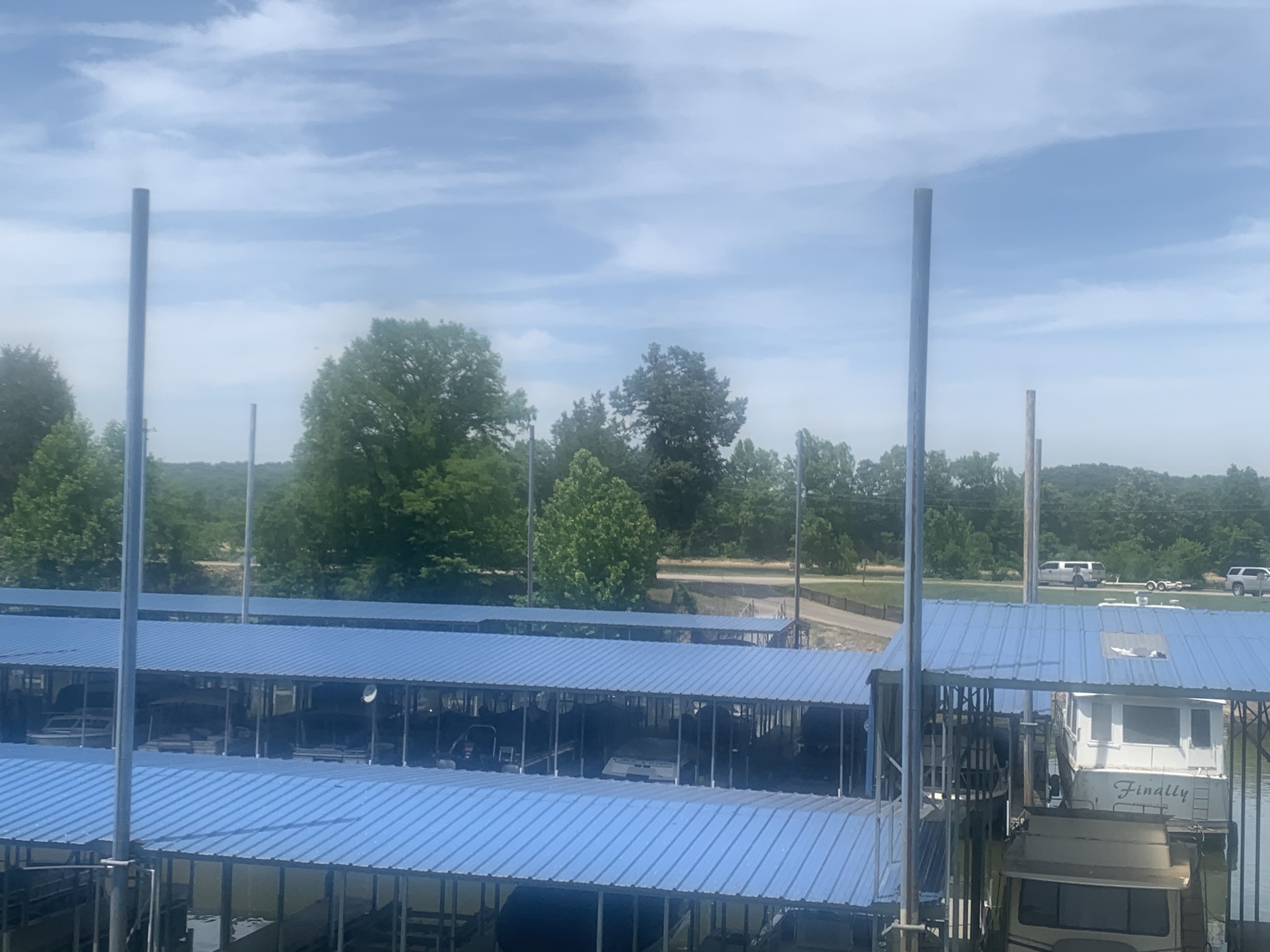
    Flood lifted docks to top of those vertical posts

    The new owners delayed the purchase until the water receded, inspections of the property were made, and necessary repairs were completed. In addition to the repairs, the new owners have made wonderful additions to the marina and are working hard to provide excellent customer service. The crew wishes them well in pursuing their Clifton Marina dream.
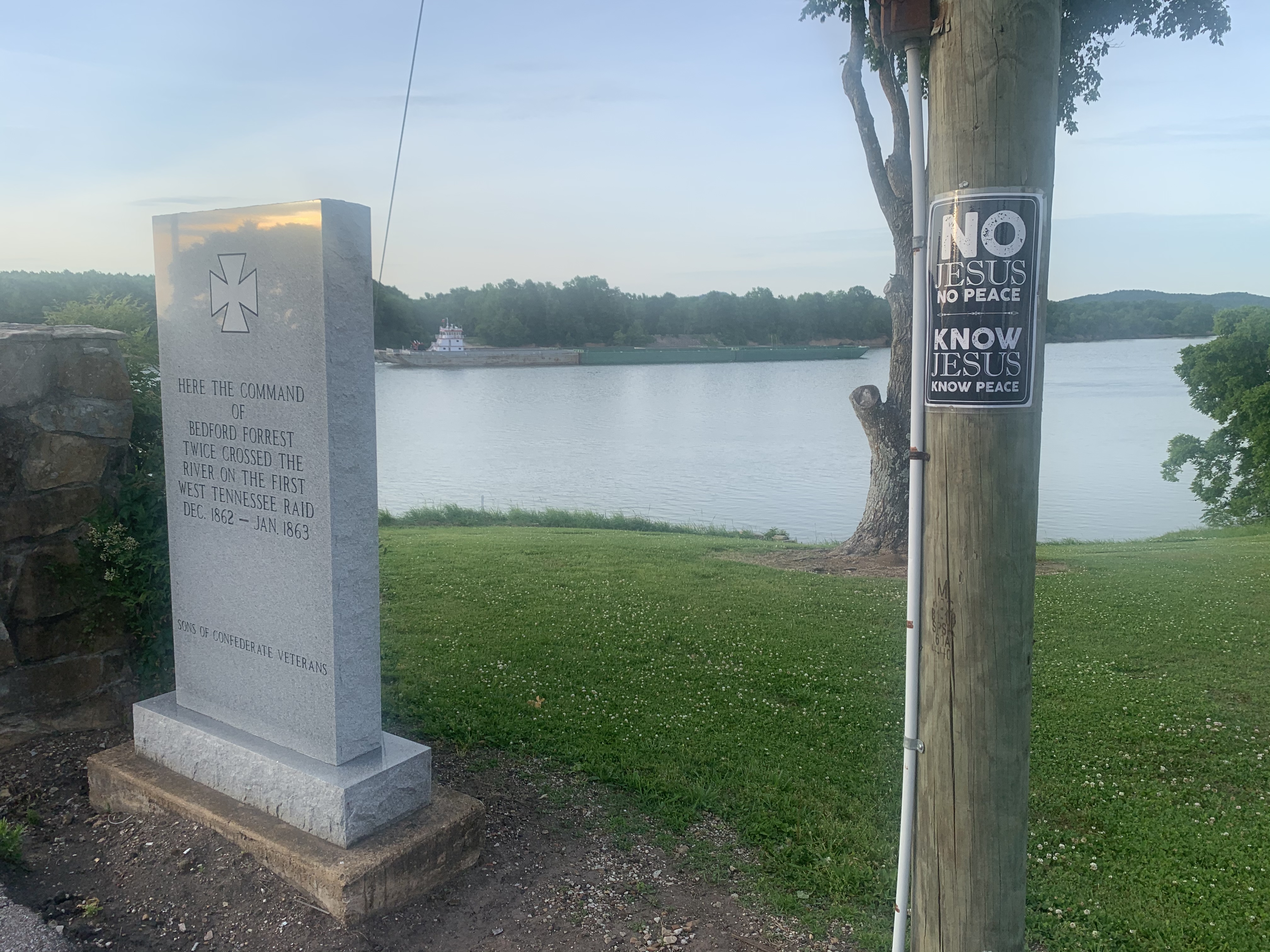
    Towing going by at the Landing in Clifton

    Boat Name of the Week

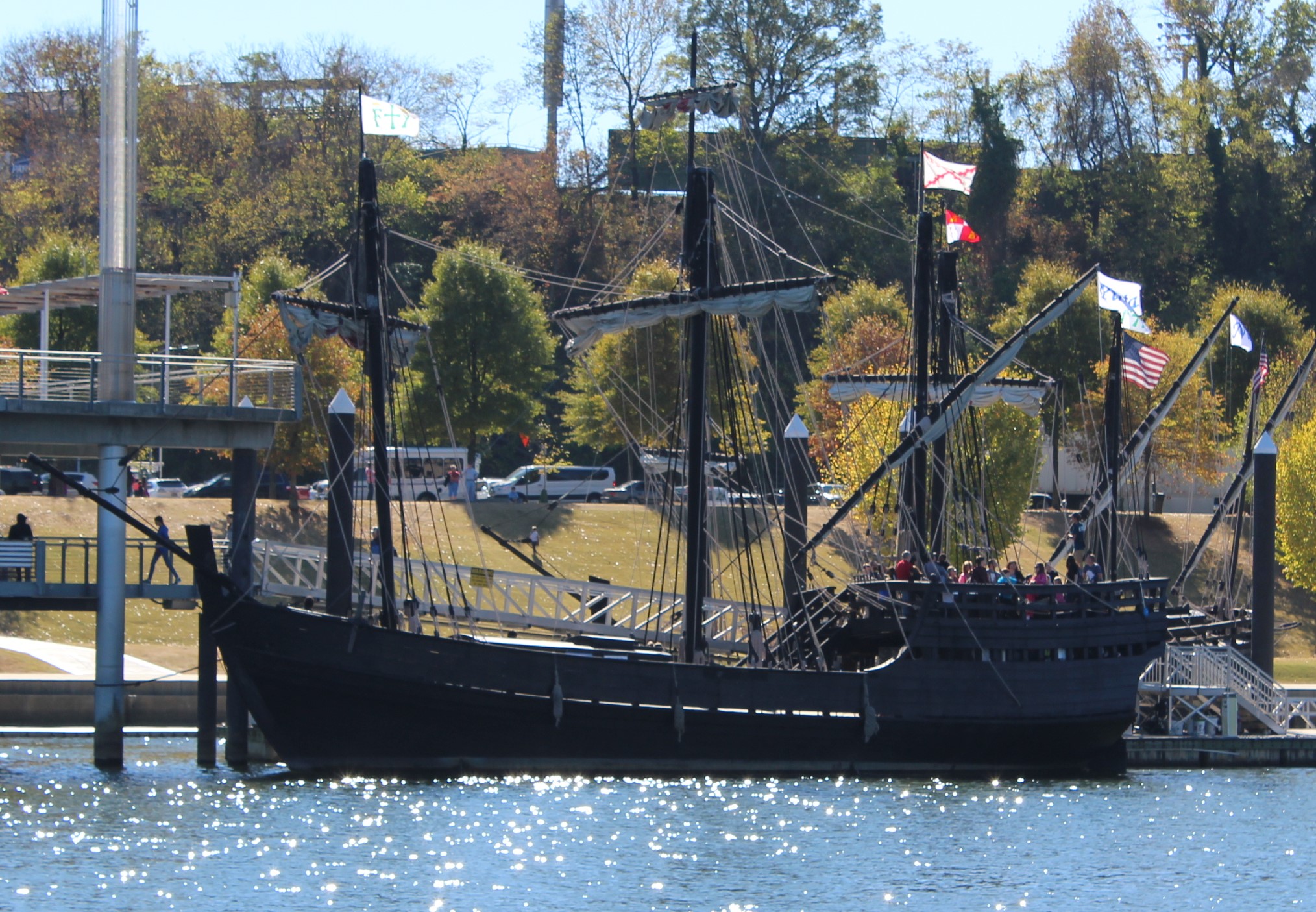
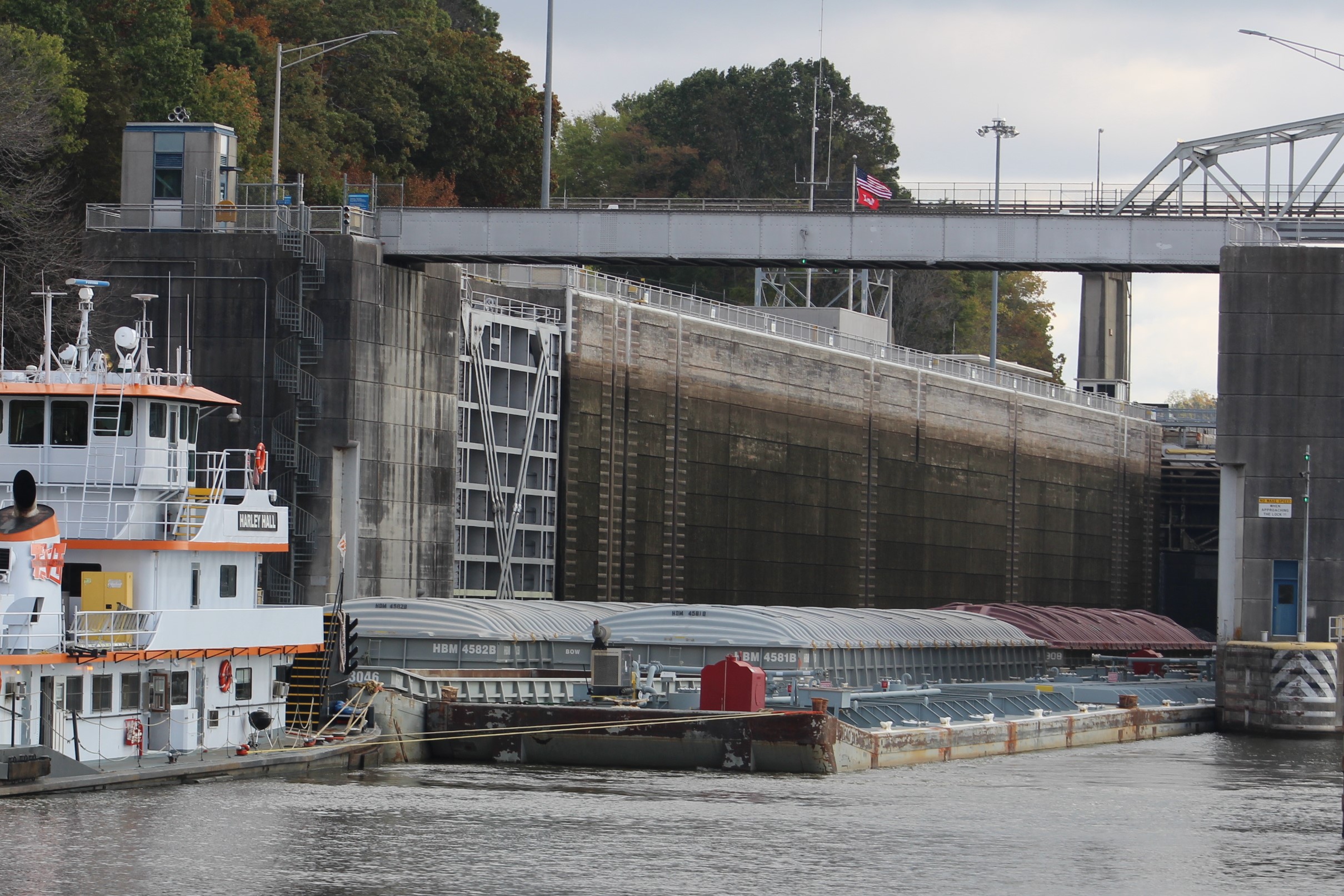
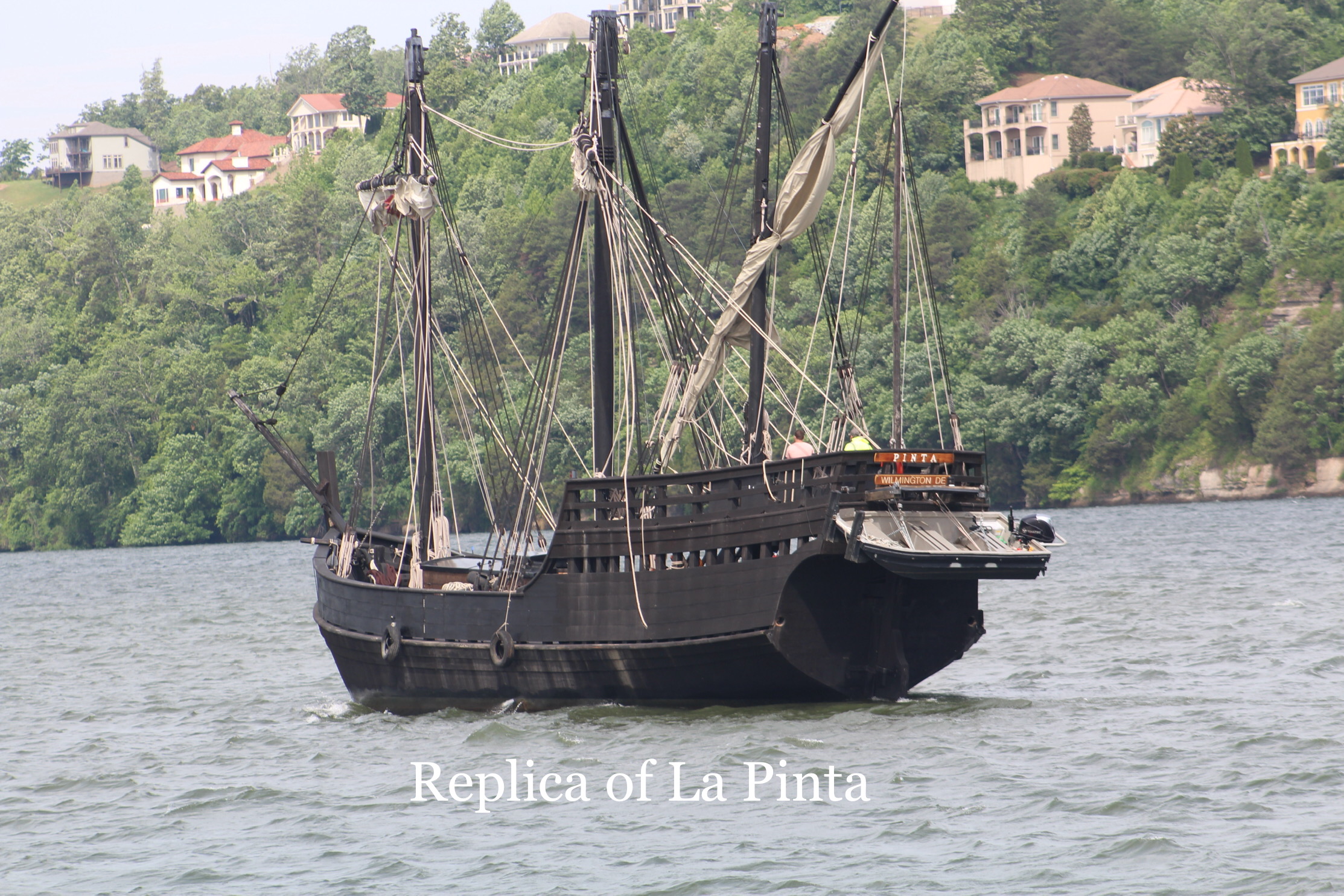
    When the crew arrived at Pickwick Lock, there was a strange looking pirate ship circling and waiting on a tow to leave the lock. There was also a tow in the que waiting for its turn to lock through. The skipper called the Lock Master and was pleasantly surprised that they would get to lock through with the pirate ship as soon as the tow left the lock. The crew followed the pirate ship into the lock and learned that looks can be deceiving, the pirate ship turned out to be a replica of the Pinta, one of Christopher Columbus’ three ships on his maiden voyage across the Atlantic Ocean.
    Next Week –

    The crew will continue to the north end of Kentucky Lake early in the week, and then sit still till after the Memorial Day Weekend. No reason to be out on the water with all the crazy weekend warriors on the water for a three day celebration.
    Loop On – Where the road ends, the water begins. The water goes on forever, and the adventure never ends.

    Eric the Red

  • The Chase: Re-imagined

    The Chase: Re-imagined

    Ahoy from Florence Harbor Marina! Hello virtual crew members and fellow adventurers!

    You may notice a different look to the post today. The skipper has decided to embark on a strange mission to conclude a three year hobby of his, Forest Fenn (ff) treasure hunting. So skipper, take it away. I will return once the skipper gets this out of his system.

    Eric the Red

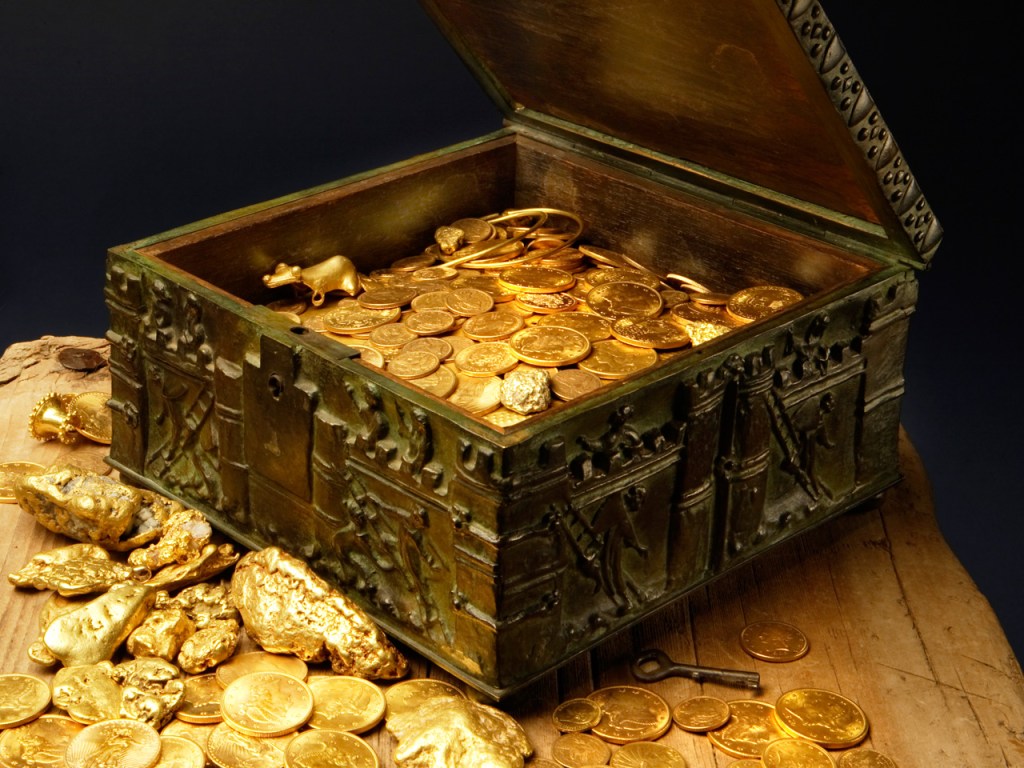
    So, for those who might not know of Forrest Fenn and his treasure hunt; probably, your first question is “Who is Forest Fenn, and what is this nonsense about treasure hunting”? Those questions will be answered as you read on, but basically he hid a treasure chest full of gold somewhere in the Rocky Mountains back in 2010. Then wrote a book, The Thrill of the Chase, which contained a poem with directions to the chest. Well, if you could understand the directions in the poem.

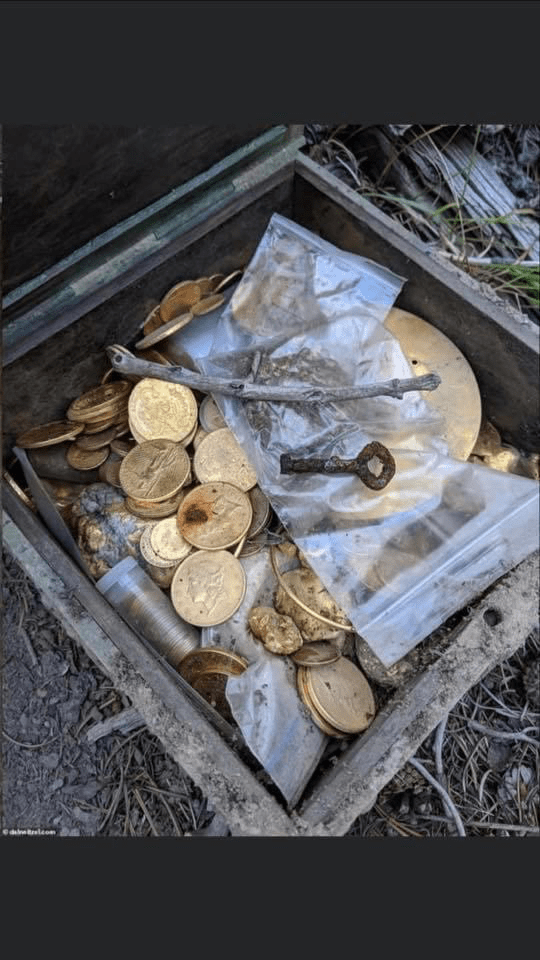
    The elusive prize to the successful solve of The Thrill of the Chase poem

    I believe I solved the poem in November 2019. So while waiting for the snow to melt to begin my Search & Rescue mission, I began thinking about the next phase of The Chase. Stephen Covey, of 7 Habits of Highly Effective People, taught me that we should begin with the end in mind. So I developed a plan, The Chase Re-Imagined, to implement once I safely had the chest in hand. My plan was simple, but thought it would help keep the Chase alive even though the chest would no longer be alone in the wild frontier.

    Unfortunately, someone else found the treasure chest the week before I was going Boots On The Ground (BOTG) to recover the chest. I have been wrestling with what to do with my plan ever since because the guy who recovered the chest has announced he wishes to remain anonymous and will not release the solve of the poem. With that in mind, I finally have settled on a plan of action. Hopefully, others will catch the vision and we can work together to achieve…………

    The Chase Re-Imagined.

    The Thrill was definitely in my three year stalk of the chest. Taoist Proverb: The Journey Is The Reward!

    Obviously, some things will have to change. But I would like to think some form of what I originally planned could be salvaged, reworked, and made to work. I would much prefer a more positive outcome to The Chase, rather than the chaos that ensued over the last few weeks with the announcement that the chest had been recovered. What follows was my original idea:

    The Chase Re-Imagined

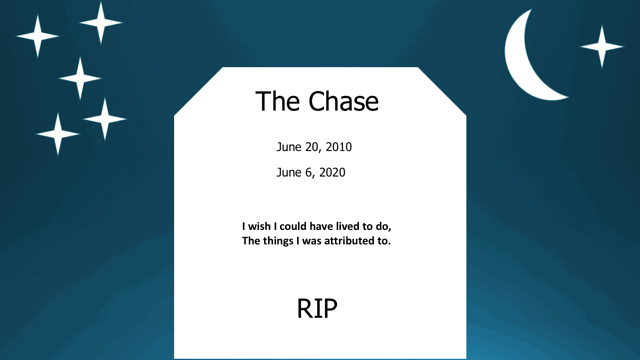
    1. Erect a tombstone at the location where the chest was found
    2. Turn the chest over to a nearby Visitor Center/Museum so searchers could view the chest and the contents
    3. Set up interactive displays at the museum:
      • Ask searchers what their ‘Word that is Key’ was, and how it helped in their solve
      • Where / what was your home of Brown
      • Showcase the diversity of thought in the solves
      • Have some of the YouTube channels, ‘best of The Chase’ showing on screens
      • Have a place to show some of the documentaries that some are working on
    4. Write up the solve, (I have actually completed my solve in 8 power point modules), release the 8 modules once a month, and allow searchers time to complete each module and solve the poem for themselves
    5. Searchers go to the tombstone on their own schedule to take selfie
    6. Turn the spot into a Puzzle Geocache
      • The Museum would be the initial gps coordinates for the Puzzle geocache
      • after solving poem, searcher could go to the spot, take selfie with tombstone
      • Searcher go to Museum
      • Exchange selfie pic for a commemorative Chase Coin
      • Museum could then post selfies in a display and online

    Which finally leads me to the purpose of this post.

    Since Mr Anonymous (the chest finder who says he will not divulge the hidden location) does not even want to be a fly on the wall, I have decided to go ahead and release my eight modules. The modules will shine a light on the poem and illuminate a path so that anyone who cares to try can actually figure out the poem and complete the solve. Which will, prove my point, that once you see the secrets hidden in the poem that you too can follow the trail thru the poem and discover the one and only verifiable, confirmed, surefire solve of the poem. I will show that the poem is actually a Standard Operating Procedure (SOP) for the blueprint hidden in the poem. And as with any SOP, the method will achieve a repeatable, consistent outcome that anyone can find. In other words, if you learn to see and hear the words of the poem, the words actually only lead to one secret where. And you will follow the trail on your own, and find the answer on your own, I’ll just provide hints and show the way.

    These eight PowerPoint presentations will lead searchers thru the poem and to the solve. I will start releasing them on this blog site (and a few ff fb pages) starting July 5th. METHOD TO THE MADNESS will be first. Then on July 6th, I will release A WORD THAT IS KEY. Then on the 6th of each month I will release the next module. So August 6th, Decoding the Blaze will be released. This will allow time for searchers to solve each Stanza of the poem at their own pace. When we are done, the poem will have released her secrets and all searchers can know the ‘secret where’ the chest was found, discovered by their own hard work, and some gentle nudging from me.

    Here is hoping that you will join the adventure and work out the solve to the ff poem.

    My Sad Sad Story in solving the poem and subsequent crash landing:

    In April 2017, we were having the wheels replaced on Still Waters II, props changed, shafts straightened, stuffing box repacked, and cutlass bearings replaced. The boat was hauled ashore for the work and the crew moved ashore to a hotel.

    Still Waters II being hauled out at marina

    While chilling at the hotel, reading Dead Man’s Chest, a sequel to Treasure Island, to pass the time, my thoughts of pirate treasures and Long John Silver were interrupted by a ring tone on my phone. A quick glance at the phone showed somebody else was also treasure hunting. The male heir’s name and number appeared. I reluctantly reached for the phone to see what he might need now.

    Well, to my surprise, he was looking for help but not the kind I was expecting. He announced that he had come across a poem while doing some unrelated internet search on the Treasure Coast of Florida. Supposedly, some guy named Forrest Fenn (ff) had hid a treasure chest with more than a million dollars worth of gold, coins, and jewels back in the 2010 timeframe. Then ff released a poem in October 2010 that contained nine clues that were thought to be a map to the treasure chest.

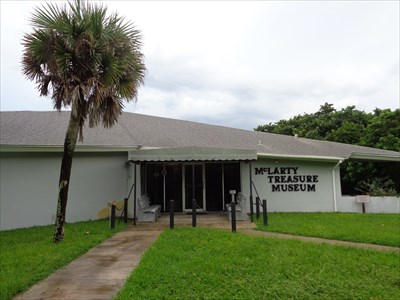
    Treasure Museum on Treasure Coast

    The male heir now clearly was speaking my love language. A hidden treasure, a puzzle to solve, and an eventual Search & Rescue Mission into the Rocky Mountains. It just doesn’t get much better than that. The male heir had been working on the poem for several months and had derived a theory that the first clue would be found in West Yellowstone. He asked if I would help him find the answer to the first clue, Begin it where warm waters halt. He believed that the warm waters were a steam engine, and the halt would be an old train station that no longer existed. He was asking my help to find the long forgotten train station.
    I gladly accepted the challenge. I needed something better to do than read a Treasure Island sequel. I asked him if he could send me a copy of the poem, and within moments of hanging up, my phone gave that familiar ding of a text message. I opened the text and read the poem for the first time.

    So I wrote a poem containing nine clues that if followed precisely, will lead to the end of my rainbow and the treasure:

    As I have gone alone in there
    And with my treasure bold,
    I can keep my secret where,
    And hint of riches new and old.

    Begin it where warm waters halt
    And take it in the canyon down,
    Not far, but too far to walk.
    Put in below the home of Brown.

    From there it’s no place for the meek,
    The end is ever drawing nigh;
    There’ll be no paddle up your creek,
    Just heavy loads and water high.

    If you’ve been wise and found the blaze,
    Look quickly down, your quest to cease,
    But tarry scant with marvel gaze,
    Just take the chest and go in peace.

    So why is it that I must go
    And leave my trove for all to seek?
    The answers I already know,
    I’ve done it tired, and now I’m weak.

    So hear me all and listen good,
    Your effort will be worth the cold.
    If you are brave and in the wood
    I give you title to the gold.

    My first impressions after reading thru the poem several times was that the descriptions were extremely vague and there were no obvious distances to travel along the described path. I had hiked and hunted more than a few times in the Rocky Mountains, and something sure seemed a miss with the poem.

    I had promised the male heir help, so I turned my attention from the poem and towards West Yellowstone. About the time I had burned the last drop of midnight oil, I had solved the ‘halt’ question at hand. Unbeknownst to me, a halt was actually a water tower stop where steam engines would take on water for the steam engine. From Chicago to West Yellowstone (a distance of just over 1,400 miles) there was a halt about every 7-10 miles, with the last halt actually in West Yellowstone, just past the train station where passengers were exchanged. This meant there were numerous (more like hundreds maybe even thousands of warm waters halts in the Rocky Mountains) possibilities to answer the first clue, Where warm waters halt.

    My brain was working overtime as I tried to fall asleep, trying to figure out what that uneasy feeling deep in my gut was trying to tell me. Then like a front end loader dropping a load of sand, it hit me. Guessing at geographical locations to solve the poem just could not be a winning strategy. This ff fellow most have done something unique in the words of the poem to provide the specificity needed to find a treasure hidden in the Rocky Mountains. There are just way too many variables to ever precisely follow the poem as written, match up the descriptions to a guessed geographical location, and connect the guesses to the end of the ff rainbow and the chest. With that resolved, I drifted off to sleep.

    The next day I called the male heir and passed on the information he had asked for. Then I broke the news to him that he was on a wild goose chase that would never end with a successful solve. I gave him this little example that he could relate to because he was familiar with the area in Colorado. We had been there numerous times on summer vacation.
    Mount Princeton Hot Springs – Chalk Creek

    Thought Experiment: let’s assume (or guess) for a moment that warm waters halt is somewhere along the flow of water out of the Mt Princeton Hot Springs. The poem does not define warm, so we will have to guess where hot becomes warm along the creek headed down the canyon. Then we have the vague: Not far, but too far to walk line. So let’s hop in the car and drive down the canyon road towards the Arkansas River. We will need to put in below the home of Brown though. Well, from where we are sitting there at the Arkansas River, there are at least four (guesses) homes of Brown off the top of my head: Brown Canyon which people raft thru, trout fishery where the state raises trout, a home of Brown of unsinkable Molly Brown in Leadville, and her home in Denver. We will have to guess which one of these might be correct. As you can see, none of this is very precise, and way too many variables if you expand the possibilities into the four state search zone of New Mexico, Wyoming, Colorado, and Montana.

    I explained to him that I did not know how to solve the poem, but guessing at geographical locations, and travel distances just was not going to cut the mustard. I also informed him of my first strategy to attack the poem. Because I was surprised about the word ‘halt’, I had decided to look up the definition of every word in the poem. I was curious what other secrets the poem might cough up if I studied the words thru the microscopic lens of a dictionary.

    This first step turned out to be a winning strategy that firmly planted my feet on the trail that eventually led to solving the poem. The dictionary uncovered several nuances in the poem, which in turn led me to discover a ‘Word that is Key’ in solving the poem. The word literally unlocked the secrets hidden in the poem. (Module 2 will give the details.) (Then you can apply the Word, solve Stanza 2 & 3 on your own, and find the blaze.)

    With the Word that is Key, I was able to decipher Stanzas 2 & 3 fairly quickly. The blaze also made an appearance with two confirmations at the end of Stanza 3. This cemented my belief that I was on the right trail. ( Module 3 will give the details.)

    When I started into Stanza 4, I was able to use what I had learned in Stanza 2 & 3 to again make quick hay of the words, but the directions made me sit up and take notice. I was not yet prepared to actually do what the poem said so I mulled it over in my mind for several months, and moved onto Stanza 5. (Module 4 will give the details.)

    During the summer cruising season of 2017, we headed to Maine. When the geese decided to head south in the fall, we followed them south all the way to the Bahamas in February 2018. All the while, thinking about that nagging little issue in Stanza 4, and the brick wall I ran into with Stanza 5. However, in the spring of 2018 we stopped in historic St Augustine as we headed north along the Atlantic ICW. It turned out to be an historic stop. While touring town, I found the gem I had been searching for. The gem turned out to be the key that helped me unlock Stanza 5. ( Module 5 will give the details.)

    Now on to the final Stanza. In 2018, we had decided to cruise America’s Great Loop for a second time. In my spare time, I continued my final assault of Stanza 6 and the poem. I thought I had a good plan of action, but once again I found a wall. After trudging so many miles I could not decipher Stanza 6. I decided to spend the summer reading The Thrill of the Chase and look for hints to unearth the good map. (Module 6 describes the initial thoughts on Stanza 6)

    I managed to find the good map, which once again put me firmly on track for solving the poem. (Module 7 describes the discovery of the good map, and with the knowledge of what the good map turns out to be, you should be able to complete the solve of the poem.)

    In 2019, we decided to cruise the Down East Loop, up to Quebec City, out the St Lawrence Seaway, down to New Brunswick, Prince Edward Island, and then Nova Scotia. Because this was unfamiliar waters, I spent most of my time focused on the immediate adventure taking place just in front of the bow of the boat. However, on our way south we stopped in Brunswick, Georgia. I spent three days dedicated in November working out the final solution, and like a good detective, eliminating all other suspects. However, I was still stumped on how the last line of the poem confirmed the solve. We needed to travel back to Texas, so we rented a car and headed west. Somewhere between Mobile and Baton Rogue I finally saw the ninth clue solved, and the poem confirm in my minds eye. (Module 8 pulls it all together and unveils the final solve of the poem.)

    At that point, I began to monitor the snow conditions in my search area. With early snowfall in 2019, I decided it best to time the Search & Rescue Mission with the spring thaw. By the first of December, the chest was already insulated with more than four feet of snow.

    I began to monitor snow conditions at the calculated spot, and it looked like the spring thaw would be early so a Rescue Mission was commissioned for April. Then the big surprise of 2020 hit and COVID-19 yanked the rug out from under my Rescue Mission. Montana put a 14 day self quarantine in place for out of state arrivals. I also am in the high risk group, so I decided life is better than treasure and decided to wait and see how the nation wide lockdown would play out.
    By the end of May, things began to look promising for a Rescue Mission, Montana announced that the out of state self quarantine would end June 1st. Yes, things are starting to fall in place and the expectations began to rise. I arranged for a rental car on Monday, June 8th to drive precisely to the treasure chest. Our motto, reminiscent of the gold rush days of old was: Treasure Chest or Bust.

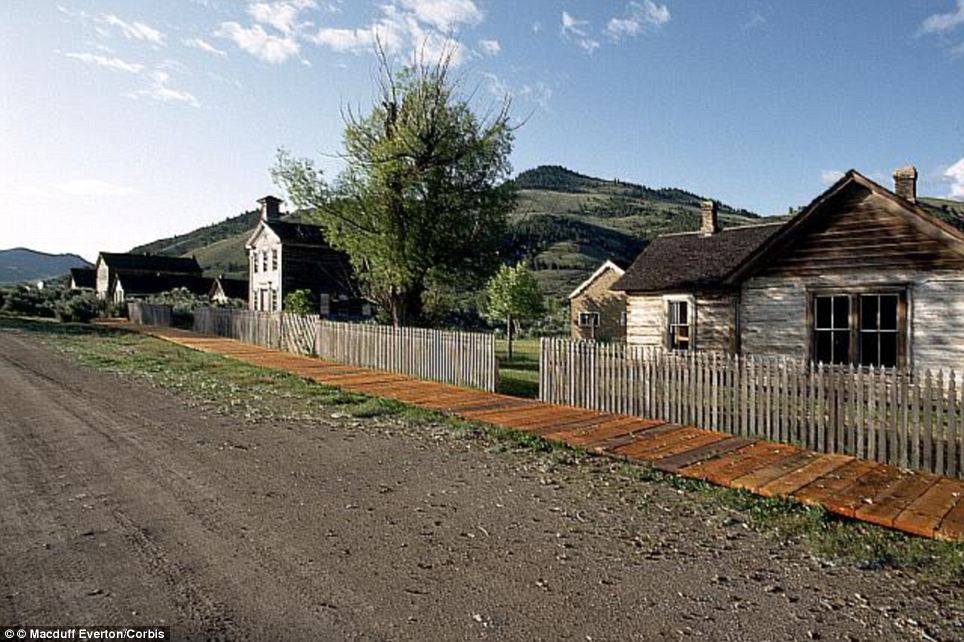
    Montana Gold Rush Ghost Town – kinda like my Search & Rescue Mission

    And bust is exactly what happened.

    The chest, 10 years later
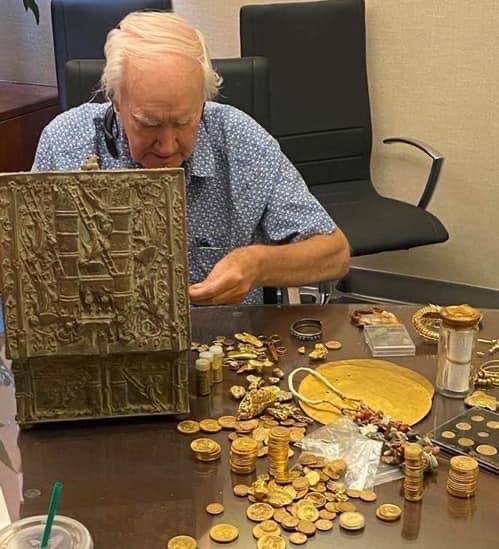
    Forrest Fenn examining the found treasure

    It took about 30 minutes of starring at the announcement that the treasure had been found before I recovered from the knock out blow. As I slowly began to regain consciousness, I decided to go for a walk. I went into the captain’s quarters to get some socks. I accidentally woke the Admiral up, and as she squinted thru her partially opened eyes, I must of looked like a pale ghost rider. She asked what was wrong. It took a minute, but I finally was able to muster the words: ‘ff has announced that the treasure has been found.’ It actually sounded worse hearing it come out of my own mouth than it did starring at the announcement. I mentioned I was going for a walk, grabbed some socks, turned and left.

    (Over the next few days a series of God moments occurred that let me know that The Chase was for me to solve, not to retrieve. What follows are just a few of these encounters.)

    Amazingly though, I barely got a half-mile from the boat when I heard God clearly speak to my spirit: ‘Your treasure is in heaven.’ Then a quiet warm peace fell over me and I knew everything would be alright.

    Sunday night I prayed that God would answer the why question, Why was the chest not for me to retrieve? At dark thirty in the night I woke to what I thought was someone boarding our boat. While I was tuning my ear to listen for footsteps, I heard God say, ‘It’s for your safety!’ It took me a minute to figure out he was talking about my physical protection from the Chase Crazies, not an unwanted visitor onboard the boat.

    There are a few more stories but I will save them for another day. However, after reflecting on what has happened over the last several weeks and months, it is obvious to me I got the better deal. I am still living the good life on my boat, carefree, and worry free. While that sly fox that beat me to the treasure now has several problems to deal with. For starters, the IRS has their handout looking for their fair share of the treasure. I am sure they will track him down, one way or the other. Looks like six lawsuits have been filed making various stupid claims against the guy. And because the guy wants to remain anonymous and never reveal his solve, he has several hundred thousand people up in arms and mad at him for ending the Chase.

    Yes, that boy has more problems than a pregnant nun.

    Boat Name of the Week

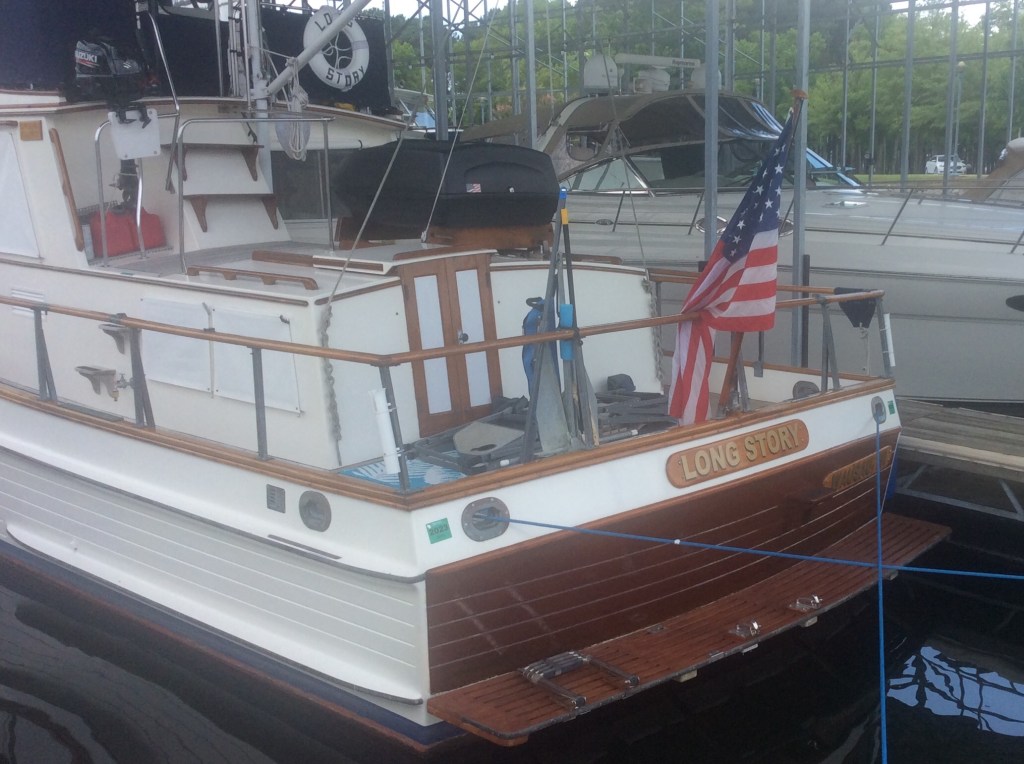
    We first met the crew of Long Story at Heritage Harbor Marina on the Illinois River back in 2018. Thought their boat name was appropriate to announce the long story that will unfold over the next few months as we explore the ff poem and head out on the trail of the solve. Hope you take the time to join this new adventure.

    Next Week

    The crew will return their granddaughter to her rightful owner, so another road trip to Texas is on the books. They will return to Florence and begin planning their next move on the Tennessee River.

    Be looking for the first module, Method to the Madness, to be released next Sunday, July 5th.

    Loop On –

    Where the road ends, the water begins. The water goes on forever, and the adventure never ends.

    The skipper

  • Shoaling Around

    Ahoy from Muscle Shoals. Welcome back virtual crew members and fellow adventurers.

    Summary of the Week

    The crew remained at Florence Harbor Marina and conducted shore excursions to explore the surrounding area in northwest Alabama.

    Voyage of Discovery

    The voyage of discovery did answer the following questions this week:

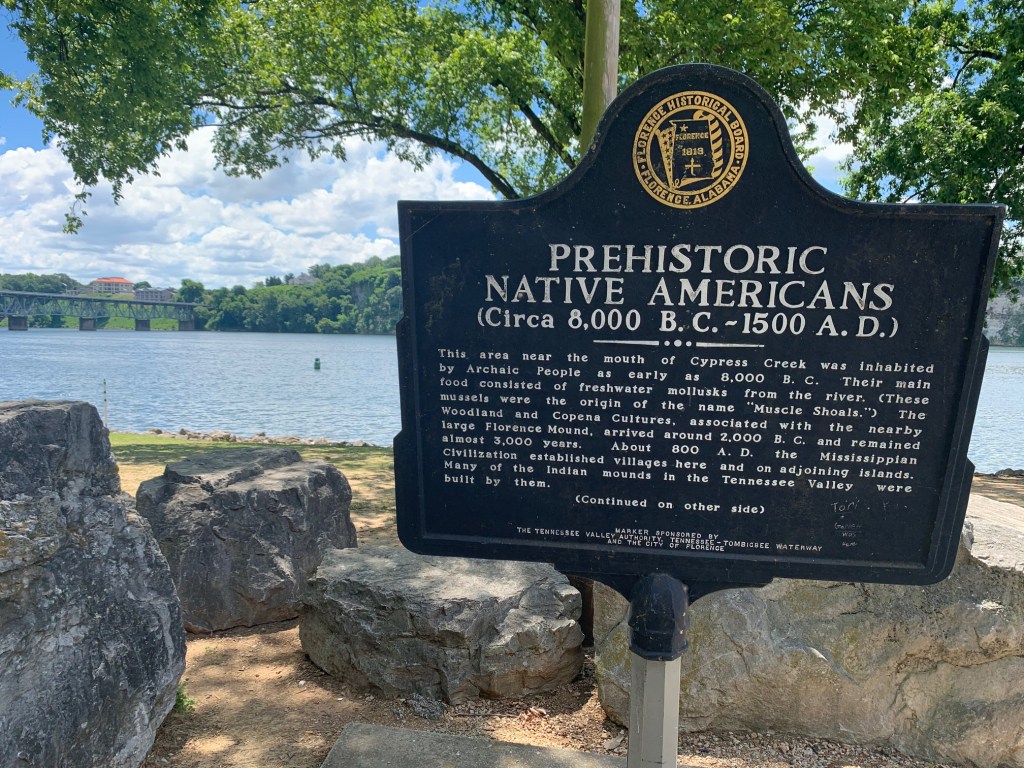
    1. How did Muscle Shoals get it’s name?
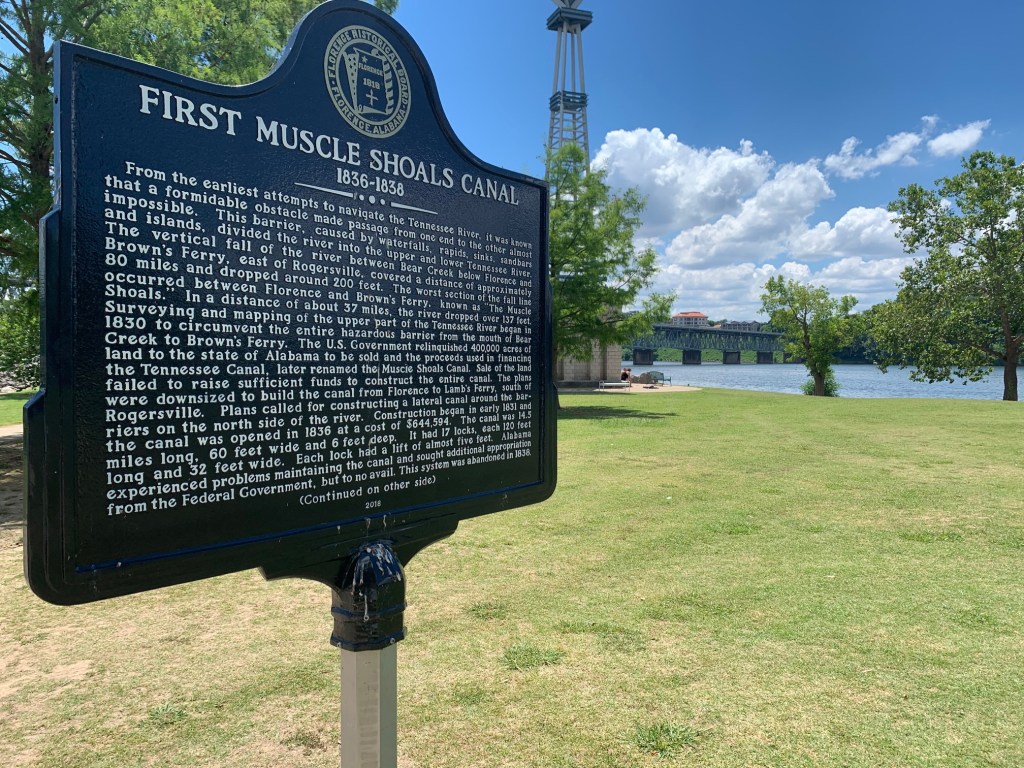
    2. How did commercial traffic navigate around the Shoals?
    3. What replaced the original canal?

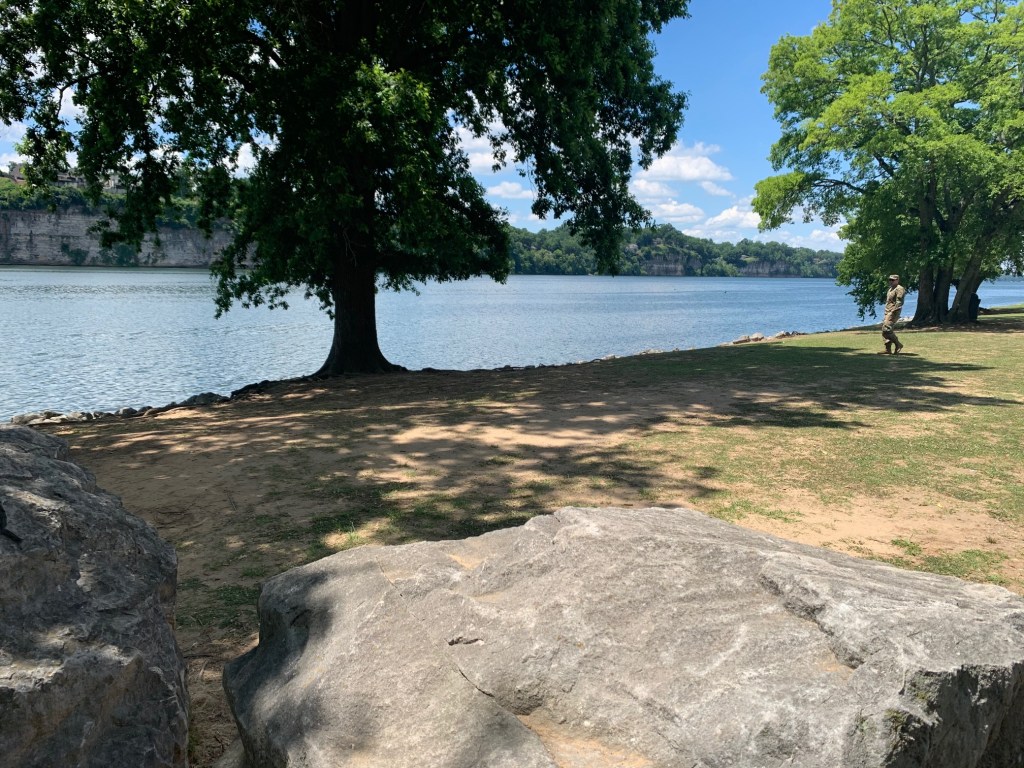
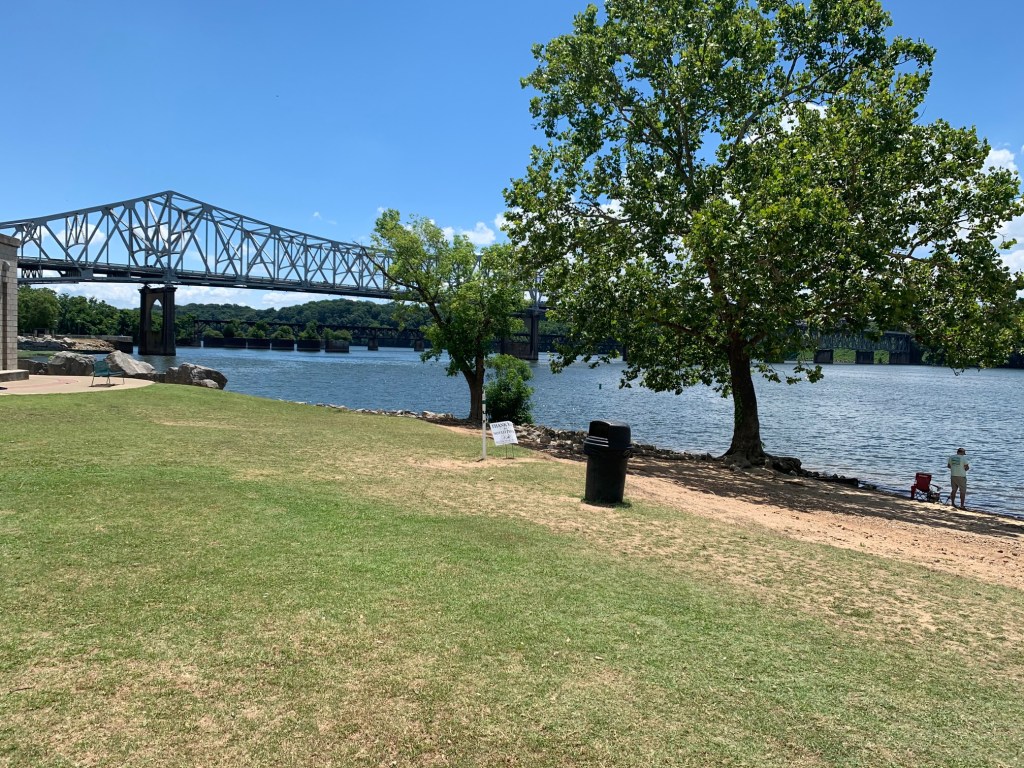
    Looking down River where the shoals used to be.

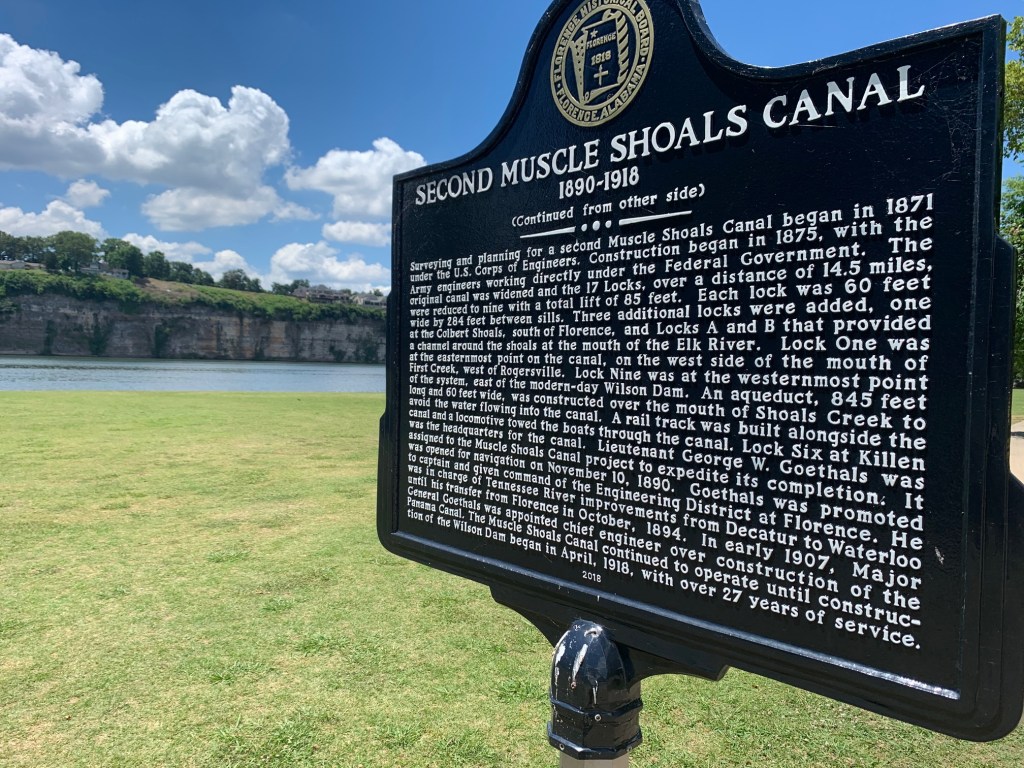
    By the 1830’s, people began to explore ways to cut a canal around the shoals to make the Tennessee River navigable from north to south. The first Canal had 17 locks over a distance of 14.5 miles. However, Alabama did not have the financial resources to maintain the locks, so the Canal closed just two years after it opened.

    This section of shoals dropped 137 feet over about a 37 mile distance. Following the Civil War, a second Canal project was completed and managed to operate until 1918. Today, the Tennessee River is controlled by a series of Locks and Dams managed by Tennessee Valley Authority.

    Lieutenant George W. Goethals was assigned to the second Canal project to expedite the completion of the Canal. His work here earned him promotions and assignment to one of the most famous canals in the world down in Panama. Major General Goethal was the chief engineer over the Panama Canal starting in 1907.

    Looking upstream towards the TVA Wilson Lock and Dam.

    Five Years on the Boat

    June 18, 2015 marks the day that the crew moved aboard Still Waters II to start this incredible adventure and boating lifestyle. To celebrate the anniversary of this date, the crew went out to a restaurant and reminisced about all the water that has flowed under their keel in the last five years. What a ride it has been.

    The start of this adventure actually predates 2015 by several years though. In what the crew likes to call a pre-ordained God appointment. The skipper had taken a new assignment at work as the Emergency Preparedness Manager in 2008. As part of his on-boarding and training for this new role, the skipper’s boss (Danny Wilder – thank you Danny) signed the skipper up as a peer reviewer on an INPO Emergency Preparedness Review Visit. The skipper was assigned to a team, and the nuclear power plant the team would review was Clinton Power Station located in Clinton, Illinois.

    Upon arrival at the Station in 2009, the skipper met the Clinton Emergency Preparedness Manager, Al Darelius. Al seemed rather distracted with some new purchase he had just made and was busy showing everybody he came in contact with a picture of his purchase. (Imagine a brand new grandmother showing pictures of her brand new grand baby.) You get the picture of the enthusiasm Al was displaying.

    When the skipper inquired to take a peek at the photo, Al gladly handed the photo over. The photo was a picture of a rather large boat, Al called it a trawler. He claimed he bought it so once he retired, he could cruise America’s Great Loop. (What inspired over the next week was a canny game of cat and mouse as Al continued to distract the skipper with tales of America’s Great Loop, and how he and his wife would cruise this Loop once they retired.) The skipper immediately was intrigued and became a double agent. By day, the skipper was trying to complete the assigned task of reviewing the Clinton Power Station Emergency Program and making recommendations for improvements. At night, he was also sleuthing around the internet trying to learn all he could about ‘The Loop’ so he could ask his new found mentor questions. The skipper got very little sleep that week.

    Al and Ruth At Mackinac Island, 2018

    Upon arrival back home, the skipper began to share with the Admiral what he had learned at Clinton. ( The ‘Great Loop’, not the gifts of recommendations for improvements he had left Al at Clinton.) They decided it sounded like an interesting endeavor to pursue during retirement, and the idea of navigating America’s Great Loop was added to the Bucket List.
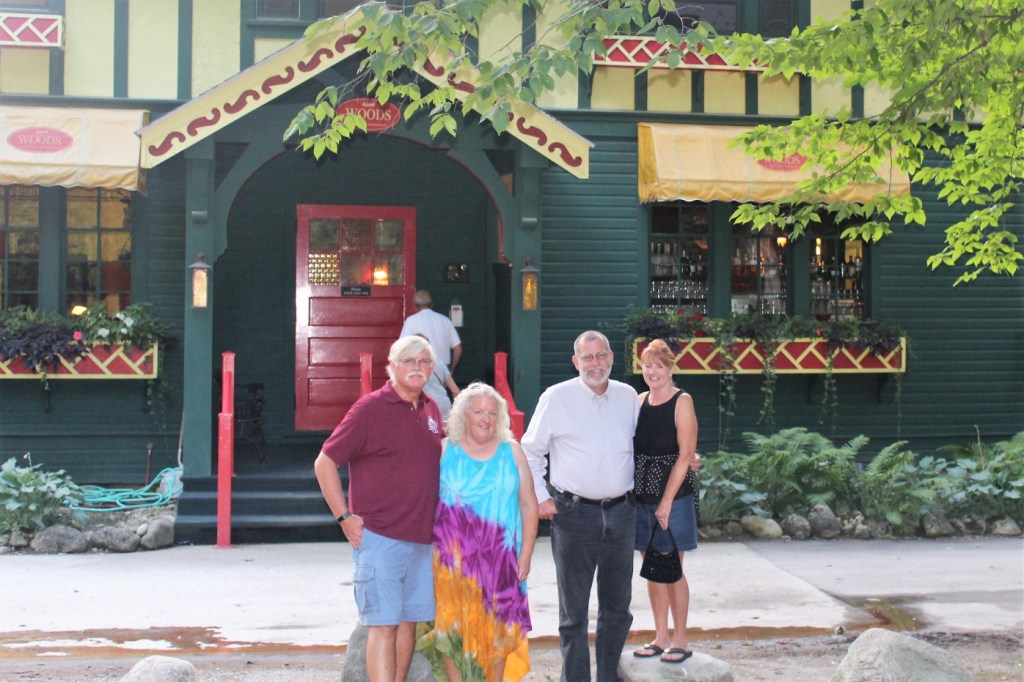
    Fine dining at The Woods, Mackinac Island 2018

    In an interesting twist, the skipper accepted a job offer to actually work at INPO in 2011, so the crew moved to Atlanta. In addition to the in-house employees (like the skipper) INPO also has a ‘loanee program’ where workers from the different utilities are temporarily assigned to INPO for 18-24 months. Soon after the skipper arrived in Atlanta, he learned that Al had been assigned as a ‘loanee’ to the Emergency Preparedness Division. So they got to work together for just under two years.
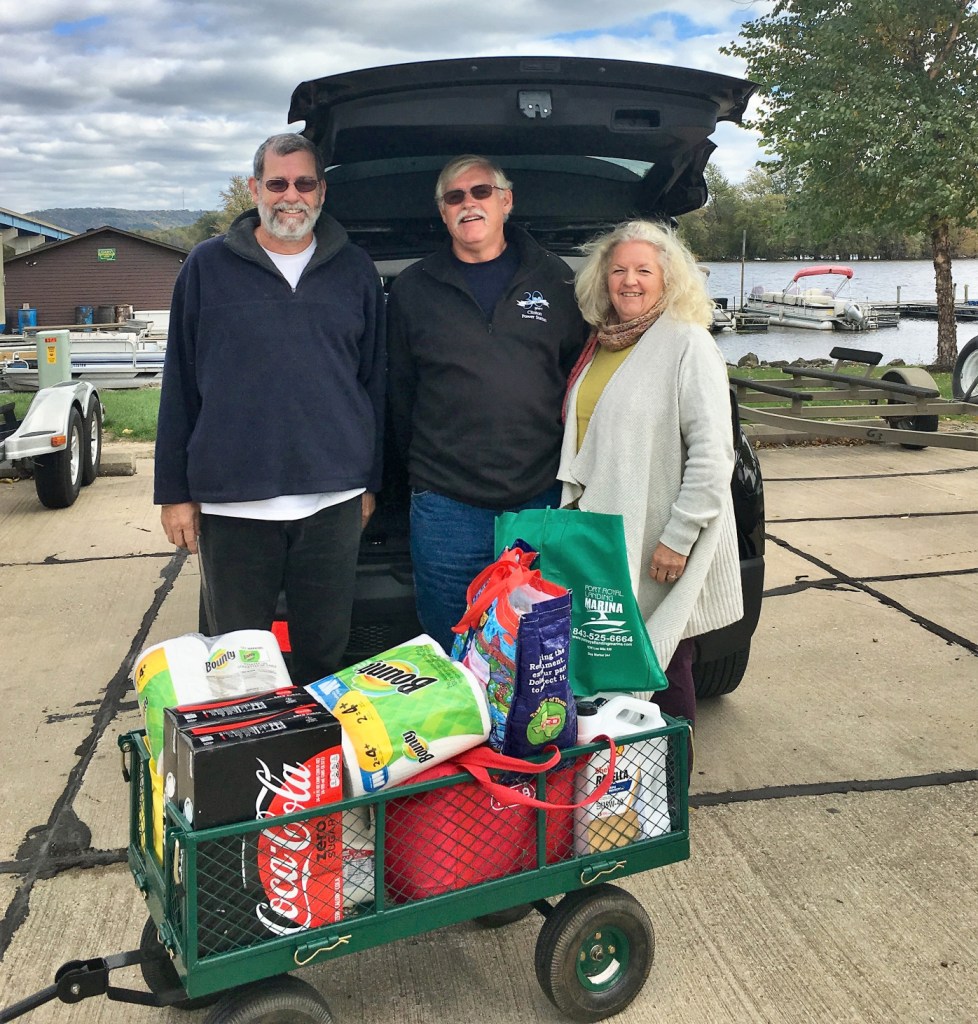
    Ruth and Al on a rescue mission (provision run) while the crew was stuck in Marquette on the upper Mississippi River

    In another interesting twist of fate, the skipper managed to retire before Al. This resulted in the mentee (skipper) earning the Gold Burgee before his mentor and teacher (Al Darelius). Al eventually retired and has since completed the Loop and earned the Gold Burgee.

    Al & Ruth celebrating their Loop completion

    And in our last interesting twist of fate, Al and Ruth now keep their boat berthed at the Florence Harbor Marina, where the crew just happens to be on this fifth anniversary. You just can’t make this stuff up!

    Thanks Al for acting like a grandmother and showing off your ‘new to you’ boat and introducing us to America’s Great Loop. It has turned out to be a wonderful retirement plan.

    Boat Name of the Week

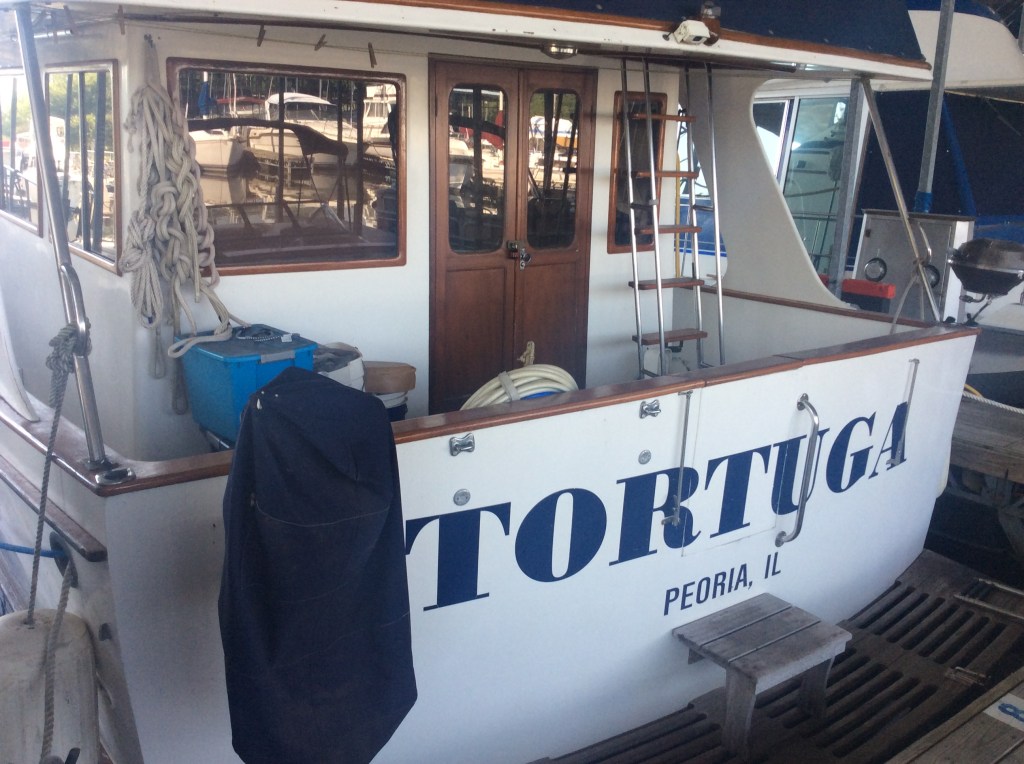
    Al and Ruth’s Boat

    Next Week

    The crew will continue to hang out in Florence. They do have a grandkid scheduled for arrival on Tuesday. That should make for a fun week.

    Loop On

    Where the road ends, The water begins.

    The water goes on forever, and the adventure never ends.

    Eric the Red

  • Muscle Shoals

    Ahoy from Florence, Alabama. Hello virtual crew members and fellow adventurers! This is the first post of 2020, and as you are probably aware, what a year it has been.

    Summary of the Week / Year

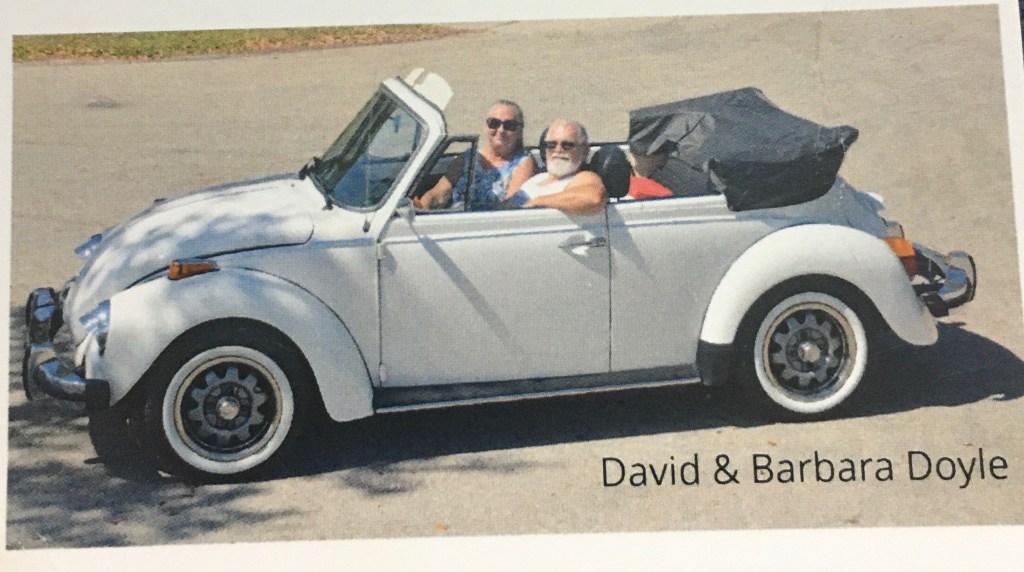
    The crew spent the winter hanging out along the west coast of Florida. They did manage to drop down to the Keys for a short while, but most of the time was spent at Marina Doyle. Thanks to David and Barbara for hosting the crew.

    Once the COVID-19 fear mongering started, the crew decided it best to leave Florida before hurricane season arrived. The skipper’s goal was to avoid the following headline: Texan Dies from Hurricane While Sheltered in Place Due to COVID-19. The skipper also said it was a service to the medical examiner because now the ME would not be forced to claim the cause of death was COVID-19, when it would be obvious the death was caused from hurricane inflicted injuries. The skipper, always thinking about others.

    The crew decided to cross the Gulf, and run up the Tenn-Tom Waterway. They waited out the COVID-19 restrictions at the Columbus Marina. With limited cruising options in 2020, the crew has decided to run the Tennessee River this summer, and pretty much take a bit of a break from full time cruising. They had already made that plan earlier, but COVID-19 just cemented the thinking. The Illinois River Locks are scheduled for maintenance, July – October. The Erie Canal Locks are not scheduled to open till mid August. And who has a clue when the US/Canadian Border will be opened back up for boaters. So it appears the Tennessee River Plan was a good decision.

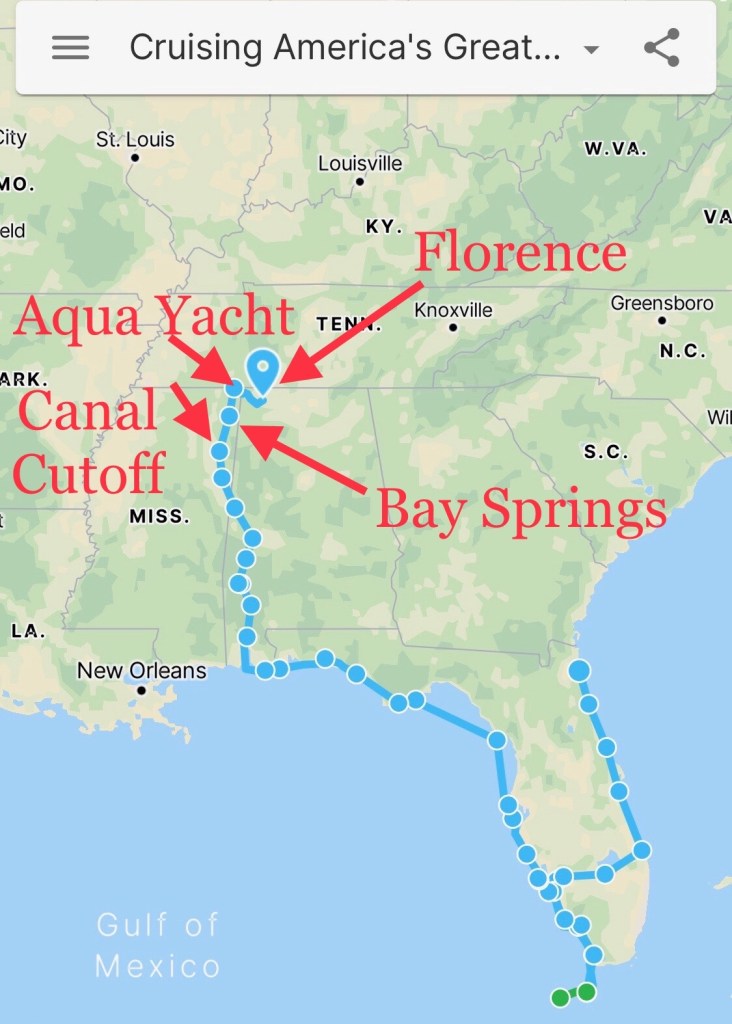
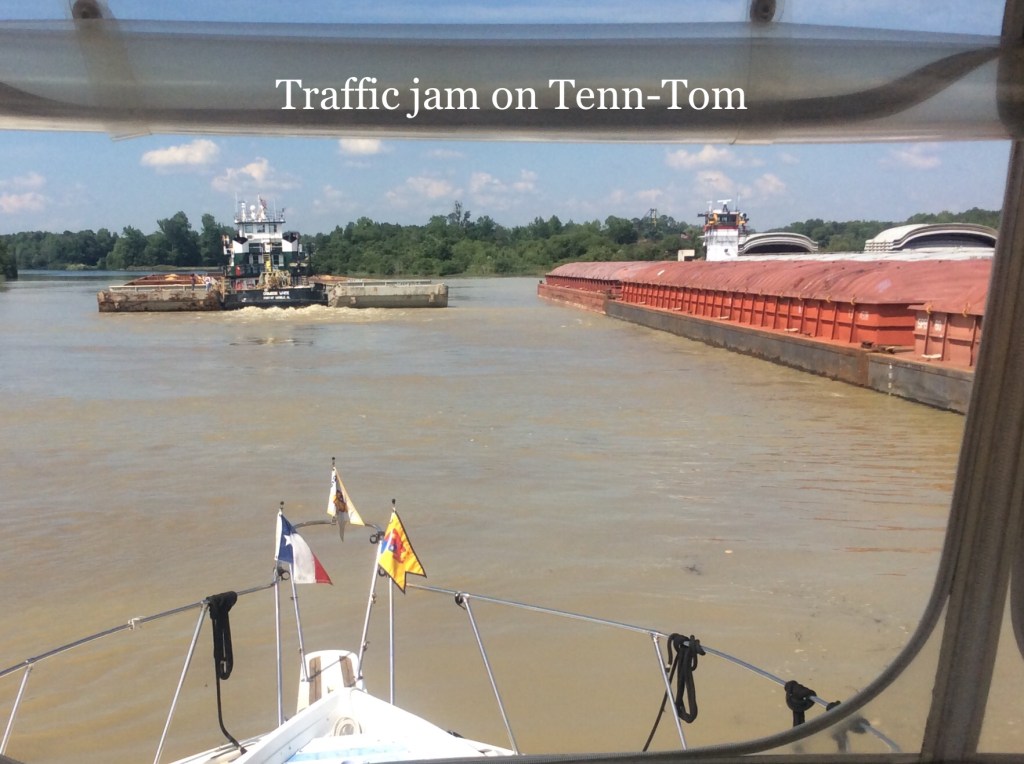
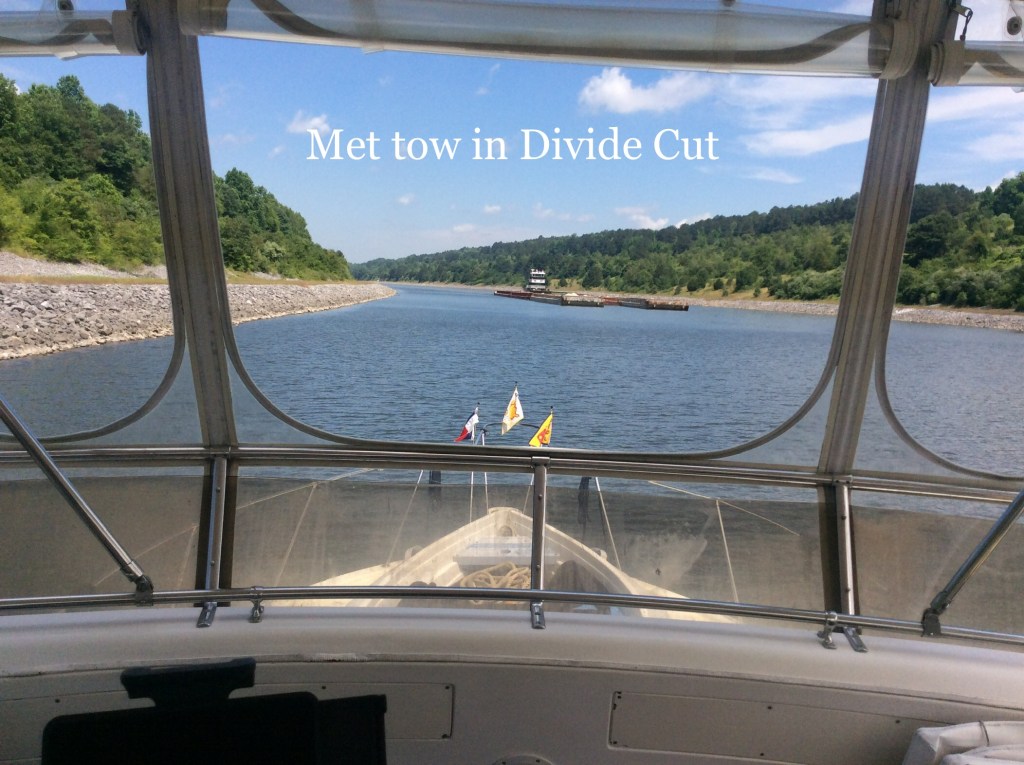
    The crew made four jumps to arrive in Florence, Alabama early last week. The first night, they anchored in the Canal Cutoff. The second day, they made a 50 mile jump to Bay Springs. The third night, they stopped at Aqua Yacht Harbor. On June 4th, the crew arrived in Florence Harbor Marina.

    Monday, June 1st

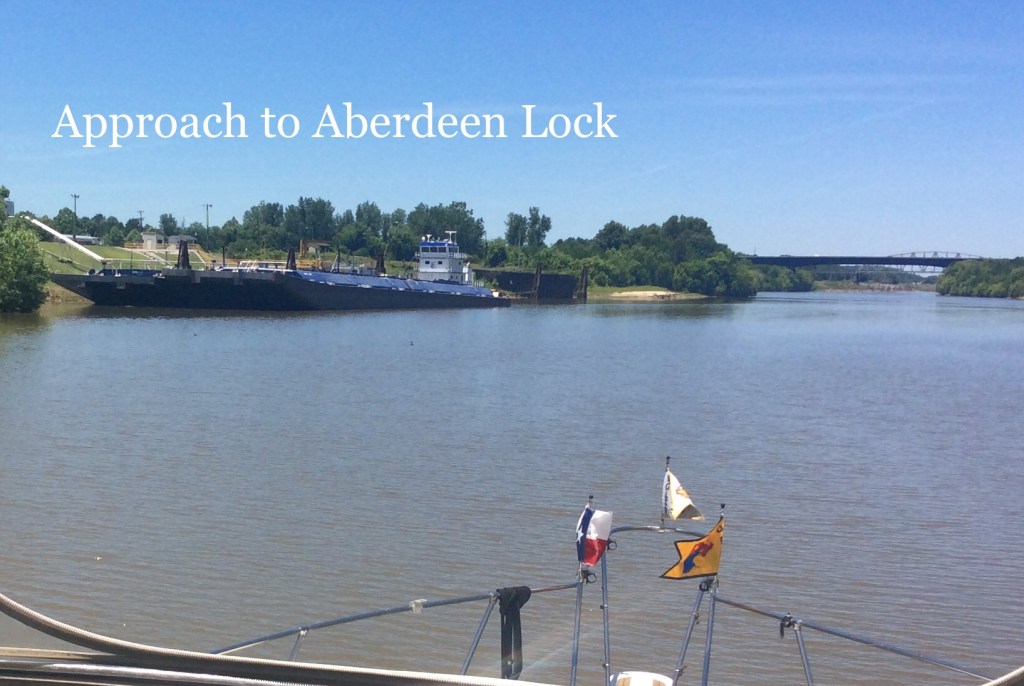
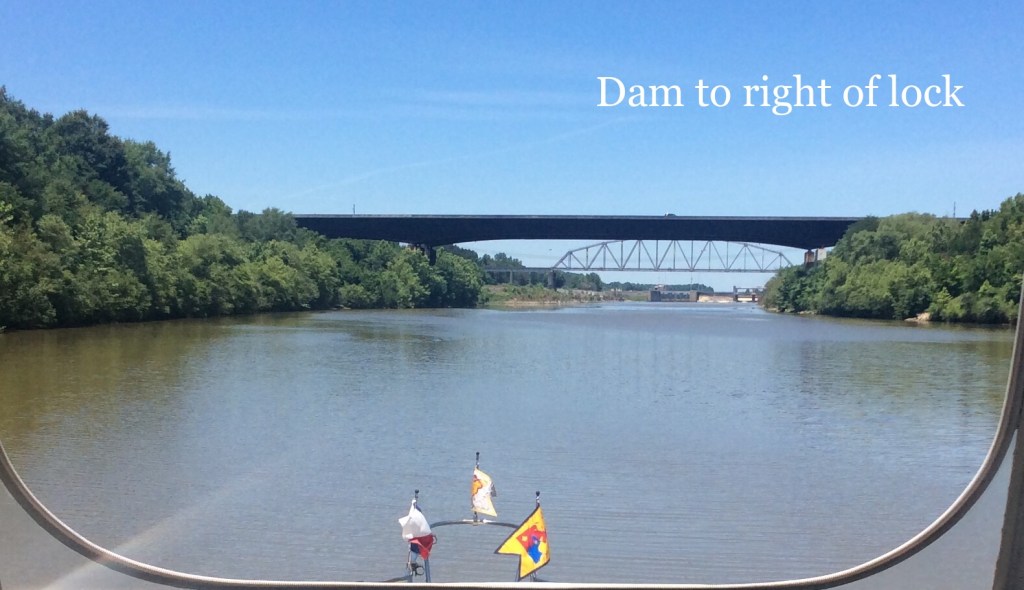
    The crew took a short 4 hour, 32-mile cruise up the Tenn-Tom Waterway. The Aberdeen Lock did not present much of a challenge as the operator flung the gates wide open and Still Waters II glided into her position midway up the lock. The gates slammed shut and a few minutes later, the liquid elevator ride 29 feet up was underway. When the water level in the lock chamber matched that on the other side of the gates, the operator opened the gates and Still Waters II was back underway up the Tenn-Tom.

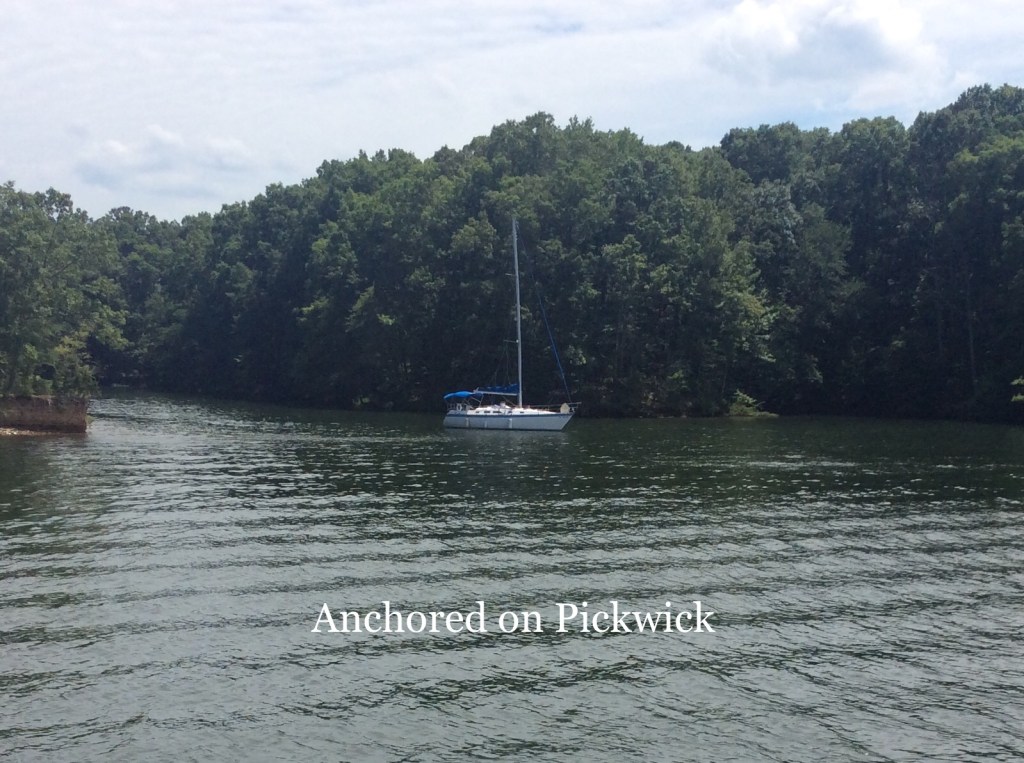
    The anchor spot in the Canal Cutoff was found void of any other boats, so the crew spent a secluded night on the hook serenaded by nature.

    Tuesday, June 2nd

    Today’s menu option started with an appetizer of three locks over 25 miles. The first three nibbles turned out to be so tasty, and it was not even noon, so the crew decided to add three more locks as a main course and travel an additional 25 miles. Unfortunately, these entrees were bitter herbs. If you are a long time virtual crew member, you know of the skipper’s love of vegetables. It took a long 6.5 hours to choke down those three herbs, and the crew finally landed at the Bay Springs Marina about 1830.

    Wednesday, June 3rd

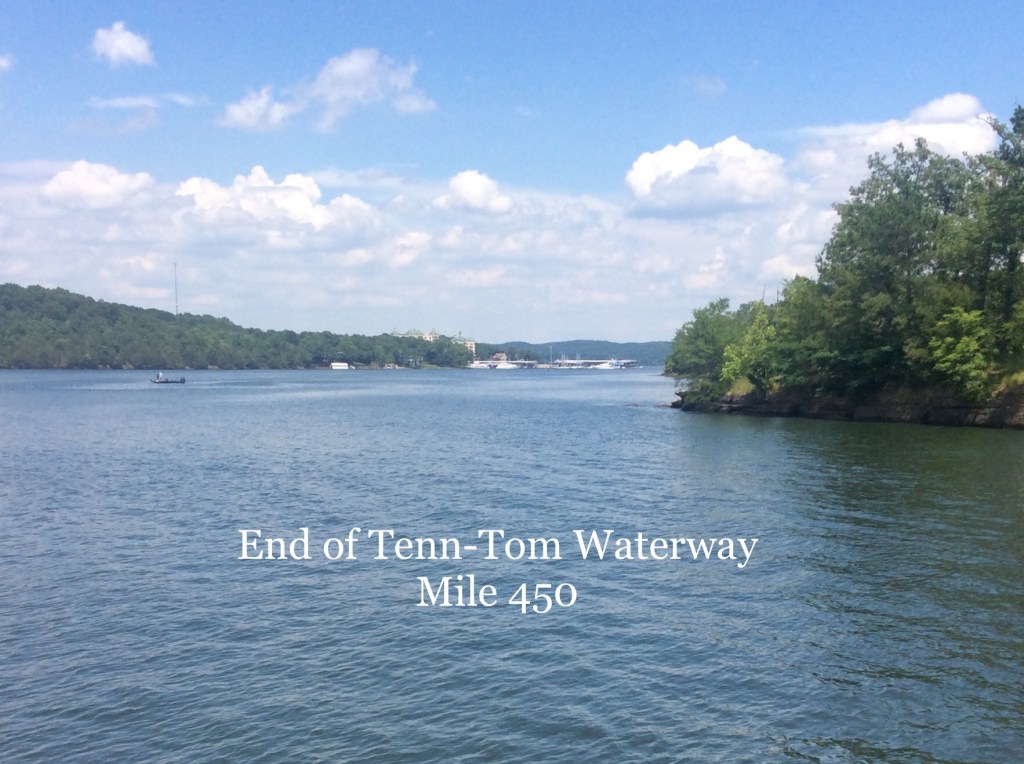
    Luckily, there were no more locks to chock down, so today was more like a dessert menu filled with root beer floats, ice cream, whip cream, and cherries on top. And speaking of a cherry on top, the crew managed to get a $99 credit returned from the marina upon arrival. The crew went to celebrate the end of the Tenn-Tom Waterway by having a dine-in experience of fresh fried Mississippi mud cats at the Hotel Catfish near Shiloh. Now that beats bitter herbs any day.

    Thursday, June 4th

    The happy parade did not last long as the crew woke to thunder and showers. The skipper reviewed the weather radar, and decided that they might get a little wet, but the main body of the storms would remain to the north as they skirted along the edge of the weather.

    An invisible umbrella was raised over Still Waters II as she began her easterly run along the Tennessee River. To the north of her were dark black skies, while to the south were sunny blue skies. That umbrella kept the crew dry for most of the day with only a few drops of rain penetrating the shield and actually falling to barely dampen the crew’s spirit.

    The crew got the last long term slip available in Florence Harbor Marina. They will stay in Florence for the next month and head towards Chattanooga after the July 4th weekend.

    Next Week

    The crew plans to stay in Florence until after the July 4th weekend. Then they will continue east towards Chattanooga where they will spend a week social distancing with some of their Softball Family.

    Loop On –

    where the road ends,

    the water begins.

    the water goes on forever,

    and the adventure never ends.

    Eric the Red

  • Kold Kentucky Lake

    Kold Kentucky Lake

    Hello virtual crew members and fellow adventurers!

    Welcome aboard to Greg & Doreen, thanks for taking the time to follow the adventures of Still Waters II. It was also a blast cruising down the Mississippi River to Green Turtle Bay with you.  Have a great winter in Marathon, Florida!

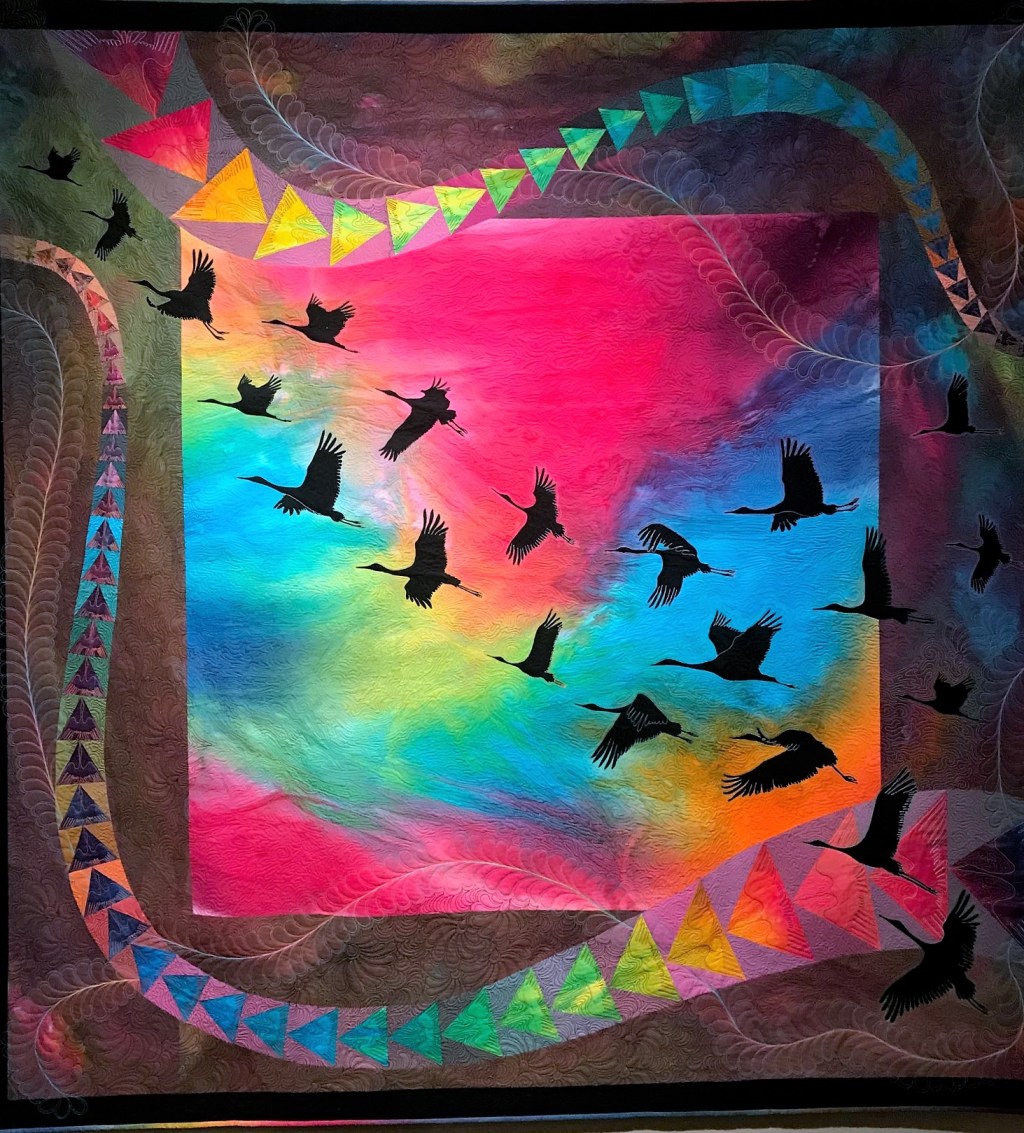
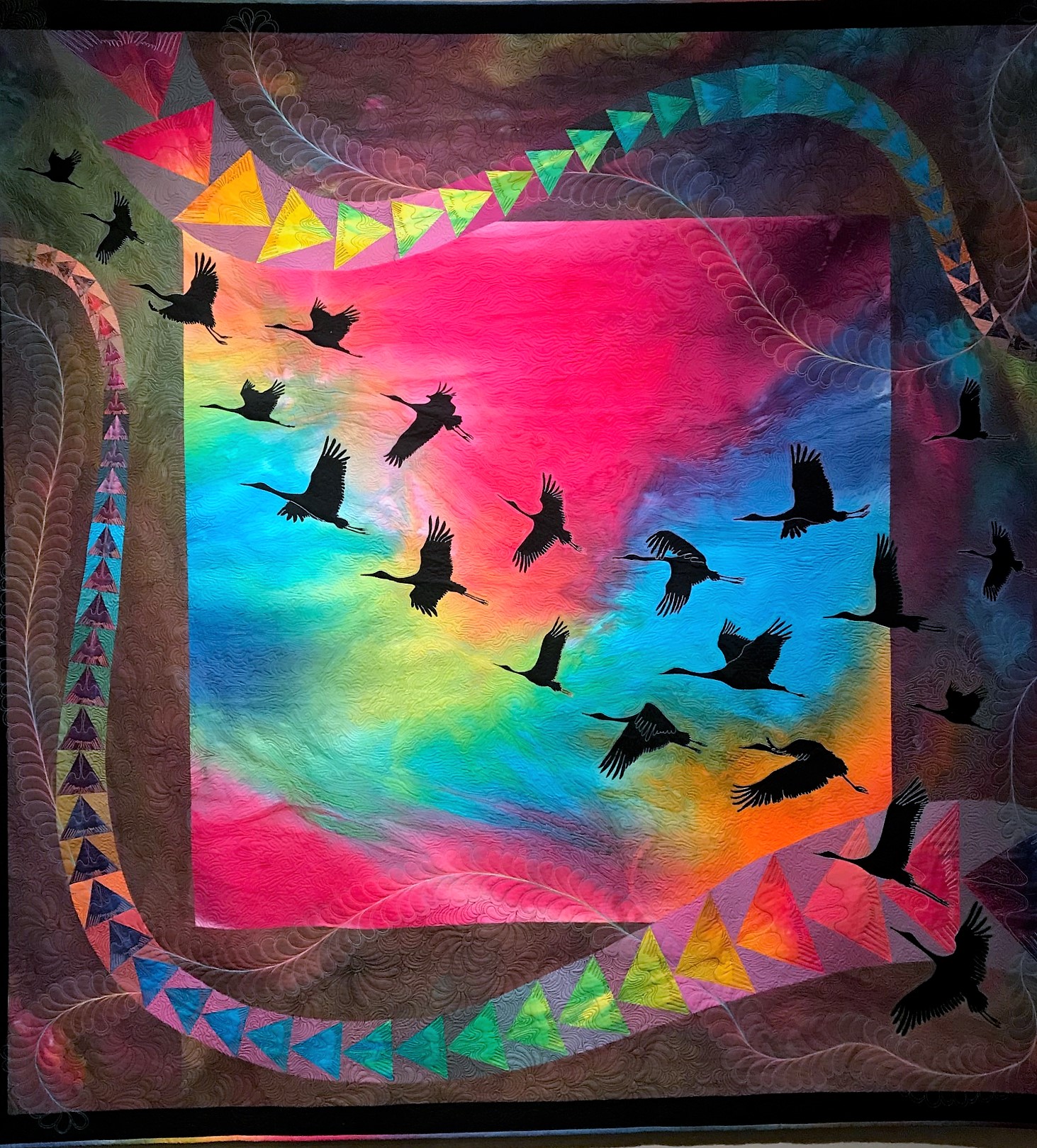
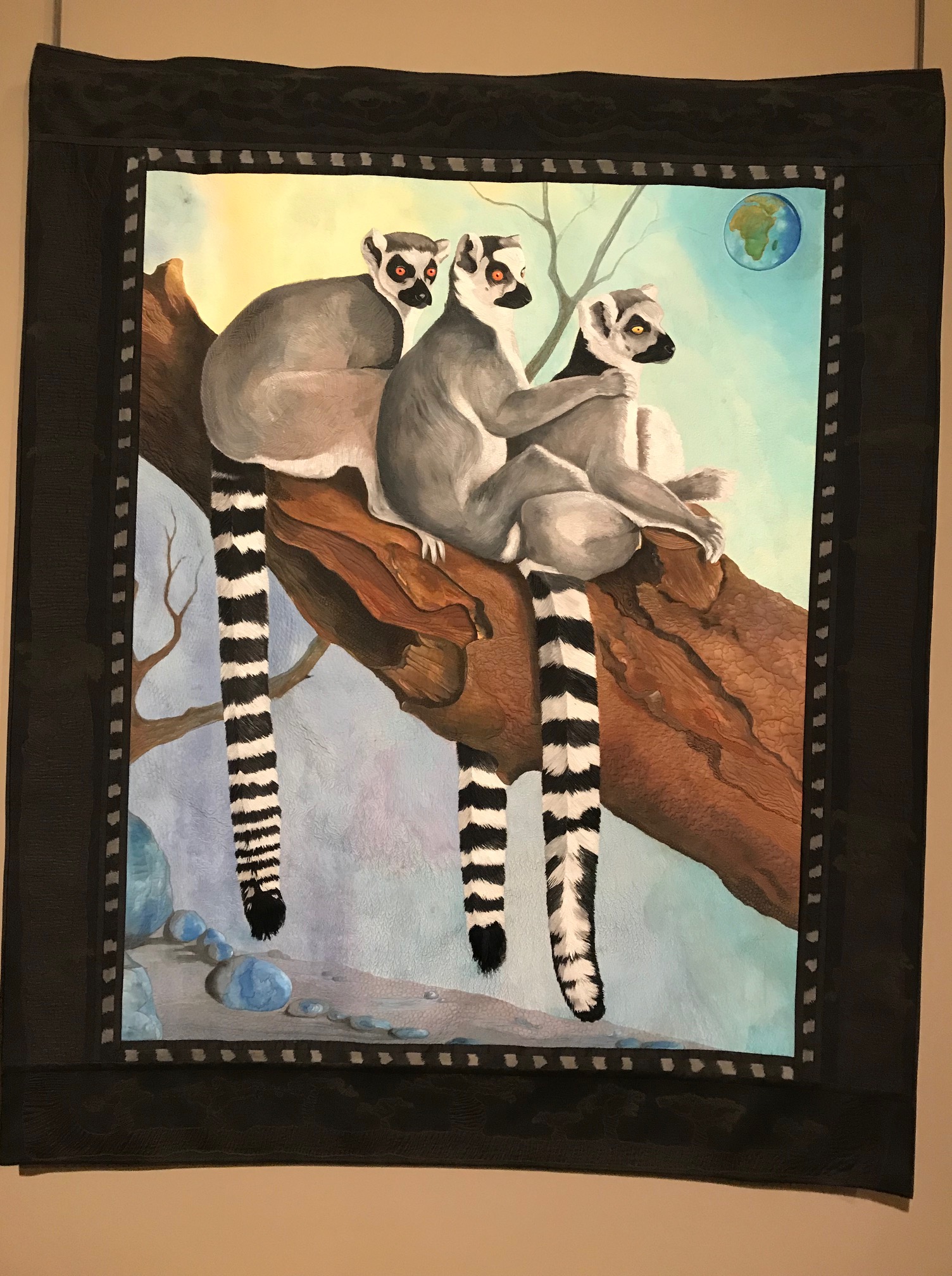
    The Birds, was one of the more colorful quilts in the National Quilt Museum.  If you look closely, each triangle has a bird sewn into the shape.

    20 Birds (2)

    Summary of week:

    Kentucky Lake

    The theme for this week has been falling temperatures.  The cool weather has chased the crew south.  For example, on Friday, St Louis had 3 inches of snow, the earliest snow accumulation on record.  The crew woke to frost on the ground in Clifton that morning with overnight lows in the 20’s.

    St Louis on November 9th, photo courtesy of Mike Fuller

    snow in St Louis

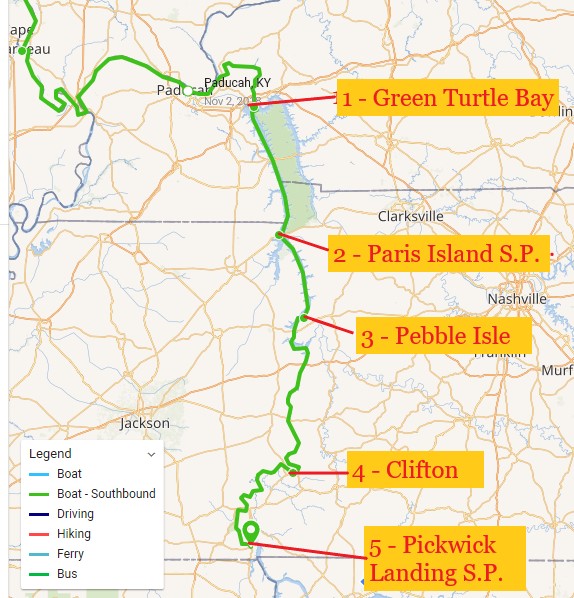
    The crew left Paducah on Monday with Gammel Dansk and cruised the flooded Ohio River to the Cumberland River.  They navigated the Barkley Lock and ended the day in the dark at Green Turtle Bay (1).

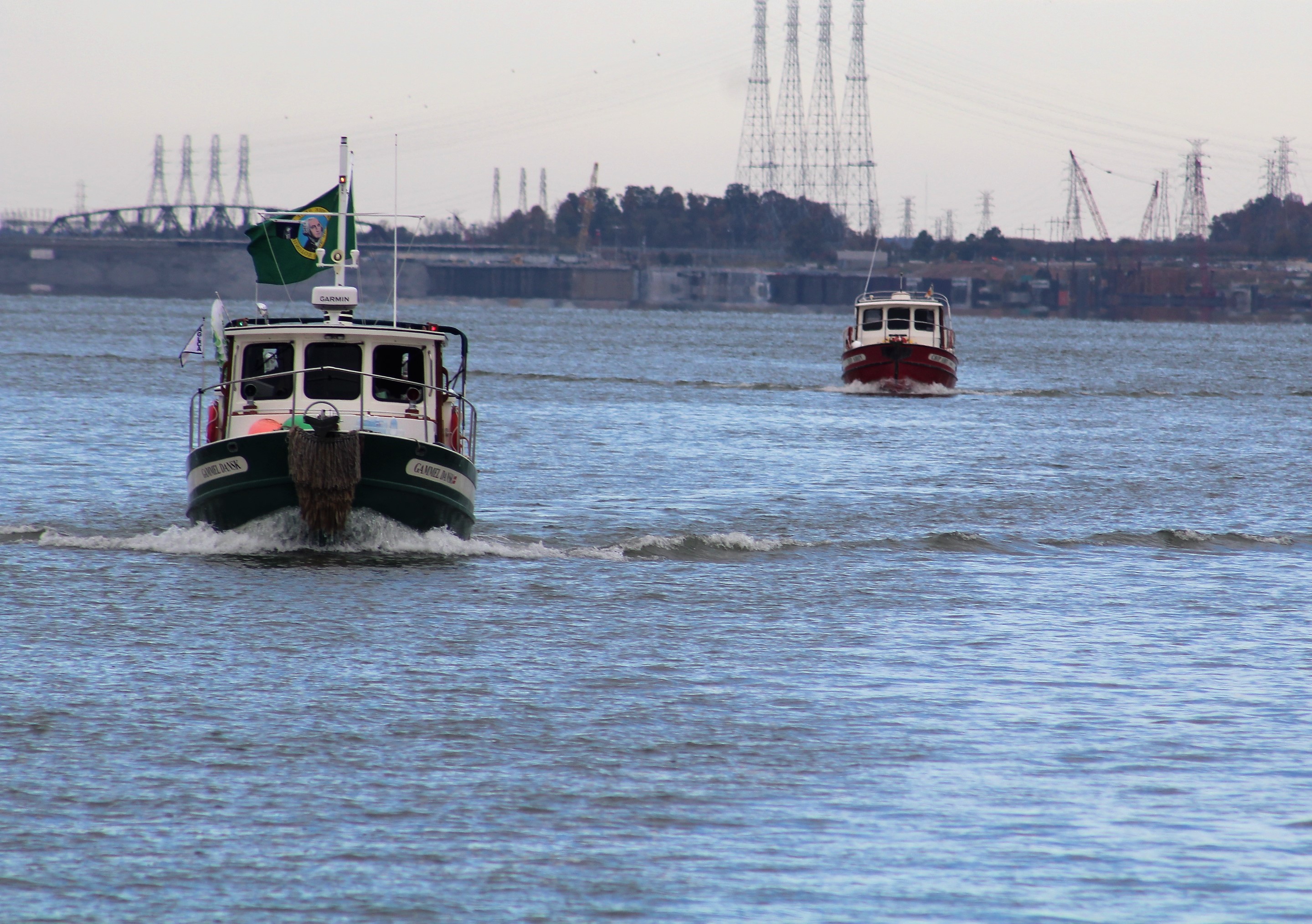
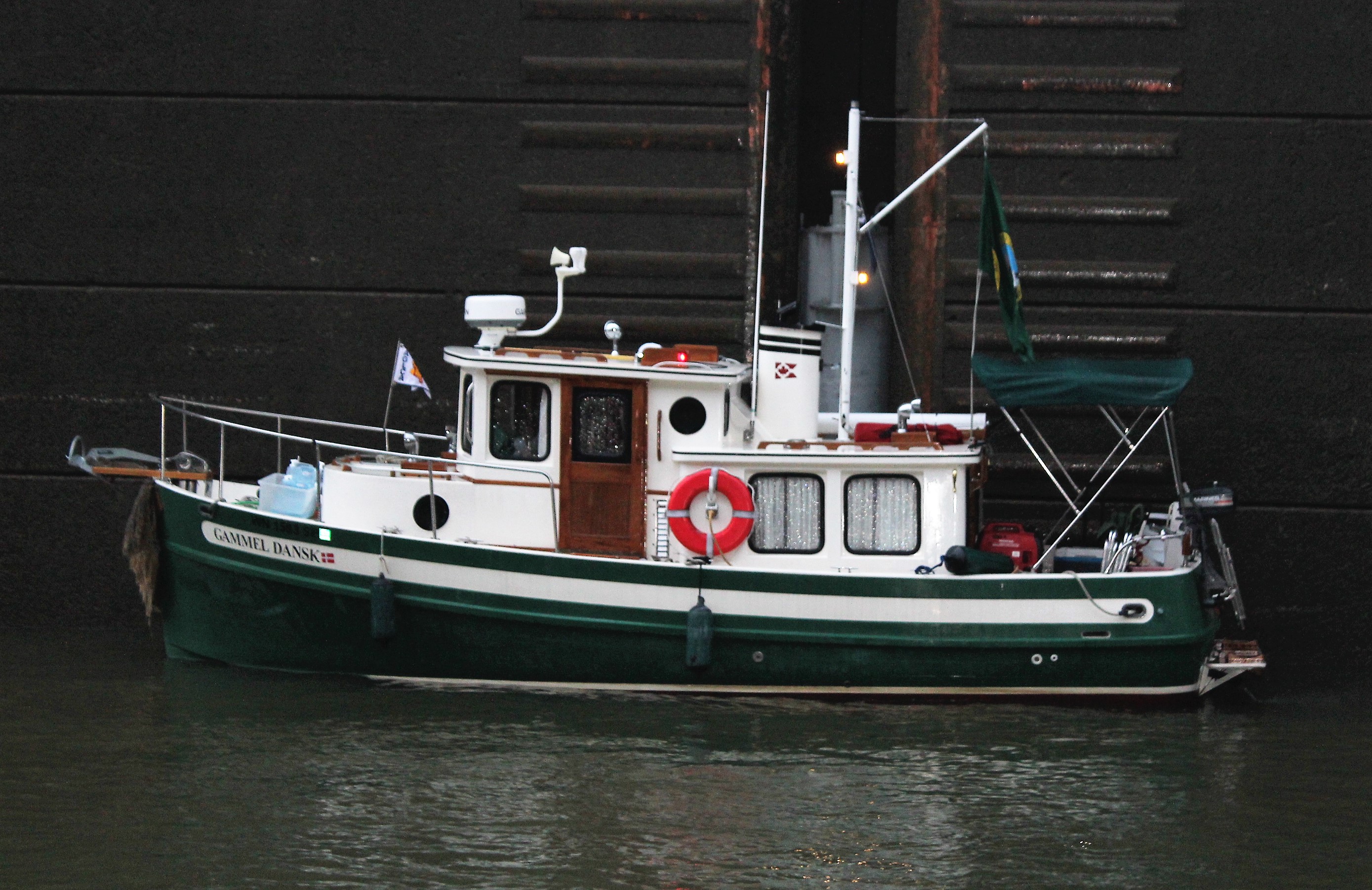
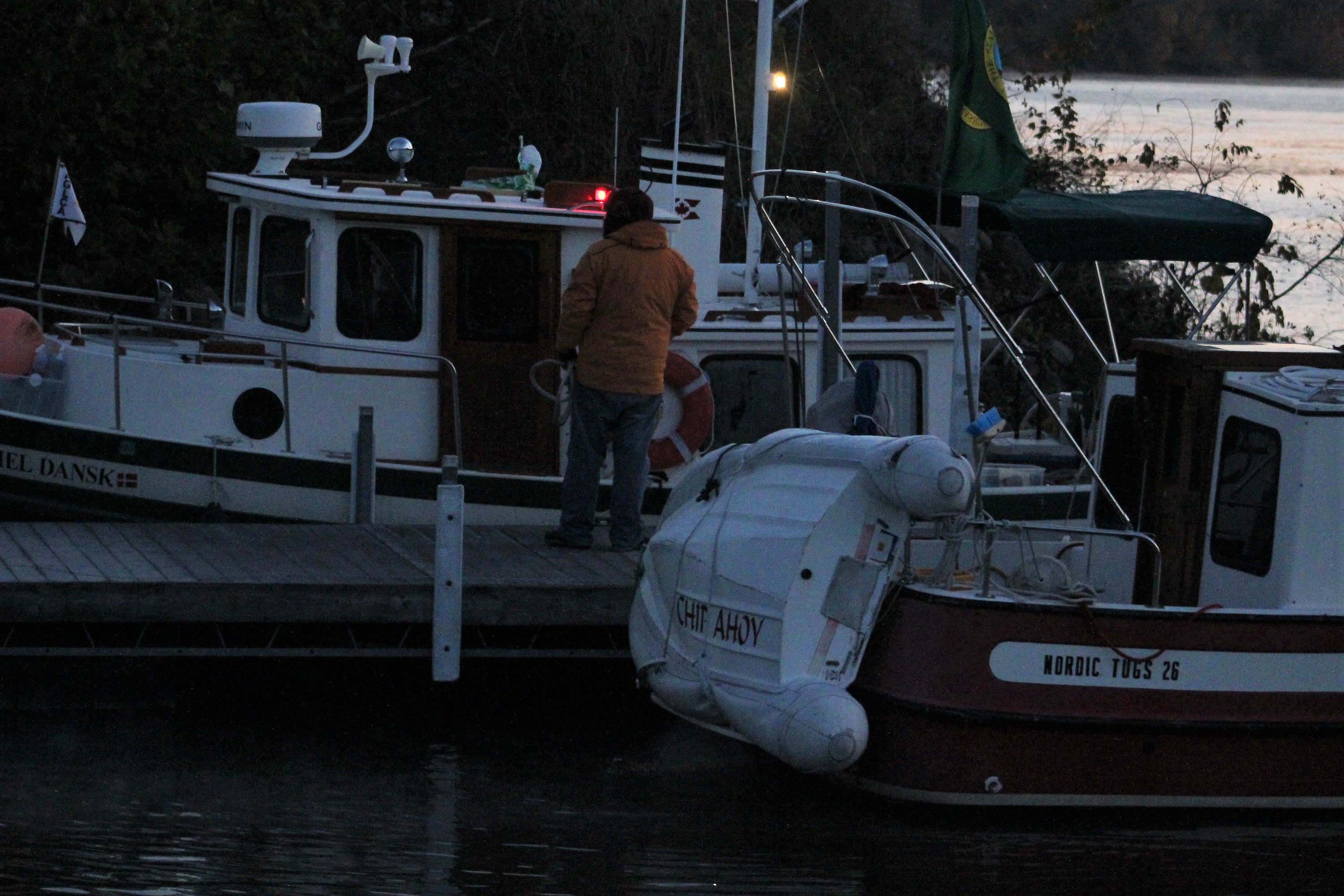
    The crew then buddy boated with two Nordic Tugs, the green hulled Gammel Dansk and the red hulled Chip Ahoy.  The three boat flotilla made four additional stops during the week to travel the length of Kentucky Lake, mostly in cold rainy conditions.

    2.  Paris Island State Park on Wednesday

    3.  Pebble Isle Marina on Thursday

    4.  Clifton Marina on Friday

    5.  Pickwick State Park on Saturday

    4 Gammel Dansk and Chip Ahoy

    Click here to read the day-to-day travel log. This includes weather report, sea conditions, captain’s log, a summary of the day’s experience, and a few pics of the route.
    The voyage of discovery did answer the following questions this week:

    At the Box Office

    This week’s video shows Still Waters II cruise along the Cumberland River as she makes way to the Barkley Lock. At the lock she joins a large tow in the lock for an interesting ride in the lock.  Enjoy!

    Barkley Lock from Still Waters II on Vimeo.

    To see past videos, click on the link to the Still Waters II Vimeo site.  The library contains videos of Still Waters II cruising America’s Great Loop.

    Sunday, November 4th

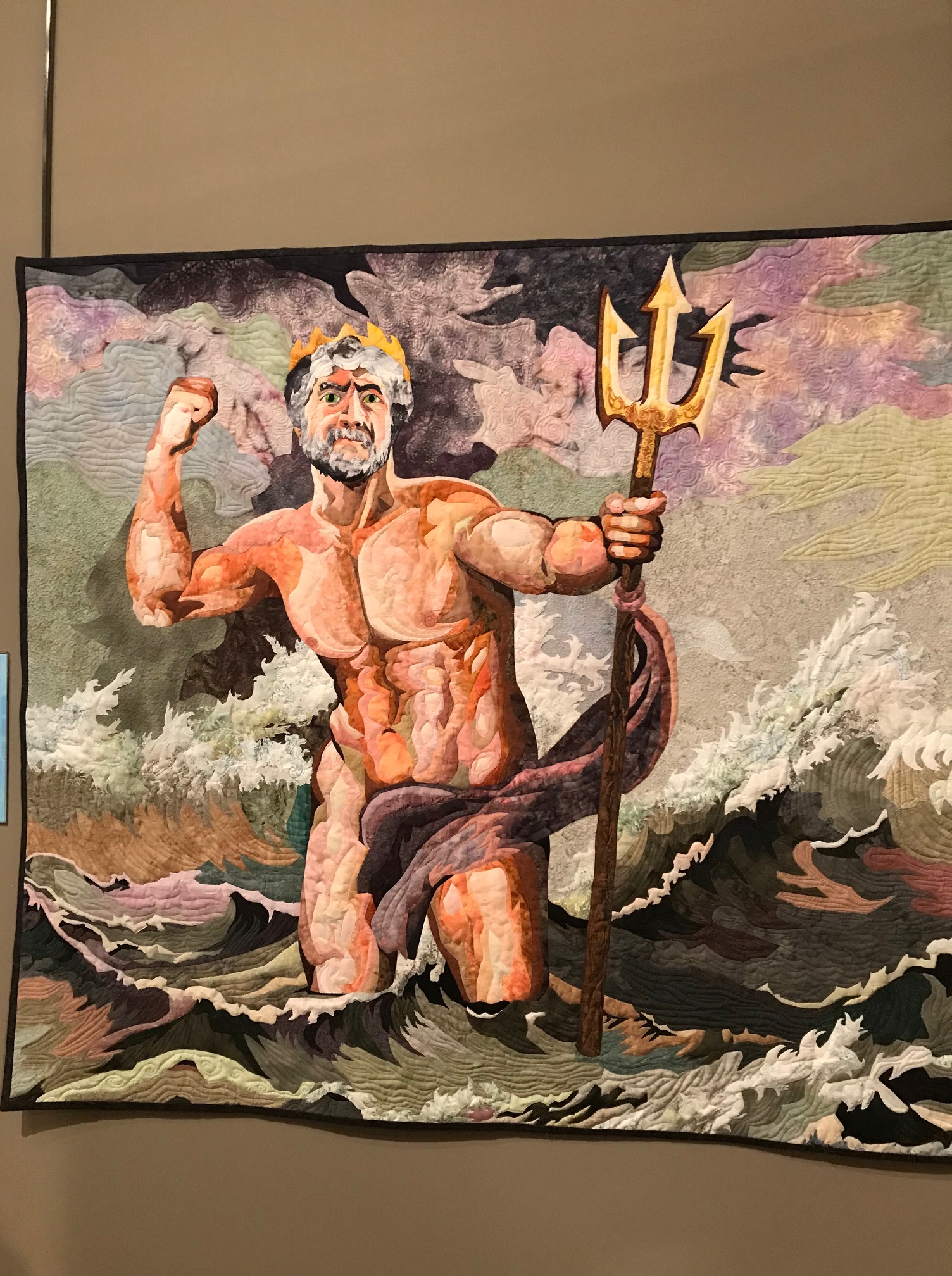
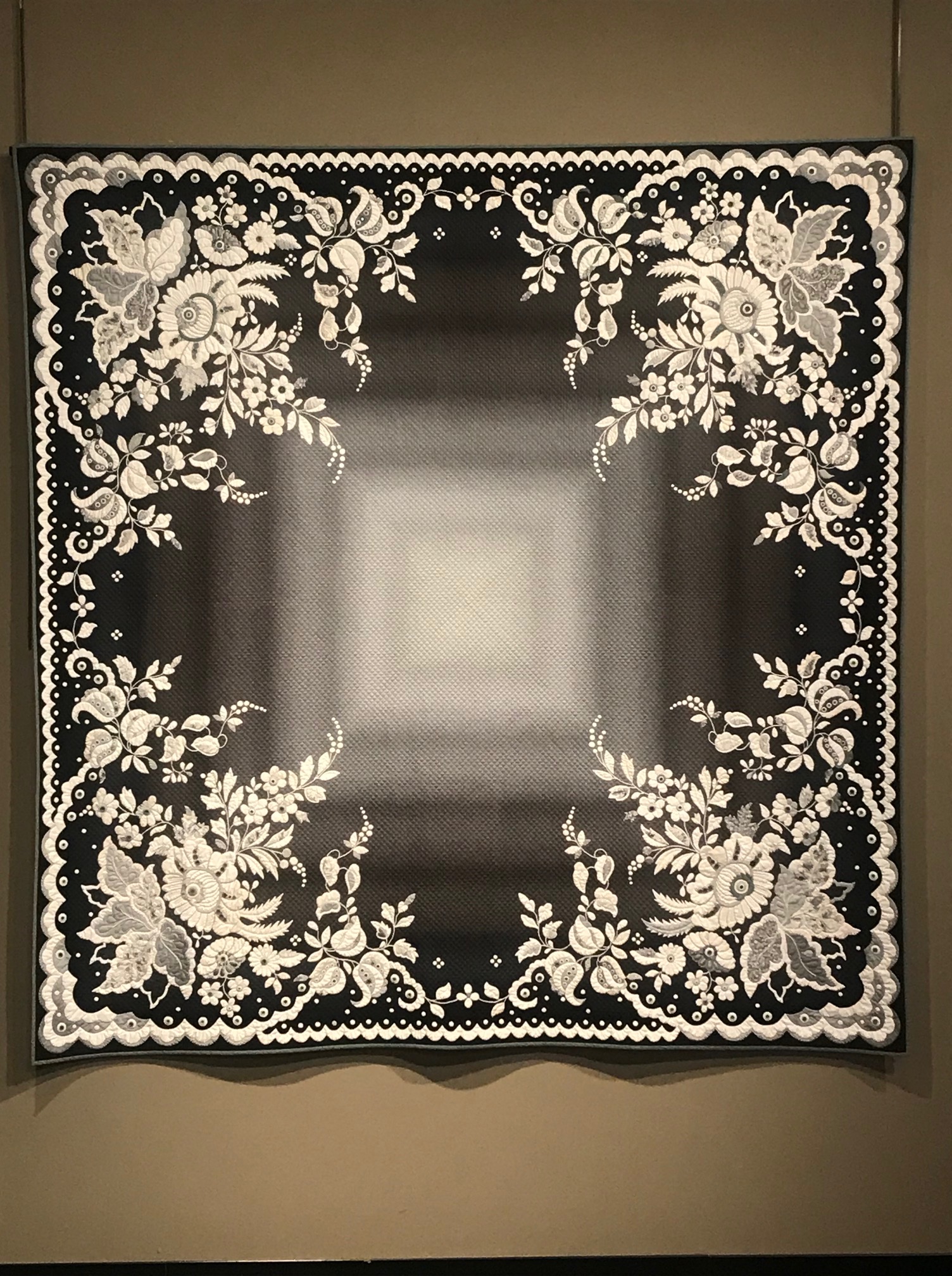
    The crew decided to go visit the National Quilt Museum today.  At first glance you might think this would be a total waste of time.  And if you have that thought, you would not be alone.  The skipper and Admiral both pondered the decision long and hard.  Matter of fact, in 2016, they skipped the Museum all together; however, they kept hearing good things about the Museum so they decided to take a look for themselves.  They were not disappointed.

    For starters, it is hard to call the material hanging on the walls quilts.  The people behind the quilt making have taken the art to a whole new level.  In fact the quilts look more like art than quilts.  The museum has a permanent collection of 601 quilts with only about 60 on display at any given time.  They rotate the quilts every 2-3 months.  Then there are two traveling exhibits on display also.

    The Lemur’s Tale

    The quilter took two years to complete this quilt.  The quilter commented, “To me this quilt represents not only the endangered species of this beautiful planet, but also how we all endanger our relationships with each other, this earth, and our creator.  Beauty results when we work through life’s challenges and don’t give up on it.”

    17

    The Wrath of Poseidon

    The quilter visited several body-building sites to get the physique just right.  The chest is from a wrestler, the legs are Michelangelo’s, and the flap at the end of the banner is sewn down – no peeking.

    12.1

    Spring of Desire

    This was inspired from the wedding tissue of the quilter’s great-great-grandmother.  She was married on April 16, 1829.

    15

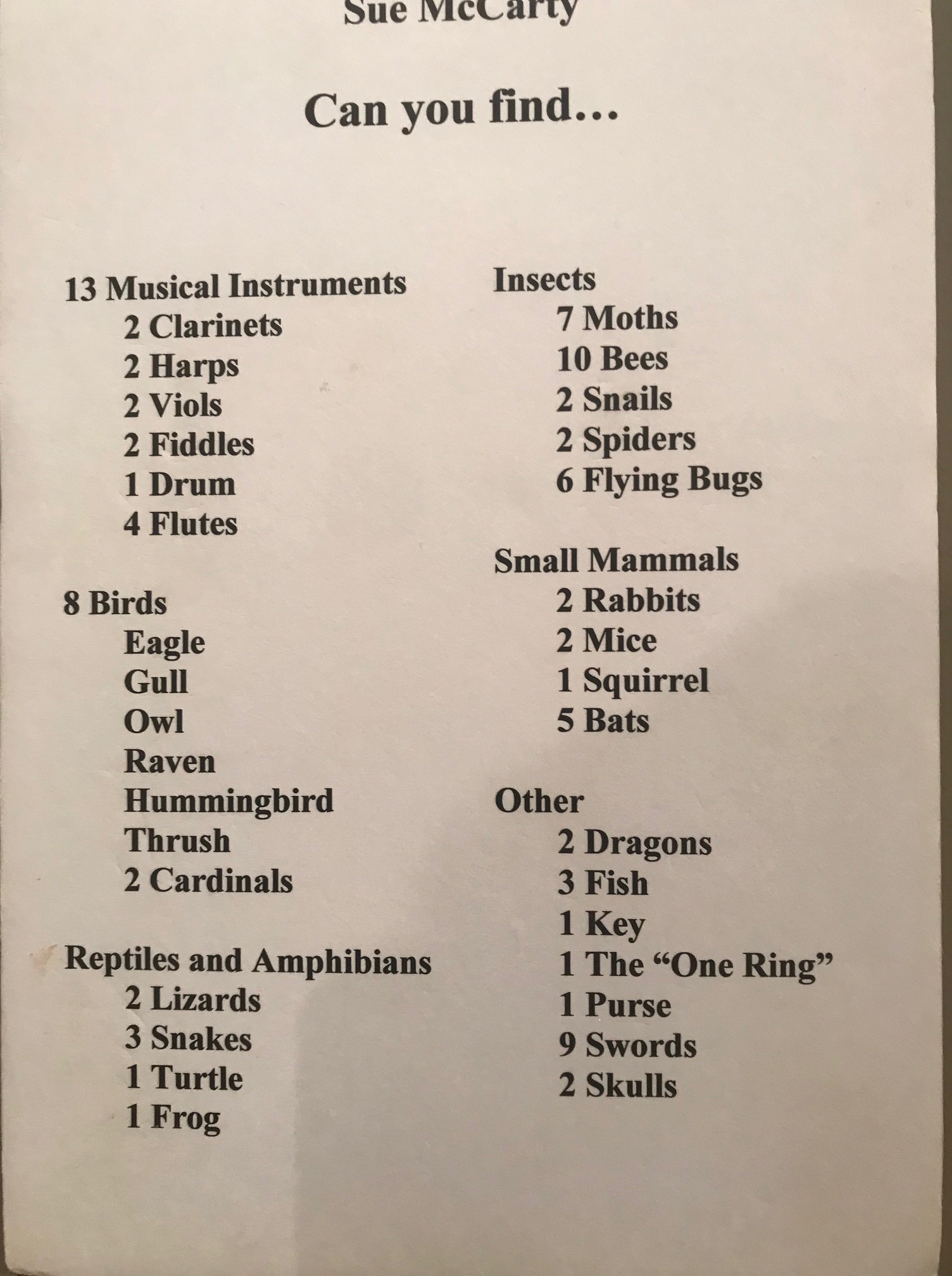
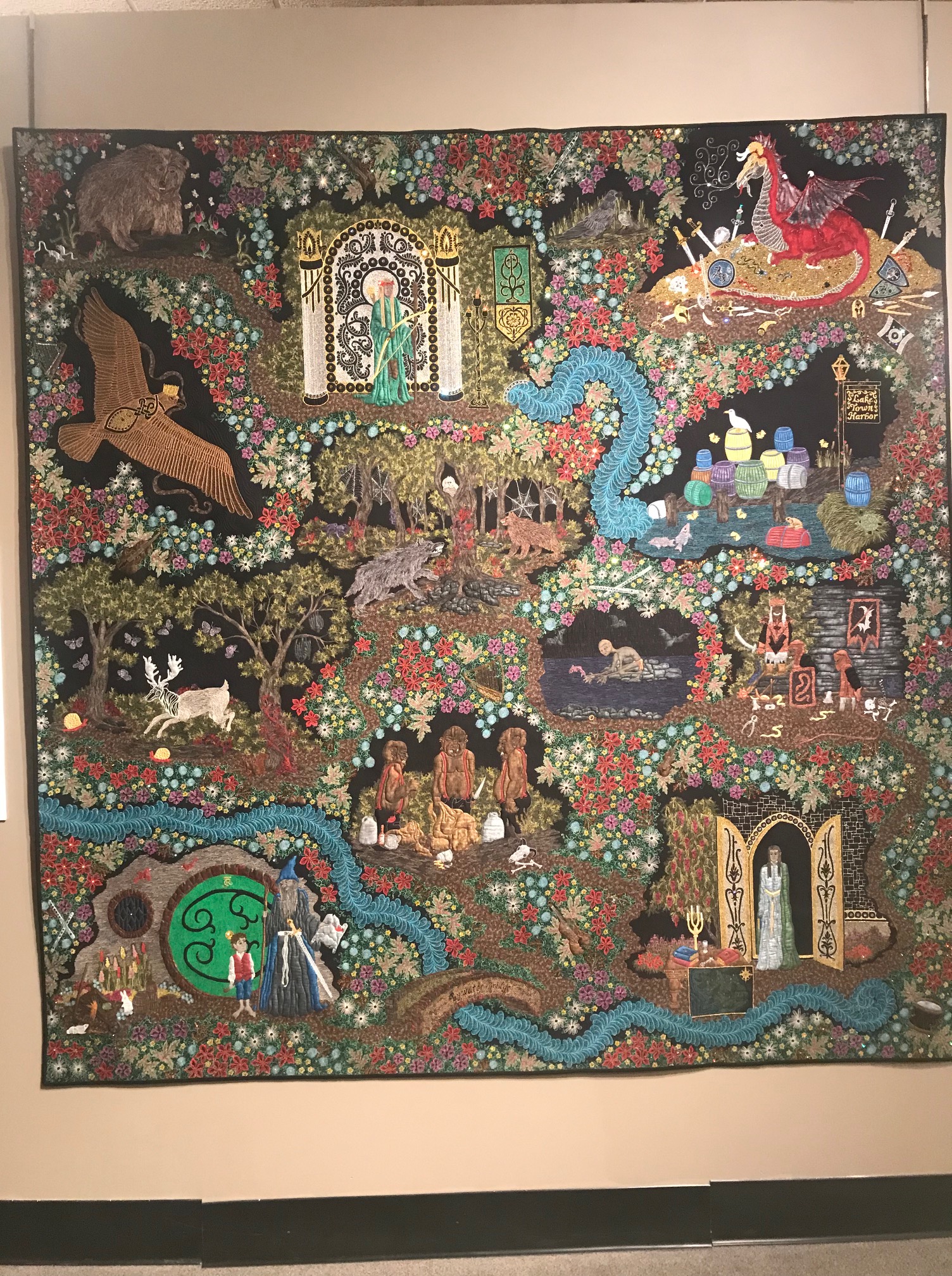
    The Hobbit

    Can you find all the items in the quilt below?

    16.1

    16

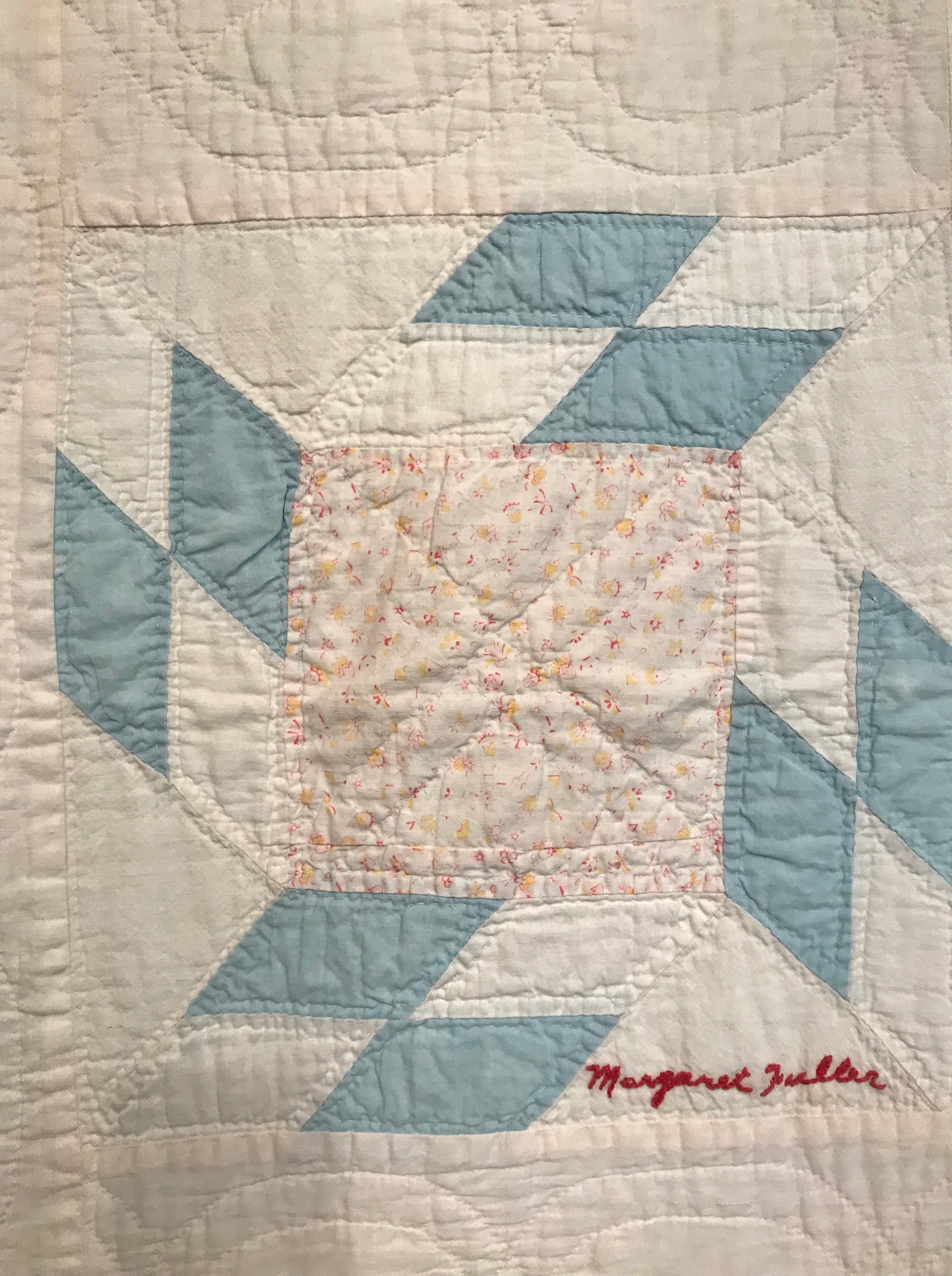
    One of the travelling displays was a collection of quilts made from patterns that were printed in the Kansas City Star newspaper from 1928-1961.  One of these quilts had multiple squares with each square made by a different woman.  Each woman signed her particular square.  And look what the skipper found, a Margaret Fuller participated in the project.

    19

    Monday, November 5th

    After sitting for a few days on the dock, it was time to leave the safe confines of Paducah and strike out for Green Turtle Bay on Lake Barkley.  To get there, the crew would need to continue up the Ohio River for another 12 miles, then take the Cumberland River for 30 miles to the Barkley Lock.

    The mystery of the day would be how the lockage would go at the Barkley Lock.  A good experience and the crew would dock in daylight hours. A poor experience and they would be docking in the dark.  Unfortunately, the Kentucky Lock is currently closed, so all commercial tow traffic was also taking the Cumberland River route.  This would shrink the odds of a good lock experience.

    Once they got off the dock and headed up stream , it was obvious that the river was running harder due to the flooding.  They had the throttles set the same as when they arrived a few days ago, but now were only making 4.5 mph for a loss of 0.5 mph from Friday.

    The skipper began to wonder how the Ohio River flood of 2018 compared to other historical floods.  The Ohio River crested Sunday in Cincinnati at 60.53 feet.  However, this high level does not even make the top ten worst floods for the Ohio River.  The worst ever flooding you ask?  1937 with a crest in Cincinnati at 80 feet.

    The Admiral found a historical marker in Paducah that discussed the Ohio River flood of 1884. Turns out the 1884 flood was the second worst Ohio River flood with a crest of 71.1 feet in Cincinnati.  But more interesting than that was that Clara Barton, founder of the American Red Cross, led a flood recovery effort in 1884 from Pittsburgh to Cairo.  She was in Paducah on March 13, 1884 as part of the relief effort which turned out to be the first flood relief effort of the young  Red Cross.

    The crew arrived on the Cumberland River at 0930 and headed for the Barkley Lock, 30 miles up stream.  Along the way they were met with  picturesque Cumberland color and numerous Bald Eagles resting in trees.

    8.1

    8 Cumberland Color

    8.2

    10.2

    As the crew approached within three miles of the Barkley Lock, they met a down bound tow pushing several barges.  This was not a good sign.  Twenty-five minutes later, when the crew arrived at the Barkley Lock they were told to move over to the port side of the river and monitor channel 12.  The lock master said he would get them thru as quick as he could.  An hour and a half later (1637), a tow entered the lock and the lock master directed the pleasure craft to enter the lock behind the tow.

    This will be a new experience for the crew.  They have never locked thru with a fully loaded tow before.

    11 Barlkley Lock

    11.1

    The gates behind Still Waters II closed at 1641 and it was a quick ten minute ride up in the lock.  The front gates began to swing open at 1651.  The skipper looked at the weather site and noticed that sunset was at 1652.  With 30 minutes of dusk before the darkness set in, it did not look good for docking with some light.

    Gammel Dansk floating up in Barkley Lock

    11.2

    Still Waters II in Barkley Lock

    11.7

    It took the big tow 10 minutes before she cleared the gate so the crew shoved of the lock wall and headed the last mile to the Green Turtle Bay Resort with Gammel Dansk following closely behind.

    11.3

    By the time they overtook the tow and arrived at the channel entrance to the marina, it was pitch black.  The entrance is a narrow tricky channel that requires an exact line to take from the main channel to the marina channel.  Then almost a 90 degree turn, and then thread a needle between a gap of land to enter the marina basin.

    18 GTB (2)

    Once in the basin, the crew had to snake around a few docks and past the fuel dock to land in their designated slip.  Did I mention it was pitch dark, and raining.  It was a harrowing 45 minutes before both Gammel Dansk and Still Waters II were docked.  Capt’n Dan of course took all this docking in the dark in stride and it did not seem to phase him one bit.  In fact, he told the skipper, “Welcome to my world.”

    In that 45 minutes, Still Waters II got out of the channel twice and found three feet of water, sounding the water level low alarm.  Then the skipper ran over something that rocked the boat pretty good as they tried to thread that needle between the gap in the land.  After thinking about it for a day or two, the skipper thinks he may have run up on the buoy marking the  channel entrance.  Luckily there appears to be no boat damage at this time.

    After getting thru the gap, the skipper positioned himself in the middle of the gap so that Gammel Dansk could aim at the boat and pass thru the gap with no issues.  Once both boats were in the marina basin they found the fuel dock and then eventually found their respective slips.

    Blurred Lines were waiting for them on the dock and helped get them both safely docked.  Then Blurred Lines invited both crews over for hot soup and cherry pies.  Thanks for making a crazy day end on a positive note.  Doreen and Greg are todays Great Loop heroes.

    I did over hear the Admiral tell the skipper she never wants to do that again.

    Tuesday, November 6th

    After that day yesterday, it was time to take a day to relax, catch up on a few boat projects, and get the laundry caught up.  Unfortunately for the Admiral, she had to use the marina laundry services.  The washing machine on board has died and is no longer serviceable.  The skipper has found a washing machine in Mobile that is small enough to fit thru the salon doors (23 inches) but large enough to be useful.  The skipper is really looking forward to that little project in a few weeks.

    Speaking of projects though, there are several Looper boats here at Green Turtle Bay getting some serious work done.  One boater is having to replace his engine because it can no longer build compression.

    Another boater has been here for a month replacing an engine due to catastrophic failure.  The first new engine was installed last week, but when tested it turned the wrong direction for a port main engine.  They started removing the new engine this week so he will likely be here another month.

    Then there is Bill, on a tug like Gammel Dansk who experienced transmission troubles.  His new transmission came from Turkey and finally got installed over the weekend.  He has been here for 56 days.

    Lastly, a boat left today that had engine problems that took 55 days to repair.

    After hearing all the war stories about blown engines, transmissions, and other repairs, the skipper is counting his lucky stars that he only has to swap out a washing machine.

    Wednesday, November 7th

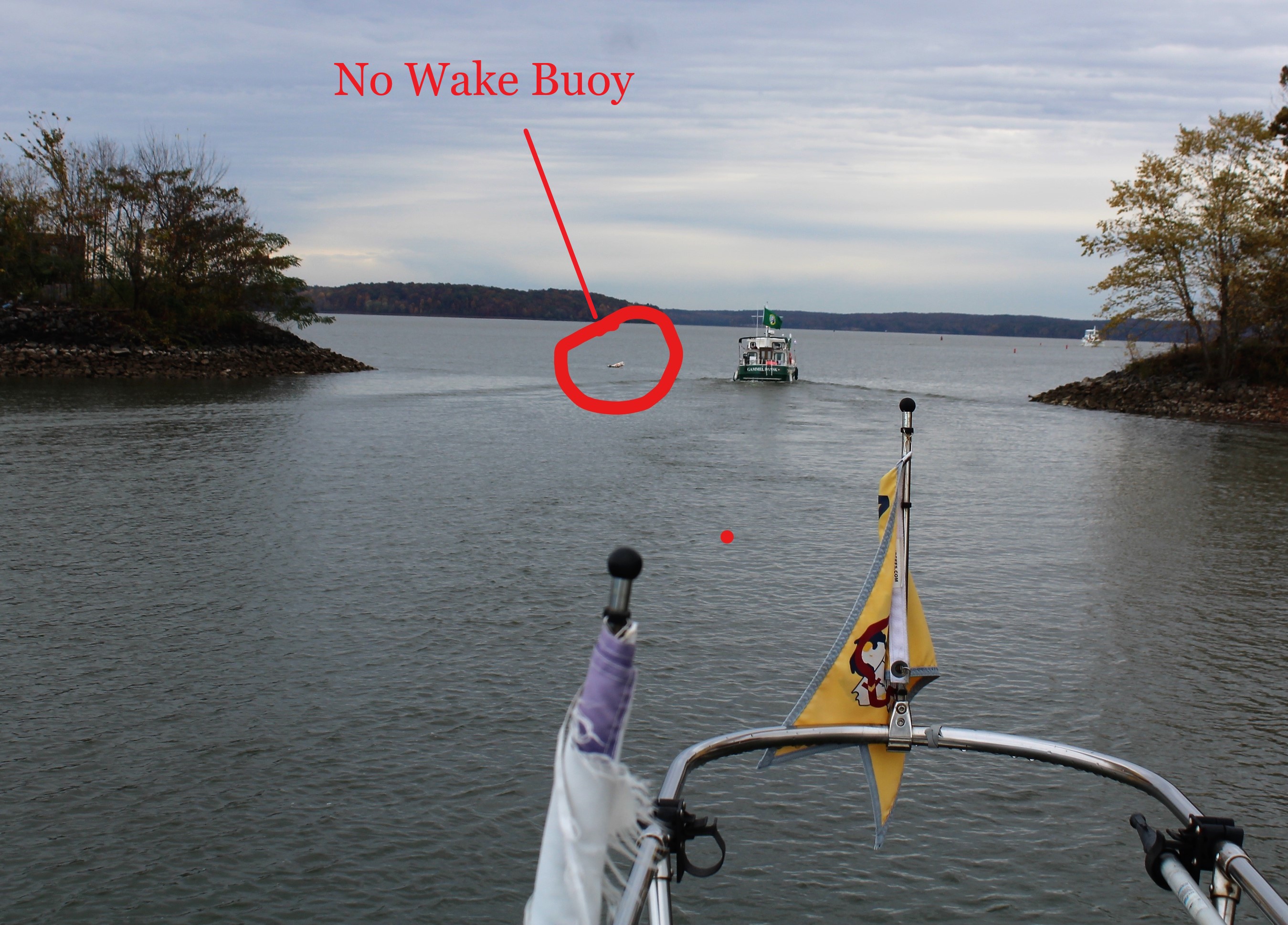
    The crew took time to eat breakfast at the café before setting out down Kentucky Lake.  When they left the marina he confirmed his hunch about running over a buoy, only it was a No Wake buoy rather than a channel marker.  That was good because those No Wake buoys are made of plastic rather than metal.  Hmmm, looks like the buoy is on its side rather than standing up.  I wonder what caused that?

    No Wake buoy that the skipper probably hit coming in Friday night in the dark

    1 Leaving GTB_LI

    While leaving the marina, a second Nordic Tug, Chip Ahoy, decided to join the crew for the run down to Paris Landing State Park.  Capt’n Dan made a comment that the two tugs needed to make sure they were on the proper side of the channel while they traveled so nobody miss took them for navigation aids since their boats are red and green.  Funny Dan.

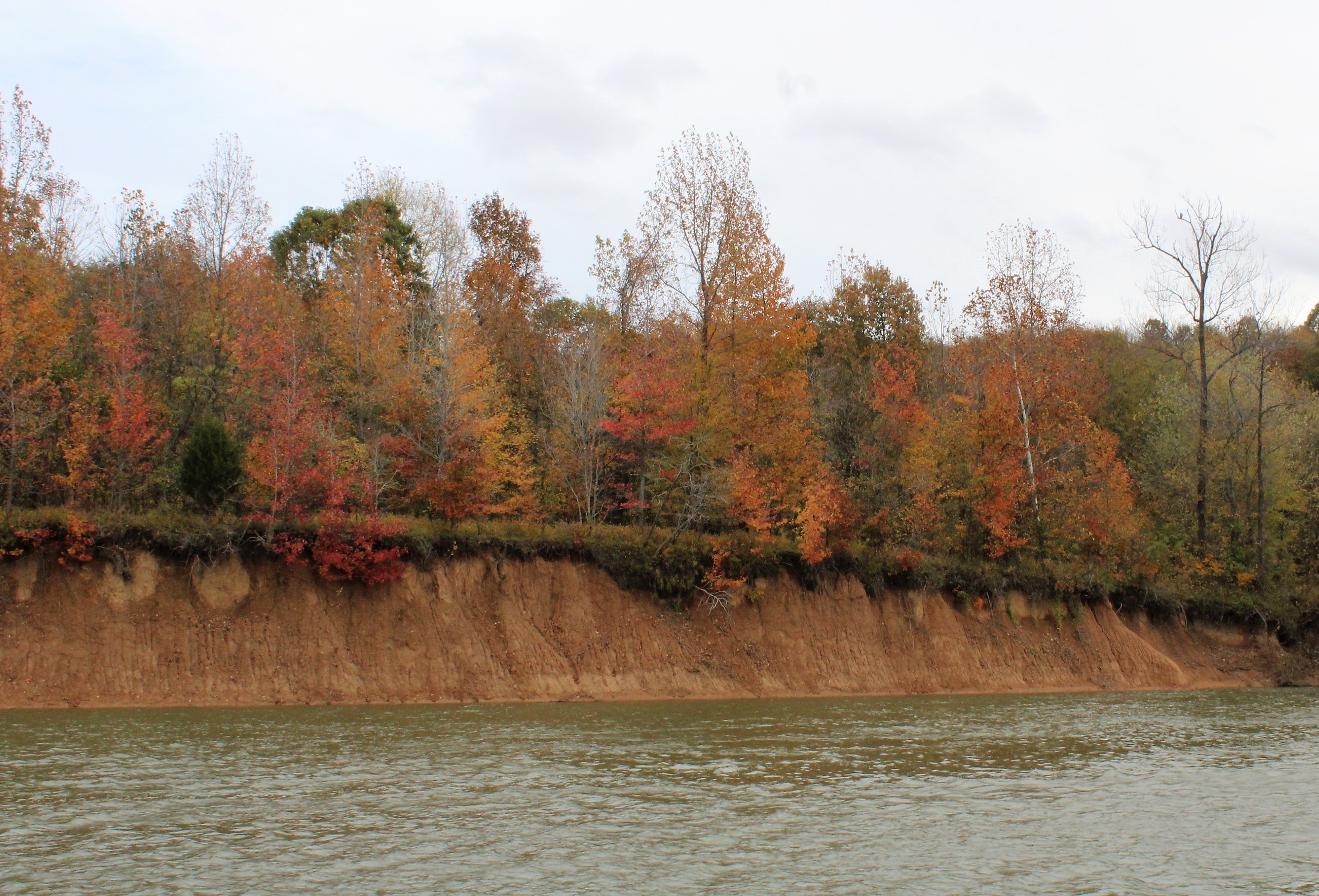
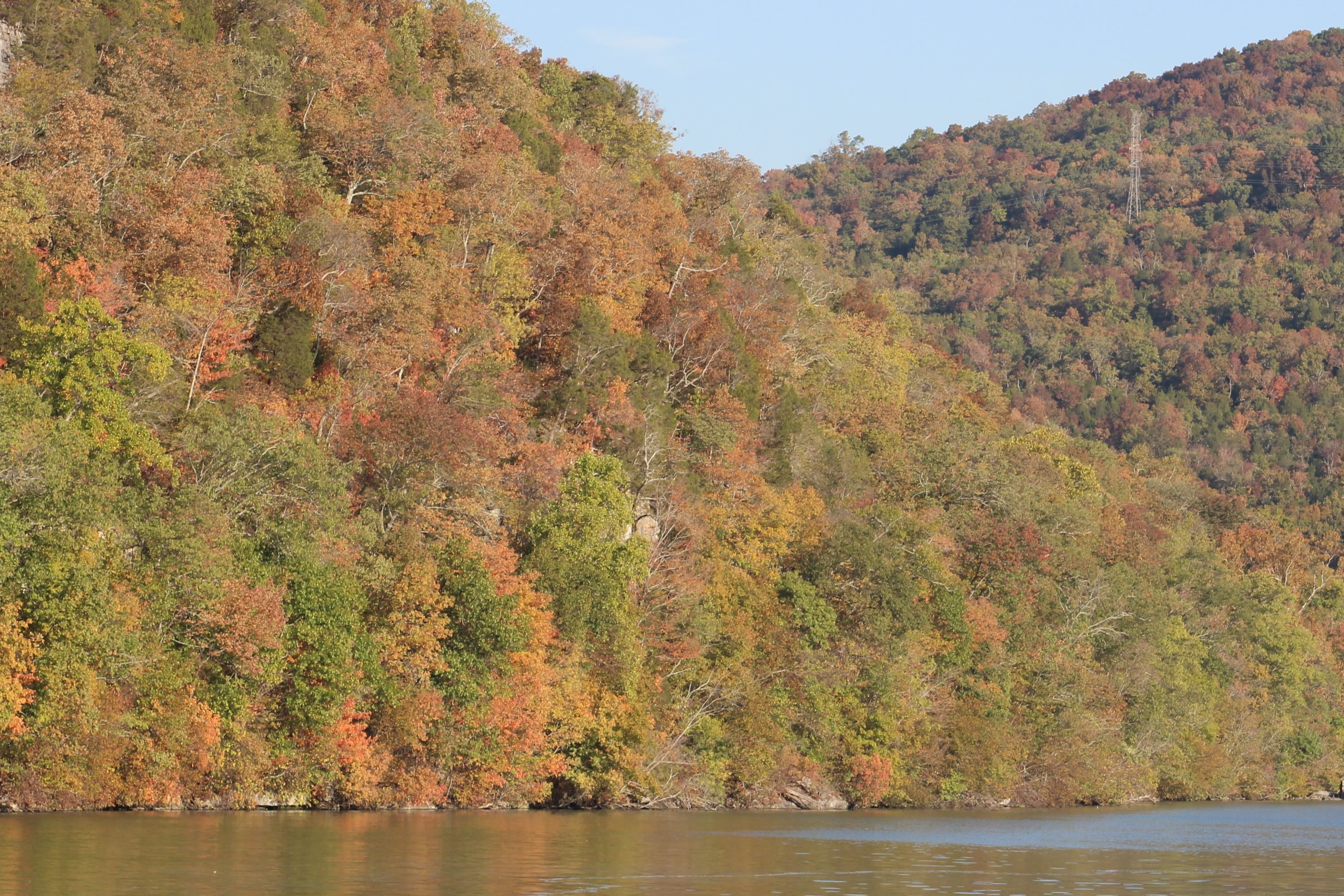
    The Tennessee River continued to dazzle with a full display of fall colors.

    3 Tennessee Shore

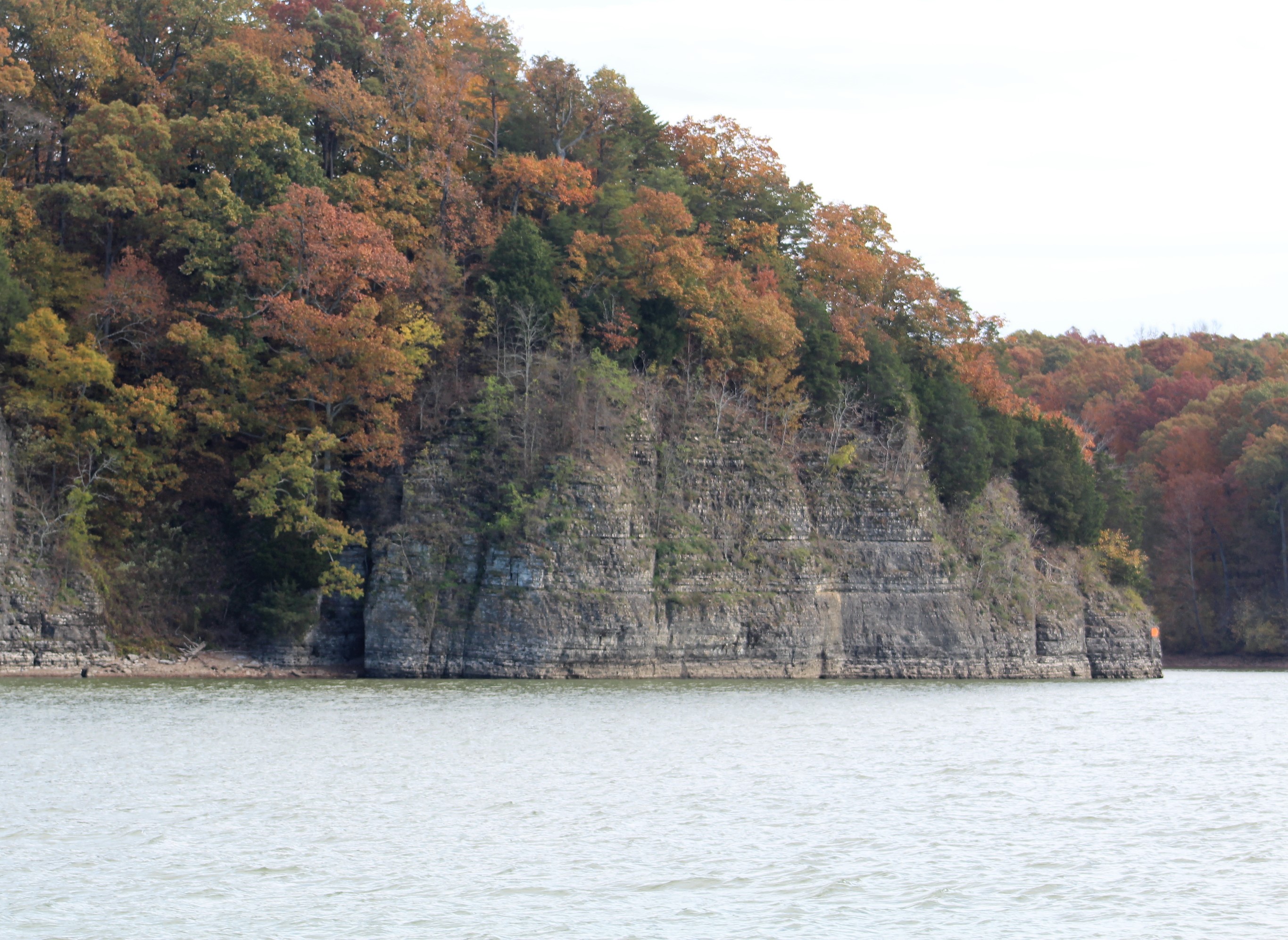
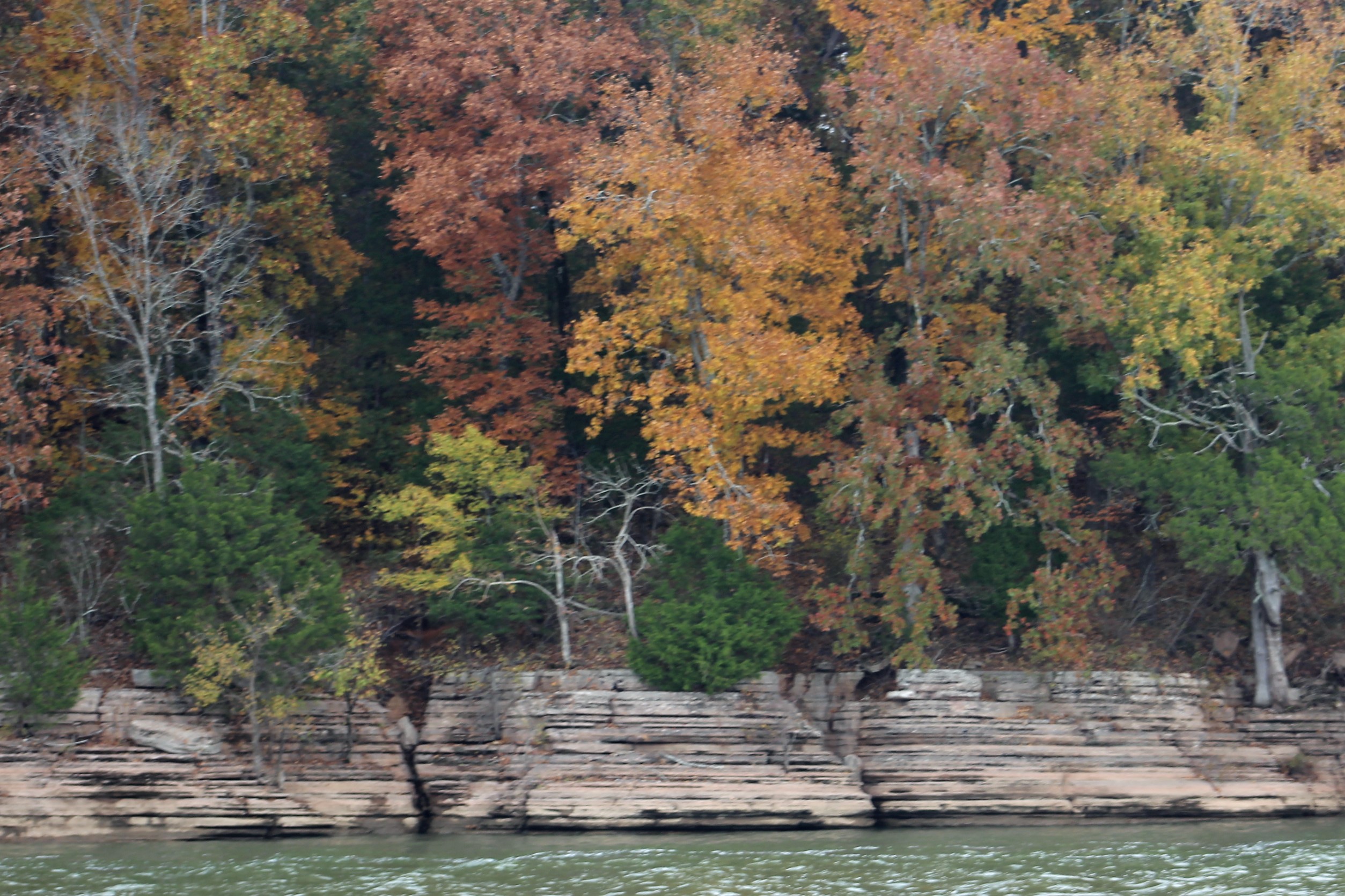
    The crew especially likes when a rock bluff is covered in color.

    3.2

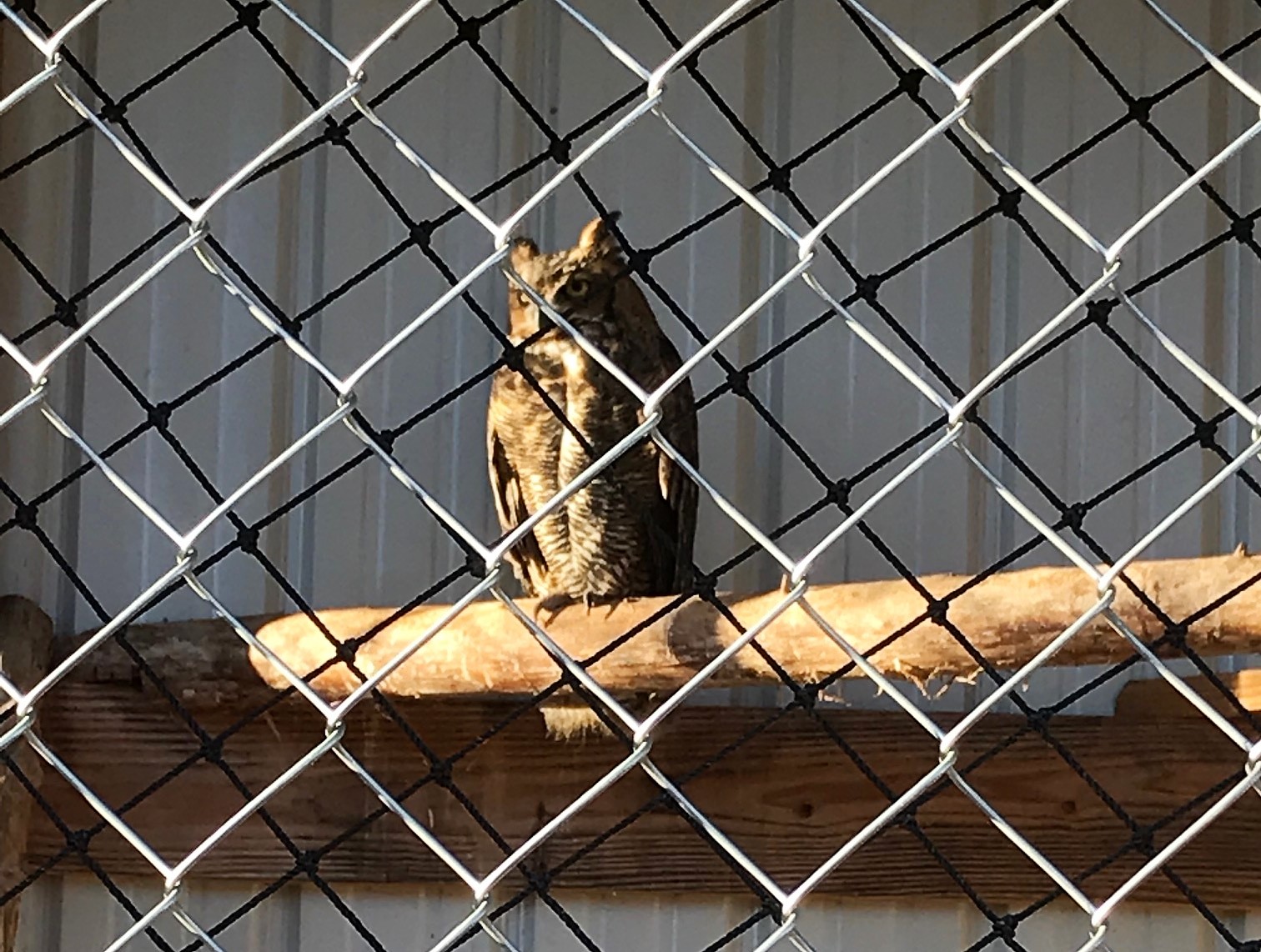
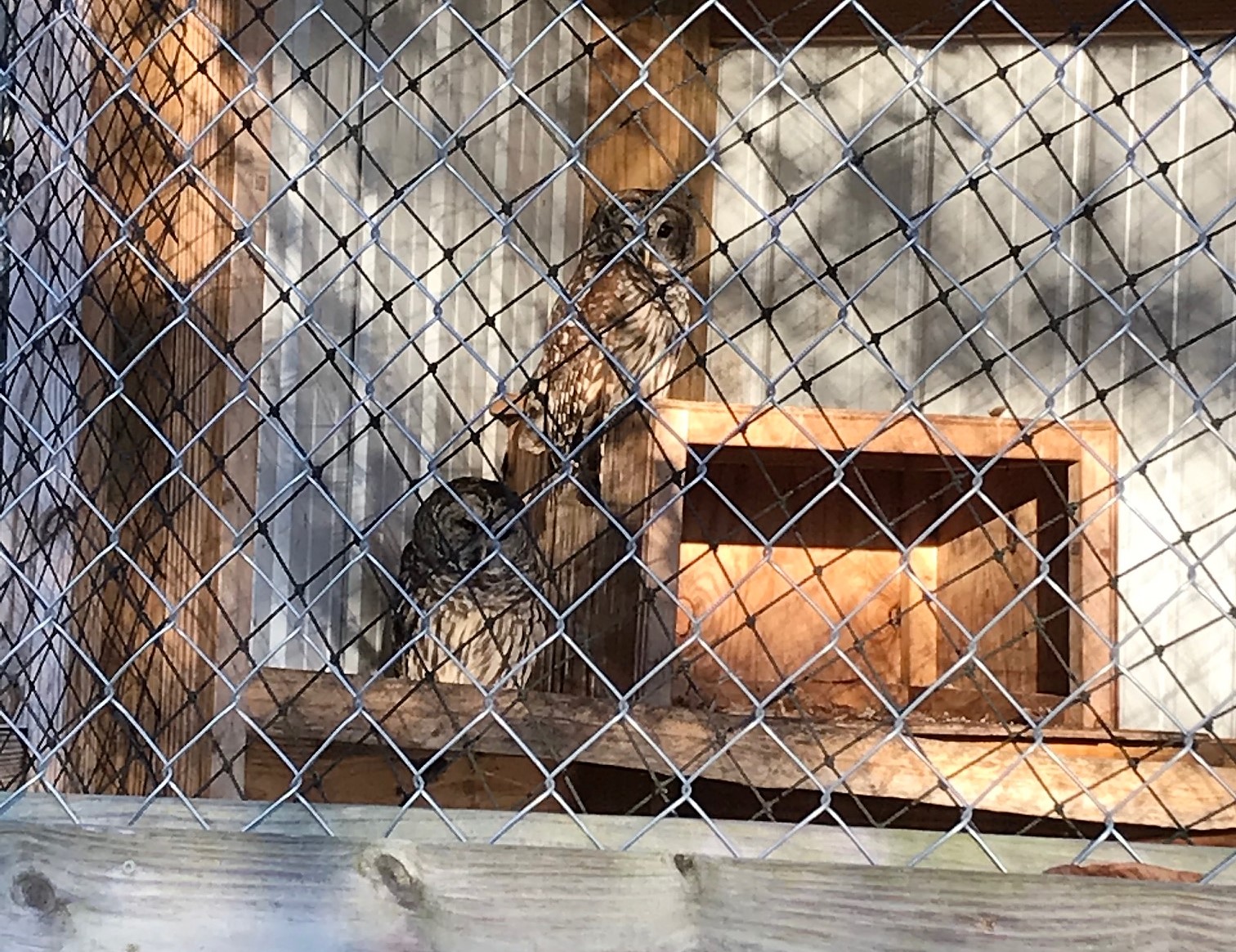
    It was a fairly straight forward run down to the State Park.  Once docked, the crew took a stroll to see what they could discover in the park.  They headed towards the entrance to see if there was some sort of visitor center.  The crew discovered some cages, and upon further investigation found several  owls perched on limbs.

    Oscar was found on the ground as a baby and has been raised by humans his whole life.  

    6

    These Barred Owls were each missing an eye so would not survive in the wild.

    8

    Thursday, November 8th

    The crew left with an escort of two Nordic Tugs again.  There are not many marinas along this route so the crew will take what the river has to offer, and today the offer was a short run to Pebble Isle Marina near Paris, Tennessee.

    Just outside of town is a 70 foot replica of the Eiffel Tower.  
    21 Paris Eifel Tower

    Another discovery about Paris has to do with the skipper’s county of birth, Tarrant County.

    22 Edward_H._TarrantThe county was named after Edward H. Tarrant who fought in the War of 1812, was a member of the Militia’s of Kentucky, Tennessee, and Texas at various times.  He also gained fame as an Indian fighter in Texas.  In fact he led a battle in Arlington, Texas just a few miles from the skipper’s childhood home.  The battle has been commemorated with a Texas Historical Marker #5654:


    ‘Archeological excavations along the course of this Trinity River tributary have unearthed evidence of several prehistoric villages. Artifacts from the area date back almost 9,000 years and represent a culture of food-gatherers and hunters. In the 1830s the Creek served as a sanctuary for several Indian tribes who made frequent raids on frontier settlements. The conflict grew worse in 1841 when major attacks were reported in Fannin and Red River Counties. Brigadier General Edward H. Tarrant (1796-1858) of the Republic of Texas Militia led a company of volunteers in a punitive expedition against Indian villages in this area. On May 24, 1841, following brief skirmishes at several encampments, two scouting patrols were attacked near the mouth of the Creek and retreated to the main camp. Reportedly twelve Indians and one soldier, Captain John B. Denton, were killed. As result of the Battle of Village Creek, many tribes began moving west. Others were later removed under terms of the 1843 Treaty signed at Bird’s Fort (10 mi. NE) which opened the area to colonization. Much of the battle site is now located beneath the waters of Lake Arlington.’

    Like many before him, Tarrant was not born in Texas, but he got there just as soon as he could.  But before Texas, he lived in Paris, Tennessee.  Just one last odd observation and connection with this story, the skipper’s Dad was born on May 24th.

    Friday, November 9th

    It was early to rise and time to shove off the dock at first light.  The crew has a long day ahead to make the next marina which is 62 miles up stream.  The crew is marina hopping because the nighttime temperatures are too cold for overnight on the anchor.

    And yes, you read that correctly, up stream.   The Tennessee River forms on the east side of Knoxville and flows southwest into Alabama, where it then turns and heads northwest and becomes the largest tributary for the Ohio River.  The section that the crew is currently cruising is the section that runs northwest.  So even though the crew is mostly travelling south, they are travelling up bound on the Tennessee River.

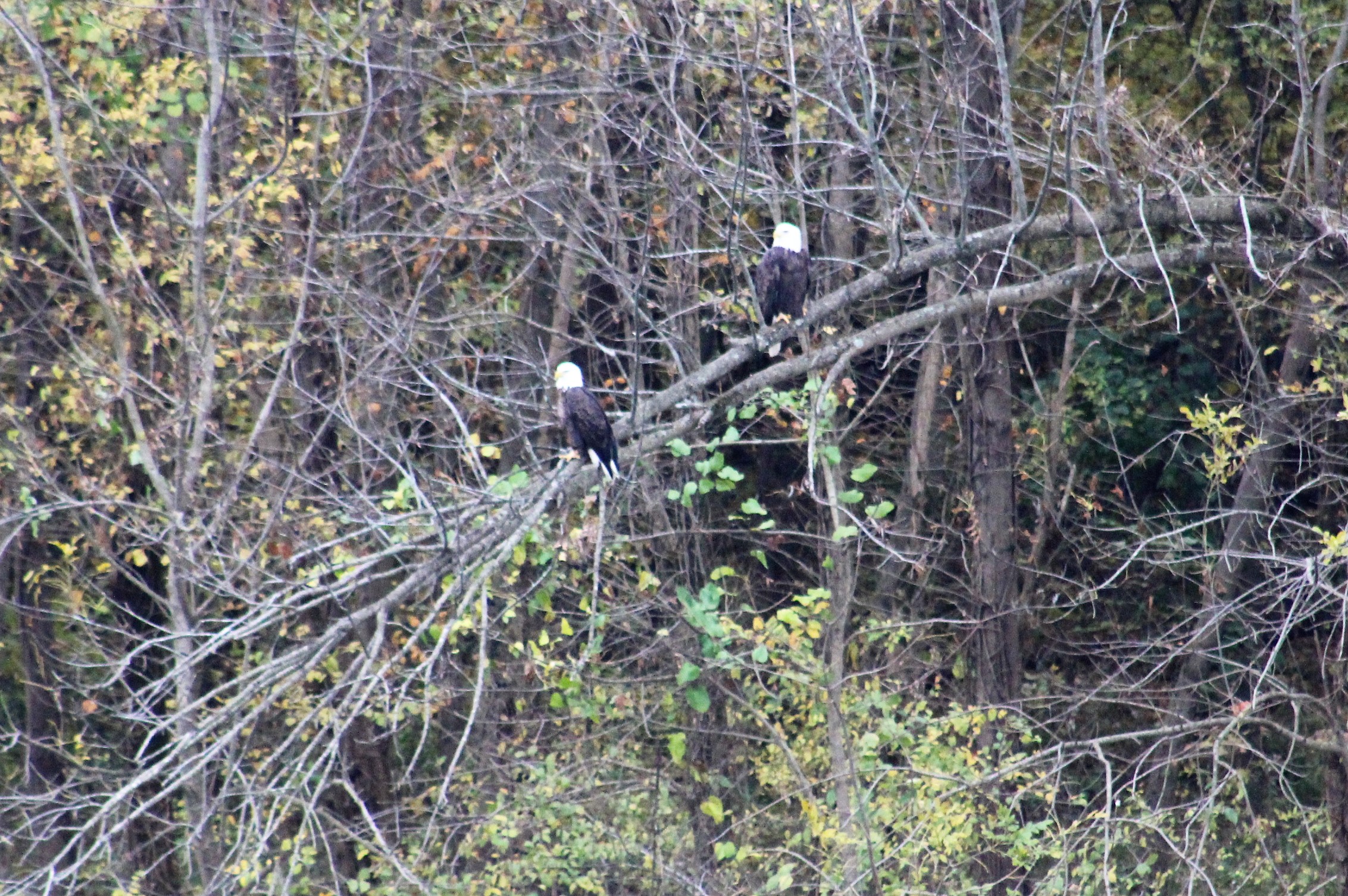
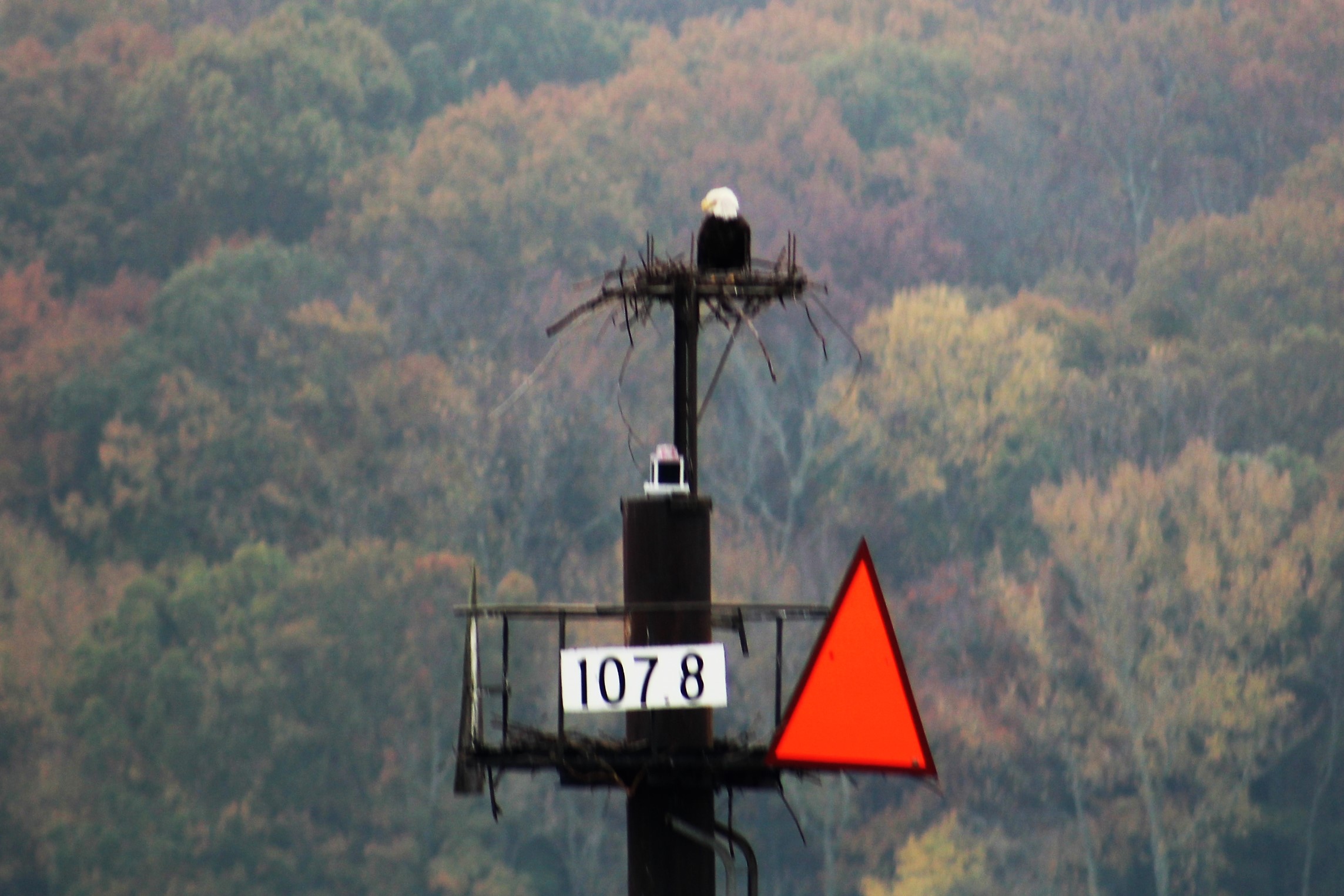
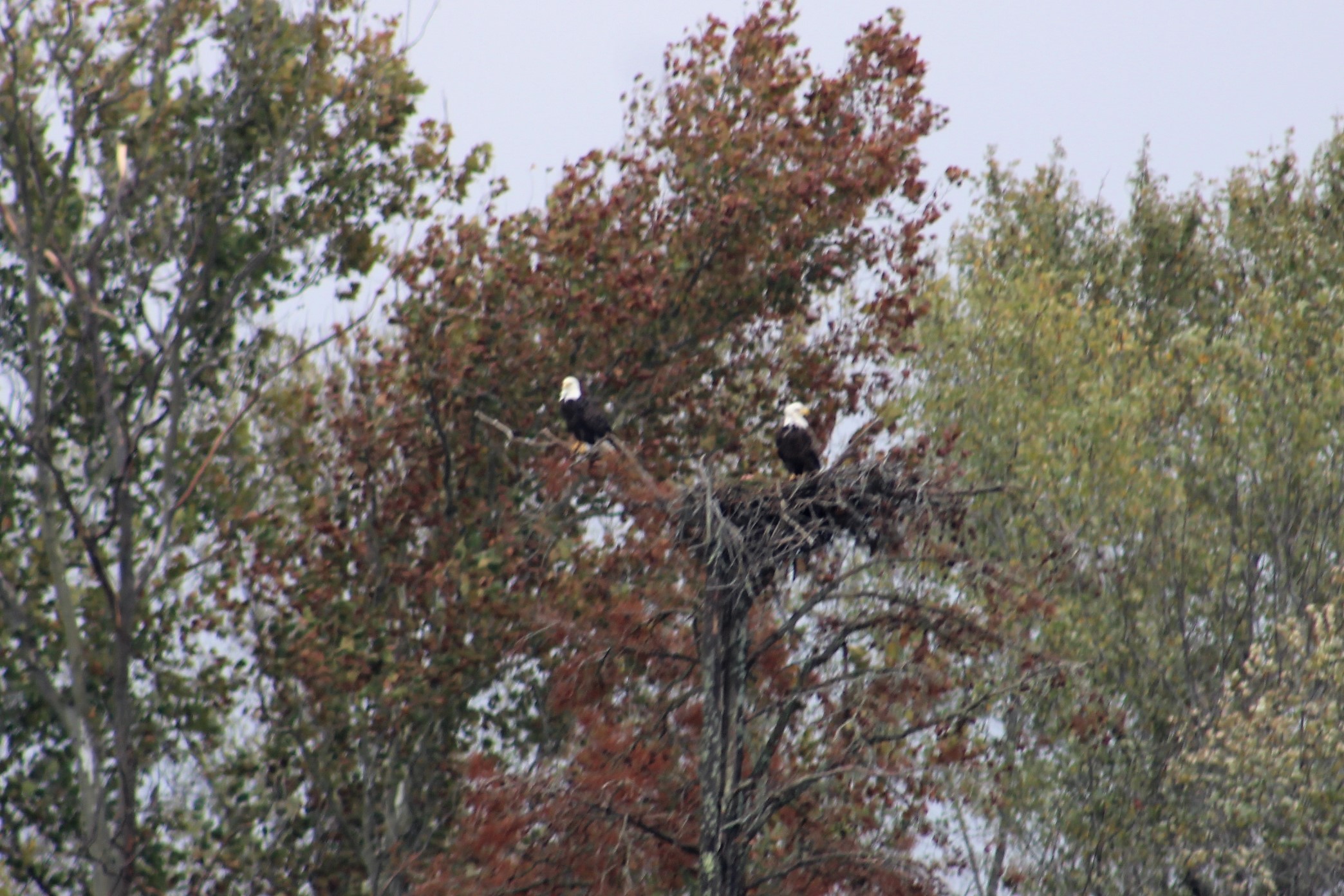
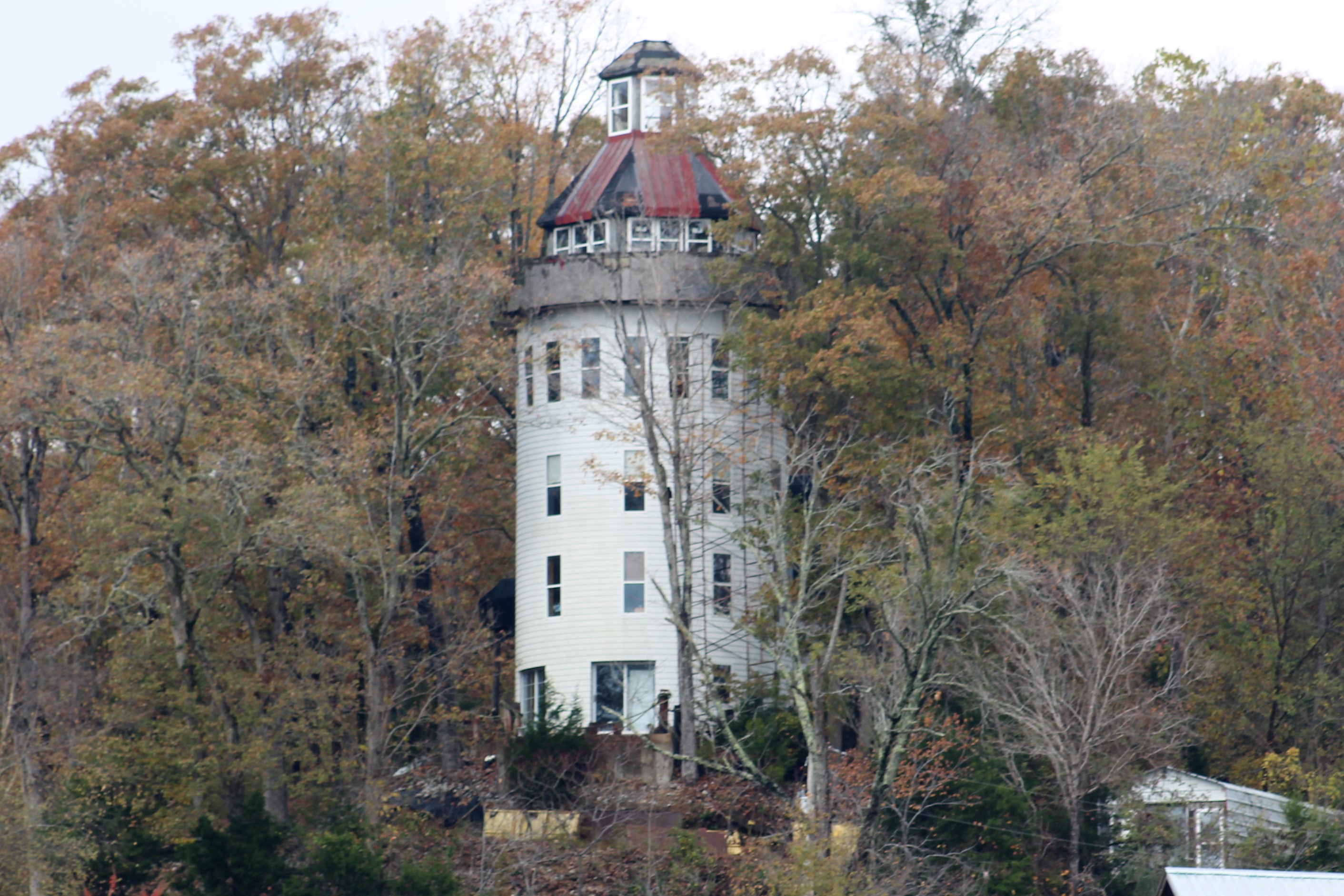
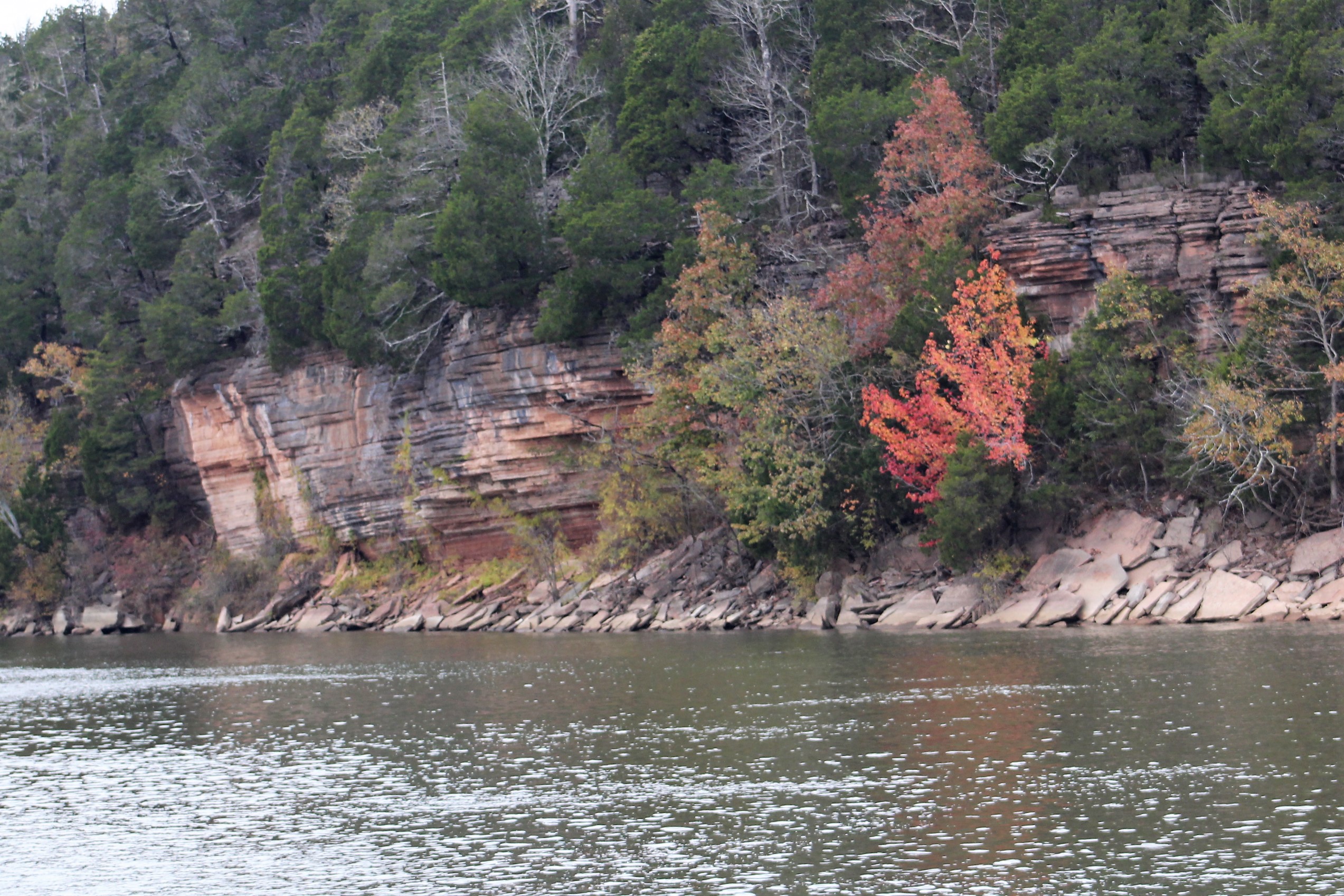
    The cruise today was sprinkled with rain for the first several hours.  Then it was sprinkled with some interesting rock formations, Bald Eagle sightings, and homes.

    The Rocks

    18.1

    18.3

    Bald Eagles

    15 Bald Eagle

    15.2

    Homes

    17 Lighthouse

    20 Home

    The crew stopped for the night at Clifton Marina.  While there, the skipper observed Tori work with Capt’n Dan and continues to be impressed by the dog.  Once landed, Tori led Dan ashore so she could relieve herself.  Upon their return, she took the same path back to Gammel Dansk, though alternate paths were available.  Later in the evening, the two crews shared a burger dinner in the café, and once again, Tori took Dan the same route and in the back door of the café.  When dinner was over, Dan headed for the front door.  Tori was having none of that and stood her ground.  When Dan reached the end of the leash he felt the tension.  Dan gave Tori a command but she ignored the command and responded by giving the taught leash a couple of tugs signaling Dan, “we are not going that way.”  Dan then headed back over towards Tori and she led them out the back door they had entered by and returned to the boat.  Makes the skipper wonder who really is on the leash, the dog or Dan?

    Saturday, November 10th

    The crew had one more long run to make today so it was up and out at first light again.  The first step on the dock for the skipper was a bit slick as he discovered a frost build up due to the overnight low temperatures.

    Prepping to leave at 0600

    23 Early Start from Cliifton

    The two Nordic Tugs would be challenged today to motor against the head current.  When the boats got back in the main channel it was obvious that the river was running harder than yesterday, speed over ground was down to 5.5 mph.  As the day progressed the speed just continued to drop while maintaining the same throttle speed.  As they approached the lock and dam at Pickwick the current really accelerated which caused the boats to move at a snails pace.  At one point the skipper commented that he could walk faster than they were moving over the water, to wit:
    1. Mile 203, speed 4.5 mph
    2. Mile 204, speed 3.3 mph
    3. Mile 205, speed 2.7 mph
    4. Mile 206, speed 2.3 mph………. arrive at Lock at mile 206.5

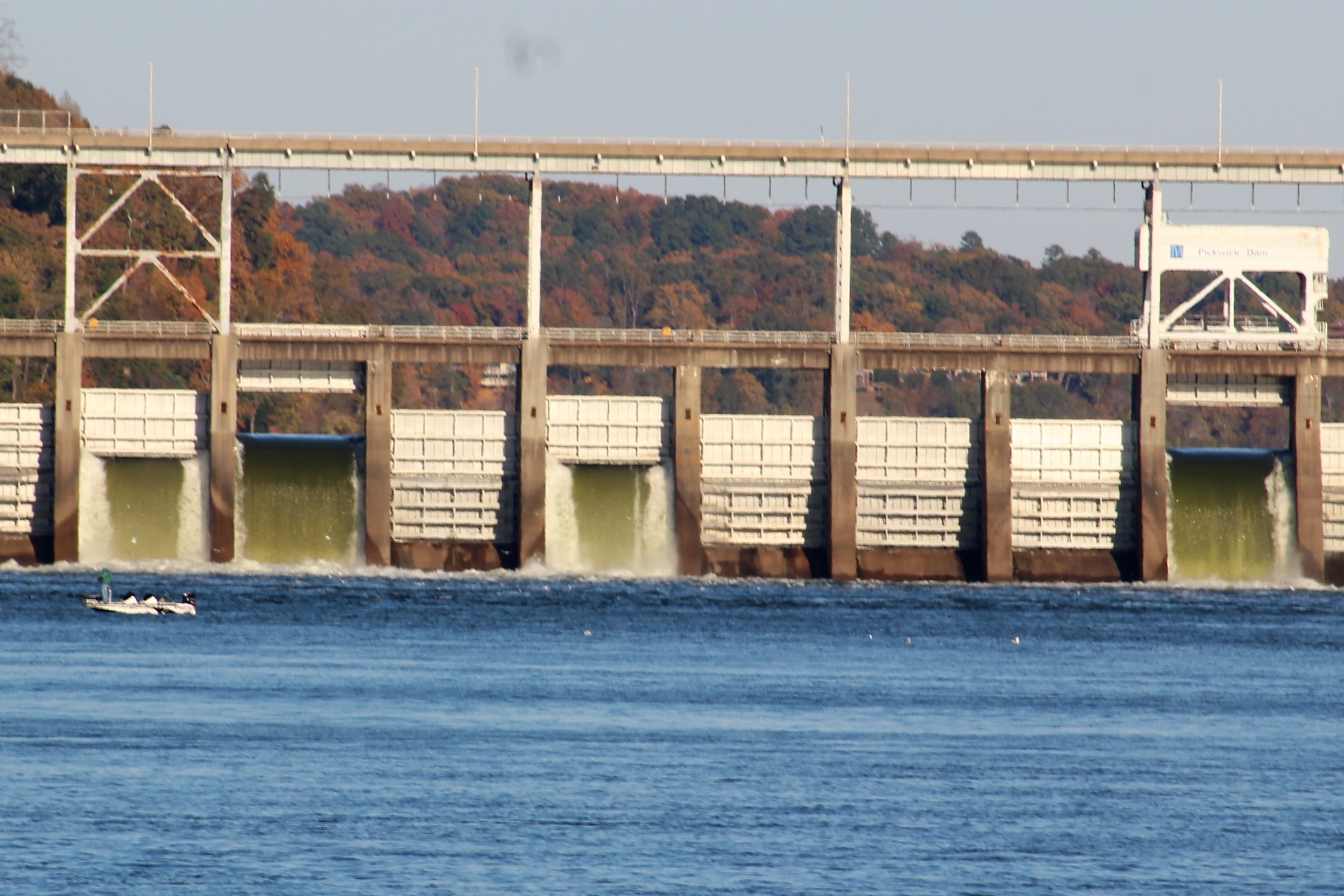
    The water being released at the Pickwick Dam, 91,000 standard cubic feet per second (scfs) 

    33 Pickwick Dam

    The skipper later learned that the water level behind the dam had continued to rise all day Friday while releasing water at 71,000 scfs, hence the increased flow rate that they saw on Saturday.  The skipper checked the lake level on Sunday and it continues to rise, so they have again raised the release rate to 94,000 scfs.  With all the rain, the lake authority has there hands full trying to reach the winter pool levels.

    Eventually, all three boats made it inside the lock where they got floated up on a bollard 43 feet.  When they came out of the lock it was too late to make Aqua Yacht Harbor in daylight, so they pulled into the Pickwick Landing State Park and called it a day.

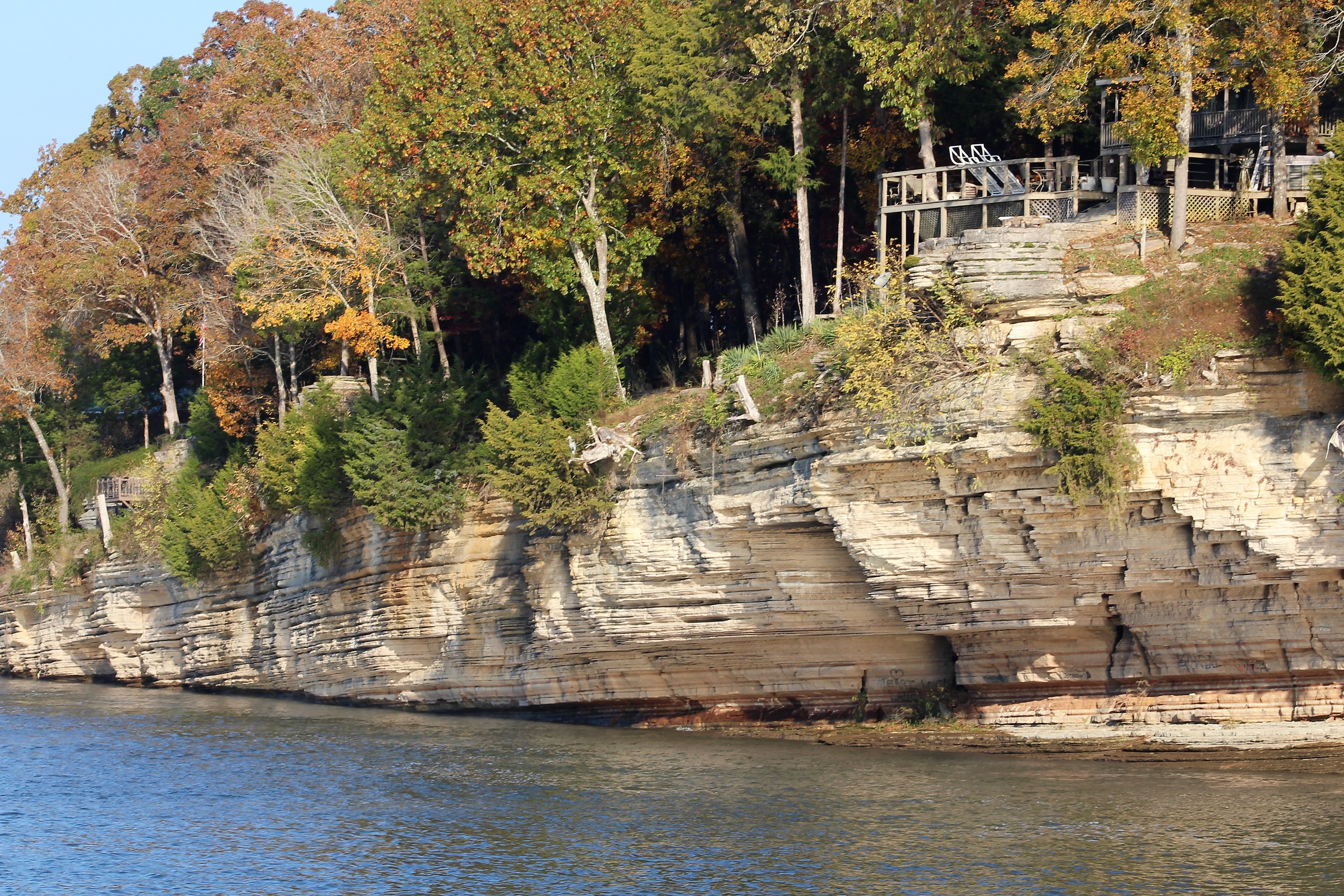
    However, along the route today the crew did pass some interesting rock formations and historic sights.

    Swallow Bluff

    24 Swallow Bluff.JPG

    Chalk Bluff, that clay must be the inspiration for the orange color for the Tennessee Volunteers

    27 Chalk Bluff

    House above the Chalk Bluff

    27.2

    At mile 189, the crew passed by a home built in 1830, Cherry Mansion.  The home was originally built and presented as a wedding present to Sarah and her husband, W.H. Cherry.  The home was also General Grant’s Headquarters on April 6, 1862 when the southern forces attacked the union forces 10 mile upstream to begin the bloody battle of Shiloh.  It was estimated that 23,000 men lost their lives in the two day battle.

    Cherry Mansion

    30.2


    The Shiloh National Military Park runs along the banks of the Tennessee River for a little over a mile where some of the most deadly fighting took place on April 6 and 7, 1862.  The union forces fell back during the first day’s fighting to the area known as Pittsburgh Landing.  The confederates took a break from the fighting overnight which allowed the union troops to re-enforce their troops and launch a counter attack the next morning.  By the end of the second day of fighting both sides were exhausted.  The confederate troops retreated during the second night and the union troops choose not to pursue them, thus ending the battle.

    Pittsburgh Landing

    31 Pittsburgh Landing

    Boat Name of the Week

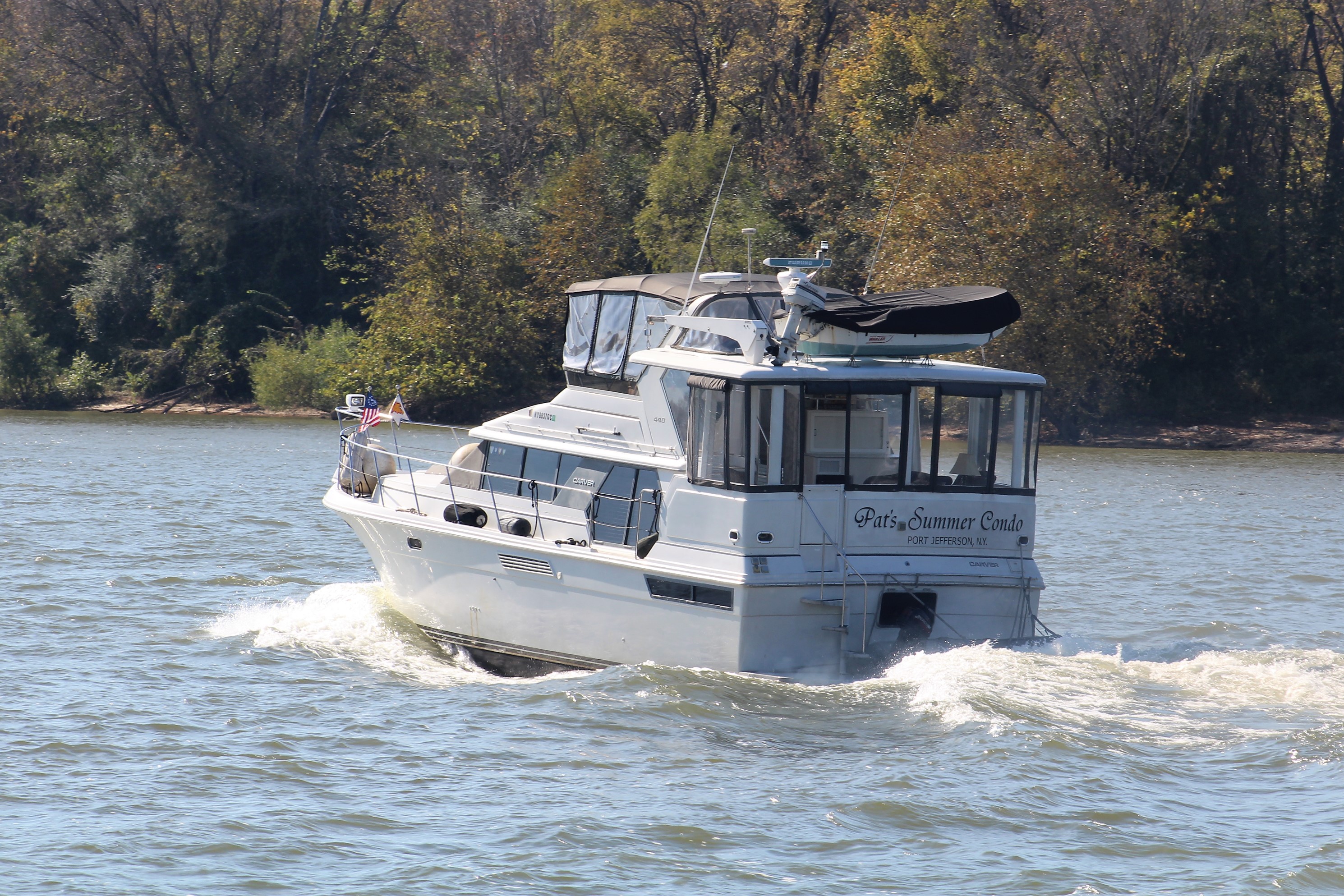
    Pat’s Summer Cottage is way too far north in cold weather to be a summer cottage.  These are Looper’s on their way to warmer weather in Florida.

    28 Pat's Summer Cottage

    Next Week –

    The crew will spend a few days at Aqua Yacht Harbor completing a few boat projects while they wait for some very cold weather to pass.  Cruising in 20 degree weather is not much fun so they will wait till Wednesday to set out down the Tenn-Tom Waterway.

    They will then travel three days down to Columbus where they hope to share turkey with the locals at the Columbus Marina.

    Loop On – Where the road ends, the water begins. The water goes on forever, and the adventure never ends.

    Eric the Red

  • Headed West on Tennessee River

    Hello virtual crew members and fellow adventures!

    La Salle here catching you up to date on the latest travels of Still Waters II. Click on this link to see the day- to-day travel log.

    Summary of week:  The crew arrived back on the boat from their trip to Texas in the wee hours of Wednesday morning.  After getting some sleep, they spent Wednesday afternoon preparing to set out on their return trip down the Tennessee River.
    The crew managed to travel three days from just above Chattanooga and ended up in Ditto Landing Marina in Huntsville, Alabama for the weekend

    img_370
    Replica Pinto and Nina were docked in Chattanooga as the crew went by

    Thursday, November 10, 2016

    The crew decided to shove off and start back west because of the cool weather.  They had about 6 miles to go before arriving at the Chickamauga Lock.  Unfortunately, there was a tow just beginning to lock up so the lock master said to find a place out of the way because it was going to be a while.  The crew’s experience is the wait would be at least three to four hours.


    img_367
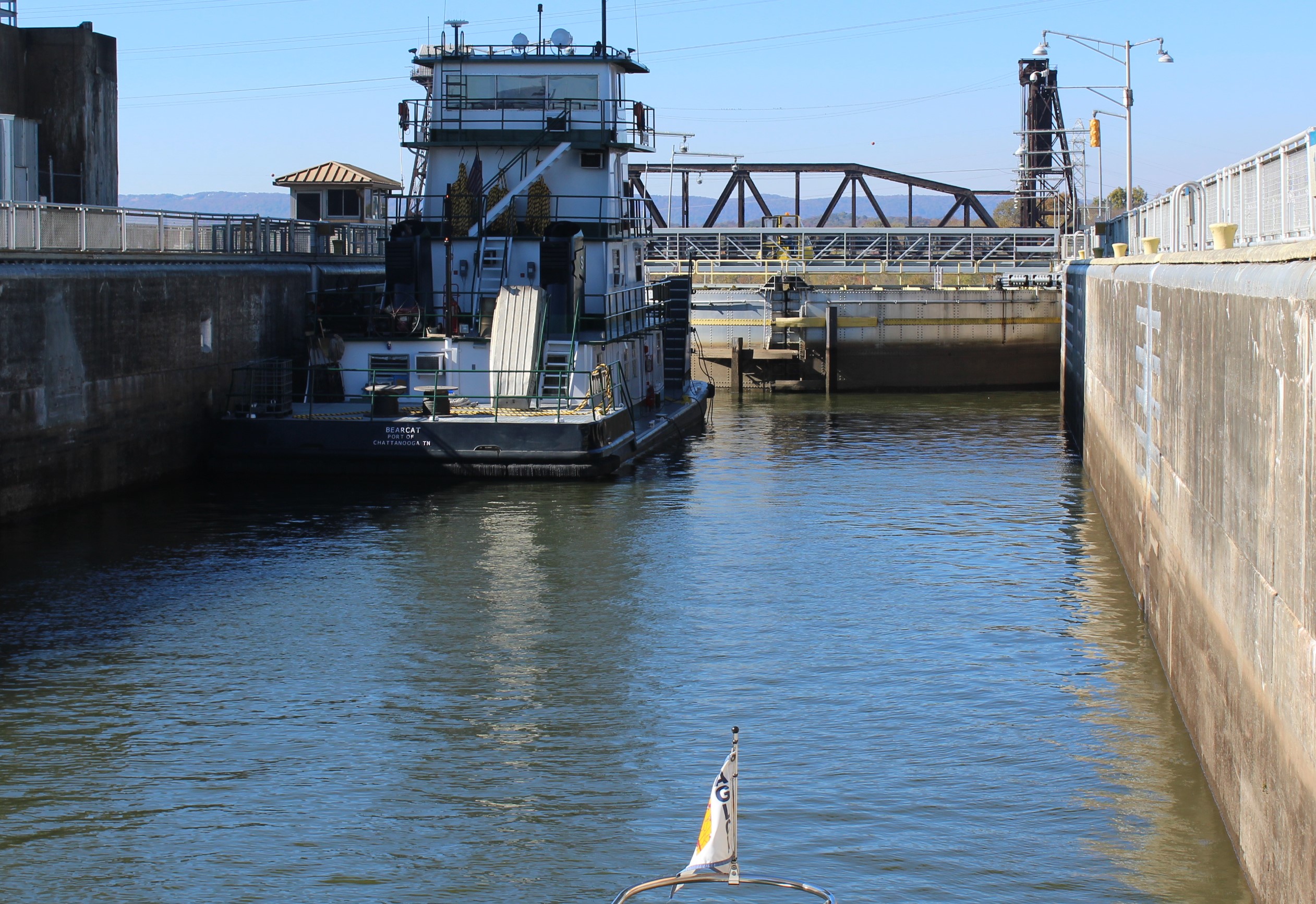
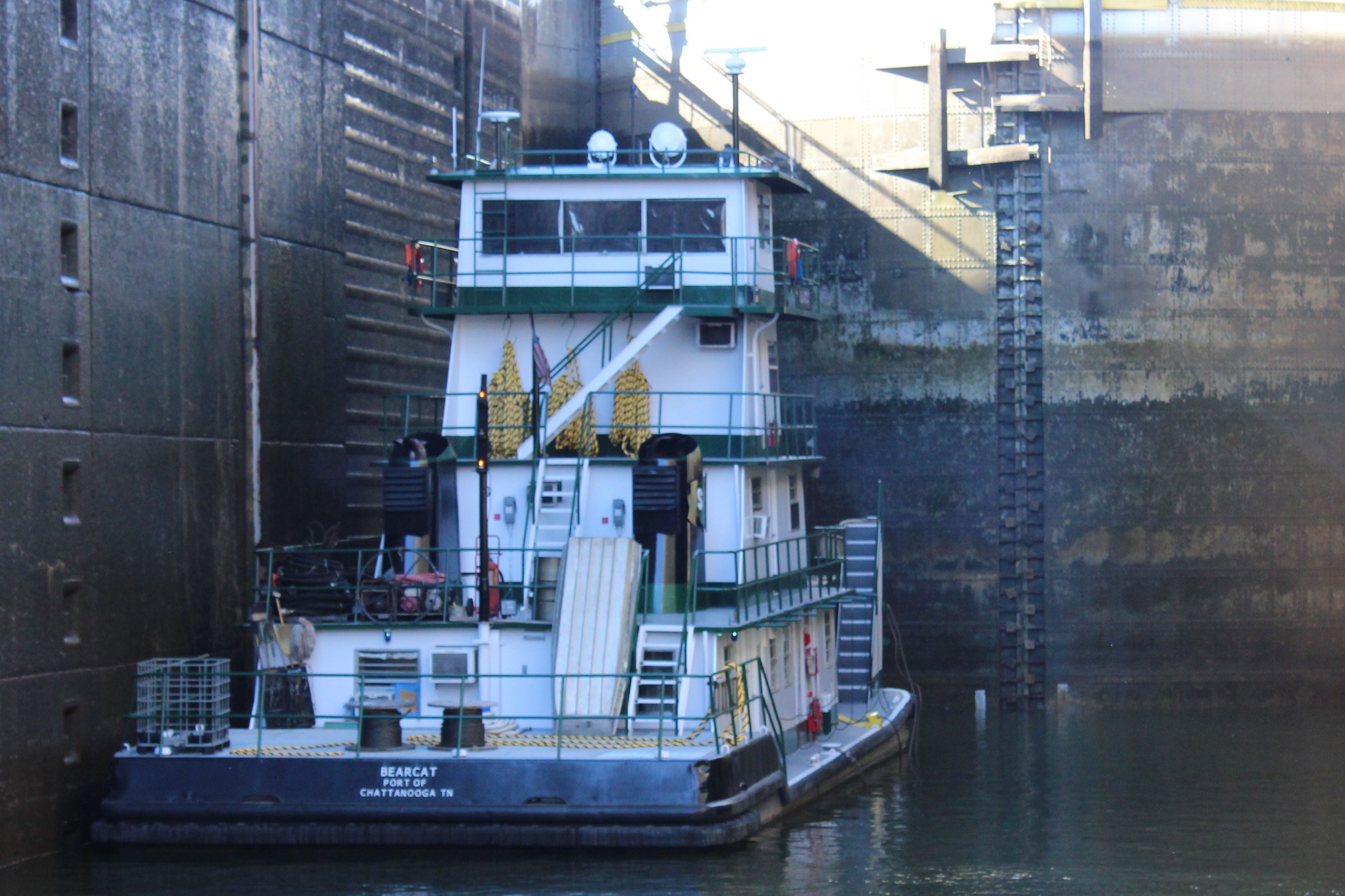
    Bearcat in the Chickamauga Lock

    However, the lock master called on the radio and informed the crew that he would allow them to lock down with the tow Bearcat as he went back down to get more barges.  So after the tow secured his two barges above the lock, the crew followed him into the lock for the 44 foot drop down to the Nickajack Lake level.  The crew only had to wait about an hour to get in the lock.

    Locking through with a commercial tow was a first for the crew.

    img_368
    Locking down 44 feet with Bearcat

    The next part of the cruise was the 25 miles thru the ‘Grand Canyon of Tennessee.’

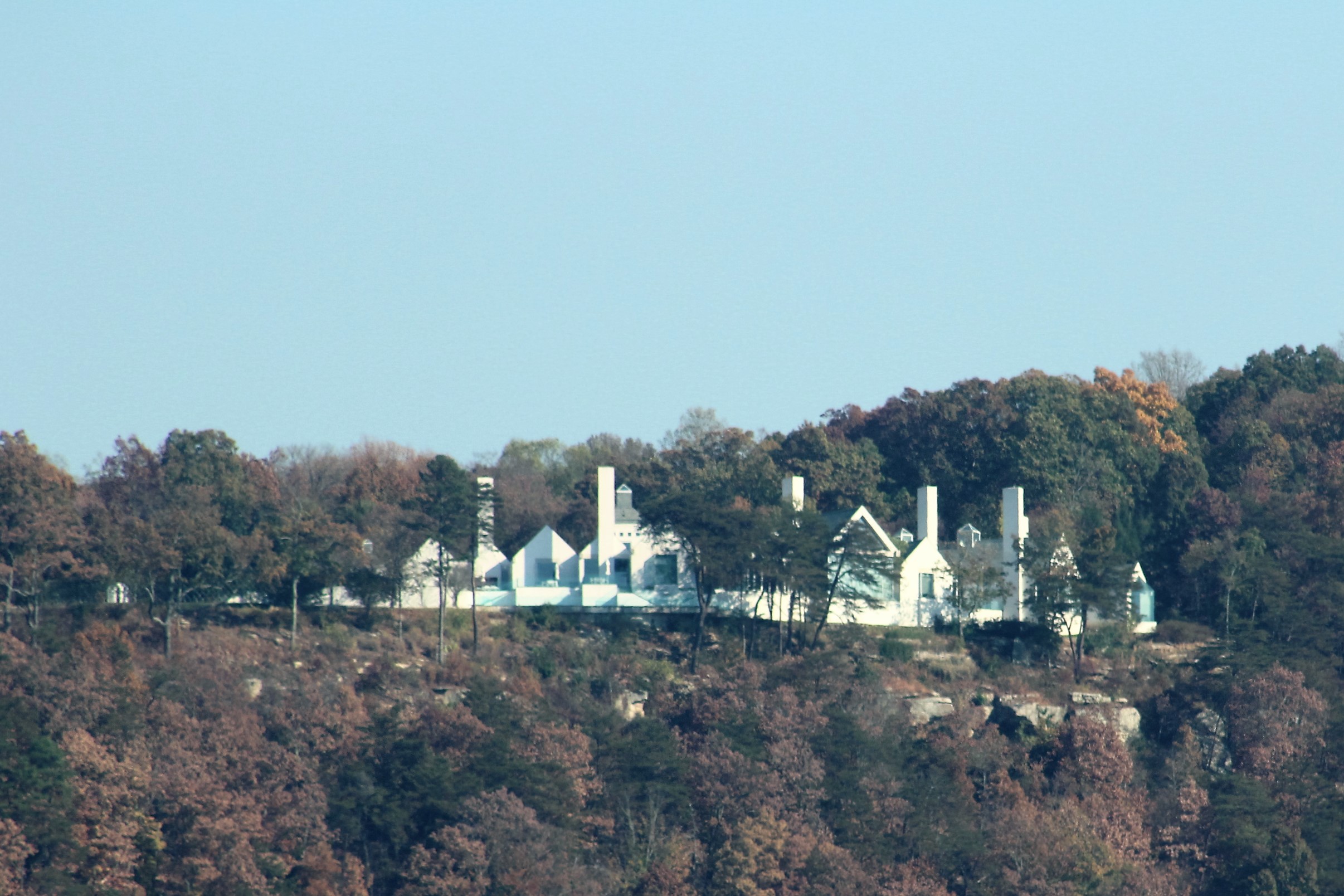
    The crew saw this large house up on the hill.  Locals say it is owned by the DuPont’s.

    img_373
    20,000 sq ft under one roof

    Another interesting structure in the canyon was the Raccoon Mountain Pumped Storage Project.  At the top of Raccoon Mountain is a large reservoir, 528 surface acres, 107 billion gallons of water.  It takes 28 hours to pump water from the river below to fill the reservoir.

    The facility has four hydroelectric generators for a net of 1628 MWs.

    When power is cheap they pump water up the hill to the reservoir for storage.  During peak demand (think high prices) they drain the lake back to the river and sell the electric power.

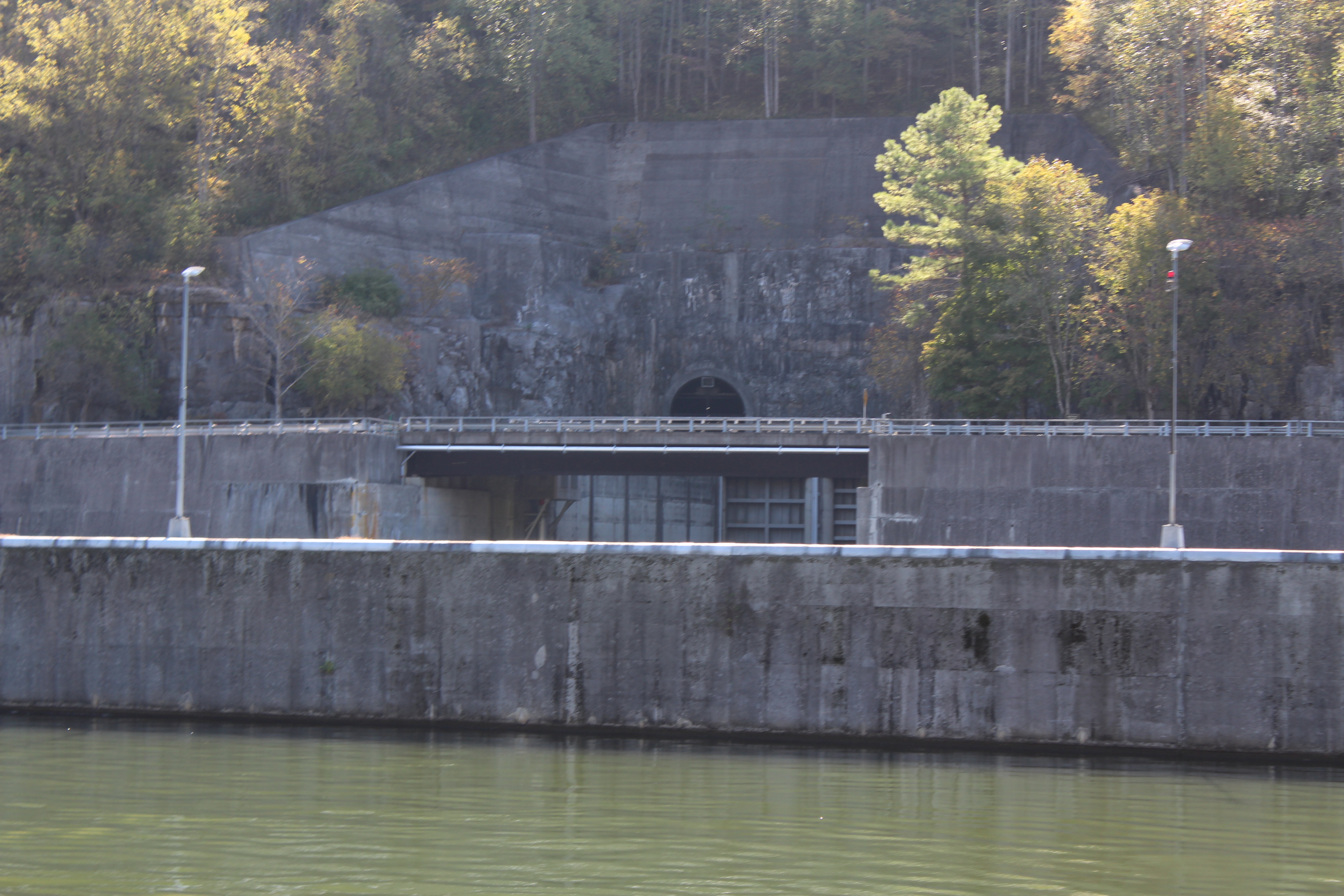
    The crew passed by where the water comes back into the river.


    img_0167
    The gates are behind the wall


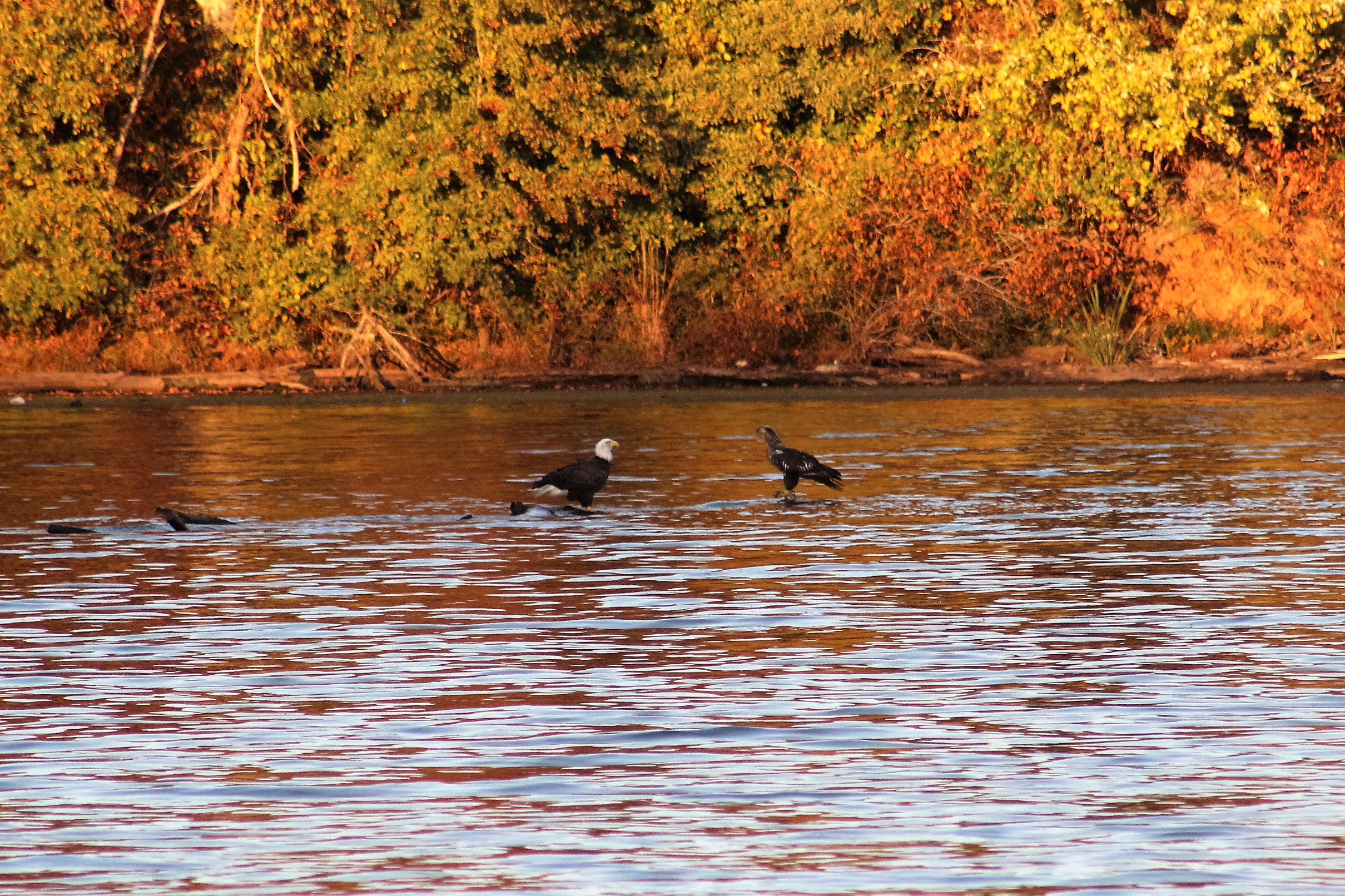
    The crew then arrived at the Shellmound Recreation Area, and landed along a 30-foot dock.  Upon arrival, the skipper spotted a Bald Eagle that looked like he was standing on the water.  As he observed the eagle and was trying to take a picture, a second young eagle landed for the photo bomb.

    img_375


    img_378
    Shellmound Recreation Area


    Friday, November 4, 2016


    img_380
    Short dock at Shellmound Recreation Area


    The crew woke up to an early sunrise and shoved off from the dock after the fog lifted.  The Nickajack lock was only about a mile away and the lock master had the gates open to allow the crew to cruise into the lock and get secured.  The lock dropped the crew 37 feet down to Guntersville Lake level.


    img_386
    Guntersville Lake

    The cruise was mostly through wilderness refuge areas so the scenery was great with very few homes along the shore.  As the crew approached Guntersville though, the wildlife areas gave way to residential development.  The crew got docked at 1600 and decided to take a mile hike to the nearest restaurant to enjoy a night out on the town.

    Gilbreath ...
    Gilbreath House

    They walked by a home with an historical marker in the yard.  The home was built in 1851 and was only one of seven buildings to survive the Civil War in Guntersville.

    The marker explained that the owner of the house was a mason.  Just so happens that the Union officer in charge was also a mason.  The officer in charge ‘spared’ his fellow mason’s home when the home owner begged the Union officer not to destroy the house.


    Saturday, November 12, 2016

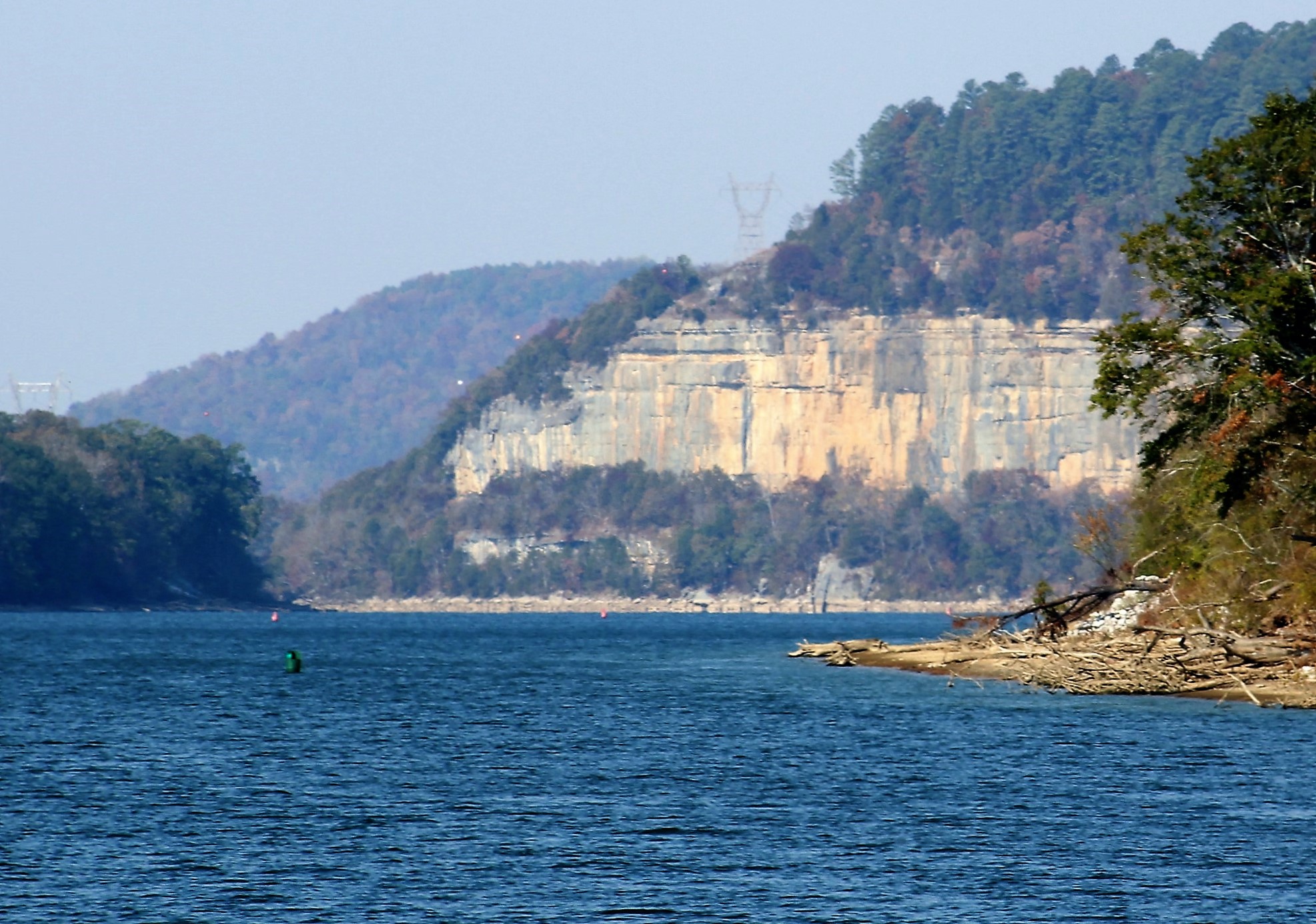
    The crew left the dock and made their way over to the Guntersville Lock.  Along the way, they passed two interesting sites.  However, they only saw one of the sites.  The first site is on Goat Island.  The island gets its name from a local goat rancher who allowed his goats to roam free on the island before the Civil War.  During the Civil War the Union troops harvested the goats for food.


    img_385
    70 foot cliffs at Goat Island

    Supposedly, carved in the rock face is the following: ‘Gen Andrew Jackson 1813-1914, Ala. D.A.R.’  The crew looked but could not spot the carving.  Looks like the island trees have blocked the view from the water.

    The carving was made back in 1914 by the Daughters of the American Revolution.  The 1813 commemorates the year that the General was in the area and used a cave, that is now under water, as a supply depot in his war against the Creek Indians.

    img_394

    The Creek and Indian War was a side war during the War of 1812.  General Jackson defeated the Creek with the help of the Cherokee.  The Creek lost all their lands and had to relocate west to the Indian Territory of Oklahoma.  After the General became President, he rewarded the Cherokee for their support by moving them along the Trail of Tears to Oklahoma also.


    img_387
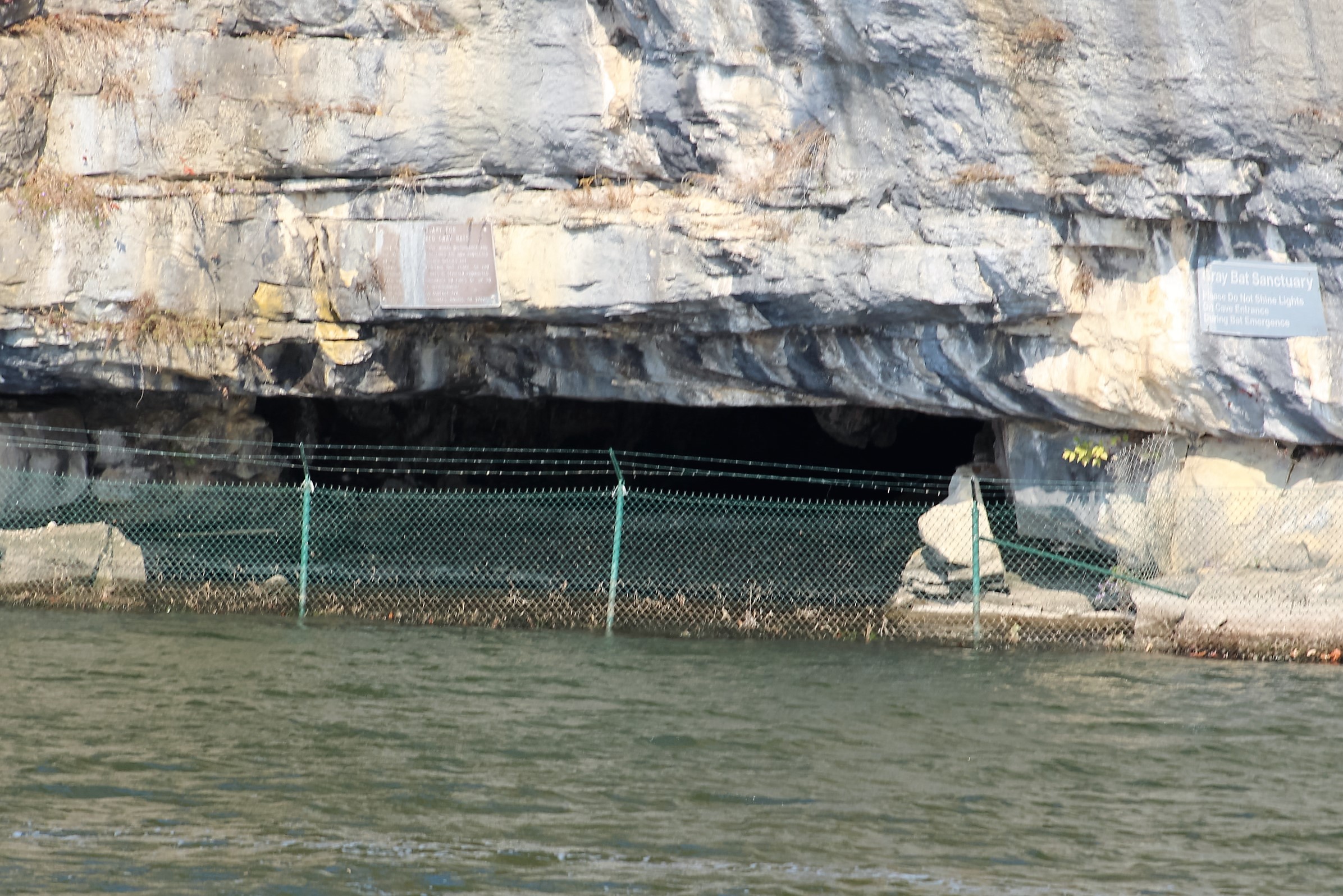
    Grey Bat Cave


    The second site is a Bat Cave Sanctuary.  The sanctuary is to protect the Grey Bat.  It is estimated that 20-50 thousand grey bats use the cave.


    The crew then entered the lock and made the 40 foot drop to Joe Wheeler Lake.  The crew decided to make it a short day and stop at the Ditto Landing Marina for the weekend.


    img_392
    First view of Joe Wheeler Lake after the lock


    Next Week – The crew will continue their return trip on the Tennessee River to Aqua Yacht Harbor, and then start their journey down the Tenn-Tom River towards Mobile, Alabama.

    Loop On – The water goes on forever and the adventure never ends.

    La Salle

  • The Mountains Are Calling

    Hello virtual crew members and fellow adventures.

    La Salle here catching you up to date on the latest travels of Still Waters II. Click on this link to see the day- to-day travel log.

    Summary of the week – The crew arrived in Chattanooga on Monday and took a couple of days to enjoy the town.  Then they set off up river to make their way to Knoxville.  They ended the week in Fort Loudon Marina, about 50 miles southwest of Knoxville.

    oct-29

    Sunday, October 23, 2016

    The crew shoved off early from the Guntersville Lock (0755) in preparation for a long cruise.  The goal was to arrive at the Nickajack Lock in the late afternoon and depending on the availability of clearing the lock, either anchor above or below the lock.  These plans were almost immediately crushed when the skipper ran the boat up on a sand bar coming out of the break wall guarding the docks.  He immediately shut off both engines to prevent them from sucking sand and mud up into the engine cooling system, strainers, and heat exchangers.  That was a sick feeling for the skipper.

    Since the engines had not warmed up completely, the skipper was only idling along into the current.  However, the boat got wedged up on the sand bar pretty good.  After the Admiral checked the bilges below decks and confirmed that there was no water entering the boat, the skipper tried to rock the boat off the sand bar.

    He initially started the port engine and bumped the engine into reverse.  The boat nudged back a little bit.  He bumped the port engine in reverse again and the boat moved back a little more.  He started the starboard engine, then bumped both engines into reverse.  The boat pulled itself off the sand bar and the crew was finally under way.  The sick feeling was washed away with feelings of joy as the boat headed towards the days first bridge.

    img_0150

    The cruise across northern Alabama on the Tennessee River was extraordinary.  The view was obstructed a few times by industry along the banks, but for the most part this is a very isolated and remote area.  By 1500 the crew left Alabama and re-entered Tennessee.

    img_0141

    Then it became obvious that the Nickajack Lock would be within reach to lock through if there was no commercial tow traffic.  As the LeryLynn and Still Waters II were making the final approach to the lock, they were joined by a Ranger Tug, Tug O’ My Heart.  The three boats entered the lock and were raised 40 feet up to the Nickajack Lake.

    img_0143
    First look at Nickajack Lake

    Upon exiting the lock, the crew headed over to a small park that had two free docks.  One dock was already full of boats.  The second dock was full of fisherman. Rather than run the fishermen off the dock, the crew decided to go around to the next cove and anchor for the night.  Turns out the anchor option was a perfect spot to swing on the hook for the night.

    img_0144
    Looking across the lake from the anchorage

    Monday, October 24, 2016

    With the cool night (44) and warm water, there was a heavy fog at day break.  The crew had to wait for about an hour before they could see far enough ahead to safely navigate up river.  Also, this next section of river is touted to be some of the best scenery so it would be worth the wait to let the fog clear out.

    img_0146
    LeryLynn waiting for the fog to lift

    By 0900, the crew had weighed anchor and made their way to the ‘Grand Canyon of Tennessee.’  This area was some of the best that the crew has seen on the entire loop.  The river made about a dozen u—turns over the 32 miles to Chattanooga, with the mountains towering over 1,000 feet above the river.

    img_0159
    Entering the Canyon

    When the crew approached within 10 miles of Chattanooga they came by Williams Island.  This Island played a part in the Great Locomotive Chase that took place back in April 1862.  You may have heard the story told that James J. Andrews led 21 men behind enemy lines in Marietta, Georgia.  The goal was to capture a railroad engine, drive the train north 100 miles to Chattanooga, and destroy the track and communication lines as they returned north.

    img_0163
    Which way to go?  Sometimes you have to stop looking at the scenery and remember there are other boats out here.

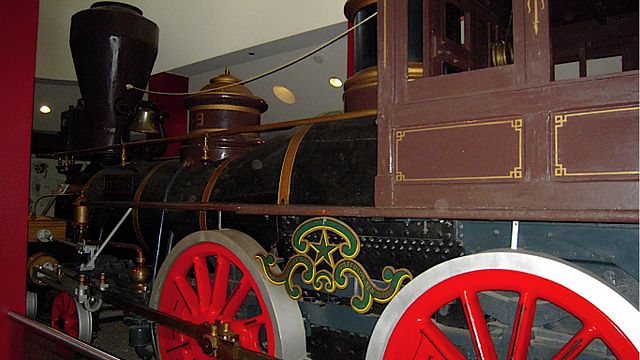
    On April 12, 1862, Andrews and his 21 men boarded the GENERAL and then waited for the engine to stop for water and allow the passengers to eat breakfast.  While the passengers and train crew were off the train at the nearby hotel having breakfast, the team unhooked the passenger cars and took off in the engine.  William Fuller and two other train crew members initially gave chase on foot.  Fuller soon came upon a hand propelled cart and continued the pursuit on rail.  Fuller then traded the cart for the engine Yonah, when Andrews failed to destroy the engine as he passed the engine.

    640px-texas1
    The Texas locomotive in the Atlanta Cyclorama

    Fuller traded the Yonah in for the William R. Smith in Kingston.  However, four miles later Fuller abandoned the Smith due to destroyed tracks and continued the pursuit on foot for three miles.  Finally, Fuller came upon THE TEXAS and once again began to close in on the GENERAL.  When it became clear to the crew of the GENERAL that they would not make Chattanooga, they began jumping off the engine and running to the woods to avoid capture.  Within the week, Andrews and his 21-man team had all been captured.  Turns out that Andrews was captured right here on Williams Island.

    img_0174
    Looking back at Williams Island where Andrews was captured

    On June 7th Andrews was hanged in Atlanta.  On June 18th, seven more of the raiders were hanged.  The remaining 14 soldiers planned and executed a daring escape rather than swing from the end of a rope.  Eight of the 14 made it to safety.  The other six were recaptured.

    null
    Private Jacob Parrot

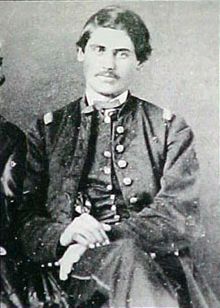
    On March 25, 1863, these six were involved in a prisoner swap and meeting with the Secretary of War, Edwin Stanton.  He was so moved by their story that he excused himself and then returned with six new medals.  He told the six that Congress had recently passed a law allowing medals for valor on the combat field.  Stanton stepped in front of the youngest member of the team, Private Jacob Parrot and pinned the very first Medal of Honor ever awarded.  After pinning the remaining five soldiers he took them to the White House to meet President Lincoln.


    img_0175
    Approaching Lookout Mountain


    img_0176
    Looking up Lookout Mountain as we cruise by


    fullsizerender-1
    Looking down Lookout Mountain at Chattanooga – pic by Lynn Merritt


    img_0179
    Preparing to dock in downtown Chattanooga


    img_0199
    Safely on the pier in Chattanooga

    Tuesday, October 25, 2016 

    The crew docked in downtown Chattanooga upon arrival in town yesterday.  The dock is located near what was the original Ross Landing, a ferry crossing on the south shore of the Tennessee River.  The ferry was run by the Cherokee Chief, John Ross.  The ferry allowed transport of goods and services from the US on the north side of the river to the Cherokee Nation on the south side of the river.

    img_0191

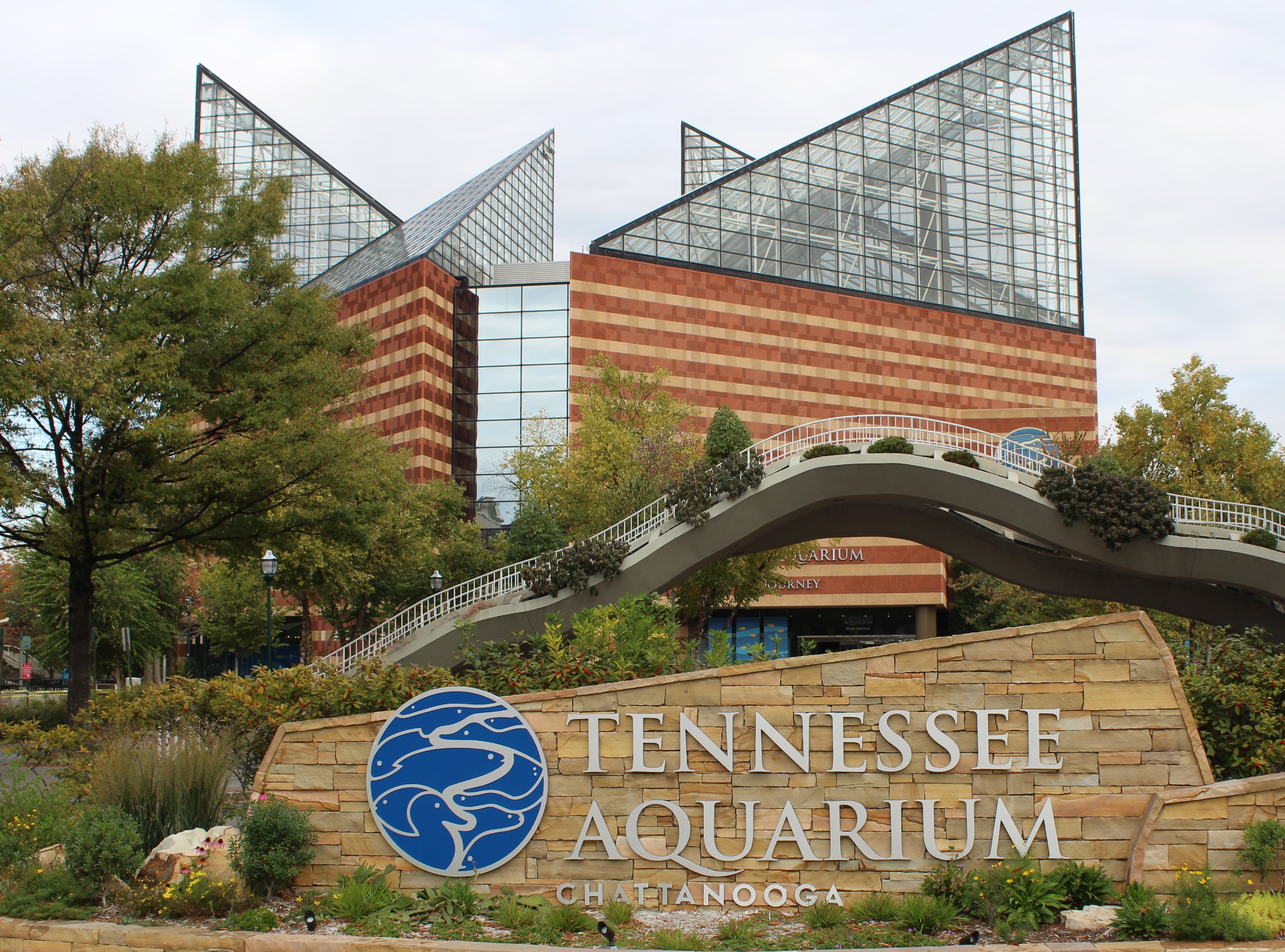
    The crew decided to visit the Aquarium that is right beside the docks.  The Aquarium is housed in two separate buildings.  One is dedicated to fresh water fish and one dedicated to salt water fish.  The Aquarium also is showing a special exhibit on monster fish from around the world.  The crew spent about five hours wandering around the exhibits.  A few of the favorites were the sea horses, jelly fish, and freshwater sting rays.

    img_0193

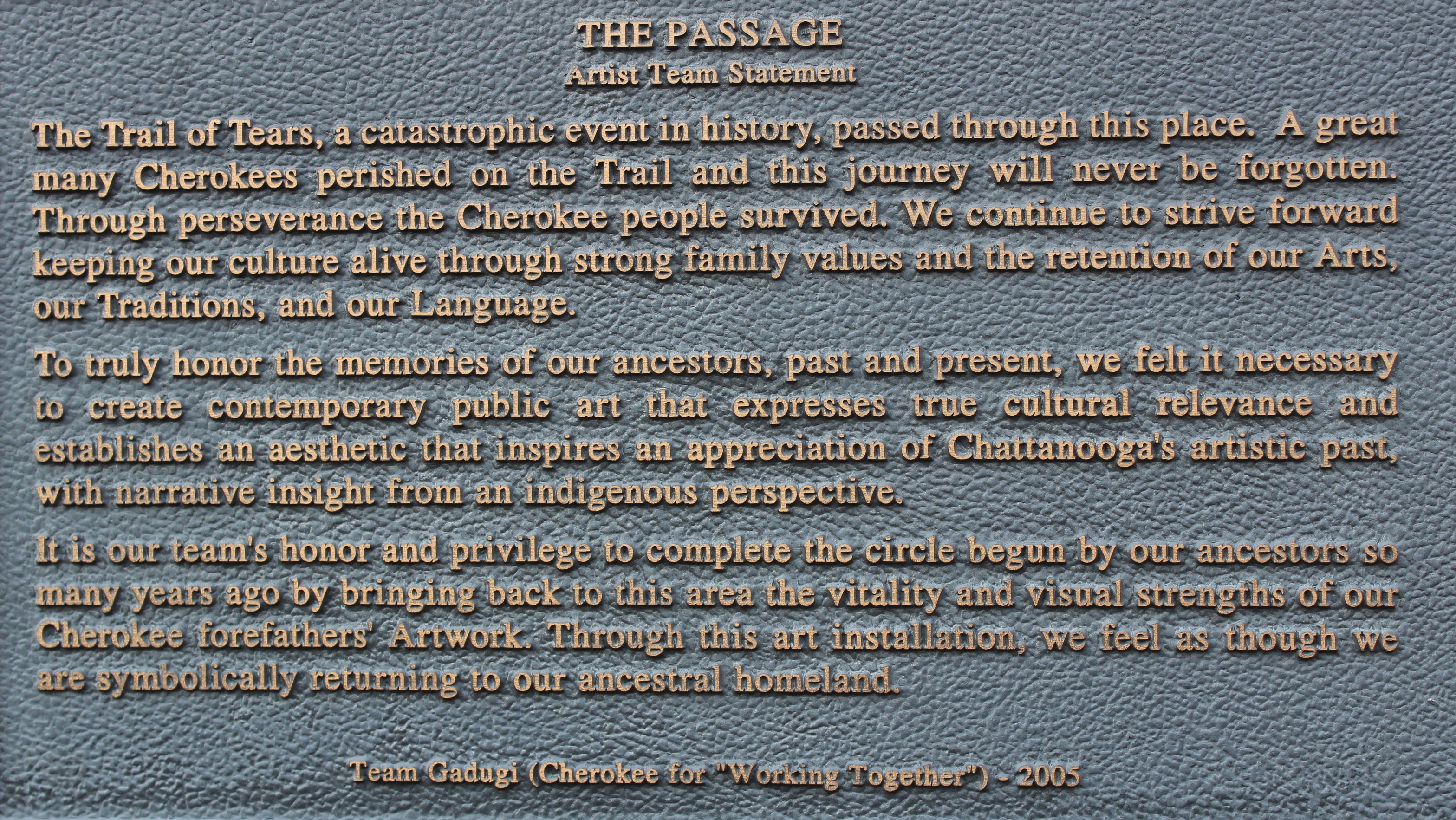
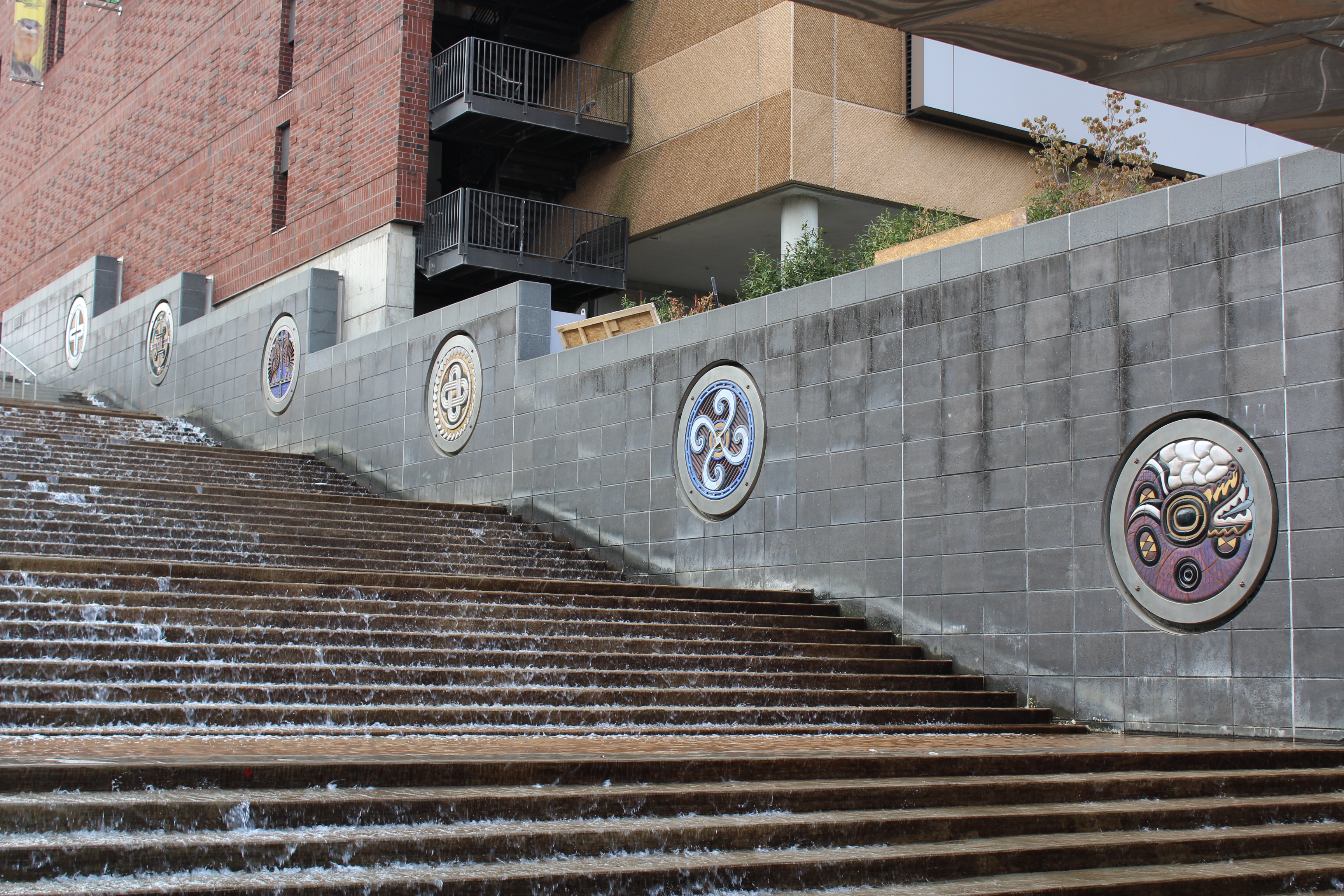
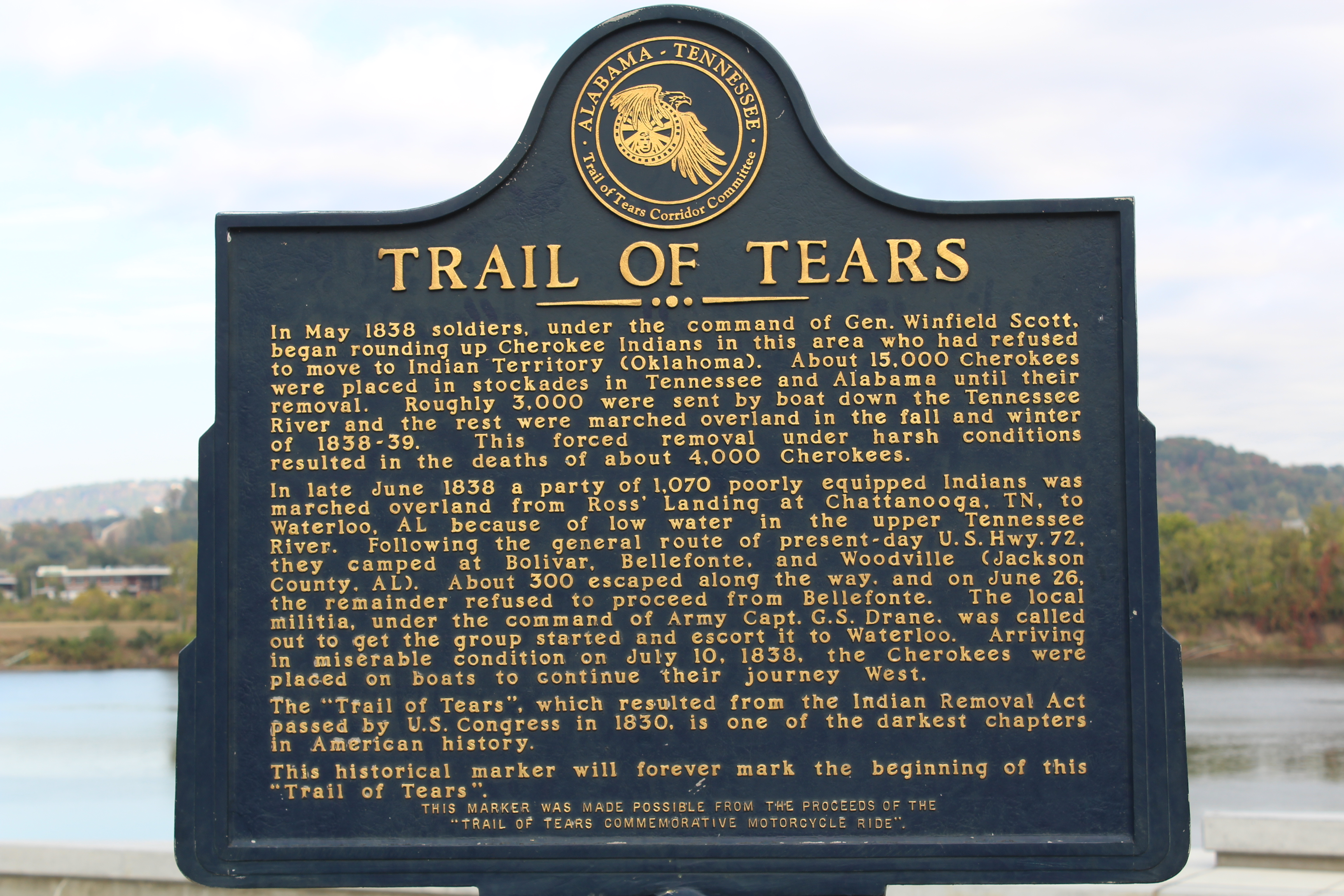
    On the way to the Aquarium the crew passed an interesting art project commemorating the Trail of Tears.  The project had Cherokee Art on a wall overlooking a waterfall.  The forced removal of the Cherokee from 1838-1839 to Oklahoma took place in response to a speech that President Andrew Jackson gave to Congress in 1829.  The speech called for the relocation of all Indians east of the Mississippi River to Indian Territory (Oklahoma).  Congress responded to the speech by passing the Indian Removal Act in 1830.  Always remember – words matter.

    img_0195

    You may be wondering why the need to move the Cherokee Nation back in the late 1820’s.  Well, as the skipper likes to say, “Follow the money.”

    The Cherokee Nation was south of the Tennessee River and extended into what is now north Georgia.  Some white folks illegally had crossed into the Cherokee Nation and discovered gold in the north Georgia mountains in 1828.  The Cherokee were making it difficult for the white man to steal the Cherokee’s precious medal.  So, the Indian Removal Act was the response to allow miners to go for the gold.

    The Cherokee Nation split into two factions.  Those wanting to negotiate the best possible land in Oklahoma, became the Ridge Party.  John Ross, the legitimate Chief of the Cherokee Nation lead the majority in the National Party.  The US government negotiated a treaty with the Ridge Party.  The Treaty of New Echota in 1835, was never approved by the Cherokee Nation Council.  The treaty required all the Cherokee’s to relocate by 1838.

    The Trail of Tears was the result of the US Army’s forced removal of the Cherokee from their land in 1838, in accordance with the unapproved treaty.  Twenty-five percent of the Cherokee’s died on their way to Oklahoma, including the wife of John Ross.  Cherokee tradition required leaders who gave up ancestral lands to die.  Two of the three Ridge Party leaders were mysteriously killed by fellow Cherokee who were carrying out the tradition.  The third narrowly escaped with his life.

    img_0197

    Wednesday, October 26, 2016       

    There is an Art Museum just up the river from the docks.  The museum has some interesting public art displayed around the museum.

    FULL COUNT is a four-piece sculpture with a pitcher, catcher, batter, and umpire.

    img_0180

    img_0182

    FREE MONEY is a piece with a couple dancing on a money bag.

    img_0186

    Interesting enough, the sculptor of FREE MONEY also made a piece titled LAST PENNY.

    What is fun about art is the different perspectives one can contemplate about the art itself.  These two pieces can invoke a very different emotion if viewed separately, or together.  If viewed together, the order in which you ponder the pieces also makes a difference, rags to riches or riches to rags.  Hmmmmm…….

    img_0184

     Thursday, October 26, 2016

    The crew cast off from the deck to begin their trek to Knoxville.  They had hoped to go all the way to Knoxville, but were not sure if the weather would hold long enough to make the run and get back south.  Looks like another week of 80-degree weather so they will keep heading north.  They might regret this decision later, but for now it seems to be the right thing to do.

    img_0200
    Entering Lake Chickamauga

    The weather was indeed perfect.  The crew continued to cruise through beautiful fall foliage.

    After clearing the Chickamauga Lock they cruised around a bend and left the channel to cruise up the Hiwassee River about three miles.  They had found a few anchorages to try for the night, but were uncertain about the approach depths due to low water levels.  The crew was unable to get very far off the main channel before finding 4-foot water.  They tried three locations before giving up and heading to the back-up plan, the Blue Water Resort.

    img_0206
    Lake Chickamauga

    The Blue Water Resort is on Richland Creek that winds its way to Dayton, Tennessee.  You may recall the famous Scopes trial was conducted in Dayton back in 1925.  The skipper is trying to figure out how to go visit the restored courtroom and museum related to the trial.

    img_0212
    Looking up the creek to Dayton from the sundeck

    Friday, October 27, 2016

    These short days make for shorter cruise days.  This morning the sun did not break through until after 0730.  Then there was still light fog in the area.  The crew got off the dock a little after 0900, but almost immediately got socked in by the fog.  The skipper slowed to an idle speed and moved all the way over to the port shore.  Looking to starboard you could not see the shore.  The skipper was sure hoping no tow boat was coming.

    img_0216
    A little fog is pretty


    img_0217
    This much fog is flat out dangerous – glad no tow was coming

    While they were running slow along the shore the skipper did spot one Bald Eagle standing on a nest.  He marked the location and hopefully the crew can get a better look on the return journey.  After about four miles the fog finally gave way to the sun and the rest of the day was beautiful.  The scenery continues to get better each and every day.

    img_0218
    This is a little better view looking out the front

    After clearing the Watts Bar Lock, the Crew entered the Watts Bar Lake.  The lake is easily the best lake along the Tennessee River so far.  Its remote location from both Chattanooga and Knoxville seem to have kept the development down.  Also, the lake has islands and bluffs that are just drop dead gorgeous.

    img_0219

    After six hours of cruising, the crew found a cove to pull into and drop anchor for the night.

    img_0234
    The end of another great day

    Saturday, October 28, 2016

    The crew had to wait for the fog to lift again this morning before setting out.  After the fog lifted the crew headed to Fort Loudon Marina.  The marina has a good fuel price and only charges a minimal transient fee rather than a charge by the foot of boat length.

    img_0235
    The Lake is starting to narrow and look more like a river


    The journey on Watts Bar Lake continues to be spectacular.  The crew has timed the fall foliage color change just about as good as can be done.  The views just continue to dazzle.  The only problem is that the pictures just do not do the actual scenery justice.

    img_0253

    After a good cruise, the crew arrived at the Fort Loudon Lock with the gates open and just waiting for us to arrive.  After getting secured in the lock the lockmaster raised the boat 60 feet to the level of Lake Loudon.  After clearing the lock, the crew had their first view of the Great Smokey Mountains in the distance.

    img_0256
    Entering Lake Loudon

    After landing at the marina, a couple came over to talk with the crew.  The couple highly recommended scrapping the plans to go to Knoxville and head into the Tellico and/or Little Tennessee River instead.  They painted a convincing argument so the skipper may spend some time recalculating the next route.

    img_0260
    Calmly at rest in Fort Loudon Marina


    img_0248
    The closer the crew gets to Knoxville the more of this type of graffiti adorns structures, sorry Bob


    img_0258
    It’s called Fall for a reason, the leaves are beginning to let go and fall


    Next Week – John Muir was quoted as spinning the phrase, “The mountains are calling and I must go.”  The crew has decided to answer the call of the mountains, so they will go explore the waters of the Little Tennessee River and head to the Smokey Mountains.  They will spend several days exploring the area and then start back to Chattanooga.

    img_0259
    Faint grey blue outline of the Smokey Mountains in the background


    Loop On – The water goes on forever and the adventure never ends.

    La Salle

  • Fall Foliage Spectacular

    Hello virtual crew members and fellow adventures.

    La Salle here catching you up to date on the latest travels of Still Waters II. Click on this link to see the day- to-day travel log.

    But first we have had a bunch of folks meet the crew on the pier and come aboard as virtual crew members.  So we need to pause and welcome aboard:

    • Shoaib R.
    • Matnobles
    • Ginasjoys
    • Russ B.

    So a hearty Welcome Aboard!!!!  Glad you joined the adventure.

    oct-21
    Sunday anchored near Clifton, Monday anchored near Savanah, Tuesday & Wednesday at Aqua Yacht Marina for repairs, Thursday anchored, Friday free dock in Decatur, and Saturday free dock in Guntersville

    The crew did not make their goal of Chattanooga this week.  Still Waters II decided she wanted some rest and relaxation at the Aqua Yacht Marina.  The crew limped into the marina on one engine on Tuesday.  After getting repairs complete the crew commenced the side trip up the Tennessee River towards Chattanooga.

    Sunday, October, 16, 2016

    The crew left out of Pebble Isle Marina after stopping at the fuel dock and taking on 216 gallons of fuel.  The marina gives a 10 cent per gallon discount for both a AGLCA and Boat US memberships, for a total of 20 cents off each gallon.  That was just too good of a deal to pass up without topping off the tanks.  Then there was an added surprise at the fuel dock.  The guy helping fuel the boat brought out three large hot cinnamon rolls from the restaurant and gave them to the Admiral.  Now this is a good way to start the day and week.

    img_0020
    Shoreline along Tennessee River


    Unfortunately, the good start to the day and week would not last long, but such is the life of a live aboard cruiser.  The skipper noticed that the port engine temperature was acting erratic during the cruise, a harbinger of things to come.

    img_0022
    Cypress Trees in the River – well sorta


    After cruising about 20 miles the crew passed under the Interstate 40 bridge between Nashville and Memphis.  The skipper can remember crossing over this bridge at least a dozen times over the years, but this is the first time either crew member has passed under the bridge in a boat.

    img_0024
    I-40 between Memphis and Nashville


    Another 20 miles up-river, the crew passed Lady Finger Bluff.  The Bluff was so named after a woman jumped to her death from the bluff rather than be captured by Indians.

    img_0030
    Lady Finger Bluff


    Then 10 more miles found this little lady advertising for the Mermaid Marina.  The crew resisted the advertisement and went on up river to Double Island to anchor for the night.

    img_0033

    Monday, October 17, 2016

    This morning when the skipper started the engines to allow them to warm up, the port engine temperature again became erratic.  The temperature climbed up to about 200 degrees and then dropped down to 175 where the engine normally runs.  Then the temperature started to climb again.  This time the temperature kept going past 200.  When the temperature reached 210 and climbing the skipper turned the engine off.  The initial troubleshooting could not find anything wrong so the skipper decided to go on one engine for the day and look more in depth at the end of the day.

    img_0020
    Shoreline Shot


    Cruising on one engine developed a few new skills for the skipper.  The boat handles much differently and it took a while to get used to the new dynamics.  For example, trying to turn around on one engine is much more difficult.  And while at idle speed, steering with the wheel is tough because there is not much water passing by the rudder.  The skipper learned to increase the throttle a little to help steer while going slow.

    img_0040
    More Shoreline


    The crew passed by a small town on the river after they got going, Clifton, Tenn.  The town was almost the state capitol of Tennessee back in 1843.  The town lost by one vote to the eventual winner, Nashville.

    Coming around a bend in the river the crew saw what the chart had plotted as Chalk Bluff, very scenic area.  As the crew approached the bluff, you can see that the bluff is actually clay and sand, no chalk.

    img_0041
    Chalk Bluffs


    Then just a little further up river, about five miles they came to Cherry Mansion.  The house was built in 1830 by David Robinson.  He gave the home to his daughter, Sarah, and her new husband, W.H. Cherry.

    img_0047
    Cherry Mansion – Built in 1830


    But the home was used by General Grant in April 1862.  Grant was actually eating breakfast in the home on Saturday morning, April 6, 1864 when the confederates attacked his soldiers about 8 miles up-river at Pittsburgh Landing.  The first day the Union forces took heavy losses and it looked to be a Confederate win in the making.  However, late in the day the confederates let up and stopped their attack.  This allowed the Union forces to bring in re-enforcements overnight and launch a counter attack on Sunday morning.

    img_0048
    Pittsburgh Landing where Union troops re-enforced from the river


    The confederates withdrew from the battlefield late Sunday and the Union troops did not pursue the Confederates.  When the fighting ended on Sunday, the Battle of Shiloh was the bloodiest battle to date with nearly 25,000 dead and wounded.  General Albert Sidney Johnston was one of the many casualties.  He is the highest ranking American ever killed in combat.

    After skirting around the sacred battle ground, the crew  made another 5 miles and dropped anchor at Wolf Island for the day.

    img_0055
    Water view from sundeck at Wolf Island


    Tuesday, October 18, 2016

    The crew weighed anchor and set out for the Aqua Yacht Marina to get the port engine repaired.

    To get to the marina though they would first have to make it through the Pickwick Lock, which was about two hours away.  The crew called the lock and learned that there was one tow about two miles in front of them.  The lockmaster agreed to lock the pleasure craft through the lock if they arrived more than 30 minutes ahead of the tow.  The skipper did some ciphering and figured they could catch the tow by mile 200.  Then due to the bends in the river and the slow speed that the tow would have to go to maneuver around the curves, that they could make the lock (mile 206.5) 30 minutes ahead of the tow.

    img_0050
    Looking out the Pickwick Lock


    When the crew was about two miles from the lock, the skipper called the lockmaster again. The lockmaster agreed to let Still Waters II and LeryLynn through the lock and he had the gate open when they arrived.  With only one engine, getting into the lock and safely secured was a bit of a challenge but the crew worked together and made it happen.

    After clearing the lock, it was only another hour to the marina.  The little bit of Pickwick Lake that the crew saw was beautiful.  But the crew had to turn off the Lake and head into the Tenn-Tom Waterway to get to the marina.  The crew passed one point where Tennessee, Alabama, and Mississippi merge in the waterway.

    img_0057
    In the water before the point, Tennessee, Alabama, and Mississippi borders meet


    The crew then made their way over to the transient dock at the marina and managed to safely land the boat.  No small accomplishment with the high winds blowing the boat off of the dock and maneuvering with only one engine.

    The maintenance team came down and decided that the water pump needed to be replaced.  They will order the part and the part should arrive sometime Wednesday.


    Thursday, October 20, 2016

    The new water pump arrived as expected on Wednesday and the mechanic changed the pump out.  Post maintenance checks were sat so the crew shoved off from the dock to test the port main engine repairs under actual running conditions.  Glad to report that the engine ran well all day.  The folks at Aqua Yacht Harbor did a fine job.

    img_0061
    Some Fall Foliage Color


    With the engine running well, the crew set out to return to the Tennessee River and start their side trip to Chattanooga.  The first half of the trip was wonderful, but about 1300 a thunderstorm caught the crew.  They were in a heavy down pour for about 45 minutes and even had one lightning strike less than a quarter mile from the boat. After the storm passed the sun tried to break through but just couldn’t make it.

    img_0063
    Been a while since the crew got drenched


    The crew timed another lock well and got a lift of 93 feet at the Wilson Lock.  The lock is named for Woodrow Wilson, our 28th president.  After clearing the lock, the crew entered Wilson Lake and headed another six miles upriver to six-mile creek to anchor.

    IMG_0066.JPG
    Waiting for the Wilson Lock gates to open


    Friday, October 21, 2016

    The crew weighed anchor and set out to the Joe Wheeler Lock.  This lock is named for Joseph Wheeler.  He was one of many West Point graduates that fought for the Confederate Army.  During his military career, he rose to the rank of General, fought in 127 battles, and had 16 horses shot out from underneath him.  After his military career, he served in Congress.  Upon his death, he was laid to rest in Arlington National Cemetery.

    The crew saw a small armada of 12 looper boats headed down bound leaving the fall looper rendezvous.  Because of the distance between the boats, the crew did not recognize any of the boats.

    img_0074
    Part of the armada leaving Joe Wheeler


    Upon arrival at the lock, there was a tow entering the lock.  The lockmaster said it would be two and a half hours before the crew could enter the lock.  The lockmaster did give the crew permission to tie up along the wall of the auxiliary lock to wait.  The LeryLynn arrived about an hour later, so they rafted off of Still Waters II and the two crews chatted while waiting on the lock.

    img_0077
    Had to wait for this big guy to clear the lock


    Finally, a little after noon the tow completed locking up and the crew was prepped to go in the lock.  When the lockmaster lowered the water level in the lock, the water came boiling up near the crew.

    img_0079
    For a little perspective, the wall is about 5 foot tall


    Three looper boats locked down and the crew saw Abaco Lady for the first time since Norfolk, Virginia, way back in May.  The two crews waved at each other as they passed by.

    img_0080
    Abaco Lady and Crew


    After clearing the lock, the crew made their way to the town of Decatur where there is a free dock to tie up on for the night.  There was a looper boat, Irish Lady Too already on the dock so the crew came over to catch our crew’s lines and help them dock.   Kurt and Susan crew Irish Lady Too.  They set out on the loop in May of 2015 from Baltimore, Maryland.

    img_0084
    Sunset in Decatur


    Saturday, October 22, 2016

    After shoving off from the dock the crew dodged a near catastrophe.  Just another reminder that the crew has to be constantly diligent of their surroundings.  After getting past the break water wall for the dock the skipper ran the boat up on an underwater sand/mud bar.

    img_0088

    The depth changed from 9-10 feet to less than 4 feet almost instantly.  The good news was that the skipper was only running at idle speed waiting for the engines to fully warm up.  The starboard engine shut off and the skipper turned off the port.  The Admiral ran below and checked all the bilges and made sure there was no water coming in the boat.  After a positive report from the Admiral, the skipper started the port engine and tried reverse.  The boat budged a little bit.  The skipper tried reverse again and the boat rocked back a little more.  The skipper then started the starboard engine and put both engines in reverse.  The boat slid backwards and off the sandbar.  Not a good way to start the morning.

    img_0097

    After allowing the engines to warm up the skipper put the engines in forward and speed up.  The engines ran fine all day and all seems to be ok.

    The run along the river was breath taking today.  The fall foliage continues to change more colorful by the day.  The cool weather, in the 40’s at night might be the reason for the color change.  The run after the Guntersville Lock and Dam was spectacular.  The cliffs surrounding the lake were just gorgeous.

    img_0093

    The crew did pass one interesting area full of space history, Huntsville, Alabama.  This is the area where the US entered the space race thanks to the German engineering of Dr. Wernher von Braun.  Von Braun is credited for developing Germany’s V-2 rocket that was used to bomb the day lights out of the British.  With the war winding down and not wanting to be captured by the Russians, von Braun and his team headed towards American forces and surrendered to the Americans.  Following the war, von Braun and 100 members of his team agreed to come to the United States.

    img_0104
    Cruising with LeryLynn


    They initially were sent to Ft. Bliss, Texas.  In 1950, the von Braun rocket team was moved to Huntsville, Alabama.  On January 31, 1958 the US launched a Jupiter-C Rocket from Huntsville carrying Explorer 1, which became our first earth orbiting satellite.  Huntsville is the home of the Space & Rocket Center, the world’s largest space museum.  The crew plans to visit the museum on the return trip down the Tennessee River.

    img_0111
    LeryLynn


    About two hours after cruising by Huntsville, the crew approached the Guntersville Lock.  The Lockmaster had the gate open for the crew and they cruised into the lock for the 40 foot lift up to Guntersville Lake.

    img_0095


    After clearing the lock the crew headed for the town of Guntersville and found another free dock at a municipal park.  The crew tied up and grilled steaks on the dock with the crew of LeryLynn.

    Next Week – The crew is still two days away from Chattanooga.  The plan is to arrive on Monday and spend three nights in town.  They will leave Chattanooga on Friday morning and start the four-day journey to Knoxville, Tennessee.


    Loop On – The water goes on forever and the adventure never ends.

    La Salle

  • T for Tennessee

    Hello virtual crew members and fellow adventures.  This week’s post is a tad late because the crew has been without any internet signal since the weekend.  These backwoods Tennessee folks apparently have no need for the internet.  For some reason though the skipper keeps saying, “Speed up, I think I hear banjo music.”

    La Salle here catching you up to date on the latest travels of Still Waters II. Click on this link to see the day- to-day travel log.

    The week saw our crew return to Green Turtle Bay on the Cumberland River.  Then set out up the Tennessee River.  They have only made it to mile 96 near New Johnsonville, Tennessee.

    IMG_0014.JPG
    Near New Johnsonville on Tennessee River


    A little about the Tennessee River since the crew will be on this river for several weeks:

    The river is the 7th largest in the US.

    The river is the largest tributary of the Ohio River.

    The river begins east of Knoxville, flows southwest and then turns north to flow into the Ohio River at Paducah, Kentucky.

    Water from east of the Smoky Mountains actually flows westward through the mountains to the Tennessee River rather than flowing east to the Atlantic Ocean.

    Then the river flows almost 200 miles north to the Ohio River rather than flowing westward straight over to the Mississippi River which is actually much closer.

    The area was first visited by the Spanish explorer Desoto in 1540.

    Me and my French brothers claimed this area for France when we claimed all the lands drained by the Mississippi River.  We finally sold all this land to you Americans to help fund our Napoleonic wars.

     Monday, October, 10, 2016

    The crew shoved off this morning to complete the two day journey back to Green Turtle Bay.  Since we have shared the history of this section of river already, I have decided to show the river and let the beauty speak for itself.


    80-mile-95
    Cumberland River ~ mile 95

    83-mil3-90
    Cumberland River ~mile 85

    98-mile-80
    Cumberland River ~ mile 75

    109-mile-75
    Cumberland River ~ mile 75

    110-mile-73-dry-creek-anchorage
    Dry Creek Cove ~ mile 70 Anchorage

    111-sunset-at-dry-creek
    Sunset across Cumberland River at Dry Creek Cove


    One observation of the day though was that the skipper noticed an unusual number of Grey Herons along the shore.  He decided he would count the number of Herons spotted for the next twenty five miles before the crew anchored.  He spotted 80 of the birds in those twenty five miles.


    Tuesday, October 11, 2016

    The crew weighed anchor and made their way back to Green Turtle Bay.  There were not as many Looper boats in the marina as when the crew left last week.  Most of the Loopers are trying to get south for the fall rendezvous event at Joe Wheeler State Park, which starts next week.

    Our crew is lagging behind to allow this surge of boaters to get to the state park so there will not be crowds at anchorages and marinas.  The crew is skipping the rendezvous because they only need to get from Joe Wheeler to Fort Myers to cross their wake and complete this journey.  The crew thinks they can figure out how to get to Fort Myers from here.

    112-mile-70
    Cumberland River ~ mile 70


    115-mile-65
    Cumberland River ~ mile 65, snags in the shallow water


    116- mile 60.JPG
    Cumberland River ~ mile 60, making the Devil’s Elbow turn


    117-mile-55
    Cumberland River / Barkley Lake ~ mile 55


    118-mile-50
    Barkley Lake ~ mile 50


    119-mile-45
    Barkley Lake ~ mile 45, notice the Pen in the background


    121- mile 35.JPG
    Barkley Lake ~ mile 35, marina just ahead


    Thursday, October 13, 2016

    The crew has buddied up with LyreLynn once again.  The two crews had breakfast and then set out for a short cruise to Duncan Bay on Kentucky Lake.  As the skipper exited the marina, a large barge was going by so the crew waited for the tow to pass.  Unfortunately, the tow was also headed into Kentucky Lake.  The crew followed the tow through the canal.  I think this could be the longest two miles ever travelled, 32 minutes.


    IMG_0002.JPG
    Barkley Canal


    After the crew entered Kentucky Lake, they headed south, up bound on the Tennessee River.  Along the right descending bank, there are five large bays off of the lake.  The crew anchored in the third one, Duncan Bay.

    IMG_0006.JPG
    Anchored in Duncan Bay on Kentucky Lake


    Friday, October 14, 2016

    The plan was to weigh anchor at 0800 and head out on a 64 mile cruise.  However, the starboard engine decided it would play hard to start.  After trying to start the engine, troubleshooting and finding nothing wrong, and failing to start again: the skipper decided to weigh anchor and proceed on the port engine only.

    IMG_0008.JPG
    Rock formations along Kentucky Lake


    After the anchor was secure and the crew was idling back to the main channel, the skipper reached over and turned the key on and pressed the start button for grins.  To his surprise the starboard engine immediately cranked and started.  Interesting, interesting indeed.

    IMG_0009.JPG
    Big rock on Kentucky Lake


    With both engines running the crew made their way up the Tennessee River to the Pebble Isla Marina.

    IMG_0019.JPG


    The other issue today would be the rainy weather.  It looked as though the storms might pass and the crew would be spared cruising in the rain.  However, as the crew continued south they eventually caught the storm.  The rain was more of a drizzle and only functioned to make it hard to see.  On a brighter note, as the crew was approaching the marina the drizzle stopped and the crew was able to dock without getting wet.

    IMG_0011.JPG
    The skipper has spent many a day vacationing in the rain


    A few interesting highlights on the way south:

    –          The crew entered Tennessee at about mile 62.6

    –          There was an old building left abandoned in the river at mile 78.  The building was flooded when the Kentucky Dam was built.  Authorities tried to remove the building but it was so well built that efforts to destroy it failed.  The final solution was to leave it standing.

    IMG_0012.JPG
    Abandoned Building in Lake


    –          The crew passed Pilot Knob just before entering the marina.  Early steamboat captains used the knob as a handy landmark while piloting the river.  However, the knob also oversaw the only battle in history where a Cavalry defeated a Navy.  Yes, you read that right, a Cavalry defeated a Navy.  The crew will go visit the State Park and museum tomorrow to get the details.  This should be a good story.

    IMG_0016.JPG
    Pilot Knob


    Saturday, October 15, 2016

    The skipper likes to say that the victors in battle get to write the history.  Seems that is what has happened when it comes to Sherman’s famous march across Georgia.  Turns out there was a reason he decided to have his army live off the land as they headed to Atlanta, and then on to the Atlantic Ocean.  His supply lines and supplies were destroyed on November 4, 1864 in Johnsonville, Tenn.

    The Union army had created a large depot in Johnsonville where supplies were shipped down the Ohio, Cumberland, Mississippi and Tennessee Rivers.  Then the Union army had built a rail system connected with the existing rails that supplied Nashville.

    A Confederate Plan was put into motion to destroy the Depot in Johnsonville.  Confederate General, Nathan Bedford Forrest started the action to destroy the supply lines on October 24, 1864.  He initially attacked the Union forces further north on the Tennessee River and then disappeared.  The Union forces thought that they had defeated General Forrest and went back to business as usual.

    Actually, the General was busy placing heavy artillery within 50 yards of Johnsonville.  A young officer working for the General noticed that the Union cannons placed above Johnsonville were located such that they would be unable to lower the cannon fire to the low bluffs along the opposite side of the river.  He also noticed that the iron clad ships were too low in the water to return fire to the bluffs.  After strategically setting 10 cannons along the bluffs, the General opened fire at 1300 on November 4th.

    IMG_0018.JPG

    By nightfall, 33 Union ships had been sunk, two trains destroyed, Sherman’s supplies worth 6 million dollars were burned to the ground, and 150 Union troops were captured.  Sherman had no choice but to live off the land because all his supplies were literally up in smoke.

    Sherman was quoted as saying, “That devil Forrest must be hunted down, even if it costs 10,000 men and bankrupts the Federal Treasury.”

    Another fun fact about Forrest, he mustered into the army as a private and ended the war as a Lieutenant General.  The only person ever to pull off such a rise in American military history.

    Next Week – The crew will continue their journey up the Tennessee River with a goal to reach Chattanooga by the weekend.


    Loop On – The water goes on forever and the adventure never ends.

    La Salle

    IMG_0017.JPG
    Lynn painted this portrait of Still Waters II while anchored in Duncan Bay


    Thanks Lynn!!!!!